Recent revelations about British intelligence services being in possession of film evidence of Martin McGuinness being a leading member of the IRA but choosing not to prosecute adds to many suspicious incidents over the years regarding this man.
Indeed this is but one additional item to add to many things that have raised suspicions over the years. He had been arrested in the Irish State in 1972 but his sentence from the Special Criminal Court was only six months; however in 1974 he received the more usual 12 months’ jail.
However, over the years in the Six Counties he received a string of convictions for assault on police and for obstruction, for which fines were his only punishment, despite the State being aware of his position within Derry’s Provisional IRA, failing even to convict him of membership in 1976.
McGuinness leaving Belfast Court 1976 after charges of IRA membership dismissed (Photo cred: Paul Lewis)
Nor was there ever an attempt on his life though he moved around openly in Derry; how he was awarded £2,000 damages for an incident with British soldiers at a checkpoint – a practically daily occurrence for nationalists in the Six Counties – and that he had made the claim!
Most damning of all was the very low level of armed resistance actions in the area over which he was commander of the Provisional IRA.
McGuinness went from crude militaristic outlook to belief in electoral politics and the pacification process without a clear track of his progress (unlike that of Adams). No evidence of gradual change or of Road to Damascus conversion though he was reported favourable to a truce in 1972.
McGuinness (furthest right) in the clip of The Secret Army (1972) filmed beside a car being loaded with a bomb which is later filmed destroying a building and killing people. MI5 had access to the film.
The suspicions about McGuinness can be added to the known cases of agents and informers in top levels of the military and political leadership of the Provisionals: Freddie Scappaticci, Denis Donaldson, Martin Gartland. Derry in particular had Raymond Gilmour and Frank Hegarty.
“Spies and informers” have been quoted by many over the years as the reason for failure thus far to achieve Irish independence; indeed these complaints go back at least as far as the United Irishmen and as recently as July 2020, Denis McFadden bugged meetings of the New IRA for his handlers.
McGuinness announcing his replacement by Michelle O’Neill as SF leader in the British colony in 2017.
THE REALLY FUNDAMENTAL PROBLEMS
The fundamental problems in the Republican movement go far beyond the serious enough ones of faulty security permitting influx of agents and recruitment of informers. The very strategic concept of the 30 Years War was at fault which facilitated the subsequent sellout in the Pacification Process.
If one were planning a campaign to break Ireland from colonial occupation and control by the British ruling class, a major military power, why would one largely confine it to one-sixth of the nation? And worse still, one-sixth divided between nationalist and unionist communities?
One might say in its favour as the choice of main zone that the contradictions in the British colony were the most acute there, the Catholic population being discriminated against socially, politically, economically and culturally. And they were already in struggle for civil rights.
And that might be an important reason for diverting a certain amount of resources there. But the bald fact remains that logically the struggle against the British ruling class could not succeed if it were largely confined to that area.
Yet that is what the Provisionals did as they split from the organisation that then became known as “the Officials” in 1970. Nevertheless by 1972 they were proclaiming on their newspaper’s front page that Blian an Bhua, “the Year of Victory” was at hand.
In fact they appeared so sure of the impending victory that it seems they were attracted by the film company’s plans to record them – they would have a film for general release at the same time as their victory parade, star-studded (well, McGuinness-studded anyway).
What could have induced them to think that victory was imminent? Only two possible imaginary scenarios:
That the British didn’t really want to remain and by 1972 were beginning to get a good taste of what hanging on to the colony was going to cost them, or
That the Irish national ruling class were going to step in and help ease the British out in the cause of national unification.
If they believed the first, which a lot of people believe even today, they were not carrying out a historical analysis. At every possible juncture when they could have left, the British colonialists dug in deeper.1 Which is what they were doing in 1972, the bloodiest year of the War.
If the Provisionals considered the second a real possibility, they would have had to ignore the history and current reality of the Irish Gombeen2 ruling class, a totally foreign-dependent neo-colonial class.
Of course, to fight the war to win, they would have had to extend the struggle to the whole of the country and also build alliances with movements of nations within Britain and with the British working class, in particular through the mostly working-class Irish diaspora there.
Extending the struggle to the whole nation would have meant taking on the State, its social police the Catholic Church, equality for women, right to divorce, decriminalisation of contraception and pregnancy termination, of LGB, secularisation of education, full state health care …3
No. While Adams and later McGuinness recognised the fallacy of a quick victory in the occupied Six Counties, instead of extending the struggle to the whole 32 Counties, they opted instead for “the long war” – long and unwinnable (which made it ripe for a pacification process in a few decades).4
But this too had to be based on one or both of the same two presumptions:
The British didn’t really want to remain and by 1972 were beginning to get a good taste of what hanging on to the colony was going to cost them, or
The Irish national ruling class were going to step in and help ease the British out in the cause of national unification.
And those presumptions were just as fallacious for a long war as they had been for a short victorious one.
The other fundamental weakness in the Republican movement that made victory impossible in this scenario and by no means confined to the Republican movement’s leadership, is that of: “the leadership is right, they know best and only trouble-makers (or cowards) question them.”
Clearly an organisation must have discipline and at certain times decisions arrived at democratically or otherwise in emergency situations have to be carried out without a debate. But they should be open to discussion beforehand if possible and certainly to review afterwards.
That was not the style of the Provisionals and people disagreeing with the leadership’s line were labelled as “troublemakers”, censored from the letters page of their newspaper and isolated by warning others not to associate with the critics – for fear they’d be considered dissenters also.
And since the leadership was ‘always correct’ it followed that the organisation was always correct too. Critics had to shut up or face the fact of exile to the cold outside the movement. And why unite with other groups in a broad front when your leadership is the only correct one`?
All this happened in the past and the Provisionals are no more, just the SF electoral party now.
However, the majority of the current movement of ‘dissidents’, far from carrying out a critical review of past operational principles, seems to have to have learned nothing and to be happily replicating the style and content of the organisation from which many split.
End.
FOOTNOTES
1Even after the 1916 Rising, the electoral massacre of their client ‘nationalist’ party in the 1918 General Elections and the War of Independence 1991-1921, the British ruling class still insisted on retaining Ireland within the Commonwealth structure and even then, just in case, retaining six counties in a direct colony.
2From “gaimbín” in the Irish language, used to describe the opportunist creditors and land-buyers during and in the aftermath of The Great Hunger, now describing an Irish foreign-dependent capitalist class.
3Provisional Sinn Féin not only did not lead those struggles but in some cases opposed them.
4A long armed resistance war entails a heavy toll on the fighters (in deaths and jailings) and their community and, as the decades go by without any sign of victory, war-weariness sets in creating fertile ground for growing a pacification process.
In Ireland, at this time small children will be in playgroups or nursery schools (if their parents can afford them), or in primary schools fearing or looking forward to assessments and turning in homework. In Palestine there are no longer any playgroups, nurseries or functioning schools.
Post-primary students in Ireland will be preparing for the Junior or Leaving Certificates, a high-stress situation for many. Palestinian children in Gaza don’t have to work about any of that, only about whether, their parents, friends, neighbours will survive the Israeli bombings and sniper attacks.
Or get enough to eat every day and dry warmth protection from the weather. There wouldn’t be much point in sitting the final post-primary exams in Gaza anyway, even if there were somewhere safe to hold them. The Israelis have demolished all their universities.
Even before last year, what would the young do with a degree in besieged enclave of Gaza? Yes, some could get out to other countries in the West or in the Arab world but, if they did, they knew there was never any guarantee of being allowed back.
Over all, there is a horrific statistic to add to all the others of Israel’s genocide in the past six months: the zionist state has killed 13,800 Palestinian children in Gaza and injured over 12,000, which is why some people carry bloodstained white bundles or empty nursery chairs on Palestine solidarity marches.
Despite how distasteful the task it is nevertheless useful to subject media reports to a truth-and-lies analysis, which what I have done to this Reuters report in Breaking News ie.
Israel’s allies demand answers after airstrike kills aid workers in Gaza.
It is true that 1) the Israeli military killed (seven) aid workers in Gaza and 2) that allies of the zionist state have been obliged to protest strongly.
But the first lie appears in the first sentence of the report: “Israeli prime minister Binyamin Netanyahu confirmed Israel mistakenly killed seven people …” How can it be a ‘mistake’ when THREE VEHICLES ARE EACH HIT, ONE AFTER THE OTHER?
And how can Reuters report “confirmed” as though it were true?
One of the aid agencies’ vehicles showing the missile penetration hole actually through part of the logo and text identifying the agency. (Photo cred: Reuters)
WCK… said its staff were travelling in two armoured cars emblazoned with the charity’s logo and another vehicle, and had coordinated their movements with the Israeli military. Not much chance of accident then, was there?
“Unfortunately, in the past day there was a tragic event in which our forces unintentionally harmed non-combatants in the Gaza Strip,”Mr Netanyahu said in a video statement. Unintentionally? See previous paragraph.
The Israeli military pledged an investigation by “an independent, professional and expert body”. What body could that possibly be? The Israeli government has refused to cooperate with the EU investigation of events on October 7th and instructed medical staff not to talk to them.
In fact Israel does not facilitate external investigations and accuses any organisation that does not agree with the conduct of the state of bias and even of ‘anti-semitism’.
At least 196 humanitarian workers have been killed in Gaza since October, according to the United Nations, and Hamas has previously accused Israel of targeting aid distribution sites. True – but not only Hamas has accused the Israeli state of that but many aid organisations and other states.
So report the list of accusers? Nope!
And they weren’t just “killed” as though by unknown persons – they were all killed by the Israeli military. Reporting commentators have noted that when it’s victims of Israel they are reported as just ‘being killed’ while if killed by Palestinians then it’s ‘Hamas has killed’ etc.
In a call on Tuesday, UK prime minister Rishi Sunak told Mr Netanyahu that UK was appalled by the deaths, which included three Britons, and demanded a thorough and transparent independent investigation, Mr Sunak’s office said.
Again, what body could possibly carry out such an investigation in Israel? If it were truly independent and intending to be “thorough and transparent”, Israel would not cooperate with it. All its own investigations conclude with a ‘not guilty’ or at best ‘inconclusive’ verdict.
The United States, Israel’s closest ally, said there was no evidence Israel deliberately targeted the aid workers but that it was outraged … etc. From any logical assessment, three strikes on three vehicles seems pretty conclusive evidence of “deliberately targeting.”
Israel has long denied accusations that it is hindering the distribution of urgently needed food aid in Gaza, which it has besieged in a war since October, saying the problem is caused by international aid groups’ inability to get it to those in need.
This would seem an appropriate spot to report on the few times the Israeli authorities allow supplies to pass from the long, long line of parked aid lorries outside the Rafah crossing gates, which Israeli protesters are impeding with no action by Israel police or army and. But no mention.
Or the times the Israeli military has opened fire on deliveries or on civilians approaching aid supplies that have gone through, or Israel’s execution of the Chief and Deputy of Gaza Police who organised a recent delivery of flour without food riots or Israeli gunfire. But no mention.
The aid convoy was hit as it was leaving its Deir al-Balah warehouse after unloading more than 100 tons of food aid brought to Gaza by sea, WCK said. So it was clearly identified by logo, by prior announcement to the Israelis and by its departure point.
“This is not only an attack against WCK, this is an attack on humanitarian organisations showing up in the most dire of situations where food is being used as a weapon of war,” WCK’s chief executive Erin Gore said. A rare and very true statement but not by the media.
The US-based charity said it would pause its work in Gaza, and the United Arab Emirates, which has financed the seaborne food deliveries to Gaza that WCK distributed, said it was putting the shipments on hold pending safety guarantees from Israel and a full investigation.
Anera, a US-based aid group that works in part with WCK, said it too was pausing operations in Gaza because of safety concerns.
In other words, another step in the starvation of Gaza achieved by the Israeli state.
The conflict began after Hamas attacks on southern Israel on October 7th that killed 1,200 people, according to Israeli figures.An outright lie which does not become truth no matter how often repeated by the western mass media (which it is in every single report).
The conflict began many decades before October 7th with the zionist settler program which intended and proceeded to carry out a program of ethnic cleansing and, from the moment of the creation of the State in 1948, an expansionist and genocidal program.
Nor was it just Hamas that attacked, nor were all the 1,200 killed by the Palestinians but that is a different discussion.
Conditions in Gaza remain extremely precarious with fighting going on in several areas on Tuesday and 71 people killed in Israeli strikes over the past 24 hours, according to Gaza health authorities.
Yes, the Palestinian resistance continues to resist heroically, with innovation and in principled manner (for example not targeting Israeli Army medical evacuation helicopters) and the Israel military continues to kill civilians, even in hospitals.
But you have to go to other sources to get that kind of information, never in the western mass media.
A final thought: If the victims had been seven Palestinians, would we be even reading about it in the western mass media?
Easter is the time of year in Ireland for Easter Egg hunts and/or for attendance at religious services but for the Republican movement it is one of commemoration of the Easter Rising and its martyrs, with parades and speeches.
The commemoration parade proceeding along Phibsboro and approaching the Cross Guns canal bridge. (Photo: Rebel Breeze)
Easter Monday in Dublin saw one of those commemorations organised by the Socialist Republican organisation Anti-Imperialist Action at the Citizen Army plot in the St. Paul’s section of the famous Glasnevin Cemetery at the Republican Struggle Monument1.
Participants rallied near the Phibsboro Shopping Centre to march from there to the Cemetery, a distance of around two kilometres, over the “Cross Guns” bridge over the Royal Canal, then passing the main entrance to the Glasnevin Cemetery on the right before turning left for St. Paul’s.
Garda POU van parked extremely dangerously, hiding left turn from view of eastbound traffic, as they chat with other Gardaí and a ‘Branch man.As is said, “one rule for the people …!” In the laneway between houses visible in the background, a cameraman lurked taking photos. (Photo: Rebel Breeze)
In a marked departure from the previous year, the State’s political police, plainclothes Gardaí of the “Special Branch”2 did not approach the participants to attempt to intimidate them and gather intelligence, demanding their names and addresses under the Offences Against the State Act.3
That had been followed up by a raid on the home of one of the leading activists. Sunday’s police behaviour was an even greater difference from Saturday’s, when a different Republican group, Saoradh, had their Easter Rising commemoration in Dublin’s city centre.
Around 300 police, including many in riot cop uniform (Public Order Unit) had harassed the participants demanding names, addresses and other information, attempting to intimidate them. At least seven police vans had been in attendance also to the bemusement of onlookers.4
(Photo: Rebel Breeze)
LOCAL 1916 HISTORY
The Phibsboro/ Glasnevin area also figured in the 1916 Rising, with an insurgent barricade in Phibsboro and a Fianna youth, Sean Healy, mortally wounded at the crossroads by a British artillery shell fragment (a plaque on the ground at the SW corner commemorates his death.
Earlier, Irish Volunteers had guarded the canal bridge briefly; these were seen by the dozen Volunteers that marched along the canal from Maynooth, slept in Glasnevin Cemetery and got into the headquarters garrison at the General Post Office on Tuesday.
Later British soldiers set up a barricade on the Bridge preventing even foot traffic across and shooting dead a deaf and dumb man who could not hear their challenge.
EYE IN THE SKY? (Photo: Rebel Breeze)
PARADE THROUGH STREETS TO CEMETERY
The parade from Phibsboro on Sunday was led by the Glasgow Republican Flute band (formerly the Garngad RFB, which is where most of them are based) playing the airs of known Republican ballads, muted to regular tocks on their drums as they entered the housing estate.
(Photo: Rebel Breeze)
Also leading was the colour party dressed in white shirts, black trousers, jackets, berets and sunglasses, carrying the traditional flags for Republican colour parties: the Tricolour, Starry Plough, Sunburst, followed by the flags of the four provinces of Ireland: Connacht, Leinster, Munster and Ulster.
Over the marchers the flags of the Tricolour and the Starry Plough, flag of the Irish Citizen Army flew in the breeze while those of the Basque nation, Palestine and of the People’s Front for the Liberation of Palestine lent an international flavour to the commemoration of the Irish Rising.
There was some beeping of passing traffic and cheering from bystanders at the entrance to the laneway that leads to the bridge across the railway tracks to the St. Paul’s section of the graveyard. The marchers filed in and proceeded to the monument.
The Chair of the proceedings welcomed the attendance before reading from the 1916 Proclamation of Independence and calling a singer to step forward. Revolutionary activist Diarmuid Breatnach introduced the two songs he was going to sing as emphasising the role of the working class in the Rising.
(Photo: Rebel Breeze)
“The decision to go ahead with the Rising on Easter Monday was taken in Liberty Hall, the headquarters of the working class at the time,” he reminded the gathering, “which is also where the Proclamation of Independence was printed.”
He sang the “JimLarkin Ballad”: In Dublin City in 1913, the boss was rich and the poor were slaves; The women working, the children hungry, till on came Larkin like a might wave …
Diarmuid Breatnach singing(Photo: Donated by participant)
Pausing to focus on a different key, the singer followed the ballad with Patrick Galvin’s Where Is Our James Connolly?
After applause, floral tributes were laid on behalf of Anti-Imperialism Action Ireland and of Dublin Republicans Against Fascism.
(Photo: Rebel Breeze)(Photo: Donated by participant)
The chairperson asked for a minute’s silence in honour of those men and women who had given their lives in the struggle for freedom in Ireland. The colour party lowered their flags slowly in homage to the fallen, raising them again slowly to signify the continuation of the struggle.
(Photo: Rebel Breeze)
John Heaney, Republican ex-prisoner from Armagh was called to give the oration for the event, which he dedicated to all those men and women who had opened their doors and their homes to fighters in the struggle, whether the latter were in hiding or just resting – his audience applauded.
The speaker also congratulated on those who came forward to carry on the struggle, youth, women and stated he was proud to see the traditions of struggle being upheld in the process to achieve the Republic for which so many gave their lives.
The speaker, John Heaney delivering his oration. (Photo: Rebel Breeze)
The marching band then played the air of Amhrán na bhFiann/ The Soldiers’ Song, verse and chorus and the formal part of the event came to an end. Band members lined up in front of the Monument for photos and a little later played the air of “Black Is the Colour” on whistles, to general applause.
SECOND 1916 COMMEMORATION FOR AIA THIS EASTER
This was the second 1916 Rising Commemoration to be attended by Anti-Imperialist Action as they had also participated in another organised by the Seamus Costello Memorial Committee in Bray on the previous day.
AIA is a young organisation, founded by socialist Republicans unhappy with the direction of the Republican organisation of which they had been members but now containing many young people.
AIA gave rise to the Revolutionary Housing League that occupied empty buildings in a campaign against homelessness and called for a general occupation campaign across the state. A number of court cases against them followed but sadly their lead was not followed.
(Photo: Rebel Breeze)
AIA have also been very active against NATO, picketing promotional meetings and a number have been charged following a demonstration against a visiting British Navy ship in Dublin last November.5 They have also been active as part of the Saoirse don Phalaistín activist group.
Following the event in Glasnevin, many of the participants relaxed at a social evening in a different part of the city where many songs of struggle were sung.
(Photo: Rebel Breeze)
OTHER EASTER COMMEMORATIONS
Other Easter Rising commemorations have been held around this time, for example: Lasair Dhearg held one in Belfast on Easter Monday, while Independent Dublin Republicans held theirs in the capital, marching from Liberty Hall to the GPO, then to Moore Street to lay a floral tribute.
On Monday too the Derry 1916 Memorial Committee held an event in its city.6
Former revolutionary Republican party Sinn Féin held theirs in Arbour Hill7 cemetery on Sunday; a large part of their President’s address was devoted to justification of support for the EU and a plea to support the party whenever the state’s general elections are held (this year or next)8.
1My name for the Monument in the St. Paul’s part of Glasnevin Cemetery which stands in recognition of six periods of Irish Republican-led insurrectionary activity in Ireland: 1798-1916.
2Now officially the Special Detective Unit, they were previously known as the “Special Branch”, a name they inherited from the British occupation which had set up a political intelligence unit, the Irish Special Branch, to spy on and disrupt the Fenian movement among the Irish diaspora in British cities. Most political activists in Ireland continue to call them “the Special Branch” or simply “the Branch”. Their equivalent in Britain today and in a number of its colonies and former colonies continues to officially bear the name “Special Branch”.
3As amended in 1972 after a British Intelligence bombing killing two public transport workers in Dublin but blamed on the IRA; the amendment also permitted the setting up of no-jury Special Courts which are in existence to this day.
4In the context of assaults on persons in the city centre there have been regular complaints in the media and in the Parliament about the lack of Gardaí visibly patrolling the area.
7Where the 14 Dublin 1916 executed were buried, now a national monument in a former prison and church graveyard around the back of the former military barracks and now National Museum of Collins Barracks
There is a belief around that the reason that Israel is being supported by the US and getting away with genocide as far as the Western powers are concerned, is because the Palestinians are dark-skinned and that it wouldn’t happen to ‘whites’.
Those who believe that are mistaken: it would and it did. It is only marginally about skin colour but rather about where the Palestinians are.
Palestine sits in a strategic spot in the heart of the Middle East, with borders to Egypt, Lebanon and Syria, with the Red Sea to the South-east and a Mediterranean coastline to the west, connecting by sea to Europe, Africa and Asia. That made it important to old and to new empires.
The historic land known as “Palestine” in the 19th and early 20th Century was that which up until 1917 was ruled by the Ottoman Empire, now occupied by the zionist Israeli State and those areas recognised as Palestinian by international law including Gaza, the West Bank and Jerusalem.
After WWI, during which the Ottoman Empire, along with Germany had been on the losing side, in the divvying up of the colonial spoils, Palestine (occupied by the British since 1917) was given by the League of Nations in 1922 to one of the War’s victors, the UK.
The UK began to invite Ashkenazi Jews to settle there as part of a European colonial and partly anti-semitic1 project. Of course in those days “semitic” was understood to apply to the Arabs as well as to the Jews and the latter were often referred to by Europeans as “oriental”.
The British, as is the wont of colonisers in general and of them in particular, played the settlers off against the Arab majority.
And of course broke promises about restricting the number of settlers. But after WWII, a high influx of Holocaust survivors organised by Zionists began to head for Palestine and the British, fearing the destabilisation of their colony, tried to prevent unapproved Jews from landing.
The zionist terrorist militias (Irgun, Haganah, Stern Gang) began to attack the British colonial forces and Arab villages. In July 1946, Zionist group Irgun killed 91 people and injured 46 in an explosion at the King David Hotel, location of the British administrative and occupation army HQ.
Damage to the King David Hotel after bomb planted by Zionist terrorist group Irgun in 1946. (Photo sourced: Wikipedia)
The British pulled out in 1947, reneging on all their promises to the native Palestinians. The Zionists began their genocidal settler project with threats to and massacres of Palestinians and the expulsion of 700,000, mostly Muslims — and declared a Jewish State in 1948.
Thereafter the Israeli State began a program of repression and oppression of Palestinians and of colonial expansion. Naturally, this project required ethnic cleansing and genocide of the Palestinians and aggression against Israel’s neighbours.
The USA and the USSR quickly recognised the Zionist State, the USA increasingly funding the state and supplying it with weapons while the USSR permitted its Ashkenazi Jewish citizens to emigrate to the settler colony.
In October 1956, eight years after the founding of the Zionist state, in response to Egyptian nationalisation of the Suez Canal, the Israeli air force attacked Egyptian airfields without warning while British and French Army and Naval forces invaded the country.
The invaders were forced to retreat and the USA admonished France and the UK for, in effect, not realising that the USA and not the old European colonial powers was now the boss of most of the world.
The zionist lobby (both Jewish and Christian) in the USA is often blamed for that imperialist state’s continual support for Israel’s genocidal attacks on the Palestinians.
But the US imperialists have their own reasons for supporting the only state in the Middle East that is susceptible to neither internal national liberation struggle or muslim fundamentalist uprising. It gives the US a safe foothold and also a guard dog to watch the neighbours (e.g Syria and Iran).
RACISM
The Nazis had a racist view of the Ashkenazi Jews, who were mostly fair-skinned. But they also considered the Slavic people (the majority European and light-skinned) as “untermenschen” (i.e ‘subhuman’). It’s estimated they killed at least 1.9 million Polish non-Jewish civilians.2
The Nazis also murdered millions of Russian non-Jewish civilians in genocidal ethnic cleansing of territory, in labour concentration camps, near sensitive battle formations and in reprisals for partisan resistance.
Fair-skinned and even blonde children victims of Nazi racism and genocide. (Source: New Zealand Holocaust Centre “Button project”)
The South African settler racist regime discriminated against all non-European people, in their official categories of “Native”, “Coloured” (mixed race) and “Asian” (mostly from the Indian sub-continent). Nevertheless, they also made some groups “honorary whites”.3
Racism isn’t primarily about skin colour anyway: It is a discriminatory social ideology based on ethnicity and the marker for ‘difference’ can be ‘racial’, national or religious. The Anglo-Norman invaders of Ireland in the mid-12th Century racialised the Irish, who were generally fair-skinned.4
The rational reason behind the racism is to unite in opposition to the targeted groups, whether in order to wage war against them or so as to repress their resistance as slaves or as occupied people. The racists colonise their own minds and attempt to colonise the minds of their targets also.
Not quite two centuries after the initial invasion and part-occupation of Ireland, the British-based Anglo-Normans, now describing themselves as “English”, criticised most of their people settled in Ireland for ‘going native’ and passed laws against their social acclimatisation.
The Statutes of Kilkenny in 1366 attempted to prevent “the degenerate English” from speaking Irish, adopting Irish customs and laws, dressing in Irish style, patronising Irish cultural performance, intermarrying with the Irish and becoming “more Irish than the Irish themselves.”
The main purpose for the Anglo-Norman invasion of Ireland had been occupation by feudal lords to gather rents from the natives but it soon became a question of replacing the natives with settlers. This was not always successful since the Irish people and many clan chiefs resisted.
The cities became fortified centres of colonial occupation, administration and garrison, the colonial city of Dublin known as “the Pale” in reference to the original earthworks surmounted by a palisade; hence “beyond the Pale” signified the native Irish and barbarism to the colonists.
The earlier occupation settlements were in or around fortified constructions, castles and ‘keeps’. Later, town and villages were established with a central square or diamond, i.e in a good defensive shape and entry by natives forbidden. Settler churches were also built as defensive structures5.
Pseudo-scientific racism from white Anglo-Saxon Harper’s Weekly magazine 1899 in the USA. (Sourced: Nothing But the Same Old Story, Liz Curtis).
With the creation of Irish Republican Brotherhood (or the ‘Fenians’) in the 19th Century and their activities in Ireland, the USA and in Britain, the British elite combined anti-Irish racism with pseudo-evolutionary ‘science’ representing the Irish as not quite human or childlike – but violent.
Cartoons in some British popular periodicals, in particular Punch, Fun, Judy(and Puck in the USA) represented the Fenians as monsters, in particular ape-like creatures and racist jibes and ‘humour’ were popularised, a practice which sprouted new variants during the recent 30 Years War.
Updated British anti-Irish racism by cartoonist Cummings, Daily Express, London, 12 August 1970, depicting the colonial British Army as “keeping the peace” between the colonised Catholic/ Nationalist population and the British Loyalists. (Sourced: CAIN)
ETHNIC CLEANSING AND GENOCIDE
All European settler projects imply ethnic cleansing accompanied by genocide to one degree or another: in Africa, Latin America, North America, Australia, New Zealand … but this was practiced by a European power against a European nation also: Ireland.
The British elite used atrocity stories from the 1641 uprising of the Irish to justify and encourage the genocide by Oliver Cromwell’s campaign in Ireland in 1649. Through ethnic cleansing, battle and starvation, Cromwell killed nearing 40% of the Irish population.6
British atrocity propaganda image about the Irish uprising of 1641 to justify Cromwell’s campaign of ethnic cleansing, genocide and enslavement. (Sourced: online).
These figures do not include those he had sent to British colonies in the Americas as slaves.7
The Great Hunger (1845-1848) wiped out, through starvation, well over 2 million of the Irish population of around 8 million and during that and the following decade, probably another 2 million emigrated (many of those too dying on the way or on arrival8).
Monument on the Liffey quays in Dublin to the Great Hunger (1845-1852) genocide of the Irish by the British ruling class. (Photo: D.Breatnach)
DOES IT MATTER WHETHER IT’S DRIVEN BY RACISM OR BY COLONIAL EXPANSION?
Yes, it does. The difference between the two does not change the situation of the Palestinians but it does affect how the genocide may be understood and what the targets of our actions may be.
Liberals would probably prefer the issue to be primarily of racism. If that were the source of the problem we could still be pushing for economic and isolation pressure as was the focus with the anti-apartheid campaign against the South African racist regime.
That is being done now and that’s fine. But the assumption would be that with enough pressure, Israel would be obliged to change its ways and the US leaders would feel pressured to advise it to end its racist discrimination (as they did in the case of white South Africa).
But if the project is colonial expansion, presupposing ethnic clearing and genocide, it is a different situation completely.
No arguing with Israeli zionists, boycott or isolation culturally and in sport is going to change that or get ‘liberal’ Zionism to act against their Right; as Finkelstein recently pointed out, the Nakba and all the settler expansions were carried out under ruling periods of the ‘Left’ side of zionism.
Also, if this settler expansion (or supporting such at least) is part of a US imperialism project, then no amount of campaigning to expose the behaviour of the Zionists is going to be effective in persuading the ruling class of the USA to apply corrective pressure to the zionist regime.
The fact that the basic source of the problem is zionist settler expansion means that genocide and ethnic cleansing will continue as long as the Israeli zionist state exists. And US and Western imperialism will continue to support that as long as they believe it benefits their regional interests.
This makes it clear that the long-term solutions can only consist of ending the zionist project or the ending of imperialism which supports it. The former is of course a smaller objective but at the moment western imperialism is energetically defending the zionists.
A whole neighbourhood in Gaza wiped out by Israeli bombardment months ago (Photo cred: WAFA agency)
It is doings so politically and culturally, with armaments, also with propaganda from its mass media, by repression of its own populations where these are protesting in solidarity with the Palestinians – and in the course of that it is endangering all its facades of justice and objectivity.
In the longer term that is probably a good thing, helping to create the subjective conditions for the overthrow of imperialism and monopoly capitalism.
But we need to help that process along in our own struggles while also making their continued support for zionist genocide of Palestinians as costly for them as we possibly can. While we act in solidarity with the Palestinians we are acting also against our own immediate enemies.
End.
FOOTNOTES
1This may surprise some but the British ruling class was deeply anti-semitic even before Shakespeare wrote his Merchant of Venice script. Not only that, but Balfour, infamous for his eponymous Declaration that Palestine was suitable for Jewish settlement, was personally strongly anti-semitic (I am thankful to Ali Abunimah for pointing that out in one of the youtube discussions of the Electronic Intifada)
4I keep telling people struggling against colonialism and imperialism that they should study Irish history. It’s practically all there: racism, invasion, division, settlers, plantations and ethnic cleansing, recruitment of native enforcers, undermining of native culture, religious oppression, genocide (twice), partition, recruitment of sections of the elite and nationalist political parties.
5Though this also had a history in medieval Europe. The administrators of the Ulster Plantation at the start of the 17th Century allocating grants of land specified that those who got parcels of land had to be English-speaking, be Protestant, build defensive structures and not employ Catholics.
7This has become something of a controversy, with racists of Irish diaspora background claiming parity with the slavery experience of Africans in the southern USA and some anti-racists denying it, saying the Irish were indentured servants. Both are mistaken: Irish were sent in slavery by Cromwell but subsequent Irish were sent in indentured servitude which, bad as it is, is not chattel slavery and the historical slavery period of the Irish in the USA was nowhere near as long as it was for the Africans.
8Over 3,000 are buried on Grosse Isle alone, an island in the St. Lawrence River in Quebec, Canada.
Numbers approaching 100 thousand marched in Palestine solidarity in Dublin on Saturday as the Ireland Palestine Solidarity Campaign held its 5th national march since October, attended by people from Donegal to Cork and from the 6-County British colony.
It took place in a week in which the genocidal zionist settler state exercised its “right to defence” by its fourth attack on the Al-Shifa Hospital, massacring over 170 unarmed civilians including women and children and using others as human shields.
(Photo: D.Breatnach)(Photo: D.Breatnach)
In addition the zionists executed the Chief of the Gaza police and a Deputy (along with the latter’s family), claiming them to be guerrillas but apparently in retaliation for their successful organisation of a recent flour delivery without riots or any civilians murdered by the Occupation Forces.
Meanwhile, the response of the colonial and zionist collaborator, the Palestine Authority, was to continue its repression of Palestinians in parts of the West Bank and to open fire on the funeral of three martyrs1 of the heroic latest battle of Jenin, a scene of many past battles.
The front of the march begins to enter Dublin’s main street, O’Connell Street (Photo:D.Breatnach)
The official figure for Palestinians killed in this latest genocide on screens and before the eyes of the world is now nearing 33,000 dead with well over 74,000 injured and an estimated 8,000 buried under rubble from Israeli bombing in the zionist state’s “right to defence”.
None of the leaders of the Western imperialist states seem to ask themselves whether, if this is truly the necessary cost to Israel’s ‘defence’, does that state deserve to exist at all?
“Nakba never ended” placard seen in this section of the march in O’Connell Street (Photo: D.Breatnach)
MARCH AND ZIONIST PROVOCATION
The march began as has become customary at the Garden of Remembrance2 in the north side of the capital city from where it eventually began to make its way down through the city’s main street, its end taking nearly half an hour to pass through and to cross the river to the south side.
From there, chanting slogans that have since become well-known in solidarity of the Palestinians and their right to self-determination, in outrage at the actions of the zionist state and its imperialist supporters, the marchers made their way to rally outside the Department of Foreign Affairs.
(Photo: D.Breatnach)
Here many listened to speeches and performances but significant numbers shortly peeled away to make their ways back home or to relax in the city’s cafes and restaurants (after all, what were they going to hear that they had not heard and read before?).
Irish Republican organisations were not noticeably present, even those few that had been visibly present on recent demonstrations; difficult to guess at the reason, even with preparations for 1916 commemorations no doubt being undergone for next weekend and afterwards.
As usual on large demonstrations, the marchers had not experienced the insults and bizarre shouts of “Traitors!”3 by far-Rightists and racists to which smaller solidarity pickets are often subjected but, as part of the march neared Cuffe Street, a man with a large Israeli flag passed them.
From near me shouts of “Zionist! Baby-killers!” arose but he passed. Later he was seen being escorted by a Garda from the rally with his Zionist flag but also a Palestinian flag which people speculated he had taken from a demonstrator.4 Some more Gardaí gathered around the Zionist.
Shortly thereafter, he was permitted/ encouraged to leave the area with at least his flag pole5. Many commented that the outcome would have been very different if it had been a case of a Palestinian supporter provoking a Zionist rally and, indeed, I have witnessed such some years ago.
(Photo: D.Breatnach)
When I lived in London I regularly saw Zionists provoking Palestinian supporters and dancing Israeli dances near them. Whenever outraged demonstrators drew near to challenge them, the Palestine supporters were attacked by the London Metropolitan Police.
At a parallel Palestine solidarity march on Saturday in London, a small group of Zionists waved Israeli and Union Jack flags but were soon swamped by Palestinian and Irish – yes Irish! – flags. In London at least there have been Irish flags on every Palestinian solidarity march since October 8th.
(Photo: D.Breatnach)
TRADE UNIONS
Banners and flags of Irish-based trade unions were well-represented on the march but with at most a couple of dozen marching behind them. Specific worker groups such as “Health Workers for Palestine” replied to my enquiry that they had organised the group without support from their unions.
Banners of INTO, the largest teaching union in Ireland (primary level in the state and primary and post levels in the colony) precedes some flags of the UNITE union. (Photo: D.Breatnach)(Photo: D.Breatnach)
Where are the militant actions by the trade union brothers and sisters of murdered Palestinian medical staff including paramedics, journalists (for which job Palestine is the most dangerous place in the world), food distribution workers, poets and writers?
It is well past the time when it was sufficient for Irish trade unions to bring banners and flags on to the street every couple of weeks with a dozen members or so marching behind them. In October they should have been leading their members to the marches in at least their hundreds.
By November last year at least, the trade unions should have been planning actions to take in physical solidarity, moving beyond marches and pickets to sit-downs and other kinds of solidarity action. How do Israeli goods come into Ireland and how are they sold?
(Photo: D.Breatnach)(Photo: D.Breatnach)
Clearly they are handled and administered by workers and some of those at least6 are unionised. Union-backed boycott actions would put pressure not only on the Israeli economy but also on other companies colluding with them, as with the supermarkets who stock their products.
Pressure on the latter would translate into pressure not only on the Israeli state but on the political management of the economic bases of states and also on the political management of the countries where they are operating, for example in Ireland.
Who knows, the unions might even boost their recruitment with such action, in a country where once most would not dream of crossing a picket line but where now many youth do not even comprehend the nature or purpose of a trade union.
(Photo: D.Breatnach)
REPRESSION
Meanwhile, those who ARE taking action in solidarity with Palestine are experiencing repression, not yet to the extent that is occurring in the French and German states, but repression nevertheless. Some marchers on Saturday carried a banner protesting the criminalisation of solidarity.
(Photo: D.Breatnach)
In recent months a number of people have experienced dawn house raids by the police, in addition to arrests in the course of demonstrations or pickets. Defence of people victimised for solidarity actions has always been an important part of solidarity movements.
Most of the political parties nor the IPSC will be organising or even calling for such defence and it is up to the ordinary people in the solidarity movement to mobilise to attend and protest the court cases and attend pickets in solidarity with victimised activists.
(Photo: D.Breatnach)
In the months ahead, those victimised up to now and quite possibly more still will be attending court on separate dates as their cases are scheduled to be heard. It is also important as a general principle that activists refuse to agree to refrain from solidarity actions as a condition of bail.
A number of Palestine solidarity activists recently had a private meeting with officials of the Irish Council for Civil Liberties and the organisation also held a recent day of sessions and workshops on civil rights for protesters.
Campaigning organisation for housing and against evictions (Photo: D.Breatnach)
SHAMEFUL SHAMROCKS
Saturday’s march took place a week after St. Patrick’s Day when to the disgust of many people in Ireland, representatives of the Irish Government and even of a number of Opposition political parties attended in Washington to celebrate the day with President Biden and others.
As a result, no doubt, the presence of the Sinn Féin party on the march was small and muted and the flags of the Social Democrats absent, a party recently prominent in pressure on the Irish Government to join the ICJ case against the Israeli State and even to expel their Ambassador.
One supposes that those who are in a queue to manage the Gombeen state have to show their fitness for doing so by bowing before the leader of western imperialism; whatever their private feelings may be, they need to show that they have the stomach to do what the system requires of its servants.
“No shamrocks for Genocide Joe” placard in this section of the march (Photo: D.Breatnach)
LESS SLOGANS and LESS IRISH?
It seemed to me that there were in general less slogans being chanted on this demonstration and that that their range was less than usual. Possibly this reflects a feeling that the demonstrations are becoming more routine and less capable of stirring emotion.
Possibly too, the sheer daily weight of zionist atrocities is oppressing people and wearing down their capacity for outrage. In either case it would seem that in addition to giant demonstrations, other actions are needed to release the latent emotional energy of the people.
(Photo: D.Breatnach)
On this demonstration there was much less Irish language seen in placards, flags or banners than has been the case recently and which had been growing over the months, as I’ve been commenting upon in previous reports. This is regrettable and hopefully will be remedied.
The Irish language NGO Connradh na Gaeilge had a group and banner on the march as has been the case for months, shouting among other slogans “Saoirse don Phalaistín!” A small group also had a banner in Irish declaring that they were Múinteoirí (teachers) ar son na Palestíne.
(Photo: D.Breatnach)
ART AGAINST GENOCIDE
(Photo: D.Breatnach)
The lines of baby romper suits or baby-grows made their appearance on the march again as did the bloody butcher image of Prime Minister Netanyahu, with a diabolical Biden on the reverse of the placard. A large ‘puppet’ of Biden with bloody hands was carried riding above the march.
Tail end of Mothers Against Genocide followed by puppet of bloody-hands US President Joe Biden (Photo: D.Breatnach)LGBT section denounces Israeli state’s attempt to paint itself as liberal through decriminalising the LGBT community (Photo: D.Breatnach)
The A2-size beautiful coloured image of Palestinian resistance solidarity was seen again but however overall the variety and ingenuity of home-made placards seen previously had diminished.
The Mothers Against Genocide group carried their white bundles depicting the slaughter of Palestinian children and sang sentences in Arabic and Irish from Róisín Elsafty and Sharon Shannon’s song “An Phalaistín”, effectively interspersed with slogans.
(Photo: D.Breatnach)
The sight that brought a hush over all witnessing it was the section carrying many yellow infant school chairs, a grim reminder of the huge daily ongoing Zionist genocide inflicted on the Palestinian children in Gaza.
End.
FOOTNOTES
1Mohammed Al-Fayed, Ahmed Barakat, Mahmoud Al-Fayeed (Resistance News Network on Telegram, 20/3/’24)
2Originally dedicated to those who fought for Irish freedom since the first Republican uprising in 1798 it has since been recognised as commemorating all those who gave their lives in the nation’s struggle for self-determination (though certainly officialdom would disagree with honouring those who fought that struggle since the founding of the current Irish state in 1921).
3These elements claim it is ‘treason’ for Irish people to support any other struggle than the Irish national one, which they conceive of as attacking immigrants and LBGT people. Their concept of “national struggle” has never included struggling against foreign occupation, supporting Republican prisoners, opposing multinationals’ exploitation of national resources and infrastructure or fighting for universal affordable housing.
4He might also have carried it concealed all along, with the intention of destroying it in front of the marchers; how it came into his possession is unknown to me at this point. He may have departed carrying both flags in his coat etc.
5It did not seem from a distance that the Gardaí had confiscated his Israeli flag but more likely he had been told to remove it from the pole while leaving the area.
6Despite the huge drop in the percentage of unionised workers in Ireland over recent decades.
The 1916 Rising is usually seen as a nationalist Rising of Irish Republicans with perhaps some socialist involvement. Even Connolly is often portrayed as a patriot only (see the song James Connolly the Irish Rebel) with socialist views.
Of the six organisations that participated actively in the 1916 Rising1 only one of them was specifically of the Irish working class. Perhaps that’s why the great influence of the working class on the Rising tends to be generally overlooked.
As is well-known, James Connolly is one of the Seven Signatories2 of that wonderful and progressive document, the 1916 Proclamation of Independence. However, Connolly only became part of the planning committee for the Rising a very short time before the scheduled date.3
That is true but we should ask ourselves why they included him at all. The Irish Volunteers had a nationwide organisation with the also nationwide Cumann na mBan as auxiliaries, whereas Connolly could perhaps mobilise a couple of hundred fighters.
(Photo sourced: Internet)
It is said he was brought on board because the IRB believed that his constant demand for a Rising during WWI and the military exercises of the Irish Citizen Army indicated that Connolly was likely to lead the ICA to rise on their own and would spoil their schedule.
How likely was he to do that? It’s true that as a socialist Connolly was horrified by the slaughter of war, where workers of one state are sent to kill and be killed by workers4 of another and perusal of his writings do show that he thought an uprising to sabotage war was desperately needed.
Would he have gone ahead alone with the roughly 250 men and women of the Irish Citizen Army, hoping perhaps to inspire a popular upsurge and to encourage the Irish Volunteers to join it, in spite of even their leaders?5 It’s hard to believe so but of course it’s possible.
However, from the moment the Republican planners of the Rising took Connolly on board, we can see a significant organisational shift towards the working class in Dublin and nowhere more so than around Liberty Hall, where the first flag for an uprising was hoisted and the Proclamation printed.
Liberty Hall was of course the headquarters of the Irish Transport & General Workers’ union,of which James Connolly was the leader at that time and also editor of its newspaper,The Irish Worker.
And for a person brought in to the planning so recently, how extraordinary that Connolly was given the rank of Commandant General! A responsibility he took seriously, sending couriers around the country and attempting to direct defence preparations around the various Dublin garrisons.
The first battle flag of the Rising
A week before the Rising Connolly and the Irish Citizen Army had an Irish Republican flag raised above Liberty Hall as a flag of war and the one chosen to do the raising was a girl of 16 years, Molly O’Reilly.6
The associated circumstances are worth retelling, if only to illustrate the difference between the Liberty Hall of then and today. Adults took classes in Irish language and cultural activities there while their children and those of union activists waited for their parents, took dancing classes or played.
In playing, Molly O’Reilly accidentally broke a window and in terror and shame, ran home.
When Connolly sent a message to her home that he wanted to see her, she went to Liberty Hall expecting a severe telling off. Instead he told her not to worry and what he was asking of her. She was proud to do it but so small she had to stand on a chair to pull the cord raising the flag.
Remnant of the flag raised on Liberty Hall (Image sourced: National Museum)Commemoration ceremony “Women of 1916” with relatives of Molly O’Reilly in place of honour (note the uniforms are of Irish Volunteers rather than Irish Citizen Army).(Photo: D.Breatnach)
Of course we know that flag was not of the revolutionary workers but instead the harp on green which was that of the early Fenians and was very similar to that of the United Irishmen, the first revolutionary Irish Republican organisation.7
Those early Fenians were mostly composed of working class members and their 1867 proclamation to the world was largely proletarian in outlook. In Britain, the Fenians formed part of the First International Workingmen’s Association which was led by Marx and Engels.
Their flag was flown over at least one of the 1916 Rising garrisons, I believe at theJameson Distillery in Marrowbone Lane.
Similar flag to that hoisted over Liberty Hall (Photo sourced: Internet)
The other flags of the Rising included the Tricolour, presented to the Irish Republicans of the ‘Young Irelanders’ by women in revolutionary Paris in 1848, which was one of two flown on the roof of the GPO, the headquarters of the Rising.
Sharing the GPO roof with the Tricolour was the flag made only days before from domestic material and painted with the words “Irish Republic” in the house of Constance Markievicz, an officer in the Irish Citizen Army, shortly before the Rising.
The Irish Citizen Army’s own flag, the Starry Plough, flew over the Clery’s building facing the GPO. Sadly today most Irish people do not know that flag, though awareness of it and its background is growing among the indigenous Irish and the migrant community.
The design of the Starry Plough, flag of the ICA as it was in 1916 (Image sourced: Internet)
The Irish Citizen Army was formed as a workers’ militia during the great Lockout and strike of 1913-1914, to defend against the attacks of the police, the physical repressive front line of the capitalist class; the ICA’s flag was placed above Murphy’s Imperial Hotel in Clery’s.9
The Irish Citizen Army on exercises at their grounds near what is Fairview today (Photo sourced: Internet)
Though its constitution was more nationalist than socialist, the ICA was in its membership and purpose the first workers’ army in the world and when reorganised a few years later, represented also working class feminism, recruiting women, some of whom were officers commanding men.
Once the preparations for the Rising were in tatters with MacNeil’s countermanding order, where did organisers gather to discuss what to do? In Liberty Hall, the building of the Irish Transport and General Workers Union and it was there that the decision to rise on Monday instead was taken.
It is hard to overstate the importance of the fact that the decision to go ahead with insurrection was taken in the building which had become de facto the HQ of the revolutionary working class in Dublin, with an illegal flag of rebellion flying and where the Proclamation was to be printed.
The writing and text of the Proclamation
The wording of the Proclamation is thought largely composed by Pearse but influenced by Connolly, including its address to “Irish men and Irish women” and perhaps “We declare the right of the people of Ireland to the ownership of Ireland, and to the unfettered control of Irish destinies”.
Another section which could bear Connolly’s fingerprint reads: The Republic guarantees religious and civil liberty, equal rights and equal opportunities to all its citizens, and declares its resolve to pursue the happiness and prosperity of the whole nation and of all its parts, cherishing all the children of the nation equally.
(Image sourced: Internet)
But, whoever composed or influenced the Proclamation text, it was printed in Liberty Hall. An Irish Citizen Army member went to Stafford Street (Wolfe Tone St. today) to borrow the print type from a printer there to bring back to Liberty Hall, which was under daily 24-hour armed guard.
Having printed the Proclamation in Liberty Hall under armed guard and having decided there to rise on Easter Monday, where did the assault groups for Stephens Green, Castle and the GPO, including the Headquarters Battalion, meet on the morning of the Rising? …. Again, at Liberty Hall.
An early non-combatant casualty of the Rising was Ernest Kavanagh,10 who drew cartoons for the newspaper of the ITGWU, The Irish Worker. For some reason he went to Liberty Hall on Tuesday and was shot dead on the steps of the union building, presumably by a British Army sniper.
The working class in armed resistance
Once the Rising was in motion, the Irish Citizen Army had primary responsibility for two areas, the Stephens Green/ College of Surgeons garrison and the Dublin Castle/ City Hall garrison but also fought in other areas, for example on Annesley Bridge and in the GPO/ Moore Street area.
All who fought alongside them commented on their courage and discipline. After the surrender, many, along with Irish Volunteers were sentenced to death, most being commuted to life imprisonment. But two leaders of the Irish Citizen Army were shot by firing squad.
One of the areas from which the British forces were sniped at for days after the Rising was the docks area, then predominantly surrounded by working class residential areas.
A question we should ask ourselves is why the forces coming from Britain to suppress the Rising landed at Dún Laoghaire, from where they had to march nearly 12 km (approaching eight miles) to Dublin city centre, instead of at the excellent Dublin docks on the Liffey.
Hugo McGuinness, who specialises in history of the North Wall area, believes that the British expected Dublin to be in the hands of the working class resistance and that it was simply too dangerous to land British troops there, though gunboats could fire from the Liffey.
Certainly, the British believed Liberty Hall and buildings along Eden Quay were occupied as fighting posts by the Irish Citizen Army and they fired artillery at the union building from Tara Street, as photos of shell holes in that building and right through to the next testify.
Photo shell-damage Liberty Hall (first building with corner towards the camera, viewed northwards from Butt Bridge) as one of a set of commemorative postcards. (Photo sourced: Internet)Another postcard with closeup of shelling damage to Liberty Hall and to the building next to it. Interestingly, in this one Liberty Hall is labeled “the Rebel Headquarters”. (Photo sourced: Internet)
Much is made in some historical accounts of the opposition to the Rising from sections of the Dublin population, during and immediately after the Rising. The city was the capital of a British colony, only just over a century earlier spoken of as “the second city of the British Empire”.
A substantial proportion of the wealthy and middle classes were Loyalist, including some Catholics; even ‘nationalist’ sections were committed to supporting the UK in WWI and John Redmond, leader of the ‘nationalist’ political party had openly recruited for the British Army.
Also, among the working class and the lumpen elements, many were depending on “Separation Allowances” with regard to males serving in the British Army. It is true that the insurgents in some places had to threaten, club or even shoot some civilians who tried to obstruct the Rising.11
These incidents during the Rising were not many but afterwards there were insults and other things thrown at prisoners being marched to imprisonment (or firing squad). The city was under martial law but even so a Canadian journalist reported the insurgents being cheered in working class areas.
There were also other individual witness accounts, such as a man on a tram saluting prisoners in Parnell Street until threatened by soldier escorts and a firefighter in the GPO doing likewise. A year later most of even the earlier hostility had changed to admiration and pride in the fighters.
Leadership of the working class
James Connolly wrote and said many things of importance but surely, with regard to the struggle for Irish national independence, the greatest of these was: “Only the Irish working class remains as the incorruptible inheritors of the fight for freedom in Ireland.”
By that he meant — and I agree — that all other social classes can gain something from selling out the interests and resources of Irish nationhood but that the working class can gain nothing from that.
The Irish working class staked their claim on the struggle for Irish independence in 1916 but have not succeeded in leading it and because of that, that struggle remains to be won.
Today and in other days, remembering that long struggle and the class whose leadership revolutionary socialists seek to represent and to uphold, we declare the need for that leadership over a broad front of all others who wish to struggle to advance.
In doing so, we declare that far from the working class having to wait for socialism, in the course of national struggle it must also shapeits own demands around the economy, natural resources, infrastructure, social services, social questions, culture and, above all, to the fruits of its labour.
End.
FOOTNOTES
1Irish Republican Brotherhood, Irish Volunteers, Irish Citizen Army, Cumann na mBan, Na Fianna Éireann, Hibernian Rifles.
2All of which were executed by British firing squad, along with another seven in Dublin and yet another in Cork. The 16th execution was by hanging in London.
3(See Sources: Cooption of James Connolly etc) Connolly was a lifelong socialist and a revolutionary throughout his adult life, author, historian, journalist, song-writer, trade union organiser; active politically in Scotland, Ireland, New York and back in Ireland.
4The international socialist movement viewed the imperialists’ movement towards war with horror and in international conferences vowed to oppose it with all their might, including turning war resistance into revolution (“War against war”). However, once imperialist war was declared that resolve collapsed in most states, Russia, Germany and Ireland being notable exceptions and each saw a rising against war, in Ireland’s being the first.
5Joseph E.A. O’Connell (Jnr.) suggests a possible intention of goading of the State into attacking him and the ICA which might spark the general rising.
9It was a good central location but more than that – the Hotel was one of the businesses of William Martin Murphy, chief organiser of the employers’ bloc to break the Irish Transport & General Workers’ Union.
10Kavanagh was a supporter of the workers, of votes for women and against participation in the imperialist war, contributing cartoons also to the Irish Citizen, Fianna and Irish Freedom publications, also to accompany poems of his sister, Maeve Cavanagh McDowell.
11I do not include in this the three members of the Dublin Metropolitan Police who were a force for the British occupation and also for the Dublin capitalists. The Irish Citizen Army in particular had good reason to settle accounts with them for attacks on them including inflicting mortal baton injuries on two workers during a charge on a union meeting on 30th September 1913 on Eden Quay and beating people and smashing up furniture in Corporation Street a little later.
Original Latuff cartoon. West Belfast mural. Mural blacked out.
Once upon a time, Belfast was famed for its murals, so much so that even now a part of the tourist industry depends on a plastic paddy tour of the current murals on display in nationalist areas of Belfast.
It was the 1981 hunger strike and its aftermath that saw an explosion in political murals in nationalist areas. As the 1980s went on, the technical and artistic quality of them improved dramatically and the politics they sought to represent expanded.
Some of them were very militaristic, others much more political in content. On international issues, murals sprang up on South Africa, Palestine and figures from revolutionary struggles around the world were to be found on gable ends all over the city and indeed in other cities throughout the North.
Nelson Mandela, Steve Biko, Camilo Torres, Che amongst others looked down at the wandering revolutionary tourists who would come over in August. The message was clear: Ireland was part of an international struggle against imperialism.(1)
After the peace process the quality continued to improve, but the politics went for a walk. Twee Celtic murals abounded, young girls dancing a jig displaced images of women holding an armalite aloft for International Women’s Day.
about Imperialism were softened, when not blunted entirely or removed. So, it comes as no surprise to see what has happened to recent murals.
Sinn Féin supporters recently unveiled murals in solidarity with Palestine. They are of good quality and try to capture the suffering of the Palestinians through the images and poignant quotes.
However, they say nothing about who is causing the suffering: the US and Israel, though there are silhouette ghostly like images of soldiers standing over dead children.
There was once a mural on the White Rock Road which pictured a US Indian superimposed over a US flag saying Your struggle, Our struggle. No references are to be made now to the US role in exterminating a people. That is strictly Verboten.
However, someone decided to reproduce a cartoon from the artist Carlos Latuff in mural form in Belfast. It depicts Joe Biden, standing with bloodied hands in front of Mary Lou, who is clearly identifiable in the image, and the leaders of FG and FF, who can be identified from the initials FG and FF on their backs.
The British Army and the RUC used to deface republican murals, not any more. Very quickly, Sinn Féin, officially or unofficially (no pun intended, though it is apt) painted over the mural. It was quickly restored by others, who the artist Latuff described as real republicans.(2)
Sinn Féin are clearly uncomfortable about the issue in the run up their fest in Washington with Biden and not only are they content to throw Palestinians out of public meetings, they will now supress any public artistic attempts to draw people’s attention to the Slaughter Soirée they will have in the White House.
Many Palestinian voices such as the Electronic Intifada have called on Sinn Féin not to go to Washington, the calls in Ireland have been much more muted and tamer on the issue. However, it is a clear issue, what is colloquially called a no-brainer.
You don’t have to think very deeply to understand that Sinn Féin shouldn’t go to Washington DC, that they should tell Genocide Joe they don’t want to meet him. They will go and they will say nothing about Palestine.
Their erasure of a mural criticising them, tells you everything you need to know about their real attitude to Palestine.
Whatever you say, say nothing used to be a catchphrase about loose talk and informers, now it means never to mention Joe Biden and the Palestinians in the same breath, unless you are green washing genocide.
Meanwhile Sinn Féin does its part, emulating the British army and vandalising political murals.
Notes
(1) A selection of images can be seen on Bill Rolston’s website. Rolston has chronicled and photographed murals going right back to the 1970s. See https://billrolston.weebly.com
Almost immediately after the Al Aqsa Flood breach of the Israeli military wall and subsequent raid, the Israeli state’s stories of alleged atrocities by Hamas1 were being widely repeated in the western mass media.
The accounts, always levelled at Hamas, included burning alive and mutilation of adults, rape, beheading of babies and even ripping of a baby from the womb of a pregnant woman, most of the allegations quickly proven untrue.
The rape story however continues to run. So far there has been not one piece of forensic evidence, not one certifiable victim and not only have the journalistic standards been flawed but the backgrounds of the original reporters are deeply suspect.
Or “Mass media and atrocity”?Or “Mass media atrocity”? (Image sourced: Internet)
“Beheaded babies”
Since according to Israeli statistics one baby alone died during the Al Aqsa Flood operation and was neither headless nor premature, all the allegations about atrocities towards babies or pregnant women have been disproven and the “witnesses” discredited.
The latter were reported in the media as serving Israeli military and some civilians but were quoted at length and no attempt was made to question the accused, Hamas, nor to interrogate the logic (which we’ll come to later). President Biden quoted the “beheaded babies” as fact.2
“Mutilation” allegation
Despite the frequent allegations of mutilations of bodies of babies and women no forensic examples have been provided by the Israeli authorities, who had full access to all sites of the Al Aqsa Flood raid within hours of the operation.
“Burning people alive” allegation
There is certainly much evidence of the immolation of buildings and cars (the latter with occupants) – but by whom? There is no evidence that the Palestinian military possess flamethrowers or carried any inflammable devices. In the course of a battle of course some buildings can catch fire.
But deliberately burning people alive when the objective is to take live prisoners? Certainly not logical. However, we have known almost since the date of the operation that Israeli fighters were firing Hellfire missiles at cars on the ground without being able to identify their occupants.3
There is also eyewitness testimony from an Israeli survivor that an Israeli tank fired a shell into a house in which Palestinian fighters were holding Israeli prisoners known to her, killing everyone including a child.
First “Mass rapes” allegation
In an article titled “Scream without words” on 28th December, this allegation was published in the New York Times, a US periodical that considers itself ‘a newspaper of record’, i.e one with high standards of checking and the reports of which therefore can be relied upon.
Though Pulitzer-Prizewinner Jeffrey Gettleman was the article’s main author, Anat Shwartz and Adam Sella were researchers on this story with Shwartz in the lead.
The two-month investigation produced no forensic evidence and no named alleged victims except one, Gal Abdush. According to Gal’s sister the allegation of rape was concealed from the family by the NYT; she does not believe her sister was raped and they know of no forensic tests performed.
… at 7:00 a.m., Nagi Abdush called his brother Nissim to say Gal was shot and dying. The Times never explains how Gal could be captured, raped, fatally shot, and burned to death in nine minutes while Nagi messaged his family and never mentioned any physical contact with Hamas forces.4
The team claimed interviewing “150 people, including witnesses, medical personnel, soldiers and rape counselors … identified at least seven locations” where Israeli women and girls appear to have been sexually assaulted or mutilated. Yet not a single named individual (other than Gal).
During this period, the team published an article rehashing Israeli propaganda claims of Palestinian atrocities but containing false assertions. Under pressure the NYT had to publish a correction on December 8th stating that the Israeli police had no forensic or autopsy evidence for the claims.
Among the few “witnesses” identified by Shwartz are an Israeli Army paramedic, a special forces soldier and members of the ZAKA group. The latter claims to be a philanthropic organisation but is mired in claims of inventing horror stories,5 with some of its leaders on trial for sexual abuse.
The military paramedic changed the location of victims of rape from one kibbutz to another and, though his story coincides perfectly with that of the special forces soldier, it is flatly contradicted by family and kibbutz members regarding rape and the location and status of the bodies.6
The person who filmed the original video of Gal Abdush’s body, Eden Wesley says that at first she did not understand the importance of the image but that Shwartz and Sella kept pressurising her for the footage and telling her it would be valuable ‘hasbara’ (Israeli State propaganda) material.7
It emerged after the article’s publication that Schwarz had previously “liked” a number of rabid anti-Palestinian posts on Twitter/X, including one with the false story of “beheaded babies” and another about the need to equate Hamas with ISIS in the narrative for propaganda purposes.
Sella is Shwartz’s nephew and neither he nor his aunt had a history of covering stories of this size or of working with or for the NYT and it is curious how in November 2024 Schwartz came to be an investigative reporter for the prestigious newspaper on alleged atrocities by the Al Aqsa Flood.
Though the NYT has yet to admit the story is basically faulty it has criticised Shwartz for ‘liking’ zionist posts and is carrying out an investigation, declaring such to be violating its standards.
It may be that in time the NYT will sacrifice the reporters to save its reputation. But the newspaper needs to answer why it employed them in the first place and ran a story of such serious allegations (and consequences) under Gettleman without a shred of actual evidence.
Debunked – but the allegations run on
The latest version of these allegations is by UN Envoy Pramila Patten who, once again, admits to being able to name no victims and to having no forensic evidence. But even so she is able to suggest that female Israeli prisoners may be experiencing “ongoing” sexual assault in captivity!8
The report of her delegation, which had not been sent in an investigative capacity, claimed finding in various locations, “that several fully naked or partially naked bodies from the waist down were recovered – mostly women – with hands tied and shot multiple times, often in the head”.
Although of course captives would have their hands tied, I don’t recall this detail of partial nakedness and shooting of Israeli captives being reported before and its emergence five months after the military operation must give rise to extreme suspicion.
Anti-German military WWI poster (Image sourced: Internet)
Control of the investigation, control of the discourse
As with a number of other war propaganda allegations in various parts of the world, the Israeli State insisted it will not permit any independent international agency investigation and also declined to carry out its own investigations “until after the war” (while forensic evidence is compromised).
That does not prevent the western mass media from giving credence to Israeli State stories.
LOGIC?
Let’s set aside all horror or distaste for a moment and apply some logic to the situation. The short-term objectives of the Palestinian military raid were to
Coordinate rocket bombardment of Israeli settlements with six simultaneous infantry assaults
Knock out local Israeli Wall automatic guns and military communications
Get through or over the Israeli Wall
Overcome the Israeli garrison at the Wall
Take Israelis prisoners to exchange for the release of Palestinians prisoners of the Israeli state
It is worth noting that the Palestinian operation achieved all of its short-term objectives, No. 5 only partially since we now know that many Palestinian fighters were killed by Israeli fire along with their captives.
In addition to the short-term we can assume longer-term objectives
strike back at the oppressor
destroy the occupier’s sense of invulnerability
keep the Israeli prisoners taken safe
negotiate for the exchange of prisoners and
probably to force the rulers of Israel to negotiate with the elected representatives of the Palestinians.9
How logical would carrying out atrocities be with regard to any of those objectives, bearing in mind that the Palestinian resistance wants its justifications acknowledged and supported domestically and internationally? And to be able to negotiate with the Israeli State’s leaders?
Would the short-term mission directives be compatible with “mass rape”? The mission directive is to knock out communications, kill any resistance necessary, grab prisoners and – get out quickly! Speed was essential for the success of the operation and the survival of its personnel.
To knock aside any evaluation on the basis of logic we are encouraged to regard the Palestinians as irrational, violent and sub-human – in fact the very kind of propaganda used for centuries by the British-based colonisers against the Irish, both in text and cartoons.10
The joint Palestinian limited military operation was represented in the media as “a rampage” “slaughtering”, “massacring” while a number of Israeli politicians described Palestinians as “animals”, openly calling for genocide.
Part of the British propaganda depicting slaughter of men, women and children settlers by the Irish in 1641, which helped to gain recruits and funds for Cromwell’s genocide and plantation campaign in Ireland in 1649. (Source of image: Article in Guardian)
WAR PROPAGANDA
Propaganda has always been a part of preparing the combatants and their society for war and, once war begins, sustaining it. The English-based invaders racialised the Irish as uncouth, barbarians, dishonest (but then had to pass laws to prevent the integration of their own colonists!).11
In the 1800s the Irish were described for British society as lazy, violent, drunkard, dirty and treacherous while a number of cartoons depicted them as brutish and ape-like, drawing on literature from Shakespeare, Mary Anne Shelley and evolutionary theory for its caricatures.
Much more recently, the leaders of the USA and of the UK, in order to justify their invasion of Iraq, falsified the reports of their intelligence agencies to accuse Saddam Hussein of being somehow responsible for the Twin Towers atrocity and of having weapons of mass destruction.12
A poster to boost recruitment for the USA’s troops in WWI – note the common theme of a murdered child and atrocity (crucifixion) towards a woman with perhaps suggestion of sexual violation also. (Image sourced: Internet)
ACTUAL RAPE & SEXUAL ASSAULT
Sexual assault and rape of Palestinian female prisoners
A UN body of seven sexual violence experts reported on 19th February that there is credible evidence of Palestinian females being shot and female prisoners being subjected to sexual assault, humiliation and even rape by Israeli military officers.13
To contrast this situation with that of alleged victims of “mass rapes” of Israeli women by Al Aqsa Flood on October 7th, with no actual victims yet produced, at least two female Palestinian prisoners have alleged being raped and others of sexual assault and humiliation.
Furthermore, the taking of Palestinian prisoners and their detention is no hurried military operation with severe time constraints, unlike that of the Al Aqsa Flood operation.
Thirdly, while any Israeli victim of rape cannot ordinarily expect retribution for testifying to such an experience but rather the opposite, Palestinians in Israeli jail and ex-prisoners anywhere in Palestine are always vulnerable to Israeli retribution and eight have died in jail since October 8th.
Another difference is that while Palestinians have to think about how their actions will be perceived not only internally but also externally, this is not the case with the Israeli State and its armed forces, who boast about their human rights violations in official videos and on soldiers’ social media.
Victims of rape and sexual assault by Palestinians in Palestinian society
There are sadly bound to be such victims but we know nothing about them because of the siege and genocidal war conditions to which Palestinian society is subjected. Such a situation conditions complicity in silence due to feelings of solidarity and fear of seeming to help the enemy.
We know this from our own history in Ireland in the Republican movement during the 30 Years War in the occupied Six Counties, some accusations of sexual abuse within Republican families only emerging to the public eye only after the end of the War.
Victims of rape and sexual assault by Israelis in Israeli society
However, there are substantial statistics on complaints of rape and sexual assault in Israeli society, which are according to one source, 40% higher there than the average in OECD countries. Furthermore they have been on the increase (which may mean greater occurrence or of reporting).
In 2013, 40,000 calls were received by the Israeli rape crisis centres, a rise of 12% from previously but only 15% were reported to the police. Even more disturbingly, 31% of callers reporting assault were under the age of 12 and 33% of callers reporting assault were between 13-18 years of age.14
The Association of Rape Crises Centres in Israeli reports that one in three women in Israel is sexually assaulted during her lifetime, with one in seven raped during her lifetime.15
Gang rapes seem to be on the increase and the risk of punishment for rapists and sexual assaulters seems statistically low as a study found that 90% of cases are closed without charges.16
Some of the allegations of sexual assault and rape of Israeli personnel within the Israeli military
In 2013 there were 561 reports of sexual assault in the IDF that were of military circumstances, with 396 reports not of military circumstances. 91% of reports were of assault against women, 49% were of physical assault but in 61% of cases a complaint was not submitted.17
There have been two notorious cases of alleged gang rapes by Israeli men but in Cyprus, a common holiday destination for Israelis.18 One, of a woman in 2019 was dismissed due to police incompetence and the other, of a UK woman, is currently being tried. 19
In Conclusion
During the many hours of Israeli military missing after the Wall breaches, other Palestinians entered and could possibly have robbed, assaulted, raped or killed a small number of Israelis. However forensic, victim or credible witness evidence of rape remains absent to date.
The mass rape allegations against the Palestinian resistance in the course of their Al Aqsa Flood operation originate in Israeli propaganda, are not credible logically, have provided neither victims nor forensic evidence and the track record of the “investigators” is tainted by zionist sympathies.
Despite debunking by statistics and investigation, the “mass rapes” and other allegations such as the numbers killed by the Palestinian resistance continue to be repeated in the western mass media or to be allowed to resurface after the allegations and/or the sources have been discredited.
Sadly even liberal anti-Zionist reporters appear at times to allow themselves to believe the propaganda while at the same time criticising the Israeli State’s actions or their extent.20
The original source is Israeli war propaganda and those who ignore that fact and the number of investigation results refuting the allegations but rather give them some kind of credence and currency in reporting are deeply complicit in the ongoing zionist genocide of the Palestinian people.
End.
FOOTNOTES
1In order to deny that the target of operations by the Israeli State is the Palestinian people, the propaganda always talks about “Hamas” alone. It is rarely admitted but well-known by the authorities that the Al Aqsa Flood operation was a joint one including not only the military wings of Hamas but also of Islamic Jihad, the People’s Front for the Liberation of Palestine, Popular Resistance Committees and the Democratic Front for the Liberation of Palestine.
8The U.N. envoy focusing on sexual violence in conflict says there are “reasonable grounds” to believe Hamas committed rape, “sexualized torture,” and other cruel and inhuman treatment of women during its surprise attack in southern Israel on Oct. 7.
There are also “reasonable grounds to believe that such violence may be ongoing,” said Pramila Patten, who visited Israel and the West Bank from Jan. 29 to Feb. 14 with a nine-member team. (Washington Post – see Sources). Contrast this claim with the accounts of female prisoners of the Palestinian resistance released to date.
9The elected representation of the Palestinian people since the 2006 elections has been Hamas (no 5-yearly elections have been held since by the PA which is under Fatah control). The Fatah political structure in power in Gaza refused to respect the electorate’s decision and in 2007 Hamas was obliged to remove them by force (which they decided not to do in the West Bank). The Israeli ruling class likewise refused to accept the decision of the Palestinian electorate and besieged Gaza. The rulers of the western states followed suit in not recognising Hamas either, though UN aid organisations and NGOs had to deal with Hamas in Gaza.
10“It’s an entire nation out there that is responsible. This rhetoric about civilians not aware, not involved, it’s absolutely not true. They could’ve risen up, they could have fought against that evil regime,” said the President of the Israel State, Herzog.
11For example, the Statutes of Kilkenny in 1666 by the British-Norman rulers of England were series of 35 Acts aimed at preventing the British-Norman settlers (also described as Norman-Irish) from continuing to be “the degenerate English” who had “become more Irish than the Irish themselves” by adopting traditional Irish customs, culture, language and even law.
12The ironical truth is that while the UK and the USA are some of the few powers that do indeed posses weapons of mass destruction, Iraq had none; also the Twin Towers atrocity had been carried out by Al Qaeda, an Islamicist organisation originating in jihadists supported and supplied by the USA in order to overthrow the Russian-supported Afghanistan regime of 1979-1988. Furthermore Al Qaeda was a known opponent of the Saddam Hussein regime.
13Though reported in some western mass media, neither as often nor nowhere nearly as much as the Israeli story of “mass rapes by Hamas”.
Anti-apartheid activist Nimrod Sejake with some of the Dunnes Stores striker.
Reference has been made on a number of occasions to the heroic actions of the Dunnes Stores Anti-Apartheid strikers in 1984 who spent nigh on three years on strike because they refused to handle South African merchandise.
It has been pointed to as a success story for boycotts and one to emulate. The real story of the strike points to the difficulties we now face in implementing a real boycott of Israel.
I used to go down to the picket line at the Dunnes branch in Henry Street every Wednesday, as we had a half day at school and on Saturdays when there was no school and then more regularly once I had sat my Leaving Cert exam and was, like many young people in 1980s Ireland, unemployed.
So, I recently bought a copy of Mary Manning’s autobiographical account of the strike, Striking Back: The Untold Story of an Anti-Apartheid Striker (Collins Press).
The book brought to mind many of the instances and difficulties that they faced and it raises many questions for those who wish to point to them as an example to follow.
The strikers were implementing a trade union resolution, and at first knew little of the reality of South Africa, something they corrected relatively quickly, thanks in no small part to a South African exile, Nimrod Sejake, who turned up to join them on the picket line.
Sejake was an activist who had been arrested as part of the infamous Treason Trial. Mary Manning is full of praise for Nimrod and rightly so.
Others do not come out so well and it is worth remembering the reality of that strike as it tells us some of the things that need to happen if we want to see similar action in relation to Israel.
The first thing that jumps out of the pages, early on, is that the trade bureaucracy did not give them any support and even their own trade union, IDATU (now called Mandate) was very reluctant to support them.
What support they got was down to their official Brendan Archbold who was a stalwart in supporting them and the then head of the union John Mitchell. At every twist and turn they had to fight the executive of IDATU, whilst the rest of the trade union movement ran for cover.
There will be no similar type of action around the Zionists unless it is put to the bureaucracy and they are challenged over their inaction in the midst of a genocide.
Karen Gearon, the shop steward at Dunnes Store made a call at the National March in Dublin on February 17th for the trade union movement to stop talking and take action. It is not something that has been seriously echoed by others.
Neither People Before Profit TDs or the IPSC have ever made a clear call for action from the trade union movement. It should be a central part of any boycott movement now.
It is all well and good picketing Starbucks, but stopping the importation of Israeli goods would be more important and will only happen if the bureaucracy is pushed to it. The history of PbP is one of cowering in the shadow of the bureaucrats and never putting it up to them on any issue.
They frequently share polite platforms with the bureaucrats and never challenge them. Their calls, when made are generic and are in passing. Their website and the IPSC site is limited to a consumer boycott with calls for the government, not workers, to take action.
I was also reminded by the book how the great and good in Irish society stood by whilst these workers were on strike. The Minister for Labour at the time was Ruairí Quinn, a member of the Irish Anti-Apartheid Movement (IAAM) and yet he did nothing.
He was not the only mealy-mouthed figure in Irish society, nor indeed in the Irish Anti-Apartheid Movement.
The head of the Catholic Bishops Aid Agency, Trócaire, Bishop Eamon Casey privately wrote to IDATU early on describing the strike as ‘economically harmful to the already impoverished Black South Africans.’
The strikers’ request for support from the Catholic Church was described as impertinent and just in case anyone doubted how he saw himself, he was of the view that both he and Trócaire should have been consulted before the strike took place.
Their currency now is much devalued in Ireland but there are others like them who also think they have a veto on decisions.
He was later forced to publicly back the strike having been embarrassed by Archbishop Desmond Tutu’s decision to present two strikers to the world at his London press conference en route to pick up his Nobel Peace Prize.
Though that took a while and meantime nuns proudly scabbed and crossed the picket line. Casey’s attempts at sabotage and his later hypocrisy in belatedly supporting the strike, should not be forgotten.
At the time he was seen as a moral guardian, his plundering of church funds to keep his lover and his child comfortable was not known.
There are lots of other figures like him around now, who we might expect to support workers implementing a boycott, but might not when faced with the reality of it.
Another figure who comes out badly in it is Kader Asmal, the head of the IAAM. After three months of strike action, he met with John Mitchell and Brendan Archbold and told them to call off the strike, that it had served its purpose and that he was pulling his support.
When Desmond Tutu invited the strikers to South Africa he privately told them he would not support them going as it was a breach of the cultural boycott of South Africa.
Their trip to the country and the refusal of the Apartheid regime to let them in along with their detention at the airport was a pivotal moment in the strike.
Upon their return to Ireland, Asmal was one of the people to rush to the airport and give interviews and bask in the glory, as his position opposing the trip was never made public. He comes across very badly in the book.
I recall him asking me for information on South African goods coming through the port where I had begun working and Brendan Archbold telling me not to trust him, that he was a sleiveen and would hang me out to dry. He was, and like him there are others just like that on the issue of Gaza.
The contrast with Nimrod Sejake could not have been greater.
Sejake was a working class militant who suffered greatly and enjoyed none of the middle class trappings of Kader Asmal’s life in Ireland and unlike Asmal he had never crossed a picket line, something Asmal did in Trinity College where he worked, scabbing during a strike there.
There are Palestinian equivalents to Asmal and also to Sejake. The IPSC pretends otherwise.
So, what are the lessons of the Dunnes Stores strike?
One is that it wasn’t just a consumer boycott, it was a workers’ boycott and they were left high and dry by many of those who would have been expected to support them.
If we are going to call for workers action, various people and bodies need to be challenged and would have to commit themselves publicly to it. So far this is absent. PbP and the IPSC are not putting it up to any of the institutions.
View of the protest outside Axa Insurance 14 December 2023 while others inside carried out a protest sit-in. (Photo: D.Breatnach)
In fact, the UNITE union complained about a sit-in at Axa Insurance company saying it was harmful to the workers. The sit-in was not organised by the IPSC but by CATU and Dublin for Gaza.
It turns out that UNITE is a bit like IDATU.
The union has also passed resolutions supporting the campaign of BDS and yet “according to union insiders, Axa is Unite’s insurer in Ireland – and Unite’s designated provider of hotel accommodation is the Leonardo hotel group, which is part-owned by the Israeli Fattal group.”(1)
UNITE members taking action would most likely be shunned by their own union. Just like the head of the IAAM, Kader Asmal had tried to undermine the Dunnes Stores strike, there are those in the IPSC who would run for the hills were workers to take action against Israel.
So, we do need to emulate the Dunnes Stores strikers, but we need to be clear about the challenges and the opposition we would face from the trade union movement itself, the Catholic Church (they never went away either) and sectors of the IPSC.
It is time for action, but it is also high time that both PbP and the IPSC made clear calls for action and workers are not left hung out to dry, should they take action.



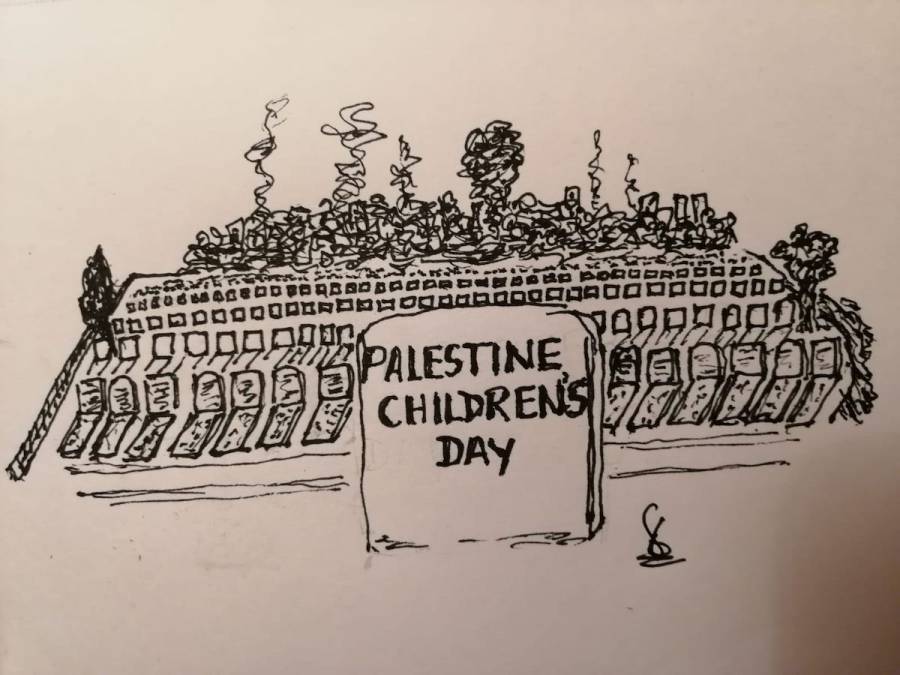
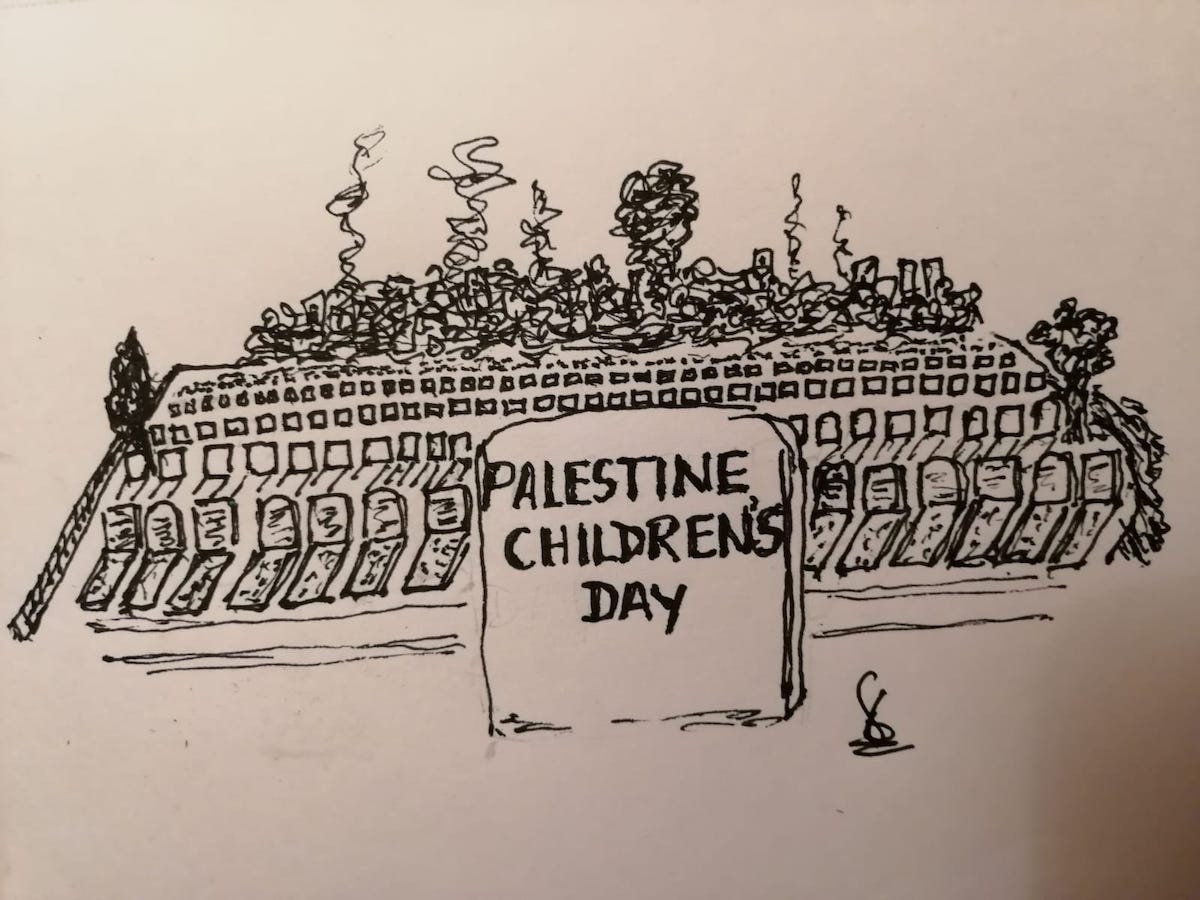
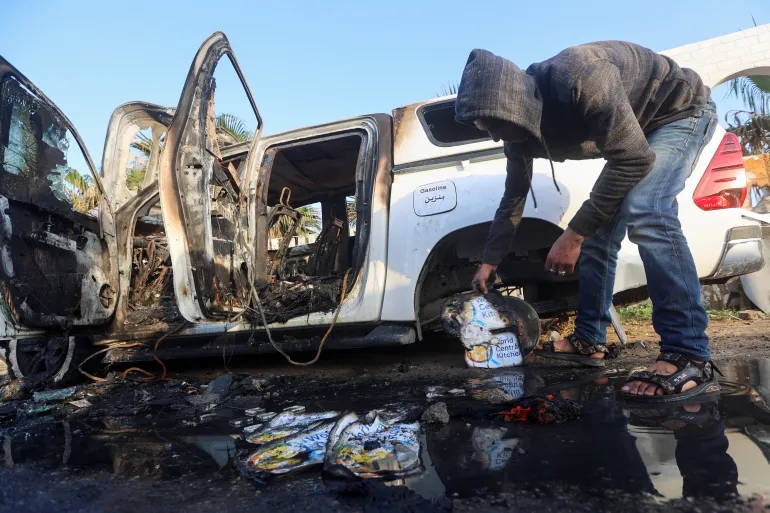
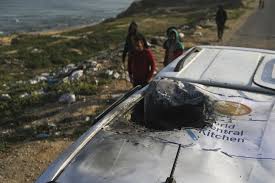


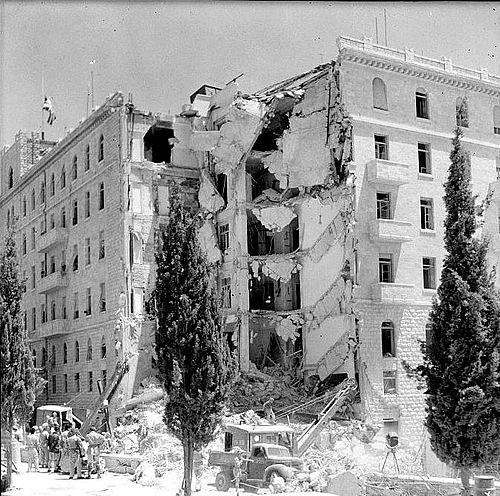
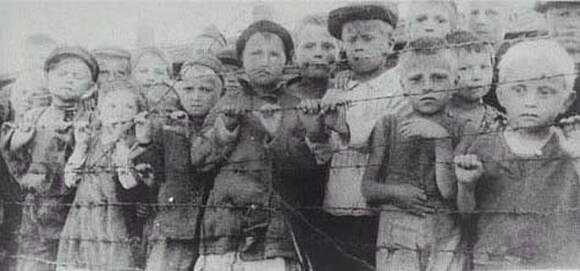

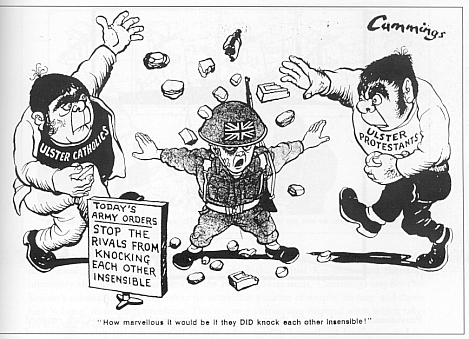

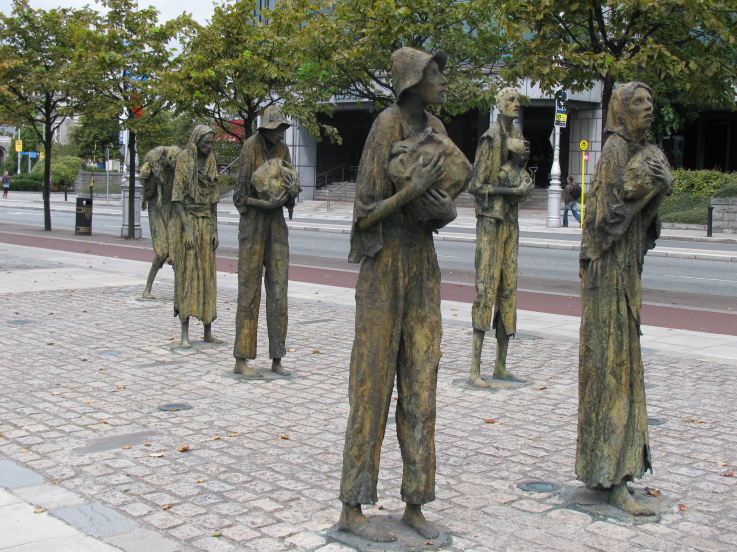

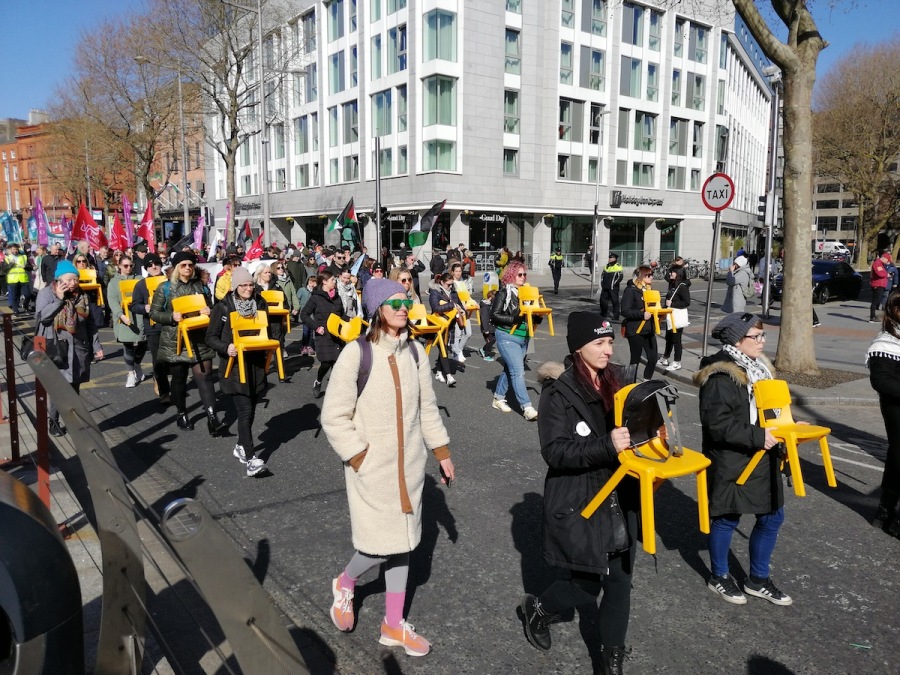
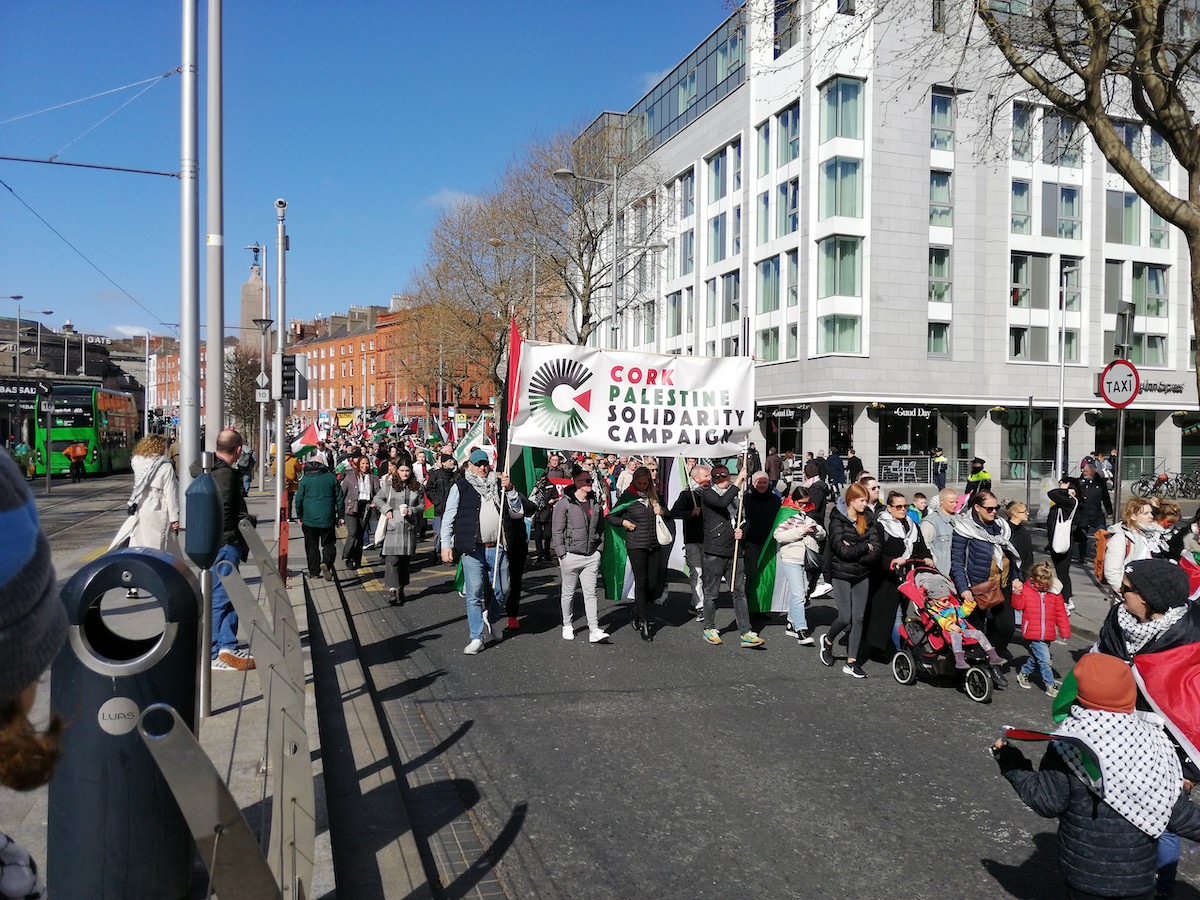


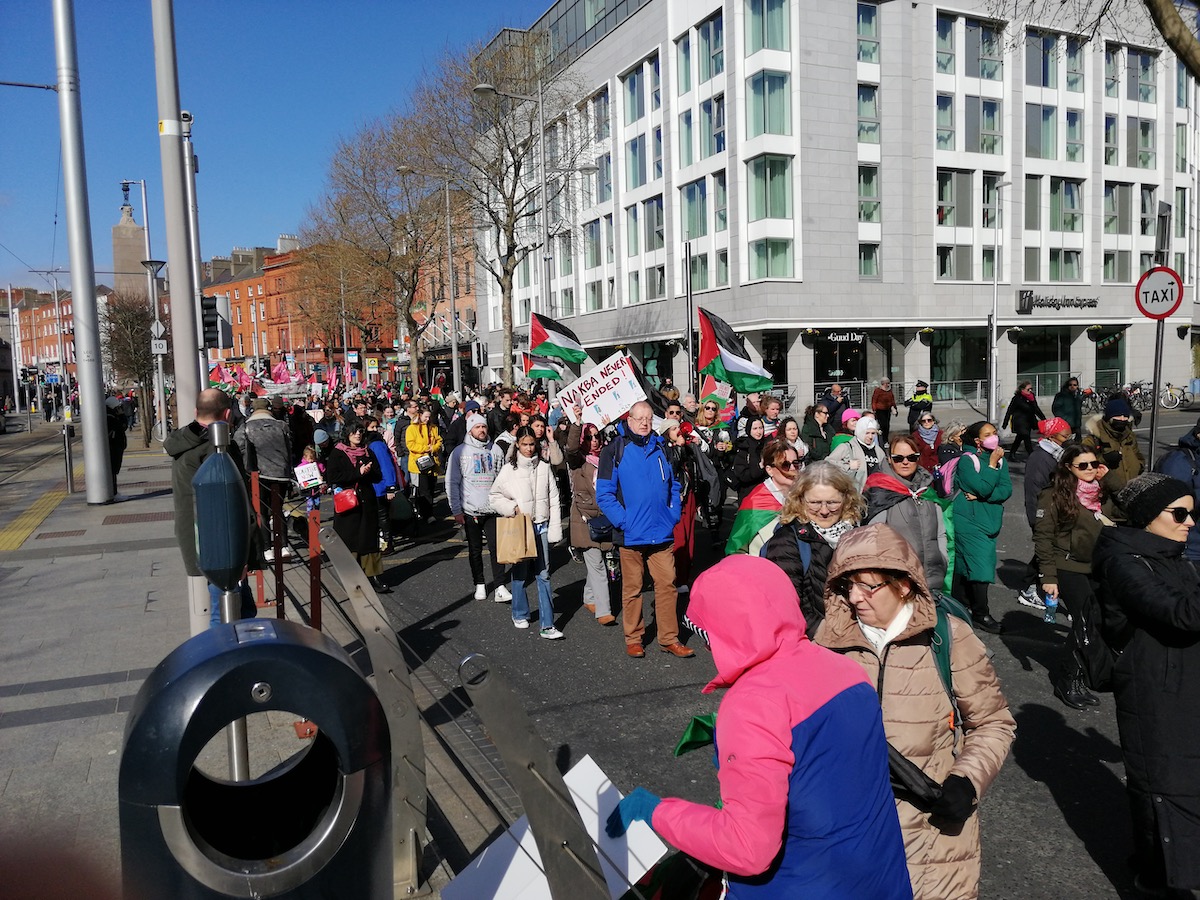
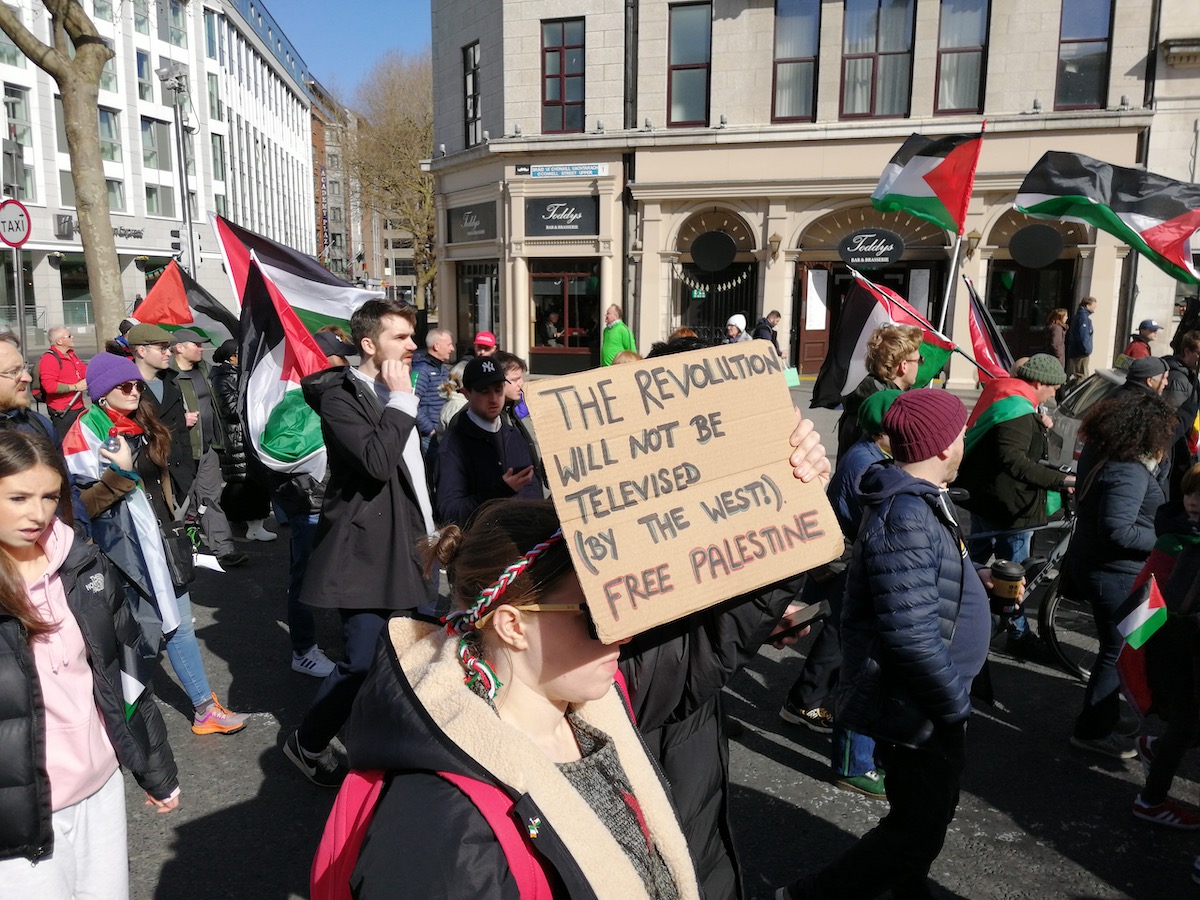


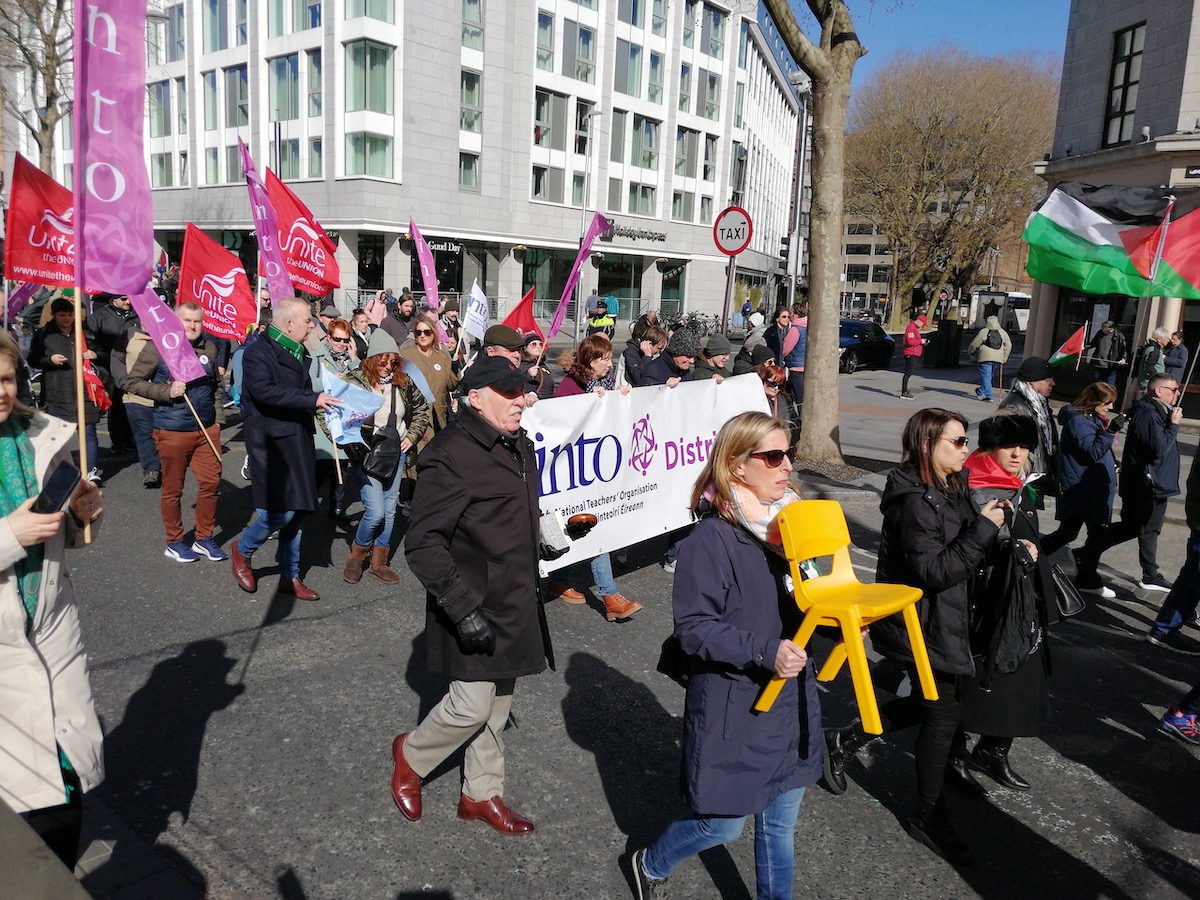


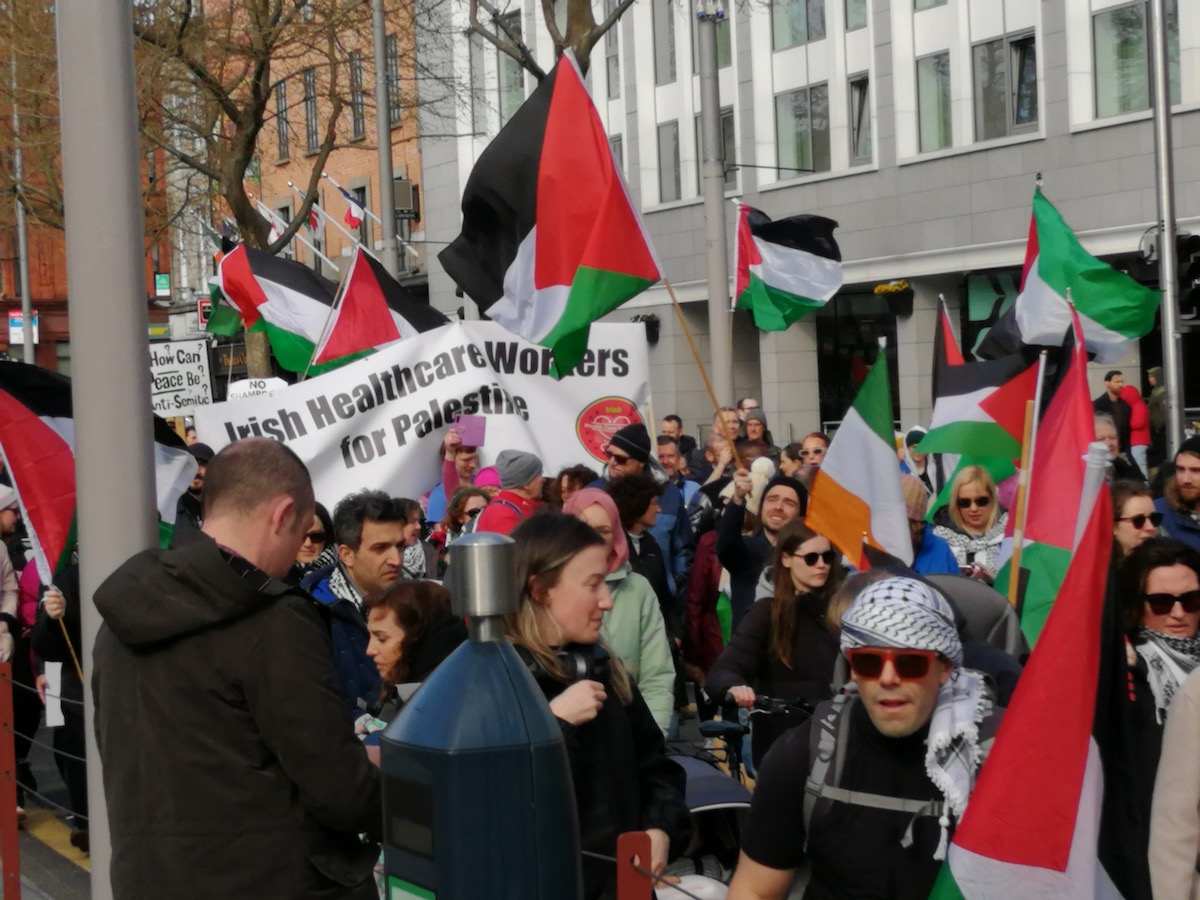
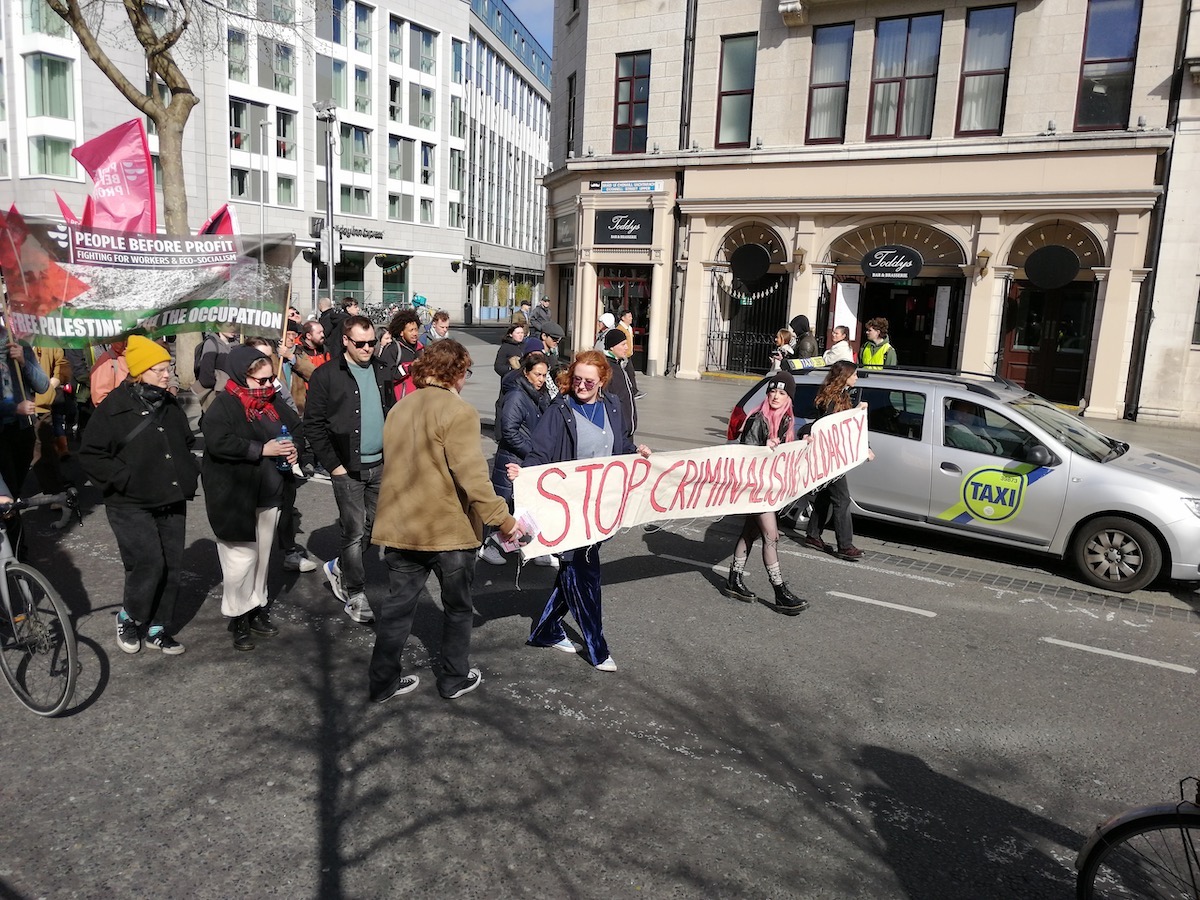

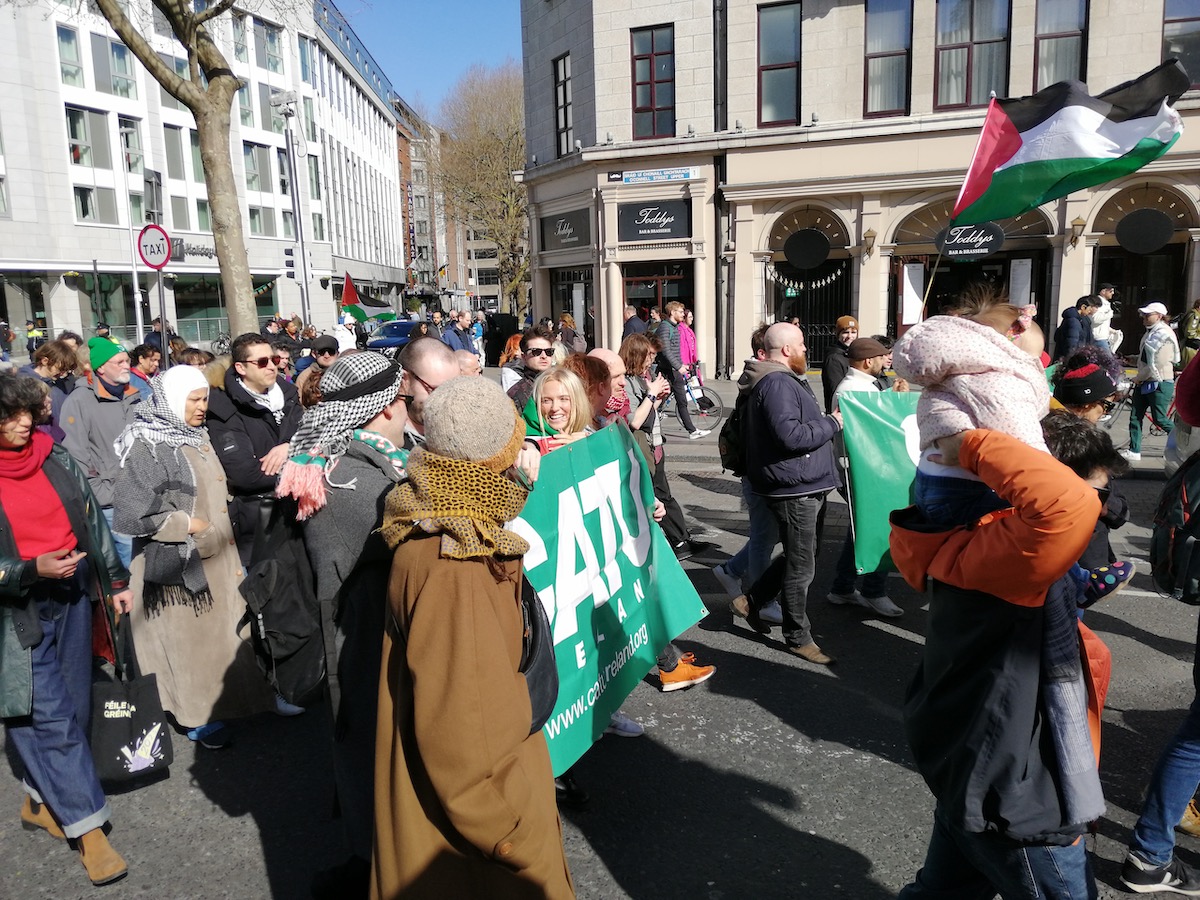

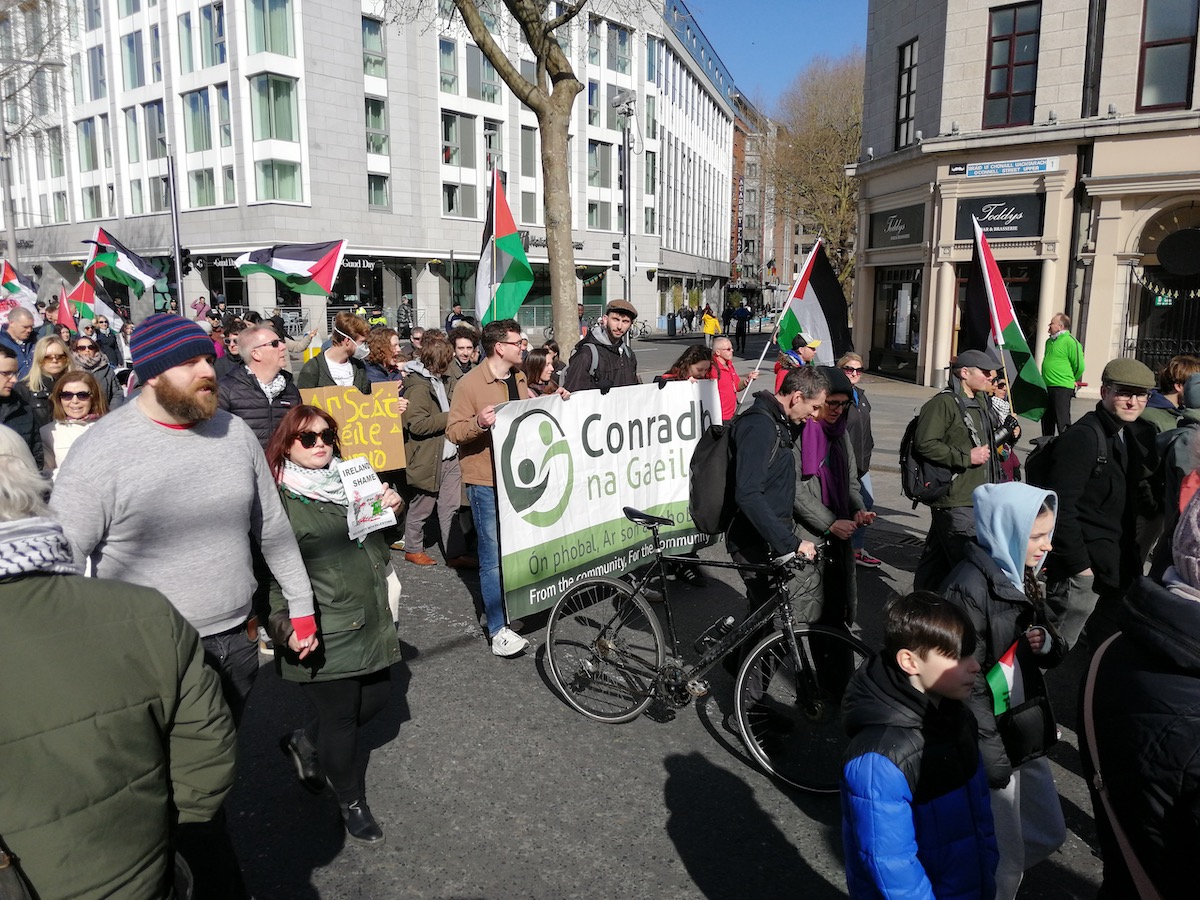
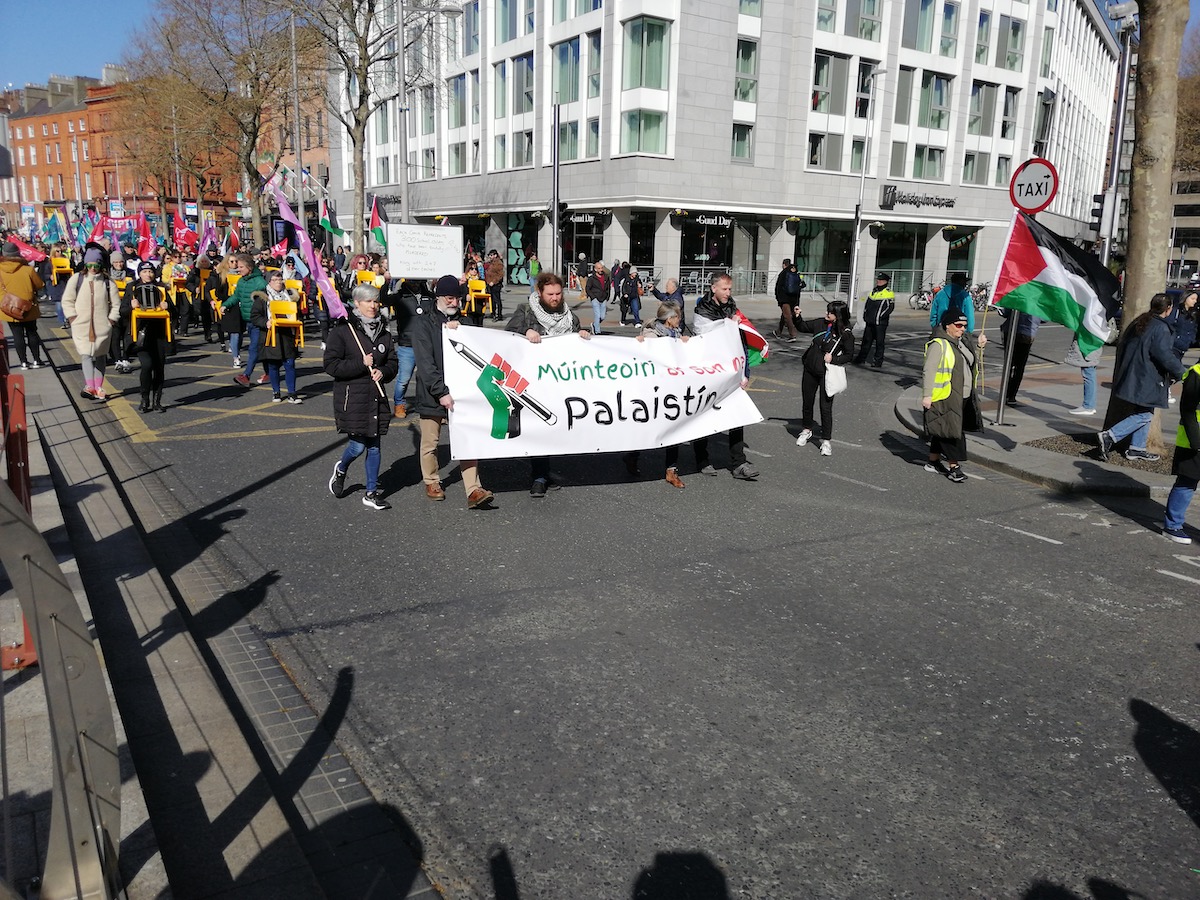
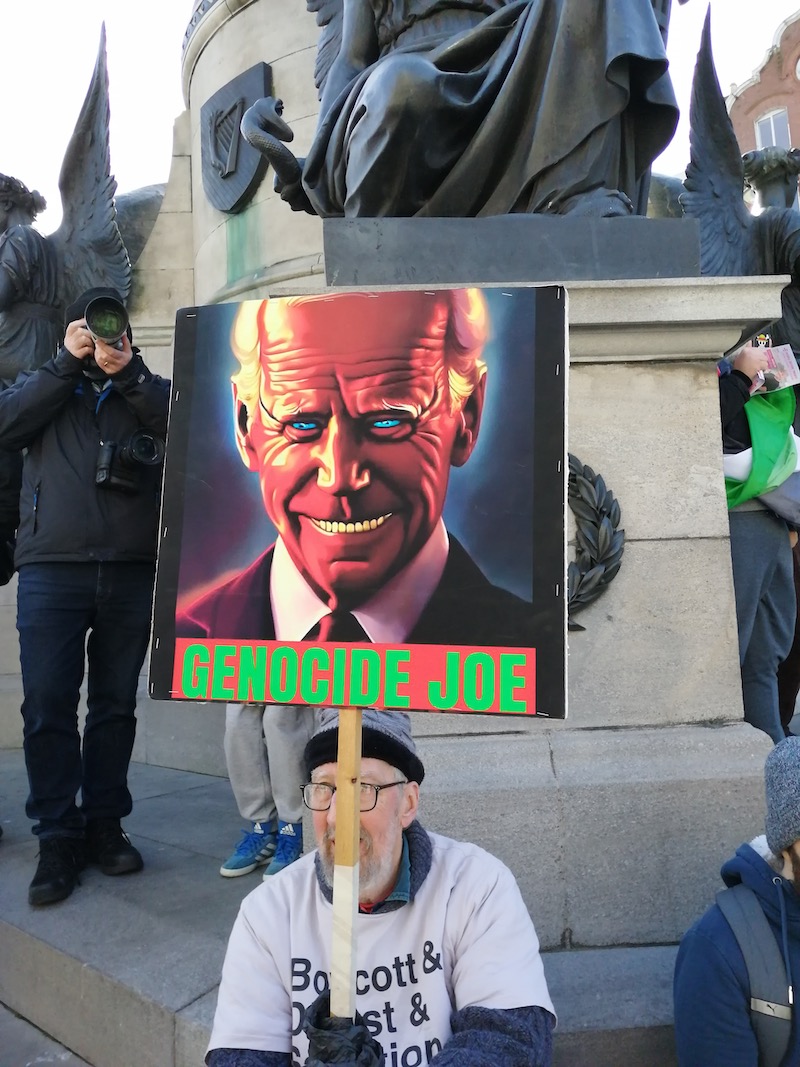

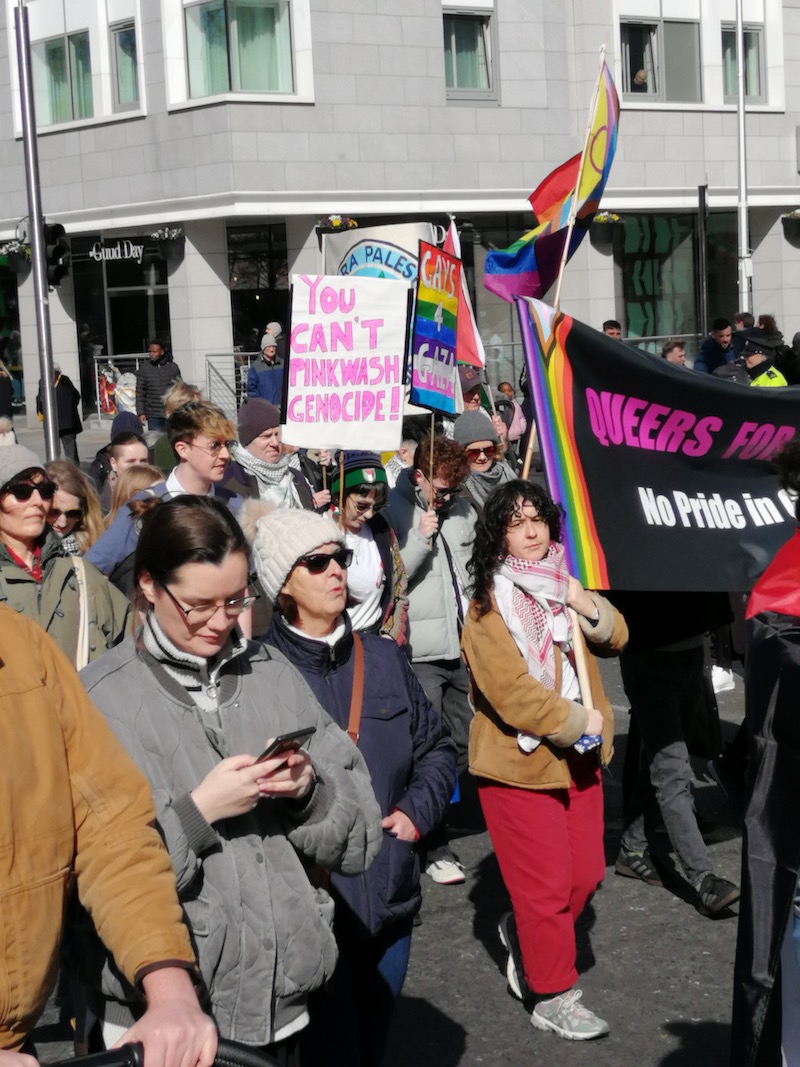


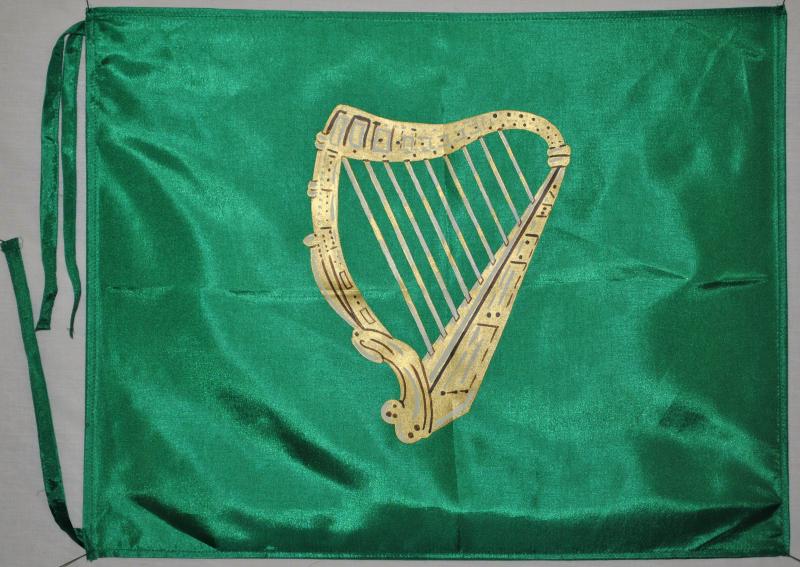


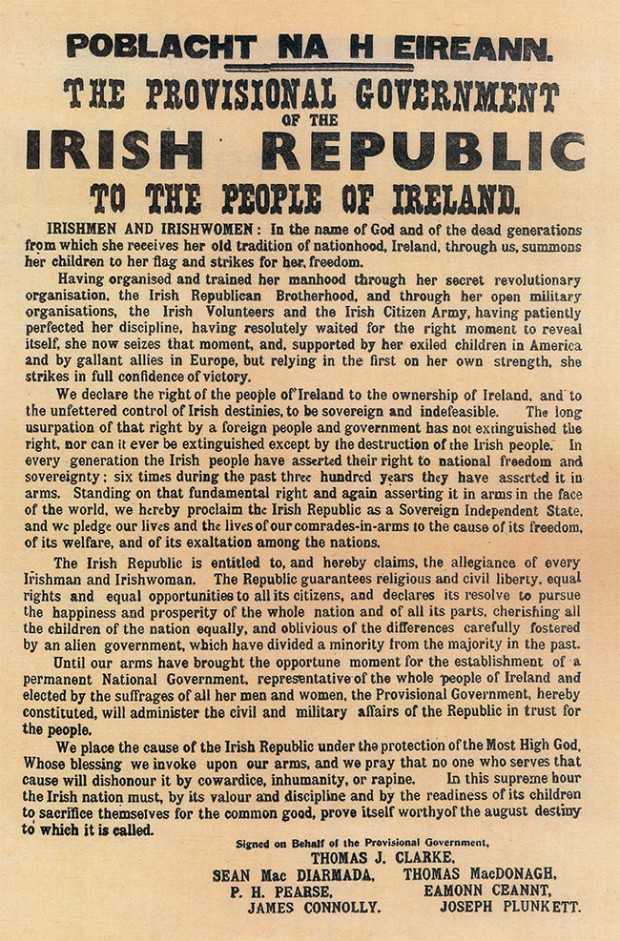
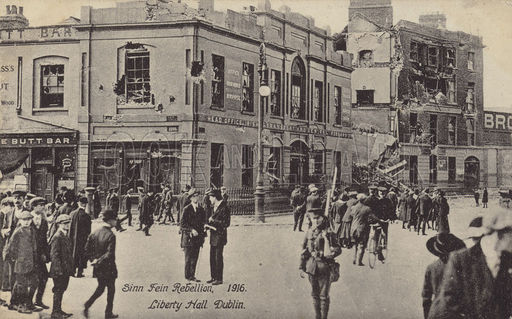


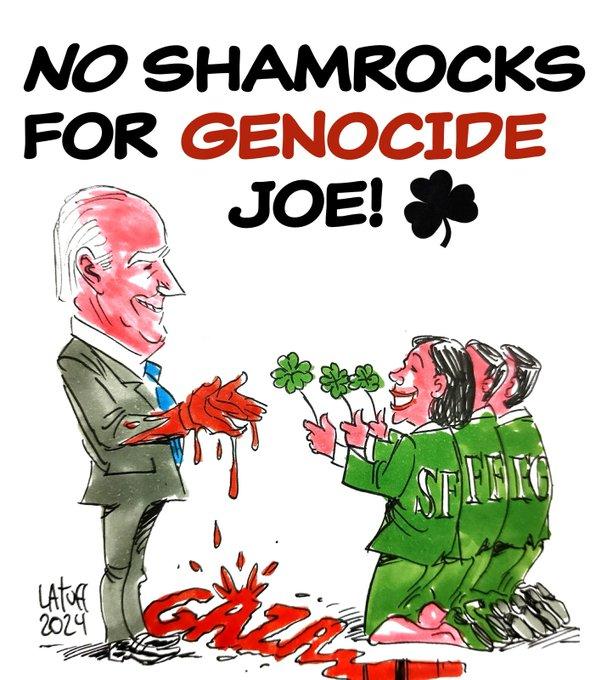
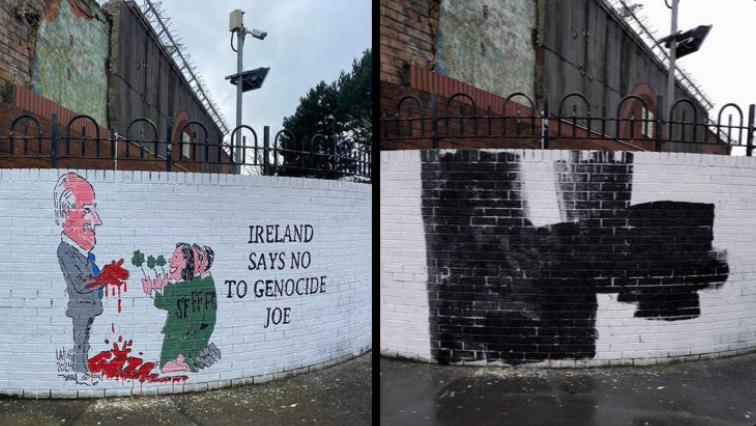
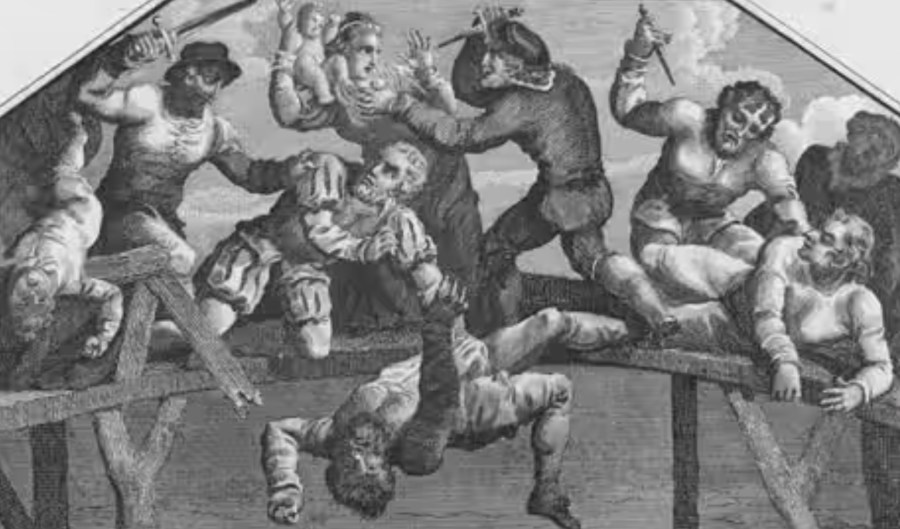


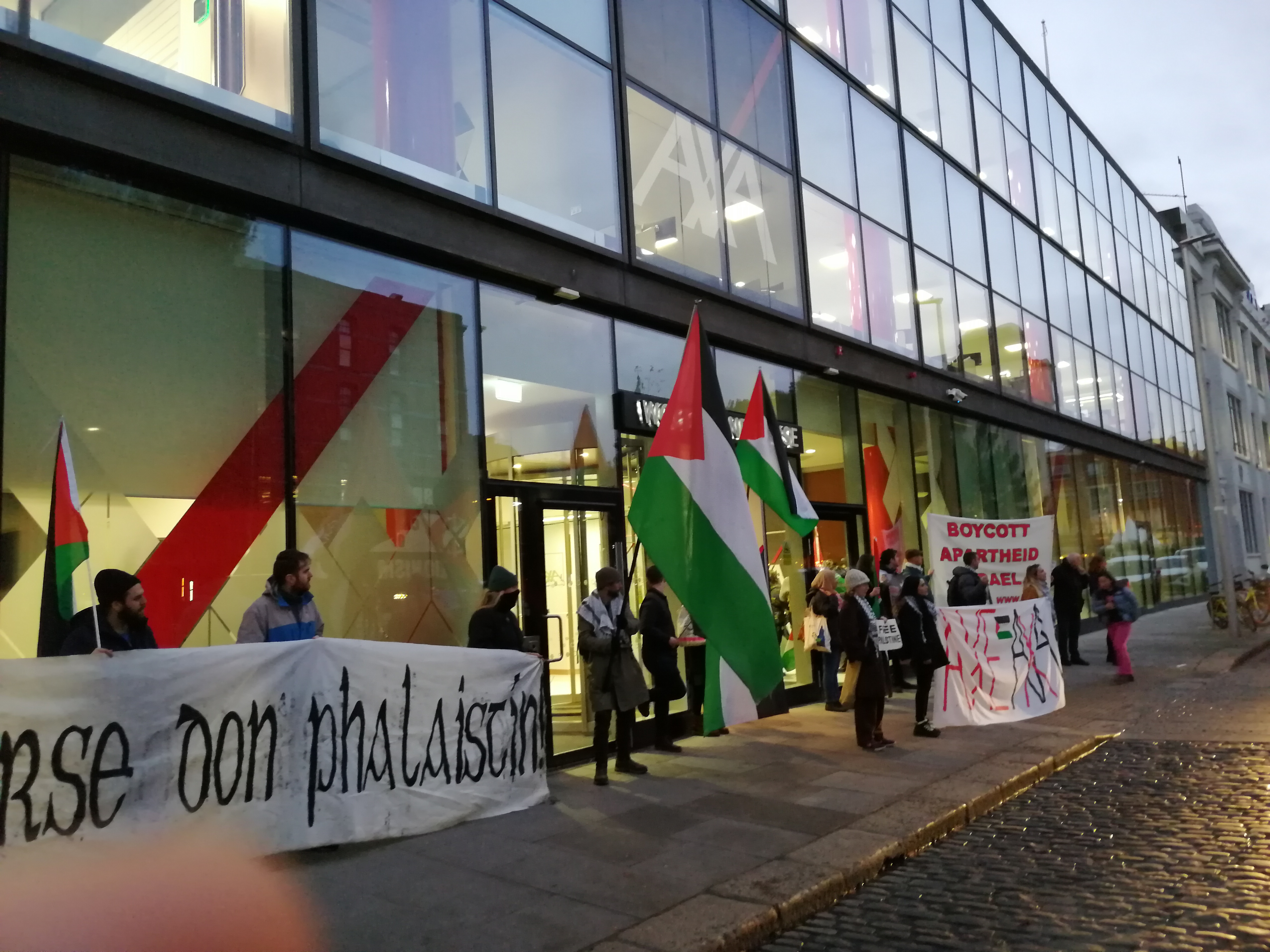
 rebelbreeze