Thousands of ex-ISIL (ISIS) fighters and their families have been freed during the Syrian government forces assault on the SDF-guarded Al-Shaddadi jail. Both sides blame the other for the release although the Government forces admit their assault.
The SDF, mainly Kurdish forces supported by the US/ NATO coalition to oust the former Assad regime, have been guarding an estimated 10,000 prisoners in the jail since the collapse of the ISIS offensive in the region.1
Observers have feared the release of the ISIS fighters and their ‘radicalised’ families since the December 2024 collapse of the Assad regime in a Turkey-supported offensive.
That attack was led by Ahmed Hussein al-Sharaa, former Al Qaeda fighter and second-in-command of the ISIS-supported al-Nusra forces in Syria, a coalition of fundamental Islamist jihadists fighting under ISIS leadership though their leader claims to have fundamentally changed.
Ahmed Hussein al-Sharaa changed his name to al-Jolani and claims to have renounced ISIS, proclaimed himself President of Syria and filled his cabinet with ‘former’ ISIS commanders, since which Western imperialist leaders have accepted him and Trump praised him greatly.
Cartoon by Carlos Latuf depicting the Western imperialist makeover of the ISIS Ahmed al-Sharaa to al-Jolani, self-appointed President of Syria (Sourced: Internet)
The western powers cancelled his designation of ‘terrorist’, presented their compliments at his throne, some, including French and German envoys, travelling to meet him2 (even before the $10m bounty on his head3 had been removed). Or invited him to call, as Macron did for France.4
Al-Jolani offered friendship to ‘Israel’ even as the IOF occupied additional parts of Syria and bombed any remaining military installations of the Assad regime.5
THE KURDISH-LED SDF, TURKEY AND AL-JOLANI
The objective of the SDF had been to overthrow Assad so as to form a Kurdish state within Syria in order to link up with other Kurdish regions to create a federal Kurdish state. Turkey feared this project, having fought decades of bloody war against the PKK in its own Kurdish region.
Apologies for use of CIA map but difficult to get publishable image showing Kurdish-controlled areas within Syria. (Image sourced: Internet)
Consequently Turkey was at odds with US/NATO forces and the participation of the SDF within it, although Trump, as his previous Presidency drew to an end, publicly withdrew support for the Kurdish coalition. Turkey has welcomed the Damascus forces defeat of the SDF.
Since al-Jolani and his own coalition came to power, he attempted to integrate the SDF fighters within his own forces. The Kurds reluctantly agreed but insisted they be incorporated as a unit and not dispersed among al-Jolani’s forces, a proposal declined by the new President.
Since then there have been numerous clashes between the different forces, with the SDF holding their own, until the recent few days when they lost a number of strongholds, including that guarding the Al-Shaddadi prison, leading to thousands of former ISIS fighters being freed.
This prison breach, welcomed by Turkey,6 must be viewed with horror by many Syrians, in particular by the Yazidi, Alawite, Druze and Christian communities who have been subjected to home invasions, humiliation and massacres, along with rape and kidnapping of women.7
Neighbouring Iraq, Lebanon and even Jordan have cause to worry too.
Again, difficulty in getting publishable map showing Syria with its neighbours but also Iran. (Image sourced: Internet)
In sifting through the disputing claims, it is worth noting that the SDF claimed that the International Coalition base, only two kilometres away from the jail in Syria’s Hasakah province, did not respond to calls for assistance8 and the SDF denounced the failure of the USA’s forces to support them.9
It is relevant too that the SDF are not Islamist Jihadists and fought them many times in Syria, although it is true that the Western powers, while supporting the SDF, also supported and instigated ISIS to overthrow Assad, although bombing them too in periodic control operations.10
Events from the coming to power of Al-Jolani to the freeing of the Al-Shaddadi Prison may hold lessons of importance too for some strains of the Western Left and Liberals who supported the insurgent opposition to Assad in favour of ‘democracy’ while parroting mass media propaganda.11
It may also add a cautionary example to the dictum that ‘the enemy of my enemy is my friend’, often quoted by otherwise anti-imperialists who supported the IDF’s alliance with the US/NATO to overthrow the Assad regime.12
CUI BONO? WHO GAINS?
What now? (Cartoon by D.Breatnach)
One might think that the Western Powers, who have been in coalitions fighting ISIS and have suffered some attacks on themselves, including the Al Qaeda attack on New York’s Twin Towers, would be strongly opposed to this liberation of thousands of experienced Islamist jihadist fighters.
But if so, how are we to understand the refusal of the Coalition forces to intervene during the attack on the SDF forces guarding the jail? Or the Western Powers legitimising of the Al-Jolani regime running Syria, despite the al-Nusra background and religious sectarian massacres since?
It is difficult to avoid the conclusion that the imperialist powers wish to see those Islamic fundamentalist ex-fighters freed — but what could be their purpose? To instigate an internal conflict in Lebanon, perhaps, occupying Hezbollah away from ‘Israel’ and excusing foreign intervention?
Or keeping the Iraqi Government busy and deepening its reliance on US forces just as it seems to be asserting some independence. Or to sent north-eastwards against Iran. One thing is clear, the Western Powers allowed it and the reason nothing to do with concern about jail conditions.
End.
Note: If you found this article of interest, why not register with Rebel Breeze for free, so that you will be notified by email of subsequent articles. You can de-register any time you wish.
FOOTNOTES
1At the end of 2020, the U.S.-backed militia in northeast Syria held at least 10,000 ISIS prisoners, one of the largest populations of detained Islamists in the Middle East. Thousands of ISIS fighters were captured as the Islamic State collapsed in early 2019. The fighters were held in approximately 14 detention centers operated by the Syrian Democratic Forces (SDF), the U.S.-trained Kurdish and Arab militia that fought ISIS in Syria.https://www.wilsoncenter.org/article/islamists-imprisoned-across-middle-east
6From The Cradle, on Telegram: Omer Celik, spokesman for Turkish President Recep Tayyip Erdogan’s ruling AK Party, said that recent gains by Syrian government forces had “thwarted” attempts by Kurdish groups to obstruct Turkiye’s peace process. Feti Yildiz, deputy leader of the government-aligned Turkish nationalist MHP party, described Sunday’s agreement in Syria as having “a favorable impact.” “Things will become easier,” Yildiz told reporters in the Turkish parliament when asked how the Syrian deal affects the PKK process. “It had been standing like an obstacle, and for now it looks as though that obstacle has been removed.” Turkish security sources, speaking to Reuters on condition of anonymity, called the deal a historic turning point.
10The SDF contains female Kurdish and Yazidi fighters too which would be anathema to Islamist fundamentalists.
11It should not be understood from this that I was a supporter of the Assad regime; I attended demonstrations against imperialist invasion and regime change while also refusing to support the regime itself. I had arranged with Eva Bartlett, a much-publicised critic of the regime-change operations of the US/NATO forces, to organise a Dublin public meeting for her to address and had her stay at my home. After learning that I was also going to criticise the regime position against the Kurds she left without explanation and I had to cancel the meeting venue booking.
12In discussions with Anarchists of the WSM (organisation no longer in existence) and Irish Republicans of (Éirigí organisation much diminished since and now in coalition with another group) I refuted the correctness of application of this principle to the major imperialist power in the world, the USA. At a conference of the Éirigí group I spoke from the floor in criticism of that and some other aspects of the SDF and was heavily criticised from the floor also while the Chairperson reiterated support for the SDF. Though no-one spoke in my support, at least three Irish Republican activists approached me afterwards to express their support for my statements.
Writing about Christmas and war tends to focus on Christmas celebration as a counter to war,1 or alternatively on how hard it is to be celebrating Christmas in the midst of war. However, in much of West Asia, Christmas is now very much apartof the war.
This is certainly the case in Lebanon, Syria, Gaza and the West Bank and even inside ‘Israel’.
Among the peoples of this majority Muslim region the festivities are primarily those of Christian communities. Yet the broad Muslim population has no issue with the religious aspect of the festival, nor even with the iconic symbolism of the Holy Family and the birth in a manger of Jesus Christ.
The latter, among Christians believed a human incarnation of God, is also revered among Muslims but as a prophet, though of course lower in ranking than their highest-ranking prophet, Mohammed (c. 570 – 8 June 632 CE), allegedly of the Banu Hashim clan of the Quaraysh Arab tribe.
Among the Judaic religion, Jesus Christ is also believed a prophet.
It is important – and not just for historical reasons – to note that the major perpetrator of religious persecution from the Middle Ages on has been Christianity, led by European Christian elites persecuting followers of Judaic and Islamic religions and employing the Inquisition2 against them.
Earlier of course Christianity had its internal divisions resulting in one part of Christianity persecuting another (the East-West schism) and then later the split of the Reformation, with religious and temporal powers in war and in persecution of one another and of subject populations.3
The chief object of Christian religious persecution overall was the Jews and the objects of that persecution found sanctuary in many Muslim countries and, in general, within the Austro-Hungarian Ottoman Empire.
Leaders of a number of Muslim states today are traditionally at pains to demonstrate their acceptance of Christian communities and this Christmas both Mohammed Shia al-Sudani, Prime Minister of Iraq and President Masoud Pezeshkian of Iran once more did so publicly.
Mohammed al-Sudani attended a Christian service and Masoud Pezeshkian visited a Christian family.4
Of course, Christmas as celebrated generally across the West is more – and one might say also much less – than a Christian or even a religious festival, with emphasis on feasting, alcoholic consumption and expenditure on presents.
Much of the symbolism too owes more to pagan religion than to Christianity.5
With a number of those aspects, including consumption of alcohol (traditionally forbidden by and to Muslims), pagan symbolism and more than a nod to western imperialist culture, many Muslims may take exception but even then not at all to celebration of the alleged birth of Jesus Christ.
However, for those wishing to cause divisions in predominantly Islamic societies, or in imposing their sectarian absolutist rule on society, the celebration of Christmas has become a hostile target in Lebanon, Syria, Gaza, the West Bank and even inside ‘Israel’.
LEBANON
Lebanon is the most ethnically-diverse of the West Asian states, approximately one-third Christian, one-third Shia Muslim and a third Sunni Muslim. For years, Christmas has been celebrated not only by the Christian community but also, to varying degrees, by the other ethnic groups also.
It is extremely worrying therefore when a primary schoolteacher taught her girl pupils and filmed them not only renouncing Christmas as ‘non-Muslim’ but calling its celebrants the equivalent of heretics. There was widespread shock when she uploaded the video she had made of the girls.
Not surprisingly, the teacher was sacked but this too was orchestrated into a controversy with extreme religious sectarians coming on to the streets to protest, including former sectarian terrorist and ex-convict for bombing a church Samir Geagea of the sectarian Lebanese Forces militia).6
SYRIA
Under the new regime in Syria, celebrating Christmas can get people killed.The celebration was not controversial in the majority Islamic but secular state of Syria under al-Assad but that changed following that regime’s overthrow by western-supported Islamic fundamentalist jihadists.
During Christmas 2024 units of the fundamentalist jihadist coalition under self-appointed al-Julani (formerly Ahmed al-Sharaa of the Syrian chapter of ISIS) led attacks on Christians, forbade the erection of Christmas trees and knocked down and burned some that had been erected.7
Earlier this year Sayara Ahl Al-Sunnah, a Syrian terrorist organization split from the ruling Hay’at Tahrir Al-Sham (HTS) of al-Julani in February carried out a suicide attack on the Mar Elias Greek Orthodox church in Damascus, killing 30 Christian worshippers.8
Not just Christian communities are targeted in this ‘new democratic Syria’ so beloved of the Western powers but primarily really the Shia Muslim offshoots of Alawites9 and Druze10 communities. Both these communities are now mobilising in self-defence against the new rulers.
PALESTINE
In Gaza, blockaded and besieged, starving, flooded, homeless, cold, bombarded, even thinking of a festive celebration seems a crazy idea yet some have attempted to celebrate Christmas this year11 although any gathering of Palestinians seems an invitation to an IOF raid or even bombing.
In the West Bank, the Christian pastor12 in Ramallah, Isaac Munther, faced with the accelerating genocide in Gaza in 2023 declared there would be religious observation only and no Christmas celebrations of lights etc … but his sermon and Christ-nativity-in-rubble scene went ‘viral.’
Munther did the same during Christmas 2024 but this year the West Bank faces its own escalation of Palestinian home demolitions, army invasions, settler attacks on homes, livestock, farmland. However the IOF attacked some Palestinians who did try to celebrate a western-style Christmas.
Palestinians of other Christian denominations also tried to celebrate Christmas but met with repression and in Bethlehem there were clashes with Palestinians in Santa costume assaulted and arrested by ‘Israeli’ Occupation Forces.13
Occupied Palestine (‘Israel’ sic) also saw a Palestinian ‘Santa Claus’ being arrested by the IOF and Palestinian celebrants assaulted in Haifa.
As the supposed Holy Land where Jesus Christ was allegedly born, Christian tourism makes a significant contribution to the income of the Zionist state.14 But even so, Palestinian Christians and even tourists have complained of being menaced and spat at by militant Zionist settler youths.15
The Israeli Zionist state likes to promote itself as culturally representing the West much more than the East – which it certainly does – but seeing this repression of Christians even celebrating Christmas, one has to wonder what kind of ‘western society’ is this?
Meanwhile, in Rome …
Discussion of Christmas entails a mention of the majority sect of western Christianity, the Catholic faith and of its leader, the Pope. And the relatively new Pontiff – and first USA-born one – did in fact refer to Gaza in the traditional Papacy Christmas message from the Vatican.
Leo XIV’s message has been lauded by some in apparent ignorance of the political position of the Vatican and of its Papacy, which has been always to support western imperialism, or in his advocacy of Zionist colonisation in the western support for a two-State solution (sic) in Palestine.16
But for democracy and anti-imperialist unity …
Republicans reject any religious role in the management of the state or of its institutions – including education17 – but should also protect the freedom to worship or celebration of festive period of any personal or organised religion — and indeed also the right to promote atheism or agnosticism.18
Anti-imperialist revolutionaries whether secular or not need to oppose religious sectarianism and promote unity in the face of imperialism. It is imperialism and colonialism that promotes inter-religious conflict and fosters fundamentalist sectarians in order to undermine anti-imperialist resistance.
End.
Note: If you found this article of interest, why not register with Rebel Breeze for free, so that you will be notified by email of subsequent articles. You can de-register any time you wish.
2Although it later became an instrument of Rome to ensure orthodoxy in religion, literature and science, the Inquisition was originally instituted in Iberia as a controlling agent over the forced conversions of Jews and Muslims to Christianity and later also operated as an instrument in control of the Spanish colonies.
3Of which we in Ireland have centuries of experience.
5The ‘old man of the woods’ Santa Claus or God of thunder and lightning in a sky-chariot pulled by horned beasts (two of which are also allegedly named Thunder (Donner) and Lightning (Blitzen) and the Christmas Tree and/ or Yule Log, pagan symbols of a festival signalling the turn of the seasons.
14“While there is no precise figure for how much Israel earns specifically from religious tourism, estimates suggest that Christian holy sites alone generate around $3 billion each year to the Israeli economy under normal circumstances — with over half of all tourist arrivals coming from Christians — and a quarter of those visitors going to Christian holy sites.” https://religionunplugged.com/news/war-in-gaza-and-the-disruption-of-pilgrimages-to-jerusalem
17This is an issue in many lands including Ireland where the Irish State and the colony’s both pay the salaries of teachers employed in religious-ethos schools. People have a right to religious education for their children should they wish it but in no way should the State facilitate such and, on the other hand, all children are required to attend formal education supplied by the State.
18The 1916 Rising Proclamation: “The Republic guarantees religious and civil iberty to all …”
Prominent among the many words quoted from Theobald Wolfe Tone, ‘the father of Irish Republicanism’, are that ‘Our Strength shall come from that great and respectable class, the men of no property’.
The interpretation of those words has led to some confusion between socialism and republicanism.
Wolfe Tone, as he is normally known historically, co-founded the Society of United Irishmen in 1791, which led a mass armed uprising in 1798 against British Rule in Ireland, as a speaker said at the Anti-Imperialist Action’s oration at their annual commemoration at Tone’s grave last month.1
Tone himself was arrested on a French ship captured by the British Navy and despite his French Army officer rank, tried on treason charges and sentenced to death upon the gallows … but died instead in prison of a wound to his throat.
Wolfe Tone Monument, Stephens Green, Dublin (Photo cred: National Built Heritage Service)
An important part of the leadership of the United Irishmen, most of the Leinster Directorate was arrested in Dublin but the Rising went ahead in other parts of Ireland, notably Antrim, Wexford and Wicklow, and another with French troop reinforcements, too few and too late, in Mayo.
The Rising was crushed, the leaders executed or exiled, along with many of their followers. A large body of Irish traditional and folk song, mostly in English and much of it composed in its centenary, commemorates the struggle and sacrifice of the United Irishmen.
The AIA speaker: “Tone’s most important belief was that we must ‘break the connection with England’ by any means necessary – one of the most important teachings for the Revolutionary Republican Movement today,” to work “for National Liberation by any means we decide necessary”.
No-one who has even the most cursory acquaintance with the historic figure of Wolfe Tone can deny that he was determined to break away from English colonial rule and, once he became convinced there was no peaceful way to do so, was determined to do it by force or arms.
“Tone was also clear that the revolutionary struggle could only be successful,” continued the speaker, “if it was based on the masses of the Irish People, stating that, ‘Our Strength shall come from that great and respectable class, the men of no property’.”
From that, the speaker went on to claim that “we learn from Tone that the fight for our Republic is a class struggle and that the driving force of that struggle will be the working class fighting for their own liberation.”
I do not believe that the writings or recorded words of Wolfe Tone justify that interpretation. Indeed, it would have been strange if they had; the 1798 Rising was what Marxists describe as a “bourgeois revolution”, i.e. one led by a section of the capitalist class in its own class interests.2
Such also were the Revolutions in England of 1649 and 1688, of the French in 1789 and the American in 1765-1783, the Italian of 1848, the Chinese of the early Kuo Min Tang and the Latin American revolutions against the Spanish Empire, along with the Mexican 1910-1920.
Yes, the capitalist class, which is always telling us to employ only constitutional means to get what we need or want, tries to conceal that they themselves came to power by revolution.
Colorised illustration by unknown artist of the storming of the Bastille in July 1789 (Source: Wikipedia)
The leadership of the United Irishmen was almost totally of the established Anglican church or of Protestant sects – “Protestant and Dissenter”, in Tone’s words. They were descendants of settlers from Britain and they were of bourgeois social strata.
This section of the bourgeoisie and petit-bourgeoisie were fed up with restraints imposed from England on developing the colony’s potential, on a taxation system they considered unfair, on corruption in the Irish Parliament and in management by the Monarch’s representative in Ireland.
Being only a very small minority of the Irish population3 they were aware that they needed the mass behind them in order to build an independent national economy, for which they tried to gain Catholics admission to the Irish Parliament, which at the time only admitted Anglicans as MPs.
When Henry Grattan, who had earlier led quite a rebellious Irish Parliament,4 failed in the attempt to make Parliament more representative, Tone and many others became convinced that only revolution could progress society in Ireland and from then on he strove to bring that about.
Grattan
Statue of Henry Grattan, failed reformer of the Irish Parliament, situated in Dame Street junction with Grafton Street and facing Trinity College. (Photo cred: Trip Advisor)
A revolution against England, a great European naval power, even with the help of revolutionary France, would require mass participation and support, as the AIA speaker remarked at the commemoration. So Tone aspired to the unity of “Catholic, Protestant and Dissenter.”
The section of the religions that most fell into the category of the “men of no property” were of course the Catholics, dispossessed of their lands and under Penal Laws of the Occupation. Without the support of the Catholic majority there was no chance of a successful revolution.
Tone may well have been a most democratic Republican in favour of all kinds of progressive social reform but nowhere in his writing does he advocate the overthrow of the bourgeoisie, seizure of private property and the setting up of a socialist system to be run by the working class.
united men
Reenactment of the United Irishmen in battle, depicting the “men (and women) of no property. (Photo sourced: Internet)
Theobald Wolfe Tone was a courageous democratic revolutionary, anti-colonial and a martyred patriot but was not nor could have been a socialist leader. That which he was, was the best of his time and among the best we had to offer and there is no need to try to make him something else.
The United Irishmen represented a section of the Irish bourgeoisie that was truly Republican and revolutionary. That section of society was mostly of settler descent since the mass of the native and Catholic population had been ground down and oppressed.
Thereafter most of the native Irish bourgeoisie developed as a subservient client class, “Castle Catholics” ag sodar i ndiaidh na n-uaisle,5 up to whatever “cute hoor”6 and gombeen7 tricks they could get up to but without a fraction of the spine necessary to fight for real independence.
A successful Irish national revolution does indeed need to be led by the Irish working class as demonstrated by what James Connolly – rather than Wolfe Tone – observed: “Only the Irish working class remain as the incorruptible inheritors of the fight for freedom in Ireland.”
The reason for that, as outlined by Connolly, is quite simple: the working class is the only social class of any size that has nothing to gain from compromise and betrayal of the revolution.
Some other key points laid down by Tone, continued the speaker, include that Republicanism is Anti Imperialist and it is Internationalist. Our struggle in Ireland is part of a wider international struggle of oppressed people against occupation, colonialism and imperialism.
Tone understood this when he looked to Revolutionary France to support the 1798 uprising.
This was well understood by Irish Republicans of Tone’s time who celebrated the fall of the Bastille in 1789 and the defeat of the English by the settlers in America. The United Irishmen also helped the creation of the United Englishmen and led two of the British Navy’s most serious mutinies.8
Today, continued the speaker, Republicans must fight our struggle while also supporting Liberation struggles around the world in the belief that every blow struck against imperialism brings our victory closer.
So from Palestine to the Philippines and from India to the Basque Country, and everywhere people take a stand against NATO, the Revolutionary Republican movement must raise our cries in solidarity.
End.
Footnotes
1The event was organised by Anti-Imperialist Action, a socialist republican organisation, with the oration being given on behalf of the organisation. A pilgrimage to Wolfe Tone’s grave in Bodenstown is a fixture on the calendars of most Irish Republican organisations.
2This should not be taken as a criticism since Marxists agree that many bourgeois revolutions were progressive in their time.
3Tiny, in the case of the Anglicans in particular; the Presbyterians were much more numerous.
6An admiring description in Ireland for one who manages to benefit by dubious means.
7Corruption of an Irish language term for the ‘carpet bagger’ types who benefited amidst the disaster of the Great Hunger in the mid 19 Century, snapping up land in particular at the lowest of prices.
According to media reports, Taoiseach Leo Varadkar said he expects to see a united Ireland in his lifetime. I think he’s wrong but he’s entitled to his opinion. However, some of his following remarks are objectionable and need to be challenged.
Varadkar claimed that in a united Ireland “there will be roughly a million people who are British.” That is false. There may – or may not – be a million IRISH PEOPLE who consider themselves British in a united Ireland, we’ll see. But they will be IRISH CITIZENS.
And they should have equal rights with all other citizens. They should have an equal right to vote, to housing, to their language, without any special restrictions, not to mention pogroms – in other words, nothing like the way their statelet treated its large Catholic minority.
A British soldier stands in front of a section of the burned out houses of Catholics in Bombay Street, Belfast in 1969 (which the Army did not try to prevent Loyalists burning). The arson was the Loyalist response to demands of Catholics for civil rights (while the colonial police response was batons, bullets and gas). (Photo source: Clonard Residents’ Association)
I agree with Varadkar that the quality of a country should be judged “by the way it treats its minorities.” So Varadkar, how did and does your Gombeen State treat its probably oldest ethnic minority? You know, the Irish Travellers?
It is true that “a Republican ballad, a nice song to sing, easy words to learn for some people can be deeply offensive to some people.” Presumably he means to Unionists and Loyalists. Yes, and antifascist and anti-racist songs can be deeply offensive to fascists and racists.
It is also true that some people in the Southern States sing songs about the Confederacy and Robert E. Lee and call it their culture. And the comparison fits – but not with Republicans but with Loyalists!
One of the charming annual expressions of Loyalist culture: a huge bonfire to burn Irish Tricoloursand representations of Catholicism. Palestinian flags and representations of Celtic FC are frequently burned too. Slogans such as KAT (‘Kill All Teagues [i.e Catholics]) are often displayed also. (Photo source: Wikipedia)
It’s not Irish Republicans who spread racism and sectarianism: the Republican creed came into existence precisely against sectarianism. And we know Varadkar actually knows that because not long ago he made some remarks about the wide embrace of the Irish Tricolour.
The Irish Tricolour: a flag presented to revolutionary Irish Republicans by revolutionary French Republican women in Paris in 1848. Not a flag of monarchism, sectarianism or collusion with imperialism or colonialism.
While we uphold Republican principles we don’t have to apologise to anyone, least of all in our own country, Varadkar. It’s you and your party (and the rest of them serving the Gombeen class who threw away independence and slaughtered Irish Republicans) who need to be ashamed.
Leo Varadkar, Taoiseach (Prime Minister) of the current Coalition Government, who made the remarks this week. (Photo sourced: Internet)
People living in Ireland can think and feel what they like, good or bad. But in public, we will celebrate the valuable things in our history and culture. And we’ll do so proudly without apology to anyone.
On the other hand, public displays of Orange sectarianism, racism, homophobia, fascism and anti-LGBT targeting won’t be tolerated in an independent, reunited Ireland. Not for one minute.
Pat Reynolds gave this oration in East London Cemetery on Sunday 21st May 2023 for Michael Barrett, the last man publicly hanged in Britain
A cháirde agus a chomrádaíthe,
Tá fáilte go leor romhaibh chun chruinnithe i gcuimhne Michael Barrett inniu. Welcome friends and comrades to this commemoration today for Michael Barret and Patrick O’Donnell. I have been asked to speak of Michael Barret and the movement he represented.
Michael was born in Ederney in the Maguire County of Fermanagh in 1841 and was judicially hanged though innocent by the British Government in 1868 at Newgate Prison, where the Old Bailey now stands.
Newgate prison was closed in 1903 and his remains with others were interred here in this cemetery. He was the last person to be publicly hanged in Britain.
A Fenian bombing took place on 13th December 1867 to try and rescue O’Sullivan Burke the Fenian who planned the successful prison van escape in Manchester.
The bombing blew a huge hole in the wall and demolished nearby tenement buildings, killing 12 people and injuring many others. It led to a huge State-engineered backlash in Britain against the Fenians and put their cause back some 10 years.
Michael Barret, who had gone to Glasgow to work was an innocent man and was in Glasgow at the time of the incident.
False evidence given by a police informer Patrick Mullaly who was given a free passage to Australia implicated Barrett, but he had compelling evidence that he was in Glasgow at that time. After two hours the jury declared him guilty.
One of the trial lawyers Montagu Williams stated of Barrett:
‘On looking at the dock, one’s attention was attracted by the appearance of Barrett, for whom I must confess I felt great commiseration. He was a square built fellow, scarcely five feet eight in height and dressed like a well-to-do farmer.
This resemblance was increased by the frank, open, expression on his face. A less murderous countenance than Barrett’s I have not seen. Good humour was latent in his every feature and he took the greatest interest in the proceedings’.
Barrett ended his speech from the dock thus:
‘I am far from denying, nor will the force of circumstances compel me to deny my love of my native land. I love my country and if it is murderous to love Ireland dearer than I love my life, then it is true, I am a murderer.
If my life were ten times dearer than it is and if I could by any means, redress the wrongs of that persecuted land by the sacrifice of my life, I would willingly and gladly do so.’
The Daily Telegraph the next day stated that Barrett had:
‘Delivered a most remarkable speech, criticising with great acuteness evidence against him, protesting that he had been condemned on insufficient grounds, and eloquently asserting his innocence.’
Michael Barrett monument detail, Co. Fermanagh (Sourced: Internet)
In Fermanagh his aged mother had walked many miles to appeal to the local Tory MP Captain Archdale, a noted Orangemen, who rejected her. Barrett was hanged in front of 2,000 jeering people singing Rule Britannia. The following day Reynolds’ News recorded that;
‘Millions will continue to doubt that a guilty man had been hanged at all; and the future historian of the Fenian panic may declare that Michael Barrett was sacrificed to the exigencies of the police, and the vindication of the good Tory principle, that there is nothing like blood.’
His hangman was the notorious Calcraft who had botched the hanging of the Manchester Martyrs, Allen, Larkin and O’Brien.
There is a huge difference between an accident leading to deaths by patriots fighting tyranny and the deliberate actions of the imperialists, which is why patriots have to be always careful to avoid civilian deaths.
There are many similarities between the Clerkenwell bombing and the Birmingham bombing of 1974.
In both cases they set back the cause of Irish freedom for many years, deeply harmed the Irish community in Britain and was used by the State for repressive measures against the community and to divide off the Irish community from the English working classes.
Disraeli brought in the Habeas Corpus Act and created the Special Branch. Of interest is that their first definition of Irishness was ‘Persons who were born in Ireland or whose recent forebears came from Ireland.” Back in the 1980s the GLC adopted the same definition.
We also had the Birmingham Six case with the ‘appalling vista’ of Lord Denning the Appeal Judge, who later regretted that the six innocent men were not hanged. For Gladstone it set him on his mission ‘to pacify Ireland’.
I ask you two questions today, what kind of people and community gave rise to patriots like Michael Barrett and the Manchester Martyrs, and the second question, what kind of regime or government would hang knowingly innocent men.
To understand the Fenians we have to understand the colonisation of Ireland and in particular the Great Starvation of Ireland An Gorta Mór. Over one and a half million people were starved to death by British imperialism and another two million forced to emigrate to Britain and the USA.
There was no famine in Ireland at this time, and it is imperialistic propaganda to call it such. It was clearly genocide in a land overflowing with food.
The potato crop made up under 25% of the agricultural produce of Ireland, but at this time Ireland was part of the UK where the potato crop was about 5% of the total produce of the UK. I know of no country where there was famine because of a 5% failure of the crops.
Michael Davitt back in 1904 called the Great Starvation a ‘Holocaust’ as did others. Ken Livingstone drew some comparison between the Great Starvation and the experience of the Jewish community during the Second World War.
Hitler named his strategy ‘The Hunger Plan’ where he starved Poles and Jews and others groups of food, and these victims are included in the Holocaust figures including also his starvation of the Warsaw Ghetto.
The shipment of food grown by the people of Ireland to Britain during the Great Starvation was a clear decision by the British government to starve the Irish people.
The Nazi Governor in Poland Hans Frank wrote of the starvation of Jews ‘that we sentence 1.2 million Jews to die of hunger should be noted only marginally’.
The economic theory of laissez-faire is a total invention, within years they could spend millions in Crimea, a place most English had never heard of.
I recall the great Irish writer Frank O’Connor stating ‘Famine is a useful word when you do not wish to use words like ‘genocide’ or ‘extermination’, and again ‘It was not that the people were too simple to realise the Dachau-like nightmare of their circumstances’.
He goes on ‘The word famine itself is a question begging for its meaning ‘an extreme and general shortage of food’, and to use it of a country with a vast surplus of food, cows, sheep, pigs, poultry, eggs and corn, is simply to debase a language’.
O’Connor went further: ‘Irish historians who are firmly convinced that the Famine was all a mistake in the office, explain it in terms of an economic theory called laissez-faire. This is another cock that won’t fight.
Anyone who can believe that the British government maintained a garrison of 100,00 men in Ireland for the purpose of not interfering in trade and industrial affairs attaches some meaning to the word history that escapes me’.
The Great Starvation of the Irish people was a daily planned strategic intervention by the English government which is borne out by the evictions and forced migrations which followed and by the white supremacist and racist beliefs held in England at that time, which has largely been ignored by the historians.
The failure of the Young Ireland movement in the 1848 rebellion led to the deportation of their leaders and a flight of others to France and the USA. From this came the Fenian movement and the Irish Republican Brotherhood set up in the USA and Ireland in 1858.
There was of course also the French Revolution of 1848 which inspired people all over the world and which also inspired the Fenians.
The American Civil War of 1861-65 was to inspire the Irish in the USA. Over 30,000 Irishmen were to lose their lives in War the vast majority fighting for the Union and for the abolition of Slavery.
Revisionists question whether the Irish were really fighting for the abolition of Slavery, yet the same historians in hindsight claim that the British and Irish who fought in the 2nd World war were fighting against fascism and the Nazis.
The Irish men who died firing against slavery are entitled to the same respect from history.
The 1867 rebellion in Ireland did not really take off. Frantz Fanon stated: ‘Each generation must, out of relative obscurity, discover its mission, fulfil it, or betray it’. The Fenians took a more measured road and passed it on to the next generation, but not without a fight.
In the USA they invaded the British Canadian Dominion twice in 1867 with about 700 Fenian soldiers, veterans of the American Civil War. They held a convention in in 1867 with 6,000 armed men present.
In Britain the Fenians massed near Chester Castle in an attempt to seize the guns there and get them to Ireland via Holyhead for the Fenian Rising. As in the USA they were betrayed by spies and with Chester Castle reinforced by soldiers, the raid was called off in February 1967.
In September Colonel Kelly was arrested in Manchester and was released when Fenians attacked the prison coach which later led to the Manchester Martyrs, Allen Larkin and O’Brien who were innocent men framed up by the English government.
The impact of the Manchester Martyrs in Ireland was huge with some 17 monuments put up in their honour and with the Catholic Church forced to backtrack on their anti-Fenian stance and allow masses and commemorations to be widely held in Ireland.
Michael Barrett is part of this sacrifice of the Irish abroad to Irish freedom made within a year of each other. My call is for Michael Barrett to be included within the Manchester Martyrs’ history and commemoration.
By the 1870s the Irish had moved to parliamentary means to move their fight for liberation onwards. You will notice that the fight for Irish freedom goes in flows, a rebellion often followed by political and parliamentary activity along with agitation. Both means were effective for their times.
In Ireland we had Michael Davitt and the Land League, again we have the huge contribution from Britain to this effort from Davitt. We also had the bombing campaign in Britain by O’Donovan Rossa and Tom Clarke from 1880-87, the Invincibles in Dublin and the execution of Lord Cavendish in 1882.
We have the great Irish Literary and Gaelic revival. Again, the Irish Literary Society was founded in Southwark, SE London in the 1880s which spread to Dublin, Belfast and Cork.
We had the Gaelic League and the GAA as part of this revival which led on to the 1916 Rising and the founding of the nation.
What kind of regime or government could knowingly judicially murder innocent men like Michael Barrett and the Manchester Martyrs? We know the history of British colonisation of Ireland and British Imperialism.
This is the same British Imperialism which would in 1919 lead to the Amritsar massacre in India. But let us stay in 1860s iwith this colonial Empire.
In 1865 the Jamaican people rose up against British colonial rule in Jamaica which left 400 dead in a colonial reign of state terrorism. They hung the leader Paul Bogle and 14 others and executed seven women and prosecuted George William Gordon who had nothing to do with the Rebellion.
They executed him. The Fenians at the time raised funds to help the survivors bring action against the English government. You see here a long history of hanging both Irish and Black people across their colonies.
Today I salute the Irish in Britain who marched in the 1980’s against apartheid in South Africa and who today march with the Palestinian people following a noble Fenian internationalist tradition.
British rule in Ireland was based on Imperialism, White Supremacy and Racism. This was first formulated by Gerald of Wales in 1187 some 700 years before they hanged Barrett and the Manchester Martyrs.
Gerald in his books Topography of Ireland and Conquest of Ireland used racism to justify the conquest of Ireland and portrayed the Irish as inferior, backward, inhuman, uncivilised, feckless and lazy.
This was a litany of manufactured racist lies when Ireland had been the ‘Island of Saints and Scholars’ and the seat of learning in Western Europe bringing enlightenment to Europe during the Dark Ages.
Gerald’s views were published across Europe and held sway until around 1650 for about 500 years. This first racialisation of the Irish did not require any religious framework.
When Henry 8th split with Rome in 1534 the racist code used for conquest in Ireland was then overlaid with a state-sponsored sectarian religious code.
Irish scholars were driven out of Oxford where they were a dominant force and Henry sought to build up his fleet to destroy Irish fleets on the south coast to control trading in Irish sea ports and towns.
There followed the Plantation of Elizabeth 1st who knighted Gilbert the mass murderer of Munster who later founded a British colony in Newfoundland.
Later on, we had the Cromwellian conquest of Ireland with large-scale massacres at Drogheda and Wexford, widespread smaller massacres and the forced transporting of Irish slaves to the Caribbean.
Revisionists deny this history and seem to wrongly believe that these people were on some kind of ‘Cromwell Tours of the Caribbean’. For the record these forced transported people were not indentured people.
It is of interest that Gerald of Wales’ views on the Irish were not held of African people from 1200 onwards but were lifted from the Irish situation and applied to African people on the advent of enslavement to justify what the European colonial powers were doing.
So now Africans can be perceived in the same way as the Irish, as backward, inferior, childlike and have their freedoms taken away.
Let us now look at racism and the White Supremacist views of British Imperialism in the 1800s which gave rise to the great Starvation, the Manchester and London hangings of innocent men.
Robert Knox in The Races in 1850 described the Celts as an inferior race which became part of the ‘scientific’ racism of the day, with Knox updating Gerald of Wales.
Even Engels came out with his racist views of the Irish ‘The race that live in these ruinous cottages in measureless filth, and stuck in this atmosphere penned in, as if on purpose, this race must have reached the lowest stages of humanity’, instead of seeing what British imperialism and racism had done to the Irish people at home and abroad.
John Bedoe in his Races of Britain in 1862 views the Irish as Africanoid and having African roots, and again as ‘European Negroes’. Punch portrayed the Irish as apes and monsters, even Parnell, and the Irish as Aboriginals and on the same level as gorillas.
Charles Kingsley on visits to Ireland in the 1860’s states ‘I am haunted by the human chimpanzees I saw’ and ‘to see white chimpanzees is dreadful’. A new Gorilla at London Zoo is called ‘Paddy’ and the ‘Irish Yahoo’ is seen as the missing link between man and gorilla.
The Irish are described ‘as half naked savages who retain a vast amount of their primitive savagery to this day’.
We can see how scientific racism is now applied equally to Black and Irish for the purpose of colonisation and oppression.
In this context we can see the mindset of the British establishment who committed genocide against the Irish people, and who over centuries had murdered Irish people at random. We can see how the same regime of government can hang innocent people at home and abroad.
Michael Barrett, a self-educated man emerges from this dunghill of White Supremacy and pure racism as a heroic figure, like the Manchester Martyrs a true patriot as shown in his speech from the dock. He should be remembered with the Manchester Martyrs and not separated from their heroic end.
Barrett, a Christlike figure and a Cúchulainn who died on behalf of his people and for his political beliefs.
He was part of an Irish tradition in Britain of being in the forefront of democratic rights for liberty justice and freedom, not just for the Irish but also the British people.
We see in the Chartist movement of the 1840s being led by Irishmen Fergal O’Connor and Bronterre O’Brien that fight for liberty and the rights of man.
Also the leadership of Donegal man Doherty leading the workers of Lancashire and the ongoing links in the trade union movement to today from leaders like Mick Lynch inspired by James Connolly to Pat Cullen of the RCN.
We see it in the gift of The Red Flag song from a County Meath man and The Ragged Trousered Philanthropists novel by Noonan to the British working class.
In honouring Michael Barrett today, we stand full square for a United Ireland as proclaimed in the Fenian and 1916 Proclamations and for working class liberty in Britain.
I will finish today by reading the Fenian Proclamation of 10th February 1867 from the Irish People to the World. In it we can see what the 1916 Proclamation borrowed and built on. It is also what Michael Barrett lived and in the end died for.
Fenian Proclamation, 1867
Proclamation of the Irish Republic, issued February 10th, 1867, by the Irish Republican Brotherhood.
I.R. — PROCLAMATION! —
THE IRISH PEOPLE TO THE WORLD
We have suffered centuries ofoutrage, enforced poverty, and bitter misery. Our rights and liberties have been trampled on by an alien aristocracy, who, treating us as foes, usurped our lands and drew away from our unfortunate country all material riches.
The real owners of the soil were removed to make room for cattle, and driven across the ocean to seek the means of living, and the political rights denied to them at home, while our men of thought and action were condemned to loss of life and liberty.
But we never lost the memory and hope of a national existence. We appealed in vain to the reason and sense of justice of the dominant powers. Our mildest remonstrances were met with sneers and contempt. Our appeals to arms were always unsuccessful.
Today, having no honourable alternative left, we again appeal to force as our last resource. We accept the conditions of appeal, manfully deeming it better to die in the struggle for freedom than to continue an existence of utter serfdom.
All men are born with equal rights, and in associating together to protect one another and share public burthens, justice demands that such associations should rest upon a basis which maintains equality instead of destroying it.
We therefore declare that, unable longer to endure the curse of Monarchical Government, we aim at founding a Republic based on universal suffrage, which shall secure to all the intrinsic value of their labour.
The soil of Ireland, at present in the possession of an oligarchy, belongs to us, the Irish people, and to us it must be restored.
We declare also in favour of absolute liberty of conscience, and the complete separation of Church and State.
We appeal to the Highest Tribunal for evidence of the justice of our cause. History bears testimony to the intensity of our sufferings, and we declare, in the face of our brethren, that we intend no war against the people of England —
our war is against the aristocratic locusts, whether English or Irish, who have eaten the verdure of our fields — against the aristocratic leeches who drain alike our blood and theirs.
Republicans of the entire world, our cause is your cause. Our enemy is your enemy. Let your hearts be with us. As for you, workmen of England, it is not only your hearts we wish, but your arms. Remember the starvation and degradation brought to your firesides by the oppression of labour.
Remember the past, look well to the future, and avenge yourselves by giving liberty to your children in the coming struggle for human freedom.
Mucha gente sabe que el 17 de marzo es el Día de San Patricio, una fiesta nacional en Irlanda y un día festivo en algunos otros lugares del mundo donde la diáspora irlandesa ha tenido un impacto (1. ¿Pero por qué? ¿Y por qué el trébol y el color verde?
Al cristiano San Patricio, un esclavo galés fugitivo de los irlandeses que regresó como misionero cristiano a Irlanda, se le atribuye el papel principal en la conversión de los irlandeses de sus religiones paganas al cristianismo. Como tal, es venerado por las iglesias católica y protestante.
A diferencia de muchos lugares de Europa, la conversión parece haber sido en gran parte pacífica, sin evidencia del fuego y la espada con los que se impuso en muchas otras tierras. Quizás debido a esto, los monjes irlandeses registraron gran parte de la rica mitología y leyendas de la Irlanda pagana.
Pero no existe razón histórica cualquiera para asociar a Patrick con el trébol. La afirmación de que lo usó para demostrar el tres en uno de la Trinidad cristiana es una fábula y las copias de su Confessio, ampliamente aceptada como la auténtica autobiografía de Patrick, no lo mencionan.
La referencia a esta fábula no se registra hasta siglos después, pero un argumento mucho más convincente en contra de su veracidad es que los paganos tenían muchas trinidades deístas y los irlandeses no fueron una excepción, entre los cuales la diosa Mór-Righean2 en la saga Táin3 es la mejor recordada.
De hecho, parece que hay pocas razones para creer que los druidas preferían el trébol y la búsqueda en Internet hace años no arrojó ninguna referencia hasta que más recientemente apareció una sola referencia que no proporcionó la fuente de su afirmación.
Entonces, no hay una razón auténtica para el trébol, pero ¿qué pasa con el color verde? Resulta que la asociación de los irlandeses con el color verde también es históricamente reciente, y el azul tiene una asociación anterior. Incluso hoy, solo una de las cuatro provincias, Leinster, tiene verde en su bandera.
Una bandera similar a la de Leinster, un arpa dorada sobre un fondo verde, fue ondeada por primera vez e introducida por Eoghan Rua Ó Néill a la Confederación Católica, la alianza de irlandeses y colonos normandos contra Cromwell y el Parlamento inglés en 1642.
Siguieron varias versiones de Arpa y Corona en banderas, pero la primera organización republicana irlandesa de masas, los Irlandeses Unidos, volvieron a colocar el Arpa sin la Corona sobre un fondo verde para su bandera, con el lema “está recién encordada y se escuchará” al lado del arpa.
El emblema de los Irlandeses Unidos; el arpa fue reproducida dorada sobre fondo verde para la bandera. (Imagen de origen: Internet)
John Sheils, presbiteriano de Drogheda e Irlandés Unido, en su canción The Rights of Man de estilo aisling compuesta en algún momento antes del levantamiento de 1798, reunió los íconos de una Irlanda femenina, el arpa, el color verde, San Patricio y el trébol juntos en su llamado a la unidad contra Inglaterra.
Aludiendo a “la planta de tres hojas”, Sheils hace que San Patricio declame que
“es tres en uno, para probar su unidad en esa comunidad que aguanta impunemente a los Derechos de la Humanidad.” (Traducido del inglés por DB)
El “tres en uno” es una referencia obvia a la unidad de “católicos, protestantes y disidentes4” buscada por los Irlandeses Unidos y vocalizada por Wolfe Tone entre otros líderes. Sin embargo, no hay evidencia de un uso a gran escala por parte de los ‘Unidos del trébol para significar esa unidad.
Y el verde puede haberse inspirado en el color que Camille Desmoulins pidió a los parisinos que usaran en sus sombreros como señal de revolución dos días antes de la toma de la Bastilla en 1789, aunque pronto eligieron el azul para emular la Revolución Americana.
El fracaso de los levantamientos de los Irlandeses Unidos en 1798 y 1803 fue seguido por una severa represión, lo que refleja el temor de la Corona y sus leales colonos de perder su colonia irlandesa. El débil Parlamento irlandés fue abolido por sobornos e Irlanda se convirtió en parte formal del Reino Unido.
Como festividad cristiana, el Día de San Patricio podría haber parecido un día de fiesta inocuo, aceptable para el gobernante y los gobernados, por lo tanto, seguro para celebrar y usar el trébol como algo inocuo.
Llevando el Verde
Me parece probable que en una atmósfera de represión a gran escala, las personas que simpatizan con los republicanos irlandeses podrían optar por vestirse de verde en público al menos un día al año, en forma de trébol en “St. Día de San Patricio.”
La canción The Wearing of the Green hace referencia a la represión que siguió al levantamiento de los Irlandeses Unidos de 1798 con la letra “Están ahorcando a hombres y mujeres por llevar el verde” y “La ley prohíbe que el trébol crezca en suelo irlandés“. (6) (Traducido del inglés por DB)
La Hermandad Republicana Irlandesa, formada el día de San Patricio de 1856 simultáneamente en Nueva York, EE. UU. y en Dublín, Irlanda, adoptó el arpa dorada sobre un fondo verde para su bandera, aunque también usaron el Sunburst, que se cree que es el símbolo de los legendarios guerreros Fianna.
(Imagen procedente de: Historia de Irlanda)
La formación de la IRB, o “los fenianos”, como se les conoció tanto por amigos como por enemigos, se produjo en una época de gran emigración irlandesa, entonces mayoritariamente católica en religión y superando con creces la de la mayoría protestantes y disidentes de finales del siglo XVIII a los EEUU y a Canadá.
Oleadas de emigrantes irlandeses siguieron a quienes lograron salir de Irlanda durante la Gran Hambre de 1845-1848. Cada vez que iban a un país o colonia de habla inglesa, los irlandeses católicos sufrían discriminación por parte de los protestantes anglosajones blancos (WASPs) que se habían establecido allí antes que ellos.
Los irlandeses que formaron un batallón para luchar contra la segunda guerra expansionista de Estados Unidos contra México (1846-48) pueden haber enarbolado la bandera verde y el arpa; ciertamente llamaron a su unidad el Batallón de San Patricio y eran conocidos por los latinoamericanos como “Los San Patricios”.
En el Extranjero
El Día de San Patricio se convirtió en uno de celebración de la identidad irlandesa, más étnica que religiosa, una forma incluso de hacer alarde de esa identidad frente a sus detractores y perseguidores. Los irlandeses que luchaban en gran número en el Ejército de la Unión lo celebraron durante la actual Guerra Civil Estadounidense (1861-65).
En su primera invasión de Canadá en 1866, los veteranos de la Guerra Civil Estadounidense organizados por una rama de los fenianos ondearon una bandera verde con un arpa y, se dice, con las letras “IRA” en ella, el primer uso de este acrónimo en historia.
Pintura representando la Battalla de Ridgeway, la invasión Feniana de Canadá, 1866: observe la bandera irlandesa (Imagen obtenida: Internet).
Después de la guerra, los irlandeses en los EE. UU. celebraron el Día de San Patricio en desfiles masivos con sus veteranos del Ejército de la Unión en sus uniformes de regimiento, arrojando su identidad y su contribución a los EE. UU. frente a sus perseguidores, no solo los intelectuales WASP sino también los nativista “Know Nothings”7.
Los convictos irlandeses en Australia celebraron la fiesta en 1795 y, desde que fueron sentenciados en 1798 y 1803 los Irlandeses Unidos y fueron enviados allí encadenados, probablemente celebrados a menudo después por ellos, así como por los presos políticos posteriores, los Jóven Irlandeses en 1848 y los Fenianos en 1867.
La diáspora irlandesa en Australia, que fue calumniada debido a la oposición de muchos a luchar por el Imperio Británico en la 1a Guerra Mundial, marchó en un desfile el Día de San Patricio en 1921 con veteranos de la Primera Guerra Mundial en uniforme al frente,10 pidiendo la autodeterminación de Irlanda.
Como activista de la comunidad irlandesa en Gran Bretaña, nunca hubo dudas sobre dónde estaría yo el 17 de marzo: celebraría el día de la fiesta con la comunidad en el evento que habíamos organizado, ya sea un desfile o una recepción.
Durante una época de bombardeos del IRA y represión generalizada de la comunidad irlandesa11, hubo algunos llamamientos para abandonar los desfiles de San Patricio, pero otros y yo sentimos que era más importante que nunca celebrarlos en público en un momento en que la comunidad estaba bajo ataque y lo hizimos.
James Connolly debe haber experimentado la celebración del Día de San Patricio en su comunidad de la diáspora irlandesa en Edimburgo, más tarde como inmigrante en Irlanda, nuevamente como inmigrante en Nueva York y nuevamente como inmigrante en Irlanda.
Monumento a James Connolly, Beresford Place, Dublín. (Foto obtenida: Internet)
En marzo de 1916, un mes antes de su conjunto liderazgo del Alzamiento por el que sería fusilado por un pelotón de fusilamiento británico, escribió apoyando la celebración por parte de los irlandeses del Día de San Patricio.
“… la mente irlandesa, incapaz debido a la servidumbre o esclavitud de la raza irlandesa de dar cuerpo y existencia material a sus pensamientos más nobles, crea un emblema para tipificar esa concepción espiritual por la cual la raza irlandesa trabajó en vano.
“Si esa concepción espiritual de la religión, de la libertad, de la nacionalidad existe o no existió en ninguna parte excepto en la mente irlandesa, es sin embargo una realidad histórica tan grande como si estuviera incorporada en un libro de estatutos, o tuviera una existencia material garantizada por todas las páginas de la historia.”
“Por lo tanto, honramos el Día de San Patricio (y su leyenda aliada del trébol) porque en él vemos la concepción espiritual de la identidad separada de la raza irlandesa: un ideal de unidad en la diversidad, de diversidad que no entra en conflicto con la unidad“.(12) (Traducido del inglés por DB)
No pidió, y ciertamente habría repudiado, la celebración del día de la fiesta por parte de una unidad del ejército británico con ramitas de trébol o por políticos irlandeses neo-colones que lo celebraran con líderes del imperialismo estadounidense.
Al comentar sobre el viaje inverso de ese tipo cuando el presidente estadounidense Reagan llegó a Irlanda (en medio de una represión de la oposición anti imperialista a gran escala por parte del Estado irlandés), el bardo irlandés de la canción folklórica Christy Moore cantó en Hey Ronnie Regan:
Estarás llevando el verde Abajo en Ballyporeen, El ‘pueblo de la patata pequeña’; Pon tus brazos alrededor de Garrett Y cuelga tu zanahoria Pero nunca lograrás que me une a la OTAN. (Traducido del inglés por DB)
El poeta anglo irlandés y premio Nobel de Literatura WB Yeats escribió en una reflexión sobre el levantamiento de 1916:
Ahora y en el tiempo de ser, Dondequiera que se use verde, son cambiados, cambiados por completo: Nace una belleza terrible. (Traducido del inglés por DB)
Debería ser “terrible” solo para los enemigos de la libertad y la autodeterminación irlandesas, para los imperialistas, los colonizadores y sus partidarios fascistas y racistas, pero verdaderamente hermoso para todos los demás.
Al despedirnos, volvemos nuevamente a las palabras de John Sheils de la década de 1790 que puso en boca de Irlanda, la diosa Gráinne (traducido del inglés por DB):
Que cada comunidad detesta la desunión; en amor y unidad camina de mano; Y crée a la vieja Gráinne Que esa orgullosa Britannia Nunca más les robará de los Derechos de la Humanidad.
Trifolium dubium, el Trebol Menor o Amarillo, an Seamair Bhuí, candidato más seguro de lista de treboles de ser el “shamrock” tradicional. (Photo: Internet)
Fin.
Notas al pie:
1Terranova en Canadá y la isla caribeña de Monserrat. También es el más celebrado de todos los días festivos nacionales por todo el mundo.
2Suele traducirse en inglés como la “Morrigan”, una trinidad compuesta por tres hermanas, a veces Badb, Macha (número de lugares que llevan su nombre, incluido Ard Mhacha [Armagh]) y Nemain, otras veces Badb, Macha y Anand. A veces se las representaba como hermanas de otra tríada, Banba, Éiriu (de donde se deriva el nombre del país Éire) y Fódla. Las tríadas pueden ser tres aspectos de la única Diosa en cada caso.
3Táin Bó Cuailgne/ The Cattle Raid of Cooley, parte del Ciclo Ulster Cycle de cuentos, protagonizada por el legendario guerrero Sétanta o Cú Chulainn.
4Católicos (la gran mayoría de los irlandeses), Anglicanos (la pequeña minoría pero el grupo religioso reinante) y las otras Sectas protestantes, en particular los presbiterianos, que tenían muchos más seguidores que los anglicanos.
5 Los Irlandeses Unidos fueron muy influenciados por la Revolución Francesa, por supuesto.
6 La versión más conocida es la del dramaturgo Dion Boucicault, adaptada para su obra de 1864 Arragh na Pogue, o La Boda en Wicklow, ambientada en el condado de Wicklow durante la rebelión de 1798 (Wikipedia)
7 Bandas ‘nativistas’ de los primeros colonos estadounidenses que se movilizaron violentamente contra los irlandeses y los afroamericanos; cuando fueron juzgados en la corte, afirmaron “no saber nada”.
9Tal fue la oposición popular que los británicos temieron imponer el servicio militar obligatorio y, en cambio, celebraron un referéndum en el que se votó por no tener servicio militar obligatorio. Un segundo referéndum fracasó nuevamente, aunque por una mayoría más pequeña. Sin embargo, muchos voluntarios australianos de procedencia murieron luchando por el Imperio Británico.
10 Por supuesto, tal identificación con el ‘nuevo país’ de asentamiento puede ser problemática en sí misma, particularmente si ese país es o se vuelve imperialista, como de hecho ha sido el caso con los EE.UU y con Australia).
11Especialmente a partir de 1974 hasta el resurgimiento de la comunidad en apoyo de los Huelgistas de Hambre en 1981.
12Subrayado por mí, seguramente un mensaje apropiado para estos tiempos.
Many public figures have been condemning the content of a video live-streamed from an Orange Order Hall in which people were singing lyrics mocking the murder of an Irishwoman on her honeymoon in Mauritius.
There is nothing new I can add to the condemnations of this disgusting exhibition. But what a great many of the condemnations lack is context; i.e they treat this exhibition as though it were some aberration from the norm of Loyalism – it was not, it was exactly in line with and an expression of the backwardness, sectarianism, right-wing racism, homophobia and general phobia that is the very essence of Loyalism.
BACKGROUND OF LOYALISM AND THE ORANGE ORDER IN IRELAND
The planters and settlers that English1 colonialism installed on Irish soil were intended to control the indigenous population along with those “gone native” descendants of the Norman conquerors. A number of attempts were made to correct those Normans who had been ‘corrupted’ by the Irish and had become “more Irish than the Irish themselves” and one of the most infamous attempts through law, the Statutes of Killkenny in 13662 laid out a long list of behaviours expected of the “degenerate English”, mostly in terms of things they were to cease doing: in sum they were to cease integrating with the indigenous people in custom, language and law.
Outside of the Pale3, the cities, such attempts failed in the main and the next big effort was the Plantations. Using the failure of the Norman Irish and Gaelic lords to adapt to the Reformation, now an English state religion, their lands were confiscated and parcelled out to big landlords who then rented them out to smaller landlords and small-holders – and none of those were to be Irish. In fact, they were required to be English-speaking, Protestant in religion and to build their towns and important buildings as strongholds4. And not to even employ native Irish, in case these should corrupt the settlements from within.
The intentions of the Plantations were made quite clear and the settlers were, from the outset to be a means for a tiny minority of feudal and financier elites to control and exploit the vast majority indigenous population through the use of a middle stratum which was to be separate from and considered superior to natives in religion, culture, custom, landholding, legal rights – and allegiance.
These plantations met with mixed success – one of the problems being the scarcity of labour against a prohibition to employ the natives – but the problem of a conquered but not reconciled native majority remained, even after its cultural, legal, political and military leadership had been eliminated. And then a section of the settlers themselves, many descendants of Cromwellian conquerors and their supporters, began to have aspirations to control their own markets. They attempted to expand the Irish Parliament – then open only to adherents of the State religion, the Anglican communion — to include representation from the larger group of dissenting Protestant sects5 and of the huge majority of Irish Catholics.
The attempt, under the leadership of the moderate and ultimately Crown-loyal Henry Grattan failed, through a mixture of sectarianism, fear of being eventually dispossessed of their stolen lands – and outright Crown bribery. The most determined of the Protestant patriots then turned to revolution and led the United Irishmen in the uprisings of 1798 and 1803, with a credo of unity for an independent and republican Ireland, regardless of religion6.
CREATION OF THE ORANGE ORDER
But the British ruling elite saw which way the wind was blowing, foreboding its overthrow in Ireland if its garrison population joined with the majority and, as well as making military and spying preparations, the British took important ideological and social action.
Created in 1795 as what might be seen today as a kind of independent Ku Klux Klan organisation to keep down the ‘uppitty native niggers’7, the Orange Order quickly became (as the Klan did in some areas too) a police force on its own dissidents. And, as the Klan enjoyed the tacit support of the patrician Southern US elite, the Orange Order has been supported by the settler elite in Ireland from its inception. This was formalised with the Order’s central control over all previously independent lodges in 1798, the year of the first United Irish uprising.
After the defeat of the United Irish uprisings, the Order became an active persecutor of any sign of resistance not only among the native Irish majority, the Catholics but also – and in some areas chiefly – a hunting down of any signs of Protestant allegiance to the United Irish or other ‘suspect’ behavour such as tolerance of Catholics. Those Protestant followers of “Unitedism” that did not emigrate to the USA and Canada had to keep their heads down or face the consequences, as did Roddy McCorley, hanged on Toombridge in Co. Antrim on 28th February 1800.
March 1995: Two future First Ministers of the colonial statelet on the sectarian Orange march along the Garvaghy Road: David Trimble (left), First Minister from 1998 to 2002, and the leader of the Ulster Unionist Party (UUP) from 1995 to 2005; Ian Paisley (right), leader of the Democratic Unionist Party (DUP) from 1971 to 2008 and First Minister from 2007 to 2008. (Sourced: Irish News)
REACTIONARY IN INSPIRATION AND TRADITION
The Orange Order drew its colour and other visual paraphernalia in association with William of Orange (1650 – 1702), who was crowned King William III by the British Parliament, the forces of which, along with his own Dutch ones, he led in the British civil war against those of King James II of England and the latter’s Irish and French allies. Orange was the colour of the Dutch royal family of Orange-Nasseau and therefore of the royalist party in Holland, in opposition to the republican party there8.
Following his defeat of the Jacobite forces in Ireland William III brought in the Penal Laws, the body of Anglican supremacy and anti-Catholic legislation which were to survive in greater or lesser form from 1695 to 1829.
Loyalists celebrate annually with sectarian triumphalist parades in the Six Counties the victory of the Williamite forces at the Battle of the Boyne on July 12th 16909. Loyalists imagine the Boyne victory was of the Protestant religion over Catholic “Papism”, unaware that the victory was celebrated by special mass in the Vatican and in some other Catholic cities. The Jacobite war in Ireland was part of the Nine Years’ War in Europe and forces of Protestant principalities and kingdoms could be found on either side, as could those of Catholic persuasion.
Loyalists attacking their own colonial police for eventually, in 2002, impeding their “right” to march in triumphalist sectarianism around Drumcree and to harass and terrify children attending a nearby Catholic school. (Sourced: Belfast Telegraph)
Their unequivocal message to their non-unionist neighbours is “This is our place, not yours. If you want to live here, accept what we give you and keep your heads down.” This fostered sectarianism has penetrated even trade unions, ensuring that wages and social conditions in the Six Counties have been the worst in the whole of the UK.
Mickey Hart and daughter Michaela celebrating the Gaelic football 2008 All-Ireland victory of Tyrone over Kerry (Sourced: Internet).
WHY THE LOYALIST MOCKERY OF THIS MURDER?
The video which directed such recent public attention on the behaviour of some Loyalists was of a song sung communally in which the lyrics mocked the murder of Michaela McAreavey who apparently surprised a thief in her Mauritius hotel room on 11th May. Probably not a single person celebrating that murder knew the woman or had any reason to hate her for anything she had done. What they knew was that she was the daughter of Micky Harte and that he was the manager of the Tyrone County Gaelic Football team10. Gaelic football11 is an Irish traditional sport and, since Loyalists eschew anything knowingly Gaelic, Harte is also probably of Catholic background; therefore almost certainly would have been his daughter Michaela too. Incredible though it may seem to many, that was enough to inspire that outpouring of hatred – a hatred that is always and has always been there in Loyalism.
The scene in the Orange Hall with Loyalists singing in mockery of the murder of Michaela McAreavey (Sourced: Internet)
It seems clear that the song, the lyrics with which much of the audience in the video seem familiar, was sung in the Orange Hall in Dundonald12, Co. Down which, like Tyrone, is one of the Six Counties currently forming the British colony in Ireland.
According to media reports, “a spokesman for the Grand Orange Lodge of Ireland criticised the video and also confirmed that an investigation would now take place.“The video currently circulating on social media relating to the murder of Michaela McAreavey is utterly abhorrent and the Orange Institution condemns the content without reservation,” a statement read.“The behaviour of those involved and their actions have no place in our society and certainly do not reflect the ethos of our organisation.”
On the contrary, as people who live in or near areas where the Orange Order holds sway will know, the behaviour exactly “reflects the ethos of the organisation” and of the general ideology of Loyalism.
Dundonald Orange Hall photo on its FB page (Sourced: Internet)
The central ideology of the Orange Order has always been not only a phobic hatred of Catholics but also of anything that might smell of egalitarianism, equality or progressive social ideas. It and its adherents for generations have held triumphalist sectarian marches deliberately routed to march through predominantly Catholic residential areas and past Catholic churches, these marches escorted by the sectarian colonial gendarmerie13, often forced through against local opposition.
For decades, the Orange Order and Loyalism in general opposed equal treatment and civil rights for Catholics in terms of employment, housing, franchise, education and law. That breeding ground gave rise to the Loyalist terror murder squads, operating for decades in conjunction with colonial police and British Army14.
True to its reactionary origins, the Orange Order and Loyalism in general have a strong emotional attachment to British Royalty and to an ethos of British Empire and colonialism. But Loyalism has also opposed all progressive social innovations and legislation, even those emanating from its supposedly ideological homeland, the rest of the UK and, in many cases delayed its implementation in the colony for years15.
Loyalism has been a sectarian influence in the game of soccer not only in Ireland but in Britain, with a triple alliance of sectarianism and racism between fans of football clubs Linfield, Rangers and Chelsea.16 The racism and reactionary ideology of “Hillbillies17” in the USA are also attributed to origins in Irish Loyalism.
Loyalism has also been characterised by racist attitudes and attacks on ethnic minorities in parts of the Six Counties independently of religion. Loyalism lines up to oppose anything they feel that is supported by the hated “taigues” or “Fenians” (their codewords for Catholics), for e.g Palestinians, Basque nationalists, inquiries into killings by the British Army ….
Despite the scrambling of Unionism – the Orange Order, politicians, Linfield FC management — to disassociate itself from the disgusting exhibition of anti-Irish and anti-Catholic hatred expressed in their ‘humorous’ mocking of the murder of a young woman, the song and video were a completely cogent expression of Loyalism, the social prop of Unionism. They were a true reflection of the history and underlying ethos of the Orange Order and of the sectarian statelet created by the British ruling class as a garrison and permanent foothold in Ireland.
End.
FOOTNOTES
1Later one can talk of British colonialism and imperialism but in the beginning it was the English feudal and financier classes that set out to conquer their neighbours in Britain and across the sea in Ireland. The Crown was always primarily the English Crown, even when it became also formally that of Scotland and, later, of Ireland.
2i.e not even two centuries after the Norman invasion in 1169.
3The area of administration of the occupation, originally a fortified area with Dublin Castle at its centre.
4One can still see the pattern of settler towns with the buildings constructed around a square or “diamond” becoming easily converted into the walls of a fort, the main roads leading in and out fairly easily barricaded even with carts and waggons. Native Irish towns had no such construction, often running along a street or gathered around a crossroads, river bank, port etc.
5In particular the Presbyterians but also Methodists, Unitarians, “Quakers” (Society of Friends) and others.
6The unity of “Protestant (i.e Anglican), Catholic and Dissenter”.
7“Uppitty niggers” was a racist white term in the USA to describe Americans of African descent who were unwilling to be treated as second-class citizens or even worse. For such people to become thought of as “uppitty” frequently meant a range of punishments that included beating, jail and lynching. The Ku Klux Klan is a white Protestant supremacist and extremely right-wing organisation in the USA, formed after the defeat of the Confederacy and understood as having three distinct phases, the last one being also current. Despite a history of using extreme violence, it is not banned in the USA.
10 Mickey Harte (born 1952) is a Gaelic football manager from County Tyrone, Ireland who currently manages the Louth county team, having managed the Tyrone county team from 2002 and, at his resignation in 2020, was the longest-serving manager then active with the same team in inter-county competition.
11Gaelic football is one of four traditional sports regulated by the Gaelic Athletic Association/ Cumann Lúthchleas na hÉireann, with 2,200 clubs spread over all of Ireland and, with high community involvement is the largest amateur sporting association in the world
13Armed police force, formerly the Royal Irish Constabulary, later the Royal Ulster Constabulary, currently “Police Force of Northern Ireland.”
14See for example Lethal Allies – British collusion in Ireland (2013) by Anne Cadwaller. Loyalists killed the most people in one day during the 30 years’ war with the Dublin & Monaghan Bombings, 17 May 1974. Despite their self-promotion as fighters against the IRA, nearly all of their victims have been unarmed civilians, often randomly-chosen in Catholic residential areas.
15For example, the 1967 Sexual Offences Act only applied to England and Wales – it was resisted in Scotland and the Six Counties colony. Decriminalisation reached Scotland in 1980 and, after a complaint to the European Court of Justice and a judgement against the statelet in 1981, homosexuality in private was finally decriminalised in the Six Counties the following year – 15 years after its original decriminalisation in England. Similarly with lesbian and gay rights to civil marriage, introduced in England and Wales in 2013; in Scotland in 2014 but couples in the Six Counties had to wait until 2020, seven years after its introduction in England.
16Linfield FC is based in south Belfast in the British colony, Rangers FC in Glasgow and Chelsea FC in SW London. But there are also sectarian divisions among fans such as those of Rangers/ Celtic to be found also in Edinburgh between and Hibernian and Hearts (Midlothian) clubs and even between Everton and Liverpool as well as Manchester City and Manchester United.
17As in “Billies”, i.e followers of King Billy (William of Orange) who are living in the hills.
(from The Treason Felony Blog le buíochas: The Weaver Street Bombing and not dealing with the past)
(Reading time: 3 mins.)
In Belfast, on 13th February 1922, some children playing in Milewater Street, at the corner of Weaver Street, off the York Road, were approached by two Special Constables and told to go and “play with their own” (Special Constables invariably being Protestant, the children were Catholics in a largely Protestant district). They joined other children in the mainly Catholic-occupied Weaver Street and played on a swing attached to a lamp-post. Ten minutes later, two men came to the North Derby Street end of Weaver Street (one eye witness claimed one Special Constable had just spoken to the same two men). They were about 20 metres away from where the children were playing. One of the men then threw a bomb into the middle of the children. As the bomb exploded, gunfire directed into Weaver Street from North Derby Street, covered the two men’s retreat.
Map showing Weaver Street running from North Derby Street to Milewater Street (which isn’t named on the map)
The explosion killed or injured Mary Johnson (13), Catherine Kennedy (14), W.J. Dempsey (13), Annie Pimley (16), John O’Hanlon (16), Elizabeth O’Hanlon (11), Murtie O’Hanlon (16), Barney Kennedy (10), John McCluskey (12), Rose Ann McNeill (13), Mary McClinton (18), Mary Kerr (6), Susanne Lavery (14), George O’Connor (16), Joseph Conway (12), Patrick Maguire (14), Kate O’Neill (14), Robert McBirney (16) and William Connolly (13). All lived in Weaver Street. Adults standing in their doorways were also badly injured.
The force of the blast threw the children up into the air and caused catastrophic injuries, maiming many of those who survived. Mary Johnson and Catherine Kennedy died immediately. Eliza O’Hanlon died the next day. Statements made in the press and in Westminster indicate that three of those injured had died by the next day, the third being O’Hanlon. By the time the inquest was held on 3rd March, a fourth girl had died from the blast. Two adults were to succumb to their injuries. Margaret Smith died on the 23rd March, while Mary Owens (who lived in nearby Shore Street) died from injuries sustained in the blast on the 6th April.
This was not the first bombing of its kind. On September 25th the previous year, a bomb had been thrown into a group of Catholic children on Milewater Street, injuring nine, including four under six years of age. One man, George Barry, died from injuries he received. The bomb had such force that two houses were wrecked. A bomb had also been thrown by loyalists into a group of school children in Herbert Street on 12th January, injuring six (the Belfast Telegraph erroneously reported it as an IRA attack). The same month, a bomb had been thrown into Weaver Street from a passing taxi.
The Belfast Telegraph claimed the 13th February bomb was one of the largest ever used in the city. It also implausibly offered justification for the bomb attack, saying shots had earlier been fired at an armoured car in Weaver Street. In retrospect, the Belfast Telegraph’s link to an attack of an armoured car merely ties the Special Constabulary closer to the bombing (the ‘Specials’, created at roughly the same time, performed the Black and Tans roles in repression and reprisals in the north).
James Craig also included a reference to the bomb in a report sent to the Colonial Secretary, Winston Churchill and read in Westminster the next day. It stated that there had been…
..the indiscriminate throwing of bombs over a wall into Weaver Street, a Sinn Fein area, which resulted in the death of two children and the wounding of fourteen others. These outrages are greatly deplored by my Government, especially the latter dastardly deed, involving the lives of children.
Craig was more concerned about a gun battle in Clones between republican forces and Special Constables travelling to Enniskillen the day before the Weaver Street bombing. Joe Devlin fumed that Craigs wording was deliberately vague and that some international press had been led to believe that the bomb was thrown by republicans.
As sectarian attacks continued through 1921 and 1922, and even after the 13th February bomb, the (relatively) safe places for Catholic families to live in that part of the York Road had shrank to the area around Weaver Street. The attacks continued to intensify in early summer. On 18th May Thomas McCaffrey from Shore Street was killed. On the night of 20th May, Thomas McShane from Jennymount Street was killed. That same night the remaining Catholic residents of Weaver Street, Milewater Street, North Derby Street, Shore Street and Jennymount Street, some one hundred and forty-eight families, were forced from their homes at gunpoint. By the 21st May 1922 the Catholic community that had established itself around Weaver Street had fled. The 1924 street directory only shows one household remaining from the 1918 directory (in comparison, nearby Seaview Street had two thirds of the same households). Houses in Weaver Street remained occupied until the 1960s as Unilever and the Associated Feed Mills bought up property around Shore Street, Weaver Street and Milewater Street eventually enclosing all but the York Road end of Milewater Street.
The view today of where Weaver Street met North Derby Street. This is more or less where the bomb was thrown from.
Today, Shore Street and Weaver Street are gone, no longer visible on the streetscape of Belfast. Patiently neglected over the decades after 1922, their former occupants were dispersed around other districts of the city. Similarly, the detail of its own particular sadness, sectarianism and savagery are now, largely, long forgotten. The memory of the violence of 1920-22, mostly unarticulated, was indelibly etched into the psyche of the Catholic residents of Belfast.
Some 20-25% of those killed in the 1920-22 conflict died in Belfast but, with few notable exceptions, little was written or said about it over the decades that followed (even today only a handful of books have been written about it). So despite what has happened since 1969, few have considered how the memory of 1920-22 influenced communities. Even fewer have considered the role an absence of public discourse around the violence of 1920-22 may have had in later outbreaks of sectarian violence in the 1930s and 1960s.
Today, the very obliteration of Weaver Street from the streetscape of Belfast, somehow elevates it as an appropriate metaphor for the eclipse of public discourse on the violence of 1920-22.
Israel’s gymnastics gold medalist in the Tokyo olympics of this year, Artem Dolgopyat, only the second ever in the Jewish state’s 70 years, cannot marry in Israel. Taking advantage of the happy publicity surrounding his triumph, his mother brought the question out into the public arena. In an interview with 103FM Radio, Dolgopyat’s mother Angela Bilan said: “The state does not let him get married. He has a girlfriend and they have lived together for three years, but he cannot get married.”
Artem Dolgopyat’s mother Angela Bilan being interviewed in Israel after her son won a Tokyo Olympic gold (video screenshot).
The problem is not that Dolgopyat emigrated to Israel as a child – his father was the product of generations of Soviet Jews and he automatically has entitlement to Israeli citizenship. His difficulty is that his mother is not Jewish and so, according to religious law, nor is he, for the purpose of marriage.
The fact is that you can’t marry a Jewish person in Israel unless you’re Jewish too. Or a Muslim unless you’re a Muslim, Catholic unless you are a Catholic, etc. Marriage is considered exclusively a religious ceremony and mixed-religion marriages are not permitted. In a state that promotes itself as being “the only western country in the Near East”, it does not have a civil marriage ceremony or status, the only “western” state not to have such. Indeed, a number of countries of mainly Muslim population do have civil marriage too.
Artem Doglopolyat and his partner , whom he cannot marry according to Israeli law. (Photo crdt: FLASH90)
So what do Israelis do if one of the partners in a long-term relationship is not considered “Jewish” but wish to be married?
The answer is that they leave the state to marry outside or live as partners without marriage. Apparently both options are popular and many Jews do leave the State for a holiday and get married outside it – Cyprus is quite a popular destination for this and 1,500 to 2,000 Israelis a year get married there. That compares with about 28,000 weddings performed last year by Orthodox religious authorities in Israel. Israel does recognise civil marriages made elsewhere and indeed would get into a lot of trouble with other states if it did not.
But with regard to just living together one imagines that in the case of a relationship breakup and the absence of a recognised civil relationship, property ownership and child custody could become difficult issues to resolve. This would also be the case with same-gender marriage, since this “modern democratic state” does not recognise that class of marriage either – of course not, since its marriage service is based on Hebrew religious law.
Israel for all its modern protestations and some features is a religious state. Qualification for its citizenship is based on Judaism and the State’s recognition of that ethnicity, which is of at least one Jewish grandparent, no matter where born or raised. But for a Jew to marry in Israel both must be Jewish by Rabbinical – i.e Jewish religious – law; any child of a mixed union is not Jewish unless their mother was Jewish. Or one goes through a fairly lengthy period of religious indoctrination to be recognised by the State as Jewish.1 In effect, Israel’s citizenship and marriage laws are not only religious but racist too.
Dolgopyat’s difficulty won support from Tourism Minister Yoel Razvozov, himself an immigrant from the former Soviet Union and an Olympic athlete, which he expressed in a tweet: “Israeli citizens, no matter where they are born, should not need to undergo a tedious and humiliating process in order to get approval or rejection from the Rabbinate in order to get married.”
“The pride of Israel on the podium, but a second class citizen under the hupa,” he said referring to a Jewish wedding canopy.2 “It is not logical that the Rabbinate of the same country that Artem Dolgopyat represents with honour does not allow him basic civil rights like getting married in Israel,” Razvozov tweeted.
No doubt many Israeli Jews find all this archaic and irritating. Even though 74.2% of the population of the state is registered as “Jewish”, that number however contains four major sections, ranging from the ultra-conservative to the secular. The largest group is the “traditional” Jewish one, which would have a range of opinions within it on religion and society, some quite liberal and “let and let live” (at least for Israeli Jews). In in the Pew survey3, one in five Jews replied that they do not even believe in the existence of a God.
Mass wedding of Israelis of Russian origin in Cyprus, 2016 (Photo credit: Reuters)
But the fact is that for the sake of the political nature of the state, most of them have made a compact with the devil, the religious fundamentalism of the Zionists, a portion of which has infected every single Israeli administration and government coalition since the state was founded in 1948. While it is true that the religious fundamentalist part of Israel cannot get rid of the society’s more liberal and secular sections or rule without it, nor can the latter overthrow the fundamentalist religious dictatorship. Not without joining completely with the oppressed Palestinians and overthrowing the Zionist State – and even liberal and most socialist Israelis are not prepared to go that far.
End.
FOOTNOTES
1Despite the strong historical suggestion that Ashkenazi Jews are actually the result of mass conversion to Judaism in the first place.
2Obviously oblivious to those who are the most comprehensively second-class people in Israel, the Palestinians – but then they are not “citizens”, are they?
A leaflet from the Socialist Party of Ireland distributed at the antifascist rally in Dublin on Saturday 12th made a correct analysis of the source of the problems in Irish society of which the Far-Right are taking advantage in order to mislead people but also grow. But the leaflet text failed shamefully when it came to outlining the next steps to take.
Titled “OPPOSE RACIST DIVISION — Organise to stop the far right”, the leaflet correctly identified the haphazard Government restrictions as the cause of insecurity and confusion about the Covid19 virus, which fed the negationist movement. It also stated that the Far-Right was manipulating these people and working to infect them with racism and homophobia.
It was correct also to point to the need for socialists to expose the real issues and organise to resolve them.
However, the leaflet text went on to state: “Recent experiences have shown that small counter demonstrations with confrontational tactics have jeopardised the safety of anti-fascist protestors and can drive some some people further into the arms of the far right.”
Perhaps the Socialist Party can tell us what kind of counter demonstration would not be seen as having “confrontational tactics”. In fact since to their credit for the first time some of their comrades actually took part in one such counter-protest, on Custom House Quay on the 22nd August, they couldinform their party that the counter-protesters were attacked almost as soon as they stepped on to the Quay, before anything at all was said by them. Also, the Far-Right have been staging regular street protests since last year, many of them centred around the racist and conspiracy theorist Gemma O’Doherty, who recently unfurled a banner calling to “Make Ireland Catholic Again”. Should the Far-Right have been permitted to continue without public opposition?
Some of the armed fascists that attacked a counter-protest on Custom House Quay on 22 August 2020. (Source Image: Internet, then cropped)
The counter-protests were small because the majority of the antifascist movement did not participate in them. It was independent anarchists, socialists and Irish Republicans who first took up that task and at that time the Far-Right protests were quite small. When the Far-Right called a larger one for Leinster House, in a coalition of fascist parties and organisations, a fairly large force of Irish Republicans and independent antifascists confronted them and a number of the Republicans were arrested. Following that event, on 14th December 2019 a larger combined force of antifascists including Irish Republicans, Antifascist Action and socialist parties occupied the protest ground planned by the Far-Right outside Leinster House and outnumberedthe latter by about ten to one.
The small ad-hoc antifascist coalition of various political and social threads has been left to confront all the other fascist gatherings on their own. A Far-Right group called QAnon occupied the GPO forecourt for Saturday rallies as soon as the Covid19 restrictions were introduced and were left largely unmolested by antifascists to establish themselves as a weekly event, supported by fascist activists who travelled from different parts of the country to attend it. They were left unmolested by the Gardaí too, who nevertheless used Covid19 powers to harass Debenhams picketers around the corner in Henry Street and also by the Special Branch, Ireland’s political police, who harassed pickets held in solidarity with Irish Republican and Basque political prisoners, demanding the names and addresses of the picketers.
All subsequent rallies, pickets and meetings of the Far-Right were left entirely to the small aforementioned coalitions to oppose but when the Debenhams workers staged their march and rally on 8th August, the QAnon group abandoned their Saturday spot and took to Phoenix Park instead, showing the antifascist potential of a large gathering of the Left.
HISTORY OF ANTIFASCIST STRUGGLE IN IRELAND
The rise of the fascist movement in Ireland in the 1930s was defeated by Irish Republicans, who confronted them physically on the streets to the extent that the ruling class feared revolution and mostly acquiesced with De Valera’s government banning a Blueshirt march, after which the Blueshirts became integrated into the Fine Gael party and ceased to have a separate existence.
Eoin O’Duffy exchanges fascist salute with Blueshirt rally in 1930s Ireland. (Photo source: Internet)
Every attempt to establish a fascist party since then has been promptly squashed by antifascists. In 2016 the European islamophobic fascist organisation Pegida tried to launch itself in Dublin and was driven off the street by massive mobilisation of both those advocating peaceful opposition as well as those favouring physical confrontation (by the way four Republicans still face serious charges arising out of those events). The tiny group of native Irish fascists was attacked on its way into the city centre and the East European contingent had to run or be brought to safety in Garda vans.
Attempted Pegida launch February 2016. After some short battles between antifascists and fascists with Gardaí moving in to protect the latter, they spirit them away in police vans while staging a diversion in O’Connell St. (Photo: D.Breatnach)
IN BRITAIN
The fascist movement of Sir Oswald Moseley’s Blackshirts was physically opposed in numerous battles on the streets of British cities throughout the 1930s and after WW2, Moseley himself being knocked to the ground in Manchester and hit by a flying brick in Liverpool. Numerous battles took place in London too of course, the most famous being at Cable Street, where a coalition of Irish and Jewish antifascists, along with local Communist Party activists, fought a battle of several hours on 4th October 1936, principally with 7,000 London Metropolitan Police and all the mounted police of the city. The police got through the first barricade but failed to penetrate the second and the Blackshirts had to turn away, many being ambushed at other points such as at Hyde Park Corner.
Scene from the antifascist Battle of Cable Street 1936, fought mainly against the police who were trying to clear the way through the Jewish migrant area for the fascists. (Source photo: Internet)
Section of mural near the scene presenting an artist’s impression of the Battle of Cable Street, East London 1936. (Photo source: Internet).
After WW2 all attempts of Moseley and other fascists to organise were suppressed by robust action on the streets, the most serious being in 1958 in London’s Notting Hill area. Many of the post-war migration of Afro-Caribbean people to London lived in that area. Moseley’s Union of Fascists and the White Defence League organised and whipped up gangs of white youths to attack first migrant Caribbean males, then the white wife of a Caribbean man and finally Caribbean families. The Caribbean migrants and Irish and British antifascists organised defence and battles went on for two weeks. According to Wikipedia: “The riots caused tension between theMetropolitan Police and the British African-Caribbean community, which claimed that the police had not taken their reports of racial attacks seriously. In 2002, files were released that revealed that senior police officers at the time had assured the Home Secretary, Rab Butler, that there was little or no racial motivation behind the disturbance, despite testimony from individual police officers to the contrary.” (That pattern of police denial of racism and neglect of targeted communities became a repeated pattern and has also been seen in many other countries).
When fascists began to organise again in Britain at the end of the 1960s, the parties of the Left first advocated ignoring them and when they did eventually mobilise counter-demonstrations, marched them away from confrontation with the fascists. Meanwhile fascists were attacking sellers of socialist papers, socialist meetings, migrants and ethnic minorities. Some elements of the Left after a while adopted the slogan of “no platform for fascists” which became popularised among students and some staff in institutions of third-level education, eventually becoming policy of the National Union of Students.
A coalition of antifascists of various political backgrounds, including some acting unofficially outside their party discipline, mainly in AFA (Anti-Fascist Action) and small groups of revolutionary communists, anarchists, Irish Republicans and antifascists expelled from their parties (e.g. Red Action) took on the National Front, the League of St. George and the British National Party in numerous battles and smashed the ability of the fascists to take possession of any significant physical space in order to organise. On September 13th we passed by the anniversary of one of those battles in Lewisham, SE London in 1977 and we are nearly at the the anniversary of another,on the 18th in 1992 at Waterloo (the London Underground and train station, not the site of the 1815 battle in Belgium).
Scene from the antifascist Battle of Lewisham 1977. Left groups and Afro-Caribbean youth successfully battled mainly against police to prevent the fascist National Front marching through the borough’s centre. (Photo source: Internet)
Throughout that period the main parties of the left (with the exception for a period of the SWP and the IMG) refused to confront the fascists physically and instead concentrated on organising events to attract youth away from fascism, principally through the Anti-Nazi League. It was however clearly the physical confrontations by antifascists on the streets, as had been the case in the 1930s that again defeated the rising fascist threat in Britain – for a time. Clearing the fascists from the street not only prevented the intimidation of Left activists and ethnic minorities and prevented the creation of fascist areas but also made it much more difficult for fascists to recruit and marshall forces.
LEARNING THE LESSONS?
Rather than draw on the lessons of those struggles in Ireland and in Britain, the leaflet text advocates repeating the mistakes. In effect, the leaflet advocates leaving the antifascist mobilisations for the moment and concentrating on the class struggle against the system. That strategy entails allowing the fascists to become established and grow unhindered, making it much harder to root them out later. But not only that – the Left in Ireland has a pretty poor record of taking on the capitalist system and is particularly weak at the moment, with the trade union movement largely supine. The leaflet points to the just struggle of the Debenhams workers, with which the SP is particularly closely connected, at least in Dublin; however it is well to note that those workers have been sacked, their workplaces closed and the struggle is a last-ditch defensive one for redundancy pay. In other words, we are nowhere near a situation where the overall struggle against the capitalist system is such as to cut the ground from under the Far-Right.
Because those loose antifascist networks currently active are not under the control of the SP and are hardly likely to heed their call, the effect of the leaflet text is to advocate a continuation of the current situation, where counter-protests will be outnumbered by mobilisations of the Far-Right, despite the fact that the fascist parties actually have tiny support, bussing in people to swell the numbers. Fascist attacks will continue and may well even escalate. Fascists will continue to arm with Garda impunity for their attacks but it is certain that when the antifascists arm likewise, they will be arrested for “possession of offensive weapons” and even jailed.
Finally, the leaflet failed to give any specific indication of a short or medium-term way forward except to “join the socialists”, i.e the Socialist Party. The leaflet could have advocated building a broad antifascist front and called on people to help in that work, to bring in people not currently active, to ensure large turnouts to counter mobilisations of the Far-Right. But it didn’t.


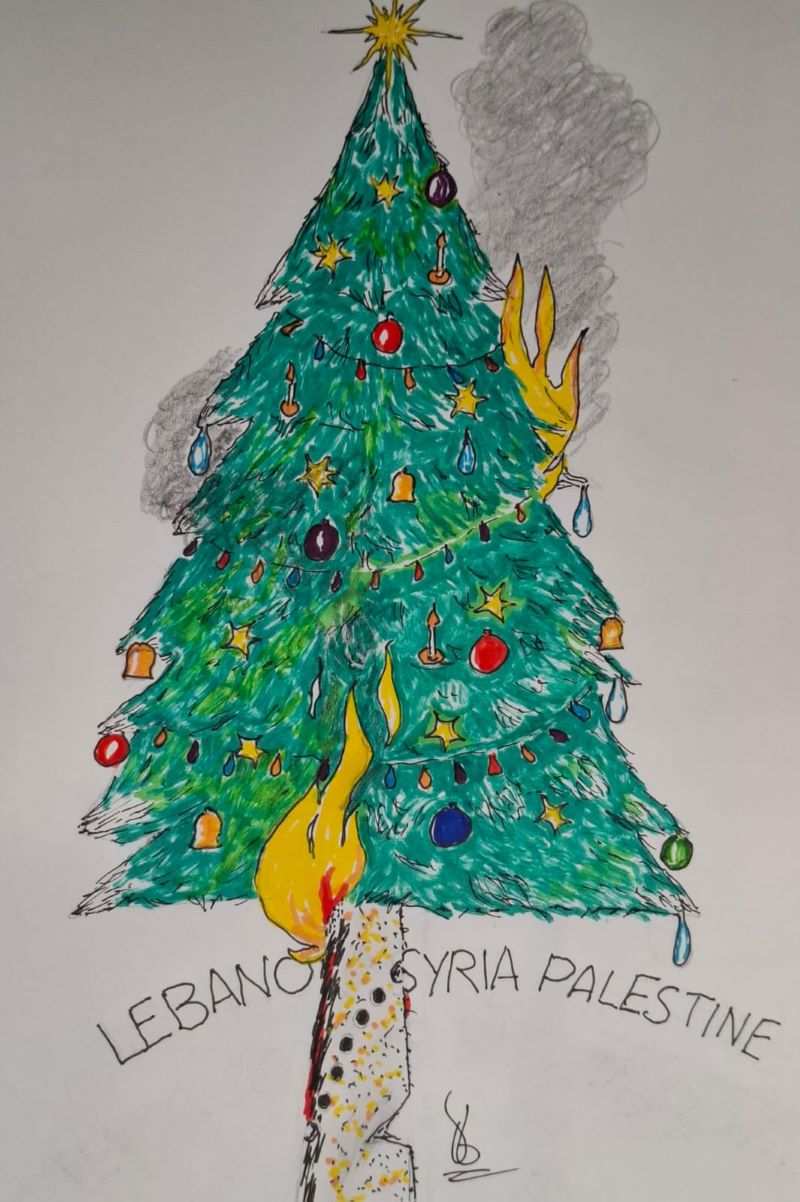
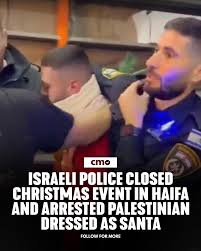


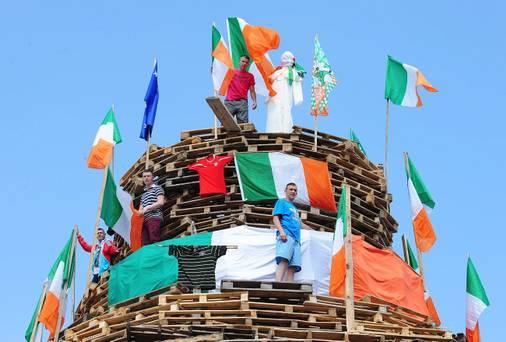
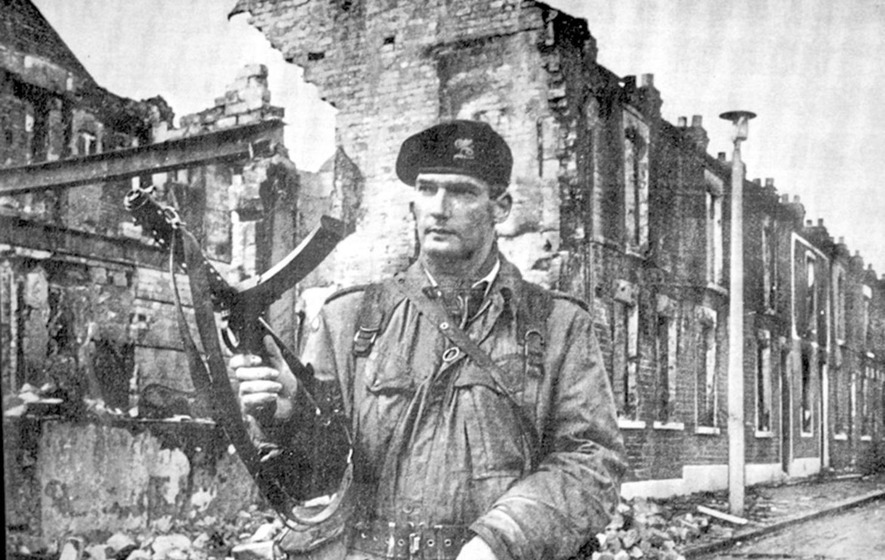

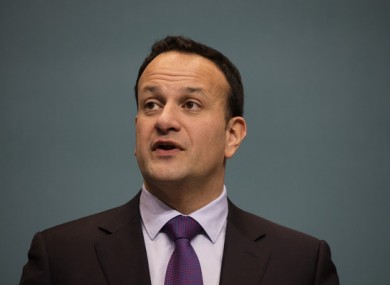
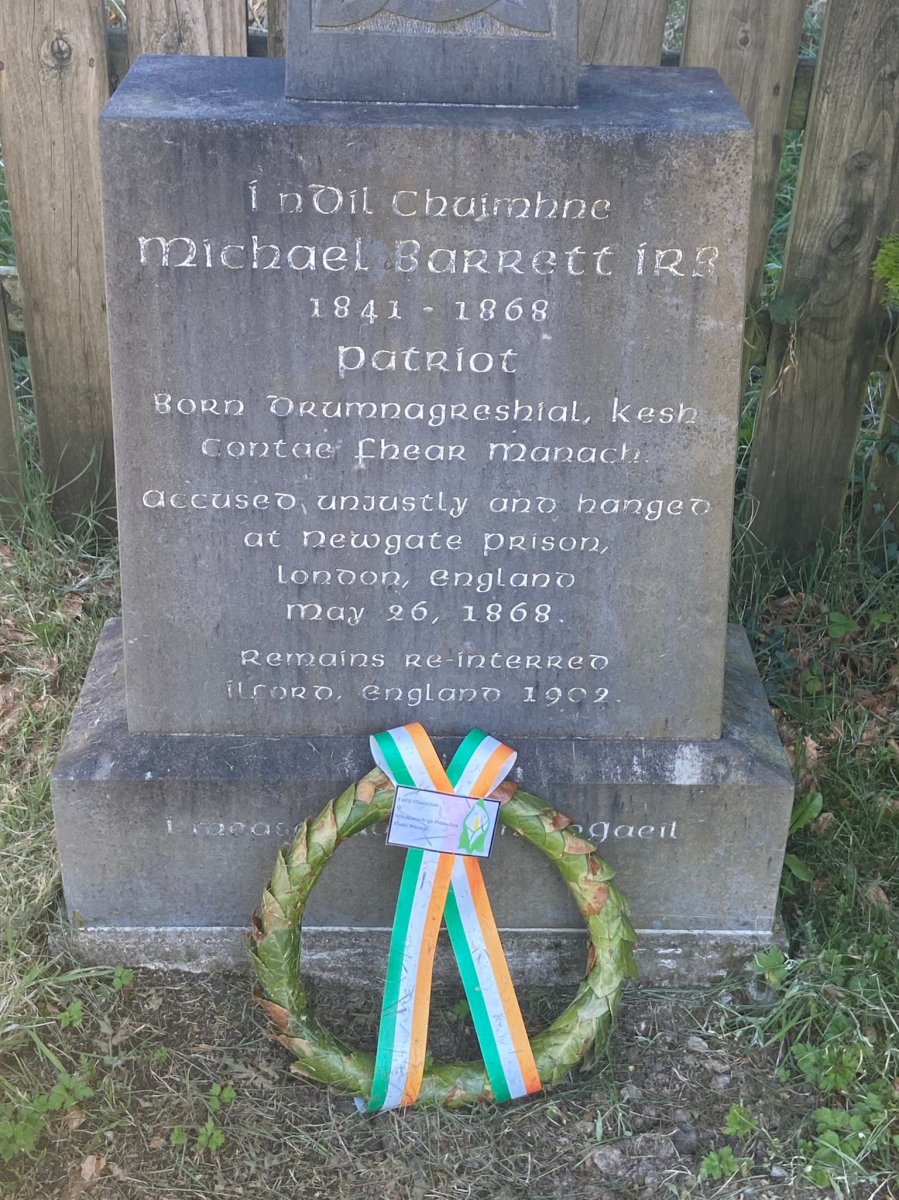
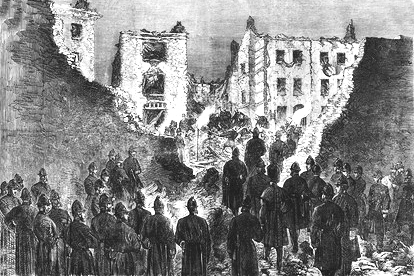
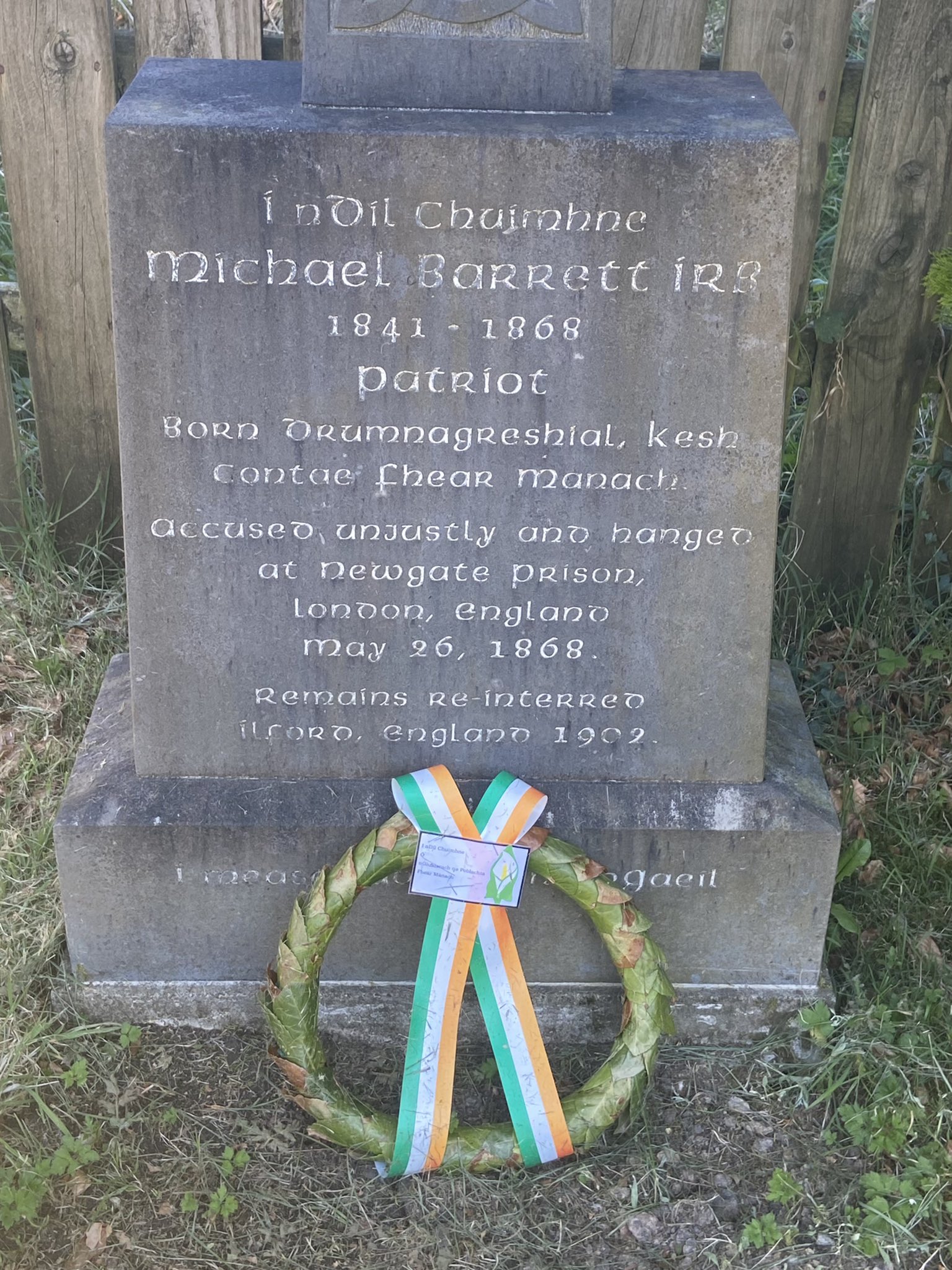


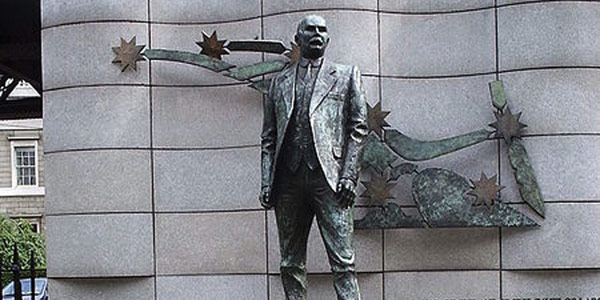


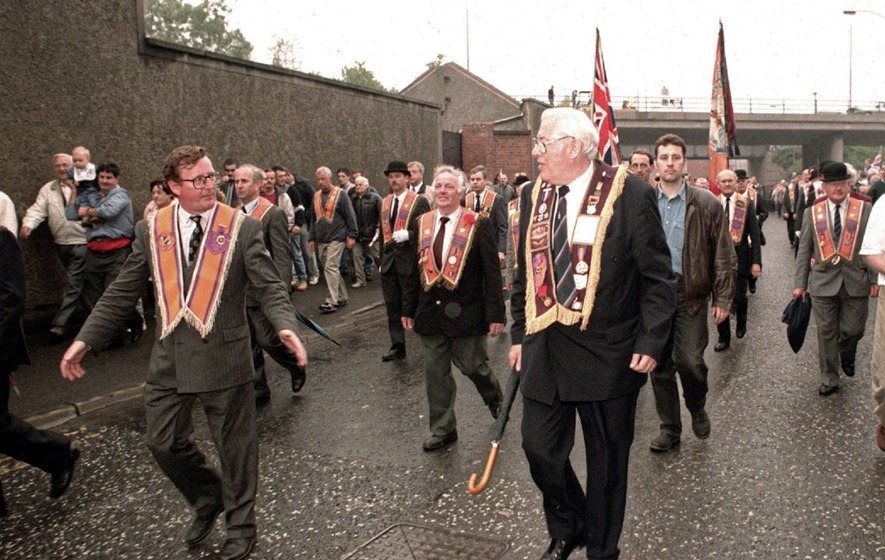




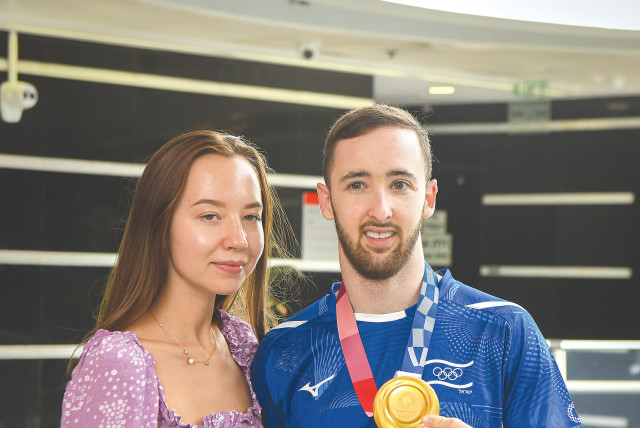


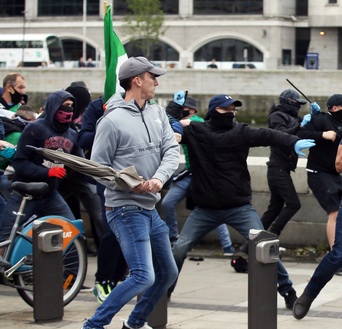


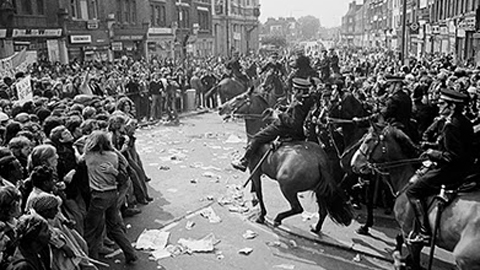
 rebelbreeze