Introduction with some very little additional text by Diarmuid Breatnach
Main text from East Wall History Group
Among the many events packed into History Week by the East Wall History Group was a walking history tour of the area on Sunday 27th September. Over a score of people took part in “East Wall and the Irish Revolution” to hear Joe Mooney, a long-time community activist, outline the relevant events of history at various points along the way, covering
Paul O’Brien performing his 1913 Lockout song in front of mural marking the eviction of 62 families from Merchant’s Road in December 1913 by the Merchant’s Company. (Photo: EWHG)
local connections with the Fenians, docks and migrants, the Lockout, 1916 Rising and the Spanish Civil War. Appropriate songs and music accompanied the tour, Paul O’Brien performing compositions of his own at some of those points and Diarmuid Breatnach singing verses from Viva La Quinze Brigada at another.
“We set out from St Joseph’s School, originally opened in 1895. The first Principal of the Boys’ school was J.F. Homan, who served as a St. John’s Ambulance Brigade volunteer during the Rising and also during the Civil war. A number of former pupils from the school were involved in the revolutionary events of the time (the following decades) and of course in 1911 a schoolboys’ union was declared and a short strike ensued (complete with pickets!). Their demands included a shorter day and free school-books.
Part of crowd at the starting point. (Photo: DB)
“Our first stop was Merchant‘s Road, where during the 1913 Lockout 62 families (almost the entire population of the street) were evicted by their employer the Merchants Warehousing Company (their yard was Merchant’s Yard on East Wall Road, just before the T-junction by the Port Authority. At the fantastic mural (erected by the community) Paul paid tribute to the families and the workers‘ struggle with his song “Lockout 1913“. Amongst the evicted families were the Courtneys from number 1 – their son Bernard was a ‘Wharf’ school pupil and fought with the Jacob‘s garrison in 1916, before succumbing to TB in 1917.
Joe Mooney pointing out Jack Nalty’s house.Jack Nalty’s house.(Photo: DB)
“Next we visited the East Road, where Diarmuid set the tone with a stirring rendition of the Christy Moore song “Viva la Quinze Brigada” (explaining that Christy incorrectly called it “Quinta” but had since corrected it – as the lyrics in English make clear, it was the FIFTEENTH Brigade). Gathered opposite the family home of Jack Nalty, we heard the story of another former ‘Wharf ‘ school-boy who became an active Republican and Socialist, eventually losing his life fighting Fascism in Spain in 1938. Jack (who was also a champion runner) was amongst the last of the International volunteers to die, while his friend and comrade Dinny Coady was amongst the first. Many of Dinny Coady‘s relatives still live locally, and we plan to commemorate them properly in the future.
Jack Nalty in uniform of the 15th International Brigade. (Photo: Internet)
“Next was a quick stop at the junction of Bargy and Forth Roads, which along with Shelmalier, Killane and Boolavogue were the names given to streets of Corporation houses erected here in the 1930’s and ’40s. They are of course synonymous with places in Wexford in the 1798 Rebellion.
“At the rear of the former Cahill printers‘ premises we learned how an innovative glass–making factory (Fort Crystal Works) once stood there, perhaps the first industry in the area, but by the early 1800’s lay in ruins. As reported in newspapers as far away as New York, in 1848 a hundred men gathered here and spent an entire day in musketry practice, even setting up a dummy of the Lord Lieutenant of Ireland (the Queen’s representative) to practice on. These were members of the Young Ireland movement, preparing for rebellion.
Joe speaking at the ‘Scotch Block’ — some of the crowd are out of shot, as is Paul O’Brien, who is just getting ready to play. (Photo: DB)
“On Church Road we remembered former resident Edward Dorin, a Sergeant in the IRA who was part of the operation to burn the Custom House during the War of Independence. Another former ‘Wharf’ school pupil (he started there the same year as Jack Nalty), he was shot dead alongside a young volunteer from Ballybough when they engaged a lorry–load of Auxillaries at Beresford place (just by Liberty Hall). (They were covering the attacking party). There had been a suggestion in the 1950’s to rename Custom House Quay as Dorin‘s Quay .
“A short stop at the “Scotch Block”, Fairfield Avenue, where Paul played two songs recalling Glasgow immigrants to the area and also Edinburgh–born James Connolly. An incident in 1918 when Union Jack–waving residents from these buildings attempted to disrupt a Sinn Féin election rally also got a mention.
Diarmuid Breatnach singing “Viva La Quinze Brigada” opposite Jack Nalty’s house. (Photo: EWHG)
“As we passed Hawthorn Terrace its most famous resident Sean O’Casey was briefly discussed, as was his former neighbour Willy Halpin, the diminutive Citizen Army man most famous for almost escaping capture at City Hall by climbing up a chimney.
“As we passed Russell Avenue a dishonorable mention was given to those who attempted to raise a 5,000 strong Fascist militia from an address here in the late 1950’s. Thankfully they failed miserably, as did the Italian fascist sympathiser resident of Caladon road who was banned from the U.S.A. during World War Two and eventually arrested by the Irish state and handed over to British authorities via the Six Counties.
“At Malachi Place the action–packed tale of Fenian leader John Flood was recounted. He lived here in the 1860’s as he worked on plans to stage a rebellion against British Rule. After an audacious attempt to seize weapons from Chester Castle was betrayed, he was eventually arrested following a boat chase on the Liffey and deported to Australia on the last convict ship to sail there. A memorial stands above his grave, unveiled there in 1911, two years after his death. This story could be a movie script!
“We finished off the day at the base of Johnny Cullen‘s Hill at the block of houses formerly named Irvine Crescent (now incorporated into Church Road). It was here the Scott family lived and in 1916 their 8–year–old son was shot from the gun boat Helga. He lingered on for months after his wounding before finally dying, making him the last of the child casualties of 1916. The same year his father died in an accident in the Port, leaving his mother to raise five children on her own while coping with this double tragedy.
“Their next–door neighbours were the Lennon family. On Bloody Sunday 1913 Patrick Lennon was one of those injured in the baton charge on O’Connell Street. Bloodied but unbowed, he worked alongside Sean O’Casey to raise funds for the relief of strikers‘ families, a project which eventually led to the establishment of the famous soup kitchen at Liberty Hall.
“And finally on to Bloody Sunday 1920. Everybody knows the story of how the Squad under Michael Collins (and the Dublin Brigade of the IRA) targeted British Intelligence agents in the City but not many know of the East Wall operation. A house on Church Road was targeted but the agent had left the evening before and was in Cork when the IRA group arrived. The exact location is unknown but we suspect it was within this block here as many of the houses were sub-divided at that time.”
A coincidence in Merchant’s Road, opposite the mural (note the date). (Photo: EWHG)
Even if they didn’t get to tell half the stories of East Wall and the Irish Revolution, it was an enjoyable and informative walking tour … and the weather was beautiful – and there’s always next year!
Diarmuid Breatnach (published originally in Dublin Political History Tours)
(Miren de bajo para la versión en castellano).
The 31st of August 1913 was one of several ‘Bloody Sundays’ in Irish history and it took place in O’Connell Street (then Sackville Street).
A rally had been called to hear the leader of the IT&GWU) speak. The rally had been prohibited by a judge but the leader, Jim Larkin, burning the prohibition order in front of a big demonstration of workers on the evening of the 29th, promised to attend and address the public.
On the day in O’Connell Street, the Dublin police with their batons attacked the crowd, including many curious bystanders and passers by, wounding many by which at least one died later from his injuries.
One could say that on that street on the 31st, or in the nearby Eden Quay on the night of the 30th, when the police batoned to death two workers, was born the workers’ militia, the Irish Citizen Army, in a desire that very soon would be made flesh.
La carga policial contra los manifestantes y transeúntes en la Calle O’Connell en el 31 Agosto 1913/ DMP attack on demonstrators and passers-by on 31st August 1913 in Dublin’s O’Connell Street
THE EMPLOYERS’ LOCKOUT
Bloody Sunday Dublin occurred during the employers’ Lockout of 1913. Under Jim Larkin’s leadership, the Liverpudlian of the Irish diaspora, the young ITGWU was going from strength to strength and increasing in membership, with successful strikes and representation in Dublin firms. But in July 1913, one of Dublin’s foremost businessmen, William Martin Murphy, called 200 businessmen to a meeting, where they resolved to break the trade union.
Murphy was an Irish nationalist, of the political line that wished for autonomy within the British Empire; among his businesses were the Dublin tram company, the Imperial Hotel in O’Connell Street and the national daily newspaper “The Irish Independent”.
The employers decided to present all their workers with a declaration to sign that the workers would not be part of the ITGWU, nor would they support them in any action; in the case of refusal to sign, they would be sacked.
The members of the ITGWU would have to reject the document or leave the union, which nearly none of them were willing to do.
Nor could the other unions accept that condition, despite any differences they may have had with Larkin, with his ideology and his tactics, because at some point in the future the employers could use the same tactic against their own members.
The Dublin (and Wexford) workers rejected the ultimatum and on the 26th began a tram strike, which was followed by the Lockout and mixed with other strikes — a struggle that lasted for eight months.
Dublin had remarkable poverty, with infectious diseases such as tuberculosis and others, including the sexually-transmitted ones, the city being a merchant port and also having many British Army barracks. The percentage of infantile mortality was higher than that in Calcutta. Workers’ housing was in terrible condition, often with entire families living in one room, in houses sometimes of 12 rooms, each one full of people, with one or two toilets in the outside yard.
In those conditions, 2,000 Dublin workers confronted their employers, the latter aided by their Metropolitan Police, the Irish colonial police and the British Army. As well as the workers, many small traders suffered, those selling in the street or from little shops.
On that Monday, the 31st of September 1913, some trade unionists and curious people congregated in Dublin’s main street, then called Sackville Street, in front of and around the main door of the big Clery’s shop. In the floors above the shop, was the Imperial Hotel, with a restaurant.
The main part of the union went that day to their grounds in Fairview, to avoid presenting the opportunity for another confrontation with the Dublin Municipal Police. Others in the leadership had argued that the police should not be given the opportunity and that there would be many other confrontations during the Lockout. But Larkin swore that he would attend and that a judge should not be permitted to ban a workers’ rally. There were many police but nothing was happening and Larkin did not appear. After a while, a horse-drawn carriage drove up and an elderly church minister alighted, assisted by a woman, and entered the shop. They took the lift to the restaurant floor. A little later Larkin appeared at the restaurant open window, in church minister’s clothing, spoke a few words to the crowd and ran inside. Those in the street were very excited and when the police took Larkin out under arrest, they cheered him, urged on by Constance Markievicz. The police drew their batons and attacked the crowd — any man not wearing a police uniform.
THE UNION’S ARMY
The Irish Citizen Army was founded for the union on the 6th November 1913 by Larkin, Connolly and others with Seán Ó Cathasaigh/ O’Casey, playwright and author, including the first history of the organisation.
The Citizen Army at Croydon House, at the ITGWU’s grounds in Fairview/ El Ejercito Ciudadano en su parte del parque en Fairview.
As distinct from the Irish Volunteers, women could enter the ICA, within which they had equal rights.
Funeral of James Byrne, who died as a result of his imprisonment during the 1913 Lockout/ Procesión funébre de James Byrne, fallecido por razón de su encarcelamiento durante el Cierre de 1913, pasando por el muelle sur Eden’s Quay, partiendo de la Salla de la Libertad.
It was reorganised in 1914 as the union was recovering from its defeat during the Lockout, and 200 fought alongside the Volunteers in the 1916 Easter Rising, after which two of its leaders, Michael Mallin and James Connolly, were executed. Among the nearly 100 death sentences there were others of the ICA, including Markievicz, but their death sentences were commuted (14 were executed in Dublin, one in Cork and one was hanged in London).
The main fighting locations of the ICA in 1916 were in Stephen’s Green and in the Royal College of Surgeons, in City Hall and, with Volunteers in the GPO and in the terrace in Moore Street, the street market.
The Imperial Hotel on the other side of the street from the GPO was occupied too by the ICA and on top of it they attached their new flag, the “Starry Plough/ Plough and Stars”, the design in gold colour on a green background, the
The flag of the ICA, flown over Murphy’s Imperial Hotel in 1916
constellation of Ursa Mayor, which the Irish perceived in the form of a plough, an instrument of work. And there the flag still flew after the Rising, having survived the bombardment and the fire which together destroyed the building and all others up to the GPO, on both sides of the street. Then a British officer happened to notice the flag and ordered a soldier to climb up and take it down — we know not where it went.
TODAY
Today, after various amalgamations, the once-noble ITGWU has become SIPTU, the largest trade union in Ireland but one which does not fight. The skyscraper containing its offices, Liberty hall, occupies the spot of the original Liberty Hall, prior to its destruction by British bombardment in 1916.
The Irish newspaper the “Irish Independent” continues to exist, known as quite right-wing in its editorial line. Murphy’s trams came to an end during the 1950 decade and those in Dublin today have nothing to do with Murphy.
The Imperial Hotel no longer exists and, until very recently, Clery had taken over the whole building, but they sacked their workers and closed the building, saying that they were losing money.
In front of the building, in the pedestrianised central reservation, stands the monument as a representation of Jim Larkin. The form of the statue, with its hands in the air, is from a photo taken of Larkin during the Lockout, as he addressed another rally in the same street. It is said that in those moments, he was finishing a quotation which he used during that struggle (but which had also been written previously by James Connolly in 1897, and which something similar had been written by the liberal monarchist Étienne de La Boétie [1530–1563] and later by the French republican revolutionary Camille Desmoulins [1760–1794]): “The great appear great because we are on our knees – LET US ARISE!”
The Jim Larkin monument in O’Connell Street today/ El monumento de Jim Larkin in la Calle O’Connell hoy en día
EL 31 DE AGOSTO EN El 1913 FUE UNO DE LOS DOMINGOS SANGRIENTOS DE IRLANDA Y OCURRIÓ EN LA CALLE PRINCIPAL DE DUBLÍN.
Hubo una concentración para escuchar al líder del sindicato de Trabajadores de Transporte y de General de Irlanda (IT&GWU) hablar. La manifestación fue prohibida por juez pero el líder, Jim Larkin, quemando el documento de prohibición en frente de manifestación grande la noche del 29, prometió que iba a asistir y hablar al publico.
El día 31 en la Calle O’Connell, la policía de Dublin con sus porras atacaron la concentración y a muchos otros curiosos o pasando por casualidad, hiriendo a muchos por lo cual murió uno por lo menos mas tarde de sus heridas.
Se puede decir que en esa calle en el 31, o en la cerca muelle, Eden Quay, la noche del 30, cuando mataron a porras dos trabajadores, se dio luz a la milicia sindical, el Ejercito Ciudadano de Irlanda, en deseo que poco mas tarde estaría fundado en actualidad.
EL CIERRE PATRONAL
El Domingo Sangriento ocurrió durante el Cierre Patronal de Dublín en el 1913. Bajo el liderazgo de Jim Larkin, el Liverpoolés de diáspora Irlandesa, el joven sindicato ITGWU fue yendo de fuerza a fuerza y aumentando en miembros, con éxitos en sus huelgas y reconocido en muchas de las empresas de Dublín. Pero en Julio del 1913, uno de los principales empresarios de Dublín, William Martin Murphy, llamó a 200 de los empresarios a mitin y resolvieron romper el sindicato.
Murphy era nacionalista Irlandés, de la linea de pedir autonomía pero adentro del Imperio británico; entre sus empresas le pertenecía la linea de tranvías de Dublín, el Hotel Imperial en la Calle O’Connell y el periódico diario nacional The Irish Independent.
Resolvieron los empresarios presentar a todos sus trabajadores una declaración para firmar que no serían parte del sindicato ITGWU ni les darían ningún apoyo en cualquiera acción; en caso de negar firmar, se les despedirían.
Los miembros del ITGWU tendrían que rechazar el documento o salir del sindicato, lo cual casi lo total no estuvieron dispuestos hacer.
Los otros sindicatos, pese a cualquiera diferencias tuvieron con Larkin, con sus pensamientos y sus tácticas, tampoco podían acceder a esa condición por que mas tarde se podría usar la misma táctica en contra de sus miembros también.
Los trabajadores de Dublín (y de Wexford) rechazaron el ultimátum y empezaron el 26 de Agosto una huelga de los tranvías, seguido por el Cierre Patronal, mixta con otras huelgas, una lucha que duró ocho meses en total.
Dublín tuvo una pobreza impresionante, con infecciones de tuberculosis y otras, incluido las transmitidas por el sexo, siendo puerto mercantil y teniendo muchos cuarteles del ejercito británico. El porcentaje de la mortalidad infantil era mas de la de la ciudad de Calcuta. Las viviendas de los trabajadores estaban en terribles condiciones, con a menudo familias grandes enteras viviendo en una habitación, en casas a veces de 12 habitaciones, cada uno llena de gente, con una o dos servicios en el patio exterior.
En esas condiciones 2,000 trabajadores de Dublín se enfrentaron al patronal de Dublín, con su policía metropolitana, la policía colonial de Irlanda y el ejercito británico. Además de los trabajadores, muchos pequeños empresarios, vendiendo en la calle o en tiendas pequeños, sufrieron.
Ese Domingo, del 31o de Setiembre 1913, algunos sindicalistas y gente curiosa se congregaron en la calle principal de Dublín, entonces nombrado Sackville Street, en frente y al rededor de la puerta principal de la gran tienda de Clery. En las plantas después de la primera, estaba el Hotel Imperial, con un restaurante.
La mayor parte del sindicato se fueron ese día a una parte de parque que les pertenecía por la costa, para evitar otra enfrentamiento con la Policía Metropolitana de Dublín. Habían argumentado otros de la dirección del sindicato que no se debe dar les la oportunidad a la policía y que habría muchos otros enfrentamientos durante el Cierre. Pero Larkin juró que lo iba a asistir y que no se podía permitir a un juez prohibir manifestaciones obreras.
Había mucha policía pero nada pasaba y Larkin no aparecía. Después de un rato, un coche de caballos llegó y un viejo sacerdote salió, apoyado por una mujer, y entraron en la tienda de Clery. Subieron en el ascensor hacía el restaurante. Poco después, Larkin apareció en la ventana abierta del restaurante, en el traje del cura y habló unas palabras, antes de correr adentro. Los de abajo en la calle muy entusiasmados y cuando la policía salieron agarrando le a Larkin, la multitud le dieron vítores, alentados por Constance Markievicz. La Policía Municipal sacaron sus porras y atacaron a la multitud – a cualquier hombre que no llevaba uniforme policial.
EL EJERCITO DEL SINDICATO
El Ejercito Ciudadano de Irlanda (Irish Citizen Army) fue fundado para el sindicato en el 6 de Noviembre del 1913 por Larkin, Connolly y otros con Seán Ó Cathasaigh/ O’Casey, escritor de obras para teatro y algunas otras, incluso la primera historia de la organización. A lo contrario de Los Voluntarios, el ICA permitía entrada a mujeres, donde tenían derechos iguales.
Fue reorganizada en 1914 cuando el sindicato se fue recobrando de la derrota del Cierre Patronal, y 200 lucharon con los Voluntarios en el Alzamiento de Pascuas de 1916, después de lo cual dos de sus líderes, Michael Mallin y James Connolly, fueron ejecutados. Entre los casi 100 condenas de muerte, habían otros del ICA, incluso Constance Markievicz, pero sus condenas de muerte fueron conmutadas (se les ejecutaron a 14 en Dublín y a uno en Cork, y a otro le ahorcaron en Londres).
Los lugares principales de lucha del ICA en 1916 fueron en el Stephen’s Green y en el Collegio Real de Cirujanos (Royal College of Surgeons), en el Ayuntamiento y, con Voluntarios, en la Principal Oficina de Correos (GPO) y en la manzana del Moore Street, el mercado callejero.
El Hotel Imperial al otro lado de la calle del GPO lo ocuparon también el ICA, y encima colocaron su nueva bandera, el Arado de Estrellas (“Starry Plough/ Plough and Stars”), el diseño en color oro sobre fondo verde, la formación celeste del Ursa Mayor, que lo veían los Irlandeses en forma del arado, una herramienta de trabajo. Y ahí ondeó la bandera después del Alzamiento, habiendo sobrevivido el bombardeo británico y el fuego que destruyeron el edificio y la calle entera hacía el GPO, en ambos lados. Entonces un oficial británico se dio cuenta de la bandera y le mandó a soldado hir a recoger la – no se sabe donde terminó.
HOY EN DÍA
Hoy en día, después de varias fusiones, el noble ITGWU se ha convertido en el SIPTU, el sindicato mas grande de Irlanda y parecido en su falta de lucha a Comisiones Obreras del Estado Español. El rasca cielos de sus oficinas, La Sala de la Liberta (Liberty Hall), ocupa el mismo lugar que ocupó la antigua Liberty Hall, antes de su destrucción por bombardeo británico en 1916.
El periódico Irish Independent sigue existiendo, conocido por ser bastante de derechas en su linea editorial. Los tranvías de Murphy terminaron en la década del 1950 y los de hoy en Dublín no tienen nada que ver con los de antes.
El Hotel Imperial ya no existe y, hasta hace muy poco, la empresa Clery lo tenía todo el edificio, pero despidieron a sus trabajadores y cerraron el edificio, diciendo que perdían dinero.
En frente del edificio, en la reserva peatonal del centro de la calle, está el monumento representando a Jim Larkin. La forma de la estatua, con las manos en el aire, lo tiene de foto que le hicieron durante el Cierre Patronal, cuando habló en otro manifestación en la misma calle. Dicen que en ese momento, estaba terminando una frase famosa que usó durante esa lucha (pero que también lo escribió Connolly antes en 1897, y que lo había escrito algo parecido primero el monárquico reformista Étienne de La Boétie [1530–1563] y luego el revolucionario republicano francés Camille Desmoulins [1760–1794]): “Los grandes aparecen grande por que estamos de rodillas – levantamanos!”
Any hope that the Irish capitalist ruling class and their current government had that people had given up — or even had just got tired of marching — were dashed on Sunday 29th August 2015.
Hundreds of thousands gathered again from far and near; banners were on display from the West, South, North-East and North-West, Midlands, and of course many parts of Dublin and the East coast.
The main march columns started off from two train stations: Connolly Station, to the east of the city and Heuston, to the west. The latter contingent crossed the river at the station then marched eastward towards the city centre along the southern quays while the other marched westward along the northern quays and then crossed the river to the north side further upriver (Essex Bridge) and turned towards the city centre. Both columns had contingents and individuals joining them en route while others went straight towards O’Connell Street, they were greeted by a musical performance from the main stage by Don Baker and other musicians, also a performance by a rapper.
Aerial shot of rally in O’Connell Street (photo: Communities Against the Water Charge)
STATE REPRESSION
State repression was focused on at times: the Jobstown 23 banner got strong applause from bystanders at various points along the route, another banner denounced Garda violence including pepper-spraying and a number of speakers spoke about Garda repression, including one who talked about the Special Branch opening files on anti-water tax resisters.
This banner got strong applause from bystanders at various points along the route
As usual on large demonstrations of this kind, the Gardai refrained from violence or bullying and in fact were in very low profile, in stark contrast to their behaviour and numbers when dealing with smaller numbers in local resistance to water tax and the installation of water meters.
ELECTIONS, TRADE UNIONS
Among the speakers there was of course much mention of elections and getting rid of the current capiltalist government and also statements about the fight for the Republic in history, compared bleakly to the situation in Ireland today with unemployement, emigration, cuts to services, homelessness, privatisation. John Douglas, Gen. Secretary of Mandate and President of Mandate covered many of those issues, including the Dunne’s Stores dispute and the sudden closure of Clery’s in a rousing speech. However, those two are cases in point illustrating the weakness of the Irish trade union movement today: Mandate had one day’s strike in Dunnes’ many weeks ago and have won no gains as yet, while Clery’s managed to sack their workers without the union leading even a sit-in to hold the building and stock as a bargaining chip
Belfast Trades Council banner on the demonstration — they also had a speaker on the platform
A new presence on this demonstration was Belfast Trade Council, who were made very welcome and who had a speaker on the platform. He said that there was no EU directive to tax the water and that in the Six Counties they had defeated the water tax. He was not long speaking when the heavens opened and rain poured down on demonstrators and bystanders alike.
SUMMARY
What today showed is a strong will to resist across the country and across a great age spread, but with noticeably lower numbers across the teenage and young adult band, as well as a relatively weak leadership of the movement.
It remains to be seen whether RTÉ and newspapers will give a reasonable estimate of the numbers and coverage or instead do the usual of quoting ridiculously low figures or remain vague about them while giving minimal space to what was a large event, with participation from around the nation, as part of the biggest civil disobedience campaign in the history of this State.
End
Video of unaccompanied rapper Stephen Murphy at rally
At the Mayo v. Dublin GAA football game in Croke Park the following day, on Hill 16 (Photo from Right to Water FB page)
(Postcript: In their on-line report, RTÉ showed a photo of a packed O’Connell St. and said the organisers were claiming around 80,000. Also, at the Dublin GAA football match of Mayo v. Dublin the following day in Croke Park, attended by Enda Kenny, whose seat is in that county, Dublin supporters unfurled a giant banner of Right to Water).
NB: This article was written about the 11th October 2014 demonstration but arrived too late to use. Normally that would mean it just getting binned or at best getting mined for useful bits to put in a future article. However, the decision is to use this now in the run-up to the forthcoming demonstration at the end of this month against the water tax.
The size of the turnout for the anti-water charges demonstration in Dublin on Saturday 11th of October must have been something of a shock for the Irish ruling class and for their current government, the Fine Gael-Labour coalition. The implementation of water charges forms an important part of their programme to make the ordinary people pay for the crisis caused by financial and property speculators. Other parts of this programme that people have been experiencing to date over the last few years (and including the Fianna Fáil government preceding this one) have been bailing out the banks and their bondholders, financed first through the Household Charge and, after that was defeated by massive resistance, the Household Charge taxed through the Revenue Department; then the pension levy on public service workers; followed by the extensive cuts in social spending at the same time as implementing the “Social Charge”.
Marchers heading southward after leaving the Garden of Remembrance/ Parnell Square area (RTÉ tried to play down the figures to 30,000
The ruling class and their government are of course well aware that the water charge is unpopular among the vast majority of the population – supporters of the tax have failed to convince the people that it is anything but another way of “paying the bankers”. But the unpopularity of a measure is no guarantee whatsoever of wide-scale mobilisation against it and the Government was probably expecting the resistance to meter installation to remain local, marginal and uncoordinated. Clearly this was one case where “Ní mar a shíltear a bhítear”.
But the size of the demonstration surprised not only the ruling class and their government but also anti-water charge campaigners themselves. “I thought we’d be doing well to get 15,000” said one long-time community activist and “If we got 50,000, we thought it would be brilliant” according to an activist from one of the political groups active on this issue. A realistic estimate of the attendance at the demonstration on Saturday puts it at between 100,000 (as quoted by an unnamed Garda source to an Irish Times reporter) and 150,000. The march from the Garden of Remembrance heading across the river before turning again towards the GPO took over one-and-a-half hours to pass a fixed spot in O’Connell Street while another large number reportedly marched from another direction also toward the GPO.
So how was it that so many mobilised?
Any attempt to answer the first question must be speculative but there are a number of indications other than the widescale unpopularity of the water charge and any measure seen as “bailing out the bankers”. One of these is the highly-publicised police repression of local protests against meter installations in a number of Dublin areas, where the population is overwhelmingly working-class and lower-middle class. These protests and the police repression, completely ignored by the national mass media, however received widescale publicity through social media, with videos posted on Youtube, Facebook and Twitter. And the people sharing and sometimes posting these reports and images were for the most part not political or even community or trade union activists. Another source tapped was that of past mobilisations against the Household and Property Taxes. Much of the mobilisation took place in small to medium-sized communities where for the most part, unusually but according to my sources, the activists promoted the resistance and the demonstration rather than their own political party or organisation.
“Apart from a few political activists, only the middle-class mobilise through Facebook”, said long-time political activist to us about a year ago. “Who cares how many ‘Likes” on Facebook an event or campaign gets – it doesn’t mean anything!” said another. Rebel Breeze would have agreed with them too, knowing that the way to mobilise working class people was mostly through personal contact, door-to-door and workplace leafleting. But it seems that is no longer true and that working people, who previously used Facebook only socially, have now begun to use it politically too.
An aerial view down towards the rally after the march at GPO/ O’Connell St
Why did it surprise even the campaigners?
So much for how such a large number came to protest. But how is it that the campaigners themselves were taken by surprise? Of course there may have been unexpected mobilisations in some areas where campaigners had not been active but the main reason for their surprise is almost certainly their lack of coordination. Their are a number of Left organisation and “dissident” Republican organisations campaigning against the water charges, along with a large number of independent activists of a mainly political or community background. In some areas Sinn Féin activist have been out too, although the party does not advocate non-payment or prevention of meter installation.
In a united campaign where all the activists worked towards a united mass resistance, sharing information, the numbers would not have caught them so much by surprise. Of course, their expectations might have been exceeded but each group would have been aware of the actions in other groups’ areas along with the massive rise in Facebook hits, “Likes” and “Shares” to postings of resistance and police repression. Such a united campaign against the water charge does not yet exist. A previous attempt to float such a united campaign on the Household and Water Charges foundered on a number of rocks – political party opportunism, social democratic illusions and the failure of the traditional Left to engage with the independent activist constituency and the “dissident” Republican movement probably being the main ones.
There are a number of attempts to portray the active resistance to the Water Charge as spontaneous but it is likely that where there have been no campaigners active locally, the people have responded to what they have seen elsewhere, both through anger and encouragement. On the other hand, any attempt by any group or individual to take the credit for the growing resistance or for the mass attendance at the demonstration would have to be laughable.
The “passive Irish” jibe refuted once again
Rebel Breeze has long been tired of the wailing often heard to the effect that “the Irish are not like the Greeks”, or that the Irish are passive, accept all kinds of shit without resistance, etc. etc. With the history of class and national struggle of the people of this island it is extraordinary that such an notion ever gained wide acceptance among commentators – but it did. The Irish working class has generally responded militantly and enthusiastically when they have been called to battle by what they consider a credible leadership. In Ireland, that leadership was the trade union movement and no other. In 1913 a fighting trade union was forged in Ireland and, when the employers tried to break it, the workers of Dublin (mostly) fought that attempt for up to eight months, in a city of wide-spread poverty and with most charity services discriminating against strikers and their families. In that struggle, the workers faced also the hostility of the media and state (not much has changed there) and of the main churches. Although defeated in that struggle, the union did not break and came back years later stronger than ever.
Deprived of revolutionary and militant leadership, the movement nevertheless maintained a fighting front for workers through decades of high unemployment and emigration. But in the mid-1980s the trade union leadership opted for what they called “social partnership”, an arrangement in which employers, trade union leadership and the State (which is also a huge employer) sat down and agreed the salary levels for the next period. This had a disastrous impact on the trade union movement. “Use it or lose it” is a general physiological rule about muscle : the trade union leadership became unused to strike action and, when strikes did occur, to instructing members of unions not directly involved to pass the pickets. Recruitment fell dramatically and, when in 2010 the employers and State no longer saw any point in negotiating with the trade union leadership, as they believed the leadership to be no longer capable of resistance, the latter lacked the spirit and confidence to take them on. After a demonstration called by ICTU with a threat of a general strike days away, which received a massive response from trade union members, the leadership instead opted for more negotiations, in which they agree to the pension levy on public servant workers and industrial peace in the private sector: Croke Park I (June 2010). So the workers no longer have a leadership they consider credible and the revolutionary and radical socialist organisations are too small to be thought credible and also have not generally built bases within the trade union movement from which to offer a leadership for struggle.
Nevertheless, the working people of Ireland turned out in huge numbers once again on Saturday to protest an unjust tax which is being used for an unjustifiable purpose. The class is still there, it never lost its fighting spirit – what it needs is a viable leadership. It remains to be seen whether this will be built and whether it can lead a broad militant movement against this tax and other attacks on the working class, without repeating the errors of the recent ‘broad movements’.
Politics is about the present and the future, obviously … but it is also about the past.
Different political interests interpret and/or represent the past in different ways, emphasising or understating different events or aspects or even ignoring or suppressing them entirely. There is choice exercised in whom (and even what particular pronouncement) to quote and upon what other material to rely. And by “political interests” I mean not only groups, formal (such as political parties) or informal, but also individuals. Each individual is political in some way, having opinions about some aspects of questions that are political or at least partly-political. For example, one often hears individuals say today that they have no interest in politics, yet express strong opinions of one kind or another about the right to gay and lesbian marriage, the influence of the Catholic Church, and how the country is being run by Governments.
So when an individual writes a history book, there are going to be political interpretations, although not all writers admit to their political position, their prejudices or leanings, in advance or even in the course of their writing. One historian who does so is Padraig Yeates, author of a number of historical books: Lockout –Dublin 1913 (a work unlikely to be ever equalled on the subject of the title), A City In Wartime — 1914-1919, A City in Turmoil – 1919-1921and his latest, A City in Civil War – Dublin 1921-’24. The latter was launched on Tuesday of this week, 12th May and therefore much too early for people for who did not receive an earlier copy to review it. So it is not on the book that I am commenting here but rather on the speeches during the launch, which were laden with overtly political references to the past and to the present. If a review is what you wanted, this would be an appropriate moment to stop reading and exit – and no hard feelings.
The launch had originally been intended to take place at the new address at 17 D’Olier Street, D2, of Books Upstairs. However the interest indicated in attending was so great that Padraig Yeates, realising that the venue was going to be too small, went searching for a larger one. Having regard to how short a time he then had to find one and with his SIPTU connections, Liberty Hall would have been an obvious choice. Whether he had earlier been asked to speak at the launch I do not know but, having approached Jack O’Connor personally to obtain the use of Liberty Hall, in the latter’s role of President of SIPTU, the owners of that much-underused theatre building, it was inevitable too that O’Connor would be asked to speak and act as the MC for the event.
O’Connor’s introduction was perhaps of medium length as these things go. He talked about the author’s work in trade unions, as a journalist and as an author of books about history. O’Connor’s speech however contained much political comment. Speaking of the period of the Civil War (1919-1923), he said it had “formed what we have become as a people”. That is a statement which is of dubious accuracy or, at very least, is open to a number of conflicting interpretations. The Civil War, in which the colonialism-compromising Irish capitalist class defeated the anti-colonial elements of the nationalist or republican movement, formed what the State has become – not the people. The distinction between State and People is an essential one in our history and no less so in Ireland today.
Talking about the State that had been created in 1921 (and not mentioning once the creation of the other statelet, the Six Counties) and referring to the fact that alone among European nations, our population had not risen during most of the 20th Century and remained lower than it had been up to nearly the mid-Nineteenth, a state of affairs due to constant emigration, O’Connor laid the blame on the 26-County State and in passing, on the capitalist class which it served. He was undoubtedly correct in blaming the State for its failure to create an economic and social environment which would stop or slow down the rate of emigration – but he did not explain why it was in the interests of the capitalists ruling the state to do so. Nor did he refer to the cause of the original drastic reduction in Ireland’s population and the start of a tradition of emigration – the Great Hunger 1845-’49.
The Great Hunger memorial on Dublin’s Custom House Quay. The Great Hunger and its immediate aftermath initiated mass Irish emigration.
Even allowing for the fact that O’Connor wished to focus on the responsibility of the 26-County State, the Great Hunger was surely worthy of some mention in the context of Irish population decline. Just a little eastward along the docks from Liberty Hall is the memorial to that start of mass Irish emigration. It was the colonial oppression of the Irish people which had created the conditions in which the organism Phytophthora infestans could create such devastation, such that in much less than a decade, Ireland lost between 20% and 25% of its population, due to death by starvation and attendant disease and due also to emigration (not forgetting that many people emigrating died prematurely too, on the journey, upon reaching their destination and subsequently). Phytophthora devastated potato crops in the USA in 1843 and spread throughout Europe thereafter, without however causing such a human disaster as it did in Ireland. In Mitchell’s famous words: “The Almighty, indeed, sent the potato blight, but the English created the famine.” And that is what makes that period of population decline uncomfortable for some historical commentators.
Indeed, O’Connor did not mention British colonialism once, nor Partition, nor imperialism. And nor did either of the other two speakers, nor the author. I remarked on this to an Irish Republican present, to which he responded with a rhetorical question: “Did you expect them to?” Well, yes, perhaps naively, I did. While not expecting an Irish Republican analysis from Padraig Yeates and perhaps not either from anyone he would consider appropriate to speak at the launch of one of his books, dammit, we are talking about history. The presence of Norman/English/British Colonialism for 800 years prior to the creation of the Irish Free State, and its influence on that state’s creation and on subsequent events in Ireland, is worthy of at least a mention in launching a book about the Civil War. Not to mention its continuing occupation of one-fifth of the nation’s territory.
Colonialism and Imperialism and, in particular, the Irish experience of the British variant, were not so much ‘the elephant in the room‘ at the launch as a veritable herd of pachyderms. They overshadowed us at the launch and crowded around us, we could hear them breathing and smell their urine and excreta – but no-one mentioned them. The date of the launch was the anniversary of the execution of James Connolly 99 years ago, a man whom the Labour Party claims as its founder (correctly historically, if not politically), a former General Secretary of the ITGWU, forerunner of SIPTU and the HQ building of which, Liberty Hall, was a forerunner too of the very building in which the launch was taking place. His name and the anniversary was referred to once, though not by O’Connor, without a mention of Sean Mac Diarmada, executed in the same place on the same day. And most significantly of all, no mention of who had Connolly shot and under which authority.
That circumspection, that avoidance, meant that a leader of Dublin capitalists, William Martin Murphy, could not be mentioned with regard to Connolly’s death either — i.e. his post-Rising editorial in the Irish Independent calling for the execution of the insurgents’ leaders. But of course he did get a mention, or at least the class alliance he led in 1913 did, in a bid to smash the ITGWU, then under the leadership of Larkin and Connolly. This struggle, according to O’Connor and, it must be said also to Padraig Yeates, was the real defining struggle of the early years of the 20th Century, not the 1916 Rising, the War of Independence nor yet the Irish Civil War. It was in 1913 that “the wrong side won”.
One-eyed as that historical vision must be, we have to question whether it is even partially correct. The Lockout was a great defeat for the ITGWU and for the leading elements in the Irish workers’ movement. But the Lockout did not break the trade union and, in fact, it later began to grow in membership and in branches. Other trade unions also survived and some expanded. So in what manner was 1913 decisive in ensuring that “the wrong side won” in later years? The Irish trade union movement was still able to organise a general strike against conscription in April 1918 and the class to organise a wave of occupations of workplaces in April 1919.
True, the Irish working class had lost one of its foremost theoreticians and propagandists by then, in the person of James Connolly. And who was it who had him shot? Not Murphy (though he’d have had no hesitation in doing so) nor the rest of the Irish capitalist class. In fact, worried about the longer-term outcome, the political representatives of the Irish ‘nationalist‘ capitalist class for so long, the Irish Parliamentary Party, right at the outset and throughout, desperately called for the executions to halt. General Maxwell, with the support of British Prime Minister Asquith, ordered and confirmed the executions of Connolly and Mallin of the Irish Citizen Army and British Army personnel pulled the triggers; in essence it was British colonialism that executed them, along with the other fourteen.
For the leaders of the Labour Party and of some of the trade unions, and for some authors, Padraig Yeates among them, the participation of Connolly and the Irish Citizen Army in the Rising was an aberration. For these social democrats, the struggle should have been against the Irish capitalist class only (and preferably by an unarmed working class). It is an inconvenient fact that Ireland was under colonial occupation of a state that had strangled much of the nation’s economic potential (and therefore of the growth of the working class) in support of the interests of the British capitalist class. It is an inconvenient fact that the Irish capitalist class had been divided into Unionist and Nationalist sections, the former being descendants of planter landowners and entrepreneurs whose interests were completely bound up in Union with Britain. It is an inconvenient fact that the British and the Unionists had suppressed the last truly independent expression of the Irish bourgeoisie, the United Irishmen and, in order to do so effectively, had created and enhanced sectarian divisions among the urban and rural working and middle classes. It is also an inconvenient fact that the British cultivated a client “nationalist” capitalist class in Ireland and that the police and military forces used to back up Murphy’s coalition in 1913 were under British colonial control.
To my mind, a good comprehensive analysis of the decline inprominence of the Irish working class on the political stage from its high point in early 1913 and even in 1916, has yet to be written. One can see a number of factors that must have played a part and the killing of Connolly was one. But something else happened between 1913 and 1916 which had a negative impact on the working class, not just in Ireland but throughout the World. In July 1914, WW1 started and in rising against British colonialism in Ireland, Connolly also intended to strike a blow against this slaughter. As the Lockout struggle drew to its close at the end of 1913 and early 1914, many union members had been replaced in their jobs and many would find it hard to regain employment, due to their support for the workers and their resistance to the campaign to break the ITGWU. It is hard to avoid the conclusion that many joined the British Army or went to work in war industries in Britain. Although the Irish capitalist class supported the British in that War (up to most of 1917 at any rate) it was imperialism which had begun the war and British Imperialism which recruited Irish workers into its armed forces and industries.
Reaching back in history but to different parts of Europe, Padraig Yeates, in his short and often amusing launch speech, cracked that “for years many people thought Karl Kautsky’s first name was ‘Renegade’ ” — a reference to the title of one of Lenin’s pamphlets: The Proletarian Revolution and the Renegade Kautsky. Yeates apparently admires Kautsky and quoted him on Ireland. But Kautsky advocated no uprisings against imperialism or colonialism in the belief that “super-imperialism” (also called “Hyper Imperialism”) would regulate itself peacefully, letting socialists get on with the task of evolving socialism. Two World Wars since then and current developments have negated Kautsky’s theory but more to the point, to advocate his theory as a guiding principle at the time he did was a major ideological threat to proletarian revolution and to the evolving anti-colonial struggles of the world and therefore he was a renegade to any variant of genuine socialism and socialist struggle.
This is relevant in analysing the position of the trade union leaders and the Irish Labour Party today. They are social democrats and their central thesis is that it is possible to reform capitalism, by pressure on and by involvement in the State. They deny what Lenin and others across the revolutionary socialist spectrum declare, that the state serves the ruling class and cannot be coopted or taken over but for socialism to succeed, must be overthrown.
It is the social-democratic analysis that underpinned decades of the trade union leaders’ social partnership with the employers and the State, decades that left them totally unprepared, even if they had been willing, to declare even one day’s general strike against the successive attacks on their members, the rest of the Irish working class and indeed the lower middle class too since 2011. Indeed Padraig Yeates, speaking at a discussion on trade unions at the Anarchist Bookfair a year or two ago, conceded that social partnership had “gone too far”. Can Jack or any other collaborationist trade union leader blame that on the transitory defeat of the 1913 Lockout? They may try to but it is clear to most people that the blame does not lie there.
Two other speakers addressed the audience at the launch, Katherine O’Donnell and Caitriona Crowe. Catriona Crowe is Head of Special Projects at the National Archives of Ireland and, among other responsibilities, is Manager of the Irish Census Online Project, an Editor of Documents on Irish Foreign Policy, Vice-President of the Irish Labour History Society. She is also Chairperson of the SAOL Project, a rehabilitation initiative for women with addiction problems, based in the North Inner City. It was her, I think, who made the only mention of “Blueshirts” and her also that mentioned the anniversary of James Connolly. Although her speech was overlong in my opinion for a book launch in which she had already been preceded by two longish speeches, strangely I can remember very little of what she had to say.
Katherine O’Donnell’s contribution however made a considerable impression upon me. She declared herself early in the speech to be lesbian and a campaigner for gay and lesbian rights and is Director of the Women’s Studies Centre at the School of Social Justice at UCD. O’Donnell began by praising Padraig Yeates’ work, of which she declared herself “a fan”. In a speech which at times had me (and sometimes others too) laughing out loud, she discussed the contrast in the fields of historical representation between some historians and those who construct historical stories through the use of imagination as well as data; she denounced the social conservatism of the state, including the parameters of the upcoming referendum on same-sex marriage, the legal status of marriage in general and the climate of fear of prosecution engendered by the shameful capitulation of RTE to the Iona Institute on the accusation of “homophobia” (she did not mention them specifically but everyone knew to what she was referring).
After the launch speeches — (L-R) Padraig Yeates, Katherine O’Donnell, Caitriona Crowe.
Jack O’Connor, between speeches, made a reference to a giant banner hanging off Liberty Hall which had the word “NO” displayed prominently, saying that they had received congratulatory calls from people who thought it was against same-sex marriage. The banner was however against privatisation of bus services. The current banner on Liberty Hall says “YES” to the proposal in the forthcoming referendum and he said that now busmen were calling them up complaining …. to laughter, O’Connor commented that “it’s hard to the right thing, sometimes”. Presumablywhat he meant was that it is hard to know what the right thing to do is, or perhaps to please everybody.
It is indeed hard to please everybody but I’d have to say that it is not hard to know that the purpose of and‘the right thing to do’ for a trade union, is to fight effectively and with commitment for its members and for the working class in general. And that is precisely the responsibility which has been abrogated by Jack
In the background to this photograph of a Reclaim the Streets demonstration in 2002 is Liberty Hall, draped in a hug “Vote Labour” banner. SIPTU has maintained that position through a number of coalition governments in which Labour has participated and that have attacked the living standards and rights of workers.
O’Connor personally, along with other leaders of most of the trade unions, including the biggest ones for many years, SIPTU and IMPACT. And also by the Irish Congress of Trade Unions. That is why Jack O’Connor gets booed now if he ever dares stand on a public platform related to trade union struggle, a treatment received also by David Beggs before he retired from the Presidency of ICTU.
Back in 2011, another giant banner hung from Liberty Hall – that time it urged us to VOTE LABOUR, as did leaders of other trade unions. Stretching magnanimity, we might give the trade union leaders the benefit of the doubt and say they had forgotten that the Labour Party had only ever been in Government in coalition, most often with the right-wing Blueshirt Fine Gael party and that its most recent spell sharing power had given us one of the most repressive governments in the history of the State. Let us imagine for a moment that these social-democratic union leaders had forgotten all that. But, after February 2011, as Labour and Fine Gael went into coalition and both reneged on their election promises, as the Coalition government began to attack the working class and the lower middle class, what is their excuse then? When did they denounce the Labour Party to their members, publicly disaffiliating from the party? No, never, and the fact that those disgusting connections continue was underlined by the presence at the book launch of a Labour Party junior Government Minister and the late arrival of noneother than Joan Burton, Minister for Social Constriction …. er, sorry, Protection.
Plaques in Glasnevin’s Republican Plot recording the names of 77 of the 81 Irish Volunteers officially executed by the Free State between November 1922 and May 1923. Their police and military killed about another 150 without judicial procedure.
Considering that the book being launched was about the Civil War, it is really extraordinary that no speaker mentioned the repression by the Free State during and after that war. I am certain that Padraig Yeates has not glossed over that, he is much too honest and too good a historian to do so. But that only one speaker at the launch (Catriona Crowe) should mention the sinister Oriel House and none the at least 25 murders its occupants organised, nor the 125 other murders by Irish Free State soldiers and police, nor the 81 state executions between November 1922 and January 1923, sets one wondering at just how much self-hypnosis sections of our political and academic classes are capable.
We celebrate International Women’s Day on March 8th but are we aware that on that day in 1917, women started the Russian revolution? It was one of the many contributions of women the world over to the struggles of humanity.
BACKGROUND
There were many causes of discontent with the ruling regime in Russia in 1917: it was monarchic, autocratic, repressive, incompetent. It had put the country into a war with Germany and Austria, which was in its third year. People were very hungry with food shortages for a number of reasons including the trains being used to transport war materials and soldiers rather than to bring food into the city. Nationalities within Russia and Greater Russia were denied self-determination.
Peasants were serfs to the aristocracy, who could beat, imprison and even hang them. Officers, always from the aristocracy or — to a lesser degree — from the professional classes regularly struck ordinary soldiers or had them whipped. The officers were also for the most part grossly incompetent.
The Christian Church (Russian Orthodox) was allied to the regime and corrupt. Free speech was suppressed and the secret police could be anywhere; the regular police were brutal and could not be challenged by ordinary people. Wages were often barely enough to live on.
START OF THE REVOLUTION
Petrograd was the Imperial capital city of Russia (the name had been changed in 1914 from St. Petersburg, which sounded too German) and in February and March 1917 a number of factories there were on strike for better wages. In particular, on March 7th (February 22 according to the calendar in use in Russia then), workers in the large Putilov works went on strike. The factory owners sacked the workers but not had not yet replaced them; there were some clashes with police.
The following day, March 8th (by our calendar), International Women’s Day, women in Petrograd organised a number of meetings and rallies. Led by no political party but in an atmosphere of deep discontent throughout the city, the women’s activities became increasingly energetic and militant. Demonstrations began to march, demanding bread and the women went to factories not yet on strike, calling on the workers to down tools and join the demonstrations. As as many as 50,000 did.
Two days later, a general strike had seized Petrograd’s manufacturing industries, much of the city’s services and even some commercial business, bringing clerks, teachers and students to swell the numbers in protests. Everywhere there were street meetings, marches; red flags and banners began to appear among the crowds. Slogans hardly considered before were shouted and became current, including calling for the monarch, the Tsar, to abdicate or to be deposed.
Demonstration during the “February Revolution” 1917
The Petrograd police were powerless to control the demonstrators who would have turned on them had they intervened. On the 11th, three days after the women’s mobilisation, the Tsar called on the Russian Army to intervene and to shoot demonstrators.
Russia had the largest single army in the world and despite the war, thousands were still in Petrograd. They had been used in the past against the workers and in 1905 had massacred people on a demonstration to petition the Tsar. But now, after three years of war and shortages, they were not keen to do so and particularly reluctant to open fire on women. Soldiers began to mutiny and, when threatened by officers, often shot them instead.
On that day, the Chairman of the Duma, the parliament which the Tsar Nicholas had kept powerless, sent an emergency telegram to the Tsar, who was at the Headquarters of the Russian Army, asking him for urgent action. The Tsar’s reply was dismissive – his wife, the Empress Consort Alexandra, had written to him that the problems in Petrograd were being exaggerated.
A Russian Army barricade during the “February Revolution” — the soldiers refused the orders of their officers to shoot demonstrators.
But the garrison of Petrograd, including elite units, had mutinied by the 12th, four days after the women’s marches and demonstrations. In addition the Cossack troops, usually reliable in shooting and sabring demonstrators and rioters, were disobeying the orders of their officers to attack the people (although they had not joined the mutiny). Officers began to go into hiding as more of them were being shot by soldiers from their own units. Symbols of Tsarist rule were being torn down in public places.
Two days later, on the 14th, the socialist parties and organisations established the Petrograd Soviet, last seen there twelve years previously, in 1905, before it was crushed by the Russian army. The Petrograd bourgeoisie were frightened but were unused to ruling except as permitted to by the Tsar, who himself now seemed unable to control events. Their powerless Duma (parliament), although ordered closed down by the Tsar that morning, set up a temporary committee to restore law and order and later, their Military Commission as part of the Provisional Government they created.
Thus began a period of dual authority in the city – the revolutionary workers, soldiers (and later, sailors) through the Soviet on the one hand and the bourgeoisie through their Military Committee on the other.
The Petrograd Soviet set the tone for what was to come by approving a number of points in Order No.1, effectively the first law drawn up by the Soviet, point 4 of which stated:
“The orders of the Military Commission of the State Duma shall be executed only in such cases as do not conflict with the orders and resolution of the Soviet of Workers’ and Soldiers’ Deputies.”
The Soviet was making sure it could not be overruled by the new unelected body which the bourgeoisie had set up, the Provisional Government, or by its Military Commission.
Senior Army and political appointees advised the Tsar to do what just over a week previously would have been unthinkable – to abdicate. On the 15th, the Tsar abdicated on his own behalf and of his son, nominating instead his brother, the Grand Duke Alexandrovich, to be Tsar. But he in turn knew he had no support as things stood and refused the “crown”.
Demonstrating workers shot down by Army units in the Russian “July Days”, 1917
The Russian monarchy of centuries had been overthrown — only seven days after the women’s mobilisation in Petrograd.
Maneouvers by the different sides continued during May and June, including an attempted military coup by senior officers commanding army units away from Petrograd. The fortunes of the revolution swayed back and forth across the country until demonstrations in July supported by the Anarchists and the Bolsheviks were suppressed by army units loyal to the Mensheviks and Socialist Revolutionaries political parties in power.
Workers were being disarmed, soldiers re-submitted to the old discipline and revolutionary leaders were being hunted; the War was also ongoing.
In October, the Bolsheviks seized power, ended Russia’s involvement in the War and began to construct a socialist state.
Two years later the people had to fight to defend it against a right-wing military uprising supported by eight states, including the Allies but were successful in the end.
But it was the women who had started the ball rolling seven months earlier on March 8th, with their rallies and demonstrations and calling the workers out from the factories. Henceforth too, they played their part in government, in building the country and in the armed forces, particularly during the war against fascism and in defence of the USSR from June 1941 to the fall of Berlin and Nazi Germany in 1945.
Nearly 200,000 women were decorated and 89 eventually received the Soviet Union’s highest award, the Hero of the Soviet Union. Some served as pilots,snipers (some of the ace snipers at the famous battle (or siege) of Stalingrad were women), machine gunners, tank crew members and partisans, as well as in auxiliary roles of nursing, construction, administration, factory work and of course food production.
end.
Soviet female combat pilots in WW2. The USSR was the only belligerent state to have female combat pilots during WW2.
Tribute by David Rovics in 2015, the anniversary year of the execution of Joel Haglund, alias Josef Hilstrom a.k.a. Joe Hill)
David Rovics is a socialist troubadour from and in the USA of many years’ standing and has composed many songs about many issues. He also regularly tours and this year plans to go on a tour of Joe Hill’s homeland to celebrate this worker organizer, singer, song and other text writer and martyr. You can look him up on
davidrovics.com
(The punctuation arrangement below is mine — there was none in the text I received).
1.
Joel Haglund came from Sweden
Which was very far from Eden:
By the time he left most of his family died;
His sisters and his mother,
His father and his brothers
So with one remaining sibling at his side,
He got a notion
To sail across the ocean
Where he heard the streets were paved with gold;
Not long after his arrival
As he toiled for survival
He realized the bill of goods that he’d been sold.
The month of January is the start of the year, according to the calendar most of us use but, for the Celts and some other peoples, it was the last month of winter, which had begun in November, after the feast of Samhain.
I am notified of many birthdays in January from among my Facebook friends. That would seem to indicate a higher rate of conception at the end of March/ early April and onwards but a quick search on the internet did not supply me comparative figures. However, in our climate, new food begins to be available inland in January as salmon arrive to spawn and with sheep lactating from February. Onwards from there, plants begin to grow again and birds lay eggs, animals give birth and so on. The pregnant mother needs a ready supply of food to sustain a viable pregnancy.
Though January may be a month of births, from what I see of history it is also a month of deaths … early, unnatural deaths …. of executions, in fact. These particular executions to which I refer took place in Ireland and in the United States of America and they were carried out by the respective states of those countries.
Executions by the Irish Free State
This week saw the anniversary of five such executions, on the 15th January 1923 — executions by the Free State of IRA Volunteers. Four of these were in Roscrea and the fifth was in Carlow:Vol.F. Burke; Vol.Patrick Russell; Vol.Martin Shea; Vol.Patrick MacNamara; Vol.James Lillis.
They were not the first executions by the Free State: eight had been executed the previous November and thirteen in December. The killing for the new year of 1923 had begun with five in Dublin on the 8th January and another three in Dundalk.
The Mountjoy Four reprisal executions by the Irish Free State on 8th December 1922 of one IRA Volunteer from each province.
Nor were those executed on the 15th January to be the last for that month: on the 20th another eleven stood against a wall to be shot by soldiers of the Irish state; on the 22nd, another three; on the 25th, two more; and another four on the 26th before the month’s toll of 34 had been reached. As we progress through the year, each month will contain the anniversary of an executed volunteer and in all but one, multiple executions.
Apart from those who died while fighting, seventy-seven Volunteers and two other supporters of the struggle were officially executed by the Irish Free State between November 1922 and 29th December 1923. In addition there were many (106-155) murdered without being acknowledged by Free State forces — shot (sometimes after torture) and their bodies dumped in streets, on mountains, in quarries .…1
Soiidarity demonstration outside Mountjoy Jail, probably organized by Cumann na mBan, perhaps in protest at Mountjoy executions December 1922
These deeds and others led to the composition of a number of songs, among the best of which are in my opinionMartyrs of ’22 (sung to the air of The Foggy Dew) and Take It Down from the Mast. The latter was written in 1923 by James Ryan, containing two verses about the Six Counties which one doesn’t normally hear sung. Dominic Behan in the 1950s added a verse of his own about the four executions by the State in reprisal for the assassination of TD Sean Hales, when the State deliberately shot one Volunteer from each province, each of whom had been in custody when the assassination took place: Rory O’Connor, Liam Mellows, Richard Barrett, Joseph McKelvey, Dominic Behan recorded the latter in the 1950s: https://www.youtube.com/watch?v=-b2EL8Jytao
This was the bloody baptism of the new state, a neo-colony state of twenty-six counties on a partitioned island, with six counties remaining a British colony.
MARTYRS OF ’22
1
When they heard the call of a cause laid low, They sprang to their guns again; And the pride of all was the first to fall — The glory of our fighting men. In the days to come when with pipe and drum, You’ll follow in the ways they knew, When their praise you’ll sing, let the echoes ring To the memory of Cathal Brugha.
2
Brave Liam Lynch on the mountainside Felll a victim to the foe And Danny Lacey for Ireland died in the Glen of Aherlow Neil Boyle and Quinn from the North came down To stand with the faithful and true And we’ll sing their praise in the freedom days ‘Mong the heroes of ’22.
3
Some fell in the proud red rush of war And some by the treacherous blow, Like the martyrs four in Dublin Town, And their comrades at Dromboe: And a hundred more in barrack squares and by lonely roadsides too: Without fear they died and we speak with pride of the martyrs of ’22.
Executions of “Molly Maguires”
Wednesday, 14th January, was the anniversary of the executions of James McDonnell and Charles Sharp at Mauch Chunk jail, Pennsylvania. Both had been accused of being “Molly Maguires”, a resistance group of workers, mostly miners, in the Pennsylvania region. Today, the 16th, is the anniversary of the execution of another “Molly”, Martin Bergin; 20 were executed over two years. And many more had been murdered in their homes or ambushed — many others had been beaten; these activities were carried out by “vigilantes” hired by the coal-mine owners and by Iron & Coal Guards, also employed by them.
The exact origin of the name Molly Maguires is uncertain but they were among a number of agrarian resistance organizations of previous years in Ireland; according to accounts, they gathered at night wearing women’s smocks over their clothes to attack landlords and their agents. Since these smocks tended to be white in colour, Whiteboys or Buachaillí Bána was another name for them.
Molly Maguires tribute statue by Zenos Frudrakis in Molly Maguires Memorial Park, Mahanoy City, Pennsylvania, USA
Somewhat Ironically, the state of Pennsylvania was itself named after a man with connections to Ireland: William Penn’s father, the original William, had commanded a ship in the Royal Navy during the suppression of the Irish uprising in 1641, for which he had been given estates in Ireland by Cromwell.
His son, William went to live on the Irish estates for a while and was suppressing Irish resistance there in 1666. Not lot long afterwards he became a Quaker in Cork.
In 1681 the younger Penn’s efforts to combine a number of Quaker settlements in what is now the eastern United States were successful when he was granted a charter by King Charles II to develop the colony. The governance principles he outlined there are credited with influencing the later Constitution of the United States. Charles II added the name “Penn” to William’s chosen name of “Sylvania” for the colony, in honour of the senior Penn’s naval service (he had by then become an Admiral).
Less than two hundred years later, Pennsylvania was one of the United States of America and the anthracite coal discovered there was being mined by US capitalists. The mine owners squeezed their workers as hard as they could and regularly replaced them with workers who were emigrating in mass to the United States in the mid-19th Century.
According to James D. Horan and Howard Swiggett, who wrote The Pinkerton Story sympathetically about the detective agency, about 22,000 coal miners worked in Schuylkill County, Pennsylvania, at this time and 5,500 of these (a quarter) were children between the ages of seven and sixteen years. According to Richard M. Boyer and Herbert M. Morais in Labor’s Untold Story, the children earned between one and three dollars a week separating slate from the coal. Miners who were to injured or too old to work at the coal face were put to picking out slate at the “breakers”, crushing machines for breaking the coal into manageable sizes. In that way, many of the elderly miners finished their mining days as they had begun in their youth. The life of the miners was a “bitter, terrible struggle” (Horan and Swiggett).
Workers who were illiterate and immigrants without English were unable to read safety notices, such as they were. In addition immigrants faced discrimination and Irish Catholics, who began to arrive in large numbers in the United States after the Great Hunger of 1845-1849 faced particular discrimination although (or because) most spoke English (as a second language to Irish, in many cases). The mine-owners often employed Englishmen and Welsh as supervisors and police which also led to divisions along ethnic lines.
As well as wages being low and working conditions terrible, with deaths and serious injuries at work in their hundreds every year, the mine-owners cut corners by failing to ensure good pit props and refused to install safety features such as ventilating or pumping systems or emergency exits. Boyer and Morais quote statistics of 566 miners killed and 1,655 seriously injured over a seven-year period (Labor, the Untold Story).
In 1869 a fire at the Avondale Mine in Luzerne County, Pennsylvania, cost the lives of 110 miners. There had been no emergency exit for the men’s escape. It is a measure of the influence of the mine and iron capitalists that the jury at the inquest into the deaths did not apportion blame to the mine-owner, although it did add a rider recommending the instalation of emergency exits in all mines.
Earlier at the scene, as the bodies were being recovered from the mine, a man had mounted a wagon to address the thousands of miners who had arrived from surrounding communities: “Men, if you must die with your boots on, die for your families, your homes, your country, but do not longer consent to die, like rats in a trap, for those who have no more interest in you than in the pick you dig with.”
The speaker was John Siney, a leader of the Workingmen’s Benevolent Association, a trade union that had been organizing among the miners for some time; his words were a call to unionize and thousands did so there and then and over the following days.
Trade union organisers in the USA throughout the 19th Century (and later) were routinely subject to harassment, threats and often much worse and the workers at times responded in kind. Shooting and stabbing incidents were far from unknown, with fifty unexplained murders in Schuykill County between 1863 and 1867. The mine-owners had the Coal and Iron Police force and were known to hire additional “vigilantes” to intimidate and punish trade union organisers. They also hired the Pinkerton Detective Agency to gather intelligence on union organisers and on the Molly Maguires.
The employers watched concerned as the WBA trade union grew to 30,000 strong with around 85% membership among the coal miners of the area, including nearly all the Irish. The “Great Panic” of 1873 changed the situation. A stock crash due to over-expansion was followed by a decrease in the money supply and staggering levels of unemployment followed. As is often the case, the capitalists maintained their life-styles while claiming inability to pay living wages to their workers. As is often the case too, they used the opportunity of high unemployment to force worse wages and conditions upon the workers.
One of those capitalists owned two-thirds of the mines in the southeastern Pennsylvania area; he was Franklin B. Gowen, owner of the Reading & Philadelphia Railroad and of the Reading & Philadelphia Coal & Iron Company. Gowen was determined to break the WBA and formed his own union of employers, the Anthracite Board of Trade; in December 1874 they announced a 20% cut in wages for their workers. On 1st January 1875 the WBA brought their members out on strike.
The history of the coal mines of Pennsylvania and their terrible conditions and mortality in the 19th Century, the extreme exploitation of the mine-owners’ systems and their use of prejudiced and corrupt courts, media and vigilantes to have their way, is a long one. The history of the workers’ resistance is also a long one and the “Molly Maguires” were a part of it. Their own history is also dogged by controversy, with some even doubting the existence of the Mollies, claiming that the secret society was an invention of the employers to create panic and to associate the unionized workers with violence in the minds of the public. The brief notes following are part of a narrative accepted by some historians but not by others.
In order to defend themselves, the miners developed two types of organisation which, in many areas where the workers were Irish, existed side by side. One was the Workingmen’s Benevolent Association, a trade union the methods of which were those of industrial action, demonstrations and attempts to use the legal system in order to improve working conditions and gain better remuneration for the workers.The leaders of the WBA condemned violence used by workers as well, of course, as denouncing the employers’ violence.
The other was the Molly Maguires, a secret oath-bound society which organized under the cover of the Ancient Order of Hibernians. The AOH in turn was a self-help or fraternal organization for Catholics of Irish origin, mostly in the Irish diaspora, particularly in the USA, where early Catholic Irish migrants had encountered much hostility and discrimination from the WASP establishment and from “nativist” groups. In keeping with the history of their namesakes, the Molly Maguires of the USA were prepared to use violence in response to the violence of their employers.
In March1875, Edward Coyle, a leading member of the union and of the Ancient Order of Hibernians, was murdered, as was another member of the AOH; a miners’ meeting was attacked and a mine-owner fired into a group of miners (Boyer and Morais).
Reprisals by the Mollies followed as attacks on their members and the miners in general escalated. These attacks were carried out by State police, the Coal and Iron Police of the mine-owners and in particular by the “Vigilantes”, also hired by the mine-owners.
The information supplied by the Pinkerton Agents in their daily reports, although often only initial speculations from surveillance, were used to target individuals who were then often murdered2. One of the Pinkerton agents, James McParlan3from Co. Armagh, who hadpenetrated the Mollies under cover of the alias “James McKenna”, was reportedly furious that his reports were being used to target people for the “Vigilantes”, including people he considered innocent. His job as he saw it was to gather information which would stand up in court to convict the leading Mollies, sentence them to death and break the organisation. Although his employer tried to pacify him in fact Alan Pinkerton himself had urged the mine-owners to employ “vigilantes”.
John “Black Jack” Kehoe, allegedly one of the leaders of the Molly Maguires
The mine-owners pursued a dual strategy of violence against Mollies and other leaders and members of the WBA, while also preparing legal charges against trade union officials and collecting evidence to have the Mollies tried for murder. The courts collaborated, as did the mass media. Much of the clergy were not found wanting either and denounced the union leaders to their congregations.
The state militia and the Coal and Iron Police patrolled the district, maintaining an intimidatory presence during the strike. On May 12th John Siney, a leader of the WBA was arrested at a demonstration against the importation of strike-breakers. Siney had opposed the strike and advocated seeking arbitration. Another 27 union officials were arrested on conspiracy charges. Judge Owes’ words while sentencing two of them are indicative of the side on which the legal system was, at least in Pennsylvania in 1875:
“I find you, Joyce, to be President of the Union and you, Maloney, to be Secretary and therefore I sentence you to one year’s imprisonment.”
Stories appeared in the media of strikes as far away as Jersey City in Illinois and in the Ohio mine-fields, all allegedly inspired by the Mollies. Much of the anti-union propaganda in the media was directly provided by Gowen who planted stories therein of murder and arson by the secret society.
With the workers starving and deaths among children and the infirm, surrounded by armed representatives of the employers and the state militia (also friendly to the employers), their leaders arrested, the union nearly collapsed and the strike was broken, miners going back to work on a 20% cut in their wages. The strike had lasted six months but the Mollies fought on and McPartland noted increased support for them, including among union members who had earlier declined to support their methods.
When the Mollies were brought to trial in a number of different court cases of irregular conduct, Gowen had himself appointed as Chief Prosecutor by the State. One of the accused, Kerrigan, turned state’s evidence and his and McPartland’s evidence helped send 10 Molly Maguires to their deaths:Michael Doyle, Edward Kelly, Alex Campbell, McGeehan, Carroll, Duffy, James Boyle, James Roarity, Tom Munley, McAllister.
Execution of Molly Maguire 1877 (French soure: I have been unable to find the name of the victim or the exact date of his execution)
In that area and in many other major industrial areas across the United States throughout the rest of that century and well into the next, employers continued to use spies and “vigilantes”, company police, local law enforcement agencies, state militia, labour-hostile press, fixed juries and biased judges to break workers’ defence organisations, often martyring their leaders and supporters.
A number of books have been published about the Molly Maguires and their story of has been dramatised in the film of the name (1970), starring Sean Connery as Jack Kehoe and Richard Harris as McPartland. The Mollies have also been celebrated in a number of songs, among which the lyrics of the Dubliner’s version is probably the worst and those of The Sons of Molly Maguire are the best I have heard (see Youtube recording link below end of article).
Molly Maguire tribute banner ITGWU (Cork branch)
In June 2013 the East Wall History Group organized a talk on the Mollies by US Irish author John Kearns at the Sean O’Casey Centre in Dublin’s North Wall area (video of the talk and audio of a radio interview with the author are accessible from this link:http://eastwallforall.ie/?p=1505).
In 1979, on a petition by one of John “Black Jack” Kehoe’s descendants and after an official investigation, Governor of Pennsylvania Milton Shapp posthumously pardoned Kehoe, who had proclaimed his innocence until his death (as had Alex Campbell). Shapp praised Kehoe and the others executed as “martyrs to labor” and heroes in a struggle for fair treatment for workers and the building of their trade union.
End
The Sons of Molly Maguire:
Footnotes:
1 I gratefully acknowledge the listing of that wonderful voluntary and non-party organisation, the Irish National Graves Association, which has done such important work to document and honour those who have fallen in the struggle for freedom of the people of our land http://www.nga.ie/Civil%20War-77_Executions.php
2 In what one may see as a strange coincidence, among the Mollie victims of Vigilante violence were cousins of Pat O’Donnell, with whom he had stayed for some time. Pat O’Donnell shot dead Carey in 1883 because he had turned state evidence against the Invincibles (see https://rebelbreeze.wordpress.com/2014/12/17/pat-odonnell-patriot-or-murderer/).
3 Also sometimes referred to as “McParlan”. In addition some researchers have expressed the opinion that there in fact two McParlands, brothers, working for Pinkerton against the Molly Maguires.

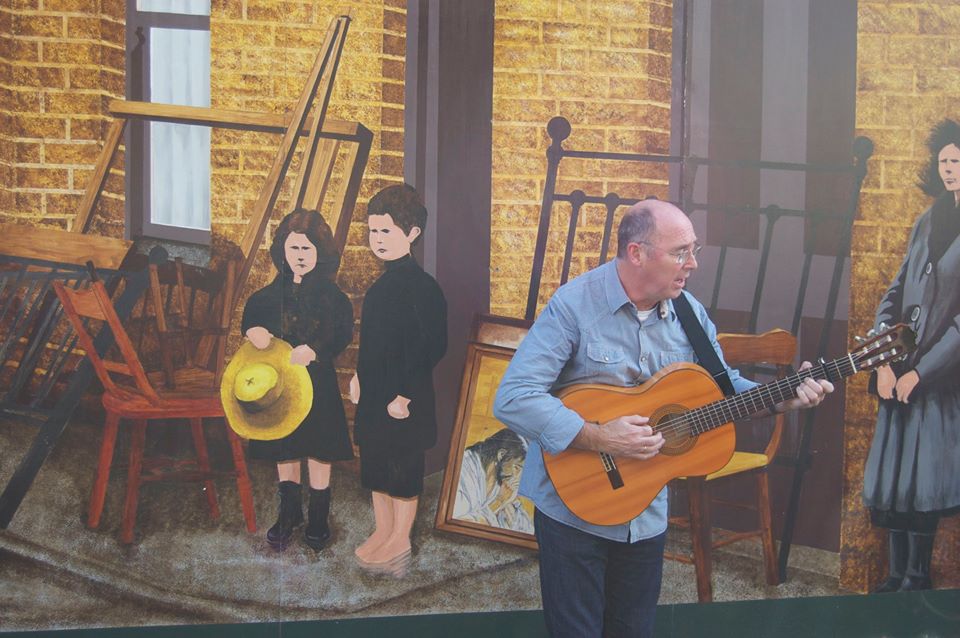
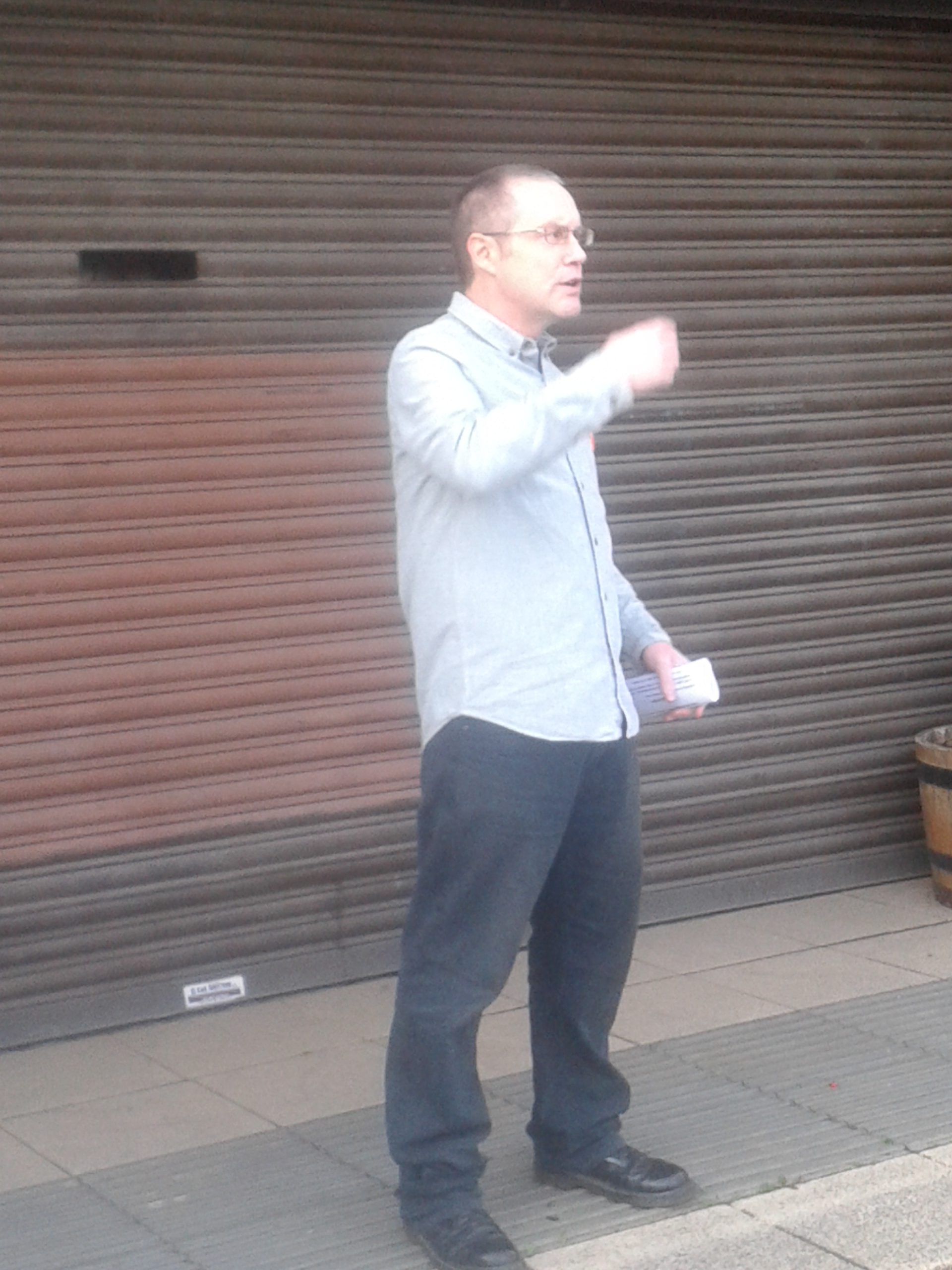
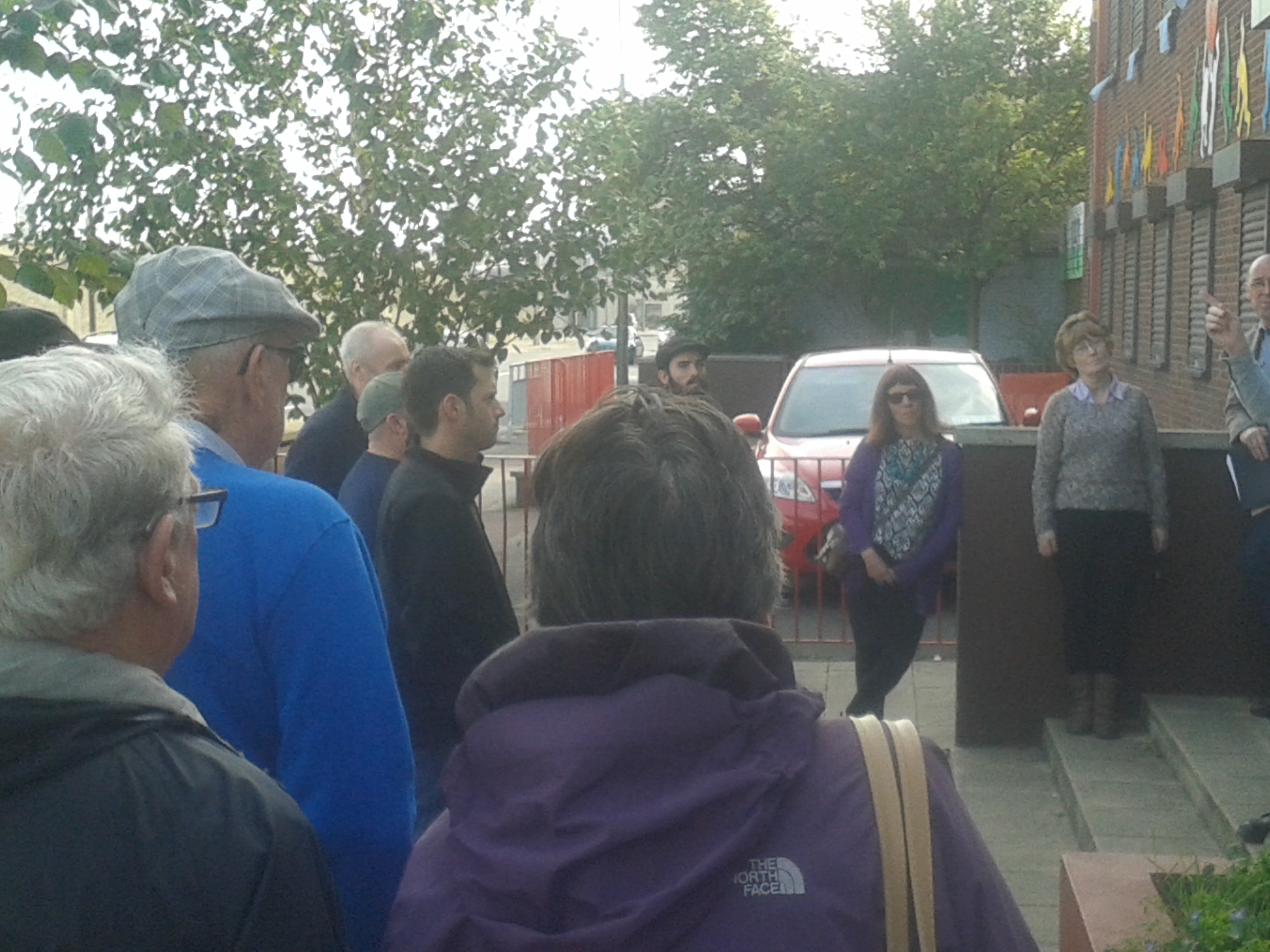
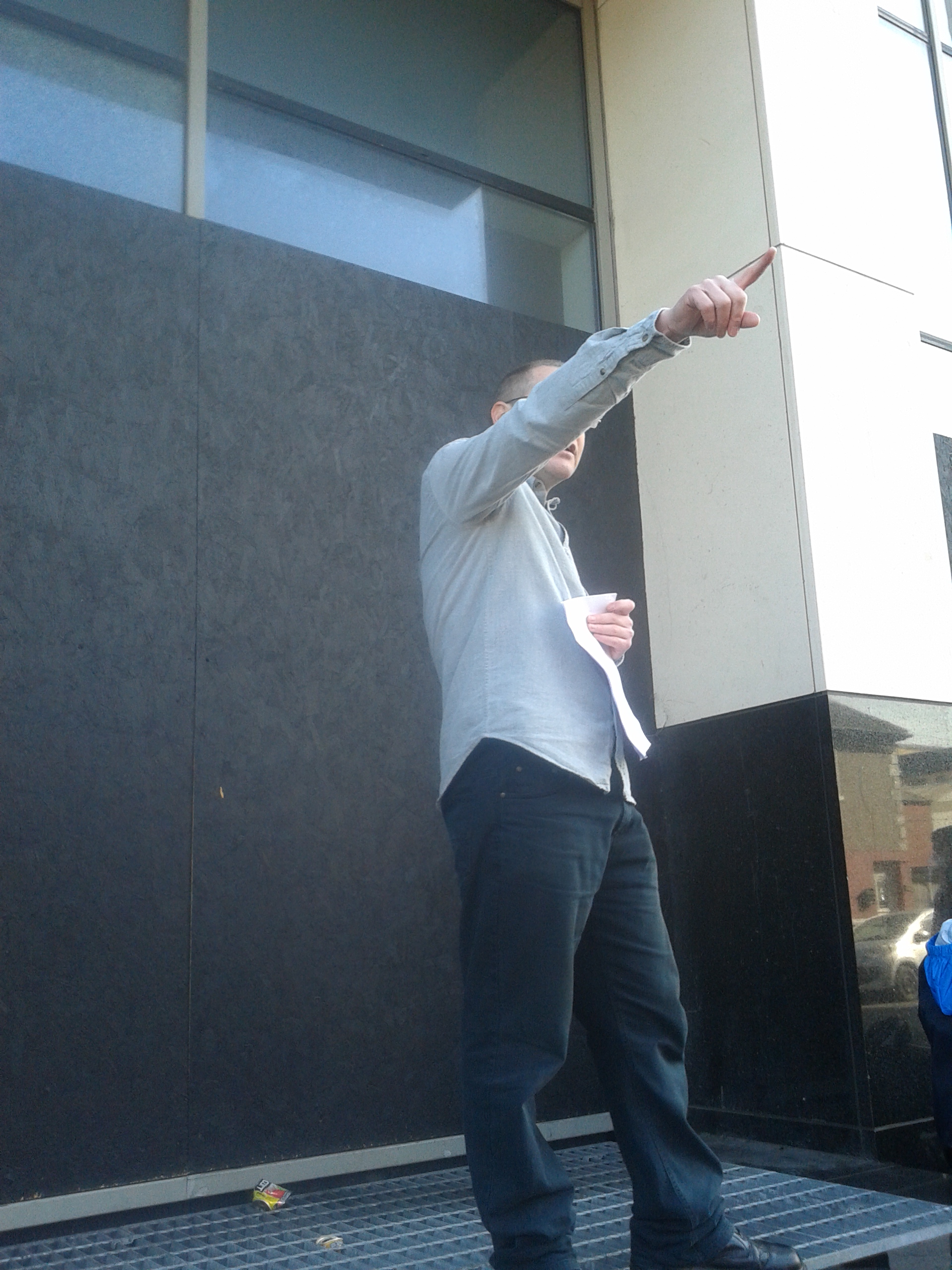
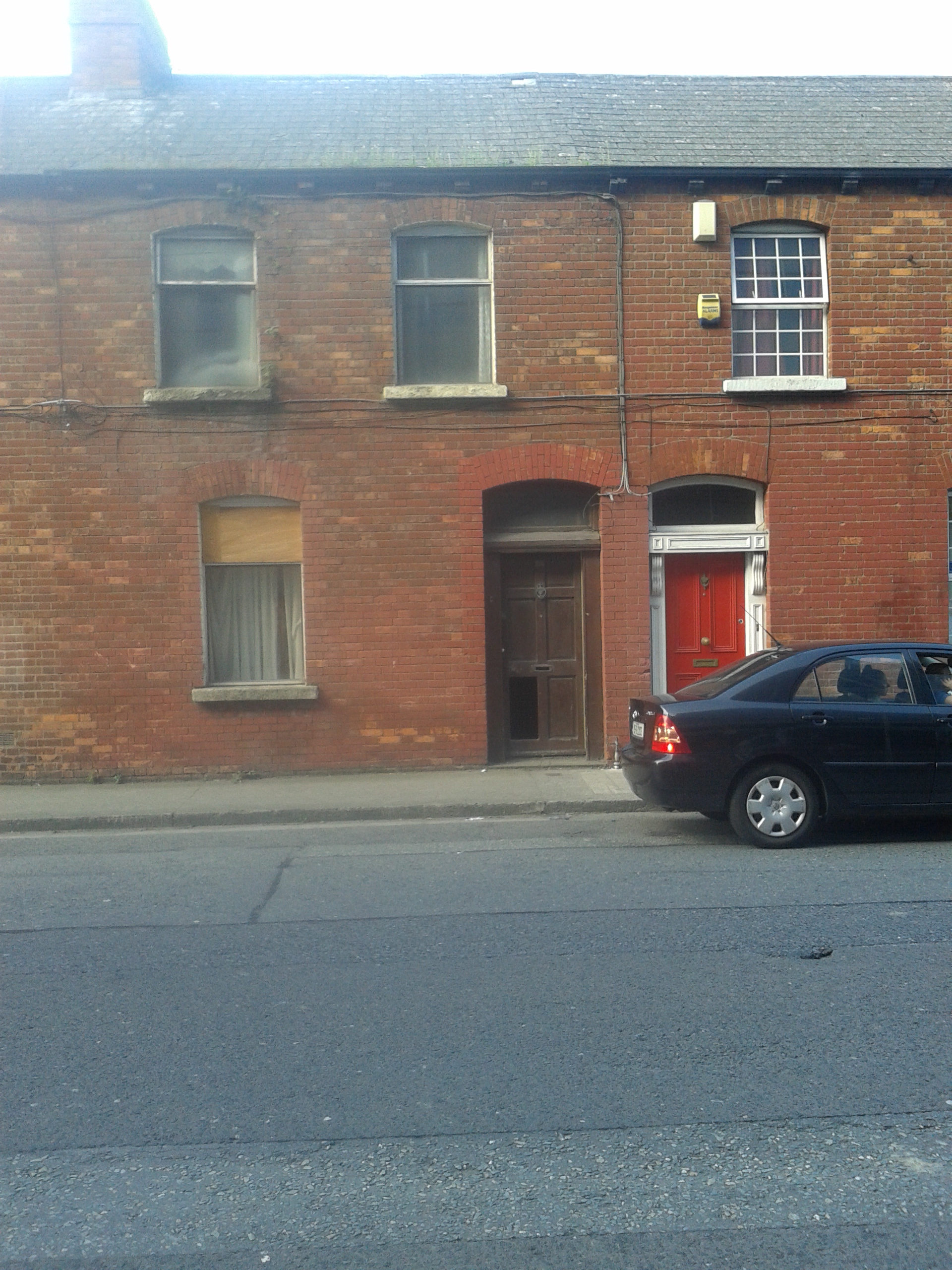
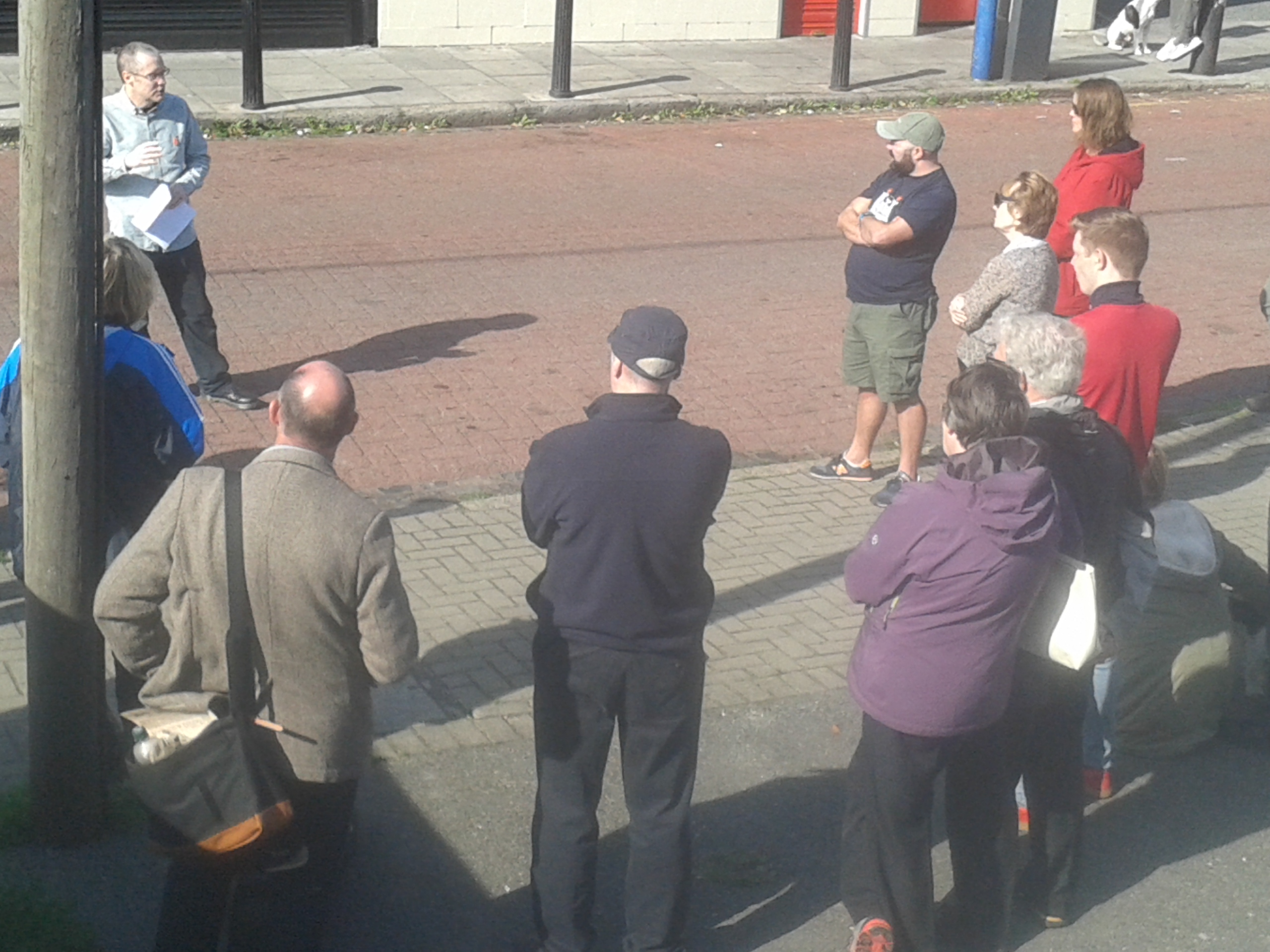
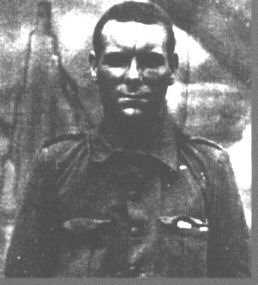
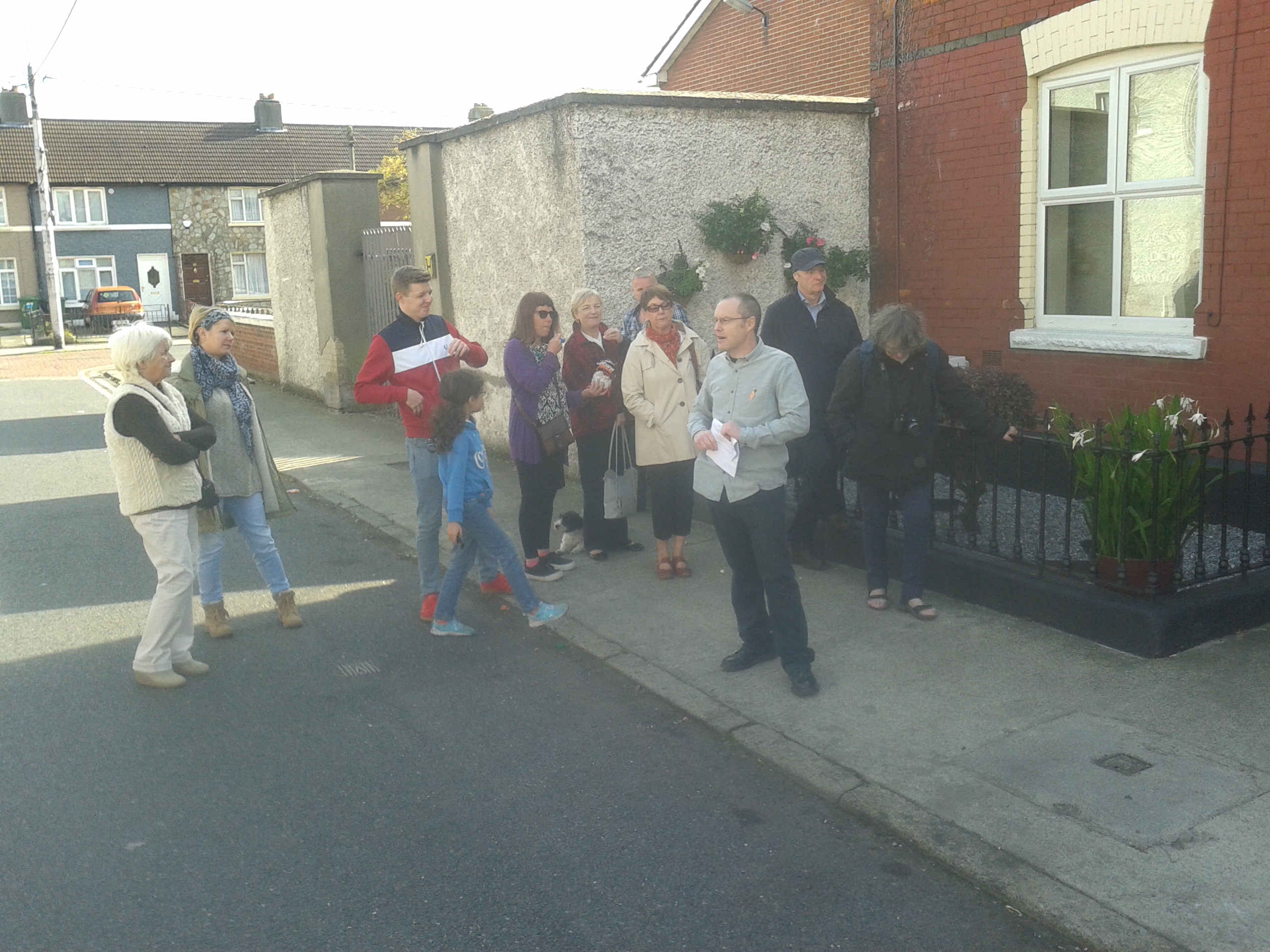
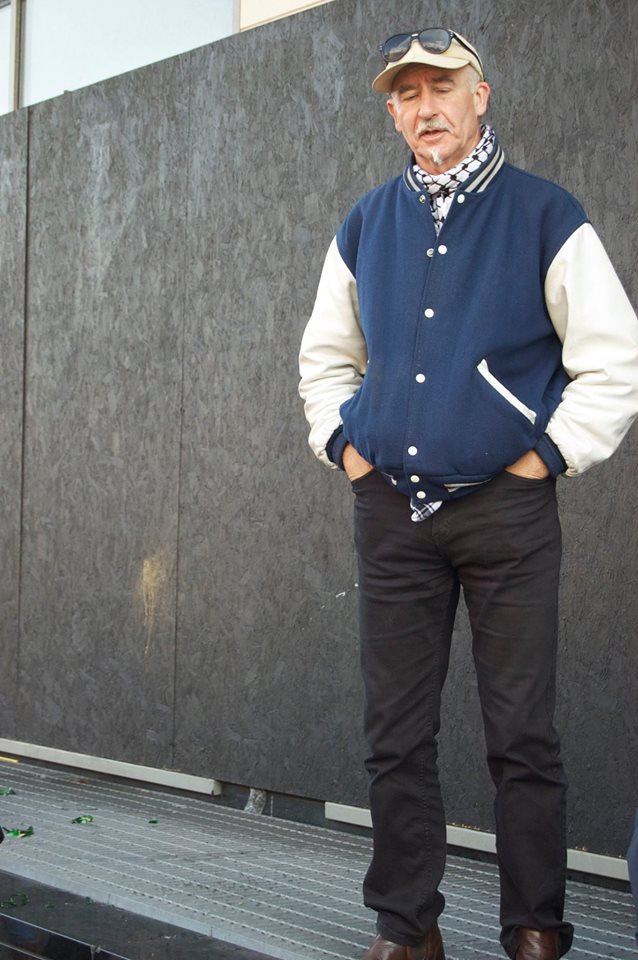
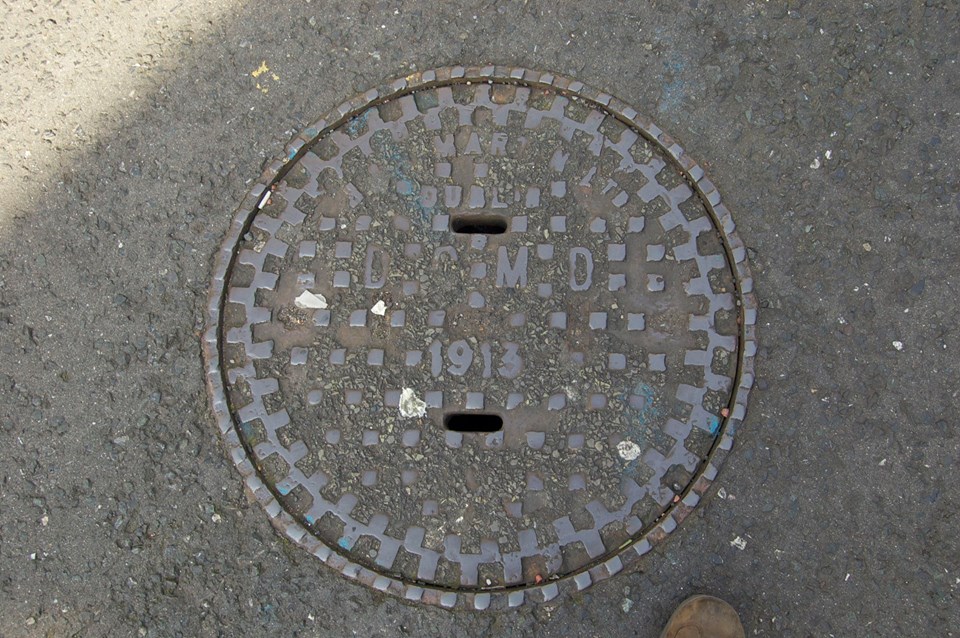

 There were many police but nothing was happening and Larkin did not appear. After a while, a horse-drawn carriage drove up and an elderly church minister alighted, assisted by a woman, and entered the shop. They took the lift to the restaurant floor. A little later Larkin appeared at the restaurant open window, in church minister’s clothing, spoke a few words to the crowd and ran inside. Those in the street were very excited and when the police took Larkin out under arrest, they cheered him, urged on by Constance Markievicz. The police drew their batons and attacked the crowd — any man not wearing a police uniform.

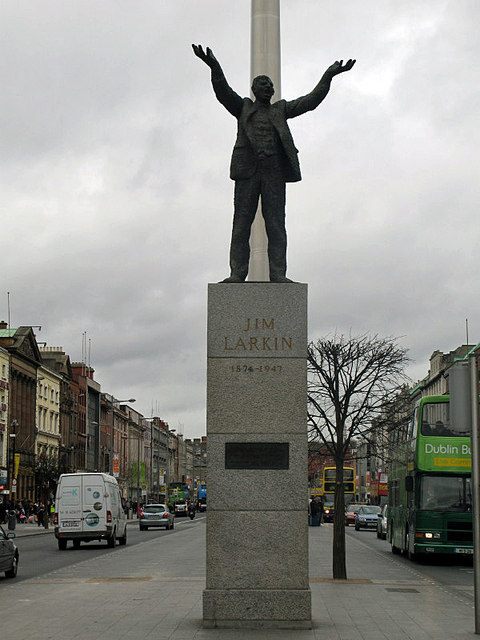


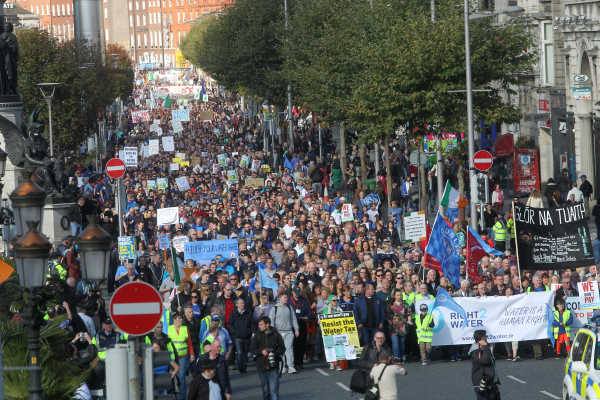


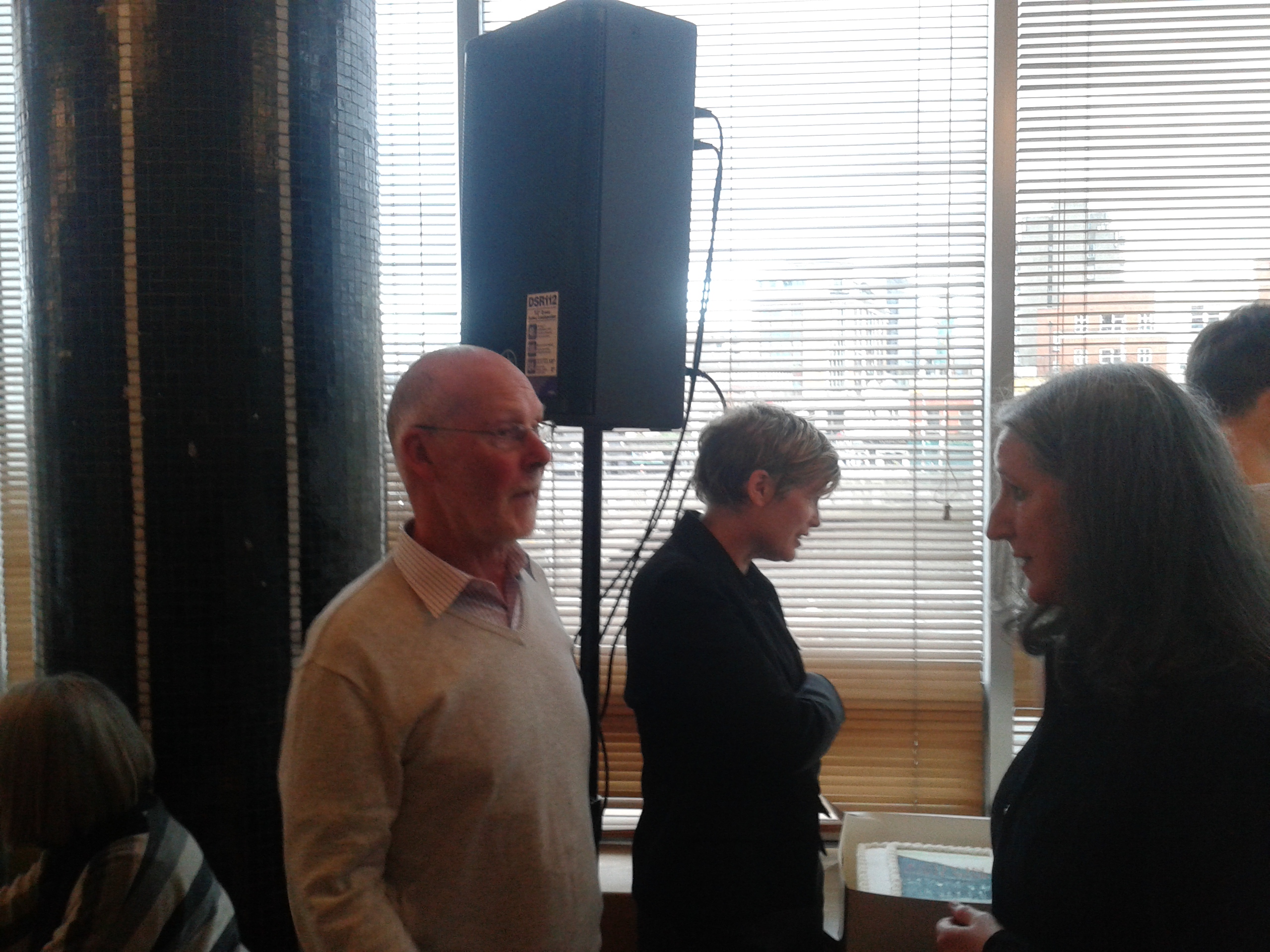
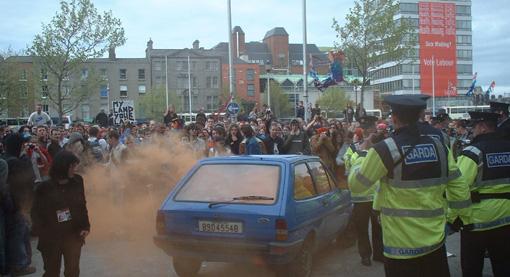
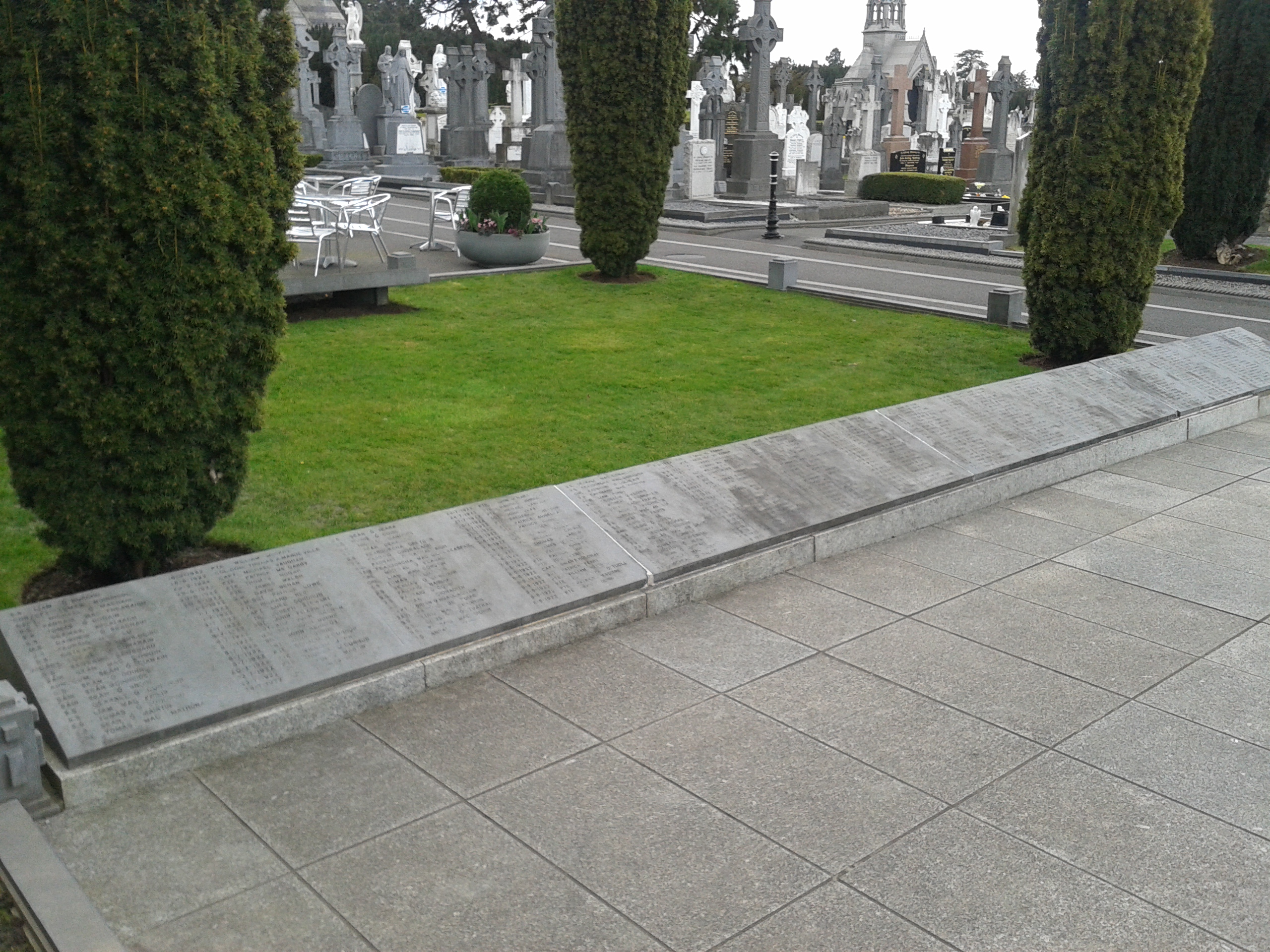


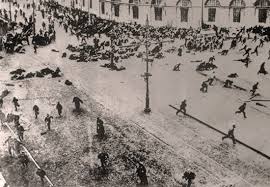


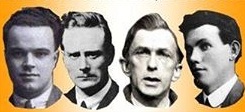


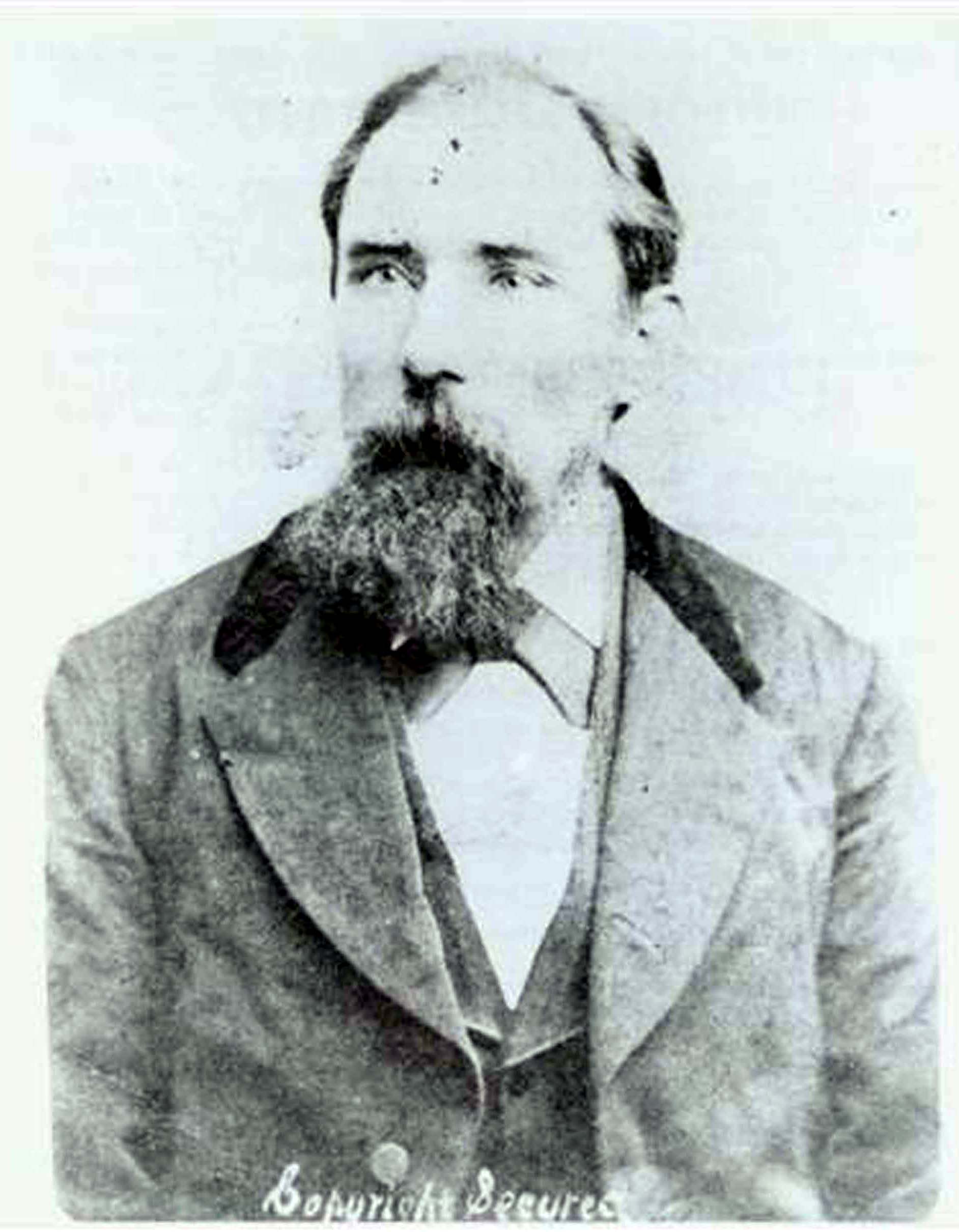


 rebelbreeze