An interesting look at the Mac Neill cancellation and on Mac Neill in general as well as, in passing, the politics of the reorganised Sinn Féin party in 1919. The comment about Irish Murdoch’s novel is also interesting.
The common view has it that Eoin MacNeill, the head of the Irish Volunteers at the time of the Easter Rising, was not let in on the plans for a rebellion. He only found out on its eve and put an advertisement in the Irish Independent on Easter Sunday, cancelling the manoeuvres under which rubric the rebel leaders had planned to launch the rebellion. As the Irish Times website section on the Rising puts it, “The militants had to deceive their own official leader, Eoin MacNeill. MacNeill’s position was that the Volunteers should resist, by force if necessary, any attempt to disarm them, but that aggressive action could not be contemplated unless it had a real chance of success.”
For historians, political figures and commentators opposed to republicans, this all shows the lack of morality of the rebel leaders and becomes part of the indictment of the Rising and its…
J. K. O’Reilly (1860-1929) of 181 North Circular Road, Dublin, was author of of the patriotic ballad, “Wrap The Green Flag Round Me, Boys”. Not alone did he take part in the 1916 Rising but so didall his sons: Kevin (1893-1962), Sam (1896-1988), Desmond (1898-1969), Tommy (1900-1985) and Donal O’Reilly (1902-1968). J. K. and Kevin, Sam and Desmond served in the Irish Volunteeers, while Tommy and Donal served in Fianna Eireann.
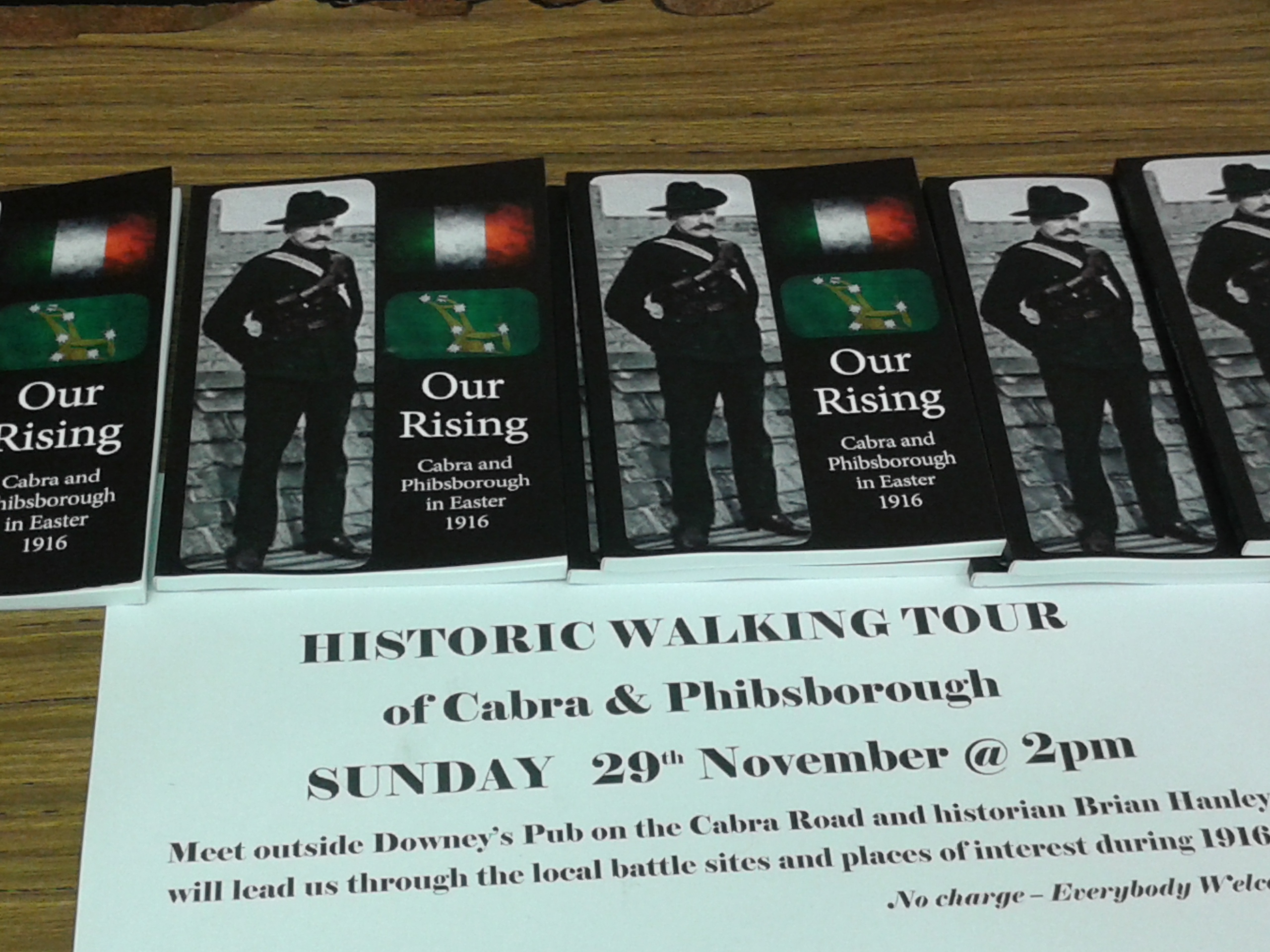
This November 7th saw over 200 people turn out for the launch by the Cabra 1916 Rising Committee of a marvellous 156–page historical publication. Among the Cabra residents honoured in “Our Rising: Cabra and Phibsborough in Easter 1916” are the O’Reilly family.
IN THE 1916 RISING AT 13 YEARS OF AGE
In March 1966 the “Irish Socialist”, publication of the then Irish Workers’ Party (now the Communist Party of Ireland), brought out a special issue to commemorate the 50th anniversary of the 1916 Rising. A highlight of that publication had been Party veteran Donal O’Reilly’s memories of how, as a 13 year old boy, he had followed his father and brothers into the Rising, to the horror of Rising leader Tom Clarke, who considered him far too young to be involved in war. It was subsequently republished by my father, Micheal O’Riordan, in his 1979 book, “Connolly Column”.
Included in Donal O’Reilly’s memoir was his own day-by-day account of Easter Week, 1916:
“Monday, Easter Week: In our home it was the ordinary week-end mobilisation. There was the cancellation order by McNeill in the “Sunday Independent” of course, but somehow we didn’t seem to pay much attention to newspapers then. Certainly all the adult members of my family went on parade. At two o’clock, I knew there was a difference. A barricade was up at the Railway Bridge in Phibsboro, which was just a few hundred yards from our home. Houses were occupied and all sorts of guns were in evidence. Down I went into O’Connell Street.
“The Proclamation was up. The windows of the G.P.O. were barricaded. The looting had already started and despite efforts by a few Volunteers, shop after shop was destroyed. How fires were prevented by the few Volunteers that were on the streets seemed a miracle. Back through the barricades of Phibsboro I went home with wondrous tales to tell! Nobody was at home; all were out on their barricades!
“Tuesday, Easter Week: There was a silence that I had never known before or since. Nothing moved on the North Circular or Old Cabra Roads. I wanted to go into the city centre again, but how could I get across the barricade on the Railway Bridge? I knew Jim O’Sullivan, the officer in charge, but that would be of little value. I hung around and eventually nobody knew which side of the barricade I should be on. I discovered my own private route into O’Connell Street; down Mountjoy Square, into Hutton’s Place, across Summerhill, an area that was then teeming with life, all living in big and small tenement dwellings.
“I got to the G.P.O. The looting had ceased and the only movement now was of determined men that came and went. A few groups were gathered around the Post Office trying to get in, but were rejected. At three o’clock there was a movement at the side door in Henry Street and the “War News” made its appearance. I duly appointed myself as official newsboy to the Garrison. Within an hour-and-a-half, the “War News” was sold and I was back in the G.P.O. with my my official status and the money. I got into the main hall.
“Tom Clarke, whom I had met in his shop and at the lying-in-state of O’Donovan Rossa at the City Hall, saw me and was horrified. I was sent to Jim Ryan and he sent me off to Purcell’s with a parcel of bandages. At the Purcell’s post I stayed and there I met CylMacParland, a man who was to be very close to me for many years afterwards.
“Wednesday, Easter Week: The silence had gone. The occasional crack of a rifle had given way to the boom of artillery.
“Back at G.P.O: Thursday, I returned to the G.P.O; there was no difficulty in getting in now. The guns were battering away and all the women and youth were being prepared for evacuation. It was proposed that we should go via Princes Street, Abbey Street and Capel Street. I left, crossing O’Connell Street, Marlborough Street and then up by Hutton’s Place. Eventually I got to old houses in Berkeley Road, and stayed there until Sunday morning.”
20 YEARS LATER, FIGHTING IN SPAIN
So ended Donal O’Reilly’s memoir. He went on to fight in Ireland’s War of Independence (1919-1921), and on the Republican side in the Civil War (1922-1923), serving in the Four Courts garrison and, on surrender, being imprisoned in Mountjoy Gaol. But Donie, as he was known among friends and comrades, went on to fight for a second Republic, accompanying Frank Ryan in the first group of Irish International Brigade volunteers he led out to fight in the Spanish Anti-Fascist War (1936-1939). If Easter 1916 in Dublin had been Donie’s baptism of fire for the Irish Republic, Christmas 1936 on the Cordoba front was to be his baptism of fire for the Spanish Republic.
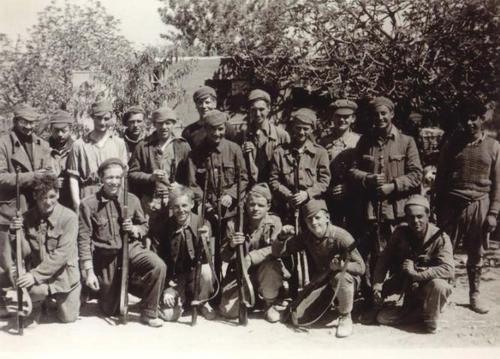
Photograph taken of some of the Connolly unit in Spain
(See http://www.irelandscw.com/part-IrDem3709-10.htm#371002Cordoba for his account of going into action, which was published in the “Irish Democrat” on 2 October 1937. In the opening two paragraphs the editor introduced Donal O’Reilly to readers, while his own account began with “Christmas time”).
Donal O’Reilly’s life both began and ended in the Cabra area of Dublin, and he ultimately resided at 31 Cabra Park. As the son of his fellow International Brigader Micheal O’Riordan, it was my privilege to have personally known Donie O’Reilly during my 1960s teens, and to have attended his 1968 funeral in Glasnevin Cemetery. Full military honours were rendered to this veteran of Ireland’s War of Independence, as the Irish Army fired a volley of shots at his graveside, before veteran Irish Republican Congress leader Peadar O’Donnell gave an inspiring funeral oration. Peadar was at that juncture Chair of the Irish Voice on Vietnam, on whose Executive I was the representative of the Connolly Youth Movement.
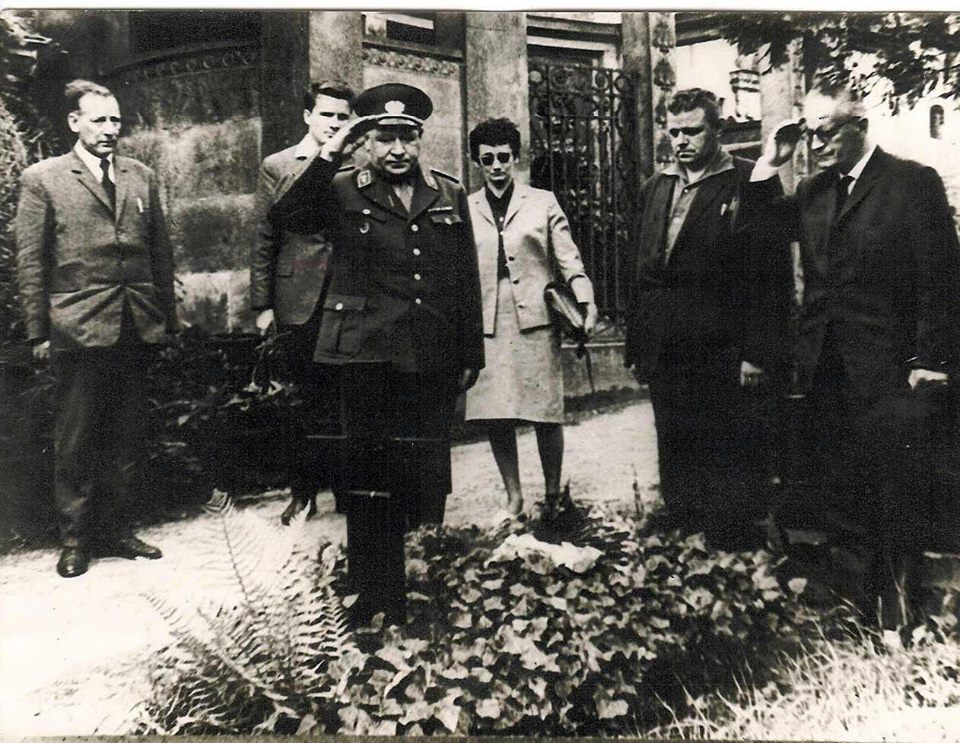
This photograph of Donie O’Reilly was taken in 1966 in the German Democratic Republic, at the grave of Irish International Brigade leader Frank Ryan, in Dresden’s Loschwitz Cemetery. (Frank Ryan’s remains would subsequently be repatriated to Ireland, in 1979, for reburial in Dublin’s Glasnevin Cemetery). In this photo, Arno Herring, in GDR army uniform, a veteran of the XI (German-speaking) International Brigade, salutes the memory of Frank Ryan, as three Irish veterans of the XV (English-speaking) International Brigade stand to attention: Donal O’Reilly, on the far left, and Mícheál O’Riordan and Frank Edwards, on the right.
Around a hundred people attended the Cabra 1916 Rising Committee’s exhibition and launch on Saturday (7/11/2015) of their publication Our Rising – Cabra and Phibsborough in Easter 1916.
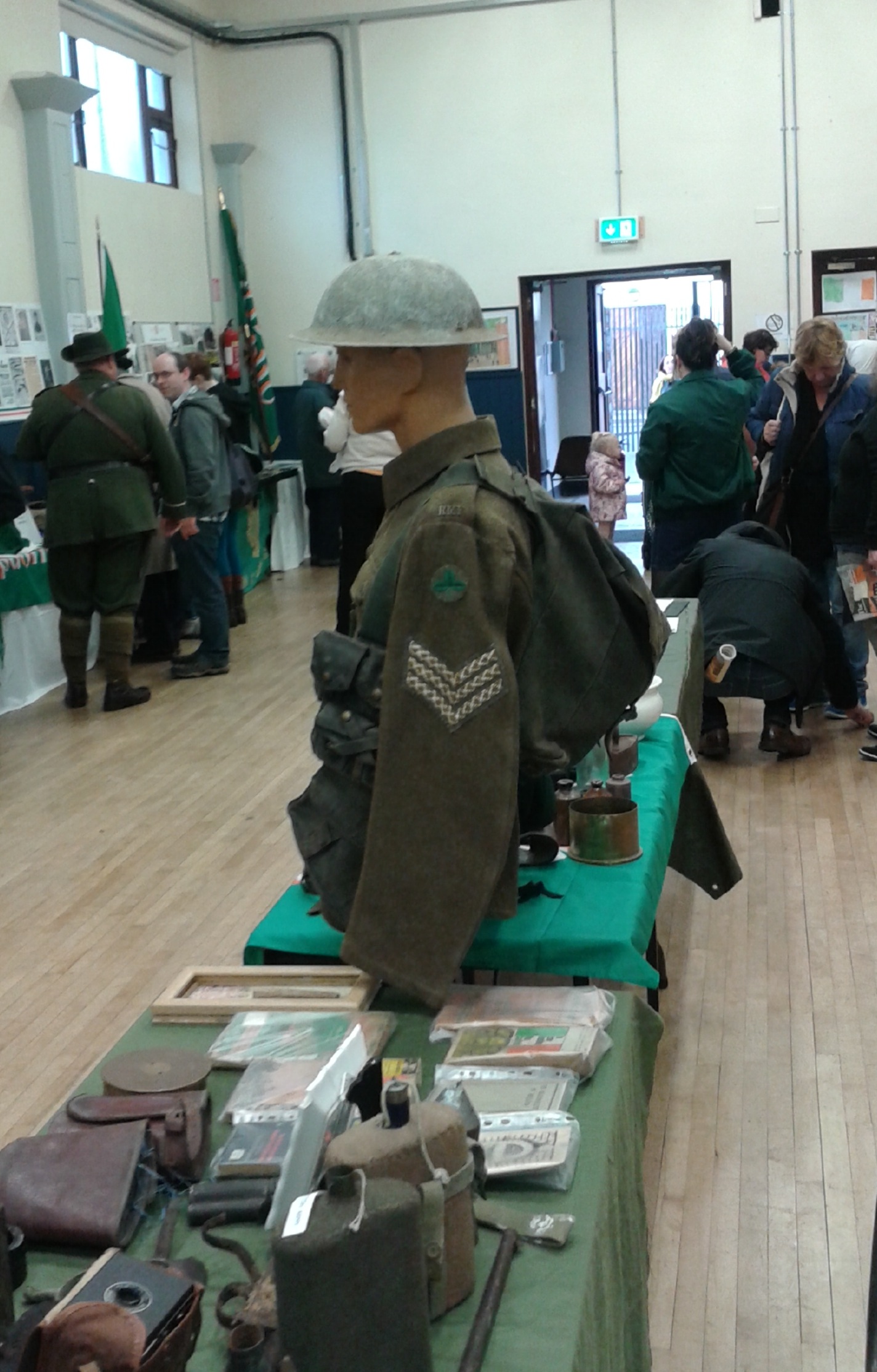
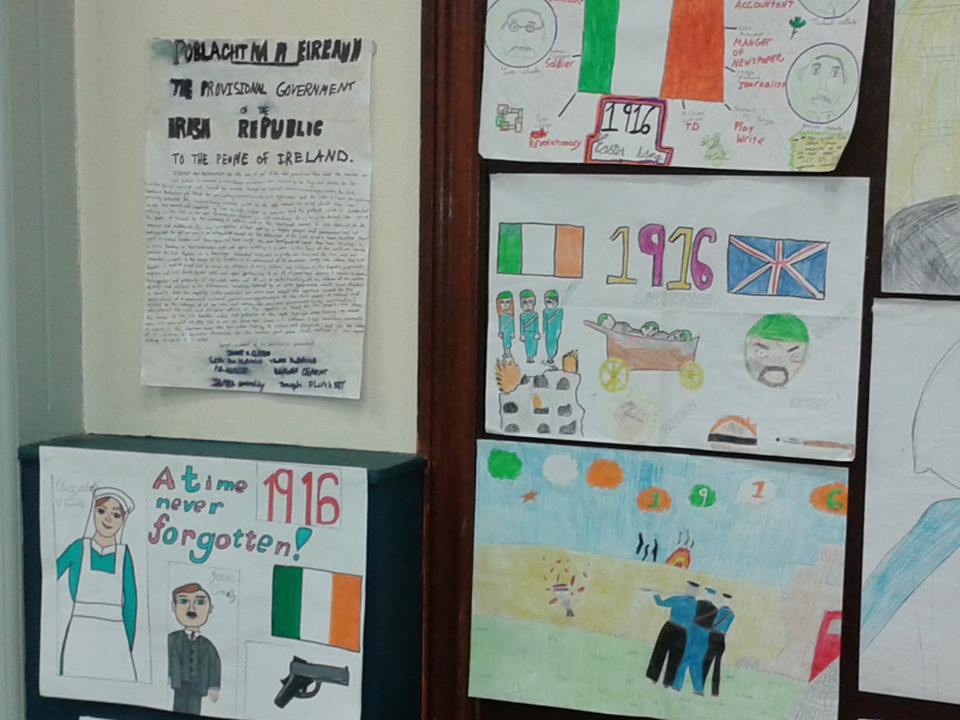
The event took place in the Cabra area itself, in the parish hall of Christ the King church. To accompany the launch, the Irish Volunteers group put on a very interesting display of artifacts from the period, including uniforms and weapons, and provided some personnel also dressed in Irish Volunteer uniforms and IRA typical clothing of the War of Independence period. Along the walls there were many period photos and a wonderful display of schoolchildren’s art on the subject of the 1916 Rising.
A shot of the attendance at the start of the formal part of the launch (Photo D.Breatnach)Diarmuid Breatnach introducing songs about to sing: “Sergeant William Bailey” by Peadar Kearney (with two additional verses by Breatnach) and “Where Is Our James Connolly?” by Patrick Galvin. (Photo A.Perry)
After some time allowed for people to gather, the MC Éamonn O’Hara called people to order and after they had sat down, gave a brief background to the work of the Cabra 1916 Rising Committee, then outlined the formal part of the book launch to follow. First he introduced singer Diarmuid Breatnach.
Breatnach took the floor and explained that the songs he was going to sing were from or related to the period. “During these years of commemorations,” he said, “we are told that we should remember the First World War. Some people disagree with that but I think it is right; we should remember the War but — not in the way most of those people mean. We should instead remember that hundreds of thousands were sent to murder their class brothers in other lands, sent to their deaths and millions more to injury and tragedy, for the profits of a few.”
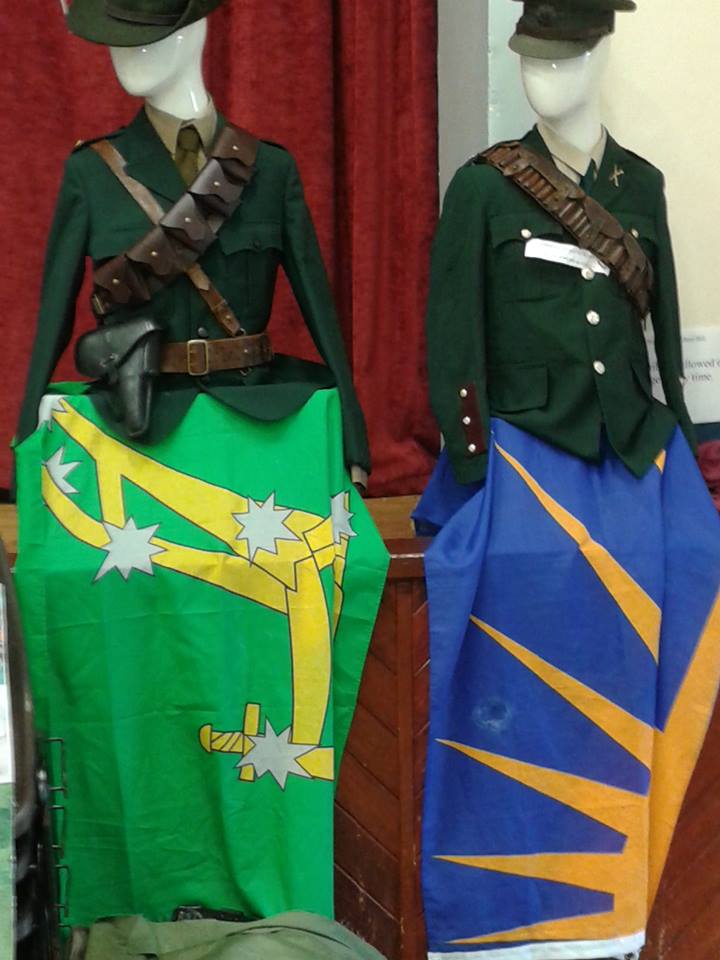
Some of the uniforms and flags displayed by Irish Volunteers.org. (Photo D. Breatnach)
“Also, when we are told that we should commemorate the First World War, they don’t mean that we should remember those brave few who dared speak out publicly against the war, who held anti-recruitment rallies or who picketed army recruitment meetings and shouted slogans there. And who paid the price of imprisonment and sometimes even death for doing so.” And yet, Breatnach went on to elaborate, those things too are part of the history of war and to his mind the most important part, since among all the wars of the past and the present, it is that trend that holds out a hope for the future.
Breatnach related that Peadar Kearney was born not far from Phibsborough – in Dorset Street, around the corner from Inisfallen Parade, where Sean O’Casey was reared. When Kearney taught night classes in Irish, O’Casey was one of his pupils.
Among the songs that Kearney wrote was a three-verse song mocking a British Army recruiting sergeant, who apparently had a pitch at Dunphy’s Corner. According to a local historian, that was outside what is now Doyle’s pub, at the Phibsboro crossroads. Breatnach said that he had added two verses of his own composition to that song.
“Of course, the 1916 Rising is a part of the history of the First World War too,” Breatnach continued, “and not only because it took place during that War. For the IRB, undoubtedly, it was a case of ‘England’s difficulty is Ireland’s opportunity’. But for some others, including Connolly, as he made clear a number of times in writing, the Rising was necessary to interrupt the War, to stop the bloodshed of class brother killing class brother across Europe.”
Some of the wonderful children’s artistic impressions of the Rising on display at the launch. (Photo D. Breatnach)
Breatnach pointed out that the Rising in Ireland was one of the most significant internationally against that imperialist war and that it was not until February the following year in Russia that there would be another of such historical importance, to be followed later by the October socialist revolution.
Of the two better-knowns songs about James Connolly, Breatnach said one makes no mention of socialism, the Citizen Army or trade unions and that in his opinion “Where Is Our James Connolly?” is truer to Connolly’s ideology. It was written by Patrick Galvin who was, among other things a writer, playwright, screen writer and singer. Galvin died only four years ago.
Breatnach then went on to perform “Sergeant William Bailey”, followed by “Where Is Our James Connolly?” to audience applause.
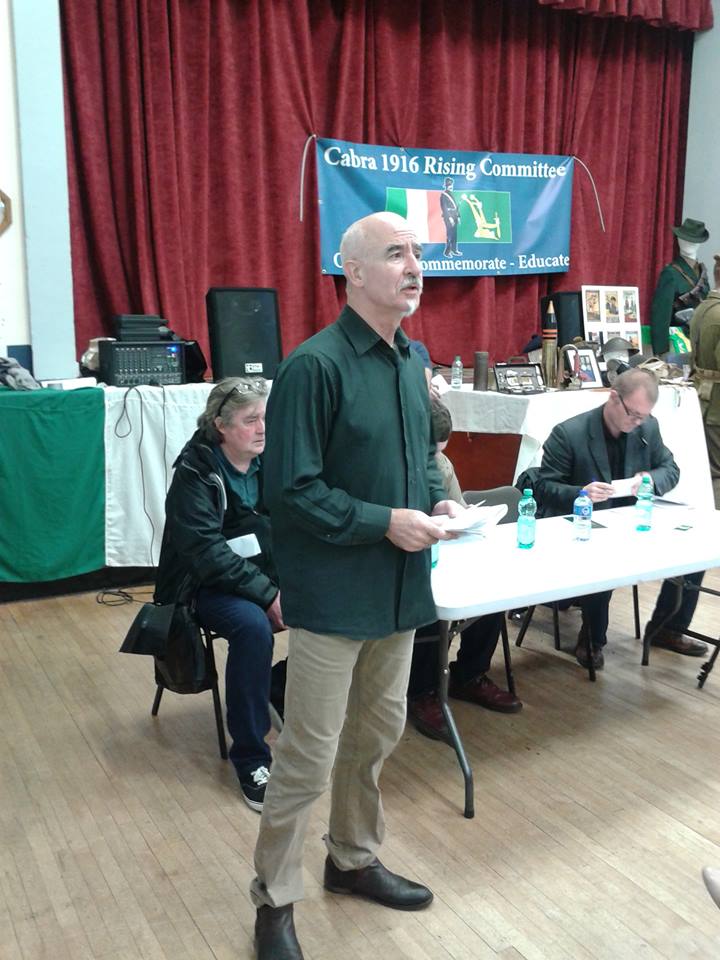
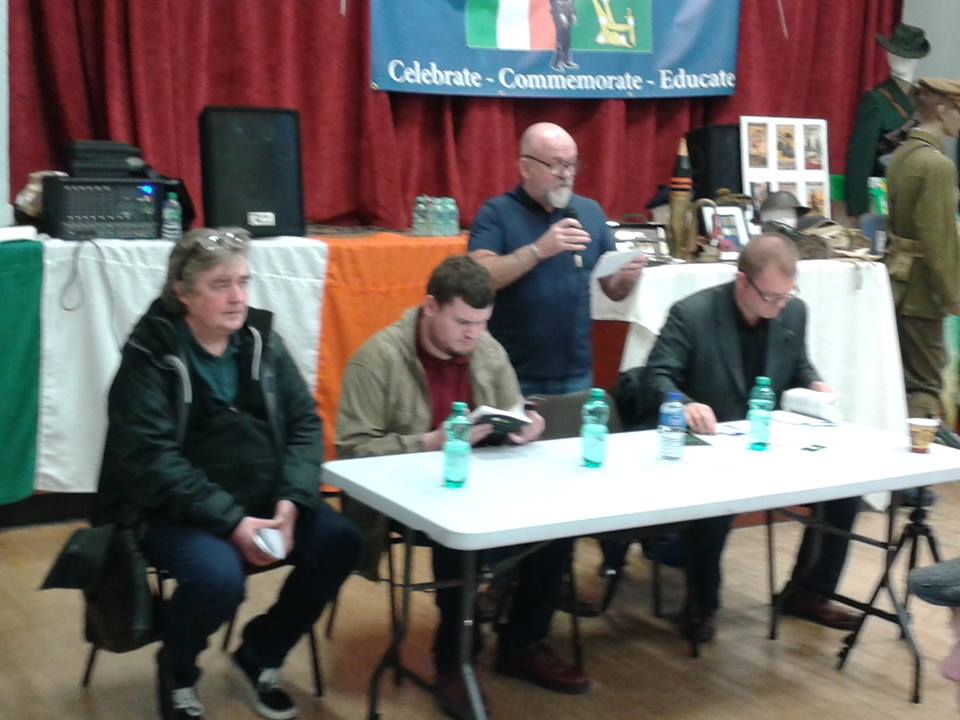
The panel of historians at the launch (seated L-R): Hugo McGuinness, Donal Fallon, Brian Hanley. Eamonn O’Hara (standing) was MC. (Photo D. Breatnach)
O’Hara then introduced one of the authors of “Our Rising”, historian Brian Hanley. “Phibsborough was an area with strong revolutionary connections,” pointed out Hanley and went on to list some of the many participants and even leaders of the 1916 Rising and later who lived in the area, including Michael O’Hanrahan, who was one of the executed sixteen.
Hanley said that although it was right of course that those who were executed for their part in the Rising should have a special place in our memories and be written about by historians, it was unfortunate that many other important participants were neglected. Nearly 100 were sentenced to death but most had their sentences commuted. Had they been executed instead, Hanley pointed out, we would have had many biographies of them, their upbringing and domestic arrangements examined, their words pored over ….. instead, we know next to nothing about them except that they participated and what their role was.
Memorabilia of the British Army were there too — and a reminder that initially It was mostly Irish units fighting to suppress the Rising. (Photo D. Breatnach)
The British Army unit responsible for the suppression of insurgent activities and securing of the area was the Royal Dublin Fusiliers; this was in line with the reality of the British Army, Hanley went on to say, an organisation the main purpose of which was to suppress resistance to the British Empire in places like India, Afghanistan and Ireland. The Fusiliers killed three people in the Phibsborough area, two civilians and a Fianna scout.
Pointing out that most of those men and women who went out to fight in 1916 were not poets or dreamers, Hanley refuted the myth of blood sacrifice. Most of those people were ordinary enough, with all the hopes, excitement and fears of ordinary people, Hanley opined: “They went out with high hopes that they were going to win.”
Thanking various bodies that had supported the project, Hanley went on to point out that the book should not be considered all that had to be said on the subject and, while thanking those local people who had contributed stories and information, encouraged any others who had further information or stories, including corrections of what they had written, to get in touch with the society.
Some more of the wonderful children’s artistic impressions of the Rising on display at the launch. (Photo D. Breatnach)
Hanley’s presentation was followed by that of another historian, Dónal Fallon, co-author of Our Rising. “The commemoration of the 1916 Rising is much too important to leave to the Irish Government”, said Fallon, who admitted to being a newcomer to the area, in the community of which he was glad to live. Local history and community groups had a vital part to play in commemorating the important events of this centenary decade, he said, pointing out that we had already had the centenary of the Lockout, next year would be the centenary of the Rising, to be followed by centenaries of the War of Independence and the Civil War, which might be uncomfortable for some people but should not be shirked for all that. Last of the panel to speak was historian Hugo McGuinness who said he was delighted to have contributed the Cathleen Seery-Redmond piece to the book. He laid stress on the importance of local history and people’s stories as the human element of history. McGuinness recalled that when Connolly and some others were planning a commemorative event, a female member of the committee proposed that it would be wonderful to see Connolly in uniform; Hugo commented that he found little stories like that added human charm to the big narrative of historic events. McGuinness strongly recommended people buy a copy.
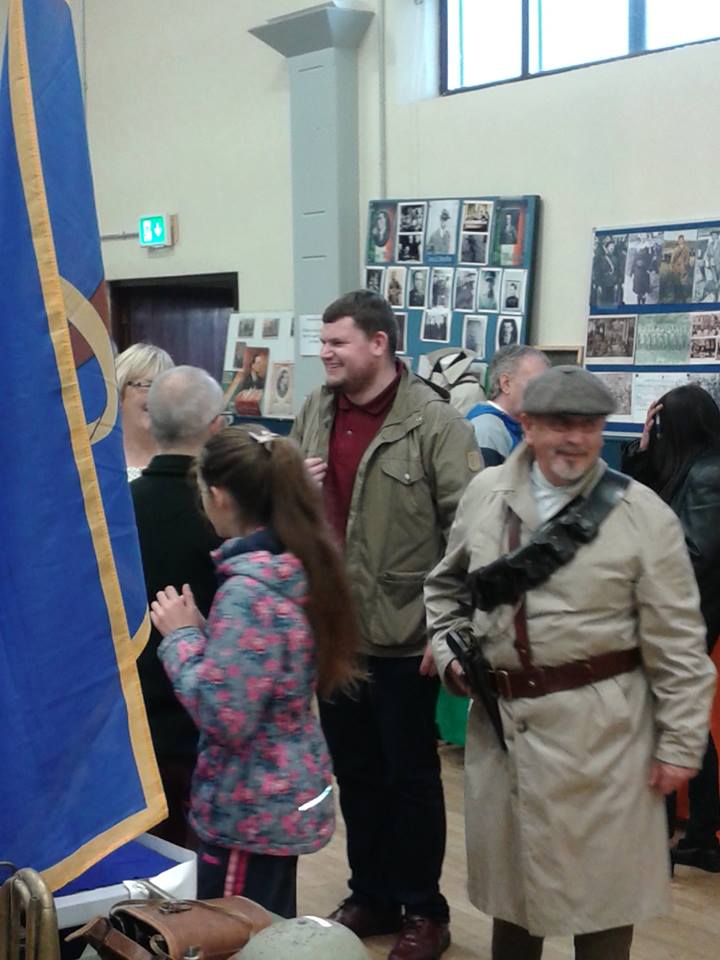
“Uniform” more typical of IRA man in the War of Independence 1919-1921 or Civil War. But even in 1916, some Volunteers could not afford a uniform. Co-author Donal Fallon centre background. (Photo D. Breatnach)
All the speakers were accorded warm applause. O’Hara thanked the speakers and asked whether there were any questions or comments. There were a few only and, announcing a historical walk to take place on the 29th, for which flyers had been placed on seats, the MC thanked the Irish Volunteers.org group for their display, thanked the audience for their attendance and concluded the formal part of the event. People remained to buy copies of the book and have them signed by the authors, or conversed or wandered among the exhibition for about an hour afterwards.
I WAS INVITED TO SING A COUPLE OF SONGS AT THE LAUNCH OF “OUR RISING – CABRA AND PHIBSBOROUGH IN 1916″. Of course I was honoured to accept; the songs I chose to sing were “Sergeant William Bailey” and “Where Is Our James Connolly?” I chose them as important to the events around the Irish Volunteers and hoped they would be considered appropriate to the book launch event also.
These years are the centenaries of many things in our history and it is right that we should remember them. Among those things we are told that we should remember the First World War. I think the people who say that are right – we should, but not in the way most of those people mean. We should remember that in a dispute about what markets of the world should be dominated by which World powers and which resources they should have a monopoly on stealing, they sent millions to their deaths and millions more to injury and tragedy. And of course, the capitalists, the class that controlled those Powers were not among those dead and injured millions.
When those people tell us that we should commemorate the First World War and collect songs and memorabilia they don’t mean that we should sing songs against the War, collect anti-War leaflets and honour those brave few who dared speak out publicly against the war stampede of their countries. And who paid the price for doing so. And yet those things too are the history of the War and to my mind the parts of that history that, among all the wars of the past and the present, hold out a hope for the future.
Peadar Kearney, author of “The Soldiers’ Song”, “Sgt. William Bailey” and many other songs
Peadar Kearney was an Irish Republican of a Dublin skilled working class background born not far from Phibsborough – in Dorset Street, around the corner from Inisfallen Parade, where Sean O’Casey was reared. When Kearney taught night classes in Irish, O’Casey would be one of his pupils.
Kearney wrote many songs that are still sung today, the most famous of which is the Soldiers’ Song, on which he cooperated with Patrick Heeney, from Railway Street, off Gardiner Street. When the Irish Volunteers was formed in 1913, Kearney was a co-founder and his song was one of a number sung by other Volunteers during the 1916 Rising, in which Kearney also fought.
Peadar Kearney also wrote a three-verse song mocking a recruiting sergeant for the British Army, who apparently had a pitch at Dunphy’s Corner. According to a local historian, that was outside what is now Doyle’s pub, at the Phibsboro crossroads. I added two verses to that song, in order to give Sergeant William Bailey a bit of a background story.
Of course, the 1916 Rising is a part of the history of the First World War too – and not only because it took place during that War. For some, undoubtedly, it was a case of “England’s difficulty is Ireland’s opportunity”. But for some others, including Connolly, as he made clear a number of times in writing, the Rising was necessary to interrupt the War, to stop the bloodshed of class brother killing class brother across Europe.
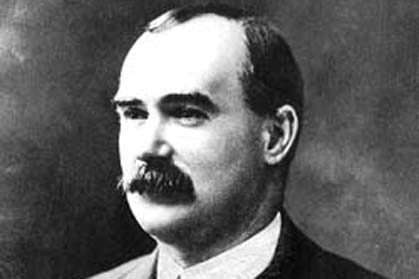
James Connolly, a revolutionary socialist, wanted revolution against world war
Connolly was a revolutionary socialist. At the end of the 19th and very early 20th Centuries, the standard position of the international socialist movement had been against imperialist or colonialist war. In 1912, on November 24–25, the congress of world socialist parties at Basel in Switzerland, including revolutionaries and reformists, had come out clearly against imperialist war. Their manifesto was unanimously adopted at the congress. In the context of the situation created by the war in the Balkans that had begun in October 1912 and the increasing threat of world war, the Basel Manifesto called called for an unrelenting struggle against war and those responsible for it, the ruling classes of the capitalist countries. It stated that that war, if it began, “would create an economic and political crisis,” which should be utilized to “hasten the downfall of the rule of capital.”
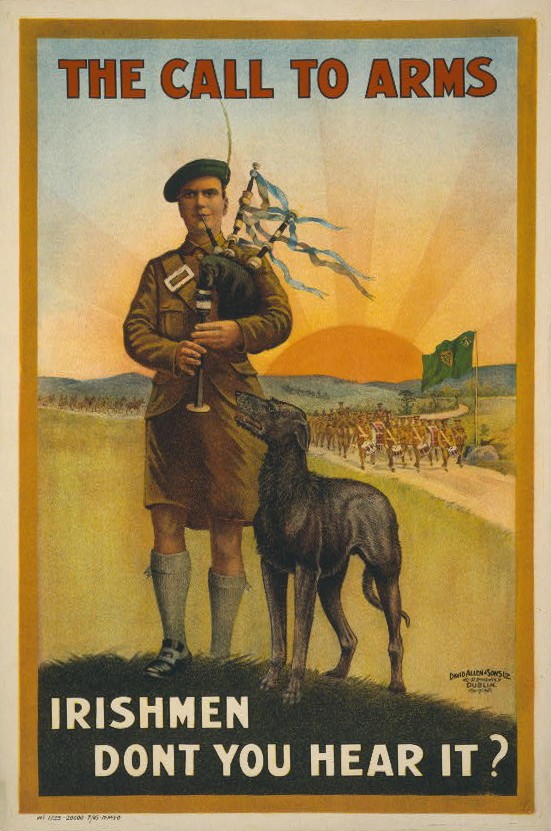
British Army recruitment poster aimed at Irish men
As we know, the leadership of those parties that we now call the social democrats abandoned this position completely and championed their own ruling classes two years later as WWI broke out, cheering the workers of their countries on into uniform, to kill and be killed. There were some uprisings against the capitalists and against war but the first of any significance — and indeed of great significance — was the 1916 Rising in Ireland. The next revolutionary blow to war would not be until be a year later, with revolution in the Russian Empire.
Of the two better-knowns songs about James Connolly, the song “Where Is Our James Connolly?” is I think the best and truer to Connolly’s ideology. It was written by Patrick Galvin who was, among other things a writer, playwright, screen writer and singer. Galvin died only four years ago. Christy Moore remembers learning the song around 1970 which is probably not long after it was written – or at least published.
Patrick Galvin, author of “Where Is Our James Connolly?”
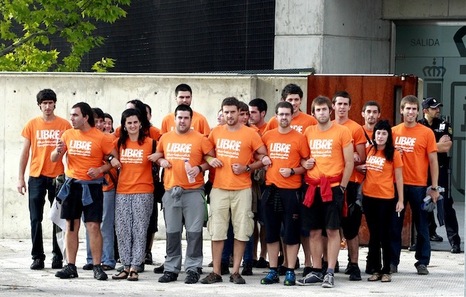
Xabat Moran, Bergoi Madernaz, Marina Sagastizabal, Aiala Zaldibar and Igarki Robles, five of the seven Basque youth sentenced to six years by the Audiencia Nacional (special Spanish Court) last Spring, have been freed this Wednesday.
Translation of press report NAIZ|from MADRID|2015/11/04|5 IRUZKINel juicio. (J. DANAE/ARGAZKI PRESS) and comment from https://www.facebook.com/dublinbasque/posts/1063431863690750
Xabat Moran, Bergoi Madernaz, Marina Sagastizabal, Igarki Robles and Aiala Zaldibar were sentenced to six years together with Ibon Esteban y Ainhoa Villaverde.
During the afternoon it emerged that the five would be freed, hours after the Supreme Court made held a public hearing in which the State Prosecutor left the possibility of reducing the sentences in the hands of the Tribunal, while the Defence asked for the accused to be cleared of all charges.
Most of the 28 youth accused of membership of SEGI outside the Court on the first day of their Madrid trial
The five have left prison and began the journey home.
The exact content of the Supreme Court’s decision is not yet known and whether this will affect the situation of Ibon Esteban and Ainhoa Villaverde is not yet known.
Twenty-eight youth were accused of membership of SEGI, the Basque Abertzale Left youth group and tried in the same trial, of which the Prosecutor withdrew charges against twelve. Later, others were discharged due to lack of evidence and in the end seven were sentenced to six years.
Villaverde, Moran, Sagastizabal and Madernaz were detained by the Ertzaintza (Basque police) before their sentences were announced, while Esteban, Robles y Zaldibar became fugitives, only to reappear in the “Human Wall” in Gastheiz/ Vitoria, where they were arrested.
End item.
Comment:
While friends and relatives will of course celebrate the decision, one commentator said: “The point for the Spanish state is to close down all legal political outlets in terms of campaigning around human, civil and political rights in the Basque Country. That leaves only the armed struggle, with which in recent decades ETA (Homeland and Freedom) has been clearly unsuccessful.”
A finding of guilt against these political activists needs to be seen in the context of the jailing of a number of political prisoners’ lawyers not so long ago and the currently ongoing trial of five political activists of Askapena, the organisation with responsibility for coordinating international solidarity work from and for the Basque Country.
For four years now ETA has been on the “permanent ceasefire” it announced at the time, yet Basque political activists continue to be charged with “assisting terrorism” or “glorifying” it.
“Human wall” in Navarra (Nafarroa), October 2013
Another point to bear in mind is that when the 28 youth, including those against whom the State later withdrew charge or the Court found “not guilty”, were originally arrested in October 2014, it was in a heavy military-style operation, they were taken from the Basque Country to Madrid, held incommunicado and a number were tortured. Then when bailed, they had to return to Madrid later to face trial, they and their supporters having to pay for travel and accommodation. The Spanish state does not have a record of paying compensation to those it has wrongfully accused or even imprisoned, not to speak of tortured, except on occasion under orders from the European Court of Human Justice in Strasbourg.
The “Human Wall” was a tactic developed and employed mostly by Basque Youth as a civil disobedience tactic, beginning in 2013 and lasting until 2014. Typically, the person wanted by the authorities appeared in the middle of a large crowd of supporters who linked arms. The police (in all those cases, the Ertzaintza) were obliged, in order to detain the fugitives, to spend a number of hours breaking up the “human wall” in order to obtain their objective and hand the fugitive over to the Guardia Civil, all the time being denounced by those forming part of the ‘wall’ and protesters standing by, the whole event being filmed and photographed, reaching an international audience. Variations on the “Wall” were practiced in Donosti/ San Sebastian, Gastheiz/ Vitoria, Pasaia, Navarra and Gernika. http://www.naiz.eus/eu/actualidad/noticia/20151104/queda-en-libertad-xabat-moran-uno-de-los-siete-condenados-por-la-an
Mary: He’s never struck me as the playful or frivolous type.
FB: Perhaps he wants to ….. you know …..
Mary: What? Have sex with me?
FB: Well, yes. Lots of romances have bloomed between people who met on Facebook.
Mary: Probably a few kidnappings and rape too, I shouldn’t wonder.
FB: We can’t possibly be held responsible for ….
Mary: Oh, please! Spare me the official disclaimer! But do you really think John Brown might be trying to seduce me?
FB: Well, maybe … probably … yes. Why are you laughing hysterically?
Mary: He’s gay! He’s been “out” for ten years! He’s been living with a male partner for three years .. He announced just last week that they broke it off actually.
FB: Well, there you go.
Mary: What? “There you go” what?
FB: He broke up with his partner last week and this week he’s nudging you.
Mary: But he’s gay!
FB: Gay men have been known to convert …. revert … whatever.
Mary: Only in Christian evangelist imagination.
FB: Well, perhaps he’s bisexual.
Mary: He’s not.
FB: How do you know?
Mary: He’s always been quite clear about that. Besides ….
FB: What?
Mary: He didn’t nudge me.
FB: Yes he did.
Mary: No he didn’t.
FB: How can you be so sure?
Mary: He told me.
FB: When? You haven’t been messaging him.
Mary: I texted him just now on my mobile.
FB: Oh ……… He’s lying.
Mary: It could be you that’s lying.
FB: Why would I lie about that?
Mary: Well, to increase traffic on FB. I nudge him, he nudges me, we start additional conversations, other people start nudging …. etc. etc. More FB traffic, more interest from advertisers, more money for you.
FB: ……………….
Mary: Well?
FB: Patrick Smith poked you.
Mary: What! WHAT did you say?
FB: No, no! Poked …. as in …. as in … kind of like “nudged”.
Mary: Oh, for Heaven’s sake! You’re trying it on again!
FB: ………….
Mary: Well, aren’t you?
FB: Well, yes. Would you like to play one of the FB games?
Mary: You mean like pretend I did something I didn’t, lie to my FB friends and generally up traffic on FB?
“GUNFIGHTS IN DUBLIN SUBURB — TWO OFFICERS KILLED – POLICE HUNT GUNMEN”
Those words above might have been the headline of the national media in Ireland on a Monday 95 years ago. On the Tuesday a headline might have declared INTENSE POLICE HUNT — DRUMCONDRA MURDERERS STILL AT LARGE! to be followed on Thursday by SHOOTOUT YESTERDAY IN DUBLIN CITY CENTRE – FOUR DEAD!
The events to which those headlines might have referred occurred on 13th, 14th and 15th October 1920 and they involved two men, Seán Treacy and Dan Breen. They were events of amazing initiative, determination and courage – and also of tragedy. They took place in Dublin city centre and in a location roughly a mile away. And they were shortly to lead to further amazing deeds of determination and courage – and even greater tragedies.
Dan Breen and Sean Treacy were both Tipperary men and members of the newly-created Irish Republican Army unit in their home county. Already they had participated in the event that touched off the War of Independence in January 1919, the Solohodbeg Ambush. Their unit, under Séamus Robinson, had acted without any order from their Dublin Headquarters on the day the First Dáil met in the Mansion House in Dublin and their action was disapproved of by at least some of the TDs, including some in the newly-reorganised Sinn Féin political party. The attack in which Treacy and Breen participated killed two members of the colonial Royal Irish Constabulary, captured arms and an amount of gelignite.
Dan Breen had been sworn into the secret organisation, the Irish Republican Brotherhood, in 1912 at the age of eighteen. In 1914, he joined the Irish Volunteers but due to Mac Neill’s cancellation order and resulting confusion, like most of the Volunteers, took no part in the fighting of 1916. He made up for that omission afterwards.
Sean Treacy, whom Breen admired tremendously had, according to Breen himself a much wider and more defined political ideology. He left school at the age of 14 and joined the IRB at the age of 16, in 1911. He was also a member of Connradh na Gaeilge. Arrested in the roundups after the 1916 Rising, he spent two years interned without trial. As soon as he was released in 1918, Treacy was made vice-commander of the Third Tipperary Brigade of the Volunteers which, in 1919, became the IRA and he was eager to start the war to rid Ireland of British colonialism.
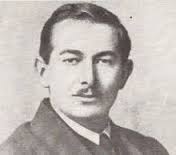
Sean Tracey (Photo from Internet)(Photo from Internet)
Treacy and Breen had eventful times in Tipperary and nearby counties as they escalated their war against the British colonial occupation, attacking RIC barracks and carrying out ambushes. Among their most dangerous and famous events was the daring IRA rescue at Knockalong of Sean Hogan from the train in which he was being carried as a prisoner under armed escort on 13th May 1919, in which a fierce hand-to-hand struggle took place and both Treacy and Breen were seriously wounded.
Towards the end of that year, on 19th December in Dublin, Breen and Treacy were in action with Sean Hogan in an attempt on the life of General Sir John French, the British King’s representative and chief of HM Armed Forces in Ireland. The operation was led by Paddy Daly (of “Collins’ Squad” notoriety and later infamous for his part in the Civil War) and consisted of ten Volunteers, to which Martin Savage was added the previous night due to his own earnest request. Through misinformation the waiting Volunteers barely missed French as he headed in convoy towards his Residence (now the US Ambassador’s) in Phoenix Park and in the shootout that followed with the other convoy vehicles Breen was wounded in the leg and Volunteer Martin Savage in the neck, dying in Breen’s arms (Martin Savage is remembered in the song Ashtown Road by Dominic Behan).
At least a number of Sinn Féin TDs and activists were incensed by this action, including Charlotte Despard, who also happened to be John French’s sister. There was more than family relations involved – many in Sinn Féin were ambivalent about armed struggle and although both were banned later in 1919, neither the party nor the Dáil declared war on the British until a few months before the Truce in 1921.
After the Knockalong rescue, things had got a bit hot for Treacy and Breen in Tipperary and Collins invited them up to Dublin, where they were expected to merge more easily in the busy city centre.
They returned to Tipperary in the summer of 1920, where they continued to be active in the war, until Collins invited them up to the city again, partly for their own safety and partly to help him out in Dublin in the work of his “Apostles”, the “Squad”, especially in assassinations of British Intelligence agents, troublesome police and informers.
CIS — BRITISH INTELLIGENCE IN IRELAND REORGANISED
However, British Intelligence in Ireland had already been re-organised. The RIC’s intelligence and its personnel were by this time considered unreliable by British Army Intelligence and many in the force had also resigned or become disaffected. “By the spring of 1920 the political police of both the Crimes Special Branch of the Royal Irish Constabulary (RIC) and G-Division (Special Branch) of the Dublin Metropolitan Police (DMP) had been effectively neutralised by IRA counter-intelligence operatives working for Michael Collins. The British thoroughly reorganised their administration at Dublin Castle, including the appointment of Army Colonel Ormonde de l’Epee Winter as Chief of a new Combined Intelligence Service (CIS) for Ireland. Working closely with Sir Basil Thomson, Director of Civil Intelligence in the Home Office, with Colonel Hill Dillon, Chief of British Military Intelligence in Ireland, and with the local British Secret Service Head of Station Count Sevigné at Dublin Castle, Ormonde Winter began to import dozens of professional Secret Service agents from all parts of the British Empire into Ireland to track down IRA operatives and Sinn Féin leaders.” (Wikipedia).
Ormonde developed or introduced lots of intelligence-gathering procedures and “black propapaganda” in Ireland. After the war he joined the British fascisti for a while and in 1940 fought for the Finns in the Winter War against the Red Army.
Ormond L’Epee Winter, head of CIS in Ireland
As part of the reorganisation under CIS, a number of Royal Irish Constabulary officers had been posted to Dublin from country areas where the IRA were active and Breen and Treacy were noted coming into Dublin or soon after their arrival and were placed under surveillance.
On the evening of 13th October 1920, Breen and Treacy had been to see a film in Dublin with the Fleming sisters, who told them that they were sure that Breen and Treacy were being followed. Neither of the men believed this to be true and before the start of the nightly curfew, headed out towards their safe house, “Fernside”, a little past the corner of Home Farm Road and Upper Drumcondra Road, which belonged to a Professor Carolan, who lived there and taught in the nearby St. Patrick’s College, Drumcondra.
Closeup of the name “Fernside” on the house today, scene of the gunfight. (Photo D.Breatnach)The “Fernside” house today, scene of the gunfight (Photo D.Breatnach)
BRITISH EARLY MORNING RAID
By this time, the Fernside address was known to British Intelligence. Around 1.00 or 2.00am, a party of DMP and British Army knocked on the door and when Professor Carolan answered, they entered, began to question him and a number started up the stairs. Both Treacy and Breen had slept in most of their clothes and with their guns ready. Instead of barricading themselves inside their room or escaping through the window, they charged down the stairs, firing as they went at the intruders, who fled. Breen and Treacy then went back upstairs and jumped from a first floor window. They seem to have been different windows, for Breen went through a glass house or conservatory and received a number of glass cuts, while Treacy suffered only a very slight injury of some sort, whether by glass or some such or by bullet, is not clear. Or possibly Breen jumped first and left little glass remaining to cut Treacy.
In the back garden of the house, Breen later recounted firing at the heads of either police or British soldiers he observe over the fence and saw some fall; in return fire he was seriously injured but managed to get out of the garden and work his way across the road down to the wall of the nearby St. Patrick’s College, Drumcondra (still there today). Although short of stature and badly injured, he scaled the wall and making his way across the College grounds, came out on the other side, by the Tolka and then went up the road to Phibsboro, where he knocked on doors. A man who opened the door to him got him a doctor, who then had him smuggled into the private patients’ part of the Mater Miserecordiae Hospital (known to Dubliners as “the Mater”), at the corner of Eccles Street and Dorset Street, under an assumed name in the care of the nuns. Another version has him going to Finglas before being smuggled to the Mater.
We know little of Treacy’s escape except that he too got away, only slightly hurt, to a house in Inchicore. Professon Carolan was shot during the event (probably by the enraged British who might have thought he had somehow signaled Breen and Treacy or in panic — they seem to have shot some of their own men) and died days later.
The Occupation forces admitted to only two of their dead, both officers in the British Army, although a contemporary Irish Times report mentioned three. But Joe Connolly, a member and later Chief of the Dublin Fire Brigade, which then as today operates ambulance services in Dublin, spoke of twelve bodies having been collected for delivery to the British Military Hospital in Arbour Hill.
The forces of the colonial Occupation were in a frenzy searching for both Treacy and Breen around the city and the Dublin IRA organised protection for them both.
ANOTHER SHOOTOUT
Word reached Michael Collins that the Occupation forces were going to organise a formal funereal procession to take the dead British officers’ bodies to the quays for their journey home to Britain and that top officers of the Occupation’s army and police would be in attendance. Collins planned to shoot a number of them and assembled a group for the operation and notified the meeting place.
However, Collins cancelled the operation (and meeting) when he learned that the high-ranking British officers would not be attending the dead officers’ send-off to England. Treacy arrived late at the meeting place, a draper’s shop called “Republican Outfitters” (!) owned by the Boland family, at 94 Talbot Street, as did another man and both learned of the cancellation (according to one account; according to another he delayed leaving after the others had left). However, the British were closing in on Talbot Street with the intention of capturing Treacy, it seems. As Treacy came out into the street, an agent approached him with gun drawn and Treacy saw the British vehicles coming down the street from O’Connell (then Sackville) Street. He drew his Parabellum firearm and shot two agents but the machine-gunner caught Treacy in a burst as he was trying to mount his bicycle as people dived for cover and several were injured.
Republican Outfitters, 94 Talbot Street. This may also be a photo taken after the shooting.
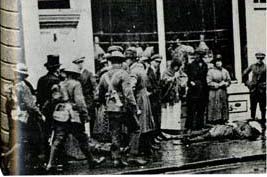
Sean Treacy died from the machine-gun bullets in that street, along with two civilians, a John Currigan, a tobacconist from Eden Quay and “a messenger boy named Carroll”, according to a press report at the time. A policeman on point duty was shot in the arm, which had to be amputated. Another boy, 15-year old apprentice photographer John J. Hogan, claiming to be out practicing with his employer’s camera, followed the action and took the famous photo of Treacy lying dead in the street.
Sean Treacy lying dead in Talbot Street, very soon after he had been shot. (Photo from Internet).
It seems the Chief of the CIS himself, Ormand Winter, had attended the operation or had followed it up and was shocked at the outcome – an agent dead and another wounded and Treacy dead, along with two innocent bystanders, one only a boy. He told a press reporter it had been “a tragedy”.
It had long been believed that Treacy shot two agents dead but although Liuetenant Gilbert Price was definitely dead, another, Colour-Sergeant Frank Christian, later received compensation of £1,250 (a substantial amount in those days) for injury received during the event, according to press reports. Christian claimed to have been off duty and just passing at the time but this was more than likely said to preserve his cover and also to increase the amount of compensation. http://www.cairogang.com/incidents/treacy-talbot/treacy-talbot.html
Some of the IRA and their supporters were still in the area when the British Army arrived in Talbot Street and one, Dick McKee, barely made it away on a bicycle. He would not be so lucky another time which was fast approaching.
I once or twice heard some speculation that Treacy had been betrayed from within the IRA and even that Collins wanted him killed but these kinds of rumours often arise and no evidence has ever been provided to substantiate the speculation. It is indeed curious that Treacy had miraculously escaped on the 13th and had been recruited for a dangerous operation to take place two days later, then to be shot at the scene of a cancelled meeting but such things happen. It would take remarkable prescience on Collins’ part to have anticipated the course of the War of Independence in 1920 so as to have removed one of the most effective fighters that would help bring the struggle to truce, negotiation and a Treaty. The simplest explanation and the one that fits the best is that Treacy had been marked and followed and that after their debacle at Fernside, the colonial military authorities in Dublin had decided to take him prisoner there in Talbot Street if they could and, if not, kill him.
Treacy was buried in his native county at Kilfeakle, a funeral attended by thousands of mourners and a heavy concentration of RIC, holding rifles with fixed bayonets. Breen remarked that though not intended in that way, it was an appropriate mark of respect for the fallen guerrilla fighter.
MORE SHOOTINGS …. AND A MASSACRE
The police and army raids in Drumcondra and in Talbot Street, the first from which two tough and experienced IRA men had been lucky to escape and the second which had resulted in the death of one of them and nearly netted a few others, must have rung very loud alarm bells for IRA leaders and ordinary Volunteers. Apparently it convinced Collins that some very thorough offensive action was needed to remove or reduce the threat.
Just over a month later, in the early morning of Sunday 21 November 1920, Collins’ ‘Squad’ and teams mobilised by the Dublin IRA Brigade, went out to assassinate 35 men believed to be members of the British Intelligence network in the City. Collins had originally drawn up a list of 50 but Cathal Brugha, acting as Minister of Defence, had reduced the list on the basis that there was insufficient evidence against fifteen of them.
Most of the shootings by the IRA that morning took place in the southern suburbs of the city – Baggot, Upper Pembroke and Lower Mount streets, Fitzwilliam Square, Morehampton Road and Earlsfort Terrace. There were also shootings in the Gresham Hotel and on O’Connell Street. Some agents were, luckily for them, not in when the IRA came calling and some operations were bungled. A passing Auxilliary patrol (they were brought into Ireland in July 1920) got involved in one location and, in the subsequent fight, two of them were killed and one IRA man wounded and captured. But by midday, the British Army and colonial administration were counting their fatal losses, a total of:
10 Intelligence officers (one RIC and 9 Military)
1 military prosecutor
1 civilian informer
2 Auxiliaries
1 Army Veterinary officer (apparently a case of mistaken identity)
In addition, some more officers had been wounded, albeit not fatally.
Just as the operations organised by British Intelligence in the previous month had raised the alarm for the IRA, the response of the latter did the same in turn for the British military and political administration in Ireland. Henceforth, intelligence personnel would be accommodated in Dublin Castle or in barracks. But if the Intelligence establishment was rattled, the Auxilliaries and loyal RIC and DMP (Dublin Metropolitan Police) were incensed.
That afternoon, a Gaelic football game was scheduled to take place in Croke Park, the national stadium of the Gaelic Athletic Association, between Tipperary and Dublin teams. The IRA had considered advising the GAA to cancel the match but there were fears that — apart from alerting British Intelligence that something was planned — it might implicate the GAA in the planned operation that morning. In any case, the match went ahead with an estimated attendance of 5,000, unaware that a convoy of British Army troops was driving along Clonliffe Road from the Drumcondra Road end, while a convoy of DMP and Auxiliaries approached the Park from the south or Canal end.
At 3.25pm, ten minutes after the start of the match, the police burst into the ground, firing. Despite their claims later there is no evidence they received any return fire but nevertheless their own commander admitted they kept shooting for about a minute-and-a-half. They fired at spectators and players, some firing from the pitch while others fired from the Canal Bridge at those who tried to escape by climbing over the wall at the Canal end. The soldiers on Clonliffe Road fired machine gun bullets over the heads of the fleeing crowd in an unsuccessful effort to turn them back.
According to the commander of the operation, Major Mills, the police had fired 114 rifle rounds (revolver rounds were not counted) and the Army had fired 50 rounds in the street. The casualties were 9 people shot dead, five dying of wounds and two trampled to death in the panic. Two of the dead were boys aged 10 and 11. Michael Hogan, a player was dead and another player, Egan, wounded but survived. Dozens more were wounded by bullets or injured in the panic. Unlike the “Croke Park” scene in Neil Jordan’s Michael Collins film (1996), it appears that the British Army shot no-one that day – that was all the work of the police.
The Castle issued a cover story in a statement that IRA men from outside Dublin had used the football game as a cover for getting into the city and, after the assassinations they had carried out, had gone to the game. When the police arrived to search fans for weapons, according to the statement, these men had fired on the police, who had been obliged to return fire. The most credulous would have found that story difficult to believe since not a single policeman had even been injured and even the loyalist Irish Times poured scorn on their story.
MURDER IN THE CASTLE
One of the planners of the earlier IRA operation was already in custody before the events of that day. Dick McKee, commander of the Dublin Brigade and another IRA man, Peadar Clancy, had been arrested by Crown Forces in the early hours of that Sunday morning. They were being interrogated in Dublin Castle.
Also being interrogated was Conor Clune, who had been arrested by the Auxilliaries in a raid on Saturday evening of Vaughan’s Hotel in Parnell Square, on the corner of Granby Lane. Clune was no IRA man but an language enthusiast who had come up to Dublin that day with his employer, Edward McLysaght, on business for the Raheen cooperative. Clune had gone on to meet Piaras Béaslaí, a member of the First Dáil (Irish Parliament set up in defiance of Westminster by the majority of Members of the British Parliament elected in Ireland). Béaslaí and some IRA men using Vaughan’s that evening were alerted by a hotel porter to the suspicious behaviour of a visitor, apparently a spy, and departed before the arrival of the “Auxies”, who arrested Clune on suspicion. Leading the interrogation team was Ormond Winters.
Later that awful day, McKee, Clancy and Clune were reported “shot while trying to escape”. Their captors said that, because there was no room in the cells, they had been placed in a guardroom and were killed while grabbing arms to shoot their captors and to make a getaway. To bolster the Castle’s story, they produced a number of photographs: one shows three civilians sitting apparently in conversation in a room, where a number of Auxiliaries and British Army are also shown relaxed, some eating a meal and another reading. Untended weapons are in view; another photograph shows a blur of men “trying to escape”. In none of the photos are the faces of any of the three prisoners clearly shown.
Family of the dead Irishmen said they had been tortured and then shot and few believed the Castle’s story (although apparently some historians today give it credence). It is said Collins wanted their bodies displayed to show bayonet wounds but was persuaded not to, however one of Collins’s Castle informers, Nelligan, was later adamant that they had not been bayoneted. All sides agree that the bodies did show extensive bruising. In any case, McKee and Clancy died without giving their captors any of the long list of names they carried in their heads, while Clune of course had none to give.
Conor Clune’s body was recovered by Mac Lysaght, who had it medically examined, revealing that he had been shot 13 times in the chest. The Army doctor who examined the bodies prior to their release said that Clancy had been hit with up to five bullets, which caused eight wounds, while Dick McKee had three wounds caused by two bullets.
Unfortunately for the Castle, Conor Clune was a nephew of Patrick Clune, Archbishop of Perth, Australia which caused the authorities some embarrassment.
View further back of plaque to the three murdered by the British Occupation forces on Bloody Sunday 1920 (City Hall on the right). (Photo DB)Closer view of plaque.
A plaque commemorating the men (albeit listing Clune as a “Volunteer”) was placed by the National Graves Association on the wall of Dublin Castle near the eastern side of City Hall and every year a small commemoration ceremony takes place there.
There was a sequel to the deaths of the three, although it did not take place until the following year. An ex-British Army soldier, James “Shankers” Ryan, had betrayed McKee. On February 5, 1921, as Ryan was enjoying a pint in Hyne’s pub in Gloucester Place and studying the horse racing page of the newspaper, an IRA squad led by Bill Stapleton walked into Hynes’ pub in Gloucester Place and shot him dead.
REMEMBRANCE IN SONG AND STORY
A plaque was erected in Talbot Street, Dublin, by the voluntary non-party organisation, the National Graves Association, on the front facade of No. 94, the building outside of which Treacy was killed. The anniversary of his death is marked each year at a commemoration ceremony in Kilfeacle. Also at noon on the morning of All-Ireland Senior Hurling Finals in which the Tipperary GAA team participates, a ceremony of remembrance is held at the spot in Talbot Street where he died, organised “by people from West Tipperary and Dublin people of Tipperary extraction. The most recent such ceremony was held at midday on Sunday, 7 September 2014 and attracted a large attendance, most of whom were en route to Croke Park.” (Wikipedia).
Sean Treacy Plaque Talbot Street
It is worthy of note that every single one of those commemorations and memorial plaques is organised by voluntary bodies rather than by the State.
A number of songs about Sean Treacy are in existence: Sean Treacy by Dominic Behan and Tipperary So Far Away (author disputed: by Patsy O’Halloran OR Paddy Walsh/ Pádraig Breatnach/ Paddy Dwyer, with — if about Treacy — some obviously inaccurate versions by the Clancy Brothers and Wolfe Tones). Strangely neither Treacy nor Breen is mentioned in The Station of Knockalong, about the May 13th 1920 rescue of Sean Hogan from his captors on a train, after a fierce hand-to-hand struggle in which both Treacy and Breen were seriously wounded. The Galtee Mountain Boy is said to be also about Treacy but some of the lyrics make this unlikely and a contributor to Mudcat (a folk song website) claimed that song is about Paddy Davern, who was sentenced to die by both the British and the Irish Free State but escaped them both.
Strangely too, no song comes to light about the Drumcondra shoot-out. I have heard a few lines quoted, “He shot them in pairs coming down the stairs”, allegedly from a song about Sean Treacy by Dominic Behan. However, my searches have failed to turn up the source of those wonderful lines. If the song existed and was about Treacy, it could have referred to his death in Talbot Street but even more likely to the battle at Fernside.
Dan Breen is mentioned in a number of songs but none of which I am aware directly about him. Breen was very saddened at the death of his close comrade-in-arms and recovered slowly from his wounds, having been shot four times, twice in the lungs. He was smuggled out of Dublin while still recovering from his injuries and very weak, returning to active service later. In June 1921, Breen married Brigid Malone of the Dublin Cumann na mBan, who had helped nurse him while recovering from his wounds. The long Truce of 1921 followed in July which, according to his autobiography My Fight for Irish Freedom (1921 and many reprints since), Breen frowned upon, commenting that IRA discipline grew slack and information on identities of fighters and their locations would have come much more easily to Crown forces.
Dan Breen dissented from the Treaty of 1921 and took up arms on the Republican side, was captured and interned, went on hunger strike and was released. Breen was an anti-Treaty TD for Tipperary from 1923 for Sinn Féin, the TDs of which refused to take their seats in the “Partitionist” Fourth Dáil. When the Fianna Fáil party was created in a split away from Sinn Féin in 1926 with the intention of their representatives entering the Dáil if elected, Breen joined and was the first anti-Treaty TD to take his seat in the Dáil in 1927.
When he later failed to be reelected he went to the USA, which was under alcohol Prohibition at the time and there he ran a speakeasy. (He would probably have known Joe Kennedy, grandfather of President John F. Kennedy, who was a prominent gangster in that epoch). Returning to Ireland in 1932, Breen regained his Fianna Fáil seat. He died in 1969 and the attendance at his funeral was estimated at 10,000.
Introduction with some very little additional text by Diarmuid Breatnach
Main text from East Wall History Group
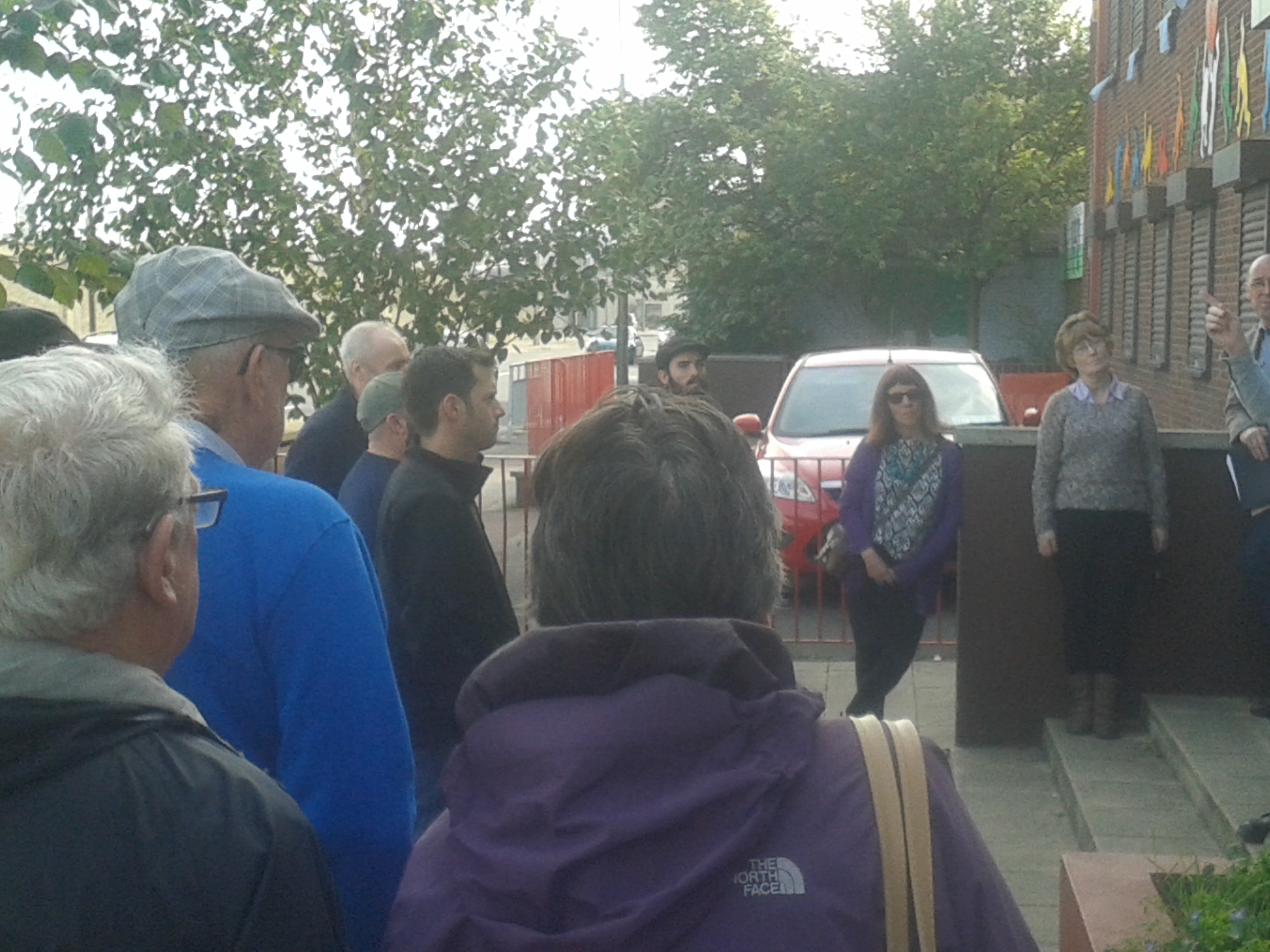
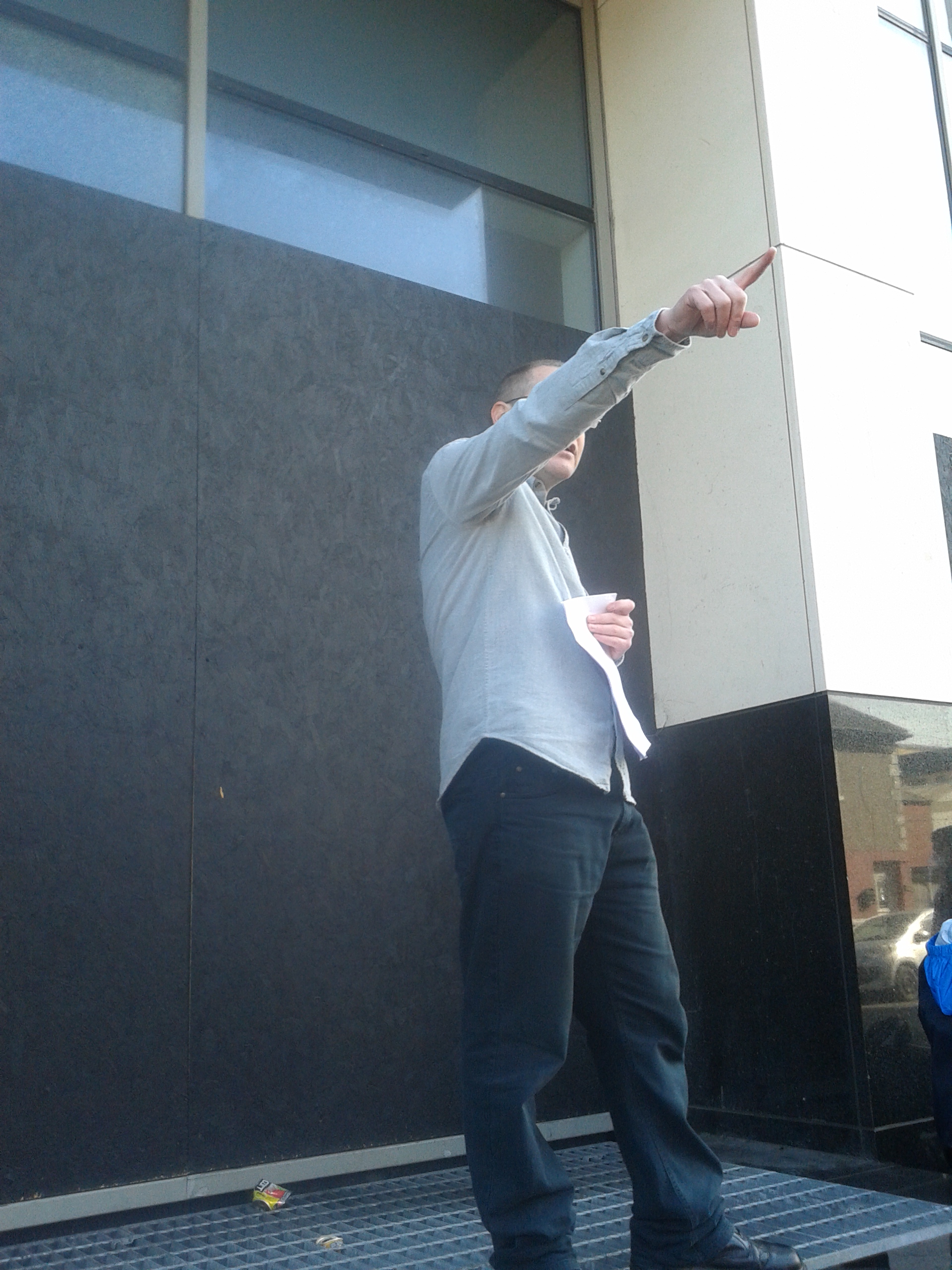
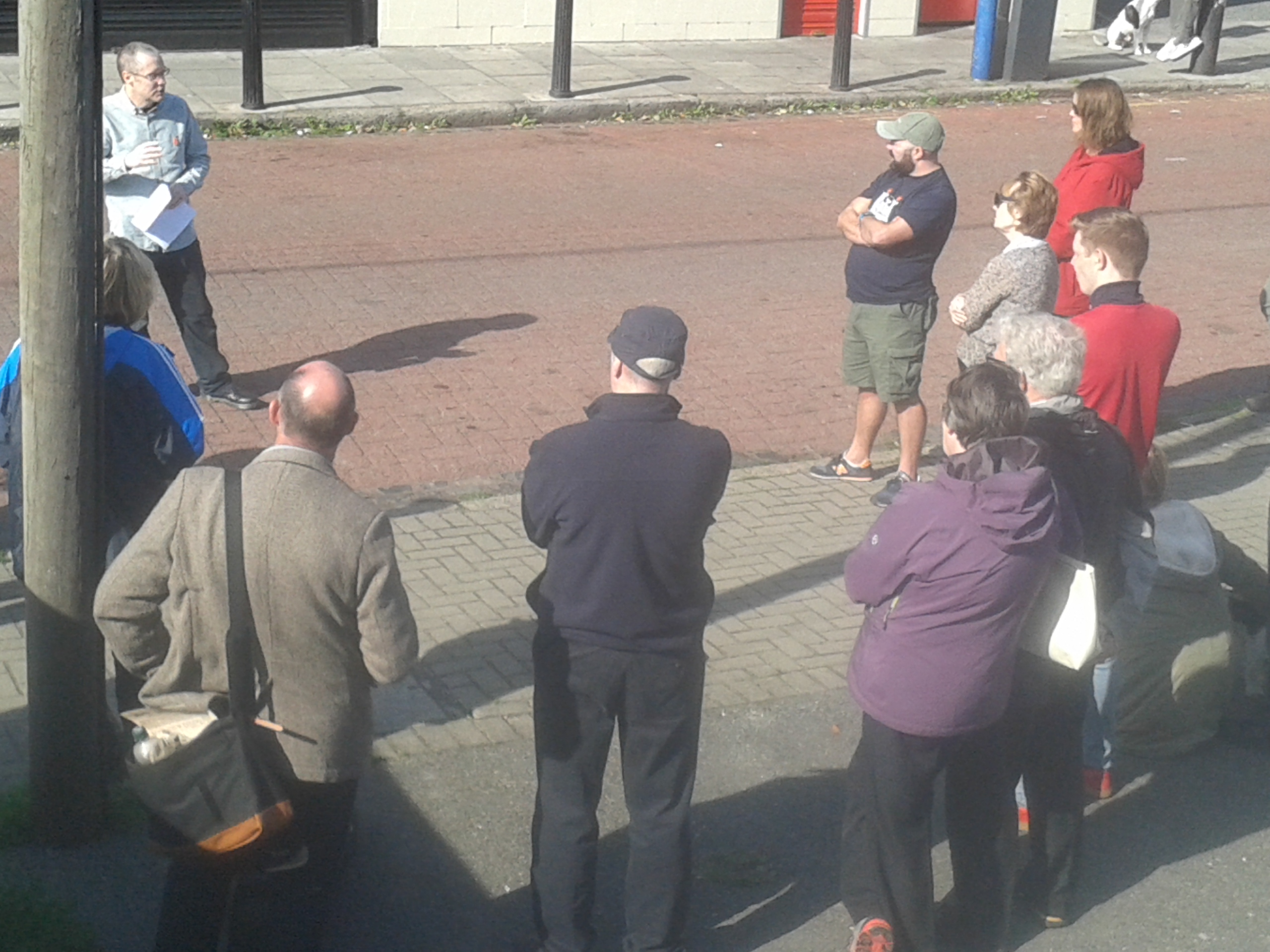
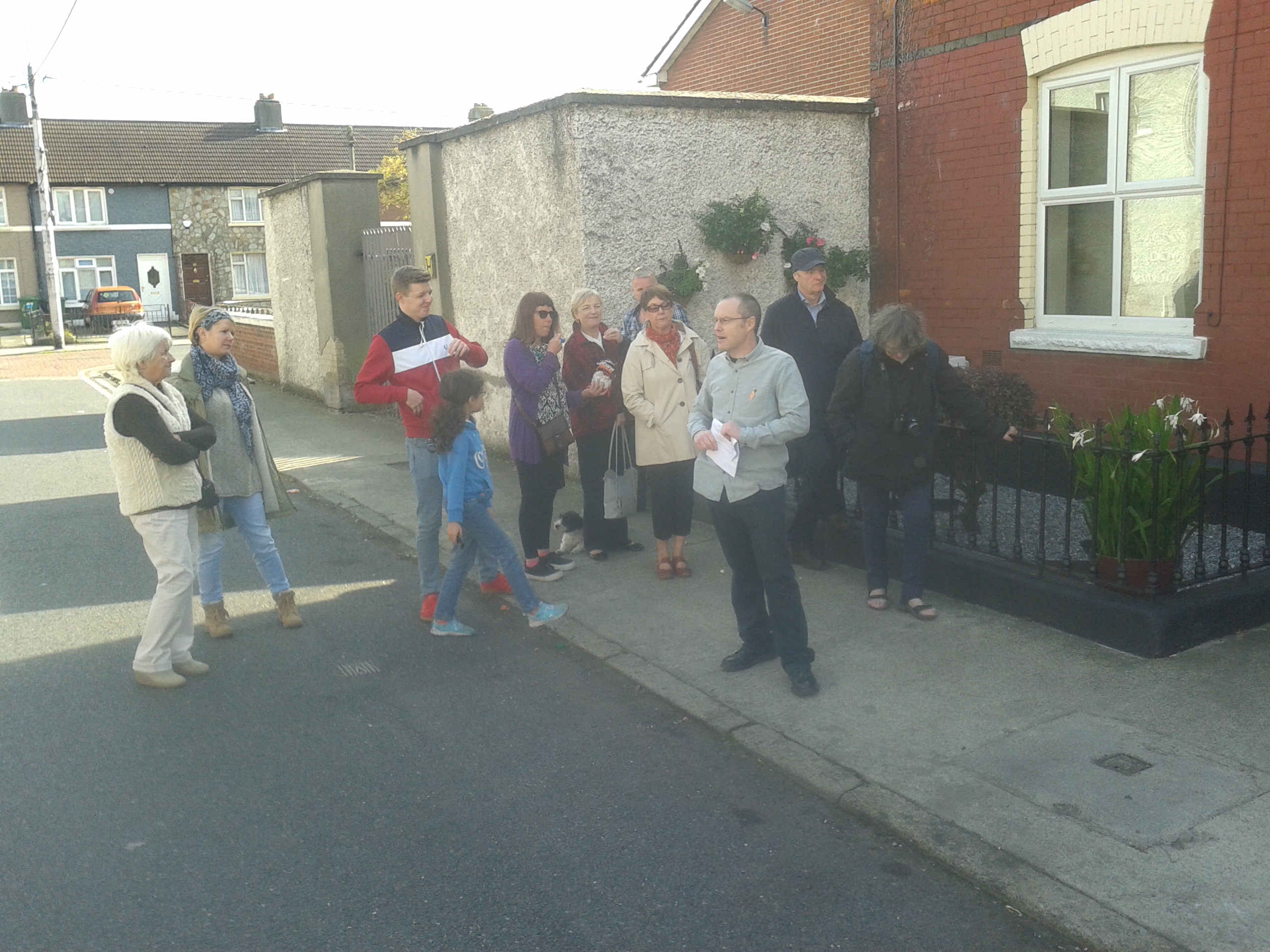
Among the many events packed into History Week by the East Wall History Group was a walking history tour of the area on Sunday 27th September. Over a score of people took part in “East Wall and the Irish Revolution” to hear Joe Mooney, a long-time community activist, outline the relevant events of history at various points along the way, covering
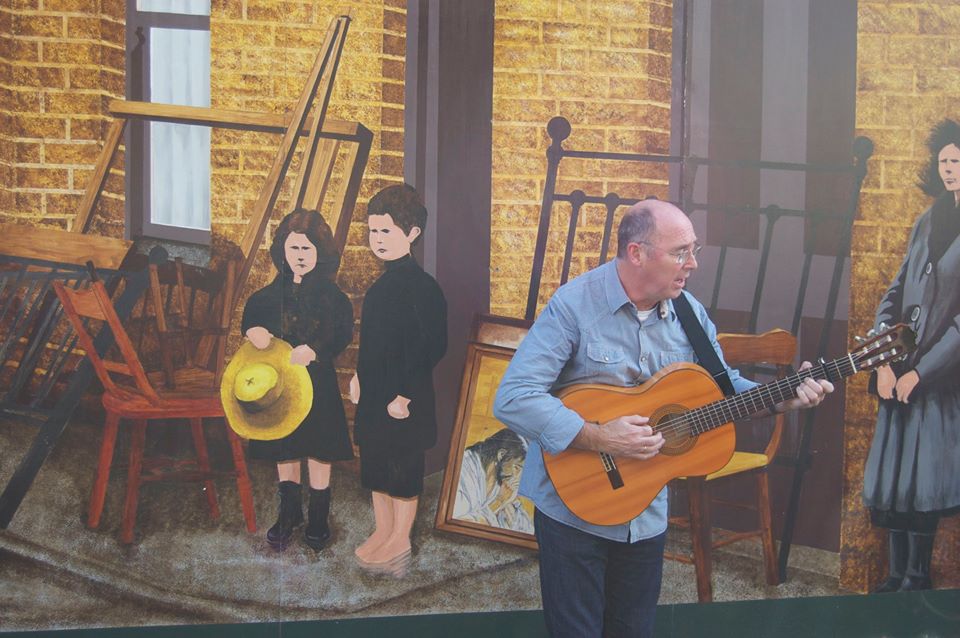
Paul O’Brien performing his 1913 Lockout song in front of mural marking the eviction of 62 families from Merchant’s Road in December 1913 by the Merchant’s Company. (Photo: EWHG)
local connections with the Fenians, docks and migrants, the Lockout, 1916 Rising and the Spanish Civil War. Appropriate songs and music accompanied the tour, Paul O’Brien performing compositions of his own at some of those points and Diarmuid Breatnach singing verses from Viva La Quinze Brigada at another.
“We set out from St Joseph’s School, originally opened in 1895. The first Principal of the Boys’ school was J.F. Homan, who served as a St. John’s Ambulance Brigade volunteer during the Rising and also during the Civil war. A number of former pupils from the school were involved in the revolutionary events of the time (the following decades) and of course in 1911 a schoolboys’ union was declared and a short strike ensued (complete with pickets!). Their demands included a shorter day and free school-books.
Part of crowd at the starting point. (Photo: DB)
“Our first stop was Merchant‘s Road, where during the 1913 Lockout 62 families (almost the entire population of the street) were evicted by their employer the Merchants Warehousing Company (their yard was Merchant’s Yard on East Wall Road, just before the T-junction by the Port Authority. At the fantastic mural (erected by the community) Paul paid tribute to the families and the workers‘ struggle with his song “Lockout 1913“. Amongst the evicted families were the Courtneys from number 1 – their son Bernard was a ‘Wharf’ school pupil and fought with the Jacob‘s garrison in 1916, before succumbing to TB in 1917.
Joe Mooney pointing out Jack Nalty’s house.Jack Nalty’s house.(Photo: DB)
“Next we visited the East Road, where Diarmuid set the tone with a stirring rendition of the Christy Moore song “Viva la Quinze Brigada” (explaining that Christy incorrectly called it “Quinta” but had since corrected it – as the lyrics in English make clear, it was the FIFTEENTH Brigade). Gathered opposite the family home of Jack Nalty, we heard the story of another former ‘Wharf ‘ school-boy who became an active Republican and Socialist, eventually losing his life fighting Fascism in Spain in 1938. Jack (who was also a champion runner) was amongst the last of the International volunteers to die, while his friend and comrade Dinny Coady was amongst the first. Many of Dinny Coady‘s relatives still live locally, and we plan to commemorate them properly in the future.
Jack Nalty in uniform of the 15th International Brigade. (Photo: Internet)
“Next was a quick stop at the junction of Bargy and Forth Roads, which along with Shelmalier, Killane and Boolavogue were the names given to streets of Corporation houses erected here in the 1930’s and ’40s. They are of course synonymous with places in Wexford in the 1798 Rebellion.
“At the rear of the former Cahill printers‘ premises we learned how an innovative glass–making factory (Fort Crystal Works) once stood there, perhaps the first industry in the area, but by the early 1800’s lay in ruins. As reported in newspapers as far away as New York, in 1848 a hundred men gathered here and spent an entire day in musketry practice, even setting up a dummy of the Lord Lieutenant of Ireland (the Queen’s representative) to practice on. These were members of the Young Ireland movement, preparing for rebellion.
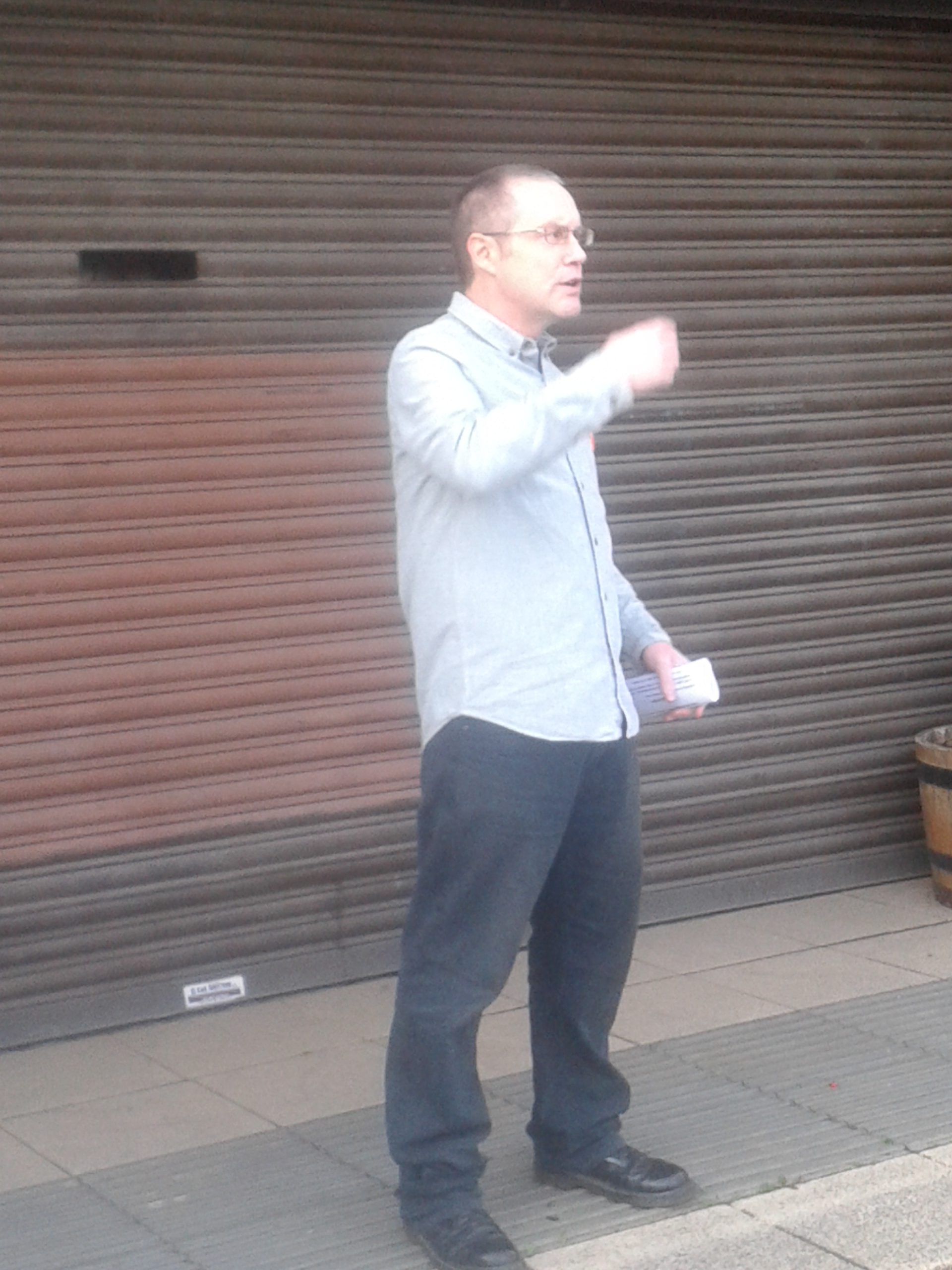
Joe speaking at the ‘Scotch Block’ — some of the crowd are out of shot, as is Paul O’Brien, who is just getting ready to play. (Photo: DB)
“On Church Road we remembered former resident Edward Dorin, a Sergeant in the IRA who was part of the operation to burn the Custom House during the War of Independence. Another former ‘Wharf’ school pupil (he started there the same year as Jack Nalty), he was shot dead alongside a young volunteer from Ballybough when they engaged a lorry–load of Auxillaries at Beresford place (just by Liberty Hall). (They were covering the attacking party). There had been a suggestion in the 1950’s to rename Custom House Quay as Dorin‘s Quay .
“A short stop at the “Scotch Block”, Fairfield Avenue, where Paul played two songs recalling Glasgow immigrants to the area and also Edinburgh–born James Connolly. An incident in 1918 when Union Jack–waving residents from these buildings attempted to disrupt a Sinn Féin election rally also got a mention.
Diarmuid Breatnach singing “Viva La Quinze Brigada” opposite Jack Nalty’s house. (Photo: EWHG)
“As we passed Hawthorn Terrace its most famous resident Sean O’Casey was briefly discussed, as was his former neighbour Willy Halpin, the diminutive Citizen Army man most famous for almost escaping capture at City Hall by climbing up a chimney.
“As we passed Russell Avenue a dishonorable mention was given to those who attempted to raise a 5,000 strong Fascist militia from an address here in the late 1950’s. Thankfully they failed miserably, as did the Italian fascist sympathiser resident of Caladon road who was banned from the U.S.A. during World War Two and eventually arrested by the Irish state and handed over to British authorities via the Six Counties.
“At Malachi Place the action–packed tale of Fenian leader John Flood was recounted. He lived here in the 1860’s as he worked on plans to stage a rebellion against British Rule. After an audacious attempt to seize weapons from Chester Castle was betrayed, he was eventually arrested following a boat chase on the Liffey and deported to Australia on the last convict ship to sail there. A memorial stands above his grave, unveiled there in 1911, two years after his death. This story could be a movie script!
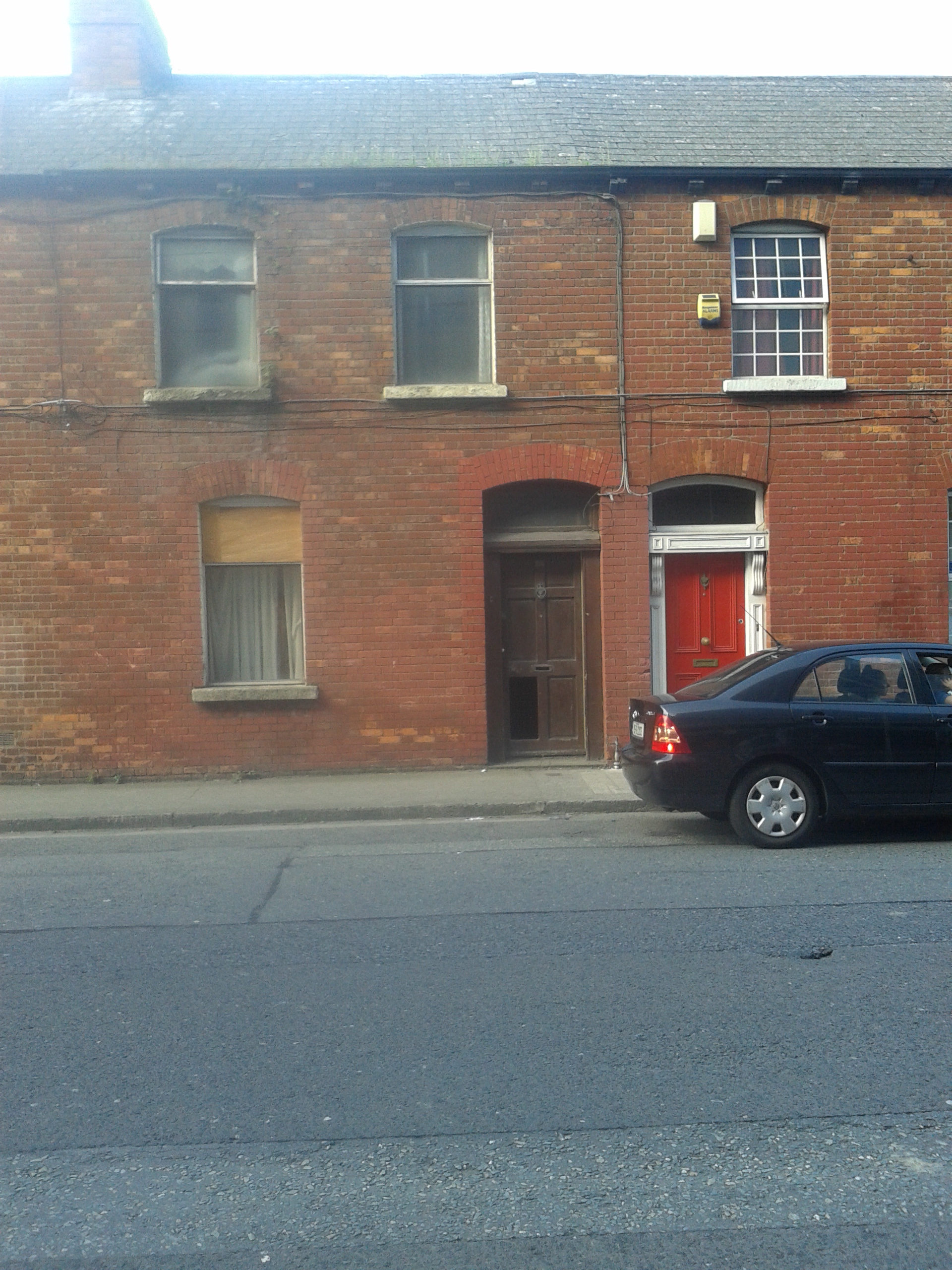
“We finished off the day at the base of Johnny Cullen‘s Hill at the block of houses formerly named Irvine Crescent (now incorporated into Church Road). It was here the Scott family lived and in 1916 their 8–year–old son was shot from the gun boat Helga. He lingered on for months after his wounding before finally dying, making him the last of the child casualties of 1916. The same year his father died in an accident in the Port, leaving his mother to raise five children on her own while coping with this double tragedy.
“Their next–door neighbours were the Lennon family. On Bloody Sunday 1913 Patrick Lennon was one of those injured in the baton charge on O’Connell Street. Bloodied but unbowed, he worked alongside Sean O’Casey to raise funds for the relief of strikers‘ families, a project which eventually led to the establishment of the famous soup kitchen at Liberty Hall.
“And finally on to Bloody Sunday 1920. Everybody knows the story of how the Squad under Michael Collins (and the Dublin Brigade of the IRA) targeted British Intelligence agents in the City but not many know of the East Wall operation. A house on Church Road was targeted but the agent had left the evening before and was in Cork when the IRA group arrived. The exact location is unknown but we suspect it was within this block here as many of the houses were sub-divided at that time.”
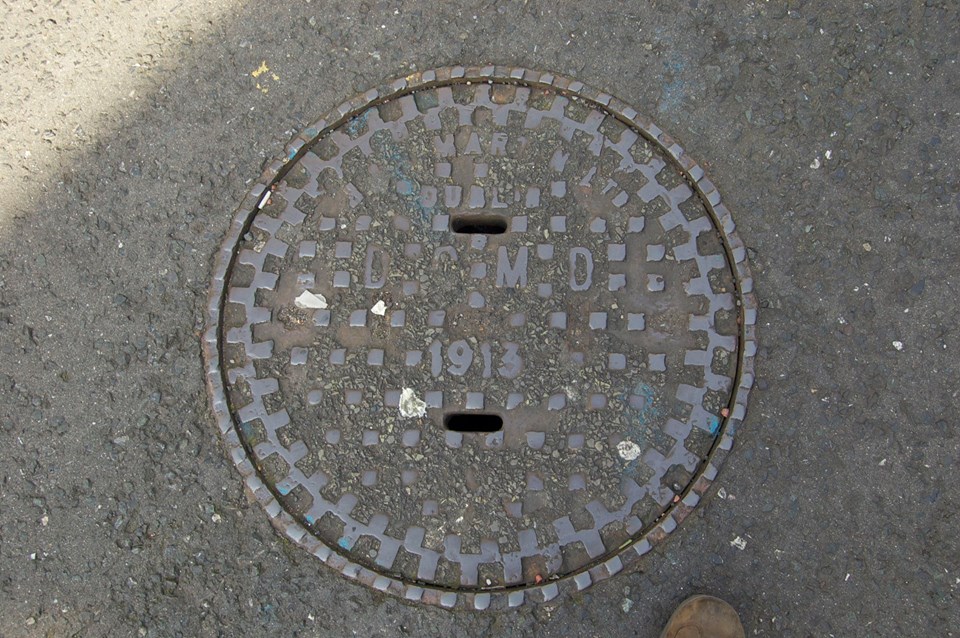
A coincidence in Merchant’s Road, opposite the mural (note the date). (Photo: EWHG)
Even if they didn’t get to tell half the stories of East Wall and the Irish Revolution, it was an enjoyable and informative walking tour … and the weather was beautiful – and there’s always next year!
Reading a novel brings on something like the development of a multi-personality disorder without – usually – the harmful and long-term effects of the pathology.
The novel requires the readers to identify with the main character or characters to the extent to which we lose, to some extent, the posture of the observer and almost become a participant. And this is even more so in the case of the thriller-type novel. We can become anxious, frightened, angry, disgusted, elated, tearful, satisfied, sexually aroused – and the novel writer will aim at giving rise to at least a number of those emotions and in some cases, all of them.
No doubt this experience is greater or lesser depending on the individual – perhaps to the extent of his or her suggestibility but also certainly depending on the political, social and cultural values of the reader. And of course, the skill and knowledge of the writer in presenting the character, story and scenes.
Yet, for all the effect of identification with the main character, we retain an awareness that we are not that person, whoever it may be in different novels. We know that we are not the fugitive (hopefully!) wrongly accused of a murder, the undercover police officer penetrating a drugs gang, the soldier in a war, the lover being cheated upon, the ordinary employee in a mundane job suddenly thrust into a conspiracy, the witness to a murder, the participant in a past historical event.
We know we are not, yet feelings appropriate to the circumstances of the story’s character are aroused within us. This is what I mean by development of a multiple personality – albeit a temporary one. We can become the person in the story while retaining the person we are and an awareness of which of the personalities is acting in the physical world.
And this is not like dreaming, even when one retains a consciousness that one is dreaming. Dreams do not need characters, places or sequences that we perceive as logical when awake and in fact usually flatly contradict waking logic in at least some features. But presenting that kind of illogicality in a novel would soon have us throwing the book down in disgust. “Suspending disbelief” is possible up to a degree, as in reading about a compassionate head of a state intelligence agency, for example, or a CEO of a multinational company with a social conscience, on in other kinds of fantasy involving magic. But put too many of those illogicalities together, mix up locations and characters, and we would quickly part company with the book.
Our dreams are of course projections of our personal psyches and events and settings in the dream, with consciousness more or less suspended, are judged consistent with another reality. But the novel is a creation of someone else and of course may well — inevitably does, some would say – contain elements or products of the pysche of the author. Be that so, and even be our psyche engaged in the story, our consciousness demands a certain rationality for it to be acceptable.
The degree to which it is possible to “adopt” the personality of the principal character in a novel was brought home to me fairly recently – and with something of a shock. I had just finished reading Far From You by Tess Sharpe, one of the random choices I often make in the Fiction section of the public library. I judge this first novel by Sharpe to be well-written and effectively constructed as a thriller. Usually the genders of author and main character coincide and this book was no exception. Her character, Sophie, was female and also bisexual but none of that prevented me identifying with her while reading the story.
Very soon afterwards, I began to read Faithful Place by Tana French, in this case a female author writing about a main character who is male – an undercover cop. The story is set in working-class Dublin and so I found many cultural and geographical references with which to feel at ease; the story is interesting, the narrative engaging and at times very funny. However, something kept feeling wrong about it – and it wasn’t that the main character is a cop. Nor was it that I was conscious of the author as being female while the character is male. It took me some pages to identify the problem: the character is male — while I was still partially stuck in the female persona of Sophie, the main character in the book I had previously read. I needed to change the gender of that other personality in me, as the reader, back to male, so that I could feel ‘in synch’ with the male character in French’s story.












 rebelbreeze