Introduction with some very little additional text by Diarmuid Breatnach
Main text from East Wall History Group
Among the many events packed into History Week by the East Wall History Group was a walking history tour of the area on Sunday 27th September. Over a score of people took part in “East Wall and the Irish Revolution” to hear Joe Mooney, a long-time community activist, outline the relevant events of history at various points along the way, covering
Paul O’Brien performing his 1913 Lockout song in front of mural marking the eviction of 62 families from Merchant’s Road in December 1913 by the Merchant’s Company. (Photo: EWHG)
local connections with the Fenians, docks and migrants, the Lockout, 1916 Rising and the Spanish Civil War. Appropriate songs and music accompanied the tour, Paul O’Brien performing compositions of his own at some of those points and Diarmuid Breatnach singing verses from Viva La Quinze Brigada at another.
“We set out from St Joseph’s School, originally opened in 1895. The first Principal of the Boys’ school was J.F. Homan, who served as a St. John’s Ambulance Brigade volunteer during the Rising and also during the Civil war. A number of former pupils from the school were involved in the revolutionary events of the time (the following decades) and of course in 1911 a schoolboys’ union was declared and a short strike ensued (complete with pickets!). Their demands included a shorter day and free school-books.
Part of crowd at the starting point. (Photo: DB)
“Our first stop was Merchant‘s Road, where during the 1913 Lockout 62 families (almost the entire population of the street) were evicted by their employer the Merchants Warehousing Company (their yard was Merchant’s Yard on East Wall Road, just before the T-junction by the Port Authority. At the fantastic mural (erected by the community) Paul paid tribute to the families and the workers‘ struggle with his song “Lockout 1913“. Amongst the evicted families were the Courtneys from number 1 – their son Bernard was a ‘Wharf’ school pupil and fought with the Jacob‘s garrison in 1916, before succumbing to TB in 1917.
Joe Mooney pointing out Jack Nalty’s house.Jack Nalty’s house.(Photo: DB)
“Next we visited the East Road, where Diarmuid set the tone with a stirring rendition of the Christy Moore song “Viva la Quinze Brigada” (explaining that Christy incorrectly called it “Quinta” but had since corrected it – as the lyrics in English make clear, it was the FIFTEENTH Brigade). Gathered opposite the family home of Jack Nalty, we heard the story of another former ‘Wharf ‘ school-boy who became an active Republican and Socialist, eventually losing his life fighting Fascism in Spain in 1938. Jack (who was also a champion runner) was amongst the last of the International volunteers to die, while his friend and comrade Dinny Coady was amongst the first. Many of Dinny Coady‘s relatives still live locally, and we plan to commemorate them properly in the future.
Jack Nalty in uniform of the 15th International Brigade. (Photo: Internet)
“Next was a quick stop at the junction of Bargy and Forth Roads, which along with Shelmalier, Killane and Boolavogue were the names given to streets of Corporation houses erected here in the 1930’s and ’40s. They are of course synonymous with places in Wexford in the 1798 Rebellion.
“At the rear of the former Cahill printers‘ premises we learned how an innovative glass–making factory (Fort Crystal Works) once stood there, perhaps the first industry in the area, but by the early 1800’s lay in ruins. As reported in newspapers as far away as New York, in 1848 a hundred men gathered here and spent an entire day in musketry practice, even setting up a dummy of the Lord Lieutenant of Ireland (the Queen’s representative) to practice on. These were members of the Young Ireland movement, preparing for rebellion.
Joe speaking at the ‘Scotch Block’ — some of the crowd are out of shot, as is Paul O’Brien, who is just getting ready to play. (Photo: DB)
“On Church Road we remembered former resident Edward Dorin, a Sergeant in the IRA who was part of the operation to burn the Custom House during the War of Independence. Another former ‘Wharf’ school pupil (he started there the same year as Jack Nalty), he was shot dead alongside a young volunteer from Ballybough when they engaged a lorry–load of Auxillaries at Beresford place (just by Liberty Hall). (They were covering the attacking party). There had been a suggestion in the 1950’s to rename Custom House Quay as Dorin‘s Quay .
“A short stop at the “Scotch Block”, Fairfield Avenue, where Paul played two songs recalling Glasgow immigrants to the area and also Edinburgh–born James Connolly. An incident in 1918 when Union Jack–waving residents from these buildings attempted to disrupt a Sinn Féin election rally also got a mention.
Diarmuid Breatnach singing “Viva La Quinze Brigada” opposite Jack Nalty’s house. (Photo: EWHG)
“As we passed Hawthorn Terrace its most famous resident Sean O’Casey was briefly discussed, as was his former neighbour Willy Halpin, the diminutive Citizen Army man most famous for almost escaping capture at City Hall by climbing up a chimney.
“As we passed Russell Avenue a dishonorable mention was given to those who attempted to raise a 5,000 strong Fascist militia from an address here in the late 1950’s. Thankfully they failed miserably, as did the Italian fascist sympathiser resident of Caladon road who was banned from the U.S.A. during World War Two and eventually arrested by the Irish state and handed over to British authorities via the Six Counties.
“At Malachi Place the action–packed tale of Fenian leader John Flood was recounted. He lived here in the 1860’s as he worked on plans to stage a rebellion against British Rule. After an audacious attempt to seize weapons from Chester Castle was betrayed, he was eventually arrested following a boat chase on the Liffey and deported to Australia on the last convict ship to sail there. A memorial stands above his grave, unveiled there in 1911, two years after his death. This story could be a movie script!
“We finished off the day at the base of Johnny Cullen‘s Hill at the block of houses formerly named Irvine Crescent (now incorporated into Church Road). It was here the Scott family lived and in 1916 their 8–year–old son was shot from the gun boat Helga. He lingered on for months after his wounding before finally dying, making him the last of the child casualties of 1916. The same year his father died in an accident in the Port, leaving his mother to raise five children on her own while coping with this double tragedy.
“Their next–door neighbours were the Lennon family. On Bloody Sunday 1913 Patrick Lennon was one of those injured in the baton charge on O’Connell Street. Bloodied but unbowed, he worked alongside Sean O’Casey to raise funds for the relief of strikers‘ families, a project which eventually led to the establishment of the famous soup kitchen at Liberty Hall.
“And finally on to Bloody Sunday 1920. Everybody knows the story of how the Squad under Michael Collins (and the Dublin Brigade of the IRA) targeted British Intelligence agents in the City but not many know of the East Wall operation. A house on Church Road was targeted but the agent had left the evening before and was in Cork when the IRA group arrived. The exact location is unknown but we suspect it was within this block here as many of the houses were sub-divided at that time.”
A coincidence in Merchant’s Road, opposite the mural (note the date). (Photo: EWHG)
Even if they didn’t get to tell half the stories of East Wall and the Irish Revolution, it was an enjoyable and informative walking tour … and the weather was beautiful – and there’s always next year!
The French Government deny rumours of a relaxation in their policy of dispersal. The Spanish Government confirms it is business as before for Basque political prisoners.
On 3rd September French diplomatic sources refuted interpretations in some media that it had changed its position with regard to Basque political prisoners. The media interpretations had been built upon a statement by the Abertzale (Basque Patriotic) Left party Sortu, that it had met on July 8th with the French Minister of Justice. The diplomatic sources downplayed the significance of the meeting and denied bringing Basque political prisoners closer to the Basque Country. Etxerat, the organisation for relatives and friends of the prisoners, confirmed that there had been no move to moderate the dispersal.
The day previous to the release of information from French diplomatic sources, on Wednesday, French Justice Minister Christiane Taubira had met with her Spanish counterpart, Rafael Catala. The following day, Taubira said her Government’s approach is to analyse requests for transfer based on the length of the sentence and relocation near their family. Meanwhile, the Spanish Minister of Justice and the Interior reiterated his Government’s position that any individual prisoners’ transfer to a jail in the Basque Country required the prisoners to renounce their organisation and to accept responsibility for the damage caused by their action.
The French approach contrasts with the requirements of the Spanish Government, although Catalá reiterated yesterday that both states were acting in a “coordinated” manner and that the French Government “has not moved its policy by one iota .”
According to Etxerat on Thursday, of the nearly 100 Basque political prisoners in French prisons, only two are in Mont de Marsans prison (152 kilometers from the Basque city of Donosti), while six prisoners are in Lannemezen (231 kilometers). The rest are serving out their sentences at a greater distance from home, the vast majority at more than 600 kilometers. Although the support organisation viewed the French Minister’s statement positively, it was also at pains to disabuse people of any belief in a change in the French dispersal of prisoners and stated that any prisoners brought nearer were merely as a result of movement to which the relatives and friends have become accustomed, “bringing them close” before “bringing them far away again.”
Map of the dispersal of Basque political prisoners across both states and Etxerat flag in a poster calling for a protest and solidarity demonstration some years ago
The organisation of relatives and friends of Basque political prisoners stated that neither they nor any prisoners’ relatives participated in any meeting with the French Ministry of Justice – any meeting was with several members of Sortu only.
Spokespersons for the party of the Patriotic Left, Sortu, indicated that at their July meeting the French Ministry had been represented by Alain Christnach, Taubira’s Chief of Staff. Meanwhile the French, through diplomatic sources, asked observers not to “over-interpret” this meeting and indicated that participation in the meeting does not mean accepting Sortu’s proposals.
Another issue discussed by the Spanish and French Ministers was the possible transfer of prisoners under the law of mutual recognition of penal sentences in the EU, in force since January. This legislation provides the possibility for prisoners serving sentences in any EU Member state to be transferred to a Spanish prison; however, most Basque prisoners are unlikely to avail of this provision due to harder treatment in the Spanish prison system and the fact that dispersal throughout the state continues.
In a different aspect of the same legislation, the MEP of the Basque Nationalist Party (PNV), Izaskun Bilbao, asked the European Commission whether it will take Spain before the European Court of Justice for failure to take account of sentences served in French prisons by Basque political prisoners. This is because of the fact that the Spanish state often waits until a prisoner has served his sentence in France before extraditing him on a Spanish charge to face a further sentence in Spanish prisons.
Policy of dispersal of political prisoners — an abuse of human rights
There are many issues raised with regard to Basque political prisoners but the most universal one is the simple fact of dispersal. Relatives and friends face journeys of hundreds or even thousands of kilometers to visit their loved ones and the same distance back again. Many of these journeys are impossible without overnight stays. The expense drains financial resources while the long journeys themselves drain energy and, for elderly or unwell relatives, are an impossibility. An average of one serious accident a month occurs on these journeys for Basque political prisoners’ visitors and twelve have died in crashes over the years. Nor is it unknown for the relatives to be harassed by police on their journey or attacked by Spanish civilian fascists. As Etxerat has stated in its monthly reports and in a number of other statements: “The sentence was supposed to be on the prisoner but in actual fact was served on us as well, although we have been accused of nothing.”
It is a well-established principle of human rights that prisoners should, as far as possible, serve their sentences in a prison close to their families and relatives. This is in recognition of the rights of families as well as the desirability of easing the reintegration of prisoners as much as possible into society. The principle is covered in a number of United Nations policy paragraphs and also within the EU’s model rules for prisoners adopted in 2006 (https://wcd.coe.int/ViewDoc.jsp?id=955747).
Since both the French and Spanish states’ policy of dispersal appears to be in clear violation of the prisoners’ and relatives’ human rights and indeed of the EU’s own model rules for prisoners, some observers find it somewhat perplexing that the relatives’ organisation does not take a case against the states to the Court of Human Rights in Strasbourg. Granted, Strasbourg’s controversial decision on the Spanish State’s banning of the Herri Batasuna political party did not go in the Basques’ favour and the Court, albeit instructing the Spanish state to pay compensation to Basques for not investigating their claims of torture, continues to show a reluctance to find the Spanish State guilty of actual torture. But the dispersal of prisoners is an observable and undeniable fact and, furthermore, one which has been confirmed in public statements by Government ministers of both states.
End item
(Main source on the various statements: Deia, 4th September 2015)
In the third week of the month of December two daring ambushes took place, one in Ireland and one in Spain. Both were carried out by national liberation organisations and both were very daring, aimed at extremely high-level military and state targets who were well-protected in cities controlled by the occupying state. The ambushes were one day on the calendar apart but 64 years separated them; the date of the Dublin one was December 19th 1919 and the the other took place on December 20th 1973 in Madrid.
BACKGROUND TO THE IRISH ASSASSINATION ATTEMPT
The target of the Irish ambush was Field Marshal John French. No-one resident in Ireland could rank higher in the British Empire; the British Queen and state’s representative in Ireland, French had been appointed Lord Lieutenant and Supreme Commander of the British Army in Ireland in 1918. Of course, it was not the first time that the Irish resistance had set its sights so high – in 1882 in Phoenix Park in Dublin, the Republican group The Invincibles had assassinated the Chief Secretary for Ireland, at that time the Queen’s representative, along with Thomas Burke, the Permanent Undersecretary and the Queen’s most senior civil servant in Ireland.
Field Marshal John French had previously held the positions of Commander-in-Chief of the British Home Forces and, at the start of the First World War, Commander-in-Chief of the British Expeditionary Force in France. Under General Maxwell, he oversaw the suppression of the 1916 Rising and subsequent executions. Had the British government imposed conscription in Ireland in 1918, as threatened, he would have been in charge of seeing it through and had in fact pressed for the measure to be introduced. In the event, the opposition to conscription in Ireland was so widescale, including from the Irish Catholic Church, usually so loyal to the British, that an insurrection was feared if they went ahead with it.
John French was from a Norman-English family settled in Wexford in the fourteenth century with large property in Roscommon and, though his family had gone to live in England in the eighteenth century and he himself was born in Kent, French always regarded himself as “Irish”. John’s father had been a Royal Navy Commander and John himself pursued a military career, first in the Royal Navy and later in the Army. His record in the Navy was below expectations, as was his initial Army career. However, he made his name on a number of military engagements in the Second Boer War and Second Morocco Crisis and with the help of some allies who had political and military clout, was appointed Chief of the Imperial Military Staff in 1912. He resigned his position over the Curragh ‘Mutiny’ incident in 1914 but was given command of the British Expeditionary Force in France and in Belgium during the First World War. He was later forced to resign over his handling of this command, particularly in regard to his difficult relations with high-level French officers, but was given command of the defence of Britain.
In May 1918, French was appointed Lord Lieutenant and Supreme Commander of the British Army in Ireland. The political situation in Ireland was unstable as the republican (or “advanced nationalist”) opposition was gaining ground against the old nationalist opposition. The latter had been embarrassed by the British failure to implement Home Rule, which was on the statute books but not enacted, while the former varied from those demanding Home Rule immediately to those who wanted complete national independence. The formerly Irish monarchist party Sinn Féin had been coopted by the Irish Republican Brotherhood after the 1916 Rising and it became a republican/nationalist hegemonising political force while at the same time being a coalition of different political viewpoints. Outside of this, Labour also had some sway, particularly in some areas and was also opposed to the Nationalist party; Sinn Féin and Labour Councillors cooperated with one another on many occasions. In the British General Elections of December 1918, in Ireland, the newly-changed Sinn Féin nearly wiped the Nationalist party off the electoral map and decided to set up their own parliament, or Dáil, in Ireland and not to attend the British Parliament in Westminster.
The Royal Irish Constabulary, the armed colonial police force in Ireland since 1822, was the subject of a boycott campaign and physical attacks on its members.
The Irish Republican Army, reorganised after the Rising, was in training in many areas. Some of its foremost soldiers and leaders, men like Dan Breen, Sean Treacey, Sean Hogan and Séamus Robinson were of the opinion that only through a liberation war could Ireland be freed from British rule; they were therefore eager for that war to start.
There was no indication that this was the dominant opinion among the elected representatives of Sinn Féin, the TDs (Teachtaí Dála) and, indeed, many were of the opinion that the British could be pressured into a negotiated settlement, without the need for any armed struggle. One of the latter was Arthur Griffiths himself, founder of the party.
On the same day as the setting up of the Dáil and its declaration of independence from Britain, 21st January 1919, Breen, Treacey, Hogan, Robinson and five other less famous IRA volunteers ambushed a Royal Irish Constabulary escort for a consignment of gelignite in Tipperary, during which they shot dead both of the police escort and took their weapons as well as the explosives. The shooting dead of the RIC in the Soloheadbeg Ambush was a calculated act and Dan Breen later wrote:
“ …we took the action deliberately, having thought over the matter and talked it over between us. Treacy had stated to me that the only way of starting a war was to kill someone, and we wanted to start a war, so we intended to kill some of the police whom we looked upon as the foremost and most important branch of the enemy forces … The only regret that we had following the ambush was that there were only two policemen in it, instead of the six we had expected.”
Nevertheless, they had begun the War of Independence, which was to last three years.
A number of times during 1919, the armed struggle advocates in the IRA carried out military operations through which they sought to provoke a response from the British that would launch the national liberation war and sweep the Dáil into going on a war footing too. Tens of RIC were killed along with a few British soldiers. The British responded by imposing martial law on particular areas and carrying out raids and arrests. The IRA however were moving towards a full war footing with the British and, in many areas, were already there.
As 1919 moved on the British outlawed Irish political and cultural organisations: the Dáil, Sinn Féin, Conradh na Gaeilge and other nationalist organisations and publications had been banned, along with the Freeman’s Journal and some other weeklies. In addition, cattle fairs and other gatherings had been forbidden and all car licences apart from those for lorries had to be applied for to the police, a requirement which had occasioned a chauffeurs’ strike. However, neither Sinn Féin nor the Dáil considered itself at war yet.
The planned ambush on Ashtown Road on 19th December 1921 was intended to change that irrevocably for the target was none other than Field Marshal John French, Lord Lieutenant and Supreme Commander of the British Army in Ireland.
THE ASHTOWN ROAD AMBUSH
According to some sources, the IRA had set out to kill French on 12 separate occasions but each time something had intervened. One of those occasions was on November 11th 1919. Expecting him to pass in minutes on Grattan Bridge on his way to a banquet at Trinity College, Seán Hogan had pulled and thrown away the pins on two grenades and was holding down the timers with his fingers. French did not show and Hogan had to walk all the way to a safe house with his fingers holding down the timers on the grenades in his pockets. Luckily they had spare pins in the house.
Lord John French and General Macready, probably 1920
In December, French had gone down to his family country estate at Frenchpark, Co. Roscommon, to host a reception there and was expected back in a couple of days. His movements were being monitored and the day he would set off by train for Dublin was reported to the ambush squad. He was expected to get out at Ashtown train station, the last one before the Broadstone terminus, and go from there with military escort to the Lord Lieutenant’s Residence (nowadays the US Ambassador’s) in Phoenix Park. An IRA party of 11, including Breen, Treacey, Robinson and Hogan set out to ambush the convoy and assassinate Lord Lieutenant French. The ambush party was already in place at Kelly’s pub (now called the Halfway House) on the Ashdown road as ‘chance customers’ when word reached them that French had alighted from the train. A Royal Irish Constabulary officer who had accosted them earlier had been knocked unconscious and dumped to one side. The information received was that French would be in the second car in the convoy.
A hay cart had been placed half-way across the road. As the first car and outrider passed it, the IRA Volunteers pushed the cart the rest of the way and engaged the second car with grenades, Mills bombs, rifles and pistols. However, French was in the first car and got away unhurt and the soldiers in the third car in the convoy arrived and began firing with machine guns and rifles at the Volunteers, along with the soldiers in the second car returning fire.
Martin Savage, a Volunteer who had met Breen and Hogan by chance the previous day and begged to be allowed to participate, was fatally wounded and his body had to be left near the scene. Several RIC and British soldiers were wounded with perhaps a fatality and the convoy withdrew towards Phoenix Park. The Volunteers knew that reinforcements would be sent soon so they dispersed to safe houses. Breen had been shot in the leg but managed to get away by bicycle.
Volunteer Martin Savage
The next morning, the Irish Independent published an article which described the attackers as “assassins” and included other such terms as “criminal folly”, “outrage” and “murder.” Taking these terms as an insult to their dead comrade, on Sunday, at 9pm, between twenty and thirty Volunteers under Peadar Clancy entered the offices of the Independent and began to dismantle and smash the machinery.
REACTION OF THE DÁIL AND SOME OTHER REPUBLICANS
Many of the Dáil TDs were shocked by the assassination attempt and among Irish Republicans who severely criticised the IRA within the movement was Charlotte Despard.
Charlotte Despard and Maud Gonne at prisoners’ solidarity protest outside Mountjoy Jail
This might have been expected since she was sister to Field Marshal French, except that Charlotte had developed Republican sympathies and had settled in Dublin after the War. She had a background in social welfare and socialist political activity in Britain, including active membership in the Social Democratic Federation, the Independent Labour Party and the sufragette Women’s Social and Political Union and was a fierce critic of her brother. During the Irish War of Independence, Charlotte Despard, together with Maud Gonne, formed the Women’s Prisoners’ Defence League which organised support for republican prisoners. Later, as a member of Cumann na mBan, she was to oppose the Anglo-Irish Treaty and to be imprisoned by the Free State Government during the Civil War.
REACTION OF THE BRITISH
The British military and police, under orders from French, of course replied to the assassination attempt with intensified repression and harassment of the civilian population in an attempt to drive a wedge between them and the IRA. The ambush and attempt on the life of the Lord Lieutenant and Supreme Commander of the British Army in Ireland no doubt helped Churchill, Secretary of War and Minister of the Air, push his idea of special counter-insurgency forces to act as auxillary police in Ireland, i.e. forces of state terrorism, who were to become known as the “Black and Tans” (abbreviated to “Tans”). Recruitment began that very month in London and the first recruits were in the field in January 1920. In July, the Auxillary Division of the RIC was set up, a much more efficient terror force composed almost entirely of British ex-soldiers of former NCO and officer rank.
With the “Tans” and the “Auxies” in the field, along with the crumbling RIC and the British Army, a full guerrilla war raged in many counties and cities of Ireland from 1920 to 1921, with torture and shooting or imprisonment of prisoners by the British, along with the burning of non-combatants’ homes and cooperatives. The IRA were carrying out ambushes and assassinations of RIC and their special auxiliary forces, British soldiers and Irish spies. Ironically 1921 was the year the Dáil finally declared war on the British and also the year of the Truce, negotiations and the controversial signing of the Treaty by the Dáil’s delegation in London, in which they accepted Dominion status for a partitioned Ireland.
Dominic Behan wrote a song about the ambush. It has been sung in different versions and with some verses added and omitted. Dominic Behan’s version is on here on 30.23 mins: Wolfhound did their own version here which, on the whole, I prefer, though a little too drawn out and finishing on a climax (which traditional songs never do, anywhere in the world, apparently) .
BACKGROUND TO THE MADRID AMBUSH
Like John French, Don Luis Carrero Blanco, 1st Duke of Carrero Blanco, Spanish Grandee, was a military career man. He entered the Spanish naval academy in 1918, at the age of 14 and participated in the colonial Rif War of 1924-1926. When General Franco and the other Generals led the military uprising against the Popular Front Government in 1936, Carrero Blanco was behind the Republican line and took refuge in the Mexican and later French embassies before working his way across the front to reach the fascist side in June 1937 and serving in their navy.
Admiral Luis Blanco Carerro, Gen. Franco’s chosen successor
After the victory of the fascist forces in April 1939 and the instalation of General Franco as Dictator, Carerro Blanco became one of his closest collaborators; he was made vice-admiral (1963) and admiral (1966); he held the post of Vice-President of the state council from 1967 to 1973 and commanded the Navy. On 8th June 1973 Franco named Carerro Blanco Prime Minister of Spain.
Carrero Blanco was very much a supporter of the Spanish military-fascist dictatorship of Franco, a monarchist (Franco had himself installed Juan Carlos de Borbón, the present monarch, as King of Spain) and close to the secretive Opus Dei organisation of Catholic technocrats. Opus Dei, although in favour of authoritarian control of society, was opposed to the fascist Falange and favoured liberalisation of some laws and the penetration of foreign capital, particularly from the US and Europe, to which the Falange were opposed.
It is said that Carrero also opposed the state entering into World War II on the Axis side, for which the Falange were pushing. In the event, neither the Spanish state nor Portugal, both under fascist dictatorships, entered the War and as a result were the only two European fascist regimes which were not overthrown by invasion of one or various of the Allied forces or by popular resistance around the end of the War.
In the 1970s the Spanish ruling class was under pressure to relax its fascist grip and bring in the trappings of capitalist democracy: legalised opposition parties, legalised trade unions, a “free” press, etc. But Spain was ruled by a coalition of various interests, including the fascist Falange, the military caste, Spanish aristocracy, arriviste capitalists, Catholic Church hierarchy …. And they faced not only demands for democracy but also for socialism, including from the rank-and-file of the Communist Party of Spain and of the social-democratic party, the PSOE. Other groups specific to regions or nations within the Spanish state also had demands for democracy and socialism. The Basque Nationalist Party (PNV) and ETA had been raising demands for regional autonomy or independence and a similar desire was evident in Catalonia.
But most of the Spanish ruling class feared the breakup of the Spanish state and also feared socialism. Many opposed even social-democracy, from those who feared being held to account for their crimes against humanity during the Civil War to those afraid of a moral ‘loosening’ and loss of social control by the Church. But they were also increasingly aware that the military-fascist lid could not be kept on the pot forever – the pressure was building up and something would have to give. However, as Franco went into his old age and illness the Spanish ruling class also feared what would happen after his death. He had been such a central figure of authority, his face even on coinage and stamps, and a unifying force either through fear or loyalty. Although Carrero Blanco was not favourable towards the Falange they trusted him to keep the state going essentially the way it was and so Franco nominating the Admiral as his successor calmed a lot of fears.
ENTER ETA
Euskadi Ta Askatasuna, ETA, had been formed in the Basque Country in 1959 from socialist and Basque patriotic youth. A youth section of the Basque Nationalist Party, tired of the timidity and lack of action of the parent organisation, had been part of its forming and had accepted the socialist orientation of others graduating from the group EKIN. The young ETA organisation was subjected to the repression usual in the Spanish state after the Civil War and particularly harsh wherever the breakup of the State was threatened – and this was particularly so in the Basque Country. ETA’s supporters were watched and arrests and torture were a constant danger.
The ETA symbol: the axe for armed resistance and the snake for wisdom (“bietan jarrai” = both always/ continuously)
In the late 1960s some ETA members began to carry arms. On 7th June 1968, ETA member Txabi Etxebarrieta faced a routine road check by the Guardia Civil. Txabi was armed and determined not to be arrested and tortured — he shot a Guardia Civil member dead and fled on foot; he was chased and himself shot dead. The next ETA armed action that year was however a planned operation. Chief of secret police Melitón Manzanas had a long record of torture inflicted on detainees and of hunting Jews escaping Occupied Europe over the French border and returning them to the Nazis. ETA killed him and from then on ETA was on a guerilla war footing.
In the summer of 1973, a group of Basques pretending to be sculptors rented a flat in Madrid to carry out Operación Ogro (Operation Ogre). Over five months they dug a tunnel under the street outside and filled it with 80 kgs of explosives which had been stolen from a government depot.
On December 20th, 1973, Carrero Blanco was being driven from attending mass to his home in Madrid and accompanied by his bodyguard. As it travelled down the road, a bomb exploded in a tunnel under it with such force that the vehicle was blown right over the roofs of nearby buildings and landed on a balcony on the other side. Both driver and bodyguard were killed immediately and Carrero Blanco died shortly after. One epitaph of macabre humour was that Carerro Blanco had lived a very complete life: he had been born on earth, had lived at sea and died in the air.
In an interview explaining their rationale for Operación Ogro, the ETA operation group said:
“The execution in itself had an order and some clear objectives. From the beginning of 1951 Carrero Blanco practically occupied the government headquarters in the regime. Carrero Blanco symbolized better than anyone else the figure of “pure Francoism” and without totally linking himself to any of the Francoist tendencies, he covertly attempted to push Opus Dei into power. A man without scruples conscientiously mounted his own State within the State: he created a network of informers within the Ministries, in the Army, in the Falange, and also in Opus Dei. His police managed to put themselves into all the Francoist apparatus. Thus he made himself the key element of the system and a fundamental piece of the oligarchy’s political game. On the other hand, he came to be irreplaceable for his experience and capacity to manoeuvre and because nobody managed as he did to maintain the internal equilibrium of Francoism.”
—Julen Agirre, Operation Ogro: The Execution of Admiral Luis Carrero Blanco (1975)
There was little criticism of the assassination from the Spanish opposition in exile or underground in the Spanish state. The Spanish ruling class of course condemned the action but it was thrown into disarray. In the confusion, the “modernising” and “liberalising” elements were able to take the initiative.
Left to right: General Franco and his protege, King Juan Carlos de Borbón (who in June 2014 abdicated in favour of his son, Felipe)
Less than three months after Carrero Blanco’s assassination his successor, the new prime minister Carlos Arias Navarro, in his first speech to the Cortes (Parliament) on 12 February 1974, promised liberalizing reforms including the right to form political associations. He faced opposition from hardliners within the regime but the transition had begun (how much of a “transition” is another issue).
The assassination of Carrero Blanco was an action taken by ETA perhaps primarily for the Basque struggle for independence and socialism but it had a deep effect across the whole Spanish state. It hastened the “Transition” and turned out to be a Christmas present to the Spanish social democratic and reformist opposition. Later years were to witness how badly they were to repay the Basque resistance.
By José Antonio Gutiérrez Dantón / Friday 9 January 2015 (translated from the original in Castillian)
To begin with, let me make it clear from the outset that I consider the attack on the satirical magazine Charlie Hebdo to be an atrocity and that I do not believe that it is justifiable under any circumstances to make a military target of a journalist, no matter what our opinion on the quality of his journalism may be. The same is valid in France, as it is in Colombia or in Palestine.
Also, nor do I identify with any fundamentalism, whether it be Christian, Jewish or Muslim, nor indeed with Frenchified mock-secularism either, which makes a goddess of the “République”.
I present these necessary explanations since no matter how much the high priests of politics insist that we live under an “exemplary democracy” with “great liberties”, we all know that Big Brother is watching us and that any speech outside the script is severely punished. But I believe that to condemn the attack on Charlie Hebdo is not the same as celebrating a magazine that is, fundamentally, a monument to intolerance, racism and colonial arrogance.
I cannot view with equanimity the constant symbolic aggression that has as its counterpart a physical and real aggression, which is the bombing and military occupation of countries belonging to this cultural horizon. Nor can I happily these cartoons and their offensive texts with a light heart, when Arabs are one of the most marginalized, impoverished and exploited sectors of French society which has historically been brutally treated.
I do not forget that in the early 1960s, in the Paris Metro, the police massacred 200 Algerians by clubbing, just because the latter were demanding an end to the French occupation of their country, which had already led to a total of a million dead “uncivilized” Arabs.
This is not about innocent cartoons drawn by free thinkers but rather about messages produced by mass media (yes, though in an alternative posture, Chalie Hebdo is part of the mass media), loaded with hatred and stereotypes reinforcing a discourse that considers the Arabs as barbarians to be contained, uprooted, controlled, represed, oppressed and exterminated. These are messages the implicit purpose of which is to justify the invasions of Middle Eastern countries as well as the many interventions and bombings orchestrated in the West in defence of the new imperial map. The Spanish film actor Willy Toledo controversially commented, no more than was obvious, that “The West kills every day. Silently.” And that is what Charlie and his black humour hides under the cover of satire.
I do not forget the front cover of Charlie Hebdo issue N°1099, in which it trivialized the massacre of more than a thousand Egyptians by a brutal military dictatorship which has the approval of the USA and of France, carrying a cartoon with a text declaring “Slaughter in Egypt. The Koran is shit: it doesnt stop bullets.” The cartoon showed a Muslim man riddled with bullets that had passed through a copy of the Koran, with which he had been trying to protect himself. Perhaps some find this funny. In their time too, the English colonists in Tierra del Fuego, Argentinia, thought it funny to have photographs of themselves taken, with wide smiles and rifle in hand, a foot on the corpses of the still-warm and bleeding bodies of the native people they had hunted.
Charlie Hebdo cartoon referring to the attack on Egyptian protesters in which 1,000 were killed. Juxtaposed, an imaginary cartoon treating the attack on Charlie Hepdo in a similar manner.
Rather than funny, that cartoon to me seems violent and colonialist, an abuse of the fictitious and manipulated western freedom of the press. How would people react if I were to design a magazine cover bearing the following text: “Slaughter in Paris. Charlie Hebdo is shit: it doesn’t stop bullets” and made a cartoon of the deceased and gunned-down Jean Cabut holding a copy of the magazine in his hands? Clearly that would be outrageous: the life of a Frenchman is sacred. The life of an Egyptian (or Palestinian, Iraqi, a Syrian, etc.) is “humoristic” material. For that reason I am not Charlie, because for me, the life of each one of those Egyptians pestered is as sacred as is any of those caricaturists assassinated today.
We already know what to expect now: there will be speeches defending press freedom from countries which in 1999 gave their blessing to the NATO bombing of the Serbian public TV station in Belgrade, calling it “the Ministry of Lies”; countries that remained silent while Israel bombed the Al-Manar TV station in Beirut in 2006; those that respond with silence to the murders of Colombian and Palestinian critical journalists.
After the beautiful pro-freedom rhetoric will come the liberticide action: more McCarthyism, disguised colonial “anti-terrorism”, more colonial interventions, more restrictions of those “democratic guarantees” threatened with extinction and, of course, more racism.
Europe is consumed in a spiral of xenophobic hatred, islamophobia, anti-semitism (in fact, the Palestinians are Semitic) and this atmosphere has reached unbearable levels. The Muslims are already the Jews of 21st Century Europe and neo-Nazi parties are becoming respectable again, 80 years later, thanks to this detestable feeling.
Because of all this, in spite of the feelings of repulsion engendered in me by the Paris attack, Je ne suis pas Charlie.
Note on author: José Antonio Gutiérrez D. is a libertarian political activist living in Ireland, where he participates in the movements of solidarity with Latin America and with Colombia, a contributor to the CEPA (Colombia) magazine and to El Ciudadano (Chile), and also to the international web page www.anarkismo.net. He is author of “Problemas e Possibilidades do Anarquismo” (in Portuguese, Faisca ed., 2011) and coordinator of the book “Orígenes Libertarios del Primero de Mayo en América Latina” (Quimantú ed. 2010).
What tactics should we use in political resistance struggle? Physical action or not? If we think physical action is valid, what type do we support and when should we employ it? On the other hand, the same questions arise with regard to non-physical action ….
For most people in this country, the closest they come to physical action in politics is to present themselves at the polling booth. One of the primary declared objectives of most political groups, in fact, is to deepen the involvement in political action of the majority of the population of the country (although what each means by this and to what degree they are serious about it differs greatly).
Something of an ideological struggle has been taking part in the movement against austerity measures as to how best to increase public involvement in effective resistance. Some advocate participation in demonstrations and pickets as their main activity, with perhaps a sprinkling of public meetings. Others advocate civil disobedience and/or disruption as the most effective tactics. Curiously, most agree with participation in on-line petitions and “liking” particular ideological Facebook pages. Many agree with voting for candidates perceived to be in opposition to austerity measures, while some do not. For some, membership of a political party is an important step while for others it is of no value at all. Faced with this lack of general agreement across the spectrum opposed to the status quo, how are we to make decisions, to make reasonable choices?
I’d like to attempt to answer this question but first I’d like to give an example from which to learn, a parable, if you will.
ONCE UPON A TIME ….
Let us imagine a country called Awtaegin. Across the world in the 1960s and 1970s, youth and students were in a ferment, disenchanted with the dominant system as they perceived it and in this Awtaegin was far from being an exception. This disenchantment with the dominant system also extended to many of the oppositional political parties, such as the main social democratic opposition party (which we can call the “Labour Party”) and the USSR-aligned Communist Party (which we can call the UCP).
A number of organisations arose which were opposed not only to the existing order but also to those aforementioned political parties which they considered to be no more than a slightly alternative way to manage the same system and order to which they were opposed, in the case of the Labour Party and a hindrance to mobilising for real change, in the case of the UCP.
One of the opposition organisations to arise was a communist group advocating revolution but which did not support the system in the USSR, which it considered oppressive and imperialist. This group in fact supported the system in China and the politics of its leader at the time, Mao Tse Tung. At that time this leader and his country were very popular among revolutionary communist and national liberation organisations around the world. Let us call this group the MCP.
In its early days, the MCP was something of an object of derision for most of the Left organisations including those advocating revolution in Awtaegin. It was very small and put a lot of store in the Red Book of Mao’s sayings. The MCP popularised Chinese posters. The leaflets and newspapers produced by the MCP tended to contain many quotations from “Chairman Mao” (but also from Lenin and Marx, which the other revolutionary organisations liked to quote too) and the party insisted on using revolutionary political terminology which had gone somewhat out of fashion in Awtaegin.
No-one could deny that the members and supporters of the MCP were hard-working. They went on to the streets and door to door in working class areas with their newspapers and leaflets, attended demonstrations and strike pickets, held internal discussion meetings, organised public meetings, put up posters. Nor could anyone deny that they had guts – their activists often vigorously resisted arrest, they carried their political struggle into the courts instead of, as had become the norm, just trying to be found “not guilty” or to receive the least possible punishment. It was not long before some of them found themselves being sent to jail by the State and there too they often continued their struggle.
If the members and supporters of the other revolutionary organisations had a sneaking respect for those of the MCP, they did not show it. The commitment to work and resistance exhibited by the MCP was explained as fanaticism.
The MCP had built links with a loose network of ethnic minorities in Awtaegin, most but not all students. Mao and China were very popular among many of these ethnic minorities, particularly among the students from Africa, Asia and Latin America, whether on grounds of the national liberation of their home countries from imperialism and colonialism or on the grounds of overthrowing capitalism and of building socialism. Many of these students were organised into a broad organisation which we can call the Progressive Afro-Asian Association (PAAA).
The MCP developed fraternal links with the PAA, which had quite a large network. Through reading, through internal discussions and discussions with the PAA, the MCP developed a theory on racism and its relation to fascism in application to conditions in Awtaegin. In that country at that time racist ideology was dominant and also a number of organisations with an openly racist agenda were on the rise.
The MCP theorised racism as a product of and justification for colonialism and imperialism and also as a method of dividing the working class to facilitate capitalist exploitation. They characterised the organisations with a racist agenda as fascist, as both a concentrated reflection of the dominant racist ideology in Awtaegin and as organisations encouraged to attack revolutionary and progressive people and to intimidate ethnic minority people, in particular settled and migrant ethnic minority workers. MCP articles also analysed and criticised racist writings and statements by politicians and authors.
Although some of these attitudes were to be found in the rest of the revolutionary organisations to some extent, there was a general agreement among them that the racist organisations could not be termed “fascist” and the MCP was criticised for adopting the position that they were. The opposition to the MCP however arose to fever pitch when the party put forward the political position that “Fascists have no right to speak” and advocated this with regard to authors and politicians. The rest of the Left at this time was largely split into two camps: those who thought the racists should be ignored and those who thought they should be defeated in public argument.
But the MCP and PAA applied this policy in action, refusing public debate with racists and those they considered fascists and disrupting lectures, book launches and public meetings that featured speakers they considered racist or otherwise fascist. These disruptions tended to take place mostly in institutions of higher education, where space was being provided for racist and fascist idealogues but also where the PAAA had many members and supporters. The disruptive actions of the PAAA and MCP were criticised by both pro-establishment figures and by most of the Left in Awtaegin. But many people began to consider seriously the arguments put forward by the MCP and the PAA. In time, the position of “Fascists have no right to speak” became popularised as “No platform for fascists” and gained widespread acceptance across the Left spectrum in Awtaegin – it was even adopted as official policy for a year or two by the Students’ Union in that country.
The MCP had been studying, as related earlier, and attempting to popularise the teachings of Mao Tse Tung but they had also studied and discussed other writings and had examined specific contemporary conditions in Awtaegin about which Mao had written nothing. The MCP also investigated the history of earlier struggles against fascism and racism. They uncovered and popularised the history of the resistance to fascism and racism (mostly anti-Jewish racism in those years) in Awtaegin, which had been led for a period by the UCP, the same party that in the more modern struggle was leading people away from confrontation with racist organisations. In the 1930s, the anti-fascists had fought fierce battles with the fascists and with their police protectors.
A barricade against a fascist march in Awtaegin in 1936. The alliance of ethnic minorities, communists and anarchists fought off thousands of police spearheading the intended fascist march. One main barricade was breached but no others were and the fascist march had to retreat (being harassed along the way).
The policy of “fascists have no right to speak” was applied by the MCP to the racist organisations organising outside the institutions of higher education. The public meetings of racist organisations were beginning to be picketed and their rallies met with counter-demonstrations. Such opposition now had to be taken into account by racist organisations planning public meetings and rallies, as well as by local authorities and other bodies considering hiring out venues to such organisations. By now the disruptive response was becoming popular among the revolutionary Left, with the exception of the UCP which generally tried to outnumber the racist organisations in counter-demonstrations but then lead a march away from them so as to avoid clashes. Another exception included some libertarians, who thought it wrong to deny even racists the right to free speech.
The policy of confrontation with racist organisations, now becoming widespread in the Awtaegin revolutionary movement and even among radical and democratic anti-racist sections of society, was largely confined in practice to peaceful demonstrations and pickets, with the exception of some ethnic minority youth taking actions into their own hands and opportunist physical attack by some members of the Awtaegin Left.
But the MCP took their policy to its logical conclusion and openly advocated physical attack on fascists in the street. When they could, the MCP also physically attacked members and supporters of the racist organisations, particularly during counter-demonstrations to fascist ones. Once again, the MCP appeared to be isolating itself from the rest of the revolutionary movement in Awtaegin. However, their position found favour with many in the PAAA and with ethnic minorities who were under attack by racist organisations, the racist state police force and by racist immigration legislation. In time, the MCP’s position was adopted by the fringes of some of the revolutionary organisations too (some of which were expelled or split from their parties as a result) and the broad anti-fascist and anti-racist ‘physical force’ organisations that arose at that time spent the next decade or so successfully beating the fascist organisations off the streets. The threat of fascist organisations gaining dominance in Awtaegin did not resurface for another two decades.
So what are we to make of this history of the MCP and of the revolutionary movement and the racist organisations at that time? First of all, is it true? Yes, it is, though a little simplified and with names of country and organisations changed.
WHY WERE THEY SUCCESSFUL?
Why and how did the MCP succeed in having their political line with regard to fascism and racism, at first so widely disparaged, adopted so widely later? It certainly was not due to the influence of numbers as the MCP was a very small party. Even with the support of the PAAA, their numbers were smaller than some other revolutionary Left organisations and the PAAA split and diminished after a few years anyway, leaving the MCP to depend totally upon itself.
The MCP had very few individuals within it who had fame as intellectuals or a personal following of any kind – any influence the MCP had came about as a result of their work. Revolutionary organisations opposed to the MCP’s line included in their membership well-known journalists, actors and public speakers.
I can see no reasonable alternative to the judgement that the MCP’s line of physical opposition to racist organisations and idealogues gained popularity because it was the correct one, at least for its time and that implementing it also proved effective, giving victories in the short term to the anti-fascist anti-racist movement.
OK, so if we can agree on that, how was it that the MCP came up with this correct line when so much of the rest of the revolutionary and radical Left in Awtaegin were in disagreement with it? Was it because the MCP’s political ideological position was so generally advanced that they could not help but be correct on the question of fascism and racism? Hardly – they were followers of Mao’s and his ideology has been rejected by most of the revolutionary Left today; China has become a state facilitating internal capitalist expansion and foreign imperialist penetration within a few years of the death of Mao. In Europe, the MCP supported Albania under Enver Hoxha’s leadership, a state the collapse of which took mere days with the bankruptcy of its political line exposed to the world. In fact, the MCP itself is no longer in existence and in real terms lasted little more than a decade after the death of Mao.
It seems to me that the MCP was correct on the question of fascism and racism in the 1970s in Awtaegin because they started from a position of ‘commitment to revolution, whatever it takes’. In that regard, their “fanaticism” worked in their favour. In addition, they studied not only the writings of Mao but also those of other writers on the topic and discussed their opinions internally and with other progressive people. Then they also studied the history of the world’s people in struggles against fascism and racism and that of Awtaegin in particular. Finally, they had the courage (or arrogance) to advocate their line publicly and to put it into practice when the opportunity presented. They used research, investigation and analysis to develop their theoretical position and they progressed it to practical application.
The MCP could have decided that the task of convincing the rest of the movement was too great and either abandoned it or thrown themselves into it in isolation. What they did was take on the task of convincing the rest of the movement with polemics and historical example and also putting it into practice themselves, seeking allies who agreed with that approach without necessarily agreeing with the rest of their ideology.
TODAY, IN IRELAND
So, in deciding what are correct tactics in struggles in Ireland today, I suggest that we should use the same overall approach as did the MCP in the example given. Study writings on revolutionary tactics, research and study our own class and national history, study current circumstances, discuss ….. then advocate publicly and, when appropriate, apply in practice.
If we look around us in Ireland at the moment, we see that the majority of the population, as observed earlier, is not engaged in political struggle. The sector in opposition to the status quo that has the most people in it, with however a wide spread in ideology, is the Republican movement. This sector has revolutionary and non-revolutionary parts; the major part of it has become non-revolutionary and the rest of it is struggling with fragmentation and ideological confusion. Traditionally, with some exceptions, the Republican movement has concentrated on the struggle against British colonialism and left the rest of the political, social and economic issues more or less alone. As a movement, the revolutionary rump of the Republican movement has given virtually no leadership to — and organised little participation in — the current and recent mass struggles against the Household and Property Taxes and the Water Charge (though its members are clearly in sympathy with the resistance).
In the historically small Socialist sector in Ireland, revolutionaries and radicals sometimes occupy the fringes of the social democratic Labour Party while the rest operate as independents or belong to a number of small revolutionary Left organisations. Chief in size of the latter, although comparatively still very small indeed, are the Socialist Party and Socialist Workers’ Party, with their respective front organisations, the Anti-Austerity Alliance and People Before Profit. While these organisations exhibit little interest in the Irish anti-colonial struggle (other than to condemn periodically those engaged in it) or in the struggle against the repression of the anti-colonial movement, they have concerned themselves very much with social and economic issues.
Both the SWP and the SP have concentrated their activities in opposition to the recent and current taxes and water charge in trying to build large protest mobilising organisations and in electoral campaigns. The mobilising organisations for mass demonstrations and pickets have also been seen as areas of contention between the SP and the SWP. The electoral campaigning is also intended to promote one party or the other, as well as promoting the resistance to the economic and financial attacks upon the working people.
The mass mobilisation has yielded numbers which at first surprised even the activists, growing in thousands succesively from the first demonstration in October to the next in November and many predict even larger numbers this week, on the 10th December. These numbers have forced some recognition of the level of public dissatisfaction by the mass media along with significant initial water charge reductions from the Government. The latter concessions are clearly intended to mollify public discontent and reduce the oppostion to the water charge while the State and the media concentrate on driving a wedge between the general opposition to the charge and some of its more active elements.
Meanwhile, some activists, mostly independent of any political party, have been organising physical opposition to the instalation of water meters. Let us remember that mass non-registration coupled with the threat of non-payment defeated the Household Tax but that the Property Tax replaced it, with the change in the law permitting the Revenue Department of the State to collect the tax through people’s salaries and pensions. In order to levy a charge on water consumption, however, in the absence of a blanket same-for-everyone charge, the State has to install water meters. Currently this work is being undertaken by a private company on behalf of the State with widespread speculation that capitalists involved in that company (such as Denis O’Brien) will eventually buy the water “industry” cheaply from the State.
The resistance to the instalation of the water meters has been taking the form of groups of people turning out in some communities where the meter instalation teams are in operation and physically impeding them in carrying out that work. The tactics have involved parading slowly in front of the company’s vehicles, slowing down their progress enormously and also by physically blocking with their own bodies access to the spots outside houses or estates where the meters are planned.
The Irish state has responded to these physical but peaceful tactics in some cases by postponement of instalation but mainly by a physical repression of the resistance with methods varying from deployment of sufficiently large numbers of police to force the resisters aside, to assaults on those resisting. In one area in Clonmel, even armed police were deployed for a while. In addition, the State issued court injunctions against a number of activists but for the moment has suspended them, for fear of giving the movement some martyrs in jail and augmenting the resistance. This fear is a realistic one, given that public condemnations of the water meter resisters by two Government Ministers, backed up by a compliant media, have resulted mainly in antagonizing public opinion against the Government and the police. Detecting political opportunity in the changing breeze, a number of political parliamentary representatives, notably Sinn Féin TDs, who previously announced they were going to pay the Water Charge but under protest, have now indicated they will not be paying (though however being careful not to advocate a general campaign of non-payment and thereby ruining their party’s chances of integration into the system).
To sum up: the SP and SWP, to varying degrees, are concentrating on two main approaches, building mass demonstrations and electoral campaigning. A group of non-aligned individuals are concentrating on physical opposition to the instalation of meters. Which should we support?
The mass demonstration mobilisation approach is already idealogically split between insistence on non-payment one the one hand and on the other, a broader church tolerating payment under protest by its numbers. Increasing numbers at the cost of an important tactic such as non-payment, particularly at a time when the opposition to the meters is growing, seems a particularly retrograde step. On the other hand it seems tactically unsound, in the absence of a convincingly large presence in the resistance movement, to split on this issue rather than to remain inside it fighting for the line of non-payment.
It is hard to avoid the suspicion that the SWP, through its front PBP, has agreed to tolerate in the ranks of the mobilising organisation those who refuse to advocate non-payment, like for example Sinn Féin and the Unite trade union, even to dropping or muting the SWP’s own line of non-payment, in order to be the left-wing of a larger campaign – i.e. political opportunism. Since the SP and the AAA do not have anything like the numbers or connections necessary to have a significant impact on the resistance movement from a lone position, it is also hard to avoid the suspicion that they have left the broader campaign in order to posture at being more revolutionary than the SWP and, perhaps, if the broad resistance movement continues to grow, to gain in recruitment from its more militant Left members.
However, the general strategy of both the SP and the SWP is in any case wrong. Large demonstrations have a morale-building effect, of course; they give the resistance a physical presence representing many who could not be present and they strengthen the hopes of the resistance – up to a point. But building successively larger demonstrations will not in itself change the ruling class’ determination to make the people pay for the financial crisis. And at some point, demonstrations may peak and then begin to reduce in numbers as people perceive that nothing will be changed through this tactic. This in fact occurred a couple of years ago when the SWP tried to organise a programme of escalating demonstrations against austerity measures. The demonstrations then have a demoralising effect as those who continue to attend see them getting smaller.
The “Pink Ladies” in Coolock protest Garda violence against water meter resisters November 2014. A similar demonstration took place in Tallaght. (Photo John Ayres, published in The Broadsheet – see link for the issue and more photos).
Those who advocate physical resistance with regard to the meter installation seem to me to be on the right track but they are too few in numbers to have a decisive impact. They need the support of the rest of the resistance movement. It is the meter resisters who have widely exposed the connection between the State and private company installing the meters and the degree to which the State is willing to go in order to push its program through. They have done this through their actions and through filming police violence and disseminating the videos through the Internet. It is they who have rattled the Ministers into making ill-considered statements which in turn have deepened the mood of resistance. The rest of the resistance movement needs to find ways to support the physical resistance, physically if possible and ‘morally’ when not, e.g. by statements of support, pickets of news media demonising physical resisters as for example recently against Independent Newspapers and protest pickets of the police, as the “pink ladies” did for example in Coolock and in Tallaght (photos: http://www.broadsheet.ie/2014/11/20/the-pink-ladies/)
In the long run, of course, the Irish capitalist class can content itself with installing meters where it can do so without difficulty, then later isolating each area of resistance in turn, swamping it with police and installing the meters. But if the meter installation resistance were to be combined with large demonstration mobilisations and identified with by the broader movement, then the State would risk the development of a situation that could threaten its very existence unless it abandoned its Water Charge plan and thinks again about how to finance its debt. That is far from being all that revolutionaries would want but that kind of victory, transitory though it may be in the longer term, would provide a welcome respite for the people. It would also give rise to a huge boost in confidence for the ordinary people and lessons in effective tactics of resistance, as well as a sorting through of who are worthy to lead future struggles and who are not.
Ian Paisley addressing an outdoor meeting in typical style
Ian Paisley died on 12th September, five days ago. Much of the mass media portrayed him a man who participated in building peace in the Six Counties. Some of the media painted a different picture or, at least, permitted a different telling of his story. I have searched for but failed to find a photo I remember from decades ago, in the early days of the campaign for civil rights for Catholics in that sectarian colonial statelet, a photo of Ian Paisley and Ronald Bunting standing side by side. In Bunting’s right hand was a pick-axe handle. It was around the time of the Burntollet Ambush of Civil Rights campaigners (who were marched into it by the good old RUC, nowadays the Police Service of Northern Ireland). At Burntollet, the B-Specials and civilian Loyalists had pickaxe handles too, and rocks as well.
Loyalists waiting to attack Civil Rights marchers at Burntollet Bridge mingle with RUC, January 1969.Civil Rights marchers duck from hail of missiles while RUC stand by. Note clubs also wielded by Loyalists, many of them also police reservists.
In an interview around that time, side by side with Ronald Bunting, Paisley made much of how law-abiding they and their crowd were. They could afford to be, since the statelet’s laws gave it enormous powers which nullified every civil right the large Catholic minority might try to use. But illegal violence was never far from the weapons of the State and its Loyalist supporters, to which the imperial master usually turned a blind eye (as it had to the landing of weapons in 1914, including 30.000 assorted rifles with ammunition at Larne and Donaghdee for the Ulster Volunteer Force). Nevertheless, Ian spouted in public about law and order – an old trick of fascists who have their armed thugs already breaking the law … and arms and legs too.
Not long after, Paisley and Bunting went to jail for breaking the law, as the statelet’s rulers strove to control them and also to show the world how “fair” and “even-handed” they were. Unfortunately for them at that time, the world had already seen and was to see more of it – and it was not a pretty picture.
An ex-British Army Major, Bunting had his own paramilitary unit and though he was somewhat sidelined later for a decade, who knows where he might have ended were it not for the 1980 murder of his son, Ronnie, who had joined the Official IRA and later the Irish National Liberation Army. Ronnie was murdered by SAS or Loyalists and after that, the grieving father dropped completely out of politics.
Paisley broke away from his Unionist Party because he could not rise high enough in it, could not control it and so he created his own party, the Democratic Unionist Party. He broke away from his Presbyterian Church for the same reason and created his own, making himself a vicar and Moderator of it. He never joined the Orange Order, perhaps because he did not wish to be answerable to it. When Bernadette (Devlin) McAlliskey warned people not to fear the DUP but rather the Official Unionist Party (so named to distinguish it from other unionist parties), because the former represented the real colonial power in the Six Counties, she could not have anticipated that Paisley would adapt, outflank the Official Unionists and gather the support of the old colonial class and their imperial masters. (As an aside, it’s a curious fact that in Ireland, calling one’s party the “Official” version, is to invite outflanking and eventual marginalisation).
Paisley was a skilfull demagogue and those who, in Britain or in the 26 Counties, laughed at him and his rabid roaring oratory, underestimated him. For he was not talking to them, even when giving an interview on TV, but to his own die-hard Loyalist audience. And most of them loved “Big Ian” or “Bigyan”, even if some of the paramilitary leaders thought at times that he was trying to manipulate them for his own ends (for example, during the Ulster Workers’ Strike of 1974) .
But when different times called for a different act, a different Ian emerged. A man of many smiles, a man who could go back on most of what he had said to his troops when he felt the time was right, a man who could play his part in the newest game of the British Empire in their colony, that of power-sharing with Provisional Sinn Féin, just as the latter’s leadership too adjusted to play the new game, now “the only game in town” for them.
Paisley was a fundamentalist Protestant from the ranks of the “Dissenter” churches, those who opposed the established Anglican church of the imperial state and many of whom had in 1798 taken arms against that state for Irish independence. But those dissenting churches had by now been purged and were loyal servants of the Empire, though still dissenters in religion. Echoing the old Loyalist slogan from the early years of the last century that “Home Rule is Rome rule”, Paisley fulminated against any involvement in Six County affairs by the 26 County “Free State” and also ranted against the Catholic Pope, “the Scarlet Harlot”.
Those who rightly condemn the Catholic Church’s control of the Irish state often forget that the Six County state was as fundamentalist and restrictive in most things. Divorce was already party of UK law when Ireland was partitioned and was incorporated into the new statelet. Contraception was later permitted under UK legislation and entered the Six Counties largely without problem. But they drew the line at gay rights, even after the Sexual Offences Act of 1967 decriminalised sexual acts between consenting males of 21 years of age or over in England and Wales (lowered to 18 years of age only in 1994 and to 16, equally with heterosexuals in 2000). Scotland, another stronghold of fundamentalist Presbyterianism, took another 13 years to pass the same legislation. It did not become law until 1982 in the Six Counties, with Paisley leading the “Save Ulster from Sodomy” campaign against it. Sadly, another eleven years had to pass before similar legislation was passed in the 26 Counties. Abortion, although legal in Britain is still not legal in either part of Ireland.
It was said by many that as a parliamentary representative, Paisley was effective and represented his Catholic constituents on an individual basis equally with his Protestant ones. He also represented a Protestant constituent against the British Army and RUC. The man in question had confronted men with long hair, dressed in combat jackets and jeans and stealing a neighbour’s car. Later in the police station, he saw the same men, some without their long-haired wigs and heard them speaking in English accents, apparently on good terms with the police. The witness made an issue to the RUC of what he assumed to be a British Army undercover squad stealing a car in order to carry out some nefarious act. Some time after that a door in the man’s street was shot at, the door number of which was the reverse of his own. Whether it was a warning or a confused murder attempt is not clear but Paisley came out with a public statement, presumably to make sure the man stayed alive.
Paisley was a sectarian, authoritarian, homophobic bigot, a bully, a fundamentalist Christian, a servant of the colonial statelet masters and in turn of their British imperialist masters. The fact that he proved more adroit than most of his opponents had given him credit for changes none of that. It is entirely appropriate that he should have received an emotional tribute from Martin McGuinness, senior figure in Sinn Féin and Deputy First Minister of the colonial administration he had shared with Paisley, when the latter was First Minister. Martin McGuinness is also a man who has been different things to different men at different times, a man who has lied and also contradicted himself in public without shame or apology. Both got on so well together, at least in public, that they soon came to be described in terms of a British comedy act, as “the Chuckle Brothers”.
On the morning of August 5th 1939 thirteen women were shot dead against the walls of the Eastern Madrid Cemetery.
Nine were minors, because at that time the age of majority was not reached until twenty-one. Ranging in age from 18 to 29, all had been brought from the Sales women’s prison, a prison that was designed for 450 people and in 1939 contained 4,000. Apart from Brisac Blanca Vazquez, all belonged to the Unified Socialist Youth (JSU) or PCE (Communist Party of Spain). Although they had not participated in the attack that killed Isaac Gabaldon, commander of the Civil Guard, they were charged with being involved and conspiring against the “social and legal order of the new Spain”.
The trial was held on August 3rd and 56 death sentences were issued, including the perpetrators of the attack. The Thirteen Roses went to their execution hoping to be reunited with their JSU comrades. In some cases it would have meant a boyfriend or husband but their hopes crumbled upon learning that the men had been shot already.
The brick wall clearly showed the bullet holes and the earth had been turned dark by blood. Some days, the death toll exceeded two hundred and machine guns were used to facilitate the work. Between 1939 and 1945, four thousand people were shot in the Eastern Cemetery, including Julián Zugazagoitia, Minister of the Interior with Juan Negrín and remarkable writer and socialist politician.
According to Maria Teresa Igual, prison officer and eyewitness, the Thirteen Roses died with fortitude. There were no screams or pleas. In an eerie half-silence, only the steps of the firing squad were heard, the sound of the guns striking the straps and the voice of the commanding officer. Lined up shoulder to shoulder, after the shooting all received the coup de grace, which was clearly heard in the Sales women’s prison. Apparently, one of the condemned (whether Anita or Blanca is not known), did not die immediately and had shouted, “Am I not to be killed?”
Antonia Torre Yela was spared execution by a typing error. In transcribing her name, the letters danced and became Antonio Torres Yera. The error only postponed death for Antonia, a member of the JSU and only 18. She was shot on February 19th, 1940, becoming the 14th Rose. In her farewell letter, Julia Conesa, nineteen and member of the JSU, wrote: “Let my name not be erased from history.” Her name and that of her comrades has not been forgotten, unlike those of their tormentors, who enjoyed impunity for 38 years of dictatorship and a shameful amnesty which only helped to deepen the hurt suffered by all victims of Francoism.
The PSOE (main social-democratic party — DB) tried to appropriate the Thirteen Roses, concealing that at the time of the executions the PSOE had split from the JSU to found the Socialist Youth of Spain (JSE), with the purpose of clearly distancing themselves from the Communist Party of Spain (PCE). In fact, the Law of Historical Memory of Zapatero’s government (the first PSOE government after Franco — DB) did not even consider overturning the dictatorship’s judicial verdicts. It should be remembered that nearly fifty men were also shot dead that sad August 5th, the “43 Carnations”. Franco showed the same ruthlessness to men and women.
A hell
Sales jail was a hell, with children, elderly and mothers with children huddled in hallways, stairs, patios and bathrooms. Manuela and Teresa Basanta Guerra were the first women executed against the walls of the Eastern Cemetery. They shot them on June 29th 1939 along with a hundred men. Some historians claim that other women preceded them but their names were not recorded in the cemetery’s files. Like others on death row, the Thirteen Roses could only write to their families after receiving confession. If they did not take confession, they gave up the opportunity to say goodbye to their loved ones.
Brisac Blanca was the eldest of the thirteen and active in no political organization. Catholic and one who voted for the Right, she nevertheless fell in love with a musician who belonged to the PCE, Enrique Garcia Mazas. They married and had a son. Both were arrested and sentenced to death in the same trial. In fact, Enrique was in Porlier prison and would be shot a few hours before her. Blanca wrote a letter to her son Enrique, asking him not to harbour ill-will towards those responsible for her death and to become a good and hardworking man.
In postwar Madrid there was vicious persecution and resentment of any citizen suspected of “joining the rebellion”, the technicality that was used to reverse the law, accusing supporters of the Second Republic of violating the law in force. Only the military, the clergy, the Falange and the Carlists could breathe easily. No one dared to walk around in workers’ overalls or wearing the traditional local bandanna (worn by men around the neck and by women as a kerchief around the head, it is still worn today at festival in Madrid — DB).
The city was a huge prison where “hunt the red” was taking place. The earlier militia-women aroused particular animosity. The Arriba newspaper edition of May 16th 1939, featured an article by José Vicente Puente in which his contempt does not mince words: “One of the greatest tortures of the hot and drunk Madrid were the militia-women parading openly in overalls, lank-haired, with sour voice and rifle ready to shoot down and end lives upon a whim to satiate her sadism. With their shameless gestures, the primitive and wild, dirty and disheveled militiawomen had something of atavism, mental and educational. … …. They were ugly, low, knock-kneed, lacking the great treasure of an inner life, without the shelter of religion, within them femininity was all at once extinguished.”
In this climate of hatred and revenge, denunciations proliferated — they were the best means of demonstrating loyalty to the fascist Movement.
The interrogations …. copied Gestapo tortures
The interrogations in police stations copied Gestapo tortures: electric shock on the eyes and genitals, the “bathtub”, removing fingernails with pliers, mock executions. Women suffered especially because the torture was compounded by sexual abuse, castor oil and hair cut down to the scalp. In some cases they even shaved eyebrows to further depersonalize. Rapes were commonplace. The testimony of Antonia Garcia, sixteen, “Antoñita” is particularly chilling: “They wanted to put electric currents on my nipples but since I had no chest they just put them in my ears and burst my eardrums. I knew no more. When I came to I was in jail. I spent a month in madness”.
Among those responsible for the interrogations was General Gutierrez Mellado, hero of the Transition and Captain in the Information Service of the Military Police (CPIS ) during the toughest years following the war. He regularly attended executions, seeking last-minute confessions. On August 6th 1939 he pulled Cavada Sinesio Guisado, nicknamed “Pioneer”, military chief of the JSU after the war, out of the execution line. “Pioneer” had been lined up against the Eastern Cemetery wall and was awaiting the discharge of lead along with the rest of his comrades. Gutiérrez Mellado stepped forward and ordered his release. He forced him to witness the executions and asked for more information about PCE clandestine activity. Although he was cooperative and diligent, he was shot in the end on September 15th. Some claim that Gutierrez Mellado witnessed the execution of the Thirteen Roses but I was not able to verify the data.
The women’s prison in Sales was run by Carmen Castro. Her inflexibility and lack of humanity found expression in the conditions of life of the children in prison with their mothers. No soap or hygienic facilities — almost all had ringworm, lice and scabies. Many died and were placed in a room where the rats were trying to devour the remains. Adelaida Abarca, JSU activist, said the bodies were only skin and bones, almost skeletons, for hunger had consumed them slowly. Another prisoner said: “The situation of the children was maddening. They were also dying and dying with dreadful suffering. Their glances, their sunken eyes, their continuous moans and stench are branded on my memory.” (Testimony given to Giuliana Di Febo in Resistance and the Women’s Movement in Spain [1936-1976] , Barcelona 1979).
The prisoners lived within the shadow of the “pit”, the death penalty. Since the execution of the Basanta Guerra sisters, they knew that the regime would have no mercy on women. On the morning when the Thirteen Roses were shot, Virtudes Gonzalez ‘s mother was at the jail doorway. When she saw her daughter climbing into the truck that was carrying prisoners to the cemetery walls, she began shouting: “Bastards ! Murderers ! Leave my daughter alone!” She chased the truck and fell. Alerted by the commotion, the Sales jail officers went outside and picked her off the ground, taking her into the prison. She was kept inside as yet another prisoner.
“If I had been sixteen they would have shot me too”
No less dramatic were Enrique’s repeated attempts to find out the whereabouts of his parents, Blanca and Enrique Garcia Brisac Mazas. In an interview with journalist Carlos Fonseca , author of the historical essay Thirteen Red Roses ( Madrid, 2005 ), Enrique gave his bitter account: “I was eleven years old when they shot my parents and my relatives tried to conceal it. They said they had been transferred to another prison and therefore we could not go to see them, until one day I decided to go to Salesas and there a Civil Guard Brigadier told me they had been shot and that if I had been sixteen they would have shot me too, because weeds had to be pulled up by the roots.
My grandmother and my aunts, my mother’s sisters, who had fallen out with my mother, ended up telling me that if Franco had killed my parents it would be because they were criminals. They even concealed my mother’s farewell letter for nearly twenty years.”
I will not end this article by invoking reconciliation, because the Transition was not based on repairing the pain of the victims, but rather on the acquittal of the executioners. In fact, the reform of the criminal dictatorship was designed by those as low as Manuel Fraga, Rodolfo Martín Villa and José María de Areilza. Martín Villa concealed and destroyed documents to bury the crimes of Francoism and the dirty war he organized against anarchist and pro-independence activists of the Basque, Catalan and Canaries areas, from his post as Minister of the Interior between 1976 and 1979. Among his achievements one should list the Scala case (an attack that killed four workers, which was blamed on the CNT), the attempted assassination of Canaries independence leader Antonio Cubillo, the machine-gunning of Juan Jose Etxabe, historic leader of ETA and his wife Rosario Arregui (who died from eleven bullet wounds), also the murder of José Miguel Beñaran Ordeñana, “Argala”.
The impunity of the perpetrators
He is now a successful businessman, who gets excited talking about his role in the Transition. He lives quietly and no one has called for his prosecution. His example is an eloquent one of the impunity of the perpetrators, who continue to write the narrative while demonizing those who dared to stand against the miseries of the dictatorship and false democratic normalization.
No justice has been done. So it is absurd to talk of reconciliation, because nobody has apologized and repaired the damage. Franco committed genocide but today Manuel Gonzalez Capón, Mayor of Baralla (Lugo), of the Partido Popular (the main right-wing party), dares to declare that “those who were sentenced to death by Franco deserved it.” The Biographical Dictionary of the Royal Academy of History, funded with nearly seven billion euros of public funds, says Franco “set up an authoritarian but not totalitarian regime”, although in his speech in Vitoria/ Gastheiz, Franco himself said that “a totalitarian state in Spain harmonises the functioning of all abilities and energies of the country …”. The current scenario is not a reconciliation but instead is a humiliation of the victims and society, obscenely manipulated by a media (ABC, El País , El Mundo, La Razón), playing a similar role to newspapers of the dictatorship (ABC, Arriba, Ya, Pueblo, Informaciones, El Alcázar), covering up and justifying torture cases and applauding antisocial measures that continue reducing working class rights.
Let us not remember the Thirteen Roses as passive and submissive but instead for their courage and determination. With the exception of Blanca, trapped by circumstances, all chose to fight for the socialist revolution and the liberation of women. I think that if they were able to speak out today, they would not talk of indignation and peaceful disobedience, but would ask for a rifle to stand in the vanguard of a new anti-fascist front, able to stop the crimes of neo-liberalism. Let us not betray their example, forgetting their revolutionary status, they who sacrificed their lives for another world, one less unjust and unequal.

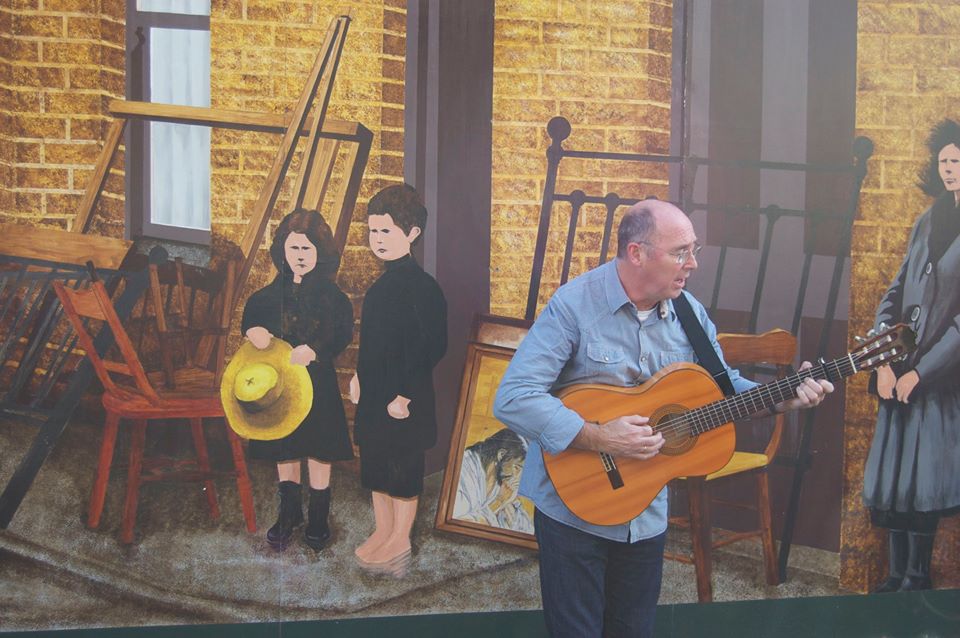
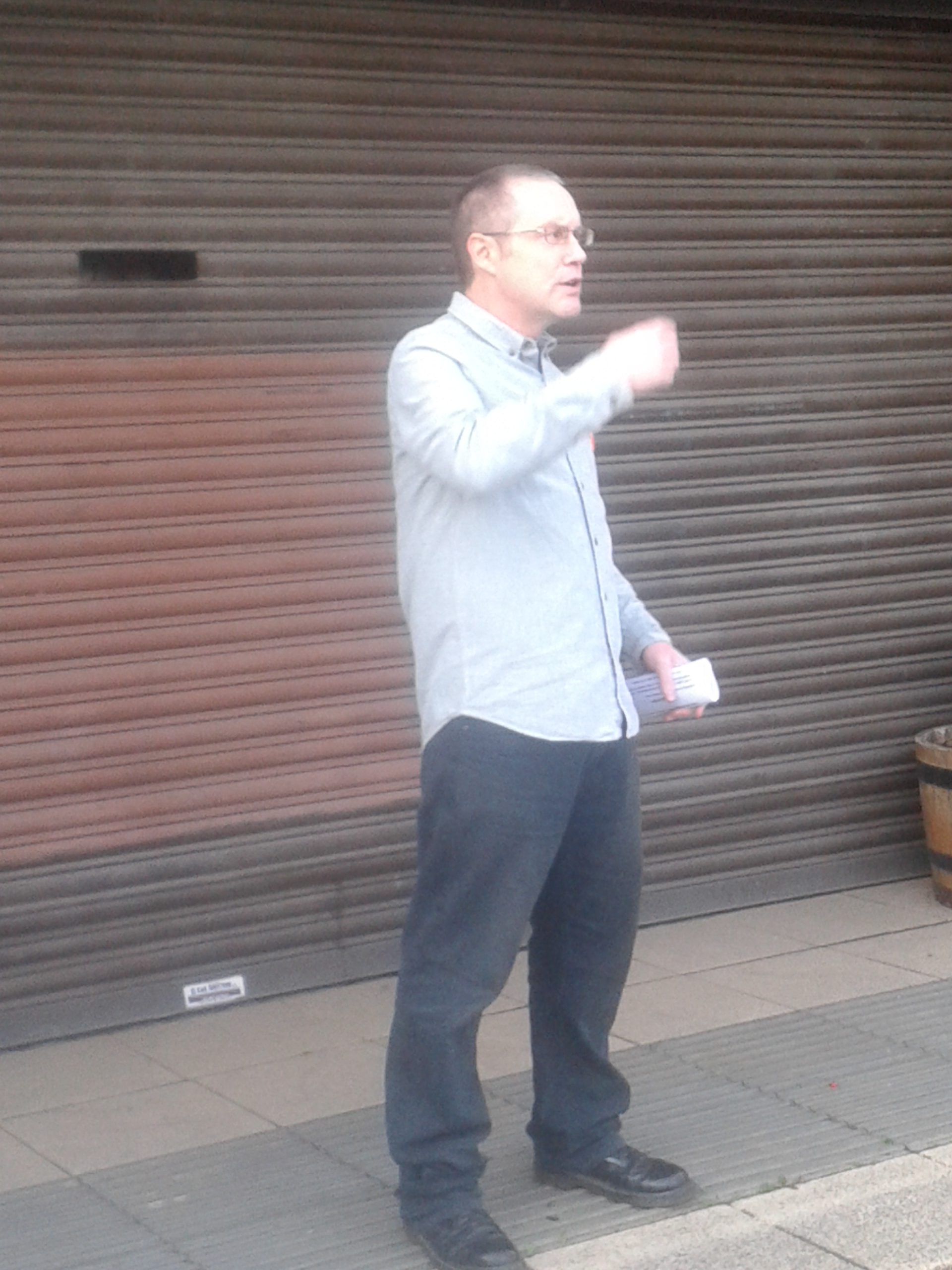
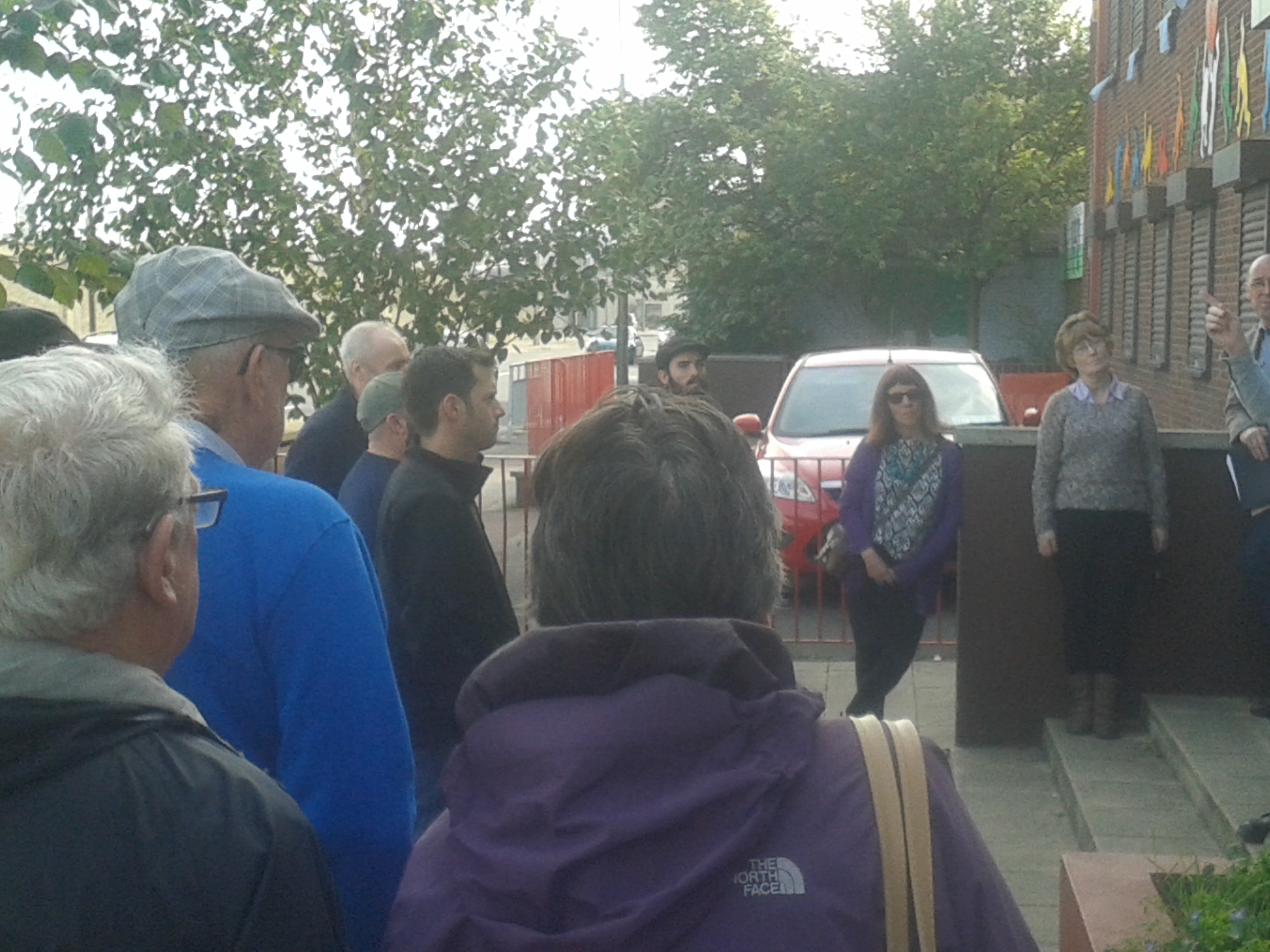
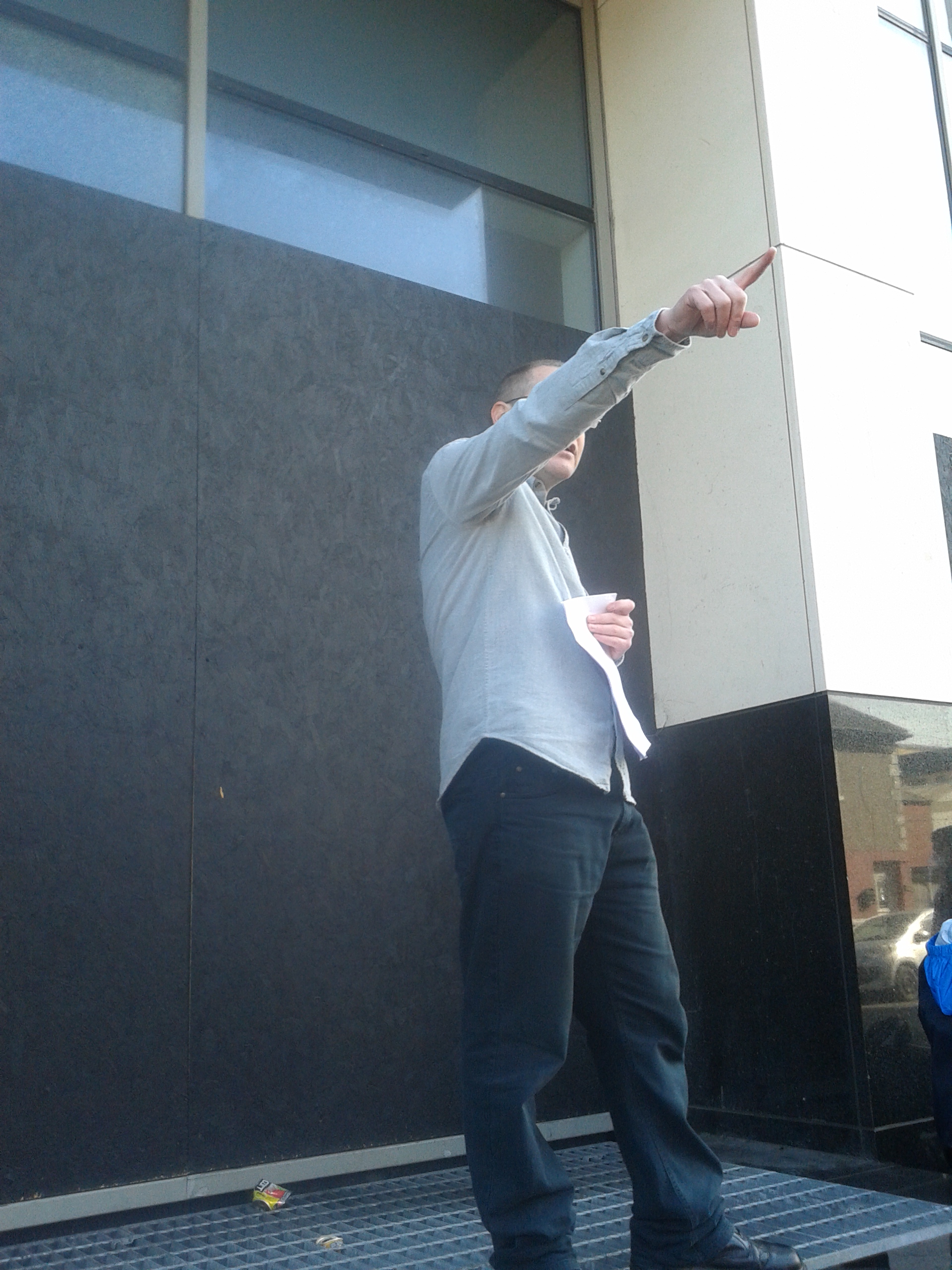

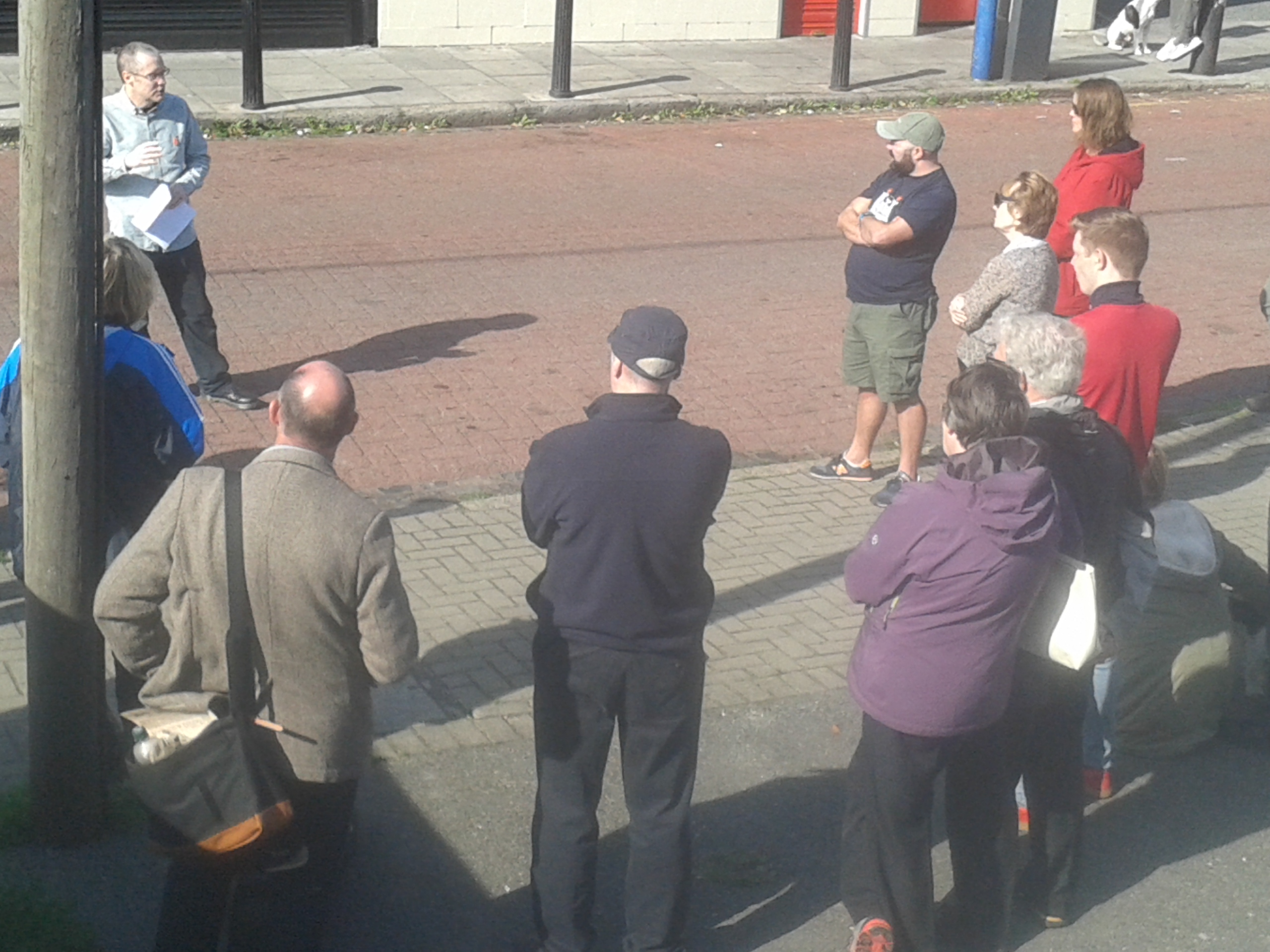
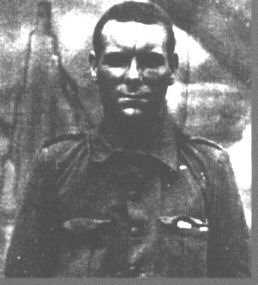
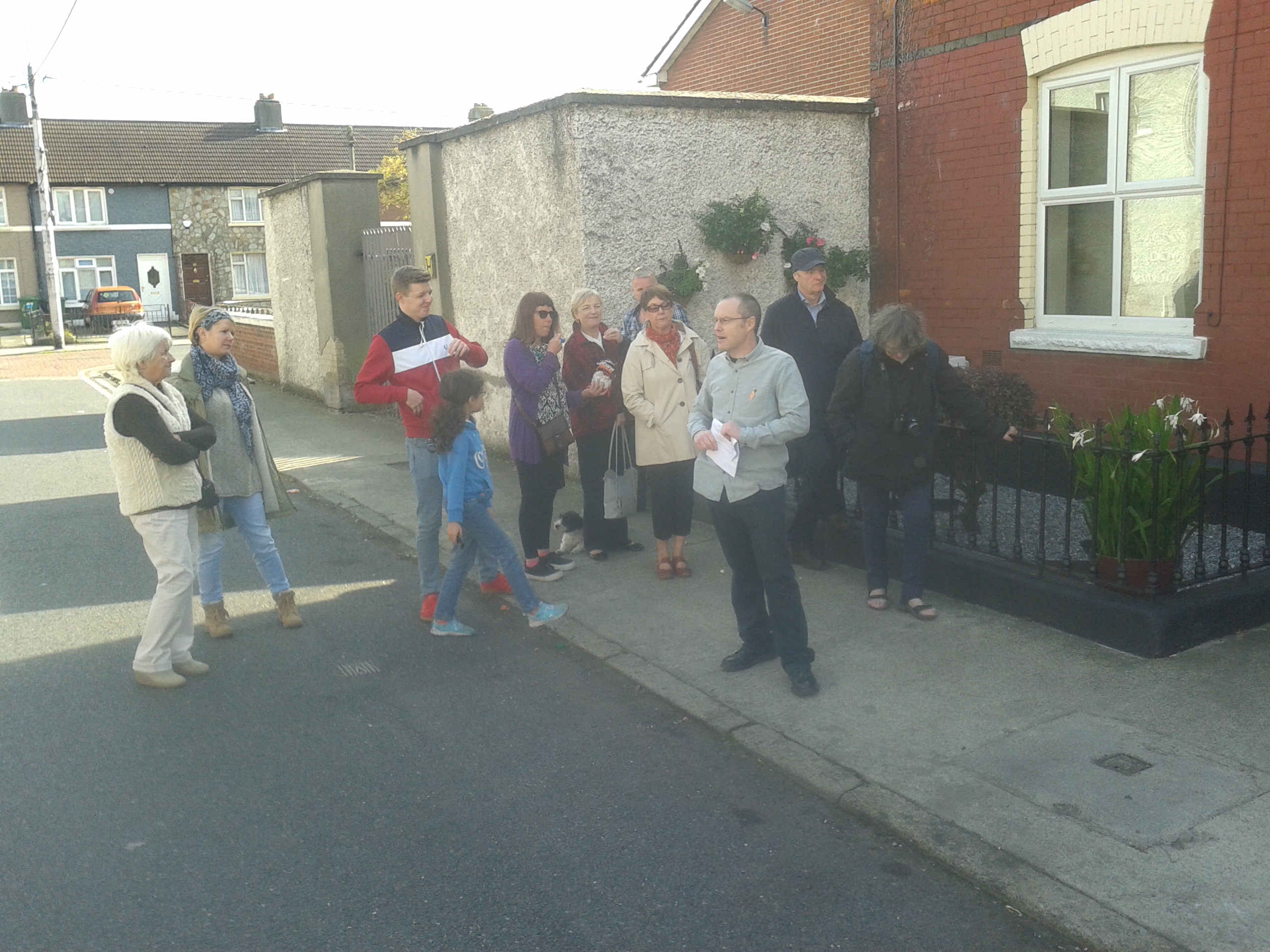
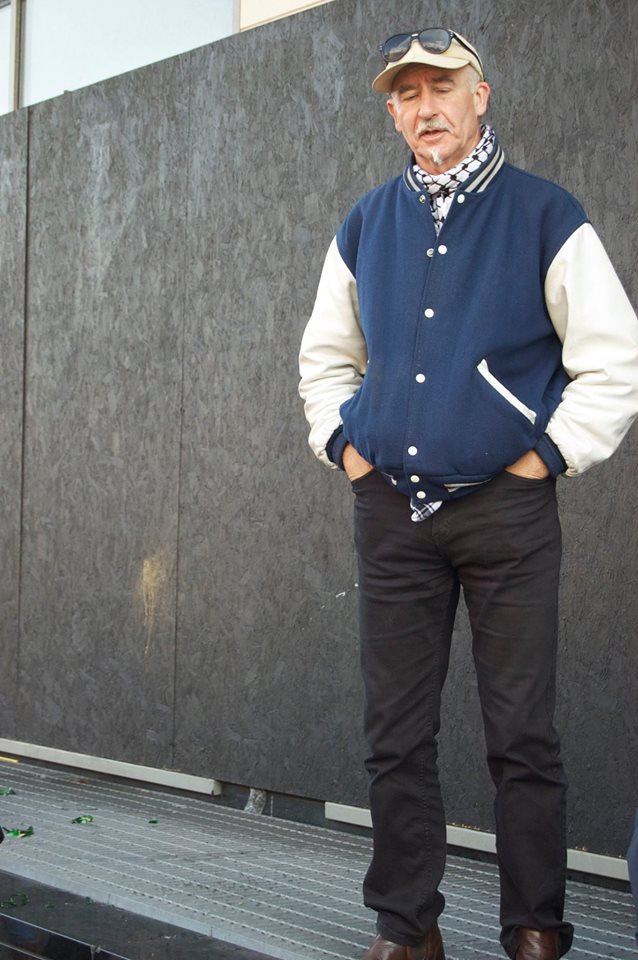

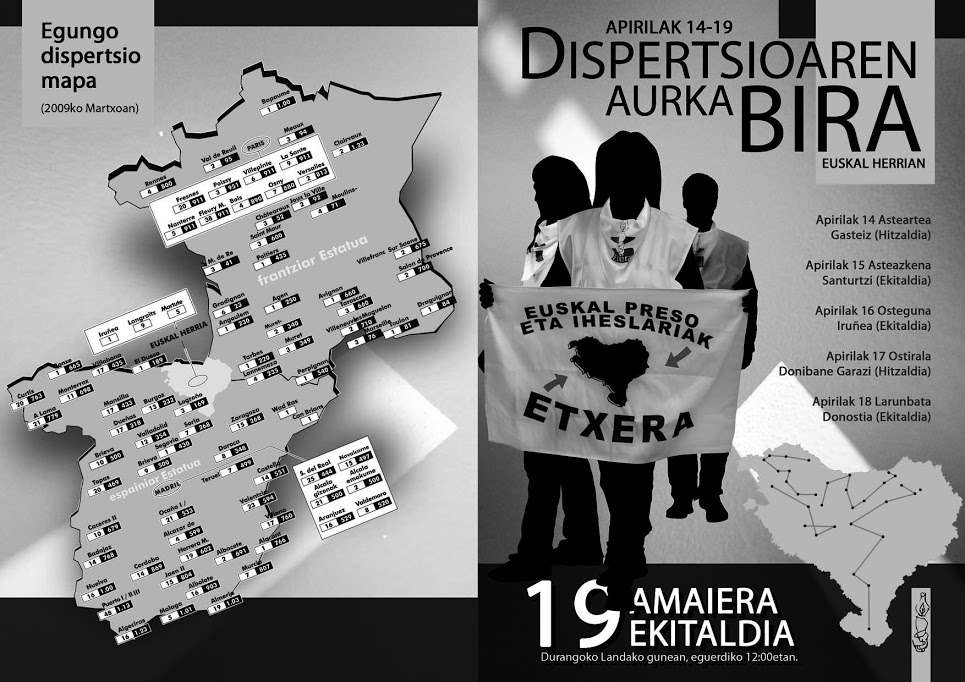

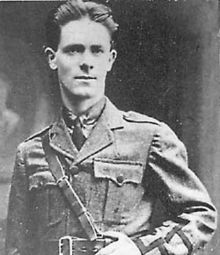
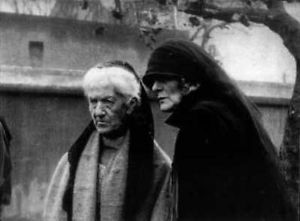


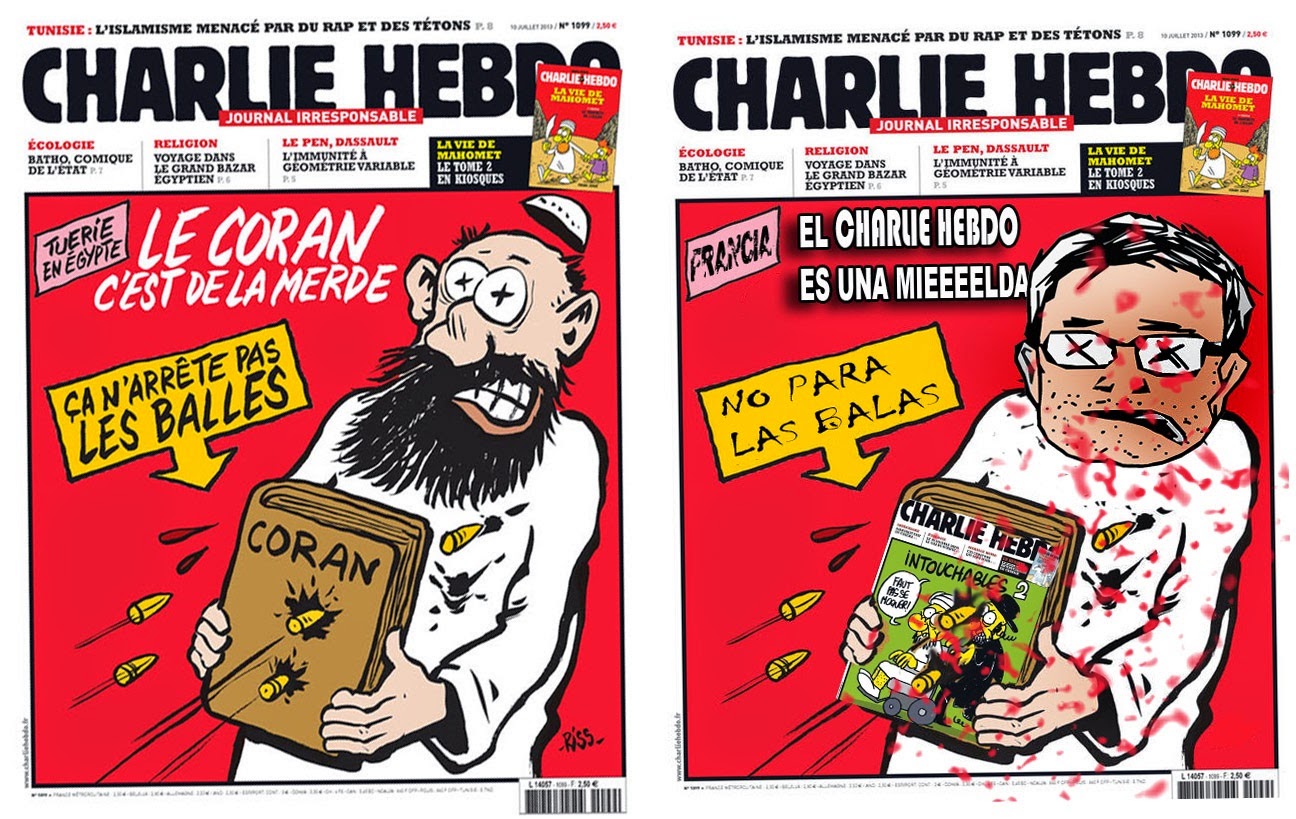
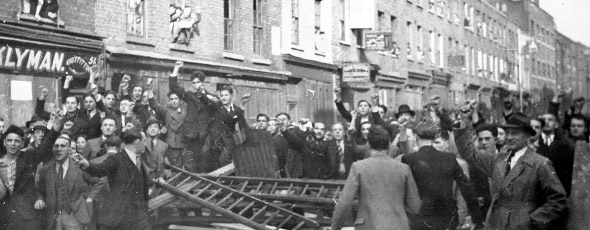




 rebelbreeze