ANTI-IMPERIALIST ACTION HOLDS DUBLIN 1916 RISING COMMEMORATION

Clive Sulish

(Reading time: 6 mins.)

Easter is the time of year in Ireland for Easter Egg hunts and/or for attendance at religious services but for the Republican movement it is one of commemoration of the Easter Rising and its martyrs, with parades and speeches.

The commemoration parade proceeding along Phibsboro and approaching the Cross Guns canal bridge. (Photo: Rebel Breeze)

Easter Monday in Dublin saw one of those commemorations organised by the Socialist Republican organisation Anti-Imperialist Action at the Citizen Army plot in the St. Paul’s section of the famous Glasnevin Cemetery at the Republican Struggle Monument1.

Participants rallied near the Phibsboro Shopping Centre to march from there to the Cemetery, a distance of around two kilometres, over the “Cross Guns” bridge over the Royal Canal, then passing the main entrance to the Glasnevin Cemetery on the right before turning left for St. Paul’s.

Garda POU van parked extremely dangerously, hiding left turn from view of eastbound traffic, as they chat with other Gardaí and a ‘Branch man. As is said, one rule for the people …!”
In the laneway between houses visible in the background, a cameraman lurked taking photos. (Photo: Rebel Breeze)

In a marked departure from the previous year, the State’s political police, plainclothes Gardaí of the “Special Branch”2 did not approach the participants to attempt to intimidate them and gather intelligence, demanding their names and addresses under the Offences Against the State Act.3

That had been followed up by a raid on the home of one of the leading activists. Sunday’s police behaviour was an even greater difference from Saturday’s, when a different Republican group, Saoradh, had their Easter Rising commemoration in Dublin’s city centre.

Around 300 police, including many in riot cop uniform (Public Order Unit) had harassed the participants demanding names, addresses and other information, attempting to intimidate them. At least seven police vans had been in attendance also to the bemusement of onlookers.4

(Photo: Rebel Breeze)

LOCAL 1916 HISTORY

The Phibsboro/ Glasnevin area also figured in the 1916 Rising, with an insurgent barricade in Phibsboro and a Fianna youth, Sean Healy, mortally wounded at the crossroads by a British artillery shell fragment (a plaque on the ground at the SW corner commemorates his death.

Earlier, Irish Volunteers had guarded the canal bridge briefly; these were seen by the dozen Volunteers that marched along the canal from Maynooth, slept in Glasnevin Cemetery and got into the headquarters garrison at the General Post Office on Tuesday.

Later British soldiers set up a barricade on the Bridge preventing even foot traffic across and shooting dead a deaf and dumb man who could not hear their challenge.

EYE IN THE SKY? (Photo: Rebel Breeze)

PARADE THROUGH STREETS TO CEMETERY

The parade from Phibsboro on Sunday was led by the Glasgow Republican Flute band (formerly the Garngad RFB, which is where most of them are based) playing the airs of known Republican ballads, muted to regular tocks on their drums as they entered the housing estate.

(Photo: Rebel Breeze)

Also leading was the colour party dressed in white shirts, black trousers, jackets, berets and sunglasses, carrying the traditional flags for Republican colour parties: the Tricolour, Starry Plough, Sunburst, followed by the flags of the four provinces of Ireland: Connacht, Leinster, Munster and Ulster.

Over the marchers the flags of the Tricolour and the Starry Plough, flag of the Irish Citizen Army flew in the breeze while those of the Basque nation, Palestine and of the People’s Front for the Liberation of Palestine lent an international flavour to the commemoration of the Irish Rising.

There was some beeping of passing traffic and cheering from bystanders at the entrance to the laneway that leads to the bridge across the railway tracks to the St. Paul’s section of the graveyard. The marchers filed in and proceeded to the monument.

The Chair of the proceedings welcomed the attendance before reading from the 1916 Proclamation of Independence and calling a singer to step forward. Revolutionary activist Diarmuid Breatnach introduced the two songs he was going to sing as emphasising the role of the working class in the Rising.

(Photo: Rebel Breeze)

“The decision to go ahead with the Rising on Easter Monday was taken in Liberty Hall, the headquarters of the working class at the time,” he reminded the gathering, “which is also where the Proclamation of Independence was printed.”

He sang the “Jim Larkin Ballad”:
In Dublin City in 1913,
the boss was rich and the poor were slaves;
The women working, the children hungry,
till on came Larkin like a might wave …

Diarmuid Breatnach singing (Photo: Donated by participant)

Pausing to focus on a different key, the singer followed the ballad with Patrick Galvin’s Where Is Our James Connolly?

After applause, floral tributes were laid on behalf of Anti-Imperialism Action Ireland and of Dublin Republicans Against Fascism.

(Photo: Rebel Breeze)
(Photo: Donated by participant)

The chairperson asked for a minute’s silence in honour of those men and women who had given their lives in the struggle for freedom in Ireland. The colour party lowered their flags slowly in homage to the fallen, raising them again slowly to signify the continuation of the struggle.

(Photo: Rebel Breeze)

John Heaney, Republican ex-prisoner from Armagh was called to give the oration for the event, which he dedicated to all those men and women who had opened their doors and their homes to fighters in the struggle, whether the latter were in hiding or just resting – his audience applauded.

The speaker also congratulated on those who came forward to carry on the struggle, youth, women and stated he was proud to see the traditions of struggle being upheld in the process to achieve the Republic for which so many gave their lives.

The speaker, John Heaney delivering his oration. (Photo: Rebel Breeze)

The marching band then played the air of Amhrán na bhFiann/ The Soldiers’ Song, verse and chorus and the formal part of the event came to an end. Band members lined up in front of the Monument for photos and a little later played the air of “Black Is the Colour” on whistles, to general applause.

SECOND 1916 COMMEMORATION FOR AIA THIS EASTER

This was the second 1916 Rising Commemoration to be attended by Anti-Imperialist Action as they had also participated in another organised by the Seamus Costello Memorial Committee in Bray on the previous day.

AIA is a young organisation, founded by socialist Republicans unhappy with the direction of the Republican organisation of which they had been members but now containing many young people.

AIA gave rise to the Revolutionary Housing League that occupied empty buildings in a campaign against homelessness and called for a general occupation campaign across the state. A number of court cases against them followed but sadly their lead was not followed.

(Photo: Rebel Breeze)

AIA have also been very active against NATO, picketing promotional meetings and a number have been charged following a demonstration against a visiting British Navy ship in Dublin last November.5 They have also been active as part of the Saoirse don Phalaistín activist group.

Following the event in Glasnevin, many of the participants relaxed at a social evening in a different part of the city where many songs of struggle were sung.

(Photo: Rebel Breeze)

OTHER EASTER COMMEMORATIONS

Other Easter Rising commemorations have been held around this time, for example: Lasair Dhearg held one in Belfast on Easter Monday, while Independent Dublin Republicans held theirs in the capital, marching from Liberty Hall to the GPO, then to Moore Street to lay a floral tribute.

On Monday too the Derry 1916 Memorial Committee held an event in its city.6

Former revolutionary Republican party Sinn Féin held theirs in Arbour Hill7 cemetery on Sunday; a large part of their President’s address was devoted to justification of support for the EU and a plea to support the party whenever the state’s general elections are held (this year or next)8.

End.

(Photo: Rebel Breeze)

FOOTNOTES

SOURCES & FURTHER READING

Anti-Imperialist Action: https://t.me/aiaireland

Lasair Dhearg commemoration: https://www.facebook.com/LasairDhearg/

Derry commemoration: https://www.belfasttelegraph.co.uk/news/northern-ireland/petrol-bombs-thrown-at-media-during-dissident-parade-in-derry/a1835461558.html?

Sinn Féin commemoration: https://www.breakingnews.ie/ireland/mary-lou-mcdonald-makes-election-plea-at-1916-event-1608211.html

1My name for the Monument in the St. Paul’s part of Glasnevin Cemetery which stands in recognition of six periods of Irish Republican-led insurrectionary activity in Ireland: 1798-1916.

2Now officially the Special Detective Unit, they were previously known as the “Special Branch”, a name they inherited from the British occupation which had set up a political intelligence unit, the Irish Special Branch, to spy on and disrupt the Fenian movement among the Irish diaspora in British cities. Most political activists in Ireland continue to call them “the Special Branch” or simply “the Branch”. Their equivalent in Britain today and in a number of its colonies and former colonies continues to officially bear the name “Special Branch”.

3As amended in 1972 after a British Intelligence bombing killing two public transport workers in Dublin but blamed on the IRA; the amendment also permitted the setting up of no-jury Special Courts which are in existence to this day.

4In the context of assaults on persons in the city centre there have been regular complaints in the media and in the Parliament about the lack of Gardaí visibly patrolling the area.

5 https://ukdefencejournal.org.uk/irish-activists-shout-at-british-naval-vessel-in-dublin

6https://www.belfasttelegraph.co.uk/news/northern-ireland/petrol-bombs-thrown-at-media-during-dissident-parade-in-derry/a1835461558.html?

7Where the 14 Dublin 1916 executed were buried, now a national monument in a former prison and church graveyard around the back of the former military barracks and now National Museum of Collins Barracks

8https://www.breakingnews.ie/ireland/mary-lou-mcdonald-makes-election-plea-at-1916-event-1608211.html
IT’S NOT BECAUSE OF THEIR SKIN COLOUR BUT ABOUT WHERE THEY ARE

Diarmuid Breatnach

(Reading time: 8 mins.)

There is a belief around that the reason that Israel is being supported by the US and getting away with genocide as far as the Western powers are concerned, is because the Palestinians are dark-skinned and that it wouldn’t happen to ‘whites’.

Those who believe that are mistaken: it would and it did. It is only marginally about skin colour but rather about where the Palestinians are.

Palestine sits in a strategic spot in the heart of the Middle East, with borders to Egypt, Lebanon and Syria, with the Red Sea to the South-east and a Mediterranean coastline to the west, connecting by sea to Europe, Africa and Asia. That made it important to old and to new empires.

The historic land known as “Palestine” in the 19th and early 20th Century was that which up until 1917 was ruled by the Ottoman Empire, now occupied by the zionist Israeli State and those areas recognised as Palestinian by international law including Gaza, the West Bank and Jerusalem.

After WWI, during which the Ottoman Empire, along with Germany had been on the losing side, in the divvying up of the colonial spoils, Palestine (occupied by the British since 1917) was given by the League of Nations in 1922 to one of the War’s victors, the UK.

The UK began to invite Ashkenazi Jews to settle there as part of a European colonial and partly anti-semitic1 project. Of course in those days “semitic” was understood to apply to the Arabs as well as to the Jews and the latter were often referred to by Europeans as “oriental”.

The British, as is the wont of colonisers in general and of them in particular, played the settlers off against the Arab majority.

And of course broke promises about restricting the number of settlers. But after WWII, a high influx of Holocaust survivors organised by Zionists began to head for Palestine and the British, fearing the destabilisation of their colony, tried to prevent unapproved Jews from landing.

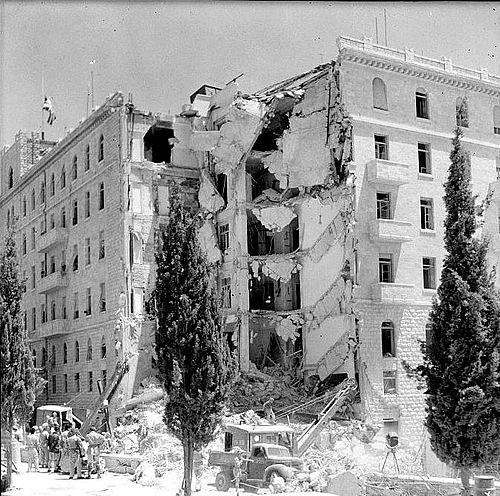
The zionist terrorist militias (Irgun, Haganah, Stern Gang) began to attack the British colonial forces and Arab villages. In July 1946, Zionist group Irgun killed 91 people and injured 46 in an explosion at the King David Hotel, location of the British administrative and occupation army HQ.

Damage to the King David Hotel after bomb planted by Zionist terrorist group Irgun in 1946. (Photo sourced: Wikipedia)

The British pulled out in 1947, reneging on all their promises to the native Palestinians. The Zionists began their genocidal settler project with threats to and massacres of Palestinians and the expulsion of 700,000, mostly Muslims — and declared a Jewish State in 1948.

Thereafter the Israeli State began a program of repression and oppression of Palestinians and of colonial expansion. Naturally, this project required ethnic cleansing and genocide of the Palestinians and aggression against Israel’s neighbours.

The USA and the USSR quickly recognised the Zionist State, the USA increasingly funding the state and supplying it with weapons while the USSR permitted its Ashkenazi Jewish citizens to emigrate to the settler colony.

In October 1956, eight years after the founding of the Zionist state, in response to Egyptian nationalisation of the Suez Canal, the Israeli air force attacked Egyptian airfields without warning while British and French Army and Naval forces invaded the country.

The invaders were forced to retreat and the USA admonished France and the UK for, in effect, not realising that the USA and not the old European colonial powers was now the boss of most of the world.

The zionist lobby (both Jewish and Christian) in the USA is often blamed for that imperialist state’s continual support for Israel’s genocidal attacks on the Palestinians.

But the US imperialists have their own reasons for supporting the only state in the Middle East that is susceptible to neither internal national liberation struggle or muslim fundamentalist uprising. It gives the US a safe foothold and also a guard dog to watch the neighbours (e.g Syria and Iran).

RACISM

The Nazis had a racist view of the Ashkenazi Jews, who were mostly fair-skinned. But they also considered the Slavic people (the majority European and light-skinned) as “untermenschen” (i.e ‘subhuman’). It’s estimated they killed at least 1.9 million Polish non-Jewish civilians.2

The Nazis also murdered millions of Russian non-Jewish civilians in genocidal ethnic cleansing of territory, in labour concentration camps, near sensitive battle formations and in reprisals for partisan resistance.

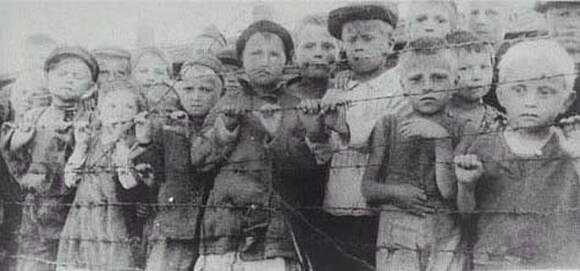
Fair-skinned and even blonde children victims of Nazi racism and genocide. (Source: New Zealand Holocaust Centre “Button project”)

The South African settler racist regime discriminated against all non-European people, in their official categories of “Native”, “Coloured” (mixed race) and “Asian” (mostly from the Indian sub-continent). Nevertheless, they also made some groups “honorary whites”.3

Racism isn’t primarily about skin colour anyway: It is a discriminatory social ideology based on ethnicity and the marker for ‘difference’ can be ‘racial’, national or religious. The Anglo-Norman invaders of Ireland in the mid-12th Century racialised the Irish, who were generally fair-skinned.4

The rational reason behind the racism is to unite in opposition to the targeted groups, whether in order to wage war against them or so as to repress their resistance as slaves or as occupied people. The racists colonise their own minds and attempt to colonise the minds of their targets also.

Not quite two centuries after the initial invasion and part-occupation of Ireland, the British-based Anglo-Normans, now describing themselves as “English”, criticised most of their people settled in Ireland for ‘going native’ and passed laws against their social acclimatisation.

The Statutes of Kilkenny in 1366 attempted to prevent “the degenerate English” from speaking Irish, adopting Irish customs and laws, dressing in Irish style, patronising Irish cultural performance, intermarrying with the Irish and becoming “more Irish than the Irish themselves.”

The main purpose for the Anglo-Norman invasion of Ireland had been occupation by feudal lords to gather rents from the natives but it soon became a question of replacing the natives with settlers. This was not always successful since the Irish people and many clan chiefs resisted.

The cities became fortified centres of colonial occupation, administration and garrison, the colonial city of Dublin known as “the Pale” in reference to the original earthworks surmounted by a palisade; hence “beyond the Pale” signified the native Irish and barbarism to the colonists.

The earlier occupation settlements were in or around fortified constructions, castles and ‘keeps’. Later, town and villages were established with a central square or diamond, i.e in a good defensive shape and entry by natives forbidden. Settler churches were also built as defensive structures5.

Pseudo-scientific racism from white Anglo-Saxon Harper’s Weekly magazine 1899 in the USA. (Sourced: Nothing But the Same Old Story, Liz Curtis).

With the creation of Irish Republican Brotherhood (or the ‘Fenians’) in the 19th Century and their activities in Ireland, the USA and in Britain, the British elite combined anti-Irish racism with pseudo-evolutionary ‘science’ representing the Irish as not quite human or childlike – but violent.

Cartoons in some British popular periodicals, in particular Punch, Fun, Judy(and Puck in the USA) represented the Fenians as monsters, in particular ape-like creatures and racist jibes and ‘humour’ were popularised, a practice which sprouted new variants during the recent 30 Years War.

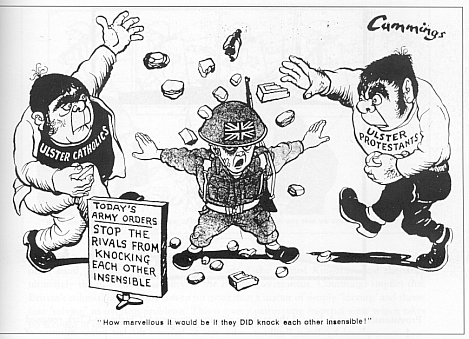
Updated British anti-Irish racism by cartoonist Cummings, Daily Express, London, 12 August 1970, depicting the colonial British Army as “keeping the peace” between the colonised Catholic/ Nationalist population and the British Loyalists. (Sourced: CAIN)

ETHNIC CLEANSING AND GENOCIDE

All European settler projects imply ethnic cleansing accompanied by genocide to one degree or another: in Africa, Latin America, North America, Australia, New Zealand … but this was practiced by a European power against a European nation also: Ireland.

The British elite used atrocity stories from the 1641 uprising of the Irish to justify and encourage the genocide by Oliver Cromwell’s campaign in Ireland in 1649. Through ethnic cleansing, battle and starvation, Cromwell killed nearing 40% of the Irish population.6

British atrocity propaganda image about the Irish uprising of 1641 to justify Cromwell’s campaign of ethnic cleansing, genocide and enslavement. (Sourced: online).

These figures do not include those he had sent to British colonies in the Americas as slaves.7

The Great Hunger (1845-1848) wiped out, through starvation, well over 2 million of the Irish population of around 8 million and during that and the following decade, probably another 2 million emigrated (many of those too dying on the way or on arrival8).

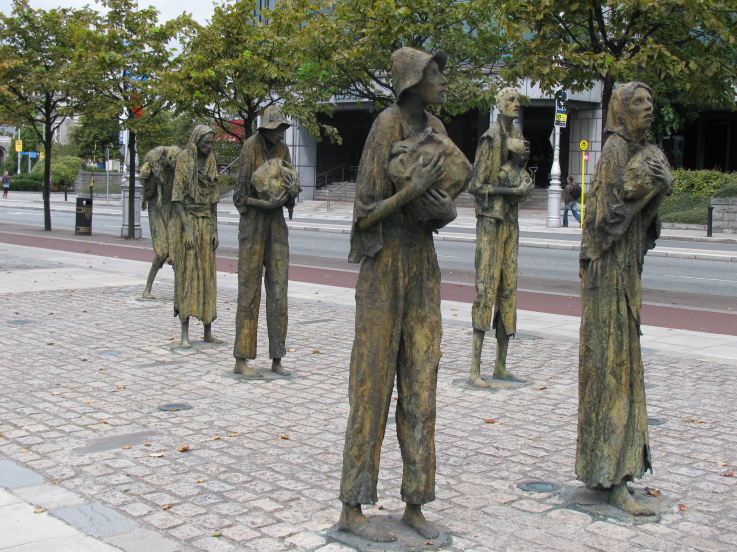
Monument on the Liffey quays in Dublin to the Great Hunger (1845-1852) genocide of the Irish by the British ruling class. (Photo: D.Breatnach)

DOES IT MATTER WHETHER IT’S DRIVEN BY RACISM OR BY COLONIAL EXPANSION?

Yes, it does. The difference between the two does not change the situation of the Palestinians but it does affect how the genocide may be understood and what the targets of our actions may be.

Liberals would probably prefer the issue to be primarily of racism. If that were the source of the problem we could still be pushing for economic and isolation pressure as was the focus with the anti-apartheid campaign against the South African racist regime.

That is being done now and that’s fine. But the assumption would be that with enough pressure, Israel would be obliged to change its ways and the US leaders would feel pressured to advise it to end its racist discrimination (as they did in the case of white South Africa).

But if the project is colonial expansion, presupposing ethnic clearing and genocide, it is a different situation completely.

No arguing with Israeli zionists, boycott or isolation culturally and in sport is going to change that or get ‘liberal’ Zionism to act against their Right; as Finkelstein recently pointed out, the Nakba and all the settler expansions were carried out under ruling periods of the ‘Left’ side of zionism.

Also, if this settler expansion (or supporting such at least) is part of a US imperialism project, then no amount of campaigning to expose the behaviour of the Zionists is going to be effective in persuading the ruling class of the USA to apply corrective pressure to the zionist regime.

The fact that the basic source of the problem is zionist settler expansion means that genocide and ethnic cleansing will continue as long as the Israeli zionist state exists. And US and Western imperialism will continue to support that as long as they believe it benefits their regional interests.

This makes it clear that the long-term solutions can only consist of ending the zionist project or the ending of imperialism which supports it. The former is of course a smaller objective but at the moment western imperialism is energetically defending the zionists.

A whole neighbourhood in Gaza wiped out by Israeli bombardment months ago (Photo cred: WAFA agency)

It is doings so politically and culturally, with armaments, also with propaganda from its mass media, by repression of its own populations where these are protesting in solidarity with the Palestinians – and in the course of that it is endangering all its facades of justice and objectivity.

In the longer term that is probably a good thing, helping to create the subjective conditions for the overthrow of imperialism and monopoly capitalism.

But we need to help that process along in our own struggles while also making their continued support for zionist genocide of Palestinians as costly for them as we possibly can. While we act in solidarity with the Palestinians we are acting also against our own immediate enemies.

End.

FOOTNOTES

1This may surprise some but the British ruling class was deeply anti-semitic even before Shakespeare wrote his Merchant of Venice script. Not only that, but Balfour, infamous for his eponymous Declaration that Palestine was suitable for Jewish settlement, was personally strongly anti-semitic (I am thankful to Ali Abunimah for pointing that out in one of the youtube discussions of the Electronic Intifada)

2https://www.hmd.org.uk/learn-about-the-holocaust-and-genocides/nazi-persecution/non-jewish-poles-and-slavic-pows/

3For example, east Asians such as Japanese and Koreans with whom they wished to have good commercial and financial relations https://en.wikipedia.org/wiki/Honorary_whites

4I keep telling people struggling against colonialism and imperialism that they should study Irish history. It’s practically all there: racism, invasion, division, settlers, plantations and ethnic cleansing, recruitment of native enforcers, undermining of native culture, religious oppression, genocide (twice), partition, recruitment of sections of the elite and nationalist political parties.

5Though this also had a history in medieval Europe. The administrators of the Ulster Plantation at the start of the 17th Century allocating grants of land specified that those who got parcels of land had to be English-speaking, be Protestant, build defensive structures and not employ Catholics.

6https://www.historyireland.com/how-many-died-during-cromwells-campaign/

7This has become something of a controversy, with racists of Irish diaspora background claiming parity with the slavery experience of Africans in the southern USA and some anti-racists denying it, saying the Irish were indentured servants. Both are mistaken: Irish were sent in slavery by Cromwell but subsequent Irish were sent in indentured servitude which, bad as it is, is not chattel slavery and the historical slavery period of the Irish in the USA was nowhere near as long as it was for the Africans.

8Over 3,000 are buried on Grosse Isle alone, an island in the St. Lawrence River in Quebec, Canada.

SOURCES

https://www.hmd.org.uk/learn-about-the-holocaust-and-genocides/nazi-persecution/non-jewish-poles-and-slavic-pows/

https://www.historyireland.com/how-many-died-during-cromwells-campaign/

https://www.thriftbooks.com/w/nothing-but-the-same-old-story-the-roots-of-anti-irish-racism_liz-curtis/

TENS OF THOUSANDS IN PALESTINE SOLIDARITY IN DUBLIN MARCH – AND ZIONIST PROVOCATION

Diarmuid Breatnach

(Reading time: 7 mins.)

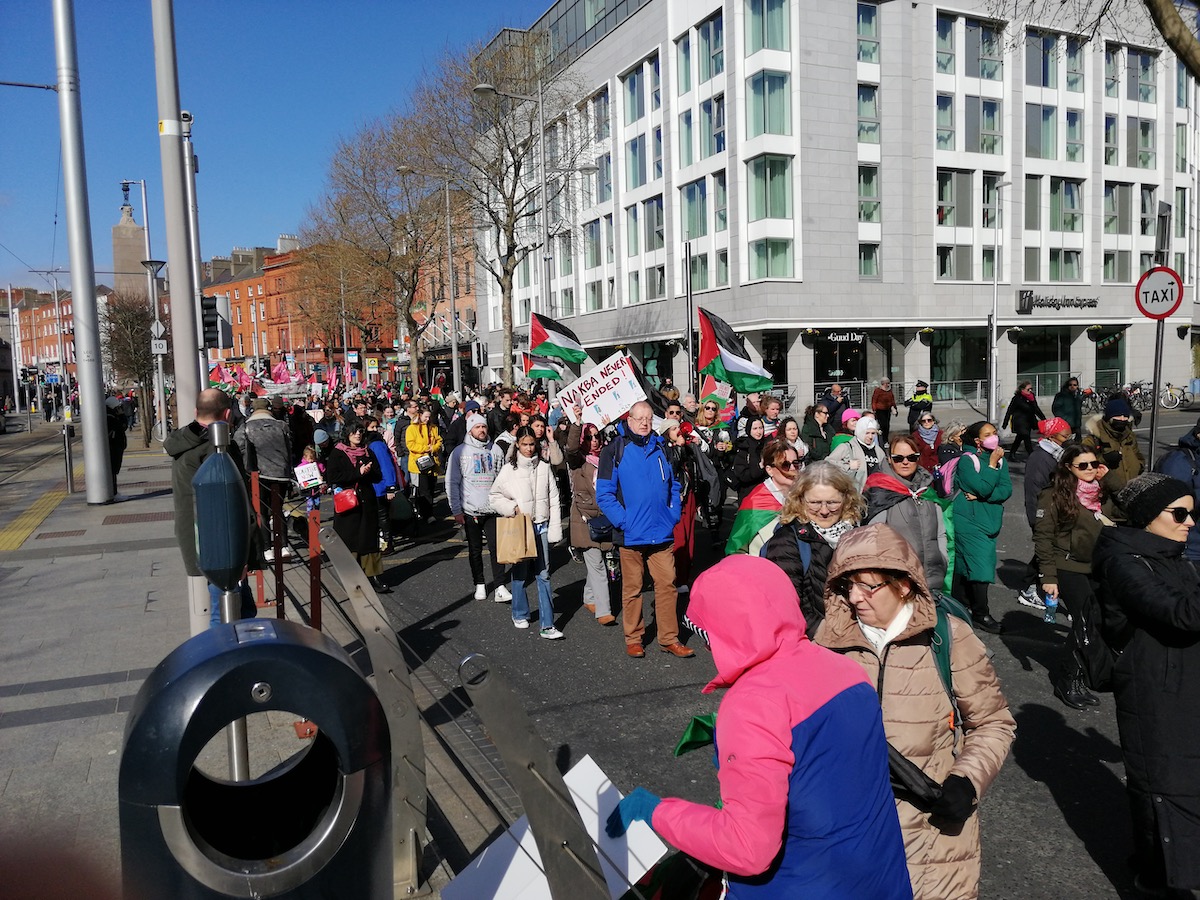
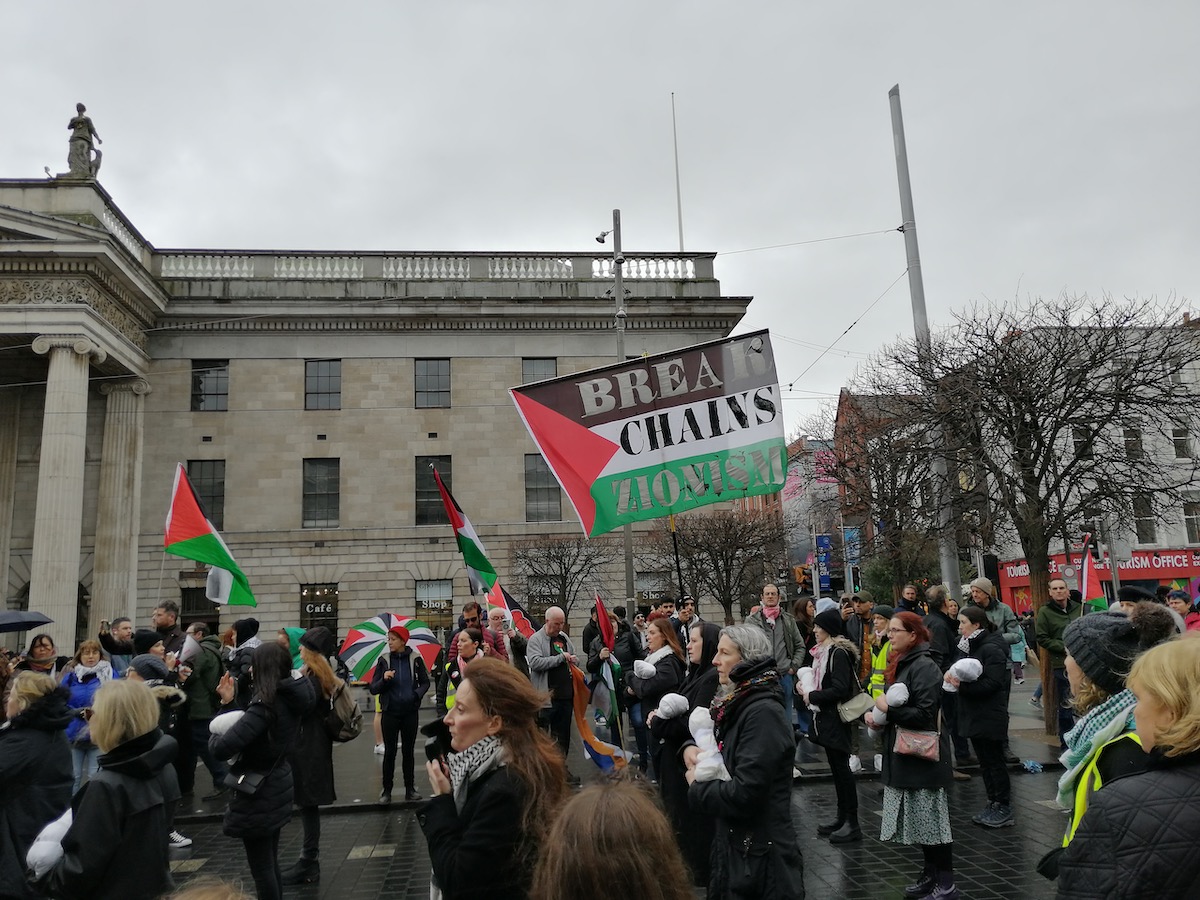
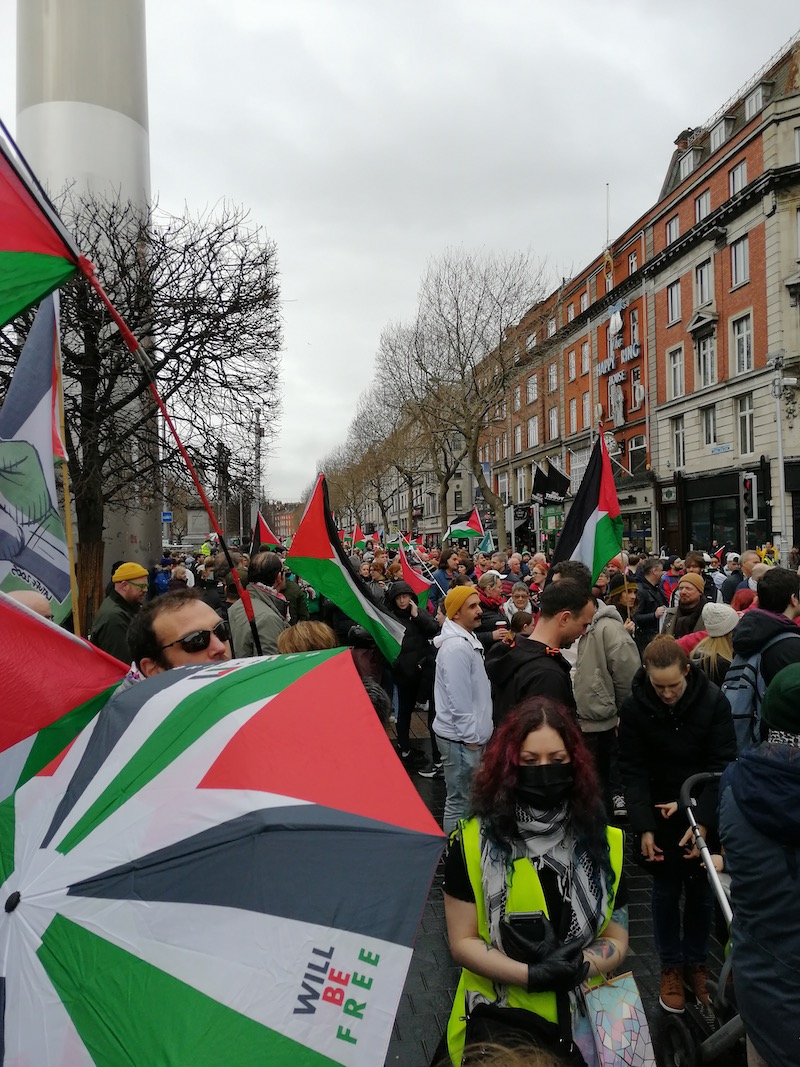
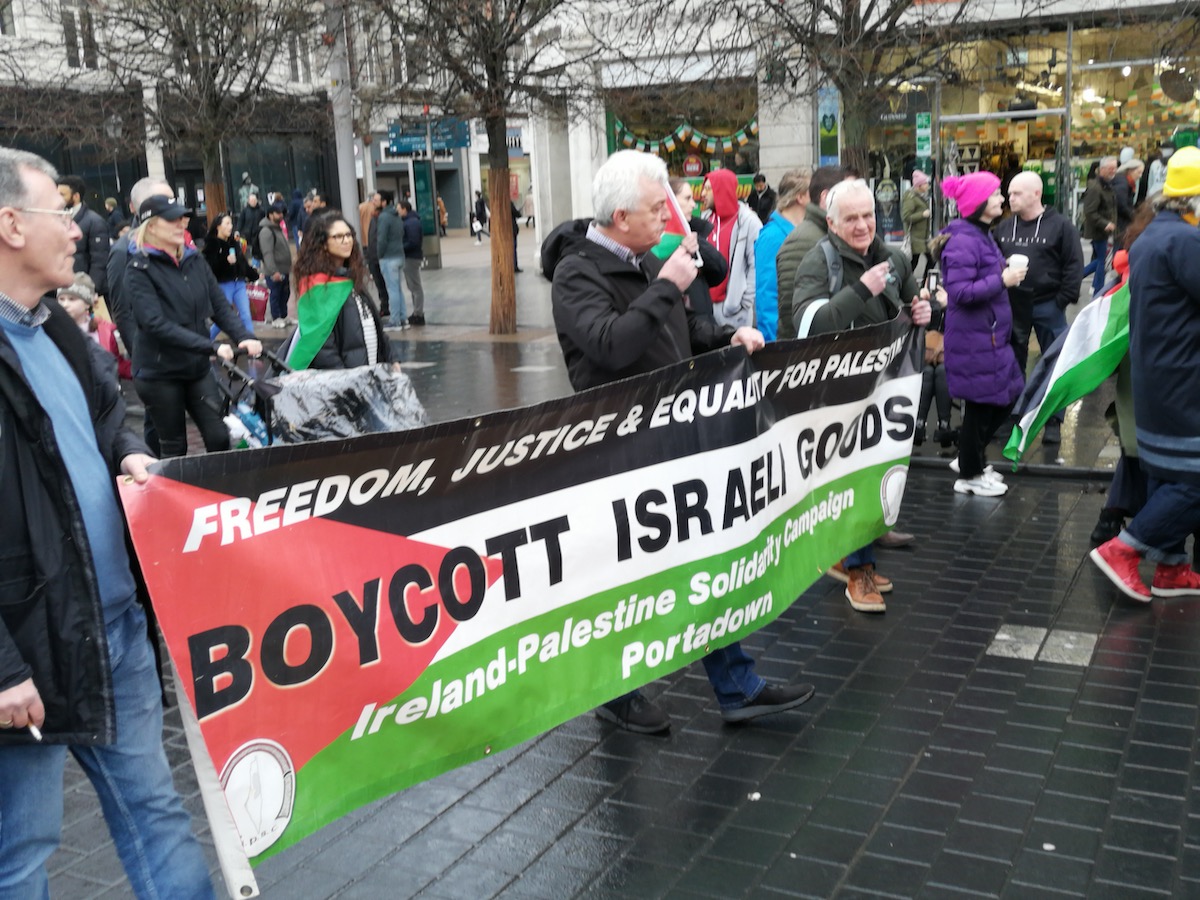
Numbers approaching 100 thousand marched in Palestine solidarity in Dublin on Saturday as the Ireland Palestine Solidarity Campaign held its 5th national march since October, attended by people from Donegal to Cork and from the 6-County British colony.

It took place in a week in which the genocidal zionist settler state exercised its “right to defence” by its fourth attack on the Al-Shifa Hospital, massacring over 170 unarmed civilians including women and children and using others as human shields.

(Photo: D.Breatnach)

In addition the zionists executed the Chief of the Gaza police and a Deputy (along with the latter’s family), claiming them to be guerrillas but apparently in retaliation for their successful organisation of a recent flour delivery without riots or any civilians murdered by the Occupation Forces.

Meanwhile, the response of the colonial and zionist collaborator, the Palestine Authority, was to continue its repression of Palestinians in parts of the West Bank and to open fire on the funeral of three martyrs1 of the heroic latest battle of Jenin, a scene of many past battles.

The front of the march begins to enter Dublin’s main street, O’Connell Street (Photo: D.Breatnach)

The official figure for Palestinians killed in this latest genocide on screens and before the eyes of the world is now nearing 33,000 dead with well over 74,000 injured and an estimated 8,000 buried under rubble from Israeli bombing in the zionist state’s “right to defence”.

None of the leaders of the Western imperialist states seem to ask themselves whether, if this is truly the necessary cost to Israel’s ‘defence’, does that state deserve to exist at all?

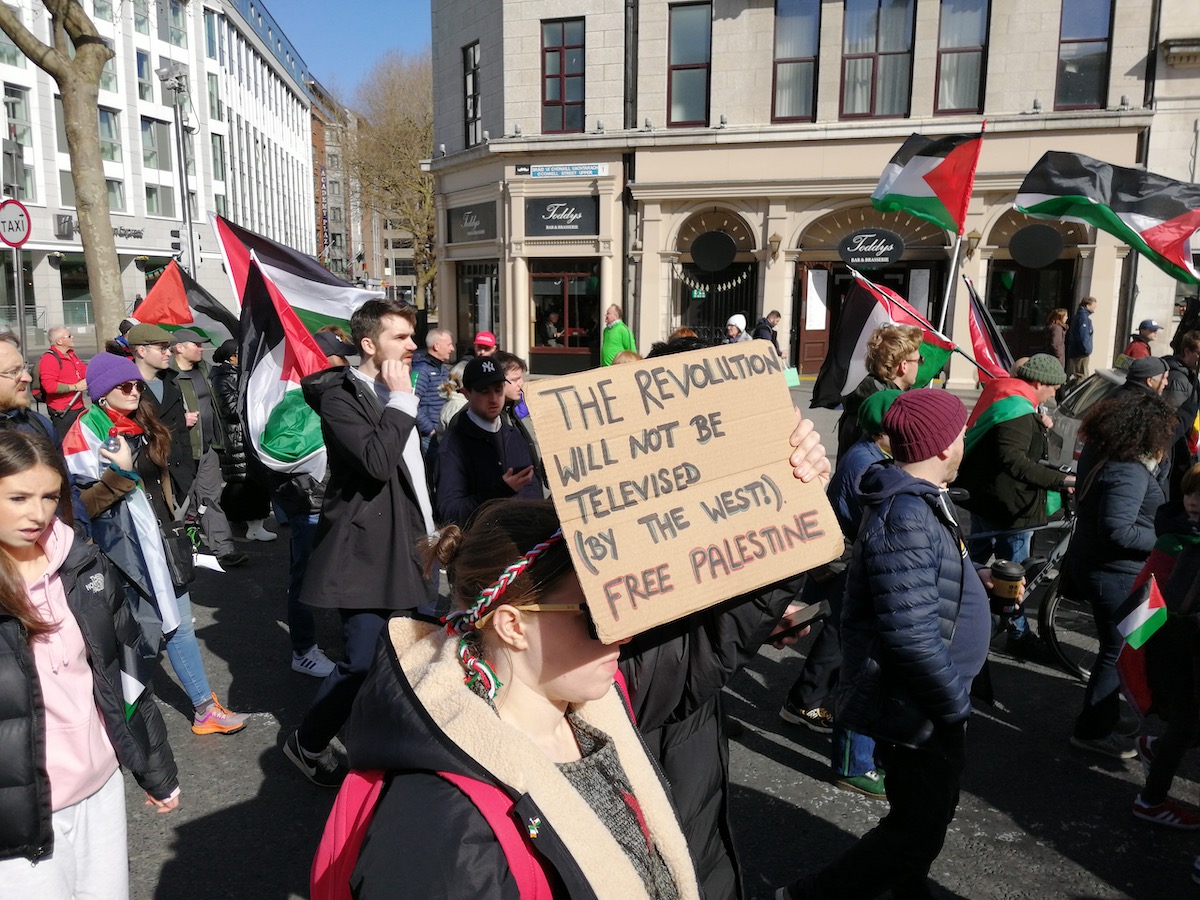
“Nakba never ended” placard seen in this section of the march in O’Connell Street (Photo: D.Breatnach)

MARCH AND ZIONIST PROVOCATION

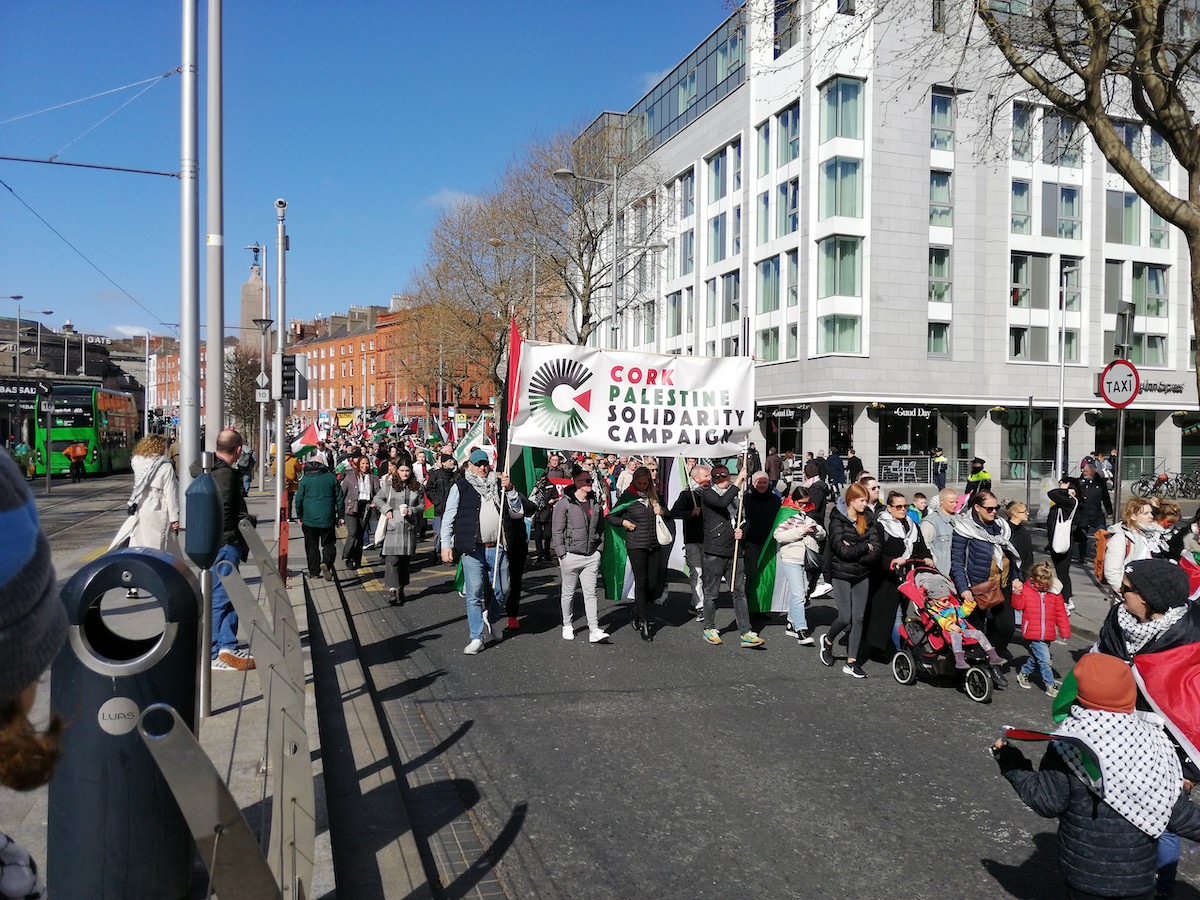
The march began as has become customary at the Garden of Remembrance2 in the north side of the capital city from where it eventually began to make its way down through the city’s main street, its end taking nearly half an hour to pass through and to cross the river to the south side.

From there, chanting slogans that have since become well-known in solidarity of the Palestinians and their right to self-determination, in outrage at the actions of the zionist state and its imperialist supporters, the marchers made their way to rally outside the Department of Foreign Affairs.

(Photo: D.Breatnach)

Here many listened to speeches and performances but significant numbers shortly peeled away to make their ways back home or to relax in the city’s cafes and restaurants (after all, what were they going to hear that they had not heard and read before?).

Irish Republican organisations were not noticeably present, even those few that had been visibly present on recent demonstrations; difficult to guess at the reason, even with preparations for 1916 commemorations no doubt being undergone for next weekend and afterwards.

As usual on large demonstrations, the marchers had not experienced the insults and bizarre shouts of “Traitors!”3 by far-Rightists and racists to which smaller solidarity pickets are often subjected but, as part of the march neared Cuffe Street, a man with a large Israeli flag passed them.

From near me shouts of “Zionist! Baby-killers!” arose but he passed. Later he was seen being escorted by a Garda from the rally with his Zionist flag but also a Palestinian flag which people speculated he had taken from a demonstrator.4 Some more Gardaí gathered around the Zionist.

Shortly thereafter, he was permitted/ encouraged to leave the area with at least his flag pole5. Many commented that the outcome would have been very different if it had been a case of a Palestinian supporter provoking a Zionist rally and, indeed, I have witnessed such some years ago.

(Photo: D.Breatnach)

When I lived in London I regularly saw Zionists provoking Palestinian supporters and dancing Israeli dances near them. Whenever outraged demonstrators drew near to challenge them, the Palestine supporters were attacked by the London Metropolitan Police.

At a parallel Palestine solidarity march on Saturday in London, a small group of Zionists waved Israeli and Union Jack flags but were soon swamped by Palestinian and Irish – yes Irish! – flags. In London at least there have been Irish flags on every Palestinian solidarity march since October 8th.

(Photo: D.Breatnach)

TRADE UNIONS

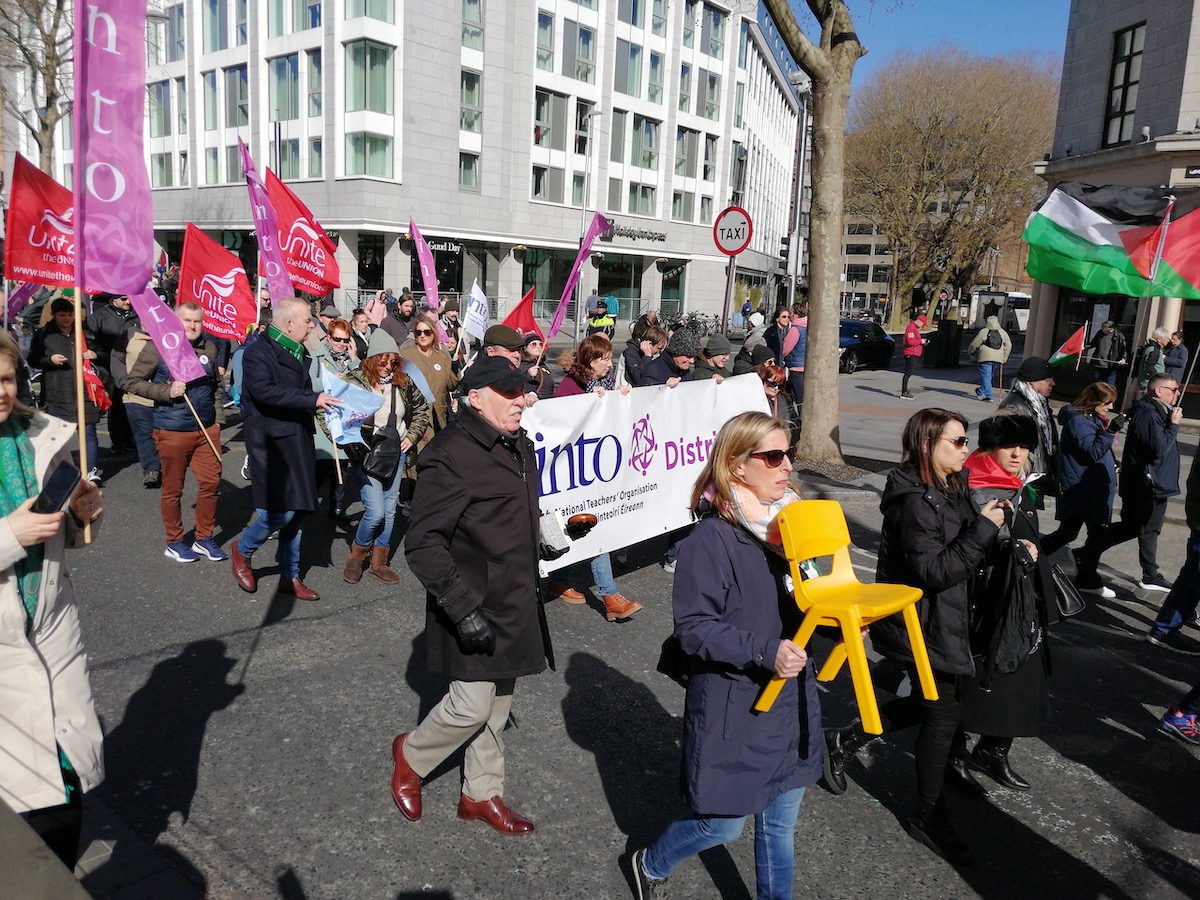
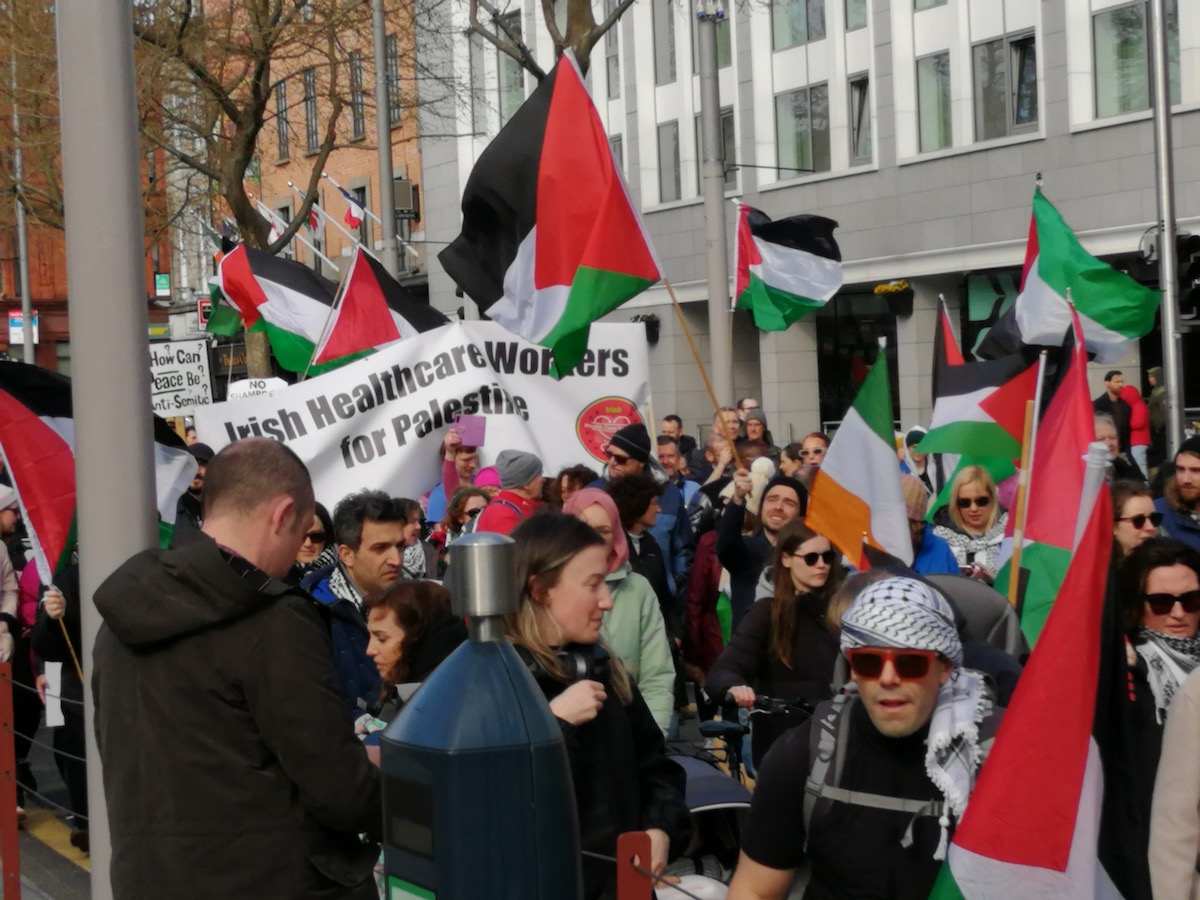
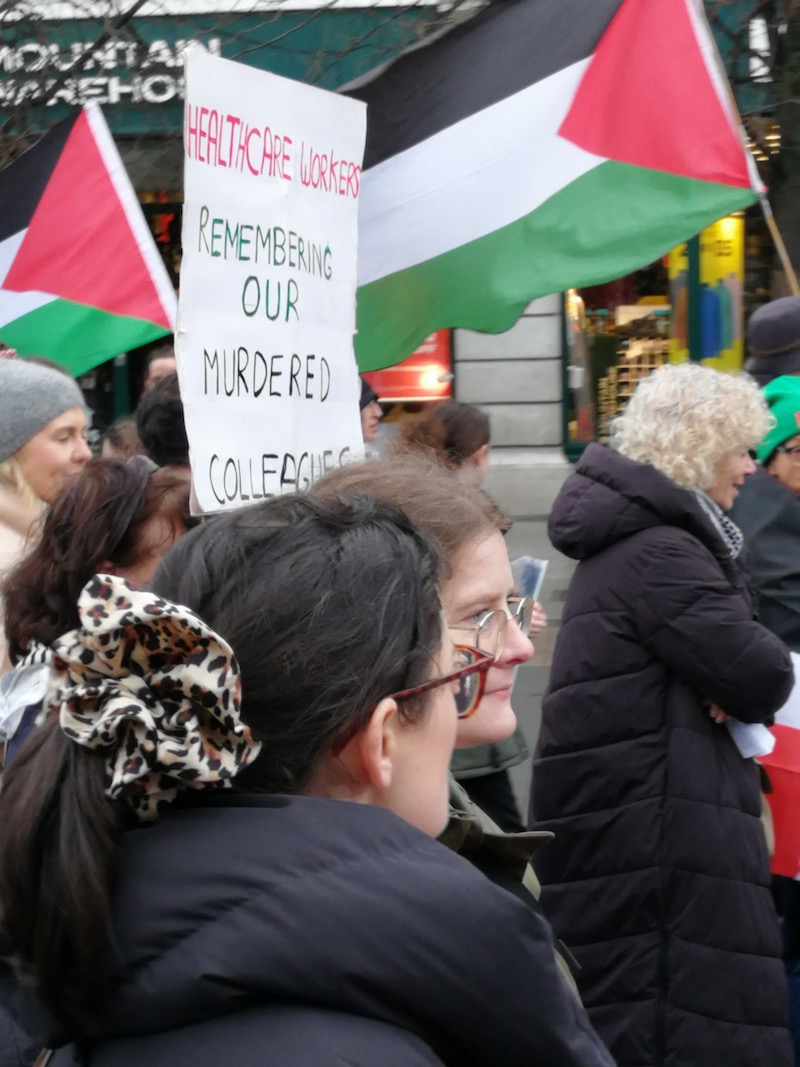
Banners and flags of Irish-based trade unions were well-represented on the march but with at most a couple of dozen marching behind them. Specific worker groups such as “Health Workers for Palestine” replied to my enquiry that they had organised the group without support from their unions.

Banners of INTO, the largest teaching union in Ireland (primary level in the state and primary and post levels in the colony) precedes some flags of the UNITE union. (Photo: D.Breatnach)
(Photo: D.Breatnach)

Where are the militant actions by the trade union brothers and sisters of murdered Palestinian medical staff including paramedics, journalists (for which job Palestine is the most dangerous place in the world), food distribution workers, poets and writers?

It is well past the time when it was sufficient for Irish trade unions to bring banners and flags on to the street every couple of weeks with a dozen members or so marching behind them. In October they should have been leading their members to the marches in at least their hundreds.

By November last year at least, the trade unions should have been planning actions to take in physical solidarity, moving beyond marches and pickets to sit-downs and other kinds of solidarity action. How do Israeli goods come into Ireland and how are they sold?

(Photo: D.Breatnach)

Clearly they are handled and administered by workers and some of those at least6 are unionised. Union-backed boycott actions would put pressure not only on the Israeli economy but also on other companies colluding with them, as with the supermarkets who stock their products.

Pressure on the latter would translate into pressure not only on the Israeli state but on the political management of the economic bases of states and also on the political management of the countries where they are operating, for example in Ireland.

Who knows, the unions might even boost their recruitment with such action, in a country where once most would not dream of crossing a picket line but where now many youth do not even comprehend the nature or purpose of a trade union.

(Photo: D.Breatnach)

REPRESSION

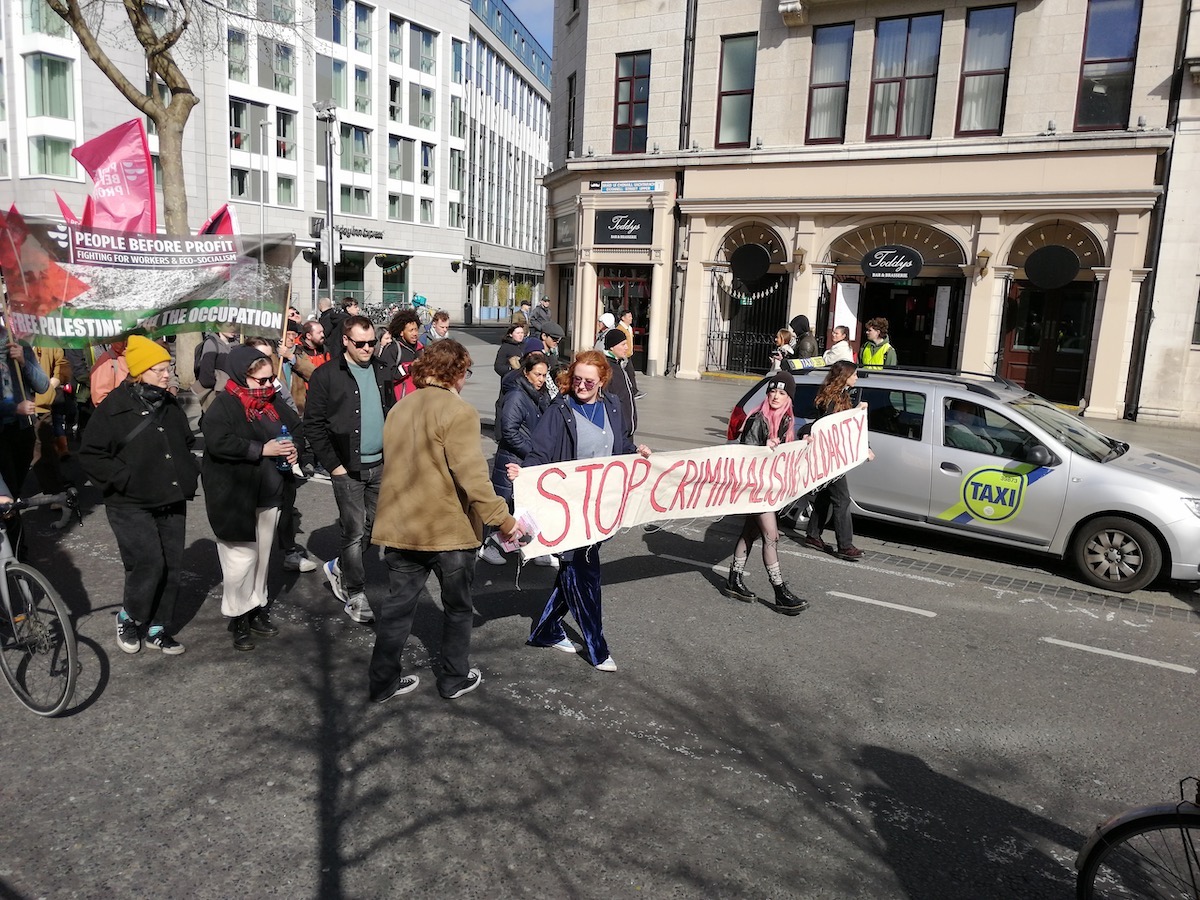
Meanwhile, those who ARE taking action in solidarity with Palestine are experiencing repression, not yet to the extent that is occurring in the French and German states, but repression nevertheless. Some marchers on Saturday carried a banner protesting the criminalisation of solidarity.

(Photo: D.Breatnach)

In recent months a number of people have experienced dawn house raids by the police, in addition to arrests in the course of demonstrations or pickets. Defence of people victimised for solidarity actions has always been an important part of solidarity movements.

Most of the political parties nor the IPSC will be organising or even calling for such defence and it is up to the ordinary people in the solidarity movement to mobilise to attend and protest the court cases and attend pickets in solidarity with victimised activists.

(Photo: D.Breatnach)

In the months ahead, those victimised up to now and quite possibly more still will be attending court on separate dates as their cases are scheduled to be heard. It is also important as a general principle that activists refuse to agree to refrain from solidarity actions as a condition of bail.

A number of Palestine solidarity activists recently had a private meeting with officials of the Irish Council for Civil Liberties and the organisation also held a recent day of sessions and workshops on civil rights for protesters.

Campaigning organisation for housing and against evictions (Photo: D.Breatnach)

SHAMEFUL SHAMROCKS

Saturday’s march took place a week after St. Patrick’s Day when to the disgust of many people in Ireland, representatives of the Irish Government and even of a number of Opposition political parties attended in Washington to celebrate the day with President Biden and others.

As a result, no doubt, the presence of the Sinn Féin party on the march was small and muted and the flags of the Social Democrats absent, a party recently prominent in pressure on the Irish Government to join the ICJ case against the Israeli State and even to expel their Ambassador.

One supposes that those who are in a queue to manage the Gombeen state have to show their fitness for doing so by bowing before the leader of western imperialism; whatever their private feelings may be, they need to show that they have the stomach to do what the system requires of its servants.

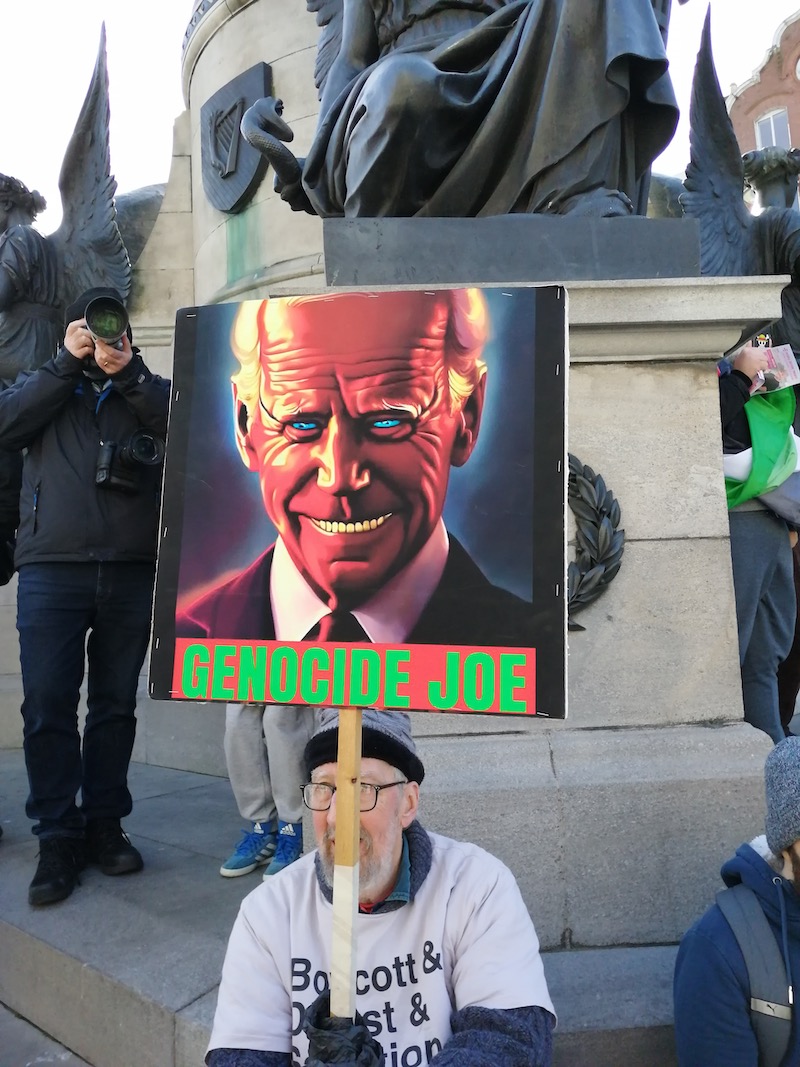
“No shamrocks for Genocide Joe” placard in this section of the march (Photo: D.Breatnach)

LESS SLOGANS and LESS IRISH?

It seemed to me that there were in general less slogans being chanted on this demonstration and that that their range was less than usual. Possibly this reflects a feeling that the demonstrations are becoming more routine and less capable of stirring emotion.

Possibly too, the sheer daily weight of zionist atrocities is oppressing people and wearing down their capacity for outrage. In either case it would seem that in addition to giant demonstrations, other actions are needed to release the latent emotional energy of the people.

(Photo: D.Breatnach)

On this demonstration there was much less Irish language seen in placards, flags or banners than has been the case recently and which had been growing over the months, as I’ve been commenting upon in previous reports. This is regrettable and hopefully will be remedied.

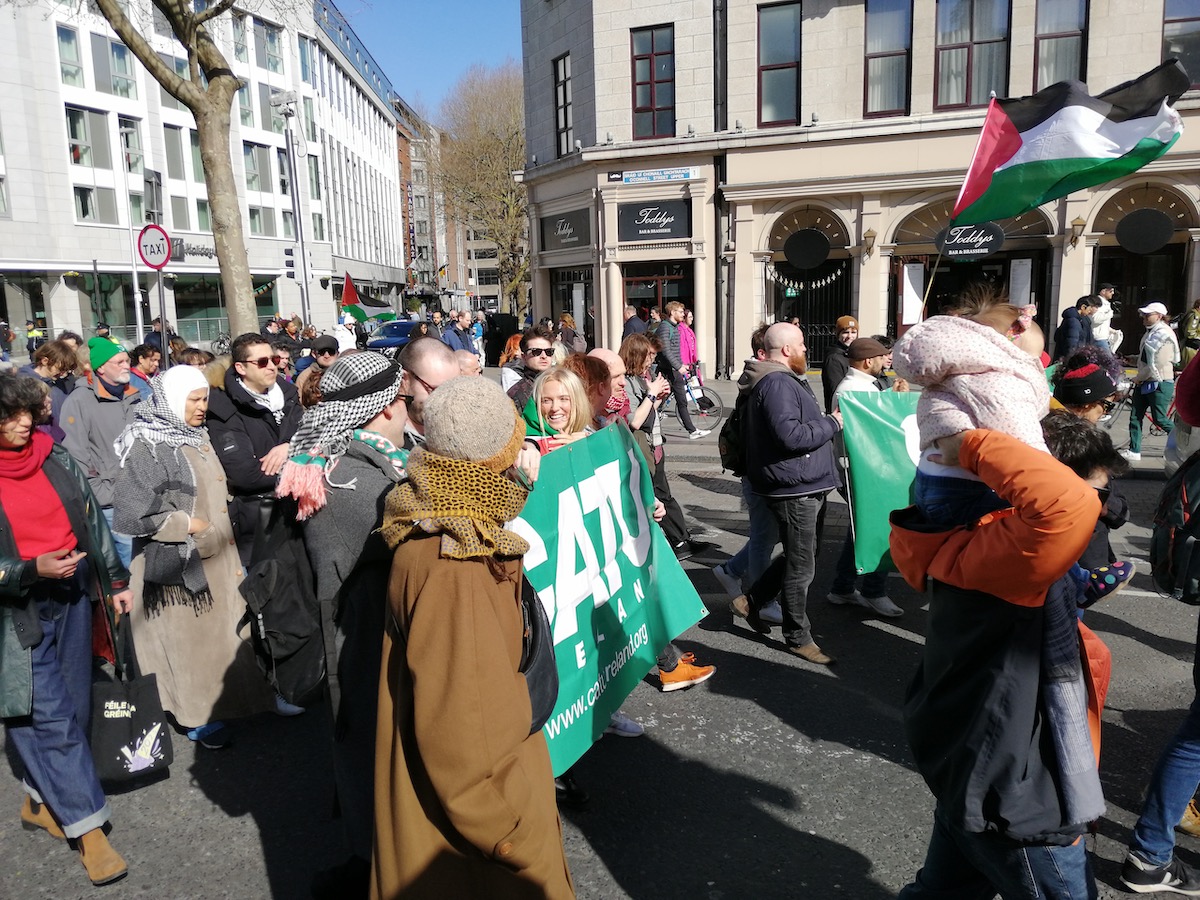
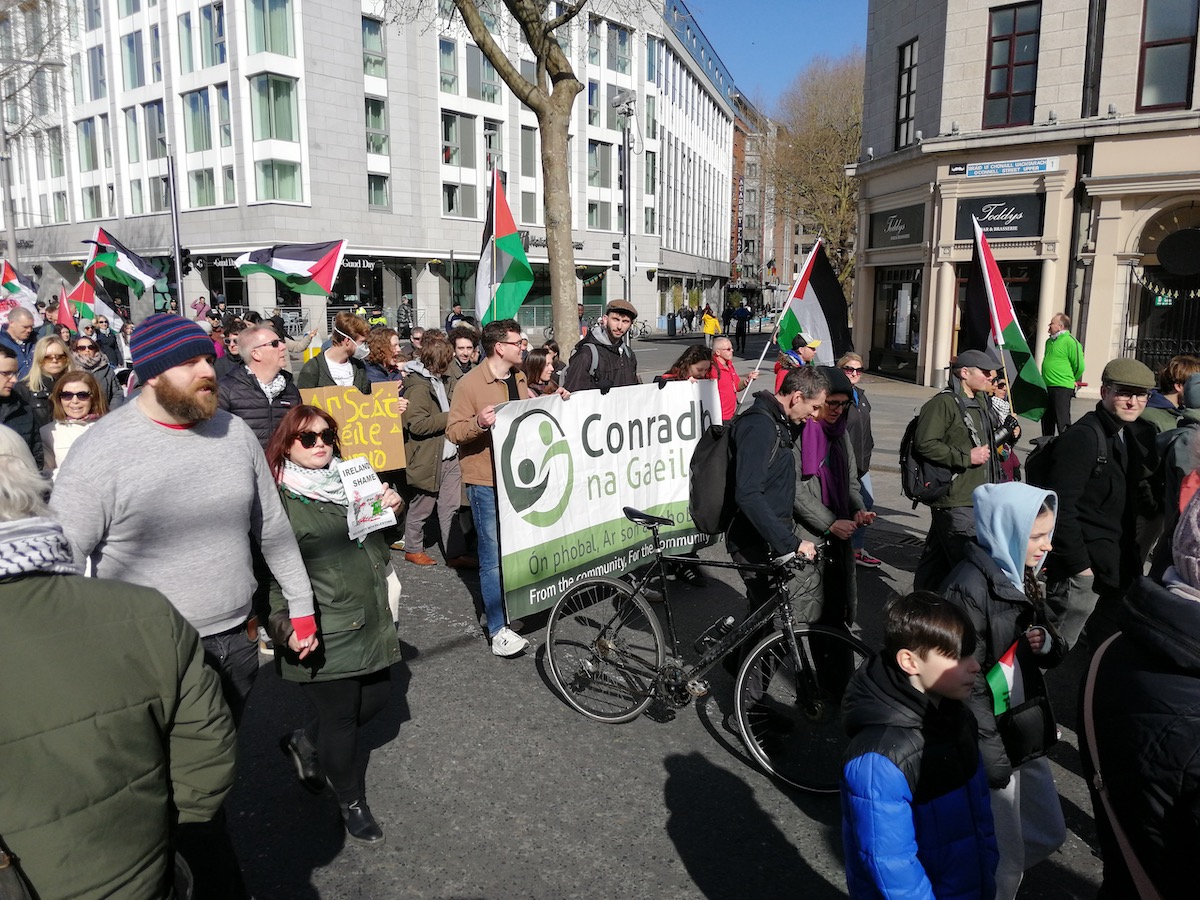
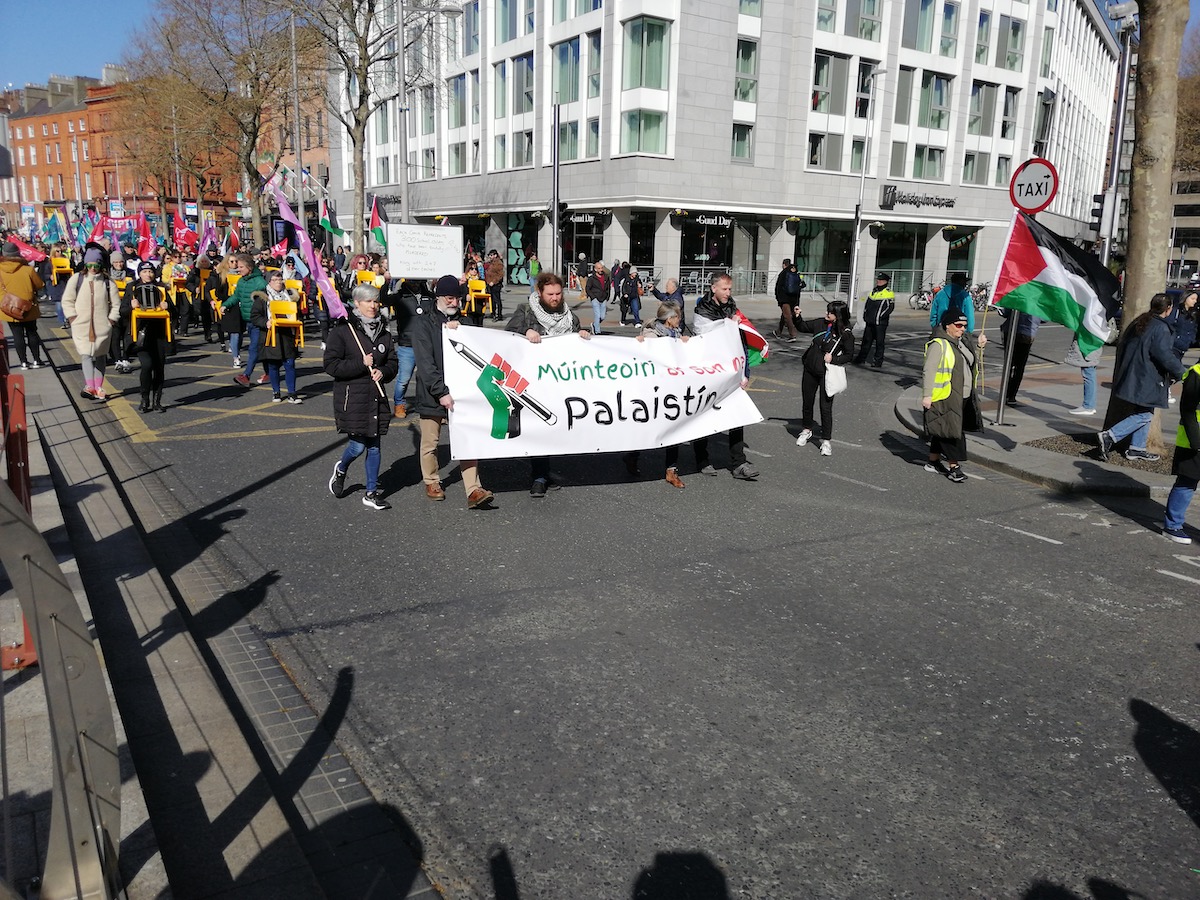
The Irish language NGO Connradh na Gaeilge had a group and banner on the march as has been the case for months, shouting among other slogans “Saoirse don Phalaistín!” A small group also had a banner in Irish declaring that they were Múinteoirí (teachers) ar son na Palestíne.

(Photo: D.Breatnach)

ART AGAINST GENOCIDE

(Photo: D.Breatnach)

The lines of baby romper suits or baby-grows made their appearance on the march again as did the bloody butcher image of Prime Minister Netanyahu, with a diabolical Biden on the reverse of the placard. A large ‘puppet’ of Biden with bloody hands was carried riding above the march.

Tail end of Mothers Against Genocide followed by puppet of bloody-hands US President Joe Biden (Photo: D.Breatnach)
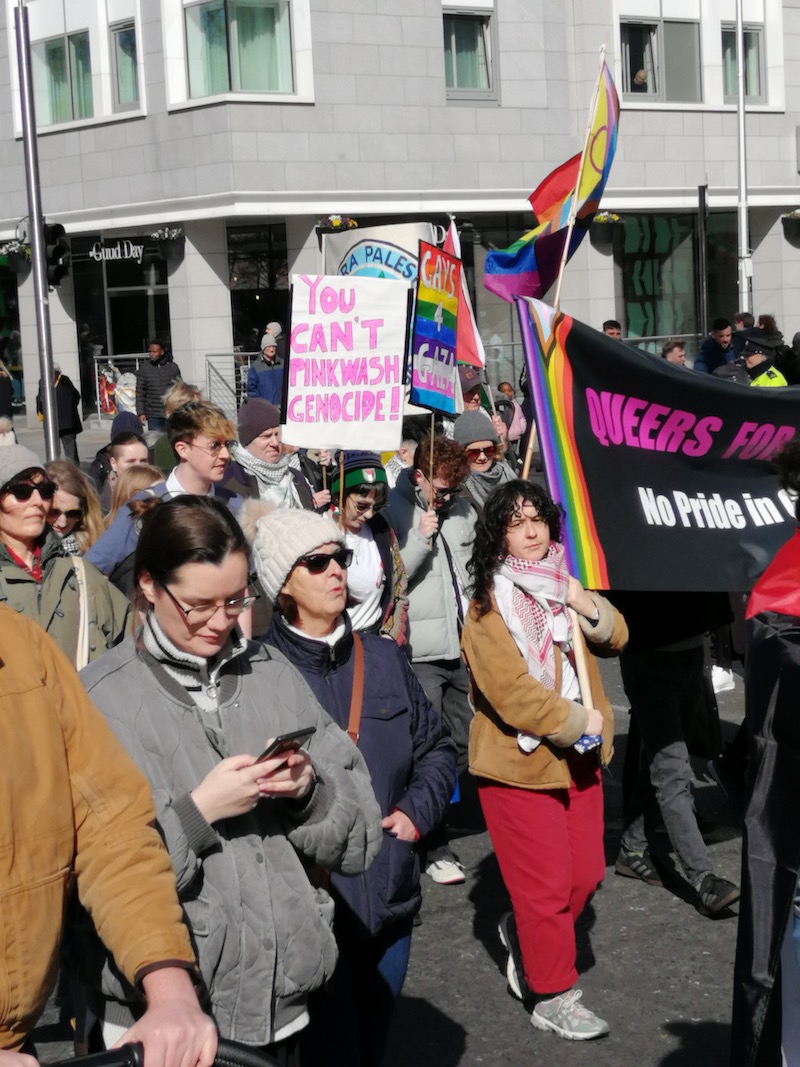
LGBT section denounces Israeli state’s attempt to paint itself as liberal through decriminalising the LGBT community (Photo: D.Breatnach)

The A2-size beautiful coloured image of Palestinian resistance solidarity was seen again but however overall the variety and ingenuity of home-made placards seen previously had diminished.

The Mothers Against Genocide group carried their white bundles depicting the slaughter of Palestinian children and sang sentences in Arabic and Irish from Róisín Elsafty and Sharon Shannon’s song “An Phalaistín”, effectively interspersed with slogans.

(Photo: D.Breatnach)

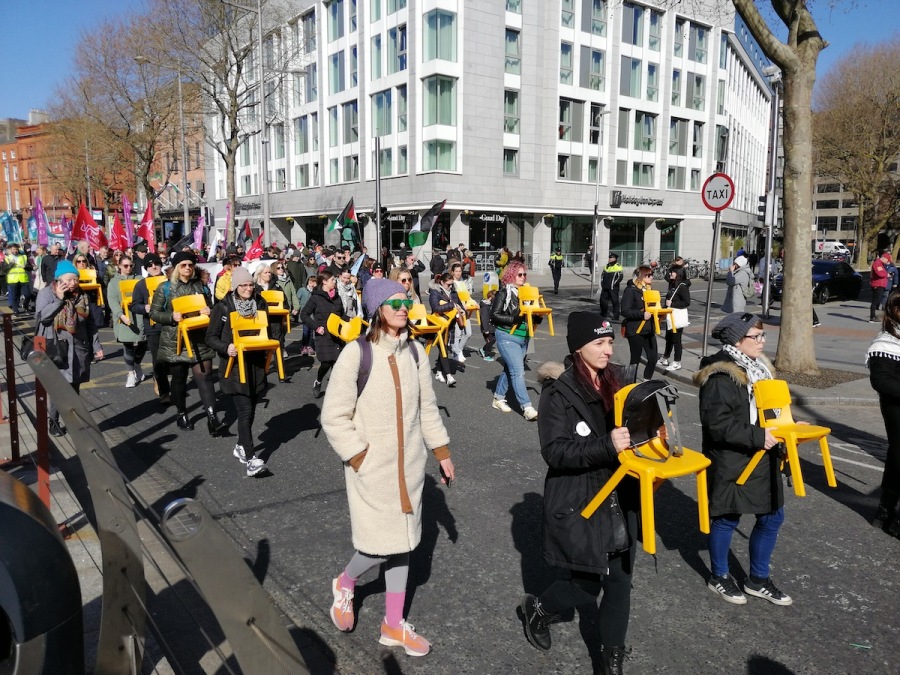
The sight that brought a hush over all witnessing it was the section carrying many yellow infant school chairs, a grim reminder of the huge daily ongoing Zionist genocide inflicted on the Palestinian children in Gaza.

End.

FOOTNOTES

1Mohammed Al-Fayed, Ahmed Barakat, Mahmoud Al-Fayeed (Resistance News Network on Telegram, 20/3/’24)

2Originally dedicated to those who fought for Irish freedom since the first Republican uprising in 1798 it has since been recognised as commemorating all those who gave their lives in the nation’s struggle for self-determination (though certainly officialdom would disagree with honouring those who fought that struggle since the founding of the current Irish state in 1921).

3These elements claim it is ‘treason’ for Irish people to support any other struggle than the Irish national one, which they conceive of as attacking immigrants and LBGT people. Their concept of “national struggle” has never included struggling against foreign occupation, supporting Republican prisoners, opposing multinationals’ exploitation of national resources and infrastructure or fighting for universal affordable housing.

4He might also have carried it concealed all along, with the intention of destroying it in front of the marchers; how it came into his possession is unknown to me at this point. He may have departed carrying both flags in his coat etc.

5It did not seem from a distance that the Gardaí had confiscated his Israeli flag but more likely he had been told to remove it from the pole while leaving the area.

6Despite the huge drop in the percentage of unionised workers in Ireland over recent decades.

SOME SOURCES

Latest statistics on zionist genocide: https://www.aa.com.tr/en/middle-east/-palestinians-killed-by-israel-in-gaza-since-last-oct-7-near-32-000/3169468

PA Security fired on funeral of Jenin martyrs: Resistance News Network on Telegram (20/3/’24)

Al Shifa Hospital massacre: https://www.aljazeera.com/news/2024/3/20/israeli-military-says-90-people-killed-in-gazas-al-shifa-hospital-raid

https://reliefweb.int/report/occupied-palestinian-territory/international-community-must-act-immediately-stop-israeli-armys-massacre-palestinians-al-shifa-hospital-enar

https://www.breakingnews.ie/israel-hamas/fleeing-palestinians-describe-israeli-raid-on-gaza-strip-hospital-1605671.html

The Influence of the Working Class on the 1916 Rising

Diarmuid Breatnach

(Reading time: 9 mins.)

The 1916 Rising is usually seen as a nationalist Rising of Irish Republicans with perhaps some socialist involvement. Even Connolly is often portrayed as a patriot only (see the song James Connolly the Irish Rebel) with socialist views.

Of the six organisations that participated actively in the 1916 Rising1 only one of them was specifically of the Irish working class. Perhaps that’s why the great influence of the working class on the Rising tends to be generally overlooked.

As is well-known, James Connolly is one of the Seven Signatories2 of that wonderful and progressive document, the 1916 Proclamation of Independence. However, Connolly only became part of the planning committee for the Rising a very short time before the scheduled date.3

That is true but we should ask ourselves why they included him at all. The Irish Volunteers had a nationwide organisation with the also nationwide Cumann na mBan as auxiliaries, whereas Connolly could perhaps mobilise a couple of hundred fighters.

(Photo sourced: Internet)

It is said he was brought on board because the IRB believed that his constant demand for a Rising during WWI and the military exercises of the Irish Citizen Army indicated that Connolly was likely to lead the ICA to rise on their own and would spoil their schedule.

How likely was he to do that? It’s true that as a socialist Connolly was horrified by the slaughter of war, where workers of one state are sent to kill and be killed by workers4 of another and perusal of his writings do show that he thought an uprising to sabotage war was desperately needed.

Would he have gone ahead alone with the roughly 250 men and women of the Irish Citizen Army, hoping perhaps to inspire a popular upsurge and to encourage the Irish Volunteers to join it, in spite of even their leaders?5 It’s hard to believe so but of course it’s possible.

However, from the moment the Republican planners of the Rising took Connolly on board, we can see a significant organisational shift towards the working class in Dublin and nowhere more so than around Liberty Hall, where the first flag for an uprising was hoisted and the Proclamation printed.

Liberty Hall was of course the headquarters of the Irish Transport & General Workers’ union,of which James Connolly was the leader at that time and also editor of its newspaper,The Irish Worker.

And for a person brought in to the planning so recently, how extraordinary that Connolly was given the rank of Commandant General! A responsibility he took seriously, sending couriers around the country and attempting to direct defence preparations around the various Dublin garrisons.

The first battle flag of the Rising

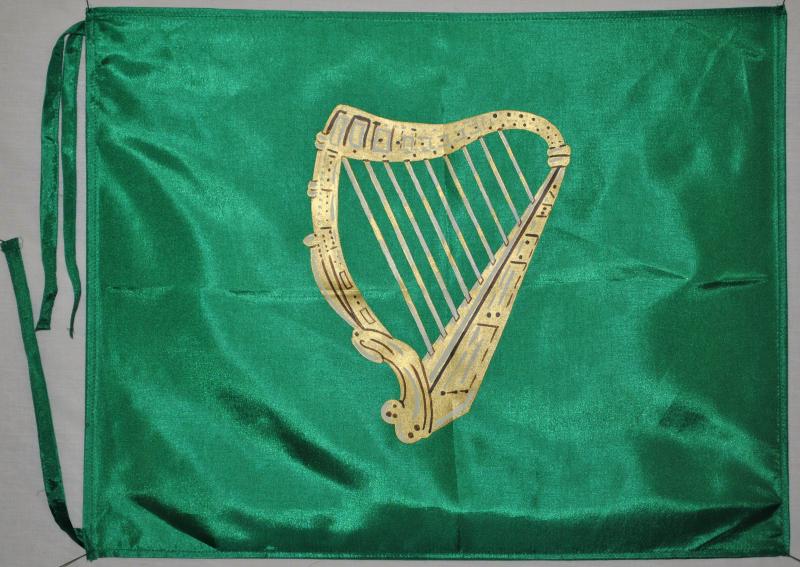
A week before the Rising Connolly and the Irish Citizen Army had an Irish Republican flag raised above Liberty Hall as a flag of war and the one chosen to do the raising was a girl of 16 years, Molly O’Reilly.6

The associated circumstances are worth retelling, if only to illustrate the difference between the Liberty Hall of then and today. Adults took classes in Irish language and cultural activities there while their children and those of union activists waited for their parents, took dancing classes or played.

In playing, Molly O’Reilly accidentally broke a window and in terror and shame, ran home.

When Connolly sent a message to her home that he wanted to see her, she went to Liberty Hall expecting a severe telling off. Instead he told her not to worry and what he was asking of her. She was proud to do it but so small she had to stand on a chair to pull the cord raising the flag.

Remnant of the flag raised on Liberty Hall (Image sourced: National Museum)
Commemoration ceremony “Women of 1916” with relatives of Molly O’Reilly in place of honour (note the uniforms are of Irish Volunteers rather than Irish Citizen Army).(Photo: D.Breatnach)

Of course we know that flag was not of the revolutionary workers but instead the harp on green which was that of the early Fenians and was very similar to that of the United Irishmen, the first revolutionary Irish Republican organisation.7

Those early Fenians were mostly composed of working class members and their 1867 proclamation to the world was largely proletarian in outlook. In Britain, the Fenians formed part of the First International Workingmen’s Association which was led by Marx and Engels.

Their flag was flown over at least one of the 1916 Rising garrisons, I believe at theJameson Distillery in Marrowbone Lane.

Similar flag to that hoisted over Liberty Hall (Photo sourced: Internet)

The other flags of the Rising included the Tricolour, presented to the Irish Republicans of the ‘Young Irelanders’ by women in revolutionary Paris in 1848, which was one of two flown on the roof of the GPO, the headquarters of the Rising.

Sharing the GPO roof with the Tricolour was the flag made only days before from domestic material and painted with the words “Irish Republic” in the house of Constance Markievicz, an officer in the Irish Citizen Army, shortly before the Rising.

The Irish Citizen Army’s own flag, the Starry Plough, flew over the Clery’s building facing the GPO. Sadly today most Irish people do not know that flag, though awareness of it and its background is growing among the indigenous Irish and the migrant community.

The design of the Starry Plough, flag of the ICA as it was in 1916 (Image sourced: Internet)

The first workers’ army in the world8

The Irish Citizen Army was formed as a workers’ militia during the great Lockout and strike of 1913-1914, to defend against the attacks of the police, the physical repressive front line of the capitalist class; the ICA’s flag was placed above Murphy’s Imperial Hotel in Clery’s.9

The Irish Citizen Army on exercises at their grounds near what is Fairview today (Photo sourced: Internet)

Though its constitution was more nationalist than socialist, the ICA was in its membership and purpose the first workers’ army in the world and when reorganised a few years later, represented also working class feminism, recruiting women, some of whom were officers commanding men.

Once the preparations for the Rising were in tatters with MacNeil’s countermanding order, where did organisers gather to discuss what to do? In Liberty Hall, the building of the Irish Transport and General Workers Union and it was there that the decision to rise on Monday instead was taken.

It is hard to overstate the importance of the fact that the decision to go ahead with insurrection was taken in the building which had become de facto the HQ of the revolutionary working class in Dublin, with an illegal flag of rebellion flying and where the Proclamation was to be printed.

The writing and text of the Proclamation

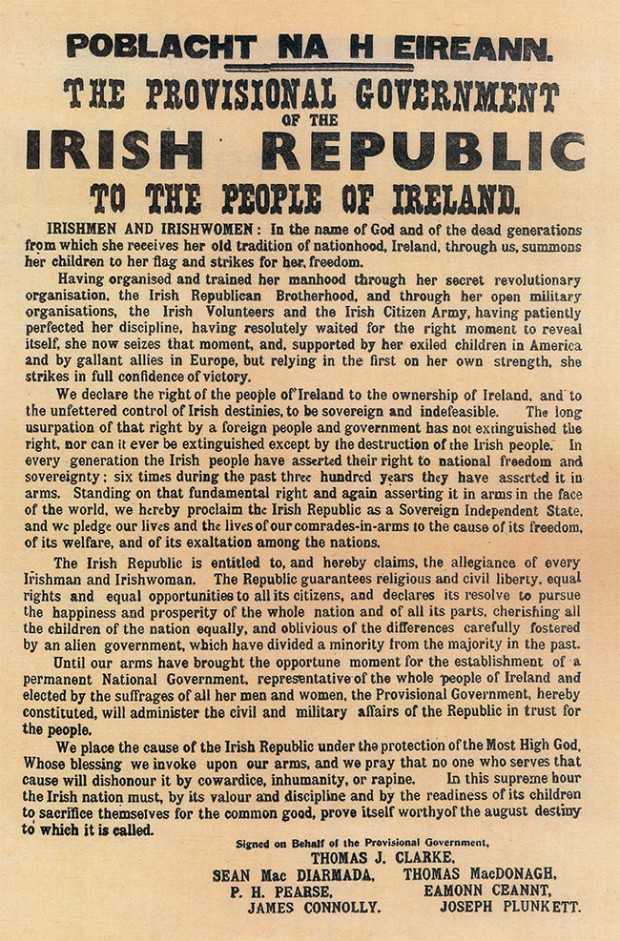
The wording of the Proclamation is thought largely composed by Pearse but influenced by Connolly, including its address to “Irish men and Irish women” and perhapsWe declare the right of the people of Ireland to the ownership of Ireland, and to the unfettered control of Irish destinies”.

Another section which could bear Connolly’s fingerprint reads: The Republic guarantees religious and civil liberty, equal rights and equal opportunities to all its citizens, and declares its resolve to pursue the happiness and prosperity of the whole nation and of all its parts, cherishing all the children of the nation equally.

(Image sourced: Internet)

But, whoever composed or influenced the Proclamation text, it was printed in Liberty Hall. An Irish Citizen Army member went to Stafford Street (Wolfe Tone St. today) to borrow the print type from a printer there to bring back to Liberty Hall, which was under daily 24-hour armed guard.

Having printed the Proclamation in Liberty Hall under armed guard and having decided there to rise on Easter Monday, where did the assault groups for Stephens Green, Castle and the GPO, including the Headquarters Battalion, meet on the morning of the Rising? …. Again, at Liberty Hall.

An early non-combatant casualty of the Rising was Ernest Kavanagh,10 who drew cartoons for the newspaper of the ITGWU, The Irish Worker. For some reason he went to Liberty Hall on Tuesday and was shot dead on the steps of the union building, presumably by a British Army sniper.

The working class in armed resistance

Once the Rising was in motion, the Irish Citizen Army had primary responsibility for two areas, the Stephens Green/ College of Surgeons garrison and the Dublin Castle/ City Hall garrison but also fought in other areas, for example on Annesley Bridge and in the GPO/ Moore Street area.

All who fought alongside them commented on their courage and discipline. After the surrender, many, along with Irish Volunteers were sentenced to death, most being commuted to life imprisonment. But two leaders of the Irish Citizen Army were shot by firing squad.

One of the areas from which the British forces were sniped at for days after the Rising was the docks area, then predominantly surrounded by working class residential areas.

A question we should ask ourselves is why the forces coming from Britain to suppress the Rising landed at Dún Laoghaire, from where they had to march nearly 12 km (approaching eight miles) to Dublin city centre, instead of at the excellent Dublin docks on the Liffey.

Hugo McGuinness, who specialises in history of the North Wall area, believes that the British expected Dublin to be in the hands of the working class resistance and that it was simply too dangerous to land British troops there, though gunboats could fire from the Liffey.

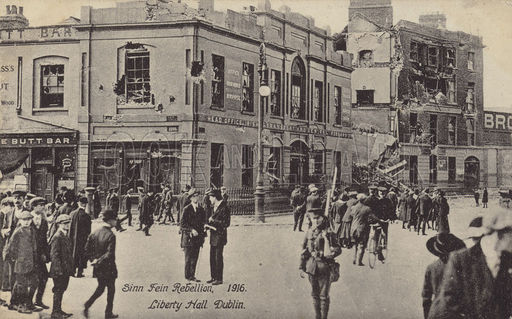
Certainly, the British believed Liberty Hall and buildings along Eden Quay were occupied as fighting posts by the Irish Citizen Army and they fired artillery at the union building from Tara Street, as photos of shell holes in that building and right through to the next testify.

Photo shell-damage Liberty Hall (first building with corner towards the camera, viewed northwards from Butt Bridge) as one of a set of commemorative postcards. (Photo sourced: Internet)
Another postcard with closeup of shelling damage to Liberty Hall and to the building next to it. Interestingly, in this one Liberty Hall is labeled “the Rebel Headquarters”. (Photo sourced: Internet)

Much is made in some historical accounts of the opposition to the Rising from sections of the Dublin population, during and immediately after the Rising. The city was the capital of a British colony, only just over a century earlier spoken of as “the second city of the British Empire”.

A substantial proportion of the wealthy and middle classes were Loyalist, including some Catholics; even ‘nationalist’ sections were committed to supporting the UK in WWI and John Redmond, leader of the ‘nationalist’ political party had openly recruited for the British Army.

Also, among the working class and the lumpen elements, many were depending on “Separation Allowances” with regard to males serving in the British Army. It is true that the insurgents in some places had to threaten, club or even shoot some civilians who tried to obstruct the Rising.11

These incidents during the Rising were not many but afterwards there were insults and other things thrown at prisoners being marched to imprisonment (or firing squad). The city was under martial law but even so a Canadian journalist reported the insurgents being cheered in working class areas.

There were also other individual witness accounts, such as a man on a tram saluting prisoners in Parnell Street until threatened by soldier escorts and a firefighter in the GPO doing likewise. A year later most of even the earlier hostility had changed to admiration and pride in the fighters.

Leadership of the working class

James Connolly wrote and said many things of importance but surely, with regard to the struggle for Irish national independence, the greatest of these was: “Only the Irish working class remains as the incorruptible inheritors of the fight for freedom in Ireland.”

By that he meant — and I agree — that all other social classes can gain something from selling out the interests and resources of Irish nationhood but that the working class can gain nothing from that.

The Irish working class staked their claim on the struggle for Irish independence in 1916 but have not succeeded in leading it and because of that, that struggle remains to be won.

Today and in other days, remembering that long struggle and the class whose leadership revolutionary socialists seek to represent and to uphold, we declare the need for that leadership over a broad front of all others who wish to struggle to advance.

In doing so, we declare that far from the working class having to wait for socialism, in the course of national struggle it must also shape its own demands around the economy, natural resources, infrastructure, social services, social questions, culture and, above all, to the fruits of its labour.

End.

FOOTNOTES

1Irish Republican Brotherhood, Irish Volunteers, Irish Citizen Army, Cumann na mBan, Na Fianna Éireann, Hibernian Rifles.

2All of which were executed by British firing squad, along with another seven in Dublin and yet another in Cork. The 16th execution was by hanging in London.

3(See Sources: Cooption of James Connolly etc) Connolly was a lifelong socialist and a revolutionary throughout his adult life, author, historian, journalist, song-writer, trade union organiser; active politically in Scotland, Ireland, New York and back in Ireland.

4The international socialist movement viewed the imperialists’ movement towards war with horror and in international conferences vowed to oppose it with all their might, including turning war resistance into revolution (“War against war”). However, once imperialist war was declared that resolve collapsed in most states, Russia, Germany and Ireland being notable exceptions and each saw a rising against war, in Ireland’s being the first.

5Joseph E.A. O’Connell (Jnr.) suggests a possible intention of goading of the State into attacking him and the ICA which might spark the general rising.

6(See Sources)

7The harp on the United Men’s flag was more ornate and was inscribed with the words “It is newly-strung and shall be heard”.

8https://www.connollybooks.org/product/irishcitizenarmy

9It was a good central location but more than that – the Hotel was one of the businesses of William Martin Murphy, chief organiser of the employers’ bloc to break the Irish Transport & General Workers’ Union.

10Kavanagh was a supporter of the workers, of votes for women and against participation in the imperialist war, contributing cartoons also to the Irish Citizen, Fianna and Irish Freedom publications, also to accompany poems of his sister, Maeve Cavanagh McDowell.

11I do not include in this the three members of the Dublin Metropolitan Police who were a force for the British occupation and also for the Dublin capitalists. The Irish Citizen Army in particular had good reason to settle accounts with them for attacks on them including inflicting mortal baton injuries on two workers during a charge on a union meeting on 30th September 1913 on Eden Quay and beating people and smashing up furniture in Corporation Street a little later.

SOURCES

Co-option of James Connolly to the Military Council planning the Rising: https://www.historyireland.com/connollys-kidnapping/

Raising the flag on Liberty Hall: https://microsites.museum.ie/1916objectstories/ObjectDetail/remains-of-irish-flag
Molly O’Reilly breaking a window incident: https://www.independent.ie/irish-news/ladies-day-for-1916-heroines/26528456.html

Printing of the Proclamation of Independence: https://libguides.ucc.ie/1916Proclamation
https://www.dublincity.ie/library/blog/printing-1916-proclamation-transcript

Decision taken to go ahead with the Rising on Easter Monday: https://www.irishtimes.com/culture/heritage/easter-rising-uneasy-calm-before-the-storm-1.2575638
https://www.nli.ie/1916/exhibition/en/content/risingsites/libertyhall/

“Only the Irish working class remains the incorruptible heirs …” (end second sentence from last): https://www.marxists.org/archive/connolly/1910/lih/foreword.htm

DUBLIN POLITICAL PRISONERS’ PICKET REFUTES MINISTER’S LIE

Clive Sulish

(Reading time: 2 mins.)

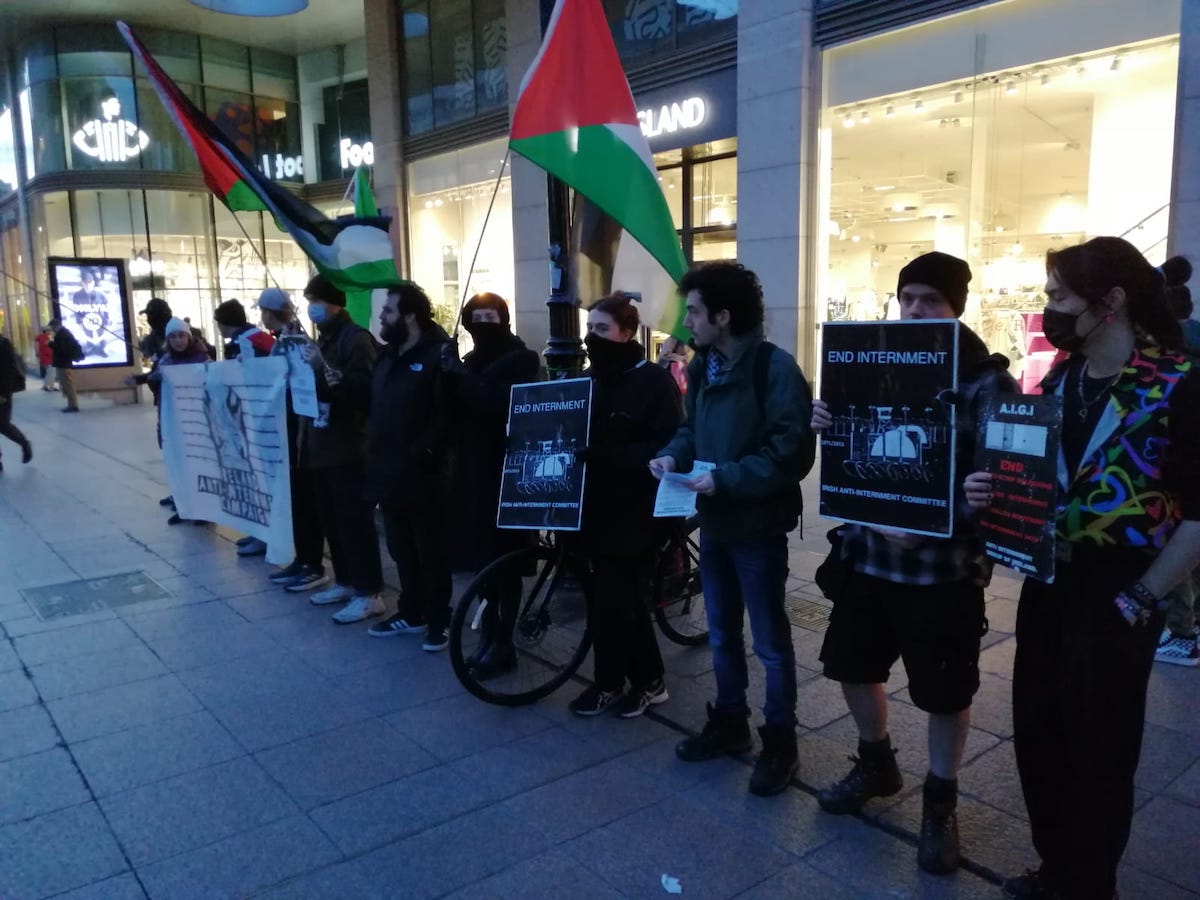
On Tuesday evening in one of Dublin city centre’s high-end shopping street picketers refuted colonial Minister for ‘Justice’ Naomi Long’s lie that “There are no political prisoners in Northern Ireland” (sic – she means the Six-County colony).

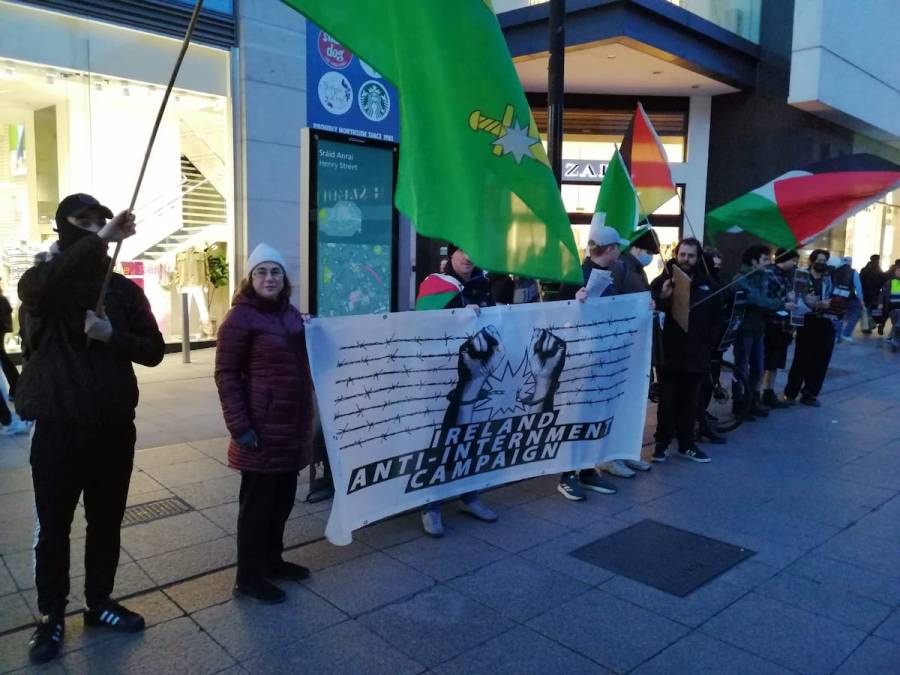
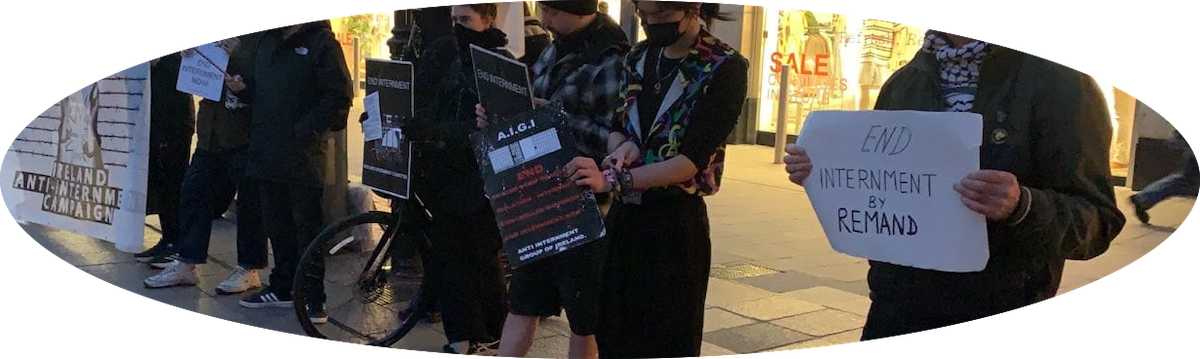
The Ireland Anti-Internment Campaign came on to the street to highlight that yes indeed, there ARE political prisoners in Ireland – over two score between both sides of the Border. And that furthermore, they are convicted in special political no-jury judicial processes.

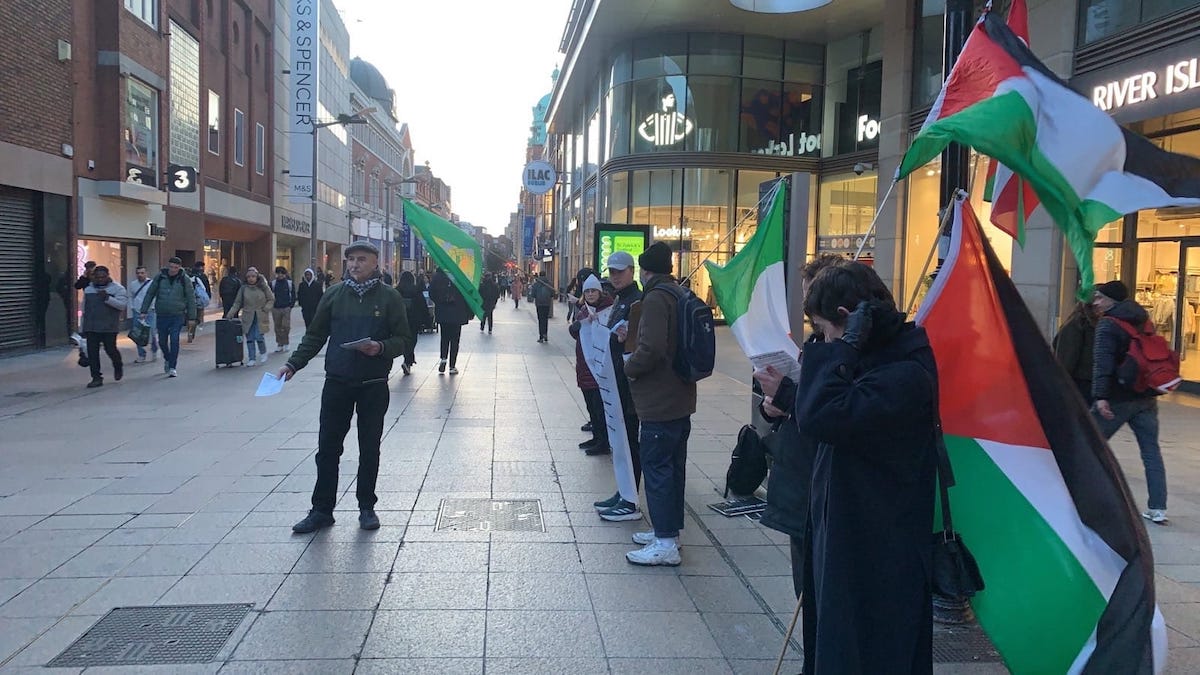
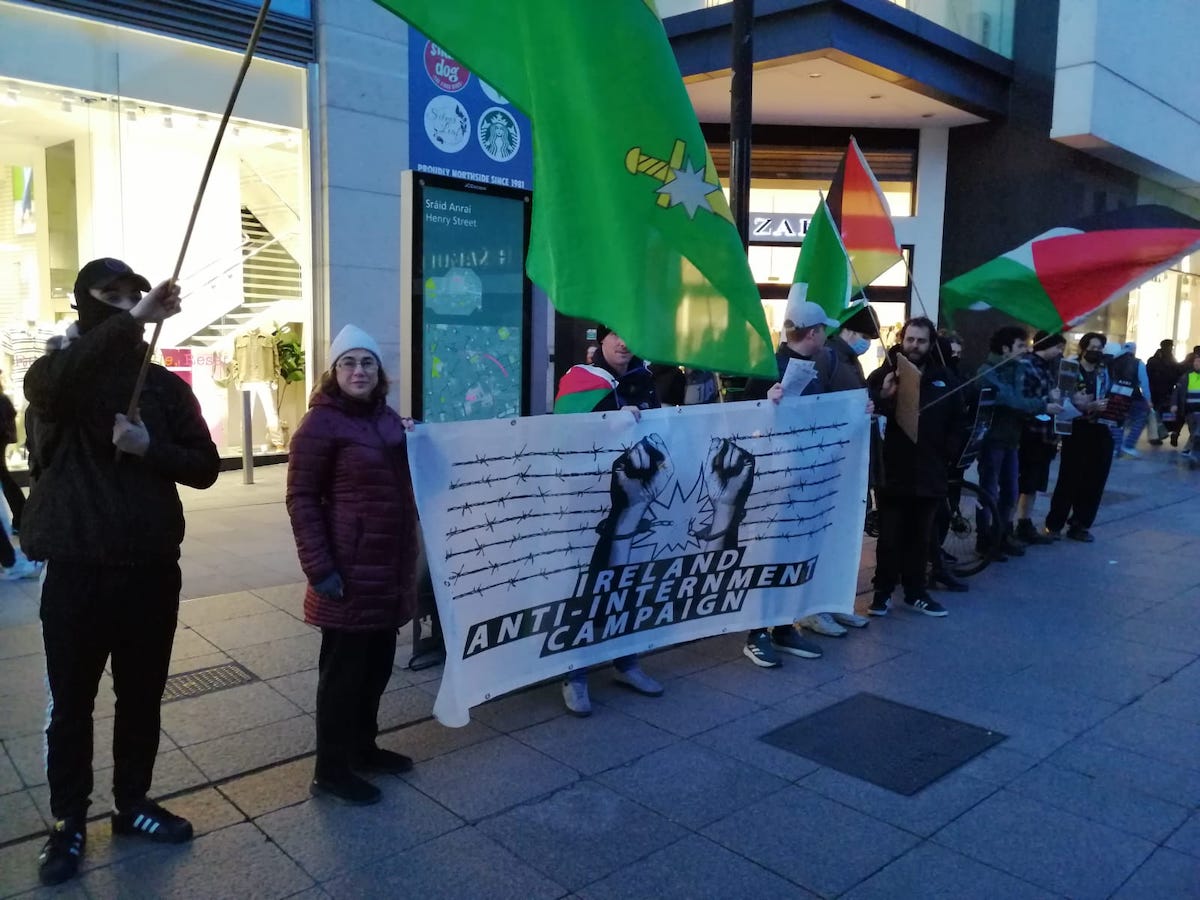
View of the picket and the IAIC banner in Henry Street on Tuesday (Photo: Rebel Breeze)

The IAIC states that these judicial processes are called the “Diplock Court” in the occupied Six Counties and the “Special Criminal Courts” in the Irish state and were “specifically created in both cases for the easy conviction and jailing of Irish Republicans.”

The SCC has been labelled “a sentencing tribunal” rather than a court of law by human rights campaigners. IAIC states that the Diplock Court is “now being administered by former Republicans while the SCCs have now, after years of opposition, been approved by those same people.”

View of placards on the IAIC banner in Henry Street on Tuesday (Photo: Rebel Breeze)

However, as accused before these courts are also regularly refused bail, IAIC points out they are also effectively administrators of internment without trial, jailing activists for around two years before judicial process. If bail is granted, it is always under severe conditions preventing political activity.

The IAIC, an independent group campaigning for ten years, was supported in their picket yesterday by Irish Republicans and Socialists including from the Anti-Imperialist Action and Saoirse Don Phalaistín groups, in addition to some independent activists.

Although Henry Street is a high-end shopping street of Dublin city centre, lots of working class people use it also.

A member distributes leaflets to passers-by near the picket in Henry Street on Tuesday (Photo: Rebel Breeze)

Over 100 leaflets were distributed and a number of people stopped to discuss the issues. Some queried the mix of flags flown (Irish Starry Plough, Palestinian and Basque) and participants explained that these represented some of the struggles where repression has taken prisoners.

“We thought it particularly important to refute the colonial Minister’s lie today,” commented a spokesperson for the IAIC “and we’re glad for the support we received on the picket line and from interested people on the street. We hope to do it more often this year.”

“Internment continues in Ireland, just on a different scale and more selectively than for example in the Six Counties in the 1980s”, continued the spokesperson.

View of the picket and the IAIC banner in Henry Street on Tuesday (Photo: Rebel Breeze)

The IAIC states that it is “an independent campaigning group run on a participative democratic basis” and that it “welcomes democratic people” on their pickets. The Facebook page https://www.facebook.com/profile.php?id=100063166633467 is their usual public outlet for notification of events and highlighting of related issues.

End.

DUBLIN PROTEST AGAINST NATO’S ACTIVITIES IN UKRAINE

Diarmuid Breatnach

(Reading time: 4 mins.)

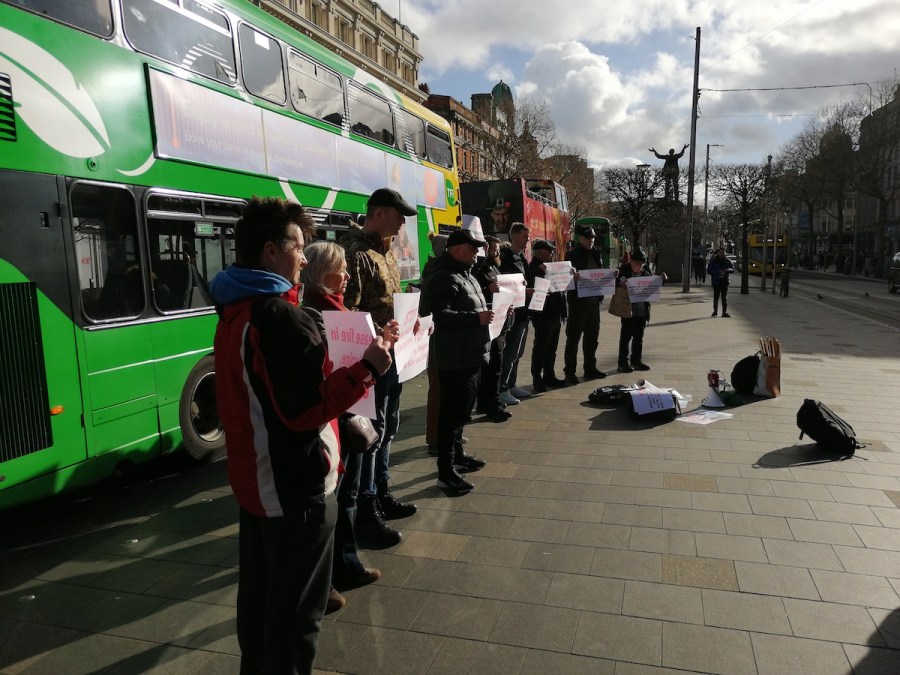
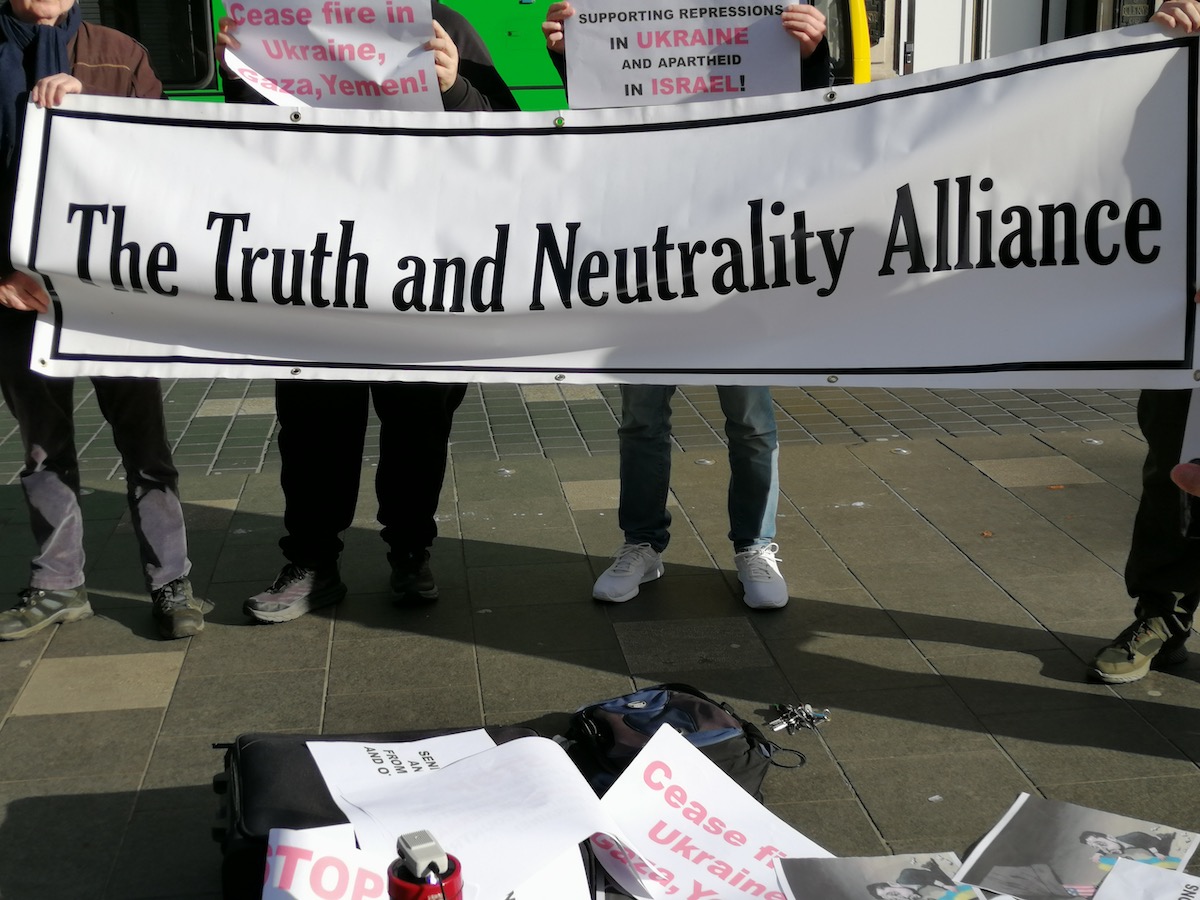
I learned that the Truth and Neutrality Alliance would be organising a protest on Sunday afternoon (18th) in Dublin’s O’Connell Street and attended in order to take some photos, talk to some people and report on it.

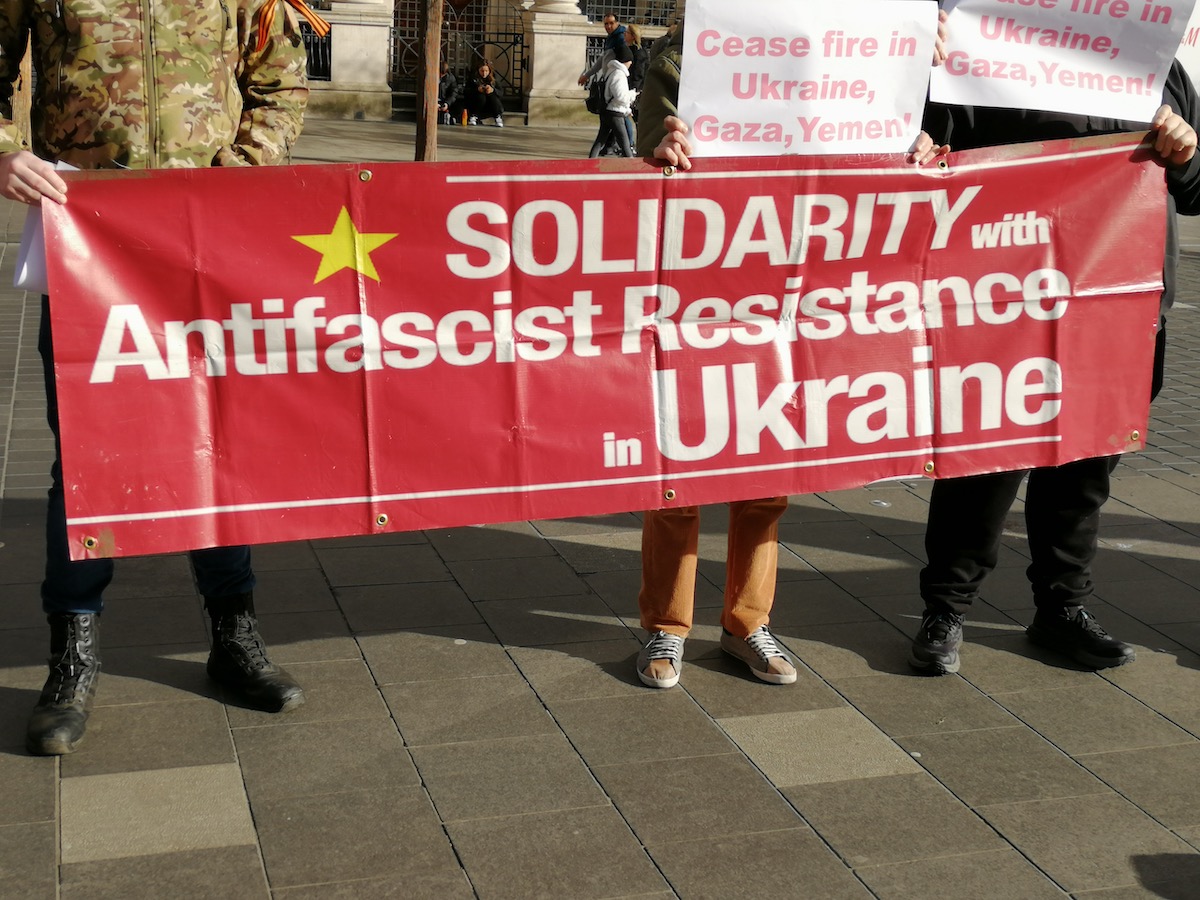
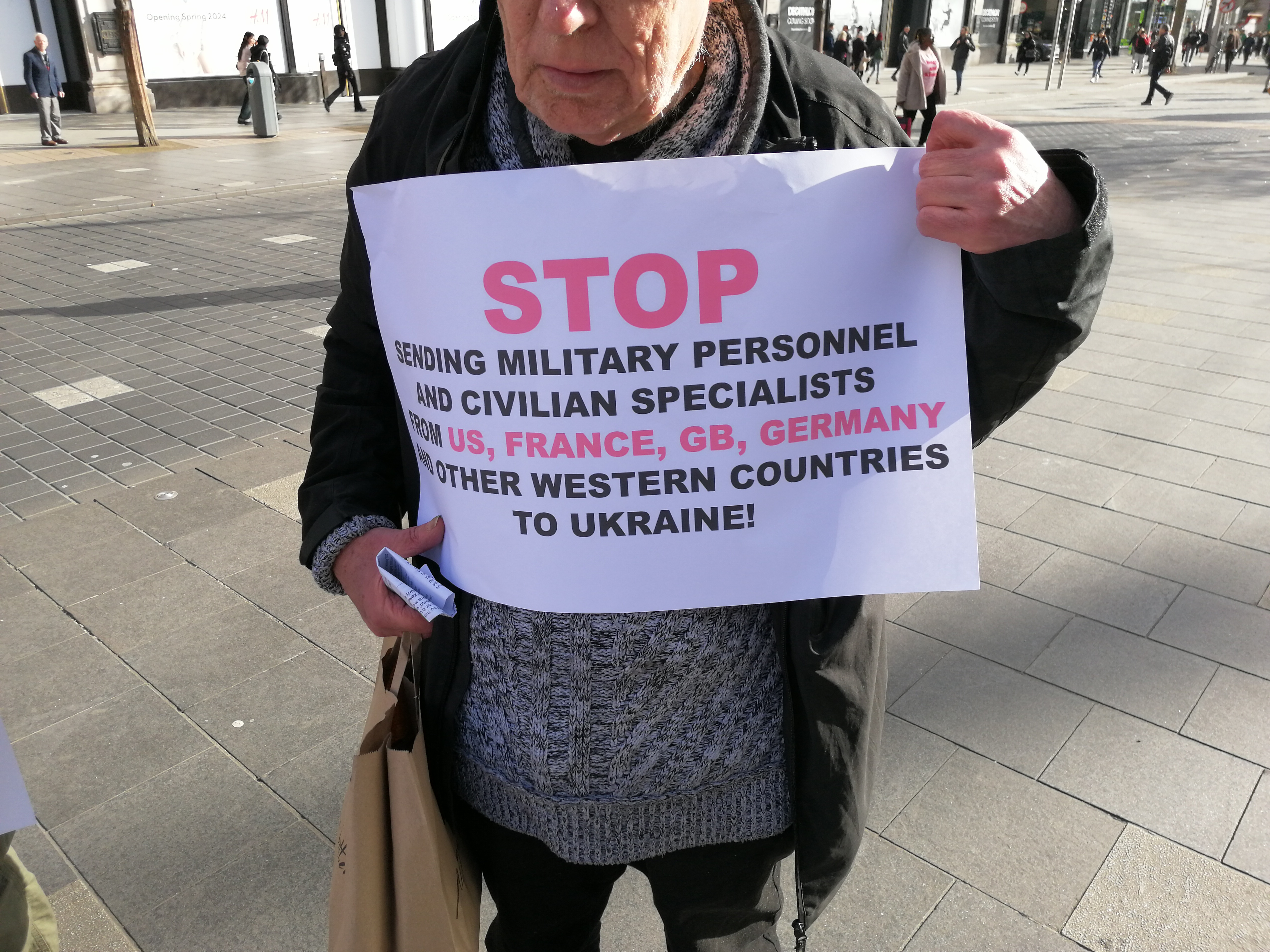
The small gathering with a banner and placards on the central pedestrian reservation in Dublin’ main street opposite the iconic General Post Office building1 included apparently Irish and East European people. They were addressed by a number of speakers.

Separately nearby was a small number of floral tributes dedicated to Alexei Navalny, right-wing anti- immigration Russian political activist and opponent of the Putin regime about whose recent death in Russian jail the Biden regime had made critical statements.

(Photo: D.Breatnach)

SPEAKERS

The first speaker, who appeared to be one of the organisers, denounced the “massive censorship” about the conflict in Ukraine and said we live “in a world of lies” and that “anyone who tells the truth is accused of being a Russian agent”.

He went on to draw parallels between anti-Russian propaganda and that which had been against Syria also. “The end of the war in Ukraine is now in sight”, he said and looked forward to a democracy with full rights for all including Russian-speakers.

The speaker said that one cannot (legally, publicly) be a communist in the Ukrainian state and talked about radio stations being closed down by the Kiyv regime.

In preparation for the end of the war he said that the regime is planning sabotage groups, training terrorists to act in the post-war Donbas as they are doing currently in Russia.

He ended with a reference to “the Banderites” (a reference to followers of the memory of WWII Nazi collaborator Stepan Bandera) and the antifascist slogan from the defence of Madrid during the Spanish Antifascist/ Civil War: “No pasaran!”

(Photo: D.Breatnach)

Bill O’Brien spoke on behalf the Truth and Neutrality Alliance which, he said, had been founded two years previously. “The Russian intervention was necessary”, he said, to act against the carrying out “of atrocities like some in Gaza.”

He went on to refer to “proxy wars such as those in Gaza, Ukraine and Yemen which are financed by NATO” and referred to the Minsk Agreements to which the Ukrainian Government had signed but “had been told by Britain not to honour”, he said.

The Minsk Agreement had been signed twice, O’Brien said and if adhered to, “the war would be over.” He said that “we need to push for the implementation of the Minsk Agreements.”

(Photo: D.Breatnach)

The speaker felt that despite the use of Cold War propaganda, the war would soon be over since the Ukrainian Army was “mainly mercenaries” and currently recruiting women and 60-year-old men.

A third speaker with an Irish accent said that he had been in the Crimea until two weeks previously and that “no-one wants to return to Ukrainian rule. NATO will never get their hands on any of it”, he said.

The Crimea was invaded by Russia in February 2014 and later annexed after a referendum in which the vast majority voted for inclusion into the Russian Federation. Though condemned by NATO allies, the result was no surprise, partly because 60% of the residents were of Russian ethnicity.

(Photo: D.Breatnach)

The official result from the Autonomous Republic of Crimea was a 97% percent vote for integration of the region into the Russian Federation, with an 83% voter turnout and from Sevastopol where there was also a 97% vote for integration with Russia, with an 89% voter turnout.

Crimea and the Donbas region had been under threat or actual attack since the 2006 overthrow of the Ukrainian Government of Yanukovych in what many have described as a US proxy coup. As the war continued, Russia returned to invasion of other parts of Ukraine in February 2012.

The war continues in the Donbas and the Zelensky regime has sworn to retake the Crimea which does not look possible.

One of the people in attendance displays a satirical poster of Zelensky. (Photo: D.Breatnach)

CONVERSATIONS

I interviewed one person from the Ukraine/Russian region who was willing to talk and who asked me first whether I would report truthfully, to which I replied that I would. (But wouldn’t most reporters claim that they were being truthful?).

Larisa Keller told me that although born in Georgia she has lived in other countries during her life and now in Ireland for 14 years. Ms. Keller has grandchildren and wants an environmentally-sound and peaceful world for them in which to grow.

(Photo: D.Breatnach)

“Dismantle NATO is the solution”, she said and “Weapons kill everything in nature” and “new types of weapons” are worse, she indicated, arguing for a ban on the development of weapons. But isn’t Russia also a state with a military, I asked – how does she feel about that?

“At this moment Russia is defending itself,” Ms. Keller said and she herself is supportive of “activities against the pressure of fascism”.

In conclusion, she had this to say: “Tell the world that they should recognise that we live in one world and we should appreciate our ability to stay there; it’s important that we support one another”.

One of the placards displayed at the event (Photo: D.Breatnach)

A young man with an Irish accent in attendance approached and told me that he had an East European girlfriend. He told me also that priests from his Russian Orthodox Church have been killed while pastoring with troops in the Donbas,2 that they are targeted “because they are morale-boosters”.

The young man told me he had friends among the Chechens also.

End.

FURTHER INFORMATION:

Truth and Neutrality Alliance: https://rebelbreeze.com/2024/02/25/thinking-of-sinn-fein-trying-not-to-think-of-palestine/

1Many protests and other events take place in this vicinity, not only due to its central location but also because the building was occupied by the leadership of the 1916 Rising against British occupation for five days.

2The area in the east of Ukraine that is predominantly Russian-speaking where the war is taking place and was besieged by Ukrainian troops, often fascist-led, from 2014 onwards (i.e 8 years before the Russian invasion).

IRELAND IN RUGBY – AND PALESTINE!

Clive Sulish

(Reading time: 3 mins.)

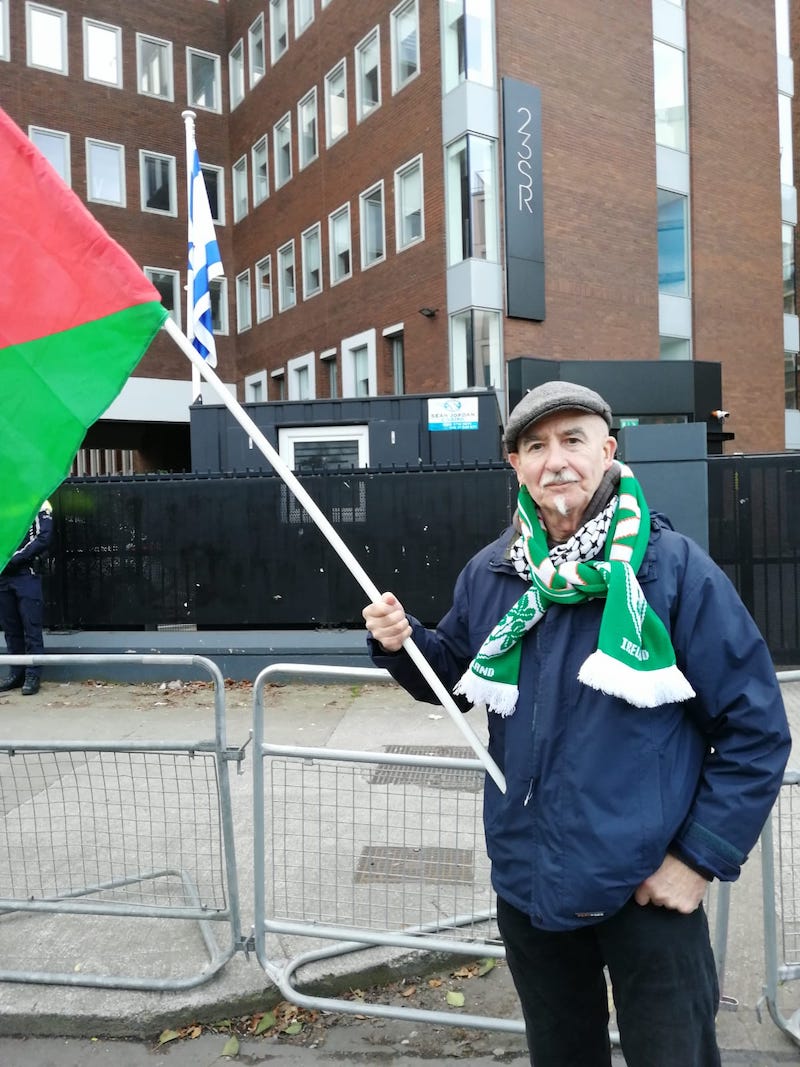
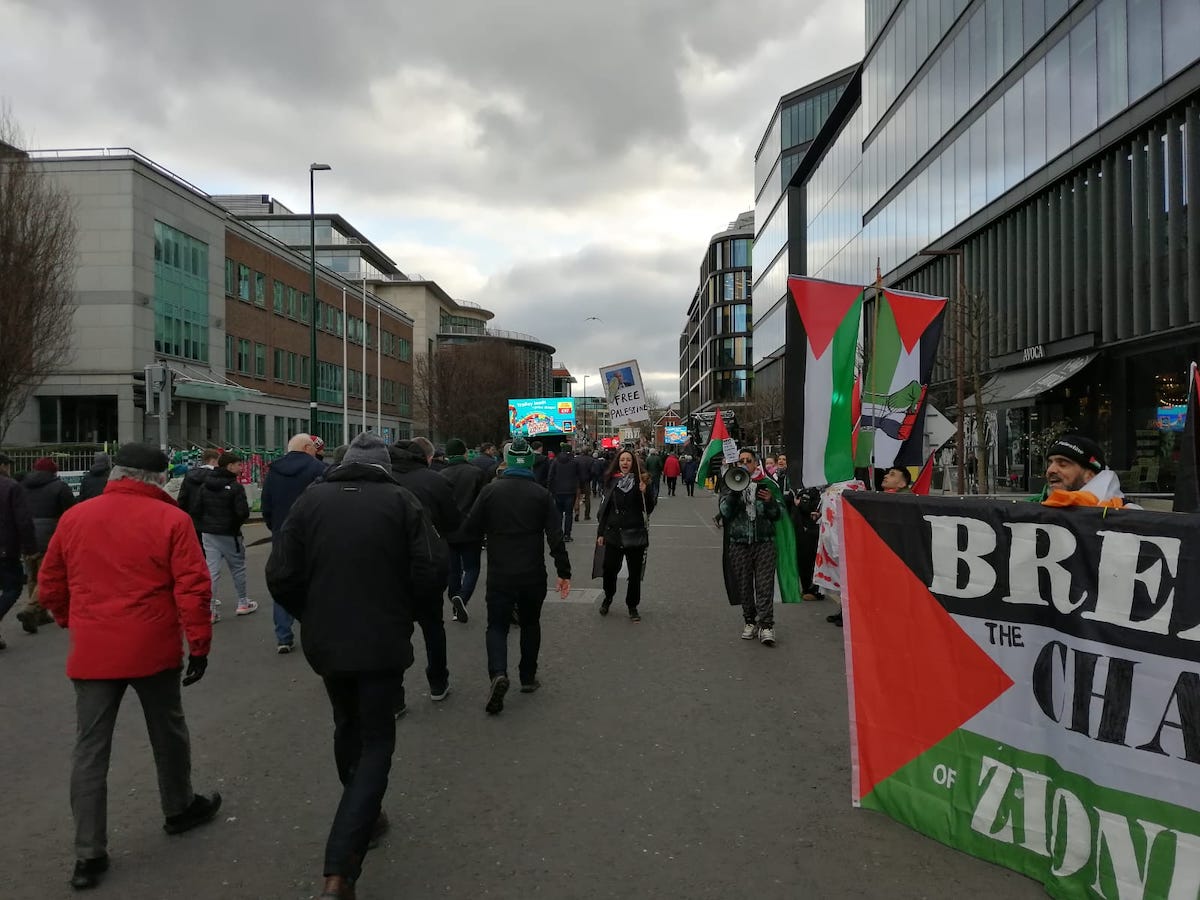
Thousands on Saturday (24th) witnessed Palestine supporters demonstrating outside the Israeli Embassy in Dublin’s Ballsbridge, their reactions for the most part ranging from neutral to applause, some having their photos taken alongside the picketers.

On this Saturday there was no Palestine solidarity march in Dublin and some instead attended a picket of the Zionist Embassy.

There were also a handful of hostile provocative reactions, ranging from mention of “the hostages” to cheering “Israel” and one who tried to make an issue of Jewishness but was firmly told that opposition to Zionism has nothing to do with anti-semitism.

Palestinian solidarity flag displaying designed by Brazilian political cartoonist Carlos Latuf during an earlier attack by the Zionist State on Palestinians. The building housing the Israeli Embassy is in the background. (Photo: Rebel Breeze)

Those who mention “the hostages” refer only to the 130 or so prisoners taken by the Palestinian resistance in their operation of October 7th, never to the thousands of civilians, including children, taken prisoner by the Zionist state and, if judicially processed, tried in Israeli military courts.

Initially the crowds leaving the Rugby game between the Irish and Welsh teams, seemed neutral as they passed the picketers but gradually grew warmer.

The handful of passersby who expressed support for the Zionist state were militantly denounced by the picketers as “Genocide supporters” but much more common from the crowds were signs of approval such as applause, thumbs-up and occasional cheers and clenched-fist gestures.

A few in the crowd also shook hands with or gave a fist-bump to a demonstrator and some also thanked the picketers.

Some asked to have their photos taken alongside a picketer, one also waving a borrowed Palestinian flag. A woman approached one of the demonstrators, removed her Ireland rugby colours scarf and wrapped it around the picketer’s neck, saying “We support you” before walking away.

One of the Palestine solidarity picketers wearing the Irish rugby colours scarf with which he was presented by one of the Irish team’s fans returning from the game. (Photo: Rebel Breeze)

The nearly non-stop chants of the picketers, led by a young man of Middle Eastern appearance in a keffiyeh were directed at solidarity with the Palestinians and denunciation of the Israeli State, including calls for boycott and sanctions and the expulsion of the Israeli Ambassador.

One of the female demonstrators, a regular at the site, is garbed in white “blood-stained shroud.” At least half the picketers appeared Irish by appearance and accent. A majority were female, which seems to be the pattern in pickets, rallies and marches in solidarity with Palestine.

The thousands who passed the picketers were in contrast to the earlier near-deserted Shelbourne Road, as the Gardaí had closed the road to vehicular traffic in the vicinity of the Aviva Stadium where the Ireland rugby team was playing the Welsh one.

A fragment of the rugby fans leaving the Aviva Stadium after the game and passing the picketers. (Photo: Rebel Breeze)

The Israeli Embassy moved in 2019 to its current location on the fifth floor of a multiple-business-occupied building at 23 Shelbourne Road. Formerly the zionist embassy occupied an upper floor at Carrisbrook House, Northumberland Road, with every other floor unoccupied.

Some of the occupants of the current building, which is protected by a Garda presence, have reportedly asked their landlord to remove the Embassy but the request was denied.

When Gardaí reopened the road a senior Garda officer directed the demonstrators, ‘for their safety’, to remove from the road in front of the Embassy building to the side. However, it is the Gardaí who have barricaded off the entire section of pedestrian pavement in front of the building.

It seems likely that this will become an issue at some point in the future.

The scene outside the Israeli Embassy in Dublin shortly before the commencement of the protest, showing the pedestrian footpath completely fenced off by Garda barricades. (Photo: Rebel Breeze)

THE RUGBY

The Irish team beat the Welsh one 31-7 on Saturday. The Irish rugby team is a 32-County team, unlike soccer, where the Irish state and the colony each has their own ‘national’ team and are obliged to compete against one another internationally.

However, the song played for the Irish rugby team is the anodyne Ireland’s Call and not Amhrán na bhFiann/ The Soldiers Song, which is played for the Irish soccer team and in Gaelic Athletic games.

Rugby has gained in wider popularity in Ireland in recent decades but formerly in most parts of Ireland was considered a game for Anglophiles or “West Brits”.

Also, with the exception of Limerick, socially a game of the upper middle class, being played in Anglican colleges and in Catholic colleges of the English public school model.

Until the advent of the now-defunct Irish Press(1931-1995), neither of the main national newspapers, The Irish Times nor The Irish Independent reported on Gaelic Athletic Association games, reporting instead on the minority rugby, hockey and cricket matches.

End.

(Photo: Rebel Breeze)

JULIAN ASSANGE LAST DITCH FIGHT IN UK LAW AGAINST EXTRADITION TO USA

Diarmuid Breatnach

(Reading time: 3 mins.)

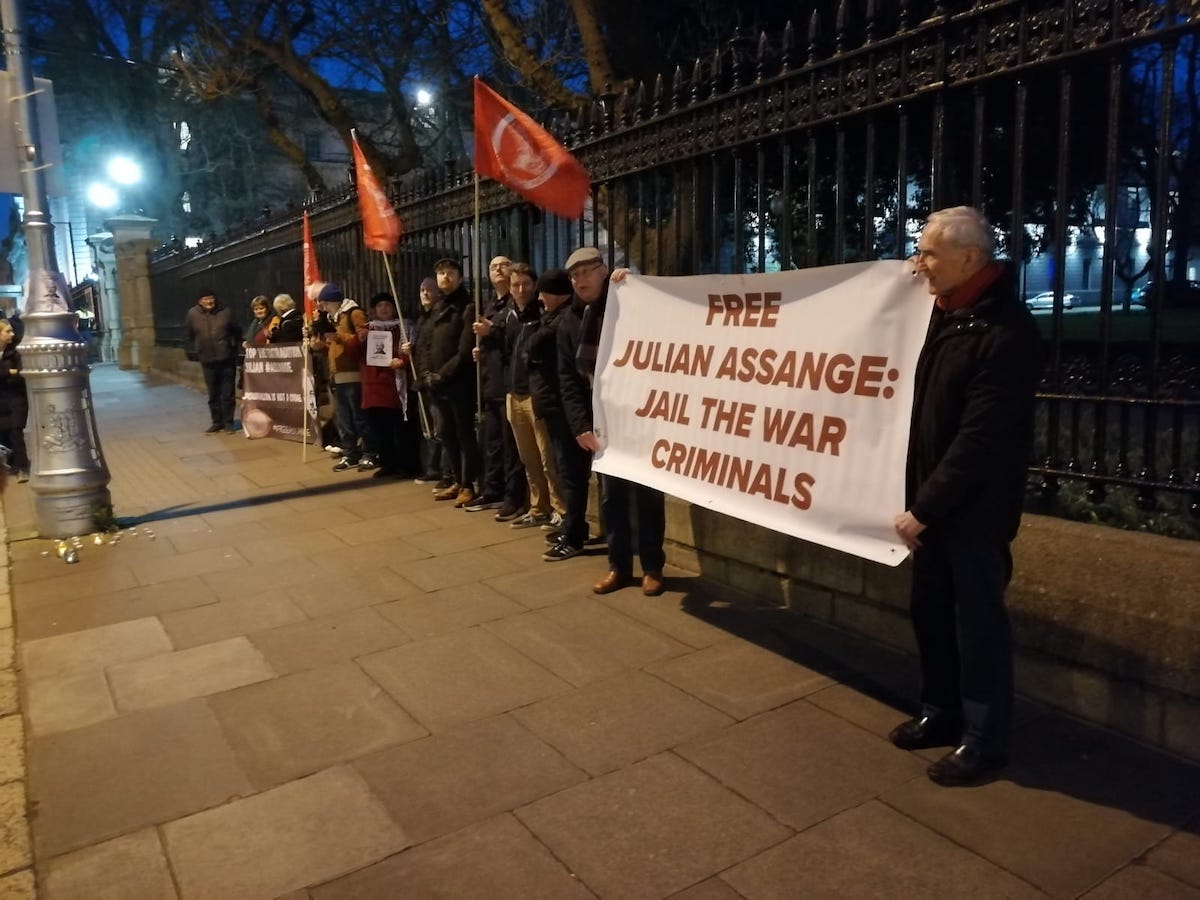
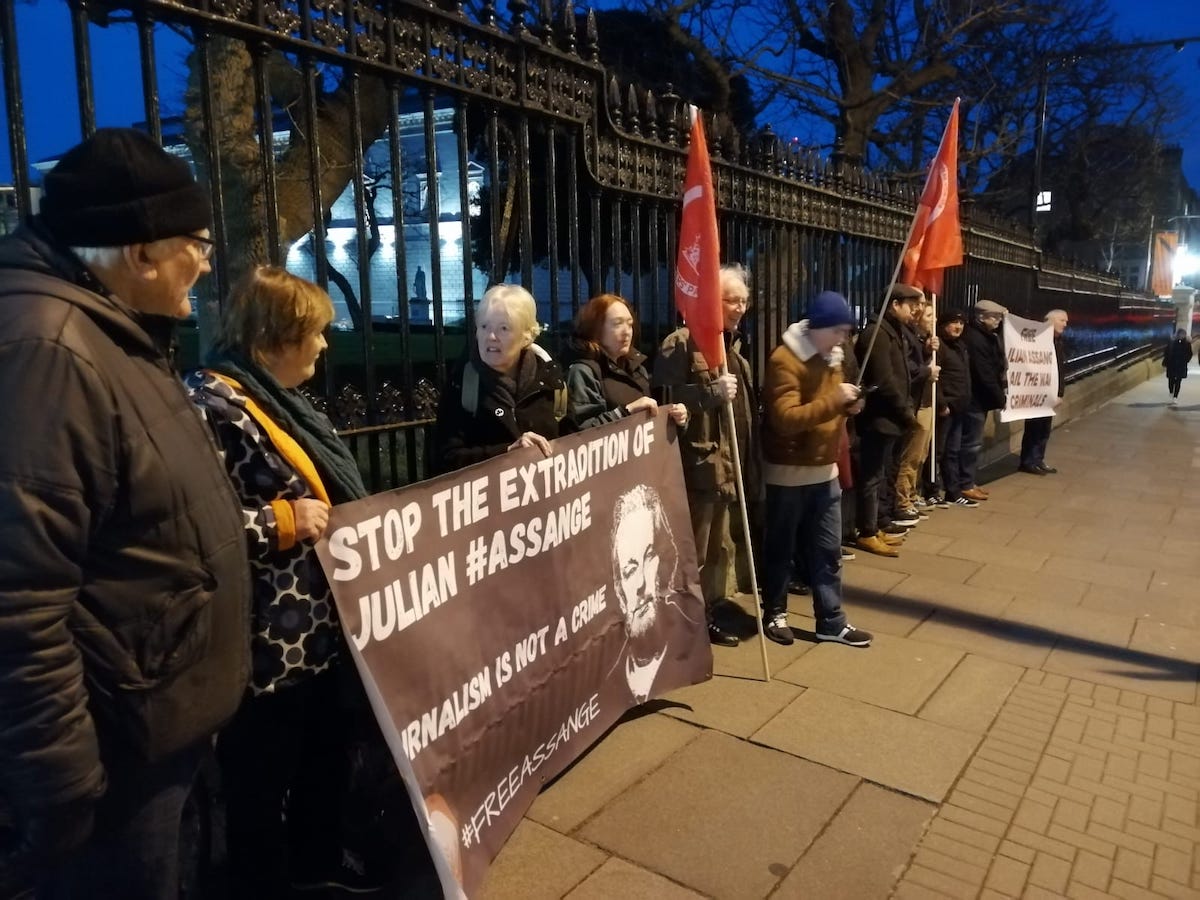
Crowds gathered in London on Tuesday and a solidarity picket with the Australian whistleblower was held in Dublin on Monday night as Julian Assange and his legal team fight their last chance in UK law to prevent his extradition to the USA.

On Wednesday the crowds in attendance inside and outside of the High Court and watching from around the world had to be content with awaiting the decision of the judges to be given at a later date.

(Photo: D.Breatnach)

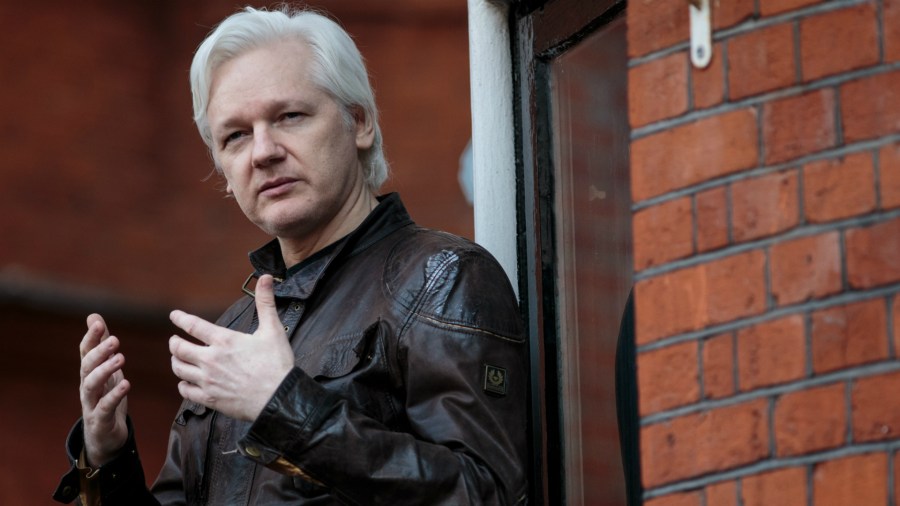
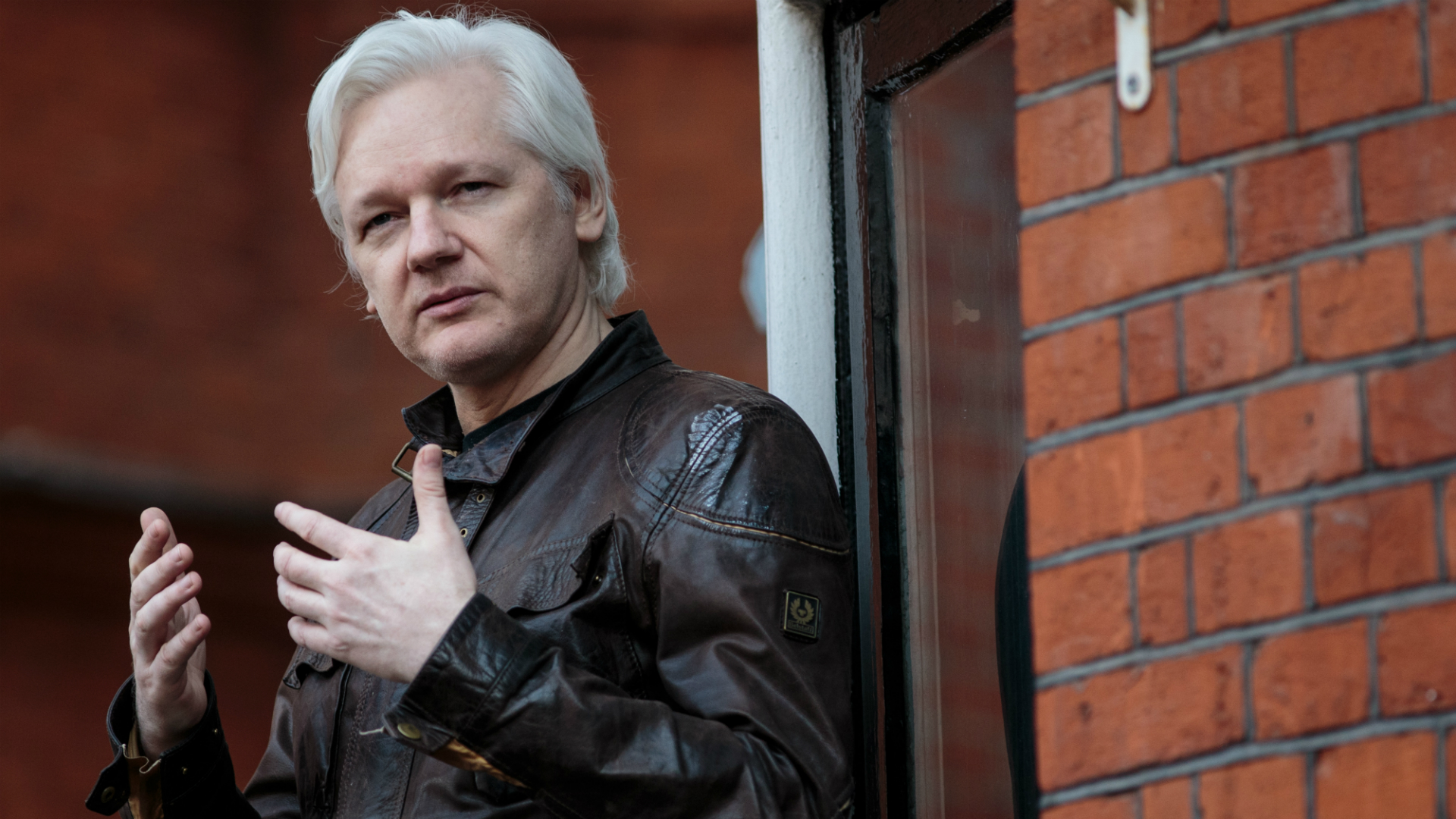
Julian Assange has been hounded since he exposed murders and other murky secrets of the USA through the Wikleaks website he set up, posting items sent to him by former serving US Marine Chelsea Manning (who served military prison time but was pardoned by Obama) and others.

The CIA planned to assassinate Assange physically and then tried to assassinate his character by setting up a false rape allegation in Sweden and when all that failed, applied for his extradition from the UK under USA espionage legislation — though Wikileaks posting was entirely public.

Shamefully the UK colluded with the USA and, not trusting UK ‘justice’, he skipped bail from extradition hearings, sought and was granted asylum in the Ecuadorian Embassy in London. There a Spanish agency spied on confidential conversations between him and his legal team.

Assange lived in the Embassy under siege from 2012 to 2019, when the Ecuadorian State abrogated his asylum and allowed British police to enter what is legally Ecuadorian sovereign territory and remove him, since when he has been nearly seven years in high-security Belmarsh jail.

(Photo: D.Breatnach)

The Premier of Australia has now called for his release after the Parliament passed a motion valuing Wikileaks exposure of US wrongdoing and calling for dropping the case1 but for years governments of the ex-British colony, now much more under USA influence, did not do so.

As an indication of what Assange can face in the US system, the Guardian reports that “Earlier this month, in a separate case, Joshua Schulte, a former CIA officer, was imprisoned for 40 years for passing classified material to WikiLeaks.”

The small size of the picket in Dublin was in my view less a reflection of the level of concern in Ireland but about the organisation of his support being on occasion taken over and undermined and in earlier times depended on high-profile individuals rather than collective organisation.

(Photo: D.Breatnach)

The western mass media for which Assange provided a huge amount of column inches and many headlines through the Wikileaks exposés hardly fought for him. The Guardian spoke out for him recently but also took part in his character assassination years ago.

Even though it had been the main British benefactor of his news items. And the media is still getting footage viewing his travail, being drawn behind the cart on his way to – his execution?

The Irish Times recently spoke out for him and so did the Irish branch of the National Union of Journalists but the latter had no presence on the picket or on any other public protest at this time of which I’m aware.

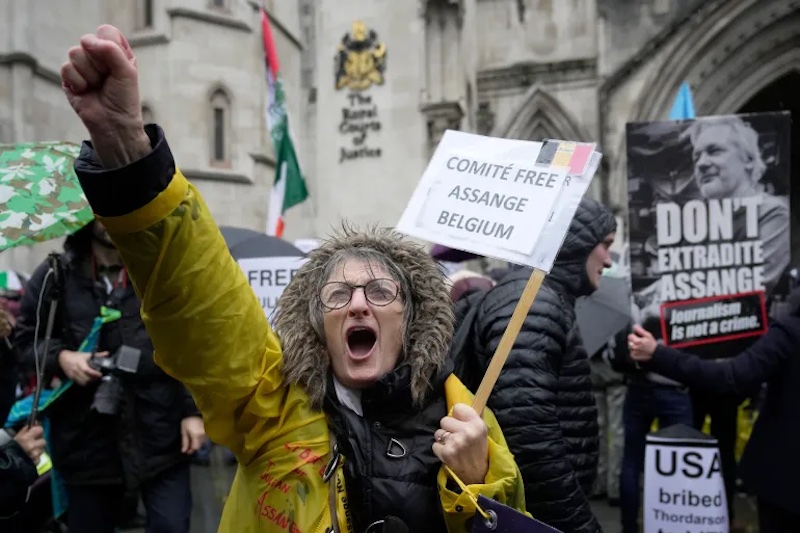
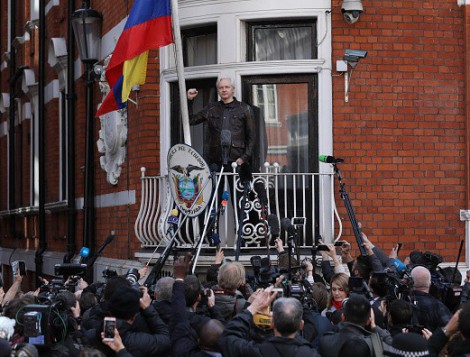
Scene from very wet and windy day outside the High Court in London (note Irish Tricolour and Palestine joint flags in background). (Photo cred: Kin Cheung/ AP)

However, the Irish Tricolour flew near the Australian flag in London outside the High Court building. Our people have been executed in that city too and we’ve had their executioners here in Ireland as well.

What we are witnessing is years of mental torture and attempt to silence permanently a man whose “crime” is to expose the sins of the world superpower and some of its allies and clients. The chief criminal of the world is hunting down a whistleblower to shut him up about its crimes.

And the ruling class of the UK, a world-class criminal also but in this case the accomplice of Mr. Big, is assisting him. The writers and editors in the mass media should be outraged and campaigning as Victor Hugo did in the Dreyfus case.

But they know who buys their bread and on which side it is buttered, as their ‘reporting’ on the genocidal Israeli campaign in Palestine has shown every day – and on the war in Ukraine before that.

My father was a journalist who had been made somewhat cynical about “the free press” by his experiences but even so he would be thoroughly sickened were he alive today.

End.

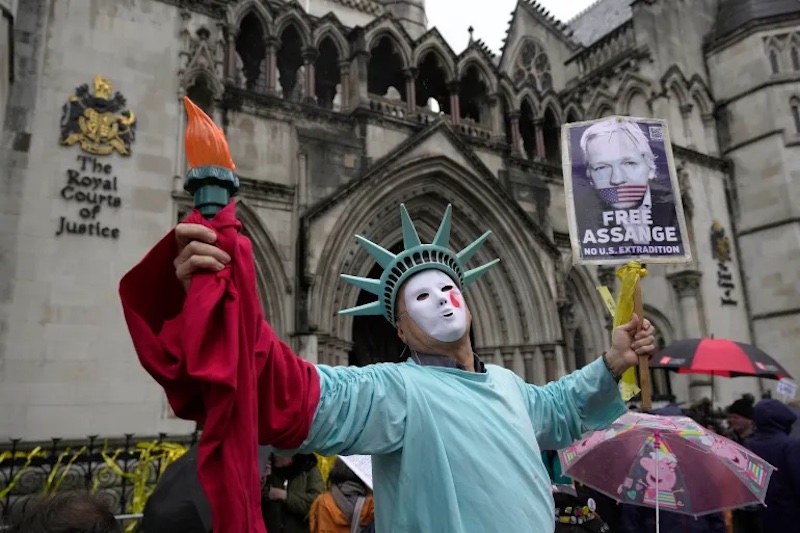
US Liberty satirised outside the High Court in London (Photo cred: Alastair Grant/ AP)

SOURCES & FURTHER READING

https://www.theguardian.com/media/2024/feb/20/julian-assange-court-considers-last-ditch-bid-to-fight-us-extradition

https://www.theguardian.com/commentisfree/2024/feb/18/the-guardian-view-on-julian-assange-why-he-should-not-be-extradited

https://www.breakingnews.ie/world/julian-assange-faces-wait-for-decision-on-whether-appeal-can-go-ahead-1591927.html
1https://www.reuters.com/world/australia-pm-backs-parliament-motion-calling-julian-assanges-release-2024-02-14/

LESSONS OF POWER, RESISTANCE, SOLIDARITY AND HYSTERIA

Diarmuid Breatnach: originally published in 2017, republished February 2024.

(Reading time: 4 mins.)

The Wikileaks/ Assange persecution saga should teach us some important lessons.

In the first place chronologically, it should teach us the lengths to which allegedly democratic countries such as the United States will go to dominate weaker countries and attack movements of resistance.
Where the USA feels its imperial interests are threatened, i.e where anyone may attempt to loosen its grip on the markets, natural resources and strategic emplacements, or to prevent its grip from clawing further than it has already.

Wikileaks also exposed some of the extent to which the US will interfere in the internal or foreign policy matters of even its allies, including the European powers.

Possibly most instructive of all was the determination of the USA to hunt down the chief executive of Wikileaks, Julian Assange, flying in the face of US Constitutional principles and law, as well as international law, with politician statements confirming that determination.

Statements even from Presidents, senior politicians and Government appointees, such as former US Secretary of State and the Democratic Party’s candidate for the US Presidency last year.1

In the course of hunting him down, the USA turned to Sweden, subverting the country’s laws and criminal investigative procedures, then to the UK government (which, as a junior partner in many of the US crimes exposed by Wikileaks, was probably only too keen to assist).


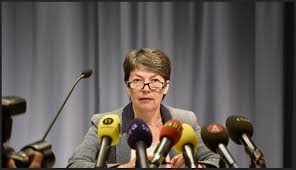
Swedish Prosecutor Marianne Ny, who commenced an investigation after another Prosecutor had already investigated and decided there was no case for Assange to answer (Photo source: Internet).

Australia was brought to assist under threat and France turned away from Assange’s plight and his plea for asylum there. “No hiding place from the World Policeman,” seemed to be the message.

Eventually, however, he did find refuge (if not a hiding place) from Ecuador, a tiny power on the world political, economic and political stage.

In the midst of this, how did the mass media perform, that which we are often assured is the guardian of democracy, even more than the vaunted parliament? Badly, in a word.

Investigative journalism, intelligent evaluation, if they had been evident before, all went into the rubbish bin as print, radio and TV media joined in the lynch mob to a greater or lesser degree, including the British newspaper The Guardian.

The newspaper that had been given exclusive first use on the Wikileaks stories, “the greatest scoop in 30 years”, according to its Editor, not only refused to assist him but allowed its pages to be occupied by witch hunters and made money out of publishing a book about the affair.2

“Anti-journalism”, is what Australian film-maker and renowned journalist (Britain’s Journalist of the Year Award-winner in 1967 and 1978), John Pilger called it.

Assange learned some personal lessons too which should not be lost on us.

Sometime lovers manipulated by police, Prosecutor and media; a close working colleague denouncing him and flinging allegations against him (unsubstantiated but that did not prevent the media from publishing them).

Julian Assange on the balcony of his asylum quarters, the Ecuadorian Embassy in London, after receiving news of the dropping of the Swedish ‘investigation’ of allegations of ‘rape’ against Assange and the voiding of the International Arrest Warrant. (Photo source: Internet)

LESSONS FOR US SPECIFICALLY

Suppose for a moment that one did not take to Assange’s character. Suppose one even objected to his work. Still, he was entitled to fair due process. That he did not receive it from so many is obvious. Did he receive it from us?

That community of people who would lay claim to having an alternative view, to be opposed to the status quo and, most of all, to be for Justice?

Injustice meted out by those in power often needs collusion and the more independent of the power the colluders are, the more justified the witch-hunt is made to seem.

The media whipped up a passionate hue and cry against Assange, who had not even been charged and had cooperated to all extents reasonable with the investigation of allegations against him.

That hysteria sought to drown Assange but also to catch in its flood any, no matter how puny or how mildly, calling for justice and due process. The cry of the mob must be “Hang him!” and no dissenting voices must be heard.

The hysteria generated in some sectors, even among people who would normally insist on justice and who opposed the status quo, reached a very high pitch.

For the crime of suggesting on Facebook at the time that the case against him seemed “dodgy” and that besides he was in any case entitled to due process, a person called me a “rape apologist” in public while people I had considered comrades (and had thought one even a friend) remained silent.

Shortly after that, a clutch of FB friends (which I made FB ex-friends quickly) backed up the allegation.

That taught me a valuable lesson about comrades and solidarity but it pales beside the severity of the lesson Assange has been taught, the mark of which he may carry for the rest of his life.

But the function of such a process goes far beyond the personal; it is intended to make dissent very uncomfortable and even painful.

We may face the attacks of our declared enemies with courage or at least resolve and commitment but it is a different matter when we are attacked, politically and personally, by those we take to be broadly on our side against the oppressive powers.

Most people would say they are for justice. It is usually easy to say so.

But unless we can stand up for it whether we like the victim or not, whether we approve of his work or not and, even in the midst of the hysteria calling for a hanging, we are prepared to cry instead for justice, our declarations are worth nothing.

There are many lessons in the saga for us to learn — but will we?

end

Footnotes

1“Can’t we just drone this guy?” Hillary Clinton, quoted in the Pilger summary article.

2Stated in the Pilger summary article.

Links

Excellent article by John Pilger summarising the persecution

DUBLIN STREETS RESOUND WITH “FREE PALESTINE!” AND AWASH IN PALESTINIAN NATIONAL COLOURS

Diarmuid Breatnach

(Reading time: 5 mins.)

On a day when the Israeli military killed another 83 Palestinians, to bring the state’s death-tally since October 8th to almost 29,0001 known dead and thousands injured and missing,2over 50,000 people marched in solidarity through Dublin city centre.

The Israeli military is killing, on average, a Palestinian child every ten minutes.

Section of Mothers Against Genocide Ireland marching with bundles simulating children killed by Israel (Photo: D.Breatnach)

The national demonstration was convened by the Ireland Palestine Solidarity campaign and, though people came from all over the country and from many organisations, the numbers did not seem to quite match their last national demonstration, believed attended by 100,000.

As they marched from the Garden of Remembrance, the usual slogans were prompted and taken up in chanting responses: 1, 2, 3, 4 – Occupation no more! 5, 6, 7, 8 – Israel is a terrorist state!3 Gaza, Gaza, don’t you cry – Palestine will never die! Free, free – Palestine!

(Photo: D.Breatnach)

Taking over 20 minutes to pass through the north city centre’s O’Connell Street, they marched over O’Connell Bridge into D’Olier Street, through College Green and right into Dame Street, constantly chanting out the slogans4 of solidarity to which, by now, thousands have become accustomed.

From the River to the Sea – Palestine will be free! In our thousands and our millions – we are all Palestinians! Netanyahu (also Joe Biden, Western Powers etc) what do you say? – How many kids did you kill today? Zionist Ambassador – Out, out, out!

In some sections could also be heard: There is only one solution – Intifada revolution! Irish Government (also Western powers, USA), you can’t hide – You’re supporting genocide!

Section of the march about half-way through O’Connell Street, looking northwards. (Photo: D.Breatnach)
Section of the march about half-way through O’Connell Street, viewing southward. (Photo: D.Breatnach)

The Irish Government, the EU and the Genocidal Israeli State

Among EU states, the leaders of the Irish Government have been the most pressing on the EU to call for a ceasefire and have now teamed up with the Spanish state’s current government leadership to press the EU to revise its preferential trade agreement with the Israeli State.

They are not likely to succeed since Germany and France have led the strident pro-Israel position of the EU, rejecting even a call for a humanitarian pause to deliver food, fuel and shelter to starving Palestinian refugees or any attempt to restrain the Zionists’ leaders from their genocidal bombing.

But in addition the main concern of the Irish Government ministers (probably Spain’s also) is that the whole situation is going to escalate further in Palestine and further, across the Middle East; in other words they are offering ‘good advice’ and concerned that it’s being ignored by Israel.

Children on the march – a reminder that the Israeli state kills a Palestinian child on average every ten minutes. Also Irish language flag and placard in this photo employing the “Saoirse don Phalaistín” slogan. (Photo: D.Breatnach)

In any case, although the USA is the main supplier of finance and arms to Israeli Zionism, the EU is by far the Zionist state’s largest export market and could stop the genocide tomorrow with an ultimatum to stop bombing or face an embargo on Israeli products.

The International Court of Justice determined that the Israeli State is plausibly guilty of genocide but declined to order a ceasefire and again during the week rejected a South African application to order a cessation of genocidal actions though it did warn the zionists not to commit genocidal acts.5

Meanwhile the UN court is to begin hearings on Monday to determine whether the Israeli occupation is guilty of practising apartheid but the verdict is months away and the Israeli State continues its genocide unabatedly.

Palestinian solidarity in the Irish language

Small banner, group unknown with what has become a common slogan in Irish. (Photo: D.Breatnach)

At the junction with South Great George’s Street the marchers turned left and continued up into Aungier Street and then left again into Cuffe Street with people gathered on the pavements and at junctions, sometimes applauding but never expressing hostility.

A number of slogans and messages of solidarity in the Irish language could be seen on placards, flags and banners; two of the latter calling for Saoirse don Phalaistín. One of the banners had a large group behind it which included marchers calling out slogans in Irish.

Ón dtalamh go dtí an spéir – Beidh an Phalaistín saor! Stad an slad!

The Mothers Against Genocide group used Irish too, singing the chorus from Róisín Elsafty’s song and video with Irish and Arabic: A Phalaistín, a Phalaistín, hosni alaikum ya falastin. (Good luck to you, Palestine) and mixed the singing with chants of solidarity.

(Photo: D.Breatnach)

Once reaching the south side of Stephens’ Green,6 where the IPSC stage was set up near the Department of Foreign Affairs’ building,7 many marchers just stopped, began socialising, folding up banners or just going off for coffee etc (some also had long journeys ahead to return home).

Of course some stayed to hear speakers and performances but I didn’t.

Once again the thought struck me that this period could be used to advantage in small public meetings on the street but removed from the central stage; different currents in the solidarity movement could be discussed, along with basic principles and demands in our solidarity.

(Photo: D.Breatnach)

Collusion and Repression

As a Sinn Féin contingent self-identified by banners and placards marched in, some greeted them with Oh hey, oho! — No shamrocks for Genocide Joe! in a clear rebuke to the party’s leader’s intention to celebrate St. Patrick’s Day with the US President at the White House.8

Passing through the southside’s city centre afterwards, people were frequently seen wearing Palestinian keffiyehs in various colours (black and white, red and white, green and white and the Irish green, white and orange version) as were people walking with furled Palestinian flags.

Indeed, action the health worker unions could have taken but failed to do so (Photo: D.Breatnach)

At least two people were arrested by Public Order Gardaí for demonstrating in the city centre outside Israeli-colluding businesses, to be bailed until their case in March, amid reports9 that activists have been threatened with charges and court for December’s Israeli Embassy occupation.

Although people came from many parts of Ireland, there were smaller solidarity demonstrations in many of those too.

End.

(Photo: D.Breatnach)

FOOTNOTES

1https://www.aljazeera.com/news/liveblog/2024/2/17/israels-war-on-gaza-live-icj-warns-of-perilous-situation-in-rafah

2Another 7,000 are believed buried under rubble of buildings bombed by the Israeli military. Palestinians had very little undamaged digging and earth-moving equipment and the pieces of masonry are often massive but they do try and dig through it, often with their bare hands.

3I think “israel is a fascist state!” would be entirely appropriate.

4“slogan” in English is of Irish-language origin, perhaps via Scottish Gaedhlig, from ‘slua/ slóga’ = “a host/ large gathering, troop” and ‘gairm’ to “call, address”. The original root is of Indo-European origin.

5Which the Israeli State has continued to do every single day since the ICJ initial judgement, killing thousands of civilians since then and bombing and invading hospitals.

6As in most parts of Dublin city the Green has been the scene of important historical events but this one perhaps more than most: it was a 1916 battleground, the location of a force of mostly Irish Citizen Army during the 1916 Rising before they were forced to relocate to the Royal College of Surgeons, where the garrison remained until the surrender. The Commandant Michael Malin and another senior officer, Constance Markievicz, were both sentenced to death by British Army military court. Michael Malin was shot dead by firing squad but Markivicz’s sentence was commuted to life imprisonment.

7A Palestine solidarity activist accused of ‘decorating’ the building with red paint in protest at the Government’s collusion with Israeli zionism was in court last week, having been raided at 7am, arrested and charged. The case has been deferred until next month.

8In a Belfast meeting organised by the party in Palestine solidarity recently a small group of Palestinians were ejected for pointing out that one of the speakers, the Palestine Ambassador is “a mouthpiece of the Palestine Authority” which is an undemocratic organisation working in collusion with the zionist occupation and has not held an election since 2006 (though supposed to do so every five years).

9Report from Anti-Imperialist Action.