Introduction and translation by Diarmuid Breatnach
The San Fermines Festival in Iruña (Pamplona in Castillian) is renowned around much of the world for its colour and also danger with the running (corrida) of the bulls. But for many years it has been the occasion and site of sharp political struggle and there have been other dangers too.
ANTI-BASQUE NATIONALISM IN NAFARROA
Although the city is Basque, centre of the medieval kingdom of Nafarroa (Navarre), it was run for decades by UPN (Union of Navarrese People), what some considered the Basque version of the Partido Popular, post-Franco Spanish political party founded by the Dictator’s supporters. Although in 2008 UPN broke from its fraternal relations with the PP, the party remains Spanish-unionist and conservative, strongly opposed to Basque independentism and wishing to remain separate from the rest of the Basque Country, whether the other three southern provinces or the three across the French border.
During the Spanish Republic of 1936, the ruling political interests in Nafarroa broke with the Basque nationalists and opted for supporting the military-fascist coup of Franco and the other three generals – the reactionary Nafarroan Carlists murdered 3,000 Basque nationalists, republicans, communists, anarchists and social democrats in their province alone. They also took part in fighting as part of the military-fascist forces.
For many years, the first day of the San Fermines festival has been the scene of struggle between those who sought to bring the Basque national flag, the Ikurriña, into the main square, to be present during the launch of the week of festivities. And beatings and for Basque independentists have resulted, even fines and jail sentences, especially when they have been successful.
But in the elections of 2015, a coalition of political parties of Basque independentism, nationalism, and left-social democracy took power in the Navarrese regional Government and began to change matters on a number of fronts. In 2017 the Ikurrina was flown from the official balcony and the the Spanish Government Delegation in the region took a judicial case against those responsible and the same people in 2018, EH Bildu, refrained from flying it, displaying instead a bare flagpole. However, that coalition lost its majority of seats in the elections this year and the UPN came back into power, with the resumption of ‘business as usual’.
ASSAULT AND RAPE
In recent years, another menace has come to the fore, with some men assaulting women in the press of the crowd. Most horrifying was the multiple rape of an 18-year-old woman on July 7th, during the San Fermines festival of 2016. The woman, who approached a few men to help her find her way and was apparently under the influence of intoxicants, was led into a doorway, her phone taken off her and raped in a number of ways by each, who also videoed the event and put it up on the Internet. Due to the description to the Nafarroan police by the victim and their promotion of their act on social media, the perpetrators were soon arrested. But they were tried not for the more serious crime of rape but for sexual abuse, because she appeared not to resist and therefore no violence was necessary to restrain her – a feature of Spanish law.
The group of five violators and rapists had given themselves the boastful title of La Manada (the Wolf-Pack) contained a Spanish Army soldier and a Spanish Guardia Civil policeman among its members. And they on a previous occasion filmed themselves having sex with an intoxicated woman on the flat bed of a truck and put that too out on social media.
Gang-rapists, the self-styled La Manada (“the wolf-pack”) (Photo source: Internet)
The Pack claimed that their victim was willing but found it difficult to explain that she had only met them seven minutes before the assaults or their taking of her mobile phone and some other matters and were found guilty and sentenced to nine years jail but allowed bail when they appealed. Since their appeal might find them not guilty, one might argue that they were entitled to bail while awaiting the hearing.
BASQUE AND CATALAN INDEPENDENTISM V. RAPE
However, the youth from Alsasua (Basque town in Nafarroa), who were accused of assaulting off-duty Guardia Civil policemen who entered a Basque independentist late-night bar as a provocation in October 2016, were not only kept in jail while awaiting trial in Madrid but also four of them while awaiting an appeal hearing (against sentences of between two and 13 years jail!). And the Catalan independence grass-roots campaign leaders and elected politicians who were charged with sedition, rebellion and misuse of public funds for organising a referendum on independence in October 2017, were kept in jail until their trial and are there still, now awaiting judgement. They include one who was elected an MP while in jail and another who was elected an MEP (Jordi Sanchez and Oriol Junqueras).
Many aspects of the Manada case led to an outcry over the whole Spanish state. Although the Prosecution had asked for sentences of 22 year and 10 months, they were sentenced to nine year jail. On December 5th 2018 their sentences were confirmed to those nine years, although two judges on the panel disagreed, wishing for sentences of a little over 14 years as they felt that there had been intimidation and coercion, there had been “degrading acts” and she had been left half-naked on the ground with her mobile phone taken (and memory cards removed). The five-judge panel however ordered the first court that tried them to issue another sentence for the filming and publishing of the rape as her privacy had been violated. The Defence lawyer has indicated that his clients would appeal the sentence as did also the City of Iruna (Pamplona).
THE BATTLE OF THE FLAGS
The town square of Iruna/ Pamplona, traditional site of the launch of the San Fermines folk festival, this year showing, despite threats of the UPN Mayor, Ikurrinak and banner against the dispersal of Baque political prisoners prominently displayed. (Photo sourced: publico.es)
Translation of short article in Publico.es
In the end, the ikurriña was present. The images of the first Sanfermines after the return of the Right to the City Council of Pamplona are already crossing the world and they do it with the ikurriña and the flag of Navarre displayed among the public. The earlier threats of Mayor Enrique Maya (UPN) had no effect, nor did the police deployment in the surrounding area.
Under an intense sun and in a crowded square, the txupinazo (firing of ceremonial rocket — Translator) of the Sanfermines – the act that marks the beginning of the festivities — took place at 12.00 o’clock. Minutes before, (many of) the attendees managed to deploy a ikurriña of great proportions, accompanied by the Flag of Navarra. A white placard also appeared in which the return of the ETA prisoners was demanded (i.e end of the dispersal of independentist prisoners all over the Spanish state — Trans).
“UPN, kanpora” (UPN, out!) was heard in the square when the Mayor was on the balcony. A few days before, Maya had issued a notice announcing that entering with fabric of large proportions was strictly forbidden, citing security reasons. However, the same Councilor said shortly after in an interview in the newspaper El Mundo that there would also be “a device” to prevent the EH Bildu councilors unfurling the Basque flag on the balcony of the town hall.
POLICE SEIZURE OF FLAGS
One hour before the txupinazo, journalist Gara Aritz Intxusta reported by Twitter that local police had seized “150 small ikurriñas that were going to be used in a kalejira” (festival parade) that was going to be performed in the streets of the city to protest against the Mayor’s party.
of daring event as the hour for the launch approached, Basque independentists in “disguise” of anglers, cast a line across from the rooftop on one side of the square to the other and then a stronger line was taken across with a giant ikurrina attached. One can see earlier, police rushing to confiscate a flag or banner and a giant political prisoners’ banner being held above many in the crowd. In 2013 the UPN Mayor deliberately delayed the launch past the traditional hour of noon so as to give secret police time to cut the line and not to have it happening with the Ikurrina hanging over the square.
Catalan press story translated and comment by Diarmuid Breatnach
The European Court of Human Rights (ECHR) condemned Turkey for keeping a Kurdish elected Deputy in preventive detention (i.e custody without bail — Translator) without “sufficient” reasons. The seven magistrates of Strasbourg who signed the judgment made public on Tuesday urged the Turkish state to release Selahattin Demirtas, who when he was arrested was co-president of the People’s Democratic Party (HDP).
The court also considers that the inability of the former leader to participate in parliamentary activity despite being an elected Deputy constituted an “unjustified” interference with freedom of expression and the right to be elected and occupy a seat in Parliament. The left party HDP reacted by calling on the local courts of the country to implement the decision “immediately” and not only get Demirtas out of prison but also the rest of the Deputies in jail.
In a statement, the HDP recalls that Demirtas has been a “hostage” for two years and demands that he be released “without delay.” The party sees the decision as a “precedent” for all those elected and highlights the “determination” of those who “do not abandon the struggle for democracy and peace” in their country.
VIOLATION OF THE EUROPEAN CONVENTION ON HUMAN RIGHTS
The ECHR claims that several articles of the European Convention on Human Rights were violated, such as the right of all detainees to be taken “without delay” before a judge and to be judged within a “reasonable” period or be released during the proceedings (article 5.3) and the right to free elections (Additional Protocol, article 3).
“The Court concludes that the extension of the period of pretrial detention has been established beyond a reasonable doubt, especially during two crucial campaigns, the referendum and the presidential elections, with the ulterior purpose of stifling pluralism and limiting the freedom of a political debate”, the text sets out.
Overall, Strasbourg not only directs the Turkish state to release him but also to compensate Demirtas with 10,000 euros for non-financial damages, in addition to the 250,000 requested by the politician. “The court notes that the violation of the agreement has unquestionably caused substantial damage to the plaintiff,” said the ruling. In addition, it ordered the Turkish State to pay 15,000 euro in legal expenses.
REACTIONS TO THE JUDGEMENT
Amnesty International, an NGO for human rights where Demirtas, who is a lawyer, also collaborated, has released a communiqué in which he recalls that Turkey is one of the 49 member states of the Council of Europe and that, therefore, the decision of the ECHR It is “binding”.
The Director of Research and Strategy of AI forTurkey, Andrew Gardner, assures that the judgement with regard to the opposition leader “exposes” the Turkish judicial system and points out that “it should have great implications” in the country presided over by Recep Tayyip Erdoğan. “Civil society activists remain on a regular basis for long periods in pretrial detention under fabricated accusations,” he laments, highlighting the “influence” of the policy in Turkish courts. According to Gardner, in Ankara “peaceful” expressions of political dissidents are “punished” through the courts.
For his part, the ERC MEP Jordi Solé sees in the ruling a “precedent” for states that “abuse” preventive detention and “violate” political rights. In this regard, the parliamentarian believes that “it will have to be taken into account in the case of the Catalan independence leaders.”
“European justice does not allow prison to be abused as an instrument to restrict freedom and political pluralism or to violate the procedural, civil and political rights of citizens, and the Spanish state should take note,” he said in a statement.
COMMENT:
Though certainly the judgement is to be welcomed by all supporters of human and civil rights, observers and commentators would do well to exercise more caution with regard to the impact of this judgement. Certainly other political parties can quote it with regard to elected deputies detained while awaiting trial and may indeed succeed in their endeavour. But the judgement specifically mentioned an elected Deputy and electoral campaigns. Therefore there are a great number of political prisoners to whom this judgement does not necessarily apply and, in the Catalan case, one would be concerned for example about the cases of the jailed leaders of the grass-roots organisations Jordi Sanchez and Jordi Cuixart.
In addition, the judgement did not say how long would be a “justified” period to keep a prisoner in jail before bringing him to trial. This prisoner, according to his party the HDP, was kept in prison for two years but it does not automatically follow that a period of that length will always be considered “unreasonable”. Should it be so there are a great many prisoners who have waited that long for a sentence while in custody in Europe, including in Ireland and the Basque Country.
It is of course a welcome precedent of a kind, as the Catalan MEP said but whether it will have the effect he believes is something else.
What is particularly interesting in this case is the speed (for the ECHR) with which the case reached the Strasbourg Court for judgement and in which judgement was given, if indeed it all took place within a period of two years, since many cases have taken much longer. For example, Martxelo Otxamendi, Director of the Basque-language newspaper Egunkaria wrongfully banned by the Spanish State, who was tortured in 2003 during the five-day incomunicado period routinely applied to those accused of anything to do with “terrorism” (sic), took five years to exhaust his options in the courts of the Spanish State (usually a requirement before presenting the case in Strasbourg) but it took another four years before judgement was finally delivered by the ECHR in 2012 (and even then the Spanish State was only penalised for failure to investigate the allegation of torture, since the ECHR judged that the torture itself could not be proven).
October 12th: The old town was heaving, full of people, mostly but not all on the younger end of the adult spectrum, standing, sitting, mostly in groups, talking, laughing, drinking, eating …. Some kind of festival? Not really …. a football match. Ah, that explains the shirts in football team colours. There’s the red stripes on white colours of Athletic Bilbao (and this isn’t Bilbao, not even Biskaia province), there’s the blue-on-white Real Sociedad colours (and this isn’t Donosti/ San Sebastian, or even the Guipuzkoa province). But wait a minute – there’s a lot of Deportivo Alaves shirts too (also blue-and-white) …. well, this is Vitoria/ Gastheiz, capital city of the the Alava province.
But there’s some red shirts too – CA Osasuna, from Naffaroa, the fourth province of the Southern (i.e within the Spanish state) Basque Country1. Over there’s a few CD (Club Deportivo) Vitoria, and a couple of women (not surprisingly — it’s an all-female team playing in the women’s league) wearing SD (Sociedad Deportiva) Lagunak yellow shirts. They can’t all be playing today, can they?
In a way, they are.
This occasion is a friendly match between Venezuela and the Basque Country (i.e not part of any official competition as otherwise it would be forbidden by FIFA, the international regulatory body for soccer)y and it is promoted by Euskadiko Futbol Federarkundea,the Basque Football Federation. FIFA, although it recognises Scotland, Wales and ‘Northern Ireland’ as having ‘national teams’, does not recognise either the Basque Country or Catalonia as having them. Where is the logic in that? Well, since FIFA only recognised Palestine with the creation of the Palestine Authority controlled by Israel and agreed by the Western powers2, one can hardly avoid coming to the conclusion that FIFA decides its policies on what area or nation can have their own selection and participate in FIFA championships in accordance with the relevant occupying state – no matter how right or wrong that decision might be.
Many shirts being worn here are green and bear the words Euskal Selekzioa (Basque Selection), the campaign for which in football is the cutting edge of the broader campaign for Basque national teams in many other sports, including surfing. It is of course not just about sport but is also political.
The Basque-Venezuelan game was to be played in Alaves’ Mendizorrotza stadium in Vitoria-Gasteiz and my friends talked casually about attending, though no hard arrangements seemed to have been made. I didn’t press the matter.
View of left of the crowd in the large square in the old town, showing a part of the monument. (Photo: D.Breatnach)
Venezuela is rated 32nd in world soccer by FIFA, which is actually quite high and only two points behind the Ireland team, currently at 30th. So the opposing team is a big deal. The whole of the Basque Country, including Nafarroa and the parts held by the French State, is only around three million and they will play only players born in the Basque Country, unlike Ireland which features players from its diaspora. Ireland has had high emigration but so has the Basque Country, particularly to Latin America, the USA and Canada. Venezuela, by the way, has a population of nearly 32 million.
View of centre of the crowd in the large square. (Photo: D.Breatnach)
In 2016, their last international, the Basque country beat Tunisia 3-1 in Bilbao and before that have beaten Peru 6-0 and Bolivia 6-1. They lost 1-0 to Wales in 2006 but beat Uruguay 2-1 in 2003.
View of section of the crowd on the balcony overlooking the large square in the old town. (Photo: D.Breatnach)
The main square of the lower old town, the Casco Viejo3, was full of people, some chanting and red flares burning with an occasional firework going off. The ikurrina, the Basque flag, waving in many places, draped over balconies etc. The square is called alternatively Plaza de la Virgen Blanca or simply La Plaza Vieja. We met up with an ex-prisoner (political) who was complaining about the impressive monument in the main square which commemorates the Battle of Vitoria, fought on June 21, 1813, between the retreating French forces of Jose Bonaparte and the English forces under the Duke of Wellington. The English won the battle. I gathered the ex-prisoner’s objection was not so much that it commemorated the defeat of the French but rather that it celebrated the ‘independence’ of the Spanish monarchy, which had done the Basques no favours since the battle and much to the contrary. We drank lager here in plastic containers and street cleaners were already out sweeping up discarded and cracked containers.
Another view of the crowd, this one more to the right of the large square in the old town. (Photo: D.Breatnach)
The captain of the Basque team, Aritz Aduriz, is the Spainish team’s oldest goalscorer, which might seem an irony but if he wants to play international world football, he has to play for a team recognised by FIFA. His home team is Athletic Bilbao, and his team-mates Inaki Williams and Inigo Martinez were also lined up to play, as was Real Sociedad’s Asier Illarramendi. And all of those have in the past played for the Spanish ‘national’ team.
Some political demonstrators moving through the crowd. The small flag held up is of the political prisoners’ relatives organisation Etxerat, the design showing the outline of the Basque country with two arrows indicating movement inwards from the French and Spanish states, i.e calling for the ending of the dispersal of prisoners throughout the states, far from their homes. (Photo: D.Breatnach)
Walking through the upper old town, we mingled and stopped here and there for a small serving of lager serving (zurito) or wine (txupito). The ex-prisoner got talking about language, philosophy, politics, religion, ancient civilization. I lasted longer than the others in discussion and debate with him4 but his intensity was wearing me down a little in the end. He apologised for that but then had another appointment and took off. By this time we had eaten and were relaxing in the high part of the Casco, on a slope down from the level of the fortress. Attending the game seemed somehow to have disappeared off the agenda and a little later we headed down through areas mostly quiet now to the parked car and drove off.
View of stairs leading from the large square to the upper part of the old town. (Photo: D.Breatnach)
A crowd of 53,000 however attended the stadium to watch the game and who knows how many others saw it televised. It had been a friendly match in official status and in fact, with one yellow card earned, no reds and no injuries. The goals scored by the Venezuelans might have been the most elegant but Euskal Herria, the Basque Country, were the victors, the score of 4-2 in their favour, with Aduriz having been one of the scorers.
View of Gastheiz/ Vitoria’s football stadium (Photo source: Internet)
CA Osasuna, not listed in Wikipedia as a Basque club, presumably due to divisions fostered between Nafarroa and the other three southern Basque Country provinces: https://en.wikipedia.org/wiki/CA_Osasuna
Background on Basque soccer in an international context, including some of them playing for “la Roja”, the Spanish State’s “national” team: https://www.bbc.com/sport/football/45834955
FOOTNOTES
1There are divisions fostered between Nafarroa (Navarra/ Navarre) and the other three southern Basque provinces of Bizkaia, Guipuzkoa and Alava. Nafarroa has its own ‘autonomous’ regional government in the post-Franco arrangement, while the other three are jointly in the other ‘autonomous’ region of Euskadi. Iruña/ Pamplona, capital city of Naffaroa, was the seat of the medieval kingdom of Nafarroa (Navarra), the royal family of which once laid claim to the monarchies of both the French and Spanish kingdoms (the latter being a source of three wars, the Carlist Wars). During the emergency caused by the military coup-insurrection of Generals Franco, Mola and others against the democratically-elected Republican Government of the Spanish state, the Catholic ultra-conservative Carlists seceded Nafarroa and massacred three thousand dissidents (Republicans, Basque Nationalists, Leftists) and fought on the fascist side.
After the “Civil War”, the Partido Popular (extremely right-wing main Spanish party) controlled Nafarroa but was recently ousted by Nafarroa Bai, a coalition of pro-independence Basque parties. The Basque Nationalist Party (PNV) has been the main power in the other three southern Basque provinces.
At one time Euskera was the main language of the whole of the current Basque Country (southern and northern, i.e in the French state), was banned under Franco and is now the majority first and second-level educational medium in Euskadi, where it is given at least nominal equal status in civic administration with Castillian/ Spanish. This is not the case in Nafarroa, which has three different linguistic-rights zones: Castillian, Castillian-Euskera and Euskera. ñ
2Palestine has yet to qualify for the World Cup in soccer. With Israeli restrictions on travel in and out of the territory for Palestinians, along with internal restrictions and repression, the odds are stacked against them ever qualifying, unless they field a team raised exclusively from their huge diaspora, including the refugee population.
3All the southern Basque main cities and many towns have these and their name is always the same, even though it is in Castillian. Typically they have narrow streets winding through four-to-eight-storey houses in which shop windows mix with bars and apartment entrances, often with balconies overhead. They are usually the most lively areas of the city with many places serving coffee, beer, wine and pintxos (good Basque ready-prepared food) and sometimes restaurants, often in the rear or upstairs room of a tavern.
4In Castillian, which I sometimes feel guilty about – I only know a few words in Euskera. Sometimes I encourage the company to speak “euskeraz”, i.e in Basque, leaving me out for a while.
Marchers in Iruňa (Spanish: Pamplona) called “Alde Hemendik!” for the Spanish occupation forces to get out of their country and also called the Nafarroan police “murderers”, in addition to calling for the liberation of Basque political prisoners.
Posters for the march seen in a number of locations in the town (Photo: D.Breatnach)
The marchers were obliged to seek permission from the authorities for the demonstration and route as otherwise, from past experience, a police attack would have been certain. Even when approved, marchers in the past had to pass by ranks of police in full riot gear, which earned the latter the nickname “Romanos”, from their superficial resemblance to Roman Legionaires. Of course the police are given many other names too. On this occasion, the police presence was not as intimidatory as is normally the case.
The event took place on October12th which is national Spanish holiday, the Día de la Hispanidad, in which the State celebrates the spread of the Castillian language through conquest of the Canaries, Americas and part of North Africa. Naturally enough, forces that are opposed to the character of the Spanish State or to its presence in their country tend to hold counter-demonstrations on that day.
The marchers form up and begin (Photo: D.Breatnach)View from almost rear of march (Photo: D.Breatnach)
Although I did see one poster of the ‘official’ Basque Abertzale (pro-Independence) Left in the town I saw no other sign of them except banners on their local HQ (at least that’s what I was told it was). There seemed to be no intention of their holding a demonstration on that day.
The size of the march was perhaps somewhat less than had been hoped for but it made a good show going through the old town. Curiously, the march seemed much reduced by the time it reached the end square.
Front banner and march turning back into the old town after passing the police twice. (Photo: D.Breatnach)
The marchers set the tone from the start with their banner and slogans and did not hesitate to call out “Policia asesina!” (‘police murderers’ in Castillian) as they approached and passed the police. Later people within the march began to lead chants also, some in Castillian and many in Catalan. The march did not pass by the nearby local HQ of the ‘official’ leadership of the Basque Abertzale Left. A marcher told me the were not permitted to do so but I was unsure whether that was an assumption taken for granted or whether they had been refused. However, the march leaders took people on a winding route through the old town, passing by residences, bars, businesses and many tourists.
March wending its way through streets of the old town (Photo: D.Breatnach)In the Plaza de San Francisco singing Basque song ((Photo: D.Breatnach)
Concluding in the Plaza de San Francisco (St. Francis [of Assisi1] square) opposite the Municipal School, to the security bars of which the banner was secured, no speech was given but the marchers sang “Eusko Gudariak” (‘Basque Soldiers’), a Basque song of resistance (and anthem) with clenched fists, at the end of which a woman let out a long irrintzi.
IRUŇA AND NAFFAROA
Iruňa is the capital of the ‘autonomous’ southern Basque province of Nafarroa/ Navarra (and according to some, to be the capital of an independent Basque Country though by no means agreed by all). The Basque Kingdom of the Middle Ages was called the Kingdom of Nafarroa (Navarra in Castillian, Navarre in French). The present-day province is located at the north end of the Spanish state, on the border with the French state, much of that border area in the Pyrenees mountain range. The province has the other southern Basque ‘autonomous’ region of Euskadi (three provinces) to its west and the Aragon region to its east (with Basque provinces on the other side of the French Border too).
“ALDE HEMENDIK! (GET OUT OF HERE!) “Indar okupatzaileak kanpora! (Occupying forces out!) The march banner is left hanging on the security bars of the Municipal School (staff will probably remove it on their first shift after the holiday). (Photo: D.Breatnach)
Until recently, the majority political party there was the mainstream Spanish unionist party, the Partido Popular, now outnumbered and ousted by a coalition of pro-independence Basque parties.
The legal linguistic provision of Nafarroa is unique in the Basque Country as its territory is divided into three distinct linguistic regions: all Castillian-speaking; Castillian and Euskera bilingual; Euskera-speaking. Access to services, education and facilities through Euskera depends on in which area one lives or works, which might seem fair until one remembers that official services through Castillian are available always, no matter the region – it is the official language of the Spanish state. Euskera speakers also complain that in the bilingual region they are not getting the provision which they need and to which their numbers entitle them.
Monument statue of St. Francis of Assisi in the square named after him. (Photo: D.Breatnach)
Nafarroa was the only part of the Basque Country which can be said to have experienced what is called “the Spanish Civil War” (i.e an internal war) since the right-wing Carlists there slaughtered the 3,000 or so active Republicans, Communists and Anarchists — or just anti-fascists — before any of Franco’s troops or the Falange arrived there. As a result, the province was treated more lightly by the Franco dictatorship than the other three southern Basque provinces. This did not prevent repression of the Basque language in Nafarroa nor the armed attack on the more progressive Carlist movement of the 1980s during the “Transition” after Franco’s death.
The Town Hall. All such municipal buidlings throughout the Spanish state are required by law to fly the Spanish State flag which must be at equal or higher elevation than all others. (Photo: D.Breatnach)
Many political and physical battles have been fought by pro-independence Basques since the 1930s, even around bringing a giant Basque flag into the main square for the ceremony to begin the San Fermines festival in Iruna/ Pamplona and at this festival too, many women have been molested and one gang-raped in 20162. The shocking nine-years jail sentence over a barroom brawl with Guardia Civil was imposed some months ago on youth from Altsasu, a town in Nafarroa.
Area through which the bulls run as part of the San Fermines festival. (Photo: D.Breatnach)
FOOTNOTES
1St. Francis Xavier (1506-1562), born in Nafarroa, is the more common St. Francis to find referred to in the Spanish state and many Basques are called Xavier. St. Francis of Assisi (1881/2-1226) was Italian. There’s a story that an airman is falling out of the sky, his parachute having failed and he calls desperately for St. Francis to help him. A giant hand appears under him and as he comes to rest on it, a voice booms from the sky: “Which St. Francis did you mean, my son?” “Of Assisi”, gasps the airman. “I was named after him. Thank you!” “Alas,” the voice replies, “I am St. Francis Xavier.” And the hand is removed ….
Book-cases line the walls, filling up with biographies, histories, political and social theory from anarchist, marxist, feminist and Basque independentist perspective – and some classical literature. On the low central table are children’s illustrated stories and puzzles. One can see samples in the window too.
Maribel and Diarmuid outside the shop while it was being prepared for opening.
An alternative Left bookshop has opened in the iconic town of Gernika (Guernica in Spanish and in the title of Picasso’s famous painting of the town’s
Maribel and Inigo outside the shop while it was being prepared for opening.
bombing and strafing by the Luftwaffe and Italian air force in 1937). Going by the title of Inuri Gorria (“Red Ant”), the bookshop is a medium-sized (as these things go) one-level shop situated on one of the town’s main streets, with passing one-way traffic of private and public transport. Virtually next door is one of those open-front fruit shops and further down the same street, past bars and other businesses, is the nearby Herriko Taberna (literally “Peoples’ Tavern”. That is one of the many such social centre-taverns run by the official Basque pro-independence Left1 but of which many were ordered closed by the Spanish state in recent years on unsubstantiated accusations that they were linked to the armed organisation ETA, which is now dissolved). Once the people running the ‘Herriko’ and the trend represented by the new bookshop were strongly united but no longer, due to the change in direction adopted by the leadership of the Abertzale (pro-national ndependence) Left in recent years. Of course both trends will still attend at some events, particularly demonstrations about Basque political prisoners.
The Inuri Gorria bookshop opened officially on 12th October, which is a bank holiday in the whole Spanish state; called el Dia de la Hispanidad, it celebrates the spreading of the Castillian language as a result of the conquest of much of the Americas by the Spanish Kingdom in the 15th and 16th Centuries. Not surprisingly, it is also the official day for celebrating the armed forces of the State. Also unsurprisingly, the celebrations are opposed by anti-imperialists throughout the territory of the Spanish state and in particular perhaps by those nations still seeking independence. 2 No doubt many in the Gernika area were glad to have something progressive to celebrate on that date, which they did by gathering at the opening to view the books and eat some pintxos, later repairing to a local bar which displays photos of political prisoners from the local area (as does the Herriko). On this occasion some who would still count themselves members of the “oficialistas”, though likely from an internal critical position, attended also. There was also a Basque traditional festival in the town with many dressing in traditional clothing and taking part in cultural activities.
Closeup of evening of day of traditional Basque festival in Gernika. (Photo: D.Breatnach)Evening of day of traditional Basque festival in Gernika. The banner may have been attached by the ‘official’ independence movement leadership. (Photo: D.Breatnach)
“The material I have here is of an alternative Left and feminist political kind”, said the owner, Maribel Egizabal, when I dropped in again some days later. “I have children’s books and games, of an educational kind about values, sections on feminism and about women, alternative philosophy, social movements, ethnic minorities and racism, city life, ecology, the history and culture of the Basque Country.”
One of the books she stocks is a local history of the nearby Busturia area dealing with the effects of the Anti-Fascist War (1936-1939), a substantial piece of work which she herself had a major part in researching and writing3, produced by one of the groups in which she is active, Laia, a local history group. The history of that period and of the executions and repression that followed the victory of the fascist troops is very much a sharp issue today and not only in the Basque Country but throughout the Spanish state.
Monument in Gernika to George Steer, English journalist and author who broke the Gernika bombing story for the London Times (and put the blame where it was earned). (Photo: D.Breatnach)
The material in Inuri Gorria is mostly in the Euskera and Castillian (Spanish) languages but there are also some 2nd-hand books in French and English and Maribel hopes to add additional material in those languages. “With regard to political philosophy, I stock material in anarchist, marxist, feminist and independentist traditions. I don’t want to just sell books”, she told me “but to also provide a meeting-space for discussion and learning by social and political movements of the people.”
Maribel is a straight-talking woman with a long history in the feminist, Basque independentist and socialist movements, in different organisations, including the Basque internationalist solidarity organisation of Askapena, also Askagintza, an organisation working with people with drug addiction issues as well as the local history group alluded to above. “Inuri Gorria will be interested in material dealing with struggles around the world as well as in the Basque Country,” she tells me, “including of course struggles of other nations within this state such as Catalunya and of movements and organisations within the Spanish Left.”
The shop being prepared on the day I first called. (Photo: D.Breatnach)
When I dropped by a third time, the day before my return to Dublin, Maribel was buoyant at the interest in the shop and its material being shown, especially by younger people.
“They are particularly interested in political theory,” she told me enthusiastically. It has long been remarked that the Abertzale Left movement was lacking in political education of its youthful following. No doubt the repression and banning of a succession of the movement’s youth organisations played a part in this but that does not explain the lack of educational materials, study and discussion groups, lecture series etc.4
View of front window display after shop up and running. (Photo: D.Breatnach)
Gernika is worth a visit on its own and is connected by public train and bus services to Bilbao (also a longer-distance bus service to Bilbao and other areas). The town centre is attractive and hosts the Peace Museum (low charge and well-worth a visit) documenting life before the Anti-Fascist War, during it, including the town’s infamous bombing (which the Fascists tried to blame on the ‘Reds’5) and the ensuing occupation by fascist Spanish, colonial Moroccan and Italian fascist troops. Higher up, the ‘Gernika Tree’ and some of its offspring stand near the Gernika Assemby House (Gernikako Gazteen Etxebizitza/ Casa de Juntas de Gernika), built in 1826 to succeed several other buildings nearby. It was there the lords of Bizkaia (whose original member, according to Basque legend, was a Gael) from medieval times assembled to discuss issues and that the monarchs of the Spanish Kingdom affirmed the Basque rights or Fueros until abrogated in 1876. Entry is free and guided tours are offered by arrangement (but as generally the case with many buildings in the southern Basque Country, it will close between 2pm and 4pm.)
The Inurri Gorria bookshop will normally open 10am-12noon and 4.30-8pm on weekdays and 10-12noon on Saturdays, remaining closed on Sundays but of course may be in use on other occasions by some of the organisations and movements Maribel alluded to.
1Their currrent political parties are Sortu (and the pro-independence social-democratic coalition EH Bildu).
2Ironically, migrants of Latin American origin may be seen celebrating the day also: it is the one day in Spanish calendar that they may feel specifically includes them.
3Busturia 1937-1977 – represión y resistencia de un pueblo (‘repression and resistance of a people’), Maribel Egizabal & Unai Serrano, Busturia (2018), IBSN 978-84-697-8677-2.
4The Abertzale Left is not the only movement one can accuse of such neglect of the political education of youth, one finds the same generally in the Irish Republican movement (both in the Provisionals and in the various splits since).
5Calling all the opponents of the military coup “Rojos” (‘Reds’) was a propaganda policy of the coupist military leaders and fascists (and copied elsewhere, as sometimes in The irish Independent); in fact their opposing broad movement included democratic anti-fascists and constitutionalists, trade unionists, Basque and Catalan nationalists and Republicans as well as Communists and Anarchists. It seems clear that without the intervention of Nazi Germany and Fascist Italy, aided by the “Non-Interventionist” policy of France and the UK, the popular forces would have defeated the military and fascist insurrection.
People visit the Basque Country for different reasons — among the touristic reasons are cuisine, folk culture and beach-type tourism including surfing. For some there may be business reasons and possibly on the other end of the spectrum from them there is the political aspect – interest in and solidarity with their struggle for independence and to a lesser extent perhaps, socialism. Eco-tourism and archaeological interest are probably not high on the list for most people but I’d suggest it would be worthwhile to include sites dealing with such aspects in any itinerary.
Many Basques would tell you that their country has a long way to go in environmentally-friendly practices – or at least in those less harmful to the environment; if true, it serves to illustrate just how far behind the desirable are the practices common in Ireland. Everywhere in Basque village or town, one sees the recycling containers in their five different colours for paper, plastic, metal, glass and organic waste. One frequent complaint is about timber-production forestation practices and though much of the Basque country is green with trees, many of those trees are conifersor, even worse, Basques will say, eucalypts in mono-cultural acres. The latter are indeed widespread and are said to suck the moisture out of the soil so that after they are felled, little else can grow there.
Environmentally-friendly timber production is less intensive and more diverse in species, less harmful to biodiversity of plant and animal life and more protective of the soil from erosion, flooding and desiccation. But to business — and therefore mainstream political interests — it is slower in turnover of profit. The perils of this concentration on early profit gain have been underlined this year with the infestation of the main crop pines, the “Monterey pine” (Pinus radiata) by the ‘Mycosphaerella dearnessii’ fungi and ‘Mycosphaerella pini’, said to have originated in Central America, which turns the foliage (needles) brown, eventually leading to the destruction of the tree.
Pines infected by fungi in the southern Basque Country (Photo: El Correo)
That all said, at grassroots (forgive the unintended pun) and often municipal level, there is great interest and support for biodiversity in the Basque Country and discussion around the subject is much more socially widespread than one would find in Ireland or in most of Britain (though perhaps not in some other parts of Europe). There are many national parks and reserves of great beauty and even city Basques tend to have a culture of collecting edible fungi in the woods in the autumn and of hill-walking or mountain-climbing at various times of the year. And small farms can be found dotted throughout the countryside.
Education about the environment for adults, children and even tourists is taken seriously and, apart from schools, centres promoting environmental care can be found in many areas. One such site of interest is the bio-diversity and heritage centre of Madariaga, the Ekoetxea, in the Axpe de Busturia area between the towns of Bermeo and Gernika These are interesting towns in themselves of the coast of Bizkaia (Biscay) province and Gernika was of course made famous by its bombing by the Nazi Luftwaffe, in the service of the fascist generals (Franco et al) in 1937, during what probably most people call the the Spanish Civil War and others, the Iberian Anti-Fascist War. Bus and train services connects both towns and pass through Busturia, both services having a stop or station in Axpe. The bus and train services run at mostly half-hourly intervals, the train all the way to Bilbao, on a single track for much of the line, up and down trains alternating.
I dropped in to a charming tavern in Axpe named after the Basque flower, Eguzkilore: literally “Sun Flower”. This is not the “sunflower” which Van Gogh famously painted, so named because it turns to follow the sun through its journey across the sky; the Basque flower (Carlina acaulis)is a member of the thistle family and is thought to resemble an idealised image of the sun. Dried specimens are often found hanging over the front door of Basque houses as a good-luck symbol, quite probably a remnant of pagan sun-worship (like the Irish “St. Bridget’s Cross” and indeed the traditional Basque symbol of the lauburru is very like that Irish symbol too and interestingly, the Basque tradition related to me was that it was borrowed from the Iberian Celts).
Dried Eguzkilore attached to the outside of a Basque house near the front door (Image sourced: Internet).
The Eguzkilore tavern is owned by a friendly young couple, a Catalan woman and Basque man: he of course speaks Euskera and Castillian (Spanish) fluently, whereas she is fluent in Catalan, Castillian and English, speaks Euskera well and smatterings of other languages. Although I know from experience that their cuisine is excellent, I ordered only a simple kafe esnea there and after finishing it and a chat, set off up the road to the Madariaga Ekoetxea (“eco-house”), an easy walk of perhaps fifteen minutes. Turning left at the roundabout at the crest of the hill the centre was easily visible by the clock-bell tower and the taller viewing tower.
This latter was a defensive construction quite similar to the keeps constructed in Britain and Ireland by the Norman invaders, livestock quartered below and people living on floors above; one of the staff told me that it had been inhabited until the 1930s. Now the floors have been ripped out except for the top one, accessible by a short journey in a lift and once there one can view around something like 160 degrees: steep hills close by beyond the road, land sloping away towards Gernika and distant mountains on another side, beach of the estuary and some marshlands on another.
A view of estuary and marshlands from the Tower observatory — it was a rainy day and the photograph is taken through glass (Photo: D.Breatnach)Closeup view of estuary and marshlands from the Tower observatory — it was a rainy day and the photograph is taken through glass (Photo: D.Breatnach)A view of river/ inlet mouth and headland eastward from the Tower observatory — it was a rainy day and the photograph is taken through glass (Photo: D.Breatnach).The view southward from the Tower observatory is not so appetising but shows the steepness of the hills there. From those wooded slopes owls hooting may be heard night after night. (Photo: D.Breatnach)
The Tower was in fact the last part of the centre which I experienced. It was a showery Sunday in mid-October and the centre was fairly quiet, less that ten vehicles in the car park and nobody but a receptionist immediately available upon entering the building. I used my limited Euskera in addressing her, which is my practice in the Basque Country, and which is usually – but not always – appreciated. The native language has become “politicised” here (as some say it has also in the case of Irish in Ireland), which is another way of saying that it was banned under the Franco dictatorship, that people of a Spanish unionist turn of mind often resent it and native speakers, learners and independentists want to encourage its spread and use in everyday life. Of course in a cultural type of centre in the Basque Country I would not expect any negative response and I was answered politely in Euskera with a quick conversion to Castillian when my limited store of Euskera ran out.
WATER AND BIODIVERSITY
I had seen a small charge advertised outside but there was none on that day or perhaps that time of year to see two standard exhibitions, one on water and the other on biodiversity. The one on water informs visitors that water is a circulatory system: 1) most of it falls from the air in rain or humidity, some of it on to land and some on to lakes or on to the sea; 2) some of that which falls on land is taken up by soil and vegetation and excess runs off into streams, rivers and lakes; 3) some also soaks through permeable or semi-permeable strata of soil and rock and forms underwater reservoirs and lakes. 4) The excess runs out in underground rivers and streams, emerging eventually to empty into seas and lakes, where 5) the sun heats up the top layers again, creating clouds, many of which precipitate on to land, renewing the circle.
Photo panel of rock and limestone deposit formations in a Basque cave.
The diagrams, photos and videos demonstrated this process well and attractively and there were samples of varieties of sandstone and limestone to examine at close quarters. For me, the photos of underground caves formed by the water wearing away the limestone and the various and sometimes fantastic formations caused by chemical-rich water dripping for millenia were the most impressive along with the few examples of invertebrates adapted to life without light and mammals using natural caves were the most interesting, while others might have found the supplying of water to the public of greater interest (and certainly this is an important issue in many countries and not least so in Ireland).
Photo panel of troglodyte spider eating something.Sleeping bat hanging from stalactite in cave.
One of the fantastic shapes created by decades or even centuries of chemically-laden drips. (Photo: D.Breatnach)Photo panel of cave chambers with humans present for scale.
The section dedicated to bio-diversity is divided into different parts, including a room with video screens showing different types of humans (ethnic, gender, possibly sexuality, culture, age) and others dealing with plant, fungi and animal life. Passing through a type of broad corridor with explanations of what is a definition of biodiversity in many languages, one enters a brightly-lit room seemingly constructed entirely of panels, each one of an animal: birds, mammals, fish, reptiles, insects and other invertebrates. Not only the walls but floor and ceiling appear constructed of the panels, a vibrant bright room somewhat evoking the effect of stained glass with light shining through, a church celebrating the diversity of animal life, perhaps.
A kind of foyer before the rest of the exhibition (Photo: D.Breatnach)The room “made of” panels of bio-diverse life, like stained glass: ceiling and two walls. (Photo: D.Breatnach)Floor in the illuminated panels room. (Photo: D.Breatnach)
Walking onwards, one finds a hall filled with large cubes, standing haphazardly upon one another, each carrying the image of an animal or plant. The names of the species are given in Euskera, Castillian and Latin. I find myself at times wishing to see the names in English and then chiding myself for the unreasonableness of this wish. There are images of plants to be seen too, some of plants which we are informed are native to the country and one found only there.
The “Life Cube Hall” (as I think of it). (Photo: D.Breatnach)
ATTRACTIONS IN THE WIDER AREA
A slim informational folded leaflet is available in a number of languages, one version being in English and French, not only about this centre but about a network of them managed by the “Basque Government” (i.e the Government of three of the southern Basque provinces, Biskaia, Gipuzkoa and Alava). These are visited every year by 100,000 people, the booklet informs us, 25,000 of which are schoolchildren; the ekoetxea which I visited receives 2,000 schoolchildren out of a total of 45,000 visitors annually.
Dragonfly and Water-Scorpion panel. The first lives in the water as infant, hunting prey , before its metamorphosis to flying hunter. The second lives always in the water, usually in the higher reaches, also hunting. Its “tail” does not sting people but its proboscis can, though not seriously. (Photo: D.Breatnach)A view of the ‘Cube Life Room’ between cubes. (Photo: D.Breatnach)
Another, more substantial booklet available in English which shows signs of translation probably from Castillian gives more information on the Urdaibai Biosphere Reserve, the wider area in which the Madariaga Ekoetxea is located. This booklet advertises nature trails for hiking or biking, restaurants for Basque cuisine, a cave occupied by prehistoric humans, the Gernika Tree and General Assembly building and museum, markets and folk festivals, cider and wine-houses, painted forest, hermitages, bird-watching and sea activities including surfing and whale and dolphin-watching. Strangely (or not), in its caption about Gernika, it has nothing to say about the bombing of the town in 1937 nor, in its references to human habitation and culture of the wider area, nothing either to say about the Spanish Civil (i.e Anti-Fascist) war or about the occupation of the area by the fascist troops and the repression that followed, nor about the suppression of their language under Franco.
An information panel tells visitors that there are 3,335 different mammal, bird, fish, reptile, amphibian, fungi and plant species etc. in the the Urdaibai reserve and that 85 are in danger of extinction or are of special interest. Some panels showing examples of these would be welcome as would more about the wildlife native to the area (like what species are the owls one can hear hooting at intervals through the night from the forested hill above Axpe, for example).
Extant and Extinct mollusc shells. (Photo: D.Breatnach)
Different species’ seeds containers. (Photo: D.Breatnach)European Mink cube.The centuries-old clock tower; the clock is on the other side but the bell rings out the hour. Also visible are the solar panels. (Photo: D.Breatnach)The Madariaga Tower (Photo: D.Breatnach)The estuary and trees (Photo: D.Breatnach)
On 20th September 2017 Spanish police raided Catalan Government offices in Barcelona, arrested some officials and representatives and also besieged the city’s offices of the CUP political party. A documentary film of the events, the spontaneous mobilisation of thousands of Catalans, the management of the event by “the two Jordis” and the CUP resistance was shown in Dublin on 22nd September to an appreciative audience and afterwards a panel of speakers contributed opinions and replied to questions.
Chair of the proceedings for the CDR (Photo: D.Breatnach)
The video, called 20 S – the Documentary follows many of the events of that day and its screening was organised by CDR Dublin. The CDRs, abbreviation for Comites de Defensa de la Republica, were set up after the Spanish police attacks on people voting in the Referendum on October 1st and arrests of independence activists afterwards and may be found in various places in Catlalunya and around the world.
Spontaneously thousands of Catalans gathered in Barcelona on 20th September a year ago to protest the raids but the leaders of the two grassroots organisations of Omnium and ANC respectively, Jordi Cuixart and Jordi Sanchez managed to keep the resistance peaceful while the CUP prevented entry to their offices. The leaders of the Catalan independence movement believe it important to maintain resistance active but peaceful in the face of Spanish police provocation and have been largely successful in maintaining this line to date. The police force invading the Catalan Government offices was the Spanish paramilitary police force of the Guardia Civil, while those besieging the CUP offices were the other Spanish State force of the Policía Nacional.
Panel of speakers (L-R): Liz Castro, Eva Fantova, Clare Boylan. (Photo: D.Breatnach)
The film is remarkable in that parts of it follow both Jordis as they try to negotiate with the police and at the same time inform the crowd and keep it under peaceful. One can see that many in the crowd are reluctant to disperse when asked to by the Jordis. One also sees when they are shocked to learn from demonstrators that police have left firearms in one of the unattended Guardia Civil vehicles parked outside Catalan Government offices.
The viewer also sees the CUP leaders refusing to allow access to their offices to the Policía Nacional who claim they have search warrants but fail to produce them, despite which they remain besieging for hours, with CUP activists barricaded inside the building.
The film of the action is interrupted at times with later commentary from a number of independence activists, including journalists.
Poster for the event organised by CDR Dublin.
The film demonstrated the mass nature of the Catalan pro-independence movement and the nerve and skillful crisis management of a number of its leaders. The extremely prominent role of the leaders of Omnium (Omnium Cultural) and the ANC (Asamblea Nacional de Catalunya) demonstrated eloquently that despite the concentration of news media on the leaders of political parties, it is the grassroots organisations that really hold the mobilising power (a fact demonstrated once again the demonstrations and general strike in Catalunya in the celebration of the Diada on September 11th last year, the Catalan National Day and again this year when police estimates of the pro-independence demonstration in Barcelona put the attendance at one million marchers).
Aerial view of the Diada marchers for independence this year in Barcelona (Photo sourced: Internet)
Despite their clear activity to prevent violence towards the police and to manage the crowd, in October “the two Jordis” were among the Catalan pro-independence activists arrested for “Rebellion” and “Sedition” and have been kept in jail without bail since, awaiting trial (which might not now be held this year). Other Catalan activists, including elected representatives, are in exile.
The showing of the film was well received by the audience in the Pearse Library, Pearse Street and sustained applause broke out as the credits scrolled down the screen.
Section of crowd on one side of the auditorium. (Photo: D.Breatnach)
When the lights came on a representative of Dublin CDR introduced the panel:
Liz Castro, USA Journalist writing much on the Spanish state and Catalunya, Eva Fantova of the ANC (who had appeared in th film, particularly as a commentator) and Clare Boylan, Sinn Féin MEP (member of the European Parliament).
In questions directed towards them by the CDR representative and later by members of the audience, all the panel speakers were clear that they did not expect justice from the Spanish courts for the Catalan independentists and did not believe that a separation between Government and Judiciary existed in the Spanish State.
Both Fantova and Castro referred to the case of the youth from the Basque town of Altsasu who had been sentenced to nine years jail over a late night brawl in a bar with off-duty Spanish police in which the maximum injury was a fractured ankle. The youth had been detained without bail awaiting trial with the State Prosecutor seeking to have them tried under “anti-terror” legislation, with a possible sentence of 30 years jail. However, even under ordinary Spanish criminal law, they had still received nine years in jail. Meanwhile a group of men, two of which were members of State forces, accused of gang-raping a young woman and filming the act, were out on bail while they appealed their short sentences.
With regard to what could be expected from the new Prime Minister and the social-democratic PSOE currently in minority government, the ANC representative commented that the PSOE is a Spanish unionist party also and when in opposition supported the Spanish State and Government’s actions against the Catalan independence movement.
A member of the audience commented that after Franco’s death, the Spanish ruling class had brought both the PSOE and the Spanish Communist Party (PCE), both illegal under Franco, into the State under condition that they accepted the status quo, the union and the monarchy that was being imposed on the people in the state. Their importance was great since each of those parties controlled a large trade union, also previously banned, and together they constitute the vast majority of unionised workers in the Spanish state. Since then those parties worked to control the people’s resistance and prevent any serious change.
A number of questions about what might be expected from the European Union Parliament and from the Irish Parliament were directed towards Clare Boylan, as an MEP and as a member of the Sinn Féin party, which has 22 elected members in the Dáil, the Irish Parliament (out of a total of 158 seats). She said that both the main Spanish Parties belong to the two largest EU Parliamentary Groups, the PP to the Christian Democrats/ Conservatives and the PSOE to Social Democrats, which makes it difficult to get a motion against the Spanish Government agreed in the EU.
With regard to the Irish Government, Boylan expressed pessimism on having them declare in favour of Catalan independence, whatever their personal opinions might be, with no evident support showing among most of the governments of EU countries.
Asked about getting more coverage of the Catalan situation in the world’s media, Liz Castro expressed her puzzlement at the low level of interest generally outside of the Spanish state. Boylan reported that the Irish national broadcaster RTÉ had sent no-one to cover the Catalan independence Referendum of October 1st and when it had been attacked by the Spanish police, as she had been in Catalunya with party colleagues to monitor and to support the Catalan movement, RTÉ had been reduced to phoning her to ask what was happening.
A member of the audience commented that he had no faith in either the Irish Government or the EU and that the first had justified his lack of faith since its creation and that the second was dominated by neo-liberal parties. He did not believe that the lack of interest of the media had to do with lack of space since they managed to cover all kinds of irrelevant gossip about personalities. He said that we need to be our own media to the extent that we can, pointing out that Catalan solidarity organisations CDR Dublin and With Catalonia/ Leis an Chatalóin each have Facebook pages on which news is posted and Casals Catalá d’Irlanda, a cultural organisation, also has a Facebook page and we should be posting information to those pages and sharing some of the information from there on to our own personal pages. The video they had seen was also available on the internet and should be shared. The ANC and Omnium had shown the importance of grassroots movements in Catalunya and we should replicate that in the small way that we can here in Ireland, he said. This contribution was greeted with applause.
The meeting concluded soon after, the speakers and audience being thanked for their attendance and contributions responding with applause for the organisers, the CDC Dublin and for the speakers.
End.
NOTE ON CATALAN POLITICAL PARTIES
The Catalan Govern (Government) is a pro-independence coalition of a left-republican party and a conservative party, both of which themselves are coalitions:
ERC (Esquerra Republicana de Catalunya – Republican Left of Catalonia) and JxCat (Junts per Catalunya – Together for Catalonia).
A further Catalan pro-independence party is the CUP (Canditura d’Unitat Popular – Popular Unity Candidature) in opposition but in support of the Government on independence and against the unionist opposition.
The Spanish unionist opposition to the Government is composed of a number of Catalan sections of parties of the Spanish conservative Right and social democracy:
Cs or Ciutadans (Partido del la Ciudadanía – Citizens’ Party) with currently the most seats; PSC (Partido Socialista de Catalunya – Socialist Party of Catlanunya), Catalan iteration of the PSOE, currently in government of the Spanish state; Partido Popular (Spanish right-wing party recently in government of the Spanish state).
There is also a coalition of groups including the Catalan version of Podemos the actual policy towards independence of which is difficult to nail down. In the Spanish state the Podemos (We Can) party has supported the right of self-determination but opposed its exercise in favour of independence, arguing instead for a social-democratic kind of Spanish federal republic.
Death threat, fascist salute and Franco’s version of the Spanish flag, all illegal and displayed with impunity at this demonstration against Catalan independence and many other fascist events. (Photo credit: EFE/ Enric Fontcuberta 4651#Agencia EFE)
Some 2,000 people (according to the Urban Police) demonstrated this Sunday in Barcelona to reject any negotiation with Catalan sovereignty and in support of the unity of Spain.
(Translation from Catalan newspaper report — see link below end translation — by D.Breatnach)
The protest, called by real estate entrepreneur and former Guardia Civil (spanish state police — Trans) member Juan Manuel Opazo with the support of the ultra-royalist party Vox, crossed the Avenida del Paralelo under the slogan “No [pacts] with either terrorists or separatists.” Sixty associations and movements such as the Catalan Civic Convivencia, the Catalan Association of Victims of Terrorism, Catalonian Employers or Somatemps supported the event.
At the top of Avenida Mistral the demonstration came in sight of an anti-fascist protest called by anti-fascist movements and booing booing was exchanged from both sides. The Mossos (Catalan Police) kept both groups apart.
The march ended on Avenida María Cristina, where the Parliament is situated. Many of there asked the Spanish Prime Minister, Pedro Sánchez, to not negotiate “with separatists” and to convene elections.
Coaches from 30 cities throughout Spain, such as Alicante, Malaga, Bilbao or Valladolid, among others, brought supporters to the protest.
Photo: Unionist march supporters give the fascist salute and threaten shooting at the anti-fascists and carry Spanish fascist symbols.
COMMENT (D. Breatnach):
The comparatively small size of the march and the fact that it was only possible by bussing in supporters from other parts of the state may be taken as an indication of how small the support base is for this far-right variety of Spanish unionism.
The monster march for independence Diada (Catalan National Day) on Tuesday will provide a useful comparison: one million marchers are expected.
The list of organisations supporting the march gives the lie to their frequent representations as “concerned citizens” who are “opposed to terrorism” etc, particularly the Catalan chapter of the “Association of Victims of Terrorism”, an organisation which for yearshas been hounding Basque independentist organisations with the assistance of the Spanish courts. To outsiders it might seem like a legitimate organisation held together in solidarity against terrorism but it is well known to be an extremely right-wing organisation, composed of ex-military and Spanish police (and no doubt serving members too) and their relatives. Some of them were indeed victims of armed Basque actions but it has to be acknowledged that was in a war which the Spanish state first launched against the Basques themselves, not only during Franco’s time but for decades afterwards too.
The impunity of fascists breaking the laws against fascist symbols, gestures, slogans and against threats, which has often been remarked upon throughout the Spanish state, was once again demonstrated. On the other hand even rap words, a poster, video or a verbal argument with police officers coming from a left-wing or independentist perspective can and have resulted in prison sentences.
Spanish unionism has a number of types and the one displayed in the reported march is the most extreme – the type that led to the creation of the fascist Falange, a military uprising, massacres of surrendered prisoners and civilians, rapes and other tortures and Franco’s dictatorship. But this could not exist on its own. With the collusion of the leaderships of the social-democratic PSOE and the Communist Party of Spain – and their respective trade unions – after the death of Franco, torture and all kinds of undemocratic laws and court rulings continued with the addition of death squads to force a rejected monarchy on the people and the obligatory unity of the state in the Constitution now in force. All of this together is what now confronts the Catalan independentist movement. But it also confronts any Spanish democrat and should call them to mobilise against Spanish unionism which is inextricably bound up with fascist ideology.
On July 7th (the San Fermin feast day) 1985 two Basque political prisoners escaped from the Spanish prison of Martutene during a concert. The escape was received joyfully in the Basque Country and in other places and celebrated also in song composed by the Basque ska-punk band Kortatu (1984-1988). The song is called Sarri, Sarri, a nickname made from Sarrionandia, the paternal surname of one of the escapees, who was serving 22 years form membership of ETA, the Basque left-independentist armed organisation.
The song is performed annually (see video) in the Orereta/ Errenteria area to the accompaniment of massed drummers, a denborrada or tamborrada(“a drumming”), in the province of Gipuzkoa, near the French State border and not very far from Donosti/ San Sebastian and was done as a gesture of solidarity with the Basque political prisoners. In its report on the first quarter of 2018, Etxerat, the association of political prisoners’ families and friends, recognised 287 prisoners but over the years a number of Basque prisoners have left the collective but are still serving time, a few doing so since the changes in policy of ETA and of the Abertzale Left leadership. Of the 287 recognised by Etxerat,twenty-two were terminally or seriously ill and should have been paroled under Spanish and French laws, only three were serving sentences in the Basque Country and four seriously-ill on parole, 280 being dispersed in jails throughout the French and Spanish states. Relatives and friends able for the long journeys have to travel distances of between 100 to 1,100 kilometers from the Basque Country and many traffic accidents, some fatal, have occurred on those journeys.
ETA (Euskadi1 Ta Askatasuna = Basque Nation and Freedom) was formed in the late 1960s and for almost a decade did not engage in armed activity, though its members and supporters were hounded, tortured and jailed by the Spanish State, after which it turned to armed actions. The organisation called a “permanent truce” some years ago and recently dissolved itself in what seems to have been a bid by the pro-independence left’s political leadership to enter some kind of peace process with the Spanish State, in which the latter is clearly uninterested or perhaps as a move to ease the conditions and possibly sentences of Basque political prisoners.
Amnistia Ta Askatasuna (“Amnesty & Freedom”), an organisation campaigning for prisoners which does not recognise the official movement’s leadership exists, and though small, is active in many parts of the nation.
THE ESCAPEES
Iñaki “Pitti” Pikabea continued active in ETA and was sadly recaptured in 1987; he was paroled in 2000. Joseba Sarrionandia Uribelarreakept low and avoided the authorities, although publishing writings and earning awards, until he surfaced in Cuba, where he lives to this day, as a writer and also a lecturer at the University of Havana.
Joseba Sarrionandia through the ages (images sourced: Internet)
Among Sarrionandai’s many writings (articles, poems, novels), on 3rd October 2011, the Basque Government and Spanish State were embarrassed to learn that Sarrionada had received a prestigious literary awarded, the Euskadi Prize for Essay in Basque for his work Moroak gara behelaino artean?(Are we Moors in the fog?) on the miseries of colonialism.2
1“Euskadi” nowadays normally means three of the southern (i.e under Spanish rule) Basque provinces combined in the “Basque Autonomous (sic) Region” and therefore excludes the other southern province, Nafarroa and the three northern provinces (i.e under French rule); “Euskal Herria” (the H is silent), i.e “the land where the people speak Basque” is the widely-accepted name for the Basque nation now.
2From Wikipedia (see Links): “On 3rd October 2011, Sarrionandia was awarded the Euskadi Prize for Essay in Basque for his work Moroak gara behelaino artean?(Are we Moors in the fog?) on the miseries of colonialism; however, the Basque Government withheld the prize sum of 18,000 euros until the author’s status was resolved.On the same day, judges and lawyers interviewed by media confirmed that Sarrionandia could not be prosecuted by Spanish law, as more than 20 years had passed since his original prison sentence and his escape. While terrorist acts have no time limit, the provision applies only if there was at least one victim.After a month and a half, the Spanish High Court confirmed to the Basque government that Sarrionandia was ‘clean’, with no criminal or civil liability. The prize amount was handed over to his family”.
Readers are welcome to skip through the text to a section which is of particular interest to them (see Section Headings).
This account concentrates on the development of recent events in Catalonia and in response to events there; past history from prehistory through medieval times and even the detail of the 1930s war against fascism are omitted here but a 10-minute video included in the LINKS section may prove instructive and useful.
I have written this from a distance, in touch with Catalans at home and abroad, reading news reports and comments, viewing video footage etc. but not physically there on the ground.
What is happening needs to be viewed against the backdrop of history in general and that of the Spanish state in particular, while at the same time allowing for the particular nature of Catalonia and the people there.
A note about Terminology:
The word “independist”, whether as noun, adjective or adverb, does not exist in English, although its correspondent does in a number of other languages, including Castillian (Spanish) and Catalan: independentista. In English, one has to say something like “pro-independence movement, person” etc which grows tiresome after awhile, “independentist” seems too long for easy use so I am using “independist” here throughout and would not be surprised to see it become an accepted word in the English language. “Nationalist” will not do, since not all nationalists are for complete independence and socialists who are for complete independence would reject the description “nationalist”.
The Iberian Peninsula with the exception of Portugal is usually referred to by people abroad as “Spain” and as a “country” too. Although there are a number of ways of understanding the term “country”, such discourse tends to favour the Spanish nationalist conception that the whole territory is Spanish with some merely regional differences, to account for the culture and language of such nations (or parts of nations) under their control as Euskal Herria (the Basque Country), Catalunya and the Països Catalans, Galicia, Asturias etc. In order to get over that problem of description, many among those captive nations refer to the whole territory as “the Spanish state” and I have done likewise.
Nations, parts of nations and regions within the Spanish State (some extend into French State territory but that is not shown on this map). Image source: Internet
However, what to call the State itself then, the executive administrative arm of the Spanish ruling class and its various arms? “Government” will not do, since different parties run the Government at different times but the State remains. I call that also the “Spanish State”, with a capital “S” on the word “State” in this case.
SECTION HEADINGS:
Introduction (and Note on Terminology)
Geographic and Cultural Background of Catalonia
Economy of Catalonia
The Independence Movement in General: Introduction; a) Support for Independence; b) Opposition to Independence
Support for and Opposition to Catalan independence elsewhere in the Spanish State
Attitude of the EU to Catalan Independence and the current crisis
Ideology, Strategic Aims and Tactics within the Independist Movement
Some Conclusions
Critical mass
Leadership
Ideology and Preparation
Appendix A: Political Parties Background
Appendix B: Video of Spanish police raids on September 20th and Catalan resistance
Geographic and Cultural Background of Catalonia:
Located on the north-east and Mediterranean coast of the Spanish state, Catalonia is a region within the Spanish State with a population of a little over 7.56 million. With its own language and culture, Catalonia is also part of the wider Països Catalans (Catalan Countries) which include Perpignan (south-south-east in the French state), Valencia and the Balearic Islands (east of the Spanish state); in all of these the Catalan language or a version of it is spoken (as well as Spanish in most – French in others). Catalan belongs to the Romance group of languages (which include the state languages of Spanish, Portuguese, French, Italian, Romanian). Catalonia is considered by some a nation while others consider it only part of the wider Països Catalans nation.
Demonstration for amnesty and release of Catalan political prisoners 1917. (Photo source: Internet)Catalan republican flags juxtaposed; the one to the right would be categorised as further to the Left poliitically. (Image from photo D.Breatnach)
Catalonia now has a Govern (government) of limited autonomy but it has a long history of being independent or of striving for independence and has for centuries been suppressed by the Spanish kingdom and the Catalan language restricted; after the Spanish Civil War/ Anti-Fascist War and the defeat of the Catalan forces along with the elected government of the Spanish State, the Franco dictatorship forbade any use of the Catalan language anywhere. The language is widely spoken now, especially within Catalonia where all but a tiny minority of education establishments teach through the medium of Catalan and it is being brought into use in all public services. However it is still forbidden to use it in the Cortes (Spanish Parliament) and some Spanish unionists continue to resist its usage in public services and education within Catalonia.
Traditional Catalan Ensenyera to the left of image and Spanish state flag to the right. All autonomous regions are obliged to fly the Spanish state flags on official buildings. They are permitted to fly their own flag there also but must be flown at a level below that of the Spanish one. (Image sourced: Internet)
Economy of Catalonia
“With 7.45 million people, the region accounts for 16% of Spain’s population. Its €215.6bn (£191bn) economy, larger than that of most countries in the eurozone, generates more than one-fifth of Spanish GDP, while Catalonia’s exports of €65.2bn represent more than one-quarter of the national total. At about €37bn, foreign investment in Catalonia accounts for more than one-quarter of inward investment to Spain.
“Catalonia also has lower unemployment and generally less income inequality than the rest of Spain. At 13.2%, the region’s jobless rate contrasts favourably with the 17.2% for the country as a whole.1 GDP per capita is not Spain’s highest, but it is higher than the national average, while inequality is lower. Catalans are more likely to feel well off than Spaniards as a whole.”2
The Independence Movement in General — Introduction
For some years the independence movement in Catalonia has been gathering strength and momentum. After a number of initiatives in Catalonia and continuing arguments with the Spanish State (Government and Courts), including questions regarding the powers existing under the Statutes of Autonomy, elections for the ‘autonomous’ regional government in 2012 returned a majority of pro-independence candidates and they formed an independist regional Govern (Government). This Govern passed legislation on a number of issues: universal health care (including for migrants); social welfare housing and domestic fuel; protection from eviction for rent or mortgage arrears; tax increases on high sugar content fluids, big companies and big tourist establishments; abolition of bullfighting; tolerance of cannabis-growing associations; environmental protection.
However Spanish courts ruled that these legislative measures transgressed Spanish state legislation and could not therefore be enacted.
In 2014 a number of forces came together to hold a symbolic, non-binding referendum. Organised mostly from the grassroots and with Spanish Government and Catalan unionist denunciations and threats ringing in their ears, on 9th November 2014 over two million people took part, with the vast majority of them voting in favour.
A decision was taken by the Catalan Government with support from grassroots political and cultural associations to hold an official referendum within Catalonia to determine whether the population wished for independence or not. The Spanish State declared this would be illegal since the Spanish Constitution forbids the separation of any part of the territory except by majority decision of the Spanish Parliament (where the Catalan elected members will always be in a minority).
The independist Government proceeded to organise a referendum. As the date for the referendum approached, Spanish police (Guardia Civil) on 20th September 2017 raided Government and other buildings looking for ballot boxes but found hardly any. Another Spanish police force, the Policía Nacional, besieged the Barcelona offices of the CUP but were held off as its officers demanded a search warrant they were unable to produce. The police offensive brought tens of thousands of Catalans on to the streets to protest and to resist the attack (see Appendix B for film of the whole event).
A few weeks later, on 1st October 2017, as people queued up to vote in the Referendum, many having slept in the schools to be used overnight, the Guardia Civil stormed polling stations, confiscated ballot boxes, batoned voters and demonstrators and fired rubber bullets at them (though the use of these had been banned in Catalonia3).
Spanish police batoning unarmed demonstrators on Referendum day, 1 October 2017. (Image sourced: Internet)
From the ballot boxes that people managed to remove from danger of police confiscation, a majority had voted for independence and, on this basis, the Govern declared independence on 27th October 2017 (though suspending the status almost immediately afterwards). The Spanish State arrested a number of politicians and cultural activists on charges of violent rebellion and misuse (embezzlement) of public funds to fund the referendum and detained them in Madrid without bail. It also sought the arrests of other politicians who had gone into exile in Europe.
In addition, the Spanish Government activated a measure in the Spanish Constitution, Article 155, taking over the powers of the Catalan Government and immobilising it, controlling its finances (actions which some consider not only oppressive but illegal and are preparing to challenge in court). In addition it forced new elections in Catalonia, even though the legal power to call these resides within Catalonia alone but to no avail: the elections, held in December 2017 once again returned an independist majority to Parliament.
Due to the numbers of Catalan politicians in jail or in exile and the Spanish State’s refusal to either allow them to be elected from jail or exile, or even to authorise a proxy, the independists in the Parlament were hindered in forming a parliamentary council and Government Cabinet or in electing a parliamentary Speaker and Government President. The independists put up alternative candidates — although one of the independist parties disagreed with that measure — and they were elected.
The two independist parties JuntsXCat and ERC, with 34 and 32 seats respectively, form the Catalan Government, with the CUP and their four seats in ‘confidence and supply’ support (see Background Political Parties in Appendix A). This gives the independist Government a majority of one vote over the opposition’s total of 65 votes in the 135-seat Parlament but, with CUP’s four votes in support-and-supply of the Government, the independists have a majority of five.
Poster showing features of Catalan political prisoners and exiles. (Source: Designed by a Catalan for With Catalonia/ Leis an Chatalóin poster for solidarity picket June 2018)
Spanish control of the Catalan Government is now lifted and civil servant posts emptied by the Spanish State have been filled again. The Catalan Parlament and Govern is functioning and legations abroad are at work. The arrested activists were expected to go to trial in September; currently they continue in detention but finally being moved from Madrid to Catalonia4 and, as this article was being completed, were stripped of their elected Deputy status by Llarena, the judge overseeing the trial (but their representation by temporary proxies is permitted).
The Spanish State continues to seek the extradition of exiled activists. The Spanish Supreme Court Judge Llarena has confirmed they will be tried on charges of Rebellion and has sought permission to try them in absentia – penalty up to 35 years in jail — and has reinterpreted what Rebellion means from organising and participating in an armed uprising to holding a referendum not approved by the Spanish state. In addition he blamed the police violence on October 1st on the independists. The Judge has also confirmed that they will be tried for “embezzlement”, viz. allegedly diverting 1.1 million euro from Catalan public funds to help run the referendum but nobody knows from where comes this figure (though it turns out to be one euro for every referendum vote recorded for independence). Llarena has also decreed on 28th June that each of the 14 accused of embezzlement must deposit their share of 1.1 million euro into a reserve in case of judgement given against them. Furthermore, each was given two days to do this with a potential penalty of seizing their personal assets (e.g homes) if they did not meet the deadline.
a) Support for Independence within Catalonia
The support for independence within Catalonia is difficult to quantify exactly but the referendum ballots counted in favour were 2,044,038 (92.01% of the total of 43.3% voting — however numbers and percentages are problematic since the Opposition called for a boycott of the referendum and the Guardia Civil seized a number of ballot boxes, closed polling stations and otherwise disrupted voting). In addition, in the December elections, this time with an undisputed 79.9% turnout, the total votes for the independistsamounted to 47.50 % of those cast and they elected 70 out of 135 of the Parlament Deputies. Reasons for voting for independence are likely to be considered and deeply-held, given that they are votes against the status quo; however the emotional element, for example of injured national pride, cannot be discounted.
Unlike the opposition, a substantial part of the independence support is grassroots and active, as with the cultural organisations Omnium and in particular the ANC (Catalan National Assembly) and the political coalition of social activists which is the CUP. The ANC was the single most active body in organising the 2014 non-binding referendum and, along with Omnium, in organising the giant Diada (Catalan National Day) demonstration on September 11th 2017, which gave a huge push to the Referendum on October 1st. In fact, the ANC has been generally pushing the independence cart along, a point made by its new PresidentElisenda Paluzie, in a July 2017 interview with El Nacional.5
Huge demonstration Barcelona on the Diada, Catalonian national day 11th September 2017, organised from the grassroots (and wearing green) to show support for Catalan self-determination. (Photo source: Internet)
The workers’ movement is more difficult to analyse and evaluate. The two main trade unions in Catalonia are also the two major ones in the Spanish State: UGT and Comisiones Obreras (CCOO), probably accounting for 85% of trade union members in Catalonia. The leaderships of these two unions are generally social-democratic and Spanish unionist in outlook, UGT in particular being linked to the PSOE.
The Intersindical CSC is an independist and class union6 (i.e does not recruit members of State forces for control and repression) and in an April 2018 article in the conservative Spanish daily El Mundo, it claimed to have recruited an additional 520 members since October first, 40% of whom said they had left their respective unions because of the unions’ lack of support for the Catalan people. Intersindical is very small and at the time of interview claimed only 3,100 members but not only is it gaining members but spreading into new working areas. Intersindical and the student SEPC (Sindicat d’Estudiants dels Paisos Catalans) seem to be the only unions working in the independist movement, at the grassroots with mass organisations like the ANC.
Spokespersons for the two big Spanish unions admitted that they were losing some members because they were not supporting the independist movement but claimed they were also losing some who claimed their union was being too soft on nationalism. Both spokespersons claimed the losses were negligible in number and so they may be, in the context of the membership rolls for the Spanish state as a whole (and their declining membership generally throughout the state) but UGT was concerned enough to write to disgruntled members individually.7
While it is difficult to imagine what cause any member might have to accuse CCOO and UGT of being ‘soft’ on Catalan independism, the accusation might arise from the fact that the Catalan branches of both unions supported the October 3rd General Strike in protest against the Spanish police violence on October 1st, some workplaces only for a one-hour walkout to join the demonstration, although the unions’ headquarters had advised them not to do so. Independent unions had called the strike (ostensibly over economic causes as ‘political strikes’ are outlawed) and such was the level of public outrage at the actions of the Spanish police that even unionist-controlled unions in Catalonia felt obliged to join in.
Firefighter workers also participated prominently in demonstrations around the referendum on October 1st, acting as stewards and forming a barrier between the crowd and the Guardia Civil (and facing the latter), preventing or discouraging the Guardia from batoning or shooting rubber bullets at the demonstrators. Dockers too got involved, refusing to assist Guardia launches to dock and blowing car horns all night so as to render the police sleepless. How much the workers’ organisations in Catalonia may become part of the independist movement as a force remains to be seen.
The one-day general strike of October 3rd was a huge success (that appears to have been quickly forgotten, especially outside Catalonia) and showed the potential of the workers and mass of people in action. Hundreds of thousands participated in the action; major ports closed, major roads and motorways were blocked, bus and subways systems mostly stopped by 9.30 am, shops and stores closed, university classes were cancelled, major tourist facilities closed and the much-loved Barcelona football team joined the action. Demonstrators also went to stations of the Policia Nacional and denounced them, also congregated outside hotels accommodating the Guardia Civil and demanded they leave (some hotel managers did end up asking the police to leave).
Section of General Strike demonstration, Barcelona 3 Oct. 2017. (Image sourced: Internet)
The important failures were in not closing the airport and large industry, a reflection of control there by trade unions whose leadership are Spanish unionists. But that control slipped in many areas and those same trade unions in the cities found themselves obliged to support the strike and demonstrations, against the advice of their unions’ headquarters in Madrid, as noted earlier. The other hugely significant factor was that the strike was organised and planned in the first instance by independist trade unions of very small numbers, actively supported by the grassroots independist movement. And it moved quickly – just two days after the police attack on people voting in the Referendum.
Its effect on the Spanish State was also very noticeable: the Spanish Government declaring it illegal, the Minister of the Interior convening an emergency meeting and the King expressing his disapproval in a rare statewide speech – and yet no consequent arrests, clearly for fear of exacerbating the situation.
The fact that the November 8th General Strike was much less effective, despite its significant impact, and that the Mossos d’Escuadra (Catalan Police) in some places felt emboldened to remove protesters blocking roads (which they had not even attempted in October) only shows that the Catalan workers’ movement needs to develop further, to increase the authority of its voice. And it was also significant that the Catalan High Court (TSJ) dismissed a petition by the Foment del Treball Nacional employers’ group to have the strike deemed illegal (as a ‘political strike’).
Politically, the Independists are represented in the Parlament by three distinct parties: ERC, acronym for Esquerra Republicana de Catalunya (Catalan Republican Left), JuntsxCat (Together for Catalonia) and the CUP (Candidatures d’Unitat Popular — Popular United Candidacies). It is thus an alliance across class lines, across Right and Left. The core of the JuntsxCat platform is PdeCat, a conservative and neo-liberal nationalist part at core but with many independist independents fronting it; ERC is currently an independist coalition with social-democratic leanings; CUP is also an independist coalition, a network of social and political activists of varied ideologies who until recently only intervened in municipal elections but with great effect. (for further information see Appendix A Political Parties Background)
Naturally there are some tensions between these different parties but they managed to cooperate in bringing the Referendum to fruition, after which the CUP began to criticise the Govern about the delay in implementing the decision for a Republic, also in yielding to Spain’s diktats and electing an alternative to Carles Puigdemont as President (even though he is not of their party). The ERC and JxCat had some difficulties in this period with one another (and even on one occasion some leading politicians of their own party) but they seem to agree with one another more often than they do with the CUP.
Currently the CUP is not part of the Government though they have a confidence-and-supply arrangement with it (i.e they will help to keep it in government against the attempts of the unionists [see next section]). One of their spokespersons in June 2017 accused the Cabinet of being “autonomist and autonomous”, i.e for autonomy rather than independence and also that they are autonomous from the popular movement, i.e not under its control. After much behind-scenes discussion on wording and content, on 5th July 2018, ERC and JxCat voted for the CUP motion calling for the Catalan Government’s social, environmental and financial legislation that was suspended by action of the Spanish State8 to be proceeded with and implemented, the motion passing by majority.
b) Opposition to Independence within Catalonia
The opposition to independence within Catalonia is also difficult to quantify exactly but the referendum ballots counted against were 177,547 (7.99%); however the opposition had called for a boycott by their supporters of the referendum. But in the December 2017 elections with an undisputed 79.9% turnout. the total undisputed votes for the unionists amounted to 43.45% of those cast and they elected 65 of the 135 Parlament Deputies. Reasons for voting for the unionists may range from genuine antipathy to Catalonian independence through apprehension about the unknown (or about the reaction of the Spanish State) to party loyalty.
In addition, there was 8.58% of votes cast for the En Comú-Podem platform, which because of their varied positions and equivocation, cannot be properly assigned to being in favour of either unionism or independism (but see further below and also Appendix A)
Unlike much of their opposition, most of the unionist bloc (i.e politicians wanting Catalonia to remain in union with the Spanish state) is not known for grassroots activism.
Politically, the unionists are represented in the Parlament by three distinct parties: Ciudadanos (Citizens), Partido Popular, PSC (Catalan version of the PSOE). In addition Comú – Podem, also known as “Comuns” (Catalan version of Podemos in coalition with some alternative Left) most frequently opposes the independist bloc (see Appendix A Political Parties Background for further information).
Like the independist one, the unionist bloc crosses the right-left political divide, i.e from the extremely right-wing Ciudadanos to some of the moderate left “Comuns” and what unites them is opposing Catalan independence. In fact there are those who say that Ciudadanos itself has little to offer apart from that opposition, while the “Comuns” on the other hand have a social program. But on the implementation of the progressive social, economic and environmental legislation which the CUP proposed, the Comuns voted only for a report by December, abstaining with the unionist bloc on the actual implementation vote.
Support for and opposition to Catalan independence elsewhere in the Spanish State
From the southern Basque Country there is strong support for Catalan independence since many there too want their own nation to be independent from the Spanish and French states. The Basque Country was the only region or nation that brought out a majority against the 1978 Constitution. Despite (or because of) the banning of the Euskera language and political representation, the nation carried out strong resistance to Franco’s rule. After the 1978 Constitution and the setting up of two partly-autonomous regions in the southern Basque Country, nationalist unity suffered somewhat of a blow but a significant section carried on cultural, political, social, industrial and armed resistance to Spanish rule. However the armed group has now surrendered its arms and dissolved and popular resistance is at a low ebb there at the moment.
There is support to be found for Catalan independence to various degrees of strength – but not at the moment by a majority – in the rest of the Països Catalans, the Canary Islands and the Celtic nations of Galicia and Asturias.
However, many fear that poor regions of the Spanish state — like Andalucia in the south, for example or Extremadura in the west — will suffer disproportionately if the Spanish state loses the revenue from Catalonia (and from the Basque Country). People agitating against Catalan independence often claim that the independists are motivated solely or mainly by Catalan greed to keep their own revenues. As part of this propaganda, the Catalan independence movement is portrayed in some quarters as led by bourgeois right-wing elements, ignoring all other aspects including the huge popular movement.
Attitude of the EU to Catalan Independence and the current crisis
In the early days of the wave of Spanish state repression from October 2017 onwards, many commentators in Catalonia and their supporters outside called for the EU to intervene to restrain the Spanish state and even seemed to expect it to do so. Very quickly in this situation, without once condemning the undemocratic acts and violence of the Spanish state against an unarmed people demonstrating peacefully, the President of the EU Junker made his position very clear when he stated a breakaway Catalonia might give others similar ideas and that he did not wish to see “an EU of 99 states”.
The EU is a bloc essentially run by the most powerful states. Leaving Spain out of the equation for a moment and now that the UK is exiting, two of those powerful (and large) EU states are France and Italy. Italy is vulnerable to secession or independist movements in Sicily and Sardinia, while France is vulnerable also to independist movement by the Bretons, the northern Basque Country, Pau in the Occitania region and Perpignan, part of the Països Catalans as well as in Corsica.
Although the Catalonian struggle will probably find support to one level or another from a number of parties with small representation in the EU, along with small EU alliances, and an occasional Eastern European state, one can hardly imagine a situation that would find the EU as a body or with its leadership condemning the Spanish State, let alone trying to force it to let the Catalans go peacefully.
Ideology, Strategic Aims and Tactics within the Independist Movement
The Independist movement is publicly united on the strategic aim of rupture with the Spanish state but as with such independist movements elsewhere historically it may be that some elements are more deeply committed to that aim than are others. Nevertheless, at the moment all parts of the movement seem to be moving resolutely enough in that direction.
The declared aim being an independent republic, the question arises, as with many movements in the past, of what kind of a republic? JuntsxCat is basically a Catalan neo-liberal capitalist party and has no intention of overthrowing capitalism and setting up a socialist state. The ERC is a republican party and despite its ‘Left” appellation and social-democratic approach is certain to compromise with Catalan capitalism and foreign imperialism. The CUP has consistently pushed for social programs and, though it may contain a variety of social and political attitudes because of its varied composition, is undoubtedly the most left-wing in its policy formulations and its practice. Accusations of lack of political realism of the CUP fail to take account of its growth in municipal elections and grass-roots campaigns and its decision to support JuntsxCat in the Catalonia for Yes Government while nevertheless obtaining the removal of its leader, Artur Mas, who had presided over Catalan police attacks on strikers and demonstrators.
Spokespersons of both JunstxCat and ERC (along with grass-roots organisation ANC) constantly emphasise their intention to employ, both currently and in future, exclusively peaceful methods and legal means. While a degree of this verbalisation could be attributed to tactical maneouvering the impression one gets is that it is more than that – that they truly believe that they will be permitted eventually to gain independence by relying exclusively on those means right to the end.
However, their beliefs are completely contradicted not only by the general historical experience of national liberation movements and of the working class but also by the specific history of the Spanish state. Imperialist and colonialist states do not lightly give up their possessions, nor do capitalist states contemplate the breakup of their territories with resignation. On the contrary, they resist such outcomes with armed force, not only because of the impact of the particular case of losing the breakaway nation but also because of the encouragement it gives to others under their control to do likewise (as well as to other capitalist states to take advantage of their perceived weakness).
In the case of the Spanish State, it is vulnerable to the breakaway in the first instance of Catalonia, followed quickly by the southern Basque Country provinces. The Països Catalans might follow soon and possibly also Asturias and Galicia. And perhaps the Canary Islands. In other words the Spanish state stands to lose quite quickly most of its northern lands including almost its entire border with the French state, followed by lands to the north-east including much of its Mediterranean coast, much of its Atlantic seaboard to the west and territories far out to the south, in the Atlantic. The total area potentially lost comprises nearly half of the current territory of the State. No Spanish ruling class could contemplate such an outcome without preparing a last-ditch defence against it, which in this case would necessitate a serious legal and military attack on the Catalan independist movement.
In the unlikely event that the Spanish ruling class should be prepared to risk such a political outcome as outlined above from the departure of Catalonia, there is the direct economic impact on the Spanish economy of Catalonian departure alone: Catalonia currently accounts for more than one-quarter of the Spanish state’s exports, more than one-fifth of its GDP and 6% of taxation income (it actually pays 20% and then receives 14% back for public expenses). More than one-quarter of foreign investment to the Spanish state goes into Catalonia. In fact, outside of Madrid, the two most economically productive parts of the whole Spanish State are precisely Catalonia and the southern Basque Country.
Now, to the specific composition and history of the Spanish ruling class. From a long history of imperial conquest starting in medieval times, the aristocratic and monarchical ruling class in the Spanish state suppressed regional and national uprisings ferociously and, even after a late incorporation of some capitalist elements, overthrew two democratically-elected republican governments. The most recent occasion was the 1936 military uprising led by four generals of the Spanish Army against the democratically-elected Popular Unity Government. At the conclusion of its victory (with considerable Nazi and Fascist assistance) over the popular forces, a fascist dictatorship followed from 1939 to 1978, characterised by fundamentalist Christian, Spanish nationalist and fascist ideology, with any democratic opposition of parties or trade unions and use of all languages other than Castillian banned and severe punishments for transgression.
L-R: Juan Carlos de Borbón and his mentor, fascist dictator General Franco. Juan Carlos was crowned King of Spain two days after Franco’s death in 1975. He abdicated in 2014, his son being crowned in his place and at time of writing is King of Spain. (Photo source: Internet)Martyr-homage with images of the five resistance fighters executed by the Franco state on 27 September 1975, three of FRAP and two of ETA, the flags of the Spanish Republic of 1936 and the Basque Ikurrina beneath them. (Photo sourced: Internet)
It is important to note that unlike most of Europe, no part of this fascist ruling class was overthrown and, in fact, as a result of its appropriation of every section of the territory and state, it appropriated riches, industry, legal, media and educational institutions in addition to its political power. Many of those prominent in those fields today owe their positions to their fascist antecedents. The unbanning and incorporation of the PSOE and PCE parties, along with their respective trade unions into this cabal did little to change things for the regime and in fact the biggest change was the heavy contamination of the newcomers themselves.
Claiming that the only way to win is through peaceful resistance needs an explanation that is not forthcoming. Granted that the Spanish State will use violent resistance to its own violence as a justification for further attack but it has already attacked and continues to do so, classsifying peaceful resistance as “rebellion” and blaming the people for the violence of the police.
On the other hand, what can be the supposed benefit of an always peaceful resistance? That the Spanish state will cease out of feelings of guilt? That the police will be so ashamed they will stop beating and shooting at people? This is clearly not a belief justified by experience. What then? That the big powers in the EU will be so shocked that they will intervene? The Catalans have already had their reply on EU intervention and it is unreasonable to expect that to change.
The emphasis on peaceful and legal means and their trumpeted exclusivity in use is not only ahistorical and wrong with regard to the Catalan struggle (past and future) but lends itself to claims of Catalan exceptionalism and even to implicit criticism of the struggles of other nations (particularly within the Spanish state)9. This separation would not be to the advantage of the Catalan struggle, even in the mid-term.
SOME CONCLUSIONS
Critical mass
The independist movement in Catalonia has achieved a majority: of numbers, of activists and of parliamentary deputies; however it cannot be said that the size of the majority is a comfortable one. Nevertheless, the unionist parties in Catalonia are vulnerable to loss of supporters if the independists can give them cause enough to cross over to their side, or at least remain in a position of friendly neutrality.
If in trying to win friends among the Catalan unionists the independists offer them concessions on independence or on what kind of a Catalan Republic they are going for, as some may well be tempted to do, they would certainly cut the ground (and grassroots) from under their own feet. What the independists can do instead is to improve social conditions for the working and lower middle classes, or at least to show that they seriously intend to do so. In that situation, many of the voting base of the unionist parties and in particular of Ciudadanos, will desert them, either to enjoy the relief they are being offered from unemployment, precarious work, high rents and evictions – or in rage at those who wish to prevent them availing of these benefits.
And of course the existing majority supporters among the independists will stand even more firmly with them, having evidence that they fight not only for principles and promises but for better social conditions for themselves and, in particular, for their children.
Leadership
As noted earlier, the overtly political leadership of the independist movement is shared between two bourgeois political parties which are themselves coalitions. They are being urged on by a much smaller left-wing activist party which is also a coalition. The possibilities of fragmentation, of serious divisions about how to act in various situations must be considered high, particularly should the general situation become much more dangerous for the participants, as with a high level of Spanish police or army occupation (and the Guardia Civil are a militarised police force) of parts of Catalonia to exercise repression and State control.
The grassroots organisations of ANC and Omnium, though having lost their original leaders, have replaced them and certainly ANC is keeping the pressure on.
In the late 19th / early 20th Century James Connolly10 remarked that “only the working class remains as the true inheritors of Irish freedom.” He wrote this after pointing out that all other social classes in Ireland had something to gain from reaching an accommodation with British imperialism but that the working class, being a majority and not in a position to exploit anyone, had no interest or even possibility of gaining from selling out to imperialism (as the native Irish capitalist class did in his time and, arguably, has done since). Connolly’s statement is surely transferrable to Catalonia.
Monument to James Connolly in Dublin, the design of the Irish Citizen Army’s flag behind him. (Photo: D.Breatnach)
The organised workers of Catalonia therefore are not only a potentially strong force in the struggle for Catalonian independence, as evidenced by the October general strike’s success and its effect on the Spanish State – they are also the possible future leaders of the struggle, should they produce their own required leadership and organisational forms.
In such a situation, the independist movement will be in a much stronger position to call for support from workers elsewhere, whether in the Spanish state or beyond.
Other elements throughout the Spanish state may decide to a greater or lesser degree to join with Catalonian independence forces against the State — or at least to take advantage of the Spanish State being preoccupied with Catalonia — in order to advance their own issues, whether those be of nation, class or general disaffection.
Ideology & Preparation
There is no possibility of the Spanish state agreeing to self-determination for Catalonia but it may be prepared to make some concessions on for example taxation levels, degree of autonomy, etc. Those kinds of offers may be attractive to some elements in the Catalan independist camp and they may reach out for them, at which point the possibility of serious fracture may occur. The greatest safeguard against this is the augmentation of the Left11 and the working class influence within the movement.
The spectre of fascism may be raised in order to intimidate independists against pressing their demands and, indeed, fascists have been seen at work already. They never went away in the Spanish state and the system readily creates new ones. Again, resolute defence and militant action by the working and lower middle classes are the greatest defence here. But in any case, the Spanish state is a very different one from that which it was in the 1930s. Raising mass Christian and fascist movements cannot so easily be achieved in this time.
Given the nature and history of the Spanish ruling class and what it stands to lose, hard repression is its most likely reaction. If we accept that this is so, then it would seem obvious that the independist movement should prepare itself, mentally and physically, for this kind of offensive. The problem is that such preparations could be used by the State to accelerate its offensive while at the same time frightening the less resolute leaders of the movement into distancing themselves from the firmer elements or even denouncing them. I cannot say at this point how this conundrum may be resolved, only that I feel that preparation is necessary. At the very least, the Catalan movement would benefit from studying anew its own history and that of other nations in similar situations.12
The emphasis on legality in resistance needs to end if the movement is to face up to the struggle ahead. Legality is a transient thing and what is legal one day can be illegal the next (and vice versa). In addition the Spanish State has demonstrated not only that it writes the laws but also that it is quite capable of breaking them, of perverting them and of giving them bizarre interpretations. The concept of legality needs to be totally replaced by that of justification and in that, the need of the Catalan people to manage their own affairs, along with their decisions and mobilisations are more than justification enough.
Likewise the constant reiteration that the resistance is pacific in nature and must remain so needs to cease and also the statements that by depending on this tactic alone, somehow, mysteriously, the cause will be won. In saying this I do not mean that the moment has arrived when aggressive force needs to be met with defensive force, only that it will arrive and that when it does, the movement needs to be as ready for it as can be and open to as little confusion and division as possible.
Mass mobilisation remains of great importance. There is a need to continue the work of the independist movement in the Parlament and in foreign relations with parties outside Catalonia. But it is not there that victory in essence lies and therefore care must be taken that what happens in that area does not overshadow or hold up the mobilisations of the mass of supporters of independence. Mass demonstrations, local pickets and rallies, festivals and general strikes remain of key importance now and in the phases of the struggle to come. It is in those forms that the people truly feel their strength, rather than in votes and Parlament motions, or even in laws passed, no matter how important all those may be. It is also in action and in reflection on action, that the people learn the most and the fastest the lessons of struggle that they need to learn in order to take power – and to retain it.
Barcelona barricade 1936 (Photo sourced: Internet)
JuntsxCat, on a popular vote share of 21.66%, returned 34 Deputies from the December 2017 elections. As noted earlier, it is an electoral platform, composed of people from civil society gathered around Carles Puigdemont but the core remains PDeCat (Partit Demòcrata Català), a right-wing neo-liberal party with a record of attacking workers and popular demonstrations. In addition, in CDC (Convergència Democràtica de Catalunya), PDeCat’s previous incarnation, its leader Pujol, was implicated in a corruption scandal, which was one of the reasons for the new name.
ERC gained 32 seats in the December 2017 elections for the Catalan Parlament out of 21.38% of the popular votes cast. A party with a long history, it recently formed a coalition with Catalonia Sí and other smaller groups and independents in order to stand in general elections and in 2012 it won 21 seats in the Catalan Parlament. In addition it has nine Deputies in the Spanish Parliament, the Cortes. A central part of the ERC’s aim is the independence of the Països Catalans from the Spanish and French states and it has representation in the Occitan Left party in Aragon.
CUP formed themselves from a network of social and environmental campaigners into a political platform to stand in General Elections only recently, in order to have a voice in Parlament. At their first General Election outing, in 2012, they gained three Deputies and in the 2015 elections, ten. Although in December 2017 their total fell to 4.46% of the popular vote and four Deputies in the Parlament, an opinion poll of some weeks ago predicted their trebling their number in the next elections. In 2015 the CUP were in a position to refuse to unite with PdeCat in the Parlament for independence under the Presidency of Artur Mas (who had been in office when Catalan police batoned left-wing demonstrators and fired rubber bullets at them, causing a number to lose an eye)14. They agreed to vote for his replacement, Carles Puigdemont, Mayor of Girona.
Both ERC and JuntsxCat have senior figures of their parties in jail and in exile while as yet, the CUP has none (but two are charged).
The Unionists
With 25.35% of the popular vote in the Catalan parliamentary elections of December 2017, Ciudadanos gained 36 Deputies, which makes it the largest single party in the Catalonian Parlament but without an overall majority. It is also the strongest voice against the Independists and claims to represent the “silent majority” of Catalans, many who are, according to Ciudadanos, descended from migrants and are happy to remain within the Spanish state. It is however, despite its unionist allies, outvoted by the total independist bloc.
Ciudadanos is a ten-year-old party which is often described as centre-right but in reality is much more right than centre and is moving further right in the Spanish state to overtake the PP, the largest right-wing party in the state. Though it describes itself as “post-nationalist” it is in fact a Spanish unionist party, makes its public speeches mostly in Spanish and upholds the Spanish state system, laws, symbols etc. In political declarations it tends to be populist.
The PSC, with 17 Deputies in the Catalan Parlament and 13.86% of the popular vote in the December 2017 elections, is the Catalan version of the PSOE, a social-democratic political party which was illegal under Franco, as was the affiliated UGT, one of the two main general trade unions in the Spanish state today. The legalisation of the PSOE and the UGT, along with the Communist Party (PCE) and its then associated trade union, Comisiones Obreras (CCOO) were hugely important steps in the Transición (from Franco to alleged democracy); they accepted — and exhorted their followers to accept – the 1978 Constitution and the imposed Monarchy.
The PSOE was in Government when it was heavily implicated in the running of kidnapping, torture, bombing and assassination squads (GAL and BVE) against the Basque independence movement in the 1980s. The PSOE is, at the time of writing, governing again in the Spanish state, having ousted the PP Government of Rajoy on a June 1st no-confidence motion with the supporting votes of Podemos, Catalan and Basque Deputies.
En Comú – Podem (Catalan version of Podemos but containing various alternative Left elements), took 7.46% of the vote in the December 2017 elections and has 8 Deputies in the Catalan Parlament. Podemos, a Spanish social-democratic party created only in 2014 during a wave of popular revulsion throughout the Spanish state at official corruption, political compliance, bank bailouts and rise in unemployment and household evictions, is the third largest political party in the Spanish Parliament but simultaneously very weak in large areas of the Spanish state; in Catalonia they had no Deputy elected from Girona or Lleida, one in Tarragona and the other seven in Barcelona. Although by its constitution and statements of its leader Pedro Iglesias the party upholds the right to self-determination of nations within the Spanish State, it always argues against it being enacted, proposing instead a Spanish Republic with autonomous regions and nations. For the Spanish Parliament the party has formed an alliance with the CP-trotskyist Izquierda Unida and the green environmentalist coalition of Equo. Although the Catalan party cannot be called “unionist” without qualification, it is generally found in opposition to the independist bloc.
The Partido Popular in Catalonia has fallen from 19 Deputies in 2012 to its lowest ever, with 4.24% of the popular vote and 4 Deputies in December 2017 (and only one Town Mayor in the whole of Catalonia); nevertheless it has been very outspoken against independence and against the measures taken by the independists. For the first time in its history, the party has insufficient Deputies to form its own group within the Parlament.
The Catalan PP is the local version of the Partido Popular, a very right-wing Spanish party organised by Franco supporters after the Dictator’s death. The PP has alternated in power in the Spanish State with the social-democratic PSOE (it was however journalists of the PP-orientated El Mundo daily newspaper which began the exposure of the GAL murder and assassination squads run by the PSOE). There is speculation that the PP will in future be overtaken by Ciudadanos as the main party of the governing Right in the Spanish state, or that Ciudadanos will become part of a right-wing coalition to do so.
APPENDIX B
Video with English subtitles on the 20th September 2017 Spanish police raids on Catalan Government buildings and attempted raid on the CUP’s headquarters in Barcelona, including rapid numerous and militant popular mobilisations:
1That figure of 17.2% is achieved by putting the figures for the whole state together, areas of high and low before dividing to find the average. Were the unemployment statistics of the better-performing areas such as Catalonia, the southern Basque Country and Madrid removed, the average for the rest of the state would soar. For example, the average for Andalucia, in the south of the state, is given as 24.7%, reaching almost a quarter of the working-age population; for Extremadura, bordering Portugal in the south-west, it is even higher at 25.9% (see Links).
4Sanchez, for the Spanish Government, was quite clear that in moving them he was complying with the law that states that unconvicted prisoners must be detained near their family, friends and legal assistance. In making that announcement, he was attempting to head off expected denunciation from the Right that he was being soft on the Catalan prisoners; that criticism came anyway from Ciudadanos and PP, parties that state ad nauseum the importance of complying with Spanish law. Apart from the revealed fact that the previous Government of the PP was breaking the law in keeping the detainees in Madrid, the overall issue is that as they are unconvicted and surrendered themselves to the Spanish authorities, therefore there is no legally justifiable reason for refusing them bail. And of course they were wrongfully charged as criminals as criminals in the first place for pursuing self-determination, a course for which they had been authorised by a majority of the Catalonian electorate.
6The Basque Country has a number of these of which the main one is LAB, accounting for perhaps 15% of union membership in the southern Basque Country. When joined to the other main Basque but not class union, ELA, their members outnumber the combined membership there of the Spanish unions,UGT and CCOO. Galicia also has a leftwing independist union, the Confederación Sindical Gallega, outnumbering the combined Spanish unions in Galicia in membership and workplace representation.
8Included measures were: emergency housing and household energy relief; protection against eviction from home; effective gender equality; climate change; universal health care coverage (i.e to include migrants); taxes on large commercial establishments, on stays in tourist establishments, sugared drinks and carbon dioxide emissions; liberalisation regarding cannabis associations.
9This was expressed in a letter proposed in anger by some ANC supporters to Der Spiegel, a German newspaper that had compared the Catalans to the Basques and also in an interview given by Clara Ponseti, of the ANC, Catalan ex-Minister for Education whose extradition is being sought currently by the Spanish State.
10James Connolly (1868-1916), born and raised in the Irish diaspora community of Edinburgh; he became a revolutionary socialist, founder of the Irish Socialist Republican Party and of the Irish Labour Party, trade union organiser, historian, journalist, writer and one of the leaders of the Irish Citizen Army (“the first workers’ army” according to one historian). He led the ICA into insurrection alongside the Irish Volunteers and the Republican women’s and youth organisations and was shot by British firing squad along with the other six Signatories of the Proclamation of Independence.
11Not that the Left is itself immune to fragmentation, by any means!
12 In the latter regard, I’d very much advocate a study of the Irish independence movement from say 1845 to 1923.


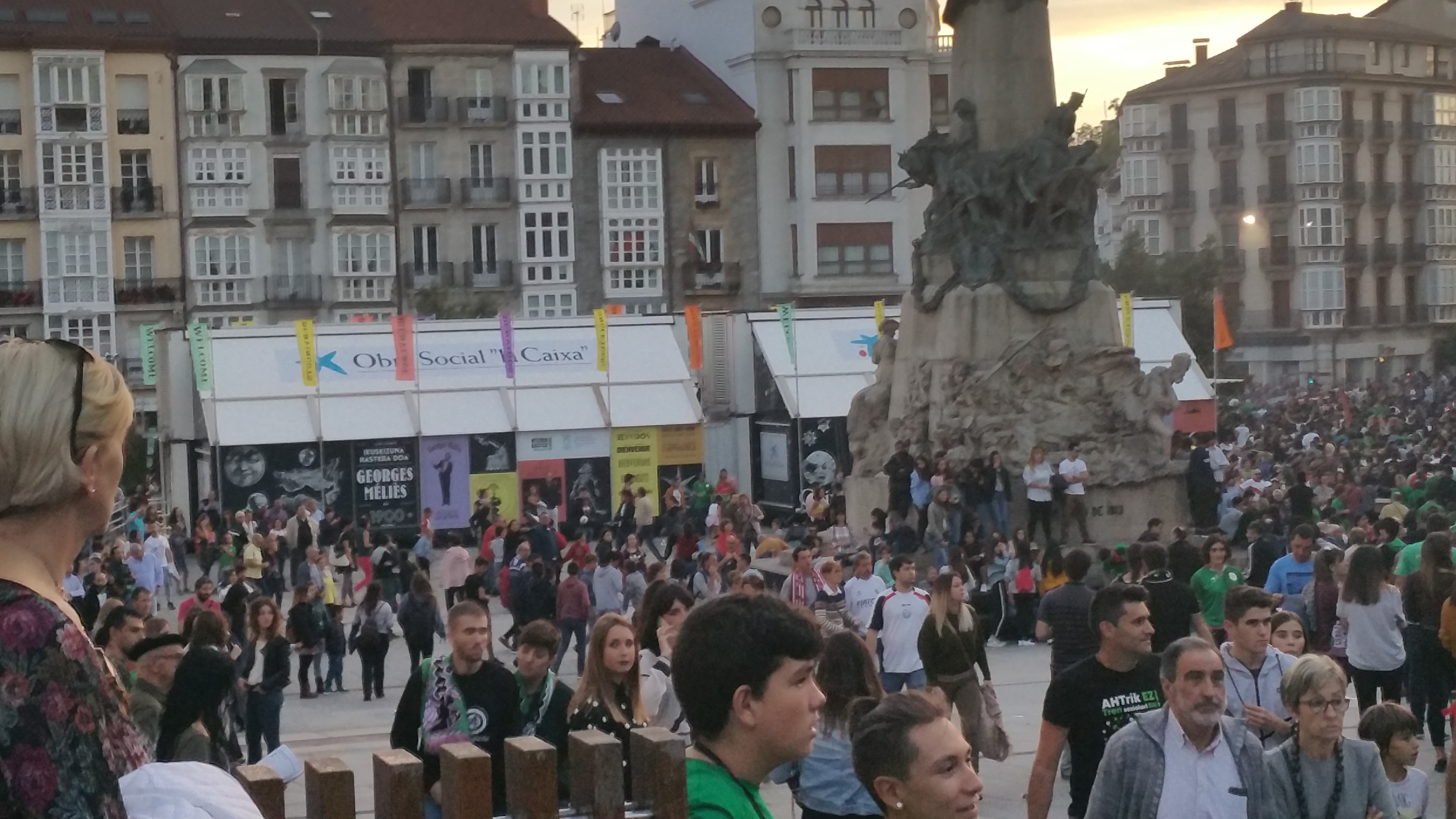


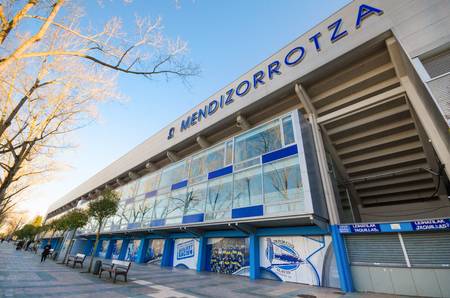

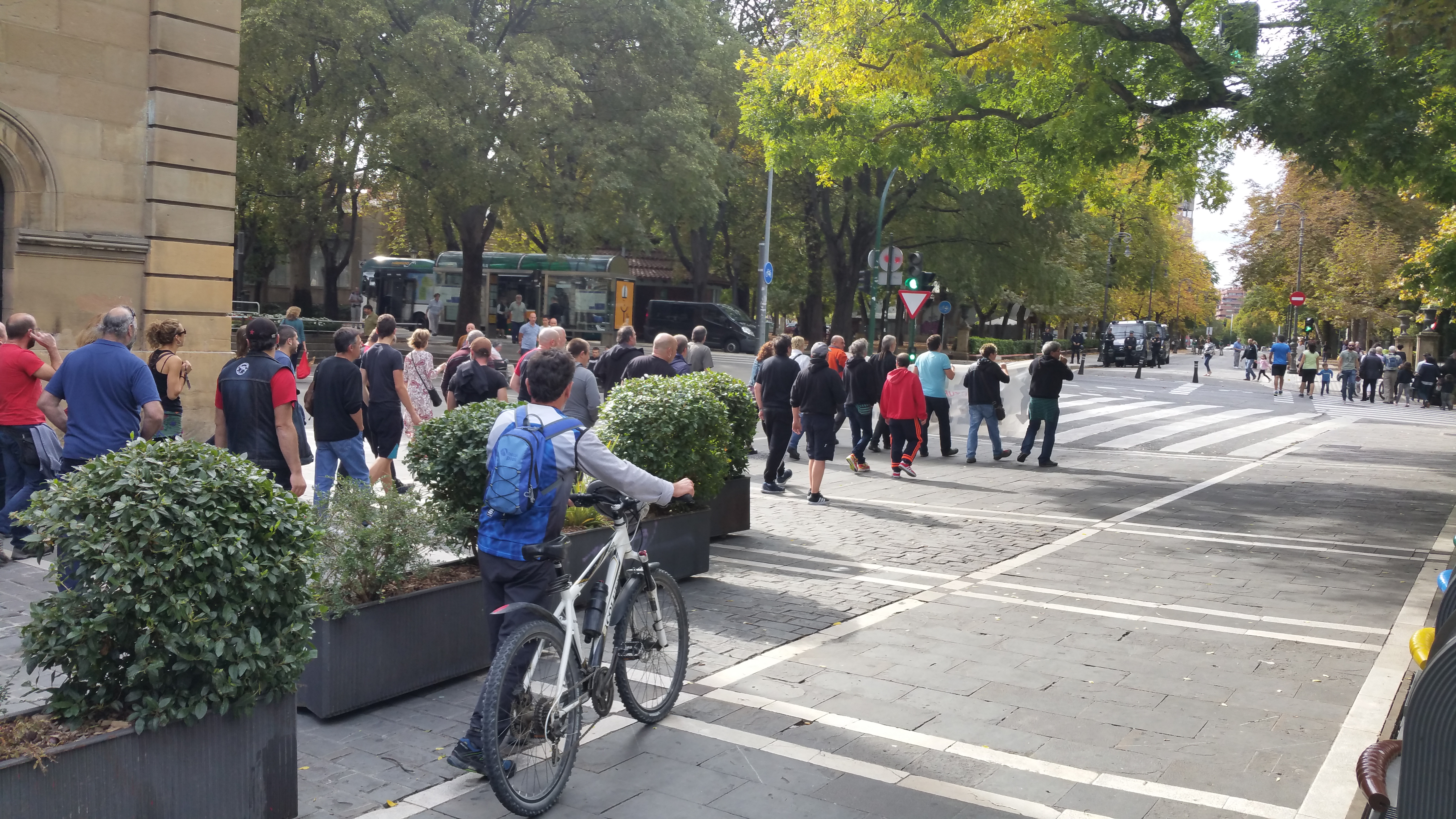

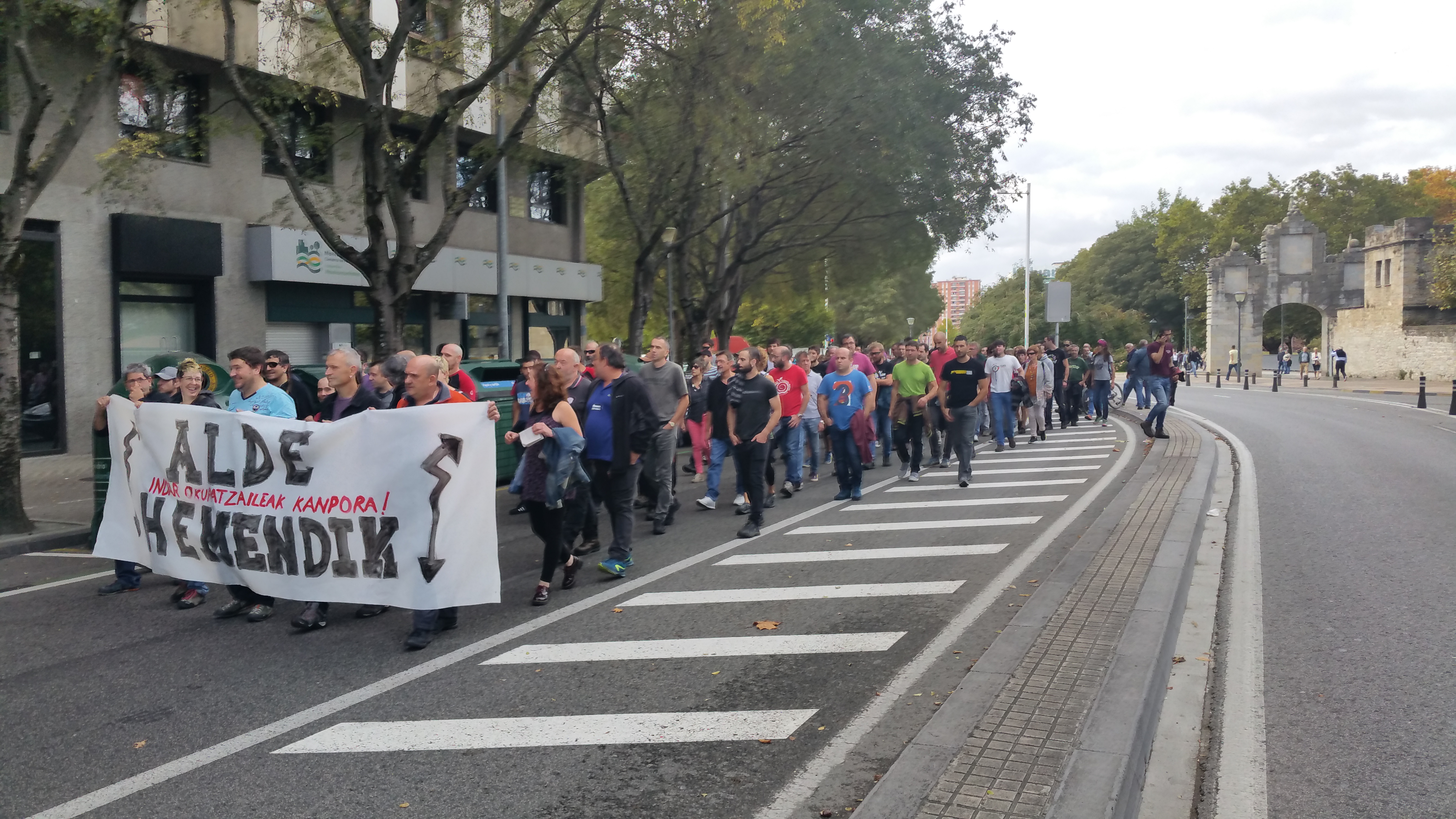
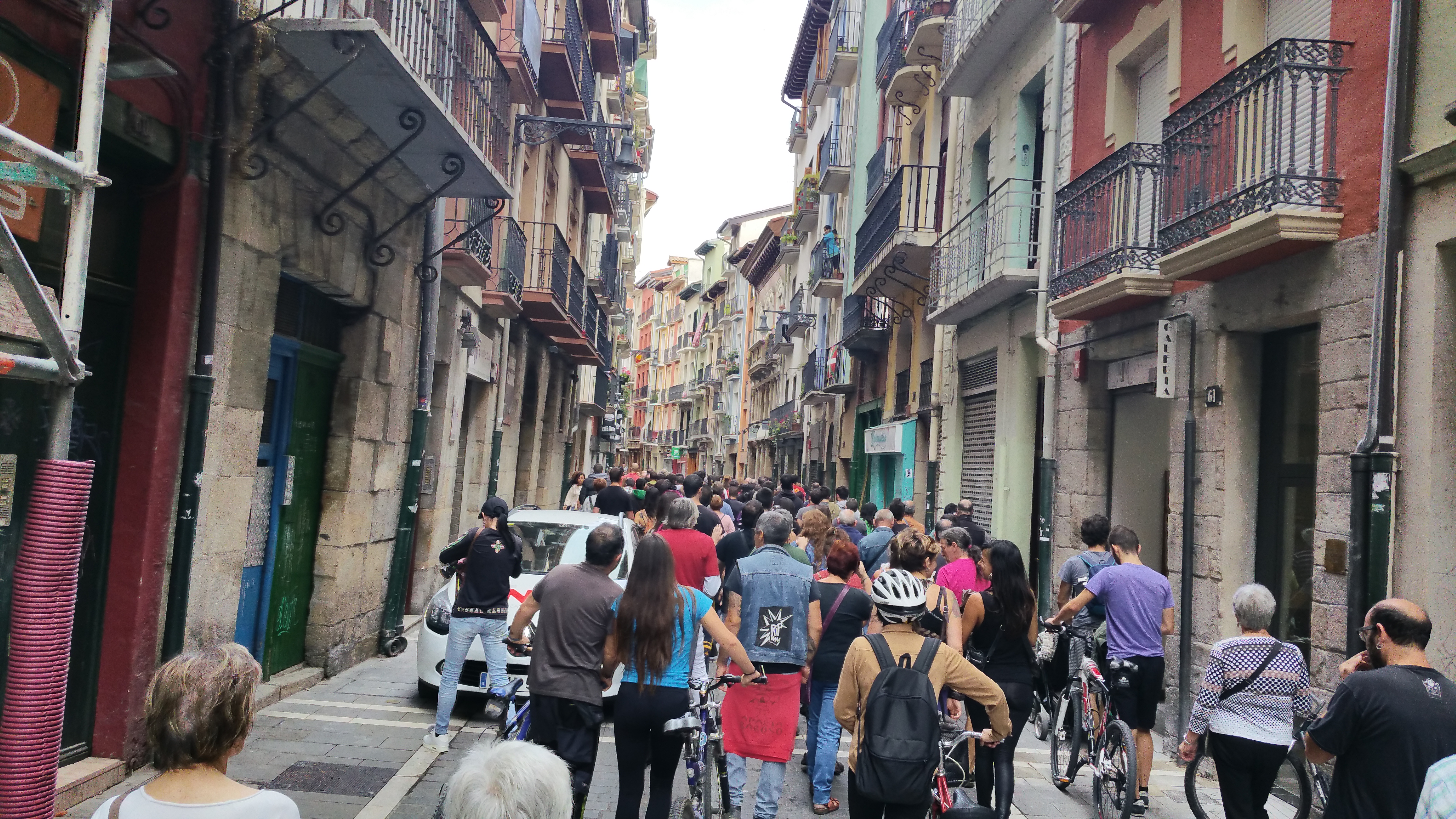
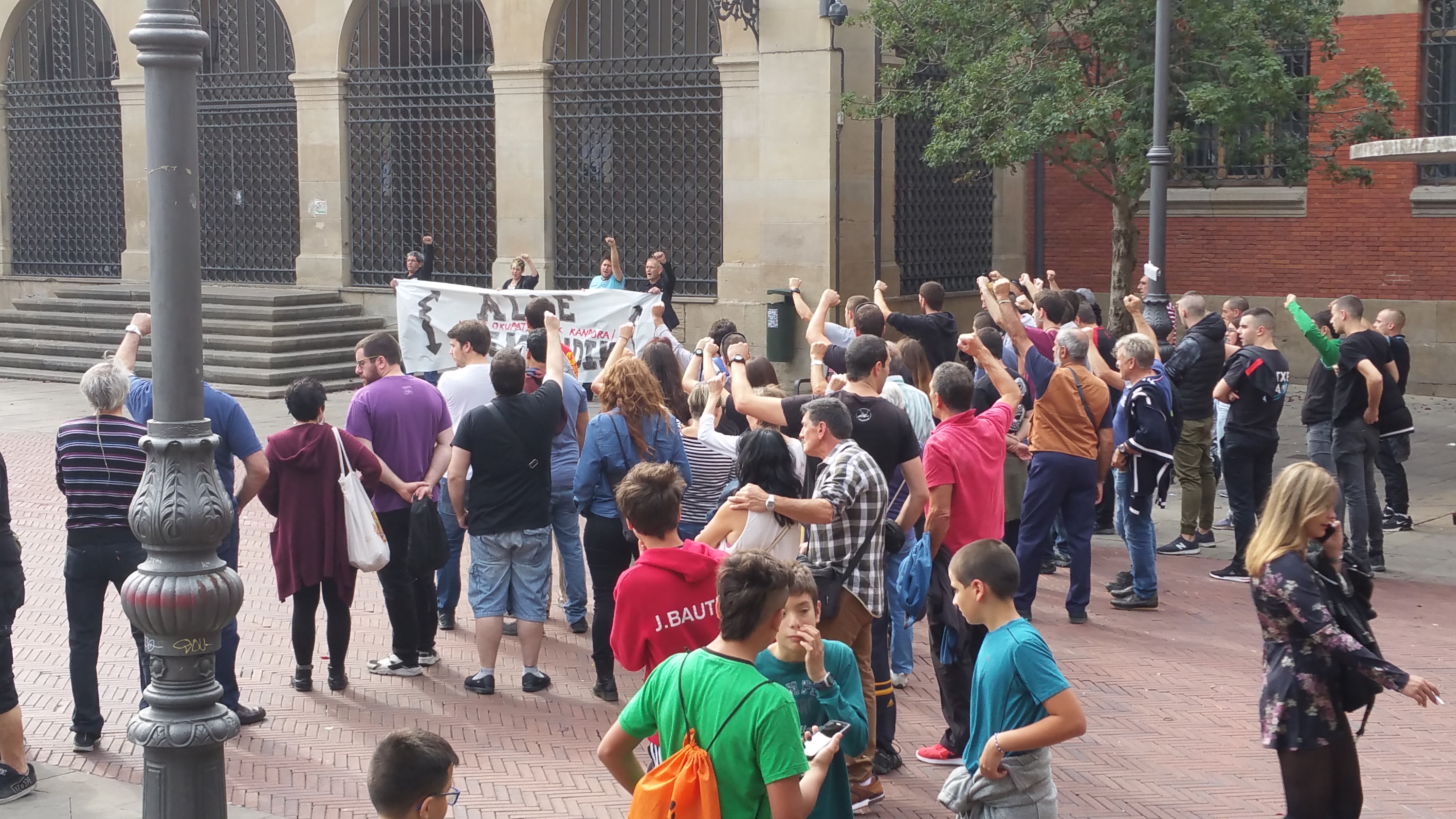


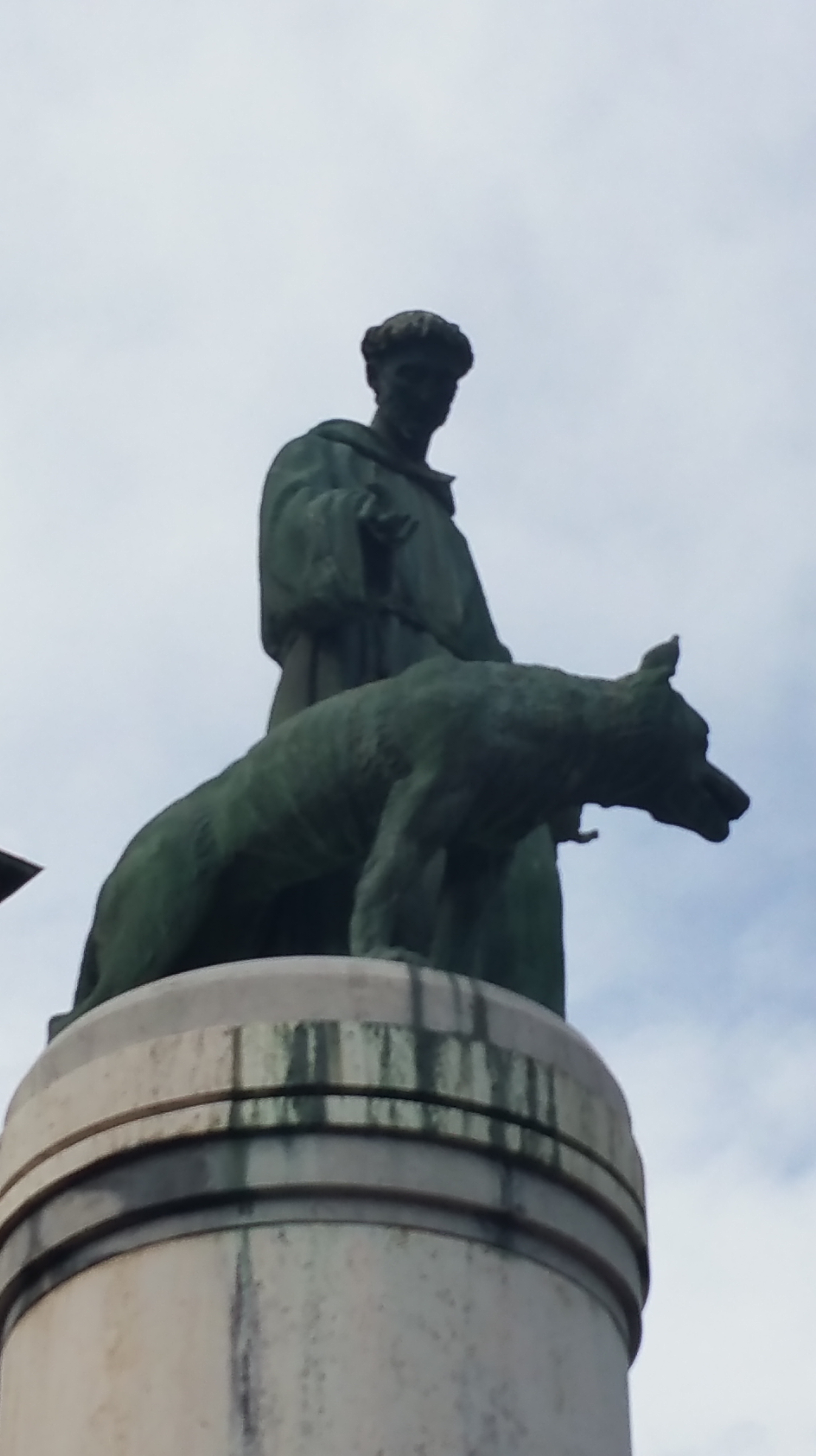
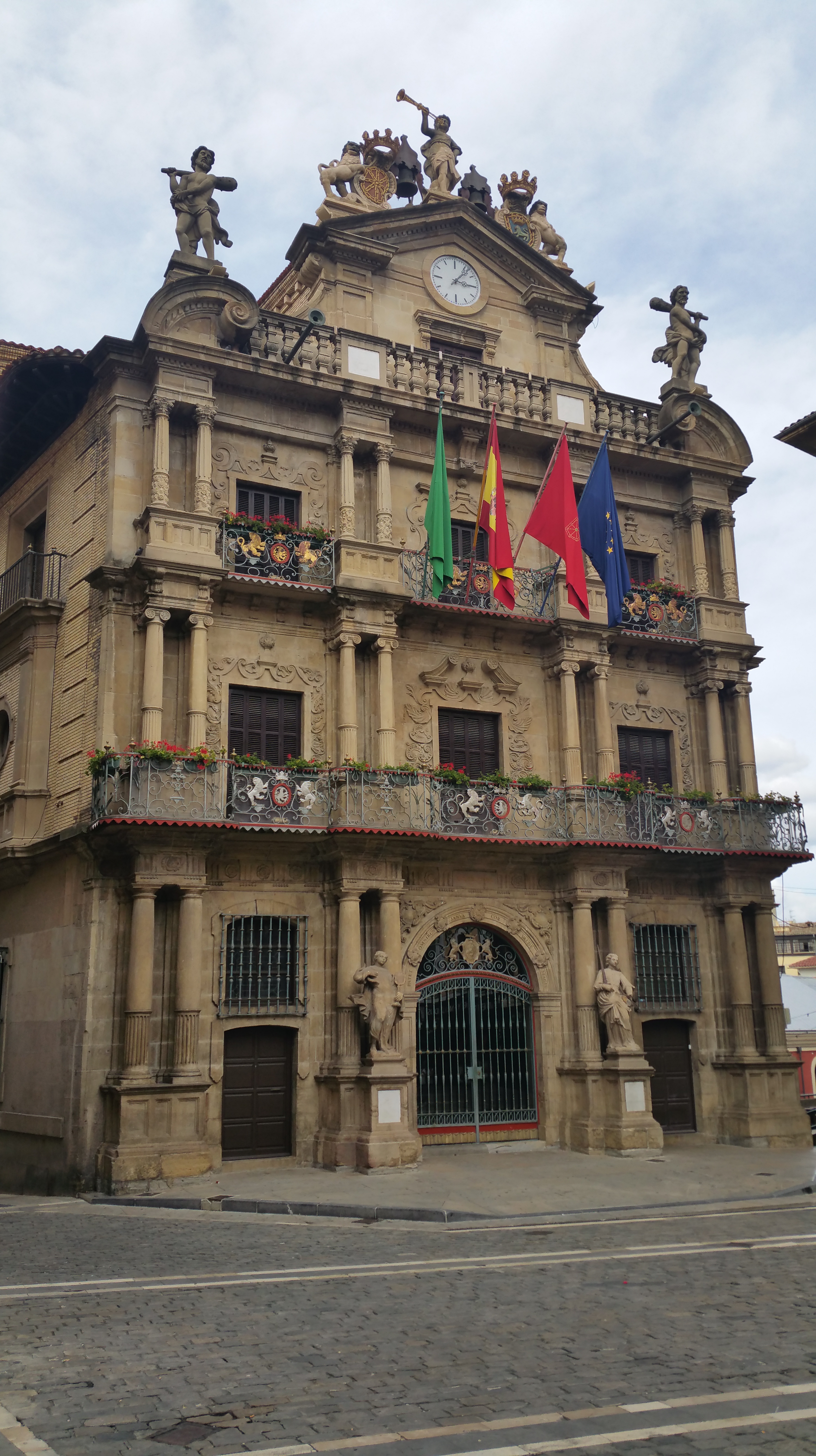
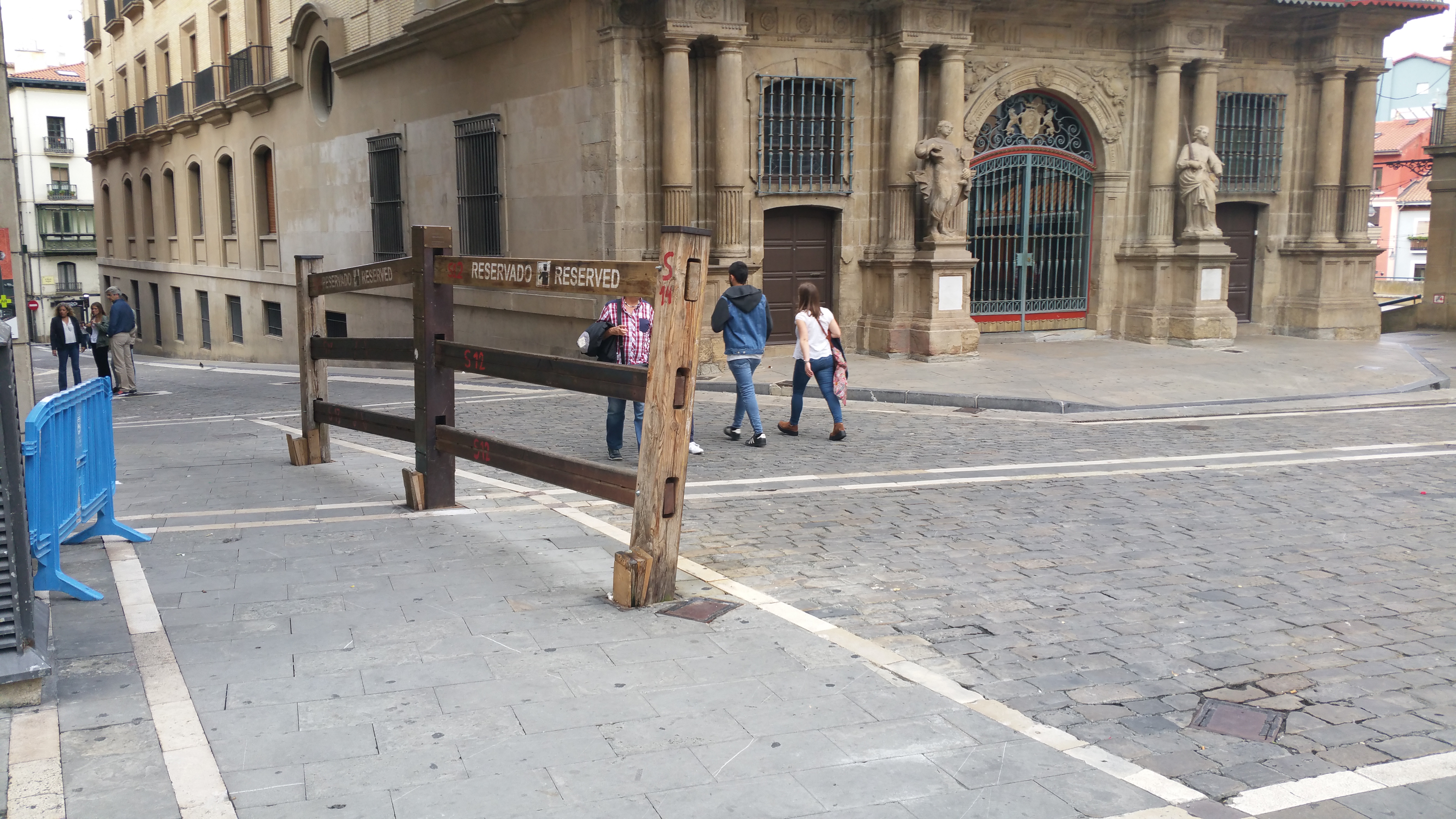


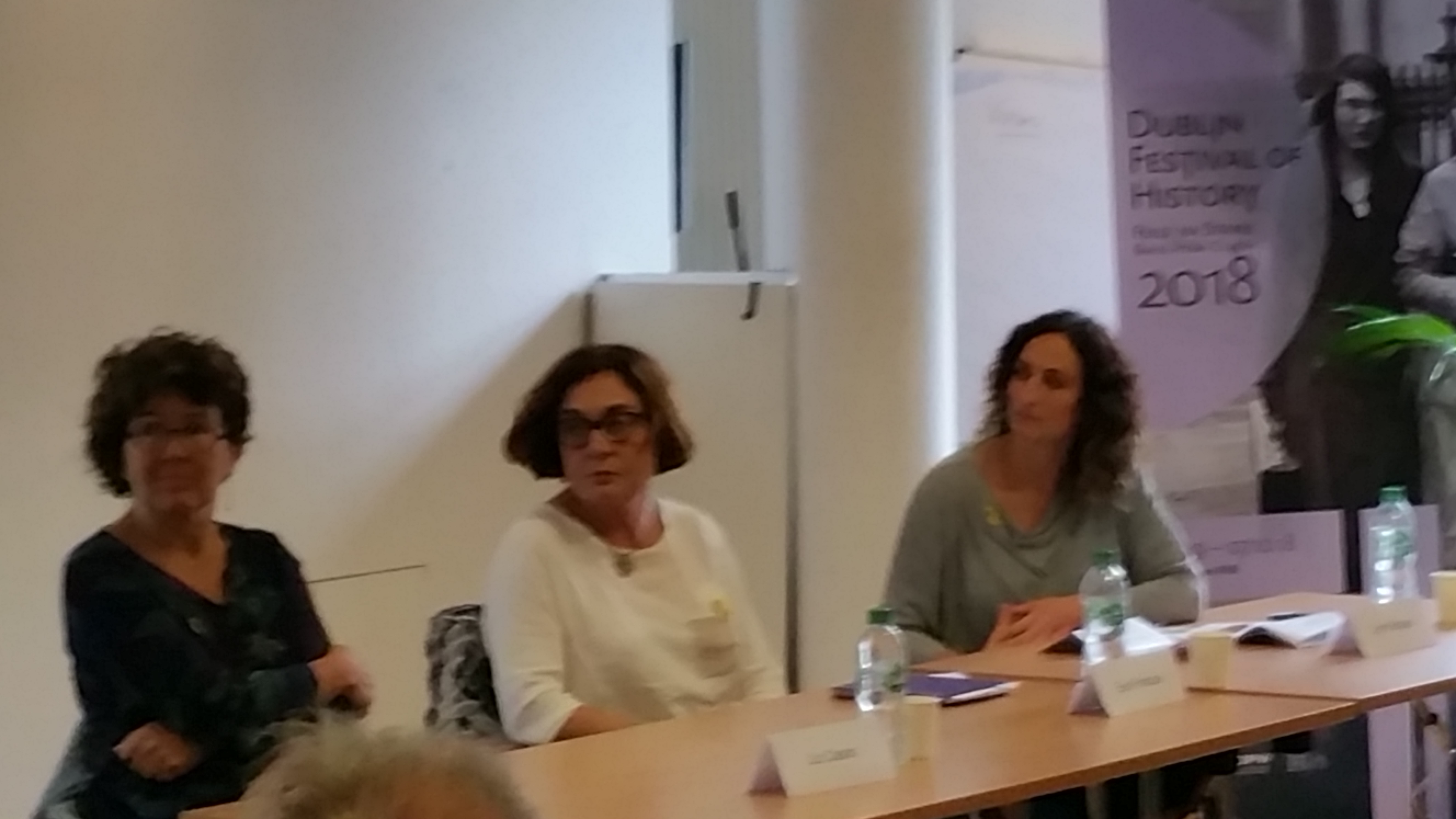


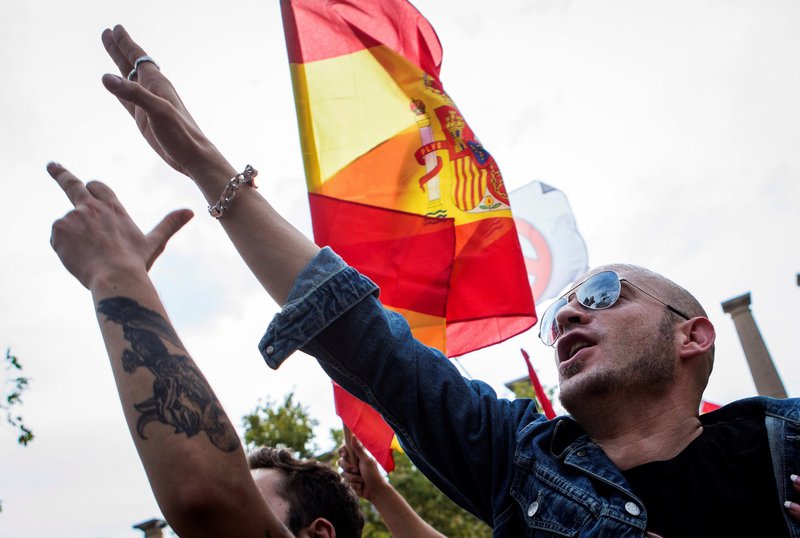


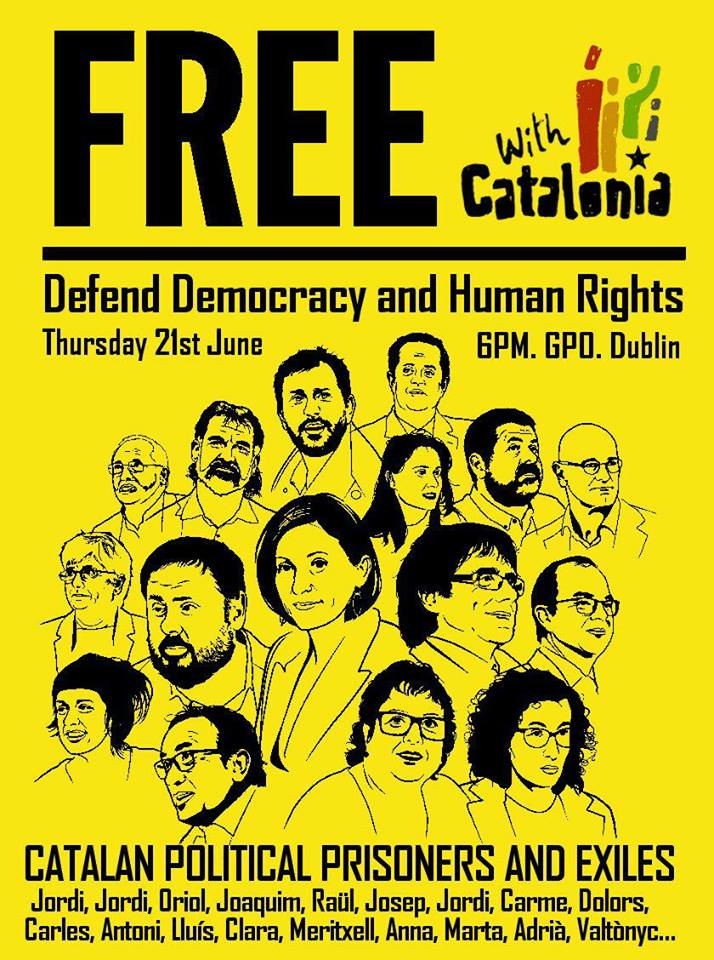
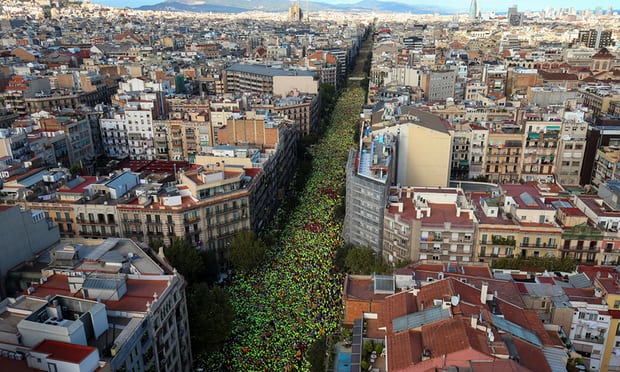
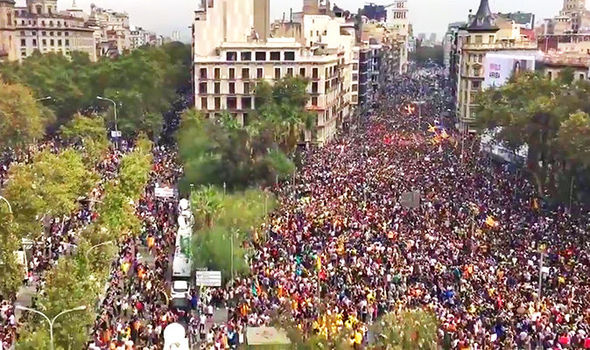

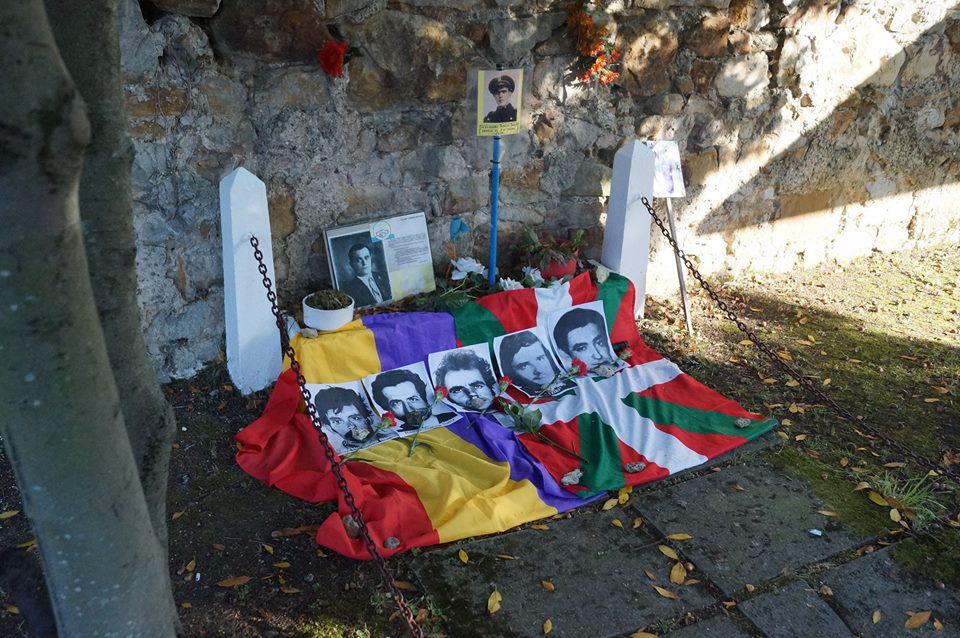
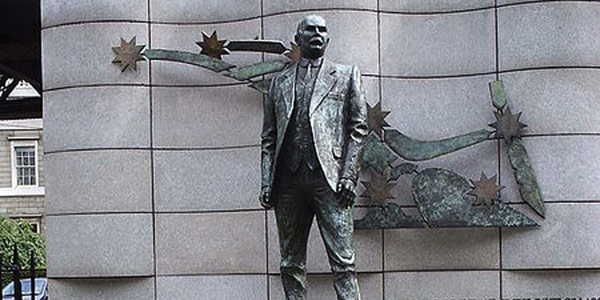
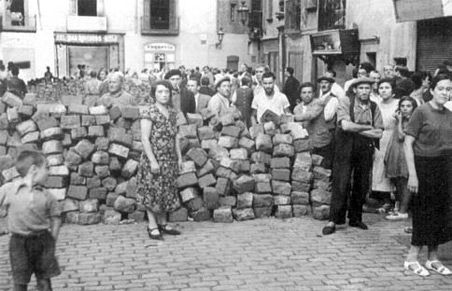
 rebelbreeze