THE BLOOD-RED POPPY – remembrance or militarisation?

Diarmuid Breatnach (edited from article posted in Rebel Breeze 2014)

(Reading time: 6 mins.)

Part 1 – who and what gets ‘remembrance’

In the lands under the direct dominion of England, i.e. the “United Kingdom”, and in some others that are under its influence, the dominant class calls the people to join in a cultural event in November which they call “Remembrance”.

The organisation fronting this event in the ‘UK’ is the Royal British Legion and their symbol for it (and registered trademark) is the Red Poppy, paper or fabric representations of which people are encouraged to buy and display — and indeed often pressured to wear.

In some places, such as the BBC for personnel in front of the camera,  they are forced to wear them. In many schools and churches throughout the ‘UK’, Poppies are sold and wreaths are laid at monuments to the dead soldiers in many different places.

Prominent individuals, politicians and the media take part in a campaign to encourage the wearing of the Poppy and the participate in the ‘Festival of Remembrance’ generally and of late, to extend the Festival for a longer period.

High points in the ‘Festival’ are the Royal Albert Hall concerts on the Saturday and the military and veterans’ parades to the Cenotaph memorial in Whitehall, London, on “Remembrance Sunday”. (Also a focus for commemorations by the British far-Right and fascists).

“The concert culminates with Servicemen and Women, with representatives from youth uniformed organizations and uniformed public security services of the City of London, parading down the aisles and on to the floor of the hall. There is a release of poppy petals from the roof of the hall.1

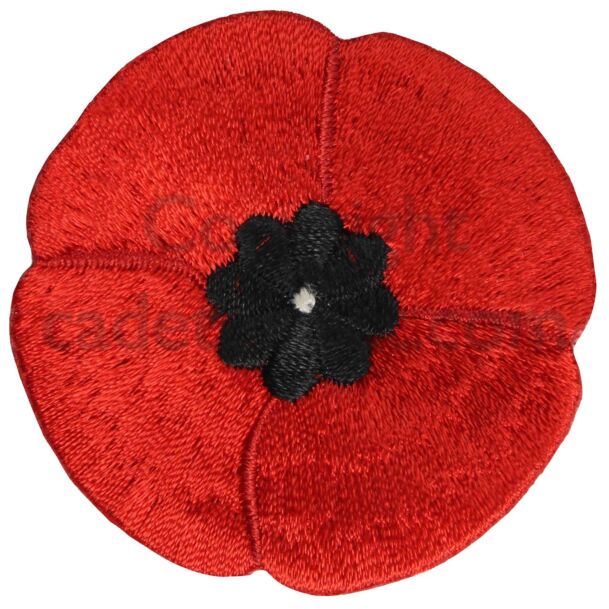
An embroidered version of the poppy emblem (Sourced: Internet)

“The evening event on the Saturday is the more prestigious; tickets are only available to members of the Legion and their families, and senior members of the British Royal Family (the Queen, Prince Phillip, the Prince of Wales, the Duke of York [not this year!] and the Earl of Wessex). 2

“The event starts and ends with the British national anthem, God Save the Queen3 (and) is televised. Musical accompaniment for the event is provided by a military band from the Household Division together with The Countess of Wessex’s String Orchestra.”4

The money raised from the sale of the “Poppies” and associated merchandise is said to be used to support former military service people in need and the families of those killed in conflict. On the face of it, military and royal pomp apart, the Festival may seem a worthy charitable endeavour.

Also one which commemorates very significant historical events — therefore a festival which at the very least, one might thing, should not be opposed by right-thinking and charitable people.  

Yet the main purpose of this festival and the symbol is neither remembrance nor charity but rather the exact opposite: to gloss over the realities of organised violence on a massive scale and to make us forget the experience of the world’s people of war.

And to prepare the ground for recruitment of more people for the next war or armed imperialist venture – and of course more premature deaths and injuries, including those of soldiers taking part.

Video and song “On Remembrance Day” from Veterans for Peace lists British conflicts (including Ireland) and condemns the Church of England for supporting the wars, calling also on people to wear the White Poppy (see Part 3 for the White Poppy)

Partial Remembrance – obscuring the perpetrators and the realities of war

The Royal British Legion is the overall organiser of the Festival of Remembrance and has the sole legal ‘UK’ rights to use the Poppy trademark and to distribute the fabric or paper poppies in the ‘UK’.

According to the organisation’s website, “As Custodian of Remembrance” one of the Legion’s two main purposes is to “ensure the memories of those who have fought and sacrificed in the British Armed Forces live on through the generations.”

By their own admission, the Legion’s “remembrance” is only to perpetuate the memories of those who fought and sacrificed in the British Armed Forces – it is therefore only a very partial (in both senses of the word) remembrance. More recently it tries to hide this exclusivity.5

It is left to others to commemorate the dead in the armies of the British Empire and colonies which Britain called to its support: in WWI, over 230,500 non-‘UK’ dead soldiers from the Empire and, of course, the ‘UK’ figure of 888,246 includes the 27,400 Irish dead.  

Cossack soldier volunteers WWI. Imperial Russia was an ally of Britain and France; the war was one of the causes of the Russian Socialist Revolution 1917. The following year, the war ended. (Image sourced: Internet)

The Festival excludes not only the dead soldiers of the British Empire and of its colonies (not to mention thousands of Chinese, African, Arab and Indian labourers employed by the army) but also those of Britain’s allies: France, Belgium, Imperial Russia, Japan, USA … and their colonies.

No question seems to arise of the Festival of Remembrance commemorating the fallen of the “enemy” but if the festival were really about full “remembrance”, it would commemorate the dead on each side of conflicts.

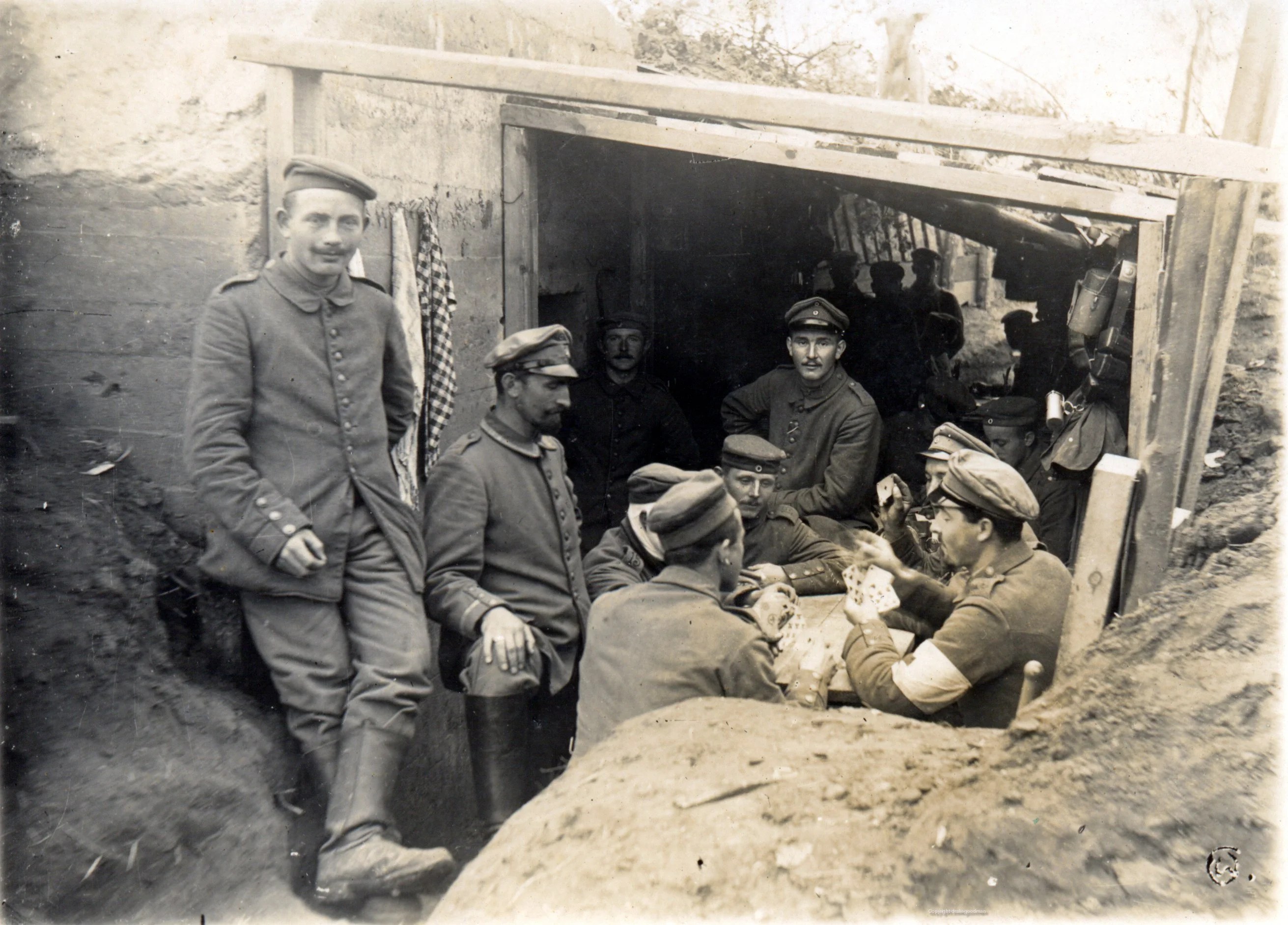
German soldiers playing cards during WWI. Photos of Germans in WWI more readily available show them wearing masks and looking like monsters. (Photo sourced: Internet)

That would particularly be appropriate in WWI, an imperialist war in every respect.  But of course they don’t do that; if we feel equally sorry for the people of other nations, it will be difficult to get us to shoot, bomb or stab them in some future conflict.

A real festival of remembrance would commemorate too those civilians killed in war (seven million in WWI), the percentage of which in overall war casualty statistics has been steadily rising through the last century with increasingly long-range means of warfare.

Very recently, the Royal Legion has tried to claim that the “acknowledge innocent civilians who have lost their lives in conflict” but add “and acts of terrorism.” Since we know that that ‘terrorism’ is a highly politicised word and for imperialists has mostly meant resistance struggle, that is hardly welcome.

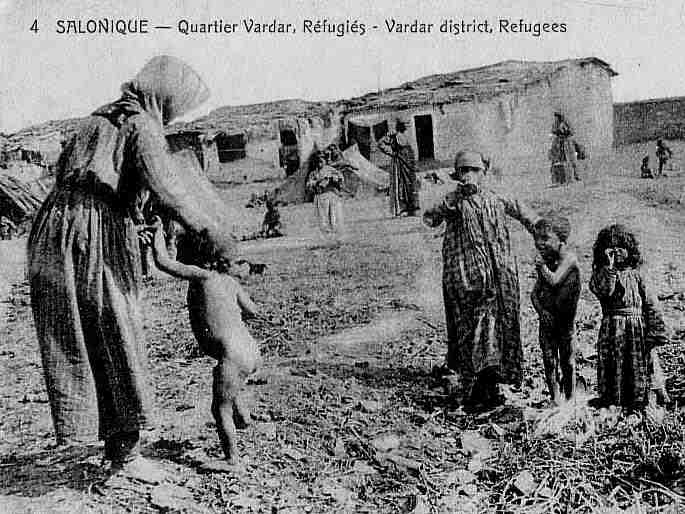
Civilian war refugees in Salonika, NW Greece, WWI (Photo sourced: Internet)

Civilians in the First World War died prematurely in epidemics and munitions factory explosions as well as in artillery and air bombardments, also in sunk shipping and killed in auxiliary logistical labour complements in battle areas.

And through hunger, as feeding the military became the priority in deliveries and as farmhands became soldiers.

In WWII 85,000,000 civilians died in extermination camps or forced labour units, targeting of ethnic and social groups, air bombardments, as well as in hunger and disease arising from the destruction of harvests and infrastructure.

Air bombardments, landmines, ethnic targeting and destruction of infrastructures continue to exact a high casualty rate among civilians in war areas.

One admittedly low estimate up to 2009 gave figures of 3,500 dead in Iraq during the war and aftermath and another 100,000 dead from western trade sanctions, along with 32,000 dead civilians in Afghanistan.

Another review up to 2011 gave a figure of 133,000 civilians killed directly as a result of violence in Iraq and “probably double that figure due to sanctions”.6

The number of civilians injured, many of them permanently disabled, is of course higher than the numbers killed.  Most of those will bring an additional cost to health and social services where these are provided by the state and of course to families, whether state provision exists or not.

Real and impartial “remembrance” would include civilians but not even British civilians killed and injured are included in the Festival of Remembrance, revealing that the real purpose of the Festival is to support the existence of the armed forces and their activities.7

And contributing at the same time to a certain militarisation of society and of the dominant culture.  

If the Festival were really about “remembrance”, they would commemorate the numbers of injuries and detail the various types of weapons that caused them.  

But that might reflect unfavourably on the armaments manufacturers, who run a multi-billion industry in whatever currency one cares to name, so of course they don’t.  

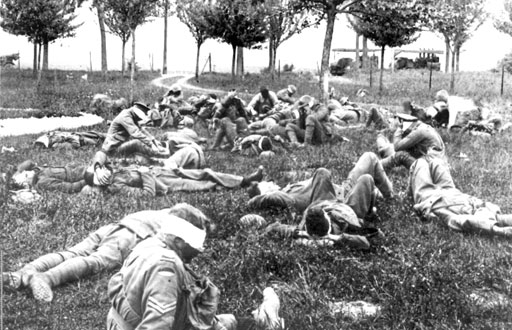
Australian soldiers who survived gas attack but injured by it awaiting hospitalisation, Northern France, WWI 1916. (Photo sourced: Internet)

And if really concerned about death and injury in war, they would campaign to end such conflict – for an end to imperial war.

But then how else would the various imperial states sort out among themselves which one could extract which resources from which countries in the world and upon the markets of which country each imperial state could dump its produce?

So of course the Royal British Legion doesn’t campaign against war. That’s not its role. Quite the opposite.

End.
(Parts 2 and 3 to follow).

Note: If you found this article of interest, why not register with Rebel Breeze for free, so that you will be notified by email of subsequent articles. You can de-register any time you wish.

FOOTNOTES:

1Sourced from the British Legion’s website in 2014, its WW1 centenary year.

2Ibid.

3Now of course God Save the King.

4Sourced from the British Legion’s website in 2014.

5 “We unite across faiths, cultures and backgrounds to remember the service and sacrifice of the Armed Forces community from United Kingdom and the Commonwealth. We will remember them.” https://www.britishlegion.org.uk/get-involved/remembrance/about-remembrance

6 Civilian war deaths Iraq and Afghanistan to 2009 http://www.foreignpolicy.com/posts/2009/11/30/why_they_hate_us_ii_how_many_muslims_has_the_us_killed_in_the_past_30_years Civilian war deaths Iraq to 2011: http://costsofwar.org/article/iraqi-civilians

7“shoulder to shoulder with our armed forces” from the British Legion’s website.

“WHEN MY COUNTRY TAKES ITS PLACE AMONG THE NATIONS OF THE EARTH”

Diarmuid Breatnach

(Reading time: 3 mins.)

Dublin Political History Tours Facebook page reminds us of the 20th September anniversary of the public execution on of “Bold Robert Emmet, the darling of Erin”, leader of the unsuccessful Republican insurrection in Dublin on 23rd July 1803.

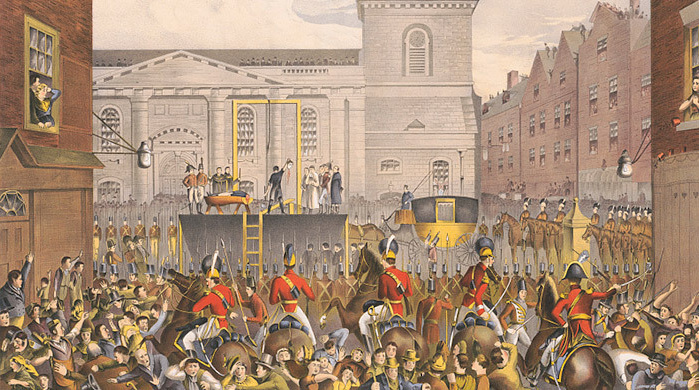
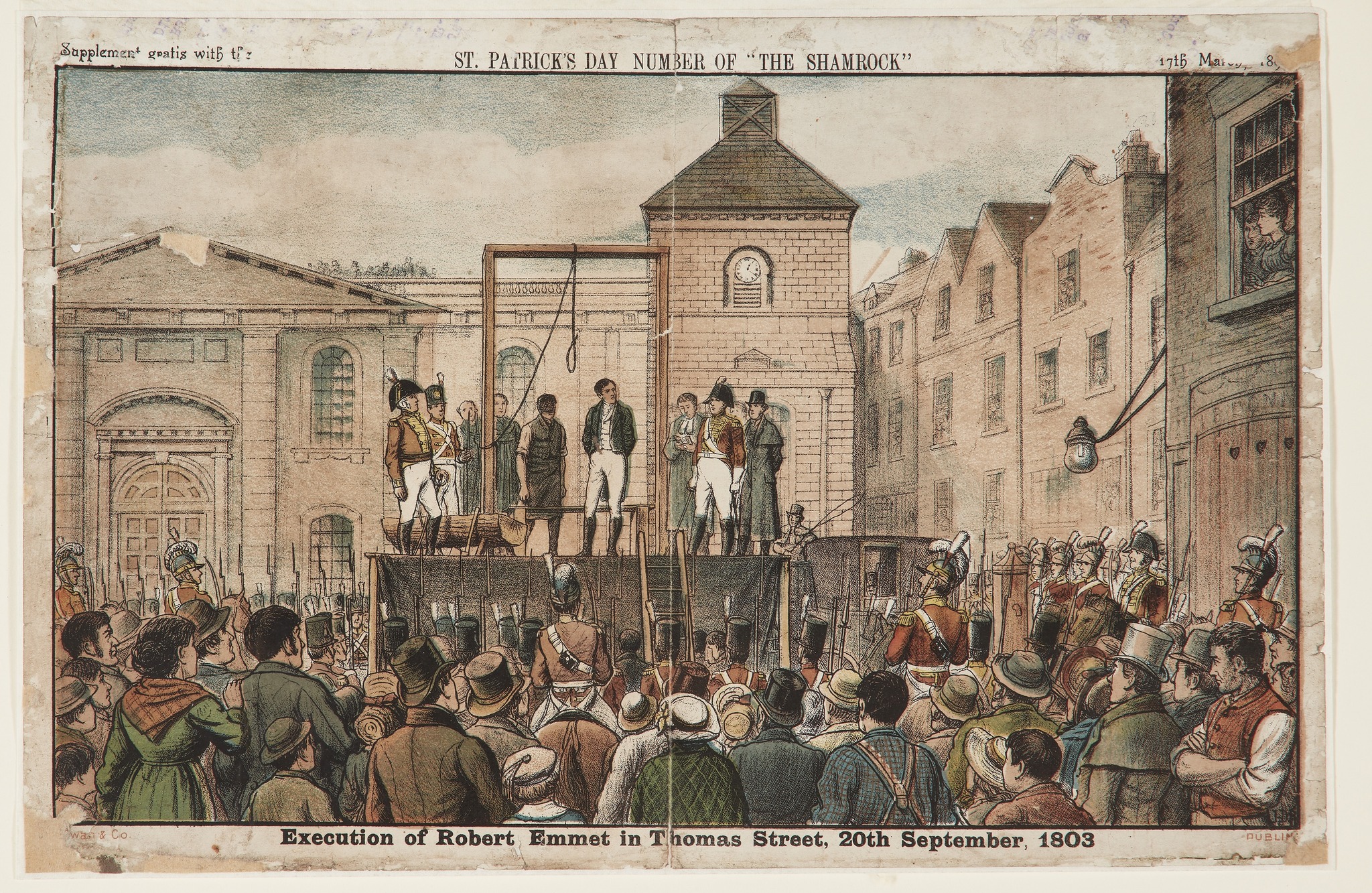
Coloured drawing: The executioner holds up Robert Emmet’s head to the crowd, sections of which demonstrate their repugnance of the act and are repressed English soldiers on horseback. (Sourced: Internet)

I reproduce the Dublin Political History Tours text (reformatted for R. Breeze):

On Saturday we passed by the anniversary of the execution by the English occupation forces of Robert Emmet, United Irishman. Emmet had been condemned to death for planning an insurrection for Irish self-determination which the English Occupation called ‘treason’.

Leaving behind in Kilmainham Gaol his comrade Anne Devlin, who had endured torture and death of family members without giving the authorities any information, Emmet was taken to the front of St. Catherine’s Church.2

(This building is) on Thomas Street in Dublin’s Liberties area on the west side of the city centre. The site chosen was sending a message to the populace of the area that had nationalist and republican sympathies.

There, in front of a huge crowd and many soldiers, Emmet was hanged and then beheaded, the executioner holding up the dripping head to the crowd. His body was later returned to the Gaol before being later buried in Bully’s Acres in the grounds of the Royal Hospital Kilmainham.

Emmet’s corpse was later disinterred in secret and reburied elsewhere by friends or family and, despite a number of sites being speculated, its current location is unknown.

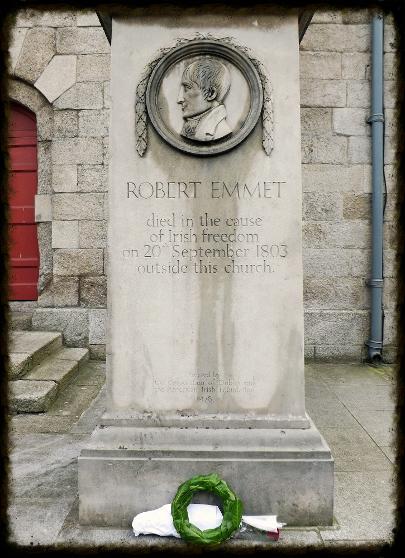
There is a monument to the execution inside the grounds of the St. Catherine’s building and a stone plaque on the wall outside it.

The monument inside the ground at the front of St. Catherine’s Church, Thomas Street, Dublin. (Source: Kilmainham Tales)

Robert Emmet was very popular in Ireland at the time and his memory is still. A statue in his honour stands in Dublin’s Stephens Green, a replica of another two at locations in the United States.

Anne Devlin endured three years in Kilmainham Gaol and according to Richard Madden (1798 – 5 February 1886), chronicler of the United Irishmen who sought her out, was followed everywhere in public by police.

(who were) observing anyone who she spoke to, as a result of which many were afraid to speak to her. Her body lies in Glasnevin Cemetery.

“Bold Robert Emmet” is a traditional ballad in the martyr’s honour and “Anne Devlin” also has a much more recent song in hers by Pete St.John.

(quoted passages end)

In the 1916 Proclamation of Independence, “the right of the people of Ireland to the ownership of Ireland” is proclaimed and that “six times in the past 300 years they have asserted it in arms”, probably referring to insurrections of 1641, 1689, 1798, 1803, 1848 and 1867.3

Historians have mostly dismissed the 1803 uprising as never likely to succeed but a minority have rated the preparations highly, including the innovations of signal rockets and folding pike handle for concealed personal carrying.

RH Madden, the first historian of the United Irishmen was of the opinion that the insurrection attempt was engineered by the English Occupation’s administration in Dublin Castle in order to justify continued repression of Irish republicanism and to eliminate some leaders.

Generally historians have tended not to give much credence to Madden on that issue but it is certain that the Occupation had a network of spies in operation in Ireland and that some had penetrated Emmet’s conspiracy.

Emmet on the scaffold with St. Catherine’s Church behind, the executioner beside him, the crowd in the street and many English soldiers, on foot and on horseback. The illustration was employed by Dublin Political History Tours but easily sourced on the Internet.

However it is not for the manner of the 1803 insurrection that Emmett has been fondly remembered in Ireland to this day 123 years later – and abroad for decades after his death4 – but for the calm manner in which he faced his enemies, including his executioner and for his eloquence at his trial.

Past insurrections contain lessons for us today and a serious evaluation should be attempted, perhaps with a number of submissions from historians of different opinions on the matter, to deal with questions around Emmet’s return from France and the planning of the insurrection in Ireland,.

For us today however, whether Republicans or more generally anti-colonialists and anti-imperialists, it is also necessary to revere the memory of revolutionary action for a democratic Irish Republican and to uphold his and Anne Devlin’s spirit of defiance in resistance.

End.

Note: If you found this article of interest, why not register with Rebel Breeze for free, so that you will be notified by email of subsequent articles. You can de-register any time you wish.

Statue monument of Robert Emmet in Washington DC, a copy of which stands in St. Stephens Green, looking across the road to his erstwhile home and other copies stand in Emmetsburg, Iowa and Golden Gate Park, San Francisco, California. Those in the USA were all cast by the artist Jerome Connor between 1916 and 1919. (Photo sourced: Internet)
Statue monument in Rathfarnham dedicated to Anne Devlin from Wicklow, a member of the United Irishmen conspiracy, tortured and jailed but never gave her captors any information. Sculptor: Clodagh Emoe (Gracies, Maria, for bringing this to my attention).

FOOTNOTES

1From Emmet’s famous speech from the dock of the courthouse in Green Street that not until then should his epitaph be written. I have no doubt that Emmet meant “nation-states of the world” because Ireland was in his time more than what we would understand today from the vague term of “country” – it was clearly, though under foreign occupation, already a nation with its own unique culture and a long history. She has yet to take that place to which Emmet referred and aspired for her.

2Note that was the Anglican St. Catherine’s Church, as a Catholic St. Catherine’s is also located not far away on Meath St. The Anglican church was closed in the 1960s but later reopened and reconsecrated as an Anglican Church. The interior seems very untypical of Anglican churches. Emmet was raised in the Anglican faith.

3Believed to refer to, in sequence: the Irish and Norman Irish clans in the Confederation’s uprising, the Williamite War’s, United Irishmen’s, Robert Emmets’, Young Irelanders’, the Fenians’. Coincidentally, the large monument to uprisings in Ireland erected by the National Graves Association in the St. Paul’s section of Glasnevin Cemetery also includes only six dates but they are of Republican risings only, beginning with 1798 and ending with 1916.

4I read somewhere that even in England Radicals would read Emmet’s speech as a high point of their events including formal dinners.

SOURCES

https://www.facebook.com/profile.php

BARE-FACED EFFRONTERY FROM EUROPEAN UNION’S KALLAS

Diarmuid Breatnach

(Reading time: 3 mins.)

EU Vice-President Kallas referred to a number of state leaders meeting in China as ‘autocratic’, accusing them of challenging the ‘rules-based order’ of the Western states. But what is that ‘order’ and what are the ‘rules’ upon which it is based?

Kallas, in the course of her mostly economic briefing on behalf of the EU: While Western leaders gather in diplomacy, an autocratic alliance is seeking a fast track to a new world order. Looking at President Xi standing alongside the leaders of Russia, Iran, and North Korea in Beijing today.

These are not just anti-Western optics; this is a direct challenge to the international system built on rules. And it is not just symbolic: Russia’s war in Ukraine is being sustained by Chinese support. These are realities that Europe needs to confront.1 

Leaders of states to which Kallas objected (without North Korea’s), L-R: Vladimir Putin, Xi Jianpeng and Masoud Pezeshkian, leaders respectively of Russia, China and Iran at the Victory of Japan (WWII) parade in Beijing following the recent Shanghai Cooperation Organisation conference. (Photo: CNN)

Who are the ‘western leaders’ to whom Kallas is referring? Presumably they are leaders of the “Western states”, a term usually understood to describe a bloc of the European Union, UK, the United States, Canada, Australia and New Zealand.

A number of the European Union collection of states are imperialist and some of those are generally considered to be the leading members of the whole EU, in particular Germany and France.

Most of the European states also have a recent record of colonialism and some still rule those external colonies in part or wholly, viz: UK, France, Spain.

In addition, some have practised internal colonisation, forcing nations to submit to their integration within and submission to the particular European state; in this regard there should be added Italy and Belgium in addition to the three examples above.2

The principal non-European states of the western alliance are all European settler colonies in origin, all having practised genocide upon the indigenous people, all with a record of racism towards their indigenous and other people and one, the USA, having stocked huge slave plantations.

Given the record above, it is not surprising that these states also have a record of colonial wars and even wars upon their neighbours. In WWI, Germany and Austria fought the UK and its Dominions of Australia, New Zealand and Canada, along with France, Belgium and the USA.

In WWII, Germany and Austria with some allied states went to war with most of the remaining states of Europe and the USA and countries further afield in North Africa and the Middle East.

SINCE WWII, the UK3 has fought 41 external conflicts and a three-decades war internally (against the Resistance in a colonised part of Ireland);4 France fought 34 external conflicts5 and the USA 57.6 The vast majority of these conflicts have been fought in lands outside Europe or the US.

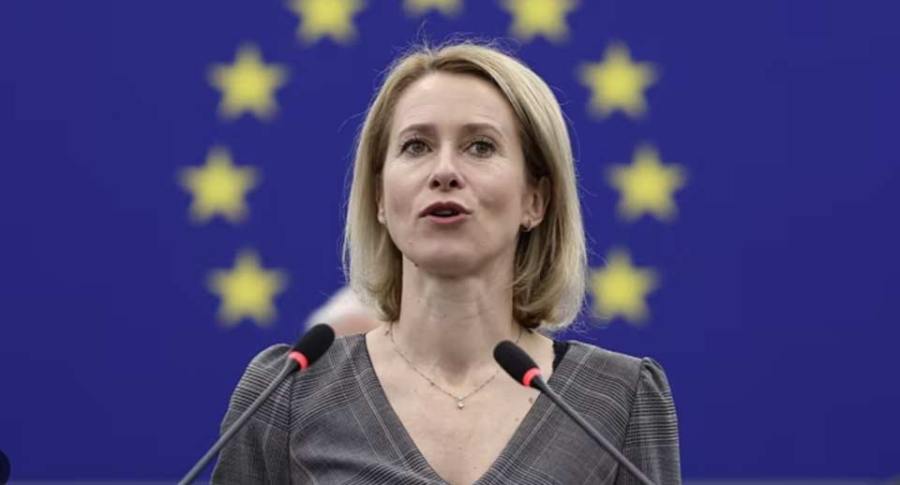
Katja Kallas, Vice-President European Commission, who sanctified Western states in her statement and looking saintly in this photo. (Photo sourced: Internet)

So, on past historical threat record, how do these “autocratic states” compare to the states Kalas complains of? They don’t even come close, of course. Ah, but wait, we are told that they do things by rulesthey are part of a “rule-based order”, which those “autocratic states” are not, apparently.

The rules under which the Western states operate for decades have not prevented them supporting – including in many cases with actual arms — a European settler colony carrying out apartheid, constant war crimes and recently genocide against the indigenous people in Palestine.

The rules have allowed these Western states, as distinct from “autocratic states”, to censor news and twist media reporting into Zionist propaganda, to forbid Palestine solidarity demonstrations and beat up participants, categorise solidarity actions as ‘terrorism’ and jail Palestine supporters.

The rules have permitted the state hosting the United Nations building to decide who cannot attend; to regularly veto votes of the majority member states; to ignore decisions of international courts and sanction its officials and to have the UN humanitarian agency de-funded and staff killed.7

In fact, we have been taught that this ‘order’ is based on the following rules: Any member of the Western states club can do what it likes so long as a) the club leader, the USA agrees to it and b) the other members of the club don’t take any real practical adverse action (which they haven’t).

End.

FOOTNOTES

SOURCES

https://www.eeas.europa.eu/eeas/college-readout-press-remarks-high-representativevice-president-kaja-kallas_en

1Full text in Sources.

2Arguably Scotland, Wales, Cornwall, Isle of Man and the Six Counties in Ireland are nations or parts thereof colonised and incorporated into its state by England; Brittany, northern Basque Country, Corsica and Pau by France; southern Basque Country, Galicia, Catalan Countries, Andalusia, Asturies by Castille/ Spain; Sicily by Italy …

3The UK includes the nations of Scotland, Wales, Cornwall and part of Ireland, essentially ruled by England and by that understanding the 30 Years War in Ireland was ‘internal’. The Isle of Man is not formally part of the UK but is effectively under its control. France also fought an ‘internal’ war against the Basque national Resistance but that was nothing like the degree of intensity of the British one in the northern Six Counties of Ireland.

4https://en.wikipedia.org/wiki/List_of_wars_involving_the_United_Kingdom

5https://en.wikipedia.org/wiki/List_of_wars_involving_France

6https://en.wikipedia.org/wiki/Lists_of_wars_involving_the_United_States

7https://www.unrwa.org/newsroom/official-statements/unrwa-commissioner-general-gaza-summary-execution-among-more-310-unrwa

A SATURDAY IN DUBLIN: TWO MARCHES AND A CONCERT

Clive Sulish

(Reading time: 4 mins.)

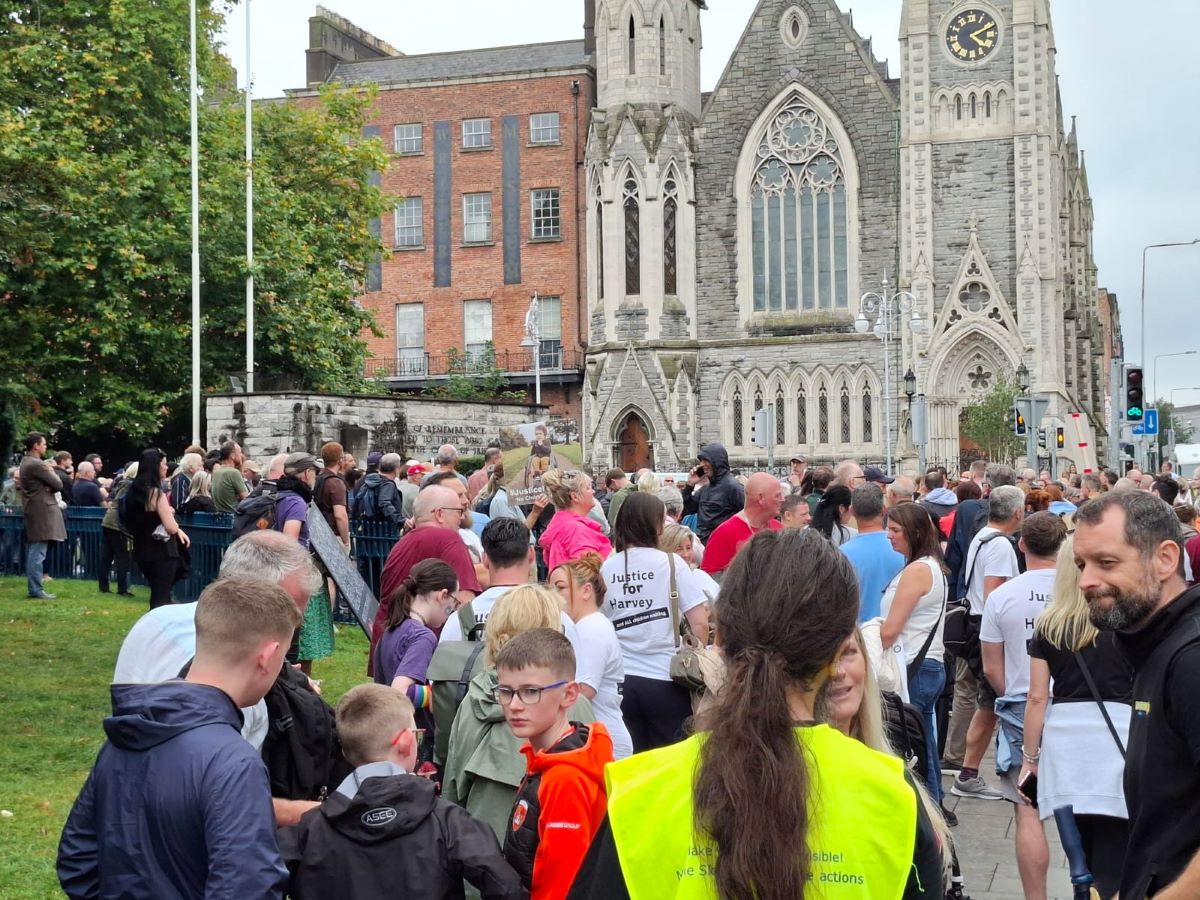
Dublin city centre on Saturday saw two marches scheduled to start at the same time from the Garden of Remembrance, both of which were drenched by heavy showers, as were fans attending the Robbie Williams concert in nearby Croke Park stadium.

The first march to set off was the largest, the Harvey Morrison protest, the Hunger Strike Commemoration organised by Dublin Independent Republicans waiting for the space to clear in order to assemble theirs, with pipers, band and various banners forming up.

Supporters of both marches are mingled here though the majority are there for the Harvey Morrison march. (Photo: R.Breeze)

The Harvey Morrison protest was about the long wait the named boy had for appropriate treatment from the Irish health service for his condition of spina bifada and scoliosis. As he waited, his spine continued to curve causing him pain and though underwent surgery last year died on July 29th.

It emerged last year that Harvey had been removed from Children’s Health Ireland’s (CHI) urgent scoliosis surgery waiting list, without his family being informed. In 2017 Simon Harris declared that no child would wait for more than four months for scoliosis treatment.

Apart from those requiring specialist treatment for rarer medical conditions, people with much more common complaints face many hours in A & E before being seen by a doctor or having an X-ray taken, with an average of 500 people admitted to hospital on trolleys daily awaiting beds.1

Seven different speakers addressed them at their rally on Custom House Quay, being well received by the crowd with a small exception, which was when a participant shouted ‘Traitor!’at Mary Lou Mac Donald, President of the Sinn Fein party, before being told by march stewards to keep quiet.

Calling SF (and any in Government) politicians ‘traitor’ is a frequent position of those on the Far-Right2 in the Irish State, for racist reasons. Indeed, a number of Far-Right activists were spotted among the marchers but it seems they were unable to dominate the event.

THE HUNGER STRIKE MARTYRS COMMEMORATION

A handful of fascists were also observed watching the Hunger Strike martyrs’ commemoration gather and photographing them but when some of their targets began to photograph them in turn, they walked away, presumably to go and promote themselves and their lies on social media.

Fascists who had been filming the Hunger Strike Commemoration moving off as a camera turns on them. (Photo: R.Breeze)

Irish Republicans, who are opposed to (and by) the Far-Right, also call Sinn Féin ‘traitors’ but for the reason that they consider the party has left the struggle and colludes with the neo-colonial ruling class of the state and with the English occupation in the Six Counties.

The pipers prior to setting off on the march. (Photo: R.Breeze)

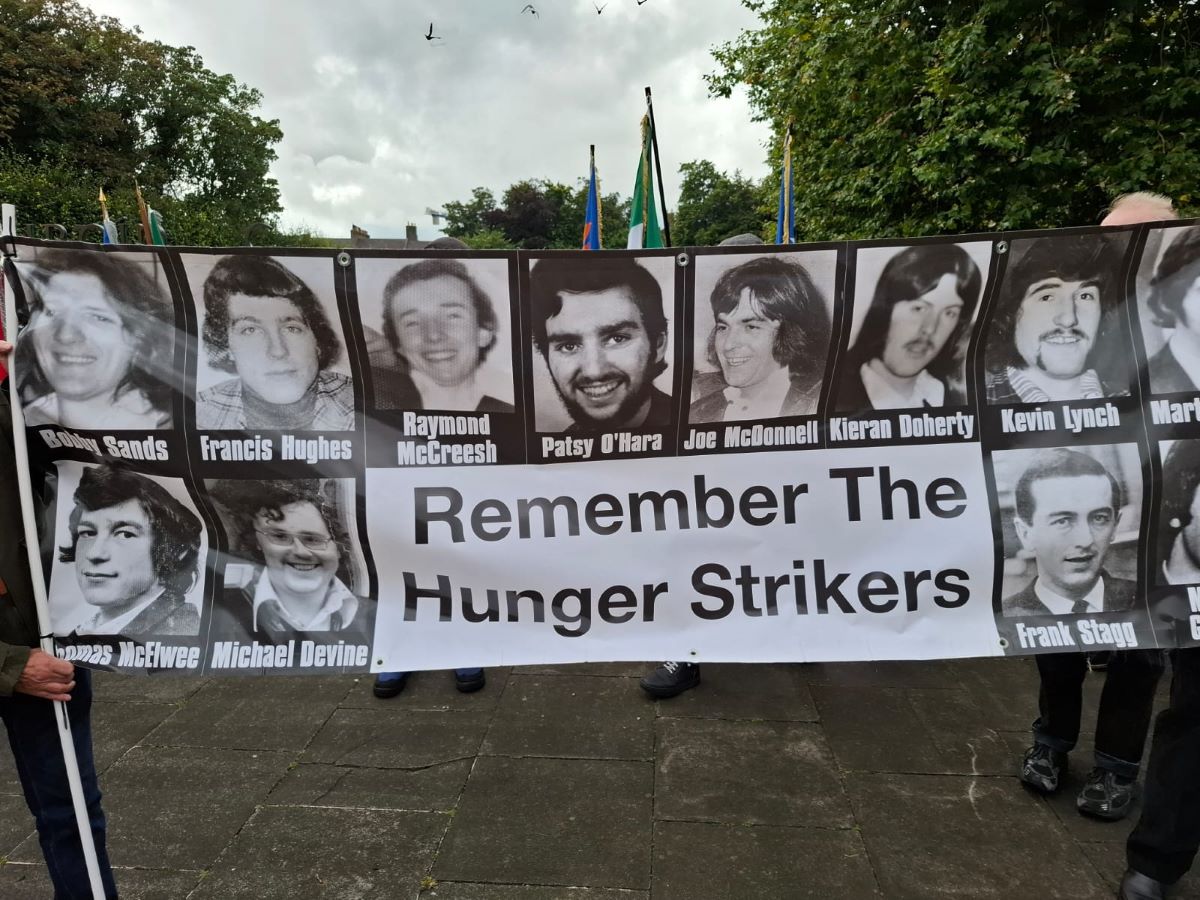
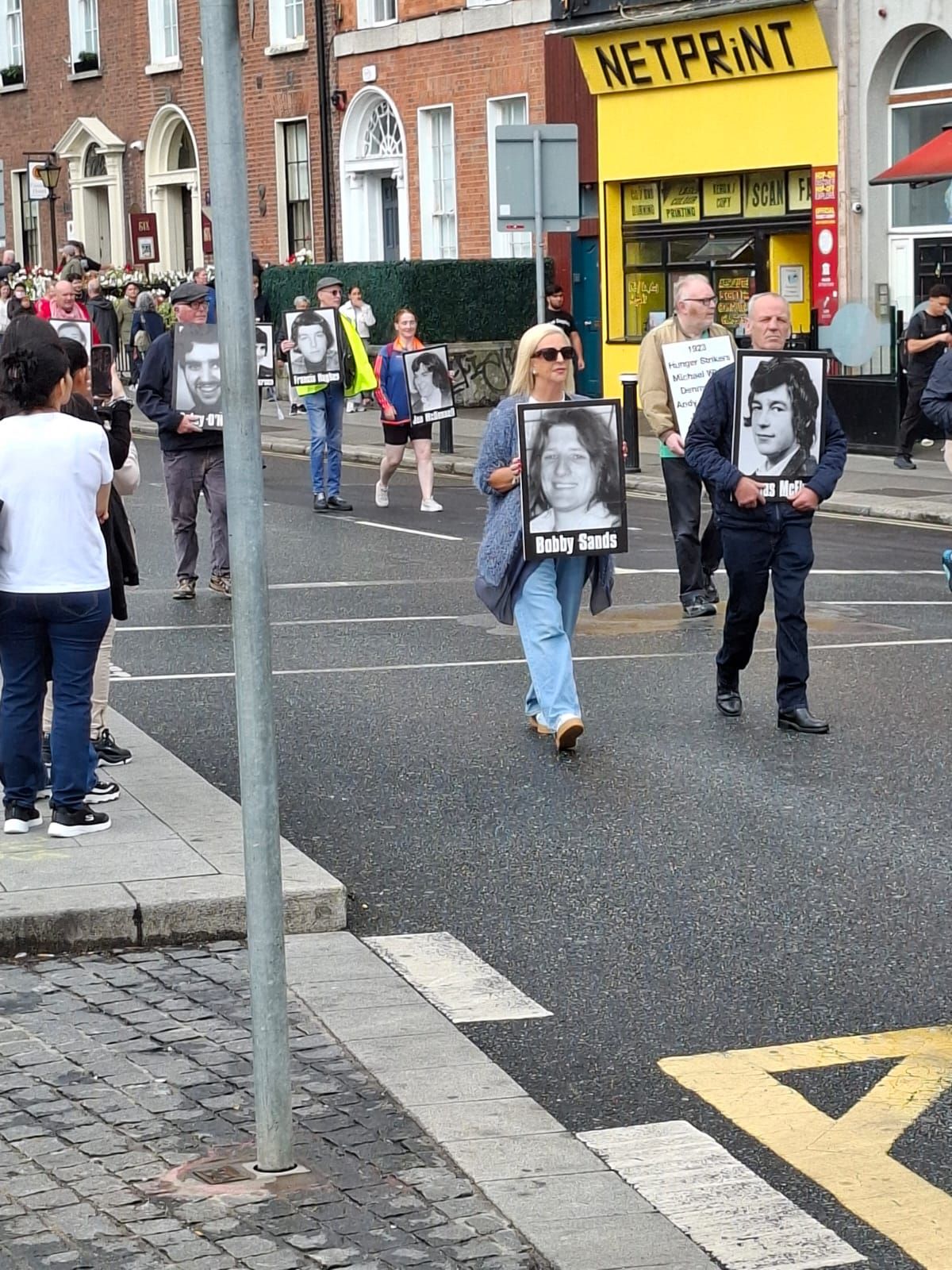
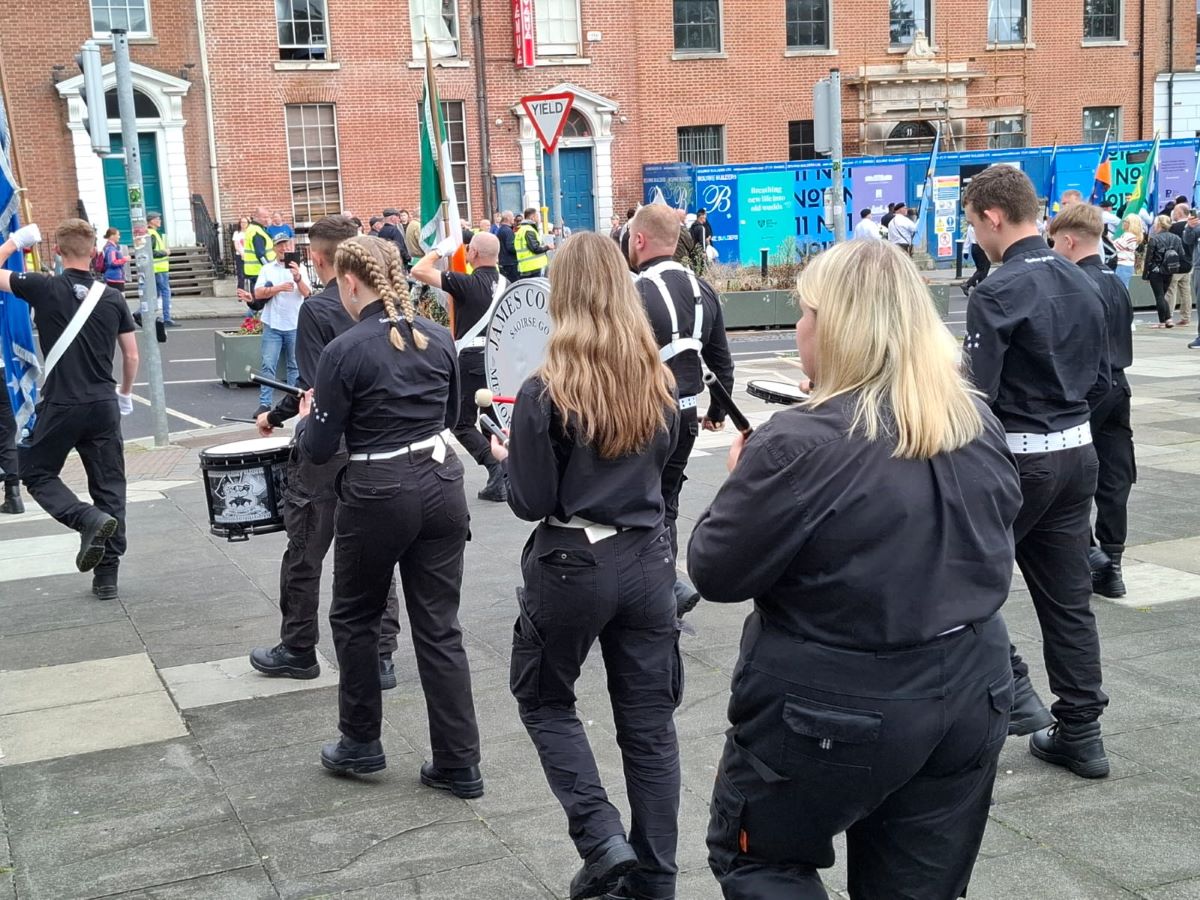
Two pipers led off the Hunger Strike commemoration organised by Independent Dublin Republicans followed by a full colour party and the James Connolly Republican Flute Band, from Derry. In traditional two lines style they marched through onlooking crowds in O’Connell Street.

The march crossed the Liffey into D’Olier Street, back up O’Connell Street and after a pause at the Government-threatened GPO, into Parnell Street, then around the western and northern sides of the Square and back into the Remembrance Garden for the commemoration ceremony.

The Hunger Strike Commemoration march proceeding down from the Garden of Remembrance and just about to enter Dublin’s main thoroughfare, O’Connell Street. (Photo: R.Breeze)

And it rained – it poured down rain. Which was bad enough on the audience but much much worse on the colour party in shirt and trousers, the RFB members and those holding the portraits of the ten hunger strike martyrs and a number of banners.

Dixie Elliot was introduced as the main speaker, well-known in Republican circles, former member of the Provisional IRA, an ex-POW and ‘Blanketman’.3

(Photo: R.Breeze)

Seemingly undeterred by the pouring rain, Elliot spoke at substantial length though whether through lack of projection or faulty amplifier, much of what he said was lost to many in the audience. From snatches he could be heard going through the history of the recent three decades’ war.

The targets of his condemnation were not alone the British occupation and the Irish State’s complicity but also the leadership of the Irish Republican movement who had abandoned the struggle and become part of the colonial administration in the Six Counties.
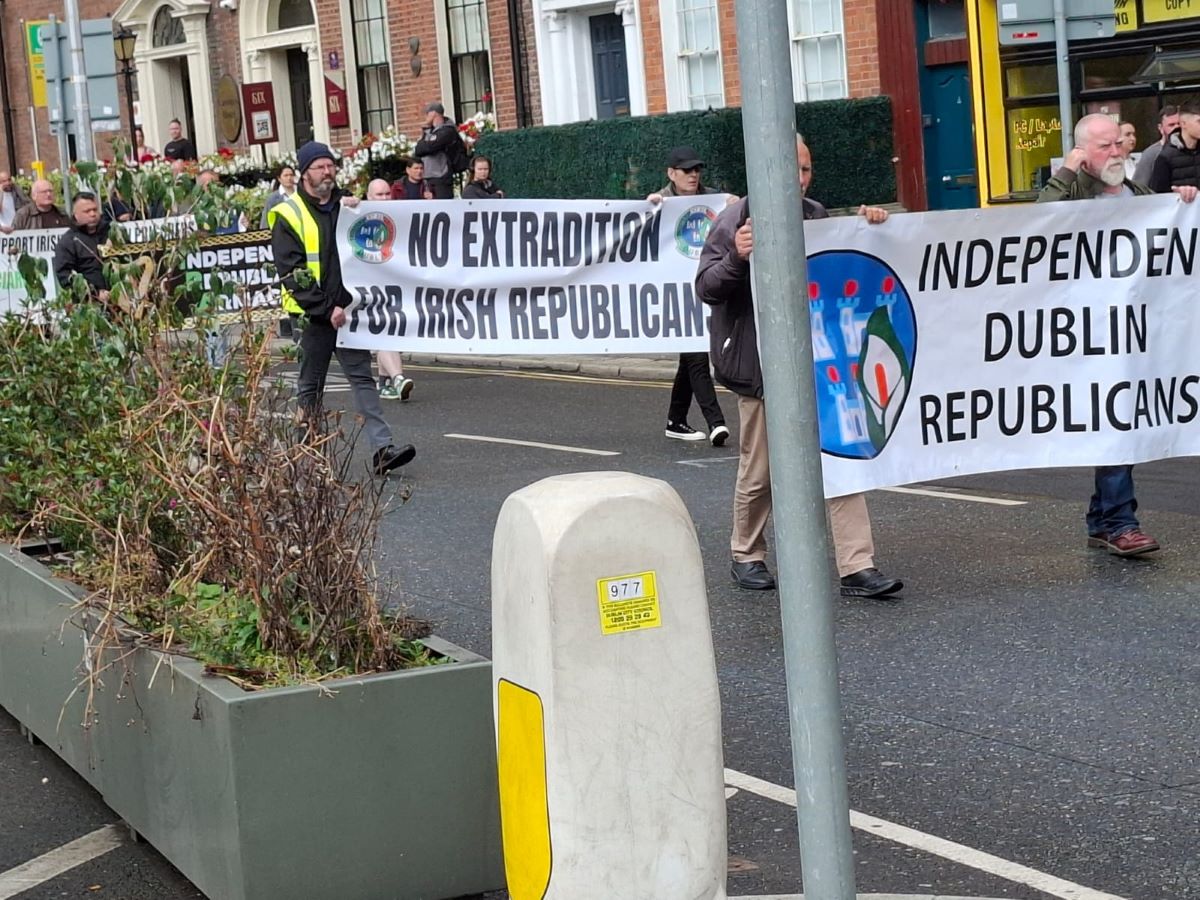
(Photo: R.Breeze)
(Photo: R.Breeze)

Expressing solidarity with the Palestinian struggle and against imperialism, Elliot also condemned the far-Right in Ireland who claim to be ‘patriots’ in order to promote their racism and he counter-posed the example of Bobby Sands’ internationalism in his poem The Rhythm of Time.

The Connolly Memorial Republican Flute Band setting out on the march from Garden of Remembrance. (Photo: R.Breeze)

Both Elliot and the Chairperson called for solidarity with Irish Republican political prisoners and the framed Craigavon Two, convicted in a no-jury political Occupation court and still in jail 16 years later.

Finally chairperson Ado Perry thanked people for their attendance, the colour party and audience stood to attention and the piper played the air to the chorus of the song generally known as Amhrán na bhFiann (and of which the chorus melody is also the ‘National Anthem’ of the Irish State).

(Photo: R.Breeze)

CROKE PARK CONCERT

The Gaelic Athletic Association stadium in Croke Park was the venue for a Robbie Williams concert in Dublin and the fans were flocking into town in rainproof macs that the marchers could have done with. The previous weekend it had been the Manchester Gallaghers, i.e. Oasis there.

The finals in Gaelic football for men and women and in hurling have been played in Croke Park in previous weekends and now it seems it’s rock concerts season.

The far-Right protested the couple of occasions that the stadium was rented to celebrate the Muslim feast day of Eid. Apparently English musicians and bands playing there are are not problematic for them. But then nor are the banks and property speculators causing the housing crisis.4

End.

(Photo: R.Breeze)
(Photo: R.Breeze)
(Photo: R.Breeze)
Main speaker, Dixie Elliot, speaking at rally in Garden of Remembrance at end of Hunger Strike Commemoration march. (Photo: R.Breeze)

FOOTNOTES

FURTHER INFORMATION

https://www.irishtimes.com/politics/2025/08/13/family-of-recently-deceased-boy-harvey-morrison-sherratt-to-meet-simon-harris/

https://www.irishtimes.com/news/ireland/irish-news/adams-and-mcguinness-betrayed-everyone-a-former-ira-prisoner-reflects-on-troubles-1.4578091

https://www.facebook.com/p/Independent-Dublin-Republicans-100090801607007

1https://www.inmo.ie/News-Campaigns/Trolley-Watch/

2It is also the position of a number of Irish Republican organisations and individuals for entirely different reasons. See e.g https://www.irishtimes.com/news/ireland/irish-news/adams-and-mcguinness-betrayed-everyone-a-former-ira-prisoner-reflects-on-troubles-1.4578091

3One of the Irish Republican ‘blanket protester’ prisoners who resisted the attempt of the colonial prison service to make them wear regulation prison uniform, wearing underwear and a blanket instead. This condition degenerated into the ‘no wash’ and ‘dirty protests’ which the prisoners sought to overcome with the hunger strikes of 1980 and 1981 when 10 prisoners died.

4Which the Far-Right blame instead on migrants.

REPUBLICANS, IRISH REPUBLICANS AND SOCIALISM

Diarmuid Breatnach

(Reading time: 5 mins.)

I wish to briefly clear up what I believe to be some confusion about the terminology in the title, basing not so much on opinion but relying in the main on fact as illustrated by history.

I will attempt to show thereby that Republicanism and Irish Republicanism are different things ideologically and that socialism is different from both of them.

Republicanism entered the world as a political aspiration and, after revolutions in Britain, France and the USA, practised as a system of Government. It proclaimed electoral democracy for its citizens (at first men but later women) – but quite clearly the bourgeois class ruled society.

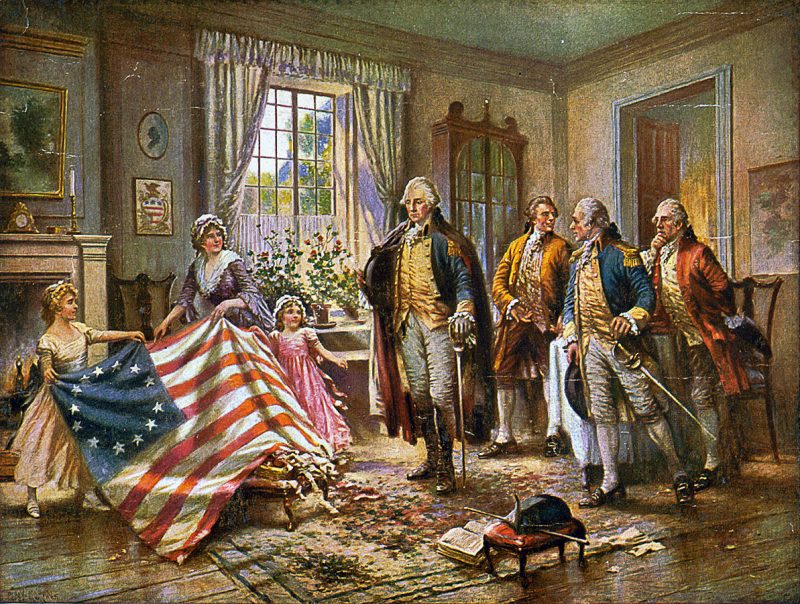
George Washington, Republican, being presented with the flag of the early American Republic. (Image sourced: Internet)

It was a democratic bourgeois (essentially capitalist) ideology characterised by individual choice,1 opposition to feudalism and monarchy and separation of church and state. It was not essentially socialist nor even anti-colonial, as we can clearly see from its early examples.2

Republican government was overthrown in Britain (English and Scottish administrations), the monarchy restored and in time a kind of compromise monarchy-democratic system evolved. The republican system in France and the USA remained and is with us to this day.

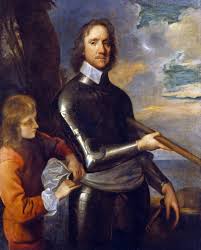
Painting of Oliver Cromwell, an English Republican whose name became part of a curse in Ireland (including for Irish Republicans!).
(Image sourced: Internet)

Irish Republicanism also developed as a bourgeois ideology (drawing on English, French and US Republican thinking)3 but it was clearly also in favour of Irish sovereignty and therefore against the colonialisation of Ireland.4 Once measures of reform were blocked it became revolutionary.

This gave rise to the revolutionary organisations of the United Irishmen of the 1790s and early 1800s and the Young Irelanders of the middle of the 19th Century; also of the Irish Republican Brotherhood of the later 19th.

The IRB or Fenians however had a strong working class character and were admitted to the First International Workingmen’s Association, the first international socialist organisation. However, Irish Republicanism remained a bourgeois ideology albeit democratic and revolutionary.

Karl Marx and Frederick Engels, founders of scientific socialism. (Image sourced: Internet)

Socialism

The ideology of socialism has a long pedigree but was made more concrete under and in opposition to capitalist society. It found development on a scientific ideological and organisational basis particularly with the work of two German migrants to Britain, Karl Marx and Frederick Engels.

This ideology emphasises communal over individual ownership of the means of production, distribution and use/ consumption and sees the socialist state as a stage on the way to communist society. Its mantra is: From each according to their ability, to each according to their contribution.5

In terms of implementation the Paris Commune of 1871 was the first socialist capture of a city and the October Socialist Revolution of 19176 in Russia the first time a country was taken by socialists.7

Irish Republican ideology continued into the early decades of the 20th Century with its military organisation first the Irish Volunteers of the 1916 Rising and later, the Irish Republican Army of the War of Independence, whose leadership split over the English offer of autonomy with partition.

Ireland had been kept under-industrialised by colonialism but socialist political organisation was developing slowly in some urban areas. In 1896 Connolly and others founded the Irish Socialist Republican Party in Dublin and in 1912 he and Larkin also the Irish Labour Party.

In 1911 Larkin had founded the Irish Transport and General Workers Union.

The employers strove to break the ITGWU and implemented a Lockout of union members or supporters in 1913; attacks on the workers by the Dublin Metropolitan Police led to the defensive creation of the Irish Citizen Army – the first workers’ army in the world.8

Some Irish Republican leaders and followers sympathised with the strikers and some did not but the Republican movement did not mobilise in their support with the exception of a number of members of Iníní9 na hÉireann, which would later split between the ICA and Cumann na mBan.

In 1916 the IRB organised an insurrection with the participation of its Irish Republican military forces of the Irish Volunteers, Cumann na mBan and Na Fianna Éireann united with the Socialist force of the Irish Citizen Army (including women members).10

The War of Independence 1919-1921 was led by the Irish Republican movement with some support, particularly in intelligence and arms smuggling, by the Irish Citizen Army.

The Civil War 1922-2311 followed the British offer of autonomy with partition, as the leadership of the Irish Republican movement, including a section of the IRA split. The ICA had lost its leadership but did not join the neo-colonial side and in subsequent years faded organisationally.

The main opposition leadership to the State returned to being nationalist in the shape of Sinn Féin and the Anti-Treaty IRA, both of which split again with a substantial number joining the De Valera-led Fianna Fáil, which would soon show itself to be also neo-colonial in outlook and practice.

In this period a Socialist current grew within the Irish Republican movement, responding to international and domestic events including the growth of fascism. The short-lived Republican Congress attempted to combine the Socialist and Irish Republican currents in one broad front.

The Irish Republican movement leadership and substantial sections of its membership was however socially conservative and largely dominated by Catholic Church influence. The IRA responded to the Republican Congress with a new anti-communist rule and the expulsion of Congress members.

Frank Ryan, IRA and International Brigades, Socialist (Image sourced: Internet)

This sad part of the history of the Irish Republican movement illustrates very clearly the separate nature of Irish Republican and Socialist organisation. The IRA of the 1930s were Irish Republicans but anti-socialist and those who joined Congress had begun as Republicans but were now socialists.

Or Socialist Republicans perhaps but with the emphasis on socialism. Henceforth other variants would exist, of Republicans who were socially conservative, or liberal, or socialist-influenced … but Irish Republicans first and foremost.

Such an ideology would allow them later to unite to focus on a war against the colonial occupation of one-sixth of the nation but to largely neglect the social, economic and cultural issues arising from a socially conservative neo-colonial regime affecting the majority of the Irish population.12

There may be a tragic illustration of the difference between revolutionary Irish Socialism and revolutionary Irish Republicanism in the last of the Dublin 1916 executions, on 12th May, of the socialist James Connolly and of the Irish Republican Brotherhood organiser Seán Mac Diarmada.

Connolly was one of the leaders of the ITGWU and its Irish Citizen Army which had fought the bitter eight months against the Lockout to smash the union. Mac Diarmada is reported opposing the workers’ action, believing that Irish manufacture and trade would lose out to English competition.13

CONCLUSION

There are Irish Republicans who are revolutionary socialists and Irish Republicans who are not. There are also some revolutionary Irish socialists who are not strictly speaking Irish Republicans. All can and should join in the struggle against British colonialism and other imperialism.

A sovereign Irish Republic on a united 32 Counties would be a great progressive step, for democracy and against imperialism and colonialism. It would not, however, be socialist just because it was Irish Republican, even if it adopted some socialist measures.

A socialist Ireland would be one in which the working class ruled and its measures would include socialisation of all productive enterprises including factories, agricultural and construction enterprises and distribution centres, i.e any which employed workers not of the owner’s family.

And socialisation of all transport and communication networks and social and health services in addition to financial services.14

If it did all the above the regime in Ireland would be socialist and would not even need to call itself ‘Republican’.15 If it were not socialist then it would be capitalist and the struggle for socialism would need to confront the Irish state which would in turn seek to repress the socialist struggle.

Republicanism and Irish Republicanism are different things and socialism is different from both of them.

If people wish a socialist society they should not expect Irish Republicans to present them with that but will instead need to educate, organise and lead their own revolutionary socialist forces while simultaneously participating in the broad anti-colonial and anti-imperialist struggles.

End.

FOOTNOTES

1And property, of course.

2English Republicanism did not in general envisage the right of Ireland to self-determination, nor France agree with the national rights of the Breton and Basque nations, nor of the colonies abroad for independence; nor the USA of the rights of the Indigenous not to have European settlers occupy their land.

3Largely adopted by sections of business and professional classes of the Occupation, i.e settlers and descendants of settlers.

4Many Irish Republicans were historically able to collude in English settler colonialism in Australia and early colonial occupation of America, as well as later USA settler colonialism into lands still held by the Indigenous Americans.

5However, in communist society, it was understood that the second half of that slogan would be ‘to each according to their needs.’

6The earlier February Revolution had been a workers’ strike and bourgeois uprising against war and the absolutist power of the Tsar. Incidentally it had been only the second revolution against world war, as the 1916 Rising in Ireland had been the first.

7I am not discussing its development or degeneration here, which would take us away from the central topic of discussion.

8Most armies chiefly recruit from the working class but the ICA was specifically for as well as of the workers.

9Modern spelling, meaning: ‘Daughters’.

10That they were distinct forces is clear in their development and leadership but in the membership the differences would not always be so clear-cut. The Constitution of the ICA was Irish nationalist but required all members to be trade union members and people chose an organisation to join on the basis of family and social circle loyalties.

11Also described as ‘the counter-revolution’.

12And eventually lose that always unwinnable war.

13https://www.irishtimes.com/culture/heritage/the-sean-mac-diarmada-papers-this-blood-was-not-shed-in-vain-1.2524097 However Brian Feeney in the 16 Lives series is quoted as stating the opposite, which is true of Mac Diarmada’s mentor Thomas Clarke. I have not seen Feeney’s evidence for Mac Diarmada’s sympathies.

14Though transport and communication services have been socialised by capitalist states, the majority of financial services are rarely socialised.

15Though it could do so, of course and probably would.

“Building resistance through culture”: successful Solidarity Sessions launch in Dublin

Clive Sulish

(Reading time: 3 mins.)

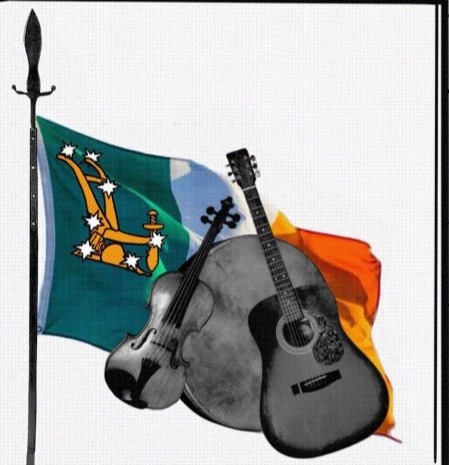
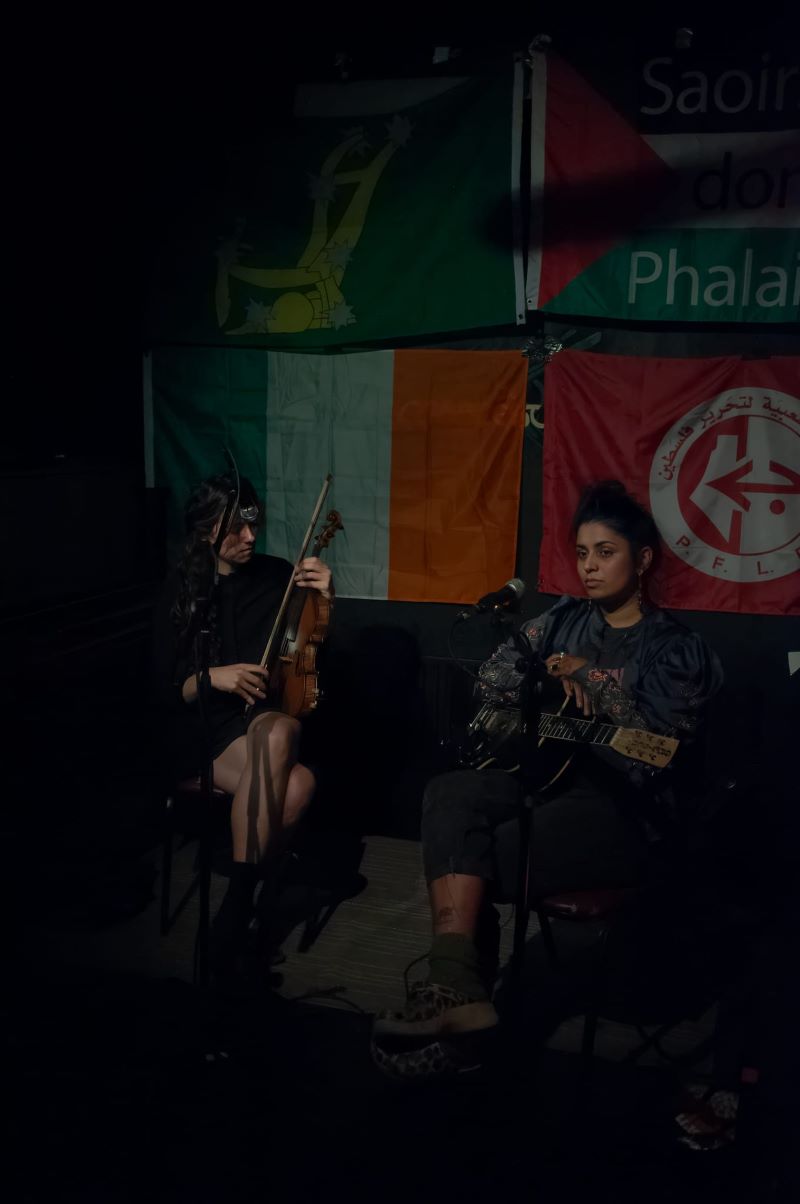
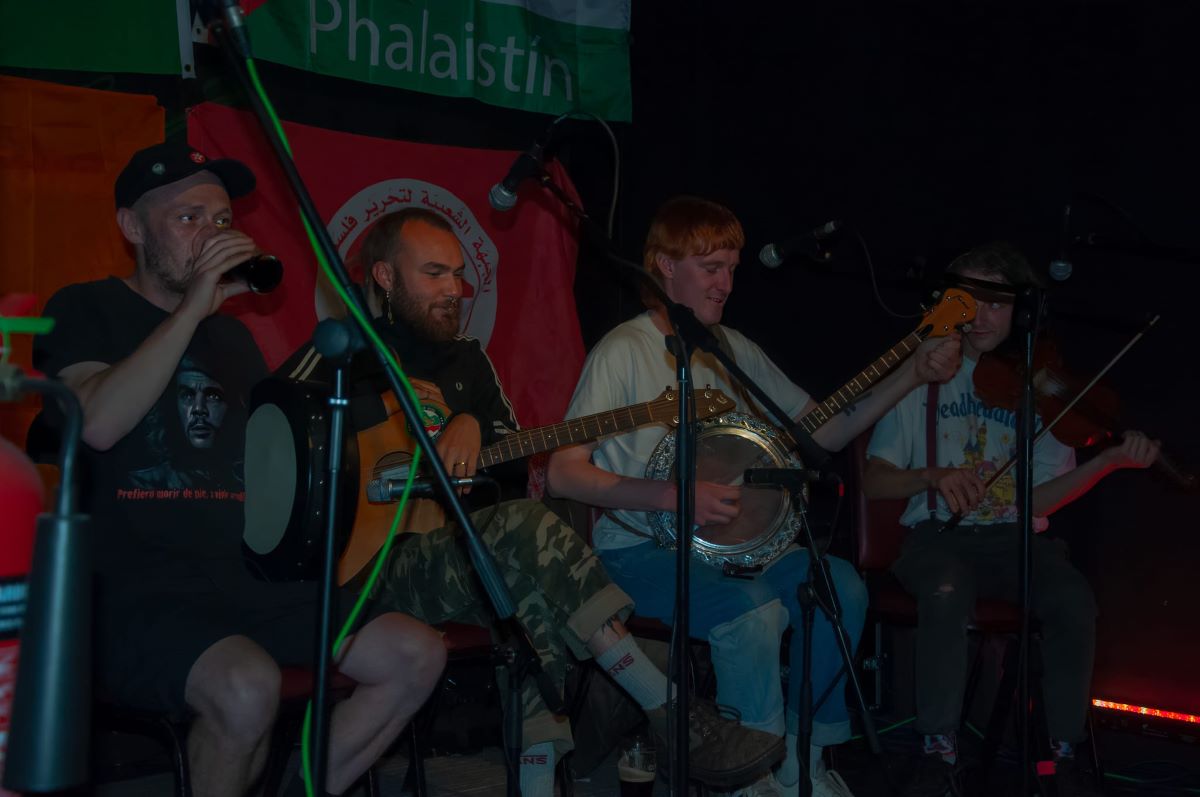
Around 80 people attended a concert in the back room of Dublin’s Cobblestone pub launching an initiative to “build a community of solidarity and resistance through culture”. Flags of Irish and other struggles around the world decorated the venue.

The evening’s entertainment consisted of five musical acts and one of poetry. The MC for the evening, Diarmuid Breatnach, told the audience that Irish struggles had always found an expression in culture and that culture itself encouraged further resistance.

He gave the example of Thomas Davis who founded with others the patriotic newspaper The Nation in the mid-1800s, publishing contributed songs and poems and his own, including The West’s Awake and A Nation Once Again, songs still sung in Ireland nearly two centuries later.

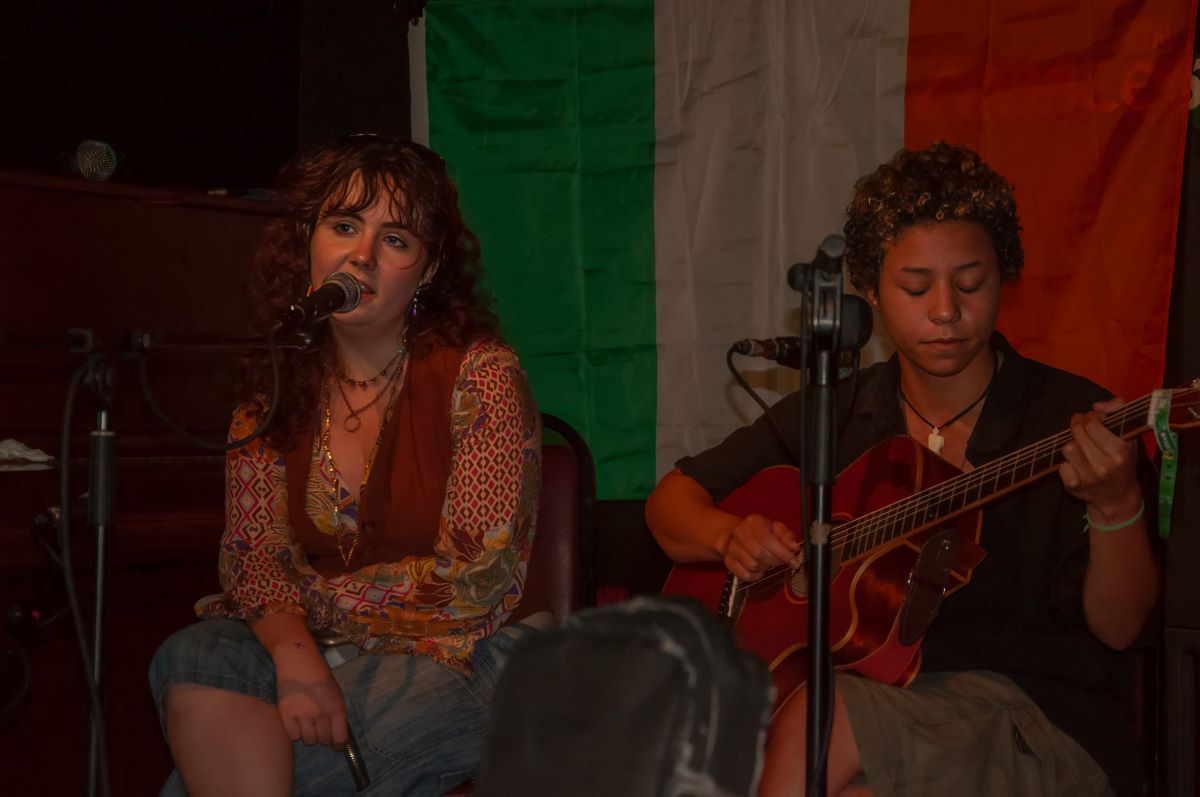
The first act of the evening was the folk duo The Yearners, specialising in harmonies around renditions of song covers and their own song about the Mary of the New Testament, as a woman pressured to bear a child because “How can you say no to God?

The audience joining in on Pearse’s Gráinne Mhaol was followed by some songs with hard satirical edges like the Kinky Boots song from the Irish Republican repertoire and their own Save A Landlord.

The Yearners during their performance. (Photo credit with thanks: Dermo Photography)
Dúlamban during their performance. (Photo credit with thanks: Dermo Photography)

The MC introduced another all-female duo, Dúlamban, recently formed from two individual singer-musicians. Among their material, Sinéad on violin played two compositions of her own while Aisling sang her adaptation and translation of the Rising of the Moon: Ar Éirí na Geallaigh.

The one poet of the evening, Barry Currivan, performed a number of shorter and longer pieces of his repertoire. He was particularly applauded for his “anti-othering” piece Those People and his humorous concluding piece comparing himself to a good cup of tea or coffee.

After the break, the MC spent a few minutes outlining the Solidarity Sessions collective’s project and encouraging the audience to take part in it by spreading word of its events and supporting them in person, in addition to stepping forward to assist in organisation and in poster design.

Barry Currivan during his poetry performance at the Solidarity Sessions launch. (Photo credit with thanks: Dermo Photography)
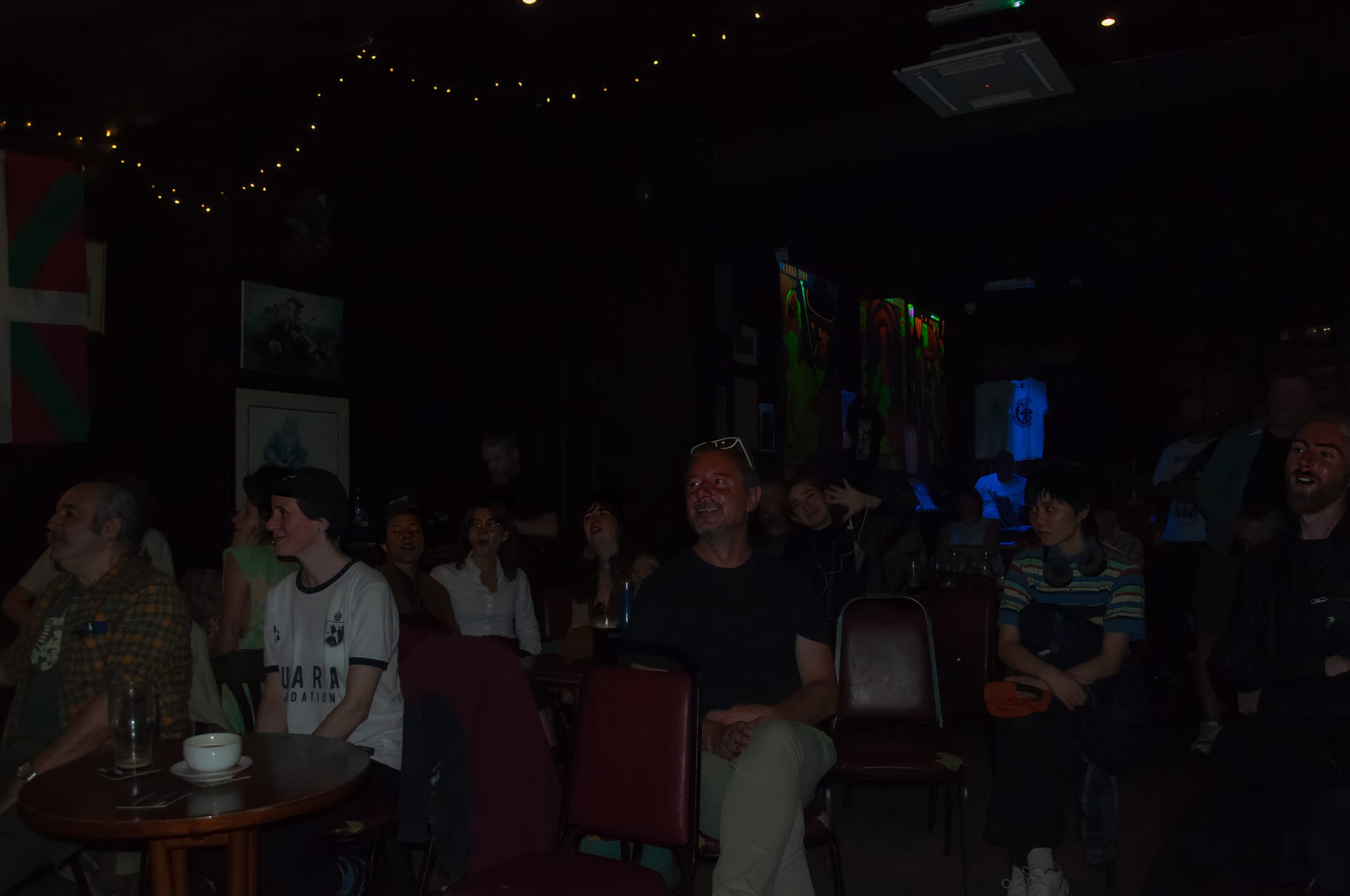
Section of the audience presumably during Currivan’s performance. (Photo credit with thanks: Dermo Photography)

Another female duo took the stage, Sage Against the Machine on guitar accompanied by Ríona on violin, performing a number of love pop covers and SAM’s own song against patriarchy.

Some remarks about Bob Dylan’s Zionism followed in Sage’s introduction of the former’s Masters of War which she performed with great feeling and followed with El Gallo Rojo, an anti-fascist song from the Spanish ‘Civil War’.

Sage Against the Marchine (right) and Ríona during their performance. (Photo credit with thanks: Dermo Photography)
Jimi Cullen during his performance at the Solidarity Sessions launch. (Photo credit with thanks: Dermo Photography)

Breatnach then introduced Jimi Cullen who he said has been hosting a weekly musical protest picket for an hour on Wednesdays (2-3 pm) outside the US Embassy for a great many weeks, in which the MC had sometimes accompanied him amidst the solidarity beeping of passing traffic.

Jimi accompanied himself singing his Housing for All and Guthrie’s You Fascists Bound to Lose, then commenting on Bob Marley’s Zionism while introducing the latter’s One Love song, saying that love above all is what binds humanity together, a theme also of his We Are All Palestinians.

His monologue The Genocide Will Be Televised was much sharper and renewed an earlier Death, death to the IDF!1 chant from the audience.

Trad Sabbath during their performance. (Photo credit with thanks: Dermo Photography)

There was much irreverent comment about the name of the band to conclude the evening, Trad Sabbath, a four-piece band of guitars, banjo, bodhrán and fiddle, apparently in the context of the very recent death of the Black Sabbath band’s lead vocalist, Ozzie Osbourne.

Sardonic cries about “his poor widow”, Sharon Osbourne2 were also heard, a Zionist personality star in a ‘reality’ TV show about the late Ozzie’s family. To fill in the delay in their setting up with the sound engineer, Breatnach sang Kearney’s Down by the Glenside ballad.

The band concluded the evening with traditional melodies and some songs from Eoghan and Hat with others backing on choruses.

Poster advertising the event (Design: Ríona and D.Breatnach)

The MC thanked all for their attendance, performances and technical support before reiterating the Solidarity Sessions’ objective and encouraging participation. His comment that “Repression is here and more is coming down the road” was underlined by the presence there of a prominent victim.

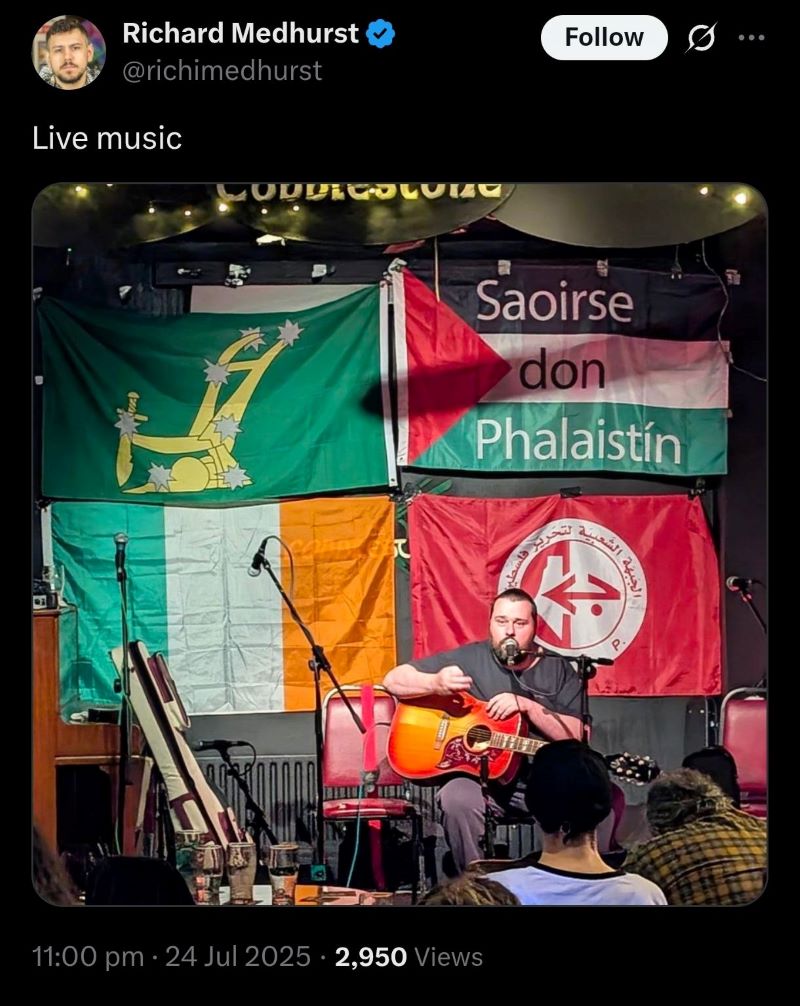
In the audience was Richard Medhurst, the Britain-based journalist specialising in Middle Eastern coverage who was recently detained under anti-terror (sic) legislation and charged by British police as he returned from abroad and again later detained though not actually charged by Austrian police.

Richard Medhurst’s tweet during the evening at the event.

End.

FOOTNOTES

1Made famous by the Bob Vylan duo at Glastonbuy getting the audience chanting the slogan. The IDF is what the Israeli Occupation Forces call themselves.

2Who had called for the banning of the the Irish rap group Kneecap.

CHANGING THE STARRY PLOUGH COLOUR AND SEAN O’CASEY

Diarmuid Breatnach

(Reading time: 5 mins.)

For many years the Starry Plough flag in Ireland, associated with socialist Irish Republicanism, was the form of the Ursa Mayor1 constellation in white or silver stars on a blue background, from the time of the Republican Congress (1934-’36).

Somewhat later a different design including an actual plough following the stars and shape of Ursa Mayor on a green background began to be seen. But which was the original? And how, when and why did the other version come into existence?

It is not disputed that the Starry Plough was designed for the Irish Citizen Army, nor that it came to be designed in 1914, as the ICA was reorganising following the defeat of the Dublin workers in the 1913 Lockout. Whatever its colour, that was clearly the original.

It is beyond dispute that the Starry Plough was raised above Clery’s building, across the road from the GPO, during the 1916 Rising. It survived the burning of the building even though one witness spoke of a melted glass stream from its windows running across O’Connell (then Sackville) Street.

The flag disappeared thereafter. A British officer claimed to have taken it as a trophy. If there was more than one copy of that flag at the time, no-one has spoken of it.

When the Republican Congress was founded in 1934 the need for its own flag was felt. The Starry Plough of the ICA seemed appropriate and former members of the ICA were consulted as to the original design and colour and it appears that memories diverged on that issue.

Some remembered the background colour as green, some as blue. Prominent in the latter group was playwright Sean O’Casey, who had been Secretary of the ICA for a brief period in 1914 and presumably was present when the flag design was approved.

Whether or not, between April 1914 and April 1916, surely the flag had been paraded through the Dublin streets on a number of occasions and in any case it had flown over Clery’s in O’Connell Street for five or six days.

Nevertheless when the former members of the ICA were consulted in the 1930s there appeared to be uncertainty about the background colour – was it green or blue? Possibly the majority remembered it as blue or perhaps the opinion of O’Casey, who insisted on blue, was taken as the most valid.

In May 2022 former IRSP comrades of former leading IRSP activist Mick Plunkett stretch the blue Starry Plough version over the coffin containing the remains of the latter. During the 1970s-to the 2000 the blue version of the flag had been particularly associated with the IRSP.(Source photo: Seamus Costello Memorial Committee FB page).

So the flag of the Republican Congress was made a plain blue background with the shape of Ursa Mayor outlined in white or silver stars (and no actual plough design). That design was flown in Irish Republican colour parties from the 1960s at least and adopted too by the Irish Labour Party.2

A problem for the claim that the original was blue arose in the 1950s when an ex-British Army officer offered the Irish National Museum what he claimed to have been the Starry Plough which he said he had removed from the ruin of Clery’s. The background colour was green.

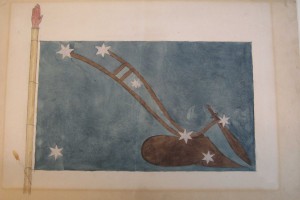
O’Casey was contacted by the NMI and insisted it could not be the original, maintaining that had been blue. To bear this out, he submitted a watercolour of what he claimed was Megahey’s (original artist) design work, in which the background was blue but did include a plough.3

The watercolour submitted by O’Casey which he claimed was the original design of the man who designed the flag, William Magahey. (Copied from article about the conservation of the original flag in History Ireland).

There was no way to prove the provenance of the watercolour. Nor was it impossible that a change of mind had led from a blue background on a design artwork to green on the produced flag. But O’Casey insisted that not only the artwork but the finished product had been blue.

Well then, why not investigate the artefact, the one claimed to be that which had been taken back to England by the British officer?

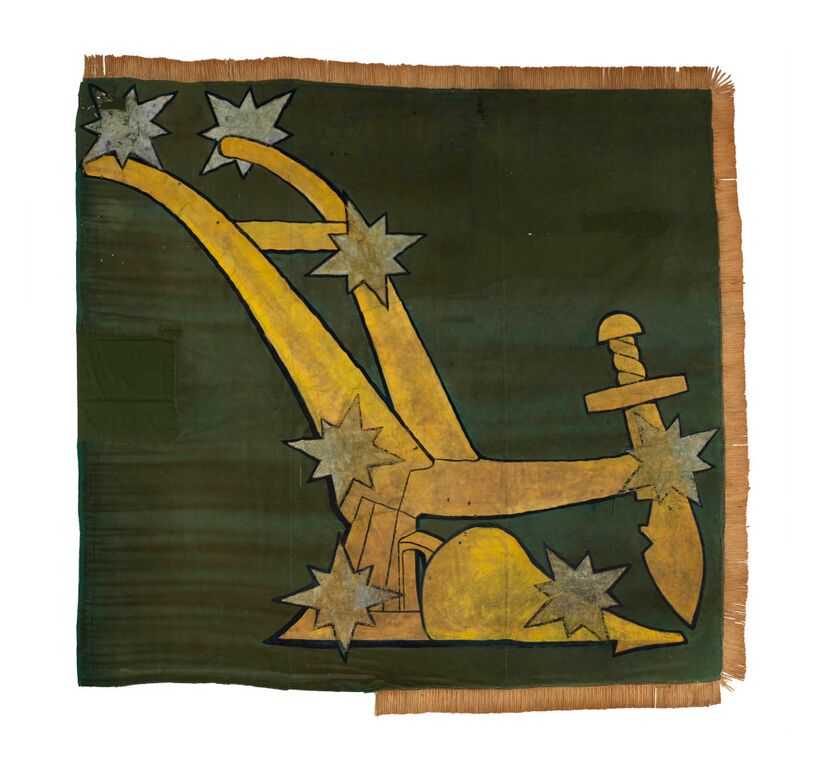
The original flag in the possession of the NMI back to front prior to conservation work. (Copied from article about the conservation of the original flag in History Ireland).

The NMI curator invited former members of the ICA only4 to view the artefact and although distressed at the state in which they saw it they confirmed that it matched their recollection. For the curator it seems that was the clincher and he then authorised its purchase in 1956.5

Around 2012 (the article does not give a date) an NMI curator charged with preserving the artefact set out to carry out modern method analysis of the material and its construction, paint and the more than 50 holes in it corresponding to .303 machine gun bullet impacts.6

The original Starry Plough flag in correct orientation (Photo sourced: NMI on line)

Former ICA members had remembered a golden edging on the flag, traces of which were indeed found on the green specimen. It all checked out. A clever hoax? Possibly, but for an eventual price of £150, a relatively small amount even back in 1954?

The ICA members viewing the artefact believed it was the original, the British Officer testified as to his having taken it and also produced an Irish Times account by himself dated 11 May 1916.7 The NMI tests all pointed to the conclusion that it was the original flag – and the background was green.

But O’Casey was adamant that it had been blue. And what about the blue watercolour, allegedly the artist’s design?

It’s possible that between the design outline and manufacture, a change in the desired background colour had taken place. But not only colour – the plough design on the watercolour is very different from that on what we must now conclude was the original flag.

We have no evidence to verify that the watercolour was the original designer’s. O’Casey might have painted it himself, from his mistaken memory, for example. Or is it possible that he falsified its origin in order to convince the NMI that the flag had been blue and not green?

Any such effort would not have been about an aesthetical judgement in favour of one colour over another but rather about removing the colour associated with nationalism.

O’Casey resigned from the ICA in a dispute8 about allying with nationalism but more tellingly, he disagreed after the fact with Connolly throwing himself and his forces into an uprising against colonialism9 – a nationalist rather than socialist uprising, as O’Casey would have seen it.

Connolly’s thesis was that the advance towards socialism was not possible in a colony such as Ireland without allying the socialist forces with the most progressive and revolutionary national bourgeois forces, i.e the IRB and the Irish Volunteers.10 O’Casey could not agree with that.

In Innisfallen Fare Thee Well (1949)11 he wrote: “The Easter Rising had pulled down a dark curtain of eternal separation between him and his best friends: and the few that had remained  alive and delightful, now lay deep, with convivial virtues, under the smoking rubblement of the Civil War.”

The symbolism of the original green, the colour of Irish Republicanism since the United Irishmen of the late 18th Century would have been anathema to the later O’Casey. Was he indulging in revisionist wishful thinking?

Or perhaps trying to ensure that in any future conflicts, the Irish Republican and Socialist trends would be kept firmly separate?

Two green Starry Ploughs on view among other flags carried by a section of marchers at the Bloody Sunday massacre commemoration March for Justice in Derry in January 2025. The one in centre of photo is a mass-produced reproduction whereas to the left one can see part of a quilted sewn individual one. (Photo: D.Breatnach)

There are others who strive to ensure the exact opposite, who as Connolly did, see in the combination of those two strands Ireland’s only chance for freedom from colonialism, neo-colonialism and an advance towards a socialist society.

For them, the original design and colours of the Starry Plough is their flag and its entire symbolism points the way forward.

End.

FOOTNOTES

1In the USA this constellation is commonly referred to as “the Big Dipper”.

2Rarely used by the Irish Labour Party nowadays. It was popular with the Irish Republican Socialist Party for decades but nowadays a version in white stars on a black panel on a red flag is flown by the organisation.

3https://historyireland.com/citizen-armys-starry-plough-flag/

4Ibid: O’Casey appears not to have been invited, which suggests that the accuracy of his stated recollection was doubted.

5Ibid.

6Ibid.

7The rebels, on taking possession of the Imperial Hotel in Sackville Street, hoisted their flag over the building, and there it remained intact on one of the ridges of the front wall while the entire contents of the premises were being consumed by fire. At great personal risk the flag was eventually brought down by second Lieutenant T.A. Williams of the 9th Reserve Cavalry, Kildare Barracks, assisted by Inspector Barrett, Dublin Metropolitan Police.’ https://historyireland.com/citizen-armys-starry-plough-flag/

8https://www.dib.ie/biography/ocasey-sean-a6553 O’Casey objected to the enrolment of Constance Markievicz in the Irish Citizen Army because she was also a member of Cumann na mBan, which had been set up as a female auxiliary organisation to the Irish Volunteers. O’Casey proposed that membership of the ICA precluded joint membership with any Irish nationalist organisation. Having had his motion defeated, O’Casey resigned from the ICA in July 2014.

9‘[Connolly’s] speeches and his writings had long indicated his new trend of thought, and his actions now proclaimed trumpet-tongued that the appeal of Caitlin Ní hUllacháin—“If anyone would give me help, he must give me himself, he must give me all”—was in his ears a louder cry than the appeal of the Internationale, which years of contemplative thought had almost written in letters of fire upon his broad and noble soul. Liberty Hall was now no longer the headquarters of the Irish Labour movement, but the centre of Irish National disaffection.’ https://historyireland.com/sean-ocaseys-battle-of-words-with-the-volunteers/

10And of course Cumann na mBan.

11The third volume of O’Casey’s autobiography, published in 1949.

SOURCES

Blue or Green?

https://siptu.medium.com/unfurling-of-the-starry-plough-61ef310f8afa

National Museum curator on provenance and tests: https://historyireland.com/citizen-armys-starry-plough-flag/

O’Casey’s separation from Connolly: https://historyireland.com/sean-ocaseys-battle-of-words-with-the-volunteers/

PALESTINIAN POLITICAL PRISONERS’ DAY IN DUBLIN

Diarmuid Breatnach

(Reading time: 4 mins.)

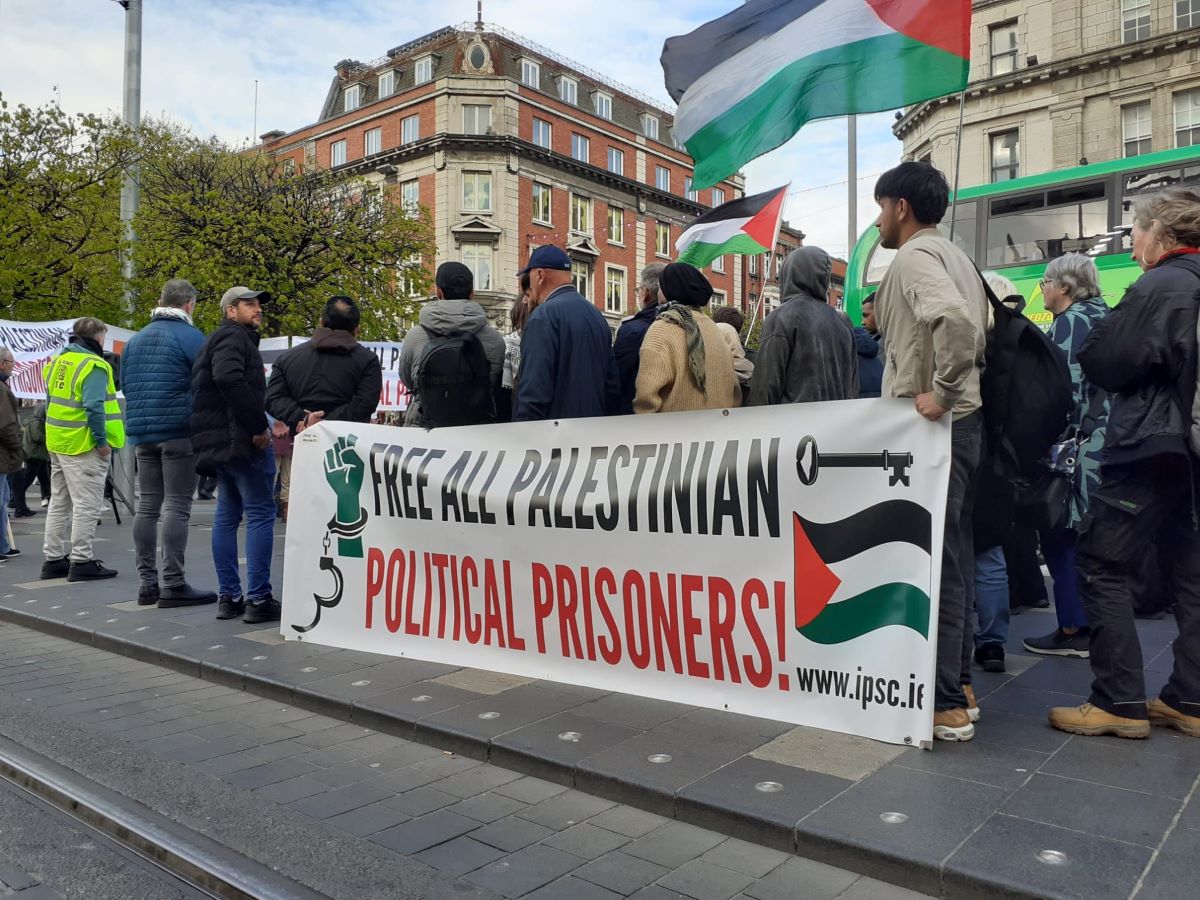
April 17th is the annual Palestinian political Prisoners’ Day and it was marked in O’Connell Street, the main street of Dublin’s city centre, by an event with speeches, banners and chants organised by the Ireland Palestine Solidarity Campaign.

Palestine national flags fluttered about the crowd being addressed by a number of speakers with occasional toots of solidarity from passing traffic – a common occurrence at Palestine solidarity events in most of Ireland.

View of eastward of section of the crowd at the event (Photo sourced: IPSC)

Dáithí Doolan was one of the speakers and though saying some progressive things about solidarity with Palestine and the terrible situation in which the occupiers have them, soon revealed the political poverty and lack of solidarity with resistance of his Sinn Féin party.

Doolan reminded his audience of when there were political prisoners in Ireland, as though this was no longer the case, presumably because the prisoners now are not of his party. Nor did he mention the current attempts to extradite Irish Republicans to British administrations.

The SF speaker went on to extol the South African process, perhaps not caring about the betrayal of the struggle and sacrifice of the masses there, the deepening grip of imperialism on the rich natural resources, the corruption and repression of the ANC regime and the massacre at Marikana.1

If Doolan thought about it he must have hoped that his audience did not remember that the South African process had a twin, the Palestinian one at Oslo which sabotaged the Palestinian struggle and brought into being the corrupt Palestinian Authority2, the Israeli proxy in the West Bank.

Sinn Féin has achieved a somewhat similar position in the Six Counties colony and has been working hard to reach a corresponding role in the Irish state. And why not, when it endorses the “Two State solution” giving the Palestinians 20% of their land under Zionist eyes and guns.

The very least, Doolan said, that the Irish Government could do to help the Palestinians, would be to enact the Occupied Territories Bill but he proposed nothing further, not even the ban on US military flights through Shannon Airport or on Israeli arms flights through Irish airspace.

Darragh Adelaide from the People Before Profit party spoke too about Palestine and solidarity but also about the Palestine refugees that have had to sleep in tents on Irish streets and the attacks on them both by the authorities and by fascists and other racists.

Palestinian prisoner conditions

A woman gave a detailed list of statistics relating to Palestinian political prisoners but also went through the tortures and terrible conditions in which they are kept. She concluded reminding her audience that each prisoner is a human being, a parent, a child, a sibling and not a number.

View of the crowd southward from behind a speaker (Photo sourced: IPSC)

In a year and a half, more than 15,800 Palestinians have been arrested, including 500 women, 1200 children, and thousands of detainees who were placed under arbitrary administrative detention.  64 Palestinians have died in prison since October 2024, including a child.3

The prison administration’s special units have carried out violent raids on prisoners’ cells, administering severe beatings, torture, and ill-treatment.4

Prisoners have suffered power and water cuts, and all of their belongings—including clothes, electrical appliances, and hygiene items—have been confiscated.5

They have been placed under complete isolation, family visits have been completely banned, and the International Committee of the Red Cross has been prevented from visiting them inside prisons. 

Additionally, a policy of starvation has been implemented against thousands of prisoners, who are being provided with only two extremely poor-quality and quantity meals a day.6

The MC of the event led chants in which he called out Palestinian political prisoners! and the audience responded with Free them all! Similarly with Free the children prisoners — Free them all! and Free the women prisoners! — Free them all!

Symbolising the Palestinian political prisoners (Photo sourced: IPSC)

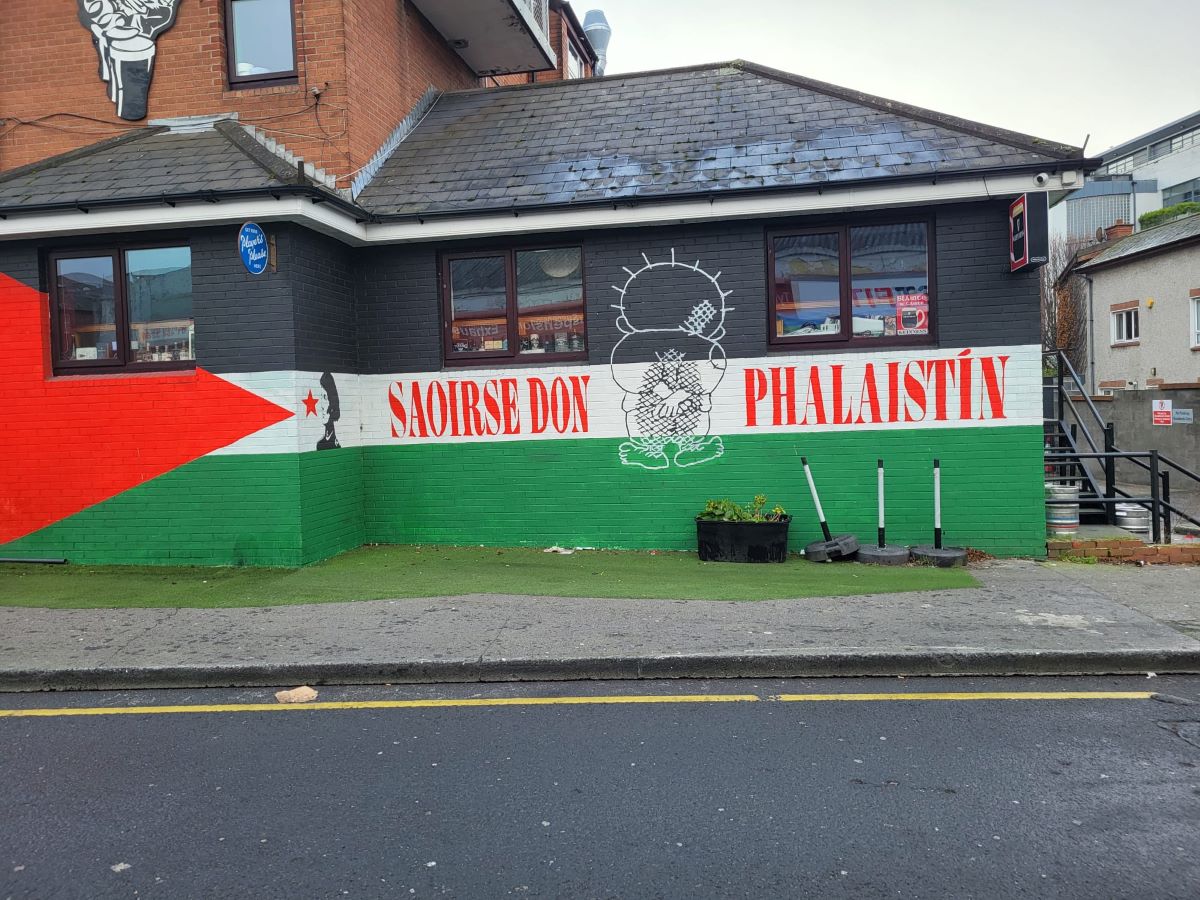
He also referred to the woman arrested outside the Irish Embassy in Berlin for speaking in Irish and, in defiance, led the audience in a chant in Irish expressing solidarity with the Palestinian people: Saoirse don Phalaistín! (Freedom for Palestine!)7

What was notable in its total absence from all the speeches was any call to step beyond the marches and similar measures which have been supported by thousands in Ireland over more than 18 months but which have not succeeded in moving the Government even to enforcing its formal neutrality.

This is replicated in most solidarity events across the state, leaving those few who take action to increase greater pressure on the ruling class to face the repression of the Irish State, as with 23 men and women in three different events over a four-day period in Dublin recently.8

Political prisoners from the armed resistance

The Joe McDonnell Ballad9 would have been most appropriately performed at this event, in particular the chorus line: You dare to call me a terrorist, while you look down your guns … But the IPSC would hardly endorse the singing of that song nor wish to be associated with it in public.

There were two large prisoners’ solidarity banners of the IPSC at this event but it is remarkable how rarely one sees them on the IPSC’s national marches. The problem with the prisoners for liberal organisations is that some of them, at least, have been armed fighters of the Resistance.

This, combined with ignorance perhaps, accounts for the comparatively low numbers at this event. However, it has to be said that known revolutionary organisations were also visibly absent.

View south-westwards with the iconic GPO (General Post Office) building in the background. (Photo sourced: IPSC)

Doolan’s party was a problem for liberals when many of the political prisoners here had been armed Irish Republican resistance fighters; it’s still a problem for them today — but also for Doolan and his party now that the current Irish political prisoners are no longer associated with them.

If solidarity does not embrace resistance then it’s charity, not solidarity. And if resistance is to be embraced then it should be so for all its expressions, artistic, cultural, mass mobilisations, strikes, boycotts … and armed. Including solidarity with those who, because of resistance, end up in jails.

Free them all!

End.

NOTES

1Culminating on 16th August 2012 (while Mandela still lived) the police of the ANC Government carried out a massacre of over 40 striking miners over a period of three days. The massacre was to suppress a strike in a platinum mine of the Canadian Lonmin company, repressing also a breakaway union from theANC-allied National Union of Mineworkers. The massacre is widely believed to have been organised by Cyril Ramaphosa, then a millionaire and vice-President of the ANC Government and recent leader of the NUM, now President of South Africa.

2Which also beats and incarcerates Palestinians resisting the Occupation (exact figures are difficult to obtain) and has murdered some.

3https://www.addameer.org/news/5549

4Ibid.

5Ibid.

6Ibid.

7This slogan has now become well known in Ireland in voice but also in writing, appearing on flags, banners and placards. It represents a partial success for those of us who have tried to insert a measure of the Irish language into Palestine solidarity, in the belief that it is important for the Irish language to be present in progressive movements.

8See https://rebelbreeze.com/2025/04/06/irish-state-ramps-up-repression/

9By Brian Warfield of the Wolfe Tones band in honour of Volunteer Joe McDonnell of the Provisional IRA who died on hunger strike in 1981; the song also names other hunger strike martyrs of the Provisionals Vols. Bobby Sands, Francis Hughes, McCreesh but adds Vol. Patsy O’Hara of the Irish National Liberation Army. In total, seven of the Provisionals and three of INLA died on hunger strike in 1981.

USEFUL LINKS

IPSC:https://www.ipsc.ie

Adameer – Prisoner Support and Human Rights Organisation: https://www.addameer.org/

Adameer Statement on Prisoners’ Day: https://www.addameer.org/news/5549

“SOLIDARITY WITH THE RESISTANCE” AND “DOWN WITH COLLABORATION OF THE PALESTINIAN AUTHORITY!”

Clive Sulish

(Reading time: 5 mins.)

A large Palestine solidarity march once again in Dublin included a Resistance Bloc, part of which also broke away to picket the Palestinian Authority’s Embassy, where collaboration and collusion were denounced in three languages.1

A section of the march has arrived in Molesworth Street in view of Leinster House but others are still arriving. (Photo: R.Breeze)

As Israel freed 200 of their Palestinian prisoners Saturday in exchange for four female Israeli Occupation Army soldiers, Dublin City Centre rang again to shouts of Palestinian solidarity and some banners of the Resistance Bloc saluted the Resistance and denounced the Palestine Authority.

The Resistance Bloc was organised by a broad front of organisations: Action on Palestine, Saoirse Don Phalaistín and Queer Intifada and was also supported by independent activists.

(Photo: R.Breeze)
(Photo: R.Breeze)

There had not been a major Palestine solidarity march in Dublin since 7th December, though they had been held pretty regularly every two or three weeks throughout the previous year. On Saturday, as Netanyahu stopped blocking it, the ceasefire and prisoners transfer agreement finally went ahead.

The Agreement is in three phases, each including prisoners of each side to be exchanged but also the removal of the IOF from Gaza in matched stages and the return of Gaza residents to the South also including the delivery of food, fuel and medicine. But they return to a rubble wasteland.

(Photo: R.Breeze)
(Photo: R.Breeze)

THE PA AND OSLO

The PA is a product of what was called the Palestinian Peace (more correctly called Pacification) Process and since it failed spectacularly to pacify the Palestinian people is more usually now called the Oslo Accords, from which the PA was established in 1994.

Reading a statement in Arabic outside the PA Embassy (Photo: R.Breeze)

The Oslo Accords is one of a wave of imperialist pacification processes or agreements of the last decade of the 20th Century and in particular one of interrelated processes in three distinct regions: in chronological order South Africa, Palestine and Ireland.

The ANC2 of South Africa recommended it to the Fatah3 of the Palestinians; then Fatah and the ANC recommended to the Provisionals4 in Ireland. In no case was what they had fought for achieved, with the exception of universal suffrage in South Africa.5

Banner Dublin Footballers for Gaza on the main march to Leinster House (Photo: R.Breeze) (Photo: R.Breeze)
On the main march to Leinster House (Photo: R.Breeze)

Later, the ANC and Sinn Féin would also recommend it to the liberation movements of the Basque Country, Colombia and the Kurds of Turkey, always with disastrous results for the movements in fragmentation, confusion, collusion with imperialism and disarming in the face of repression.

The Palestinian Embassies represent in fact the PA and this is the case in Ireland too. Despite th. PA’s long history of treachery to the Palestinian people and their struggle, including repression of the Resistance, it is being officially “recognised” as the representation of the Palestine people.

On the main march to Leinster House (Photo: R.Breeze)

Not only the traditional State Government parties of Fine Gael and Fianna Fáil uphold the PA but so also does the major oppositional party, the former Republican party of Sinn Féin. This is also the case with the major political parties in the EU, UK and US.

These also support the ‘two-state solution’ (sic) which would see the indigenous Palestinian people get less than 20% of their country, with the least water resources under the eyes and guns of the Israeli State. In any case it is considered unworkable by most experts and serious commentators.

“Smash the chains of Zionism” banner on the main march to Leinster House (Photo: R.Breeze)
Howth Stands With Palestine banner on the main march to Leinster House (Photo: R.Breeze)

In a recent statement on the ceasefire agreement in Gaza, the Secretary-General of the United Nations, Antonio Guterrez, also promoted the ‘solution’ of splitting Palestine into two states as a way towards peace. The PA too upholds that same plan.

Major Palestine solidarity organisations like the IPSC in Ireland have no formal position on the PA or the Two-State plan. Standing on the base of Palestine solidarity, ‘neutrality’ on the question is not excusable, even on a kind of basis of ‘it’s up to the Palestinians and not for us to intervene’.

On the main march to Leinster House (Photo: R.Breeze)

The PA is an imperialist creation against the Palestine struggle; for years it has been periodically attacking the Resistance and has now stepped up that aspect in its 6-week siege of Jenin in the West Bank and even military assaults on the Resistance groups in collusion with the IOF.

True solidarity with the struggle of a people also entails solidarity with their resistance, whether in non-violent or violent form and it also entails opposition to individuals and organisations that are colluding with the enemy; the PA should be publicly denounced by the solidarity movement.

On the main march to Leinster House (Photo: R.Breeze)

THE MARCH IN DUBLIN

In Dublin on Saturday any fears that much support would have dropped away6 disappeared as large numbers marched through the city centre, some having come from Kerry or Limerick. Not far from the front marched the Resistance Bloc which had assembled earlier outside the Rotunda.

Flying the national flag of Palestine, the Starry Plough and flags of Palestinian Resistance factions Hamas and Islamic Jihad, along with the national flag of Syria, the bloc marched behind banners upholding the Resistance and denouncing the PA.

Placard and flags outside the PA Embassy (Photo: R.Breeze)
Banners, flags and statement reading outside the PA Embassy (Photo: R.Breeze)

The usual chants of Palestine solidarity marches could be heard from the Bloc in call-and-answer but also included From Ireland to Palestine – Occupation is a crime! Saoirse don – Phalaistín! Resistance is an obligation – In the face of occupation!

Soon after the main march reached its destination, much of the Resistance Bloc marched away to Leeson Street Lower and soon after crossing the bridge over the Grand Canal into Leeson Street Upper, crossed the road to assemble in front of the “Palestine Embassy”.

One of the placards outside the PA Embassy (Photo: R.Breeze)
Reading translation of the statement in English outside the PA Embassy (Photo: R.Breeze)

The breakaway march was closely followed by a number of Irish police patrol cars and a Public Order Unit Van which remained at the PA Embassy until the event concluded.

One of the organisers then presented a man to read a statement in Arabic, the translation of which she followed to read in English, which pointed to happiness at the freeing of Palestinian prisoners in the exchange with the Resistance – but sadness at the collusion of the PA with the Occupier.

A protester holds a placard denouncing the PA outside their Embassy (Photo: R.Breeze)
Section of the crowd outside the PA Embassy (Photo: R.Breeze)

The speech declared that Palestinians have been striving for over a century to achieve their independence and freedom in their struggle against Israeli occupation. This has cost hundreds of thousands of Palestinian lives and displaced nearly nine million Palestinians around the world.

Later: Given the current circumstances, Palestinians must resist the Israeli occupation and simultaneously confront the Palestinian Authority, which acts as an agent in killing and besieging Palestinians to defend Israel. The speech concluded in thanking the Irish people for their solidarity.

One of the banners outside the PA Embassy bears a slogan but also the name of one of the organising groups (Photo: R.Breeze)
Another view of the crowd outside the PA Embassy (Photo: R.Breeze)

Another man spoke in part-Irish and part-English, congratulating people on having publicly confronted the PA with its collusion. This had only been done twice before in Ireland, once in Belfast when the “Palestinian Ambassador” had been addressing a Sinn Féin meeting.

There had been another outside the “Embassy” in Dublin some months earlier by a small gathering supporting a picket called by the Ireland Anti-Internment Campaign. He drew parallels between the PA and the treason to the Irish resistance that had led to Partition and a subservient state.

Next to the PA Embassy (Photo: R.Breeze)

Underlining the parallel in song, he sang verses of the Take It7 Down From the Mast ballad (against the Irish State during the Civil War 1922-1923), adapting a verse to call on the PA to Take it down from the mast Palestinian traitors ….. for you’ve (they’ve) brought on it nothing but shame.

The picket concluded with thanks to the attendance and after a period of shouting slogans including There is only one solution – Intifada Revolution! From the river to the sea – Palestine will be free! Shame on you PA – Shame, shame, shame!

End.

On the main march to Leinster House (Photo: R.Breeze)

FOOTNOTES

1Arabic, English and Irish.

2African National Congress

3The major secular Palestinian national liberation organisation at the time.

4Provisional IRA with its corresponding party, Sinn Féin, the major Irish national liberation organisation at the time.

5But no other social or economic progress; in addition, fragmentation of the movement and enlisting of the former liberation fighters as ‘enforcers’ of the imperialist agreement.

6Due to a possible but mistaken attitude of “the war’s over”.

7A reference to the Irish Tricolour: Take it down from the mast Irish traitors/ It’s the flag we Republicans claim/ It can never belong to Free Staters/ For you’ve brought on it nothing but shame. “The Free State” was the name adopted by those who agreed to the Anglo-Irish Treaty, including Partition.

USEFUL LINKS

@actionforpalireland

@saoirsephalastin

@queerintifada.ireland

WHAT WE’VE LEARNED FROM SINWAR’S DEATH

Diarmuid Breatnach

(Reading time main text: 4 mins.)

Yahya Sinwar, head of the Palestinian resistance organisation Hamas, was killed in action by an Israeli Occupation Force in what was for them a routine operation in Gaza on 16th October, his last moments captured on video and broadcast widely.

From that event alone there is much for us to learn about Hamas and the Palestinian Resistance in general as well as about Sinwar himself — but also about the IOF, the way it fights and the extent of its self-discipline.

For the bare details as publicly shared, Sinwar was in military outfit, in tac vest, armed with a pistol and automatic rifle and accompanied by two local Hamas commanders in the Tal as-Sultan, Rafah area of Gaza patrolled by the IOF, very close to the semi-permanent IOF front lines.1

One may assume Sinwar was on a reconnaissance operation.

Sinwar with Hamas comrades in 2021 (photo cred: John Michillo)

Something gave away their position to a passing patrol in an area where, as far as the IOF were concerned, nothing should be alive except themselves. Pursued, they split up, local commanders in one building and Sinwar into another so the patrol called a tank to fire into each.

The patrol attempted to enter the building into which the individual fighter had gone but two grenades beat them back, injuring one soldier,2 so they retreated and called for a tank to put another shell in the building.

Still wary in the aftermath, they sent a surveillance drone into the building and the image it captured was what was seen in the widely-circulated video: a Palestinian fighter, apparently unarmed, right hand mangled. As they watched, he threw a stick at the drone with his left hand but missed.

So the IOF patrol had another tank round fired into the building and they went on their way.3

The last image of Hamas chief Yahya Sinwar alive. Right arm mangled he stares at the IOF drone videoing him in house ruined by IOF bombing in Tal Al-Sultan, Rafah, before throwing a stick at it. Moments later the IOF call a tank to put a shell in the building, collapsing it on top of him.

But unusually,4 they came back. Perhaps someone thought they recognised Sinwar in the camera video? It was then they discovered that one of the three fighters they had killed was Yaha Sinwar, confirmed by test results matching his DNA records they had from his years in captivity.

According to ‘Israeli’ postmortem, although he’d been hit by shrapnel and his right hand was mangled, what killed Sinwar was a bullet to the brain – which raises other questions.5

Whatever he was doing at that time, it was clear that he was there as a commander and Resistance fighter, armed and dressed for combat in a highly dangerous area, regularly patrolled by the IOF and only a short distance from their secured front lines.

That alone spoke of courage but also his and his comrades’ resistance in the face of superior numbers declared their courage and determination. But Sinwar’s continuing to resist while badly wounded and his comrades dead, spoke of heroism.

Although only weeks from his 62nd birthday and after 22 years in a Zionist jail, Sinwar seems to have been quite fit. However, according to the results of a postmortem examination carried out by the IOF, Yahya Sinwar had not eaten in 72 hours prior to his death – a period of three days.6

The event was revealing in outlining how the IOF infantry is accustomed to fighting. They are fine with killing civilians but when confronted with armed resistance fighters, they hold for a short while if at all before retreating and calling up artillery or air strikes.

Their dead and wounded are picked up by helicopter and rushed to undamaged ‘Israeli’ hospitals, well equipped and staffed less than an hour away, a journey that is never fired upon by the Palestinian Resistance.

The contrast could not be starker, as the IOF fire on Palestinian paramedics and their vehicles, blockade Palestinian hospitals from receiving fuel and other essential supplies, even bombing and occupying them, kidnapping and killing medical personnel.

What people saw in the video of Sinwar’s last moments exposed Israeli lying propaganda about Sinwar, accusing him of living safe and well inside the tunnels and never emerging or, if he does, going about in a burka, disguised as a woman, also of intending to flee to Egypt with ‘hostages’.7

Iconic photo of Yahya Sinwar in May 2021, sitting in an armchair outside his home in Gaza, ruined by IOF bombardment. He went there directly after concluding an interview with words to the effect that he did not fear assassination by the IOF, that they knew who he was and the route he would take and if they wanted to kill him “Be my guest … I won’t bat an eyelid.”

The quick circulation of the video by the IOF exposed also the renowned indiscipline of their military and their total lack of comprehension of the mental and emotional processes of the people they have been occupying and oppressing for seven decades.

Their indiscipline is attested to by the thousands of videos on social media posted by the IOF during their genocidal operations as, contrary to orders, they film themselves blowing up buildings including a university, humiliating and brutalising prisoners, even on occasion raping them.

The IOF are renowned too for leaving graffiti inside occupied houses and for prancing around houses they have destroyed, often wearing the intimate underclothing of Palestinian women, whom they have at least turned into refugees and may have killed.

In those circumstances their release of the video before discussing it with their intelligence and propaganda department is not surprising but doing so underlines their failure to understand their enemy. They thought that killing Sinwar would undermine Palestinian morale.

They, colonialists and other oppressors in general fail to take account of the human will to resist and the potency of the memory and example of martyrs. This is an aspect we understand well in Ireland.

The Zionist intelligence services would surely have preferred not to have Sinwar’s last moments shared publicly and possibly would have liked the opportunity to lie about them.

Yahya Sinwar gives the victory sign with both hands while speaking from a rally in Gaza.

Sinwar was clearly a remarkable individual, Palestinian Resistance fighter, thinker and leader but the IOF made him a martyr and in their arrogance showed his heroism not just to the Palestinians — nor to Arabs alone — but to the world.

End.

APPENDIX: HIGHLY ABBREVIATED BIOGRAPHY (Reading time: 2 mins.)

Yahya Ibrahim Hassan Sinwar (Arabic: يحيى إبراهيم حسن السنوار, romanizedYaḥyá Ibrāhīm Ḥasan al-Sinwār; 29 October 1962 – 16 October 2024) was a Palestinian resistance fighter, former political prisoner and subsequently politician who was killed in action.

Sinwar served as chairman of the Hamas Political Bureau from August 2024 and as the leader of Hamas in the Gaza Strip from February 2017, until his death in October 2024, succeeding Ismail Haniyeh (assassinated by Israeli strike while on a fraternal visit to Iran) in both roles.

He was born in the Khan Yunis refugee camp in Egypt-ruled Gaza in 1962 to a family who were refugees from Majdal (Hebrew: Ashkelon) during the 1948 Palestine War. He gained a bachelor’s degree in Arabic studies at the Islamic University of Gaza.8

Sinwar’s first arrest was in 1982 for ‘subversive activities’, serving several months in the Far’a prison where he met other Palestinian activists and dedicated himself to the Palestinian cause. Though arrested again in 1985, upon his release he continued his organising trajectory.

Israeli propaganda has claimed that during this period his work in internal security against Zionist agents and informers earned him the nickname “Butcher of Khan Younis” but no-one who knew him or seriously studied him even heard of that alleged nickname until after his death.9

Ismail Haniyeh, leader of the Hamas politburo, welcomes Sinwar with a kiss after the latter’s release from jail in the prisoner exchange of 21 October 2021 (Photo cred: Abed Rahim Khatib/ Flash 90)

Sentenced to four life sentences in 1989, Sinwar spent 22 years in prison until his release among 1,026 others in a 2011 prisoner exchange for Israeli soldier Gilad Shalit. According to John Elmer10 Sinwar wanted others released before him but the prisoners insisted he be one of those leaving.

The prisoners had elected Sinwar as their leader in the prison11 and he was known for encouraging prisoners to use their time productively and to study – in particular to study the enemy. He certainly practised what he preached, becoming fluent in Hebrew and studying IOF tactics.

And also, incredibly, in writing a political novel, The Thorn and the Carnation.12

Sinwar (centre photo) photographed carrying the son of Mazen Faqha, a Hamas leader who was shot dead by unidentified gunmen in Gaza at martyrs’ memorial 27 March 2017. Another photo of Sinwar shows him carrying the child and an automatic rifle; yet another, carrying an automatic rifle and a child who might be a girl, perhaps the child of another martyred fighter. The child and the gun may be seen as symbolising the future through resistance.

On 21 November 2011, a month after his release, Sinwar married Samar Muhammad Abu Zamar and the couple had three children. Sinwar’s wife received a master’s degree in theology from the Islamic University of Gaza. His brother Mohamed remains active in the resistance and is being sought by the IOF.

Re-elected as Hamas leader in 2021, Sinwar survived an ‘Israeli’ assassination attempt that same year.

FOOTNOTES

1At their ‘Philadelphi Corridor’

2According to Jon Elmer, admittedly only days after the event, this is not mentioned in most reports or discussion on line. https://www.youtube.com/watch?v=Dj43mbQ3AiE

3All of this is according to the Israeli Occupation Force.

4 According to Jon Elmer, blogger and weekly podcast military analyst for the Electronic Intifada, also in discussion with Justin Podur https://www.youtube.com/watch?v=Dj43mbQ3AiE (at 1.23.3), that was so unusual because the IOF don’t usually go back to carry out battle analyses for intelligence.

5https://www.firstpost.com/explainers/hamas-leader-yahya-sinwar-death-autopsy-report-idf-israel-13827027.html Not that carrying out field executions would be any stranger to the IOF

6https://www.firstpost.com/explainers/hamas-leader-yahya-sinwar-death-autopsy-report-idf-israel-13827027.html

7https://thecradle.co/articles/netanyahu-aide-arrested-over-intel-leak-used-to-sabotage-gaza-ceasefire

8 Often attacked by the IOF and once by Fatah, its campus was bombed and its buildings destroyed on the night of 10 October 2023.

9This is admitted even in the hostile Wikipedia page about Sinwar.

10Discussion Justin Podur and Jon Elmer on https://www.youtube.com/watch?v=Dj43mbQ3AiE

11This seems not unusual among political prisoners:Irish Republican prisoners also elected their OC in the British Occupation jails: Mairead Farrell had been O/C in Armagh Jail and, before he entered his fatal hunger strike, Bobby Sands had been O/Cof the H-Blocks.

12https://books.google.ie/books/about/The_Thorn_and_the_Carnation_Part_I.html