The gallows being erected at the O’Connell Street approach to North Earl Street (Photo D.Breatnach)
(extract)………. As part of the Dublin State 1916 Commemoration a gallows has been erected at the approach to North Earl Street. It is understood that there will be ceremonial executions here over the weekend. Those listed to ‘take the drop’ over Easter (not at all to be confused with ‘taking A drop’) are believed to be a Water Charge Protester, a Minister Botherer, a Homeless Person and A Nother. Gardaí have refused to confirm the names prior to informing their families, “Out of humane considerations” said Garda Commissioner Battenum.
The gallows, constructed by Pierrepoint Solutions of London, can accommodate eight condemned people at once, according to the manufacturers, “with a little squeeze.” A number of Moore Street Blockaders had been in line to partake of the hanging also but a recent judicial decision has resulted in their surprise acquittal. Asked about the unexpected turn of events, Minister Humphreys said “chucky poor law” which is understood to be a Monghan Orange dialect variation of the Gaelic or Erse for “Our day will come”.
Rumours abound that Hillary Clinton and President Obama and other White House personnel are to have live footage of the executions beamed to them, in recognition of their interest in such events.
Other high points of the 1916 commemoration will be a reading out of the 1916 editorials of the Irish Times and Independent condemning the Rising and calling for stern punishment for the Rebels and, in the case of the Independent, calling not too subtly for the death penalty for Connolly and Mac Diarmada. Sir Bob Geldoff will read the Times editorial and Diarmaid Ferriter the Independent’s.
The full list of all British personnel killed during the Rising will also be read out and in a special addition which is sure to find favour with everyone, also the names of the Lancers’ horses, previously neglected and unrecognised but campaigned for by historian Ann Matthews for many years now, who makes the point that although they were military, they were working horses. Kevin Myers will read out the British Personnel’s names and Frank McDonald will perform the duty for the horses.
After ‘The Last Post’ has been played by an Irish Army bugler, the ceremony will conclude with the solemn “Je vous prie”, with all dignitaries present going down on one knee and, partly in Irish but wholly in English, begging Her Royal Majesty’s pardon for having risen against her predecessor and any and every vexation given since. Going down on both knees had been originally scheduled but was since ruled out as being too servile (and in view also of certain words on the nearby monument to Jim Larkin).
The ceremony will be televised in full and, in an exercise of civic involvement, people throughout the country will be encouraged to kneel at the same time and to repeat the words as they are pronounced.
Substantial security steps have been taken to prevent undesirable elements such as citizens attending the events.
Some of the physical security measures — view north along O’Connell St. from the Spire (Photo D.Breatnach)
In separate but related developments, Dublin City Council Executive Own Keegan and Jim Keoghan of the Planning Department have announced
Some of the physical security measures — view southwards along O’Connell St. from the Spire (Photo D.Breatnach)
plans for the changing of the North King Street name to “South Staffordshire Street” and the erection of a 1916 commemorative plaque with the words “Nothing happened here in 1916”.
Similarly, in Balbriggan the Development Association has unveiled plans to rename the main street “Auxiliary Boulevarde” in memory of the illuminations carried out by members of the Auxiliary Division on the night of 20th/ 21st September 1920. A street party will be held to mark the renaming with children’s face-painting (black or red, white and blue colours only, apparently) and dressing up in Auxilliary or RIC-type costumes for photos, ‘Knock-the-Volunteer Over’ ball-throwing etc. The candy floss and rock stick on sale will be in red, white and blue colours. All the cooked food will be char-grilled to commemorate the historic events in 1920.
Many people, Irish, migrant and tourist, are questioning the decision to erect banners on the Bank of Ireland building, former site of the Irish Parliament, displaying the heads of four politicians, three of whom were dead long before 1916. These were prepared by Dublin City Libraries, a department of Dublin City Council, at the behest of the office of the Taoiseach (the Irish Prime Minister) and as part of the commemoration of the 1916 Rising.
The heads of four prominent Irish politicians who were against revolution (image from Internet)
The images of Grattan, O’Connell, Parnell & Redmond constitute a coherent collection, deliberately chosen — each represented a parliamentary approach and so are in direct opposition to the revolutionary approach in 1916 of the IRB, the Irish Volunteers, Irish Citizen Army, Cumann na mBan and Fianna and, in practice in Dublin, of the Hibernian Rifles.
Furthermore, each of the four politicians in their own time had a revolutionary opposition within the movement — Grattan had the United Irishmen, O’Connell the Young Irelanders, Parnell the Fenians though he flirted pretty heavily with the revolutionaries and vice versa for a while. And of course Redmond …. had the Irish Citizen Army, the IRB, Irish Volunteers, Cumann na mBan and Fianna!
While some may be puzzled by the choice of images and others annoyed by them, the message of the Taoiseach’s office and of the State is very clear: “Follow the parliamentary path and not the revolutionary one.” The subsidiary message could have been: “If you are forced into revolution, give over complete power as soon as possible to the capitalist class”. In that case, they could have put the pictures of Collins, Griffiths, Mulcahy and Higgins up, followed perhaps by De Valera’s.
Interestingly, each of those four displayed by Dublin City Council — except Redmond — used the threat of revolution to try to get what he wanted: Grattan, to get a united Irish bourgeoisie and civil rights for Catholics, in order to win greater autonomy for the Irish capitalists; O’Connell, in order to win greater power for the Irish Catholic capitalist class and greater autonomy from England; Parnell, in order to win tenant rights and win back an Irish parliament. Instead, Redmond tried to appeal to the colonialists’ gratitude.
Even more interestingly, EACH of the four FAILED SPECTACULARLY. While this can be said about the 1916 Rising leaders also, the revolutionary struggle initiated by the Rising which began three years later had in another three years won more concessions than had all the many preceding decades of parliamentary effort.
In feeling the need to post their message so crassly and clumsily, the Irish bourgeoisie have revealed also their fear. They are not ignorant of history and therefore know that commemorations are not only about the past — they very often play a role in shaping the future. Prior to the 1916 Rising, commemorations of the centenary of the 1798 and 1803 Risings played a part in building a revolutionary patriotic atmosphere and working associations, while O’Donovan Rosa’s funeral procession in Dublin and Pearse’s famous oration at the grave of the Fenian preceded the Easter Rising by less than a year.
As throughout Ireland, all 32 Counties, the Centenary has awakened a feverish interest, the Gombeen State, which since the 1980s has been trying to downplay the whole unfortunate Easter Rising business and now finds itself obliged to somehow manage the centenary commemorations, is deeply troubled that revolutionary patriotism has been awoken too. That too many people are comparing the various visions of the insurgents of 1916 with the reality which the gombeenmen and compliant politicians delivered us ….. and wondering whether they might not be able to make a similar vision come true, in another bid, 100 years after the previous attempt.
The struggle for the preservation of Moore Street that is currently in the news (but has been going on for fifteen years) is one not only for nationalists and Republicans, but for socialists too. And for socialists of revolutionary ideology as well as for radical social democrats. But currently these sectors, apart from individuals independent of political party (and one or two belonging to parties), are keeping away from the issue. In this they are seriously mistaken and are doing the working class in Ireland and indeed internationally a disservice.
Aerial view of Moore Street in the days when the speculators and supermarkets had only just begun to reduce it (Photo from Internet)
BACKGROUND TO MOORE STREET STRUGGLE
For those who may not be aware of the historical background, roughly 300 men and women of the GPO garrison in 1916, having to evacuate the burning building, made their way to Moore Street and occupied the terrace from the junction with Henry Place to what is now O’Rahilly Parade, entering at No.10 and tunneling through up to No.25 at the end of the terrace. On the following day, the decision was taken to surrender. Despite its historical status, nothing was done by the State to protect the ‘1916 Terrace’ for decades, although a small commemorative plaque was put on No.16 in 1966, when a number of such plaques were erected at sites throughout the city.
Fifteen years ago a campaign was started, by the National Graves Association and mostly by descendants of people who participated in the 1916 Rising, to have an appropriate historical monument on the site. In 2007 the State named buildings No.14-17 as a ‘National Monument’ but would take no steps regarding the other twelve buildings in the Terrace. By that time the four buildings belonged to a property speculator who allowed them to deteriorate but compliance with maintenance and upkeep obligations to a national monument were not enforced by the State. Also, shortly afterwards, the speculator put in a planning application for a huge shopping centre entailing the demolition of 12 houses of the Terrace and the State approved it.
Paul O’Toole, who played a number of sets at an “Arms Around Moore Street event in June 2015, including singing some songs of his own composition. The event was organised by Save Moore Street From Demolition group.
Other threats emerged later, such as planning applications to extend the ILAC centre further into Moore Street and to build a tall budget hotel at the Moore Lane/ O’Rahilly Parade intersection; these were approved by Dublin City Council’s Planning Department although the majority of the Councillors have voted to preserve the 1916 Terrace and indeed the Historical Quarter.
Donna Cooney, great grandniece of Elizabeth O’Farrell, speaking on behalf of the 1916 Relatives’ Association, at an “Arms Around Moore Street, event in June 2015. To her left is Mel Mac Giobúin, one of the principal organisers of the SMSFD group.
At the end of 2015 the State bought the four houses of the ‘national monument’ from the speculator, paying him €1 million each for them and proposed to knock down houses either side of it. As soon as the intention to proceed with imminent demolitions became clear, emergency demonstrations were called in the street by a newer group, Save Moore Street From Demolition (founded in September 2014). A five-day occupation of the buildings ensued, ending only on foot of an order of the Court that no demolition take place while a High Court challenge to the Dept. of Heritage was awaited.
Section of the January march to save Moore Street, organised by the Save Moore Street 2016 umbrella group. In photo foreground, two of the principal organisers of the SMSFD group, (L-R) Mel Mac Giobúin and Diarmuid Breatnach. (Also in shot, Dave Swift, supporter of the campaign, in Irish Citizen Army uniform). (Photo source: Donal Higgins)
A number of protest actions have taken place since then including a street concert and a march from Liberty Hall to Moore Street ending in a rally at the GPO. The struggle continues at the time of writing with further events planned and the SMSFD group have joined with others, including people who occupied the buildings, to form the ‘Save Moore Street 2016’ group. It is a broad group containing activists from a number of Republican organisations and independents of community action, socialist and Republican background.
In a separate development, a High Court challenge against the process undertaken by the State to buy the properties and demolish others on either side opened on February 9th and has been adjourned a number of times since, apparently due to the State not having got its papers together.
NATIONAL HISTORY
Socialists may argue that the cause lying behind the struggle is one of preservation of Republican or even nationalist history. I would argue that is only partly true – but what if it were so? Who actually makes history? It is the masses of people that make history, even if individuals among all classes at certain times are thrust – or throw themselves – upon the stage. In that sense, ALL history of progressive social history belongs to the working class.
Furthermore, the underlying historical reason for which many are seeking to preserve the 1916 Terrace and, indeed, the Moore Street historical quarter, is because it related to a struggle against colonialism, against an immense colonial empire. Are socialists to say that they take no interest in anti-colonial struggles and their history? Or is it that they do, so long as they be in some other part of the world? And if the latter be their position, what possible political justification could they offer for it?
STREET MARKET – SOCIAL HISTORY
In the development of this city, Dublin, street traders have played a part – as indeed they have in the development of probably every city in the world. Working people and small-time entrepreneurs, working hard from dawn to dusk in all weathers to feed themselves and their families, a link between town and country or between coast and inner city. They brought fresh food to the city dwellers of all classes and brought colour to what was often a drab environment, colour to the eye and to the ear also.
Moore Street is the last remaining street of a traditional street market centuries old, the rest of which now lies buried under the ILAC centre and which even now threatens to extend further into Moore Street, squeezing the market street still further. This street market and its history as well as being physically threatened by the proposed extension of the ILAC, squeezed commercially by Dunne’s and Lidl, is threatened also by a planned budget hotel building of many floors and of course the giant shopping centre plan of Chartered Land/ Hammerson. Have the socialist groups nothing to say about this or, if they are against this monopoly capitalist assault, why do they distain to take their place in the ranks of the resistance?
AGAINST WORLD WAR
Some of the Volunteers undoubtedly planned the Rising to take place during the first imperialist World War purely on the basis of the maxim that ‘England’s difficulty is Ireland’s opportunity’. But others, including the revolutionary socialist leader James Connolly, also clearly wanted a rising against the slaughter of workers in a war between imperialists. Connolly wrote a number of articles denouncing this slaughter which socialists of his time had pledged themselves to fight but which few had actually done, when it came to the crunch. However, that position remains the correct one for the working class: in a situation where your masters wish to send you out to fight your class brothers abroad, turn your guns on your masters instead. The 1916 Rising stands as an example of this, the first of the 20th Century and world history would have to wait until the following year for another example in Europe.
WORKERS’ HISTORY
All the Irish socialist groups, as far as I’m aware, right across the spectrum from Anarchist to Communist, hold the memory of James Connolly and of the Irish Citizen Army in high esteem. And so do the radical social democrats.
James Connolly led the Irish Citizen Army into alliance with the Irish Volunteers, Cumann na mBan and na Fianna. The ICA, a trade union-based militia, had been formed to defend demonstrating and picketing workers against the attacks of the Dublin Metropolitan Police in 1913. When the ICA went out in the 1916 Rising, Ireland was the first country in the world that century for a workers’ armed unit to fight in its own uniforms and under its own leaders.
Irish Citizen Army on parade at the Irish Transport & General Workers’ Union building and grounds in Fairview, Dublin. (Photo source: Internet)
The ICA were allocated the Stephens Green and Dublin Castle areas but also had members in the GPO garrison. So when the GPO garrison retreated from the burning building, ICA members were part of that retreat. At least one died on that journey, struck down in Henry Place by British Army bullets at the intersection with what is now Moore Lane.
When the GPO garrison took possession of the 16 houses of the Terrace in Moore Street, tunneling from house to house, the ICA were part of that. And when the decision to surrender was taken, the ICA laid down their arms with the rest.
The 1916 Rising and the occupation of the Moore Street terrace and backyards is part of the ICA’s history and is therefore part of the history of the Irish working class and, indeed, of the international working class. If the socialist groups don’t wish to celebrate that episode in the history of the class, why? If, on the other hand, they do celebrate it, why then do they not join the struggle to have the place of their last stand preserved from demolition and to have the ICA’s place in history marked by a fitting monument?
The lack of engagement of most of the revolutionary and radical left with the Moore Street struggle has also meant no noticeable pressure within the trade unions, where the left have some influence, to even declare verbally for the preservation of the 1916 Terrace. To date, only one section of one trade union, the Construction Section of SIPTU, has declared in favour of saving the Terrace.
WOMEN
The struggle for gender equality is an important part of the struggle for the emancipation of the working class, i.e. for socialism: women represent slightly over one-half of the human race and this is true also for the working class. In addition, the oppression of one part of the class serves as a wedge into the solidarity of the class as a whole.
In 1916 women served as auxiliaries in Cumann na mBan and as equals in the Irish Citizen Army. That year was the first in the World in which women participated in an insurrection in a unit of their own, wearing a uniform of their own and under their own female officers, as was the case with Cumann na mBan. It was also the first time in the 20th Century in which women had formal equality with men in an armed workers’ organisation, as they did in the Irish Citizen Army.
Constance Markievicz, ICA officer, fighting in the Stephen’s Green area. She poses here with a gun prior to the Rising to underline her position that women can and should take part in armed revolutionary struggle, on a par with the men. (Photo source: Internet)
The Proclamation was the first insurrectionary call to arms to address itself specifically to women alongside men (“Irish men and Irish women …”, it begins) and had been signed in secret a little earlier by the seven male signatories (or by most of them) in the alternative cafe and agricultural product cooperative run by Jenny Wyse Power at No.21 Henry Street.
Women of Cumann na mBan and ICA who participated in the 1916 Rising in a group photo a year later (photo sourced Internet)
CAPITALISM & THE STATE
The campaign for the saving and appropriate renovation of the 1916 Terrace first of all confronted the capitalist property speculator Joe Reilly and his Chartered Land company, while it lobbied the State to take over the Terrace.
When in 2007 the State declared four houses in the Terrace to be a ‘national monument’, the campaign continued confronting the speculator but now calling, without success, on the State to oblige Mr. O’Reilly to comply with his maintenance obligations to a national monument. When the State granted, with some changes, planning permission for the speculator’s giant shopping centre, the campaign moved into confrontation with the State, a confrontation which intensified after the State purchased the four buildings and prepared to demolish the buildings on either side.
The whole saga was an object demonstration of the function of the State in facilitating capitalist property speculation and furthermore, of the neo-colonial nature of a capitalist class unable to consider saving such a national historical treasure even with the support of the vast majority of the population.
In such a struggle, with people with democratic objectives on one side and, on the other, rapacious property speculators and a capitalist State facilitating those speculators, where does the duty of socialists lie? It is clear on which side they should stand if they should stand on the issue at all. And they should take a stand on it – how can the development of that struggle do anything but strengthen the democratic movement in general, including the movement for socialism, and harm its opponents, the State and capitalism in Ireland? And surely in the course of that struggle, with socialists side by side with Republicans, alliances would be formed which could be built upon for more ambitious projects later?
Monument in Dublin to James Connolly, revolutionary sociailist writer, historian, theorist, union organiser, publisher — his last location of freedom was the Moore Street 1916 Terrace, before he was shot by British firing squad (Photo source: Internet)
IN CONCLUSION:
For all the reasons given above, its social history, its anti-colonial history, the history of the common people as well as that of intellectuals, the history of the working class to assert its independence and dominance of the movement for liberation, the history of women’s struggles, and the current struggle of people against property speculator capital and State, the place of socialists, revolutionary and radical, is right there with the Moore Street 1916 Terrace campaigners. But where are they?
With the exception of a few honourable exceptions, they are notable by their absence. Yet, they will wonder at times why the mass of people do not follow them; why, for the most part, they regard them and their organisations as an irrelevance.
That was the subject of a debate between historians Tim Pat Coogan and Liam Kennedy on Wednesday 20th, organised by the 1916 Societies’ San Heuston branch and held in Club na Múinteoirí, Parnell Square, Dublin.
Coogan has a long track record as a journalist and historian of a nationalist/ Republican perspective: for nearly two decades Editor of the now-defunct nationalist daily Irish Press, broadcasterand author of many works including The IRA, Ireland Since the Rising and biographies of Michael Collins and Éamonn De Valera. Kennedy is Professor Emeritus of Economic and Social History at Queen’s University, Belfast. He is the author of a number of articles and of books, most of the latter collaborations, including (with L.A. Clarkson et al), Mapping the Great Irish Famine (Dublin: Four Courts Press, 1999). His most recent, on his own, is Unhappy the Land: The Most Oppressed People Ever, the Irish?(Dublin: Irish Academic Press, 2015).
“Irish Famine Memorial/ Leacht Cuimneacháin na nGael” in Philadelphia. USA (Photo from Internet)
Given that the Great Hunger or Famine is a subject on which historians tend to take oppositional sides and with at least one prominent historian on the panel, I would have expected a very large turnout. Therefore when I arrived and looked at the seats in the large hall of Club na Múinteoirí, I was surprised to see that although there was a respectable number in attendance, some of the seats laid out were unoccupied.
I had got the start time wrong (yes, even though I had shared the poster for the event on my Facebook page!) and so missed some of Tim Pat Coogan’s presentation (but a friend told me Coogan had mistaken the subject and began to talk about the 1916 Rising until he came back on track). When I entered, Coogan was dealing with the Great Hunger’s death toll and referring to the “accelerated deaths” method of calculating population loss that took into account further likely births had early deaths of potential parents not occurred. By that method, Coogan estimated the deaths at two million, not counting those who died on the “coffin ships” or after arrival at their destination.
Tim Pat Coogan (Photo from Internet)
Coogan said that New York State included study of the Great Hunger under “Holocaust Studies” which he thought entirely appropriate and concluded by stating that the Great Hunger was indeed genocide.
Liam Kennedy
Liam Kennedy then took the floor and began with a personal anecdote of the unveiling of a stained glass window in Belfast, dedicated to the Famine, at which he had been invited to speak some years ago. It was a somewhat rambling story through which his audience sat quietly, awaiting his arrival at the question up for debate.
During his anecdote, Kennedy related that he had, in the course of his speech, referred to punishment shootings and “exiling” (instructions to leave the country) carried out by both Republican and Loyalist paramilitaries, which had angered in particular his Republican audience, including Gerry Adams (which he described but did not name). So of course, in retelling, he was once again referring to it – in a debate about whether the Great Hunger was genocide or not. Kennedy related this in the alleged context of showing that the Hunger is a controversial subject – of course it is, so it hardly needs any other controversial subjects dragged into the discussion.
Kennedy went on to allude to “amnesia” around the subject of the Great Hunger, which he compared to a similar “amnesia” which he believed attached to the issue of the thousands of Irishmen who had “fought for the Empire (or he may have said “England”, or “the UK”) and for Ireland during WWI.” Yes, it seem to me that he was engaging in a certain amount of coat-trailing in front of his audience which, given the Dublin location and the 1916 Societies host, he must have assumed to have many Republicans in its midst.
Eventually he got the job for which he had been invited and began, helpfully, by quoting part of a definition of “Genocide”. I cannot recall which authority he quoted but a search reveals many definitions, most of which entail intent. One of the most recent authorities is Article 6 of the Rome Statute which provides that “ “genocide” means any of the following acts committed with intent to destroy, in whole or in part, a national, ethnical, racial or religious group …” and goes on to describe a number of means of carrying that out.
It was clear that Kennedy was going to rely on denying the intention to cause, rather than to deny the effect of the catastrophe; this was entirely as I expected and it is the stock approach of genocide deniers and colonial apologists (not always the same thing). But in reality he had little to say on this subject, other than to point at the “laissez-faire” nature of the UK Government’s economic policy at the time and the weakness of the Whig party in power, managing a minority government. To be fair, it is extremely difficult to prove lack of intent but all the same I would have expected something better.
In its absence, Liam Kennedy went on to talk about culpability, which is not the same thing – one might be to blame for something which one didn’t, however, intend. And Kennedy spread the net of blame pretty wide, throwing it not only over the British Government but on the Irish middle class (could have done more), the Catholic and Protestant Churches (opposition to emigration and continued church-building), the Irish landlords (absentee or callous), the Young Irelanders (had no solutions), O’Connell’s 40 MPs at Westminster (didn’t raise much trouble at Westminster, although they were supporting the minority government).
Kennedy didn’t stint however on the severity of the Great Hunger nor on its huge impact on Ireland and on its diaspora. On that he said he agreed with Coogan, although his estimate of deaths was closer to 1.5 than two million. Any disaster in which one in seven died was an extremely severe one — it was the worst disaster in Irish history and one of the worst internationally, Kennedy stated. And it was most severe on the poor – and here Kennedy quoted a sentence of Karl Marx – and proportionally struck hardest at the Irish-speaking areas.
THE DEBATE OPENED TO THE FLOOR
When Kennedy finished, the Chairperson Kevin Keane summed up the main points elaborated by each speaker and the meetings was thrown open to questions and contributions from the floor. I wanted to get my comment in early, as I was scheduled to sing as soon as the questions and answers were over; since for a moment no-one stirred, my hand was the first up. Handed the roving microphone, I thanked both speakers and remarked that the question of intentionality did not relate only to the Government of the time but also to the ruling class of the time – the British capitalist class. An analysis of their opinions as expressed in correspondence and in their media of the time, for example editorials in the London Times, has indeed revealed the intention to get rid of the Irish cottier class and, to a degree, the Irish landlord class too. They wanted most Irish agricultural land turned to grazing and deliberately used the opportunity to do so.
Other contributors talked about food leaving Ireland while people starved, the low numbers of Irish permitted to vote; another countered the criticism of the Young Irelanders by pointing to the Rising they attempted in 18481. Yet another contributor pointed to comparisons with famine in other areas due to the potato blight such as the Highlands of Scotland, Belgium and the Netherlands – but did not express an opinion from those studies on the question being debated here. One contributor amusingly took Kennedy to task on standard academic grounds relating to questions on examination papers: “Read the question carefully, prepare your answers, ensure they are relevant …”
RESPONSES OF THE SPEAKERS
Returning to both speakers for the final responses, Kennedy admitted that the Government had wanted to get rid of the Irish cottier class but not by famine and disease. The “coffin ships” were only relevant to one year of the Great Hunger, he maintained and also that the Irish had, according to statistics, survived the journey in better health than for example the Germans, who had a much higher mortality rate during the journey and on arrival. On hearing that, I wondered whether he was taking into account the giant graveyard of Grosse Isle on the St. Lawrence, where “5,424 persons who fleeing from Pestilence and Famine in Ireland in the year 1847 found in America but a Grave.”2
Grosse Isle Memorial bilingual notice, Quebec — 5,424 Irish people got no further than this spot, where they died and were buried, in 1847
The island mass graveyard of Grosse Isle, Quebec, from a distance (Photo from Internet)
Kennedy returned again to the question of the “laissez-faire” economic doctrine and maintained that the rulers of the UK at that time were convinced that government interference in economics was not only undesirable but would make things ultimately worse. He also stated that we should not judge the people of then by the knowledge and beliefs of today – another argument often put forward by bourgeois historians (and to which I was going to reply in a very short poem I had written on the subject).
Tim Pat Coogan had the final say in the debate and wandered somewhat while however displaying the breadth of his learning. With regard to the Catholic Church he related that the Papacy in Rome had dictated to the Irish Church that they should continue building churches during the Great Hunger and he went on to criticise Rome in terms that might come as a surprise to those familiar with Irish nationalists/ Republicans of Coogan’s generation. He accused the Papacy, through a certain Cardinal, of instructing the Bishops in the Church to cover up cases of abuse, by the Cardinal’s admonition that the Bishops were to act as fathers to the priests and not as policemen.3 Coogan also defended O’Connell who was already sick then, dying in 1847, and the Irish MPs, having to go to Westminster, where they were in a small minority, to put their case and to where letters from Ireland could take a week to arrive.
Returning to the subject under discussion, Coogan made the trenchant point that the Government runs the country and ultimately responsibility lies with it; if it does not, then there is in fact no responsibility for anything, he implied. It was a good point with regard to culpability and he went on to deal with intentionality. He drew attention to a London gentlemen’s club whose members were influential in forming Government economic opinion, and a discussion reported among two members that one million deaths would be required to bring Ireland to a healthy economic state while the other disagreed, saying that two million would be required. “The potato blight gave them the opportunity and they took it”, said Coogan. “It was genocide.”
IN CONCLUSION
Poster for the event (image from 1916 Societies)
Some points which did not get a response in my opinion were the issues of “bad Irish landlords” and “chaotic land tenancy” and perhaps the others “to blame” apart, of course, from the British ruling class and their Government. Briefly, who was to blame for the absentee landlord situation in Ireland? Who stole the land for them and then protected them and their agents with soldiers and police? Who bought out the Irish Parliament in 1800, giving the political class even less reason to hang around in Ireland? This was the result of invasion, colonisation, planting, repression and bribery – the principal culprit all along was English colonialism.
Yes the peasantry (and landless tenantry’s) situation was chaotic and yes they depended too much on the potato crop. Whose fault was that? Who organised the land in that way (and refused security of tenancy, penalised tenants for improvements by raising the rents, etc)? Who stifled profitable Irish industry if it competed with English and taxed Irish production for the English Crown? Again, British colonialism. Could the country’s economics have been differently organised, to support that population (and even larger) in reasonable comfort? Of course it could — but at that point in history, it would have needed an independent national capitalist class to organise it, something Ireland did not have (and has not had since that section of it she had in 1798 was beaten by Crown forces).
In the last analysis, it does not matter how badly one group or another behaved during the failure of the potato crop – the British Government was the principal body with the power to act to avert catastrophe and the real power behind them, the British ruling class, were the ones with the interest in doing nothing to avert the disaster.
Finally, a thought worth considering: would the British ruling class have tolerated a disaster on this scale in Britain? Laissez-faire economics or not, I am pretty sure they would not.
The 1916 Societies and in particular their Sean Heuston branch have been putting on talks and debates on important Irish historical questions for some time, some of which I have been fortunate to attend. The Great Hunger debate was worth having and the contenders were well known with a track record in historical studies and public fame – the debate promised to be interesting. Despite this however, I found the event overall somewhat flat. Kennedy’s presentation manner was hesitant in speech and devoid of liveliness; Coogan wandered off the core subject too often. One cannot blame the 1916 Societies for that, however.
HISTORY AND “SKIBBEREEN”
I was called up to the stage to sing my song which had been announced earlier; by now there were about half the audience remaining. I explained that the song I was going to sing was called “Skibbereen”, published in Boston in 1880, not far from the time of the Great Hunger, and attributed to Patrick Carpenter, a poet and native of Skibereen. The song is in the form of a dialogue between a migrant father and his son but I sing it as though his dialogue is with his daughter. I also intended to omit a verse, one which has the man’s wife dying in shock during the eviction – I felt that women were much stronger than that.
“That’s revisionist!” interjected Tim Pat Coogan.
“That’s right,” I replied, “but progressive revisionism.”
“It’s revisionist!” Coogan said again.
I felt like reminding him that I had not heckled him during his public speaking. Instead I said
“All history is revisionist. The issue is what kind of revisionism.” “No it’s not – not good history!” Coogan replied.
Reading the short poem “History” (Tim Pat Coogan in background) (photo Denis Finegan)
I turned from him and read a short poem.
ALL our history is important,
not just 1916,
teaching us what we are
and what we have been.
How we came to reach the now;
of those who fought
or those who bowed,
through bloody pages,
down through the ages;
it relives the struggle to be free
and whispers soft what we might yet be.
(Diarmuid Breatnach, January 2016)
Singing “Skibbereen”. In the background, L-R: Liam Kennedy, Kevin Keane and Tim Pat Coogan. (photo Denis Finegan)
I then sang Skibbereen.
As I leaned over to hand back the microphone after finishing the song, Coogan told me his mother had loved that song. I took this as a peace overture and smiled, murmuring something about it being a good song to love. But no, I was mistaken: “And she liked that verse”, he added.
“Well, that was her opinion,” I replied, “and this is mine,” and left the stage.
Liam Kennedy was much more polite. Up in the bar, in passing, he thanked me for the song and added that he had heard the slogan “Revenge for Skibbereen” (also an alternate title for the song) alright but never the song. I expressed amazement at this, since the song is well known and even more so among people of his generation. Kennedy was born “in rural Tipperary” and, I believe, raised there too. There must have been many a kitchen and pub where that song was sung in Tipperary, surely?
End.
1In a longer debate, I could have pointed out that James Connolly himself had criticised the Young Irelanders’ response the the Hunger but that his solution would not have pleased Kennedy either – Connolly wrote that the Young Irelanders should have led the people in breaking open the granaries, feeding the starving and preventing food from leaving the country.
3Actually, a highly secret instruction, including requirement of vows of secrecy and threats of excommunication for whistle-blowers, had been circulated by the Papacy to bishops around the world as far back 1962 http://www.theguardian.com/world/2003/aug/17/religion.childprotection
There are occasions in life when time that can never be retrieved is expended on something that is worthless. So far, three valuable hours of my life has been wasted on what RTE describes as a ‘commemorative drama’ to herald the beginning of the Centenary year of the 1916 revolution. Wasted, other than in terms of understanding the propaganda value to the political class even of badly constructed ‘historical’ costume drama – although describing ‘Rebellion’ as coherent drama is stretching it.
I quibbled after the first episode about the use of the term ‘Rebellion’ instead of the more accurate term ‘Revolution’, but it finally dawned on me with Episode 3 that what the writer, director and producers really mean is that this is about rebelliousness within the featured families, to which the 1916 Revolution is just a backdrop.
It would be a useful exercise after the series comes to an end to put a stopwatch to good use to work out the proportion of the five hours of screen-time that is devoted to an exceedingly poor and skewed telling of the story of the 1916 Revolution, and what proportion was used to tell the confusing, intertwined, and fairly inconsequential stories of domestic disagreement. There is of course a market for the latter, and for its setting in a sort of ‘upstairs-downstairs’ genre, but this series, more soap than serious drama, should not be its vehicle.
The 1916 Revolution – what was it really about, who made up the rank-and-file – essential to the creation of a revolution, what scale of operation was in play, what impediments to success existed? Nobody can be any the wiser by relying on this series.
The leaders – who were they, what were they like, what did they believe in, was there a plan, had they some endgame, some vision? Nobody can be any the wiser by relying on this series.
Where is Tom Clarke, or Seán MacDiarmada, or Joe Plunkett, three iconic signatories of the Proclamation, all present in the GPO – but not so far in this sorry series? No clue as to their characters, and precious little of James Connolly’s – relegated to a bit part, or of Patrick Pearse’s – other than his addiction to prayer, his deference to the clergy, his obsession with blood sacrifice, and a capacity for rhetorical exaggeration – as RTE would have us believe.
Where is the evidence of strong public support particularly in the impoverished inner city tenements, without which the revolution could not have lasted almost a week? We know it was there, we who have bothered to acquaint ourselves with the true narrative. Instead, that hoary old myth of widespread public disaffection with the revolution is hammered home at every opportunity.
Episode 3 begins with some bearded chap being put up against a wall and shot by firing squad. Who was he? We are none the wiser by the end of Episode 3. Why might it be important to know that he was Francis Sheehy-Skeffington, a journalist, an advanced-feminist, a pacifist who had played no part in the revolution itself? Because, perhaps, that it is true, and that he was murdered on the command of a crazed, out-of-control British army officer – an essential detail of the 1916 narrative – but not as the masses are supposed to know it since it would upset the entirely revisionist slant of this television disaster, a revisionism that is deliberately applied. And so it goes on.
Against fleeting scenes of chaos, created as we are led to believe by violent anti-democratic nutcases hell-bent on creating a Catholic state, we are encouraged to note the stabilising influence and the manners and the etiquette of both the Irish ‘Castle Catholics’ and their British masters in Dublin Castle. Fast-forward by 100 years and we see the same spurious choice being presented to the people by the political class – ‘stability’ or ‘chaos’, white or black, good or bad. No need to tease out what each side really stood for back then, or what each side stands for now.
There are those who ask ‘what matter – it is only TV drama?’. Propaganda is at its most effective when it is inserted subtly into the thought-processes of its target audience, and repeated through various forms from news and current affairs, commentary, and yes, entertainment. That works, as Joseph Goebbels knew all too well.
RTE claims an audience of 600,000 for its first episode of ‘Rebellion’. A large proportion of these will vote in the upcoming general election in which the main choice will be between, the political class tells us, stability or chaos. And that audience is also entering into the centenary year of the 1916 revolution with its competing interpretations, one of which champions the Redmondite parliamentarian Home Rule option over the other – the right of a people to self-determination and self-government, to be established through revolution where no other viable option was available. Presenting a partisan and therefore skewed version of the 1916 revolution primes at least a part of that audience to adopt a negative view of the legitimacy of that revolution and of its leaders, and that represents a highly political intervention in the popular history of 1916 on the part of the State broadcaster, RTE. It is not, presented in that way, just TV drama.
‘Rebellion’ looks like a cheap production, but cost as much as Ken Loach spent making The Wind That Shakes The Barley – an excellent production for the big screen, which grossed three times its production costs at the international box-office. Why wasn’t Loach asked to make this series? It is not as if he lacks experience. But then, he could be relied on to create a credible narrative around the main story of revolution and to consign the less consequential sub-plots to their rightful places. That would not suit the political class, including its RTE functionaries.
The 1916 revolution is an intriguing, exciting and rich human story, as rich in dramatic potential – characters, incidents and plot-lines – as was the highly successful and accurate 1913 Lockout TV drama ‘Strumpet City’, produced by RTE in 1980. ‘Rebellion’ on the other hand is dross. Some people, their names figuring prominently on the credits of each episode, opted for dross, and each received a considerable reward tor taking that option.
The foundational narrative of modern Ireland – in which the 1916 Revolution is the inciting incident – deserves to be treated with a modicum of respect. That is entirely absent in this spurious version.
There are times when we remark that ‘you couldn’t make it up’. The series writer did, with input from others.
And there are times when we remark that ‘it couldn’t get any worse’. Oh yes it can, and it will.
Izquierda Unida (United Left) did badly in the Spanish state’s general elections of 20th December 2014 but their trend has been a downward one for years, apparently due to its increasing friendship with one of the main political parties, the social democratic PSOE. After a short recovery in votes due the current crisis of Spanish capitalism, the rise of Podemos kicked the IU down the stairs again. And it turns out that Podemos is not as far from the IU as we might have been led to think.
The IU (Izquierda Unida) is a coalition of Trotskyist and radical-Left groupings and parties along with the PCE, the old Moscow-style Communist Party, which takes the leadership position in internal elections. The IU and the PCE also have a strong presence and influence in the leadership of both main trade unions in the Spanish state, Comissiones Obreras (in Spanish the acronym is “CCOO”) and Unión General de Trabajadores (UGT). The latter is affiliated to the PSOE but a people of other political affiliations are active within it, including the IU. The CCOO, the largest union, was founded by the PCE but since the late 1980s the party no longer controls it. The laws on industrial representation in the Spanish state favour union organisation but also favour the dominance of the CCOO and UGT. Overall, these two unions have no recent record of great militancy and are seen by many in the Spanish state as part of the status quo.
IU sticker; slogan reads “The power of the people”
Izquierda Unida was formed by the PCE in the mid-1980s at a time of the party’s waning influence in society and in the trade unions, when party leaders perceived the need to work with other left forces apart from the PSOE. For decades since, the IU has a history of internal dissension as well as one of general collusion with social democracy but may now be about to fade away. On the other hand, the political party that took a big bite out of its vote, Podemos, is not as far removed from the IU as its creators and leaders try to portray.
Historical background
In 1989 Julio Anguita, then General Secretary of the PCE, was elected General Coordinator of the IU which at that time had seven elected Deputies of the Spanish Parliament (el Congreso). The IU denounced without reservations the neoliberal economic politics of the PSOE in privatisation, “reforms” of labour legislation, etc. It stated that no unity of the Left with the PSOE was possible while it bowed before the economic and financial oligarchy and was rolling out the IFM’s program for Spain. Sounds familiar ….. almost recent, doesn’t it?
For unity of the Left, Anguita insisted on adherence to a Left program and developed an analysis of politics in the Spanish state in which he described both main parties, the PP and the PSOE, as being on the opposite bank of the river to the IU. The IU should therefore work to hegemonise the Left and displace the PSOE which they proceeded to attack not only for their policies but also for scandals of financial corruption which the Right was condemning.
Despite denunciations by the PSOE-friendly sections of the media that the IU was siding with the Right of the PP against the Left of the PSOE, in the elections of that same year of 1989, the IU’s share of parliamentary deputies climbed to 17. In 1993 they gained one more and in 1996 they reached 21, they highest they have ever done.
With the approach of the general elections of 2000, Anguita, due to stand for the IU again, suffered a heart attack but shortly before the elections his place was taken by Francisco Frutos (who had also replaced him as General Secretary of the PCE two years earlier). Under Frutos, Anguita’s path was abandoned and the IU entered into an electoral pact with the PSOE. The result? Electorally, a drop from their high of 21 to only eight parliamentary deputies; in public perception, the death of hopes of a Left coalition standing against the IMF.
Far from the results teaching the IU the value of militancy and drawing a line, they became even more timid and elected Gaspar Llamazares, also a PCE activist, who flirted with the PSOE inside and outside of the Cortes, claiming that the PSOE was “one of ours”, despite differences a “party of the Left” etc. The parliamentary downward slide continued with only three deputies from the 2004 elections and only one remaining – Llamazares himself – out of those in 2008.
2008 was also the year the economic crisis hit and the IU elected another PCE activist, Cayo Lara, as General Coordinator to manage the disastrous legacy of his predecessors Frutos and Llamazares.
Three years later, in 2011, the 15M movement put hundreds of thousands on to the streets shouting “They do not represent us”, tarring PP and PSOE with the same brush as bipartisan actors for an economic and financial oligarchy. Many of the slogans were also against the main trade unions, Comissiones Obreras and UGT. In the general elections of that year, the IU with Cayo Lara leading, climbed up again to 8 elected Deputies, against the 186 of the PP (absolute majority) and the 110 of a seriously-damaged PSOE.
Another three years later, in 2014, a split from the IU, the Izquierda Anticapitalista (Anti-Capitalist Left) and a group of Politics professors from the Universidad Complutense launch the Podemos movement. Some of these professors had advised governments of the 21st Century Latin American socialist trend and some were connected to the IU. Podemos identified the PP and PSOE as a political caste in the service of IFM and of the Troika in general, and of the markets. Podemos – like the Frente Cívico ‘Somos Mayoría’ (“Citizen’s Front ‘We Are the Majority’ ”) no longer speaks in terms of Left or Right but rather of parties, one of the Right and one supposedly of the Left governing for the oligarchy instead of for the majority of the population.
The new movement and Anguita (remember him, back at the start of this article?) express approval for each other’s political line. Podemos and its leader Pablo Iglesias, a young Politics professor who theorises about marxism on his television program La Tuerka and who in interviews and discussion programs on more general television lambasts the ‘caste’, proposes to the IU a joint platform for the European Parliamentary elections of 25th May. However, preparatory discussions fail to reach agreement and each goes ahead on its own. Podemos gets five MEPs and IU gets six and Podemos decides to become a political party.
Cayo Lara declares that he will not stand for the IU in the 2015 general elections. In his place a young Deputy, Alberto Garzón is elected, also an activist of the PCE and linked to 15M, who is in favour of constructing an alliance with Podemos. Garzón is also praised by Anguita and is regarded favourably by José Luis Centella, the Secretary-General of PCE; he is the only member of the coalition to present himself in the primaries for selection as IU candidate and his selection is assured. In the General Elections of December 2015, the IU went down once more to two seats but one of the elected was Garzón.
Alberto Garzón, head of a depleted United Left and one of only two successful IU candidates in the recent General Elections
Although the crisis of the Spanish capitalist system has matured considerably since then, we have almost come full circle from what Anguita proposed in 1989: the Leftist opportunist approach of correctly drawing a line between the socialists and both capitalist parties, including the social-democratic one, combined with an incorrect ambition to supplant the latter within the system. It is a plan to “take over” the state through elections. However, the satchel in which the plan is carried seems to have been handed from IU to Podemos.
Tania Sanchez of IU and Pablo Iglesias of Podemos
The plan is ultimately doomed to fail, either because enough votes will not be gained or because the coalition will split before that can be achieved. In the event that it does ever actually succeed, the result will be that the State will take over the Left Coalition rather than the other way around.
In the very unlikely event that the leadership of that coalition should be unprepared to accede to the demands of the bourgeoisie, the latter have their armed forces, police, civil service and supporting media to teach the members of the Leftist Coalition the necessary lessons which many revolutionary theorists have expounded over the 20th Century and even earlier and which the Leftists have probably read but decided to forget. Or decided that they know better.
End.
NB: I have drawn very heavily on the following article in composing this article: m.eldiario.es/norte/cantabria/primerapagina/Syriza-espanola_6_355974415.html
As the votes in the General Election in the Spanish state result in huge gains for the Podemos party and the most fragmented Parliament since before the Spanish Civil War, the Abertzale Left’s party in the elections also loses massively to the newcomer. This occurs in the context of wide discontent within the Abertzale Left, especially among the youth, with a potential split emerging around the issue of political prisoners.
The Spanish state includes within its borders most of the Basque Country and the Catalan Countries, which have their distinct cultures and languages. Also with a significantly different culture are Asturias and Galicia, both of them considering themselves Celtic rather than Latin-Hispanic and also having their own languages. There are in fact small movements seeking independence or greater autonomy in all other regions of the state, including in the political centre itself, Castille.
Four of the Basque Country’s seven provinces are currently inside the Spanish state and they were included in the Spanish state’s General Election on 20th December. A number of financial scandals affecting the ruling Spanish right-wing Partido Popular in recent years no doubt made their leaders reluctant to go to the polls but holding off longer might have resulted in even worse outcomes.
On the other hand, the PP’s main parliamentary opposition, the social-democratic Partido Socialista Obrero Espaňol (PSOE) were also embroiled in some financial scandals during the same period, though not as many.
In the event, both main parties achieved disastrous results and neither can form a majority government. The new party of the social-democratic Left, Podemos (“We Can”), which did not even exist two years ago, has leapt into third place and a new party of the Right, Ciudadanos (“Citizens”), is in a poor fourth place. No two of the aforementioned parties can form a coalition government except in the case of a PP-PSOE coalition; however that would cause massive problems for each party and also dispel the political myth of a democratic choice between “Left and Right” in the Spanish state.
The Spanish state has long been the most unstable in the core European Union. Collusion between fascists, alleged social democrats and alleged communists internally, along with the support of the USA and the tolerance of its European partners has kept it afloat. Nevertheless, it represents the part of the EU most vulnerable to revolution, with immediate impact should that happen on the French and Portuguese states and further ripples throughout the EU. However the revolutionary and potentially revolutionary forces are weak, divided and riddled with opportunism. (see separate article focussing on the elections and the Spanish state in )
Despite the weaknesses in the Spanish state, the Basque Abertzale Left has made little headway against it and has been slipping electorally badly this year.
Election Results in the Basque Country
EH Bildu, party of the Abertzale Left in coalition with social-democratic Basque parties, presenting their program in Nafarroa in 2012 and seeking broader alliances
EH Bildu (“Basque Country Unite”), the social-democratic coalition party under the direction of the Basque Abertzale (Patriotic) Left, came out of the Spanish state-wide elections badly (as it did in the regional elections earlier this year in the Basque Country also, with the exception of in Nafarroa). With a drop of nearly two-thirds of its previous percentage of the vote, it lost five seats and now has only two in the Spanish Parliament (the Cortes). The christian-democrat PNV (Basque Nationalist Party), traditionally the dominant in the three southern provinces of Euskadi (i.e. excluding Nafarroa, the fourth), also took a drop in its percentage but a much smaller one and despite that, increased its numbers of seats from five to six. The Basque nationalist coalition in Nafarroa, Geroa Bai (“Yes to the Future”), lost its only seat.
The winner that swept up the ‘missing’ votes in the Basque Country was Podemos, a party that did not even exist until last year. Although gaining one seat less than the PNV in the “Euskadi” or CAV (three provinces region), Podemos actually won more votes and its share was 25.97%, against the PNV’s 24.75%. Shockingly, at 15.72%, EH Bildu has now been reduced to fourth place after the other two and the PSOE, with only the PP worse off but with the same amount of seats. Even in Gipuzkoa, the province most loyal to the Abertzale Left, their share fell to 20.89% and their coalition party EH Bildu lost two seats. In the same province Podemos topped the poll in votes and gained two seats.In the fourth province, Nafarroa, EH Bildu lost their only seat and took a 9.90% share against UPN-PP’s 28.93%, Podemos’s 22.9%, and PSOE’s 15.53%.
Podemos leader Pablo Iglesias after results of Spanish Election results December 2015
It seems clear that in the Basque Country, Podemos took votes both from the PSOE and from the Abertzale Left’s coalition party, EH Bildu and even some from the PNV. For the PSOE, a party in Government in the past and implicated in the GAL murders, also involved in a number of recent financial scandals across the state, to lose votes in the Basque Country to a radical-left coalition, would have come as no surprise to most people. It is a different matter altogether for EH Bildu, with a strongly patriotic Left following, never tainted with a financial scandal and never yet in Government, to lose votes to a newcomer like Podemos — and that needs some explanation.
The fact is that the AL leadership flirted with Podemos – even proposing a joint electoral platform — and thereby sent the message that voting for them would not be such a bad thing. But there were sufficient reasons for the AL to have done otherwise, even without the objective of safeguarding their own vote. It has been clear for some time that the leadership of Podemos is hostile to aspirations towards independence of nations within the State. Their leader recently criticised the decision of a Catalan pro-independence coalition to use the regional elections as a quasi-referendum on Catalunya’s independence. Also one of their ideologues, in the midst of an intervention in discussions within Colombia, likened ETA to Columbia’s fascist assassination squads (who murder trade unionists, human rights workers, socialists, even street children). In addition, Podemos has never come out against the repression in the Basque Country.
There were enough reasons for the AL leadership to draw a deep line between themselves and Podemos. But they did the opposite. This contrasts with the left-republican Catalan nationalists (Esquerra Republicana de Catalunya-Catalunya Sí) who engaged in a public battle with Podemos’ leadership. Incidentally, they increased their share of the vote by 1.33% and their representation from three seats to nine.
Another vulnerability of the AL movement to a party like Podemos is precisely the road of conciliation with and concession to the Spanish state taken by the AL over the recent five years and longer. If that road is seen to be OK then, some might say, why not vote for a radical reformist left party and one which, crucially, has a large following throughout the State? Such thinking combines a perception that revolution is not possible, implicit in the approach of the AL leadership, with a view that a solution can only be found outside the Basque Country, which although contrary to most of AL’s propaganda, does seem in part to be the case, based on population statistics alone (see discussion on this further on).
This view was seemingly endorsed by the post-election statement of Barrena, spokesperson for the Abertzale Left’s party Sortu, who characterised the vote for Podemos as “the right to decide” and held out his hand for electoral coalitions with them in the future. The irony — that precisely Podemos does not support “the right to decide” of nations within the Spanish state – was apparently lost on Barrena.
Around September there were whispers of the intention to hold a review of their trajectory within the Abertzale Left. This seemed an acceptance that their chosen path had, if not failed completely, then certainly fallen far short of their own expectations. I wondered how they would contain severe criticisms within such a review, a much more difficult process now than some years ago, when confusion combined with illusions and the soothing words of long-standing leaders.
Further confirmation of this review has since come out: called ABIAN (“Launch”), it’s a debate being organised by Sortu (“Create”), a social-democratic party of the AL. A recent article in a Gipuzkoa news media stated clearly that the review was a response to criticisms of Sortu, “for the first time within the Abertzale Left” (i.e. not only outside of it). The article went on to list a number of organisations within the AL who had published criticisms, including “Boltxe” and the revived “Eusko Ekintza” (http://m.noticiasdegipuzkoa.com/2015/09/01/politica/las-duras-criticas-internas-empujan-a-sortu-a-revisar-su-estrategia-politica-y-organizativa). This contradicts Barrena’s public statement in September that those who criticise the current path of the Abertzale Left and their policy on the prisoners could no longer be counted as within the movement.
Given the electoral showing of the AL’s coalition party EH Bildu and other issues, such a review may be a way of “managing” the dissent but must also hold much danger for the leadership’s line, despite the party positions of the Otegi/ Permach/ Barrena leadership seeming reasonably secure at the moment (Otegi is due for release very soon).
Aside from all this and going back for a moment to Podemos, it does seem unlikely that this party has a long-term future but its development will be interesting to observe.
The political prisoners – a fracture point for the movement?
Annual Basque political prisoner demonstration January 2014 in Bilbao
Whereas the Provisional Republican movement suffered a number of small splits and some defections as a result of its embarkation on the pacification road, it is a fact that they had something pretty significant to deliver – the release of political prisoners affiliated to them. Nearly every single one walked out of jail and their release was not only a result to “sell” the GFA to the movement but some of the prisoners themselves were used as advocates of the process. Although it is true the prisoners were only released “on licence” and a that number were sent back to jail without a trial again later, including new prisoners, that only happened to “dissidents”. For the moment that could be seen as helping the continuation of the Good Friday Agreement and hampering the mobilisation of Republican opposition to Sinn Féin and their chosen path.
The Abertzale Left has had no such gain and a split in the movement seems to be forming precisely around that issue.
There are 410 Basque political prisoners officially recognised by the Abertzale Left (there are some dissidents too outside that, apparently) and they, like their counterparts in the Irish Republican movement, have always been an important element in the struggle. Political prisoners are dispersed all over the Spanish state and the Basques are by far the most numerous component of these. Some are also serving very long sentences, as are their comrades who are jailed by the French and also dispersed throughout their state.
Around a dozen are suffering with very serious illnesses and the Spanish prison administration has admitted that it does not have appropriate treatment facilities for a number of them. However, mostly there they remain and a number have died in captivity in recent years. Twelve people have also died in automobile crashes on the long journeys to visit prisoners dispersed to hundreds or even a thousand kilometres from their homes and an average of one serious traffic accident a month for visitors was recorded last year.
Dispersal is a serious issue and for many years has been one of those upon which the movement concentrated, in particular Etxerat, the prisoners’ relatives’ and friends’ group, and the short-lived Herrira, a prisoners’ political campaigning group banned by the Spanish state and their leading organisers arrested. But that demand also stood alongside the demand for amnesty, the freeing of the prisoners as part of a political settlement.
Joseba Azkarraga, spokesperson for Sare and lawyer Asun Landa, at a press conference
More recently, however, the Abertzale Left’s leadership has been placing the emphasis on combating the dispersal and, according to some of their critics within the movement, abandoning the demand for amnesty. Perhaps the leadership felt that dispersal was an issue they had the capacity to change (though it is difficult to see how), whereas without an armed struggle to use as a bargaining chip, a prisoners’ amnesty may have seemed out of reach.
Meanwhile, last year, Sare (“Network”) was created by the AL leadership to pick up the threads dropped by Herrira but little has been heard or seen of it. The organisation’s spokesperson is Joseba Azkarraga, who has a somewhat radically fragmented track record. During the 1960s and 1970s a member of ETA (a fact missing from his Wikipedia entry in Spanish), he left them and joined the christian democrat PNV (Basque Nationalist Party). Azkarra was elected to be member of the Alava province local government for the PNV in 1979, a role he fulfilled later for Bizkaia province 1982-1986 and in the latter year also for the province of Guipuzkoa — representing the PNV throughout.
In 1987 he was part of a split from the PNV that led to the formation of Eusko Alkartasuna (EA), for which party he was elected a member of local government for Bizkaia in 1989. He was a member of EA’s National Executive 1987-1993 and 1999-March 2009, in between which periods he had withdrawn to concentrate on his business in the banking sector. From September 2001 to May 2009, he had the responsibility of Councillor for Justice, Employment and Social Security for the Basque Government. He has been quoted as saying that the more prosecutions of Abertzale Left activists the better – this from a man with a law degree in a State where prosecutions of Basques are more often than not ensured by “confessions” extracted by torture and where the standard of “evidence” required to convict is derisory.
Grumbling, particularly among younger activists about the emphasis on the institutions and the “abandonment of the street”, has been growing over the years. “Our movement’s spokespersons no longer speak of ‘freedom’ and ‘socialism’ but use more ambiguous words like ‘right to decide’ and social justice’ ” is a growing complaint.
Recently an organisation called Amnistia Ta Askatasuna (“Amnesty and Freedom”) was launched to campaign not only against dispersal but for amnesty for the prisoners too. The movement also goes by the name of Amnistiaren Aldeko Mugimendua (“Amnesty Movement”). In August of this year ATA/AAM held a small but significant demonstration in Bilbao associated with the annual alternative festival there which is strongly patronised by youth. At the end of November they held another in the same city, this time attended by an estimated 9,000.
New solidarity campaign for for political prisoners raising demand of amnesty takes to the streets Bilbao 28 November 2015
In a Basque alternative radio station interview in August, some of ATA/AAM’s spokespersons complained of attempts to malign and isolate them but said they were overcoming these tactics and gaining support. The AL’s bilingual daily newspaper, GARA, did not publicise their demonstration in advance and their estimate of the attendance afterwards was about half of the real figure. The report also neglected to mention the messages of support from a number of political prisoners to the rally.
In December, the six alleged ETA prisoners awaiting trial in Paris on charges involving kidnapping, car and weapons theft and, for two of them, murder of a police officer, made a press statement denouncing the ATA/AAM group and claiming that they were using the prisoners as a Trojan horse in order to attack the whole recent direction of the Abertzale Left. They also accused them of trying to get Basque prisoners to leave the prisoners’ collective, the EEPK. No evidence was produced of this and the ATA/AAM were not asked to comment. GARA published the Paris statement under a headline containing the allegations without even putting them in quotation marks. It is rumoured that GARA lost many subscribers after that reporting.
It seems likely that this controversy will sharpen over the coming months with people, including prisoners, being obliged to take sides and it may be that it will be characterised by a similar bitterness to that which exists in the Republican movement in Ireland. But unlike the case of Ireland, the numbers of Basque prisoners in the jails remains very high. In addition, the Spanish state continues to jail people who are clearly political activists which adds to the political prisoner population. Without a change in that situation, the likelihood of very serious contention within the movement is high and on a much larger scale than has been the case in Ireland.
The recent dismal electoral showing of EH Bildu can only increase unhappiness within the movement and lead to judgements critical of the AL leadership and, inevitably, to one degree or another, of the path they openly set out upon a little over five years ago.
Background – the origins and trajectory of the Abertzale Left
Born during the Franco dictatorship, the Abertzale Left (Basque: Ezker Abertzalea; Spanish: Izquierda Abertzale) is a broad alliance of patriotic and Left elements with many aspects situated on the social, cultural-linguistic, trade union, media and of course political fronts. The movement was subject to heavy repression from the outset and after nearly a decade a section responded by taking up arms. The Basque Nationalists had done that against Franco in the Civil War – however, the Abertzale Left was doing so in a country occupied by the victors of that war.
Not many outside the Basque Country realise that ETA (“Basque Country and Freedom”) is more than “the armed wing of the Basque patriotic movement” — it is the origin of the Abertzale Left, operating solely politically and culturally (albeit clandestinely) for nine years, its activists spied upon, arrested, tortured, jailed. Eventually ETA took up the gun.
It was one of the main ideologues and organisers of ETA, José Miguel Beñaran Ordeñana (alias “Argala”, 1949 – murdered by GAL 21st December 1978) who pushed for the legal and semi-legal aspects of the work to form themselves into separate organisations from ETA while the parent organisation kept a relationship with them.
Although the old Basque Nationalist Party was legalised under the new form of the state after the death of Franco, repression of the Abertzale Left continued. Nevertheless the movement continued to grow, in particular its many non-military aspects, although they too were and are subjected to heavy repression.
Despite the adaptability of the movement and its significantly wide base (between 12%-20% on past electoral showings, despite banning and disqualifications of electoral platforms), it was difficult to see the validity of its strategy of combining armed struggle and popular political movement within the Basque Country, with regard to its long-term objectives of national independence and socialism.
The ruling classes of both the Spanish and French states have a long imperial history along with a strong traditional insistence on the unity of their “home” states, on which they have never shown a willingness to compromise. That is reflected not only within their main right-wing parties but also within the main social-democratic parties and the remains of the old Moscow-orientated Communist parties. In the Spanish state the situation is even more problematic, since the Basque Country and Catalunya are two of the most economically successful within the state, outperforming nearly every other region by a significant margin. Why would the Spanish ruling class wish to give those regions up?
The total Basque population is only around 3.5 million, some of which is within the borders of the French state. The Spanish state has a population of around 45 million outside the Basque Country and even with the subtraction of that of Catalunya (7.5 + million) and the Balearic Islands (just over one million), that still leaves a population of 36.5 million from which to draw soldiers and police.
According to Wikipedia, “the Spanish armed forces are a professional force with a strength in 2012 of 123,300 active personnel and 16,400 reserve personnel. The country also has the 80,000 strong Guardia Civil which falls under the control of the Ministry of Defence in times of a national emergency. The Spanish defence budget is 5.71 billion euros (7.2 Billion USD) a 1% increase for 2015.” The Wikipedia paragraph ends with the ominous sentence that “The increase comes due to security concerns in the country.”
Those figures of course do not include the other police forces, such as the National (Cuerpo de Policía Nacional or “los Grises”)), with a strength of nearly 88,000. This armed force, along with the Guardia Civíl (“los Verdes”), has been traditionally repressive of the Abertzale Left, a task now mostly left to their respective forces in the Basque Country, the Ertzaintza and Policía Forál, forces which, like their counterparts in Catalunya, the Mossos d’Escuadra, have been viciously engaged in repression of the patriotic movements. Then of course there are the municipal police forces inside the Basque Country and elsewhere which can be mobilised as backups to military operations.
Add to that the fact that Nafarroa (the fourth southern Basque province) contains significant Spanish unionist and right-wing elements (it has voted a PP majority for decades) and that much of the Basque Nationalist Party’s following is hostile to the Abertzale Left and it is difficult to see how the AL ever expected to win a straight contest of strength with either state.
Perhaps, like the Irish Republican Movement, with which it has traditionally had fraternal relations, the Abertzale Left thought to make itself such a nuisance to the power occupying it that the latter would get fed up and leave them to it. In both cases but even more obviously so in the case of the Basques, that would have been a serious misreading of the situation and an underestimation of the importance to the power in question of remaining in possession.
It seems clear that the only scenario in which the Basque Country could set up a truly independent state would be one in which the Spanish state at the very least (and probably the French one too) would be unable to send repressive forces in to deal with such an attempt. And what would be the nature of such a scenario? Why, nothing less than that the ruling class of the Spanish state (probably of the French state also) were facing a revolutionary situation across the rest of its territory. Not only would such a situation tie down much of its armed forces but it would have the potential for soldiers refusing to fire on workers, mutinies and defections to revolutionary forces.
Working from such an analysis, activists of the Abertzale Left, as well as organising their movement within the Basque Country, would have been busily building relationships with the revolutionary movements and organisations across the Spanish state. But apart from the electoral alliance for the European Parliamentary elections of 2009 (the creation of the Iniciativa Internacionalista platform, which was the victim of massive electoral fraud by the State), the Abertzale Left has never seriously set about such a project. On the other hand, the formerly-Moscow orientated communist party and left-social democrats across the state, as noted earlier, have also kept at a distance from the Abertzale Left and from their aims. The left coalition of mostly Trotskists, Communists and radical social democrats of Izquierda Unida has done likewise.
There are however small formations of revolutionary communists, anarchists and left-independentists, along with anti-centralist movements with revolutionary potential, as well as a number of anti-unionist and independent trade unions throughout the state. To be sure, the immediate prospects are not glowing – but what other option is there? And how else can one be placed to take advantage of a revolutionary upsurge across the state should one occur?
A significant deviation from the original route
During the 1980s, during an ETA truce, there were peace talks held between ETA and the Spanish Government which came to nothing. Similar overtures during the early 1990s had similar results.
It appears that at some point in the late 1990s, perhaps attracted by the development and apparent gains of the Irish pacification process, the leadership of the Abertzale Left began to look for a different way out of their difficulty. Arnaldo Otegi is widely seen as the architect of this trajectory.
Part of this new approach involved seeking alliances with the PNV and with social-democratic parties within the Basque Country. The PNV is the party of the Basque nationalist bourgeoisie, no longer prepared to fight the Spanish ruling class as it was in 1936. It has its capitalist interests and has a record of jobbery and corruption including its involvement in the TAV, the High-Speed Rail project. It even asked the Spanish state to make militant opposition to this project a terrorist offence. The PNV manages its police allocation, the Ertzaintza, a vicious force active against the Abertzale Left and against striking workers and responsible for the serious injury and death of several. The PNV also manages the Basque TV station EITB and therefore controls both the arms of repression and of propaganda. Although the AL criticises the PNV from time to time this is mostly for the lack of support for a broad front against the Spanish state – AL spokespersons rarely attack it for its capitalist exploitation or jobbery.
Otegi was apparently active with ETA in the French state for around ten years and served three years in a Spanish jail for an ETA kidnapping in 1987, after which he involved himself in political activism. Ten years later the jailing for seven years of senior members of Herri Batasuna left a vacuum in the leadership of the organisation which Otegi filled along with Joseba Permach (sentenced to three years jail in August 2014 – but halved on appeal — in the “social centres trial” which confiscated the assets of the centres) and Pernando Barrena.
Arnaldo Otegi, leading figure in the Abertzale Left and seen as architect of recent path of the movement, addressing a rally some years ago.Joseba Permach and Pernando Barrena giving the clenched fist salute at a political rally some years ago. Both have been close colleagues of Otegi’s in the Abertzale Left’s leadership and shift in strategy some years ago
Otegi led a number of initiatives for the Abertzale Left to embark on a different path, which combined ETA ceasefires, talks with other parties, and militant rhetoric. The latter landed him with a 15-month sentence of which he eventually served one year. Subsequently he has been arrested a number of times, convicted twice and exonerated twice. In 2011 he was charged with trying to rebuild Batasuna, the AL party banned by the Spanish state and was sentenced to ten years; this was reduced on appeal to 6.5 years so that he is due out soon. In 2013 he was elected General Secretary of the AL social-democratic political party Sortu.
Despite the relatively short prison sentence (compared to many other Basque prisoners) and the fact that he appears to be in good health, a campaign was started for Otegi’s release and a petition circulated around and outside the movement. This broke a long-standing rule in the movement that there would be no campaigning for individual Basque political prisoners, from which an exception was previously made only in the cases of seriously-ill prisoners. Nevertheless the campaign petition and Facebook page has been circulated through the movement without any official condemnation — or even distancing from — by the AL leadership. However the campaign has attracted some muted criticism across the movement.
The AL leadership proposed a “peace process” but the problem was that, unlike the case with the British, the Spanish ruling class had no interest in developing anything like that. Their aim was to crush the movement with an iron glove, not to “choke it with butter” as their British counterparts had done.
So the Abertzale Left took the road of unilateral ceasefire. This seemed to many of their friends a doomed tactic since it left the Basques with nothing to bargain. In September 2010, ETA announced a ceasefire, saying it wished to use “peaceful, democratic means” to realise the aspirations of the Basque people. The Spanish state’s reaction was not encouraging but nevertheless on 20th October the following year, the organisation announced a “cessation of armed activity”. This followed the conclusion of the “International Peace Conference” held in Donostia/San Sebastián.
The composition of the conference was clear indication of the AL leadership’s projected route and in particular the type of allies it sought internationally: former UN Secretary-General Kofi Annan, former Taoiseach of Ireland Bertie Ahern, former Prime Minister of Norway Gro Harlem Brundtland, former Interior Minister of France Pierre Joxe, President of Sinn Féin Gerry Adams and British diplomat Jonathan Powell, who had served as the first Downing Street Chief of Staff. To summarise, a collection of servants and executives of imperialism, colonialism, capitalism and even executives of repression and one exposed in a financial corruption scandal.
The declaration at the conclusion of the conference was also supported by former UK Prime Minister Tony Blair, former US President Jimmy Carter and the former US Senator and former US Special Envoy for Middle East Peace George J. Mitchell. In other words, former leaders of US and British Imperialism and one of their agents.
Despite the abandonment of armed struggle by the Abertzale Left leadership, the meeting did not include Spanish or French government representatives and the ruling classes of both states remained unreceptive to the overtures of the AL leadership. Not only that, but the Spanish state continues to arrest the movement’s activists, to torture and to jail them. No amount of criticism by committees for the prevention of torture working for the UN or for the EU, nor condemnation by Amnesty International and many human rights associations within the Spanish state, have had any visible impact on the operations of the Spanish state in recent years. And “confessions” obtained by torture continue to be used as admissible ‘evidence’ for the Prosecution even when withdrawn by the victim and the torturers denounced in court.
The ETA ceasefire continues to date and a number of other statements have been made by ETA including one in which they announced the destruction of a number of weapons, verified by a decommissioning expert. A number of “international conferences” have been held with further calls on the Spanish state to cooperate, also without significant result.
The new €2 coin design is now published and the coins will themselves be put into circulation in the New Year. Designs were submitted and the winning design for the ordinary currency coin is by Emmet Mullin, while the design for the gold and silver special editions is by Michael Guilfoyle. Both designs incorporate the statue of “Hibernia” and that name is prominently displayed on one of side of the coin and although Guilfoyle’s design incorporates some words from the 1916 Proclamation, they are in the background to the representation of “Hibernia”. The image is taken from a the centre one of a trio of statues erected on the GPO in 1814, while still under British occupation.
One side of the new Irish coin
“Hibernia” was regularly used as an image to represent Ireland by “Punch”, a satirical racist British publication and she was always
(British penny showing the image of “Britannia” — a martial female wearing a crested war helmet, carrying a shield and holding a trident (perhaps to indicate domination of the seas).
shown as a pretty younger sister of “Britannia”, in need of her older sister’s protection (usually from the rebellious Irish, the despair of poor “Hibernia”). She was never in martial garb, unlike Britannia herself who was usually represented as a majestic and martial figure, with a crested war-helmet and shield and sometimes carrying a trident (perhaps to indicate domination of the seas).
That representation of Britannia appeared not only in the cartoons of “Punch” and other publications but also in sculpture — for example at the top of Somerset House, in the Strand, London – and also on many mints of British penny coins.
Of course, in British history the most likely model for the representation of a female fighter was Boudicca (“Boudicea”) who, after her humiliation and the rape of her daughters by Roman Legionnaires, raised her formerly pacified tribe of the Icenii against the Roman occupation and came close to driving them out of Britain. The irony is that the whole of Britain at that time was Celtic, as were Boudicca and the Icenii. But the English ruling class appropriated Boudicca into their English iconography as they did also with King Arthur and the Round Table knights.
Romanised and civilised
Ireland had many names among the Gael but “Hibernia” was not one of them. “Hibernia” was a late Latin name for Ireland, which the Romans had previously called “Scotia” (yes, “Scotland” originally meant something like “the land the Gael have invaded and settled and defend”).
The Roman linguistic connection is interesting – Irish Anglophiles and some English lovers of Ireland have been wont to bemoan the fact that Ireland was never conquered by the Romans. These commentators have tended to see Romanisation as civilising, forgetting perhaps the words of Rome’s own greatest historian, Publius Tacitus (or Gaius Cornelius Tacitus; c. 56–after 117 AD) who said that “they have created a desert and call it peace.” Calling Ireland “Hibernia” might be a way to bring that Roman conquest belatedly to the unquiet isle, to make her more “civilized” — in fact more like her neighbour and therefore more accepting of her neighbour’s domination and of her ways.
When John Smyth designed the statues to go on top of the General Post Office building in Dublin’s main street, then Sackville (but now O’Connell) Street, Dublin was widely considered the second city of the British Empire, next to London. The building opened to the public in 1818 but Dublin’s slow decline in status had already begun. Since the abolition of the Irish Parliament by the Act of Union in 1801, following the suppression of the United Irish uprising three years earlier, the Irish Members of Parliament had to go to London to take their seats, taking a great deal of political, commercial and social life with them. Irish landlords deserted their Irish estates in greater numbers, leaving them in the hands of their often rack-renting agents as the owners demanded more and more rents to keep them in their homes in Britain and their lifestyle there and in Europe. Throughout the 19th Century the social focus slowly followed the political to England – except where a militant nationalist one arose.
Statue representing “Hibernia” on top of the GPO, a martial female wearing a crested helmet, holding a spear and a harp.Sculpture representing Britannia on top of Somerset House, The Strand, London city centre. She is a martial female wearing a crested war helmet, carrying a shield and holding a trident.
Submission or subversion?
Perhaps the representation of Hibernia by John Smyth, reflecting that of Britannia, was meant to show Ireland as equal in grandeur to her dominant neighbour. The Society of the United Irish had been part of a wider cultural movement that sought to explore and appropriate an older Gaelic culture for the colonists, many of them settled for generations on Irish land. Assertions of autonomy and complaints about English political and commercial restrictions had been part of that movement too and had found sharpest expression in the republican and separatist ideas of the United Irish. Some aspirations remained, severely modified. Perhaps it was John Smyth’s intention to show Hibernia as grand but there was no mistake about who was really in charge in Ireland, Hibernia or Britannia.
As if to underline the relationship, Smyth placed a statue representing “Fidelity” on Hibernia’s left on top of the GPO. What could that fidelity be, except to the Empire? Some suggest that because Fidelity holds the Key and is with the Dog, that she really represents Hecate. I know nothing about Smyth nor have I the time to research him at the moment but it is possible he was being somewhat subversive in that representation. Hecate had a number of earlier and later interpretations and the key seems to have appeared later – the key to the household perhaps but also to Hades, the Underworld.
On Hibernia’s right, John Smyth erected the statue of Hermes, known to us as the messenger of the gods but also representing commerce. Commerce, then as now, was the backer of military and political initiatives, indeed often the driver. Of course, many of the Irish bourgeoisie, both native and colonist in origin, wanted a successful commercial Ireland. But after 1798 and 1801, they were not going to get it. From then on, most progress for Irish finance would be made through investing in the Empire rather than in Irish industry and trade.
Whether the representation of Hibernia was intended as some kind of subject of Britannia with pretensions to something grander or was in fact just aping her better, dressing in her mistresses’ clothes when the lady was away, is a moot point. What is certain is that neither the image nor the name itself is of native origin.
The names for Ireland
As noted earlier, among the many names of the Gael for Ireland, “Hibernia” does not appear. The clan-based resistance had used Irish names to describe the land and this continued in the wars against Cromwell and William, with “Ireland” being the most common name when speaking in English by both sides of the wars.
The United Irishmen, a late 18th Century republican movement for independence led mostly by descendants of colonists and largely English-speaking, called the land “Ireland”1 or “Erin” (a phonetic representation of the Irish-language “Éirinn”, the dative case of “Éire”). These names, along with the genitive “Éireann” later, continued to be those most often used by nationalists of the 19th Century, the Young Irelanders, the Fenians, the Land League, as well as by the various advanced nationalist and revolutionary organisations in the early years of the 20th Century2.
“Ireland” is named in a banner of the Irish Transport & General Workers’ Union in October 1914, with the Irish Citizen Army parading outside.
This continued to be the case during the War of Independence and by both sides in the Civil War and was the case with the setting up of the 26-County state and with the various national resistance movements to that state of affairs since then. One finds “Hibernia” in the Ancient Order of Hibernians, of course and in the Hibernian Bank but they are exceptions – it is “Éire”, “Erin” or “Ireland” over all – and has been so for many centuries.
“Hibernia” is a foreign colonial import, both in terminology and in concept. She is poor image of her big sister on “the mainland”, the real boss. The use of her image and of her name is inappropriate to commemorate the 1916 Rising but their use may signify much more than an error – they may reveal a subliminal desire to return to the Empire, or at least the Commonwealth, in the psyche of those who were never all that sure they should have left it.
1“From my earliest youth I have regarded the connection between Ireland and Great Britain as the curse of the Irish nation …” Theobald Wolfe Tone
2Inghinidhe na hÉireann, Na Fianna Éireann, The Irish Citizen Army, The Irish Transport & General Worker’s Union, The Irish Volunteers, Óglaigh na hÉireann. Also, when the Abbey Theatre was founded by W.B. Yeats and Lady Gregory in 1904, they declared it was “to bring upon the stage the deeper emotions of Ireland”.
As we enter the New Year, be prepared for attempts to engage us with a whipped-up excitement of elections and “new” ways of doing things. A diversion — something like a cross between those periodic shows like the Eurovision Song Context and the Lottery. And like the lottery, there will be a winner but it won’t be us. Whichever party or combination of parties succeeds, it will be the ruling class that wins. A diversion in the other sense too, in that it seeks to divert us from our path.
There is no third way, there are no alternative routes, short cuts, slip roads. There is the revolutionary road and the other. The other leads to the continuation of capitalism. But the other road is often represented as a number of different roads, and the only difference between them is in the degrees of exploitation and repression it will deliver. The non-revolutionary road can NEVER lead to social justice.
To be sure, there are many slip roads and byways on the non-revolutionary road but none of them lead to revolution; therefore they do not lead to socialism and therefore nor do they lead to overcoming the capitalist attacks on the working people and the continuing penetration of imperialism into our way of governing ourselves and our social provision, into our natural resources and into our labour power.
Every now and again, a “new” road is proposed, in which “new alliances” are sought, projects to “build a broader front” away from “clichés” and “slogans of the past”. And it turns out that there is nothing new in these roads except the words being used and sometimes not even those. There is talk of accumulation or summation of forces, for which some objectives must be dropped, for which descriptions must be toned down, for which slogans that mean many different things to different people have to be adopted. Well, either they are heading (and wanting us to follow) for capitalism or they are heading for socialism – there are no other destinations. And if they are heading for socialism, why do they not say so? Why do they not reveal their full program?
There are those who say we can reach socialism by building this wide movement with deliberately unclear slogans and program, building on the hostility towards the present state of things and the dominant political parties. How can that be, if there are basically only two roads? How can this wide movement of discontent displace the ruling class and their system, if it is not consciously heading up the road of revolution? It seems that at some point the curtain will be whipped aside by the socialists in these wide movements and the masses will be shown the monster of capitalism and will realise it is so horrible that it must be killed. And of course they will do it. How? Ah, that’s a step too far, comrade, stick with us, trust us, we’ll tell you when the moment comes.
One can see the fates of Syriza in government in Greece and of Podemos in opposition in the Spanish state to see the enormous expectations that are raised and then cruelly dashed. We have seen the like before in our history in Ireland and we will see that again. As we go into 2016 we will have such illusions of a possible electoral socialist future dangled before us, though on a smaller scale.
Elect Sinn Féin and we’ll have a really different situation, a real change – or so we are told. Nonsense – a party that has never seriously confronted capitalism, a party in fact whose President says publicly (and without correction by his party) that it does not have a problem with Capitalism. A party tried in government of a kind already, albeit in a colonial statelet, that has demonstrated itself unwilling to make a determined stand for social justice in welfare and education and which has maintained a colonial repressive police force. This is also a party which has openly welcomed leaders of US and British imperialism and signaled its acceptance of the treason of the ANC leadership to the South African masses. In the 26-Counties this party showed its eagerness to impress the ruling class with how “responsible” and “law-abiding” it is, so much so that they are not even willing to endorse the civil disobedience tactics of refusal to register for the Water Charge and refusal to pay the charge.
Perhaps, once in the Dáil they might become a revolutionary socialist party? One can of course hope (or pray) for miracles but one has no right to expect them.
Another illusion being dangled before us is the election of some kind of “Left-wing coalition”, whether it would include SF or not. We have a Dáil of 166 seats so it would be necessary to elect no less than 84 to have an absolute majority – a coalition of 84 independents, TDs from small socialist parties and whoever! And what program will this “Left-wing coalition” have that all 84 can be expected to adhere to? We don’t know and we have no revolutionary mass movement which has put forward the demands to incorporate into such a program. There is no need to even consider what measures the ruling capitalist class would take should there ever be a Dáil majority with a revolutionary program – we are not within an ass’ bray of such a moment.
Yes, I said we have no revolutionary mass movement — but I was not dismissing (nor “dissing”) the movement of resistance. For two years we have had a wide and numerous movement of resistance to the Water Charge or Tax, carrying on from the previous movements against the Household Tax and the Property Charge. With regards to the latter two, the first was successful but the second was successfully bypassed by the State by changing the law, enabling the State to collect the charge directly from our income. Whether this was illegal or not is beside the point – they did it and anyway, to whom does the law belong if not to them? Certainly not to us!
With regard to the remaining one, the movement of popular resistance to the Water Charge continues, even without much central leadership, without the practical support of the trade union movement. Those absences may have prevented it being completely taken over by opportunists and careerists and state agents but it has also prevented it from waging a campaign of sustained resistance, of presenting an agreed slate of demands of sponsors and of candidates for election, of putting real pressure on the trade union leaderships and of regular mobilisation of numbers to defend resisters being hounded through the courts and threatened with imprisonment. Nevertheless, the resistance continues.
But we should not fool ourselves that the campaign is revolutionary – it does not have as an objective the overthrow of the capitalist system. To be sure, some and even many of its supporters may wish for that – but it is not an objective of the campaign. In fact, even the demand of the abolition of the Water Charge is not a revolutionary demand — that can be achieved without overthrowing the system.
For revolutionaries, reforms and partial gains are not things to be ignored. We take our stand on them with regard to a number of criteria. In the case of the Water Charge, the great thing is that it was and is being resisted by civil disobedience and if this tax should be eventually defeated through this tactic we should celebrate the victory. We should proclaim that resistance does work, that breaking the law of the State is necessary when it impedes our progress. And that the campaign has exposed the role of the State – legislature, police and courts in repression and service of capitalism. But we should be clear with the movement that it is, however great, a temporary victory – the system remains and while that is so we are open to many, many other attacks which we can safely predict will follow.
The victory of the movement of civil resistance can be put to use for revolution – in terms of tactical and strategic lessons learned by individuals, communities and organisations. The pool of revolutionary activists can be enlarged. This can best be done in the context of a revolutionary movement which is not something we have but which it is not beyond our capabilities to build. But it will not be built by elections nor by electoral campaigns.
As the elections approach we will be gabbled at from nearly every quarter: Vote for Us! Vote Against Them! Vote for Me! Then there will be the shrill “You Must Vote!” and “You Have No Right to Criticise If You Don’t Vote!” And even the fewer but also shrill voices that shout “Don’t Vote!” and “You’re Supporting the System If You Vote!” Really, what a lot of nonsense all of that is. The system will neither be changed by us voting in its elections nor will it overthrown by us not voting in them. Nor will voting in them strengthen it significantly, except in the case of a popular boycott which is not even on the political horizon.
There is an Irish Republican tradition of standing in elections and not taking seats in the Dáil and whether one is a genuine revolutionary or Republican (choose whichever label you prefer) is judged by whether one takes that seat or not if elected. This seems to me to be a false test. There have been revolutionaries who took seats in parliaments on the one hand and on the other, reformists within revolutionary and resistance movements who worked away without taking parliamentary seats. While it is true that opportunists and careerists often wish to enter parliaments in order to further their careers and to pay off their senior party supporters, there is no guarantee that not doing so will prevent activists from being corrupted and co-opted. There are so many other rewards the system has to offer – a secure job, seat on a company board, status and recognition, special awards, publication of writings, career advancement, jobs in various institutions and civil service, funding of one’s project as a non-government organisation, paid expenses, paid travel ….. along with safety from the danger of arrest, the dawn raid, the assassin’s bullet, torture, years in prison.
We can of course vote for individuals in order to keep other individuals out or to put someone we like in or to maintain a useful few voices in the Dáil. But let us not fool ourselves that is really making a difference to the system as such. Only revolution can do that. Of course the revolutionary road is not without its switchbacks, potholes and blind turnings. Nevertheless, it is the only viable road and if we are not heading up it then we are not going to bring about any real or lasting change.
Vote or don’t but the crucial thing is to organise resistance, to contribute to it practically and ideologically. And the latter does mean not spreading illusions.
This is a timely and interesting article by Liam Ó Ruairc about the significance of the Easter Rising beyond our little parish.
Apart from that, it would seem to suffer a little from a terminology problem with regard to “imperialism”. In the world today this is not an insignificant issue. At the time of the 1916 Rising it was common for commentators to conflate the words “colonialism” and “imperialism” — and why not, since we had the British Empire, the French Empire etc. However, that same year, VI Lenin completed his work “Imperialism — the final stage of capitalism” which he published the following year but exchanging, for the censor, the word “highest” for “final”. Lenin described imperialism as the merging of finance with industrial capital and its export to the underdeveloped world and also explained how its colonialism was undermining British industrial capacity and competitiveness by starving it of capital which was instead being invested in the colonies for quick return of superprofits.
He showed that imperialism could be practiced where the developed state did NOT have colonies but instead had influence.
Decolonisation was indeed one of the big processes of the early to mid-21st Century, as quoted in the article, but it was accompanied by an increase in imperialist expansion, with the USA becoming the world leader and displacing the former colonial powers of Britain and France. By and large this was achieved without occupying countries and setting up colonies of UStaters within them.
Lenin also showed that imperialism leads to war; colonialism did too but not on the scale that imperialism has. Colonial wars were largely limited by the amount of people available to occupy colonies whereas imperialism fights most of its wars through proxies (with some notable exceptions such as Vietnam, Ireland, Iraq and Afghanistan, involving large committal of its troops but even there, proxies have been/are also used).
Those regimes that imperialism cultivates were later classified by national liberationists as “comprador (buyer) capitalists” or “neo-colonials”. Such an analysis of Ireland today would have to conclude that the Six Counties are a remaining British colony and the Twenty-Six a neo-colony.
In the “comment” section of the article there is a reference to another article on the same theme of international importance which is also of interest.
In less than six months, the one hundredth anniversary of the 24-29 April 1916 Easter Rising will be commemorated throughout Ireland. What is striking about the so-called ‘Decade of Commemorations’ is how insular its outlook is: the 1912 Ulster Covenant, the 1916 Rising or the setting up of Northern Ireland are seen as a purely Irish phenomenon, divorced from global trends. As Edward W. Said once noted, while the Irish struggle was a ‘model of twentieth-century wars of liberation’, “it is an amazing thing that the problem of Irish liberation not only has continued longer than other comparable struggles, but is so often not regarded as being an imperial or nationalist issue; instead it is comprehended as aberration within the British dominions. Yet the facts conclusively reveal otherwise.”[1] This article will argue that the significance of the 1916 Easter Rising lies less in its

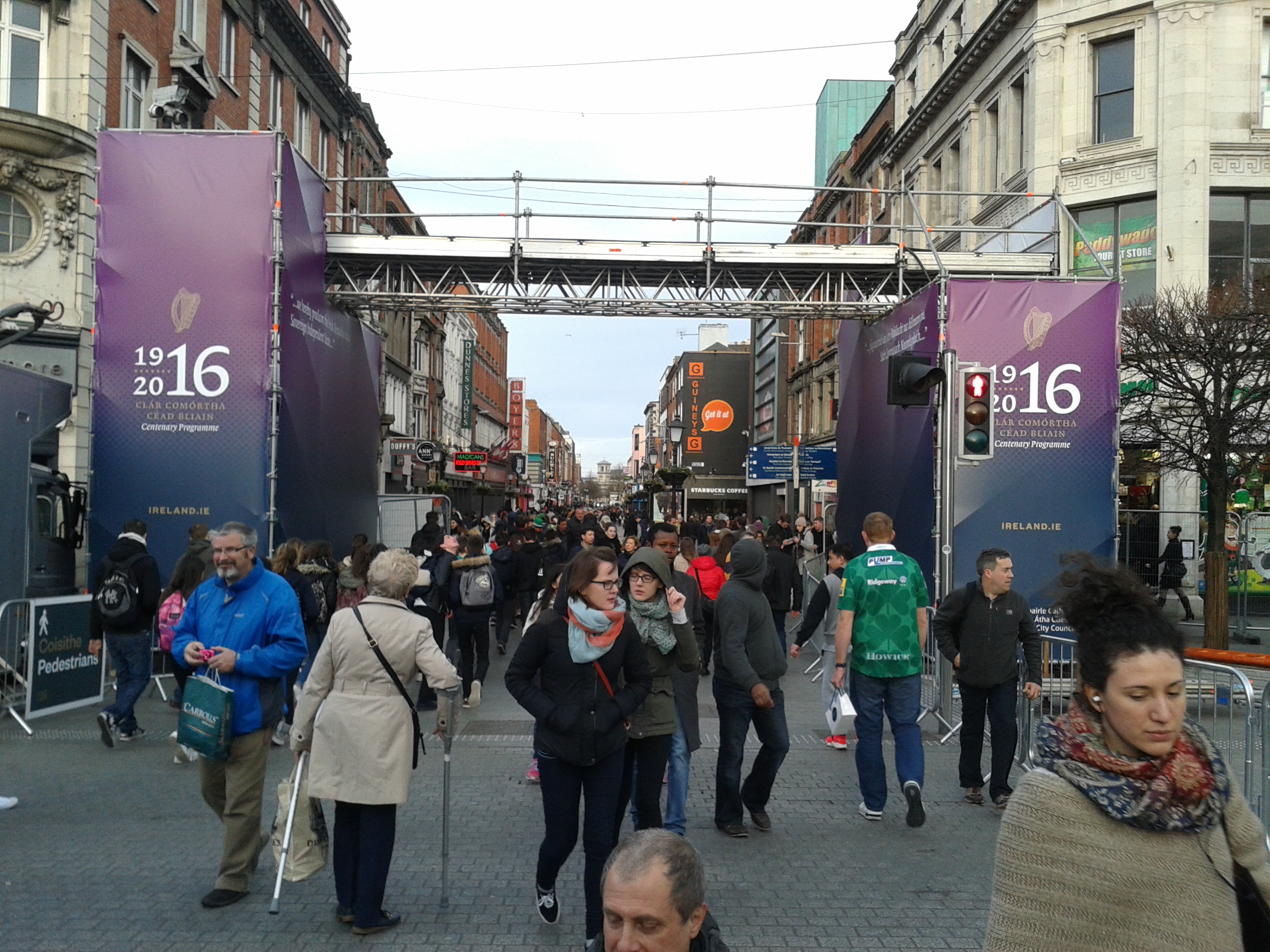


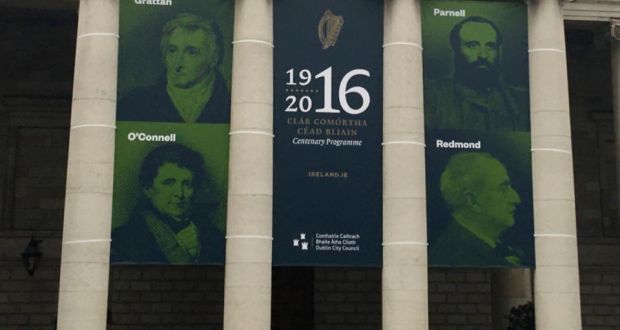


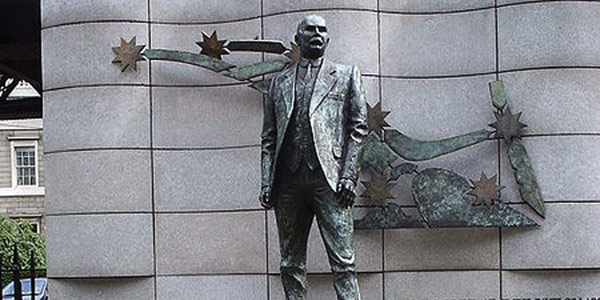


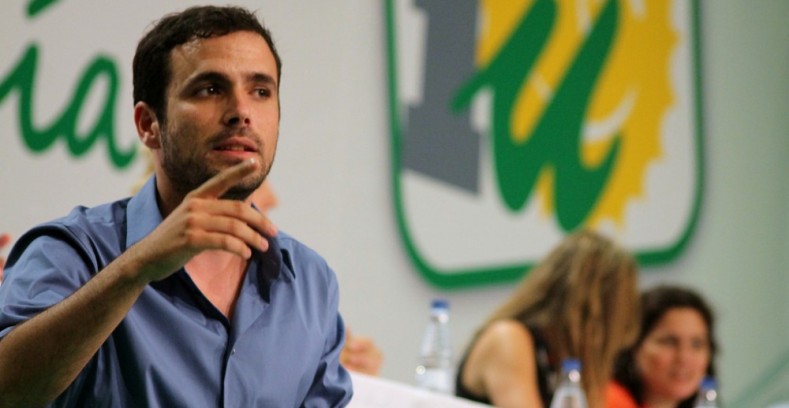


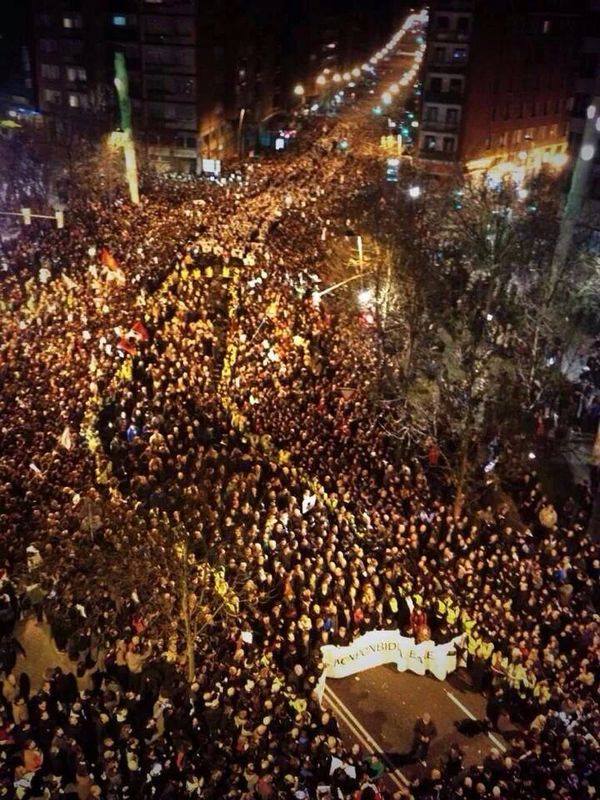
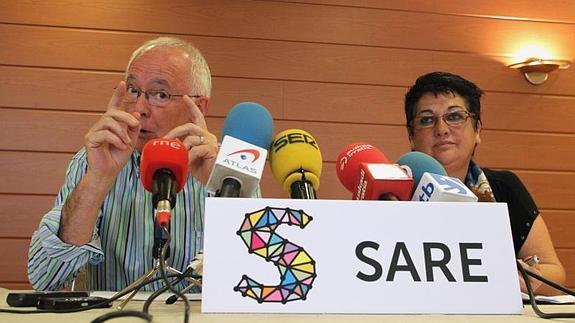
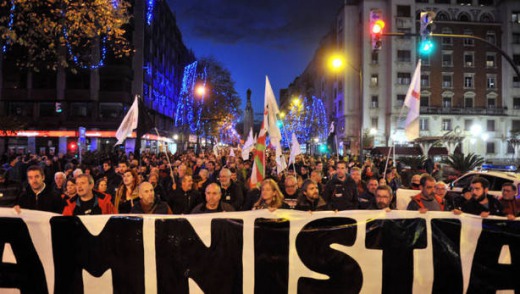


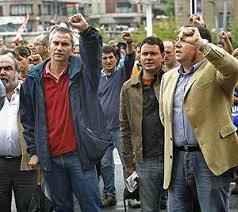



 rebelbreeze