In the Basque Country the Day of the Patriot Soldier is commemorated on two different dates: by the Basque Nationalist Party on October 28th and by the Patriotic Left on September 27th. Each date marks different events but each is anti-fascist in character.
On October 28th one of the many atrocities of the Spanish Civil War/ Anti-Fascist War was enacted by the Spanish fascist military when they executed 42 captured Basque soldiers of the Eusko Gudarastea, a Basque antifascist militia opposing the military-fascist coup of Franco and another three generals.
Section of the crowd at the Gudari Eguna commemoration in Arrigorriaga, Bizkaia province, southern Basque Country. (Photo: D.Breatnach)
This atrocity occurred in 1937, when that war had another two years to run. The Basque Nationalist Party (PNV) was then the main political party in that part of the Basque Country1 and many of its politicians and administrative officials were executed by the Franco regime too.
Commemoration of the PNV´s Day of the Patriotic Soldier (Gudari Eguna) was carried out clandestinely during the four decades of the fascist Franco regime but was permitted in the post-Franco arrangement in the Spanish State, when the PNV were legalised.
The PNV became the dominant force politically in the two provinces that had declared for the Spanish Republic, which was the largest part of the Basque Autonomous Region. Nafarroa however was given a separate autonomous government which split the nation administratively in at least four.2
A DIFFERENT DATE TO COMMEMORATE
However in the 1960s a large part of the PNV´s youth wing had become disenchanted with the party and, entering into alliance with a Basque socialist movement, formed ETA, a mainly political organisation but, existing under a fascist-military regime, inclined also towards armed resistance.
The platform at the Gudari Eguna commemoration organised by Jarki with the event’s speaker/ chairperson addressing the participants. (Photo: D.Breatnach)
ETA grew in support and in actions, military but not only, the Left Patriotic movement (Izquierda Abertzale) widening to fight on a number of fronts, linguistic, social, trade unionist and political with the armed section carrying out many actions.
The last political executions of the Franco regime were in 1975 of two members of ETA and three of FRAP3; the two Basques were Juan “Txiki” Paredes4 and Angel Otaegui. All five, despite huge international solidarity mobilisations and appeals for clemency, were shot by firing squads.
Today, the Patriotic Left´s Gudari Eguna is commemorated by different groups and not all together. As has occurred in Ireland, the accommodation of the leadership of the Basque Patriotic Left to the Spanish electoral system and abandonment of armed struggle has resulted in fragmentation.
A protest in Arrigorriaga I passed by on my way to the Gudari Eguna commemoration. I did not stop to enquire as to the purpose; I had made an error on the journey, was late and in a hurry. From the arrows design I understand these to be the Sare group doing their last Friday of the month picket in solidarity with the prisoners. ‘Giltzak’ means ‘keys’ as the graphic banner design shows and so the aim is probably to have them all leave jail. That is also the aim of the ‘dissident’ group Amnestia but they seek complete amnesty for the political prisoners whereas Etxerat, Sare and EH Bildu normally refrain from even calling them ‘political prisoners’since, according to the Spanish State, that amounts to ‘supporting terrorism.’ (Photo: D.Breatnach)
The political party EH Bildu commemorated the executions but so did the dissenting Jarki and Tinko/Amnistia and the historical memory organisation, Ahaztuak. They did not do so together nor, naturally with the PNV on the different date.
In Arrigorriaga Jarki organised their event in the birthplace and home of Argala, nom-de-guerre of José Miguel Beñaran Ordeñana, a theoretician and activist of great importance in the development of ETA and assassinated by the state-sponsored GAL terrorists.
The attendance at the event listened to the event’s MC addressing them, after which a group of youth carrying flaming torches came on stage. The MC ended her talk with calls for a free and socialist Basque Country, after each which the audience chanted “Gora!” (‘Up!’).
She then led them in singing the Eusko Gudariak with clenched fist in the air, followed by introducing the Internationale in Basque, the revolutionary socialist song that emerged from the Paris Commune of 1871, the audience joining in (though not everyone as well-versed as with the previous song).
I sang the chorus in French, the only language other than English in which I know the chorus, sadly.
HISTORICAL MEMORY & THE MARTYRS
The martyrs of the people´s struggles around the world are remembered organically and kept close to their hearts by the people from which they came, at least for a few generations. Initiatives of conserving and transmitting historical memory keep those commemorations going further.
Section of the crowd at the commemoration of Gudari Eguna, organised by the Jarki organisation. (Photo: D.Breatnach)
In Ireland we know that commemorating the risings of the United Irishmen (1798 and 1803) fed into the struggles of the Young Irelanders a half-century later, their memory in turn contributing to the Fenians which again became part of the history of future generations and of several armed struggles.
Counter-movements, recognising the potency of historical memory, try to appropriate it and adapt it to their political program or to diminish its importance and even deny it. Both those counter-currents can be seen in many parts of the world, including in Ireland and in the Basque Country
However, the ongoing revolutionary streams and their commemorations will always be closest to the real meaning of those events in the historical memory of the people, in the real social and political meaning of martyrdom.
Patrick Pearse remarked on this process in his famous oration over the grave of O´Donovan Rosa: Life springs from death and from the graves of patriot men and women spring living nations.
Footnotes:
1The Basque Country is composed of seven provinces, four on the Spanish state´s side of its northern border and three on the French state´s side. The Anti-Fascist War split the southern Basque Country with principally two provinces, Gipuzkoa and Bizkaia, taking the side of the Spanish Republic, which at the last minute granted them national autonomy. Nafarroa (Navarre) mostly took the fascist-military side and murdered around 3,000 antifascists and Alava province took that side too.
2Two separate autonomous regions in the Spanish state and the provinces on the French side in different French regional administrative areas.
3Frente Revolucionario Antifascista y Patriota (Revolutionary Anti-Fascist & Patriotic Front); the three were: José Luis Sánchez-Bravo Sollas, José Humberto Baena Alonso and Ramón García Sanz.
4According to his brother who, despite being misdirected arrived as Paredes was being shot by the Guardia Civil, who were shooting at different parts of his body, Txiki Paredes continued to sing Eusko Gudariak (‘Soldiers of the Basque Country’) until he finally died.
Basque actress Clara Galle, criticised for not wearing a bra under her t-shirt at Basque team Osasuna’s football ground, kicks the ball back to score. “You have learned nothing,” she adds.
From Publico.es 09/26/2023Translation by D.Breatnach (Reading time:2 mins.)
The Navarrese actress Clara Galle went to Osasuna’s stadium, El Sadar, last weekend. As a famous fan of theirs, the club decided to honour her with a reception before the match against Sevilla. Luis Sabalza, president of Club Atlético Osasuna, gave her a t-shirt with her name on the back.
Actress Clara Galle photographed while watching her team play Sevilla at El Sadar, Osasuna’s stadium.
The visit was eagerly showcased on the official accounts of X and the club’s Instagram. However, as is often the case, the photos in which the outlines of her nipples were visible due to the absence of a bra triggered a multitude of sexist comments.
The actress, far from remaining silent, decided to respond forcefully with a comment on Instagram: “I’ve been going to El Sadar to see my team since I was a little girl … Given the comments I’ve read, I feel that I have to react.
“When I was getting dressed before arriving at the field, it didn’t occur to me that my nipples were to be such a topic of conversation,” she said. “If you notice them, it’s because I have them. I have never seen this kind of hullabaloo when any player from any team takes off his shirt on the field,” she added.
Osasuna’s president presents actress Clara Galle with a club t-shirt with her name on the back.
“I have a clear conscience, I’m not doing anything wrong by not wearing a bra.
“It doesn’t bother me that they say that I was wearing the two points that they didn’t win, it bothers me that my breasts are the only topic, among so many more interesting ones in existence, that many choose to talk about”, she declared.
Gale ended with an urgent reminder after the controversy over Luis Rubiales’ kiss of Jenni Hermoso: “It seems that we have learned nothing in recent weeks,” the actress concluded.
COMMENT
Sexism and adolescent behaviour by male adults is oppressive to women and at least tiresome to everyone else. It is an unfortunate feature of many – perhaps all – countries but the Spanish state seems to have a particularly high share of it.
Leaders of both mainstream unions in the Spanish state recently concluded an agreement with the employers of a 4% rise in their members’ wages in 2023 and of 3% for 2024 and 2025.
The deal is effectively a pay cut even on on average inflation and even worse on weekly inflation yet the leader of UGT celebrated the result.
Average inflation in the Spanish state, calculated on a wide range of products and services, was 8.83% in 2022 and is currently projected at 4.3%-4.87%. However the weekly inflation rate in necessities such as food, power, housing etc. as we know always runs substantially higher.
The trade unions concerned are the CCOO (Comisiones Obreras, founded during the Franco era by the Communist Party but no longer controlled by them) and the UGT (Unión General de Trabajadores, linked to the PSOE, Spanish social-democratic party currently in Government).
Except in the southern Basque Country and in Galicia, and in some particular workplaces in the Spanish State, the CCOO and UGT are by far in the majority in members and therefore in representatives (shop stewards, convenors).
Because the CCOO and UGT are also Spanish unionist, i.e opposed to independence for nations and regions within the Spanish state’s territory, they have been rejected in the Basque Country, where Basque unions ELA and LAB are in the majority, along with some smaller ones.
ELA is linked to the Basque Nationalist Party PNV, while LAB is controlled by EH Bildu, main party of the Basque patriotic Left. In Galicia too, the main trade union is Confederación Intesindical Gallega (CIG) and also in favour of independence for Galiza.
In Catalonia and Asturias, CCOO and UGT are by far in the majority though in Catalonia1, Intersindical CSC, which supports Catalan independence, is making progress. However, Intersindical there and in Galiza2 are ‘unions of class’ which the Basque unions are not.
L-R: Presidents of Employer Federations Cepyme Gerardo Cuerva and CEOE Antonio Garmendia with General Secretaries of CCOO and UGT Unai Sordo and Pepe Álvarez (Photo cred: Gabriel Luengas, Europa Press)
President , Antonio Garamendi; Gen Secs CCOO Unai Sordo & UGT, Pepe Álvarez May 2023 Gabriel Lluengas Europa Press
A ‘union of class’ maintains a philosophy of militant struggle and does not recruit from repressive organisations such as police and prison warders or from management levels.
Trade unions were established at enormous sacrifice by working people in strikes and other actions, suffering deprivation, physical attack by police, army and other hired goons, losing liberty in jail and penal colonies and often enough shot dead on the street or executed by the State.
Though by themselves trade unions can never lead to socialism, their struggles have advanced the economic and social conditions of working people in society. But as unions became an accepted part of capitalist society, they became institutionalised.
Their leaders and employees became more committed to the institution of the union than to its original purpose and perceived their role as being exercised within the capitalist status quo, their political allegiances generally reformist.
CCOO section with hospitality sector workers’ banner, Mayday parade, Madrid 2023 (Photo credit: Patricia Cinta, Christian Monitor)
Throughout most of the world, union hierarchies are betraying even the basic economic needs of their members, to say nothing of their social and political needs. Furthermore they often act as police, restraining what they perceive as too radical confrontations.
Yet it is impossible to conceive of a social revolution without mass action by workers and difficult to imagine that without mass workers’ organisation. In the absence of a revolutionary union of those dimensions, a unified militant grass-roots trade union movement is sorely needed.
End.
FOOTNOTES
1And in Paisos Catalans (Catalan countries) of Valencia and the Balearic Islands in the Spanish state and Pau in the French state.
The remains of more than 1,700 victims have already surfaced, twice as many as expected
Report from Info Libre, by Angel Munarriz, Seville — January 6, 2023 7:39 p.m. @angel_munarriz (translation and editing for publication here, also Footnotes and Glossary by D.Breatnach)
The mass graves in the Seville cemetery are a puzzle. Historiographical research has concluded that thousands and thousands of victims of Francoism lie dumped without order or recognition, but there is hardly full certainty of a few hundred names registered in the municipal registry.
What is underground is a sordid totum revolutum1 of bones of those shot right there and on nearby walls, of those killed in prisons and concentration camps or in confrontations with the rebel troops, or of victims of hunger and poverty who were was buried free of charge along with those who suffered repression.
Today the puzzle is still far from complete; it will probably never be so, because part of the mission of the placing of graves in the San Fernando cemetery was to erase the traces of the crime.
But some pieces are beginning to fit. It is even possible already to glimpse some forms. What is observed goes beyond any hypothesis.
Not everything in this story is summed up in numbers, because behind each number there is a human being. But numbers are essential to understand its dimension.
There they go: the search in the mass graves of the Franco regime led by the Seville City Council is now extended to more than 4,000 possible victims, according to the calculations of the consistory itself, based on historiographical sources.
In the first excavated burial, Pico Reja, the remains of more than 1,700 victims have already surfaced, twice as many as expected, making it “the largest open mass grave in Western Europe since Srebrenica”, as the City Council highlights.
In the second, called Monumento, pending opening, there could be more than 2,600. The horror revealed in what was the fiefdom of Gonzalo Queipo de Llano2 seems to have no end.
Overflowing forecasts in Pico Reja
The exhumation work in the Pico Reja grave, which began a little less than two years ago, is nearing completion.
“The idea [of the City Council] is to carry out an act of symbolic closure of the pit before the end of January. We are going to do everything possible,” explains Juan Manuel Guijo, director of the excavation, which is in charge of the science society Aranzadi, a benchmark in this field.
Guijo is not certain about the deadlines.”The pit must be left clean, without remains,” he says. In addition, “a huge amount of funerary material is coming out.”
The anthropologist uses scientific jargon: “Huge amount of funerary material.” They are human bones.
The initial forecast for the number of deaths was just over 1,100, of which between 850 and 900 would be victims of Franco’s repression, according to the City Council. But reality has broken any forecast.
Guijo advances to InfoLibre the figures as of December 30: the remains of 8,600 individuals have been located, almost eight times more than previously thought; of these, 1,718 are victims of the Franco regime, around twice as many as expected.
The two figures, says Guijo, “will be exceeded” at the end of the excavation.
“We can reach 9,000 people exhumed. All this was impossible to foresee. It is beyond any possible forecast,” he says.
The mayor of Seville, Antonio Muñoz (PSOE), has said it in other words: “The reality was much worse than what was estimated in the initial forecasts.”
Visitors to the Pico Reja mass grave excavation in May 2022 (Photo sourced: InfoLibre)
An explanation? The grave “was not filled up shortly after the coup, as was thought, but was open until 1940, or at least it was opened punctually in 1940,” explains Councilor Juan Tomás de Aragón.
The remains –wires and shackles– or the posture allow us to conclude that a victim was tied up, either with the wrists together or with the hands behind the back. Clips found appeared to hold several in a row with rope or wire.
The skull is the most frequent area of impact of the projectile, especially from behind, but also on the face. There is an abundance of long-arm projectiles used for the Mauser rifle, as well as short-arm bullets, mainly 9 mm.
In addition to the unmistakable bullet holes, there are “simple” fractures that point to “illtreatment” and “cruelty,” Guijo explains. The extreme fragmentation, mutilation, shrapnel and grenade remains seem to be attributable to “high energy trauma”, typical of combat.
500 families waiting: from Blas Infante to Horacio Gómez
One of the pieces of the puzzle fell into place in June.
The technicians confirmed the existence of evidence that certifies the remains of at least thirty of the victims who were members of what is known as the Mining Column, a group of volunteer fighters from the Huelva mining area that arrived in Seville bringing dynamite.
The characteristics of some burials –bodies without a coffin, grouped and face down– and the evidence that they had been retaliated against –shots to the neck, ties, perimortem fractures– allowed, together with some specific findings, to outline the hypothesis that they were members of the Miners Column.
There was a way to confirm it. How? These workers breathed, drank and ate in a mining environment without current security measures, so there could be a transfer of heavy metals to their bodies.
Indeed, the analyses carried out at the University of Santiago de Compostela have ratified it.
Much remains to be confirmed. Some 500 relatives have offered DNA samples, which must be compared with the remains of the victims, especially femurs, with signs of repression. You can’t always. There are more than 300 victims who do not present viable skeletal remains.
They are practically pulverized. This, added to the fact that the percentage of identifications with respect to the total number of bodies exhumed in this type of work is usually around 10%, caution is advised.
This same month of December, Horacio Hermoso, son of the former mayor of the city of the same name, a member of the Republican Left, assassinated in September 1936, died. Horacio Jr. gave his DNA, but did not arrive in time to see the end of the remains matching process.
DNA collection in 2019 from Horacio Hermoso, son of the former Republican mayor of Seville, of the same name, assassinated in September 1936. Sadly he died before his father’s remains were identified. (Photo sourced: InfoLibre)
Among the relatives who are still waiting is Estanislao Naranjo, grandson of Blas Infante, considered the father of Andalusianism, murdered in August 1936. “Things are going slowly, because it is a difficult grave,” he says.
Do you see the identification of his grandfather as possible? “In theory, yes. Due to the dates, they had to throw it into that pit. Now, it is difficult to know who was victimised and who was not. If the bullet hit a bone, you can see it. If it only touched soft parts, no,” he says.
Historical investigations maintain that, in addition to Infante, the remains of other political and union figures of the time rest in the grave, as well as loyal soldiers – Captain Ignacio Alonso – and assault guards3.
Councilor Juan Tomás de Aragón (PSOE) emphasises that all the victims will have a “dignified burial.” The City Council will build a memorial and a columbarium over the grave.
The Mayor tries not to generate excessive expectations about the identifications, so as not to pivot on this last phase the success or failure of the works. The truth is that the exhumation of Pico Reja has involved much more than exhumations and possible identifications.
For example, it has led to the making of several documentaries, such as Pico Reja. The truth that the earth hides. Students from schools, institutes and universities, from Seville and abroad, have organized visits to the work area.
Numerous university researchers have taken an interest in the process.
Monumento: the emblematic grave of Cruz de Lolo
The opening will not be limited to Pico Reja. The City Council plans to put out to tender in 2023 the excavation work for a second grave. It is known as the Alpargateros or Monumento pit.
According to available studies, it was open between September 1936 and January 1940 and no less than 7,440 bodies of deaths from different causes were deposited there, of which some 2,613 would be victims of Francoism.
Among them are believed to be the eight convicted of a plot against General Gonzalo Queipo de Llano, during which Concha Morón was arrested as part of The Resistence in Sevilla. An attempt to overthrow Queipo (Aconcagua, 2013).
Carmen Díaz may also be there, sister of the general secretary of the PCE, José Díaz.
If the forecasts of victims of the Franco regime in the Monumento pit are met, the total of the two burials would easily exceed 4,000. After Pico Reja‘s surprise, no one dares to say so. Perhaps, says the archaeologist Guijo, bodies attributed to Monumento were in Pico Reja.
Flowers in memory of the victims of Francoism buried in mass graves in the Seville cemetery. (Image sourced: InfoLibre)
Graves (and more matters) pending
The City Council trusts that the collaboration of the Diputación, the Junta de Andalucía4 and the Government in Pico Reja, where they have invested 1.5 million euros, will be repeated in Monumento, so called because of a commemorative monument raised there in 2003 by initiative of the Association of former Political Prisoners and Victims of the Franco regime.
Almost everyone who remembers that in this entire area crime reached inhuman levels hovers around the Monument pit.
In addition to the monument, in its paved area there is a cross placed by a communist blacksmith in the early 50s, tolerated by the authorities and known as the Cruz de Lolo. For the rest, no one would say. Seville has lived for decades in a democracy with back turned to the memory of its horrors.
The remains of Blas Infante, named by Parliament “father of the Andalusian homeland”, was not begun to be searched for until 2020.
Those of Queipo, head of the repression in southern Spain, the coup leader who called for “raping Reds”, have only recently left the place of honour they occupied in the basilica of La Macarena,5 in compliance with a state law.
This was without the confraternity with the most members in the city acting on its own initiative. Apart from this exhumation, the honours granted to him still stain the city.
Councilor Juan Tomás de Aragón highlights the “normality” with which the exhumation of Pico Reja has been carried out, which he is sure will be repeated in the Monumento.
“Nobody has clutched their heads in their hands. People are more intelligent and mature than is sometimes thought,” he says. He believes that the key has been respect: “We have not hidden what we were doing, nor have we used it to confront anyone.”
There are more graves in the complex, in addition to Pico Reja and Monumento. Antigua –delimited and where it has been verified that there are no remains of victims, according to the councilor–, Rotonda de los Fusilados, Disidentes y Judíos, some extensions of filled graves…
“Francoism never admitted that there were graves, that’s why they were known by popular names. If it had admitted them, they would be called San Rafael, Santa Águeda …”, explains Juan Morillo, a reference to the memorialist movement in Andalusia.
He sees the exhumation process of Pico Reja as “exemplary”, but at the same time stresses: “All this, it must be remembered, has been done due to the pressure of family members and associations. No party had it on their pprogram.
“Memory continues to be the great democratic deficit in this country, where there are still unopened graves and streets with Francoist names”.
The City Council does not plan to disinter these graves, at least not while the largest ones are open. According to the available evidence, they have much fewer victims than Pico Reja and Monumento.
Known locations of mass and smaller graves from the Spanish Civil War and during the Dictatorship repression afterwards. (Image sourced: Internet)
Comment byDiarmuid Breatnach
It is important to note that most of the executions by the fascist-military forces during the Civil War took place outside combat zones, in which the fascist-military were in no danger whatsoever. They were punishing not only soldiers of the Second Republic but political activists and functionaries.
This is in contrast to the much lower number of executions in the zones under control of the Republic and, furthermore, as their authorities exercised greater control, the executions were reduced considerably.
Many executions also took place after the fall of the Republic and the terrible conditions of the vastly overcrowded jails and prison camps added their contribution to the fascist military harvest. Their purpose was revenge, deterrence of others and elimination of a democratic generation.
Generations growing up afterwards knew little of the extent of the horror unless informed by their family and communities, though may of these in turn felt obliged to remain silent unless they – or their sons and daughters – were to also become victims.
The subject is not taught in the schools and during the Dictatorship children were taught and expected to salute the icon of the Dictator Franco.
Unlike in Germany and even in Portugal, fascism was never defeated in the Spanish state and the Transition from Dictatorship brought the military, police, judges, civil servants, media moguls, university dons and Catholic hierarchy safely into the new “democracy”.
In addition, most of those who seized land, buildings, machinery and equipment, vehicles and personal wealth of the victims of the coup and war, were allowed to keep them
As Juan Morillo reminds us (see article), it is not the Spanish State that has pushed the process of disinterment and documentation of these mass graves, but relatives, communities and concerned citizens. And for a long time it was even dangerous to pursue such activities.
Fascism remains alive and strong in the Spanish state.
2Gonzalo Queipo de Llano y Sierra (5 February 1875 – 9 March 1951) was a Spanish military leader who rose to prominence during the July 1936 coup and soon afterwards the Spanish Civil War and the White Terror that followed. Capturing Seville with a force of at least 4,000 troops and ordering mass killings, he later made ridiculous claims, including that the city had been defended by 100,000 armed communists and that the fascist military troops had taken the city with as few as fifteen men. Quiepo de Llano publicly called for women of the Republican opposition to be raped.
3From Wikipedia: The Cuerpo de Seguridad y Asalto (English: Security and Assault Corps) was the heavy reserve force of the blue-uniformed urban police force of Spain during the Spanish Second Republic. (for more, see Glossary)
Andalusia: One of the ‘autonomous regions’ of the Spanish state, large southern region, from Al Andalus, province of the Moorish conquest of large areas of the Spanish state. After the Canary Islands it was the easiest for Franco’s troops to reach from the Spanish colony in North Africa; its defenders lacked time to prepare and did not last long against a well-armed and large invasion force.
Assault Guards (From Wikipedia): The Cuerpo de Seguridad y Asalto (English: Security and Assault Corps) was the heavy reserve force of the blue-uniformed urban police force of Spain during the Spanish Second Republic.The Assault Guards were special police and paramilitary units created by the Spanish Republic in 1931 to deal with urban and political violence. Most of the recruits in the Assault Guards were ex-military personnel, many of which were veterans.
At the onset of the Spanish Civil War there were 18,000 Assault Guards. About 12,000 stayed loyal to the Republican government, while another 5,000 joined the rebel faction.[1] Many of its units fought against the Franco supporting armies and their allies. Their siding with the former Spanish Republic’s government brought about the disbandment of the corps at the end of the Civil War. The members of the Guardia de Asalto who had survived the war and the ensuing Francoist purges were made part of the Policía Armada, the corps that replaced it.
Diputación: Regional administrative body in most regions of the Spanish state.
Izquierda Republicana Republican Left (from Wikipedia, translated): Izquierda Republicana (IR) was a Spanish left-wing republican political party founded by Manuel Azaña in 1934. It played a prominent role during the Second Spanish Republic and in the moments preceding the start of the Civil War. Azaña became President of the Republic between 1936 and 1939. During the Franco dictatorship the party practically disappeared from the political scene except in the sphere of Republican exile in Mexico, where it continued to have some activity. As of 1977 it was reconstituted in Spain again, although without having the (degree of) importance of the historical party.
La Macarena: Basilica of Nuestra Señora de la Esperanza Macarena (Our Lady of Hope of Macarena, base of the Holy Week Confraternity of that Catholic church. The procession on the early morning of Good Friday is one of the largest, most popular, and fervent in the whole of the Spanish state. The wooden statue of Our Lady of Hope of Macarena dates from the 17th century.
PCE:Partido Comunista de España (Communist Party of Spain) is a communist party, banned by Franco but supported the Transition from the Dictatorship and the monarchist Constitution, subsequently experiencing a number of splits. Comisiones Obreras (CCOO), one of the two main trade unions in the Spanish state, its associated trade union movement was the main underground workers’ element in forcing the change from dictatorship but is no longer under its control.
PSOE:Partido Socialista Obrero de España (Socialist Workers Party of Spain) is a social-democratic party, banned by Franco but supported the Transition from the Dictatorship and the monarchist Constitution, subsequently one of two main parties of government in the Spanish state, at the time of writing the senior member in coalition government with the Podemos party. Its associated trade union, Unión General de Trabajadores (UGT), is one of the two main trade unions in the Spanish state.
(Translated from Publico report by Danilo Albin and with comment by D.Breatnach)
A few days before Nazi bookseller Pedro Varela’s date for trial in Malaga for the continued crime of provoking hatred and discrimination, the Hitlerite activist gave a talk in which he called for founding “cells of Christian, white, and European men.”
The audience listened in silence. On stage was Pedro Varela, the great leader of Spanish neo-Nazis and one of the few Hitlerites tried in Spain for spreading genocidal ideas.1
It was the morning of Sunday, November 6, there were a few days left before another trial for spreading hate and Varela, in his usual style, had not planned to move an inch from his script.
“You go down a street in Madrid or Barcelona and you see black boys, handsome, tall, stocky, who measure 1.90. They are going to be the owners of the situation and the owners of the country. Do you think they are going to pay your pensions?”2
That was one of the statements made by the owner of Librería Europa during the conference held that day, according to a video that has just seen the light.
The Nazi activist’s speech, organized by the far-right publishing house Fides, was made on November 6 within the framework of the XVI Days of Dissidence3.
The event, which was initially going to be held in a conference room on Calle Hilarión Eslava in Madrid, had to change location after the publication of a news item about said meeting by Público4.
That change of location angered Varela, who did not hesitate to lash out at this newspaper. “As you know, lovers of freedom of expression and democracy have tried and succeeded in cancelling the room in Madrid that for years we used for this rally,” he said.
“The Público newspaper, a pamphlet from the extreme left5, announced the address where the Sixteen Days of Dissidence were going to take place, and encouraged the anti-fascist mobs to call, bother, and outrage the owners of that place so that they finally barred us access to it for holding the ‘Dissidents’,” he continued.
This veteran Nazi activist also referred to an episode of the Cuéntame series in which there was an allusion to his bookshop, located in Barcelona and dedicated to the sale of National Socialist materials.
“The propaganda against this small group of 200 or 300 people here today is tremendous. A newspaper like Público, a television program like Cuéntame, dedicate part of their efforts to combat the spread of our thought and our struggle,” he warned.
As established by Court Number 11 of Barcelona in 2010, this “thought” and this “fight” imply the crime of spreading genocidal ideas. Varela was imprisoned between December 2010 and March 2012.
In 2016, after a raid on the Nazi bookstore in which the Mossos d’Esquadra seized 15,000 books glorifying genocide, the activist spent a few days on the run until he turned himself in at a police station.
Nazi Pedro Varela attending court in Malaga, Spanish state. (Image sourced: Internet)
He then paid a bail of 30,000 euros and returned to the street. Currently he is awaiting a new trial.
The Prosecutor for Hate Crimes and Discrimination requested 12 years in prison for exaltation, justification and denial of the Holocaust and for crimes of incitement to hatred against Jews, migrants, Muslims and homosexuals, among others, as well as the permanent closure of its business, the Europa bookshop in Barcelona.
“Do not fear prison or persecution”
“Whoever had something interesting to say who has not been in prison for that? Do not fear prison or persecution, because they are medalsto your credit in the afterlife,” he said during the conference on November 6.
The latter was held a few days before he was due to face another trial in Malaga as a result of a complaint made by the Movement against Intolerance directed by Esteban Ibarra.
The prosecutor in this case – which is now pending resolution – requested three and a half years in prison for Varela for the continued crime of incitement to hatred and discrimination as a result of the content of some conferences held in Seville and Malaga.
This was given that his rallies created “an evident feeling of hostility towards the affected groups (African, Muslim or Jewish migrants, basically) that generated an objective dangerous to peaceful coexistence”, affirms the Public Ministry.
In the talk on November 6 in Madrid, Varela returned to raise similar issues. Among other things, he linked the number of migrants to the “increase in rape on the streets of Spain, including Valencia.”
“The Spanish are peaceful people6, almost all of them have a partner, a girlfriend, a family… they have a culture of respect for women, something that does not happen with these immigrants.”7
At another point in his speech, he asserted that “60 million blacks are needed to take the place of 100,000 abortions per year that Spain has.”
He also alleged out that immigrants “go to look for a partner in Spain, and if Spanish women do not decide to become their partner, what is happening happens.”
Varela not only did not hesitate to refer to himself as “National Socialist”, but also claimed the role of the ‘Napola’, the male boarding schools of the Hitler Youth that served as a school for the Nazi elites.
In these centres “they educated them in austerity, order and discipline” and offered them “a sense of mission in life”, according to his interpretation.
He encouraged the founding of “those cells of Christian, white, European men”
“What do we have to do to face this world? We cannot organize the Napola, because they are going to be banned, but yes, you can form a Napola among yourselves, in your family, in your circles of friends.”
“You have to mould the youth, your family, the children and yourselves” – he remarked – “in the character of the Napola kids”.
The Nazi bookseller proclaimed that “resistance must be not only political, ideological and human, but also familial, ethical and religious”, while encouraging his followers to have children and “found those cells of Christian, white and European men who, with respect and good neighbourliness with other races and cultures, prefers to defend his own than to succumb”.
“What Happened at Auschwitz”
He alleged that in Spain there is a “gradual loss of freedom of expression” and condemned the Democratic Memory Law8, which he compared to the German laws against Nazi apology.
“In Germany, as you know, the whole question of what happened, what did not happen or could have happened in Auschwitz is not debatable, it is not debatable,” he indicated. “Any German who claims to defend his own identity is suspicious of Auschwitz.”
In his opinion, “this dictatorship against freedom of expression also exists here. This law of historical memory and cancellation of white culture9 is carried out in all Western countries.”10
He even asserted that the legal persecution against Nazi broadcasting in Germany is a “sword of Damocles that hangs above all Germans so that any possible resistance to the cultural and ethnic invasion of the country does not take place.”
Pedro Varela addressing a fascist meeting in the Spanish state (Image sourced: Internet)
“Where do the transsexuals go?”
His speech was also loaded with transphobia. “I read a very curious joke the other day. – Hey dad, women go to the gynaecologist, right? – Yes. – And do men go to the urologist? – Yes.
And where do transgender people go? – I don’t know, kid, probably to the psychiatrist“. As can be seen in the video, the transphobic joke was followed by laughter and applause from the ultra-rightists who inhabited the room.
“This is of course a joke, because otherwise transgender people are going to sue me.11 Humour is what it is, but that is the biological reality. You can feel whatever you want, but biology says what you are.
You are a man or a woman, or to the urologist or the gynaecologist, you cannot go anywhere else,” he concluded.
COMMENT by Diarmuid Breatnach
Fascism in Spain, then and now
The first thing to take into account is that unlike anywhere else in Europe, there was no overthrow of fascism in the Spanish State.
A cosmetic job of painting over four decades of the savage Franco dictatorship with pseudo-democracy was managed by the fascist ruling class with all their politicians, senior military and police officers, judges, bishops, bankers and media moguls remaining in place.
The second thing to note is that despite antifascist laws being passed as part of that “Transition” process, fascist glorification continued to be rampant in the Spanish state with fascist salutes and iconography regularly displayed in public and on photographs and video.
Spanish fascists against Catalan independence, Barcelona January 2020. (Image sourced: Internet)
And fascist speeches too, all with impunity. Except in this case, which is why the report states that Varela is one of the few Hitlerites to be tried: not because there are only a few of them but because the State has decided to make Varela an exception to the rule.
Varela complains about the “dictatorship” that he feels being exercised against him and his rhetoric. Fascists always raise the flag of democracy, which they despise, only when they feel unable to use the mailed fist. Once in power, they give democracy to none except their own12.
It’s not a little amusing that the State is trying to close Varela’s fascist bookshop through the court because they closed Basque social centres, newspapers and social media sites merely be decree and even when their own Constitutional Court made them recant, are yet to pay a cent in compensation.
Hollocaust denial is one pretty frequent plank in the fascist platform, wherever in the world it is erected.
This too is curious, in a way because in the 1930s and 1940s, the Nazis and other fascists boasted about what they were doing, in particular to the Jews in Germany, Austria and in Occupied Europe.
True, they did not admit publicly to the mass exterminations but all the rest of it, expropriations, mass round-ups, concentration camps were no secret and they corresponded among themselves and reported to authority about the rest – the story the photos, film and survivors told the world later.
Vulnerability of the fascist male ego
Varela’s worries about Spanish women’s vulnerability to men of migrant background is another area of irony, given the problem of Spanish gender violence (see below).
Whilst there have been prominent female fascists, historically the cult of the superior male has been prominent in most fascist movements. Indeed Hitler’s Nazis proclaimed the correct areas for women’s activity to be “kinder, kuche und kirke” (‘children, kitchen and church’).
Most fascist movements and organisations have denounced homosexuality and many gays and lesbians have been killed by them, including an estimated 60% fatalities of the 50-60,000 sent to concentration camps by Nazi German courts.
In their hetero-sexual male insecurity, fascists and other racists often fear “their” women being attracted to other men, specifically to men of other ethnic groups13.
Conversely, fascists regularly see themselves as the “defenders” of “helpless females” while simultaneously detesting any exhibition of female independence or assertiveness.
Those circumstances encourage acts of rape and other sexual violence towards women: last year in the Spanish state 37 women died in violence by men and 46 the previous year.
People still remember the “Manada” (‘wolf-pack’) case where five men videoed themselves raping a young woman whom they left in a doorway after they stole her mobile phone. Although it occurred in the Basque province of Navarra, all the assailants were Spanish.
What’s more, one was a Spanish policeman while the other was military and some had previously videoed themselves in a van with an unconscious woman, talking about their intentions. The “Manada” was the name of a WhatsApp group of which they were members.
Historical memory and mass graves
Many people hope that changes in Spanish law, such as the Law of Historical Memory in 2007 and more recent practical steps herald a coming to terms with the state’s fascist past.
Some mass graves of fascist victims have been exhumed and removal Franco’s remains in October 2029 and projected removal of Primo de Rivera’s from their mausoleum in the Valle de Los Caidios gives hope to some14.
The remains of General Queipo de Llano, believed personally responsible for the execution of poet and dramatist Garcia Federico Lorca in 1936, were removed from the La Macarena basilica in Seville on 2nd November this year.
Postcard of fascist General Queipo de Llano, whose remains were exhumed recently from the Macarena Basilica and reinterred in a family cemetery recently. (Image sourced: Internet)
After Cambodia, the Spanish state remains the one with most mass graves in the world and the majority of those have not been exhumed15. The names of fascists still decorate streets and, as noted earlier, fascist events continue with public displays of fascist affiliation.
The fascist political party Vox continues in existence with currently 52 (out of 250) members of the Congress (lower house) of the Spanish Parliament.
There exists a deep fascist pool which has reflected at various times the political parties Partido Popular, Ciudadanos and now Vox with the votes of the pool being divided among those parties according to the wishes of the day.
As is usually the case, Spanish fascism is combined with a reactionary ‘nationalism’ of a unitary Spain based on Castille and León but including all its current territories.
They tack on to that a fictional concept of Spain with Flamenco in Andalusia and holidays in the Balearics and Canaries but seek the suppression of any national self-determination.
The Basque Country, Catalonia and Galicia have all historically declared for self-determination but all three were murderously suppressed during the Civil War and the Dictatorship, with the former two suffering heavy repression in the post-Franco ‘democratic’ Spain.
Any move towards self-determination in those nations stirs a fascist hornet’s nest to venomous buzzing and threats.
Overall, the signs are not favourable for a future Spanish state cleansed of fascism – at any rate not by moderate and peaceful means.
2A variation of the “white replacement” irrational anxiety of racists.
316 Days of activism against gender-based violence:16 Days of Activism against Gender-Based Violence is an international campaign held every year. It begins on November 25, the International Day for the Elimination of Violence against Women, and runs until December 10, Human Rights Day. It is ironic, to say the least, for fascists to locate their events within this framework.
5From the perspective of fascists and far-right in the Spanish state, that on-line newspaper may seem “extreme Left” but although on the Left it is not even revolutionary.
6Oblivious to past and more recent history, obviously!
Recognition of the victims of political, religious and ideological violence on both sides of the Spanish Civil War and of Franco’s State.
Condemnation of the Francoist State
Prohibition of political events at the Valley of the Fallen – Franco’s former burial place.
The removal of objects which exalt the July 1936 coup, civil war and Francoist repression from public buildings and spaces. Exceptions may be given for artistic or architectural reasons, or in the case of religious spaces.
State help in the tracing, identification and eventual exhumation of victims of Francoist repression whose corpses are still missing, often buried in mass graves.
Rejection of the legitimacy of laws passed and trials conducted by the Francoist State.
Temporary change to Spanish nationality law, granting the right of return and de origen citizenship to those who left Spain under Franco for political or economic reasons, and their descendants.
Provision of aid to the victims and descendants of victims of the Civil War and the Francoist State.
9To Varela, there is such a thing as “white culture”, which will be a surprise at least to, let’s say Irish, Basque and Russians.
12And not even to their own, on occasion, as with the violent suppression of the whole leadership of the Browshirts by the Gestapo in The Night of the Long Knives 30th June-2 July 1934 in Germany.
13This has been nowhere more observable perhaps than in the ‘Deep Southern’ states of the USA, where black men were regularly lynched for alleged rape of white women without any proof. Conversely, the evidence of rape of black women in the same area during and after slavery is legion.
14Franco was the fascist dictator of four decades and Primo de Rivera was the founder of the fascist Falange, executed by the Spanish Republic.
15Holding the remains of an estimated 100,000 men and women.
Anatoly Shariy, a popular blogger who opposes Zelensky but also the Russian invasion, accused of being “pro-Russian” and of “high treason” to Ukraine, has been arrested in Spain for extradition to Ukraine, where he has been threatened by nazis. He has also been threatened by Zelensky supporters at his Catalonian address, where he has registered a complaint with the police. Shariy is considered “not a flight risk” by the Spanish State and is out on bail while his extradition warrant is processed. This is at least the second occasion of Spanish State involvement with the Ukrainian authorities against critics – Spanish secret service agents questioned the family and friends of Pablo González, the Basque reporter on the conflict threatened by the Ukrainian intelligence service and later arrested by Poland on charges of “spying” for the Russians, now in his third month of detention without yet a judicial hearing.
Reporting on the arrest and accusations, most right-wing and conservative media outlets follow what has become their standard practice of mirroring Ukrainian official opinion and refer to him as “pro-Russian” in their headlines and it seems clear that if extradited, Shariy would have little chance of a fair trial.
D. Breatnach
5th May 2022
The following is mostly translation by D.Breatnach from article in Castillian Spanish
According to the Ukrainian government, the Spanish National Police arrested the Ukrainian journalist Antoli Sharíy who has been persecuted by the Kyiv government and threatened with death by the fascist groups that operate under its protection.
Anatoli Sharíy and Olga Bondarenko live with their son in Roda de Berà (DB: near Tarragona, Catalonia, Spanish state) and, for two years, have been harassed at their doorstep by people close to the government of Volodomír Zelenski. The Mossos d’Esquadra (DB: Catalonia police) are aware and prevent physical assault but the threatening messages – also in the image of a blood-stained cradle – have not stopped.
All this is related to the public activity of this Ukrainian couple, who have not set foot in their country for several years. Anatoli Sharí has a YouTube channel with almost three million subscribers and is one of the most influential journalists since even before the Maidan revolt in 2014.
Neo-Nazis have not only leaked the address of his home but also posted the identity of the son, a minor to which, according to his mother Olga Bondarenko, only the Ukrainian Consulate could have access. The last protest took place before Easter, but they fear for their safety especially when the men are allowed to leave Ukraine once the conflict ends.
Until now, all the extradition attempts have been unsuccessful, but after Pedro Sánchez’s visit to Kyiv it seems that everything has been reactivated. The Spanish Government has given way to the bizarre accusation made by the Zelensky government: high treason.
Government-connected investigations
Before leaving the Ukraine, Shari was a journalist based in Kiiv who worked for the Obozravatel outlet. He investigated issues related to illegal casinos, the sale of drugs in pharmacies, murders … Some of them, as he explained in an interview given a few days ago to Nació Digital, “had a connection with the Ministry of the Interior, which covered up the crimes.” At that time, Viktor Yanukovych ruled, a president considered pro-Russian and originally from Donbass.
As a result of some pressure, in 2012 Shari went into exile, passing through the Netherlands and ending up in Barcelona. In 2015 he decided to move to Roda de Berà, albeit without refugee status.
the euromaidan
Between the end of 2013 and the beginning of 2014, the Euromaidan revolt broke out, a series of protests especially concentrated in the capital that sought to oust the then president, Viktor Yanukovych, to force a rapprochement with the European Union. Anatoli watched it from exile, but it was shortly before he began his careeras a political journalist.
The events of May 2, 2014, in Odessa, in which 48 people were killed by the launch of Molotov cocktails when they took refuge from the neo-Nazis in the so-called “House of Trade Unions”, raised alarms. This mass murder carried out by the Pravy Sektor (‘Right Sector’, neo-Nazi) caused Anatoli to start posting videos on the networks expressing his opinion and at the same time communicating information about his investigations.
Olha Bondarenko and Anatoly Shariy (Photo sourced: Internet)
“There has never been as much corruption as now”
Anatoly is accused of treason by supporting Russia on you Tube … but contrary to the accusation, YouTube is known to ban all videos that support Russia.
The first months of the Zelensky government did not meet the expectations of a part of the population, who saw him as a leader who could command respect among the different political outlooks that existed in the country. “We wanted Zelensky to be elected because in Ukraine there are many problems with the battalions and the neo-Nazis,” explains Olga.
Beside her, Anatoli denies that these are few: “It is very easy to control the population with weapons even if they are only 10 out of 100,000.” “They have a lot of power, they have weapons, they attack journalists, a lot of people are afraid and the Government does nothing about them,” he adds. One of the best-known battalions in this sense is the Azov, which has even welcomed among its members different international fighters with extreme right-wing ideology, one of them a resident of Segur de Calafell (DB: in Tarragona, Catalonia).
Break with Zelensky
Although before the elections a good relationship existed between Anatoli Sharí and Volodomír Zelensky, the situation changed drastically in 2020. Cases of corruption, such as speculation with the sale of protective masks that arrived in the country during the pandemic were denounced by Anatoli. He declares that “there has never been as much corruption as there is now, not even with Poroshenko.”
The military operation of the Russian government is considered by Anatoli a “gift” for Zelensky, who was steadily declining in popularity before it occurred. One of his rivals in his political career was Anatoli himself, who since June 2019 has led his own party, with a liberal ideology and a discourse against corruption and against neo-Nazi groups.
Supporters of Shariy’s party in 2019 (Photo sourced: Internet)
“The three main opponents of Zelensky are Viktor Medvedchuk, Poroshenko and Anatoli,” says Olga, who points out that this would be one of the reasons why he was accused of high treason in 2020 and, later, once the war had already started, had his party banned, along with others. “Zelensky is a little tyrant and now he has won the lottery to do whatever he wants,” she says.
The accusation of high treason was used by Zelensky to block Anatoli’s and Olga’s Facebook, YouTube and Instagram profiles, and not only that, but he has also imposed various sanctions such as prohibiting them both and also Olga’s mother from having a bank account.
Alternative media
With the blocking of opponents’ (of Zelensky) social networks, thousands of Ukrainians have had to look for alternatives from which to receive information of all kinds. Views of Anatoli’s YouTube channel every time he uploads a video are almost instantaneous, apart from live broadcasts, and most are either from residents in the country — through VPN services — or from Ukrainians who have had to leave. Through these spaces, they get in touch to help one another, for example when someone needs some medicine, according to Olga.
Meanwhile, the Zelensky government continues to try to narrow Anatoli’s circle more and more. One of his followers, arrested and later fled the country, assured him that, during his arrest, he had been tortured…
************************
Prominent blogger and critic of the Ukrainian government, Anatoly Shariy, has been detained by Spanish police as part of an international operation, the Security Service of Ukraine (SBU) announced on Thursday.
Shariy was arrested on Wednesday in a joint operation by Spanish and Ukrainian police officers, as well as international “partners”, the SBU said in a statement.
The agency, Kyiv’s successor to the Soviet KGB, said the opposition figure is wanted on charges of treason by Kyiv, among other things. Shariy has been infringing Ukraine’s national security through his media activities, while allegedly acting on behalf of “foreign” forces, it insisted.
The case against the YouTuber with almost 3 million subscribers began in February 2021.
Shariy’s arrest “is one more proof that every traitor to Ukraine will sooner or later receive the deserved punishment from him. It is unavoidable,” the SBU said.
Anatoly Shariy (Photo sourced: Internet)
The Ukrainian announcement was confirmed by the Spanish police
The Ukrainian announcement was confirmed by Spanish police, who told RIA-Novosti that Shariy was arrested in the coastal city of Tarragona on May 4 on an international arrest warrant.
Shariy received political asylum in the EU in Lithuania in 2012. At the time, he said he was fleeing persecution from the government of Viktor Yanukovych, who was branded as pro-Russian by Western media.
Yanukovych was deposed after the Maidan coup in 2014, but the blogger remained a harsh critic of the authorities in Ukraine, be it President Petro Poroshenko or his successor Volodymyr Zelensky.
He condemned Russia’s military operation in Ukraine after it was launched in late February, but continued to point to what he saw as flaws in Kyiv’s conduct during the ongoing conflict.
The blogger’s political asylum was canceled by Lithuania in January this year.
Shariy was absent from social media on Wednesday, but on Thursday he used Telegram to share a photo of his wife feeding parrots in Barcelona, accompanying it with a comment that read: “This is really a comedy.”
In his Twitter account, according to Publico report, in which Shariy related he had been threatened by a Ukrainian government adviser, the blogger commented: “The only crime I have committed is not to have exposed enough thieves.”
Pablo Gonzalez, a Basque journalist who includes working for Basque and Spanish left-wing media, was covering the war in Ukraine when he was interrogated by the Ukrainian authorities, the Spanish intelligence services approached his family and friends and he was subsequently arrested in Poland on 28th February and charged with spying against Poland. He has been denied access to his lawyer and no evidence has yet been presented to back up the charge but after his four-hour Ukrainian interrogation, Gonzalez reported that he had been accused of spying for Russia on the basis that he had been born in Russia1, that he reported for the mildly left-wing Basque nationalist newspaper GARA (he also reports for Publico.es) and that he had a bank card for a Basque cooperative bank. Journalist defence organisations have expressed concern at the detention.
I am not aware of having seen Gonzalez’s reporting but it may be that his material did not align with the dominant discourse as apparently the International Federation of Journalists reported that González had been accused of being pro-Russian in his coverage for a Spanish newspaper. On the other hand, several of his colleagues say that his reporting has been anti-Putin. Clearly the secret services of at least three pro-NATO countries, Ukraine, Spain and Poland have been in communication regarding Gonzalez. After his interrogation in Ukraine, he had been released but it seems awarned to leave Ukraine. He went to Poland and had been just about to re-enter Ukraine with a group of other reporters when arrested by the Polish authorities. “Legal threats and smear campaigns are a daily menace to outspoken journalists, and journalists covering the migration crisis on the Belarusian border have been detained and harassed,” the Europe representative of the Commitee to Protect Journalists, Atilla Mong told Voice Of America2.
I am no supporter of Pablo Iglesias or of his Podemos party3 but I offer my translation of his piece in Publico.es in the hope that it will a) encourage some to follow the case and perhaps lift their voices for Gonzalez’s release and b) become aware that censorship and misinformation is rampant in the media around this conflict.
On the 14th of this month, the photojournalist Juan Teixeira, a friend of Pablo González, wrote a column in Público entitled “About Pablo González and the diminishing freedom of the press.”4 There he talks about his relationship with Pablo, his work with him in the Ukraine and his arrest. I recommend, in fact, that you read his entire column, but allow me to read you two paragraphs:
It was precisely in one of these connections with Ferreras that everything began to go wrong. Pablo decided to do the direct clip of him with the military in the background, which is always more televisable. From La Sexta they had him waiting for more than 45 minutes under snow and with the soldiers increasingly tense wondering what that bald man was doing standing in front of a mobile on a tripod.
Until the military got tired and invited us to leave, but not before erasing all the material and taking a photo of Pablo’s passport. That same night, he received a call from the SBU (Ukrainian intelligence services), telling him that he should report to their headquarters as soon as possible. Despite the fact that there was work to be done, we returned to Kyiv. There Pablo was interrogated for 4 long hours, and accused of being a Russian agent with such convincing evidence as writing for Gara and having a Caja Laboral Kutxa bank card, according to them both financed by Russia. All so crazy that Pablo didn’t take it too seriously. He thought that they were simply “tightening the nuts” so that he would be more cautious with his words.
Until he found out that at that very moment, CNI5 agents had appeared at his family home, at his mother’s and at that of a childhood friend to question them and inform them that Pablo was a Russian agent.
I’m sorry that Ferreras appears here, the poor man has no fault in this, beyond the time the duplex took6, but it seemed important to me that the arguments of the Ukrainian secret services be known. I find it amazing that being the son of a Russian, writing for Gara and having an account in the Kutxa7 is something that makes you a suspect of being a secret agent of Putin. By this rule of thumb, there would be more evidence that would determine that Minister Albares8 is, on the one hand, an agent of the Vatican (he studied at Deusto, the Jesuits rule there and Pope Francis is a Jesuit, put it all together) and, on the other, he is also Moroccan agent (he lived for a long time in France and is married to a French judge who advises Emmanuel Macron, put it together)… Albares may sympathize with the Jesuits and put forward a pro-Moroccan9 line but it would be delusional to present him as an agent. Well, González is an even more delusional case.
The problem is that the logic of war contaminates everything and it is destroying the quality of the already highly-reviled conventional journalism. At the same time that we hear multi-award-winning journalists like Antonio Papell calling for Russia to be attacked with nuclear bombs or the famous and “progressive” Elisa Beni losing her temper with a professor of international law who committed the terrible crime of saying on the radio that, in geopolitics, values do not operate, we see that a correspondent who provided training and knowledge of the field, is accused of being a secret agent. Crazy.
I can only tell you that here at La Base we are going to continue reporting and analyzing rigorously, dismantling propaganda wherever it comes from and defending the freedom to inform without simplifying the complex and always paying attention to the context. At La Base kapuscinski style: rigor and commitment.
end.
Protest in the Basque Country at Gonzalez’s arrest (Photo credit Reuters)
MY FOOTNOTES
1Gonzalez’s grandparents had sought asylum in the USSR from fascist dictator General Franco and Gonzalez had been born there. His parents split up and his mother took him to the Spanish state when he was seven (as a result of which he is fluent in several languages. He specialises in reporting on Eastern Europe but has been living in the Basque province of Bizkaia town of Nabarniz with his wife, Oihana Goiriena of sixteen years.
3Pablo Iglesias had been leader of the Podemos party and a minister in the Spanish coalition government but resigned and works as a journalist for La Base, a podcast of the Spanish left-wing on-line newspaper Publico.
6I am guessing that Ferreras was the contact for Sexta, the Spanish free-to-air TV channel and that the “duplex” is a reference to the electronic connection when they were trying to broadcast.
8 Albares is the Minister of Foreign Affairs in the current Spanish Government.
9Albares caused outrage recently by proposing that Western Sahara, a former Spanish colony, accept becoming a region of the Kingdom of Morrocco, which has been illegally and violently occupying it for decades.
Political Statement against the new banning attempt: the Ministry of the Interior initiatates a procedure in the Spanish National Court for the “extinction” of Izquierda Castellana
The Central Contentious-Administrative Court No. 6 of the Spanish National Court has notified us on August 5th of the motion put forward by the Ministry of the Interior through the State Lawyers in which the “extinction” of Izquierda Castellana is sought, that is, its disappearance as a legal political organization.
Demonstration of Izquierda Castellana with their logo on banner declaring “Spanish State Prison of Peoples”.
On this occasion, the Ministry of the Interior resorts to administrative tricks, arguing that IzCa’s statutes do not comply with the changes introduced through the legislative reform of Organic Law 3/2015, of March 30, on the control of the financial-economic activity of Political Parties.
It is paradoxical that a political organization that, as is the case with Izquierda Castellana, never in its entire history requested or received any financial subsidy, is intended to be outlawed based on these kinds of reasons, especially when most of the political parties that ostensibly breach the legal regulations on such matters are not even warned of such a possibility.
In our opinion, the attempted extinction / banning of IzCa sponsored by the Ministry of the Interior has a political motivation: the intention of making disappear an organization whose essential activity is the denunciation of all the corrupt, antisocial, antidemocratic and antipatriotic activities of the current Regime of the 2nd Bourbon Restoration; and whose ultimate aim inevitably passes through the establishment of a democratic, republican and social rights system.
IzCa, as we pointed out, has not received or requested a single euro from the public treasury. Our activity is based solely and exclusively on our resources, especially on our human resources, that is, on the militants and activists who support us every day in one way or another. IzCa does not have as such – nor does it claim – representation in the institutions of this post-Franco regime. We do not despise this sphere of action, but it seems to us that the most important and useful thing in this historical moment is to promote the movement and popular organization in the various sectors, and we focus on this and we also believe with some success; that is what the Regime and its successive governments have not forgiven us.
IzCa has suffered permanent harassment from the constituted power since our founding; numerous media-police operations have been plotted against our organization. In 2008 there was already an attempt to ban IzCa, which was finally archived without action in the National Court itself. Last December the trial against our comrade Luis Ocampo was held – Doris Benegas was also on trial – with regard to the events that occurred in the Republican demonstration in Madrid in October 2014. In that trial, a year and a half in prison was requested by the Prosecution. Finally, our comrade was acquitted; in its judgment, the Madrid Provincial Court Court recorded that his version of events was fully credible.
IzCa has been denouncing the repressive policy towards the popular movement and at the same time favourable to the extreme Right that has been carried out by the Ministry of the Interior and very especially by the Government Delegation in Madrid, intensified repression since the beginning of the Covid-19 pandemic. We accurately forecast the overwhelming defeat of the institutional Left in Madrid in the last regional elections on May 4; and we predict – we believe that without the slightest possibility of error – the defeat of the institutional Left in the next general elections if it continues on the current path. If you try to make activist organizations disappear, those that with more dedication and commitment defend the interests of the working classes, you are facilitating the path of access to the government by the Right. If the interests of the peoples of the Spanish State are subordinated to those of imperialism – certainly in a phase of full decline – one of the most significant expressions of which is the scheduled holding of the next NATO summit in Madrid in 2022, it is refusing to build its own project in solidarity with the peoples of the world and, once again, facilitating the advance of the right wing, militarism and warmongering.
We are going to fight against our outlawing at the National High Court and before all judicial bodies, including European ones, where it is necessary. In the National Court, that special court of which we do not recognize any democratic legitimacy, nor for the entire institutional framework of the ’78 Regime,starting with its Head of State, just as “exemplary” in its general terms as the rest of its institutions and whose legality is based on Franco’s legality. But above all, we will continue to fight in the streets.
Study and reflect; organize and mobilize; build popular power. That’s the only way.
Izquierda Castellana, August 6, 2021
COMMENT:
The Izquierda Castellana is a revolutionary socialist organisation basing itself on the territory of Castille (a central area of the Spanish state including Madrid) and claiming its right to self-determination, drawing its historical inspiration from the revolt of the Comuneros in the 1520s. The party or organisation seeks social justice internally, self-determination for its own territory and supports the struggles for self-determination of others (for example, the Basques and Catalans), is opposed to imperialism abroad and military alliances such as NATO. IzCa is anti-racist and anti-fascist and has suffered repression.
The potential for revolution in the Spanish State is not in the Basque Country and Catalonia alone, nor only in other areas such as Galiza and Asturies but in the heartland of the State also, in Madrid and in other parts of Castille. It seems clear that the struggles for independence of the Basque Country and Catalonia as in the past will be met with heavy Spanish repression and the only possibility for success in such circumstances would a situation in which the State was met with uprisings in other parts also. I have long advocated the building of the type of alliances that could make that possible.
Fascist supporters of bullfighting in Asturias thought they were having fun by naming two bulls due to be killed “Feminist” and “Nigerian” respectively. But their racist and sexist joke-jibes backfired on them in Gijón (Xixón), cultural centre and largest city of Asturias, the celtic nation in the north of the Spanish state.
Map of Asturias.
Bullfighting is generally supported by a traditionalist conservative constituency in Spain, including fascists, who often project it as integral to their image of Spain. On the other hand, the practice is opposed by large sections of the Left and those who want independence for their nations from Spain, such as Catalonia (banned some years ago) and three southern provinces of the Basque Country (where it was suspended for years but limited fights permitted again recently).
BULLFIGHTING IS ENDED IN GIJÓN
Translation by D.Breatnach from Publico.es report
The El Bibio de Gijón bullring will no longer host the traditional Begoña bullfighting fair, as the City Council will not renew the licence of the bullring because it considers that bulls cannot be used to “deploy an ideology contrary to the human rights”.
“The bullfighting festival is over,” said the mayor of Gijón, Ana González, in statements to journalists, after stating that what happened in the last running of the fair this year, where two of the bulls from Daniel Ruiz’s cattle ranch were named “Feminist” and “Nigerian”, has caused great discontent among feminist and animalist associations and has precipitated a decision that was already in the pipeline.
“A city that believes in the equality of women and men, that believes in integration, in doors open to all cannot allow this type of thing,” said the Councilor before stating that “several lines have been crossed”.
Bullfight in Las Ventas (Photo credit: EFE)
González explained that the idea was to end the licence of the El Bibio bullring and later put an end to it, as contemplated in the resolutions of the PSOE congresses but these events have advanced the decision. For this reason, the Consistory will not grant a third extension of the concession signed in 2016 nor will it issue a new call, despite the fact that the payment of the successful bidder represents 50,000 euros per year for the city council.
“The bullfighting fair is over because it seems that too many things were hidden,” explained the Councilor, who argued that if the world of bullfighting is what was seen in the last run of the fair “it does not contribute much to a city like Gijón “.
“The Mayor indicated that in recent years the bullfighting was “clearly challenged” and that there were more and more voices calling for an end to the bullfighting fair in Gijón, a demand that has now been met.
“The names given to these two bulls which were fought by Morante de la Puebla last Sunday, August 15, in Gijón, generated controversy on social networks and have aroused complaints from feminist and animalist associations.”
Actually what the hierarchy referenced fearing in a recent 95-page statement was “two Spains”, which most commentators took as being a reference to a repeat of the Anti-Fascist war of 1936-1939, with Republican Spain and Fascist Spain. The statement of the Spanish Episcopal Conference (CEE) spoke of the “stability” which the 1978 Constitution has given the Spanish State. So have they suddenly now become democrats? Of course, one can think of another way of imagining such a dichotomy: Rich Spain and Worker Spain. I think the Bishops fear another kind of civil war – i.e revolution.
The 95-page document entitled ‘Faithful to missionary sending’ was prepared not only by the collegiate bodies of the CEE but also by external collaborators. Less open to different interpretations are the other concerns raised by the Bishop’s Conference, regarding the increasing secularisation of society, the scandals around abuse of those in the care of Church institutions and pastors, along with the other scandal of church appropriation of public property, including even a UNESCO site1. The Bishops feel that some of these processes and issues are not merely accidental or incidental to modern times but rather are deliberately driven by people in hostility to the Church.
CHURCH AND POLITICS
It is customary and has been so throughout history for the dominant religious institution to have a close relationship with the dominant class in society and this has certainly been the case with the Catholic Church in the Spanish Kingdom. The Spanish ruling elite at the turn of the last century, in a country with underdeveloped capitalist industry was an alliance of two different social classes, the aristocracy and the capitalist-financier class. The social atmosphere was deeply conservative and dominated by the Catholic Church hierarchy which, through them and the religious male and female orders, controlled institutions of social and educational provision. Progressive artists were penalised and often enough went into exile.2
The First Spanish Republic, a brief attempt to liberalise and democratise the State after the abdication of King Amadeo in 1873, survived not even two years before being overthrown in a military coup, followed by repression causing the exile of many of republican leaders and supporters.
However, a wave of revolt against the conservatism and lack of democracy of the Spanish Kingdom came around again and in 1931 the Second Republic was created, overthrowing the dictatorship of General Primo Rivera. Initially the composition of the government was right-wing and the revolt of the Asturian miners was cruelly suppressed by the Army and the militarised police force of the Guardia Civil3. The right-wing government fell in 1936 when a democratic left-wing Popular Front government was elected, which set about legislating for greater social freedoms, equality and discussing autonomy for nations4 within the State.
DEMOCRATIC GOVERNMENT AND MILITARY-FASCIST UPRISING
That was the signal for the forces of reaction to strike and most of the military high command, allied with the fascist Falange5, staged a coup. In Barcelona, the coupists were quickly suppressed by a popular upsurge which took on a revolutionary character. In some other parts, particularly in Madrid, the coupists were suppressed too but without a revolution.
General Franco in partnership with another three generals and senior naval commanders led or joined the coup but Franco’s forces were isolated in part of North Africa (then a Spanish colony). While the ‘democratic’ European powers ‘blockaded the conflict’, Nazi Germany and Fascist Italy provided the logistical support6 to get Franco’s forces to the Canary Islands, then to Spain, where they found little organised opposition but nevertheless carried out a reign of terror. The Spanish Catholic Church hierarchy and most of its priests and religious orders supported the military and fascist rebellious forces with enthusiasm.
Spanish Catholic hierarchy supporting fascist military (Photo sourced: Internet)
A conflict variously called “the Spanish Civil War” or “the Spanish Antifascist War” followed, ending in 1939 with victory for the military-fascist forces, who lost an estimated 175,000 killed in action, and 110,000 died fighting for the Republic.7
Following the earlier pattern of areas the fascists had conquered, a wave of repression ensued against republicans, communists, socialists, anarchists, democrats, trade unionists, Basque, Catalan and Galician nationalists, gays and lesbians, with summary executions, military tribunals and executions, mass jailing, public humiliation of women …. Estimates of executions behind the fascist-military lines during the War range from fewer than 50,000to 200,0008. Most of the victims were killed without a trial in the first months of the war and their corpses were left on the sides of roads or in clandestine and unmarked mass graves.Spain has the highest number of mass graves anywhere in the world with the exception of Cambodia9, with 740 mass graves containing the remains of some 9,000 people having been found so far. The support of the Catholic Church for the military and fascists did not waver throughout.
THREE DECADES OF FASCIST DICTATORSHIP
After that initial phase, three decades of political and social repression followed under the Franco dictatorship, again fully supported by the Spanish Catholic Church.
However, the dictatorship was always resisted to some degree or another and that resistance began to grow apace during the 1960s. The Partido Comunista de España and the social-democratic Partido Socialista Obrero de España, both banned, were organising underground and becoming increasingly popular. Both had affiliated trade union organisations and the Comisiones Obreras10, linked to the PCE was particularly widespread. The youth of the Basque Nationalist Party (PNV) broke with the conservative and inactive leadership and, joining with a revolutionary socialist movement in the southern Basque Country, formed ETA11, taking up armed struggle at the end of the 1960s.
Fascist dictator General Franco (R) with his protege and nominated successor, Juan Carlos (L), later King of Spain. (Photo sourced: Internet)
As the Dictator aged the imperialists began to worry about the potential for a revolution in Spain and contacts in influential circles were sought to persuade the ruling class to replace the Dictatorship with a parliamentary democracy. Some elements in the Spanish Catholic Church opposed those initiatives but one which embraced it was the technocratic Opus Dei, which with some others, steered the country through the Transición.
Amidst a wave of repression including murders of activists by State and other fascist forces, with fear of an indefinite continuation of the Dictatorship, a Referendum on a monarchist and unitary state constitution was held. The PCE and the PSOE were legalised and, with their support, the 1978 Constitution received majority support. It is that Constitution which is regularly quoted when the State declines to permit the Basque and Catalan nations to even hold a referendum on independence.
In summary then, the Spanish State has evolved from a deeply conservative and repressive state, through a fascist-military uprising to a fascist and socially conservative dictatorship, all along with the support of the Spanish Catholic Church. When a revolution was feared, in consultation with imperialist advisers, the technocrat section of the Church, with the support of the social democratic and communist parties, helped prepare a transition to a parliamentary democratic form. Central to the Transition was preserving the mostly fascist ruling class and ensuring it would remain safe from any reparations, not to speak of criminal charges for murder, rape, torture, large-scale thefts …
But now, the Church hierarchy is sounding a warning. If it fears revolution, it has cause to.
VULNERABILITY OF THE SPANISH STATE
The possibility of revolution in Spain may seem far distant to most external and internal observers but two things should be taken into account:
Revolution often grows and matures very quickly from what seemed like unready conditions and
the Spanish State is by far the most vulnerable in the whole of the EU.
INTERNAL FORCES HOSTILE TO THE SPANISH STATE
The Spanish State consists of a number of nations, of which Catalonia, the Basque Country (Euskal Herria) and Galicia (Galiza) are the most obvious. But “Paisos Catalans” includes also Valencia and the Balearic Islands, all areas where Catalan is spoken and Asturias also consider themselves a Celtic nation (as does Galiza).
Map showing regions and nations of the Spanish state (Photo sourced: Internet)
The southern Basque Country has spent decades mobilising for independence in a wide social and political opposition to the Spanish State and though the official leadership of its movement is now pacified, a strong potential remains there. As the momentum of the latter declined, the movement for independence in Catalonia increasingly matured and in 2017 an unsanctioned referendum returned a majority for independence. Spanish police raided polling booths, attacked the voters and later nine social and political leaders were jailed by the State while others were obliged to go into exile. The 2021 elections returned a majority of pro-independence candidates and the total vote for independence exceeded 50% for the first time since pro-independence candidates presented themselves in elections.
The movements for independence respectively in Galiza and Asturies are nowhere near at the same level as those of the Basque Country or of Catalonia but they are growing. This is true also of the Paisos Catalans and the Islas Canarias.
With regard to the wide workers’ organisations, while the Comisiones and UGT at present maintain overall control, the majority of organised workers in the Basque Country and Galiza belong to trade unions supporting independence. Intersindical, a class trade union12 movement, also supporting independence, is growing in Catalonia and the Canaries.
Generally the Spanish State finds itself increasingly isolated at home and abroad. Its repression measures against the Basques and Catalans have not only disaffected people in those nations but also, despite general media and fascist propaganda, sectors of the Spanish intelligentsia. Writers, actors, artists have experienced repression or have spoken out against the repression of members of their sector. Political activist and rapper Pablo Hasel is in jail while Valtonyc, another rapper, is in exile to avoid imprisonment, both because of their lyrics.
Repeated financial corruptionscandals have increasingly undermined confidence in the political and business classes.
FORCES SUPPORTING THE SPANISH STATE
The image of the Spanish Monarchy has suffered probably irreparable damage. The previous King, Juan Carlos, who was a visible link between the Dictatorship and the current parliamentary system but credited by liberal commentators as managing the “transition to democracy”, has abdicated. His personal reputation was damaged by a number of public relations disasters and he is now being pursued on allegations of financial and political corruption. His son-in-law is serving a jail sentence for financial and political corruption too. The current King, Juan Carlos’ son Felipe VI, though by no means compromised to any similar degree, has not built up any significant social support either, despite a generally sycophantic Spanish media.
Coronation King Felipe VI of Spain, son of the abdicated King Juan Carlos (Photo sourced: Internet)
The Catholic Church, the great organisation of social control for centuries and throughout the Dictatorship, has lost much of its influence, a fact bewailed by the Bishops in their communique. In the Basque Country and in Catalonia, the Hierarchy had little influence anyway because of its support for Franco. But the scandals of physical and sexual abuse in church institutions and by pastors, common across much of the western world, have impacted on the Church across the Spanish state too. In addition, the increasing secularisation of modern western society has also weakened the Church’s influence, as have its opposition to contraception and abortion, divorce, homosexuality and of course same-sex marriage, all of which are now legal.
(Photo sourced: Internet)
Surveys indicated that only 3% of Spaniards consider religion as one of their three most important values, lower than the 5% European average, though religious festivals remain popular on a mainly cultural level.
According to the Spanish Centre for Sociological Research, as of July 2021, while 58.6% of Spanish citizens self-identify as Catholic, only 18.6% define themselves as practicing, with 40% as not practicing. Another 37% have no religion, identifying variously as atheists (15.1%), agnostics (11.5%) or non-believers (10.4%)13. The total number of parish priests, i.e the level of Church personnel most in direct contact with the population, shrank from 24,300 in 1975 to 18,500 in 2018, with an average age of 65.5 years.14
However, the COPE radio network, owned by the Catholic Spanish Bishops’ Conference, broadcasts material ranging from the conservative to the fascist and always for Spanish unionism. COPE, an acronym for Cadena de Ondas Populares Españolas (“People’s Radiowaves of Spain Network”) formerly called Radio Popular, is the second most played among Spain’s generalist radio. COPE owns music stations Cadena 100, Rock FM and Megastar FM, in addition to the Spanish generalist TV channel Trece. The station is associated with the right-wing Spanish journal DiarioABC.
The privately-owned media in the Spanish state, whether favouring the PSOE (e.g El País) or the Partido Popular (e.g El Mundo and ABC) tends to be supportive of the union and the status quo15, with the state TV networks even more so. The bias against for example Basque or Catalan independence activists is remarkably obvious, with TV cameras accompanying police on raids to arrests of activists and publication of prejudicial statements long before the accused face trial and again during the trial itself.
Both traditional main political parties have their origins in the Spanish Anti-Fascist War. In common with most European parliamentary democracies, the two-party system has lost support in the Spanish state, resulting in recent governments being coalitions of political parties. This increases the potential for political thinking along class rather than party lines while also creating internal difficulties for the coalitions.
The right-wing Partido Popular was formed in 1989 but was a reconfiguration of the Alianza Popular, formed after the State’s change to the parliamentary system to give fascists and deep conservative supporters of Franco a representation in elections. Much reduced now, the PP has given rise to a chain of splits, first to form Ciudadanos, in turn shedding some members to form the more or less openly fascist Vox party. Any return of the PP to governing the Spanish state would require it to form a coalition with one or both of Cs and Vox.
The PSOE, formerly illegal under the Dictatorship, has on the surface many of the features of a western social-democratic party. However, it has been deeply implicated in repression of struggles in the Basque Country, including wide-scale torture of prisoners. Further, under the Felipe Gonzales presidency (prime ministership), the Spanish State ran terrorist squads carrying out kidnapping, torture, murder and bombings against pro-independence Basques. The operation was exposed in a series of articles in El Mundo and, although Gonzales didn’t face even a police interview, the eventual resulting list of convictions included the Minister of the Interior, Director of State Security, Sec-General of the PSOE in the Basque province of Bizkaia, Czar of the “Antiterrorist Struggle”, Bilbao Chief of Police Intelligence Brigade, another Police Chief, regional Governor for the Spanish State in Bizkaia, and a colonel, Chief of the Guardia Civil HQ in Intxaurrondo (Basque Country).
Although successfully unseating the PP Government on a vote of “no confidence” in the Government’s 2018 budget, the PSOE’s leader, Pedro Sanchez, was only able to enter government by forming a coalition with Unidas Podemos16, itself a coalition of left social-democrats, trotskyists and communists. Since the new Government took over the repression of Catalans of its predecessor, only releasing imprisoned Catalan activists on parole recently, it does not have the support of the Catalan independentists, with the exception of one major party which voted to help the Government’s budget scrape through, as did the official leadership of the Basque independence movement17.
Fascism was never defeated in the Spanish state, it merely put on a democratic mask, albeit faded and patched. The current members of the ruling class are mostly descendants of the military-fascist alliance of 1936 and virtually all beneficiaries of the Dictatorship, often sitting on wealth, industry and media expropriated from their opponents defeated in the Antifascist War. There are sections of active and militant fascists across the Spanish state with wide police and military connections, denouncing the independence initiatives in Catalonia, criticising immigration, ridiculing equality measures and parading with fascist symbols and salutes to exalt the memory of General Franco and Primo Rivera. Although some of those activities are illegal, they act with visible impunity. The Vox political party has stated openly that it wants to amend the Constitution to remove the status of regional autonomy, which they believe encourages aspiration for independence and thereby endangers the unity of the Spanish State.
Spanish fascists demonstrating in Madrid in 2018, fascist salutes and symbols illegal but none arrested (Photo sourced: Internet)Spanish fascist flags and salutes, Catalonia 2019 (Photo sourced: Internet)
Some government antifascist measures of late, along with the rise of independence activism in Catalonia have caused apprehension among this section of fascists, which finds expression in more rallies and demonstrations and increasingly threatening language and displays. The Government measures include the removal — long-promised by the PSOE — of Franco and Rivera’s remains from the mausoleum in the fascist monumental park of the Valle de los Caidos (“Valley of the Fallen”) which was built with political prisoner labour. The State’s TV service covered the event at length and in a manner resembling a homage ceremony.
Currently historical memory legislation is being promoted to assist in the discovery, investigation and honouring of the graves of the victims of Franco, while another piece of legislation seeks to make illegal any promotion of Franco or of fascism generally. The future of these initiatives is uncertain but the fact that even the current anti-fascist legislation is not upheld does not inspire confidence.
Map of known mass grave locations across the Spanish state (Photo sourced: Internet)
In conclusion,
The Bishops’ concerns about the safety of the 1978 Constitutional State seem to be twofold: on the one hand they see the demands for self-determination of nations within its territory as a threat to the State while on the other hand they fear that the fascists will push matters to an extreme, i.e that “civil war” – and this time, the fascists will lose, in the course of which the State will fall. However a close reading also looks like a threat to the national liberation and democratic forces, a warning to desist from their challenges to the status quo – or else!
As to their concerns for their Church, the Bishops are correct in believing that it is under attack but misunderstand the nature of the opposition, a large part of which is more to do with resenting the privileged position of the Church within the Spanish State than a hatred of the institution and faith as a whole. The Church received €144 million in funding from the State18 in 2019, ultimately from the taxes levied on people, no matter what their religion or state of faith, their opinion of the institutions or of their activities. And the tax-payers have no control over those institutions.
Of course, the Church does have its enemies, people who will never forgive it for the role it has played in the abuse of people and for its role in history, in particular its support for the military-fascist uprising, the horrific repression during that war and again during the subsequent dictatorship.
But the Bishops are right about one thing – the Spanish state is very vulnerable. Which is no doubt also the reason for the general contradictory stance of most other states in the EU, which on the one hand wish the Spanish State would act in a more subtle way than naked repression, while on the other fearing the spillover effect of possible revolution and the territorial breakup of “Spain”.
2Cervantes, the most famous Spanish writer and much praised by the State today, never received any support from the Spanish Kingdom. In 1569 he fled a warrant for arrest due to wounding an opponent a duel. Later, his family could not afford his ransom when captured by Corsairs but his freedom was eventually bought by an organisation working to free Christian slaves in the Ottoman Empire. Employed later by the Spanish as a tax collector he was jailed briefly a number of times for “irregularities. He is celebrated as a writer not only in Spanish but his Don Quixote de la Mancha has been widely read in translation.
3The Guardia Civil is a Spanish state-wide police force but militarised — they have military ranks and live in barracks. The gendarme-type force is one common in states needing to control a disparate population with a history of rebellion, eg: the Carabinieri of Italy, Gendarmerie of France, Royal Irish Constabulary of Ireland under British rule (then the RUC in the colony, now the PSNI).
4Catalonia got its autonomy during its popular suppression of the coup attempt and, once the war was underway, three southern Basque provinces got theirs too, while the conservative Carlists in the fourth province, Nafarroa (Navarra) sided with the coup and massacred any supporters of the Government they could find. Galician autonomy was under discussion but after only two weeks of fighting in July 1936, the fascists took control and the project was abandoned. The fascists killed 800,000 people there, mostly civilians and after the hostilities.
5La Falangia Española, a fascist organisation founded by Primo Rivera (son of the General of the same name) in October 1933. It was later remodeled by Franco to unite all the fascist and right-wing nationalist organisations and from then was the only legal political party during the Franco Dictatorship.
6Both fascist powers also provided personnel, weapons, military transport, tanks …. the infamous urban centre bombing of Gernika was carried out by German and Italian planes. The Republican side received some assistance from the Mexican Government and in particular the Soviet Union and volunteers for the International Brigades. The balance of equipment and trained personnel was always however in favour of the fascist-military insurgents.
10The Comisiones today is much less under the influence of the PCE and, together with UGT, which remains under the control of the PSOE, form the two main Spanish trade unions, their leaderships institutionalised and generally collaborative with the State and for the union of Spain.
11Euskadi Ta Askatasuna (Basque Country And Freedom) was much more than the depiction of “terrorist” organisation one finds in most descriptions. It was a cultural and social Basque liberation organisation, persecuted by the Spanish State, against which it took up arms after almost a decade of repression and torture. After years of decline but during which the wider movement expanded hugely, ETA disbanded around 2012. Many of its convicted fighters remain dispersed throughout the jails of the Spanish and French states while others are in exile.
12A class union does not recruit members repressive forces (e.g. police, jailers, armed forces), nor of management in work places. Also Intersindical has a very democratic structure with an elected General Secretary permitted to serve for only two years.
15An exception is the attitude to the Catholic Church, which is generally critical in El País, in line with its more secular identity.
16Izquierda Unida (United Left), the often disunited coalition of mostly Trotskyist small groups coordinated by the CPE, formed an electoral coalition with Podemos just before the elections. Podemos arose from a small group of Trotskyists that emerged from 13M, the huge popular opposition to the Spanish State, especially in Madrid, in turn engendered by the protest movement commonly known as “Los Indignados”. Podemos rode that wave of indignation to win five seats in their first participation in elections, those to to the European Parliament in May 2014. In the 2015 General Elections on 20 December 2015, Podemos received 21% of the vote and became the third largest party in the Parliament, with 69 out of 350 seats. In subsequent elections, as part of coalitions, Podemos’ number of MPs in the Spanish Parliament has fallen consecutively to 49, 47, 32 and 26, with its 5 MEPs reduced to three. Conversely, the party’s membership is growing, according to reports.


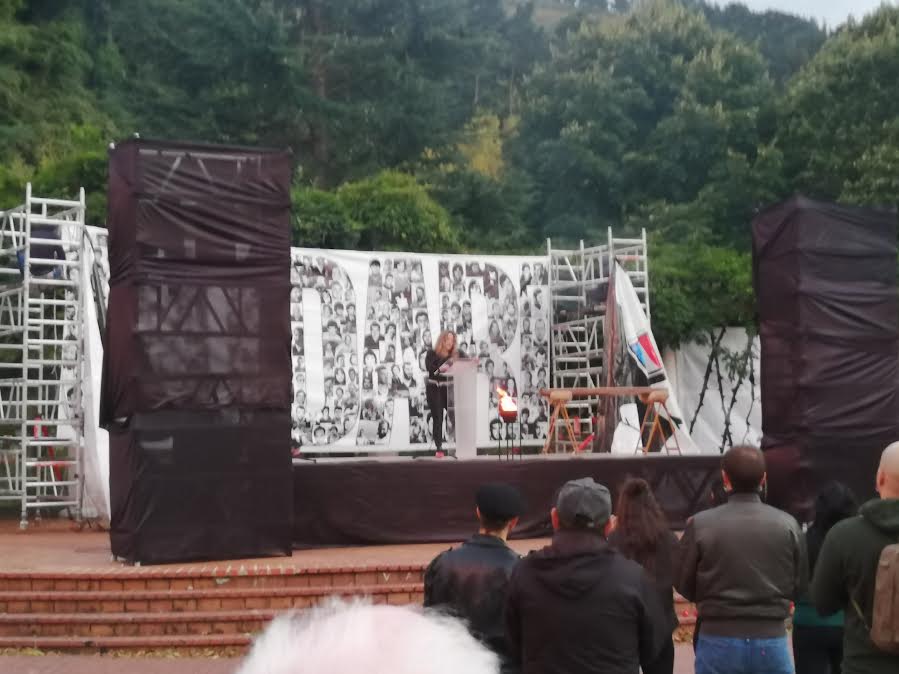


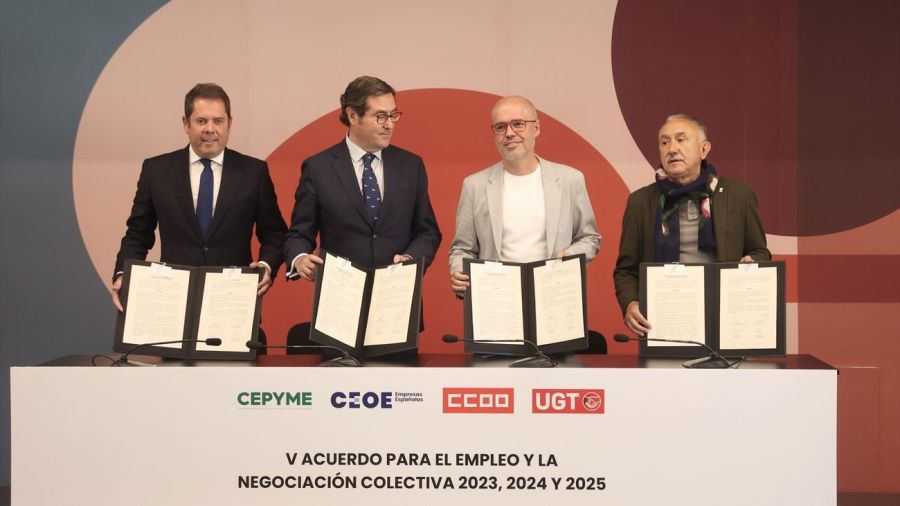
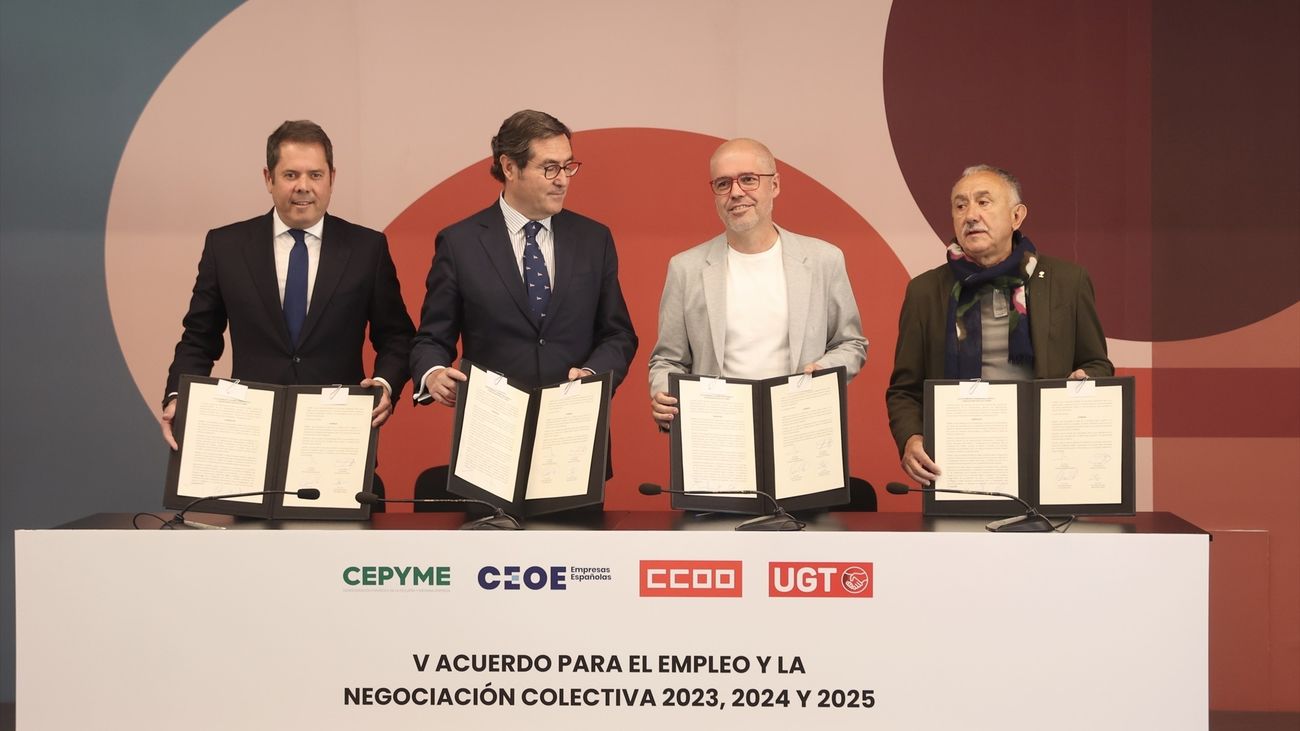
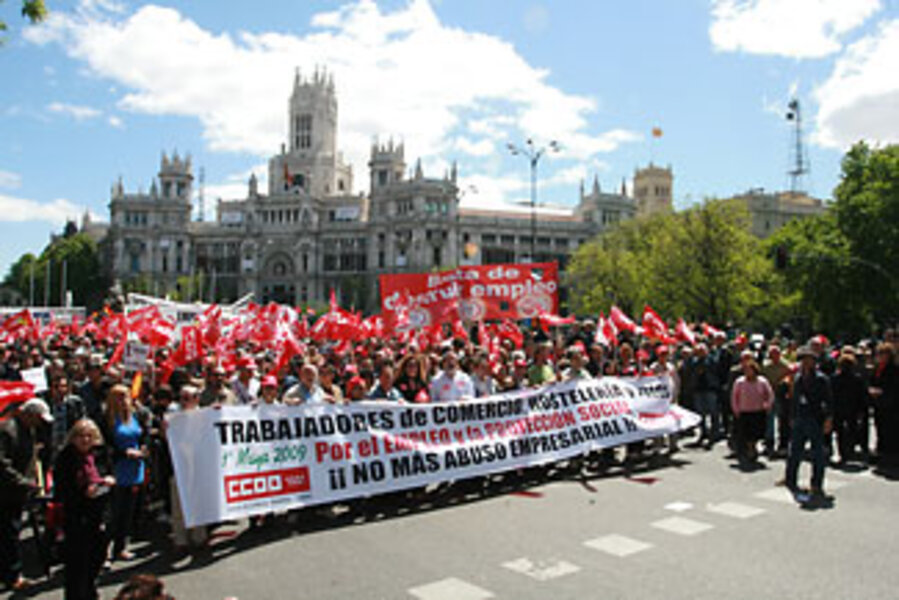
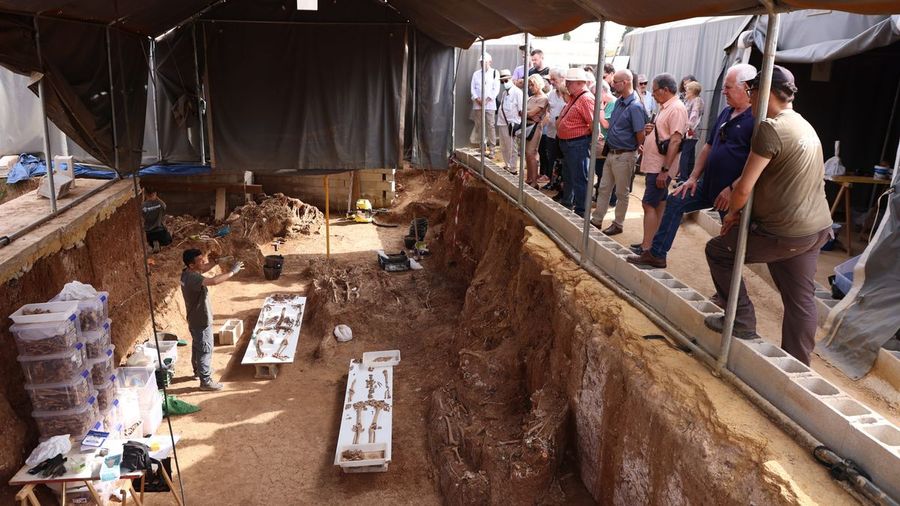
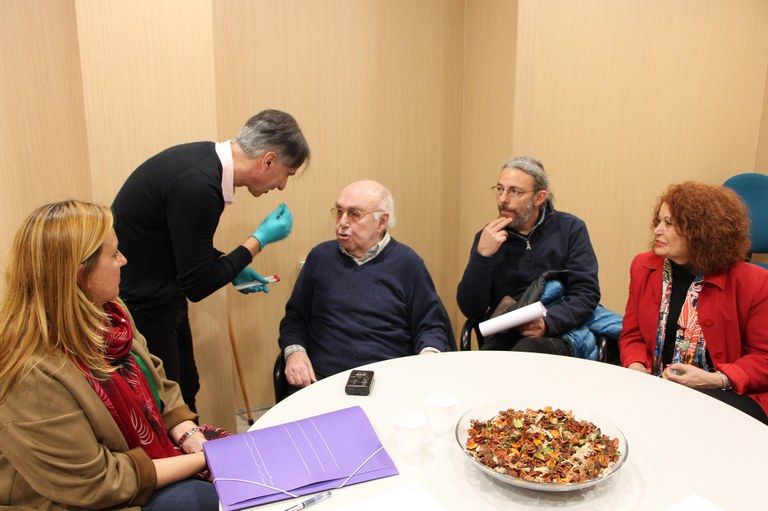
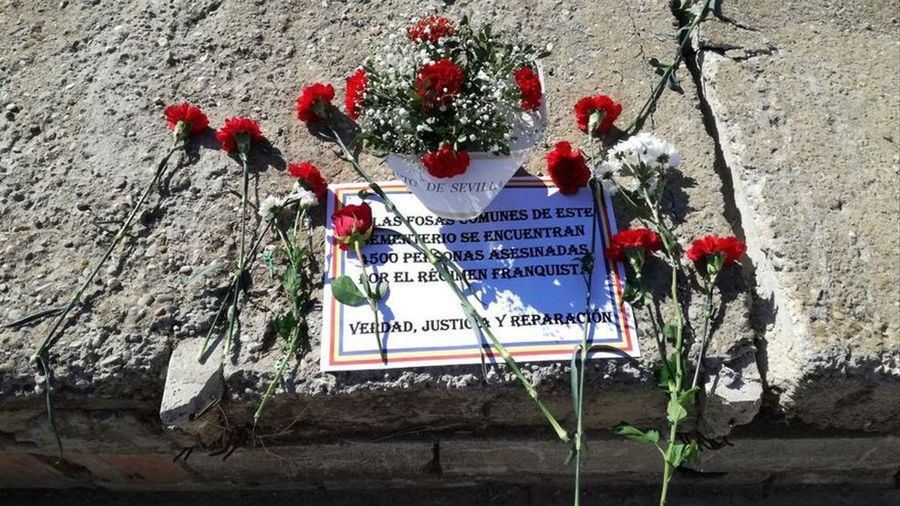
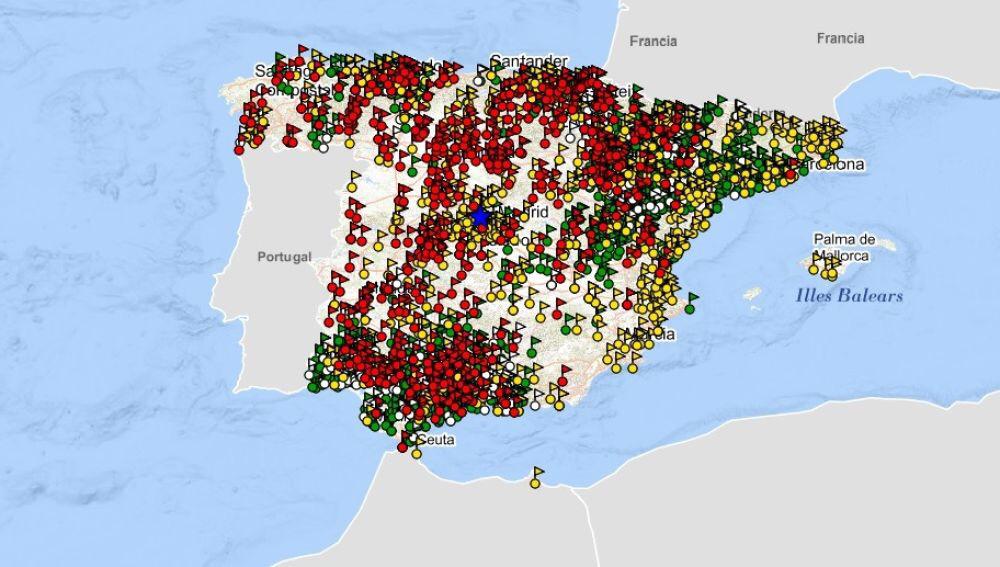


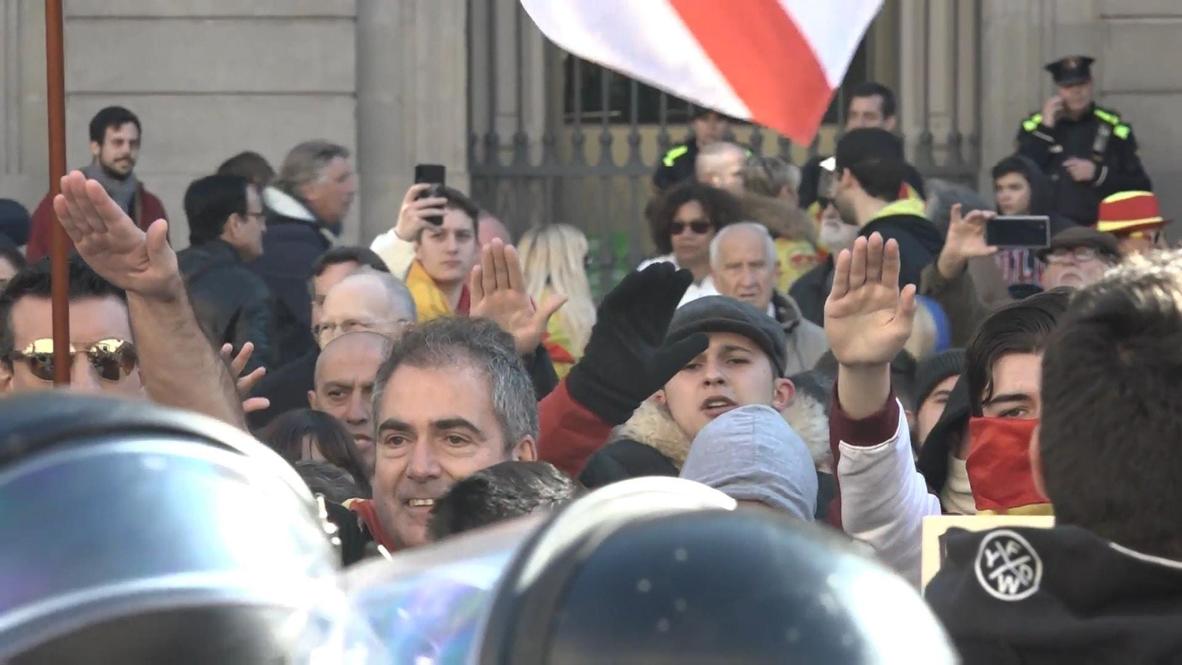
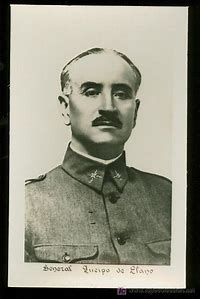
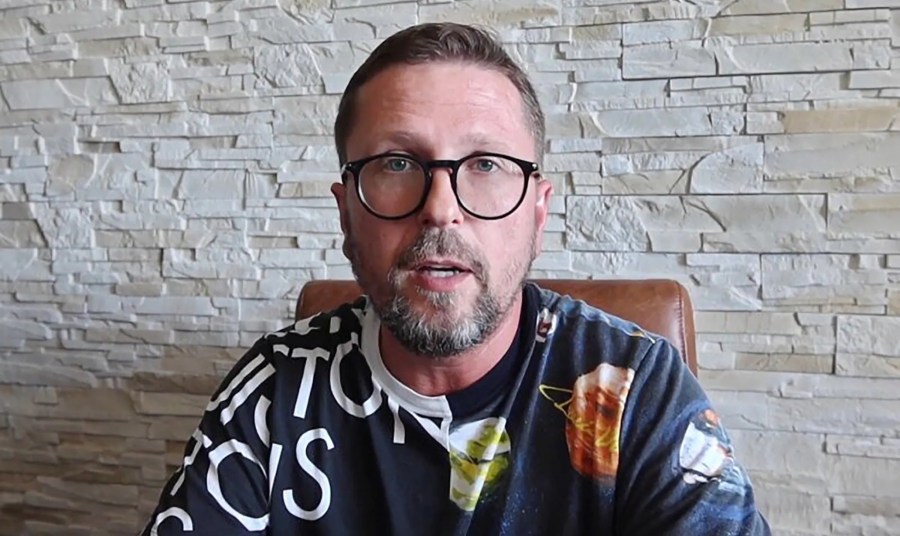
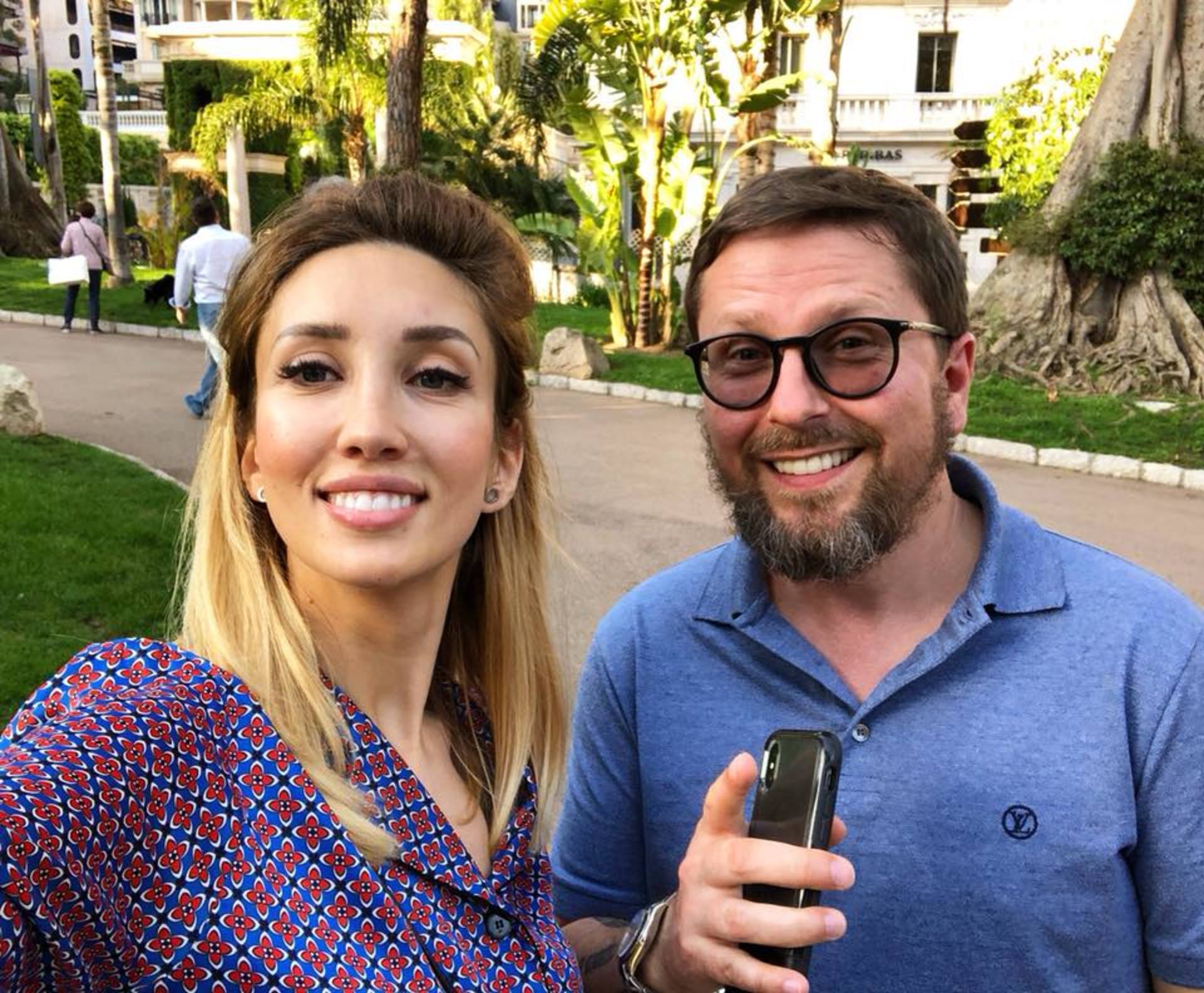
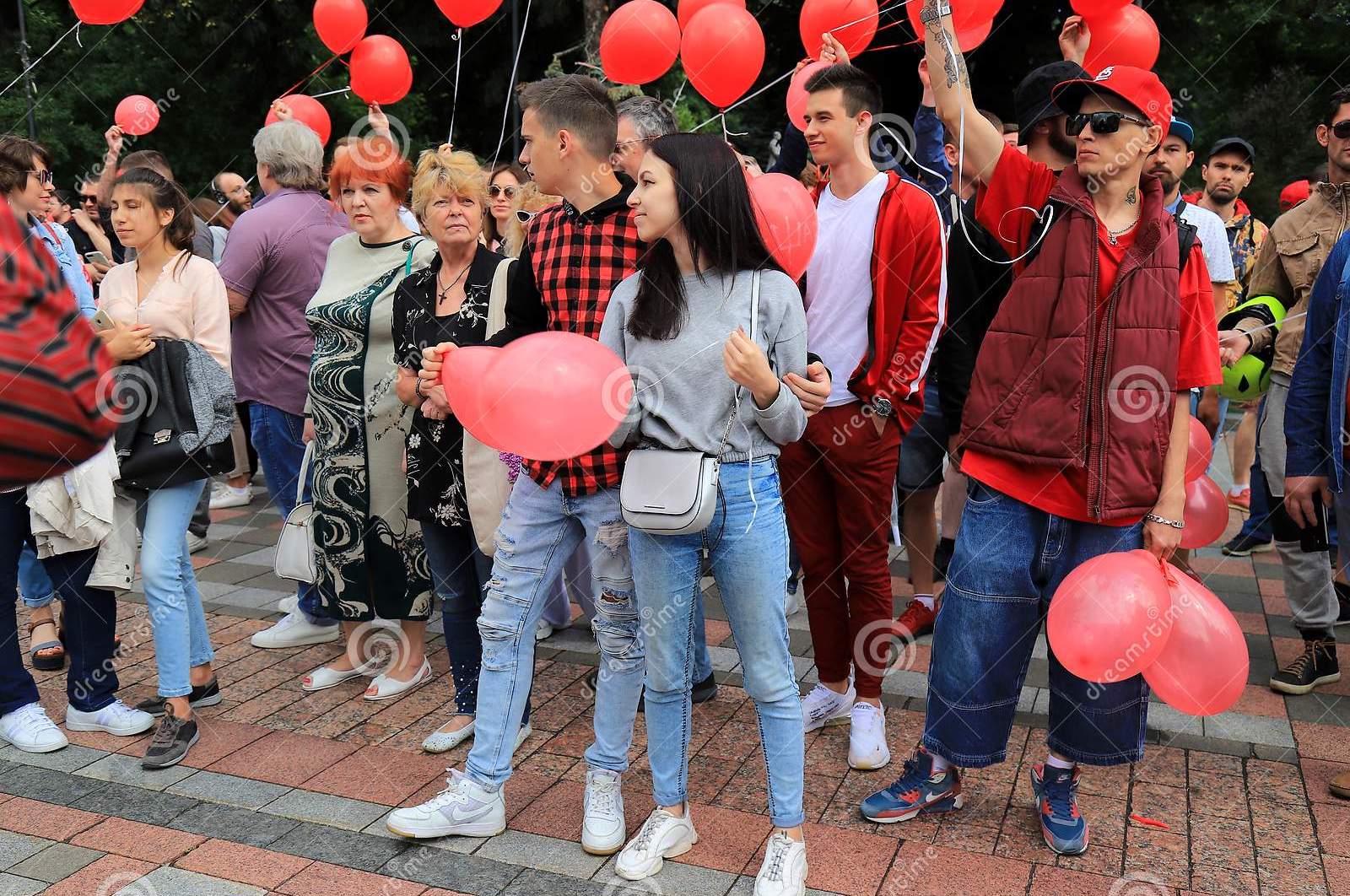
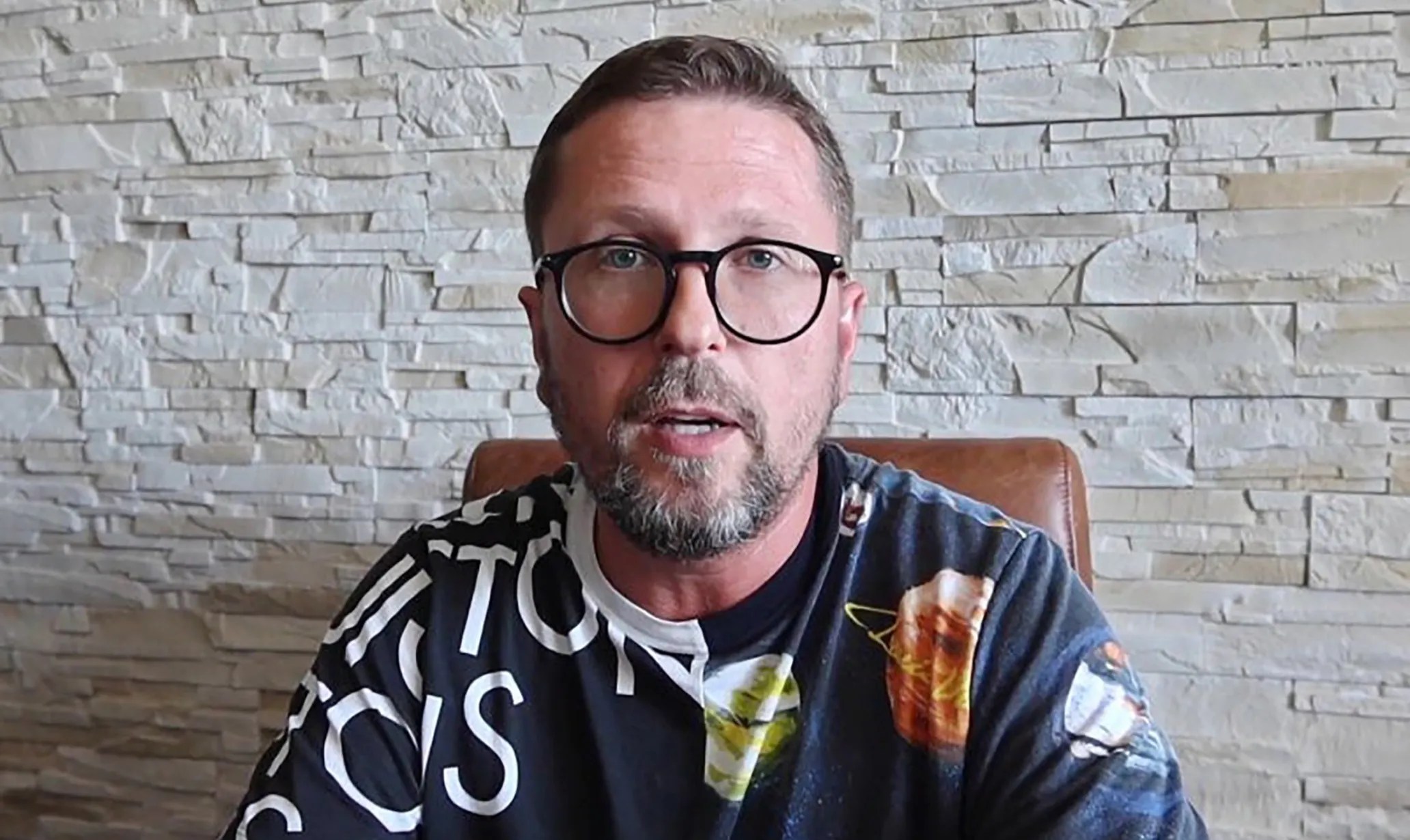
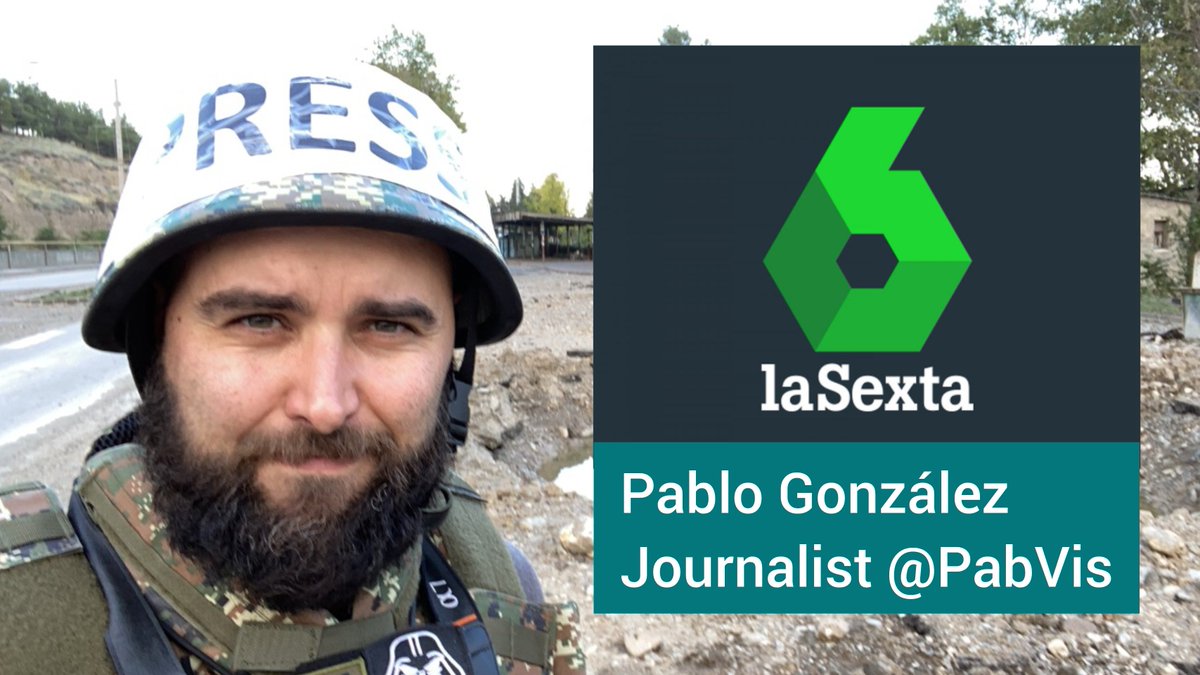
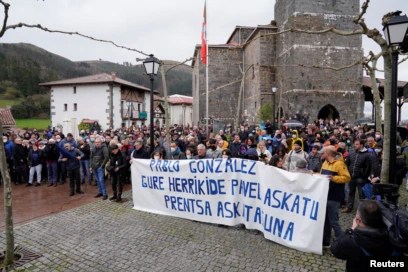
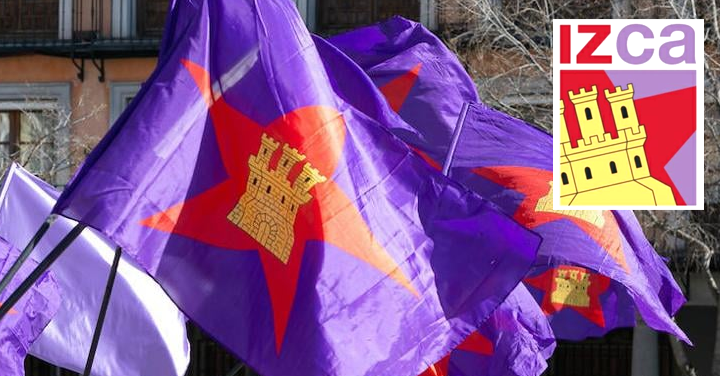


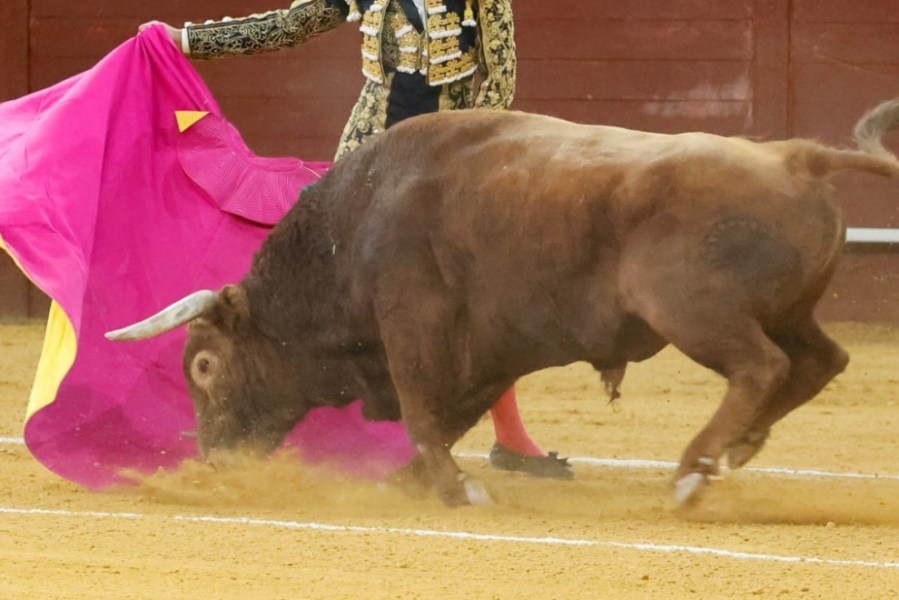
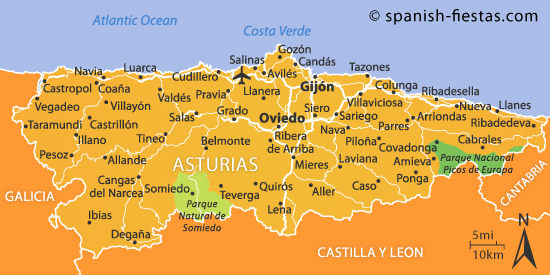


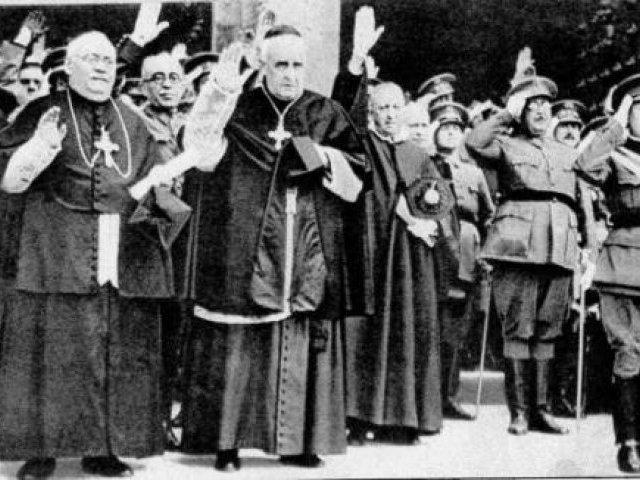
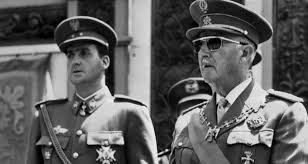




 rebelbreeze