Revolutionary socialist & anti-imperialist; Rebel Breeze publishes material within this spectrum and may or may not agree with all or part of any particular contribution. Writing English, Irish and Spanish, about politics, culture, nature.
According to news reports, the Government is considering a relaxation of restrictions and a return to work – but with people wearing masks1 and with monitoring of preventative measures. An obvious question is, if these measures are thought to be effective in future, why are they not being implemented now? And why not in the past? Will we be going back to work but also to contagion?
Conductor on Seattle trolley-bus, USA, masked against Spanish ‘Flu 1918. (Image sourced: Internet)
PRESSURE TO LIFT RESTRICTIONS
There is clearly some pressure to lift restrictions – many people want to be able to earn money and socialise as before. People want to go on holiday, get on with education and projects, visit relatives. Small businesses want to save themselves from bankruptcy or climb out of debt. And bankers and industrialists want to continue squeezing people for profits. The State too, in both its ‘national’2and municipal forms, wants to raise taxes to fund its essential services: power generation and supply, water purification and sewage treatment, health service, postal and electronic communications, public transport and road maintenance, fire-fighting, refuse collection and disposal …. To all of those pressures the Government seems to be bowing – but have they thought it through?
In Germany, which has lifted some restrictions, people have been obliged to wear masks in public but even so, the authorities are urging people to be cautious, that they “will have to live with the virus” for some time. In other words, “forget about going back to normal, probably for a long time”. Initial statistics show a rise in infection cases there after the lockdown easing. In Britain, especially England, trade unions have attacked the “mixed messages”from the Prime Minister, Boris Johnston, about returning to work as “potentially lethal”.3
Germany experienced a rise in numbers infected after relaxation of lockdown. (Image sourced: Internet)
So, about the pressure. Ordinary working people have bills, mortgages and rents to pay, small business people have the same and clearly a state needs to have money to fund essential services. Yes, and big companies and banks are pressurising too. And we all know how successful banks are at pressurising governments, don’t we? Especially our governments.
Apart from banks and building societies, the Government could ease the pressure on ordinary working people and small business people by declaring a moratorium on mortgages and rents for the duration of loss of earnings due to the pandemic. Yes, it would need to take powers to do that but wouldn’t most people support them in doing so?
The building societies, banks and big businesses wouldn’t support it however, all of which are interconnected. Well, when the banks and building societies messed up – and not for any reason like a pandemic, either – our governments forced US, the ordinary working people, to bail THEM out. In fact we’re still paying for that out of our national reserves and in cuts in all kinds of provision. A little bit of “comes around” would do them no real harm.
As to the finances to run the essential services of the State and of local authorities: end the tax write-offs, holidays and low taxation rates etc. And change the line on “We don’t want Apple to pay us the money which even the neo-liberal capitalist EU says they owe us!”. Yes, we DO want it – and we NEED it, ALL of it and NOW!
Industrial workers masked against the Spanish ‘Flu pandemic in Britain 1918. (Image sourced: Internet)
“FALSE CONFIDENCE”
The German authorities, with a much more efficient and better-funded health service and financial reserves, have been warning its public about false confidence. Now and again we see some indications of that here in Ireland too.
OK, so a section of the public is not properly educated or just willfully ignorant – stupid even. But if when you introduce a lockdown to deal with a pandemic you talk about it being for an initial two weeks ….. what kind of message are you giving out? And if you tell most people not to bother with masks or gloves? And if in the early days of the pandemic told them firstly that public events would not need canceling4 and then that to attend outdoor events of up to 500 and indoor events up to 100 people5 was basically safe? If the responsible authorities never seemed to be taking it all that seriously until late in the day and even then have managed it quite lightly – are some people to be blamed for having false confidence?
Another cluster of infections has just come to light, ten meat processing plants accounting for 566 cases so far. Prof. Catherine Motherway, President of the Intensive Care Society was reported as cautioning that a lot more needs to be done before restrictions are eased. “We need to know that our health system can cope … find and isolate the cases and treat them.”6
New York street cleaner masked against Spanish ‘Flu infection, 1918. (Photo sourced: Internet)
FACE-MASKS NOW – BUT NOT EARLIER
According to reports, the Government will want us to wear face-masks when they relax the restrictions. But ….. weren’t they telling us from the start that there was no point? Wasn’t even the World Health Organisation playing down their usefulness?
Well, either they know they don’t work, in which case they just want us to feel safe enough to start the wheels of industry turning and the money flowing into the big accounts …. Or they know they do work, and they’ve been advising us wrongly all along.
That’s where my bet is and I’ve written about this already, weeks ago7. It’s bloody obvious that face masks must help prevent spread the virus and depending on the type and procedures employed, would also help protect the wearer to some degree. Quite a number of countries made wearing them in public obligatory. And now the Government will be doing that here too.
Good. But I just wonder how many people got sick – or even died – because the authorities discouraged them from wearing them earlier?
People wearing masks and “Wear a mask or go to jail” placard, 1918, during Spanish ‘Flu pandemic, probably USA. (Image sourced: Internet)
The Government has yet to specify where the masks are going to come from and, little respect as I have for any person prominent in the Labour Party, Alan Kelly TD is obviously correct when he says that the Government should be organising the production of those masks NOW!8
OTHER MEASURES AND MONITORING
Face-masks help you not to spread droplets on to other people – and you don’t know for sure whether you have the virus or not, because you can carry it for a few days before it starts to show. Good face-masks will help you not catch it from someone else too. But you really need gloves as well and a good procedure in removing the gloves and face-mask, combined with hand-washing. And of course, social distancing. To be honest, with all those being practiced, there should be no need for 2km distance from home limits on exercise or travel – or even for telling older people to stay indoors, vulnerable to depression and ill-health through lack of exercise and even to accidents in the home.
But, for effective measures, don’t they/ we need to know who is infected and who is not? And where the major infection points in society are to be found? Yes — and for that we need mass testing, which our Government has not been doing because of how the health service has been run down. Not even with sending test samples away (to Germany) for analysis!9
And then we need tracking, tracing where people think they may have got infected, who they may have infected in turn, testing them …. the proper pandemic scientific procedures. But our Government is hardly doing that either. We get the following estimates10 of infection sources based on people who tested positive: 34% close contact, 63% community contact, 3% travel abroad.11But what do these categories actually mean?
OK, “travel abroad” is reasonably clear. “Close contact” might mean family, close friends, lovers, elderly relatives in nursing homes (more about them further on). But “community contact”, which accounts for almost two-thirds of the total? Would these be neighbours, workmates? You know what I suspect? Shops and supermarkets – customers and staff – are a big section. Why? Because most people visit them at least weekly and the precautions taken there have been all along — and are still – inadequate. But the authorities don’t do the tracking to find out. Or if they have, they’re not telling us.
Customers in a supermarket (none seem to be taking any precautions other than perhaps social distancing). (Photo source: Internet)
The fact that it was only last week that a high cluster of infection around meat-processing plants was revealed shows the need for testing, tracking and testing again and how little work on that level is being done. Ten sites with 566 people infected12 so far is not something that should be coming to light over two months after the first case was identified in Ireland.
Who will carry out the monitoring, ensuring best practice and compliance? I’d like to believe that whichever body the Government sets up will do a good job but unfortunately I doubt it. It was left up to the supermarkets and shops to monitor their own provisions and they did it late and inadequately13. The Government at first even left it up to the pubs whether to remain open or not! Now this body appointed by them, aware of the lack of enthusiasm of the Government to interfere with the business of making money, will be supervising and monitoring every factory, shop, depot and farm? Really?
In this small relatively low-industry state of the 26 Counties, the Health & Safety Agency recorded 22,500 non-fatal workplace accidents reported to it for the year 2017-2018, along with 48 fatalities. Remember that all generic studies maintain that most and possibly all accidents at work are avoidable and result from lack of awareness or of appropriate training, or of fatigue as well as from bad practices, bad supervision and badly-maintained equipment.
The understaffed HSA is not adequate to the task of monitoring even a representative sample of workplaces and relies a lot on accidents and breaches of regulations being reported to it; the trade unions in general are not up to the job either, especially with the low percentage of union membership of recent decades.14 So whichever agency is set up for monitoring good working practices during the pandemic, even if such adequate practices have been identified and published, is not likely to be up to the job either.
Masked Clerical Female Workers during Spanish ‘Flu pandemic 1918, probably USA. (Image sourced: Internet)
But at the very least that agency should publish its general guidelines and insist each workplace publish the specific procedures in place along with the underlying rationale. Then at least employees and public can see what they are, complain if they are felt to be inadequate and report those that are not being practiced. And gloves and face-masks at least should be provided for all, with work practices adapted to allow for them.
THE DISPOSABLE PEOPLE
As soon as the pandemic took hold in other countries, a high percentage of infected people were known to be healthcare workers – around 10% as an average. Even if you didn’t realise straight away that nursing homes were going to have a high rate of infection, as soon as you thought about healthcare workers you’d be quick getting to that point (and one step away from thinking about homeless hostels and direct provision centres etc too). Once you thought of the high vulnerability of those facilities, you’d make special provisions for them, wouldn’t you?
But no. No provision at all until a few weeks ago. No special issuing of guidelines for staff and visitors, insufficient PPE (protective equipment etc), low admission rates to ICUs for the infected ….. According to stats published at the weekend, 855 coronavirus-19 deaths have been associated with care homes and 740 of those were residents. And since the total deaths recorded within the state at that point were 1,429, well over half the deaths have taken place in care homes.
A shocking rate of attrition out of ineptitude for which the Government and the National Public Health Emergency Team should be held responsible. Or …. was it even worse than that? These facilities contain, on the whole, people who are no longer economically active, people some might even consider a drain on society’s resources. And often low-paid migrant workers caring for them. Could it be that they were all just considered “disposable”?
2I use the term here to mean the whole of the State’s territory, well aware that a true national perspective would include not just the 26 Counties but also the Six County British colony.
11Yes and most intelligent people wonder why the Government allowed people to travel to an international rugby match in a country swamped with the virus and, even worse, not have them quarantined upon their return. And for heaven’s sake, why people can still leave and arrive at our air and marine ports and sit on planes next to one another with cabin crew having to bend close to attend to them during the flight, do a turnaround and bend close to another group of passengers on the flight back.
We wish to draw your attention to what we perceive as a serious bias in your series The Natural World, a bias which is as unjust as it is unproffessional and, indeed, unscientific.
In your otherwise excellent film documentary series The Natural World you depict the wonders of our world and the many levels of interaction and responses to different environments within it, of plant and animal, of eater and eaten, prey and predator.
However, when any of us appear upon the scene, your narrative voice drops in volume as if to indicate the arrival of something sinister, the evil presence in this otherwise natural world. We are neither sinister nor evil, Mr. Attenborough – we are an integral part of this natural world, the same as all the rest.
You seem to delight to show footage of us pursuing the young calves and fawns of grazers, thereby seeking the sympathy of your human audiences for their plight and, in turn, hostility towards us. No doubt the omnivores among your human audience are able to disassociate themselves mentally from the relative immaturity states of lamb, veal, piglet, pullet, egg and sprat in their diet. But much more to the point – do we not have young too? And how do you – or your sympathetic audiences – imagine that our young get fed? Or what do you or they imagine stands between our cubs and dying of starvation?
We note also that it is not all higher predators that you depict in this way – not of course humans but not the great cats either. We laugh when we see you depict the lion, “the king of the jungle” as some kind of majestic monarch. Those of us in the African veldt know well that most of what he eats is what our brethren have chased and brought down before he has bullied us off what is ours. And the rest of his food is killed only by the females in his group. Among us, on the contrary, males and females all take part in the planning, the chase and the kill.
As a naturalist you know that all predators play a part in the balance of nature and generally cull the weak and unwary, strengthening the overall health of the prey species. As a naturalist, we would not expect you to have this bias against us and can only wonder whether perhaps as a child you had an unpleasant experience with a domesticated canid. If so we hope that you can put it behind you.
We trust you will consider what we have to say and hope that you will change your depiction of us in any future series.
Sincerely,
Wolves, Dingoes, Wild Dogs, Jackals and Hyenas
on behalf of Canids of the Wild (CaW)
A Grey Wolf adult ‘cuddles’ a pup (Source: Internet).
Three Dingo pups — one of them camera shy. (Source photo: Internet)“Parents have to work hard to feed a big family. We hope you’ll think about that, Mr. Attenborough. Goodbye for now ….. C’mon, kids.” (Photo source: Internet)
Can we hear the awkward movements of a ménage à trois between Fine Gael, Fianna Fáil and the Green Party shuffling hesitantly into view? Given yesterday’s Red C poll in the Business Post this may well be the last opportunity for Micheál Martin to consummate his desire to become Taoiseach as his party continues to […]
The Herriko Tabernak (People’s Taverns) are a feature of Basque Society, in particular in the Southern Basque Country, i.e the part under Spanish control. Founded by members of the Abertzale (pro-Independence) Left, run by supporters and frequented by sympathisers, they have been a place to have a drink and some pintxos, have a coffee and chat with friends, hold social events and large group meals, as well as occasional meetings. The Spanish State is now seizing their funds.
One of the Herriko Tabernak in Bilbo, this one in Errondabide, Casco Viejo; view from the back towards the entrance and street. Photo: D.Breatnach 2015)
In 2016 the Audencia Nacional, the Spanish National Court, handed down a judgement that the funds of these taverns are forfeit, in what the Abertzale Left party Sortu called “the greatest political and economic plunder since the Civil War”. This is a reference to the wide-scale misappropriation of funds, machinery and land of the losers of that war by the victors, General Franco and his supporters. The wealth of many individuals and families in the Spanish State today can be traced back to that theft.
They will not be served alcohol! Parents often meet at the Herriko for a while after collecting their children from the Basque-language pre-schools. (Photo: D.Breatnach 2015)
While a number of these taverns were closed down in the past, most kept going, supported by their loyal clientele and local communities. Although the punitive judgement of the Audiencia against the Herrikos was in 2016, its origin dates back further to the reign of one of the Audencia’s ex-judges, Baltazar Garzon, who infamously claimed that every aspect of Basque independent expression was linked to the armed organisation ETA. Baltazar, loved by liberals, claimed that “everything is ETA”, under which dictum homes were raided, activists tortured and jailed on their “confessions”, political organisations banned, social and cultural centres closed, along with newspapers, radio stations and social media.
Arrano Herriko Taberna, Zarautz, Gipuzkoa province, southern Basque Country. Banner above it calls for freeing of the officially-recognised Abertzale Left political prisoners. (Photo: D.Breatnach, 2018)
Some modest afternoon pintxos available in the Errrondabide Herriko (Photo: D.Breatnach 2015)
EXPROPRIATION TAKES PLACE DURING A MILITARISED LOCKDOWN
This expropriation is taking place, as commented the left-wing media Izquierda Diario, in the midst of an emergency pandemic lockdown in which more than 7,000 sanctions in little over a month have been applied by the military and police who are in charge of and patrol the streets. (Unlike Ireland and many other countries, people in the Spanish State are not permitted to take exercise outside their homes, whether maintaining social distances or not).
“While the judicial apparatus cannot process the massive claims of illegal dismissals, unpaid wages, unpaid ERTEs” (temporary compensation for loss of earnings due to the pandemic) commented the Diario, “or thousands of resources for fines during these days for the restrictions of the pandemic, yes there is time to seize the money of more than 100 taverns.”
COMMENT
Cafe esnea and “Bring the prisoners home” serviettes, Herriko Taberna. (Photo: D.Breatnach 2015)
While it is true that in many areas there are privately-owned bars sympathetic to the movement and that also in many areas dissenters from the line of the Abertzale Left official leadership decline to use the Herrikos, nevertheless the disappearance of the latter must entail serious damage to the social and cultural base of the broad Basque independence movement.
end.
Protest against the original judgement by some supporters of the Herriko Taberna of Inpernupe, Zumaia (scene of some of the Game of Thrones footage), Guipuzkoa Province, Southern Basque Country. Banner declares “Ipernupe will not close!” while another in background declares it is in danger of closing. (Source photo: Izquierda Diario)
Gárdaí ‘can’t’ enforce social distancing on visitors from the Six Counties…!
Diarmuid Breatnach
(Reading time text: 5 minutes)
Irish Republicans looking at the sub-headline could be forgiven for bursting into laughter, for the Gárdaí, in particular the Special Branch, the political police, have never had any reluctance in harassing, arresting and even refusing bail to Republicans from the Six Counties.
And likewise with their counterparts on the other side of the British Border, who have never had much problem enforcing and even exceeding their laws with regard to Republicans from the Twenty-Six counties.
However, according to a news report in today’s breakingnews.ie, day-trippers from the Six Counties are flooding into the picturesque coastal areas of County Donegal and ignoring Coronavirus-19 legislation. The report says that the day-trippers are from “Northern Ireland” which is nonsense of course, since Donegal is the real Northern Ireland, i.e the northernmost geographical point of the country. And it is in Ulster too, though not under British occupation.
Anyway, back to the main issue in the report, which is that Donegal residents have been complaining that the Gardaí there are not enforcing social distancing on day-trippers from across the Border.
Garda Checkpoint Donegal (Photo source: Internet)
It appears that the Gárdaí were applying the Coronavirus-19 restrictions but were told that they could not. Why would this be? The laws against theft, assault and public disorder apply not only to residents in Ireland but also to visitors – why would laws intended to control a pandemic be any different? Indeed, one would think they’d be, if anything, more enforceable.
Meanwhile, “a Gárda statement” quoted in the report states that “anyone visiting the State even temporarily is amenable to such criminal laws of this State while visiting here.”
So it’s the law, applies to everyone including visitors, so … what’s the problem?
There is a saying that states that “where there’s a will, there’s a way” and it is difficult to see an explanation in this case other than that for some reason there is no political will to enforce the law on visitors from the Six Counties. Of course, if they were Republicans attending some Republican event, well in that case ……
“THE VIRUS DOESN’T RESPECT THE BORDER”
According to a number of Donegal public representatives, local people have been bombarding them with complaints about the incursions and the lack of Gárda action. Councillor Jack Murray, from the Inishowen area, saying he had been “inundated” with complaints about Gárda failure to apply the legislation to people from the Six Counties, said that “the virus does not respect the Border and tackling it should recognise that.” Pádraig Mac Lochlainn, a TD (member of the Irish Parliament, the Dáil) for Donegal, lives in Buncrana, a popular destination in the holiday season. “This error is unacceptable,” he said, “considering that all government legislation goes through the Attorney General’s office.”
Clearly, a rational response to the pandemic would require either an Ireland-wide approach or a strict closing of the Border between the two administrations. The authorities on each side have done neither.
At the end of February, the first person recorded positive for the virus arrived in Dublin from Italy aboard an Aer Lingus plane and was permitted to travel on to Belfast – she is/was a resident of the Six Counties. No quarantine was ordered for the rest of the passengers. And so on.
Ineptitude of Governments apart, it has never made sense to partition Ireland on economic, geographical or human rights grounds. Now we see that it doesn’t make sense on grounds of pandemic control either. How does it make sense? Well, on the wish of the rulers of Britain to keep a foothold in Ireland and of their loyal subjects in the Six Counties to remain in domination of that foothold.
Cartoon DB
GENERAL PROBLEMS WITH 2Km LIMITS
To be honest, I have never seen the point of the 2km limit. Is it the case that you can infect or be infected by someone outside the 2km limit but not inside? Of course that does not make sense but how does this limit make any sense otherwise?
I don’t drive a car but if I did and were to get in my car in my garage, drive out to a secluded spot on the mountains, get out and walk, then return to my car and drive home, how would I have endangered myself or anyone else? If I went to a park or beach outside the 2km limit from my home and, while there, kept my distance from other walkers, how would I be endangering anyone?
The danger in general, we are told, comes from physical contact with people or being within two metres of them, when droplets from an infected person may reach us. Would that danger be reduced if everyone were obliged to wear a face-mask of any kind? Clearly. Yet not only are we not obliged to wear such masks in public but we are being actuallydiscouraged from doing so by statements from the HSE (and also from the WHO). Would the danger be reduced if, in addition to wearing masks, we wore gloves in public and had a safe procedure for removing them at home? Obviously – yet we are not being informed, never mind encouraged, in this regard either.
When plants first “crept” out of the sea and freshwater on to land, it was a perilous undertaking. The shore and in particular the sea shore is a very hostile environment, subject to battering and scouring action of wave, wind and wind-driven sand, alternating between inundation and desiccation and even both in the same day. Those early plants were not just explorers but colonisers and innovators; many died but those that survived changed the world, its very earth and atmosphere.
There are about 320,000 known species of plants, a total that does not include most hybrids, sub-species or selectively-bred varieties. Botanists exclude from the term “plants” some of the green and all of the brown sea algae as well as the fungi and bacteria. The vast majority of plants are coloured some variety of green because of the action of photosynthesis inside them, which attracts the blue and red ends of the light spectrum but does not absorb green, which is why we see them in that colour. Some 260,000 to 290,000 species produce seeds but algae does not. Mosses and ferns, which are plants, produce spores instead, in common with fungi (which however are not plants).
We study life to place it in an order, to simplify understanding but life diversifies into a huge array.
Plants are pioneers, colonisers, innovators and builders at least comparable to the animal kingdom, to which they are related and, I would argue, with a superior record.
LAND HO!
Plants first “crept” out of the sea and freshwater during the Ordovician period, around 470 million years ago; they were non-vascular (without “veins”) and without roots, like mosses and liverworts. It was a perilous undertaking. The shore and in particular the sea shore is a very hostile environment, subject to battering and scouring action of wave, wind and wind-driven sand, alternating between inundation and desiccation and even both in the same day. Plants on land carry the genes of the early explorers, pioneers, survivors – high in endurance, adaptability and innovation.
Brown & Green Algaes in shallow seawater (the brown uses floats to stay upright but the green doesn’t need it. Just almost out of view is a yellow lichen colonising the stone sea-wall. (Photo source: D.Breatnach)
But why abandon the seas, lakes and rivers in the first place? Presumably there is always a pressure in nature to explore niches and new territory, thereby escaping pressures of population, predation, competition and consumption of available nutrition … And while some life-forms specialise in particular environments and nature also pressures in that direction, ultimately that is a highly dangerous strategy, general adaptability to food sources and environments being the best bets for long-term survival and multiplying – as shown by homo sapiens, for example.
First ashore, establishing a literal (and littoral :-)) beachhead, might have been a kind of algal slime. Perhaps it survived only while wet, died, was replaced by other migrants …. but probably at some point some carried survival pockets within them, able to regenerate when moistened anew. Or it might have been some moss or liverwort, later a branched and trailing plant but dealing with the same problems and developing a similar strategy for survival.
We can imagine a conversation, in which one plant organism on the shore questions another:
“It gets so dry here I feel I am going to wither and blow away.”
“Just hang on there. We’ll get rain soon. And there’s always dew at night.”
“I can hardly wait. Remind me why we didn’t stay where were were, with all that lovely moisture.”
“Getting eaten by other life-forms. Competition for light.”
“Oh, yeah. Sometimes I forget.”
REACHING DOWN, STANDING UP
In lakes, plants could simply float upright in the water reaching towards the light (and avoiding being covered in sand or silt) as many water plants do today, or on the surface, as algal mats and bloom do, or for example the various types of “duckweed” that not only float but multiply to cover the whole pond surface. In the sea and in fast-flowing rivers however, fixed plants needed to grasp surfaces and developed means of doing so; but these were not roots as such – more like anchors. Later, as they colonised the land, most plants did indeed develop roots not only to anchor themselves in the ground or to cling to difficult surfaces but also to bring up water, the tap roots for this purpose often going quite deep. Roots also brought up nutrients.
The roots also made it possible to cling to inhospitable surfaces, including even the perpendicular or overhanging and also to exploit cracks and fissures by tunneling into them. In the course of this activity, plants changed their immediate physical environment, by helping to break down stone and also by trapping material blowing in the wind.
Buddleia bush clinging to a wall in Dublin (Photo source: D.Breatnach)
But why set up home clinging to a cliff or today, a wall or a chimney stack? Well, plenty of sunshine, for one thing, no competition for another! Of course, not much soil there or even none at all for nutrition – but still, most things in life are a trade-off, right? How did the seeds get up there in the first place? Wind … or birdshit.
Ivy making its way up a tree trunk. (Photo source: Internet)
Of course, some of the colonisers developed other ways to cling to surfaces, as was the case with the mosses, lichens and liverworts. And they also trapped material and contributed their own to it as they died, regenerated, died …. But without roots that only works when you keep low and hug the ground. If you want to grow tall to reach for sunlight and if you want to exploit soil, you need roots.
Plants at first fed almost exclusively on sunlight it seems, broken down into sugars by chlorophyll in photosynthesis. But those that developed roots also, probably as anchors to prevent themselves being blown or washed away, or to help them grow tall and compete with other plants to catch the sun, learned to draw up water and to feed on nutrients in the soil – phosphates, nitrogen, potassium etc. Some, like the legumes, beans, peas and gorse for example, even learned to extract one of the gases that make up air, nitrogen and, with the help of a bacteria, to fix and store nodes of it around their roots.
Once you have roots, why not grow stems, branches, trunks, whereby you can reach higher and higher, for more unimpeded sunlight and outpacing the competition perhaps. Your building material will need to be tougher, especially for trees, bushes and shrubs, to bear the weight, withstand the winds …. but flexible enough to stretch as you grow. Having the ideal material already in cellulose, all that is necessary is some kind of hardening process. A plant might explain to puzzled humans: “Think of keratin and how the same basic substance has been used to make stuff as varied as feathers, fur, human hair and beetle carapaces.”
If you were a plant that had learned to spread fast over distances to catch the sun, covering ground and clambering over obstacles, you might find one day that there is another way to reach towards the sun – climb up the plants that are reaching up there! Don’t invest in slow build-up and hardening of cellulose – go for fast growth and gripping or winding ability instead, or turn some of your leaves into grasping tendrils. Some climbers such as lianas in the tropics and ivy and honeysuckle in Ireland, are perpetual climbers, remaining in position throughout the year (although the honeysuckle will lose most of its leaves in the Autumn) and extending during the growing seasons. Others climb only in the Spring and Summer and die afterwards, for example bindweed and runner-beans.
Runner Bean plants climbing a support structure (‘tower’) in a garden. (Photo source: Internet)
ENVIRONMENT-BUILDERS
Most plants have leaves, which is where the photosynthesis takes place; they are in fact sunlight collectors and the plants deploy them to best effect to catch the available sun. Quite a late development, they were flanges on the stems first before becoming appendages further out of the plant’s main body. Most leaves are intricately veined and contain many different layers and parts and it is within them that photosynthesis takes place but strangely, they are mostly short-lived and in cold seasons even in perennial plants, with a few exception, all but the conifers let them fall.
The greater the volume of material created by plants, the more there was to decompose with their deaths or seasonal decline. Bacteria, already long existent on the planet, evolved to feed on this detritus and break it down into soil, which the same plants or others could turn to their advantage as a medium in which to anchor but also from which to draw nutrients. Other organisms evolved to live on and break down cellulose too, the main building material of plants: fungi, gastropods like snails and slugs, woodlice, termites …..
The plants, with the help of bacteria and other organisms, were creating the environment below them!
But they were and are doing more than that: they are also creating an environment immediately around them. The most concentrated examples are perhaps rain forests, tropical, temperate and cold-climate, retaining a surrounding moisture-laden air, in which not only the local tree species thrive but also providing ideal environments for ferns, algae, orchids and epiphytes and, of course, mosses.
Away from forests, sphagnum moss creates a mini-atmosphere around itself and as generations die, their bodies create a spongy moisture-laden medium. This bog is quite capable of existing on an incline, with much of the water being retained by the vegetation and ‘soil’, as may be seen in a number of examples in Ireland, such as parts of the Dublin and Wicklow Mountains.
Close-up of sphagnum moss, creator of its own environment and changer of landscape. (Photo source: Internet)
Temperate Rainforest, Fraga do Eume park, Galicia, Spanish state. Despite the deforestation of Ireland during centuries of British occupation, areas such as parts of Wicklow arguably qualify for the description “rainforest”. (Photo source: Wikipedia)
Plants, especially trees, discharge oxygen into the air and consume carbon dioxide during the daytime, for which reason they are sometimes called “the lungs of the world”. They have not only created an environment for themselves, below, around and above but also for so many other life-forms – including ourselves.
LEARNING TO LIVE IN DIFFERENT CLIMES
Plants that adapted to grow in arid areas developed fleshy ‘leaves’ and often stalks, in which to store water and sometimes long tap roots to find that water. But extensive shallow root networks are good too, to collect the occasional rain water that is quickly absorbed into the soil or otherwise evaporates. The “pores” on leaves through which plants absorb carbon dioxide and allow the gas-exchange necessary for photosynthesis (stomates) also permit evaporation of water, hence many dry-condition plants have fewer of them. Some only open to collect carbon dioxide in the cool of the night and store it for use on the following day. Plants grow trichomes, tiny bristles, underneath their leaves but some arid-dwellers grow them also on top of their leaves; these ‘trap’ a layer of air that prevents or slows evaporation.
In very wet areas, plants learned to remain active by a number of strategies. Of course they originally came from aquatic environments but for some of them, returning there again after adapting to dry land, produced challenges (think of the changes necessary for land mammals to evolve into seals, otters, dolphins and whales). Nevertheless we have lilies growing in shallow water with wide floating leaves, rushes with upright blade-like leaves growing inside the water margins, thin spears of rushes in damp and water-logged land. That too is the preferred environment of some other plants and grasses, including the rice plant. And of the willows, alders and hazels growing on the banks and stabilising them. In the tropics and semi-tropics, mangroves do a similar job to willows but on a much grander scale – and they tolerate seawater too.
Selection of waterside plants, reeds and different types of willow tree, growing along the Royal Canal, Dublin, yesterday. (Photo source: D.Breatnach)Immature cones of the alder showing among leaves of the tree. (Photo source: Internet)
The alder, a tree with a high toleration of water around its roots, is thought to have been the major post-glacial coloniser of Ireland, following the retreating ice across the land. It is the only native tree which though not an evergreen produces cones, an indication of its early adaptation to cold climate. Cones, when closed, protect the seeds inside against continual freezing and thawing and, when the cones begin to dry and automatically open in spring and summer, allow the seeds inside to drop out to the ground, to be carried by river or on the wind. A closed cone collected and brought home will open as it dries; shake it then and the seeds will fall out. Alder timber, incidentally, remains waterproof for centuries, witness the wooden piles in Venice.
Adapting to cold seasons required protective materials, structures and timing. The deciduous trees (and it is worth noting that many trees have both a deciduous and an evergreen version for different climes) shed their leaves and close down for the winter, the sap retreating down to the roots. Were the sap to remain in the exposed branches it would freeze, expand and destroy them. The leaves drop because they no longer receive anything from the tree; it is going into a kind of hibernation, in preparation for the coming winter.
Many of the conifers have downward-sloping branches, to allow most of the snow to slide off, rather than break the branches with its weight. People who live in areas with heavy snowfall also tend to live under sharply sloping roofs. The “leaves” of the conifers are small, narrow and hard so that most snow falls through them and are also covered in a waxy polymer to withstand freezing. The plant cells can be emptied of water to prevent freezing but a dense waxy residue keeps them open for refilling. So, of course, they have to be tolerant of dehydration. Concentration of sugars also lowers the freezing point and small flexible conduits for water resist the formation of large ice bubbles that can burst those “pipes”.
AWARENESS
Seeds know which way is “up” and which is “down”, which is quite an amazing thing; the tap root of a seed, germinating in the dark, goes downwards while its shoot grows upward.
In fact, the plant seed also knows the right time to germinate – too early in many climes and it will be killed by frost, too late and it will have insufficient time to develop before the next cold period or will be unable to compete with other seeds that sprouted earlier, depriving the late-comer of sunlight and possibly nutrients. The decision is made by a number of factors feeding into a small cluster in the seed tip, consisting of preventative and initiator command centres. When the initiator section’s hormones exceed that of the preventative, it is time to germinate. Not very different from our brains’ decision-making process, is it?
Also, cut a living branch and often the plant will mobilise to produce one or more shoots at the cut-site. But should that cut be enclosed within soil, the tree or bush will produce roots instead – it ‘knows’ the difference. This knowledge the gardener takes advantage of when she “air-layers” a shrub or tree by nicking a branch, then covers the cut with soil wrapped in a plastic bag, waiting for a root to develop and then cutting the cloned sapling free, ready to plant.
Air-layering a branch, possibly from a a peach tree. The branch inside the wrapping has been cut, packed around with soil, to fool the plant into sending out a root. (Photo source: Internet)
Without eyes, plants are also capable of detecting where the light is; if one places a climbing plant seedling in a dark cellar with a small window high above, the plant will climb towards the window, striving to reach the light. The sunflower and the flowers of some other plants turn towards the sun, following its progress across the sky. Many flowers, including those of the dandelions and daisies all around us at this time of year, close when the day ends. A “Swiss Cheese Plant” I once had managed to slip one of its suckers — like a long surface root — down the back out of sight and when I eventually discovered it, the sucker had gone under the carpet and had extended around six feet towards the window.
Of course, it may have been searching for moisture.
Plants can sense moisture and do go looking for it, something at which eucalypts are particularly adept. Unfortunately, this can cause problems for other trees and shrubs growing in the same area, as the eucalypts suck up the water from greater depths (the eucalypt doesn’t care however nor do some of its planters). During the severe drought in parts of the USA last year, it was reported that trees were breaking open water pipes with their roots to get at the precious liquid. It appears that the reports were mistaken but instead the roots were extending towards the detected moisture from leaks in the pipework. Of course, then the roots might widen the gap ….
Some plants at least are also ‘aware’ of being attacked, for example by an infestation of caterpillars. Those that have reserves of a defensive poison at their disposal are not only able to deploy it but also to communicate to other nearby trees of the same species, so that they too deploy the poison – before the caterpillars have even reached them! It is thought that the trees communicate underground, through their roots.
Plants also know when their offspring have reached enough numbers and a sufficiently advanced stage so as to put their energy into maturing them, rather than producing more growth or even more seeds. Presumably they receive a chemical signal when enough roses have bloomed, been fertilised and the rose hips, the fruit containing the seeds, are swelling. Likewise when the beans inside a runner-bean pod have swollen and will shortly be ready to burst the pod and drop to earth. Gardeners know how to fool the plants into continuing to produce for a longer period by “dead-heading” dying flowers and picking runner-bean pods when they are still very young.
THORNS, SPINES, POISONS, GAS – AND HELPERS
Among the many features that plants have developed are an impressive array of defences. Filamentous algae, with low mass investment and constantly renewing, probably did not need defences nor perhaps did the plants that first came ashore. Defence against what, after all? But later, as soon as animal life began to develop on land …..
Here in the north-west of Europe we are familiar with thorns and spines on the trunks and branches of the rose and briar, blackberry, gooseberry, gorse, blackthorn and hawthorn. It is not always on the trunks and branches that the sharp spikes are to be found, as we are reminded by the prickly leaves of the thistles and holly. Thorny and spiny defences are repeated around the world on other plants from acacias to cacti and many others. Thorns stab, rip and tear but spines lodge in the skin and continue to irritate, some forming sites of infection.
Well at least you’re safe among grass, right? Not necessarily, for example the dune builder grasses, marram or beach grass, can cut the skin of mammals moving through it. In other parts of the world they have aptly-named ‘sword’ and ‘saw’ grasses. Some of these cut with a thin edge but many with tiny hair-like spines growing on the underside of grass blades, called trichomes, defend against herbivorous invertebrates but may also cause “grass itch” in some people.
Mostly, these are a defence against grazing animals or protection against the theft of the plants’ fruits. Other plants have developed poisons, which they employ not only against mammal and bird grazers but also against insects such as caterpillars (as commented earlier) and locusts; examples in Ireland are the foxglove and the deadly nightshade or belladonna, a relative of the tomato and potato. Another is the hemlock, a relative of the carrot, parsley and angelica plants – even its sap can burn your skin. An invasive shrub or small tree, the cherry laurel, carries arsenic within its wood, leaves and berries and can be seen in many gardens, parks and growing wild around much of Wicklow.
Belladonna or Deadly Nightshade plant in flower with some immature berries (ultimately rich purple colour). (Photo source: Internet)
But trees have also been observed to emit chemical compounds that attract the enemies of parasites or grazers feeding on the trees.
Poisons can be employed against competing plants too, as does the hydrangea, a shrub with lovely luxuriant flowers in your garden (or indeed in a public park in Howth) but a seriously invasive plant in the wild as it eliminates its competition and grows unchecked. It does this by a relationship with a bacteria around its roots that produces a poison to kill competing vegetation. However, the native pine also produces an allelopathy in its discarded needles, inhibiting the germination of other plant seeds and growth – it is not only the blocking of sunlight that keeps pine forests so free of undergrowth.
The onion carries an aroma warning that rough handling of the bulb will produce a gas attack on eyes and nasal passages, as known to any who have handled them in food preparation.
Plants employ some poisons continually but others selectively, as in ripening seeds (for example in the seed pods of the laburnum) or in sensitive growing tips (for example the fiddleheads or curled growing tips of bracken, toxic to grazers). The daffodil is a lovely plant and safe to handle but digging up the bulbs and mistaking them for wild onions can have fatal consequences for the eater. And as we have seen elsewhere, leaves can become poisonous as trees mobilise chemicals from tree to tree when under attack by caterpillars.
Growing tips of the bracken fern, known as “fiddleheads” – poisonous to grazers. (Photo source: Internet)
However, some plants welcome insects as protectors too, as for example with a species of ant that lives in some acacias and helps keep the tree free of pathogens.
When considering plant poisons we are reminded too of the stinging nettle, which introduces its defence to us in childhood, never to be forgotten. In North America, one would always remember a brush with its poison ivy. The Giant Hogweed, also a member of the carrot and parsley family but invasive to Ireland, causes a very painful rash following bare skin contact.
There are many localised wars going on out there.
FLAUNTING FLOWERS – AND FLIERS, SAILORS, ROLLERS AND HITCHHIKERS
Along with all their other innovations, plants evolved some very impressive ones in procreation, particularly in dispersing the next generation. Pollen, a fine powdery substance that is the equivalent of mammal sperm could be and was spread by the wind. The development of the flower and blossom brought in a partnership with animal pollinators to greater efficiency. Attracted by nectar and to some extent pollen, both insects and some birds visited male plants flaunting their flowers and unconsciously picked up pollen which they deposited at another flower they visited, thereby soon fertilising female flowers.
Flowers were developed in a huge variety of shapes and colours in order to attract pollinators — and then came smell. Some botanists speculate that scent was first used by some plants to discourage insects and grazers which, if true, is amazing enough. To then go on to develop scent to attract pollinators is a leap that staggers the imagination. Flowers and blossoms using smell are particularly noticeable at dusk and night, a time when flowers are hardly visible, when presumably they are visited by moths.
A hive honey-been, one of the most common pollinators, approaching a flower (perhaps a dandelion’s) intending to collect nectar and perhaps pollen but will certainly collect the latter inadvertently. Note the collection bag on its legs. (Photo source: Internet)
Early plants did not have seeds so the whole paraphernalia around them had to be developed from other existing parts with originally different functions (some of us could convert a bicycle, a machine for locomotion, into an electric power generator but still ….)
Behind the flowers of many species is a little node which when fertilised begins to swell and form a fruit, with the developing seeds inside — or single seed in the case of Prunus species, the plum family, for example. This is another amazing trick of the plant – it has produced attractive fruits, full of sugars when ripe, to attract animals (such as ourselves) to pick them and either discard the seeds as we eat the fruit or pass them through our gut to be deposited on earth — along with a handy dollop of manure. A botanist investigating the occurrence of isolated copses of trees on the grassy plains of the South American Pampas concluded that horses were eating the nuts of the parent trees some distance away then, as they travelled across the plains, at some point defecated with some intact nuts among their faeces: some years later – a grove of trees. Of course horses have only been in the Pampas for a few centuries and probably the other local grazers don’t eat saplings.
Nuts are also stored in different caches by some mammals and birds, for example here in Ireland by squirrels and magpies. They don’t always dig up all the stores later – perhaps they forget where some of them were – and in the spring, those nuts become saplings.
Well enough. But producing fruit and nuts is a lot of work and depends on the assistance of animals, especially mammals and birds, for dispersal. Some plants scorn to use them and instead employ the wind. Dandelions, thistles and many other plants send their seeds off on downy parachutes, often to land kilometres away. Some, like the sycamore, grow “wings” on their seeds which, when dry, spin away on the wind and not only that but when they strike mud are sometimes twisted by the wind on their “wing” to ‘screw’ the seed into the soil.
Many plants with pods, for example the legumes, will have their pods crack open when dry to “spill the beans” upon the soil. That is not good enough for the gorse or furze, the pods of which explode on a summer’s day, shooting the seeds away. One such day I sat among gorse bushes on Killiney Hill and was startled to hear what sounded like a weak pistol shot. Then another …. and another …. and all around me the bushes were shooting out their seeds, the lucky ones to create new bushlets (yes, I did just make up that word) the following year.
The casings of chestnuts, both edible and the ‘conker’ variety hit the ground, some cracking open as they do so and roll away from the tree. The casings of the edible ones are spiny, which no doubt afford the nuts inside some protection from being eaten (and trodden) until they are covered by fallen leaves or strike a root into the ground. Again, the lucky ones will become saplings and, enough sunlight (and goats) permitting, grow to become trees. The Mexican “jumping bean” rolls itself away from its parent, turning over and over, albeit slowly.
With fruit and nuts we saw plant offspring being cached or stowing away inside birds and mammals. But some hitch-hike on the outside too, like the burs that work their way into animal fur and into our woolen clothing. These are seed cases covered in tiny hooks, said to have been the inspiration for the invention of velcro fastenings in clothes. The cleaver or “sticky-back” may attach many of its small burs to a passing mammal, while the burdock, with its much larger burs, is more likely to hitch a ride in ones or twos. Tiny seeds of many grasses stick to wool, fur and hair too, especially when damp. But many other grasses with larger seeds, including cereals, grow “ears” with spikes attached to each seed and these too, when dry and ready to go, get picked up by the wool or fur of passing traffic.
Hitchhiker seeds — the ‘fruits’ of the burdock after flowering become a bur to attach to passing traffic. (Photo source: Internet)All aspects of the Cleaver plant (“Stickyback”), another hitchhiker for its seeds. (Photo source: Wikipedia)
The pines even use forest fires to spread seeds from inside their cones on the hot wind – each seed has a little vane around it to help it sail the wind. Sure, many will burn before they sail or blow into another fire – but some will survive. The alternative is just to burn.
The coconut, on the other hand, floats its fruit to distant shores – it is not for tourist brochures that the palms grew fringing tropical beaches. Falling coconuts roll away from the tree too – if they don’t hit some unfortunate large animal first. Many other plants use floods to populate different areas, often creating stronger banks or islands as their offspring grow, sometimes even changing the very course of a river or stream. The various willows and alders are adepts at this, as are many kinds of reeds and rushes.
The latter kind of colonisation may be by seeds but there are other methods too: severed branches or leaves that grow roots into water, uprooted saplings, tubers and bulbs. Bulbs, rhizomes and strings of tubers have been used by many plants to store food for offspring, nascent new plants hiding below or on the ground. Even when a field of potatoes is harvested, there are often tiny potatoes remaining that escaped the harvesting procedure – the following year, they may be seen, sprouting new plants.
Some plants are capable of employing all of the various methods of reproduction and distribution: seed, tuber, branch or leaf regeneration.
A somewhat similar method to strings of tubers – and possibly their actual origin – is the underground runner, like a root running just below and parallel to the surface, sending out shoots upwards and roots downwards at intervals, each of those becoming a new plant, a clone. Many grasses employ this procedure, some bunching close like the bamboo and others spreading away in different directions, as for example with the couch or scutch grass. The latter may be to the despair of the gardener, who however will use runners of the strawberry to grow new fruiting plants.
Grasses are a late and special kind of plant that can be grazed down to ground level and grow again, year after year. This provided a renewable food source for animals that could convert its leaves and seeds into sufficient energy – enter herds of goat and sheep, horse, donkey, zebra, deer, antelope, bison and cattle! And therefore enter their predators too, in particular the big cats, canines and – homo sapiens. She in turn would domesticate some of those species, including another predator as helper, the canine. That combination would change the world quite significantly and when homo sapiens learned to cultivate some of the grasses for their seeds, i.e cereals, well ……!
End.
NB:Thanks to Oisín Breatnach for editing work (all subsequent errors etc are mine) and Osgur Breatnach for reminding me of the onion in a separate discussion.
We hear talk from time to time about essential frontline workers, a discussion the origins of which can be traced to the call on the Government to shut down all non-essential work. That of course raised the issue of what is essential work and therefore, who are the essential workers. High among the category considered essential were health practitioners and their rate of infection, when statistics were published, was exceeding 25%. But there is another group of workers who are essential and vulnerable and although most members of the public are in contact with them on a weekly basis at least, nevertheless they are given little protection and rarely mentioned.
Essential workers include, apart from healthcare workers, those maintaining our supplies of clean water, electricity and gas, sanitation, agriculture, production of necessary equipment, public transport, transport of essential supplies, fire-fighting, telecommunication (but not commercial call centres), postal services …. All of these should be in the first rank of consideration for protection from the Coronavirus-19, because they are vulnerable and for the selfish reason that we need them. But much more exposed on a daily basis to a greater number of people are the shop and supermarket workers.
Customer and staff both wearing mask and gloves in a foreign supermarket (Photo source: Internet)
They are the most numerous of the essential workers in daily contact with the public, which puts them at risk and, if they become infected, puts the general public, the shopping customers at risk too. And yet, their levels of protection organised by their employers are very poor overall. Despite this, we rarely hear them mentioned in public discourse, they do not receive particular attention from the Left and even their own trade unions are inactive on the issue.
WHAT SHOULD HAVE BEEN DONE
Let us take a moment to consider what should have been the measures put in place for these workers and for the public coming into contact with them:
Immediate training program in prevention for all staff, with regular refresher or reinforcement measures
Immediate supply of protective clothing, disposed/ washed after each break and shift, this to include face-mask and gloves
Hand-sanitiser at every work station
Wrap-around screens at all checkout points
Disinfection routines for all work stations at shift changes
No shelf-filling during hours open to the public or non-essential interaction between public and staff inside of six feet distance
Staff in necessary close proximity to members of the public, including security staff, to be given special protection in clothing and in shift arrangements and testing
Safe social distances enforced by restrictions on numbers of customers in store at one time
Safe social distances marked for queues and enforced
Regular disinfection of automatic checkout machines
Supply of hand-sanitiser at all entrances/ exits and checkout machines for the public
Prevention informational visual and audio prompts for public and staff
All companies obliged by Government to publish their protocols so as to educate staff and public and also give a point of correction if either feel that the protocols are not being adhered to.
Some readers may protest that management had no previous experience of a pandemic, that some of these measures were implemented but a delay was inevitable and some measures are too extreme. I would respond that any group of reasonably intelligent people, knowing the danger and typical transmission routes, sitting down to think of precautions, would come up with a similar list. Companies are supposed to carry out risk assessments of their procedures. Trade union officials and representatives would be trained in how to assess levels of risk and how to employ measures to eliminate or reduce the level of risk as much as practicable.
Should anyone consider any of those measures excessive, they should be able to point out which and to say why. Or likewise justify the claim that late implementation was unavoidable.
Notice on screen in one shopping chain. (Photo source: Internet)
WHAT WAS DONE
Let us now take a moment to review which of those measure have been implemented, how and when.
I am not in a position to give a definite answer on whether staff were given intensive training in avoiding infection or not but from my observation while shopping of staff in a number of supermarkets I would feel confident in saying that they had not or, if they had, that the required practice was not being monitored by management.
Even to the day of writing this piece, in only one workplace, Eurospar in Fairview, have I seen all the staff wearing face masks. Workers in a number of other companies have told me that they are not supplied with them.
Hand-sanitiser was supplied to work-stations in some supermarkets (possibly all) but weeks after the pandemic hit Ireland (though it had been raging abroad for many weeks before that and covered in news reports).
No screens were in place at work-stations until weeks after the arrival of the virus and even now are rudimentary in many places. Single screens with spaces between permit staff and customers to position themselves in the open spaces, which I have seen both do at times. A number of cashier screens with an open section for customers to receive and load their checked-out purchases are well inside six feet of the staff member.
Whether there are any such shift-change disinfection routines at any supermarket I cannot say but in some supermarkets I have seen staff leave or take up work at a station without any evidence of its disinfection.
I have seen frequent shelf-filling during-open-to the-public hours in Dunnes, Tesco, Centra and Aldi (I have not been in a Lidl since the virus arrived) and even without gloves; also unprotected staff moving among customers on other pieces of work, including stacking and removing empty baskets. Even this evening in a Tesco outlet, although at least they were wearing orange (?) gloves, staff were attending to shelves (and without face-masks, as was the staff member stationed near the automatic machines).
In addition to the above, staff maintaining queue lines, including security staff: every single one without masks and all being passed by customers at distances inside of six feet. The most shocking case was of a security guard in Tesco Drumcondra being passed by customers at distances of between one and three feet – he had no mask and only his company uniform, which he probably takes home to his family and puts on again next day. As to testing, given the long waiting times reported for testing and even longer for results, along with the general level of care for employees shown by the companies, how likely is any are being regularly tested?
Yes but in at least one case, I saw that the security guard on the door monitoring numbers was absent for awhile. Of course, there are calls of nature but shouldn’t the protocols require the temporary replacement of the person at this post? Would we wish to be the ones who were infected because this probability had not been foreseen and provided for?
The safe social distances for queueing customers – but not among staff — are now being enforced in most supermarkets, weeks after the arrival of the virus (but I noticed today that the separation is actually less than the advertised two metres).
I have very rarely seen disinfection of automatic machines.
In a local Centra, the first I saw to erect perspex screens, there was a sanitiser dispenser at the entrance with instructions. On at least one occasion it was empty and I have seen customers pass it without using it or having it called to their attention. I saw none in any other chain supermarket, although in Aldi a spray was provided by the baskets with instructions to use it on the basket handles.
Prevention information posters may be seen but usually of the most generalised kind (like those from the HSE) and asking forstaff to be treated with patience; graphic posters very rarely, film and audio prompts never. In other words, the means supermarkets use when they really want something, like mood enhancement, customers aware of bargains or special promotions, urgent attention to a checkpoint machine or stores about to close – are precisely those that they are not using for promotion of infection prevention.
The Government has not obliged companies to publish their protocols (not even suggested that they should do so) and the companies have not done so themselves.
Customers in a supermarket (none seem to be taking any precautions other than perhaps social distancing. (Photo source: Internet)
CONCLUSION
This is a serious lack of care provision for a large section of essential workers and with a potential collateral effect on most of the public. First in line of responsibility for this failure must beof course the companies but their main motive has always been profit. Next in line must be the Government, which has the power to implement emergency measures (and used it recently with giving extra power to Gardaí an courts to employ against individuals) but our governments have always been primarily in the service of capital. Who do I personally blame most for this area of neglect? Those whose very publicised reason for existence is the protection of workers and the promotion of a just society – the trade unions and the Left.
Among the statistics that are published on rates of testing positive and deaths attributed to the virus, there are breakdowns into age and gender groups and, at least in the earlier days, of healthcare workers. We never see, among those statistics, any for shop workers. Or for those who might in turn have been infected by them. The largest statistic given for route of infection is that of “social contact” and presumably that’s where they are, hidden. We remain uninformed and the low level of protection continues, with no real effort being made to change the situation.
End.
PS: Readers may wonder at the absence of information directly from the workers themselves. The reason is that personally I am unaware of anyone in my acquaintance working in this sector and did not wish to cause the workers more stress than they have to deal with already.
ADDITIONAL INFORMATION:
For focus on steps trade unions and the Left failed to take, see article titled WHAT DID NOT HAPPEN in Rebel Breeze.
To wear a face-mask or not? This article seeks to clarify some of the issues of conflicting advice around the advisability or otherwise of people who are not healthcare frontline staff wearing face-masks.
There has been some discussion around this on social media and in my sphere some of it particularly tense and even illogical. I have observed at a number of times throughout my life that the reaction of some people to a stressful situation is to create more stress around it – as human behaviour one assumes it must have a function, though I find it difficult to see what it might be. However, the question, with possible repercussions to general safety from the Coronavirus-19 is a serious one.
It is worth remarking that some bad advice and information about the Coronavirus-19 has circulated on social media and even been given by Governments. I myself have seen advice on drinking hot drinks as an effective remedy and I am aware that the President of an East European country claimed that drinking vodka killed the virus or prevented one contracting it. Why anyone should wish to put out unscientific advice about such a serious matter is beyond me but it has happened a number of times from different sources.
FACT AND ARGUMENT
There is general agreement that the primary method of contamination by the virus, especially in the case of no physical contact with an infected person, is by droplets from a person who has the virus passing it on to us. The method of passing these droplets might be sneezing, coughing, spitting (for example unintentionally, during speech). The virus then lingers on our face until we convey it to our mouths by touch from the infected area, or by inhalation etc, from whence it proceeds to infect our lungs.
That being so, it is completely counter-intuitive and appears to contradict logic to say that masks would be of no preventive use whatsoever. However, intuition is sometime wrong and many times what has been promoted as “common sense” has turned out to be merely an expression of prejudice or ignorance – or belief in an individual or institution. So maybe a face-mask provides no protection, right? Well no, because frontline health practitioners are wearing them and in fact there is some agitation about their not being available in sufficient numbers for their use.
A SCIENTIFIC ARGUMENT AGAINST EFFICACY OF FACE-MASKS?
OK, so what is being said by the main group of face-mask-usefulness deniers, from my observation, is that the particular face masks used by those health professionals, with a filter, is a good defence against contracting the virus from direct contact with infected droplets to the face. But only those. OK, that might be so, in which case we’d expect to be given a rational scientific reason. However, no-one arguing with me has supplied such an explanation nor have I seen scientific argument justifying it. In fact, I have seen, quite apart from my “common sense”, scientific evidence that seems to show that other types of face-mask do indeed help to prevent direct droplet infection.
So why are some authorities arguing against it? A conspiracy theorist might suggest those who rule us don’t want the expense of supplying us with those masks but, considering the effect this pandemic is having on our economy, I would be inclined to dismiss that explanation. What I tend to believe instead is that the authorities fear that wearing such masks will give us a false sense of security, leading to incautious behaviour and a greater chance of contracting and spreading the virus.
If that were so, why don’t they give us the best advice all around about face-masks but still strongly advise us about the other precautions, such as wearing gloves, washing hands with soap, keeping a distance of six feet etc? I would assume they don’t do that because they don’t trust us, they think most of us are stupid. The behaviour of some during this pandemic would indeed seem to prove their point which in some ways might not be surprising; if you deprive people of responsibility for most things that regulate their lives, it’s somewhat contradictory to then expect them to act responsibly. But in fact, most people have been acting responsibly – and caringly. And neither the Government, the HSE or the capitalist concerns are in a great position to be lecturing us on our lack of responsibility – but I leave that for another day’s discussion.
I am not a scientist and I have not done a huge amount of research but I think I have done enough to convince me that wearing of most kinds of face-mask in public does indeed provide some protection against direct contaminated droplet contact. And in fact, even many of those who say it would not give the wearer any protection do admit that it would give other people some protection from an infected person. And since one can be carrying the virus for some days without exhibiting signs of it, surely everyone should be wearing a face-mask in public? EVERYONE!
When I was employed managing teams working with homeless people and/ or substance misusers, our health safety advice was to assume that anyone we worked with was HIV positive. Because you can never know for sure.
The advice being put out from the HSE is that in the case of this virus no face-masks except the special ones work. However, the World Health Organisation began in the early days by saying it would help but lately says only that it would only help to prevent its spread. Well, well …. only help to prevent its spread? ONLY?
COUNTRIES ENCOURAGING OR ENFORCING GENERAL FACE-MASK WEARING
A number of Asian countries insist that the level of transmission in their countries is much lower than in some European countries and they ascribe that to the universal wearing of face-masks. Czech Republic says the same. I have not seen statistics to confirm those claim but nor have I seen a statistical refutation. The US Centre for Disease Control recommends everyone wear face-masks.
I have seen reported an experiment which seems to prove that the droplets do not pass through a cotton-and-paper barrier (see the accompanying video for the experiment and also practical demonstration on how to construct such a reusable face-mask from a T-shirt). I have also read an article in the well-respected medical journal The Lancet, discussing the scientific merits of the arguments for and against.
I think the evidence tends to support the case that wearing most kinds of face-mask does help protect the wearer but the fact that they help in preventing the spread to others should be enough on its own to encourage us all to wear them.
There are some social issues with wearing the masks that have emerged in some parts of the world and I list the ones I have come across:
STIGMA: People may shun someone wearing a mask as they consider the wearers to be infected. So what, if they have an effective role? And isn’t countering this a job for the responsible authorities, community organisations etc?
EXCLUSION: Some facilities may refuse to permit entry to people not wearing face-masks, as is apparently the case in Hong Kong. But the exclusion has a fairly simple solution.
EXPENSE & RACKETEERING: Yes, we saw some examples of that here in Ireland with some suppliers of latex etc. gloves and hand sanitiser gel. If we learn how to make effective ones we can overcome this problem but, in any case, the benefits of wearing the mask outweigh the negative aspects involved in supply.
Image sourced: Internet
WHO SHOULD WEAR THE MOST EFFECTIVE FACE-MASKS?
Some people have put forward the argument that no-one but the front-line health professionals should wear the most effective models and I have even seen posters on the internet telling people not to wear one unless they are infected. Their reasoning is that there are not enough of these available to supply those who need them most. Well that seems to make sense except that their condemnation is often directed at the occasional non-healthworker person wearing such a mask rather than at the Government and HSE which have not laid in sufficient stocks.
Is it an issue that many people are wearing the special face-masks and that is the reason health-workers are not being supplied with them? Certainly there has been no evidence of this in Ireland.
Some concede that certain high-risk groups are entitled to wear the special face-masks also, which is very gracious of them.
On a personal note, my special mask was given to me as a gift, I did not seek it nor was I aware of its special nature when I received it. In addition, on a number of counts I do belong to a high-risk group; readers are free to believe or disbelieve me but I do not intend to explain that or to justify it.
On this and other general questions I would encourage people to concentrate on the overall issue and to be a part of the solution rather than add to the problem.
Feel free to comment on the scientific and practical points made in this article but please do not respond with purely personal opinions or those substantiated by restricted sources (e.g “HSE professionals have told me”) and without dealing with sources and points listed here.
Mick Healy interviewed me about a number of my experiences in revolutionary work over the years and this is Part 1 (Part 2 will shortly be published), nearly all about some of my three decades in London. It contains a number of errors by me, for example the apartheid rugby team was South Africa’s one which were not called the “All Blacks”, that being New Zealand’s. Also I believe the giant Hunger Strikers solidarity march in London was to Michael Foot’s home, not Tony Benn’s. Still, here it is for what it’s worth with many thanks to Mick.
Diarmuid a long time political agitator was active in London from 1967, in interview part one, he talks about his involvement with Marxism-Leninism-Anarchism. His involvement in the Vietnam and Rhodesia solidarity campaigns, Anti-fascist mobilisation, solidarity Ireland, family squatting. In addition the campaign against the Prevention of Terrorism Act and the 1969 Peoples Democracy march from Belfast-Dublin.
A number of people have commented on Nature proceeding unaffected by the crisis of humans faced with the current Coronavirus pandemic. Although not entirely unaffected, it certainly seems that is so but it is a reflection of our generally subjective view of the natural world around us that we should be surprised at all.
The grass does not grow for us though we may have sown some of it, the leaves do not open nor flowers bloom to please our eyes, the birds do not sing to bring us pleasure through our ears, nor do blossoms and flowers pump out fragrances to please our nostrils. They are engaged in the deadly serious business of alimentation and procreation.
Here in early April the leaves unfurling and already unfurled from their winter sleep inside their branches of willow, sycamore, birch, rowan, elder, lime, alder, oak and chestnut will not notice much difference this year as they spread their catchers to collect the rays of the sun, the chlorophyll working to feed a new year’s growth. The ash is a little behind, its hard black protective bud-covers about to break open. Flower racemes are already well advanced on the invasive and poisonous cherry laurel and making a good start on the horse chestnut tree. If they are aware of anything, it is probably that suddenly the air has become much cleaner, as the volume of industrial and vehicle air-pollutants has suddenly dropped dramatically.
Weeping willows (saileach shilte) along the Tulcadh (Tolka), Griffith Park, Dublin. early April. (Photo source: D.Breatnach)
Not that it’s all peaceful out there – they all have their own struggles, competing for light and moisture, resisting attacks by insects, fungi and even other plants like ivy.
The robin (spideog), blackbird (londubh) and finch (glasán) are not singing for us nor even “merrily”, as the poets would have it – it’s a serious business, attracting a mate, fighting off competitors, then building a nest and raising young in safety from predators. The lowering of the air pollution level might bring a bloom in some invertebrate populations, animals without backbones like insects and snails, which would be welcomed to feed the birds’ young.
Birds (éanlaith) that will probably miss our usual level of activity will be those heavily dependent on human activity and some of its waste products, i.e the city pigeons (colúir) and seagulls (faoileáin), while the latter at sea might well do well from less commercial fishing and pollution. The fish will certainly benefit from a reduction in human activity.
In the streams and rivers the finger-length three-spined stickleback male will soon be establishing and defending his territory, where he will build a nest into which to entice an egg-filled female, there to lay her many eggs for him to fertilise. She’ll be off then, thank you ma’am and dad will raise the young until they are capable of free-swimming and feeding themselves, though still tiny. These are those that in parts of Ireland are called “pinkeens”, an interesting combination of two languages: the English “pink” and the diminutive ending “ín” in Irish (however the Irish name is completely different: “garmachán”). Look at the female and you’ll see no hint of the “pink” but the male in full breeding colour is something to see alright: throat and chest in bright red, an almost luminous green upper body and head with bright blue eyes.
Male Three-spined Stickleback in mating colours showing bright red belly and blue eyes. This is a sub-species from British Columbia — the Irish version has a green head and body. (Source photo: Internet)
In the city, with less waste on the street, the population of rats (francaigh) and mice (lucha) might be in for some tougher times, as might the foxes (sionnaigh). Developing a life-style as a scavenger on the refuse of other life-forms can be very beneficial but such populations are vulnerable to the fate of their unconscious benefactors.
Much animal and plant life benefits from the activity of humans, it is true – but a lot more suffers from it and would not be harmed at all by our disappearance.
A stand of different species of trees with cherry in blossom, Griffith Park, early April. (Photo source: D.Breatnach)


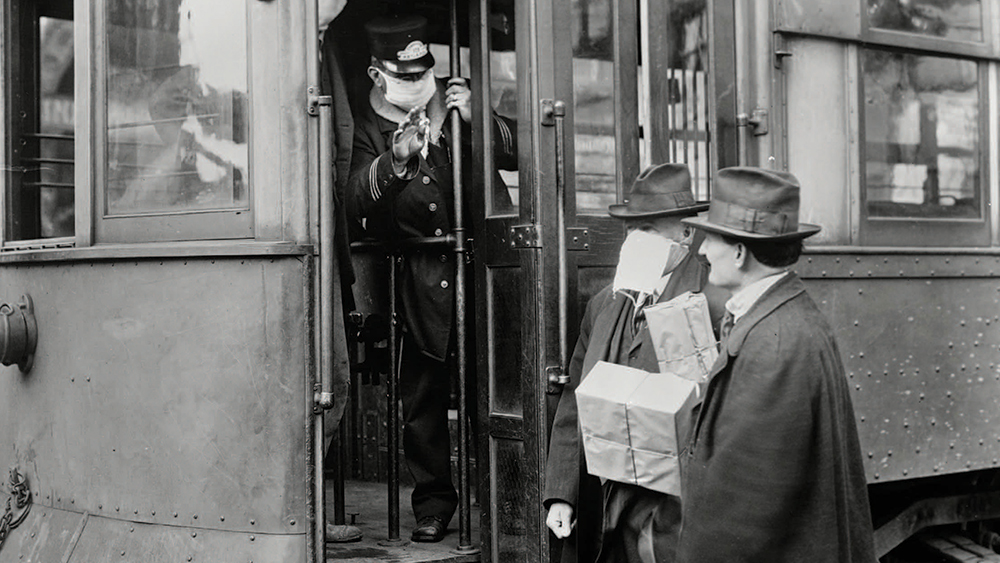

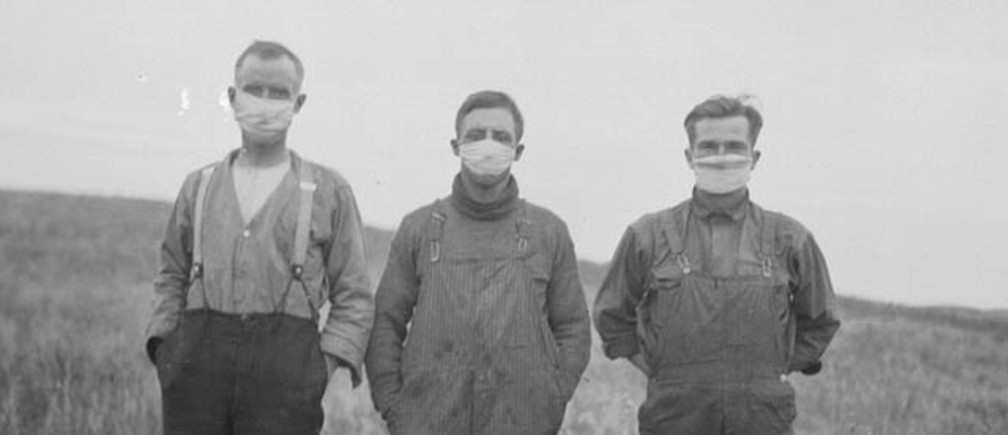

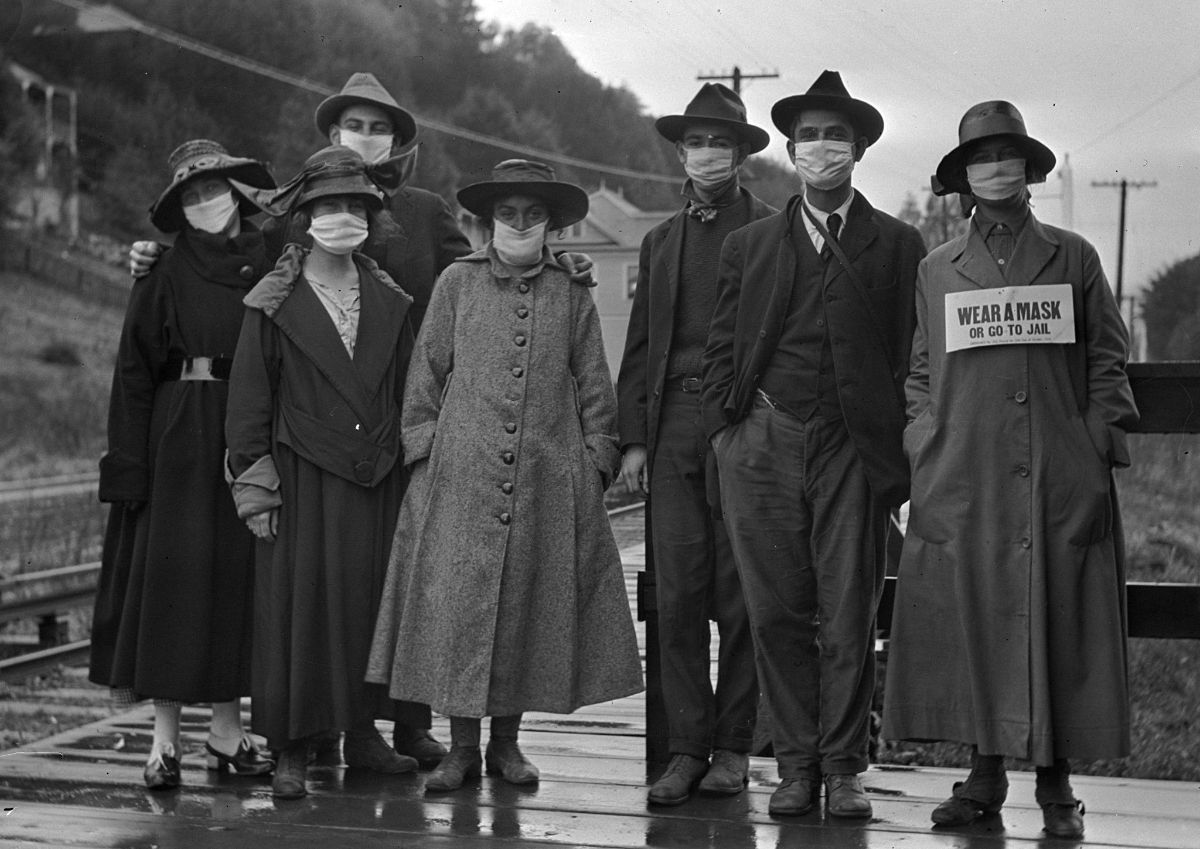
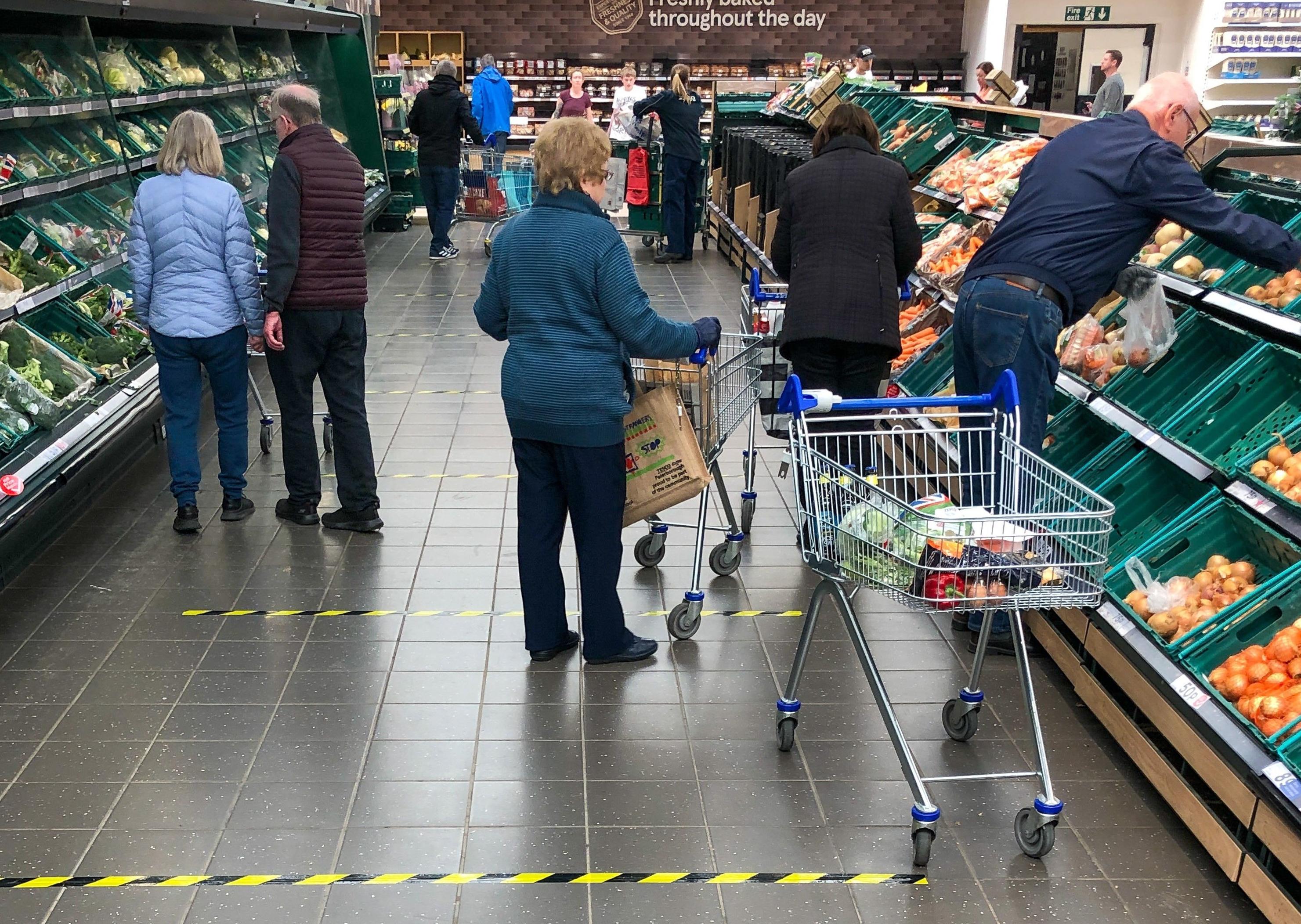

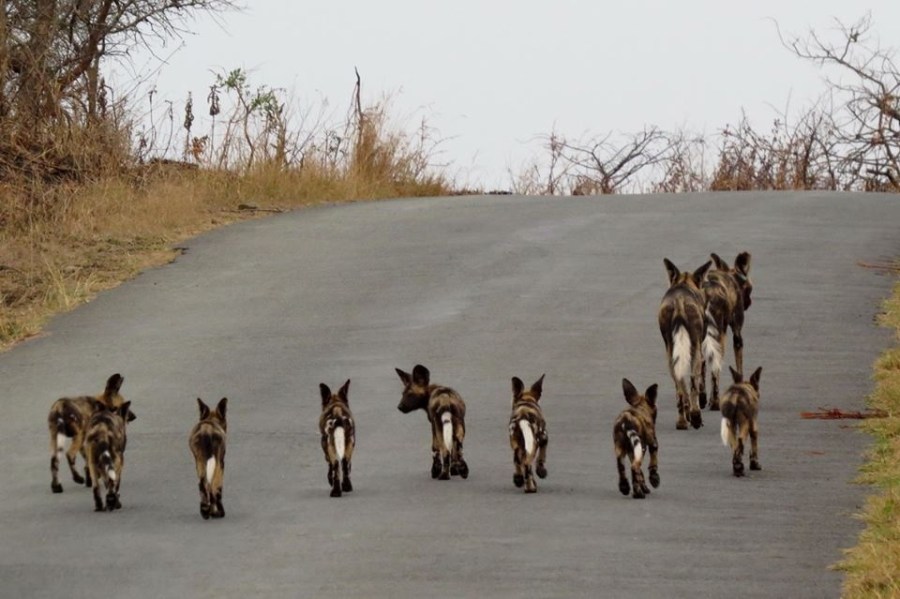



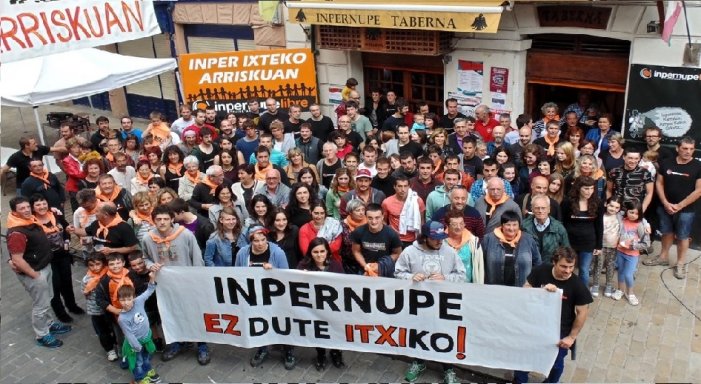
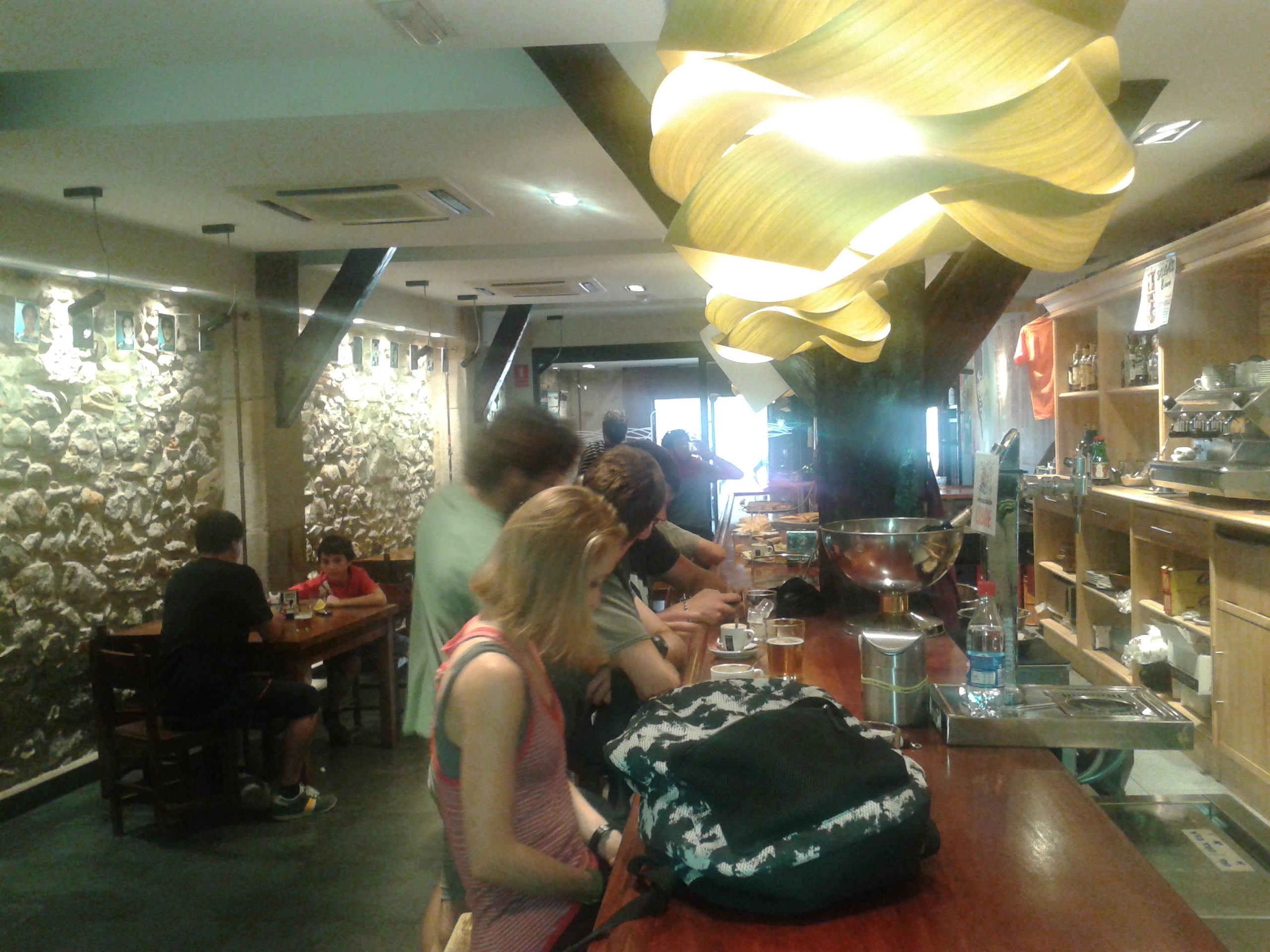
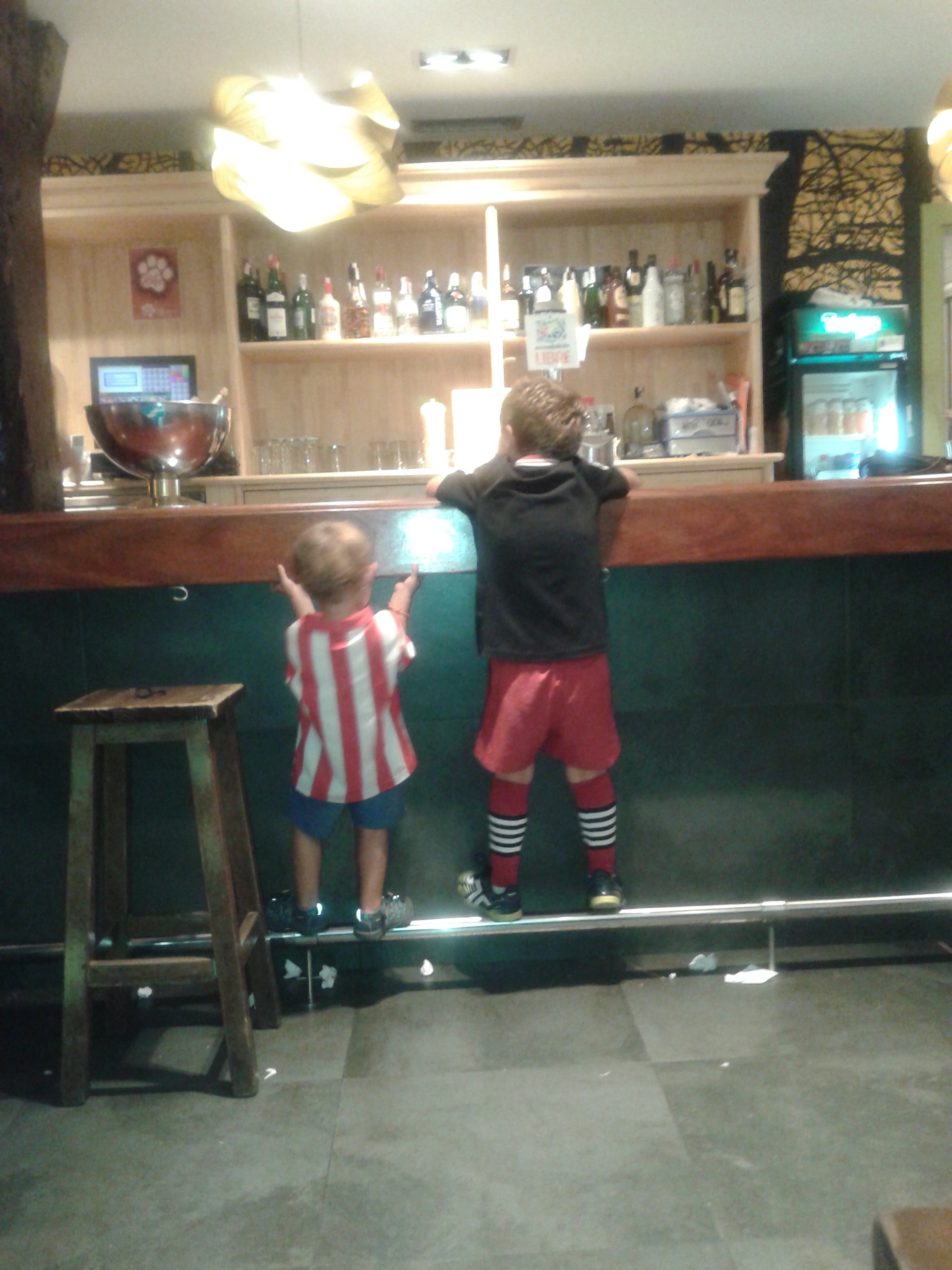
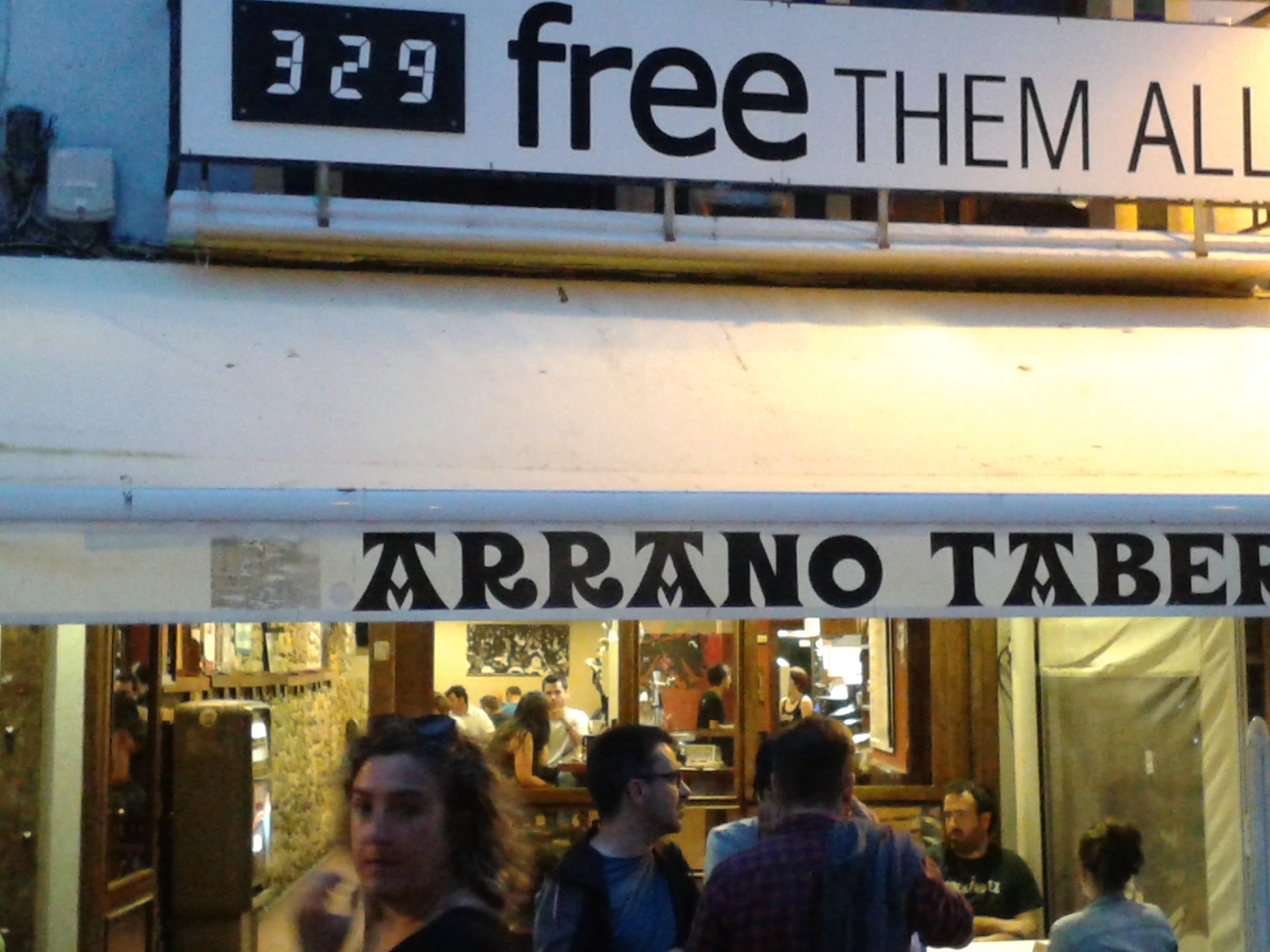


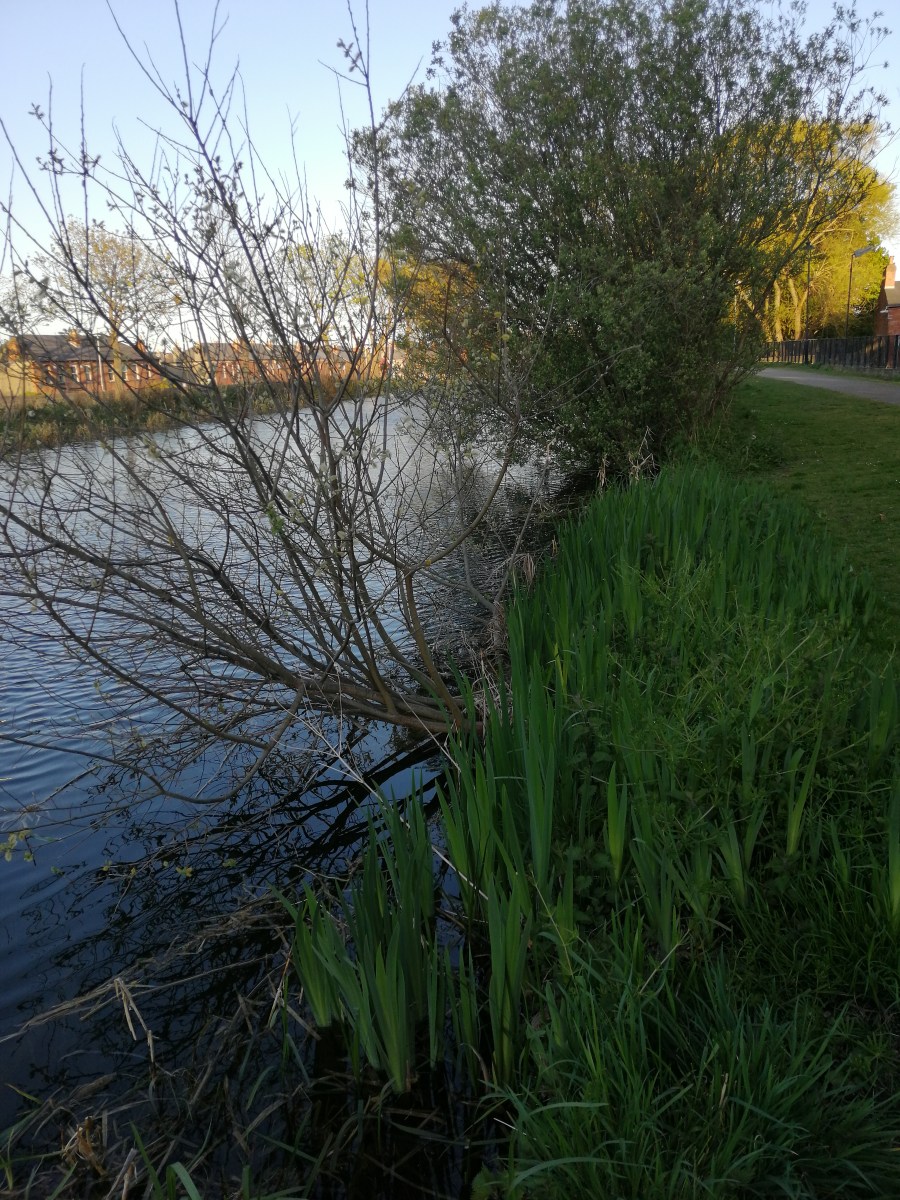
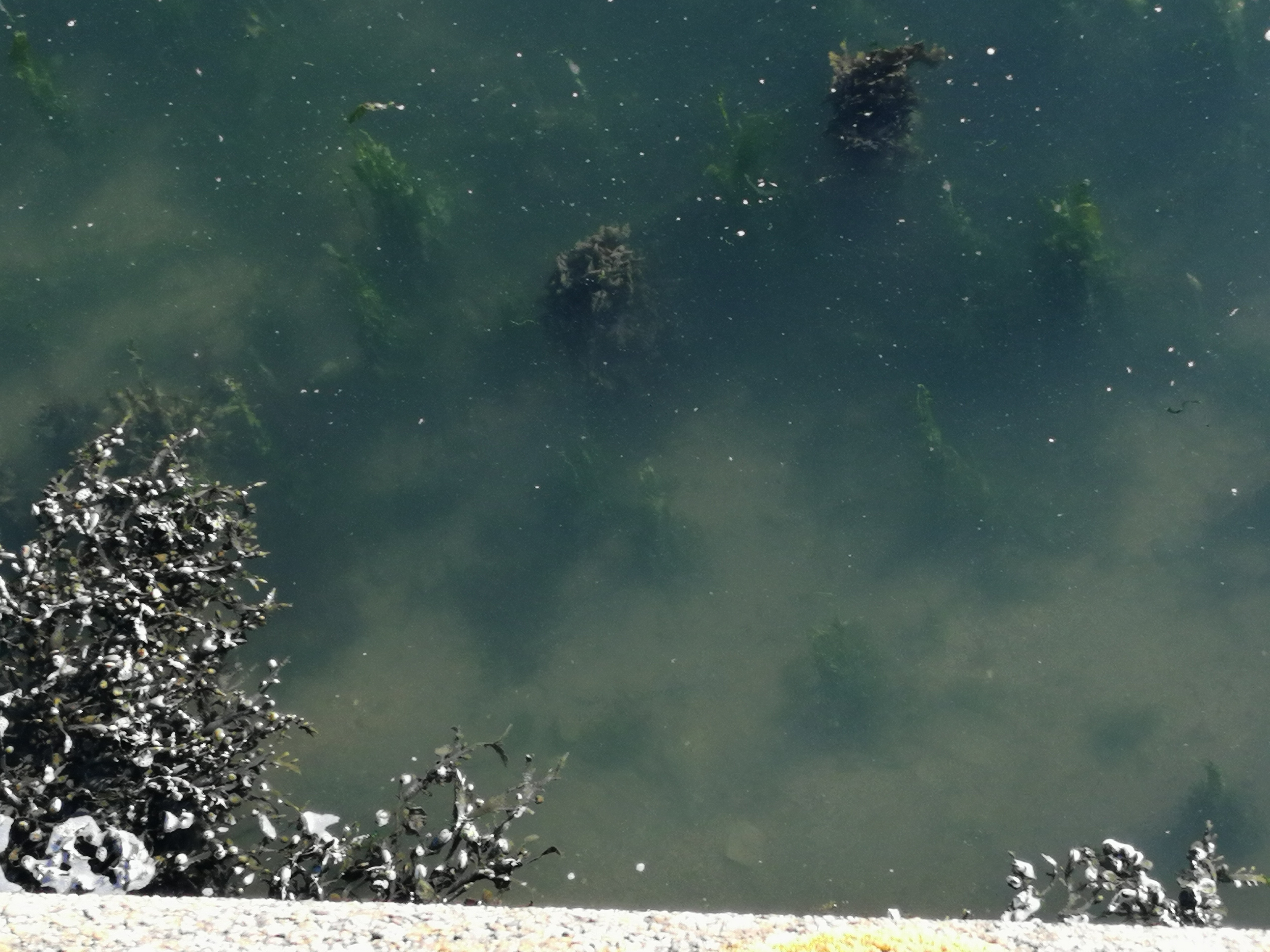
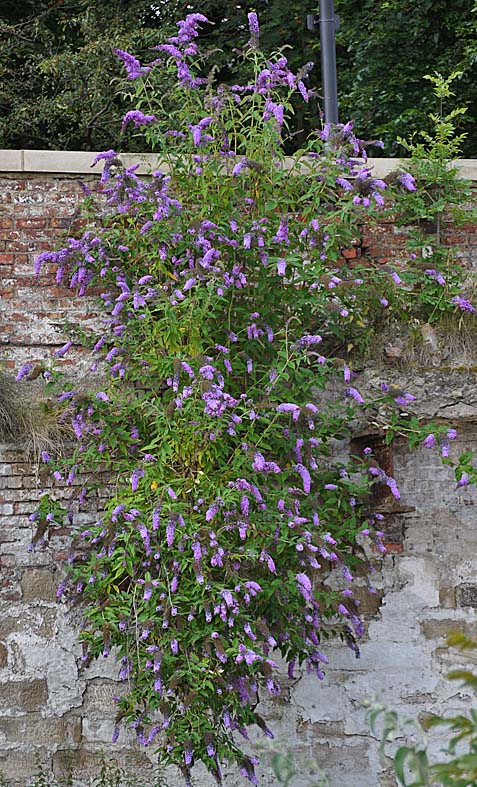
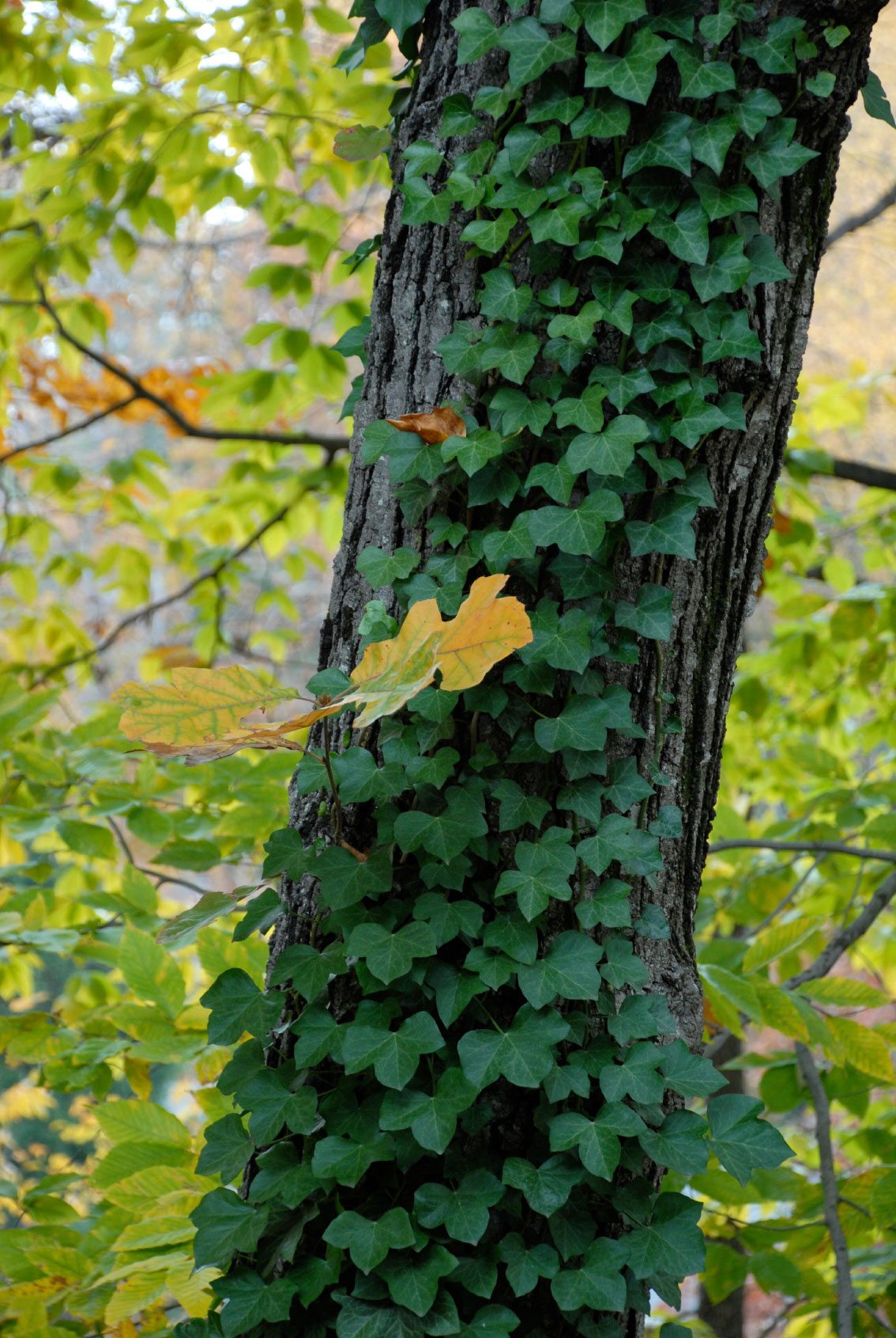


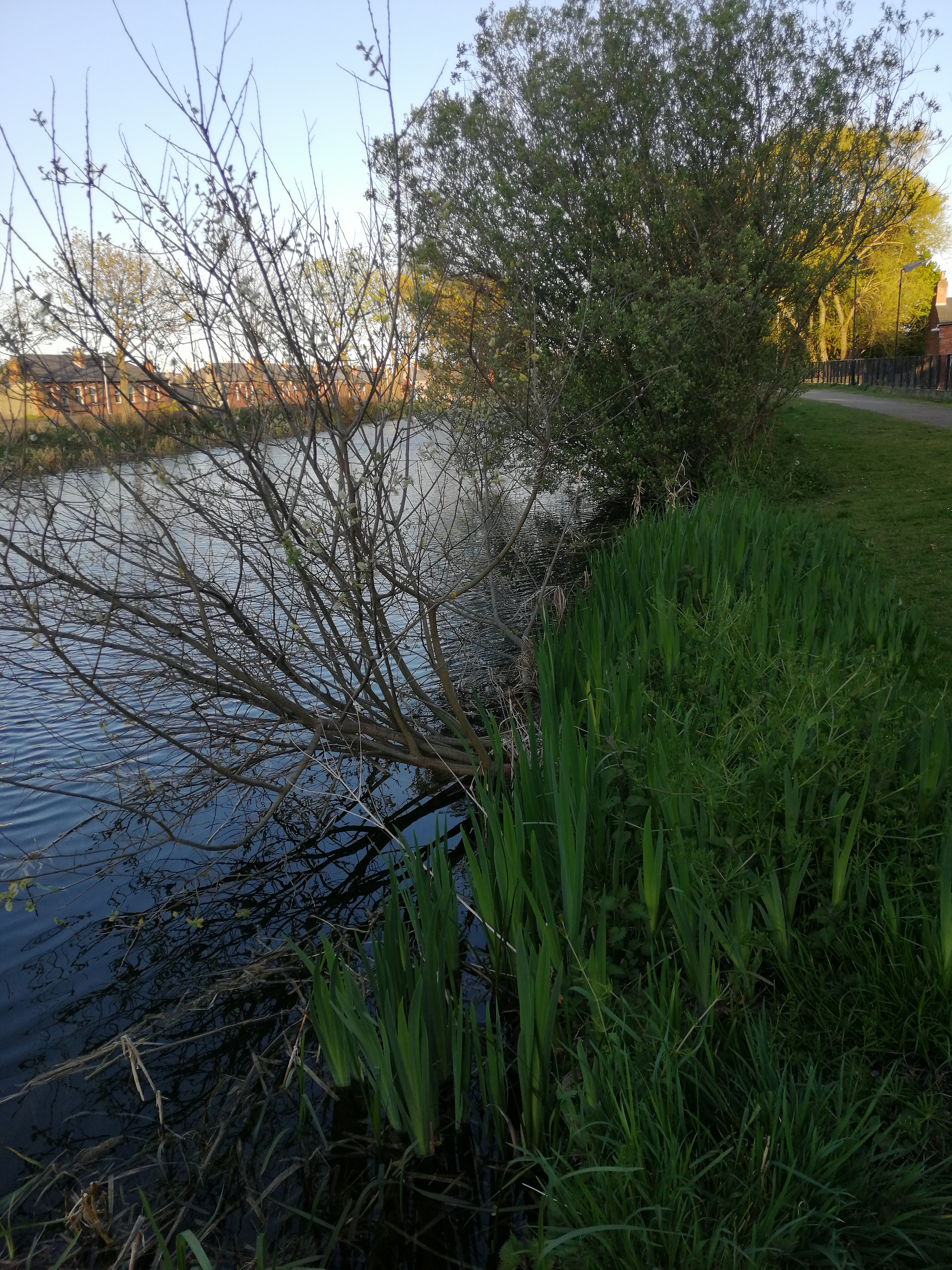
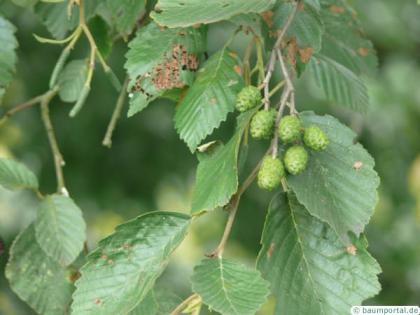


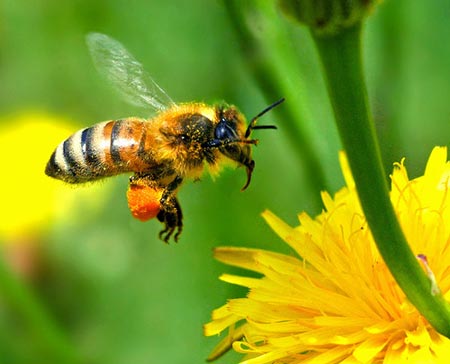
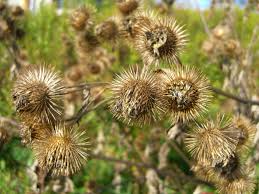
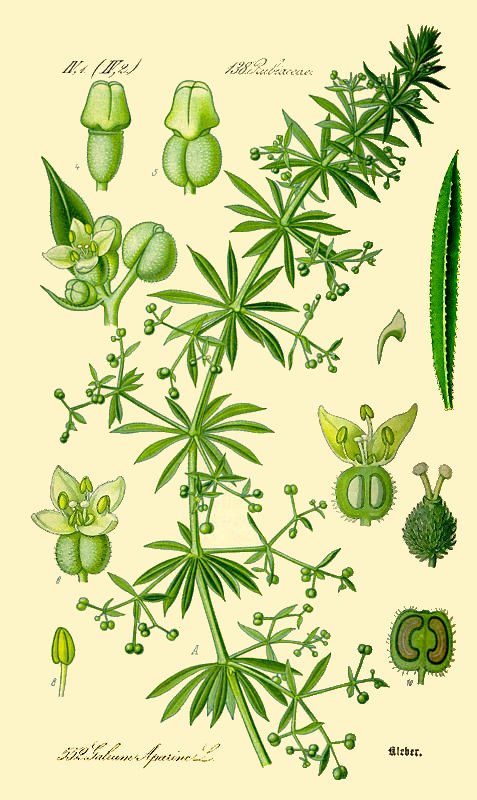
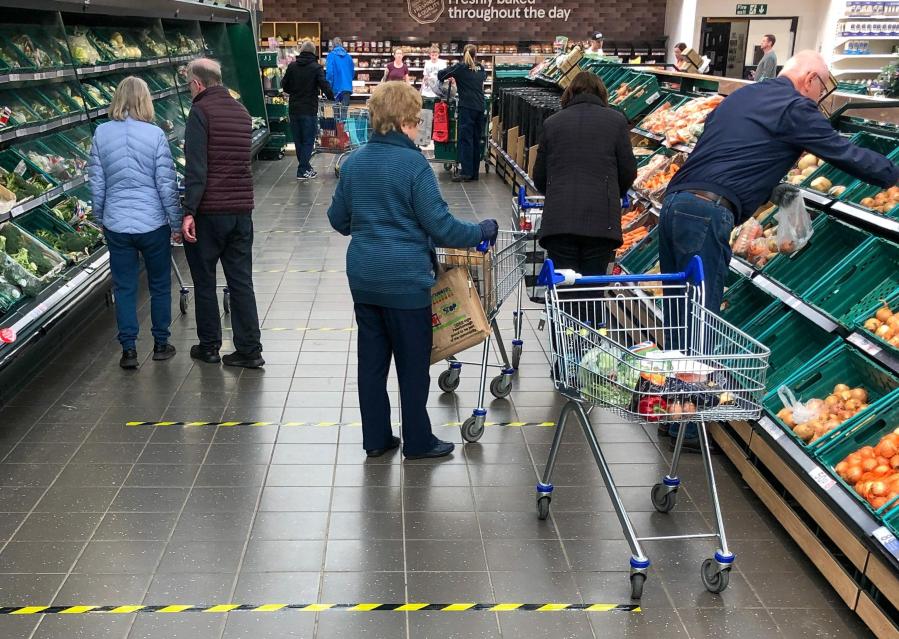
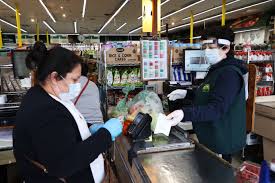



 rebelbreeze