Revolutionary socialist & anti-imperialist; Rebel Breeze publishes material within this spectrum and may or may not agree with all or part of any particular contribution. Writing English, Irish and Spanish, about politics, culture, nature.
These nights in March and early April you might hear and might have heard as far back as January, nearby or in the distance, a short sequence of barks: Bar! Bar! Bar! – something like that. Or rarely, a sequence of four. These are calls from a male fox, telling any vixen within hearing distance that he’s available – and any other males, to keep away.
I think I have only heard them after midnight but then at various times throughout the night.
While humans in our society are practicing social distancing due to the Coronovirus-19 pandemic, the foxes are seeking social closeness. Or some of them are.
The dog fox is not after casual sex – if he mates, he will stay with the female and, when she is lactating, feed her and the cubs. Of course, that is more easily done in the city than in many rural locations, with the amount of food that is discarded by human society. Also, foxes are generally not hunted in the city where, if humans carry guns, it’s usually in order to shoot other humans.
The fox has to advertise and so does the vixen, because she will only come into estrus for one three-week period in the year. If dog fox doesn’t come calling then, he won’t be welcome later. If you have heard her calling for a mate, you won’t forget it: an almost unearthly scream which, if you didn’t know about it, would have you believing in the bean sí (banshee) or possibly a woman being attacked.
Should she find a mate, she will prepare a den, usually an adapted or newly-dug burrow, where the cubs will be born around 50 days later. They need the mother’s warmth until three weeks old to avoid hypothermia, so she cannot leave the den. Her mate, the dog fox, will go out each night and bring her back food and, when the cubs are but a little older, bring them some too – in his stomach. Regurgitated semi-digested food might not sound salubrious but the cubs could not manage anything else along with their mother’s milk. Sometimes there might be another but unmated female in attendance too; unmated companion females can give the vixen a break a little later so that she can go out foraging and hunting for herself.
Humans wean their young off milk with finely-mashed or even partly-chewed solids which, before baby foods were widely available, had to be prepared by parent or child-minder (frequently an older sibling). But then the human child has many years to come to full adulthood whereas the fox has to accomplish that in a year or a little over. In the wild, adult foxes generally live only as long as five years, while in captivity they can reach three times that.
The European Red Fox (Photo sourced: Internet)
A PEST?
It is probably best not to feed foxes, which are after all wild animals that may become overly familiar, not only with their feeder and with their belongings – but with their neighbours’ things too. On an allotted piece of ground I rented from the local London authority years ago and where I cultivated vegetables and some fruit bushes, by day I often came across a chewed toy or a shoe, presumably taken from a nearby back garden and played with for awhile.
Finishing at dusk, I sometimes saw the ghostly shapes of adults and cubs, not fleeing but giving me a wide berth nevertheless.
Stories of them attacking and killing small dogs and cats are probably apocryphal for a number of reasons, chief among them being that they have no need to attack such animals since they have no shortage of food in the city. Also little dogs are not usually roaming around at night and, in a fox-watch documentary about urban foxes in I think Bristol city decades ago, every time a confrontation between a fox and a cat was filmed, it was the fox that backed down.
Unless one is keeping poultry or rabbits in pens or runs outside, it is hard to see how foxes can be classified as pests or seen as causing us problems. Even in rural areas, a ewe is quite capable of protecting a lamb from a fox, an animal which after all is not much bigger than a cat.
None of that information prevented Boris Johnston, when he was Mayor of London, from proposing a cull of the city’s foxes. Having observed this gentleman in action as the Prime Minister of the UK, most people will probably not be surprised that he had failed to learn from a comparatively recent history, because despite a large and expensive culling program in the 1970s, the fox population jumped right back.
PROTECTION?
In a previous article published on the Rebel Breeze blog (Scream on a December Night) I wrote the following:
“Some people have suggested that the red fox should be granted protected species status but it is difficult to see the rationale for this, since it is on the species of “least concern” list of the International Union for the Conservation of Nature. Pigeons receive no protection and, though often fed by people who consider them cute or pretty, do have a negative effect on our urban environment and, in the case of seagulls, who are protected, may be responsible for the disappearance of the many species of ducks that once were common in Stephens’ Green. Rats and mice are not deliberately fed or considered cute by most people (though I have kept both myself and found the individuals tame and harmless and, in the case of rats, quite intelligent) and humanity wages war upon them with traps and poison.
“Do urban foxes require management? Zoologist Dave Wall, who has studied Dublin’s urban foxes for some years, thinks not. In his opinion, the fox population in Dublin has remained constant since the 1980s. According to statistics regularly quoted but never referenced that I can find, Dublin fox families occupy on average 1.04 Km². Given a rough and probably low estimate of six individuals per fox family (a mated pair and two unmated females and two cubs) and a Dublin City area of 115km² would give us a fox population of 663 in the city. That might seem a lot, until one hears that London holds an estimated 10,000.”
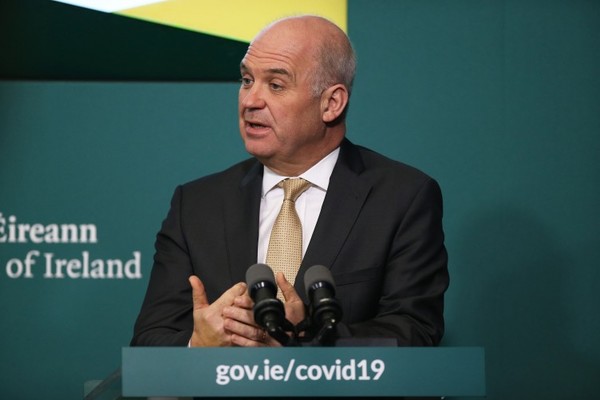
On a day when it is claimed the rate of infection is dropping (but with the highest number of infected and dead yet in Ireland), the social distancing and lockdown measures are said to be working. But Chief Medical Officer Dr. Tony Holohan denies that doing this earlier would have lowered the infection rate! And Eoghan Harris tweets a pat on the back for his Government that private health facilities are to be made available in the public health interest, a measure socialist TDs were calling for weeks ago. But Varadkar rushes to reassure that it’s not nationalisation – neo-liberalism will continue as before.
THE HOLOHAN PUBLIC FATIGUE SYNDROME
Tweeting, Professor Philip Nolan, Chair of National Public Health Emergency Team’s IEMAG: “The model reveals that before restrictions were in place, daily growth rate of confirmed cases was at 33%. This has fallen in recent days to around 15%. But it is still growing and needs to fall further.”
To a person of average intelligence, this means that had these measures been introduced earlier, the graph curve would have begun to flatten out much before now. But Chief medical officer Dr. Tony Holohan is much more intelligent than that – way beyond the rest of us. Because that would have risked “public fatigue” and now is “the right time.” Well it must be the “right time”, mustn’t it, because that’s when he ordered it. He couldn’t have recommended it late, could he?
If “public fatigue” is the danger, that can come in at any time once the restrictions are in place, getting worse as time goes on – one would think. So if introduced say at the beginning of March, we’d be “fatigued” by now, wouldn’t we? So is he telling us that in a number of week’s time, with restrictions still in place, we won’t be “fatigued”? The logic is that we will just as fatigued whenever the crisis is over as if the measures had been put in place earlier – just that it would have been over more quickly and with less fatalities.
Of course, it won’t be over anything like that quickly. They have not even closed the borders, airports or sea-ports! And it’s not that I am in favour of the British colony’s Border, by the way, but this State and Government have no control over the colony’s airports and seaports. And how did the virus arrive in Ireland in the first place? Yep, by plane. But it’s ok, Holohan is going to “discuss” those options. And if they do – finally – close those ports and Border, it will of course be exactly “the right time” to do it.
Let’s return to this “fatigue” notion. What we are experiencing is a pandemic, a national emergency. The people of Leningrad withstood a hard fascist siege, running out of supplies, constantly bombarded, for 852 days. And the battle in defence of Moscow for three months and five days.
But of course, they were Russians (mostly). Alright, the people in Britain (quite a few of them Irish) withstood the Battle of Britain — with almost daily air-raids — for three-and-a-half months!
But the Irish, in Ireland, cannot stand a few extra weeks without becoming “fatigued” and – what? Flood the streets in civil disobedience? Start running up to people and brushing against them? Go back to jobs the Government has closed?
Could it be, just possibly, nothing at all to do with early “fatigue” syndrome but rather late actions reluctantly taken by a Government? Reluctant because it would deplete the capitalist coffers? The thing is, reprehensible as that motivation would be, if action had been taken earlier, capitalism would have suffered less and recovered more quickly!
NEO-LIBERAL POLICY BUSINESS AS USUAL
Which brings us neatly on to Eoghan Harris patting the Government on the back for roping in the private healthcare facilities – weeks after being asked by Socialist TDs to do so. No, you’re right, he didn’t mention that bit. Well, you can’t get everything in a tweet, can you?
And Varadkar rushed to reassure the Gombeen capitalists he represents and the foreign capitalists his party facilitates – along with Fianna Fáil, Labour and the Greens – that this is not nationalisation.
“This is a public private partnership, expanding our public health service in response to this emergency but also cooperation with the private sector.”
“This is private and public sectors to (sic) learning and growing together and working together in the common good.”
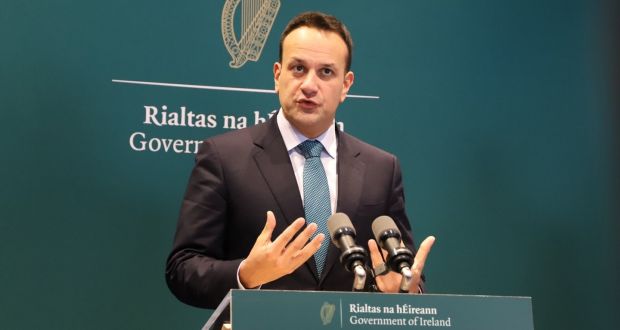
Leo Varadkar, Taoiseach (Irish Prime Minister) of a defeated Government but has yet to step down. (Photo sourced: Internet)
The private healthcare system has parasitised on the public health service, here and in Britain. It has used existing public structures, services, contracts, buildings, personnel, training facilities, government grants and tax cuts. It has no right to exist, least of all when the public body on which it has been feeding is staggering on its feet, in which state it has been long before this pandemic struck.
And Leo’s government, one of the leading proponents of the system that has caused this situation, let us not forget, was given a massive shove recently by the electorate! With the state of the public health service being one of the main issues on which they were shown the road.
You could never accuse Varadkar of not having a hard neck!
One of the clerical staff knocked on the door of Patrick, the boss of the Irish health worker’s union. “Come in!” called out the latter.
“Eh, Boss, lookit this here,” he said, waving a computer printout.
“Why don’t you summarise it for me,” suggested Patrick.
“It’s about that epidemic in China.”
“Coronavirus-19,” replied Patrick, who prided himself on keeping up with world news. “What about it?”
“It’s coming here,” replied the clerical worker.
“What! Who says? Where does it say that?”
“Boss, it’s spreading all over Italy and ….”
“Yes, well but Italy is far away from here!”
“Not as far as China is from Italy.”
Patrick thought about that but the clerical worker continued: “And the Ireland rugby team is playing there and nobody stopped Irish fans going there …. or coming back.”
Patrick sat silently, the enormity of the situation dawning upon him, then reached out for the computer printout. Among other things, it showed the steep climbing graph of confirmed cases of the virus in Italy.
Badge design of the FÓRSA union, the largest public service union in Ireland. (image sourced: Internet)
After the clerical worker had gone, Patrick rang Michael, the President of the Irish Congress of Trade Unions. Then he rang a number of union general secretaries: Brigid, of the shop and distributive workers, Barry of public transport, Jim of post and telecommunications, Josie of the clerical municipal workers, Colm of the manual municipal workers, Jan of construction ….
Two days later they all met in Liberty Hall, Dublin – thirty people, including chiefs of all the main trade unions in Ireland and of a few sub-divisions, along with their note-takers or advisers. By the end of three hours they had a position statement, including demands of the Irish Government, ready to go the moment the first case of the virus was confirmed in Ireland. They had ruled out issuing it until then because they feared it would not have enough effect.
A delegation was chosen to meet the Ministers of Health and of Industry. And pieces of work including research and requirements specific to some branches of the workforce had been distributed, with those responsible noted in the minutes and deadlines given. It was nearing the end of February.
The following day, the first case was notified in Ireland, a person returning from Italy.
Logo of the Irish Congress of Trade Unions, to which most Irish trade unions are affiliated (image sourced: Internet)
ICTU PUBLIC STATEMENT
That afternoon, the President of the ICTU phoned the Taoiseach (Prime Minister) of the Irish Government to alert him to the joint trade union statement and to push for an early meeting with the Ministers of Health and of Industry.
By midday four days later, the 1st of March, the updated statement had been emailed and faxed to all union branches, newspaper, radio and television news media and to a number of bloggers, most of which displayed it prominently, especially as that day the second case in Ireland had been diagnosed:
“The Coronavirus-19 epidemic in Italy has now reached 1,694 confirmed cases of contagion with 34 deaths and only four months ago the first case of this virus was diagnosed in China. It has now reached Ireland and more cases will soon be reported here. As trade unions representing workers including those in front-line services of healthcare, food sales and distribution, public transport, post and communications, municipal services …. We call on employers and Government to ensure the following steps are taken as a matter of great urgency.
All front-line workers in essential services be issued with HSE information on the known dangers of the Coronavirus-19 and be updated regularly
Those workers to be issued with hand-sanitiser gel, gloves and face-masks
The term “essential services” to be applied to the following (the list is not exclusive):
general health workers and auxiliary services with special emphasis on those to the elderly, disabled etc
emergency services in health, fire-fighting, public order, rescue services
workers in production and maintenance of power supplies for heating, lighting and cooking
workers in water purification and supply
workers in food production
workers in outlets providing food and essential supplies
delivery workers to the above and of these to homes
public sanitation workers
postal and essential telecommunications workers (i.e not commercial call centres)
Those workers to be where possible isolated from members of the public by appropriate measures such as withdrawal from duties requiring contact with the public, placing of transparent screens between staff and the public, recourse to audio and video communication, etc.
All covered public spaces, in particular those supplying essential services such as food shops, to be supplied with hand-sanitiser dispensers and notices exhorting the public to use them to prevent or restrict the spread of the virus
All companies to publicly display the measures they have taken to protect staff and the public
The closure of borders, airports and ports to travel to or from abroad, quarantine measures being enforced wherever arrivals are currently taking place
Should the virus continue to spread, all non-essential services should cease. This measure is not only for the protection of staff and public at the place of work but also in the travelling of workers from their homes to the place of work and back again
The above measure to be announced by the Government through public statements and to be enforced strictly wherever non-compliance should be observed
The Government to urge the public through repeated public announcements to self-isolate and to remain indoors where possible, urging responsible adults to ensure the same with children
The Government to freeze by decree all evictions, all actions for non-payment or arrears of rent or mortgages
likewise with actions pursuing non-payment of bills for utility services
The Government to oblige all companies that can afford it to pay workers they lay off
and to supply all smaller companies and businesses that cannot afford in full such payments, the necessary assistance to meet their obligations to the workers
The Government to set aside an adequate sum to pay all unemployed or on pensions a weekly sum sufficient to meet normal weekly expenses
The Government to propose for Oireachtas approval an emergency law authorising the appropriation of any buildings, private facilities, companies and property necessary for healthcare, production of prevention materials, production and distribution of food etc.
“Wherever we find the necessary measures are not being taken, we will instruct our members to take appropriate action, including withdrawal of their labour, picketing of the offending company or service along with providing comprehensive information to the public on the reasons for our actions and the risks to which they are being exposed through failure of the companies or services to take the appropriate action. We will not be negligent in the face of danger to our members and to the general public.”
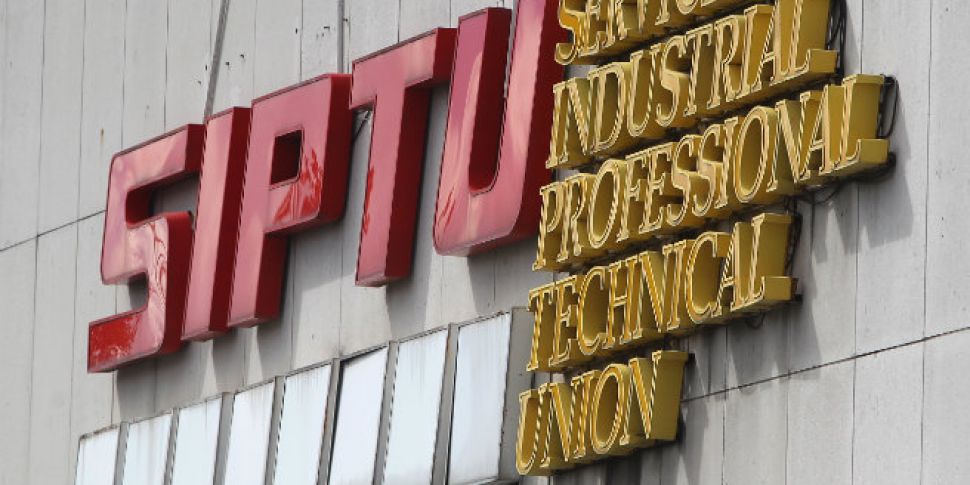
View of the title of SIPTU, the largest union in Ireland, on its Liberty Hall HQ. (image sourced: Internet)
ACTION
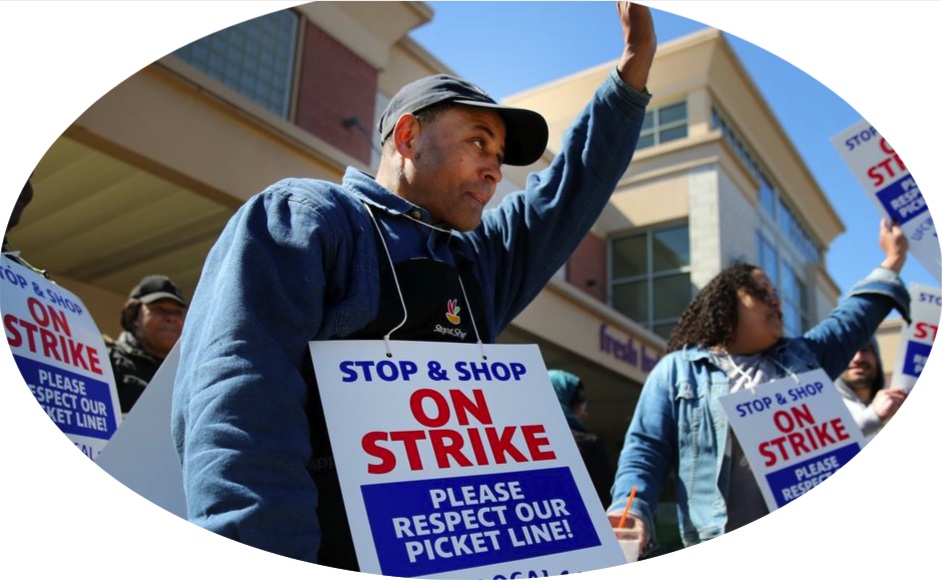
Two days later, after the employers and Government had failed to respond in the manner considered necessary by the trade unions, strikes, walkouts and pickets were called at many branches of all supermarkets, postal service depots and public outlets, call centres, public transport depots, construction sites, local authority manual and clerical services, pubs and hotels. The unions of the health service workers, a workforce under-staffed, under-funded and under huge pressure already, maintained a rota picket with placards and leaflets in front of major hospitals and the Department of Health in Dublin. Lawyers and barristers picketed the courts, calling for them to close. All pickets wore surgical-type face masks and disposable gloves, and had with them a mobile stand with a hand-sanitiser dispenser.
Workers on successful 10-day strike against the Stop & Shop supermarket chain in the USA last year. (image sourced: Internet)(image sourced on Internet and cropped)
By the end of that week, the public pressure on the supermarket chains was such that all had provided sanitiser dispensers for staff at work stations and for customers at entrances and exits, glass screens separated all staff work-stations from customers, staff needing to work in the public area were all wearing face-masks and gloves and a big badge asking people to keep a safe distance. Shelf-filling and price-tagging duties were confined to hours when no public were present. Queue lines were marked out with spacing between customers and periodic announcements instructed
(image sourced: Internet)
customers on safety precautions. Numbers of shoppers inside were restricted at any one time and lines outside marked required spacing for people queuing outside. All staff were being given health precautionary instructions for a half-hour daily through interactive screens.
Furthermore, all main employers had published a list of their precautionary measures and were updating them in response to representations from unions, the general public and Government instructions or recommendations.
Workers in all main public services had been issued precautionary instructions, face-masks, disposable gloves and hand-sanitiser and workers in some particular conditions had protective suits.
CONCLUSION
That is what could have happened and would have had an early restrictive impact on the spread of the virus to the public and to workers who provided a public service. The unions had the organisational and communication capacity to to do that. They didn’t do it – it didn’t happen.
Many of the measures indicated above – but by no means all – were taken but weeks later — and none at trade union initiative: unofficial workers’ action, voluntary company action and government order were the means by which they came into being. By that time, many front-line workers and members of the public had been infected.
The trade unions in Ireland, having already failed their members and the working class in general through two decades of “social partnership” (when a healthy “social distancing” would have been more appropriate!), followed by failure to resist (and collusion with) austerity measures, failed once again in anti-virus protection of their members and of the public.
Some left-wingers say we should not mention these shortcomings since average trade union membership is low and this kind of discourse will hardly help union membership recruitment. But if unions cannot or will not respond adequately and in timely fashion to the needs of their members in particular and to working people in general, why should people be expected to join them? Trade union membership is falling for a reason.
Perhaps these left-wingers feel that the current unions should not be criticised, without a viable alternative having being put in place first. But what are they doing to provide that viable alternative? The answer is clearly nothing, or as near to that as makes no effective difference.
Logo of Unite the Union, operating in Ireland and in Britain. (image sourced: Internet)
THE FORBIDDEN DISCUSSION
There is silence on this question from the broad Left, including those parties claiming to be revolutionary. When individuals raise the issue, it is not addressed or the individual is censored.
It is time to end this self-censorship on the Left and to proclaim loud and high that the trade unions in Ireland, despite the presence of many genuine activists, are generally not fit for purpose. What do we do instead? First, admit the problem and its scale – then we can discuss possible remedies. The patient cannot be cured if we refuse to admit the illness and the stage it has reached.
(image sourced: Internet)
Some of the left-wingers are now saying that this crisis has exposed the unsuitability for society of the capitalist system and that when it is over, that lesson must be put into practice and essential services become national public services. Apart from the weaknesses in this solution, one must ask: who is going to make this happen? If the capitalist system opposes this change, how will the capitalists and their State be overcome? A social revolution without a mass working class organisational base is not possible.
End.
APPENDIX
Irish Congress of Trade Unions (ICTU)
There are currently 55 trade unions with membership of Congress, representing about 600,000 members in the …. (Irish state). Trade union members represent 35.1% of the Republic’s workforce. This is a significant decline since the 55.3% recorded in 1980 and the 38.5% reported in 2003. In the Republic, roughly 50% of union members are in the public sector. The ICTU represents trade unions in negotiations with employers and the government with regard to pay and working conditions (from Wikipedia)
Main trade unions
SIPTU: “… is the largest Union in Ireland with over 180,000 members.
SIPTU represents workers in both the public and private sector in almost every industry in Ireland and at virtually every level. SIPTU caters for full-time, part-time, permanent, contract and temporary workers, as well as retired and unemployed members.” (from SIPTU website)
“Fórsa is Ireland’s newest trade union with over 80,000 members. …. represents members in the public service, as well as the commercial sector, state agencies, some private companies and in the community and voluntary sector.
“Fórsa is the second largest union on the island of Ireland and by far the largest trade union voice in the Irish civil and public service.” (quoted from Forsa’s website)
The Connect Trade Union is the largest Engineering Union in Ireland and the second largest in manufacturing representing up to 40,000 workers.
The Irish National Teachers’ Organisation (INTO), founded in 1868, is the oldest and largest teachers’ trade union in Ireland. It represents 40,633 teachers at primary level in the Republic of Ireland and 7,086 teachers at primary and post-primary level in Northern Ireland. Total membershipis 47,719 (August 2019).
The Teachers’ Union of Ireland represents over 17,000 teachers and lecturers in Ireland engaged in Post-Primary, Higher and Further Education. The Union is made up of 62 branches in 19 areas. (quoted from TUI website).
The International Transport Workers’ Federation (ITF) is a democratic, affiliate-led federation recognised as the world’s leading transport authority. ….. connecting trade unions from 147 countries …. We are the voice for 18.5 million working men and women across the world” (ITF website).
“Mandate is a union of over 40,000 workers across Ireland.”(Wikipedia)
Unite the Union, commonly known as Unite, is a British and Irish trade union, formed on 1 May2007, by the merger of Amicus and the Transport and General Workers’ Union. With just over 1.2 million members, it is the second largest trade unionin the UK (Wikipedia).
Dem were de days …. hard days and nights but busy! 1970s Britain in relation to Ireland was the decade in which the British troops were sent into the Six Counties, the war with the IRA began, internment without trial was introduced, Army massacres of civilian protesters took place and the IRA took the war to Britain. The British State introduced legislation to terrorise the Irish community, the Prevention of Terrorism Act and framed 20 Irish people on murder and murder-related charges. 1980s Britain was the decade in which, due to the hunger strikes, the Irish community stood up, shrugged off the terror of the PTA and took to the streets. At the start of that decade too, the Irish in Britain Representation Group was founded.
In the 1980s when IBRG branches were being set up across the country one of the biggest problems was finding somewhere to meet. There were many Irish Centres, but most of them did not want an Irish group with a political agenda meeting there. Most of them were attached to Catholic churches who promoted a reactionary agenda or they were commercial venues who worried about their alcohol licence as well as police surveillance and threats to their future.
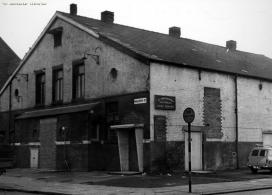
Manchester IBRG found a home at St. Brendan’s Irish Centre in Stretford. Originally the Lyceum Cinema, it opened as an Irish Centre on 25th April 1961. Surrounded by streets of Victorian houses it became the home for many of the Irish who emigrated to the Manchester district in the 1960s.
St. Brendan’s Irish Centre
St.Lawrence’s Church which was located next to the Centre organised an Irish community care organisation which met Irish…
One of the consumables most regularly needed in households is bread. In the present circumstances it may not be so easy to purchase some and also going to shops and bakers entails a certain amount of health risk. However, we can make soda bread at home easily enough and have fresh, healthy bread daily.
Soda bread, brown, white, with and without dried fruit, is a traditional Irish bread and for decades was the daily bread in the rural areas. This is not a traditional recipe.
Apart from a source of sufficient heat, we will need
flour,
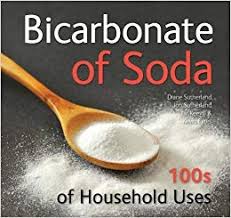
bicarbonate of soda,
a little salt,
milk
and a little edible acid like lemon juice or vinegar.
Source image: Internet
And since milk is another consumable that needs replenishing regularly, we can use it when it is ‘going off’ or dried milk powder instead.
We will need also some kind of mixing bowl, a strong metal fork and a heat-resistant receptacle.
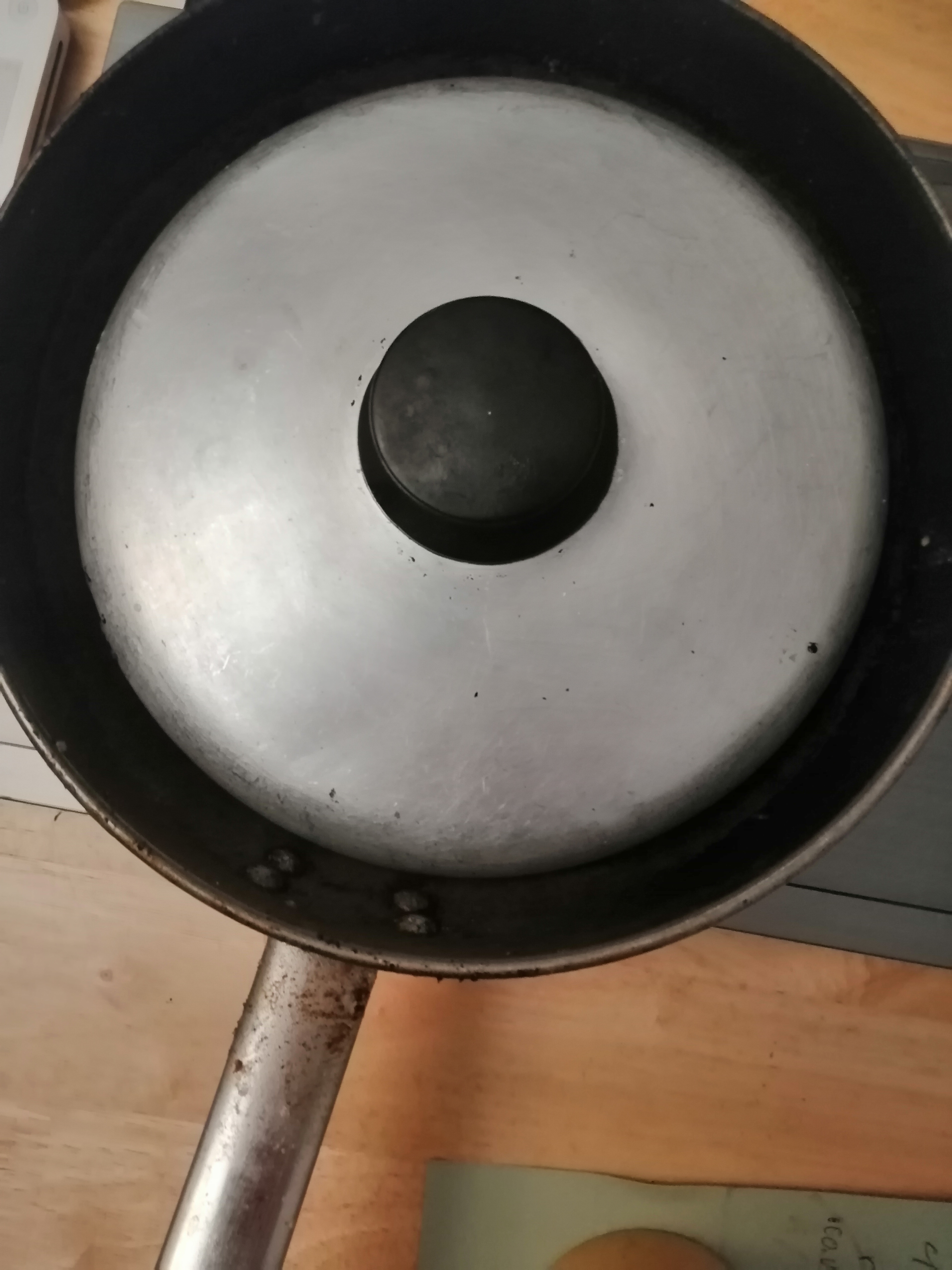
The following directions are for making small amounts of bread at a time, not in ovens but on top of hot plates or gas rings. The heat-resistant receptacle will be a frying pan or wok. In order to contain the heat sufficiently for long enough, we will also need something like a curved lid (the dough will rise or expand).
Frying pan for baking bread with a curved lid from a pan to contain heat and allow bread expansion. (Photo: D.Breatnach)
I am going to describe two variations in preparing the dough, one needing a board to work it on and another straight from the mixing bowl to the heat.
Both variations:
In the mixing-bowl
pour the flour (for quantities and recommendations see further below)
a level teaspoonful of bicarbonate of soda
a few pinches of salt
soured milk (either gone sour already or soured with a squirt of lemon juice, a few drops of vinegar etc.)
Mix with fork, not only round and round but folding over and over
Put frying pan or wok on to heat high with little oil or butter (to prevent the dough sticking)
Drop the dough into the pan or wok, turning it often
Turn the heat down low within a minute of turning the dough
Cover with a curved lid in which you have sprinkled some water (for steam for the bread)
It is useful to turn the dough a few times while baking to prevent a very hard crust forming
After about five minutes, take the bread out and tap it sharply with your fingers
When the bread gives a hollow sound on both sides when tapped, it is ready
Leave out to cool
Bread “rolls” baked in frying pan (Photo: D.Breatnach)
1. Type without working the dough:
Mix it quite wet, adding a little water from time to time if necessary
Divide the mix into two or three lumps
Drop into the heated receptacle
You may want to smooth it with a damp spatula, back of a spoon, etc
Turn not only front to back but on all sides too
Lower heat, cover etc.
This will tend to produce round or oval shapes of bread
2. Type working the dough:
Mix it as dry as you can (but still mixed thoroughly into one mass)
Lay out your board, lightly sprinkled with flour
Tip the dough onto the board
Dip your hands in nearby flour, getting it all over palms and fingers
Sprinkle a little flour on top of the dough mass
Press down on the mass, flattening it
Turn it and press down again
Keep dusting your hands with flour as often as necessary (and the board, if the dough sticks)
When the mixture is totally flat, fold it half over and press down again
Continue doing this a number of times (you may notice a tendency for the shape to become triangular or even square through the folding)
Place on the heated receptacle (or, before doing so, press down the edges particularly all around the mass and cut in half)
Turn a few times while lowering the heat
Cover and test in about five minutes, etc.
FLOUR TYPES AND APPROXIMATE QUANTITIES
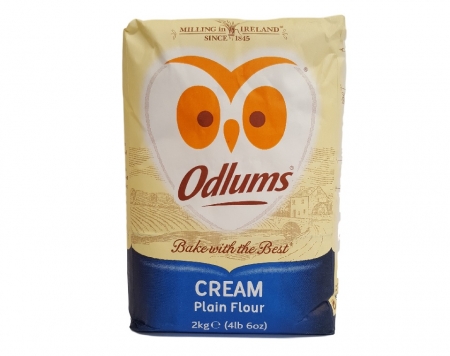
Wholemeal flour and oatmeal (as for porridge) are healthier than white flour (which should be plain, not self-raising) but white gives a lighter bread and is cheaper than wholemeal, because it is easier to keep. I mix one half mug of wholemeal to one mug-and-one-half of white plain, with a quarter of oatmeal.
Source image: Internet
Add a little milk at a time as necessary until you get used to knowing how much is needed. When using dried milk, we can mix it in the flour dry and add water as we mix or mix it in advance to make liquid milk; in this case every single ingredient can be a dry food with a preserve (if using vinegar).
Source image: Internet
ADDITIONAL NOTES
In Ireland, I prefer to use established brands like Odlums or Flavahan’s, rather than supermarket brands, even though the latter are usually cheaper.
The bread tastes better if made daily but to keep fresh, place inside a paper bag inside another of polythene and slice as needed. Making smaller amounts at a time, it is easier to judge the heat and time, otherwise one may find that the bread sounds hollow when tapped, as though cooked through, but at the centre there is still a mushy part.
The most taxing part of the process is the mixing the dough which is wearing on the wrists and men, known to generally have stronger wrists (no bawdy comments please) can at least carry out this part of the process and, having done so, sure might as well see the whole thing through.
From Workers’ Republic, 18 March 1916.
Transcribed by The James Connolly Society in 1997.
Proofread by Chris Clayton, August 2007.
James Connolly poster by Jim Fitzpatrick. (Image sourced: Internet)
The question often arises: Why do Irishmen celebrate the festival of their national saint, in view of the recently re-discovered truth that he was by no means the first missionary to preach Christianity to the people of Ireland? It is known now beyond the shadow of a doubt that the Christian religion had been preached and practised in Ireland long before St. Patrick, that Christian churches had been established, and it is probable that the legend about the shamrock was invented in some later generation than that of the saint. Certainly the shamrock bears no place of any importance in early Celtic literature, and the first time we read of it as having any reference to or bearing on religion in Ireland occurs in the work of a foreigner – an English monk.
But all that notwithstanding there is good reason why Irish men and women should celebrate St. Patrick’s Day. They should celebrate it for the same reason as they should honour the green flag of Ireland, despite the fact that there is no historical proof that the Irish, in the days of Ireland’s freedom from foreign rule, ever had a green flag as a national standard, or indeed ever had a national flag at all
Shamrock for sale in Moore Street last year, one of the few times in the year they are permitted to sell something outside the vegetable-fruit permit. They were not finding many buyers during the past week. Photo: D.Breatnach
The claim of the 17th of March to be Ireland’s national festival, the claim of St. Patrick to be Ireland’s national saint, the claim of the shamrock to be Ireland’s national plant, the claim of the green flag to be Ireland’s national flag rests not on the musty pages of half-forgotten history but on the affections and will of the Irish people.
Sentiment it may be. But the man or woman who scoffs at sentiment is a fool. We on this paper respect facts, and have a holy hatred of all movements and causes not built upon truth. But sentiment is often greater than facts, because it is an idealised expression of fact – a mind picture of truth as it is seen by the soul, unhampered by the grosser dirt of the world and the flesh.
The Irish people, denied comfort in the present, seek solace in the past of their country; the Irish mind, unable because of the serfdom or bondage of the Irish race to give body and material existence to its noblest thoughts, creates an emblem to typify that spiritual conception for which the Irish race laboured in vain. If that spiritual conception of religion, of freedom, of nationality exists or existed nowhere save in the Irish mind, it is nevertheless as much a great historical reality as if it were embodied in a statute book, or had a material existence vouched for by all the pages of history.
It is not the will of the majority which ultimately prevails; that which ultimately prevails is the ideal of the noblest of each generation. Happy indeed that race and generation in which the ideal of the noblest and the will of the majority unite.
In this hour of her trial Ireland cannot afford to sacrifice any one of the things the world has accepted as peculiarly Irish. She must hold to her highest thoughts, and cleave to her noblest sentiments. Her sons and daughters must hold life itself as of little value when weighed against the preservation of even the least important work of her separate individuality as a nation.
Therefore we honour St. Patrick’s Day (and its allied legend of the shamrock) because in it we see the spiritual conception of the separate identity of the Irish race – an ideal of unity in diversity, of diversity not conflicting with unity.
Magnificent must have been the intellect that conceived such a thought; great must have been the genius of the people that received such a conception and made it their own.
On this Festival then our prayer is: Honour to St. Patrick the Irish Apostle, and Freedom to his people.
James Connolly monument, Beresford Place, Dublin.
COMMENT:
I seem to recall that Connolly wrote something else about celebrating St. Patrick’s Day, perhaps when he was living and working in the USA but can’t find it now. For similar reasons to what he lays out here, I supported and indeed organised public celebration of the feast day in London.
And I might have agreed with Connolly in the case of Ireland at the time he wrote it: the whole country under British occupation, in the middle of the First World War with thousands of Irish casualties in the British armed forces and coming up to the 1916 Rising.
But now? I don’t think so, neither with what it celebrates nor how it is celebrated, which always makes me want to get out of Dublin. Republic Day, which Connolly was party to creating but could perhaps not have anticipated being a national festival day, is what we should be focusing on now, I think.
Staff wearing gloves (at last) but no masks. Distance instructions for shoppers at staffed checkouts but no masks — and what about floor staff, tending shelves, collecting empty baskets, ANSWERING QUERIES FROM CUSTOMERS AT CLOSE RANGE? !!
“Every little helps”? TOO LITTLE!
Criminal neglect by big employers of their staff and also, in the long run, of the wider public. And the unions?!!
Lots of empty spaces on shelves by the way. And I remembered the toilet paper!
I went shopping tonight. No, not a stock-up raid — actual shopping. Of course, I forgot the actual thing I went to get — toilet paper. No shit! (well, not until I buy some, anyway). So I got some other stuff I would need soon.
Irritated customer at self-checkout machine. (Source photo: Internet)
I was glad for once, especially for the safety of the staff, to see the self-checkout machines there and happy, for a change, to use them. Even though the machine could not understand why my bag was “too heavy” (a small-medium backpack!). So a member of staff had to keep approaching to tell the machine I was all right and to carry on, which kind of negated the whole safety aspect.
Of course safety has nothing to do with why these machines were installed, nor even customer satisfaction but to reduce the number of employed staff (who still have to keep attending to machines that misunderstand the shoppers or vice versa).
One of the many models of hand-sanitiser available commercially. (Source photo: Internet)
But NOT ONE OF THE STAFF WAS WEARING DISPOSABLE LATEX GLOVES OR FACE MASKS.
NOR DID I SEE A HAND SANITISER DISPENSER.
THEIR EMPLOYERS SHOULD BE OBLIGED TO PROVIDE THESE BY LAW IF THEY DO NOT DO SO VOLUNTARILY.
Will the worms of the imperialist invasion and occupation come wriggling out of the can? Will the deal between Dr. Frankenstein (the US imperialists) and the Taliban monster they created help the latter to become a “legitimate” government in the land they helped ruin? Or will they be further exposed through the investigation?
It seemed an unlikely prospect. The International Criminal Court has tended to find itself accused of chasing up the inhumane rogues of Africa rather than those from any other continent. It has also been accused of having an overly burdensome machinery and lethargy more caught up with procedure than substance. Critics fearing a behemoth snatching soldiers from the armed forces of various states could rest easy, at least in part.
Law tends to be a manifestation of power and international law, in particular, tends to be a manifestation of consensus. And the powerful rarely give their consent in matters of trying crimes against humanity when it comes to their own citizens. Qualifications and exemptions abound, often cited with a certain sneer.
This explains the sheer fury and curiosity caused by the decision of the ICC’s Appeals Chamber on March…
(Reading time RB article: 5 mins; I.Times article: 3 mins)
In court on 6th March in Dublin, Garda Sean Lucey, who had struck an RTÉ cameraman with his baton in the groin, although his statement was “less than an apology”, received a suspended prison sentence. He had been found guilty by a jury in December but the Judge had postponed sentencing. Antifascists arrested on the same day as the assault by Garda Lucey, while preventing the proposed Dublin launch of the European islamophobic group Pegida, have been fined and three are still facing trial.
Garda Sean Lucey, leaving the court after his sentencing for assault on a journalist. (Source: Irish Times).
It was back on 6th February 2016, coincidentally the centenary of the 1916 Rising, when the islamophobic European organisation Pegida, announcing its intention to launch itself in a major city in every European state, planned a rally to launch an Irish branch in Dublin. The individuals and organisations supporting this initiative included racist, fascist and generally far-Right groups and individuals in Europe, including in Ireland.
Long before the planned Pegida rally, anti-racists and antifascists had occupied the intended space outside the GPO, while groups of anti-fascists mingled with curious bystanders on the other side of the street. Quite soon, some fascists of Eastern European background began to insult some women and also to threaten a filmmaker from Rabble, an independent alternative media organisation, calling him a “ fucking communist”.
Earlier that day, the anti-fascists and anti-racists had occupied the site of the planned Pegida rally. (Photo: D.Breatnach)Fascists of E. European origin make their presence known in North Earl Street through threats and insults. (Photo source: Antifascist photographer)
Having revealed themselves, the fascists quickly became the targets of antifascist hostility and scattered down North Earl Street. Some scuffles took place there and some of the fascists ran on down Talbot Street. Gardaí, including riot police (Public Order Unit) waded into the antifascists and also beat up a fascist, in an apparent case of mistaken identity. Subsequently the Gardaícordoned off that area with drawn batons and police dogs.
It was soon revealed that some other fascists were holed up ina bar in Cathedral Street and many antifascists made their way there, only to run into another confrontation with riot police who repeatedly struck anti-fascists in order to drive them out into O’Connell Street. It was there that the assault on the RTÉ journalist took place. It took until December 2020 for the case to come to court while, in the meantime, anti-fascists were charged, convicted and fined.
Gardaí wielding batons in Cathedral St. (Photo source: Antifascist photographer)
The report of the case in the Irish Times (see References, Sources) reveals three things, it seems:
The fact that his victim was a journalist of the State broadcaster and supported by his union and employers meant the Gardaí could not get away with the assault without some kind of punishment;
On the other hand the Judge was determined to treat the assault as leniently as possible under the circumstances;
The Garda’s whole attitude was in essence that he had done nothing really wrong.
Regarding Garda Lucey’s attitude, which even Judge Melinda Greally remarked upon (“his statement of regret falling short of an apology”), it suggested that he might well have assaulted or would in future assault some other member of the public – especially if he were not a journalist of a State broadcasting service. Perhaps an independent journalist …. or an anti-fascist demonstrator …. or even some member of the public who voiced some objection to his behaviour.
Furthermore, before Garda Lucey struck Mr. Colm Hand in the groin, he struck at his camera. What can that mean? Surely nothing less than that he did not wish his actions or those of his colleagues to be recorded! And perhaps a message to other potential journalists in future. Colm Hand declared that apart from the pain of the injury at the time (which could have caused permanent injury), “what happened on that day shattered my confidence and I have never fully recovered.” The five-day trial in December last year, necessary because Garda Lucey did not admit initially to the offence, was also stressful for Mr. Hand and that and the period leading up to it had caused him worry and sleeplessness.
The Judge must’ve been aware of all these possibilities in future and past Garda behaviour and yet, despite Garda Lucey’s attitude, decided to view his assault as “an aberration.”
This was because, she said, he had no previous blots on his career. But how would those blots have appeared if he had, indeed, behaved similarly in previous situations? Who would have recorded those incidents in his career? The only reason this occasion was noted was because he had struck a journalist of a state broadcasting service and neither the victim, his employers nor his union had been prepared to drop the matter so that, eventually, it had to come to court.
QUESTIONS NOT ASKED
The Irish mass media – including RTÉ itself — does not ask such questions. Nor speculate whether Garda violence was inflicted on others in that area on that day. It was and I myself witnessed it.
Part of the struggle in Cathedral Street. (Photo source: Internet)
After I moved forward to denounce one Garda who was beating the protectively-raised hands of a protester, one huge member of the POU struck at my fingers with his baton several times and when I evaded the blows, shoved the baton into my stomach, which caused me in reflex to grab it and engage in a short tugging battle, during which he grew increasingly irate and I increasingly worried for my personal safety.
During a sit-down protest outside the Dáil some years ago, Gardaí drew their batons and assaulted demonstrators peacefully sitting down, which was photographed in clear evidence. Not one Garda was charged with assault (nor likely reprimanded) arising out of that incident. And there have been many other such incidents.
No judge should quote an unblotted record of a Garda as any reason for leniency in sentencing. But of course, the judiciary realise that the Gardaí are the first physical line of defence of the system they uphold and for that reason they will always get special consideration. As Judge Greally was quoted as saying, “she has the highest regard for the work of the Gardaí.”
END AND AFTERMATH OF THE PEGIDA CONFLICT
The Pegida V Anti-racists conflict in which that assault on Colm Hand took place is only vaguely referred to in the Irish Times report – surely a deliberate occluding of context and of an event that would have been of interest to its readers.
After the various struggles in North Earl and Cathedral Streets, Gardaí pretended to arrest the fascists and brought them out in police vans to safety while decoy vans made their way into O’Connell Street, drawing large crowds of anti-fascists to block them and curious onlookers to view the event. Earlier, some Irish fascists coming in to town by LUAS had run into antifascists and never made it to the intended Pegida launch, one needing to go to A&E instead.
Subsequently, antifascists monitoring fascist communications reported that some Eastern European fascists complained of the lack of spine of their Irish counterparts and swore they would never again cooperate with them. Dublin may have been the only European capital where Pegida did not succeed in launching itself and subsequently the whole initiative faded from the news.
Launch of the Pegida ship in Dublin. (Cartoon D.Breatnach)
As noted earlier, a number of antifascists faced charges and were sentenced in court, including fined. Three Irish Republicans of different allegiances were charged and are currently awaiting trial; their charges are of “violent disorder” which on conviction carry a sentence of up to ten years imprisonment, an unspecified fine, or both. It is the first time this charge has been used by the Irish State against political activists.










 St. Brendan’s Irish Centre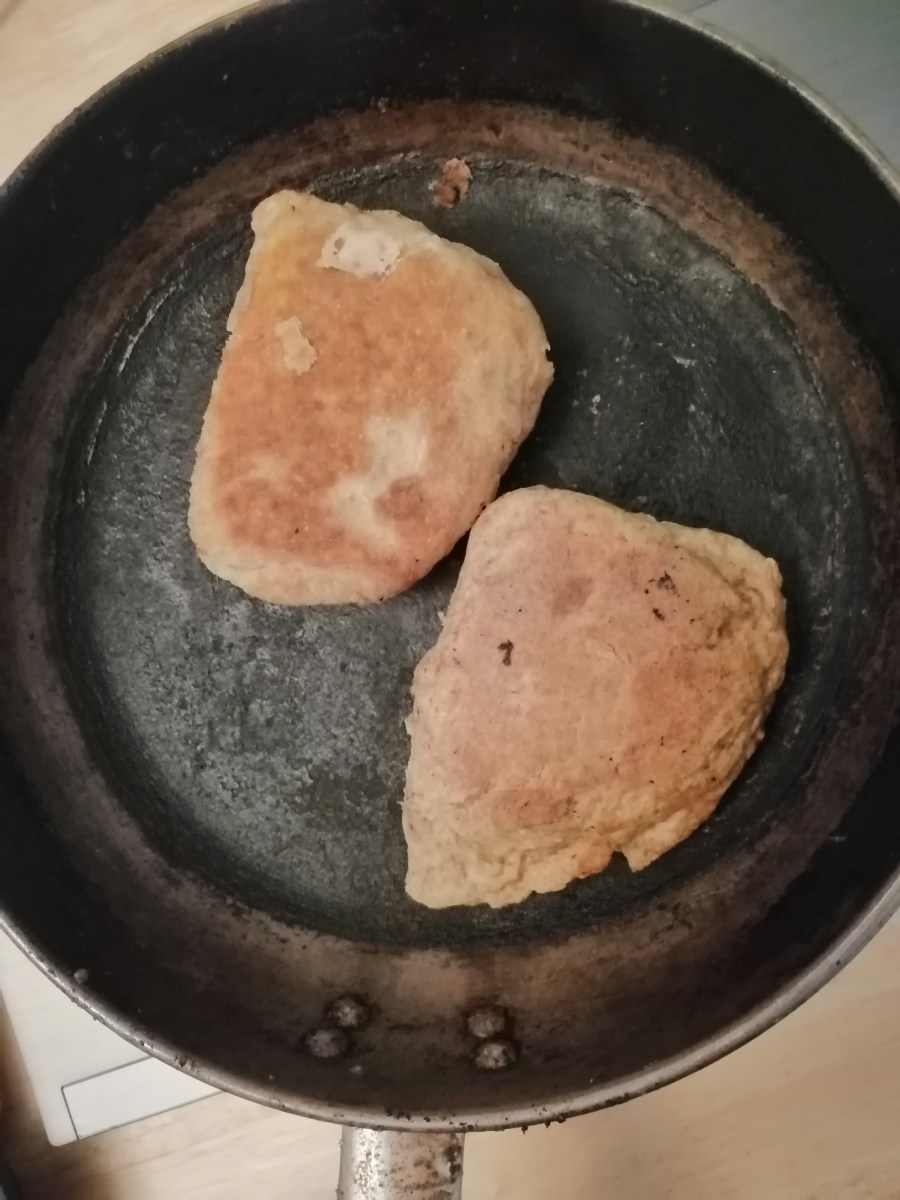









 rebelbreeze