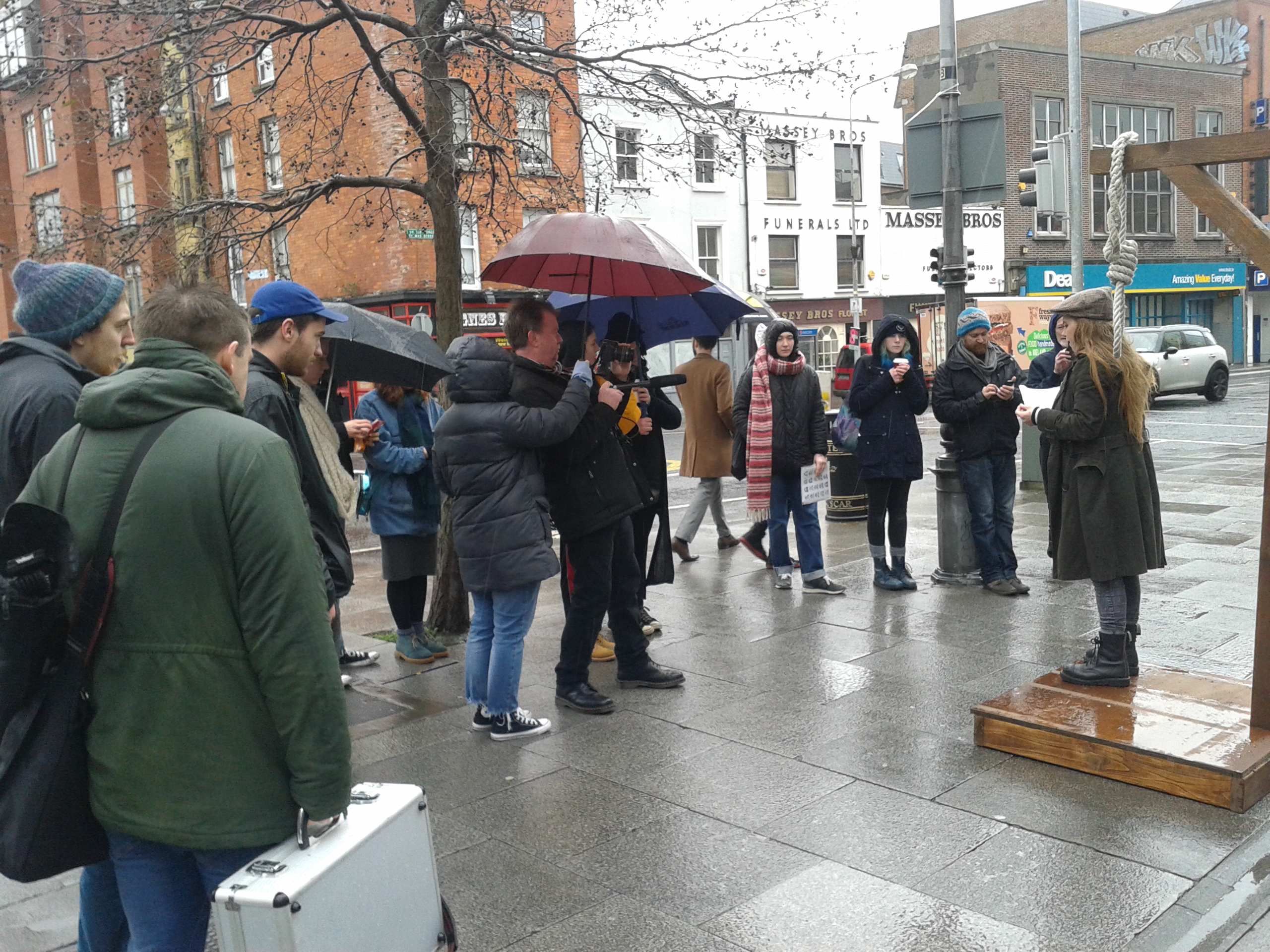
RECOMMENDATIONS TO DIVIDE AND CONFUSE — the Minister’s Consultative Group on Moore Street

Diarmuid Breatnach

A TESTING TIME

The Report contains some very welcome elements which campaigners will appreciate, as well as being proud in bringing them about. But those elements are combined with some very dangerous ones, specifically in some of the recommendations at the end of the Report — and recommendations are the strongest part of any report. That combination of welcome and dangerous elements may or may not be specifically designed to split the forces campaigning for the conservation and appropriate development of the Moore Street Historic Quarter but it will almost certainly have that effect. This, taken together with the offending recommendations means that the Report in total is a dangerous and divisive document containing a number of significant recommendations which it seems to me we are duty bound to oppose.

Source: Internet

The positive elements in the Report are bound to engender a touch of euphoria about the Report among many close and distant supporters of the broad campaign to save the Moore Street historical quarter.  Those who do not read on to the Recommendations or who do not think them through.

Consequently there is bound to be an element of criticism of those who do not support it as a whole – epithets such as “begrudgers” or “Utopians” are bound to come to minds and even be hurled.

The temptation is to “win something” after many years of campaigning. Another temptation is to see the positive and imagine it contains more than it actually does, while ignoring the looming negatives. Junctures like this test campaigners, sometimes even more than decisions about whether to risk fines and jail by breaking the law when that seems the only viable action left to halt an injustice or to remedy one. There have been many difficult junctures like this in Irish history.

Indeed a number of occasions of this sort have occurred before in this very campaign.

A HISTORY OF APPARENT CONCESSIONS TO SPLIT OR DISCREDIT CAMPAIGNERS WHILE FACILITATING SPECULATORS

1) When there were murmurs in Government circles that No.16 might be saved some people were very happy and, indeed, one campaign FB page had been named “Save 16 Moore Street”. Others objected and stated that this was insufficient historical recognition of what had gone on there.

2) Again, when the State accorded protective and preservation status to Nos.14-17 in 2007, there was a similar reaction of euphoria and congratulation from many people. This was resisted by some campaigners who pointed out that almost at the same time, the giant shopping mall plan had been agreed by the local authority (and later by the State), which would see the rest of the block and the laneways demolished and that the historic buildings were being allowed to deteriorate. The ‘nay-sayers’ were proved correct on this occasion.

3) It is worth recalling that around this time, the property speculator involved (at that time only Joe O’Reilly of Chartered Land), proposed to turn the four houses into a museum upstairs with a cafe and toilets downstairs and to incorporate the whole into the giant shopping mall. He had the shoebox museum plan promoted in a flashy video and he succeeded in splitting the campaigning 1916 relatives group, bringing four of them (including one of James Connolly grandsons) out in favour of his proposal (a fact that the State and the media have regularly used to counter the objectives of the broader campaign).

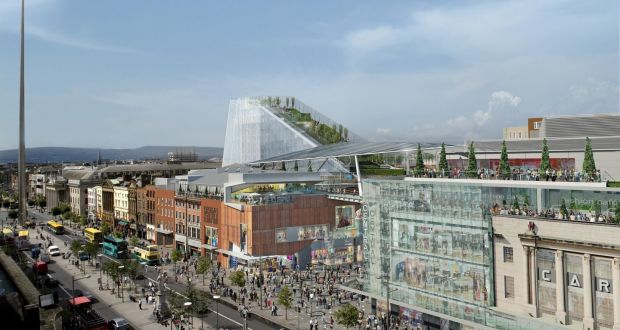
Speculators’ original plan for Shopping Centre from O’Connell Street to Moore St. — note the four houses to be “saved” in the centre left. (Image source: Internet)
Artist’s Impression of Shopping Centre planned by Chartered Land, much of it agreed by DCC Planning Department (Image source: Internet)

4) In the summer of 2014, the speculator O’Reilly of Chartered Land, by this time being paid by NAMA to manage his debts, proposed to Dublin City Council to swap them two of the four protected houses for their two at the north end of the terrace, which was where the Council had their cleaning depot. The head of the Planning Department (also Deputy Chief Executive of the Council) Jim Keoghan and the Chief Executive Jim Keegan, unsurprisingly in view of their record, recommended the deal.

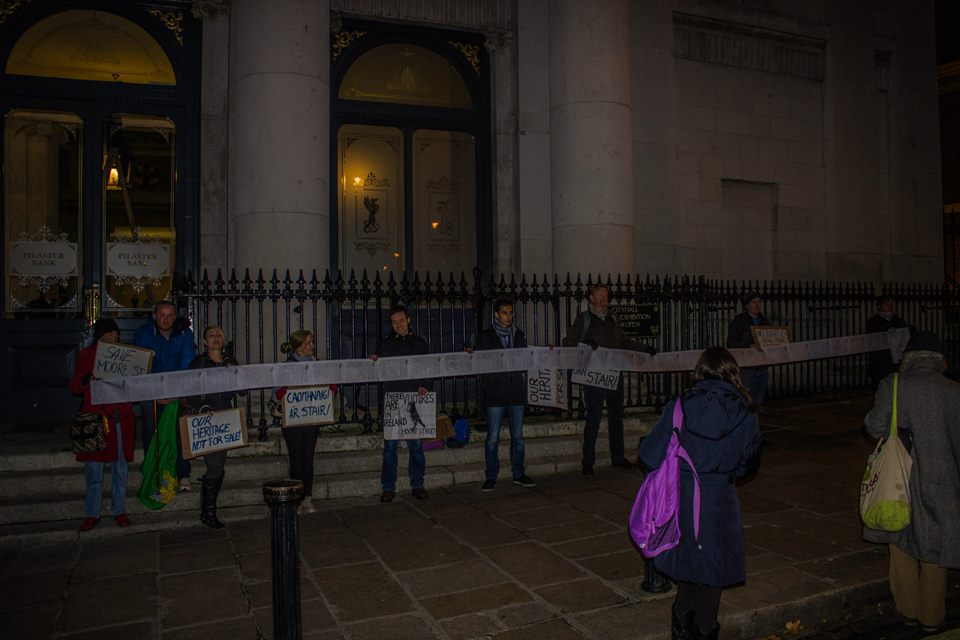
The early days of the weekly SMSFD stall in Moore St. — 4th October 2014 (Photo: D.Breatnach)
SMSFD lobbying City Hall to prevent ‘land swap’ deal going ahead, stretching some petition sheets already signed in previous two months. Nov.2014 (Photo source: supporter)

At this time, even some supporters of the broad campaign stated that campaigners should take the deal because it put four houses of preservation status into public ownership. Thankfully they were outvoted, since with those end-of-terrace buildings in his possession, the speculator would have been free to begin to demolish houses all the way at least up to No.18 – at total of seven houses and approximately half the terrace.

But a new campaign was launched specifically to defeat this deal, bringing a sustained weekly presence on Moore Street into being, along with a petition of thousands of signatures. As opposition to the deal gathered force, the speculator offered first a third house in the deal and finally a fourth. However with the assistance of lobbying of elected Councillors, the ‘land swap’ proposal was defeated in a vote by a large majority, much to the publicly-expressed disgust of Heather Humphreys, Minister with State responsibility for Heritage.

5) Towards the end of 2015, the State purchased the four dilapidated buildings from the speculator, reportedly paying him four million euro and promoted the deal as a great historic one, announcing that they would have a 1916 museum on the site.

Again, there was euphoria, with campaigners being congratulated on their victory. However, at this time a substantial number of campaigners from different concerned groups pointed out that this did nothing to save the rest of the block, yards and laneways, that the street market was being steadily degraded and that the plan for the museum seemed to be exactly the same as that proposed by the speculator.

It was actually worse than was thought by many of those campaigners, for in January it emerged that the State planned the demolition of three buildings in the 1916 terrace under the guise of making the “museum buildings” safe. The SMSFD campaign group raised the alarm and brought two demonstrations on to the street, after one of which many people occupied the buildings until a High Court Judge ruled that there be no demolition until a case taken against the State (to which the property speculators joined themselves) be decided, a decision that was enforced by a five-week activist blockade of the site.

Later photo of SMSFD campaigners and table (Photo: D.Breatnach)

6) Once again, there had been concerned people who argued that campaigners should accept the deal, “work with the museum”, that now the houses were in public ownership but many of those were silenced when the State plans were revealed. However, the occupiers were targeted by a number of media, a couple of prominent historians and columnists attacked them, Heather Humphreys labelled them hooligans and wreckers. The activists were accused of preventing the State from opening the museum in time for the Easter Rising commemorations that year (despite the many months of work needed for a commemoration only months away). They were accused of denying 1916 relatives an appropriate monument.

But it was clear on whose side the majority of the public was and it wasn’t with the State or the speculator. This was underlined not only by tens of thousands of petition signatures but by the reaction of many to activists loudly denouncing Minister Humphreys when, as part of the State’s 1916 commemorations, she came to lay a wreath outside a boarded-up No.16 Moore Street. The public’s reaction for the most part varied from “what did she expect?” to “serves her right!” and, perhaps sensing this, even the media’s response was muted and restricted to factual reporting.

On March 18th High Court Judge Barrett delivered his judgement that not only the whole terrace was a “national 1916 historical monument” but the whole block, and the street and three laneways surrounding it. Again there were wild celebrations, shared in by all campaigners but some urged caution as the Minister could appeal the judgement. They were right – she did, the case to open at the end of the year (unless she takes it to the Supreme Court, which she declared she was considering.

Campaigners, including occupiers and blockaders of the buildings, celebrate the Battlefield judgement on March 18th 2016. (Photo: J.Betson, Irish Times)

7) When the Minister set up the Minister’s Consultative Group on Moore Street, despite the fact that she put into it the 1916 relatives supporting the speculators’ plan, despite the fact that she excluded the most active groups of campaigners in recent years, despite the fact that the main political parties were to be represented, concerned people and excluded campaigners were told to have faith in it and even told that it was “the only game in town”.

Having reviewed the history of proposed deals of the past, it is now time to examine the one being offered now.

THE RECOMMENDATIONS

Conclusion 1, commenting on the struggle to save the Moore Street quarter, states that “the background …. has been one of dispute, mistrust and litigation. It has been characterised by deeply held and divergent views, frustration and ultimately stalemate. This has seen Moore St and environs further decline and a failure to progress the National Monument or the wider development of the area.”

While this has elements of truth it also has large elements of obfuscation, of muddying the waters, appearing to apportion blame equally or to imply that no-one is to blame or even perhaps blaming the campaigners for the decline of the buildings. This is quite important because in what follows some of the major villains in this drama are not only being ‘cleaned up’ but it is proposed to give them continuing roles of control in decision-making on the conservation and appropriate development of the Moore Street quarter.

Let us recall once again that the Planning Department of Dublin City Council, backed up by the State, supported the planning applications of property speculators which would have entailed the destruction of the historic quarter and the running down of the street market. The Dept of Heritage took no action until 2007 when it gave protected status to four buildings and took no steps to ensure the speculator maintained the buildings.

Towards the end of 2015 the Department of Heritage planned the demolition of a number of buildings in the historical quarter, a disaster averted by citizens occupying buildings there for five days in January 2016. Subsequently a nearly six-weeks’ blockade was imposed by citizens to prevent damage and demolition, because the Minister prevented and forbade the entry of any independent conservation experts or public representatives, including the Lord Mayor and a number of TDs.

The actions of the campaigners were to preserve historic heritage and to seek transparency. The actions of DCC’s Planning Department and of the State were to facilitate the property speculators, to defeat the aims of the campaigners and to conceal what they intended doing and were in fact doing in a number of buildings.

These differences between the opposing forces are important to recognise not only in setting the record straight but in deciding which bodies should and should not be given responsibilities with regard to the Moore Street Quarter.

Conclusion 2 goes on to claim for the Consultative Group set up by the Minister, the centre stage for a resolution of the conflict, as though it were some impartial mediating body. Excluded from Consultative Group were the National Graves Association, the first campaign group to raise the issue of the historical conservation in Moore Street, along with the most active campaigning groups of recent years (the Save Moore Street From Demolition and the Save Moore Street 2016 groups), also excluding a number of individual campaigners and concerned historians and conservation experts. It is true that a number of those groups and individuals were permitted to make submissions to the Consultative Group but they were not permitted any say in its final recommendations.
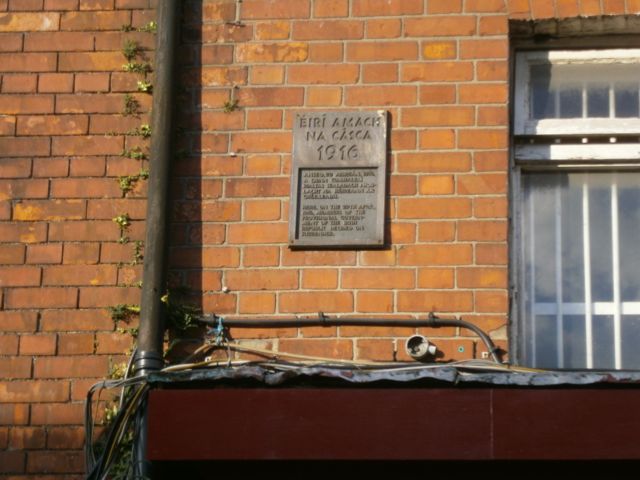
The plaque placed on a house in Moore Street by the National Graves Association (no State or Council plaque had been put there ever). (Photo: D.Breatnach)

Conclusion 4 states that “the place of Moore St in the narrative of 1916 … is now better understood across a much wider range of interests than previously. The appreciation of the historic importance of the area and of the value attached to the dramatic events fought out there in the closing events of the week of 1916 is now more widely shared. The potential of the area to be developed as a place of cultural and historic importance therefore, alongside appropriate commercial development, offers, the Group believes, positive and substantive opportunity to move forward.”

But the Report has nothing to say about how this came about, which was by hard slogging and sacrifice by campaigners supported by ordinary people. And this happened in the teeth of opposition by the Department of Heritage and Dublin City Council officials and calumny and defamation by the Minister of Heritage of campaigners. Not only should this record be set straight but their history in this affair means that they should not be relied upon in controlling the development of the Quarter.

Conclusion 5 goes on to say that “In the event of consensus being secured on an agreed way forward for the development through dialogue by the Advisory/Oversight Group (see 17 below) with the developer, and agreed to by the Applicant and the State, the Group is strongly of the view that payment of legal costs, incurred by the Applicant’s legal team, by the State is warranted and appropriate. The Group has reached this conclusion after considerable reflection and having regard to the widely acknowledged public interest which informed the taking of the case and the savings which would accrue to the State by settlement through such a process.”

This is, in nuanced language, apart from seeking negotiation with a property speculator, a request to the person who took the case to not to defend it, with the inducement that the lawyers will get their fees and the litigant will not be out of pocket.

The State should of course bear the costs, both because of “the widely acknowledged public interest which informed the taking of the case” and because of the intransigence and obstructionism of the Minister of Heritage which led to the case being taken in the first place. And this should not be done as payment in some kind of sordid deal.

On the other hand, there is no mention whatsoever of the Minister dropping her appeal against the Moore Street Battlefield Quarter judgement that the whole quarter is a National 1916 Historical Monument. In fact the “settlement” envisaged is to give the Minister a clear run without the litigant who won that historic judgement defending it.

Recommendation 9supports the retention of Moore Street and adjacent lanes so as to broadly capture the sense of how it would have appeared in 1916 – this covers the street and lanes, key buildings, street paving and lighting. It recognises that this needs to be approached on a practical and authentic basis given that a number of structures in place actually postdate Independence. The preservation of the existing lines of the street and the lanes and the restoration of streetscapes are essential. “

All this seems good until we note words like “key buildings” and “structures in place …. postdate Independence”. Thus far the Minister has only conceded the historical importance of four buildings, Nos.14-17. And, although a number of buildings in the Quarter have been rebuilt since 1916, every single one contains the historical footprint of the 1916 occupation and resistance and every single one contains at least some structural feature of the original buildings.

And No.10, of which the Minister denies importance, was the first HQ of the Rising in Moore Street and field hospital of the evacuated GPO Garrison – and substantial parts of that building also remain intact.

Recommendation 10 actually concedes some of what I say above, albeit in timid language when it states that “… opportunities arise for the State to provide the centre point of historical focus and cultural celebration within 10 – 25 Moore St.”

Indeed, not only “opportunities exist” but the whole terrace should be maintained and developed as a “point of historical focus and cultural celebration”. But where is the recommendation that this actually be done?

Recommendation 15 states that “Critical to the renewal of the area is the regeneration of the Moore St market to its full potential. Particular recommendations in this regard are set out at Chapter 6.”

We should I think support nearly all of the recommendations in that section, i.e. all those that bring greater comfort, freedom from Market Inspector harassment and flexibility in regulations to the street traders. All the campaigners have stated that the market traders should have better conditions and that the market should be upgraded and one campaign group in particular, the Save Moore Street From Demolition campaign, perhaps because it is on that street at least every Saturday, has been very specific about including this in its demands since it was first formed.

Regrettably, the Report has nothing to say about the other independent businesses in the street. Moore Street has always contained shops and other business as well as stalls and it is regrettable that despite SMSFD’s submission commenting on this aspect, the Consultative Group had no representation from the independent shops and business and the Report has nothing at all to say about them, although small independent businesses are the key to regenerating an area by day and by night.

Indeed, other than the street traders, the only business interests mentioned in the report are those of the property speculators, who propose a giant shopping mall to be occupied by chain outlets.

Recommendation 16

The Report’s view of “essential” “well-grounded institutional arrangements for taking the process forward” recommends:

Policy ownership in relation to the National Monument at No’s 14/17 remaining with the Minister for Arts & Heritage;

Overall planning framework and designation of other buildings in the quarter should remain with Dublin City Council;

The development and eventual management of State’s property in Moore St, transferring to the Office of Public Works;

The next phase of development of the National Monument at No’s 14/17 taking place under OPW control and, where private contractors are involved, such contracting follows a transparent public tendering process that fully accords with good international practice as laid down by EU procurement requirements. In addition, engagement and briefing with the Advisory/Oversight Group (see below) as appropriate should be undertaken in respect of this process.

We emphatically should not agree with the first two sub-recommendations.

If the Department of Heritage and Dublin City Council Planning Department is to have a role it should be in supporting a People’s Consortium, composed of representatives of all the campaigning groups (not cherry-picked by the Minister) and other representatives.

While sub-recommendation 3 and most of 4 seem fair, one cannot agree with the role of the Advisory/Oversight Group as recommended by the Report (more on that later).

Recommendation 17

The Report states that “A critical part of the next phase of the process will involve securing consensus by the relevant players to a way forward” and that “this will require engagement with public bodies, developer interests, traders and voluntary groups.”

Why should the protection of our heritage be subject to protection of “developer interests”, i.e the interests of property speculators who are still at this moment in time trying to destroy that heritage and replace it with a shopping centre? The inclusion of those “interests” in deciding the future of our heritage and our national monuments should be rejected.

Recommendation 18

The Report recommends “that an Advisory/Oversight Group should be established” to steer the project and “will require engagement …. with the public bodies and the developer to seek to find agreement on the way forward.”

As stated earlier, there should be no role in seeking agreement with enemies of our heritage and facilitators of property speculators on the way forward for safeguarding our heritage and our national monument.

But further, the Advisory/ Oversight Group envisaged by the Report (“representatives from among the current membership of the Consultative Group, including appropriate Oireachtas and DCC representation”) is an unrepresentative group, continuing the exclusion of the most active campaigning groups of recent years and of the National Graves Association, the first campaign group to raise the issue of the historical conservation in Moore Street, along with the exclusion of a number of individual campaigners and concerned historians and conservation experts.

Recommendation 22 — The Role of the State

When the Report declares that the State is “the ultimate custodian of our history, culture and heritage”, it is perhaps stating an aspiration but it is demonstrably not stating a fact. The State, as represented by a number of governments during its existence, has done nothing to commemorate nor protect the significance of this historic quarter, save the purchase of four buildings after years of campaigning, and that around the same time it planned the demolition of a number of buildings in the Quarter; the State’s representatives publicly denied the historical importance of 12 buildings and even denied the area had been a battleground.

When Chartered Land’s (Joe O’Reilly) properties were taken over by NAMA, the State should have prevented the speculator from selling or otherwise passing on his stake to British-based property speculators Hammerson. They did not and so became complicit.

Looking beyond Moore Street around the country, it is the voluntary National Graves Association that has been responsible for most of the plaques commemorating the struggle for national independence (and a fair number of monuments) and the upkeep of graves of participants of that struggle, with a number of local authorities coming second and the State possibly a poor third.

Turning to our culture, the body that has done most to promote Gaelic Sports is the GAA, not the State. Comhaltas Ceoltóirí Éireann, smaller associations of musicians and individuals, not the State, have been the promoters and developers of traditional music. With regard to the Irish language, the State has overseen a drastic decline in the Gaeltacht areas, continuously fails to ensure the supply of even State services through Irish for Irish speakers and recently, has appointed a Minister for Heritage and two Ministers of State that were not competent in the use of the Irish language. Irish traditional dancing, whether exhibition and competition step-dancing, céilí, set-dancing and sean-nós have all been conserved and promoted by different organisations, none of them a State one (in fact, for a period, the State banned set-dancing in people’s homes).

The State has failed to protect and preserve a great many other areas of our heritage, including our natural resources.

So who then are “the ultimate custodians of our history, culture and heritage”? It is the PEOPLE!

However, one has to recognise the reality of the governance framework under which we live and the State should, for a change, represent the interests of the people in this case and ensure the Moore Street Historic Quarter is developed appropriately in consultation with campaigners, local independent traders and shopkeepers, workers and residents. And in doing so, the State can make some amends for its compliance and complicity of the past.

WHO SHOULD GUIDE POLICY AND PRACTICE ON THE FUTURE DEVELOPMENT OF THE QUARTER?

The body that discusses and guides policy on the future development of this historic quarter should be composed solely of a wide representation of those who have demonstrated a commitment to the defence of the historic status of the quarter, along with those who work there, in addition to any expert technical advisors they may think right to coopt.

IN CONCLUSION AND SUMMARY, although the Report contains much that is good and I believe campaigners should support those elements, due to a number of unhealthy recommendations which undermine what has been fought for so hard for so long and would leave important decision-making in the hands of the very proven enemies of the preservation, conservation and appropriate development of the Moore Street Quarter, those dangerous Conclusions and Recommendations of the Report should be rejected and I call on all genuine campaigners and supporters to reject them also.

In doing so, I would encourage all campaigners to remain firm in their determination, looking back on the long road traveled to reach this point and not to falter at this juncture, the fate of so many popular movements of the past.

We have been called ‘dreamers’ many times in the past but who could have foretold back in 2001, the gains steadily won over the years? ‘Dreamers’ is usually employed as a term of abuse, of ridicule and no doubt those critics consider themselves wise. To those we may reply in the words of one who spent his last two days of freedom in Moore Street in Easter Week 1916:

Oh wise men, riddle me this – what if the dream come true?”

In this at least let us make that dream come true.

End.

Links:

The Report:

http://www.ahrrga.gov.ie/app/uploads/2017/03/moore-st-report-final-version-1.pdf

List members of the Consultative Group:

http://www.ahrrga.gov.ie/app/uploads/2016/11/list-of-members.pdf
JORDAN’S MICHAEL COLLINS FILM CRITICISED

Rebel Breeze introduction to critical videos:

This is an interesting criticism of the Michael Collins historical biopic 1996. Written and directed by Neil Jordan, the film begins with the end of the Irish 1916 Rising, has the longest part focused on the War of Independence (1919-1921) and ends not long after the start of the Civil War (1922-1923). The film starred Liam Neeson as Michael Collins and included others such as Aidan Quinn playing Harry Boland, Alan Rickman as Eamon De Valera, Stephen Rea as Ned Broy, Julia Roberts as Kitty Kiernan, Gerald Mc Sorley as Cathal Brugha and Brendan Gleeson as Liam Tobin.

The video from Foras Teamhrach presents its criticism using clips from the film while commenting and also comparative clips from other films, which is a useful way of presenting a challenging view. Unfortunately neither the name of the author of the commentary nor of the commentator (possibly the one and same) appeared on the Youtube link, only the company name and the comments function was disabled (perhaps understandably).

Most of the points are well made but there are some omissions which might usefully be added to the criticism.

The GPO surrender scene

The video criticism points out that showing only the GPO makes the Rising look much smaller than it actually was; despite the countermanding order which reduced the forces in Dublin by perhaps as much as two-thirds, the Rising was fought by four major garrisons on the southern and three on the northern side of the Liffey, with other smaller outposts and individual actions. However, the narrator says nothing regarding the historical inaccuracy of portraying the surrender as occurring at the GPO.

In fact, the GPO had been abandoned on the Friday and the Surrender took place on the Saturday, following a decision made in the 1916 Terrace in Moore Street and around 350 insurgents there were the first to surrender following the order. This matters not just from a point of historical accuracy but because there is a struggle (now approaching two decades) to save this area from property speculators and State and Dublin Council Planning Department collusion.

Portrayal of De Valera

One does not have to be a supporter of De Valera’s philosophy and actions to rapidly come to the conclusion that his portrayal in Jordan’s film is so inaccurate as to seem to be someone else. Every person who took up arms in 1916 to fight the British Empire showed courage and those who continued to actively oppose the British occupation during the intense years of the War of Independence showed even more courage in doing so.

Collins, of a much more ebulient character than De Valera, according to witnesses, was more inclined to exhibitions of temper and shouting than was De Valera, whose manner was generally in accordance with his studious appearance – contrary to his behaviour in the Treaty discussion scene of the film. As to another aspect, when we review the record of his actions in preparation for the Rising through to the War of Independence and on through the Civil War and the early years under the Free State, De Valera cannot reasonably be accused of lacking courage. The shivering wreck as which he is portrayed during the Civil War in Jordan’s film runs counter to the historical record.

There is testimony from one or two participants that at a period during his command of Boland’s Mill, De Valera had something of a breakdown. This, if it occurred, could have been as a result of fear or instead of lack of sleep, or of being overwhelmed by responsibility or a number of causes and if this alleged episode is what inspired Jordan’s depiction it was certainly unfair to use it to characterise De Valera at other times. There are many criticisms that can fairly be thrown at De Valera but lack of courage is not one of them.

Portrayal of Cathal Brugha

And likewise with the portrayal of Cathal Brugha. Some of Brugha’s military and political history may help in evaluating the portrayal of this man in Jordan’s film.

One of fourteen children empoverished by the death of their Protestant father, Brugha joined the Gaelic League in 1899 and quickly became fluent, soon changing his name from Charles Burgess to Cathal Brugha. He and Kathleen Kingston, also an Irish language enthusiast, married in 1912 and had six children. Brugha joined the Irish Republican Brotherhood (IRB) and in 1913, the year they were formed, he became a lieutenant in the Irish Volunteers and led a group of Volunteers to land the arms smuggled into Howth by the Asgard in 1914.

In the Easter Rising of 1916 Brugha was second-in-command at the South Dublin Union under Commandant Éamonn Ceannt, scene of some of the fiercest fighting during the Rising. Overlooked in the evacuation on Thursday of Easter Week and, being badly wounded, he was unable to leave. Bleeding from 25 wounds (some of which had penetrated arteries) he continued to fire upon the enemy and when Eamonn Ceannt led a group to investigate who was still firing he discovered Brugha singing “God Save Ireland” surrounded by his own blood and with his pistol still in his hands.

Brugha was not expected to survive which may have saved him from the execution parties and he was discharged from hospital in August 1916 as “incurable”. However he recovered in 1917 though left suffering pain and with a permanent limp and preferred to cycle than walk.

Already in 1917 from his hospital bed, Brugha began to seek out Volunteers and Irish Citizen Army people who were willing to join the new armed resistance group and it seems that he, more than any other, should receive the main credit for the initial formation of that which became the IRA.

Brugha was so respected in the movement that he was elected speaker of Dáil Éireann at its first meeting on 21 January 1919 and it was he who read out the Declaration of Independence in Irish, which ratified ‘the establishment of the Irish Republic’. He was also appointed temporary President, a position in which he remained until de Valera tok his place.

Far from being a bloodthirsty zealot as he is portrayed in the film, Brugha reduced Collins’ ‘Bloody Sunday’ assassination list considerably since in his opinion, there was insufficient evidence against a number of people named on the list. Then again, at the outbreak of the Civil War, a reluctant Brugha only joined the fighting on the Republican (Anti-Treaty) side in order to relieve the pressure on the Four Courts garrison. Cathal Brugha led a detachment in occupying a number of buildings in O’Connell Street and later, having got his men safely away or surrendered, was shot and mortally wounded in debated circumstances by Free State troops (which were under the overall command of Collins).

Brugha had, according to some opinions, alienated a section of waverers at the Dáil debates on the Treaty, by a personal attack on Collins and the way his persona had been elevated (a common problem, the deification of leaders). This was no doubt a tactical mistake but there had been ongoing conflict between both men for some time. Although both had been members, Brugha had left the IRB after 1916 in the belief that their conflict with the Volunteer leadership had damaged the Rising. Collins’ rank in the organisation was supreme in Ireland and it seems that Collins used this at times to circumvent or undermine decisions of the Dáil, where Brugha outranked Collins and which the former believed to be the repository of democratic decision-making.

Collins as a guerrilla war leader

All Collins’ many talents and contributions to the War of Independence aside, his representation in the film as not only directing the whole armed struggle but also as teaching rural people how to wage a guerrilla war is a complete distortion of history that could only be undertaken by a propagandist for Collins.

It was Brugha who began to pull the scattered elements of the armed struggle together and laid the foundations for what became the IRA. It was Robinson, Breen, Tracey and Hogan who began the armed resistance of the War of Independence in Tipperary on 21 January 1919 in which two paramilitary policemen were killed. And they did so without permission from GHQ in Dublin.

As to rural guerrilla tactics, these were such as had been used for centuries or developed in the struggle and were certainly not taught by Dublin. What was taught by instructors sent by Dublin was weapon use and maintenance and personnel disposition for ambushes, moving in extended order through countryside and securing a line of retreat. One of the chief instructors in this kind of instruction was Ernie O’Malley and, in West Cork, the young Tom Barry used his British Army experience and other learning to do the same. The order to create Flying Columns might have come from Dublin but had been advocated already by fighters in Cork, Kerry and Tipperary and it was they and others who developed them in the field.

Collins’ special contribution was in organising intelligence, counter-intelligence and the assassination squad (which turned out to be a double-edged sword) and also, to an extent, supply of weapons. His contribution was notable but it did not lie in initial organising of guerrilla war, much less in rural guerrilla instruction.

The role of women in the struggle

Women are underrepresented in this narrative, as is usual in Irish history and Republican and nationalist narrative. Where women are shown, apart from the brief appearance of Markievicz at the non-existent GPO surrender (when instead she was at the College of Surgeons!), they are objects of romance (Kittie Kiernan) or auxilliaries working for Collins’ intelligence department.

There was a great opportunity lost there to show the women in action during the Rising in the many roles they undertook, including firing weapons, or in keeping the flame lit after the Rising and in particular in commemorating the Rising a year later, organising demonstrations, pickets, and funerals.

The Croke Park Bloody Sunday massacre scene

The film shows the ‘Tans or Auxies shooting down people with machine-gun on the GAA ground. As far as we have been able to establish it was the RIC who did it, although of course the other two were auxilliary forces of the RIC. Thankfully they did not fire with a machine-gun (the Army had one outside the grounds and an armoured car, it seems but did not open fire) or the carnage would have been a lot worse. When one examines the casualty list of those shot, just like more modern British massacres in Derry and Belfast, it is clear that the shooting was mostly disciplined, i.e hitting males of military age. Showing that kind of scenario would in the last analysis not only be more historically accurate but also more telling of the intent and cold-bloodedness.

And what of the three tortured and murdered in the Castle that day, Peadar Clancy, Dick McKee and Conor Clune? Yes, we know, one can’t show everything.

Go raibh maith agat to the individual who sent the video links to this blog.

LINKS:

The critique video, Parts 1 & 2:

https://www.youtube.com/watch?v=zor3VvE9vD8

https://www.youtube.com/watch?v=KbGWEZehuFI

Another view, not quite so critical: http://www.irishtimes.com/culture/film/michael-collins-review-nowhere-near-as-historically-inaccurate-as-we-once-supposed-1.2576150

THE SCARLET GARDANELLE …. Culture and the Garda Síochána …

by FO’M

There is only one bad Garda in Ireland you know, the rest are great. That bad Garda, he’s the fella that turns all the criminals into informers and gives them a licence to kill. He’s the fella broke into the Garda data banks and falsified all the data on drink driving and it would seem everything. He’s the fella that helped ship heroin. He’s the bad Garda that impersonated the Garda Commissioner and directed the Garda press office to spread the worst rumours possible about whistle blowers. He’s some Boyoh that same bad Garda.

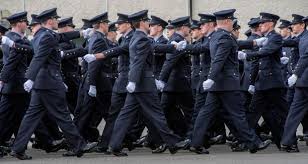
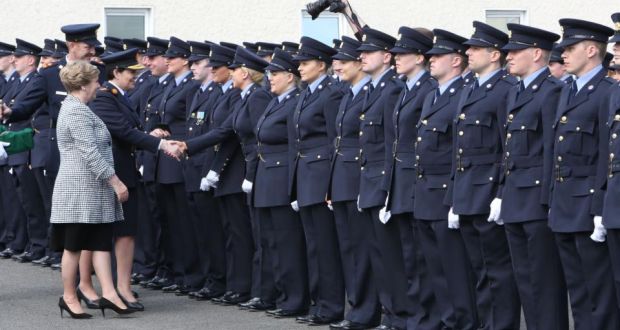
Chief Commissioner (at time of writing) Nóirín O’Sullivan and Justice Minister of Justice (ditto) Frances Fitzgerald reviewing graduating Gardaí.
(Photo source: Internet)

Oh, don’t forget his mate Culture, oooh that Culture is one to be watched. It’s that Culture fella puts bad Garda up to it you know, it isn’t really bad Garda’s fault.

The above is the general narrative of the naïve we hear daily surrounding the ongoing Gardaí and ministerial controversies. In essence, the line goes that there’s a few corrupt members, mainly at the top according to the forming narrative, and that something called “culture” drives the dynamic that creates the few bad-uns.

I must be brazenly frank here as smooth talk isn’t working it would seem. I achieved a PhD exploring organisational culture in public organisations and how to change them and I know that academic speak sometimes doesn’t cut the mustard, so here goes. The Gardaí Siochána is a cesspit of egotistical, paranoid, pathological, image-managing individuals that are trained to be so and amongst that majority there is a tiny minority unable to cope with that culture and unwilling to contribute to it.

You see culture isn’t solely about arts and the likes, or far-off tribes and historical existences. Culture is about our belief systems and how we manifest those beliefs in what we do and what we create. In terms of the culture of an organisation, it has two phases and locations of development: academia (in this case training college) and the organisation (actually placement in the Garda Station and the community). Arguably, the latter phase and location dominates the organisational culture of the force.

(Photo source: Internet)

When the new recruit just out of Templemore puts his or her first step inside a station door after training and learning his/her “ethics” as a “qualified” Garda after 32 weeks, the inculcation of pathological characteristics begins in the station. I cannot at this juncture say much about the training side of things in the Garda College, but understanding how any organisation reproduces pathology is easily conjectured, especially in the instance of An Gardaí Síochána.

So there’s a new recruit been given a post in his first station. He is delighted, baby on the way, looking at houses, the family are over the moon and so proud, life couldn’t be better. On the first Saturday night on duty with experienced members he notices how those arrested, especially certain types, are manhandled and joked about by fellow members, maybe in front of the detainee, maybe in the back-office.

The recruit’s a little surprised, but hey, it’s a tough job requiring tough people so what do you do? He’s a sensitive soul and so he also notices the language being used, very much them-and-us talk, as though the community are the enemy. There’s a lot of banter and macho-ism.

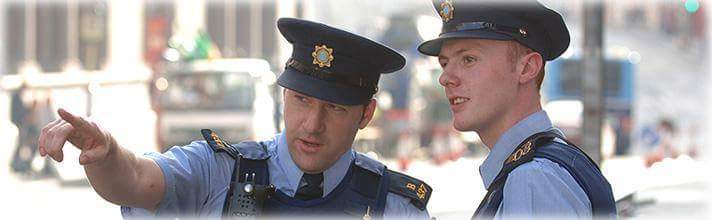
Older Garda directing a younger one
(Photo: Internet)

Over the following weeks he notices that there are a few officers who seem to rule the roost and they often get heavy handed with detainees and some of those officers hold senior and detective positions. He sits in on a number of interviews with witnesses and suspects involving detectives and the discussions afterwards and notices that witnesses are treated as suspects. His colleagues suggest to each other and agree, as though he was not there, to “turn” the suspect into an informant and to offer him no charges in exchange for information on others.

Well what can I do, I’m only new and sure it’s a tough job, not always black and white….” And so on, until the recruit realises he, by witnessing such things and saying nothing, is now in some sense culpable also.

Then there’s a complaint, one of the roosters injured someone badly, he comes to the recruit and asks that he say he wasn’t present. Pressure is brought to bear, the recruit makes the required statement, he is now fully baptised in the culture. Another recruit refused to lie for the Rooster and he was moved to another station after a period of isolation.

Our recruit is now a fully-fledged Garda, aware of the processes, the beliefs and values, the methods and the rewards and punishments, the dog has been trained and honed in the dog-pit.

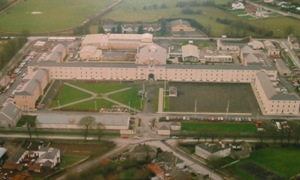
Aerial view of Templemore Garda Training College (Photo source: Internet)

From then on the Garda must wear two masks, the smiling mask for the respectable community to see as a group, and then the twisted mask for those who fall under his gaze and the gaze of his colleagues individually.

There are those Gardaí of course who remain in the main silent and passive throughout much of their career when witnessing the corruptions of their colleagues (like our recruit in his initiation), but their silence is in itself passive-aggressive and reaps its own rewards in personal circumstances and when needs-be.

From top to bottom, if you train your dog to be aggressive and disrespectful, don’t be surprised when he bites you ….

End.

SONS OF MOLLY MAGUIRES PLAYS IN DUBLIN

Diarmuid Breatnach

The play about the Irish miners in Pennsylvania and their exploitation and the secret society they formed to resist, written by US-Irishman John Kearns and directed by Dara Carolan, received its Irish premiere tonight/ last night (Wednesday) in Liberty Hall.

Wonderful banner honouring the Molly Maguires, designed by Jer O’Leary, pictured on Liberty Hall Theatre staircase.
(Photo: D.Breatnach)

In the Pennsylvania coalmines of the 1870s, Irish miners resisted their exploitation as workers and the racism they experienced as Irish Catholics to form a trade union. But when their efforts seem to avail them little, drawing on their Irish experience of peasant resistance societies fighting landlords and their agents, some went on to form a secret society: the Sons of Molly Maguire, also known as the “Mollies”.

They suffered unsafe conditions (one fall in a mine with only one exit trapped and killed 110 miners), high prices in the company store and felt they were being cheated even on the agreed wages. Eventually miners began to carry out retribution on informers and on mine-owners’ agents and their property. It seems the “Mollies” used the Ancient Order of Hibernians as a cover but that may also have been political and racial propaganda against them.

The mine-owners engaged the Pinkerton Detective Agency who inserted one of their agents, a Catholic Ulsterman called McPartland, among the miners and he gave information on the men leading to their arrest and then gave evidence against them in court.

As the Irish Echo review in the US stated: The play employs an “… effective blending of pageant, mime, kitchen sink realism, and even flights of poetry”. It also has some moments of high drama. An interesting feature from a US playwright is the use of appropriate Irish language phrases at times, reminding us that an Ghaeilge would have been the mother language of many of those migrant Irish while nearly all would have had at least a nodding acquaintance with it.

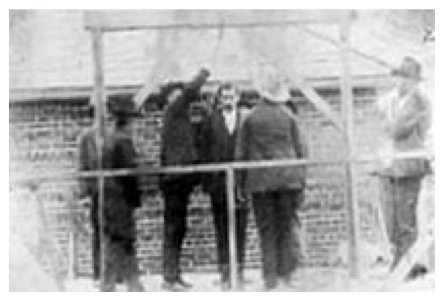
Photo said to be of hanging of one of the Molly Maguires (Photo source: Internet)

One phrase used a number of times was “Ní thuigeann an sách an seang” of which I had no previous recollection. Looking it up, I noted a number of meanings, of which the prevalent was along the lines of the equivalent in English of No one knows where the shoe pinches, but he who wears it.” But a deeper examination which I found on another site (see link) gives a darker interpretation, which seems more in line with the play: “It is about more than a misunderstanding by the corpulent of the cadaverous. One variant is, “Ní thuigeann an sách an seang, nuair a bhíonn a bholg féin teann.” This literally means, the well-fed one does not understand the slender one, when his stomach is usually taut. In other words, the well-fed do not understand hunger.

Another variant is, “Ní mhothaíonn an sách an seang.” The verb ‘mothaigh’ can be translated as either ‘feel’ or ‘hear.’ Use either English transitive verb and it suggests that the satiated simply do not care about the starved.

There is certainly a wealth of meaning to be found in many of the pithy phrases in the Irish language.

Molly Maguire Executions marker. Schuylkill County Prison (Photo source: internet)

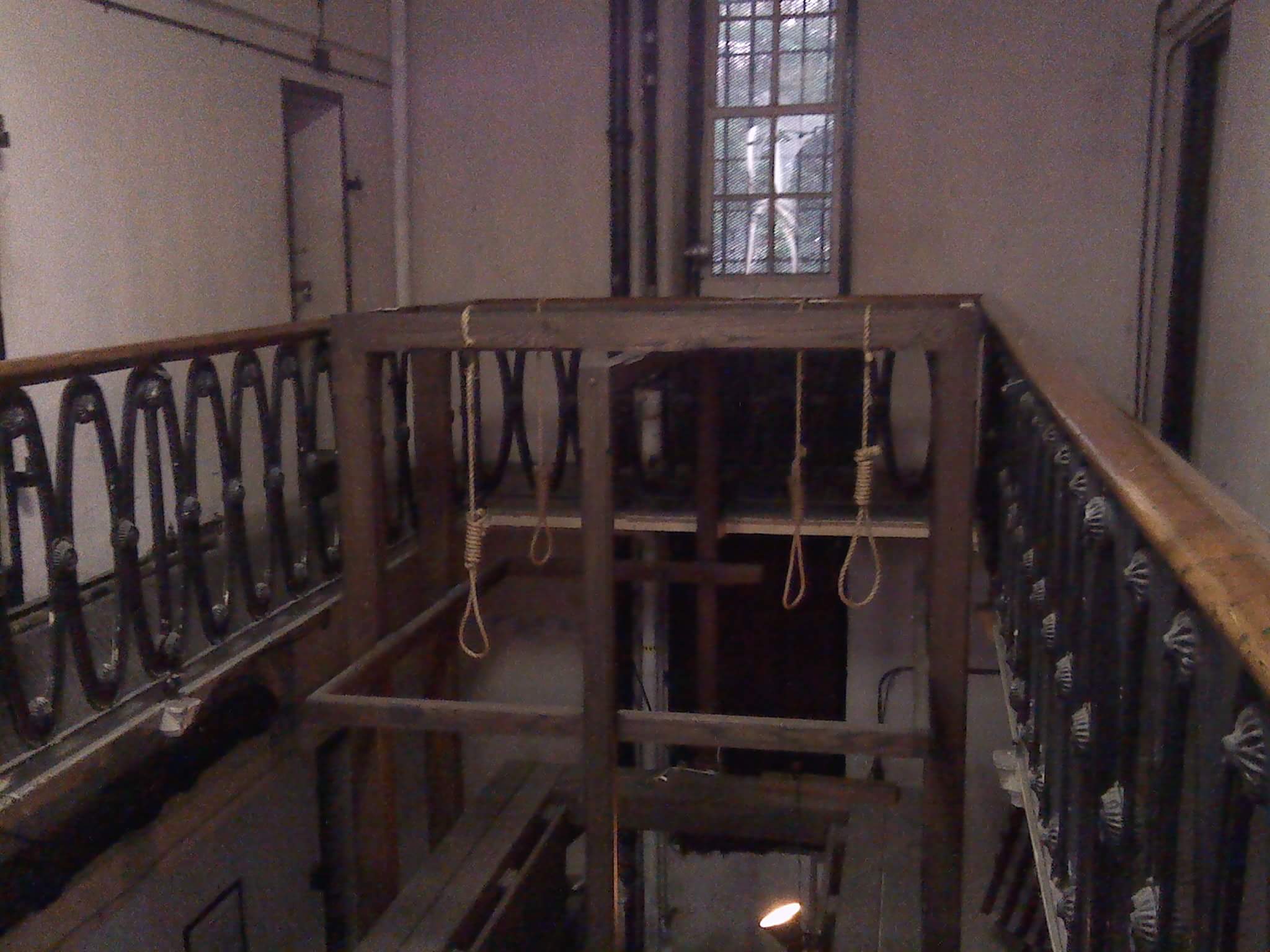
Twenty “Mollies” were hanged (including at least some innocent men) between 1877 and 1879 and this is sometimes said to be the largest known mass hanging of any specific group in the USA – it was not. Nor was the hanging of ten “Mollies” on the 21st June 1877 the largest hanging of one group in one day. The dubious honour for most men hanged of any group and on one day goes to the 38 Dakota Native Indians who were hanged on December 26, 1862. However, the Dakota were hanged by the US military and the “Mollies” were tried in civil courts, so the Mollies can claim the most judicially executed in the USA of one group as well as on one day.

Hanging place perhaps in Mauch Chunk jail, Pennsylvania, USA.
(Photo source: Internet)

The play’s showing in Liberty Hall was its first on an Irish stage for John Kearns play “Sons of Molly Maguire” but it has previously been performed at the Midtown International Theatre Festival in New York. John Kearns is the Treasurer and Salon Producer for Irish American Writers and Artists. He is the author of the short-story collection, Dreams and Dull Realities and the novel, The World, along with plays including “In the Wilderness”and “In a Bucket of Blood”.

The play received an enthusiastic reception from the audience. Raging you missed it? Don’t worry – you can still catch it tomorrow/ today, that is Thursday 11th May as part of Mayfest at the Liberty Hall Theatre.

End.

LINKS:

http://www.irishcentral.com/roots/history/the-us-executed-20-molly-maguires-in-biggest-federal-executions-ever

http://www.daltai.com/proverbs/personal-qualities-types-of-people/ni-thuigeann-an-sach-an-seang/

RENOWNED COMPOSER CHOOSES DUBLIN FOR WORLD PREMIER OF HIS MOST FAMOUS WORK

Diarmuid Breatnach


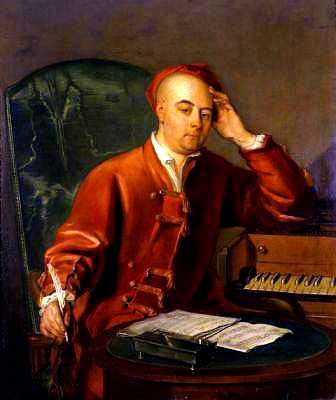
On 13th April 1742, Dublin City heard the world première of the Messiah oratorio (a bit like an opera but not quite), composed by George Frideric Handel. The choice of Dublin shows the importance the city had in the European Anglo world, probably second only to London at that time, the city in which German-born-and-raised Handel had based himself.

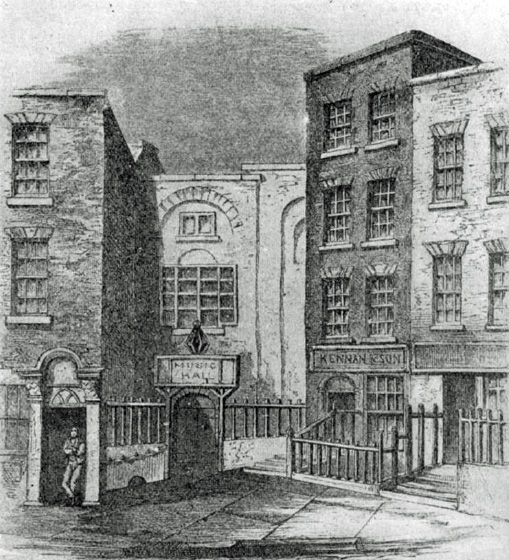
A drawing representing the Great Musick Hall in Fishamble St (image source Wikipedia)

It may be also that Handel wished to remove himself from Anglican Church criticism and interference in of work built on religious material, problems he had encountered in London.

Incidentally, there is a tradition that Handel also played the organ in St. Michan’s (Protestant) church in Church Street (but not the organ that survives there today).

The oratorio was written in English, something of rupture in Handel’s work which had been firmly based in Italian-language opera. However, the fashion in London was changing and Handel gave in to it, writing first Esther in English, then the Messiah. The somewhat radical Englishman Charles Jennens wrote the libretto (like a script or text passages) for Handel to work in the musical score.


A COLONIAL CITY

Dublin in 1742 would have been primarily English-speaking, with pockets of Irish-speakers from the surrounding countryside and further afield, with linguistic artifacts of Irish and Norse audible in the English spoken by the lower social orders in the city, some of which survive to this day.

Ireland was then recovering from “the Irish Famine of 1740–1741 (Irish: Bliain an Áir, meaning the Year of Slaughter) in the Kingdom of Ireland, (which) was estimated to have killed at least 38% of the 1740 population of 2.4 million people, a proportionately greater loss than during the worst years of the Great Famine of 1845–1852.

The famine of 1740–41 was due to extremely cold and then rainy weather in successive years, resulting in food losses in three categories: a series of poor grain harvests, a shortage of milk, and frost damage to potatoes. At this time, grains, particularly oats, were more important than potatoes as staples in the diet of most workers.

Deaths from mass starvation in 1740–41 were compounded by an outbreak of fatal diseases. The cold and its effects extended across Europe, but mortality was higher in Ireland because both grain and potatoes failed. This is now considered by scholars to be the last serious cold period at the end of the Little Ice Age of about 1400–1800.” (Wikipedia).

Of course, it would not be the primary sufferers of famine, the poor (and largely the natives) who would attending the event and this was made clear by the advice to prospective audience members to leave their “swords and hoopskirts” at home so as not to overcrowd the premiere.

The main elements of the Penal Laws were still in place in 1742 and the Irish Parliament in College Green admitted only Anglicans, thereby barring representation not only from the huge majority of the Catholic faith but also from the next largest group, the Presbyterians and all the other ‘Dissenter’ groups.

However, the audience for the premiere may well have had wide representation from the higher social classes in Dublin across religious lines. Handel was, after all, a superstar!

George Friderik Handel without his wig
(Image source: Internet)

A tradition arose over the years for audience members to arise as the Halleluyah chorus begins. This is based on a belief that King George was so impassioned by hearing it that he stood up, obliging the audience to do so too so as not to remain seated when the King was standing. Of course, knowing the reason for that tradition would be enough to to keep any democratic republican firmly seated. But apparently the story is without foundation and it is not even certain that the murderous Royal was even present at a London performance.

The Messiah was performed in the Great Music Hall in Fishamble Street (see video by Wayne Fitzgerald — https://www.youtube.com/watch?v=HHWDJjS_JkU — the white arch is all that remains of it today). That street was a busy medieval one, close to what was the seat of foreign domination since the Norse built their fortifaction by Dubh Linn some time around 841. The Normans, after driving them out in 1171 and banishing them to Oxmanstown, constructed their own castle there in increments as they gradually became the “English” and remained in formal control until 1921.

I watched (if that’s the right word) a performance of the Messiah some years ago in St. Patrick’s Cathedral, not far from Fishamble Street. I had bought tickets only as a favour to a friend visiting Dublin and I was really impressed with it. The performers often stood on the pews to deliver their lines and I remember, despite my atheism, being uncomfortable with this – cultural conditioning runs deep!

No wonder the oratorio was a raging success in Dublin in the 1740s and since. At the Dublin performance, “the alto soloist, Susanna Cibber, was an actress who had attracted scandal in the past, but legend has it that her emotional performance of ‘He was despised’ moved Dr Patrick Delany – the husband of one of Handel’s most ardent champions – to exclaim ‘Woman, for this, be all your sins forgiven’” (!)  It took the London higher classes a little longer to take to the oratorios but they did so in time.  One is reminded of Shaw’s comment that went something like this: “No-one could accuse the English of failing to note a work of genius — providing someone was kind enough to point it out to them.”


End.


SOURCES
https://www.bsomusic.org/stories/5-things-you-might-not-know-about-handels-messiah.aspx

https://en.wikipedia.org/wiki/Irish_Famine_(1740–41)

https://www.gramophone.co.uk/feature/the-story-behind-the-triumphant-premiere-of-handels-messiah


AN EASTER STORY


Diarmuid Breatnach

There are many different kinds of Easter stories – religious ones, or about Easter parades and processions, ones about family reunions, Easter egg hunts, even holidays …. this isn’t one of those.

The man, let’s call him Jeremiah or Jerry for short, stood outside the pub on a Sunday afternoon and struggled to quell the apprehension threatening to flood his mind and body. It had to be done. He turned to his companion, who seemed to view everything through laughing eyes and was no different now. Brian had three teenage kids with him, two of his own and a friend of one of them. Hardly ideal, but Brian had turned up with them a little while ago and there was no-one to leave them with. Well, they’d be all right – Jerry would be the target and, after him, Brian. They wouldn’t touch the kids.

Best give me the bag, Brian,” he said and, receiving it, checked inside. The stuff was there. Of course. Jerry folded the bag and stuck it under his jumper, under his coat.

He was focused on the tasks ahead but the trail that led them here had started days earlier. And, in some ways, years before that.

He squared his shoulders, turned and entered the pub. Brian and the kids followed.

**** **** ****

He had been at work on Friday afternoon when the call came from the Manager of the Irish Community Centre. Of course, he asked the staff to put it through to his office.

Do you know your event is in the newspapers?”

Something in the Manager’s voice alerts him that he is not being congratulated on the publicity.

The Easter Rising commemoration?”

Yes. It’s in the Evening Standard.”

Well, that answered the second question he had in mind.

No, I didn’t know. What are they saying?”

He knows what the British media are like and he’s got a sinking feeling.

It transpires that an Irish Republican organisation had put the event on their website, which had been noted by an Englishman who lost his son in the Omagh bombing of 1998. There are many questions to be answered about that bombing, both within the Republican and the State side, but for many years, not unnaturally, the father had been focused on the Republican group allegedly connected to the Real IRA, who had placed the bomb. In addition to his son, the bomb had killed 28 other people, the second-highest death toll for any day during the war in Ireland, the highest being the Dublin-Monaghan bombing of 1974, with a toll of 34. Jerry was aware that the 1974 bombings did not attract anything like the same media attention and understood the reason – they had been carried out by Loyalists under British Intelligence Service direction.

But what had all this to do with the Irish in Britain Representation Group in South London, and their Easter Rising Commemoration? Or with the Irish Community Centre? Well, the grieving father had noted the posting by the Irish organisation, noted the venue and rang, demanding that the event be cancelled.

I told him the commemoration is an annual event organised by an Irish community organisation and that there’s never been any trouble at it. I told him it has nothing to do with that Republican organisation …. it doesn’t, does it?”

No, it’s just us, the local Irish in Britain Representation Group branch. But surely any organisation is entitled to advertise the event?” replies Jerry.

Jerry is noting doubt in the Centre Manager’s voice responding to him. He is on the receiving end of huge pressure, working in his office, alone.

He wanted me to cancel the booking and I said I couldn’t do that,” said the Manager.

The grieving father had got on to the local authority, who replied that the event was the business of the Irish Centre. The father then contacted the media, who rang the local authority again and this time, instead of sticking to their original line and weathering what would be a short-lived storm, and without phoning the Centre Manger, their spokesperson condemned the event and stated they would be asking hard questions of the Centre, which they part-funded.

Jerry reads all this again when he slips out to get a newspaper. He feels for the beleaguered Centre Manager but can do nothing. It’s too late to contact the newspapers because the story is published. The event is to be held that evening. It has been advertised in the local area and in the Irish Post, the main newspaper at the time for the Irish diaspora in Britain. And in any case, one cannot – should not – give in to intimidation, coercion. The community had mostly caved under the Prevention of Terrorism Act in 1974 and had not really rallied again until the Hunger Strikes of 1981. The event must go on.

Jerry heads home, thinking about additional security needed on the door for the event, composing replies to the local authority, a letter in the newspaper ….

The IBRG Ard-Choiste, its governing body, had withdrawn its support of the Time To Go coalition in Britain some years earlier because of undemocratic maneuvering by some left Labour politicians, along with the sidelining of specific Irish community concerns. They had not been alone: Stop the Strip Searches Campaign and the Troops Out Movement had pulled out also, leaving the tiny Labour Committee on Ireland, the Socialist Workers Party and Communist Party of Great Britain to be supported by only the Wolfe Tone Association (SF support group in London) and the Connolly Association (linked to the CPGB) among the Irish campaigners .

Later, in 1998, the IBRG had been divided on the Good Friday Agreement. It was not the issue of continuing or ceasing the armed actions of the IRA that had been the source of the division, rather the acceptance of colonial rule, albeit claimed to be for tactical reasons only. A majority within the IBRG came out against the Agreement and that was in accordance with Jerry’s position too.

Although he supports none of the Republican groups opposing Sinn Féin, he has heard whispers in the Irish community at various times associating him with this or that group. This might well be feeding doubts in the Centre Manager’s mind.

Jerry is in a more difficult position than might seem. He is not only Secretary of the local IBRG branch that has organised the event and is affiliated to the Community Centre, but also the Chairperson of the Irish Centre’s Management Committee itself. The Management Committee is the Centre Manager’s employer and has a duty of care to him. And after nearly a decade of campaigning for the provision of the Centre and the meagre funding it receives, no-one on the Committee would want to antagonise the local authority.

But it was the IBRG branch itself and in particular the Irish Pensioners’ Association which was then a part of it, which had won the provision for the community in the end. And Jerry had been part of the campaign, elected as Chairperson of the Steering Group in the years while renovations of the building and available funding were discussed, elected Chairperson for the first six months after the Centre opened and at the Annual General Meeting for every year afterwards. In fact, recently Jerry had been trying unsuccessfully to step down, to ease a replacement into his position.

On the train from London Bridge on the last leg of his journey home, Jerry reflects ruefully that this controversy might cause his stepping down, which was hardly the way he had anticipated his leaving. No stepping back slowly, supporting someone new in position and easing himself out. No – thrown out instead! That would of course imply he had done something wrong, which he hadn’t and that the IBRG had been wrong to commemorate the Rising, which they hadn’t either. Ironically, if moves were made now to replace him, he’d have to fight them.

**** **** ****

Before he arrives at the Irish Community Centre, Jerry looks carefully around the mostly residential street. Nothing seems threatening but can one be sure? He is carrying the IBRG’s branch’s banner, wrapped up in black bin liners, which makes him a visible target if someone’s searching. On the other hand, one of the poles of the banner is loose within the bundle, in case of need ….

He drops the Centre’s keys in his nervousness and enters, disabling the alarm and turning quickly to retrieve the keys and lock the door. Then, into the hall, to begin arranging some of the material ….

He is anxious for some of the IBRG members to arrive but jumps when the doorbell rings. Checking through the fish-eye spyhole, he is surprised to see one of the Irish Pensioners, who lives locally.

Opening the door and ushering her in, he locks the door behind her, saying apologetically “There’s only myself here so far.”

Are others coming?” she asks – she has read the newspaper and unerringly touches Jerry’s main fear at the moment.

I’m sure they are, Ellie. What are you doing here so early?’

I thought you might need some help.”

Jerry is touched straight through to his heart but has to refuse. He can’t have her here if there’s an attack with no-one else but himself to defend her.

Oh no, Ellie that’s very kind of you. But I kind of know what I have to do and explaining it to others will just take longer and make me flustered. You know how it is. Thanks a lot. Besides the others will be here soon. Come back when we’re open …..” he trails off guiltilly.

Still, she goes and he heaves a sigh of relief, at the same time feeling shame.

But there’s work to be done.

A scattering of volunteers arrives over the next half hour. The reception table is set up in the lobby, to sell tickets and distribute leaflets. Hidden behind, are the lengths of wood in case of attack by one of the British fascist groups. Up goes the green-white-&-orange bunting, portraits of the executed 1916 leaders, enlarged copies of the 1916 Proclamation. At the back of the stage, facing the hall, the large artwork Jerry made a few years ago of green, white and orange flames bursting from the date 1916. And the IBRG branch banner.

The stage is ready for the band, a group called The Mc ____ Brothers, who play Irish ballads, including Republican material. Water jug and glasses for the speakers. Tables and chairs rearranged on the hall floor (the part-time Caretaker had laid them out but Jerry always prefers a more “club” arrangement, of smaller tables spaced apart surrounded by some chairs).

By the time the opening hour arrives, Jerry is sweating but it is the sweat of work, not of fear or apprehension. The hall looks good. People are starting to arrive. Maybe he can relax now. Maybe. Brian is on the door with others close by.

The event is a bring-your-own-alcohol one and Jerry and others in the lobby spend some time directing people to the nearest off-licence, so that people are coming in, going out, coming in, sitting in the hall …. Jerry is scanning their faces, looking for possible sources of trouble.

An hour later and the band has not arrived. Pol phones them but gets no reply. Phones their manager but no reply either. Another hour later, the reality dawns on the organisers. The band will not be coming. They have seen the newspaper and decided to look after their safety. But they haven’t even bothered to tell them.

The organisers confer, after which Jerry mounts the stage, calls for attention and begins to speak.

A Chairde Gael agus a chairde ó thíortha eile, go raibh míle maith agaibh for coming here tonight to commemorate the 1916 Easter Rising with us. This is a hugely important event in Irish history and indeed in the history of the world and the local branch of the IBRG has been not just commemorating but publicly celebrating this historic event every year for some time now.

But we are very sorry to say that we have some bad news for you now. Some of you will know that very recently pressure was put on us to cancel this event but that we refused to do so. Pressure was put on the Irish Centre to cancel the event which they also and rightly refused to do.

That the British media would attack us is no surprise, they have been doing that for years. But that the local authority’s spokesperson should bow down to them and, without consulting with us, imply that we are doing something wrong here, that the Centre should not have taken our booking, is something else.

And worst of all, that an Irish band, which makes a living playing Irish ballads, should allow themselves to be scared off and not even have the decency to ring us – well, I don’t really have the words to tell you what I think about that.

So, a chairde, we offer you your money back and no questions and our sincere apologies. However, those of you who wish to remain are welcome to do so and we’ll make our own entertainment with a few songs …. we have a guitar player here …. another man plays a whistle …. But please, you are entitled to your money back and those who wish to please go to the table in the lobby now.”

As though he had been primed to do so (but Jerry knew he had not), a middle-aged Irishman at a table nearer the stage jumps up and shouts: “NO! We will not ask for our money back! We’re not going to be chased out by no British newspapers!”

A round of applause from the audience and a few cheers greet his outburst. And just like that, the evening is saved.

The guitarist plays some numbers and sings. Jerry gives an abbreviated oration and sings a few ballads. The whistle player plays some tunes. People sing along to songs. They drink, chat and buy raffle tickets. One of the raffle prizes is auctioned by the winner, a local publican Jerry had been surprised to see in the audience. The money goes into the takings. At the end of the evening, as they finally cajole the last of the audience out of the Centre (still with a wary eye on the street) and finish cleaning and tidying up, they count the takings. Financially, it has been their most successful evening ever, especially since they didn’t have to pay a band.

But the band ….. their action and lack of notification have left a sour taste in the mouths of the organisers. And during the evening, they learned that the Mc___ Brothers are booked to play at an Irish pub, on Sunday afternoon, just two days away. And only a five minutes’ drive from the Irish Centre.

**** **** ****

A council of war decides that the bar will be visited, Jerry will mount the stage (“you’re our best speaker”) and present the band with white feathers, symbolising cowardice. Some can’t be there. One or two think it will be dangerous. Brian, Pol and Jerry think it’s a good plan — so then they just need some white feathers. How hard can it be to get some?

Visits to duck pond parks yield none. The quaysides along the Thames show no seagull feathers. Brian drives to the coast and walks some beaches – and finds a couple of wispy ones. In desperation on Sunday morning, they burst open a pillow and drag out a handful of feathers. They are small, not at all like the large ones they had envisaged presenting to the band but they are white and they are feathers. Into the plastic bag they go and then Brian is driving Jerry and the kids to the pub. Brian has remarkable personal resources and has been through some very serious situations so this might be small potatoes to him …. but Jerry’s guts are churning.

Some faces in the pub turn to look at them as they enter. Jerry has been here before only once but a number of the clientele are known to him from other pubs and events. And he is probably known to more of them, as Chairperson of the Irish Centre. A few catch his eye and he nods at them, keeping his face impassive.

Do they know that the band playing here let down the audience two days ago? Of course they do …. or at least many would. This is the Irish community in SE London. Besides, the Manager of this bar, Kate, until recently worked for the publican who auctioned the raffle prize at the event on Friday night. At least one of them was there that night too.  Are they wondering what Jerry intends to do?

The band, which Brian has taken to calling the “McChicken Brothers”, is already playing on stage. Jerry had meant to get here before they got on but the feather search had been a delay. To get in front of them now might be resented by the audience and anyway, the band’s control of the microphones could drown out what needs to be said. Jerry goes to the bar, orders pints for himself and Brian and soft drinks for the kids, stitches a smile on his face and chats to Brian. And they wait.

Eventually the band takes a break and Jerry waits tensely for the indication that they are returning for the second half of their gig. When he sees them coming he nods to Brian, whose job is to fend off anyone attacking him before he has finished.

Just as the band reach the low stage but have yet to mount it, Jerry jumps up on it and begins to speak in a loud voice.

Ladies and gentlemen, your attention for a moment please!” EVERYBODY turns to look.

These musicians here were booked to play at an Easter Rising commemoration at the Irish Community Centre on Friday. They didn’t turn up. They left the audience (ok, bump up the figures a little!, he thinks) — 200 people – and the organisers stranded. And they didn’t even have the decency to tell us they weren’t coming. They ran scared, my friends, from lies in the British press.”

Jerry has the plastic bag in his hand and now dips into it, withdrawing a handfull of fluffy little white feathers.

Shame on you!” he says, facing the band members. “And this is what we think of you!”

So saying, he tries to throw the bunch of feathers at them but they erupt in a cloud between them, some clinging to Jerry’s hands. No matter, it is done. He steps off the stage and heads for the door, hoping to make it before anyone tries to stop him, before Brian has to get into physical stuff.

Surprisingly, someone shouted “Hear, hear!” and there had been a scattered round of applause.

Outside, they head for Brian’s car. A man comes running out and Brian steps forward to confront him, Jerry getting ready too, the kids behind him. Kate, the Manager, comes running out too and grabs the man. She says some things to him and he goes back in reluctantly, Jerry thinking the man doesn’t know how lucky he is that he didn’t tangle with Brian. Then Kate comes up to Jerry, shaking with anger, her face white.

You had NO right, NO right to do that in my pub!” she says.

We couldn’t let them get away with that, Kate,” Jerry replies.

Anywhere else. Not in my pub,” she says again.

The adrenaline is now seeping away and Jerry knows that his leg will start to shake soon. He feels a little sorry for Kate but needs to get away.

Sorry, Kate, that’s where they were,” Jerry replies and turns to go.

Don’t ever come in my pub again,” she calls out at his back.

**** **** ****

Many things were probably said in the local Irish community about the IBRG branch before and after that incident but probably that action contributed to an estimation that whatever you might think of them, they stood up for themselves and didn’t back down. That and their annual Children’s Irish Hallowe’en Party, their weekly Children’s Irish Art and History Group, their participation in the South London St. Patrick’s Day Parade and their occasional dramatic productions earned the small group a kind of respect in the local Irish community, a community often quite conservative in social outlook, often insular, often riven by jealousies and back-biting.

One night two weeks after the 1916 commemoration, there was a crude arson attempt on the Centre – a bottle with accelerant leaned against the front door and set alight. It burned a hole in the door and set off the fire alarms. Jerry, as a keyholder, got a call to attend from Ellie. The police were already there and Jerry dealt with them politely. Any enemies? they asked. Jerry wondered whether he should give them a list.

My guess is some British far-right group”, he replied, very glad that back in the Steering Group days, he had insisted on all the windows being covered with wire mesh panels, thinking of possible rock or even petrol bomb attack.

The police suggested they look through a list of recent attendance at the Centre. Jerry politely refused. Security provisions were made at the Centre.  Nothing came of whatever investigations the police carried out and Jerry was not surprised.

Media attention went away and the local authority didn’t take the matter further. Jerry wrote a letter to the Irish Post, denouncing the pressure applied against the IBRG and the Irish Centre and which might even have encouraged the arson attack. He did so under an assumed name because, as Chairperson, he wished not to implicate the Centre in his denunciation of the craven action of the local authority spokesperson. The beleaguered Centre Manager did not see it that way, assuming that Jerry was trying to have his say while avoiding responsibility.

When, a number of years later, in a heavy round of cuts in expenditure, the Centre’s main funding, the Manager’s and caretakers’ salaries were targeted in the local authority’s budget, Jerry led the Management Committee in a campaign of resistance. They picketed Council meetings and drew up lists of elected Councillors to lobby. Irish musicians and children in Irish dancing school costumes were brought to perform in front of the Council offices, leading to photographs in the local press. The Pensioners’ Association, amicably separated some years earlier from the IBRG branch, played a prominent part once more. Some local English people came forward to support the Centre’s case. Jerry prepared a submission for the IBRG branch and spoke to it at a Council meeting. Eventually, their meagre funding, the removal of which would have meant the closing of the Centre except for sporadic events, was saved.

Jerry didn’t go back to that bar where he had confronted the “McChicken Brothers” for about a year after that incident. When he did, he wondered whether he’d be served. He was — but it was another two years before Kate spoke to him again.

End.

PERSONAL RECOMMENDATIONS FOR THE MOORE STREET QUARTER

Introduction: Earlier this year I sent my personal recommendations for the conservation and appropriate development of the Moore Street Quarter to the Minster of Heritage’s Consultative Group on Moore Street.  Given that Group had been chosen by the Minister who has fought against the conservation of the quarter and denied it is a historic battleground and that she has appealed the judgement of the High Court Judge who ruled against her, I did not expect great things from this group.  When membership of the group was refused to important participants in the campaign such as the National Graves Association, the Save Moore Street from Demolition campaign and the Save Moore Street 2016 campaign, my cynicism was further justified.  However, “let them not be able to say that campaigners did not supply them with our opinions” is what I think and so I contributed to a number of group submissions and then presented my own.  Two parts of this I have already published here

https://rebelbreeze.wordpress.com/2017/02/15/the-1916-history-of-moore-street/

https://rebelbreeze.wordpress.com/2017/02/10/the-moore-street-market-a-possible-future/

and I have skipped ahead of some to other sections to publish this, the recommendations at the end of my submission. 

Aerial view of a part of the Quarter, with Moore Street in the foreground and Moore Lane nearly at the top of the photo. The four houses with red-painted shutters in the centre of the photo were the only ones the Minister wanted saved, the rest to become part of the huge shopping ‘mall’ (see diagram image below).                         (Photo sourced: Internet)

Diarmuid Breatnach


CONCRETE RECOMMENDATIONS FOR THE MOORE STREET QUARTER

In consultation with campaigners, street traders, the public, small shopkeepers, local residents, historians, architects and elected representatives: Save, Restore, Rebuild, Improve.

  • The whole area should be pedestrianised with the usual access exemptions for deliveries within certain hours, emergency services etc.

  • Buildings of the 1916 period in the Quarter should be preserved

  • All other buildings in the quarter should be preserved, renovated or reconstructed as necessary to appearance appropriate to the period and area (and appropriate to their current use – I am not advocating the building of public outside toilets or slaughterhouses)

  • The upper floor of the 1916 Terrace should be developed into a 1916 history experience, integrated with the GPO and the Evacuation Route, with disabled access

  • and the history being ‘social’ (i.e. how people lived) as well as a ‘political’ (about 1916)

  • The Evacuation Route should be conserved and appropriately renovated where necessary, with important events marked by plaques, panels and murals along its route

  • The Evacuation Route should be brought back to the period cobbles and kept clear of rubbish or graffiti with disabled access

  • Moore Lane and O’Rahilly Parade should be brought back to original cobbles with disabled access

  • The Moore Street Market should be valued and promoted

    Moore Street Market in busier days (but traders then also working in bad conditions), viewed from the GPO building presumably, looking northwards.
    (Photo source: Internet)
  • Petty official harassment of traders and small businesses should cease and appropriate expansion and regulations eased to assist in more varied use of the market

  • The traders should be provided with toilets, nearby water supply ports, heating and lighting for stalls

  • The whole street market should be provided with retractable transparent roof and sliding doors at each end

  • The street market should be made available as a “farmers’ market” on Sundays

  • The Historical Quarter and Cultural Quarter should be linked informationally

  • and with and underground pedestrian way connecting the two under Parnell Street

  • The development should take place in the context of upgrading the area as a history, culture and leisure area, most of it accessible by day and night

  • The part of Moore Street not currently part of the Barrett judgement should be included in the overall plan

  • The State should investigate the potential of applying for World Heritage Status, consulting widely and publishing its recommendations

  • Also for conservation within a European framework (some aspects of Horizon 2020 may be useful in this respect)

  • In order to do all this, a first priority is to formally urge the Minister to drop the appeal and I submit that the Consultative Group should do exactly that.

  • Develop a democratic, open and transparent partnership process to oversee the development, with representation for all stakeholders, including street traders and local small businesses, nearby residents, historians, campaigners (including activists currently excluded from the Consultative Group), historians ….


Two toxic waste spills for Moore Street? The Hammerson plan in dark blue and the existing Hammerson/ Irish Life/ Chartered Land ILAC centre in green. (Photo source: Internet).

AN SEAMRÓG — THE THREE-LEAVED PLANT

Diarmuid Breatnach


The Shamrock, contrary to expectations, cannot be said to be a specific plant. It is of course a kind of clover but which one? People writing about it frequently state that it is generally accepted that the most likely candidates are the species Trifolium dubium (variously called Lesser Trefoil, Suckling Clover, Little Hop Clover and Lesser Hop Trefoil; Irish: Seamair bhuí), with yellow flowers or the white-flowered Trifolium repens (White Clover; Irish: Seamair bhán).  But which one?  Well, excuse the pun but take your pick.

Trifolium dubium, the lesser clover, an seamair bhuí, top of the candidate list for the “shamrock” title.
(Photo: Internet)


Generally accepted by whom? One supposes by botanists and Irish folklorists but those sites rarely supply a reference. However, amateur botanist and zoologist Nathaniel Colgan (1851-1919) asked people from around Ireland send him specimens of what they believed to be an Irish shamrock and identified the five most common plant species, of which the two most common were the yellow clover followed by the white. A hundred years later, Dr Charles Nelson repeated the experiment in 1988 and found that yellow clover was still the most commonly chosen. According to Wikipeida, yellow clover is also the species cultivated for sale in Ireland on Saint Patrick’s Day and is the one nominated by the Department of Agriculture as the “official” shamrock of Ireland.

The word “shamrock” is an Anglic corruption of the Irish seamróg, itself a contraction of seamair óg, meaning a sprig of young clover. The Irish shamrock is usually the species Trifolium dubium (lesser clover; Irish: seamair bhuí), with yellow flowers or the white-flowered Trifolium repens (white clover; Irish: seamair bhán).

A trawl through the internet looking for images of shamrock plants throws up a bewildering multiplicity of images of trefoil plants, the only thing they have in common being that they are (mostly) green. It soon becomes apparent that many of the images are taken from a different genus, that of oxalis, usually the one named wood-sorrel (Oxalis acetosella) in English-speaking Europe1.

People today should know better. Edmund Spenser, an anti-Irish colonist and commentator on Irish culture, also poet and ancestor of the late Princess Diana, reported the Irish eating shamrock and so have some other colonial observers but almost certainly what they observed was the Irish eating the wood-sorrel – in Ireland it has some common names associated with eating. Spenser and other colonists can be blamed for many things but not that confusion – they were not botanists and did not have access to the Internet. Also, seamsóg, the Irish name for wood-sorrel, does sound a bit like seamróg, especially if one is not listening carefully. The confusion can be continued in English, where the common sorrel (Rumex acetosa) is a completely different plant and a common enough culinary one.

Many species of the genus oxalis close their leave sand flowers at night – a handy trick which the trifolii do not have; indeed, try as they may, trifolii could not possibly close their flowers since each one is in the form of a cluster, while those of oxalis tend to be trumpet-shaped.

Wood Sorrel — defintely not the shamrock, despite numerous claims since Edmund Spenser, the Elizabethan poet.
(Photo: Internet)

The wood-sorrel grows typically in woods which are shady but not too dark and is characterised, as with many other oxalis, by an acidic taste in the stems. As children in the area in which I grew up in south Co. Dublin we chewed the stems of a cultivated species with large green leaves and pink flowers, commonly grown in window-boxes and gardens and known to us by the name of “Sour Sallies”.

The shamrock (both varieties of trifulium) grows best in meadows receiving a fair amount of sunlight, in among grasses. It belongs to the clovers, a different family completely from oxalis, belonging in turn to a very large group of plants as different in appearance from one another as peas and beans on the one hand and furze (also known as gorse) on the other (but many bearing fruit pods). They are the legume group, plants that concentrate nitrogen in nodules around their roots, making many of them good crops with which to precede plants that require a lot of nitrogen, such as the cabbage family or cereals.

The expression “in the clover” as an idiom for being successful or having a good time alludes to the alleged fondness of grazing animals for the plants but this is much more likely to be the white clover, Trifolium repens (Irish: seamair bhán) than dubium, as the former grows bigger and thicker. Clovers are important plants not only for grazing animals and nitrogen-fixing but also for bee-keepers, being rich in nectar and pollen.

End


FURTHER READING

https://en.wikipedia.org/wiki/Trifolium_repens

https://en.wikipedia.org/wiki/Trifolium_dubium

http://slowfoodireland.com/food/foraging/wild-sorrels/

https://en.wikipedia.org/wiki/Oxalis

https://en.wikipedia.org/wiki/Nathaniel_Colgan


FOOTNOTES

1 In North America, Oxalis montana is also called “common wood sorrel”.

THE SHAMROCK AND THE COLOUR GREEN – NATIVE OR FOREIGN IMPORTS INTO IRISH ICONOGRAPHY?

Diarmuid Breatnach

We are long accustomed to the association of these two symbols with Irish ethnicity and nationalism, the shamrock and the colour green — but historically can they be shown to be authentically Irish?

Shamrock closeup
(Photo sourced at Internet)


The shamrock symbol has been used by a number of products and services, including Aer Lingus, formerly the Irish national airline and now a subsidiary of the International Airways Group1. Both as a plant and a living symbol it is now being sold on the streets and in shops in preparation for the celebration of the male patron saint of Ireland, St. Patrick on March 17th.

St. Patrick himself was a foreign import, albeit one seized unwillingly by Irish raiders. The son of a Romanised Celt it seems and probably from Wales, Patricius was kept as slave labour herding sheep until his escape but he returned as a Christian missionary and became one of the founders of the Celtic Christian Church in Ireland. 

We may view this as an amazing feat in itself – Ireland was one of the few European countries which went from the old multi-gods religion to the monotheism of Judeo-Christianity in a largely peaceful transition. However the Celtic Church at least tolerated and many would say condoned many of the laws and customs of the old culture, including marriage of priests, the right to divorce by men or women and a higher status for women than was common in an increasingly feudal Europe.

The word “shamrock” is an Anglic corruption of the Irish seamróg, itself a contraction of seamair óg, meaning a sprig of young — or more likely small –clover. The Irish shamrock is usually the species Trifolium dubium (lesser clover; Irish: seamair bhuí), with yellow flowers or the white-flowered Trifolium repens (white clover; Irish: seamair bhán) with the bias towards the yellow-flowered.

Children at schools influenced by the Catholic clergy in Ireland (which was and still is in control of the vast majority of the schools within the Irish state) were taught that St. Patrick used the shamrock to illustrate the existence of the Christian Holy Trinity of the Father, Jesus Christ and the Holy Ghost, i.e. explaining how there may be three different aspects in one entity, as in the three leaves on the one stem of the shamrock.

A charming story but clearly without any foundation whatsoever – not only is it not mentioned in what is believed by historians to be Patrick’s autobiography but the story only emerged much later. However, the crucial case against the veracity of the story is that neither the Gaels nor the Celts in general2 had any need to be convinced of the existence of trinities of gods: in Ireland we already had the Morrigan, a female trinity of Badhb, Macha and Anand and of course the Celts had the ubiquitous triskele symbol (surviving as the national symbol of Manx) to illustrate a trinity, religious or otherwise. 

The first clear association of the shamrock with St. Patrick in Ireland comes in an account by an English traveller to occupied Ireland, Thomas Dineley, who described in 1681 Irish people on St. Patrick’s Day wearing green on their clothes, including the shamrock. But the first account of St. Patrick’s use of the shamrock is not seen until 1726, when it appears in a work by Caleb Threlkeld, a botanist.

But what of the colour green? Surely that at least is authentically Irish? Well, it certainly has a longer pedigree. Dineley’s account in 1681 associates wearing green with the celebration of the feast day of St. Patrick’s, one of the three patron saints of Ireland3 (yet another trinity?). But the Catholic Confederacy of 1642-1652, an alliance of Gaelic chieftains with Norman-Irish aristocracy against the Reformation being imposed upon them, also flew a green flag, with a gold harp upon it.

The symbol of Ulster was the Red Hand from an ancient Irish myth of arrival but what was the background? Both the O’Neills and O’Donnells, dominant clans of Ulster, have designs in red and blue against a white background. Only Leinster province has a design in green and yellow.

BLUE?

The colour of an old design for Meath is blue. There is an old heraldic design for Ireland of three crowns on a blue background and although this was the arms granted by Richard II of England to Robert de Vere as Lord of Ireland in 13864, over two centuries after the Norman invasion, it may have drawn on the colour of an existing Irish flag or design.

The Wikipedia page on the Coat of arms of Ireland, although commenting that heraldry is a feudal practice suggests an older inspiration:

The colour of the field is sometimes called ‘St. Patrick’s blue’, a name applied to shades of blue associated with Ireland. In current designs, used by the UK and Irish states (sic), the field is invariably a deep blue. The use of blue in the arms has been associated with Gormfhlaith, a Gaelic mythological personification of Ireland. The word Gormfhlaith is a compound of the Irish words gorm (“blue”) and flaith (“sovereign”); it is noted in early Irish texts as the name of several queens closely connected with dynastic politics in the 10th and 11th century Ireland. The National Library of Ireland, in describing the blue background of the arms, notes that in early Irish mythology the sovereignty of Ireland (Irish: Flaitheas Éireann) was represented by a woman often dressed in a blue robe.”

The designers of the Cumann na mBan flag may have been aware of the ancient claim of the colour blue when they made that the background colour of their own flag.  Markievicz and Hobson would even more likely have been aware of it as well as the blue with an orange, golden or silver sunburst, alleged flag of the legendary band of warriors na Fianna, when they made that the flag of the Republican youth organisation they founded, Na Fianna Éireann.

THE GREEN FLAG

But what about the United Irishmen’s flag of green, with a golden harp? When talking about the United Irishmen we need to remember from where they received their ideological influences. These were mostly from radical and republican thinkers and agitators in Britain, the USA and France. The United Irishmen organisation was founded by Anglicans and Presbyterians, mostly colonists and settlers or their descendants and most of their leadership in the uprisings of 1798 and 18035 came from from among that section of Irish society. That goes a long way to explaining why most of the revolutionary texts of the time are in the English language, in a country where the majority even then still spoke Irish and with a rich literary and oral tradition in the Irish language.

United Irishmen harp motif with motto.
(Photo sourced at Internet)

There is a historical trend among colonists to feel disadvantaged with regard to their compatriots back in “the mother country”, to resent levels of taxation, to complain of inadequate representation and of corrupt or inefficient government. This occurred in English-speaking America and led to the American Revolution and the creation of the United States. It also occurred in the other America, where the Spanish-speaking colones developed conflicts with the Spanish Kingdom and eventually rose in rebellion against it across South and Central America, eventually gaining independence for a number of states.

A similar process was taking place in Ireland, where the disaffected who belonged to the established church, the Anglican or Church of Ireland, understood that to create a strong autonomous nation, even as part of the English-ruled unity of nations, they would need to bring into government the greater majority, the Presbyterians 6 and even the overwhelming majority, the Catholics (i.e the native Irish).

Henry Grattan attempted this by trying to get the excluded denominations admitted to the Irish Parliament but Crown bribery, sectarianism or fear of having to return lands grabbed by their grandparents or others, combined to have a majority vote the proposals down. That ensured that the organisers of the United Irishmen would realise that no progress to their objectives was possible without revolution.

Irish nationalists among the descendants of colonists often adopted Irish symbols and some other Irish identifiers as a sign of difference from the English. There was some interest in the Irish language but it does not appear to have been widely studied by most Irish Republicans of the time as witnessed by the incorrect appellation of “Erin” for Ireland – any Irish-speaker would know that Éire is the nominative form for the country and ‘Éireann’ is employed in the genitive and dative cases. United Irishmen were involved in organising the Belfast Harp Festival of 1792, while folk-song collectors and antiquarians dug among the people and archives for survivals of an older Irish culture.

The Harp, an ancient Irish musical instrument employed also to accompany poetry recitation was employed as a symbol by the Unitedmen — often with the motto “ ‘Tis new-strung and shall be heard”. In addition, the English had long recognised the instrument as a symbol for Ireland, albeit under the Crown.

THE COLOUR GREEN

But where did the colour green come from to be associated with Irish nationalism? This question could do with more research than I have the time or other facilities to devote to it but one may comment what green is not: it is neither the Red of Royal England nor the Blue of Royal France. Nor is it the red with a white saltire of the Order of St. Patrick, another colonial creation and clearly of Royal and colonial origin and patronage, created at the time of a bubbling of the nationalist pot in Ireland and only sixteen years before the 1798 Uprising.

Interestingly, the Irish Brigade (1688–1791) of the French Army did include the colour green in its flag design, four quarters alternately green and red, with a crown in each. And the standard of Napoleon’s La Légion Irlandaise in 1841 is described as of “emerald green”.

Regimental colours of one of the irish Regiments of the French Royal Amy, De Berwick, until 1791. (Photo sourced at Flags of Ireland — see Further Reading for link)


William Drennan (1754–5 February 1820), United Irishman, is credited with first use of the description “Emerald Isle” in his poem When Erin First Rose and it was much later re-used in the ballad Bold Robert Emmet. John Sheils, a Drogheda Presbyterian and United Irishman, employed the harp, the colour green, St. Patrick, Erin (sic) and the shamrock all in his song The Rights of Man, which he composed some years prior to the 1798 Rising. The “three-leaved plant” which is “three in one” is used in Sheils’ song:

to prove its unity in that community

that holds with impunity to the Rights of Man”

The trinity there is clearly the political one desired by the Unitedmen of Protestant (Anglican), Catholic and Dissenter (Presbyterian and other sects).

Green was widely worn by people with United Irish sympathies and particularly during repression by Orange militia, people wearing green were targeted. However, if one wanted to wear a suspect nationalist colour, how safer than to do so than on the feast day of the alleged founder of Christianity in Ireland and acknowledged by Protestant, Sects and Catholics alike?

From the United Irishmen onwards, green has been unarguably associated with Irish nationalism and Irish Republicanism, in the flags of the Fenians, the Irish Volunteers and even of the Irish Citizen Army, also part of the tricolour flag awarded by Parisian revolutionary women to the Young Irelanders which is now the national flag of the Irish state. Green was also the colour of the flag of the St. Patrick’s Battalion that fought for Mexico against the invasion by the USA (1846-’48) and of ceremonial uniforms of some Irish formations during the American Civil War along with the main colour of some of their regimental flags, also of the flags of the Fenian veterans of that war invading Canada in 1866.

Flag of the Irish Brigade (later the Fighting 69th) in the Union Army, American Civil War.
(Photo sourced at Internet)

Does it matter whether green is authentically an ancient Irish colour or not? Would Irish Republicanism or nationalism be de-legitimised if it could be proven the colour they are using was of dubious origin or of comparatively recent political significance for Ireland? I don’t think so. But it is good to be aware of the different origins of symbols and to question and even challenge what is handed to us as unquestionably authentic.

However, enough people have now fought under the green in eight uprisings in Ireland and struggles abroad; enough people have laid down their lives under the colour and indeed, once it became a symbol of Irishness, enough Irish have been persecuted, prosecuted and even executed for wearing it, to ensure that “wherever green is worn” can be Irish. And in that representation, the shamrock too, which of course happens to be green, and could be passed off as a devotional symbol to suspicious authorities and murderously insecure and sectarian minorities of colonial origin, has its place.

Painting depicting the Battle of Ridgeway, Fenian invasion of Canada, 1866. (Photo sourced at Wikipedia)
The Wearing o’ the Green

(by John Keegan “Leo” Casey (1846 – March 17, 1870). Keegan, known as the Poet of the Fenians, was an Irish poet, orator and republican who was famous for authorship of this song, apparently written when he was 15 and also as the writer of the song “The Rising of the Moon” (to the same air), also as one of the central figures in the Fenian Rising of 1867. He was imprisoned by the English and by a huge irony died on St. Patrick’s Day in 1870 at the age of 24).

O Paddy dear, and did ye hear the news that’s goin’ round?

The shamrock is by law forbid to grow on Irish ground!

No more Saint Patrick’s Day we’ll keep, his colour can’t be seen

For there’s a cruel law ag’in the Wearin’ o’ the Green.”

I met with Napper Tandy7, and he took me by the hand

And he said, “How’s poor old Ireland, and how does she stand?”

“She’s the most distressful country that ever yet was seen

For they’re hanging men and women there for the Wearin’ o’ the Green.”

So if the colour we must wear be England’s cruel red

Let it remind us of the blood that Irishmen have shed

And pull the shamrock from your hat, and throw it on the sod

But never fear, ’twill take root there, though underfoot ’tis trod.

When laws can stop the blades of grass from growin’ as they grow

And when the leaves in summer-time their colour dare not show

Then I will change the colour too I wear in my caubeen

But till that day, please God, I’ll stick to the Wearin’ o’ the Green.

But if, at last, her colours should be torn from Ireland’s heart

Her sons, with shame and sorrow, from the dear old soil will part;

I’ve heard whispers of a Country that lies far beyond the sea,

Where rich and poor stand equal, in the light of Freedom’s day!

O Erin! must we leave you driven by the tyrant’s hand!

Must we ask a Mother’s blessing, in a strange but happy land,

Where the cruel Cross of England’s thralldom’s never to be seen:

But where, thank God! we’ll live and die, still Wearing of the Green!

End.

John ‘Leo’ Keegan Casey monument, Glasnevin Cemetery, Dublin (Photo sourced at Wikipedia)

FURTHER READING

An undated interesting article about the origins of Irish national symbols (also giving a list of additional reading) http://www.gov.ie/en/essays/symbols.html

https://en.wikipedia.org/wiki/List_of_flags_of_Ireland

https://en.wikipedia.org/wiki/Coat_of_arms_of_Ireland

Reference to colour green in the standard of Napoleon’s Irish unit La Légion Irlandaise http://www.irishtimes.com/culture/heritage/enlisting-for-my-enemy-s-enemy-1.1779145

and in some uniforms and flags of Irish formations in the Union Army in the American Civil War https://www.abebooks.com/book-search/title/new-yorks-fighting-sixty-ninth-regimental/author/john-mahon/ and

https://www.amazon.com/Rising-Moon-Peter-Berresford-Ellis/dp/0312006764

https://en.wikipedia.org/wiki/Shamrock

About Leo Casey http://www.irishidentity.com/extras/gaels/stories/leocasey.htm

FOOTNOTES

1A consortium of Iberia, Vueling and ironically, British Airways.

2Nor indeed other cultures such as the Hindi or the classical Greeks

3Sts. Patrick, Bridget and Columcille

4It continued in use until 1541

5 And even many of the leaders, journalists and poets of the Young Irelanders and of the Fenians.

6And other “Dissenters” such as Unitarians, Methodists, Society of Friends (Quakers) etc.

7Napper Tandy was a United Irishman who lived in Dublin; his home is mentioned in the most common versions of the well-known Dublin song, The Spanish Lady.

A VERBAL HANGING IN DUBLIN’S THOMAS STREET

Clive Sulish

While eastbound drivers in Thomas Street on Friday 3rd March gawped, traffic slowed in the westbound lane to allow az small procession pushing a gallows, trundling along on wheels. There were surprisingly few witty comments, even the notoriously quick Dubliners too surprised to come up with a witty bon mot (or even a focal maith).

Diarmuid Breatnach outside St. Catherine’s Church, Thomas Street.
(Photo: /////)

The procession stopped at the Robert Emmet plaque, in the railing wall of the former Protestant St. Catherine’s Church, approximate place of execution of Robert Emmet on 20th December 1803.

Elayne Harrington, aka Temperamental MiscElaynous performing her piece outside St. Catherine’s Church, Thomas Street.
(Photo: D.Breatnach)

Despite continuous rain a small crowd had gathered on the pavement in front of the monument and the gallows, with a small platform less than a foot high, was placed facing them. Dublin artist Elayne Harrington, also known as the well-established street poet/ rapper artist from Finglas, Temperamental MiscElayneous, stood on the platform to announce that the event was to honour Robert Emmet and was a project as part of the Liberties Street Project, a continuation of the IPIP (In Public In Particular) program at the National College of Art and Design, Thomas Street, Dublin 8.

Harrington thanked people for attending despite the weather and, after outlining the program for the event, announced Diarmuid Breatnach, who took up position with the gallows and hanging noose just behind him.

Breatnach is best known as a co-founder of the Save Moore Street From Demolition campaign, maintaining a campaign table with a petition and leaflets on the market street for a few hours every Saturday but is also known as an acapella singer, particularly in Dublin traditional-folk circles.

Section of the crowd at the event outside St. Catherine’s Church, Thomas Street.
(Photo: D.Breatnach)

After thanking MiscElayneous for the invitation and the crowd for attendance, Breatnach proceeded to reiterate that the event was taking place very near the spot where, at the age of 25, Robert Emmet had been hung and then decapitated by the British colonial administration in 1803.

Harrington reminded him to stand on the low platform which Breatnach did, drawing a laugh from the crowd when he indicated the hanging noose and commented: “Me Ma always said I’d end up like this.”

Breatnach asked the audience to imagine the scene of the execution in 1803 and referred them to a painting of the scene available on the Internet, showing a huge crowd, with people looking out of windows in nearby buildings and mounted redcoats keeping the crowd back from the gallows. Many of in the crowd would have been supporters but the better-known would not have been there – they were in jail or in hiding.

The execution was carried out there, Breatnach said, because the whole Thomas Street and Liberties was known as a revolutionary area, which Breatnach went on to describe (see video below).

Elayne Harrington, aka Temperamental MiscElaynous performing her piece outside Stl Catherine’s Church, Thomas Street.
(Photo: D.Breatnach)

Executions, said Breatnach, have been carried out down through the ages on Irish people resisting invasion, colonialism and imperialism and fighting for social justice. The gallows have become an enduring image in Irish history and a number of songs (Breatnach mentioned ten from the 19th century up to the present) refer to it.

The state we have now, said Breatnach, set up in 1922, preferred shooting, which was the method by which it eliminated its opponents at the time, 81 of them in official executions. Hanging remained however in this state but the last execution was in 1954.

Breatnach stated that we are often taught history as a dead subject, something in the past to which we are largely unrelated but he believed history to be a living thing, in the stones of walls and streets, in the air and in the words people have left us. And in our songs.

Breatnach selected three songs that mentioned Robert Emmet: The Three Flowers, written early last Century by Norman G. Reddin (two verses); Bold Robert Emmet perhaps by Tom Maguire around 1916 but certainly published in 1934; and Anne Devlin in recent decades by Pete St. John. Breatnach sang the three songs one after the other with MiscElayneous accompanying on her bodhrán.

Diarmuid Breatnach outside St. Catherine’s Church, Thomas Street, talking about the radical revolutionary history of the area.
(Photo: ////)

During the applause which greeted the end of Breatnach’s performance, Elayne Harrington replaced him on the stage, thanked him and introduced herself as Temperamental Miscellaneous and spoke about her contribution, which was to be an extract of Emmet’s famous speech from the dock in the Green Street Courthouse, but re-worked into more modern Dublin idiom. Harrington then launched into a spirited rendition of her piece (see video below for the full performance).

No matter what words I utter, it’ll fail to change your mind and I wouldn’t have it any other way. You’ve made me a bed and I’ll lie in it. ………….

There’s plenty I could tell why my reputation should be kept clean from the utter lies and slander which’ve been lashed upon it. ……………

I wouldn’t dream that I could impress upon a court as trapped in its own self and corrupted, a fair impression of my character. …………………….

If merely dying was the case, after being deemed in the wrong and you in the right I’d take it on the chin and I wouldn’t breathe a word but that same law that not only wants to get rid of me also aims at filthying my name and sullying the memory of me. ……………..

In the hope that my memory won’t fade and that it might retain its honour among my brothers and sisters, I’ll stand up for myself and my integrity and weaken those charges against me. ……………

…. our cloths are entwined, mine and the martyred heroes of the gallows and battlefield, consecrated by sacrifice … for protection and guardianship of their homestead and their righteousness. ………..

This is what I hope: for my memory and name to serve those who live on by it being a source of empowerment …. witness the malignant malicious government that gains its false riches through sin alone, that treats a people as wolves to be domesticated and blooded to the taste of their fellows, to dance to their tune and to the death knell ……………..

Concluding the event, Harrington thanked the attendance and invited them to place small pots of growing flowers she had provided in front of the monument, which they did.

Stablising the scaffold outside St. Catherine’s Church, Thomas Street.
(Photo: D.Breatnach)

WHY THE EVENT?

What had led Elayne Harrington to choose this act as part of her course?

“I was interested in Robert Emmet and his uprising ever since I heard a Dublin tour guide dismiss Robert Emmet while briefly mentioning his uprising”, explained the rapper from Finglas.

“I came to think that although Emmet failed in his objective, he had attempted a brave and good thing and his speech was really impressive. His uprising attempt took place in the area where my college is and he was executed just down the road, so that’s how I came to think of this event.

“I’m thankful to my course tutor and fellow students for supporting me in this act and to another tutor who helped me with the construction of the gallows. I am grateful to Diarmuid Breatnach also, who has been very supportive and contributed to the performance and I was really glad that my Da was able to be here and help today too.”

Why did Harrington call this “the first of the verbal execution series”?

“I see this as an event that can be brought to other places – like the gallows I built, it is transportable” she says with a grin but then turns serious. “The performances can be adapted also to other occasions of which Irish history is full.”

We’ll be watching this space!

Elayne Harrington and section of audience outside St. Catherine’s Church, Thomas Street, looking eastward (in the direction of Dublin Castle, ten minute’s walk away).
(Photo: D.Breatnach)

VIDEO OF EVENT

(complete event outside St. Catherine’s)

https://www.youtube.com/watch?v=wJmb553yKf8