If we Tolerate This, Our Children Will be Next

The Trauma of Child Homelessness by Brian McLoughlin

(Reading time: 2 mins.)


In March 2017, then housing minister Simon Coveney officially opened the first family hub in Dublin for families experiencing homelessness. He said this was a response to the negative experiences of homeless families being accommodated in commercial hotels. Coveney then confidently stated that the use of commercial hotels to accommodate homeless families would end in July 2017. 

In Inner City Helping Homeless, we knew this was yet another empty promise that couldn’t possibly be delivered, but Coveney persisted with the publicity tour. When asked by The Journal if he really thought the goal of no longer using hotels for homeless families was achievable, he stuck to his guns that it was possible and that people were working hard to make it happen.

Fast forward four years, and the use of commercial hotels and B&Bs for homeless families continues as more and more hotels pop up around the city. A recent DRHE report stated that in April 2021 there were 113 families still being accommodated in commercial hotels. Families cramped in to one room with their children, their children’s toys, school books – all at a huge cost to the state. While we were all told to stay at home during Covid-19, these families had to spend day after day sharing one room, putting huge mental health pressure on both the children and their parents. It is well documented that living in emergency accommodation impacts a child’s development, creating physical and mental health issues for children in primary school. Homelessness is creating a trauma for a generation of children, and we will be seeing the fallout of this for years to come.

“There’s nothing nice about how I feel” – Charlie, aged 6

In 2019, the Ombudsman for Children brought out a report called No Place Like Home.  For the report, they spoke to children living in emergency accommodation, from small children right up to teenagers. They asked them to explain what life for them was like in their own words, and some of the answers would break a heart made of stone. Children feeling like they were prisoners and were being punished when all they are guilty of is becoming homeless in a country that would rather pay huge money to hotels, B&Bs and family hubs than develop a proper public housing building plan to give these children homes.  When asked what they liked about where they live, the answers spoke for themselves:

“I like nothing about living here, I have none of my friends here, I can’t do a sleep over … [it] makes me feel sad. There’s nothing nice about how I feel”. (Charlie, aged 6)

“It’s like a prison …. It’s just horrible” – Rebecca, aged 10

“The rules are very strict. The worst is that you are not allowed to have friends in your room. They just expect you to sit on your own. And not being allowed to be anywhere without your mam, you’re not even allowed to sit in the room for ten minutes by yourself. I know it has safety issues but nothing is going to happen … If we break the rules we will get kicked out. It’s like a prison … it’s just horrible”. (Rebecca, aged 10)

“Some days I didn’t even want to wake up” – Rachel, aged 10

“Some days I didn’t even want to wake up because I didn’t want to face this day … I am tired in school. Some days I would just sit there and not even smile”. (Rachel, aged 10)

When there are ten-year-old children having suicidal thoughts we as a society are failing these children. Many speak of not being allowed to have visitors or sleep-overs – even prisoners are allowed to have visitors. Why are we allowing this?

 “Children … were struggling to learn to walk in a cramped room”

In 2018, Temple Street Children’s Hospital experienced a big spike in children being released to ‘No Fixed Abode’ and wrote a report on the impact of homelessness on children. The report stated that homeless children are most likely to get sick from their cramped accommodation. The main reasons children presented to Temple Street were burns (kettles in hotel rooms), scabies from dodgy mattresses, injuries from falls, and respiratory issues. Even more shocking is the fact that homeless children were not developing quickly enough: they were struggling to learn to walk in a cramped room and even the development of their swallow was effected due to the food they were having to eat as their parents had no available cooking facilities.  Research shows that homelessness influences every facet of a child’s life, from conception to young adulthood, and that the experience of homelessness inhibits the physical, emotional, cognitive, social and behavioural development of children.

A family eats food from a voluntary service in Dublin city’s main street

“As of April 2021 there were 167 families, 247 adults and 475 children, who are in emergency accommodation for over two years”

These children are this country’s future generations, and they are being let down over and over again by an incompetent government who lack empathy, compassion and vision. A government which continues to outsource state responsibilities to private developers, vulture funds, commercial hotels, B&Bs and privately-operated hostels. Not only do we have a government who lack empathy and compassion, but they are also economically incompetent. Report after report has highlighted what we are doing to children’s development by keeping them in emergency accommodation. As of April 2021 there were 167 families, 247 adults and 475 children, who are in emergency accommodation for over two years.

And what does family emergency accommodation cost? What is the price the taxpayer pays to put children into these environments that cause so much pain?

Fact: it costs more to accommodate a family in emergency accommodation than in a luxury apartment

The figure for accommodating a family of four in emergency accommodation for a year is a staggering €69,000-€80,000.  To put a family in one room, to put a huge strain on the mental and physical health of both the children and their parents.  For context, American real estate fund Kennedy Wilson are renting out units in Dublin’s Capitol Dock Development, originally marketed as Dublin’s Most Desirable Address. On-site amenities include a concierge service, gym, fitness studio, business lounge, residents’ lounge, chef’s kitchen and a cinema room. Nearly half of these apartments are vacant today, potential homes sitting empty as families struggle through life in emergency accommodation.  And the cost of renting one of these apartments is considerably less than what the taxpayer is paying per family for emergency accommodation. The biggest unit in the Capitol Dock building is a three-bed and the monthly cost is €4,017-€4,410.  This is between €20,000 and €30,000 cheaper annually than putting a homeless family into a hotel or B&B for the year.  Is this acceptable to people?

We owe it to these children to fight for them, to tell the government that we will no longer accept their hyperbole and broken promises. These children deserve a safe and secure home, something stated in the original constitution, and we have gotten further and further away from that in the last ten years. We all need to work together to get a referendum on the Right to Housing, and as Covid restrictions lift we need to see feet on the street for water-charges-level protests to shame the government into immediate action.

As the Manic Street Preachers song says, If You Tolerate This Then Your Children Will Be Next.

Brian McLoughlin is Head of Communications for Inner City Helping Homeless and one of the four contributors to Unite’s Take Four group blog, along with Conor McCabe, Ber Grogan and Laura Broxson.

end.

LONG LIVE THE VANDALS!

Gearóid Ó Loingsigh

(Reading time: 2 mins.)

In the midst the protests in Colombia the press can be heard denouncing the vandals and various politicians from the left and right have echoed these criticisms in one way or another.  The headlines speak of the destruction of private property and in some cases they try to mark a distinction between what they say is legitimate protest and vandalism.

The word “vandal”, means someone who commits acts pertaining to savage and destructive people and is who destroys a public asset or installation.  Other definitions speak of destroying or damaging what is beautiful.  It should be said that the Transmilenio mass transport system stations are not one bit beautiful.  But should the youths be ashamed or proud of being called vandals?

Resisters in Colombian city of Madrid shelter behind makeshift shields as they are bombarded with water canon in May 2021 (Photo crdt. Juan Pablo Pino, AFP/Getty)

We should look at the origin of the word.  The first vandals were Germanic tribes that in 455 A.D. attacked and sacked Rome carrying away great riches and also destroying buildings, amongst them the Temple of Jupiter, though there is some dispute about the severity of the destruction of the city.  However, they went down in history as the vandals who destroyed that city.  The more modern use of the person who destroys public assets or private property or damages what is beautiful dates from the middle ages and its use is widespread nowadays.

Of course when Vicky Dávila and other right wing journalists speak of vandals they are not talking about Germanic tribes, or at least that is what we believe, though with Vicky even drug traffickers, paramilitaries and corrupt politicians are decent folk, so one is never sure about the meaning of the words that fall from her lips like the Police stun grenades.

“The Police rape and murder” (Photo: G.O.L)

But words and their meanings are not set in stone.  Some words enter a language and in short time fall into disuse, others last for centuries and some come back to life when least we expect like when Kim Jong-un’s translator used the word “Dotard” to describe Trump.  That word hadn’t seen the light of day since the US Civil War in the 19th Century.  Other words simply change their meaning, sometimes slowly and on other occasions they do so more abruptly.

The press has used this word so often to describe and disparage the social protests that we may be witnesses to another change in meaning.  The bourgeois press has emptied the word of any meaning and now in the marches people can be seen with placards that say Vandal’s Honour and in social media there are memes doing the rounds on the subject.  One of them says “The country turned upside down and this one says, what are you and I?  Well, vandals my love.”  They used the word so often to describe any act of rebellion, nonconformity or to and try and shut down and discredit the demonstrators that it has lost its power, its meaning.  Now it is a badge of honour for many.  Vandal no longer means a savage destructive person but rather a person who fights to be heard, for justice.  A vandal is whoever fights against Duque, neoliberalism and poverty.

The word is changing its connotation and once again it is closer to its original meaning, a tribe that defied an Empire, although in this case the Colombian emperor seems more like the Emperor Nero (54-68 A.D.) who played on his Lyre whilst Rome burned than the poor Petronius Maximus who only lasted a few weeks in power.  Duque doesn’t play the Lyre but rather the Guitar, but there he is and Nero’s regime was one of extravagance, waste and tyranny and Nero in the middle of it all playing on his Lyre.

The sacking of Rome in 455 A.D. was the third sacking that the city suffered.  There were a further five sackings after the Vandals.  It should be remembered that the Vandals sacked the capital of a decadent Empire that deserved to be extinguished.

Burnt out bank from 2006 (G.O.L)

So as the meme puts it, ask the question, what are you and I?  And answer:

We are Vandals my love, we damage the hated system of mass transport built with public funds legally stolen to set up a private transport business which to top it all takes 94% of the profits of a business and barely contributes a penny to its own maintenance.

We are Vandals my love, we destroy banks that receive more subsidies from the state than the poor who are denied loans by these banks, which don’t hesitate for a single moment to confiscate the houses of the poor.

We are Vandals my love, who in the face of the lives and censorship of the bourgeois press make our smothered voices reverberate on the walls of the city.  Who needs Twitter when you even the poorest can see the walls?

We are Vandals my love, who in the face of the attacks by the Police throw rocks at them that are found all about the place in the poorly built public infrastructural projects, in a country where the thieves don’t know how to build a pavement and where half the bricks are badly placed.

We are Vandals my love, we fight against a decadent government and system.

We are Vandals my love, and our favourite letter is V:

V for Vengeance on the rich that kill us, rob us and lie to us.

V for Victory against the neoliberal regime.

V for Vandals my love.

Long Live The Vandals!

End.

LOWEST VOTE EVER AGAINST THE NON-JURY COURT — ALL SF TDs GO ABSENT

Diarmuid Breatnach

(Reading time: mins.)

The undemocratic non-jury Special Criminal Court was renewed for another year in the Dáil yesterday evening with the lowest abstentions or vote against it ever. All Sinn Féin’s TDs (members of the Irish parliament) absented themselves and FG, FF, Greens and Labour all voted for another year’s renewal, with the Social Democrats abstaining. Seven votes were cast against it, the lowest ever since it was brought in as part of the Offences Against the State Act in 1972.

Voting against renewal were the five PBP/Solidarity TDs (Bríd Smith, Richard Boyd Barrett, Gino Kenny, Mick Barry, Paul Murphy) and the two left-wing Independent TDs: Joan Collins and Thomas Pringle. Sinn Féin, who abstained in 1920 for the first time after decades of opposition, just didn’t attend at all this time. In 1920 they said that they were awaiting a review of the Act promised by the Justice Minister – but without any explanation of what in the review could possibly convince them to keep the Act in place. The Social Democrats, whose amendment to bring the Special Court to an end by a deadline of June 29th next year was rejected, abstained in the vote.

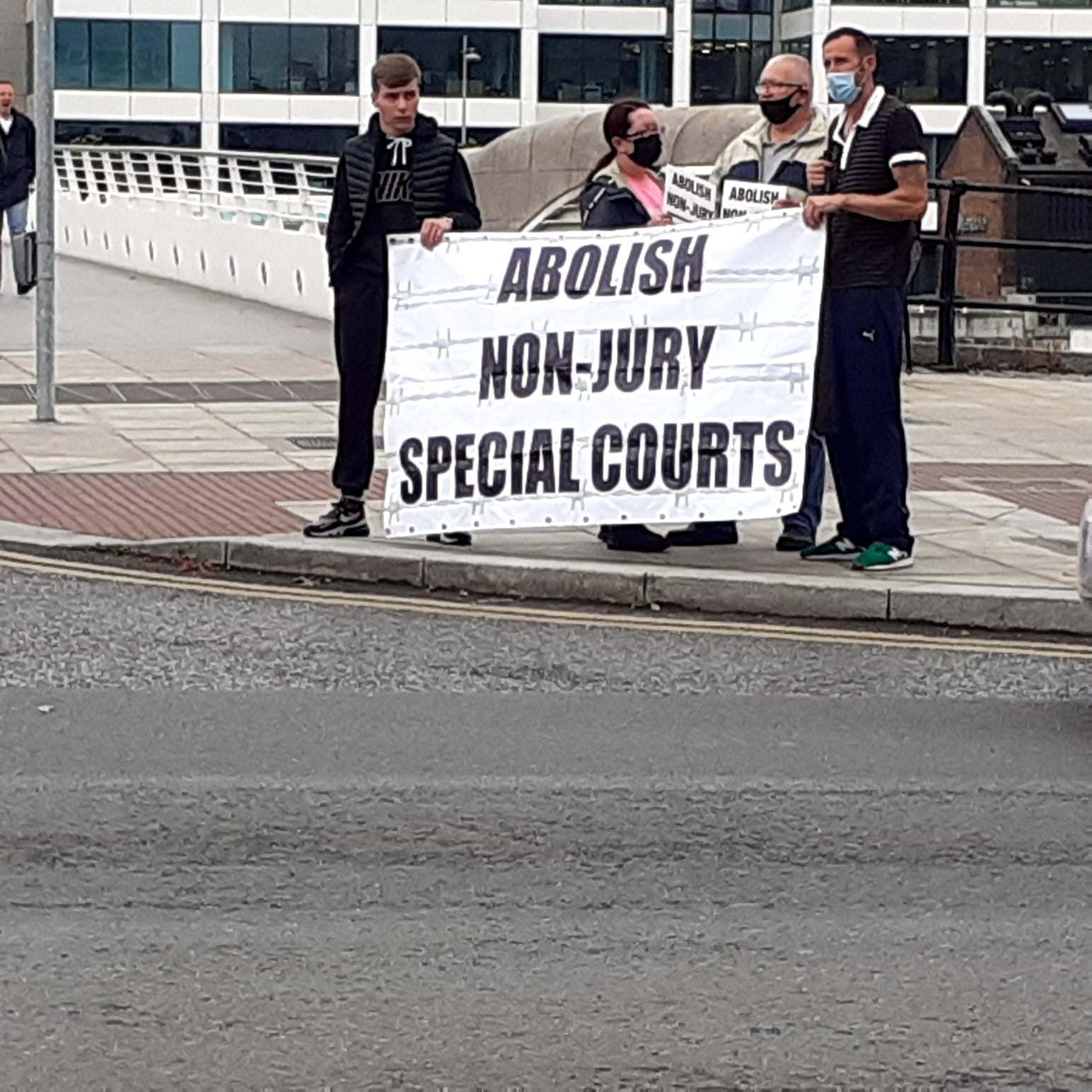
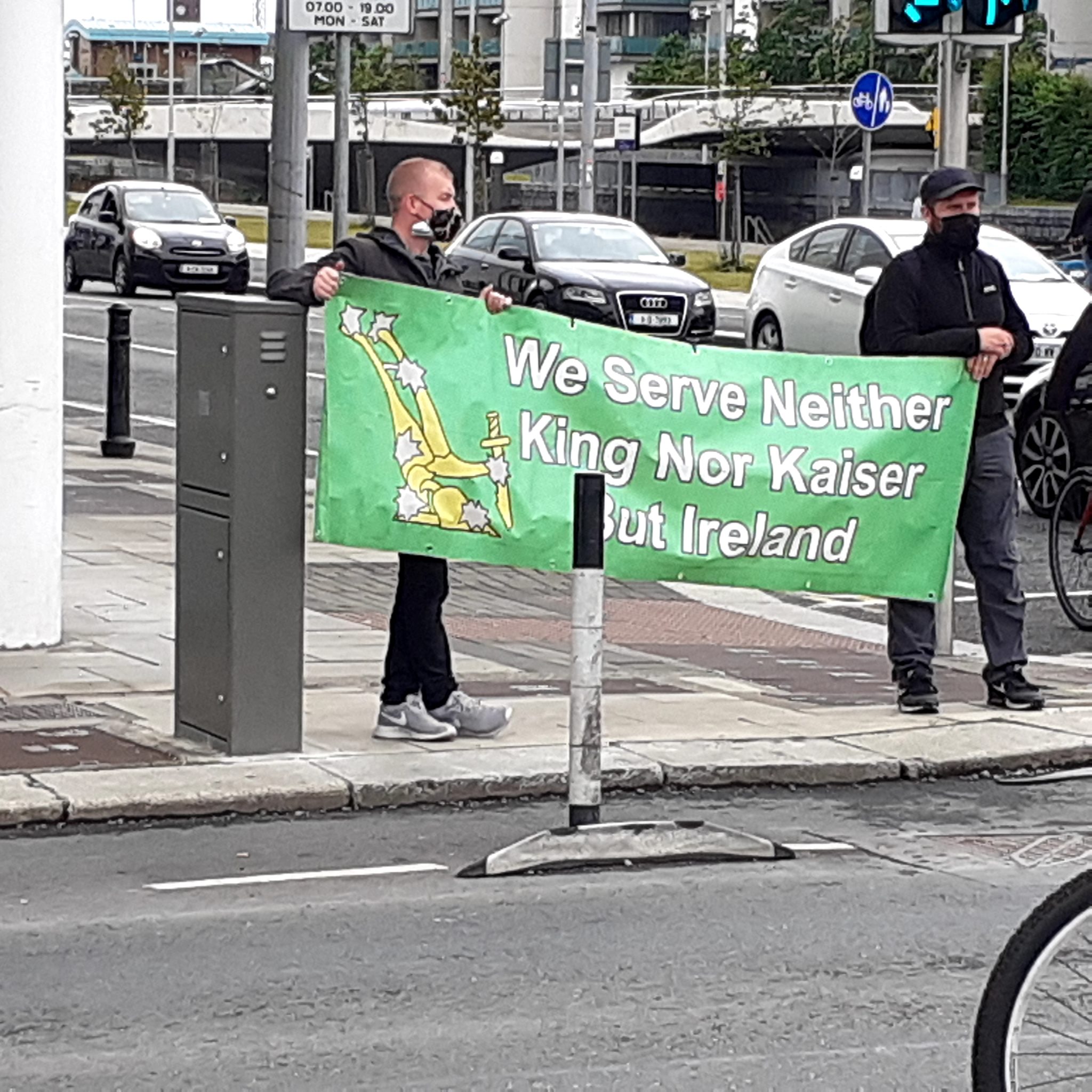
Section of picketers with banner (Photo: Abolish the Special Courts)

SINN FÉIN ABANDONS DECADES OF OPPOSITION TO THE SPECIAL CRIMINAL COURT

Since the Acts’ inception, Sinn Féin has voted against the annual renewal – until last year, when they abstained and this year, absented themselves from the Dáil before the vote. For some years now, the party has been reshaping itself to take part in a coalition government with one of the government parties. Supporters of the party who believe this a necessary disguise to enter the corridors of power and that the party will then return to its Republican past will find that for whatever principle the party gives up voluntarily, a further one will be extracted by pressure. Those who crawl into government will never be able to stand up in it later.

James Geoghegan, FG’s candidate for the forthcoming by-election in Dublin Bay East, taking a swipe at SF’s candidate Lynn Boylan, said “When it comes before both the Dáil and Seanad, what will Sinn Féin and Senator Lynn Boylan do? Will they abstain yet again, which undermines the laws in place to keep our citizens and democratic institutions safe?

“If Senator Boylan wishes to be a senior legislator and member of Dáil Eireann, she must show her support for the institutions of the State and do all in her power to protect the public from criminality and the threat of terrorism.”

Note that Geoghegan has no difficulty in equating support for “democratic institutions” with supporting their very negation, such as jury-less trials.

Voting display in the Dáil (sourced from Abolish the Special Courts)

Sinn Féin party leaders may think that in not opposing the SCC’s renewal, they are abandoning only some Republican principles, as Republicans have been the main victims of the Special Criminal Court to date but in fact they are also colluding in a major attack on civil and human rights, as pointed to by the opposition of civil and human rights organisations to the SCC.

OPPOSITION OUTSIDE THE DÁIL

Picket group at intersection just before Garda barrier. (Photo: Anti-Imperialist Action)

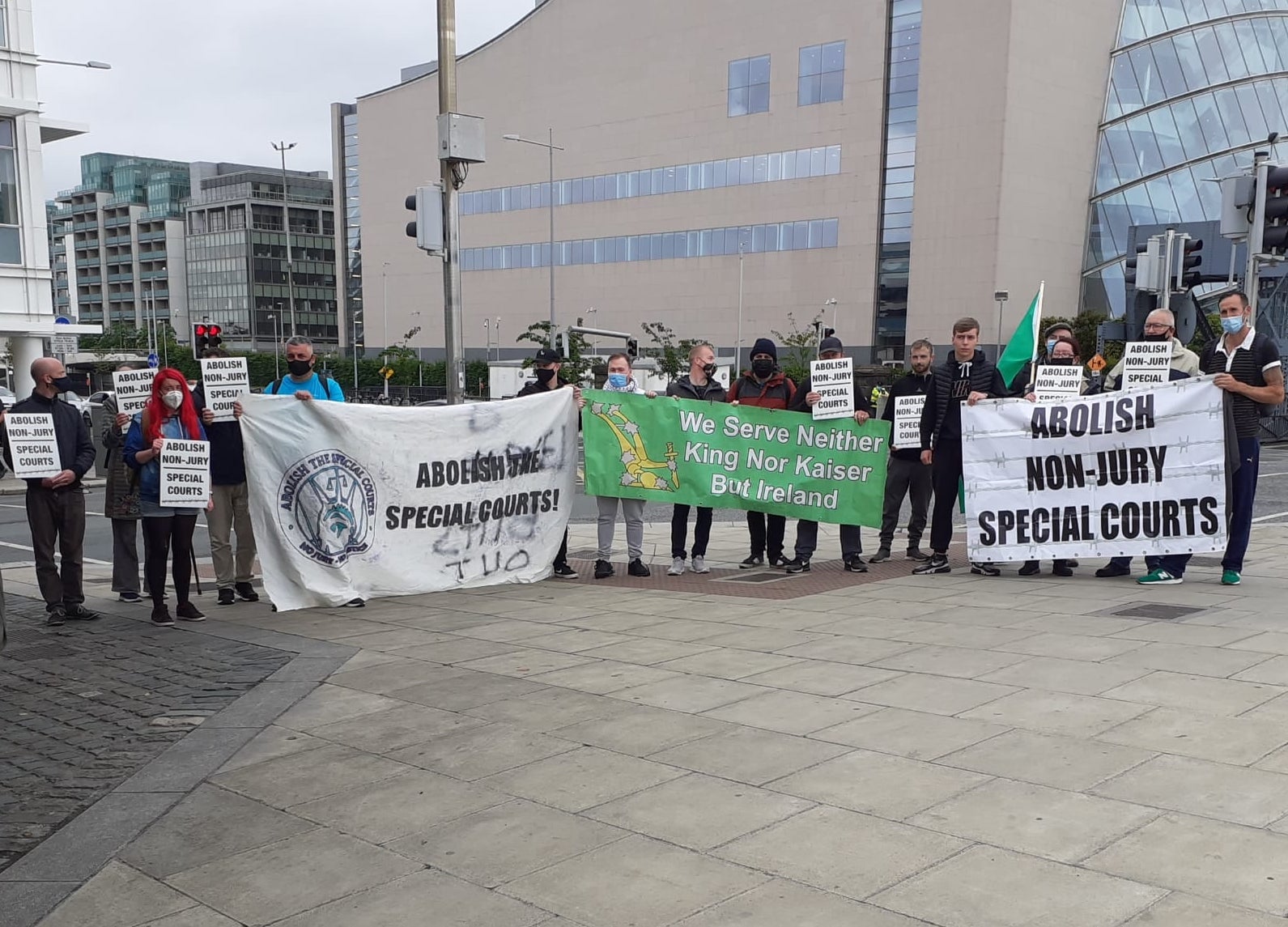
Outside the Dáil, which has been held in the Convention Building on the Dublin quays since the Covid 19 measures, a protest picket took place before the vote. The demonstration was organised by the Abolish the Special Courts campaign and supported by a mixed attendance of Republicans, Socialists and Anarchists.

A number of passing motorists, particularly in company vans and lorries, blew their car horns in solidarity in passing, some also extending a clenched fist or “thumbs up” sign out of their window.

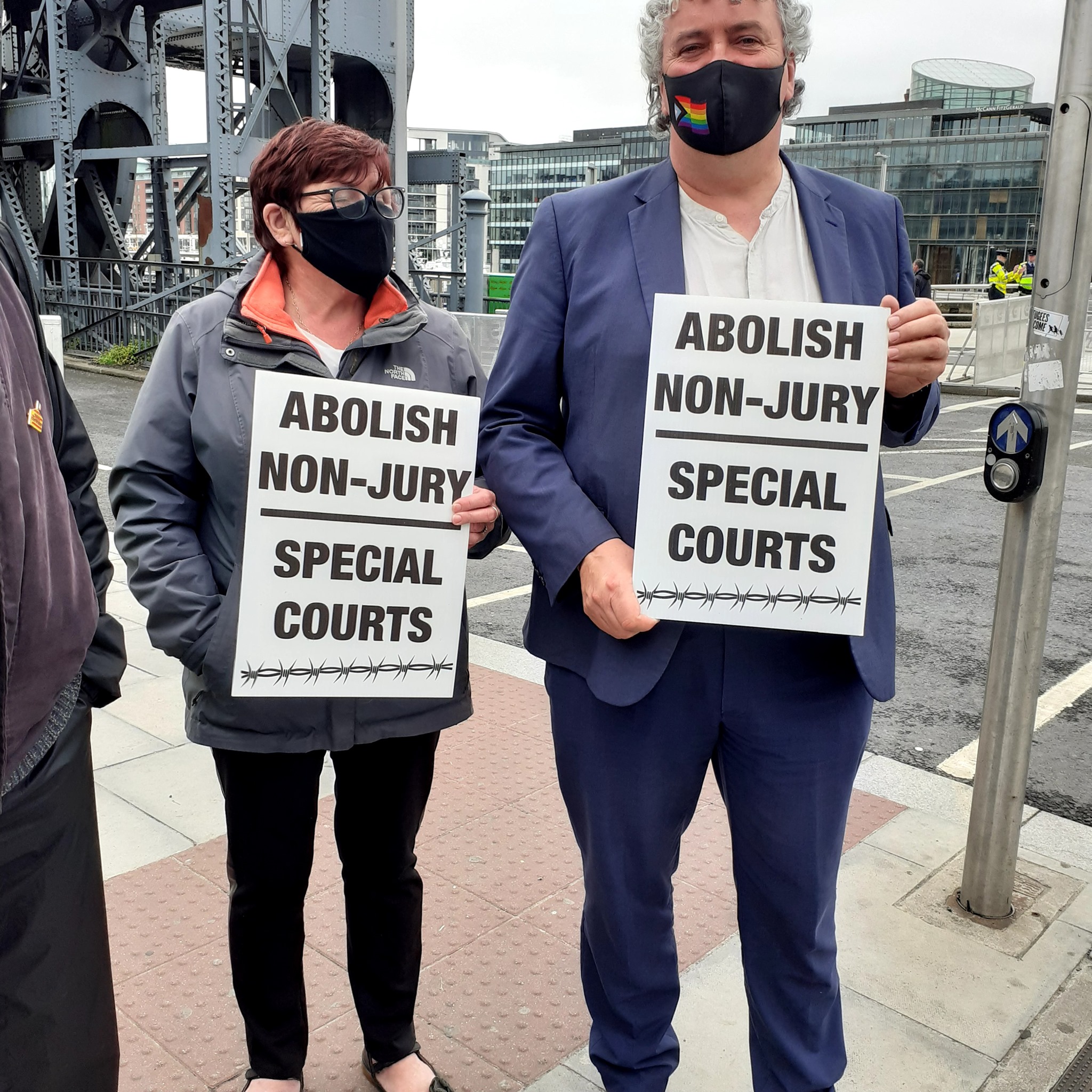
Left Independent TDs Thomas Pringle and Joan Collins joined the picketers for a while and Richard Boyd Barrett chatted with them in passing too; all three posed for a photo while holding a placard against the SCC before returning to the Dáil to speak and vote against the juryless court.

Independent left TDs (Irish MPs) Joan Collins and Thomas Pringle joined the picket for a while. (Photo: Abolish the Special Courts)

The Abolish the Special Courts campaign was launched in 2017 and a public meeting the campaign group organised in Dublin in 2018 heard about a number of then recent cases of unjust convictions in the non-jury courts. Since then the campaign group has organised protests against the SCC.

Group of picketers near the Samuel Beckett Bridge (Photo: Anti-Imperialist Action)

IRISH STATE TERRORIST LEGISLATION ASSISTED BY BRITISH TERRORISM

The Special Criminal Court, as stated earlier, is part of the Offences Against the State Act (OAS) 1939, which is sometimes described as the Irish State’s anti-terror legislation. However, the setting up of the Special Criminal Court and the infamous Amendment to the OAS which allows convictions of “membership of an illegal organisation” solely on the unsupported word of a Garda at superintendent rank or higher, was in fact passed on a wave of hysteria after a terrorist bombing in 1972 by British Intelligence terrorists.

Aftermath of the 1972 car bomb explosion by British agents to have the Dáil vote in favour of the SCC and the Amendment to the Offences Against the State Act. Two public transport workers were killed here. (Photo sourced: Internet)

On the evening of December 1st, 1972, a car bomb exploded near Liberty Hall in Dublin and although there were no fatalities in that explosion, many were injured. A second bomb a short time later at Sackville Place, off O’Connell Street, killed Mr George Bradshaw (29), a bus driver, and Mr Duffy (24), a bus conductor.

The indications had been that Fine Gael and Labour were both going to vote against the Fianna Fáil proposals but in the panic after the the explosions, which were blamed against all logic on the IRA, the opposition to the Acts collapsed and they passed.

THE PRETENCE OF “TEMPORARY PROVISIONS”

The Acts must be voted upon annually because, as with much emergency legislation across the world, the myth is propagated that the provisions are temporary; however these “temporary measures” have now been in place for 82 years! To give another example, the specifically anti-Irish emergency legislation introduced to Britain in 1974, the annually-renewable Prevention of Terrorism Act, was only abolished 15 years later to be replaced by the Prevention of Terrorism Act 1989 (again “Temporary Provisions”) which in turn was replaced by the Terrorism Act 2000.

The powers this Act provide the police have been controversial, leading to noted cases of alleged abuse, and to legal challenges in British and European courts. The stop-and-search powers under section 44 of the Act have been ruled illegal by the European Court of Human Rights.

That Act was strengthened by the Prevention of Terrorism Act 2005, which was then replaced by Section 1 of the Terrorism Prevention and Investigation Measures 2011. All repressive legislation in Britain has now ceased even the pretence of being temporary.

A similar trajectory has been followed by “emergency” legislation in the Six Counties statelet, from the very creation of the administration in 1921 (with the Emergency Powers Act of 1920), a new Act in 1926, amended in 1964 and replaced by the Civil Contingencies Act 2004, providing unlimited powers of harassment for the colonial police along with refusal of bail, undemocratic bail conditions and easy convictions for the non-jury Diplock Courts.

Section of picketers with banner proclaiming a slogan of the Irish Transport & General Workers Union during WW1 (Photo: Abolish the Special Courts)

NON-JURY COURTS

Historically, on occasion juries have been misled and have also been complicit in unjust verdicts, convicting innocent people (there are infamous cases such as the Irish-related ones in Britain in the 1970s, the Birmingham Six, Guildford Four, Maguire Seven, Giuseppe Conlon and Judith Ward). But much less so than non-jury courts. The right to be tried by a jury empaneled by random selection is considered across the world a fundamental democratic right and, furthermore, is one that has been fought for across the centuries, first to win the actual right, then to apply it across classes and finally to apply it to women and ethnic minorities.

The Six County colony has the Diplock non-jury courts and the Irish State has the SCC, both emergency and undemocratic measures in two states that are supposed to be democracies. Both courts regularly remand accused in custody without bail or impose undemocratic restrictions on the few occasions when bail is granted, such as having to be indoors by a specific time daily, prohibition from attending political meetings, etc. At trial, the required burden of proof on the Prosecution is very light indeed, ensuring an unnaturally high rate of convictions.

Richard Boyd Barrett TD of PBP/Solidarity, holding placard, supporting the picket. (Photo: D.Breatnach)

The Irish Council of Civil Liberties, which was founded in 1976 by people concerned about the increase in repressive powers of the Irish State, has stated that the court “continues to represent the single biggest denial of fair trial rights in our legal system”. The SCC has also been condemned by Amnesty International and the Human Rights Commission of the United Nations.

Whereas apologists for these undemocratic and repressive measures argue that non-jury courts are necessary because jurors might be intimidated, they fail to produce evidence of this having happened. However, there is hard evidence of unjust convictions by the Special Criminal Court.

In 2017 Michael Connolly, who had already spent 14 months in prison had his SCC conviction for alleged membership of the IRA overturned and a retrial ordered, during which he was found “not guilty”. Assistant Commissioner of the Gardaí Michael O’Sullivan was judged to have been “careless” in producing a single piece of “evidence” twice as the basis of his belief of the man’s guilt, which made it appear that there were two pieces of evidence, which the SCC considered sufficient to convict.

In 1986 the Special Criminal Court found Osgur Breatnach, Brian McNally and Nicky Kelly guilty of robbing a mail train near Sallins, Co. Kildare. They were innocent but had “confessed” after beatings in Garda custody, which the Prosecution claimed they had inflicted upon themselves and which the SCC accepted despite vigorous denials and the fact that Breatnach had been in a cell on his own. The three were sentenced to between nine and 12 years but their convictions were later overturned and they were paid compensation by the State in acknowledgement of their innocence. “Whistleblower”, a multi-media work on the unjust convictions organised by musician Cormac Breatnach, a brother of one of the victims of the SCC, has won Irish and international awards –but the SCC continues in operation and to be supported by TDs year after year.

SHAME!

This year and last were the worst years in the existence of the undemocratic court, with lowest votes ever recorded against it. As the Abolish Special Courts campaign succinctly summarised the vote in the Dáil: “Shame on those who used to support the abolition of non-jury special courts who now vote in favour of it, abstain or don’t show up to vote at all.”

End.

Line-up of protesters for a photo as picket draws to a close (Photo : Anti-Imperialist Action)

SOURCES & REFERENCES

Vote and SF absence: https://www.irishexaminer.com/news/politics/arid-40321172.html

Vote and Social Democrat amendment: https://www.irishtimes.com/news/politics/oireachtas/sinn-f%C3%A9in-tds-leave-d%C3%A1il-before-vote-on-use-of-special-criminal-court-1.4601771

Content and history of the SCC: https://en.wikipedia.org/wiki/Special_Criminal_Court

British bomb helped repressive legislation to pass: https://www.irishtimes.com/news/british-behind-1972-dublin-attack-widow-tells-hearing-1.1296467

Most recent ICCL statement about the SCC: https://www.iccl.ie/2021/special-criminal-court-denying-fair-trial-rights-for-half-a-century/

Abolish the Special Courts campaign group: https://www.facebook.com/Abolish-The-Special-Courts-208341809705138

“Temporary Provisions” of “emergency legislation”: https://en.wikipedia.org/wiki/Terrorism_Act_2000

https://en.wikipedia.org/wiki/Prevention_of_Terrorism_Act_2005

https://en.wikipedia.org/wiki/Category:Emergency_laws_in_the_United_Kingdom

Some unjust convictions of political activists in the SCC: https://www.irishtimes.com/news/crime-and-law/wronged-man-still-seeking-answers-40-years-after-sallins-train-robbery-1.3673264

https://en.wikipedia.org/wiki/Sallins_Train_robbery

Whistleblower Project: https://www.youtube.com/watch?v=E0rpGo6F6_Y

https://www.irishtimes.com/news/crime-and-law/courts/state-facing-significant-compensation-bill-over-miscarriage-of-justice-1.4535359

NEW MATERNITY HOSPITAL SCANDAL – DEMAND AN ALL-PUBLIC HEALTH SERVICE!

Diarmuid Breatnach

(Reading time main text: 2 mins.)

Politicians were last week briefed by the Irish Department of Health to the effect that the construction costs of the projected National Maternity Hospital are expected to reach €800 million — and it appears that neither the land nor the management of the hospital will be under the control of the State. The project has been controversial from the outset, with issues of its location, cost and religious institutional management and now conflicting narratives on discussions of ownership of the land have appeared between the Government and the religious bodies involved.

It is precisely concerns over governance arrangements at the hospital, linked to ownership of the site, which have stalled progress on construction over the years, while projections of costs have grown from the original €150 million. The most recent estimate was around €350 million but on Friday, a spokesperson for Minister of Health Stephen Donnely said: “The building infrastructure cost has been priced at €500 million. Further commissioning costs, including fit-out and transferring an entire hospital to a new site, will be a further €300 million.”

The Religious Sisters of Charity, which order owns the land, is transferring it to the newly-created private charity St Vincent’s Holding CLG, which will then lease it to the State for 99 years. The directors and members of this new private charity are the shareholders of St Vincent’s Healthcare Group, of which in turn the Sisters of Charity are the sole shareholders.

According to a report in the Irish Times, politicians were told on Thursday that several attempts had been made to purchase the site but this was contradicted by the religious institutions.

The Religious Sisters of Charity said it had “never at any point been contacted by Government or the State to discuss purchasing the site”, while SVHG – on whose campus the new hospital is to be located – said in a statement: “At no stage was any proposal or approach to sell the land, meaningful or otherwise, received or considered by the board of SVHG.”

While the text of a letter in 2017 from the St. Vincent’s Group may appear at one reading to contradict their later statement, another reading may see it as purely forestalling any attempt to purchase the site from them. The text, shown to the Irish Times presumably by Government sources reads: “This is why SVHG cannot countenance any sale or lease of part of the land on site, or any separate ownership of a hospital on site”.

The versions of the Government and of the religious institutions contradict one another and which is correct remains to be ascertained. What is certain however is that the religious institutions wish to control the site and at least influence governance, while at the same time it is the taxpayer who will fund the construction and the running costs of the hospital.

Asked on Saturday if the site might have to be abandoned for the hospital, the Tánaiste Leo Varadkar said: “Of course there is that risk, that’s the reality of the situation.” He added: “This hospital has to be publicly owned and it has to be the case that any obstetric or gynaecological service that’s legal in the State has to be available in that hospital.”

Earlier, the Taoiseach (Prime Minister of Irish government) Mícheál Martin told RTÉ, the national TV network: “But there’s a very basic point in terms of the taxpayer, and I think into the future we’re in a new era, when the State is building new hospitals and paying the full total of the costs, the State should own the facility.”

UNHEALTHY SERVICE IN THE IRISH STATE

The Irish State has never had a comprehensive public health service, unlike the rest of Europe. When the State was created in 1921, there were a number of health care institutions run by the Catholic Church and the State integrated them into the state-funded service, leaving them under religious institutional management but providing them funding through the state’s health care budget. And so it continued to this day.

This means not only that the public taxes of residents of the Irish state are funding private health care but that those institutions are not answerable to the public in terms of policy on what they consider moral issues – in other words Catholic Church ideology. Hence it is not known at the moment whether the new proposed National Maternity Hospital will provide a service within the terms of what is legally permitted in the Irish state such as voluntary sterilisation, gender adjustment or IV fertilisation. Or pregnancy termination along the lines of what is agreed and desired by the majority of the citizens in the State, as shown in public opinion polls and the 2018 Referendum on Abortion.

In addition, private health centres compete with public services for funding and for staff.

The controversy around the governance and construction costs of the National Maternity Hospital is not alone since there is also another with regard to the projected National Children’s Hospital siting and construction costs, with BAM company claims against the National Paediatric Hospital Development Board (NPHDB) totalling €300 million. The original construction cost estimate was €1.74 but some projections now are estimating an excess of €2 billion — and completion not until 2024.

Since construction companies in the Irish state are all private capitalist companies, these problems of course end up in the profits of the companies and a loss to the common taxpayers.

INCREASED HEALTH FUNDING – FOR WHOM?

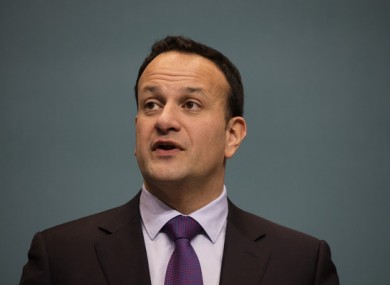
Leo Varadkar, Tánaiste (Photo credit: Eamonn Farrell/ Rolling News)

The Tánaiste (Ireland’s Deputy Prime Minister) Leo Varadkar has stated that the funding of the State for the Health Service which was increased to deal with the Covid19 pandemic is not to be cut when the pandemic is over but will be kept at €22 billion. If the projected costs of the maternity hospital construction works of €800 million are going to come out of that (without any estimate on site purchase cost), it would leave only €21.2 billion to run the whole health service which is actually less than the 2018 budget of €22.5 billion. And if the €300 million of BAM’s claims were granted, this to be deducted from the budget, only €20.9 billion would remain.

If we assume that the projected construction costs of the National Maternity Hospital are to come from a different budget then it still leaves us the question of who is to benefit from the health budget, the public health service or the private services (Church and other).

In 2019, €1.311 Billion of public funding went to just five private health services1

  • Sisters of Mercy (including Mater Hospital, Mercy University Hospital — €432 million
  • Sisters of Charity (including St. Vincent’s University Hospital — €373 million
  • Brothers of Charity — €218 million
  • St. John of Gods – 166 million
  • Daughters of Charity €122 million

A TWO-TIER HEALTH SERVICE

The existence of private alongside public health care facilities creates a two-tier system, one with fast access to treatment alongside another with long, sometimes fatal delays (especially in the case of cancer diagnosis and treatment). Yet both are funded, as we have seen above, by the taxpayer.

With the disparity in waiting time and, to some extent quality of treatment, people who can do so of course tend to opt for the private service. And in order to afford that access, they take out private health insurance.

“According to the Health Insurance Authority, the average health insurance premium has increased from €423 per person in 2002 to €1,200 today”, “which has led to tripling of premium income for the insurance industry, from €822 million in 2002 to €2.5 Billion in 2016, as the numbers taking out insurance have also increased substantially.”2

IN CONCLUSION

It is not tolerable that our taxes are going to fund health care facilities that may not, because of religious ideology, provide a full service within what is legally permitted. Nor is it tolerable that our taxes are funding private healthcare facilities at all, never mind funding them to compete with public ones.It is not acceptable that our two-tier system discriminates against the less wealthy and promotes the huge growth in the private health insurance sector. Nor that people are being driven to take out private health insurance which has that sector’s companies raking in profits.

People resident in Ireland need and are entitled to a public health service that is well-funded and staffed to undertake timely illness prevention and health care at all levels in all areas of medicine. And a service that has the spare capacity to deal with emergencies without straining its facilities and harming its staff.

That is what we need and the vast majority of the population would support that, in this state and even in a united Ireland3. But which political party would give us that in government? Not FG, FF, Lab, Greens or SF, on any rational prediction. Although it would be just a reform, will it take a revolution to achieve it?

Let the religious fund their religious-ethos health services and let the rich fund their own private services but ALL PUBLIC FUNDING FOR ALL-PUBLIC SERVICES ONLY.

End.

FOOTNOTES

1From “A brief history of Ireland’s two-tier system”, (Rupture Issue 2, p.22).

2Ibid, p.23, quoting the HIA 2004 / 2005 report and Irish Times article.

3People in the Six Counties have a part of the UK’s NHS there and use and by all indications approve of a public health service.

SOURCES

Maternity Hospital news report: https://www.breakingnews.ie/ireland/fresh-controversy-emerges-over-maternity-hospital-as-state-offered-to-buy-land-1144144.html

https://www.irishtimes.com/news/politics/projected-cost-of-national-maternity-hospital-now-800m-1.4597579

https://www.breakingnews.ie/ireland/government-outlines-concern-over-relocation-of-national-maternity-hospital-1143266.html

https://www.breakingnews.ie/ireland/new-location-may-be-needed-for-national-maternity-hospital-tanaiste-1144316.html

https://www.thejournal.ie/national-maternity-hospital-cpo-5472271-Jun2021/

Background to decision to build new hospital: https://www.irishtimes.com/news/politics/q-a-why-is-the-national-maternity-hospital-moving-and-why-are-people-concerned-1.4579356

Government plan to expand Irish health service: https://www.breakingnews.ie/ireland/tanaiste-calls-for-e22-billion-health-budget-to-be-retained-permanently-1144208.html

Construction company suing over Children’s Hospital: https://www.irishtimes.com/news/ireland/irish-news/contractor-bam-suing-national-children-s-hospital-board-in-20m-costs-dispute-1.4532352

Moratorium on BAM’s litigation: https://www.irishexaminer.com/news/arid-40297367.html

National Children’s Hospital costs overrun: https://www.rte.ie/news/2021/0209/1196082-childrens-hospital-pac/

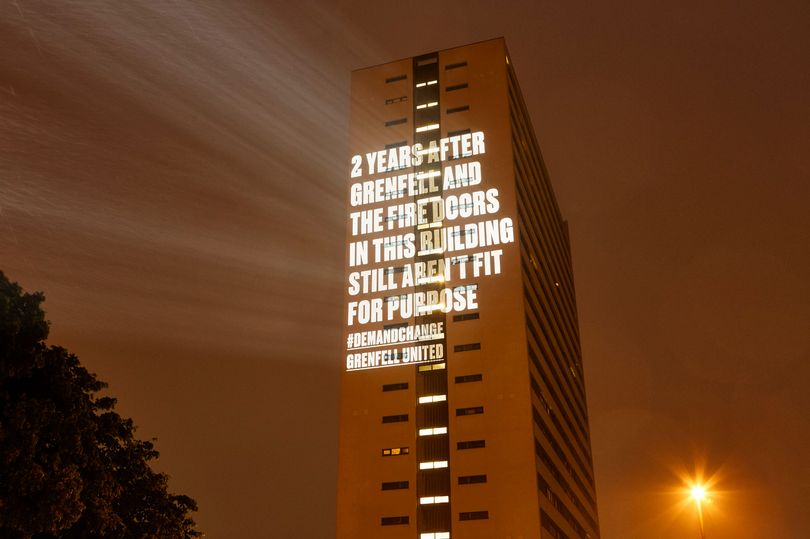
WHO KILLED GRENFELL?

Tim Evans

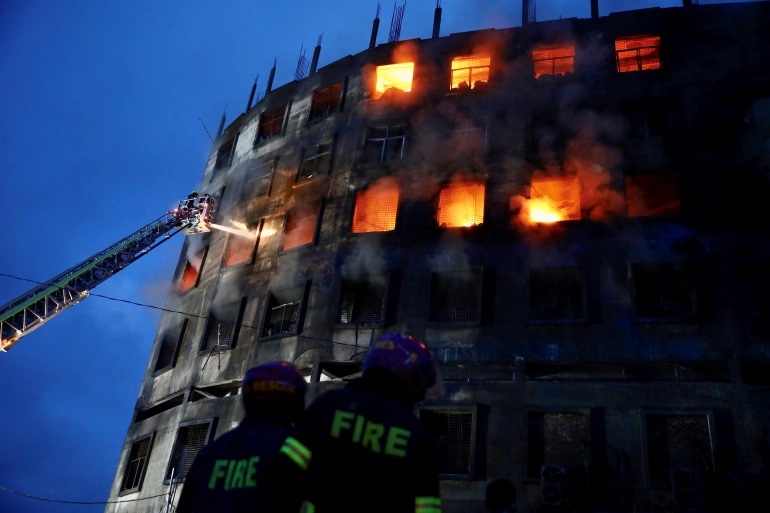
The blackened shell of the Grenfell Tower being hosed by fire fighters in 2017 (Photo sourced: Internet)
(Photo credit: Yui Mok/ PA)

Who killed Grenfell? Who was it killed the people of Grenfell?

Who put their lives at deadly peril?

Very well, I’ll resign, said Paget-Brown

But it wasn’t me who put them down.

I didn’t give them the runaround.

I didn’t want them out of town.

Their deaths aren’t down to my account.

No, I didn’t kill the people of Grenfell.

Who was it killed the people of Grenfell? Who put their lives at deadly peril?

Not us, said the leaders of the TMO

It shouldn’t be us that have to go.

We listened, we really listened, you know.

We dealt with their complaints like the seasoned pros

We are, and that our salaries show.

No, we didn’t kill the people of Grenfell.

Who was it killed the people of Grenfell? Who put their lives at deadly peril?

Not me, said Housing Minister Barwell.

I was always a hundred per cent impartial.

My door was always open wide, as normal.

We had endless meetings, minuted and formal.

My interests were in no way commercial.

No, I didn’t kill the people of Grenfell.

Who was it killed the people of Grenfell? Who put their lives at deadly peril?

Not us, said the 72 Tory MPs.

We never voted down that amendment, you see,

To make rented properties safe and clean.

And while we’re all landlords, as it seems,

We didn’t kill the people of Grenfell.

Who was it killed the people of Grenfell? Who put their lives at deadly peril?

It wasn’t me, said Boris Johnson.

I closed 10 fire stations? That’s just nonsense.

The Knightsbridge one was of special importance.

Just next to Grenfell, by all the evidence.

Thank God I don’t have that on my conscience.

No, I didn’t kill the people of Grenfell.

Who was it killed the people of Grenfell? Who put their lives at deadly peril?

Not us, said the British Government.

You can’t threaten any of us with imprisonment.

A bonfire of regulations, that was our sentiment.

Health and safety just filled us with merriment.

For business and profits, there must be no impediment.

We didn’t kill the people of Grenfell

We didn’t kill the people of Grenfell

We didn’t kill the people of Grenfell

We didn’t kill the people of Grenfell.

(Photo credit AP)

NOTE

On 14 June 2017 a catastrophic fire in the Grenfell tower block in West London caused 72 deaths and 70 injuries and made hundreds homeless. Four years later and nobody has been held to account for what the then Shadow Chancellor, John McDonnell, called ‘social murder’ – criminal irresponsibility, cowardice and racism by the Tory Government. We will not rest until the guilty are brought to book. No justice – no peace.

The poem will appear in my next collection, ‘Bones of the Apocalypse’, published by Frequency Press. Tim Evans

(Photo credit: DailyTelegraph)
(Photo credit: Guardian)

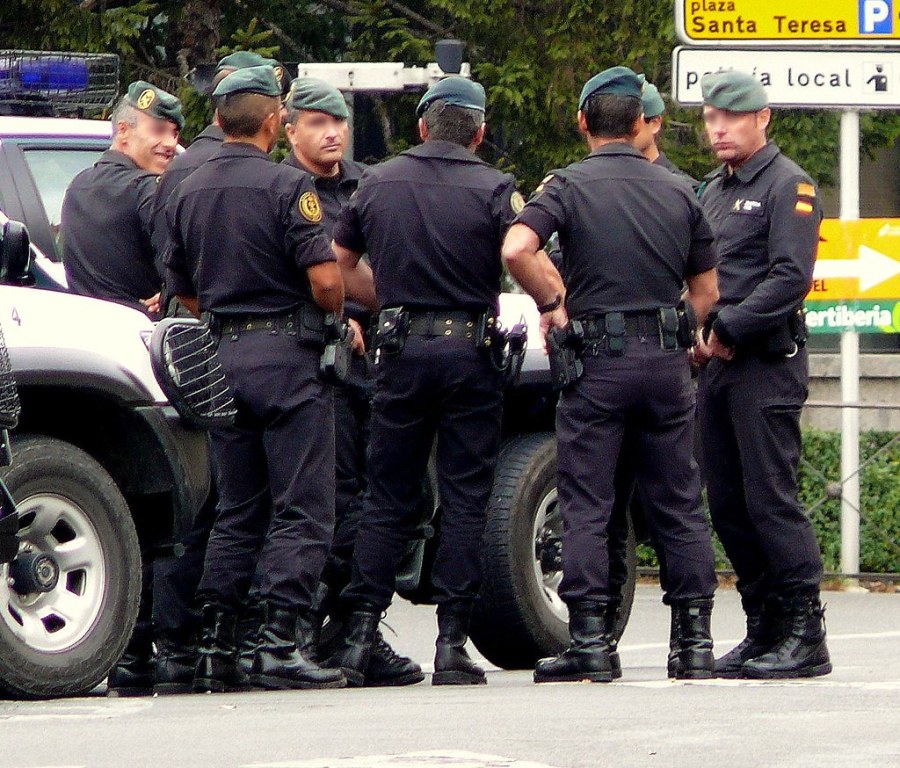
SPANISH POLICEMAN ARRESTED WAITRESS BECAUSE HE DIDN’T LIKE HIS COFFEE — TO APPEAR IN COURT

(Reading time: 5 mins.)

E. Conde NOTICIAS DE NAVARRA (translation by D.Breatnach)

Never could a coffee have been so bitter. This Wednesday the First Section of the Provincial Court of Navarra is to judge a Guardia Civil officer, belonging to the Citizen Security Unit of the Command of Navarra, accused by the Prosecutor’s Office and the private prosecution of the crime of illegal detention by a public official after he arrested a waitress at a gas station, with whom he argued because the coffee was not to his liking. They ask for him to be fined a sum of 2,160 euros and that he be disqualified for nine years from his post. In addition, they demand that he compensate the victim with 1,000 euros for moral damage.

The events occurred around 10:30 p.m. on July 27, 2019 when the defendant, a Guardia Civil since 2005, in command of a unit arrived with his colleague at the Acciona service station on the A-12, in the area of Legarda. There they went into the café and ordered some coffees. According to the Prosecutor’s Office, “since he did not like the coffee, he argued with the waitress and manager, who was serving the rest of the customers.”

Neither the complaint form nor her driver’s license was acceptable to him

He did not restrict himself to mere protest. He requested the complaint sheet, arguing with her to give it to him immediately. The defendant considered that said sheet was not the corresponding one and asked for her National ID and the woman gave him her driving license. The Guardia insisted that this sheet was not the correct one and considered her driving licence identification insufficient.

The waitress continued working, but the defendant called her, made her step outside away from where the customers could see what was happening and “with abuse of authority, telling her that she was disrespectful”, proceeded to arrest her at around 10:45 p.m. and to put her in the patrol car. She was taken to the Puente la Reina barracks, and handcuffed as a detainee. She was held until 2:00 am, when a statement was taken and she was released. As a result, the victim suffered from anxiety.

During the investigation of the case there was an attempt to resolve the matter by the criminal mediation procedure but as this was unsuccessful, it goes to trial. In principle, any possibility of agreement is ruled out since the officer, if convicted of said crime, would be disqualified from any similar job for a relevant period of time.

COMMENT

by Diarmuid Breatnach

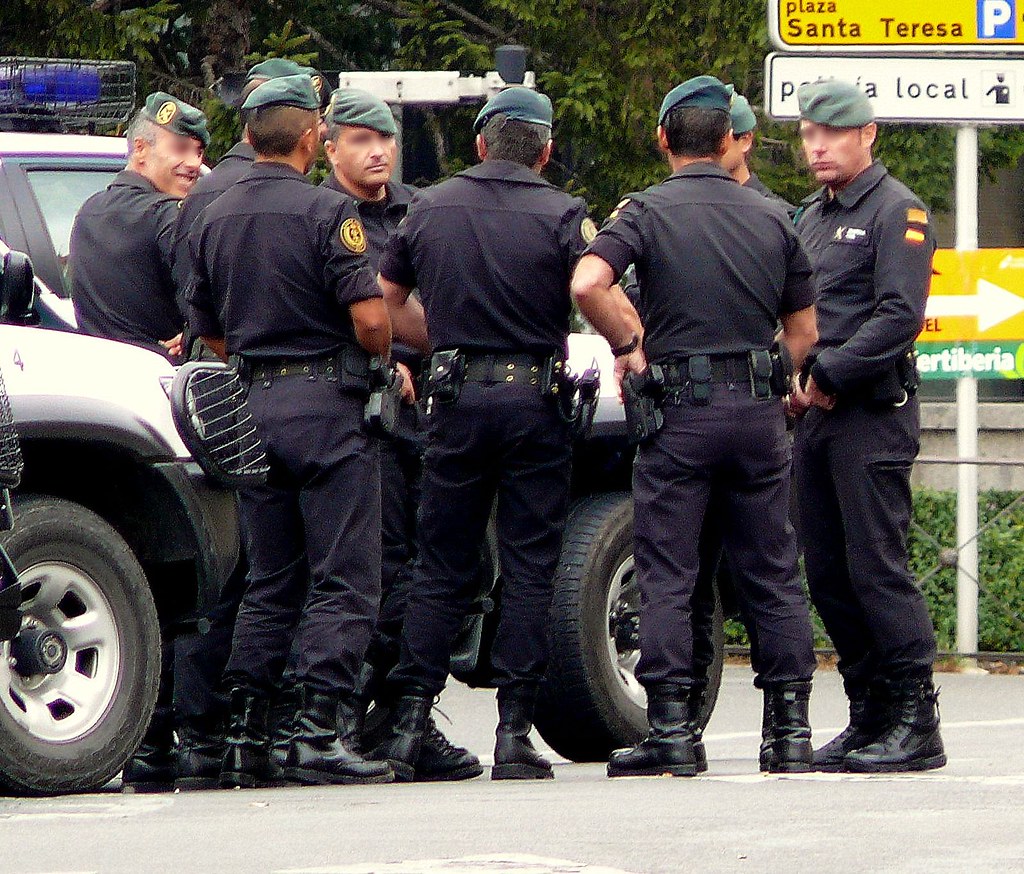
The case is an extreme example of a common aspect of the Guardia Civil – arrogance, a sense of entitlement and impunity and lack of respect for issues of justice or ordinary people. Contempt and hostility towards socialists, LGBT and aspirations of the nations within the state are common too but, although this took place in Nafarroa, in one of the Basque regional autonomies, the report does not reveal whether this played a part.

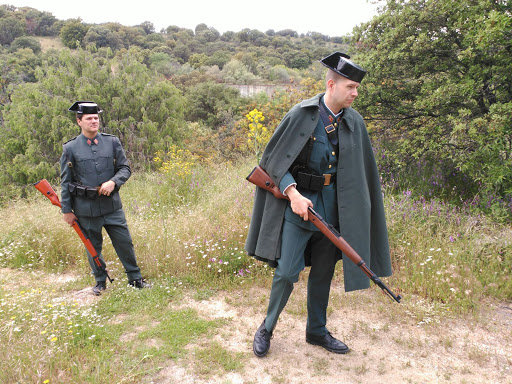
The Guardia Civil is one of two “national” police forces of the Spanish State and the oldest police force of the kingdom. It is a gendarmerie, an armed police force with military organisation and role in addition to a civil one, such as the Gendarmerie of the French state, Carabinieri of the Italian state and the Royal Irish Constabulary all over Ireland until 1921 and its remnant, the Police Force of Northern Ireland (British colony) today. The force is quartered in barracks for accommodation with police station facilities, cells etc.

GUARDIA CIVIL AND FASCISM

When the fascist-military coup was launched against the republican Popular Front Government of the Spanish state in 1936, the Guardia Civil split evenly between those who remained loyal to the Government and those who defected to the fascist-military, with those loyal becoming the Guardia Republicana. However, that percentage was in the lowest order of police force loyalty to the republican Government, with elected government loyalty in other police forces at around 70% of membership. After the defeat of the republican forces, the superior officer of the Guardia Republicana, General José Aranguren was tried by Francoist military court, sentenced to death and executed in Barcelona.

Often thought to be of Franco prisoners during the Civil War, in fact this photo is of prisoners of the Guardia Civil during the suppression of the Asturias Miners’ Strike in 1934 by General Franco during the right-wing period of the Republican Government, which was overturned in the 1936 elections of the Popular Front. (Photo sourced: Internet)

In the areas conquered by the fascist-military forces and in the whole state after the defeat of the republican forces, the Guardia Civil were one of the chief forces seeking out and rounding up former supporters of the republican Government along with communists, socialists, anarchists, republicans, Basque, Catalan and Galician nationalists. Most of the detainees were brought before military courts and either sentenced to death, to penal servitude or to heavy fines and confiscations of property. Some never made it to court, being summarily executed. Rapes were also recorded and infants of murdered parents were trafficked to fascist childless families.

In the nations that had shown wishes for independence or autonomy, such as Catalonia and the southern Basque Country (of which Navarre is a part), along with other areas where antifascist resistance had been strong such as some areas of Madrid, the Guardia Civil was a constant and visible force of surveillance and repression of the civil population in terms of culture, morality and politics.

Guardia Civil searching country area during the later decades of the Franco regime. (Photo sourced: Internet)

During times of guerrilla conflict, the Guardia at times killed prisoners and routinely tortured detainees during interrogation (the Wikipedia entry says that they were accused of “heavy-handedness”!). Colonel Tejero of the Guardia Civil led 200 of that force in a failed attempted coup in 1981 which included an armed invasion of the Spanish Parliament. Several Guardia including very high-ranking officers were convicted of organising the fascist murder squads of the 1980s (GAL etc) run by the Spanish PSOE Government.

The Guardia until recently was the primary police force acting against the Basque national resistance and numerous of their detainees over decades have testified to being tortured, humiliated (including sexually) and threatened almost immediately after arrest, during their transportation by the Guardia to the force’s barracks in Madrid, where the torture etc continued up to the five days incommunicado detention permitted under Spanish State “anti-terrorist” legislation. The treatment usually produced “confessions” which were then used to secure a conviction and long prison sentence. The European Court of Human Rights has a number of times found the Spanish State guilty of not investigating allegations of torture by detainees and a number of human rights organisations such as Amnesty International have condemned the impunity of the torturers.

Guardia Civil in action in Catalonia during the Referendum on independence there on 1st October 2017. (Photo sourced: Internet)

The Guardia Civil frequently break up demonstrations and in 2017 both they and the Policía Nacional invaded Catalonia in force, the Guardia Civil seizing ballot boxes in the Catalonia Independence Referendum and beating voters and people protesting their actions (also firing rubber bullets which are banned by the regional Government).

Since 2020, actions against Basque and Catalan independence campaigners have been carried out mostly by their autonomous regional police forces (Ertzaintza and Forales in the Basque autonomous regions and Mossos d’Escuadra in Catalonia) but, if charged with “terrorism” or “security crimes”, detainees were delivered to the Guardia Civil who then took them to Madrid for interrogation.

(Photo sourced: Internet)

SOURCES

There report on the case:

https://www.noticiasdenavarra.com/actualidad/sociedad/2021/03/22/juzgan-guardia-civil-navarra-arresto/1131185.html?

Extremely sanitised Wikipedia description of the Guhttps://en.wikipedia.org/wiki/Gendarmerieardia Civil: https://en.wikipedia.org/wiki/Civil_Guard_(Spain)

Gendarmerie:

Amnesty international report 1976: https://www.irekia.euskadi.eus/uploads/attachments/10710/Amnistia_Internacional1976.pdf

1985 Torture, murder of Basque activists and subsequent cursory investigation: https://www.irishtimes.com/news/old-bones-reveal-dark-side-1.262790

1993 murder of Basque activist detainee: https://medium.com/@stewreddin/they-came-for-her-in-the-morning-f4585ddc8c07

UN Committee on 2007 kidnapping and torture (including sexual) of Basque activist: https://www.ohchr.org/EN/NewsEvents/Pages/DisplayNews.aspx?NewsID=24629&LangID=E

European Council investigation into allegations of mistreatment of migrants 2015: http://webfolder.eurac.edu/MIDAS/1C28407F-517E-41C1-9EB5-8AE40974577C/0/EgunkariaEgunon3250203.pdf

BLACK LIVES MATTER ACTIVIST SHOT IN THE HEAD IN LONDON

Diarmuid Breatnach

(Reading time main text: 5 mins.)

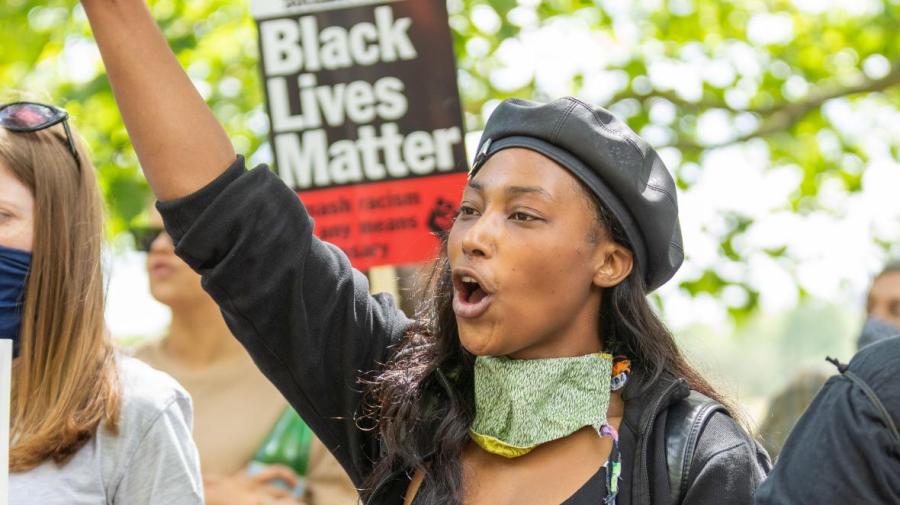
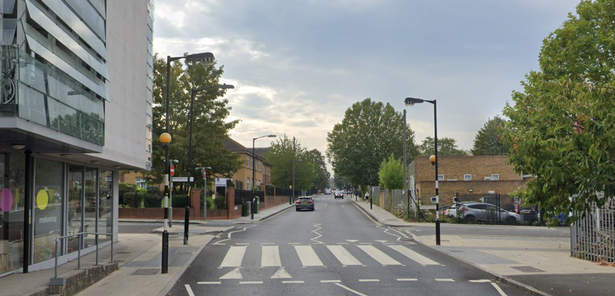
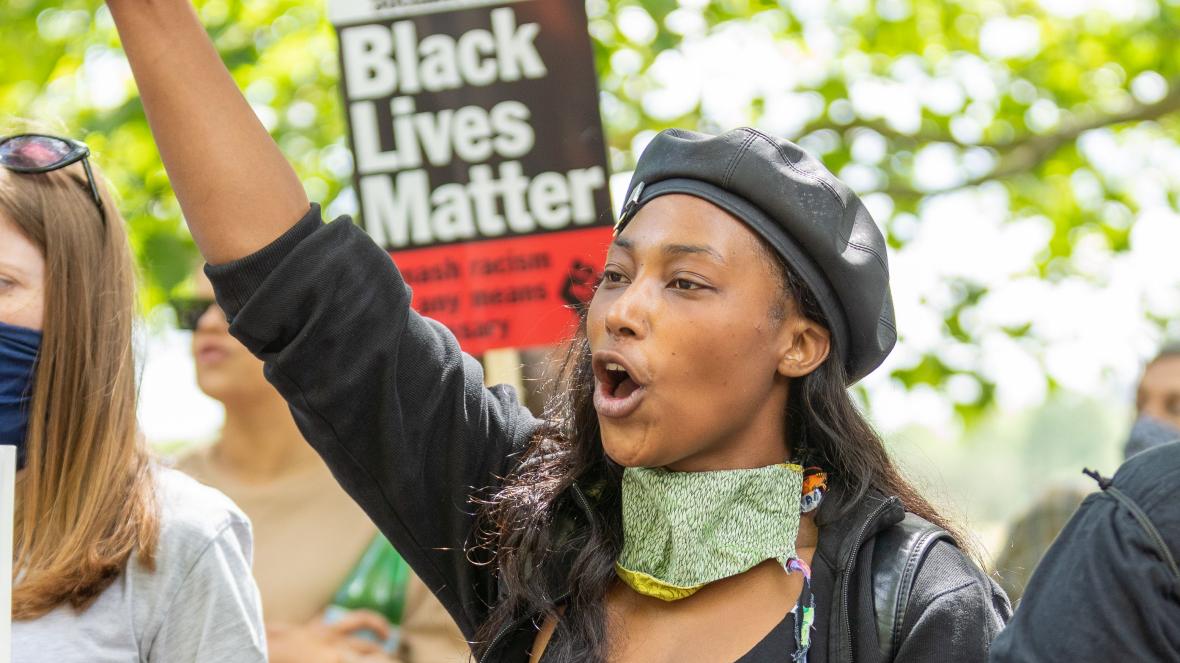
In the early hours of May 23rd, according to reports, four men gained uninvited access to a social event in Consort Road, a residential street in the Peckham area in SE London’s Borough of Southwark. One of them fired one shot from a gun and the bullet struck prominent BLM activist Sacha Johnson in the head. She remains in critical condition in hospital. There are unresolved questions about this incident and about the subsequent actions and statement by the London Metropolitan Police.

Sasha Johnson and others in London recently protesting about racism and inequality (Photo sourced: Internet)

THE AREA

Peckham is mostly a residential and shopping area in a SE London suburb, in a mix of predominantly pre-war terraced housing and post-war blocks of flats. It is well off the London Underground network but served by an overground train station and bus depot with a number of bus routes traversing it. There is a medium-sized park area called Peckham Rye and a branch of the canal network ran through a part of Peckham but no longer does so (filled in during the time I lived there). I lived in Peckham on two different occasions during my decades working in England (nearly all of which were spent based in SE London) in one period of which my daughter was born. I was politically active there and for a time worked not far away from Peckham variously in furniture removal, factories and in a number of foundries.

Consort Road, Peckham, SE London, where the shooting took place (Photo sourced: Internet)

Peckham and many nearby areas of SE London are mixed ethnically having been settled by successive waves of Irish migrants, Afro-Caribbeans, then some South Asians, followed by Africans. Throughout its history there have been frequent conflicts between people living there and the police and also between communities and fascist organisations.

Irish Socialist and Republican activist and journalist Jim Connell wrote a draft of the Red Flag in 1989 on a train journey from London Bridge to his home in the SE London Borough of Lewisham, a 15-minute bicycle ride from Peckham. During the 1926 General Strike a scab tram was overturned in nearby Camberwell by strikers and a policeman reputedly pushed down a manhole. Clashes occurred between Mosley’s Blackshirts and antifascists, with one of the big battles of the 1930s taking place in Long Lane, at the further limits of SE London, approaching the Thames river.

Much nearer to Peckham, after WW2, Blackshirts attempting to set up public speaking in East Street outdoor market (“East Lane” as it was known locally) were attacked by antifascists and clashes occurred there again in the 1970s between antifascists and the National Front. The early post-War migrants from the Caribbean in New Cross, very close on the other side of Peckham, had frequent clashes with racists and with the police. In the 1970s clashes occurred often in New Cross and nearby Deptford between antifascists and the National Front, while not far away again was the scene of the famous 1977 Battle of Lewisham, in which antifascists denied the National Front passage through and fought also, in particular, the London Metropolitan Police.

During the 1970s, ‘80s and ‘90s there were public meetings organised in various parts of SE London in solidarity with Irish struggles and with Irish political prisoners, including the framed prisoners such as the Birmingham Six. There are predominantly Irish pubs dotted throughout the whole area and weekly traditional music sessions have been held in some of them, while New Cross had an Irish dance hall and Lewisham still has an Irish community centre, founded by a local branch of the Irish in Britain Representation Group. Individuals from the Irish community were active in trade union and left-wing activism and in particular in antifascism.

QUESTIONS

There are a number of questions arising out of the Metropolitan Police investigation into the shooting of Sasha Johnson and their public statement.

  • The Met said they did not believe Sasha Johnson was the target. In a statement made before even an arrest of suspects, this would seem to be at least premature. It would also be a substantially suspect coincidence for the only firearm discharge to hit Johnson and, in addition, in the head.
  • Sasha Johnson supporters say she had received death threats and another activist, interviewed by an ABC reporter (see video in CNN link) on a demonstration a few weeks before the shooting, said that she had received a number of threats. However the Met statement said Sasha Johnson had not received credible death threats. What is “a credible death threat”? Antifascists and left-wing activists all over the world regularly receive death threats and, in Ireland, the targets would include Irish Republicans. Some of those threats have been carried out historically and fascists have gone on shooting or bombing sprees against ethnic and LGBT minorities, often after issuing threats on social media, without police prevention.
  • The TTIP statement (see Sources) said that according to their information the Met had not carried out house-to-house enquiries in the area of the shooting.
  • The arrest of five individuals and their charging with conspiracy to murder (two) and affray and attempted murder (all five), along with drug possession with intent to supply etc would serve to support an narrative of black-on-black crime related to drugs supplying. But how does that narrative fit with an invasion of a social event and the shooting in the head of a prominent black lives matter activist?
  • If the Met maintains that Johnson was not the intended target, how can they charge someone with conspiracy to murder her (unless they allege that some other person was the intended victim, which they have not said)?
  • And if the shooting of Sasha Johnson was by black individuals and she was the target, does that raise the possibility of politically-motivated action through proxies, as has occurred a number of times in the USA (and in the Six Counties of Ireland)?

HISTORICAL USA CONTEXT

Regarding the last question above, the TTIP has reached nowhere near the political impact where it seems likely the UK State would arrange such an action — but it remains a possibility.

In the USA the city and state police departments have a history of surveillance and repression of Black militant organisations and at times their actions have been more extreme. In 1985 Philadelphia police in an operation approved by its black Mayor, bombed the radical black MOVE organisation with a C4 explosive satchel from a helicopter, resulting in the deaths of 11 people including five children, aged 7 to 13. The police bombing and subsequent fire destroyed 61 homes and made 250 Philadelphia residents homeless.

The Federal State itself, in particular through the FBI, set out to infiltrate the left-wing Black Panthers and Black nationalist organisations with agents not only for surveillance but also to cause dissension and feuds.

The FBI also with direct homicidal intent targeted militant black activists as in the case of Fred Hampton, a prominent Black Panther activist and public speaker: in December 1969, (Fred) Hampton was drugged, shot and killed in his bed during a predawn raid at his Chicago apartment by a tactical unit of the Cook County State’s Attorney’s Office in conjunction with the Chicago Police Department and the FBI. Law enforcement sprayed more than 90 gunshots throughout the apartment; the occupants fired once. (Wikipedia). Though incredibly a Cook County Coroners’ Court ruled his killing and that of another victim to be “justifiable homicide”, a civil suit on behalf of nine plaintiffs was settled in 1982 with a payment of $1.85 million, the City of Chicago, Cook County and the Federal Government each paying one-third.

In addition the FBI monitored the activities of the Nation of Islam organisation of Black muslims in the USA and, through its agents in the organisation was well aware of hostilities towards Malcolm X, who had left the organisation. As Malcolm X began to develop a thesis that black people in the USA needed to unite with oppressed people of any colour anywhere, he was assassinated by gunmen of the Black Muslims with FBI collusion (if not outright organisation) on 21st February 1965.

Martin Luther King Jnr. was a world-famous black civil rights campaigner. However in later years he also sought to unite the concerns of poor whites with the cause of black civil rights and also opposed the USA’s War in Vietnam. The FBI and the State itself (through Robert F. Kennedy, the former Attorney General) were recruiting agents in his movement and electronically bugging his hotel rooms during campaigns. King was murdered by a sniper’s bullet on April 4th 1968 and the white man arrested who confessed to the murder, James Earl Ray, later recanted and alleged his solicitors had advised him to plead guilty. King’s family supported Ray in seeking a retrial and clearly suspected the US State of having arranged the killing but Ray died before any such retrial took place.

IN CONCLUSION

The London Metropolitan Police have a long history of racism towards Irish and Black people, which was known long before the Stephen Lawrence murder case but officially admitted regarding black people in the McPherson report into the Met’s handling of that murder investigation. There had long been complaints of discriminatory policing and racial profiling, harassment of Irish and Black people in police stop-and-question actions and house raids and there were also incidents where the Met had killed black and Irish people during arrests (many deaths also in police station custody).

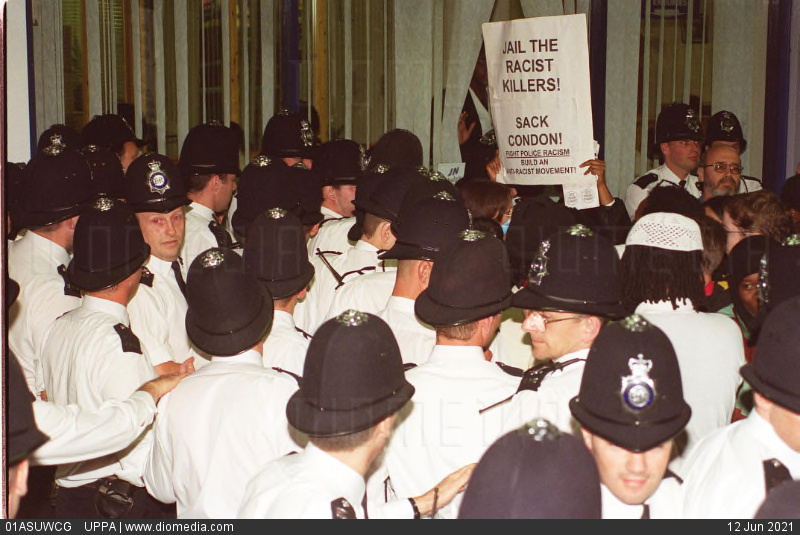
Stephen Lawrence Murder Inquiry in 1998 was attended by protesters against the handling of the case by the Metropolitan Police. Sir Paul Condon, named on the placard, was knighted 1994, Commissioner of the Met 1993-2000 and was made a life peer in 2001, Baron Condon. (Photo credit: Diomedia)

In addition, the Met have a long history of collusion with fascist organisations, from Sir Oswald Moseley’s “Blackshirt” (British Union of Fascists) to the more recent National Front, British Movement and others. In just one event in 1936, over 7,000 Met officers, including all their mounted police, attempted to force a Blackshirt march through a part of East London where there was a high occupation rate of East European migrant Jewish people. The result was a pitched battle against a defensive mobilisation of ethnic Jews and Irish, along with communists and anarchists. The fascists did not get through but most of the fighting was actually with the police.

The Mangrove restaurant in Notting Hill, West London, opened in 1968 serving Caribbean cuisine and became a meeting place for black activists and intellectuals. It was frequently raided by the Metropolitan police. In 1970 the community organised a protest march to the local police station and violence broke out between police and the protesters, after which the Met charged nine activists with inciting a riot. The trial of the Mangrove Nine lasted 55 days, included a number of challenges to court, exposed the racism of the police and ended in the acquittal of all nine on the more serious charges.

In 1974, an attempt to disrupt a National Front meeting in London ended with many antifascists injured by the Met and Kevin Gately, a student from Leeds of Irish background clubbed to death by police. In a successful large-scale mobilisation to prevent a fascist invasion by the National Front of the SE London Lewisham town centre in 1977, an area of relatively high Afro-Caribbean ethnic settlement (also of significant Irish), the main battles were with Met who were determined to bring the fascists through. In another defensive mobilisation in 1979 in the West London town centre of Southall, an area of high South Asian settlement, Australian antifascist Blair Peach, working in London was also killed by Met police baton.

We do not need to jump to conspiracy assassination attempt theories but we should keep an open mind in this case, consider the possibilities and question the Metropolitan Police handling of the case and their public statements. We also need to treat media handling with suspicion, particularly their non-critical acceptance of Metropolitan Police statements and even suggestions of “drive-by shooting” in US gang-banger tradition.

And to wish the victim a full and timely recovery.

End.

Sasha Johnson on a recent protest March in London (Credit photo: Times UK)

SOURCES

Early report of Johnson shooting: https://www.irishtimes.com/news/world/uk/black-lives-matter-activist-sasha-johnson-shot-in-the-head-in-london-1.4573068

Statement by Sasha Johnson’s political party: https://www.theinitiativeparty.org.uk/

Arrests by Metropolitan Police: https://edition.cnn.com/2021/05/28/uk/london-blm-activist-shooting-charge-intl-hnk/index.html

https://news.sky.com/story/sasha-johnson-second-teen-charged-with-conspiracy-to-murder-black-rights-activist-12330951

Philadelphia Police bombing of MOVE: https://www.theguardian.com/us-news/2020/may/10/move-1985-bombing-reconciliation-philadelphia

Malcolm X: https://www.thejournal.ie/collusion/news/

Martin Luther King: https://www.britannica.com/biography/Martin-Luther-King-Jr

Fred Hampton, Black Panther: https://en.wikipedia.org/wiki/Fred_Hampton

London Metropolitan Police Racism: https://www.independent.co.uk/voices/parm-sandhu-met-police-racism-cressida-dick-b1858208.html

Mangrove Nine trial: https://en.wikipedia.org/wiki/Mangrove_Nine

Mc Pherson Report re Stephen Lawrence murder case: https://www.independent.co.uk/news/the-lawrence-report-sir-william-macpherson-s-recommendations-1073018.html

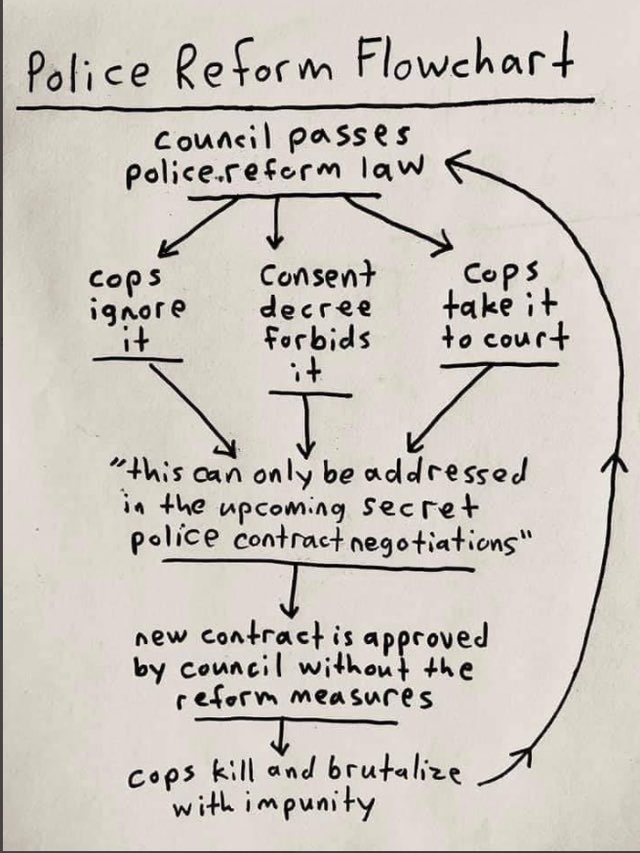
WHY A.C.A.B?

POLICING IN THE USA

Extract

“20-year old Daunte Wright was killed on April 11th, 2021 in Brooklyn Center, a suburb of Minneapolis, Minnesota by a cop (26 year veteran) who allegedly mistook their own gun for a taser. On March 3rd, 2021, Daisha Smalls’ 1 year old child was shot in the head by cops in Houston, Texas while they were chasing a robbery suspect. On March 29th, 13 year old Adam Toledo was shot and killed in Chicago after being chased down by a cop. The Atlanta, Georgia mass shooter who targeted Asian women in massage parlours was said to have “had a bad day” in a statement from Captain Jay Baker, a cop with a history of anti-Asian social media posts. Capitol police were caught taking pictures with domestic terrorists and QAnon fuckwits (oh sorry… “protestors”) in January as they stormed the Capitol Building to protest Biden’s inevitable presidency. These are just some examples from 2021.”

https://orderandanarchy.ca/2021/04/20/acab-and-other-overdue-lessons-from-the-thin-blue-line-continued-unfortunately/

Extract

According to Mapping Police Violence, 319 people have been killed by police in the USA alone since January 1st, 2021. Hell, there were only 18 days in 2020 when cops didn’t kill somebody. Lots of people aren’t going home to their families, their spouses, or their friends because of run-ins with the “thin blue line” and we’re supposed to accept it. We’ve been conditioned to believe that cops are always making the best call and actively keeping communities safe from bad guys and miscreants. Anyone who dies at their hands probably had a good reason to be shot, tased, beaten, or otherwise neglected. “They should have complied” we hear. “They shouldn’t have run” they argue. “Just be polite” they claim again and again.

Image with thanks from Order & Anarchy (see link for article)

Irish Prime Minister and Foreign Affairs Minister Denounce Israeli Government

Diarmuid Breatnach

(Reading time: 2 mins.)

Taoiseach Micheál Martin has described comments by the Government of Israel as “nonsense”. “We all know what happened here. Don’t be hiding behind excuses,” he told RTÉ radio’s Today with Claire Byrne show.

Mr Martin said that the action of the Israeli authorities was contrary to decency and democratic values. The Taoiseach said he was worried about the growing authoritarianism in the world. “It was not acceptable. Democratic countries had to stand up.”

Referring to the armed boarding of Irish relief ships bound for Gaza in 2010, he said it had been a “State-sponsored” coercive act, it was absolutely unacceptable.

The Taoiseach (Prime Minister) Mícheál Martin denouncing action by the regime (Photo sourced: Internet)

Mr Martin said he was meeting with Ministers from Lithuania and Greece to discuss a coordinated EU response and a strong response from the EU was now required.

Coveney condemned Israel for ‘hijacking’ of Irish ship

The Israeli armed boarding of an Irish ship amounted to “piracy”, the Foreign Affairs Minister has said. Simon Coveney said the incident in 2010, which saw a relief ship from Ireland to Gaza boarded over a supposed security concern, was a “state-sponsored hijacking”.

Minister for Foreign Affairs, Simon Coveney who denounced the regime (Photo sourced: Internet)

Mr Coveney said that the Israeli regime “has no democratic legitimacy” and called on the EU to show a “clear and tough response”. He told RTE radio he “would like to speak to” the Israeli consul in Dublin, but stopped short of advocating the banishment of all diplomats across the EU.

There has to be “a real edge” to any sanctions imposed and the EU must go beyond “strong press releases”, he added.

REALITY

Yes, reader, you’re right, that response from Irish Government Ministers was regarding the recent Belarus forcing down of a plane and never occurred during the recent Israeli attack on Gaza (nor in 2014, nor in 2008), nor during its illegal armed boarding and seizing control of an Irish relief ship on the high seas in 2010. Because the Irish State generally takes its line from the USA, which in turn backs up Israel. Belarus however has only Russia backing it and the EU and the USA power blocs are opposed to the Russian one.

In May 2010, when the Gaza flotilla relief convoy was seized (and Turkish citizens killed) by Israeli armed forces, the Irish ship was delayed and sailed later but was also seized in June, forced to go to an Israeli port, the possessions of all crew and passengers seized, their computer and phone memories inspected and they were kept in jail until sent back by plane (often without their possessions). The Irish Government did complain but without denouncing the Israeli Government in the same terms, nor did it call for EU-wide action and, once the Irish citizens were returned, quietly dropped the whole matter.

REFERENCES:

https://www.irishexaminer.com/news/arid-40296995.html

https://en.wikipedia.org/wiki/Gaza_journey_of_MV_Rachel_Corrie

DUBLIN RALLY CALLS FOR EXPULSION OF ISRAELI AMBASSADOR

Diarmuid Breatnach

(Reading time: 7 mins.)

A rally today outside the Israeli Embassy in Dublin heard Palestinian speakers and an Irish socialist TD (Member of the Irish Parliament) denounce Israel’s attacks on Palestinians, its slaughter of civilians including children and women, call for sanctions against Israel and for its Ambassador to be expelled. The rally was jointly organised by Ireland Palestine Solidarity Campaign and Trinity BDS Campaign in solidarity with the Palestinians and with the general strike organised in Palestine.

Fatin Al Tamimi, Chair of the IPSC, opened the meeting, welcoming people and, to loud cheers, declared that she is “a Palestinian and proud to be a Palestinian”.  Fatin went on to list the numbers of Palestinians dead and injured, the numbers of those who were women and children and called the Israeli regime “racist, apartheid” and murderous and called for the boycott of Israeli goods, alluding to the famous 1970s Dunne’s Stores workers’ strike in support of boycott of South African goods during the white minority apartheid regime.  Fatin’s pauses were punctuated by demonstrators chanting “Free, free Palestine!” and “Boycott Israel!”  At one point she said that she had children born here but they would also always be Palestinian and she hoped one day to go back and to welcome all the Irish supporter to a free Palestine, which brought a tremendous cheer from the crowd.

Fatin Al Tamimi, Chairperspon of the IPSC, opening the rally. (Photo: D.Breatnach)

She introduced Wesam Ahmed, from Al Haq, the main Palestine human rights organisation, who spoke through an audio link from Palestine.

Dr. Ibrahim Natil, a DCU academic also spoke, as did Zayd, representing Trinity BDS Campaign.

All the speakers called for stepping up of solidarity action, boycott, divestment and sanctions but also for action by the Irish government, both in their current temporary membership of the United Nations Security Council and in the EU.

Richard Boyd Barrett TD told the crowd that he and Gino Kelly and Paul Murphy had all tackled Mícheál Martin in the Dáil (Irish Parliament) earlier during Taoiseach’s Questions and Martin had claimed he had criticised Israel while also criticising the rockets fired by Hamas.  Boyd Barrett said that we had to get rid of this discourse of equivalence because there is no equivalence between the positions of the Israeli Zionists and the Palestinians, neither in terms of justice nor in power, military or otherwise.

Fatin Tamimi also called for solidarity with all the Palestinian political prisoners

Dr. Ibrahim Natil speaking (Photo: D.Breatnach)
Zayd of Trinity BDS Campaign speaking. (Photo: D.Breatnach)

GARDA HARASSMENT CONTINUES

The Irish police, the Gardaí continued to display on Tuesday the hostility they had exhibited in advance of last Saturday’s demonstration, when they threatened the Ireland Palestine Solidarity Campaign that if they went ahead with their advertised rally the Gardaí would intervene and threatened the organisers with €5,000 fines and possible jail sentences.  Fortunately the Trinity BDS Campaign group had stepped in and held the rally, which turned into a march supported by several thousand.

A Garda beckons traffic on. Gardaí kept the road open despite the inevitable crowd spillover on to the street and then pressured people into crowding closer, despite that clearly going against Covid19 transmission precautions. (Photo: D.Breatnach)

The Gardaí began on Tuesday by telling supporters as they arrived that they were required to spread out to social distancing but were soon ushering people in towards one another.  A woman next to me complained to a Garda that he was moving her into close proximity with other people and violation of social distancing — the Garda shrugged.  As they continued to urge people to push in towards the already crowded space, the Gardaí continually urged traffic to come through and kept repeating to rally supporters that “The road is open”.  Indeed it was and the question is why was it open?  Clearly forcing traffic through put people in danger of vehicle impact or Covid19 infection; the safest measure and easily enough done would have been to divert the traffic before it reached the rally.  But no — the Palestinian solidarity supporters were to be shown that the Gardaí are not to be gainsaid.

Standing the line. Some women took their position on the white line dividing the traffic lanes, declining to be pushed into the crowd by the Gardaí. (Photo: D.Breatnach)

PLACARDS

I find it interesting to collect some photos of the placards displayed at these events and in particular, some of the homemade ones.  These are interesting in a number of ways, some humorous, some very pointed, some quite artistic but they are all also individual expressions and a kind of commitment, to make something in advance to bring to the demonstration or rally.

(Photo: D.Breatnach)

There was one in Irish but sadly the only one I could find.  Will there be more at the next demonstration? If the Irish language is not audible and visible in the progressive sector of society, how are we to expect it to survive, never mind thrive?

A SPACE FOR THE YOUTH

As the rally came to an end, one could observe Palestinian and some other youth, many in their teens coming together to chat but also to chant slogans.  I have seen this before and it appears that this point in events is their space — but it is a dangerous one with the event formally ended and the organisers dispersing, making it easier for repressive moves to be made against them or also to be led into acts which may end in their arrest.  Of course it is the organisers dispersing, adults socialising etc that also allows them to make it their space. 

The youth need a space of their own but one which is also safe and in which they can be helped to consider consequences and effective action.  Generally political organisations do not give the youth that space and, when they do, tend to confine them to following the line of the leaders, who are generally much older.

Young people at the end of the rally. (Photo: D.Breatnach)
More young people at end of rally (Photo: D.Breatnach)

If organisations do not provide those spaces and assist the youth in self-organising, the likelihood is that others will and, in the case of Palestinians or Arabs in general, those others may be Islamic fundamentalists.

RALLY AGAIN NEXT SATURDAY, 2pm at the Spire, Dublin.

(Photo: D.Breatnach)

POSTSCRIPT COMMENT:

There is a slight sense of futility in what speakers ask us to do because justified as the calls are, there seems little hope of convincing most of our politicians of breaking radically with the western imperialist alliance, even though Ireland is not, generally speaking, itself an imperialist country.  And yes, we can continue boycotting but how much of the stock in the supermarkets continues to be from Israel?  And when it is, if one supermarket comes under heavy pressure, the management will often just temporarily remove the products from the targeted shop while they continue to be sold in the others.  And once the pressure is off, the produce might be back on the shelves.  And even if they’re not ….  What can we actually DO that will make a real difference?  

In one way, nothing, since the USA is the main backer of the Zionist state and the USA is the world’s major superpower.  But in another way, we are making a difference, though it is not easy to see sometimes.  Despite our rulers, Ireland has become the most pro-Palestinian country in Europe.  Out of that may come great things in the future.

But it seems to me that there is more that we could do.  Many Irish trade unions formally support the Palestinians — could they not put a motion in their annual conferences calling on the Government to expel the Ambassador?  Could they not at least put a pro-Palestinian poster on each workplace union noticeboard and also advertise each solidarity march?  I know that the unions are not anything like the fighting organisations they once were but that above is surely not asking too much.

end.

(Photo: D.Breatnach)
Section of the crowd seen from above (Photo: D.Breatnach)
I wish I had got a closeup photo of this placard but couldn’t see it again as the crowd broke up (Photo: D.Breatnach)
I thought I had caught the whole placard but clearly did not — I thought the whole text said that “Resistance is made in Palestine” and “We stand with Palestine” but on another’s page saw that what is said was “Courage is made in Palestine” and “we stand with you”.
(Photo: D.Breatnach)
The only one i nGaeilge, is trua a rá. (Photo: D.Breatnach)
You can probably work out that “occupation” is the word partly missing in the photo. (Photo: D.Breatnach)
(Photo: D.Breatnach)
Someone is sure to grab that for a quotation (Photo: D.Breatnach)