Aistrithe ag D.Breatnach ó scéal ag Rebecca Black PA24/08/2023 (Achair léitheorachta 3 nóim.)
Tá caomhnóirí ag ceiliúradh tar éis dóibh teacht ar fhianaise gur phóraigh an t-iascaire coirneach in Éirinn don chéad uair le breis agus 200 bliain.
Bhí péire ag pórú ag láthair nead rúnda i gCo. Fear Manach, de réir Fiadhúlra Uladh.
Dúirt an eagras neamhrialtach go raibh an t-éan creiche sainiúil tar éis athchoilíniú go nádúrtha sa cheantar agus gur éirigh leis dhá scalltán ar a laghad a shaolú, b’fhéidir trí chinn – an chéad phéire scaltan fiáine den chineál in Éirinn sa lá atá inniu ann.
Ba é Giles Knight, comhairleoir scéime feirmeoireachta comhshaoil le Ulster Wildlife, a rinne an fionnachtain.
Tá sé ag breathnú ar an mbeirt phóraithe le trí shéasúr anuas le linn a chuairteanna feirme áitiúla sa cheantar.
“Tá an scéala seo á choinneáil gar do mo bhrollach agam le fada an lá chun sábháilteacht agus leas na n-éan iontach ach soghonta seo a chinntiú,” a dúirt sé.
“In éineacht le mo mhac Eoin, tá mé ag faire ar na héin fásta ag filleadh ar an suíomh céanna ó 2021, mar sin d’fhéadfá a shamhlú go raibh sceitimíní orm ar an nóiméad a chonaic mé trí scalltán agus dhá éan fásta i mbliana.
“Nóiméad cimil-do-shúile a bhí ann, ócáid eisceachtúil; an buaicphointe is mó de mo ghairm bheatha fiadhúlra 30 bliain – cosúil len a theacht ar thaisce atá caillte le fada.
“Le dhá scalltán ar a laghad ag teacht aníos an séasúr seo, is scéal an-rathúil caomhantais é seo agus léiríonn sé éiceachóras bogach sláintiúil le neart gnáthóg agus iasc oiriúnach chun an creachadóir géibhinn seo a thabhairt ar ais chuig ár spéartha agus ag tumadh ins na Locha Fhear Manach.
Iascaire Coirnech ar nead (íomhadh le: Wikipedia)
“Filleadh tuaithe beo i ndáiríre.”
Dúirt Fiadhúlra Uladh gur ceapadh go raibh na hiolair chreiche imithe in éag mar éan goir in Éirinn ag deireadh an 18ú haois mar gheall ar ghéarleanúint chórasach.
Cé gur minic a fheictear iad ar imirce chuig an Afraic Fho-Shahárach agus amach uaithi, ní raibh pórú deimhnithe in Éirinn do-ghlactha go dtí seo, agus Albain ina dhaingean pórúcháin sa RA.
Mhol an Dr Marc Ruddock, ó Northern Ireland Raptor Study Group, an “scéal iontach”.
“Tá na comharthaí agus na radharcanna go léir le blianta beaga anuas ag díriú air seo, ach anois tá fíor-rath póraithe dearbhaithe ar deireadh – nuacht iontach,” a dúirt sé.
Dúirt an tUasal Knight nach nochtfaí láthair an tsuímh le sábháilteacht na n-éan a chinntiú.
“Anois go bhfuil na héin seo ar ais in Éirinn agus ag pórú go rathúil, tá sé ríthábhachtach go bhfágfar faoi shíocháin iad ionas gur féidir leo leanúint ar aghaidh ag méadú trí phórú bliain i ndiaidh a chéile.
“Creidimid agus tá súil againn go bhféadfadh sé seo a bheith ina thús le ríshliocht éin chreiche,” a dúirt sé.
Iascaire Coirneach agus iasc gafa (Íomhádh le: Nick Brown)
“Ba ábhar misnigh agus croíúil é an t-úinéir talún, an pobal feirmeoireachta áitiúil agus ár gcomhpháirtithe a fheiceáil ag fáiltiú roimh fhilleadh na n-iolairí.
“Cuirfidh a dtacaíocht leanúnach ar chumas na nglún atá le teacht sult a bhaint as na héin iontacha seo i bhfad amach anseo.”
Ar fud na hÉireann, tá monatóireacht ag eolairí na n-éan creiche, tógáil ardáin neadaithe, agus pleanáil do chláir aistrithe agus athbhunaithe ar siúl le blianta anuas.
The Petro government has reached the end of its first year in which it promised a lot, came through on some things and changed a lot of other things, particularly its position on certain issues.
Before taking a look at it, it should be pointed out that the Historic Pact (PH) is not the first left-wing government in Colombia. The country is still waiting for that. It is a remould of liberalism in the style of Ernesto Samper.
Even so, it is worth looking at its proposals and what it did in this year, as unlike Samper, it did give a lot of hope to the people.
It is generally accepted that Petro would not have been elected President if it were not for the big popular revolt that began on April 28th 2021, an uprising that cost the life of over 80 youths.
We don’t know the exact number of dead and disappeared and less still of the number of young women who were raped and sexually abused by the Police as part of the repression. Even the number of political prisoners is a matter of dispute.
Not due to the absence of the number of people detained but because the amongst Prosecutor’s Office, the press and sections of the PH there are those who seek to divest the detained youths of any political motivations.
They simply paint them as criminals and vandals, the last of these words having been covered in glory during those protests.1
The heroic ‘vandals’:Demonstrators clash with riot police during a protest against a tax reform bill launched by Colombian President Ivan Duque, in Bogota, on April 28, 2021. (Photo cred: Juan Barreto/ AFP). (Photo choice and caption by Rebel Breeze)
So, it comes as no surprise that Petro, like Boric in Chile, did not free the political prisoners from the revolt. He made a few lukewarm attempts to get a handful of them out, but a long way from all of them.
They are still in prison, despite his electoral victory being thanks to their struggle and actions that led them to prison.
It is perhaps the most symbolic transgression as it says sacrifice yourselves but don’t expect anything from me, not even when I owe you everything. Petro has defended himself by saying that it is not his decision to free or imprison anyone.
Recently he stated:
There are still many youths in prison and I get blamed, as if it were up to me to imprison or free them. State bodies and people inside them have decided that these youths should not be freed.
Not because they are terrorists, who would think protesting is terrorism? If not a dictator or Fascist. No, but because they want to punish the youths who rebel.2
Some may feel that he is right in a technical sense, i.e. that it is the Prosecution and the judges who imprison them. But that is to ignore reality.
He himself denigrated them when he referred to them as ‘vandals’ during the protests and since taking office, neither Petro nor the PH have been the visible heads of any initiative to free the prisoners. They washed their hands of the issue.
He didn’t even disband the specialised riot squad, the ESMAD. Unlike other proposals he didn’t even try to.
He changed its name and promised a couple of human rights courses for its members, as if the problem was their lack of attendance at a course or two given by some NGO and not a deep-rooted problem. The ESMAD is a unit that murdered many youths.
It is a body whose name is synonymous with violence, torture, sexual abuse and murder. A name change won’t wash away the blood.
… the promise to put an end to the ESMD was just lip service during the presidential campaign.It wasn’t carried out and the government will fail to carry through on its commitment to the youths who brought the president to power, through the existence of a repressive violent force like this one.
The temptations to infiltrate the marches in order to justify confrontations with the kids will continue to be part of the landscape.3
Petro gives his voters a clenched fist on his inauguration as President in August last year but many remain in jail and the rest get little or nothing. (Photo sourced: Internet) (Photo choice and caption by Rebel Breeze)
In economic terms the government promised a lot during the campaign, but once in power, it quickly softened its proposals and in some other cases they didn’t get a majority of votes in Congress.
The lack of votes in Congress is not a simple one of not coming through, nor is it due to betrayals by the PH nor manoeuvres by other forces that Petro can’t control.
The PH is a coalition of sectors of the right with sectors of what passes for social democracy in Colombia. It was not inevitable, but rather Petro actively advocated that it be like that.
It is worth recalling that at first, he wasn’t going to choose Francia Márquez as his vice-president but rather a right winger like Roy Barreras.
However there are economic aspects that are under his control, but for the moment they remain as just proposals, rather than real policies that have gone through Congress. On the land question, Petro proposes monocultures and agribusiness.
This was clearly to be seen in the proposal to buy three million hectares from the cattle ranchers.
Petro’s vision of the countryside is one of it being at the service of big money and the promotion of cash crops, despite some references to the production of foodstuffs for internal consumption and the so-called bio-economy.
Something similar can be seen with his proposals for clean energy. He spoke a great deal about it during the electoral campaign and some of his proposals, or outlines as they stand, look good.
That Colombia no longer depend on oil and coal is not a bad idea and that it be replaced with alternative energy sources such as solar and wind power looks good, until we actually examine the details.
One of his first stumbles, in that sense, was with the Indigenous people, as La Guajira is a poor area that has suffered the consequences of coal mining.
He did not take them into account and they reminded him that what is proposed for their territory should have their support, though legally it is not quite the case, and that it should also benefit them.
He partially rectified the case, but the big question is, if he wants an energy transition why does he have to seek out French and other foreign capital to finance it. Does he want to hand over the wind and solar power as they are still doing with oil and coal?
It would seem so. According to Petro:
We need investments that help us carry this out: we would have a matrix of foreign investment centred on the construction of clean energies in South America, with a guaranteed market, if we have direct link to the United States and by sea with the rest of the world.4
If you substitute oil and coal for clean energy, you begin to see the problem: the resources of Colombia in the service of big money and the countries of the North.
If we are to have a real change and energy transition, we must end the idea of Northern energy consumption regardless of where it comes from as sustainable and that countries such as Colombia must supply energy for a planet-destroying consumption model.
Neither have there been great advances on the issue of peace. He did reactivate the dialogue with the ELN, but stumbled with something that is still an integral part of his policy, the so-called Total Peace.
In his proposal he compared the insurgent group, the ELN to the drug gangs and paramilitary groups such as the Clan de Golfo. It was not a mistake, Petro really does see the ELN as a criminal gang.
He made it clear in his speech to the military and he reaffirmed it when he named the blood thirsty Mafia boss and former Murderer-in-Chief of the paramilitaries, Salvatore Mancuso as a Peace Promoter.
With that he placed the ELN leadership on the same plane as the paramilitaries. And they have implicitly accepted it for the moment.
In Petro’s discourse Colombia is a violent country and there is no way to understand it and peace has to be made with everyone as they are all the same, the insurgency and the narcos. Not even Santos was that creative in delegitimising the guerrillas.
Mancuso took on his role and once again spoke of the land they had stolen, the disappeared etc. He has been telling us for two decades now that tomorrow he will reveal all, but tomorrow never comes.
When Uribe invited Mancuso to the Congress of the Republic, Petro had a different attitude.
His response was blunt and he described Uribe as a president that was captured by the paramilitaries and that Mancuso manipulated the Congress stating that “if under this flag of peace, dirtied by cocaine what is essentially being proposed is an alliance with genocidal drug traffickers and political leaders… then we are not contributing to any sort of peace.”5
And we end the year with a scandal. I have on many occasions compared Petro and the PH to Samper and the Liberal Party of the 90s. But not in my most fertile delirium could I imagine that Petro and his son would give us another Process 8000.
Samper managed to reinvent himself as a statesman and human rights defender, despite his government’s dreadful record, following the outcry over drug money in his election campaign. He has publicly supported Petro and the PH.
Now he can advise them on how to deny what is as plain as day. Illicit funds went into the PH’s campaign as has happened with all election campaigns.
Petro finds himself in the eye of the storm due to the manoeuvres of his son in asking for and receiving money. His ambassador in Caracas has boasted about obtaining 15,000 million pesos [3.3 million euros] that were not reported to the authorities.
Those on the “left” who gave Petro unconditional support defend him, saying that it all happened behind his back.
The only thing left to say about that is, a little bit of respect for Samper please! He established his copyright, authorship of that expression in relation to dirty money. They will have to come up with another one.
For the moment Petro says, I didn’t raise him, which is true. But his son is the beneficiary of a type of political nepotism. As was the case with Samper, the only doubt is whether Petro knew or not.
That a government which is supposedly progressive has found itself entangled in such a storm is revealing of a government in which politics is a family business.
Something similar happened to the FARC commander Iván Márquez with his nephew who turned out to be a DEA informant.
On the drugs issue it is clear that the discourse and reality do not match at any point. Petro went to the UN to announce a new drugs policy. He put forward various aims for his government and criticised the war on drugs.6
It seems like a bad joke that the said policy has not yet been published. What we have seen is that the fumigations continue, the Yanks smile on and occasionally there is talk of going after the big fish, without saying who they are.
We know that he is not talking about the banks, and less still of the European companies that supply the precursor chemicals. The big fish will turn out to be middle ranking thugs in the cities of Colombia, at best.
So, it has been a year that wasn’t that different to others. Yes, there were changes, some proposal or other that was half interesting, but even the right wing does that occasionally.
The vote of confidence cast in the ballot box is still waiting to see the promised changes. But we increasingly see a government without a clear aim and reinventing old policies as new ones, with the same results as before.
End.
FOOTNOTES
1 See Ó Loingsigh’s article Long Live the Vandals – R.B.
The media announces that “the population of Ireland has reached 5 million … for the first time in 170 years”. Interesting – and a barefaced lie! The population of Ireland passed 5 million some time ago and is actually around 6.5 million now.1
Ireland remained with negative population growth until near the end of the last century – mismanaged for most of the population first by the British occupiers of the whole of the island, then by a combination of the native neo-colonial bourgeoisie and of the settler colonial ruling class.
Filling in a census form from which population statistics can be extracted (Photo sourced: Internet)
For more than a century the population of Ireland stood at around 5 million, static despite a high birth rate. This was mathematically possible only through continual massive emigration – mostly to English-speaking regimes: Britain, USA, Australia, New Zealand and Canada.
But it is true that 170 years ago it was more than 5 million – in fact it was around 8.5 million. And it is worth reflecting on how they were able to produce enough food domestically to feed that entire population while now, with a smaller population, we import as much as 80% from abroad.2
It was the Great Hunger that wiped out much of the earlier population, statistics somewhat hiding the pain and sorrow of millions of Irish in death, disease and emigration — and the great transfer of land for cultivation (and rent) to pasturage, with its dangerous environmental impact.
It provided an opportunity for growth of the Catholic Irish capitalist class, the Gombeens, huckstering money-lenders buying up the lands of afflicted neighbours.
The kind of class that the British could depend on in 1921 to manage the neo-colony and to murder and jail those of national liberation3.
Emigration kept population stats steady and, combined with unemployment, ensured a low internal home market for development. An educated workforce and natural resources could be developed but the Gombeen class opened it all to foreign multinationals rather than develop it themselves.
Even with foreign exploitation of the workforce at home, the education system turned out mostly emigration fodder: the Irish tax-payers funded an education system to provide a literate and numerate English-speaking workforces for capitalist exploitation abroad.
No wonder the Irish political class declined to give the Irish abroad a vote in the Irish state – unlike for decades any other state in the European Market. Yet during the 1930s through to the 1960s, money sent home by Irish migrants accounted for an estimated 30% of the Irish State’s economy.4
The Irish state remains a neo-colony with low taxation and other incentives for foreign companies to take over our few industries5 and local and foreign property speculators to rake in profits out of the despair of homelessness or of struggling to meet rent or mortgage payments.
A neo-colonial market for produce of foreign companies and to plunder not only our labour force, not only our natural resources on land, sea and wind and but even our infrastructures in transport and communication, energy, health service, water supply and even our city sanitation.
TRUNCATED
The announced statistics were truncated, appropriate perhaps for a truncated country, with the history behind those statistics not so much truncated as obliterated.
That is our present and our past but not how the future has to be – we can write our own future but we won’t do it by putting a mark on a ballot paper.
3The Irish Civil War or Counterrevolution, 1922-1923.
4I have read this in the past but am unable now to find the reference; however I have posted some references on the figures of remittances from Irish emigrants.
5 For a few examples of foreign takeover: Irish stout, beer and lagers (Guinness, Smithwicks, Harp); Irish whiskey (Paddy, Jameson, Bushmills); cigarettes (Afton); preserved vegetables (Erin); aviation (Aer Lingus); public transport (Transport for Ireland; LUAS); sugar (Irish sugar beet replaced by subsidised cane sugar from the USA); woodlands (Coillte).
Gearóid Ó Loingsigh looks at the new government in Colombia and how it talks of peace while increasing militarisation. English language version first published in Redline, 24th November, reprinted with kind permission of author.
(Reading time: 8 mins.)
The Petro–Márquez government is one which proposes to bring us to what they term Total Peace.
The term and the proposal as such have been subjected to justifiable criticism, not least because it places the insurgency of the ELN on the same footing as armed drug trafficking groups.
But there is another aspect of their government that calls upon us to reflect on what Petro – Márquez understand as peace and a demilitarized society that breaks with the past and the present of a repressive state where the answer to everything is a military response.
A first step would be to remove the military from civilian settings. But Petro has already made statements that indicate that neither he nor Márquez think that.
Shortly after taking on the presidency, he declared that the answer to deforestation of the Amazon was not only military, but Yankee.
In their electoral campaign their proposal was different, they did not talk about the military anywhere, but rather of democracy, autonomy, measures against drug trafficking and money laundering.
We will stop the deforestation and the burning of the jungle. We will dismantle the engines of deforestation, amongst them: displacement of the unemployed and landless peasants from the interior of the country towards the Amazon; land grabbers and promoters of extensive cattle ranching and other monocultures; corruption in public bodies; laundering of foreign currency through the purchase of deforested land, a by-product of drug trafficking and corruption; the uncontrolled extraction of wood etc.[1]
And he also said that the pacts to protect the jungle would be with the communities and not national or foreign militaries.
We will build a broad national pact of regional and global importance for the environmental defence of the Amazon, Orinoco and the biogeographic corridor of the Pacific. We will set up community agreements for the regeneration and ecological restoration of these eco-systems based on organisational processes, proposing to increase the size of collective territories, registry of plots and the strengthening of traditional and ancestral authorities. We will recognise the rural communities’ own lifestyle in strategic eco-systems and their own ecological and economic forms of production in these habitats, as well as their own environmental management.[2]
It all sounds very nice, but it goes hand in hand with militarisation. He proposed a sort of military alliance with the USA to avoid the burning of the jungle, copying the already existing model in Brazil where the USA has a base from which to put out fires.
Of course, in Brazil the mining and logging companies, etc. invade the territory with the approval of the government. The presence of north American troops never prevented any of the extractionist policies and less still poverty under the governments of Lula, Dilma and Bolsonaro.
As others have pointed out, it is nothing more than the militarisation of environmentalism and it is an old slogan of the imperialists that they should be in charge wherever they want and that includes the Amazon.
They used to brandish the anti-narcotics struggle as an excuse and now it is global warming. Al Gore once said that “The Amazon is not their property, it belongs to us all”. Of course, by us, this miscreant means Yankee imperialism: the USA.
It is the same discourse they have in relation to oil; it does not belong to the countries that have it but rather to all of us i.e. the US and European companies. Al Gore’s fame as an environmentalist is undeserved but his reputation as an old imperialist is completely justified.
Other governments have come out with similar feelings, Gore’s was not an individual outburst. Macron, NATO as such and the influential magazine Foreign Policy have argued for a military intervention in the region with the aim of protecting the planet.[3]
For the moment, Petro is not in favour of Colombia becoming a member of NATO, rather he proposes a regional military alliance.[4] Against whom would this alliance fight is not at all clear, or whether it would simply be an unofficial appendage to NATO.
We should be concerned and not just a little bit. In November he met with representatives of the US Embassy and the Subsecretary of Political Affairs, Victoria Nuland. Following the meeting Nuland tweeted.
Thank you, Gustavo Petro President of Colombia for our productive meeting reaffirming the importance of our continued partnership on security, peace, progress for Venezuela and protecting our planet.[5]
Bearing in mind the murky past of Nuland in Ukraine in 2014, we should be very careful with her, but there are those who believe that Petro is charge.
It is not the only issue where he proposes military rather than civilian solutions. Faced with the lack of access to healthcare in the territories of the Pacific, he also proposed to militarise the response. The Pacific is one of the regions with the worst indicators in the area of healthcare.
Nobody doubts about the need for an urgent and comprehensive response for the region. The military boat USNS Comfort visited Colombia to provide medical assistance.
It was not the first time, the said boat has visited the country four times as part of the Continuing Promise[6] mission, a medical and public relations initiative of the US, deploying its Soft Power.
This boat also took part in the two wars in Iraq as a military hospital, and in the invasion of Haití in 1994. Petro’s response on Twitter was:
I am grateful for this support in healthcare from the US government to the people of the Caribbean. It is important that we think about the Pacific. A mission for the National Navy, along with the building of the first frigate “made in Colombia” will be the building of a hospital ship.[7]
In a non-militarised state healthcare should be under the remit of the Ministry of Health and not the Ministry of Defence, but Petro – Márquez want to bring healthcare to the Pacific through military rather than civilian institutions.
Such incoherence with his public discourse!
In previous governments the military has used its economic power and civic-military days as part of its military and armed operations.
The mobilisation of troops and the demand for collaboration from the civilian population is justified on the basis of access to medical services that are provided for by civilians in Bogotá and other parts of the country without the need to explain themselves to military institution in the midst of a war.
The Petro – Márquez government is also going to continue with the proposal of the Santos government to build a military base on the Gorgona Island. It is worth remembering that Santos was one of these other men of peace that are in abundance in Colombia: hawks dressed as doves.
The Gorgona Island was, for many years, a penal colony, the Colombian version of the infamous Devil’s Island immortalised in Papillon film with Steve McQueen. In 1982 it was declared a world heritage site by UNESCO due to it high ecological value.
A deserted beach in Gorgona National Park, an island 21 miles off Colombia’s Pacific coast and a UNESCO World Heritage ecological site — Petro plans to put a military base there. (Image sourced: Internet)
Now they want to go ahead with the plan to place a military base there. What is new in the Petro – Márquez government is that there is a rumour that the USA will have access to the base.
It is not an absurd idea, as the project has anti-narcotic aims and is financed by the US Embassy in the country.[8] With absolute certainty, the DEA will at least have access to it.
There are alternatives, such as a warship as a centre of operations. Petro wants the Navy to build a hospital ship but is not up to telling them to build a ship for what does fall within its remit.
He says he wants peace but he wants to promote the military at every turn, even turning up every time he can wearing military caps.
So far, he hasn’t acted ridiculous like Iván Duque dressing up as a police officer in the midst of the National Strike of 2021, but as his supporters point out he has only been president for a little more than 100 days and we have to give him time.
In every circus you have to wait for the clowns to come in. We can’t always see the lion-tamer but clowns and clownish antics are always there.
Some social climbers from social and human rights organisations ran to take up posts in the ministries of Defence and also the Interior.
They used to be critics of the armed forces and police of the state, now they look out for its good name in the area of human rights and international humanitarian law. They also promote the military at each turn.
The recently appointed Alexandra González, a former functionary of the Committee for Solidarity with Political Prisoners, who is now the Cabinet Secretary of the Ministry of National Defence published an effusive tweet full of praise of the Ministry of Defence that stated “Military engineers will build tertiary road to benefit the peasant population.”[9]
She doesn’t understand that the armed forces are never for anything other than war, even in peace time they are preparing for war. It is their only function. In any case, no one can explain why the military have to the ones that are building those roads.
But as a good political opportunist she claims as her own that which does not belong to her. On twitter they replied to her, pointing out that those projects were old ones.
A retired military officer and former advisor to the High Commissioner for Peace pointed her in the direction of an article in the regional newspaper El Quindiano written by himself, speaking of the beginning of these civic – military projects in the 1960s.[10]
All governments have carried out infrastructural projects through the Ministry of Defence and in all governments, they were referred to as peace projects.
Perhaps the fugitives from the human rights organisations feel the need to say that it is new in order not to make evident that there is a continuity between this government and all of the previous ones.
I don’t understand why they signed up to the non-binding declaration on safe schools, if they are promoting the military presence in all other aspects of civilian life.
The ideal situation would be to not permit the military to use schools as bases or human shields in the midst of fighting nor use the military to build infrastructural projects.
If the government was really progressive (an imprecise term) it would remove the civilian contracts from the military, healthcare would be the exclusive responsibility of health bodies and not the military, it would not propose a military alliance in a world with an excess of them.
And the symbols that Peto would put on a pedestal would be civilian ones, from the people, the communities, even from some trade union, even if it were just out of pure nostalgia, as when he was Mayor of Bogotá he didn’t think much of unions.
WALKING ALONG THE TOLKA AS IT RUNS THROUGH GRIFFITH PARK RECENTLY, I WAS PLEASED TO SEE A GREAT VARIETY OF WILDFLOWERS GROWING ON THE BANKS.
All were within a stretch of a few hundred yards.
Mint perhaps? (Photo: D.Breatnach)
Water mint maybe (Mentha aquaticaMismín mionsach) growing midstream so not able to pluck a leaf and smell it. Also brown seed-heads of Broad-leaved Dock (Rumex obtusifoliusCopóg shráide) for contrast (Photo: D.Breatnach).
Not sure what this one is but breaks out into tiny white flowers. Almost centre is a stalk of stinging nettle (Neantóg/ Cál faiche). (Photo: D.Breatnach
Member of the thistle family (Feochadán) — but which one? — in flower and down (Photo: D.Breatnach)
Little Grey Heron (Corr Éisc) waiting by the reeds for lunch to swim by (Photo: D.Breatnach)
Hollyhock in foreground and looks like another behind it — NOT a native plant. There were some growing each end of the bridge, as though planted or sown there. (Photo: D.Breatnach)
Groundsel/ Ragwort like constellations of stars before they go to down and seed. But which one? Common Ragwort (Senecio jacobaea / Jacobaea vulgarisBuachalán buí) I think. (Photo: D.Breatnach)
This one I do know — Meadowsweet (Filipendula ulmariaAirgead luachra) and dock seed heads again. (Photo: D.Breatnach)
Casadh sa tsruth — a bend in the flow — and view up from the weir. Willow trees on the right and a shrub I know to see but have not identified (a Skimmias?) on the right. (Photo: D.Breatnach)
Lesser Knotweed (Persicaria campanulataGlúineach an chlúimh), I’m pretty sure — an introduced plant. (Photo: D.Breatnach)
There were other flowering plants too but either had already flowered or were yet to do so.
(Photo: D.Breatnach) Red Campion (Silene Vulgaris Coireán na gcuach) at centre-right here? (Photo: D.Breatnach)
Between 400 and 500 people gathered in Moore Street on Saturday 22nd January 2022 to hear a number of speakers declare their complete opposition to the plans of the Hammerson property group, most of which had been approved by the chief officer of Dublin City Council’s Planning Department, in the face of a great many formal and informal objections and against even decisions of the elected councillors. Musicians also played and sang a number of songs at the event.
Section of the crowd at the rally. (Photo: Rebel Breeze)
SPEAKERS AND SPEECHES
Chaired by the Secretary of the Moore Street Preservation Trust, Mícheál Mac Donncha (Sinn Féin Councillor), the crowd listened to a range of speakers: dramatist and campaigner for decades Frank Allen, 1916 relatives Brendan Mulvihill and Donna Cooney (latter a long-time campaigner and also Green Party Councillor), Diarmuid Breatnach for the Save Moore Street From Demolition campaign group (with a campaign stall every Saturday), Carolyn Alright (fourth-generation street trader), Stephen Troy (2nd generation local butcher) and Aengus Ó Snodaigh (Sinn Féin TD [member of the Irish Parliament]).
Micheál Mac Donncha, Secretary of the Moore Street Preservation Trust (also SF Dublin Councillor) chairing the event. (Photo: Rebel Breeze)
Each speech was different but of course sharing such themes as the struggle for Irish independence, historical memory and conservation but also closely linked to issues very much of the day: lack of justice in economic and social policy, lack of democracy in decision-making, reference to the housing crisis, property speculators, vulture funds, the banks ….. A number also made reference to the recent deaths of two homeless people in the vicinity.
Diarmuid Breatnach, of the Save Moore Street From Demolition campaign group, speaking at the rally (Photo sourced: Internet).Independent businessman in Moore Street Stephen Troy speaking during the rally (Photo: Rebel Breeze)
There were some additional points made, for example Frank Allen called on people to tell the Fianna Fáil party they’d never get a vote in Dublin again if they didn’t act to save the area from demolition; Donna Cooney pointed out that demolition of buildings had a much worse effect on the environment than restoration; Diarmuid Breatnach stated that the area was of international historical importance and merited world heritage status; Stephen Troy spoke about the disaster for small businesses next to a 15-year building site; Caroline Alright pleaded for the future of the street to be taken out of the hands of the developers and Ó Snodaigh expected a more supportive attitude from the next Government (widely predicted to be a coalition with Sinn Féin as the larger partner).
Pat Waters, performing at the rally. (Photo: Rebel Breeze)
Donna Cooney, long-time campaigner for Moore Street and relative of Volunteer Elizabeth O’Farrell (see her portrait next to Donna) speaking at the rally. (Photo: Rebel Breeze)
Live music for the event was provided by Pat Waters, performing his own compositions, including a song about the O’Rahilly who was fatally wounded in 1916 in Moore Street leading a charge against a British Army barricade; also two musicians from the Cobblestone Pub, including the son of the owner, Tom Mulligan who performed Pete St. John’s Dublin in the Rare Aul’ Times.
Musicians of the Cobblestone performing (note Frank Allen in left background, who was a passionate speaker at the event). (Photo: Rebel Breeze)
There was speculation in some quarters as to why the rally had been called at such short notice; with prominent members of the Moore Street Preservation Trust absent1 and having an incorrect Irish name of the street2 on the event poster and promotional merchandise did seem to indicate a rushed event.
For some too, the Trust is being increasingly seen as closely linked to Sinn Féin, which for some is a positive factor but for others is not. The closeness has been evident on a number of occasions: a SF public meeting some years ago at which Jim Connolly Heron, prominent member of the Trust was the only speaker representing campaigners and more recently the promotion of the Trust’s Alternative Moore Street plan by SF, including the party President, Mary Lou Mac Donald, speaking at its launch a few months ago. At the rally on Saturday, the speaker for the Save Moore Street From Demolition campaign group made a point of saying that their group is independent of any political party.
Aengus Ó Snodaigh, SF TD and sponsor of Bill on Moore Street in the Dáil, speaking at the rally (Photo: Rebel Breeze)
However, the Bill to make the area a cultural quarter, currently proceeding with glacial slowness through the Dáil (Irish Parliament) is sponsored by a Sinn Féin TD, Aengus Ó Snodaigh, who spoke at the rally. Others counter by pointing out that Darragh O’Brien, a Minister of a party now in Government, Fianna Fáil, had sponsored a very similar bill back in 2015; however, with that party now the leading member of the current coalition Government, their leaders have welcomed the speculator’s plan for Moore Street.
A view of the crowd at the very start of the rally (Photo: Rebel Breeze)
GOVERNMENT
The Government department most concerned with the Moore Street issues is the Department of Heritage, part of the Department of Housing, Local Government and Heritage3. When Heather Humphries was the Minister responsible for Heritage she championed the bid of property speculator Joe O’Reilly to get control of Nos. 24-25 (owned by DCC) at the end of the central Moore Street terrace in exchange for the four buildings the State had declared a National Monument (Nos.14-17).
When Dublin City councillors voted not to allow that “land-swap”, against the recommendation of the City Managers, she castigated them publicly. She also instructed her legal team to appeal the High Court Judgement of March 2016 that the whole area is a National Historical Monument and in February was successful in having the judgement set aside.4 When Humphries attended Moore Street during the Easter 2016 events she was picketed and booed when she spoke. However, the current Minister for Housing, Local Government and Heritage Darragh O’Brien actually put in a submission against the proposed demolition of a building at the south end of Moore Street; however the Planning Department of Dublin City Council approved it.
Section of the crowd in front of the rally (Photo: Rebel Breeze)
As Minister 1n 2016, Humphries set up a Consultative Group on Moore Street on which all the Dáil political parties had a seat, along with a couple of councillors. From the campaigners, only the Jim Connolly Heron group had representation on it. The Minister’s group (latterly “Advisory”) has been in operation from 2016 until late last year but seems to have achieved nothing. The Hammerson Plan was welcomed by its Chairperson and by some of its members, including Brian O’Neill, Chairperson of the 1916 Relatives Association which seems a volte-face of that organisation, which had the conservation of the Moore Street battlefield as a central point of the Association’s constitution. However, the Hammerson plan was strongly opposed by others in the Minister’s Group, including Jim Connolly Heron. Outside the Minister’s Group, the opposition is even more widescale.
Street traders and independent businessman in Moore Street chatting at the rally. Photo: Rebel Breeze)
THE FUTURE
The planning permission given to Hammerson will be appealed to An Bord Pleanála but the Bord has a bad reputation with conservation campaigners, who see it as generally favouring the property developers5. Scheduling the appeal would take at least two months and possibly much longer. Should the campaigners not succeed at that stage, a legal challenge is also a possibility. Alongside the exploring of these options, street activities such as the rally on Saturday are likely. In 2016 conservation campaigners occupied the buildings for six days, blockaded them for six weeks, organised marches, rallies, pickets, re-enactments, concerts, history tours and public meetings.
Moore Street might be in for a hot summer. Or, given how long some processes have taken to date, even a hot Autumn.
2 The name they used was Sráid Uí Mhórdha, which is also the one on DCC’s street nameplate. However, it has been widely accepted in recent years that the correct name in Irish is Sráid an Mhúraigh, which is the one recorded in the State’s database for place-names, logainm.ie and furthermore is the version used in Sinn Féin’s own Bill currently proceeding through the Dáil.
4 The Appeal Court verdict did not discuss whether it was or was not but instead declared that a High Court Judge was not empowered to declare a National Monument.
5 In fact, the Bord approved the O’Reilly plan for a giant “shopping mall” in the area (forerunner to the current Hammerson Plan) even though the Bord’s own officer recommended rejecting it.
Fire is an important source of heat and so facilitates life but it can also be a killer. Fire safety is particularly important in multi-occupied buildings but essential safeguards are often not provided or when they are there, are ignored or misused. One can see evidence of that frequently in news reports and even on many occasions in one’s own life and, on a number of occasions as a manager of accommodation services, I have certainly seen examples all too often. Buildings are being constructed to greater heights than can be reached by the ladders of fire-fighters. Those responsible for lack of fire safety procedures or of violating them should face severe penalties.
Fire at tower block in Tower Hamlets in London last year. (Photo: Supplied to Guardian newspaper).
When it is being destructive, fire kills in many different ways, not just by extreme heat. Smoke inhalation is another killer, as are toxic fumes emitted by some materials when burning. People can be killed by falls when attempting to escape a fire or be crushed by falling parts of the building, beams etc. And fire can also cause explosions when it encounters volatile liquids or gasses. Whether we live, work or relax in a building, we should never be blasé about the dangers, never disregard precautions and in fact be prepared to insist on adherence.
There are various headings under which we can discuss fires safety but Prevention, Detection, Suppression and Evacuation cover most of them — to which we can add Educated Awareness.
Prevention has to do mostly with safe design, use of safe materials and with safely operating processes that generate heat or produce flame, classically cooking and smoking but also many others — in industry all such procedures should be clearly advertised.
In Detection, apart from what to do when one smells burning or personally encounters flames or smoke, it is with systems such as smoke and heat detectors and alarms that we are concerned.
With regard to Suppression, although of course occupational fire-fighters may use other means, we are interested in fire extinguishers (more rarely fire hoses) and sprinkler systems and, in Evacuation, in the means of safe escape and subsequent assembly, along with indications of when one should do so, which of course are linked to detectors and alarms.
SUPPRESSION
How often we see a fire-extinguisher being used to prop open a door! This is a serious misuse of a piece of fire-fighting equipment and its use in that way may mean it will not available in the appropriate place or malfunctions when required. Often too the door being propped open is very close to a staircase, with the danger of the heavy extinguisher being dislodged and rolling or bouncing down the stairs to strike someone.
International Fire Extinguisher pictogram sign (Image sourced: Internet)
Fire extinguishers in buildings are usually installed by a fire-protection company, under contract to check and service them once a year. Does that sound safe enough? In a team of which I was a member, we checked the fire extinguishers on each shift, to ensure they had not been tampered with and we lifted the water-filled ones to check, by weight, that they still contained water. Those checks were written into our work rotas and we were required to sign off on them. We had developed those safety routines as a team and I carried them forward into subsequent management roles. In the case of an extinguisher we found too light or with the seal removed, that was recorded and the urgent task was to have it replaced by the fire-protection company under contract.
Sprinkler systems should have a means of checking that they are functioning well and should be regularly checked.
Fire alarms and smoke detectors need to be regularly checked also. In the case of smoke detectors they can be checked by spraying with an aerosol and the fire alarms have a facility for testing — though an arrangement with the fire-fighting service that alerts them to a test being carried out is advisable.
Blackbird Granary fire, Oregon, last October (Photo: Statesman Journal)
EVACUATION
I’v worked in places where I never experienced a fire drill. That is terrible, when you think about it. In a good team of which I was a member we made sure we carried out drills but we also had to balance the need for fire drills with the possibility of injury during evacuation to the hostel residents, who were drinkers and many of whom were infirm. We compromised by holding drills for the staff and local management while informing the residents of what we were doing. When I came to manage a hostel, I arranged to have a member of staff with a pen and clipboard follow the fire evacuation drill in action, which is when we discovered that a wheelchair-bound resident could not be got out the main door at all quickly. How had that not been noted previously? Not only that but for security reasons, the team members were not using the emergency exit. And then it was discovered that a member of staff was keeping his bicycle in the passageway leading to the emergency exit, potentially a hazard to people trying to escape a fire. Incredibly, the individual concerned was the team’s elected health and safety representative, which made for an interesting discussion with him later.
As a team, we resolved all those issues — but only because we carried out the drills and observed what happened during them.
During a fire there may be a power cut so the provision of emergency lighting is important, along with luminous signs indicating the evacuation route. That lighting too should be checked.
Worse things than obstacles in the path to emergency exits occur, when building owners or management lock or chain emergency exits for reasons of building or product security or in some cases even to imprison workers. As children some of us would “bunk in” to cinemas: one who had purchased a ticket would go to the toilet to open a nearby emergency door and admit others. The cinema management ended that practice by chaining the emergency doors shut. It is understandable that a commercial business might wish to discourage evasion of their admission charges but certainly not at the cost of putting lives in danger — many other means can be developed, including monitoring systems and alarms. In north Dublin’s Artane suburb, the management and owners of a nightclub had locked some fire exits and on 14th February 1981 a fire broke out during a dance attended by 841 young people, causing the deaths of 48 and injuries to 214. Exit doors were also locked in the Summerland leisure centre on Douglas on the Isle of Man on 2nd August 1973, when a fire caused the deaths of over 50 and serious injuries to 80.
One organisation I worked for had a stipulation that they would hold fire drills once every six months while another held them once every three months. As a team member I advocated them to be monthly at least and as a manager made that a requirement, marking the date for them in advance into our diary. Also, some drills should be carried out without warning and, as in the case outlined earlier, with an observer following the procedure and recording its progress.
Shift fire safety inspections should check or test the emergency lighting and emergency exits, while periodic drills should check the functioning of the fire alarm and display panel, by activating the alarm at a different location for each drill (there are keys supplied for that purpose).
Can the ladder reach?
It would be no bad thing for every person to attend a fire prevention course but it is essential for some kinds of work, in particular for people working in buildings with others or where people live. Such training not only deals with prevention best practice but also with how to act upon discovering a fire or in response to a fire alarm, what are the appropriate extinguishers in different circumstances, etc. The cost of such training (and of replacing staff while on training, if necessary to maintain the service) should be built into the operational budget of the facility.
One fire prevention course I attended had us consider what to do if we were trapped on an above-ground level of the building and unable to proceed to the fire exit. In most cases, if the fire-fighting service has been summoned (by the service-linked fire alarm or by other means), it is usually safest to retire to a room facing on to an area with a window which the fire tender can access easily enough, then close the door and stuff cloth around the bottom to limit the ingress of smoke. In the case of residents being trapped on that floor with us, we were to encourage them to come into the room we had chosen and to remain there with us until evacuated.
Speaking of evacuation, in a scenario such as the one just described, we might have to be brought out through a window by firefighters who would normally gain access to us by one of their ladders. It is a fact that the maximum ladder available to fire tenders in Dublin is 100 feet long but since a ladder cannot be used at right angles to the ground, the effective height is around 75 feet. Yet Dublin City Council and many other local authorities around the country regularly permit the erection of buildings with floors that are higher than 75 yards from the ground. How can that be allowed?
Grenfell Tower ablaze, West London14 June 2017; 72 were killed and more than 70 injured (Photo sourced: The Telegraph)
Earlier in this article, we saw the example of a fire extinguisher being used to prop open a door. This is sometimes compounded by the door in question being a fire door, in other words a door the function of which is to retard the spread of fire. Such doors should be kept closed at all times when people are not passing through the doorway and should have automatic closing mechanisms. The should also have a slot of glass in them so that one can look through without having to open the door, the latter being an action which in some cases might have lethal consequences. The material of the doors should be such that they can resist actual flames and heat without burning for one hour but unfortunately it is not unknown for such doors to be constructed of inferior materials which might be discovered only in an emergency — i.e too late to be of use. A reputable supplier is the only safeguard against such unfortunate discoveries but their production batches should be regularly and randomly tested by State or local authorities too.
Documentation
A work team should have appropriate procedures in place to deal with contemplated dangers and with regard to fire, a separate file detailing them is recommended. As a team we developed one (model fire precaution files can be purchased also) that listed the suppliers of our alarm systems and fire extinguishers, recorded their checks or replacements, referred to daily checks, training courses attended and by whom, recorded the fire drills; as a manager I ensured our team had duplicate files, one for staff access at any time and a backup copy in the management office.
A new member of staff or management should be introduced to that file as part of their induction.
International emergency exit pictogram sign, displaying its nature and direction; these are usually lit from behind by emergency lighting. (Image sourced: Internet)
Arson
The attractions of fire are well known with children having to be cautioned about it, so much so that “playing with fire” has entered the language as a metaphor. People who live on the street, especially in ‘western’ countries tend to contain a certain proportion of mentally-ill people or others with social behavioural issues. For some of those fire holds a substantial attraction and, when in a multi-occupation building, they can constitute a very real danger. In one hostel there were a series of small fires deliberately set and we never found the culprit in the act. We did have our suspicions and some circumstantial evidence and on that basis I instructed the individual’s eviction. That seems harsh but the series of incidents indicated that we might have a very serious one eventually either because he was building up to it or through it unintentionally going out of his control. With the lives of a number of other residents and also of staff at risk I felt obliged to take that action and informed the organisation’s head office of what I had done and why. DCC’s Homeless Agency tried to force us to revoke our decision but we stuck to it. Agencies responsible for housing homeless people but without sufficient funding often try to shoehorn individuals or families into unsuitable accommodation. Of course there should be a housing option available to everyone but the one we provided just wasn’t suitable for what we considered a serious arson risk.
Similarly as workers or residents we should not tolerate behaviour of our peers that puts us in danger or neglect of laid down fire precautions. In an example referred to earlier, I could do nothing about the incredible attitude of a safety representative elected by the staff team but as a manager I could act on a member of staff endangering the team and he was of course instructed to remove his bicycle from the premises and to risk it locked on the street (as indeed I risked mine). I have heard of places where team members had a battle using fire extinguishers which is no doubt great fun but incredibly irresponsible.
Dealing with staff health and safety representatives as a manager reminds me of the time I had been such a representative myself. Wanting a bit of a break from confrontations with management, I declined nomination as shop steward and accepted nomination as staff health & safety representative instead. To my unpleasant surprise I found myself in more confrontations with the management than did the shop steward. And that was with a local management team that was quite progressive.
Owners and managers of buildings, along with companies employing people to work in them, have serious responsibilities with regard to comprehensive fire prevention, detection, suppression and evacuation procedures and should be rigorously inspected and pursued when they fail to ensure sufficient safety standards. When deaths are caused due to failure to ensure safety, the least they should face are manslaughter charges. A homeless person suspected of arson can be evicted without too much trouble but neither the owners of the Summerland leisure centre on the Isle of Man nor the Butterly family, owners of the Stardust nightclub in Artane have ever faced a single charge in a court of law.
(Reading time first section to “additional objections“: 10 minutes)
The big property speculator company Hammerson wishes, in addition to other demolitions, to demolish every building except five in the central terrace in Moore Street all the way out to O’Connell Street and the cutting through the area of two new roads. This is area is a centuries-old street market and the scene of a battle during the 1916 Rising as the HQ Garrison of the Rising occupied the central terrace of 16 buildings. The site is of huge historical and cultural importance not only for Ireland but for the world. Along with many others I submitted objections through Dublin City Council’s system which requires a payment of €20 for each application to which one is objecting. I wished to oppose the Hammerson planning applications 2861/21, 2862/21, 2863/21 on grounds historical and cultural, architectural, of city planning, of democracy, social amenity and on grounds of inner city regeneration and planning.
It is important to consider what the Moore Street area IS, what it can BECOME and what can be destroyed in the present and future by ill-considered approval of “development” plans proposed by property speculators.
NATIONAL HISTORY
The Moore Street area is one of great importance in what might be called our national history, as it contains the relocation/ evacuation route and last sites of the Headquarters of the 1916 Rising, an event that is widely accepted as being of seminal importance in our development as a nation. It was a battleground in which insurgents and civilians were injured by bullets of the Occupation and in which a number of both groups were killed. For this reason not only tourists from abroad but also from all parts of Ireland, including from the Six Counties are to be frequently seen on the street in walking history tours.
At the junction of Moore Lane and Henry Place Irish Volunteer Michael Mulvihill was killed and at the junction of Moore Street and Sampson Lane, Vol. Henry “Harry” Coyle of the Irish Citizen Army was also killed. At that latter junction a British soldier, shot and wounded by 18-year-old ICA Volunteer Tom Crimmins while in O’Rahilly’s charge, was collected by yet another Volunteer, George Plunkett, one of the brothers of Proclamation Signatory Joseph Plunkett and taken into No.10 Moore Street, where a field hospital was being managed by, among others, Volunteer Elizabeth O’Farrell. That building was the first HQ of the Rising after Moore Street and there the first council of war after the evacuation was held. Along with a number of other buildings in the central Moore Street, it holds the mark in its party wall of the tunnelling through the entire terrace that was accomplished by the Volunteers during the night of Easter Friday.
Representatives of all the groups that participated in the Rising were in the Moore Street area: Irish Republican Brotherhood, Irish Volunteers, Irish Citizen Army, Cumann na mBan, Fianna Éireann and Hibernian Rifles.
Moore Street itself held a barricade built by Volunteers the early days of Easter Week at the crossroads with Salmon Lane and Henry Place, as well as one constructed by the encircling British Army at the Parnell Street junction and there was another at the junction with Moore Lane. The charge on the British barricade led by the The O’Rahilly was along Moore Street too.
And of course, it is in Moore Street itself that the decision to surrender was taken, the site also of the last hours of freedom of six of those shot by British firing squads in Dublin, including Willy Pearse and five of the Seven Signatories: Tom Clarke, Patrick Pearse, James Connolly, Joseph Plunkett and Sean McDermott.
The plaque erected in 1966 on the 50th anniversary of the Rising, the first official mark in the street since the creation of the State to commemorate what happened there and still the only such on the street.
It is a remarkable fact that from the creation of the State no monument or plaque existed in Moore Street to commemorate the momentous events there until the small 1916 commemorative plaque was erected there, presumably by Dublin City Council, on the 50th anniversary of the Rising. That is all that remains there in visible commemoration to this day.
As an institution of civic society Dublin City Council should be doing its utmost to appropriately commemorate that history and at the very least safeguarding its location and artifacts from destruction.
On democratic grounds too, Dublin City Council should reflect the wishes of the residents of the city rather than those of property speculators – and the wishes of the residents of the city have been clearly outlined on many occasions, not only in the over 380,000 petition signatures collected by the Save Moore Street From Demolition campaign.
Some of the Save Moore Street From Demolition petition signature sheets sellotaped together and stretched out along Moore Street in January 2016 on the last day of a week-long occupation of buildings. Each sheet held 20 signatures at that time (later versions, double-sided, held 40 and the current version holds 25).
INTERNATIONAL HISTORY
It is not on grounds of our national history alone that the area should be conserved and developed sensitively, for it is also of world history significance and deserves recognition as a site of World Heritage importance.
From no less than the Imperial War Museum in London came the assessment that the area is “a WW1 urban battleground in prime condition” (a reference to surviving buildings and features including crucially the 1916 streetscape).
The 1916 Rising was indeed “a WW1 battleground” but it was also the site of a Rising against world war – the first of four that took place during the years of WW1 (the other three included Russia in February and October 1917 and another in Germany in 1918).
In the history of the human struggle against colonial domination, the 1916 Rising looms large, not only in its own right but in the huge encouragement the news of it gave to colonised people around the world.
As the 1916 Rising was the first to field a specifically workers’ revolutionary army, a revolutionary women’s military organisation and to address itself, in the 1916 Proclamation, to including women at a time when hardly a woman in the world enjoyed the right to vote, declaring itself also for equality, for “civil and religious freedom for all”, it was of huge world history importance in social and political terms.
Plans to sensitively develop and conserve the visible signs of history in the street should take account of the evacuation route of most of the GPO Garrison through Henry Place, across the dangerous junction with Moore Lane and into No.10 Moore street, then tunneling from house to house, progressing through buildings of the entire terrace to emerge in what is now O’Rahilly Parade. The planned construction of a lane from Henry Street into the evacuation route distracts from the historic route and a new road from O’Connell Street through the central terrace, as in the Hammerson application, no matter how high or low the planned arch, breaks that historical line of the progress of the Volunteers – forever.
An excellent monument to The O’Rahilly in O’Rahilly Parade, reproducing the very script of the farewell letter he wrote to his wife. However hundreds of thousands of people pass nearby annually without realising it is there because it is in a lane and not signposted (despite Dublin City Council undertakings on numerous occasions to the Save Moore Street From Demolition that they would signpost it).
The plans to construct a hotel in O’Rahilly Parade (and other future plans that have been mooted but not included yet in a Hammerson application), along with the back of the unfortunately-permitted Jury’s Hotel on the other side of the laneway, would create an undesirable narrow canyon effect and also completely overshadow the O’Rahilly monument there. In Dublin folklore the western end of that lane was known for generations as “Dead Man’s Corner” because it was where the O’Rahilly died after writing a farewell letter to his wife, having received five British bullets while leading a charge up Moore Street in 1916. The O’Rahilly was one of the founders of the Irish Volunteers.
It was in that laneway that the Volunteers were gathered to make a heroic assault on the British Army barricade at the Parnell/ Moore Street junction, to be cancelled when the decision to surrender was taken. Among those awaiting keyed up the order to charge, was a future Government Minister.
CULTURAL
Despite the incorrect name given to the street in Irish (check the national nameplace database logainm.ie which gives it as Sráid an Mhúraigh), it is noticeable that many of the participants in the 1916 Rising were Irish speakers, including in fact writers, poets and educationalists through the Irish language – these were also represented among the GPO Garrison in Moore Street. In particular Patrick Pearse was one of the founders of the modern school of Irish writing in journalism, polemics, poetry and fiction. Pearse also had very advanced theories about education which he sought to put into practice in St. Enda’s, the school he founded with his brother Willy. Willy himself, as well as learning to speak Irish was an accomplished sculptor.
Joseph Plunkett had written poetry in Arabic as well as English, learned Esperanto and was one of the founders of the Esperanto League. Plunkett joined the Gaelic League and studied Irish.
Sean McDermott was also active in the Gaelic League and a manager of the Irish Freedom radical newspaper.
The revolutionary fighters in Moore Street also contained many people prominent in other cultural fields, such as drama, literary arts and publishing.
These historical facts in the field of culture in relation to the Moore Street area provide an opportunity which should not be missed for the development of the area as a CULTURAL QUARTER – but it will be missed should the Hammerson application be agreed.
In fact, a more rational development of the Moore Street area as a cultural-historical quarter mixed with a vibrant street market provides the opportunity to connect the area to the nearby cultural and historical areas of the Rotunda (location of the first public meeting of the Irish Volunteers in 1913 and where in 1916, Volunteers from Moore Street were kept temporarily as prisoners); 37/38 O’Connell Street, the location of the office of the Irish Ladies’ Land League (now of the Allied Irish Banks) and, across the street, the location of Tom Clarke’s newsagent’s at 75 Parnell Street; between them both, the monument to Charles Stewart Parnell of the Land League. All this also connecting numerous buildings of historical and cultural importance scattered through Parnell Square, including the Gate Theatre, Scoil Mhuire Irish-language primary school, the Hugh Lane Gallery, the former head office of the Gaelic League at No.25 (where the decision to carry out insurrection in 1916 was taken) and the INTO Teacher’s Club at No.36.
Moore Street offers great potential if sensitively developed for integration into cultural-historical festivals in Dublin such as History Week, Culture Night, Open House, Bloomsday, Bram Stoker and Food Festival. It also offers potential for other street festivals and in addition a regular Sunday farmer’s market.
All of that would disappear at the stroke of a pen were the Planning Department to approve the Hammerson applications.
The seven Signatories of the 1916 Proclamation — only Ceannt and MacDonagh were in other garrisons and therefore not present in Moore Street. Pearse, Plunkett and MacDermott were all active in the Gaelic League.
ARCHITECTURAL
The Moore Street area was laid out by Henry Moore, 3rd Earl of Drogheda (as was also Drogheda Street [now Upper O’Connell Street], Henry Street and North Earl Street) in the 17th Century. The houses in Moore Street were designed in the style known as “Dutch Billy”, a style reminiscent of Dutch cities, with the gable end facing into the street, a style said to have been brought into the city by Huguenot asylum seekers in the late 17th Century and therefore of world and Irish socio-historical importance as well as architectural.
Photograph of the Moore Street market in better days, including original cobblestones. Note also the street-facing pointed gable of a building to the left, a typical “Dutch Billy” design (this building and another like it nearby are in a disgraceful state of disrepair). (Photo sourced: Internet)
Currently the most obvious examples of “Dutch Billy” construction are on the south-west side of Moore Street and in an obvious state of disrepair. In the central Moore Street terrace only the four buildings which the State names “the National Monument” preserve a distinctive Dutch Billy frontage. In the event of demolition of most of that terrace there will be no incentive to even preserve other buildings in the street and an opportunity to reconstruct the frontages in the central terrace in line with buildings on the southwest side of the street will have been lost.
In addition, the construction of a new road from O’Connell Street through the central terrace, as in the Hammerson application, will also destroy that opportunity forever. The applicant has stated that this new road is intended “to open up Moore Street” but this is patently false. Not only is Moore Street easily accessible to shoppers from the Parnell and Henry Street ends but the proposed new road leads straight to one of the main entrances of the ILAC shopping centre, of which Hammerson are half-owners.
The entrance to the ILAC shopping centre from Moore Street. Hammerson want to build a road from O’Connell Street straight through the 1916 Terrace and out to the ILAC entrance. Hammerson say this is to “open up Moore Street” but actually it is to deliver more traffic to the ILAC of which they own half. (Photo sourced: Internet)
Indeed in recent years Hammerson and their predecessor Chartered Land have squeezed the market on the west-central side by extending the ILAC into the street, evicting numerous independent businesses and thus destroyed the market character on that side of Moore Street. Sadly the property speculators have achieved this through approval of planning applications by DCC’s Planning Department in the face of numerous objections.
STREET MARKET
The Moore Street market is the oldest surviving in Dublin (perhaps in Ireland) and is composed of the stalls and the independent businesses on the street (the street is actually older than O’Connell Street and predates the Great Hunger). As well as having been an important part of the city’s social and cultural history and on the list of recommended Dublin places to visit for decades, it has been an important amenity for people shopping for fresh fruit and vegetables, fresh fish and meat. In addition it is a location of other services.
Neither the stalls nor the shops throughout the central terrace of Moore Street would of course survive since Hammerson seek permission to demolish eleven of the sixteen buildings. Even the southern end of the street would be severely adversely affected by its close proximity to a big building site and by the demolition/ construction plans for the building at the Moore Street/ Henry Street eastern junction.
When large developments are carried out in such areas the property speculators seek to have chain-stores renting in the area. Those types of businesses have no particular stake or loyalty to their area but rather to their head office, which is not in Moore Street and may not even be in Ireland. Indeed we have seen recently the desertion of one such chain, Debenham’s, which was itself involved in the 1970s construction of the ILAC centre on other streets and laneways of the area.
After years of enduring construction chaos on top of many previous years of neglect, that whole aspect of street market and small independent shop will be wiped out forever in Moore Street and the area will become a Henry Street spillover, full of characterless chain stores of foreign high street type – and a wasteland at night. What a legacy for the current City Managers to bequeath to Dublin!
SOCIAL AMENITY
As a street market, Moore Street of course has been also a social amenity, a place to meet and chat. This aspect has been eroded through the closing of pubs in the street along with the Paris Bakery and Anne’s Bakery and cafe. This is an amenity most needed in any city and, in particular in the north city centre. This aspect too will be destroyed by a conversion of the area into a shopping district of chain stores as envisaged and implicit in the Hammerson plan.
The development of Moore Street as a social amenity area with a vibrant street market opens up the potential of linking it to the Asian food quarter in Parnell Street east and also with cinemas in the Parnell Street and on O’Connell Street.
NORTH CITY CENTRE
An intelligent and longer-term city planning approach to development of the Moore Street and O’Connell Street area would provide the ingredients of a revitalisation of the north inner city, something that is badly needed. It would need envisaging something like the inner city on the south side which is lively by day and — apart from the Grafton Street shopping district — by night also. This could be achieved by combining a vibrant street market with cultural-historical-architectural promotion and with low-rent housing for city dwellers.
ALL VISIONS AND PLANS
A number of independent campaigning and other dgroups have developed visions and plans for the Moore Street area over the years. These have included a plan from the Lord Mayor’s Forum on Moore Street as well as that of the Market Expert Group, a sub-group of that Forum created at the instigation of the Minister for Heritage. More recently the Moore Street Preservation Trust has developed a plan for the area. Perhaps none have tied all possible aspects of historic, cultural, market and north inner city regeneration together as much as the submissions in 2016 to the Minister of Heritage of the Save Moore Street From Demolition and the Save Moore Street 2016 campaigning groups but it is noticeable that all of those can co-exist to a large extent but are absolute anathema to the Hammerson plans.
In addition, the Hammerson plan envisages decades of demolition and construction in this area, making it a wasteland and negatively impacting on the surrounding area and businesses. It also contains the possibility of “planning blight” remaining over the area for decades, as Hammerson run out of funds or sit on planning permission waiting to sell it on to yet further property speculators, as Chartered Land sold it on to them, with meanwhile further deterioration in the fabric of buildings.
Are the City Managers to endorse the poor vision of a property speculation company, preferring it to those of hundreds of thousands of petition signatures, along with a number of groups including those of the Council’s own organisations, in addition to the wishes expressed by elected representatives in Dublin City Council on a number of occasions over a number of years?
WHAT COULD BE
In considering a Planning Application, city planners should not only consider the plan itself on its merits but what an alternative might be – particularly when many alternatives have been mooted over the years. The question to consider is not only “is this a good plan for the area?” but also “what potential does this plan develop or, conversely, negate”?
As outlined above and will be listed below, the Hammerson plan is not only not suitable for the area but destroys the potential for rejuvenating the north inner city area in social, shopping, cultural, historical and city living terms. The Hammerson application should be refused on all those grounds and on the democratic basis also that it is in stark opposition to the wishes of the vast majority of people and to virtually all concerned organisations.
End first section
FURTHER GROUNDS OF OBJECTION TO THE HAMMERSON APPLICATIONS
*The Proposal contravenes The Dublin Development plan’s policy SC16 which states that Dublin is intrinsically a low-rise city (and confirmed in a recent response on another matter from the Tánaiste Leo Varadkar in a response to TD Paul Murphy in the Dáil).
*The Moore Street as a battlefield site is not a location identified for taller buildings.
*The Hammerson proposal contravenes development plan maximum height standard, and would greatly exceed the height of the Moore Street Terrace buildings.
*The Hammerson development plan goes against those of elected public representatives, i.e City Councillors and TDs which voted respectively to have for Moore Street listed as an architectural conservation area and read without opposition two cultural conservation bills for Moore Street (the most recent being the O’Snodaigh bill).
*The Hammerson proposal would be contrary to the purpose of Z5 designation by reducing the cultural space within the city centre, impacting on its night-time culture and facilitating an over -concentration of hotel/retail developments in the area despite the many existing hotels / shopping centres in close proximity.
*There are already over 40 hotels within 2km of the site, and more than 20 hotels and B&Bs within a 10-minute walk and no more hotels are needed in the environs of Moore Street (indeed throughout the city there is already opposition to the growing number of buildings of temporary accommodation being constructed in the shape of hotels and student accommodation).
*The city centre no further office space or chain retail outlets. The applicants themselves are struggling to find tenants for numerous retail units in the ILAC Centre (Debenhams and the old Jack & Jones stores are still vacant) and the applicants have recently commenced the process of “pop up shops” on Henry Street. It would be negligent to lose the historical & cultural elements which make this site unique by over-development. As outlined above, the site if sensitively restored has huge potential as a cultural destination for its citizens, visitors, and future generations. Let us not forget that surveys of tourists visiting Dublin have highlighted the interests of tourists in Culture and History rather than shopping.
*The current reduced demand for office and retail space due to Covid 19 this may become permanent as many companies have found it more cost-efficient for employees to work from home and the surge in online shopping has become the newest trend as a direct result of the pandemic.
*As outlined earlier in detail, the site is already a cultural destination for both locals and visitors, which will be reduced in scale and significance if planning permission is granted. The whole site should be sensitively restored.
* Despite the homeless crisis which is already being viewed as a scandal by many observers, there iso provisions for affordable housing within the site.
*Moore street needs more mixed usage in its current retail and street Market – Dublin City council should act accordingly by enforcing planning laws in the area and immediately implement the Market Expert group report revitalising its components.
*This Hammerson proposal is contrary to Dublin City Council’s own plan to revitalise the market, unless the powers that be at Dublin City council are deluded enough to believe a revitalised predominantly food market can be successful from a 5.5acre building site environment.
*Further retail and hotels put pressure on existent businesses in the vicinity that are already struggling in the city centre.
*The proposed design is not sympathetic to the local physical or cultural heritage and encroaches on the curtilage of the State-nominated National Monument and proposed protected structures in the area.
*The Hammerson design is nowhere near of sufficiently high quality to justify the adverse impacts on the entire north inner city for a 15yr period (possibly longer as other planning applications and extensions have been added to early granted applications in the past) and is completely out of context with the area.
*The Hamerson proposal does not strengthen, reinforce or integrate with the existing street traders or independent or independent businesses of the Moore Street Market. In fact the market and businesses will more than likely be lost FOREVER throughout the lengthy construction phase.
*The Hammerson plan entails the loss of fine urban grain in this historical part of Ireland, which supports a diversity of economic, historical and cultural life.
*The Hammerson proposal fails to address the wider urban context, the character of Moore Street Market and businesses or the many envisaged protected structures along the street and laneways , notably the iconic Moore Street terrace and the O’Connell Street Architectural conservation area.
*The proposed office block at site 5 will visually impact on the State-nominated National Monument and the iconic 1916 dTerrace. It will also overshadow residential and commercial units at Moore street north and Greeg Court apartment block including sun balconies of the owner/occupiers.
*The Hammerson proposal in short would result in overdevelopment which ignores the context of this unique site.
*The Hammerson proposal does not complement the built environment or contribute positively to the neighbourhood and streetscape.
*The impact on markets or independent businesses has not addressed or been resolved.
*The Hammerson proposed development would overwhelm Moore street and change its whole character for which it is known as far away as China.
*In order to maintain the skylines and character of the area the height should be limited to four storeys and, in places, to three. The visual impact on O’Connell street’s skyline will be horrendous post development.
*The Dublin development plan identifies that the city is a low-rise city and requires development to protect conservation areas and the architectural character of existing buildings, streets and spaces of artistic, civic or historic importance, and to ensure that any development is sensitive to the historic square and protects and enhances the skyline of the inner city.
*The Hammerson proposed development is too close to the site boundary, which is contrary to BRE advice and will severely impact food businesses and market traders in close vicinity.
*The risks and impacts of construction and demolition works for proposed archway on boundary wall of national monument are dramatically understated.
*The impact of construction noise and air pollution on local residents and businesses are understated and will turn the area into a “no-go area” for shoppers.
*The most environmentally sustainable buildings are the ones that already exist. The need is to reuse existing buildings for purposes to avoid carbon emission associated with demolition and construction works of a new large-scale development.
*The heritage impact assessment statement fails to adequately assess or record the surviving historic fabric in the entire Moore street terrace or take into account the curtilage of the State-designated National Monument. It also contradicts the previous developer’s Chartered Land heritage impact statement which said no.18 contained pre-1916 elements.
*The façade demolition planned to No.18 to make way for the hideous archway would erase the character of the terrace and visually impact on the historic nature of the area. The demolition will impact on built heritage around the story of 1916 regardless whether the buildings are pre 1916 or not.
*The Hammerson proposal would detract from the special character and distinctiveness of the Conservation Area, and will constitute a visually obtrusive and dominant form around Moore street and O’Connell street.
*Inadequate drawings and images of interfaces with protected structures, mean that the impact on immediate context and skyline is not fully explored, insufficient LVIA in respect of neighbouring heritage buildings.
*The Hammerson plan means dramatic and irreversible impact on surrounding protected structures, their setting and curtilage.
*Protected structures are protected not just for their physical significance, but also for other reasons including historical, archaeological, artistic, cultural or social interest.
*This largescale development proposal of Hammerson would be contrary to development plan policy of minimum intervention to protected structures.
*There is a need to implement Government policy of heritage-led regeneration of historic urban centres:
* The need to integrate cultural, social and built heritage objectives, this proposal destroys the same.
*A National monument and protected structures should be protected in context, but the buildings in this proposal will dwarf the designated National Monument and the many existing protected structures surrounding the site and therefore it would be more appropriate to restore the historic buildings.
*This Hammerson proposal is contrary to provisions of Section 11.1.5.3 of the Dublin Development plan in failing to complement the special character of the protected structures on and adjoining the site and/ or retaining the traditional proportionate relationship with returns, gardens, mews structures etc.
*The Hammerson proposal would result in negative and irreversible impact of the on the integrity and character of the protected structures on the site and their special significance as a surviving group of early structures facing the 300yr old Moore Street market.
*Approving the Hammerson plan would set a poor precedent for allowing protected structures to become dilapidated and derelict and then redeveloped for the foreseeable future.
*For years the applicants, DCC and the Department of Heritage have failed in their duty of care towards protected structures, the market, and independent store businesses and a 15-year construction project is not the way forward.
*The design, scale and massing of the Hammerson plan would seriously detract from the setting and character of both the O’Connell street conservation area and the protected structures on the site, and would have a significant adverse impact on the Conservation area, contrary to Section 11.1.5.3 of the development plan and policies C1, C2, C4 and C6.
*The Hammerson proposal without justification would contravene policy SC17 in relation to protection of the skyline.
*The Hammerson Proposal would contravene development plan policies CHC29, CHC37 and CHC43 in relation to protection of the cultural and artistic use of buildings in established cultural quarters, without any justification.
*The role of Moore Street as a major area of action during the 1916 Rising, areas including laneways and terrace buildings (as detailed to an extent earlier) is completely ignored in this proposal.
*The threat posed to the protected structures from the construction process as the proposed new development is a large, invasive project requiring aggressive excavations and structural work, which will be cantilevered over the existing buildings.
*Moore street has not developed as a cultural quarter in the way that was desired but the Moore street Terrace, laneways, and Market are the heart and soul of the area and integral to its role and potential development as a cultural quarter in the future.
*The Market traders and generational independent businesses have established themselves as an integral part of the cultural infrastructure of Dublin City.
*The importance of the site as a cultural hub is understated. There is no other site in Dublin and possibly in the country with more potential than this one.
*The role of culture in creating communities, which are the bedrock of cities, is unacknowledged in this proposal.
*Proposal would not protect or promote Moore Street’s distinct identity, in a way which acknowledges our past and secures our future, in accordance with the Council’s mission as set out in the Dublin City Development plan.
*Visitors come to Dublin to experience authentic culture and not new corporate developments or engineered cultural experiences.
*The Hammerson Proposal is an architectural and cultural travesty which is part of the commodification of the city by international capital and developments such as these are starving the city of its culture and heritage.
*The Hammerson Proposal would threaten a historic landmark site, while providing no benefit to residents of the city who already are surrounded by existing retail and office blocks.
*The Hammerson Proposal would set a precedent for loss of major historical sites and culture in the city. The Proposal is considered by many to be engaged in city planning, history, culture and community development to be nothing short of cultural vandalism.
*The Moore Street Market contributes to the cultural vibrancy of the city and is part of the city’s cultural infrastructure – any loss of the market would be contrary to development plan policies CHC24 and CHC33 and would severely impact remaining Independent businesses on Moore Street.
*The Hammerson Proposal would cause both temporary and permanent disruption and damage to the cultural and economic health of the city.
*External steel structures and hoardings, construction traffic, noise pollution, road closures, drainage works etc. would make it difficult for the Independent businesses to keep trading during the lengthy construction phase and will impact on the unique and welcoming atmosphere for which Moore Street has been famous worldwide.
*The Hammerson Heritage report does not consider the impact on the historical and social qualities of the site or the market.
*The Hammerson proposal states that loss of parking spaces for proposed development is compensated for by the Metro construction proposal. However many estimate that the Metro won’t be running for at least 20 years.
*Policy CEE12 should not apply if the means used to achieve it is counterproductive.
*The Hammerson Proposal is contrary to the aims of the Night-Time Economy Task Force as set out in the Dublin Development plan.
*The Hammerson Proposal is purely for the purpose of commercial gain and undermines the historical and cultural aspects surrounding the entire site.
Transportation:
The Hammerson Application has supplied no report in relation to traffic management considering the large construction traffic volumes accessing and regressing the proposed site compound that is literally surrounded by 3/4 commercial servicing bays, residential car parking at Greeg Court, delivery inwards and outwards for retailers, waste collections, Market Traders accessing their storage units etc. Clarity is required in relation to the nature of the proposed access and regress into Moore Street / Lane and the safety issues that will arise for shoppers at Moore Street north at the junction of Moore street and O’Rahilly Parade.
Environmental Health:
There has been no provision in the Hammerson proposal for dirt or debris falling from lorries accessing or regressing the site compound. This will severely impact traditional family butcher Troy’s fresh food store at the junction of Moore Street and O’Rahilly Parade where lorries will be stacking awaiting access to the site.
The noise pollution mitigation measures proposed won’t have any real impact on neighbouring retailers or the residents in Greeg court apartments considering the close proximity of the site compound entrance and site boundary.
The wide scale of demolition and piling will disrupt the habitat of rodents, not ideal on a predominantly food marketplace.
The 15-year construction phase will inevitably wipe out the Market and Independent businesses on Moore street. There are still 3 more planning applications for this site to be lodged, effectively putting the city centre on a building site for the next 20-25 years. NOT a very credible solution for an area that needs to be URGENTLY revived!!
The adverse impacts of this proposal on independent businesses and Market traders should be addressed by the Planning Department in conditions of Planning.
It’s very clear that on completion of this project Moore Street will effectively become a laneway which completely undermines the historical significance of the Street and the heritage of the Market.
The extent of demolition proposed completely contradicts the Hammerson applicant’s rationale of “sensitive development” and a less intrusive plan of restoration is the only viable way forward for Moore Street, for the immediate area and indeed for the north inner city.
The applicants negligently suggest this is a vacant site but this site is fully occupied by the history of 1916 and is a place of special importance in Ireland’s history that has suffered a decade of neglect by the applicants, Dublin City Council and the Government. The empty shop-fronts are being deliberately kept empty by Hammerson and shops running businesses deliberately kept on short leases. Hammerson should not be awarded for this area blighting process by agreeing that the site is “vacant”!
California has long been home to the eccentric and free spirits, so naturally the highly eccentric Irish mystic, poet and Celtic mythologist Ella Young found a home there. The first woman to hold an endowed lectureship in the English Department at the University of California at Berkley, Young left several enduring legacies on the Golden State’s literature, counterculture, and environmental movement.
Nearing old age in Ireland, Young helped spark a new age consciousness in the Bay Area. Young lived the first fifty-eight years of her life in her native land, but even before leaving for America, she traveled far from her conservative Ulster roots. Born in December 1867, in Fenagh, a townland near Ballymena, Co. Antrim, Ella was eldest of five daughters of a Presbyterian minister. The family moved to Dublin at an early age and Young graduated with a BA in History, Political Economy and Law from the Royal University of Ireland. Abandoning Christianity, Ella’s interest in the spirit world led her to join the Hermetic Society, the Dublin branch of the Theosophical Society, which sought to awaken the power and presence of Ireland’s ancient spirits. Young was greatly influenced by fellow Ulster mystical poet AE Russell, and she soon became one of his select group of protégés known as the “singing birds.”
Ella Young in Oceano, California, image in Princeton University of Art Museum.
She found her muse and published her first volume of verse in 1906, and her first work of Irish folklore, The Coming of Lugh, appeared in 1909. Young mixed with luminaries of the Celtic revival including J.M. Synge, W.B. Yeats and Maud Gonne, with whom she might have had a romantic relationship. Like other writers of her day, Ella found great spiritual riches in the West of Ireland, where Irish was still the spoken language of the locals and where she was also able to hear what she called the Music of the Faerie, the ceol sídhe.
Ella completed a master’s degree at Trinity, but she would be drawn into the revolutionary fervor then sweeping Ireland. Young’s immersion in Celtic mythology and theosophy led her to promote a spiritually inflected Irish nationalism. A friend of Patrick Pearse, Ella became a member of Sinn Féin in 1912 and a founding member of Cumann na mBan in 1914. Ella witnessed the 1916 Rising in Dublin and is alleged to have hidden ammunition under the floorboards of her home and helped two fugitive Republican prisoners to escape Dublin. An anti-Treaty Republican, she strongly opposed the Anglo–Irish Treaty and, after supporting different sides, she and her mentor Æ Russell never spoke again. Because of her anti-Treaty stance, Young was interned by the Free State in Mountjoy jail and in the North Dublin Union.
An ardent cultural Nationalist, Young fervently believed the revitalization of Irish culture could be realized through a reconnection with its Celtic mythological roots. She taught in Dublin, but she came of age as an anti-Treaty woman at a time and in a state where her gender, politics and Protestant background severely limited her career opportunities. Young left Ireland for the US In the mid-1920s, where she would spend the rest of her life. Her emigration, she claimed, had been foretold in 1914 by a Romani fortune teller.
Ella Young 1930, Edward Weston Centre for Photography
Fortunately for Ella, Celtic studies scholar William Whittingham Lyman Jr. left his Berkley lectureship in 1922 and Young was hired to fill the vacancy in 1924. Ella, however, was almost forbidden entry into the United States. During an interview in Ellis Island, Young was detained as a probable mental case when the authorities learned that she believed in the existence of fairies, elves, and pixies. However, outrage by her American readers at the ban helped her finally gain entry.
Young fell in love with Berkley, California and Berkley loved her back. Young adored the college town, especially its exotic flora, breathtaking views, and its student culture. She quickly inspired a cult-like following in California. A striking woman, Young cut a dramatic figure with a noble forehead and face that seemed to shine with an inner light. She lectured in what she considered the traditional purple robes of a Druid bard, which she called her “reciting robes,” to visually portray an authentic Irish identity. She let her shoulder-length silver hair hang free and instead of shaking hands when introduced, she raised her hands high in the ancient druid greeting. Poet Padraic Colum compared her to the ancient “women who knew the sacred places and their traditions, who knew the incantations and the cycles of stories about the Divine Powers, and who could relate them with authority and interpret them wisely. . . She speaks of Celtic times as if she were recalling them.” A gifted speaker, Ella held her listeners spellbound with the heroic myths and sagas told in her lilting Irish voice – the voice of the bard, a keeper of the ancient teachings of her ancestors.
Young was above all a gifted storyteller and children’s author. She published The Wonder-Smith and his Son (1925), The Tangle-Coated Horse (1929), and The Unicorn with Silver Shoes (1932), stories for children, inspired by themes from Celtic myth, with beautiful illustrations and written in her delicate, carefully cadenced prose. The Unicorn with Silver Shoes was nominated for the American Newbery Prize for children’s literature in 1932; all her children’s stories were repeatedly reprinted until the 1990s.
(Image sourced: Internet)
Young was a frequent guest at the home of the celebrated California poet Robinson Jeffers, who was also deeply influenced by the Celtic revival. Jeffers and Young both identified the physical and spiritual similarities between California’s Big Sur and the West of Ireland. Ella considered dramatic Point Lobos in Marin County, where she communed with the dryads of the pine trees, the sea spirits, and the great guardian Deva who hovered over the sea with shining wings, to be the center of psychic power for the entire Pacific Coast. Young also became a close friend of Virginia and Ansel Adams, the renowned photographer of California’s wilderness, who made Yosemite Valley a symbol of the state. Adams took several dramatic portraits of Young in her “reciting robes.”
Ella Young lectured that an awareness of the supernatural world in Celtic folklore and literature could bring her listeners into a closer relationship with the natural world around them. Her love for the beauty of California made her an environmentalist long before it became fashionable, and also she saw the Earth as a great living being. She forged a close friendship with Dorothy Erskine, an early California environmentalist and advocate for limiting growth. Young also founded The Fellowship of Shasta, which became involved in environmental activism, working successfully to prevent developers from building on Point Lobos and also with the Save the Redwoods League, which preserved the remaining old-growth forests of California.
An enemy of materialism and egotism, Young espoused “the natural world and our relationship to it” as an alternative to consumerism. Ella moved to a Theosophic commune in Oceano, near San Luis Obispo in the early 1930s, and became part of a community of artists and writers living on the sand dunes, known as the Dunites. Thanks to her friendship with Ansel Adams, Ella stayed with the community of artists in Taos, New Mexico, where she met Georgia O’Keeffe and Frieda Lawrence and studied Native American and Mexican myths.
Back in California, Young assembled around herself a fascinating circle of artists, writers and freethinkers. She became close friends with the Irish-born landscape painter John O’Shea and other West Coast painters. Ella also became intimate with composer Harry Partch, who set several of her poems to music. Perhaps a lesbian herself, Young befriended California pioneers of sexual liberation, such as Elsa Gidlow, the British-born lesbian poet, and Gavin Arthur, a bisexual astrologer and sexologist whom Young first met in 1920s Dublin.
Young developed cancer. In the last year of her life, she claimed that she had been in communication with the occupants of a thimble-sized spaceship which came and hovered in her garden. Ella died in her cottage on July 23rd, 1956, aged eighty-eight. She was cremated, and her ashes were scattered in a redwood grove. She left the royalties from her books to a society that protected those redwoods.
The wolf was hunted to extinction in Ireland during English occupation1 – in fact, a similar bounty was paid by the colonial administration on delivery of Catholic priests and resistance fighters as was paid on a wolfskin2. They were extirpated in most of western Europe and in large parts of the USA and plans to reintroduce them run into lots of opposition. But really, what is the problem with wolves?
The canine with closest ancestry to our domestic dog is the wolf, the Eurasian and American subspecies – close enough to our dog to mate and produce viable offspring – and the divergence from a common ancestor is estimated to have occurred 11,00 to 16,00 years ago.3 The wolf is an apex predator usually in a pack ruled by an alpha male and alpha female, the only ones permitted to mate and their offspring are cared for by the whole pack.
Highly social, adaptable to different terrain and weather, the wolf is a highly-intelligent animal able to travel long distances and fierce in defence or attack. Many people might fear wolves through imagining they or their children being attacked by them – and certainly there are enough childhood stories to feed that fear — but the main opposition to their conservation or reintroduction does not come from that source. Nor is the source those pet owners, particularly of weak or diminutive descendants of the ancient canine stock, like those for example in Los Angeles who complain that a coyote ate their toy poodle.
Wolves playing among themselves in juxtaposition to humans in Gorbeia, the largest natural park in the south-western Basque Country. The presence of wolves there is mentioned in only some of the tourist promotional literature and no explanation was provided with the youtube posting of this remarkable video.
The main opposition, and by far the most powerful, are the livestock farmers4. And their fears are far from irrational. Wolves are top-range predators easily capable of killing a sheep, pig or goat and, as a pack, of killing cows and even horses too5. Most livestock farmers are not going to be convinced by arguments in favour of biodiversity when they largely favour one or two breeds of meat or dairy animal, selectively-bred for high production relative to maintenance cost.
And the bigger the livestock farmer, the more realistic his problem with wolf conservation — or worse, wolf reintroduction. The bigger the herd, the more widely it is dispersed for grazing, the more difficult to protect. Paid guards with high-powered rifles are only effective by day. Corralling by night requires electrified fencing and even they are not infallible.6
So how did people manage before? In some parts of Western Europe, there have been wolves in living memory and people raising livestock in those areas made a reasonable living. How did they do it?
The answer is dogs7. Not the poodle or spaniel or terrier type but big strong dogs capable of fighting wolves and, in the case of some breeds, more than a match in a one-on-one contest. The studded or spiked collar was invented to shield the dog’s vulnerable neck and throat.
PROTECTION FROM WOLVES BY DOG
In a video from the Basque Country I viewed some years ago, some villagers talked about wolves and the mastiff dogs they had and these are discussed also in a video in Spanish included here with shepherds from the Zamora region, in Castille and León, in central Spain. This type of dog is not a sheep or cattle herder8 but rather a livestock guard; living around the livestock, it knows them and does not permit predators of any size to approach them. In some parts of the world and in the case of some breeds, nor will they permit the approach of any humans, other than their masters and their known associates. Livestock guardian dogs are not all mastiffs but all are typically big and strong breeds, hardy to the prevalent weather conditions typical to their area, socialised to the herd animals and therefore at ease with them (and vice versa), protective of the livestock and inhibited from injuring or killing them, even when hungry. They are comfortable enough with their owners (although reputedly some do not enjoy petting) and his or her close associates, with some breeds also very protective of their owners.
Vikham LGD from Pakistan (Image sourced: Internet)
There are around fifty currently known breeds around the world to fill this role9 including: Akbash and Aksaray Malaklisi of Turkey, Bakharawal of India, Beauceron of France, Cane di Manara of Sicily, Estrella Mountain dog of Portugal, Georgian Mountain Dog, Great Pyrenees and Pyrenean Mastiff, Greek Shepherd, Himalayan Sheepdog, Karakachan of Bulgaria, Mazandrani of Iran, Mucuchies of Venezuela, Slovak Cuvac, Vikhan Sheepdog of Pakistan. The Irish Wolfhound was probably not one, it seems to have been primarily a hunting chase dog, though its name suggests it might have been used to hunt wolves too.10
2019 interviews in Castillian Spanish with shepherds who use Mastiffs livestock guard dogs in Zamora region, central Spain.
It should be born in mind that in many parts of the world, wolves are not the only mammalian apex predators; big cats and bears compete with them; in those regions guard dogs have to be and are willing and able to confront those species too. Despite the size and armament differential, a good guard dog will confront such predators displaying extreme threat in appearance and sound (and possibly also summoning assistance). Livestock guard dogs have been known to fight to the death but bear or even lions will usually back off to seek easier prey. Besides, a flock needs a minimum of two livestock guard dogs and and there might be more.11
These breeds are mostly comparatively rare now in many parts of the world, where apex predators have been extirpated, since their function has largely been dispensed with, or they are maintained as pets or competition show dogs.
Carpathian LGD (Image sourced: Internet)
None of the Basque villagers interviewed had mastiffs any longer, although one Basque livestock farmer informed the interviewer that his father had two. However, in some other parts of Iberia, the mastiff breed is still active as a working dog and a shepherd in Zamora (Castille and León autonomous community, central Spain) with a flock of 450 sheep has five mastiffs; all five might not be necessary but as he explains, one must have a working reserve in case of injury, sickness etc among the guard dogs. He spends €5,000 p.a on the dogs. The shepherds there have no interest in the show specimens of the breed saying that they are not being judged by their working ability. “If a wolf sees a show dog, it laughs,” says another shepherd. “If our dogs see one, they’d laugh too.” “It is impossible for the necessary qualities of a working dog to be judged in show environment”, says another shepherd, pointing out too that a mastiff that is too heavy cannot run, thereby rendering it it useless for guarding the flock.12 The dogs also need to learn from experience how to respond not just to an individual wolf but to a pack, where individual members of the pack will seek to lure the dog away towards others in ambush, or to detach it from the prey which others will then attack.
Iberian Mastiffs LGD with sheep (Image sourced: Internet)
A wikipedia entry on Livestock Guard Dogs links their use with wolf coexistence: “With the reintroduction of predators into natural habitats in Europe and North America, environmentalists have come to appreciate Livestock Guard Dogs because they allow sheep and cattle farming to coexist with predators in the same or nearby habitats. Unlike trapping and poisoning, LGDs seldom kill predators; instead, their aggressive behaviors tend to condition predators to seek unguarded (thus, non-farm animal) prey. For instance, in Italy’s Gran Sasso National Park, where LGDs and wolves have coexisted for centuries, older, more experienced wolves seem to “know” the LGDs and leave their flocks alone.”13
Adult Akbash LGD & juvenile Central Asian Ovcharkas guarding beef calves, Sublette County, Wyoming, USA. (Photo sourced: Internet)
Some Basque and Spanish shepherds seem to agree and are prepared to coexist with the wolf, using more traditional methods of livestock farming, corralling their stock by night with dogs to protect on duty as they are also by day.14 With a different apex predator in Australia, the widely-hated by farmers dingo, a few farmers are seeking to coexist with the predator against the opposition of the majority of their colleagues, in areas where dead dingoes may be seen suspended from trees or even roadside structures.
Dingoes are pack animals in which only the alpha pair breed (like wolves) and one of the cattle farmers states that dingo extermination attempts break up the pack, resulting in more individuals breeding. He also relates that kangaroos eat down the vegetation which competes with his cattle but also contributes to drying out of the land. When he stopped trying to eliminate the dingo, he says, they preyed on the kangaroo which in turn resulted in more surviving vegetation and land in better condition.15
A shepherd in the Zamora range states too that the wolf keeps down the numbers of wild boar and deer and generally across Europe these ungulates are reported to be on the increase (the white-tailed deer also in the USA). Boar are well-known in some regions for raiding cultivated fields, trampling growing plants to reach what they find edible, well able to knock down types of fencing, squeeze through gaps and so on. Increasingly on the Internet one can find videos of wild boar, often accompanied by their litter, foraging in villages and towns (in one video, even successfully overturning a trash dumper to feed on the contents). These types of ungulates contribute their own kind of environmental damage in addition in some cases to nuisance to humans16.
The Zamoran shepherd comments also that deer, a natural prey of wolves, often carry brucelosis and infect cattle, which in turn is is transmissible to humans and treated as a serious disease. In cattle it results in loss of weight, abortion of fetuses and lower milk production and as the shepherd says, state control procedures require the destruction of the whole herd upon finding of some infected animals. Apart from anything else, clearly this measure can have serious economic consequences for the farmer and for the whole state in question.17
If wolf conservation and reintroduction is be successful in the long-term, it will require livestock farmers to have smaller herds and a partnership with herd guard dogs, as well as other defensive means. This entails the irony that the expansion in herd protector dogs results in protection for wolves, in preventing their cousins from causing depredation in the herds, which would entail reprisals from humans.
It may be that farmers will occasionally lose a lamb or a calf or a pig from their ranges to a predator – but they lose occasional animals anyway, to pests, disease and mishap. Their stock animals will probably be healthier and tend towards the sturdier types.
Yes, but smaller herds? Well, is it not widely accepted (except by big farmers and banks) that we breed too many meat animals, with huge emission of greenhouse gasses and lots of waste? Smaller herds would surely be environmentally welcome.
Map of Grey Wolf distribution in the present (green) and past (red). (Source: Wikipedia, Grey Wolf distribution by Country)
CONSERVATION AND REINTRODUCTION PROGRAMS
Reintroduction methods for wolves vary from releasing adult animals from captivity, whether alone or as a pair, to placing captive-bred pups within a wild litter, when according to reports they are fostered without difficulty by the wolf bitch.
The problems involved in projects of conservation and reintroduction are not small. The wild mammalian apex predators can compete with and threaten the other mammalian apex predator – the human. Direct predation on humans by the other land-based predators is statistically low; fatal encounters for humans are much, much rarer than those for the other mammal involved and, when occurring, usually arise from self-defence by the animal or defence of kind (especially of the young), along with rabid animals. So, in general, leave them alone and they’ll leave us alone.
Still of a Mexican Wolf Reintroduction from video (Videocredit: Arizona Game & Fish Dept. 2018)
OPPOSITION
But leaving our livestock alone is a different proposition entirely and even more so if our livestock and livestock management systems have reduced the wolves’ natural prey, both in number and variety. And we tend to do that. Our systems tend to reduce forest to favour grassland for our domesticated grazers, which reduces or wipes out forest prey. Then we set out to reduce or even eliminate the wild grazers competing with our domesticated ones. Even when we develop forests we tend to favour monoculture or restrict to a few species of commercial timber with high turnover in comparatively shorter time.
Hunting and fishing reserve managers kill predators ranging from hawks, eagles, and owls to stoats, badgers, wolverines, foxes, otters, bears, felines and wolves; legal and illegal means of killing predators include shooting, trapping and poisoning. But those practices also favour only those particular wild species valued for hunting, often edging out a diversity of other species which are now faced with “unfair competition” from the “sport” species, resulting in damage to diversity and to the particular eco-system.
Large-scale elimination of prey animals in order, for example, to protect crops, also reduces the natural prey available to predators. Growing only particular kinds of trees will result in quicker turnover and or greater profits but also in monoculture forests giving little shelter to diverse wild life.
For good reasons as explained by their supporters, the presence of apex predators affects not only their prey and other predators but also vegetation, which in turn affects other animals, birds and fish (through their effect on water courses) – in fact, a top-down effect on the whole local environment which has been shown to beneficial.
The objectors argue that large mammalian predators can cause significant problems to humans and most significant among those humans are the livestock farmers. They, ranging from rancher livestock operations of thousands of animals, down through the medium enterprises of some hundred head, to small farmers with up to a sore or so, are the main source of opposition to wolf conservation or – what are we thinking of? — reintroduction.
The opposition based on fear of attack on person, largely without contemporary logic but relying on ignorance and some folklore, can be educated and managed by conservationists but the livestock farmers are a different proposition. Those who rely on livestock to make a decent living and those companies for which it is big business, along with their shareholders and banks, are not going to be easily persuaded. The smaller or even medium-sized concerns are potentially more amenable to convincing, especially if aided by state grants to offset losses to predation18. The evidence is that for them a change to investing in livestock guard dogs would be manageable and very possibly more emotionally rewarding19.
Big business is another matter. Grants would have to be substantial to convince them and, in any case, ecological grants to big business have not turned out to be of benefit to the environment overall. Quite crudely, big business will need to be forced to reduce the size of its operations or be put out of business one way or another; how that may be achieved is another day’s discussion. Meanwhile, progressing with smaller and medium-sized livestock farmers will make some difference and play an important educational role in what is good for the environment and for us.
NATURAL REINTRODUCTION AND VIABILITY
Not all reintroduction is human-initiated. In the Pyrenean region of the Iberian peninsula, in areas devoid for years of the native wolf, they speak of the appearance of the Italian wolf (sub-species) slightly divergent from its Iberian cousin), though none of those migrants having yet bred and thereby established a pack. This situation is leading to increased discussion around the pros and cons of wolf conservation and herd protection there.
The wolf is protected in Iberia and though classified as game species in the northern part of the Spanish state20 a ban on hunting wolf was introduced even there in February of this year (2021). This had been agreed some years earlier by the Euskadi regional Government but not implemented, until conservationists (with the support of some traditional shepherds took a successful court case to force the implementation.21 Compensation is paid for livestock killed by wolf or bear but in uneven amounts and by different systems across the state.
In the case of achieving general agreement and support for reintroduction, there remains the problem of viability of the reintroduced animals. Although the White-Tailed Eagle reintroduction to Ireland has been successful, reintroduced Golden Eagles struggle to survive and expand on the amount of suitable prey available to them. Wolves might not fare much better, once they had reduced the red and roe deer populations in the country.
However, a puzzle for us is that the earlier well-referenced wolf existence in Ireland predates that of the deer, raising questions on what were its main prey animals at that time. Perhaps it was the wild boar and certainly the presence of the torc is attested to in many Irish place-names.
In a number of other European countries, wolves could probably build sustainable populations preying on deer and boar, in addition to rodents and lagomorphs, along with some waterfowl (in particular ground-nesting ones such as the mallard). Swans in Ireland for example would presumably have to change their nesting habits to more isolated reed-beds and islands (though wolves are good swimmers).
In countries with large wild areas the problems of wolf and human interaction are reduced but Ireland is not such a country. The success of such a project in Ireland would require substantial areas apart from bogland being given over to wildness, with substantial forest coverage (the benefits of the latter are discussed below). Sheep flocks and cattle herds would need to be smaller and require guarding by day and night; the benefits of smaller livestock herds and a mechanism for their protection has been discussed earlier here.
Also required would be a rigorous enforcement of predator protection legislation which does not have a good record in Ireland (see http://trinitynews.ie/2016/10/farmers-wildlife-freak-outs-and-facts/) and and a compensation scheme for farmers in case of livestock loss (or indeed cultivated land loss to wilding habitat, multi-species deciduous forest planting, etc).
SUPPORT — WHY BOTHER?
The financial and educational benefits of eco-tourism are often quoted in defence of reintroduction of wolves and other terrestrial apex predators and, for some, those are sufficient justification. Eco-tourists are particularly interested in seeing apex predators and even hearing them, especially in the case of wolves. Certainly providing for such tourism is a niche which can permit a living to be made from management of low livestock numbers or even land without any livestock at all. As such it can be a convincing argument for small herding communities or for individual farms in livestock country.
Another reason quoted is the psychological and scientific benefits of living more in tune with the natural world and, though hard to quantify, in a world heading for ecological disaster such potential benefit should not be ignored. Which is what it is likely to be, however, in communities and enterprises focused on surviving in the present (not to mention those for whom extracting maximum profits is the only viable reason for any undertaking).
Another and more tangible benefit of encouraging mammalian apex predator conservation or reintroduction is the early and visible environmental improvement resulting in places where it has been tried. Wild grazers compete with livestock grazers, often more efficiently than livestock can manage. Not only that but they will graze areas being left for regrowth by the farmer. Such overgrazing results in arid ground, retaining little moisture, soil erosion and can even end in desertification. What long-term benefit to the environment if reducing domestic herds results in more and more land being overgrazed?
In addition, there are the problems of infection of livestock and in turn humans by diseases carried by wild ungulates (e.g. deer, bison, antelope, boar, wild goats, mountain sheep22).
The large predator can be the solution. Wolves and other apex predators keep down the numbers of wild ungulates, keeping them also on the move (in fear of predators), allowing vegetation to recover from grazing, in turn assisting moisture retention in the soil. These changes in turn benefit many other animals and plants, from invertebrates up to birds, mammals, reptiles and amphibians.
Previously to wolf reintroduction to Yellowstone, the moose had only the occasional bear to worry about and they chewed their way through branch and leaf; rangers had to cull large numbers every year and even so there was substantial deforestation and large numbers of moose would die during severe winters, only to be quickly replenished the following year. Only one family of beavers was seen at work (their food of shrubs and low trees by the water margins was being eaten by the moose).
Twenty-five years after the reintroduction of wolves, willow and aspen had recovered in some areas of Yellowstone, beaver colonies had increased 14-fold, song-birds had recovered and some new species were being seen. The soil is retaining greater moisture. There are arguments about how much these changes are due to the action of the wolves but most experts grant the wolves at least some credit while some others give them a lot.23
Yellowstone Park protected wolf pack (Photo credit: Doug Smith, via National Park Service)
So that’s good news for the environment and the wolf, not so good for the moose, right? Actually, it seems to be good news for the moose too, with lower die-off for moose in winter,24 signalling a general improvement in health of the stock surviving predation.
When the numbers of grazers is controlled, tree seedlings of willow and alder get a chance to grow on the edges and banks of bodies of freshwater, which tends to control soil erosion on banks and reduce flooding. When grazers are prevented or restricted from eating seedlings, new trees survive to extend the woods and forests or to replace fallen trees and harvested timber.
Beaver in Yellowstone National Park (Photo crdt: Neal Herbert, National Park Service). Although wolves will kill and eat beaver if they can, the wolves also control Moose which were a greater threat to the beaver, eating the woody waterside vegetation upon which the beaver depends for food.
Many ecologists and forestry experts blame the white-tailed deer for changes across large parts of the USA, involving reductions in canopy-cover, reductions in diversity of tree species and general forestry maintenance (to say nothing of failure to extend)25.
For the ecology of the world, the thinning out of wild grazers is perhaps the most valuable service rendered by large mammalian predators although other factors need to be taken into account, including pattern and variety of planting and management, domestic herd sizes, along with of course responses to insect and fungal pests.26
It has long been known too that many species of trees prevent or restrict soil erosion and restrict flooding by holding water margins and, in some cases such as mangroves, sap the effects of hurricanes coming from the seaward side, along with tidal waves.
More crucially, trees produce oxygen and consume or hoard carbon. According to the U.S. Department of Agriculture, “One acre of forest absorbs six tons of carbon dioxide and puts out four tons of oxygen”.
We all know that we need oxygen to breathe and also to combine with other elements, such as carbon dioxide, to produce water.27 But the problem of excess loose carbon dioxide is recognised as one of the most serious confronting the eco-system at this moment, with carbon dioxide emissions creating part of the “greenhouse” cover over the earth, contributing hugely to global warming. This process in return is causing sea-levels to rise and also to warm, causing mass deaths in seas, along with big changes in weather systems with devastating effects for human and animal populations.
The wolf can also play a role in mediating the effect of other predators and has done so in part of the USA with regard to the coyote, similar to what the dingo has done to the European-introduced red fox, which has become a problem in Australia.
American mink in Ireland, an invasive versatile semi-aquatic predator (Photo sourced: Irish News). Could the wolf help control this pest?
In Ireland another introduced species, more likely through escape from fur farms, the american mink, is also a problem and is spreading.28 It may be that the wolf can play a helpful role there too, along with having some effect in controlling that other american, the grey squirrel which, in turn, might assist the red squirrel’s return to areas from which it has long been absent.
End.
FOOTNOTES
1Though indications exist of some hunting of wolves by humans in Ireland, in England, wolf persecution was enforced by legislation and the last wolf was killed in the early 16th century during the reign of Henry VII (see Wikipedia on the Eurasian Wolf). Ireland was invaded by British-based forces in 1169 and over time native forces were defeated and the whole country came under English rule until partly independent in 1921.
2For priests: “An 1709 Penal Act demanded that Catholic priests take the Oath of Abjuration and recognise the Protestant Queen Anne as Supreme Head of the Church of England and, by implication, in Ireland. Priests who refused to conform were arrested and executed. ……….The reward rates for capture varied from £50–100 for a bishop, to £10–20 for the capture of an unregistered priest; substantial amounts of money at the time. The work was dangerous, and some priests fought in self-defence. https://en.wikipedia.org/wiki/Priest_hunter
For Wolves: “In AD 1652 the Commissioners of the Revenue of Cromwell’s Irish Government set substantial bounties on wolves, £6 for a female, £5 for a male, £2 for a subadult and 10 shillings for a cub”. https://en.wikipedia.org/wiki/Wolves_in_Ireland
4In some parts of the USA and Western Europe, where hunting big game is a widespread activity, fear of competition with the wolf in hunting season is also an important factor and one where “the common man” may come into conflict with those wishing to protect or reintroduce the wolf.
5It is worth noting that wild grazing mammals are capable of defence against hunting canines by outrunning them and, usually as a last resort, by fighting them with horn, antler, tusk, teeth or hoof. In turn, wolves have to plan, ambush, select targets and coordinate attacks. Old and very young grazers are vulnerable but calves and foals are pushed by their mothers to stand minutes after birth; in an hour or two, they can run. A wolf injured in attack cannot travel with the pack and will miss out on most food and, if failing to heal rapidly enough, will die. There is a constantly flexing relationship between the survival mechanisms of both prey and predator.
6In the first place they need to be high enough to prevent wolves leaping or scrambling over them, also proof against digging under. And since anecdotal evidence relates livestock guard dogs being willing to stand the pain of electric shock if sufficient stimulus is provided to get out of an electrified enclosure, one must assume that wolves will develop that same resolution at some point. Finally, there is the issue of possible weather damage and failure of the power supply to the barrier.
8There are a few types that can combine the characteristics of herding and guard, such as the Beauceron but in general livestock dog breeds specialise in either guarding or herding. In Australia, where the apex land predator is not the wolf but the smaller and lighter Dingo, some herding breeds also act as livestock guard dogs.
9Two are known to be extinct: The Alpine Mastiff and the Molossus.
10It seems that this breed was so valued abroad that Irish chieftains and English occupiers exported them, so that no originals of the breed remain. The current breed that goes by that name, a gentle attractive dog of high stature, is derived by cross-breeding. Wikipedia: “Based on the writings of others, Graham had formed the opinion that a dog resembling the original wolfhound could be recreated through using the biggest and best examples of the Scottish Deerhound and the Great Dane, two breeds which he believed had been derived earlier from the wolfhound. Into the mix went a Borzoi (“Korotai”), who had proved his wolf hunting abilities earlier in his native Russia. For an outbreed a “huge shaggy dog” was added, which may have possibly been a Tibetan Mastiff.
14See videos in Spanish from Zamora and the Basque Government region (latter in References & Resources)
15See Sources and References at article end for items in relation to dingo conservation,
16Apart from upending trash containers and raiding farms, boar may also attack humans, especially in the case of a sow accompanied by her litter and is capable of inflicting mortal wounds. Should boar become widespread in very close contact with humans, children might be attacked too.
18A Zamoran shepherd says he receives no grant and though not asking for one, says he should be supplied free of charge the ID chip he is required by law to embed in his dogs. On the other hand the Euskadi regional Government agreed to pay a grant and other regions have done so too, in areas where the wolf and bear are known to be in residence, without having to prove or even claim a kill of any of their stock.
19Partnership with working dogs is likely to be therapeutic in itself and surely wholly preferable to setting out traps, poison bait (which kills other predators and scavengers too) and shooting, including even killing cubs. Besides, break up the pack and more wolves will mate and bear litters.
20Ironically that status can serve to protect predators from extermination and since it was given that status in Poland, the wolf population increased substantially (see Wikipedia the Eurasian Wolf).


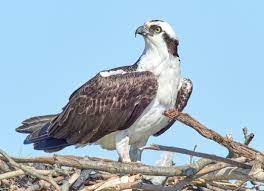



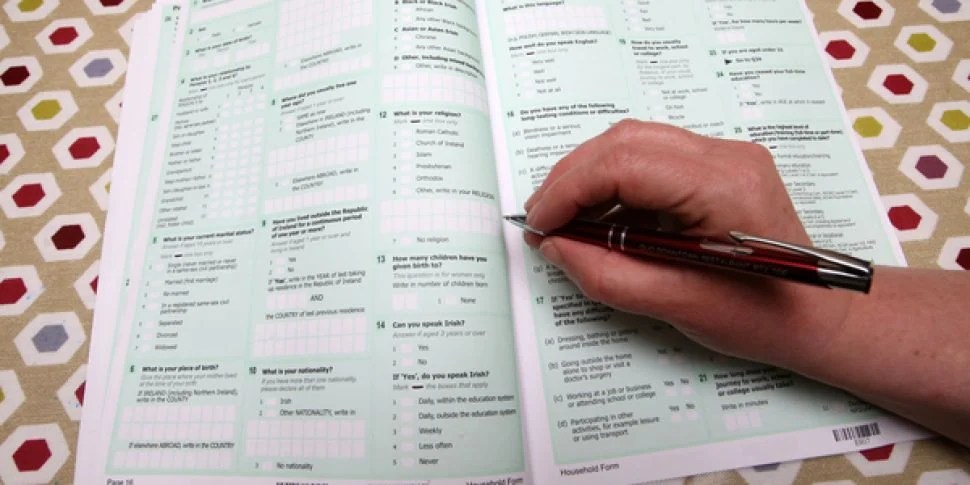


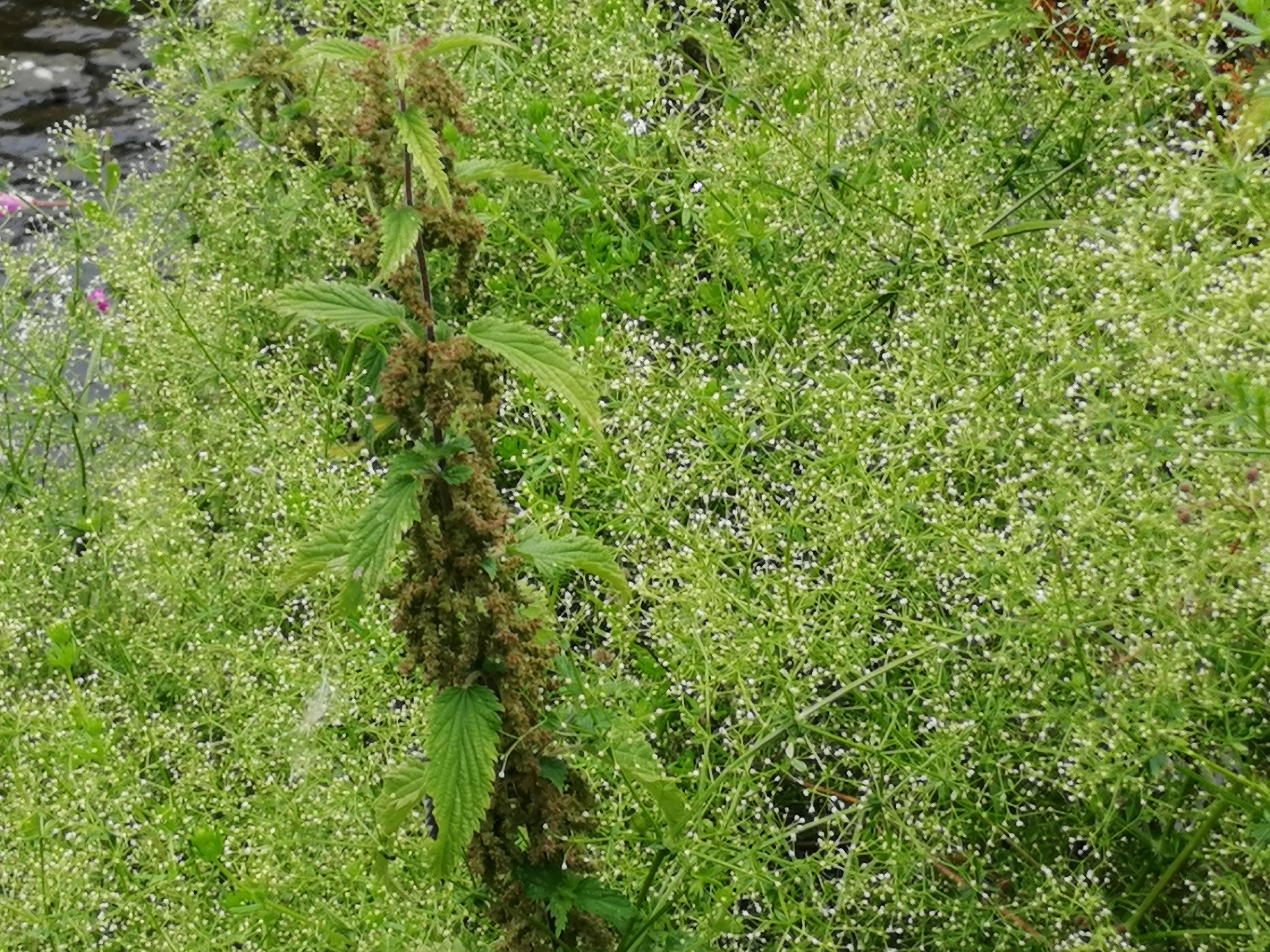

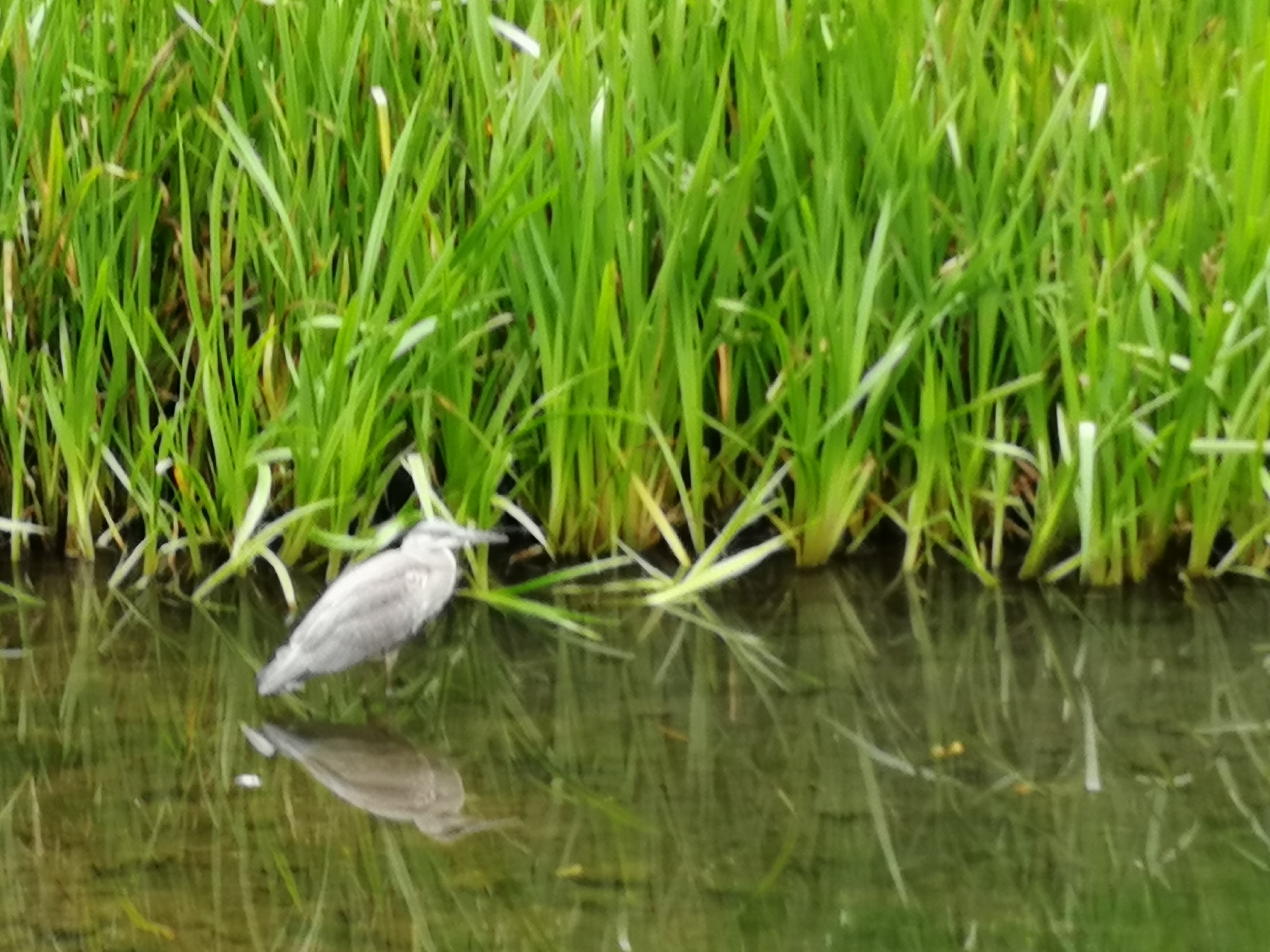

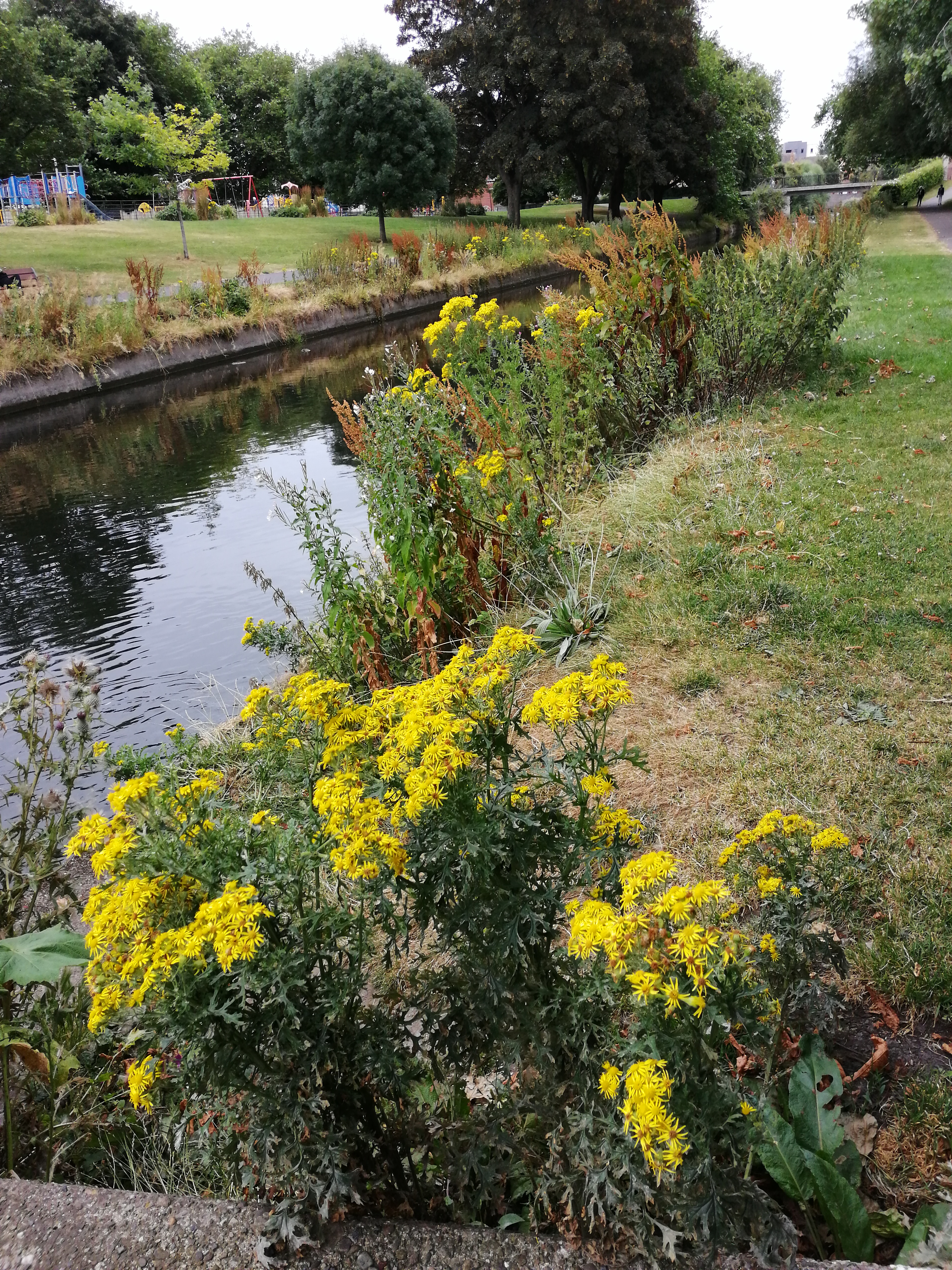
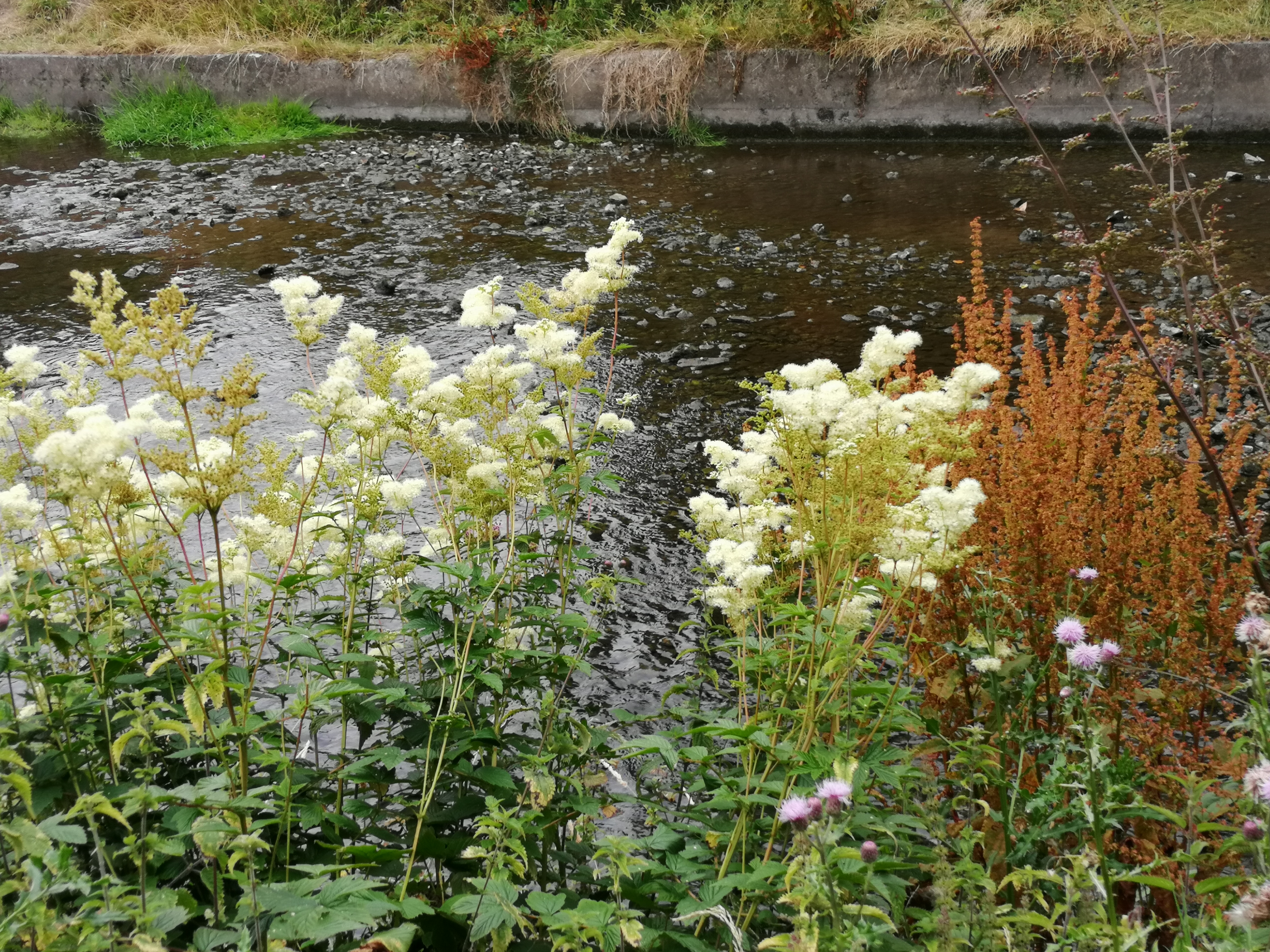


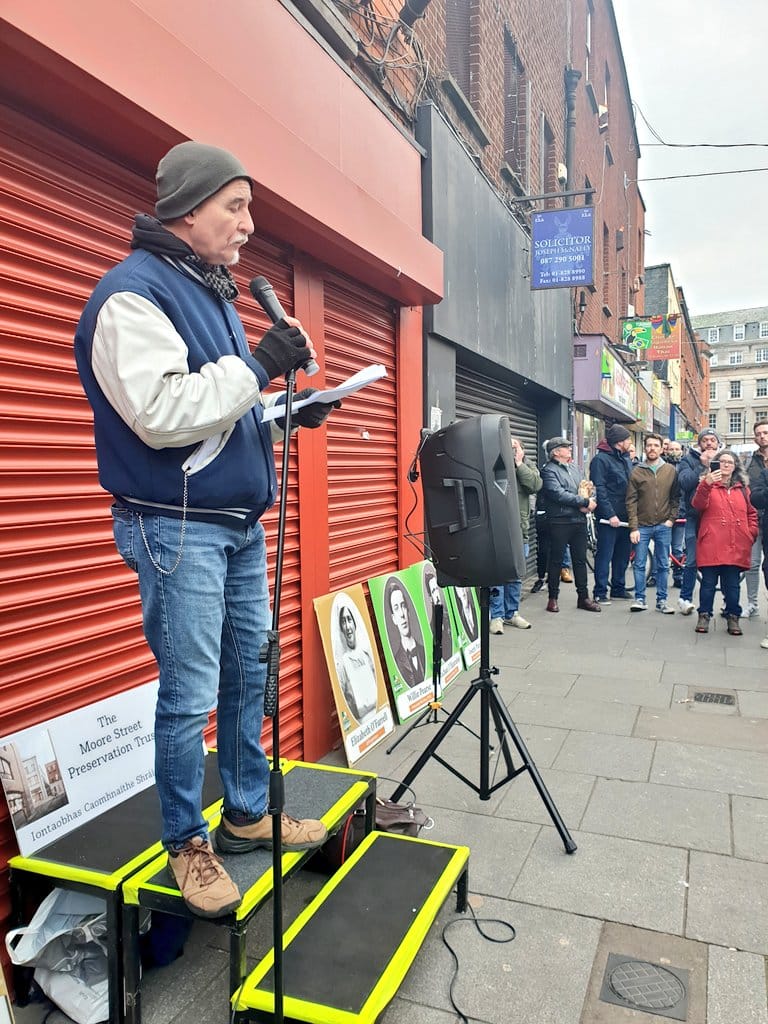


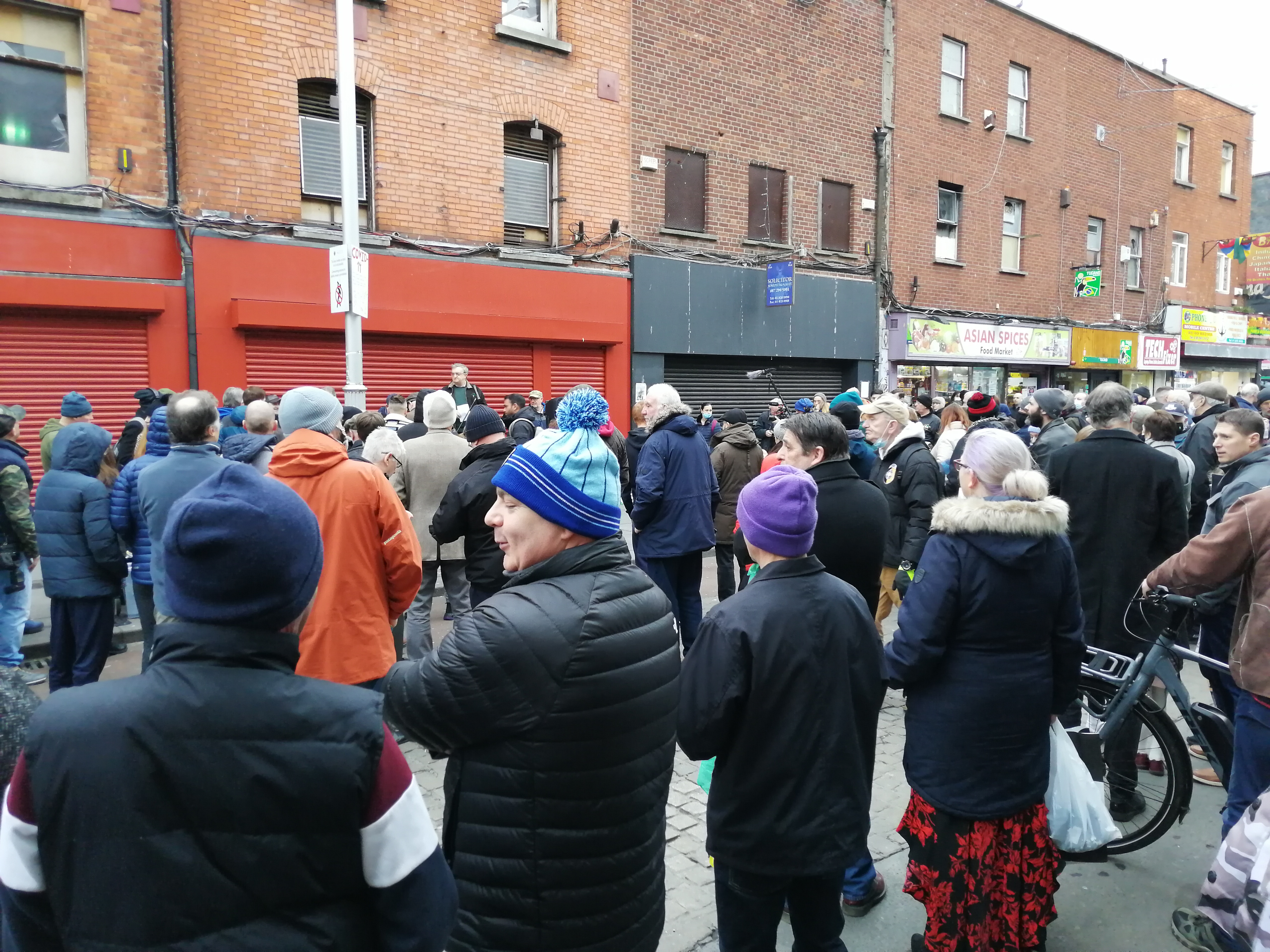
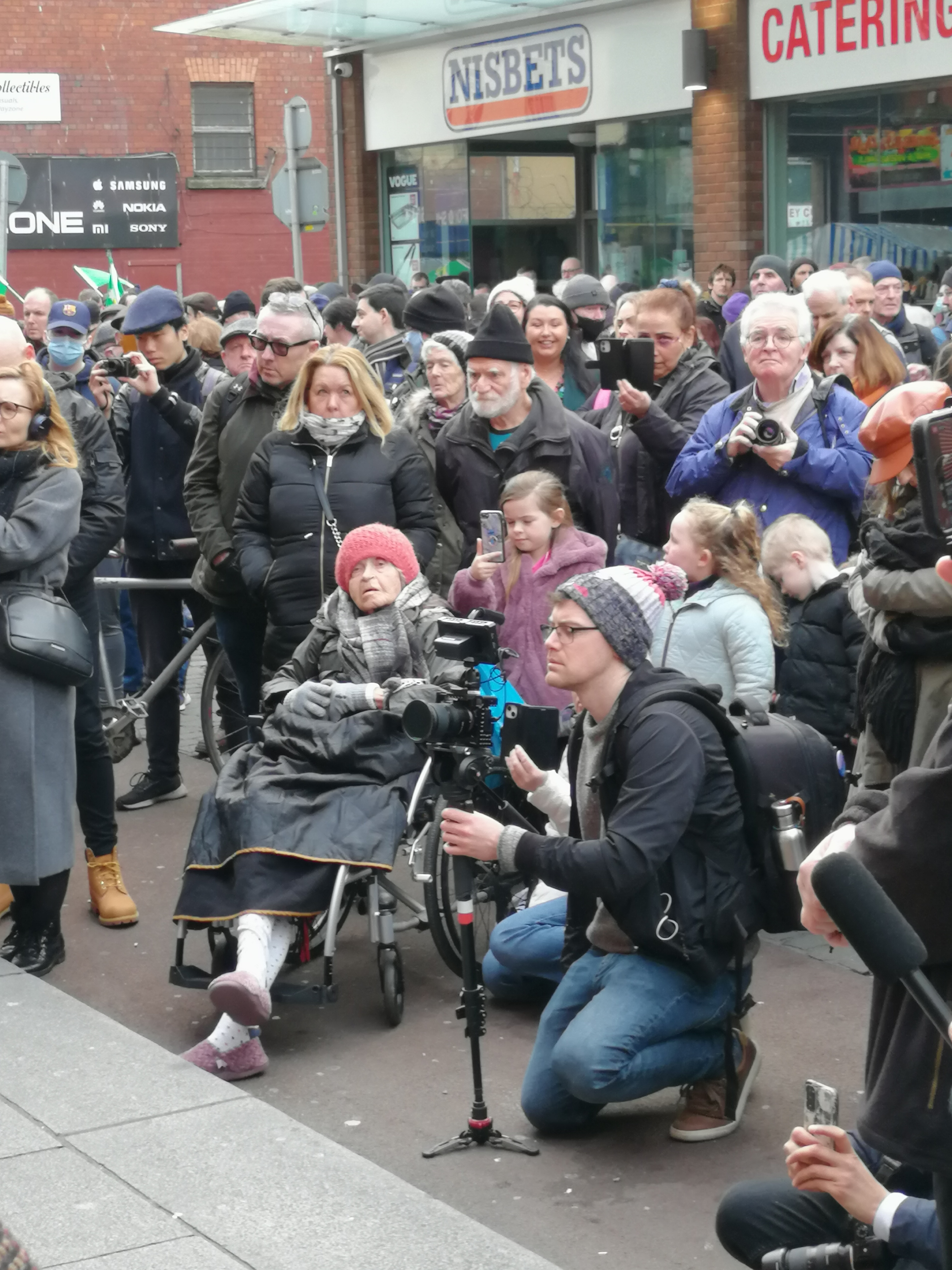

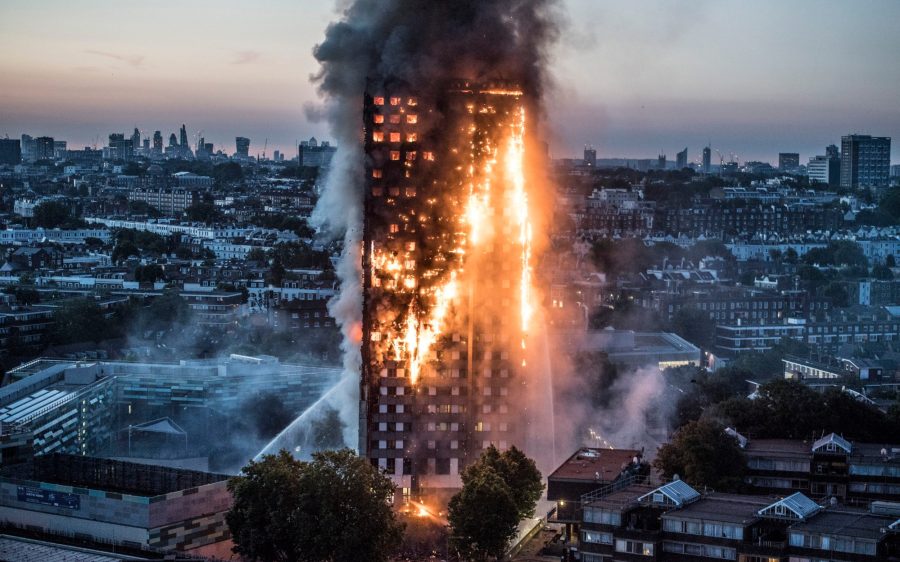












 rebelbreeze