JORDAN’S MICHAEL COLLINS FILM CRITICISED

Rebel Breeze introduction to critical videos:

This is an interesting criticism of the Michael Collins historical biopic 1996. Written and directed by Neil Jordan, the film begins with the end of the Irish 1916 Rising, has the longest part focused on the War of Independence (1919-1921) and ends not long after the start of the Civil War (1922-1923). The film starred Liam Neeson as Michael Collins and included others such as Aidan Quinn playing Harry Boland, Alan Rickman as Eamon De Valera, Stephen Rea as Ned Broy, Julia Roberts as Kitty Kiernan, Gerald Mc Sorley as Cathal Brugha and Brendan Gleeson as Liam Tobin.

The video from Foras Teamhrach presents its criticism using clips from the film while commenting and also comparative clips from other films, which is a useful way of presenting a challenging view. Unfortunately neither the name of the author of the commentary nor of the commentator (possibly the one and same) appeared on the Youtube link, only the company name and the comments function was disabled (perhaps understandably).

Most of the points are well made but there are some omissions which might usefully be added to the criticism.

The GPO surrender scene

The video criticism points out that showing only the GPO makes the Rising look much smaller than it actually was; despite the countermanding order which reduced the forces in Dublin by perhaps as much as two-thirds, the Rising was fought by four major garrisons on the southern and three on the northern side of the Liffey, with other smaller outposts and individual actions. However, the narrator says nothing regarding the historical inaccuracy of portraying the surrender as occurring at the GPO.

In fact, the GPO had been abandoned on the Friday and the Surrender took place on the Saturday, following a decision made in the 1916 Terrace in Moore Street and around 350 insurgents there were the first to surrender following the order. This matters not just from a point of historical accuracy but because there is a struggle (now approaching two decades) to save this area from property speculators and State and Dublin Council Planning Department collusion.

Portrayal of De Valera

One does not have to be a supporter of De Valera’s philosophy and actions to rapidly come to the conclusion that his portrayal in Jordan’s film is so inaccurate as to seem to be someone else. Every person who took up arms in 1916 to fight the British Empire showed courage and those who continued to actively oppose the British occupation during the intense years of the War of Independence showed even more courage in doing so.

Collins, of a much more ebulient character than De Valera, according to witnesses, was more inclined to exhibitions of temper and shouting than was De Valera, whose manner was generally in accordance with his studious appearance – contrary to his behaviour in the Treaty discussion scene of the film. As to another aspect, when we review the record of his actions in preparation for the Rising through to the War of Independence and on through the Civil War and the early years under the Free State, De Valera cannot reasonably be accused of lacking courage. The shivering wreck as which he is portrayed during the Civil War in Jordan’s film runs counter to the historical record.

There is testimony from one or two participants that at a period during his command of Boland’s Mill, De Valera had something of a breakdown. This, if it occurred, could have been as a result of fear or instead of lack of sleep, or of being overwhelmed by responsibility or a number of causes and if this alleged episode is what inspired Jordan’s depiction it was certainly unfair to use it to characterise De Valera at other times. There are many criticisms that can fairly be thrown at De Valera but lack of courage is not one of them.

Portrayal of Cathal Brugha

And likewise with the portrayal of Cathal Brugha. Some of Brugha’s military and political history may help in evaluating the portrayal of this man in Jordan’s film.

One of fourteen children empoverished by the death of their Protestant father, Brugha joined the Gaelic League in 1899 and quickly became fluent, soon changing his name from Charles Burgess to Cathal Brugha. He and Kathleen Kingston, also an Irish language enthusiast, married in 1912 and had six children. Brugha joined the Irish Republican Brotherhood (IRB) and in 1913, the year they were formed, he became a lieutenant in the Irish Volunteers and led a group of Volunteers to land the arms smuggled into Howth by the Asgard in 1914.

In the Easter Rising of 1916 Brugha was second-in-command at the South Dublin Union under Commandant Éamonn Ceannt, scene of some of the fiercest fighting during the Rising. Overlooked in the evacuation on Thursday of Easter Week and, being badly wounded, he was unable to leave. Bleeding from 25 wounds (some of which had penetrated arteries) he continued to fire upon the enemy and when Eamonn Ceannt led a group to investigate who was still firing he discovered Brugha singing “God Save Ireland” surrounded by his own blood and with his pistol still in his hands.

Brugha was not expected to survive which may have saved him from the execution parties and he was discharged from hospital in August 1916 as “incurable”. However he recovered in 1917 though left suffering pain and with a permanent limp and preferred to cycle than walk.

Already in 1917 from his hospital bed, Brugha began to seek out Volunteers and Irish Citizen Army people who were willing to join the new armed resistance group and it seems that he, more than any other, should receive the main credit for the initial formation of that which became the IRA.

Brugha was so respected in the movement that he was elected speaker of Dáil Éireann at its first meeting on 21 January 1919 and it was he who read out the Declaration of Independence in Irish, which ratified ‘the establishment of the Irish Republic’. He was also appointed temporary President, a position in which he remained until de Valera tok his place.

Far from being a bloodthirsty zealot as he is portrayed in the film, Brugha reduced Collins’ ‘Bloody Sunday’ assassination list considerably since in his opinion, there was insufficient evidence against a number of people named on the list. Then again, at the outbreak of the Civil War, a reluctant Brugha only joined the fighting on the Republican (Anti-Treaty) side in order to relieve the pressure on the Four Courts garrison. Cathal Brugha led a detachment in occupying a number of buildings in O’Connell Street and later, having got his men safely away or surrendered, was shot and mortally wounded in debated circumstances by Free State troops (which were under the overall command of Collins).

Brugha had, according to some opinions, alienated a section of waverers at the Dáil debates on the Treaty, by a personal attack on Collins and the way his persona had been elevated (a common problem, the deification of leaders). This was no doubt a tactical mistake but there had been ongoing conflict between both men for some time. Although both had been members, Brugha had left the IRB after 1916 in the belief that their conflict with the Volunteer leadership had damaged the Rising. Collins’ rank in the organisation was supreme in Ireland and it seems that Collins used this at times to circumvent or undermine decisions of the Dáil, where Brugha outranked Collins and which the former believed to be the repository of democratic decision-making.

Collins as a guerrilla war leader

All Collins’ many talents and contributions to the War of Independence aside, his representation in the film as not only directing the whole armed struggle but also as teaching rural people how to wage a guerrilla war is a complete distortion of history that could only be undertaken by a propagandist for Collins.

It was Brugha who began to pull the scattered elements of the armed struggle together and laid the foundations for what became the IRA. It was Robinson, Breen, Tracey and Hogan who began the armed resistance of the War of Independence in Tipperary on 21 January 1919 in which two paramilitary policemen were killed. And they did so without permission from GHQ in Dublin.

As to rural guerrilla tactics, these were such as had been used for centuries or developed in the struggle and were certainly not taught by Dublin. What was taught by instructors sent by Dublin was weapon use and maintenance and personnel disposition for ambushes, moving in extended order through countryside and securing a line of retreat. One of the chief instructors in this kind of instruction was Ernie O’Malley and, in West Cork, the young Tom Barry used his British Army experience and other learning to do the same. The order to create Flying Columns might have come from Dublin but had been advocated already by fighters in Cork, Kerry and Tipperary and it was they and others who developed them in the field.

Collins’ special contribution was in organising intelligence, counter-intelligence and the assassination squad (which turned out to be a double-edged sword) and also, to an extent, supply of weapons. His contribution was notable but it did not lie in initial organising of guerrilla war, much less in rural guerrilla instruction.

The role of women in the struggle

Women are underrepresented in this narrative, as is usual in Irish history and Republican and nationalist narrative. Where women are shown, apart from the brief appearance of Markievicz at the non-existent GPO surrender (when instead she was at the College of Surgeons!), they are objects of romance (Kittie Kiernan) or auxilliaries working for Collins’ intelligence department.

There was a great opportunity lost there to show the women in action during the Rising in the many roles they undertook, including firing weapons, or in keeping the flame lit after the Rising and in particular in commemorating the Rising a year later, organising demonstrations, pickets, and funerals.

The Croke Park Bloody Sunday massacre scene

The film shows the ‘Tans or Auxies shooting down people with machine-gun on the GAA ground. As far as we have been able to establish it was the RIC who did it, although of course the other two were auxilliary forces of the RIC. Thankfully they did not fire with a machine-gun (the Army had one outside the grounds and an armoured car, it seems but did not open fire) or the carnage would have been a lot worse. When one examines the casualty list of those shot, just like more modern British massacres in Derry and Belfast, it is clear that the shooting was mostly disciplined, i.e hitting males of military age. Showing that kind of scenario would in the last analysis not only be more historically accurate but also more telling of the intent and cold-bloodedness.

And what of the three tortured and murdered in the Castle that day, Peadar Clancy, Dick McKee and Conor Clune? Yes, we know, one can’t show everything.

Go raibh maith agat to the individual who sent the video links to this blog.

LINKS:

The critique video, Parts 1 & 2:

https://www.youtube.com/watch?v=zor3VvE9vD8

https://www.youtube.com/watch?v=KbGWEZehuFI

Another view, not quite so critical: http://www.irishtimes.com/culture/film/michael-collins-review-nowhere-near-as-historically-inaccurate-as-we-once-supposed-1.2576150
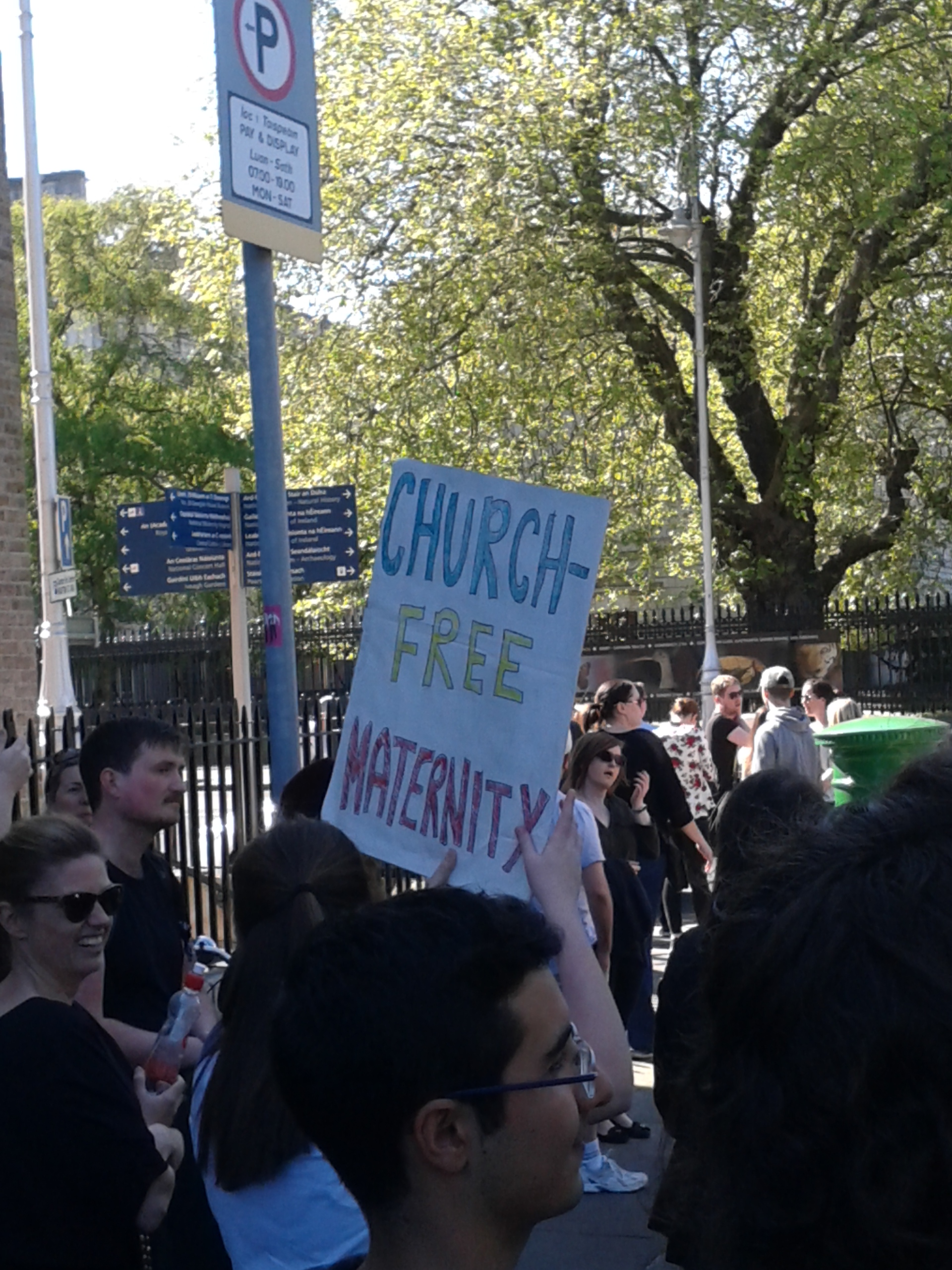
MARCH AGAINST CHURCH CONTROL OF MATERNITY HOSPITAL

Clive Sulish


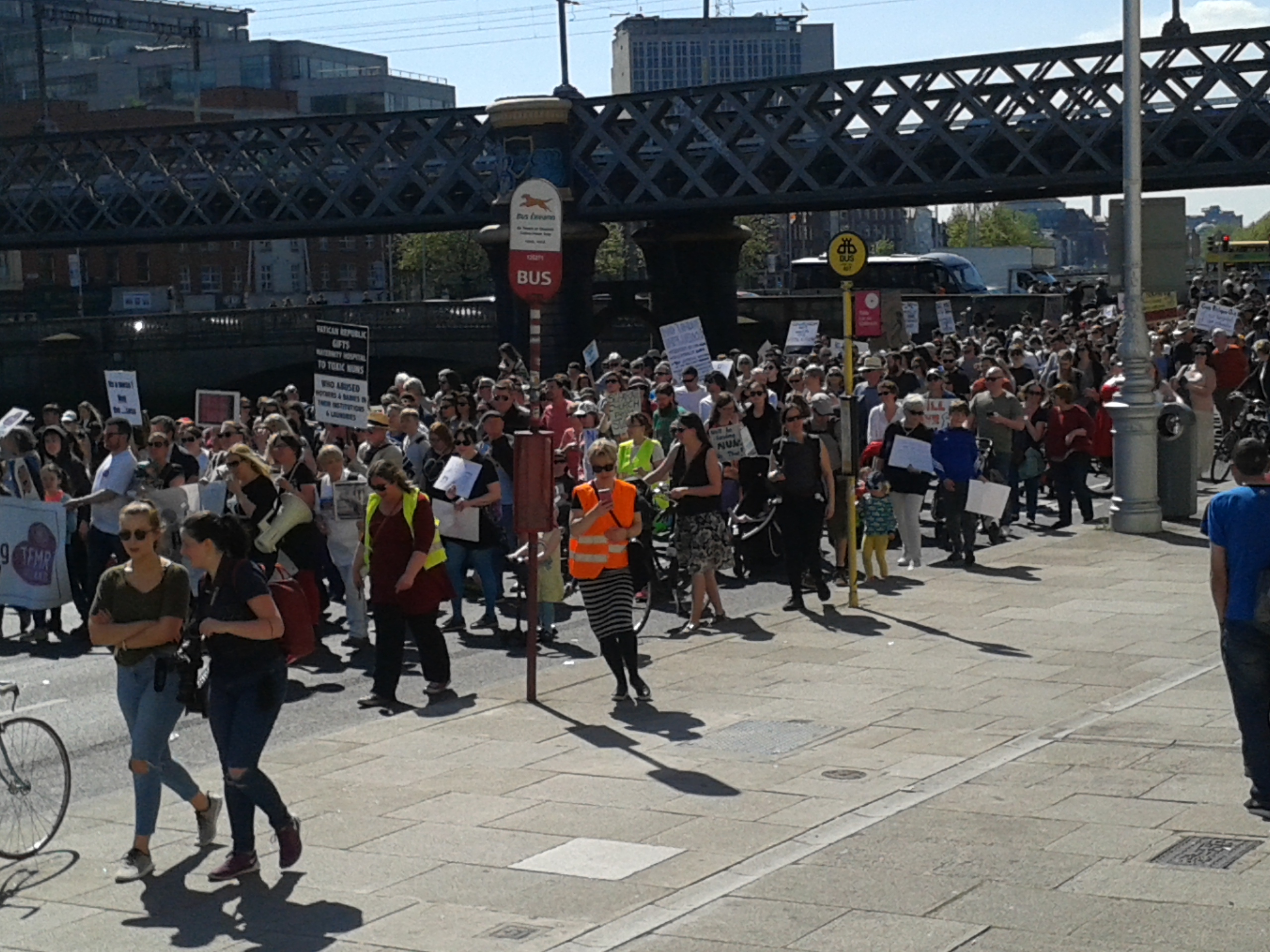
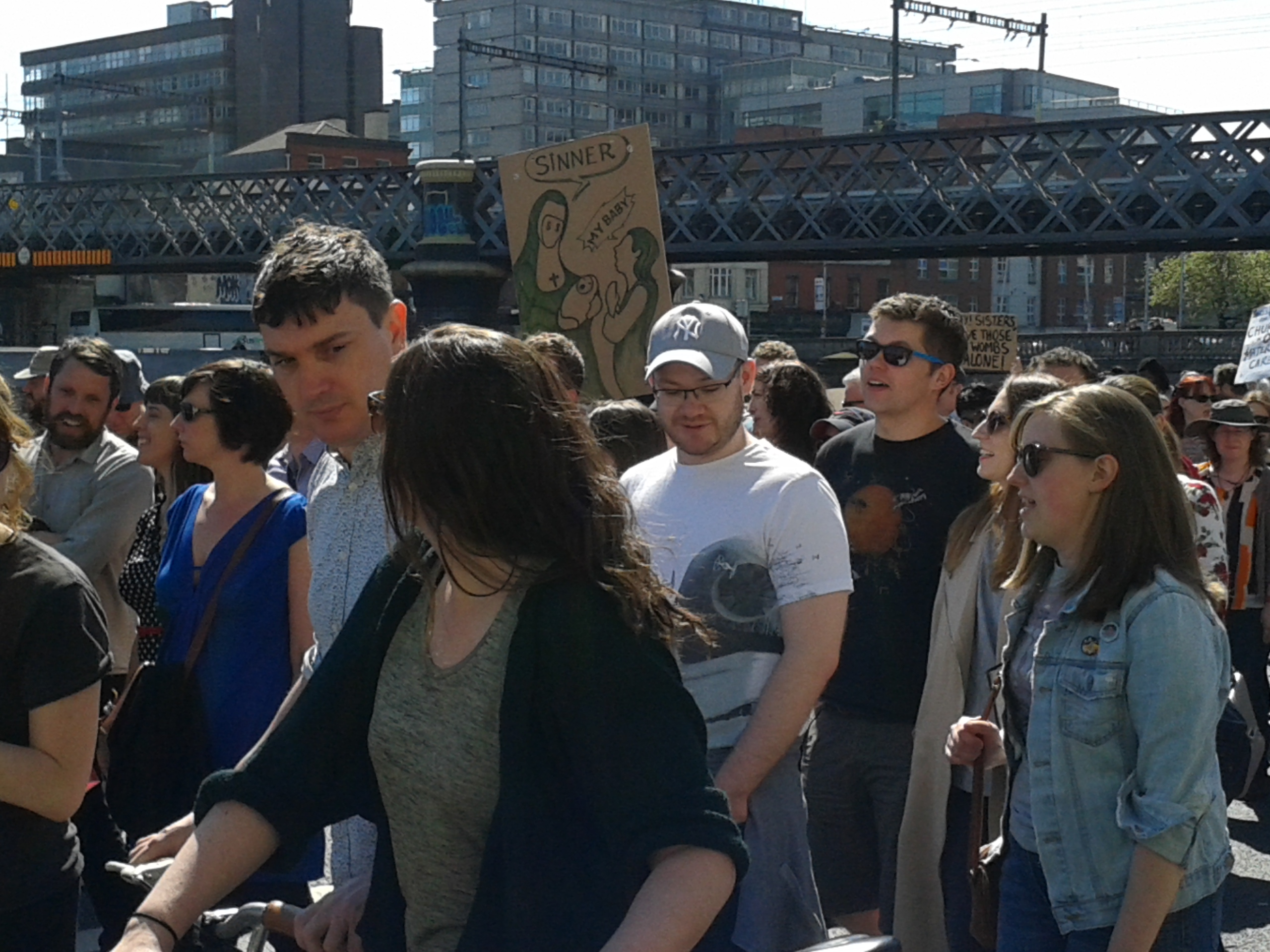
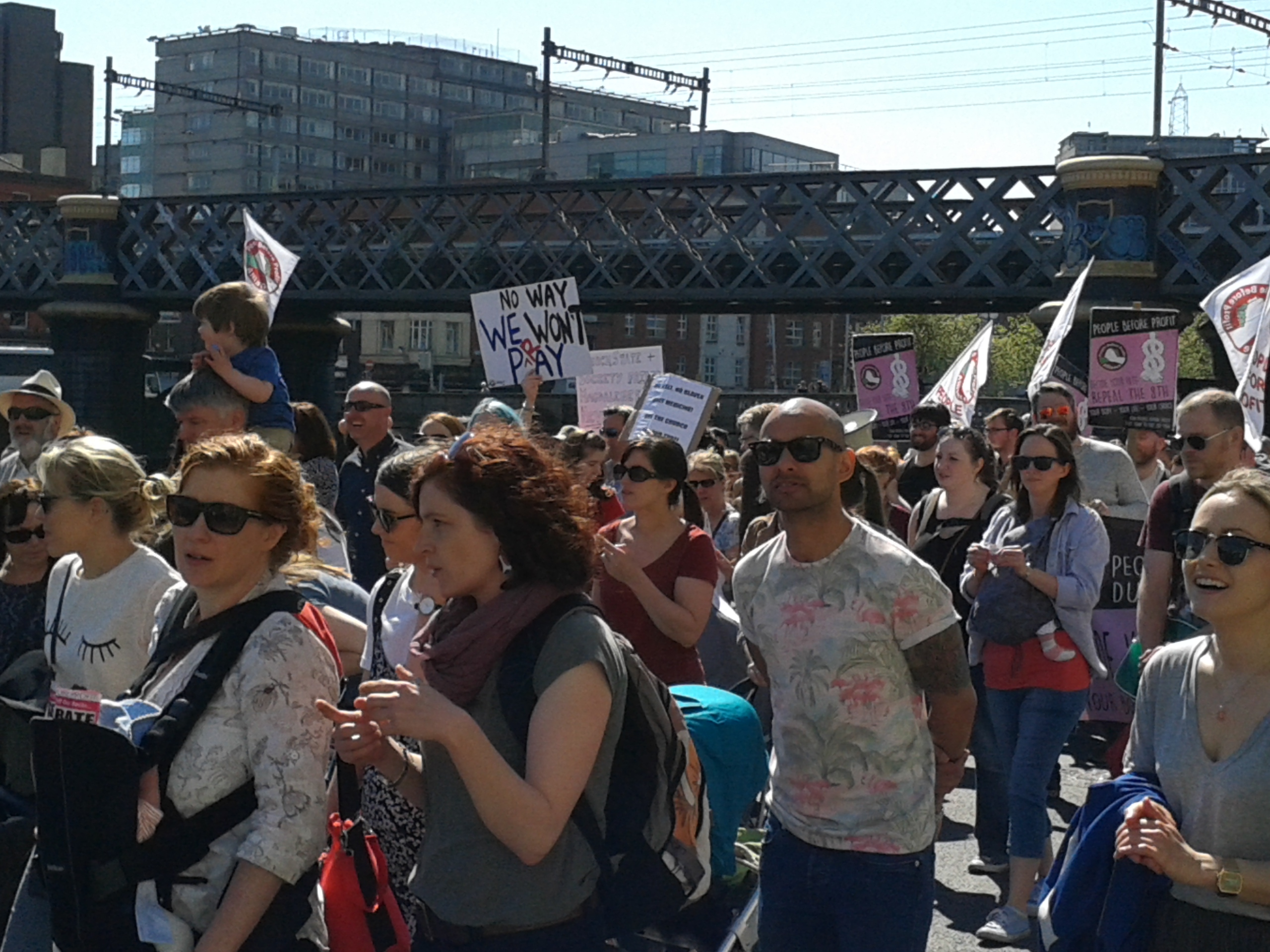
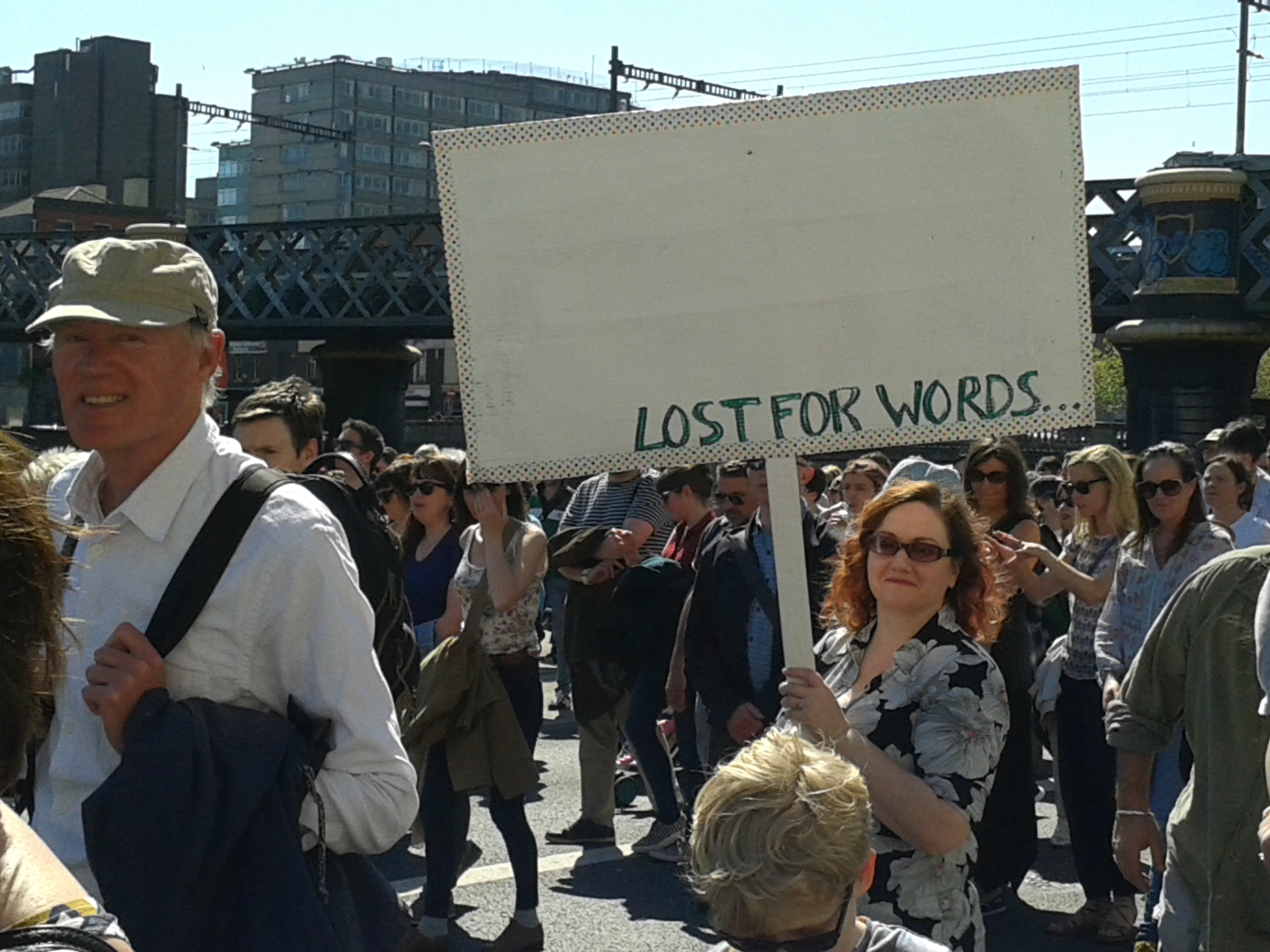
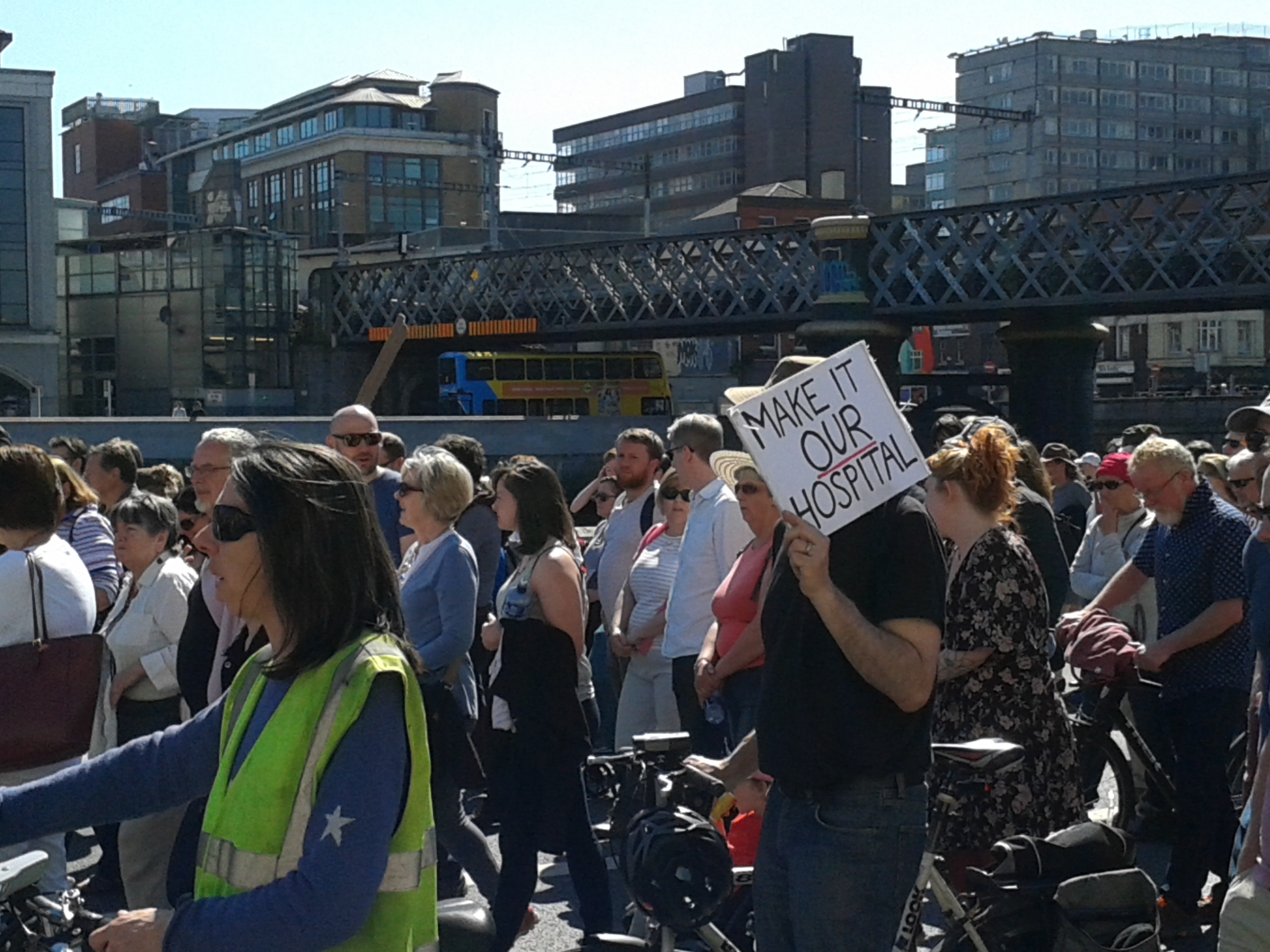
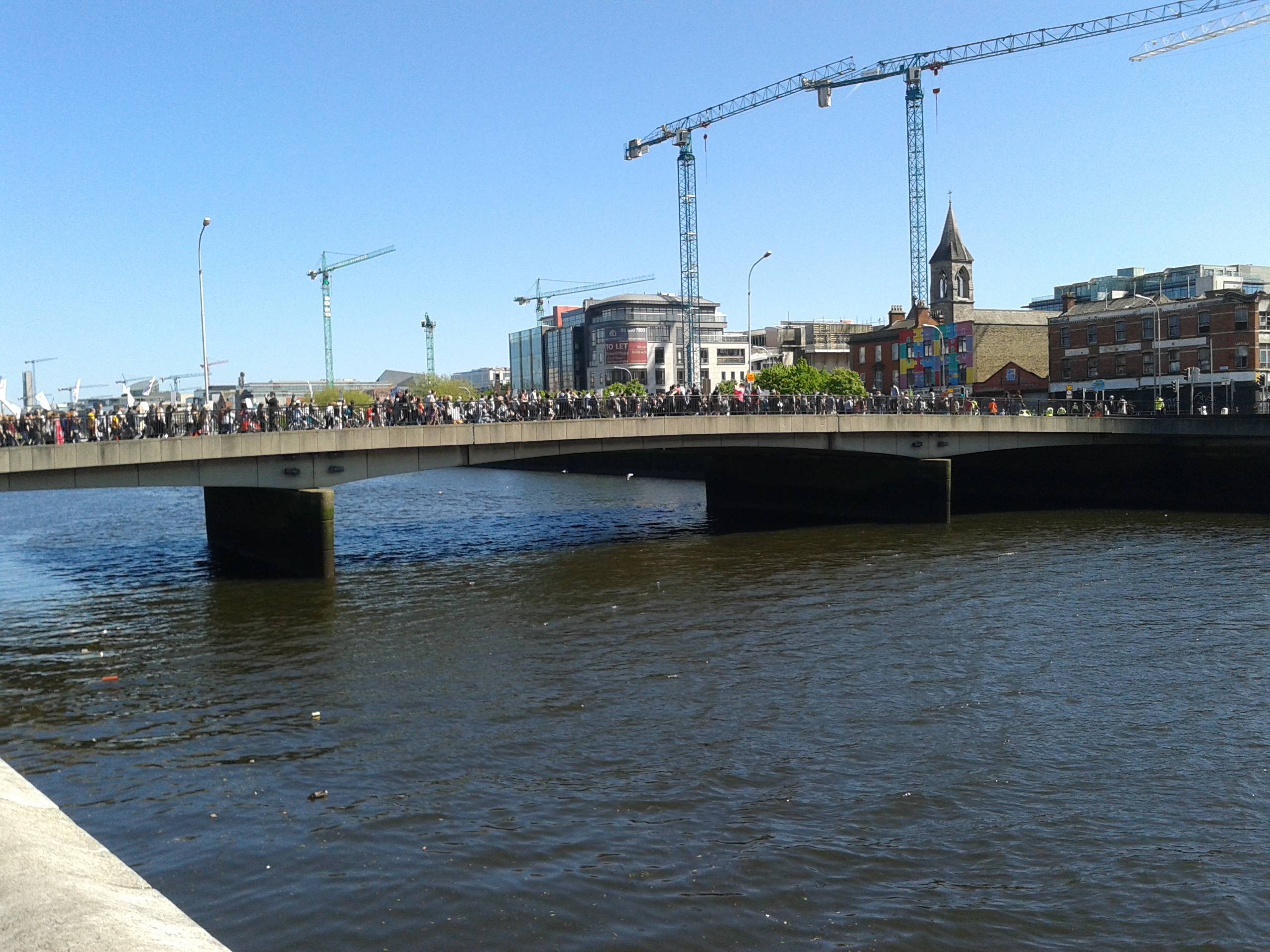
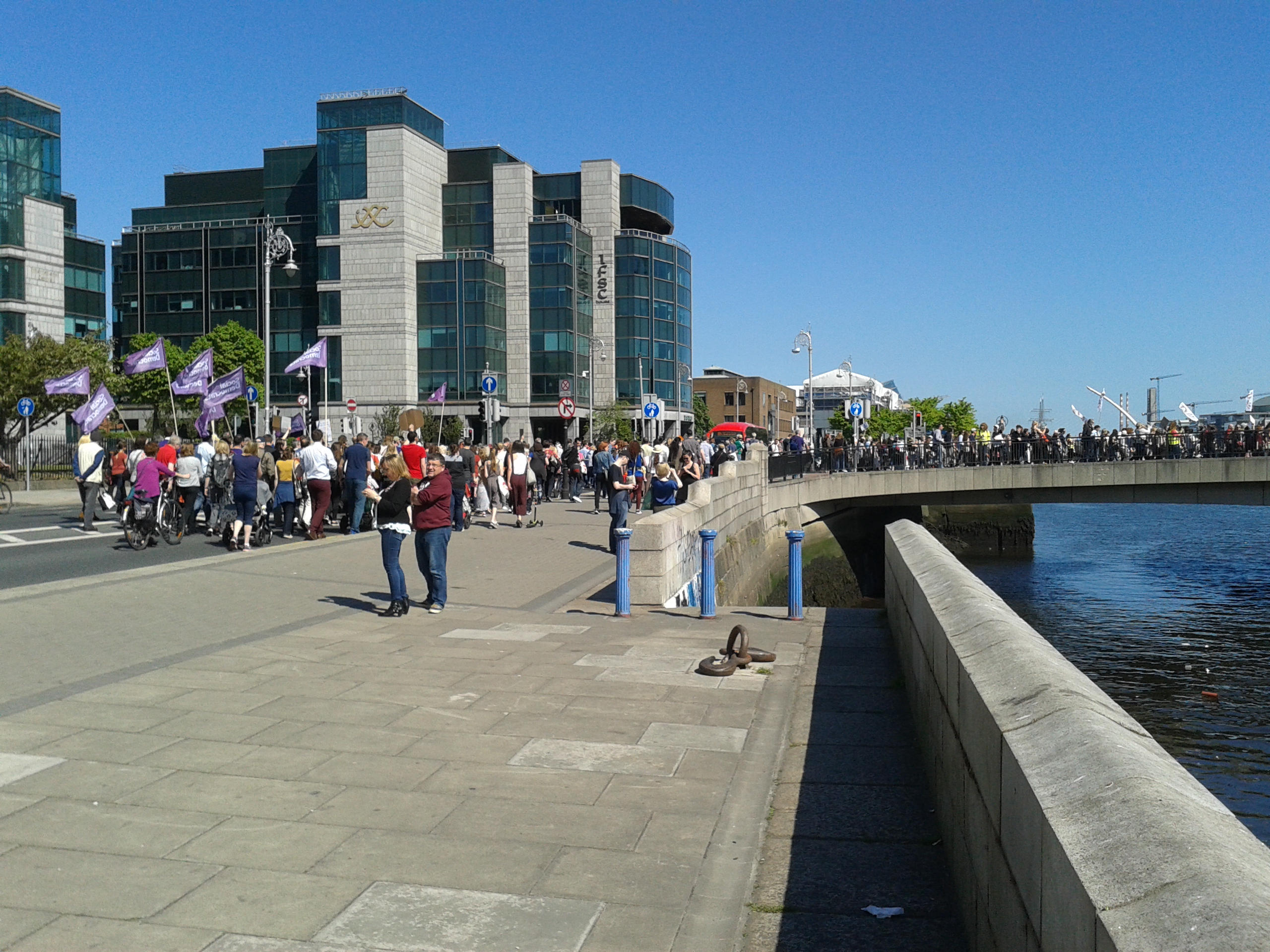
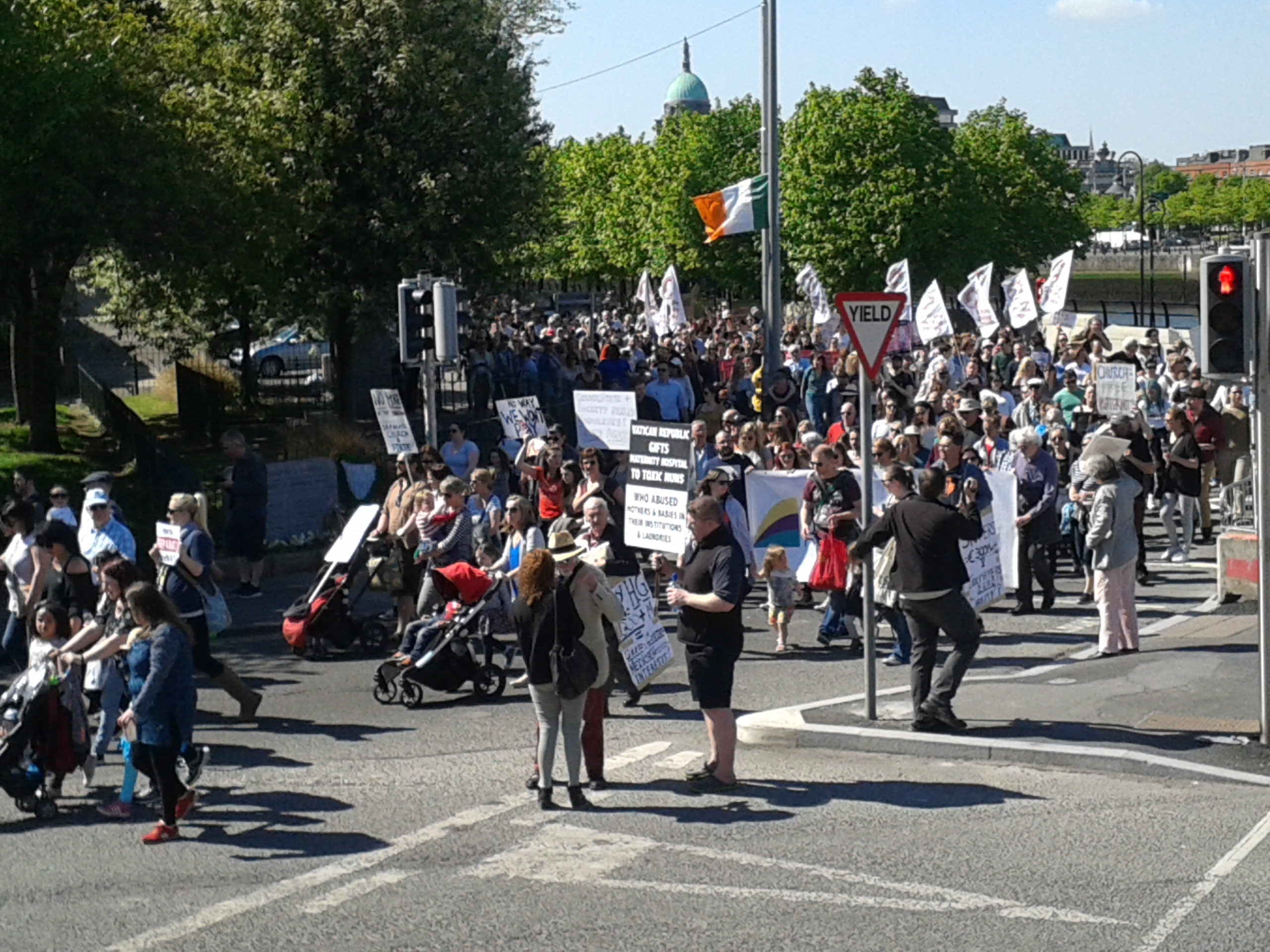
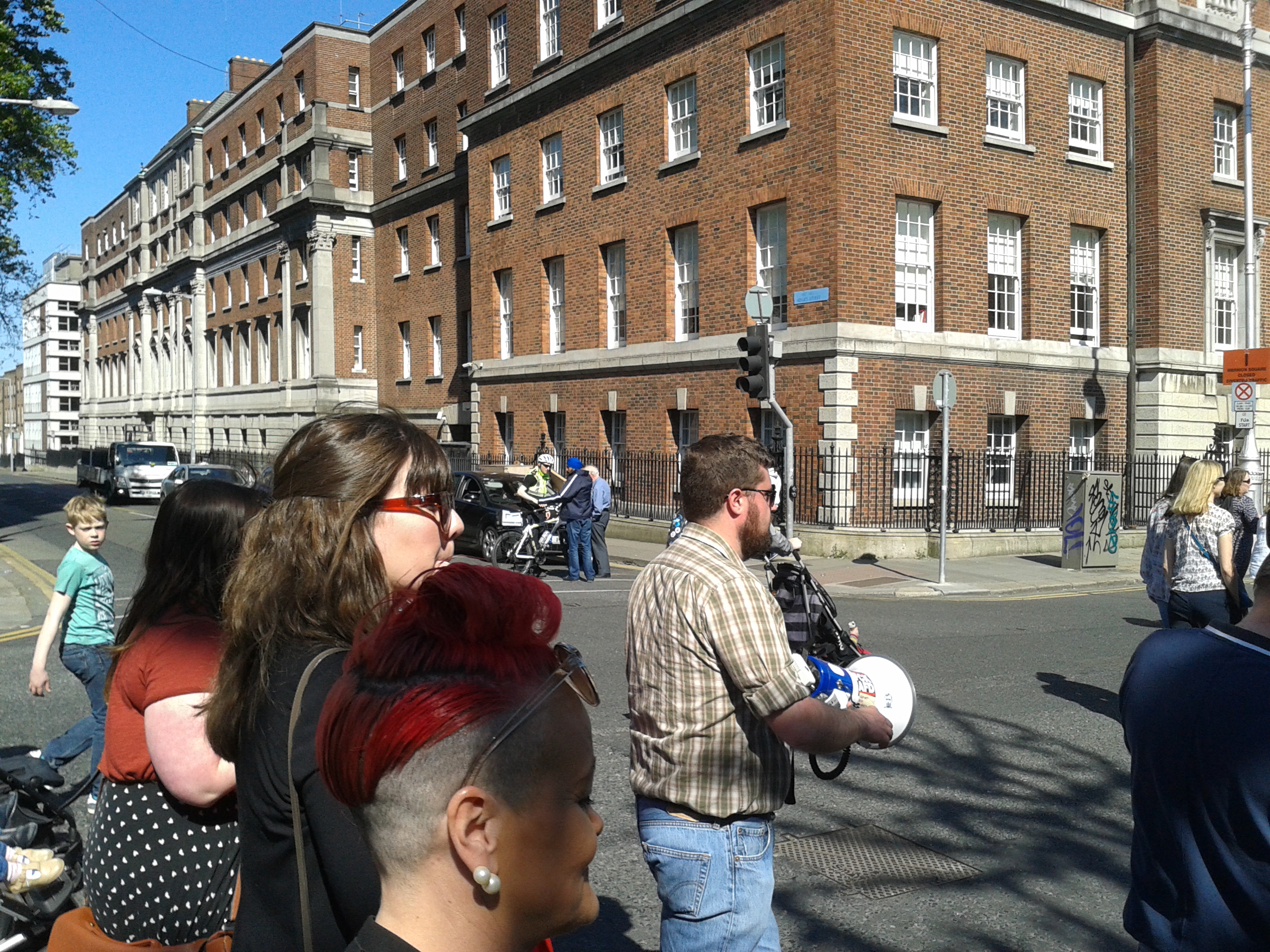
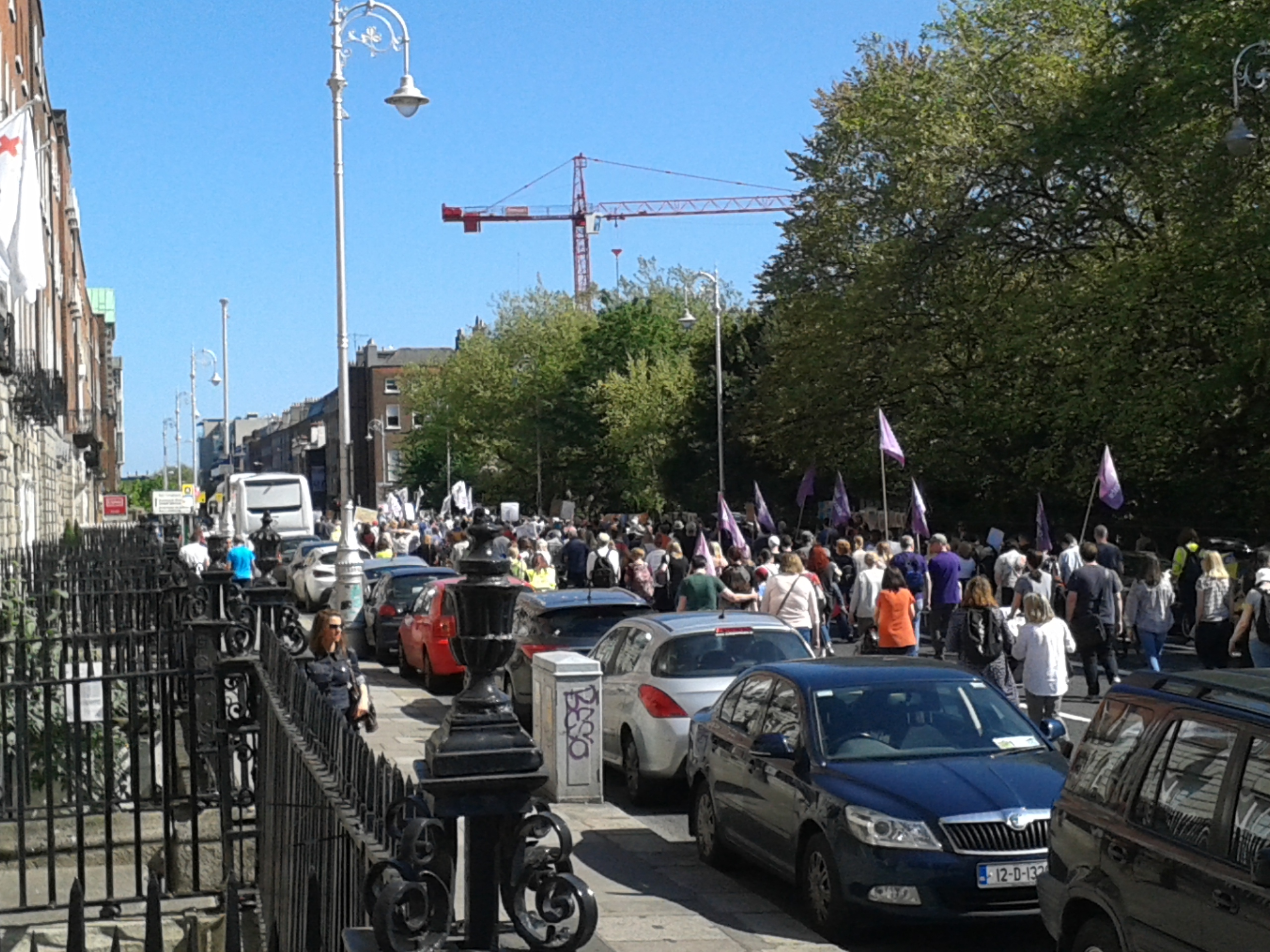
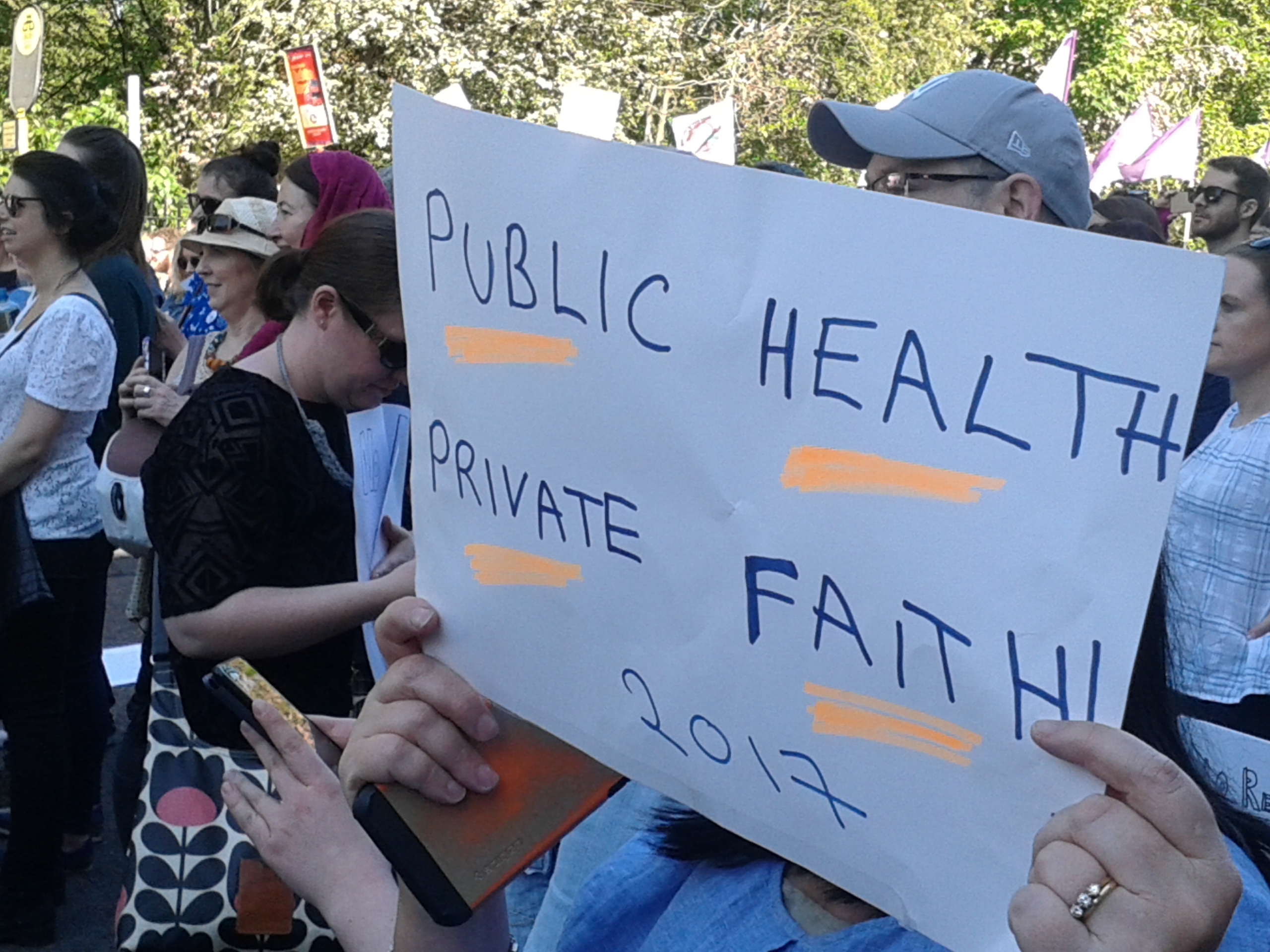
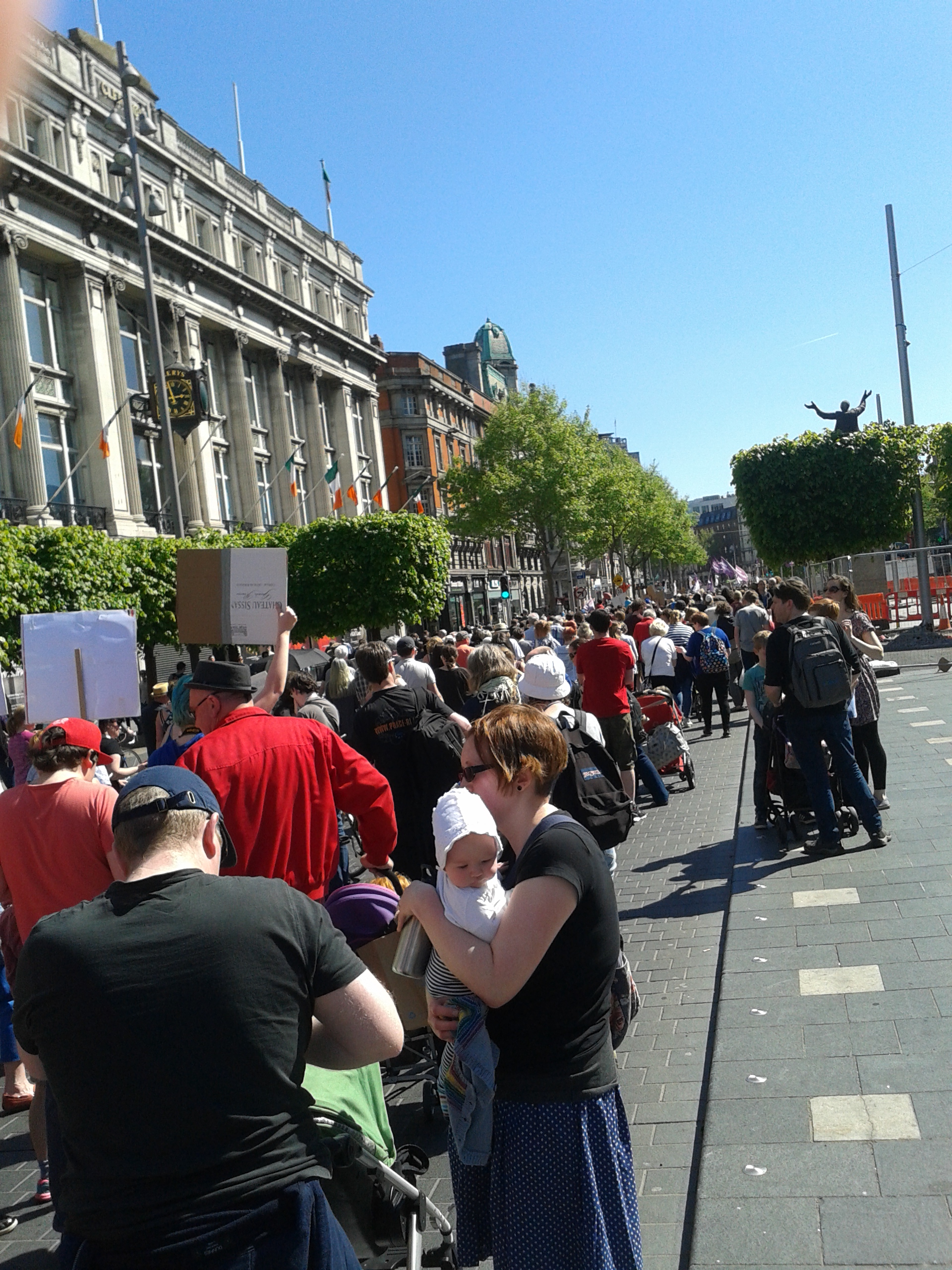
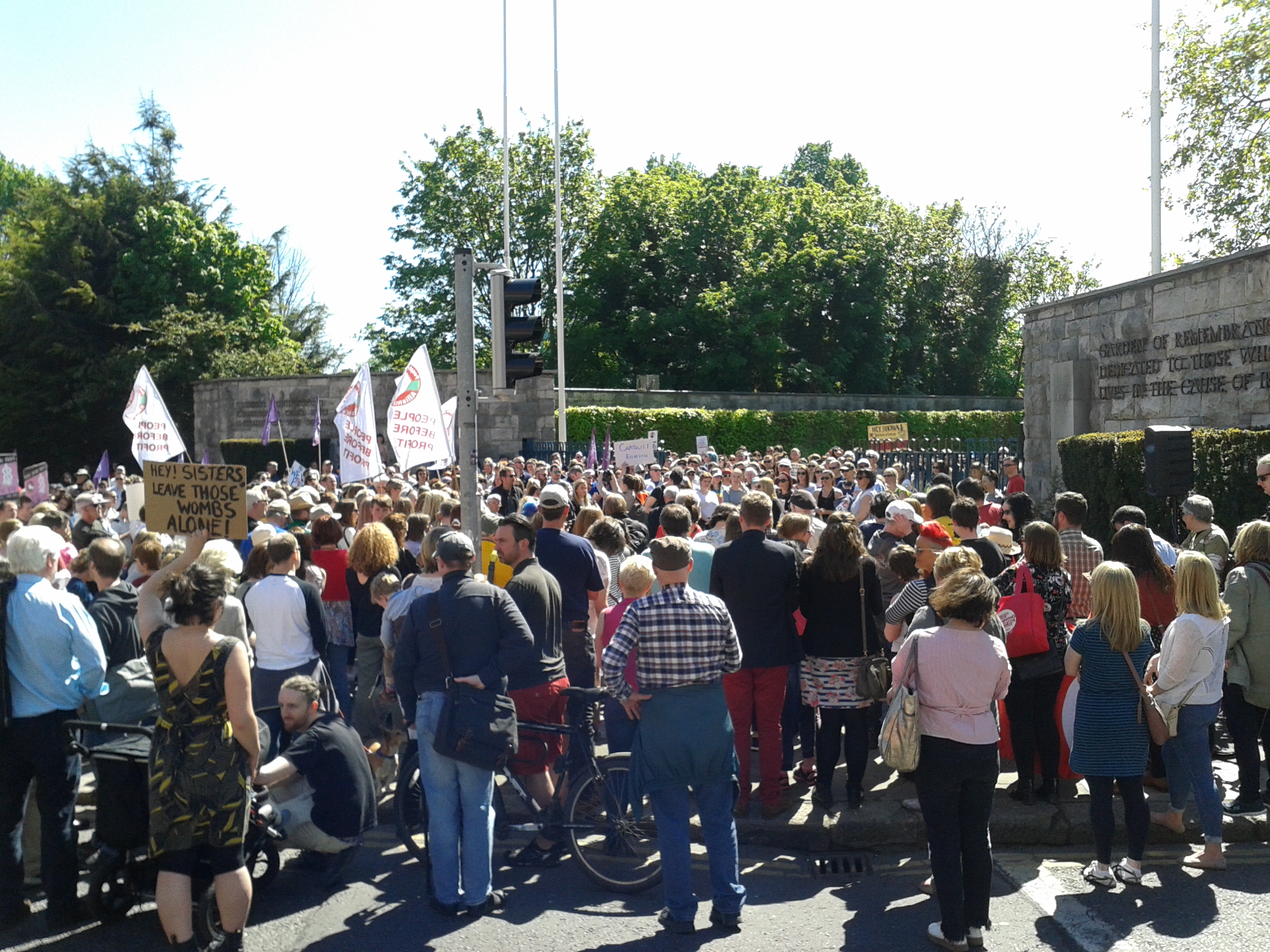
Tens of hundreds, mostly women but also containing some men and couples with children, gathered in bright sunshine today at the Garden of Rembrance and then marched through O’Connell Street in Dublin’s city centre. They continued along the northside quays and across Talbot Memorial Bridge, up past Pearse Station (where Constance Markievicz was welcomed by a huge crowd upon her release from British jail in 1917), then past Hollis St. Hospital to end at the south side of Merrion Square.

Marching along O’Connell Street.
(Photo: Rebel Breeze)
Rally to start at Garden of Remembrance
(Photo: Rebel Breeze)

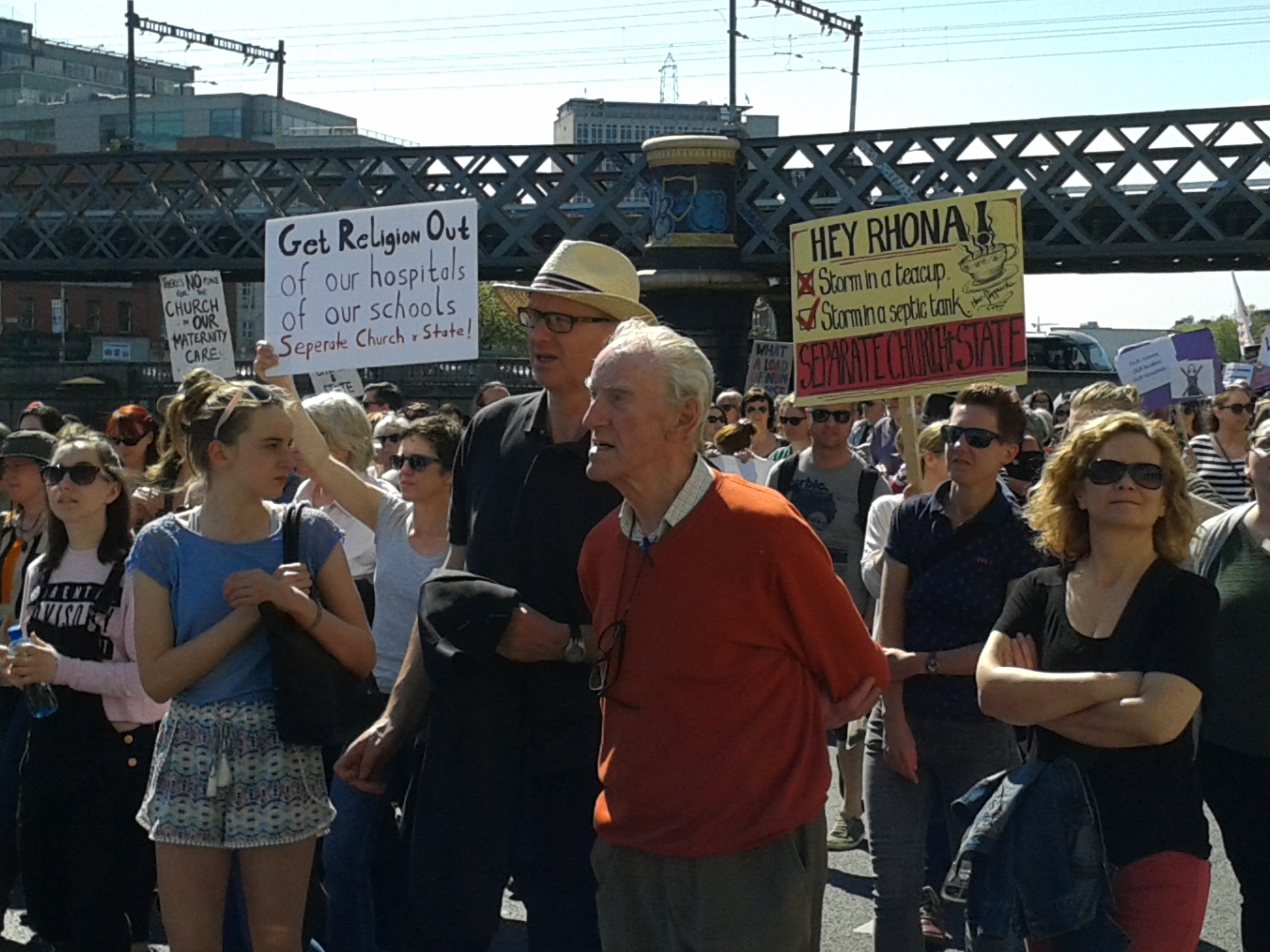
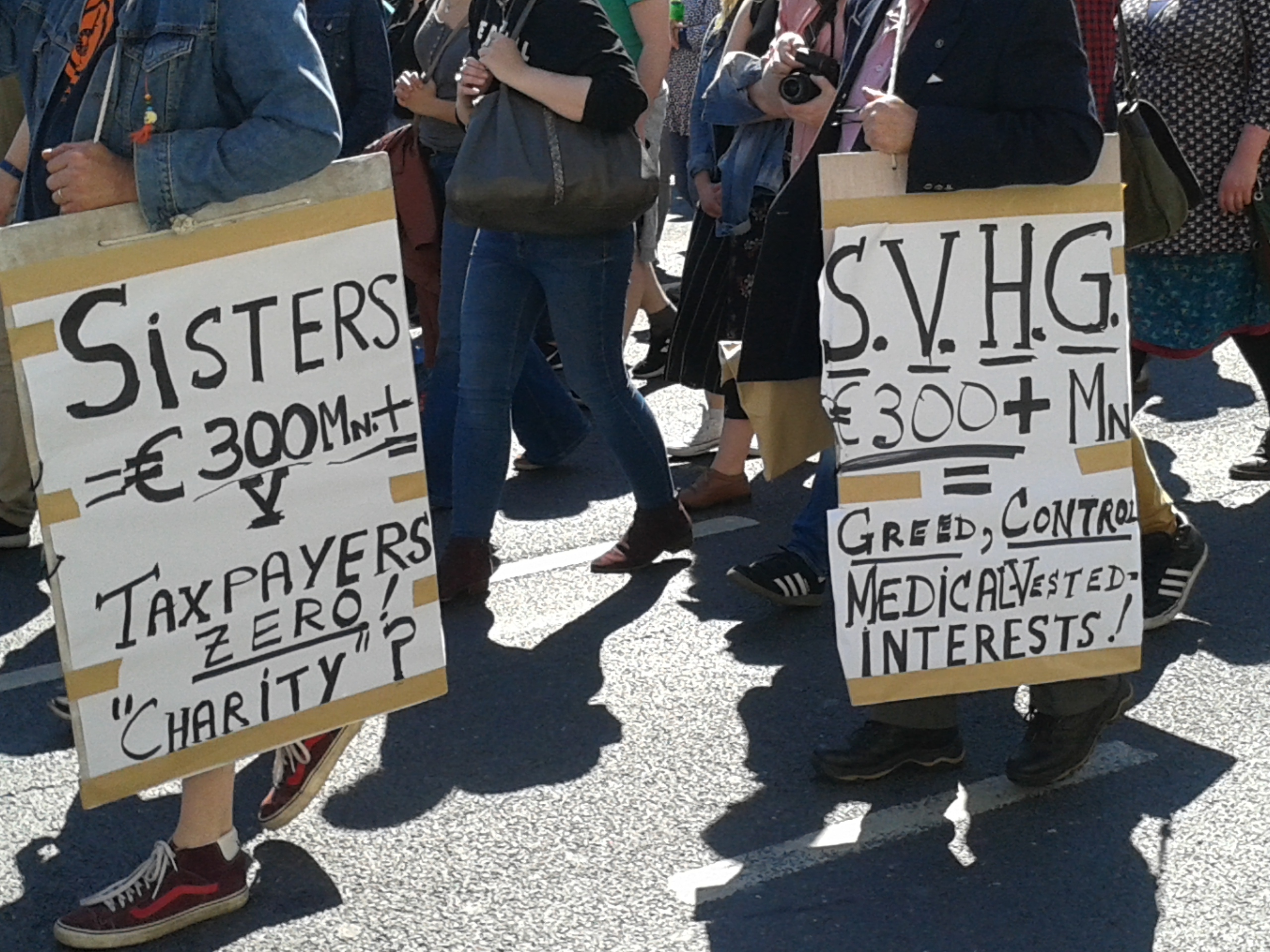
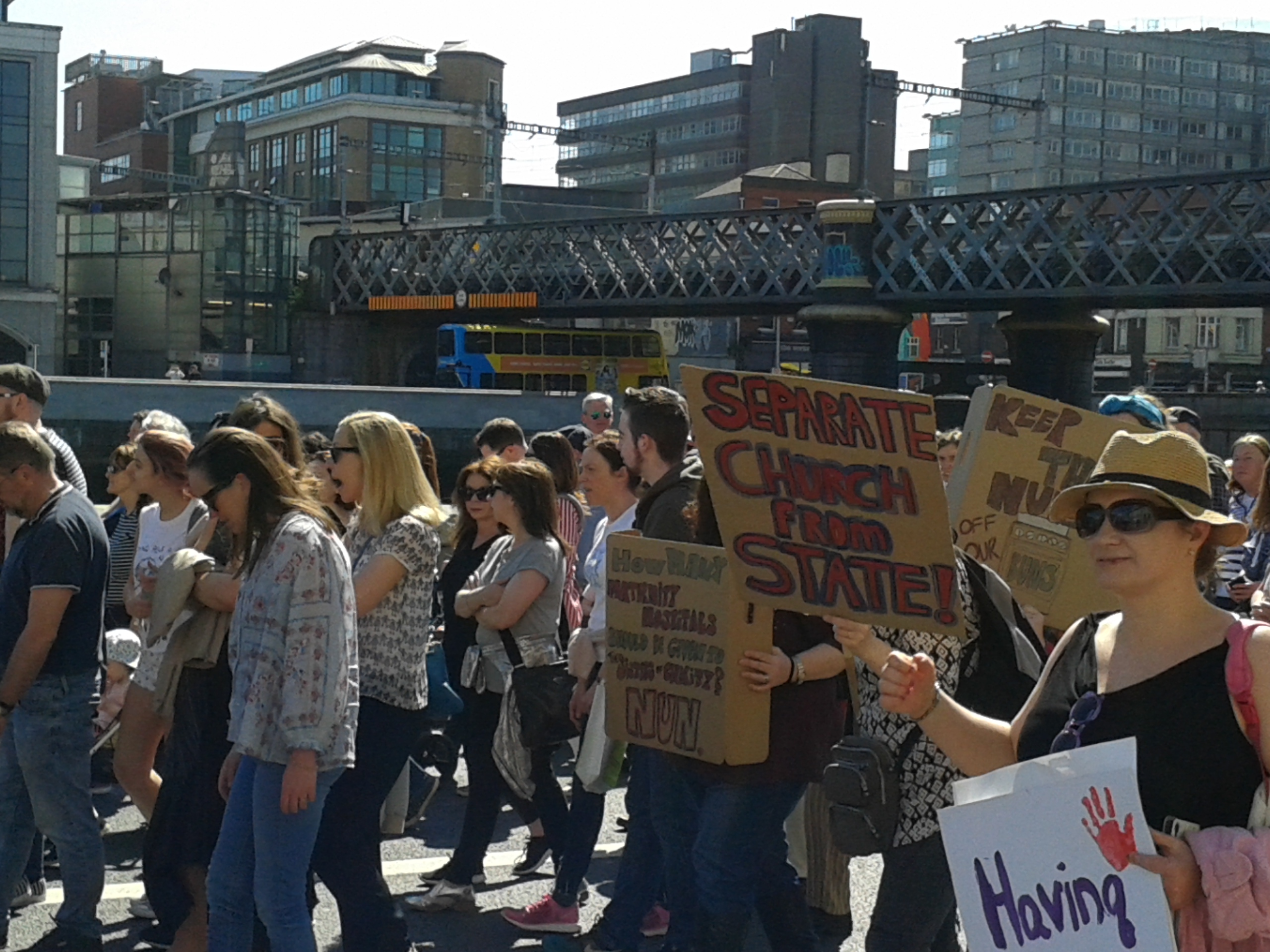
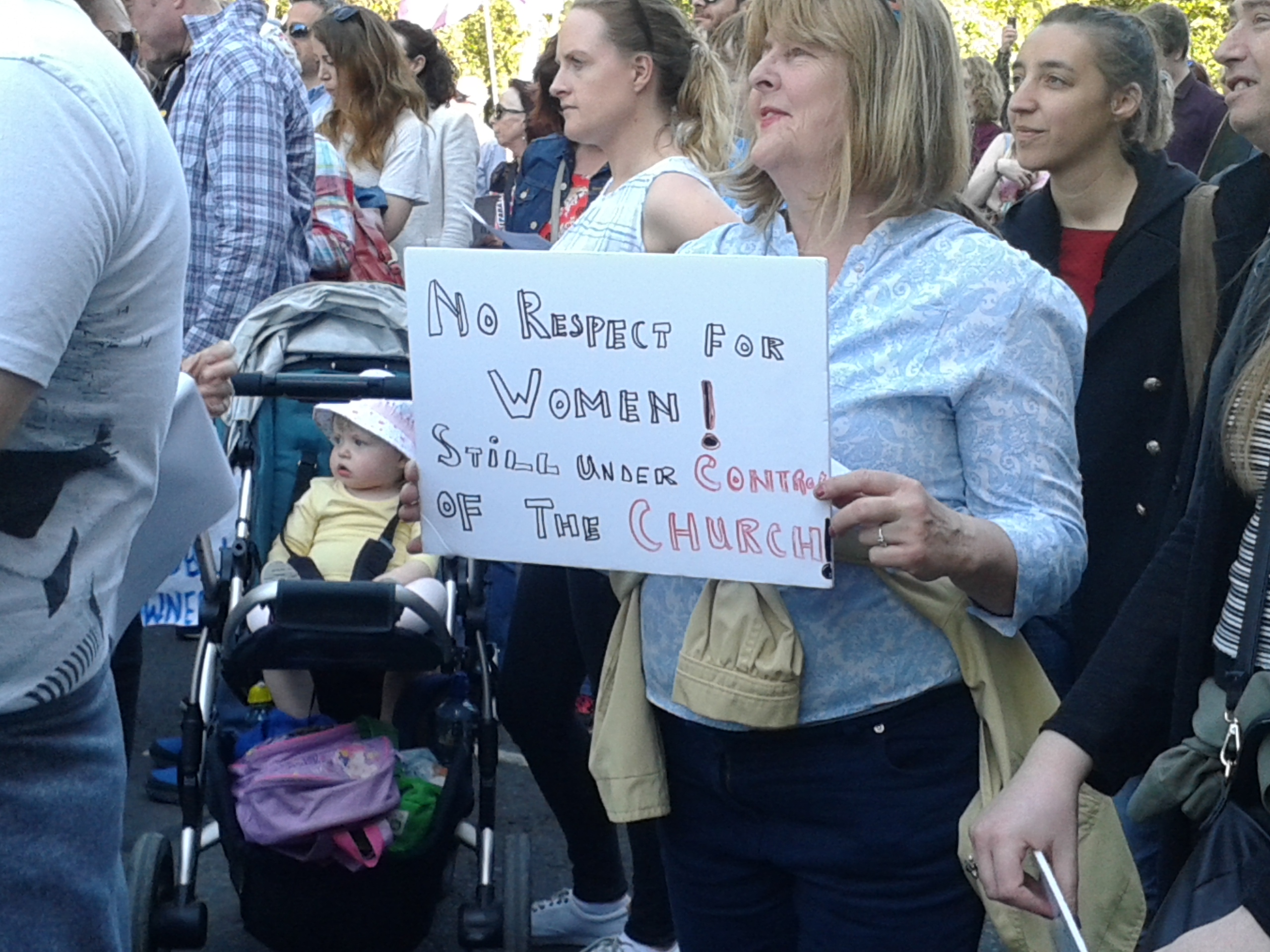
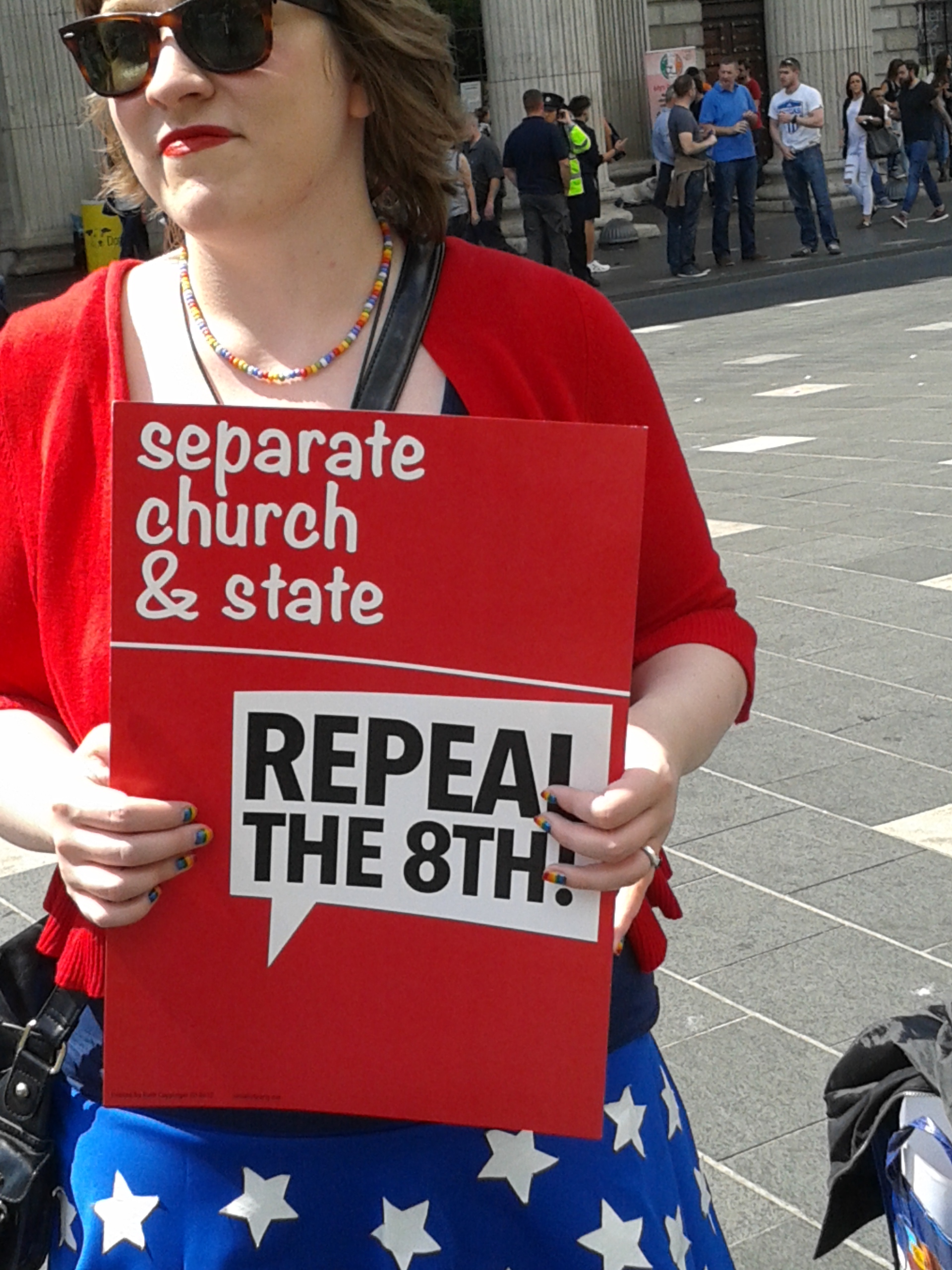
The event was organised by a coalition of Parents for Choice, Uplift, the National Women’s Council of Ireland and Justice for Magdalenes “to send a loud clear message to Health Minister Simon Harris”. The march was part of the ongoing protests against the ownership of the new National Maternity Hospital being given to the religious order the Sisters of Charity but also, as at least one speaker made clear, about the long history in the 26-County state of health services being provided by a combination of Catholic Church and State. Some others on the demonstration made the point that hospitals should be publicly owned and controlled.

Heading east under railway bridge at Butt Bridge.
(Photo: Rebel Breeze)

A petition containing 103,700 signatures – on 50 meters of paper was carried by protesters- demanding that the €300m taxpayer-funded hospital be taken into public ownership. The viral petition had been hosted by campaign organisation Uplift and was printed on 50 feet sheets of card, which was laid out like a path on the approach to the rally’s stage.

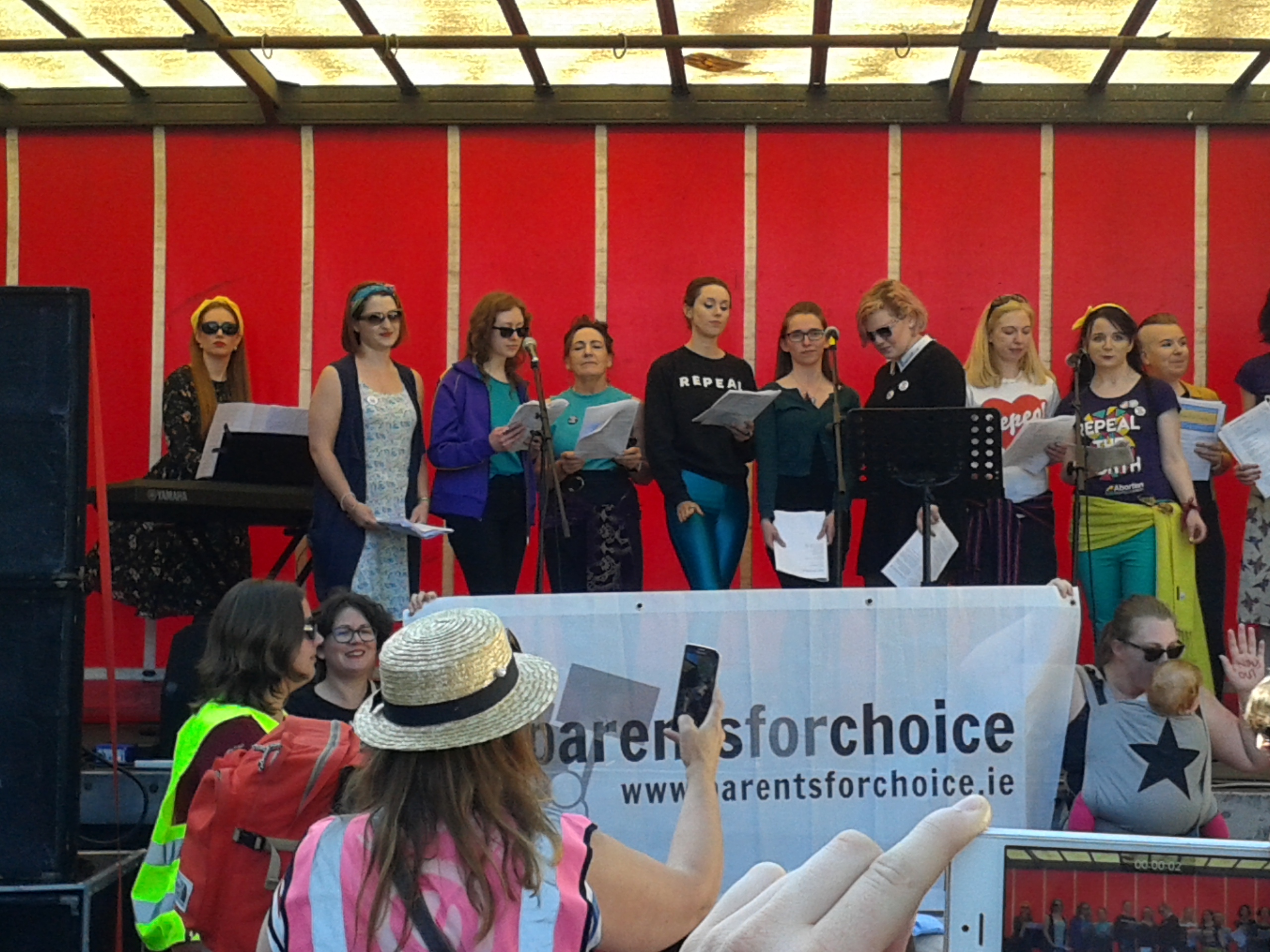
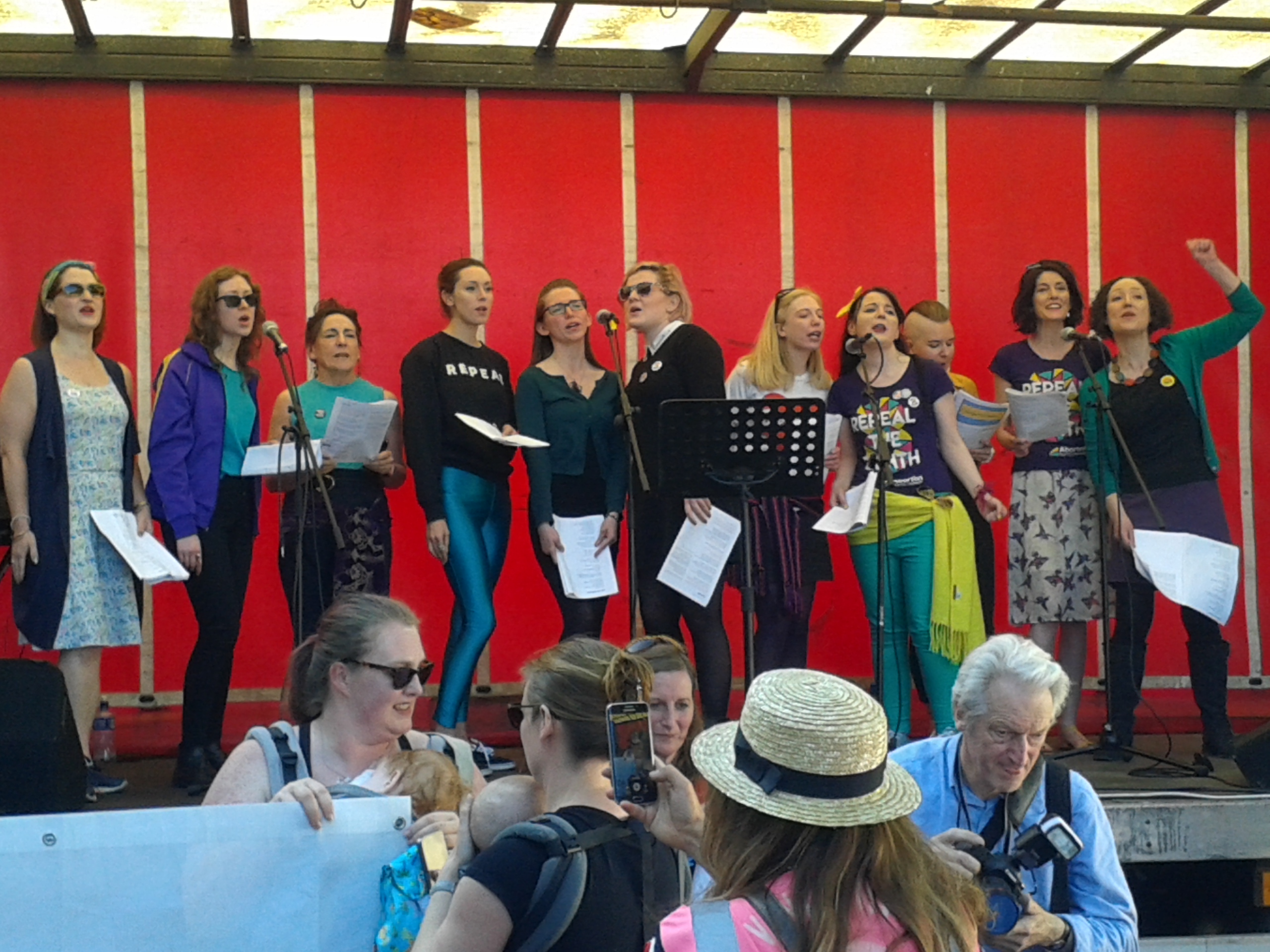
An all-women group called the Repeal Choir sang a number of songs before the speeches at the rally; one of their number announced that they had been formed only a few weeks earlier and they sang with gusto.

End.

(Photo: Rebel Breeze)


(Photo: Rebel Breeze)
Crossing Talbot Memorial Bridge (Photo: Rebel Breeze)
End of march approaching Talbot Memorial Bridge
(Photo: Rebel Breeze)
Lombard St. and quay junction.
(Photo: Rebel Breeze)


Hollis St and its Hospital.
(Photo: Rebel Breeze)
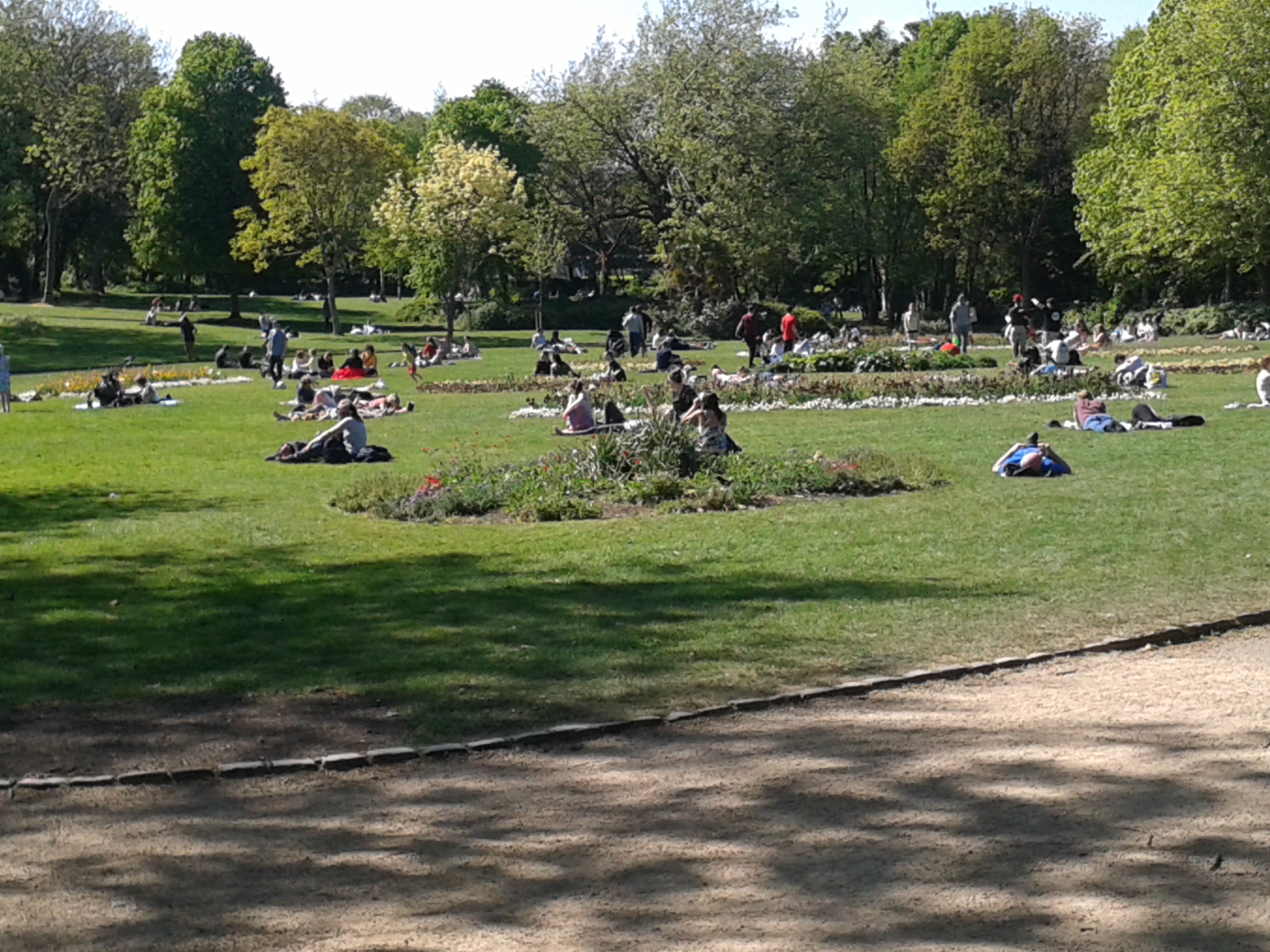
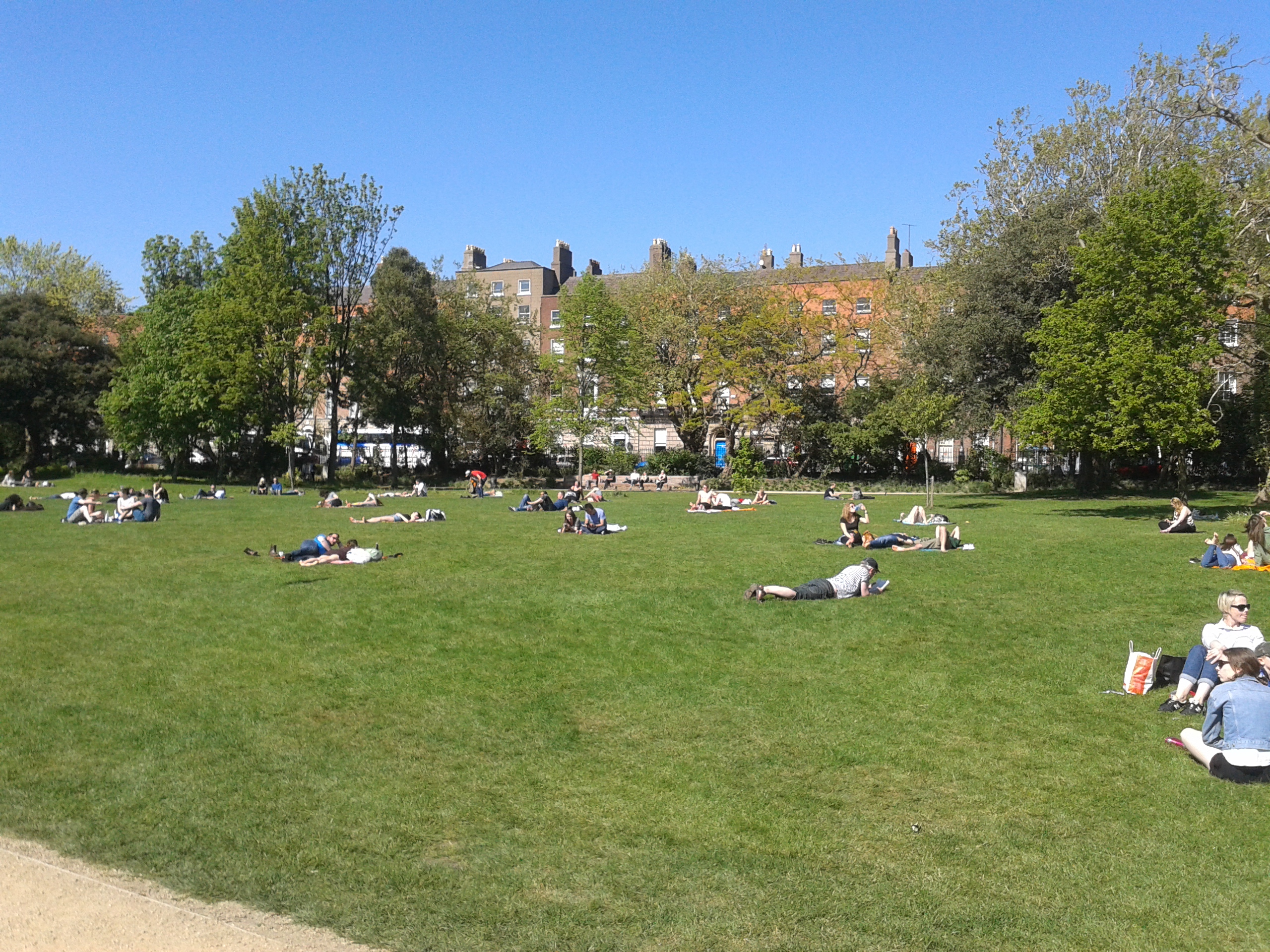
Not on the march — sunning themselves in Merrion Square park (Photo: Rebel Breeze)
Hollis St. Hospital front facing Merrion Square.
(Photo: Rebel Breeze)

(Photo: Rebel Breeze)
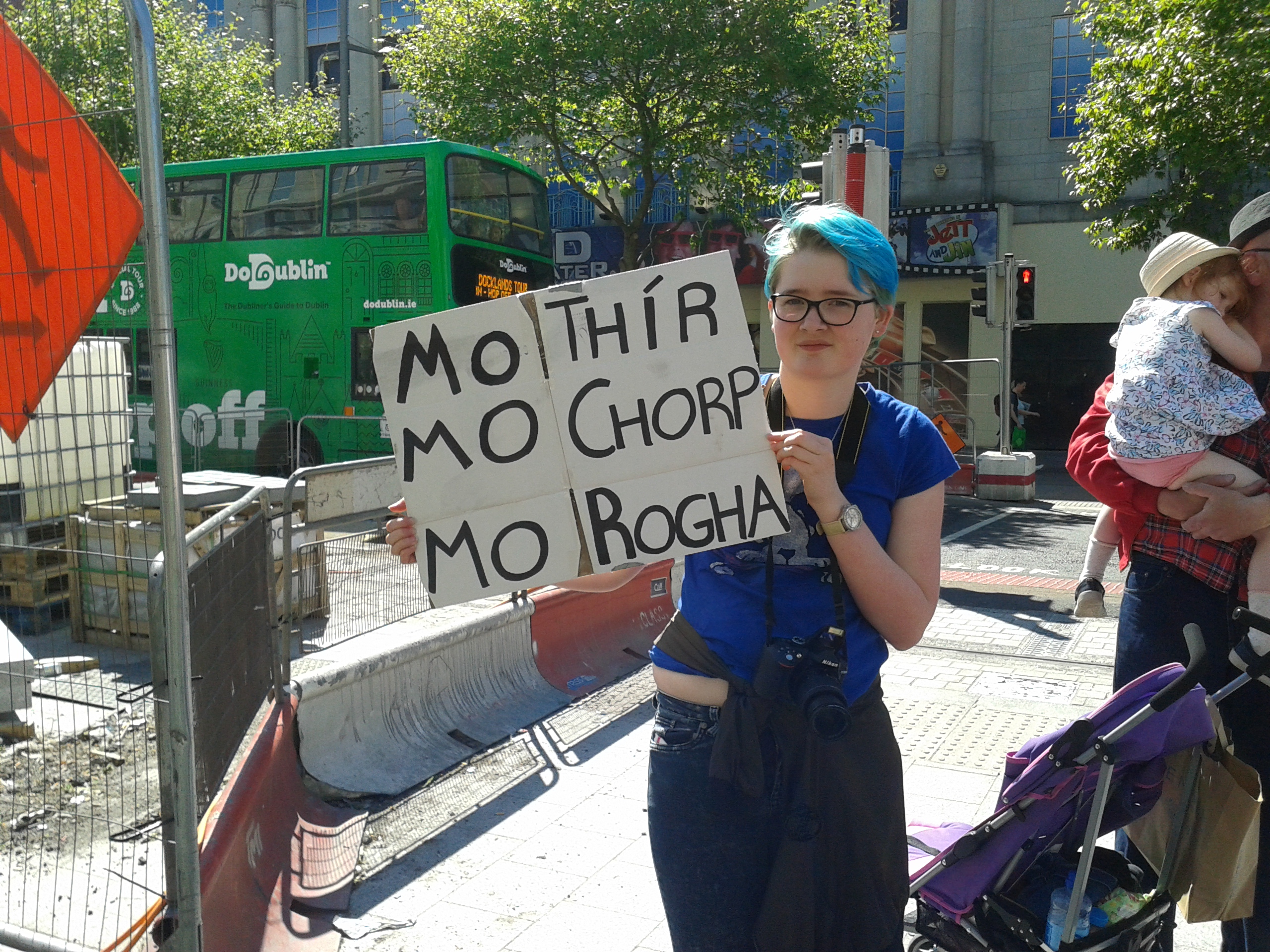
The only placard in Irish on the march
(Photo: Rebel Breeze)
The Repeal Choir
(Photo: Rebel Breeze)


REPUBLIC DAY CELEBRATION HELD IN DUBLIN FOR EIGHTH CONSECUTIVE YEAR


Diarmuid Breatnach


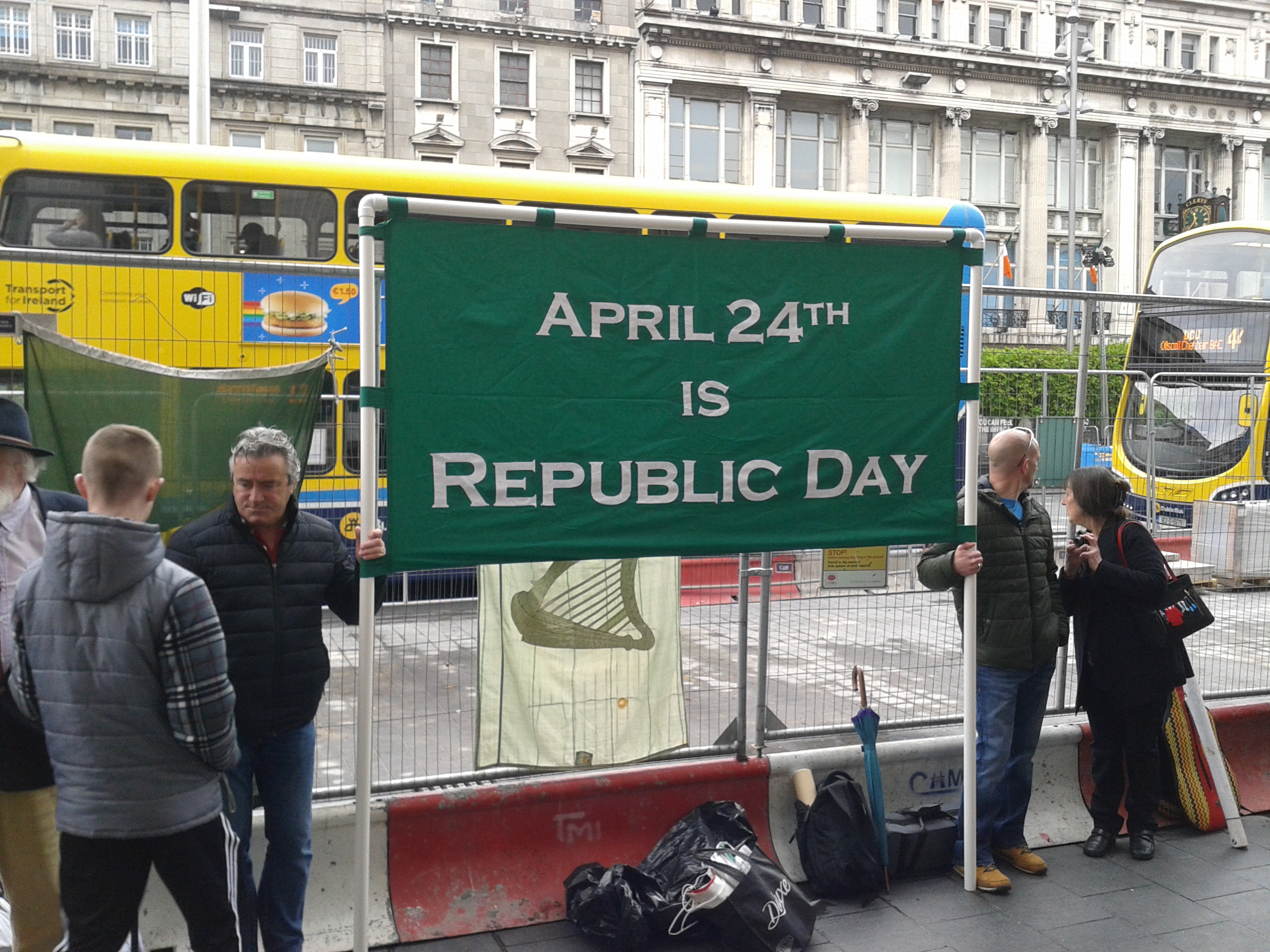
On Monday 25th April people gathered in front of the General Post Office building in Dublin city centre. The occasion was the commemoration and celebration of the reading of the Proclamation of Independence by Patrick Pearse outside that same building, shortly after the 1916 Rising had begun under his overall command. Standing nearby during the reading had been James Connolly, Commandant of the GPO Garrison and also commanding officer of the Irish Citizen Army. Both were executed by the British weeks later for their part in the Rising, along with another thirteen (twelve in Dublin, one in Cork) and months later Roger Casement was tried in civilian court in London and hung.


Tom Stokes, who has been a chief organiser of this event since 2010, opened the proceedings, addressing the crowd and the flag colour party. He reminded his audience that in 1917 it had been Republican women who had organised the 1916 commemoration, printing many copies of the Proclamation and pasting them around the city, also defying British military law to gather outside the GPO to mark the events.

Tom Stokes speaking at the event outside the GPO (photo: D.Breatnach)

Among the reasons for this given by Stokes was that many Republican men had but recently been released from British prisons and concentration camps but also that the women had a special stake in the Republic for which the Rising had taken place – they in particular stood to gain from its achievement the status of citizens and many other changes in their status as a result.

So it was appropriate, Stokes said, to have women take prominent roles in the event, starting with Evelyn Campbell, who accompanied herself on guitar while singing her compositions Fenian Women Blues and Patriotic Games.

Evelyn Campbell performing (photo: D.Breatnach)

Following that, Tom Stokes gave the main oration, outlining his vision of a Republic and castigating the Irish state for what it had produced instead, in particular attacking its treatment of women and declaring that abortion was a private matter in which the State had no right to interfere.

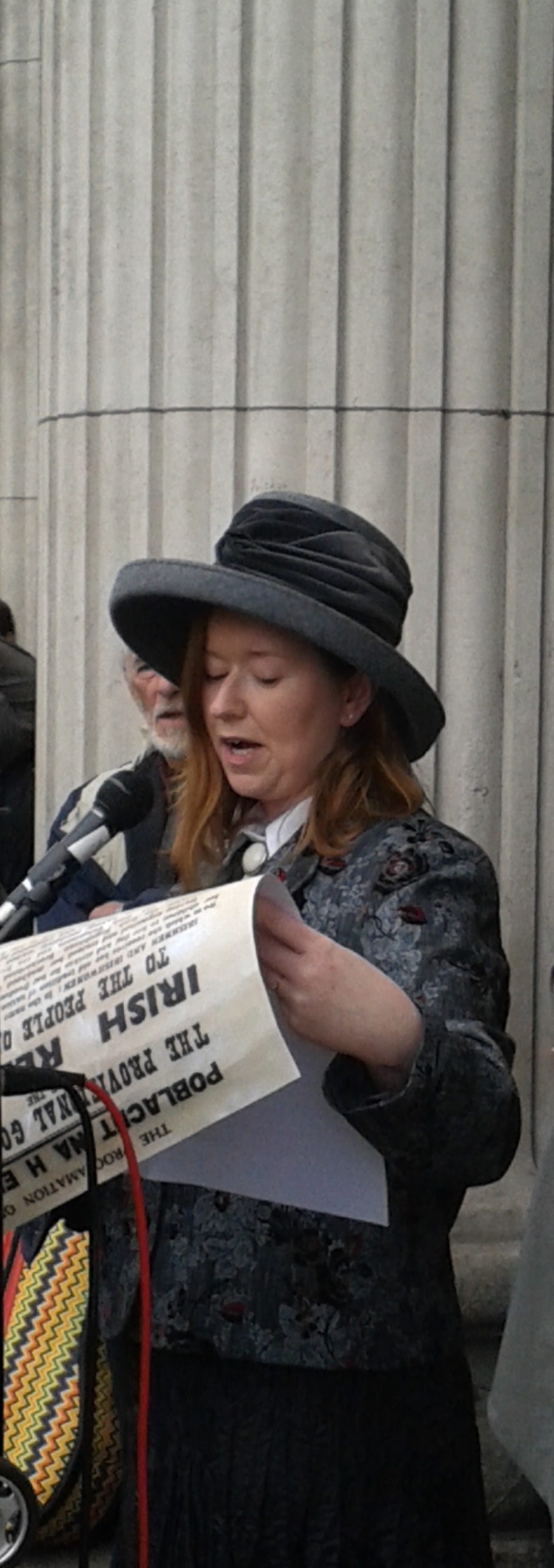
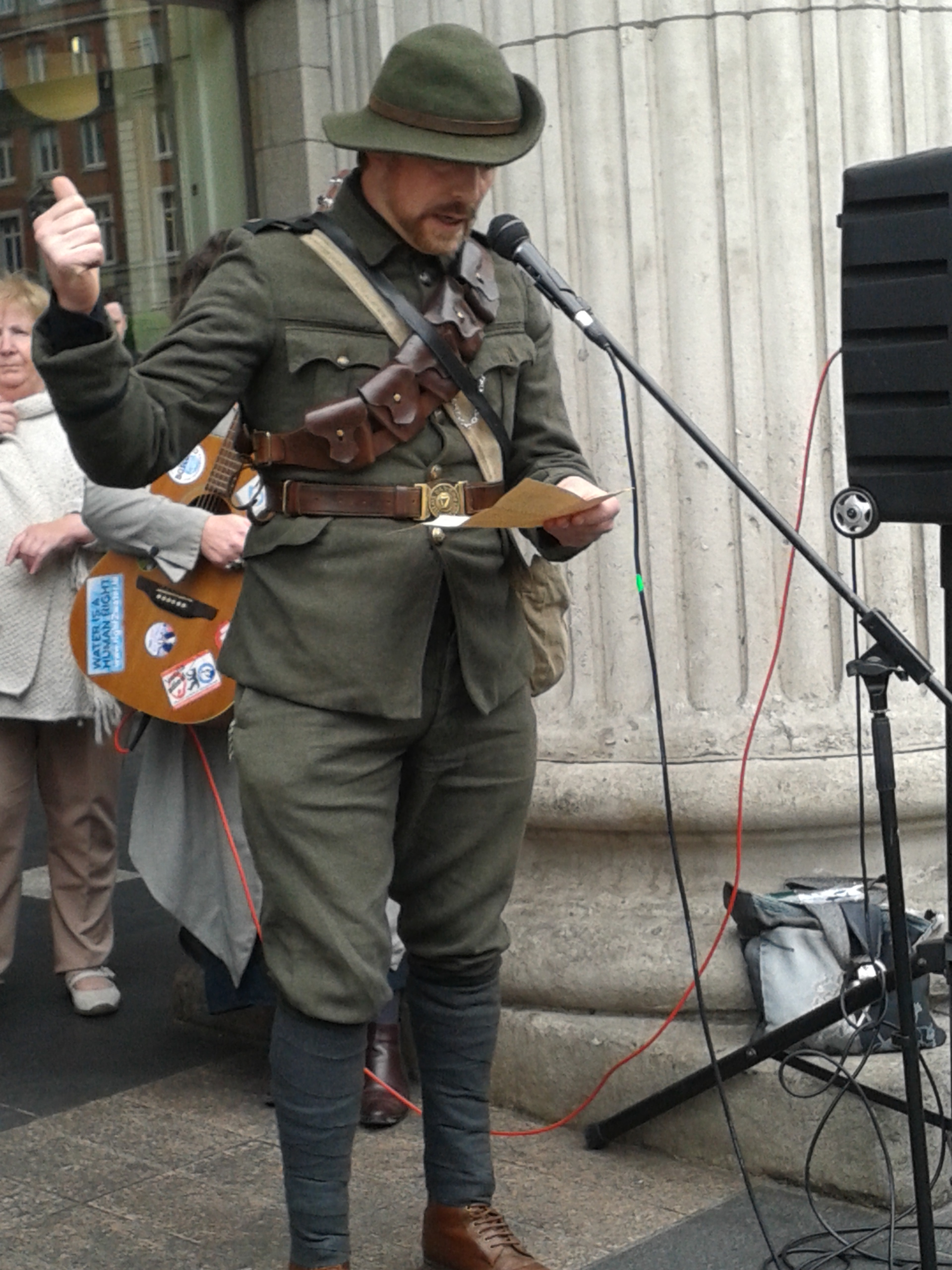
This was followed by Fiona Nichols, in period costume, reading the Proclamation and after that came Dave Swift in Irish Volunteer costume, reading a message given by a wounded James Connolly  (he had been injured Thursday of Easter Week by a ricochet in Williams Lane while on a reconnaissance mission).

Fiona Nichols reading the 1916 Proclamation.
(photo: D.Breatnach)

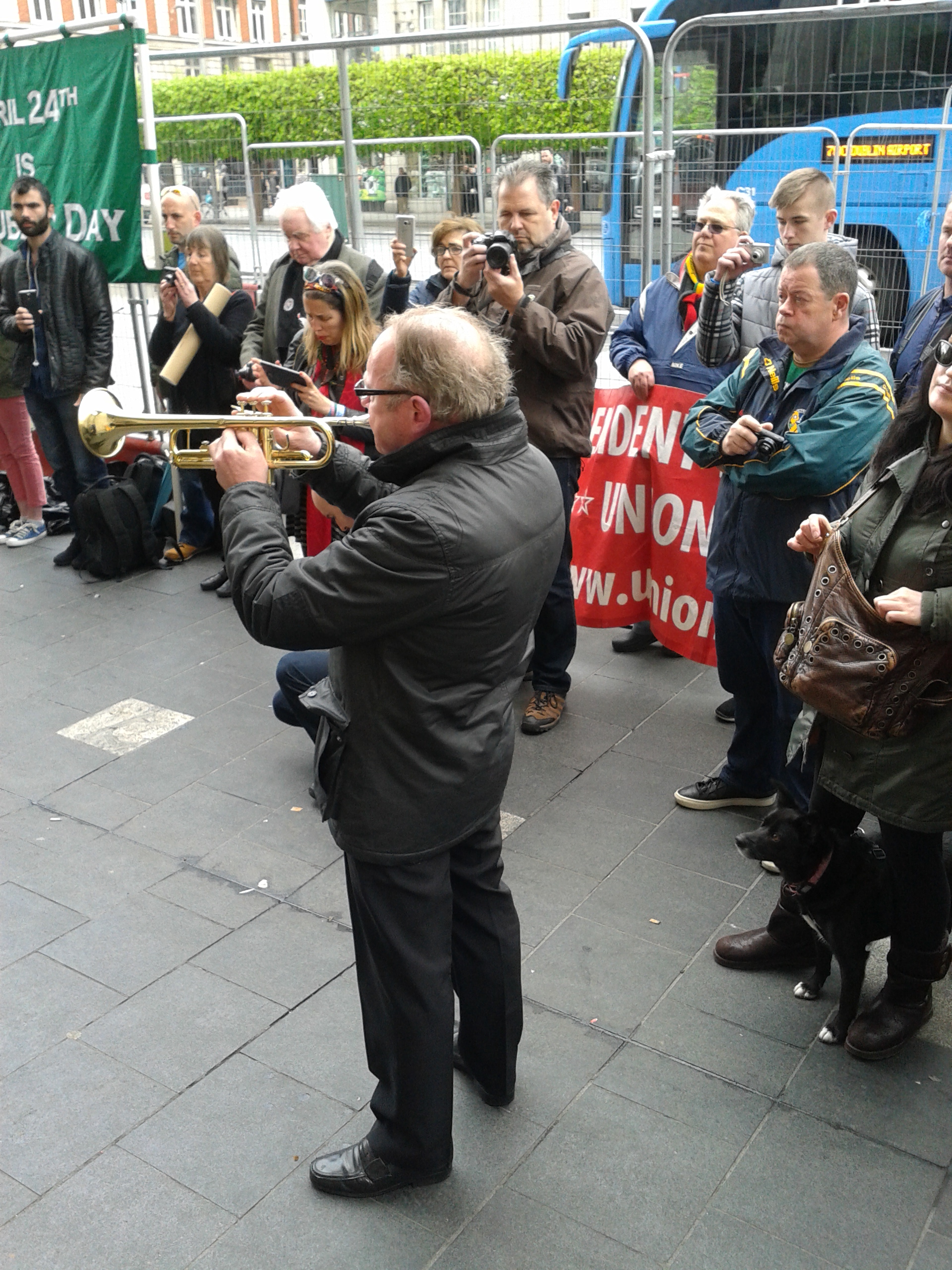
Cormac Bowell, in period Volunteer costume played an air on the bagpipes, Fergus Russel sang The Foggy Dew, Bob Byrne sounded The Last Post on the bugle and Evelyn Campbell came forward again, this time to accompany herself on guitar singing Amhrán na bhFiann.

Cormac Bowell playing at the event.
(photo: D.Breatnach

Tom Stokes thanked the performers and everyone else for their attendance and said he hoped to see them all again on the 24th April 2018, which will be a Tuesday. He said it was his wish that this day be an annual National Holiday and they had started the annual celebration because no-one else was doing it.

Some of those present marched to Moore Street with a Moore Street campaign banner, taking the GPO Garrison’s evacuation route on Friday of Easter Week through Henry Place, past the junction with Moore Lane and on to Moore Street, where Dave Swift, still in Irish Volunteer uniform, competing with the noise of construction machinery coming from the ILAC’s extension work, read the Proclamation before all dispersed, leaving the street to street traders, customers, passers-by and builders.


A chríoch.


Bugler Bob Byrne sounding The Last Post.
(photo: D.Breatnach)
Dave Swift reading Connolly’s statement after he had been wounded. (Photo: D. Breatnach)


Joe Kelly — and a generation passing

A generation is passing. Actually they have been passing for some time, the generation of the fighting years of the late 1960s, the 1970s, the 1980s and even the 1990s.

They campaigned variously for social housing; civil rights north and south; for human rights; against Church domination; against Unionist sectarianism; for free access to contraception; for right to divorce; for an end to censorship; for national self-determination; for Gaeltacht civil rights; for Irish language rights and Irish on TV; in support of political prisoners; the rights of women; for Irish Traveller rights; protection of heritage and environment; solidarity with many struggles around the world, including Cuba, Vietnam, Rhodesia, South Africa, Chile, the Black Panthers; against drug dealers; for freedom to choose lifestyle; decriminalisation of gay and lesbian life; for community projects in deprived areas including youthwork and, let’s not forget, organised, fought in and supported strikes.


That generation fought many battles, some of which they won and some which built bases for later battles and their story is told only in bits and pieces here and there. They organised, marched, sat in, occupied, wrote, made placards, painted slogans, put up posters and some fired guns; they were watched, raided, beaten, fined, jailed, calumnied, sacked, expelled, kept unemployed, derided from pulpit, press and judge’s bench, some were shot, and not just they but their families made to suffer too.

I am not referring to people of any specific age but of all those who were any age from young to old and active during those years. The causes of death have been many, from simple old age and life lived out to the death penalty.

But the death penalty was not in force in Ireland in the 1960s, you may think? Actually it was, it wasn’t abolished until 1990 in this state. But you’d be kind of correct as in practice no formal execution has been carried out by this state since 1954.

So, then what am I talking about? Maybe referring to the ‘United Kingdom’, since six counties of Ireland are included in that state? Yes, and no. The death sentence still exists in the UK only for “Arson in Her Majesty’s shipyards” but it was abolished in Britain for the crime of murder in 1965 and, in fact, no-one had been formally executed there from the year before. If the judicial death penalty had still been in force, the people in charge of that state might’ve been been spared the embarrassment of seeing nearly a score of Irish people they had wrongly convicted in 1974 walk free decades later as judges eventually had to find them ‘Not Guilty’.

A bit late for Giuseppe Conlon, against whom there had not even been a shred of doubtful evidence, but never mind. But had they all died in prison or been executed, people might not have worked so hard to see their convictions in court overturned – people among whom Joe Kelly, who died this week and who was cremated on Saturday, stands tall.

But the death penalty was not removed from the judges’ arsenal in that bastion of reaction, Six Counties state, until 1973, when the 30 Years’ War had entered its early years (somebody from the British state clearly had to sit down with the Unionist bigots and explain, although of course they sympathised with their loyal brethren, how bad it would be for Britain and the Queen if they started sentencing and executing IRA and INLA fighters).

There are more ways to skin a cat …. yes, and to kill too. The orange and SAS and MRF death squads killed more against whom there was not even a court conviction. And some of the Republicans killed one another too. And twelve died on hunger strike, one each in 1974 and in ’76 and ten in 1981. Actually, considering the brutality of force-feeding, it’s surprising there weren’t more deaths – Marian and Dolours Price were force-fed 167 times over 203 days in 1973 and it was the publicity around their case and the deaths of Gaughan and Stagg that ended the practice of force-feeding, ensuring that the Hunger Strikers of 1980 and ’81 at least did not have to endure that experience.

But there are more ways to kill …. Many of that generation of fighters died from ‘natural’ causes but died early – cancers, heart attacks, liver damage, despair ….. ah, yes, that brings to mind suicide, of which some also died. But despair also can drive you to drink, even more easily if it has been part of your experience of socialising and alcohol is one of the top killers in the world. And some died of drugs …. or drugs and alcohol …. or infections from unsafe drug injection …. But most who died early did so in summary from the wear and tear of struggle, of prison, of separation, of relationship breakdowns, of betrayal, despair.

Not all died, even those who are not among the fighters today. Some walked away from the struggle and though I can’t imagine being in their shoes, I do not begrudge them. So long as they didn’t betray any on their way out or make a living out of spitting on their former comrades and causes afterwards. But some, a very few, did exactly that and you can read what they have to say quite often in their articles or hear them quoted in the newspapers or on TV or radio.

Some found other ways to betray and did it in secret, feeding information to their handlers and some even diverting attention from themselves by accusing others, some innocent and some of a lesser grade of betrayal than that of the accusers. We know of some of them but may never learn about them all.

Joe Kelly

Poster displayed at memorial in Teacher's Club (photo accessed from a Facebook posting)
Poster displayed at memorial in Teacher’s Club (photo accessed from a Facebook posting)

A few have survived and are still around, fighting the struggle, whether in organisations or as independents. Joe Kelly was one in both categories, in a sense. I knew him but did not know him well and met him only in the last decade, after I had returned from decades living and working in London. I am given to understand that he had passed through a number of political organisations, including Fianna Fáil and the Labour Party. A strange CV, one might think, for a radical left-wing social and political activist. The last political group with which I had associated Joe was People Before Profit, on a local level, around Phibsboro. Joe invited me to attend a quiz they were running and I did so mainly to return a favour – he had attended, to contribute to the singing at my invitation, an evening of the Clé Club where I had been “Fear a’Tí” for that night. I was amazed to win a Blackberry at the quiz (sorry, Joe, I still haven’t gotten around to learning and using it!). Last I heard, he wasn’t with the PBP.

Somebody told me years back that he had been a central organiser of a solidarity event in Dublin for the Birmingham Six in which lights had been floated down the Liffey. Of course I was impressed – on a political/ human rights level but also for the poetic vision involved. I have found little about that event since and Joe, who I found a modest man, didn’t give me much in response to my pressing. A couple of searches on the Internet yielded me only a passing reference to the River Parade, of 1990, a year before the Birmingham Six were finally cleared in court and released. Likely I have not been asking the right people or looking in the right corners.

I met Joe by arrangement for a coffee a couple of times, while I tried to get him into something I was doing and he tried to get me into something he was working at – neither of us succeeding in our efforts to recruit the other. Since Joe was working for awhile in the community sector I also approached him to explore possibilities for me when, despite a long track record in the fields of working in homeless shelters and addiction as well as other community activism I was out of work, but he wasn’t able to help me.

And of course I bumped into him on demonstrations, as in those in solidarity with Palestine or against the Water Tax or against the Lisbon Treaty. For awhile we were active together in the Dublin branch of the Ireland Palestine Solidarity Committee and I believe he left like me after witnessing some nasty in-fighting years ago, though we both often turned up to protest pickets and demonstrations and public meetings called by the organisation. We would also meet at events in solidarity with the Cuban people.

I heard him described at his funeral service, by someone who should know, as a Republican. Certainly Joe was very proud of his father and uncle who had both fought in the 1916 Rising, the first in the GPO and the second in Bolands’ Mill and proudly displayed his father’s medal at a public event in the Teachers’ Club in Dublin.

Joe Kelly displaying his father's 1916 service medal at a 1916 commemoration event (photo: D.Breatnach)
Joe Kelly displaying and talking about his father’s 1916 service medal at a 1916 commemoration event (photo: D.Breatnach)

However, he was among the number that I invited but failed to get to events over the last decade to highlight the plight of Irish Republicans being hounded by the State and imprisoned without trial. That did puzzle me, for I knew Joe to have a track record of fighting for human rights. And this was shown not only in his campaigning for the Birmingham Six.

Joe fought for the rights of divorce and choice of abortion, as well for the right to freedom from partner abuse, in particular through the movement for women’s refuges, what many people still refer to as “battered wives hostels”. He was active in the campaign for the right to gay marriage, so amazingly successful in Ireland. And Joe was also active in campaigns against racism towards migrants.

“Conas atú tú?” or “Dia dhuit”, Joe would invariably greet me whenever we met. I would not call him exactly fluent but he could understand and speak Irish. I suppose I assumed he had some affection for the language and was also paying me, a known native speaker, the courtesy of addressing me in Irish and speaking awhile in the language. At his funeral service, I learned it went further than that. I heard his grandchildren say that he frequently spoke to them in Irish and when they did not understand him, would translate what the words meant. Some people in the audience chuckled to hear this. I felt sad and somewhat angry too, that a question so important to our cultural identity, an aspect so threatened today, should be treated so apparently lightly by some and that the only words to be spoken at his funeral service in Irish were those in the final sentence spoken by his brother, Jim, in his eulogy: “Slán leat, Joe”. In the booklet produced for the occasion and freely available at Club na Múinteoirí, there was however one dedication in Irish (and I have since learned that one of the speeches at the Teacher’s Club was in Irish) and I note that both grandchildren who spoke bear Irish-language names.

Paying respects and memorial service

On Saturday, laid out in the lovely Room 2 in the Teacher’s Club (sin Club na Múinteoirí, Joe) in Dublin’s Parnell Square, a venue often used for social, cultural and political events, in a closed wicker basket coffin, Joe received his visitors. And they were MANY. Feminists, Palestine solidarity activists, Cuba solidarity activists, community activists, independent political activists and a sprinkling of activists in various parties all attended and many contributed their memories or words dedicated to him while he was laid out there.  (I took many photos here and some at Mount Jerome but somehow seem to have lost them all).joe-kelly-speaking-at-event

Attending first another funeral (of another singer) that morning in Howth, then travelling into Dublin to take part in the Moore Street Awareness weekly table, I had to miss some of that. I spelled a comrade while he attended to pay his respects, then attended later while he took over back at the table.

Room No. 2 was still packed but so was the whole bar lounge area. I had missed all the eulogies and reminiscences and even singing – “The Foggy Dew” I was told. Had anyone sung “The Parting Glass”, I asked. No, apparently not. So then to ask his sister if it would be alright to do it, then the MC, his long-time collaborator, comrade and friend, Brendan Young. It would be welcome, I was told. And Fergus Russell (also his second funeral that day) and I did three verses together, using a mic so it might carry through to the lounge and, though we took turns at fluffing a line, not too badly. It is a great song for such occasions and each verse was particularly appropriate to Joe.1

A little later, the Internationale was sung by all (copies of the words of a verse and the chorus distributed beforehand), the wicker coffin (I must have one of those when my time comes!) was lifted on to shoulders by family and friends and brought through the respectful lines while Joe’s daughter sang The Night They Brought Old Dixie Down.2

Then the hearse came out and led the cortege to Mount Jerome cemetery. I didn’t know the protocol regarding cycling in a funeral cortege but followed anyway, managing to get temporarily lost on the way and arriving just as the hearse arrived at the cemetery. Again, the chapel was packed.

The ceremony was non-religious and officiated by Therese Caherty, ex-partner and friend. In turn Therese herself, his brother, his bereaved current partner, relatives and his comrade and friend Brendan Young all gave their moving eulogies and often funny anecdotes. Brendan emphasised that for Joe, the process of the conduct of a struggle was as important as the end to be reached, which I knew to be true from our time together in the Dublin IPSC and I’d be in agreement with Joe on that.

There were, despite the many I did see during those events, some faces I did not see in the congregation or at the Club na Múinteoirí before the service or later, when many returned to the Club to free sandwiches and soup laid on by the management there. It was their loss.

I never saw him dance but am told he loved it and taught his grandchildren not only to sing but to dance too. I did know he’d learned to tango. He’s left this dance floor now and gone on to another and whateverone steps and two steps and the divil knows what new steps”they are dancing there, I’m sure Joe is learning them and probably teaching a few of his own.

Slán leat, Joe – árdaigh iad!

A chríoch.

FOOTNOTES

1  “Of all the money that e’er I had, I spent it in good company


And all the harm that e’er I’ve done, alas, it was to none but me


And all I’ve done for want of wit to memory now I can’t recall


So fill to me the parting glass, good night and joy be with you all

“If I had money enough to spend and leisure time to sit awhile


There is a fair maid in this town, that sorely has my heart beguiled


Her rosy cheeks and ruby lips I own, she has my heart enthralled


So fill to me the parting glass, good night and joy be with you all

“Of all the comrades that e’er I’ve had, they are sorry for my going away


And all the sweethearts that e’er I’ve had,

they would wish me one more day to stay


But since it falls unto my lot that I should rise and you should not


I’ll gently rise and I’ll softly call good night and joy be with you all”

2  This song of nostalgia for the American Confederacy has a haunting melody but its ideology is often ignored by those who sing it.

3  Line from The Charladies’ Ball

THE FIGHT FOR THE MOORE STREET HISTORICAL QUARTER IS A SOCIALIST STRUGGLE

Diarmuid Breatnach 

The struggle for the preservation of Moore Street that is currently in the news (but has been going on for fifteen years) is one not only for nationalists and Republicans, but for socialists too. And for socialists of revolutionary ideology as well as for radical social democrats. But currently these sectors, apart from individuals independent of political party (and one or two belonging to parties), are keeping away from the issue. In this they are seriously mistaken and are doing the working class in Ireland and indeed internationally a disservice.

Aerial view of Moore Street in the days when the speculators and supermarkets had only just begun to reduce it (Photo from Internet)

BACKGROUND TO MOORE STREET STRUGGLE

For those who may not be aware of the historical background, roughly 300 men and women of the GPO garrison in 1916, having to evacuate the burning building, made their way to Moore Street and occupied the terrace from the junction with Henry Place to what is now O’Rahilly Parade, entering at No.10 and tunneling through up to No.25 at the end of the terrace. On the following day, the decision was taken to surrender. Despite its historical status, nothing was done by the State to protect the ‘1916 Terrace’ for decades, although a small commemorative plaque was put on No.16 in 1966, when a number of such plaques were erected at sites throughout the city.

Fifteen years ago a campaign was started, by the National Graves Association and mostly by descendants of people who participated in the 1916 Rising, to have an appropriate historical monument on the site. In 2007 the State named buildings No.14-17 as a ‘National Monument’ but would take no steps regarding the other twelve buildings in the Terrace. By that time the four buildings belonged to a property speculator who allowed them to deteriorate but compliance with maintenance and upkeep obligations to a national monument were not enforced by the State. Also, shortly afterwards, the speculator put in a planning application for a huge shopping centre entailing the demolition of 12 houses of the Terrace and the State approved it.

Paul O'Toole, who played a number of sets at an "Arms Around Moore Street event in June 2015, including singing some songs of his own composition. The event was organised by Save Moore Street From Demolition group.
Paul O’Toole, who played a number of sets at an “Arms Around Moore Street event in June 2015, including singing some songs of his own composition. The event was organised by Save Moore Street From Demolition group.

Other threats emerged later, such as planning applications to extend the ILAC centre further into Moore Street and to build a tall budget hotel at the Moore Lane/ O’Rahilly Parade intersection; these were approved by Dublin City Council’s Planning Department although the majority of the Councillors have voted to preserve the 1916 Terrace and indeed the Historical Quarter.

Donna Cooney, great-grandniece of Elizabeth O'Farrell, speaking on behalf of the 1916 Relatives' Assocation
Donna Cooney, great grandniece of Elizabeth O’Farrell, speaking on behalf of the 1916 Relatives’ Association, at an “Arms Around Moore Street, event in June 2015. To her left is Mel Mac Giobúin, one of the principal organisers of the SMSFD group.

At the end of 2015 the State bought the four houses of the ‘national monument’ from the speculator, paying him €1 million each for them and proposed to knock down houses either side of it. As soon as the intention to proceed with imminent demolitions became clear, emergency demonstrations were called in the street by a newer group, Save Moore Street From Demolition (founded in September 2014). A five-day occupation of the buildings ensued, ending only on foot of an order of the Court that no demolition take place while a High Court challenge to the Dept. of Heritage was awaited.

Section of the January march to save Moore Street, organised by the Save Moore Street 2016 umbrella group
Section of the January march to save Moore Street, organised by the Save Moore Street 2016 umbrella group. In photo foreground, two of the principal organisers of the SMSFD group, (L-R) Mel Mac Giobúin and Diarmuid Breatnach. (Also in shot, Dave Swift, supporter of the campaign, in Irish Citizen Army uniform).   (Photo source: Donal Higgins)

A number of protest actions have taken place since then including a street concert and a march from Liberty Hall to Moore Street ending in a rally at the GPO.   The struggle continues at the time of writing with further events planned and the SMSFD group have joined with others, including people who occupied the buildings, to form the ‘Save Moore Street 2016’ group. It is a broad group containing activists from a number of Republican organisations and independents of community action, socialist and Republican background.

In a separate development, a High Court challenge against the process undertaken by the State to buy the properties and demolish others on either side opened on February 9th and has been adjourned a number of times since, apparently due to the State not having got its papers together.

NATIONAL HISTORY

Socialists may argue that the cause lying behind the struggle is one of preservation of Republican or even nationalist history. I would argue that is only partly true – but what if it were so? Who actually makes history? It is the masses of people that make history, even if individuals among all classes at certain times are thrust – or throw themselves – upon the stage. In that sense, ALL history of progressive social history belongs to the working class.

Furthermore, the underlying historical reason for which many are seeking to preserve the 1916 Terrace and, indeed, the Moore Street historical quarter, is because it related to a struggle against colonialism, against an immense colonial empire. Are socialists to say that they take no interest in anti-colonial struggles and their history? Or is it that they do, so long as they be in some other part of the world? And if the latter be their position, what possible political justification could they offer for it?

STREET MARKET – SOCIAL HISTORY

In the development of this city, Dublin, street traders have played a part – as indeed they have in the development of probably every city in the world. Working people and small-time entrepreneurs, working hard from dawn to dusk in all weathers to feed themselves and their families, a link between town and country or between coast and inner city. They brought fresh food to the city dwellers of all classes and brought colour to what was often a drab environment, colour to the eye and to the ear also.

Moore Street is the last remaining street of a traditional street market centuries old, the rest of which now lies buried under the ILAC centre and which even now threatens to extend further into Moore Street, squeezing the market street still further. This street market and its history as well as being physically threatened by the proposed extension of the ILAC, squeezed commercially by Dunne’s and Lidl, is threatened also by a planned budget hotel building of many floors and of course the giant shopping centre plan of Chartered Land/ Hammerson. Have the socialist groups nothing to say about this or, if they are against this monopoly capitalist assault, why do they distain to take their place in the ranks of the resistance?

AGAINST WORLD WAR

Some of the Volunteers undoubtedly planned the Rising to take place during the first imperialist World War purely on the basis of the maxim that ‘England’s difficulty is Ireland’s opportunity’.  But others, including the revolutionary socialist leader James Connolly, also clearly wanted a rising against the slaughter of workers in a war between imperialists.  Connolly wrote a number of articles denouncing this slaughter which socialists of his time had pledged themselves to fight but which few had actually done, when it came to the crunch.  However, that position remains the correct one for the working class: in a situation where your masters wish to send you out to fight your class brothers abroad, turn your guns on your masters instead.  The 1916 Rising stands as an example of this, the first of the 20th Century and world history would have to wait until the following year for another example in Europe.

WORKERS’ HISTORY

All the Irish socialist groups, as far as I’m aware, right across the spectrum from Anarchist to Communist, hold the memory of James Connolly and of the Irish Citizen Army in high esteem. And so do the radical social democrats.

James Connolly led the Irish Citizen Army into alliance with the Irish Volunteers, Cumann na mBan and na Fianna. The ICA, a trade union-based militia, had been formed to defend demonstrating and picketing workers against the attacks of the Dublin Metropolitan Police in 1913. When the ICA went out in the 1916 Rising, Ireland was the first country in the world that century for a workers’ armed unit to fight in its own uniforms and under its own leaders.

Irish Citizen Army on parade at the Irish Transport & General Workers' Union building and grounds in Fairview, Dublin
Irish Citizen Army on parade at the Irish Transport & General Workers’ Union building and grounds in Fairview, Dublin. (Photo source: Internet)

The ICA were allocated the Stephens Green and Dublin Castle areas but also had members in the GPO garrison. So when the GPO garrison retreated from the burning building, ICA members were part of that retreat. At least one died on that journey, struck down in Henry Place by British Army bullets at the intersection with what is now Moore Lane.

When the GPO garrison took possession of the 16 houses of the Terrace in Moore Street, tunneling from house to house, the ICA were part of that. And when the decision to surrender was taken, the ICA laid down their arms with the rest.

The 1916 Rising and the occupation of the Moore Street terrace and backyards is part of the ICA’s history and is therefore part of the history of the Irish working class and, indeed, of the international working class. If the socialist groups don’t wish to celebrate that episode in the history of the class, why? If, on the other hand, they do celebrate it, why then do they not join the struggle to have the place of their last stand preserved from demolition and to have the ICA’s place in history marked by a fitting monument?

The lack of engagement of most of the revolutionary and radical left with the Moore Street struggle has also meant no noticeable pressure within the trade unions, where the left have some influence, to even declare verbally for the preservation of the 1916 Terrace. To date, only one section of one trade union, the Construction Section of SIPTU, has declared in favour of saving the Terrace.

WOMEN

The struggle for gender equality is an important part of the struggle for the emancipation of the working class, i.e. for socialism: women represent slightly over one-half of the human race and this is true also for the working class. In addition, the oppression of one part of the class serves as a wedge into the solidarity of the class as a whole.

In 1916 women served as auxiliaries in Cumann na mBan and as equals in the Irish Citizen Army. That year was the first in the World in which women participated in an insurrection in a unit of their own, wearing a uniform of their own and under their own female officers, as was the case with Cumann na mBan. It was also the first time in the 20th Century in which women had formal equality with men in an armed workers’ organisation, as they did in the Irish Citizen Army.

Constance Markievicz, ICA officer, fighting in the Stephen's Green area. She poses here with a gun prior to the Rising to underline her position that women can and should take part in armed revolutionary struggle, on a par with the men.
Constance Markievicz, ICA officer, fighting in the Stephen’s Green area. She poses here with a gun prior to the Rising to underline her position that women can and should take part in armed revolutionary struggle, on a par with the men. (Photo source: Internet)

The Proclamation was the first insurrectionary call to arms to address itself specifically to women alongside men (“Irish men and Irish women …”, it begins) and had been signed in secret a little earlier by the seven male signatories (or by most of them) in the alternative cafe and agricultural product cooperative run by Jenny Wyse Power at No.21 Henry Street.

1916 CUMANN na mBAN & ICA 1917
Women of Cumann na mBan and ICA who participated in the 1916 Rising in a group photo a year later (photo sourced Internet)


         CAPITALISM & THE STATE

The campaign for the saving and appropriate renovation of the 1916 Terrace first of all confronted the capitalist property speculator Joe Reilly and his Chartered Land company, while it lobbied the State to take over the Terrace.

When in 2007 the State declared four houses in the Terrace to be a ‘national monument’, the campaign continued confronting the speculator but now calling, without success, on the State to oblige Mr. O’Reilly to comply with his maintenance obligations to a national monument. When the State granted, with some changes, planning permission for the speculator’s giant shopping centre, the campaign moved into confrontation with the State, a confrontation which intensified after the State purchased the four buildings and prepared to demolish the buildings on either side.

The whole saga was an object demonstration of the function of the State in facilitating capitalist property speculation and furthermore, of the neo-colonial nature of a capitalist class unable to consider saving such a national historical treasure even with the support of the vast majority of the population.

In such a struggle, with people with democratic objectives on one side and, on the other, rapacious property speculators and a capitalist State facilitating those speculators, where does the duty of socialists lie? It is clear on which side they should stand if they should stand on the issue at all. And they should take a stand on it – how can the development of that struggle do anything but strengthen the democratic movement in general, including the movement for socialism, and harm its opponents, the State and capitalism in Ireland? And surely in the course of that struggle, with socialists side by side with Republicans, alliances would be formed which could be built upon for more ambitious projects later?

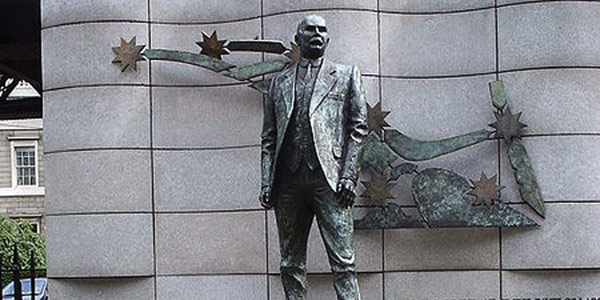
Monument in Dublin to James Connolly, revolutionary sociailist writer, historian, theorist, union organiser, publisher -- his last location of freedom was the Moore Street 1916 Terrace, before he was shot by British firing squad
Monument in Dublin to James Connolly, revolutionary sociailist writer, historian, theorist, union organiser, publisher — his last location of freedom was the Moore Street 1916 Terrace, before he was shot by British firing squad (Photo source: Internet)

IN CONCLUSION:

For all the reasons given above, its social history, its anti-colonial history, the history of the common people as well as that of intellectuals, the history of the working class to assert its independence and dominance of the movement for liberation, the history of women’s struggles, and the current struggle of people against property speculator capital and State, the place of socialists, revolutionary and radical, is right there with the Moore Street 1916 Terrace campaigners. But where are they?

With the exception of a few honourable exceptions, they are notable by their absence. Yet, they will wonder at times why the mass of people do not follow them; why, for the most part, they regard them and their organisations as an irrelevance.

End.

“PRO-LIFE” — REALLY? AND DO WE LEARN FROM YEAR TO YEAR?

Diarmuid Breatnach

They came down O’Connell Street in their tens of thousands – colourful banners and heart-shaped balloons, music in sections, black, brown and white faces and if many were old, many were also young – and not just the children brought by a parent. “Right to life” was the most common chant, obviously tailored to undermine their opposition’s “Right to choose”, from those who favour the unfettered right to abortion. And LIFE is the name of the organisation that brought these marchers together on their annual march through Dublin city centre.Separat Church & State top

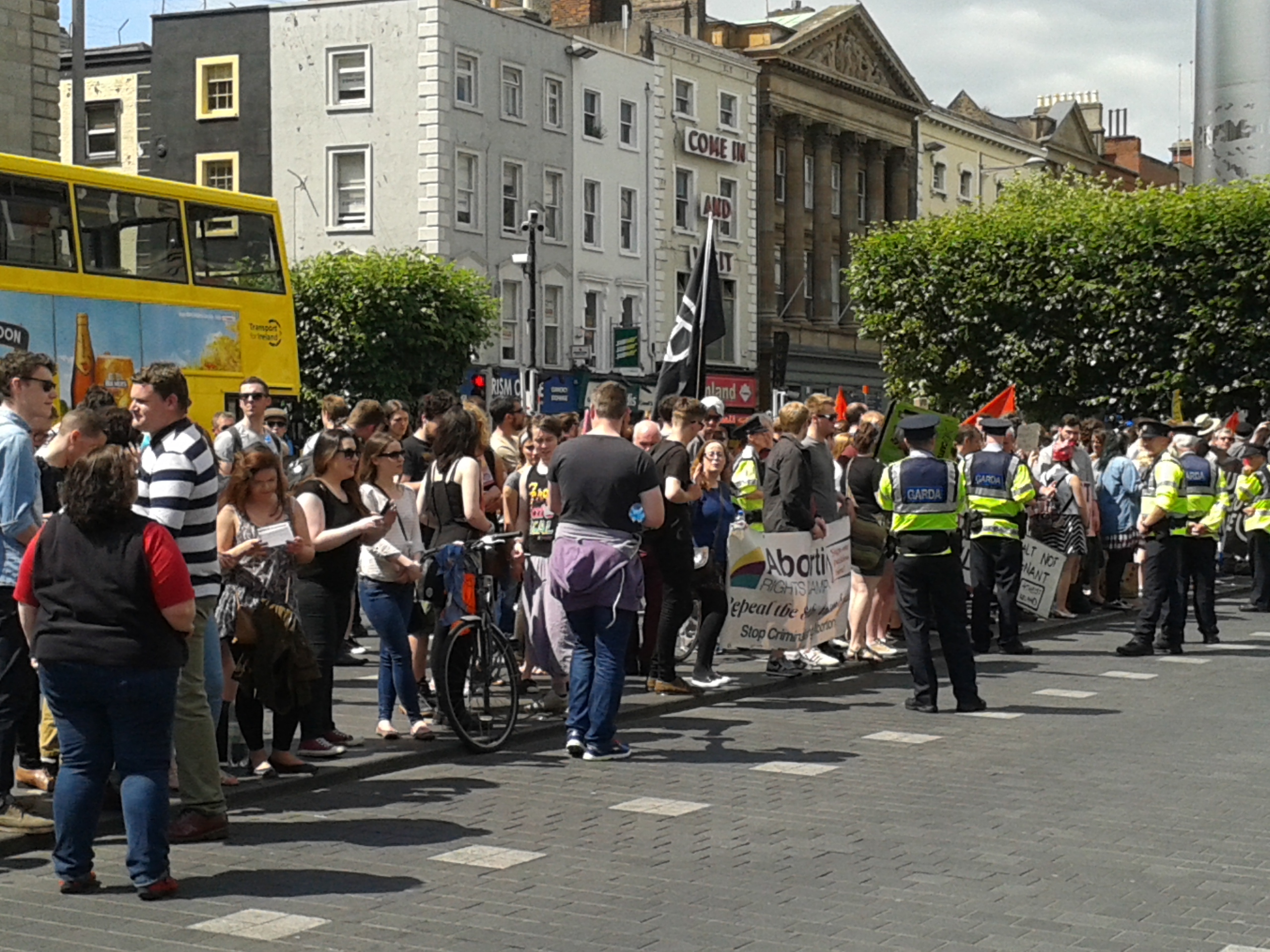
Bad photo of approach of anti-abortion march in O'Connell Street
Bad photo of approach of anti-abortion march in O’Connell Street

Nobody has a right to kill!” was the last line in another chant. So with that, the name of their organisation and “Right to life”, we have what they are about, right? They are for life and are upholding, apparently, the Christian Commandment “Thou shalt not kill”. Yes, it was there on the tablets of stone Moses brought down the mountain, Number Six – wayyy down the list. Actually, apparently in Hebrew it translates as “Though shalt not murder”. And defining “murder” is not so simple either. But anyway, the Jewish faith has the same prohibition. In fact, there is hardly a religion that does not. Of course, the Old Testament also calls for “an eye for an eye” and says that “you shall not suffer a witch to live”. But anyway ….

Interestingly, the highest leaders of organised religions across the world have blessed their soldiers as they went off to kill soldiers and civilians in other lands. Sometimes their victims were infidels according to the ones who were killing them but often they didn’t even have that excuse, as when the first Crusade attacked the overwhelmingly Christian city of Damascus, or when Catholic Spain fought Catholic France, or when Protestant England fought Protestant Germany, or Catholic Italy invaded Catholic Spain, Catalonia and the Basque Country. But presumably, those pastors, bishops, pontiffs, cardinals and mullahs can fall back on the dispute about the meaning – it wasn’t “murder”, it was legal killing.

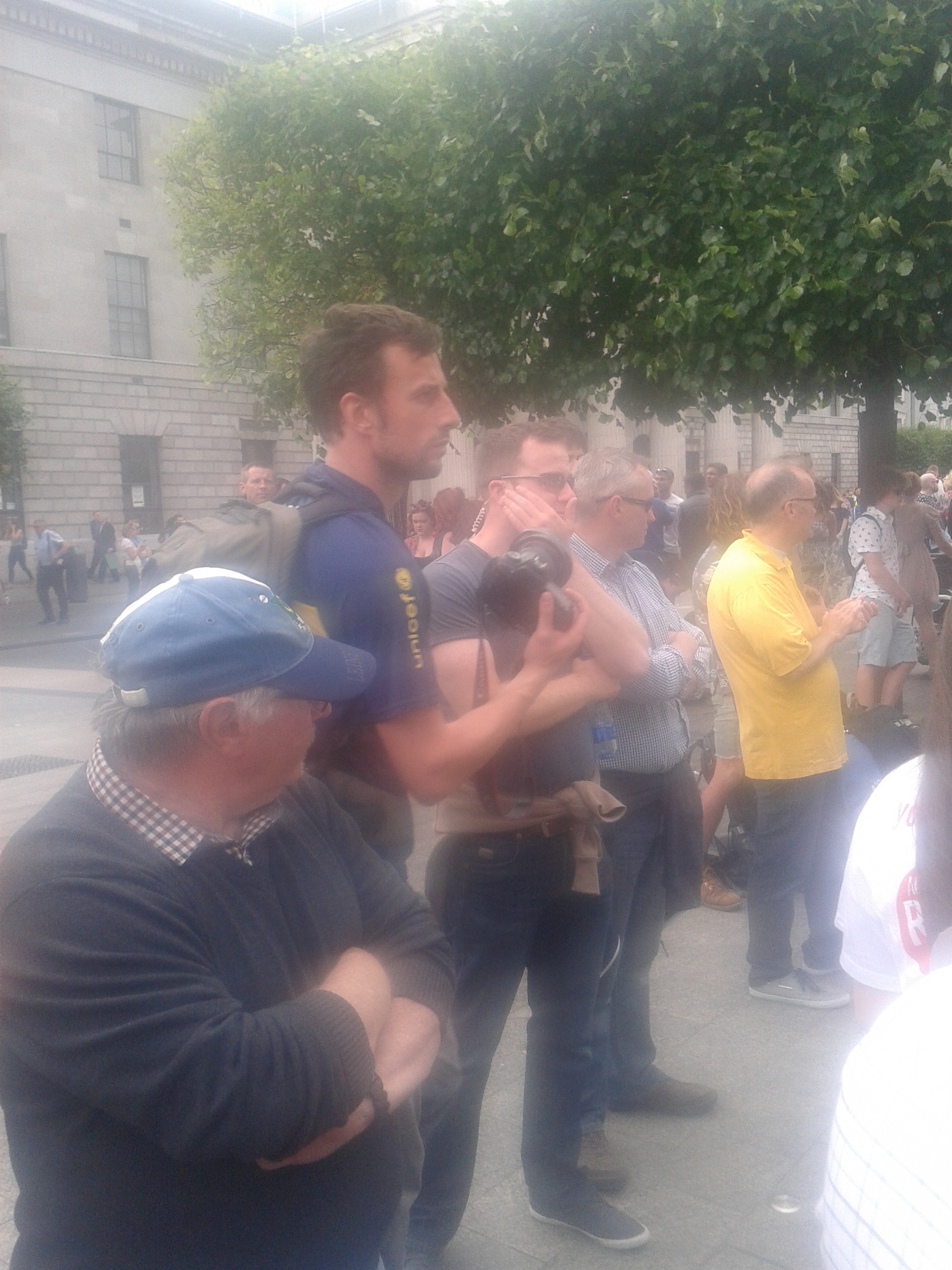
Two Special Branch officers (political police) centre photo in sunglasses -- blue pattern shirt and brown T-shirt top next to him.  There were eight SB identified, all watching the counter-protesters.
Two Special Branch officers (political police) centre photo in sunglasses — blue pattern shirt and brown T-shirt top next to him. There were eight SB identified, all watching the counter-protesters.  The blue-patterned shirt individual threatened a counter-protester without identifying himself.

The wiping out of the Guanches of the Canaries was not murder, the genocide of the indigenous American “Indians”, the enslavement and consequent killing of hundreds of thousands of Africans – they were not murder either. Nor the wiping out of every single Tasmanian and most of the Australian Aborigines. The West was exploring and, by the way, bringing Christianity and civilization to those poor benighted people.

I’d hazard a guess that compiling a list of Christian bishops in most denominations who condemned the wars in Malaya, Korea and Vietnam would a short one. Cardinal Spellman, notorious as anti-communist and anti-militant organized labour, a supporter of McCarthy’s witch-hunts, had the words “Kill a Commie for Christ” put into his mouth due to his enthusiastic support for the US waging the Vietnam War. Leaving out the maimed in mind and body, even in the wombs of their mothers, somewhere between 1.5 and 3.6 million were killed in that war – but presumably they weren’t murdered.

Billions of people are killed by unsafe working conditions, uncontrolled pollution, police and army repression, crime in slums, famine, alcohol and drug addiction, curable disease – almost all conditions that can be avoided except that doing so would cut into profits of local capitalists and/or foreign “multinationals” (read, monopoly capitalists/ imperialists). Those “entrepreneurs” aren’t murdering anyone either, even when their practices are illegal (even by their own laws) …. The ways of God are indeed mysterious, certainly so if the ways of his representatives on Earth are anything to go by.

Some suggested actions for lowering the abortion rate which involve caring for people instead of just foetuses

I have digressed, mea culpa. I have gone down a well-worn philosophical and logical path to ask a particular question: Are those tens of thousands marching down O’Connell Street really for Life and against killing human beings? I doubt it and I have not seen among their number most people I see against the bombardment of Gaza or the invasion of Iraq and Afghanistan, nor vice versa. A few, certainly, but not many. So I have to assume that it is not life that they value so much, except the life of a foetus. And once born, it is pretty much up to luck what happens to that foetus, as far as most of these ardent defenders of life are concerned.

As I said, that philosophical and logical path of discussion has been well trodden before me and no doubt to better effect than mine here. But I wish now to take another path of discussion – I wish now not to criticise the opposition, the anti-abortion brigade, but rather ours, the pro-choice movement of which loosely I am a member.

All Irish surveys and opinion polls published show a rising trend of support for the unfettered right to abortion, even if that section is still a minority. The majority of those polled have been for a greater access to abortion than is currently available in this state. Furthermore, some scandals involving refused abortions, refused permission to travel and the death of a woman who needed an abortion have mobilised considerable passion which the pro-choice movement could enlist in its favour.

Yet, despite what the polls tell us, and despite those high-profile cases, the anti-abortioners succeed in mobilising much larger numbers in opposition to abortion than do those who are in favour of permitting it. Putting this conundrum to some pro-choice campaigners, they have all answered to the effect that the anti-abortioners receive huge funding from reactionary political and religious foundations, especially in the USA. They spend millions on advertising and propaganda, I am told.

I’m sorry, I don’t accept that reply. Because despite their well-funded advertising and propaganda, the opinion polls show a climbing majority for some access to abortion and a climbing minority in favour of unfettered access.

The Riot Squad were also there for the counter-demonstrators.  Some may be seen in this misty image of them at the Princes Street end of the GPO.
The Riot Squad were also there for the counter-demonstrators. Some may be seen in this misty image of them at the Princes Street end of the GPO.

The Antis just seem to be better at mobilising their supporters – why is that? Well, the funding again, I’m told. They hire coaches and bus people in. So why can’t we do that? Are we incapable of raising money to hire coaches? Obviously not in the case of the Water Tax, for example. Republican groups hire coaches traveling to other parts of the country and pay their share as individuals; they often fund their posters, placards, banners public meeting-room hires, for example through fund-raising events. We don’t see many fund-raising events in support of the right to abortion. In fact, the public doesn’t see much evidence of the movement as a rule except when we come out to protest about a high-profile case or to oppose the march of the anti-abortioners. And our movement doesn’t seem to do much mobilising for the latter, either. And this march happens every year so it can easily be planned for.

Yet how many were there to show their opposition to these tens of thousands of anti-abortion campaigners? Maybe six hundred …. at a very long stretch, a thousand. Going by the opinion polls, in Dublin alone there are a great many more people who support unfettered access to abortion than appear on that counter-demonstration.

Nor did we even distribute our meagre forces in the most effective way.

Each year, it is the same. The anti-abortion people march down from the Garden of Remembrance, and the pro-choice people wait for them at the Spire. Most on the island, some on the east side pavement. The heaviest concentration of people is on the island (or pedestrian reservation), between the Spire and for about 20 or so yards heading north. Then the line starts to straggle. We didn’t even stretch quite to Larkin’s statue. Even those low numbers, properly distributed, could reach from the Spire down to O’Connell Bridge. But we don’t do that. We bunch up in a short concentration so that every section of their march is quickly past us and, what’s more, it allows them to focus their loudhailers and PA systems on our heaviest concentration in order to drown us out, as they were doing on Saturday.

The section containing most of the counter-demonstrators.  The anti-abortioners were able to park two mobile PAs in front of them there to drown out their opposition as the march went by.
The section containing most of the counter-demonstrators, from left photo to the Spire. The anti-abortioners were able to park two mobile PAs in front of them there to drown out their opposition as the march went by.

Broadly speaking, we outnumber them but on most mobilisations, they outnumber us hugely. They appear more broadly militant and organise better. And they learn. I didn’t see anything like as many people in religious robes this year, which suggests to me that they are tailoring their presentation to avoid an over-identification in popular perception with religion. They can’t keep all their religious nutcases under wraps but I saw much less crosses or rosary-waving this year. They have adapted their slogans and chosen what seems the hardest argument to oppose, that which appears to be for “life”, and they ensure that they are all on message, chanting the same lines, again and again.

They are the reactionaries – how is that they seem better able to learn than us? Should it not be the other way around?


End

DISSIDENTS — A FLAWED CONTRIBUTION TO THE HISTORY OF A NEGLECTED GROUP

REVIEWING DISSIDENTS BY ANNE MATTHEWS:

Diarmuid Breatnach

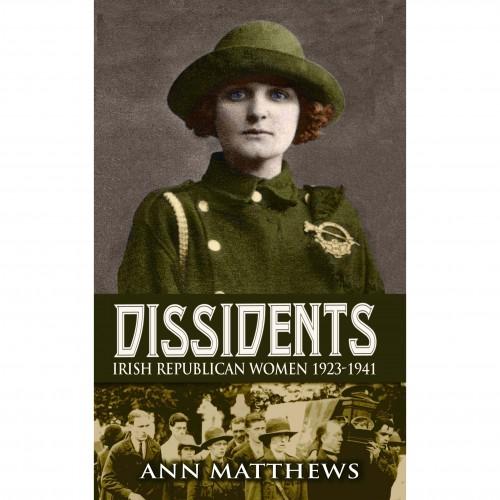
The role of women has been often ignored and undervalued in the body of Irish historical writing. Whatever the reasons for this state of affairs, a tendency in more recent writing has been, at least to a degree, to attempt to rectify this. In the decades since Margaret Ward’s Unmanageable Revolutionaries (Brandon, Ireland, 1983), this rectification has been slowly gathering pace. Dissidents – Irish Republican women 1923-1941, by Anne Matthews (Mercier, 2012), is a contribution to this movement in historical writing; it is essentially the history of an Irish women’s political movement, Cumann na mBan, during the years outlined. A previous work of hers, “Renegades”, deals with Irish Republican women from 1901 to 1922. 

Dissidents Irish Republican Women bookAlthough Dissidents deals with the period 1923-1941, Cumann na mBan was founded on 2nd April 1914 as an auxiliary to the all-male Irish Volunteers’ organisation, which had been founded in 1913. In 1914 the Volunteers split after John Redmond, leader of the Irish Parliamentary Party (in Westminster) and the main open Irish political party in Ireland, committed the Irish Volunteers to fight in the British Army in WW1. The smaller section of the split went on to participate in the 1916 Uprising and more coherently later in the War of Independence (1919-1921). Redmond’s party and “constitutional” Irish nationalism was all but wiped out in the British General Elections of 1918, at which time the whole of Ireland was still under British rule and Redmond’s nationalist opponents, then amalgamated under the name of the reformed Sinn Féin, gained the vast majority of parliamentary seats in Ireland.

Today it is common to define the ideology of both both Cumann na mBan and the Irish Volunteers as “Irish Republican” and, although they quickly became so, and the impulse in the formation of the Volunteers in 1913 was of the secret Republican organisation the IRB (Irish Republican Brotherhood), both organisations at first could be more accurately described as broadly nationalist. Both organisations contained prominently in their midst people whose ideology conformed to that of Irish Republicanism as well as those whose thinking did not, people who expressed a strong interest in equality for women as well as those who were against it, people with at least a sympathy for socialist ideas and those who condemned any such tendencies – and of course variations in between.

In the period specifically chosen by Matthews, 1923-1941, the Irish Volunteers had morphed into the political party Sinn Féin and the armed organisation the IRA (Irish Republican Army) and become Irish Republican in ideology, as had Cumann na mBan. They had in fact been that way since 1919, although the period 1921-’23 was to expose some deep fracture lines which found expression in the Civil War (1922-1923) and later again with the founding of Fianna Fáil and its eventual management of the Irish State (the 26 Counties).

In order to compile her history, Matthews has consulted minutes of committee meetings of Cumann na mBan in its various incarnations (she identifies four periods, or versions of the organisation), personal recollections of participants recorded in writings, interviews, comments quoted by contemporaries, newspaper reports and articles, the Republican movement’s own publications, as well as records of prisons and police under both British and subsequently Free State rule. And she has used some of this material to reproduce and also compile lists such as the numbers and names of women convicted and jailed, the women who went on hunger-strike and the length of time on that protest. The lists also include figures on the decline of Cumann branches between 1934 and 1936, as well as a list of “women in organisations listed as dangerous by the Free State CID in 1934”. These lists are a particularly valuable contribution and will be of great use to many writing on the political movements of the period in Ireland.

Looking at some of those lists alone, one is struck by the sheer extent to which the contribution of women activists to the struggle for Irish independence, and the price they had to pay, has been overlooked. In 1930 twenty-nine women were in organisations listed as “dangerous” by the Free State detective branch of the police – twelve of these were in senior positions of Cumann na mBan, three in directing positions in Saor Éire, three for Comhairle na Poblachta, three also for Sinn Féin, one for the Prisoners’ Defence Organisation, two for Women Prisoners’ Defence League and one for the Anti-Imperialist League. The rest were rank-and-file members of those organisations and one was in Friends of Soviet Russia.

The Free State interned 645 women during the Civil War (as against over16,000 men). In her Introduction, Matthews points out that “There were twenty-four strikes in the three (women’s) prisons during the period from November 1922 to November 1923, in which 219 women took part.”  According to the table drawn up by Matthews, one woman was on hunger strike for 35 days, another for 34, seven for 31, many for different amounts of days but the vast majority into double figures. Furthermore, some of them were on hunger strike more than once.

Matthews also provides a list of the occupations of 79 women activists jailed in the North Dublin Union, which were surveyed in August 1923: the highest number for a single occupation were the 19 listed as “at home”, while the next were 11 whose occupations were given as “packer in Jacob’s” (the biscuit factory in Dublin); 10 had been engaged in “printing”; eight were “shop assistants” while 15 were variously listed as “typist” or “clerk”. This list shows quite a variety of social background among what one presumes to be fairly politically-active women which the Free State considered its enemies.

Republican women acting as couriers or delivering weapons made many journeys by bicycle, often at night without lights in order to avoid Free State patrols, “often round trips of up to forty miles” Matthew tells us (p.32).

BIAS

As has been pointed out by a number of commentators, history writing involves a degree of bias. This bias is exercised not only in explicit judgements but in inferences made, choice of phrasing and so on. Choices are made in what sources to use and what prominence to give them as well as in the opposite, which sources to disregard.

If the Fall of Lucifer and his angel followers were a historical event, for example, we would expect Lucifer’s version to be very different from the Judaeo-Christian story with its sympathy for the Archangel Michael (a great example of history being written by the victors). There might be yet other versions, for example by the Seraphim and Cherubim, one of which might be in partial sympathy with the Fallen side and the other which might be against both sides of the conflict.

Whereas in the ancient past history writing was blatantly partial, in the past century historians have generally claimed to be impartial dispassionate observers recording what they discover. But every one of those writers had views influenced by class, ethnicity, gender, position in or out of power groups, status, upbringing and personal experience. And those views influenced their historical judgements, quite likely their choice of sources and possibly their choice of audience. Written records could only be left by literate people and yet for most of history the majority of people have been illiterate. A more recent trend in history writing is to recognise the inevitability of bias and for the historian to declare which is his or hers.

One should beware of historians who don’t declare their bias at the outset. That will not be a problem with Anne Matthews because although she does not formally introduce her bias to her readers, it very soon becomes clear. Or maybe that is not quite accurate, for in order to have a bias against a group one must presumably also have a bias in favour of another. It is difficult indeed in the pages of this book to find any group for which Matthews has any sympathy or, even more important for a historian, empathy.

To express a bias is expected, as I commented earlier. But unless one is engaged in pure propaganda or character assassination (or glorification), one should present the evidence in favour as well as that against and, in weighing one against the other, make a judgement. When Matthews has anything favourable to say about her subjects it seems to be an accident which will soon be remedied a little later – just keep reading!

A particularly clear and nasty example of this bias is in Matthews’ treatment of Constance Markievicz whom she calls a “self-proclaimed heroine” (p.28) but does not tell us when and where Markievicz allegedly “proclaimed” herself to be a “heroine”. Matthews also inferred that Markievicz was a given to warlike statements but a coward who ran away to Scotland. Whatever the reason for her departure in 1922, one wonders how, no matter how much she may dislike the person, someone could call Markievicz, who prominently took up arms and fought for a week against the British Empire, a coward.

In the Matthews view of the organisation, Cumann na mBan was a largely ineffective body, doctrinaire and full of in-fighting. The leadership and many prominent activists were aristocratic or upper middle class, used to the privileges afforded by their class. The working and lower-middle class members accepted the leadership’s decisions or just deserted.

Some of those things may be true and there might even be some truth in all of them — but where is the counter-argument before coming to judge? One doesn’t find it in Matthews, except by an inference that one can make from the lists I mentioned earlier and other information.

If a woman came from a higher social class and was used to having servants do her cleaning, do those facts diminish in the least her courage in facing bullets in insurrection, the threat of the firing squad, the pangs on hunger-strike and the risk of permanent damage to health, the risk of physical beatings and unhealthy prison conditions? Or on the contrary, in some ways, are those risks and sacrifices not all the more remarkable for one from such a background as that? And if an upper-class mother can pay a nanny to look after her children while she herself in in jail, does that take away from her courage and fortitude? A working-class mother without those resources (though she might be able to avail of extended family) of course has even more obstacles to surmount and deserves our greater praise but that is no reason to disparage the sacrifice or commitment of a woman of a higher class.

And if infighting and bad policy choices were a significant feature of the organisation, were there not others to weigh against them on the scales of judgement? What of transporting, hiding and distributing weapons? Of carrying secret correspondence and intelligence? Or of continuing to feed the flame of resistance while men were in prison, organising pickets and demonstrations, outside jails etc? What of creating the enduring 1916 emblem and Republican commemoration emblem, the Easter Lilly? Or of organising Republican commemorations year after year, as well as funerals of fighters in the midst of repression? Or the work of supporting prisoners and their dependents? Matthews records these and often the difficulties entailed but without a word of approval to balance the censorious words used in her criticisms. Nor do we see an attempt to understand the choices these women made or the constraints upon them, much less see anything to admire; we are shown few lessons to learn from, unless it is something like “don’t be these people or anything like them”.

In Dissidents, Anne Matthews has made a contribution to the story of Republican women but its judgement is clearly skewed and the work suffers as a result. Matthews could have recorded all the negative information that she did but also the points to throw in the balance – had she done so, her book would have been a much better return on her investment in historical research and writing as well as a better reward for the reader.

End.

TÁ OR NÍL — SAME-SEX MARRIAGE, SURROGACY, HOMOSEXUALITY

Diarmuid Breatnach

When the votes are counted after today, we will either have a new clause inserted into our Bunreacht (Constitution) or we will not. If we do not, many of the “Vote Yes” campaign and opinion will be despondent. The revolutionaries among them should not be so but should instead reflect on their weakness as a force and on how to make that force stronger.

Should the vote result in a change in the Constitution, it will be probably the biggest blow so far to the power of the Catholic Church in lay society, a power it has enjoyed and abused even before 1921 but certainly since. Some, on both sides of the question, will see it as a blow against the Catholic religion itself but that is not necessarily so. Christianity and its Catholic variant survived and even thrived without State support in the past – indeed when its followers were discriminated against in every conceivable way by State power, a situation its faithful endured for centuries in Ireland as a whole and continue to do today, to a lesser extent, in the Six Counties.

What is the issue upon which we were being called to vote today? Although the NO campaign has tried to make us think it is, it is clearly not about whether two-gender households are better for raising children, whether surrogate birthing is right or wrong. It is not about whether we approve or homosexuality or not – although I suspect that is the real issue at base with many of the NO campaigners. In fact, it seems to me that it would be quite possible to disapprove of homosexuality and still to vote “Tá”, a question I will return to later. This might seem illogical, until we examine the actual issue upon which we are voting: do we agree with inserting a clause into the Bunreacht (Constitution) which states that a couple has a right to marry regardless of gender.

Presented with this question, which is a legal and Constitutional one, a number of issues arise, I think.

  1. What does the Bunreacht say at the moment about this question?
  2. What right has the State to define anything about sexual relationships?
  3. Are we in favour of equal civil rights for people?

1. It may come as a surprise to people that our Bunreacht, our Constitution, currently says nothing about the gender issue in marriage. There is nothing actually in our Bunreacht to prevent same-sex marriage. But the prohibition does exist in law. In other words, legislators at some point decided to propose and pass a law which confined the right (and rite) of marriage to heterosexual couples alone. Why did they do so if it was not an issue at that time? It seems to me that they were aware that same sex relationships did exist and strove to exclude those people from the rights enjoyed by others. This was the point of a number of other pieces of legislation against homosexuality which were not finally overturned until 1993 in this State (1982 in the Six Counties, 1980 in Scotland, 1967 in England and Wales) – five years after the European Court of Human Rights ruled that this state’s laws against male homosexual acts violated human rights.

According to the Catholic Church (and most other churches), despite the current legal situation with regard to homosexuality at the moment, it is still wrong. Well, the Catholic Church – and before them the established Anglican Church of Ireland – can have their views but they are not entitled, nor is any other church, to impose those on lay society, neither by legislation nor by other means. They are, of course, entitled to express their opinion – just like any other organisation.

“God and Nature say NO” was the caption on this placard paraded in O’Connell St. near the Spire, some weeks prior to the Referendum. Some young people are arguing with the placard-holder.
One of the many badges worn in support of a vote to insert the clause into the Irish Constitution (there was also an English-language one)
One of the many badges worn in support of a vote to insert the clause into the Irish Constitution. There was also an English-language one and each were to be seen nearly everywhere in public in the weeks prior to the Referendum.

So, going back to the beginning of the legal status of heterosexual marriage within our current legal system, it was introduced as an excluding measure, at a time when male homosexuality was illegal and subject to heavy punishment and when lesbianism was frowned upon (though not actually illegal for complicated reasons). In other words, a law excluding a group of people was passed at a time when any man who declared himself to be one of those people was subject to prison sentence and any woman who did so was subject to extreme opprobrium in society. What chance was there for their point of view to be represented? In the absence of such representation and informed opinion-making, how can any democrat defend the laws passed at that time?

2. Turning now to the question of what right the State has to make a ruling of any kind upon a sexual relationship between any two people, of either gender, it must be difficult indeed for anyone to justify that without recourse to church canon or prejudice. Those who do so tend to bring up questions of childcare, inheritance and taxation – in fact just about the same questions that were brought up in the Irish referendum on divorce in 1995. But childcare, or at least the financial aspect of it, can be regulated by the State without any interference whatsoever in the sexual relationship between the parents. Whether it does so fairly at the moment is another question which has no bearing on the concept. And inheritance – ignoring for a moment whether we agree with a political economy where land and other wealth may be appropriated by individuals or families and then legally handed on through their following generations — can also be managed without recourse to State regulation of marriage. Taxation, similarly. Were we to have a socialist society, one based on other principles than that which we now have, even those current excuses for state interference should no longer be even a consideration.  In fact, it is difficult to see any reason why even now the State continues to have a role in the formalisation of a sexual contract between two individuals or, indeed, in its dissolution, except perhaps in ensuring fair divisions of belongings.

3. Those opposed to insertion of the new clause into the Bunreacht have done so from a number of perspectives of opposition: to lesbianism and homosexuality on religious or other grounds; to formalising same sex relationships; to the alleged undermining of the “sanctity of marriage” or of “romance”; in opposition to surrogate child-bearing and raising of children by gay and lesbian parents ….

Those supporting the new clause have defended the naturally-occurring continuum of sexual preference; maintained that the “sanctity of marriage” will be the same between same-sex couples, as will “romance”; denied that it opens the way to or encourages surrogate child-bearing and raising of children within a gay or lesbian household ….

Who is right and who is wrong? There is no doubt that as long as cultural beliefs and practices have been recorded, homosexuality and lesbianism have existed within societies — sometimes tolerated, often repressed, on rare occasions celebrated. We see homosexuality occurring too among animals. If there is such a thing as “sanctity of marriage” and “romance”, why should same-sex couples have any less of it than heterosexuals? Surrogate child-bearing is already possible and the hugely unequal distribution of wealth in our society – and between even our society and many others – ensures it can and will continue while the rewards are financial. Raising of children within a same-sex household is already happening, even without surrogacy. It is more difficult for gay men at present, but in the case of a gay man having custody of his children through widowhood (yes, some gay men do marry women), or the mother deserting the children or being deemed unfit by a court to have custody, a gay man may bring up his children within a homosexual parent household.

But will this change in the Constitution (and therefore also in the law) make surrogacy and child-rearing by gay couples more likely to happen? Will it increase the frequency of its occurrence? I think the answer to that, logically, must be yes – despite all the denials of the “Vote Yes” camp. And I think some of them must know that. Slowly perhaps and who knows by how much – but logically it must tend to increase the chances. But is that so awful? I find the idea of surrogacy in general distasteful but isn’t that just a prejudiced reaction? Probably. Will children reared by same-sex parents experience uncertainty about their own sexuality? Some will probably and some won’t. And if they do, why should they not be able to resolve that in time – as children reared in heterosexual relationships also find themselves having to do? Is uncertainty about sexuality such a terrible thing? In a judgmental, prohibitive and penalising society, it can be – so let’s create a society that is the opposite.

However, I have to say that I think all those questions and considerations are beside the point. If marriage is to be a legal status, then it is a civil right for everyone who is at the age of consent (and of sufficient mental ability to know to what they are consenting — in so much as any one of us was or does!). The right to same-sex marriage, as a civil right, should be supported even by people who do not approve of homosexuality, or marriage, or surrogacy, of child-rearing in a homosexual household. As for myself, someone who seeks revolutionary social, economic and political change, who wishes to see the overthrow of this State, a revolutionary as opposed to a reformist, I must nevertheless support reforms that extend civil rights, even when not led from below …. and so I voted “TÁ”.

WHEN EAGLES SING — Kurdish singer and fighter Viyan Peyman falls in battle/ Cantante y Luchadora Kurda falla en batalla

Viyan Peyman, famous fighter-singer of the YPJ, fell in battle against Islamic State in Serekaniye (Yazira canton) on Monday 6th April 2015, according to news agency Hawar News.

Viyan Peyman, famosa luchadora y cantante del YPJ cayó én lucha contra el Estado Islamico el lunes 6 de Abril 2015, según la agencia de noticias Hawar News (miren enlace al fondo de este corto trozo para las noticias en castellano).

When Eagles Sing

(I ndil chuimhne Viyan Peyman/Gulistan Tali Cingalo)

A bird fell from the sky —

the birdsong now has died. 


A songbird but also a fighter — 


When eagles sing 


our struggle is made lighter.

She flies now in different skies,


skies of our memory,


of our heart, spirt and mind


where her song cannot be silenced


for Kurds or for humankind.

Diarmuid Breatnach April 2013

Viyan’s real name was Gulistan Tali Cingalo (Gulistan means “garden”) and she was from Mako city in the part of Kurdistan located within the Iranian state’s territory.

The song she sings in the video was composed by her; the lyrics say:

“Oh, mother, woe to me!


My heart cries today — what disaster has fallen upon us!


I will sing today of the resistance of Kobane,

that it may be a poem recited for the world and humanity, oh mother!


Today again our Kurdish boys and girls have made their chests into shields

against the tanks and bombs …
Oh, mother, woe to me!


Today I imagine the mothers of Kobane crying in the streets;


I imagine the boys, the girls, the elderly screaming in pain and rage.


I see the tears of the children of Kobane as if they were the Euphrates river, 


flooding the streets of Kobane!


Oh, mother, woe is me!”

Information and song lyrics translated from Castillian text sourced here: https://comitesaharaui.wordpress.com/…/cae-en-combate-la-c…/

YOUNG WOMAN GOES TO TRIAL IN LONDON ACCUSED OF TRYING TO JOIN KURDISH WOMEN FIGHTING ISIS

C0mpiled with introduction by

Diarmuid Breatnach

An 18-year old woman of the Kurdish diaspora in London, Silhan Ozcelik, has been sent for trial at London’s Central Criminal Court (the “Old Bailey”) accused of trying to join the Kurdish-led resistance against ISIS (“Islamic State”).  A British journalist called the trial “disgusting” and said it left him “almost without words” to describe the travesty of justice.  (article below)

http://www.independent.co.uk/news/uk/crime/silhan-ozcelik-disgusting-trial-for-young-woman-who-tried-to-fight-against-isis-10105004.html

Face Paint Kurdish W Fighters
A different kind of face paint: female fighter of the Kurdish guerrilla YPG checks another female comrade as they prepare to go into action with their male comrades on the front line against ISIS in Syria.

This post contains:

  • An article about the trial by J0nathan Owen in yesterday’s British newsaper The Independent (see above)

  • A short article from pro-Kurdish PUK Media containing a discussion on the role of Kurdish women fighters in Syria, with quotes from a wide variety of sources (right at end of this post)

  • A video of an Australian documentary, “60 Minutes”, from the war zone, with war footage, interviews with women fighters and commanders, victims of ISIS (see further down)

  • Background comment or introduction from me (immediately below)

Background Comment:

The Kurds in the region, numbering around 28 million, have the right to self-determination.  They are divided by borders of states set up in the past by the colonial imperialists of Britain, France and the Ottoman Empire and also by ambitions of the states subsequently created: Turkey, Syria, Iraq, Iran and Azerbaijan (there is also a huge Kurdish diaspora in parts of Europe, the USA, Canada).  The Kurds in the region also face differences in political leadership, dialect and religious influence as well as containing among them other ethnic groups (many of these also oppressed): Arabs, Armenians, Azeris, Turkmen, Yazidis …. The whole Kurdish region extends across an area of great strategic importance (the gateway to Europe and to the East) and also of considerable natural resources, including water.  It is envisaged that an oil pipeline will cross this area and a number of dams have already been built there.

The Kurds in Turkey (the largest population of Kurds) has been mostly led by the PKK (and various political organisations friendly to it), a communist-type national liberation organisation, largely secular (though some of their areas can be religiously conservative) and with a very large guerrilla force which has included many women fighters.  They have fought the Turkish armed forces for decades and remain undefeated.  Turkey’s nationalism under Kemal Attaturk declared that Kurds did not exist — they were just “mountain Turks”.  Kurdish has been forbidden, the flying of Kurdish national colours a crime, and state repression has included bannings of parties and newspapers, jailings of political and human rights activists, kidnapping, torture, assassination squads, creation of strategic villages, aerial bombardment, etc.  The imprisoned leader of the PKK, Abdullah Ocalan, last week from prison called on his followers to lay down their arms and to engage in a “peace process” in which however the Turkish Government shows no interest.  Ocalan enjoys an adulation among the PKK and its supporters somewhat as Chairman Mao did among Chinese communists and his portrait can be seen on demonstrations, in pickets and in their secure areas.

The Kurds in Iraq have mostly come under the political dominance of two political leaders with tribal following, Barzani and Talibani.  Iraqi Kurds are mostly Sunni Muslim with a minority Shia population (Fayli) in central and and SE Iraq.  The Kurds were oppressed by the Iraq regime and rose up against them a number of times only to be massacred, including when the US called on them to rise during the Kuwait war but left them on their own.  Their fighters, “peshmergas” are mostly male and during the Iraq Invasion by the US-led coalition, they fought the Iraqi Armed forces but entered Baghdad like bandits and set up various areas of control under different war lords, occasionally fighting even one another.  In the past on one occasion the peshmergas were also deployed against the PKK in conjunction with a Turkish attack on them.

The Syrian Kurds have their own fighters but have not been as prominent in the past as those of the Kurds in Turkey and Iraq.  The Syrian regime does not favour declarations of different ethnicity coupled to aspirations of self-determination and has suppressed expressions of Kurdish nationalism, including jailing singers and musicians whose work includes those expressions. In recent months, the Syrian Kurds and their fighting organisation, the YPG, have had the most success in halting and in places forcing back ISIS — the “Islamic State”.  The YPG rescued a large population of mostly Yazidis (including also some other ethnic groups) after ISIS swept aside the army of the NATO-client Iraqi regime, massacred tens of hundreds of civilians and kidnapped tens of hundreds more, including women which they took or sold as concubines.

The Kurds in Iran have been in recent times the most suppressed perhaps of all the Kurdish populations.  Under the Islamic clerical regime a number of Kurdish political activists have been executed for “crimes against God” (i.e. being atheists and socialists and sharing their political beliefs).  Under the Shah the repression was also heavy and Savak, the secret police, along with their informers, were almost everywhere.  Torture was endemic under the Shah and almost certainly continues under the present regime.

Although the NATO powers fear ISIS, they have also had a hand in its creation in the drive to overthrow regimes resisting NATO’s penetration of the area (and encirclement of Russia) by direct assault or by proxy: Libya and Iraq (already overthrown), Syria (under attack), Iran (constantly being threatened).  They are trying to bring the YPG into the fold but Turkey, an important member of NATO, would rather see the Kurdish fighters wiped out and seals its border to prevent fighters and supplies reaching the YPG.  The USA therefore confined itself to some bombings of ISIS positions around Rojava and diplomatic overtures to the Kurds.  They have not committed ground troops (which the YPG have not asked for) or supplied arms (which the YPG have asked for — repeatedly) and continue to support forces attempting to overthrow the Syrian state.  The YPG rarely fight alongside the state’s Syrian Army but at times both forces are simultaneously in action against ISIS, though seemingly not in coordination

.

The Kurds, as the largest force in their region of Syria and one of the largest ethnic group in the whole region, form a focus of resistance to assimilation and to repressive regimes of states but may be seen by other ethnic groups as themselves posing a threat of assimilating them.

Video documentary “60 Minutes” by Australian television containing Syrian war area footage of Kurdish women fighters and commanders and interviews (and also occasionally irritating comment by the interviewer) https://www.youtube.com/watch?v=lro62AJ6e7M#t=461

Less Photogenic Kurd Women Fighters
Less photogenic perhaps than the images we are currently being shown of Kurdish female guerrilla fighters, this photo is probably of a female guerrilla unit of the PKK in Turkish Kurdistan taken perhaps a couple of decades ago. In order to counter accusations by the Turkish state of female guerrilla “immoral” behaviour, the PKK kept the genders in separate fighting units.
Two Kurdish Women Fighters kefiyah headscarf
Two female guerrillas of the YPG resting but ready to go into action. They are on the front line against ISIS in Syria.

A discussion on women in Kurdistan and Kurdish women fighters (note that there are two parts of Kurdistan under discussion here – Iraqi and Syrian; however there is also Turkey, where the majority of the Kurds live and Iran):

http://pukmedia.com/EN/EN_Direje.aspx?Jimare=22709

Kurdish Women Heavy Machine gun v ISIS N_Iraq
Female fighters of the guerrilla YPG with a heavy machine gun (light cannon?) in the front line against ISIS
Kurdish women guerrilas against FSA, Syria
Kurdish female guerrilla fighters opposing the Free Syrian Army, sponsored by NATO against the Syrian state, in 2011. The FSA has since been overcome or incorporated into ISIS.