“Another martyr for old Ireland …”

Clive Sulish

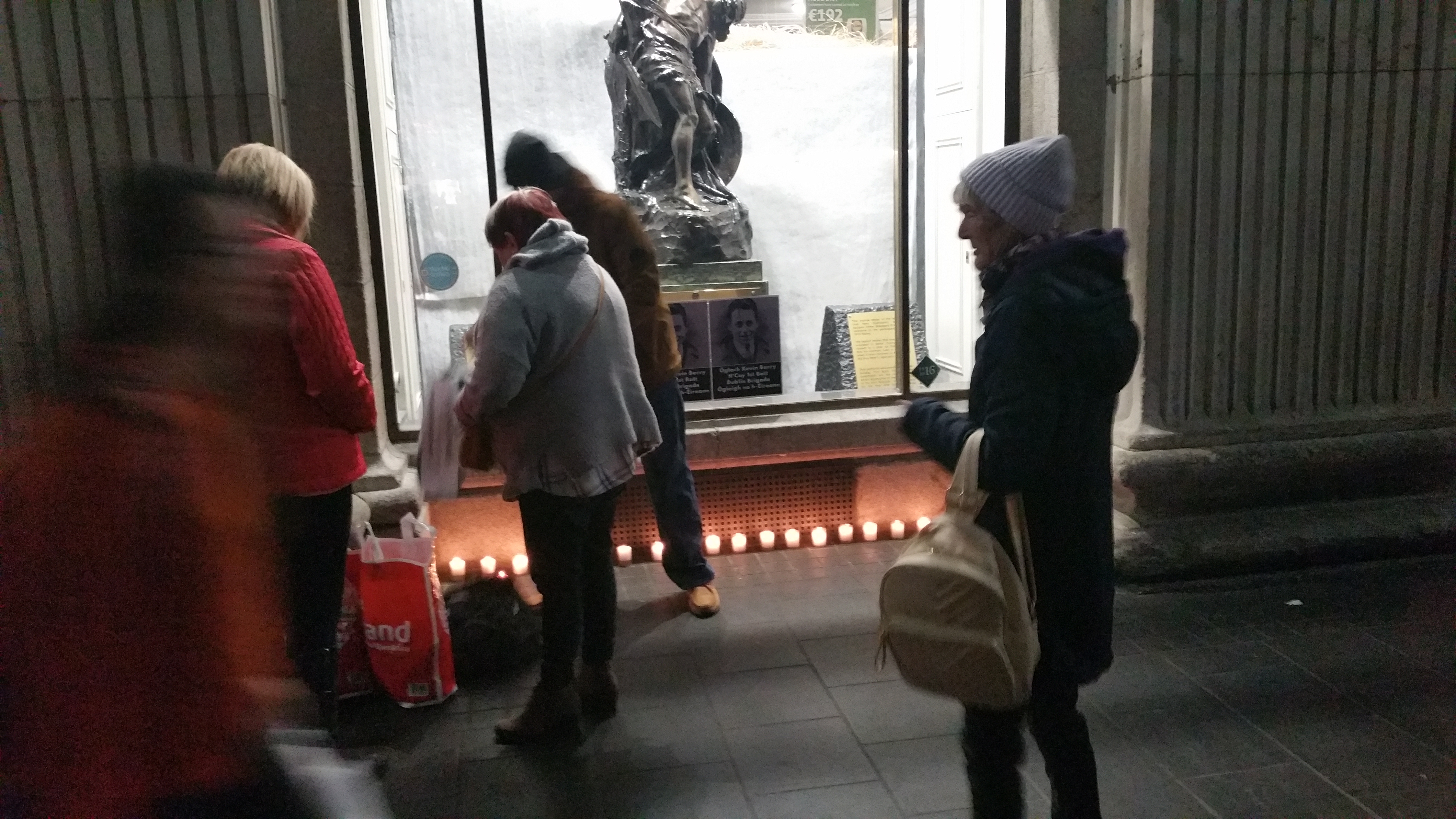
          Socialists and Socialist Republicans gathered outside the General Post Office in Dublin on Thursday (Nov 1st) to honour the memory of Volunteer Kevin Barry on the 98th anniversary of his execution. Copies of his portrait were on display with candles lit and the ballad honouring his memory was sung.

Display of images of Kevin Barry and lit candles outside the GPO at the event. (Photo: D.Breatnach)

          The event was organised by the Irish Socialist Republicans organisation. Asked about the reason for the commemoration and speaking on behalf of the organisation, Pádraig Drummond said “It is important to honour people in our history who have played an important role, who have displayed characteristics worthy of emulation such as resolution, courage and loyalty. People like Kevin Barry are more worthy of interest for the youth of today than clothing brands or pop idols.”`
Gathering to beign the vigil outside the GPO (Photo: D.Breatnach)


Some members of the public stopped in passing to listen to the song or to engage picketers in conversation.

People carrying out the vigil (Photo: D.Breatnach)


At the time of Kevin Barry’s execution the whole of Ireland was under a centuries-old British occupation and the defeat of the Easter Rising was three years in the past, most of its leaders executed and prisoners released. The first World War had ended. But the Irish Volunteers had reorganised and the War of Independence had begun in January of 1919. The ICA had seen a partial reorganisation and Cumann na mBan had never disbanded and, though it had suffered a few notable resignations, had experienced no split. The UK General Election of December 1918 had delivered a huge majority in Ireland to the newly-organised nationalist-republican coalition of Sinn Féin and in January of 2019 the successful SF delegates set up the Dáil, the first independent Irish Parliament, in defiance of the rule that all delegates elected in a UK election attended the Westminster Parliament in London.

On the same day in a separate development, the War of Irish Independence had begun. To wage war against the British occupation, the Irish Volunteers needed arms so some of its operations were carried out in order to seize arms from the occupiers. Kevin Barry joined the IRA at 15 in Dublin and not much later the IRB and had been on a number of successful raids to seize weapons.

Kevin Barry portrait graffiti of some years on wall in Dublin city centre.
(Photo: D.Breatnach)

On 20th September 1920 his unit was to ambush a British unit collecting bread from a bakery and relieve them of their weapons. Collecting bread rations from Patrick Monk’s Bakery at 79-80, Upper Church Street, near the corner of North King Street, Dublin.

Barry was a medical student and had an examination scheduled for that day which he expected to attend after the operation. Having attended mass that morning, he joined the unit in nearby Bolton Street and when the British Army lorry arrived the volunteers, armed with pistols, ordered the soldiers in the back to drop their rifles, which they did. However a shot rang out, possibly from the front of the lorry and the volunteers opened fire but Barry’s gun jammed twice and he jumped under the truck, being left behind when his comrades retreated. He was discovered and arrested. All five of the British soldiers in the rear of the lorry had been hit and one, 15 years of age, was dead – another two died later.

Kevin Barry attested that he had been beaten up when captured and tortured for information later in Army custody. On 20th October he was tried by military tribunal under the provisions of the Restoration of Order Act of August that year. Brigadier-General Onslow presided on the tribunal and Barry had legal representation who, after Barry announced he would not recognise the court, withdrew. The sentence of the court, given to the Volunteer in his Mountjoy Prison cell that evening, was death by hanging. The sentence became publicly known on the 28th and a fierce campaign began to save his life, not only in Ireland. Terence McSwiney, author, playwright, Lord Mayor of Cork and IRA Volunteer, had died after a hunger strike of 74 days on 25th October and public opinion, especially in Ireland, was highly excited. Nonetheless, Kevin Barry was hanged on November 1st 1920, eighteen years of age. According the priest who accompanied him the gallows, who was not a republican, he went calmly to his death.

On 14 October 2001, the remains of Barry’s body and others were given an Irish state funeral and moved from Mountjoy Prison to be re-interred at Glasnevin Cemetery in Dublin. A stained glass window in his honour was unveiled in 1934 at the Earlsford Terrace address of University College Dublin and was later moved to their new address in the Belfield Camput and restored in 2007.

The Ballad of Kevin Barry, which was sung at the commemoration by Diarmuid Breatnach, was composed around the time of the Volunteer’s execution and has been very popular in Ireland and among the Irish diaspora abroad. The author is unknown despite efforts by his family and others to trace him or her but there were some indications that it had been composed in Glasgow. The song has been recorded by many performers, including non-Irish singers Paul Robeson and Leonard Cohen.

End 

VIVA LA QUINZE BRIGADA

Clive Sulish


From Eoin O’Donnel’s filming and editing via Joe Mooney of East Wall History Group, a recording of Diarmuid Breatnach singing Christy Moore’s wonderful song Viva La Quinze Brigada (also known as Viva la Quinta Brigada which, however, is also the title of another song from the same conflict but in Castillian or Spanish language).  The Fifteenth Brigade of the Spanish Republican Army was also the Fifth International Brigade, the mostly English-speaking one.  It contained volunteers from English-speaking USA, Canada, Australia, Scotland, Wales, England and ireland but due to high Irish emigration, all those countries also contained Irish diaspora and they were to be found in the contingents from those countries.

The video also contains photos of the commemoration of Jack Nalty, resident of East Wall’s, the last Irishman to die in action during the Iberian Anti-Fascist War (usually known as the “Spanish Civil War”).  The day-long event on 28th September (anniversary of his death) included songs and poems, a march led by a lone piper, unveiling of a plaque, booklet launch and showing of two films. It was a celebration in particular of Jack Nalty’s life but more generally of the Irish who, against the position of their Government, the Church of the majority, the dominant media and even, for those in the IRA, against their own organisation’s orders, went to fight against a fascist military uprising against the elected Republican Government of the Spanish state.

It was also a celebration of antifascist resistance around the world and of the principle and practice of internationalist solidarity.

A plaque to the fallen of the Irish volunteers of the International Brigade (containing many names but by no means all of the Irish who fell there). The plaque is on the wall of the Theatre side of Liberty Hall, HQ of SIPTU, Dublin.
(Photo D.Breatnach).


AN OLD WAR WITH A LESSON FOR TODAY

Diarmuid Breatnach

August 9th is the anniversary of the last blows struck in the Battle of Annual, which took place in the Rif, in the Maghreb region of North Africa in 1921. The battle was a major defeat for the Spanish military and part of the Rif people’s resistance which was suppressed with genocidal weapons ferocity by the Spanish and French imperialists, including the use of chemical weapons of mass destruction by the Spanish.

Illustration of the death of a Spanish General Margalla in a much earlier colonialist venture into the Maghreb, 1893 (source of imageL

Many features of this struggle bear important lessons for us today wherever we are in the world but perhaps in particular to the Catalans struggling for independence. And although the struggle of the Rif people was apparently noted by Ho Chi Minh and Che Guevara, who we are told learned guerrilla tactical lessons from it, it seems mostly forgotten and Wikipedia’s coverage (the Rif Wars) is modest.

THE BATTLE

In 1921 the Spanish State sent armed forces to extend their area of control beyond the coastal strip around Ceuta and Melilla and other bases in North Africa. They had penetrated 130 kilometres when they encountered light resistance of a skirmishing nature, which continued for five days.

At the end of that period, on August 22nd the Berbers attacked the Spanish Army’s encampment at Annual in force with 3,000 irregulars against Spain’s 5,000 soldiers. General Silvestre decided upon a withdrawal along the line of their earlier advance and that march began in order at 10am but soon turned into a rout, with Spanish soldiers killed by bullet or knife. The dead presumably included Silvestre, whose body was never found.

In the following days the Berbers overran more than 130 Spanish guard stations (containing up to 20 men), took a number of towns and reached the Spanish colony town of Melilla, which Abd el Krim did not attack for fear of other nations being drawn in to defend their resident nationals in the city, a decision he apparently regretted for the rest of his life. The Spanish evacuated fleeing colonists but soon reinforced some towns in particular Melilla, mainly with the Spanish Legion and Moroccan Regulares.

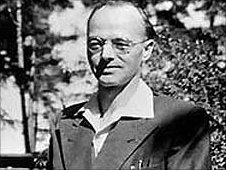
A somewhat menacing representation of the face of Abd el Krim in Time Magazine, 1925, during the life of the Rif Republic (image sourced: Wikipedia).

Analysis of the defeat tends to lay the blame on lack of military efficiency on the side of the Spanish without giving any credit to the tactics or leadership of the Berbers. If that were an accurate assessment one wonders why Guevara and Ho Chi Minh could be reputed to have learned lessons in guerrilla warfare from the conduct of the battle by the Berbers.

Wiki gives a Rifian casualty figure of 800 but reports that “final official figures for the Spanish death toll, both at Annual and during the subsequent rout which took Riffian forces to the outskirts of Melilla, were reported to the Cortes Generales (Spanish Parliament) as totaling 13,192 killed”; Wiki also says the Spanish may have lost up to 20,000.

As well as loss of men, the Spanish Army lost huge amounts of war material which were of course used against them later. Wiki: “11,000 rifles, 3,000 carbines, 1,000 muskets, 60 machine guns, 2,000 horses, 1,500 mules, 100 cannon, and a large quantity of ammunition.  Abd el Krim remarked later: “In just one night, Spain supplied us with all the equipment which we needed to carry on a big war.” Other sources give the amount of booty seized by Rif warriors as 20,000 rifles (German-made Mausers), 400 machine guns (Hotchkisses)) and 120–150 artillery pieces (Schneiders).”

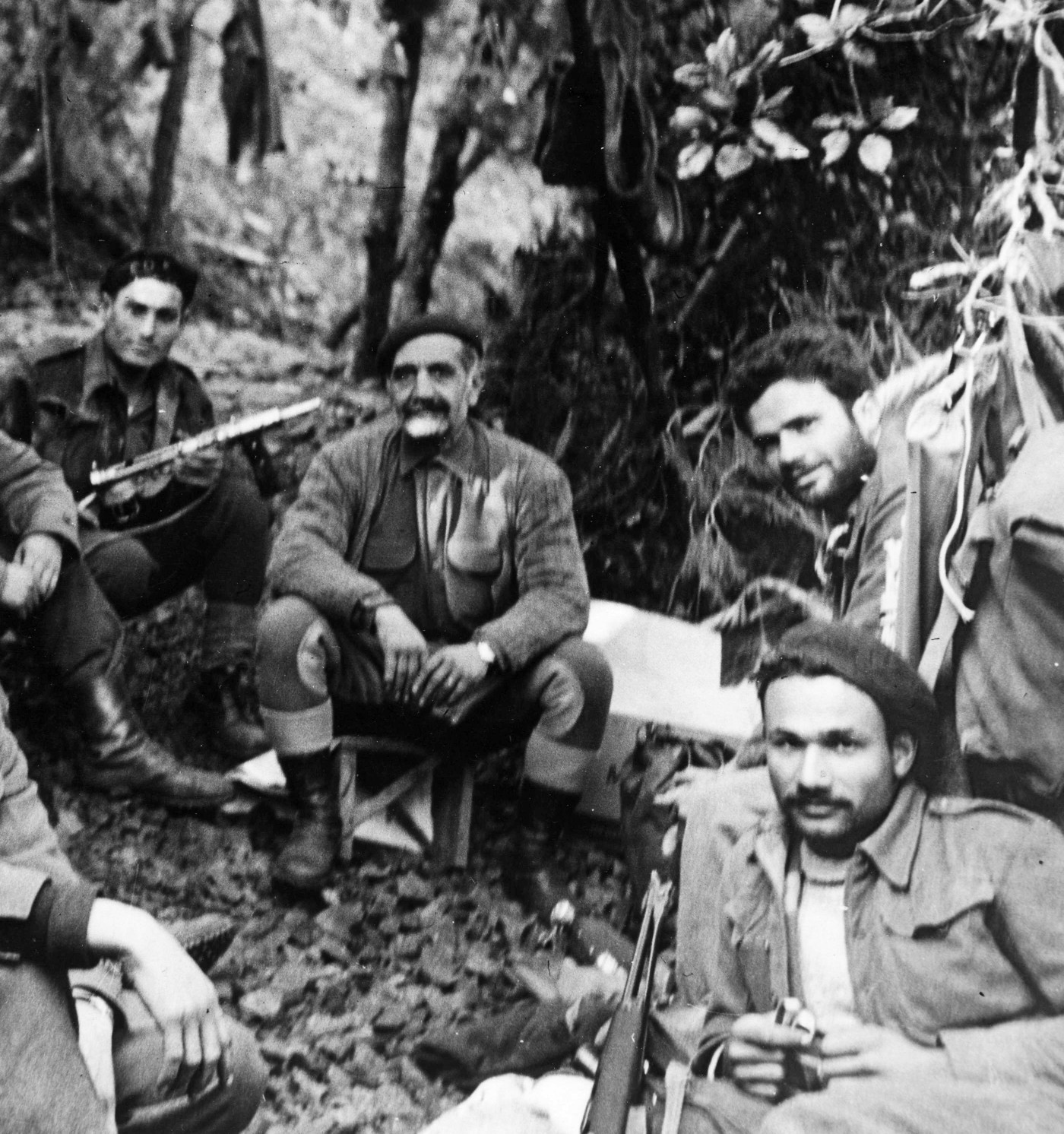
Kaid Sarkash (Riffian leader) pictured in 1924 with another, both Berbers carrying captured rifles: Spanish Mauser & French Berthier Carbine.
(Photo sourced: Wikipedia)

The Spanish imperial-colonialists had lost all the territory they had gained in the region since 1909, lost some stature in the eyes of colonised people and lost face among its other imperialist and colonialist competitors, which might have mattered most to the Spanish authorities. Readers from the Spanish state can confirm or deny what Wiki states, that the defeat is seen there as the worst of the Spanish Army in modern times.

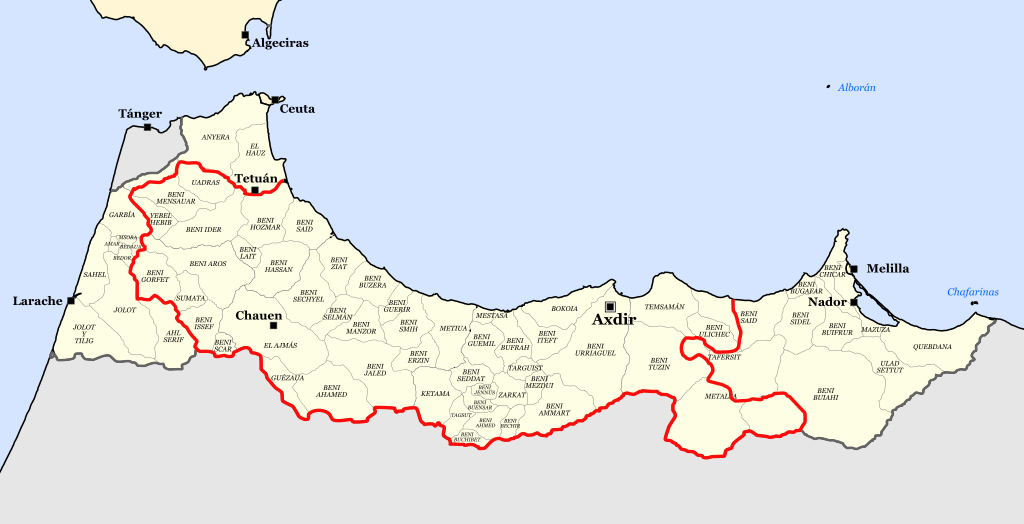
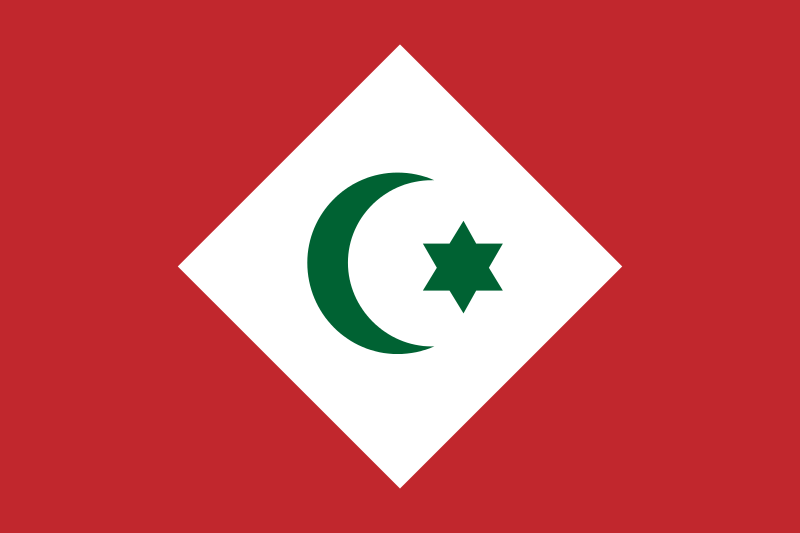
The victorious Berbers under Abd el Krim set up the Rif Republic in September 1921 and tried unsuccessfully for recognition from Britain and from France. There does not seem to be much written about the Republic or if there is, it is difficult to find.

Territory of the Rif Republic (outlined in red) next to “Spanish North Africa”
(image sourced: Wikipedia).

POLITICAL CRISIS AND CHANGE

In response to the Battle of Annual, PSOE delegate and prominent party member Indalecio Prieto declared in the Congress of Deputies: “We are at the most acute period of Spanish decadence. The campaign in Africa is a total, absolute failure of the Spanish Army, without extenuation.”  A War Ministry investigative commission (headed by a General!) although it detailed a number of military mistakes, due to political interference failed to lay the blame squarely on the Army.

The political crisis however led to a great fall of confidence in the Spanish feudal-type military caste ruling class and in the monarch, King Alfonso XIII which is credited with contributing significantly to the birth of the Second Republic (1931-1939 – the one that was overthrown by military uprising and led to the Franco dictatorship, from which the current State has evolved).

WEAPONS OF MASS DESTRUCTION

However, the loss of face for the Spanish imperial State also led to a thirst for revenge in sections of the Spanish ruling class and military. In 1923 Miguel Primo de Rivera1 led a military coup d’etat in Spain, blaming all problems on parliamentary democracy (such as existed) and was supported by the King, Alonso XIII. From the following year until 1927, Rivera took command of the campaign in the Rif and in 1925 the French, although competitors with the Spanish, joined the offensive.

Spain was an early user of chemical weapons against civilian populations and according to Wiki, “between 1921 and 1927, the Spanish army indiscriminately used phosgene, diphosgene, chloropicrin and mustard gas (known as Iperita2). Common targets were civilian populations, markets, and rivers.  In a telegram sent by the High Commissioner of Spanish Morocco Dámaso Berenguer on August 12, 1921 to the Spanish minister of War, Berenguer stated:

I have been obstinately resistant to the use of suffocating gases against these indigenous peoples but after what they have done, and of their treacherous and deceptive conduct, I have to use them with true joy.

The gases were produced illegally in Germany and sold to and bought illegally by Spain and later produced also illegally in Spain. The German chemist concerned, Hugo Stoltzenberg, was later granted Spanish citizenship but joined the Nazi Party during WWII and after the War continued his chemical weapons research in Hamburg. He sold his factory in 1969 and died in 1974.

The war was fought with ferocity on both sides but the Spanish and French had superior armament, aircraft and the Spanish at least dropped chemical weapons on civilian centres, killed domesticated animals and poisoned drinking water and fish. In two years most of the Berber resistance was crushed and in July 1927, Abd el Krim surrendered to the French, who exiled him. The French and Spanish abolished the short-lived Rif Republic, the first in North Africa.

An Association for the Defence of Victims of the Rif War considers that effects of the use of those chemicals have persisted and account for the high incidence of cancers in the population of the area.

There is a Catalan independentist sequel; according to Wiki: “On February 14, 2007, the Catalan party of the Republican Left (Esquerra Republicana de Catalunya) passed a bill to the Spanish Congress of Deputies  requesting Spain to acknowledge the “systematic” use of chemical weapons against the population of the Rif mountains. The bill was rejected by 33 votes from the governing PSOE and the opposition right-wing PP who form the majority in the Spanish parliament.”

BACKGROUND – IMPERIALISTS DIVIDING PLUNDER

The Treaty of Fez 1912 was one in which Sultan Abdelhafid ceded Morocco to the French, who shared the spoils out thus: for recognising the treaty and land gained, Germany, which they added to their Cameroon colony but German also ceded to France and area which is now part of Chad. The Spanish got part of the Rif area including an iron mine and permission to build a railroad to it, which was the cause of riots and the start of the First Rif War. The Battle of Annual took place in what is called the Second Rif War and the joint French-Spanish offensive and use of chemical weapons in the Third Rif War.

But already in 1904 the UK, France and Italy in secret treaties had divided between them the Maghreb (that area covering almost the whole of North Africa and today including Algeria, Morocco, Tunisia, Libya, Mauritania and Western Sahara) into spheres of influence.

TODAY

What remains of that “Spanish North Africa” is Ceuta and Mellila, which Morocco demands Spain decolonise and the Spanish State denies are colonies at all. In 1965 the UN asked the Spanish State to decolonise the territory and in 1966 that it hold a referendum, neither of which it did. From 1973 the Saharawi people fought very successfully under the Polisario Front against Spanish occupation and in 1975/76 the Spanish State abandoned Western Sahara without handing it over to the Saharawi people but by agreement with Morocco and Mauritania which then moved in, since when Morocco has fought the Saharawi people without the latter’s surrender. Mauritania withdrew its claim in 1979 but Morocco has claimed the entire territory and its natural resources (which are significant) and attacked Saharawi settlements and jailed and tortured activists. Other Saharawi people live as refugees in Algeria. The UN does consider that the Saharawi are entitled to self-determination and recognises the Polisario Front as the legitimate representatives of the people and has stated that Morocco should withdraw; the UN maintains a post there but does not monitor Moroccan state actions towards the Saharawi, much less police them.

The UN does not list Ceuta or Melilla as areas in need of decolonisation.

Flag of the Rif Republic design (source: Wikipedia)
Currency note of the Riffan Republic – note conversion rate into English or French currency but not Spanish!
(image source: Wikipedia)

LESSONS

The Rif War has a fair bit of overall coverage on Wikipedia but very little on the Berber leader Abd el Krim and even less on the Berber Republic. I look forward to finding more material about it for my education. I came across this whole struggle by accident and indeed, by strange coincidences, I have family and personal connection to Arab and Berber anti-colonial resistance in the region.

However, the lessons for us and in particular for the Catalans are these, I believe and, given what is at stake now and the enormous human cost paid to obtain those lessons, we should be prepared to study them:

  • The Spanish ruling class was a ferocious one in modern times even before the Franco regime. It showed its ferocity again during the Franco years, during the Transition and, when it felt it necessary, in years since – including under a social-democratic government. It has not at all changed.

  • Capitalists and imperialists will cede no territory unless it is absolutely unavoidable to do so or unless they gain some alternative territory elsewhere. This was true of Spanish North Africa – how much more so will it be true of what they consider as their territorial base and one of the most economically successful parts of that ‘base’!

  • The imperialists of the world, including long-established democracies, come to mutual arrangements which are often kept secret from their own populations.

  • Even competing imperialists will join with other imperialists or their atrocities will be ignored by competitors when they find it in their imperialist interests to do so. As the EU President has already shown, there is no help coming from the European capitalist and imperialist states for Catalan independence – not even a public condemnation of Spanish police violence.

  • Liberals and social-democrats who espouse anti-colonial feeling have a tendency to end up, however reluctantly, supporting their state’s repression of colonialised people’s resistance. This has been seen and will continue to be seen in the PSOE but may also come to be seen in sections of Podemos – with the latter, one can certainly not expect energetic defence of self-determination.

  • A serious defeat for the ruling class can destabilise it sufficiently for revolution or radical reform to take place and to succeed. In this way, should the people of Catalunya succeed in establishing and defending an independent republic there, it could be the spark that sets off detonations throughout the state and allows a genuinely democratic Spanish Republic to emerge. Which means that all genuine democrats in that state should support and strive for the victory of the Catalonian people, both for the rights of the Catalan people but also in their own self-interest.

  • The imperialists violate rights but also language: just as they claimed then and still claim that Ceuta and Melilla are not colonies, so they claim that Catalunya and southern Euskal Herria are not either.

APPENDIX

COINCIDENCES

My father, Deasún Breatnach (1921-2007) worked in Tangiers in journalism for a short period, probably 1947-1949 (he married in Madrid in ’47 and seems to have been back in Ireland in ’49 or at least soon after). Tangiers at that time was by treaty (another imperialist one!) under the joint control of the British, French and Spanish. Deasún told a story that an Arab acquaintance contacted him saying he had an important friend who wished to meet him. Deasún attended by arrangement and the man, who was a muslim religious and temporal leader, wished to get a story of Spanish Army atrocities against people in the Rif, including electric shock torture, out to the world. Deasún took down the report and protest letter in English as requested and sent one copy to a world leader (I forget now but possibly Churchill) and another to the United Nations and filed a story about it to the Irish Press. The Press did not print it because, according to the Editor, they had no corroboration. Deasún said that the Gibraltar Times (if that is the correct name) had run a story on it also but by the time they had this discussion it was about a year later.

Unrelatedly, about a decade ago I joined a small group of activists in a solidarity campaign, Western Sahara Action Ireland, which ran a FB page and took a number of street actions (on a number of occasions harassed and threatened by thugs sent from the Moroccan Embassy). We also set up a “Sahara tent” at an Electric Picnic festival which was visited by Michael D. Higgins. The Coordinator of the WSAI group left to take up work elsewhere and, as a number of us were also active in other struggles we were unable to keep the group going but the page is still maintained and can be accessed at (see Links).

LINKS

https://en.wikipedia.org/wiki/Battle_of_Annual

https://en.wikipedia.org/wiki/Rif_Republic

https://en.wikipedia.org/wiki/Chemical_weapons_in_the_Rif_War

https://en.wikipedia.org/wiki/Rif_War

Western Sahara: https://en.wikipedia.org/wiki/Western_Sahara

https://en.wikipedia.org/wiki/Treaty_of_Fez

https://www.facebook.com/groups/256377861125569/


FOOTNOTES

1Whose son Manuel Primo Rivera was a prominent fascist in 1930s Spain.

2After Ypres, where the Germans used it in WWI for the first time.

DRUMMING SOLIDARITY FOR BASQUE POLITICAL PRISONERS

Diarmuid Breatnach


On July 7th (the San Fermin feast day) 1985 two Basque political prisoners escaped from the Spanish prison of Martutene during a concert. The escape was received joyfully in the Basque Country and in other places and celebrated also in song composed by the Basque ska-punk band Kortatu (1984-1988). The song is called Sarri, Sarri, a nickname made from Sarrionandia, the paternal surname of one of the escapees, who was serving 22 years form membership of ETA, the Basque left-independentist armed organisation.


The song is performed annually (see video) in the Orereta/ Errenteria area to the accompaniment of massed drummers, a denborrada or tamborrada(“a drumming”), in the province of Gipuzkoa, near the French State border and not very far from Donosti/ San Sebastian and was done as a gesture of solidarity with the Basque political prisoners. In its report on the first quarter of 2018, Etxerat, the association of political prisoners’ families and friends, recognised 287 prisoners but over the years a number of Basque prisoners have left the collective but are still serving time, a few doing so since the changes in policy of ETA and of the Abertzale Left leadership. Of the 287 recognised by Etxerat,twenty-two were terminally or seriously ill and should have been paroled under Spanish and French laws, only three were serving sentences in the Basque Country and four seriously-ill on parole, 280 being dispersed in jails throughout the French and Spanish states. Relatives and friends able for the long journeys have to travel distances of between 100 to 1,100 kilometers from the Basque Country and many traffic accidents, some fatal, have occurred on those journeys.

ETA (Euskadi1 Ta Askatasuna = Basque Nation and Freedom) was formed in the late 1960s and for almost a decade did not engage in armed activity, though its members and supporters were hounded, tortured and jailed by the Spanish State, after which it turned to armed actions. The organisation called a “permanent truce” some years ago and recently dissolved itself in what seems to have been a bid by the pro-independence left’s political leadership to enter some kind of peace process with the Spanish State, in which the latter is clearly uninterested or perhaps as a move to ease the conditions and possibly sentences of Basque political prisoners.

Amnistia Ta Askatasuna (“Amnesty & Freedom”), an organisation campaigning for prisoners which does not recognise the official movement’s leadership exists, and though small, is active in many parts of the nation.


THE ESCAPEES

Iñaki “Pitti” Pikabea continued active in ETA and was sadly recaptured in 1987; he was paroled in 2000. Joseba Sarrionandia Uribelarrea kept low and avoided the authorities, although publishing writings and earning awards, until he surfaced in Cuba, where he lives to this day, as a writer and also a lecturer at the University of Havana.

Joseba Sarrionandia through the ages (images sourced: Internet)

Among Sarrionandai’s many writings (articles, poems, novels), on 3rd October 2011, the Basque Government and Spanish State were embarrassed to learn that Sarrionada had received a prestigious literary awarded, the Euskadi Prize for Essay in Basque for his work Moroak gara behelaino artean? (Are we Moors in the fog?) on the miseries of colonialism.2

End.


LINKS:

Joseba Sarrionandia Uribelarrea: https://en.wikipedia.org/wiki/Joseba_Sarrionandia

Etxerat report January-March 2018: http://www.etxerat.eus/index.php/es/informes/mensual

Amnistia Ta Askatasuna: https://www.facebook.com/amnistiataaskatasuna/ and http://amnistiaaskatasuna.blogspot.com/

Video of this year’s Denborrada: https://www.facebook.com/KatiuskakArgazkiEstudioa/videos/1879014595499250/?t=6


FOOTNOTES

1“Euskadi” nowadays normally means three of the southern (i.e under Spanish rule) Basque provinces combined in the “Basque Autonomous (sic) Region” and therefore excludes the other southern province, Nafarroa and the three northern provinces (i.e under French rule); “Euskal Herria” (the H is silent), i.e “the land where the people speak Basque” is the widely-accepted name for the Basque nation now.

2From Wikipedia (see Links): “On 3rd October 2011, Sarrionandia was awarded the Euskadi Prize for Essay in Basque for his work Moroak gara behelaino artean? (Are we Moors in the fog?) on the miseries of colonialism; however, the Basque Government withheld the prize sum of 18,000 euros until the author’s status was resolved. On the same day, judges and lawyers interviewed by media confirmed that Sarrionandia could not be prosecuted by Spanish law, as more than 20 years had passed since his original prison sentence and his escape. While terrorist acts have no time limit, the provision applies only if there was at least one victim. After a month and a half, the Spanish High Court confirmed to the Basque government that Sarrionandia was ‘clean’, with no criminal or civil liability. The prize amount was handed over to his family”.

HAVING IT AWAY – AN ARMS RAID, CAPTURE AND PRISON ESCAPE

Diarmuid Breatnach


The prison experience and escape of IRA man Seán Murphy as related by himself in book form was launched on 31st March to a large audience in Wynne’s Hotel. Republicans of all shades not part of Sinn Féin (and perhaps some of those too) attended the event, bought copies of Having It Away and queued to have them signed by Seán’s widow, Betty Murphy. Seán O’Mahony, whose assistance with the publication of the book was acknowledged by Sean Murphy’s family, presided over the event.

Seamus Murphy
(Photo source: Internet)

On 13th August 1955, a party of the IRA led by Ruairí Ó Brádaigh raided Arborfield British Army Depot and came away with many guns and ammunition; the party’s members were Seán Murphy, Donal Murphy (no relation), Frank Skuse, Jack Hick, Tom Fitzgerald, Joseph Doyle, Liam Walsh and Paddy Considine. One of the party’s vehicles was apprehended by British police and the weapons later recovered. Three IRA Volunteers of those ten who took part were captured and, after trial, sentenced to life imprisonment. Donal Murphy and Joseph Doyle were two of them, the third was Seán Murphy and the book is his story.

Section of crowd at book launch event in Wynne’s Hotel
(Photo: D. Breatnach)

The book is what most people would call “a great read”. Murphy’s descriptions of the grim realities of prison life, his interactions with other prisoners political and non-political, as well as the screws (prison officers) and Governor, are pointed and yet often humorous.

Cathal Goulding was in the jail before Murphy arrived and after an attempted escape was obliged to wear “patches”, these being large and of a contrasting colour, sown on to a prison uniform. A prisoner wearing “patches” was under constant surveillance in the prison and was kept in solitary confinement when not on exercise. The prison Governor tried to get Goulding to promise not to escape, which Goulding felt unable to do, considering it his duty to escape whenever a decent opportunity presented itself.


(Photo: D. Breatnach)

Murphy’s opinion expressed in the book is that Goulding should have given his promise and then escape when possible, considering that one was not bound to honesty with one’s captors. Murphy’s position is not without rationality and even morality but it is in strange contrast to he and his two co-accused refusing to provide a defence against the charges, since that would have meant “recognising the British court”.

The Republican prisoners considered themselves political prisoners but they did not seek segregation from social prisoners as later generations of Republican prisoners have done. And in fact, Murpy made friends among a number of prisoners convicted of social rather than political offences, some of whom went to some lengths to help him and put their scheduled liberty at jeopardy in doing so. Murphy has this to say about them (and Sean O’Mahony quite rightly included that phrase too in his written introduction): “Taken all round, the circle of friends we had collected in this prison were made up of men, generous and decent almost beyond belief and one would be hard put to find their equals in any walk of life.”

On the other hand, interaction with other political prisoners also forms part of the narrative. These included Klaus Fuchs, a German Communist who had fled Nazi Germany and became naturalised in Britain. He was a physicist and after the War was hired as part of the team developing the Atomic Bomb at Los Alamos in the USA. From there he had passed information to the USSR to help them in their development of the their own atomic weapon. for which he was sentenced in 1950 to fourteen years imprisonment and had his British citizenship removed. Released not long after Murphy’s escape, having served nine years, we went to the GDR (East Germany) where he remained until his death in 1988 at the age of seventy-six.

Klaus Fuchs, German Communist, jailed for feeding information on the USA’s development of the atomic bomb to the USSR. He was in Wakefield Prison at the same time as Murphy.
(Photo source: Internet)

Although Fuchs was already there when Murphy arrived, other prisoners arrived afterwards from the struggle against the British in Cyprus. These were from EOKA, a Greek-Cypriot guerrilla organisation which from 1954-’59, fought to end British rule in Cyprus and for union with Greece (“enosis”). Many soldiers, guerillas and civilians were killed in the conflict, the British executed a number and also practiced torture on prisoners. In addition, the British recruited their colonial police force exclusively from among the Turkish minority on the island, which helped entrench and deepen communal tensions. Unlike EOKA B, which was considered right-wing, had links to fascist Greek colonels and was responsible for a massacre and rape of Turkish-Cypriot civilians, Eoka had socialist national liberation leanings and one of the prisoners in jail with Murphy went on to translate James Connolly’s writings into Greek. Some of EOKA supporters, like Bishop Makarios, later went on to advocate complete independence from either Greece or Turkey but an attempted EOKA B coup sparked a Turkish invasion and another massacre, this time of Greek-Cypriot civilians. Today the island is partioned between an independent Cyprus and the Turkish state, each area more or less abandoned by the other major ethnic group.

Eoka guerrilla fighters in camp (Photo source: Internet)

One of the EOKA prisoners sharing Wakefield Prison with Murphy was Nicos Sampson who had a dark history by then and which got no lighter as time went on.

Almost incredibly, one of the Eoka prisoners, serving five years in jail, was a member of the British Army who had deserted and fought alongside the Greek Cypriots – his name was Tony Martin.

The typography of the book leaves much to be desired – something seems to have gone amiss between editing, proofing and checking the galley copy. Punctuation has suffered and occasionally spelling too; sentences are broken up by large spaces and footnotes end up half-way down the the next page. Somehow however, though one is aware of those faults, the narrative grabs most of the attention.

More irritating than the faulty typography are the omissions: what went wrong that of the escape party of five, only one made it? How did those left behind fare? Did the British seek his extradition from the Irish state? What did Murphy make of the subsequent twists and turns in the Republican movement and of its various splits? Some information on the subsequent lives of some players in the prison and escape organisation is provided in two pages of Biographical Notes but I found it nowhere enough to satisfy my curiosity. For example, Murphy rates Cathal Goulding very highly in the book’s narrative yet I am given to understand that he did not support the line taken by what became Official Sinn Féin (and eventually The Workers’ Party) and the Official IRA, led by Goulding.

All that said, the book is very readable and also well worth reading.

Although Murphy’s writing reveals a strong leaning towards socialist republicanism and therefore the comment in the Irish Times obituary that “he did not embrace Goulding’s move to socialism” should be treated with caution. Nevertheless he did not by all accounts support the Official IRA after the 1969 split in the Republican movement; this may have been due to the failure of the IRA leadership to organise support for an escape, while most of those who did spring him seem to have come from the Saor Uladh or Christle faction groups. Murphy appears to have dropped out of active participation in politics after his escape but in recent years was known to be opposed to the Belfast Agreement.

Seán O’Mahony, who presided at launch of “Having It Away” and Betty, widow of Seamus Murphy, the author.
(Photo: D. Breatnach)

Seamus Murphy was born 1935 and raised in Castledermot, Co.Kildare and joined the IRA while attending Terenure College, Dublin. In 1963, four years after his escape and return to Ireland, Murphy married Betty O’Donaghue from his home county in 1963; they settled down in Bray and had a son, Pearse. Murphy was writing his memoire unbeknownst to most people and though he received some assistance with it he died in 2015, three years before it was published.

10th ANNIVERSARY OF DEATH OF FREEDOM FIGHTER COMMEMORATED IN DUBLIN

10th ANNIVERSARY OF DEATH OF VOLUNTEER BRENDAN HUGHES COMMEMORATED IN DUBLIN

(From the End Internment FB page, courtesy of the Dublin Committee of the Anti-Internment Group of Ireland)

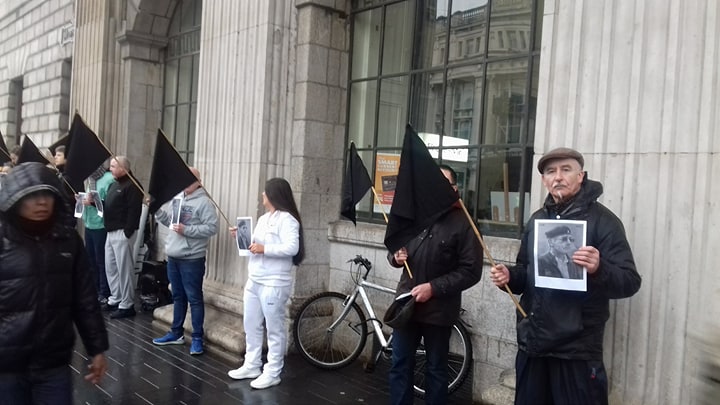
Irish Republicans (mostly independent) and a number of anarchists and socialists commemorated Brendan Hughes (“The Dark”) today (18th Feb 2018) at the General Post Office building in O’Connell Street, main street of Dublin. Republicans from Glasgow also participated.

People with black flags and portrait photos of Brendan Hughes outside the GPO building in Dublin marking the 10th anniversary of the freedom fighter’s death. (Photo source: End Internment FB page)

Around two score assembled with black flags and portraits of the IRA Volunteer who died aged only 59 ten years ago (2008). Hughes was from a Belfast Republican working class family and entered the struggle, enlisting in the Provisional IRA in 1969. He was arrested in 1973, beaten and jailed but escaped, leaving Belfast but subsequently returning to Belfast, to the Malone Road middle-class area under an assumed name while he continued in his resistance activities.

Captured again in 1974 with a number of firearms at his address he was sentenced to 15 years in jail. In 1973 he was convicted of assaulting a prison guard in the jail and was sent to Long Kesh. This was after political status had been removed from Republican prisoners and Hughes joined the “blanket protest” (refusing to wear prison uniform). Later he led the “dirty protest” (prisoners refused to “slop out” after being beaten by guards and emptied their bodily wastes out the windows until these were blocked up, then out under their cell doors, until they were swept back at them and finally on to the walls of their cells).

Hughes began hunger strike which he maintained for 53 days in 1980, ending with others only after what appeared to be a deal offered by Thatcher. It is believed his health never recovered from his prison experiences; he suffered from problems with his heart and eye problems, in addition to arthritis.

Brendan Hughes in Youtube program exposing the pacification process. (Image source: Youtube)

Released from jail after 10 years, he became a serious critic of the “Peace” (pacification) process; according to his brother, Hughes asked that his former comrade Gerry Adams not be permitted any role in his funeral. His brother admitted later that he had bent to pressure and had allowed Adams to carry Hughes’ coffin.

Brendan “The Dark” Hughes died on 16th February 1998.


LINKS:

Guardian obituary:

https://www.theguardian.com/uk/2008/feb/19/northernireland

 Youtube video with Brendan Hughes:

HORROR STORY

Diarmuid Breatnach

“I try to, Papa, but I can’t.”

“Why do you think that is? Are you thinking about exciting things, things you’re going to do tomorrow, perhaps?”

He gently ruffled her blond curls on the pillow. She gets those from her grandmother, on her mother’s side, he thought. He and Julia were both dark-haired.

“No, Papa, it’s not that.”

“Are you sure? You know that niňas need their sleep.”

“And niňos too, Papa.”

“Yes, hija, and boys too.” A painful pride filled his chest. Already standing up for equality!

“So why can’t you go to sleep?”

“I get frightened. I know I shouldn’t …. but I do.”

“Frightened? Of what?”

“Of ….. of monsters.” Her voice dropped on the last word so that he could barely hear her.

“Monsters? Here? What kind of monsters?”

“River monsters. Joaquin says they come out of the river at night, creep around the houses and take children ….. back to the river ….. and …. and drown them. And then eat them.”

“Joaquin shouldn’t be frightening you with stories like that.” A different kind of pain in his chest.

“It’s not true?”

“No. Sometimes the caimánes do come up from the river, looking for rubbish to eat. That’s why we shouldn’t leave the basura out, remember?”

“Sí, Papa.”

“But they are not looking for people. And they can’t climb up houses, can they?”

“Are you sure?”

“Yes. You’ve seen them in the river and on the river bank. You ever see one climb a tree?”

Las iguanas do.”

“Yes, and very well. But they eat plants. You haven’t got any vegetables in here, have you?”

“No,” she giggled.

“Are you sure?” he reached into her armpit.

She wriggled, squealing.

“Or here, perhaps?” reaching under the bedcovers, he tickled her ribs.

More wriggling, squealing.

“Ok, so no hidden vegetables, no iguanas. And alligators can’t climb. And you know what else?”

“What?” twinkle of laughter still in her eyes.

“Rapido. He barks when people or animals come around at night, doesn’t he?”

“Yes, Papa. Always.”

“And if I were asleep, he’d wake me, wouldn’t he?”

“Yes.”

“And I have a big machete, don’t I?”

“Yes, Papa. It’s very sharp and I’m not allowed to touch it until I’m big.”

“Yes. You’ve seen how it cuts the cane, haven’t you?”

“Yes. Chop!”

“Well then, how is a caimán to get here, even if it wanted to, past Rapido, past me and my machete? It’s not going to happen, is it?”

“No, Papa.”

“So now you will sleep, won’t you?”

“Yes, Papa. Hug!” Her arms reached up.

He hugged her, breathing in her little child smell, his chest filled with a sweet kind of pain. He had to be careful not too hug too hard.

She turned over and he walked softly out. He had reached the door when her sleepy voice reached him.

“There aren’t any other kinds of monsters, are there?”

“No, hija, of course not. Now, to sleep. Duerme con los angeles.”

She murmured something he couldn’t catch, already slipping into a delayed slumber.

Walking softly to the kitchen, he took a battered coffee jug off the stove and poured himself a cup. It felt bad, lying to his daughter. But how to tell her about the real monsters that ruled the world, when she was already frightened? Replace imaginary monsters with real ones?

And the real monsters could climb houses. Could find you in the dark with heat-imaging cameras and scopes. Could trace you from satellites. Still, they were not all-powerful. They act as though they were, especially the soldiers and police they send, strutting around, searching houses, slapping men, grabbing women and fondling them …. and sometimes worse, though not here. Not yet. But Paco Perez had been arrested, taken to the barracks a week ago and had not come back. Each day his wife and some vecinos went down to enquire and to hand in food, returning without having seen him. Would he ever come back? There was always hope.

But at night …. ah, at night, it was a different story. At night the soldiers stayed in their barracks or near it. The night belongs to the guerrilleros.

Rapido, lying by the screen door, got up, stiffened and growled.

Quieto, Rapido! Quieto!

The dog turned to look at him. Someone comes, he seemed to say. You tell me to be quiet and so I must. But I warn you, someone comes. And I am ready to fight!”

“Good dog”, he said, putting the cup down and getting up. His heart beating fast, he lowered the wick in the lamp and took down the machete from the wall.

Rapido was tense, facing out the doorway.

He went to the dog, touched him on the nose in the signal for “quiet” when hunting. Then tapping his own side, another signal, he opened the screen door and stepped out on to the small veranda, Rapido by his side.

The night was filled with the usual sounds – insects and frogs, aware of them now, what had been an unconscious background earlier. A faint splash from the river two hundred metres away.  A caiman’s tail, a fish jumping, a canoe paddle?  No, not a paddle — someone coming quietly on the river wouldn’t splash.

Then a screech — an owl that was not an owl.

He moved away from the doorway, to the side, heart thumping. Rapido was quivering with intensity.

Tranquilo, vecino!” came the whisper from the darkness. A woman’s voice.

Rapido growled.

Quieto, Rapido!”

She came soundlessly into view along the track below, the dim moonlight shining on her gun, carried in the left hand. Wearing what looked like a loose camouflage-pattern shirt. Beyond her, a man by size and shape, hardly seen. There would be others, he knew.

“Who goes by?” he whispered back.

Justicia, compa. Justice,” replied the woman, walking past, wearing a bandana across her face.

Did he know her?  Maybe.  He didn’t want to, though.

Probably heading for the barracks,he thought.

Vayan con Dios,” he called softly after them as they vanished again.  Let them come back safely.

There would be retribution in the morning, he knew. Or the day after. More searching, lots of questions, maybe more arrests. But what was the alternative? To lie down and let them walk over us? Even those who obey are not safe.

And the sugar boss pays barely enough to live on for eleven sweating hours and bleeding hands. Upriver they had struck work in protest, until the soldiers went in and arrested the union leaders.

Buen perro, amigo.” He stroked Rapido on the head, the dog now relaxing, both turning to go back inside.  Work in the morning and six days every week while the season lasted.

But how to keep his niňa safe? From the real monsters of this world?

End.

(All images from Internet)

JORDAN’S MICHAEL COLLINS FILM CRITICISED

Rebel Breeze introduction to critical videos:

This is an interesting criticism of the Michael Collins historical biopic 1996. Written and directed by Neil Jordan, the film begins with the end of the Irish 1916 Rising, has the longest part focused on the War of Independence (1919-1921) and ends not long after the start of the Civil War (1922-1923). The film starred Liam Neeson as Michael Collins and included others such as Aidan Quinn playing Harry Boland, Alan Rickman as Eamon De Valera, Stephen Rea as Ned Broy, Julia Roberts as Kitty Kiernan, Gerald Mc Sorley as Cathal Brugha and Brendan Gleeson as Liam Tobin.

The video from Foras Teamhrach presents its criticism using clips from the film while commenting and also comparative clips from other films, which is a useful way of presenting a challenging view. Unfortunately neither the name of the author of the commentary nor of the commentator (possibly the one and same) appeared on the Youtube link, only the company name and the comments function was disabled (perhaps understandably).

Most of the points are well made but there are some omissions which might usefully be added to the criticism.

The GPO surrender scene

The video criticism points out that showing only the GPO makes the Rising look much smaller than it actually was; despite the countermanding order which reduced the forces in Dublin by perhaps as much as two-thirds, the Rising was fought by four major garrisons on the southern and three on the northern side of the Liffey, with other smaller outposts and individual actions. However, the narrator says nothing regarding the historical inaccuracy of portraying the surrender as occurring at the GPO.

In fact, the GPO had been abandoned on the Friday and the Surrender took place on the Saturday, following a decision made in the 1916 Terrace in Moore Street and around 350 insurgents there were the first to surrender following the order. This matters not just from a point of historical accuracy but because there is a struggle (now approaching two decades) to save this area from property speculators and State and Dublin Council Planning Department collusion.

Portrayal of De Valera

One does not have to be a supporter of De Valera’s philosophy and actions to rapidly come to the conclusion that his portrayal in Jordan’s film is so inaccurate as to seem to be someone else. Every person who took up arms in 1916 to fight the British Empire showed courage and those who continued to actively oppose the British occupation during the intense years of the War of Independence showed even more courage in doing so.

Collins, of a much more ebulient character than De Valera, according to witnesses, was more inclined to exhibitions of temper and shouting than was De Valera, whose manner was generally in accordance with his studious appearance – contrary to his behaviour in the Treaty discussion scene of the film. As to another aspect, when we review the record of his actions in preparation for the Rising through to the War of Independence and on through the Civil War and the early years under the Free State, De Valera cannot reasonably be accused of lacking courage. The shivering wreck as which he is portrayed during the Civil War in Jordan’s film runs counter to the historical record.

There is testimony from one or two participants that at a period during his command of Boland’s Mill, De Valera had something of a breakdown. This, if it occurred, could have been as a result of fear or instead of lack of sleep, or of being overwhelmed by responsibility or a number of causes and if this alleged episode is what inspired Jordan’s depiction it was certainly unfair to use it to characterise De Valera at other times. There are many criticisms that can fairly be thrown at De Valera but lack of courage is not one of them.

Portrayal of Cathal Brugha

And likewise with the portrayal of Cathal Brugha. Some of Brugha’s military and political history may help in evaluating the portrayal of this man in Jordan’s film.

One of fourteen children empoverished by the death of their Protestant father, Brugha joined the Gaelic League in 1899 and quickly became fluent, soon changing his name from Charles Burgess to Cathal Brugha. He and Kathleen Kingston, also an Irish language enthusiast, married in 1912 and had six children. Brugha joined the Irish Republican Brotherhood (IRB) and in 1913, the year they were formed, he became a lieutenant in the Irish Volunteers and led a group of Volunteers to land the arms smuggled into Howth by the Asgard in 1914.

In the Easter Rising of 1916 Brugha was second-in-command at the South Dublin Union under Commandant Éamonn Ceannt, scene of some of the fiercest fighting during the Rising. Overlooked in the evacuation on Thursday of Easter Week and, being badly wounded, he was unable to leave. Bleeding from 25 wounds (some of which had penetrated arteries) he continued to fire upon the enemy and when Eamonn Ceannt led a group to investigate who was still firing he discovered Brugha singing “God Save Ireland” surrounded by his own blood and with his pistol still in his hands.

Brugha was not expected to survive which may have saved him from the execution parties and he was discharged from hospital in August 1916 as “incurable”. However he recovered in 1917 though left suffering pain and with a permanent limp and preferred to cycle than walk.

Already in 1917 from his hospital bed, Brugha began to seek out Volunteers and Irish Citizen Army people who were willing to join the new armed resistance group and it seems that he, more than any other, should receive the main credit for the initial formation of that which became the IRA.

Brugha was so respected in the movement that he was elected speaker of Dáil Éireann at its first meeting on 21 January 1919 and it was he who read out the Declaration of Independence in Irish, which ratified ‘the establishment of the Irish Republic’. He was also appointed temporary President, a position in which he remained until de Valera tok his place.

Far from being a bloodthirsty zealot as he is portrayed in the film, Brugha reduced Collins’ ‘Bloody Sunday’ assassination list considerably since in his opinion, there was insufficient evidence against a number of people named on the list. Then again, at the outbreak of the Civil War, a reluctant Brugha only joined the fighting on the Republican (Anti-Treaty) side in order to relieve the pressure on the Four Courts garrison. Cathal Brugha led a detachment in occupying a number of buildings in O’Connell Street and later, having got his men safely away or surrendered, was shot and mortally wounded in debated circumstances by Free State troops (which were under the overall command of Collins).

Brugha had, according to some opinions, alienated a section of waverers at the Dáil debates on the Treaty, by a personal attack on Collins and the way his persona had been elevated (a common problem, the deification of leaders). This was no doubt a tactical mistake but there had been ongoing conflict between both men for some time. Although both had been members, Brugha had left the IRB after 1916 in the belief that their conflict with the Volunteer leadership had damaged the Rising. Collins’ rank in the organisation was supreme in Ireland and it seems that Collins used this at times to circumvent or undermine decisions of the Dáil, where Brugha outranked Collins and which the former believed to be the repository of democratic decision-making.

Collins as a guerrilla war leader

All Collins’ many talents and contributions to the War of Independence aside, his representation in the film as not only directing the whole armed struggle but also as teaching rural people how to wage a guerrilla war is a complete distortion of history that could only be undertaken by a propagandist for Collins.

It was Brugha who began to pull the scattered elements of the armed struggle together and laid the foundations for what became the IRA. It was Robinson, Breen, Tracey and Hogan who began the armed resistance of the War of Independence in Tipperary on 21 January 1919 in which two paramilitary policemen were killed. And they did so without permission from GHQ in Dublin.

As to rural guerrilla tactics, these were such as had been used for centuries or developed in the struggle and were certainly not taught by Dublin. What was taught by instructors sent by Dublin was weapon use and maintenance and personnel disposition for ambushes, moving in extended order through countryside and securing a line of retreat. One of the chief instructors in this kind of instruction was Ernie O’Malley and, in West Cork, the young Tom Barry used his British Army experience and other learning to do the same. The order to create Flying Columns might have come from Dublin but had been advocated already by fighters in Cork, Kerry and Tipperary and it was they and others who developed them in the field.

Collins’ special contribution was in organising intelligence, counter-intelligence and the assassination squad (which turned out to be a double-edged sword) and also, to an extent, supply of weapons. His contribution was notable but it did not lie in initial organising of guerrilla war, much less in rural guerrilla instruction.

The role of women in the struggle

Women are underrepresented in this narrative, as is usual in Irish history and Republican and nationalist narrative. Where women are shown, apart from the brief appearance of Markievicz at the non-existent GPO surrender (when instead she was at the College of Surgeons!), they are objects of romance (Kittie Kiernan) or auxilliaries working for Collins’ intelligence department.

There was a great opportunity lost there to show the women in action during the Rising in the many roles they undertook, including firing weapons, or in keeping the flame lit after the Rising and in particular in commemorating the Rising a year later, organising demonstrations, pickets, and funerals.

The Croke Park Bloody Sunday massacre scene

The film shows the ‘Tans or Auxies shooting down people with machine-gun on the GAA ground. As far as we have been able to establish it was the RIC who did it, although of course the other two were auxilliary forces of the RIC. Thankfully they did not fire with a machine-gun (the Army had one outside the grounds and an armoured car, it seems but did not open fire) or the carnage would have been a lot worse. When one examines the casualty list of those shot, just like more modern British massacres in Derry and Belfast, it is clear that the shooting was mostly disciplined, i.e hitting males of military age. Showing that kind of scenario would in the last analysis not only be more historically accurate but also more telling of the intent and cold-bloodedness.

And what of the three tortured and murdered in the Castle that day, Peadar Clancy, Dick McKee and Conor Clune? Yes, we know, one can’t show everything.

Go raibh maith agat to the individual who sent the video links to this blog.

LINKS:

The critique video, Parts 1 & 2:

https://www.youtube.com/watch?v=zor3VvE9vD8

https://www.youtube.com/watch?v=KbGWEZehuFI

Another view, not quite so critical: http://www.irishtimes.com/culture/film/michael-collins-review-nowhere-near-as-historically-inaccurate-as-we-once-supposed-1.2576150

PLAIN-CLOTHES POLICE OFFICER SHOT DOWN IN DUBLIN STREET


Diarmuid Breatnach

He’s up there if you want him …. on the footpath.”

On 14th April 1920, a man in plainclothes was shot by another, also in plain clothes, in Camden Street, Portobello, on the south side of the city and not far from the centre. A passing motorist rushed the gunshot victim to the nearby Meath Hospital but he died there.

The victim was Det. Constable Harry Kells of the Dublin Metropolitan Police, a man of 41 years of age who lived in No. 7 Pleasant Street, i.e very close to where he was shot. He was married without children.

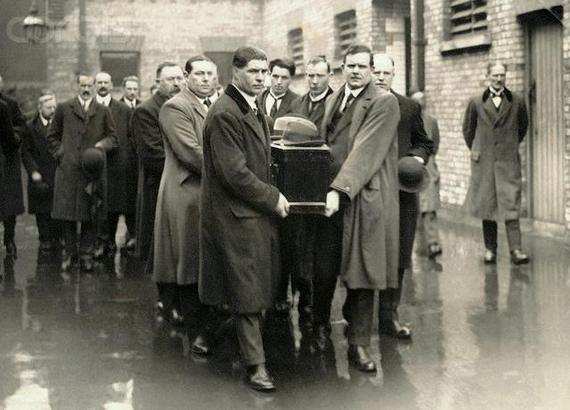
Funeral party of DMP colleagues of Det. Constable Kells, with the coffin holding his remains.
(Source: irishconstabulary.com)

Many reports say that Kells was a member of the DMP “G” Division, which were known as “the political police” (apparently both within the DMP and outside). However, “McRIC” in the irishconstabulary forum states that this is inaccurate and that the man, although recently promoted to plain clothes work, was rather in “B” Division and investigating a number of burglaries in the city.

From a number of investigations carried out it seems that this question may never be resolved but it is highly likely that Kells was at least in the process of being transferred to “G” Division. However, the reason for his killing is almost certainly much more specific. It seems that Kells had been reviewing identity parades in Mountjoy Jail in attempts to find the killers of British intelligence agent Alan Bell, who had been assassinated on the 27th March. While engaged in this work, he had been identified by Peadar Clancy1, Vice-Commandant of the Dublin Brigade of the IRA, who sent a note about him to Michael Collins, who put the execution order on Kells.

It is worth noting that Republican prisoners in Mountjopy had also been taking part in a hunger-strike at that time in protest at removal of political status while detained without trial. Ironically, 90 prisoners were released on the very day Kells was killed.

Peadar Clancy, who got the word out to Collins about Kells working Identification parades in Mountjoy Jail, Dublin. (Image source: Wikpedia)


THE LARGEST RAID EVER CARRIED OUT BY BRITISH TROOPS IN DUBLIN

“Aul Decency”, posting on Dublin Forum.ie on 31st March 2012, drawing on April reports in the Irish Times and New York Times, says that the incident “was the cause of the largest raid ever carried out by British Troops in Dublin.”

According to “Aul Decency”: “Two of those sought in connection with Kells’ killing were Sinn Féin members Michael and William Kavanagh who lived at 5 Pleasant St., who had previously been “fingered” by Kells, and it was thought they would seek refuge among friends in the neighbourhood. The troops swarmed over Camden St from Cuffe street and into Portobello and the homes of the local Jews2. Over 100 people were arrested that day but Kells’ killer was not among them.”

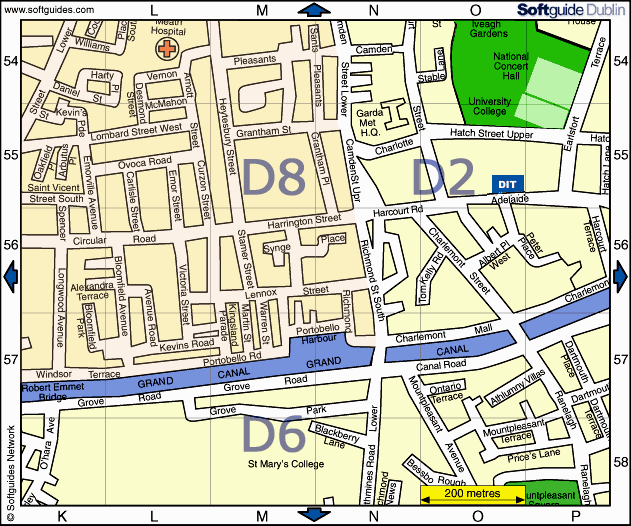
Portobello area map today,  Camden Street is a longish one right between the D8 and D2 legends.   Pleasant St. is off Camden St. to the left, near the top of the image. (Source: Internet)


This “fingering” had in fact been carried out after the 1916 Rising when Kells reported that the brothers had been seeing changing into Volunteer uniforms in the house, information which had resulted in at least one of the brothers ending up in Frongoch concentration camp that year and losing his job.

It is enough perhaps to know that Kells was killed by Republicans and the probable reason but we can go a bit further, drawing on The Squad by T. Ryle Dwyer (quoted in irishconstabulary.com) where Paddy Daly of the Squad is quoted about the operation to kill the police officer:

On our way we picked up Hugo MacNeill, a nephew of Eoin MacNeill3 the initial President of the Irish Volunteers. He was not a member of the Squad but he asked to come along.

We divided up into patrols of two4, MacNeill was with Joe Leonard. ODaly said he heard a couple of shots, and saw MacNeill sauntering down Pleasant St. as if nothing had happened.

What was the shooting about? O’Daly asked.

Kells is up there if you want him, MacNeill replied.

Where?O’Daly asked.

On the footpath‘, replied MacNeill.

Det. Constable was the third police officer to be killed in Dublin so far in 1920 in a war between the British occupation forces and the IRA, in which not only police officers but intelligence agents and British soldiers on one side were killed and, on the other, Volunteers, active Republicans, sympathisers and uninvolved civilians. Of course the war was going on in many other parts of Ireland but it is often forgotten that among those areas subject to martial-type law were Dublin County and City, where had been the HQ of the British occupation since 1171: Dublin Castle.


SOURCES:


http://www.dublinforum.net/forum/showthread.php?t=2110&page=3

http://irishconstabulary.com/topic/1477#.WO6mGEvb-_s

https://en.wikipedia.org/wiki/Timeline_of_the_Irish_War_of_Independence

http://www.irishmedals.org/r-i-c-d-m-p-k-i-a-.html

1Peadar Clancy was one of two Volunteers and one civilian who were tortured by RIC Auxiliaries in Dublin Castle and killed on November 21, 1920 (Bloody Sunday).

2Portobello had a Jewish quarter at that time. Some of the residents are reputed to have been active in the resistance movement and a number had been on strike or locked out in 1913.

3He who had on Easter Saturday 1916 issued the cancellation order for the Rising.

4According to testimonies by Squad members, working in two groups of two was standard procedure. Typically each pair would take one side of the road. Once the assassination was carried out, the two who had not done the killing would cover the escape of the two who had.

SHOOT-OUT IN DUBLIN ON MARCH 14 LEAVES SEVEN DEAD

SHOOT-OUT IN DUBLIN ON MARCH 14 LEAVES SEVEN DEAD1

By John Dorney

(Re-published from The Irish Story, History webpage http://www.theirishstory.com/2015/01/26/the-pearse-street-ambush-dublin-march-14-1921/#.WN6_Ukvb-_s by kind permission of John Dorney)

Dublin awoke on the morning to March 14th 1921 to the news that six IRA Volunteers, captured in an ambush at Drumcondra two months before, had been hanged.

The gates of Mountjoy Gaol were opened at 8:25 am and news of the executions was read out to the distraught relatives of the dead. As many as 40,000 people had gathered outside and many mournfully said the rosary for the executed men.

On the morning of March 14 1921 six IRA Volunteers were hanged in Mountjoy Gaol.

Crowds of protesters outside Mountjoy Jail being held back by British troops and a tank (image from Dorney’s article)

The labour movement called a half-day general strike in the city in protest at the hangings. The clandestine Republican Government declared a day of national mourning. All public transport came to a halt and republican activists made sure the strike was observed. IRA officer Frank Henderson recalled:

Patrick Sweeney, Vice Commandant of the 2nd Battalion, and other members of the Battalion paraded the Battalion area during the hours of public mourning to ensure that shops were closed. With the exception of one or two public houses which had to be cleared, the order to cease work was loyally obeyed by the citizens.”

By evening, the streets cleared rapidly as the British-imposed curfew came into effect at 9pm each night. The city must have been a fearful place, patrolled by regular British troops and the much-feared paramilitary police, or Auxiliaries, as people scurried home and awaited IRA retaliation for the hangings. This was not long in coming.

Pearse Street, or Great Brunswick Street as it then was, nestles just south of the river Liffey, running from Ringsend, an old fishing port, to the city centre. Number 144 housed the company headquarters of the Dublin IRA’s 3rd Battalion at St Andrews Catholic Hall. It had been used for this purpose since before insurrection of 1916.

On the evening of March 14, their captain Peadar O’Meara sent them out to attack police or military targets. As many as 34 IRA men prowled the area, armed with the standard urban guerrilla arms of easily-hidden handguns and grenades. One young Volunteer, Sean Dolan threw a grenade at a police station on nearby Merrion Square, which bounced back before it could explode, blowing off his own leg.

Auxiliaries on a raid c.1920 (image sourced on Internet)

It was about 8 o’clock. The curfew was approaching. A company of Auxiliaries, based in Dublin Castle was sent to the area to investigate the explosion. It consisted of one Rolls Royce armoured car and two tenders (trucks) holding about 16 men. Apparently the Auxiliaries had some inside information as they made straight for the local IRA headquarters at 144 Pearse Street. One later testified in court that – “I had been notified there were a certain number of gunmen there”.

But the IRA were also waiting. As soon as the Auxiliaries approached the building, fire was opened on them from three sides.

What the newspapers described as ‘hail of fire’ tore into the Auxiliaries’ vehicles. Five of the eight Auxiliaries in the first tender were hit in the opening fusillade. Two of them were fatally injured, including the driver (an Irishman named O’Farrell) and an Auxiliary named L. Beard.

But the IRA fighters were seriously outgunned. The Rolls Royce armoured car was impervious to small arms fire (except its tyres, which were shot out) but mounted a Vickers heavy machine gun, which sprayed the surrounding houses with bullets. The unwounded Auxiliaries also clambered out of their tenders and returned fire at the gun flashes from street corners and rooftops.

Civilian passersby flung themselves to the ground to avoid the bullets but four were hit, by which side it was impossible to tell. The British military court of inquiry into the incident found that the civilians had been killed by persons unknown; if by the IRA then they were ‘murdered’, if hit by Auxiliaries the shootings were ‘accidental’ — which, aside from demonstrating the court’s bias, shows us that no one was sure who had killed them.

Firing lasted for just five minutes but in that time seven people (including the two Auxiliaries) were killed or fatally wounded and at least six more wounded. A young man, Bernard O’Hanlon aged just 18, originally from Dundalk, lay sprawled, dead, outside number 145, his ‘bull-dog’ revolver under him which had five chambers, two of which contained expended rounds and three live rounds – indicating he had got off just two shots before being cut down.

Another IRA Volunteer, Leo Fitzgerald was also killed outright. Two more guerrillas were wounded, one in the hip and one in the back. They, along with Sean Dolan who had been wounded by his own grenade were spirited away by sympathetic Fire Brigade members and members of Cumann na mBan and treated in the nearby Mercer’s hospital.

Three civilians lay dead on the street. One, Thomas Asquith was a 68 year-old caretaker, another, David Kelly was a prominent Sinn Fein member and head of the Sinn Fein bank. His brother, Thomas Kelly was a veteran Sinn politician and since 1918 a Member of Parliament. The third, Stephen Clarke, aged 22, was an ex-soldier and may have been the one who had tipped off the Auxiliaries about the whereabouts of the IRA meeting house. An internal IRA report noted that he was ‘under observation… as he was a tout for the enemy’.

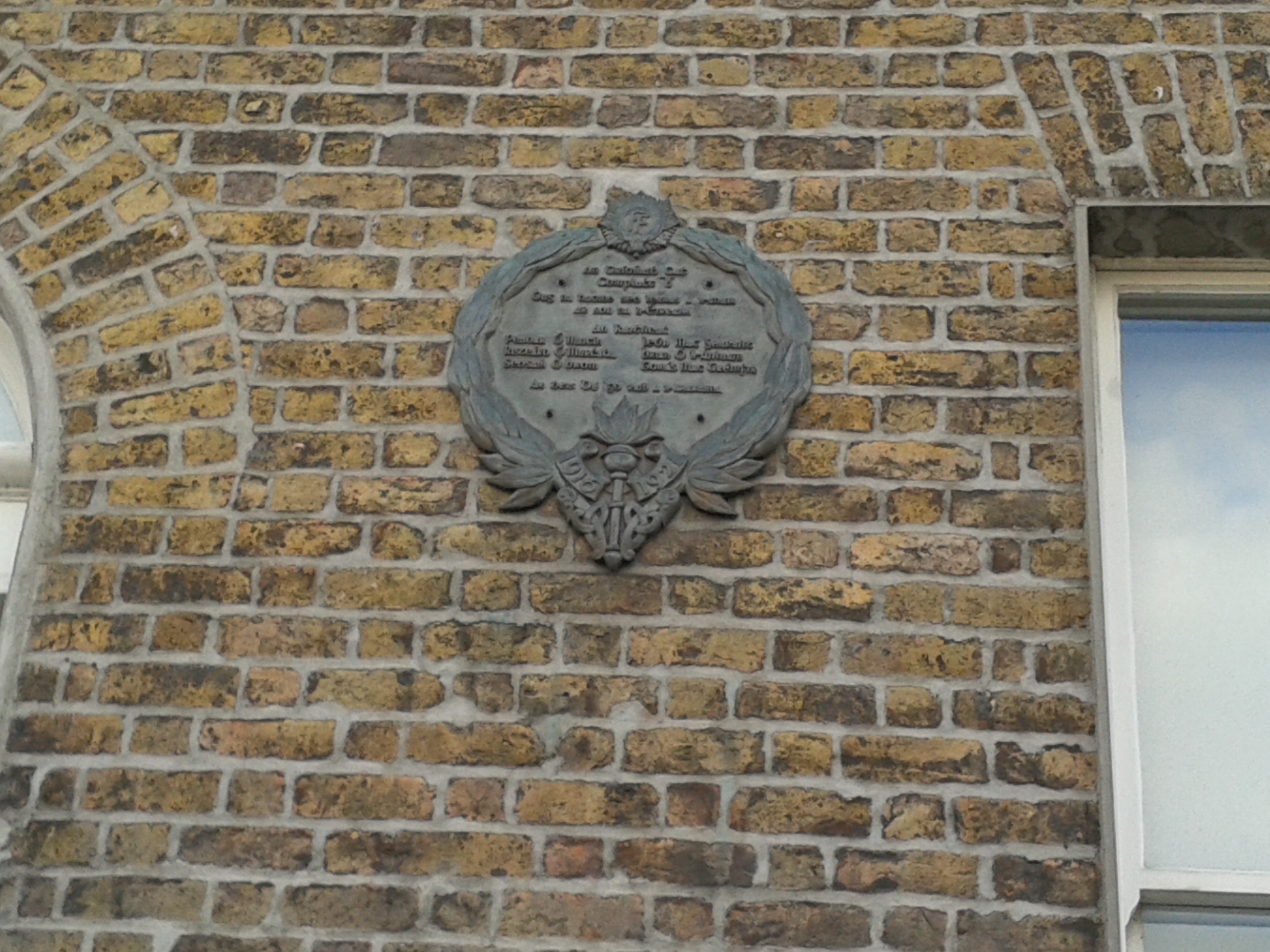
Location of the plaque on house near to Library in Pearse St. (formerly Gt. Brunswick St.) commemorating the fight. The plaque is in the 3 o’clock position on the photo. (photo D.Breatnach this year)

In five minutes of intense gunfire, seven people were mortally wounded; two IRA Volunteers, two Auxiliaries and three civilians.

Two IRA men were captured as they fled the scene, one, Thomas Traynor a 40 year-old veteran of the Easter Rising, was carrying an automatic pistol but claimed to have had no part in the ambush itself. He had, he maintained, simply been asked to bring in the weapon to 144 Great Brunswick Street. The other was Joseph Donnelly a youth of just 17.

As most of the IRA fighters got away through houses, over walls and into backstreets, the Auxiliaries ransacked St Andrew’s Catholic Hall at number 144, but found little of value. Regular British Army troops quickly arrived from nearby Beggars Bush barracks and cordoned off the area, but no further arrests were made. Desultory sniping carried on in the city for several hours into the night.

The plaque closer.
(Photo sourced Internet)

Footnotes

1The title is our own, i.e of Rebel Breeze blog