Translated by R. Breeze from Spanish-language post in Bultza, Basque Marxist-Leninist Telegram channel, 2 March 2026
(Reading time:4 mins.)
The armed resistance of the Palestinian people—the vast majority of whom are Muslim—has stirred up a kind of “neither-nor” sentiment. The “progressive” left refuses to take sides.
They labelled the acts of armed resistance on October 7, 2023, as terrorism and equated them with the genocidal policies of the State of Israel. Was terrorism that which the Jews of the Warsaw Ghetto waged in their guerrilla operations against the Nazi occupation army?
This is not the first time we have heard the hackneyed rhetoric against the Muslim religion. A discourse cloaked in a “progressive” mantle, where they speak of human rights, freedoms, women’s rights, and so on.
Some even compare it to the Franco regime in a display of “intellectualism.” A comparison that cannot withstand the slightest scrutiny of logic. Did the Franco regime confront the greatest empire on the planet? Quite the contrary.
The fact that Francoism and its entire cultural and political apparatus existed was thanks, among other things, to the largest empire in the world today: the United States.
Trump has spoken, on several occasions, about how the Iranian government oppresses its people through Islam, that “the regime of the ayatollahs” must be overthrown, etc. This discourse has also been echoed by several European leaders, including the “progressive” Pedro Sánchez.
A few weeks ago, we heard Gabriel Rufián1—the future leader of the “re-establishment of the Left”—saying that the burka and the hijab should be banned. But there is one aspect they all have in common: they all say this from NATO countries.
Countries that exploit the wealth of every continent, including Muslim countries where religion is not conceived in the same way as it is in imperialist countries. Yet, they say absolutely nothing about the Atlanticist organization. They do not question its crimes.
In addition to discrimination based on religion, there are two more forms: discrimination based on belonging to a culture different from Western culture (imperialism and colonization) and class discrimination.
The “progressive” Left only mobilises when the oppressed are portrayed as victims, not when they gain strength and resist the assaults. In other words, if you are massacred by the empire, they will offer you alms. If you resist, you become the target of their criticism.
We’ve already seen this with the constant denunciations of the Palestinian armed resistance, or the scant impact the resistance of the Shiite armed movement Hezbollah, which has repeatedly halted Israeli Zionism, has had on the Spanish population.
We’ve also seen it when the Shiite movement Ansar Allah fired rockets at the US Sixth Fleet, cutting off the Red Sea and Israeli communications.
In other words, the “progressive” left supports you if you die, not when you fight.
It’s the practical application of putting money into the coffers of the missions. If you’re a sovereign country seeking liberation from imperialist yokes and you fight with all your might, you’re labelled a terrorist and an oppressor.
And the media plays a significant role in this, the same media on which progressives occasionally complain of not being given as much airtime as before.
In the words of the African American leader Malcolm X: Beware of the media; they will make you hate the oppressed and love the oppressor.
In the world of social media, we easily lose our memory. Therefore, it’s necessary to remember that the Algerian separatists of the National Liberation Front were Marxist-Leninists. And this didn’t prevent them from also being Muslim.
The People’s Republic of North Yemen—Muslim—along with the People’s Democratic Republic of Algeria, supported the anti-fascist armed movements in the Spanish state.
In other words, Islam and anti-imperialist (and anti-fascist) resistance are concepts that have gone hand in hand on numerous occasions.
The USSR itself not only maintained but also promoted madrasas, or Islamic schools, in Muslim-majority territories. Was the USSR—the world’s first secular state—the same as Francoist Spain? But perhaps this doesn’t mean much to the progressive, or the purist of the moment.
In the 1960s, there emerged in Latin America a concept called Liberation Theology. This movement led to the creation of armed groups of Catholic origin whose demands included socialism and social justice.
Movements like the Montoneros in Argentina and the Colombian National Liberation Army (ELN) emerged from this context. It is important to remember Father Carlos Mugica, the priest and guerrilla leader.
These armed movements caused considerable headaches for Washington’s Operation Condor and all the dictatorships imposed by the School of the Americas—dictatorships that, incidentally, sympathised with and admired Francoism.
Were these guerrilla priests the same as their enemies in the White House and their puppets?
These movements resonated in Spain. This theory spread throughout the Basque Country and the working-class neighbourhoods of major cities like Madrid and Barcelona, as well as regions like Andalusia.
The parishes of Vallecas, Carabanchel, Moratalazo, and Vicálvaro2 became meeting places for numerous anti-Francoist movements and groups, where these same worker-priests were active.
A very recent example is that of Father Diamantino García: one of the founders of the Andalusian Rural Workers’ Union (predecessor of the Andalusian Workers’ Union). Were these worker-priests the same as Francoism?
Fr. Diamentino Garcia Acosta (1943-1995) addressing a worker’s rally.
Let’s remove once and for all the veil that prevents us from seeing the reality of Third World countries. Who are we to tell oppressed countries what to do? Isn’t that just another form of imperialism? Do we fight in the same way they do?
We cannot view the processes of decolonization and liberation of those who are fighting with all their might against the West and its empire through Western eyes.
To paraphrase our Asturian comrades from La Clase Trabayadora:3 we must put an end to the left wing of imperialism and all that it entails. Even in the cultural sphere.
End.
FOOTNOTES
1MP and spokesperson of the Ezquerra Republicana de Catalunya (Catalan Republican Left) in the Spanish Congress, also active in left-social democratic coalition Súmate and the grassroots National Assembly of Catalunya. (R.Breeze)
2Particularly working-class areas of Madrid (R.Breeze)
3Anti-NATO and anti-rearming organisation based in Asturies. (R.Breeze)
In the Basque Country the Day of the Patriot Soldier is commemorated on two different dates: by the Basque Nationalist Party on October 28th and by the Patriotic Left on September 27th. Each date marks different events but each is anti-fascist in character.
On October 28th one of the many atrocities of the Spanish Civil War/ Anti-Fascist War was enacted by the Spanish fascist military when they executed 42 captured Basque soldiers of the Eusko Gudarastea, a Basque antifascist militia opposing the military-fascist coup of Franco and another three generals.
Section of the crowd at the Gudari Eguna commemoration in Arrigorriaga, Bizkaia province, southern Basque Country. (Photo: D.Breatnach)
This atrocity occurred in 1937, when that war had another two years to run. The Basque Nationalist Party (PNV) was then the main political party in that part of the Basque Country1 and many of its politicians and administrative officials were executed by the Franco regime too.
Commemoration of the PNV´s Day of the Patriotic Soldier (Gudari Eguna) was carried out clandestinely during the four decades of the fascist Franco regime but was permitted in the post-Franco arrangement in the Spanish State, when the PNV were legalised.
The PNV became the dominant force politically in the two provinces that had declared for the Spanish Republic, which was the largest part of the Basque Autonomous Region. Nafarroa however was given a separate autonomous government which split the nation administratively in at least four.2
A DIFFERENT DATE TO COMMEMORATE
However in the 1960s a large part of the PNV´s youth wing had become disenchanted with the party and, entering into alliance with a Basque socialist movement, formed ETA, a mainly political organisation but, existing under a fascist-military regime, inclined also towards armed resistance.
The platform at the Gudari Eguna commemoration organised by Jarki with the event’s speaker/ chairperson addressing the participants. (Photo: D.Breatnach)
ETA grew in support and in actions, military but not only, the Left Patriotic movement (Izquierda Abertzale) widening to fight on a number of fronts, linguistic, social, trade unionist and political with the armed section carrying out many actions.
The last political executions of the Franco regime were in 1975 of two members of ETA and three of FRAP3; the two Basques were Juan “Txiki” Paredes4 and Angel Otaegui. All five, despite huge international solidarity mobilisations and appeals for clemency, were shot by firing squads.
Today, the Patriotic Left´s Gudari Eguna is commemorated by different groups and not all together. As has occurred in Ireland, the accommodation of the leadership of the Basque Patriotic Left to the Spanish electoral system and abandonment of armed struggle has resulted in fragmentation.
A protest in Arrigorriaga I passed by on my way to the Gudari Eguna commemoration. I did not stop to enquire as to the purpose; I had made an error on the journey, was late and in a hurry. From the arrows design I understand these to be the Sare group doing their last Friday of the month picket in solidarity with the prisoners. ‘Giltzak’ means ‘keys’ as the graphic banner design shows and so the aim is probably to have them all leave jail. That is also the aim of the ‘dissident’ group Amnestia but they seek complete amnesty for the political prisoners whereas Etxerat, Sare and EH Bildu normally refrain from even calling them ‘political prisoners’since, according to the Spanish State, that amounts to ‘supporting terrorism.’ (Photo: D.Breatnach)
The political party EH Bildu commemorated the executions but so did the dissenting Jarki and Tinko/Amnistia and the historical memory organisation, Ahaztuak. They did not do so together nor, naturally with the PNV on the different date.
In Arrigorriaga Jarki organised their event in the birthplace and home of Argala, nom-de-guerre of José Miguel Beñaran Ordeñana, a theoretician and activist of great importance in the development of ETA and assassinated by the state-sponsored GAL terrorists.
The attendance at the event listened to the event’s MC addressing them, after which a group of youth carrying flaming torches came on stage. The MC ended her talk with calls for a free and socialist Basque Country, after each which the audience chanted “Gora!” (‘Up!’).
She then led them in singing the Eusko Gudariak with clenched fist in the air, followed by introducing the Internationale in Basque, the revolutionary socialist song that emerged from the Paris Commune of 1871, the audience joining in (though not everyone as well-versed as with the previous song).
I sang the chorus in French, the only language other than English in which I know the chorus, sadly.
HISTORICAL MEMORY & THE MARTYRS
The martyrs of the people´s struggles around the world are remembered organically and kept close to their hearts by the people from which they came, at least for a few generations. Initiatives of conserving and transmitting historical memory keep those commemorations going further.
Section of the crowd at the commemoration of Gudari Eguna, organised by the Jarki organisation. (Photo: D.Breatnach)
In Ireland we know that commemorating the risings of the United Irishmen (1798 and 1803) fed into the struggles of the Young Irelanders a half-century later, their memory in turn contributing to the Fenians which again became part of the history of future generations and of several armed struggles.
Counter-movements, recognising the potency of historical memory, try to appropriate it and adapt it to their political program or to diminish its importance and even deny it. Both those counter-currents can be seen in many parts of the world, including in Ireland and in the Basque Country
However, the ongoing revolutionary streams and their commemorations will always be closest to the real meaning of those events in the historical memory of the people, in the real social and political meaning of martyrdom.
Patrick Pearse remarked on this process in his famous oration over the grave of O´Donovan Rosa: Life springs from death and from the graves of patriot men and women spring living nations.
Footnotes:
1The Basque Country is composed of seven provinces, four on the Spanish state´s side of its northern border and three on the French state´s side. The Anti-Fascist War split the southern Basque Country with principally two provinces, Gipuzkoa and Bizkaia, taking the side of the Spanish Republic, which at the last minute granted them national autonomy. Nafarroa (Navarre) mostly took the fascist-military side and murdered around 3,000 antifascists and Alava province took that side too.
2Two separate autonomous regions in the Spanish state and the provinces on the French side in different French regional administrative areas.
3Frente Revolucionario Antifascista y Patriota (Revolutionary Anti-Fascist & Patriotic Front); the three were: José Luis Sánchez-Bravo Sollas, José Humberto Baena Alonso and Ramón García Sanz.
4According to his brother who, despite being misdirected arrived as Paredes was being shot by the Guardia Civil, who were shooting at different parts of his body, Txiki Paredes continued to sing Eusko Gudariak (‘Soldiers of the Basque Country’) until he finally died.
Basque actress Clara Galle, criticised for not wearing a bra under her t-shirt at Basque team Osasuna’s football ground, kicks the ball back to score. “You have learned nothing,” she adds.
From Publico.es 09/26/2023Translation by D.Breatnach (Reading time:2 mins.)
The Navarrese actress Clara Galle went to Osasuna’s stadium, El Sadar, last weekend. As a famous fan of theirs, the club decided to honour her with a reception before the match against Sevilla. Luis Sabalza, president of Club Atlético Osasuna, gave her a t-shirt with her name on the back.
Actress Clara Galle photographed while watching her team play Sevilla at El Sadar, Osasuna’s stadium.
The visit was eagerly showcased on the official accounts of X and the club’s Instagram. However, as is often the case, the photos in which the outlines of her nipples were visible due to the absence of a bra triggered a multitude of sexist comments.
The actress, far from remaining silent, decided to respond forcefully with a comment on Instagram: “I’ve been going to El Sadar to see my team since I was a little girl … Given the comments I’ve read, I feel that I have to react.
“When I was getting dressed before arriving at the field, it didn’t occur to me that my nipples were to be such a topic of conversation,” she said. “If you notice them, it’s because I have them. I have never seen this kind of hullabaloo when any player from any team takes off his shirt on the field,” she added.
Osasuna’s president presents actress Clara Galle with a club t-shirt with her name on the back.
“I have a clear conscience, I’m not doing anything wrong by not wearing a bra.
“It doesn’t bother me that they say that I was wearing the two points that they didn’t win, it bothers me that my breasts are the only topic, among so many more interesting ones in existence, that many choose to talk about”, she declared.
Gale ended with an urgent reminder after the controversy over Luis Rubiales’ kiss of Jenni Hermoso: “It seems that we have learned nothing in recent weeks,” the actress concluded.
COMMENT
Sexism and adolescent behaviour by male adults is oppressive to women and at least tiresome to everyone else. It is an unfortunate feature of many – perhaps all – countries but the Spanish state seems to have a particularly high share of it.
Oscar DíazTranslation from Castilian Spanish by D.Breatnach (Reading time main piece: 10 mins.)
1. What is Herri Ekimena?
Herri Ekimena is an initiative that emerged in March 2022. A series of organizations began to get together due to concern about the offensive of Atlanticist imperialism in Ukraine, in addition to the blatant manipulation of the media to get us to support their war strategy.
We also observed that, in a context of capitalist crisis and with the excuse of the war against Russia, economic measures were being imposed that resulted in greater impoverishment of the working class.
That is why we took to the streets at that time with the slogan “NATO and the EU condemn us to war and misery”, to turn the official discourse around a little and point to these two organizations as the main ones responsible for the increase in international tensions, as well as for the oppression of the working classes of the imperialist bloc itself.
Also in the month of June of that 2022 we called a demonstration in Bilbo, “against the imperialism of NATO and the EU” and calling for the end of the Russophobia that is still being promoted.
In parallel to the NATO summit that was held in Madrid, we also carried out a 48-hour poster campaign in Gernika, a city with great anti-fascist symbolism that the Ukrainian Nazis tried to appropriate, citing it in a speech before the Spanish Parliament by Zelensky himself.
After a short break, we resumed the fight in the streets at the end of the year, with the “Free Euskal Herria out of NATO and the EU” campaign. In March we held a massive demonstration in Bilbo, together with Askapena1 and the Bardenas Ya2 collective.
View of demonstration against NATO and war in Bilbao, June 2022. (Photo source: Bultza Herri Ekimena)
This demonstration was exciting to us as we saw that the work that had been done was already bearing fruit and that the anti-imperialist spirit that has historically characterized Euskal Herria was projected in the streets.
We are currently in a restructuring process in order to be more effective, and give new impetus to the anti-imperialist struggle in the streets, which is where this game is truly played.
2. Why combine anti-fascist and anti-imperialist slogans?
The imperialist offensive, which has to do with the systemic crisis of capitalism and the rise of new economic powers, is being accompanied by a general reduction of rights and freedoms.
Those in power fear popular revolts, like those that have been taking place in the French State in recent months.
In Euskal Herria we know well what emergency laws or illegal practices are employed to put an end to dissent, but these types of measures are spreading and becoming normalized throughout Europe. Concentration camps for migrants, deportations without any type of legal guarantee, electronic anklet tags are also normalized…
And also in the case of the countries bordering Russia, imperialism is responsible for waving old supremacist and anti-Slavic flags, such as is happening in Ukraine or Poland.
We see therefore that capitalism, in its most decadent phase, has little scruple when it comes to reactivating liberticidal policies or inciting openly Nazi military and paramilitary shock forces.
So in effect, we believe that the anti-imperialist struggle and the anti-fascist struggle are inseparable parts of the same struggle for our rights and freedoms.
3. A few years ago one could see Donbass flags in the stands of Atlethic3. Why mix football and politics?
Through various institutions, including football clubs, they want to force down our throats the supposed “depoliticization of public spaces.” It is false, because they are the first to try to control absolutely all areas of our lives that we may become submissive and uncritical people.
The media bombardment is constant, generating false debates among humble people about insecurity, occupying empty properties… They thus try to legitimize, by action or omission, measures of social control and police repression that are very, very worrying.
So when someone puts a poster on the street to denounce any injustice, or puts up a banner, or paints graffiti… They are calling into question that false normality that they want to impose on us.
Banner displayed by Athletic Bilbao FC fans during a match. The text is difficult to see in its entirety but in general it is clearly in solidarity with the Donbas region against attack from the Kiev administration.
It is sad — but this situation also reflects the weakness of the system in terms of political legitimacy. Who explicitly supports them? Who is not fed up with everything that is happening? So they are afraid of the flame that starts a prairie fire.
Sports venues do not escape this logic of imposing false normality, even if the laws have to be twisted or passed directly through the triumphal arch.
A Donetsk flag, for example, ruins their photo and calls into question the story that people agree with what they do. So they impose fines of €3,000 just for displaying the flag of a People’s Republic.
Let’s hope that in not many years we will be able to analyze all this as the blows of a dying regime, but for now it is up to us to organize the response and popular solidarity. Repression should not be normalized, nor should people who step forward feel alone.
We do not believe that the social base of EH Bildu is in favor of NATO. That is, if we asked EH Bildu voters if they were in favor of NATO, surely 99% would say no. The problem is that, for its leaders, opposing Atlanticist imperialism is not currently on the list of priorities.
Regarding the issue of the war in Ukraine, Arnaldo Otegi5 has openly positioned himself in favor of Ukrainian “sovereignty” and against the Russian “occupation.” Is Ukraine now a sovereign state? Or is it rather a puppet of NATO in its offensive against Russia?
Doesn’t Russia have the right to defend itself from NATO attacks? What about the thousands of people killed in Donbass since 2014? Should Russia have been obliged to watch this genocide impassively?
Have the self-determination processes in Donetsk, in Lugansk, in Crimea … not been practical exercises of sovereignty? In this context, we can say that the speech of some EH Bildu leaders has favored and continues to favor the interests of NATO.
Their support for the State Budget deserves special mention, which includes a 25% increase in military spending. A measure imposed precisely by NATO to approach 2% of GDP in 2029, which is truly outrageous.
So… perhaps it is harsh to say that EH Bildu is in favor of NATO so let us put it another way: What is EH Bildu doing to make Euskal Herria break with NATO? What teaching are they carrying out among their social base and at a public level to create a truly anti-imperialist consciousness?
Very little or nothing, we believe, that is the reality.
5. Will it be possible to continue to see reliable information about Ukraine in the Basque Country and the Spanish state now that military juntas have been formed in African countries that have expelled French embassies? They are very different countries and thousands of kilometers away…
The events that are taking place in the SAHEL area are complex processes, and surely have many sides that make it difficult for us to equate them with the decolonization processes that we have known historically.
But we would be committing a mistake if, due to these supposed “imperfections” with respect to the theoretical manual, we stopped supporting countries that are fighting for nothing less than to expel their occupiers (since those are true occupiers who try to impose themselves by force of weapons thousands of kilometers from their borders) and also to gain control of their enormous natural resources.
How can it be that in extraordinarily rich countries, like Niger or Gabon, the majority of the population survives in absolute poverty? We will have to carefully observe all these processes, but in anti-imperialist Euskal Herria we can only rejoice and tell them that they are not alone.
In this land that, to a degree, also knows what it is to fight against armed occupiers and various collaborators, we know very well that solidarity is the love between people.
Regarding the quality of the information that we are able to receive in Euskal Herria or in the Spanish state, we believe that right now it is below minimum.
It is pathetic to see how, every time an event occurs that could undermine the hegemony of Atlantic imperialism, the mainstream media wait to receive instructions before even reporting the event.
The control of capital over the big media is a reality, so we must promote and support alternative means of information and communication. And also to fight openly in the streets, so that they have no choice but to report our demands.
6. Couldn’t the creation of a multipolar world be dangerous on a war level?
Yes, in fact it already is. We had been talking for years about the end of Yankee hegemony and the economic rise of countries like Brazil, Russia, India, China and South Africa, the so-called BRICS.
Perhaps we thought that this change of orientation of world hegemony was going to be a calm process, without any surprises…
But nothing could be further from the truth. While it is true that Yankee imperialism is mortally injured (which we believe it is), the truth is that it seems willing to kill as it dies.
Currently it has restructured NATO in a few months, has de facto absorbed the European Union and is reconfiguring its alliance policy on a global scale. It is increasingly easier to identify “which side” the different states are on, which can be the prelude to a conflict on a planetary scale.
We have been able to verify this recently with Morocco. NATO and the EU buy Morocco and abandon the Sahara to its fate.6 What should the Sahrawis do if Algeria, Russia or China offer them help to win their rights and survive as a people?
Of course there may be geopolitical interests in this aid from emerging powers, but it is necessary to analyze whether the agreements, commercial exchanges, donations and aid are produced with mutual respect for sovereignty and benefit the currently oppressed nations.
Of course, from a revolutionary point of view we have to be exacting, and not give a blank cheque to these emerging powers.
In this entire process of multipolarity, whether we like it or not, which is already making its mark upon world geopolitics, there is a class struggle that we must not ignore.
But this critical stance cannot lead us to fall into ninism and evade our own historical responsibility: to combat Atlanticist imperialism from the very heart of the beast.
7. You say “Euskal Herria free from NATO.” And what about the rest of the Spanish state?
We say Euskal Herria should be free outside NATO, but also outside the EU. We believe that this contribution is important, since for many years consideration of leaving the EU has been a kind of taboo, also in Euskal Herria.
Some thought that the EU might even support a possible independence process in Euskal Herria, just as was thought in Catalonia.
“A Free Basque Country out of NATO and the EU”.
But the EU has definitively been revealed as a capitalist lobby, as an instrument at the service of elites with a more than dubious past, even with regard to their support for Nazism.
Úrsula von der Leyen, Josep Borrell… are faithful representatives of the EU of Capital, authoritarian and totally committed to the interests of the US. That is why we say that neither the nation nor as a class have a future within the EU.
We make this statement from Euskal Herria, which is our area of struggle. But of course it extends to the entire Spanish State, as well as to the French State and all the peoples of Europe.
A future in freedom is not possible belonging to these criminal organizations, neither in Euskal Herria nor anywhere else.
8. What do you think of the military administration by Margarita Robles of the PSOE/UP government?7
Margarita Robles is a pit bull of Spanish politics, a woman who knows perfectly the ins and outs of the State from the offices to the sewers. Not for nothing has she been in positions of power for more than 30 years, originally in the shadow of Belloch, later of Rubalcaba…
At first it may have been surprising to see her at the head of a Ministry like the Defense Ministry, she who comes from the judiciary and who, even in relation to the conflict between Euskal Herria and the Spanish State, had adopted a dialogue profile at certain times.
We are missing a lot of information (I wish that we in Herri Ekimena knew what was going on in the Ministry of Defense, haha), but Margarita Robles is probably dedicating herself to doing in the Spanish military what she also did in her day in the Ministry of Justice and Interior.
That was to send the most archaic elements to the refrigerator in a non-traumatic way to perfectly adapt to the current standards and guidelines of NATO and the EU. Change a minimum so that everything remains absolutely the same.
Can anyone imagine Spanish generals standing up for Spanish national sovereignty in the face of Atlanticist imposition? This could happen in the French State, in fact it would not be unreasonable for something like this to happen.
In the Spanish State it is much more unlikely, but it is the responsibility of politicians like Mrs. Robles that nothing should deviate from the script written by Washington and Brussels.
In this regard, it is worth highlighting the role of the PSOE in what has been the process of integration of the Spanish State into imperialist structures. In addition to Felipe González, we could mention Javier Solana (who became Secretary General of NATO), Josep Borrell8…
Whether it is a matter of affinity, or a matter of pragmatism, the truth is that it appears that the PSOE generates a lot more trust among the imperialist powers than any other political party at the level of the State.
9. There were elections this past July 23, 2023. Did any of the political forces propose the departure of NATO from the Spanish state?
We are not aware that this was the case. As we have said before, this government is responsible for the largest increase in military spending in history, and faithfully complies with NATO and EU mandates.
“No to NATO – Out of Bardenas!”
Vice President Yolanda Díaz has publicly supported sending weapons to Ukraine and, as far as we know, no party that supports the government has opposed these shipments as a matter of principle.
We remember that these are weapons that are being used by Nazi soldiers to bomb and murder, not alone Russian soldiers but also the civilian population of Donbass. So we have to organize and fight in the streets, because if we don’t, things will remain exactly the same or worse.
This is the reason for existence of Herri Ekimena, to activate the popular struggle against the imperialism of NATO and the EU. We are working at it and, if all goes well, there will be good news in this regard in the coming weeks.
1Askapena was the internationalist solidarity arm of the broad Basque national liberation organisation but split from it many years ago in concern at the deviation from the path of resistance by the leadership under Arnaldo Otegi.
2Bardenas Ya is an organisation campaiging against the military installation in Bardenas, Nafarroa (Navarre).
3Athletic Bilbao FC, whose fans and many of its players have a strong anti-fascist and pro-Basque independence tradition.
4EH Bildu is the political party of the current compliant ‘official’ leadership of the Basque national movement, replacing the Herri Batasuna of the past.
5Leader of EH Bildu who has led the party into what many consider its collaborationist current stance.
6Western Sahara was a Spanish colonial possession and it abandoned it without decolonisation, which allowed Morocco and Mauritania to invade and occupy it against the wishes of the Saharawi people. As a result of the national liberation struggle of the Polisario Front, Mauritania withdrew but Morocco remained in occupation and carrying out repression against the resistance. Shortly before Trump’s departure from the USA’s presidency, he agreed to endorse Moroccan defiance of the UN-recognised Sahawarwi resistance to occupation in exchange for Morocco reversing its long anti-Zionist policy and formally recognising the Zionist occupation of Palestine, which the Moroccan Kingdom has done.
7The recent coalition Government of the Spanish State, the social-democratic PSOE with the Left-social democratic alliance of Unidas Podemos. Currently, the PSOE is endeavouring to form a government in coalition with a somewhat reconfigured Left-social democratic coalition called Sumar.
8All three have been PSOE politicians, Felipe González a prime minister and widely believed head of the GAL anti-Basque terrorist gang. Borrell was President of the European Parliament (2004-2007) and Minister of Foreign Affairs of the Spanish Government from 2018 to 2019. He attacked Catalan self-determination which he characterised as part of a disease, despite his own Catalan origin and he is now the Foreign Minister of the European Union.
Diarmuid Breatnach (Reading time main text: 11 mins.)
LANGUAGE IS A TREASURE CHEST – 2
I observed in Language Is a Treasure Chest 1 that while language is full of wonders, it has some horrors in it too. And I found that to be true again.
I was reading a novel in which the word “Cimarron” appeared and, doing some quick research on the word, I came across a 2004 query in an email website or page called Word Wizard:
What is the etymology of the word cimarron? I’ve always been told that it means “runaway slave” in Mexican Spanish. Can anyone verify this?
The reply is dated the same day:
From Greek. It refers to people who live in perpetual mist and darkness, akin to the ‘land of the dead’. Latin ‘Cimmerius’, Greek ‘Kimmerios’, Assyrian ‘Gimirri’ even the bible ‘Gomer’ Gen.10:2 and Esk. 38:6.
In Western United States it refers to a stretch of land that gets rainfall when other near by areas are desert year round.
Apart from the topographical reference, I thought the expert’s explanation highly dubious. And in fact I happen to know something about the Spanish-language origins of the word.
The searcher replied:
Thanks, Jim. I just wonder what connection this word has to Hispanics of Mexican origin because it shows up in their surnames (although not as common as Lopez or Vargas or Garcia).
Is it just Mexican in origin or did that also come from Spain? So the “runaway slave” theory has no foundation then?
The expert’s reply did come back with a Spanish-language connection and he may be on to something with the topography, though I think he has it the wrong way around (as we shall see).
The “runaway slave” theory is not so obsolete. Mexico did not have slaves (outlawed in 1810) but American slaves who fled to Mexico had to pass through lands with water, or else parish (sic).
When relating their tales of woe to the locals the word ‘cimmaron’ arose to describe their flight through the South West desert.
Very curiously, there was no further contribution to the discussion. I tried to leave one of my own but was required to register, which I did (though wondering if worth the trouble) and never received confirmation1.
“A view of the Cimarron National Grassland, the largest piece of public land in Kansas, a 108,175-acre property in the southwestern part of the state. It was recovered from the Dustbowl ecological devastation by soil recovery and management practices.” (Photo source: The Armchair Explorer – Kansas)
THE FOLK MEMORY WAS TRUE
Continuing with a little light online research I found that the Castilian-language (Spanish) origin is the explanation most often given, with rarely a reference to Greek or other classical or archaic languages. For example, in yourdictionary.com:
American Spanish cimarrón, wild, unruly (from Old Spanish cimarra, thicket): probably origin, originally referring to the wild sheep (bighorn) found along its banks.
(Latin America, of animals) feral (having returned to the wild)
Synonyms: alzado, bagual, feral
(Latin America, of people) rural; campestral
(Latin America, of plants) of a wild cultivar.
But …. what about the “runaway slaves”? Under the title Cimarron People, Wikipedia has this to say: The Cimarrons in Panama were enslaved Africans who had escaped from their Spanish masters and lived together as outlaws.
In the 1570s, they allied with Francis Drake of England to defeat the Spanish conquest.
In Sir Francis Drake Revived (1572), Drake describes the Cimarrons as “a black people which about eighty years past fled from the Spaniards their masters, by reason of their cruelty, and are since grown to a nation, under two kings of their own.
The one inhabiteth to the west, the other to the east of the way from Nombre de Dios”. (location in Panama — DB)
We may indulge ourselves in a sardonic smile at commissioned pirate Francis Drake talking about the cruelty of others, or about slave-owning by a country other than England in 1570.
But we remember also that at the time Spain was the main competitor with England in the rush to plunder the Americas – and had got there well before them.2 Both colonial powers were already plundering Africa for raw materials and slaves.
The meanings of animals having gone “feral” or “returned to the wild” would easily have been applied by the society of the time to escaped African slaves.
A European society which, despite evidence to the contrary including agriculture in Africa, would have considered indigenous inhabitants of Africa as people living in the “wild”. Once escaped and no longer under European control, they would be seen as “returning to the wild”.
So what happened to the Cimarron People? Their settlements were subject to punitive raids by the Spanish, killing people and burning crops, so that in the end they came to a treaty with their old enemy.
The Wikipedia entry says no more except that the “Cimarrons” and the English quarrelled (not surprising, given that they were of no further use to the latter).
I believe some of their settlements in Florida were raided and burned by US “pioneers” and soldiers, the remainder becoming part of the Seminoles, a native American tribe that resisted the USA in the longest and most costly of the USA’s wars against the indigenous people.
The Seminole had many tribe members of part-African origin in their midst.
And here – a surprise: The word “Seminole” is derived from the Muscogee word simanó-li, which may itself be derived from the Spanish word cimarrón, meaning “runaway” or “wild one”!
So, in line with what that on-line searcher back in 2004 had heard, no doubt a folk belief, the word cimarronis, in Mexico (and in the USA), of Castillian (Spanish) language origin and is connected to escaped slaves of African origin.
Some of the sources for “cimarron” also give us “marron” or “marrón” which is also related to escaped slaves and, in English, became “Maroons”. These were escaped slaves inhabiting mountainous regions of Jamaica and elsewhere and became a great problem to English settlers.
The latter had taken the island from the Spanish but they failed totally to quell the Maroons, these emerging victorious in many military engagements.
In the Cockpits area of Jamaica, I have read, there is a place called Nanny Town, which is believed to be one of the settlements of the Maroons; their chief was said to be a woman called “Granny Nanny”3, whether because of her former slave occupation or for other reason4.
In the end, like the Spanish with the Cimarron People, the English had to treat with them. Sadly the treaty required the Maroons to return newly-escaped slaves, which they did and for which they received payment.
Maroons in treaty with the British, shown here in a reversal of the actual power relations in the “Pacification with Maroons on the Island of Jamaica”, by Agostino Runias (1728-96). (Source image: Internet)
However if instead of being a voluntary escapee to go to a wild place, you were forced by people or circumstance, well then, like Alexander Selkirk’s “Crusoe”, you’d be “marooned”!
Well then, what about the “cimarron strips” in the southwest of the USA? Could the word refer to strips of land “gone wild”? Or could the expert replying to the question in 2004 have been on to something?
If the slaves escaping through the desert from the USA to Mexico did indeed make their way through strips of watered land (not just for the water, as the expert speculates but for vegetation to conceal them), then there is a connection between escaped slaves and these strips of land.
But not as the expert sees it, rather the other way around: since the escaped slaves, the “cimarrones” were travelling the strips, they would be called by those who knew about it (escapee hunters, escapee helpers and just observers), “cimarron strips”.
Or in other words, “those strips through which the runaway slaves travel.”
2. CHRISTIAN ETHNIC PREJUDICE
However, if the word comes from Castilian (Spanish) what were the origins of the word in that language?
Perhaps a year before this word-quest, I was reading a book that described the Spanish State as having been characterised, contrary to many other European states, by mass expulsions and exiles on a number of occasions throughout its history5.
First on the list of expulsions was the well-known example of the Moors and the Jews.
Those who were not slaughtered by the forces of the “Christian Monarchs” of Ferdinand and Isabella in the “reconquest” were obliged to convert to Christianity or to leave “with only the clothes on their backs”. This also occurred in Portugal.
Those Jews who left were the Sephardim or Sephardic Jews, who spoke Ladino, an archaic kind of Iberian Romance6 language with Aramaic and Hebrew words, along with the Moors, who spoke an Iberian-Arabic mixture or Arabic.
The key of their houses or gates have been handed down to this day in families of both groups.7
Many converted, often referred to by Christians as “conversos” (Jews) or “moriscos” (Muslims) but were constantly under suspicion of reverting to their old religion even with the threat and constant trials and torture of the Spanish Inquisition.
According to what I have read the latter too were sometimes called “marronos”, i.e in the eyes of the Spanish Christian ruling class, those who had been “domesticated” (Christianised) but had “returned to the their wild way” (Moslem), i.e “gone feral”.
Forcedconversionsthat had to appear genuine: “The Moorish Proselytes of Archbishop Ximenes”, Granada, 1500 by Edwin Long (1829–1891). (Image source: Internet)
Wikipedia on Marrones in Iberia confirms: The (Spanish) Inquisition was aimed mostly at Jews and Muslims who had overtly converted to Christianity but were thought to be practicing their faiths secretly. They were respectively called marranos and moriscos.
However, in 1567 King Phillip II directed Moriscos to give up their Arabic names and traditional dress, and prohibited the use of Arabic. In reaction, there was a Morisco uprising in the Alpujarras from 1568 to 1571. In the years from 1609 to 1614, the government expelled Moriscos.
3. THE BUSH FROM THE NUT?
And is “ci” or “cy” in “cimarron” then merely a prefix? The word “marrón” exists as a colour in Castilian and a number of Romance languages and came into English as the colour “maroon”.
Its development is taken as originating from the colour of the large ripe edible chestnut, rather than given to it later. Of course there are a number of words for colours or tints which have a botanical origin, “orange” being an obvious one.
Castanea Silva, the edible or Sweet Chestnut in Mallora. (Image source: Internet)
Alright, then the nut and tree might have been associated with uncultivated or “wild” areas, similar to those to which the “cimarrons” would escape.
But where did the “ci” suffix come from? Somewhere in the midst of what I have been researching I came across an explanation, derived from Latin, meaning “towering”, “high” etc. But can I find it now? No.
The online sources are telling me that the relevant pages are up for deletion and I can join the discussion. No thanks, I do not have anything like sufficient knowledge to enter a debate on that, nor the patience of an academic to research it thoroughly.
But “high” and “wild” could easily correspond, given that valleys and plains lend themselves more easily to cultivation, as a rule, than mountainy areas, which might remain wooded or with with thick undergrowth.
And that might also give us the “bush” or “thicket” referred to in a number of references for “cimarron”, which in turn might describe the “cimarron strips”. In parts of Latin America such as Chile (and for all I know, in all of them), a “cimarra” is also a thicket or densely-grown area.
The article in the Language Journal (see reference) comments that the “arra” cannot be a Romance language word-ending.
But even if true it seems to me that the author (or authors) quoted might be unaware that among those from Iberia who colonised or settled in the Americas, Romance language speakers were not alone. There were also Basques who spoke Euskera/ Euskara.
And for evidence, they applied a number of toponyms and left family names from the Basque Country (Basque descendants make up to 10% of the population of some Latin American countries). And “-arra” would be a common enough suffix or word-ending in Euskera.8
Opening title for the weekly TV Western series ‘Cimarron Strip’, starring Stuart Whitman, Judy Gleeson, Percy Herbert and Randy Boone. Though popular, only a years’ worth of episodes were screened. (Image source: Internet)
OKLAHOMA PANHANDLE AND THE CIMARRON STRIP
In the 19th Century wars between the Mexican Republic, the USA and the Native Americans in the area, the area was carved up with less and less left to the Native Americans.
Prior to the American Civil War, white Texas wanted to join the Union as a slave state and due to a US federal law prohibiting slavery north of 36°30′ parallel north, white Texas surrendered a strip of land north of that latitude.
The settlement (temporary of course), left a strip as “Neutral Territory” (one can only imagine the temptation for African slaves in Texas to make for there). After the Civil War big cattle ranchers moved in, disregarding treaties and named the area the Cimarron Strip.
Map of Oklahoma territory and “Neutral Strip” before the American Civil War. (Image source: Wikipedia, Texas Panhandle)
But that was because the word ‘Cimarron’ was already in the area, from the “Cimarron Cutoff” leading to a crossing of the ‘Cimarron’ river.
And yes, there was a popular 1967-1968 TV series called “Cimarron Strip”, starring Stuart Whitman. But, though I have watched it, that is only faintly related to the story of the word that set me out on this quest.
End.
FOOTNOTES
1Which days later had still not arrived – perhaps the site is no longer in operation, which would explain the silence after those two posters.
2Columbus voyage to America 1641 and Spain’s first colonial settlement 1565 (now Florida); Mayflower expedition to America with English settlers 1587 (now Virginia). However, Europeans had founded settlements much earlier, as with the Norse in the 10th Century and very likely Irish monks in the 6th Century. But it was the English and Spanish who conquered most, the Dutch, French and Portuguese less. The descendants of the English settlers after gaining independence from England completed the seizure and colonisation of most of the North American continent, while English colonists remaining loyal to the English Crown seized land to form what is now Canada.
4All the folk tradition, albeit conflicting on some points, declares that she had not been a slave which leaves one to wonder how she might have reached Jamaica from Africa without having been enslaved.
5I borrowed the book from the public library and cannot remember its title at the moment. Interestingly it mentioned Ireland as having the only comparable history (though of course there the ‘expulsions’ were due to colonial occupation rather than actions of the indigenous state.
6“Romance languages” is a name given to the group of Indo-European languages including Castilian (Spanish), Catalan, Galician, Portuguese, Romanian, Italian and French. They are sometimes called “Latin-based” or “Latin Languages” but there is some dispute about the origins and developments of these languages.
7Ironically, the door or gate “key” is also a symbol of return for Palestinian refugees driven from their homes by Zionist massacres, threats and fear during the founding of the State of Israel.
8Among toponyms of North America’s southwest, Durango (Colorado and Mexico), Navarro and Zavala Counties (Texas) are perhaps the best known; while Aguirre, Arana, Bolívar (Bolibar), Cortazar (Kortazar), Duhalde, Echevarria (Etxebarria), García, Guevara (Gebarra), Ibarra, Larrazábal, Mendiata, Muzika, Ortiz, Salazar, Ugarte, Urribe and Zabala are but some among a host of family names of Basque origin from the American south-west in Latin America. And of course the country of Bolivia, from Simon Bolívar, a Basque surname from a Basque toponym.
Excerpt on-line from Language journal, Linguistic Society of America, Leo Spitzer, Vol. 14, No. 2 (Apr. – Jun., 1938), pp. 145-147: https://www.jstor.org/stable/408879?seq=1
Text from ONA FALCO@ONA_FALCO in Publico.es (translator D.Breatnach note: CUP = United People’s Candidature)
(Reading time: 4 mins.)
The head of the CUP-Alternativa candidate list for Barcelona, Basha Changue, declared this Saturday that, after “four years out of the City Council”, but “fighting from the streets”, they will return to the assembly on May 28.
They intend to “retake their place” and to “combat the lukewarm policies” developed, in her opinion, by the (regional Catalan) government of Colau.
Once inside, says Changue, anyone who seeks their support (trans. note: e.g for a coalition) will have to be in favour of “a Barcelona committed to national and linguistic rights”, for the “decrease in tourism” and the “radical defence of housing”.
“Gentlemen and Ladies Maragall, Trias, Colau and Collboni, there are no half measures: it is the capital or the neighboring ones”, she declared.
Her voice was heard by dozens of people in Barcelona’s Can Fabra square, in the Sant Andreu district, in the central act of the campaign for the municipal elections on the 28th.
Carles Riera, the Deputy in the Catalan Regional Parliament has indicated that “the only candidature for independence in the Catalan Countries is the CUP” and that “they will return to the Barcelona City Council to combat big capital and the bosses’ agenda”.
“Junts (trans. note: Puigdemont’s party) has renounced the independence movement in its program: it wants to go back to being Convergència i Unió” (Convergence and Unity,right-wing Catalan nationalist party preceding formation of Junts – trans. note) — Carles Riera.
Riera was combative, encouraging the public to mobilize for a “vote to confront the State, the vote that does them the most damage.”
He also accused the parties Junts per Catalunya and ERC, “which are the construction force”, those behind the “macro-projects that carve up the territory” – citing the Winter Olympic Games, the Quart Cinturó, the expansion of the airport and the tourist complex of the Hard Rock.
04/2023 – The leader of the CUP for Barcelona, Basha Changue.
Basha Changue: “Barcelona is designed to be projected as set for Instagram, not for those who live in it.”
She added that they already understood “why Junts has renounced the independence movement in its program: it wants to go back to being Convergència i Unió and wants to put the town halls at the service of big capital in exchange for power.”
28th MARCH AS A “TURNING POINT”
Deputy in Congress Mireia Vehí pointed out that they are “the alternative to the model that replaces the public with the private, that stands up to the Trias of the red carpet and the Collboni of the shop window”.
Referring to the voters who are dissatisfied with the pro-independence parties, she assured that “free Catalan Countries are also made from municipalism” and that “voting for the CUP is a vote of pride and revolt”.
The CUP wants to guarantee its presence in plenary session and reverse the results of most of the polls that leave them out of the assembly.
CUP ELECTORAL CAMPAIGN
The CUP candidate in Barcelona, Basha Changue; Member of Congress Mireia Vehí and Member of Parliament Carles Riera, Barcelona, 05/20/2023— Jordi Pujolar / Marta Vidal / ACN
Changue stated that the CUP are made “invisible” because those in power are “afraid”.
The candidate added that the transformation of Barcelona “will not be possible as long as those in power continue to open the doors of the institutions to fascism and whitewash their speeches in the town halls and in the parliaments”.
Along the same lines, the number two on the list in Barcelona, Jordi Estivill, has emphasised that there is “a strategy” to silence them, but that they will respond “with more determination and a vote of punishment, which will bring miseries to the centre”.
04/25/2023 – The Deputy in Catalan regional Parliament Laia Estrada and the mayor of Sant Boi, Jordi Barbero, in the presentation of the CUP campaign for the municipal elections.
The event in the Can Fabra square, where the number three in Barcelona, Adriana Llena, and the mayor of the CUP in Sant Cugat del Vallès, Marco Simarro, have also appeared, took place simultaneously to another act of the CUP in Palma.
Parliamentary Deputy Eulàlia Reguant made it clear: “We are at a turning point. We are going all out. We are in San Andreu and Palma because the CUP has faith and we are Països Catalans.” (the Catalan Countries’, which includes Valencia, Balearic Islands along with Pau in the French state – trans. note).
BACKGROUND
Translator: The nominally pro-independence Catalan parties in the regional part-autonomous Catalan Parliament include ERC (Republican Left of Catalonia) which is currently in government; Junts per Catalunya (Together for Catalonia), a varied coalition to which Puigdemont belongs, formerly more militant than the ERC); along with the CUP, a more left-wing coalition which has voted for independence motions but declined to join with ERC in coalition or with the previous Junts/ ERC ruling coalition.
After the vote for independence in the 2017 Referendum and Spanish police attack on the voters, it was Puigdemont as previous President of the Parliament that declared Catalan independence but almost immediately suspended it, to great Catalan confusion.
Apparently this was on a promise of support from within the EU which was reneged upon and Puigdemont has since declared his regret for the suspension.
Subsequently the Spanish State tried and jailed a number of ERC and Junts Members of Parliament and officials of the Catalan Government while others, including Puigdemont and a CUP leader, went into exile in the EU and UK.
The Spanish State unsuccessfully tried to extradite them to face charges of “rebellion and fraud”.
Hundreds of Catalans, including municipal officials, elected representatives and protesters face Spanish state charges and possible jail arising from those days of mobilising for independence and in protest at police repression.
On 26 April 1937, the Basque town of Gernika was bombed during the Spanish Anti-Fascist/ Civil War on the orders of leaders of the military-fascist coup against the elected Government of the Second Spanish Republic.
The townspeople remember this in an annual candlelit procession.
In the foreground, panels in Gernika with contemporary photos of the bombing destruction; in the background the stage in front of the Kultur Etxea (the Culture Building) with performance. (Photo: D.Breatnach)
Wikipedia gives the numbers of dead as between 150 and 1,650, a huge variance reflecting the politicisation of the historical event very much still in the present.1 The military-fascists were the victors and a four-decade fascist dictatorship ensued, never overthrown but amended in the 1980s.
Another source agrees with the higher figure and points out that a third of the town’s population then of 5,000 inhabitants, were either killed or injured.2
A tradition has grown to mark the bombing with the sounding of a siren at 4pm, the time when the bombing began. The siren sounded this year is a survivor from the Astra handgun factory of the time which strangely, was recently discovered in Catalonia and returned to the town Council.
In the evening, outdoors theatre presentations are held and the town centre is circled in procession by people carrying lit candles, led by a group carrying a giant Basque flag. I was fortunate (and honoured) to be invited by a Basque friend this year to participate in both events.
Four young women ballet dance as part of the performance. (Photo: D.Breatnach)
BOMBING AND LIES
The actual bombing was carried out by external fascist allies, the Nazi German Luftwaffe’s Condor Legion and the Fascist Italian Aviazione Legionaria, under the code-name “Operation Rügen”. It was one of theearliest cases of the mass-bombing by air planes of an urban population.3
It has remained infamous for that reason but also because the Catalan artist Pablo Picasso made a famous painting about the atrocity, though he called it by the Spanish-language name for the town: “Guernica”. Planes also carried out strafing runs over fleeing civilians, shooting them down.
Gernika bombing panel.
As has become a regular facet of fascism, the military-fascists lied, denying culpability. In a more specific kind of fascist lying, they tried to blame the damage on arson by their opponents, i.e by antifascists. An English journalist reporting on the war for the London Times went to investigate.
He was George Steer and provided evidence from bomb fragments and eye-witnesses that the bombing was by fascist planes.
Gernika bombing panel.
Despite the known active support of the fascist countries for the military uprising, the western powers promoted ‘non-intervention’, even blockading assistance to the embattled Republic. The Soviet Union and socialist Mexico were the Republic’s only external allies.
Historians since have argued about whether there was a straightforward military rationale for the bombing or whether it was a question of terrorising the Basque people. It is undeniable that the 26th was a market day and that Gernika was of particular national historical importance to the Basques.
Gernika bombing panel.
Gernika is in the Basque province of Bizkaia, which had joined in with the Second Spanish Republic in opposition to the military-fascist coup attempt, as had Gipuzkoa and Alava provinces – the latter however was taken quite early by fascists.
The remaining Basque province inside the Spanish State (there are another three inside the French state) was Nafarroa (Navarre) where the national Carlist movement was reactionary and joined the fascists, their militias murdering around 1,000 Nafarroan Republicans and Socialists.
Gernika bombing panel.
The military-fascist uprising, supplied hugely with armaments, transport and personnel supplies overwhelmed the isolated Second Republic and all the areas that had stood by the Republic were placed under military occupation, followed by the worst repression of all.
Gernika and surrounding areas were occupied by Spanish, Italian and German troops and the whole Spanish state, after April 1939, entered four decades of dictatorship under General Franco. After a while, resistance broke out in strikes and in armed guerrilla struggle.
Gernika Bombing panel.
But to commemorate the bombing of Gernika in a broad appropriate and popular act only became possible some years after the death of Franco in 1975.
ANNUAL COMMEMORATION
In addition to the public performance of theatre, dance and music, the people bring candles or collect them let and walk in procession around the town, led by a group holding a spread giant Ikurrina (Basque flag).
Small section of the audience. (Photo: D.Breatnach)The audience become part of the performance as they collect candles to begin the procession around the town. (Photo: D.Breatnach)Section of the parade near the start of the procession. (Photo: D.Breatnach)These young women stood there with lit candles at the beginning of the procession, perhaps signifying renewal. (Photo: D.Breatnach)
People in various parts of the Spanish State had been pushing for recovering historical memory, commemoration of events and disinterment of mass graves, whether secretly or in the open. In 2017 a number of groups working in historical memory got together in the Gernika Lumo area.
Their intention was to coordinate their efforts so that Gernika would become a focus for considering aspects of justice and peace, not just in the Basque Country but internationally. Among their objectives was the relocation of Picasso’s “Guernica” painting to Gernika itself.4
While the current annual commemoration then has been developing for only five years, work has been going on by constituent groups and others for years before that and, of course, the inspirational events occurred 86 years ago in what some consider the opening stages of WW2.
These commemorative events would be of great importance in any conceivable period but are more so in the current one of the rise once more of fascism across the world.
End.
Unfolding the giant Basque flag. (Photo: D.Breatnach)Half-way around the town centre. (Photo: D.Breatnach)A male dancer in traditional costume performs the honour dance, the ‘aurresku’, caught here in one of the high kicks that are part of the dance. (Photo: D.Breatnach)The female dancer in traditional costume also dances the aurresku but not caught performing the high kick here. (Photo: D.Breatnach)Some of the candles returned after the procession. (Photo: D.Breatnach)
3It is often quoted as the first such case but it wasn’t: On 29 March 1936, Italian Fascist planes bombed the Ethiopian city of Harar. Seeing Gernika as the first may represent a Eurocentric viewpoint. Coincidentally, journalist George Steer covered that war also.
4The painting is permanently on exhibition in Madrid, 422 km. away.
Leaders of both mainstream unions in the Spanish state recently concluded an agreement with the employers of a 4% rise in their members’ wages in 2023 and of 3% for 2024 and 2025.
The deal is effectively a pay cut even on on average inflation and even worse on weekly inflation yet the leader of UGT celebrated the result.
Average inflation in the Spanish state, calculated on a wide range of products and services, was 8.83% in 2022 and is currently projected at 4.3%-4.87%. However the weekly inflation rate in necessities such as food, power, housing etc. as we know always runs substantially higher.
The trade unions concerned are the CCOO (Comisiones Obreras, founded during the Franco era by the Communist Party but no longer controlled by them) and the UGT (Unión General de Trabajadores, linked to the PSOE, Spanish social-democratic party currently in Government).
Except in the southern Basque Country and in Galicia, and in some particular workplaces in the Spanish State, the CCOO and UGT are by far in the majority in members and therefore in representatives (shop stewards, convenors).
Because the CCOO and UGT are also Spanish unionist, i.e opposed to independence for nations and regions within the Spanish state’s territory, they have been rejected in the Basque Country, where Basque unions ELA and LAB are in the majority, along with some smaller ones.
ELA is linked to the Basque Nationalist Party PNV, while LAB is controlled by EH Bildu, main party of the Basque patriotic Left. In Galicia too, the main trade union is Confederación Intesindical Gallega (CIG) and also in favour of independence for Galiza.
In Catalonia and Asturias, CCOO and UGT are by far in the majority though in Catalonia1, Intersindical CSC, which supports Catalan independence, is making progress. However, Intersindical there and in Galiza2 are ‘unions of class’ which the Basque unions are not.
L-R: Presidents of Employer Federations Cepyme Gerardo Cuerva and CEOE Antonio Garmendia with General Secretaries of CCOO and UGT Unai Sordo and Pepe Álvarez (Photo cred: Gabriel Luengas, Europa Press)
President , Antonio Garamendi; Gen Secs CCOO Unai Sordo & UGT, Pepe Álvarez May 2023 Gabriel Lluengas Europa Press
A ‘union of class’ maintains a philosophy of militant struggle and does not recruit from repressive organisations such as police and prison warders or from management levels.
Trade unions were established at enormous sacrifice by working people in strikes and other actions, suffering deprivation, physical attack by police, army and other hired goons, losing liberty in jail and penal colonies and often enough shot dead on the street or executed by the State.
Though by themselves trade unions can never lead to socialism, their struggles have advanced the economic and social conditions of working people in society. But as unions became an accepted part of capitalist society, they became institutionalised.
Their leaders and employees became more committed to the institution of the union than to its original purpose and perceived their role as being exercised within the capitalist status quo, their political allegiances generally reformist.
CCOO section with hospitality sector workers’ banner, Mayday parade, Madrid 2023 (Photo credit: Patricia Cinta, Christian Monitor)
Throughout most of the world, union hierarchies are betraying even the basic economic needs of their members, to say nothing of their social and political needs. Furthermore they often act as police, restraining what they perceive as too radical confrontations.
Yet it is impossible to conceive of a social revolution without mass action by workers and difficult to imagine that without mass workers’ organisation. In the absence of a revolutionary union of those dimensions, a unified militant grass-roots trade union movement is sorely needed.
End.
FOOTNOTES
1And in Paisos Catalans (Catalan countries) of Valencia and the Balearic Islands in the Spanish state and Pau in the French state.
We began the previous manifesto talking about emergencies. We said that it was essential to reclaim an anti-imperialist and internationalist Euskal Herria2.
And that urgency, that need, is what has brought together comrades from all corners of Euskal Herria here today. Well done all of us!
Capitalism is going through a systemic crisis. They speak to us of a “extraordinary period” but the truth is rather that we find ourselves in a permanent crisis. As we have supposedly departed one, they have already placed us in another.
As of 2020, moreover, we have entered a phase of exceptionality in which States take advantage to impose economic, social and disciplinary policies that point towards a war scenario. Therefore, we cannot separate the capitalist decomposition from the increase in repression and censorship.
Banner reading “Condemning us to war and misery” and section of the anti-NATO march in Bilbao 11 March. (Photo sourced: organisers)
The rise of fascism that is taking place throughout Europe is a direct consequence of the bourgeoisie’s fear of losing the control it exercises over an increasingly exploited and angry population.
In the field of international relations, we are also witnessing the increasing loss of hegemony of the Empire that has controlled the world practically without opposition for the last 30 years.
The bloc led by the United States and NATO, far from accepting the end of its historical cycle, seems determined to increase armed conflicts. In addition to giving a boost to the arms industry, they intend to hinder the growth of emerging powers such as China or Russia.
For this phase of confrontation, they have finally achieved the support of the lobby led by Ursula Von der Layen, the “gardener” Borrell3 and company.
NATO and the EU, together with the Zionist entity that redoubles its attacks on the Palestinian people, are today the main props of this dark period in history.
As far as NATO is concerned, we have to understand that its role goes beyond being a mere military organization. It is true that it is mainly the army of the bourgeoisie (and it is demonstrating this in Donbass, as it has also demonstrated in Yugoslavia, Libya or Syria).
But it has the superior function of being the military arm against anyone who opposes the policies of capital. Today these translate into the over-exploitation and precarity of the working class (especially women and people of colour).
And changes in labour rights to deprive us of material concessions wrested through class struggle, change of laws to increase the repression of those struggles, etc.
A clear example of this is the latest General Budget of the Spanish State, supported by all the social democratic parties4.
The budget supports the deterioration of the material conditions of working peoples to benefit NATO, giving it more control capacity and recognizing their right to appropriate civil infrastructures to defend the interests of the bourgeoisie.
The support for these militaristic policies, at the dawn of a world war, is a real shame and demonstrates the total lack of commitment of the leadership of these parties to the future of the Working Peoples of the world.
In Euskal Herria we are well aware of what NATO represents:
in addition to the military training industrial estate in Las Bardenas or the military exercises carried out at the Araka base (Gasteiz), we have recently witnessed blatant support from the Government of Gasteiz for war industries such as SENER or SAPA.
Nor can we forget the historical support of NATO, through the Gladio network, to the Spanish and French States in their legal and illegal repression5 against the struggle in Euskal Herria.
If we add to this the economic and social exception measures imposed on us by Brussels (private pension funds, increase in the retirement age, dismantling of public health) …
It becomes increasingly clear to us that neither as a nation nor as working class do we have a future within NATO or the EU. The need to destroy these instruments of domination by the bourgeoisie, as well as the Spanish and French States, is more than evident if we aspire to build a future in freedom.
These are not good times, of course not. The situation is becoming more and more complicated throughout the world. And that is why we here today are calling for the activation in each town and each neighborhood of the anti-imperialist Euskal Herria.
Today, we not only reaffirm this rejection, but we once again make an urgent call to join forces with the rest of the working peoples and oppressed nations of the world to stop the imperialist offensive promoted by this criminal organization along with its allies in the European Union.
From Chile to Donbass, passing through Laos, Mali or Vietnam…
LONG LIVE THE STRUGGLE OF THE WORKING PEOPLE!
AN ANTI-IMPERIALIST BASQUE COUNTRY!
Front of march heading towards the Bridge across the Nervión river and the old city (Photo sourced: organisers)
COMMENT: A GIANT STEP FORWARD
Diarmuid Breatnach
(Reading time:One min.)
The estimated 2,000 turnout in support of this demonstration must have exceeded the expectations of the organisers and greatly encouraged them. Two thousand is not a huge number in the highly-politicised Basque Country, even with a total population of less than three million, north and south.
But this is a nation which has for decades been under a political leadership, the surviving members of which have now taken the road of pacificaction, of accommodation to capitalism and the Spanish and French states, of social-democratic ‘opposition’.
This movement had a united national political leadership, an armed guerrilla movement, a daily newspaper, a trade union and smaller affiliated groups; it had café/bars/social centres throughout the southern provinces.
Though in decline and fragmented with the leadership’s embracing of the pacification process (through which, unlike the Provos, they did not even gain the release of their hundreds of imprisoned comrades), it still exercises a heavy influence on politics in the Basque Country.
That is today the ambit of Otegi, EH Bildu and Geroa Bai and neither did their parties participate in Saturday’s demonstration nor as an individual any of senior responsibility in their structures, though certainly individuals in their social and cultural sectors were seen in the march.
In that context and after 25 years of pacification, 2,000 in open attendance is a giant step forward for the Basque resistance. ‘Tús maith, leath na hoibre‘, it is said in Irish: ‘A good beginning is half the work’ and indeed, a beginning is how the organisers view the event.
“Dissident” groups such as Amnistia ta Askatasuna, Amnistia Garrasia, Tinko and Jardun have arisen in the last decade and youth have been very prominent in these and others disparate groupings, which is important for any revolutionary movement.
The photos and videos of Saturday’s demonstration show older and mature faces too, veterans of the struggle and also those active during the pacification period and this too is important, for it brings a certain continuity to the movement and the awareness of mistakes made in the past.
More than 50 organisations in the Basque Country supported the call for this demonstration.
The road ahead will not be easy (when has it ever been for the Basque nation or the working class in general?) but a giant step forward has been taken.
End.
FOOTNOTES
1Askapena is the internationalist arm of the Basque movement for independence and was responsible for a number of years for maintaining a network of Basque solidarity organisations (which in some cases it founded) in Mexico and across a number of European cities, including Belfast, Dublin and Cork. In 2011 five of its leading activists were arrested on charges of supporting the guerrilla organisation ETA, through Askapena’s solidarity with political prisoners. The five defended their right to work with prisoner and internationalist solidarity and were finally acquitted in 2016 earning much admiration for their stance (in stark contrast to the 47 activists in a number of prisoner support organisations who apologised for their activity in a Spanish court in September 2019 in exchange for non-custodial sentences for the majority).
2The current Basque name for their nation, “the Basque-speaking country”, replacing the former “Euskadi”, now used to refer only to the three-province ‘autonomous’ region of Bizkaia, Araba and Gipuzkoa.
3Josep Borrell, Foreign Minister of the EU Parliament who has described the EU as “a garden”. A Catalan member of the PSOE, hostile to Catalan independence who after five minutes stormed out of an English-language interview by Tim Sebastian on the German TV program Conflict Zone regarding the struggle in Catalonia.
4This is a reference not only to the social-democratic coalition government of the PSOE and Podemos but also of the Basque EH Bildu and Catalan ERC, the votes of which MPs supported the Budget.
5A reference not only to banning of parties, organisations and demonstrations but also to routine torture and the kidnapping and assassinations of the State-sponsored GAL of the 1980s.
6In the 1986 Referendum on whether the Spanish state should join NATO, the southern Basque Country gave a majority vote against, the only region to do so (though the vote against was high in some regions), the total vote being 52.54% in favour.
The remains of more than 1,700 victims have already surfaced, twice as many as expected
Report from Info Libre, by Angel Munarriz, Seville — January 6, 2023 7:39 p.m. @angel_munarriz (translation and editing for publication here, also Footnotes and Glossary by D.Breatnach)
The mass graves in the Seville cemetery are a puzzle. Historiographical research has concluded that thousands and thousands of victims of Francoism lie dumped without order or recognition, but there is hardly full certainty of a few hundred names registered in the municipal registry.
What is underground is a sordid totum revolutum1 of bones of those shot right there and on nearby walls, of those killed in prisons and concentration camps or in confrontations with the rebel troops, or of victims of hunger and poverty who were was buried free of charge along with those who suffered repression.
Today the puzzle is still far from complete; it will probably never be so, because part of the mission of the placing of graves in the San Fernando cemetery was to erase the traces of the crime.
But some pieces are beginning to fit. It is even possible already to glimpse some forms. What is observed goes beyond any hypothesis.
Not everything in this story is summed up in numbers, because behind each number there is a human being. But numbers are essential to understand its dimension.
There they go: the search in the mass graves of the Franco regime led by the Seville City Council is now extended to more than 4,000 possible victims, according to the calculations of the consistory itself, based on historiographical sources.
In the first excavated burial, Pico Reja, the remains of more than 1,700 victims have already surfaced, twice as many as expected, making it “the largest open mass grave in Western Europe since Srebrenica”, as the City Council highlights.
In the second, called Monumento, pending opening, there could be more than 2,600. The horror revealed in what was the fiefdom of Gonzalo Queipo de Llano2 seems to have no end.
Overflowing forecasts in Pico Reja
The exhumation work in the Pico Reja grave, which began a little less than two years ago, is nearing completion.
“The idea [of the City Council] is to carry out an act of symbolic closure of the pit before the end of January. We are going to do everything possible,” explains Juan Manuel Guijo, director of the excavation, which is in charge of the science society Aranzadi, a benchmark in this field.
Guijo is not certain about the deadlines.”The pit must be left clean, without remains,” he says. In addition, “a huge amount of funerary material is coming out.”
The anthropologist uses scientific jargon: “Huge amount of funerary material.” They are human bones.
The initial forecast for the number of deaths was just over 1,100, of which between 850 and 900 would be victims of Franco’s repression, according to the City Council. But reality has broken any forecast.
Guijo advances to InfoLibre the figures as of December 30: the remains of 8,600 individuals have been located, almost eight times more than previously thought; of these, 1,718 are victims of the Franco regime, around twice as many as expected.
The two figures, says Guijo, “will be exceeded” at the end of the excavation.
“We can reach 9,000 people exhumed. All this was impossible to foresee. It is beyond any possible forecast,” he says.
The mayor of Seville, Antonio Muñoz (PSOE), has said it in other words: “The reality was much worse than what was estimated in the initial forecasts.”
Visitors to the Pico Reja mass grave excavation in May 2022 (Photo sourced: InfoLibre)
An explanation? The grave “was not filled up shortly after the coup, as was thought, but was open until 1940, or at least it was opened punctually in 1940,” explains Councilor Juan Tomás de Aragón.
The remains –wires and shackles– or the posture allow us to conclude that a victim was tied up, either with the wrists together or with the hands behind the back. Clips found appeared to hold several in a row with rope or wire.
The skull is the most frequent area of impact of the projectile, especially from behind, but also on the face. There is an abundance of long-arm projectiles used for the Mauser rifle, as well as short-arm bullets, mainly 9 mm.
In addition to the unmistakable bullet holes, there are “simple” fractures that point to “illtreatment” and “cruelty,” Guijo explains. The extreme fragmentation, mutilation, shrapnel and grenade remains seem to be attributable to “high energy trauma”, typical of combat.
500 families waiting: from Blas Infante to Horacio Gómez
One of the pieces of the puzzle fell into place in June.
The technicians confirmed the existence of evidence that certifies the remains of at least thirty of the victims who were members of what is known as the Mining Column, a group of volunteer fighters from the Huelva mining area that arrived in Seville bringing dynamite.
The characteristics of some burials –bodies without a coffin, grouped and face down– and the evidence that they had been retaliated against –shots to the neck, ties, perimortem fractures– allowed, together with some specific findings, to outline the hypothesis that they were members of the Miners Column.
There was a way to confirm it. How? These workers breathed, drank and ate in a mining environment without current security measures, so there could be a transfer of heavy metals to their bodies.
Indeed, the analyses carried out at the University of Santiago de Compostela have ratified it.
Much remains to be confirmed. Some 500 relatives have offered DNA samples, which must be compared with the remains of the victims, especially femurs, with signs of repression. You can’t always. There are more than 300 victims who do not present viable skeletal remains.
They are practically pulverized. This, added to the fact that the percentage of identifications with respect to the total number of bodies exhumed in this type of work is usually around 10%, caution is advised.
This same month of December, Horacio Hermoso, son of the former mayor of the city of the same name, a member of the Republican Left, assassinated in September 1936, died. Horacio Jr. gave his DNA, but did not arrive in time to see the end of the remains matching process.
DNA collection in 2019 from Horacio Hermoso, son of the former Republican mayor of Seville, of the same name, assassinated in September 1936. Sadly he died before his father’s remains were identified. (Photo sourced: InfoLibre)
Among the relatives who are still waiting is Estanislao Naranjo, grandson of Blas Infante, considered the father of Andalusianism, murdered in August 1936. “Things are going slowly, because it is a difficult grave,” he says.
Do you see the identification of his grandfather as possible? “In theory, yes. Due to the dates, they had to throw it into that pit. Now, it is difficult to know who was victimised and who was not. If the bullet hit a bone, you can see it. If it only touched soft parts, no,” he says.
Historical investigations maintain that, in addition to Infante, the remains of other political and union figures of the time rest in the grave, as well as loyal soldiers – Captain Ignacio Alonso – and assault guards3.
Councilor Juan Tomás de Aragón (PSOE) emphasises that all the victims will have a “dignified burial.” The City Council will build a memorial and a columbarium over the grave.
The Mayor tries not to generate excessive expectations about the identifications, so as not to pivot on this last phase the success or failure of the works. The truth is that the exhumation of Pico Reja has involved much more than exhumations and possible identifications.
For example, it has led to the making of several documentaries, such as Pico Reja. The truth that the earth hides. Students from schools, institutes and universities, from Seville and abroad, have organized visits to the work area.
Numerous university researchers have taken an interest in the process.
Monumento: the emblematic grave of Cruz de Lolo
The opening will not be limited to Pico Reja. The City Council plans to put out to tender in 2023 the excavation work for a second grave. It is known as the Alpargateros or Monumento pit.
According to available studies, it was open between September 1936 and January 1940 and no less than 7,440 bodies of deaths from different causes were deposited there, of which some 2,613 would be victims of Francoism.
Among them are believed to be the eight convicted of a plot against General Gonzalo Queipo de Llano, during which Concha Morón was arrested as part of The Resistence in Sevilla. An attempt to overthrow Queipo (Aconcagua, 2013).
Carmen Díaz may also be there, sister of the general secretary of the PCE, José Díaz.
If the forecasts of victims of the Franco regime in the Monumento pit are met, the total of the two burials would easily exceed 4,000. After Pico Reja‘s surprise, no one dares to say so. Perhaps, says the archaeologist Guijo, bodies attributed to Monumento were in Pico Reja.
Flowers in memory of the victims of Francoism buried in mass graves in the Seville cemetery. (Image sourced: InfoLibre)
Graves (and more matters) pending
The City Council trusts that the collaboration of the Diputación, the Junta de Andalucía4 and the Government in Pico Reja, where they have invested 1.5 million euros, will be repeated in Monumento, so called because of a commemorative monument raised there in 2003 by initiative of the Association of former Political Prisoners and Victims of the Franco regime.
Almost everyone who remembers that in this entire area crime reached inhuman levels hovers around the Monument pit.
In addition to the monument, in its paved area there is a cross placed by a communist blacksmith in the early 50s, tolerated by the authorities and known as the Cruz de Lolo. For the rest, no one would say. Seville has lived for decades in a democracy with back turned to the memory of its horrors.
The remains of Blas Infante, named by Parliament “father of the Andalusian homeland”, was not begun to be searched for until 2020.
Those of Queipo, head of the repression in southern Spain, the coup leader who called for “raping Reds”, have only recently left the place of honour they occupied in the basilica of La Macarena,5 in compliance with a state law.
This was without the confraternity with the most members in the city acting on its own initiative. Apart from this exhumation, the honours granted to him still stain the city.
Councilor Juan Tomás de Aragón highlights the “normality” with which the exhumation of Pico Reja has been carried out, which he is sure will be repeated in the Monumento.
“Nobody has clutched their heads in their hands. People are more intelligent and mature than is sometimes thought,” he says. He believes that the key has been respect: “We have not hidden what we were doing, nor have we used it to confront anyone.”
There are more graves in the complex, in addition to Pico Reja and Monumento. Antigua –delimited and where it has been verified that there are no remains of victims, according to the councilor–, Rotonda de los Fusilados, Disidentes y Judíos, some extensions of filled graves…
“Francoism never admitted that there were graves, that’s why they were known by popular names. If it had admitted them, they would be called San Rafael, Santa Águeda …”, explains Juan Morillo, a reference to the memorialist movement in Andalusia.
He sees the exhumation process of Pico Reja as “exemplary”, but at the same time stresses: “All this, it must be remembered, has been done due to the pressure of family members and associations. No party had it on their pprogram.
“Memory continues to be the great democratic deficit in this country, where there are still unopened graves and streets with Francoist names”.
The City Council does not plan to disinter these graves, at least not while the largest ones are open. According to the available evidence, they have much fewer victims than Pico Reja and Monumento.
Known locations of mass and smaller graves from the Spanish Civil War and during the Dictatorship repression afterwards. (Image sourced: Internet)
Comment byDiarmuid Breatnach
It is important to note that most of the executions by the fascist-military forces during the Civil War took place outside combat zones, in which the fascist-military were in no danger whatsoever. They were punishing not only soldiers of the Second Republic but political activists and functionaries.
This is in contrast to the much lower number of executions in the zones under control of the Republic and, furthermore, as their authorities exercised greater control, the executions were reduced considerably.
Many executions also took place after the fall of the Republic and the terrible conditions of the vastly overcrowded jails and prison camps added their contribution to the fascist military harvest. Their purpose was revenge, deterrence of others and elimination of a democratic generation.
Generations growing up afterwards knew little of the extent of the horror unless informed by their family and communities, though may of these in turn felt obliged to remain silent unless they – or their sons and daughters – were to also become victims.
The subject is not taught in the schools and during the Dictatorship children were taught and expected to salute the icon of the Dictator Franco.
Unlike in Germany and even in Portugal, fascism was never defeated in the Spanish state and the Transition from Dictatorship brought the military, police, judges, civil servants, media moguls, university dons and Catholic hierarchy safely into the new “democracy”.
In addition, most of those who seized land, buildings, machinery and equipment, vehicles and personal wealth of the victims of the coup and war, were allowed to keep them
As Juan Morillo reminds us (see article), it is not the Spanish State that has pushed the process of disinterment and documentation of these mass graves, but relatives, communities and concerned citizens. And for a long time it was even dangerous to pursue such activities.
Fascism remains alive and strong in the Spanish state.
2Gonzalo Queipo de Llano y Sierra (5 February 1875 – 9 March 1951) was a Spanish military leader who rose to prominence during the July 1936 coup and soon afterwards the Spanish Civil War and the White Terror that followed. Capturing Seville with a force of at least 4,000 troops and ordering mass killings, he later made ridiculous claims, including that the city had been defended by 100,000 armed communists and that the fascist military troops had taken the city with as few as fifteen men. Quiepo de Llano publicly called for women of the Republican opposition to be raped.
3From Wikipedia: The Cuerpo de Seguridad y Asalto (English: Security and Assault Corps) was the heavy reserve force of the blue-uniformed urban police force of Spain during the Spanish Second Republic. (for more, see Glossary)
Andalusia: One of the ‘autonomous regions’ of the Spanish state, large southern region, from Al Andalus, province of the Moorish conquest of large areas of the Spanish state. After the Canary Islands it was the easiest for Franco’s troops to reach from the Spanish colony in North Africa; its defenders lacked time to prepare and did not last long against a well-armed and large invasion force.
Assault Guards (From Wikipedia): The Cuerpo de Seguridad y Asalto (English: Security and Assault Corps) was the heavy reserve force of the blue-uniformed urban police force of Spain during the Spanish Second Republic.The Assault Guards were special police and paramilitary units created by the Spanish Republic in 1931 to deal with urban and political violence. Most of the recruits in the Assault Guards were ex-military personnel, many of which were veterans.
At the onset of the Spanish Civil War there were 18,000 Assault Guards. About 12,000 stayed loyal to the Republican government, while another 5,000 joined the rebel faction.[1] Many of its units fought against the Franco supporting armies and their allies. Their siding with the former Spanish Republic’s government brought about the disbandment of the corps at the end of the Civil War. The members of the Guardia de Asalto who had survived the war and the ensuing Francoist purges were made part of the Policía Armada, the corps that replaced it.
Diputación: Regional administrative body in most regions of the Spanish state.
Izquierda Republicana Republican Left (from Wikipedia, translated): Izquierda Republicana (IR) was a Spanish left-wing republican political party founded by Manuel Azaña in 1934. It played a prominent role during the Second Spanish Republic and in the moments preceding the start of the Civil War. Azaña became President of the Republic between 1936 and 1939. During the Franco dictatorship the party practically disappeared from the political scene except in the sphere of Republican exile in Mexico, where it continued to have some activity. As of 1977 it was reconstituted in Spain again, although without having the (degree of) importance of the historical party.
La Macarena: Basilica of Nuestra Señora de la Esperanza Macarena (Our Lady of Hope of Macarena, base of the Holy Week Confraternity of that Catholic church. The procession on the early morning of Good Friday is one of the largest, most popular, and fervent in the whole of the Spanish state. The wooden statue of Our Lady of Hope of Macarena dates from the 17th century.
PCE:Partido Comunista de España (Communist Party of Spain) is a communist party, banned by Franco but supported the Transition from the Dictatorship and the monarchist Constitution, subsequently experiencing a number of splits. Comisiones Obreras (CCOO), one of the two main trade unions in the Spanish state, its associated trade union movement was the main underground workers’ element in forcing the change from dictatorship but is no longer under its control.
PSOE:Partido Socialista Obrero de España (Socialist Workers Party of Spain) is a social-democratic party, banned by Franco but supported the Transition from the Dictatorship and the monarchist Constitution, subsequently one of two main parties of government in the Spanish state, at the time of writing the senior member in coalition government with the Podemos party. Its associated trade union, Unión General de Trabajadores (UGT), is one of the two main trade unions in the Spanish state.

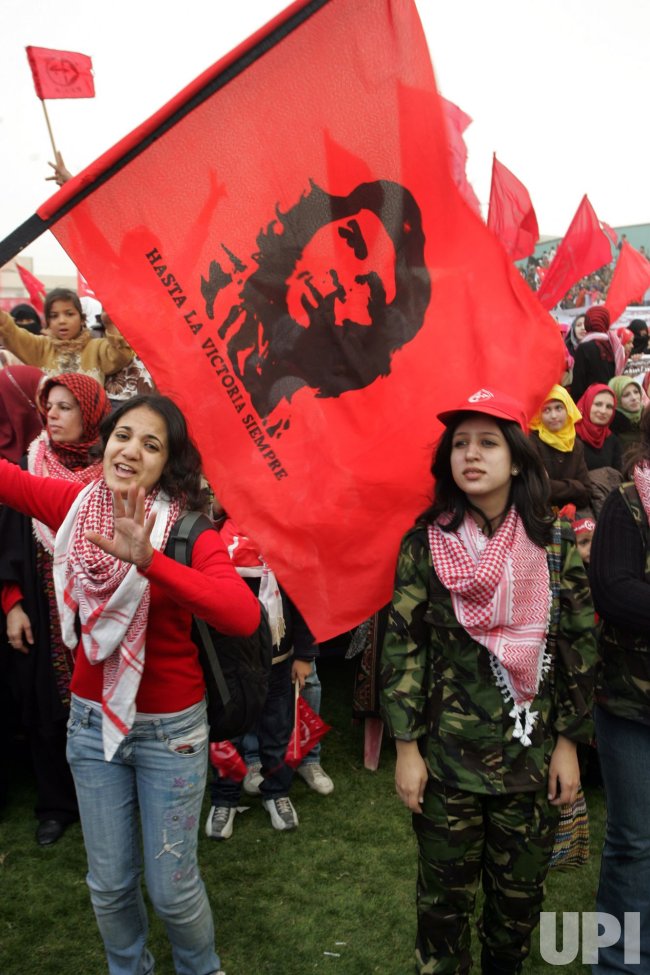
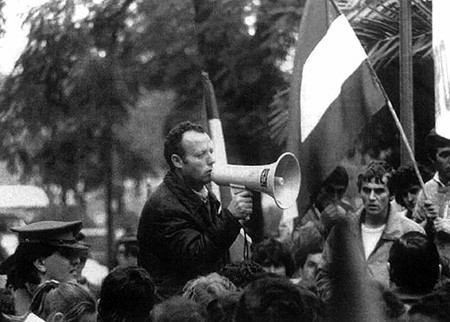


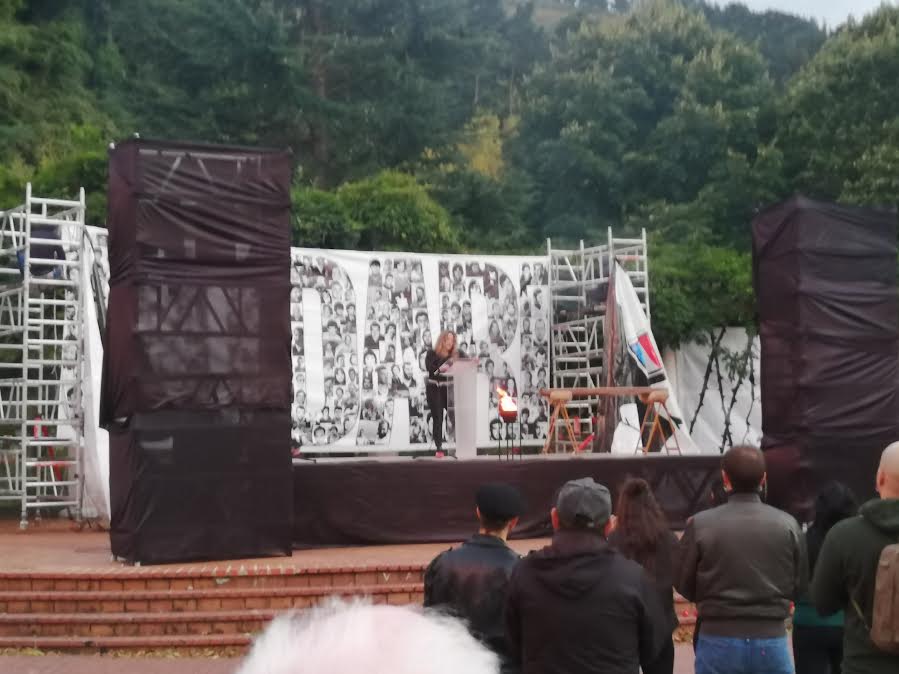


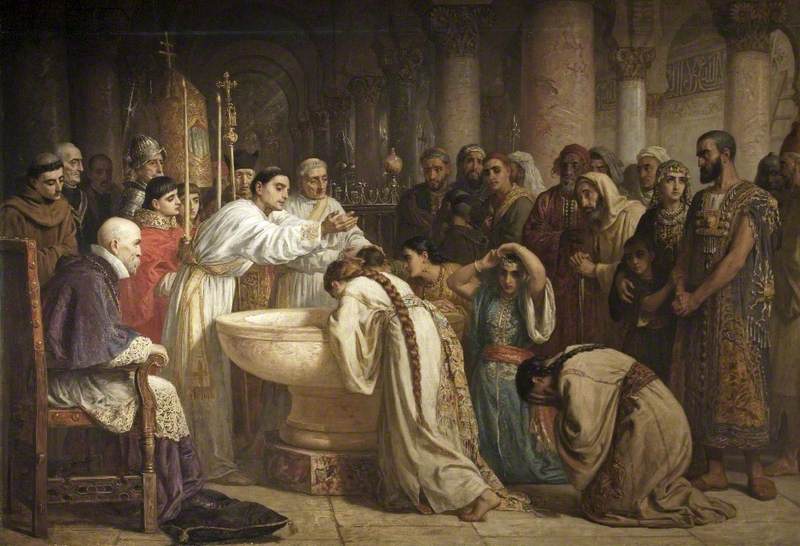
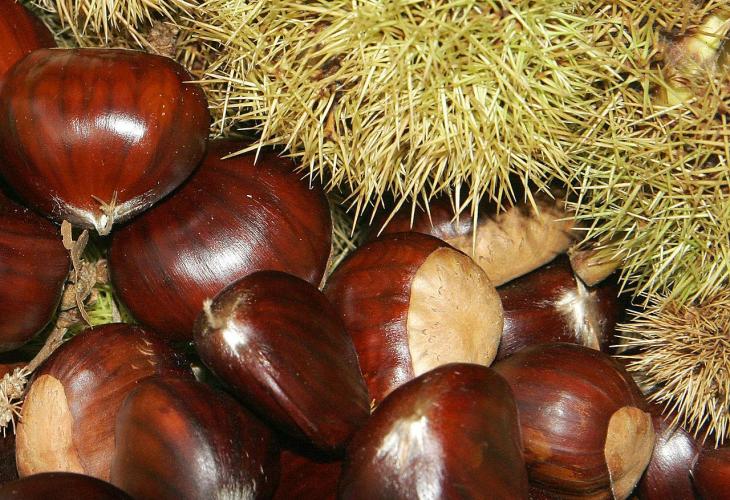


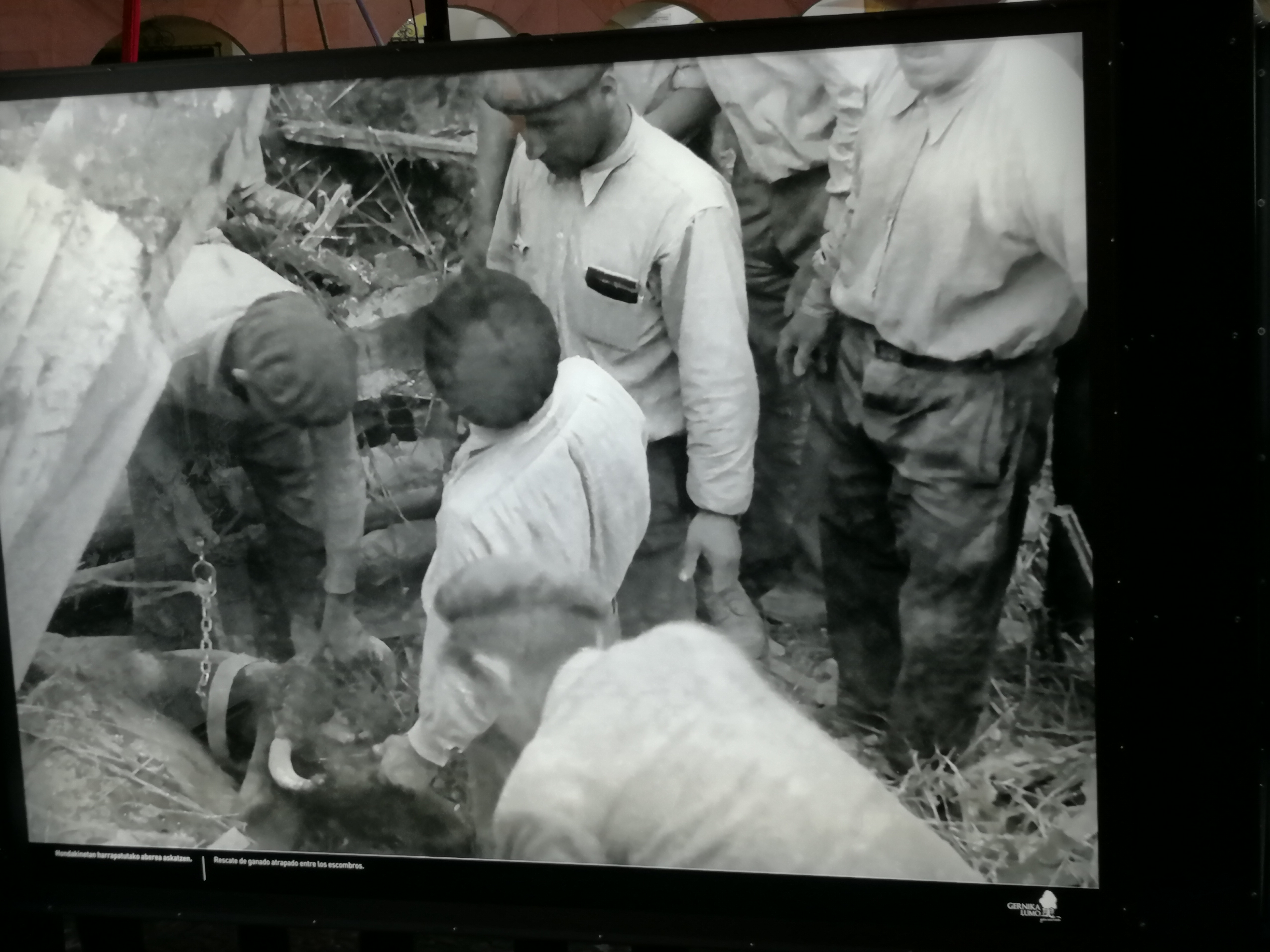
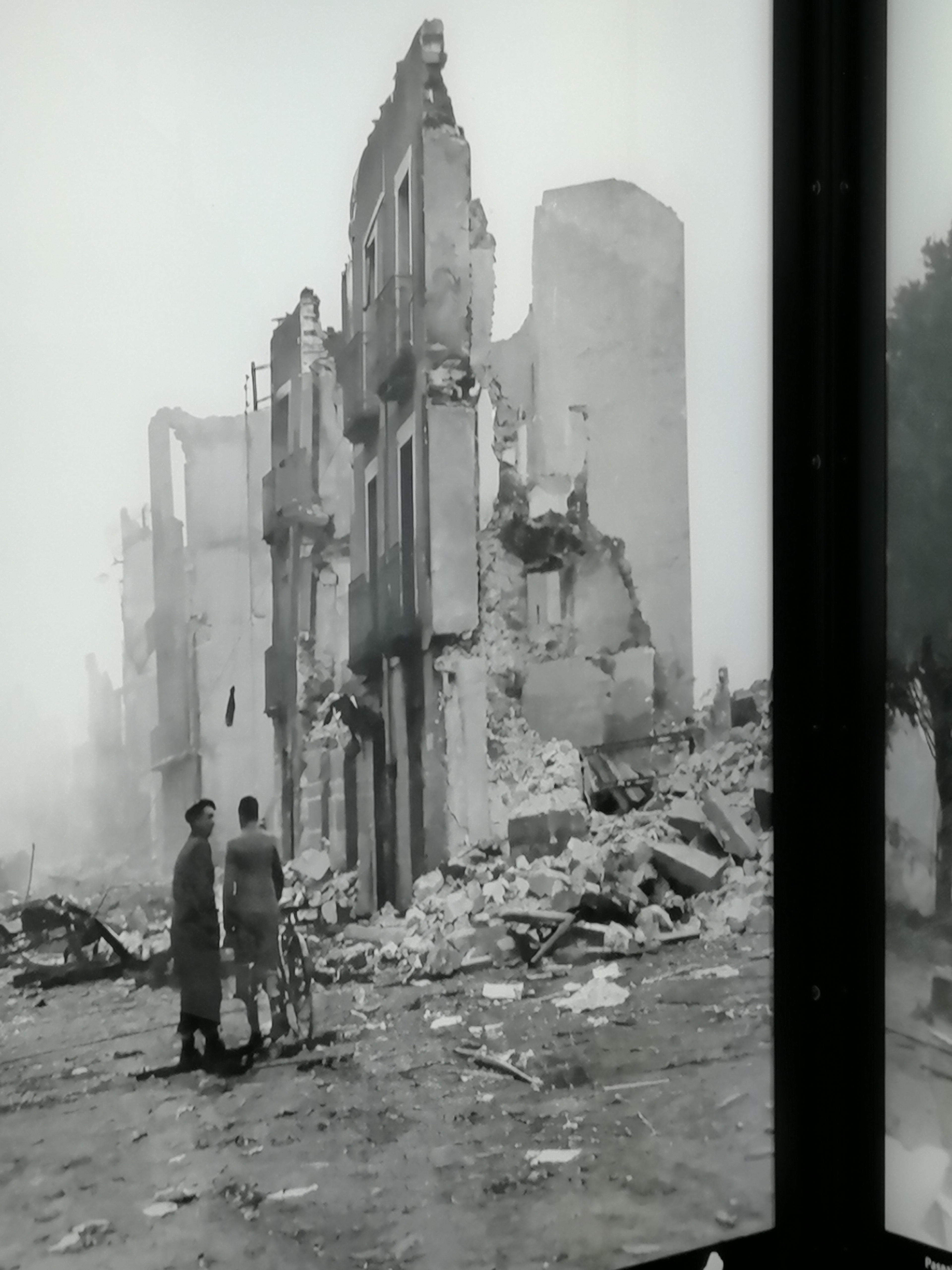


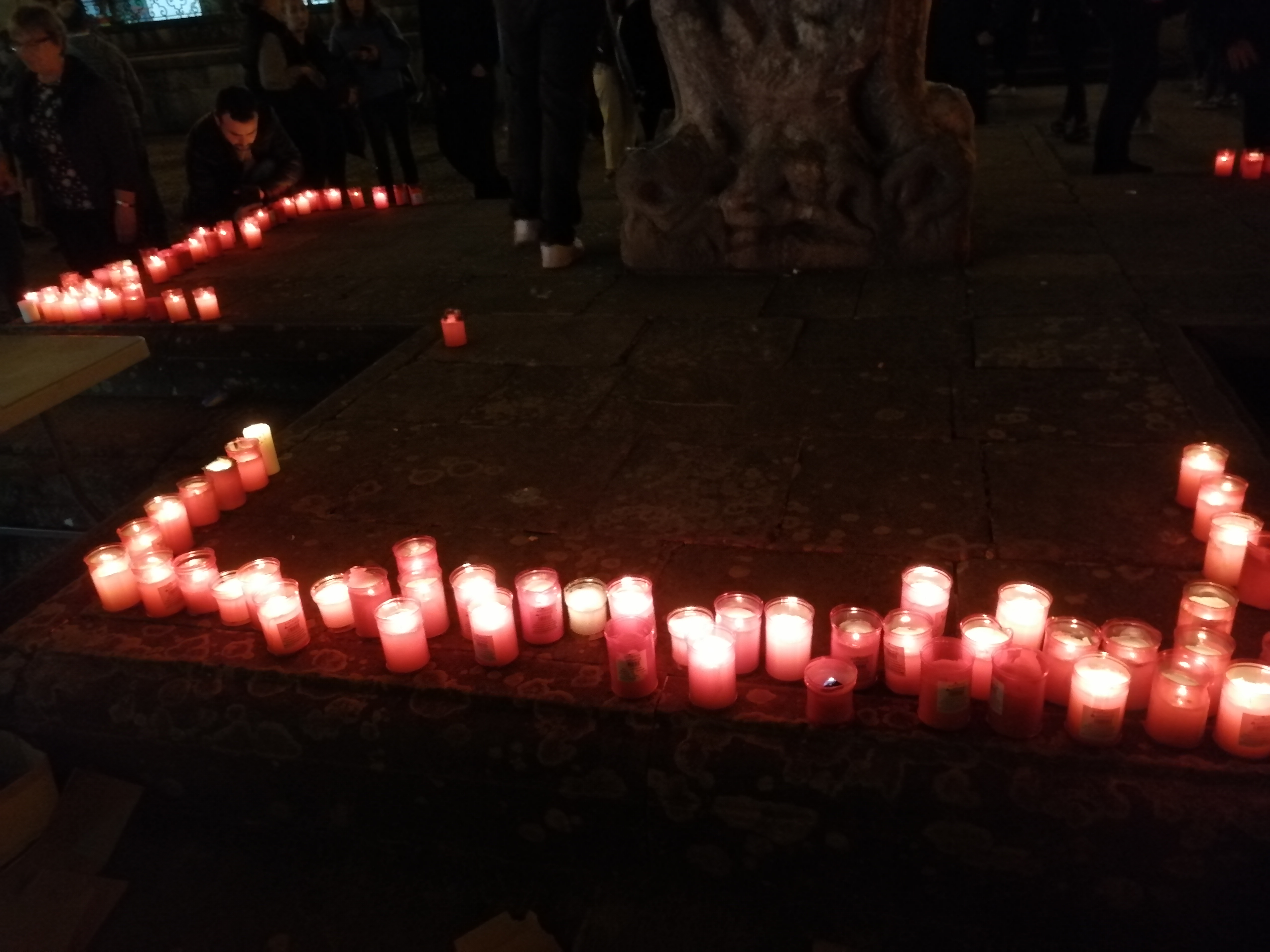
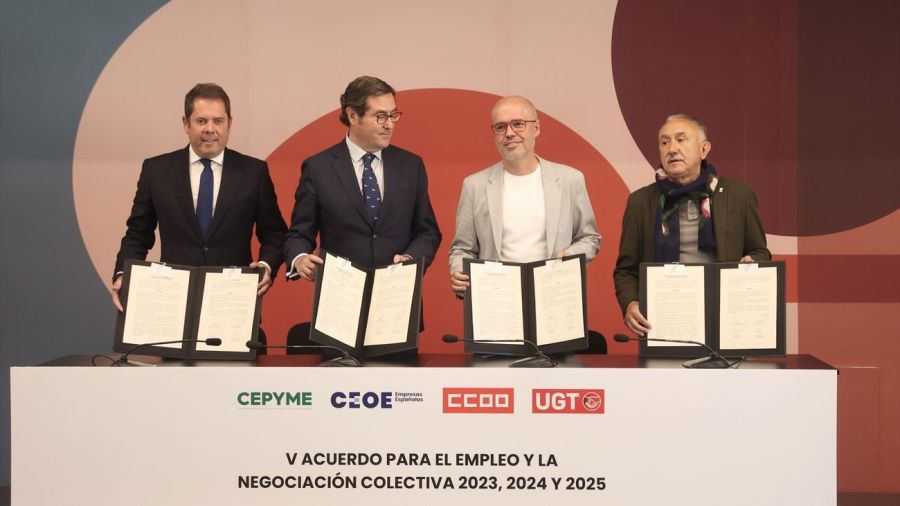
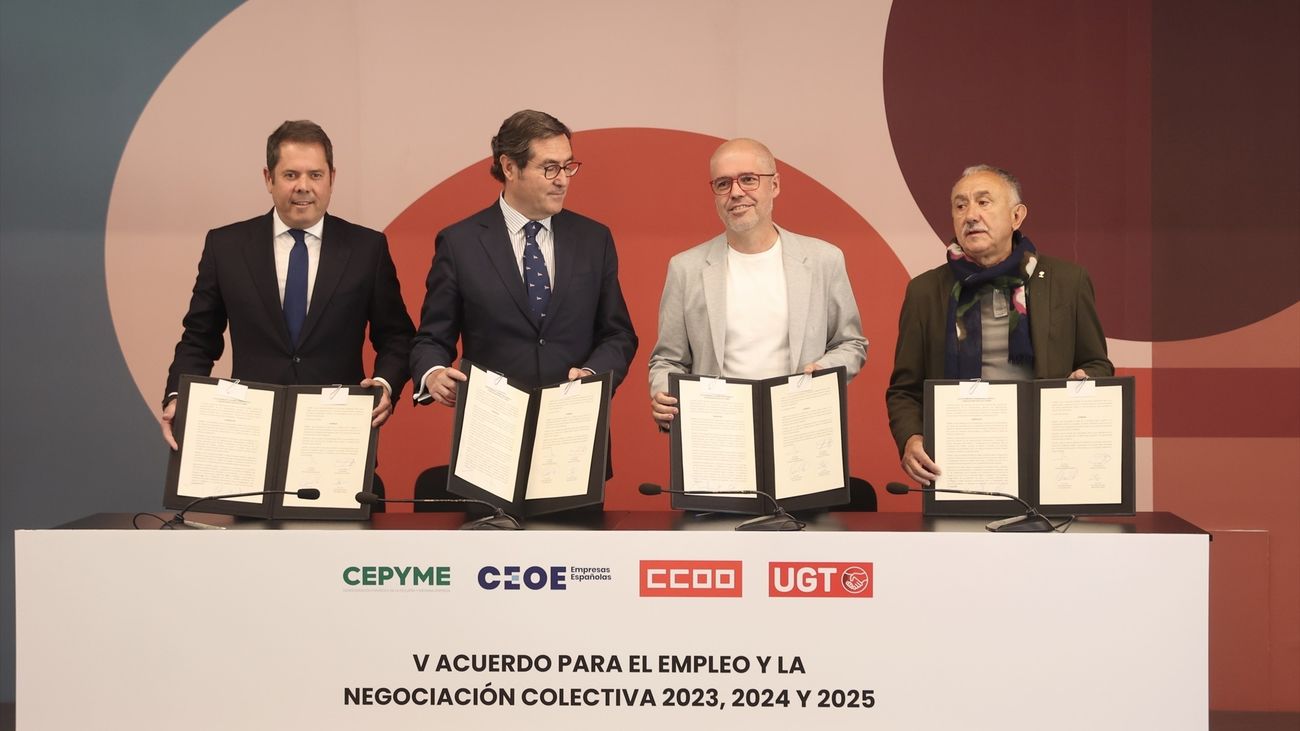
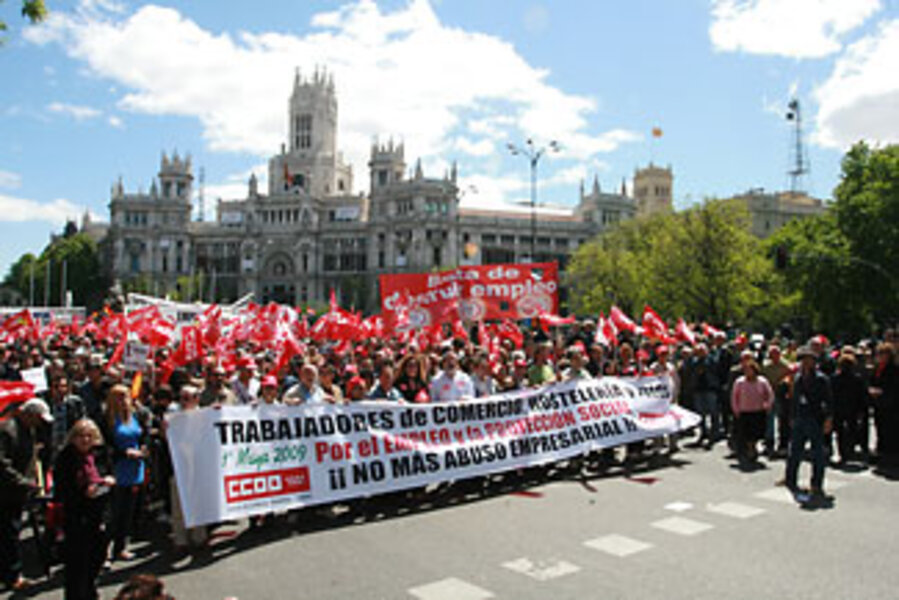


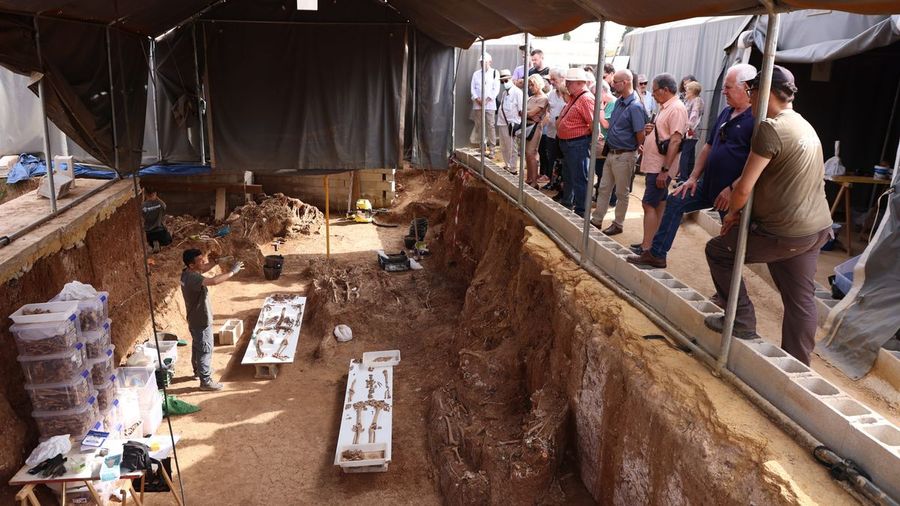
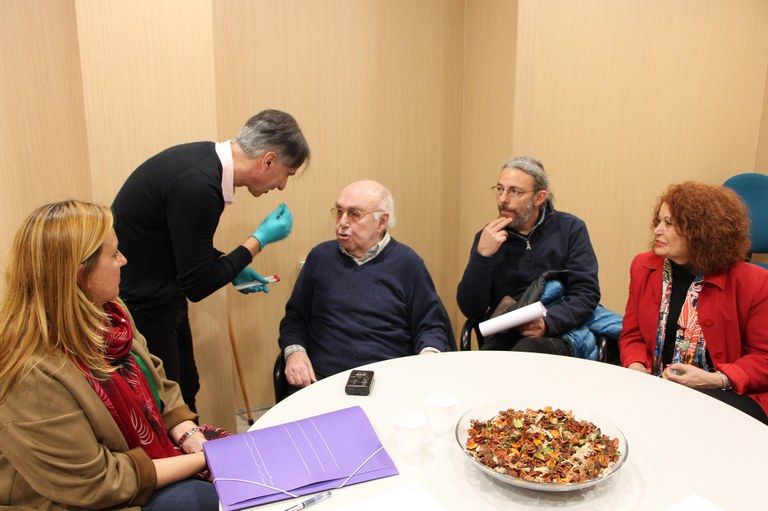
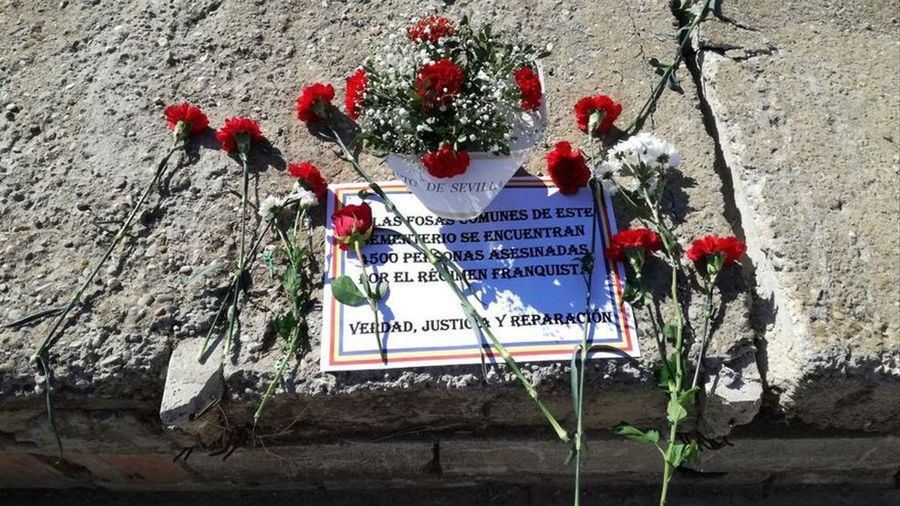
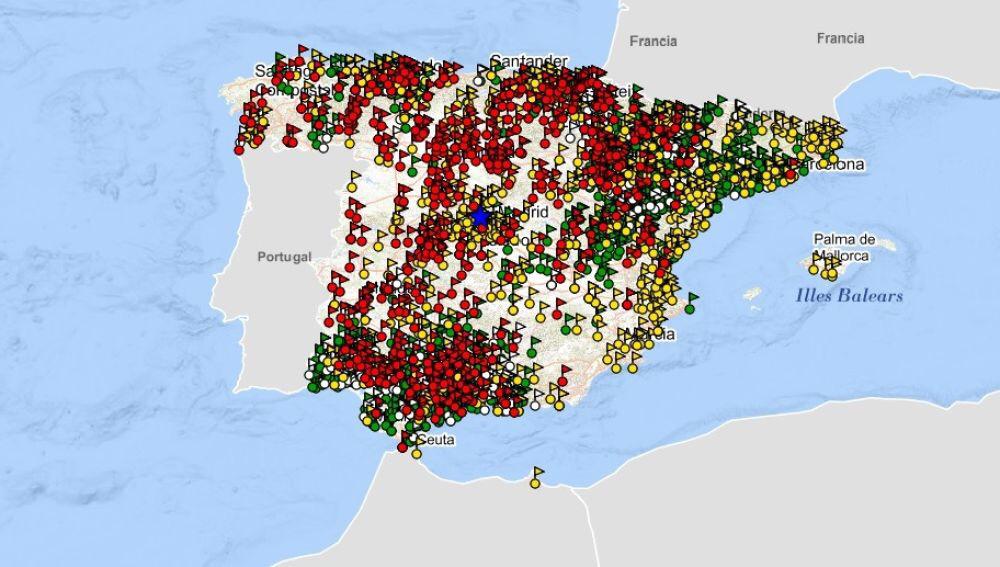
 rebelbreeze

