Although the 1916 Rising had been planned to take place on Easter Sunday, April 23rd, it was publicly cancelled by the titular head of the Irish Volunteers, Eoin Mac Néill and it went ahead instead on the 24th, the following day.
The 1916 Rising was unsuccessful but is considered the birth event of the Irish Republic and for some therefore Republic Day is on April 24th, the first day of that Rising and when Patrick Pearse, with James Connolly by his side, read out that remarkable Proclamation of Independence.
Banner of the Republic Day event organisers in Arbour Hill (Photo: R.Breeze)
Tom Stokes, an independent Irish Republican campaigned for some years for April 24th to be recognised as Ireland’s national day, replacing St. Patrick’s Day which is religious festival and now an excuse for excessive drinking and pseudo-Irishness.
Replacing too Easter Sunday and Monday, these being religious dates that move around on the calendar, never being on the same dates in any consecutive year.
Tom Stokes died in December 2018 and a small group of disparate independent Republicans have striven to keep his campaign going.
Stokes always held his Republic Day event at noon on the 24th in front of the GPO, the location of the first public reading of the Proclamation (as did also the Save Moore Street From Demolition one year) but this group carrying on his campaign have been holding their event in Arbour Hill.
This is the location of an old British prison containing the location of a mass grave into which had been put the bodies of 14 of those executed by British firing squads after the surrender of the leadership and majority of the fighters, their bodies covered in quicklime and earth.
The mass grave of 14 of the sixteen executed in 1916, with their names in Irish one side and in English on the other. (Photo: R.Breeze)
CEREMONY IN ‘ARBOUR HILL’
The name Arbour Hill is a corruption of the original Irish name for the location which meant something distinct from “arbour”: Cnoc (hill) an (of the) Arbhair (cereal crop). Today it is a quiet spot tastefully laid out, the names of the dead etched around the mass grave-site in both languages.
A little distance away is a tall flagpole bearing the Irish Tricolour in front of a high wall on which are chiselled the words of the Proclamation in their original English and also in Irish translation.
Dramatist Frank Allen welcomed those present, in particular members of Limerick Men’s Shed who had travelled a distance to be present at the event. He also referred to descendants who were present of martyrs of the struggle Cathal Brugha, Thomas McDonagh and Harry Boland.
Frank Allen as MC for the event (Photo: R.Breeze)
Allen also reviewed the history of Tom Stokes’ campaign for the marking of the date as Republic Day and a national holiday, outlining also the man’s background and his family connections to the struggle for Irish independence, along with his support for Palestine..
First to be called to perform was Pat Waters, professional musician and a regular contributor to the 1916 Performing Arts Club who accompanied himself singing his own composition Where Is Our Republic Day? composed at request from Tom Stokes.
Pat Waters performing his composition Where Is Our Republic? (Photo: R.Breeze)
Allen called on Glen Gannon also of the 1916 PAC to read the Proclamation and then on Shane Stokes to read one of his father’s articles which clearly outlined the man’s socialist Republican principles and their distance from the reality of the current national society and polity.
In succession Fergus Russell of the Goleen Singers organising committee was called to sing The Foggy Dew, a song about the 1916 Rising which he performs every year and Shannon Pritzel to read Patrick Pearse’s famous oration on the grave of Ó Donnabháin Rosa.
Aidan recited the eulogy poem to the 1916 fighters composed by an ex-British Army officer living in Ireland. Anne Waters of the 1916 PAC was asked to present red roses to a number of those present to lay on the named dead on the stonework surrounding the mass gravesite.
Larry Yorell (best known as a long-time activist of the National Graves Association)1, made an appeal for support for an initiative to build a monument to Patrick Pearse.
Aidan reciting a eulogy poem for the 1916 Rising fighters (Photo: R.Breeze)
Frank Allen declared total opposition to a trend seeking to eliminate Amhrán na bhFiann as the “National Anthem” for being thought too war-like.
The Anti-Imperialist Action group called a picket against imperialism to take place in the evening of the 24th outside the General Post Office, which had been the HQ of the Rising forces in 1916.
(Photo: R.Breeze)
While a number distributed leaflets, others lined out carrying a number of national flags of Palestine and one of the PFLP, in addition to a large Irish Tricolour, smaller Starry Plough and flags of the New Philippines Army.
Along with some of the standard Palestine solidarity slogans heard everywhere in Ireland on demonstrations, they called out “From Ireland to Palestine – Occupation is a crime!”; “There is only one solution – Intifada revolution!” and “Saoirse – don Phalaistín!”
Flag of the New People’s Army of the Phillippines displayed alongside other flags of anti-imperialist struggle. (Photo: R.Breeze)
A number of passers-by congratulated the picketers while some stopped to discuss. A representative of the organisers gave a short address regarding the background to Republic Day and the current situation in Ireland, commenting also on the zionist genocide in Palestine.
The event concluded with a youth reading the 1916 Proclamation out loud, followed by an acapella singer performing The Larkin Ballad which relates a compressed history of the 1913 Dublin Lockout but concludes with verses about the 1916 Rising.
A youth reads the text of the Proclamation of Independence near where Patrick Pearse read it out on 24th April 1916 (Photo: R.Breeze)
End.
Southward view of part of the group marking Republic Day with a statement against imperialism today. (Photo: R.Breeze)
FOOTNOTES
1The main organisation throughout Ireland maintaining and renovating and erecting monuments, graves, plaques in memory of Irish patriot men and women and battle sites; the NGA remains independent of political parties and declines to be in receipt of funding from government or political party.
2Kearney wrote the lyrics in 1907 in cooperation with musical composer Patrick Heeney. The music for the chorus was adopted by the Irish Free State as its national anthem. The lyrics were translated into Irish in the 1930s and unusually it is the Irish version that one most often hears, first verse and chorus. The opening sentence of the chorus “Sinne fianna fáil” (‘we are soldiers of destiny’) have been changed by some to “Sinne laochra fáil” (‘warriors of destiny) in order to avoid reference to a specific political party that called itself Fianna Fáil.
Beyoncé, Cowboy Carter (2024) (Image sourced: Internet)
Beyoncé was back in the news once again for a spot of cultural appropriation. It was not her first brush with cultural Neanderthals, she has been here before for apparently “stealing” Egyptian culture by dressing as Nefertiti.
Added into the mix was a lesser-known black artist, Kaitlyn Sardin, who excels at Irish dancing and dared produce some fusion dance routines.
I have dealt with Beyoncé and Rihanna wading into the murky cesspit of the cultural appropriation debate in the past when they were accused of appropriating Egyptian culture(1) and won’t deal with it here.
This time though, the debate is clearly about music, produced by people who are still around and not the attire of long dead Egyptians with little connection to the modern country.
The fact that white country music fans are still around to complain, doesn’t make the debate any less sterile or ridiculous.
Beyoncé’s faux pas was apparently to record a country & western album titled Cowboy Carter. Apparently, some were of the view that a black artist shouldn’t record a “white” song or perform in a “white” musical genre.
Her first release from the album was a song she composed, Texas Hold ‘Em.(2) And the hounds of hell were let loose to howl and drown out the music.
Some radio stations refused to play the song, though that didn’t stop it going to No.1 in the country music charts and the debate, though debate might be too fine a word to put on it, erupted.
She is not white, she is not part of the country music scene and she should stay in her lane, is a crude but accurate summary of most of those criticising her. She is actually from Houston, Texas, not that it matters.
One person interviewed by The Guardian responded that “It doesn’t matter that you came from Texas. It matters if you’re actually living a country lifestyle. It bothers me that her song is being called country.”(3) These words might be familiar to some.
They are normally advanced by identitarians when talking about whites playing genres considered “black” and in some cases other non-whites have levelled this accusation against a whole array of non-white artists including Beyoncé.
It is reactionary rubbish with the racism, in this case, hiding just under the surface, behind a veil of cultural purity. One even went as far as to say that he would bet that Beyoncé had never been in the country saloon he was being interviewed in.
Well, many black women would steer clear of such venues, for more than obvious reasons.
Cultures are not pure, ever. None. Not now, not ever, not even going back to the stone age.
I am very sure, no stone age hunter armed with a flintstone hatchet ever shouted “You’re appropriating my culture” when he realised some other village had come up with the same invention, or even just “stole” the idea.
Country music is not pure either and to the shock and horror of many a man yearning for the days he ran around in his white bedsheets, it isn’t even that white. Blacks have made significant contributions to country music, not least the musical instrument known as the Banjo.
What would country be without the banjo? Rhiannon Giddens, the black musician has dedicated her time to reviving the banjo as a black instrument and recording some excellent music, though unsurprisingly she doesn’t quite stick to genres either.(4)
Her site describes her thus: Singer, multi-instrumentalist, composer, and impresario, Rhiannon draws from many musical traditions including blues, jazz, folk, hiphop, African, Celtic, classical, and jug band. She bridges contemporary and traditional forms, and few musicians have done more to revitalize old-time influences in current music.(5)
Rhiannon Giddens with banjo (Image sourced: Extra.ie)
She composes her own songs, covers others, even ones such as Wayfaring Stranger, recorded by many white country artists, though actually written and composed by two Germans in the 1660s.
As far removed from her as from the whites who might like to claim the song as their own (Links below to Gidden’s version,(6) Johnny Cash’s(7) the Mormon Tabernacle Choir(8) and even Ed Sheeran’s(9) very uncountry version.
I have included links to all songs and routines mentioned in this article). The song belongs to whoever wants to sing it, however they wish to, though I personally think Sheeran murders the song with a flintstone hatchet, but each to their own.
So, Beyoncé is quite entitled to record in whatever style she wants. Part of what rankles some is that she went straight to No.1 and will make a fortune from the album and this is part of the ‘stay in your lane’ slogan applied to blacks and whites.
Elvis made a fortune singing what was essentially considered, at least initially, to be a black musical form and other white artists who have done this have been criticised by a black bourgeoisie who want that slice of the cake for themselves.
Some of the whites criticising Beyoncé are undoubtedly racist, some might just be musical purists, though music is one art form that just doesn’t lend itself to purity. Others, like identitarians everywhere, think that the money is theirs. Flip sides of the same coin.
Beyoncé is not the only black artist to venture into the world of country,(10) Charley Pride and Ray Charles did so back in the 1960s at times of heightened tensions in the midst of the racial violence meted out against those demanding civil rights for blacks.
When Charley Pride released his first country album, his image was not put on the record sleeve and they initially hid the fact he was black as part of their marketing strategy. He would eventually make it to the Grand Ole Opry in 1967.
He had a total of 52 top ten hits on the Billboard Hot Country Songs chart.(11) No mean feat and not a once-off foray into country music either, he was a country artist.
Linda Martell fared worse as she never hid that she was black and though she would also perform at the Grand Ole Opry in 1970, her album Color Me Country(12) never had the same success.
Ray Charles also dipped his fingers into the pond producing Modern Sounds in Country and Western Music(13) in 1962. It was a best seller, topping the charts. So, Beyoncé is by no means the only or even the first black artist to find success in the genre.
Black artists have always ventured into genres that were not considered to be black.
Others have gone the other way and identitarians tend to criticise white artists doing “black” music, though when Gene Autry, the white country and western singer, nicknamed The Singing Cowboy recorded a blues album, nobody accused him of cultural appropriation.
Though even non-whites get accused by the black bourgeoisie closely aligned to the US Democratic Party of cultural appropriation, Jews, Asians, even Africans get in the neck.
Samuel Jackson infamously accused black British actors of stealing their jobs because they were cheaper and questioned the cultural bonafides of British-Nigerian actor David Oyelowo when he was cast as Martin Luther King in the film Selma.(14)
He never criticised the decision to cast the black Yank, Morgan Freeman as Nelson Mandela in the film Invictus or Matt Damon as the white South African rugby captain in the same film.
Given the backlash against his comments he decided to keep his mouth shut when the British-Ugandan actor Daniel Kaluuya was chosen to play the black revolutionary leader of the Black Panther Party, Fred Hampton. No one is safe from the accusation.
It is a bit like the MacCarthy trials. “Are you now or have you ever been a homosexual? No, but I slept with a man who was. Have you ever appropriated a culture? No, but I hummed a tune by a man who had.”
Which brings us now to Kaitlyn Sardin, the US black Irish dancer. She has recently gone viral, though not for the first time, with her dance routines and not being as powerful as Beyoncé has come in for some vile racist abuse.(15)
She produced a new video which is what is now termed fusion i.e. Irish dance with some developments.
This is now quite common and there is a host of Irish groups producing fusion. My favourite is a routine called Freedom with the voice of Charles Chaplin and images from Belfast in the early seventies.(16)
Though the first person to do this was Michael Flatley with River Dance which not only broke many of the “rules” of Irish dancing, it even went as far as to incorporate the Lambeg War Drums in a much more positive sense than the annual announcement of Protestant supremacy for which they are used every July 12th.
Of course, Flatley, unlike Sardin is white and of Irish descent.
Kaitlyn Sardin (Image sourced: Internet)
As I said there are many fusion groups in Ireland, the one I previously mentioned and even one which is danced to classical music titled Fusion Fighters Perform Fusion Orchestra.(17) Again, all as white as the driven snow in Siberia.
There is even an all-female Fusion Fighters group from the USA that does a tap dance routine to William Tell.(18)
The particular group started off with Irish dance and moved into other styles over time, so much so that even their website acknowledges it has less to do with Irish dance than they used to.(19) It is what happens with culture. It evolves, all the time.
Again, they are white and no one said fusion is not Irish dancing and no one said anything about not being Irish, even though their Irish connections may be as tenuous as Darby O’Gill.
The term fusion is one of those designed to assuage musical purists more than racists. In reality there is no such thing as fusion music. ALL music and dance are fusion till it becomes accepted as the standard, when new deviations or fusions arrive.
Though dancing has existed in Ireland for centuries it has not been immune to outside influences such as French Quadrilles in the 1800s or other forms.
The clues are in the names, hornpipes and polkas for example are two types of music that you will find in other parts of Europe and indeed in the case of polkas they clearly originated in Eastern Europe, though most forms including reels and jigs are not exclusively Irish either.
All cultures borrow.
Most instruments used in Irish music are not Irish in origin. Some, like the flute have arisen in most cultures around the world and archaeological remains have thrown up examples everywhere of flutes and whistles made from everything, including animal bones.
Fiddles arose over a long process around the world and it is a bit difficult to pinpoint them to one country. Uillean pipes are Irish, though they too were part of a wider process in Europe with different types of pipes arising.
Though Scottish bag pipes are perhaps the most famous type of pipe, there are in fact lots of pipes throughout Europe and parts of Africa, Iran, Azerbaijan and even India.
Other instruments such as the banjo are African in origin, though the modern banjo has developed over time since it was first brought to the western world by slaves.
The piano accordion is a relatively recent European invention from the mid 1800s, a further development of the accordion, which was also a European instrument.
If we rejected all outside influences and demanded purity, we would have little in the way of Irish music or dance, were we to have any at all.
So, Kaitlyn Sardin should be celebrated. She is from the US, is black and more importantly is very good at what she does: dancing. The fact that she is not Irish or she recently produced a fusion routine is neither here nor there.
Any liberal who got lost on the internet and accidentally read this article will probably have nodded most of the way down: until now. The ridiculous statements made about Beyoncé and Sardin are generally rejected by liberals.
But when the cultural capitalists hiding behind identity politics make similar claims against white artists or indeed between other non-white artists this rubbish is taken seriously.
Culture does not belong to anyone, you don’t have to be white, black, Asian or Latin to perform in a particular style. Culture is a gently flowing river you bathe in, swimming ashore where you please along its route or letting it sweep you out into the sea.
It has always been thus and always will be, despite the attempts of cultural capitalists to appropriate culture for their own grubby money-making ends, or racists imagining some non-existent purity. It doesn’t mean that some of the commercial outings by Beyoncé and other artists do it well.
They don’t.
Beyoncé was criticised for her depiction of India as a white paradise and other artists such as Gwen Stefani, Nicki Minaj and Iggy Azalea have been accused of engaging in crass portrayals of the cultures they seek to borrow from(20) and in Ireland we know a thing or two about how crass Hollywood can be when it comes to depicting Irish music.
But that is another matter, many artists in particular genres have come up with really crass portrayals of their own cultures. The point is whether culture is pure, has lanes and you stick to them due to an accident or birth.
The legendary US folk singer Pete Seeger would joke that plagiarism was the basis of all culture and he was a wonderful plagiarist who introduced musical forms from around the world to a US audience at a time when there was no internet and it was not an easy feat.
He introduced the song Wimoweh to the world, which has gone through multiple adaptations,(21) some of them very good and others absolutely dire, such as that recorded by the English pop group Tight Fit in the 1980s.(22)
The original song however was quite different in style and written and recorded by the South African musician Solomon Linda(23) who was swindled out of the royalties on the song.
Had Seeger stayed in his lane, most of us would never have ever heard of Linda or the story behind his song.
Demands for cultural purity are inherently reactionary, as are demands to ‘stay in your lane’, be they levelled by whites, blacks or Asians. Culture is to be celebrated and expanded.
The accusation of appropriation would only make sense if someone like Seeger had said he wrote Wimoweh, that would be straightforward dishonesty, something he could never be accused of in his multiple adaptations of songs from Ireland, Japan, China, Indonesia, Scotland, Chile, Nicaragua amongst other places.
Beyoncé’s foray into country is perfectly fine, though personally, I don’t like her music, including her country. But that is my personal taste and has nothing to do with appropriation or other rubbish from cultural capitalists.
The Irish radio on Saturdays used to broadcast an Irish music show from the musical company Walton’s. It always finished off saying “If you do feel like singing a song, do sing an Irish one.” The exhortation was for all, not some; the point was to celebrate and enjoy music.
Let’s leave the cultural capitalists, purists, identitarians and racists to the handful of songs they mistakenly believe to be pure.
We now approach the festival called Christmas. A Christian festival, apparently, celebrating the birth of Christ, the baby Jesus. But are there darker aspects in its references?
Away in a manger No crib for His bed The little Lord Jesus Lay down His sweet head
The stars in the sky Look down where He lay The little Lord Jesus Asleep on the hay
Such a sweet, holy image.
But actually, when we look around us, it seems more like a festival of the pagan gods: of Bacchus, the god of alcohol and of Mammon, the god of wealth. Bacchus, because in non-Moslem countries, drinking of alcohol will be for most a big component of the festival.
Whiskey, brandy, wine and beer will be bought to stock up the house. Alcohol will be drunk at Christmas parties (including office parties, where for months afterwards some people will regret what they did or said – or even what they didn’t do or say).
Alcohol will be not just drunk but also put into some of the traditional food and even poured over it.
Then Mammon. Well, you can see the retail businesses stocking up for weeks or even months ahead of the festival which, after all, was only supposed to be a one or at most a two-day event.
Giving and receiving gifts has now become part of the festival and in most cases, gifts have to be bought. Which is a really big gift to the retail businesses and thence, really a sacrifice to Mammon.
In the Christian gospels of both Matthew and Luke, it is written that one “cannot serve both Mammon and God” — which goes to show how little they understood capitalism, where Mammon IS God.
A theologian of the Fourth Century saw Mammon as a personification of Beelzebub, which in his time was another name for Satan or the Devil.
Interestingly, Protestant Christianity, which some credit as having invented capitalism, at the same time regarded Mammon, or said they did, as “one of the Seven Princes of Hell”.
Cartoon depiction of Mammon, God of Wealth (Image sourced: Internet)
Sculpture representation of Bacchus, God of Alcohol, in California winery, USA (Image sourced: Internet)
SANTA
Now, Santa Claus is also a big part of the Christmas festival, especially in western countries, a much more acceptable face than that of greedy Mammon and alcoholic Bacchus, right?
But originally, the Christians saw him a representation of St. Nicholas, 4th Century Bishop of the Greek city of Myra, a location now in Turkey. He was he patron saint of archers, repentant thieves, sailors and prostitutes. The prostitutes probably had to be repentant ones too, of course!
The sailors, who probably had at least as much recourse to prostitutes as had any other calling, were apparently not required to be repentant – to be in danger on the sea was deemed enough.
But St. Nicholas was also the patron saint of children, pawnbrokers and brewers, so we can see how close he was getting there to the modern spirit of Christmas.
GERMAN TRAPPINGS
Now, the Christmas Tree, der tannenbaum, so much a part of the symbolism of modern western Christmas, came to us from Germany, as did the sled and the reindeer.
The reindeer are not autochthonous or endemic in historic times to Germany, so they must have been brought in their myths from Scandinavia from where originally, the Germanic tribes came.
In turn, the Christmas Tree, Yule Log, reindeer and sled were exported from Germany to England in the reign of Queen Victoria, by her consort Prince Albert, who was German.
And since the English ruled all of us in Victoria and Albert’s time, the Christmas Tree came to us too, to the cities first and then slowly spreading through the rural areas.
A representation of St. Nicholas (before he got the red suit makeover) looking more like a pagan god of the woods. (Image sourced: Internet)
***
When you think about it, this German-English worship of the tree was a bit ironic, since the English had wiped out most of our forests already and were still cutting down our remaining trees in Queen Victoria’s time.
***
And Victoria, through Albert, gave us the Santa Clause we know and love today. A jolly man, well fed, white beard, twinkly eyes, dressed all in red with white trim ….
IN RED?
Now, wait a minute! It turns out he wasn’t always dressed in red. Originally, he was dressed in a brown, or green cloak. He was, originally among the Germanic people, a god of the forests – hence the evergreen Christmas tree.
And like any sensible woodsman, he dressed in appropriate colours, brown or green. Neither Albert nor Victoria ever represented him as dressed in red. So how did it become so that we are incapable of seeing him today in any other colour than red?
Well, it turns out that Coca Cola is the responsible party.
Yes, although it was the cartoonist Thomas Nast in 1870s United States who first portrayed Santa in a red suit with a belt but it was Coca Cola, in their advertising campaign of 1931 and onwards who made his clothes red world-wide.
Coca Cola is a drink served cold and almost undrinkable when warm but who needs a cold drink in cold weather? I guess Coca Cola needed a warm image to make it still attractive in winter. So therefore the warm, jolly man dressed in red, with a bottle of Coca Cola in his hand.
1931, Santa Clause first appears in red, in Coca Cola advertisement, USA.
(Image source: Internet)
Coca Cola brand is worth about $106.1 billion dollars today,1 far ahead of any other cold drinks product. Which I guess brings us back to …. yes, Mammon.
You can mix the drink with a number of alcoholic beverages too, so tipping a nod – and a glass – to Bacchus.
Now, the German Santa Claus, this originally woodland god, is also thought to have been something like Thor, a god of fire and lightning. So can it be any coincidence that two of his reindeer are called Donner und Blitzen, i.e “Thunder” and “Lightning”? Nein – of course not!
A starry night over desert hills, like the Nativity scene but without the Guiding Star. (Photo source: Internet)
INVISIBLE
Although we see the image of Santa Claus everywhere and even pretend Santa Clauses all over our city streets, everyone knows that nobody sees the real Santa Claus. Children have to be asleep when he arrives to distribute his presents and somehow adults don’t see him either.
Which I suppose is a good thing ….
I mean if you found an adult intruder in your house at night, not to mention near your children, you’d be liable to whack him with a hurley (that’s an Irish cultural reference) …. or a baseball bat (that’s a U S cultural reference) …. or stab him with a sharp kitchen knife (that’s an international cultural reference).
It was bad enough when somehow that portly – not to say fat – man could somehow come down your chimney and go up again, without waking anyone … but now he can get in your house or flat even when you don’t have a chimney.
Which is at least creepy, if not downright scary.
Oh, let’s lighten the mood and sing together:
You better watch out You better not cry You better not pout I’m telling you why
Santa Claus is comin’ to town Santa Claus is comin’ to town
He’s making a list He’s checking it twice He’s gonna find out Who’s naughty or nice
Santa Claus is comin’ to town Santa Claus is comin’ to town
He sees you when you’re sleeping He knows when you’re awake He knows if you’ve been bad or good So be good for goodness sake
Yes, lovely but wait …
“You better watch out, you better not cry …” — Is it just me, or is that not downright threatening? And he knows when we’re sleeping or awake? He has our children under surveillance? In some kind of list?
HO! HO! HO! IN MORALITY PLAYS
Morality Plays were a genre of theatrical performances of the medieval and Tudor eras in which a character was tempted by a personification of Vice.
Now Vice (not unlike a lot of police Vice Squads), was often seen as the epitome of evil, corruption and greed – in other words, the Devil. The playwrights tended to portray the Devil as somewhat of a comical character, perhaps to keep their audiences entertained (or to disarm them).
So the character who played the Devil would announce his arrival with a stage laugh: “Ho, Ho, Ho!”
You can probably see where I’m going with this.
Nowadays, we tend to see the Devil portrayed in black but in earlier times, he was more often seen as coloured in red. The colour in which Coca Cola just happens to have dressed Santa too.
The German or Nordic Santa was originally a god of fire also, while even the modern Santa drives a magical chariot pulled by horned beasts and he is portrayed all in red. Traditionally, the Devil is seen as residing in Hell, a supposed place of eternal flames below ground.
What does Santa Claus give to children who have not been good? A lump of coal! In other words, a mineral from underground that can burn to make fire.
NICHOLAS
Santa Claus is supposed to be modelled on St. Nicholas …. and what is the popular abbreviated version of Nicholas, i.e the nickname? Yes, Nick.
And the common name for the Devil, Mammon, Beelzebub, Satan is ….. Old Nick!
On a wet Tuesday night in the large lobby of Windmill Lane Recording Studios, local community representatives met with representatives of political parties, Dublin City Council and the Gardaí to press for their community’s needs to be met.
The meeting on 24th October 2023 was convened by the City Quay Committee and its organiser, Patrick (“Paddy”) Bray raised concerns about the unmet needs of the local communities currently and for following generations.
Apart from the City Quay Committee, also represented were representatives of housing areas Markievicz House and Conway House, along with volunteer-managed youth service Talk About Youth.
Also in attendance were representation from political parties Fianna Fáil, Labour and Sinn Féin, all of which have TDs (members of Irish parliament) elected in the area. Dublin City Council was represented as the local municipal authority and Pearse Street as the nearest Garda station.
Presumably the presence of a Garda representative was in relation to discussion around a recent period of violent confrontations between opposing gangs of youth on the Samuel Beckett Bridge (but also Sean O’Casey Bridge) connecting South and North Liffey docklands.
It was striking that nearly all the community representatives were female, while most of the political representatives and each of DCC and the Gardaí were of male gender.
Paddy Bray opened the meeting outlining the local concerns about the area’s youth and the lack of constructive activities for them, the local youth service being underfunded, under-staffed and with no permanent base.
Bray went on to outline a dire absence of any kind of community facility for the local community, while property development went on around them, including four hotels in recent times, with no sites designated for affordable housing or community needs.
Looking across from the north quay, central background, the 8-storey Clayton Hotel, along with other buildings dwarfing even the four-storey reconstructed The Ferryman, the last of the original pubs along the South Docks between Tara St. Station and the East Link Bridge. (Photo sourced: Internet)
Other community representatives also pressed their needs hard and raised issues of applications for building on existing sites without consideration of the community’s needs in housing, parking, child and young person development, mental health or green space.
A number raised concerns about rat infestation in a housing area, emanating from a derelict site, followed by some discussion about where responsibility lay to address the problem as the site is in private ownership (though there was a suggestion of an enforceable abatement order).
The responses of the political party representatives and the Dublin City Council Area 2 officer were generally supportive, though a disagreement did emerge as to whether the City Council were doing enough to control the rat infestation.
Evoking a medieval or early 1900s scenario, a community representative reported that a man visited their housing area on a voluntary basis to kill rats and at a recent visit, had killed seven. Photos of live and dead rats on a phone were handed around (to shudders from some of the men).
The meeting concluded with an agreement to form a campaigning committee for the resources and sites needed, for the political representatives to support its aims and for the Area 2 DCC Manager to report back to his own management.
Paddy Bray asked all present to spread the word among their contacts to enlist further support.
THE COMMUNITY: LOSS, NEEDS AND HISTORY
The name of the building in which the meeting was held is famous in Irish recording events though most probably associate it in particular with the previous recording studio on the site and the rock group U2.
A plan for a six-storey block on the site was defeated by local protests in 2008 but the original studios were demolished with the exception of the U2 fans’ graffiti wall, which was later sold and proceeds donated to a charity fundraising for awareness of men’s health and treatment needs.
The new building is owned by the formerly investment trust company, now Hibernia property development company which, despite the name, as is now common in Ireland, is owned by a foreign corporation.1
Property speculators plan to demolish the City Arts Centre, a resource for the community but derelict and empty for two decades on Moss Street on the South docks, in order to build a 24-storey office block.
City Arts Centre building, derelict for years, property speculator high-rise plan appealed by many including Dublin City Council to An Bord Pleanála, now speculator taking DCC to court. (Photo sourced: Internet)
Unusually perhaps, the demolition application is being opposed by Dublin City Council2 which has appealed it to an Bord Pleanála3 and the speculator has taken the case to court.
As mentioned in the meeting, an existing facility for the community, the Markievicz swimming pool, despite 1,600 signatures to save it, is to close for the construction of a station for the projected underground Metrolink, another infrastructure planned for private or part-private ownership.4
As one of the community representatives commented, there is already a train station nearby; not only that but the tracks of that station are several storeys above ground, making an underground connection with Metrolink quite feasible.
A rally to promote saving the swimming pool in 2019 (Photo sourced: Internet)
The swimming pool facilities are now to be located at a site 3 km away in Ringsend, a housing district at the end of the docks and partly on the seafront, which has football pitches and green space very close nearby. 5
It is indeed late in the day as indicated by the huge property development on the South Quays but the communities are getting organised as can be seen from this meeting, a commemoration of a fatal 1960s housing collapse and protests about local church neglect by the Diocese.6
Some may think it is too late or that the speculative property and financial forces ranged against them, with their multiple political and other connections, are too strong. But their community’s needs now and for generations to come are powerful incentives for which to struggle too.
The south and north quays communities, neglected by the authorities and rode over roughshod in the past, with their remnants now under threat, are essentially working and lower-middle class communities which have never been given the resources they earned and deserved.
As in many other parts of Dublin, working class communities were ravaged by the heroin epidemic in the 1980s and regarded in the main by the authorities as a policing problem, with anti-drug campaigners ironically targeted more than drug lords.
In the course of that social crisis, many developments of physical and political nature took place which the working class was not well-placed to resist.
An outing on the old Liffey ferry boat, in regular use when there was no bridge crossing the Liffey eastward and downriver past Butt Bridge (Photo sourced: Dublin Dockers’ Preservation Society)
However, the people of the docklands were an important part of the working class movement in the early 1900s, winning many union battles against the employers until defeated by the latter’s alliance with police, magistrates, churches and media after eight months of struggle 1913-1914.
They rose out of that defeat and rebuilt their fighting organisations, including the first workers’ army in the world (and which recruited women, some of them appointed officers),7 fought again in the 1916 Rising and after that in Dockland areas during the War of Independence.
Indeed, during the 1916 Rising it is remarkable that despite British shelling from naval units in the Liffey, they did not attempt to land soldiers on any of the Dublin quays at that time, disembarking British reinforcements into Dun Laoghaire instead and marching 8 miles8 in from there.
If the working class of the south Dublin dockland is stirring it may still achieve more than many may expect.
End.
The Travelodge Hotel, corner of Townsend and Moss Street (Photo sourced: Internet)
FOOTNOTES
1Purchased by Brookfield Asset Management, a Canadian company, in 2022
3Many applications agreed by DCC Planning Department have also been appealed to An Bord Pleanála and that organisation has been immersed in controversy over criminality in management and low staff morale leading to a high backlog of appeals awaiting judgements.
5One could form the suspicion that the ultimate plan is to move south docks working class facilities to Ringsend and Irish Town, with the communities themselves to follow or to fade away, leaving the whole area free for property speculators.
6The diocese protest was not reported on in Rebel Breeze but the housing collapse commemoration, at which the lack of local affordable housing was raised, was.
7The Irish Citizen Army, founded after calls by both James Connolly and Jim Larkin.
According to media reports, Taoiseach Leo Varadkar said he expects to see a united Ireland in his lifetime. I think he’s wrong but he’s entitled to his opinion. However, some of his following remarks are objectionable and need to be challenged.
Varadkar claimed that in a united Ireland “there will be roughly a million people who are British.” That is false. There may – or may not – be a million IRISH PEOPLE who consider themselves British in a united Ireland, we’ll see. But they will be IRISH CITIZENS.
And they should have equal rights with all other citizens. They should have an equal right to vote, to housing, to their language, without any special restrictions, not to mention pogroms – in other words, nothing like the way their statelet treated its large Catholic minority.
A British soldier stands in front of a section of the burned out houses of Catholics in Bombay Street, Belfast in 1969 (which the Army did not try to prevent Loyalists burning). The arson was the Loyalist response to demands of Catholics for civil rights (while the colonial police response was batons, bullets and gas). (Photo source: Clonard Residents’ Association)
I agree with Varadkar that the quality of a country should be judged “by the way it treats its minorities.” So Varadkar, how did and does your Gombeen State treat its probably oldest ethnic minority? You know, the Irish Travellers?
It is true that “a Republican ballad, a nice song to sing, easy words to learn for some people can be deeply offensive to some people.” Presumably he means to Unionists and Loyalists. Yes, and antifascist and anti-racist songs can be deeply offensive to fascists and racists.
It is also true that some people in the Southern States sing songs about the Confederacy and Robert E. Lee and call it their culture. And the comparison fits – but not with Republicans but with Loyalists!
One of the charming annual expressions of Loyalist culture: a huge bonfire to burn Irish Tricoloursand representations of Catholicism. Palestinian flags and representations of Celtic FC are frequently burned too. Slogans such as KAT (‘Kill All Teagues [i.e Catholics]) are often displayed also. (Photo source: Wikipedia)
It’s not Irish Republicans who spread racism and sectarianism: the Republican creed came into existence precisely against sectarianism. And we know Varadkar actually knows that because not long ago he made some remarks about the wide embrace of the Irish Tricolour.
The Irish Tricolour: a flag presented to revolutionary Irish Republicans by revolutionary French Republican women in Paris in 1848. Not a flag of monarchism, sectarianism or collusion with imperialism or colonialism.
While we uphold Republican principles we don’t have to apologise to anyone, least of all in our own country, Varadkar. It’s you and your party (and the rest of them serving the Gombeen class who threw away independence and slaughtered Irish Republicans) who need to be ashamed.
Leo Varadkar, Taoiseach (Prime Minister) of the current Coalition Government, who made the remarks this week. (Photo sourced: Internet)
People living in Ireland can think and feel what they like, good or bad. But in public, we will celebrate the valuable things in our history and culture. And we’ll do so proudly without apology to anyone.
On the other hand, public displays of Orange sectarianism, racism, homophobia, fascism and anti-LGBT targeting won’t be tolerated in an independent, reunited Ireland. Not for one minute.
Can you tell which of the clovers growing wild in Ireland is the genuine Shamrock (Seamair óg)?
Now, while it is still in bloom, is a good time to spot the plant, the smaller leaves and the yellow (buí) flower on it is what really distinguishes it from its clover cousins, with their bigger leaves and flowers in white (S. Bhán, T. repens) or pink-red-purple (S. Dhearg, T. Pratense).
How do we know that the Seamair Bhuí (Lesser clover, Trifolium dubium) is the genuine “shamrock”? Well, perhaps we can’t be certain but in the 1890s out of a survey of opinions of people in a still quite traditional Irish society, T. Dubium emerged as the first choice.
The shamrock, Seamair Bhuí/ Trifolium dubium/ Lesser trefoil, about real size, photographed in Dublin city with grass growing through it. (Photo: D.Breatnach)
Amateur botanist and zoologist Nathaniel Colgan (1851-1919) asked people from around Ireland send him specimens of what they believed to be an Irish shamrock, of which the two most common were the yellow clover followed by the white.1
A hundred years later, Dr Charles Nelson repeated the experiment in 1988 and found that yellow clover was still the most commonly chosen.2 According to Wikipeida, the yellow clover is the species nominated by the Department of Agriculture as the “official” shamrock of Ireland.
If you want to pick your own for St. Patrick’s Day, you’ll need to learn to identify it by its leaves because in Ireland it won’t be flowering in March. However, you can spot it now by its flowers and get a mental picture of the size of its leaves to retain in your memory.
THE IRISH AND THE SHAMROCK
What is it with the shamrock and the Irish anyway? The children’s fable of the Christian missionary Patrick using the leaf to explain the Christian Holy Trinity is just that, a fable, although repeated in one of the Wikipedia entries for “shamrock”.
Neither the Celts in general nor the Gaels in particular needed anyone to explain a three-in-one deity, since they had their own pagan trinities (Éiriu, Fódlha, Banba; the Mór-Righean/ Morrigu). Researchers have found no reference to any importance of the shamrock prior to 1681.3
Patrick himself, in what is considered his genuine autobiographical Confessio, never mentioned the shamrock once. My suspicion is that the shamrock-Christian-Trinity fable was fancifully created either by British settlers such as botanist Caleb Threkeld or by native Irish Christians around 1726.4
Although a few sources on line have claimed medicinal properties or druidic use for the shamrock, they never quote the actual original sources which may indicate that the references are undependable or obscure, if they exist at all.
Interestingly, writing a little before the 1798 Rising, Drogheda Presbyterian and United Irishman John Sheil used the shamrock as a reference for a different trinity, i.e that of Catholic, Protestant (Anglican) and Dissenter (all the non-Anglican Protestant denominations).
“ ….. the three-leaved plant …. It is three in one To prove its unity In that community That holds with impunity To the Rights of Man.”5
However, green was the colour of the United Irishmen and at times of repression by the occupation forces and the Loyal Orange Order, a sprig of shamrock on St. Patrick’d Day could be a useful way of indicating resistance while also claiming it was a harmless obeisance to a Christian saint.
Nevertheless, even wearing it on St. Patrick’s Day might have been dangerous in some quarters as when TheWearing of the Green reported, in reference to the shamrock, that
“… It’s the most distressful country that you have ever seen For they’re hanging men and women for the wearing of the Green.”
5The Rights of Man, by John Sheils. The air to which it is most commonly sung is that of the Irish Language song Eanach Cuain/ Anach Cuan but I have composed an original air for it and sing it a little faster than the song about that boat sinking tragedy.
Main article by CHEMA MOLINA@CHEMAMOLINAA in Publico.es, translation and comment by Diarmuid Breatnach
(Reading time entire: 4 mins.)
The origin of the Bella Ciao song is uncertain and there are different theories about how this mythical popular song came about.
Over the years it has acquired a meaning closely related to the anti-fascist protest movements and in defence of democracy.
However, the Italian artist Laura Pausini refused to sing it during the El Hormiguero1 (show), reasoning that it is “very political”.
The piece has a clear political nature that goes beyond the success which the Money Heist series has given it and that has made it one of the most listened-to Italian songs in the world.
Italian partisans had already employed verses of this hymn against Mussolini’s fascism and the Nazi occupation during World War II.
Armed Italian anti-fascist Partisans in Pistoia, Tuscany (central Italy) Dec 1944 (Photo credit: Keystone/Getty Images)
Specifically, it was the partisans of the Maiella Brigade, in the Abruzzo region (east of Rome), and the Garibaldi Brigade, in the Marche area, a territory located between the Apennine mountains and the Adriatic Sea, who began to sing it, mixing traditional melodies with militant lyrics.
But there are other theories that suggest that the beginning of this song dates back to the 19th century.
Line of Mondinas at their back-breaking work (Photo sourced: Internet)
The Mondinas, women who worked in the rice fields of northern Italy, recited the lyrics of this song as a sign of protest against the harsh working conditions they experienced every day.
In fact, the historian Cesare Bermani explains that the origin of Bella Ciao comes from a song called Fior di tomba (Flower of the grave) and that the poet Costantino Nigra had previously mentioned it in the second half of the 19th century.
One of the versions of this song reached the Mondinas of the provinces of Vercelli and Novara, both in the Piedmont region.
The Mondines’ (Italian female rice workers) song.
Another theory points out that the anthem could have Ukrainian roots. The musician Mishka Ziganoff, born in Odessa in 1889, moved to New York and composed a piece that could have been the origin of the start of the Bella Ciao air2.
Later, Italian migrants spread the air of this song when they returned to their country3.
Apart from its origin, the song began to become popular and to take on a political meaning due to the festivals organized by communist youth in different European countries. In the summer of 1947, the World Festival of Youth and Students took place.
There, the partisan version of the anthem was promoted, which later reached the Festival of the Two Worlds (also called the Spoleto Festival) in 1964.
The Bella Ciao show was performed at that event, organised by the Italian group Il Nuovo Canzoniere Italiano. The singer-songwriter Giovanna Marini, an artist who also helped to popularise the song, participated in the performance.
Bella Ciao has crossed borders and has been translated into many languages. In Spanish, one of the best known versions is that by the author Diego Moreno, who published his interpretation in 2014 on the album Bella Ciao! Adios Comandante!
COMMENT
THERE IS NO NEUTRAL POSITION ON FASCISMby Diarmuid Breatnach
The current controversy over a prominent Italian singer’s refusal to sing Bella Ciao at a kind of game show was predated by controversy over the origin of the song.
Most authorities now seem to refute the popular belief that it had been sung by Italian partisans, instead dating its emergencer as an antifascist song soon after WWII.
All are agreed however that it was predated by “Alla mattina appena alzata” a song with different lyrics of women rice-planting labourers, the Mondines, bewailing their extremely hard working conditions, their exploitation and expressing their hope in liberation.
Its origins therefore in women workers’ resistance is noble but so also is the antifascist sense in which it is usually sung today.
Woman Singing ‘Bella Ciao’ from window in Bologna Italy on Liberation Day 2020 (Photo credit FTimes)
Laura Pausini, when declining to sing the song, excused herself by saying that “it is very political”. Yes, it is and Pausini needs to realise that neither in the world of today nor in the past is there, nor has there ever been, a neutral position on exploitation of labour or on fascism.
The responses to Pausini recorded by Publico on Twitter were mostly negative towards her decision and rationale but also revealed a fair amount of confusion.
Laura Pausini in 2009 (Photo sourced: Internet)
The most common critical response was along the lines that anti-fascism is fundamental to democracy and therefore above politics, one commentator going so far as to state that Pausini is confusing position or stance on the one hand with ideology, on the other.
Fascism is a political ideology and so therefore is anti-fascism. Of course, anti-fascism is normally associated with the Left of the political spectrum but some conservative individuals and groups have been known in history to be actively anti-fascist too.
However that does not change the fact that anti-fascism is a political position whether ascribed to by revolutionary communists and anarchists, social-democrats or conservatives.
As the world capitalist system in crisis turns to making the workers pay more through rising costs of essentials and wage controls, along with cuts in state social services, the masses will resist. In many states, it is then that the ruling class turns to fascism to repress the resistance.
Neither Pausini nor anyone else can rise above that struggle. One may certainly attempt to be neutral but circumstances will not permit it, will certainly frustrate the attempt. Objectively one’s actions and words will either favour fascism or work against it.
End.
FOOTNOTES
1El Homiguero (“The Anthill”) is a Spanish television program with a live audience focusing on comedy, science and guest interviews running since September 2006 https://en.wikipedia.org/wiki/El_Hormiguero
2Without listening to the air, I am unable to venture an opinion on this. However, thinking about it, Bella Ciaodoes evoke Eastern European Jewish music to me. According to Wikipedia, Ziganoff was a Christian Roma from Odessa, Ukraine but well familiar with Yiddish and Klezmer music. https://en.wikipedia.org/wiki/Mishka_Ziganoff
3This is a well-known process of the dissemination of song airs and even lyrics by migrant workers or sailors (or even soldiers). For example the air of the ballad Once I Had a True Love may be found on an Alan Lomax collection of traditional songs from Extremadura, central-western part of Spain.
The above would have been the headline 100 years ago1. Well, not the main one, perhaps, which would have been MASSACRE AT BACHELOR’S WALK – TROOPS OPEN FIRE ON CIVILIANS – 4 DEAD, MANY WOUNDED2.
Then, probably, GUNS LANDED AT HOWTH! POLICE AND SCOTTISH OWN BORDERERS FACED DOWN — REPORTS OF 1,500 GERMAN RIFLES LANDED FROM AMERICAN YACHT.
JOINT OPERATION OF IRISH VOLUNTEERS, IRISH CITIZEN ARMY, CUMANN NA MBAN AND FIANNA ÉIREANN — DUBLIN CASTLE FURIOUS.
MAYOR SHOCKED AT CIVILIAN DEAD AND WOUNDED — DEMANDS INQUIRY.
Speakers at a commemoration on the West Pier, Howth on Saturday 23rd July commented on all those features of the landing of 1,500 German rifles, single-shot Mauser Model 71 (M1871), their collection by the organisations of the broad revolutionary movement — and the army massacre that followed.
The event was organised by Irish Socialist Republicans and Anti-Imperialist Action organisations. A colour party of two men and two women led the march up to the pierhead where the event was held.
The Save Moore Street From Demolition campaign banner was displayed along the way.
Event about to begin, Margaret McKearney in distance, colour party in foreground, mostly bystanders to the right, attendance out of shot behind and to right of camera person. (Photo: Rebel Breeze)
The event was chaired by Margaret McKearney, a veteran Republican from Tyrone once described by Scotland Yard as “the most dangerous woman in Britain” and who lost three brothers in the struggle (one in SAS ambush at Loughgall and another murdered by UVF).
McKearney recalled the need of Irish nationalists for weapons when the Loyalists were arming to prevent Home Rule3 being granted to Ireland and the Loyalists with British elite complicity had received a huge shipment at Larne.
Speakers, songs and a laying of a floral wreath were the main content of the event.
THREE SPEECHES – DETAILED, DIRECT AND DEFIANT
McKearney called Phillip O’Connor to speak, a historian and local resident with a particular interest in the revolutionary period in Howth4.
O’Connor began with a quotation from C.J. O’Connell in his Lordship of the World (1924) that “Every Nation, if it is to survive as a nation, must study its own history and have a foreign policy”.
Phillip O’Connor speaking at the event — the plaque at the pier head behind him. (Photo: Rebel Breeze)
The speaker went on to relate how our rulers demote and distort our nation’s history and how for various reasons even families and communities neglect to pass on that history to following generations.
O’Connor went on to relate the extensive instances of local people’s participation in our nation’s revolutionary history. He brought out names of local people who had been active in Cumann na mBan and the Irish Volunteers and the Sinn Féin party of the time.
The speaker also drew attention to the Irish Citizen Army unit in the locality – the only one outside Dublin – that went on to participate in the 1916 Rising in Dublin and in Fingal. Of course many of that spread of revolutionary organisations had participated in the Howth guns landing.
O’Connor concluded by repeating the quotation: “Every Nation, if it is to survive as a nation, must study its own history and have a foreign policy”.5
McKearney then called on Seán Doyle, a veteran socialist Republican who spoke on behalf of the Revolutionary Housing League, focusing on the housing crisis in Ireland and quoted Roger Casement1 at his trial in London in 1916:
Where all your rights become only an accumulated wrong; where men must beg with bated breath for leave to subsist in their own land, to think their own thoughts, to sing their own songs, to garner the fruits of their own labours…
then surely it is a braver, a saner and a truer thing, to be a rebel in act and deed against such circumstances as these than tamely to accept it as the natural lot of men. Doyle went on to recall James Connolly’s admiration for the struggle of the Land League and for Michael Davitt2.
However, Connolly, the speaker reminded his audience, had excoriated those who were outraged by the eviction of a tenant farmer but with “the working person locked out from his workplace or evicted from his home”, remained “at best silent if not critical.”
“We need to engender the same passion ourselves because the system does not care or share the plight of working people,” Doyle asserted and lashed “anyone who says he loves Ireland and can witness people dying on the street homeless while 180,000 houses are boarded up vacant”.
The speaker declared that the RHL would no longer remain silent, confined or recognise the ruling class’ self-serving laws or allow them to prosper, would no longer accept homelessness, nor “see our children rent an mortgage slaves for the rest of their lives”.
“We in the RHL believe that a roof over your head is not a commodity but an essential of life like water or oxygen. Houses make homes, make communities and a society we aspire to”. Doyle went on to call for a realisation “that pleading and appealing to a non-caring ruling class is futile.”
Seán Doyle speaking on behalf of the Revolutionary Housing League (Photo: Rebel Breeze)
Concluding, Doyle called on people to join the Socialist Republicans in action and quoted James Connolly6:We believe in constitutional action in normal times; we believe in revolutionary action in exceptional times. These are exceptional times, and called on people to “Build the Revolution!”
Cáit Trainor, an independent Republican activist from Armagh was called and stepped forward to give a rousing speech.
Reviewing as others had done the impelling of the arming of the Irish Volunteers by the arming of the Unionists against the prospective Irish “Home Rule”, Trainor went on to recall some of the other participants in the revolutionary movement of the time.
“Cumann na mBan with upwards of 1500 members was formed to assist the Volunteers, though some of the most radical women republicans, such as Helena Moloney and Constance Markievicz, elected to join the socialist Citizen Army instead, where they were given equal standing with the men.
“The Volunteers also had a ready-made youth wing, the Fianna Éireann, founded by Constance Markievicz7 in 1903 as an alternative to the ‘imperialist’ Boy Scouts. The Fianna were in fact to provide many of the most militant Volunteer activists.
“All of these groups would work together in the lead up to and including the 1916 rising, working together while maintaining their own autonomy with a unity of purpose.” “The Irish Volunteers had the men, the women and the youth, the next move was to secure the arms.”
Trainor referred to the arduous journey of guns-carrying yacht which included a stop in Holyhead to repair damaged sales after the Boat was hit with one of the worst storms to hit the area for decades.
The speaker attributed the success of the Howth landing to “the working together of various sections of Irish society.” “They came from varying religious backgrounds, not all were even Irish born and — even more surprising for the time — women took a leading role.”
Cáit Trainor speaking at the event on the Howth pier (Photo: Rebel Breeze)
Taking the 1916 Proclamation as an example, with its address to “Irishmen and Irish Women”, Trainor maintained that “Irish Republicanism has always been and remains to be a modern forward-thinking ideology in comparison with the outdated imperialist mindset of unionism.”
Cáit Trainor compared that address with the opening line of the unionist Ulster proclamation of 1913 that opens with “Whereas Ulstermen” and continued without any reference to women anywhere in the document.
Trainor stated that today Irish Republicanism needed to “get every section of society more involved in the struggle” and that “anyone who makes their home in Ireland must be encouraged to make their contribution and to be as passionate about Ireland and its success as an independent nation as anyone else.”
The speaker recalled Thomas Davis’ words: “It is not blood that makes you Irishbut a willingness to be part of the Irish Nation.8”
“Irish Republicanism”, stated Trainor “stands in stark contrast to the archaic outlook of British imperialists and Irish reactionaries by boasting of a diverse membership” bringing “fresh and original insights, talent and ingenuity” unlike the paradigm of “Christian, male and white”.
Trainor remarked that “Revolutions are a dirty business and revolutionaries must be armed to meet the might of their opponent” and that “the revolutionaries of today … come from the same tradition”, that “the cause and goal has not changed for any true Irish Republican.”
“Republicans in the early part of the last century did not set out to simply smash an orange state, or replace one flag for another; they were out for the Republic, an independent state for all the people, Republicans and the political prisoners who currently reside in prisons both north and South are out for the same thing9.
“It is an absolute travesty that the Republican prisoners are widely ignored by greater society, indeed most people would not even know they exist, believing falsely that with the signing of the GFA all prisoners were released and that political prisoners in Ireland were consigned to history.
“The media and constitutional nationalists along with pseudo socialist groupings like to skirt over the truth of the matter, they are more concerned with political prisoners in far-flung places around the world than political prisoners on their own doorstep.
“…. we understand that while Ireland remains occupied there will always be men and women willing to resist it, that this inevitably will ensure that political prisoners remain a reality in Ireland, and these prisoners will always have the decided and unfaltering support of Irish Republicans.
“Surrendering for seats in the enemies parliament isn’t a victory of any kind,” said Trainor, “it’s an utter defeat, the idea is to pacify with false power and notions of equality with your overlords, imperialists have used this strategy for centuries to quell rebellion and unbelievably it still works.”
Trainor dismissed the “alternatives to the Irish Republic” and condemned “reformism or British and Free State parliaments.”
(Photo: Rebel Breeze)
Pointing out that it was not an easy road for revolutionaries in the past no more than in the present, Trainor declared that “Revolutions are not won in the halls of parliaments but on the streets with the ordinary people”.
Coming back to the Howth landing of guns 100 years earlier, she said that “there is again an increase in militarism internationally and also nationally with unionist paramilitaries evidently armed and threatening violence.”
While constitutional nationalists sit on their laurels begging for British concessions unionist paramilitaries supported by unionist parties are organising again to secure their dominance and Irelands submission.
Cáit Trainor concluded with another quotation from Pádraig Pearse10: “The Orangeman11 with a gun is not as laughable as the nationalist12 without one”.
Living flowers in a pot are laid in remembrance of those who have given their lives in the struggle. (Photo: Rebel Breeze)
SONGS
Diarmuid Breatnach sang the ballad Me Old Howth Gun, written by James Doherty under the name of ‘Séamas McGallowgly’ and collected in 1921, with words that seemed extremely prescient for its time, with the civil war to come the following year:
…… There was glorious hope that we Would set old Ireland free But now you’re parted far from me, oh me old Howth gun.
Oh, the day will surely come, Oh me old Howth gun, When I’ll join the fighting men, Oh me old Howth gun; In some brave determined band I will surely take my stand For the freedom of my land, Oh me old Howth gun.
Diarmuid Breatnach singing at the Howth event (Photo: Rebel Breeze)
Afterwards many people commented that they had not heard the song before and Breatnach replied that Pádraig Drummond had sent him the lyrics to learn for the event (which he had half-managed to do, he commented ruefully).
The event ended with the lowering of the colour party’s flags in honour of those who died for Irish freedom and, introducing it as “a fighting song, sung during the Rising”, Breatnach sang the first verse and chorus of Amhrán na bhFiann (The Soldiers’ Song).
End.
View of colour party with the harbour behind them (Photo: Rebel Breeze)
FOOTNOTES
1The guns were landed in Howth Harbour on 26th July 2014 by Erskine Childers and crew in his yacht The Asgard (which has its own room with the original yacht in the National Museum at Collins Barracks, Dublin).
2On their return from Howth, the revolutionary forces were confronted by a force of Dublin Metropolitan police but they were unsuccessful in having the rifles surrendered, as were also a unit of the British Army, the King’s Own Scottish Borderers. The latter were jeered by a Dublin crowd on their empty-handed return and at Bachelor’s Walk on the quays they opened fire on the crowd and bayoneted at least one victim. A woman and three men were killed and many wounded.
3A kind of partial autonomy that was on offer but within the British Commonwealth.
4See ROAD TO INDEPENDENCE – Howth, Sutton and Baldoyle play their part (2016) by Phillip O’Connor.
5The point about studying our history is often made at Irish Republican events but the one about having a foreign policy, though so important, is rarely if ever mentioned. Having a sound revolutionary foreign policy would have militated against the Provisional organisation’s seeking an accommodation with the leaders of US Imperialism 1970-1999 or expecting better of the World imperialist leaders at the “Paris Peace Conference” in 1919. Today the broad Republican movement has no coherent foreign policy except currently for Irish State neutrality.
6Roger Casement (1864-1916), of Anglo-Irish background, British diplomat (CMG) then Irish nationalist, member of the Gaelic League, poet, important role in organising the purchase of rifles that were transported to Howth and Wicklow. He was hanged in Pentonville Jail 3rd August, the last of the 1916 executions by the British.
7Thomas Davis (1814-1845), foremost among the Young Irelanders, publisher and contributor to The Nation, composer of A Nation Once Again, The West’s Awake and other notable songs and poems; his father was Welsh.
8James Connolly (1868-1916), revolutionary socialist, trade union organiser, journalist, historian, songwriter), Commandant of the insurrectionary forces in the 1916 Rising, executed by British firing squad.
9Constance Markievicz (nee Gore-Booth), (1868-1927), socialist Republican revolutionary, suffragist, founder member of the Irish Citizen Army and Cumann na mBan, fought as officer of the Irish Citizen Army in the 1916 Rising, sentenced to death (commuted), joined Sinn Féin, took the Republican side in the Civil War, founder member of Fianna Fáil. She was the first woman elected to Westminster Parliament (on abstentionist ticket), first Cabinet Minister in Europe (in the First Dáil) and first Minister of Labour in the world.
10There are currently around 60 Irish Republican prisoners in prisons on both sides of the British border.
11Pádraig Mac Piarais/ Patrick Pearse (1879-1916), writer, poet and journalist in English and Irish, educationalist, revolutionary Republican, Commander-in-chief of the 1916 insurrectionary forces, executed by British firing squad.
12British loyalists, followers of the anti-Catholic sectarian ideology of the Orange Order (founded 1796).
13At the time most Irish Republicans, despite the long existence of the Irish Republican Brotherhood, were seen as part of the broad nationalist spectrum but at its most militant end and were described as ‘advanced nationalists’.
Different view of colour party, against the lighthouse at the East Pierhead (Photo: Rebel Breeze)
This year’s celebration of the Patum 2022 festival in Berga has sung and chanted for independence. With the square full of about 6,000 people on Thursday, the massive Catalan independence flag, the Estelada (with the white star in a blue triangle)1 was launched across the crowd as they sang the Catalan national anthem, Els Segadors2 (the Reapers).
With the song finished, some began to shout “independencia” (independence) and this was quickly taken up by the mass, revisiting the tradition of protest that existed before the pandemic. The Catalan independence movement has been somewhat becalmed of late, with serious divisions between the two main nationalist political parties and a lack of grass-roots activity.
Scene with traditional giant figures from the festival (Photo sourced: Internet)
The Patum festival is a traditional Catalan festival of great importance and is recognised by UNESCO as a Masterpiece of the Oral and Intangible Heritage of Humanity. “The fiesta coincides with Corpus Christi and includes a whole series of theatrical representations, characters and figures that fill the town of Berga every spring. It is a religious commemoration that dates back to the Middle Ages, which has managed to preserve both its religious and profane roots.
“La Patum de Berga has been held annually for centuries during Corpus Christi, and includes street entertainment and shows with different figures typical of these fiestas (giants, “big-heads”, eagles, guitas (dragons), plens (devils)). Fire and dance play a central role. The fiesta really gets underway on the Thursday of Corpus Christi, with the Ceremonial Patum. The salto de plens is the apotheosis of the fiesta. It represents an infernal orgy where fire devils jump to the rhythm of music. The following day is the Children’s Patum.”3
Scene with the giant Catalan independence flag during the singing and chanting at the festival on Thursday (Photo sourced: Internet)
Berga is in the Barcelona region but over 107km from the city (and about half-way to Andorra). The Patum Festival of this year 2022, which began Wednesday, June 15 and will last until Sunday, June 19, was expected to be even more crowded than usual after two years in a row without being able to celebrate it due to the pandemic.
1The other Catalan nationalist flag commonly seen is the Vermelha, with a red star and no blue. The white X on a black background is also flown but more rarely, it draws on history also and signifies ‘death before surrender’.
2An anarchist, Emili Guanyavents won the competition to compose the national anthem lyrics in 1899 and based it upon a traditional historical cultural expression arising out of an uprising of Catalan rural workers in 1640 against the chief minister of Philip IV of Spain. The lyrics are, as might be expected, very militant and, since even the Catalan lanugage was banned, the song was of course banned during the four decades of the Spanish Franco dictatorship
Written by Paul Antonopoulos, independent geopolitical analyst
(Reading time: 3 mins.)
Rebel Breeze preface: An interesting article (reprinted from South Front with thanks) about an ethnic minority rarely mentioned in the propaganda war from each of the antagonists and their supporters. Although some alternative media sources alluded to their being persecuted following the abrupt change of Ukrainian government in 2014 and the 8 years that followed in the Donbas region preceding the Russian invasion, the ethnic Greeks dropped out of site despite their large concentration particularly around Mariupol. This article reminds us of them and also of their history as a community in the Ukraine.
The surrender of the Azovstal Plant in Mariupol on May 20 was a major victory for Russian forces as they not only gained control of a major port city, but symbolically drove away the neo-Nazi Azov Battalion from their base. Although consumers of Western mainstream media were bombarded with allegations of war crimes perpetrated by Russian soldiers, such as the Mariupol Drama Theatre (in which local residents warned of a Ukrainian false flag operation days earlier), they had completely ignored the crimes and persecutions faced by non-Ukrainian speakers, including ethnic Greeks.
Mariupol and its surrounding villages are home to 100,000-120,000 ethnic Greeks, who are native Russian-speakers. Only a small number are currently proficient in either Crimean-Mariupolitan Greek or Modern Standard Greek. Mariupol is a city founded in 1778 by Crimean Greeks on the invitation of Catherine the Great to resettle lands that had been conquered from the Ottoman Turks and to escape persecution in the then Muslim-dominated Crimea. A second wave of Greek migrants arrived in the Azov region from Pontos to escape the Ottoman Turkish perpetrated genocide in 1913-1923.
Pontic Greek resistance to Turkish genocide (Photo sourced: Internet)
Yet, despite Greeks having first colonized Crimea in the 7th century BC, more than a millennium and a half before the Slavs arrived in the mid-10th century after the peninsula was conquered by Prince Sviatoslav I of Kiev, Ukrainian authorities refuses to recognize the Greeks as an indigenous group to Ukraine. Although the reality is that Crimea is now a part of Russia, Kiev continues to recognize it as occupied territory, and in turn the designation of Greeks as non-indigenous means that they could not access the same resources as other ethnic groups which have been labelled indigenous. This makes preserving language, culture and identity all the more difficult.
Pontic Greek dancers in traditional costumes (Photo sourced: Internet)
The fact that Mariupol Greeks are native Russian speakers and their villages voted in their majority to join the separatist Donetsk People’s Republic in 2014, saw them persecuted by the Ukrainian state and their Azov Battalion enforcers. It is recalled that on February 14, only 10 days before the Ukraine War began, one Greek was killed and another wounded in a shooting by the Azov Battalion because they were speaking Russian amongst themselves in the village of Granitne. Before the Russian operation began, this was the line of contact between Ukrainian and Russian forces, and like many of the other Greek villages, had voted to join the DPR.
Azov Battallion fighters in Ukraine (Photo sourced: Internet)
One woman from the Greek-majority town of Sartana, 17 kilometers northeast of Mariupol, told American journalist Patrick Lancaster that they were forced to endure Ukrainization and could not speak Russian in public unless they wanted to risk a fine.
Between the non-recognition as an indigenous minority, forced Ukrainization and even murder, the Greeks of Mariupol have suffered immensely under the Azov Battalion, yet Western media has remained near silent, or at the maximum they are non-critical of the racist policies of Kiev. Although Western audiences were bombarded with scenes from the battle of Mariupol, including the Greek government’s unverified claims that the Russian air force bombed Greek villages, there has been near silence now about the current situation in the port city and its surrounds.
As the overwhelming majority of Greeks are now in territory controlled by Russian forces, life has resumed as normal as possible for those living close to a warzone. Schools in Sartana are operating again and people are trying to resume business as normal. What is for certain though is that racist killings just for speaking Russian or any other language other than Ukrainian has come to an end.
With the Greeks of Mariupol now a part of the DPR, the Greek government finds itself in a conundrum as they promised to never abandon the autocephalous community but at the same time has agreed to nearly every anti-Russia sanction and demand made by Washington and Brussels. This makes the reopening of the Greek Consulate in Mariupol dependent on the goodwill of the DPR administration.
Only on May 31 it was announced that Greece’s East Germany-made ΒΜΡ-1 infantry fighting vehicles would be sent to Ukraine so Berlin can replace Greece’s fleet with German-made Marder armoured vehicles. As Athens continues its hostile policy, it lessens the chance of any Russian goodwill so that the Greek community can remain connected to the Greek State via the consulate.
The plan to transfer BMP-1’s to Ukraine once again created outrage in Greece as the announcement was not made by Greek Prime Minister Kyriakos Mitsotakis during his joint statement with German Chancellor Olaf Scholz, but rather by the German leader himself. Greeks lambasted the cowardliness of Mitsotakis of not having made the announcement himself – keeping in mind that over 70% of Greeks in a poll want Athens to have a neutral policy towards the war.
Despite the persecution of Greeks since 2014 whilst living under Kiev’s authority and the Azov Battalion, the Greek government has been near silent on this, only releasing periodical statements that hint towards Ukraine needing to improve minority rights and nowhere near to the same degree of their criticism of Russia.
Greece in the months leading up to the war was making strong attempts to have soft power influence in Mariupol, something that could have continued if there was an acceptance that the entirety of Donetsk was going to be under full Russian control. The harsh reality for Athens is that although the Greeks of Mariupol will be disconnected from Greece, they will live in a far safer environment and with respect to their identity and language, just as the Greeks in Russia’s Crimea, Stavropol Krai and Krasnodar Krai experience.


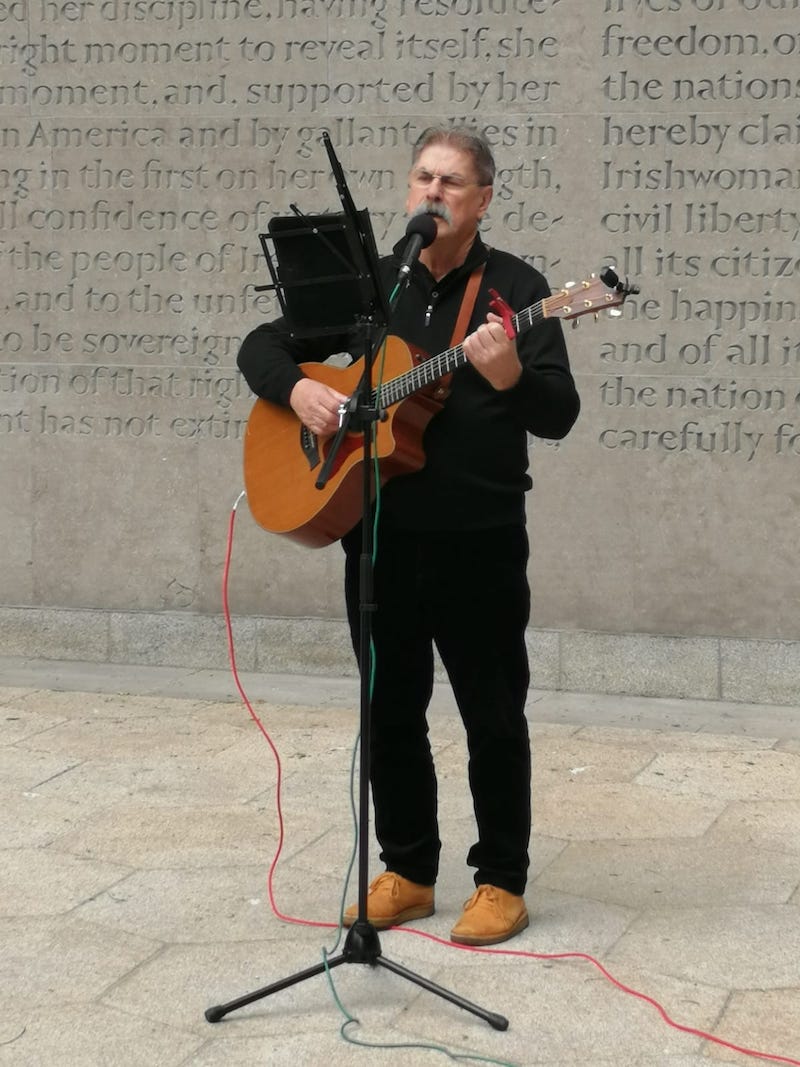
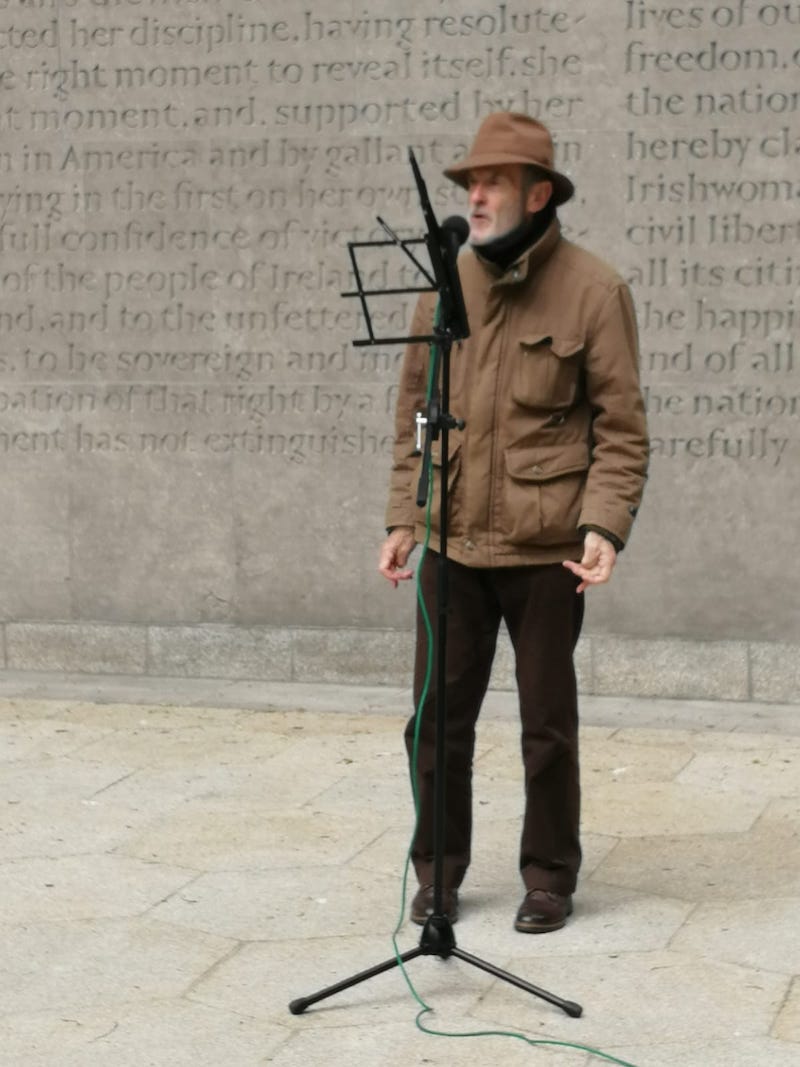





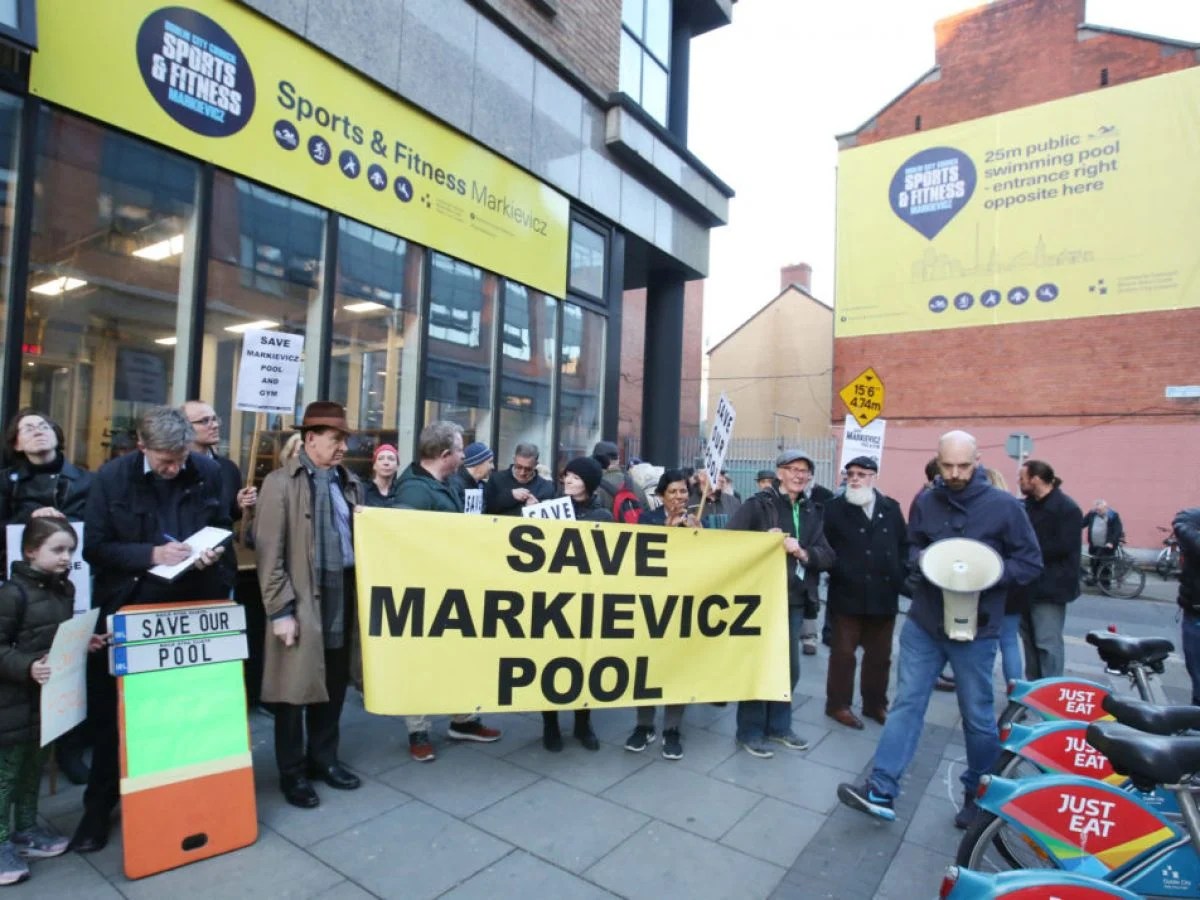
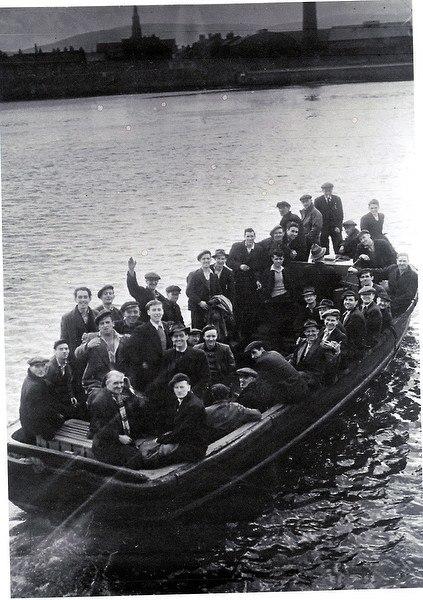
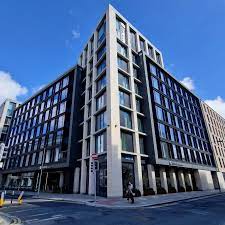
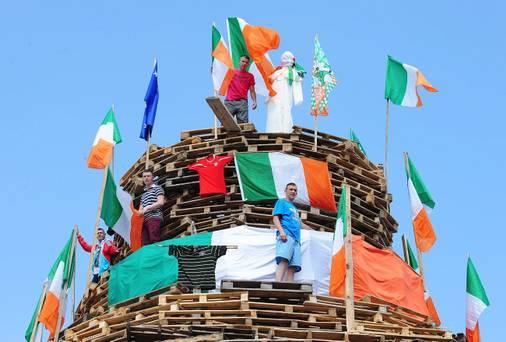
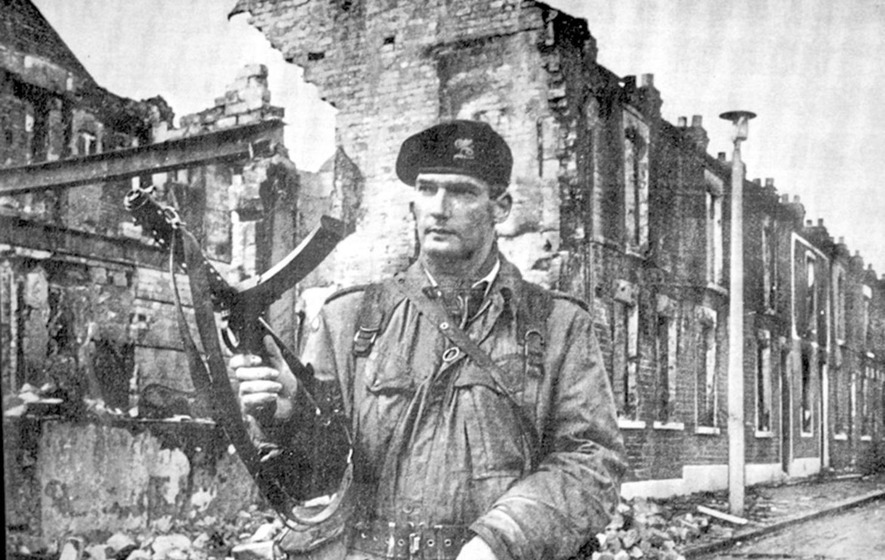

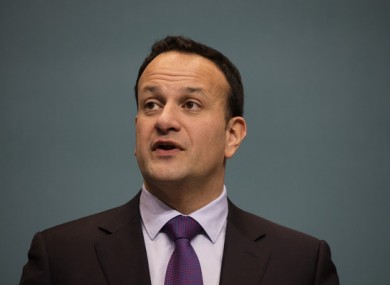


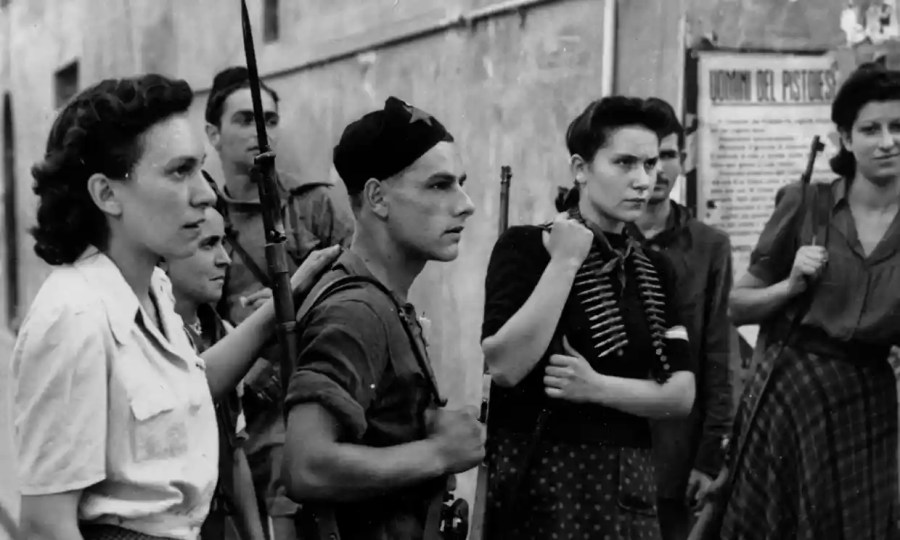

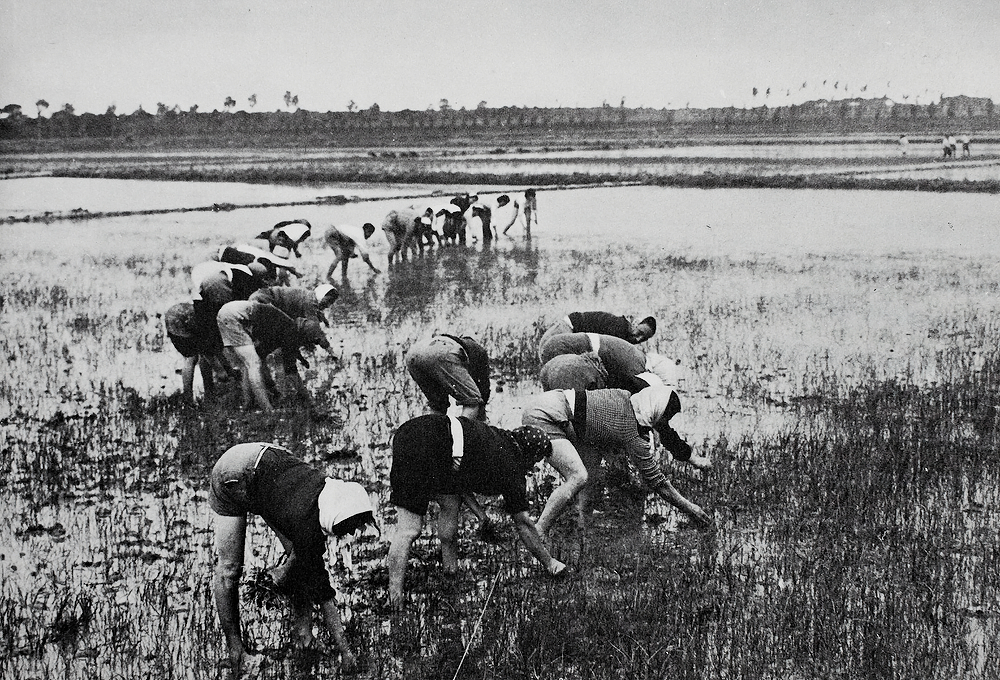


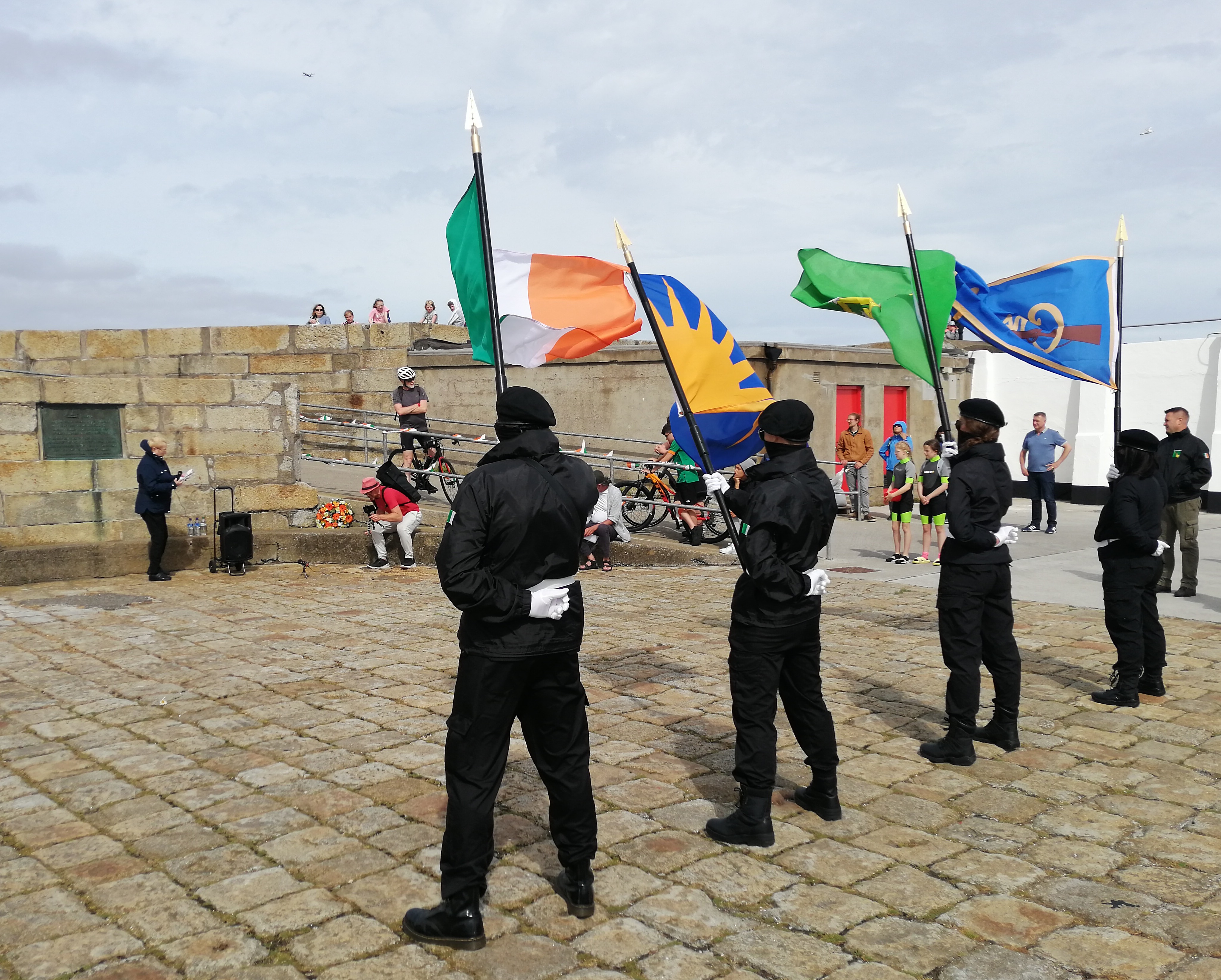

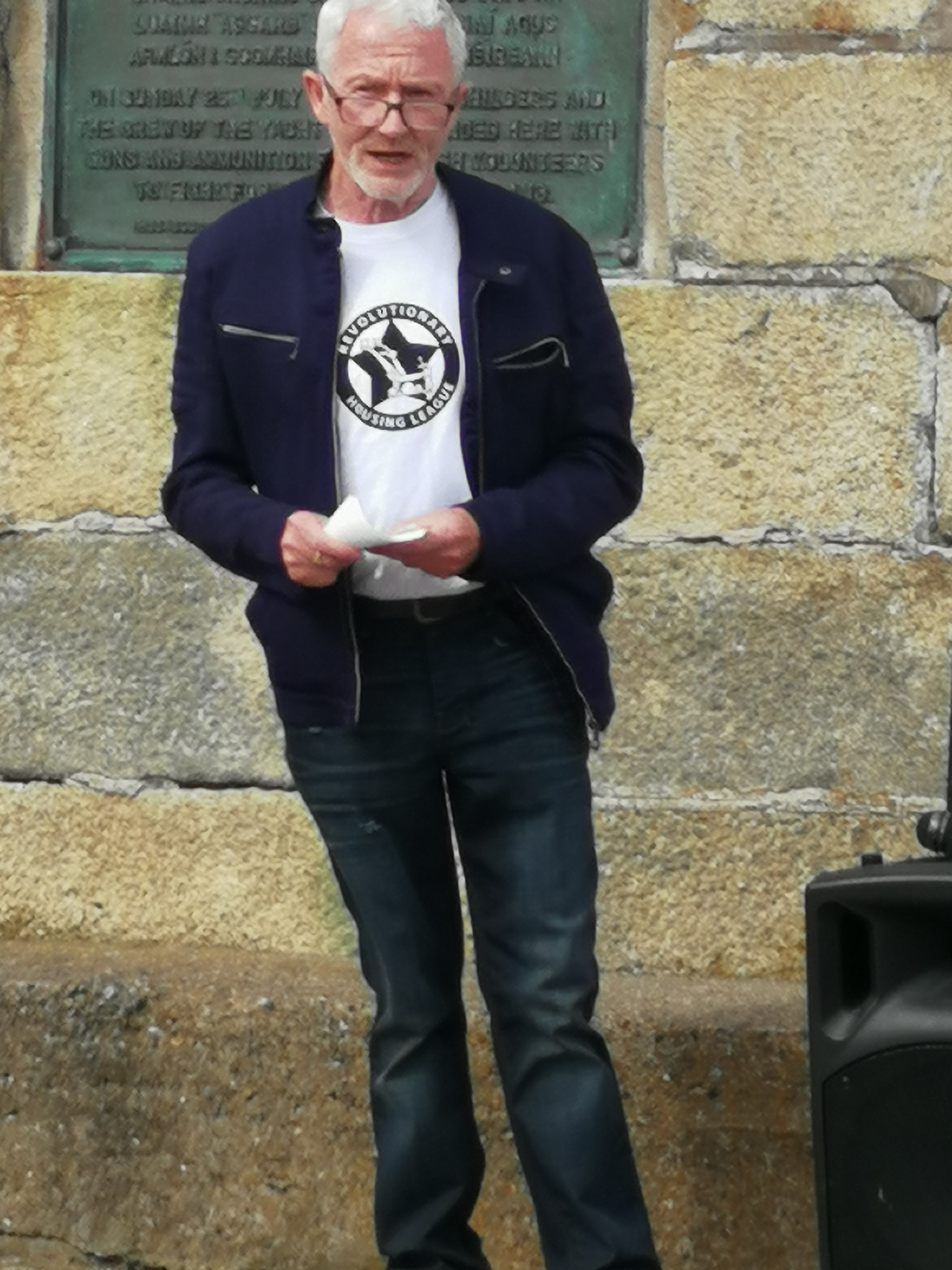




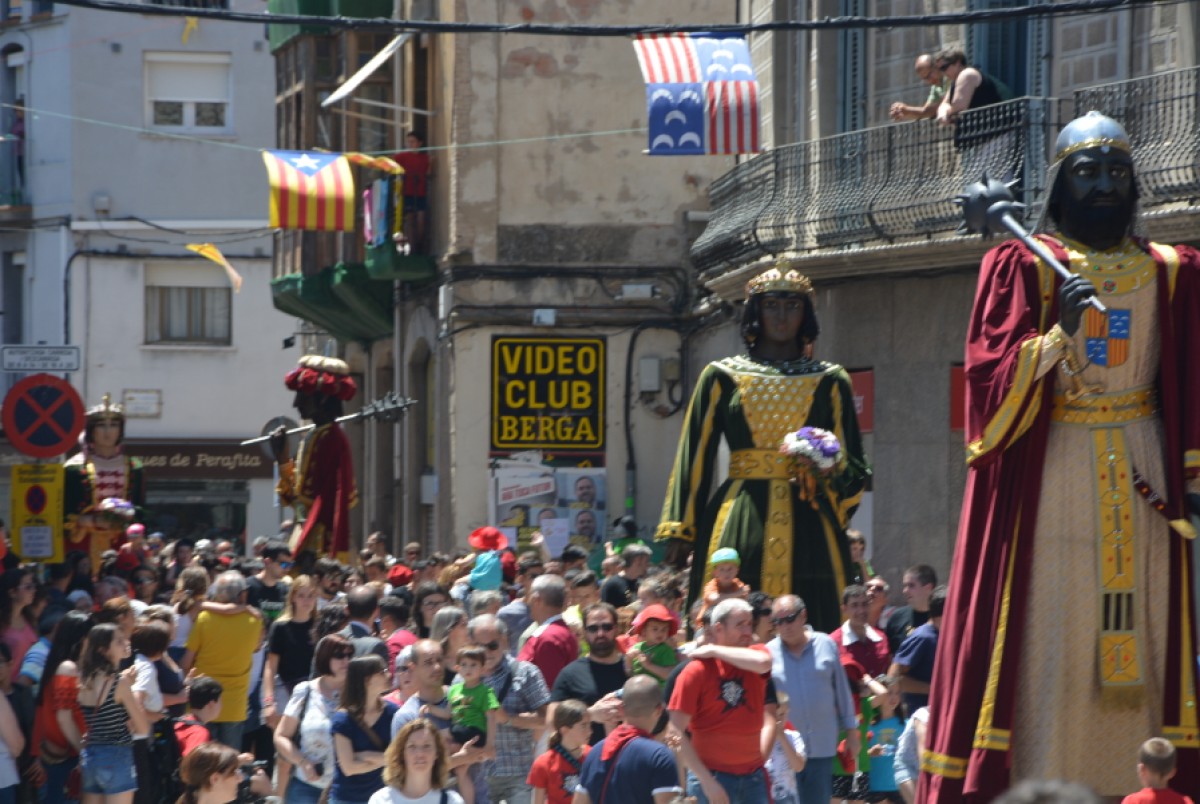
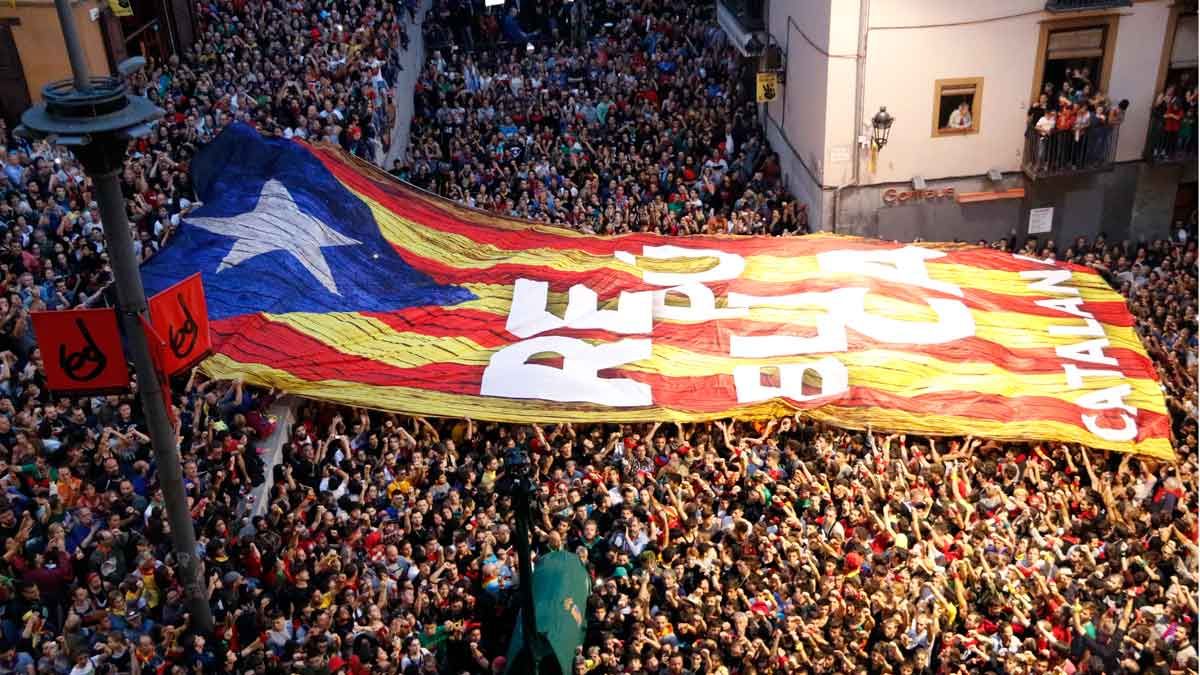
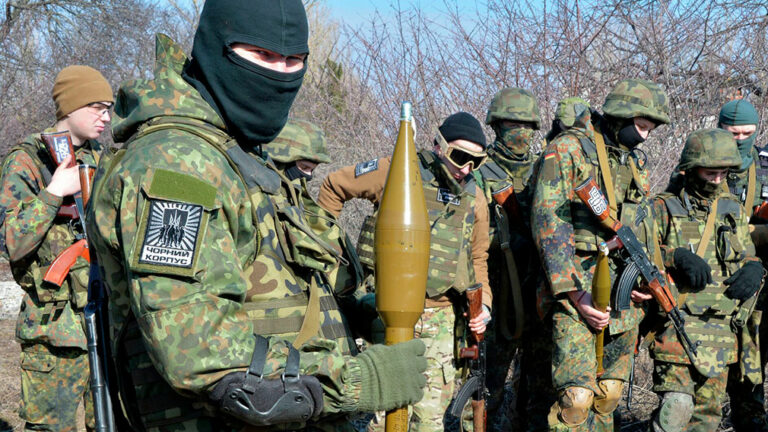

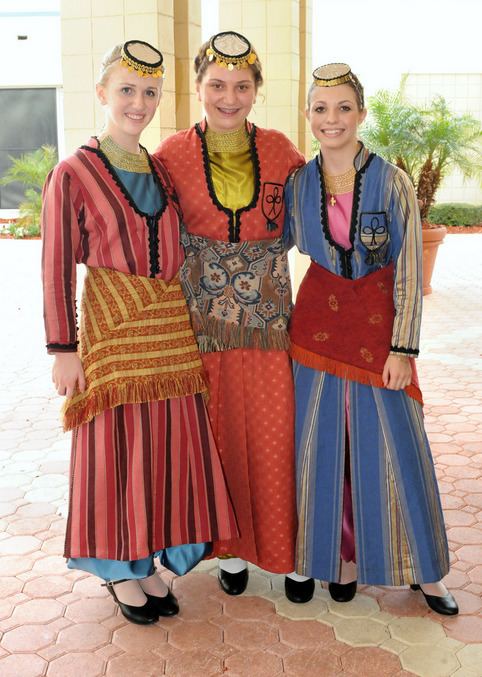

 rebelbreeze