Thursday night (30th), with almost non-stop downpour of rain was a dreary and miserable one in Dublin. Not so however inside the Cobblestone’s back room where solidarity and resistance resounded in song, instrumental and spoken word.
The event organisers, Solidarity Sessions collective, an independent organisation founded late last year have declared a number of times that they wish to contribute to “creating a community of solidarity and resistance through culture.”
Certainly the flags on the stage of the Tricolour, Starry Plough and Palestine conveyed some of the context, as did posters of 1916 martyrs Connolly and Pearse with text pointing out that the first was a migrant and the second, son of a migrant.1
In addition a merchandise stall sold T-shirts figuring the Palestinian Resistance with funds raised going to Palestinian relief work on the ground. Solidarity Sessions have also donated to ‘buy’ a water truck from Uisce for Gaza and also donated to Streetlink Homeless Support in Dublin.
Mark Flynn performing at Solidarity Sessions No.3 in the Cobblestone. (Photo: R.Breeze)
The material performed on stage contributed much of solidarity and resistance also. This was the third event this year and the second at the Cobblestone pub, one other being at the International Bar and the fourth expected at the Peadar Brown pub on Southside’s Clanbrassil Street.
There was a lot of audience participation at times during the evening, with Alan Burke joined from the floor in the chorus of his spirited rendition of The Aul’ Triangle (to which he added a verse of his own) and Sive was accompanied on request by continuous refrain under her singing.
Mark Flynn was also backed by the audience in his adaptation of A Roving I’ll Go to a sailing to Portugal song he told his audience he had put together in minutes of a creative flash the like of which he ruefully admitted not having experienced since. Flynn also sang Bogle’s antiwar Waltzing Matilda.
Alan Burke performing at Solidarity Sessions No.3 in the Cobblestone. (Photo: R.Breeze)
The audience was extremely quiet during Dorothy Collin’s spoken word pieces about assassinations by the Zionist Occupation and Palestinian resistance, interrupting her performance with applause only after a haiku in Irish and at a point where she became visibly emotionally affected.
The Resistance Choir included in their performance an exuberant Bread and Roses, the lyrics originating in a speech at a mostly female textile workers’ strike in Massachusetts, USA in 1912 and Burke sang of an innocent miner framed on a murder charge and hanged – but pardoned posthumously.
Class struggle was also present in Burke’s singing My Name Is Dessie Warren, about a trade union activist with flying pickets2 during the 1970s construction workers’ strike in England. Some were tried under the Conspiracy Laws and jailed, including Ricky Tomlinson and Des Warren.3
The Resistance Choir about to perform at Solidarity Sessions No.3 in the Cobblestone, being introduced by the MC, Ru O’Shea. (Photo: R.Breeze)
ANNOUNCEMENTS
Three imminent resistance events were announced from the stage: Friday morning, due to appear in court4 were two Palestine solidarity activists attacked by Gardaí at Dublin Port and a good show of numbers in solidarity was requested.5
On Saturday a picket in solidarity with Irish Republican prisoners would be held outside Kilmainham Jail6 and on Sunday a demonstration to blockade Dublin Port was announced, people being requested to gather at The Point on the north Liffey quays.
Sive, who performed at Solidarity Sessions No.3 in the Cobblestone. (Photo sourced: Internet)
The organising collective, volunteers on door duty and the performers all donated their services free of charge. Further donations will be made to causes considered worthy, the collective assured their guests and supporters.
Ru O’Shea, MC for the evening, thanked all the performers who gave their services for free, the audience for their attendance, supporters staffing the door, the Cobblestone and sound engineer. The next Solidarity Sessions night will be at Peadar Brown’s on Thursday 4th December.
Ongoing “contributing to building a community of solidarity and resistance.” And outside, it had stopped raining for awhile.
End. Note: If you found this article of interest, why not register with Rebel Breeze for free, so that you will be notified by email of subsequent articles. You can de-register any time you wish.
FOOTNOTES
1James Connolly was born into the Irish diaspora in the poor area of Cowgate in Edinburgh and first came to Ireland as an adult in response to an invitation to found the Irish Socialist Republican Party. Subsequently Connolly went to the USA for a period before returning to Ireland (therefore 3 times a migrant). Patrick Pearse was born and raised in Dublin but his father was English. Both Pearse and Connolly were executed in Kilmainham Jail with another twelve by British bullets after their surrender of the 1916 Rising.
2‘Flying pickets’ operate in principle like the guerrilla ‘flying columns’, sending a large number of union picketers to specific locations chosen in secret, thereby reducing the opportunities for the police etc to mobilise at the spot in advance
3Ricky Tomlinson after release became a famous actor, mostly in comic roles. Warren developed Parkinson’s from forcible injections with restraining drugs and long periods in isolation in jail, dying not long after release. I remember the case and campaigns when I was working in England and a period afterwards when I was briefly active in the Construction Safety Campaign and read statistics about on average a construction worker killed weekly and one seriously injured daily on British construction sites.
4Yes, the Gardaí charging with criminal offences people they pepper-sprayed and batoned without warning.
6Kilmainham Jail was a British colonial prison in Dublin, also used for a while by the Irish Free State to imprison the Resistance during the Civil War/ Counterrevolution. It is now a very popular museum and holds the execution site of 14 prominent Irish Republicans after their surrender in 1916.
The Oasis rock band are performing on 16 and 17 August in Croke Park, the Gaelic sports stadium in Dublin, to a sold out capacity of 82,300. Brothers Liam and Noel Gallagher are the two leading members of the band.
Oasis-marked t-shirts and caps are being sold from stalls in the city and posters announcing the forthcoming concerts adorned shop windows and lampposts but how many fans know the Gallaghers’ background?
Liam and Noel Gallagher of Oasis (Source imag: Internet)
Liam and Noel were born in Manchester to Irish migrant parents but their mother Peggy split from her abusive husband and moved elsewhere in Manchester, taking the kids with her. Liam dedicated Stand by Me to her on Saturday night and gave a shout-out to her her birthplace in Co. Mayo.1
Ireland fed the British ‘industrial revolution’ and the Irish have a long association with Manchester. In 1845 the city’s factories were already attracting Irish workers and its farms probably also agricultural workers to replace English labourers deserting the farms for the factories.
Friedrich Engels wrote The Condition of the Working Class in England,2 published in 1845 (the first year of the Great Hunger) and mentioned the Irish migrants not too favourably. He was writing mostly about Salford, the subject of Ewan McColl’s Dirty Old Town,3 just outside the city then.
By the time Engels’ book was published, the Great Starvation was gearing up. Uncomplimentary references to the Jews can also be found in that work but whatever about that ethnic minority,4 Engels changed his mind radically about the Irish in Britain and came to admire them greatly.
Instrumental in learning about the Irish for Engels were two Irish sisters living in Manchester, Lizzie and Mary Burns, illiterate but intelligent and militant mill workers. Mary and Friedrich became life partners and, after her death, Friedrich became Lizzie’s partner thereafter.
The Irish, as the natives and diaspora of what is often referred to as “England’s first colony” were of considerable interest to the revolutionary partnership of Engels and Karl Marx and more so still as the Fenian movement, the Irish Republican Brotherhood, spread throughout Britain.5
Karl Marx and Frederick Engels, leading theoreticians and activists of the revolutionary socialist movement. (Source: Workers Liberty)
A largely proletarian movement, the Fenians were admitted to the First International Workingmen’s Association6; no doubt the Irish struggle against British domination greatly influenced the political opinions of Marx and Engels in relation to nations under colonialist rule by capitalist states.
The struggle spilled over from Ireland into the Irish diaspora, particularly that in North America, Australia and Britain. In Australia the Fenians’ role seems to have been mostly in facilitating and escaping British jails there7 while in America, they invaded the British colony of Canada.8
The charge of the Fenians (wearing green uniforms) under Colonel John O’Neill at the Battle of Ridgeway, near Niagara, Canada West, on June 2, 1866. In reality, the Fenians had their own green flags but wore a very mixed bag of Union and Confederate uniforms (if they still had them, or parts of them left over from the Civil War), or civilian garb, with strips of green as arm or hat bands to distinguish themselves. (library and archives canada, c-18737)
In Britain itself, the Fenians went to war against the ruling class with dynamite. To spy on them, Scotland Yard created the Irish Special Branch which evolved into the Special Branch, the political police in Britain and in any colony the British had since then.9
The activities of the US Fenians intersected with those of Britain-based Fenians when two of the former, Thomas J. Kelly and Timothy Deasy, American Civil War veterans, were arrested in England. On their prison van’s journey to jail it was ambushed10 and both officers spirited away.
Artists’ impression of the rescue of the Fenian prisoners. (Image source: Internet)
Unfortunately and entirely unintentionally, Constable Brett was killed during the breakout. Refusing to hand over the keys from inside the wagon, he was bending to look through the keyhole when in order to release the prisoners one of the Fenians fired at the lock, the bullet entering Brett’s brain.11
The British police swept vengefully through the Irish quarters of Manchester and Salford arresting at least 28 people but eventually sending five for trial on ‘murder’ charges. Three were hanged, all innocent of intentional killing and at least two probably not even present at the scene.
As sentence of death was passed upon them, all five cried “God save Ireland!” Although the sentences on two were commuted, Timothy Sullivan used those words for his ballad about The Manchester Martyrs, as the executed three became known among the Irish at home and abroad.
The song travelled quickly and became an unofficial national anthem of Ireland and the Irish until it was decisively supplantedafter the 1916 Rising by Peadar Kearney’s The Soldiers Song (latertranslated: Amhrán na bhFiann).12 A memorial to the three was erected in Mostyn Cemetery.
Artist’s impression of the trial of the five convicted including the three Manchester Martyrs. (Image source: Internet)
Manchester continued to be a destination for Irish migrants, for factories still, including motor car production but also post-WW2 reconstruction and motorway building.
Manchester United FC, along with a number of other British soccer teams, recruited Irish players and Irishman Liam Whelan was one of the eight players killed in the Munich air crash of 1958. Another 30 Irish have played for the club at one time or another, some quite famous.13
The city is one of a number of British cities that has a name in the Irish language; Mancunians would probably be delighted to know that their city’s name in Irish is Manchuin.
From the late 1960s to late 1990s the city was host to an active branch of the Troops Out Movement in solidarity with Ireland, also from 1980s to an active branch of the Irish in Britain Representation Group; the Special Branch was active in monitoring and, from time to time, harassing their activists.
The Provisional IRA bombed the city in 1996 as part of its campaign against the British State and — despite a 90-minute warning — 212 were injured.
Today Manchester, alongside South Asian ethnic influences, continues its Irish ethnic presence with Irish traditional cultural activities14 and no doubt the sons and daughters of Manchester’s Irish diaspora will continue to contribute to other sport and artistic culture in Britain and in the world.
8https://www.irishcentral.com/roots/history/irish-fenian-invasion-canada Unlike many other accounts easily available this one gives a reasonable assessment of the rationale for the invasion, including its potential and the reasons of its ultimate failure, the interests of the ruling class of the USA, which the Irish Republican movement should have learned from forever afterwards – but failed to do.
9Often referred to simply as ‘the Branch’ or ‘Branchmen’ (though the organisation of course also recruits women).
10The location, by an arch under a railway bridge, is still unofficially known as “Fenian Arch.”
14Manchester has a Comhaltas Ceoltóirí Éireann club (for Irish traditional music) and informal music sessions, also an Irish dancing school https://www.facebook.com/profile.php; Gaelic Athletic Association clubs including St Brendan’s, St Peter’s, Oisín, and St. Lawrence’s.
For many years the Starry Plough flag in Ireland, associated with socialist Irish Republicanism, was the form of the Ursa Mayor1 constellation in white or silver stars on a blue background, from the time of the Republican Congress (1934-’36).
Somewhat later a different design including an actual plough following the stars and shape of Ursa Mayor on a green background began to be seen. But which was the original? And how, when and why did the other version come into existence?
It is not disputed that the Starry Plough was designed for the Irish Citizen Army, nor that it came to be designed in 1914, as the ICA was reorganising following the defeat of the Dublin workers in the 1913 Lockout. Whatever its colour, that was clearly the original.
It is beyond dispute that the Starry Plough was raised above Clery’s building, across the road from the GPO, during the 1916 Rising. It survived the burning of the building even though one witness spoke of a melted glass stream from its windows running across O’Connell (then Sackville) Street.
The flag disappeared thereafter. A British officer claimed to have taken it as a trophy. If there was more than one copy of that flag at the time, no-one has spoken of it.
When the Republican Congress was founded in 1934 the need for its own flag was felt. The Starry Plough of the ICA seemed appropriate and former members of the ICA were consulted as to the original design and colour and it appears that memories diverged on that issue.
Some remembered the background colour as green, some as blue. Prominent in the latter group was playwright Sean O’Casey, who had been Secretary of the ICA for a brief period in 1914 and presumably was present when the flag design was approved.
Whether or not, between April 1914 and April 1916, surely the flag had been paraded through the Dublin streets on a number of occasions and in any case it had flown over Clery’s in O’Connell Street for five or six days.
Nevertheless when the former members of the ICA were consulted in the 1930s there appeared to be uncertainty about the background colour – was it green or blue? Possibly the majority remembered it as blue or perhaps the opinion of O’Casey, who insisted on blue, was taken as the most valid.
In May 2022 former IRSP comrades of former leading IRSP activist Mick Plunkett stretch the blue Starry Plough version over the coffin containing the remains of the latter. During the 1970s-to the 2000 the blue version of the flag had been particularly associated with the IRSP.(Source photo: Seamus Costello Memorial Committee FB page).
So the flag of the Republican Congress was made a plain blue background with the shape of Ursa Mayor outlined in white or silver stars (and no actual plough design). That design was flown in Irish Republican colour parties from the 1960s at least and adopted too by the Irish Labour Party.2
A problem for the claim that the original was blue arose in the 1950s when an ex-British Army officer offered the Irish National Museum what he claimed to have been the Starry Plough which he said he had removed from the ruin of Clery’s. The background colour was green.
O’Casey was contacted by the NMI and insisted it could not be the original, maintaining that had been blue. To bear this out, he submitted a watercolour of what he claimed was Megahey’s (original artist) design work, in which the background was blue but did include a plough.3
The watercolour submitted by O’Casey which he claimed was the original design of the man who designed the flag, William Magahey. (Copied from article about the conservation of the original flag in History Ireland).
There was no way to prove the provenance of the watercolour. Nor was it impossible that a change of mind had led from a blue background on a design artwork to green on the produced flag. But O’Casey insisted that not only the artwork but the finished product had been blue.
Well then, why not investigate the artefact, the one claimed to be that which had been taken back to England by the British officer?
The original flag in the possession of the NMI back to front prior to conservation work. (Copied from article about the conservation of the original flag in History Ireland).
The NMI curator invited former members of the ICA only4 to view the artefact and although distressed at the state in which they saw it they confirmed that it matched their recollection. For the curator it seems that was the clincher and he then authorised its purchase in 1956.5
Around 2012 (the article does not give a date) an NMI curator charged with preserving the artefact set out to carry out modern method analysis of the material and its construction, paint and the more than 50 holes in it corresponding to .303 machine gun bullet impacts.6
The original Starry Plough flag in correct orientation (Photo sourced: NMI on line)
Former ICA members had remembered a golden edging on the flag, traces of which were indeed found on the green specimen. It all checked out. A clever hoax? Possibly, but for an eventual price of £150, a relatively small amount even back in 1954?
The ICA members viewing the artefact believed it was the original, the British Officer testified as to his having taken it and also produced an Irish Times account by himself dated 11 May 1916.7 The NMI tests all pointed to the conclusion that it was the original flag – and the background was green.
But O’Casey was adamant that it had been blue. And what about the blue watercolour, allegedly the artist’s design?
It’s possible that between the design outline and manufacture, a change in the desired background colour had taken place. But not only colour – the plough design on the watercolour is very different from that on what we must now conclude was the original flag.
We have no evidence to verify that the watercolour was the original designer’s. O’Casey might have painted it himself, from his mistaken memory, for example. Or is it possible that he falsified its origin in order to convince the NMI that the flag had been blue and not green?
Any such effort would not have been about an aesthetical judgement in favour of one colour over another but rather about removing the colour associated with nationalism.
O’Casey resigned from the ICA in a dispute8 about allying with nationalism but more tellingly, he disagreed after the fact with Connolly throwing himself and his forces into an uprising against colonialism9 – a nationalist rather than socialist uprising, as O’Casey would have seen it.
Connolly’s thesis was that the advance towards socialism was not possible in a colony such as Ireland without allying the socialist forces with the most progressive and revolutionary national bourgeois forces, i.e the IRB and the Irish Volunteers.10 O’Casey could not agree with that.
In Innisfallen Fare Thee Well (1949)11 he wrote: “The Easter Rising had pulled down a dark curtain of eternal separation between him and his best friends: and the few that had remained alive and delightful, now lay deep, with convivial virtues, under the smoking rubblement of the Civil War.”
The symbolism of the original green, the colour of Irish Republicanism since the United Irishmen of the late 18th Century would have been anathema to the later O’Casey. Was he indulging in revisionist wishful thinking?
Or perhaps trying to ensure that in any future conflicts, the Irish Republican and Socialist trends would be kept firmly separate?
Two green Starry Ploughs on view among other flags carried by a section of marchers at the Bloody Sunday massacre commemoration March for Justice in Derry in January 2025. The one in centre of photo is a mass-produced reproduction whereas to the left one can see part of a quilted sewn individual one. (Photo: D.Breatnach)
There are others who strive to ensure the exact opposite, who as Connolly did, see in the combination of those two strands Ireland’s only chance for freedom from colonialism, neo-colonialism and an advance towards a socialist society.
For them, the original design and colours of the Starry Plough is their flag and its entire symbolism points the way forward.
End.
FOOTNOTES
1In the USA this constellation is commonly referred to as “the Big Dipper”.
2Rarely used by the Irish Labour Party nowadays. It was popular with the Irish Republican Socialist Party for decades but nowadays a version in white stars on a black panel on a red flag is flown by the organisation.
7‘The rebels, on taking possession of the Imperial Hotel in Sackville Street, hoisted their flag over the building, and there it remained intact on one of the ridges of the front wall while the entire contents of the premises were being consumed by fire. At great personal risk the flag was eventually brought down by second Lieutenant T.A. Williams of the 9th Reserve Cavalry, Kildare Barracks, assisted by Inspector Barrett, Dublin Metropolitan Police.’https://historyireland.com/citizen-armys-starry-plough-flag/
8https://www.dib.ie/biography/ocasey-sean-a6553 O’Casey objected to the enrolment of Constance Markievicz in the Irish Citizen Army because she was also a member of Cumann na mBan, which had been set up as a female auxiliary organisation to the Irish Volunteers. O’Casey proposed that membership of the ICA precluded joint membership with any Irish nationalist organisation. Having had his motion defeated, O’Casey resigned from the ICA in July 2014.
9‘[Connolly’s] speeches and his writings had long indicated his new trend of thought, and his actions now proclaimed trumpet-tongued that the appeal of Caitlin Ní hUllacháin—“If anyone would give me help, he must give me himself, he must give me all”—was in his ears a louder cry than the appeal of the Internationale, which years of contemplative thought had almost written in letters of fire upon his broad and noble soul. Liberty Hall was now no longer the headquarters of the Irish Labour movement, but the centre of Irish National disaffection.’ https://historyireland.com/sean-ocaseys-battle-of-words-with-the-volunteers/
Gustavo Petro and Truth Commission President Francisco de Roux.
I recently read an article written by the former Colombian truth commissioner and academic at the Los Andes University, Alejandro Castillejo titled Teaching After Gaza?: Indifference Perpetuates Barbarism.(1)
As its title indicates, it deals with Gaza, but also covers other conflicts, such as Ukraine and also the Colombian conflict itself.
In the text he puts forward a question “When we say ‘Never Again’, exactly what should never happen again?”
It is a good question and one that is not often asked; he talks of the continuities, as Gaza is ongoing and will continue after the genocide, it won’t end in some precise reference point.
I would like to deal with another aspect of that question.
Once upon a time the social organisations in Colombia, the NGOs, the left groups, both legal and illegal ones, reformists (some illegal) and revolutionaries (some of which are legal), were very clear about what they meant when they gave voice to the slogan Never Again.
It is a common phrase. There are some reports from Colombian organisations that include it in their names. I had the honour of contributing, through my field work to the first two reports on the 14th Zone.(2)
Outside of Colombia, there is more than one truth commission report that has that as its name, such as the REMHI Report of Guatemala,(3) or the report on the disappeared in Argentina.(4) We were all clear, we did not want a repetition of the terrible night.
We spoke of the bloodbath and many were equally clear that they did not want a repeat of the circumstances that made it all possible, necessary and justifiable in the eyes of the state and bourgeoisie (a term disgracefully fallen into disuse in current times.)
Nowadays, it would seem that nobody is clear about it. The Special Jurisdiction for Peace (JEP) understands Never Again to be never again the FARC and some “rotten apple” in the state’s military forces.
The Truth Commission hadn’t a clue as to what it understood Never Again to be, other than some generic, non-specific abhorrence of violence in and of itself, but not of the system and circumstances that gave rise to the bloodbath.
Less still to the rivers of blood that flow through the fields and furrows of the country. The Commission absolved the state for the so-called False Positives for which the state acknowledges and accepts the figure of 6,402 victims.
It was a state crime, acts of state terrorism, crimes as appalling as they were evident.
As far as the Commission was concerned it was not a state policy to take youths to the countryside, dress them up as guerrillas and murder them to present them in dispatches as part of a media campaign that sought to show the state was winning the war.
So, if it was not a state policy, when we say Never Again, are we saying that the state shouldnot commit such a crime in the future?
Or are we asking thousands of crazy soldiers not to think of putting boots on the wrong way round on the feet of young civilians that they just murdered and dressed up as a guerrillas?
In the first case, it would be something we could demand of the state, in the second case if they were really the demented actions of the soldiers, well even the state would be a victim in that case.
Even the paramilitaries sometimes say No More, rather than Never Again. In zones where they displaced the entire population, they don’t have to continue killing anyone. They can say No More.
With groups such as the Unión Patriótica that they decimated, or groups such as A Luchar that they finished off, they can say No More.
There is no need to continue murdering as the dirty work has been done, or at least it got to a point in which it had achieved its aim. If there is a need to repeat it, they will, which is why they say No More rather than Never Again.
This juxtaposition of No More and Never Again shows the banality of the slogan now. Is it really Never Again or do they speak of “until the next time there is a need to”?
We can see just how empty the refrain of Never Again is by looking at some examples of violence in Colombia.
In the 90s, the levels of violence in the port of Buenaventura began, for various reasons, to dramatically rise. The violence cannot be explained by reference to one single fact or motive.
However, there are contributing factors and whilst I don’t wish to reduce the explanation to something simple, we can point to the privatization of the port as a key factor in the rise in violence.
In 1991, following recommendations from the World Bank, Colombia — in the context of the growing forward march of neoliberalism — privatized the ports of the country.
In the case of Buenaventura this resulted in the loss of jobs in the port area, a reduction in salaries, both of which impacted the economies of the neighbourhoods where the workers spent their wages, generally increasing poverty in the city.
The port workers used to be able to apply for grants for their children to study, but with the privatisation that was gone, thus reducing not only the labour market but also the possibility of escaping poverty through studying.
Then came the plans to expand the port and the massacres such as Punta del Este, amongst others, to clear out those who lived where they were going to construct the new port zones.(5)
So when we say Never Again, it is clear that they don’t want the youths of the city to be killed, if they see another alternative, but does Never Again include the plans to privatise and expand the port?
Or we could look at the violence in the mining areas of the country, such as Southern Bolívar (gold) or Cesar and La Guajira (coal).
Once again, we see the hand of the grey men, the banal ones from the World Bank, the IMF or state bodies who like Eichmann never directly killed anyone but rather moved pieces of paper around knowing what the consequences were of those bureaucratic procedures in which they took part and knowing that the new realities they sought to impose required a high dosage of violence.
In the 1980s, the WB had been promoting the expansion of mining in Latin America, the abolition of restrictions on foreign investment, the exporting of capital etc.
In the case of Colombia, it didn’t need to do that much, the national bourgeoisie did the dirty work, without even a nod and a wink from the grey men at the WB. A key figure in all of this was Ernesto Samper, the head honcho in the country between 1994 and 1998.
It is worth bearing in mind that this satrap likes to present himself as a human rights defender, when it was his government that legalised the paramilitaries and is now one of the fiercest defenders of the current government of Gustavo Petro.
Not only was he the president of the country from 1994 to 1998, he was the owner of various mining companies.
He tried to introduce a new mining code but it was overturned by the Constitutional Court. In 1998, another satrap and mining businessman, Andrés Pastrana, took over as president and implemented a new mining code, which is currently in force.(6)
During this whole process, the massacres in Southern Bolivar and other mining regions of the country intensified, whilst the paramilitaries tried to take these zones for the multinationals. In the case of Southern Bolivar they were very explicit about it.
After the murder of the leader Juan Camacho Herrera they played football with this head, placing it on a stake facing the mines, declaring that they had come to hand over the mineral resources to other people, who would, according to them, make a more rational use of them.
So, when we say Never Again, does it mean Never Again to the national and international plans to take control of mineral resources? Or do they just mean that they are not going to play football with the heads of those who oppose these plans?
Nowadays the discussion in Colombia centres round the question of violence as something alien to the economic projects and they talk about the individuals.
The slogan is to stop the war, but only a few say stop the plans of the WB, the IMF, the imperialist powers such as the USA and Europe. When the president of the Truth Commission spoke to the UN he stated:
We have come to understand that the solution to the armed conflict is through respecting each person as an equal and we should respect each indigenous and afrocolombian child with the same commitment that we show to presidents, the wealthy, the powerful, and personalities, military generals.
That all personality cults end and we love and respect each other as people entitled to the same dignity. And that in Colombia and the world over all of us contribute to promoting a new sense of ethics based on human dignity and that all the spiritual traditions lend their support to this.(7)
Pass the joint round, take out the guitar, sing Kumbaya and kiss each other. In his speeches and the Commission’s report, the economic model is not questioned, in fact through the terms of reference they restricted the researchers and even banned them from dealing with certain issues.
Issues such as the role of the banks, the institutions and even the role of the USA in the conflict, which was reduced to isolated comments lacking in depth. So Never Again means never again showing disrespect to someone and that we not seek recourse in violence to solve differences.
But that violence is not fortuitous and the bullets, the machetes, the chainsaws [common weapons in massacres] are used when the first victim of the economic plans refuses to submit. So, Never Again has become: accept the established order and its plans!
A Never Again to violence that says little about structural violence is an exhortation to surrender and is a Never Again until such time as it is necessary to resort to violence to impose the will the of the capitalist class. Never Again for the moment, just like in Gaza.
(2) Although the Never Again project changed since its foundation in 1995 in terms of participants and leadership, some of the reports are available on the site https://nuncamas.movimientodevictimas.org
On the 21st of April as he reached his house paramilitaries murdered Narciso Beleño, the leader in Southern Bolívar, Colombia, just two years after the murder of two other leaders Teo Acuña and Jorge Tafur.
I knew Narciso Beleño. Our paths crossed many times, on occasion on literal paths in the countryside as Narciso travelled the country in his struggle to defend rural communities in Colombia.
But I don’t want to talk too much about Narciso, the person, as there are others who can pay greater tribute to him in that regard, though his name always made me curious: Narciso (Narcissus).
Narcissus was a figure in Greek/Roman mythology who as a punishment from the gods fell in love with his own reflection. It is where we get the word narcissist from. But unlike the Greek/Roman figure, our Narciso was kind, caring, generous and selfless.
There are thousands of people, whole communities that can testify to his qualities as a person, a fighter and a leader.
When he was murdered the President, Gustavo Petro tweeted that “we failed Narciso”. But who failed Narciso? The communities? His comrades in Fedeagromisbol? Or were they the youths from the Front Line who are still in jail? Tell us who! A generic “We doesn’t do it, it is a lie.”
He should explain who failed him, how and why and Petro should also tell us what he intends to do prevent there being more murders of leaders.
Once upon a time we never doubted to putting a name and surname to the matter. We didn’t hesitate in naming the company, the board of directors, the landlord, the local politician. Sometimes we even ran the risk of putting a name and military rank to the affair.
A long time ago a gradual process began whereby some stopped naming them. And now under the Petro government it is not thought well to name them. Once upon a time we all named Fedegan, the cattle ranchers’ association, as backing the paramilitaries.
The Fedegan functionaries even acknowledged this. Now one of the representatives of that association, which is currently involved in refounding paramilitary structures, represents the State in the dialogues with the ELN.
Once upon a time we named the mining companies that have been trying for decades to take control of the gold in Southern Bolivar and other regions. It is worth remembering that Narciso travelled the country. More than one mining company had it in for him.
In Science Fiction and Fantasy novels, evil and magic lose their power over mortals when they are named by their real name and so the best kept secret is their real name. In real life something similar happens. Paramilitaries as something dark, shadowy and hidden defeats us.
When we name those behind this black magic with their real names, it begins to lose its power over us. They are not unknown to us. We withdraw cash from their ATMs every day, we purchase their services, we drink their products, we work in their companies and the odd eejit votes for them.
No company will say, “buy my product we are the murderers of social leaders” or “vote for me, I have murdered thousands.” They hide this for a reason and for that same reason we should expose their dark souls to the light of day.
The best tribute Petro can pay is to explain who failed and name the murderers just like he used to do before he was President. They are the usual suspects. Petro likes to say he governs but does not have power.
Well, tell us who holds that power that he don’t have, with names and surnames, economic group, foreign company. If we all failed, then nobody failed, if he was murdered by those who cannot be named, then nobody murdered him.
We usen’t to hesitate in talking about paramilitaries, the economic and political interests and reasons behind their actions. We named the business associations, the megaprojects in each region, we proved it.
Some sought justice in international tribunals, others in Russell style tribunals of opinion. We have to pay tribute to Narciso and other victims of the paramilitaries and name the murderers. Uribe tried to fool us with the Bacrim (Criminal Gang) euphemism. Neither Gulf Clan or anything else.
The same ones who disappeared Edgar Quiroga and Gildardo Fuentes in 1999 (in Southern Bolívar) murdered Narciso 25 years later. Say it loud and clear, Mr. President.
The 1916 Rising is usually seen as a nationalist Rising of Irish Republicans with perhaps some socialist involvement. Even Connolly is often portrayed as a patriot only (see the song James Connolly the Irish Rebel) with socialist views.
Of the six organisations that participated actively in the 1916 Rising1 only one of them was specifically of the Irish working class. Perhaps that’s why the great influence of the working class on the Rising tends to be generally overlooked.
As is well-known, James Connolly is one of the Seven Signatories2 of that wonderful and progressive document, the 1916 Proclamation of Independence. However, Connolly only became part of the planning committee for the Rising a very short time before the scheduled date.3
That is true but we should ask ourselves why they included him at all. The Irish Volunteers had a nationwide organisation with the also nationwide Cumann na mBan as auxiliaries, whereas Connolly could perhaps mobilise a couple of hundred fighters.
(Photo sourced: Internet)
It is said he was brought on board because the IRB believed that his constant demand for a Rising during WWI and the military exercises of the Irish Citizen Army indicated that Connolly was likely to lead the ICA to rise on their own and would spoil their schedule.
How likely was he to do that? It’s true that as a socialist Connolly was horrified by the slaughter of war, where workers of one state are sent to kill and be killed by workers4 of another and perusal of his writings do show that he thought an uprising to sabotage war was desperately needed.
Would he have gone ahead alone with the roughly 250 men and women of the Irish Citizen Army, hoping perhaps to inspire a popular upsurge and to encourage the Irish Volunteers to join it, in spite of even their leaders?5 It’s hard to believe so but of course it’s possible.
However, from the moment the Republican planners of the Rising took Connolly on board, we can see a significant organisational shift towards the working class in Dublin and nowhere more so than around Liberty Hall, where the first flag for an uprising was hoisted and the Proclamation printed.
Liberty Hall was of course the headquarters of the Irish Transport & General Workers’ union,of which James Connolly was the leader at that time and also editor of its newspaper,The Irish Worker.
And for a person brought in to the planning so recently, how extraordinary that Connolly was given the rank of Commandant General! A responsibility he took seriously, sending couriers around the country and attempting to direct defence preparations around the various Dublin garrisons.
The first battle flag of the Rising
A week before the Rising Connolly and the Irish Citizen Army had an Irish Republican flag raised above Liberty Hall as a flag of war and the one chosen to do the raising was a girl of 16 years, Molly O’Reilly.6
The associated circumstances are worth retelling, if only to illustrate the difference between the Liberty Hall of then and today. Adults took classes in Irish language and cultural activities there while their children and those of union activists waited for their parents, took dancing classes or played.
In playing, Molly O’Reilly accidentally broke a window and in terror and shame, ran home.
When Connolly sent a message to her home that he wanted to see her, she went to Liberty Hall expecting a severe telling off. Instead he told her not to worry and what he was asking of her. She was proud to do it but so small she had to stand on a chair to pull the cord raising the flag.
Remnant of the flag raised on Liberty Hall (Image sourced: National Museum)Commemoration ceremony “Women of 1916” with relatives of Molly O’Reilly in place of honour (note the uniforms are of Irish Volunteers rather than Irish Citizen Army).(Photo: D.Breatnach)
Of course we know that flag was not of the revolutionary workers but instead the harp on green which was that of the early Fenians and was very similar to that of the United Irishmen, the first revolutionary Irish Republican organisation.7
Those early Fenians were mostly composed of working class members and their 1867 proclamation to the world was largely proletarian in outlook. In Britain, the Fenians formed part of the First International Workingmen’s Association which was led by Marx and Engels.
Their flag was flown over at least one of the 1916 Rising garrisons, I believe at theJameson Distillery in Marrowbone Lane.
Similar flag to that hoisted over Liberty Hall (Photo sourced: Internet)
The other flags of the Rising included the Tricolour, presented to the Irish Republicans of the ‘Young Irelanders’ by women in revolutionary Paris in 1848, which was one of two flown on the roof of the GPO, the headquarters of the Rising.
Sharing the GPO roof with the Tricolour was the flag made only days before from domestic material and painted with the words “Irish Republic” in the house of Constance Markievicz, an officer in the Irish Citizen Army, shortly before the Rising.
The Irish Citizen Army’s own flag, the Starry Plough, flew over the Clery’s building facing the GPO. Sadly today most Irish people do not know that flag, though awareness of it and its background is growing among the indigenous Irish and the migrant community.
The design of the Starry Plough, flag of the ICA as it was in 1916 (Image sourced: Internet)
The Irish Citizen Army was formed as a workers’ militia during the great Lockout and strike of 1913-1914, to defend against the attacks of the police, the physical repressive front line of the capitalist class; the ICA’s flag was placed above Murphy’s Imperial Hotel in Clery’s.9
The Irish Citizen Army on exercises at their grounds near what is Fairview today (Photo sourced: Internet)
Though its constitution was more nationalist than socialist, the ICA was in its membership and purpose the first workers’ army in the world and when reorganised a few years later, represented also working class feminism, recruiting women, some of whom were officers commanding men.
Once the preparations for the Rising were in tatters with MacNeil’s countermanding order, where did organisers gather to discuss what to do? In Liberty Hall, the building of the Irish Transport and General Workers Union and it was there that the decision to rise on Monday instead was taken.
It is hard to overstate the importance of the fact that the decision to go ahead with insurrection was taken in the building which had become de facto the HQ of the revolutionary working class in Dublin, with an illegal flag of rebellion flying and where the Proclamation was to be printed.
The writing and text of the Proclamation
The wording of the Proclamation is thought largely composed by Pearse but influenced by Connolly, including its address to “Irish men and Irish women” and perhaps “We declare the right of the people of Ireland to the ownership of Ireland, and to the unfettered control of Irish destinies”.
Another section which could bear Connolly’s fingerprint reads: The Republic guarantees religious and civil liberty, equal rights and equal opportunities to all its citizens, and declares its resolve to pursue the happiness and prosperity of the whole nation and of all its parts, cherishing all the children of the nation equally.
(Image sourced: Internet)
But, whoever composed or influenced the Proclamation text, it was printed in Liberty Hall. An Irish Citizen Army member went to Stafford Street (Wolfe Tone St. today) to borrow the print type from a printer there to bring back to Liberty Hall, which was under daily 24-hour armed guard.
Having printed the Proclamation in Liberty Hall under armed guard and having decided there to rise on Easter Monday, where did the assault groups for Stephens Green, Castle and the GPO, including the Headquarters Battalion, meet on the morning of the Rising? …. Again, at Liberty Hall.
An early non-combatant casualty of the Rising was Ernest Kavanagh,10 who drew cartoons for the newspaper of the ITGWU, The Irish Worker. For some reason he went to Liberty Hall on Tuesday and was shot dead on the steps of the union building, presumably by a British Army sniper.
The working class in armed resistance
Once the Rising was in motion, the Irish Citizen Army had primary responsibility for two areas, the Stephens Green/ College of Surgeons garrison and the Dublin Castle/ City Hall garrison but also fought in other areas, for example on Annesley Bridge and in the GPO/ Moore Street area.
All who fought alongside them commented on their courage and discipline. After the surrender, many, along with Irish Volunteers were sentenced to death, most being commuted to life imprisonment. But two leaders of the Irish Citizen Army were shot by firing squad.
One of the areas from which the British forces were sniped at for days after the Rising was the docks area, then predominantly surrounded by working class residential areas.
A question we should ask ourselves is why the forces coming from Britain to suppress the Rising landed at Dún Laoghaire, from where they had to march nearly 12 km (approaching eight miles) to Dublin city centre, instead of at the excellent Dublin docks on the Liffey.
Hugo McGuinness, who specialises in history of the North Wall area, believes that the British expected Dublin to be in the hands of the working class resistance and that it was simply too dangerous to land British troops there, though gunboats could fire from the Liffey.
Certainly, the British believed Liberty Hall and buildings along Eden Quay were occupied as fighting posts by the Irish Citizen Army and they fired artillery at the union building from Tara Street, as photos of shell holes in that building and right through to the next testify.
Photo shell-damage Liberty Hall (first building with corner towards the camera, viewed northwards from Butt Bridge) as one of a set of commemorative postcards. (Photo sourced: Internet)Another postcard with closeup of shelling damage to Liberty Hall and to the building next to it. Interestingly, in this one Liberty Hall is labeled “the Rebel Headquarters”. (Photo sourced: Internet)
Much is made in some historical accounts of the opposition to the Rising from sections of the Dublin population, during and immediately after the Rising. The city was the capital of a British colony, only just over a century earlier spoken of as “the second city of the British Empire”.
A substantial proportion of the wealthy and middle classes were Loyalist, including some Catholics; even ‘nationalist’ sections were committed to supporting the UK in WWI and John Redmond, leader of the ‘nationalist’ political party had openly recruited for the British Army.
Also, among the working class and the lumpen elements, many were depending on “Separation Allowances” with regard to males serving in the British Army. It is true that the insurgents in some places had to threaten, club or even shoot some civilians who tried to obstruct the Rising.11
These incidents during the Rising were not many but afterwards there were insults and other things thrown at prisoners being marched to imprisonment (or firing squad). The city was under martial law but even so a Canadian journalist reported the insurgents being cheered in working class areas.
There were also other individual witness accounts, such as a man on a tram saluting prisoners in Parnell Street until threatened by soldier escorts and a firefighter in the GPO doing likewise. A year later most of even the earlier hostility had changed to admiration and pride in the fighters.
Leadership of the working class
James Connolly wrote and said many things of importance but surely, with regard to the struggle for Irish national independence, the greatest of these was: “Only the Irish working class remains as the incorruptible inheritors of the fight for freedom in Ireland.”
By that he meant — and I agree — that all other social classes can gain something from selling out the interests and resources of Irish nationhood but that the working class can gain nothing from that.
The Irish working class staked their claim on the struggle for Irish independence in 1916 but have not succeeded in leading it and because of that, that struggle remains to be won.
Today and in other days, remembering that long struggle and the class whose leadership revolutionary socialists seek to represent and to uphold, we declare the need for that leadership over a broad front of all others who wish to struggle to advance.
In doing so, we declare that far from the working class having to wait for socialism, in the course of national struggle it must also shapeits own demands around the economy, natural resources, infrastructure, social services, social questions, culture and, above all, to the fruits of its labour.
End.
FOOTNOTES
1Irish Republican Brotherhood, Irish Volunteers, Irish Citizen Army, Cumann na mBan, Na Fianna Éireann, Hibernian Rifles.
2All of which were executed by British firing squad, along with another seven in Dublin and yet another in Cork. The 16th execution was by hanging in London.
3(See Sources: Cooption of James Connolly etc) Connolly was a lifelong socialist and a revolutionary throughout his adult life, author, historian, journalist, song-writer, trade union organiser; active politically in Scotland, Ireland, New York and back in Ireland.
4The international socialist movement viewed the imperialists’ movement towards war with horror and in international conferences vowed to oppose it with all their might, including turning war resistance into revolution (“War against war”). However, once imperialist war was declared that resolve collapsed in most states, Russia, Germany and Ireland being notable exceptions and each saw a rising against war, in Ireland’s being the first.
5Joseph E.A. O’Connell (Jnr.) suggests a possible intention of goading of the State into attacking him and the ICA which might spark the general rising.
9It was a good central location but more than that – the Hotel was one of the businesses of William Martin Murphy, chief organiser of the employers’ bloc to break the Irish Transport & General Workers’ Union.
10Kavanagh was a supporter of the workers, of votes for women and against participation in the imperialist war, contributing cartoons also to the Irish Citizen, Fianna and Irish Freedom publications, also to accompany poems of his sister, Maeve Cavanagh McDowell.
11I do not include in this the three members of the Dublin Metropolitan Police who were a force for the British occupation and also for the Dublin capitalists. The Irish Citizen Army in particular had good reason to settle accounts with them for attacks on them including inflicting mortal baton injuries on two workers during a charge on a union meeting on 30th September 1913 on Eden Quay and beating people and smashing up furniture in Corporation Street a little later.
In Dublin’s south docklands the property developers and the corporations dominate city planning and therefore the landscape. And the working class community there feel that they’re being squeezed out.
I’ve met with some concerned people from parts of this community in the past to report on their situation and concerns for Rebel Breeze and did so again recently.
A view eastward of a section of the south Liffey riverfront, showing a very small amount of more traditional buildings squashed between or loomed over by the “glass cages that spring up along the quay”. (Photo 1 March 2024: D.Breatnach)
YOUNG PEOPLE – education, training, socialising
“There’s nothing here for our young people” said one, expressing concern over the attraction for teenagers of physical confrontations with other teens from across the river which have taken place on the Samuel Beckett Bridge over the Liffey.
A young man training as an apprentice in engineering attends a mixed martial arts club but has to go miles away to another area to attend there. Between his industrial training, travel and athletic training he has little time to spare for socialising.
I comment that those sporting activities tend to concentrate on male youth and only some of those also but he tells me that nearly half the regular membership of his club is female. A community centre could provide space and time for such training but they say they have no such centre.
St. Andrew’s Hall is a community centre in the area and there are mixed opinions in the group about it but I know from my own enquiries that the available rooms are committed to weekly booked activities (and our meeting had to take place in a quiet corner of an hotel bar).
As a former youth worker and in voluntary centre management, I know that a community centre can serve all ages across the community, from parents and toddlers through youth clubs to sessions for adults and elders.
Discussing youth brings the talk into education and training. As discussed in a previous report of mine, the youth are not being trained in information technology, which is the employment offered in most of the corporations in “the glass cages that spring up along the quay.”1
Section of the south Liffey docks showing some of the few remaining older buildings as they are swamped by the “glass cages”. The building on the far right of photo, very near to Tara Street DART station, once an arts centre, is already targeted for demolition and replacement with commercial building. (Photo sourced: Internet)
“If they’re lucky, they’ll get work in the buildings as cleaners or serving lattes and snack in the new cafes”. Some opined that the corporations in the area should be providing their youth with the training while others thought Trinity College should be doing so.
HOUSING – price and air quality
Universal municipal housing in the area has declined due to privatisation of housing stock and refusal to build more. A former municipal block in Fenian Street, empty for years is now to be replaced but the “affordable” allocation has been progressively reduced, ending now at zero.
Pearse House in south Liffey docklands, believed earmarked for demolition and site sold to property speculators. (Photo 1 March 2024: D.Breatnach)
Property speculators (sorry, “developers”) with banker support are building office blocks and apartment blocks in the areas, the latter units priced beyond the range of most local people. The average rent for a two-bed apartment in the area is €2,385;2 to buy a 3-bedroom house €615,000.3
The Joyce House site and attached ground area could provide housing and a community centre but appears planned to go to speculators.
Continuation of ‘Pearse House site’ in south Liffey docklands, believed earmarked for demolition and site sold to property speculators. (Photo 1 March 2024: D.Breatnach)
The Markievicz swimming pool near Tara Street has been closed and the local people are told they can go to Ringsend for swimming, an area which already has better community facilities than are available to the communities further west along docklands
A huge amount of traffic goes through the area and one person stated that Macken Street tested as having the worst air quality in Ireland. “I have to close my windows to keep out the noise and pollution,” said another; “the curtains would be black.”
Townsend Street side of ‘Pearse House site’ in south Liffey docklands, believed earmarked for demolition and site sold to property speculators (prospective property speculators must be salivating). The gambling advertisement coincidentally erected there seems to show the likely social types to benefit from these kinds of deals. (Photo 1 March 2024: D.Breatnach)
‘They want us out’
If some town planner were intending to establish a community somewhere, s/he would plan for housing, obviously, so the people would have somewhere to live. But a proper plan would provide also for education and training, along with social facilities — and employment.
But if someone were intending instead to get rid of a community, s/he would target exactly the same elements, whittling them down or removing them altogether. This what some local people feel is intended for their community.
“We feel we’re not wanted here,” said one and others agreed, “They want us to move out.” “But we’re not going! We’re staying,” said another, to grim nodding of heads around.
HISTORY of struggle … and of neglect
In the late 1800s and early 1900s, Dublin had the worst housing in the United Kingdom and many of its elected municipal representatives – including a number of Nationalists of Redmond’s party – were themselves slum landlords.
When the Irish Transport and General Workers Union was formed by Jim Larkin with assistance from James Connolly and the Irish Women Workers’ Union founded by Delia Larkin, many of the dockers, carters and Bolands Mill workers who joined them came from the south docklands.
And when the employers’ consortium led by William Martin Murphy set out to break the ITGWU in 1913, many of those workers
… Stood by Larkin and told the bossman We’d fight or die but we would not shirk. For eight months we fought And eight months we starved, We stood by Larkin through thick and thin …4
And the women of Bolands’ Mill were the last to return to work, which they did singing, in February 1914.
They also formed part of the Irish Citizen Army, the first workers’ army in the world,5 to defend the striking and locked-out workers from the attacks of the Dublin Metropolitan Police and which later fought prominently in the 1916 Easter Rising.6
Many also joined the larger Irish Volunteers which later became the IRA, along with Cumann na mBan,7 fighting in the Rising, the War of Independence and the Civil War, supporting resistance of class and nation for decades after.
The Irish Republican Brotherhood (the Fenians) was founded in the area; Peadar Macken8 was from here and has a street named after him; Elizabeth O’Farrell9 is from the area too with a small park named after her and Constance Markievicz10 also lived locally.
The Pearse family lived in the area too and Willie Pearse and his father both worked on monumental sculpture at the same address; Connolly and his family for a while lived in South Lotts.
Home of the Pearse family and monumental sculpting business (Photo: Dublin Civic Trust)
The working class communities in urban Ireland suffered deprivation throughout the over a century of the existence of the Irish state and the colonial statelet. The communities in dockland suffered no less, traditional work gone, public and private housing in neglect in a post-industrial wasteland.
The population of Ireland remained static from the mid-1800s until the 1990s, despite traditionally large families — emigration in search of employment kept the numbers level. Married couples lived with parents and in-laws while waiting for a house or flat – or emigrated.
In the 1980s, like many parts of the world, Ireland fell prey to what has been described as the “heroin epidemic” and the neglected urban working class worst of all, with the State assigning resources to fight not so much the drug distributors as the anti-drug campaigners.
One of those in the meeting became outwardly emotional when he talked of “the squandered potential” of many people in the local community.
A workers’ day out trip on the Liffey ferry (Photo sourced: Dockers’ Preservation Trust)
The heirs of these then are the marginalised and abandoned that are targeted with disinformation and manipulated by the far-Right and fascists, to twist their anger and despair not against the causes of their situation but against harmless and vulnerable people.
But the Left has to take a share of the blame, for leaving them there in that situation, for not mobilising them in resistance. After all, issues like housing, education and employment are supposed to be standard concerns for socialists, of both the revolutionary and the reformist varieties.
Republicans cannot avoid the pointing finger either. These communities provided fighters and leaders not only in the early decades of the 20th Century but again from the late 1960s and throughout the 30 years war.
The Republicans led them in fighting for the occupied Six Counties but largely ignored their own economic, social and educational needs at home. Perhaps this is why the people are now organising themselves.
Protest placard by housing block in Macken Street protesting noise and dirt from nearby construction (Photo: Macken Street resident)
“THEY DON’T VOTE”
A number of the local people to whom I spoke quote a local TD (Teachta Dála, elected representative to the Irish parliament) who commented that most of the local residents don’t vote in elections.
Whether he meant, as some have interpreted, that therefore they don’t matter or, that without voting, they cannot effect change, is uncertain. However, community activism is not necessarily tied to voting in elections.
Protest placard by housing block in Macken Street protesting noise and dirt from nearby construction. (Photo: Macken Street resident)
As we know from our history and that of others around the world, voting is not the only way to bring about change and, arguably, not even the most effective one.
Whatever about that question, people are getting organised in these communities and those who hold the power may find that they are in for a fight.
End.
The landscape (and airscape) viewed from a housing block in Macken Street (Photo: Macken Street resident).
FOOTNOTES
1From song by Pet St. John, Dublin in the Rare Aul’ Times.
4From The Larkin Ballad, about the Lockout and the Rising, by Donagh McDonagh, whose father was one of the fourteen shot by British firing squad after the 1916 Rising.
5Formed in Dublin in 1913 to defend strikers and locked-out workers from the Dublin Metropolitan Police; members were required to be trade union members. The ICA was unique for another reason in its time: it recruited women and some of them were officers, commanding men and women.
6Historian Hugo McGuinness based on the other side of the Liffey believes that the reason the British troops sent to suppress the Rising disembarked at Dún Laoghaire rather than in the Dublin docks was because they feared the landing being opposed by the Irish Citizen Army and its local supporting communities.
7Republican Female military organisation, formed 1914.
8Fenian, socialist, trade unionist, house painter who learned and taught Irish language, joined the Irish Volunteers, fought in the Rising and was tragically shot by one of the Bolands Mill Garrison who went homicidally insane (and was himself shot dead).
9Member of the GPO Garrison in the 1916 Rising, subsequently negotiator of the Surrender in Moore Street/ Parnell Street and courier for the 1916 leadership to other fighting posts.
10Member of multiple nationalist organisations, also ICA and in the command echelon of the Stephens Green/ College of Surgeons Garrison. Also first woman elected to the British Parliament and first female Labour Minister in the world.
Today marks 184 years since the greatest armed rebellion in 19th-century Britain when Chartist workers fought bloody gun battles with the police and army in the heart of industrial Wales, writes STEPHEN ARNELL
A sketch of the huge crowd in Newport in 1839 as it surrounded the Westgate Hotel hoping to free captive Chartist comrades (via the People’s History Museum).
“Come hail brothers, hail the shrill sound of the horn For ages deep wrongs have been hopelessly borne Despair shall no longer our spirits dismay Nor wither the arms when upraised for the fray; The conflict for freedom is gathering nigh: We live to secure it, or gloriously die.” — Chartist song of the South Wales miners
UNLIKE our friends across the channel in France, the inhabitants of Britain appear a remarkably supine people in the main, usually preferring well-organised demonstrations to anything that whiffs of pre-planned armed revolt, no matter how righteous the cause.
Yes, there have been mass meetings, marches and spontaneous events that took a wrong turn and descended into riots, but we seem singularly ill-equipped by nature to contemplate anything more serious.
But this would be doing this island race a disservice; to paraphrase the emperor Tiberius, there was a time when the British were not a people “fit to be slaves.”
There’s a long and storied history of the working classes attempting to seek redress from a variety of wrongs, including poll taxes (the Peasants’ Revolt, 1381), government corruption (Jack Cade’s Rebellion, 1450), religion (the Pilgrimage of Grace, 1536) and the later Pentrich Rising in Derbyshire of 1817, a muddled affair which aimed to cancel the national debt and repeal the Corn Laws.
1839’s Newport Rising was a more coherent and dangerous challenge than Pentrich, in possessing both a specific democratic political manifesto and its unprecedented scale.
That’s not to say the revolt was a carefully co-ordinated business that worked to a timetable with a pre-planned outcome, but the numbers involved, the potential for encouraging similar risings and the essential justice of the Chartist cause gave Lord Melbourne’s Whig government a serious jolt.
Newport had its origins in both national and local events.
The House of Commons rejection of the People’s Charter of 1838 calling for universal male suffrage, secret ballots, salaries for MPs, equal constituencies, and the end of the property qualification for voting on July 12 1839, and the following conviction and imprisonment in Monmouth of the Chartist leader Henry Vincent for conspiracy and unlawful assembly, stoked the fires of rebellion in industrial southern Wales, a stronghold for the movement.
Combined with this were reasons that directly concerned the rising’s leader, John Frost (1784-1877), namely his six-month imprisonment resulting from a dispute regarding his uncle’s will with Newport town clerk Thomas Prothero, and the wealthy political enemies he made on the way to becoming mayor of the Monmouthshire burgh.
A sketch of Chartist leader John Frost on trial at Monmouth after the uprising.
Despite this, Frost was supposedly reluctant to lead a full-scale armed uprising, and doubtful of its prospects, but the zeal of his supporters forced his hand and preparations were made for the march on Newport.
On Monday November 4 1839, Frost led 4,000 followers to the town, his group including allied coalminers, who armed themselves with home-made pikes, bludgeons, and firearms.
The authorities in Newport got wind of the march and detained several known Chartists at the Westgate Hotel in the town centre. This added impetus to Frost’s mission which was presumably to take over the town in the hope of starting a nationwide insurgency.
At 9.30am, a crowd of anything from 8,000 to 20,000 Chartists (ironically including Allan Pinkerton, later founder of the infamous US strikebreaking detective agency known as “the Pinkertons”) filled the square in front of the hotel, demanding the release of their comrades.
The mayor had gathered a mixed force of around 60 soldiers of the 45th Regiment of Foot and 500 special constables to defend the Westgate, all equipped with weaponry superior to the relatively small number of Chartists possessing guns.
To this day no-one knows for sure who fired the first shot, but a heated exchange between the two sides began, with the engagement lasting approximately half an hour. The result was a total rout for the Chartists.
Up to 24 rebels were slain, with around 50 injured. Four of the defenders were wounded, as was the mayor of Newport Thomas Phillips (later knighted by Queen Victoria), when the attackers briefly succeeded in entering the building. So ended the greatest armed rebellion in 19th-century Britain.
In comparison, the better-known Peterloo Massacre of August 1819 saw 18 people killed and as many as 700 injured when army regulars, special constables and local yeomanry charged peaceful demonstrators calling for parliamentary reform.
Unlike the French, with the storming of the Bastille, the March on Versailles and the Paris Commune, the Newport Chartists appeared to lack the killer instinct of their Gallic counterparts, which may say something of the passive British national character relating to the ruling class.
The leaders of the rising were convicted of treason and were sentenced to be hanged, drawn and quartered, the last in England and Wales to be condemned with this ghoulish form of execution.
Their sentences were commuted by Queen Victoria to transportation for life to Tasmania. Frost was given an unconditional pardon in 1856 and returned briefly to Newport, where he received a rapturous welcome.
His two co-conspirators were also pardoned, but both opted to stay in Australia. Watchmaker William Price continued to ply his trade, but without success and died in poverty; in contrast, collier Zephaniah Williams (who at one point had planned to escape) discovered coal in Tasmania and became one of the richest men in the colony.
Note: the last people to be hanged, drawn, and quartered for treason in Britain are said to be David Tyrie in 1782, and in 1798, Father James Coigly; both were convicted of spying for the French (the Bourbon and revolutionary regimes respectively).
In 1977, John Frost Square, in Newport city centre, was named in the Chartist’s honour. But in 2013, Kenneth Budd’s mosaic in the square commemorating the Chartists was demolished at the behest of the Labour-run Newport council, prompting widespread outrage (from the likes of actor Michael Sheen and former Archbishop of Canterbury Rowan Williams) and public demonstrations.
Comedian Jack Whitehall is a descendant of Welsh lawyer Thomas Jones Phillips, one of the chief opponents of the Newport Rising. Taking no pride in this fact, in 2019 he commented on BBC1’s Who Do You Think You Are, “What’s next? I suppose probably go and visit a mine our ancestor shut down or maybe an orphanage he burned to the ground.”
The Newport Rising also features in a graphic novel published in 2019, Newport Rising, written and illustrated by local artist Josh Cranton; the book was launched at the Westgate Hotel, which unlike Budd’s original mural still stands, recently reincarnated as a “live music, performance, arts and heritage venue.”
Rebel Breeze is grateful for this article about an instance in the long history of workers’ resistance to various features of capitalism.
The article would not have been diminished and might even be thought to be enhanced by mentioning the Irish diaspora’s contribution to the Chartists, both in rank-and-file membership and in leadership, with Bronterre O’Brien and Fergus O’Connor in the latter category.
Or to mention that despite the spying for the French charge against Fr. Ó Coigligh, the last man hanged, drawn and quartered by the civilised British Establishment, the real reason was his membership of and participation in the United Irishmen, an Irish revolutionary Republican organisation.
That organisation had also ‘infected’ the short-lived United Scotsmen and even shorter-lived United English, though in the latter case contributing to the leadership and organisation of the Spithead Naval Mutiny.
Revolt of the English sailors, On each ship they went to tackle, vintage engraved illustration. Journal des Voyage, Travel Journal, (1880-81).
Of course, such references might have tempted the writer to compare revolutionary uprisings in Britain with those in Ireland, rather than in France.
But then, the Communist Party of Great Britain, which owns The Morning Star where the article was published, has never been too fond of the Irish struggle for independence or the means we felt justified in employing.
On a wet Tuesday night in the large lobby of Windmill Lane Recording Studios, local community representatives met with representatives of political parties, Dublin City Council and the Gardaí to press for their community’s needs to be met.
The meeting on 24th October 2023 was convened by the City Quay Committee and its organiser, Patrick (“Paddy”) Bray raised concerns about the unmet needs of the local communities currently and for following generations.
Apart from the City Quay Committee, also represented were representatives of housing areas Markievicz House and Conway House, along with volunteer-managed youth service Talk About Youth.
Also in attendance were representation from political parties Fianna Fáil, Labour and Sinn Féin, all of which have TDs (members of Irish parliament) elected in the area. Dublin City Council was represented as the local municipal authority and Pearse Street as the nearest Garda station.
Presumably the presence of a Garda representative was in relation to discussion around a recent period of violent confrontations between opposing gangs of youth on the Samuel Beckett Bridge (but also Sean O’Casey Bridge) connecting South and North Liffey docklands.
It was striking that nearly all the community representatives were female, while most of the political representatives and each of DCC and the Gardaí were of male gender.
Paddy Bray opened the meeting outlining the local concerns about the area’s youth and the lack of constructive activities for them, the local youth service being underfunded, under-staffed and with no permanent base.
Bray went on to outline a dire absence of any kind of community facility for the local community, while property development went on around them, including four hotels in recent times, with no sites designated for affordable housing or community needs.
Looking across from the north quay, central background, the 8-storey Clayton Hotel, along with other buildings dwarfing even the four-storey reconstructed The Ferryman, the last of the original pubs along the South Docks between Tara St. Station and the East Link Bridge. (Photo sourced: Internet)
Other community representatives also pressed their needs hard and raised issues of applications for building on existing sites without consideration of the community’s needs in housing, parking, child and young person development, mental health or green space.
A number raised concerns about rat infestation in a housing area, emanating from a derelict site, followed by some discussion about where responsibility lay to address the problem as the site is in private ownership (though there was a suggestion of an enforceable abatement order).
The responses of the political party representatives and the Dublin City Council Area 2 officer were generally supportive, though a disagreement did emerge as to whether the City Council were doing enough to control the rat infestation.
Evoking a medieval or early 1900s scenario, a community representative reported that a man visited their housing area on a voluntary basis to kill rats and at a recent visit, had killed seven. Photos of live and dead rats on a phone were handed around (to shudders from some of the men).
The meeting concluded with an agreement to form a campaigning committee for the resources and sites needed, for the political representatives to support its aims and for the Area 2 DCC Manager to report back to his own management.
Paddy Bray asked all present to spread the word among their contacts to enlist further support.
THE COMMUNITY: LOSS, NEEDS AND HISTORY
The name of the building in which the meeting was held is famous in Irish recording events though most probably associate it in particular with the previous recording studio on the site and the rock group U2.
A plan for a six-storey block on the site was defeated by local protests in 2008 but the original studios were demolished with the exception of the U2 fans’ graffiti wall, which was later sold and proceeds donated to a charity fundraising for awareness of men’s health and treatment needs.
The new building is owned by the formerly investment trust company, now Hibernia property development company which, despite the name, as is now common in Ireland, is owned by a foreign corporation.1
Property speculators plan to demolish the City Arts Centre, a resource for the community but derelict and empty for two decades on Moss Street on the South docks, in order to build a 24-storey office block.
City Arts Centre building, derelict for years, property speculator high-rise plan appealed by many including Dublin City Council to An Bord Pleanála, now speculator taking DCC to court. (Photo sourced: Internet)
Unusually perhaps, the demolition application is being opposed by Dublin City Council2 which has appealed it to an Bord Pleanála3 and the speculator has taken the case to court.
As mentioned in the meeting, an existing facility for the community, the Markievicz swimming pool, despite 1,600 signatures to save it, is to close for the construction of a station for the projected underground Metrolink, another infrastructure planned for private or part-private ownership.4
As one of the community representatives commented, there is already a train station nearby; not only that but the tracks of that station are several storeys above ground, making an underground connection with Metrolink quite feasible.
A rally to promote saving the swimming pool in 2019 (Photo sourced: Internet)
The swimming pool facilities are now to be located at a site 3 km away in Ringsend, a housing district at the end of the docks and partly on the seafront, which has football pitches and green space very close nearby. 5
It is indeed late in the day as indicated by the huge property development on the South Quays but the communities are getting organised as can be seen from this meeting, a commemoration of a fatal 1960s housing collapse and protests about local church neglect by the Diocese.6
Some may think it is too late or that the speculative property and financial forces ranged against them, with their multiple political and other connections, are too strong. But their community’s needs now and for generations to come are powerful incentives for which to struggle too.
The south and north quays communities, neglected by the authorities and rode over roughshod in the past, with their remnants now under threat, are essentially working and lower-middle class communities which have never been given the resources they earned and deserved.
As in many other parts of Dublin, working class communities were ravaged by the heroin epidemic in the 1980s and regarded in the main by the authorities as a policing problem, with anti-drug campaigners ironically targeted more than drug lords.
In the course of that social crisis, many developments of physical and political nature took place which the working class was not well-placed to resist.
An outing on the old Liffey ferry boat, in regular use when there was no bridge crossing the Liffey eastward and downriver past Butt Bridge (Photo sourced: Dublin Dockers’ Preservation Society)
However, the people of the docklands were an important part of the working class movement in the early 1900s, winning many union battles against the employers until defeated by the latter’s alliance with police, magistrates, churches and media after eight months of struggle 1913-1914.
They rose out of that defeat and rebuilt their fighting organisations, including the first workers’ army in the world (and which recruited women, some of them appointed officers),7 fought again in the 1916 Rising and after that in Dockland areas during the War of Independence.
Indeed, during the 1916 Rising it is remarkable that despite British shelling from naval units in the Liffey, they did not attempt to land soldiers on any of the Dublin quays at that time, disembarking British reinforcements into Dun Laoghaire instead and marching 8 miles8 in from there.
If the working class of the south Dublin dockland is stirring it may still achieve more than many may expect.
End.
The Travelodge Hotel, corner of Townsend and Moss Street (Photo sourced: Internet)
FOOTNOTES
1Purchased by Brookfield Asset Management, a Canadian company, in 2022
3Many applications agreed by DCC Planning Department have also been appealed to An Bord Pleanála and that organisation has been immersed in controversy over criminality in management and low staff morale leading to a high backlog of appeals awaiting judgements.
5One could form the suspicion that the ultimate plan is to move south docks working class facilities to Ringsend and Irish Town, with the communities themselves to follow or to fade away, leaving the whole area free for property speculators.
6The diocese protest was not reported on in Rebel Breeze but the housing collapse commemoration, at which the lack of local affordable housing was raised, was.
7The Irish Citizen Army, founded after calls by both James Connolly and Jim Larkin.
People who have lived for generations in the Dublin dockyards have been getting the feeling for some time that the city planners don’t want them there and that as in Ewan McColl’s song they’d “better get born somewhere else” and “go, move, shift!”1
Recently I met with a small group of people, men and women from the Dublin docklands area south of the Liffey2 as they discussed their difficulties and what they might do about them. They wanted an article written on the issues for circulation among their communities.
Artist’s impression of the “Two Fingers” tower blocks planned by property speculator Johnny Ronan amidst existing “glass cages”. The tower blocks were ultimately denied planning permission but many others got the go-ahead. (Image sourced: Internet)
They observe their areas being taken over by high-tech and service industries, accommodation blocks built for those who can work for the high-tech corporations and pay the high rents but their own class largely employable only in low-earning service work for the corporations.
They see in this a process being facilitated by the State, the municipal authority, the banks and of generally little concern to the political class, who either benefit from the process direct or indirectly or at best, view it as regrettable but inevitable.
Wallace’s coal depot, Ringsend Road, Great Canal Basin circa 1950s perhaps. Imported coal was unloaded mechanically or by physical labour and stored here to be delivered to smaller depots and large establishments in lorry loads, or to houses and more modest commercial establishments by physical labour (coal-heavers) working from horse and cart or, later, lorries. (Photo: Toírdhealach Ó Braoin)
One only has to consult living memory or to compare photographs of some scenes in the past with “the new glass cages that spring up along the quay”3 in the same locations today to see that they are not imagining things or unduly exaggerating them.
Contemporary photo: This is the only traditional pub left and one of the few traditional-type buildings on the South Dublin Docks once Butt Bridge is passed. (Source photo: Dublin Dock Workers Preservation Society)
FURTHER BACK
Previously the docklands both sides of the river were, for the most part working class areas. The employment available for men was labouring on the docks, unloading and loading ships and delivering or distributing those loads by horse and cart.
There were also small industries and warehouses and even small animal enclosures or yards, including even a couple of tiny dairies.
The major work for women was in the home, raising large families but with some outside work available in food processing such as in bakeries, factories such as Boland’s Mill, clothes-making, mending and laundry. Second-hand clothes were sold too and fresh farm food, fish and shellfish.
Another coal importing company with an unloading and storage space on the south Dublin quays, circa 1950s. (Source photo: Dublin Dock Workers Preservation Society)
It was in these areas that Jim Larkin and James Connolly mostly made their mark in the first decade of the last century, forming the largely unorganised ‘unskilled’4 workers into the Irish Transport & General Workers’ Union, winning wage rises and improvements in working conditions.
It was surely no accident that the ITGWU’s headquarters, the original “Liberty Hall”, was located in dockland, just off Eden Quay in Beresford Place and across the road from the Custom House.
When the union began to impinge on William Martin Murphy’s commercial empire in 1913, Murphy began to build a union of employers determined to break the workers’ union.
The working class of Dublin, whether ITGWU members or not, … Stood by Larkin and told the Boss man We’d fight or die but we would not shirk.”
For eight months we fought And eight months we starved – We stood by Larkin through thick and thin; But foodless homes and the cry of children, They broke our hearts and we could not win.”5
In the 1913 Lockout the employers had the main mass media on their side: the anglophile Irish Times, the nationalist Irish Independent and Freemans Journal. The church hierarchies, Catholic and Protestant, stood with the employers; the Legion of Mary refused help to strikers’ dependents.
Mass meeting of workers and children (some of the children also workers, e.g the newsboys) on a Dublin quayside during the 1913 Lockout. “Murphy” refers to William Martin Murphy, prominent capitalist, owner of the Dublin Tram Company, Irish Independent and the Imperial Hotel in the Clery’s building. (Photo sourced: Internet)
The magistrates fined and jailed strikers and supporters, while the Dublin Metropolitan Police clubbed them. After two workers were fatally injured by police batons on Eden Quay,6 the ITGWU formed the Irish Citizen Army, the first army in the world of workers for the working class.
People with few economic and financial resources find it difficult to sustain long struggles and eight months would be a very long industrial struggle even today.
In the Dublin of 1916 and with the living conditions of the working class of the time, and mostly with previously unorganised workers, it was a heroic effort.
The ITGWU was temporarily defeated – Connolly called it “a draw” – but the working class remained. Those that were not sucked into the butchery of WWI continued living in the area and tried to find work where they could.
Despite that defeat and emigration or British Army WWI recruitment, the Irish Citizen Army was able to field 120 disciplined fighters, male and female, in the 1916 Rising and fought in a number of engagements. By 1919 the union’s recruitment surpassed that of 1913.
Over years the docks area saw slow decline as shipping traffic decreased. Emigration soared and, despite large families, the Irish population remained stable7. The working class population of Dublin city centre’s tenements was cleared and moved to large housing schemes on the city’s outskirts.
Men, women and children in a march of the Irish Seamen & Port Workers’ Union (now amalgamated into others) along south Liffey dockland some time before 1955. Note the medals on elderly man front left, possibly IRA medals from the the 1916 Rising and/ or War of Independence. (Source photo: Dublin Dock Workers Preservation Society).Another view including the flute and drum band, Starry Plough Flag (the Tricolour is being carried on the far right of photo) and trade union standard. (Source photo: Dublin Dock Workers Preservation Society).
Those who remained received some municipal housing in pockets, often neglected by the municipality, their children educated but very rarely to university8 level, their traditional work largely disappearing. And a significant minority turning from lack of hope to substance misuse.9
Houses in danger of collapse after an already collapse, Fenian Street, south Liffey dockland, 1963 (Photo source: Display at Andrew’s Court commemorative event of 1963 building collapse that killed two girls).
SOLUTIONS
Inclusion was a key word brought to the discussion I was invited to hear, with a number saying that “social inclusion” had been listed among objectives of a number of plans for the area but which failed to be achieved despite its listing.
The character of the area is of course changing with a certain amount of gentrification and some people even feeling they were looked at as though not welcome in the park they had played in as children and teenagers, or not welcome in local pubs under new management or new cafes.
Children balancing on Guinness aluminium kegs beside docked ship on south Dublin quay with ships docked on the north quays also, circa 1950s. (Source photo: Dublin Dock Workers Preservation Society)
The kind of education working class people receive was discussed as an important factor with the mention of STEM, an educational program to prepare primary and secondary students for college, graduate study and careers in the fields of science, technology, engineering and mathematics.
Without that kind of preparation and qualifications, the group felt that children from their area had no chance of employment with the corporations now basing themselves in the docklands.
One of the group stated there is an annual special STEM seminar run at the RDS; however none of the others had heard of the seminar.
Another described a “Speed-date-type” careers advice session attended once, where students could spend a short time at one career table and move on to another. Another talked about career-planning advice for parents with which to to help their children.
Circa 1950s, family group, Gasometer in background [note also the old gas street lamppost behind man on the right]. (Source photo: Dublin Dock Workers Preservation Society)
The feeling of a lack of corporate responsibility for the people of the area in which the corporations have set up was clear.
The Ballybofey urban regeneration project was mentioned as a possible model along with Our Town urban centre projects.
If education is the key for integrating the local working class into most of the employment available locally, I wondered aloud, how would that work without housing? One of the group has already had to move out of the area for an affordable home and is intending to move further out still.
Already this means use of private transport and hours added to the working week, increasing the further out is the next home. Another said a survey found that the employment of 88% of the community was outside the area, while only 12% was local (with the carbon footprint involved).
Two-storey housing in good condition on South Lotts in south Liffey docklands – photo shows July commemoration of socialist revolutionary James Connolly and his family living there 1910-1911 (Photo: D.Breatnach)
COMMENT
My own feeling is that the first requirement is that homes need to be available for working class people in their area and that, I also feel, has to entail a local construction program of affordable public housing, ideally by a State or municipal building company.
But if people are not to have to travel outside their areas to work, as 88% are doing currently (according to the aforementioned survey figures), then they must have local employment and in turn that, in the main means with the hi-tech corporations, for which they need to be trained.
The group was very clear and in agreement on this point, whether the training is to be delivered by the corporations, by the State or by a mixture of the two.
When area developments or redevelopments are being undertaken, it is essential that the local communities are part of the process; otherwise tree-planting, city squares and delicatessen-cafes become not so much an addition to the people’s lives, as markers for their class’ replacement.
Whether in the end I agree with the way the group sees the solutions or don’t is not I feel the most important thing, which IS that they are wanting to organise and to take their future into their own hands. It is in that act alone that there can be hope for the future.
End.
FOOTNOTES
1A song about the persecution of the nomadic people, e.g Romany Gypsies and Travellers.
2Basically from the Pearse Street and Ringsend areas.
3Line from Dublin In the Rare Aul’ Times song by Pete St.John.
4A term often applied but rarely understood – labourers quickly become skilled in their work or they lose employment or become injured or killed at work. What the term really means is “manual worker who does not have a recognised qualification in at least one manual trade”. I have worked at both ends of that spectrum.
5 The Larkin Ballad by Donagh Mac Donagh, son of executed 1916 commander Tomás Mac Donagh, executed after the surrender of the 1916 Rising by British firing squad.
630th August, the first month of the dispute by DMP baton-charge on mass meeting around Liberty Hall. The following day (Bloody Sunday 1913, wrongly accounting for the two fatalities in many on-line sources), the DMP rioted again in O’Connell Street but most of the ITGWU had avoided it by rallying at their Fairview premises.
7The Irish population – though habitually of large families – remained largely stable for roughly a century after the Great Hunger’s death toll and mass emigration had reduced the island’s population by three million – until the upswing of the ‘Celtic Tiger’ economy began to increase it through immigration and reduction in emigration.
8Indeed, until 1966 most working class children left school at fourteen years of age, since secondary-level schooling was only ‘free’ (not for books, equipment, uniforms) up to that age.
9Middle and ruling class people misuse substances too – indeed some drugs, such as cocaine are much more used by “professional” classes – but they have living conditions varying from comfortable to luxurious and a range of choices for themselves and their children – not to mention expensive rescue services when they fall.


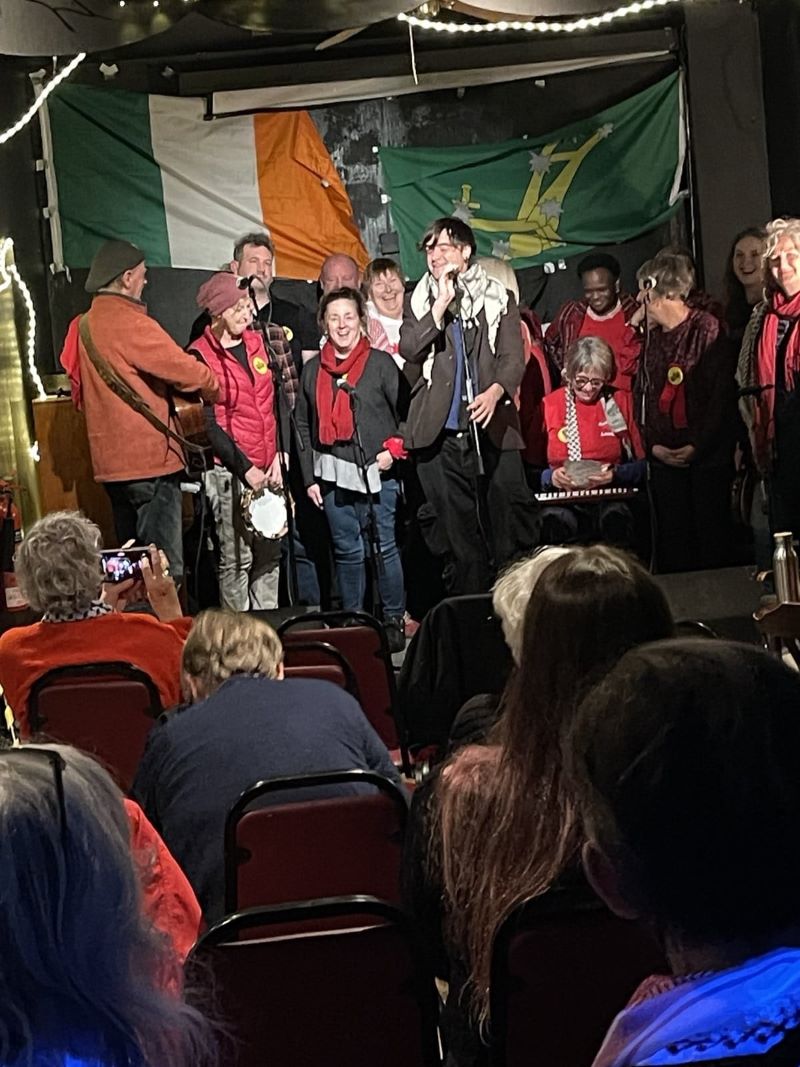
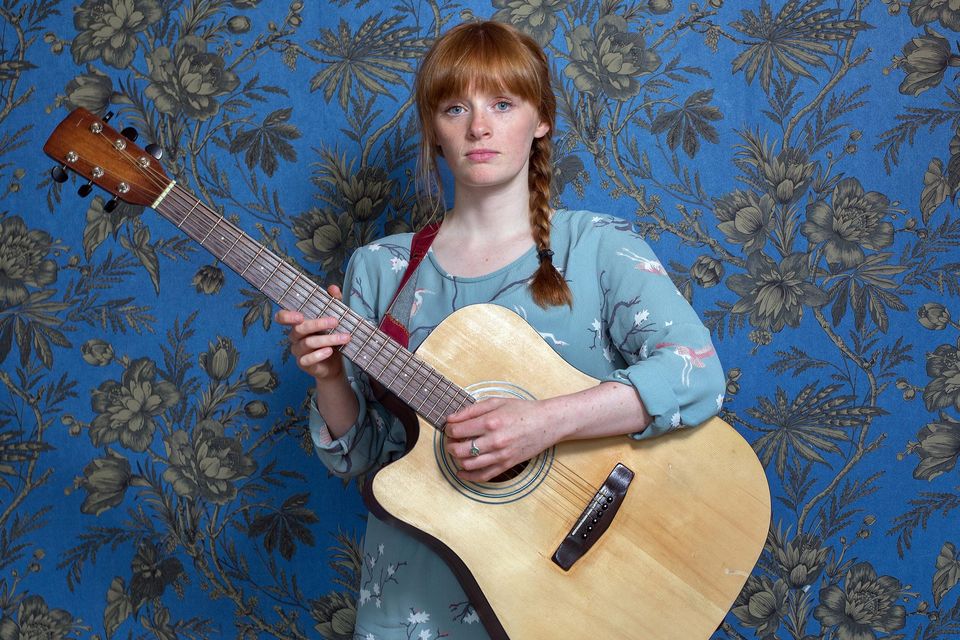


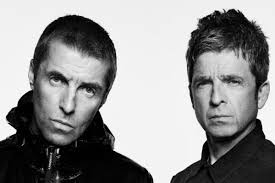

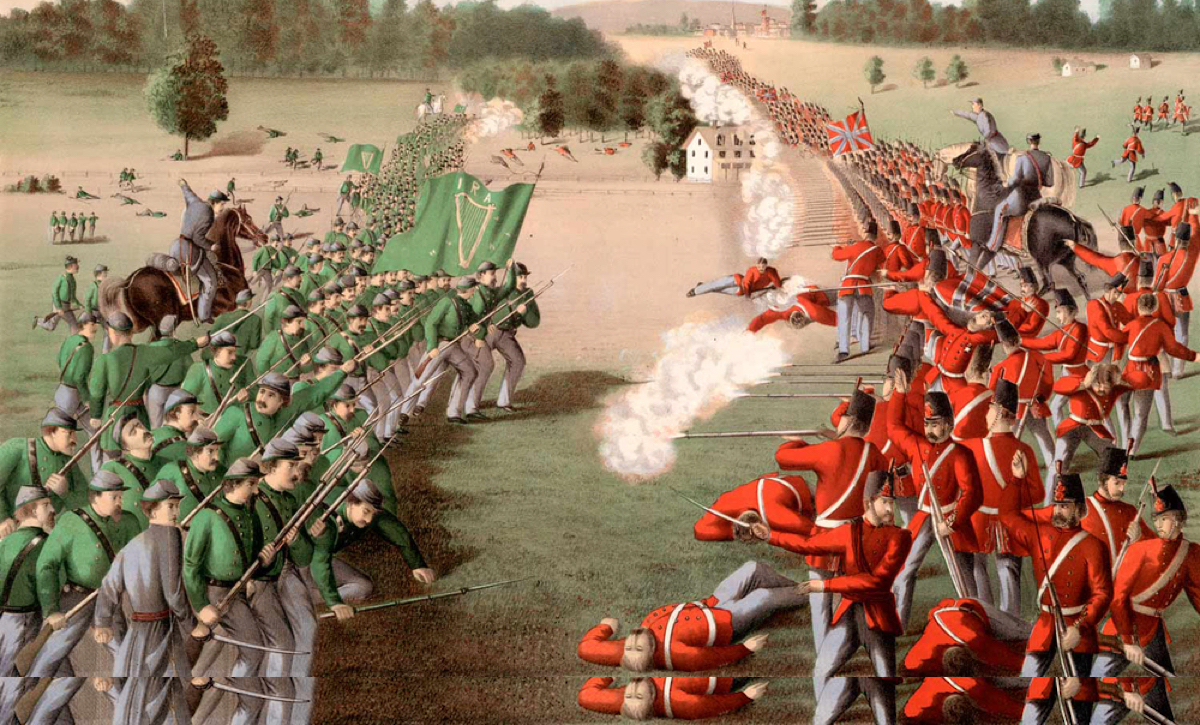


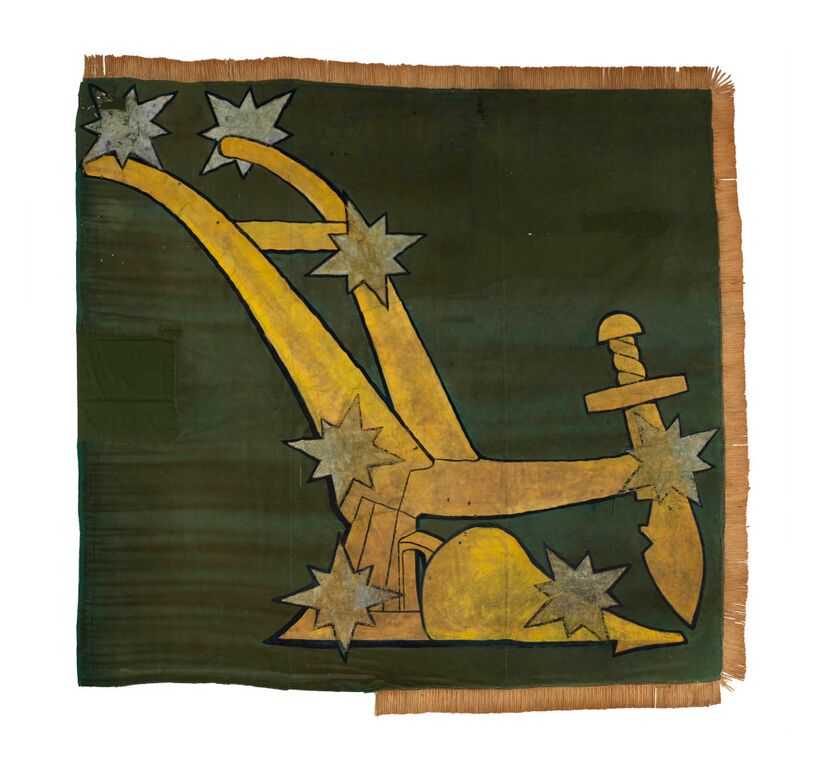

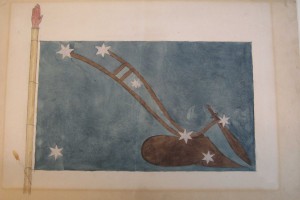


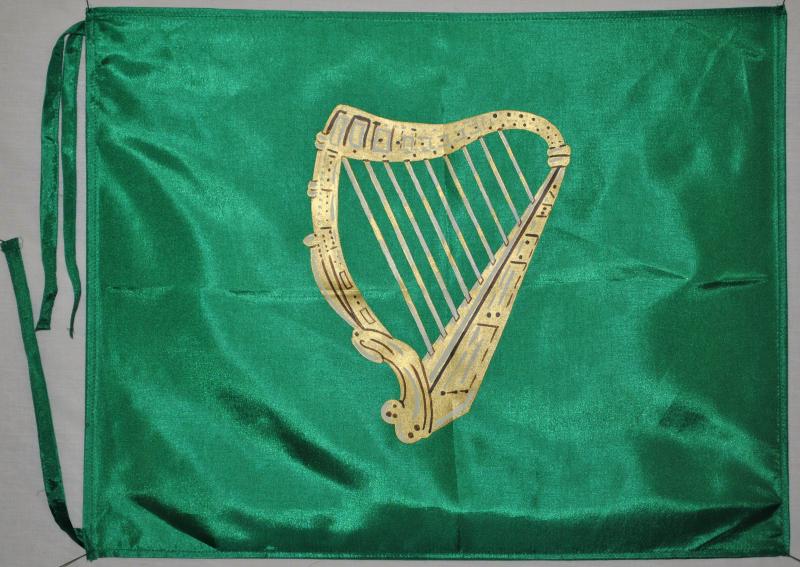


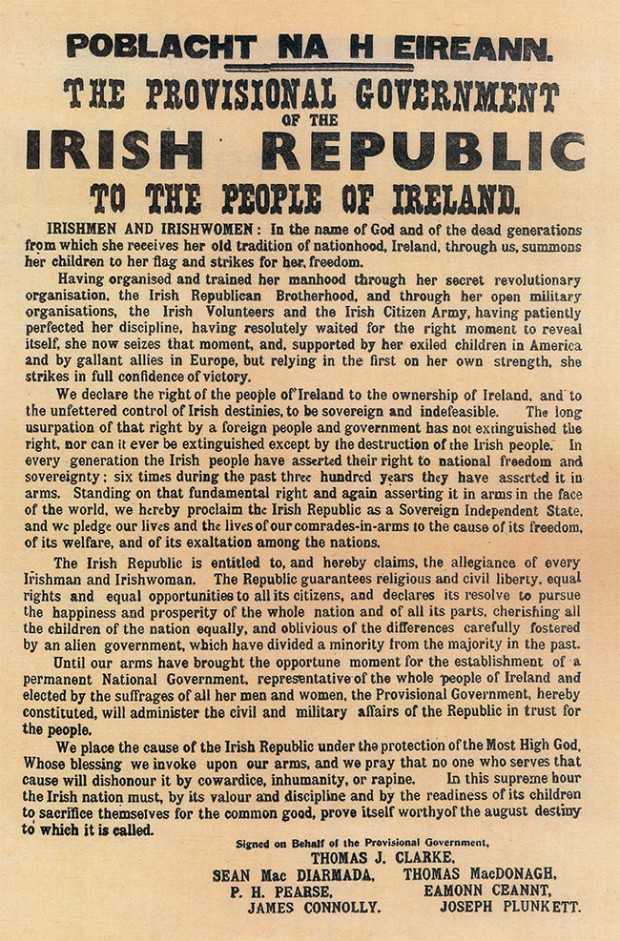
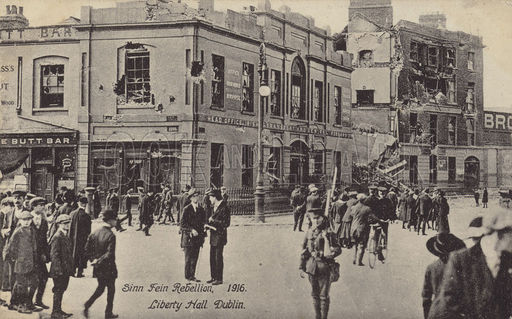


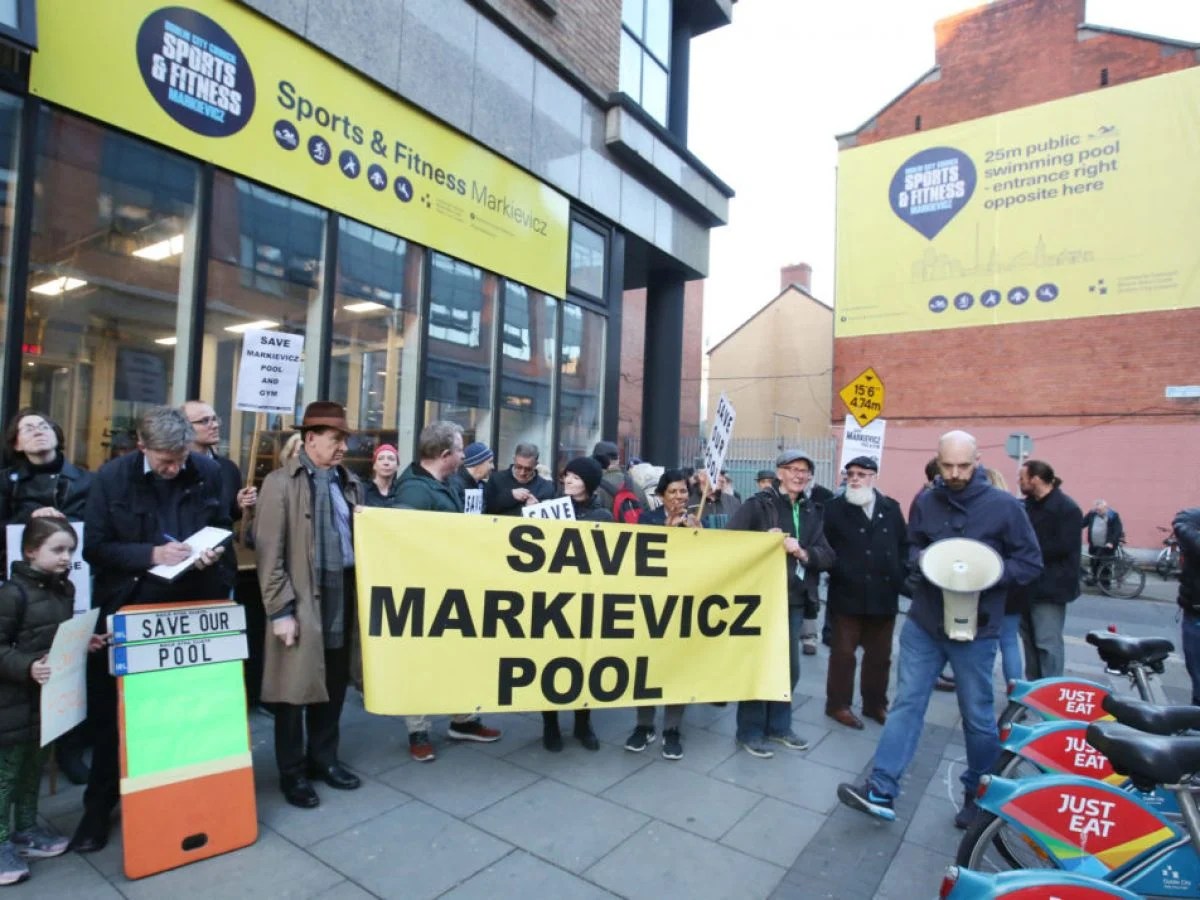
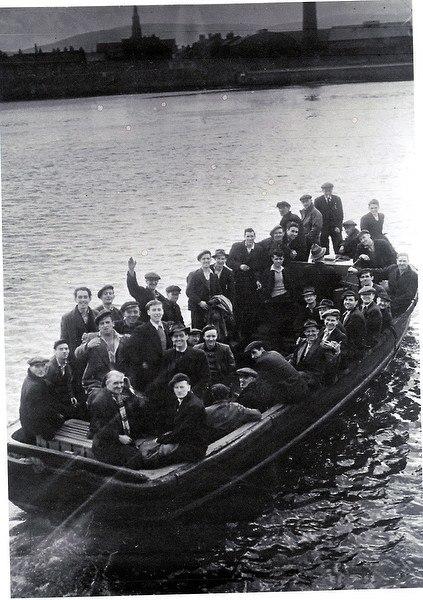
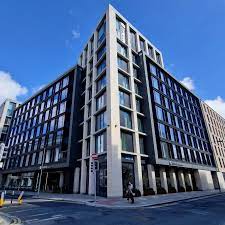


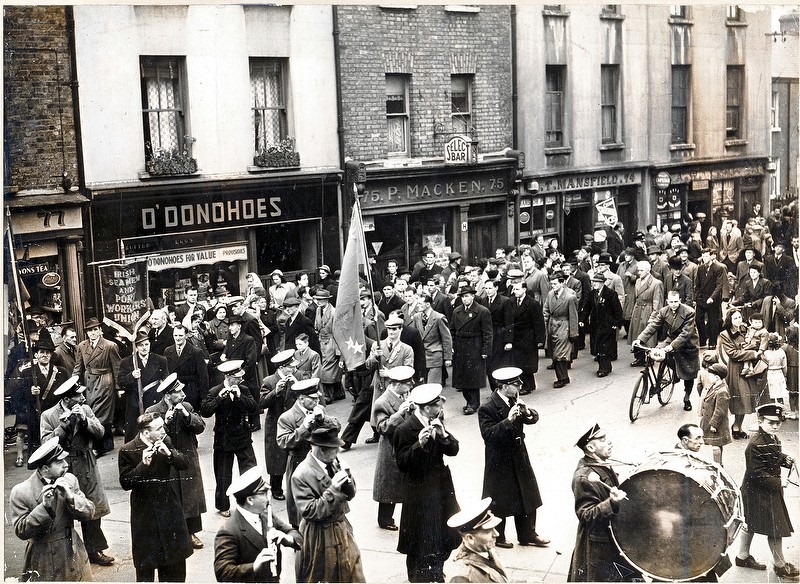
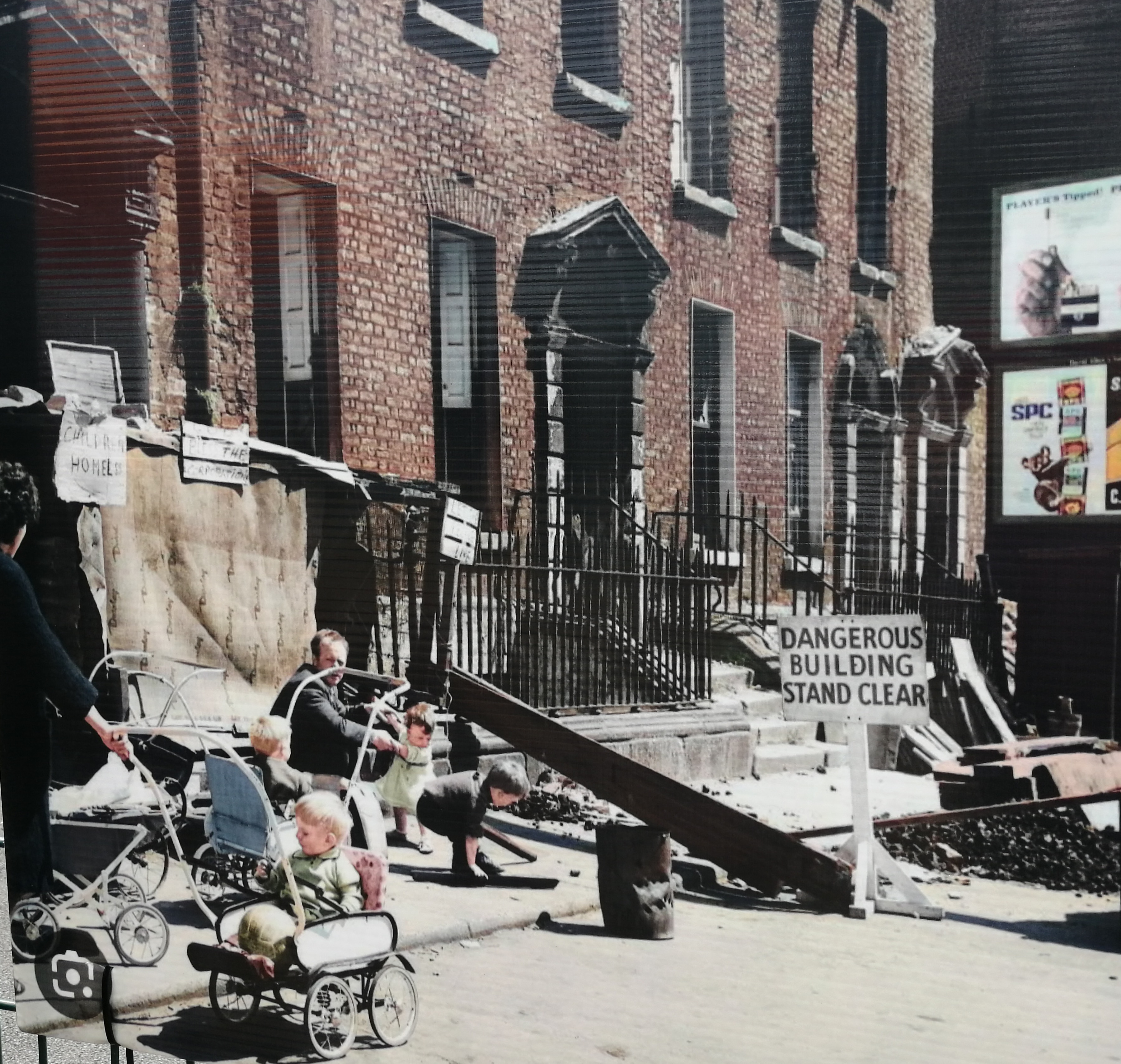
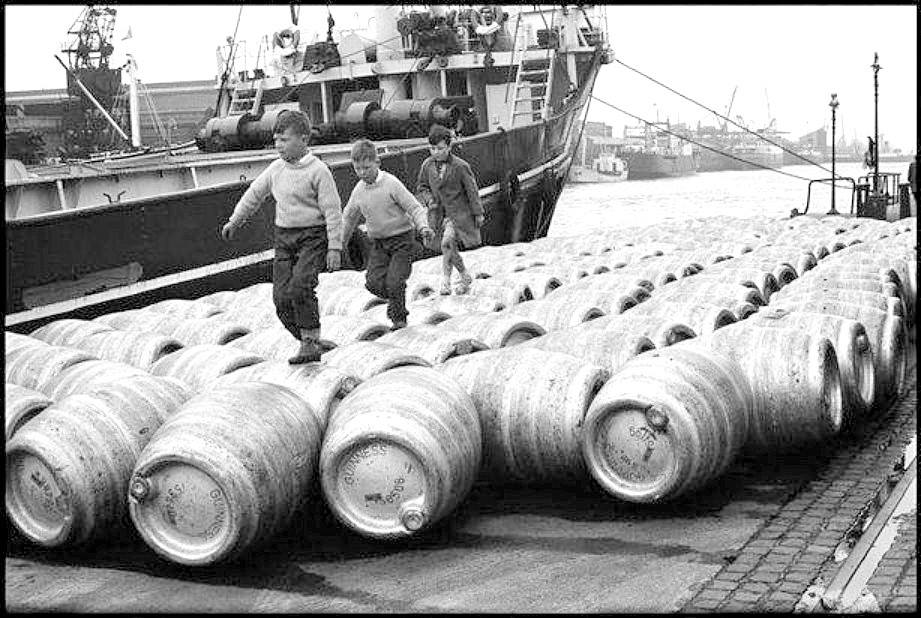

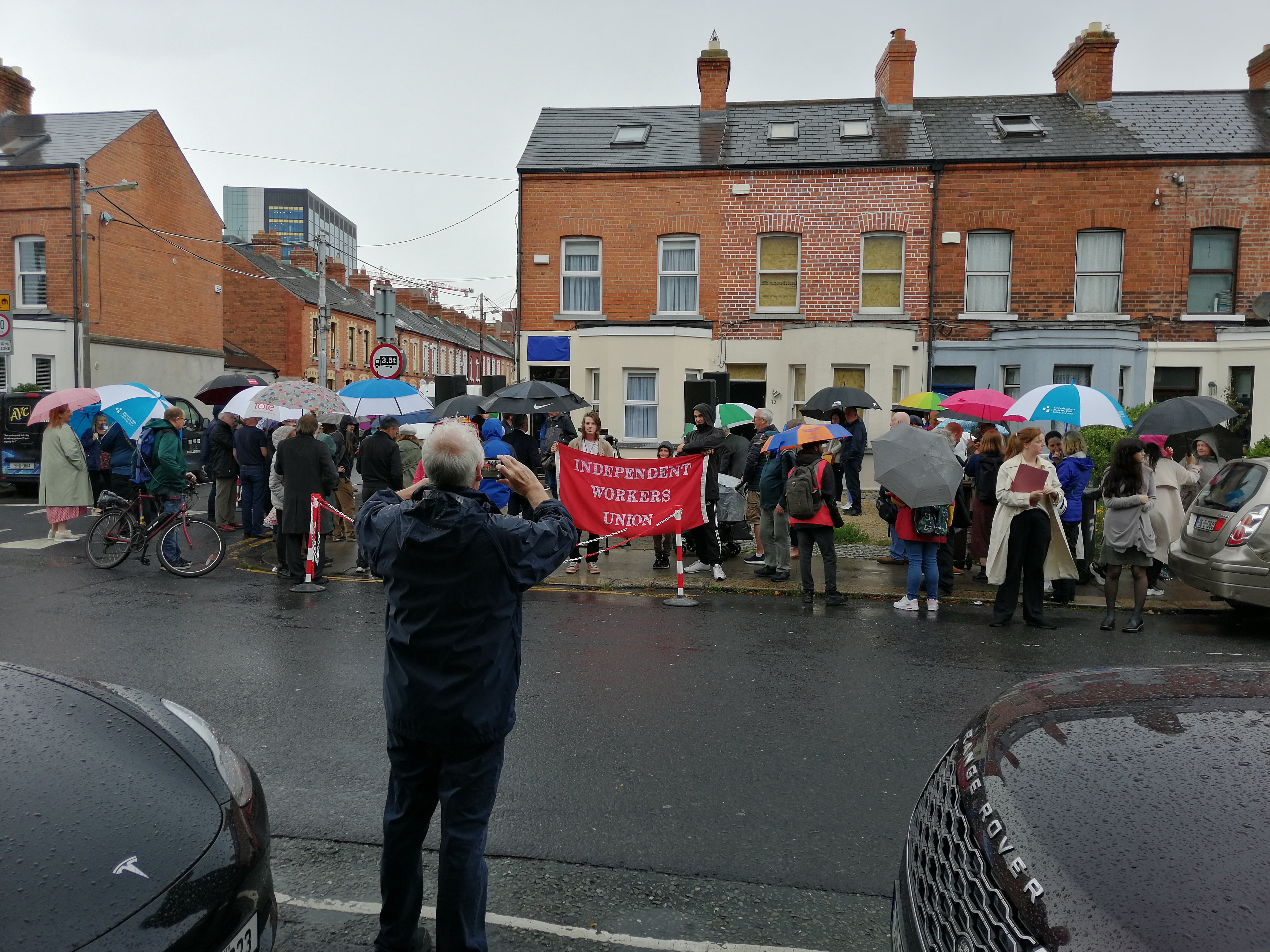
 rebelbreeze