On 9th April, the Dublin Anti-Internment Committee held another of its regular awareness-rising events in the city, this time on on the northside, at the junction of the busy shopping Henry Street and Liffey Street.
Section of the anti-internment picket in Dublin last week (Photo: Rebel Breeze)
Supporters lined up with the Anti-Internment Committee of Ireland banner and placards. In addition to the Starry Plough of the Irish working class, the Palestinian and the Basque flags were flown in symbols of solidarity and also as a demonstration that political prisoners are held in many countries around the world.
Going on for 200 of the AIGI’s leaflets were distributed, explaining that Irish Republicans continue to be held in custody without trial through the practice of refusal of bail and through revocation of licence. This practice by administrations on both sides of the British Border are anti-democratic suppression of the right to hold political opinions and to organise in their furtherance.
Plainclothes political policeman (in blue top, far left of photo) stood a little distance away facing the picketers but they were not intimidated (Photo: Rebel Breeze)
Recordings of relevant songs were played on a portable PA, such as The Roll of Honour, Viva la Quinze Brigada and Something Inside So Strong. Throughout the period of the event, two Special Branch (plainclothes political police) kept up an obvious surveillance which however did not deter the picketers.
The Anti-Internment Committee of Ireland is an independent broad and democratic committee, endeavouring to hold regular awareness-raising events and all democratic people are welcome to attend its public events, always advertised in advance on its Facebook page.
We are a people – or nation – that has been invaded; we have resisted and suffered in that resistance. Naturally we tend to sympathise with other countries who have been – or are being – invaded too. Many other peoples have been invaded more often than has Ireland; the Book of Invasions and Occupations of some of those would run to many pages. Few however have been occupied for nearing a millenium by what has been essentially the same invader – as has our little nation. So the question as to whether invasions are always wrong is bound to arouse an emotional feeling of rejection in us, of hostility to the questioner, even. Still, I ask the question and turn to history for the answer, our own history and that of other places.
INVASIONS OF IRELAND
The Vikings invaded Ireland (a sovereign state or collection of states) in successive waves from Norway and Denmark areas, took people to be sold as slaves, pillaged and looted and in time occupied parts of our land. They were hardly welcome but after their defeat at the Battle of Clontarf (sic) in 1014, left little permanent damage.
The Normans, invading in 1169, were a different matter, with less pillaging but wreaking far-reaching adverse changes, especially as they became the English ruling class, a mixing of Norman and Anglo-Saxon elites. Our land was turned into a colony, competing industries destroyed, the majority population turned into second-class subjects, our produce used to fuel the British industrial revolution, followed by famine here, mass emigration, our resistance repressed ……
In our strivings to be free from the English Occupation, we invited an invasion from the Spanish Kingdom to Ireland and one arrived in 1601, which was followed by the Siege and Battle of Kinsale (2nd October 1601-3rd January 1602) between Irish clans and their Spanish allies against the English. The latter’s victory resulted in English conquest over the whole island and the destruction of the remains of the Gaelic social and legal order in Ireland.
Battle of Kinsale map (Image sourced: Internet)
During the Jacobite War (1689-1691), the Irish and Anglo-Irish clans invited Royal French forces to invade Ireland in order to assist them in supporting King James II his bid to regain the English Crown1 and that too ended badly for the Irish with the Limerick Treaty, the flight of the Wild Geese and the religious Penal Laws.
In the late 1790s, the United Irishmen once again invited the French forces — but this time Republican – to assist them in overthrowing English rule in Ireland in what was a semi-sovereign state. The planned French invasion failed due to adverse weather conditions in 1796 and a smaller force successfully landed in Mayo in the closing weeks of the 1798 Rising, joined with Irish insurgents and defeated English military units but was soon surrounded and, massively outnumbered, surrendered.
DURING WWI
During WWI sovereign states in large areas of the world, in particular in Europe and in the Middle East, were invaded by the armies of many states, comprising those of the Central Powers of Germany, Austro-Hungary and Turkey on one side and those of the Entente — UK, France, USA, Turkey, Russia, Italy and Japan – on the other. The cause of the war was contention between imperial powers and no side could be said to have been justified in the alliance they joined or in invasions carried out as a result. One revealing example of the gap between justication propaganda and reality was that the UK claimed that it was waging war with Germany in defence of the little nation of Belgium, while it repressed a rising of the little nation of Ireland. Likewise, the USA, which claimed to want a post-war world of peace and security for small nations, refused to receive the delegations of a number of small or weaker nations, including that of Ireland, to the Paris Peace Conference2.
AND WWII
In the runup to WWII and during it, parts of Africa, Asia and most of Europe, including many sovereign states3, were invaded by the Nazis and Fascist powers of Germany, Italy or Japan4, with horrific consequences for the people who lived in the invaded lands.
German motorised Nazi troops invading the USSR during WWII(Image sourced: Internet)
Would we have countenanced an invasion of Nazi Germany to prevent what it was going to do? In any case, during the War, the counter-attack of the Allies also invaded huge parts of the world, including sovereign states that had colluded with the Nazis, as well countries totally dominated by them: the USSR invaded Eastern Europe beyond the USSR’s earlier borders, also sovereign Germany and sovereign Austria; the USA and UK invaded France (part-sovereign, part-occupied) and Italy (part-liberated by popular revolt) and all three invaded sovereign Germany and Austria too, but also North Africa; the USA invaded the Phillippines and Indo-China. Had we been alive then, most of us would have cheered those invasions – they brought down the terrible Axis forces, liberated death camps, freed people from fascist rule.
Soviet infantry follow Soviet tanks in counterattack on Nazi forces during WWII. (Image sourced: Internet)
US troops invading France in the Normandy Landings during WWII (Image sourced: Internet)
But the UK and France retook their colonies, where they had been suppressing and repressing the people for generations.5 The UK and USA prevented the Greeks from stopping the return of their monarch (their sovereign) and, combining former fascist police with their own armed forces, suppressed the Greek rising. And the USA installed themselves in the Phillippines, making them their neo-colonies. The USA also began to cultivate elites as clients in Indo-China, particularly in Korea and Vietnam.
The reoccupations of colonies and transfer of control to new masters were the cause of a wave of anti-colonial struggles and wars of repression in India and Malaya with the UK; in North Africa with the French; in Korea with the USA; in Vietnam with the French first and then with the USA; in the Middle East and West Africa with the UK and France. They also facilitated the creation of the Zionist state of Israel with horrific consequences (including invasions by it) that continue to be played out to this day.
The struggles of people resulted in the eventual national liberation of areas of the world, including part of Korea and later, Vietnam, creating states. Cambodia and Laos, having been bombed by the USA in its war with the Vietnamese people, came under new national regimes. But the new rulers of Cambodia’s sovereign state, under the Pol Pot regime, developed a new kind of horrific rule resulting in the distinction of becoming the country with most mass graves in the world6. That sovereign regime was toppled by an intervention of Vietnamese forces and those of us alive then cheered that invasion.
The Portuguese colonies in Angola and Mozambique were freed by liberation struggles but in Mozambique were assisted by Cuban troops, which also helped them resist invasion by South African troops and proxies.7
Much closer to our own time, the UK and USA/NATO, leading coalitions of other states, invaded Afghanistan, Iraq and Libya, destabilising them and destroying for years the development potential of those countries8. They attempted the same with Syria and that conflict is ongoing. The excuse given was always along the lines of countering a threat to the world (Iraq: “Weapons of mass destruction”, “Al Khaeda”) or liberating their populations (Afghanistan, Iraq, Libya, Syria).
US tanks and soldiers in Iraq, six days after the fall of Baghdad (Photo credit: John Moore/ AP)
INVASIONS GENERALLY — AND WHAT ABOUT UKRAINE?
So, reviewing the historical record, very few would say that invading another region — even a sovereign state — is wrong on every occasion. Most would say, I think, that it would depend on the motivation for the invasion, how it is conducted and what the invaders do afterwards.
Hopefully this can help us to mediate the automatic Irish sympathetic reaction to the war in the Ukraine and with regard to the Western-dominated discourse that Russia is automatically wrong – purely because its troops invaded the Ukrainian sovereign state. Russia may indeed be wrong – but not purely on the fact that it invaded.
Which then moves the evaluation on to a more productive and rational basis. Was the reason for the invasion justified? How did Russian troops conduct themselves during the invasion? What is intended as the longer-term outcome of the invasion?
Here, unfortunately we are in a marsh of propaganda, fake news, partial accounts, censorship9 ….. and the war has not yet concluded. But we can try to navigate our way across this marsh relying on the fairly firm patches we can find and hopefully avoiding getting stuck or even sucked down.
Justification for the invasion?
Russia says it invaded because it was being encircled and threatened by NATO, while the latter denies this. The evidence is however on the side of Russia in this disagreement10.
Putin also says that he did so to “de-nazify” the Ukraine. Considering the number of active fascists in Russia, this does not ring true, though the presence of nazi militia in the Azov Battalion is undeniable and the the Ukrainian regime is certainly glorifying Nazis in its past.
Conduct during the invasion
When Russia invaded it says that it fought to confront military units and to keep civilian casualties to a minimum. In the early days of the war this does seem to have been the case. As the fighting grew fiercer around Kyiv and Mariupol, it was harder to ascertain the truth, with Ukranian claim the Russians were targeting civilian structures and Russian counter-claim that, in Mariupol in particular, the Ukrainian forces were firing from civilian structures, which naturally attracted Russian return fire. And of course, bombardment of any large area is going to result, whether intended or not, in damage to civilian structures.
Another Ukrainian accusation, widely covered in the western media, is that the Russians were kidnapping civilians and transporting them back to Russia. The latter responded that they were facilitating the evacuation of civilians from danger areas. A similar Ukranian removal of civilians, on the face of it, is represented as a humanitarian action. Humanitarian evacuation or kidnapping? By one or the other, or by both?
There have been Ukranian accusations that the Russians executed captured Ukrainian soldiers and civilians and the Western media and political leaders have repeated those accusations. What appears to be bodies of civilians have been photographed in the streets of Bucha and Irpin after the Russians forces retreated, some of which appeared to have their hands tied behind their backs.
The Russians have rejected the whole story as fake news, pointing out that the Mayor of Bucha had smilingly recorded a video message after the Russian military evacuation of his town, during which he had made no mention at all of any such executions. Also that the reports of the alleged executions did not emerge until four days after they had evacuated the town.
However the Ukrainians also say that a mass grave containing 410 bodies has been uncovered outside Kyiv. Russia has said it wants the issue discussed at the UN Security Council11 but so far have been blocked by another permanent member, the UK (the latter holds the Presidency of the Security Council at the moment)12.
We must await some kind of even semi-independent investigation but if any of these allegations turn out to be true it will certainly be a powerful indictment of Russia’s conduct during the invasion.
Post-invasion actions
We do not know for certain what the situtation will look like post-conflict but it looks likely that Russia will withdraw from most of the Ukraine, which will remain outside NATO and with much-reduced armament, which was part of what Russia was seeking even years before the conflict. But it also looks as though Russia will retain the Crimea and the Donbas area.
Simple neutral map showing the Ukraine in yellow with Donetsk and Luhansk areas in brown (together known as Donbas) and the Crimea (lined pattern) with the western shore of the Sea of Azov running between the two enclaves. East of that Sea and of Donbas is Russia (shown in grey). Kiyv is far to the north-west in Ukraine. (Image sourced: Internet)
To judge whether that retention is just or not, one has to choose between two narratives (or some synthesis of both).
The Russian narrative is that after the change of government in 2014 there was a campaign against ethnic and linguistic minorities, in particular Russian-speakers, by the Ukrainian authorities, aided by fascist forces. These attacked the Russian-speaking areas, the latter mobilised to defend themselves and asked Russia to come to their defence.
The Western narrative is that Russia egged on Russian speakers to fight the Ukrainians and to secede and that the whole thing was just a Russian land grab.
But one way or another, the bare fact of Russian invasion is not sufficient to decide against them, much less to agree with what is essentially the dominant US/NATO discourse of the western media – the bigger and longer picture needs to be examined.
End.
FOOTNOTES
1Both Irish and Anglo-Irish sought an end to religious oppression of Catholics and retention of their lands; the Irish clans may have also sought recovery of some of their ancestral lands.
2More about the division of the world between victorious powers and punishing the losers, than about peace.
3The Austrian state was subverted under threat by the Nazis, as was also the Norwegian, followed quickly by invasion.
4Nazi Germany also recruited fascist units from Spain, Ukraine and Romania into their army and Japan recruited Koreans; in addition an Indian natiolal liberation army fought the English occupation in coalition with the Japanese.
5The Japanese were asked to hold on to their conquered territory in parts of SE Asia until the French could move back in, for example in Vietnam.
6Spain is the second, dating from its Civil War/ Anti-fascist War, a sovereign monarchical state evolving from a successful fascist-military coup against an elected Republican government.
7A highly simplified description, as there were civil war elements also with fighting for control between different factions of the former liberation movement.
8The UK holds the record for countries invaded, while the USA holds the record for involvement in military conflicts since WWII.
9Twitter has taken down an archive of six years of Chris Hedges’ Contact programs, Netflix has removed the Oliver Stone documentary “Ukraine Is Burning”, the US and UK has banned RT and Russia then banned BBC, China has banned BBC and Facebook, the latter has unbanned the fascist Ukrainian Azov Battallion …. And the Western Left is ignoring Naom Chomsky.
10Just Google “Map NATO states in Eastern Europe”.
11The United Nations is a body containing essentially two general decision-making bodies, the General Assemby of every full member nation — currently 193 – and the 15-member Security Council, which makes the only binding decisions. However, the decisions of the rest can be vetoed by any of the five Permanent Members of the Security Council: USA, UK, France, Russia and China.
12Any entering of the words “Russia” combined with “war-crimes” or “executions” into a search engine will bring an avalanche of western reporting of the allegations but scant treatment of the Russian response. As balance I have included only two rare more balanced western reports in the Sources section.
We are taking the Ukrainian side, naturally. No, I don’t pay any attention to what Putin has to say.
Yes, I do look at the whole situation before I decide what’s right.
Well, of course I’m on Ukraine’s side, they got fucking invaded, right? By that fucking bastard Putin.
Yeah, I know his excuse about NATO squeezing him. Yes, I am saying it is just an excuse. He’s out to build an empire — doing what his corrupt oligarchs want.
Yes, of course Ukraine has businessmen too. And probably corrupt. And yes, I did know that they are called “oligarchs” as well.
Well, yeah, they are mostly NATO countries in Eastern Europe. But that’s those countries’ choice, right? And if Ukraine decided to join NATO, that would be their democratic choice too.
Yes, I have heard about the fighting in Donbas and other areas since 2014. Russian separatists against Ukrainian military.
Really? Up to 14,000 killed there? Around 30% of them civilians? Yes, it is a lot. Well the Ukrainians don’t want Russians taking over a part of their country and before you say anything, we do know that they are mostly Russian-speaking people in that region and that the fighting started after the change in government in 2014.
Well, yes, the Azov Battalion were fighting the Russians there and yes, they are quite right-wing …
ok, some are outright nazis …. But they are helping the Ukrainian government hold their country together. And yes we do know that the Azov are now integrated into the Ukrainian military.
Fascist Azov military training school for children
It is true that the elected Ukrainian Government was overthrown in 2014. No, I don’t believe fascists managed that. NATO may have favoured the next government, ok but so what?
Yes, I did hear about some fighting between Ukrainian nationalists and Russian separatists in Kyiv and other places during the coup.
And yes, I did read about the 40 or so Russian supporters burned to death in the trade union building. Terrible! But that doesn’t make the Ukranians as a whole fascist.
No, not their government either. Their President and Prime Minister are both Jewish, for God’s sake!
Yes, I know the Ukrainians are naming streets after national heroes, that’s pretty usual. Some from WWII.
It’s true that some of those were Nazis and Nazi collaborators. But it’s just the past, national heroes …. No, of course we don’t like it. But it doesn’t make the State fascist.
Yes, you’re right, Stephen Banderas was an outright Nazi, anti-semite, war criminal. Of course he shouldn’t be commemorated.
I wouldn’t support torchlight processions in his honour through Kyiv. But that’s not the Government.
Yes, we do know that some Ukrainian Left organisations have been banned. Some of them are Russian supporters …. No, of course, they shouldn’t be banned. But there IS a war on ….
No, I’m not worried about Russia being censored – they are in the wrong.
What two sides? There’s a right side, Ukraine and a wrong side, Russia.
Yes, well, people like Hedges and Oliver Stone are being blocked on social media. And we don’t feature Chomsky any more – they’re just wrong, that’s all.
You can call it censorship or just us not publicising irrelevancy.
No, we are not making the decision to take them off social media – that’s the social media companies.
Naturally they are Western capitalist companies – what else would they be?
Of course we understand that NATO is a western imperialist military bloc. That is not the point.
Yes, the biggest imperialist military bloc in the world. But the point is that Russia is in the wrong – it’s not our fault that NATO is backing Ukraine for their own reasons.
I already said it doesn’t worry us that Russia or some NATO critics on the Left are being blocked or sidelined. Look, whose side are YOU on? You’re beginning to sound like a Putinista!
SPEECH DELIVERED AT THE RALLIES ORGANISED BY JARDUN IN RESPONSE TO THE MURDER OF CORSICAN POLITICAL PRISONER YVAN COLONNA (Se encuentra la versión anterior en castellano/español al fondo)
Yvan Colonna was from a young age a member of the Corsican liberation movement. After being forced to remain in hiding for four years, he was arrested in 2003, accused of participating in an action carried out by an anonymous group. The accusation was based on statements of several of the movement’s members detained at the police station, who later rejected the statements but Yvan was sentenced to life imprisonment.
Posters demanding justice for Yvan Colonna after his arrest (Photo sourced: Internet)
Colonna was left in a very serious coma after the beating by a jihadist prisoner in Arles prison. On Monday of this week, Yvan passed away after three weeks in hospital. During that time there were riots denouncing the role of the French state in Yvan’s murder.
Yvan was murdereded by the penitentiary policy of dispersal and the conditions of the prison. We in the JARDUN Coordination charge that the beating and death received by Yvan was a direct consequence of the penitentiary policy of the French State. Likewise, we want to underline the need to create an organisation in support of the freedom of political prisoners and the fight against oppression and exploitation.
It should not be forgotten that in Corsica, the struggle for independence has been ongoing for decades with the aim of overcoming the political-economic system imposed by the French State and fighting for a popular and democratic government that would act in favour of the Corsican people. The struggle of the Corsicans is the struggle against French imperialism, against the oppression of the local working people and against the exploitation they suffer.
In Euskal Herria (the Basque Country – Trans.) we are well aware of the repression and oppression by oppressive states and we are witnesses to the massacres committed so many times by the French State. Because we cannot forget the imperialist attitude of the French State in Algiers and other colonies, becoming, together with the United States, the main promoters of contemporary torture.
Solidarity picket in Gastheiz/ Vitoria, southern Basque Country, on Friday 25th (Photo: Jardun Koordinadora)
All of this shows us nothing less than the need for the organisation of the working class. It is evident that both the imperialist power and the oppressive States exercise a monopoly on violence to defend their economic interests and, in every nation, those who pay are always the working class.
It is time to denounce the fraud of social peace, it is time to denounce the warlike attitude of NATO, in Donbass, the Sahara, Palestine, today they are waging endless wars in defence of the interests of imperialism and its servants — and in view of this, it is time to awaken internationalist solidarity!
For this reason, we in JARDUN proclaim that it is time to turn to revolutionary organisation for all working people! Because only the organised people can offer real help and, as far as we are concerned, only the Basque working people can obstruct the participation of the Spanish and French States, organizing themselves in Euskal Herria to face the enemy, working for a political system in favour of the Basque working people.
We are clear that struggle is the only way and we will loudly proclaim that we have to confront the enemy, exploitation and class oppression. That is why we encourage you to join the organisation, because it is time to fight, it is essential to resist!
AGUR ETA OHORE YVAN! (Farewell with Honour Yvan!)
GORA KORSIKAKO HERRI LANGILEAREN BORROKA! (Long live the struggle of the Corsican working people!)
GORA EUSKAL HERRIA ASKATUTA! (Long live a free Basque Country!).
end.
Solidarity picket in Donosti/San Sebastian, southern Basque Country, on 26th March (Photo: Jardun Koordinadora)
Lectura lanzada en las concentraciones organizadas por JARDUN ante el asesinato de Yvan Colonna
Yvan Colonna era miembro del movimiento de liberación corso, en el que militó desde joven. Tras ser obligada a permanecer 4 años en la clandestinidad, fue detenida en 2003 acusada de participar en una acción llevada a cabo por un grupo anónimo. La acusación se fundamenta en la declaración de varios de los miembros detenidos en la comisaría, que posteriormente rechazaron la declaración, pero Yvan fue condenado a cadena perpetua.
Colonna quedó en coma muy grave tras la paliza de un preso yihadista en la cárcel de Arlés. El lunes de esta semana, Yvan falleció cuando llevaba 3 semanas hospitalizado. Con el objetivo de denunciar el papel del Estado francés en el asesinato de Yvan desde que ingresó en hospital, durante ese tiempo ha habido disturbios.
Yvan fue asesinado por la política penitenciaria por la dispersión vivida y las condiciones de la prisión. Desde la coordinadora JARDUN denunciamos que la paliza y la muerte recibida por Yvan ha sido consecuencia directa de la política penitenciaria del estado francés. Asimismo, queremos subrayar la necesidad de articular una organización a favor de la libertad de los presos políticos y de la lucha contra la opresión y la explotación.
No hay que olvidar que en Córcega, la lucha por la independencia se ha dado durante décadas con el objetivo de superar el sistema político económico impuesto por el Estado francés y luchar por un gobierno popular y democrático que actuara en favor del pueblo corso. La lucha de los corsos es la lucha contra el imperialismo francés, la opresión del pueblo obrero local y la lucha contra la explotación que sufren.
En Euskal Herria conocemos bien la represión y la opresión de los estados opresores y somos testigos de las masacres cometidas tantas veces por el Estado francés. Porque no podemos olvidar la actitud imperialista del Estado francés en Argel y otras colonias, llegando a ser, junto con los Estados Unidos, los principales impulsores de la tortura contemporánea.
Todo ello no nos demuestra más que la necesidad de la organización de la clase trabajadora.. Es evidente que tanto la potencia imperialista como los Estados opresores ejercen el monopolio de la violencia para defender sus intereses económicos, y en todo pueblo, su pagador, es siempre la clase obrera.
Es hora de denunciar el fraude de la paz social, es tiempo de denunciar la actitud guerrera de la OTAN, Donbass, el Sáhara, Palestina, hoy en día están dando un sinfín de guerras en defensa de los intereses del imperialismo y de sus siervos, ¡y ante eso es tiempo de despertar la solidaridad internacionalista!
Para ello, desde JARDUN proclamamos que es hora de volcarse en la organización revolucionaria para todo pueblo obrero!! ¡Porque sólo el pueblo organizado puede ofrecer una verdadera ayuda, y en lo que a nosotros se refiere, sólo el pueblo trabajador vasco puede interrumpir la participación de los Estados Español y Francés, organizándose en Euskal Herria para hacer frente al enemigo, trabajando por un sistema político a favor del pueblo trabajador vasco.
Nosotros tenemos claro que la lucha es el único camino y proclamaremos en voz alta que tenemos que enfrentar al enemigo, a la explotación y la opresión de clase. Por eso os animamos a uniros a la organización, porque es tiempo de lucha, ¡es imprescindible resistir!
The online publication Middle East Eye published on March 22nd an open letter from Palestinian political analyst As’ad Ghanem sharply criticising the Ukrainian President, Volodomir Zelensky, for the latter’s March 20th speech by Zoom before the Knesset, the Israeli parliament. The Palestinian academic’s criticism was, at base, entirely irrational.
As’ad Ghanem is a senior lecturer at the School of Political Sciences, University of Haifa. Ghanem’s theoretical work has explored the legal, institutional and political conditions in ethnic states. He has covered issues such as Palestinian political orientations, the establishment and political structure of the Palestinian Authority, and majority-minority politics in a comparative perspective. His books include Palestinian Politics after Arafat: A Failed National Movement (Indiana Series in Middle East Studies). Ghanem has initiated several empowerment programs for Palestinians in Israel.
As’ad Ghanem at a speaking engagement (Photo sourced: Internet)
Ghanem’s opening paragraph, though a denunciation of Zelensky’s speech, seemed to display a misapprehension of the conflict in the Ukraine and of Zelensky’s role there: Your recent speech before the Israeli Knesset was a disgrace when it comes to global struggles for freedom and liberation, particularly of the Palestinian people. You reversed the roles of occupier and occupied. You missed another opportunity to demonstrate the justice of your cause and the broader cause of freedom.
Any hope that Ghanem’s words were some kind of subtle attack on imperialism in Eastern Europe, an exposure of its false defence of national sovereignty, democracy and freedom, were swiftly expelled in reading the third and fourth paragraphs of his letter:
I am angry and sad that Russia is seeking to occupy your country and to crush the rights of the Ukrainian people to self-determination and freedom, and I believe that every possible support must be given to Ukrainians as they resist this barbaric aggression……
And while I admire your success in building a large international coalition to support your struggle against Russian aggression, I wish we as Palestinians could persuade the world to mobilise in a similar fashion, and force Israel to abide by international resolutions.
But Ghanem wants to show that although he may be a liberal, he is also an anti-imperialist. So he adds the following line to his third paragraph: At the same time, I reject the policies of the US and its Nato allies around the globe.
What an irrational position to hold! “The policies of the US and its Nato allies around the world” being enacted are precisely what is causing the current conflict in the Ukraine and it is those forces that are backing Zelensky and employing him in their contention with Russia.
Asad Ghanem’s plaintive criticism and appeal to Zelensky and — by implication — to imperialism exposes the ideological bankruptsy of the liberal critics of imperialism1. He is disappointed by Zelensky’s support for the murderous and racist rule of Israeli Zionism and sees it as somehow in contradiction with his position in the Ukrainian state’s conflict with Russia.
TO GAIN UNDERSTANDING, ASK BASIC QUESTIONS
The answers to a few simple questions would have disabused Ghanem and other pro-Palestinian liberal critics of imperialism of any confusion or illusion about the situation: Which major imperialist military bloc is supporting the Ukraine in the current conflict? NATO. Which imperialist state controls NATO at least since 1951? The USA. Which power fundamentally props up and defends the Zionist state? US imperialism.
Even without any consideration of the reported Zionist state’s training and arming of the Ukrainian Azov, Zelensky’s stance towards Israeli Zionism is entirely in line with his alliances and Ghanem’s criticism completely irrational. If Zelensky is to be criticised politically for anything, it is for perhaps making his alliances so clear.
RATIONAL STANCE TOWARDS IMPERIALISM
Ghanem concludes his letter thus:
I know that most Palestinians are watching your stubborn struggle and wishing you victory over Russia’s brutal aggression. (Really? I sincerely doubt it – DB2). I also know that a Russian victory would be a great gift to Israel’s aggressive posture – a victory for its “Iron Wall” concept, which regulates its dealings with us until our complete defeat.
On the other hand, the struggle and victory of your people, even with the destruction of much of your country and the displacement of scores of Ukrainians, would give hope to other peoples struggling against oppression and erasure, rekindling our hopes for return and liberation. To this end, I urge you to stop supporting our oppressors.
The only rational stands towards imperialism are outright support or outright opposition — and the latter is the revolutionary position. Liberals want to criticise imperialism without being revolutionary, presumably because they feel more comfortable in the imperialist world than fear they would in a revolutionary one. They ask imperialism (which is what they usually mean by “the international community”) to remedy a situation here and there, a situation that usually only exists directly or indirectly because of imperialism.
Of course, imperialism regularly disappoints them but, like besotted lovers in an abusive relationship, they never learn, they never abandon their relationship but instead keep returning, asking their partner to behave better this time.
End.
FOOTNOTES
1Which is certainly no worse than that of the appalling stance of a major part of the Western Left
2“The two Arab Israeli (this is Zionist apartheid code for Palestinians – DB) parties chose to snub Ukrainian President Volodymyr Zelensky’s speech to the Knesset on Sunday night, with only one Arab lawmaker out of their 10 MPs showing up. Joint List chief Ayman Odeh skipped the speech, as did the two other lawmakers from his Hadash faction, party officials said. A spokesperson for Odeh did not respond to a request for comment. “Our position is that NATO and its leader America imposed this war,” said Mansour Dahamsheh, the Hadash party’s secretary-general, in a phone call with The Times of Israel. https://www.timesofisrael.com/arab-israeli-mks-skip-zelenskys-knesset-speech-nato-imposed-this-war/
Pablo Gonzalez, a Basque journalist who includes working for Basque and Spanish left-wing media, was covering the war in Ukraine when he was interrogated by the Ukrainian authorities, the Spanish intelligence services approached his family and friends and he was subsequently arrested in Poland on 28th February and charged with spying against Poland. He has been denied access to his lawyer and no evidence has yet been presented to back up the charge but after his four-hour Ukrainian interrogation, Gonzalez reported that he had been accused of spying for Russia on the basis that he had been born in Russia1, that he reported for the mildly left-wing Basque nationalist newspaper GARA (he also reports for Publico.es) and that he had a bank card for a Basque cooperative bank. Journalist defence organisations have expressed concern at the detention.
I am not aware of having seen Gonzalez’s reporting but it may be that his material did not align with the dominant discourse as apparently the International Federation of Journalists reported that González had been accused of being pro-Russian in his coverage for a Spanish newspaper. On the other hand, several of his colleagues say that his reporting has been anti-Putin. Clearly the secret services of at least three pro-NATO countries, Ukraine, Spain and Poland have been in communication regarding Gonzalez. After his interrogation in Ukraine, he had been released but it seems awarned to leave Ukraine. He went to Poland and had been just about to re-enter Ukraine with a group of other reporters when arrested by the Polish authorities. “Legal threats and smear campaigns are a daily menace to outspoken journalists, and journalists covering the migration crisis on the Belarusian border have been detained and harassed,” the Europe representative of the Commitee to Protect Journalists, Atilla Mong told Voice Of America2.
I am no supporter of Pablo Iglesias or of his Podemos party3 but I offer my translation of his piece in Publico.es in the hope that it will a) encourage some to follow the case and perhaps lift their voices for Gonzalez’s release and b) become aware that censorship and misinformation is rampant in the media around this conflict.
On the 14th of this month, the photojournalist Juan Teixeira, a friend of Pablo González, wrote a column in Público entitled “About Pablo González and the diminishing freedom of the press.”4 There he talks about his relationship with Pablo, his work with him in the Ukraine and his arrest. I recommend, in fact, that you read his entire column, but allow me to read you two paragraphs:
It was precisely in one of these connections with Ferreras that everything began to go wrong. Pablo decided to do the direct clip of him with the military in the background, which is always more televisable. From La Sexta they had him waiting for more than 45 minutes under snow and with the soldiers increasingly tense wondering what that bald man was doing standing in front of a mobile on a tripod.
Until the military got tired and invited us to leave, but not before erasing all the material and taking a photo of Pablo’s passport. That same night, he received a call from the SBU (Ukrainian intelligence services), telling him that he should report to their headquarters as soon as possible. Despite the fact that there was work to be done, we returned to Kyiv. There Pablo was interrogated for 4 long hours, and accused of being a Russian agent with such convincing evidence as writing for Gara and having a Caja Laboral Kutxa bank card, according to them both financed by Russia. All so crazy that Pablo didn’t take it too seriously. He thought that they were simply “tightening the nuts” so that he would be more cautious with his words.
Until he found out that at that very moment, CNI5 agents had appeared at his family home, at his mother’s and at that of a childhood friend to question them and inform them that Pablo was a Russian agent.
I’m sorry that Ferreras appears here, the poor man has no fault in this, beyond the time the duplex took6, but it seemed important to me that the arguments of the Ukrainian secret services be known. I find it amazing that being the son of a Russian, writing for Gara and having an account in the Kutxa7 is something that makes you a suspect of being a secret agent of Putin. By this rule of thumb, there would be more evidence that would determine that Minister Albares8 is, on the one hand, an agent of the Vatican (he studied at Deusto, the Jesuits rule there and Pope Francis is a Jesuit, put it all together) and, on the other, he is also Moroccan agent (he lived for a long time in France and is married to a French judge who advises Emmanuel Macron, put it together)… Albares may sympathize with the Jesuits and put forward a pro-Moroccan9 line but it would be delusional to present him as an agent. Well, González is an even more delusional case.
The problem is that the logic of war contaminates everything and it is destroying the quality of the already highly-reviled conventional journalism. At the same time that we hear multi-award-winning journalists like Antonio Papell calling for Russia to be attacked with nuclear bombs or the famous and “progressive” Elisa Beni losing her temper with a professor of international law who committed the terrible crime of saying on the radio that, in geopolitics, values do not operate, we see that a correspondent who provided training and knowledge of the field, is accused of being a secret agent. Crazy.
I can only tell you that here at La Base we are going to continue reporting and analyzing rigorously, dismantling propaganda wherever it comes from and defending the freedom to inform without simplifying the complex and always paying attention to the context. At La Base kapuscinski style: rigor and commitment.
end.
Protest in the Basque Country at Gonzalez’s arrest (Photo credit Reuters)
MY FOOTNOTES
1Gonzalez’s grandparents had sought asylum in the USSR from fascist dictator General Franco and Gonzalez had been born there. His parents split up and his mother took him to the Spanish state when he was seven (as a result of which he is fluent in several languages. He specialises in reporting on Eastern Europe but has been living in the Basque province of Bizkaia town of Nabarniz with his wife, Oihana Goiriena of sixteen years.
3Pablo Iglesias had been leader of the Podemos party and a minister in the Spanish coalition government but resigned and works as a journalist for La Base, a podcast of the Spanish left-wing on-line newspaper Publico.
6I am guessing that Ferreras was the contact for Sexta, the Spanish free-to-air TV channel and that the “duplex” is a reference to the electronic connection when they were trying to broadcast.
8 Albares is the Minister of Foreign Affairs in the current Spanish Government.
9Albares caused outrage recently by proposing that Western Sahara, a former Spanish colony, accept becoming a region of the Kingdom of Morrocco, which has been illegally and violently occupying it for decades.
Corsican patriot Yvan Colonna died on Monday 21st March 2022 in France as a result of injuries sustained in a murder attempt by Muslim fundamentalist jihadist prisoner Franck Elong Abé, who attacked him on 2nd March while Colonna was exercising in the prison gymnasium. The attack put the Corsican into a coma from which he never recovered. News of the assault led to demonstrations, marches and riots in French-ruled Corsica, in addition to promises of concessions from the French Government, both with regard to the relocation of prisoners and the national status of the island’s governance.
Colona’s death joins the list of the deaths of many freedom fighters in jail, from Irish to Basque to Turkish and Kurdish backgrounds. On 30 Mar 2013 Basque freedom-fighter Javier Lopez Pena died in custody while other Basque political prisoners have died in Spanish jails down through the years. In defiance of widely-recognised human rights norms, both states disperse their political prisoners throughout their territories, locating them far from home and from family and friends.
Protest demonstration at murderous attack on Yvan Colonna in the French prison of Arles
News of the attack provoked an instantaneous and militant response. The four nationalist political parties (Femu A Corsica, Partitu di a Nazione Corsa, Corsica Libera and Core in Fronte) denounced the attack, and two of them (the pro-independence Corsica Libera and Core in Fronte) supported the slogan of the demonstrations: “Statu francese assassinu” (“French state, murderer”).
A mass demonstration on March 6th saw thousands of participants in Corti, mainly young students, strongly denouncing the attitude of the French government. On March 9th youths set fire to part of the Palace of Justice in Ajaccio. And on March 13th, the streets of Bastia saw the largest demonstration in recent years, called by political parties, trade unions, the University, students and other social agencies. There were serious disturbances in front of the Prefecture.
More demonstrations have taken place since including school and college strikes and when news of Colonna’s death reached the island a Corsica police spokesman confirmed that “a full security alert” was in operation, and that riot police were on standby in all major towns and cities.
CORSICAN HISTORY AND CURRENT CONDITIONS
Corsica is a nation currently under French rule but which has been occupied by many different invaders over the years – including Greeks, Phoenicians, Carthaginians, Romans, Vandals, Goths, Byzantine Empire and later was fought over by the Holy Roman Empire and the Saracens. The city states of Pisa and Genoa ruled Corsica for five centuries; it came under French rule in 1768 and again when annexed by the French state in 1796 in which possession it remains to this day. Among its world-famous people was Bonaparte Napoleon, who became Emperor of France.
In 1976 two groups of Corsican revolutionary nationalists joined in armed resistance and formed the FLNC (Corsican Nationalist Liberation Front) which engaged in bombing French police stations and also attacks on foreign second homes in Corsica. In 2016 the organisation declared its intention to scale down armed resistance in the context of jihadist attacks, including the Charlie Hebdo killings. Last year, however, the organisation released a video of a scene witnessed by journalists, showing a group of armed masked men with the organisation’s banner, in which one read out a statement. The content declared unhappiness with the pace of change from the authorities, criticised nationalist politicians for sitting on the electoral gains (see below), pointed out that the balance of French population against theirs militated against a pacifist campaign and also criticised French owners of second home on the island “who think they are at home on Corsican soil,” saying “our country is not yet yours – your country will never be ours”.1
A logo of the Corsican armed resistance movement (Image sourced: Internet)
The population of the 8.680 km2 island-nation is 316.250 inhabitants (2014 census) of which 40% are reported as speakers of the national language, Corsu but all speak French – the only official language. Unemployment is around 8% (but higher among youth) as are accommodation prices, driven higher by the large number of holiday homes owned by people from other countries.
For much of its French history, the island has elected MPs of the French constitutional Right or Left but this changed during the 2017 French national elections, when a coalition of Corsican nationalist parties easily took three of the four available seats.
Preceding this success, the coalition had been formed for the 2015 Corsican regional elections, following an agreement to form a coalition called Pè a Corsica made up by of two main nationalist parties, the pro-autonomy Femu a Corsica and the pro-independence Corsica Libera. The coalition took 45% of the seats as well as the Presidency of the Corsican Assembly. The coalition’s priorities include the status of the island residents, officialdom of Corsican language, amnesty for FLNC prisoners, and a native legislating power, to mention but a few.
As of 2021 the nationalist coalition has 73% of the seats in the Corsican Assembly.
YVAN COLONNA’S PERSONAL & POLITICAL HISTORY
Yvan Colonna war born He was born in Marseille, France, on 7th April 1960 but at 15 years of age his family moved to Nice, (which is on the usual route betwee France and Corsica). After completing his French high school education, Yvan studied to become a teacher of physical education and sports but broke off his studies in 1981 to go and live in Corsica. He moved to accommodation in Cargèse and his brother later opened a beach bar there. Colonna took up goat herding in the area, a common occupation in Corsica and became integrated in the nationalist ethos of the majority of the Corsican population and in consequence was no doubt under French authority surveillance.
On 6 February 1998 at 9:05 pm, the prefect of Corsica, Claude Érignac, i.e the representative of the French State in Corsica, was shot receiving three 9mm bullets in the neck, and died shortly thereafter.
Posters demanding justice for Yvan Colonna (his image around the time of his detention). (Photo sourced: Internet)
French state roundups of Corsican nationalist activists followed but Colonna fled. The hunt for Colona became the biggest manhunt in French history and eventually Colonna was detected hiding in the Corsica mountains where he was arrested on 4 June 2003. Colona was in custody without bail but not tried until November 2007, his trial taking a month. Colona repeatedly stated his innocence during his internment awaiting trial, saying that he was the victim of unfair press coverage convicting him before trial. On 13 December 2007, Colonna was pronounced guilty and sentenced to life imprisonment. His later appeal was rejected in June 2011.
“Freedom for the Patriots”, i.e Corsican political prisoners (Image sourced: Internet)
At the time of his murderous assault Yvan Colonna was serving his sentence in the Arles jail, a 331 km direct journey by ship from Corsica (which is actually nearer to Italy than to France), between nearly 10 and 12.30 hours depending on the route, over land and sea. Any visits by family and friends in those circumstances necessitate considerable expense, including overnight stays to return the folowing day. Basque political prisoner support assocations have commented on the strain and streess upon the family and friends of the prisoners by this deliberate dispersal, with long motorway journeys resulting in serious and even fatal accidents. Corsicans also point out that had Colonna been serving his time in a Corsican jail, he would not have been in the same jail as the jihadist who murdered him.
LOOKING AHEAD
The murder while in French custody and rise in Corsican nationalist militancy, in particular among the youth, will make problems for French rule on the island. Already the authorities have conceded that prisoners from Corsica will serve their sentences in jails on the island and some kind of autonomy is being talked about. Independence is however out of the question from the point of view of the French State and as a result the Corsican nationalist coalition will also come under pressure, from the militant resistance movement as well as from the French authorities.
End.
Demonstration March 06, 2022 in Corte during a rally in homage to Yvan Colonna (banner declares the “French State Is A Murder). The following day the French State Prefect of Corsica declared that “The French state is not a murderer.” (Photo by Pascal POCHARD-CASABIANCA / AFP)
We are surrounded by propaganda: to favour this or that political and economic system, those products, accept this way of life and to reject that other, to emulate or aspire to be like those people or to reject others …. The propaganda is constant but perhaps most evident in times of conflict: social conflict and wars in particular. We cannot be free of it but we can attempt to navigate it, to reach that fabled destination, the port of Truth.
Political propaganda by Cartoon: Left, Chancellor of the Exchequer Sunak shown as superhero, saving the economy and Right, former Leader of the Opposition Jeremy Corbyn shown as a Russian, suggesting he is a communist. (Images sourced: Internet)
OUR OWN PERSONAL BIAS
Firstly, we need to be aware of our own personal bias. Are we for reasons of culture, position, location or habit likely to incline to one side rather than to the other? Of course, that might be the right (or least bad) side but ….. are we being blinded by our own bias?
Our own personal biases are formed through our familial group, our schooling, training and experiences but some are engendered through the wider society, our culture.
Our cultural bias in the western world and, in particular in the English-speaking one, is towards the USA. We watch films in which the admired characters have UStater accents and even employ UStater turns of phrase and idioms1; their life-styles are recogniseably western. These cultural products cover a range from comedy to thriller or tragedy, their situations varying from urban to rural life, their genres from romance to crime to war to science fiction. In fact, both latter genres tend to present us with war-heroes who not only speak like UStaters but evoke the armed forces of the United States, whether in past real armed conflicts or in imagined ones to come. Earlier Irish generations were familiar with the dramatised plight of European settlers in the western regions of the USA being attacked by Indigenous people, only to be saved by the arrival of the US military – in that genre, the US Cavalry.2
Another major cultural influence on the English-speaking world is the UK and, to a lesser extent3, Australia. Although in Ireland there is a certain residual historical resistance to UK acculturation, some UK cultural products gained a large enough following, particularly the Coronation Street and EastEnders series4.
In comics the characters and often their environments are identifiably Western — usually of the USA5 — and even the popular Asian-based ones tend to have their facial features shaded towards European ones. Many of the electronic games also have a Western cultural bias.
And of course, we speak English. A high proportion of the Irish population is English-monoglot and even among Irish/English bilinguals, either the English is dominant or at least easily-accessible. From childhood to adulthood we see signs in English, hear it on the street, use it daily in most places, read it, are educated and instructed through it, access the Internet through it – in fact, we mostly think in English. All of which makes the pathways for accessing US and UK cultural products easy and our acceptance of the dominant discourse more probable.
Dominant discourse is of course a fact of life, some aspects of which are necessary for our social existence but other aspects of which are laden with unhelpful cultural and even political bias. We need to be alert to those aspects and prepared to investigate and analyse them.
Sometimes it looks like just about everyone is in agreement with a particular opinion and it is also the one that accords with our own inbuilt bias. Now we need to be REALLY careful, because those are two factors working together to put us at our ease on one side of a conflict and making it very difficult for us to even investigate the fact that the dominant discourse, on at least this occasion, might be mistaken. And clearly at times in history widely-accepted views HAVE been wrong – the literal seven-day creation belief, the sun going around the earth, the divine right of monarchs, the unsuitability of women for equality, the unnatural inclination of gay and lesbian people ……
OURSOURCES
In conjunction with being aware of and taking into account our own bias and prejudices, we need to the same with our sources of information, which in industrial and post-industrial cultures – apart from educational establishments — is mostly the mass media: television, newspapers and the Internet (in particular social media).
All the owners of non-State-owned mass media that we access (and that in turn accesses us) are capitalists and not only that but monopoly capitalist. Although he has recently exited his media empire6, this was the situation six years ago: “Denis O’Brien, reputedly Ireland’s richest man, is the largest shareholder in the country’s largest newspaper publisher, Independent News & Media (INM). That company has now agreed a deal to add seven more newspaper titles to its stable by acquiring the Celtic Media Group (CMG). They include the Anglo-Celt in Cavan, the Meath Chronicle and the Connaught Telegraph in Mayo. In all, it extends INM’s footprint to five more counties.
“INM is already the major player at national level. It publishes Ireland’s two largest-selling titles, the Irish Independent and Sunday Independent, plus the Sunday World and the Dublin Herald. It also has 50% of the Irish Daily Star. O’Brien’s other media company, Communicorp, owns Ireland’s two leading commercial radio talk stations: Newstalk and Today FM. In addition, it owns Dublin’s 98FM, SPIN 1038, TXFM and SPIN South West.”7
Media companies in the USA went from 50 1984 only six conglomerates controlling 90% of the United States’s in 2011: GE/Comcast (NBC, Universal), News Corp (Fox News, Wall Street Journal, New York Post), Disney (ABC, ESPN, Pixar), Viacom (MTV, BET, Paramount Pictures), Time Warner (CNN, HBO, Warner Bros.), and CBS (Showtime, NFL.com).8
“Take the UK’s newspaper industry: in a national market of 20 daily and Sunday newspaper titles, just three companies control 90 percent of newspaper circulation. Lord Rothermere’s DMG Media—publishers of the Daily Mail, the Mail on Sunday, the Metro, and the i—accounts for almost 40 percent of all national newspapers sold each week in the UK, while Rupert Murdoch’s News UK and Reach (which publishes the Mirror and Express titles) command one-third and one-fifth of the market, respectively.
“When online readers are included, the same companies control a four-fifths market share among the major newspaper groups, giving these publishers an unparalleled influence for setting the agenda across the rest of the news media.”9
“Most of the social media we use on our laptops, Iphones or tablets is owned by five conglomerates in the USA: Meta Platforms, Inc., doing business as Meta and formerly known as Facebook, Inc., …..is the parent organization of Faecebook, Instragram and WhatsApp among other subsidiaries. Meta is one of the world’s most valuable companies. It is one of the Big Five American companies, alongside Google, Amazon, Apple and Microsoft.”10
It should not surprise us if that media exhibits a strong bias towards capitalism, for example in praising businessmen (capitalists) and businesses (exploitation operations) and in criticising or slanted reporting on strikes (workers’ resistance) or on what they might term ‘terrorism’ (but is often oppressed people’s resistance).
The State-owned media, in the UK the BBC and RTÉ in Ireland, are not of course the property of capitalists, however the states in question are capitalist states. It would be surprising therefore if such media were to take a stance in opposition to that of their state and their dominant classes and, by an large they do not. If, in times of conflict elements within the program-making sections of the State-owned media veer significantly away from the State’s line, official reprimands, cuts in funding, sackings and outright censorship may follow.11
This mass media, as well as being orientated in defence of monopoly capitalism, is also orientated towards the expansion of monopoly capitalism beyond its origins, i.e imperialism. And imperialists have their alliances, by far the largest of which is the North Atlantic Treaty Organisation, or NATO in acronym. That alliance is led by what is still the largest imperialist superpower in the world, the USA.
We may note that the antithesis of capitalism is socialism but a capitalist or imperialist system of one state may be in contention with that of another such state which in fact often happens, even occasionally breaking out in war, as was the case with WWI, when the then-dominant imperialist alliance led by the UK and France was challenged by the weaker one of Germany and Turkey.
And mentioning socialism brings to a consideration of alternative media, including that of the Socialist and Irish Republican movements. Briefly we can note that just because they declare their opposition to the status quo does not mean necessarily a) that they are indeed so opposed, or b) that they have examined and challenged their own bias or c) therefore that their analysis is correct. Indeed both the Irish Socialist and Republican movements have made huge mistakes over the last hundred years or more and, in addition, during the height of the Covid19 pandemic we saw a plethora of misinformation ranging from the fascist and racist to the fantasticaly paranoid from sources opposed to the status quo12.
NAVIGATION
With the preparations and precautions entailed in the above completed, we are ready to sail, to navigate the propaganda ocean on board the MV Investigator. Let us take the stormy propaganda seas around the Ukraine conflict for our voyage.
According to the Russian Government, ethnic Russians were under attack in parts of the Ukraine after a coup overthrew the Ukrainian Government in 2014. Furthermore, it claims that US/NATO supported that coup and, in addition, has been gathering up states to its military alliance to encircle Russia, which it sees as a threat to the existence of the Russian state. In addition, Russia claims the Ukrainian government has fascist elements in its polity including a nazi battalion incorporated into its national military. Therefore it has invaded Ukraine in order to protect its own state and to “de-nazify” the Ukraine.
According to the Ukrainian Government and the USA, along with most Western governments, all of Russia’s claims are lies and just an excuse for it to grab land in the Ukraine, in order to extend its dominion further.
The Western media supports the Ukrainian Government and USA discourse on these issues and, on the rare occasion when it quotes the Russian one, negates it or casts doubt upon it.
So, to the navigation. The first thing is that we cannot trust the Western discourse but on the other hand can we totally discount it? We cannot trust it because it is part of a capitalist and imperialist bloc centred around the USA and NATO. On the other hand, Russia might be lying and the Western media might be correct on this occasion. After all, Russian troops HAVE invaded the sovereign state (something we usually see from the USA or NATO) of Ukraine.
Map showing Nato states in Europe (Image sourced: Internet)
So, let’s investigate! A look at the map will in fact show a large number of states in East Europe that have progressively become part of NATO and Ukraine, which shares a border with Russia, was heading that way, according to even non-Russian analysis.13 And Russia has been complaining about this for years. In addition, the elected neutral Ukrainian government WAS overthrown by a violent coup in 2014, one which was welcomed by western media. And fascists WERE active in that coup and the Azov Battalion IS full of fascists and nazis (even according to US and Canadian government circles along with human rights groups, including in Israel, only a few years ago).
But the Russian regime anti-fascist? That is something else. Far-Right groups including openly Nazi ones have proliferated across Russia since the collapse of the USSR and there is little evidence that the Russian regime has been trying to eliminate them. De-nazification should start in your own territory first, right?
So a reasonable conclusion on the available evidence is that Putin’s statement about de-nazification is mere propaganda for international and domestic consumption but his real and primary motive for the invasion is the security of Russia and the withdrawal of NATO from its borders.
Might there be an element of acquiring some more Ukrainian territory and stragic locations there? Of course there might. So how to test that? What about if NATO agrees to withdraw, Ukraine declares its neutrality but demands withdrawal from its recently-conquered territory? Russia would have to comply or to expose its supposed territorial ambitions.
However, NATO is currently refusing to withdraw from Russia’s borders and the Western media is supporting it ideologically as well as pouring arms into Ukraine; NATO denies Russia’s declared motivation but declines to put it to the test.
Mentioning “land-grabbing” also raises the issues of the Crimea, Donetsk and Luhansk regions. Those regions had a high proportion of ethnic Russians — the Crimea in particular nearly totally Russian-speaking — and according to numerous sources, came under attack from Ukrainian nationalist forces from 2014. The Western media says that Russia “annexed” the Crimea; however Crimea had an autonomous parliament and voted to secede from the Ukraine – it was not overthrown in a violent coup as was the neutral Ukrainian one. Subsequently Crimea asked for Russian protection from attack by the Ukrainian military (including in particular those Azov fascist fighters). Donetsk and Luhansk regions also asked for protection, according to the Russians while, according to the West, they were also annexed by Russia.
Ethnic map of the region (however not including Gypsies, Jews and Poles). The brown peninsula bottom centre is the Crimea; two top right regions are Donestk and Luhansk. (Image sourced: Internet)
CONTINUING THE NAVIGATION
Those are the fundamental points to think about during the conflict but we will be presented with reports of “kidnapping” of thousands of civilians by the Russians from the battle-zones on the one hand, with the “rescue” of thousands by the Ukrainian military on the other. Of course, any war impacts severely upon civilians in the war zones, as we have seen in conflicts from Vietnam to ireland to the Balkans, from Palestine to Yemen. What is happening in the Ukraine is a war, with bullets and missiles being fired by both sides and, furthermore, most of the fighting is taking place in and around heavily-populated areas. But are civilians and civilian buildings really being targeted by the Russians? They may or may not be but certainly the damage and casualties would be much higher if, as a matter of course, that were the case. Are civilians being used as hostages and shields by the Ukrainian military as some have alleged? They may be but it is difficult to prove or disprove that when the battle is taking place in an urban area.
We have to seek the actual causes of the war, rather than its features, to seek a workable and hopefully long-lasting solution.
WHAT ABOUT CENSORSHIP?
The fact is that all sides are practicing censorship. While the western media was quick to tell us that Russia had banned the BBC’s news service, it took a bit of searching to find out that had occurred after the UK banned RT, the Russian broadcasting service. We now learn that China has also banned Facebook and the BBC – the latter perhaps in response to the banning of RT but Facebook perhaps for lifting its ban and Tier 1 classification14 of Azov, the neo-nazi fighters incorporated into the Ukrainian military.
Currently, as an example of Western censorship, the Oliver Stone documentary Ukraine On Fire (2016) has been taken down off Youtube and according to users, rarely lasts more than a day if posted up anew.
And Naom Chomsky, veteran US-based anti-imperialist, who would normally be widely quoted in the Socialist media, is hardly ever heard or seen. Oh, he’s talking and writing alright but his discourse does not match the dominant one in the West — nor currently in the Western Left — and therefore he is excluded from their media.
Naom Chomsky, linguist and critic of imperialism often quoted by the Western Left but mostly silenced by them during the Ukrainian conflict. (Photo sourced: Internet)
CAN WE MOVE, PROCEED, ACT?
Obviously we cannot proceed through life in a permanent doubt – that would paralyse us, make us incapable of movement in any direction. We must come to a decision, at least for the time being, to allow us to act. But while we proceed on the basis of our certainties or at least assumptions, we need to be able to keep a part of our mind alert, questioning, challenging and – at some point – ready to dissent from the ideological environment in which we find ourselves and ready to consider taking a different – even oppositional – opinion and path.
This is the way we can navigate through the sea and storms of propaganda to a the desired landing on Truth. However, we need to remember that “truth” is an approximation, that it changes shape and what was true yesterday may not be true tomorrow. It is a floating land, not necessarily where it was when last charted, even when the most recent cartographers were not dishonest. Nevertheless, we are required to act, to act in the real world and therefore must reject paralysis. We find the nearest we can to the truth, test it and act upon it – but ready to amend our understanding if necessary.
We set sail.
End.
Chart for navigating the Propaganda Seas (Image: D.Breatnach)
FOOTNOTES
1The interjection of irrelevant “like” in conversations (e.g “I was like just leaving …”), the grammatically incorrect “I’m good” response to query-greetings, ‘hip’ interjections such as “dude” and even the “OK” for positive confirmation (in our lexicon since the 1950s), have all reached us from the USA.
2That film trope has led to a popular saying regarding last-minute deliveration, probably even employed by people who are unaware of its origin: “Saved by the Cavalry”. Of course, the Indigenous, who are having their lands stolen, their way of life and other parts of their culture destroyed and their resistance massacred, never have a last-minute salvation, neither in fiction nor in reality.
3Though we still hear “No worries” in reassurance, a phrase introduced by Australian soap-operas such as “Neighbours” screened on UK television channels in the 1980s and ‘90s.
4These two in particular propagated a very biased view of working class and lower-middle class people in Britain. The Coronation Street (note the monarchical tone of even the title) series, based on the Salford area near Birmingham, despite being an area settled by successive waves of migrants such as Irish (Engels even referred to them in his 1845 Condition of the Working Class in England), Caribbean and South Asian, did not include characters of migrant background for decades and it was not until 2019 that it introduced its first Black family characters. When the British soaps first provided characters of Irish background, both Coronation Street and EastEnders produced negative types without positive Irish characters to balance them.
5In the 1950s, ‘60s and ‘70s the majority of the comics bought in Ireland were English, from the younger age-orientated Dandy, Beano to the older-orientated range of Bunty, Judy and June for girls and, for boys, Eagle,Hotspur, Victor and the exclusively military Commando and War Picture Library series along with the Amazing Fantasy series. The US contributed super-hero series Marvel Comics and a range of both cartoon and realistic characters in Dell Comics. There was no competition from any Irish-focused publisher (nor is there yet to any real degree).
12It is also worth noting that censorship, misrepresentation of different views and verbal abuse towards those who challenge the views of the alternative media make using them to arrive at the truth more than problematic and this has been nowhere more evident than in the coverage and discussion of the conflict in Ukraine.
13In fact we can see a similar US-led encirclement of Russia in the Middle East too.
14 A classification that included ISIS and bars users from engaging in “praise, support, or representation” of blacklisted entities across the company’s platforms.
No doubt the Russian ruling class had other motives than “de-nazification” for the invasion of the Ukraine – beating back NATO encirclement, according to some and land-grabbing according to others – but it cannot be said that the smoke is entirely without fire. Not when nine hundred paramilitary nazis are part of the official Ukranian Army and prominent boulevards of Kyiv are named after Ukrainian nazis.
The Azov Battalion is a far-Right paramilitary organisation that was incorporated into the Ukrainian military in 2015. The number of the unit’s fighters is generally estimated at 900 and the mildest description of their ideology is “far Right”. They are in fact nazi, homophobic, white supremacist, anti-Roma and anti-semitic – and they are an integral part of the Ukrainian Armed Forces.
Azov Battalion giving military instruction to civilians in Kyiv 30 Jan 2022 (Photo: Gleb Garanch/ Reuter)
Founded from far-Right Ukrainian nationalist groups in March 2014 as Azov, they were from the beginning engaged in actions against ethnic minorities including the Russian-speaking people of the Donbas region and Roma, as well as against socialists and LBGT groups. Then-President Petro Poroshenko said at an awards ceremony in 2014: “These are our best warriors …. Our best volunteers.”1
In 2014 Azov were active in overthrowing the elected Ukrainian government of President Yanukovych. That government was characterised as friendly towards Russia and for that reason unpopular with the West; however it was trying to negotiate with both Russia and the EU, with the latter for its agricultural sector and with the former for its industrial sector but the EU insisted on an exclusive agreement in total. When it did not get what it wished the EU, under its Irish President at the time, and the USA supported the overthrow of the government in a coup d’etat.
In that coup, Azoz also carried out attacks on socialists and communists and, despite a highly-politicised debate around the facts there is no doubt that 43 people who took refuge in a trade union building from anti-Russian elements were killed when the building was set on fire.
From November 2015 to February 2016, according to a 2016 Report by the Office of the Human Rights Commissioner of the UN, Azov was responsible for incidents in which they had embedded their weapons and forces in civilian-occupied buildings, displaced residents and looted civilian properties. The report also accused the battalion of raping and torturing detainees in the Donbas region.2
Also in 2015 the Simon Wiesenthal Center and the World Jewish Congress condemned the decision to name central boulevards in Kiev after Nazi collaborators and attempts to re-write the history of Nazi collaborators in Ukraine during WWII.34
Azoz Battalion celebration of new monument to medieval Ukrainian hero Svyatosla in Mariupul, Ukraine in 2015 (Photo credit: Pierre Crom, Getty Images)
In January 2018, Azov rolled out its street patrol unit called National Druzhyna to “restore” order in the capital, Kyiv. Instead, the unit carried out pogroms against the Roma community and attacked members of the LGBTQ community. In April of that year there was a march honoring Ukrainian Waffen SS units which massacred thousands of Jews during World War II.5 In May, Azov marched through Odessa claiming that the Ukraine belongs to Ukrainians, not to Jews and that they would be ridding the country of the latter.6 In June, Ukraine’s chief military prosecutor Anatoli Matios said in an interview that Jews want “to drown Slavs in blood.”7
Ukrainian International soccer player Roman Vyacheslavovych Zozulya had to be let go from Rayo Vallecano FC in 2017 because the anti-fascist and left-wing fan base of the team objected so strenuously to his being on contract. The reason for the uproar was because Zozulya has been on record as supporting Azov.
“In December 2019, a match between the Spanish teams Rayo Vallecano and Albacete (Roman Zozulya’s then-current club) was suspended, when his former club’s fans loudly accused the player of being a sympathizer of Nazi ideology, due to his known support of the Azov Battalion as well as other images he had posted on his Twitter account, which contained references to Nazi symbolism or organizations claimed to support Nazism.”8 Rayo Vallecano was fined and suspended for two games by the Spanish League (La Liga), a decision of at least questionable justice.9
“WHITE RULER”, FUNDED BY OLIGARCHS
The Azov unit was led by Andriy Biletsky, who served as the leader of both the “Patriot of Ukraine” organisation (founded in 2005) and of the Social Nationalist Assembly, a nazi organisation founded in 200810. The SNA is known to have carried out attacks on minority groups in Ukraine.
In 2010, Biletsky declared that the national purpose of the Ukraine was to “lead the white races of the world in a final crusade … against Semite-led Untermenschen” [German Nazi term for ‘inferior races’].
Biletsky left Azov formally in order to stand for election to the Ukrainian Parliament, as elected officials must not be members of the military or police force. He was elected to parliament in 2014 and remained an MP until 2019; his nickname among his supporters is “Bely Vozd” (“White Ruler”). In October 2016 Biletsky founded the far-right National Corps party, the core base of which is Azov veterans.
It is not only Russia that has oligarchs but of course it is they alone the Western media is focusing upon. However the Ukrainian fascist forces were privately funded by oligarchs – the best-known being Igor Kolomoisky, an energy magnate billionaire and then-governor of the Dnipropetrovska region. In addition to Azov, Kolomoisky also funded other volunteer battalions such as the Dnipro 1 and Dnipro 2, Aidar and Donbas units11.
Azov also received early funding and assistance from another oligarch: Serhiy Taruta, the billionaire governor of Donetsk region12.
The presence of these nazis in the Ukrainian military is not as in many countries where individual right-wingers and fascists are attracted into the military and police but rather that an already far-Right paramilitary organisation led by nazis has been incorporated into the national armed forces. That argues for a high level of acceptance of fascism among the country’s ruling circles and indeed one finds other examples in certain statements by officials and in historical revisionism of past anti-semitism and nazi collaboration in the country’s history.13
CHANGING ATTITUDES OF THE WEST
In June 2015, both Canada and the United States announced that their own forces will not support or train the Azov regiment, citing its neo-Nazi connections and white supremacist ideology.
However the following year, under pressure from the Pentagon, Congress lifted the ban. In October 2019, 40 members of the US Congress led by Representative Max Rose signed a letter unsuccessfully calling for the US State Department to designate Azov as a “foreign terrorist organisation” (FTO). Last April, Representative Elissa Slotkin repeated the request – which included other white supremacist groups – to the Biden administration.
Azov Battalion members (Photo sourced: Internet)
Facebook About-Face
In 2016, Facebook first designated the Azov regiment a “dangerous organisation” and placed it under its Tier 1 designation, one which includes the Ku Klux Klan and ISIL (ISIS). Facebook users praising or otherwise supporting Tier 1 groups are also banned by the social media company.
However, on February 24 this year, the day Russia launched its invasion, Facebook reversed its ban, saying it would allow praise for Azov. “While Facebook users may now praise any future battlefield action by Azov soldiers against Russia, the new policy notes that ‘any praise of violence’ committed by the group is still forbidden; it’s unclear what sort of nonviolent warfare the company anticipates,” the social media and information technology magazine The Intercept commented14.
THE UKRAINE REGIME “FASCIST”?
Opponents of the Ukraine regime (not all supporters of Putin by any means) have called the regime itself fascist, a claim which its defenders (and some others) have dismissed, citing its President and its Prime Minister being Jewish as evidence to counter the accusation. Ukraine now has the world’s third- or fourth-largest Jewish community, but estimates of its size vary wildly, ranging from 120,000 to 400,000 people, depending on who is counting15.
That the President and Prime Minister are Jewish is far from being the conclusive rebuttal that it might seem, since Zionists are known to have colluded with the Nazis in the 1930s in order to gain settlers for Palestine16. As far back as 2018, the Israeli newspaper Haaretz reported that more than 40 human rights organisations had filed a case with Israel’s High Court of Justice to stop the Zionist state supplying the Ukrainian military because of the latter’s incorporation of anti-semitic fascists.
Azov Battalion on parade (Photo sourced: Internet)
The article also pointed out that past anti-semitic regimes had been supplied by Israel, quoting the Argentinian Generals and the Bolivian regime that included Klaus Barbie; also Israeli instructors are known to be supplying the Azov with training17.
There is certainly some fire beneath all the smoke.
Putin is no anti-fascist and, apart from the failure to tackle the growth of fascist anti-semitic groups in Russia, the Putin regime’s suppression of Muslim resistance in Chechnya contains most features of fascist repression of a population18. The irony now is that, if a video is to be believed, Azoz are dipping bullets in pig fat and telling Chechens who are part of the Russian Army that they will be barred from Muslim heaven when shot. Another irony is that Azov is attracting white fascists and militant right-wing Christians from other countries to swell its ranks, much like Muslim jihadist organisations have been attracting radical muslims from other parts of the world.
Putin has his own reasons for the invasion of the Ukraine which are to do with the interests of the Russian ruling class, whether defensive or aggressive, rather than “de-nazification” but the evidence of fascist elements in the Ukrainian military and ruling circles cannot legitimately be dismissed as supporters of the Ukrainian regime have been doing.
4Active collusion with the Nazi occupation to the extent of whole Ukrainian units fighting alongside the occupiers and wiping out Jews and civilian socialists was notable among Ukrainian nationalists of the time. However, there was also significant anti-Nazi activism, both in partisan activity and in membership of the Red Army. https://en.wikipedia.org/wiki/Collaboration_in_German-occupied_Ukraine
In Dublin on Friday, prominent Catalan journalist Vicent Partal departed from the advertised subject of his Irish tour to talk specifically about the struggle for Catalan1 independence and to propound a new tactical departure for the nation in conflict with the Spanish state. In three-night speaking tour organised by ANC Ireland, Partal spoke also in Belfast and Cork, in which venues he stuck reportedly more closely to the advertised subject.
ANC Ireland is an Irish-based iteration of Asamblea Nacional de Catalonia, a mass grassroots pro-independence Catalan organisation which has been primarily responsible for the massive demonstrations on the Diada, the Catalan national Day and for the organisation and promotion of the Referendum on 1st October 2017, when scenes of Spanish police attacking voters shocked many around the world. The President of the ANC at the time, Jordi Sanchez, was later jailed by a Spanish court along with Jordi Cuixart, the President of another Catalan grassroots organisation, Omnium Cultural2.
Carles Pujol of ANC Ireland (right) introducing Vicent Partal (left)
Vicent Partal, who began his tour in Queen’s University in Belfast on the 9th continuing on to Cork University on the 10th, spoke in Dublin on the 11th in the Teachers’ Club in the City centre. Partal has been a journalist since the early 1980s, in which career he has covered the Balkan War, the Demolition of the Berlin Wall, the Beijing Students’ Protests and other events of international prominence. His publishing ventures in Catalonia progressed to the founding in 1995 of the electronic newspaper Infopista catalana that later became VilaWeb, publishing mainly in Catalan but from time to time in English also. In 2007 VilaWeb TV opened as a web TV initiative and nowadays is available as a YouTube channel and on iTunes. Partal is also Chairperson of the European Journalism Centre.
THE NEW TACTIC
In Dublin, Carles Pujol, of ANC Ireland, introduced Vicent Partal to the 50 or so of mostly Catalans in attendance at the talk on Friday in the Teachers’ Club.
Vicent Partal addressing the audience in Dublin
Partal came out from behind the speakers’ table covered in Esteladas, independentist flags, and leaning informally against it behind him, faced his audience. Instead of covering the advertised subject of “minoritised languages” and their promotion through the Internet, he addressed recent features of the struggle for independence of the Catalan nation and proposed tactics which he believed would lead to success. His audience was no doubt surprised but seemed engaged and no-one objected. Partal remarked that he had a somewhat blunt habit of stating what he believed but wished to encourage debate. He stated that the “monster” that is “the real Spain” needed to be exposed to the Catalan people and, now that has been done, needs to be exposed to the EU. Catalonia had the credit of having exposed the Spanish State as none else had done, he maintained and had stood up to the regime as none else after the fake Transition from the fascist dictatorship of General Franco.
In essence, Partal stated, a further exposure would come when the exiled Catalan Members of the European Parliament returned to Catalonia and were arrested by the Spanish State. This violation of their immunity as MEPs under the laws of the EU would be condemned by the European Court of Justice which would order their release. The exposure of the true fascist nature of the Spanish State, in addition to mobilisations on the streets would bring about irresistible pressures for the independence of Catalonia.
After the applause for his presentation had died down, Carles Pujol called for questions or statements and approximately ten members of the audience obliged, with Partal replying to each. The first question related to censorship and pressures against publication which Partal may have faced, to which he replied that pressures only work if one gives in to them. With regard to State threats he had disobeyed an instruction to the media from the Spanish State and time would tell what would be the outcome in that regard.
Another question was whether it would not be better to keep building up the numbers of votes for pro-independence parties, currently represented by 52%, in order to win independence? Partal replied that once the Spanish State had attacked a Referendum, the question of numbers for validation ceased to exist – “after that, even 5,000 people on the street for independence would be enough!” Besides, the Catalans need to return to the position they had when Puigdemont declared a Republic on 10th October (but suspended it) and to follow it through.
A scenario of increasing repression and no advance towards independence was what another person saw and Vicent replied that freedom was not without cost and that the repression needed to be faced and defeated. The Catalan journalist also denied there was anything to be gained by participation in talks with the Spanish state when independence was ruled out in advance.
Another member of the audience disagreed with the statement that Catalonia was the first to stand up in rupture from the Spanish State since the Transition, pointing out that the only region to reject the monarchist and unitary state Constitution forced on to the people in Spanish State after the death of Franco had been the Basques3, to which Partal conceded. The man also asked whether with the two main trade unions in Catalonia4 being being in favour of union with the Spanish State, effective general strikes could be organised in Catalonia. Vicent replied that he did not see the traditional approach favouring trade union organisation and action in popular protests as useful any longer. The youth in the Battle of Urquinaona5 had proved that they were able to drive the Spanish Police out and they had done so without trade union organisation, perhaps even without ever having employment to become union members.
An Irishman asked how Partal would define or describe democracy. The Catalan journalist said that there are a number of ways of looking at that question but his most basic one would be that no-one lived in fear.
To the question of what the Catalan journalist saw as an effective organisational political approach to take the struggle for independence forward, he said that all three pro-independence parties6 are now in a position of not struggling for independence and a new formation is necessary. At a recent conference, the pro-independence party with most elected members of the Catalan Government was talking about progressing to independence in 40 years! It was unclear whether the new approach should be just a platform for independence or a new fourth party but he did not at present support the latter option. It was clear that the independence movement needs to be in opposition to the Catalan Government, Partal said.
One section of the crowd in the bar area before the talk
The meeting ended with thanks to the campaigning Catalan journalist and to the meeting’s participants, along with some notifications and a request for people to get involved in Catalan solidarity work. However discussions continued informally for hours afterwards in the bar area.
End.
A small section of the crowd in the bar area before the meeting
FOOTNOTES
1Catalonia is usually understood to comprise the territory of the autonomous region of that name (Catalunya in their own language) within the Spanish state. However the region of Pau within the French state territory is often included and the term Paisos Catalans (Catalan Countries) includes not only Paul but also the autonomous region of Valencia and the Balearic Islands.
2Tried after two years in jail without bail, they were convicted of the crime of sedition and in October 2019 sentenced to nine years in jail, arising out of their efforts to manage peacefully a large spontaneous protest at Spanish police invasion of Catalan Government offices. They were pardoned in June 2021 and released.
3He might also have mentioned the decades of struggle of the southern Basque Country on military and political levels, with a huge number of Basques as political prisoners.
4Comisiones Obreras formed by the Communist Party during the Franco dictatorship but no longer under the party’s control and UGT, very much allied to the social-democratic Partido Socialista Obrero, by far the main trade unions in the Spanish state. Far behind in membership in Catalonia but growing is Intersindical CSC, a class trade union.
6Esquerra Republicana (Republican Left), Junts per Cat (Together for Cat(alonia) and CUP (Popular Unity Candidacy); the first two made up the pro-independence majority in the Catalan parliament, with CUP in opposition but supporting them with their delegates votes in clashes with the Spanish unionist parties.


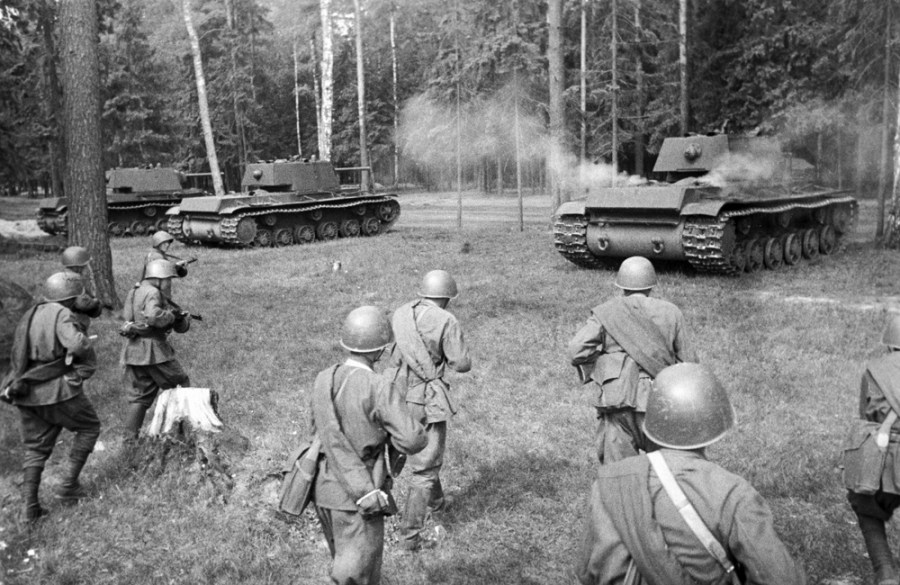


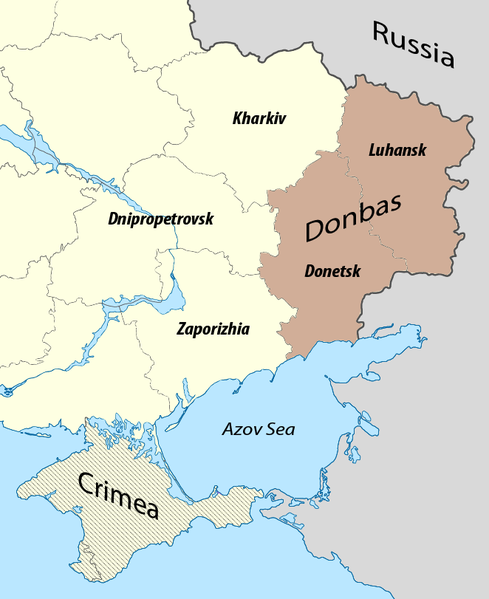


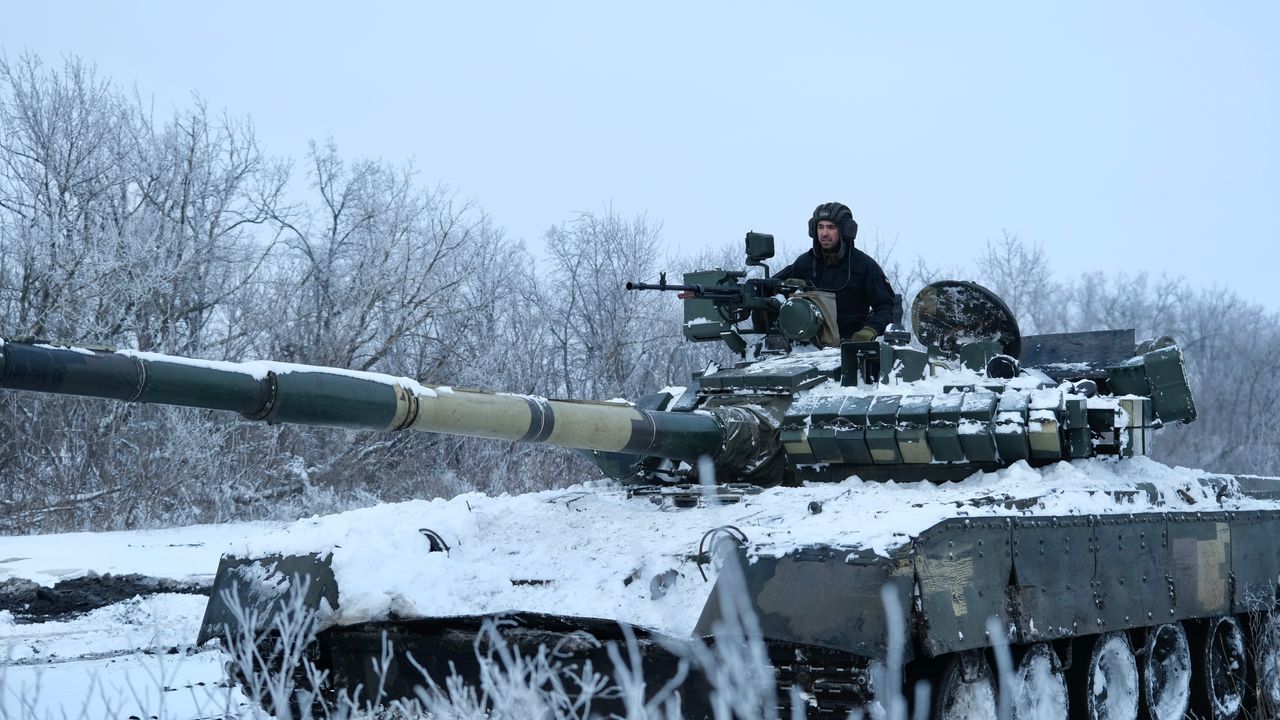


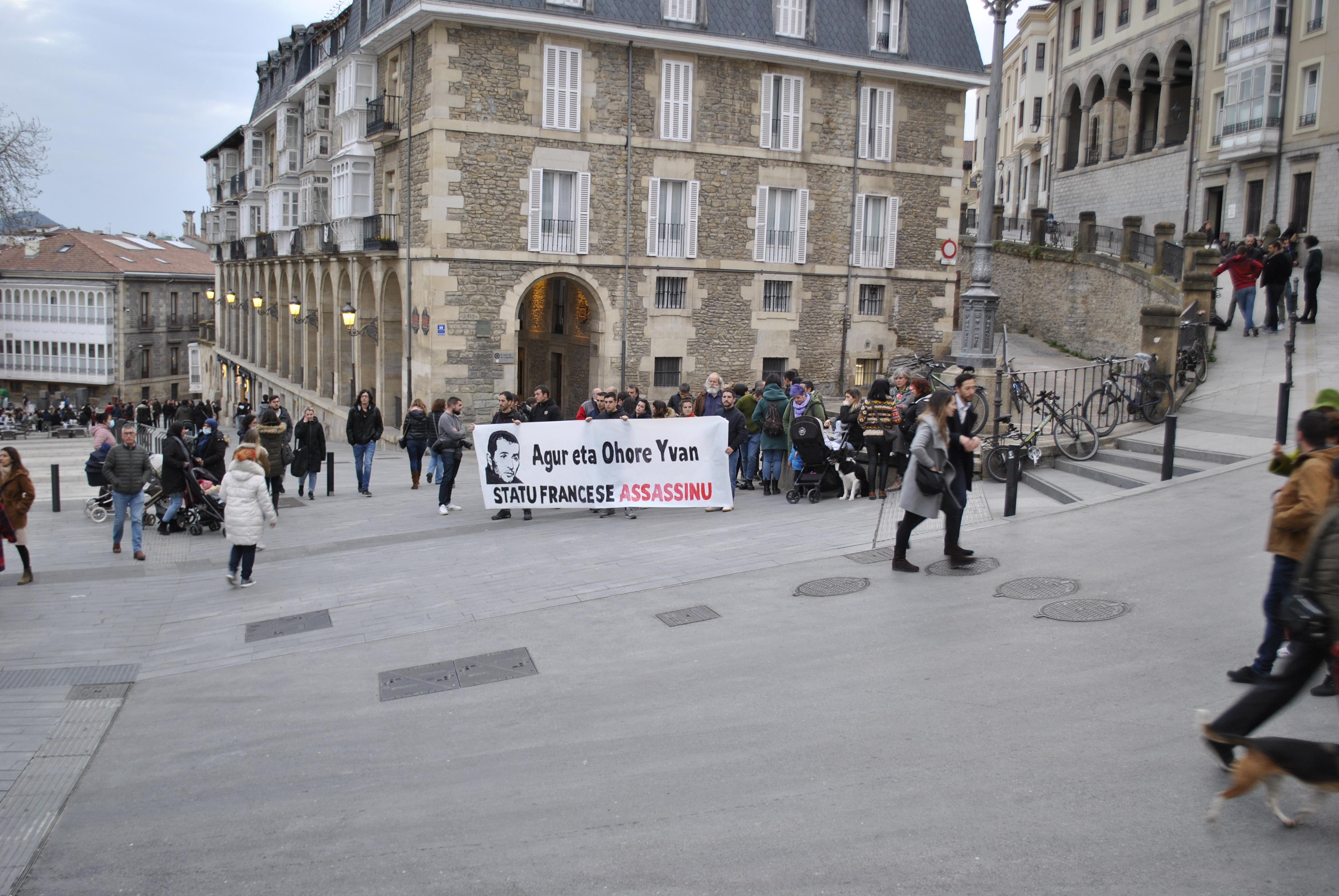

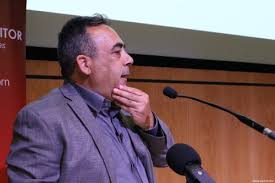


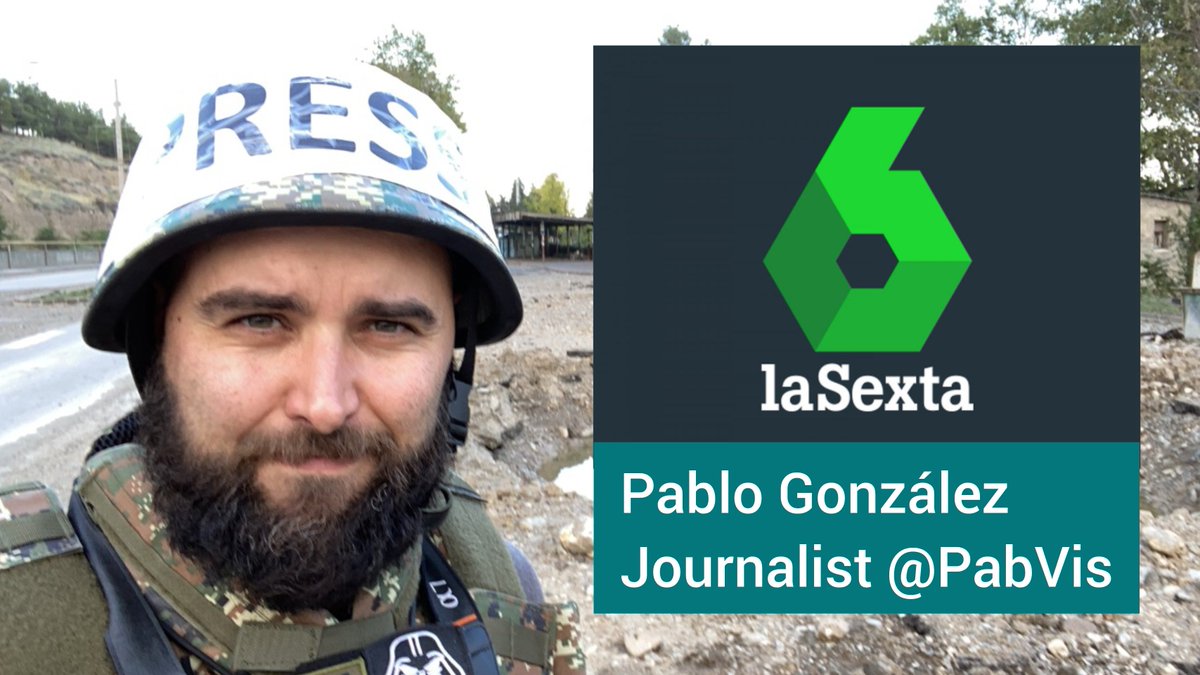
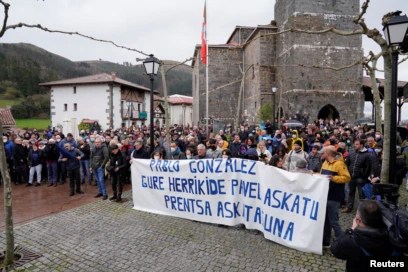
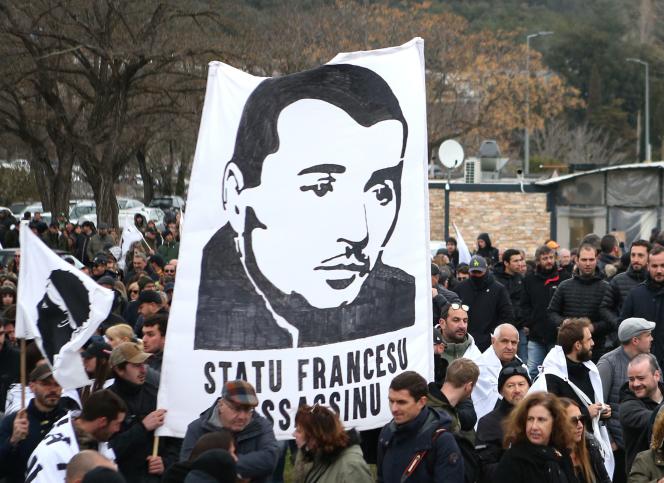


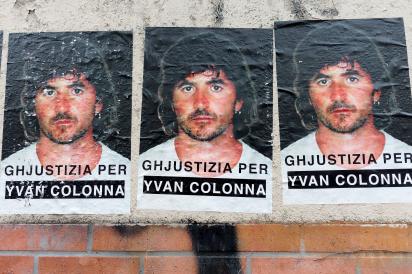


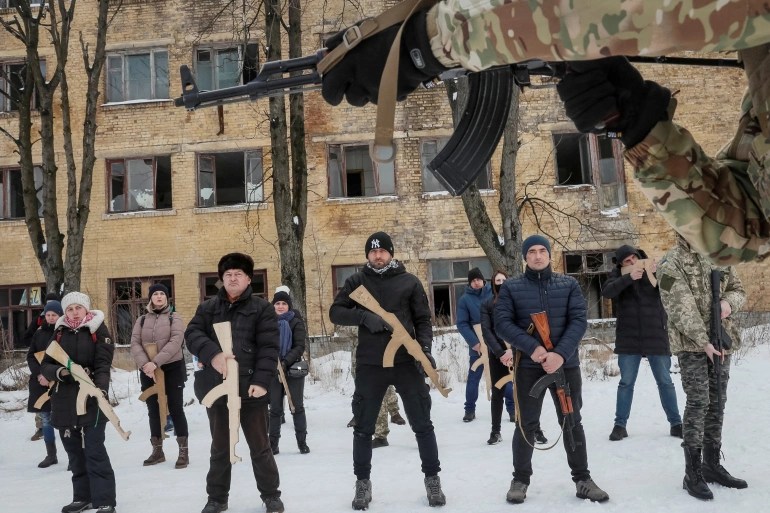

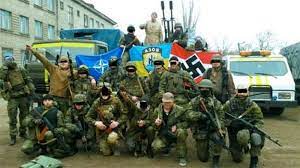

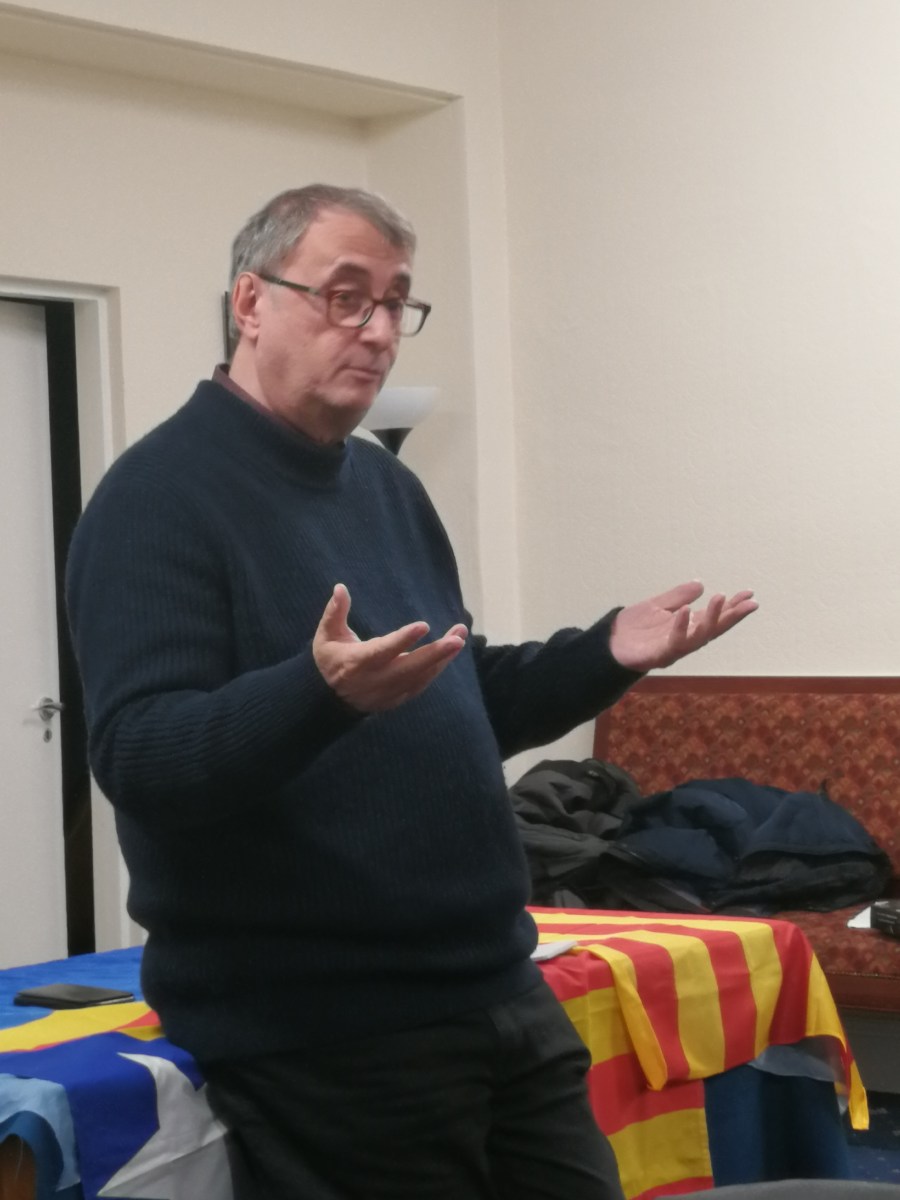


 rebelbreeze