PEGIDA PLANNED LAUNCH ENDS IN SINKING — survivors take to lifeboats

Diarmuid Breatnach

Saturday was the day selected by Pegida for their Irish launch, which they had planned to do at the Dublin GPO at 3pm on Saturday (6th February). Anti-Racist Network Ireland called a demonstration for the same location from 1.30pm but from around noon bands of antifascists were on the street hunting fascists and met them at various locations with painful results for the fascists.
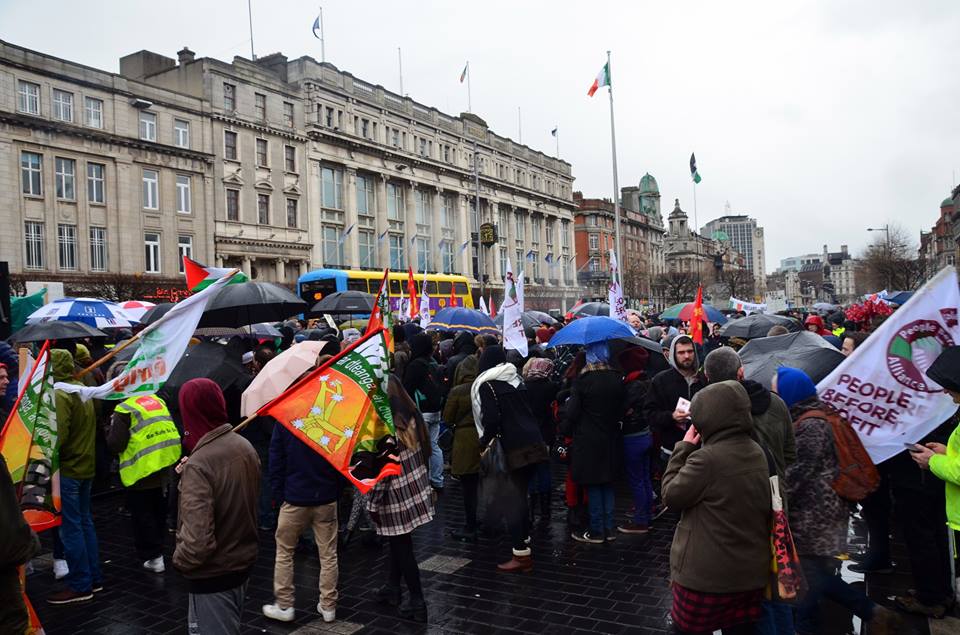
Section of anti-racist rally on central reservation O'Connell Street, looking southward. (Photo from ENAR Ireland FB page).
Section of anti-racist rally on central reservation O’Connell Street, looking southward. The GPO building is to the right out of frame. (Photo from ENAR Ireland) FB page).

BACKGROUND

Founded in Dresden, in eastern Germany in October 2014, Pegida (Patriotic Europeans against the Islamisation of the West) is a broad European network of loosely linked groups opposed to what they claim is the “Islamisation of Europe”. Although Dresden remains its stronghold, the organisation has spread to a number of European countries.

In January last year, marches in German cities reportedly attracted up to 25,000 people at their peak, before numbers began to drop severely, rising again however in October as politicians and media stoked fears of a massive influx of migrants and refugees arriving in Europe from war-torn countries (countries, incidentally, where some European powers have played a major role in instigating or directly carrying out those wars).

Pegida claims to be not fascist and ‘solely’ against Muslims as has been the case with so many fascist organisations in the past – they have been ‘only against communism, or against Jews, or against blacks etc. The organisation has been frequently associated with general anti-immigration diatribes and in January last year derogatory descriptions of immigrants by its German leader, Lutz Bachman, in a closed Facebook discussion, were made public. He stepped down from the leadership after those revelations and the circulation of images appearing to show him posing as Adolf Hitler. The following month however he was reinstated with claims that the images were faked.

In Ireland the Blueshirts, popular name for the Army Comrades Association, mobilised and recruited in the 1930s. They were in part a response to the election of the new Fianna Fáil party, a split from Sinn Féin, in a popular national reaction to the hounding of socialists and republicans by the victors of the Civil War, 1922-1923. The Blueshirts presented themselves as Irish nationalists (even Republicans) with their targets being Communists, Jews and the IRA. Meanwhile elsewhere in Europe, fascist groups were organising, variously declaring their targets to be Jews, Communists, Socialists, Anarchists, trade unionists, Roma and Sinti, immigrants, gays and homosexuals and various religious groups.

The Blueshirts were fought on the streets by Republicans, Communists and some social democrats and, when they threatened a coup, their activities were banned by the De Valera government. It seemed that the majority of the Irish capitalist class had decided that Fianna Fáil were a safe pair of hands and would manage the country better and, besides Britain might go to war with some countries where fascists were in power.  The Blueshirts lost active members after that and with other right-wing organisations, formed the Fine Gael political party which became the principal mainstream opposition party from then on, occasionally going into Government in coalition with other parties. 
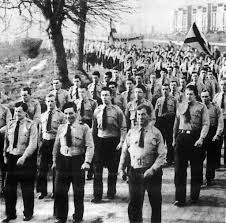
Blueshirts marching, 1930s (Photo sourced from Internet)


PRELUDE TO DEMONSTRATIONS AND ANTI-FASCIST ACTION

Saturday was chosen as “a day of action” for the groups that fall under the Pegida banner, with a number of anti-immigration and anti-Islam demonstrations planned to take place across Europe. The Irish far right anti-immigration organisation Identity Ireland supported Pegida on their Facebook discussions and claimed that Saturday would see the launch of the Irish branch of their organisation. According to a report by the Russian news agency RT, Identity Ireland’s leader addressed a Pegida rally in Dresden last month.

The ARN called for a large peaceful demonstration and even encouraged people to bring their children, advertising it as “a family affair”. Some debate between them and antifascists took place on the Internet and in person on what are the effective methods of resistance to fascism to employ. One of the anti-racist event organisers, Bulgarian Mariya Ivancheva, sociologist and anthropologist based at UCD, was reported in The Journal as calling for a “nice rally to celebrate diversity”. “When Pegida are there we are ready to face them but not to confront them,” she went on to say.

Anti-fascists referred to history to verify their case that fascism has always ultimately had to be stopped by physical force and that being the case, application of that approach at an early juncture was most effective and meant less suffering for working people, ethnic minorities and other targeted groups. The response of ARN to these antifascists was that the latter were not welcome on their rally.
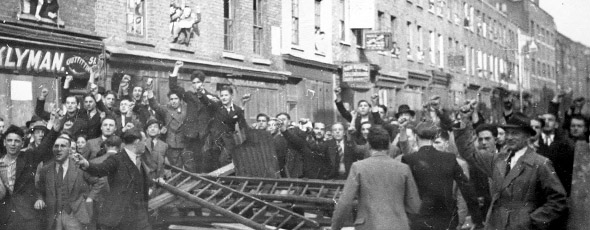
Barricade against a Blackshirt march at Cable Street, East London, 1936. The attack was spearheaded by the police but the antifascists were successful.
Barricade against a Blackshirt march at Cable Street, East London, 1936. The attack was spearheaded by the police but the antifascists were successful. (Photo from Internet)

Many Republicans and Socialists were also angered by reports that the ARN had applied for police permission to hold their rally. Unlike in Britain or in the Six Counties, this is not required by law in the Irish state and the police are required to facilitate with traffic restrictions the right to march or rally on the streets or pavement. The antifascists’ disapproval was based on what was perceived as giving the police more power than they already had and which they often abuse. One veteran of demonstrations in Britain recalled that permission had once not been required in London either but liberals, social democrats and officials of the Communist Party of Great Britain had made it a practice to ask the police in order to cultivate good relations with them. In time, prior police permission became a requirement which at times was withheld or granted with conditions on times and changes of route.

However, subsequent to the publication of this report, I ascertained that ARN  had not asked permission of the police, one of them pointing out that such is not required.  The misunderstanding may have arisen from one person stating that he had informed the police that the event would be taking place.  This of course is quite some distance from asking permission.

The antifascists, composed of Irish Republicans from virtually all organisations and independents, along with a few socialist and anarchist independent activists, organised their own mobile forces.

ON THE DAY

The anti-racist rally at the GPO was attended by a couple of thousand, from the Spire almost to the Jim Larkin monument and covering the road from the GPO to the central pedestrian reservation. O’Connell Street was closed by the authorities to all northbound traffic and stewards were having difficulty in preventing the rally spilling into the southbound lanes. It was addressed by speakers from People Before Profit, the Anti-Austerity Alliance, Sinn Féin and a number of other speakers, including migrants.
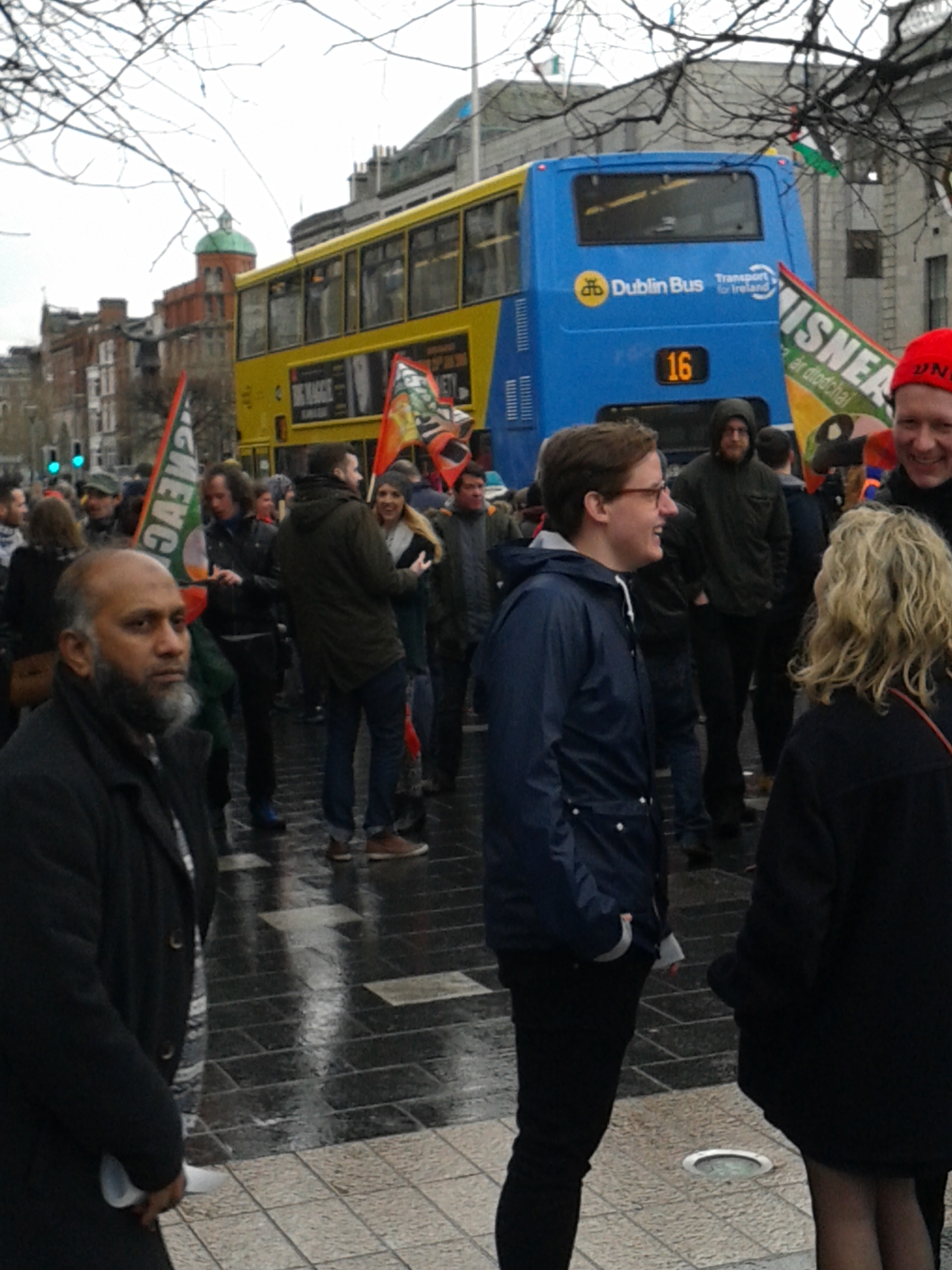
Small section of crowd on east pavement, O'Connell St, with Misneach organisation flags visible (Photo D. Breatnach)
Small section of crowd on east pavement, O’Connell St, with Misneach organisation flags visible
(Photo D. Breatnach)

Clashes occurred at the pre-arranged Dublin meeting points of fascists on the Luas line with the handful of Irish fascists being attacked and some, including their leader Peter O’Loughlin and member Ian Noel Peeke being reportedly hospitalised. Clashes broke out again in the city centre at a number of points; one of the latter being at Earl Street North. It seems that some Pegida supporters had gathered at the junction with O’Connell Street and were watching the demonstration opposing them across the road and some were filming it.  There were reports of some of them abusing women supporters of the antiracist rally who were near the junction with North Earl Street. The Rabble independent media group reported them shouting anti-communist insults at them (see their video link at end of article). In any case, although generally free of visible insignia and carrying no banners, they began to attract an antifascist crowd, scuffles quickly broke out and the fascists ran down North Earl Street and Talbot Street. A couple of the Pegida supporters ducked into a nearby ‘poundshop’ apparently for safety but they were followed and received a pounding.

Police stormed the shop and evicted the antifascists, lashing out at almost anyone close by, as can be seen in the Irish Times video (see link at end of article). RTÉ has lodged a complaint about one of their camera operators being deliberately struck by a police baton. The riot police with batons drawn then set up cordons with barking German Shepherd dogs behind them and cleared North Earl Street of all pedestrians, allowing no others to enter from either direction.
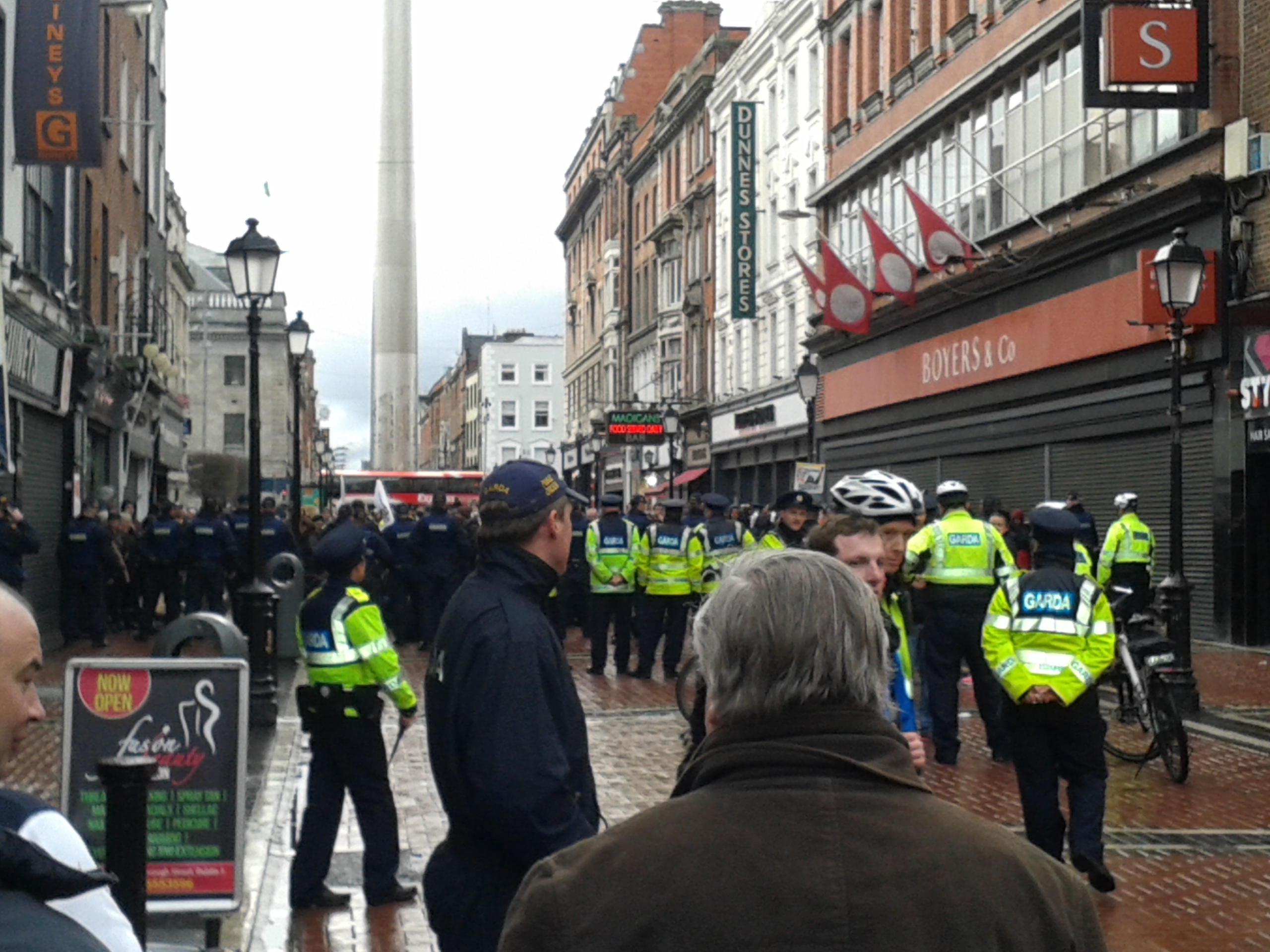
North Earl St. after incident (facing westward). (Photo D. Breatnach)


This cordon was maintained until a few more Pegida supporters were permitted to escape through Malborough and Talbot Streets. All of the fascists in this area at least were identified by a number of sources as being of East European background, both by their accents and appearance. Some posts on fascist sites later on seemed to confirm this (see AFA Ireland statement link at end). Earlier reports gathered by antifascist intelligence had indicated that Pegida supporters from fascist Polish organisations were planning to support the Pegida launch.
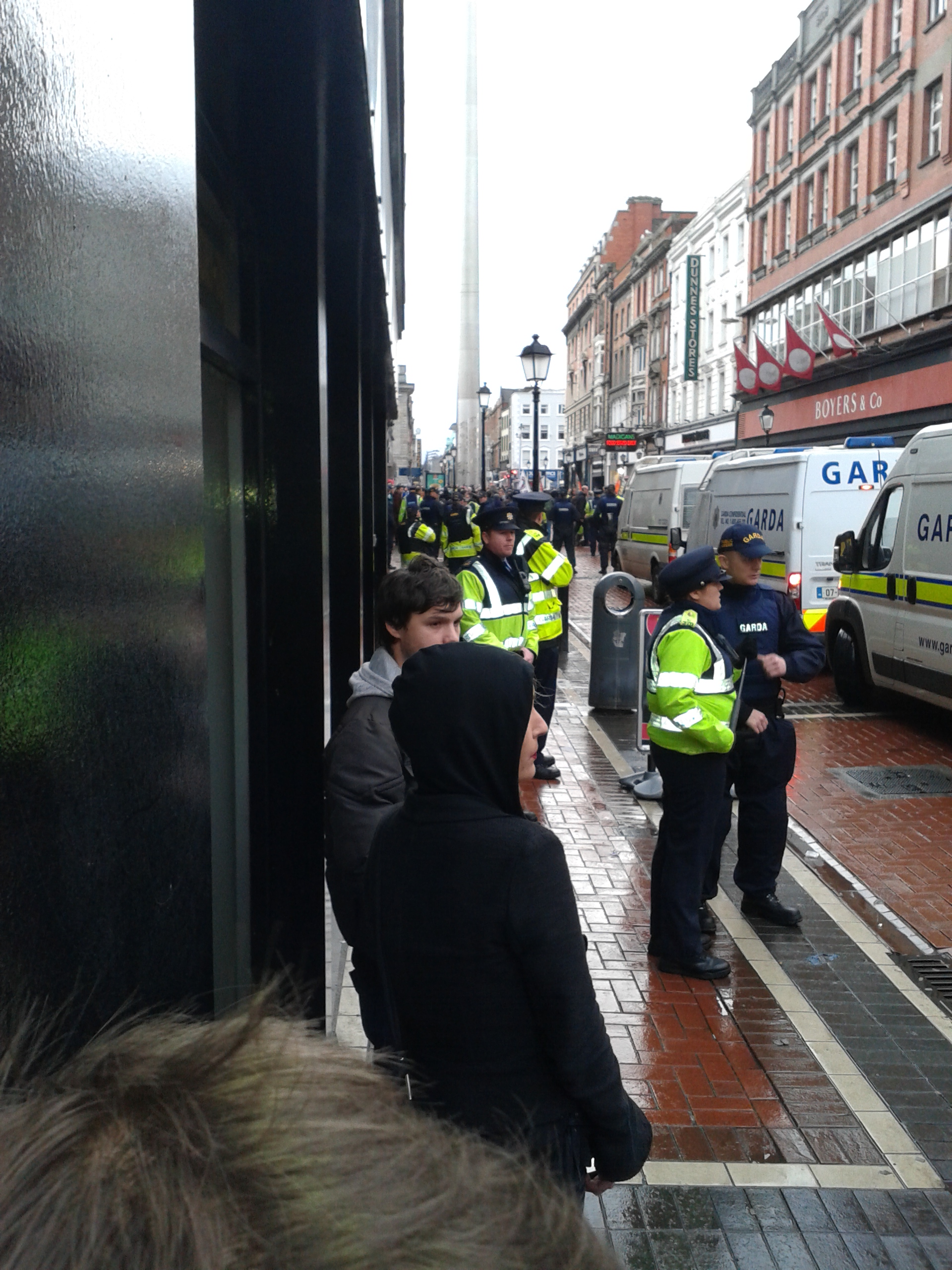
 North Earl St. facing westward, Police and their vans (Photo D. Breatnach)
North Earl St. facing westward, Police and their vans (Photo D. Breatnach)


Subsequently, word reached antifascist patrols that 5-7 other Pegida supporters had gathered in a pub in Cathedral Street, again off O’Connell Street and scores of anti-fascists raced to arrive outside the pub almost at the same time as police. Another struggle with police took place outside the pub with riot police using their batons to jab and occasionally lash out, though with a degree more restraint than they had earlier at North Earl Street (perhaps due to an initial complaint from RTÉ having reached their senior officers by then). Police continued to violently push protesters and to jab with truncheons and one demonstrator showed a badly swollen and blue hand.

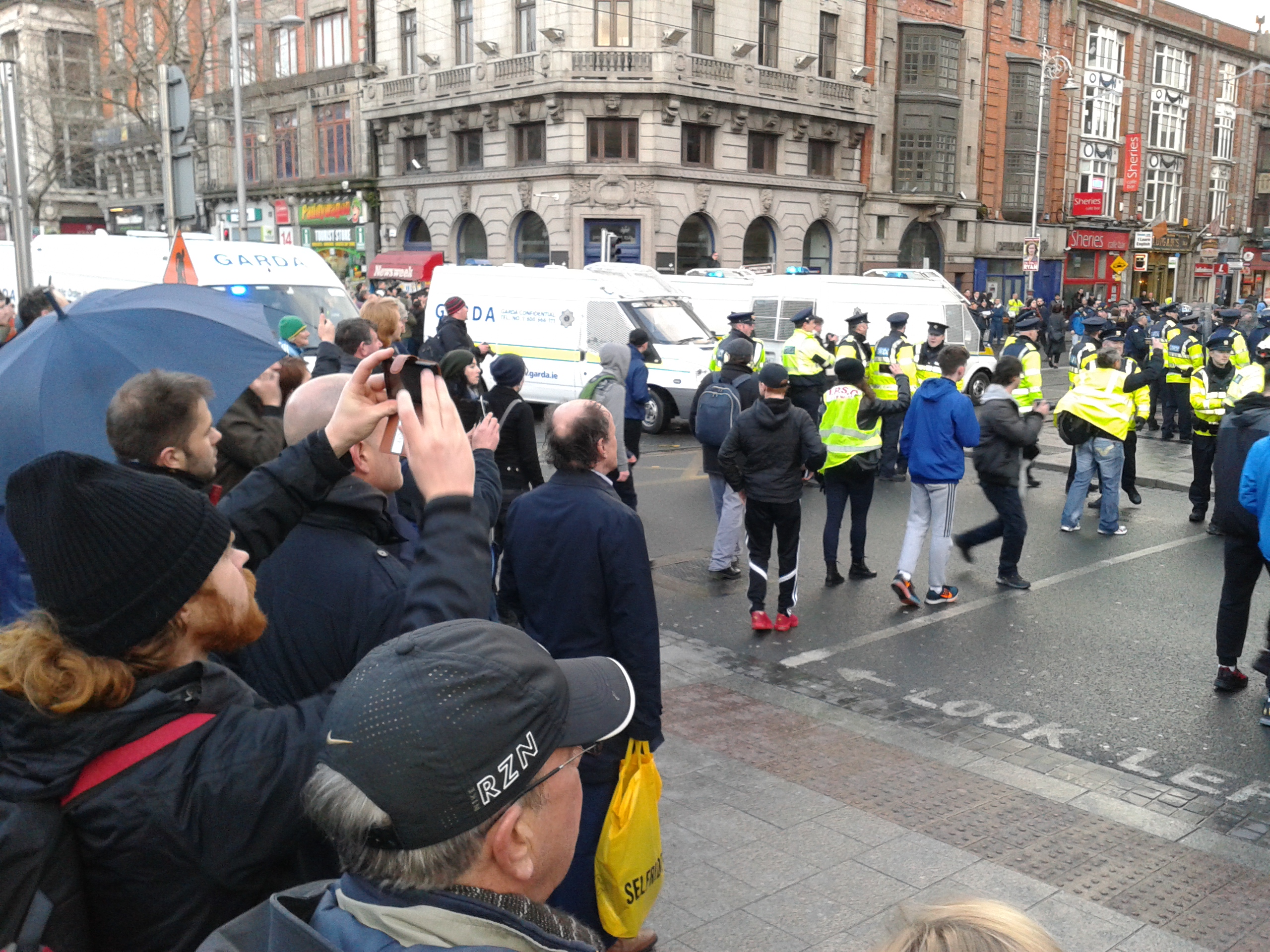
A standoff took place here for some time until the Pegida supporters appeared to be getting bussed out in police vans which sparked a rush of 50 or more antifascists southward down O’Connell Street. Riot police on foot and in vans followed them and at the intersection with Lower Abbey Street, drew up two cordons, one facing eastward down Lower Abbey Street and the other facing the Liffey, while crowds of antifascist gathered on the eastern pavements and Lower Abbey Street and mostly spectators gathered on the central pedestrian reservation. More police arrived and drew plastic shields out of their vans while a number of dogs were in evidence barking, one jumping up and straining on the leash towards antifascists.

Many spectators, natives and others, expressed bemusement and asked people near them what was occurring, evidence of the low level of advance news coverage by the mainstream media. Alternative, liberal, socialist and Republican media and independent sites on the other hand had given extensive coverage and encouraged people to attend the anti-racist demonstration or the antifascist action. Some among the crowd who were ‘in the know’ explained the events to one or two in their immediate vicinity. The overall atmosphere in the crowd seemed opposed to the fascists with mixed attitudes to the police and antifascists. These crowds offered fertile ground for being publicly addressed by word of mouth or leaflets but none seemed available to fulfill that role.

After some time in apparently purposeless deployment, given that nothing was moving, the Gardaí simply returned most of their forces and riot shields to their vans and most drove off. This seemed to indicate that the police maneouvre had been in the manner of a decoy while the fascists were spirited away quietly from the vacated vicinity of the pub. The Rabble video seems to confirm this.
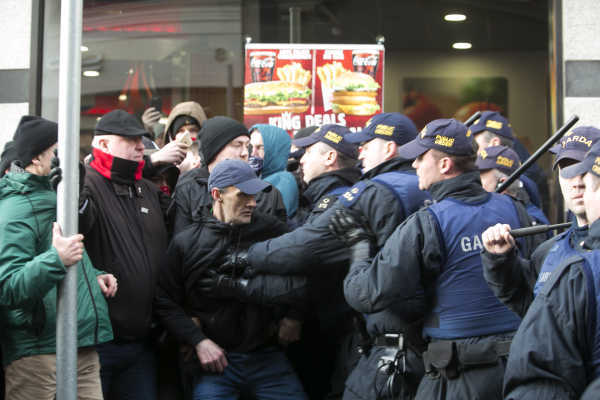
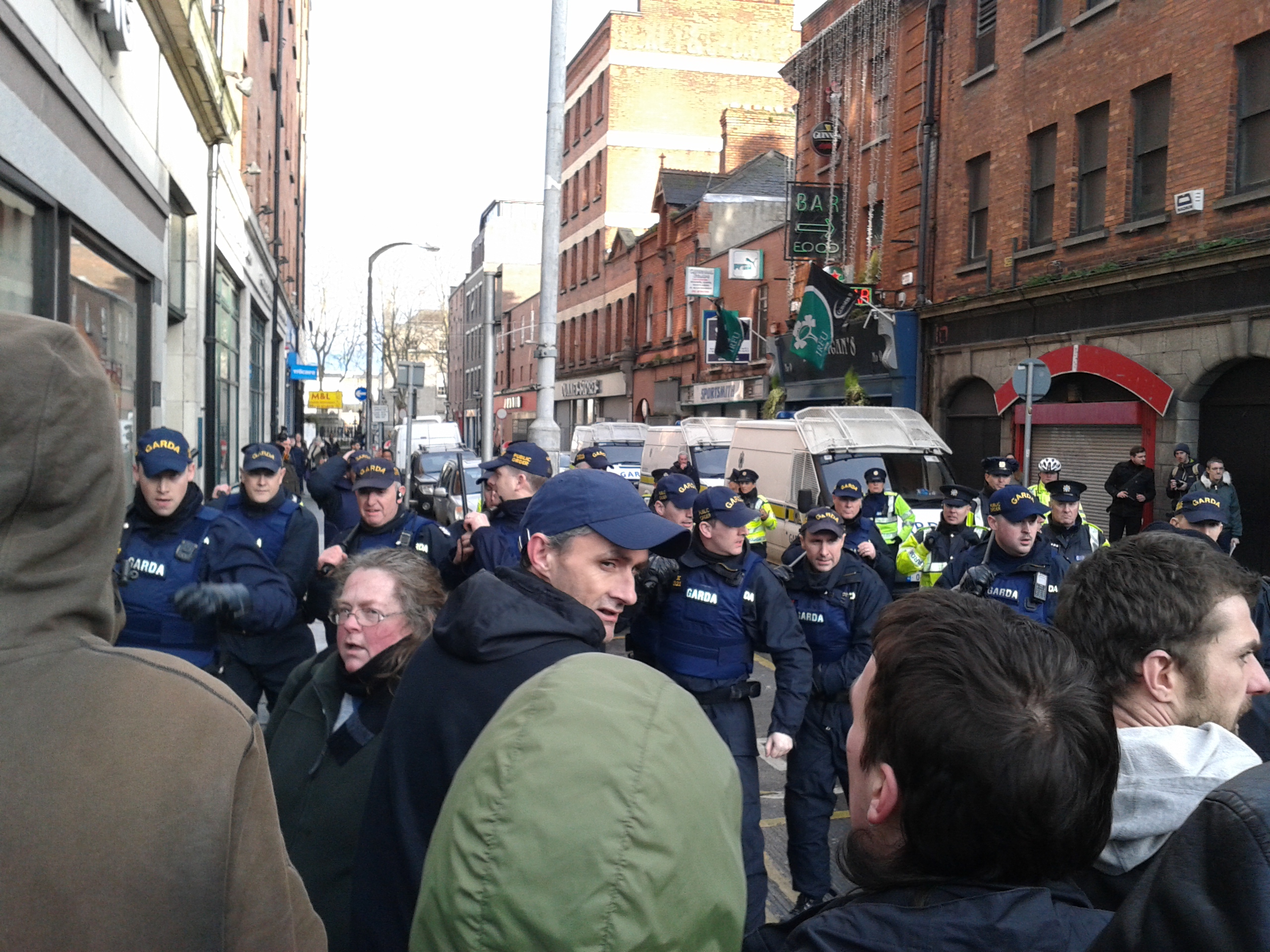
Melee in Cathedral Street (photo from Internet)
Melee in Cathedral Street as riot police force antifascists away from pub where fascists are in hiding (photo from Internet)
Riot Squad police in Cathedral Street facing off antifascists. (Photo D.Breatnach)
Riot Squad police in Cathedral Street facing off antifascists.
(Photo D.Breatnach)
Standoff Abbey St. junction O'Connell St, facing westward (Photo D.Breatmach)
Standoff Abbey St. junction O’Connell St, facing westward (Photo D.Breatmach).
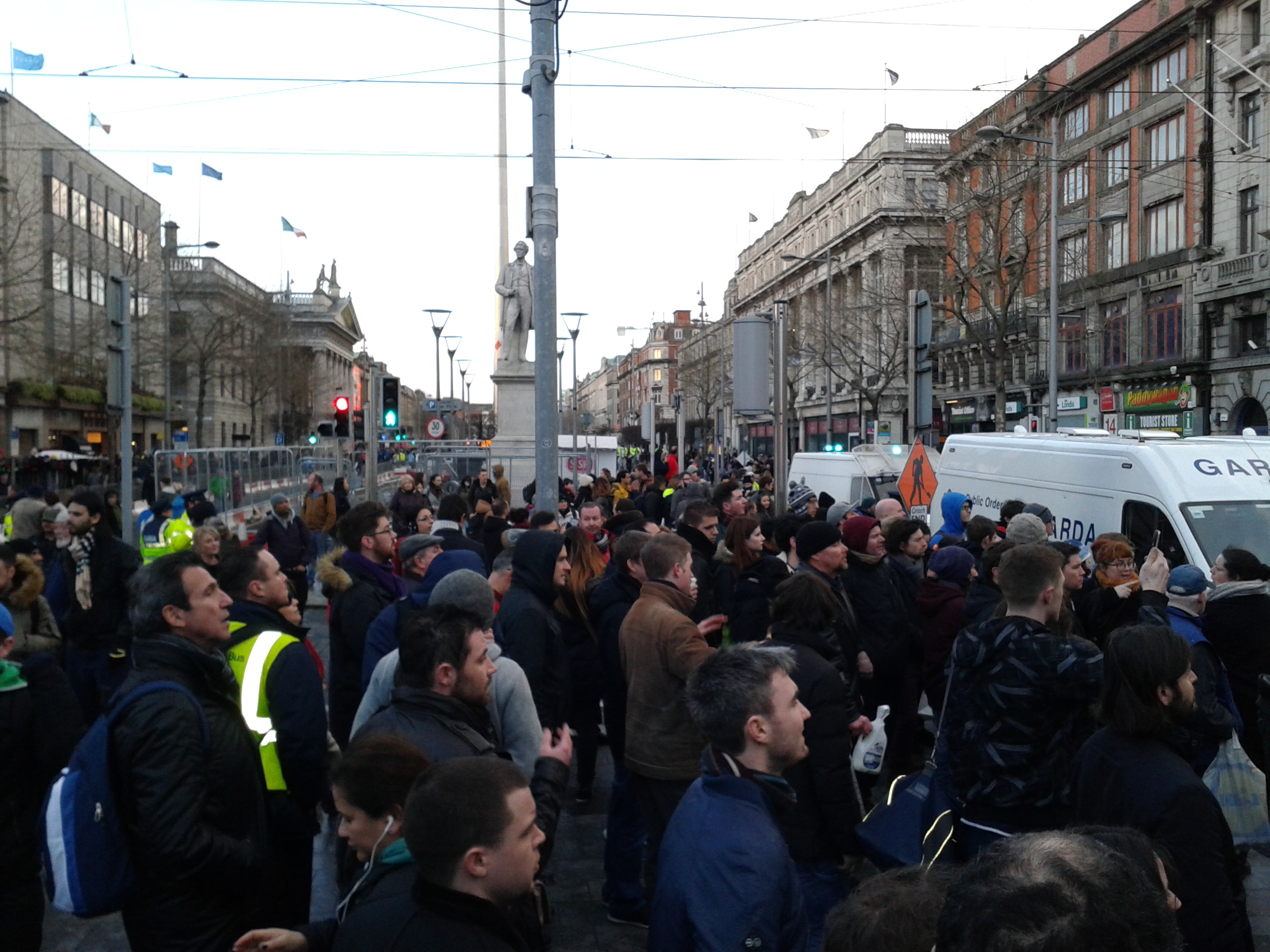
Many spectators -- view northwards along O'Connell St. from the William O'Brien monument (Photo D.Breatmach)
Many spectators — view northwards along O’Connell St. from the William O’Brien monument (Photo D.Breatmach)

SUMMARY ANALYSIS

The State, probably in anticipation of antifascist action, mobilised and deployed considerable forces. Garda vans moved through the city centre, sometimes in convoys, in addition to police on foot, mounted on horse and bicycle (though the horse police were often discreetly out of site in several locations around the demonstration area). Riot police waited in vans while other vans were stacked with plastic riot shields (which in the end were not needed, if a missile was thrown at the police it was a rare one).

In line with the general history of the relationship between capitalist states, their police forces and fascist movements, the police showed their determination to protect the fascists moving around the city centre. The eagerness of officers at times caused them some problems, including one of them striking a cameraman from the national broadcasting network, RTÉ, with a baton. On another occasion, a riot police officer can be heard calling “Hold the line!” at a time when the video shows the line is not under pressure – the only danger to the police line at that point is seen to be from over-eager officers breaking away to pursue and attack demonstrators.

A number of demonstrators and some spectators suffered bruises from police batons as well being violently shoved by police. In one video a police officer is briefly visible striking at a person lying on the ground – a visual echo of that famous photograph of Bloody Sunday during the 1913 Lockout, when the Dublin Metropolitan Police had run riot less than 100 yards away. In other footage police are seen shoving a man, apparently disorientated (perhaps by a blow to the head) to the ground at least three times although he is no threat to them and is not even resisting.

A feature of the antifascist active resistance was the unity in action across the Irish Republican spectrum, a feature that has been growing in solidarity work around Republican prisoners, in resistance to some features of repression and in the defence of the historical heritage represented by the struggle to save the 1916 Terrace in Moore Street. On this occasion however the unity in action included some SF activists. A sprinkling of independent socialists and anarchists were also among them. Some activists of the socialist, anarchist and communist organisations left the rally to join the antifascists blockading the fascists and their police protectors at Cathedral Street. There were a number of reports of football youth ‘casuals’, supporters of four Dublin soccer clubs, also cooperating in hunting for fascists. At least two of these were observed taking ‘selfies’ of themselves against a riot police background!

It is not known how many arrests were made nor what their outcome has been. Fascists were filmed being handcuffed as they were being put in police vans to take them to safety but it is unlikely they were charged. A number of fascists were reportedly hospitalised where no doubt their medical care teams will include a number of migrant background and perhaps even of Muslim religion.

The police and the Government will be considering their response but the ritual condemnations by their mouthpieces of antifascist force can be expected, as well as attempts to isolate the antifascists as some kind of hooligan or sinister element. The capitalist class will not be impressed with Pegida or Identity Ireland’s performance and, if considering building up a fascist movement in the future, will probably look elsewhere.

Both the ARN and the antifascists were pleased with the outcome of their respective efforts but liberal elements can be expected to condemn the antifascists for what the former perceive as marring the message of their demonstration. The ARN statement (see link at end of article) did so in fact albeit in muted tones, “regretting skirmishes”. In a parallel to some Jewish leaders in 1930s Europe during the rise of fascism, a Muslim religious leader was quoted criticising violent actions “by a minority” and called for defeating them by “dialogue”.

The fascists will be licking their wounds and trying to put a brave face on their defeat, also condemning the antifascists for using “undemocratic violence” or words to that effect. All fascist movements in history have been extremely violent while often, while in their growth period, presenting themselves in public as peaceful and condemning the violence of their opponents. This is a fact that liberal elements usually fail to appreciate, while other elements among the middle class are ultimately content to see their order being maintained, whether by the State or by fascists.

Whatever spin the fascists, the State, mass media or liberals may put on it, the fact remains that the fascists have been prevented from staging a publicity coup that would have raised the morale of their few recruits and encouraged more to join them. Fascist movements throughout history have required such morale-boosters and encouragement for potential recruits and, incidentally, intimidation of their opposition. What happened on Saturday in Dublin has been the reverse – the fascists and potential recruits have been intimidated and discouraged. Over 200 indicated intention to attend on the Pegida “Irish launch” Facebook event but reports on the ground in the city centre indicate a total of perhaps 30 fascists being chased around the city in small groups. The 170 or so, whether Irish or from elsewhere interested in supporting islamophobia, racism and fascism won’t be in a hurry to enlist now.

But should a new attempt be made to launch a mass fascist movement in Ireland, on whatever divisive basis, the antifascists are likely to turn out in even greater numbers.

End.

Video and text links:

Irish Times video showing part of incident at North Earl Street which shows a number of unprovoked assaults by Gardaí on individuals, both by violent pushing and by baton blows. http://www.irishtimes.com/news/ireland/irish-news/scuffles-break-out-at-launch-of-anti-immigration-group-in-dublin-1.2525530

Collage of video clips taken by independent film maker, including scenes of baton-swinging police: https://www.youtube.com/watch?v=uHkQnkaqaoU

Great footage taken by filmer from Rabble alternative media organisation of a number of dramatic events including fascists’s faces: http://www.rabble.ie/2016/02/07/pathetic-pegida/

Short panoramic video clip of the AR demo https://www.youtube.com/watch?v=fJNQW0pSYpY

Independent long video footage of confrontation on Cathedral Street posted on Youtube: https://www.youtube.com/watch?v=_REls3JkxzQ#t=129

AFA statement and some other material on their site: https://www.facebook.com/afaireland/posts/1018094948250821:0

Irish Republican Left Action Against Fascism statement: https://www.facebook.com/permalink.php?story_fbid=913561958751080&id=912549568852319

ENAR Ireland photos and Anti-Racism Network statement: https://www.facebook.com/enar.ireland/posts/954399354642123

Rogues’ Gallery of fascists’ faces album: https://www.facebook.com/libertypics/media_set?set=a.10207283509858914.1073741835.1019818043&type=3&uploaded=1&hc_location=ufi

LIST OF ORGANISATIONS SUPPORTING THE ENAR RALLY:

Supporting organisations (in alphabetical order):

Anti Austerity Alliance, Akidwa Ireland, Africa Centre Dublin Ireland, Anti Racism Network Ireland, Attac Ireland, Autistic Rights Together, Communist Party of Ireland, Conference of Religious in Ireland, Dialogue & Diversity, Dublin Calais Refugee Solidarity, Dublin City Centre Citizens Information Service, Doras Luimni, EDeNn, ENAR Ireland, Fighting for Humanity – Homelessness, Galway Anti Racism Network, Gaza Action Ireland, Gluaiseacht for Global Justice, Green Party of Ireland, Ireland Says Welcome, Ireland Palestine Solidarity Campaign (IPSC), Irish Anti-War Movement, Irish Housing Network, Irish Refugee Council, Irish Missionary Union, Irish Traveller Movement, Migrant Rights Centre Ireland, National Traveller Womens Forum, Shannonwatch, Show Racism the Red Card – Ireland, SARI – Sport Against Racism Ireland, SIPTU, Sinn Féin , The Platform, Pavee Point, People Before Profit, United Against Racism, The Workers Party, Workers Solidarity Movement, You Are Not Alone.” (From their statement published on European Network Against Racism Ireland’s site)

ALL OUR HISTORY — a short poem

Round Tower, Timahoe, Co. Laois

Diarmuid Breatnach

ALL our history is important,

not just 1916,


teaching us what we are


and what we have been.


How we came to reach the now,


of those who fought

or those who bowed,


through bloody pages,

down through the ages;


it relives the struggle to be free


and whispers soft what we might yet be.

British Embassy Dublin petrol bombed 1972
British Embassy Dublin petrol bombed in rage at Bloody Sunday, Derry 1972
Some of the wonderful children's artistic impressions of the Rising on display at the launch
Some of the wonderful children’s artistic impressions of the Rising on display at the launch of “Our Rising”.

MY BASQUE FAMILY AND MUSHROOMS

Diarmuid Breatnach

Maribel Eginoa Cisneros died on the 13th of this August in the Santutxu district of Bilbao. She was many things – a democratic Basque patriot, dancer, choir singer, herbalist, mycologist, carer, wife, mother ….

I and two of my siblings travelled to attend the funeral. For me it was a farewell to a warm, intelligent and cultured person who, along with her husband, two of her daughters and a son-in-law, had been very welcoming to me. More than that or because of that, I thought of them as “my Basque family”.

Somewhere I have a Basque family related through blood and marriage but I don’t know them. Different loyalties and some German blood during the Spanish Civil War took my mother out of the Basque Country; the ties were cut and left behind. My mother became a woman in Madrid, where she met my father soon after.

Although they never met, it was because of my mother that I had first met Maribel. My mother, Lucila Helmann Menchaca (the Basques spell it Mentxaka), was born in Algorta, in the Getxo district, not far from Bilbao and spent her early childhood there. How her parents met is another story but Luci grew up bilingual in Castillian (Spanish) and German, with a Basque mother who hardly knew any Euskera (Basque) and a German father. All of Luci’s children, the five boys and one girl, knew of their mother’s childhood in the Basque Country and as we grew older, a desire grew with it to see where she had been born; each of us individually making the pilgrimage.

ONGI ETORRI – BASQUE WELCOME

I was a total stranger and low on funds on my first visit to the Basque Country. I had one contact, a woman I had met only a couple of times when she worked as an au pair in Dublin; she promised to help me get based and I arranged to phone her when I arrived. But the flight was delayed and then could not land at Bilbao airport – too much cloud, the pilot said – and we would land instead at Zaragossa, over 154 miles (248 Km) away. There the passengers had to wait for a coach and eventually arrived in Bilbao in the early hours of the morning. Of course, I had not booked an hotel, so the driver of the last taxi available tried a few without success and then brought me to the Nervión, a four-star hotel over its namesake river, dark and unlovely with a nightly rate that hit me in the gut.

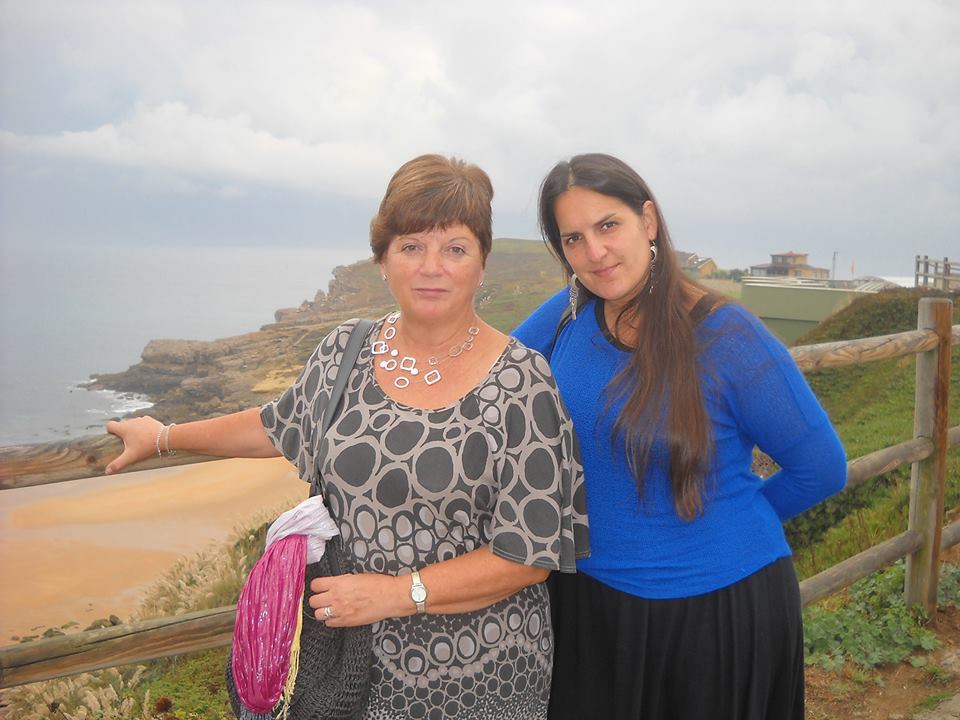
Maribel and Ziortza on a visit to the Cantabrian coast
Maribel and Ziortza on a visit to the Cantabrian coast (Photo from Maribel’s family)

Next morning I phoned my contact, Ziortza and she came to the Nervión and waited while I checked out. I expected to be brought to a cheap hotel or hostel but was instead brought to her family’s home and there, for the first time, I met Ziortza’s parents, Maribel Eginoa and Josemari Echeverria (women don’t change their surnames now when they marry there). I was welcomed, fed and shown to what was to be my room during my stay. It was Ziortza’s, who moved in with her parents – the other two sisters lived in their own apartments with their partners and children. I was fed wonderfully every day too.

I was stunned by the depth of the hospitality from people I did not know, a trait I have encountered again and again among many Basques I have met. Nor was that all. Ziortza took me on her days off on excursions to some different places and towns and her sister Gurrutze and husband Gorka took me on a tour along the Bay of Biscay before turning uphill to iconic Gernika (Spanish spelling “Guernica”). Ziortza also gave me instructions on how to get to Algorta by local train, where my hand-drawn map could take me to where my mother had lived, a trip I preferred to make alone.

The next occasion I returned to Bilbao, this time to begin to know the southern Basque Country, I stayed in their apartment again, in the same room, but this time without discommoding them, since Ziortza had moved out to her own place.


THE UNEXPECTED ONE

Maribel and Josémaria were fairly comfortable and retired when I met them but they had some hard times behind them. Josémari’s father had been a Basque nationalist and fought against Franco, a fact that did not escape the victorious Franco authorities. When it came to time for the Spanish military service obligatory for males (much resisted in the Basque Country and now

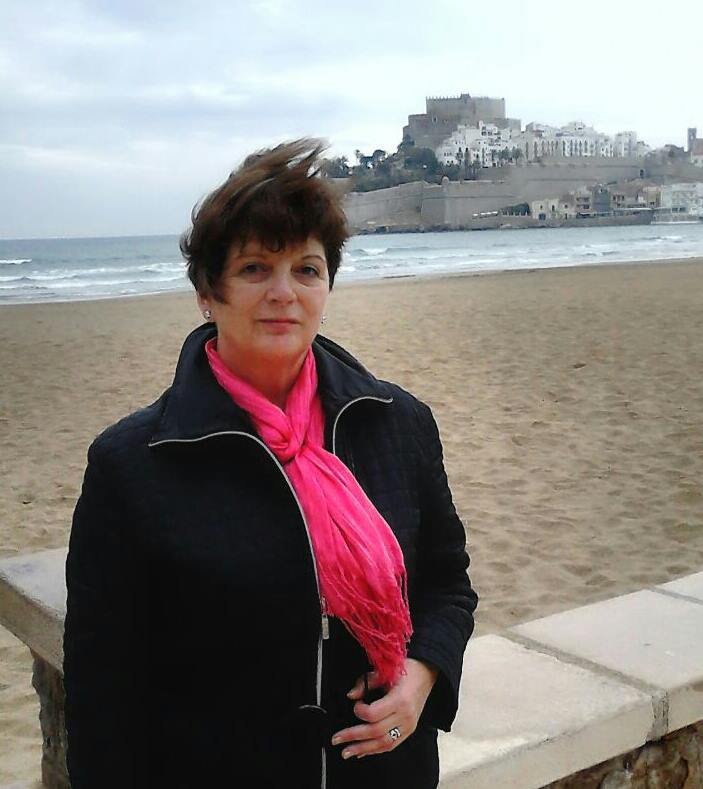
Only a few months before her death (hard to believe) -- Maribel Eginoa
Only a few months before her death (hard to believe) — Maribel Eginoa (photo Maribel’s family)

abolished throughout the State), they sent Josémari to one of the worst places to which they could send the son of a Basque nationalist – Madrid. His superior officers took pleasure in reminding him of his father and of what they thought of Basque nationalists (or even Basques in general). For the couple, it was a difficult separation but they married as soon as he was finished with the Spanish Army. Maribel was 21 years of age.

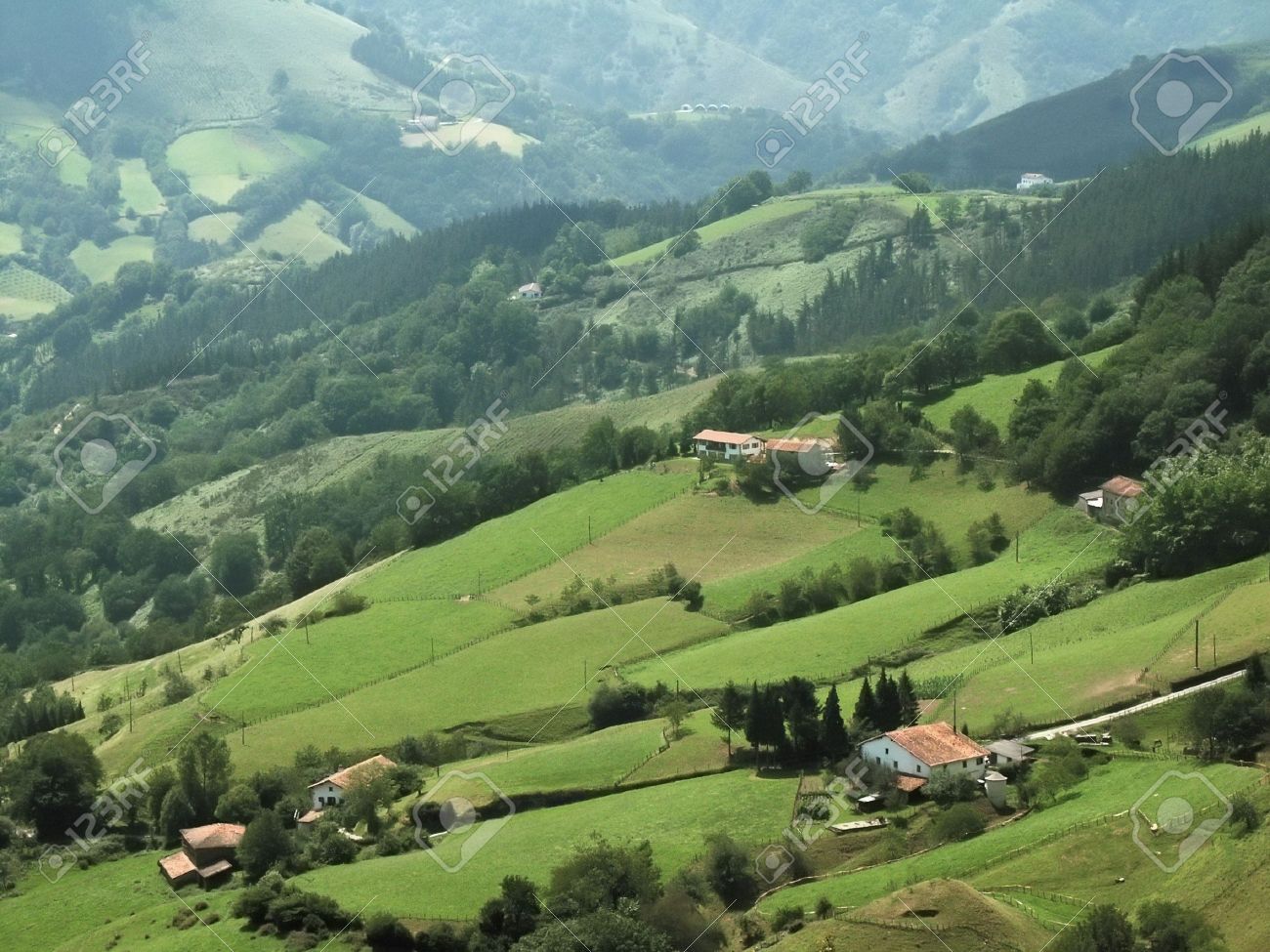
Pyrenean landscape in Iparralde ("the northern country"), the part of the Basque Country ruled by France.
Pyrenean landscape in Iparralde (“the northern country”, the part of the Basque Country ruled by France). (photo from Internet)

In their early years together they often travelled to Iparralde (“the northern country”), the Basque part under French rule, with a Basque dance group called Dindirri. The French state has no tolerance for notions of Basque independence but does not harry the movement as does the Spanish state in Hegoalde (“the southern country”). Maribel was fluent in French as well as in Castillian.

Born ten years after the most recent of another four siblings, Maribel was the result of an unexpected pregnancy. “It was destiny,” commented one of her daughters. “The unexpected one would be the one to take care of everyone in the future.” One of Maribel’s siblings had died after a few days, another at the age of 19 due to surgical negligence, another had cerebral palsy. Maribel’s sister herself had an intellectually challenged boy and, when she emigrated with her husband and daughter, left him in Maribel’s care. As Maribel’s mother grew old and infirm, she took care of her too. Her brother with cerebral palsy, although in a home for his specialist care, spent weeks at a time in the family home. And another relative came to stay with them too, for awhile. Maribel looked after everyone.

Of course, her husband Josémari helped, as did her daughters. And they all accepted that this was how things were. And to add to that, the couple visited friends and neighbours in hospital.

LANGUAGE AND POLITICS

When I met Maribel and Josémari, I heard them speak to their daughters in Euskera — the Basque native language. But they themselves had not been raised speaking it – they went to classes to learn the language and raised their children with it. Speaking or learning Euskera was illegal under Franco except for some dispensation to Basque Catholic clergy. It was the latter who founded the first illicit “ikastolak”1 to teach Euskera and later these were set up by lay people too. The ikastola, teaching all subjects except language through Euskera, is now the school type attended by the majority in the southern Basque Country and is mainstream in the Euskadi or CAV administrative area, encompassing the provinces of Bizkaia, Alava and Guipuzkoa.

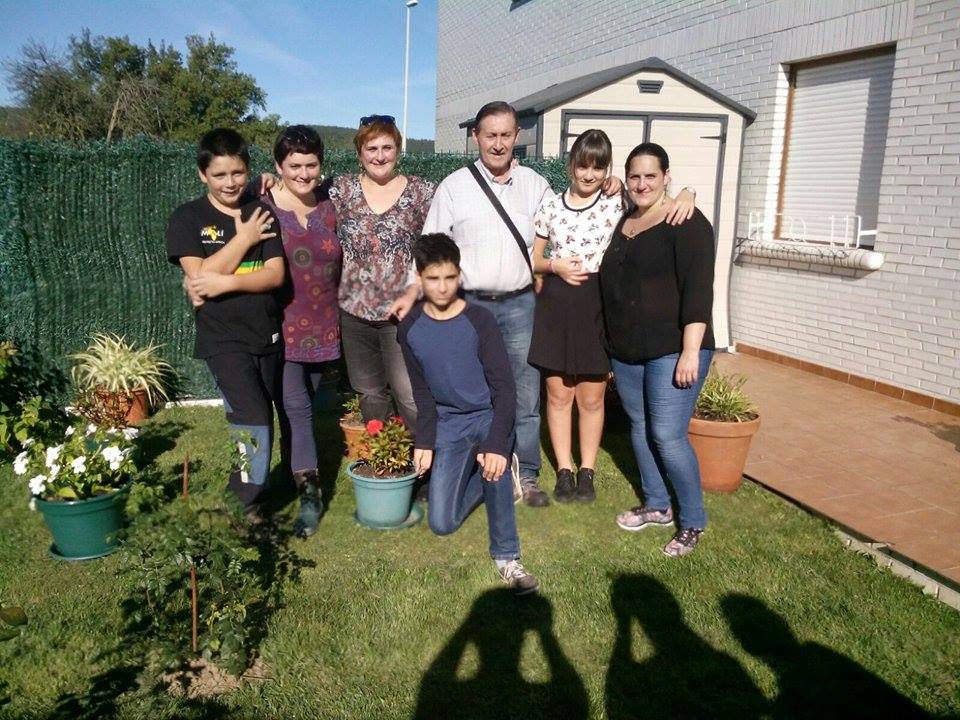
Most of "my Basque family: Front R-L: Aimar and Markel, Gurrutze's sons; Back R-L: Gurrutze, Maider, Josemari, Maddi & Ziortza.
Most of “my Basque family: Front R-L: Aimar and Markel, Gurrutze’s sons; Back R-L: Gurrutze, Maider, Josemari, Maddi & Ziortza. (Photo from Maribel’s family)

Under Spanish state repression the old Basque Nationalist Party was decimated and although still in existence, its youth wing became impatient with what they perceived as the timidity of their elders.  The PNV youth found a similar impatience among leftish Basque youth who had picked up on the vibrations of the youth and student movement of the 1960s. These youth brought to the table the narratives of anti-colonial and anti-imperialist struggles, mixed with socialist ideas of the Cuban and Algerian revolutions. Thus was Euskadi Ta Askatasuna (Homeland and Freedom) born — doubly illegal, as they espoused Basque self-determination and socialism. And so they were spied upon by the Guardia Civil, harassed, arrested, tortured, jailed … after nine years of which ETA took up arms.

Of the Spanish state’s main political parties today, the ultra-right Partido Popular and the social democratic PSOE, the first receives very little electoral support in the CAV administrative area and the second always less than the total of Basque parties. Maribel and Josémari, like most of patriotic Basque society, were presented with the choice of supporting the PNV (Basque Nationalist Party) or the Abertzale Left, the broad political movement of which ETA was a part. The PNV was known for jobbery and corruption and collusion with the Spanish state so of course Maribel and Josemari raised their family in loose allegiance to the Abertzale Left, attending many marches of the movement, public meetings, pickets and now and then hearing gunshots and explosions, hearing of people they knew going into clandestinity and others arrested, tortured and jailed. Everyone knew someone who became a political prisoner (and that is still largely the case) — a neighbour, work colleague, a past pupil. One of Maribel’s daughters saw most of her quadrilla – a small circle of Basque school friends who typically stay close throughout life – go to jail; part of her life is now organised around making visits to jails throughout the Spanish and French states, thanks to the cruel dispersal policy.

At the funeral service in the packed Iglesia del Karmelo in the Bilbao district of Santutxu, I remembered Maribel’s warm personality and hospitality. In fact it was around that hospitality that I unwittingly caused a rift between us. By the last time I returned to stay with them, I had become active in Basque solidarity work in Ireland. Beset with communication difficulties with the organisations in Euskal Herria (the Basque Country) and desperate for regular sources of accurate information, I was essentially based at their home while seeking out and establishing contacts every day. Maribel, as a considerate Basque hostess, wanted to know in advance whether I was going to be available for meals and I sometimes forgot to tell her when I was not. I also didn’t get into the Basque rhythm of lunch, supper and main meal. In my focus on finding needed contacts I just didn’t appreciate the distress I was causing and that it might have appeared, as one daughter told me, that I was treating her parent’s apartment as an hotel. In subsequent annual visits to Bilbao, staying with others, I tried to make amends but though we remained friendly, it was never as before. Some rips you can darn but the fabric is never what it was.

Iglesia del Karmelo, in Santutxu, Bilbao (photo from Internet)
Iglesia del Karmelo, in Santutxu, Bilbao

In Maribel’s funeral service, the daughters led the singing of the “Agur Jaunak”2; I had the words printed out but didn’t recognise the air at first so by the time I caught on, was unable to find the place to join in. The first time I heard it, sung in performance by Maribel and Josemaria in their choir in another church, the song brought tears to my eyes. The couple belonged to two choirs and had even performed abroad; for many years choirs had been a big thing in the Basque Country but are not so popular now. The Agur Jaunak is a moving piece of music and the final words of farewell, now laden with additional meaning, brought forth my tears at the funeral too (and in fact bring some to my eyes now even recalling it).

When I got back to Dublin I decided to write an article dedicated to Maribel. And to the Basque love of mushrooms. Maribel and her husband were both mycologists (students of fungi) and she was a great cook too. At the time the urge to write struck me, it was autumn, the optimum time for fungi, when the weather is still fairly warm in much of Europe, but also damp.


MOUNTAIN PEOPLE AND MUSHROOMS

The Basques imagine themselves in many forms but the most enduring is probably as a mountain people. Not all the country is mountainy, of course – it has lowlands along most of its coastline (yes, they sometimes see themselves as mariners too) and even some highlands are plateau rather than mountain. But. Mountain people, nevertheless. My mother told us that Basque patriots when they died were often cremated and their ashes carried up the mountains inside the ikurrina, the Basque national flag. On reaching the top, the flag would be shook out, consigning the ashes to the winds. The Basque irrintzi cry, like yodelling, is typical of methods that use the voice to communicate from mountain to mountain. Climbing is a popular sport and so is hill walking, often also done as a form of youth political and social activity.

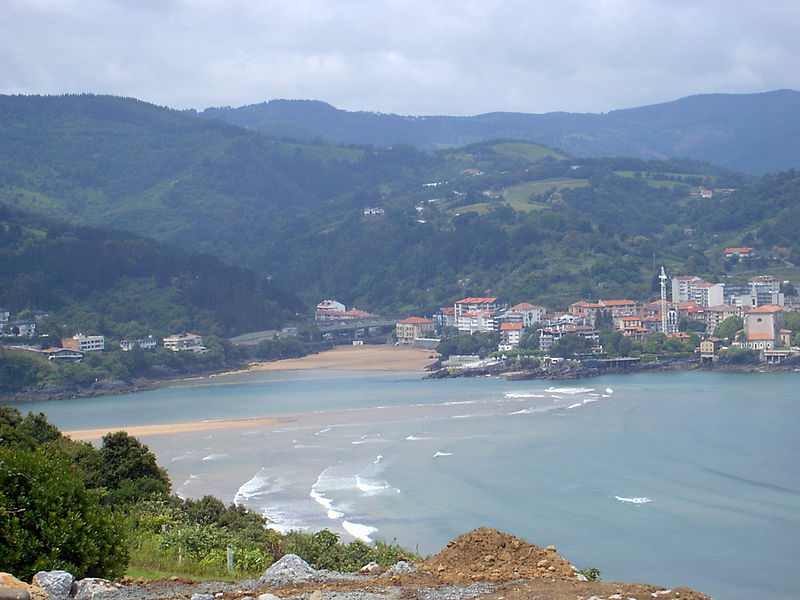
Mundaka coastline in Bizkaia province on south-eastern coast -- with mountains visible behind
Mundaka coastline in Bizkaia province on south-eastern coast — with mountains visible behind (photo Wikipedia)

Even among Basques living on the coast or other lowlands, it is hard to meet a native who has not been to the mountains and high valleys and many go there regularly, sometimes in organised groups. One of the reasons they go, apart from reinforcing their cultural affinity, is to pick edible fungi. I am told that there are 100 edible species known in the Basque Country and that “between 40 and 50 varieties are eaten regularly”.3

As opposed to other regional administrations, a fee does not have to be paid in the CAV administration (three of the southern Basque provinces) to collect these mushrooms, although breaching rules can cost between 30 and 250 euros in fines. The regulations specify a collection limit of two kilograms per person per day and one is obliged to use a knife to remove and a wicker basket to store.

Sadly, illegal commercial operations have cashed in on the love of mushrooms in the Spanish state and gangs have been discovered recruiting poorly-paid migrants or unemployed natives to collect without a licence in administrations where such is a requirement, breaching conservation rules and running the risk of arrest. These gangs are less likely to succeed in the southern Basque Country, a society highly organised on a voluntary and local basis and in general quite conscious of the importance of conservation.

Display of edible fungi from the New Forest, England, showing the conservation-friendly collecting basked and knife
Display of edible fungi from the New Forest, England, showing the conservation-friendly collecting basked and knife (photo from Internet)

Further northwards, 25 km. from Iruňa (Pamplona), is the Harana (valley) Ultzama, a natural reserve, over half of it thick woodland. It is in Nafarroa (Navarre), the fourth southern Basque province.

A mycological park over 6,000 hectares has been marked out, a great luxury for mushroom-lovers. …. The park’s information point, in the municipality of Alkotz, indicates the routes where these mushroom can be found as well as information about the species and how to identify those that have been collected throughout the day.” The collection permit costs €5 per day and is available from the information office or on their website.4

The Basques go in family groups or groups of friends, knowing the edible types (or accompanied by at least one who knows) and they bring baskets, not plastic bags. The idea is that the spores of picked mushrooms will drop through the weave as they walk and so seed growths of new mushrooms further away from where the parent fungi were picked. It is actually illegal to go picking with plastic bags and though there are not many of them, the forest police will arrest people who break that law. In a nation overburdened with police forces, that force is the only one that seems free from popular resentment.

The best mushroom sites are kept secret by those who know and the location of those sites is sometimes handed down through generations. In a peninsula renowned for its types of food and preparation styles, Basque cuisine lays claim to the highest accolade. Yet it uses hardly any spices or herbs. Sea food is high on the cuisine list of course but so is the ongo, the mushroom.

On a Sunday in October 2010, I was present in Bilbao when Maribel and Josemari’s mycological group had an exhibition in a local square, where they also cooked and sold fungi. Josemari and Mirabel worked all day in the hot sun and then had their own feast with their group afterwards, though by then I imagine many would not have had a great appetite.

I was staggered by the number of different species of fungi native to Euskal Herria and their variety of shapes and colours — I was told by the couple, and can well believe it, that their association had exhibited just over 300 species in that exhibition, between edible, inedible and poisonous. This figure was down on the previous year, when they had exhibited 500! Apparently there are over 700 species known to the country.

I tried to imagine how many Irish people would attend such an exhibition in Dublin, even on a sunny day such as we had there — perhaps 20, if the organisers were lucky. The square in that Santutxu district of Bilbao was full, as were the surrounding bar/cafés. There were all ages present, from babies at their mothers’ breasts to elderly people making their way slowly through the crowds. The food was all centred around cooked edible fungi: shish kebabs of mushroom, peppers, onions; burgers made of minced mushrooms and a little flour; little mushrooms with ali-oli on top, served on small pieces cut off long bread rolls; big pieces of brown mushroom almost the size of the palm of one’s hand.

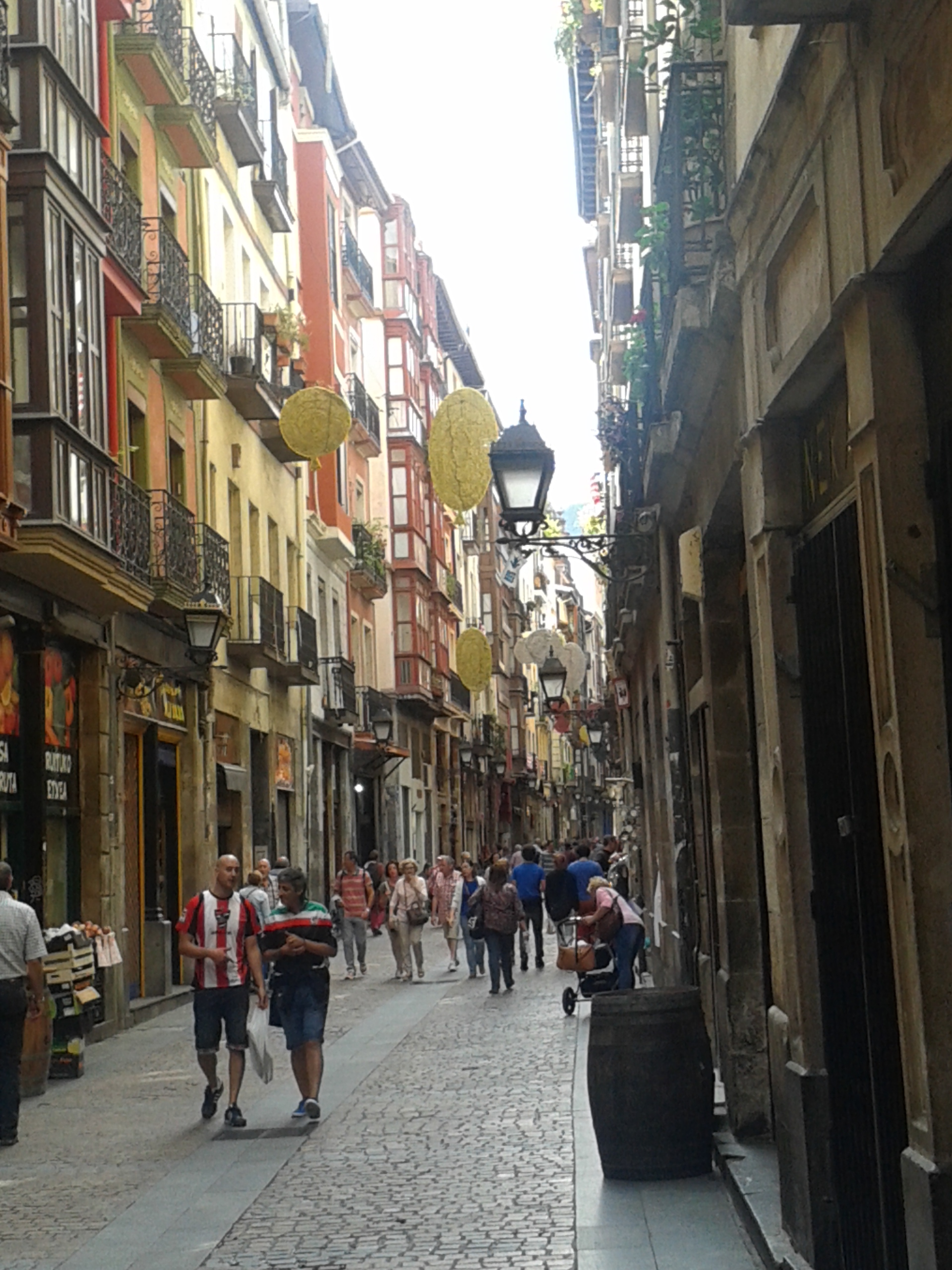
Street in the Casco Viejo medieval part of Bilbao, showing decorations for the Bilbo festival in August
Street in the Casco Viejo medieval part of Bilbao, showing decorations for the Bilbo festival in August (photo D.Breatnach)

The people queued for the food and those selling it couldn’t keep up with demand. And the people also, including children, queued to see the fungi being exhibited. Unlike the Irish, who doubtless also have varieties of edible native fungi in their land but have largely shown an interest in only the common white cultivated kind and, among certain groups of mostly young people, the ‘magic’ variety, the Basques love their fungi.

I ate some there in that square and again, with other food also, down in the Casco Viejo (the medieval part of Bilbo city), where some new friends took me de poteo (from bar to bar) and wouldn´t let me buy even one round. Many bars serve pintxos, small cold snacks, some plain enough and others more involved – normally one eats and drinks and pays the total before leaving. But some of those bars have a room upstairs or to the side where meals are served and one had an excellent restaurant where we ate well and, of course, my friends wouldn’t let me pay my share of that either. True, I had organised some solidarity work for one of their family in prison but all the same ….. When it comes to hospitality, in my opinion the Basques deserve the fame even better than the Irish, who have been justly known for that quality too.

Some of the company had been the previous day in the town of Hernani, where a rally convened to call for Basque Country independence had been banned by the Spanish state. Despite the judicial order, thousands of young people had participated in the rally and had been planning to attend the rock concert afterwards. The Basque Region Police had attacked the peaceful demonstration with plastic bullets and then baton-charged the young people. Many were injured by the plastic bullets, by batons, and by being trampled in the narrow streets when people tried to flee the charging police. It was an object lesson in the drawbacks to regional autonomy or “home rule”. However, the resistance had been so strong that the police eventually had to retreat and allow the rock concert to proceed without further interference. But that too is another story.

AGUR — SLÁN

But five years later, outside the church after Maribel’s funeral, I waited with my two brothers on the margins of the crowd. I saw some youth among the mourners, including Goth and punk types, presumably friends of Maribel and Josemari’s daughters. Most in attendance were of older generations, however. It was noticeable how prominent the women were – garrulous and assertive. There were of course representatives of various branches of the movement, who knew the couple personally.

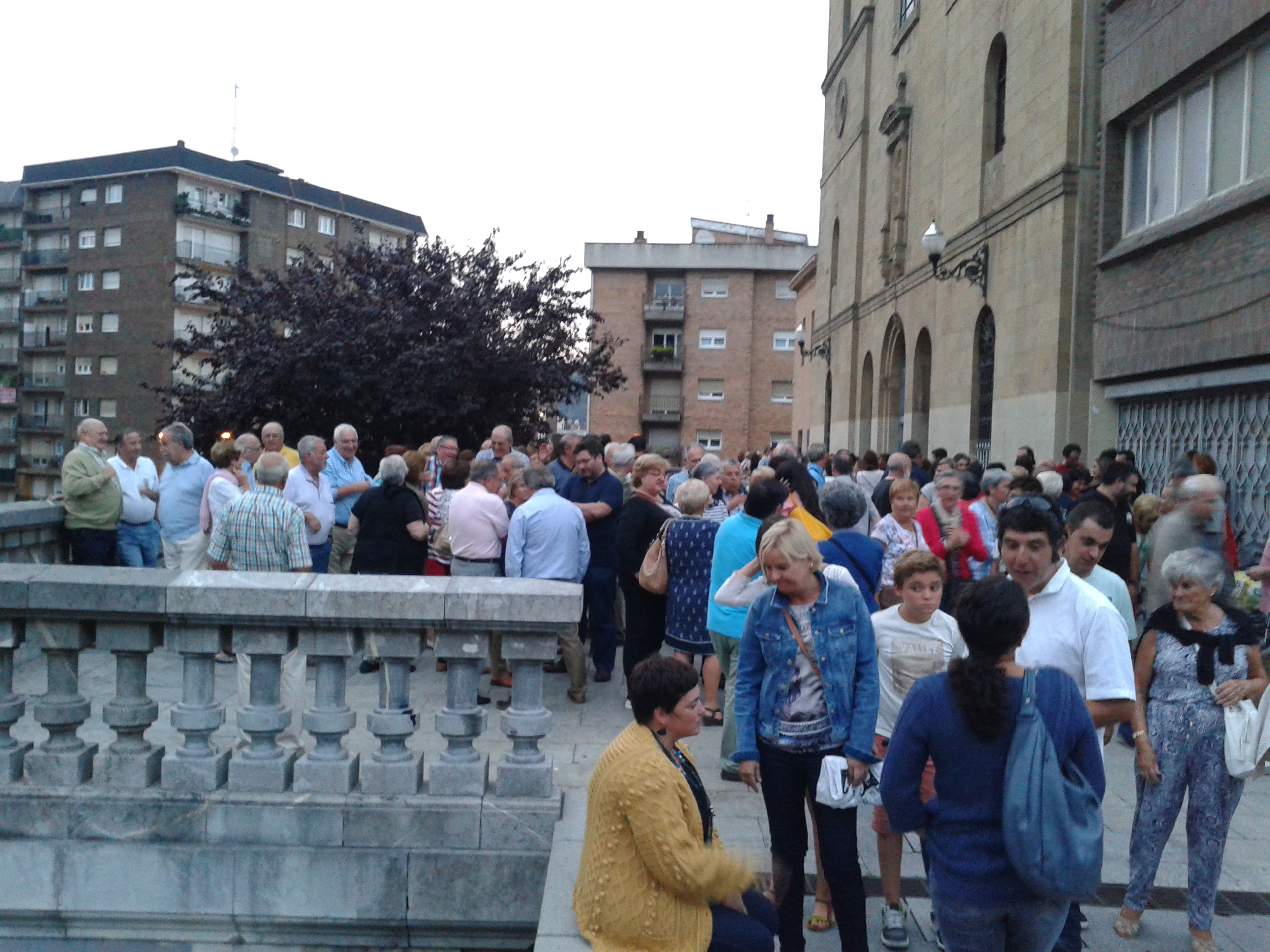
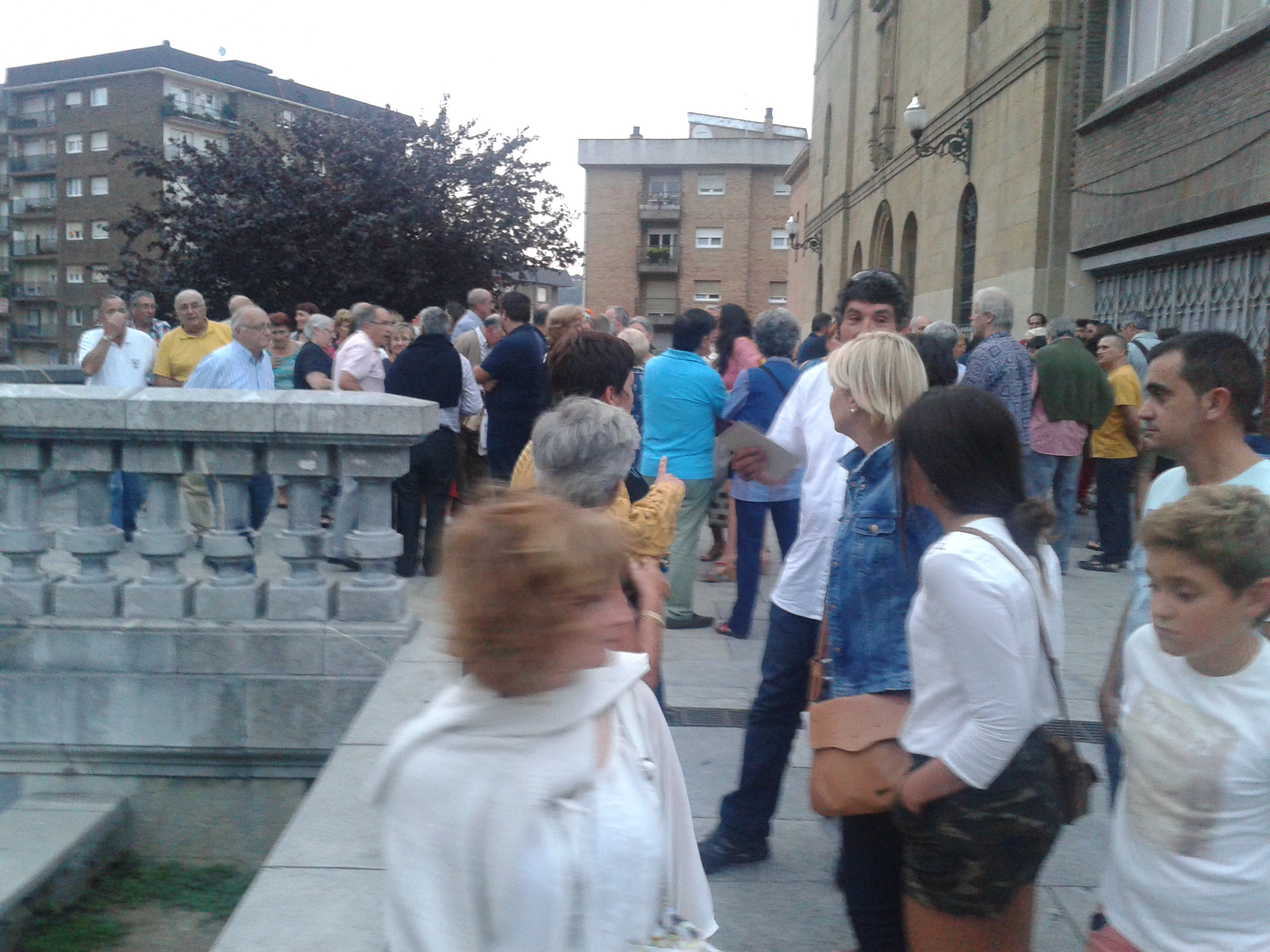
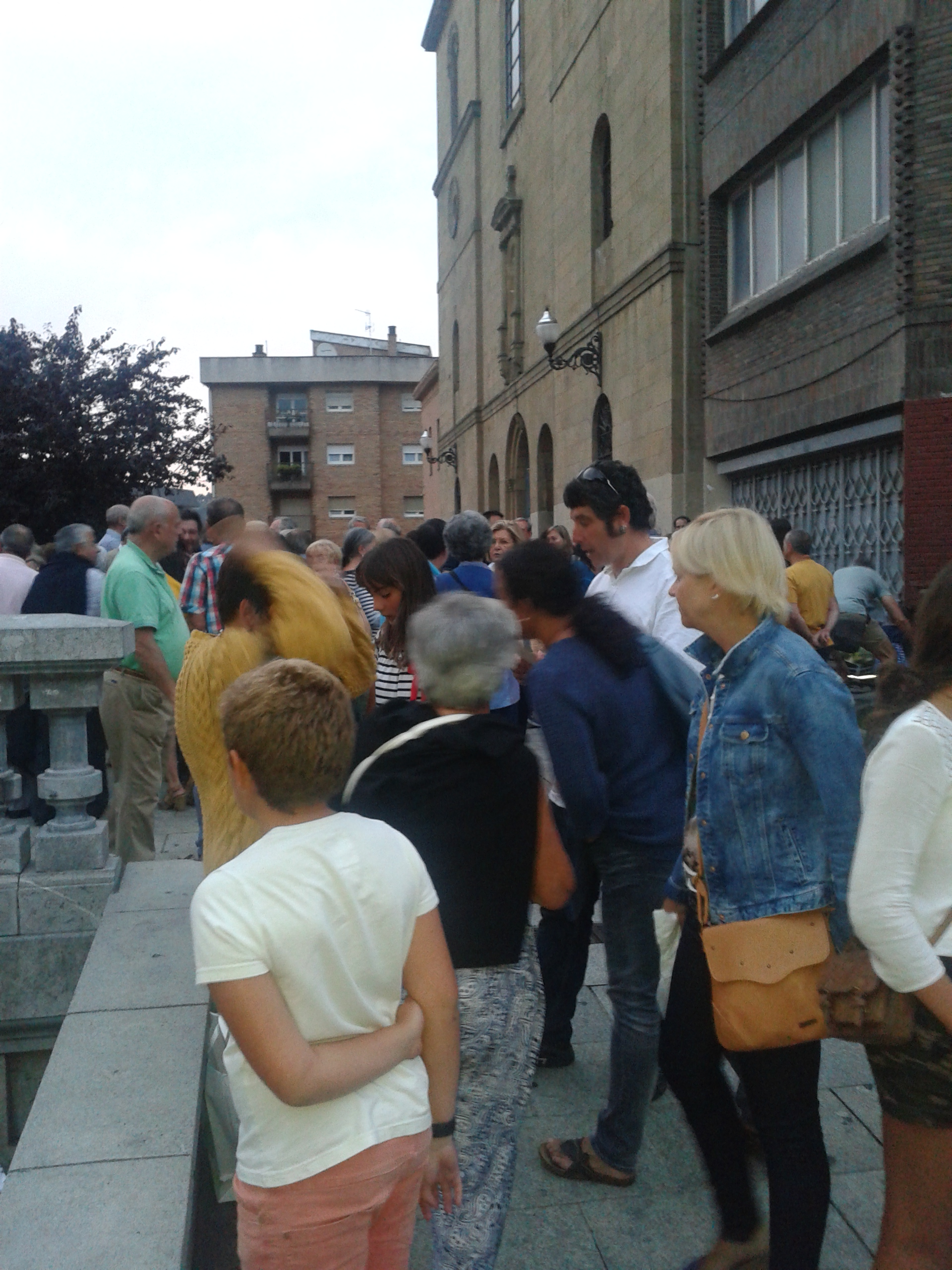
Small section of the funeral crowd outside the church (photo D. Breatnach)
Small section of the funeral crowd outside the church with Gorka in the foreground in white shirt (photo D. Breatnach)

Inside the church I had already conveyed my condolences to Josemari, who had seemed amazed, amidst his grief, that I had travelled from Ireland for the funeral. I was surprised, in turn, that he would have expected any less; for me, there was no question – I’d have borrowed the money to go if necessary. His son-in-law burst into tears when I hugged him and that was it for me, my composure crumbled and we cried in one another’s arms. Now I waited for the crowd to thin so I could hug the daughters, the two who live in Bilbao and Maider, who lives in Gastheiz (Vitoria).
20150817_21155620150817_211613

I stayed in a friend’s house a couple more days, renewing contacts and making a few new ones, meeting some old friends and then it was back to Dublin once more. Agur to Euskal Herria and agur to Maribel Eginoa – a loss to her family, to her nation, to me and to humanity.

End.

Footnotes

1  “ikastola” = school or college; plural “ikastolak”

2  Agur translates as “goodbye” but can also be a greeting. The Agur Jaunak’s lyrics are short and simple; the song is performed usually a capella, in giving honour to a person or persons and traditionally everyone stands when it is sung. The provenance of the air is a matter under discussion but it is only the Basques who are known to have lyrics to it. https://www.youtube.com/watch?v=xNMaMNMpYEk is one of the best versions I could find on the Internet although there is a somewhat cheesy bit by one of the performers in it. https://www.youtube.com/watch?v=d7Z8E-xhYTU is vocally another lovely interpretation sung unusually high although I dislike the crescendo at the end which is not the traditional way of singing it, which is to end on a low note.

3  http://www.micologica-barakaldo.org/Micologica_Barakaldo/index.html

SIX BASQUE YOUTH EARLIER SENTENCED TO SIX YEARS IN MADRID ARE FREED

Xabat Moran, Bergoi Madernaz, Marina Sagastizabal, Aiala Zaldibar and Igarki Robles, five of the seven Basque youth sentenced to six years by the Audiencia Nacional (special Spanish Court) last Spring, have been freed this Wednesday.

Translation of press report NAIZ|from MADRID|2015/11/04|5 IRUZKINel juicio. (J. DANAE/ARGAZKI PRESS) and comment from https://www.facebook.com/dublinbasque/posts/1063431863690750

Xabat Moran, Bergoi Madernaz, Marina Sagastizabal, Igarki Robles and Aiala Zaldibar were sentenced to six years together with Ibon Esteban y Ainhoa Villaverde.

During the afternoon it emerged that the five would be freed, hours after the Supreme Court made held a public hearing in which the State Prosecutor left the possibility of reducing the sentences in the hands of the Tribunal, while the Defence asked for the accused to be cleared of all charges.

2014-09-22, Madril. Segiko militante izatearen akusaziopean 28 euskal gazteren aurkako epaiketa Madrilgo Entzutegi Nazionalean. Epaituriko 5 gazte ez dira aurkeztu epaitegira eta herri harresia antolatu dute. Argazkian, gazteak epaitegiko atean. 22-9-2014, Madrid. Juicio en la Audiencia Nacional a 28 jÛvenes acusados de pertenecer a Segi, 5 de ellos no se han presentado en el juzgado y han organizado un muro popular. En la imagen, los jÛvenes en la puerta del juzgado.
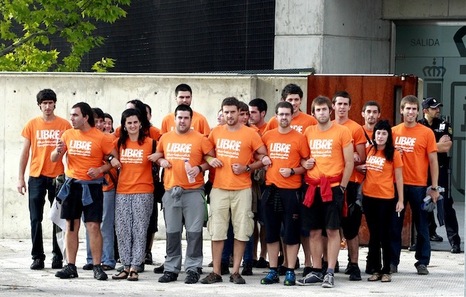
Most of the 28 youth accused of membership of SEGI outside the Court on the first day of their Madrid trial

The five have left prison and began the journey home.

The exact content of the Supreme Court’s decision is not yet known and whether this will affect the situation of Ibon Esteban and Ainhoa Villaverde is not yet known.

Twenty-eight youth were accused of membership of SEGI, the Basque Abertzale Left youth group and tried in the same trial, of which the Prosecutor withdrew charges against twelve. Later, others were discharged due to lack of evidence and in the end seven were sentenced to six years.

Villaverde, Moran, Sagastizabal and Madernaz were detained by the Ertzaintza (Basque police) before their sentences were announced, while Esteban, Robles y Zaldibar became fugitives, only to reappear in the “Human Wall” in Gastheiz/ Vitoria, where they were arrested.
End item.

Comment:
While friends and relatives will of course celebrate the decision, one commentator said: “The point for the Spanish state is to close down all legal political outlets in terms of campaigning around human, civil and political rights in the Basque Country. That leaves only the armed struggle, with which in recent decades ETA (Homeland and Freedom) has been clearly unsuccessful.”

A finding of guilt against these political activists needs to be seen in the context of the jailing of a number of political prisoners’ lawyers not so long ago and the currently ongoing trial of five political activists of Askapena, the organisation with responsibility for coordinating international solidarity work from and for the Basque Country.

For four years now ETA has been on the “permanent ceasefire” it announced at the time, yet Basque political activists continue to be charged with “assisting terrorism” or “glorifying” it.

Human wall Navarra Oct 2013
“Human wall” in Navarra (Nafarroa), October 2013

Another point to bear in mind is that when the 28 youth, including those against whom the State later withdrew charge or the Court found “not guilty”, were originally arrested in October 2014, it was in a heavy military-style operation, they were taken from the Basque Country to Madrid, held incommunicado and a number were tortured. Then when bailed, they had to return to Madrid later to face trial, they and their supporters having to pay for travel and accommodation. The Spanish state does not have a record of paying compensation to those it has wrongfully accused or even imprisoned, not to speak of tortured, except on occasion under orders from the European Court of Human Justice in Strasbourg.

The “Human Wall” was a tactic developed and employed mostly by Basque Youth as a civil disobedience tactic, beginning in 2013 and lasting until 2014. Typically, the person wanted by the authorities appeared in the middle of a large crowd of supporters who linked arms. The police (in all those cases, the Ertzaintza) were obliged, in order to detain the fugitives, to spend a number of hours breaking up the “human wall” in order to obtain their objective and hand the fugitive over to the Guardia Civil, all the time being denounced by those forming part of the ‘wall’ and protesters standing by, the whole event being filmed and photographed, reaching an international audience. Variations on the “Wall” were practiced in Donosti/ San Sebastian, Gastheiz/ Vitoria, Pasaia, Navarra and Gernika.
http://www.naiz.eus/eu/actualidad/noticia/20151104/queda-en-libertad-xabat-moran-uno-de-los-siete-condenados-por-la-an


DUBLIN YOUTH 777 DAYS IN EGYPTIAN PRISON

Diarmuid Breatnach

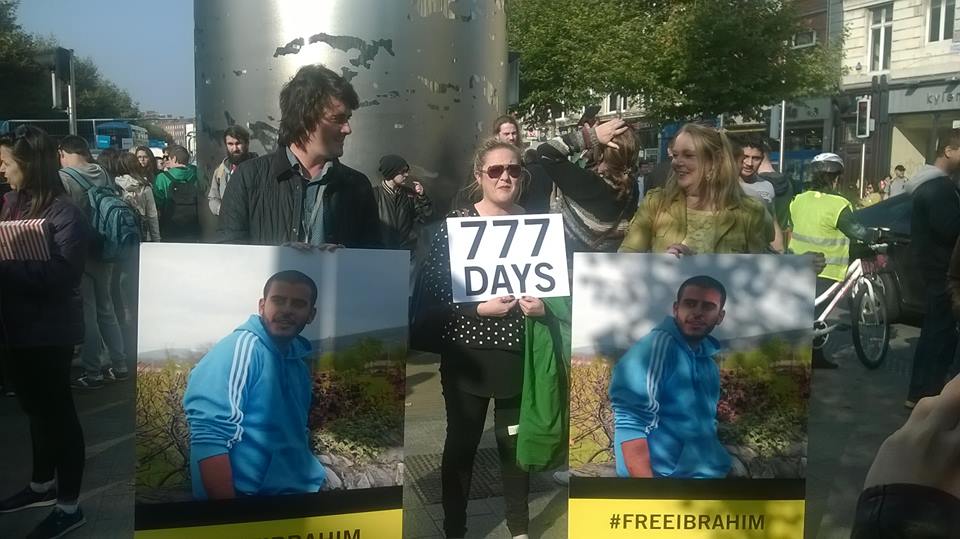
777 Days & Photos Ibrahim
With the Spire in the background, supporters calling for the release of Ibrahim Halawa display placards in Dublin’s main street. (Photo: Ian O Kelly)

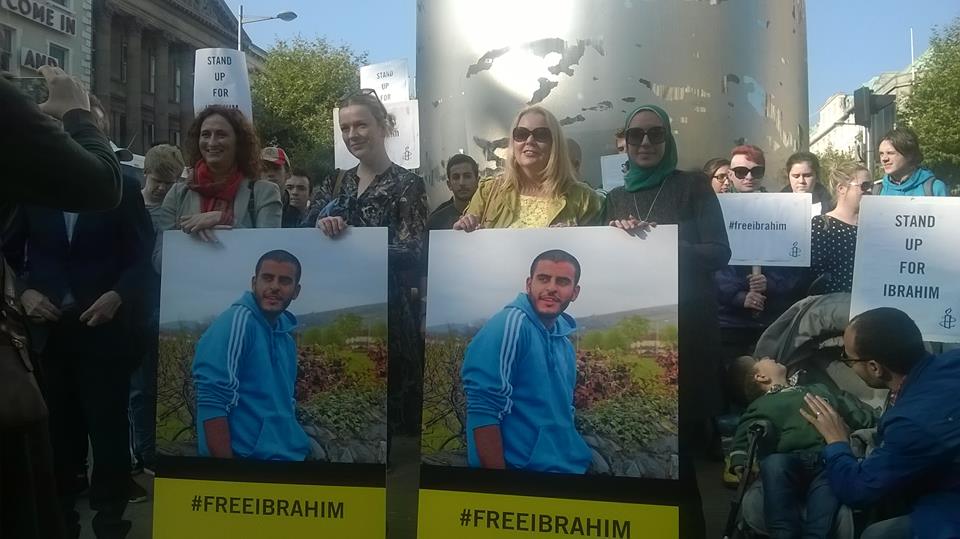
People clustered around the Spire structure in Dublin’s O’Connell Street on Friday 2nd October, many of them displaying a placard with the digits “777”, sometimes nothing else. But some also held an enlarged photo taken of a Dublin youth of Arab extraction, Ibrahim Halawa. Members of his family and community were there too with a banner, as were a relatively small number of supporters, including some Left and Republicans.

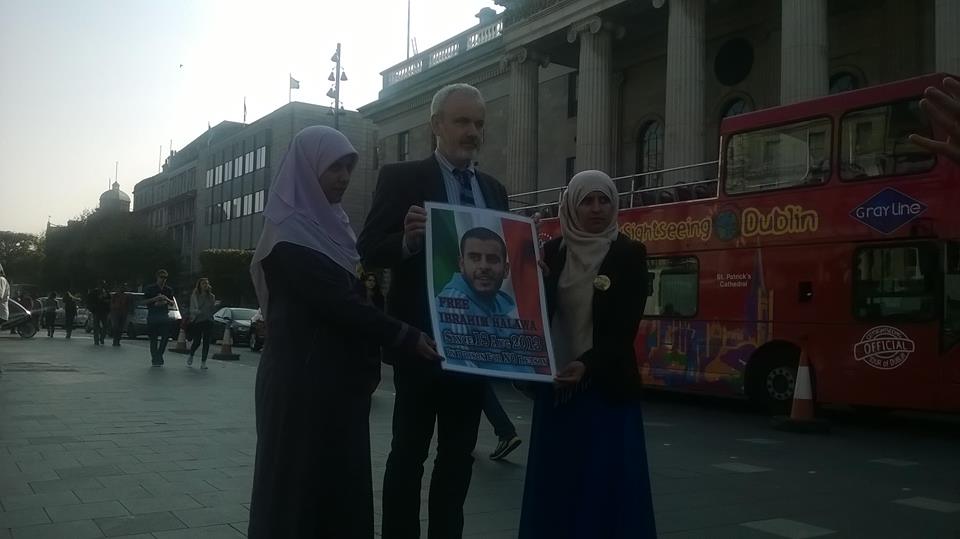
Colm O Gorman & Two Sisters
Colm O’Gorman, CEO Amnesty Ireland, with two of Ibrahim Halawa’s family in O’Connell Street, Dublin’s main street. The columns of the iconic GPO are on the right as a Dublin Tour bus passes. (Photo: Ian O Kelly)

Colm O’Gorman, CEO of Amnesty Ireland gave interviews to media personnel present and so did Lynn Boylan, Sinn Féin MEP and of course some members of Ibrahim’s family. Curiously, no leaflets were handed out to explain to passers-by what the rally was about. Nor were there speeches to inform even those gathered there about the background to the case or progress or what people could do to help further.

DAIC Political Prisoners banner Ian
Dublin Anti-Internment Committee activists support the picket, photographed here with members of the Halawa family. (Photo: D. Breatnach)

Ibrahim Halawa was 17 years of age and on holiday in Egypt nearly two and half years ago when arrested, apparently for participating in a demonstration banned by the Egyptian regime. He may have been a conscious participant or may merely have been swept up in it in passing. But now he faces a possible death sentence if found guilty. Another 420 are also charged, some of them with murder or attempted murder during an attack on a police station on the same day. Ibrahim was arrested with his three sisters but they were granted bail and permitted to return to Ireland after three months.

Friends and relatives were hopeful that the trial would proceed as scheduled at the weekend but on the day some of the defendants were said to be seriously ill and the state declined, despite Defence counsel requests, to proceed without all defendants being present. Defence counsel have now also submitted a motion for all to be released, since they have served two years without the State bringing them to trial – this motion is under consideration by the court at present.

Spire lineup photos CBoylan
Supporters of Ibrahim Halawa with placards in front of Dublin’s Spire, with Lynn Boylan furthest left in picture.  (Photo: Ian O Kelly)

The reason for serious illness among prisoners may well be conditions in the jail (which are believed to be atrocious and were described as “trying” by the Irish Department of Foreign Affairs’ representative after an earlier visit to Halawa in jail), coupled with punishment beatings which, according to one of Ibrahim’s sisters as reported by a human rights campaigning website, the Dublin youth has also received.

The Department has taken up the Dubliner’s case with the Egyptian authorities and it is almost certainly its intervention that has gained Halawa’s transfer to a better cell. Three Al-Jazeera journalists were sharing that facility after conviction in Egyptian court but all those have now been released and left Egypt. Others, including former President Hosni Mubarak and members of his family have also been released.

Charlie Flanagan, the Minister for Foreign Affairs, stated that he was “disappointed and concerned” at the adjournment, which is diplomatic language for “really pissed off”. He claimed that his department is doing all that they can. Perhaps they are – but is the Government as a whole? Would the threat of expulsion of a few Egyptian diplomats not gain the release of Ibrahim Halawa? Or perhaps the threat of a tourist embargo?

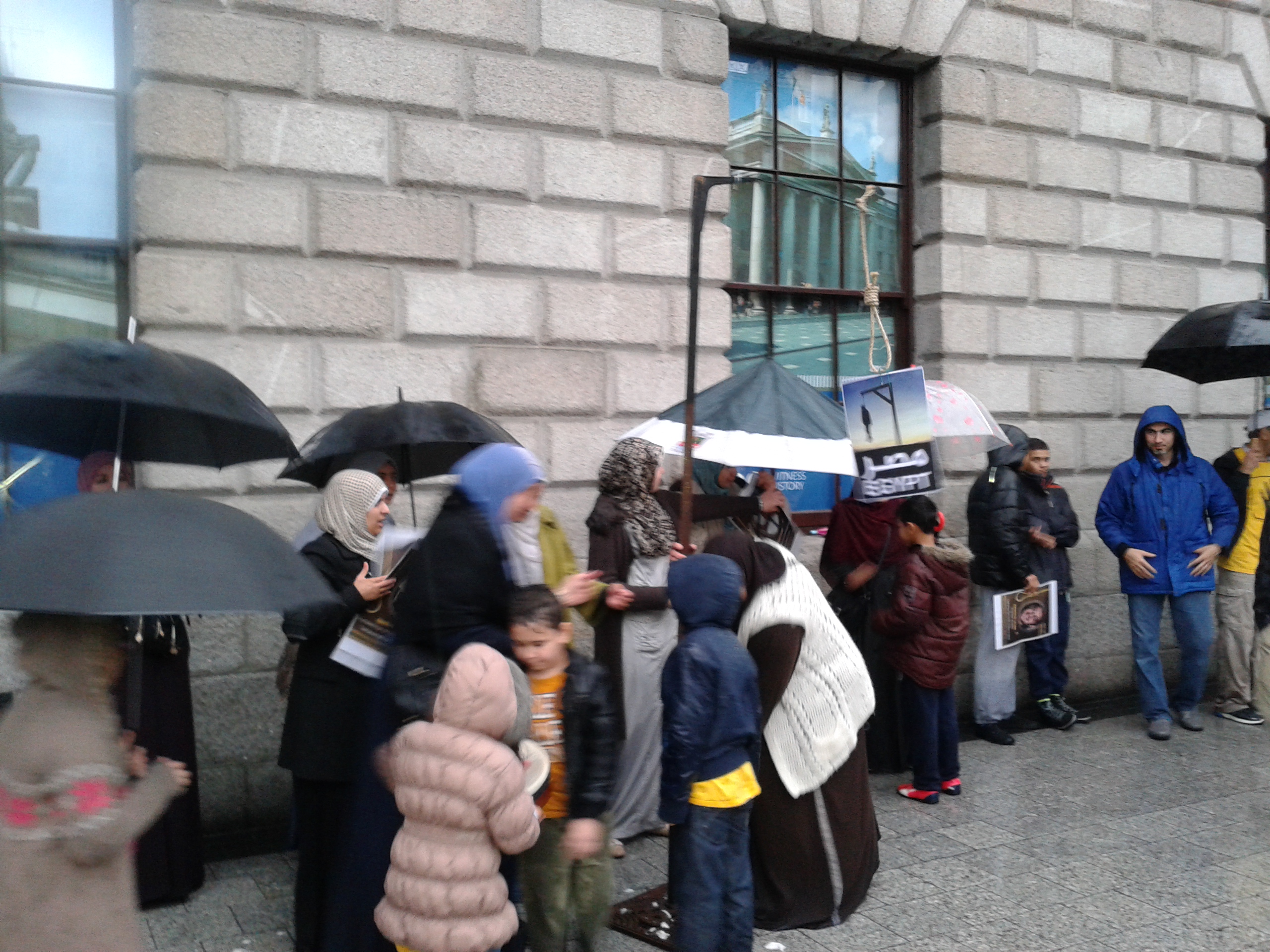
The relatively small numbers at the Dublin rally were probably due to it being called for 3pm on a Friday afternoon, i.e within office working hours. But there may be more to it than that – this case has not been generally pushed in Left and Republican political circles, nor indeed in the liberal human rights sector. Very recently some of Ibrahim’s Dublin Arab community held a protest at the GPO against the Egyptian regime getting ready to streamline its trial and death sentence procedures in order to facilitate the hanging of more political dissidents. It was notable that every single one of those on the protest was Arab in appearance. The word ‘on the street’ is that Ibrahim and members of his family belong to a religiously fundamentalist group. Whether true or not, this does not of course diminish his human rights one iota – but unfortunately it may diminish the enthusiasm of some on the Left to support him.

Amnesty International Ireland was the body that organised the rally. Their website said that they were calling “again” for the release of Ibrahim but it seems that this is the first time they have organised a rally for him in nearly two and a half years.

Some of Ibrahim's relatives and others of their community in protest at Egypt's streamlining of conviction and execution processes some weeks earlier outside the GPO.
Some of Ibrahim’s relatives and others of their community in protest at Egypt’s streamlining of conviction and execution processes some weeks earlier outside the GPO. (Photo: D. Breatnach)
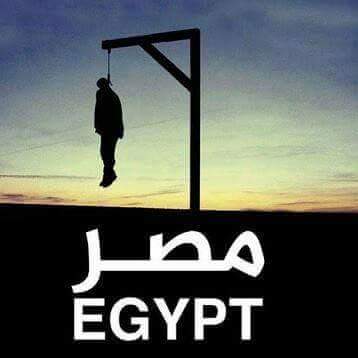
Executions Egypt image
Poster of the Stop Egypt Executions campaign

Generally the states in the West support the current Egyptian regime and the USA very much so. In turn, the Egyptian regime is very pro-Western and its armed forces very dependent on the USA, its main arms supplier. This friendship towards or dependency on the USA has been demonstrated in a number of way over the years and one of the most significant has been its policy towards Gaza.

The besieged Palestinian enclave, which has been called “the biggest concentration camp in the world”, has two land border exits, one of which is controlled by Egypt and the other by Israel. But Egypt has for years, under different governments, been restricting what and how much can go through its Rafah Crossing, more or less in line with Israeli prohibitions or restrictions, which include forbidding cement much in demand to repair the huge damage of Israel’s bombardment to housing, hospitals, schools, roads, bridges, reservoir, sewage treatment facility ….. and fuel for heating, electricity generation ….  The resourceful Palestinians dug tunnels under the border wire to circumvent Egyptian restrictions but the Egyptian regime has demolished these in the past and recently flooded them.

It is important for the Irish Left and all democratic people to show solidarity with Ibrahim and his family. It should not be ok for the Egyptian government to behave in the way it does and we should protect those that we are able to protect from them. That ability is strongest in cases where the citizenship of the victim is Irish. The Government needs to up the pressure on the Egyptian authorities and we need to up the pressure on our Government to achieve that. Those republicans, socialists and democrats who are tempted to pick and choose the recipients of their solidarity would do well to reflect on the oft-quoted words of Pastor Martin Niemoller.

Emd

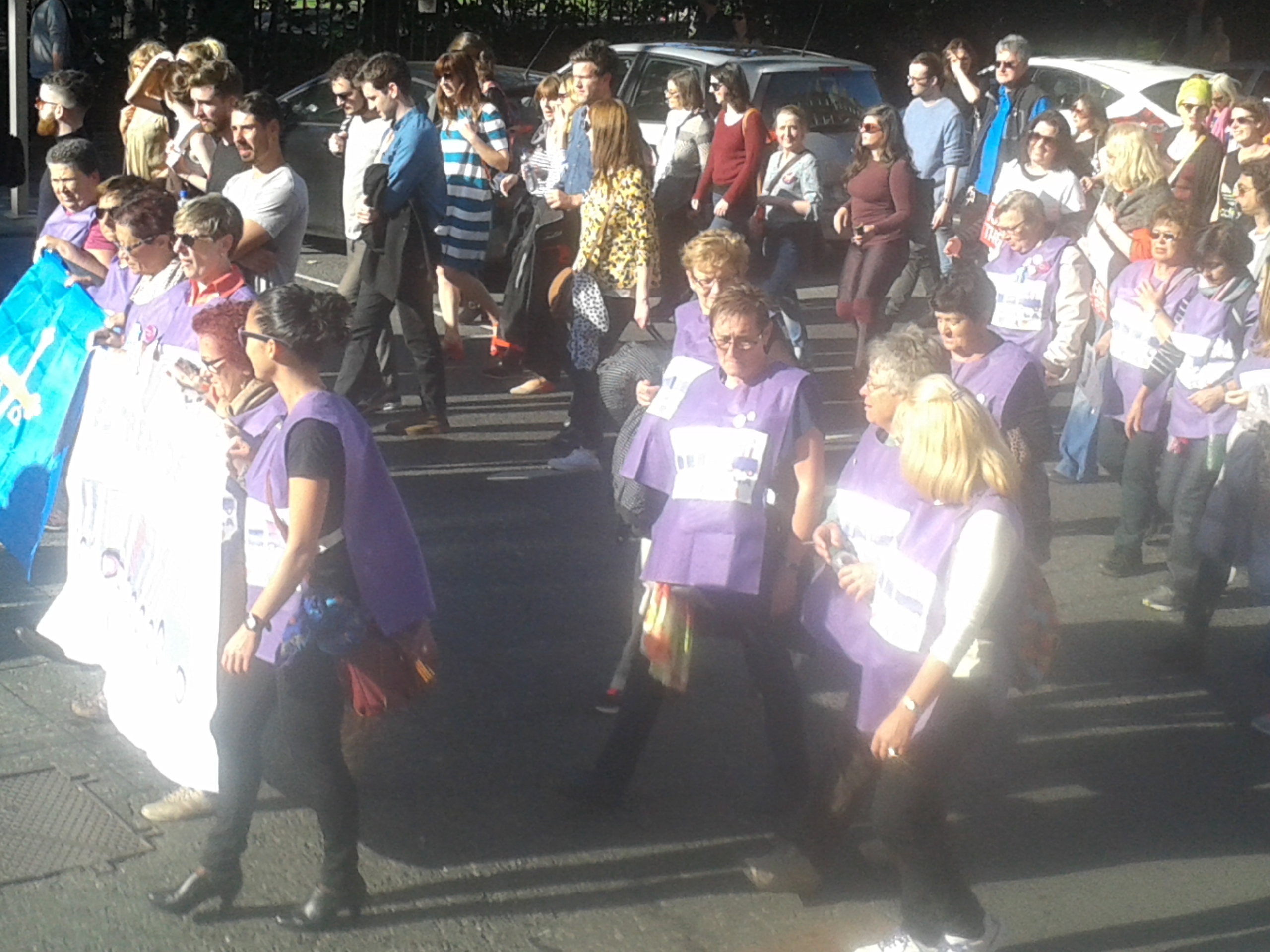
LÉIRSIÚ AR SON AN 8ú LEASÚCHÁN A CHUR AR CEAL/ DEMONSTRATION FOR THE REPEAL OF THE 8th AMENDMENT

Plodaithe
Ag Cearnóg Pharneil, Gáirdín Cuimneacháin

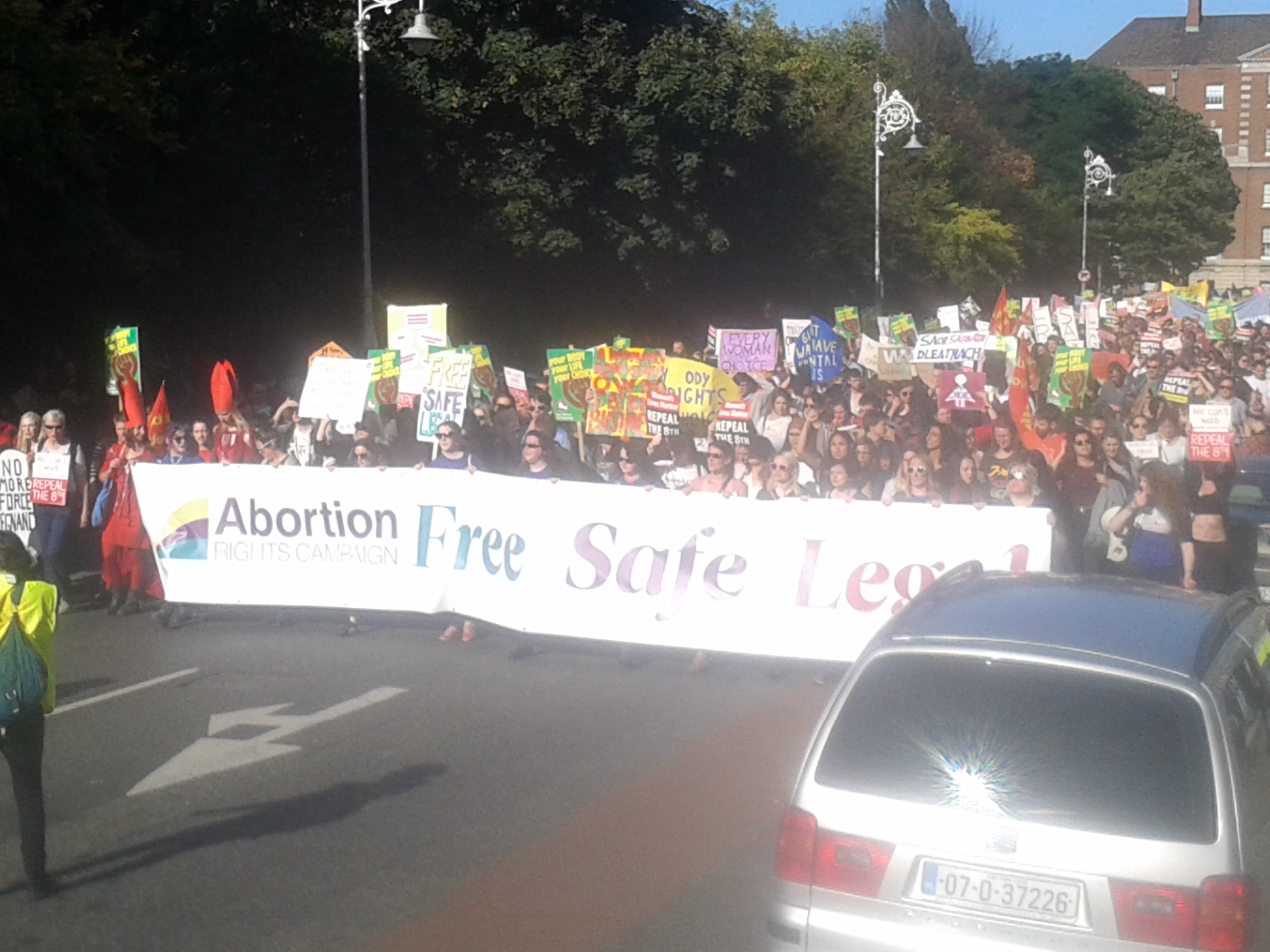
Bhí léirsiú ollmhór ar son ceart na mban  roghnaithe ginnmhilleadh agus go baileach ar son Leasúchan Bunreachta a hOcht a chur ar ceal.  Thosaigh an mórshiúil ag Gáirdín Cuimhneacháin, Baile Átha Cliath, agus chríochnaigh ag Cearnóg Mhuirfean, in aice le cúl doras na Dála.

Ba dheacair an líon a thomhais ach bhí sé an-mhór. Ní raibh mórán Gardaí i láthair agus ní raibh aon chíréib ná rud ar bith mar é go dtí gur sroicheadh ceann scríbe (d’fhágas go luath ina dhiaidh sin).

Trasnu droichead
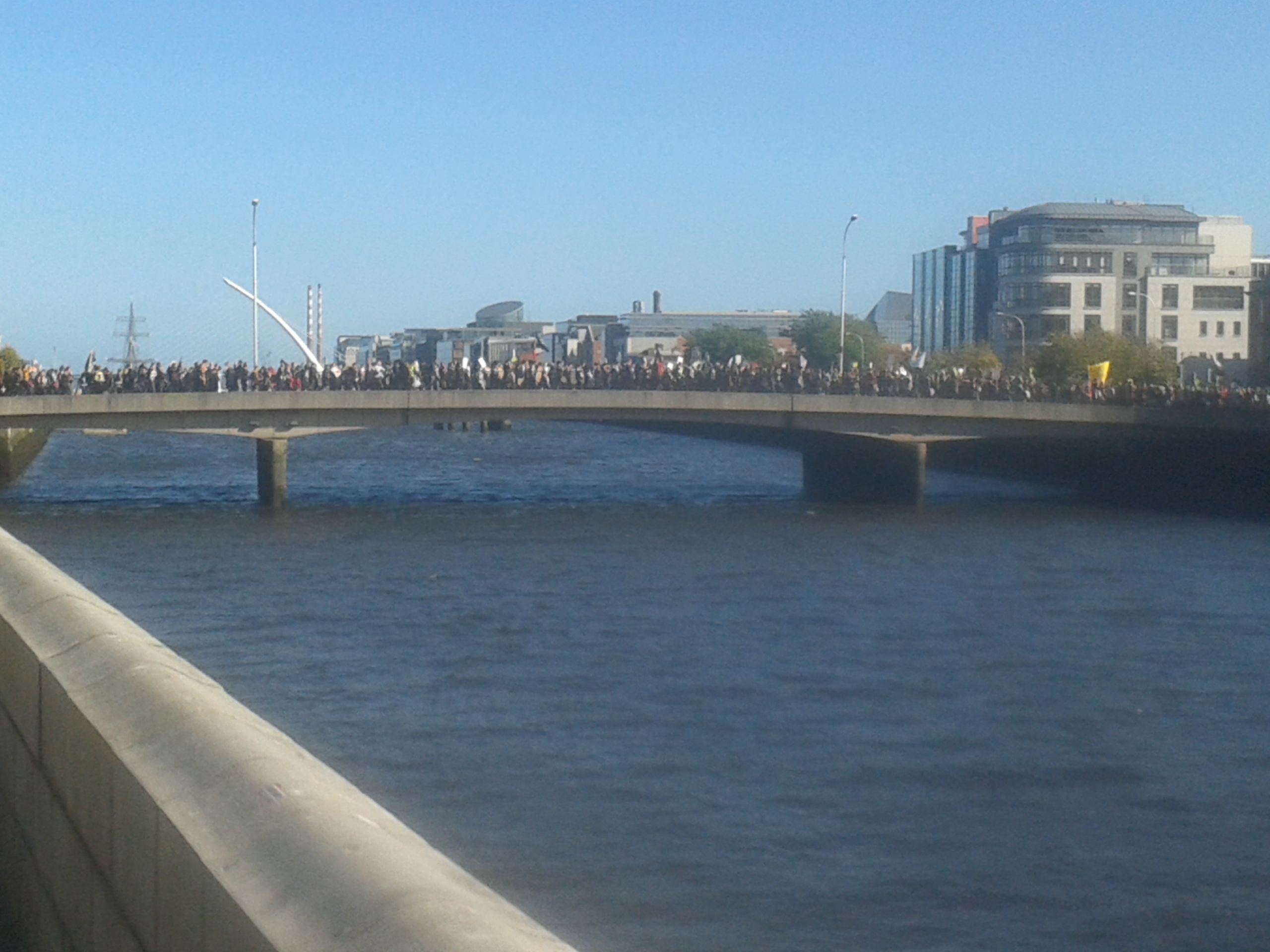
Part of the march is on the north quay while another section crosses Talbot Memorial Bridge and the remaining section has turned left and is marching along the north side.

Ach b’ait an bealach a thógadar: Sr. Uí Chonaill, Cé Éidin, trasna Droichead Cuimhneacháin an Talbóidigh, ar aghaidh ar an dtaobh ó dheas ar Cé na Cathrach, suas Sráid Lombaird agus Rae an Iarthair go Cearnóg Mhuirfeann ag an gcúinne agus thart trí thaobh na Cearnóige — faoi mar go rabhadar ag iarraidh an bac ba lú a chur ar an dtrácht.

Repeal of the 8th Amendment to the Constitution was a central demand of the demonstration.

In 1983, the 8th Amendment inserted a new sub-section after section 3 of Article 40 of the Bunreacht (Constitution) of the State.  As a result Article 40.3.3° reads:

“The State acknowledges the right to life of the unborn and, with due regard to the equal right to life of the mother, guarantees in its laws to respect, and, as far as practicable, by its laws to defend and vindicate that right.”

Ag teacht isteach ar thaobh dheis Chearnóg Mhuirfeann (tabhair faoi deara an placárd i nGaeilge sa lár taobh láimhe deise)

The amendment had been proposed by the Haughey Fianna Fáil Government but actually brought into law by the subsequent Fine Gael/Labour Party Government in 1983.  As it was a Constitutional change, a referendum was required and it was passed by a majority of close to two to one.

Over the years since then a number of changes have taken place in Irish public opinion and the Irish Catholic Church has lost much of its influence.  In addition, a number of scandals relating to women refused abortion have also received prominent media coverage, particularly in recent years, including one fatality.  Opinion polls on abortion in Ireland now show a majority in favour of greater access and a fast-growing minority in favour of unfettered right to abortion.  However, none of the major political parties. i.e. those with elected representatives in double figures, currently proposes to recommend the repealing of the 8th Amendment.

Mná ó Asturias ag tacú leis an léirsiú

Statistics showed that 4,149 Irish women had abortions in Britain in 2011 and other statistics show that 7,000 women travelled abroad that year in order to obtain an abortion.


a chríoch

31st AUGUST 102 YEARS AGO — BLOODY SUNDAY IN DUBLIN 1913/ HOY, HACE 102 ANOS — EL DOMINGO SANGRIENTO DEL 31 DE AGOSTO 1913

Diarmuid Breatnach (published originally in Dublin Political History Tours)

(Miren de bajo para la versión en castellano).

The 31st of August 1913 was one of several ‘Bloody Sundays’ in Irish history and it took place in O’Connell Street (then Sackville Street).

A rally had been called to hear the leader of the IT&GWU) speak. The rally had been prohibited by a judge but the leader, Jim Larkin, burning the prohibition order in front of a big demonstration of workers on the evening of the 29th, promised to attend and address the public.

On the day in O’Connell Street, the Dublin police with their batons attacked the crowd, including many curious bystanders and passers by, wounding many by which at least one died later from his injuries.

One could say that on that street on the 31st, or in the nearby Eden Quay on the night of the 30th, when the police batoned to death two workers, was born the workers’ militia, the Irish Citizen Army, in a desire that very soon would be made flesh.

La carga policial contra los manifestantes y transeúntes en la Calle O'Connell en el 31 Agosto 1913/ DMP attack on demonstrators and passers-by on 31st August 1913 in Dublin's O'Connell Street
La carga policial contra los manifestantes y transeúntes en la Calle O’Connell en el 31 Agosto 1913/ DMP attack on demonstrators and passers-by on 31st August 1913 in Dublin’s O’Connell Street

THE EMPLOYERS’ LOCKOUT

Bloody Sunday Dublin occurred during the employers’ Lockout of 1913. Under Jim Larkin’s leadership, the Liverpudlian of the Irish diaspora, the young ITGWU was going from strength to strength and increasing in membership, with successful strikes and representation in Dublin firms. But in July 1913, one of Dublin’s foremost businessmen, William Martin Murphy, called 200 businessmen to a meeting, where they resolved to break the trade union.

Murphy was an Irish nationalist, of the political line that wished for autonomy within the British Empire; among his businesses were the Dublin tram company, the Imperial Hotel in O’Connell Street and the national daily newspaper “The Irish Independent”.

The employers decided to present all their workers with a declaration to sign that the workers would not be part of the ITGWU, nor would they support them in any action; in the case of refusal to sign, they would be sacked.

The members of the ITGWU would have to reject the document or leave the union, which nearly none of them were willing to do.

Nor could the other unions accept that condition, despite any differences they may have had with Larkin, with his ideology and his tactics, because at some point in the future the employers could use the same tactic against their own members.

The Dublin (and Wexford) workers rejected the ultimatum and on the 26th began a tram strike, which was followed by the Lockout and mixed with other strikes — a struggle that lasted for eight months.

Dublin had remarkable poverty, with infectious diseases such as tuberculosis and others, including the sexually-transmitted ones, the city being a merchant port and also having many British Army barracks. The percentage of infantile mortality was higher than that in Calcutta. Workers’ housing was in terrible condition, often with entire families living in one room, in houses sometimes of 12 rooms, each one full of people, with one or two toilets in the outside yard.

In those conditions, 2,000 Dublin workers confronted their employers, the latter aided by their Metropolitan Police, the Irish colonial police and the British Army. As well as the workers, many small traders suffered, those selling in the street or from little shops.

On that Monday, the 31st of September 1913, some trade unionists and curious people congregated in Dublin’s main street, then called Sackville Street, in front of and around the main door of the big Clery’s shop. In the floors above the shop, was the Imperial Hotel, with a restaurant.

The main part of the union went that day to their grounds in Fairview, to avoid presenting the opportunity for another confrontation with the Dublin Municipal Police. Others in the leadership had argued that the police should not be given the opportunity and that there would be many other confrontations during the Lockout. But Larkin swore that he would attend and that a judge should not be permitted to ban a workers’ rally.
Daily Mirror Arrest Larkin photoThere were many police but nothing was happening and Larkin did not appear. After a while, a horse-drawn carriage drove up and an elderly church minister alighted, assisted by a woman, and entered the shop. They took the lift to the restaurant floor. A little later Larkin appeared at the restaurant open window, in church minister’s clothing, spoke a few words to the crowd and ran inside. Those in the street were very excited and when the police took Larkin out under arrest, they cheered him, urged on by Constance Markievicz. The police drew their batons and attacked the crowd — any man not wearing a police uniform.
 

THE UNION’S ARMY

The Irish Citizen Army was founded for the union on the 6th November 1913 by Larkin, Connolly and others with Seán Ó Cathasaigh/ O’Casey, playwright and author, including the first history of the organisation.

The Citizen Army at Croydon House, at the ITGWU's grounds in Fairview/ El Ejercito Ciudadano en su parte del parque en Fairview.
The Citizen Army at Croydon House, at the ITGWU’s grounds in Fairview/ El Ejercito Ciudadano en su parte del parque en Fairview.

As distinct from the Irish Volunteers, women could enter the ICA, within which they had equal rights.

Funeral of James Byrne, who died as a result of his imprisonment during the 1913 Lockout
Funeral of James Byrne, who died as a result of his imprisonment during the 1913 Lockout/ Procesión funébre de James Byrne, fallecido por razón de su encarcelamiento durante el Cierre de 1913, pasando por el muelle sur Eden’s Quay, partiendo de la Salla de la Libertad.

It was reorganised in 1914 as the union was recovering from its defeat during the Lockout, and 200 fought alongside the Volunteers in the 1916 Easter Rising, after which two of its leaders, Michael Mallin and James Connolly, were executed. Among the nearly 100 death sentences there were others of the ICA, including Markievicz, but their death sentences were commuted (14 were executed in Dublin, one in Cork and one was hanged in London).

The main fighting locations of the ICA in 1916 were in Stephen’s Green and in the Royal College of Surgeons, in City Hall and, with Volunteers in the GPO and in the terrace in Moore Street, the street market.

The Imperial Hotel on the other side of the street from the GPO was occupied too by the ICA and on top of it they attached their new flag, the “Starry Plough/ Plough and Stars”, the design in gold colour on a green background, the

The flag of the ICA, flown over Murphy's Imperial Hotel in 1916
The flag of the ICA, flown over Murphy’s Imperial Hotel in 1916

constellation of Ursa Mayor, which the Irish perceived in the form of a plough, an instrument of work. And there the flag still flew after the Rising, having survived the bombardment and the fire which together destroyed the building and all others up to the GPO, on both sides of the street. Then a British officer happened to notice the flag and ordered a soldier to climb up and take it down — we know not where it went.


TODAY

Today, after various amalgamations, the once-noble ITGWU has become SIPTU, the largest trade union in Ireland but one which does not fight. The skyscraper containing its offices, Liberty hall, occupies the spot of the original Liberty Hall, prior to its destruction by British bombardment in 1916.

The Irish newspaper the “Irish Independent” continues to exist, known as quite right-wing in its editorial line. Murphy’s trams came to an end during the 1950 decade and those in Dublin today have nothing to do with Murphy.

The Imperial Hotel no longer exists and, until very recently, Clery had taken over the whole building, but they sacked their workers and closed the building, saying that they were losing money.

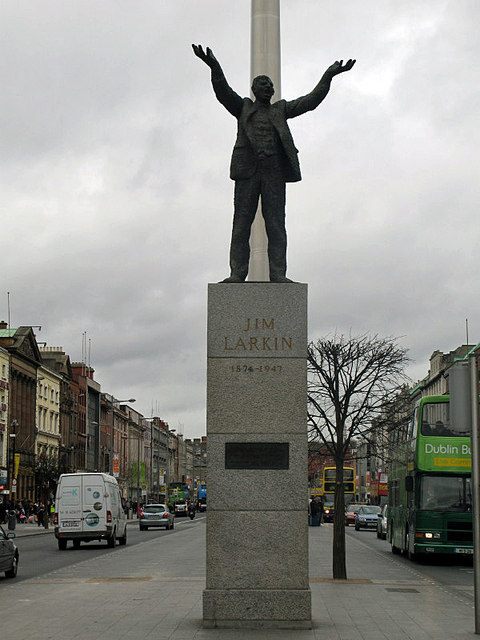
In front of the building, in the pedestrianised central reservation, stands the monument as a representation of Jim Larkin. The form of the statue, with its hands in the air, is from a photo taken of Larkin during the Lockout, as he addressed another rally in the same street. It is said that in those moments, he was finishing a quotation which he used during that struggle (but which had also been written previously by James Connolly in 1897, and which something similar had been written by the liberal monarchist Étienne de La Boétie [1530–1563] and later by the French republican revolutionary Camille Desmoulins [1760–1794]): “The great appear great because we are on our knees – LET US ARISE!”


The Jim Larkin monument in O'Connell Street today/ El monumento de Jim Larkin in la Calle O'Connell hoy en día
The Jim Larkin monument in O’Connell Street today/ El monumento de Jim Larkin in la Calle O’Connell hoy en día


EL 31 DE AGOSTO EN El 1913 FUE UNO DE LOS DOMINGOS SANGRIENTOS DE IRLANDA Y OCURRIÓ EN LA CALLE PRINCIPAL DE DUBLÍN.

Hubo una concentración para escuchar al líder del sindicato de Trabajadores de Transporte y de General de Irlanda (IT&GWU) hablar. La manifestación fue prohibida por juez pero el líder, Jim Larkin, quemando el documento de prohibición en frente de manifestación grande la noche del 29, prometió que iba a asistir y hablar al publico.

El día 31 en la Calle O’Connell, la policía de Dublin con sus porras atacaron la concentración y a muchos otros curiosos o pasando por casualidad, hiriendo a muchos por lo cual murió uno por lo menos mas tarde de sus heridas.

Se puede decir que en esa calle en el 31, o en la cerca muelle, Eden Quay, la noche del 30, cuando mataron a porras dos trabajadores, se dio luz a la milicia sindical, el Ejercito Ciudadano de Irlanda, en deseo que poco mas tarde estaría fundado en actualidad.

EL CIERRE PATRONAL

El Domingo Sangriento ocurrió durante el Cierre Patronal de Dublín en el 1913. Bajo el liderazgo de Jim Larkin, el Liverpoolés de diáspora Irlandesa, el joven sindicato ITGWU fue yendo de fuerza a fuerza y aumentando en miembros, con éxitos en sus huelgas y reconocido en muchas de las empresas de Dublín. Pero en Julio del 1913, uno de los principales empresarios de Dublín, William Martin Murphy, llamó a 200 de los empresarios a mitin y resolvieron romper el sindicato.

Murphy era nacionalista Irlandés, de la linea de pedir autonomía pero adentro del Imperio británico; entre sus empresas le pertenecía la linea de tranvías de Dublín, el Hotel Imperial en la Calle O’Connell y el periódico diario nacional The Irish Independent.

Resolvieron los empresarios presentar a todos sus trabajadores una declaración para firmar que no serían parte del sindicato ITGWU ni les darían ningún apoyo en cualquiera acción; en caso de negar firmar, se les despedirían.

Los miembros del ITGWU tendrían que rechazar el documento o salir del sindicato, lo cual casi lo total no estuvieron dispuestos hacer.

Los otros sindicatos, pese a cualquiera diferencias tuvieron con Larkin, con sus pensamientos y sus tácticas, tampoco podían acceder a esa condición por que mas tarde se podría usar la misma táctica en contra de sus miembros también.

Los trabajadores de Dublín (y de Wexford) rechazaron el ultimátum y empezaron el 26 de Agosto una huelga de los tranvías, seguido por el Cierre Patronal, mixta con otras huelgas, una lucha que duró ocho meses en total.

Dublín tuvo una pobreza impresionante, con infecciones de tuberculosis y otras, incluido las transmitidas por el sexo, siendo puerto mercantil y teniendo muchos cuarteles del ejercito británico. El porcentaje de la mortalidad infantil era mas de la de la ciudad de Calcuta. Las viviendas de los trabajadores estaban en terribles condiciones, con a menudo familias grandes enteras viviendo en una habitación, en casas a veces de 12 habitaciones, cada uno llena de gente, con una o dos servicios en el patio exterior.

En esas condiciones 2,000 trabajadores de Dublín se enfrentaron al patronal de Dublín, con su policía metropolitana, la policía colonial de Irlanda y el ejercito británico. Además de los trabajadores, muchos pequeños empresarios, vendiendo en la calle o en tiendas pequeños, sufrieron.

Ese Domingo, del 31o de Setiembre 1913, algunos sindicalistas y gente curiosa se congregaron en la calle principal de Dublín, entonces nombrado Sackville Street, en frente y al rededor de la puerta principal de la gran tienda de Clery. En las plantas después de la primera, estaba el Hotel Imperial, con un restaurante.

La mayor parte del sindicato se fueron ese día a una parte de parque que les pertenecía por la costa, para evitar otra enfrentamiento con la Policía Metropolitana de Dublín. Habían argumentado otros de la dirección del sindicato que no se debe dar les la oportunidad a la policía y que habría muchos otros enfrentamientos durante el Cierre. Pero Larkin juró que lo iba a asistir y que no se podía permitir a un juez prohibir manifestaciones obreras.

Había mucha policía pero nada pasaba y Larkin no aparecía. Después de un rato, un coche de caballos llegó y un viejo sacerdote salió, apoyado por una mujer, y entraron en la tienda de Clery. Subieron en el ascensor hacía el restaurante. Poco después, Larkin apareció en la ventana abierta del restaurante, en el traje del cura y habló unas palabras, antes de correr adentro. Los de abajo en la calle muy entusiasmados y cuando la policía salieron agarrando le a Larkin, la multitud le dieron vítores, alentados por Constance Markievicz. La Policía Municipal sacaron sus porras y atacaron a la multitud – a cualquier hombre que no llevaba uniforme policial.


EL EJERCITO DEL SINDICATO

El Ejercito Ciudadano de Irlanda (Irish Citizen Army) fue fundado para el sindicato en el 6 de Noviembre del 1913 por Larkin, Connolly y otros con Seán Ó Cathasaigh/ O’Casey, escritor de obras para teatro y algunas otras, incluso la primera historia de la organización. A lo contrario de Los Voluntarios, el ICA permitía entrada a mujeres, donde tenían derechos iguales.

Fue reorganizada en 1914 cuando el sindicato se fue recobrando de la derrota del Cierre Patronal, y 200 lucharon con los Voluntarios en el Alzamiento de Pascuas de 1916, después de lo cual dos de sus líderes, Michael Mallin y James Connolly, fueron ejecutados. Entre los casi 100 condenas de muerte, habían otros del ICA, incluso Constance Markievicz, pero sus condenas de muerte fueron conmutadas (se les ejecutaron a 14 en Dublín y a uno en Cork, y a otro le ahorcaron en Londres).

Los lugares principales de lucha del ICA en 1916 fueron en el Stephen’s Green y en el Collegio Real de Cirujanos (Royal College of Surgeons), en el Ayuntamiento y, con Voluntarios, en la Principal Oficina de Correos (GPO) y en la manzana del Moore Street, el mercado callejero.

El Hotel Imperial al otro lado de la calle del GPO lo ocuparon también el ICA, y encima colocaron su nueva bandera, el Arado de Estrellas (“Starry Plough/ Plough and Stars”), el diseño en color oro sobre fondo verde, la formación celeste del Ursa Mayor, que lo veían los Irlandeses en forma del arado, una herramienta de trabajo. Y ahí ondeó la bandera después del Alzamiento, habiendo sobrevivido el bombardeo británico y el fuego que destruyeron el edificio y la calle entera hacía el GPO, en ambos lados. Entonces un oficial británico se dio cuenta de la bandera y le mandó a soldado hir a recoger la – no se sabe donde terminó.


HOY EN DÍA

Hoy en día, después de varias fusiones, el noble ITGWU se ha convertido en el SIPTU, el sindicato mas grande de Irlanda y parecido en su falta de lucha a Comisiones Obreras del Estado Español. El rasca cielos de sus oficinas, La Sala de la Liberta (Liberty Hall), ocupa el mismo lugar que ocupó la antigua Liberty Hall, antes de su destrucción por bombardeo británico en 1916.

El periódico Irish Independent sigue existiendo, conocido por ser bastante de derechas en su linea editorial. Los tranvías de Murphy terminaron en la década del 1950 y los de hoy en Dublín no tienen nada que ver con los de antes.

El Hotel Imperial ya no existe y, hasta hace muy poco, la empresa Clery lo tenía todo el edificio, pero despidieron a sus trabajadores y cerraron el edificio, diciendo que perdían dinero.

En frente del edificio, en la reserva peatonal del centro de la calle, está el monumento representando a Jim Larkin. La forma de la estatua, con las manos en el aire, lo tiene de foto que le hicieron durante el Cierre Patronal, cuando habló en otro manifestación en la misma calle. Dicen que en ese momento, estaba terminando una frase famosa que usó durante esa lucha (pero que también lo escribió Connolly antes en 1897, y que lo había escrito algo parecido primero el monárquico reformista Étienne de La Boétie [1530–1563] y luego el revolucionario republicano francés Camille Desmoulins [1760–1794]): “Los grandes aparecen grande por que estamos de rodillas – levantamanos!”


Fin

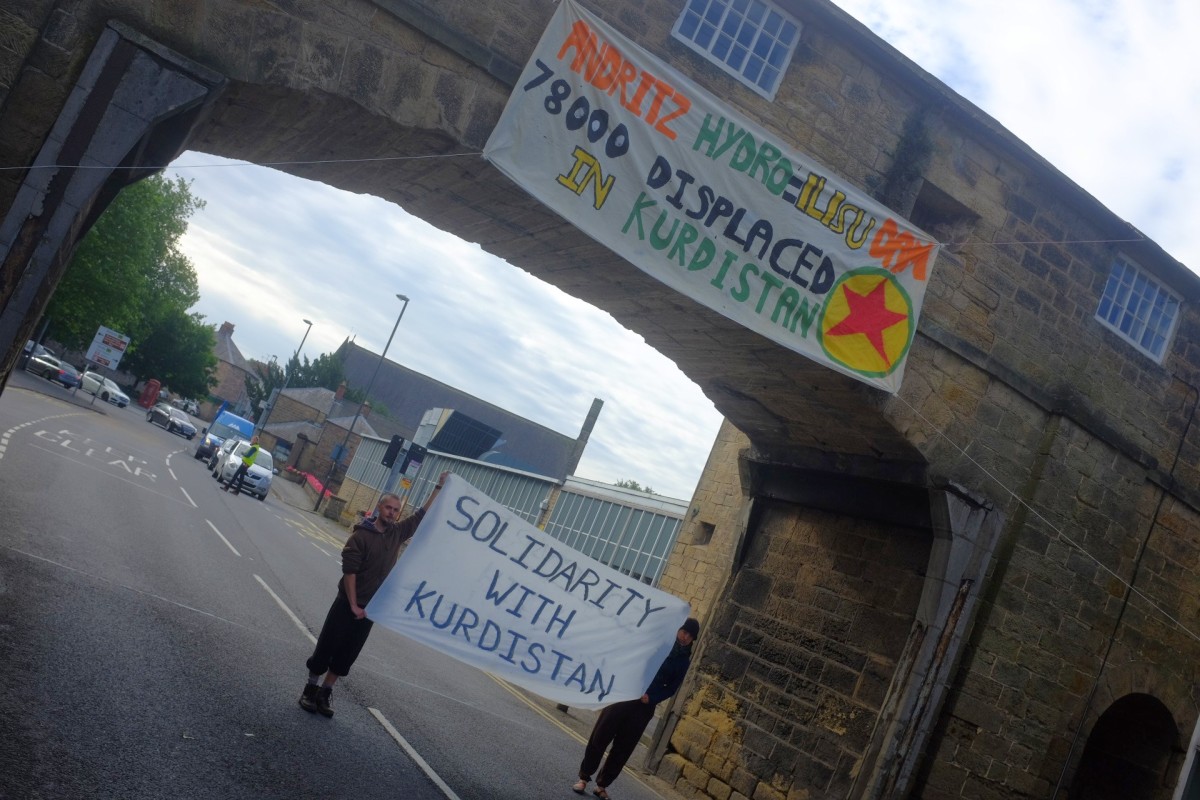
HISTORIC SITE OF HASANKEYF AND LOCAL HOMES THREATENED BY TURKISH DAM – INTERNATIONAL PROTESTS

Louise Michel

The historic ruins of Hasankeyf, which may have been settled more than two thousand years BCE, are threatened by a Turkish dam along with the homes of Kurdish, Armenian and Arab people. A number of archaeologists and historians believe that the fortified town was referred to in inscriptions on the Mari tablets (1,800-1,750 BCE).  The rocky outcrop also contains many human-made caves.

Some of the caves at the Hasankeyf site

As well as being the site of an ancient town, it is also an urban and outer settled district located along the Tigris River in the Batman Province in southeastern Turkey, with a recent combined population approaching 70,000.

The project that threatens to submerge much of Hasankeyf is the Isilu Dam being built by Turkey. Despite the foundation stone being laid as late as 2006, in 1971it was already being actively considered as one of the sites for a number of dam projects for hydro-electric generation and number of other purposes. A study by an international team between 1980 and 1982 recommended the building of the Isilu dam despite the 1981 declaration by the Turkish Government itself of Hasankeyf as a natural conservation area.

Opposition to the dam

The project had run into funding difficulties over the years. Due to international protests on environmental, archaeological and human rights grounds, and also protests within Turkey and from inside Hasankeyf, a number of international funders backed off. The British Government refused $236 million in funding in 2000 and in 2009, a consortium of Austrian, Swiss and German credit agencies withdrew their offer of $610 million.

Solidarity picket outside the Andritz company plant in England

The consortium had suspended the loan in 2008 and had given the Turkish Government 6 months to comply with international standards, which they had failed to do. However in July 2010 the Austrian firm Andritz Hydro announced it was lifting its suspension and would provide the six huge turbines specified for the power plant.

Excavations for the main body of the dam began in May 2011 and the Turkish Government projected that all works would be completed this year. A 250m (820ft) permanent steel-girder bridge with concrete supports has been constructed just downstream of the dam and construction of new villages is currently underway. The diversion of the Tigris River began during August 2012. According to Government figures, by April 2014 the project was 60% completed while 73% of the Hasankeyf population had been resettled.

Protests continue within the area, peaceful and not. According to the Government, in January 2015 Kurdistan Workers’ Party (PKK) threatened the lives of workers and anti-Government sources confirmed that a number of workers left the site. On 3 February 2015 a convoy of supplies for the dam was attacked, injuring three persons and several days later a worker was killed in his home, according to the Government by suspected PKK militants. Peaceful protests have included pickets and demonstrations (see photos) and some of these have also taken place abroad, including recent ones in England (see photos).

Locals, probably mostly if not all Kurds, protest at the Hasankeyf site

The completion of the Ilısu Dam will cause the flooding of the ancient city of Hasankeyf and about 185 villages and hamlets will be fully or partially affected by flooding, according to the Kurdish Human Rights Project. From 55,000–65,000 people will be forcibly resettled, says the KHRP, while even the Turkish Government estimates 40,000. According to a statement released on the 24th August by a solidarity group protesting outside the Austrian Andritz company’s facility in England, the completed project will reduce water flow to Syria by 40% and Iraq by 80% and the dam also provides the facility for political control of those areas through further restriction of water supplies.England picket Isilu Dam company

Turkey is a member of NATO and extremely important strategically to the the military alliance, as well as having some significant natural resources. However its regularly-renewed applications to join the EU have always been turned down because of its human rights record, both in the course of recent wars with its ethnic Kurds as well as with regard to protest movements among ethnic Turks. Recently Turkey came in for adverse international publicity again as it was seen to be blocking Kurds trying to get through the Turkish border with Syria in order to defend areas under attack by ISIS (Islamic State), while Turkey has also been accused of more directly assisting ISIS in its attacks. Although the state has Moslem fundamentalist political parties which occasionally come into government, Turkey itself has been secular since it became a republic in 1922.


End


More information, including photographs on http://www.al-monitor.com/pulse/originals/2013/10/hasankeyf-civilization-condemned-death.html

and on http://www.hasankeyfmatters.com

and on http://www.smithsonianmag.com/travel/endangered-site-the-city-of-hasankeyf-turkey-51947364/

and about Kurdish human rights http://www.khrp.org

SPANISH STATE TO CLOSE OVER 100 BASQUE SOCIAL CENTRES

Diarmuid Breatnach


The Spanish state is set to close 107 Basque social centres, confiscate their funds and sell off their assets, including property. With allegiance to the Basque Patriotic Left, the “Izquierda Abertzale” as it terms itself in Spanish, the Herriko Tabernak (“Peoples’ Taverns”) function as centres for social, cultural and political activity. The sale of coffee, alcohol and pintxos (a variety of home-produced small items of food, mostly eaten cold) also generates income with which to employ some activists within the movement and also to fund some of its political activities.

Outside the Errondabide street Herriko Taberna in the Casco Viejo part of Bilbao

Those are the socially-useful functions of the Herriko Tabernak and precisely the reasons the Spanish state plans to close them down. Not that they say that openly, of course – the official line is that the taverns “fund terrorism”. Never mind that the police have never furnished any evidence of that, never mind too that the alleged recipient, the armed organisation ETA, has been in uninterrupted ceasefire since 5th September 2011, confirmed as “permanent” in a statement the following January and again as a “permanent cessation of armed activity” in October 2012.

Entrance wall mural
Entrance wall mural

There is an herriko taberna in many vilages and in every town throughout much of the southern Basque Country (i.e the part under Spanish state rule) and Bilbao, for example, has several. They vary from one another but typically have a front bar area and a rear or upstairs function room which may be used for political, cultural,

Section of the function room at the back of the Herriko.

educational or social event, or hired for personal social functions such as celebrating a birthday, successful conclusion of studies, an engagement or wedding, a return for a migrant. Social functions of a more political nature such as welcoming a recently-released political prisoner or a commemoration of some figure of the resistance are also held there.

Inside the Herriko, the bar area and some afternoon customers

Although people hostile to the ‘herrikos’ would not usually enter one, anyone can do so and order coffee, beer or soft drink, perhaps buy some pintxos – no-one will bother them. The language of conversation inside may be Euskera (Basque) or Castellano (Spanish) but all the staff have at least enough Euskera for the customers’ needs and many are fluent.

On the walls notices and posters carry political, cultural or social messages or advertise an event, either specific to the Basque Country or perhaps in solidarity with the Palestinians, the Saharaui (Western Sahara people), or to do with gender and sexuality-social issues, workers’ and migrants’ rights, animal rights ….

Some pintxos in the Herriko, home-made Basque 'fast food'
Some pintxos in the Herriko, home-made Basque ‘fast food’

Banners and Basque flag propped against wall in the function area

Photo portraits of prisoners are “glorification of terrorism”

Recently, the walls carried photo portraits of political prisoners from the area. After the Spanish National Court decreed, a few years ago, that these were expressions of “glorification of terrorism”, the police raided many herriko tabernak (and also sympathetic bars) and arrested those who refused to take them down. The herrikos and bars affected then removed the portraits but replaced them with black silhouettes. Despite a widespread expectation that those arrested would face prison terms, nothing happened and the pictures are back up on the walls of the herrikos.

Portraits of local activists in jail prominently displayed on the wall in the bar area of the Herriko

The herriko closures are expected after the Spanish state’s General Elections, which must be held before December and are expected in October or November. According to opinion polls, both traditional governing parties, the PP and the PSOE, are ahead of all others and even Podemos, with its meteoric rise to December 2014, did not overtake them and continues to show a decline in the voting intentions of those polled. In the southern Basque Country itself, the christian democratic Basque Nationalist Party continues to dominate and, even if they wished to help the party to their left (and they don’t), could not stand up against the Spanish state. A political solution therefore is out of reach.

Cafesnea (coffee and milk) with the standard Herriko tissues, stamped with the slogan calling for the Basque prisoners to be sent home from dispersal (and also to be freed).

When the herrikos close, the loss will be enormous: the organised movement will suffer politically, culturally and financially and the social and cultural life of thousands will suffer. There seems little that the Abertzale Left movement can do within the Spanish state – its legal challenge in the Supreme Court has failed. It can apply to the Constitutional Court but decisions there usually concur with those of the Supreme. After the Constitutional, it can apply to Europe, to either the Court of Human Rights at Strasbourg or the Court of International Justice at the Hague but the delay in cases being heard there can take years and by the time they are heard, the herrikos will have been closed and properties auctioned off. Nor are the European Courts’ decisions necessarily to the benefit of the Basques – although a number of times Strasbourg has found against the Spanish state for failing to investigate a claim of torture by a political prisoner, it has never actually found the state guilty of the torture itself. And when the Abertzale Left’s political party, Herri Batasuna, was banned by the Spanish Supreme Court (and confirmed by the Constitutional) in 2003, the movement took the case to Strasbourg. Eventually, in 2009, the Court delivered its judgement – incredibly, it decided that banning a political party with electoral support varying from 15% to nearly 25% in the southern Basque Country was not an abuse of the human rights of the people concerned.

This Herriko is mainly patronised by youth but the age range is complete, from babies brought by their parents to the elderly


Considering the options and Spanish democracy

Now the people are considering their options in action outside the courts. Should they occupy the buildings and resist their takeover by the Spanish state? Maybe that would make sense where their location is a fairly high-profile one. But others are in back streets and laneways; the “Zipayos” (pejorative name for the Euskadi police, the Ertzaintza) can swarm those places, assault the occupants and evict them in a matter of hours. That they can do the same in the more high-profile locations is without doubt but at least the community and passers-by will see the resistance there. In the smaller villages, herrikos may change their name and perhaps replace the buildings’ renters or lessees. Whatever course they take, the disruption overall will be huge.

The upcoming generation, one wearing an Athletic Bilbao shirt

In 1998, the Spanish National Court judge Balthazar Garzon (beloved of many liberals around the world) closed down the Basque-language newspaper Egin, a bilingual daily in Euskera and Castellano first published 20 years earlier. Over a year later, a judge ruled that the newspaper could reopen but by then its machinery had been dismantled or left unusable and its owners left without funds as they were using them in court proceedings. In 2009, a Spanish court finally decided that there had been no grounds for closing it in the first place. A year later, there was a similar decision in the case of Egunkaria, the first-ever daily in the Basque language, closed down by the Spanish state in 2003. In 2010, the National Court decided that there had been no reason to close the newspaper and that the accused were innocent, hinting that the accusation of torture was true. But no formal apology followed, nor was there any compensation paid and Otamendi, the newspaper’s manager, had to take his torture case to Strasbourg, where in 2012 he was awarded compensation of €20,000 (and €4,000 legal costs) against the Spanish state because (as usual) they had not bothered to investigate his claims of torture. No compensation has yet been paid for Egunkaria‘s closure and its successor, Berria, reportedly struggles financially today.

Posters and information on the Herriko wall near the front of the bar area

Basques smile ruefully when students of recent Spanish history talk about the “democratisation” of the State through the “Transition” from General Franco’s dictatorship. Apart from the killing by Spanish police and state-supported fascist gangs during that Transition, the southern Basque Country has seen state-organised assassination squads, bannings of newspapers and radio stations, bannings of political parties, youth and cultural organisations and arrests, torture and jailing of political activists. This is the reality behind the words of “Spanish state democracy”.

End.

ANTI-INTERNMENT MARCH BLOCKED BY MASSIVE POLICE PRESENCE IN BELFAST

Diarmuid Breatnach

The annual anti-internment march in Belfast was blocked on Sunday 11th August by a very heavy police presence from proceeding beyond the Old Park Road. Road blocks had also been set up around the area and in the city centre. Although the march dispersed without incident, the continuing heavy police presence in the area provoked local people and altercations broke out between them and the police. In one incident, a reportedly pregnant woman was video-filmed being arrested and assaulted by male police, apparently for telling the police to get out of her garden.

Internment without trial was used by the British colonial regime in Ireland as one of its measures to repress resistance to its rule. After Partition, it was used by the regimes on both sides of the Border. Its most recent formal use was in the Six Counties from August 1971 until the last one was released in 1975, by which time almost 2,000 had been interned, initially only people from ‘nationalist community’ but later on some from the Unionist community had been added to the trawl. During immediate street protests against the introduction of internment, the Parachute Regiment shot dead 11 unarmed men over three days in the Ballymurphy area of Belfast. During a protest march in Derry against internment six months later, that same Regiment killed 14 unarmed civilians and injured many more. According to the authorities and to some others, including Sinn Féin, internment without trial no longer exist.

But since the Good Friday Agreement, Republican political activists who are not in agreement with its terms find themselves being locked up without trial through a number of other measures:

  • Some Ex-prisoners released under license have had that license revoked and are brought to prison without trial (e.g. cases in the recent pass have included those of Marian Price [2 years] and Martin Corey [4 years])

  • Activists are arrested on spurious charges and refused bail, to be found not guilty eventually but having spent years already in prison (Colin Duffy, among others)

  • Or the activists arrested on spurious charges are offered bail only on conditions that would immobilise them politically and kept in jail when they refuse (Stephen Murney who did 14 months remanded in custody before eventually being found “not guilty” and released)

For this reason many Republicans consider that internment still exists but in a more hidden form and this has led to the formation of the Anti-Internment Leagueand also to the Anti-Internment Group of Ireland, the Dublin branch of which has organised many events, from public meetings to pickets and information tables.  The main activity of the AIL is organising the annual march against Internment as near as possible to the anniversary of its introduction, August 9th.

It is worth mentioning that in addition to the covert internment methods, activists are also arrested and convicted and jailed on spurious evidence (examples include Brian Shivers – two years without bail awaiting trial and a third year convicted, before his conviction was quashed by the Supreme Court – and the Craigavon Two – still serving time although wrongly convicted).

The Parades Commission & Time Restrictions

Formerly in the Six Counties, Loyalist triumphalist parades were allowed wherever they wished to go in Belfast and in most other towns too. These marches did not so much celebrate their religious affiliation, Presbyterianism; rather, as demonstrated by their banners, colours and the airs played by their bands, they celebrated historic battle victories over Irish forces with Catholic affiliation. But their parades also celebrated in many ways the state’s institutional discrimination against communities raised in the Catholic faith. During these parades insults and threats against people in ‘nationalist communities’ were everyday occurrences. Any protests against them were repressed by the police.

On the other hand, civil rights and Republican parades were banned or subject to huge restrictions – for example many of the early civil rights demonstrations and all Easter Rising commemorations were banned and even the 1972 march in Derry, six months after internment was introduced was also banned. Most of those demonstrations went ahead and were attacked by police with batons, tear gas, water cannon, rubber and plastic bullets and on occasion live bullets; the one in Derry against internment became known as “Bloody Sunday”.

Some years ago people in nationalist areas began to resist the triumphalist and provocative sectarian Loyalist marches going through their areas and the Parades Commission was set up to regulate marches by Loyalists and by people from the ‘nationalist’ areas – all march organisers had to apply for permission and abide by the decisions of the Commissioners. However, the decisions of the Parades Commissioners have been widely regarded among the ‘nationalist’ areas as being biased in favour of the Loyalists. For example, every year the Commissioners approve a march by Loyalists through the Garvaghy Road, despite almost total opposition to it in that ‘nationalist’ area. They also approve many Loyalist marches through Belfast city centre without significant restrictions.

Republicans do not apply to march through unionist areas but there have been restrictions on parades planned to go through the city centre. Two years ago the police blocked the Anti-Internment march from going through the city centre and last year it was held up for quite a while by the police, the reason given being that they were trying to control Loyalists who had gathered in the city centre to oppose the marchers. When the marchers were eventually permitted to proceed, they found a few hundred Loyalists shouting abuse and hurling missiles at them, with hardly any police restraint, with a line of police in full riot gear facing the marchers.

This year, the Anti-Internment parade organisers were given permission to hold the march but on the condition that they were clear of the city centre by 1.30pm, apparently to ensure no disruption to shopping in the centre. The question needs to be asked: How would such a march prevent shopping and how long would it take them to pass? The only significant disruption would be from Loyalists wanting to attack the march and people wanting to avoid that trouble and, if the police were a neutral force, it would be their job to control the Loyalists and prevent them from breaching the peace. But the RUC (the PSNI after the force’s name change) have never been anything less than an extremely sectarian force and, during the 30 years’ war, were deeply implicated in collusion with Loyalist sectarian assassination squads.

The Anti-Internment Parade organisers objected to the times condition on the grounds that people would have to have to choose between attending their parade and the Ballymurphy Massacre March for Truth on the Springfield Road at 1pm on the same day.

But there are other reasons why such a time restriction is not reasonable, apart from clashing with another event and elevating freedom from a supposed impediment to shopping above exercise of democratic rights to protest. Apart also from the fact that Loyalists don’t have such restriction placed upon their parades, an 11.30 start means that people journeying from further away have to start even earlier – for example, even from Dublin, with a reasonably fast route, one would need to be getting on a coach in the city centre at 8a.m. All these problems and inconveniences resulting from a time restriction which, in turn, is to facilitate commercial interests by overcoming an alleged interruption to their making a profit.

The Anti-Internment League announced that they would begin the march at 2pm and the PSNI mobilised huge forces to prevent them, as they considered that “the march was illegal from the moment it started”, in the words of Deputy Chief Constable of the PSNI, Stephen Martin on a radio program the day after.

Police blockade

I arrived in Belfast too late to attend the Ballymurphy Massacre march but I learned that hundreds had participated to once again commemorate the massacre by the British Paratroopers of eleven unarmed people in the Ballymurphy area over two days in 1971 (which they had followed up six months later with their Bloody Sunday massacre of 14 in Derry).

Unaware of the police mobilisation to block the Anti-Internment march, I had arrived in what I imagined to be plenty of time to attend it. But the police were preventing a local taxi firm from stopping by the coach station in the city centre to pick up passengers – what reason could there be for that, since that was not on the route of the march? Could it be that the police were trying to make it difficult for supporters to reach the march?

Part of the PSNI invasion of the area
Part of the PSNI invasion of the area (Photo from AIL FB page)

It certainly seemed like that when I walked in to the depot of the shared “people’s taxis”, i.e. the Falls Road Black Taxis about 1.45p.m. The word was that the RUC/ PSNI had cordoned off the southern approaches to Ardoyne, in North Belfast. I began to worry but was told that they would get me there. With a small group of Ardoyne residents, I waited in the depot, which resembles a coach waiting room and has a shop for sweets and soft drinks and another printing T-shirts and posters. Taxis pulled in and out, mostly heading for the Falls Road but eventually a taxi for Ardoyne (Ard Eoin = “Eoin’s Heights”) drew up and six of us got in – apart from myself, two youths, a middle-aged woman and an elderly couple, one of them with an English accent but clearly established in the area.

We had not gone far after dropping off one of the youths before we began to pass the PSNI vans, a kind of white boxed landrover, shields over windscreen, lights and siren and only slit windows in the back. From the taxi by now we had seen around 30 vans; we were all tutting at this massive police mobilisation. “Great day for a robbery,” I said. “Where’s the nearest bank?” quipped the elderly man. As we got nearer to Ardoyne we were suddenly confronted with a huge number of police vans and very soon afterwards, could go no further – PSNI vans, police on foot in black riot gear, shields and some with batons out already. Any belief I might have had that this was just an intimidation exercise by the police was dispelled. Our driver tried to negotiate with a female police officer who was dealing with traffic but all she could give were vague suggestions about which roads might yet be open. I heard our driver relaying information to his company’s control desk through his radio and I now realised that the police were determined to stop the march.

Our driver drove up and down other roads, gradually nearing Ardoyne and close to there apologised to us and pulled in outside a house in a residential street – it seemed that someone of some authority in Falls Road Black Taxis lived there. After conversing with our driver, this man got on our vehicle’s radio and spoke to someone at the depot, the terse conclusion of which was “Ardoyne is out”: Ardoyne was under police siege and the area was now out of bounds to their taxis.

The driver dropped us near to my destination, apologising again as he had done frequently. We assured him it was not his fault. As I walked down to approach the rallying point for the march, some of the local community were out in the street playing at an poc fada (“the long hit”), a one-shot competition with hurley to see who can hit the sliotar (the leather ball used in hurley games) the furthest. An poc fada is one of the features of the Féile Béal Feirste, an annual community festival which has been growing annually (and which some say has now largely become a commercial festival, far from its community roots, with dear admittance fees and drink prices, in an area with very high unemployment).

Rounding the corner to head up towards the Shamrock Bar, I was just in time to join the tail of the march as it set off. I sped up to try and catch up with the Dublin Anti-Internment Committee, passing some people I knew along the way, exchanging greetings. There were five Republican marching bands playing music: the Garngad, Brendan Hughes and Volunteers Black and Ryan bands were all from Glasgow, while the John Brady RFB was from Strabane and the Julie Dougan from Portadown.

One of the Dublin Anti-Internment Committee banners

At the junction with Old Park Road I joined with the Dublin Committee comrades, apologising for my late arrival as we swung right to head towards the city centre. Further down the road, the police vans awaited us and as we got nearer we could see a blockade composed of police vans backed up by many police in full riot armour, holding shields and with batons drawn. We marched on and in minutes we were crowded against them. I feared for us if we tried to get through and I saw a drummer with one of the bands step out and retire to the sides with his drum. I didn’t blame him – drums are expensive pieces of equipment. The police had a big sign on one of their vans, saying that our march was illegal, a message they were reiterating from their p.a system, though difficult to decipher all the words.

After a while in literal impasse, one of the organisers spoke briefly into the p.a system and introduced Mícheál Mac Giolla Easpuig, an Independent local authority representative in Donegal. Mac Giolla Easpuig spoke first for awhile in his native Irish and then changed to English. He summarised the history of English colonial repression in Ireland since 1970 and

Mícheál Mac Giolla Easbuig speaking at impromptu rally at PSNI Blockade
Mícheál Mac Giolla Easbuig speaking at impromptu rally at PSNI Blockade (Photo from AIL FB page)

made the point that the need of the authorities for that repression denied any legitimacy to their occupation of the Six Counties. He concluded with the words of Volunteer Tom Williams, who was hung by the colonial administration in the Six Counties in 1942: “Carry on no matter what odds are against you; carry on no matter what the enemy call you; carry on no matter what torments are inflicted on you. The road to freedom is paved with suffering, hardship and torture; carry on my gallant comrades until that certain day.

Impromptu short rally at PSNI Blockade in Old Park Road

As the applause and cheering died down, a spokesperson for the organisers spoke briefly about the suppression of our democratic rights to march, about the continuing use of internment by other means and announced the end of the march, asking people to disperse.

One of the Republican marching bands played the verse and chorus of the Irish national anthem, The Soldiers’ Song; I sang along to it in Irish as is our custom in Dublin (but seems not to be in Belfast) and the band began to march away from the police blockade. We marched away behind them with the banners of the Dublin Committee, as did others with different campaign banners: Craigavon Two, Ballymurphy Massacre, Stephen Kaczinsky, Gavin Coyle and various Republican prisoner support groups.

At some point the Dublin and Cork contingents pulled away and went back to near the original rallying point, where local people and visitors were meeting and chatting as the sliotair of the Poc Fada whizzed overhead. Rumours were now reaching us of the police attacking people on the other side of their barrier and also, from time to time, of Loyalists attacking people somewhere. It was hard for us to know exactly what was happening and where. Eventually we piled in to the back of a van to get out of the area. Our driver had to take a long circuitous route again and eventually we were back in West Belfast, from where we could make our separate ways back to Dublin and Cork.

The PSNI blockade of the march showing another line of police vans behind facing in the other direction -- only a fraction of the police vehicles in the area.
The PSNI blockade of the march showing another line of police vans behind facing in the other direction — only a fraction of the police vehicles in the area.

DB plus Dub AIC

Fighting in the area

Later I learned from a variety of sources that the local community in the Roseapenna Street area had reacted to a police, who were still there an hour after the march had left, in an occupation or siege of their area. This was an area through which the march had planned to pass and which was now blocked off by police vans and police on foot in full riot armour. A woman was shown on video being arrested by two police in riot armour – it was said that she was pregnant and was being mistreated in front of her three children. Apparently she had objected to the police being in her garden and had demanded they leave. The video showed her being pulled struggling to the back of a police van, being pushed inside and big policemen piling in on top of her, her head being apparently twisted as she disappeared from view. Another woman protesting this treatment was bashed by the shield of one of the police and the mobile phone filming the incident suddenly ended up on the ground, apparently having been knocked out of the hand of its owner by the police.

Later reports in the media spoke of stones being thrown and even petrol bombs. I could easily empathise with the throwers: confronted with that police blockade and our impotence in the face of it, I had found a part of me frustrated and itching to strike back at them. Had the area I lived in been blockaded by police and cut off for hours, then also occupied by police in a massive show of force, then seeing people abused and assaulted for objecting, I would have been sorely tempted to get a bit of rubber tubing and a bottle, go to a friend and ask to borrow some of the petrol from his car. Stones after all are not very effective against riot armour, shields and riot vans. True, the police riot armour is flame-retardant but …..

The Twadell Avenue Loyalist
The Twadell Avenue Loyalist “camp”, an illegal installation which receives no trouble from the PSNI.  According to reports, “nationalist’ people were bombarded by golf balls from here on Sunday. (Photo from Internet)

In addition, people living in the area and trying to leave it had been attacked by Loyalists hurling golfballs from the nearby Twaddel Road, which is a Loyalist area. In fact, they have had a Loyalist “camp” there for some time – illegally by Six County law but of course untroubled by the PSNI. Its purpose? To show those Fenians — those Taigues — up in the Old Park, Ardoyne and “The Bone” (Machaire Botháin) areas just who really runs the Six Counties!

Worse in a way was to come, as along with the ritual condemnations by Unionists and Loyalists, PSNI spokespersons and biased media reporting, Martin McGuinness of Sinn Féin blamed the violence entirely on the organisers of the march. As well as being a very senior figure in the Sinn Féin party, McGuinness is of course Deputy First Minister of the Northern Ireland colonial Government. Back in the day when he was the commanding officer of the IRA in Derry, he had condoned and defended participating in many marches that had not so much been restricted to particular times as completely banned by the Six County authorities. During one of those illegal marches in Derry, in 1972, the Parachute Regiment had opened fire on unarmed people and killed fourteen, injuring many. In those days the IRA and what was thought of as Provisional Sinn Féin placed their blame for all violence unreservedly upon the police and army (and occasionally the Loyalists), also on the 6-County Government and on the British colonialists, who should not be in Ireland at all, according to Sinn Féin. But that was then and their party now shares in the administration of that same British colony. Reading his reported words, I wondered whether if that Derry massacre of Bloody Sunday were to occur now, McGuinness would blame the marchers for going ahead with a banned march?

Mc Guinness posed shaking hands with the Chief Constable of the PSNI at a public meeting earlier in the week at a Falls Road venue
Mc Guinness posed shaking hands with the Chief Constable of the PSNI at a public meeting earlier in the week at a Falls Road venue (Photo from AIL FB page)

The Anti Internment League hit back with a statement of their own, condemning the comments made by Martin McGuinness. “The AIL responsibly took the decision to march away from a flashpoint that was of the PSNI’s own making”, the statement read. “No participants engaged in violence,” it continued, “which occurred over an hour after our dispersal and was caused by PSNI invasion of property and assaults on residents.” The statement went on to point out that Mc Guinness had praised the PSNI a few days earlier (a reference to his shared platform with PSNI’s Chief Constable on Thursday 6th in a venue on the Falls Road).

Uncannily (or perhaps not), the statement went on to mirror my own earlier speculation: “Using Martin McGuinness’s rationale, he would place responsibility for the murder of 14 civilians in his own city by the British Army on Bloody Sunday in 1972 on those who organised the Anti-Internment parade that day.”

“There is perhaps no greater indicator of how Mc Guinness now views Republicans as his opponents, while the forces of repressive state apparatus that he himself promotes and endorses are now his ‘comrades’ “, the statement concluded.

Follow-up meeting with area community


In a follow-up to the events of Saturday in the Lower Cliftonville area, on Tuesday night in Manor St Community Centre, the Anti Internment League hosted a meeting with Rosapenna residents affected by the PSNI lockdown on Sunday 9th August.

“Every house in the area received a leaflet making them aware of the meeting” according to a statement issued by the AIL. The panel was composed of representatives of the AIL, community workers from Lower Cliftonville and a local solicitor. A journalist from the Irish News was also in attendance to hear accounts and opinions from residents.

Because of Martin McGuinness’s “public criticism of both the AIL and local residents”, according to the AIL statement, Sinn Féin had been invited to send representation to the meeting “to challenge the AIL if they wished and to hear residents’ thoughts and opinions in a public forum”. According to the AIL statement, although SF had indicated that they would attend, they did not appear at the meeting.

The atmosphere in the meeting was angry, according to witnesses – all of it directed towards the PSNI with no-one criticising the march organisers, with the exception being those who chided the organisers for having turned the parade back “too soon”. The AIL represenatives’ explanation of the considerations and reasons for doing so seemed to satisfy the critics. One of the AIL representatives reportedly also asked whether residents would rather the parade did not pass through Rosapenna Street in future, which was “rejected unanimously by residents present, who all said they enjoy the music and atmosphere that the annual march brings to the area.”

A hitherto unreported aspect of the events on Sunday in the area was that local businesses reported having been forced to close down by the PSNI for no reason that they could determine. This was particularly interesting in view of the Parades Commission’s rationale for insisting that the march finish passing through the City Centre by 1.30 pm – to prevent any perceived disruption to big shopping commercial interests in that location.

The AIL statement went on to outline their plans to work with local community organisations to “jointly request and facilitate a “surgery” style event, inviting the Police Ombudsman to compile complaints against the PSNI from local residents.” Concluding their statement, the Anti-Internment League declared that they, working with “local community organisations and Republican activists will not allow the violent actions of the PSNI within the Lower Cliftonville community on 9th August to go unchallenged.”

End/ A Chríoch.

“Now where did our drummer go with his drum?”

Stephen Kazinski banner Stopped 20150809_144947IRPWA banner

Big Brother can fly Big Brother has an eye Big Brother can spy on us down below.
Big Brother can fly
Big Brother has an eye
Big Brother can spy
on us down below.


Craigavon Two banner

Gavin Coyle Isolation banner