On Saturday 22nd January 2022 an event was held to commemorate the centenary year of the occupation of the Rotunda building in Dublin by 150 unemployed workers led by Liam Ó Flaithearta, a Republican and Communist and writer from Inis Mór (off the Galway Coast). The occupation took place two days after the formation of the Free State and was attacked by an anti-communist crowd while after a number of days the occupiers were forced out by the police force of the new state of the dismembered nation1. The event last week was organised by the Liam and Tom O’Flaherty Society.
The event began with a gathering at 1.30pm in North Great George’s Street, where the Manifesto had been printed in 1922.2 People then proceeded to the nearby Rotunda, site of the occupation in 1922.3
Copy of the manifesto available at the event (Photo: D.Breatnach)
Seosamh Ó Cuaig (Photo: D.Breatnach)
Seosamh Ó Cuaig from Cill Chiaráin, Carna, Conamara, opened the proceedings as Chairperson, ag cur fáilte roimh dhaoine i nGaeilge agus i mBéarla, briefly introducing the historical occasion and recounting how some companies, including Boland’s, had supplied bread, sugar and tea to the occupiers, before he introduced published historian and blogger Donal Fallon.
Fallon not only recounted the events of that occupation 100 years ago but also placed it in context of a number of other factors: the unemployment then in the State (30,000 in Dublin) and to follow through into the 1930s, the upsurge in workers’ occupations and local soviets, the reactionary nature of the government of the new state and of the hierarchy of the Catholic Church at the time, which was very supportive of the new regime and extremely hostile to any kind of socialism, along with the cultivation of a reactionary social and political attitude among sections of the population.
Donal Fallon speaking at the event (Photo: D.Breatnach)
Fallon also commented on the censorship and otherwise neglect of Liam Ó Flaithearta as an accomplished modern Irish writer and hoped for his writing to become more popularised now.
Alan O’Brien reading O’Flaherty’s Manifesto (Photo: D.Breatnach)
Alan O’Brien, Dublin poet and dramatist, was welcomed on to the stage to read the Manifesto which had been issued at the time, copies of which were available at a nearby stall. One of the aspects of that document was a call for Dublin City Council to set up public works to provide paid employment for those out of work in exchange for services to the community.
Diarmuid Breatnach, singer and blogger was invited to the stage to sing “The Red Flag” because it had been sung there during the occupation. No doubt those in the Government, Church hierarchy and generally among reactionary people at that time would have been horrified by the lyrics and would have asserted that they were foreign to Irish culture and thinking. However, as Breatnach explained, the lyrics had been composed by an Irishman (see Appendix 1), Jim Connell from Meath. Connell wrote the lyrics to the air of The White Cockade and was appalled to hear it sung to the air of Oh Tannebaum, a Christmas carol. Breatnach had never heard it sung to the White Cockade air but had been practicing it for days and hoped he would be faithful to the original air.
Diarmuid Breatnach singing The Red Flag to the air of The White Cockade
Called by the Chairperson to sing a follow-up song, Breatnach sang most of the verses of “Be Moderate”, satirical lyrics published by James Connolly in 1907 in New York. There had been no air published for the song and it has been sung to a number of airs but he would sing it to the air of A Nation Once Again, which provides a chorus:
We only want the Earth, we only want the Earth, And our demands most moderate are – We only want the Earth!
The event was later reported by RTÉ briefly in English on the Six O’Clock News and also by video on TG4’s Nuacht in Irish including interviews with Fallon an a number of participants.
End main report.
Early arrivals at the event with the plinth of Parnell monument in background centre left (Photo: D.Breatnach) Section of the crowd and media filmers at event (anti-vaccine etc march in background) (Photo: D.Breatnach)
APPENDIX 1:
THE RED FLAG: AUTHOR, LYRICS AND AIR
After the Rotunda occupation was terminated, Liam Ó Flaithearta emigrated to London, which is where the Red Flag lyrics had been composed twenty-three years earlier. The lyrics were composed by Meath man Jim Connell in London in 1889 to the air of the Scottish Jacobite march TheWhite Cockade — he was reported livid when he learned that it was being sung to the air of Oh Tannebaum, protesting: “Ye ruined me poem!”
Jim Connell was a Socialist Republican (he had taken the Fenian oath), activist and journalist who emigrated to England in 1875 after being blacklisted in Dublin for his efforts in unionising the docks in which he worked. Apparently he began to write the song lyrics on his way home from a demonstration in London city centre, on the train from Charing Cross to Honor Oak in SE London, where he lived and completed it in the house of a fellow Irishman and neighbour, Nicholas Donovan.
Photo of Jim Connell, author of The Red Flag (Photo: D.Breatnach)
The lyrics have been sung by revolutionary and social-democratic (the latter less so now) activists all over the English-speaking world but also in some other languages in the years since.
Not mentioned in the Wikipedia entry on Jim Connell is the fact that he also wrote a book, apparently a best-seller in his time, called something like “The Poacher’s Handbook“. I’ve been looking for that book for years without success (DCC Library could find no reference to it).
UNVEILING PLAQUE ON JIM CONNELL’S HOME
Today there is a plaque on the two-storey house where Connell lived until his death in 1929, having been awarded the Red Star Medal by Lenin in 1922.
Plaque on house in which Jim Connell lived in SE London when he wrote the lyrics (Photo: D.Breatnach, sorry about the shadow)
In the late 1980s a history archivist with the London Borough of Lewisham contacted the Lewisham branch of the Irish in Britain Representation Group, of which I was Secretary, to consult us about the erection of a history plaque on the house and the wording to use4. We attempted to have the words “Irish Republican” added to “Socialist” after his name on the plaque and were successful with “Irish” but not with “Republican”.
There was a handful at the unveiling at midday on a weekday, including a representative of the local Council, a couple from the Greater London Council including its Irish section, a trumpeter (who played the Oh Tannebaum air) and Gordon Brown (then just an MP). I believe this was 1989, the centenary of the song being written.
Brown’s speech did not mention Ireland once but as he finished, I jumped up on a nearby garden wall and while thanking those in attendance said that it was sad to see the country of Jim Connell’s birth omitted along with his views on Irish independence, particularly at a time when British troops were fighting to suppress a struggle for that independence.
This was during the age before mobile phones and I have no photos, sadly. So no big deal but the next edition of the Irish Post, a weekly paper for the Irish community in Britain, carried a report on the ceremony and my intervention. It was written by the columnist Dolan, who was the alter ego of the Editor, Brendan Mac Alua (long dead now) and a supporter of much of the IBRG’s activities.
I lived in Catford then, five minutes by bicycle from the site of the house and have photographed the plaque.
FENIAN CONNECTION BETWEEN LYRICS ACROSS TWO DECADES
The words and sentiment “Let cowards flinch or traitors sneer” in the Red Flag mirror some in a song celebrating Irish political prisoners, The Felons of Our Land: “While traitors shame and foes defame” and “Let cowards mock and tyrants frown”. Arthur Forrester wrote that song 20 years before Connell’s and it would be surprising indeed had Connell not consciously or unconsciously borrowed the construction and sentiment.
Arthur Forrester was himself of great interest as were his poet sisters, both raised by their Irish nationalist mother, also very interesting person and poet in her own right, in Manchester, known to Michael Davitt. Arthur was a Fenian and did time in prison for it5. He was also for a period proof-reader for the Irish Times! Frank McNally wrote an article about the song but I don’t have access to anything except the first few lines.
T-shirt worn by one of those in attendance (Photo: D.Breatnach)
APPENDIX 2:
Lyrics of The Red Flag:
The People's Flag is deepest red,It shrouded oft our martyred dead,And ere their limbs grew stiff and cold,Their hearts' blood dyed its every fold.Chorus:Then raise the scarlet standard high.Beneath its shade we'll live and die,Though cowards flinch and traitors sneer,We'll keep the red flag flying here.Look round, the Frenchman loves its blaze,The sturdy German chants its praise,In Moscow's vaults its hymns were sung,
Chicago swells the surging throng.(chorus)It waved above our infant might,When all ahead seemed dark as night;It witnessed many a deed and vow,We must not change its colour now.(chorus)It well recalls the triumphs past,It gives the hope of peace at last;The banner bright, the symbol plain,Of human right and human gain.(chorus)It suits today the weak and base,Whose minds are fixed on pelf and placeTo cringe before the rich man's frown,And haul the sacred emblem down.(chorus)With head uncovered swear we allTo bear it onward till we fall;Come dungeons dark or gallows grim,This song shall be our parting hymn.
FOOTNOTES
1Not long afterwards, the new Free State’s National Army, under the orders of Michael Collins, attacked a protest occupation by Irish Republicans of the Four Courts which began the Civil War of the State against the IRA, lasting until 1923 with over 80 executions of Republicans by the State along with many kidnappings and assassinations (such as Harry Boland’s and of course others killed in battle (excluding the shooting of surrendered prisoners, which the National Army also did on occasion). Some were even murdered AFTER the war had ended, for example Noel Lemass, his body left in the Dublin mountains.
2Possibly this was the same location which had housed the James Connolly College (raided by the Auxiliaries in 1921).
3Also the location of the first public meeting to launch the Irish Volunteers in 1913 and where much of the GPO garrison and others were briefly kept prisoner after the surrender in nearby Moore Street in 1916. And just beside it the Parnell Monument, across the street the location of the founding of the Irish Ladies Land League (where members were arrested) and diagonally in SE direction, Tom Clarke’s tobacconist and newsagent shop (occupied by the British Army during the Rising).
4The Lewisham branch of the IBRG had been founded in 1986 and founded the Lewisham Irish Centre in 1992, I think. It was a very active branch in campaigning, community and political work, ceasing to exist around 2002. The IBRG itself was founded in 1981 and was active on many issues, including anti-Irish racism, representation for the diaspora, release of the framed Irish prisoners, British withdrawal from Ireland, against anti-Traveller racism, plastic bullets and strip-searches. It was also for equality in general, being against all racism, gender discrimination and homophobia and one year shared a march with the Broadwater Farm campaign.
5 Despite the Irish diaspora having given the working class in Britain its anthem (The Red Flag), its classic novel (TheRagged-Trousered Philanthropists) and, among many social and trade union activists and leaders, two leaders of the first genuine mass workers’ movement in Britain (the Chartists — O’Brien and O’Connor), and having fought against the Blackshirts at the Battle of Cable Street, there is no BA in Irish Studies alone available in British Universities. The Irish diaspora is also the first migrant community in Britain and for centuries the largest, has made significant contribution to the arts and a huge one to rock, punk and pop music. It would seem that the British ruling class does not want its population to know in any depth about the Irish.
Fire is an important source of heat and so facilitates life but it can also be a killer. Fire safety is particularly important in multi-occupied buildings but essential safeguards are often not provided or when they are there, are ignored or misused. One can see evidence of that frequently in news reports and even on many occasions in one’s own life and, on a number of occasions as a manager of accommodation services, I have certainly seen examples all too often. Buildings are being constructed to greater heights than can be reached by the ladders of fire-fighters. Those responsible for lack of fire safety procedures or of violating them should face severe penalties.
Fire at tower block in Tower Hamlets in London last year. (Photo: Supplied to Guardian newspaper).
When it is being destructive, fire kills in many different ways, not just by extreme heat. Smoke inhalation is another killer, as are toxic fumes emitted by some materials when burning. People can be killed by falls when attempting to escape a fire or be crushed by falling parts of the building, beams etc. And fire can also cause explosions when it encounters volatile liquids or gasses. Whether we live, work or relax in a building, we should never be blasé about the dangers, never disregard precautions and in fact be prepared to insist on adherence.
There are various headings under which we can discuss fires safety but Prevention, Detection, Suppression and Evacuation cover most of them — to which we can add Educated Awareness.
Prevention has to do mostly with safe design, use of safe materials and with safely operating processes that generate heat or produce flame, classically cooking and smoking but also many others — in industry all such procedures should be clearly advertised.
In Detection, apart from what to do when one smells burning or personally encounters flames or smoke, it is with systems such as smoke and heat detectors and alarms that we are concerned.
With regard to Suppression, although of course occupational fire-fighters may use other means, we are interested in fire extinguishers (more rarely fire hoses) and sprinkler systems and, in Evacuation, in the means of safe escape and subsequent assembly, along with indications of when one should do so, which of course are linked to detectors and alarms.
SUPPRESSION
How often we see a fire-extinguisher being used to prop open a door! This is a serious misuse of a piece of fire-fighting equipment and its use in that way may mean it will not available in the appropriate place or malfunctions when required. Often too the door being propped open is very close to a staircase, with the danger of the heavy extinguisher being dislodged and rolling or bouncing down the stairs to strike someone.
International Fire Extinguisher pictogram sign (Image sourced: Internet)
Fire extinguishers in buildings are usually installed by a fire-protection company, under contract to check and service them once a year. Does that sound safe enough? In a team of which I was a member, we checked the fire extinguishers on each shift, to ensure they had not been tampered with and we lifted the water-filled ones to check, by weight, that they still contained water. Those checks were written into our work rotas and we were required to sign off on them. We had developed those safety routines as a team and I carried them forward into subsequent management roles. In the case of an extinguisher we found too light or with the seal removed, that was recorded and the urgent task was to have it replaced by the fire-protection company under contract.
Sprinkler systems should have a means of checking that they are functioning well and should be regularly checked.
Fire alarms and smoke detectors need to be regularly checked also. In the case of smoke detectors they can be checked by spraying with an aerosol and the fire alarms have a facility for testing — though an arrangement with the fire-fighting service that alerts them to a test being carried out is advisable.
Blackbird Granary fire, Oregon, last October (Photo: Statesman Journal)
EVACUATION
I’v worked in places where I never experienced a fire drill. That is terrible, when you think about it. In a good team of which I was a member we made sure we carried out drills but we also had to balance the need for fire drills with the possibility of injury during evacuation to the hostel residents, who were drinkers and many of whom were infirm. We compromised by holding drills for the staff and local management while informing the residents of what we were doing. When I came to manage a hostel, I arranged to have a member of staff with a pen and clipboard follow the fire evacuation drill in action, which is when we discovered that a wheelchair-bound resident could not be got out the main door at all quickly. How had that not been noted previously? Not only that but for security reasons, the team members were not using the emergency exit. And then it was discovered that a member of staff was keeping his bicycle in the passageway leading to the emergency exit, potentially a hazard to people trying to escape a fire. Incredibly, the individual concerned was the team’s elected health and safety representative, which made for an interesting discussion with him later.
As a team, we resolved all those issues — but only because we carried out the drills and observed what happened during them.
During a fire there may be a power cut so the provision of emergency lighting is important, along with luminous signs indicating the evacuation route. That lighting too should be checked.
Worse things than obstacles in the path to emergency exits occur, when building owners or management lock or chain emergency exits for reasons of building or product security or in some cases even to imprison workers. As children some of us would “bunk in” to cinemas: one who had purchased a ticket would go to the toilet to open a nearby emergency door and admit others. The cinema management ended that practice by chaining the emergency doors shut. It is understandable that a commercial business might wish to discourage evasion of their admission charges but certainly not at the cost of putting lives in danger — many other means can be developed, including monitoring systems and alarms. In north Dublin’s Artane suburb, the management and owners of a nightclub had locked some fire exits and on 14th February 1981 a fire broke out during a dance attended by 841 young people, causing the deaths of 48 and injuries to 214. Exit doors were also locked in the Summerland leisure centre on Douglas on the Isle of Man on 2nd August 1973, when a fire caused the deaths of over 50 and serious injuries to 80.
One organisation I worked for had a stipulation that they would hold fire drills once every six months while another held them once every three months. As a team member I advocated them to be monthly at least and as a manager made that a requirement, marking the date for them in advance into our diary. Also, some drills should be carried out without warning and, as in the case outlined earlier, with an observer following the procedure and recording its progress.
Shift fire safety inspections should check or test the emergency lighting and emergency exits, while periodic drills should check the functioning of the fire alarm and display panel, by activating the alarm at a different location for each drill (there are keys supplied for that purpose).
Can the ladder reach?
It would be no bad thing for every person to attend a fire prevention course but it is essential for some kinds of work, in particular for people working in buildings with others or where people live. Such training not only deals with prevention best practice but also with how to act upon discovering a fire or in response to a fire alarm, what are the appropriate extinguishers in different circumstances, etc. The cost of such training (and of replacing staff while on training, if necessary to maintain the service) should be built into the operational budget of the facility.
One fire prevention course I attended had us consider what to do if we were trapped on an above-ground level of the building and unable to proceed to the fire exit. In most cases, if the fire-fighting service has been summoned (by the service-linked fire alarm or by other means), it is usually safest to retire to a room facing on to an area with a window which the fire tender can access easily enough, then close the door and stuff cloth around the bottom to limit the ingress of smoke. In the case of residents being trapped on that floor with us, we were to encourage them to come into the room we had chosen and to remain there with us until evacuated.
Speaking of evacuation, in a scenario such as the one just described, we might have to be brought out through a window by firefighters who would normally gain access to us by one of their ladders. It is a fact that the maximum ladder available to fire tenders in Dublin is 100 feet long but since a ladder cannot be used at right angles to the ground, the effective height is around 75 feet. Yet Dublin City Council and many other local authorities around the country regularly permit the erection of buildings with floors that are higher than 75 yards from the ground. How can that be allowed?
Grenfell Tower ablaze, West London14 June 2017; 72 were killed and more than 70 injured (Photo sourced: The Telegraph)
Earlier in this article, we saw the example of a fire extinguisher being used to prop open a door. This is sometimes compounded by the door in question being a fire door, in other words a door the function of which is to retard the spread of fire. Such doors should be kept closed at all times when people are not passing through the doorway and should have automatic closing mechanisms. The should also have a slot of glass in them so that one can look through without having to open the door, the latter being an action which in some cases might have lethal consequences. The material of the doors should be such that they can resist actual flames and heat without burning for one hour but unfortunately it is not unknown for such doors to be constructed of inferior materials which might be discovered only in an emergency — i.e too late to be of use. A reputable supplier is the only safeguard against such unfortunate discoveries but their production batches should be regularly and randomly tested by State or local authorities too.
Documentation
A work team should have appropriate procedures in place to deal with contemplated dangers and with regard to fire, a separate file detailing them is recommended. As a team we developed one (model fire precaution files can be purchased also) that listed the suppliers of our alarm systems and fire extinguishers, recorded their checks or replacements, referred to daily checks, training courses attended and by whom, recorded the fire drills; as a manager I ensured our team had duplicate files, one for staff access at any time and a backup copy in the management office.
A new member of staff or management should be introduced to that file as part of their induction.
International emergency exit pictogram sign, displaying its nature and direction; these are usually lit from behind by emergency lighting. (Image sourced: Internet)
Arson
The attractions of fire are well known with children having to be cautioned about it, so much so that “playing with fire” has entered the language as a metaphor. People who live on the street, especially in ‘western’ countries tend to contain a certain proportion of mentally-ill people or others with social behavioural issues. For some of those fire holds a substantial attraction and, when in a multi-occupation building, they can constitute a very real danger. In one hostel there were a series of small fires deliberately set and we never found the culprit in the act. We did have our suspicions and some circumstantial evidence and on that basis I instructed the individual’s eviction. That seems harsh but the series of incidents indicated that we might have a very serious one eventually either because he was building up to it or through it unintentionally going out of his control. With the lives of a number of other residents and also of staff at risk I felt obliged to take that action and informed the organisation’s head office of what I had done and why. DCC’s Homeless Agency tried to force us to revoke our decision but we stuck to it. Agencies responsible for housing homeless people but without sufficient funding often try to shoehorn individuals or families into unsuitable accommodation. Of course there should be a housing option available to everyone but the one we provided just wasn’t suitable for what we considered a serious arson risk.
Similarly as workers or residents we should not tolerate behaviour of our peers that puts us in danger or neglect of laid down fire precautions. In an example referred to earlier, I could do nothing about the incredible attitude of a safety representative elected by the staff team but as a manager I could act on a member of staff endangering the team and he was of course instructed to remove his bicycle from the premises and to risk it locked on the street (as indeed I risked mine). I have heard of places where team members had a battle using fire extinguishers which is no doubt great fun but incredibly irresponsible.
Dealing with staff health and safety representatives as a manager reminds me of the time I had been such a representative myself. Wanting a bit of a break from confrontations with management, I declined nomination as shop steward and accepted nomination as staff health & safety representative instead. To my unpleasant surprise I found myself in more confrontations with the management than did the shop steward. And that was with a local management team that was quite progressive.
Owners and managers of buildings, along with companies employing people to work in them, have serious responsibilities with regard to comprehensive fire prevention, detection, suppression and evacuation procedures and should be rigorously inspected and pursued when they fail to ensure sufficient safety standards. When deaths are caused due to failure to ensure safety, the least they should face are manslaughter charges. A homeless person suspected of arson can be evicted without too much trouble but neither the owners of the Summerland leisure centre on the Isle of Man nor the Butterly family, owners of the Stardust nightclub in Artane have ever faced a single charge in a court of law.
At this time of year, using a parasitic plant as an excuse — and in spite of Covid19 transmission danger — many kisses will be given. The plant in question is of course the mistletoe and people buy sprigs or clumps of it to hang in strategic places to trap the unwary, ambushing them into receiving the sign of affection (or lust). Although the plant is native across Europe it is not so to Ireland1, though it can be found growing in widely-separated places here, believed to be the result of “garden escapes” but could also have been imported with saplings (for example of apple varieties).
IN FOLKLORE AND MYTHOLOGY
According to Wikipedia, the whole kissing-under-mistletoes custom was popularised by courting couples among servants of middle and upper classes during the reign of the English Queen Victoria. How that arose is not explained but there has been an association of the berries with fertility since antiquity, possibly through sympathetic magic, since the berries were thought to resemble sperm. Indeed, one of its medicinal uses historically has been in treatment of infertility, along with arthritis, high blood pressure and epilepsy. To the Celts, mistletoe represented the semen of Taranis, their god of thunder2, while the Ancient Greeks referred to mistletoe as “oak sperm”.
Closeup of Viscum album, the north European mistletoe, leaves and white berries. (Photo sourced: Internet)
Modern medicine does not ascribe scientific value to treatments with misteltoe and instead points to the toxicity of the plants, with Tyramine, the active agent, causing blurred vision, diarrhoea, nausea and vomiting and, more rarely, seizures, hypertension and even cardiac arrest. The toxic agent is maximally concentrated in the fruits and leaves. Fatalities among adult humans are rare but children and pets are more vulnerable.
Mistletoe on tree in January 2017, Dublin area (possibly Botanic Gardens). (Photo: D.Breatnach)
In Ancient Rome it was customary to attach a sprig of the plant above the door to bring love and peace to the household while elsewhere it has also been seen as protection against evil spirits. What of the common belief that it was ingested by the druids, as in a “ceremony of the oak and mistletoe” with sacrifice of white bulls? We have only Pliny as an ancient source of that alleged ceremony and historians seem to dislike relying on him, seeing him as a historian who liked to please the patricians in Rome with his descriptions. Wiki comments: “Evidence taken from bog bodies makes the Celtic use of mistletoe seem medicinal rather than ritual. It is possible that mistletoe was originally associated with human sacrifice and only became associated with the white bull after the Romans banned individual human sacrifices.”3
Is mistletoe harmful to trees? Although it is not in the long-term interests of a parasite to kill its host, some species do appear to be taking over their host bush or tree but we don’t seem to have come to that pass in Ireland and indeed may never do so. Wikipedia notes a number of studies that have ascribed ecological importance to some species, as a food source, nesting material and even encouraging the spread of juniper through birds attending parasitised juniper trees and eating the mistletoe and juniper berries together, to pass through the gut unharmed and be deposited elsewhere.4
THE PLANT SPREADING IN IRELAND?
“The word ‘mistletoe’ derives from the older form ‘mistle’ adding the Old English word tān (twig). ‘Mistle’ is common Germanic (Old High German mistil, Middle High German mistel, Old English mistel, Old Norse mistil). Further etymology is uncertain, but may be related to the Germanic base for ‘mash’.”5 Its family Solanthacea (agreed in 2003) includes about 1,000 species in 43 genera. Many have reported traditional and cultural uses, including as medicine.6
Clumps of Drualus (mistletoe) on unidentified tree, Botanic Gardens, Dublin, October 2020. (Photo: D.Breatnach)
In Ireland, apart from its scientific name Viscum alba, the perennial plant has a number of names: Sú Dara, Uile Íce, Drua-Lus and it typically roots itself in the bark of trees such as Hawthorn, Lime, Apple, Poplar and Willow but according to its Wikipedia entry, “successfully parasitizes more than 200 tree and shrub species” (though probably much less in Ireland). Once established its roots tap its host’s sap for water and nutrients but it also carries out photosynthesis, processing sunshine through its fleshy leaves — which has it classified as a hemiparasite, ie. it does part of its own work. The tree also gives it elevation where it can catch the sun’s rays without too much obstruction.
A distribution map with the Wildflowers of Ireland entry shows it widespread throughout England and Wales and localised in Scotland and Ireland, possibly through the deforestation in those nations. Although imported deliberately or accidentally to Ireland and then escaping beyond its source, once established it can be be spread, largely probably by birds.
Smólach Mór (Mistle Thrush), Griffiths Park, Glasnevin-Drumcondra, June 2021. (Photo: D.Breatnach)
The Mistle Thrush (Smólach Mór/ Turdus viscivorus) is particularly associated with the plant by name and the bird is said to include the berries in its winter diet when invertebrate animals, its preferred food the rest of the year, are rarely about7. The bird is described as squeezing the berries in its beak, ejecting the seeds sideways and, to clean its beak, wiping it against a tree trunk. The seeds, being covered with sticky liquid adhere to the tree bark and the liquid hardens, maintaining a strong grip.
Clumps of Irish mistletoe on a north American Poplar, Botanic Gardens, Dublin, 19th December 2021. (Photo: D.Breatnach)Nameplate on the bark of the poplar tree parasitised by the mistletoe picture above. (Photo: D.Breatnach)
The parasitic plant has long been in evidence in the National Botanic Gardens in Dublin and to a lesser extent in the adjacent Glasnevin Cemetery and I wondered at times why it (along with the grey squirrels) did not make its way into Griffiths Park, only minutes away on foot and connected by the Tolka River. However, walking through that park the other day, I did indeed spy the tell-tale clump high up in a tree.
One of two clumps of mistletoe on a poplar tree in Griffiths Park in January 2022 (Photo: D.Breatnach)
7While the Wikipedia entry on the bird states that it eats mistletoe berries along with those of ivy and yew (all poisonous to humans), the Birdwatch Ireland web page states only that it eats berries in winter, without specifying which ones.
7While the Wikipedia entry on the bird states that it eats mistletoe berries along with those of ivy and yew (all poisonous to humans), the Birdwatch Ireland web page states only that it eats berries in winter, without specifying which ones.
Amidst festive season lights, passing Santa Clauses on horse-drawn carriages and hungry people being fed by volunteers in the Dublin city centre, Irish Republicans and Socialists gathered to send a public message of solidarity to political prisoners in Ireland and elsewhere.
Photo: Rebel Breeze
The event is an annual one organised by the Anti-Internment Group of Ireland, an independent non-aligned group raising awareness that internment without trial continues in Ireland, through revoking of licence of ex-prisoners and through refusal of bail in the no-jury courts both sides of the British Border. The Dublin committee of the AIGI holds monthly public awareness-raising pickets in the city centre.
The annual picket on Thursday early evening was supported by activists of the Irish Republican Prisoners’ Welfare Association and of the Anti-Imperialist Action organisation, along with some independents and took place in front of the iconic GPO building, on Dublin’s main street.
Photo: Rebel Breeze
The picketers and passers-by were addressed by a representative of the Anti-Internment Group outlining the participants’ presence to send solidarity greeting to political prisoners in Ireland and around the world. The speaker drew particular attention to three prisoners: Leonard Peltier, Native American, 45 years in jail and Black American Mumia Al Jamaal, 40 years in prison, both framed by police in the USA. Also highlighted was the case of Ali Osman Kose, 37 years in jail, 21 of which he has spent in solitary confinement. The speaker informed the audience that those three political prisoners, apart from their very long years of incarceration, have multiple health issues and should be released, he said on humanitarian grounds alone. “But no ….. they want them to die in jail”, he said.
Photo: Rebel Breeze
Going on to speak about political prisoners in Ireland, the speaker said that they and hostages had existed almost from the moment Ireland had been invaded by its neighbour and from the defeated United Irishmen up to the Fenians, had included not only dungeons and prison cells but also penal colonies on the other side of the world, after which they had been confined in special prisons and concentrations camps.
The creation of the Irish State on a partitioned Irish country a century ago this month had not brought freedom nor an end to the struggle, the speaker said and pointed out that the Irish State had executed 80 Irish Republicans during the years of the Civil War, which was more than the British had done during the War of Independence preceding it.
Photo: Rebel Breeze
“Whether we are religious or not ….. in our culture at this time of year we expect to be with our families, our partner, children and friends,” the AIGI representative said but pointed out that this opportunity is not available to the prisoners, which makes this a particularly difficult time of year for them, which is why the Group and others hold this event every year.
The speaker then called a young boy forward “to send a message to the prisoners from this younger generation who hopefully will see a free and united Ireland with social justice and equality. The young boy stepped forward and through the PA, asked all at this time of year to think of the Republican prisoners.
Photo: AIGI
The Starry Plough, the Palestinian flag and the Basque Ikurrina were flown by participants and among the banners of the IRPWA and Dublin Committee of the AIGI there was also one displaying the Carlos Latuff graphic of Palestinian and Irish Republican prisoner solidarity. The centrepiece in the picket line was the word Saoirse (‘freedom’ in Irish) picked out by lights on a dark background. Appropriate music was also played during the picket from a PA system, except while being addressed by the speaker.
The event concluded with thanks to all the attendance and the singing the first verse and chorus of the battle-song Amhrán na bhFiann (The Soldiers’ Song in Irish, which is also the National Anthem).
It is understood that seasonal greeting cards have also been sent by AIGI to political prisoners in prisons in the Irish state and in the colonial statelet.
End.
Photo: Rebel BreezeSigning Christmas cards for the prisoners. (Photo: AIGI)Photo: Rebel Breeze
(Reading time first section to “additional objections“: 10 minutes)
The big property speculator company Hammerson wishes, in addition to other demolitions, to demolish every building except five in the central terrace in Moore Street all the way out to O’Connell Street and the cutting through the area of two new roads. This is area is a centuries-old street market and the scene of a battle during the 1916 Rising as the HQ Garrison of the Rising occupied the central terrace of 16 buildings. The site is of huge historical and cultural importance not only for Ireland but for the world. Along with many others I submitted objections through Dublin City Council’s system which requires a payment of €20 for each application to which one is objecting. I wished to oppose the Hammerson planning applications 2861/21, 2862/21, 2863/21 on grounds historical and cultural, architectural, of city planning, of democracy, social amenity and on grounds of inner city regeneration and planning.
It is important to consider what the Moore Street area IS, what it can BECOME and what can be destroyed in the present and future by ill-considered approval of “development” plans proposed by property speculators.
NATIONAL HISTORY
The Moore Street area is one of great importance in what might be called our national history, as it contains the relocation/ evacuation route and last sites of the Headquarters of the 1916 Rising, an event that is widely accepted as being of seminal importance in our development as a nation. It was a battleground in which insurgents and civilians were injured by bullets of the Occupation and in which a number of both groups were killed. For this reason not only tourists from abroad but also from all parts of Ireland, including from the Six Counties are to be frequently seen on the street in walking history tours.
At the junction of Moore Lane and Henry Place Irish Volunteer Michael Mulvihill was killed and at the junction of Moore Street and Sampson Lane, Vol. Henry “Harry” Coyle of the Irish Citizen Army was also killed. At that latter junction a British soldier, shot and wounded by 18-year-old ICA Volunteer Tom Crimmins while in O’Rahilly’s charge, was collected by yet another Volunteer, George Plunkett, one of the brothers of Proclamation Signatory Joseph Plunkett and taken into No.10 Moore Street, where a field hospital was being managed by, among others, Volunteer Elizabeth O’Farrell. That building was the first HQ of the Rising after Moore Street and there the first council of war after the evacuation was held. Along with a number of other buildings in the central Moore Street, it holds the mark in its party wall of the tunnelling through the entire terrace that was accomplished by the Volunteers during the night of Easter Friday.
Representatives of all the groups that participated in the Rising were in the Moore Street area: Irish Republican Brotherhood, Irish Volunteers, Irish Citizen Army, Cumann na mBan, Fianna Éireann and Hibernian Rifles.
Moore Street itself held a barricade built by Volunteers the early days of Easter Week at the crossroads with Salmon Lane and Henry Place, as well as one constructed by the encircling British Army at the Parnell Street junction and there was another at the junction with Moore Lane. The charge on the British barricade led by the The O’Rahilly was along Moore Street too.
And of course, it is in Moore Street itself that the decision to surrender was taken, the site also of the last hours of freedom of six of those shot by British firing squads in Dublin, including Willy Pearse and five of the Seven Signatories: Tom Clarke, Patrick Pearse, James Connolly, Joseph Plunkett and Sean McDermott.
The plaque erected in 1966 on the 50th anniversary of the Rising, the first official mark in the street since the creation of the State to commemorate what happened there and still the only such on the street.
It is a remarkable fact that from the creation of the State no monument or plaque existed in Moore Street to commemorate the momentous events there until the small 1916 commemorative plaque was erected there, presumably by Dublin City Council, on the 50th anniversary of the Rising. That is all that remains there in visible commemoration to this day.
As an institution of civic society Dublin City Council should be doing its utmost to appropriately commemorate that history and at the very least safeguarding its location and artifacts from destruction.
On democratic grounds too, Dublin City Council should reflect the wishes of the residents of the city rather than those of property speculators – and the wishes of the residents of the city have been clearly outlined on many occasions, not only in the over 380,000 petition signatures collected by the Save Moore Street From Demolition campaign.
Some of the Save Moore Street From Demolition petition signature sheets sellotaped together and stretched out along Moore Street in January 2016 on the last day of a week-long occupation of buildings. Each sheet held 20 signatures at that time (later versions, double-sided, held 40 and the current version holds 25).
INTERNATIONAL HISTORY
It is not on grounds of our national history alone that the area should be conserved and developed sensitively, for it is also of world history significance and deserves recognition as a site of World Heritage importance.
From no less than the Imperial War Museum in London came the assessment that the area is “a WW1 urban battleground in prime condition” (a reference to surviving buildings and features including crucially the 1916 streetscape).
The 1916 Rising was indeed “a WW1 battleground” but it was also the site of a Rising against world war – the first of four that took place during the years of WW1 (the other three included Russia in February and October 1917 and another in Germany in 1918).
In the history of the human struggle against colonial domination, the 1916 Rising looms large, not only in its own right but in the huge encouragement the news of it gave to colonised people around the world.
As the 1916 Rising was the first to field a specifically workers’ revolutionary army, a revolutionary women’s military organisation and to address itself, in the 1916 Proclamation, to including women at a time when hardly a woman in the world enjoyed the right to vote, declaring itself also for equality, for “civil and religious freedom for all”, it was of huge world history importance in social and political terms.
Plans to sensitively develop and conserve the visible signs of history in the street should take account of the evacuation route of most of the GPO Garrison through Henry Place, across the dangerous junction with Moore Lane and into No.10 Moore street, then tunneling from house to house, progressing through buildings of the entire terrace to emerge in what is now O’Rahilly Parade. The planned construction of a lane from Henry Street into the evacuation route distracts from the historic route and a new road from O’Connell Street through the central terrace, as in the Hammerson application, no matter how high or low the planned arch, breaks that historical line of the progress of the Volunteers – forever.
An excellent monument to The O’Rahilly in O’Rahilly Parade, reproducing the very script of the farewell letter he wrote to his wife. However hundreds of thousands of people pass nearby annually without realising it is there because it is in a lane and not signposted (despite Dublin City Council undertakings on numerous occasions to the Save Moore Street From Demolition that they would signpost it).
The plans to construct a hotel in O’Rahilly Parade (and other future plans that have been mooted but not included yet in a Hammerson application), along with the back of the unfortunately-permitted Jury’s Hotel on the other side of the laneway, would create an undesirable narrow canyon effect and also completely overshadow the O’Rahilly monument there. In Dublin folklore the western end of that lane was known for generations as “Dead Man’s Corner” because it was where the O’Rahilly died after writing a farewell letter to his wife, having received five British bullets while leading a charge up Moore Street in 1916. The O’Rahilly was one of the founders of the Irish Volunteers.
It was in that laneway that the Volunteers were gathered to make a heroic assault on the British Army barricade at the Parnell/ Moore Street junction, to be cancelled when the decision to surrender was taken. Among those awaiting keyed up the order to charge, was a future Government Minister.
CULTURAL
Despite the incorrect name given to the street in Irish (check the national nameplace database logainm.ie which gives it as Sráid an Mhúraigh), it is noticeable that many of the participants in the 1916 Rising were Irish speakers, including in fact writers, poets and educationalists through the Irish language – these were also represented among the GPO Garrison in Moore Street. In particular Patrick Pearse was one of the founders of the modern school of Irish writing in journalism, polemics, poetry and fiction. Pearse also had very advanced theories about education which he sought to put into practice in St. Enda’s, the school he founded with his brother Willy. Willy himself, as well as learning to speak Irish was an accomplished sculptor.
Joseph Plunkett had written poetry in Arabic as well as English, learned Esperanto and was one of the founders of the Esperanto League. Plunkett joined the Gaelic League and studied Irish.
Sean McDermott was also active in the Gaelic League and a manager of the Irish Freedom radical newspaper.
The revolutionary fighters in Moore Street also contained many people prominent in other cultural fields, such as drama, literary arts and publishing.
These historical facts in the field of culture in relation to the Moore Street area provide an opportunity which should not be missed for the development of the area as a CULTURAL QUARTER – but it will be missed should the Hammerson application be agreed.
In fact, a more rational development of the Moore Street area as a cultural-historical quarter mixed with a vibrant street market provides the opportunity to connect the area to the nearby cultural and historical areas of the Rotunda (location of the first public meeting of the Irish Volunteers in 1913 and where in 1916, Volunteers from Moore Street were kept temporarily as prisoners); 37/38 O’Connell Street, the location of the office of the Irish Ladies’ Land League (now of the Allied Irish Banks) and, across the street, the location of Tom Clarke’s newsagent’s at 75 Parnell Street; between them both, the monument to Charles Stewart Parnell of the Land League. All this also connecting numerous buildings of historical and cultural importance scattered through Parnell Square, including the Gate Theatre, Scoil Mhuire Irish-language primary school, the Hugh Lane Gallery, the former head office of the Gaelic League at No.25 (where the decision to carry out insurrection in 1916 was taken) and the INTO Teacher’s Club at No.36.
Moore Street offers great potential if sensitively developed for integration into cultural-historical festivals in Dublin such as History Week, Culture Night, Open House, Bloomsday, Bram Stoker and Food Festival. It also offers potential for other street festivals and in addition a regular Sunday farmer’s market.
All of that would disappear at the stroke of a pen were the Planning Department to approve the Hammerson applications.
The seven Signatories of the 1916 Proclamation — only Ceannt and MacDonagh were in other garrisons and therefore not present in Moore Street. Pearse, Plunkett and MacDermott were all active in the Gaelic League.
ARCHITECTURAL
The Moore Street area was laid out by Henry Moore, 3rd Earl of Drogheda (as was also Drogheda Street [now Upper O’Connell Street], Henry Street and North Earl Street) in the 17th Century. The houses in Moore Street were designed in the style known as “Dutch Billy”, a style reminiscent of Dutch cities, with the gable end facing into the street, a style said to have been brought into the city by Huguenot asylum seekers in the late 17th Century and therefore of world and Irish socio-historical importance as well as architectural.
Photograph of the Moore Street market in better days, including original cobblestones. Note also the street-facing pointed gable of a building to the left, a typical “Dutch Billy” design (this building and another like it nearby are in a disgraceful state of disrepair). (Photo sourced: Internet)
Currently the most obvious examples of “Dutch Billy” construction are on the south-west side of Moore Street and in an obvious state of disrepair. In the central Moore Street terrace only the four buildings which the State names “the National Monument” preserve a distinctive Dutch Billy frontage. In the event of demolition of most of that terrace there will be no incentive to even preserve other buildings in the street and an opportunity to reconstruct the frontages in the central terrace in line with buildings on the southwest side of the street will have been lost.
In addition, the construction of a new road from O’Connell Street through the central terrace, as in the Hammerson application, will also destroy that opportunity forever. The applicant has stated that this new road is intended “to open up Moore Street” but this is patently false. Not only is Moore Street easily accessible to shoppers from the Parnell and Henry Street ends but the proposed new road leads straight to one of the main entrances of the ILAC shopping centre, of which Hammerson are half-owners.
The entrance to the ILAC shopping centre from Moore Street. Hammerson want to build a road from O’Connell Street straight through the 1916 Terrace and out to the ILAC entrance. Hammerson say this is to “open up Moore Street” but actually it is to deliver more traffic to the ILAC of which they own half. (Photo sourced: Internet)
Indeed in recent years Hammerson and their predecessor Chartered Land have squeezed the market on the west-central side by extending the ILAC into the street, evicting numerous independent businesses and thus destroyed the market character on that side of Moore Street. Sadly the property speculators have achieved this through approval of planning applications by DCC’s Planning Department in the face of numerous objections.
STREET MARKET
The Moore Street market is the oldest surviving in Dublin (perhaps in Ireland) and is composed of the stalls and the independent businesses on the street (the street is actually older than O’Connell Street and predates the Great Hunger). As well as having been an important part of the city’s social and cultural history and on the list of recommended Dublin places to visit for decades, it has been an important amenity for people shopping for fresh fruit and vegetables, fresh fish and meat. In addition it is a location of other services.
Neither the stalls nor the shops throughout the central terrace of Moore Street would of course survive since Hammerson seek permission to demolish eleven of the sixteen buildings. Even the southern end of the street would be severely adversely affected by its close proximity to a big building site and by the demolition/ construction plans for the building at the Moore Street/ Henry Street eastern junction.
When large developments are carried out in such areas the property speculators seek to have chain-stores renting in the area. Those types of businesses have no particular stake or loyalty to their area but rather to their head office, which is not in Moore Street and may not even be in Ireland. Indeed we have seen recently the desertion of one such chain, Debenham’s, which was itself involved in the 1970s construction of the ILAC centre on other streets and laneways of the area.
After years of enduring construction chaos on top of many previous years of neglect, that whole aspect of street market and small independent shop will be wiped out forever in Moore Street and the area will become a Henry Street spillover, full of characterless chain stores of foreign high street type – and a wasteland at night. What a legacy for the current City Managers to bequeath to Dublin!
SOCIAL AMENITY
As a street market, Moore Street of course has been also a social amenity, a place to meet and chat. This aspect has been eroded through the closing of pubs in the street along with the Paris Bakery and Anne’s Bakery and cafe. This is an amenity most needed in any city and, in particular in the north city centre. This aspect too will be destroyed by a conversion of the area into a shopping district of chain stores as envisaged and implicit in the Hammerson plan.
The development of Moore Street as a social amenity area with a vibrant street market opens up the potential of linking it to the Asian food quarter in Parnell Street east and also with cinemas in the Parnell Street and on O’Connell Street.
NORTH CITY CENTRE
An intelligent and longer-term city planning approach to development of the Moore Street and O’Connell Street area would provide the ingredients of a revitalisation of the north inner city, something that is badly needed. It would need envisaging something like the inner city on the south side which is lively by day and — apart from the Grafton Street shopping district — by night also. This could be achieved by combining a vibrant street market with cultural-historical-architectural promotion and with low-rent housing for city dwellers.
ALL VISIONS AND PLANS
A number of independent campaigning and other dgroups have developed visions and plans for the Moore Street area over the years. These have included a plan from the Lord Mayor’s Forum on Moore Street as well as that of the Market Expert Group, a sub-group of that Forum created at the instigation of the Minister for Heritage. More recently the Moore Street Preservation Trust has developed a plan for the area. Perhaps none have tied all possible aspects of historic, cultural, market and north inner city regeneration together as much as the submissions in 2016 to the Minister of Heritage of the Save Moore Street From Demolition and the Save Moore Street 2016 campaigning groups but it is noticeable that all of those can co-exist to a large extent but are absolute anathema to the Hammerson plans.
In addition, the Hammerson plan envisages decades of demolition and construction in this area, making it a wasteland and negatively impacting on the surrounding area and businesses. It also contains the possibility of “planning blight” remaining over the area for decades, as Hammerson run out of funds or sit on planning permission waiting to sell it on to yet further property speculators, as Chartered Land sold it on to them, with meanwhile further deterioration in the fabric of buildings.
Are the City Managers to endorse the poor vision of a property speculation company, preferring it to those of hundreds of thousands of petition signatures, along with a number of groups including those of the Council’s own organisations, in addition to the wishes expressed by elected representatives in Dublin City Council on a number of occasions over a number of years?
WHAT COULD BE
In considering a Planning Application, city planners should not only consider the plan itself on its merits but what an alternative might be – particularly when many alternatives have been mooted over the years. The question to consider is not only “is this a good plan for the area?” but also “what potential does this plan develop or, conversely, negate”?
As outlined above and will be listed below, the Hammerson plan is not only not suitable for the area but destroys the potential for rejuvenating the north inner city area in social, shopping, cultural, historical and city living terms. The Hammerson application should be refused on all those grounds and on the democratic basis also that it is in stark opposition to the wishes of the vast majority of people and to virtually all concerned organisations.
End first section
FURTHER GROUNDS OF OBJECTION TO THE HAMMERSON APPLICATIONS
*The Proposal contravenes The Dublin Development plan’s policy SC16 which states that Dublin is intrinsically a low-rise city (and confirmed in a recent response on another matter from the Tánaiste Leo Varadkar in a response to TD Paul Murphy in the Dáil).
*The Moore Street as a battlefield site is not a location identified for taller buildings.
*The Hammerson proposal contravenes development plan maximum height standard, and would greatly exceed the height of the Moore Street Terrace buildings.
*The Hammerson development plan goes against those of elected public representatives, i.e City Councillors and TDs which voted respectively to have for Moore Street listed as an architectural conservation area and read without opposition two cultural conservation bills for Moore Street (the most recent being the O’Snodaigh bill).
*The Hammerson proposal would be contrary to the purpose of Z5 designation by reducing the cultural space within the city centre, impacting on its night-time culture and facilitating an over -concentration of hotel/retail developments in the area despite the many existing hotels / shopping centres in close proximity.
*There are already over 40 hotels within 2km of the site, and more than 20 hotels and B&Bs within a 10-minute walk and no more hotels are needed in the environs of Moore Street (indeed throughout the city there is already opposition to the growing number of buildings of temporary accommodation being constructed in the shape of hotels and student accommodation).
*The city centre no further office space or chain retail outlets. The applicants themselves are struggling to find tenants for numerous retail units in the ILAC Centre (Debenhams and the old Jack & Jones stores are still vacant) and the applicants have recently commenced the process of “pop up shops” on Henry Street. It would be negligent to lose the historical & cultural elements which make this site unique by over-development. As outlined above, the site if sensitively restored has huge potential as a cultural destination for its citizens, visitors, and future generations. Let us not forget that surveys of tourists visiting Dublin have highlighted the interests of tourists in Culture and History rather than shopping.
*The current reduced demand for office and retail space due to Covid 19 this may become permanent as many companies have found it more cost-efficient for employees to work from home and the surge in online shopping has become the newest trend as a direct result of the pandemic.
*As outlined earlier in detail, the site is already a cultural destination for both locals and visitors, which will be reduced in scale and significance if planning permission is granted. The whole site should be sensitively restored.
* Despite the homeless crisis which is already being viewed as a scandal by many observers, there iso provisions for affordable housing within the site.
*Moore street needs more mixed usage in its current retail and street Market – Dublin City council should act accordingly by enforcing planning laws in the area and immediately implement the Market Expert group report revitalising its components.
*This Hammerson proposal is contrary to Dublin City Council’s own plan to revitalise the market, unless the powers that be at Dublin City council are deluded enough to believe a revitalised predominantly food market can be successful from a 5.5acre building site environment.
*Further retail and hotels put pressure on existent businesses in the vicinity that are already struggling in the city centre.
*The proposed design is not sympathetic to the local physical or cultural heritage and encroaches on the curtilage of the State-nominated National Monument and proposed protected structures in the area.
*The Hammerson design is nowhere near of sufficiently high quality to justify the adverse impacts on the entire north inner city for a 15yr period (possibly longer as other planning applications and extensions have been added to early granted applications in the past) and is completely out of context with the area.
*The Hamerson proposal does not strengthen, reinforce or integrate with the existing street traders or independent or independent businesses of the Moore Street Market. In fact the market and businesses will more than likely be lost FOREVER throughout the lengthy construction phase.
*The Hammerson plan entails the loss of fine urban grain in this historical part of Ireland, which supports a diversity of economic, historical and cultural life.
*The Hammerson proposal fails to address the wider urban context, the character of Moore Street Market and businesses or the many envisaged protected structures along the street and laneways , notably the iconic Moore Street terrace and the O’Connell Street Architectural conservation area.
*The proposed office block at site 5 will visually impact on the State-nominated National Monument and the iconic 1916 dTerrace. It will also overshadow residential and commercial units at Moore street north and Greeg Court apartment block including sun balconies of the owner/occupiers.
*The Hammerson proposal in short would result in overdevelopment which ignores the context of this unique site.
*The Hammerson proposal does not complement the built environment or contribute positively to the neighbourhood and streetscape.
*The impact on markets or independent businesses has not addressed or been resolved.
*The Hammerson proposed development would overwhelm Moore street and change its whole character for which it is known as far away as China.
*In order to maintain the skylines and character of the area the height should be limited to four storeys and, in places, to three. The visual impact on O’Connell street’s skyline will be horrendous post development.
*The Dublin development plan identifies that the city is a low-rise city and requires development to protect conservation areas and the architectural character of existing buildings, streets and spaces of artistic, civic or historic importance, and to ensure that any development is sensitive to the historic square and protects and enhances the skyline of the inner city.
*The Hammerson proposed development is too close to the site boundary, which is contrary to BRE advice and will severely impact food businesses and market traders in close vicinity.
*The risks and impacts of construction and demolition works for proposed archway on boundary wall of national monument are dramatically understated.
*The impact of construction noise and air pollution on local residents and businesses are understated and will turn the area into a “no-go area” for shoppers.
*The most environmentally sustainable buildings are the ones that already exist. The need is to reuse existing buildings for purposes to avoid carbon emission associated with demolition and construction works of a new large-scale development.
*The heritage impact assessment statement fails to adequately assess or record the surviving historic fabric in the entire Moore street terrace or take into account the curtilage of the State-designated National Monument. It also contradicts the previous developer’s Chartered Land heritage impact statement which said no.18 contained pre-1916 elements.
*The façade demolition planned to No.18 to make way for the hideous archway would erase the character of the terrace and visually impact on the historic nature of the area. The demolition will impact on built heritage around the story of 1916 regardless whether the buildings are pre 1916 or not.
*The Hammerson proposal would detract from the special character and distinctiveness of the Conservation Area, and will constitute a visually obtrusive and dominant form around Moore street and O’Connell street.
*Inadequate drawings and images of interfaces with protected structures, mean that the impact on immediate context and skyline is not fully explored, insufficient LVIA in respect of neighbouring heritage buildings.
*The Hammerson plan means dramatic and irreversible impact on surrounding protected structures, their setting and curtilage.
*Protected structures are protected not just for their physical significance, but also for other reasons including historical, archaeological, artistic, cultural or social interest.
*This largescale development proposal of Hammerson would be contrary to development plan policy of minimum intervention to protected structures.
*There is a need to implement Government policy of heritage-led regeneration of historic urban centres:
* The need to integrate cultural, social and built heritage objectives, this proposal destroys the same.
*A National monument and protected structures should be protected in context, but the buildings in this proposal will dwarf the designated National Monument and the many existing protected structures surrounding the site and therefore it would be more appropriate to restore the historic buildings.
*This Hammerson proposal is contrary to provisions of Section 11.1.5.3 of the Dublin Development plan in failing to complement the special character of the protected structures on and adjoining the site and/ or retaining the traditional proportionate relationship with returns, gardens, mews structures etc.
*The Hammerson proposal would result in negative and irreversible impact of the on the integrity and character of the protected structures on the site and their special significance as a surviving group of early structures facing the 300yr old Moore Street market.
*Approving the Hammerson plan would set a poor precedent for allowing protected structures to become dilapidated and derelict and then redeveloped for the foreseeable future.
*For years the applicants, DCC and the Department of Heritage have failed in their duty of care towards protected structures, the market, and independent store businesses and a 15-year construction project is not the way forward.
*The design, scale and massing of the Hammerson plan would seriously detract from the setting and character of both the O’Connell street conservation area and the protected structures on the site, and would have a significant adverse impact on the Conservation area, contrary to Section 11.1.5.3 of the development plan and policies C1, C2, C4 and C6.
*The Hammerson proposal without justification would contravene policy SC17 in relation to protection of the skyline.
*The Hammerson Proposal would contravene development plan policies CHC29, CHC37 and CHC43 in relation to protection of the cultural and artistic use of buildings in established cultural quarters, without any justification.
*The role of Moore Street as a major area of action during the 1916 Rising, areas including laneways and terrace buildings (as detailed to an extent earlier) is completely ignored in this proposal.
*The threat posed to the protected structures from the construction process as the proposed new development is a large, invasive project requiring aggressive excavations and structural work, which will be cantilevered over the existing buildings.
*Moore street has not developed as a cultural quarter in the way that was desired but the Moore street Terrace, laneways, and Market are the heart and soul of the area and integral to its role and potential development as a cultural quarter in the future.
*The Market traders and generational independent businesses have established themselves as an integral part of the cultural infrastructure of Dublin City.
*The importance of the site as a cultural hub is understated. There is no other site in Dublin and possibly in the country with more potential than this one.
*The role of culture in creating communities, which are the bedrock of cities, is unacknowledged in this proposal.
*Proposal would not protect or promote Moore Street’s distinct identity, in a way which acknowledges our past and secures our future, in accordance with the Council’s mission as set out in the Dublin City Development plan.
*Visitors come to Dublin to experience authentic culture and not new corporate developments or engineered cultural experiences.
*The Hammerson Proposal is an architectural and cultural travesty which is part of the commodification of the city by international capital and developments such as these are starving the city of its culture and heritage.
*The Hammerson Proposal would threaten a historic landmark site, while providing no benefit to residents of the city who already are surrounded by existing retail and office blocks.
*The Hammerson Proposal would set a precedent for loss of major historical sites and culture in the city. The Proposal is considered by many to be engaged in city planning, history, culture and community development to be nothing short of cultural vandalism.
*The Moore Street Market contributes to the cultural vibrancy of the city and is part of the city’s cultural infrastructure – any loss of the market would be contrary to development plan policies CHC24 and CHC33 and would severely impact remaining Independent businesses on Moore Street.
*The Hammerson Proposal would cause both temporary and permanent disruption and damage to the cultural and economic health of the city.
*External steel structures and hoardings, construction traffic, noise pollution, road closures, drainage works etc. would make it difficult for the Independent businesses to keep trading during the lengthy construction phase and will impact on the unique and welcoming atmosphere for which Moore Street has been famous worldwide.
*The Hammerson Heritage report does not consider the impact on the historical and social qualities of the site or the market.
*The Hammerson proposal states that loss of parking spaces for proposed development is compensated for by the Metro construction proposal. However many estimate that the Metro won’t be running for at least 20 years.
*Policy CEE12 should not apply if the means used to achieve it is counterproductive.
*The Hammerson Proposal is contrary to the aims of the Night-Time Economy Task Force as set out in the Dublin Development plan.
*The Hammerson Proposal is purely for the purpose of commercial gain and undermines the historical and cultural aspects surrounding the entire site.
Transportation:
The Hammerson Application has supplied no report in relation to traffic management considering the large construction traffic volumes accessing and regressing the proposed site compound that is literally surrounded by 3/4 commercial servicing bays, residential car parking at Greeg Court, delivery inwards and outwards for retailers, waste collections, Market Traders accessing their storage units etc. Clarity is required in relation to the nature of the proposed access and regress into Moore Street / Lane and the safety issues that will arise for shoppers at Moore Street north at the junction of Moore street and O’Rahilly Parade.
Environmental Health:
There has been no provision in the Hammerson proposal for dirt or debris falling from lorries accessing or regressing the site compound. This will severely impact traditional family butcher Troy’s fresh food store at the junction of Moore Street and O’Rahilly Parade where lorries will be stacking awaiting access to the site.
The noise pollution mitigation measures proposed won’t have any real impact on neighbouring retailers or the residents in Greeg court apartments considering the close proximity of the site compound entrance and site boundary.
The wide scale of demolition and piling will disrupt the habitat of rodents, not ideal on a predominantly food marketplace.
The 15-year construction phase will inevitably wipe out the Market and Independent businesses on Moore street. There are still 3 more planning applications for this site to be lodged, effectively putting the city centre on a building site for the next 20-25 years. NOT a very credible solution for an area that needs to be URGENTLY revived!!
The adverse impacts of this proposal on independent businesses and Market traders should be addressed by the Planning Department in conditions of Planning.
It’s very clear that on completion of this project Moore Street will effectively become a laneway which completely undermines the historical significance of the Street and the heritage of the Market.
The extent of demolition proposed completely contradicts the Hammerson applicant’s rationale of “sensitive development” and a less intrusive plan of restoration is the only viable way forward for Moore Street, for the immediate area and indeed for the north inner city.
The applicants negligently suggest this is a vacant site but this site is fully occupied by the history of 1916 and is a place of special importance in Ireland’s history that has suffered a decade of neglect by the applicants, Dublin City Council and the Government. The empty shop-fronts are being deliberately kept empty by Hammerson and shops running businesses deliberately kept on short leases. Hammerson should not be awarded for this area blighting process by agreeing that the site is “vacant”!
Socialist Republicans gathered in Dublin’s main O’Connell Street on Saturday 4th December to reaffirm their commitment that Britain has no right to be in Ireland. The event, taking place on the nearest weekend to the centenary of the signing of the Anglo-Irish Treaty, was organised by the Anti-Imperialist Action Ireland organisation and supported by other socialist Republicans including the Anti-Internment Group of Ireland.
View of the picket with the GPO at the back of the photographer (Photo: Rebel Breeze)
One of the participants sang Irish revolutionary songs, accompanying himself by guitar, his unamplified voice ringing across the street and bouncing off the General Post Office opposite, location of the headquarters of the 1916 Rising. Another singer’s voice accompanied him in some of the songs.
Despite the cold, people passing on the street stopped to look, to take photos or video and, in some cases, to applaud. Some individuals also approached the participants to talk, while gestures of approval were being made from some passing public and private transport.
(Photo: Rebel Breeze)
The event concluded with the singing in Irish of the first verse and chorus of The Soldiers’ Song, a patriotic fighting song, the air of the chorus of which was adopted as the national anthem of the Irish state (but regarded by many as the property of the unfinished national liberation struggle).
The Anglo-Irish Agreement was signed on 6th December 1921 in London by negotiators of the Irish resistance movement. What was conceded by the British ruling class fell far short of what the armed movement had been fighting for since January 1919 and led soon afterwards to civil war (1922-1923). Clearly the negotiators should have brought back the terms for approval or rejection by the Dáil (the banned Irish parliament), instead of first signing the document, which is what they did.
The Treaty offered Dominion status for Ireland as a member of the Commonwealth under the British Crown, i.e akin to that of the “white”-governed colonies such as Australia, Canada and South Africa. It also offered the British Unionists in the north of Ireland the right to secede.
(Photo: Rebel Breeze)
The subsequent debate on whether to ratify the Treaty was at times bitter. Some felt the terms were the best they were likely to get, other that they offered a base on which to build for greater gains while others still felt they were a betrayal of Ireland’s long struggle for independence and the sacrifices of two years of guerrilla struggle against state repression. The vast majority of the military organisations of the movement, the IRA and Cumann na mBan, were opposed to the Treaty terms but those in favour of signing gained a slim majority in the Dáil (64 in favour and 57 against).
The British unionists swiftly availed themselves of the terms, leading to the partition of Ireland early in 1922, six of the 32 Counties becoming a permanent British colony.
(Photo: Rebel Breeze)
Some have seen the positioning around the Treaty in most of Ireland as signifying a trend led by the native Irish capitalist class and supported by the Irish Catholic Church hierarchy of putting the brakes on the national liberation movement and elements of its social content. From that perspective, the signing of the document in London signalled the first overt move of the counterrevolution which was sealed with armed force by the new neo-colonialist state through war, repression, imprisonment, kidnappings, torture and executions, both official and unofficial.
Both states in Ireland henceforth would be socially conservative, the colonial one religiously sectarian and the Irish one with the Catholic Church hierarchy as the regime’s arm of social control. The Irish state remained for decades under-industrialised and generally under-developed with constant emigration maintaining the population at its post-Great Hunger low point until near the close of the Century (and even today has not fully recovered).
(Photo: Rebel Breeze)
Since the Anglo-Irish Treaty was signed there have been armed challenges by Irish Republicans during the Civil War of 1922-1923, during the 1930s, WWII, the “Border Campaign” of 1959-1962 and of course the more recent war of thirty years.
In addition there have strong struggles for social rights against censorship and around gender and sexuality: the right to purchase prophylactics, divorce, female equality, homosexuality, pregnancy termination and gay marriage. Struggles have also taken place around housing, wages and workers’ rights, in defence of natural resources, infrastructures and the environment.
The Six County colonial statelet remains socially conservative and sectarian religiously. Both administrations maintain no-jury special courts for dealing with some political cases.
Clearly, the Treaty left much unfinished business.
End.
A southward view of the banner and flags on the picket, the Starry Plough of the Irish Citizen Army and the Sunburst of the Fianna Éireann, with the Jim Larkin monument in the background. A LUAS tram is approaching to right of photo. (Photo: Rebel Breeze)
Last Saturday in the Teachers’ Club in Dublin (26/11/21), the revolutionary music Grup Yorum from Turkey, with some Irish musician input, played to an audience of up to two hundred. In between performing different numbers from their repertoire, band members spoke to the audience of the history of the struggles of their people and of the band.
The Irish tour of the band was organised by the Anti-Imperialist Action Ireland organisation; earlier that week Yorum played in a small music venue in Belfast to around 40 people. The attendance in Dublin was so large that the location had to be changed from a large room on the first floor to the much larger hall down below.
Grup Yorum performing in Dublin (Photo: Rebel Breeze)
BELFAST
In Belfast in the Sunflower Lounge, Bobby Fields from Armagh and Séan Óg from Dublin entertained those in attendance with songs of Irish resistance followed by Grup Yorum coming on afterwards. The Grup’s performance was enthusiastically received and was followed by a questions-and-answers session to learn more about the situation in Turkey.
The Grup members toured some of the area and visited the famous international solidarity wall along with the grave of Bobby Sands, where paying their respects included singing a song at the graveside.
DUBLIN
In the large hall in the Teachers’ Club, Dublin, Séan Óg took to the stage first, playing guitar to accompany himself on guitar to sing The Killmichael Ambush, Viva la Quinze Brigada, Back Home in Derry1 and The Internationale. Veteran activist and traditional singer Diarmuid Breatnach followed, singing unaccompanied the Anne Devlin Ballad, I’ll Wear No Convict’s Uniform2and James Connolly’s satirical song Be Moderate3. Some of the audience sang along with some of the lyrics sung by each singer.
Be Moderate, satirical song by James Connolly, sung by Diarmuid Breatnach at the event (the link can be played on Facebook).
The four members of Grup Yorum present then took to the stage to huge applause and addressed the audience in Turkish, their words being translated into English by a member of their entourage. In the performance that followed, two guitars, flute and cajón were the instruments with a male and female leading voices. Each song was preceded by an explanation placing the piece in historical and political context.
Some of the songs in particular were clearly known to Turkish and Kurdish people in the audience and at some points they sang along, often waving an arm in the air. Towards the end of their performance the crowd got more and more excited and then Seán Óg joined them for a couple of numbers.
(Photo: Rebel Breeze)
oznor
The Grup’s interpreter made a special appeal for help from those in attendance to pressurise the Turkish authorities to release political prisoner Ali Osman Köse who has been in solitary confinement for 20 years and has multiple health issues. There are fears for the man’s life as he has had a cancerous kidney removed in May of this year without any follow-up treatment and despite everything has been pronounced “fit” to continue in jail.
This was followed by members of the Resistance Choir taking to the stage to join Grup Yorum in a rendition of the Italian antifascist Bella Ciao! Song before Diarmuid Breatnach returned to the stage to bring the evening to a close with the first verse and chorus of Amhrán na bhFiann4 with members of the audience joining in (including some from Anatolia)
The Resistance Choir from Dublin on stage with Grup Yorum to perform the Bella Ciao song (Photo: Rebel Breeze)
THE GRUP YORUM BAND
A revolutionary music band from Turkey, Grup Yorum members compose their own material and the band has has released twenty-three albums and one film since 1985. The band has suffered repression with some concerts and albums banned and members have been arrested, jailed and tortured, two members also dying on hunger strike. The band is popular in Turkey and as well as their albums selling well in Turkey and internationally, it has also given concerts in Germany, Austria, Australia, France, Italy, the Netherlands, Belgium, Denmark, United Kingdom, Greece and Syria.
Grup Yorum publishes an art, culture, literature, and music magazine entitled Tavir, and several group members manage a cultural centre called İdil Kültür Merkez in the Okmeydani neighbourhood of Istanbul.
Section of the crowd in Dublin saluting the Grup Yorum performers (Photo: Rebel Breeze)
FOOTNOTES:
1The lyrics and air of Viva la Quinze Brigada are by famous Irish folk musician Christy Moore, who also arranged Bobby Sands’ poem to the air of the Wreck of the Edmund Fitzgerald (by Gordon Lightfoot) as Back Home in Derry.
2Diarmuid sings this song to an air he composed himself.
3Diarmuid sings this to the air of A Nation Once Again (by Thomas Davis).
4Written by Peadar Kearney originally under the title The Soldiers’ Song and sung by insurgents during the 1916 Rising, its chorus is the official national anthem of the Irish State. However, it is also sung by many who are opposed to the State, particularly by Irish Republicans. Normally only the chorus is heard, sung in Irish (translation).
Queen’s University Belfast appointed Hillary Clinton as the institution’s Chancellor1. On 24th September 2021 the University authorities organised an event to mark her formal inauguration; however a large and voluble crowd gathered to protest the inauguration and the authorities’ choosing her as Chancellor of the University. Among the shouts of protesters were “War criminal!” and “Hillary, Hillary, Hillary – Out, out, out!” (This story is now “old”, apologies but nevertheless worth posting for those who might not be aware of it as media coverage was muted)
Although the Belfast Telegraph’s coverage of the event made no mention whatsoever of protests, they were reported in a number of other media. The protest saw Irish Republican and Left socialist groups come together to carry out the protest, with a number of them taking turns to speak.
The speakers at the protest included Pól Torbóid of Lasair Dhearg; Aidan Moran, a former ISM activist in Occupied Palestine, on behalf of Cairde Palestine; Conal MacMathúna on behalf of the Connolly Youth Movement; Local Councillor Michael Collins from People Before Profit; and Dr. Azadeh Sobout, Scholar of Transitional Justice and Peace building and Member of Academics for Palestine.
In addition to Irish organisations’ banners and flags, the national flags of Palestine and Cuba were also in evidence.
Hillary Clinton has been a member of the USA Congress from 2001 to 2009, followed by Secretary of State from 2009 to 2013, having also held the ceremonial position of First Lady during her husband Bill Clinton’s tenure as President of the USA 1993-2001. The Secretary of State of the USA, appointed by the President with the advice and consent of the Senate, is the President’s chief foreign affairs adviser. The Secretary carries out the President’s foreign policies through the State Department and the Foreign Service of the United States.
Lasair Dhearg’s Pól Torbóid, who helped organise and also spoke at the event, said, “Queen’s University’s complicity in the whitewashing of Hillary Clinton and her war crimes further epitomises the university’s role in an international framework of imperialism that sees it not only glorify warmongers like Clinton, but have immense financial investment in military contracts and companies guilty of immense environmental destruction.”
“Queen’s has facilitated the visitation of many war criminals and parasites over the years, but arguably none as big as the visit of Hillary Clinton as its chancellor. A proud Zionist and imperialist; with a war record as long as your arm, Clinton has helped oversee US bombing campaigns in over 9 countries.”
“As US secretary for war, she authorised over 400 drone strikes across multiple nations, which overwhelmingly killed civilians and even children at a proportion of almost 90%.”
“She labelled black men ‘super-predators’ when she helped lobby for the 1994 US Clinton Crime Bill, which was immensely important in creating the mass incarceration levels that exists today in the US to benefit the prison-industrial complex – which is a system of slavery by new means.”
Section of the protest as seen from the inside of the University (Photo sourced: Internet)
“A Zionist, Hillary Clinton has shown herself to be an enemy of Palestinian liberation, siding with the oppressor every time it mattered, like during the 2014 Israeli bombing campaign of Gaza. She increased annual US funding to Israel from 2.5billion, to 3.1 billion US dollars whilst she was US Secretary of State, and she stated that countering the BDS movement globally should be a priority for Israel’s defence.”
“All this – and Queen’s award her chancellor for her Peace and Reconciliation efforts. For all the books Queen’s have at its disposal, I don’t think their management have ever read one! PEACE IS SOMETHING HILLARY CLINTON CAN’T EVEN SPELL, NEVER MIND DISPENSE!”
Full video below (with thanks to Lasair Dhearg organisation):
(Photo sourced: Internet)
FOOTNOTES
In the UK university system, the office of Chancellor is held by a distinguished individual, from academia or public life, who is not usually resident and does not hold any other University office.
Arising out of a recent discussion, I was thinking about what makes a workers’ union – when is an organisation a union and when is it not. And what does it have to do to prove that it is a union, as well as can what once was a union become defunct as a union while still not being defunct as an organisation. In the present time of low union activity as well as in higher activity periods, there are some fundamentals worth considering.
Picketers in the 2019 Stop & Shop strike (USA) in the rain in Natucket after their management forced them off company property. The workers won a victory in 11 days. (Photo credit NickleenF)
DEFINITIONS
Searching for definitions on line as to what constitutes a trade union, I came across the following:
Oxford on-line English Dictionary: an organized association of workers in a trade, group of trades, or profession, formed to protect and further their rights and interests.
Citizens Information: A trade union is an organisation that protects the rights and interests of its members. Members are employees in a particular sector or job, for example, teaching or nursing.
A trade union can:
Be an important source of information for employees
Provide employees with protection on employment issues
Negotiate with the employer for better pay and conditions
A trade union must have a negotiating licence in order to negotiate on employee wages and other conditions of employment.
The Irish Congress of Trade Unions (ICTU) is the single umbrella organisation for trade unions, representing a range of interests of ICTU members, both in Ireland and in Northern Ireland. ICTU also run the website unionconnect.ie to facilitate people to join a union.
Companies Registration Office (registration as a Friendly Society1): Trade unions are registered under the Trade Union Acts 1871-1990. Trade unions are established to represent workers in their relations with employers or to act as representative bodies for particular interest groupings.
In order to register a trade union, the grouping involved, which must consist of at least seven people, must draw up a set of rules governing the operation of the union. The rules must as a minimum contain the matters required to be provided for by the First Schedule of the Trade Union Act 1871. The rules, together with the prescribed application form and fee are submitted to the Registrar for examination and, once the rules are found to be in accordance with statute, the union is registered.
Registration as a trade union does not guarantee that a union will receive a negotiation licence; this is a matter for the Minister for Enterprise, Trade and Employment in which the Registrar of Friendly Societies has no function. Application form is available by emailing rfs@enterprise.gov.ie.
Wikipedia: A trade union (or a labor union in American English), often simply referred to as a union, is an organization of workers who have come together to achieve common goals, such as protecting the integrity of their trade, improving safety standards, and attaining better wages, benefits (such as vacation, health care, and retirement), and working conditions through the increased bargaining power wielded by solidarity among workers. Trade unions typically fund the formal organization, head office, and legal team functions of the trade union through regular fees or union dues. The delegate staff of the trade union representation in the workforce are made up of workplace volunteers who are appointed by members in democratic elections.
The trade union, through an elected leadership and bargaining committee, bargains with the employer on behalf of union members (rank and file members) and negotiates labour contracts (collective bargaining) with employers. The most common purpose of these associations or unions is “maintaining or improving the conditions of their employment“.[1] This may include the negotiation of wages, work rules, occupational health and safety standards, complaint procedures, rules governing status of employees including promotions, just cause conditions for termination, and employment benefits.
Unions may organize a particular section of skilled workers (craft unionism),[2] a cross-section of workers from various trades (general unionism), or attempt to organize all workers within a particular industry (industrial unionism). The agreements negotiated by a union are binding on the rank and file members and the employer and in some cases on other non-member workers. Trade unions traditionally have a constitution which details the governance of their bargaining unit and also have governance at various levels of government depending on the industry that binds them legally to their negotiations and functioning. ……………………………
A modern definition by the Australian Bureau of Statistics states that a trade union is “an organization consisting predominantly of employees, the principal activities of which include the negotiation of rates of pay and conditions of employment for its members.”[6]
Yet historian R.A. Lesson, in United we Stand (1971), said:
Two conflicting views of the trade-union movement strove for ascendancy in the nineteenth century: one the defensive-restrictive guild-craft tradition passed down through journeymen’s clubs and friendly societies, … the other the aggressive-expansionist drive to unite all ‘labouring men and women’ for a ‘different order of things’.
Karl Marx described trade unions thus: “The value of labour-power constitutes the conscious and explicit foundation of the trade unions, whose importance for the … working class can scarcely be overestimated. The trade unions aim at nothing less than to prevent the reduction of wages below the level that is traditionally maintained in the various branches of industry. That is to say, they wish to prevent the price of labour-power from falling below its value” (CapitalV1, 1867, p.1069).
We can note, across these definition from different sources, some constants: Trade unions (henceforth referred to by me as “unions” or “workers’ unions”) are
representative associations
of workers
that represent them in negotiations with employers
So, they have to be representative of workers (employers have their own formal associations) and they must, in general represent their worker-members. Well, few would debate the first condition and for the moment we can accept the second (though we will return to discuss this further).
I would argue however that there is another essential qualification which has not been mentioned even though for some it may be taken for granted: A union must be able to call a significant number of workers in a significant workplace, company or industry into industrial action and does so when necessary (whether that be strike, sit-down, go-slow, ban on certain kinds of work, etc.). In stating that I can quote for the moment no authority or source and yet I am adamant that if the association is not able to do so, it is not a union. I base my definition on experience and logic.
THREAT AND NEGOTIATION
We note that the “negotiation” with employers is mentioned in most if not all definitions. Present in every successful negotiation of workers with employers is a threat, that of action by the workers which will reduce or postpone the profits of the employers. This in turn is mediated by the threat of the employer to dismiss or otherwise penalise workers, to starve them into submission or to unleash private or State violence upon them2. The main reason for non-State employers to be in business of whatever kind is to make a profit and a substantial one at that and, in the case of an employer failing to avail of opportunities to do so, other employers, i.e other capitalists, will move in, outcompete and even take over the company3.
State companies have a responsibility to the ruling class to keep systems going, e.g public transport to deliver employees to work for private businesses, power supply to run the private enterprises, water and refuse collection to manage sanitation of working areas and reduce infections of the workforce, etc. So in successful negotiation with a State employer, the threat of workers’ action must be present also.
The threat may be implicit only but cannot remain effective if unrealised forever and every once in a while, employers will test it by a refusal (or procrastination) to accede to the demands of a union. In such a situation, the “negotiation” is ended or at least halted while both sides test the ability to resist of the other. If the employers are resolute and have enough resources but the workers are either not resolute or their resources are insufficient, the employers will win.
If the workers are resolute enough and are well-resourced and their action costs the employers enough so that the latter consider it better in the long run to accede to the demands, the workers will win. However, even when the workers are defeated in one battle, the action may have hurt the employers and next time there is a confrontation, they may be prepared to concede more. Even in failure in some cases, the threat of action has been shown to be a real one.
Picketers in the successful 2019 strike at the Stop & Shop chain by the United Food & Commercial Workers (USA & Canada). The Teamsters’ union instructed their members to respect the picket lines. After protracted negotiations failed, the strike began on 11 April 2019 and ended on April 21, 2019, after the company and the striking workers reached a tentative agreement, which preserved health and pension benefits and raised employee pay. The 11-day strike cost the company $224 million in lost sales and $90–100 million in lost profits. The tentative agreement was viewed by the union as a “powerful victory”. In August 2019, Ahold Delhaize reported the 11-day strike resulted in a $345 million loss in sales, with an estimated 1 in 10 customers not coming back to the store as a regular customer after the strike. (Photo sourced: Internet) https://en.wikipedia.org/wiki/2019_Stop_%26_Shop_strike
If however over a number of years the unions do not exercise their muscle while at the same time enduring reductions in the working conditions and living standards of their members, the workers, they become more and more unions in form but not in content and the employers will pay less and less attention to their demands. Indeed, the only threat perceived by the employers in such situations is that the ineffective unions may be replaced by another or others more effective or lose control of their members to “unofficial” or “wildcat” action. Better the devil that they not only know but can manage, than the one they don’t.
I repeat: A union must be able to call a significant number of workers in a significant workplace, company or industry into industrial action and does so when necessary (whether that be strike, sit-down, go-slow, ban on certain kinds of work, etc.). In that respect, the crucial condition is not whether the organisation is more or less democratic, or socialist, or egalitarian, more or less environmentalist etc, though of course all those attributes are desirable. Itmust beeffective, able to threaten and make good its threat.
Therefore calling an organisation a “union” does not of itself make it one and indeed an organisation may conversely be a workers’4 union without calling itself one, providing it is able to call a significant number of workers in a significant workplace, company or industry into industrial actionand does so when necessary.
So I have extended the definition of a union: an organisation consisting predominantly of employees to defend the interests of its members and improve their remuneration and conditions of work and that is able to call a significant number of workers in a workplace, company or industry into industrial action and which does so when necessary.
Workers of the United Auto Workers on strike picket the John Deere Harvester Works facility on Oct. 14, 2021, in East Moline, Illinois. Photo: Scott Olson/Getty Images
But what is a “significant number of workers in a significant workplace, company or industry”? Though this is more open to interpretation, it is nevertheless determined by two things, one of which is its ability to call an effective number of workers in the designated workplace into industrial action and the other is the relative size of the workplace, company or industry concerned. Of course, the workplace may be a shop or small garage or small farm, employing say around 50 people, in which all the workers are able to strike and do so, forcing the employer to accede to their demands or at least a significant (yes, that word again) number of them. The workers’ organisation in that case I would submit qualifies as a union on all grounds except one: the workplace is not a significant one in terms of industry or agriculture. It may go on from that initial success to extend to other workplaces but until it does so, it is a union only in the specific sense of that particular workplace.
However, if the organisation were to represent the majority of workers in one necessary part of a company’s production, willing to exercise its power and able to adversely affect the company’s output and profits, then that organisation would qualify as a union, according to my definition, even though it might represent only a small fraction of the total workforce.
Or if the one workplace in which the workers’ organisation is active is an extended one, for example a chain of stores or a major utility company. Or, as is sometimes the case, the workers’ organisation were to represent workers across an entire industry (“industrial unionism”), or groups of them in a number of different industries ( “general unionism”) or seeking to recruit all workers (“syndicalism”).
WHEN IS A UNION NOT A UNION?
It is important (and I would contend, crucial) also to define what a union is not. It is not
an organisation set up by a State and controlled by it
an organisation set up by employers
or the worker organisation’s offices, officers and other employees
“Unions” set up by the State
States have set up “unions”, for example in the case of corporate states, i.e fascism and when they have done so, have banned real workers’ unions.
In Nazi Germany, workers’ unions were abolished. On 2nd May 1933, (after the large annual May Day marches), their leaders were arrested, their funds confiscated and strikes declared illegal. Workers lost the right to negotiate wage increases and improvements in working conditions and all workers had to join the German Labour Front (DAF) run by Dr. Robert Ley. Within two years, under various pressures, 20 million workers had joined DAF but they had no independent rights.5
“Italian fascistswaged war on the unions between 1920 and 1922 when Mussolini took power, burning trade union offices, and beating and torturing trade unionists. In Turin, the key industrial centre, fascist squads celebrated Mussolini coming to power by attacking trade union offices and killing 22 trade unionists”6.
“The Pact of Vidoni Palace in 1925 brought the fascist trade unions and major industries together, creating an agreement for the industrialists to only recognise certain unions and so marginalise the non-fascist and socialist trade unions. The Syndical Laws of 1926 (sometimes called the Rocco Laws after Alfredo Rocco) took this agreement a step further as in each industrial sector there could be only one trade union and employers organisation. Labour had previously been united under Edmondo Rossoni and his General Confederation of Fascist Syndical Corporations, giving him a substantial amount of power even after the syndical laws, causing both the industrialists and Mussolini himself to resent him. Thereby, he was dismissed in 1928 and Mussolini took over his position as well.
“Only these syndicates could negotiate agreements, with the government acting as an “umpire”. The laws made both strikes and lock-outs illegal and took the final step of outlawing non-fascist trade unions. Despite strict regimentation, the labour syndicates had the power to negotiate collective contracts (uniform wages and benefits for all firms within an entire economic sector).”7
In Spain the communists, anarchists and social democrats had organised trade unions which supported the Popular Front Government and mobilised against the military-fascist coup in 1936. Following the victory of the military and fascists the State, under General Franco, jailed or executed many of the trade union leaders and members and declared their unions illegal.
The Franco regime set up the “vertical union” (i.e controlled from above) officially known as the Organización Sindical Obrera (OSE); industrial resistance was illegal and in any case extremely difficult to organise, due to the defeat of the republican and socialist forces and the massive repression of all democratic and socialist trends.8
Union resistance under fascism
However, when workers of various kinds of socialist thinking joined these state unions either through being forced to do so or in conscious infiltration, many maintained their old allegiances and worked to subvert fascist rule and control of the workers.
“On 5 March 1943, workers at the giant FIAT Mirafiori car plant in Turin walked out on strike. As it became clear the dictatorship could not repress the strike it spread within Northern Italy, involving one hundred thousand workers. Mussolini was forced to grant pay rises and better rations, but in conceding he struck the death knell for the regime.”9
In 1947, eight years after the victory of the military-fascists, metal workers in the Basque province of Bizkaia went on strike in spite of repression by the authorities and a clandestine trade union movement began to organise. “Another historic year in the incipient union movement was 1951, when there were strikes and demonstrations in Barcelona, Madrid and the Basque Country in the early part of the year. These were mainly spontaneous, although the clandestine unions which had grown up since 1947 did support and take part in them. An important role was also played by the Spanish Communist Party PCE, and Roman Catholic workers’ groups.” “In a context of socio-economic change in Spain in the late 1950s, as industrialisation accelerated …. there was a significant growth in the Spanish working class. In 1962 miners and industrial workers began to hold strikes all over the country.”10
The two main trade unions in the Spanish state today, the CCOO (Comisiones Obreras) and the UGT (Unión General de Trabajadores), the first originally under Communist Party direction and the smaller second under the social democratic PSOE (Partido Socialista Obrero de España) grew out of that resistance (although the UGT had been in existence prior to the military-fascist uprising). Activists had infiltrated the vertical union and workers began to elect militants to represent them in demands to the employers – this in particular was the origin of the Comisiones Obreras.
Employer-led ‘unions’:
Employers have also set up “unions” in order to undermine an existing union or in order to prevent a real union from organising workers in their enterprises.
These have been called “company unions”11 or “yellow unions”, the latter possibly after the French Fédération nationale des Jaunes de France (“National Federation of the Yellows of France”) which was created by Pierre Biétry in 1902.12
Up to the mid 1930s, ‘company’ or ‘yellow’ unions were quite common in the USA and after the Ludlow Massacre13, John D. Rockefeller had one created to improve his company’s image and to resist the struggles of mineworkers and of the United Mineworkers’ Union in Colorado; he called it the Employee Representation Plan.14
“In 1935, the National Labor Relations Act (also known as the Wagner Act) was passed, dramatically changing labour law in the United States. Section 8(a)(2) of the NLRA makes it illegal for an employer “to dominate or interfere with the formation or administration of any labor organization or contribute financial or other support to it.” Company unions were considered illegal under this code, despite the efforts of some businesses to carry on under the guise of an ‘Employee Representation Organization.’”15
Japan has company unions that are not in the RENGO federation of independent unions and the company ones appeal to an ideology of loyalty towards one’s paternalistic employer.16
In the 1930s, unions in Mexico organized the Confederation of Mexican Workers (Confederación de Trabajadores de México, CTM). The state of Nuevo Leon, however, coordinated its workers into sindicatos blancos (“white unions”), company unions controlled by corporations in the industrialised region.
Naturally a “union” of this type is unwilling and indeed unable to call a significant number of workers in a workplace, company or industry into industrial action to defend the interests of its members and improve their remuneration conditions of work (my definition of a workers’ union). Therefore I contend that they are not workers’ unions.
UNIONS INACTIVE IN STRUGGLE TODAY
But there are unions that have built themselves up in membership (and incidentally by union dues revenue) by proving themselves willing and able to call their members out in action to enforce their demands of the employers – but who have not been doing so for some time. We are increasingly seeing these in Western Europe at least and often the reason quoted is that state legislation is making it harder for the unions to organise, or to take action effectively. And rather than jail for union activists as in the past, the threat of the State is sequestration of union funds. The union leaders, officers and clerical support staff view such threats as extremely serious, evoking the possibility of the demise of the trade union or at the very least its inability to maintain its functions and payment for its superstructure of staffing, buildings and equipment.
Those are of course real threats with some states proving their ability to carry them out in the past and consequently union leaders draw back from struggles that might result in such an eventuality – or even attempt to smother them. The union leadership become, in effect, the firefighters of the employers. When they reach that position, they are not really the union any more. The union is not the organisation’s offices, officers and other employees. Its leaders are forgetting that back in the history of this or of many other unions, its organisers and members maintained only a rudimentary bureaucracy while they fought for the gains to be wrenched from the employers — organisers and even ordinary members faced sacking, police baton charges, strike-breaker violence, deportation, transportation, jail, torture and even death. When safeguarding the superstructure of the union outweighs defending and advancing the members’ interests, it is time for the union leadership to retrace its steps – or vacate the spot.
A union may fail to be recognised as such by the employers and/ or the State but (based on my definition) that does not affect its status as a union, so long as it is an organisation consisting predominantly of employees to defend the interests of its members and improve their remuneration and conditions of workandable to call a significant number of workers in a workplace, company or industry into industrial actionand does so when necessary.
To be sure, an employer refusing to recognise the right of the union to represent its employees and to negotiate on their behalves does represent an additional challenge. But we should not forget that all workers’ unions once faced that initial obduracy but nevertheless in time became accepted by the employers. And it required a long process for some of those unions, with unsuccessful industrial action and many sacrifices as part of it.
The opposition of the State, acting in the first place for the capitalist class it represents and secondly in its own interests as an employer, is another serious obstacle for unions. Currently in most of Europe and certainly in Ireland, the State does not outlaw unions but it does place many restrictions around them and, in some cases, removes their protections.
The protection received by a union that is recognised by the State exists mostly in exemption from some legal procedures such as being sued for causing loss of profits for a company and exemption from arrest for picketing (“loitering”, “obstruction”, etc). However, the laws of none of the European states exempt workers from arrest for persistently obstructing the entry of strike-breakers or goods to a workplace where the workers are on strike. In most European countries, picketing, boycott and blockade in solidarity by “non-involved” unions – i.e “secondary picketing” etc — is against the law to a greater or lesser degree. Well, such laws are made by the capitalist class to protect themselves and then processed through a parliament where most of the elected public representatives are supporters of that same class. To receive legal protection from capitalist laws the union must be recognised by the capitalist State which entails meeting the necessary requirements in order to be registered as “a friendly association” and receiving “a negotiation licence”.
However, while these provisions affect very deeply the ease or otherwise of the organisation, they do not in my opinion have anything to do with whether it is or is not a workers’ union.
Another hurdle to get over for “recognition” is that of acceptance by the Irish Trade Union Congress. A union not recognised by the ITUC will receive no support from that body in application to the State for a “negotiation licence” and members of other “recognised” unions will be encouraged to cross any picket line of an “unrecognised” union. That is obviously a serious situation for a young union that is “unrecognised” but again, it does not define whether or not it is a union.
Say what the State, employers or the ITUC leadership may say, the reality remains that a union is an organisation consisting predominantly of employees to defend the interests of its members and improve their remuneration and conditions of work and that isable to call a significant number of workers in a workplace, company or industry into industrial action and which does so when necessary. Not whether it is — or is not — recognised or facilitated by those other bodies.
Funeral of James Byrne, shop steward of the Irish Transport & General Workers’ Union, who died as a result of his hunger strike in protest at imprisonment during the 1913 Lockout (Photo sourced: Internet). The workers were defeated in an 8-month struggle but the union recovered and bounced back. The ITGWU has gone through a number of changes resulting in the largest union in Ireland today, SIPTU. But is it carrying out its responsibilities as a union today, to say nothing of living up to its inheritance?
As the unions in many states have become more and more passive (in the Irish state particularly through the years of “social partnership”17) they have lost much of their accreditation in reality. As they fail further to justify their existence they will be replaced and for example the British-based union Unite is moving into the Irish arena. But the new union, despite its local leaders speaking militantly at rallies of some campaigns and investing some of its effort into building support in the community, is demonstrating the same reluctance to take determined action against the employers, whether private or State. Should that state of affairs continue then that too will fall and be replaced.
But by what and when?
End.
FOOTNOTES
1A friendly society has nothing necessarily to do with being friendly but is is a mutual association for the purposes of insurance, pensions, savings or cooperative banking. It is a mutual organisation or benefit society composed of a body of people who join together for a common financial or social purpose.
2While some readers may be surprised or even dismissive of reference to “private or State violence”, there can hardly be a state which does not at least on occasion – some more often than others — employ police or judicial violence against striking workers. In the past in many countries and perhaps in particular in the USA, companies employed private security staff or company police to act against worker disobedience, in addition to agencies such as the Pinkerton not only to gather intelligence on union organisers but to attack them physically or to prepare cases for their conviction of law-breaking in court. In some parts of the world companies – often with their HQs in the “West” — continue to employ their own security staff against union organising, sometimes with fatal results for the union organisers.
3This applies even if the company should still be making a profit but is not maximising it. The company’s shareholders and investors, including institutions such as banks, trust funds, pension funds etc will begin to desert the company to a competitor offering a higher return on investments and said company may even engage in a “hostile takeover” bid, by bringing sufficient numbers of shareholders to vote in favour of its takeover. This is one of the laws of the operation of capitalism and one reason why it there is little point in appealing to the individual consciences of capitalists.
4Sometimes workers’ unions have called themselves by other names, including “society” and “association” in order to circumvent anti-trade union legislation for example.
11To be confused with a genuine employee’s union built up within a particular company, for example in a power-generating monopoly or state service company, whether privatised or not.
13Massacre by company guards and the National Guard of strikers and their children on 20 April 1914 during the Great Colorado Coal Strike, after which the workers took up arms. It was the subject of a song composed and sung by Woody Guthrie and others, e.g Jason Boland and Andy Irvine.
171983-???? In 2010: “Following 23 years of social partnership the Irish trades unions (ICTU) entered the new decade seriously weakened and with union employee density down to 31% compared to a density highpoint of 62% in the early 1980s preceding the series of seven corporatist social pacts.[2] Union penetration is highly imbalanced with a density approaching 80% in the public sector and around 20% in the larger private sector.”
California has long been home to the eccentric and free spirits, so naturally the highly eccentric Irish mystic, poet and Celtic mythologist Ella Young found a home there. The first woman to hold an endowed lectureship in the English Department at the University of California at Berkley, Young left several enduring legacies on the Golden State’s literature, counterculture, and environmental movement.
Nearing old age in Ireland, Young helped spark a new age consciousness in the Bay Area. Young lived the first fifty-eight years of her life in her native land, but even before leaving for America, she traveled far from her conservative Ulster roots. Born in December 1867, in Fenagh, a townland near Ballymena, Co. Antrim, Ella was eldest of five daughters of a Presbyterian minister. The family moved to Dublin at an early age and Young graduated with a BA in History, Political Economy and Law from the Royal University of Ireland. Abandoning Christianity, Ella’s interest in the spirit world led her to join the Hermetic Society, the Dublin branch of the Theosophical Society, which sought to awaken the power and presence of Ireland’s ancient spirits. Young was greatly influenced by fellow Ulster mystical poet AE Russell, and she soon became one of his select group of protégés known as the “singing birds.”
Ella Young in Oceano, California, image in Princeton University of Art Museum.
She found her muse and published her first volume of verse in 1906, and her first work of Irish folklore, The Coming of Lugh, appeared in 1909. Young mixed with luminaries of the Celtic revival including J.M. Synge, W.B. Yeats and Maud Gonne, with whom she might have had a romantic relationship. Like other writers of her day, Ella found great spiritual riches in the West of Ireland, where Irish was still the spoken language of the locals and where she was also able to hear what she called the Music of the Faerie, the ceol sídhe.
Ella completed a master’s degree at Trinity, but she would be drawn into the revolutionary fervor then sweeping Ireland. Young’s immersion in Celtic mythology and theosophy led her to promote a spiritually inflected Irish nationalism. A friend of Patrick Pearse, Ella became a member of Sinn Féin in 1912 and a founding member of Cumann na mBan in 1914. Ella witnessed the 1916 Rising in Dublin and is alleged to have hidden ammunition under the floorboards of her home and helped two fugitive Republican prisoners to escape Dublin. An anti-Treaty Republican, she strongly opposed the Anglo–Irish Treaty and, after supporting different sides, she and her mentor Æ Russell never spoke again. Because of her anti-Treaty stance, Young was interned by the Free State in Mountjoy jail and in the North Dublin Union.
An ardent cultural Nationalist, Young fervently believed the revitalization of Irish culture could be realized through a reconnection with its Celtic mythological roots. She taught in Dublin, but she came of age as an anti-Treaty woman at a time and in a state where her gender, politics and Protestant background severely limited her career opportunities. Young left Ireland for the US In the mid-1920s, where she would spend the rest of her life. Her emigration, she claimed, had been foretold in 1914 by a Romani fortune teller.
Ella Young 1930, Edward Weston Centre for Photography
Fortunately for Ella, Celtic studies scholar William Whittingham Lyman Jr. left his Berkley lectureship in 1922 and Young was hired to fill the vacancy in 1924. Ella, however, was almost forbidden entry into the United States. During an interview in Ellis Island, Young was detained as a probable mental case when the authorities learned that she believed in the existence of fairies, elves, and pixies. However, outrage by her American readers at the ban helped her finally gain entry.
Young fell in love with Berkley, California and Berkley loved her back. Young adored the college town, especially its exotic flora, breathtaking views, and its student culture. She quickly inspired a cult-like following in California. A striking woman, Young cut a dramatic figure with a noble forehead and face that seemed to shine with an inner light. She lectured in what she considered the traditional purple robes of a Druid bard, which she called her “reciting robes,” to visually portray an authentic Irish identity. She let her shoulder-length silver hair hang free and instead of shaking hands when introduced, she raised her hands high in the ancient druid greeting. Poet Padraic Colum compared her to the ancient “women who knew the sacred places and their traditions, who knew the incantations and the cycles of stories about the Divine Powers, and who could relate them with authority and interpret them wisely. . . She speaks of Celtic times as if she were recalling them.” A gifted speaker, Ella held her listeners spellbound with the heroic myths and sagas told in her lilting Irish voice – the voice of the bard, a keeper of the ancient teachings of her ancestors.
Young was above all a gifted storyteller and children’s author. She published The Wonder-Smith and his Son (1925), The Tangle-Coated Horse (1929), and The Unicorn with Silver Shoes (1932), stories for children, inspired by themes from Celtic myth, with beautiful illustrations and written in her delicate, carefully cadenced prose. The Unicorn with Silver Shoes was nominated for the American Newbery Prize for children’s literature in 1932; all her children’s stories were repeatedly reprinted until the 1990s.
(Image sourced: Internet)
Young was a frequent guest at the home of the celebrated California poet Robinson Jeffers, who was also deeply influenced by the Celtic revival. Jeffers and Young both identified the physical and spiritual similarities between California’s Big Sur and the West of Ireland. Ella considered dramatic Point Lobos in Marin County, where she communed with the dryads of the pine trees, the sea spirits, and the great guardian Deva who hovered over the sea with shining wings, to be the center of psychic power for the entire Pacific Coast. Young also became a close friend of Virginia and Ansel Adams, the renowned photographer of California’s wilderness, who made Yosemite Valley a symbol of the state. Adams took several dramatic portraits of Young in her “reciting robes.”
Ella Young lectured that an awareness of the supernatural world in Celtic folklore and literature could bring her listeners into a closer relationship with the natural world around them. Her love for the beauty of California made her an environmentalist long before it became fashionable, and also she saw the Earth as a great living being. She forged a close friendship with Dorothy Erskine, an early California environmentalist and advocate for limiting growth. Young also founded The Fellowship of Shasta, which became involved in environmental activism, working successfully to prevent developers from building on Point Lobos and also with the Save the Redwoods League, which preserved the remaining old-growth forests of California.
An enemy of materialism and egotism, Young espoused “the natural world and our relationship to it” as an alternative to consumerism. Ella moved to a Theosophic commune in Oceano, near San Luis Obispo in the early 1930s, and became part of a community of artists and writers living on the sand dunes, known as the Dunites. Thanks to her friendship with Ansel Adams, Ella stayed with the community of artists in Taos, New Mexico, where she met Georgia O’Keeffe and Frieda Lawrence and studied Native American and Mexican myths.
Back in California, Young assembled around herself a fascinating circle of artists, writers and freethinkers. She became close friends with the Irish-born landscape painter John O’Shea and other West Coast painters. Ella also became intimate with composer Harry Partch, who set several of her poems to music. Perhaps a lesbian herself, Young befriended California pioneers of sexual liberation, such as Elsa Gidlow, the British-born lesbian poet, and Gavin Arthur, a bisexual astrologer and sexologist whom Young first met in 1920s Dublin.
Young developed cancer. In the last year of her life, she claimed that she had been in communication with the occupants of a thimble-sized spaceship which came and hovered in her garden. Ella died in her cottage on July 23rd, 1956, aged eighty-eight. She was cremated, and her ashes were scattered in a redwood grove. She left the royalties from her books to a society that protected those redwoods.

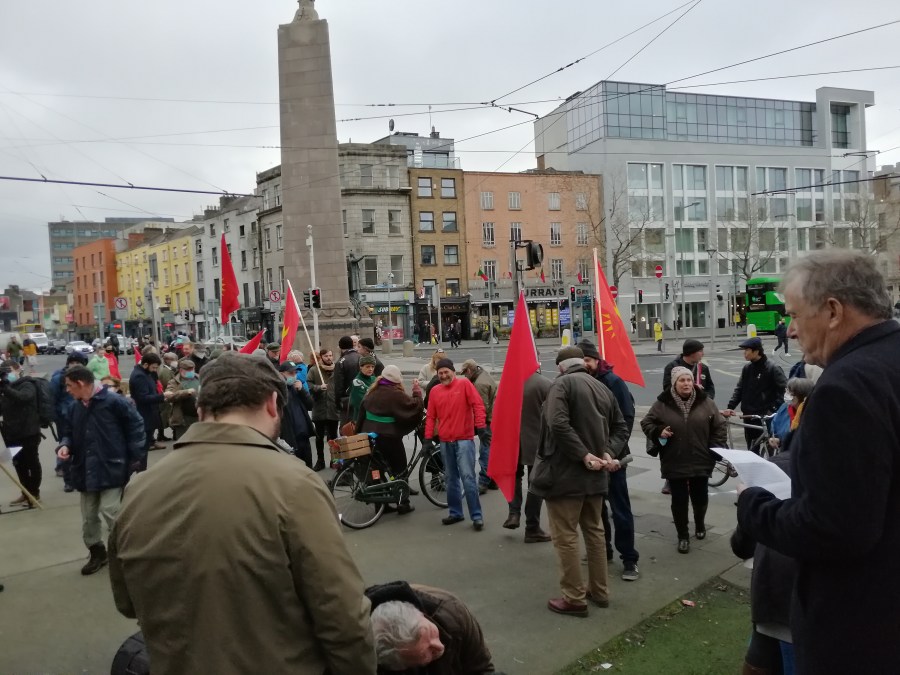
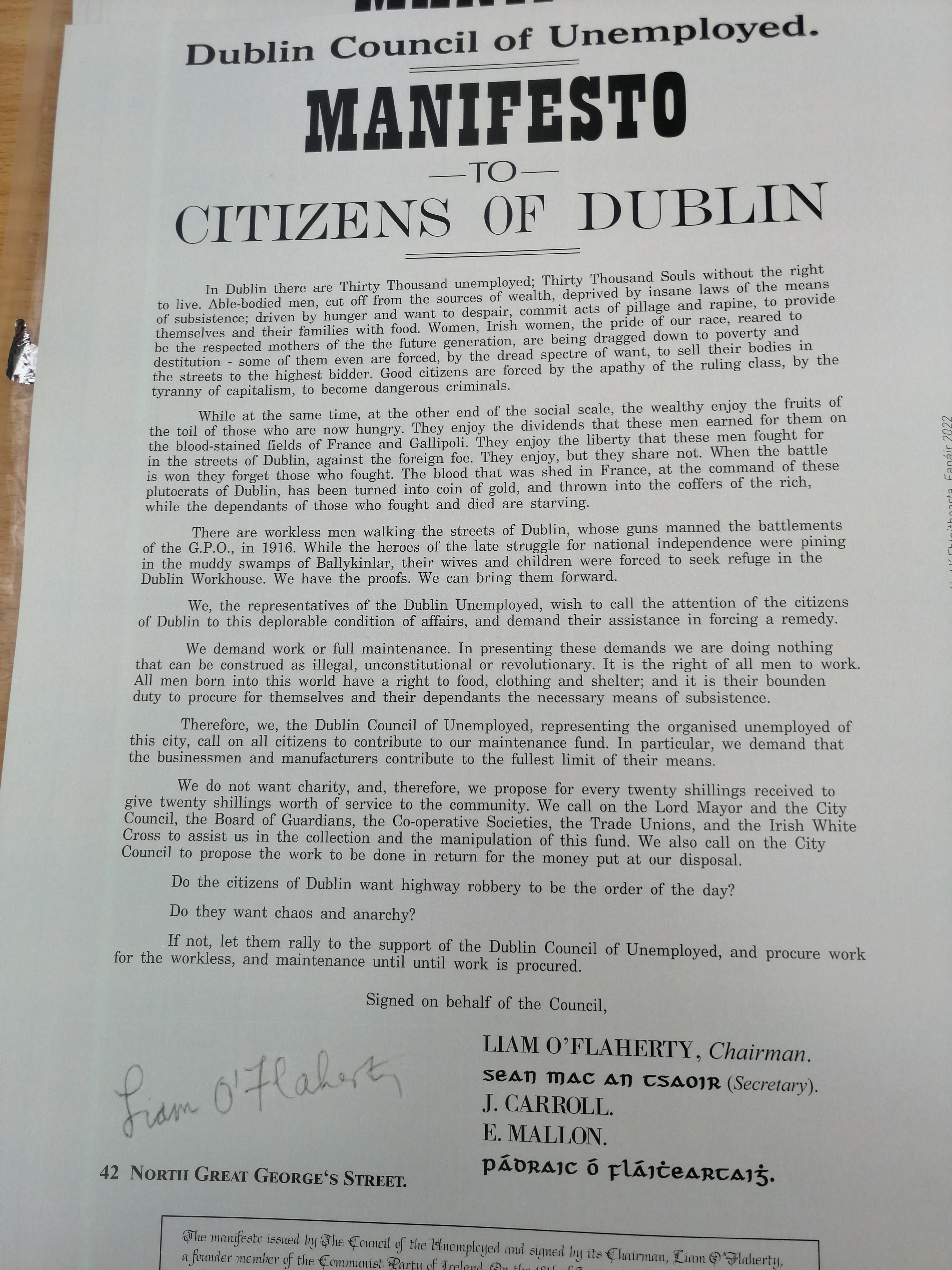
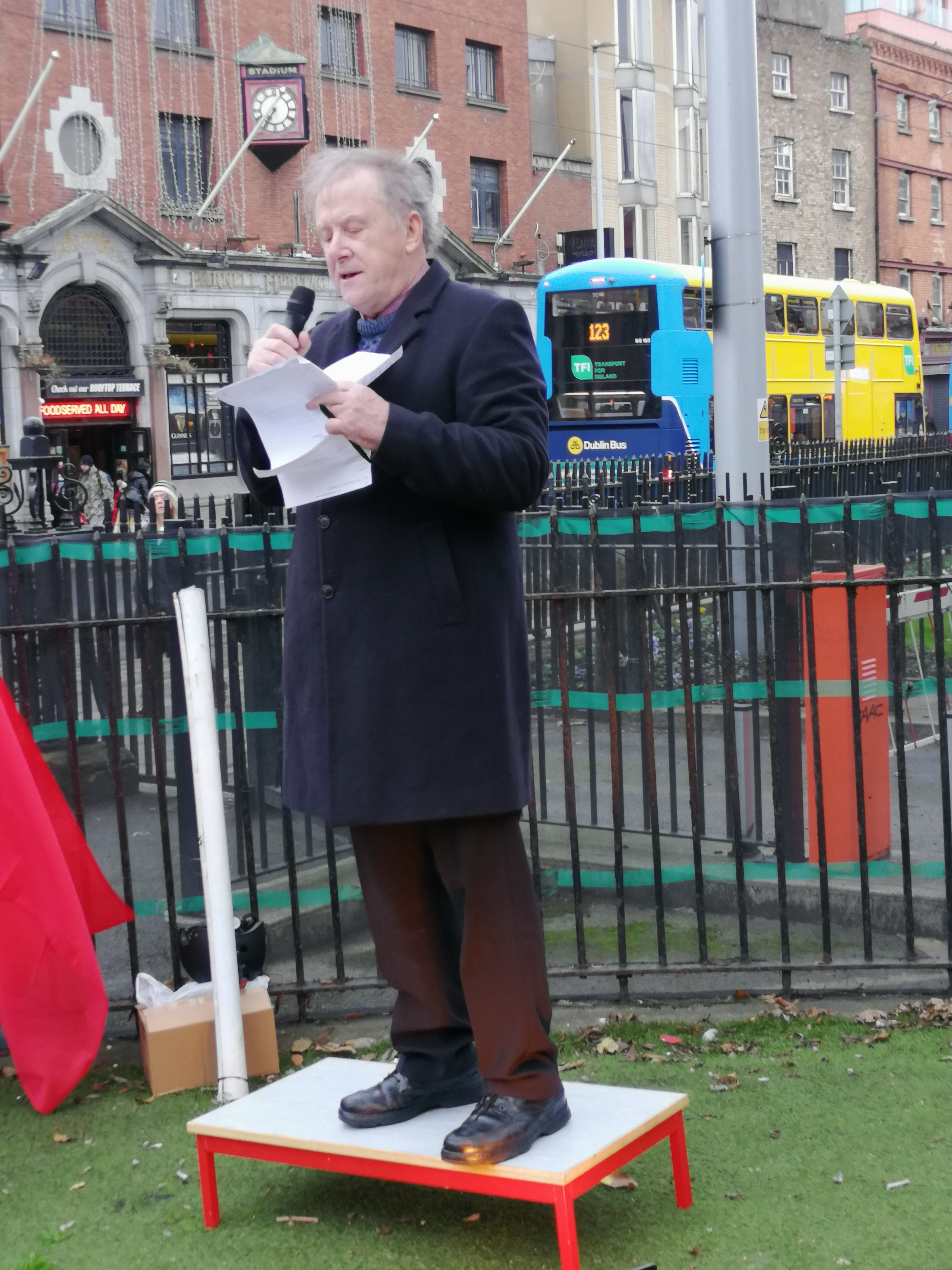
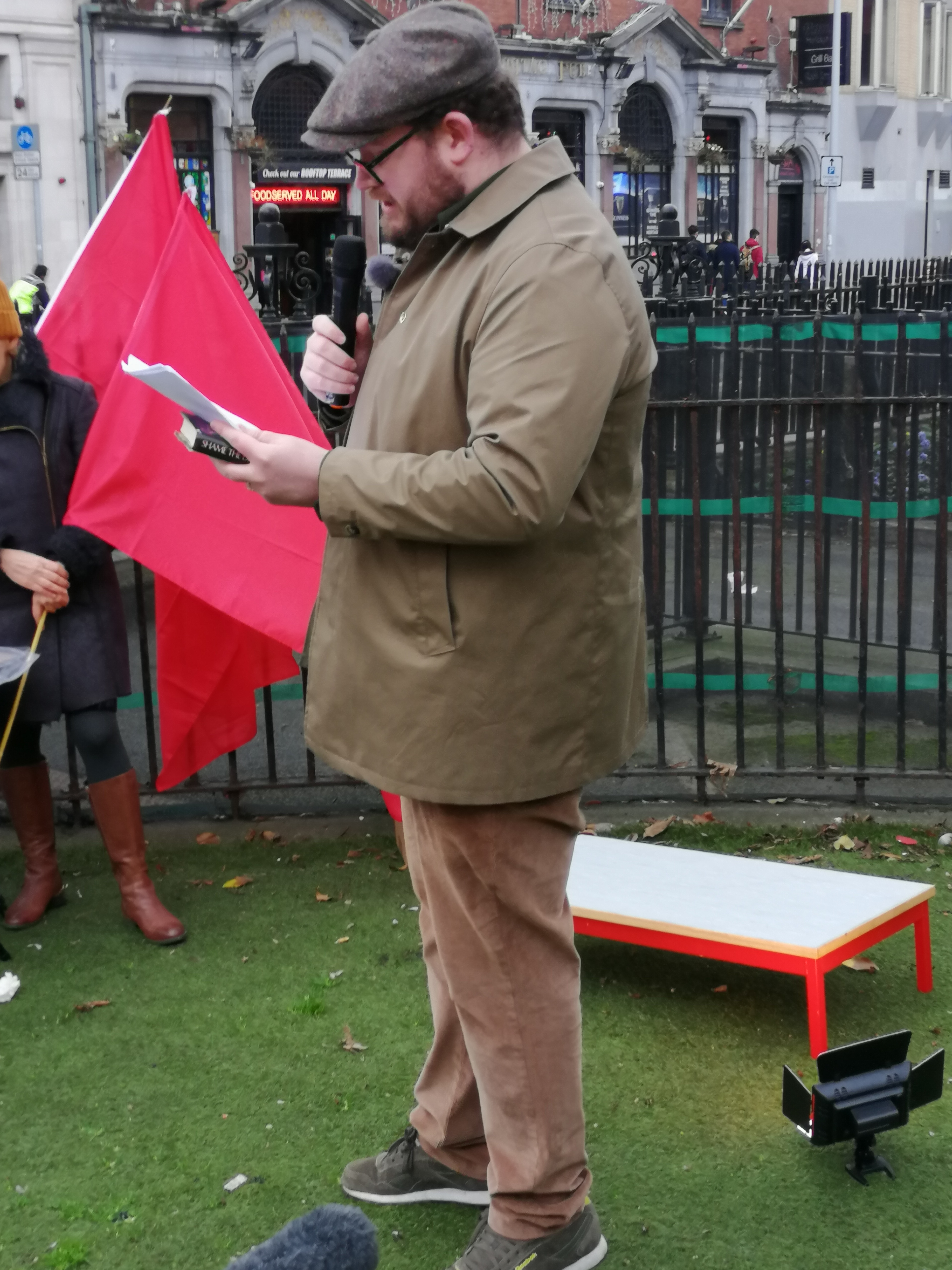
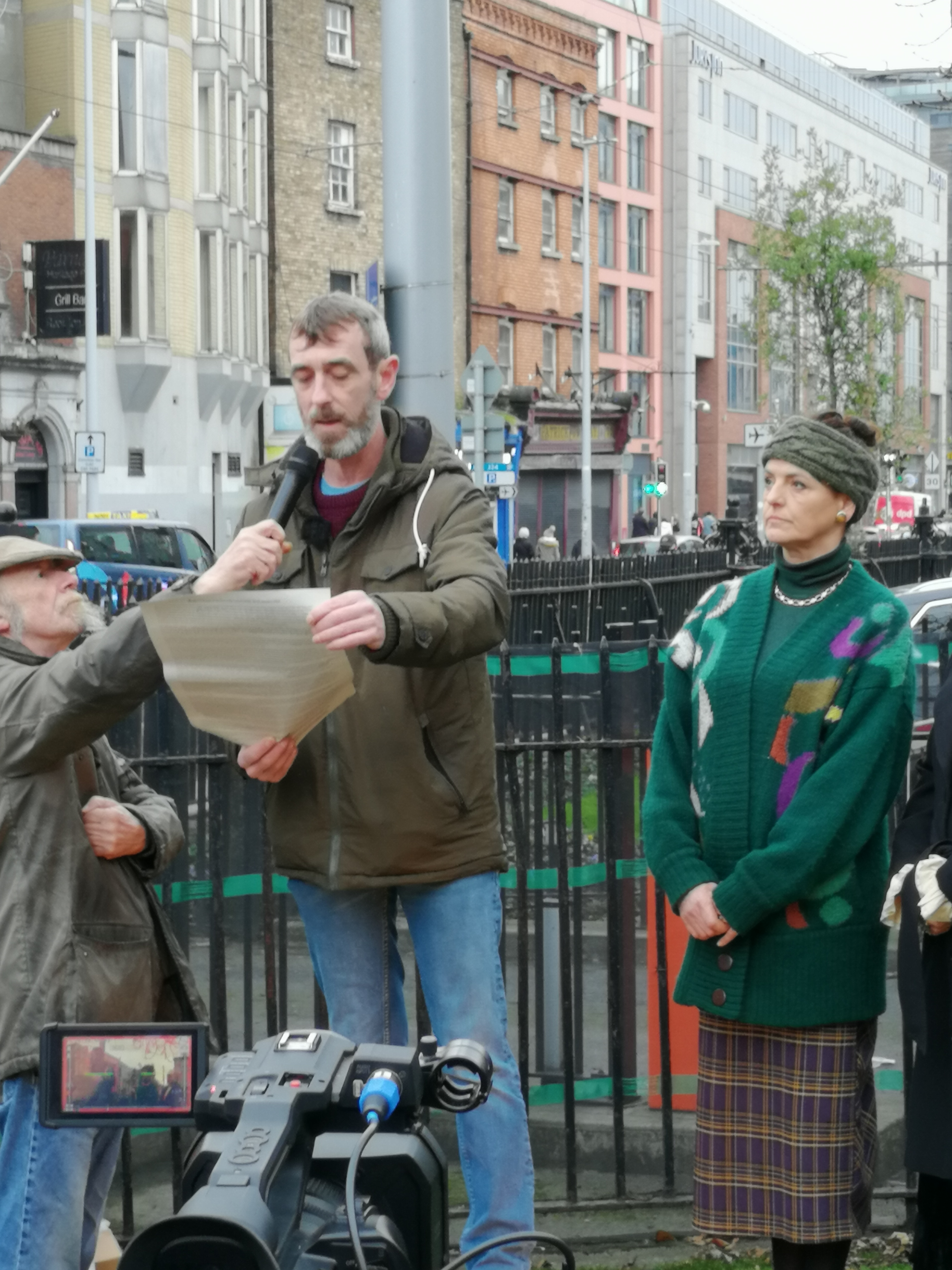
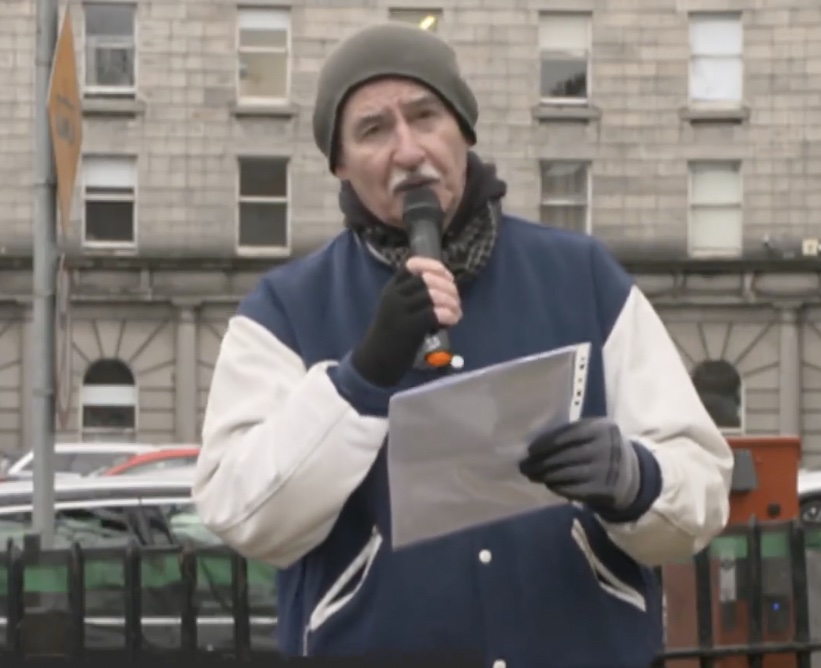
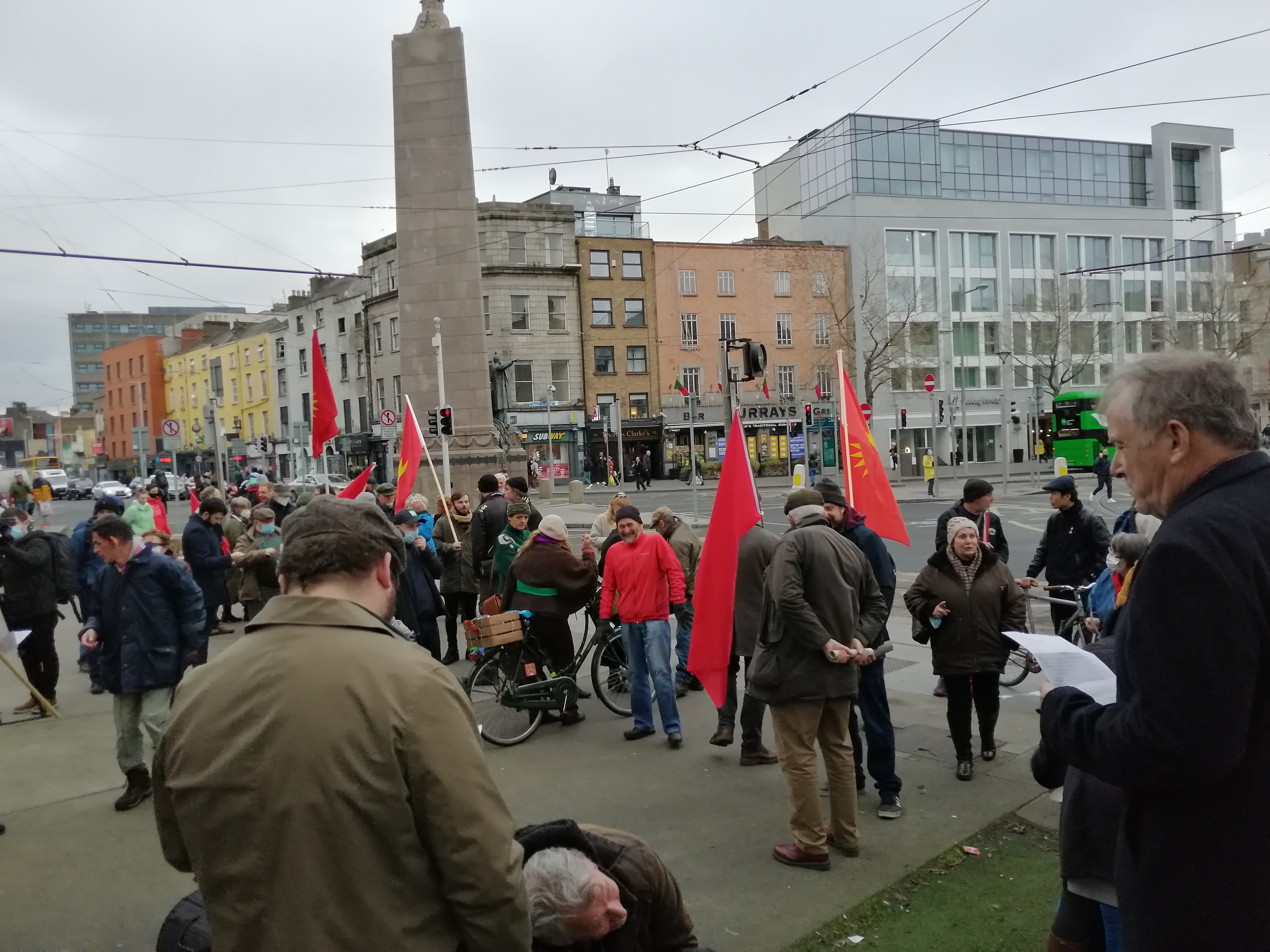
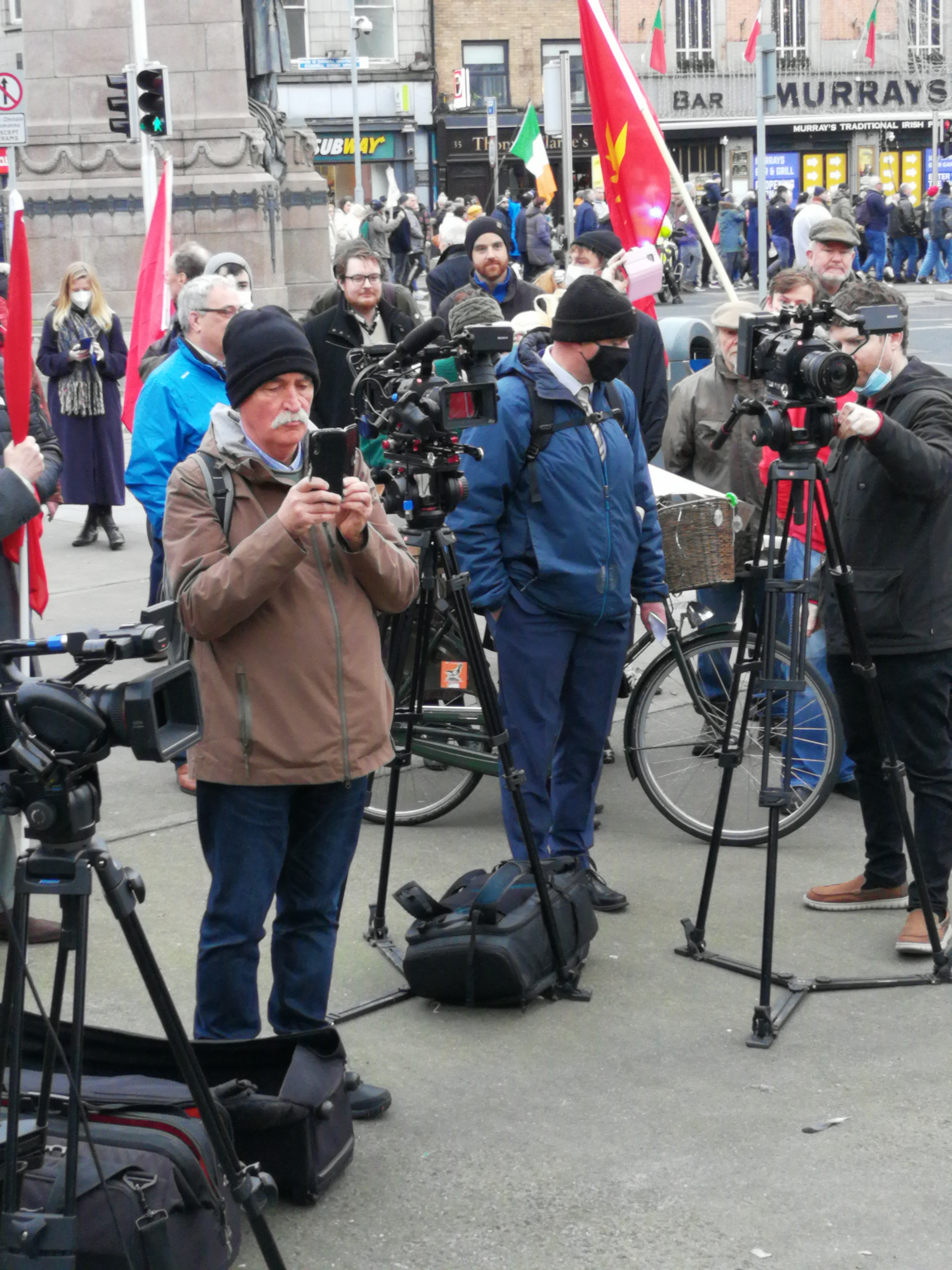
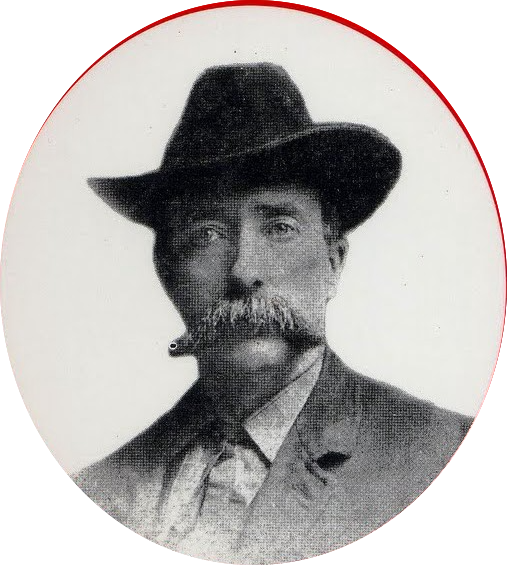
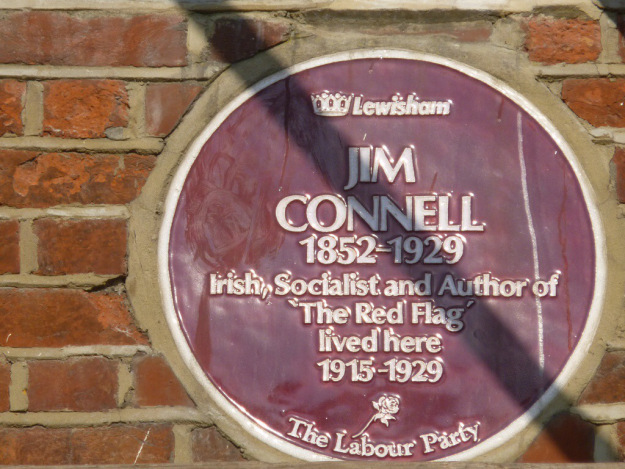
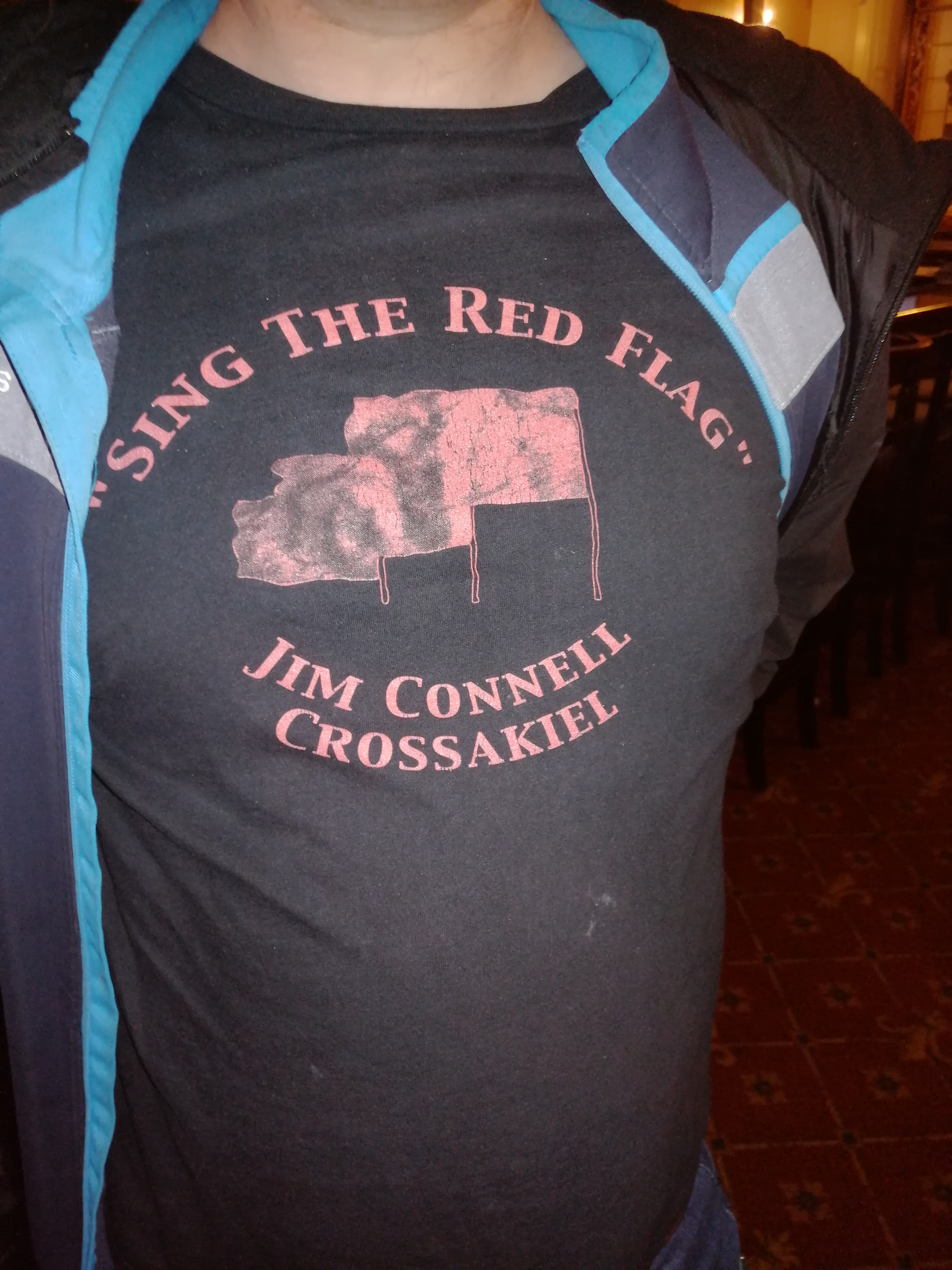
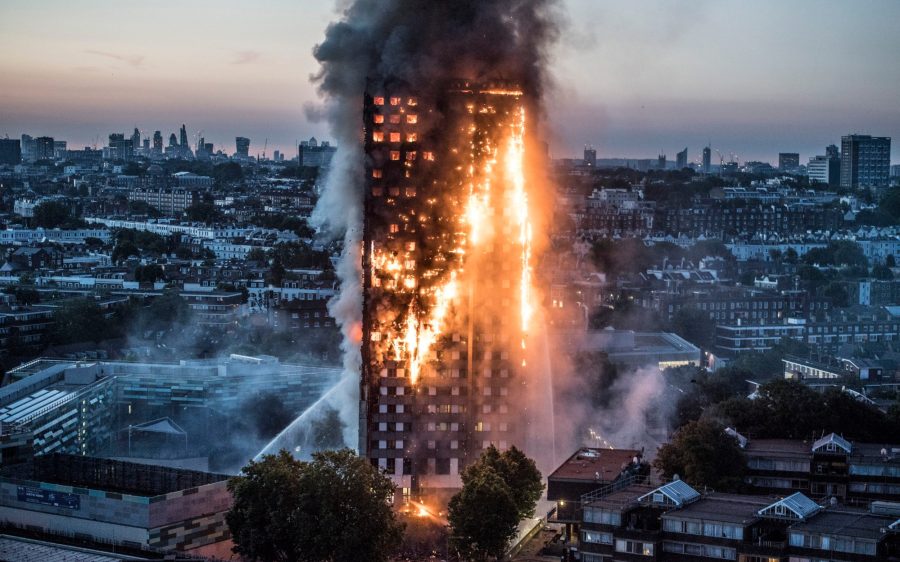





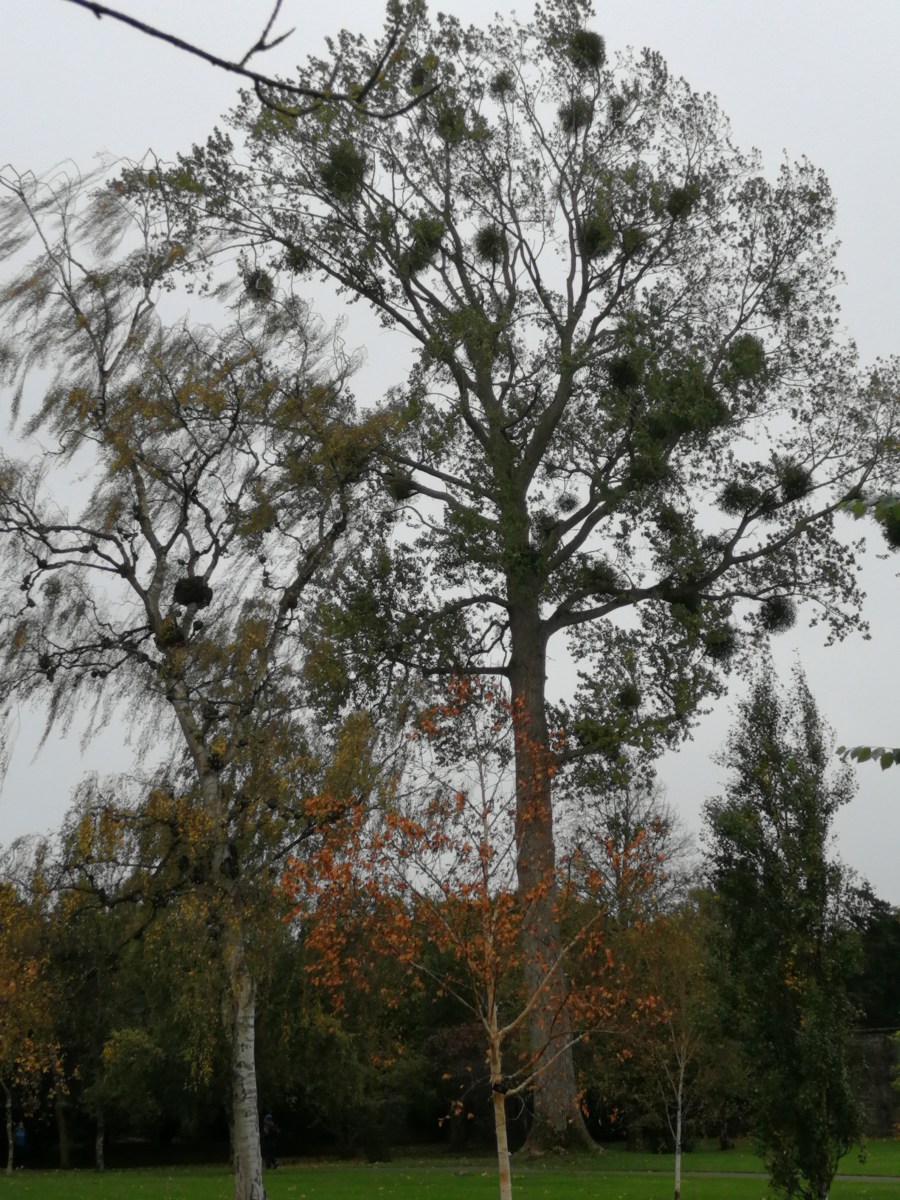



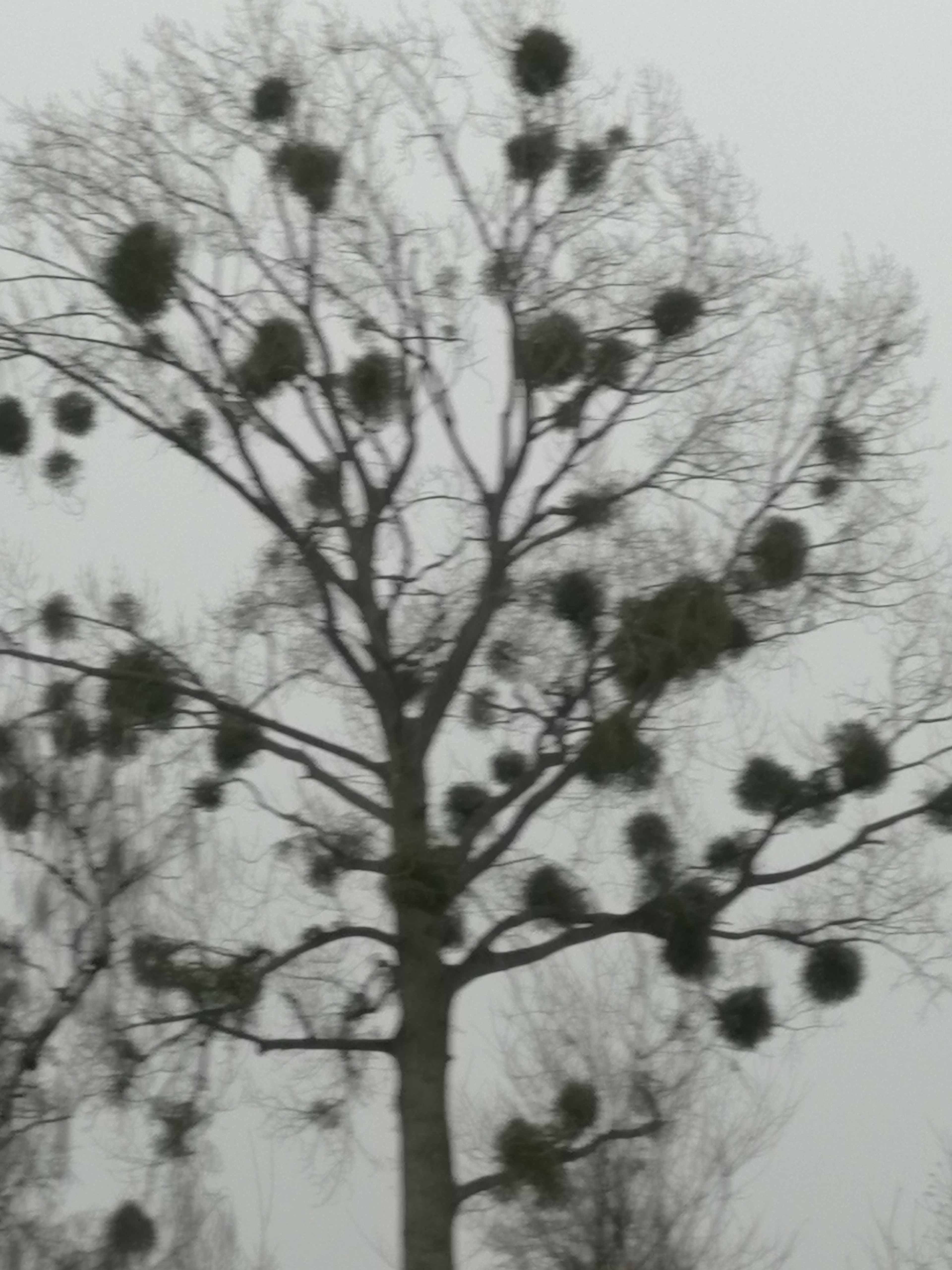




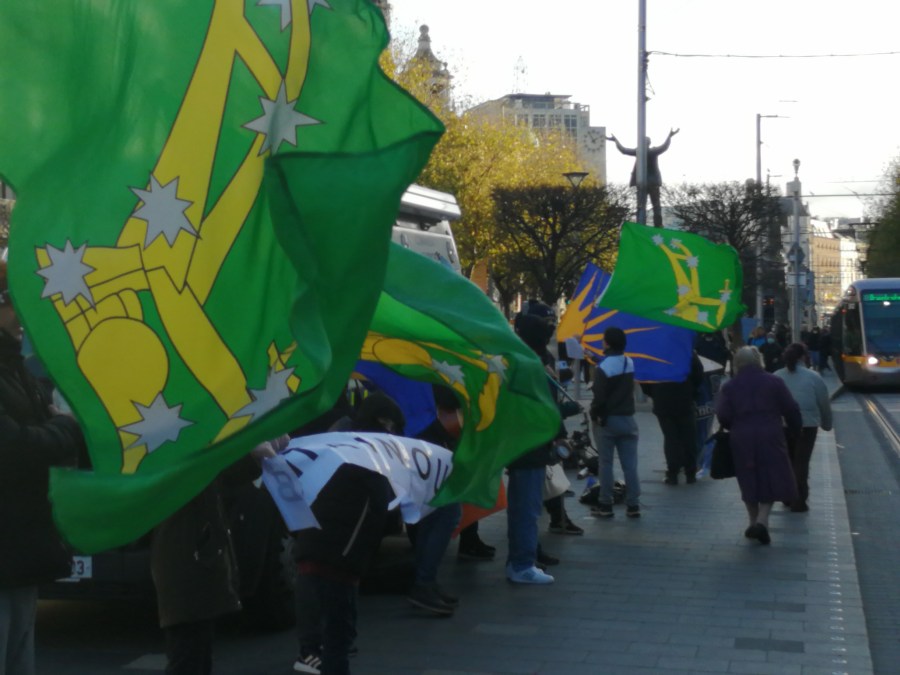
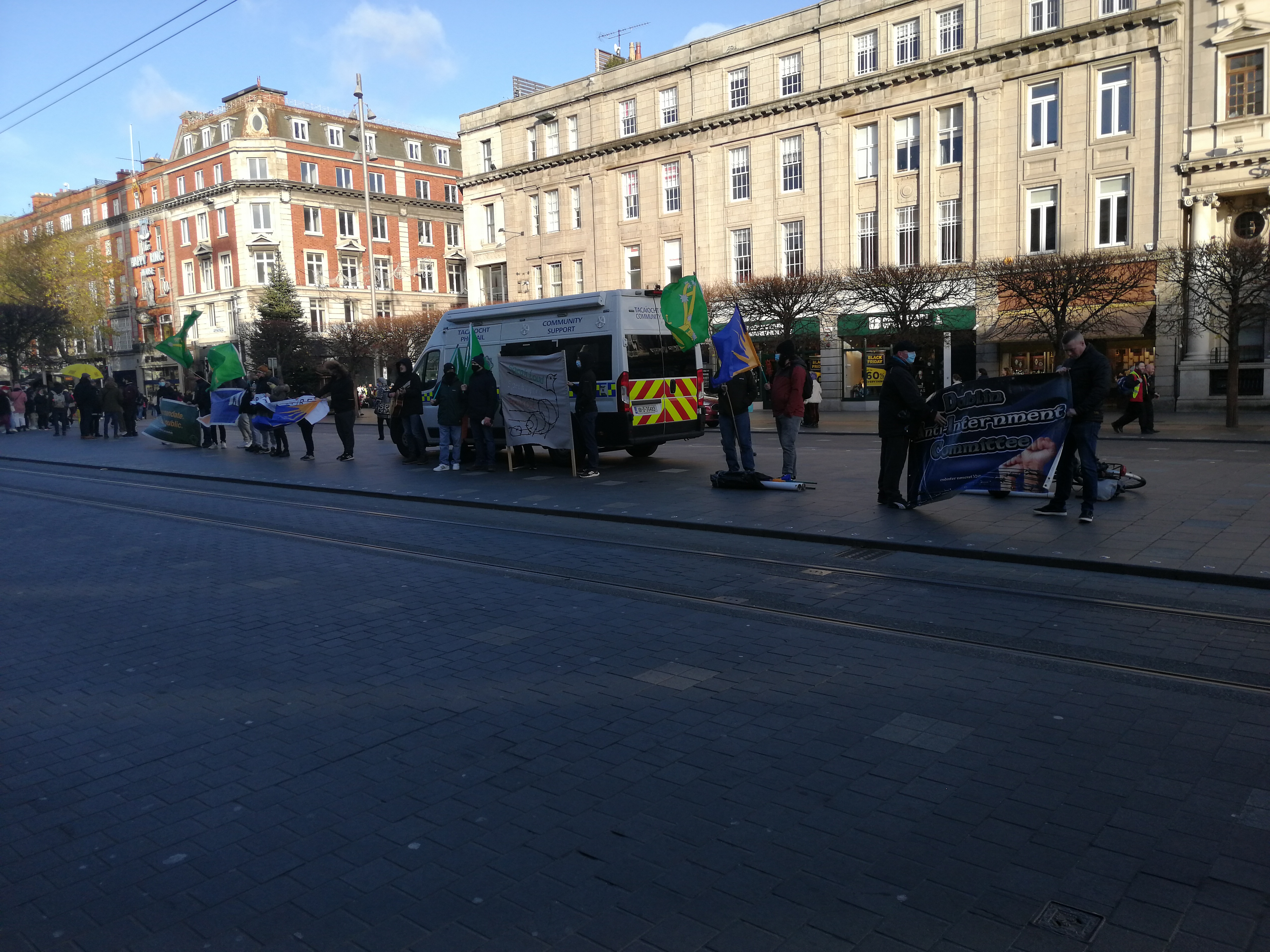
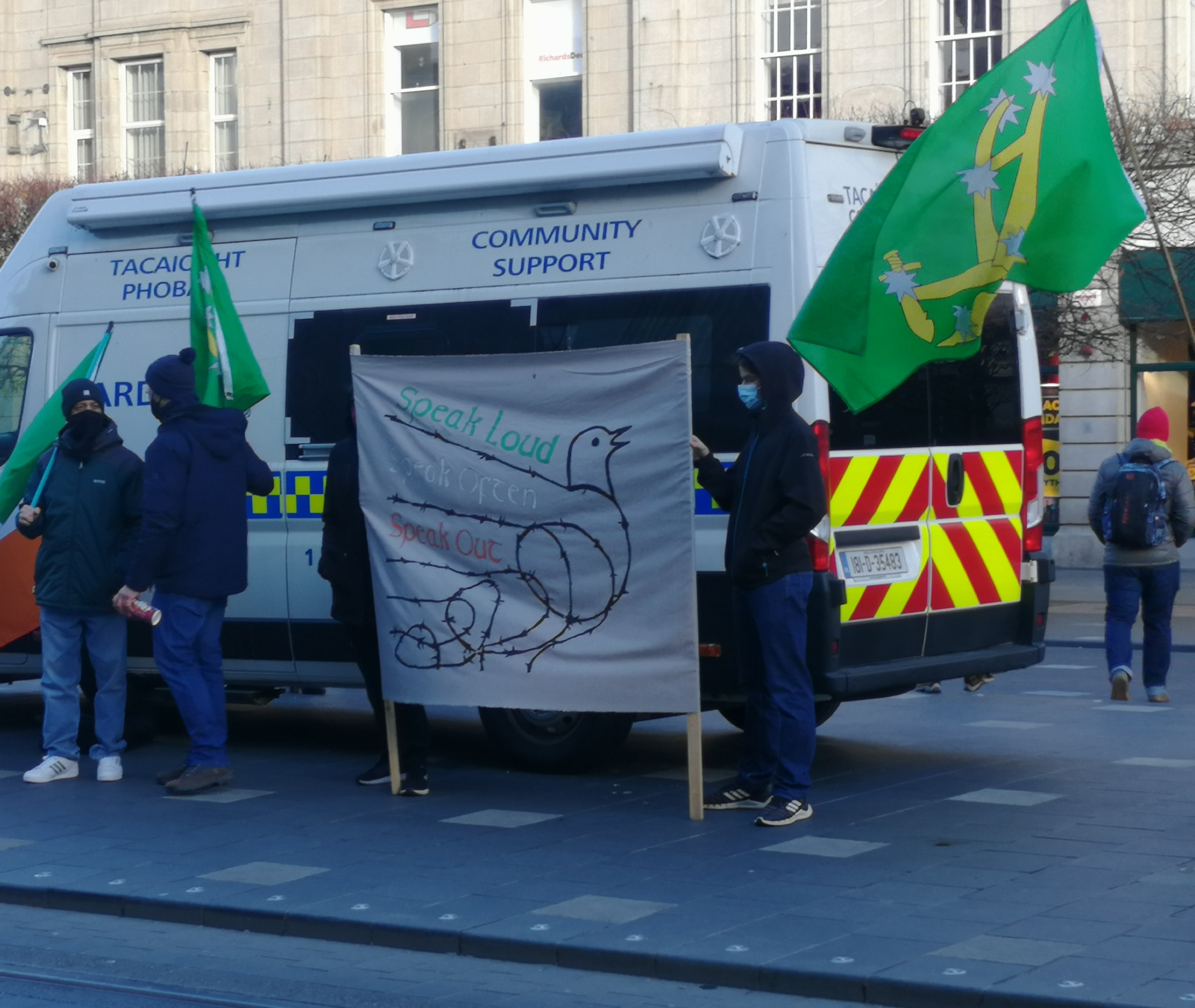
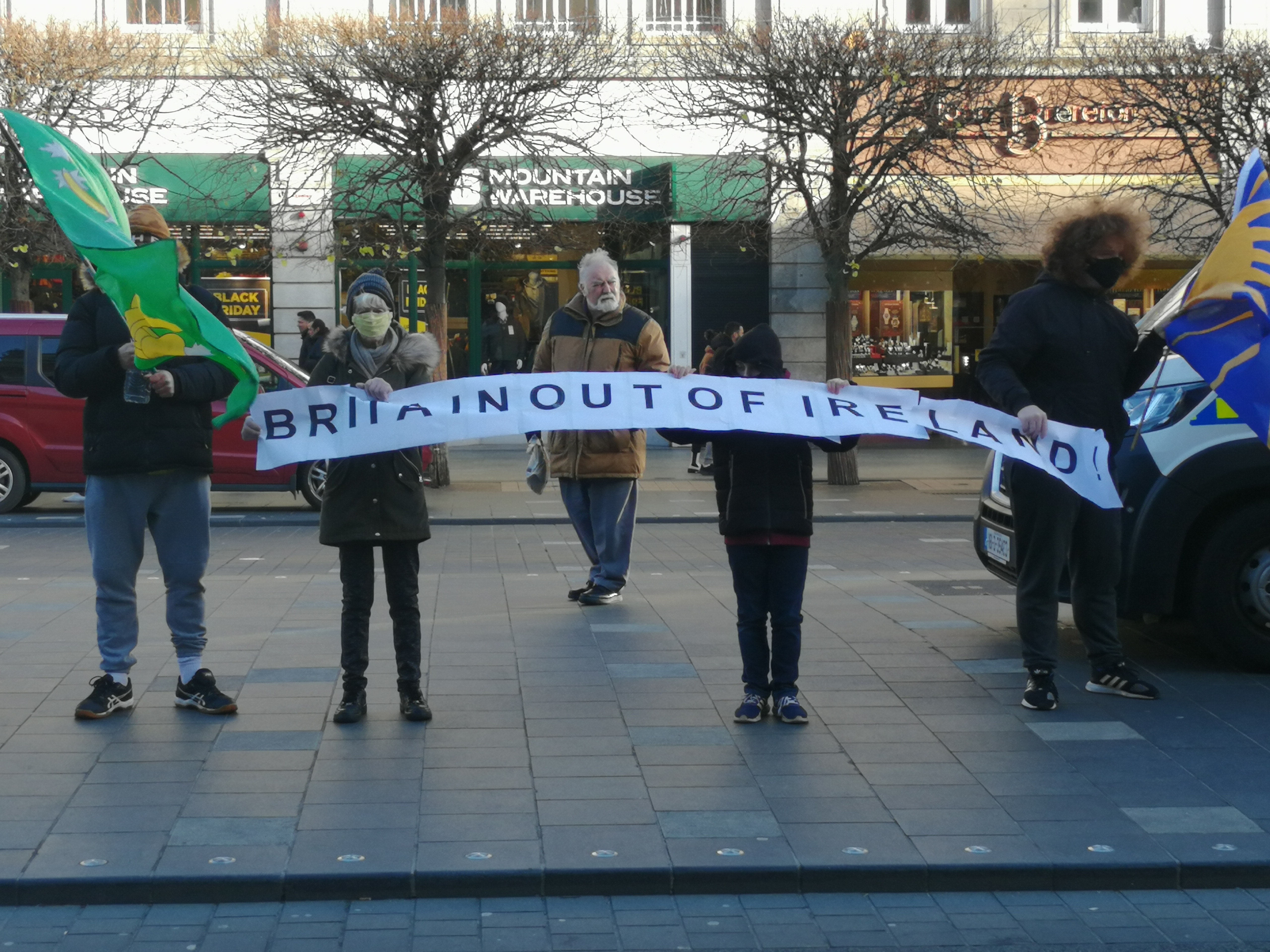
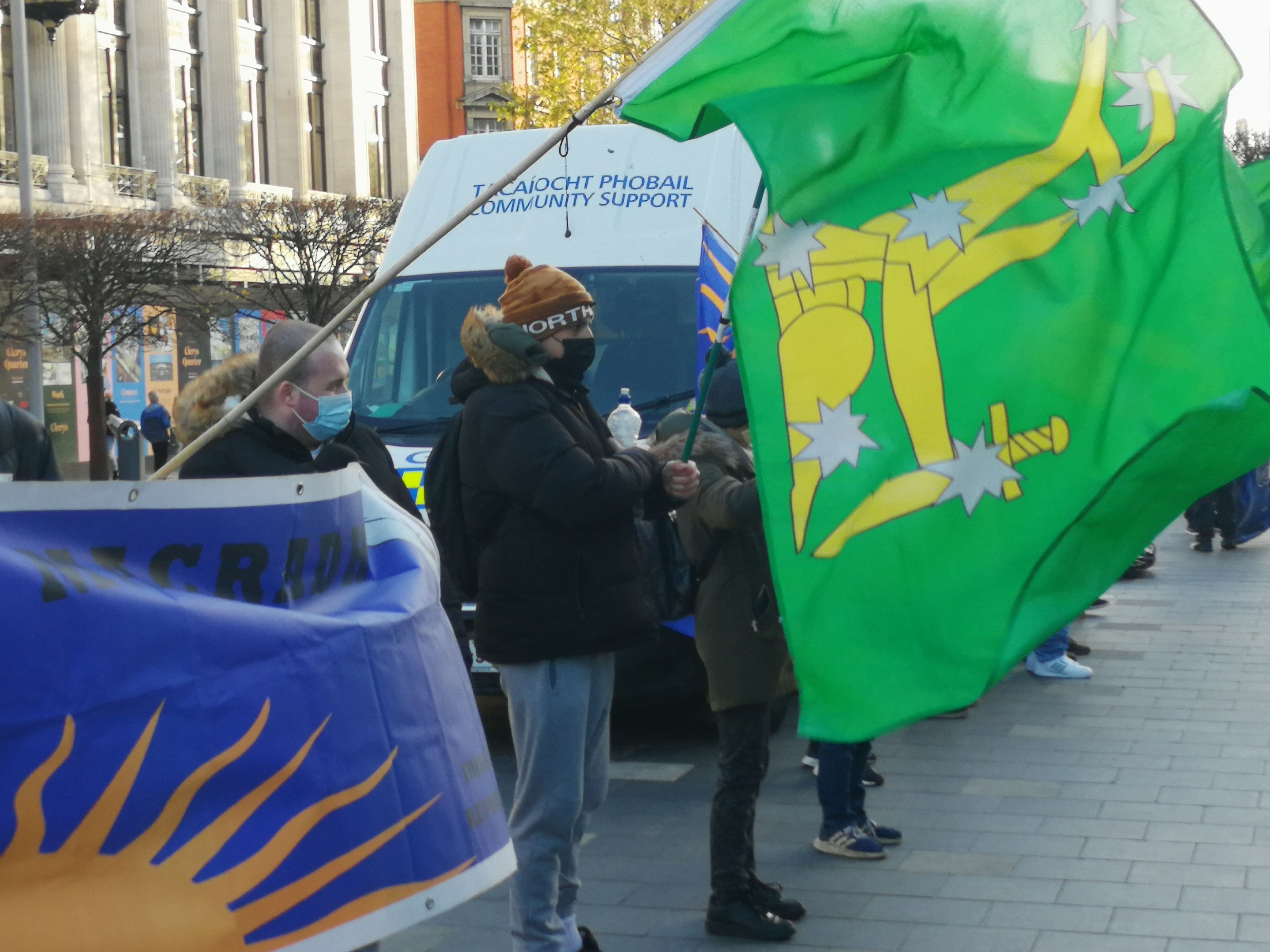
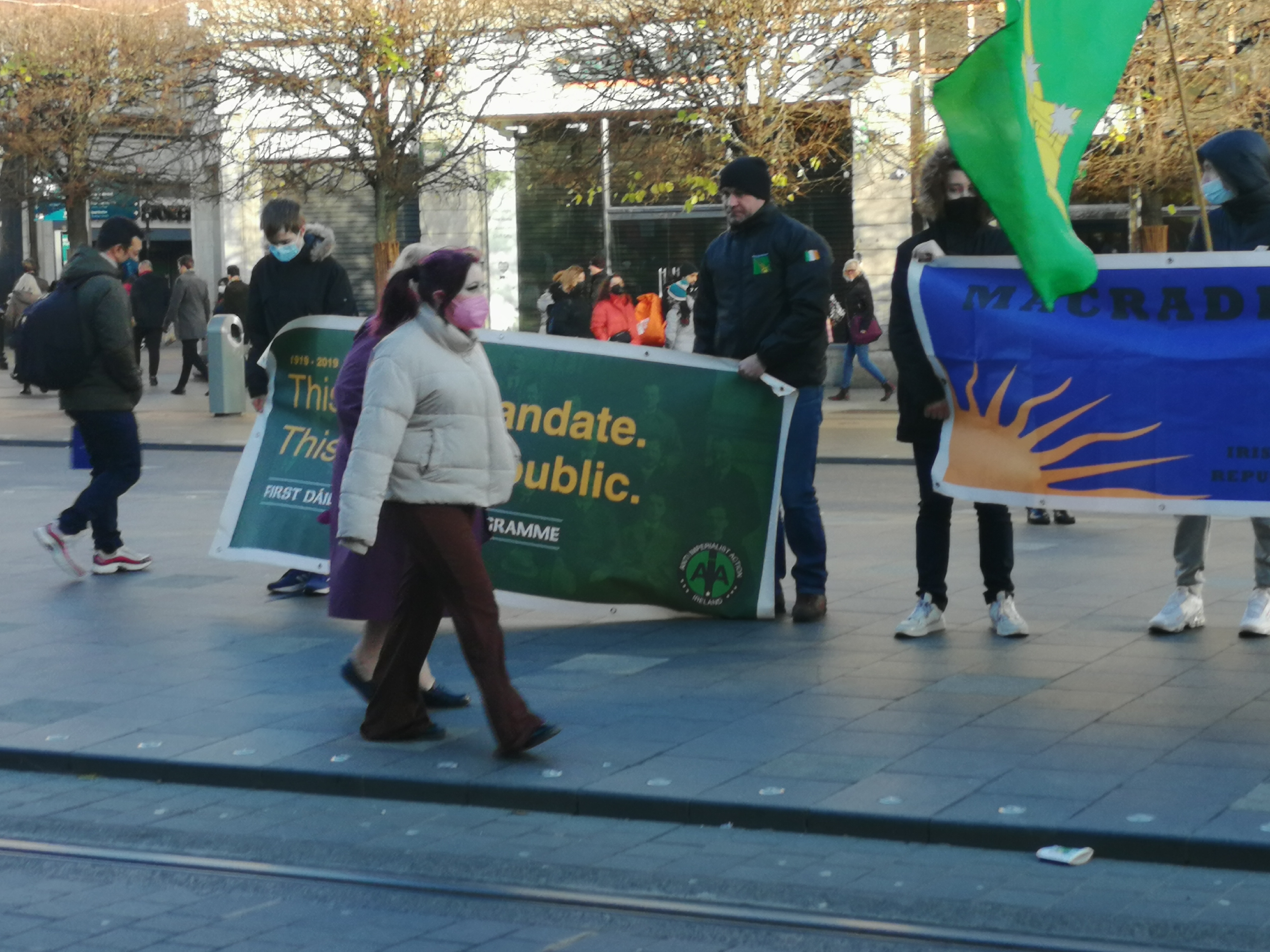
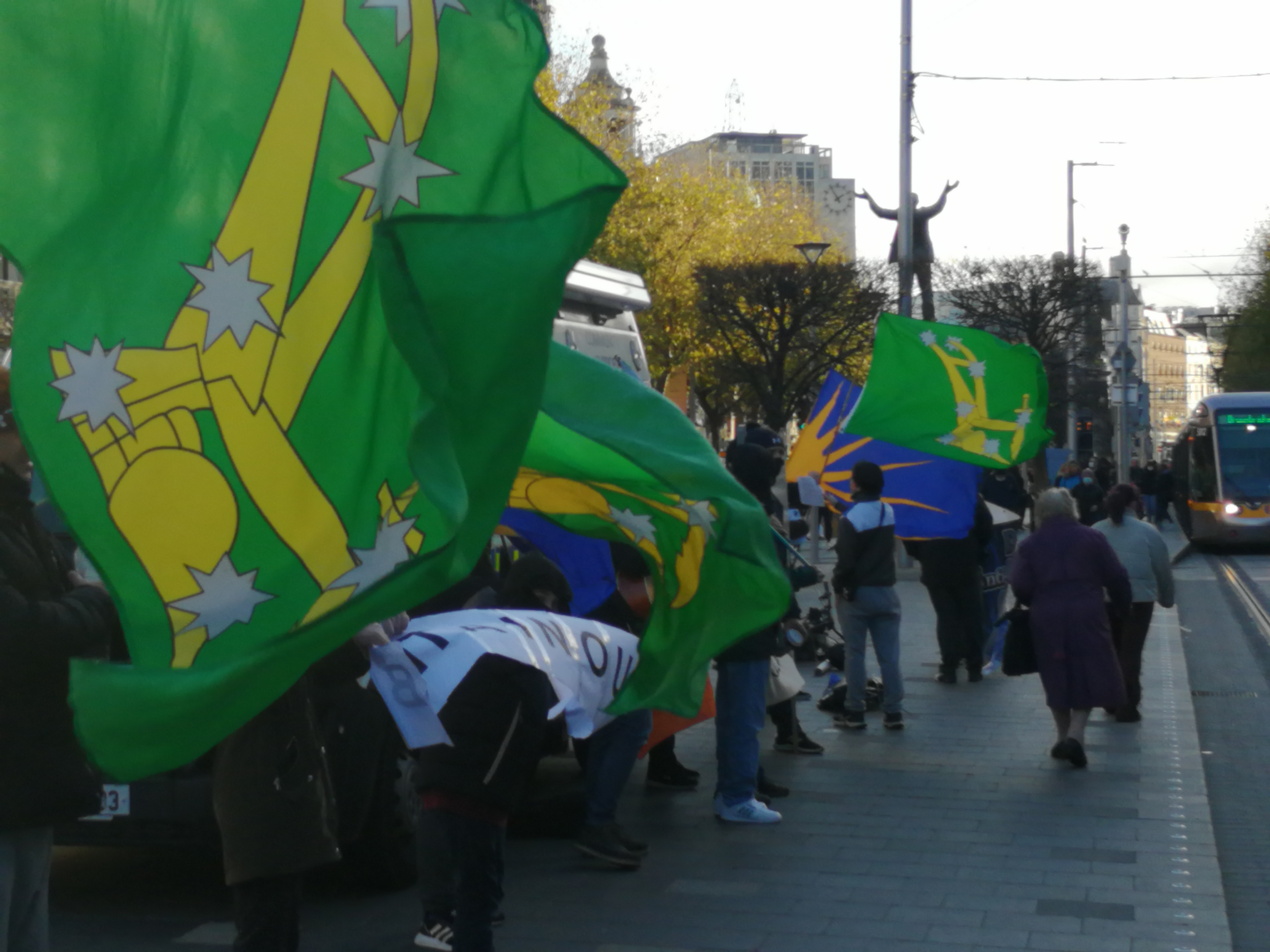



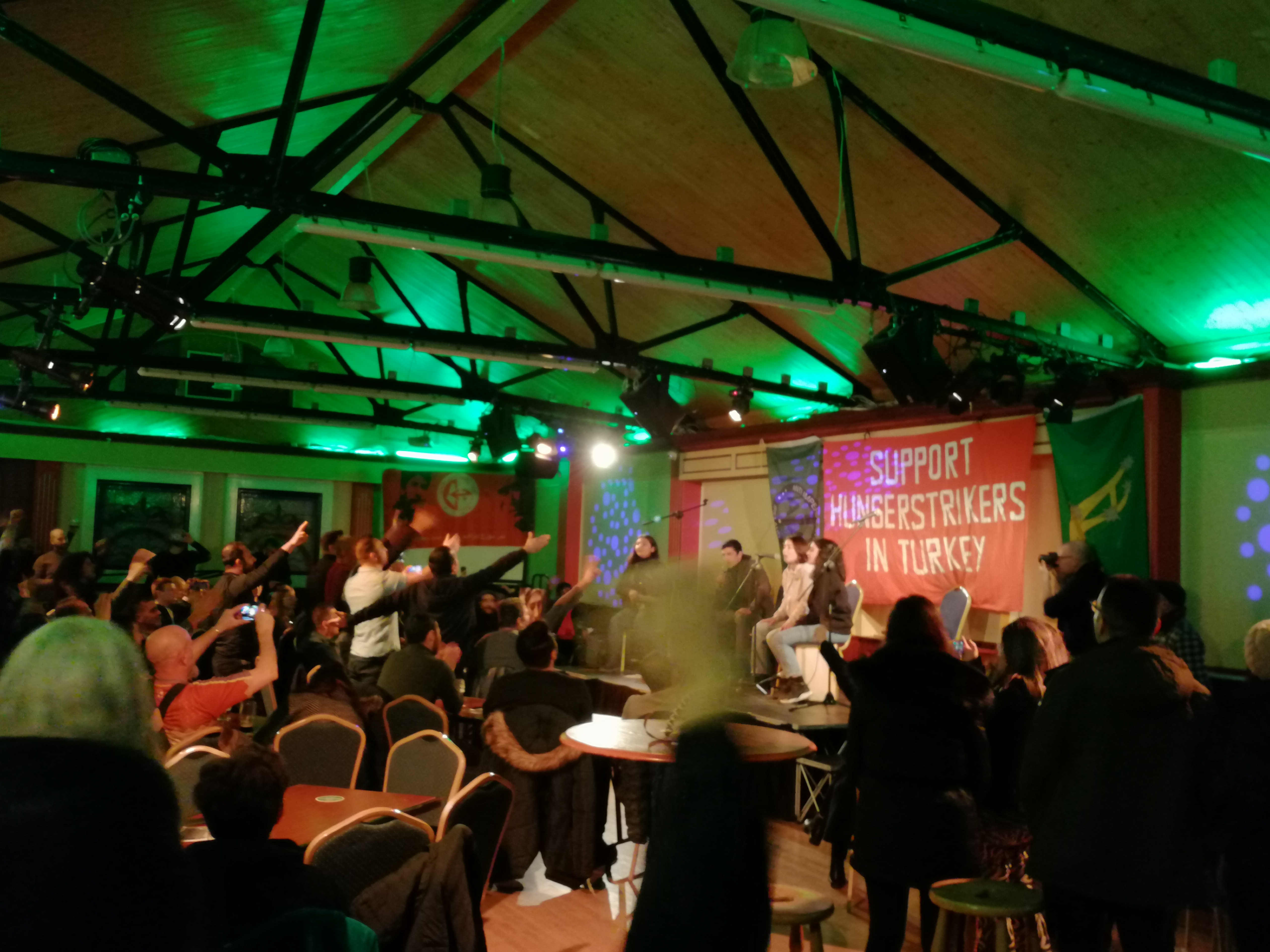
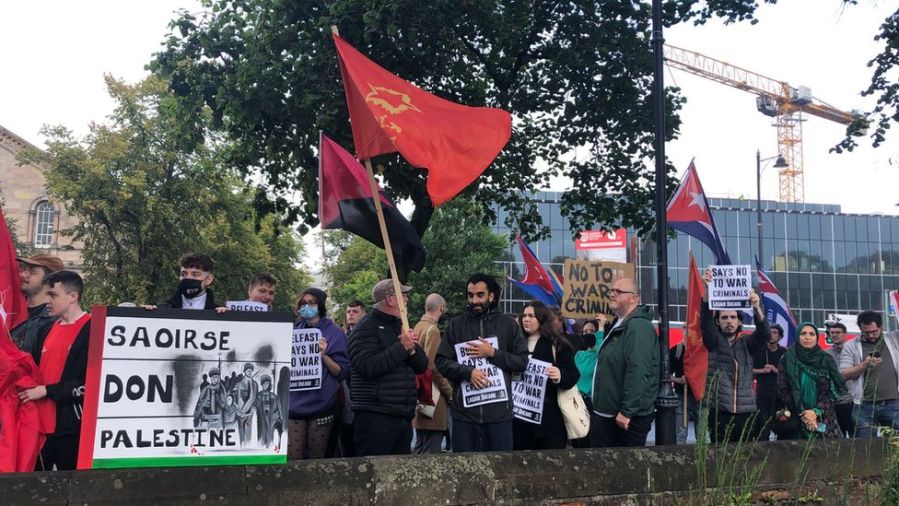




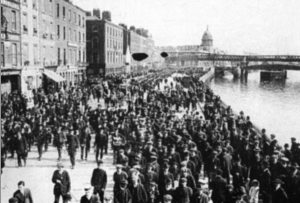


 rebelbreeze