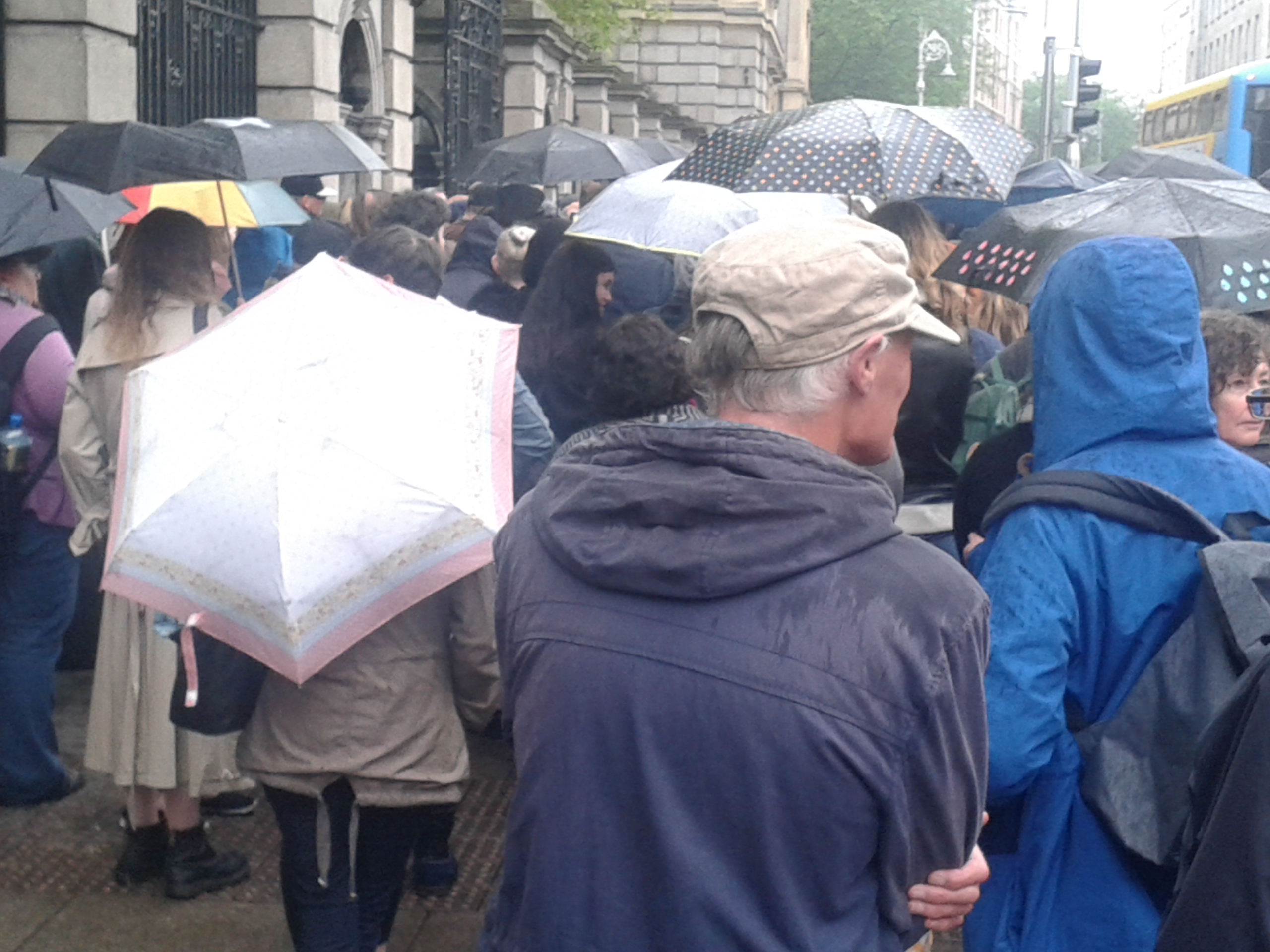
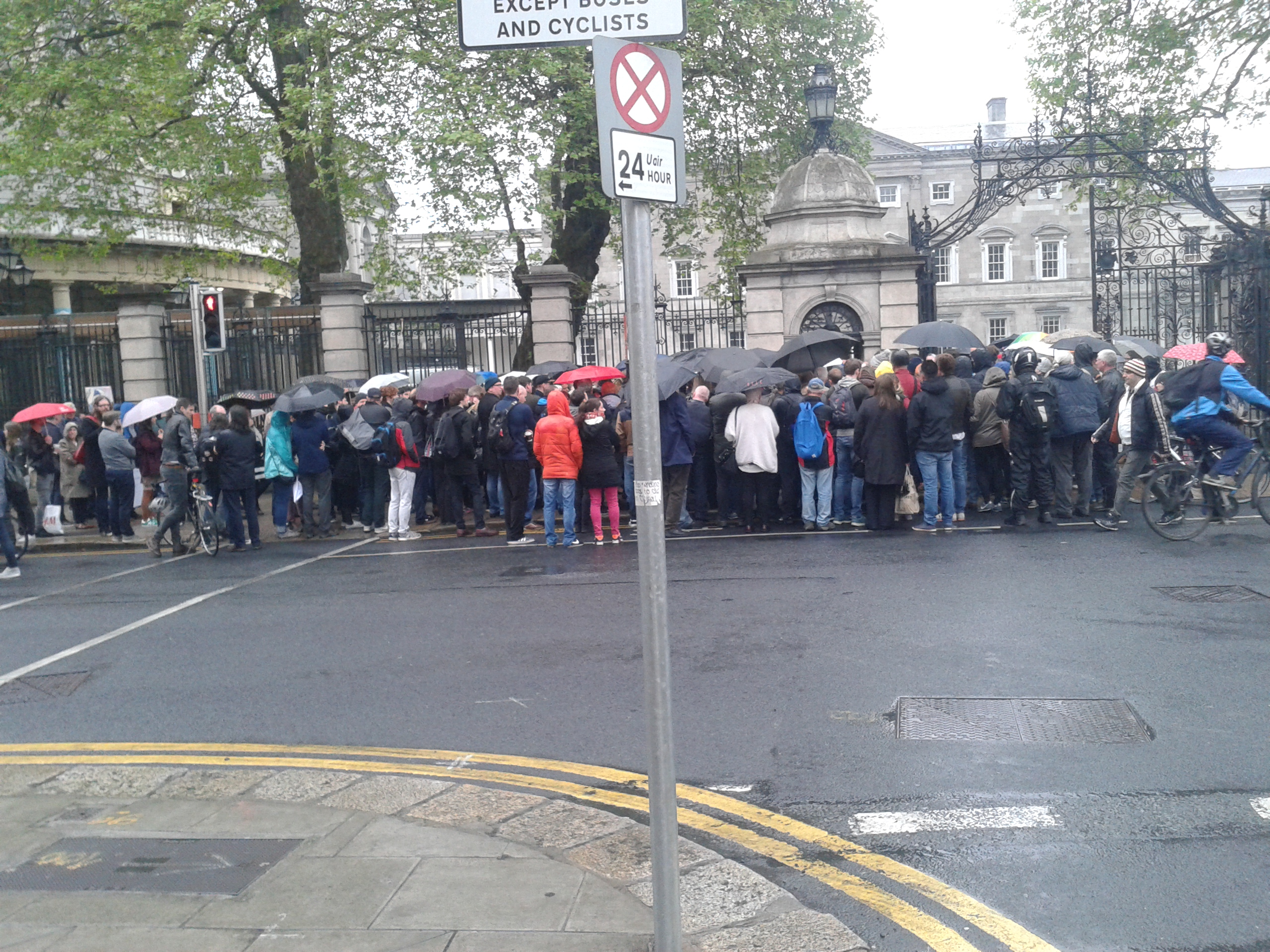
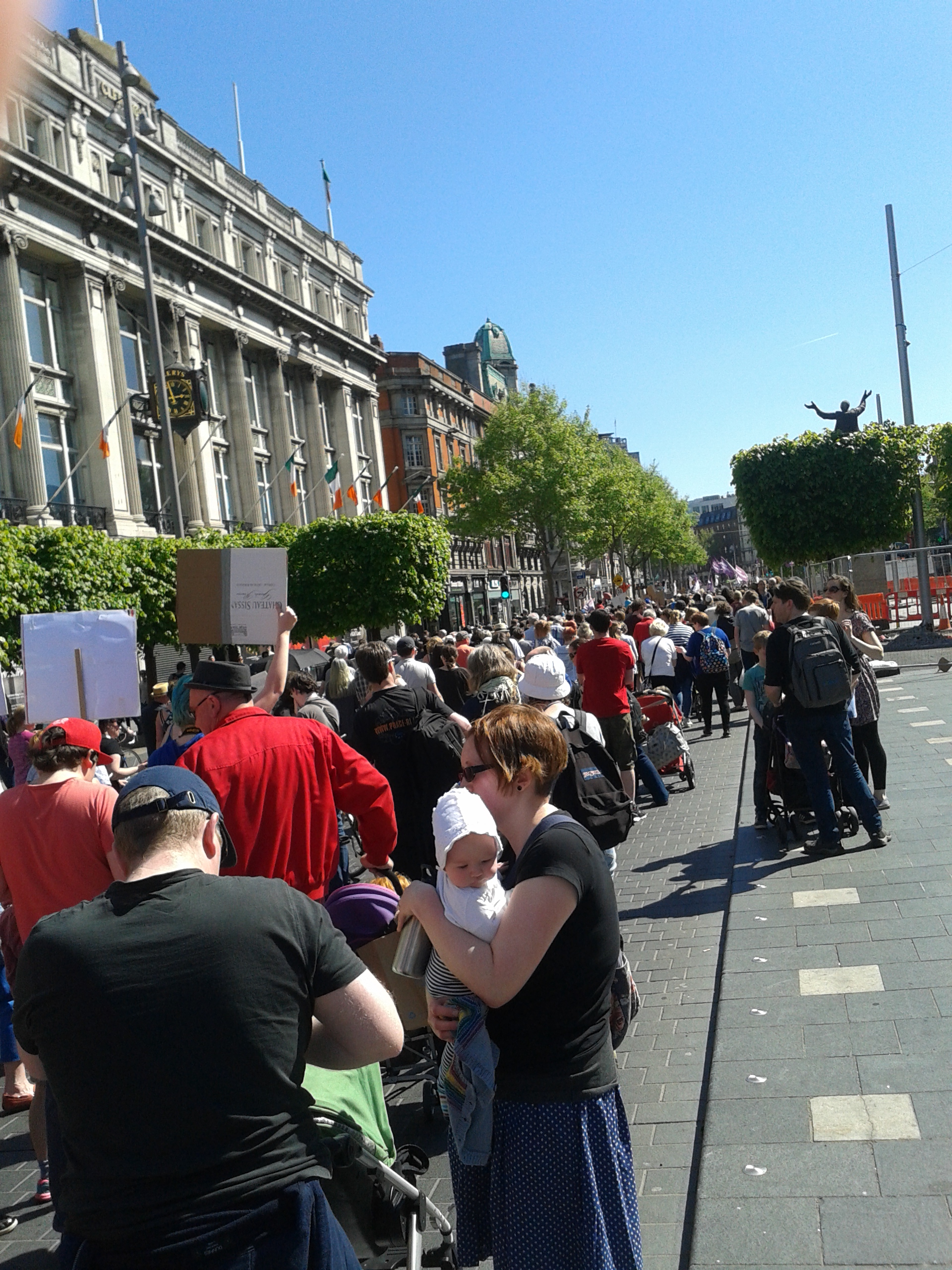
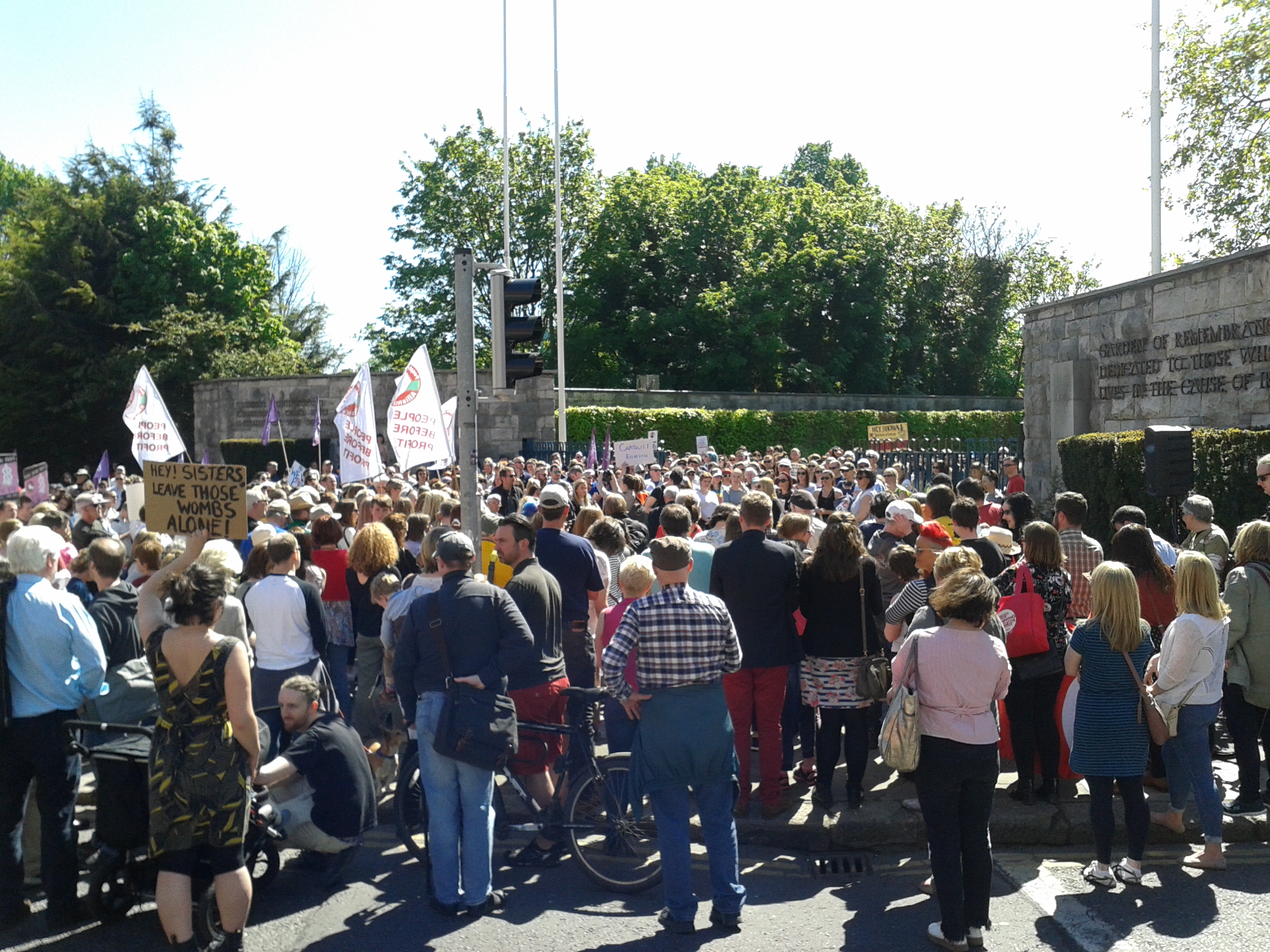
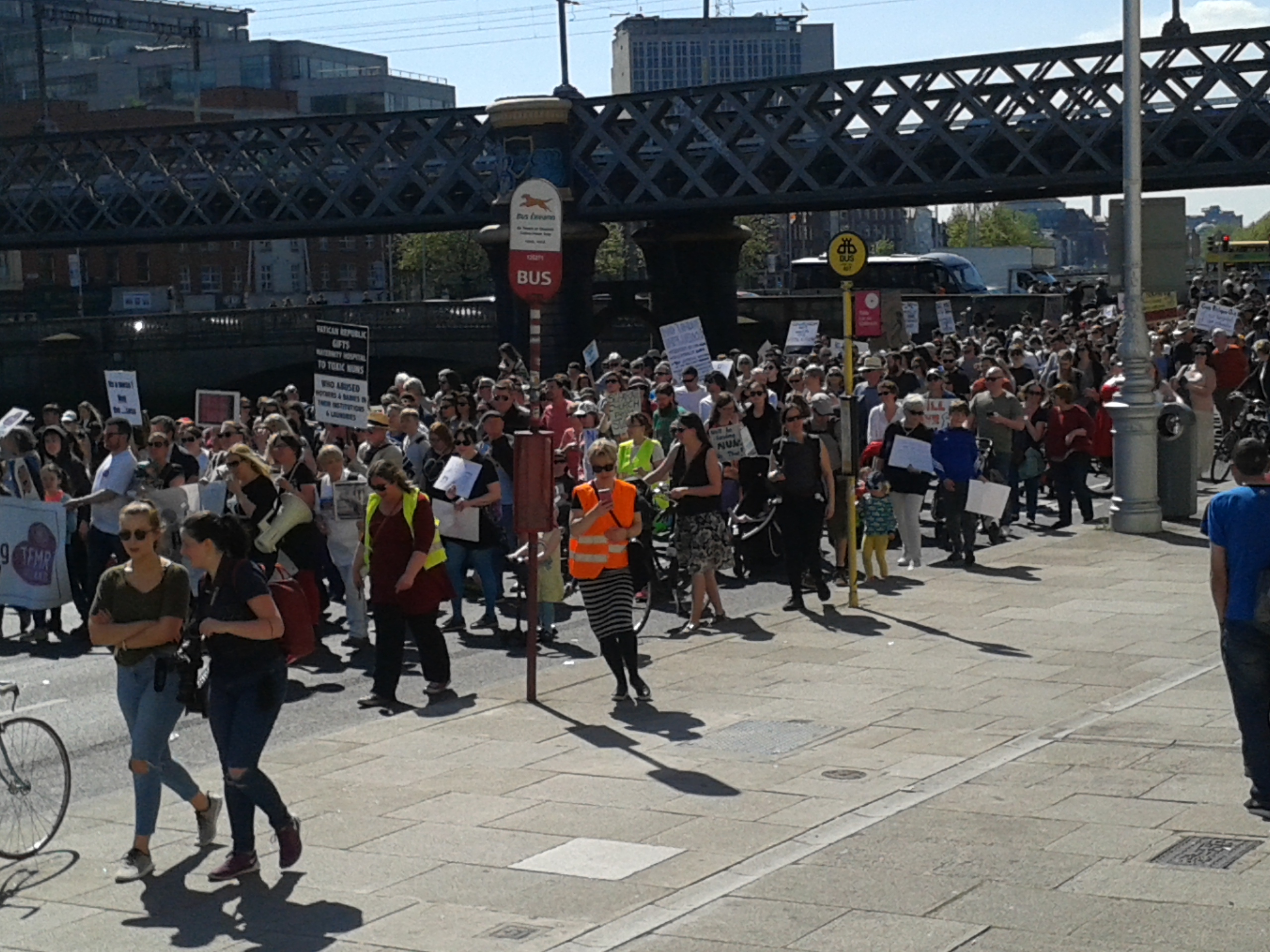
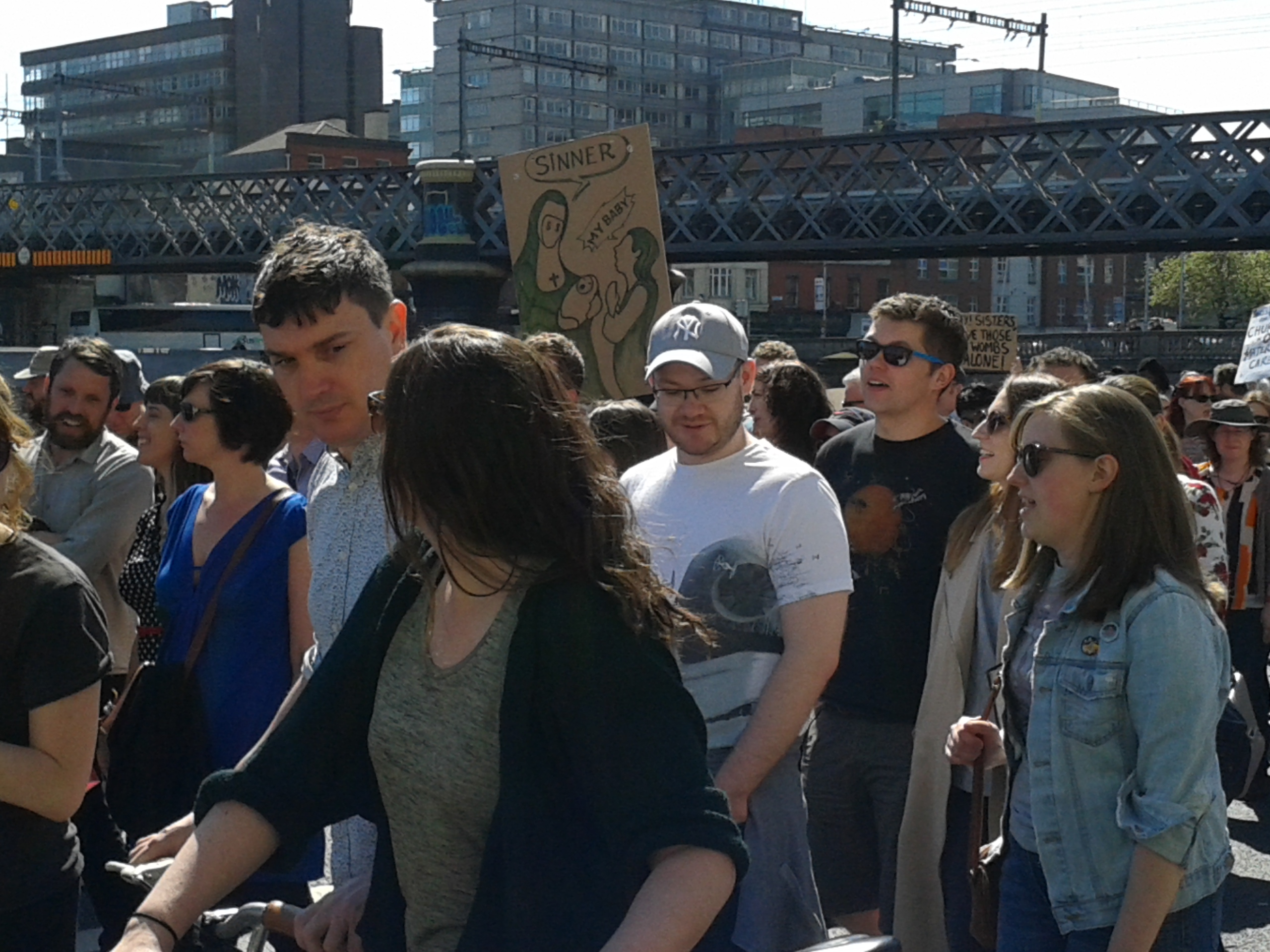
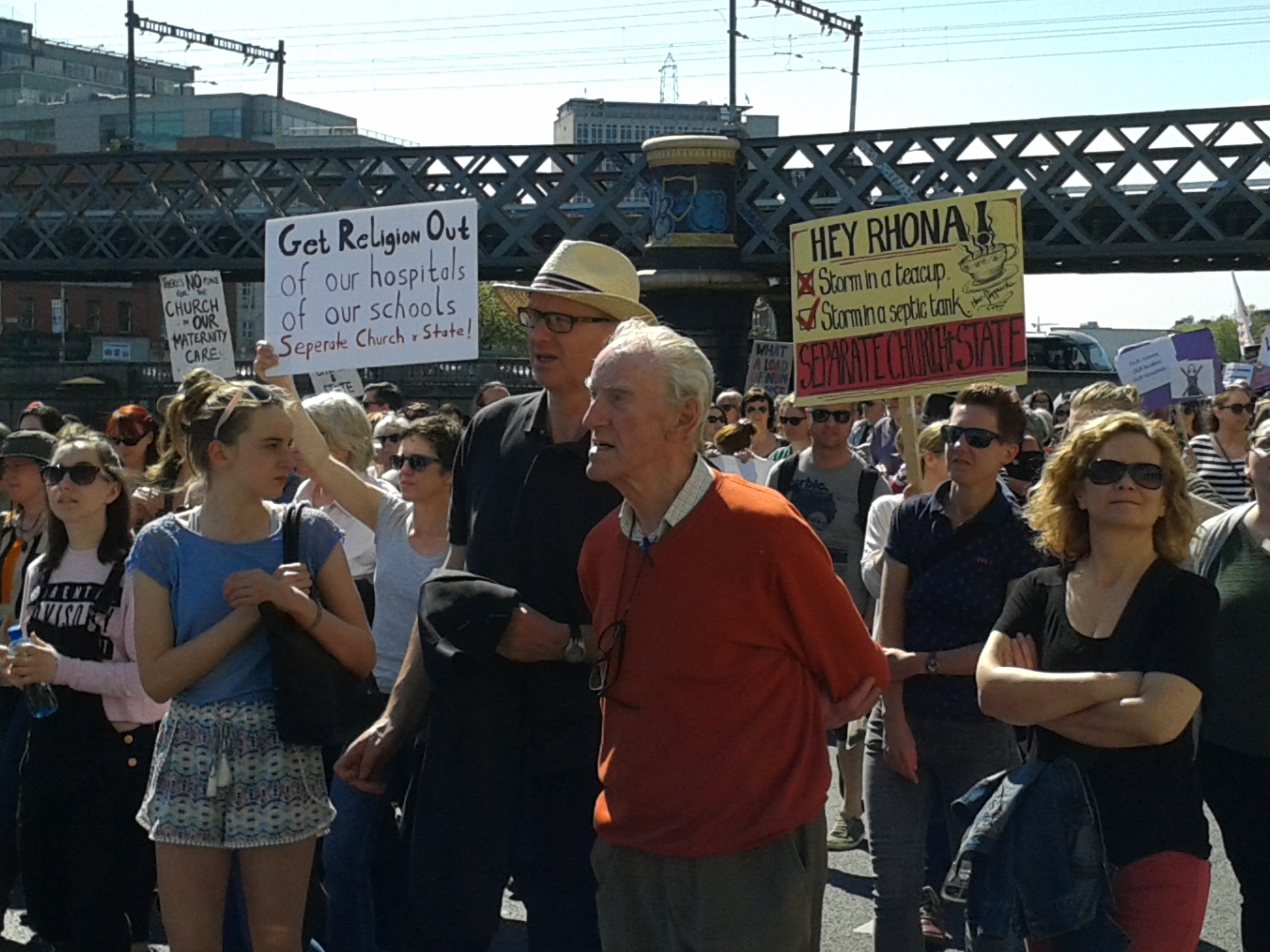
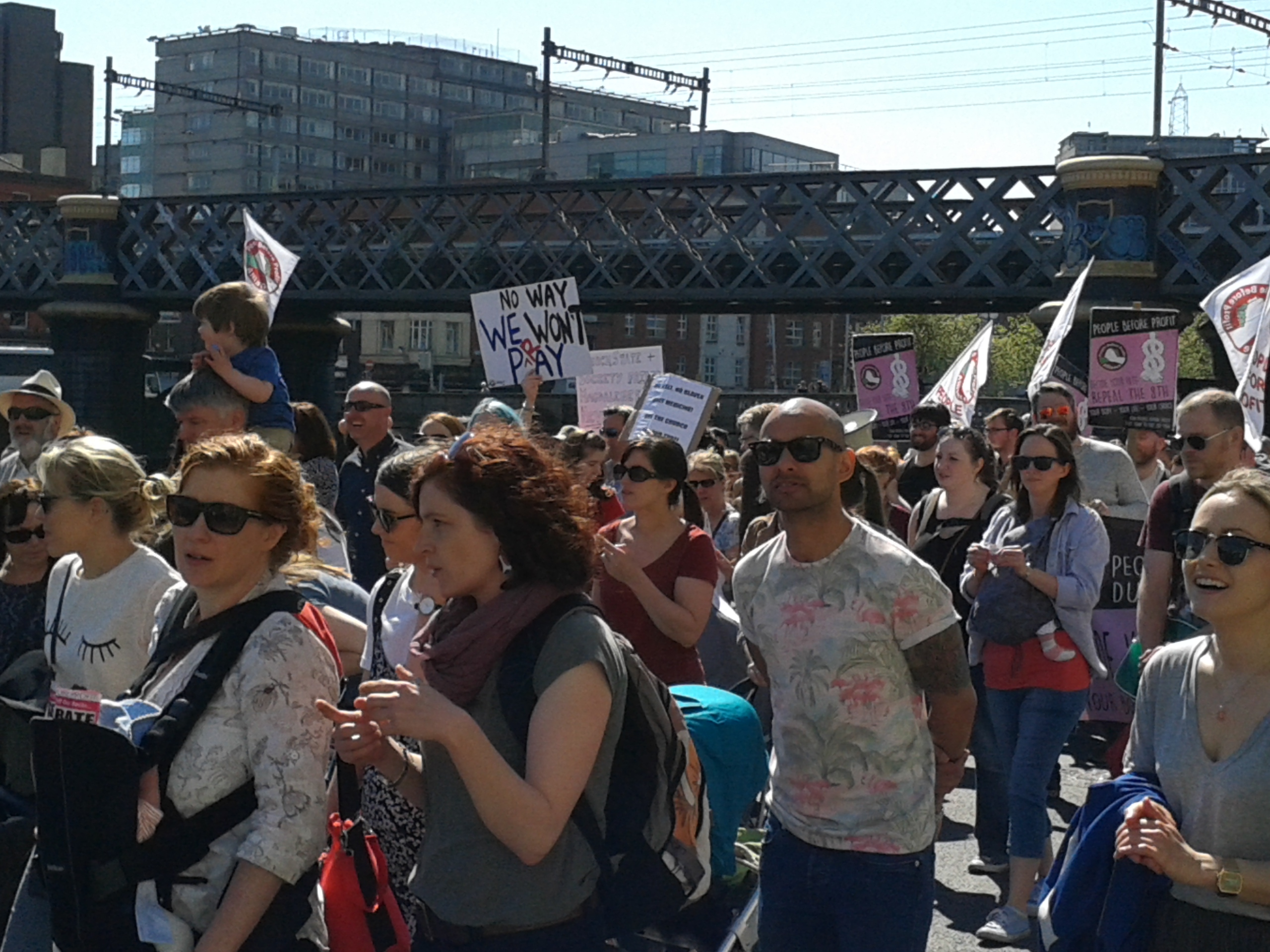
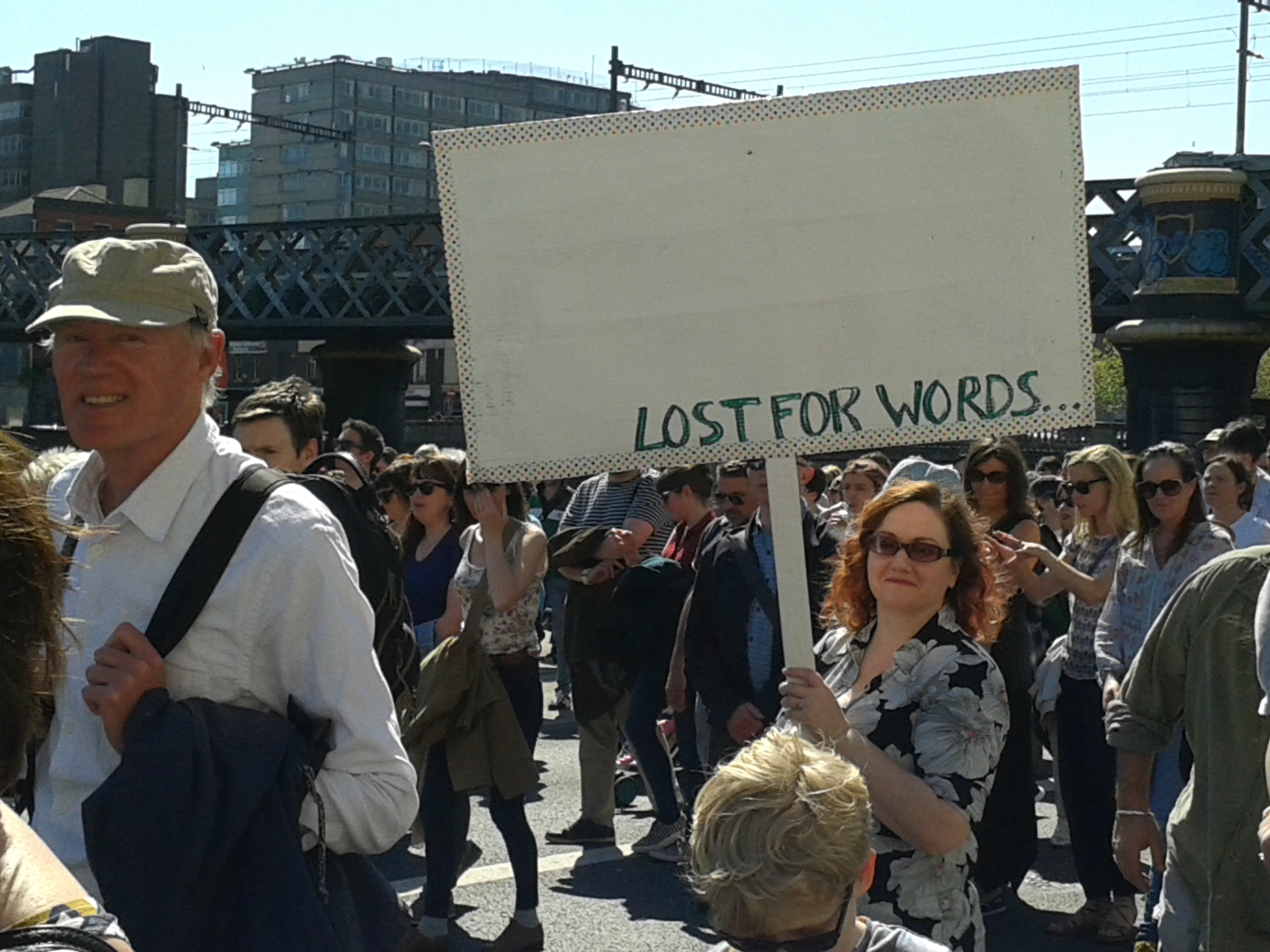
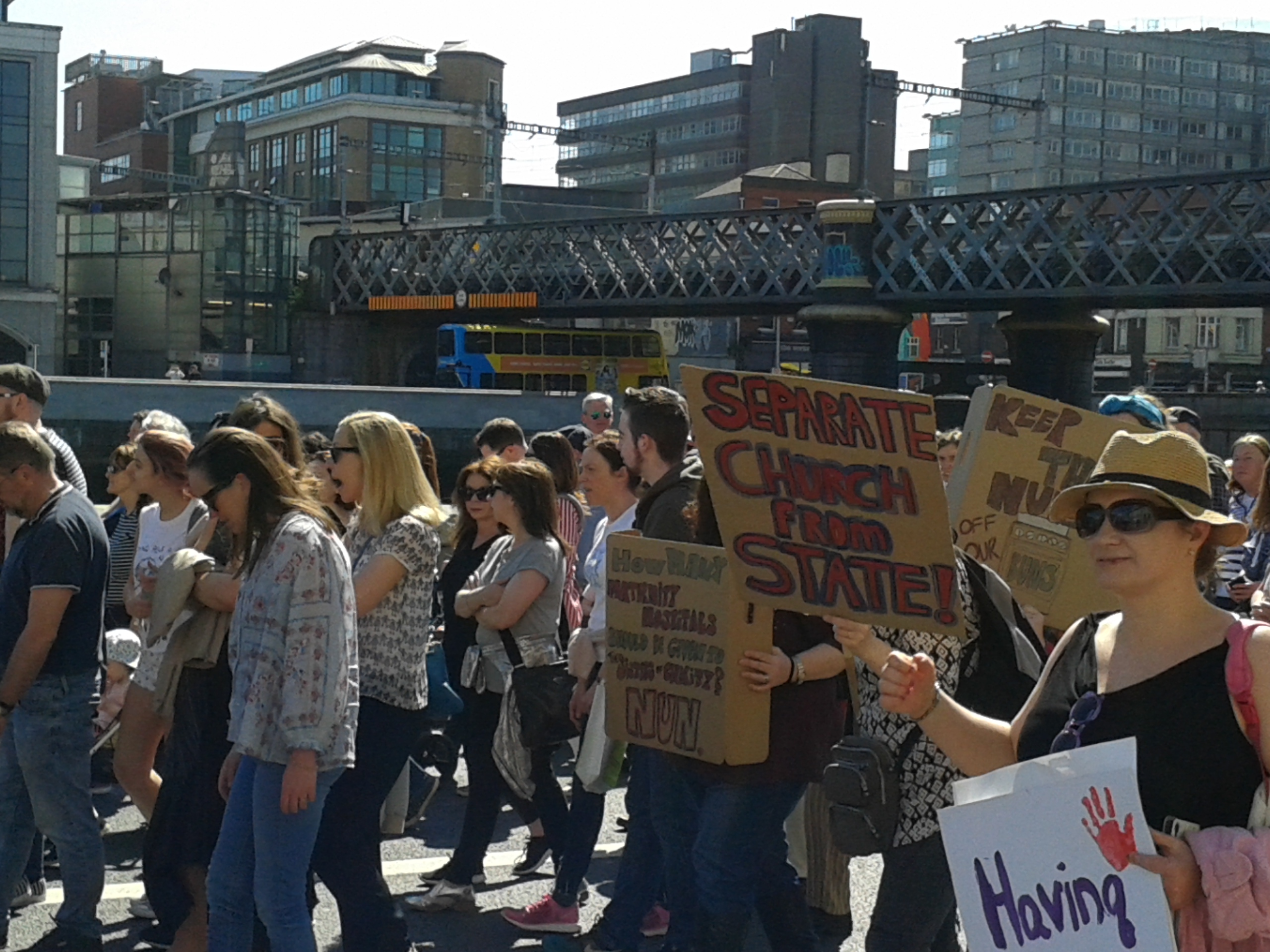
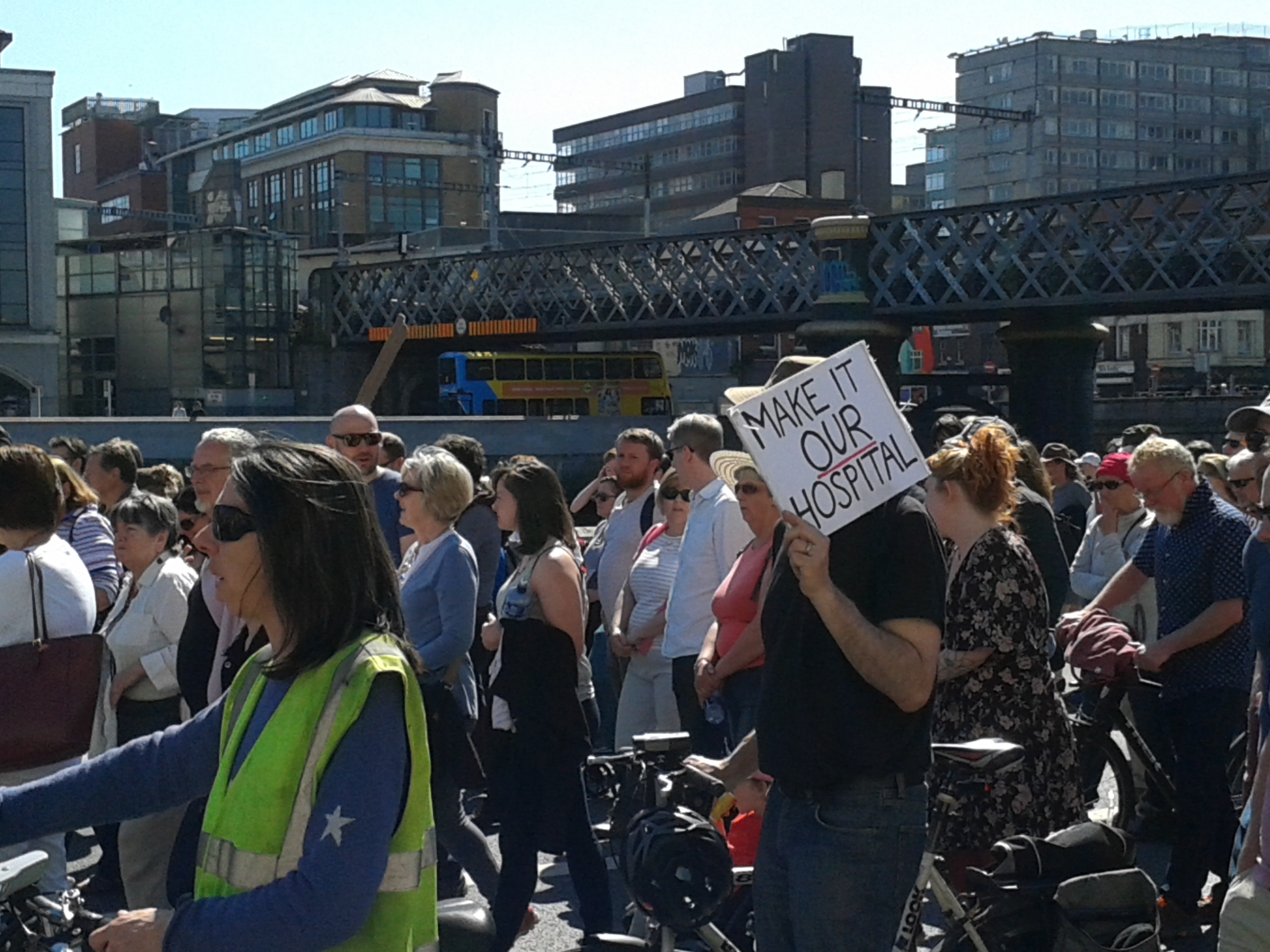
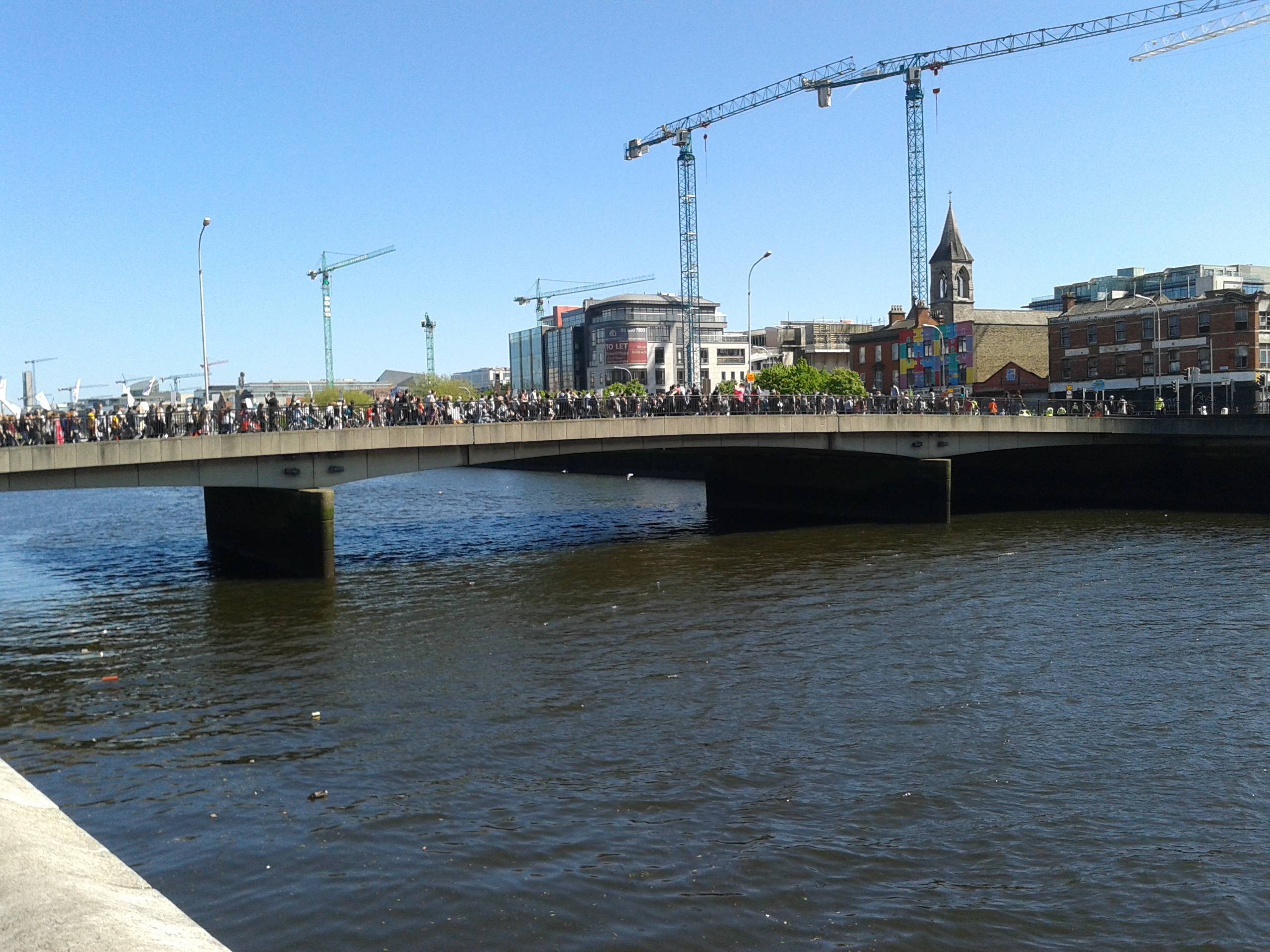
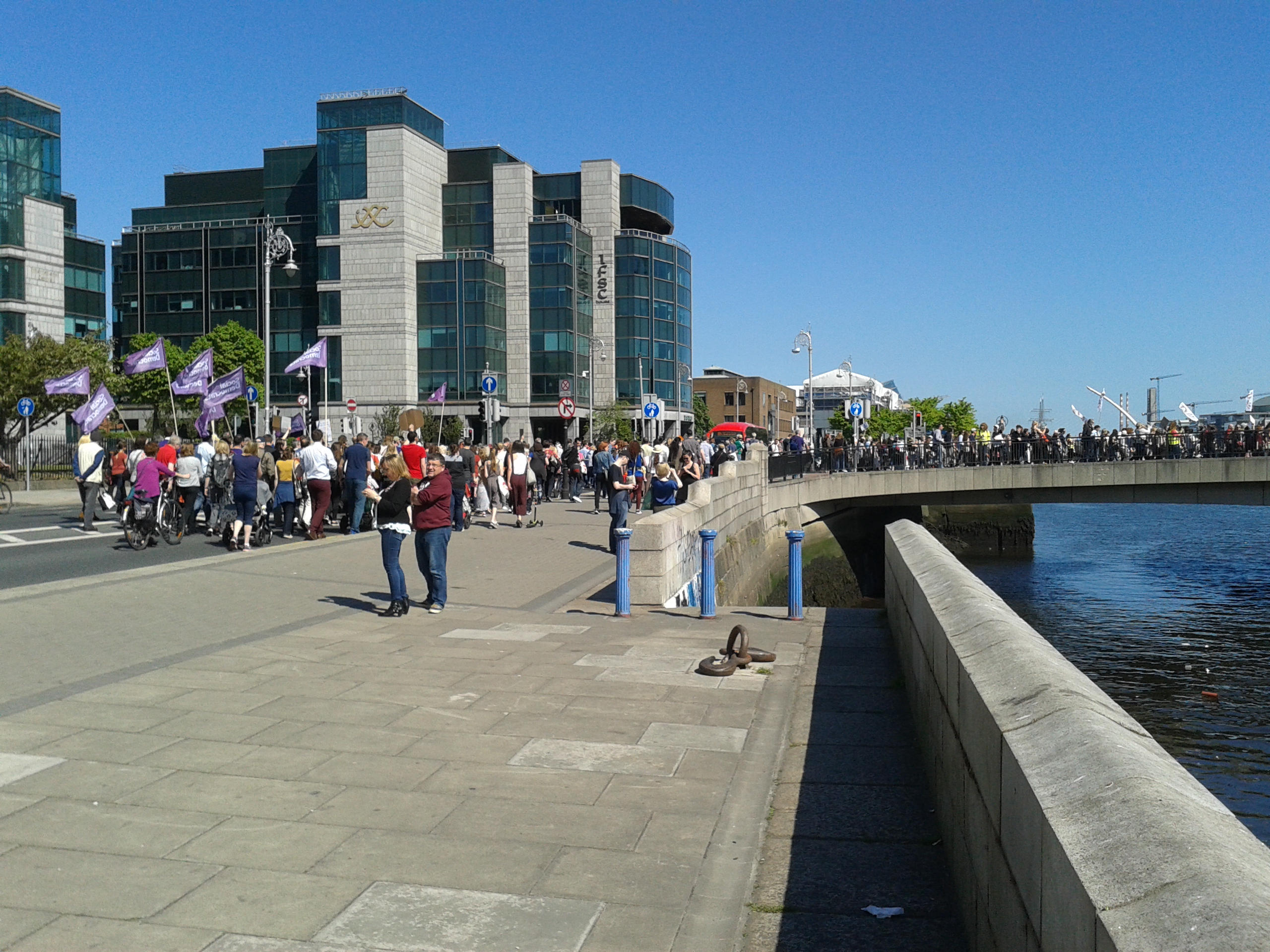
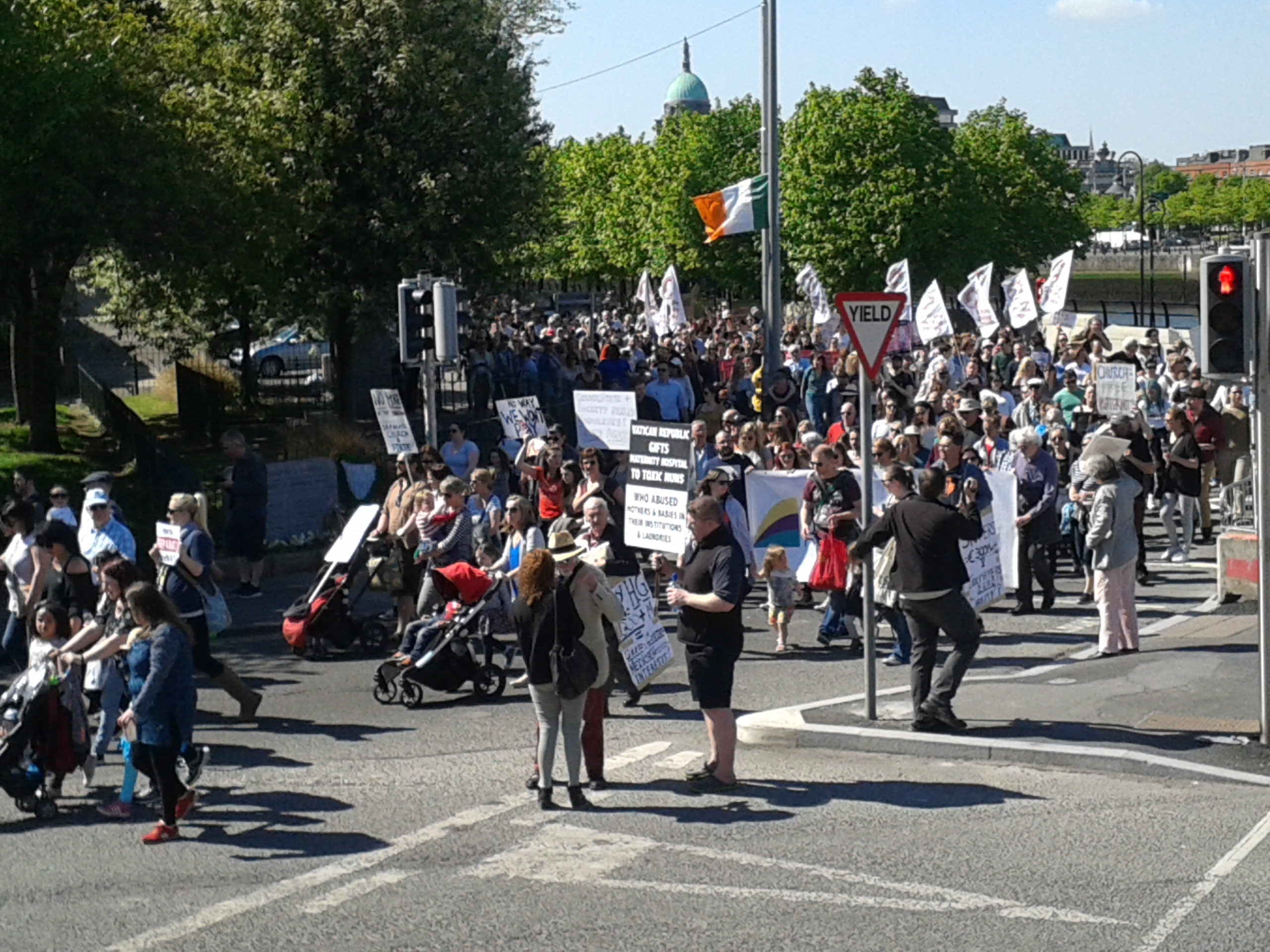
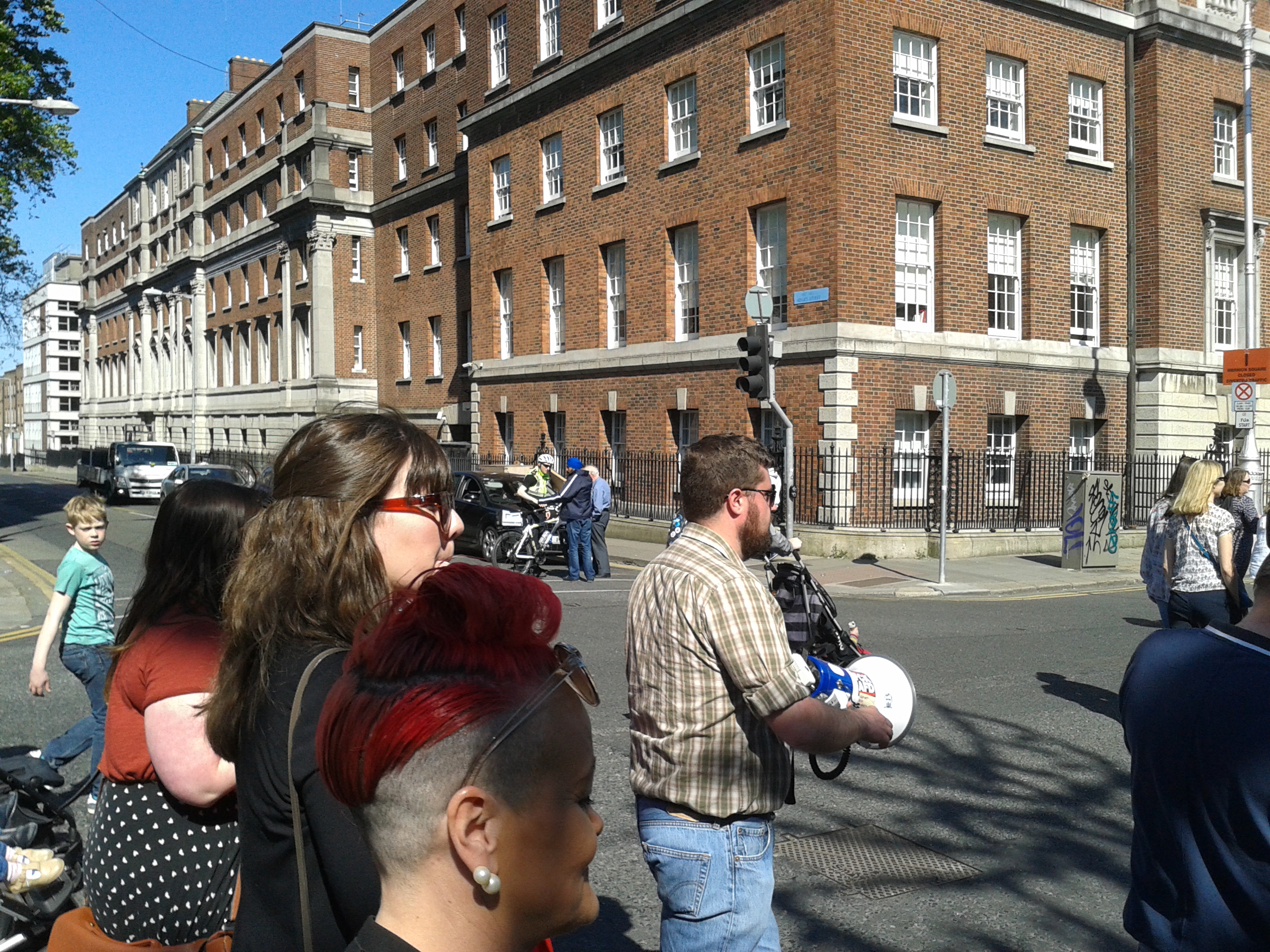
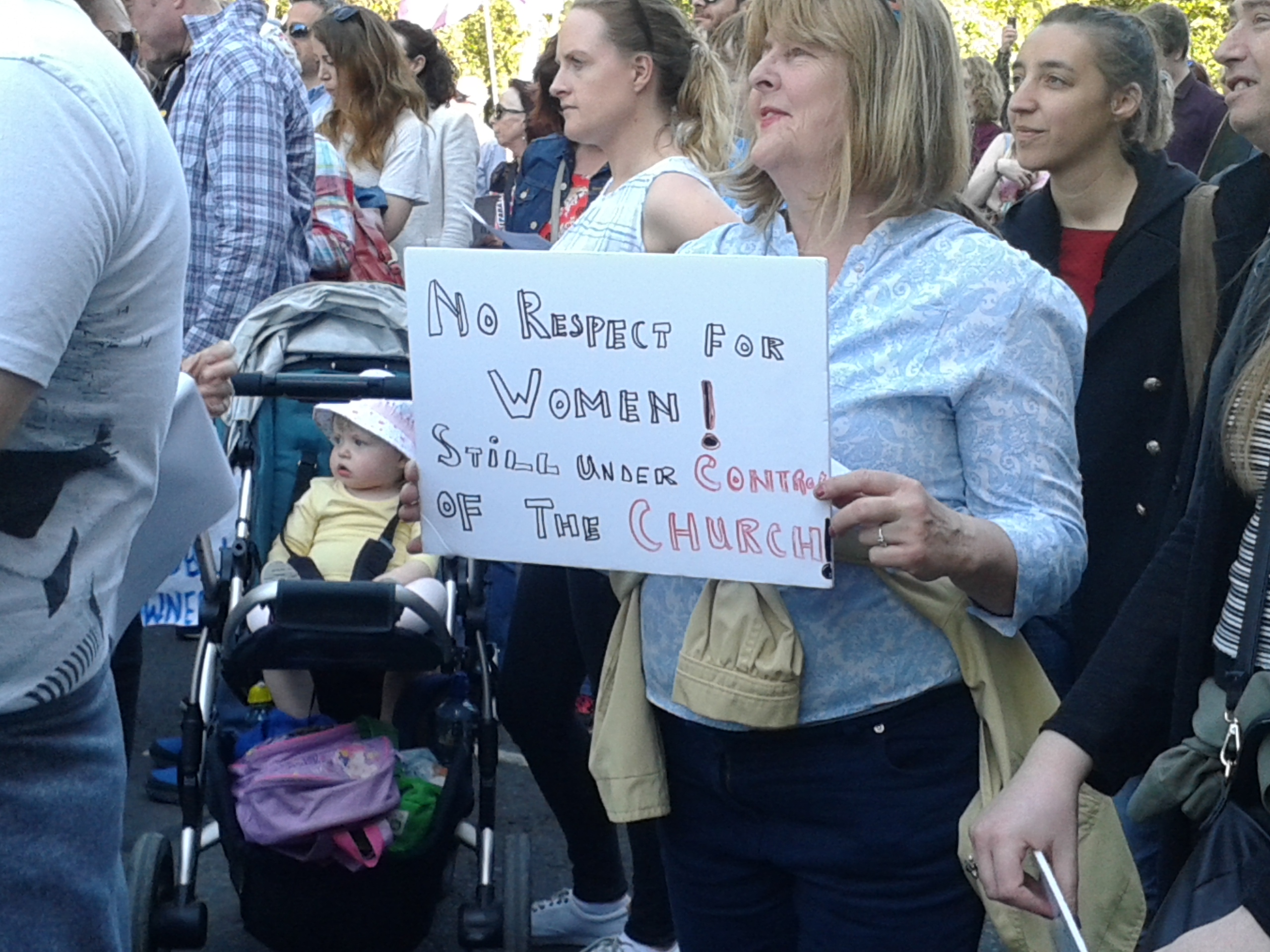
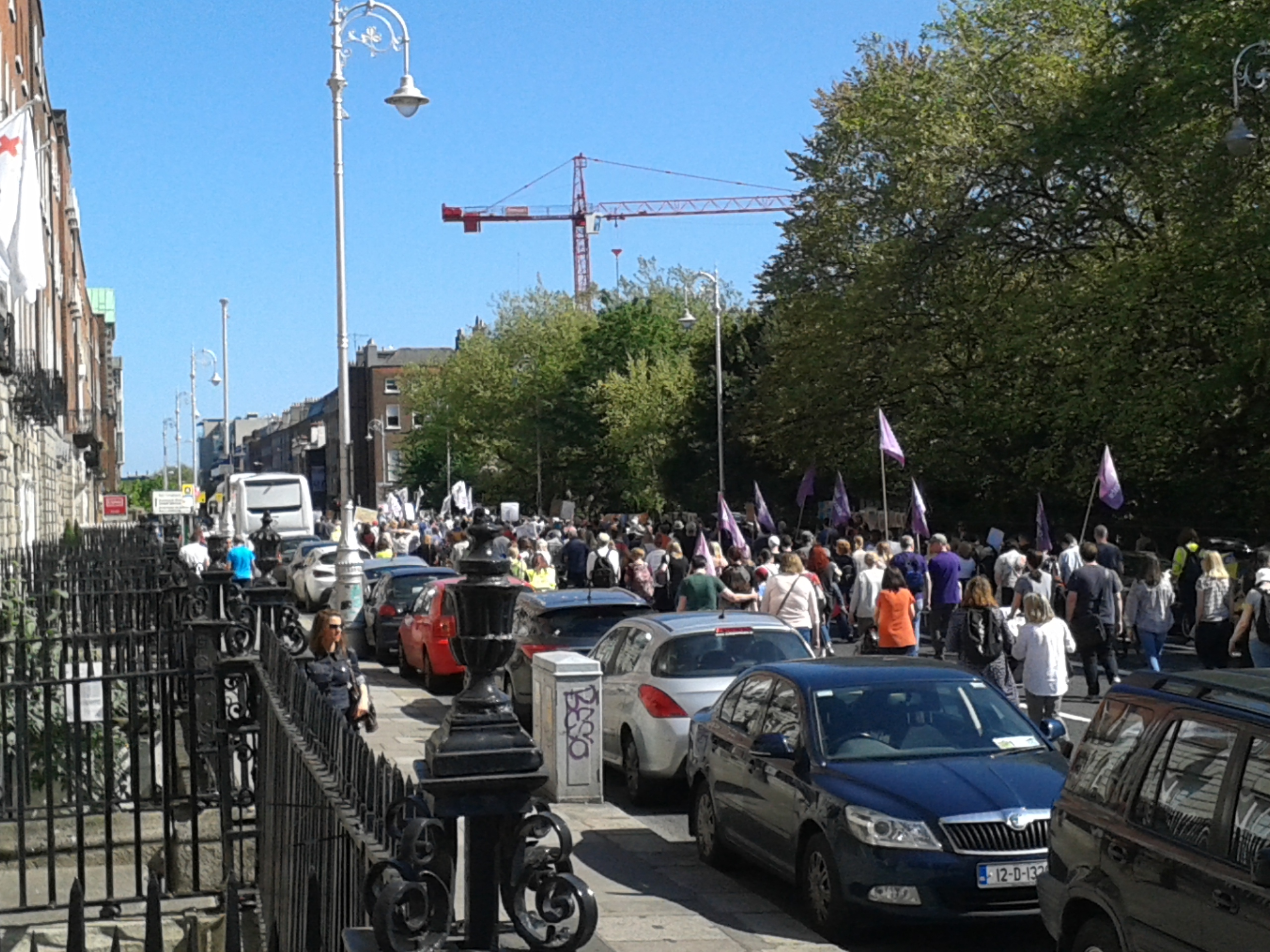
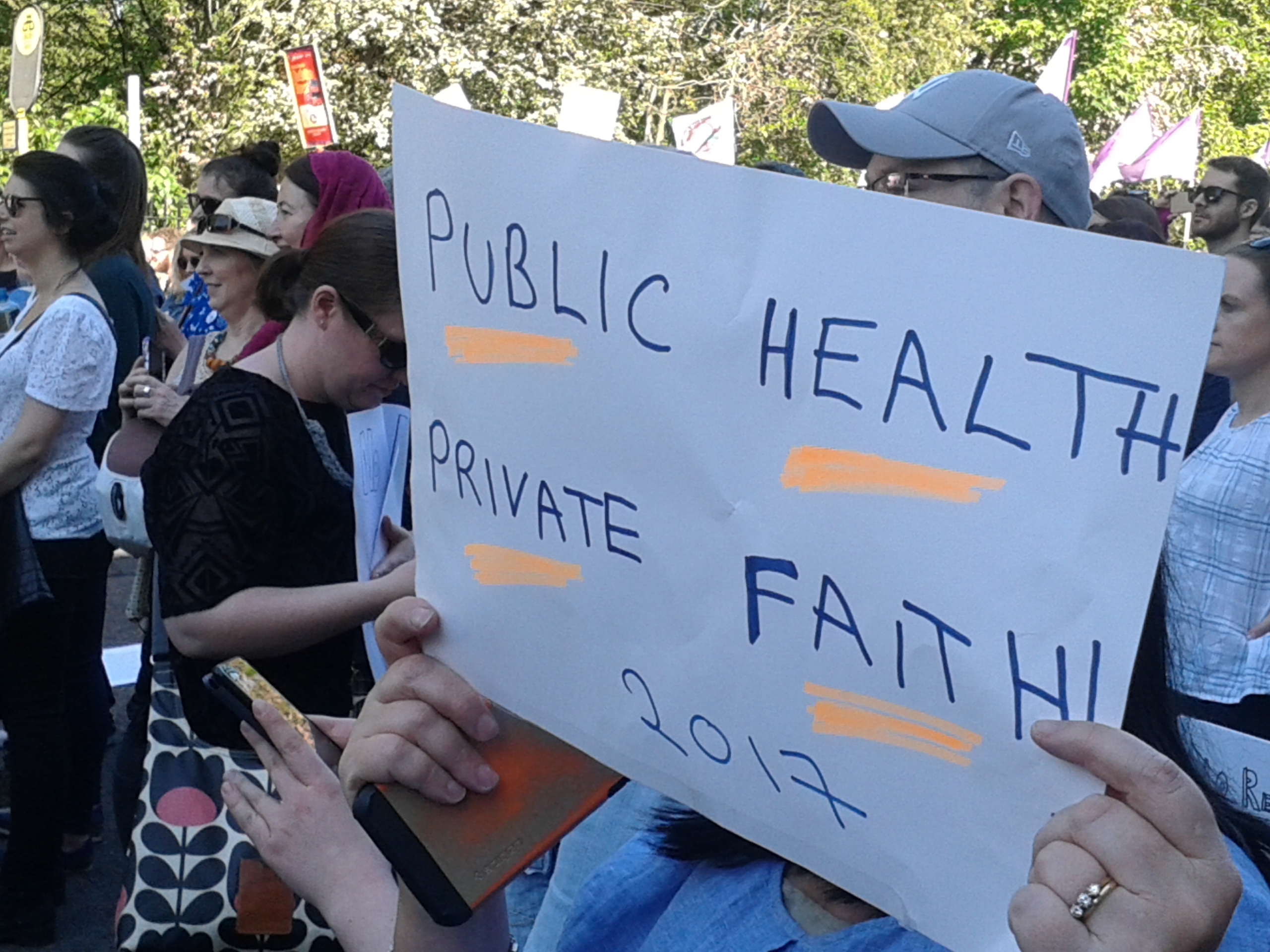
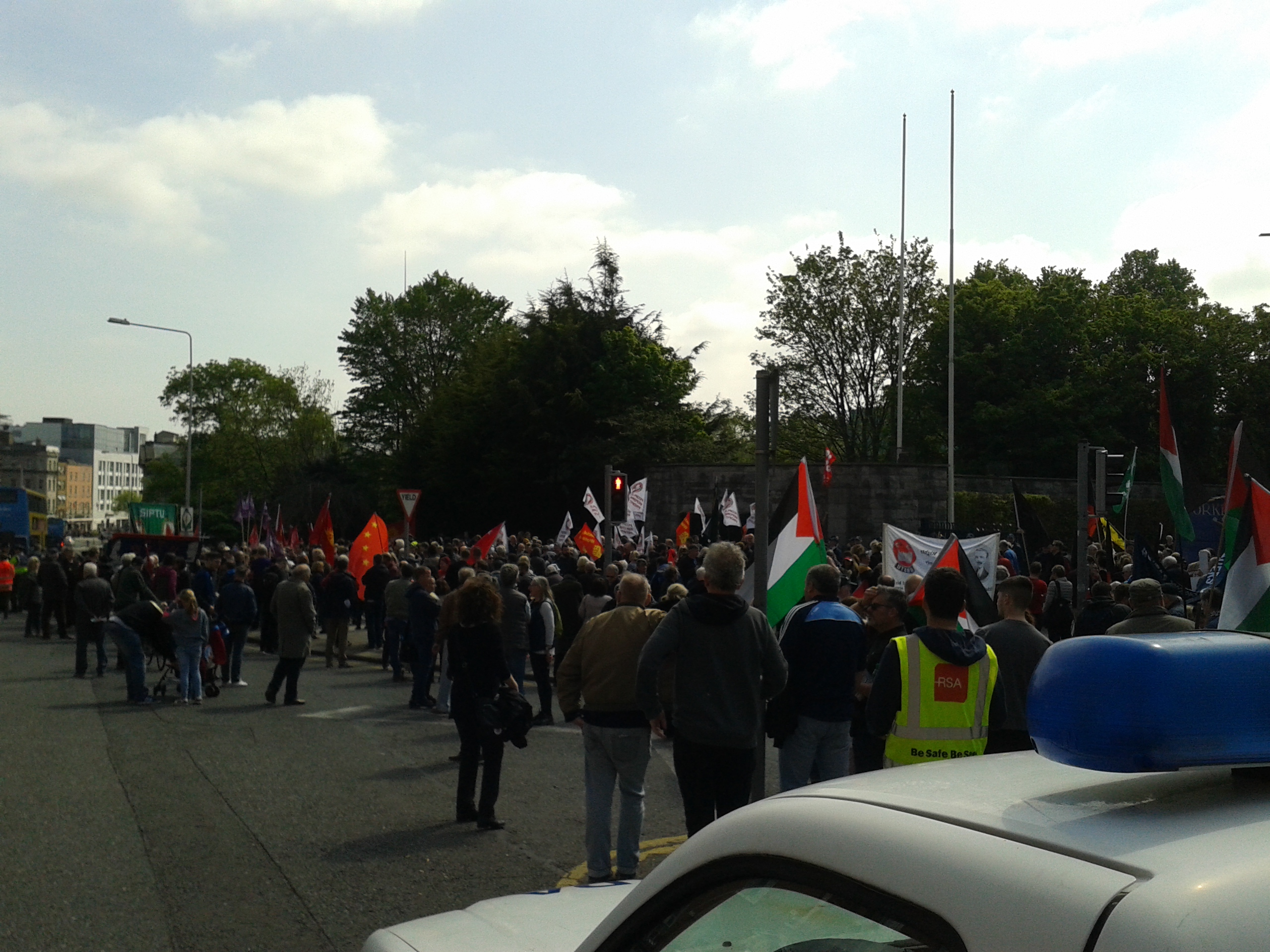
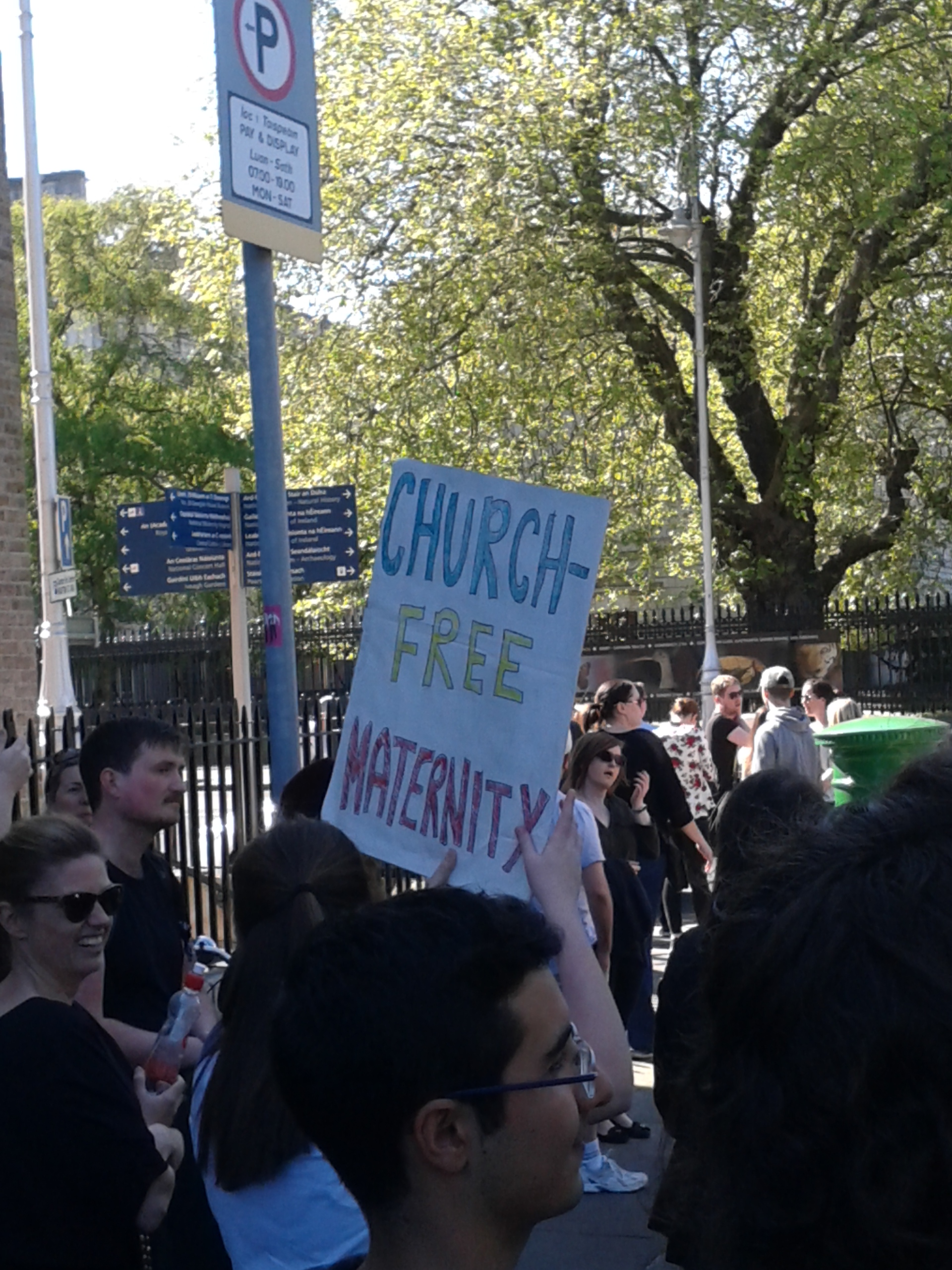
Tens of hundreds, mostly women but also containing some men and couples with children, gathered in bright sunshine today at the Garden of Rembrance and then marched through O’Connell Street in Dublin’s city centre. They continued along the northside quays and across Talbot Memorial Bridge, up past Pearse Station (where Constance Markievicz was welcomed by a huge crowd upon her release from British jail in 1917), then past Hollis St. Hospital to end at the south side of Merrion Square.
Marching along O’Connell Street. (Photo: Rebel Breeze)Rally to start at Garden of Remembrance (Photo: Rebel Breeze)
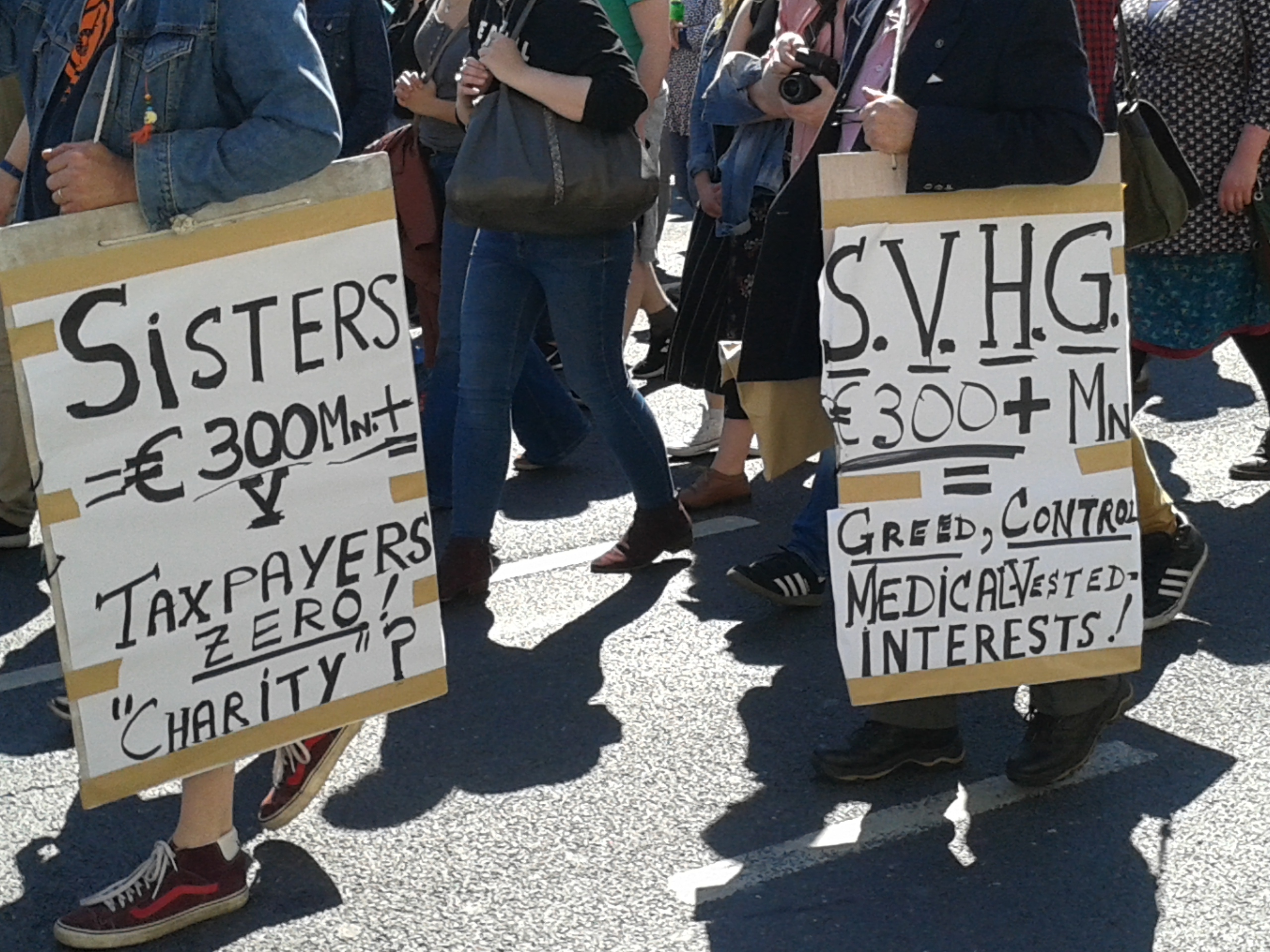
The event was organised by a coalition of Parents for Choice, Uplift, the National Women’s Council of Ireland and Justice for Magdalenes “to send a loud clear message to Health Minister Simon Harris”. The march was part of the ongoing protests against the ownership of the new National Maternity Hospital being given to the religious order the Sisters of Charity but also, as at least one speaker made clear, about the long history in the 26-County state of health services being provided by a combination of Catholic Church and State. Some others on the demonstration made the point that hospitals should be publicly owned and controlled.
Heading east under railway bridge at Butt Bridge. (Photo: Rebel Breeze)
A petition containing 103,700 signatures – on 50 meters of paper was carried by protesters- demanding that the €300m taxpayer-funded hospital be taken into public ownership. The viral petition had been hosted by campaign organisation Uplift and was printed on 50 feet sheets of card, which was laid out like a path on the approach to the rally’s stage.
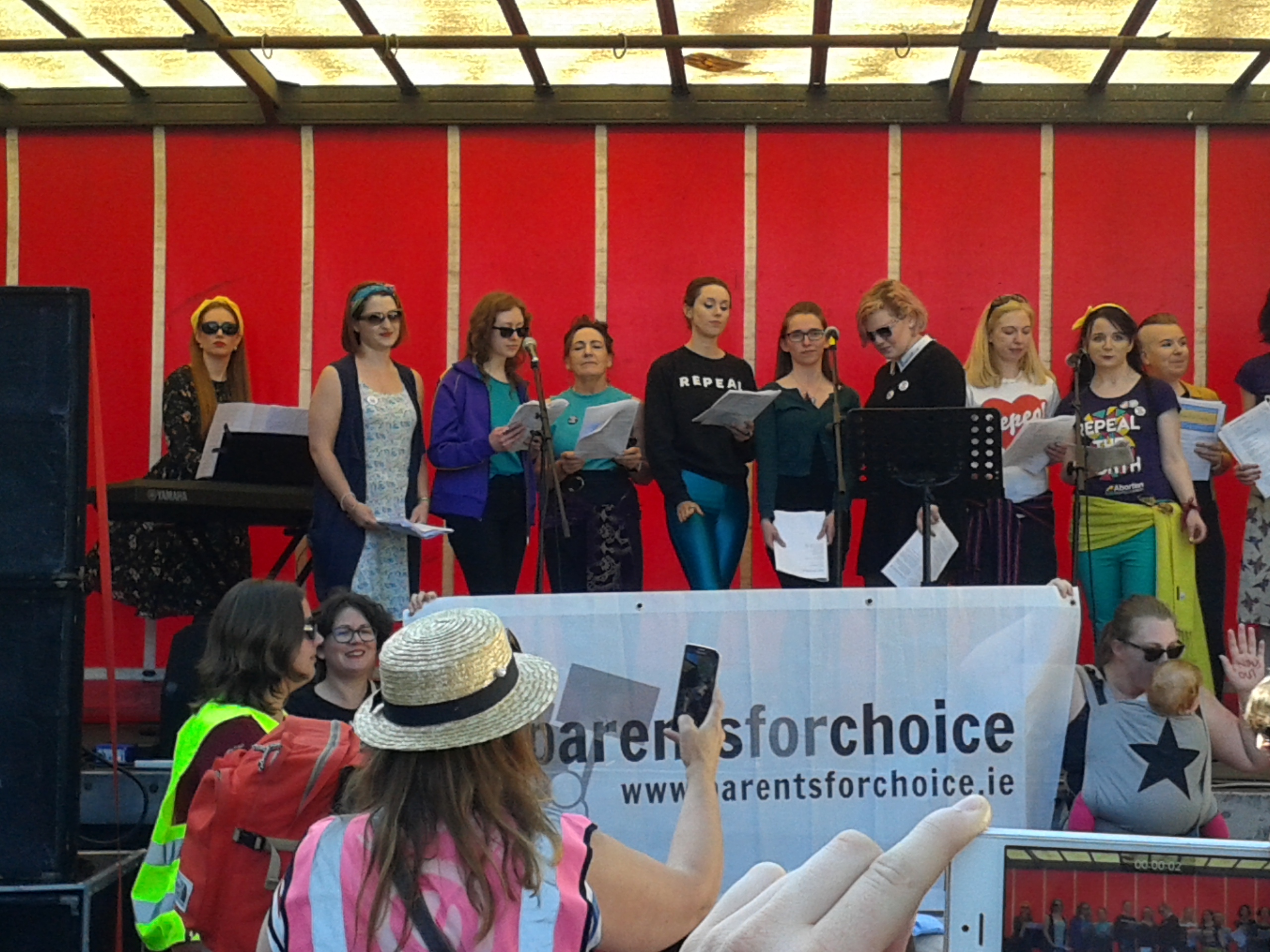
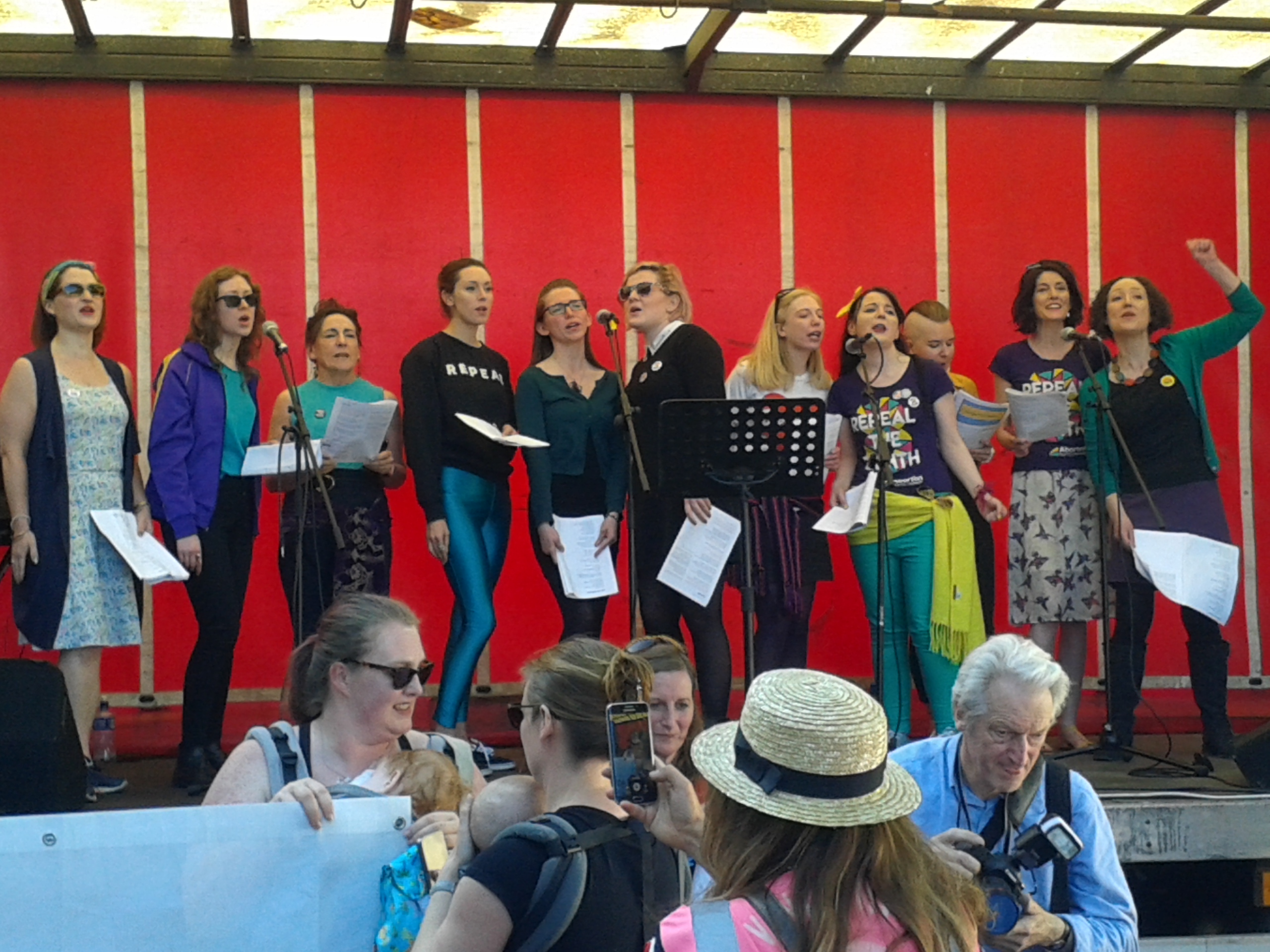
An all-women group called the Repeal Choir sang a number of songs before the speeches at the rally; one of their number announced that they had been formed only a few weeks earlier and they sang with gusto.
(Photo: Rebel Breeze)(Photo: Rebel Breeze)(Photo: Rebel Breeze)(Photo: Rebel Breeze)(Photo: Rebel Breeze)Crossing Talbot Memorial Bridge (Photo: Rebel Breeze)End of march approaching Talbot Memorial Bridge (Photo: Rebel Breeze)Lombard St. and quay junction. (Photo: Rebel Breeze)
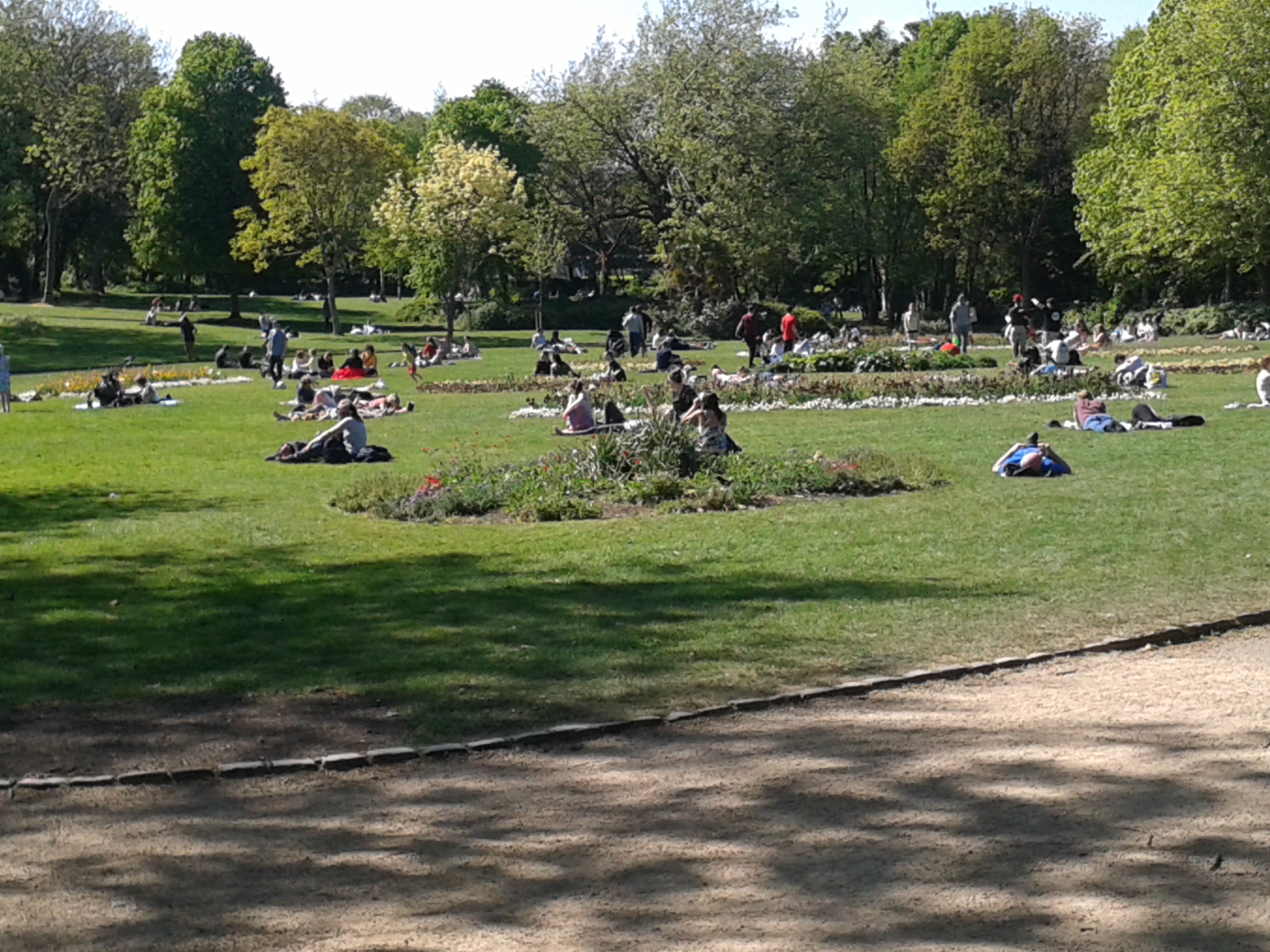
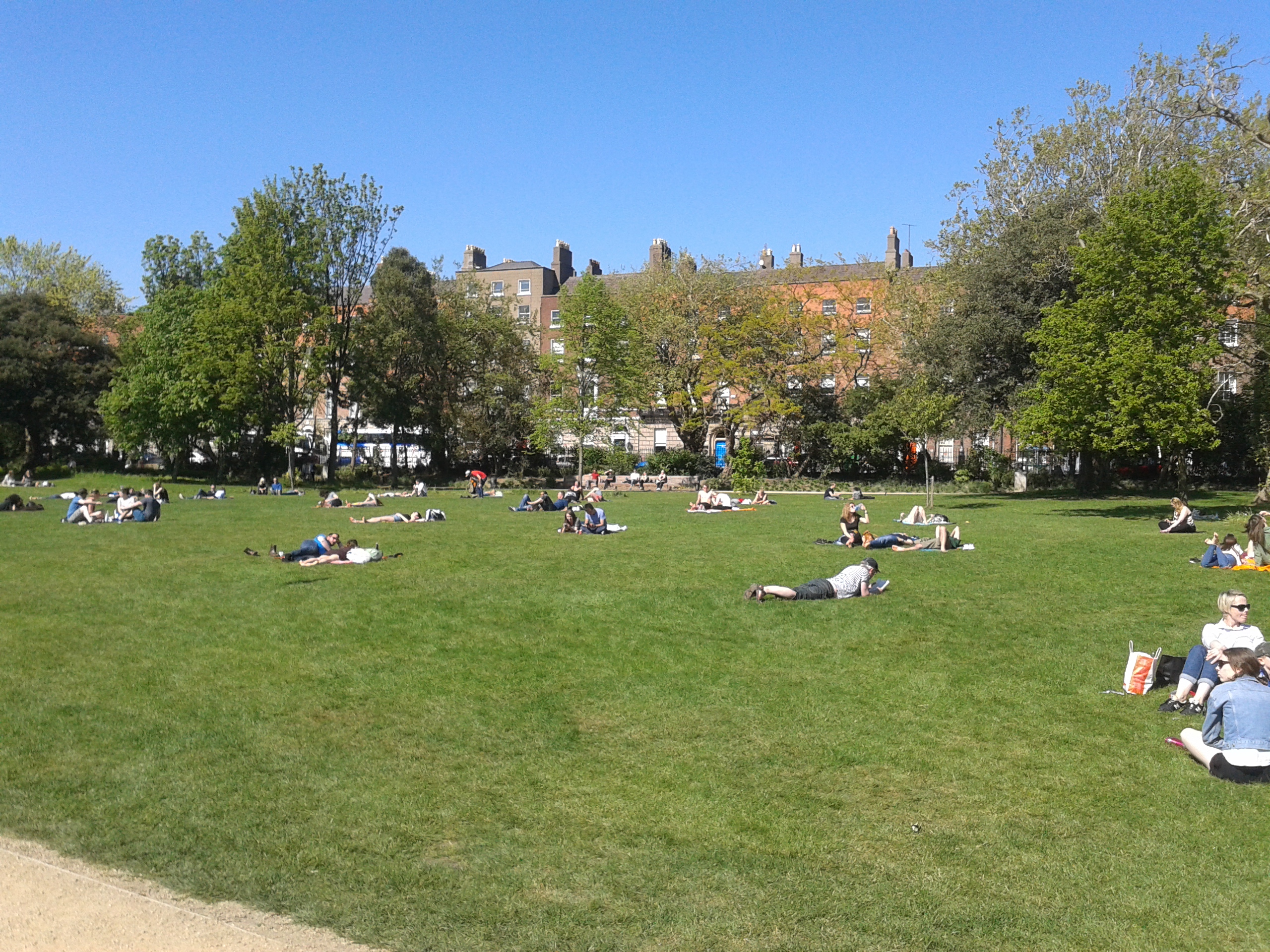
Hollis St and its Hospital. (Photo: Rebel Breeze)Not on the march — sunning themselves in Merrion Square park (Photo: Rebel Breeze)Not on the march — sunning themselves in Merrion Square park (Photo: Rebel Breeze)Not on the march — sunning themselves in Merrion Square park (Photo: Rebel Breeze)Hollis St. Hospital front facing Merrion Square. (Photo: Rebel Breeze)(Photo: Rebel Breeze)
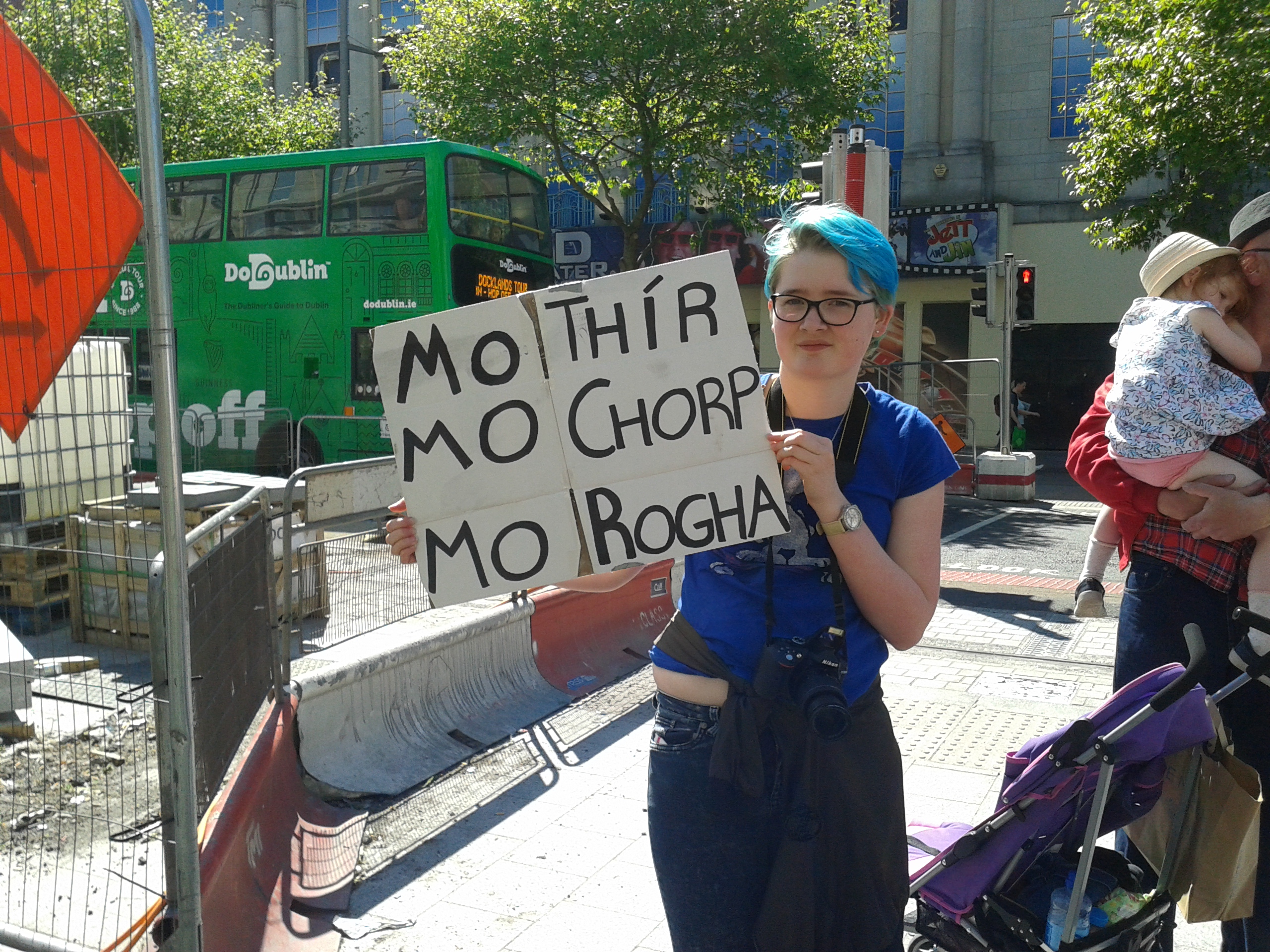
(Photo: Rebel Breeze)The only placard in Irish on the march (Photo: Rebel Breeze)(Photo: Rebel Breeze)(Photo: Rebel Breeze)The Repeal Choir (Photo: Rebel Breeze)
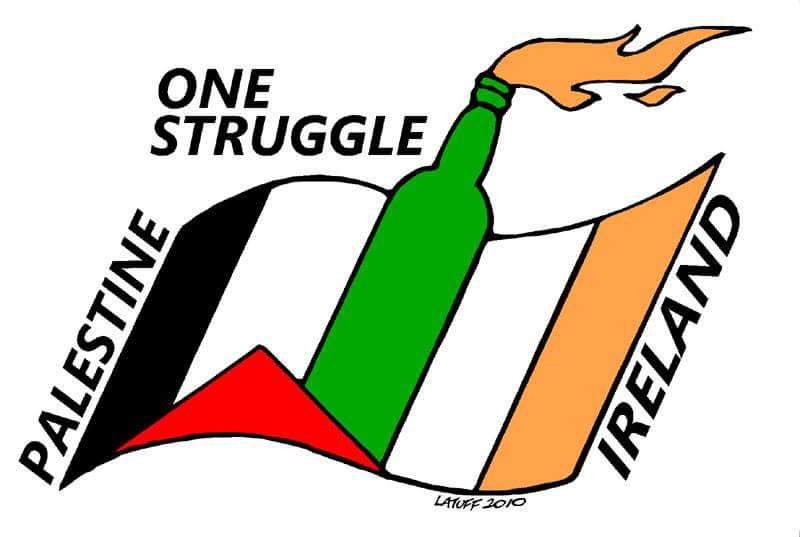
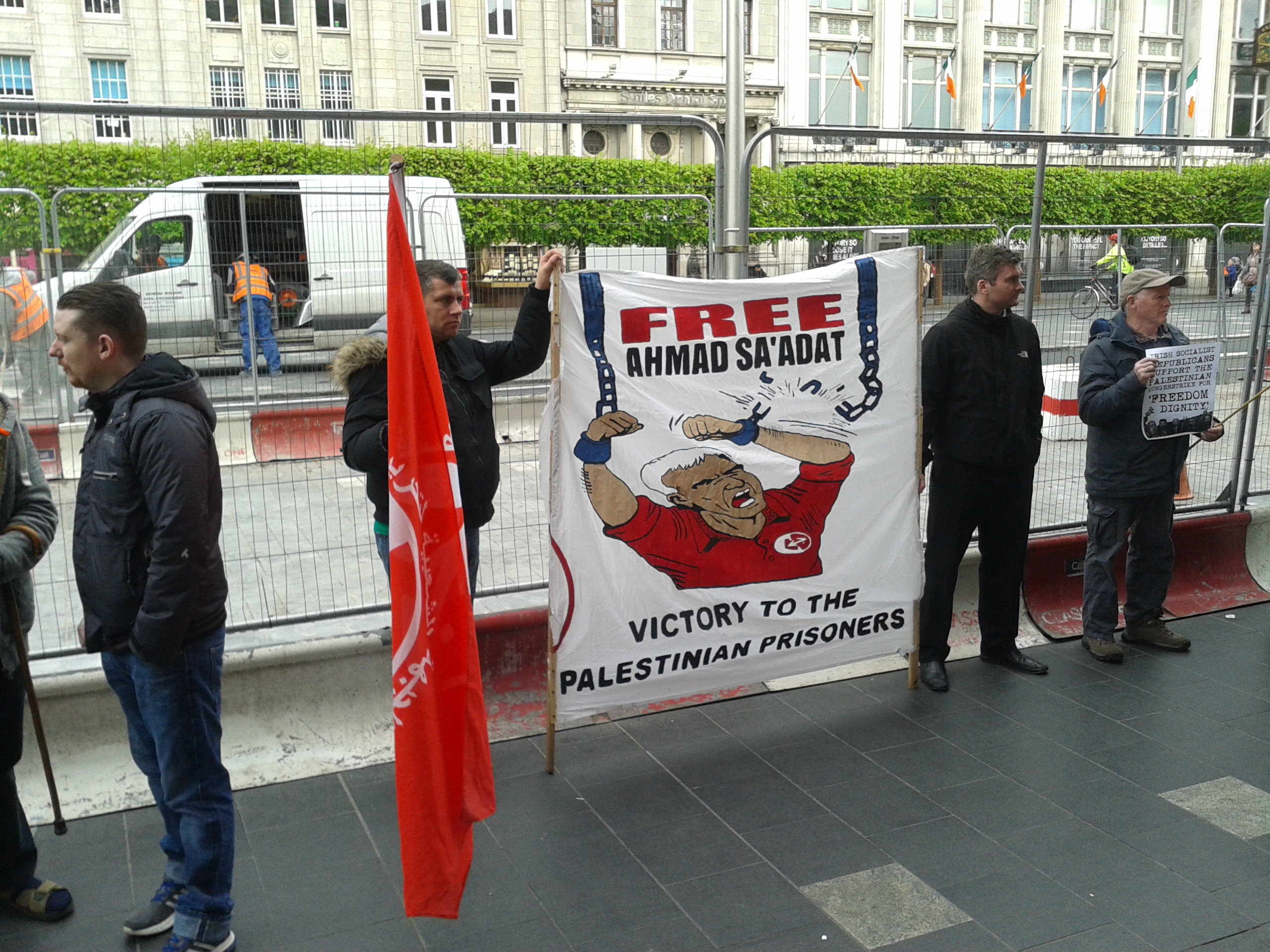
1,500 Palestinian prisoners are in their third week of a hunger strike for dignity: their demands include rights to visits and increase in family visits, access to telephone calls to family and friends and end of solitary confinement. Visits are a particular issue since although the Israeli authorities permit visits every fortnight in theory, they require Palestinians in the occupied territories to obtain permits before permitting them entry to the Israeli state, which is where the prisoners are being held and these are often refused or delayed. Protests and other actions in solidarity with the Palestinian hunger strikers have been and are taking place around the world.
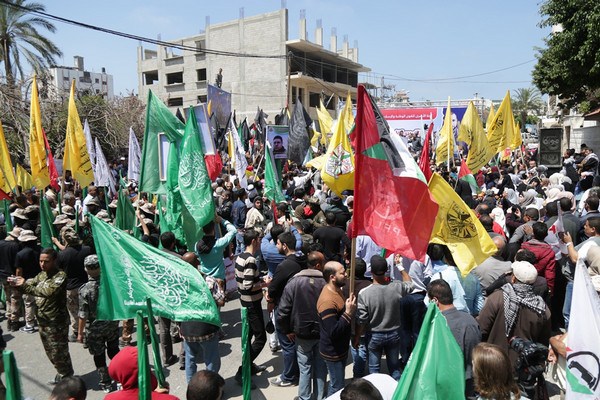
Demonstration in Gaza, joining different groups — worth watching to the end, seeing how the event grows and new flags join
IN IRELAND
The Ireland Palestine Solidarity Campaign have organised a number of events (see their FB page for some photos and reports). But in addition, various protests have been and are being organised by various other groups, campaigns and political organisations/ parties. Also messages of Palestinian solidarity have been incorporated into many other events, for example commemorating the Easter Rising of 1916 and the subsequent Executions by the British Occupation, or celebrating International Workers’ Day.
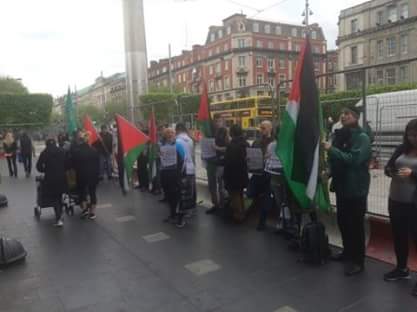
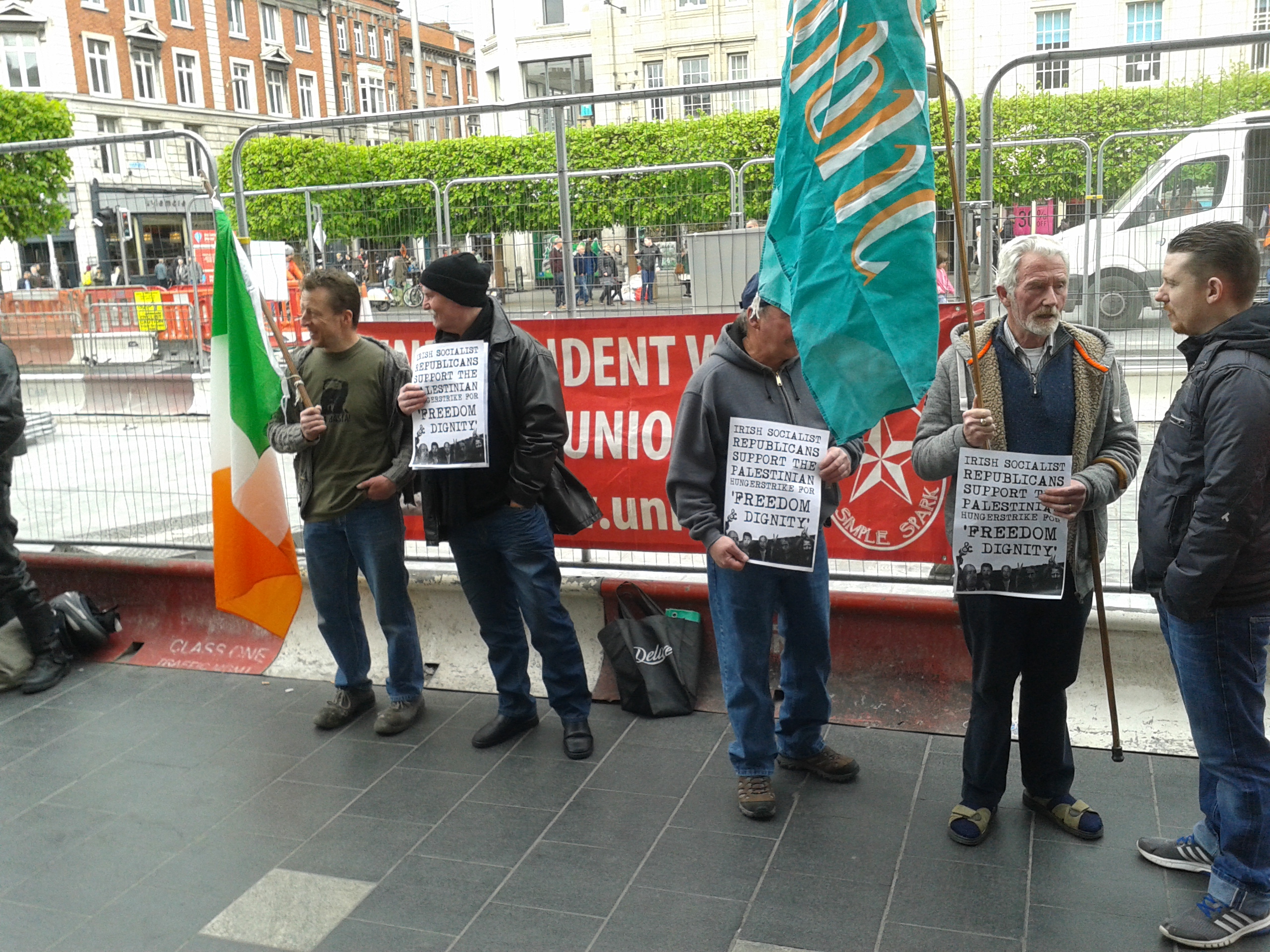
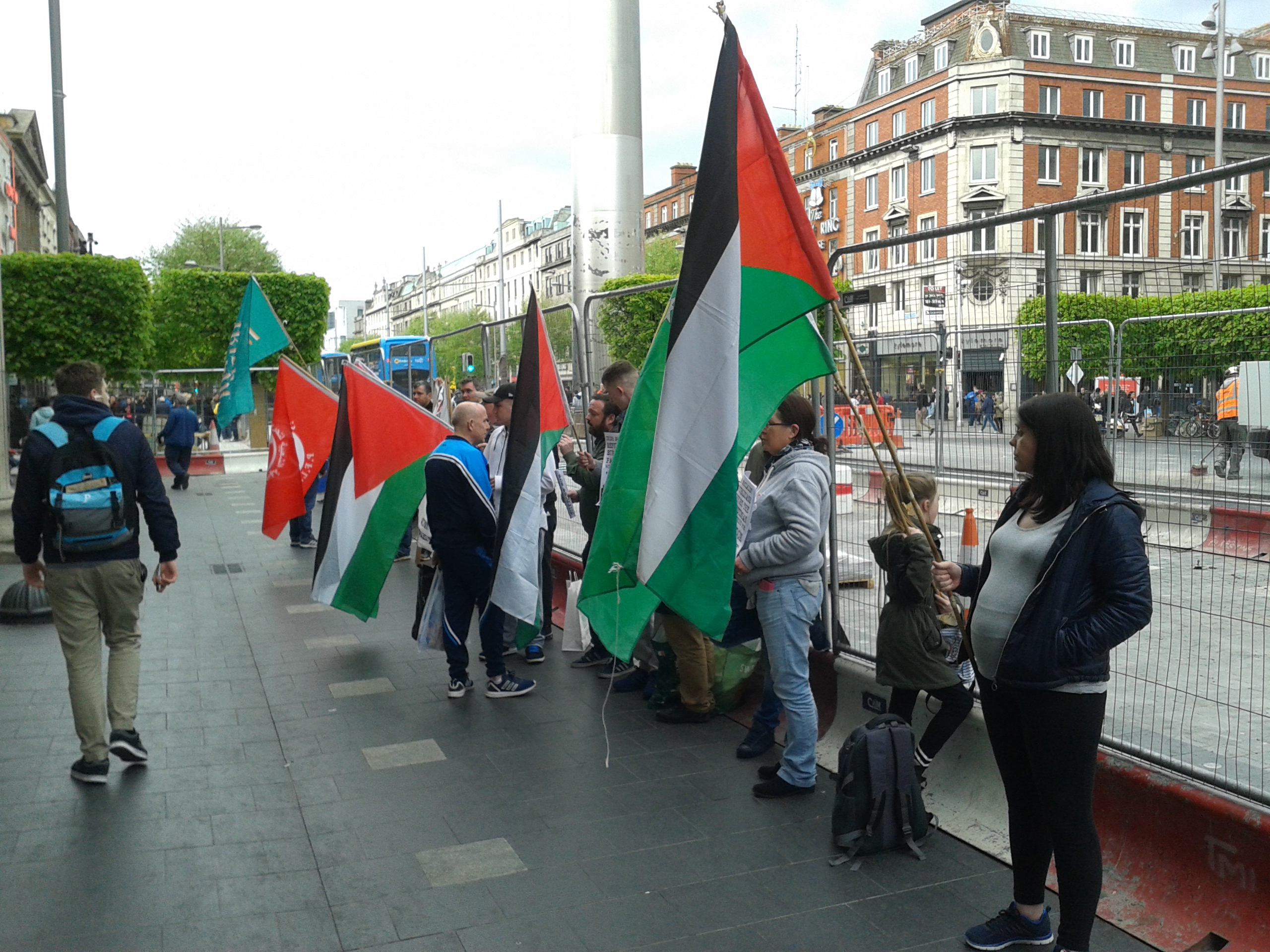
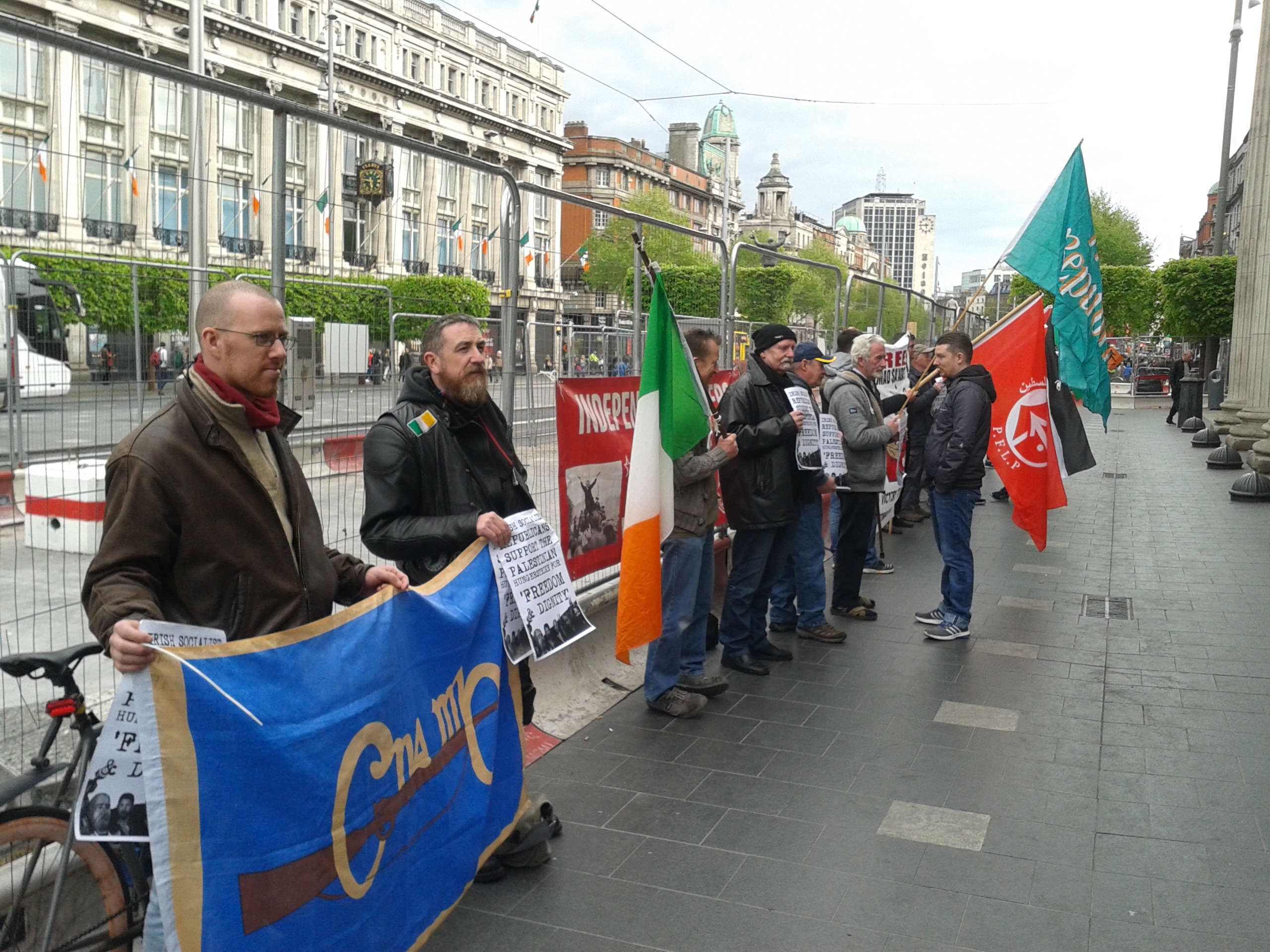
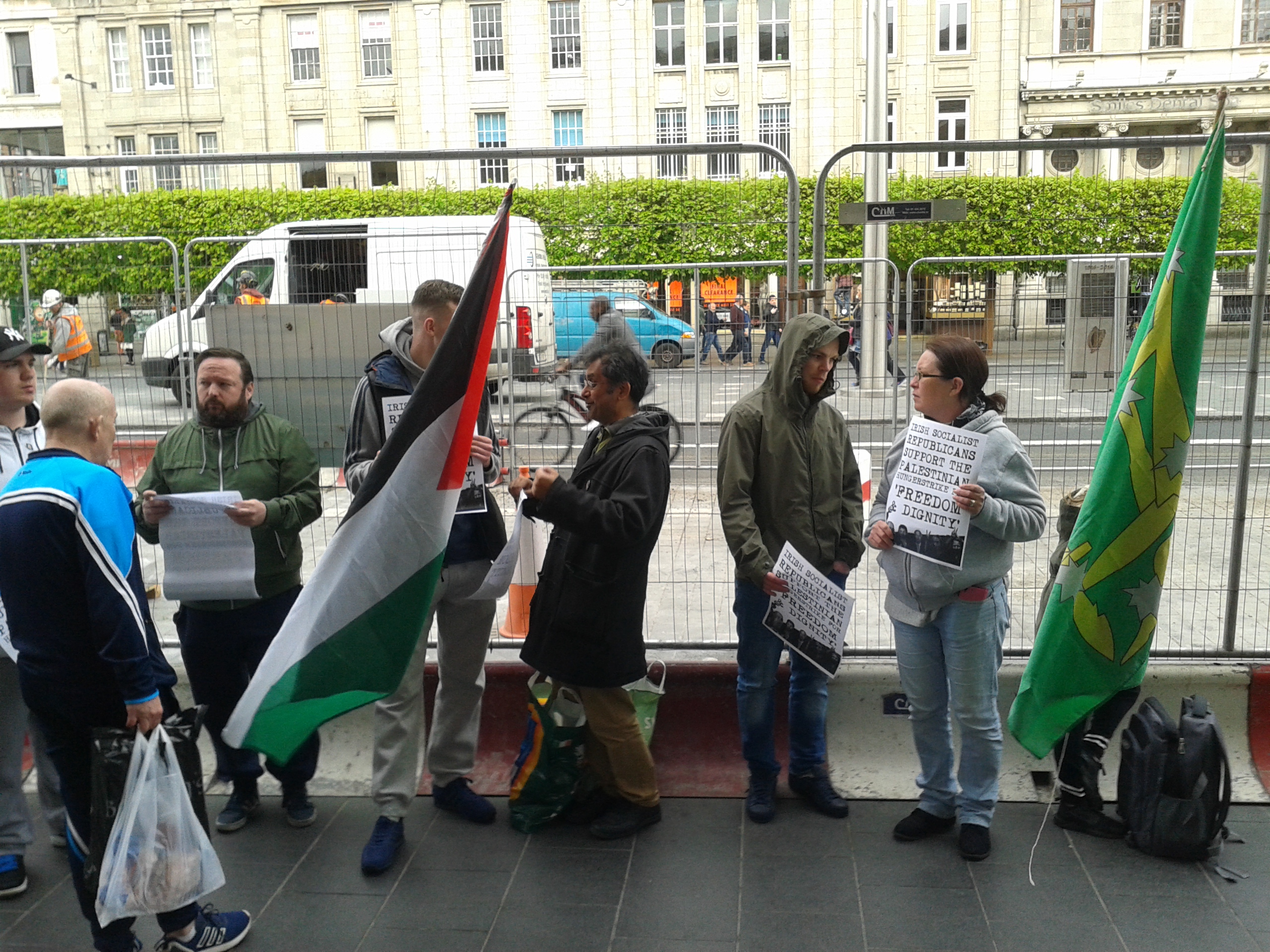
For example, the non-aligned Socialist Republicans for Palestine organised an event on 28th April in Dublin’s main street (photos below) on 28th April.
Line of solidarity protesters looking northwards from outside the GPO, O’Connell (main) Street, Dublin (Photo source: Socialist Republicans for Palestine)
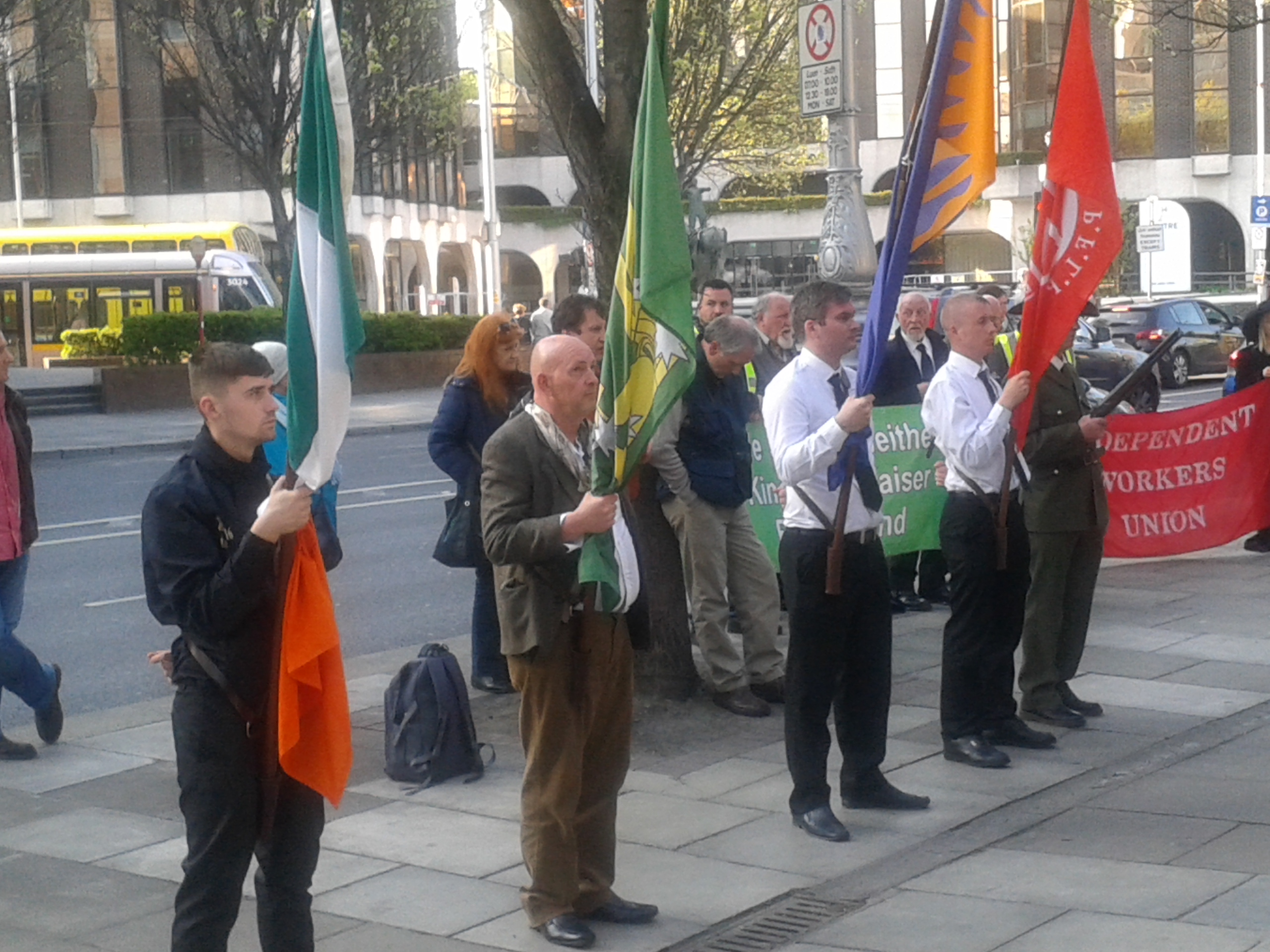
Banner of Independent Workers’ Union (Photo: D.Breatnach)
Line of solidarity protesters looking souththwards from outside the GPO, O’Connell (main) Street, Dublin (Photo: D.Breatnach)
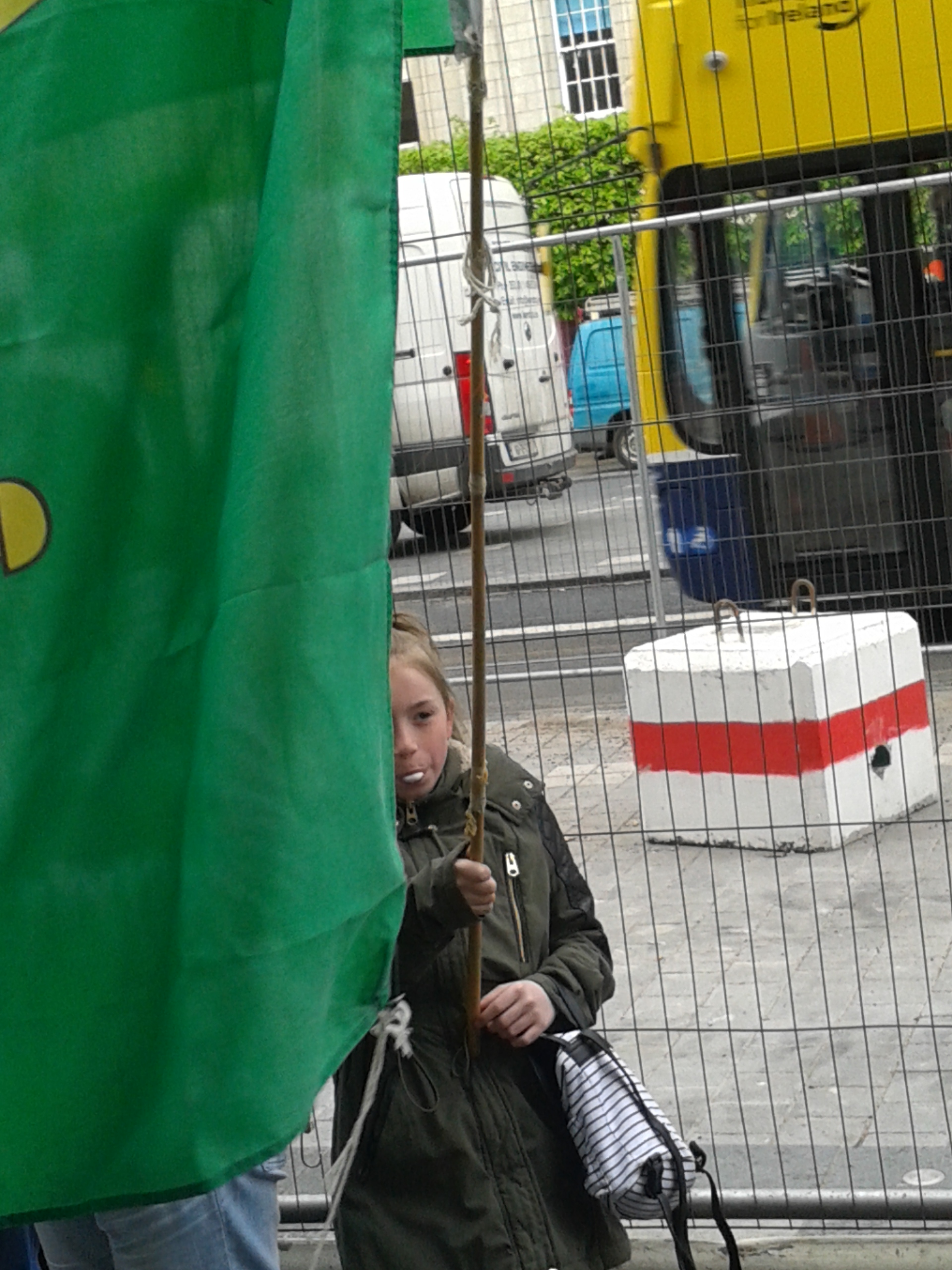
A young supporter holding the Starry Plough, flag of the Irish Citizen Army, a workers’ militia formed in Dublin in 1913.
Upcoming in Dublin:
Organised by Anti-Internment Group of Ireland (see End Internment Facebook page): protest in solidarity with Irish and Palestinian political prisoners at 2pm Saturday in Dublin, Henry St./ Liffey St. junction.
PALESTINE INSIDE THE JAILS
“On Thursday, repressive units continued to invade prisoners’ sections in Ramon prison following a raid on striking prisoners’ sections in Ashkelon prison on Tuesday, when striking prisoners were assaulted for refusing to stand up for inspection. Palestinian lawyer Karim Ajwa reprted that five prisoners were wounded in the face and head and taken to the prison clinic. Ajwa also said that internal disciplinary hearings were conducted against the hunger strikers and sanctions imposed on them as well as fines of 500 NIS ($125) each; he said that salt was also taken from the prisoners in an attempt to break the strike. After 11 days of denials, Ajwa finally obtained a legal visit with Nasr Abu Hmeid and Said Musallam, who also reported that the striking prisoners are boycotting medical examinations and that there are serious health concerns for the ill prisoners participating in the hunger strike.” (from Samidoun, see link)
POLITICAL SECTARIANISM IN PALESTINE
“Meanwhile, in Nablus, Palestinian former prisoners and long-term hunger strikers Khader Adnan and Mohammed Allan, as well as Palestinian Prisoners’ Committee coordinator Maher Harb, were attacked and then detained for several hours by Palestinian Authority security forces before being released, as they participated in a march to support the prisoners. The prisoners of the Popular Front for the Liberation of Palestine, the Democratic Front for the Liberation of Palestine and Islamic Jihad issued a message from Israeli prisons in support of Khader Adnan, denouncing “desperate attempts by some parties to incite against the activist Khader Adnan as a prelude to physical tageting,” and saying that Adnan is a symbol of unity and resistance who is threatened by the occupation.” (Samidoun)
IN THE COMMUNITIES IN PALESTINE
“As part of the protests on Thursday in support of the prisoners, Israeli occupation forces shot two Palestinians in the legs and wounded dozens more due to tear gas inhalation in al-Khalil on Thursday as Palestinian youth protested in support of hunger-striking Palestinian prisoners. In Issawiya, occupation forces dismantled the solidarity tent set up in the village in support of Palestinian prisoners on hunger strike, storming it and then confiscating the materials. In Shuafat refugee camp and Silwan, Israeli occupation forces attacked protesting Palestinian Jerusalemites supporting the hunger striking prisoners. One shop owner was reportedly seized by Israeli forces in the city of Jerusalem after Israeli occupation forces attempted to forcibly compel shop owners to break the strike and open their doors, which they refused.” (Samidoun)
In Gaza, the demonstrators in addition to supporting the prisoners on hunger strike called for “freedom for Georges Abdallah and Bagui Traore in French prisons. Georges Ibrahim Abdallah is the imprisoned Arab communist struggler for Palestine who has spent over 32 years in French prisons. …. Bagui Traoré is the brother of Adama Traoré, killed in French police custody on 19 July 2016. Bagui is the main witness of his brother’s death; since the killing of Adama, Bagui has been imprisoned, first sentenced to eight months in prison for allegedly hitting police and then accused of involvement in shooting towards police and gendarmes in the protests against the killing of Adama.” (Samidoun)
Gaza demonstration showing flags of mixed political allegiances (Photo: Samidoun)
Lawyers for the Minister of Heritage (also of Arts and Gaeltacht) were supposed on Friday (28th April 2017) to lay out the legal terms nature of their Appeal Court action against the Moore Street National Monument judgement given on March 18th last year from the High Court. Instead, they came asking for another extension in order to consider taking her case to the Supreme Court.
Apparently over 13 months was not long enough to consider on what grounds and what court to which to take her case! All along the line the Minister has delayed and gone right up the deadline (and arguably beyond it at least once), then asking for yet more time. Meanwhile the buildings in the historic Moore Street quarter deteriorate further.
There are three main villains in this ongoing drama: the property speculators, Dublin Council’s Planning Department and the Irish State, the latter in the particular manifestations of the Department of Heritage and successive governments.
THE STATE
It might be obvious to some but others may need to have it pointed out that Heather Humphreys, the Minister in question, is not acting alone – she has the Fine Gael-Labour Coalition Cabinet supporting her. Nor is it a matter of those two political parties alone either – Fianna Fáil, another major political party, is on record as wanting the Minister to continue with her appeal; apparently the right of a High Court Judge to declare that prime speculation property is a national monument, with all the protection that implies, cannot be left unchallenged.
Senator Peadar Tóibín, Sinn Féin’s representative on the Minister’s Consultative Forum on Moore Street (on which all the members were chosen by her Department), supports the Forum’s Report, including the recommendations that the man who won the court case against the Minister drop his defence of that judgement and that the three major villains in the piece, the Heritage Department, Dublin Council’s Planning Department and the property speculators negotiate over the future of the 1916 Battleground site, with a smaller and even more exclusive Advisory Committee to oversee the negotiations (but without any statutory powers). Whatever the chosen individuals and parties have said prior to their entering the Minister’s Consultative Group, not one member has dissented from those recommendations.
For over 90 years the State did nothing to mark the importance of Moore Street as a 1916 Battleground or that the Surrender was decided here, that Volunteers and civilians fell to British bullets in that street and surrounding laneways, including The O’Rathaille who famously wrote a dying farewell letter to his wife in the lane now named after him. Nothing to mark that of the 16 executed, six had spent their last days of freedom in Moore Street. Or that of the seven Signatories of the Proclamation, five had been in that street until the surrender.
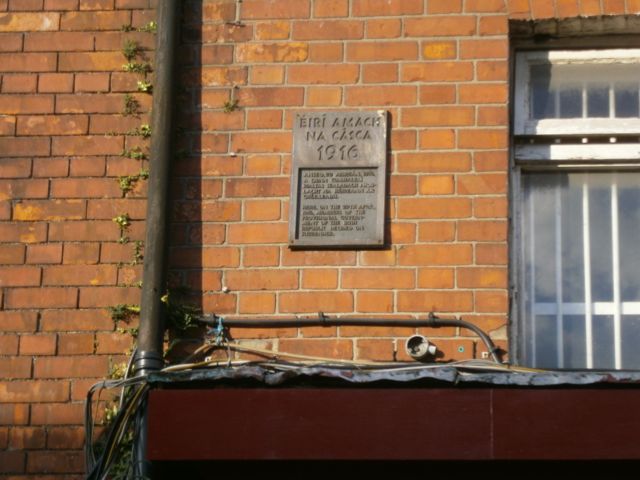
NGA plaque on No.16 Moore Street (Photo source: D.Breatnach)
In 1966, the voluntary and non-state-funded National Graves Association put one of their small commemorative plaques on the front of No.16 Moore Street and it was the removal of this plaque by a property speculator in 2001that gave rise to the NGA starting the campaign to save Moore Street, into which over the years others outside the NGA came to play major roles.
THE PLANNING DEPARTMENT OF DUBLIN CITY COUNCIL
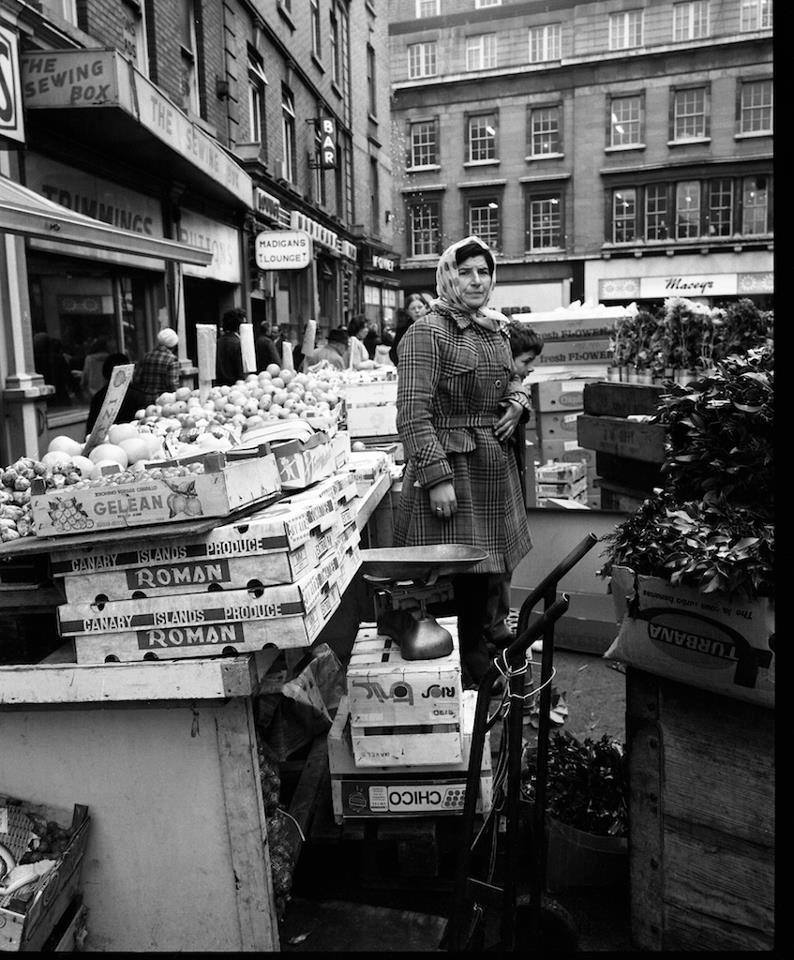
The Planning Department’s pet property speculator was Joe O’Reilly of Chartered Land and TG4’s program Iniúchadh Oidhreacht na Cásca in 2007 traced the process by which this speculator was given extraordinary special facilities even over other speculators. The Planning and Property Development Department’s chief officer is, since a change in the law some years ago, empowered to grant planning applications without reference to the Councillors, the elected representatives. He is also incidentally the Assistant Chief Officer of the Council’s management executive. Jim Keoghan (now retired from DCC) has used that executive power to approve most property speculators’ application for “development” in Moore Street and indeed it was Dublin City Council that oversaw the destruction of most of the centuries-old street market quarter and its replacement by the ILAC Shopping Centre, Dunne’s Stores and Debenhams.
Throughout all these “developments” in the Moore Street area the street traders have had meagre shelters and poor lighting provided by Dublin City Council but no heating, toilet facilities, changing rooms or convenient water supplies for cleaning or flowers maintenance; they are obliged to renew their licenses yearly, licenses which are bound by all kinds of petty restrictions.
Famous photograph taken presumably from GPO roof, showing how busy the market used to be just a few decades ago. Even then, conditions for the street sellers were hard with no alleviation by Dublin City Council. (Photo source: Internet)
As the modern-day battle for Moore Street intensified, Dublin City Council installed not one but two full-time Market Inspectors on the street, which had previously functioned well with one Inspector visiting in the morning and evening. These market inspectors have no role in preventing antisocial behaviour or in monitoring the quality of the food on sale and their main activity seems to consist of telling stall-holders what they may not sell1, or that they are placing merchandise beyond the strict limits of their stall area (in a street which now holds at maximum fifteen stalls, where once before there were many times that number), or that they have continued trading some minutes beyond their official closing time. And they are not permitted to sell on Sundays while, of course, the supermarkets bracketing them, Lidl and Dunnes, face no such restrictions.
These rules have been there for years – it is the degree of enforcement that has changed. One could be forgiven for thinking that some high officials in Dublin City Council want to drive the traders out and, indeed, traders who are now in their third and fourth generations on the street see no-one in their families willing to take over the enterprise when they retire.
THE PROPERTY SPECULATORS
The small shopkeepers are not without their own problems in the street. Most of them are on annual contracts (or even shorter, such as three months), subject to having their business in the street closed at the wish of the property speculators. The ILAC extension currently underway at the south end of the building resulted in the eviction of around ten businesses, most of which received no alternative site. Even the presence of a narrow vegetable produce rack outside a shop can bring down a threat or an actual fine from the Market Inspectors, while ugly hoardings approved by Dublin City Council squeeze the street and restrict the flow of pedestrians.
The ILAC shopping centre was jointly owned by property speculators Chartered Land and Irish Life. As outlined by the TG4 program, Joe O’Reilly of Chartered Land, like many banks and speculators, over-extended himself and Government agency NAMA took over his debts, however paying him €250,000 a year to “manage” them. Subsequently, NAMA approved Chartered Land to sell its debt on to Hammerson, a huge British-based property speculator and vulture capitalist concern.
Exposé by The Daily Mail of €200,000 being paid by NAMA to Joe O’Reilly, of Chartered Land. (Photo source: Internet)
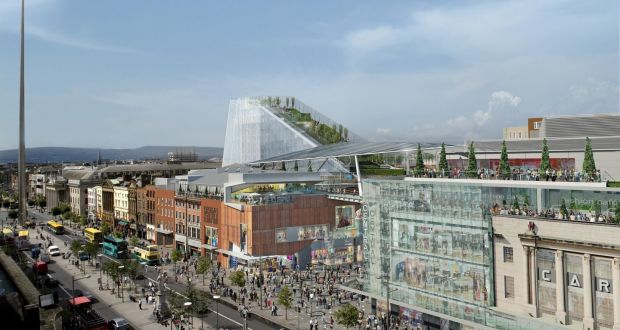
Chartered Land had been granted planning permission for a giant “shopping mall” of nearly seven acres (2.3 hectares), extending from O’Connell Street westwards to Moore Street and from parts of Parnell Street southwards to Henry Street. The planning permission entailed the demolition of every building within those limits, excepting only No.s 14-17, which the State had by then accepted were of historical importance and had granted them preservation status. The laneways and streets were also to disappear. In the meantime the State did nothing to oblige Mr. O’Reilly to maintain the buildings which they had stated were of preservation status.
The giant shopping ‘mall’ intended acreage in dark blue and the existing ILAC spread in green (which has buried a number of streets and laneways of the old street market quarter). Famous photograph taken presumably from GPO roof, showing how busy the market used to be just a few decades ago. Even then, conditions for the street sellers were hard with no alleviation by Dublin City Council. (Photo source: Internet)
The State bought the four houses in question in the latter half of 2015 and planned to demolish houses on each side of the four until in January of 2016 a legal challenge by Mr. Colm Moore and an occupation of the buildings by activists for five days, followed by five-week blockade, brought about a respite. The speculators attached themselves to the case as having an interest to defend.
While the case dragged on, the Minister’s officers and legal team endeavoured to undermine the historical importance of the quarter, arguing that the Moore Street area was not a battleground (instead “the whole of Dublin was a battleground”) and that no other building there other than the four with preservation status was of historical importance. This included the rest of the terrace and even No.10, which had been the first HQ of the Rising after the evacuation of the GPO, and which had been run as a temporary hospital by Volunteer Nurse Elizabeth O’Farrell, caring for nearly twenty wounded men (including a British soldier found in Moore Street).
“Sailor” Simon Betty, front man in Ireland for Hammerson, may find the waters choppier than expected. (Photo source: Internet)
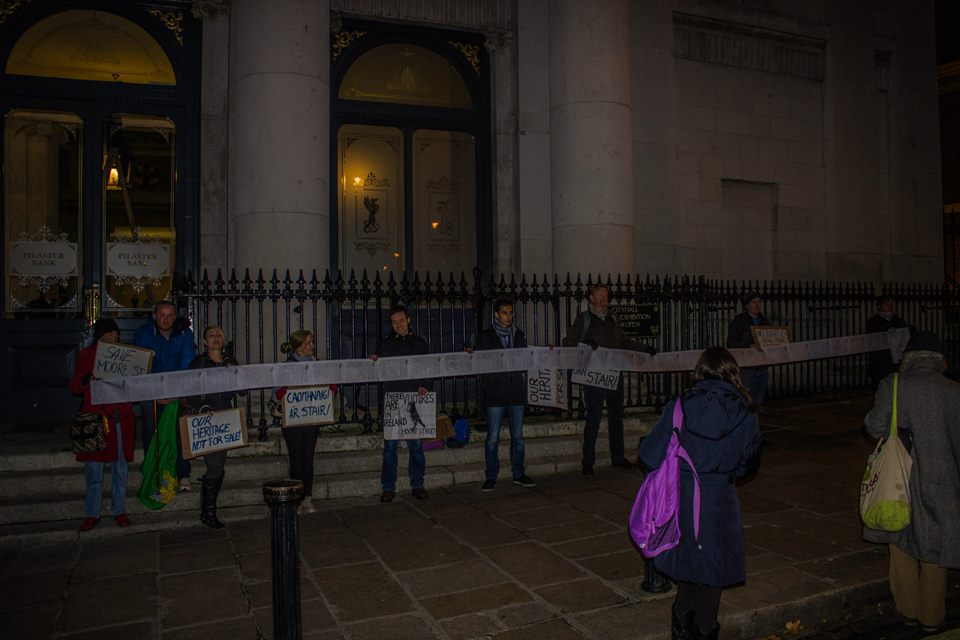
The Save Moore Street From Demolition group (whose campaign stall has been on the street every Saturday since September 2014) raised the alarm and called an emergency demonstration in January 2016, after which people occupied the buildings for five days until the High Court Judge ordered no demolition until Mr. Moore’s case had been heard. Subsequently, with heavy machinery heard at work on the site and the contractors and Minister refusing inspection to campaigners, the Lord Mayor, Councillors or TDs, campaigners blockaded the site and allowed no workers to enter; this was led by a new, broad group that had arisen from the occupation: Save Moore Street 2016.
Minister of Arts, Heritage and Gaeltacht, orchestrating the destruction of our 1916 heritage. (Photo source: Internet)
On March 18th 2016, the 100th anniversary year of the Rising, the High Court Judge delivered his verdict in the case brought by Mr. Moore, declaring that the quarter bounded by Moore Lane, Henry Place, O’Rahilly Parade and Moore Street, including the backyards and those aforementioned lanes and street, is a national historical 1916 monument. The campaigners lifted their blockade.
The Minister took her time deciding whether to appeal the judgement and at the deadline, announced that she would, with the support of the Cabinet and other departments. Then she set up her Consultative Forum, from which she excluded the most active of the campaigners, including the Save Moore Street From Demolition campaign which has just passed its 136th consecutive Saturday on the street collecting over 80,000 petition signatures and distributing leaflets. Also excluded have been the Save Moore Street 2016 campaign group, a broad alliance of people from different organisations and none that arose out of the occupation and blockade of the buildings in early 2016.
Meanwhile, Jim Keoghan of Dublin City Council, in one of his last major acts of office before retirement, in the summer of 2016 extended the planning permission for the giant ‘shopping mall’, despite the fact that it was due to run out in March 2016, despite the High Court judgement, in the face of opposition by the majority of elected City Councillors and despite the fact that it had been conclusively shown in court that the speculator had carried out no substantial work on the buildings as required by the planning permission conditions.
WHERE TO FROM HERE?
And so to where we are today. The Minister has her extension (unspecified length but one supposes up to six weeks) but may not decide to take her case to the Supreme Court and may use the delay instead for other purposes, including setting up her select Advisory Committee, as in the Recommendations of the Report of her Consultative Group. If the case goes to the Supreme Court, a date for hearing will need to be set. If the Minister should continue instead to Court of Appeal, the case date has been set for mid-December this year 2017, which also means it is bound to continue on into 2018.
Meanwhile most of the buildings steadily and visibly deteriorate, prey to speculator neglect and Irish weather. The four buildings now in Government hands have been subject to restoration work with some visible inappropriate results, the whole of the work carried out without independent archaeological and restoration expert assessment or oversight, the Government ‘expert’, Gráinne Shafrey, being the same person who argued for the Minister in the High Court that the other buildings in the street were of no historical importance.
For progress to take place at the moment, the first step is for the Minister to drop the appealand that should be the minimum demand of all who genuinely care for the historic buildings, laneways and street market. When that has been done, we can move on to consultation on the most appropriate way to save and restore the buildings, rejuvenate and expand the street market. And to how that process shall be democratically and transparently controlled.
No foreseeable change of Government seems likely to bring any relief to this situation, given the stand taken in the Minister’s Consultative Forum by the representatives of the four main political parties. Other than the continuing legal action, the real hope resides where it has done from the start – with the wishes of the majority of people and the energy, commitment and at times daring of the active campaigners outside the corridors of power or, one might say, instead on the streets of power.
End.
Historical background notes:
On 28th April 1916, with the GPO and many other buildings in O’Connell Street in flames, the garrison of the GPO and HQ staff of the Rising for an independent Irish Republic evacuated their building and sought to break out of the British Army’s tightening encirclement. They made their way along Henry Place, encountering heavy British fire at the junctions of Moore Lane and Moore Street from British barricades at the Parnell Street ends and from the Rotunda tower, suffering a number of casualties as a result. In Moore Street the major part of the evacuation tunneled from house to house along the No.s10-25 terrace and a number of other houses too. Another section mounted an unsuccessful charge on the British barricade at the end of the street.
On Saturday 29th April, after a number of civilians were shot down in the street by British gunfire, the decision was taken by the insurgents’ leadership to surrender and Volunteer Nurse O’Farrell went out under a white flag of truce to seek terms from the British. None being available, Patrick Pearse and James Connolly surrendered their forces unconditionally and over the next few days the forces in other strongholds in the city and in Wexford surrendered (or evacuated their fighting posts and went into hiding). Nearly 100 death sentences were handed out by British military courts of which fifteen were confirmed and carried out (and a further one in London by civilian court); the executed included six who had spend their last days of freedom in Moore Street houses, including five of the seven signatories of the Proclamation: Thomas Clarke, Patrick Pearse, James Connolly, Joseph Plunkett, Seán Mac Diarmada. Most other prisoners were sentenced to prison or concentration camps in Britain and many others were arrested and interned without trial.
Moore Street was at the time part of a whole centuries-old street market quarter of which most of the rest lies buried under the ILAC Shopping Centre, constructed in the later 1970s. For sixteen years a struggle has been going on for the preservation and restoration of this historical quarter.
Note about the author:
Diarmuid Breatnach is an independent political and social activist who has been campaigning for Moore Street for years, including in September 2014 being a co-founder and active member of the Save Moore Street From Demolition campaign group and is a member too of the Save Moore Street 2016 campaign. He has written a number of articles, given talks and presentations on the Moore Street issue (including to the Minister’s Consultative Group). Breatnach also writes on history in general (among other subjects), conducts history walking tours and has publicly called on Dublin City Council to give Moore Street its correct Irish version of the street name, i.e Sráid an Mhúraigh rather than the “Sráid Uí Mhórdha” which Dublin City Council has named it.
1In 2016, the centenary of the 1916 Rising, they were forbidden from selling Easter Lillies and Easter Rising commemorative products from their stalls, unless they purchased a special license to do so.
May 1st, International Workers’ Day was celebrated in warm sunshine in Dublin with a parade and rally organised by the Dublin Council of Trade Unions and a later event organised by the Independent Workers’ Union.
Crowd scene outside Garden of Remembrance, the starting point of the DCTU march
The DCTU-organised event met at the Garden of Remembrance at 2pm and set off at nearly 3pm, with numbers although still small by European standards nevertheless larger than has been seen for some time in Dublin, according to the organisers filling O’Connell Street, the city’s main street throughout its whole length (500 metres or 547 yards).
Seen on the parade were trade union banners, those of some political parties, also of campaigns and community groups.
As it has been doing for years, the parade ended in a rally in Beresford Place, in front of Liberty Hall, the very tall building owned by the SIPTU trade union, where the audience were addressed by speakers from trade unions and campaigns and NGOs.
Section of crowd at rally in Beresford Place
Curiously, soon after arrival the comparatively strong showing of Sinn Féin flags, the green one with their logo and the blue and white version of the Starry Plough, were nowhere to be seen.
Similar section with some banners noticeably missing
The issues of lack of affordable housing, of public land being sold for private housing and speculation, of precarious employment, of financial speculation and cuts in services were addressed by speakers, with a mention also of solidarity for the Palestinian prisoners on hunger strike. A number of speakers also addressed the treatment of migrants and in particular the conditions suffered by refugees in the Direct Provision hostels of the state’s welfare service.
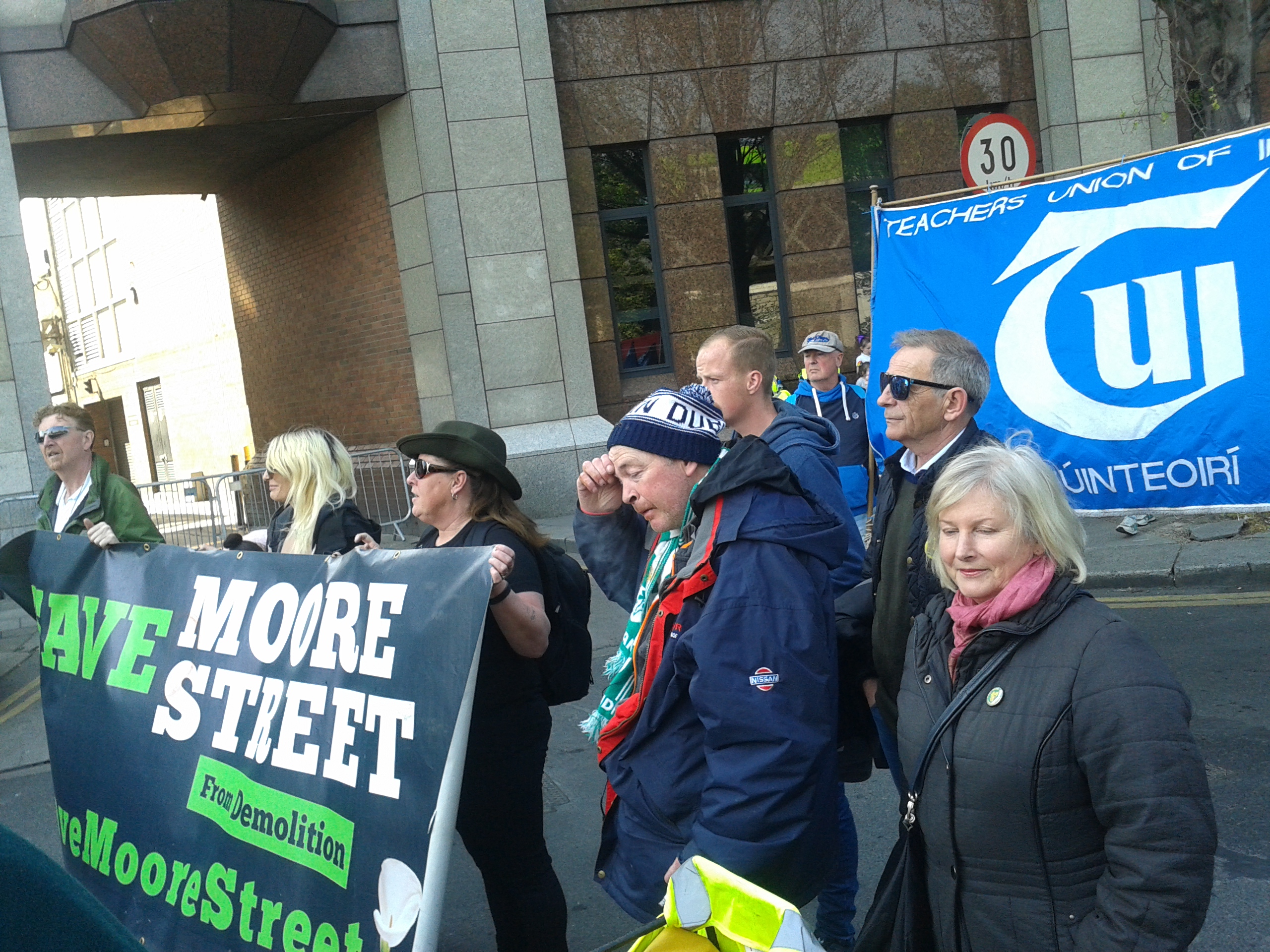
Stage erected at Beresford Place, outside SIPTU’s officesThe Moore Street campaign banner was one of the campaign groups present on the parade and mentioned from the stage by the rally’s chairperson.One of the speakers at the rally — she denounced the sale of private land including the deal done at O’Devaney Gardens estate in Dublin.
Somewhat later, the Independent Workers’ Union held their own event, marching with a colour party from their offices to James Connolly monument, also in Beresford Place and across the road from Liberty Hall.
IWU event colour party at Connolly Monument
Damien Keogh chaired the event and introduced veteran campaigner Sean Doyle who gave a short and to the point speech about the situation in which working people find themselves today and ending with a quotation from James Connolly, in which the revolutionary socialist castigated those who claimed to love Ireland but could tolerate seeing poverty and deprivation among its people. Doyle also sent solidarity greetings to the Palestinian political prisoners on hunger strike in Israeli jails.
Paul Bowman was then introduced and in a longer speech covered Connolly’s time in the USA, his membership of and activities of the IWW (“the Wobblies”); the Haymarket Incident in Chicago which led to the choosing of May 1st as International Workers’ Day and the state murder of the Haymarket Martyrs; the principles and attitude of the IWU today.
Another Moore Street campaign banner and supporters in period costume also participated in the IWU eventSome random tourists, one form London and the other from Madrid, who chanced to pass by and remained for the whole ceremony.
Damien then introduced Diarmuid Breatnach to sing “We Only Want the Earth” (an alternative title to the original of “Be Moderate”). Breatnach explained that the lyrics had been composed by James Connolly and published in a songbook of his in New York in 1907 without an air. As a consequence the lyrics have been sung to a variety of airs but Breatnach said he sings it to the air of “A Nation Once Again” (composed originally by Thomas Davis some time between 1841 and 1845). This arrangement provides a chorus and Breatnach invited the audience to join in the chorus with him, which they did.
“We only want the Earth,
we only want the Earth,
And our demands most moderate are:
We only want the Earth!”
A wreath was laid at the monument on behalf of the IWU by Leanne Farrell.
The chairperson then thanked those in attendance, speakers and singer and invited all back to the offices of the IWU in the North Strand for refreshments.
The whisper is that a new movement is to be created, called Right to Change and that it will publish an on-line mass left-wing newspaper, which will be the first mass left-wing paper in this country since 1913 and even then, that newspaper’s distribution was mostly confined to Dublin.
In fact, a movement based on the right to change already exists, taking in not only the right to water but to housing, to social provisions, to health, to education, to natural resources – the many things that have been removed or cut or are under threat in order to pay the bankers and speculators. One supposes that this new organisation is intended to build on that movement, coordinate it etc. And no doubt put up a slate of candidates at local government and at general elections.
It is Right to Water that has given rise to this idea and no doubt a number who were prominent in it will be likewise in the new organisation.
Right to Water was not a movement, rather a kind of coordinating organisation for national demonstrations, chiefly in Dublin, against the water charges and the expected privatisation of water. In that work it has been highly successful.
The demonstrations built on the actions and mobilisation of hundreds of community groups across the country, protesting locally, encouraging people not to register or pay the charges, blocking Sierra and others from installing water meters and so on.
Many people will think that building Right to Change is the logical next move and will be enthused by it. And why not? Sure wouldn’t it be great to have a large number of TDs standing up to the System, denouncing its plans and their actions? The kind of thing done today by a few Independent TDs and others representing parties with small representation in the Dáil. Well, it would be useful but would it really make a difference?
Recently a Dáil committee set up to review the water charges and so on published its recommendations. Only 13 of the committee’s 20 members agreed with all of the recommendations but all of the recommendations stand nevertheless. Of course some of the objectors were right-wingers but many were of the Left – the System will always have a majority in the sub-systems it sets up. And if a time should come when it cannot achieve that …. well, that’s when you’ll hear the tanks clanking down the street.
Ok, granted perhaps, but it can’t hurt, can it? To have more Left TDs harassing the Government? No, of course not. Not unless we expect too much of this new organisation. Not unless we come to depend on it. And scale down our own independent activities. Hand over power to them.
That wouldn’t happen, would it? Unfortunately it has been a historical trend for popular movements to do exactly that. And social democracy always betrays the mass upon which it has erected itself. The Liberals in the further past and our ‘own’ Fianna Fáil in more recent history often promised the workers many things to win their votes. And even helped the workers push some things through from time to time. But they never promised to abolish the System, never promised socialism.
Social democracy does promise to deliver a fair and just society. It is a promise that it has been making for well over a century but on which it never delivers. It’s not just about jobbery and corruption, of which there is plenty in the corridors of power and to which many social democrats gravitate; it’s more that the Councillors and TDs elected never had any intention of abolishing the System. And in fact, will come out to defend the System whenever it is in danger. When it comes down to it, the System is THEIR system.
From time to time one hears social democrats bewailing “the unacceptable face of capitalism”, as though there exists an “acceptable” face of that system. They may talk at times about the “evils” of capitalism but will bear in mind the “good things” of capitalism too, the benefits they draw or hope to draw from the System. So criticism must be “balanced”, one mustn’t “throw the baby out with bathwater” and so on.
“The law must be obeyed”, they agree, as though “the law” is something divorced from class and politics, some immutable thing that just somehow exists. And yet just about every major social and political advance — including the right to organise a trade union at work, the right to strike and the right to universal suffrage — was won by people breaking “the law”. “The law” and its enforcers are part of the System.
If (heaven forbid) the action of the System’s police should be criticised, then we will hear phrases like “the police have a hard job to do”, the action of the ‘bad’ police is “bringing the force into disrepute”, “there are a few bad apples”, “better training is needed”, a “change in management is necessary”, etc etc. Anything but admit that the police force in a capitalist country exists in order to serve that System.
SOCIAL DEMOCRACY BETRAYS
At the beginning of May 1926, with a coal miners’ strike as a catalyst, Britain was heading towards a real possibility of revolution. The social democratic Trades Union Congress called a General Strike. In many areas of the country and in cities, no transport moved unless it had authorisation from the local Trades Council (a committee of local trade union representatives) or it had armed police and soldier escort. In less than two weeks, the TUC, at the behest of the British Labour Party, called off the strike, leaving the miners to fight on alone to their defeat in less than eight months. “By the end of November, most miners were back at work. However, many remained unemployed for many years. Those still employed were forced to accept longer hours, lower wages and district wage agreements” (Wikipedia).
Banner of a Labour Party branch of Crewe (West England) with a Marxist revolutionary slogan at a General Strike rally. Yet the leadership of the Labour Party convinced the TUC to call off the General Strike. (Image source: Internet)
There had been more workers coming out at that time but also some of the union leaders were beginning to crack, as the struggle was shaping up to be a real showdown between the System and the workers. The TUC didn’t even set up a system to guarantee no retaliations by bosses against activist workers in non-mining unions and many lost their jobs.
The Chilean Salvador Allende is often seen as a hero, a radical social democrat who stood up against internal military fascism and external CIA-led destabilisation. Workers and peasants and some sections of the middle class got Allende elected President in 1970 but right wingers and officers in the military, working with the CIA, were conspiring against him. Everybody knew this and sections of the workers asked for Allende to arm them against the coup they knew was coming. Allende tried instead to compromise and find senior officers he could work with to use against the plotters. When the military carried out the coup, there was some armed resistance but most workers were unarmed. The coup left “3,000 dead or missing, tortured ten thousands of prisoners and drove an estimated 200,000 Chileans into exile” (Wikipedia). In addition, the children of many murdered left-wingers and union activists were given to childless right-wingers and military and police couples to raise as their own.
Social democracy always betrays or ends up hung by its own illusions. Unfortunately the workers end up hanging with it also.
Moments of terror during the 1973 military coup in Chile — some of those pictured may well have been tortured and/ or murdered soon afterwards. (Image source: Internet)
In 2010, in response to Government budget cuts of between 5% and 10% on public servants, along with a levy on pensions, along with a breakdown in the “partnership” system of business and state employers negotiating with trade unions, the social-democratic Irish Trades Union Congress called a major demonstration in Dublin. Perhaps 70,000 marched down O’Connell Street and the ITUC was threatening a general strike. Despite escalating strike action in a number of sectors and the growing unpopularity of the Government, the ITUC abandoned the idea of a strike and instead went in to do a deal with the Government, in which they actually agreed to pay cuts and the pension levy, in exchange for some guarantees around public sector jobs. The social democratic trade union leaders didn’t have the stomach (or backbone) to take on the Government, to test the level of support for resistance.
Section of the ICTU protest march in November 2010 — the ICTU threatened a General Strike within days but instead crawled into Croke Park Agreement. (Image source: Internet)
Why all this talk about social democracy? Well, because Right to Water is essentially a social democratic alliance. It contains Sinn Féin, the biggest minority party in the Dáil, with 23 elected representatives, third in numberof TDs. Right to Water is also supported by Unite, “Britain’s biggest union with 1.42 million members across every type of workplace” according to their website – it is pretty big in Ireland too, which is a “region” for the union, with 100,000 members across the land.These are forces that, while opposing the water charge, did not support civil disobedience on water meter installation nor refusing to pay the charge (although a number of their members fought along with the rest). Refusing to register and pay were the most effective ways of resisting the water charges and it is the high level of civil disobedience behind the giant demonstrations that has made the ruling class think again and promoted divisions between FG and Labour on the one hand and Fianna Fáil on the other.
But these elements did not support that policy. They want to be not only law-abiding but be seen to be law-abiding. Seen by who? Well, by the ruling class of course. SF in particular is champing at the bit to get into a coalition government but needs to show the ruling class that it is a safe pair of hands, i.e that the System will remain intact if managed by them. As indeed they have done in joint managing the regime in the Six Counties.
Of course there are many occasions when social democrats and revolutionaries can cooperate – but never by ceding leadership to the social democrats nor by depending on them, always instead by relying on their own forces and striving to educate the masses that the system cannot be reformed but needs to be overthrown …. and that the ordinary people are perfectly capable of achieving that.
AN ON-LINE MASS LEFT-WING NEWSPAPER
What about the left-wing newspaper though? Now that might be something, true enough. A source of rebuttal to the lies we are constantly getting from the media and a source of information and news which media censorship ensures most of us don’t get to read, see or hear.
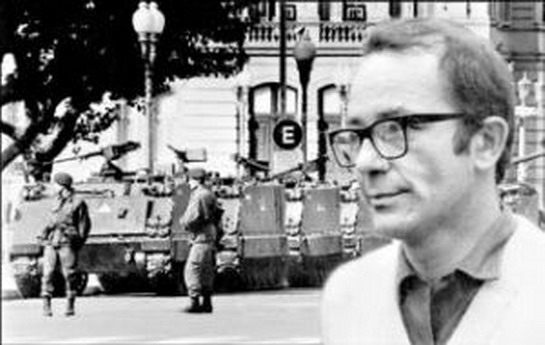
If it seeks to be a truly mass paper it will need to cover not only foreign and domestic news but also sport, with sections on history, culture, nature, gardening ….. Rudolfo Walsh, who founded and with others ran the important ANCLA news agency during the dictatorship and the earlier extremely popular CGTA weekly in Argentina, until he was assassinated by the police, has been credited with two important sources of the weekly’s success: his informants within the police and army and an excellent horse racing tipster!
Rudolfo Walsh, Argentinian writer and journalist of Irish descent, his image superimposed on another of the military dictatorship that murdered him. (Image source: Internet)
It is a big undertaking and a very interesting one.
But will the new paper practice censorship? Will it confine its discourse to the social democratic or instead allow revolutionary voices in it? Will it allow criticism of trade union leaderships, including Unite’s? Will it cover the repression of Republicans on both sides of the Border but particularly in the Six Counties? One would certainly hope so. Well, the proof of the pudding is in the eating – and of the newspaper, in the reading.
The 1916 Rising, to which Moore Street is so closely linked, represented some very important events for the people of the world and it impacted on people in all populated continents of the globe.
FOR DEMOCRACY, EQUALITY
The 1916 Proclamation, printed in Liberty Hall and signed in No.21 Henry Street, just around the corner from Moore Street, is a document not only of clear patriotic and anti-colonial expression but also a democratic and inclusive one. At a time when hardly a state anywhere in the world permitted women to vote in elections, the document specifically addressed “Irishmen and Irish women”. It also clearly expressed the wish of the insurgents to overcome the religious sectarianism which had played such an important part in securing continued colonial rule: “ … religious and civil liberty … oblivious of the differences carefully fostered by an alien Government, which have divided a minority from the majority in the past.”
Site of signing of 1916 Proclamation, 21 Henry St, almost opposite end of Moore Street. At the time the business premises and cafe of Jennie Wyse Power of Cumann na mBan was there (plaque erected in 1919 by the 1916-1921 Club).
The Rising had expressed the gender equality intentions of the insurgents in more than the words of its address: women fought in the Rising and, in two garrison areas, commanded for awhile. The British colonial authorities recognised the role of some of those women by sentencing one to death, albeit a sentence later commuted, and keeping a number of them in prison even after many men had been released.
Headline of 1916 Proclamation and specific mention address to Irish women (sourced oh Internet)
FOR GENDER EQUALITY
Irish women organised for and acted in the Rising in two separate organisations: Cumann na mBan and the Irish Citizen Army.
The women founded as an auxiliary force to the Irish Volunteers, Cumann na mBan, later to assert considerable organisational independence, wore their own uniforms and had their own female officers. Women had participated in many insurrections and resistance movements across the world but no insurrectionary force in history ever before had such a consciously women-organised force.
The women in the Irish Citizen Army had formally equal status with men and a number carried arms in the Rising and fired them at the enemy. Men acted on orders from women officers in at least two garrison areas and, in medical matters, also in at least a third.
Such a situation was of great significance in the struggle for women’s rights and gender equality, not only in Ireland but in the world.
FOR WORKERS AND SOCIALISM
Captain White & Irish Citizen Army on parade on their grounds at Croydon House, Fairview, N. Dublin City. (Sourced on Internet)
The Irish Citizen Army was founded in 1913 as a workers’ defence force by trade unionists and socialists and later as a workers’ army and, despite its strongly anti-colonial stance, until the 1916 Rising, maintained a strict separation from the nationalist republican organisations of the Irish Volunteers and Cumann na mBan. As detailed earlier, it formally recognised women within the organisation as of equal status with men.
Workers’ organisations had existed before, including armed ones but nowhere had such an armed organisation existed outside of armed conflict for so long (1913-1916), led by socialists and with equal status for men and women. In the history of socialist organisation and particularly of a revolutionary and insurgent kind, this was a development of enormous importance.
AGAINST WAR
The 1916 Rising took place in the middle of the first of two huge international conflicts that were later called World Wars. WW1 was a struggle for markets, resources and strategic positions and bases between a number of states ruled by capitalists and those states recruited heavily from among the nations they had colonised; in Britain’s case, that included Ireland.
To many nationalist Republicans, the War represented an opportunity, expressed in the maxim that “England’s difficulty is Ireland’s opportunity”. But to many socialists around the world, the War represented a disastrous pitting of the working people under one Power against the working people of another, as well as an excuse for the suppression of demands to fulfill the needs of their workers while the capitalists gathered huge profits. James Connolly was one of those socialists.
“WE SERVE NEITHER KING NOR KAISER banner on Liberty Hall (prior wartime repressive legislation), HQ of the IT&GWU, the WUI and of the ICA. (Sourced on Internet)
Connolly, Edinburgh-born Irish revolutionary socialist, formerly Acting General Secretary of the Irish Transport & General Worker’s Union, had joined the International Workers of the Word, the hugely influential in the USA syndicalist organisation. As well as being an energetic organiser, Connolly was a historian and revolutionary theoretician. Connolly took to heart the resolution formally adopted by representatives of the vast majority of European socialists to oppose war and, should it come, to turn it into class war against their rulers. In the event, Connolly was one of the few European socialist leaders to live up to that resolution: as Commandant of the Irish Citizen Army, GPO Garrison commander in a rising against Ireland’s British colonial masters, James Connolly was also striking a blow against imperial and colonial war.
That aspect of the Rising, of being consciously or unconsciously against War, predated the February Russian Revolution of 1917, also in part an anti-war uprising, by ten months. And of course, predated the October Socialist Revolution in Russia by seventeen months and the nearest uprising geographically to Ireland, also in part an anti-war one, the German socialist uprising in November 1918, by two-and-a-half years. For all these reasons, the 1916 Rising, the Headquarters of which were in the GPO and later removed to Moore Street, was and remains of enormous significance in the world-wide history of people’s movements against war.
AGAINST COLONIALISM IN THE WORLD
The 1916 Rising reverberated around the world. It took place in what had a century earlier been widely regarded as the second city of the British Empire and, when it erupted, did so against the largest empire, in terms of directly-controlled areas and population numbers ruled, that the world has ever known. How can such an event be of other than huge interest, not only to other peoples under British colonial rule but also to those under the colonial rule of France, Belgium, Germany, Holland, Portugal, Spain, Russia and the United States? How could it not have been of considerable interest to socialist revolutionaries everywhere?
Lenin speaking in Red Square in October 1918. He was among Russian revolutionaries who commented on the 1916 Rising. (Sourced on Internet)Map of world empires, colonies and territories in 1914 (Sourced on Internet)
Socialists around the world discussed the Rising, at first often criticising it, while Lenin, of huge importance in the socialist movement at that time and some others commented favourably upon it. Consequently, the Rising and the War of Independence was to play an important part in the development of a revolutionary theory around the world that advocated the linking of the struggles of worker, peasant and small farmer, of anti-imperialism and anti-colonialism with struggle for a socialist republic.
August 4, 1916: From left: Irish American labor leaders Timothy Healy, William B. Fitzgerald, William D. Mahon, Hugh Frayne (general organizer in New York for the American Federation of Labor), and Louis Fridiger. Fitzgerald, Mahon, and Fridiger represented the Amalgamated Association of Street Railway Employees of America. (Source http://irishamerica.com/2016/02/hand-in-hand-for-freedom-u-s-labor-and-irish-rebels/
The Rising was a topic of great discussion in the United States and in Australia, and in the USA of financial and other support, as is well known. Connolly had been active there and had published his songbook in New York in 1910; Larkin was actually there in 1916. For a number of reasons, including the sentencing to death of Eamon Bulfin for his role in the GPO and in Moore Street, a sentence later commuted and Bulfin deported to Buenos Aires, the Rising was discussed in Argentina and in other Latin American countries (where, at that time, the British were the main imperialist power).
Eamon Bulfin, born in Argentina and exiled there after 1916, his photo in Australian paper the Southern Cross that year. (Sourced on Internet)Members of 1st Battalion Connaught Rangers including the leader of the 1920 mutiny in the Punjab, James Daly. (Sourced on Internet)
It was certainly discussed in the huge country of India (which at that time included what is now the states of Pakistan and Bangladesh), whose revolutionary nationalists had contact with Fenian revolutionaries from decades earlier. The Connaught Ranger mutiny in the British Army was a direct result of the Rising and the War of Independence and, before the mutiny was crushed, the soldiers and oppressed Indians had begun to make movement towards reciprocal solidarity. And we know, from history and the writings of Indian nationalists and socialists, that the Rising and the War of Independence which organically followed the Rising influenced the struggles against colonialism and imperialism in India right up to the Second World War. We are also aware of correspondence between the Nehru and Ghandi families and the McSwineys.
A young Ho Chi Minh (not his name then) at Marseilles conference in 1919 (Sourced on Internet)
We know also that the War of Independence influenced African uprisings and Ho Chi Minh, later leader of successful wars against Japanese invasion and French colonialism. In South Africa, the Rising must have been a subject of discussion too, at least among the whites. John McBride, sentenced to death ostensibly for his role in Rising was probably in reality being shot for having organised and led an Irish Brigade to fight the British in the Second Boer War, which had ended but fourteen years earlier.
In Britain itself, the Rising influenced the huge Irish diaspora in England, Scotland and Wales and a significant proportion of the insurgent forces in Dublin had actually come from there. The Rising and especially the War of Independence caused a crises of a kind in British socialist thinking, threatening an irrevocable rupture between revolutionary socialists and even sections of radical social democrats on the one hand and pro-imperial social democracy on the other.
This is not the place to discuss this further but that situation, allied to anti-colonial struggles around the world, huge dissatisfaction and mutinies in the British armed forces and a growing strike movement in Britain, provided great opportunities for an Irish revolutionary movement to influence the history of the world in a direction other than that which it has taken.
For all the reasons outlined above, the Moore Street quarter should be of recognised World Heritage Status.
UNESCO WORLD HERITAGE AND OTHER CONSERVATION STATUS
The Irish State ratified the World Heritage Convention in 1991, which qualifies Ireland to apply for that status for the Moore Street quarter. Up to US$1 million is available from the World Heritage fund for the saving and development of a World Heritage site and funds are also available for urgent works to save it. World Heritage status attracts considerable tourist interest and substantial revenue is of course also available to the State and businesses surrounding the area from such tourist interest.
Currently Ireland has only two sites which have been accorded full World Heritage status (one of archaelogical and the other or natural, mainly geological, importance). However, another seven sites are under “Tentative” categorisation since 2010 and Dublin City is one of those. The Moore Street battleground could be afforded that full World Heritage status in its own right, which I believe its history deserves but it can also be used to strengthen the case for full such status for Dublin City.
The ten grounds on which UNESCO currently relies in order to examine the “the unique importance” of a site is admittedly rather restricted in the category of historical importance, particularly in the development of social movements. However, even under the existing list, I would submit that the Moore Street battleground meets four of the criteria: 2, 4, 6 and 8. The USA has the Statue of Liberty and Independence Hall building as World Heritage sites.
Registering under EU programs may also be possible, in particular Horizon 2020.
From FB page of Dublin Basque Solidarity Committee
SPANISH STATE APPOINTS POLICE OFFICER CONVICTED OF TORTURE TO UNITED NATIONS COMMITTEE FOR THE PREVENTION OF TORTURE.
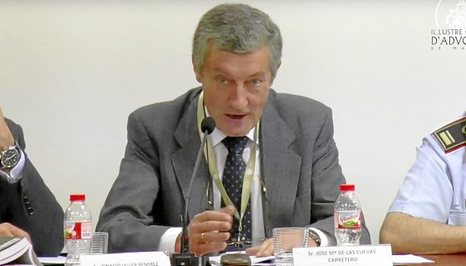
Convicted Guardia Civil torturer of prisoner, Jose Maria De las Cuevas Carretero, appointed by the Spanish State to the UN Committee for the Prevention of Torture. (Photo sourced from Gara newspaper)
No-one could accuse the Spanish authorities of failing to appreciate irony.
In 1997, in one of the rare cases of the Spanish authorities charging a police officer with torture and even rarer of conviction, Captain (then a Sergeant) José María De las Cuevas Carretero, along with fellow Guardia Civil officers Manuel Sánchez Corbi and Antonio Lozano García were found guilty of torturing Basque ETA suspect Kepa Urra when they detained him in 1992. A further three police accused were found not guilty but the medical evidence on Mr. Urra’s admission to hospital six hours after his arrest made it impossible for the Bizkaya court not to find his captorsguilty. Despite the police officers’ denials, the three were found guilty of having taken Mr. Urra to a deserted spot after this arrest and there, while he was handcuffed, to have beaten him with a blunt object and dragged him along the ground. They were sentenced to four years in prison and barred for six years from public office (a common accompaniment to prison sentence in the Spanish State).
However, one year later the Spanish Supreme Tribunal reduced the prison sentence of each to one year which meant they were free to go but with the public office disqualification still in force. The following year, they were pardoned by the Spanish Minister of Justice of the incoming PP Government of Aznar and Mr.De las Cuevas Carretero carried on with his police career, rising to the rank of Captain and participating in fora of the State and internationally.
Mr. De las Cuevas Carretero, who is a qualified lawyer, has been lecturing of the treatment of prisoners and about corruption. And who could say that he is not eminently qualified to lecture on those subjects? Or to represent the Spanish State authorities on those issues?
(News and photo source: Gara, also some background Internet research)
DUBLIN FIRE BRIGADE AMBULANCE SERVICE WORKERS PROTEST AT CITY HALL — hundreds of workers protest Dublin City Council Executive Officer’s plan to “outsource” their service.
Gathering to hear the speakers on Cork Hill, outside the side entrance of Dublin City Hall (left of photo). (Photo: DBreatnach)
The monthly meeting of the elected representatives of Dublin City Council is often an occasion for protest, with placards and banners, of a number of campaigns protesting measures of the Council’s administrators or for calling on City Councillors for support ffor the campaigners’ objectives.
The March meeting of the Council on Monday night this week was no different in that respect but on this occasion, unusually, there were hundreds of protesters outside, the majority of them in uniform, filling the Cork Hill space in front of City Hall’s side entrance, up to the ceremonial entrance gates of Dublin Castle.
Several hundred thronged the area, most of them in either the dark blue of the Dublin Fire Brigade or in red-and-yellow or tan-and-yellow jackets, also bearing the legend “Dublin Fire Brigade”. Dotted among the crowd too were others in ordinary street clothes, presumably members of the public and a few with young children, probably relations to fire fighters or paramedics.
A young supporter of the fire-fighters’ struggle (Photo: D.Breatnach)
The protest meeting was seeking the support of elected Dublin City Councillors in their dispute with the Chief Executive of the Council, Owen Keegan. The highest officer in the Council does not want the local authority responsible for funding the Dublin Fire Brigade’s ambulance service call-and-dispatch service and announced two years ago that it would be transferred from the Tara Street centre and put under the control of the HSE at their national control centre in Tallaght.
However, his plan ran into trouble not only with the fire-fighters themselves but with a large number of the elected public representatives and as a result a consultative forum was set up. Its eventual recommendations were not however what Keegan wished for, proposing instead a technological linkup between the HSE’s and the DFB ambulance services and as a result Keegan and other DCC senior management pulled out of the consultative forum in January. Brendan Kenny, second-in-command at DCC said that there was no point in continuing with the forum since it did not carry out the task it was set up to do but came up with different recommendations.
STRIKE NOTICE
View from the steps of City Hall (State Entrance gates to Dublin Castle to the extreme left of photo). (photo: D.Breatnach)
Since the intention of the City’s management was clearly to proceed with their plan, both the main trade unions affected, SIPTU and IMPACT, balloted their members for strike action and obtained an overwhelming majority in February: 93% to 7% in favour of strike action and 97% to 3% in favour of industrial action. On Monday SIPTU served strike notice on Dublin City Council management and IMPACT did likewise the following day.
The strikes are due to take place from 9am on Saturday, March 18th and Monday, March 27th.
The demonstration on Monday night was addressed by a number of speakers, including many elected Councillors. However, first to address them was SIPTU’s Brendan O’Brien who expressed regret that “SIPTU members in Dublin Fire Brigade have been forced into conducting these work stoppages” which he said was aresult of his “members’ total commitment to providing the best emergency services possible to the residents of Dublin” and the intransigence of DCC management, headed by Owen Keegan.
Speaking to the press, he said that “These firefighters are withdrawing their labour to indicate, in the strongest manner open to them, their complete opposition to an attempt by senior management in Dublin City Council to break up the DFB Emergency Medical Service by removing its ambulance call and dispatch function.”
Before speakers addressed the crowd: top section of the crowd, approaching the State Entrance gates of Dublin City Castle (photo: D.Breatnach)
Addressing the demonstration on Monday evening, O’Brien said that if the strikes were not sufficient to make DCC management see reason, “make no mistake, this fight will become a national one.”
A number of Councillors addressed the crowd, representing most of the political groupings on the Council. Christy Burke, ex-Lord Mayor (2015), representing a group of Independent councillors, stated that DCC management had refused to let them use the power in the nearby building for amplification for speakers. Burke drew cheers when he quipped that what the Management did not realise was that “the power is not in there, it is out here on the street.”
Burke also stated that the DFB Ambulance Service was working well and asked rhetorically “why fix something that isn’t broken”, a theme taken up by a number of other speakers. The Sinn Féin speaker made the point that she was representing the largest political party in the Council, totally supported the Fire Fighters and would be seeking legal advice on Keegan’s plan and the other speakers likewise promised support to the fire-fighters.
OTHER UNDERLYING ISSUES IN THE DUBLIN FIRE-BRIGADE AMBULANCE SERVICE PROTEST
Although speakers for the fire-fighters a number of times expressed support for the colleagues employed by the Health Servive Executive, their members must be concerned at the prospect of coming under the management of an organisation so under-funded and reportedly often mismanaged as has been the HSE for decades now.
Another element playing itself out here is the recurring conflict between many elected City Councillors and the unelected City Management. The political colouring of the public representation in the Council changed considerably with the local elections in 2014, when Sinn Féin with 16 seats and Independents with 12 became the groups most represented. Next in numbers of Councillors is Fianna Fáil with 9 seats, while Fine Gael and Labour each have 8 each and People Before Profit have 5. The remaining 5 are divided between the Greens, Anti-Austerity Alliance and United Left.
This struggle between many of the elected and the appointed few has broken out on a number of issues previously, most notably perhaps on the Moore Street Quarter issue, with Keegan and Jim Keoghan, formerly second-in-command and head of the Planning Department, proposing a deal with a property developer for a ‘land swap’ involving Council buildings on Moore Street, a plan which mobilised significant campaigning opposition and which was defeated by a large majority of Councillors voting in November 2014. The Councillors were however unable to prevent Keoghan’s “executive action” in agreeing a number of property speculator planning applications and the most controversial extension of the ‘giant shopping mall’ permission towards the end of last year.
This level of conflict between the elected Dublin public representatives and the appointed senior officials has perhaps not been seen since the War of Independence (1919-1921), when an Irish Republican and Labour majority on the Council, after the 1920 Local Government elections, found itself in recurring confrontation with officials appointed under a colonial administration.
BACKGROUND
“According to Dublin Council’s website, “The Fire Brigade has provided the citizens of Dublin City and County with a fire and rescue service since 1862. This service was enhanced in1898 by the addition of an emergency ambulance service. In 2007 with 12 emergency ambulances DFB responded to 78,864 ambulance incidents, with the figure growing each year.
“Dublin Fire Brigade provides an emergency ambulance service to the citizens and visitors of Dublin. Dublin Fire Brigade is the only Brigade in the country to provide an Emergency Ambulance Service. Dublin Fire Brigade operates 12 emergency ambulances with one ambulance operating from each full time station with the exception of Dun Laoghaire.
“DFB’s Firefighters are trained to Paramedic level and are registered as practitioners with the pre-hospital Emergency Care Council (PHECC), meaning there are over 100 Paramedics available on a 24/7 basis in the event of a major emergency. All operational firefighters rotate between Fire and Rescue to Emergency Ambulance duties. Dublin Fire Brigade Ambulance Service has achieved accreditation under the ISO 9001/2000 Quality Management System.”
Lively ladies active in the Campaign for social housing Irish Glass Bottle site, Ringsend. (photo: D.Breatnach)Banner of campaign for social housing Irish Glass Bottle site, Ringsend. (photo: D.Breatnach)
OTHER CITY HALL PROTESTS
Also protesting outside City Hall (see photos) were lively and good-humoured campaigners for social housing on the former Glass Bottle company site in Ringsend and others calling for the renaming of the Artane Band (it is hoped to cover these campaigns in a little more detail in future reports).
Campaigners to rename the Artane Band because of the abuse that went on in the Artane Industrial School, which formed the original Artane Boys’ Band. (photo: D.Breatnach)
Yes we do – or at least most of us do. There are a few who do not.
Some people think that those few who do not want change are our rulers, the big capitalists — but they are mistaken. The capitalist class forced change to overthrow the feudal system, which was hampering their growth and the development of industry and commerce. And capitalists know that change is inevitable, so it is better to go with it than to try to stop it. That is why they set up courses such as those called “Change Management” — if change is inevitable, then manage it, the thinking goes. Manage it so that it comes out to capitalist advantage, naturally.
(Source Internet, using “change management” as search words)
Change Management courses, particularly those dealing with personnel, emphasise managing change as smoothly as possible, making it non-traumatic. In that way, it is assumed, there will be less reaction against the change, less opposition.
But in fact, sometimes capitalism wants the exact opposite – it wants change to be as traumatic as possible. These are the situations described under the title “Shock Doctrine” by economic/ environmental activist and theorist Naomi Klein (2007). This has two mechanisms: in the first, the shocking change taking place disarms people from the psychological ability to organise resistance; in the second, the speed of the shock (or shocks) of the economic and political manoeuvres of the capitalists moves faster than the opposition can organise, achieving their goals before opposition can coordinate an effective resistance.
Klein has described how huge natural disasters such as earthquake (Haiti), tsunami (Thailand, Indonesia) and flood (New Orleans, USA) are used to force foreign or native private takeovers of sectors of the national economy while the people and the regime in power are reeling under the impact of the disaster.
Political and economic disasters are also used in this model, such as the military coup in Chile and the collapse of the USSR (in the case of Poland), the economic collapse in Bolivia, the invasion of Iraq, the financial collapse of the “Tiger economies” of SE Asia. Even a potentially beneficial change of great magnitude may be used, such as the collapse of white minority rule in South Africa, during which the black majority won formal equality and citizenship but lost control of most of the economy (and lost a lot more which I do not intend to discuss here).
There is in fact a military precursor to this which has been called, in the context of US military strategy, “Shock and Awe”. This doctrine was described by its authors, Harlan K. Ullman and James P. Wade (1996), as “attempting to impose this overwhelming level of Shock and Awe against an adversary on an immediate or sufficiently timely basis to paralyze its will to carry on … [to] seize control of the environment and paralyze or so overload an adversary’s perceptions and understanding of events that the enemy would be incapable of resistance at the tactical and strategic levels”.
Of course there were many elements of this in the Blitzkrieg of the Nazi German army in its invasions of other countries and even the medieval invasions by the Huns and of the Mongols. Cromwell employed elements of it in Ireland in his army’s massacres at Wexford and Drogheda.
Aside from needing change to overcome feudalism, managing change to its advantage and use of shock doctrine to facilitate changes it wants, the capitalist system itself promotes change as part of its system. Small capitalists combine and form conglomerates, in which big capitalists come to power and, in turn, eat up smaller capitalists in order to dominate their sphere of economic activity. We have seen the growth of supermarkets and the decline of small shops, the rise of chain stores killing independent clothes shops, chain cafes and eateries driving indpendent cafes and restaurants out of business.
Capitalists also promote inventions and discoveries so as to increase their wealth but also in order to stay in front of the competition – a capitalist concern that stays at its original level will be taken over or driven out of business by its competitors. Our grandparents hardly knew about the possibility of mobile phones and computers, let alone small hand-held audio-visual connections to the Internet; our children today play with visual electronic games, films and music before they learn to talk. To be sure, monopolies also suppress inventions but they can only do so to an extent as some capitalist somewhere will break the embargo or consensus (if the discovery can be used to make sufficient profits making the attempt worth the risk).
OK, but we want change too and, we think, what we want is not the capitalist kind of change we’ve been talking about until now, although innovations and discoveries should continue and in fact accelerate – but for the benefit of the people, not the capitalists. Technological advances and innovations that do not make big profits may nevertheless be very valuable to us for all kinds of reasons.
So, yes, we want change. But what kind of change? Change to what? Change how? There a vast panorama opens.
We want to eliminate homelessness; have an efficient universally affordable health service; not to have to struggle for a decent standard of living in food, housing and small luxuries; to enjoy universal and affordable access to education at all levels; not to harm the environment; to have the positive aspects of our cultural inheritance, including history, valued and promoted. We want equal rights and respect between people regardless of race or ethnicity, gender, sexuality, ability … and freedom of choice.
In 1930s Germany, people wanted those things too, except that a lot of people were convinced that the contents of the last sentence above were harmful and not what they wanted. But there were many, many people who did want those contents too. The issue was in doubt for awhile.
In the 1928 elections the Nazi Party achieved just 12 seats (2.6% of the vote) in the Reichstag (German Parliament) and in three areas the Nazi Party failed to gain even 1% of the vote. In the Presidential elections of March 1929, the Nazi candidate Erich Ludendorff gained only 1.1% of votes cast, and was the only candidate to poll fewer than a million votes.
We know that elections are not everything – but still.
Five years later, the Nazis were in power — but even after the Communist Party was declared illegal their candidates polled a million votes.
The people definitely wanted change and the established ‘democratic’ parties were unable or unwilling to deliver it. The change the people ended up with was not probably what most had imagined and for some time it spelt disaster for Germany – and unbelievable suffering for large parts of the rest of the world … and also for millions of German citizens.
To look closer to home, people wanted change here too and from 1917 onwards they showed that electorally by voting for the newly-reorganised Sinn Féin party. From 1919 a significant section of the populace took to arms to pursue change and had the active or tacit support of a huge part of the population. But in 1921 the movement and the people split about what kind of change they wanted. A civil war followed with a heavy level of brutality against civilians and combatants, particularly by the State side, which won the contest — and we ended up with the State we now have.
Bombardment of Republican-held Four Courts in Dublin by Free State forces from the bottom of Winetavern Street (with British artillery on loan) starts the Civil War on 28 June 1922 (Source image: Internet)
It is well to be fairly clear about the change we want and what we do not want. There was no such general clarity in the ranks of those fighting for change from 1916 to 1921. It turned out that many who were fighting for change were fighting for different things.
Differences must have come up over the years of struggle and we know from some evidence that they did. We also must assume from the political nature of prominent people in the struggle that there were differences. Even within the IRB itself, only one of the organisations involved, there were differences that surfaced in attitude to the 1913 Lockout, the control of the Volunteers in 1914 and the Treaty of 1922.
Of course, we need maximum unity against the principal enemy. But that is unity in action only. If we put unity in thought, principles or political or social program first, as some organisations have and some others claim to do, we end up with small organisations unable to effectively counter the resistance of the ruling class to the change we want and, in the end, unable to overcome that resistance. On the other hand, if we sacrifice everything to unity against the enemy, we leave ourselves hostages to events in the future and to what kind of society will emerge from the struggle.
Somewhere between those two is where we need to be, preserving the freedom to discuss, explore and proclaim differences of opinion and social program, while avoiding unnecessary squabbles and maintaining unity in action. It is a difficult balance to strike but it needs to be done. In the midst of fighting the common enemy and striving for unity in action against it, we must fight for that freedom also inside the resistance movement, the freedom to discuss, explore and yes, also to criticise.
A generation is passing. Actually they have been passing for some time, the generation of the fighting years of the late 1960s, the 1970s, the 1980s and even the 1990s.
They campaigned variously for social housing; civil rights north and south; for human rights; against Church domination; against Unionist sectarianism; for free access to contraception; for right to divorce; for an end to censorship; for national self-determination; for Gaeltacht civil rights; for Irish language rights and Irish on TV; in support of political prisoners; the rights of women; for Irish Traveller rights; protection of heritage and environment; solidarity with many struggles around the world, including Cuba, Vietnam, Rhodesia, South Africa, Chile, the Black Panthers; against drug dealers; for freedom to choose lifestyle; decriminalisation of gay and lesbian life; for community projects in deprived areas including youthwork and, let’s not forget, organised, fought in and supported strikes.
That generation fought many battles, some of which they won and some which built bases for later battles and their story is told only in bits and pieces here and there. They organised, marched, sat in, occupied, wrote, made placards, painted slogans, put up posters and some fired guns; they were watched, raided, beaten, fined, jailed, calumnied, sacked, expelled, kept unemployed, derided from pulpit, press and judge’s bench, some were shot, and not just they but their families made to suffer too.
I am not referring to people of any specific age but of all those who were any age from young to old and active during those years. The causes of death have been many, from simple old age and life lived out to the death penalty.
But the death penalty was not in force in Ireland in the 1960s, you may think? Actually it was, it wasn’t abolished until 1990 in this state. But you’d be kind of correct as in practice no formal execution has been carried out by this state since 1954.
So, then what am I talking about? Maybe referring to the ‘United Kingdom’, since six counties of Ireland are included in that state? Yes, and no. The death sentence still exists in the UK only for “Arson in Her Majesty’s shipyards” but it was abolished in Britain for the crime of murder in 1965 and, in fact, no-one had been formally executed there from the year before. If the judicial death penalty had still been in force, the people in charge of that state might’ve been been spared the embarrassment of seeing nearly a score of Irish people they had wrongly convicted in 1974 walk free decades later as judges eventually had to find them ‘Not Guilty’.
A bit late for Giuseppe Conlon, against whom there had not even been a shred of doubtful evidence, but never mind. But had they all died in prison or been executed, people might not have worked so hard to see their convictions in court overturned – people among whom Joe Kelly, who died this week and who was cremated on Saturday, stands tall.
But the death penalty was not removed from the judges’ arsenal in that bastion of reaction, Six Counties state, until 1973, when the 30 Years’ War had entered its early years (somebody from the British state clearly had to sit down with the Unionist bigots and explain, although of course they sympathised with their loyal brethren, how bad it would be for Britain and the Queen if they started sentencing and executing IRA and INLA fighters).
There are more ways to skin a cat …. yes, and to kill too. The orange and SAS and MRF death squads killed more against whom there was not even a court conviction. And some of the Republicans killed one another too. And twelve died on hunger strike, one each in 1974 and in ’76 and ten in 1981. Actually, considering the brutality of force-feeding, it’s surprising there weren’t more deaths – Marian and Dolours Price were force-fed 167 times over 203 days in 1973 and it was the publicity around their case and the deaths of Gaughan and Stagg that ended the practice of force-feeding, ensuring that the Hunger Strikers of 1980 and ’81 at least did not have to endure that experience.
But there are more ways to kill …. Many of that generation of fighters died from ‘natural’ causes but died early – cancers, heart attacks, liver damage, despair ….. ah, yes, that brings to mind suicide, of which some also died. But despair also can drive you to drink, even more easily if it has been part of your experience of socialising and alcohol is one of the top killers in the world. And some died of drugs …. or drugs and alcohol …. or infections from unsafe drug injection …. But most who died early did so in summary from the wear and tear of struggle, of prison, of separation, of relationship breakdowns, of betrayal, despair.
Not all died, even those who are not among the fighters today. Some walked away from the struggle and though I can’t imagine being in their shoes, I do not begrudge them. So long as they didn’t betray any on their way out or make a living out of spitting on their former comrades and causes afterwards. But some, a very few, did exactly that and you can read what they have to say quite often in their articles or hear them quoted in the newspapers or on TV or radio.
Some found other ways to betray and did it in secret, feeding information to their handlers and some even diverting attention from themselves by accusing others, some innocent and some of a lesser grade of betrayal than that of the accusers. We know of some of them but may never learn about them all.
Joe Kelly
Poster displayed at memorial in Teacher’s Club (photo accessed from a Facebook posting)
A few have survived and are still around, fighting the struggle, whether in organisations or as independents. Joe Kelly was one in both categories, in a sense. I knew him but did not know him well and met him only in the last decade, after I had returned from decades living and working in London. I am given to understand that he had passed through a number of political organisations, including Fianna Fáil and the Labour Party. A strange CV, one might think, for a radical left-wing social and political activist. The last political group with which I had associated Joe was People Before Profit, on a local level, around Phibsboro. Joe invited me to attend a quiz they were running and I did so mainly to return a favour – he had attended, to contribute to the singing at my invitation, an evening of the Clé Club where I had been “Fear a’Tí” for that night. I was amazed to win a Blackberry at the quiz (sorry, Joe, I still haven’t gotten around to learning and using it!). Last I heard, he wasn’t with the PBP.
Somebody told me years back that he had been a central organiser of a solidarity event in Dublin for the Birmingham Six in which lights had been floated down the Liffey. Of course I was impressed – on a political/ human rights level but also for the poetic vision involved. I have found little about that event since and Joe, who I found a modest man, didn’t give me much in response to my pressing. A couple of searches on the Internet yielded me only a passing reference to the River Parade, of 1990, a year before the Birmingham Six were finally cleared in court and released. Likely I have not been asking the right people or looking in the right corners.
I met Joe by arrangement for a coffee a couple of times, while I tried to get him into something I was doing and he tried to get me into something he was working at – neither of us succeeding in our efforts to recruit the other. Since Joe was working for awhile in the community sector I also approached him to explore possibilities for me when, despite a long track record in the fields of working in homeless shelters and addiction as well as other community activism I was out of work, but he wasn’t able to help me.
And of course I bumped into him on demonstrations, as in those in solidarity with Palestine or against the Water Tax or against the Lisbon Treaty. For awhile we were active together in the Dublin branch of the Ireland Palestine Solidarity Committee and I believe he left like me after witnessing some nasty in-fighting years ago, though we both often turned up to protest pickets and demonstrations and public meetings called by the organisation. We would also meet at events in solidarity with the Cuban people.
I heard him described at his funeral service, by someone who should know, as a Republican. Certainly Joe was very proud of his father and uncle who had both fought in the 1916 Rising, the first in the GPO and the second in Bolands’ Mill and proudly displayed his father’s medal at a public event in the Teachers’ Club in Dublin.
Joe Kelly displaying and talking about his father’s 1916 service medal at a 1916 commemoration event (photo: D.Breatnach)
However, he was among the number that I invited but failed to get to events over the last decade to highlight the plight of Irish Republicans being hounded by the State and imprisoned without trial. That did puzzle me, for I knew Joe to have a track record of fighting for human rights. And this was shown not only in his campaigning for the Birmingham Six.
Joe fought for the rights of divorce and choice of abortion, as well for the right to freedom from partner abuse, in particular through the movement for women’s refuges, what many people still refer to as “battered wives hostels”. He was active in the campaign for the right to gay marriage, so amazingly successful in Ireland. And Joe was also active in campaigns against racism towards migrants.
“Conas atú tú?” or “Dia dhuit”, Joe would invariably greet me whenever we met. I would not call him exactly fluent but he could understand and speak Irish. I suppose I assumed he had some affection for the language and was also paying me, a known native speaker, the courtesy of addressing me in Irish and speaking awhile in the language. At his funeral service, I learned it went further than that. I heard his grandchildren say that he frequently spoke to them in Irish and when they did not understand him, would translate what the words meant. Some people in the audience chuckled to hear this. I felt sad and somewhat angry too, that a question so important to our cultural identity, an aspect so threatened today, should be treated so apparently lightly by some and that the only words to be spoken at his funeral service in Irish were those in the final sentence spoken by his brother, Jim, in his eulogy: “Slán leat, Joe”. In the booklet produced for the occasion and freely available at Club na Múinteoirí, there was however one dedication in Irish (and I have since learned that one of the speeches at the Teacher’s Club was in Irish) and I note that both grandchildren who spoke bear Irish-language names.
Paying respects and memorial service
On Saturday, laid out in the lovely Room 2 in the Teacher’s Club (sin Club na Múinteoirí, Joe) in Dublin’s Parnell Square, a venue often used for social, cultural and political events, in a closed wicker basket coffin, Joe received his visitors. And they were MANY. Feminists, Palestine solidarity activists, Cuba solidarity activists, community activists, independent political activists and a sprinkling of activists in various parties all attended and many contributed their memories or words dedicated to him while he was laid out there. (I took many photos here and some at Mount Jerome but somehow seem to have lost them all).
Attending first another funeral (of another singer) that morning in Howth, then travelling into Dublin to take part in the Moore Street Awareness weekly table, I had to miss some of that. I spelled a comrade while he attended to pay his respects, then attended later while he took over back at the table.
Room No. 2 was still packed but so was the whole bar lounge area. I had missed all the eulogies and reminiscences and even singing – “The Foggy Dew” I was told. Had anyone sung “The Parting Glass”, I asked. No, apparently not. So then to ask his sister if it would be alright to do it, then the MC, his long-time collaborator, comrade and friend, Brendan Young. It would be welcome, I was told. And Fergus Russell (also his second funeral that day) and I did three verses together, using a mic so it might carry through to the lounge and, though we took turns at fluffing a line, not too badly. It is a great song for such occasions and each verse was particularly appropriate to Joe.1
A little later, the Internationale was sung by all (copies of the words of a verse and the chorus distributed beforehand), the wicker coffin (I must have one of those when my time comes!) was lifted on to shoulders by family and friends and brought through the respectful lines while Joe’s daughter sang The Night They Brought Old Dixie Down.2
Then the hearse came out and led the cortege to Mount Jerome cemetery. I didn’t know the protocol regarding cycling in a funeral cortege but followed anyway, managing to get temporarily lost on the way and arriving just as the hearse arrived at the cemetery. Again, the chapel was packed.
The ceremony was non-religious and officiated by Therese Caherty, ex-partner and friend. In turn Therese herself, his brother, his bereaved current partner, relatives and his comrade and friend Brendan Young all gave their moving eulogies and often funny anecdotes. Brendan emphasised that for Joe, the process of the conduct of a struggle was as important as the end to be reached, which I knew to be true from our time together in the Dublin IPSC and I’d be in agreement with Joe on that.
There were, despite the many I did see during those events, some faces I did not see in the congregation or at the Club na Múinteoirí before the service or later, when many returned to the Club to free sandwiches and soup laid on by the management there. It was their loss.
I never saw him dance but am told he loved it and taught his grandchildren not only to sing but to dance too. I did know he’d learned to tango. He’s left this dance floor now and gone on to another and whatever “one steps and two steps and the divil knows what new steps”3 they are dancing there, I’m sure Joe is learning them and probably teaching a few of his own.
Slán leat, Joe – árdaigh iad!
A chríoch.
FOOTNOTES
1 “Of all the money that e’er I had, I spent it in good company
And all the harm that e’er I’ve done, alas, it was to none but me
And all I’ve done for want of wit to memory now I can’t recall
So fill to me the parting glass, good night and joy be with you all
“If I had money enough to spend and leisure time to sit awhile
There is a fair maid in this town, that sorely has my heart beguiled
Her rosy cheeks and ruby lips I own, she has my heart enthralled
So fill to me the parting glass, good night and joy be with you all
“Of all the comrades that e’er I’ve had, they are sorry for my going away
And all the sweethearts that e’er I’ve had,
they would wish me one more day to stay
But since it falls unto my lot that I should rise and you should not
I’ll gently rise and I’ll softly call good night and joy be with you all”
2 This song of nostalgia for the American Confederacy has a haunting melody but its ideology is often ignored by those who sing it.