SIXTEEN MURDERS IN ONE AREA OVER LESS THAN 24 HOURS

Diarmuid Breatnach

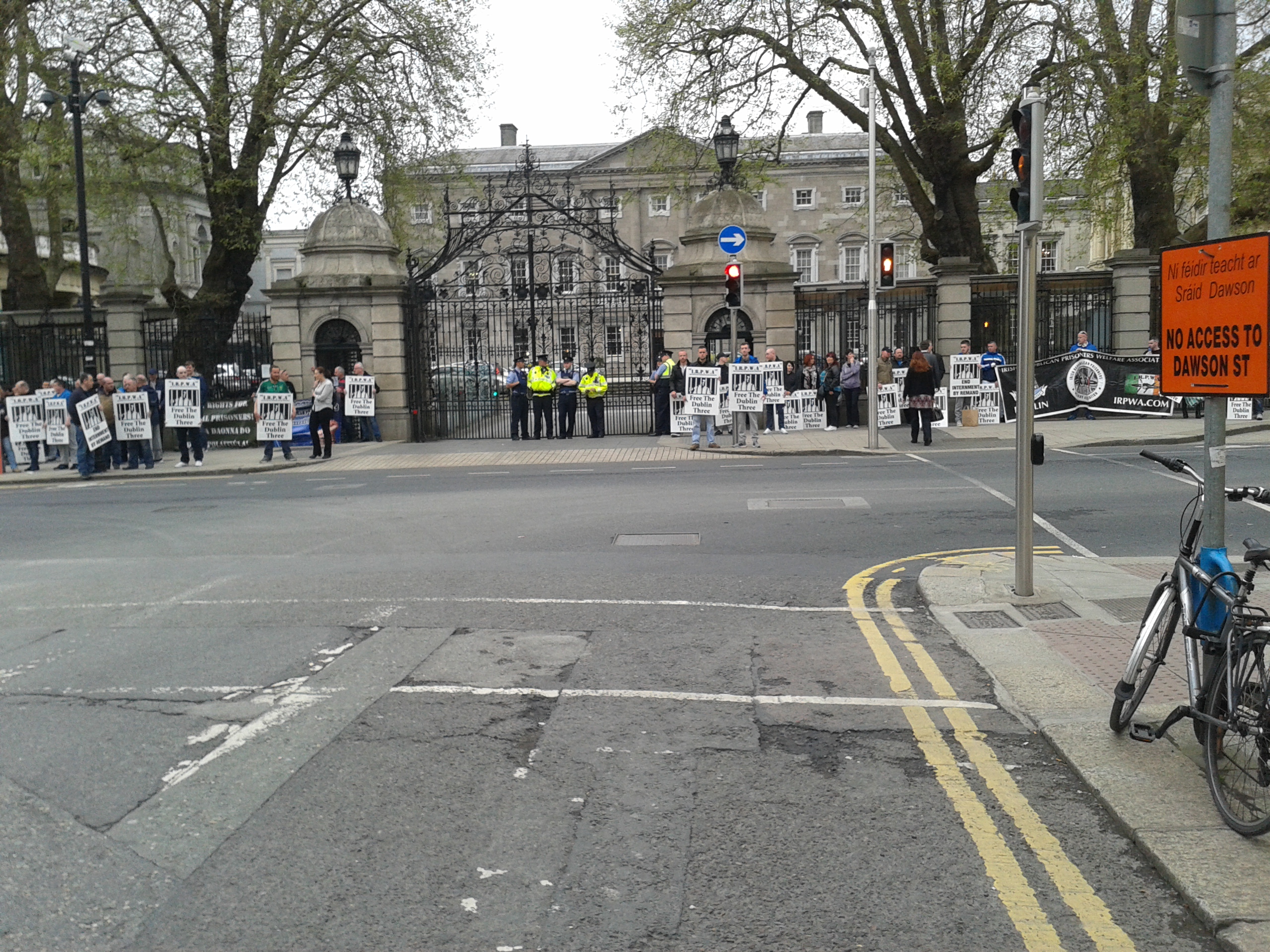
On a sunny but somewhat cool day on the 30th April, despite being on the cusp of the first day of Summer, a plaque was unveiled in North King Street. It was at last a memorial, a kind of formal recognition of a series of murders that took place in the locality 100 years ago. So many murders, in fact, that they have collectively become known as the “North King Street Massacre.”

In the closing days of the 1916 Rising the British army exacted brutal revenge on the civilian population of North King Street. Between 28th and 29th April sixteen civilian men and boys were brutally murdered by members of the South Staffordshire regiment of the British army.

The bodies of many of the victims were secretly buried in yards and cellars and personal items of the victims were stolen. Not one British soldier or officer was ever held to account for this atrocity.

The revenge on the civilian population of that small area of Dublin was for the spirited and well-planned defence of the area by Volunteers under Commandant Edward Daly, whose district HQ was the Four Courts. 60 Volunteers fought off repeated attacks by a force overall in their area of over 800 British soldiers — outnumbered 40 to 3 and, furthermore, without a single machine gun, of which the British had several (and better, faster firing rifles).  A video on the battle by Marcus Howard can be found here, with interviews with Darren Kelly and Derek Molyneux, authors of When the Clock Struck in 1916 https://www.youtube.com/watch?v=Kuy5u6BnjQo

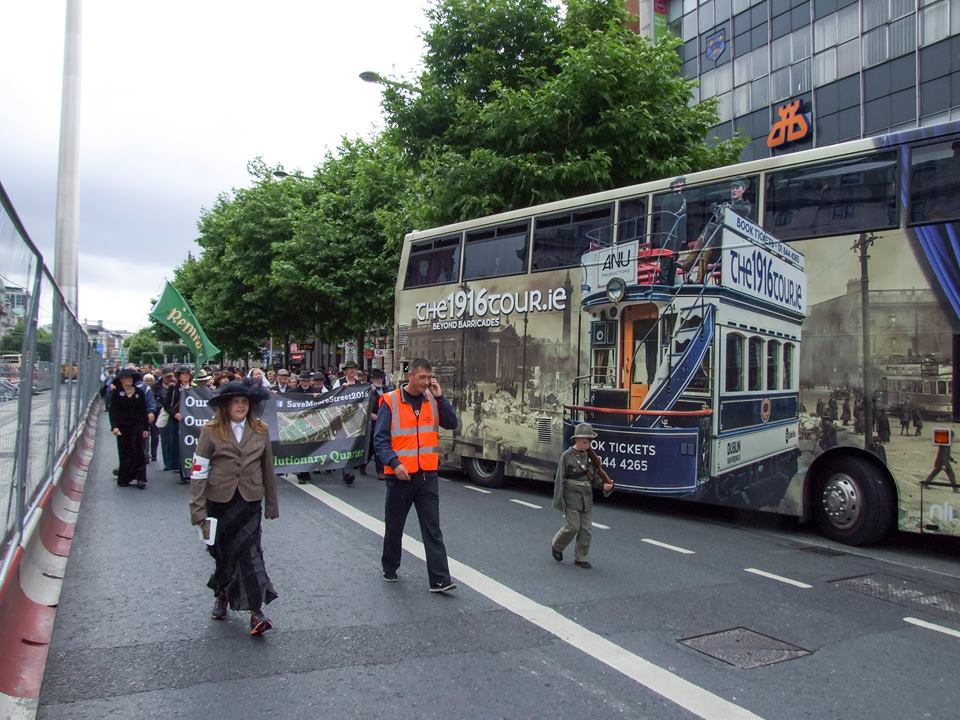
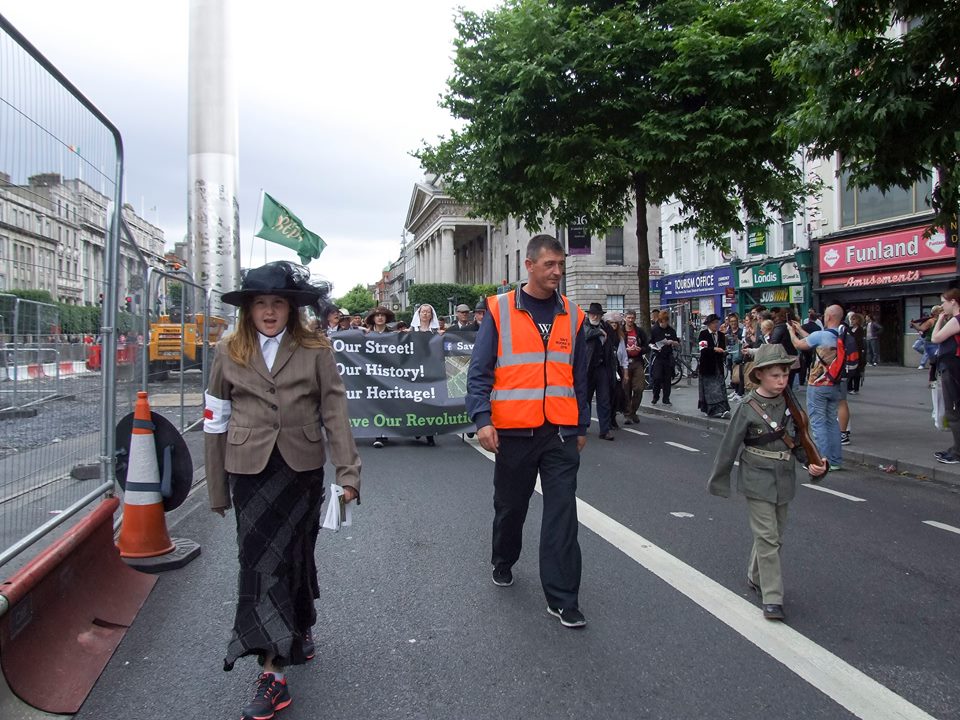
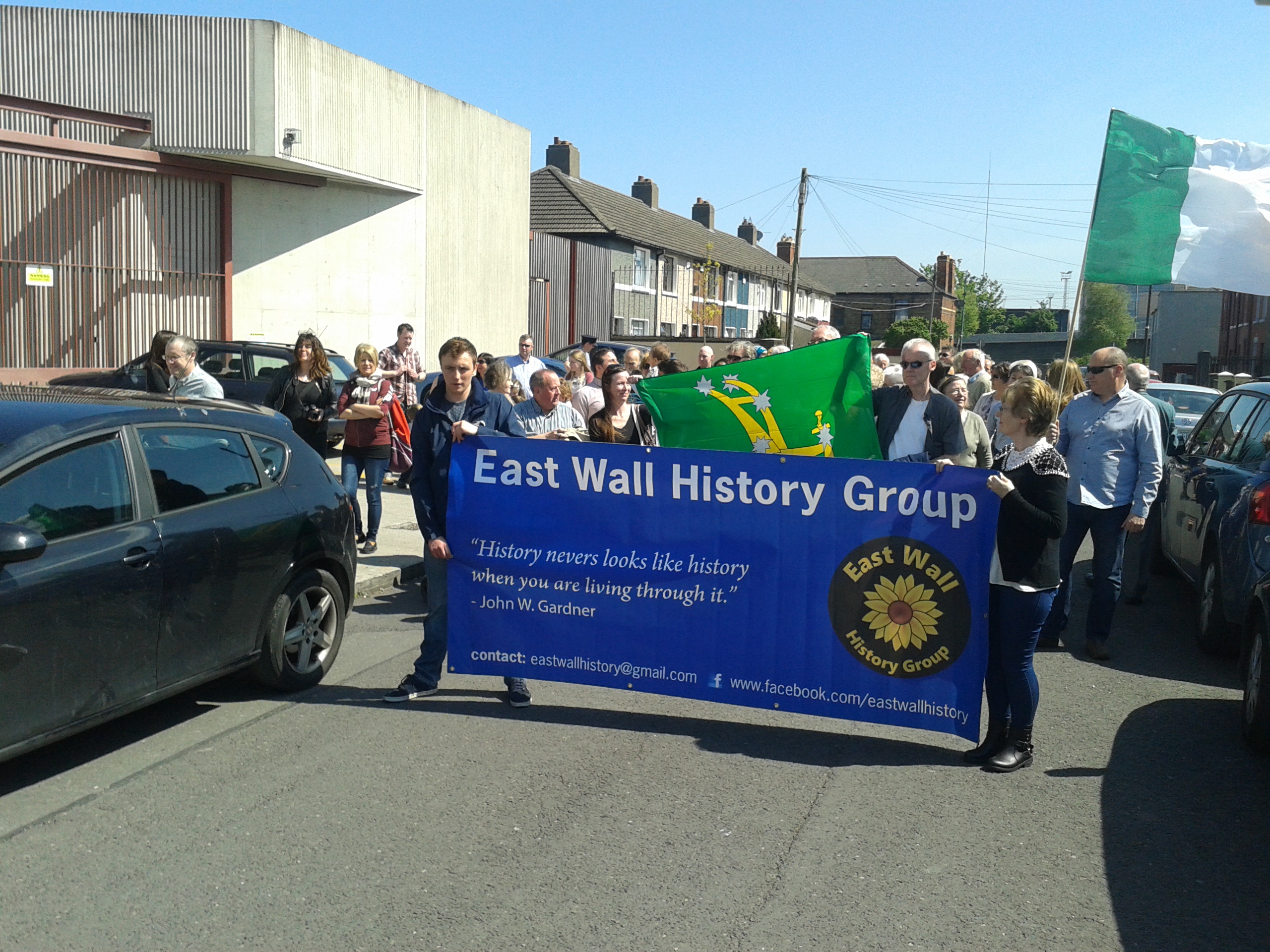
Lone piper leading march from Stoneybatter along North Brunswick Street

THE MASSACRE

An account and contemporary statements on the murders may be found here http://source.southdublinlibraries.ie/bitstream/10599/11507/5/Fragment1916.pdf from which the following has been extracted:

‘These 15 unoffending citizens were murdered by the military under circumstances which mark the crime as a cold-blooded and calculated atrocity hardly equalled in the blackest annals of warfare. None of the victims had any connection whatever with the insurrection, and indeed some of them may have been entirely opposed to it. One of the- murdered men, immediately before being shot, pointed to a pictorial representation of the Royal Standard which hung over his bed as a proof of non-complicity with the Insurgents, but no mercy was shown him.

‘The doomed men were torn from the bosom of their family, and despite all exposulation and explanation regarding their views, or identity, and despite the tears and entreaties of their terror-stricken relatives and women-folk, were led away to be slaughtered. In some instances requests were made that the military should at least make enquiries at the neighbouring police stations or obtain information from some of the prominent citizens to whom they were known. But all appeals were fruitless, they all shared a common fate at the hands of their cruel captors.

‘The young son of poor Hickey — a lad of scarcely 15 years — was at the last moment heard pleading pathetically for his father’s life. Both father and son were butchered together.

‘The wife of one of the murdered men carried a baby a few weeks old in her arms; the wife of another gave birth to a child but a few weeks after her husband’s murder. Both saw their husbands led away to death without even a moment’s respite to snatch a last farewell to those they loved. The houses in which they were taken were never at any time occupied by the Volunteers and no traces of arms or ammunition were found on the premises.

‘None of the murders was done during a sudden attack of assault, or in the heat of passion. In some cases several hours elapsed, allowing ample time for consultation with the officers in command before the doomed men were slaughtered. The officers seem in all cases to have overseen or directed the “ military operations.’ It would be difficult to find a parallel to these atrocious crimes.

‘At the inquest on Patrick Bealan and James Healy, Lieut.-Col. Taylor did not appear but sent a statement to’ the Coroner in the course of which he said :

“ No persons were attacked by the troops other than those who were assisting the rebels, and found with arms in their possession.”

General Maxwell afterwards made the sufficiently candid and luminous statement in the “ Daily Mail ” respecting the conduct of the troops under his command:

“. . . . Possibly some unfortunate incidents, which we should regret now, mav have occurred . . . . it is even possible that under the horrors of this attack some of them ‘ saw red ’, that is the inevitable consequences of a rebellion of this kind. It was allowed to come into being among these people and could not be suppressed by velvet glove methods, where troops were so desperately opposed and attacked. Some, at any rate, of the allegations are certainly false, and are probably made in order to establish a claim for compensation from the Government.”

Past and Future
Past and Future
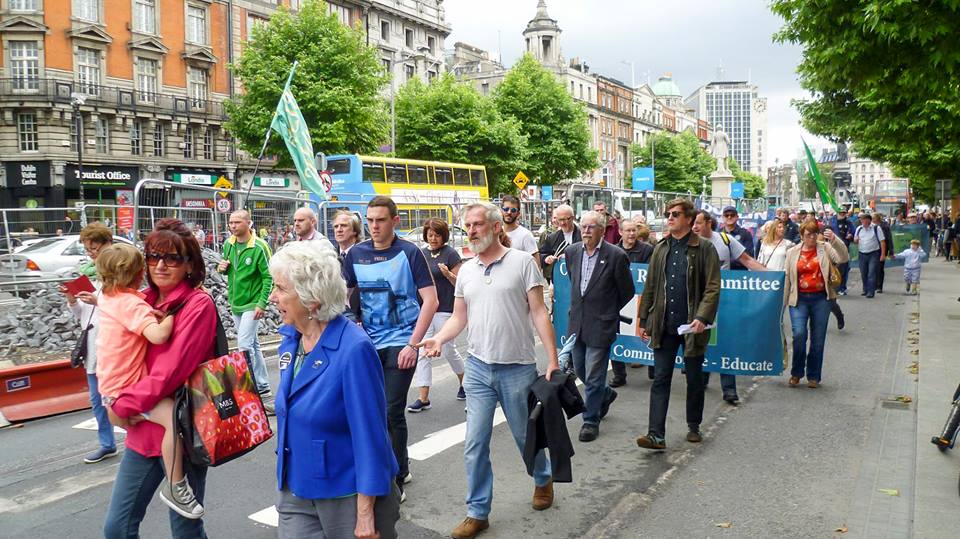
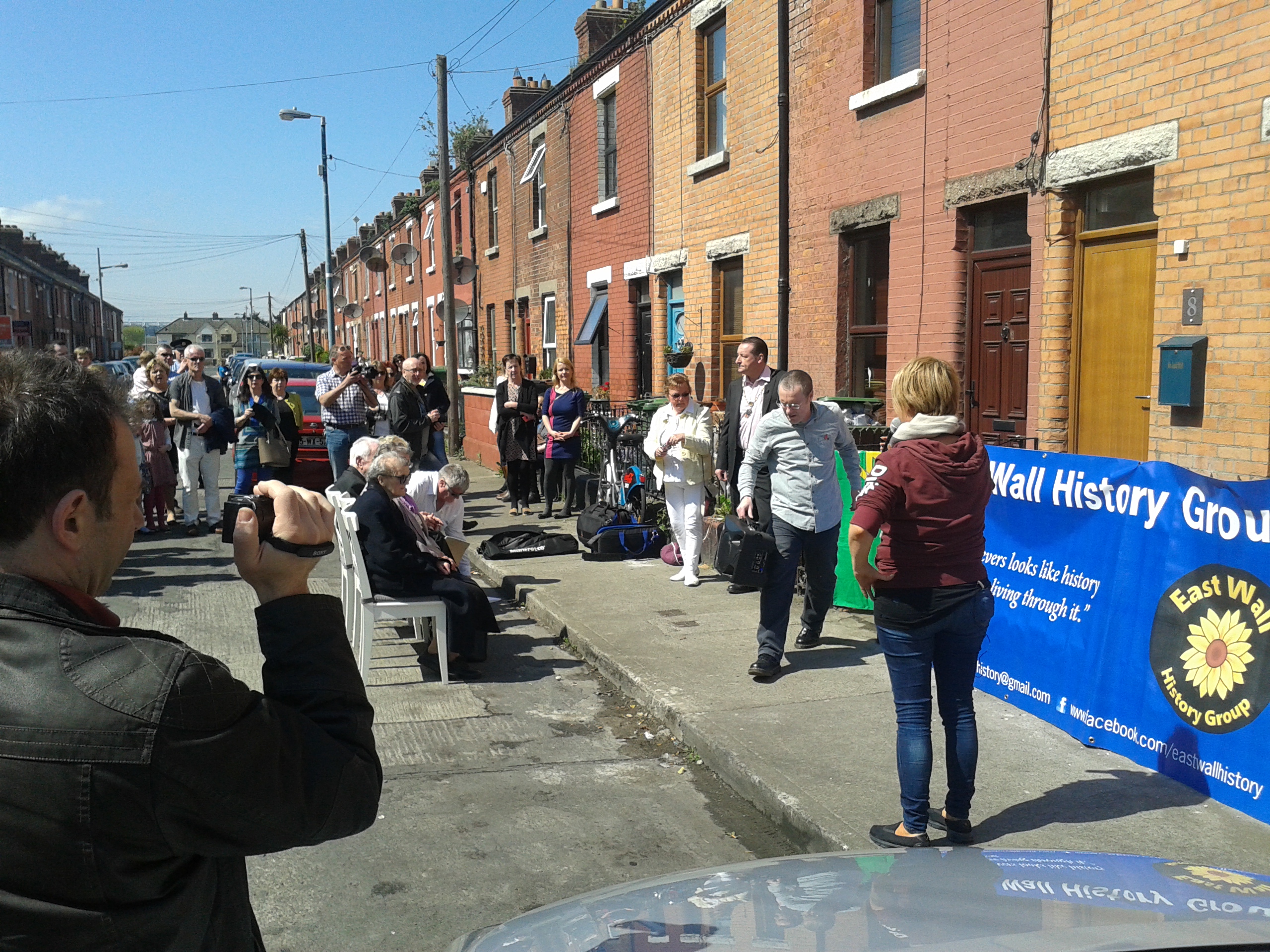
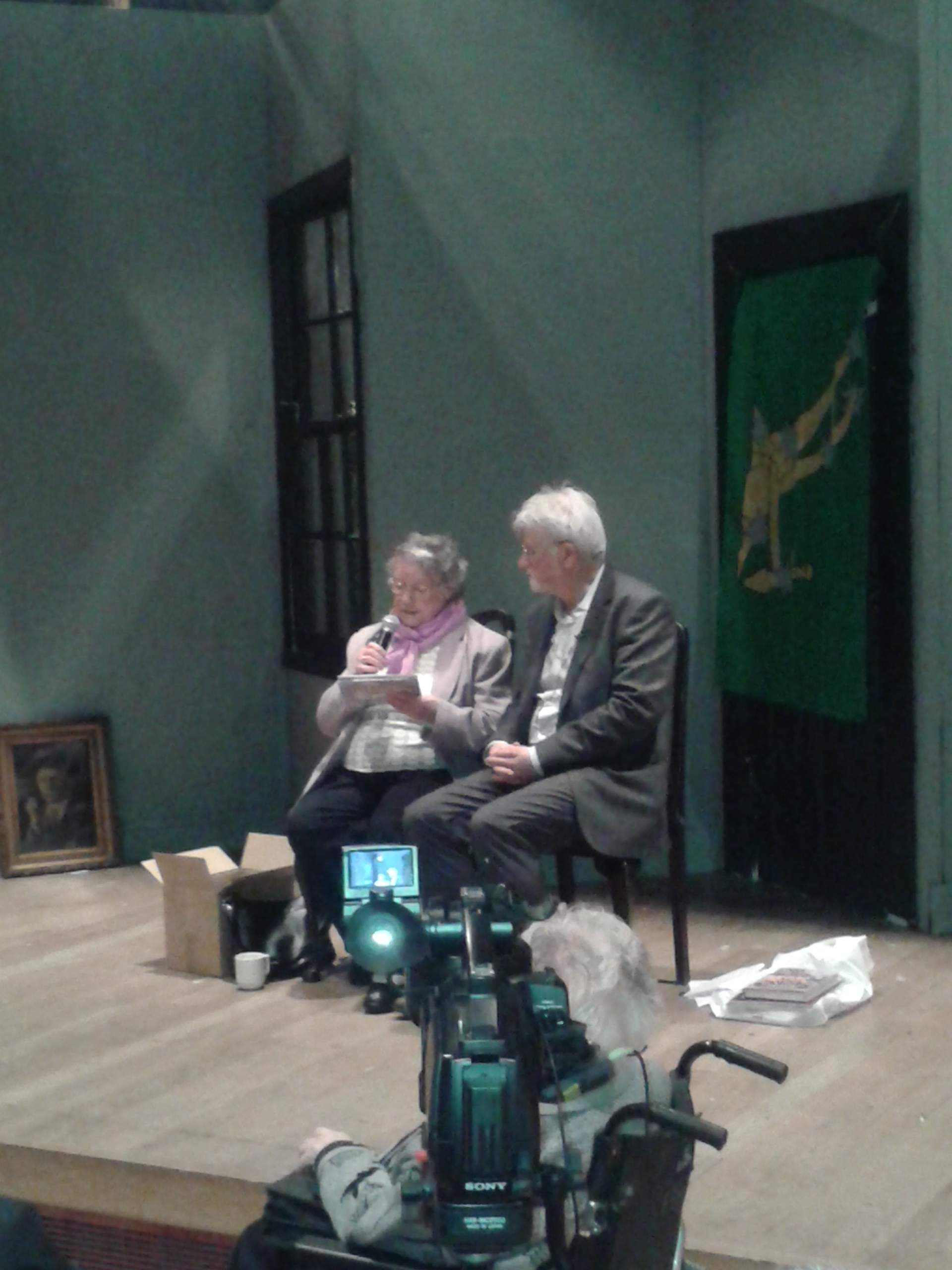
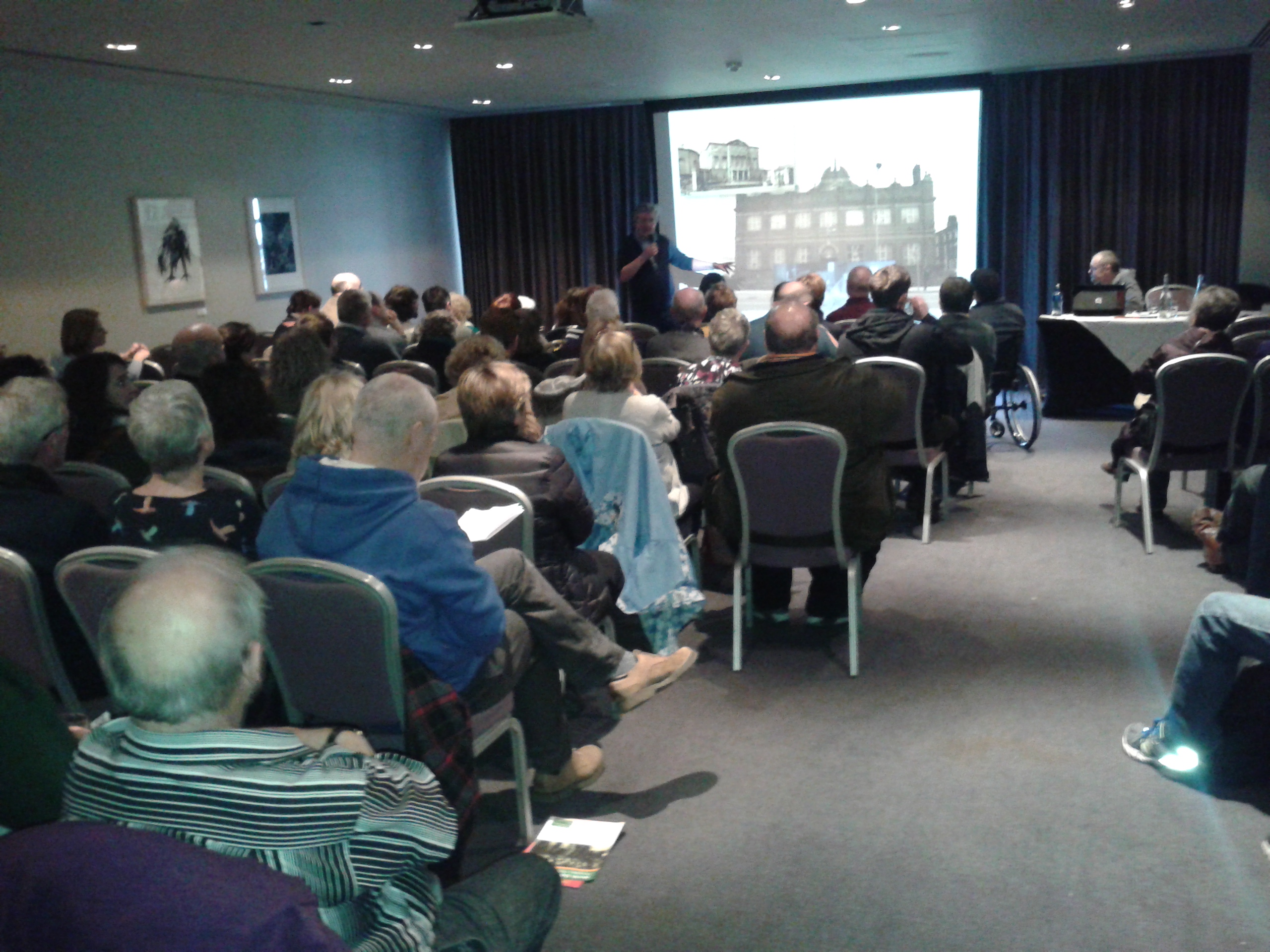
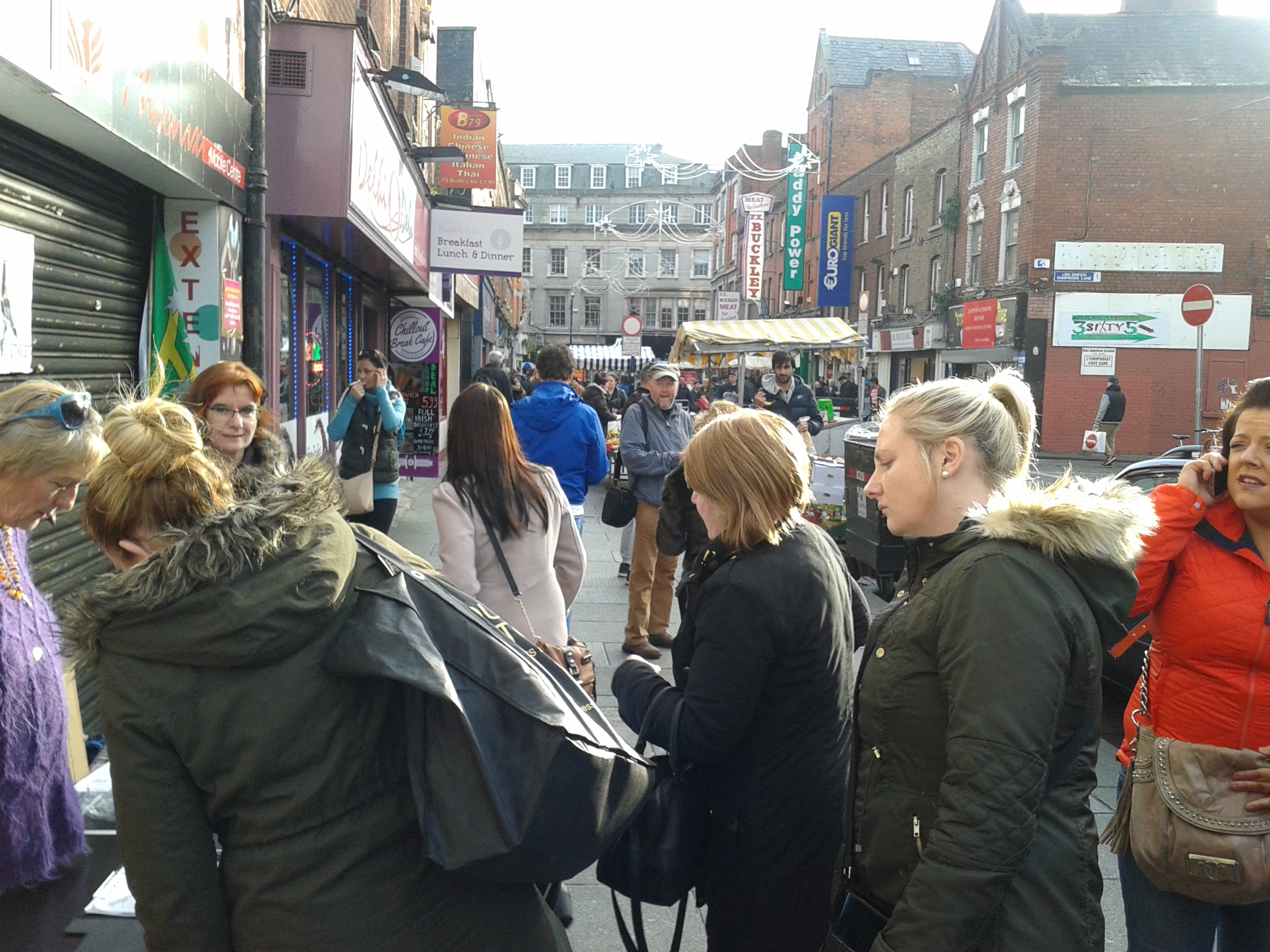
Section of crowd at North King Street at unveiling of plaque event

‘Repeated attempts were made to have a public enquiry into the facts of these military murders, but were opposed by the British Government.’

Sixteen civilians had been murdered in cold blood in one of the principal cities of the British Empire by soldiers of that very Empire.  No official investigation ever took place, no soldier or officer was ever charged.

NO MEMORIAL FOR NINETY-NINE YEARS

It is perhaps understandable that no memorial was put up to mark the massacre while the British remained in occupation of the city – it would have been taken down by the authorities. But after the 26-County State was set up in 1921, it is less easy to understand. These victims were innocent civilians and not partisan to either side during the Civil War or the years of anti-Republican repression that followed. Not even the allegedly ‘Republican’ governments of Fianna Fáil provided a permanent marker to commemorate the massacre.

But for some years, Terry Crosbie, a local history enthusiast, has been campaigning to get a memorial erected to remember the massacre and its victims. Slowly, over the years, his campaign attracted support and finally came to fruition this year, the 100th anniversary of the Easter Rising and of the massacre too. Terry had in mind a boulder with a plaque on it but found that difficult to advance and, faced with a plaque being at last permitted and the wish to see the massacre being marked in its centenary, was pleased to see the erection of the plaque 100 years after those hours of terror for the area.

Historians and Reenactors by the plaque
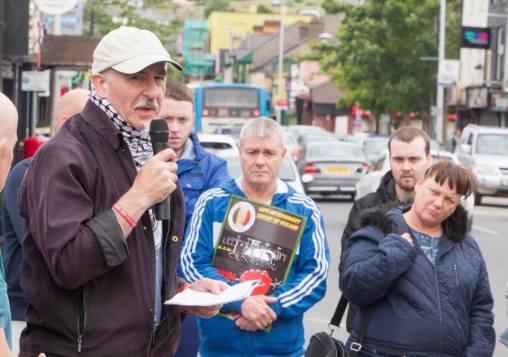
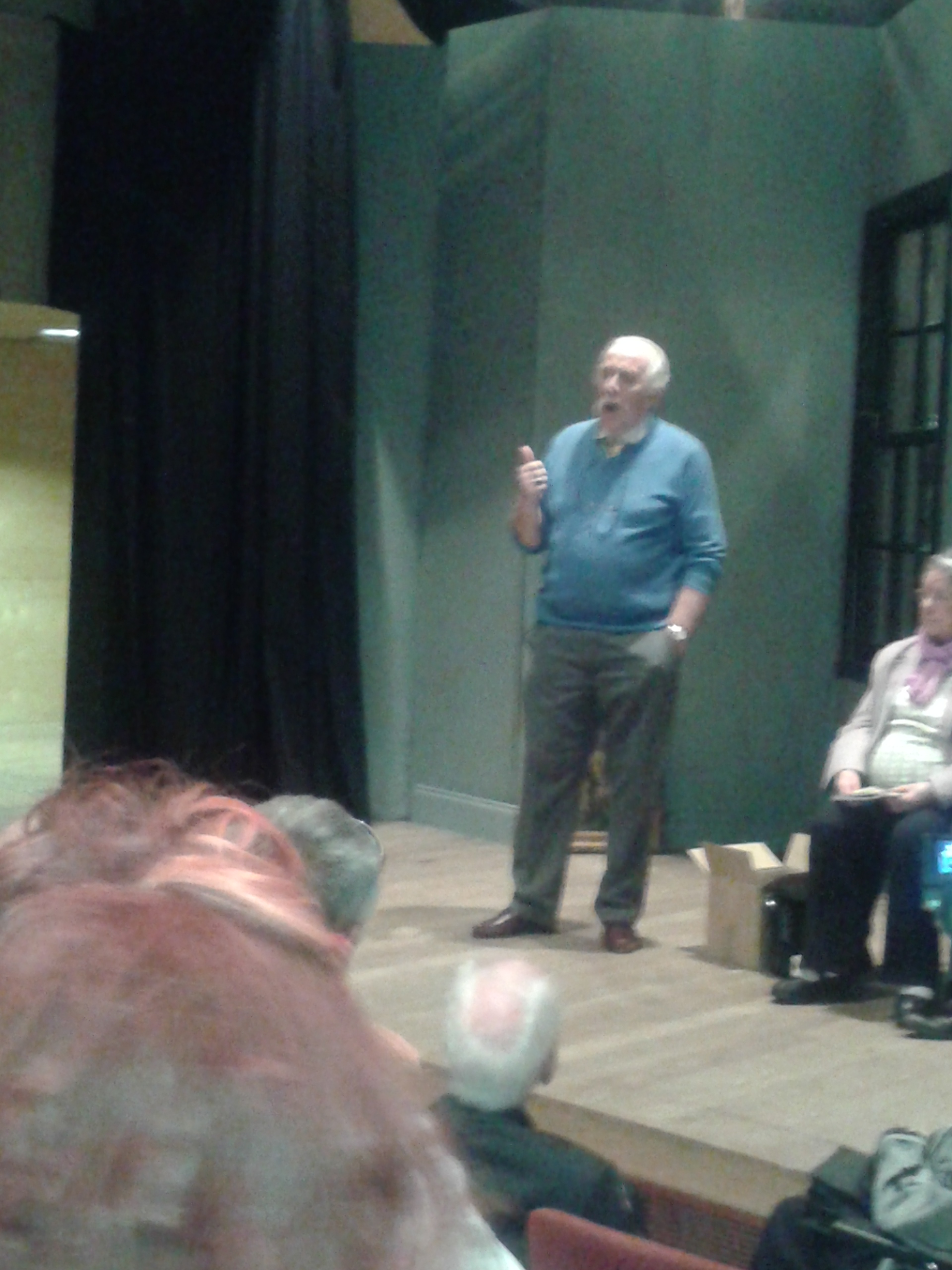
Terry Lyons (foreground), moving spirit behind the commemoration, in private conversation after the event

A PLAQUE AT LAST

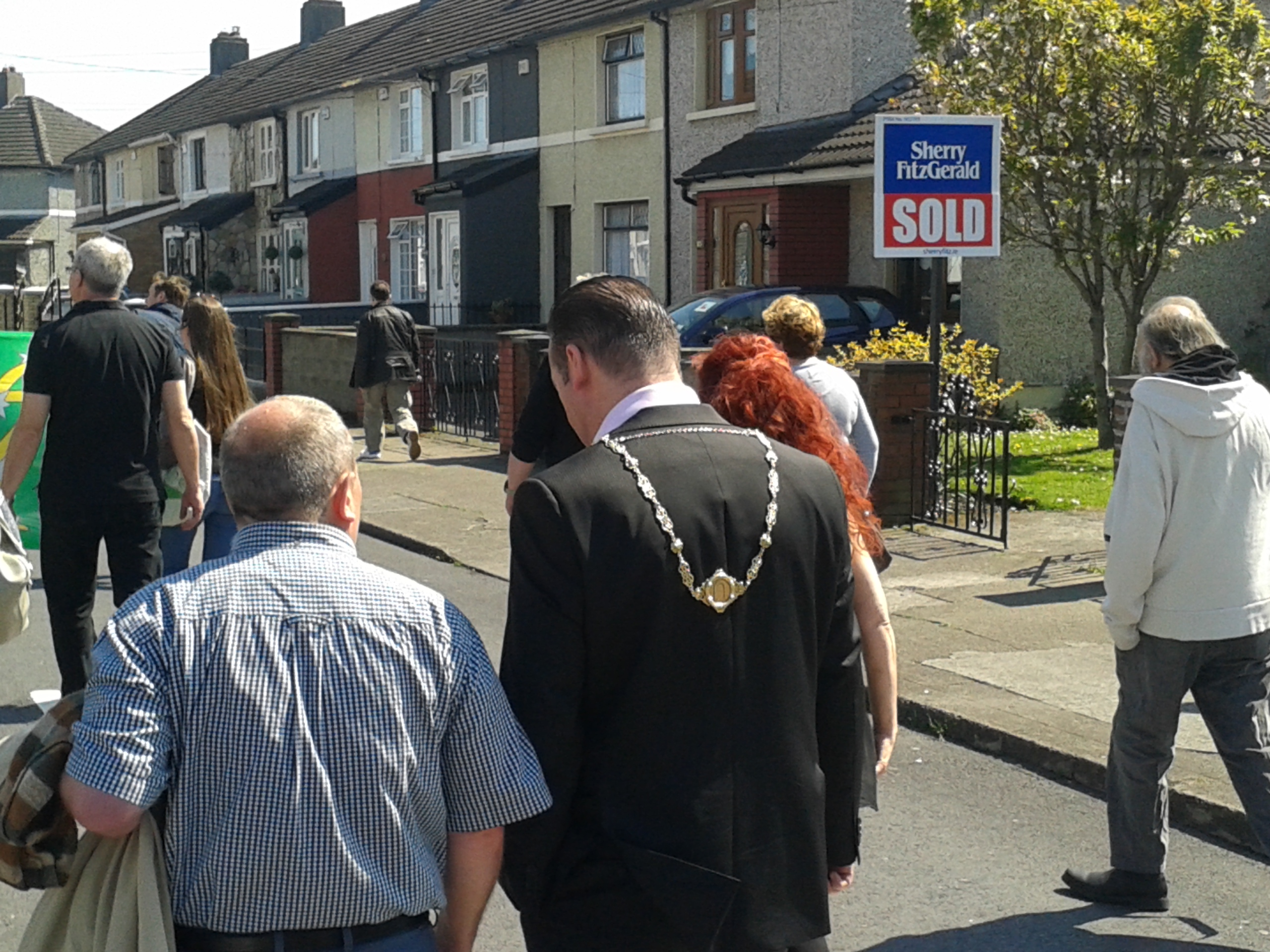
The parade for the march to the site assembled at 2.00pm outside Kavanagh’s Pub on Aughrim Street in Stoneybatter and not long afterwards departed in a short parade, led by a piper, to North King Street where the plaque was unveiled

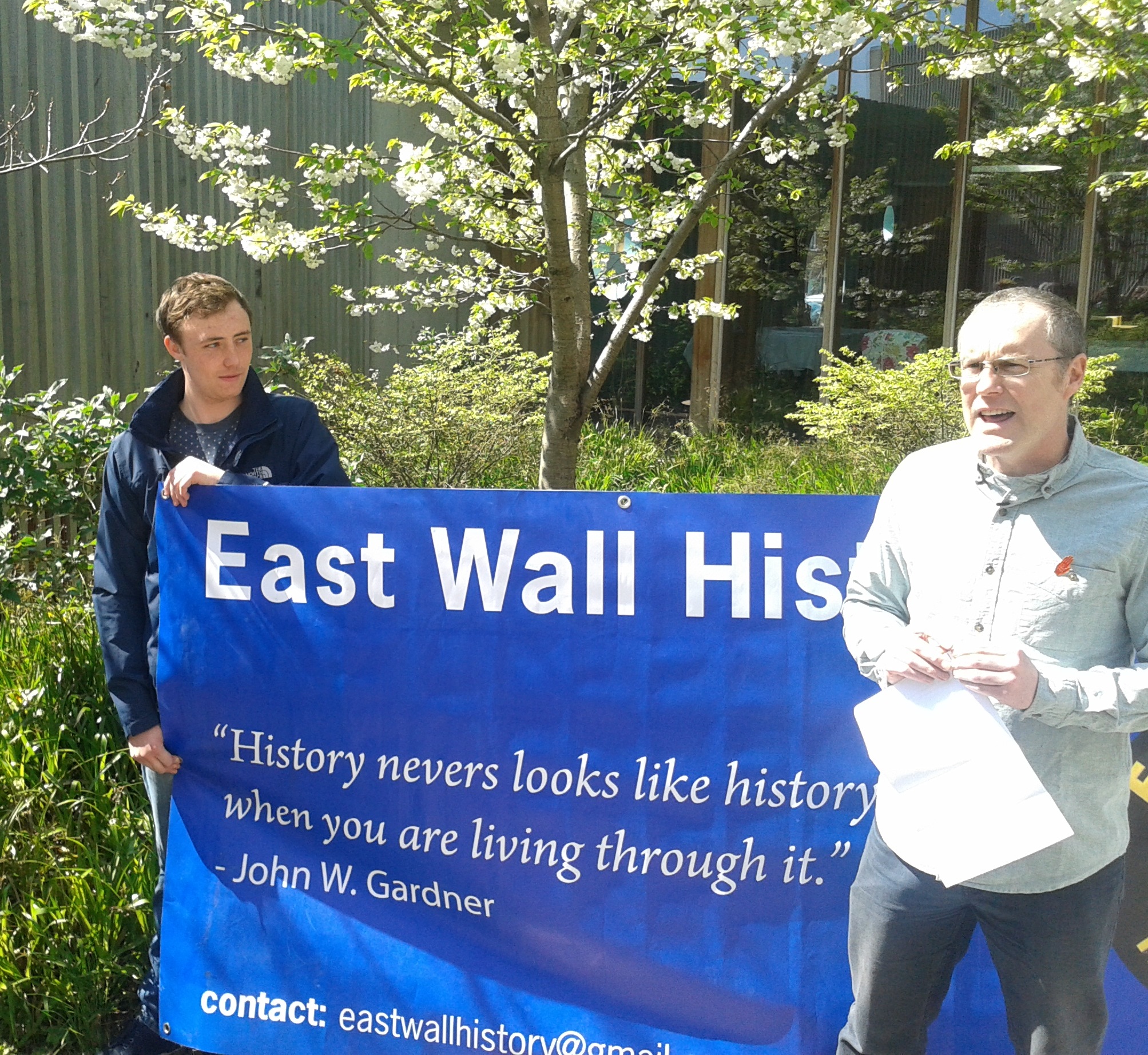
Dr. Mary Muldowney of the Smithfield and Stoneybatter People’s History Project presided at the short ceremony. However, the amplification seemed poor and most people failed to hear what was being said. A number of “We can’t hear!” calls resulted in slightly better volume but still not enough for most to hear. A song that had been specifically written about the massacre was played but the same difficulty prevailed.Leacht

The plaque was unveiled to loud applause and wreaths and single lillies were placed before it by people related to the massacre victims.

The attendance was a healthy one in numbers as may be seen from the photos but also attracted a great cross-section of the political spectrum: older Stickies and Provos, some Left Labour, independent socialists and Republicans, housing activists, Save Moore Street activists, anti-Water Tax campaigners mixed with historians and local people who had no political organisational or campaign affiliation to speak of.

It was good to see a permanent memorial at last to the murder in cold blood of 16 civilians by an Army that has been responsible for countless atrocities around the world, including a number during the 30 Years War in the Six Counties; at least one of their units is accused in bronze here for what they did over a period of less than 24 hours one hundred years ago.

End.

REENACTMENT OF MOORE STREET/ GPO GARRISON SURRENDER

Diarmuid Breatnach


At 5pm on Friday 29th April (2016), Save Moore Street 2016 campaigners and supporters followed in the footsteps of the Easter Rising surrender. The event was in part a reenactment but aimed at an evocation rather than an exact copy of what happened around 5pm on the 29th of April, 1916.

Reenactors gathering in Moore Street (Photo: Davidina Spinderella Bradshaw

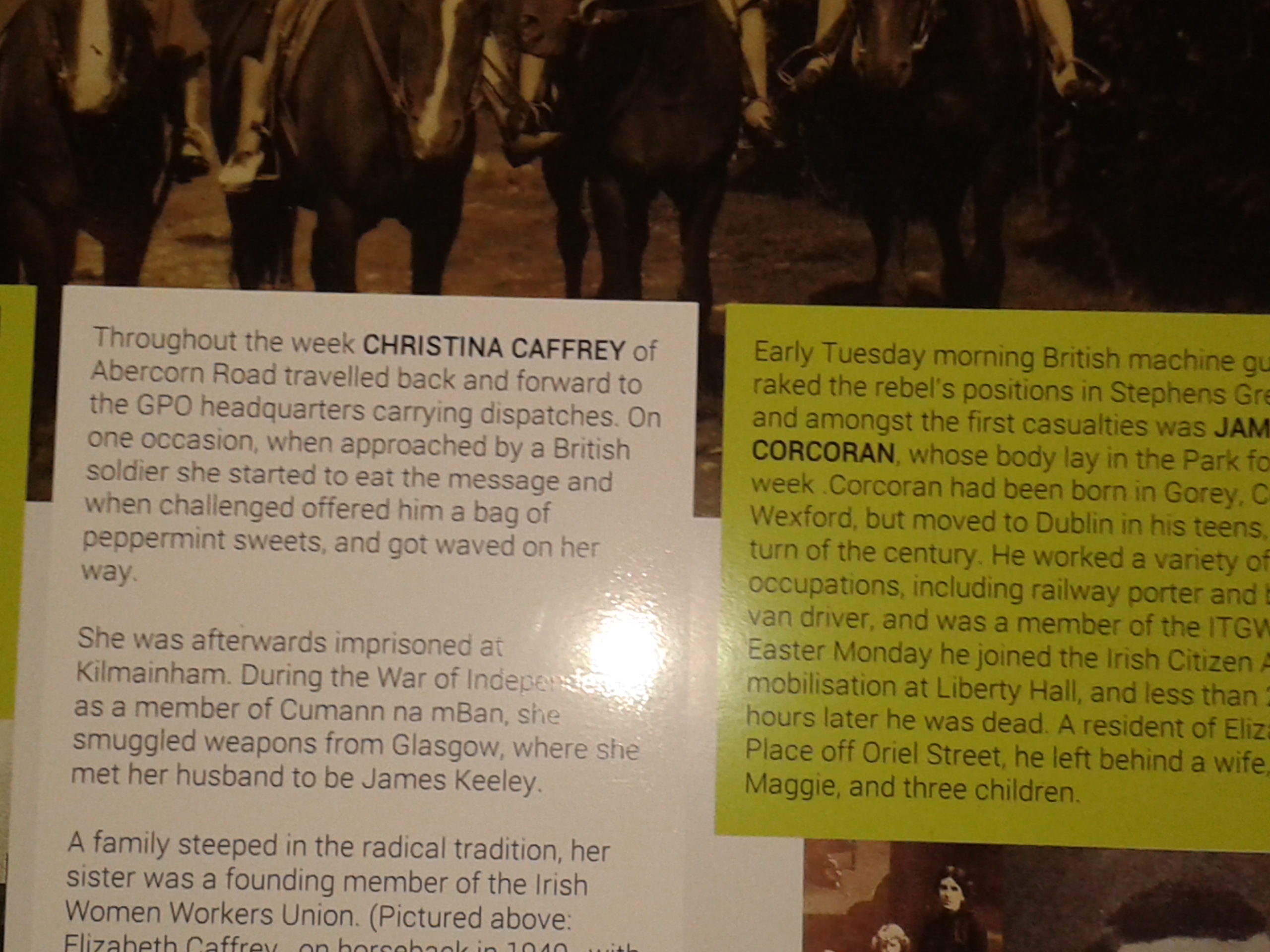
On the 29th of April 1916, the Friday of Easter Week, the roof of the GPO, the HQ of the Rising, was in flames and evacuation was necessary. Earlier, all women who had no medical training were thanked for their service by the leaders and asked to leave. Later, all the remaining women were asked to take the wounded to Jervis Street Hospital, which they did, under fire. Three women refused to leave and remained — Julia Grenan, Elizabeth O’Farrell and Winifred Carney.

Derek Molyneux speech

Just after The O’Rahilly led a group of Volunteers out to charge the British barricade at the Parnell St. end of Moore Street, the main body evacuated the GPO under fire and, going down Henry Place, headed westward. Machine-gun and rifle fire down Moore Lane killed at least one of the insurgents and injured a number. When they reached Moore Street and saw the machine gun at the top of that street too, they began to occupy houses on the east side of the street. In particular, they entered No.10 and made it their HQ for that evening, as well as their hospital. Throughout the rest of that night, they tunneled through the walls, from house to house.
"Winifred Carney", "Elizabeth O'Farrell" and "Julia Grenan" in Moore Street (Photo: Bart Hoppenbrouwers)
“Winifred Carney”, “Elizabeth O’Farrell” and “Julia Grenan” in Moore Street (Photo: Bart Hoppenbrouwers)
Volunteer attaching Tricolour to rifle as near the GPO, walking through Henry Place (Photo: Bart Hoppenbrouwers)
Volunteer attaching Tricolour to rifle as near the GPO, walking through Henry Place
(Photo: Bart Hoppenbrouwers)

When, on the following day, Pearse sent Elizabeth O’Farrell out to discuss surrender terms, General Lowe (who had earlier issued an instruction to the forces under his command that the ‘rebels’ were not to be taken prisoner), demanded unconditional surrender. The instructions were that they were to leave their weapons in the houses and to come out under a white flag, retrace their steps to the GPO, then on to Sackville Street and proceed up towards the Rotunda.

(Photo: Bart Hoppenbrouwers)

Sean McLoughlin gave different instructions and they marched out in military order, carrying a white flag but carrying their weapons also. As they neared the GPO, one of the Volunteers fixed a Tricolour to his rifle. As they passed the smoking shell of the building, McLoughiin called “Eyes Right!” in recognition that there, earlier in the week, the Republic had been formally proclaimed by Pearse with Connolly by his side. (The fixing of the Tricolour and the “eyes right” was reenacted as was the route taken).

Moore Lane turning

They proceeded up O’Connell Street and stopped outside the Gresham Hotel, where

"Eyes Right!" at GPO in Henry Street (Photo: Bart Hoppenbrouwers)
“Eyes Right!” at GPO in Henry Street (Photo: Bart Hoppenbrouwers)

on McLoughlin’s order, they dropped their weapons (today, this was done in front of the Savoy). One hundred years ago, the insurgents were surrounded by British Army soldiers with loaded guns and fixed bayonets. In the reenactment, as in the past, McLoughlin gave the order to the front rank to take four paces forward and the rear ranks to take two steps back. What that did in 1916, was to bring the front ranks right up against the British so that their bayonets were touching the insurgents’ chests, while the rear ranks brought their back up against the bayonets of the soldiers behind them.

Guns surrendered
Guns surrendered

Lined Up Savoy

We Serve Neither
(Photo: Bart Hoppenbrouwers)

In 1916, the prisoners were then marched off to the Rotunda Gardens to be kept there overnight without food or water. Six of the fourteen who were shot by British firing squads in Dublin had spent their last hours of freedom in Moore Street, including five of the seven signatories of the Proclamation of 1916.

Man & little Girl period costume
(Photo: Davida Spinderella Bradshaw)
Woman & Girl in Period dress
In front of hoarding in Moore Street (Photo: David Spinderella Bradshaw)

The reenactment procession turned and proceeded down towards the GPO where Niamh Mc Donald of Save Moore Street 2016 Campaign introduced Donna Cooney, great grand-niece of Elizabeth O’Farrell, to read a poem about the Rising by Theo Dorgan. Damien Farrell then spoke on behalf of the campaignd

Donna Cooney as Nurse O'Farrell, reading a poem by Theo Dorgan
Donna Cooney as Nurse O’Farrell, reading a poem by Theo Dorgan (Photo: D.Breatnach)


(Photo: Bart Hoppenbrouwers)
Damien Farrell speaking on behalf of the Save Moore Street 2016 campaign (Photo: D. Breatnach)

A NEW ROLL OF HONOUR NEEDED?

Ray Bateson raises questions about the accuracy of the current 1916 Rising Roll of Honour (of those who died while fighting or as result of fighting for Irish freedom in the 1916 Rising) and builds a case for a revision of the list and the inclusion of an additional number.  He also calls for recognition of the medical personnel who were killed in the course of administering to the wounded.

Republished with kind permission of Mícheál Ó Doibhlín from his Kilmainham Tales Internet site.
http://kilmainhamtales.ie/a-new-roll-of-honour.php

Will The Black And Tans Be Added To The Glasnevin Wall of Shame?

Timely article on the Necrology Wall at Glasnevin Cemetery and what seems like an intention to add to it the names of Black & Tans, Auxiiliaries and B Specials who were killed by Republicans.
https://ansionnachfionn.com/2016/04/06/will-the-black-and-tans-be-added-to-the-glasnevin-wall-of-shame/


An Sionnach Fionn's avatarAN SIONNACH FIONN

Further on the divisive “Wall of Remembrance” unveiled in the historic grounds of Glasnevin Cemetery on Sunday, a monument which partly pays tribute to the members of the British Army and Police who lost their lives during the Easter Rising of 1916, the motivation behind its erection was clearly heralded by the Glasnevin Trust in a statement from its chairman, John Green, submitted to an Oireachtas committee in November of 2015. This includes a potentially troubling passage, highlighted below :

“…Glasnevin Trust has been working closely with the State in playing its part in the Decade of Centenaries. Glasnevin, true to its mission of serving people from all creeds, beliefs and walks of life, has been central to a number of State commemorative ceremonies. These have ranged from the commemoration of Irish men who lost their lives in the First World War to Collins and Griffith…

This work will continue right through the 1916 Centenary Commemorations with…

View original post 328 more words

OH HEATHER!

Oh Heather, it was so brave of you to go down to Moore Street to lay a wreath there on Easter Monday — so courageous! Bearding the lion in its den, so to speak. I do admire your courage, I really do … but was it wise, dear?

Heather Humhpreys, Minister for Arts, Heritage and the Gaeltacht

You must have known that Moore Street campaign mob would see that as a challenge – in fact, a red rag to a bull, if I can use another animal metaphor, for that is what they are, animals! Hooting and whistling! But you must have known they would do that. Surely some other Government representative could have gone. Why, oh why did you go there, Heather? Did I not invite you to have lunch out of town with me this weekend, my treat?

Well, maybe you expected that mob to act up and thought they would lose public sympathy? As I was saying to you before, times have changed. A couple of years ago that might have worked but the way that fickle public are these days … Of course, some did condemn them – but have you seen the numbers of people who were queuing up to congratulate them? No, don’t ask – I won’t tell you, it would only depress you. Citizens? Don’t make me laugh!

Or maybe you wanted to draw them out and let the uniformed Gardaí deal with them, or perhaps some of them in plain clothes, looking like outraged members of the public, give them the hiding they deserve? Not a bad plan, except for those mobile phone video cameras and IPads everyone seems to have (Joan Burton was right to suggest the mob shouldn’t have them). But our police tussling with demonstrators about Moore Street in that same street when you seem to have lost the case in court, and no government yet in place? Too much to ask of the Gardaí, darling, much too much. In another place, yes of course, like Rossport, out of sight …. Or even in this place, in a previous time ….

Oh, Heather, don’t be so stubborn! Come away down country or let’s even slip across to England somewhere and have a lovely long weekend. Oh I know what you’ll say.: “Everyone’s afraid to be out of town while back-room dealing is going on to decide who’s going to be in the next government and who’s getting what job” … Yes, I know you are a politician. At least promise me we’ll slip away soon. Yes?

Speaking of “slipping”: Are things slipping away from us? Is it all going to go to the mob? All we’ve built up and salted away over the years? Surely not …. but …. all this talk of “the Republic”! And “the words of the Proclamation”! … I can’t wait for this year to be over. But will things get back to normal afterwards? And there’s that nasty guerrilla war centenary coming in just another three years!

We just might need a little coup, darling. I was thinking that when I was watching all those soldiers and tanks going by our seats …. and all the Gardaí road blocks with military police around town too, keeping the mob out. Sometimes a coup is just what the mob needs, to pull them into line. “Setting boundaries” I think they call it nowadays.

Your friend always,

Phyllis Stein

Colonic News extract: Executions for State 1916 Commemoration in Dublin

Diarmuid Breatnach

The Colonic News, “Hanging Will Do Them Good”

Friday 24th April 2016

The gallows being erected at the O'Connell Street approach to North Earl Street (Photo D.Breatnach)
The gallows being erected at the O’Connell Street approach to North Earl Street
(Photo D.Breatnach)

(extract)………. As part of the Dublin State 1916 Commemoration a gallows has been erected at the approach to North Earl Street. It is understood that there will be ceremonial executions here over the weekend. Those listed to ‘take the drop’ over Easter (not at all to be confused with ‘taking A drop’) are believed to be a Water Charge Protester, a Minister Botherer, a Homeless Person and A Nother. Gardaí have refused to confirm the names prior to informing their families, “Out of humane considerations” said Garda Commissioner Battenum.

The gallows, constructed by Pierrepoint Solutions of London, can accommodate eight condemned people at once, according to the manufacturers, “with a little squeeze.” A number of Moore Street Blockaders had been in line to partake of the hanging also but a recent judicial decision has resulted in their surprise acquittal. Asked about the unexpected turn of events, Minister Humphreys said “chucky poor law” which is understood to be a Monghan Orange dialect variation of the Gaelic or Erse for “Our day will come”.

Rumours abound that Hillary Clinton and President Obama and other White House personnel are to have live footage of the executions beamed to them, in recognition of their interest in such events.

Other high points of the 1916 commemoration will be a reading out of the 1916 editorials of the Irish Times and Independent condemning the Rising and calling for stern punishment for the Rebels and, in the case of the Independent, calling not too subtly for the death penalty for Connolly and Mac Diarmada. Sir Bob Geldoff will read the Times editorial and Diarmaid Ferriter the Independent’s.

The full list of all British personnel killed during the Rising will also be read out and in a special addition which is sure to find favour with everyone, also the names of the Lancers’ horses, previously neglected and unrecognised but campaigned for by historian Ann Matthews for many years now, who makes the point that although they were military, they were working horses. Kevin Myers will read out the British Personnel’s names and Frank McDonald will perform the duty for the horses.

After ‘The Last Post’ has been played by an Irish Army bugler, the ceremony will conclude with the solemn “Je vous prie”, with all dignitaries present going down on one knee and, partly in Irish but wholly in English, begging Her Royal Majesty’s pardon for having risen against her predecessor and any and every vexation given since.  Going down on both knees had been originally scheduled but was since ruled out as being too servile (and in view also of certain words on the nearby monument to Jim Larkin).

The ceremony will be televised in full and, in an exercise of civic involvement, people throughout the country will be encouraged to kneel at the same time and to repeat the words as they are pronounced.

Substantial security steps have been taken to prevent undesirable elements such as citizens attending the events.

Some of the physical security measures -- view north along O'Connell St. from the Spire
Some of the physical security measures — view north along O’Connell St. from the Spire (Photo D.Breatnach)

In separate but related developments, Dublin City Council Executive Own Keegan and Jim Keoghan of the Planning Department have announced

Some of the physical security measures -- view southwards along O'Connell St. from the Spire
Some of the physical security measures — view southwards along O’Connell St. from the Spire (Photo D.Breatnach)

plans for the changing of the North King Street name to “South Staffordshire Street” and the erection of a 1916 commemorative plaque with the words “Nothing happened here in 1916”.

Similarly, in Balbriggan the Development Association has unveiled plans to rename the main street “Auxiliary Boulevarde” in memory of the illuminations carried out by members of the Auxiliary Division on the night of 20th/ 21st September 1920.  A street party will be held to mark the renaming with children’s face-painting (black or red, white and blue colours only, apparently) and dressing up in Auxilliary or RIC-type costumes for photos, ‘Knock-the-Volunteer Over’ ball-throwing etc.  The candy floss and rock stick on sale will be in red, white and blue colours.  All the cooked food will be char-grilled to commemorate the historic events in 1920.

end item

FACING THE PAST AND THE FUTURE

Diarmuid Breatnach


Many people, Irish, migrant and tourist, are questioning the decision to erect banners on the Bank of Ireland building, former site of the Irish Parliament, displaying the heads of four politicians, three of whom were dead long before 1916.  These were prepared by Dublin City Libraries, a department of Dublin City Council, at the behest of the office of the Taoiseach (the Irish Prime Minister) and as part of the commemoration of the 1916 Rising.

The heads of four prominent Irish people who were against revolution
The heads of four prominent Irish politicians who were against revolution (image from Internet)

The images of Grattan, O’Connell, Parnell & Redmond constitute a coherent collection, deliberately chosen — each represented a parliamentary approach and so are in direct opposition to the revolutionary approach in 1916 of the IRB, the Irish Volunteers, Irish Citizen Army, Cumann na mBan and Fianna and, in practice in Dublin, of the Hibernian Rifles.

Furthermore, each of the four politicians in their own time had a revolutionary opposition within the movement — Grattan had the United Irishmen, O’Connell the Young Irelanders, Parnell the Fenians though he flirted pretty heavily with the revolutionaries and vice versa for a while.  And of course Redmond …. had the Irish Citizen Army, the IRB, Irish Volunteers, Cumann na mBan and Fianna!

While some may be puzzled by the choice of images and others annoyed by them, the message of the Taoiseach’s office and of the State is very clear: “Follow the parliamentary path and not the revolutionary one.”  The subsidiary message could have been: “If you are forced into revolution, give over complete power as soon as possible to the capitalist class”. In that case, they could have put the pictures of Collins, Griffiths, Mulcahy and Higgins up, followed perhaps by De Valera’s.

Interestingly, each of those four displayed by Dublin City Council —  except Redmond — used the threat of revolution to try to get what he wanted: Grattan, to get a united Irish bourgeoisie and civil rights for Catholics, in order to win greater autonomy for the Irish capitalists; O’Connell, in order to win greater power for the Irish Catholic capitalist class and greater autonomy from England; Parnell, in order to win tenant rights and win back an Irish parliament.  Instead, Redmond tried to appeal to the colonialists’ gratitude.

Even more interestingly, EACH of the four FAILED SPECTACULARLY.  While this can be said about the 1916 Rising leaders also, the revolutionary struggle initiated by the Rising which began three years later had in another three years won more concessions than had all the many preceding decades of parliamentary effort.

In feeling the need to post their message so crassly and clumsily, the Irish bourgeoisie have revealed also their fear.  They are not ignorant of history and therefore know that commemorations are not only about the past — they very often play a role in shaping the future.  Prior to the 1916 Rising, commemorations of the centenary of the 1798 and 1803 Risings played a part in building a revolutionary patriotic atmosphere and working associations, while O’Donovan Rosa’s funeral procession in Dublin and Pearse’s famous oration at the grave of the Fenian preceded the Easter Rising by less than a year.

As throughout Ireland, all 32 Counties, the Centenary has awakened a feverish interest, the Gombeen State, which since the 1980s has been trying to downplay the whole unfortunate Easter Rising business and now finds itself obliged to somehow manage the centenary commemorations, is deeply troubled that revolutionary patriotism has been awoken too.  That too many people are comparing the various visions of the insurgents of 1916 with the reality which the gombeenmen and compliant politicians delivered us ….. and wondering whether they might not be able to make a similar vision come true, in another bid, 100 years after the previous attempt.

ends

http://www.irishtimes.com/news/ireland/irish-news/dublin-city-council-defends-college-green-1916-banner-1.2571822/


DEAR HEATHER HUMPHREYS

Dear Heather,

I hope this finds you well — although how you could be, with the mob besetting you on all sides, is anyone’s guess. As if you wouldn’t have enough problems already with the economy! Who’d be a politician these days and especially in the year that’s in it? Well, yes, I do know that you get paid for your trouble. But what does the mob expect for their paltry €157,540 per annum? Sure one could never run a decent-sized house with servants and cars and kids going to university on that kind of money (not to mention the holidays you’d need, just to take a break from the mob).

Heather Humhpreys, Minister for Arts, Heritage and the Gaeltacht
Heather Humphreys, Minister for Arts, Heritage and the Gaeltacht

The truth is, Heather, that the mob have had it in for you from the beginning – they never gave you a chance. First it was that you are not an Irish-speaker. Well! Who needs to be able to speak that dead language anyway (well, nearly dead, and the sooner the better)! Well, yes, ok, the Irish-speaking areas are part of your special responsibility, it’s called “the Department of Arts, Heritage and Gaeltacht”, it is true, but everyone knows that the “Gaeltacht” just got added on to your Department’s responsibilities because it had to be put somewhere.

However, I do think it was unwise of you, if you don’t me saying this to you as a friend, to put that McHugh in the Gaeltacht job as Minister of State. I know he’s doing his best but darling it’s simply excruciating to listen to him stumbling over his koopla fukal (no, I’m not being rude) in public speeches. Surely there must a Blueshirt somewhere who can speak decent Irish?

Thankfully, with the Arts budget cut so thoroughly by this Government and the previous one, you didn’t have too much to worry about there. But Heritage? Oh dear! You’d think for that, one would just have to stick some cement on crumbling castles and pay some staff to look after some cromlechs or something, wouldn’t you? Or pay for the upkeep of some of those lovely Georgian or Victorian big houses (like the one you sorted out for Enda in his Mayo constituency – no, no, I don’t blame you one bit. Always look out for the boss, I say, if you want him to look after you.)

But a row of dilapidated houses in the city centre next to an untidy and smelly street market! Heritage! God give me strength – and you too, Heather, poor darling. That mob, Heather – fifteen years, going on for sixteen, they’ve been banging away about that. What a pity that Joe O’Reilly (bit of a boor really, but still ….) fell on hard times and couldn’t proceed with the demolition of that whole sorry terrace years ago and save you all this heartache!

Nothing is enough for that mob, nothing! Give them an inch and they’ll be screaming for a mile. First it was a clamour for Joe O’Reilly to put back the State’s 1916 50th anniversary plaque that had fallen off the front of No.16 Moore Street and ended up in his Chartered Land office. Honestly, the hullabaloo! Then it was one house the mob wanted made a monument, then it was four. Then the whole terrace — they’ll want the whole country next!

And just when you were going to have some of the houses demolished, that mob, the worst of them, occupied the buildings and stopped the demolition. What are we coming to? If it were me, Heather, I’ll tell you now, I’d have sent our own SWAT team in right away. You have to be tough with that kind of element, Heather, like your party was back in 1922 and ’23 — and sometimes you’re too soft. Yes, you know you are. Oh, sure, some liberals and Republicans would have kicked up a fuss but those vandals in occupation would have been dead or in jail and the terrace a demolished pile within hours. Let them try and get up a campaign over a pile of rubble!

I wonder whether it was wise to call yourself “a proud Irish republican”, when you were appointed, Heather. You had the job, after all, so why say things like that? It’s not as though your FG colleagues would be expecting it of you and it was, as they say, giving a hostage to fortune. Was it perhaps because you felt a bit insecure, as the only Presbyterian in the Government? Oh, Heather – you should know by now that there’s only one religion in Government, and it’s above even Christianity, never mind its various sects.

I despise the mob as much as you do, Heather but I think you could have thrown them a couple of bones a bit earlier. Buying the four houses from O’Reilly (a million each? Not bad, not bad at all for inner-city run down properties!) at the end of 2015 was obviously going to be too little, too late, with Easter 2016 just around the corner. That might have worked a few years ago but not now. You’d have been better off hanging tough, as our masters across the pond say, and giving them nothing except the back of your hand. Now they’ve got the bit between their teeth, collecting thousands of signatures, marching, picketing, blockading …. and even talking about what kind of a Republic they should have.

Heaven forbid they should ever get the Republic they want for if they do, I’ll be transferring whatever assets I can liquidate and getting out of the country as fast as I can.

But I digress …. What about the elections? Nobody expects the Government to survive, so no point worrying about that. Who will take their place? Well, remember when your party and Labour ousted Fianna Fáil? Election promises aside, it was business as usual afterwards, wasn’t it? It’ll probably be the same this time. Well, let’s hope so, anyway.

And your own Dáil seat? Is it safe? I do worry about that. We must have lunch soon and have a good gossip. The Radisson perhaps? Or better still a trip to Blarney, my treat? Anyway, one wouldn’t want to be around Dublin, of all places, at Easter …. with the year that’s in it.

That’s all for now, best wishes,

Phyllis Stein

THE FIGHT FOR THE MOORE STREET HISTORICAL QUARTER IS A SOCIALIST STRUGGLE

Diarmuid Breatnach 

The struggle for the preservation of Moore Street that is currently in the news (but has been going on for fifteen years) is one not only for nationalists and Republicans, but for socialists too. And for socialists of revolutionary ideology as well as for radical social democrats. But currently these sectors, apart from individuals independent of political party (and one or two belonging to parties), are keeping away from the issue. In this they are seriously mistaken and are doing the working class in Ireland and indeed internationally a disservice.

Aerial view of Moore Street in the days when the speculators and supermarkets had only just begun to reduce it (Photo from Internet)

BACKGROUND TO MOORE STREET STRUGGLE

For those who may not be aware of the historical background, roughly 300 men and women of the GPO garrison in 1916, having to evacuate the burning building, made their way to Moore Street and occupied the terrace from the junction with Henry Place to what is now O’Rahilly Parade, entering at No.10 and tunneling through up to No.25 at the end of the terrace. On the following day, the decision was taken to surrender. Despite its historical status, nothing was done by the State to protect the ‘1916 Terrace’ for decades, although a small commemorative plaque was put on No.16 in 1966, when a number of such plaques were erected at sites throughout the city.
Fifteen years ago a campaign was started, by the National Graves Association and mostly by descendants of people who participated in the 1916 Rising, to have an appropriate historical monument on the site. In 2007 the State named buildings No.14-17 as a ‘National Monument’ but would take no steps regarding the other twelve buildings in the Terrace. By that time the four buildings belonged to a property speculator who allowed them to deteriorate but compliance with maintenance and upkeep obligations to a national monument were not enforced by the State. Also, shortly afterwards, the speculator put in a planning application for a huge shopping centre entailing the demolition of 12 houses of the Terrace and the State approved it.
Paul O'Toole, who played a number of sets at an "Arms Around Moore Street event in June 2015, including singing some songs of his own composition. The event was organised by Save Moore Street From Demolition group.
Paul O’Toole, who played a number of sets at an “Arms Around Moore Street event in June 2015, including singing some songs of his own composition. The event was organised by Save Moore Street From Demolition group.

Other threats emerged later, such as planning applications to extend the ILAC centre further into Moore Street and to build a tall budget hotel at the Moore Lane/ O’Rahilly Parade intersection; these were approved by Dublin City Council’s Planning Department although the majority of the Councillors have voted to preserve the 1916 Terrace and indeed the Historical Quarter.

Donna Cooney, great-grandniece of Elizabeth O'Farrell, speaking on behalf of the 1916 Relatives' Assocation
Donna Cooney, great grandniece of Elizabeth O’Farrell, speaking on behalf of the 1916 Relatives’ Association, at an “Arms Around Moore Street, event in June 2015. To her left is Mel Mac Giobúin, one of the principal organisers of the SMSFD group.

At the end of 2015 the State bought the four houses of the ‘national monument’ from the speculator, paying him €1 million each for them and proposed to knock down houses either side of it. As soon as the intention to proceed with imminent demolitions became clear, emergency demonstrations were called in the street by a newer group, Save Moore Street From Demolition (founded in September 2014). A five-day occupation of the buildings ensued, ending only on foot of an order of the Court that no demolition take place while a High Court challenge to the Dept. of Heritage was awaited.

Section of the January march to save Moore Street, organised by the Save Moore Street 2016 umbrella group
Section of the January march to save Moore Street, organised by the Save Moore Street 2016 umbrella group. In photo foreground, two of the principal organisers of the SMSFD group, (L-R) Mel Mac Giobúin and Diarmuid Breatnach. (Also in shot, Dave Swift, supporter of the campaign, in Irish Citizen Army uniform).   (Photo source: Donal Higgins)

A number of protest actions have taken place since then including a street concert and a march from Liberty Hall to Moore Street ending in a rally at the GPO.   The struggle continues at the time of writing with further events planned and the SMSFD group have joined with others, including people who occupied the buildings, to form the ‘Save Moore Street 2016’ group. It is a broad group containing activists from a number of Republican organisations and independents of community action, socialist and Republican background.

In a separate development, a High Court challenge against the process undertaken by the State to buy the properties and demolish others on either side opened on February 9th and has been adjourned a number of times since, apparently due to the State not having got its papers together.

NATIONAL HISTORY

Socialists may argue that the cause lying behind the struggle is one of preservation of Republican or even nationalist history. I would argue that is only partly true – but what if it were so? Who actually makes history? It is the masses of people that make history, even if individuals among all classes at certain times are thrust – or throw themselves – upon the stage. In that sense, ALL history of progressive social history belongs to the working class.

Furthermore, the underlying historical reason for which many are seeking to preserve the 1916 Terrace and, indeed, the Moore Street historical quarter, is because it related to a struggle against colonialism, against an immense colonial empire. Are socialists to say that they take no interest in anti-colonial struggles and their history? Or is it that they do, so long as they be in some other part of the world? And if the latter be their position, what possible political justification could they offer for it?

STREET MARKET – SOCIAL HISTORY

In the development of this city, Dublin, street traders have played a part – as indeed they have in the development of probably every city in the world. Working people and small-time entrepreneurs, working hard from dawn to dusk in all weathers to feed themselves and their families, a link between town and country or between coast and inner city. They brought fresh food to the city dwellers of all classes and brought colour to what was often a drab environment, colour to the eye and to the ear also.

Moore Street is the last remaining street of a traditional street market centuries old, the rest of which now lies buried under the ILAC centre and which even now threatens to extend further into Moore Street, squeezing the market street still further. This street market and its history as well as being physically threatened by the proposed extension of the ILAC, squeezed commercially by Dunne’s and Lidl, is threatened also by a planned budget hotel building of many floors and of course the giant shopping centre plan of Chartered Land/ Hammerson. Have the socialist groups nothing to say about this or, if they are against this monopoly capitalist assault, why do they distain to take their place in the ranks of the resistance?

AGAINST WORLD WAR

Some of the Volunteers undoubtedly planned the Rising to take place during the first imperialist World War purely on the basis of the maxim that ‘England’s difficulty is Ireland’s opportunity’.  But others, including the revolutionary socialist leader James Connolly, also clearly wanted a rising against the slaughter of workers in a war between imperialists.  Connolly wrote a number of articles denouncing this slaughter which socialists of his time had pledged themselves to fight but which few had actually done, when it came to the crunch.  However, that position remains the correct one for the working class: in a situation where your masters wish to send you out to fight your class brothers abroad, turn your guns on your masters instead.  The 1916 Rising stands as an example of this, the first of the 20th Century and world history would have to wait until the following year for another example in Europe.

WORKERS’ HISTORY

All the Irish socialist groups, as far as I’m aware, right across the spectrum from Anarchist to Communist, hold the memory of James Connolly and of the Irish Citizen Army in high esteem. And so do the radical social democrats.

James Connolly led the Irish Citizen Army into alliance with the Irish Volunteers, Cumann na mBan and na Fianna. The ICA, a trade union-based militia, had been formed to defend demonstrating and picketing workers against the attacks of the Dublin Metropolitan Police in 1913. When the ICA went out in the 1916 Rising, Ireland was the first country in the world that century for a workers’ armed unit to fight in its own uniforms and under its own leaders.

Irish Citizen Army on parade at the Irish Transport & General Workers' Union building and grounds in Fairview, Dublin
Irish Citizen Army on parade at the Irish Transport & General Workers’ Union building and grounds in Fairview, Dublin. (Photo source: Internet)

The ICA were allocated the Stephens Green and Dublin Castle areas but also had members in the GPO garrison. So when the GPO garrison retreated from the burning building, ICA members were part of that retreat. At least one died on that journey, struck down in Henry Place by British Army bullets at the intersection with what is now Moore Lane.

When the GPO garrison took possession of the 16 houses of the Terrace in Moore Street, tunneling from house to house, the ICA were part of that. And when the decision to surrender was taken, the ICA laid down their arms with the rest.

The 1916 Rising and the occupation of the Moore Street terrace and backyards is part of the ICA’s history and is therefore part of the history of the Irish working class and, indeed, of the international working class. If the socialist groups don’t wish to celebrate that episode in the history of the class, why? If, on the other hand, they do celebrate it, why then do they not join the struggle to have the place of their last stand preserved from demolition and to have the ICA’s place in history marked by a fitting monument?

The lack of engagement of most of the revolutionary and radical left with the Moore Street struggle has also meant no noticeable pressure within the trade unions, where the left have some influence, to even declare verbally for the preservation of the 1916 Terrace. To date, only one section of one trade union, the Construction Section of SIPTU, has declared in favour of saving the Terrace.

WOMEN

The struggle for gender equality is an important part of the struggle for the emancipation of the working class, i.e. for socialism: women represent slightly over one-half of the human race and this is true also for the working class. In addition, the oppression of one part of the class serves as a wedge into the solidarity of the class as a whole.

In 1916 women served as auxiliaries in Cumann na mBan and as equals in the Irish Citizen Army. That year was the first in the World in which women participated in an insurrection in a unit of their own, wearing a uniform of their own and under their own female officers, as was the case with Cumann na mBan. It was also the first time in the 20th Century in which women had formal equality with men in an armed workers’ organisation, as they did in the Irish Citizen Army.

Constance Markievicz, ICA officer, fighting in the Stephen's Green area. She poses here with a gun prior to the Rising to underline her position that women can and should take part in armed revolutionary struggle, on a par with the men.
Constance Markievicz, ICA officer, fighting in the Stephen’s Green area. She poses here with a gun prior to the Rising to underline her position that women can and should take part in armed revolutionary struggle, on a par with the men. (Photo source: Internet)

The Proclamation was the first insurrectionary call to arms to address itself specifically to women alongside men (“Irish men and Irish women …”, it begins) and had been signed in secret a little earlier by the seven male signatories (or by most of them) in the alternative cafe and agricultural product cooperative run by Jenny Wyse Power at No.21 Henry Street.

1916 CUMANN na mBAN & ICA 1917
Women of Cumann na mBan and ICA who participated in the 1916 Rising in a group photo a year later (photo sourced Internet)


         CAPITALISM & THE STATE

The campaign for the saving and appropriate renovation of the 1916 Terrace first of all confronted the capitalist property speculator Joe Reilly and his Chartered Land company, while it lobbied the State to take over the Terrace.

When in 2007 the State declared four houses in the Terrace to be a ‘national monument’, the campaign continued confronting the speculator but now calling, without success, on the State to oblige Mr. O’Reilly to comply with his maintenance obligations to a national monument. When the State granted, with some changes, planning permission for the speculator’s giant shopping centre, the campaign moved into confrontation with the State, a confrontation which intensified after the State purchased the four buildings and prepared to demolish the buildings on either side.

The whole saga was an object demonstration of the function of the State in facilitating capitalist property speculation and furthermore, of the neo-colonial nature of a capitalist class unable to consider saving such a national historical treasure even with the support of the vast majority of the population.

In such a struggle, with people with democratic objectives on one side and, on the other, rapacious property speculators and a capitalist State facilitating those speculators, where does the duty of socialists lie? It is clear on which side they should stand if they should stand on the issue at all. And they should take a stand on it – how can the development of that struggle do anything but strengthen the democratic movement in general, including the movement for socialism, and harm its opponents, the State and capitalism in Ireland? And surely in the course of that struggle, with socialists side by side with Republicans, alliances would be formed which could be built upon for more ambitious projects later?

Monument in Dublin to James Connolly, revolutionary sociailist writer, historian, theorist, union organiser, publisher -- his last location of freedom was the Moore Street 1916 Terrace, before he was shot by British firing squad
Monument in Dublin to James Connolly, revolutionary sociailist writer, historian, theorist, union organiser, publisher — his last location of freedom was the Moore Street 1916 Terrace, before he was shot by British firing squad (Photo source: Internet)

IN CONCLUSION:

For all the reasons given above, its social history, its anti-colonial history, the history of the common people as well as that of intellectuals, the history of the working class to assert its independence and dominance of the movement for liberation, the history of women’s struggles, and the current struggle of people against property speculator capital and State, the place of socialists, revolutionary and radical, is right there with the Moore Street 1916 Terrace campaigners. But where are they?

With the exception of a few honourable exceptions, they are notable by their absence. Yet, they will wonder at times why the mass of people do not follow them; why, for the most part, they regard them and their organisations as an irrelevance.

End.

‘JUST FOUR HOUSES’ — A SCENE FROM THE EASTER 1916 RISING

Diarmuid Breatnach

Introduction (for those who might need it):

In the last days of the 1916 Easter Rising, with the GPO in flames, the garrison had to evacuate and did so through Henry Place.  When they came to Moore Street, it was being raked by machine-gun fire from a British Army barricade at the junction with Parnell Street.  Consequently, the garrison entered the first house in the terrace to the their right, No.10 and tunneled from house to house until they reached the end of the terrace, No.25.

A struggle is taking place currently to have the whole terrace saved and declared a national monument, a battlefield site in the context of the Historic Quarter.  In 2007, the State made only four houses a national monument, No.s 14 to 17 and at the very end of 2015, bought the four run-down houses from their speculator owner at a million Euro each.  The Government plans to make them into a commemorative centre, in the course of which they wish to demolish buildings 13, 18 and 19.  Speculators have planning permission for a giant shopping mall from O’Connell Street to Moore Street and from Parnell Street to Henry street, which envisages the demolition of the entire terrace except for No.s 14-17.

In reply to campaigners, Minister for Arts, Heritage & Gaeltacht, Heather Humphreys, has stated that some of the buildings are of post-1916 construction and therefore are of no historic value.  In opinion pieces in the Irish Times, one week after the other, Frank McDonald and Diarmaid Ferriter wrote articles supporting the Government.

JUST FOUR HOUSES — a sketch for three actors

AT HENRY LANE/ MOORE STREET INTERSECTION

(Sounds of shells crashing, flames roaring, combustibles exploding, rifle fire, the chatter of machine-guns)

Irish Volunteer A: “Bloody hell, it was hot in the GPO!”

Irish Citizen Army Volunteer: “Hot as Hell. We were lucky to get out alive, with ammunition about to blow.”

Volunteer A: “We can’t stay here in this laneway in the open, though.”

ICA Volunteer: “No, let’s get under cover quick! Into that terrace there … Moore Street this is, right? Sixteen houses ….

Volunteer B: “No, we have to occupy just four houses in this street.”

Vol. A: “Only four? But there’s nearly 300 of us here!”

Vol. B: “I know. But orders …”

Vol. A: “Damnation! OK, best bash that door down, No. 10.”

Vol. B: “No, not that one.”

Vol. A: “Why not?”

Vol. B: “Only Numbers 14 to 17.”

ICA Vol: “But they’re in the middle of the terrace. We’d get shot to pieces by the British machine gun up at Parnell Street – and we have to carry Connolly’s stretcher so he’d get shot too!”

Vol. B: “Yeah, they’ve already shot up The O’Rahilly’s lads.”

Vol A: “Whose orders are these? Who says we should all pile in just four houses in the middle of the terrace?”

Vol. B: “Somebody called Humphreys …. and a Mac Donald …. and a man called Ferriter. Something about only those four houses being of historic significance.”

ICA man: “What? Bloody rubbish – look, go and ask Connolly what he thinks. He’s the Commandant of this garrison, not that lot, whoever they are.”

(A few minutes later)

Irish Volunteer B: “Well, what did Connolly say?”

Vol A: “His exact words? ‘Don’t be stupid lad – break down the door of No. 10 there and tunnel along the terrace, from house to house, aye, all the way to the end – No. 25, isn’t it?’ ”

ICA man: “That’s more like it – I knew we’d get some sense out of Jim – I mean, the Commandant.”

Vol A: “Thanks be to Jayzus for someone with sense in charge. Who the hell are that other lot and where did they come from, that Humphreys, MacDonald and Ferriter?”

Vol B: “I dunno. Give’s a hand with this door before we get shot out here, gabbing …”

(Sound of nearby hammering, wood splintering …)