On Tuesday 10th May a large crowd picketed Leinster House, the Irish Parliament, at short notice to protest the denial of civil rights to three irish Republicans by the Police Service of Northern Ireland who detained, arrested and charged them and by the judiciary who remanded them in custody, denying them bail.
Section of protesters outside Leinster House (Photo from Dublin Anti-Internment Committee)
Fifteen had been detained by the Police Service of Northern Ireland in harassment of a Republican funeral. Twelve are from the Six Counties and were released after some hours without charge. Three are from Dublin and were
a) charged and
b) refused bail.
The protesters at Leinster House chanted slogans such as “Free, free, the Dublin Three” and “End internment by remand”. A couple of songs were also sung: The Felons of Our Land” and “Take It Down From the Mast”.
The protest was organised by the Irish Prisoners’ Welfare Association and was attended by other Republicans and by members of the Dublin Anti-Internment Committee, as well as by family members of the three men from Dublin.
Shortly after they convened, most of the protesters were approached by the Gardaí Special Branch and had their names and addresses taken by them in what was a clear case of politically-motivated intimidation and abuse of the rights to hold political beliefs, to organise politically and to peacefully demonstrate. In fact, a similar harassment to that practiced by their brethren in the Six Counties.
Banner of the Dublin Anti-Internment Committee alongside another outside Leinster House
Statement by IRPWA DEMANDS END TO POLITICAL POLICING
“On Thursday 5th May the 35th anniversary of the death of hunger striker Bobby Sands Republicans peacefully laid Republican Michael Barr to rest.
“After the funeral the PSNI arrested 15 IRPWA activists and released 12 of them with no charge after being held for a number of hours.
Three of those arrested were charged and refused bail for the sole reason of that they were from the 26 counties.
“Only a few short weeks after the Irish Government commemorated the 1916 rising we now have the situation were British courts in Ireland are locking up Irish citizens for no other reason that they live in the 26 counties.
Car of Special Branch (Irish plainclothes political police) who were watching and filming the protesters from across the road
“The IRPWA calls on the Irish Government to lobby for their immediate release and to make sure those responsible for this blatant abuse of power are held accountable for their actions.
We take this opportunity to remind you of the protest that takes place outside of Leinster House today at 6pm and call for all Republicans to support.
“We would also encourage everyone who is available tomorrow to attend the Belfast High courts at 9.30am and support the 3 men and their families.”
POSTSCRIPT
The three Dublin men were finally granted bail Wednesday morning but face further inconvenience, worry and expense in having to attend future court dates in the Six Counties.
Three members of my family fought in the 1916 Rising and eleven “did their bit” in the War of Independence. So it‘s probably not that surprising that as a child, I grew up with stories, real, imagined, and embellished, of those ancestors and their times.
Of those three “1916 men” the one who most aroused my curiosity was my granny’s cousin, Desmond Ryan. “A bit of a consequence”, according to my great-aunt Polly, or “the son of the fellah who wrote the first Irish play that got him a medal from Yeats and Lady Gregory“ according to my uncle.
Desmond actually was “a bit of a consequence”; however his father, W.P. Ryan, while he did write a number of plays “i nGaeilge” didn’t quite write the first to be performed in Dublin and I’m not too sure about the medal either. W.P. was a journalist, editor, novelist, and socialist. His clash with Cardinal Logue, Archbishop of Armagh, while editor of The Irish Peasant, is chronicled in his “The Pope’s Green Island” and his novel “The Plough and the Cross”, both of which bear fruitful reading today. His 1913 book “The Labour Revolt and Larkinsim” together with his work as assistant editor of the London Daily Herald did much to explain and create sympathy among British socialists for the participants of Dublin’s Lockout in 1913.
St. Enda’s boys at work — part of the school curriculum was gardening
W.P.’s inability to toe the line with the bishops saw him return to London, leaving Desmond, “the Consequence”, in the tender care of Patrick Pearse at Saint Enda’s School as a boarder. As most of his Ryan siblings were either in Tipperary or had emigrated, Desmond found himself a temporary orphan save for my great grandparents who promptly “adopted” him and welcomed him into their home.
Willie Moynihan, my great grandfather, was a not very successful publican, and politically, if he had any politics, followed his brother Michael’s line in the Irish Parliamentary Party. Michael was a very successful publican and over a number of decades served as a representative for a number of wards for the IPP on Kingstown (Dún Laoghaire) Borough Council. When the IPP took control of Dún Laoghaire, Michael – being their veteran campaigner in the borough – was given the honour of making the opening speech of that session in which he congratulated the Pope on his recent birthday. It caused a sensation at the time. Now while I realise this was far more politically loaded than it appears today, somehow it strikes me as petty compared with the many other problems Dún Laoghaire faced back then.
Despite his humble roots Michael Moynihan at that stage had a number of pubs, a big house on Haig Terrace, a mansion in Killiney, and was about to be made a Justice of the Peace despite a string of convictions for after-hours drinking and illegal gambling schools in his pubs. His gesture, despite the symbolism, always strikes me as just another example of the “re-branding process” which the IPP really stood for and intended to deliver with Home Rule. They might have cut the cake differently but basically it was to be business as usual – just a new name over the door and on the corporate notepaper.
Nobody ever told me how my great-grandparents reacted to having a socialist with a strong sense of Nationalism in their midst. However Desmond was a boy with a mission and felt it his duty to convert the family or at the very least his young cousins even if their parents were beyond redemption. His stories of St. Enda’s fired the children’s imagination, and I still smile as I remember my great-aunt Polly, throwing back her shoulders, raising herself beyond her full height, and summoning some of the worst traits of amateur dramatics, taking off Desmond, taking off Patrick Pearse, taking off Robert Emmet leading the 1803 Rebellion.
Desmond began leaving his copybooks from school in the house when he visited. These were filled with essays on Fionn MacCumhaill, the Red Branch Knights, Cú Chulainn, and other mythical heroes. The copious marginal notes and comments by Patrick Pearse drew my grandmother and her sister further into this world of Celtic heroics, standing in stark contrast to the stories of the famine during the previous century told by their parents. A generation later both my mother and uncle remember being equally moved by the same essays which were unfortunately lost during a house move in the 1940s.
Patrick Pearse, at the 1st August 1915 interment in Glasnevin Cemetery of Diarmuid Ó Donnobháin Rosa, whose body had been sent from the USA for burial there.
As Desmond’s involvement with the revolution grew his visits to the house became less so there was some delight when he turned up in July 1915 with an invitation to go to the funeral of a Fenian from Cork called Jeremiah O’Donovan Rossa. Pearse, the fellah who wrote all those notes and comments in the margins of Desmond’s copy books was going to give a speech. Willie Moynihan didn’t approve of this fellah called Pearse but his wife relented understanding her children’s curiosity and she was fond of Desmond and didn’t want to let him down.
Desmond, not surprisingly, faded out of family stories after that, as Pearse’s exhortation to revolution was too much for a God-fearing, law abiding woman, like my great grandmother. He would go on to write biographies of Pearse, Connolly, Collins, and De Valera, as well as the first major account of 1916 by a participant. His pioneering journalism during the War of Independence did much to counteract the black propaganda of the State murder gangs who assassinated at will back then. However it was his invitation to a funeral which endured in family lore on a day that changed the family’s political axis forever.
Polly could “do” the speech, and recited it with all the subtlety of a Victorian melodrama well into her eighties. She would recall Pearse as “a bit of a fruitcake” or “sixpence short of a shilling”, but despite his questionable sanity would qualify this with “my God! But that fellah could talk!” Remarkably, with the emergence of the Pathé newsreel footage of the funeral in recent years (footnote to link?), she seemed to have taken all Pearse’s movements and gestures in, and even in old age could deliver it as if she had recently studied the film frame by frame. This delightful entertainment of my childhood had deeply affected her and despite occasionally lamenting how dull Dublin became once the British left, it had been a seminal moment at which she became and remained a republican right down to her bones.
On very rare occasions my granny would “do” the speech. But her version was different. She didn’t have her sister’s dramatic flair, but she too had been affected by Pearse that August day. With her a previously unseen veil of steel and determination seemed to come over her; probably that same steely veil that saw her defy her parents and join Cumann na mBan and which enabled her to carry cases of hand grenades and weapons across the city on numerous occasions. Her rendition suggested she had taken the words in and considered them rather than the exaggerated gestures of which her sister Polly was so fond. Significantly it was through this involvement that she met my grandfather, a member of H Company, 1st Battalion, the Dublin Brigade.
Ó Donnobháin Rosa’s grave, Glasnevin Cemetery, Dublin
As the decade of commemorations gathered momentum, last August saw the centenary of O’Donovan Rossa’s funeral. In many ways it started the countdown to the revolution of 1916-22. Earlier this year I found myself in Glasnevin Cemetery and wandering around came face to face with Rossa’s grave and all those childhood memories came flooding back. It’s difficult, even with all the photographs and the film footage, to really understand just how significant Pearse’s speech was.
Looking at the photographs I wonder just how many lives were changed that day. In its own small way my own family bears testimony to it. As historians and commentators continue to play “what if” in relation to events of that period I found myself doing the same at Rossa’s grave, making similar speculations with what potentially, for me anyway, might have been serious consequences. What if Desmond Ryan hadn’t fired my granny’s imagination so that she went to the funeral? What if she hadn’t been inspired by Pearse that day? Would she have joined Cumann na mBan? More importantly, without being in that circle would she have met my grandfather? The next question doesn’t bear thinking about, because, despite the occasional rocky road, I’ve rather enjoyed being alive, and without that chain of events unleashed by the combination of Rossa, Pearse and that Speech on that August day I might never have been born.
So on the 1st August 2015 I found myself in town at the O’Donovan Rossa Bridge to pay a personal tribute to Rossa, and Pearse, and that speech. In particular I was paying tribute to Desmond Ryan. Because somehow in that crazy way that small events ripple out to have more serious consequences I find myself thinking I owe them for my very existence.
End.
Crowd at erection of plaque to rename the former Richmond Bridge over the Liffey after O’Donnobháin Rosa on 2nd August 2015 (Christchurch is visible in the far background, after Dublin City Council’s offices building to the left).
Hugo McGuinness is a historian specialising in the period of history referred to above.
As the votes in the General Election in the Spanish state result in huge gains for the Podemos party and the most fragmented Parliament since before the Spanish Civil War, the Abertzale Left’s party in the elections also loses massively to the newcomer. This occurs in the context of wide discontent within the Abertzale Left, especially among the youth, with a potential split emerging around the issue of political prisoners.
The Spanish state includes within its borders most of the Basque Country and the Catalan Countries, which have their distinct cultures and languages. Also with a significantly different culture are Asturias and Galicia, both of them considering themselves Celtic rather than Latin-Hispanic and also having their own languages. There are in fact small movements seeking independence or greater autonomy in all other regions of the state, including in the political centre itself, Castille.
Four of the Basque Country’s seven provinces are currently inside the Spanish state and they were included in the Spanish state’s General Election on 20th December. A number of financial scandals affecting the ruling Spanish right-wing Partido Popular in recent years no doubt made their leaders reluctant to go to the polls but holding off longer might have resulted in even worse outcomes.
On the other hand, the PP’s main parliamentary opposition, the social-democratic Partido Socialista Obrero Espaňol (PSOE) were also embroiled in some financial scandals during the same period, though not as many.
In the event, both main parties achieved disastrous results and neither can form a majority government. The new party of the social-democratic Left, Podemos (“We Can”), which did not even exist two years ago, has leapt into third place and a new party of the Right, Ciudadanos (“Citizens”), is in a poor fourth place. No two of the aforementioned parties can form a coalition government except in the case of a PP-PSOE coalition; however that would cause massive problems for each party and also dispel the political myth of a democratic choice between “Left and Right” in the Spanish state.
The Spanish state has long been the most unstable in the core European Union. Collusion between fascists, alleged social democrats and alleged communists internally, along with the support of the USA and the tolerance of its European partners has kept it afloat. Nevertheless, it represents the part of the EU most vulnerable to revolution, with immediate impact should that happen on the French and Portuguese states and further ripples throughout the EU. However the revolutionary and potentially revolutionary forces are weak, divided and riddled with opportunism. (see separate article focussing on the elections and the Spanish state in )
Despite the weaknesses in the Spanish state, the Basque Abertzale Left has made little headway against it and has been slipping electorally badly this year.
Election Results in the Basque Country
EH Bildu, party of the Abertzale Left in coalition with social-democratic Basque parties, presenting their program in Nafarroa in 2012 and seeking broader alliances
EH Bildu (“Basque Country Unite”), the social-democratic coalition party under the direction of the Basque Abertzale (Patriotic) Left, came out of the Spanish state-wide elections badly (as it did in the regional elections earlier this year in the Basque Country also, with the exception of in Nafarroa). With a drop of nearly two-thirds of its previous percentage of the vote, it lost five seats and now has only two in the Spanish Parliament (the Cortes). The christian-democrat PNV (Basque Nationalist Party), traditionally the dominant in the three southern provinces of Euskadi (i.e. excluding Nafarroa, the fourth), also took a drop in its percentage but a much smaller one and despite that, increased its numbers of seats from five to six. The Basque nationalist coalition in Nafarroa, Geroa Bai (“Yes to the Future”), lost its only seat.
The winner that swept up the ‘missing’ votes in the Basque Country was Podemos, a party that did not even exist until last year. Although gaining one seat less than the PNV in the “Euskadi” or CAV (three provinces region), Podemos actually won more votes and its share was 25.97%, against the PNV’s 24.75%. Shockingly, at 15.72%, EH Bildu has now been reduced to fourth place after the other two and the PSOE, with only the PP worse off but with the same amount of seats. Even in Gipuzkoa, the province most loyal to the Abertzale Left, their share fell to 20.89% and their coalition party EH Bildu lost two seats. In the same province Podemos topped the poll in votes and gained two seats.In the fourth province, Nafarroa, EH Bildu lost their only seat and took a 9.90% share against UPN-PP’s 28.93%, Podemos’s 22.9%, and PSOE’s 15.53%.
Podemos leader Pablo Iglesias after results of Spanish Election results December 2015
It seems clear that in the Basque Country, Podemos took votes both from the PSOE and from the Abertzale Left’s coalition party, EH Bildu and even some from the PNV. For the PSOE, a party in Government in the past and implicated in the GAL murders, also involved in a number of recent financial scandals across the state, to lose votes in the Basque Country to a radical-left coalition, would have come as no surprise to most people. It is a different matter altogether for EH Bildu, with a strongly patriotic Left following, never tainted with a financial scandal and never yet in Government, to lose votes to a newcomer like Podemos — and that needs some explanation.
The fact is that the AL leadership flirted with Podemos – even proposing a joint electoral platform — and thereby sent the message that voting for them would not be such a bad thing. But there were sufficient reasons for the AL to have done otherwise, even without the objective of safeguarding their own vote. It has been clear for some time that the leadership of Podemos is hostile to aspirations towards independence of nations within the State. Their leader recently criticised the decision of a Catalan pro-independence coalition to use the regional elections as a quasi-referendum on Catalunya’s independence. Also one of their ideologues, in the midst of an intervention in discussions within Colombia, likened ETA to Columbia’s fascist assassination squads (who murder trade unionists, human rights workers, socialists, even street children). In addition, Podemos has never come out against the repression in the Basque Country.
There were enough reasons for the AL leadership to draw a deep line between themselves and Podemos. But they did the opposite. This contrasts with the left-republican Catalan nationalists (Esquerra Republicana de Catalunya-Catalunya Sí) who engaged in a public battle with Podemos’ leadership. Incidentally, they increased their share of the vote by 1.33% and their representation from three seats to nine.
Another vulnerability of the AL movement to a party like Podemos is precisely the road of conciliation with and concession to the Spanish state taken by the AL over the recent five years and longer. If that road is seen to be OK then, some might say, why not vote for a radical reformist left party and one which, crucially, has a large following throughout the State? Such thinking combines a perception that revolution is not possible, implicit in the approach of the AL leadership, with a view that a solution can only be found outside the Basque Country, which although contrary to most of AL’s propaganda, does seem in part to be the case, based on population statistics alone (see discussion on this further on).
This view was seemingly endorsed by the post-election statement of Barrena, spokesperson for the Abertzale Left’s party Sortu, who characterised the vote for Podemos as “the right to decide” and held out his hand for electoral coalitions with them in the future. The irony — that precisely Podemos does not support “the right to decide” of nations within the Spanish state – was apparently lost on Barrena.
Around September there were whispers of the intention to hold a review of their trajectory within the Abertzale Left. This seemed an acceptance that their chosen path had, if not failed completely, then certainly fallen far short of their own expectations. I wondered how they would contain severe criticisms within such a review, a much more difficult process now than some years ago, when confusion combined with illusions and the soothing words of long-standing leaders.
Further confirmation of this review has since come out: called ABIAN (“Launch”), it’s a debate being organised by Sortu (“Create”), a social-democratic party of the AL. A recent article in a Gipuzkoa news media stated clearly that the review was a response to criticisms of Sortu, “for the first time within the Abertzale Left” (i.e. not only outside of it). The article went on to list a number of organisations within the AL who had published criticisms, including “Boltxe” and the revived “Eusko Ekintza” (http://m.noticiasdegipuzkoa.com/2015/09/01/politica/las-duras-criticas-internas-empujan-a-sortu-a-revisar-su-estrategia-politica-y-organizativa). This contradicts Barrena’s public statement in September that those who criticise the current path of the Abertzale Left and their policy on the prisoners could no longer be counted as within the movement.
Given the electoral showing of the AL’s coalition party EH Bildu and other issues, such a review may be a way of “managing” the dissent but must also hold much danger for the leadership’s line, despite the party positions of the Otegi/ Permach/ Barrena leadership seeming reasonably secure at the moment (Otegi is due for release very soon).
Aside from all this and going back for a moment to Podemos, it does seem unlikely that this party has a long-term future but its development will be interesting to observe.
The political prisoners – a fracture point for the movement?
Annual Basque political prisoner demonstration January 2014 in Bilbao
Whereas the Provisional Republican movement suffered a number of small splits and some defections as a result of its embarkation on the pacification road, it is a fact that they had something pretty significant to deliver – the release of political prisoners affiliated to them. Nearly every single one walked out of jail and their release was not only a result to “sell” the GFA to the movement but some of the prisoners themselves were used as advocates of the process. Although it is true the prisoners were only released “on licence” and a that number were sent back to jail without a trial again later, including new prisoners, that only happened to “dissidents”. For the moment that could be seen as helping the continuation of the Good Friday Agreement and hampering the mobilisation of Republican opposition to Sinn Féin and their chosen path.
The Abertzale Left has had no such gain and a split in the movement seems to be forming precisely around that issue.
There are 410 Basque political prisoners officially recognised by the Abertzale Left (there are some dissidents too outside that, apparently) and they, like their counterparts in the Irish Republican movement, have always been an important element in the struggle. Political prisoners are dispersed all over the Spanish state and the Basques are by far the most numerous component of these. Some are also serving very long sentences, as are their comrades who are jailed by the French and also dispersed throughout their state.
Around a dozen are suffering with very serious illnesses and the Spanish prison administration has admitted that it does not have appropriate treatment facilities for a number of them. However, mostly there they remain and a number have died in captivity in recent years. Twelve people have also died in automobile crashes on the long journeys to visit prisoners dispersed to hundreds or even a thousand kilometres from their homes and an average of one serious traffic accident a month for visitors was recorded last year.
Dispersal is a serious issue and for many years has been one of those upon which the movement concentrated, in particular Etxerat, the prisoners’ relatives’ and friends’ group, and the short-lived Herrira, a prisoners’ political campaigning group banned by the Spanish state and their leading organisers arrested. But that demand also stood alongside the demand for amnesty, the freeing of the prisoners as part of a political settlement.
Joseba Azkarraga, spokesperson for Sare and lawyer Asun Landa, at a press conference
More recently, however, the Abertzale Left’s leadership has been placing the emphasis on combating the dispersal and, according to some of their critics within the movement, abandoning the demand for amnesty. Perhaps the leadership felt that dispersal was an issue they had the capacity to change (though it is difficult to see how), whereas without an armed struggle to use as a bargaining chip, a prisoners’ amnesty may have seemed out of reach.
Meanwhile, last year, Sare (“Network”) was created by the AL leadership to pick up the threads dropped by Herrira but little has been heard or seen of it. The organisation’s spokesperson is Joseba Azkarraga, who has a somewhat radically fragmented track record. During the 1960s and 1970s a member of ETA (a fact missing from his Wikipedia entry in Spanish), he left them and joined the christian democrat PNV (Basque Nationalist Party). Azkarra was elected to be member of the Alava province local government for the PNV in 1979, a role he fulfilled later for Bizkaia province 1982-1986 and in the latter year also for the province of Guipuzkoa — representing the PNV throughout.
In 1987 he was part of a split from the PNV that led to the formation of Eusko Alkartasuna (EA), for which party he was elected a member of local government for Bizkaia in 1989. He was a member of EA’s National Executive 1987-1993 and 1999-March 2009, in between which periods he had withdrawn to concentrate on his business in the banking sector. From September 2001 to May 2009, he had the responsibility of Councillor for Justice, Employment and Social Security for the Basque Government. He has been quoted as saying that the more prosecutions of Abertzale Left activists the better – this from a man with a law degree in a State where prosecutions of Basques are more often than not ensured by “confessions” extracted by torture and where the standard of “evidence” required to convict is derisory.
Grumbling, particularly among younger activists about the emphasis on the institutions and the “abandonment of the street”, has been growing over the years. “Our movement’s spokespersons no longer speak of ‘freedom’ and ‘socialism’ but use more ambiguous words like ‘right to decide’ and social justice’ ” is a growing complaint.
Recently an organisation called Amnistia Ta Askatasuna (“Amnesty and Freedom”) was launched to campaign not only against dispersal but for amnesty for the prisoners too. The movement also goes by the name of Amnistiaren Aldeko Mugimendua (“Amnesty Movement”). In August of this year ATA/AAM held a small but significant demonstration in Bilbao associated with the annual alternative festival there which is strongly patronised by youth. At the end of November they held another in the same city, this time attended by an estimated 9,000.
New solidarity campaign for for political prisoners raising demand of amnesty takes to the streets Bilbao 28 November 2015
In a Basque alternative radio station interview in August, some of ATA/AAM’s spokespersons complained of attempts to malign and isolate them but said they were overcoming these tactics and gaining support. The AL’s bilingual daily newspaper, GARA, did not publicise their demonstration in advance and their estimate of the attendance afterwards was about half of the real figure. The report also neglected to mention the messages of support from a number of political prisoners to the rally.
In December, the six alleged ETA prisoners awaiting trial in Paris on charges involving kidnapping, car and weapons theft and, for two of them, murder of a police officer, made a press statement denouncing the ATA/AAM group and claiming that they were using the prisoners as a Trojan horse in order to attack the whole recent direction of the Abertzale Left. They also accused them of trying to get Basque prisoners to leave the prisoners’ collective, the EEPK. No evidence was produced of this and the ATA/AAM were not asked to comment. GARA published the Paris statement under a headline containing the allegations without even putting them in quotation marks. It is rumoured that GARA lost many subscribers after that reporting.
It seems likely that this controversy will sharpen over the coming months with people, including prisoners, being obliged to take sides and it may be that it will be characterised by a similar bitterness to that which exists in the Republican movement in Ireland. But unlike the case of Ireland, the numbers of Basque prisoners in the jails remains very high. In addition, the Spanish state continues to jail people who are clearly political activists which adds to the political prisoner population. Without a change in that situation, the likelihood of very serious contention within the movement is high and on a much larger scale than has been the case in Ireland.
The recent dismal electoral showing of EH Bildu can only increase unhappiness within the movement and lead to judgements critical of the AL leadership and, inevitably, to one degree or another, of the path they openly set out upon a little over five years ago.
Background – the origins and trajectory of the Abertzale Left
Born during the Franco dictatorship, the Abertzale Left (Basque: Ezker Abertzalea; Spanish: Izquierda Abertzale) is a broad alliance of patriotic and Left elements with many aspects situated on the social, cultural-linguistic, trade union, media and of course political fronts. The movement was subject to heavy repression from the outset and after nearly a decade a section responded by taking up arms. The Basque Nationalists had done that against Franco in the Civil War – however, the Abertzale Left was doing so in a country occupied by the victors of that war.
Not many outside the Basque Country realise that ETA (“Basque Country and Freedom”) is more than “the armed wing of the Basque patriotic movement” — it is the origin of the Abertzale Left, operating solely politically and culturally (albeit clandestinely) for nine years, its activists spied upon, arrested, tortured, jailed. Eventually ETA took up the gun.
It was one of the main ideologues and organisers of ETA, José Miguel Beñaran Ordeñana (alias “Argala”, 1949 – murdered by GAL 21st December 1978) who pushed for the legal and semi-legal aspects of the work to form themselves into separate organisations from ETA while the parent organisation kept a relationship with them.
Although the old Basque Nationalist Party was legalised under the new form of the state after the death of Franco, repression of the Abertzale Left continued. Nevertheless the movement continued to grow, in particular its many non-military aspects, although they too were and are subjected to heavy repression.
Despite the adaptability of the movement and its significantly wide base (between 12%-20% on past electoral showings, despite banning and disqualifications of electoral platforms), it was difficult to see the validity of its strategy of combining armed struggle and popular political movement within the Basque Country, with regard to its long-term objectives of national independence and socialism.
The ruling classes of both the Spanish and French states have a long imperial history along with a strong traditional insistence on the unity of their “home” states, on which they have never shown a willingness to compromise. That is reflected not only within their main right-wing parties but also within the main social-democratic parties and the remains of the old Moscow-orientated Communist parties. In the Spanish state the situation is even more problematic, since the Basque Country and Catalunya are two of the most economically successful within the state, outperforming nearly every other region by a significant margin. Why would the Spanish ruling class wish to give those regions up?
The total Basque population is only around 3.5 million, some of which is within the borders of the French state. The Spanish state has a population of around 45 million outside the Basque Country and even with the subtraction of that of Catalunya (7.5 + million) and the Balearic Islands (just over one million), that still leaves a population of 36.5 million from which to draw soldiers and police.
According to Wikipedia, “the Spanish armed forces are a professional force with a strength in 2012 of 123,300 active personnel and 16,400 reserve personnel. The country also has the 80,000 strong Guardia Civil which falls under the control of the Ministry of Defence in times of a national emergency. The Spanish defence budget is 5.71 billion euros (7.2 Billion USD) a 1% increase for 2015.” The Wikipedia paragraph ends with the ominous sentence that “The increase comes due to security concerns in the country.”
Those figures of course do not include the other police forces, such as the National (Cuerpo de Policía Nacional or “los Grises”)), with a strength of nearly 88,000. This armed force, along with the Guardia Civíl (“los Verdes”), has been traditionally repressive of the Abertzale Left, a task now mostly left to their respective forces in the Basque Country, the Ertzaintza and Policía Forál, forces which, like their counterparts in Catalunya, the Mossos d’Escuadra, have been viciously engaged in repression of the patriotic movements. Then of course there are the municipal police forces inside the Basque Country and elsewhere which can be mobilised as backups to military operations.
Add to that the fact that Nafarroa (the fourth southern Basque province) contains significant Spanish unionist and right-wing elements (it has voted a PP majority for decades) and that much of the Basque Nationalist Party’s following is hostile to the Abertzale Left and it is difficult to see how the AL ever expected to win a straight contest of strength with either state.
Perhaps, like the Irish Republican Movement, with which it has traditionally had fraternal relations, the Abertzale Left thought to make itself such a nuisance to the power occupying it that the latter would get fed up and leave them to it. In both cases but even more obviously so in the case of the Basques, that would have been a serious misreading of the situation and an underestimation of the importance to the power in question of remaining in possession.
It seems clear that the only scenario in which the Basque Country could set up a truly independent state would be one in which the Spanish state at the very least (and probably the French one too) would be unable to send repressive forces in to deal with such an attempt. And what would be the nature of such a scenario? Why, nothing less than that the ruling class of the Spanish state (probably of the French state also) were facing a revolutionary situation across the rest of its territory. Not only would such a situation tie down much of its armed forces but it would have the potential for soldiers refusing to fire on workers, mutinies and defections to revolutionary forces.
Working from such an analysis, activists of the Abertzale Left, as well as organising their movement within the Basque Country, would have been busily building relationships with the revolutionary movements and organisations across the Spanish state. But apart from the electoral alliance for the European Parliamentary elections of 2009 (the creation of the Iniciativa Internacionalista platform, which was the victim of massive electoral fraud by the State), the Abertzale Left has never seriously set about such a project. On the other hand, the formerly-Moscow orientated communist party and left-social democrats across the state, as noted earlier, have also kept at a distance from the Abertzale Left and from their aims. The left coalition of mostly Trotskists, Communists and radical social democrats of Izquierda Unida has done likewise.
There are however small formations of revolutionary communists, anarchists and left-independentists, along with anti-centralist movements with revolutionary potential, as well as a number of anti-unionist and independent trade unions throughout the state. To be sure, the immediate prospects are not glowing – but what other option is there? And how else can one be placed to take advantage of a revolutionary upsurge across the state should one occur?
A significant deviation from the original route
During the 1980s, during an ETA truce, there were peace talks held between ETA and the Spanish Government which came to nothing. Similar overtures during the early 1990s had similar results.
It appears that at some point in the late 1990s, perhaps attracted by the development and apparent gains of the Irish pacification process, the leadership of the Abertzale Left began to look for a different way out of their difficulty. Arnaldo Otegi is widely seen as the architect of this trajectory.
Part of this new approach involved seeking alliances with the PNV and with social-democratic parties within the Basque Country. The PNV is the party of the Basque nationalist bourgeoisie, no longer prepared to fight the Spanish ruling class as it was in 1936. It has its capitalist interests and has a record of jobbery and corruption including its involvement in the TAV, the High-Speed Rail project. It even asked the Spanish state to make militant opposition to this project a terrorist offence. The PNV manages its police allocation, the Ertzaintza, a vicious force active against the Abertzale Left and against striking workers and responsible for the serious injury and death of several. The PNV also manages the Basque TV station EITB and therefore controls both the arms of repression and of propaganda. Although the AL criticises the PNV from time to time this is mostly for the lack of support for a broad front against the Spanish state – AL spokespersons rarely attack it for its capitalist exploitation or jobbery.
Otegi was apparently active with ETA in the French state for around ten years and served three years in a Spanish jail for an ETA kidnapping in 1987, after which he involved himself in political activism. Ten years later the jailing for seven years of senior members of Herri Batasuna left a vacuum in the leadership of the organisation which Otegi filled along with Joseba Permach (sentenced to three years jail in August 2014 – but halved on appeal — in the “social centres trial” which confiscated the assets of the centres) and Pernando Barrena.
Arnaldo Otegi, leading figure in the Abertzale Left and seen as architect of recent path of the movement, addressing a rally some years ago.Joseba Permach and Pernando Barrena giving the clenched fist salute at a political rally some years ago. Both have been close colleagues of Otegi’s in the Abertzale Left’s leadership and shift in strategy some years ago
Otegi led a number of initiatives for the Abertzale Left to embark on a different path, which combined ETA ceasefires, talks with other parties, and militant rhetoric. The latter landed him with a 15-month sentence of which he eventually served one year. Subsequently he has been arrested a number of times, convicted twice and exonerated twice. In 2011 he was charged with trying to rebuild Batasuna, the AL party banned by the Spanish state and was sentenced to ten years; this was reduced on appeal to 6.5 years so that he is due out soon. In 2013 he was elected General Secretary of the AL social-democratic political party Sortu.
Despite the relatively short prison sentence (compared to many other Basque prisoners) and the fact that he appears to be in good health, a campaign was started for Otegi’s release and a petition circulated around and outside the movement. This broke a long-standing rule in the movement that there would be no campaigning for individual Basque political prisoners, from which an exception was previously made only in the cases of seriously-ill prisoners. Nevertheless the campaign petition and Facebook page has been circulated through the movement without any official condemnation — or even distancing from — by the AL leadership. However the campaign has attracted some muted criticism across the movement.
The AL leadership proposed a “peace process” but the problem was that, unlike the case with the British, the Spanish ruling class had no interest in developing anything like that. Their aim was to crush the movement with an iron glove, not to “choke it with butter” as their British counterparts had done.
So the Abertzale Left took the road of unilateral ceasefire. This seemed to many of their friends a doomed tactic since it left the Basques with nothing to bargain. In September 2010, ETA announced a ceasefire, saying it wished to use “peaceful, democratic means” to realise the aspirations of the Basque people. The Spanish state’s reaction was not encouraging but nevertheless on 20th October the following year, the organisation announced a “cessation of armed activity”. This followed the conclusion of the “International Peace Conference” held in Donostia/San Sebastián.
The composition of the conference was clear indication of the AL leadership’s projected route and in particular the type of allies it sought internationally: former UN Secretary-General Kofi Annan, former Taoiseach of Ireland Bertie Ahern, former Prime Minister of Norway Gro Harlem Brundtland, former Interior Minister of France Pierre Joxe, President of Sinn Féin Gerry Adams and British diplomat Jonathan Powell, who had served as the first Downing Street Chief of Staff. To summarise, a collection of servants and executives of imperialism, colonialism, capitalism and even executives of repression and one exposed in a financial corruption scandal.
The declaration at the conclusion of the conference was also supported by former UK Prime Minister Tony Blair, former US President Jimmy Carter and the former US Senator and former US Special Envoy for Middle East Peace George J. Mitchell. In other words, former leaders of US and British Imperialism and one of their agents.
Despite the abandonment of armed struggle by the Abertzale Left leadership, the meeting did not include Spanish or French government representatives and the ruling classes of both states remained unreceptive to the overtures of the AL leadership. Not only that, but the Spanish state continues to arrest the movement’s activists, to torture and to jail them. No amount of criticism by committees for the prevention of torture working for the UN or for the EU, nor condemnation by Amnesty International and many human rights associations within the Spanish state, have had any visible impact on the operations of the Spanish state in recent years. And “confessions” obtained by torture continue to be used as admissible ‘evidence’ for the Prosecution even when withdrawn by the victim and the torturers denounced in court.
The ETA ceasefire continues to date and a number of other statements have been made by ETA including one in which they announced the destruction of a number of weapons, verified by a decommissioning expert. A number of “international conferences” have been held with further calls on the Spanish state to cooperate, also without significant result.
Maribel Eginoa Cisneros died on the 13th of this August in the Santutxu district of Bilbao. She was many things – a democratic Basque patriot, dancer, choir singer, herbalist, mycologist, carer, wife, mother ….
I and two of my siblings travelled to attend the funeral. For me it was a farewell to a warm, intelligent and cultured person who, along with her husband, two of her daughters and a son-in-law, had been very welcoming to me. More than that or because of that, I thought of them as “my Basque family”.
Somewhere I have a Basque family related through blood and marriage but I don’t know them. Different loyalties and some German blood during the Spanish Civil War took my mother out of the Basque Country; the ties were cut and left behind. My mother became a woman in Madrid, where she met my father soon after.
Although they never met, it was because of my mother that I had first met Maribel. My mother, Lucila Helmann Menchaca (the Basques spell it Mentxaka), was born in Algorta, in the Getxo district, not far from Bilbao and spent her early childhood there. How her parents met is another story but Luci grew up bilingual in Castillian (Spanish) and German, with a Basque mother who hardly knew any Euskera (Basque) and a German father. All of Luci’s children, the five boys and one girl, knew of their mother’s childhood in the Basque Country and as we grew older, a desire grew with it to see where she had been born; each of us individually making the pilgrimage.
ONGI ETORRI – BASQUE WELCOME
I was a total stranger and low on funds on my first visit to the Basque Country. I had one contact, a woman I had met only a couple of times when she worked as an au pair in Dublin; she promised to help me get based and I arranged to phone her when I arrived. But the flight was delayed and then could not land at Bilbao airport – too much cloud, the pilot said – and we would land instead at Zaragossa, over 154 miles (248 Km) away. There the passengers had to wait for a coach and eventually arrived in Bilbao in the early hours of the morning. Of course, I had not booked an hotel, so the driver of the last taxi available tried a few without success and then brought me to the Nervión, a four-star hotel over its namesake river, dark and unlovely with a nightly rate that hit me in the gut.
Maribel and Ziortza on a visit to the Cantabrian coast (Photo from Maribel’s family)
Next morning I phoned my contact, Ziortza and she came to the Nervión and waited while I checked out. I expected to be brought to a cheap hotel or hostel but was instead brought to her family’s home and there, for the first time, I met Ziortza’s parents, Maribel Eginoa and Josemari Echeverria (women don’t change their surnames now when they marry there). I was welcomed, fed and shown to what was to be my room during my stay. It was Ziortza’s, who moved in with her parents – the other two sisters lived in their own apartments with their partners and children. I was fed wonderfully every day too.
I was stunned by the depth of the hospitality from people I did not know, a trait I have encountered again and again among many Basques I have met. Nor was that all. Ziortza took me on her days off on excursions to some different places and towns and her sister Gurrutze and husband Gorka took me on a tour along the Bay of Biscay before turning uphill to iconic Gernika (Spanish spelling “Guernica”). Ziortza also gave me instructions on how to get to Algorta by local train, where my hand-drawn map could take me to where my mother had lived, a trip I preferred to make alone.
The next occasion I returned to Bilbao, this time to begin to know the southern Basque Country, I stayed in their apartment again, in the same room, but this time without discommoding them, since Ziortza had moved out to her own place.
THE UNEXPECTED ONE
Maribel and Josémaria were fairly comfortable and retired when I met them but they had some hard times behind them. Josémari’s father had been a Basque nationalist and fought against Franco, a fact that did not escape the victorious Franco authorities. When it came to time for the Spanish military service obligatory for males (much resisted in the Basque Country and now
Only a few months before her death (hard to believe) — Maribel Eginoa (photo Maribel’s family)
abolished throughout the State), they sent Josémari to one of the worst places to which they could send the son of a Basque nationalist – Madrid. His superior officers took pleasure in reminding him of his father and of what they thought of Basque nationalists (or even Basques in general). For the couple, it was a difficult separation but they married as soon as he was finished with the Spanish Army. Maribel was 21 years of age.
Pyrenean landscape in Iparralde (“the northern country”, the part of the Basque Country ruled by France). (photo from Internet)
In their early years together they often travelled to Iparralde (“the northern country”), the Basque part under French rule, with a Basque dance group called Dindirri. The French state has no tolerance for notions of Basque independence but does not harry the movement as does the Spanish state in Hegoalde (“the southern country”). Maribel was fluent in French as well as in Castillian.
Born ten years after the most recent of another four siblings, Maribel was the result of an unexpected pregnancy. “It was destiny,” commented one of her daughters. “The unexpected one would be the one to take care of everyone in the future.” One of Maribel’s siblings had died after a few days, another at the age of 19 due to surgical negligence, another had cerebral palsy. Maribel’s sister herself had an intellectually challenged boy and, when she emigrated with her husband and daughter, left him in Maribel’s care. As Maribel’s mother grew old and infirm, she took care of her too. Her brother with cerebral palsy, although in a home for his specialist care, spent weeks at a time in the family home. And another relative came to stay with them too, for awhile. Maribel looked after everyone.
Of course, her husband Josémari helped, as did her daughters. And they all accepted that this was how things were. And to add to that, the couple visited friends and neighbours in hospital.
LANGUAGE AND POLITICS
When I met Maribel and Josémari, I heard them speak to their daughters in Euskera — the Basque native language. But they themselves had not been raised speaking it – they went to classes to learn the language and raised their children with it. Speaking or learning Euskera was illegal under Franco except for some dispensation to Basque Catholic clergy. It was the latter who founded the first illicit “ikastolak”1 to teach Euskera and later these were set up by lay people too. The ikastola, teaching all subjects except language through Euskera, is now the school type attended by the majority in the southern Basque Country and is mainstream in the Euskadi or CAV administrative area, encompassing the provinces of Bizkaia, Alava and Guipuzkoa.
Most of “my Basque family: Front R-L: Aimar and Markel, Gurrutze’s sons; Back R-L: Gurrutze, Maider, Josemari, Maddi & Ziortza. (Photo from Maribel’s family)
Under Spanish state repression the old Basque Nationalist Party was decimated and although still in existence, its youth wing became impatient with what they perceived as the timidity of their elders. The PNV youth found a similar impatience among leftish Basque youth who had picked up on the vibrations of the youth and student movement of the 1960s. These youth brought to the table the narratives of anti-colonial and anti-imperialist struggles, mixed with socialist ideas of the Cuban and Algerian revolutions. Thus was Euskadi Ta Askatasuna (Homeland and Freedom) born — doubly illegal, as they espoused Basque self-determination and socialism. And so they were spied upon by the Guardia Civil, harassed, arrested, tortured, jailed … after nine years of which ETA took up arms.
Of the Spanish state’s main political parties today, the ultra-right Partido Popular and the social democratic PSOE, the first receives very little electoral support in the CAV administrative area and the second always less than the total of Basque parties. Maribel and Josémari, like most of patriotic Basque society, were presented with the choice of supporting the PNV (Basque Nationalist Party) or the Abertzale Left, the broad political movement of which ETA was a part. The PNV was known for jobbery and corruption and collusion with the Spanish state so of course Maribel and Josemari raised their family in loose allegiance to the Abertzale Left, attending many marches of the movement, public meetings, pickets and now and then hearing gunshots and explosions, hearing of people they knew going into clandestinity and others arrested, tortured and jailed. Everyone knew someone who became a political prisoner (and that is still largely the case) — a neighbour, work colleague, a past pupil. One of Maribel’s daughters saw most of her quadrilla – a small circle of Basque school friends who typically stay close throughout life – go to jail; part of her life is now organised around making visits to jails throughout the Spanish and French states, thanks to the cruel dispersal policy.
At the funeral service in the packed Iglesia del Karmelo in the Bilbao district of Santutxu, I remembered Maribel’s warm personality and hospitality. In fact it was around that hospitality that I unwittingly caused a rift between us. By the last time I returned to stay with them, I had become active in Basque solidarity work in Ireland. Beset with communication difficulties with the organisations in Euskal Herria (the Basque Country) and desperate for regular sources of accurate information, I was essentially based at their home while seeking out and establishing contacts every day. Maribel, as a considerate Basque hostess, wanted to know in advance whether I was going to be available for meals and I sometimes forgot to tell her when I was not. I also didn’t get into the Basque rhythm of lunch, supper and main meal. In my focus on finding needed contacts I just didn’t appreciate the distress I was causing and that it might have appeared, as one daughter told me, that I was treating her parent’s apartment as an hotel. In subsequent annual visits to Bilbao, staying with others, I tried to make amends but though we remained friendly, it was never as before. Some rips you can darn but the fabric is never what it was.
Iglesia del Karmelo, in Santutxu, Bilbao
In Maribel’s funeral service, the daughters led the singing of the “Agur Jaunak”2; I had the words printed out but didn’t recognise the air at first so by the time I caught on, was unable to find the place to join in. The first time I heard it, sung in performance by Maribel and Josemaria in their choir in another church, the song brought tears to my eyes. The couple belonged to two choirs and had even performed abroad; for many years choirs had been a big thing in the Basque Country but are not so popular now. The Agur Jaunak is a moving piece of music and the final words of farewell, now laden with additional meaning, brought forth my tears at the funeral too (and in fact bring some to my eyes now even recalling it).
When I got back to Dublin I decided to write an article dedicated to Maribel. And to the Basque love of mushrooms. Maribel and her husband were both mycologists (students of fungi) and she was a great cook too. At the time the urge to write struck me, it was autumn, the optimum time for fungi, when the weather is still fairly warm in much of Europe, but also damp.
MOUNTAIN PEOPLE AND MUSHROOMS
The Basques imagine themselves in many forms but the most enduring is probably as a mountain people. Not all the country is mountainy, of course – it has lowlands along most of its coastline (yes, they sometimes see themselves as mariners too) and even some highlands are plateau rather than mountain. But. Mountain people, nevertheless. My mother told us that Basque patriots when they died were often cremated and their ashes carried up the mountains inside the ikurrina, the Basque national flag. On reaching the top, the flag would be shook out, consigning the ashes to the winds. The Basque irrintzi cry, like yodelling, is typical of methods that use the voice to communicate from mountain to mountain. Climbing is a popular sport and so is hill walking, often also done as a form of youth political and social activity.
Mundaka coastline in Bizkaia province on south-eastern coast — with mountains visible behind (photo Wikipedia)
Even among Basques living on the coast or other lowlands, it is hard to meet a native who has not been to the mountains and high valleys and many go there regularly, sometimes in organised groups. One of the reasons they go, apart from reinforcing their cultural affinity, is to pick edible fungi. I am told that there are 100 edible species known in the Basque Country and that “between 40 and 50 varieties are eaten regularly”.3
As opposed to other regional administrations, a fee does not have to be paid in the CAV administration (three of the southern Basque provinces) to collect these mushrooms, although breaching rules can cost between 30 and 250 euros in fines. The regulations specify a collection limit of two kilograms per person per day and one is obliged to use a knife to remove and a wicker basket to store.
Sadly, illegal commercial operations have cashed in on the love of mushrooms in the Spanish state and gangs have been discovered recruiting poorly-paid migrants or unemployed natives to collect without a licence in administrations where such is a requirement, breaching conservation rules and running the risk of arrest. These gangs are less likely to succeed in the southern Basque Country, a society highly organised on a voluntary and local basis and in general quite conscious of the importance of conservation.
Display of edible fungi from the New Forest, England, showing the conservation-friendly collecting basked and knife (photo from Internet)
Further northwards, 25 km. from Iruňa (Pamplona), is the Harana (valley) Ultzama, a natural reserve, over half of it thick woodland. It is in Nafarroa (Navarre), the fourth southern Basque province.
“A mycological park over 6,000 hectares has been marked out, a great luxury for mushroom-lovers. …. The park’s information point, in the municipality of Alkotz, indicates the routes where these mushroom can be found as well as information about the species and how to identify those that have been collected throughout the day.” The collection permit costs €5 per day and is available from the information office or on their website.4
The Basques go in family groups or groups of friends, knowing the edible types (or accompanied by at least one who knows) and they bring baskets, not plastic bags. The idea is that the spores of picked mushrooms will drop through the weave as they walk and so seed growths of new mushrooms further away from where the parent fungi were picked. It is actually illegal to go picking with plastic bags and though there are not many of them, the forest police will arrest people who break that law. In a nation overburdened with police forces, that force is the only one that seems free from popular resentment.
The best mushroom sites are kept secret by those who know and the location of those sites is sometimes handed down through generations. In a peninsula renowned for its types of food and preparation styles, Basque cuisine lays claim to the highest accolade. Yet it uses hardly any spices or herbs. Sea food is high on the cuisine list of course but so is the ongo, the mushroom.
On a Sunday in October 2010, I was present in Bilbao when Maribel and Josemari’s mycological group had an exhibition in a local square, where they also cooked and sold fungi. Josemari and Mirabel worked all day in the hot sun and then had their own feast with their group afterwards, though by then I imagine many would not have had a great appetite.
I was staggered by the number of different species of fungi native to Euskal Herria and their variety of shapes and colours — I was told by the couple, and can well believe it, that their association had exhibited just over 300 species in that exhibition, between edible, inedible and poisonous. This figure was down on the previous year, when they had exhibited 500! Apparently there are over 700 species known to the country.
I tried to imagine how many Irish people would attend such an exhibition in Dublin, even on a sunny day such as we had there — perhaps 20, if the organisers were lucky. The square in that Santutxu district of Bilbao was full, as were the surrounding bar/cafés. There were all ages present, from babies at their mothers’ breasts to elderly people making their way slowly through the crowds. The food was all centred around cooked edible fungi: shish kebabs of mushroom, peppers, onions; burgers made of minced mushrooms and a little flour; little mushrooms with ali-oli on top, served on small pieces cut off long bread rolls; big pieces of brown mushroom almost the size of the palm of one’s hand.
Street in the Casco Viejo medieval part of Bilbao, showing decorations for the Bilbo festival in August (photo D.Breatnach)
The people queued for the food and those selling it couldn’t keep up with demand. And the people also, including children, queued to see the fungi being exhibited. Unlike the Irish, who doubtless also have varieties of edible native fungi in their land but have largely shown an interest in only the common white cultivated kind and, among certain groups of mostly young people, the ‘magic’ variety, the Basques love their fungi.
I ate some there in that square and again, with other food also, down in the Casco Viejo (the medieval part of Bilbo city), where some new friends took me de poteo (from bar to bar) and wouldn´t let me buy even one round. Many bars serve pintxos, small cold snacks, some plain enough and others more involved – normally one eats and drinks and pays the total before leaving. But some of those bars have a room upstairs or to the side where meals are served and one had an excellent restaurant where we ate well and, of course, my friends wouldn’t let me pay my share of that either. True, I had organised some solidarity work for one of their family in prison but all the same ….. When it comes to hospitality, in my opinion the Basques deserve the fame even better than the Irish, who have been justly known for that quality too.
Some of the company had been the previous day in the town of Hernani, where a rally convened to call for Basque Country independence had been banned by the Spanish state. Despite the judicial order, thousands of young people had participated in the rally and had been planning to attend the rock concert afterwards. The Basque Region Police had attacked the peaceful demonstration with plastic bullets and then baton-charged the young people. Many were injured by the plastic bullets, by batons, and by being trampled in the narrow streets when people tried to flee the charging police. It was an object lesson in the drawbacks to regional autonomy or “home rule”. However, the resistance had been so strong that the police eventually had to retreat and allow the rock concert to proceed without further interference. But that too is another story.
AGUR — SLÁN
But five years later, outside the church after Maribel’s funeral, I waited with my two brothers on the margins of the crowd. I saw some youth among the mourners, including Goth and punk types, presumably friends of Maribel and Josemari’s daughters. Most in attendance were of older generations, however. It was noticeable how prominent the women were – garrulous and assertive. There were of course representatives of various branches of the movement, who knew the couple personally.
Small section of the funeral crowd outside the church with Gorka in the foreground in white shirt (photo D. Breatnach)
Inside the church I had already conveyed my condolences to Josemari, who had seemed amazed, amidst his grief, that I had travelled from Ireland for the funeral. I was surprised, in turn, that he would have expected any less; for me, there was no question – I’d have borrowed the money to go if necessary. His son-in-law burst into tears when I hugged him and that was it for me, my composure crumbled and we cried in one another’s arms. Now I waited for the crowd to thin so I could hug the daughters, the two who live in Bilbao and Maider, who lives in Gastheiz (Vitoria).
I stayed in a friend’s house a couple more days, renewing contacts and making a few new ones, meeting some old friends and then it was back to Dublin once more. Agur to Euskal Herria and agur to Maribel Eginoa – a loss to her family, to her nation, to me and to humanity.
End.
Footnotes
1 “ikastola” = school or college; plural “ikastolak”
2Agur translates as “goodbye” butcan also be a greeting. The Agur Jaunak’s lyrics are short and simple; the song is performed usually a capella, in giving honour to a person or persons and traditionally everyone stands when it is sung. The provenance of the air is a matter under discussion but it is only the Basques who are known to have lyrics to it. https://www.youtube.com/watch?v=xNMaMNMpYEk is one of the best versions I could find on the Internet although there is a somewhat cheesy bit by one of the performers in it. https://www.youtube.com/watch?v=d7Z8E-xhYTU is vocally another lovely interpretation sung unusually high although I dislike the crescendo at the end which is not the traditional way of singing it, which is to end on a low note.
Xabat Moran, Bergoi Madernaz, Marina Sagastizabal, Aiala Zaldibar and Igarki Robles, five of the seven Basque youth sentenced to six years by the Audiencia Nacional (special Spanish Court) last Spring, have been freed this Wednesday.
Translation of press report NAIZ|from MADRID|2015/11/04|5 IRUZKINel juicio. (J. DANAE/ARGAZKI PRESS) and comment from https://www.facebook.com/dublinbasque/posts/1063431863690750
Xabat Moran, Bergoi Madernaz, Marina Sagastizabal, Igarki Robles and Aiala Zaldibar were sentenced to six years together with Ibon Esteban y Ainhoa Villaverde.
During the afternoon it emerged that the five would be freed, hours after the Supreme Court made held a public hearing in which the State Prosecutor left the possibility of reducing the sentences in the hands of the Tribunal, while the Defence asked for the accused to be cleared of all charges.
Most of the 28 youth accused of membership of SEGI outside the Court on the first day of their Madrid trial
The five have left prison and began the journey home.
The exact content of the Supreme Court’s decision is not yet known and whether this will affect the situation of Ibon Esteban and Ainhoa Villaverde is not yet known.
Twenty-eight youth were accused of membership of SEGI, the Basque Abertzale Left youth group and tried in the same trial, of which the Prosecutor withdrew charges against twelve. Later, others were discharged due to lack of evidence and in the end seven were sentenced to six years.
Villaverde, Moran, Sagastizabal and Madernaz were detained by the Ertzaintza (Basque police) before their sentences were announced, while Esteban, Robles y Zaldibar became fugitives, only to reappear in the “Human Wall” in Gastheiz/ Vitoria, where they were arrested.
End item.
Comment:
While friends and relatives will of course celebrate the decision, one commentator said: “The point for the Spanish state is to close down all legal political outlets in terms of campaigning around human, civil and political rights in the Basque Country. That leaves only the armed struggle, with which in recent decades ETA (Homeland and Freedom) has been clearly unsuccessful.”
A finding of guilt against these political activists needs to be seen in the context of the jailing of a number of political prisoners’ lawyers not so long ago and the currently ongoing trial of five political activists of Askapena, the organisation with responsibility for coordinating international solidarity work from and for the Basque Country.
For four years now ETA has been on the “permanent ceasefire” it announced at the time, yet Basque political activists continue to be charged with “assisting terrorism” or “glorifying” it.
“Human wall” in Navarra (Nafarroa), October 2013
Another point to bear in mind is that when the 28 youth, including those against whom the State later withdrew charge or the Court found “not guilty”, were originally arrested in October 2014, it was in a heavy military-style operation, they were taken from the Basque Country to Madrid, held incommunicado and a number were tortured. Then when bailed, they had to return to Madrid later to face trial, they and their supporters having to pay for travel and accommodation. The Spanish state does not have a record of paying compensation to those it has wrongfully accused or even imprisoned, not to speak of tortured, except on occasion under orders from the European Court of Human Justice in Strasbourg.
The “Human Wall” was a tactic developed and employed mostly by Basque Youth as a civil disobedience tactic, beginning in 2013 and lasting until 2014. Typically, the person wanted by the authorities appeared in the middle of a large crowd of supporters who linked arms. The police (in all those cases, the Ertzaintza) were obliged, in order to detain the fugitives, to spend a number of hours breaking up the “human wall” in order to obtain their objective and hand the fugitive over to the Guardia Civil, all the time being denounced by those forming part of the ‘wall’ and protesters standing by, the whole event being filmed and photographed, reaching an international audience. Variations on the “Wall” were practiced in Donosti/ San Sebastian, Gastheiz/ Vitoria, Pasaia, Navarra and Gernika. http://www.naiz.eus/eu/actualidad/noticia/20151104/queda-en-libertad-xabat-moran-uno-de-los-siete-condenados-por-la-an
“GUNFIGHTS IN DUBLIN SUBURB — TWO OFFICERS KILLED – POLICE HUNT GUNMEN”
Those words above might have been the headline of the national media in Ireland on a Monday 95 years ago. On the Tuesday a headline might have declared INTENSE POLICE HUNT — DRUMCONDRA MURDERERS STILL AT LARGE! to be followed on Thursday by SHOOTOUT YESTERDAY IN DUBLIN CITY CENTRE – FOUR DEAD!
The events to which those headlines might have referred occurred on 13th, 14th and 15th October 1920 and they involved two men, Seán Treacy and Dan Breen. They were events of amazing initiative, determination and courage – and also of tragedy. They took place in Dublin city centre and in a location roughly a mile away. And they were shortly to lead to further amazing deeds of determination and courage – and even greater tragedies.
Dan Breen and Sean Treacy were both Tipperary men and members of the newly-created Irish Republican Army unit in their home county. Already they had participated in the event that touched off the War of Independence in January 1919, the Solohodbeg Ambush. Their unit, under Séamus Robinson, had acted without any order from their Dublin Headquarters on the day the First Dáil met in the Mansion House in Dublin and their action was disapproved of by at least some of the TDs, including some in the newly-reorganised Sinn Féin political party. The attack in which Treacy and Breen participated killed two members of the colonial Royal Irish Constabulary, captured arms and an amount of gelignite.
Dan Breen had been sworn into the secret organisation, the Irish Republican Brotherhood, in 1912 at the age of eighteen. In 1914, he joined the Irish Volunteers but due to Mac Neill’s cancellation order and resulting confusion, like most of the Volunteers, took no part in the fighting of 1916. He made up for that omission afterwards.
Sean Treacy, whom Breen admired tremendously had, according to Breen himself a much wider and more defined political ideology. He left school at the age of 14 and joined the IRB at the age of 16, in 1911. He was also a member of Connradh na Gaeilge. Arrested in the roundups after the 1916 Rising, he spent two years interned without trial. As soon as he was released in 1918, Treacy was made vice-commander of the Third Tipperary Brigade of the Volunteers which, in 1919, became the IRA and he was eager to start the war to rid Ireland of British colonialism.
Sean Tracey (Photo from Internet)(Photo from Internet)
Treacy and Breen had eventful times in Tipperary and nearby counties as they escalated their war against the British colonial occupation, attacking RIC barracks and carrying out ambushes. Among their most dangerous and famous events was the daring IRA rescue at Knockalong of Sean Hogan from the train in which he was being carried as a prisoner under armed escort on 13th May 1919, in which a fierce hand-to-hand struggle took place and both Treacy and Breen were seriously wounded.
Towards the end of that year, on 19th December in Dublin, Breen and Treacy were in action with Sean Hogan in an attempt on the life of General Sir John French, the British King’s representative and chief of HM Armed Forces in Ireland. The operation was led by Paddy Daly (of “Collins’ Squad” notoriety and later infamous for his part in the Civil War) and consisted of ten Volunteers, to which Martin Savage was added the previous night due to his own earnest request. Through misinformation the waiting Volunteers barely missed French as he headed in convoy towards his Residence (now the US Ambassador’s) in Phoenix Park and in the shootout that followed with the other convoy vehicles Breen was wounded in the leg and Volunteer Martin Savage in the neck, dying in Breen’s arms (Martin Savage is remembered in the song Ashtown Road by Dominic Behan).
At least a number of Sinn Féin TDs and activists were incensed by this action, including Charlotte Despard, who also happened to be John French’s sister. There was more than family relations involved – many in Sinn Féin were ambivalent about armed struggle and although both were banned later in 1919, neither the party nor the Dáil declared war on the British until a few months before the Truce in 1921.
After the Knockalong rescue, things had got a bit hot for Treacy and Breen in Tipperary and Collins invited them up to Dublin, where they were expected to merge more easily in the busy city centre.
They returned to Tipperary in the summer of 1920, where they continued to be active in the war, until Collins invited them up to the city again, partly for their own safety and partly to help him out in Dublin in the work of his “Apostles”, the “Squad”, especially in assassinations of British Intelligence agents, troublesome police and informers.
CIS — BRITISH INTELLIGENCE IN IRELAND REORGANISED
However, British Intelligence in Ireland had already been re-organised. The RIC’s intelligence and its personnel were by this time considered unreliable by British Army Intelligence and many in the force had also resigned or become disaffected. “By the spring of 1920 the political police of both the Crimes Special Branch of the Royal Irish Constabulary (RIC) and G-Division (Special Branch) of the Dublin Metropolitan Police (DMP) had been effectively neutralised by IRA counter-intelligence operatives working for Michael Collins. The British thoroughly reorganised their administration at Dublin Castle, including the appointment of Army Colonel Ormonde de l’Epee Winter as Chief of a new Combined Intelligence Service (CIS) for Ireland. Working closely with Sir Basil Thomson, Director of Civil Intelligence in the Home Office, with Colonel Hill Dillon, Chief of British Military Intelligence in Ireland, and with the local British Secret Service Head of Station Count Sevigné at Dublin Castle, Ormonde Winter began to import dozens of professional Secret Service agents from all parts of the British Empire into Ireland to track down IRA operatives and Sinn Féin leaders.” (Wikipedia).
Ormonde developed or introduced lots of intelligence-gathering procedures and “black propapaganda” in Ireland. After the war he joined the British fascisti for a while and in 1940 fought for the Finns in the Winter War against the Red Army.
Ormond L’Epee Winter, head of CIS in Ireland
As part of the reorganisation under CIS, a number of Royal Irish Constabulary officers had been posted to Dublin from country areas where the IRA were active and Breen and Treacy were noted coming into Dublin or soon after their arrival and were placed under surveillance.
On the evening of 13th October 1920, Breen and Treacy had been to see a film in Dublin with the Fleming sisters, who told them that they were sure that Breen and Treacy were being followed. Neither of the men believed this to be true and before the start of the nightly curfew, headed out towards their safe house, “Fernside”, a little past the corner of Home Farm Road and Upper Drumcondra Road, which belonged to a Professor Carolan, who lived there and taught in the nearby St. Patrick’s College, Drumcondra.
Closeup of the name “Fernside” on the house today, scene of the gunfight. (Photo D.Breatnach)The “Fernside” house today, scene of the gunfight (Photo D.Breatnach)
BRITISH EARLY MORNING RAID
By this time, the Fernside address was known to British Intelligence. Around 1.00 or 2.00am, a party of DMP and British Army knocked on the door and when Professor Carolan answered, they entered, began to question him and a number started up the stairs. Both Treacy and Breen had slept in most of their clothes and with their guns ready. Instead of barricading themselves inside their room or escaping through the window, they charged down the stairs, firing as they went at the intruders, who fled. Breen and Treacy then went back upstairs and jumped from a first floor window. They seem to have been different windows, for Breen went through a glass house or conservatory and received a number of glass cuts, while Treacy suffered only a very slight injury of some sort, whether by glass or some such or by bullet, is not clear. Or possibly Breen jumped first and left little glass remaining to cut Treacy.
In the back garden of the house, Breen later recounted firing at the heads of either police or British soldiers he observe over the fence and saw some fall; in return fire he was seriously injured but managed to get out of the garden and work his way across the road down to the wall of the nearby St. Patrick’s College, Drumcondra (still there today). Although short of stature and badly injured, he scaled the wall and making his way across the College grounds, came out on the other side, by the Tolka and then went up the road to Phibsboro, where he knocked on doors. A man who opened the door to him got him a doctor, who then had him smuggled into the private patients’ part of the Mater Miserecordiae Hospital (known to Dubliners as “the Mater”), at the corner of Eccles Street and Dorset Street, under an assumed name in the care of the nuns. Another version has him going to Finglas before being smuggled to the Mater.
We know little of Treacy’s escape except that he too got away, only slightly hurt, to a house in Inchicore. Professon Carolan was shot during the event (probably by the enraged British who might have thought he had somehow signaled Breen and Treacy or in panic — they seem to have shot some of their own men) and died days later.
The Occupation forces admitted to only two of their dead, both officers in the British Army, although a contemporary Irish Times report mentioned three. But Joe Connolly, a member and later Chief of the Dublin Fire Brigade, which then as today operates ambulance services in Dublin, spoke of twelve bodies having been collected for delivery to the British Military Hospital in Arbour Hill.
The forces of the colonial Occupation were in a frenzy searching for both Treacy and Breen around the city and the Dublin IRA organised protection for them both.
ANOTHER SHOOTOUT
Word reached Michael Collins that the Occupation forces were going to organise a formal funereal procession to take the dead British officers’ bodies to the quays for their journey home to Britain and that top officers of the Occupation’s army and police would be in attendance. Collins planned to shoot a number of them and assembled a group for the operation and notified the meeting place.
However, Collins cancelled the operation (and meeting) when he learned that the high-ranking British officers would not be attending the dead officers’ send-off to England. Treacy arrived late at the meeting place, a draper’s shop called “Republican Outfitters” (!) owned by the Boland family, at 94 Talbot Street, as did another man and both learned of the cancellation (according to one account; according to another he delayed leaving after the others had left). However, the British were closing in on Talbot Street with the intention of capturing Treacy, it seems. As Treacy came out into the street, an agent approached him with gun drawn and Treacy saw the British vehicles coming down the street from O’Connell (then Sackville) Street. He drew his Parabellum firearm and shot two agents but the machine-gunner caught Treacy in a burst as he was trying to mount his bicycle as people dived for cover and several were injured.
Republican Outfitters, 94 Talbot Street. This may also be a photo taken after the shooting.
Sean Treacy died from the machine-gun bullets in that street, along with two civilians, a John Currigan, a tobacconist from Eden Quay and “a messenger boy named Carroll”, according to a press report at the time. A policeman on point duty was shot in the arm, which had to be amputated. Another boy, 15-year old apprentice photographer John J. Hogan, claiming to be out practicing with his employer’s camera, followed the action and took the famous photo of Treacy lying dead in the street.
Sean Treacy lying dead in Talbot Street, very soon after he had been shot. (Photo from Internet).
It seems the Chief of the CIS himself, Ormand Winter, had attended the operation or had followed it up and was shocked at the outcome – an agent dead and another wounded and Treacy dead, along with two innocent bystanders, one only a boy. He told a press reporter it had been “a tragedy”.
It had long been believed that Treacy shot two agents dead but although Liuetenant Gilbert Price was definitely dead, another, Colour-Sergeant Frank Christian, later received compensation of £1,250 (a substantial amount in those days) for injury received during the event, according to press reports. Christian claimed to have been off duty and just passing at the time but this was more than likely said to preserve his cover and also to increase the amount of compensation. http://www.cairogang.com/incidents/treacy-talbot/treacy-talbot.html
Some of the IRA and their supporters were still in the area when the British Army arrived in Talbot Street and one, Dick McKee, barely made it away on a bicycle. He would not be so lucky another time which was fast approaching.
I once or twice heard some speculation that Treacy had been betrayed from within the IRA and even that Collins wanted him killed but these kinds of rumours often arise and no evidence has ever been provided to substantiate the speculation. It is indeed curious that Treacy had miraculously escaped on the 13th and had been recruited for a dangerous operation to take place two days later, then to be shot at the scene of a cancelled meeting but such things happen. It would take remarkable prescience on Collins’ part to have anticipated the course of the War of Independence in 1920 so as to have removed one of the most effective fighters that would help bring the struggle to truce, negotiation and a Treaty. The simplest explanation and the one that fits the best is that Treacy had been marked and followed and that after their debacle at Fernside, the colonial military authorities in Dublin had decided to take him prisoner there in Talbot Street if they could and, if not, kill him.
Treacy was buried in his native county at Kilfeakle, a funeral attended by thousands of mourners and a heavy concentration of RIC, holding rifles with fixed bayonets. Breen remarked that though not intended in that way, it was an appropriate mark of respect for the fallen guerrilla fighter.
MORE SHOOTINGS …. AND A MASSACRE
The police and army raids in Drumcondra and in Talbot Street, the first from which two tough and experienced IRA men had been lucky to escape and the second which had resulted in the death of one of them and nearly netted a few others, must have rung very loud alarm bells for IRA leaders and ordinary Volunteers. Apparently it convinced Collins that some very thorough offensive action was needed to remove or reduce the threat.
Just over a month later, in the early morning of Sunday 21 November 1920, Collins’ ‘Squad’ and teams mobilised by the Dublin IRA Brigade, went out to assassinate 35 men believed to be members of the British Intelligence network in the City. Collins had originally drawn up a list of 50 but Cathal Brugha, acting as Minister of Defence, had reduced the list on the basis that there was insufficient evidence against fifteen of them.
Most of the shootings by the IRA that morning took place in the southern suburbs of the city – Baggot, Upper Pembroke and Lower Mount streets, Fitzwilliam Square, Morehampton Road and Earlsfort Terrace. There were also shootings in the Gresham Hotel and on O’Connell Street. Some agents were, luckily for them, not in when the IRA came calling and some operations were bungled. A passing Auxilliary patrol (they were brought into Ireland in July 1920) got involved in one location and, in the subsequent fight, two of them were killed and one IRA man wounded and captured. But by midday, the British Army and colonial administration were counting their fatal losses, a total of:
10 Intelligence officers (one RIC and 9 Military)
1 military prosecutor
1 civilian informer
2 Auxiliaries
1 Army Veterinary officer (apparently a case of mistaken identity)
In addition, some more officers had been wounded, albeit not fatally.
Just as the operations organised by British Intelligence in the previous month had raised the alarm for the IRA, the response of the latter did the same in turn for the British military and political administration in Ireland. Henceforth, intelligence personnel would be accommodated in Dublin Castle or in barracks. But if the Intelligence establishment was rattled, the Auxilliaries and loyal RIC and DMP (Dublin Metropolitan Police) were incensed.
That afternoon, a Gaelic football game was scheduled to take place in Croke Park, the national stadium of the Gaelic Athletic Association, between Tipperary and Dublin teams. The IRA had considered advising the GAA to cancel the match but there were fears that — apart from alerting British Intelligence that something was planned — it might implicate the GAA in the planned operation that morning. In any case, the match went ahead with an estimated attendance of 5,000, unaware that a convoy of British Army troops was driving along Clonliffe Road from the Drumcondra Road end, while a convoy of DMP and Auxiliaries approached the Park from the south or Canal end.
At 3.25pm, ten minutes after the start of the match, the police burst into the ground, firing. Despite their claims later there is no evidence they received any return fire but nevertheless their own commander admitted they kept shooting for about a minute-and-a-half. They fired at spectators and players, some firing from the pitch while others fired from the Canal Bridge at those who tried to escape by climbing over the wall at the Canal end. The soldiers on Clonliffe Road fired machine gun bullets over the heads of the fleeing crowd in an unsuccessful effort to turn them back.
According to the commander of the operation, Major Mills, the police had fired 114 rifle rounds (revolver rounds were not counted) and the Army had fired 50 rounds in the street. The casualties were 9 people shot dead, five dying of wounds and two trampled to death in the panic. Two of the dead were boys aged 10 and 11. Michael Hogan, a player was dead and another player, Egan, wounded but survived. Dozens more were wounded by bullets or injured in the panic. Unlike the “Croke Park” scene in Neil Jordan’s Michael Collins film (1996), it appears that the British Army shot no-one that day – that was all the work of the police.
The Castle issued a cover story in a statement that IRA men from outside Dublin had used the football game as a cover for getting into the city and, after the assassinations they had carried out, had gone to the game. When the police arrived to search fans for weapons, according to the statement, these men had fired on the police, who had been obliged to return fire. The most credulous would have found that story difficult to believe since not a single policeman had even been injured and even the loyalist Irish Times poured scorn on their story.
MURDER IN THE CASTLE
One of the planners of the earlier IRA operation was already in custody before the events of that day. Dick McKee, commander of the Dublin Brigade and another IRA man, Peadar Clancy, had been arrested by Crown Forces in the early hours of that Sunday morning. They were being interrogated in Dublin Castle.
Also being interrogated was Conor Clune, who had been arrested by the Auxilliaries in a raid on Saturday evening of Vaughan’s Hotel in Parnell Square, on the corner of Granby Lane. Clune was no IRA man but an language enthusiast who had come up to Dublin that day with his employer, Edward McLysaght, on business for the Raheen cooperative. Clune had gone on to meet Piaras Béaslaí, a member of the First Dáil (Irish Parliament set up in defiance of Westminster by the majority of Members of the British Parliament elected in Ireland). Béaslaí and some IRA men using Vaughan’s that evening were alerted by a hotel porter to the suspicious behaviour of a visitor, apparently a spy, and departed before the arrival of the “Auxies”, who arrested Clune on suspicion. Leading the interrogation team was Ormond Winters.
Later that awful day, McKee, Clancy and Clune were reported “shot while trying to escape”. Their captors said that, because there was no room in the cells, they had been placed in a guardroom and were killed while grabbing arms to shoot their captors and to make a getaway. To bolster the Castle’s story, they produced a number of photographs: one shows three civilians sitting apparently in conversation in a room, where a number of Auxiliaries and British Army are also shown relaxed, some eating a meal and another reading. Untended weapons are in view; another photograph shows a blur of men “trying to escape”. In none of the photos are the faces of any of the three prisoners clearly shown.
Family of the dead Irishmen said they had been tortured and then shot and few believed the Castle’s story (although apparently some historians today give it credence). It is said Collins wanted their bodies displayed to show bayonet wounds but was persuaded not to, however one of Collins’s Castle informers, Nelligan, was later adamant that they had not been bayoneted. All sides agree that the bodies did show extensive bruising. In any case, McKee and Clancy died without giving their captors any of the long list of names they carried in their heads, while Clune of course had none to give.
Conor Clune’s body was recovered by Mac Lysaght, who had it medically examined, revealing that he had been shot 13 times in the chest. The Army doctor who examined the bodies prior to their release said that Clancy had been hit with up to five bullets, which caused eight wounds, while Dick McKee had three wounds caused by two bullets.
Unfortunately for the Castle, Conor Clune was a nephew of Patrick Clune, Archbishop of Perth, Australia which caused the authorities some embarrassment.
View further back of plaque to the three murdered by the British Occupation forces on Bloody Sunday 1920 (City Hall on the right). (Photo DB)Closer view of plaque.
A plaque commemorating the men (albeit listing Clune as a “Volunteer”) was placed by the National Graves Association on the wall of Dublin Castle near the eastern side of City Hall and every year a small commemoration ceremony takes place there.
There was a sequel to the deaths of the three, although it did not take place until the following year. An ex-British Army soldier, James “Shankers” Ryan, had betrayed McKee. On February 5, 1921, as Ryan was enjoying a pint in Hyne’s pub in Gloucester Place and studying the horse racing page of the newspaper, an IRA squad led by Bill Stapleton walked into Hynes’ pub in Gloucester Place and shot him dead.
REMEMBRANCE IN SONG AND STORY
A plaque was erected in Talbot Street, Dublin, by the voluntary non-party organisation, the National Graves Association, on the front facade of No. 94, the building outside of which Treacy was killed. The anniversary of his death is marked each year at a commemoration ceremony in Kilfeacle. Also at noon on the morning of All-Ireland Senior Hurling Finals in which the Tipperary GAA team participates, a ceremony of remembrance is held at the spot in Talbot Street where he died, organised “by people from West Tipperary and Dublin people of Tipperary extraction. The most recent such ceremony was held at midday on Sunday, 7 September 2014 and attracted a large attendance, most of whom were en route to Croke Park.” (Wikipedia).
Sean Treacy Plaque Talbot Street
It is worthy of note that every single one of those commemorations and memorial plaques is organised by voluntary bodies rather than by the State.
A number of songs about Sean Treacy are in existence: Sean Treacy by Dominic Behan and Tipperary So Far Away (author disputed: by Patsy O’Halloran OR Paddy Walsh/ Pádraig Breatnach/ Paddy Dwyer, with — if about Treacy — some obviously inaccurate versions by the Clancy Brothers and Wolfe Tones). Strangely neither Treacy nor Breen is mentioned in The Station of Knockalong, about the May 13th 1920 rescue of Sean Hogan from his captors on a train, after a fierce hand-to-hand struggle in which both Treacy and Breen were seriously wounded. The Galtee Mountain Boy is said to be also about Treacy but some of the lyrics make this unlikely and a contributor to Mudcat (a folk song website) claimed that song is about Paddy Davern, who was sentenced to die by both the British and the Irish Free State but escaped them both.
Strangely too, no song comes to light about the Drumcondra shoot-out. I have heard a few lines quoted, “He shot them in pairs coming down the stairs”, allegedly from a song about Sean Treacy by Dominic Behan. However, my searches have failed to turn up the source of those wonderful lines. If the song existed and was about Treacy, it could have referred to his death in Talbot Street but even more likely to the battle at Fernside.
Dan Breen is mentioned in a number of songs but none of which I am aware directly about him. Breen was very saddened at the death of his close comrade-in-arms and recovered slowly from his wounds, having been shot four times, twice in the lungs. He was smuggled out of Dublin while still recovering from his injuries and very weak, returning to active service later. In June 1921, Breen married Brigid Malone of the Dublin Cumann na mBan, who had helped nurse him while recovering from his wounds. The long Truce of 1921 followed in July which, according to his autobiography My Fight for Irish Freedom (1921 and many reprints since), Breen frowned upon, commenting that IRA discipline grew slack and information on identities of fighters and their locations would have come much more easily to Crown forces.
Dan Breen dissented from the Treaty of 1921 and took up arms on the Republican side, was captured and interned, went on hunger strike and was released. Breen was an anti-Treaty TD for Tipperary from 1923 for Sinn Féin, the TDs of which refused to take their seats in the “Partitionist” Fourth Dáil. When the Fianna Fáil party was created in a split away from Sinn Féin in 1926 with the intention of their representatives entering the Dáil if elected, Breen joined and was the first anti-Treaty TD to take his seat in the Dáil in 1927.
When he later failed to be reelected he went to the USA, which was under alcohol Prohibition at the time and there he ran a speakeasy. (He would probably have known Joe Kennedy, grandfather of President John F. Kennedy, who was a prominent gangster in that epoch). Returning to Ireland in 1932, Breen regained his Fianna Fáil seat. He died in 1969 and the attendance at his funeral was estimated at 10,000.
Introduction with some very little additional text by Diarmuid Breatnach
Main text from East Wall History Group
Among the many events packed into History Week by the East Wall History Group was a walking history tour of the area on Sunday 27th September. Over a score of people took part in “East Wall and the Irish Revolution” to hear Joe Mooney, a long-time community activist, outline the relevant events of history at various points along the way, covering
Paul O’Brien performing his 1913 Lockout song in front of mural marking the eviction of 62 families from Merchant’s Road in December 1913 by the Merchant’s Company. (Photo: EWHG)
local connections with the Fenians, docks and migrants, the Lockout, 1916 Rising and the Spanish Civil War. Appropriate songs and music accompanied the tour, Paul O’Brien performing compositions of his own at some of those points and Diarmuid Breatnach singing verses from Viva La Quinze Brigada at another.
“We set out from St Joseph’s School, originally opened in 1895. The first Principal of the Boys’ school was J.F. Homan, who served as a St. John’s Ambulance Brigade volunteer during the Rising and also during the Civil war. A number of former pupils from the school were involved in the revolutionary events of the time (the following decades) and of course in 1911 a schoolboys’ union was declared and a short strike ensued (complete with pickets!). Their demands included a shorter day and free school-books.
Part of crowd at the starting point. (Photo: DB)
“Our first stop was Merchant‘s Road, where during the 1913 Lockout 62 families (almost the entire population of the street) were evicted by their employer the Merchants Warehousing Company (their yard was Merchant’s Yard on East Wall Road, just before the T-junction by the Port Authority. At the fantastic mural (erected by the community) Paul paid tribute to the families and the workers‘ struggle with his song “Lockout 1913“. Amongst the evicted families were the Courtneys from number 1 – their son Bernard was a ‘Wharf’ school pupil and fought with the Jacob‘s garrison in 1916, before succumbing to TB in 1917.
Joe Mooney pointing out Jack Nalty’s house.Jack Nalty’s house.(Photo: DB)
“Next we visited the East Road, where Diarmuid set the tone with a stirring rendition of the Christy Moore song “Viva la Quinze Brigada” (explaining that Christy incorrectly called it “Quinta” but had since corrected it – as the lyrics in English make clear, it was the FIFTEENTH Brigade). Gathered opposite the family home of Jack Nalty, we heard the story of another former ‘Wharf ‘ school-boy who became an active Republican and Socialist, eventually losing his life fighting Fascism in Spain in 1938. Jack (who was also a champion runner) was amongst the last of the International volunteers to die, while his friend and comrade Dinny Coady was amongst the first. Many of Dinny Coady‘s relatives still live locally, and we plan to commemorate them properly in the future.
Jack Nalty in uniform of the 15th International Brigade. (Photo: Internet)
“Next was a quick stop at the junction of Bargy and Forth Roads, which along with Shelmalier, Killane and Boolavogue were the names given to streets of Corporation houses erected here in the 1930’s and ’40s. They are of course synonymous with places in Wexford in the 1798 Rebellion.
“At the rear of the former Cahill printers‘ premises we learned how an innovative glass–making factory (Fort Crystal Works) once stood there, perhaps the first industry in the area, but by the early 1800’s lay in ruins. As reported in newspapers as far away as New York, in 1848 a hundred men gathered here and spent an entire day in musketry practice, even setting up a dummy of the Lord Lieutenant of Ireland (the Queen’s representative) to practice on. These were members of the Young Ireland movement, preparing for rebellion.
Joe speaking at the ‘Scotch Block’ — some of the crowd are out of shot, as is Paul O’Brien, who is just getting ready to play. (Photo: DB)
“On Church Road we remembered former resident Edward Dorin, a Sergeant in the IRA who was part of the operation to burn the Custom House during the War of Independence. Another former ‘Wharf’ school pupil (he started there the same year as Jack Nalty), he was shot dead alongside a young volunteer from Ballybough when they engaged a lorry–load of Auxillaries at Beresford place (just by Liberty Hall). (They were covering the attacking party). There had been a suggestion in the 1950’s to rename Custom House Quay as Dorin‘s Quay .
“A short stop at the “Scotch Block”, Fairfield Avenue, where Paul played two songs recalling Glasgow immigrants to the area and also Edinburgh–born James Connolly. An incident in 1918 when Union Jack–waving residents from these buildings attempted to disrupt a Sinn Féin election rally also got a mention.
Diarmuid Breatnach singing “Viva La Quinze Brigada” opposite Jack Nalty’s house. (Photo: EWHG)
“As we passed Hawthorn Terrace its most famous resident Sean O’Casey was briefly discussed, as was his former neighbour Willy Halpin, the diminutive Citizen Army man most famous for almost escaping capture at City Hall by climbing up a chimney.
“As we passed Russell Avenue a dishonorable mention was given to those who attempted to raise a 5,000 strong Fascist militia from an address here in the late 1950’s. Thankfully they failed miserably, as did the Italian fascist sympathiser resident of Caladon road who was banned from the U.S.A. during World War Two and eventually arrested by the Irish state and handed over to British authorities via the Six Counties.
“At Malachi Place the action–packed tale of Fenian leader John Flood was recounted. He lived here in the 1860’s as he worked on plans to stage a rebellion against British Rule. After an audacious attempt to seize weapons from Chester Castle was betrayed, he was eventually arrested following a boat chase on the Liffey and deported to Australia on the last convict ship to sail there. A memorial stands above his grave, unveiled there in 1911, two years after his death. This story could be a movie script!
“We finished off the day at the base of Johnny Cullen‘s Hill at the block of houses formerly named Irvine Crescent (now incorporated into Church Road). It was here the Scott family lived and in 1916 their 8–year–old son was shot from the gun boat Helga. He lingered on for months after his wounding before finally dying, making him the last of the child casualties of 1916. The same year his father died in an accident in the Port, leaving his mother to raise five children on her own while coping with this double tragedy.
“Their next–door neighbours were the Lennon family. On Bloody Sunday 1913 Patrick Lennon was one of those injured in the baton charge on O’Connell Street. Bloodied but unbowed, he worked alongside Sean O’Casey to raise funds for the relief of strikers‘ families, a project which eventually led to the establishment of the famous soup kitchen at Liberty Hall.
“And finally on to Bloody Sunday 1920. Everybody knows the story of how the Squad under Michael Collins (and the Dublin Brigade of the IRA) targeted British Intelligence agents in the City but not many know of the East Wall operation. A house on Church Road was targeted but the agent had left the evening before and was in Cork when the IRA group arrived. The exact location is unknown but we suspect it was within this block here as many of the houses were sub-divided at that time.”
A coincidence in Merchant’s Road, opposite the mural (note the date). (Photo: EWHG)
Even if they didn’t get to tell half the stories of East Wall and the Irish Revolution, it was an enjoyable and informative walking tour … and the weather was beautiful – and there’s always next year!
With the Spire in the background, supporters calling for the release of Ibrahim Halawa display placards in Dublin’s main street. (Photo: Ian O Kelly)
People clustered around the Spire structure in Dublin’s O’Connell Street on Friday 2nd October, many of them displaying a placard with the digits “777”, sometimes nothing else. But some also held an enlarged photo taken of a Dublin youth of Arab extraction, Ibrahim Halawa. Members of his family and community were there too with a banner, as were a relatively small number of supporters, including some Left and Republicans.
Colm O’Gorman, CEO Amnesty Ireland, with two of Ibrahim Halawa’s family in O’Connell Street, Dublin’s main street. The columns of the iconic GPO are on the right as a Dublin Tour bus passes. (Photo: Ian O Kelly)
Colm O’Gorman, CEO of Amnesty Ireland gave interviews to media personnel present and so did Lynn Boylan, Sinn Féin MEP and of course some members of Ibrahim’s family. Curiously, no leaflets were handed out to explain to passers-by what the rally was about. Nor were there speeches to inform even those gathered there about the background to the case or progress or what people could do to help further.
Dublin Anti-Internment Committee activists support the picket, photographed here with members of the Halawa family. (Photo: D. Breatnach)
Ibrahim Halawa was 17 years of age and on holiday in Egypt nearly two and half years ago when arrested, apparently for participating in a demonstration banned by the Egyptian regime. He may have been a conscious participant or may merely have been swept up in it in passing. But now he faces a possible death sentence if found guilty. Another 420 are also charged, some of them with murder or attempted murder during an attack on a police station on the same day. Ibrahim was arrested with his three sisters but they were granted bail and permitted to return to Ireland after three months.
Friends and relatives were hopeful that the trial would proceed as scheduled at the weekend but on the day some of the defendants were said to be seriously ill and the state declined, despite Defence counsel requests, to proceed without all defendants being present. Defence counsel have now also submitted a motion for all to be released, since they have served two years without the State bringing them to trial – this motion is under consideration by the court at present.
Supporters of Ibrahim Halawa with placards in front of Dublin’s Spire, with Lynn Boylan furthest left in picture. (Photo: Ian O Kelly)
The reason for serious illness among prisoners may well be conditions in the jail (which are believed to be atrocious and were described as “trying” by the Irish Department of Foreign Affairs’ representative after an earlier visit to Halawa in jail), coupled with punishment beatings which, according to one of Ibrahim’s sisters as reported by a human rights campaigning website, the Dublin youth has also received.
The Department has taken up the Dubliner’s case with the Egyptian authorities and it is almost certainly its intervention that has gained Halawa’s transfer to a better cell. Three Al-Jazeera journalists were sharing that facility after conviction in Egyptian court but all those have now been released and left Egypt. Others, including former President Hosni Mubarak and members of his family have also been released.
Charlie Flanagan, the Minister for Foreign Affairs, stated that he was “disappointed and concerned” at the adjournment, which is diplomatic language for “really pissed off”. He claimed that his department is doing all that they can. Perhaps they are – but is the Government as a whole? Would the threat of expulsion of a few Egyptian diplomats not gain the release of Ibrahim Halawa? Or perhaps the threat of a tourist embargo?
The relatively small numbers at the Dublin rally were probably due to it being called for 3pm on a Friday afternoon, i.e within office working hours. But there may be more to it than that – this case has not been generally pushed in Left and Republican political circles, nor indeed in the liberal human rights sector. Very recently some of Ibrahim’s Dublin Arab community held a protest at the GPO against the Egyptian regime getting ready to streamline its trial and death sentence procedures in order to facilitate the hanging of more political dissidents. It was notable that every single one of those on the protest was Arab in appearance. The word ‘on the street’ is that Ibrahim and members of his family belong to a religiously fundamentalist group. Whether true or not, this does not of course diminish his human rights one iota – but unfortunately it may diminish the enthusiasm of some on the Left to support him.
Amnesty International Ireland was the body that organised the rally. Their website said that they were calling “again” for the release of Ibrahim but it seems that this is the first time they have organised a rally for him in nearly two and a half years.
Some of Ibrahim’s relatives and others of their community in protest at Egypt’s streamlining of conviction and execution processes some weeks earlier outside the GPO. (Photo: D. Breatnach)Poster of the Stop Egypt Executions campaign
Generally the states in the West support the current Egyptian regime and the USA very much so. In turn, the Egyptian regime is very pro-Western and its armed forces very dependent on the USA, its main arms supplier. This friendship towards or dependency on the USA has been demonstrated in a number of way over the years and one of the most significant has been its policy towards Gaza.
The besieged Palestinian enclave, which has been called “the biggest concentration camp in the world”, has two land border exits, one of which is controlled by Egypt and the other by Israel. But Egypt has for years, under different governments, been restricting what and how much can go through its Rafah Crossing, more or less in line with Israeli prohibitions or restrictions, which include forbidding cement much in demand to repair the huge damage of Israel’s bombardment to housing, hospitals, schools, roads, bridges, reservoir, sewage treatment facility ….. and fuel for heating, electricity generation …. The resourceful Palestinians dug tunnels under the border wire to circumvent Egyptian restrictions but the Egyptian regime has demolished these in the past and recently flooded them.
It is important for the Irish Left and all democratic people to show solidarity with Ibrahim and his family. It should not be ok for the Egyptian government to behave in the way it does and we should protect those that we are able to protect from them. That ability is strongest in cases where the citizenship of the victim is Irish. The Government needs to up the pressure on the Egyptian authorities and we need to up the pressure on our Government to achieve that. Those republicans, socialists and democrats who are tempted to pick and choose the recipients of their solidarity would do well to reflect on the oft-quoted words of Pastor Martin Niemoller.
A Palestinian speaker recounted ten years of success in the BDS campaign against the Israeli Zionist State and asked people to continue with it and, if possible, to step it up.
Riya Hassan addressed a crowd at the Pearse Centre in Dublin’s Pearse Street, just off Dublin City Centre, on Wednesday night. She spoke about the history of the oppression of Palestinians by the Israeli state and the ten-year history of the Boycott, Divestment and Sanctions (BDS) campaign, explaining its origins in Palestinian society and charting its growth and successes. The three basic aims of the BDS campaign are to pressure Israel to end the colonisation and occupation of Palestinian land, to give equal rights to Arab-Palestinians citizens in the Israeli state and to agree to the right of Palestinian refugees to return home.
Riya HassanSection of the crowd at the public mee
Riyah Hassan is European Coordinator of the BDS campaign, herself a Palestinian and, as she later explained when talking about the Israeli destruction of villages in the Negev, from near that area herself. Talking about the current refugee crisis in Europe, she pointed out that many of the refugees taking to sea in what she termed “death boats” (echoes of our own “coffin ships” during the Great Hunger) are in fact Palestinians. They are from refugee camps in Syria and are being made refugees for the second, third or even fourth time.
Speaking on the Palestinian refugee issue, a huge and outstanding one since 1948, Riya Hassan mentioned that their right to return home had been surrendered by the negotiators of the “peace process” at Oslo in the 1980s but that Palestinian society had not accepted this abandonment, whether in Israel, the occupied territory or in the refugee camps elsewhere.
Among a list of successes of the BDS campaign, Riya Hassan mentioned Veolia, a company which had been setting up the transport networks between settlements helping to carve up Palestine, had lost millions due to BDS – as a result, the company has pulled out of Israel (Veolia, by the way, runs the LUAS trams in Dublin). G4 Security, which runs surveillance on Israeli prisons, where there are currently well over 6,000 Palestinian prisoners, have said that they will pull out in 2017 but Riya said they should pull out now and called for pressure to be increased upon them. Another target should be our own Government, which has spent €14.7 million worth of arms and military components from Israel over the last decade (while Irish-based companies have exported €6.42m worth of military and ‘dual use’ hardware to Israel over the past five years). Riya reminded us of the complicity in murder entailed in buying equipment from the Israeli arms industry – an industry which boasts as a marketing point that its deadly equipment is “field tested”!
Among the measures of the impact of the BDS campaign on Israel and abroad, the audience were told that Netanyahu in addressing the recent AIPAC conference in the USA had given a quarter of his speech to attacking the BDS campaign and campaigners, in contrast to the early days when Zionists tended to dismiss the campaign as insignificant. More extraordinarily, perhaps, Hillary Clinton has given a promise, as part of her campaign for the Presidency of the USA, to do what she could against BDS.
Riya Hassan, BDS Europe Coordinator with Martin O’Quigley, Chairperson IPSC and who chaired the meeting
Riya Hassan is eloquent, with excellent command of English and spoke clearly and confidently. If anything, she spoke for too long overall. It is hard for a visitor to judge what a typical Irish audience might know or what our cultural expectations are but the room was warm and after about 45 minutes one could hear some people shifting in their seats, a situation that did not improve as the talk extended well past the hour.
However, when the Chair of the meeting turned to the audience, it did not seem that anyone had missed an opportunity to ask questions or to comment and some even took several bites of the cherry.
As chair of the meeting (and of the IPSC) Martin Quigley drew the meeting to an end, he announced a boycott action of Tesco supermarkets for this Saturday and, for those in Dublin, asked them to meet at the IPSC office at 12 noon.
IPSC stall at the event
Riyah Hassan sets off over the next few days for Belfast and Cork before leaving our shores again and we wish go néirí an bóthair léithe!
The French Government deny rumours of a relaxation in their policy of dispersal. The Spanish Government confirms it is business as before for Basque political prisoners.
On 3rd September French diplomatic sources refuted interpretations in some media that it had changed its position with regard to Basque political prisoners. The media interpretations had been built upon a statement by the Abertzale (Basque Patriotic) Left party Sortu, that it had met on July 8th with the French Minister of Justice. The diplomatic sources downplayed the significance of the meeting and denied bringing Basque political prisoners closer to the Basque Country. Etxerat, the organisation for relatives and friends of the prisoners, confirmed that there had been no move to moderate the dispersal.
The day previous to the release of information from French diplomatic sources, on Wednesday, French Justice Minister Christiane Taubira had met with her Spanish counterpart, Rafael Catala. The following day, Taubira said her Government’s approach is to analyse requests for transfer based on the length of the sentence and relocation near their family. Meanwhile, the Spanish Minister of Justice and the Interior reiterated his Government’s position that any individual prisoners’ transfer to a jail in the Basque Country required the prisoners to renounce their organisation and to accept responsibility for the damage caused by their action.
The French approach contrasts with the requirements of the Spanish Government, although Catalá reiterated yesterday that both states were acting in a “coordinated” manner and that the French Government “has not moved its policy by one iota .”
According to Etxerat on Thursday, of the nearly 100 Basque political prisoners in French prisons, only two are in Mont de Marsans prison (152 kilometers from the Basque city of Donosti), while six prisoners are in Lannemezen (231 kilometers). The rest are serving out their sentences at a greater distance from home, the vast majority at more than 600 kilometers. Although the support organisation viewed the French Minister’s statement positively, it was also at pains to disabuse people of any belief in a change in the French dispersal of prisoners and stated that any prisoners brought nearer were merely as a result of movement to which the relatives and friends have become accustomed, “bringing them close” before “bringing them far away again.”
Map of the dispersal of Basque political prisoners across both states and Etxerat flag in a poster calling for a protest and solidarity demonstration some years ago
The organisation of relatives and friends of Basque political prisoners stated that neither they nor any prisoners’ relatives participated in any meeting with the French Ministry of Justice – any meeting was with several members of Sortu only.
Spokespersons for the party of the Patriotic Left, Sortu, indicated that at their July meeting the French Ministry had been represented by Alain Christnach, Taubira’s Chief of Staff. Meanwhile the French, through diplomatic sources, asked observers not to “over-interpret” this meeting and indicated that participation in the meeting does not mean accepting Sortu’s proposals.
Another issue discussed by the Spanish and French Ministers was the possible transfer of prisoners under the law of mutual recognition of penal sentences in the EU, in force since January. This legislation provides the possibility for prisoners serving sentences in any EU Member state to be transferred to a Spanish prison; however, most Basque prisoners are unlikely to avail of this provision due to harder treatment in the Spanish prison system and the fact that dispersal throughout the state continues.
In a different aspect of the same legislation, the MEP of the Basque Nationalist Party (PNV), Izaskun Bilbao, asked the European Commission whether it will take Spain before the European Court of Justice for failure to take account of sentences served in French prisons by Basque political prisoners. This is because of the fact that the Spanish state often waits until a prisoner has served his sentence in France before extraditing him on a Spanish charge to face a further sentence in Spanish prisons.
Policy of dispersal of political prisoners — an abuse of human rights
There are many issues raised with regard to Basque political prisoners but the most universal one is the simple fact of dispersal. Relatives and friends face journeys of hundreds or even thousands of kilometers to visit their loved ones and the same distance back again. Many of these journeys are impossible without overnight stays. The expense drains financial resources while the long journeys themselves drain energy and, for elderly or unwell relatives, are an impossibility. An average of one serious accident a month occurs on these journeys for Basque political prisoners’ visitors and twelve have died in crashes over the years. Nor is it unknown for the relatives to be harassed by police on their journey or attacked by Spanish civilian fascists. As Etxerat has stated in its monthly reports and in a number of other statements: “The sentence was supposed to be on the prisoner but in actual fact was served on us as well, although we have been accused of nothing.”
It is a well-established principle of human rights that prisoners should, as far as possible, serve their sentences in a prison close to their families and relatives. This is in recognition of the rights of families as well as the desirability of easing the reintegration of prisoners as much as possible into society. The principle is covered in a number of United Nations policy paragraphs and also within the EU’s model rules for prisoners adopted in 2006 (https://wcd.coe.int/ViewDoc.jsp?id=955747).
Since both the French and Spanish states’ policy of dispersal appears to be in clear violation of the prisoners’ and relatives’ human rights and indeed of the EU’s own model rules for prisoners, some observers find it somewhat perplexing that the relatives’ organisation does not take a case against the states to the Court of Human Rights in Strasbourg. Granted, Strasbourg’s controversial decision on the Spanish State’s banning of the Herri Batasuna political party did not go in the Basques’ favour and the Court, albeit instructing the Spanish state to pay compensation to Basques for not investigating their claims of torture, continues to show a reluctance to find the Spanish State guilty of actual torture. But the dispersal of prisoners is an observable and undeniable fact and, furthermore, one which has been confirmed in public statements by Government ministers of both states.
End item
(Main source on the various statements: Deia, 4th September 2015)

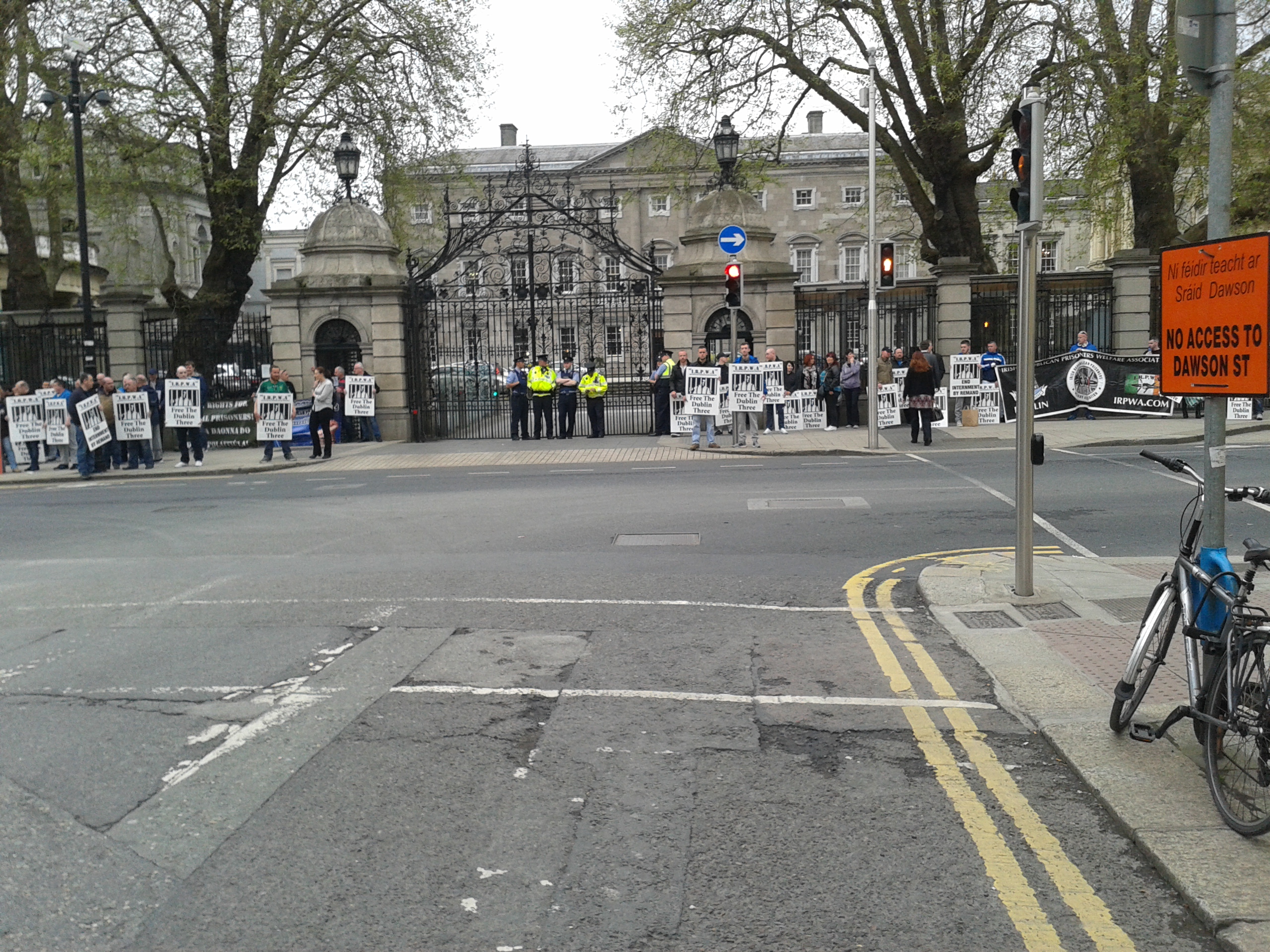
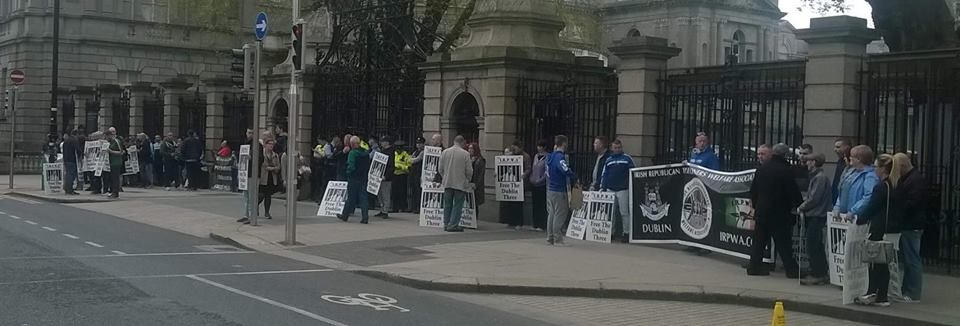
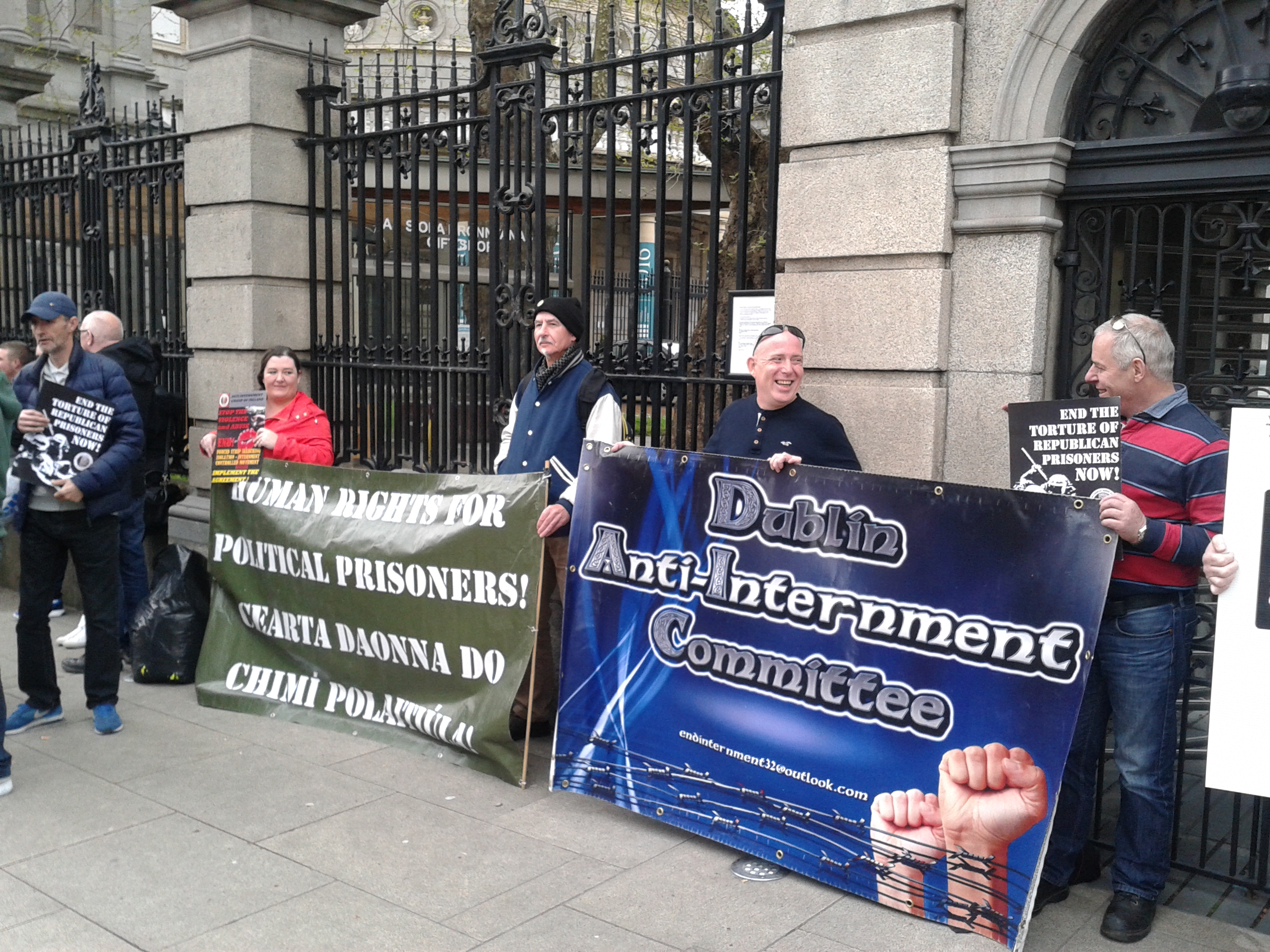

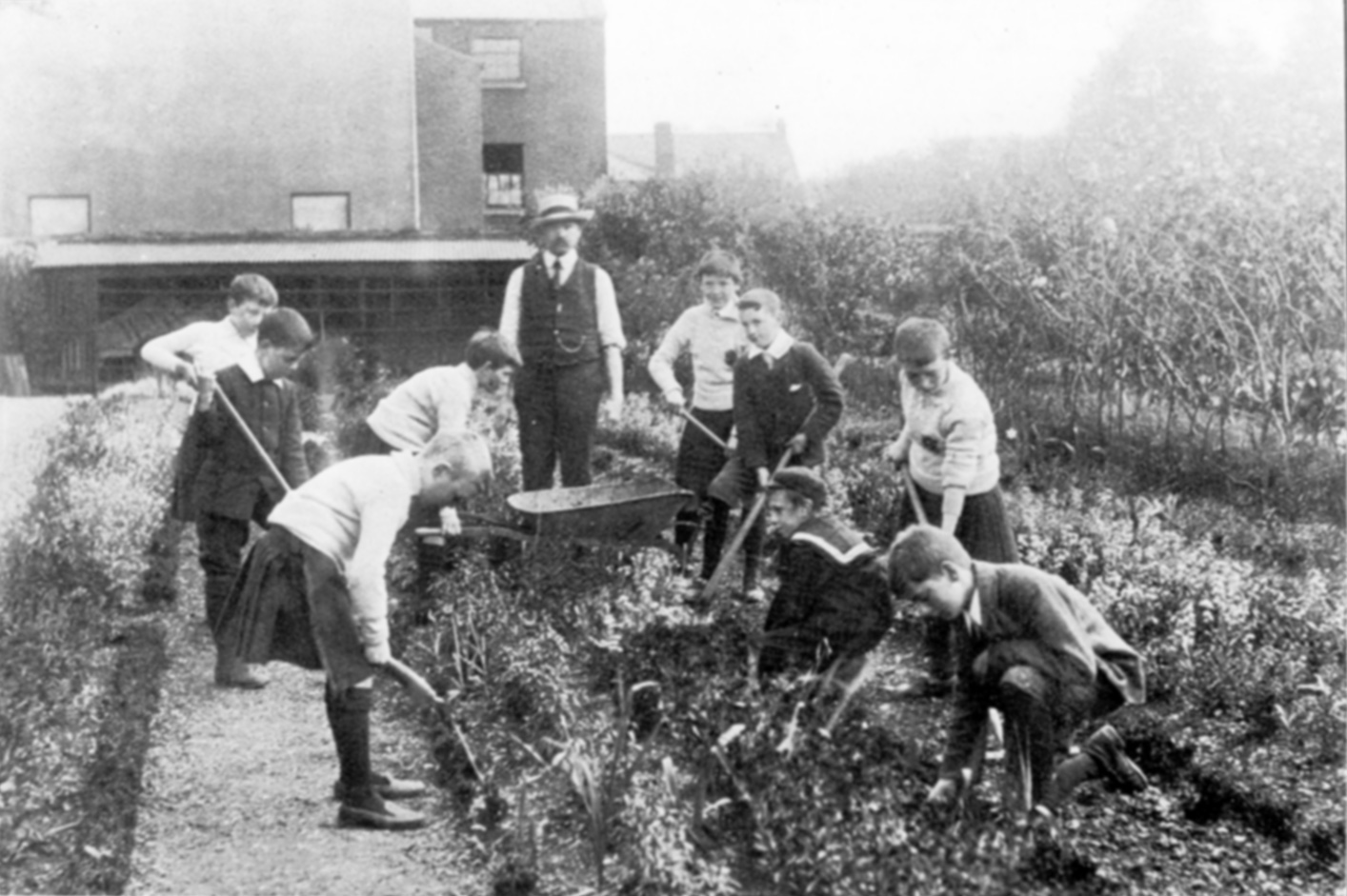
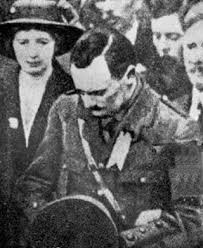
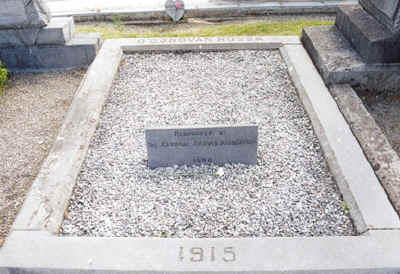
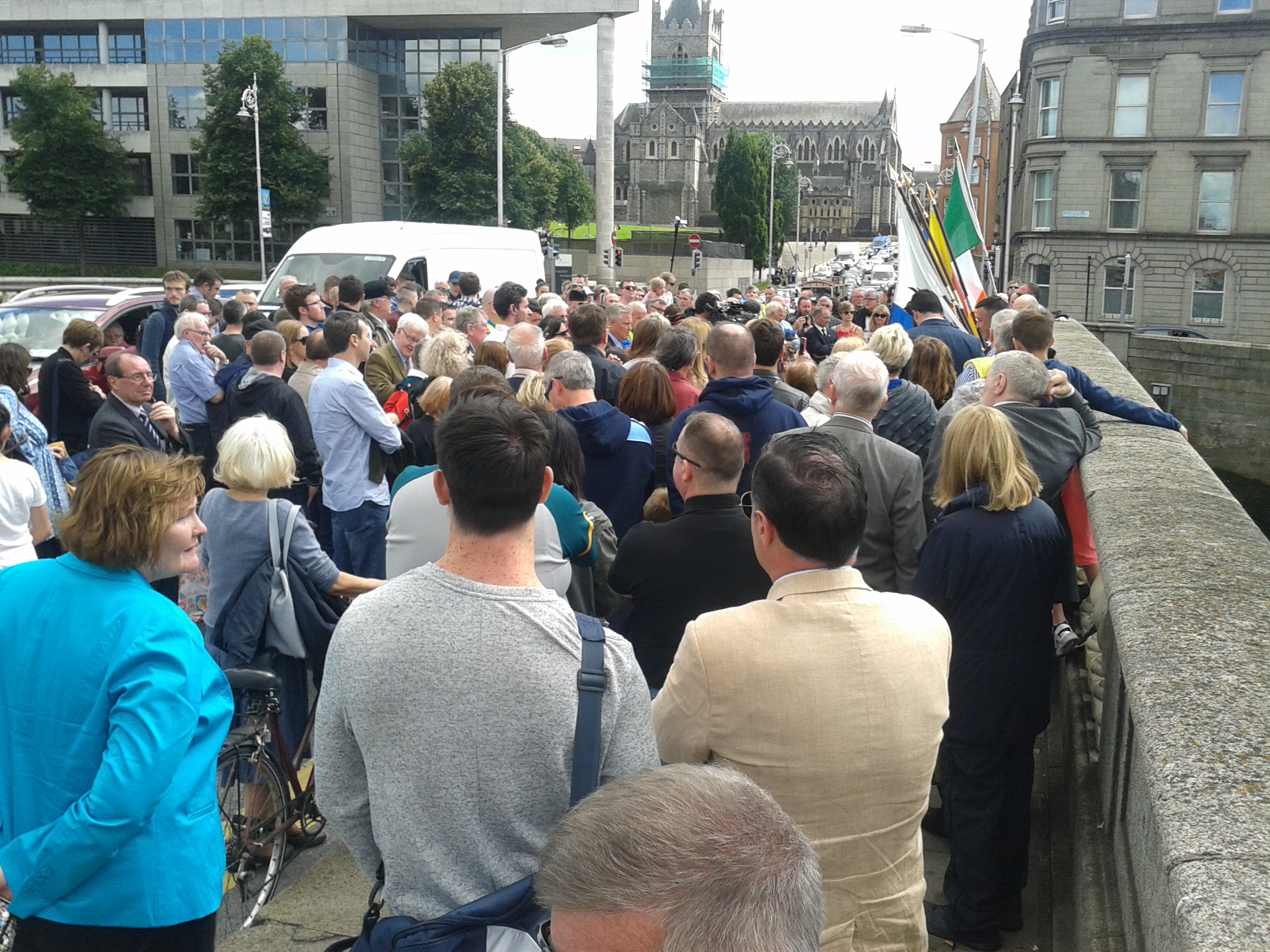


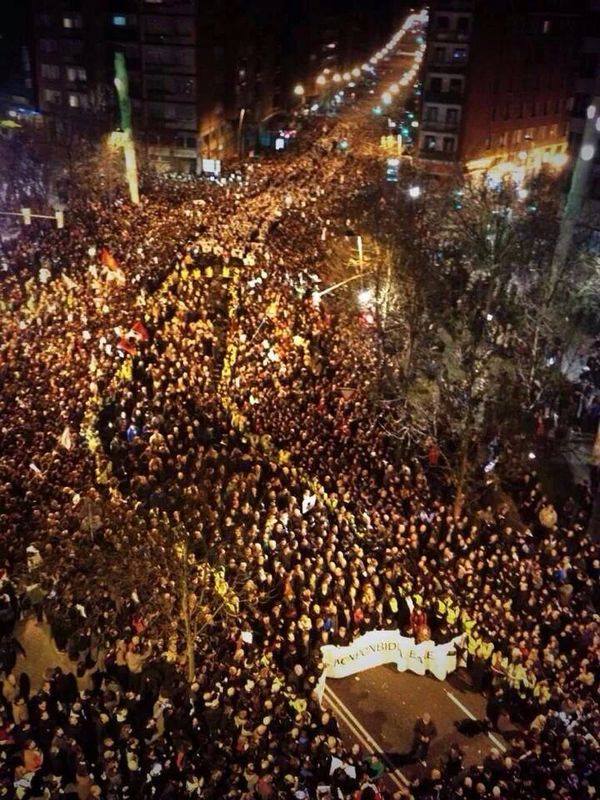
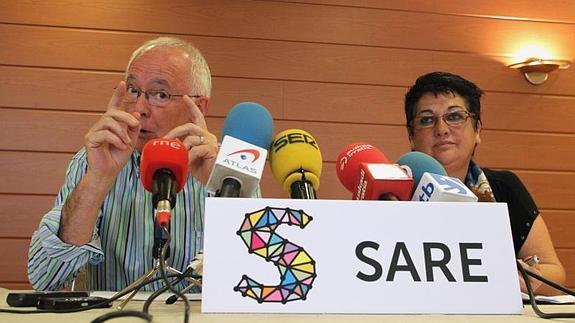
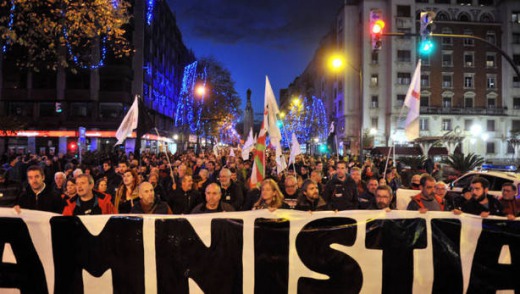


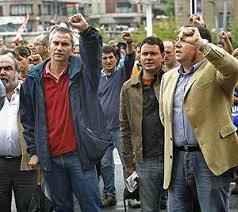
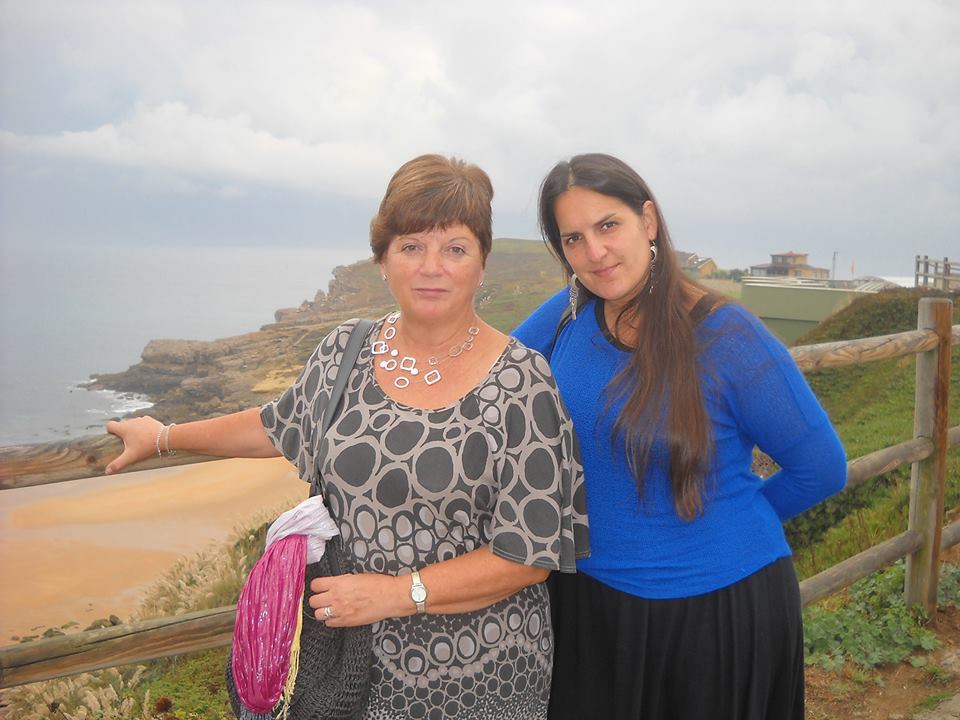
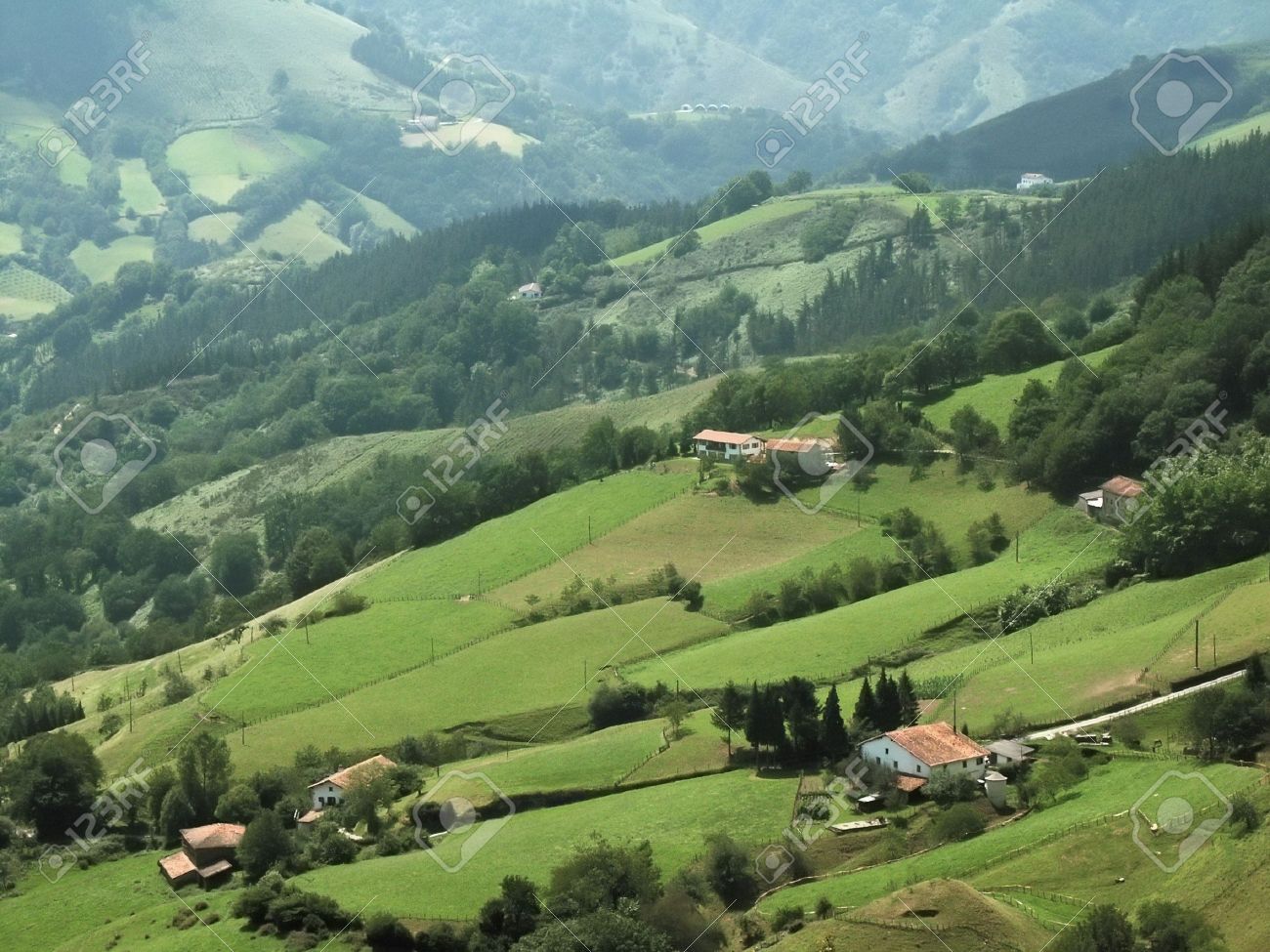
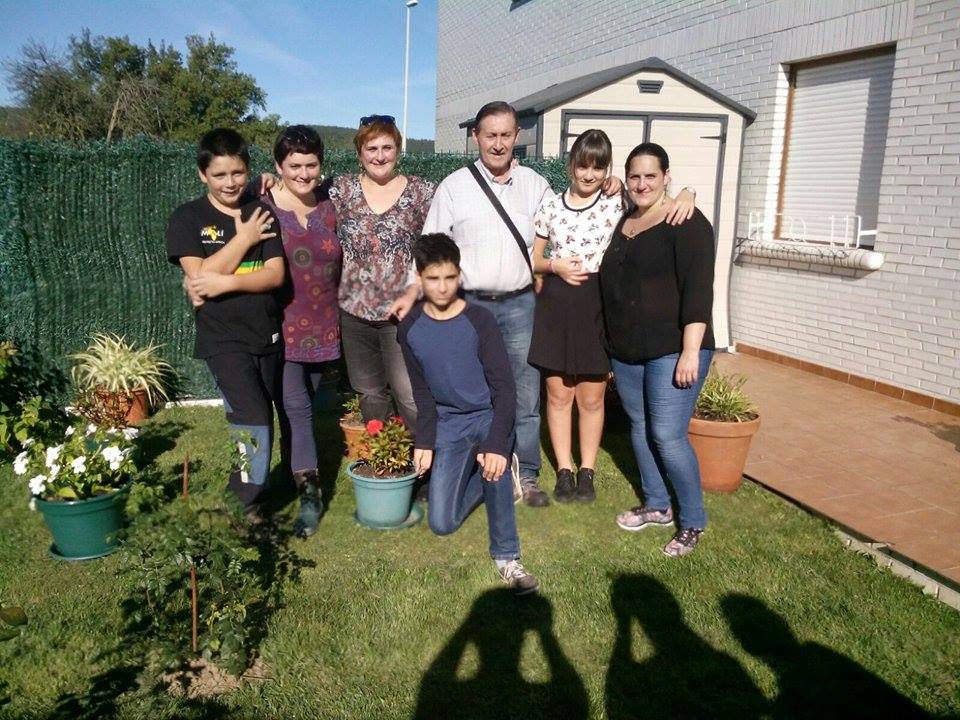

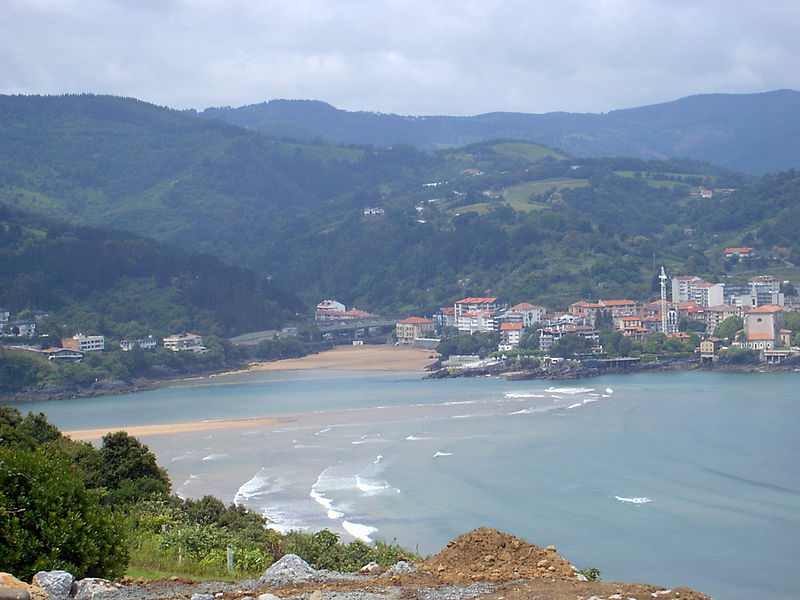

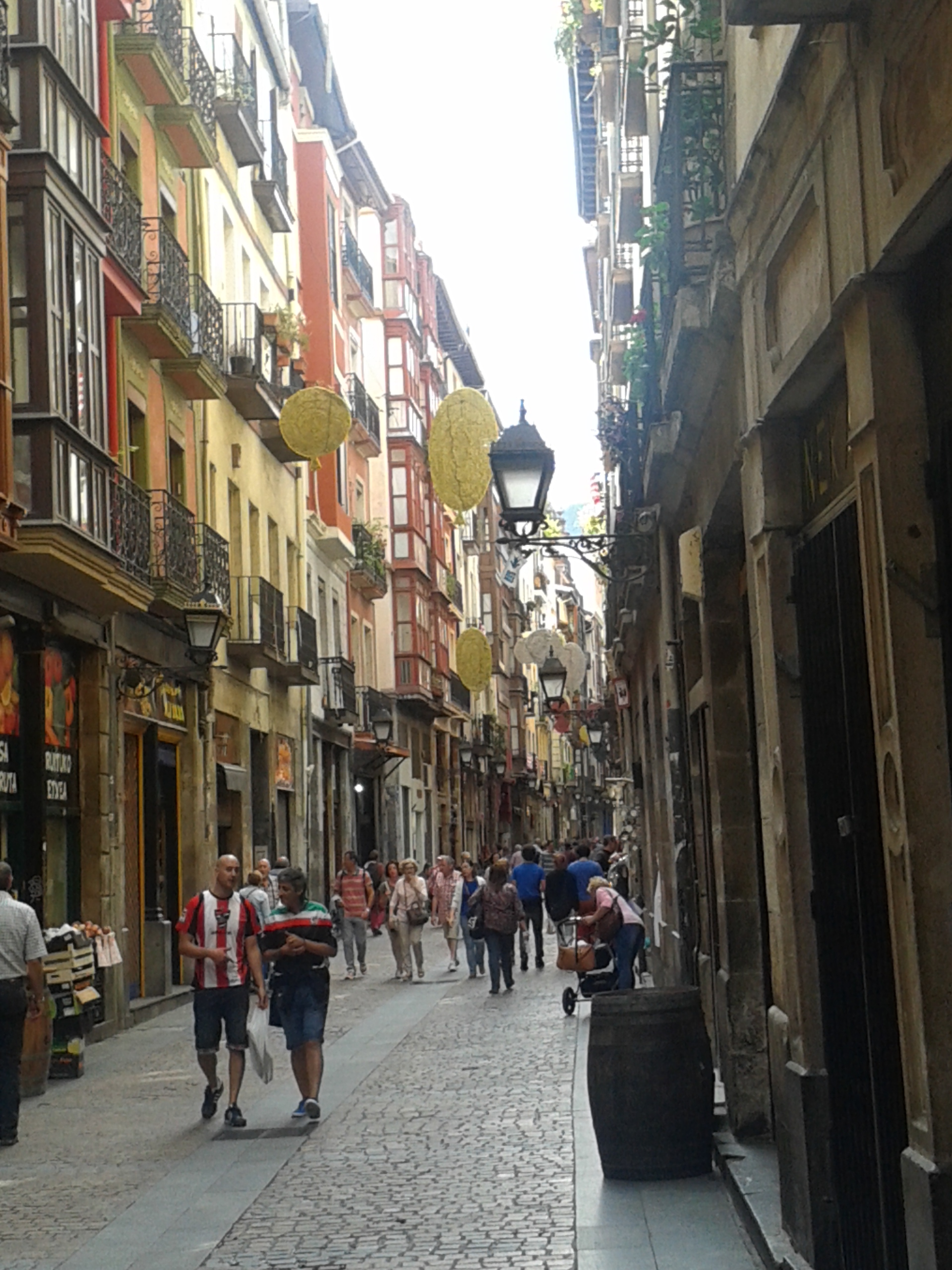
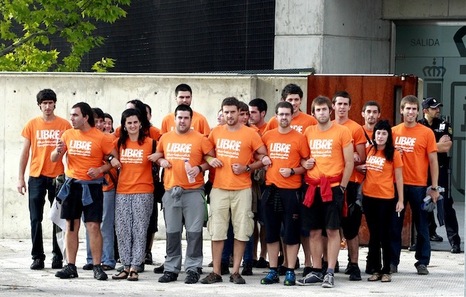




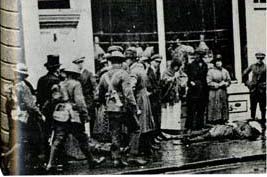


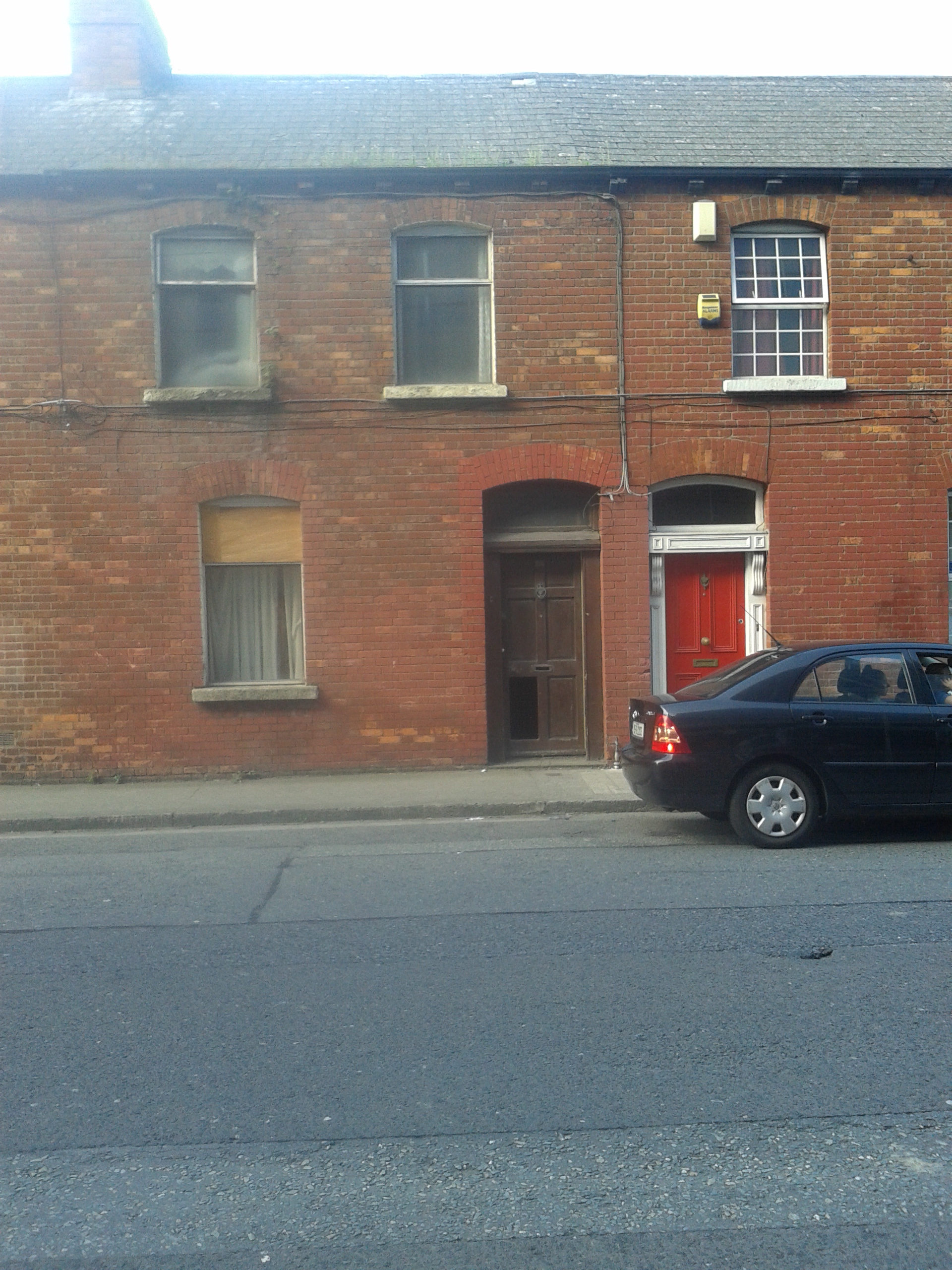
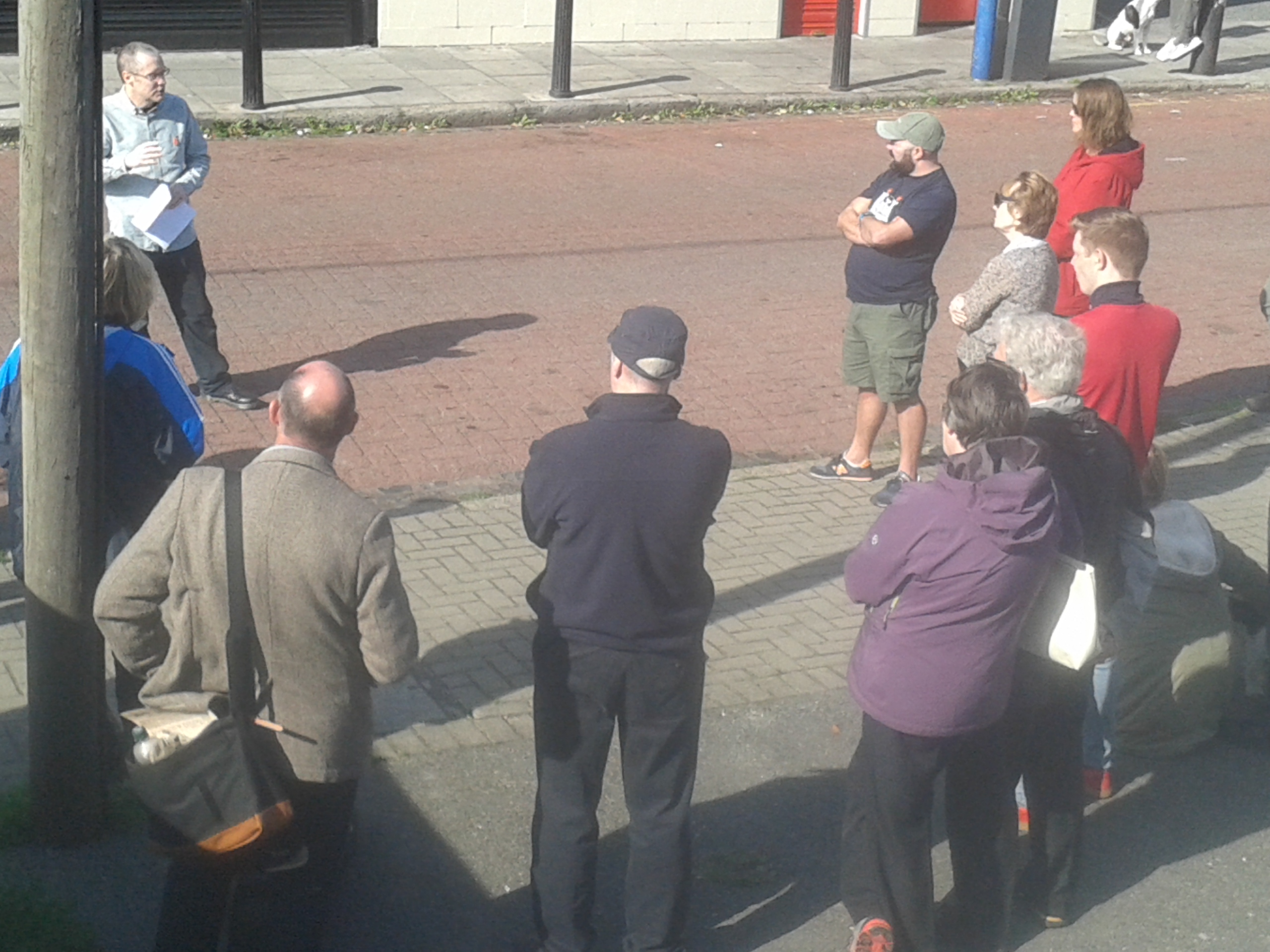
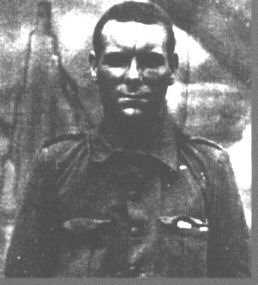
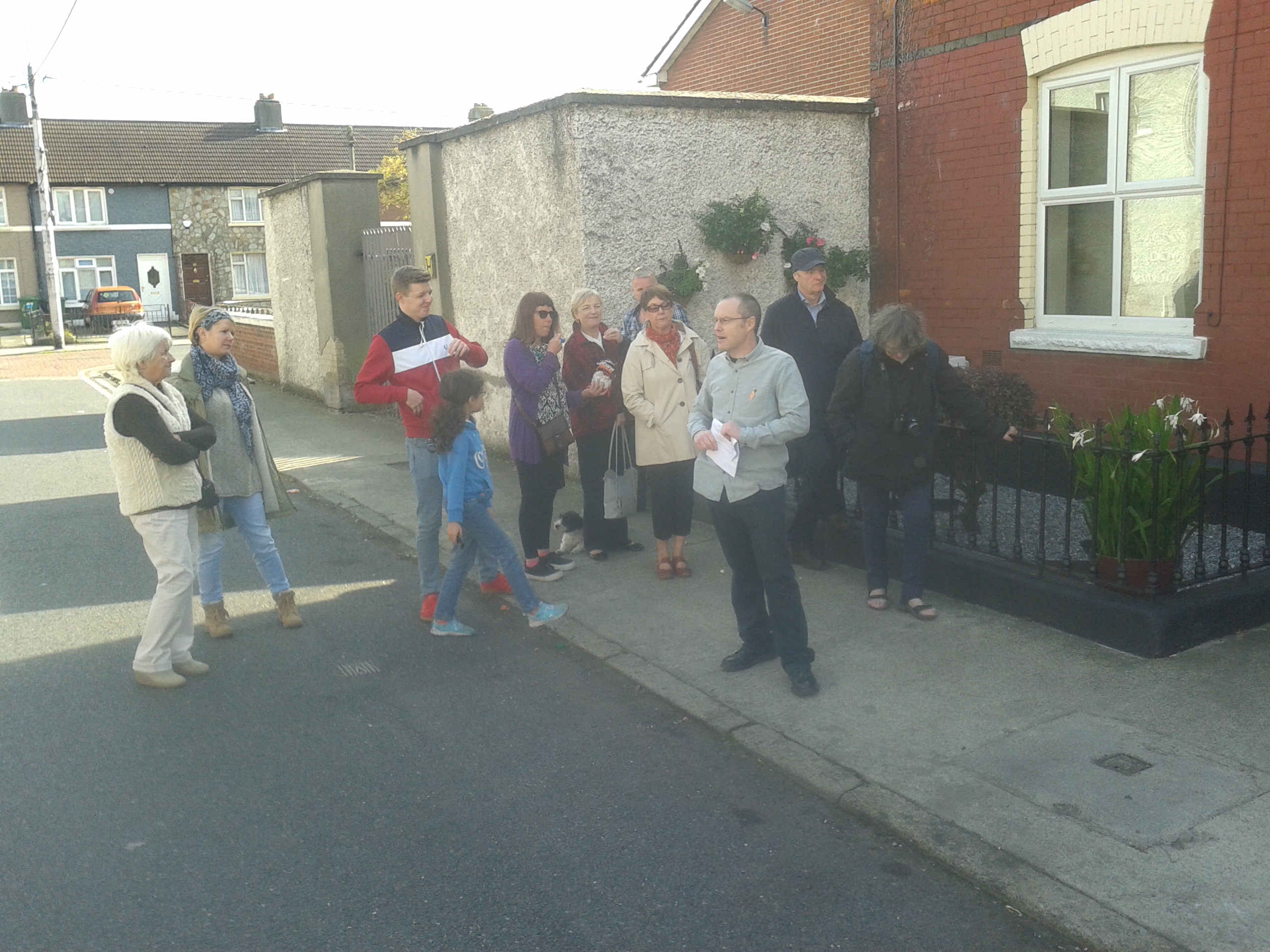
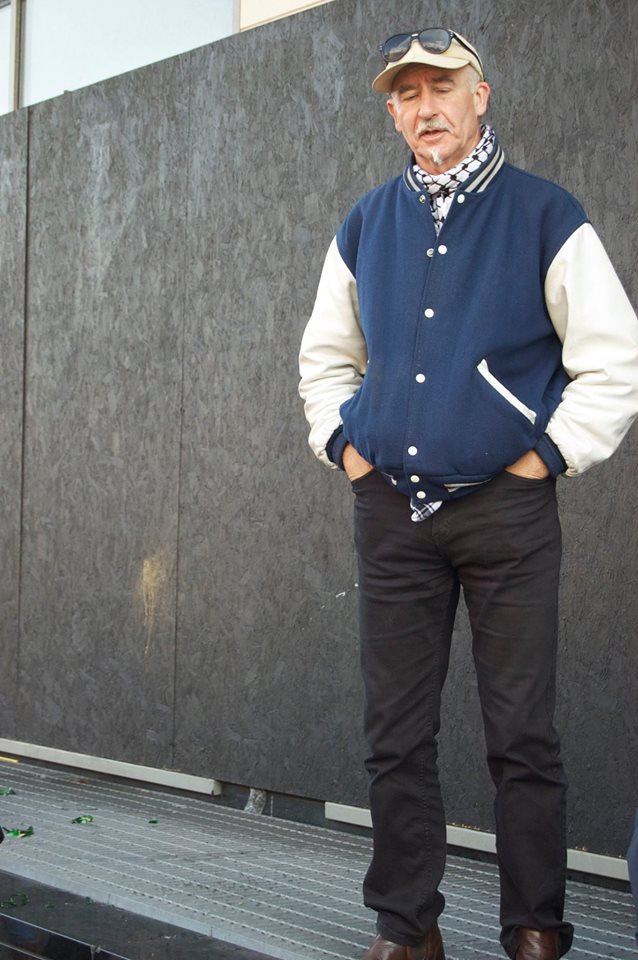

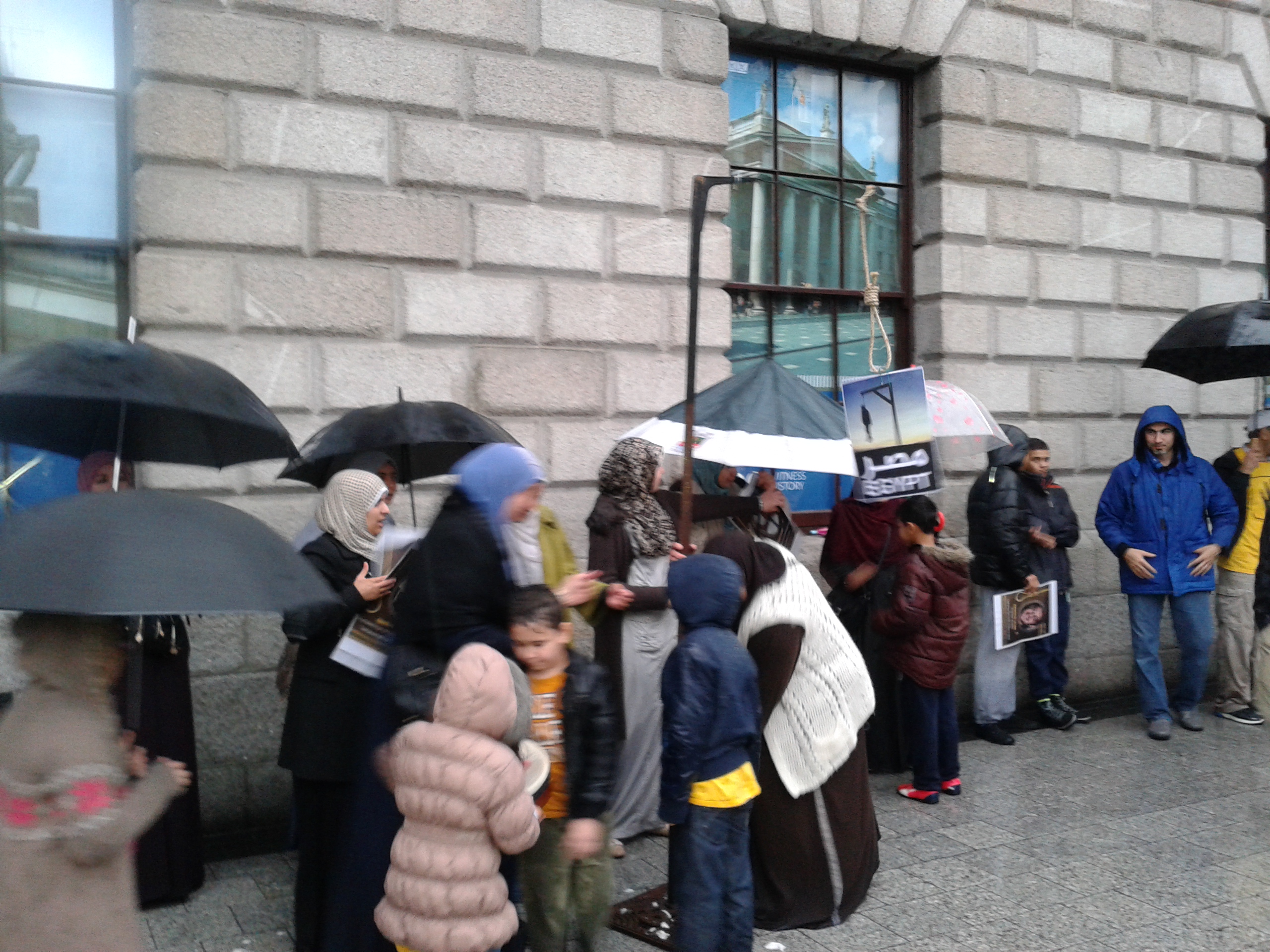


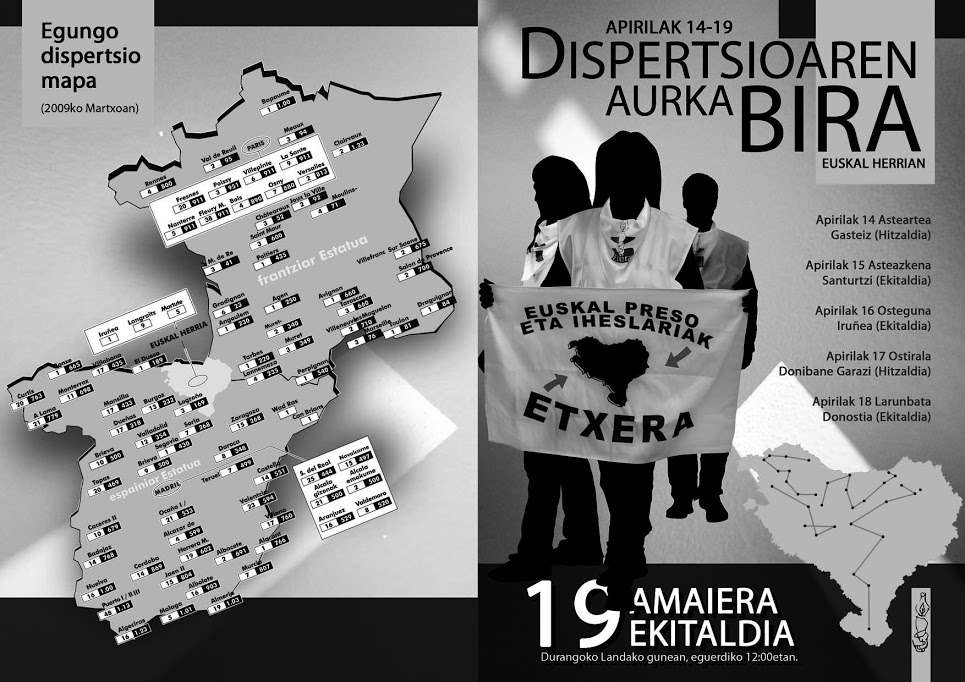
 rebelbreeze