Revolutionary socialist & anti-imperialist; Rebel Breeze publishes material within this spectrum and may or may not agree with all or part of any particular contribution. Writing English, Irish and Spanish, about politics, culture, nature.
Four second-generation Irish lads, three brothers and their best friend from school write songs about identity and belonging. With influences as diverse as Brendan Shine, The Pogues and The Stone Roses their mission is to get people dancing and thinking.
Hot on the heels of their last single, the fantastic, ‘God Bless You And Keep You’, comes new music from Luton’s very own Missing The Ferry. Recorded mostly pre-Covid in Deptford, SE London and then remotely between bedrooms in Luton/SE London by the band then sent to our friend Luise (https://www.facebook.com/LuiseLondonAudio) in Germany to sprinkle some magic Teutonic Folk party Punk dust on.
Missing The Ferry Left to right: Kevin Cunningham – Guitar/Vocals * Chris Anderson – Fiddle/Mandolin/Vocals * Kevin Anderson – Bass/Vocals (Lead vocals on ‘A Song’) * Paul Anderson – Whistle/Mandolin/Vocals *
A Song is about daring to dream; escaping from the box that the government, class and circumstance have shoved you in all your life.A Song is about self-destruction, hitting rock bottom, temptation and redemption.A Song is for the voiceless, the poor, the lonely and dispossessed.But at the end of the day, it is just a song.
Anyone who has ever missed, or nearly missed, the Dublin-bound ferry from Holyhead will get the name. Don’t be Missing The Ferry yourselves!
Current media news reports quote James McClean, a player for the English Football League club Stoke City and for the soccer team of the Irish State1, protesting against being subjected to anti-Irish racism and his wife Erin also, not so much on her own behalf but in consideration of her three children. McClean points out that while other kinds of discrimination are rightly opposed, anti-Irish racism goes largely ignored by British society and by the football profession. Despite its existence for 800 years and its persistence today, anti-Irish racism has long been neglected in the study of racism and the struggle against it.
James MacClean, who comes from Derry, has been made a controversial figure by his refusal to comply with the expectation that he wear a Remembrance Poppy, which he correctly sees as a promotional emblem for the British Army. As a result he has been subjected to sectarian Loyalist abuse and anti-Irish abuse targeting him and his family.
Erin and husband and footballer James MacClean, enjoying a social occasion. They have been harassed by anti-Irish racism and threats to them and to their children. (Photo source: Internet)
The origins of anti-Irish racism can be traced back to the writings of Anglo-Norman Gerald of Wales (Giraldus Cambrensis) in the latter half of the 12th Century. Coming from a background of Norman feudal culture and a comparatively recent history of conquest of large parts of Celtic and Saxon Britain2, Gerald found little to admire in Gaelic culture3 or society and much to deride. The feudal Norman visitors were encountering a culture of clan ownership of land, of election of clan leaders and greater kings who might not be first-born, of a Christian clergy that was not celibate and in which women could own their own property before, during and after marriage with the right to divorce. A culture shock indeed.
The writings of Gerald helped justify the 1169 opportunistic invasion of Ireland at the invitation of a resentful overthrown Irish king. With that beachhead well-established and the Irish Vikings of Dublin evicted by Richard de Clare, “Strongbow” in 1170, anti-Irish racism served to justify the official invasion of Henry in 1171 backed up by the authorisation of Pope Adrian IV with the Papal Bull Laudabiliter, a 1155 letter of ecclesiastic authorisation, to bring the semi-independent Irish church to the Gregorian Reforms.4
Despite the early scorn and distaste of the Norman invaders for Irish culture, within less than two centuries they were becoming integrated with it to such an extent as to cause alarm among the English Normans. The latter drafted a number of laws forbidding elements of that integration, the most infamous being the Statutes of Kilkenny in 1366, forbidding the Irish Normans from adopting native Irish customs, forms of dress and use of the Irish language; they had become “more Irish than the Irish themselves”, their critics in England complained. Inside the “Pale”, the central enclosures of the occupiers’ power, the Statutes could be enforced but not outside and so Ireland remained essentially Gaelic in culture, with some cultural transference from the Normans.
Control of Irish territory breakdown 1450 (Image sourced: Internet)
For the conquest to be secure, Ireland needed to be conquered entirely and plantations of people seemed the way to achieve this: send in settlers, give them expropriated land which they they would have to defend. This was the approach of the Tudor monarchs of England and to a requirement that the settlers would be English-speaking they added the new religion, that of the Protestant Reformation. Settlements had to be capable of defence5 and no “mere Irish” should be employed.
Dispossession, plantation and oppression continued through the 17th Century under Cromwell and King William and through the Penal Laws thereafter up to the 19th.
Land distribution in ireland after the Cromwellian Resettlement Act 1652 (Image sourced: Internet)
The native Irish (Gael) and now also the Norman Irish (Gall-Ghael) were the enemy surrounding these settlements outside the Pale, they had been dispossessed and would no doubt recover their lands and their sovereignty if given the chance. And they were by far the majority. Justification for conquest and dispossession required an appropriate ideology and this was found in the assumed superiority of the occupiers’ religions, language, culture and polities. And the natural corollary to that was an ascribed inferiority to everything among the natives: language, religion, cultural habits and mores, dress … Naturally practical physical measures were required also: oppression, discrimination and repression of resistance.
The Irish were characterised as savage, child-like, emotional, untrustworthy (they agreed to treaties when beaten but broke them later6), superstitious, violent (they kept resisting the lawful authority or even uprising), drunkards, dirty ….
Following the scientific breakthrough of Darwinism came “Social Darwinism” and some Victorian pseudo-anthropologists placed the Irish as a Celtic Iberian race below the Teutonic (with which of course they identified the English) but above the “African Hottentot”. The Irish and Latin “races” were described as of “feminine” nature: emotional, weak, charming at times, unintelligent, needing to be controlled; while the “masculine” Anglo-Teutonic “races” were strong, measured, logical and obviously the right ones to be in control.
Éire struggling with Famine, which was in reality an imposed holocaust — while the irish starved, due to a blight on their staple food of potato, their other products were collected for rent and left Ireland in ships for Britain. (Image sourced: Internet)
Irish uprisings increased the sense of insecurity of the conquerors and occupiers and intensified their efforts to justify their oppression and repression of the Irish so that Victorian Britain during Fenian campaigns churned out jokes against the Irish, along with nasty tales and horrible caricatures in popular newspapers. But not just popular newspapers: as the Irish starved in the Great Hunger of the mid-19th Century while their produce fed the British industrial revolution, the London Times, newspaper of record for the British ruling class, exulted in an editorial that the the Irish (survivors) were leaving and that soon an Irishman would be as rare in Ireland as the American Indians on the North-East Coast of the USA.
“The Irish Frankenstein” (sic) 1882, popular Punch magazine (Image sourced: Wikipedia)
Anti-Eviction Rally in they Land War, 1850 (Image sourced: Internet)
EXPORTING ANTI-IRISH RACISM
Not surprisingly, a central ideology such as anti-Irish racism accompanied the British wherever they went, despite the number of Irish in their armies and administrative layers. Boston, Massachusetts was particularly known for ant-Irish prejudice and discrimination and that may explain why the Irish community there was reportedly so clannish and defending its hard-won turf against all comers, including unfortunately competition from those considered even lower than the Irish, African Americans7. The anti-Irish ideology made itself felt in the white-ruled colonies, later Dominions of Australia, New Zealand and Canada too.
A common enough sign in Britain and white settler British dominions during certain periods (Image sourced: Internet)
A strange case of the dissemination of this virus was its export to Scotland, a nation although of Celtic origin, heavily settled by Normans and Saxons, and incorporated into the United Kingdom in 1707. This was in particular of Ulster origin and took the form of anti-Catholicism. The English occupation had consciously stirred up religious sectarianism in the 1790s in order to break up the growing unity of Protestant Irish of various backgrounds with the Catholic vast majority which was framed in a republican project for greater independence. An important part of that subversion was the creation of the Orange Order in Loughgall in 1795, which became active in helping to suppress the United Irishmen uprising of 1798 and especially in repression afterwards, both against Republican Protestants and Catholics in general. As the Republican element among the Protestants decreased dramatically due to repression and emigration, the Order concentrated almost exclusively on oppression of Catholics and repression of resistance, a role it plays to this day.
But with the decline of the Ulster weaving industry in particular due to Ireland entering the UK in 1801 and British preferential treatment of their own production, many Ulster emigrants came to Scotland and were in competition for work, with the Orange Order being used to infect the already widely Protestant Scottish society against the Catholics which meant essentially, against the Irish. That has continued to this day (see References) and finds its expression in an often violent rivalry for example between soccer football teams of “Catholic” and “Protestant” background8, in Orange marches celebrating the victories of King William in Ireland and in discrimination in other areas such as policing too.
ANTI-IRISH RACISM IN THE 20th AND 21st CENTURIES
Anti-Irish racism was whipped up again during the 1916 Easter Rising and Irish war of Independence (1919-1921), and not just against the Irish in Ireland but against the Irish in Britain, in the USA9 and in Australia10. It raised its ugly head (and bared its teeth) again during WW2 (inflamed by the IRA campaign in Britain and Irish state neutrality) and again during the recent 30 years’ war.
An allegedly common lodging house sign in Britain, the existence of which is now disputed. What is beyond doubt is that those three exclusions (and of children) were advertised though not all necessarily all together. (Image sourced: Internet)
In the 1970s anti-Irish articles, jokes and cartoons abounded in the British press and to this ideological offensive was added the 1971 weekly program of The Comedians (“stand up comedians”), of which a huge proportion of their material was anti-Irish racism, depicting the Irish in particular as stupid. I was London myself during that period and remember that a “comedian” only had to say “There was this Paddy on a building site” and the audience would be already laughing. Bernard Manning was the most infamous of those but there were many, many others.
Bernard Manning, perhaps chief among a long line of British racist comedians. (Image sourced: Internet)
Perhaps a better aspect of Bernard Manning (Image sourced: Find a Grave)
Those jokes and others were repeated not only by comperes and club comedians but of course also at work, in school, at college and in universities. They represented a deeply degrading ideological offensive on a cultural level against the whole Irish community.
Apart from the Comedians TV program, a number of media personalities made racist jokes about or references to the Irish without any apology from the media or repercussions from their employers. Angus Deaton, for a long time presenter of Have I Got News For You, the popular British TV comedy news and current affairs commentary show, made a joke about the Irish (although participant Paul Merton, who said his mother was Irish, riposted brilliantly). Caroline Aherne, a comedienne who brilliantly played the biting chat-show character “Mrs. Merton”, was one of the few to speak out publicly against the racist “humour” but both her parents were Irish. Billy Connolly, Scottish comedian of Catholic Irish background, while discussing comedy, admitted to having told an anti-irish joke once when feeling lonely on stage, which he regretted. To the urbane Irish presenter Terry Wogan’s great credit while judging a popular British TV talent show, he declared anti-Irish jokes were not funny.
1974 saw the introduction of the Prevention of Terrorism (sic) Act and the framing and incarceration of two score innocent Irish people. Apart from raids on homes, spurious arrests without warrants, detention without charge and oppressive interrogations, thousands were questioned at ports and airports, often made to miss their flights at the latter. Though the charges falsely alleged involvement in “terrorist acts” the basis was Irishness, in a way very reminiscent to “Muslim” being considered sufficient justification today.
James MacClean playing for his club, Stoke City. (Photo credit: Northern Echo)
“INVISIBLE” RACISM
If a good working definition of racism is “discrimination against and disparaging of another ethnic group from a position of power”, then the Irish should have had no problems in gaining recognition as being racially oppressed and discriminated against. However, so many insisted that the Irish could not qualify because they were “white”. But in fact there already existed a “white” ethnic group which was widely acknowledge as having been discriminated against for centuries – the Jews. That however was explained by some as being a “religious discrimination” at root and not “racism”. The basic fact of the matter was and is that it did not suit the British ruling class or their intelligentsia to admit to anti-Irish racism – and not just because of guilt but for very practical reasons: they are still in conquest-occupation of nearly one-fifth of Irish territory. And the Irish diaspora is the oldest ethnic minority in Britain as well as, until recently perhaps, the largest11.
Cover of memoir by John Lydon, aka Johnny Rotten, lead singer of the punk band Sex Pistols. Lydon was of irish descent growing up in North London. (Image sourced: Internet)
The British Left, the leading parts of which have either gained access to management of the British State or aspire to do so, for the most part have denied or minimalised anti-Irish racism. It took Liz Curtis to put together a popular illustrated booklet on anti-Irish racism and the Irish in Britain Representation Group, founded in 1981 to campaign against it. The IBRG made official complaints to and about the media and picketed WH Smiths12 until they stopped selling “Irish mugs” with the handle inside. While supporting general equality, the IBRG made complaints to local authorities about racist measures that impacted upon the Irish and sought to have an Irish ethnicity identification choice in the British Census, which was eventually successful.13 An approach of theirs to the GLC convinced the Council, under the leadership of Ken Livingstone, to withdraw all their advertising from the London Evening Standard until the latter apologised for publishing an anti-Irish racist cartoon. The Editor refused to apologise and never again received any advertising from the GLC14, at a revenue loss to the newspaper estimated at £2 million.
Mostly the Irish community fought the racism on their own, without the support of most of the British Left or the liberal-social-democratic elements. Even after the 1965 Race Relations Act the widespread feeling was that whether one was for or against the Act, it did not apply to the Irish. The Act specifically excluded shops and boarding houses (i.e places where notices declaring “No Blacks, No Dogs, No Irish”) were widespread but they were included in the 1968 Act15. The 1976 Act was more comprehensive but the assumption of inapplicability to the Irish continued. It appears that it was not until the Killian case against the British pharmaceutical retail chain Boots in 1989 that an Irish person was successful in taking a case for discrimination16 under the 1976 Act.
James McClean for Ireland in International friendly match against Bulgaria at Aviva Stadium, Dublin, September 2019. (Photo credit: Seb Daly/Sportsfile via Getty Images)
The anti-Irish racist offensive mostly petered out at the end of the 1990s but flared up again in the British media during the whole Brexit saga. In 2015 Jeremy Clarkson flew into a rage with an Irish co-producer of the Top Gear show, abused him racially and punched him in the mouth. It is a virus or bacteria living deep in the British mainstream psyche; it recedes at times only to be reactivated whenever the British ruling class — or sections of the chattering class — perceive that the Irish are not acting in the best interests of Britain, whatever they perceive those to be.
End.
FOOTNOTES
1In the world of soccer football, there are two “national” teams competing for the championships: “Republic of Ireland” and “Northern Ireland”, a clear example of intrusion of politics into sport, for Ireland is one country and was recognised as such even by the English invaders (the inventors of soccer) from 1169 until they partitioned the country in 1921. Thus what is mostly recognised as the Irish national team has to compete against another team from a part of its own country in order to progress in championships!
2England suffered a Norman invasion in 1066 which gradually extended over the whole of Britain, the south-east of which had been already conquered by the Saxons.
3He admired Gaelic decorative art as expressed in illuminated manuscripts and harp-playing, describing them as “the work of angels”, almost expressing incredulity that they could have come from Gaelic culture. It is unlikely that he learned the Irish language, perhaps conversing with natives through the medium of Latin or an interpreter.
4The Gaels, who earlier had a pantheistic religion moderated by the druidic order, had been largely Christian by the 5th Century; furthermore the transition to Christianity in Ireland was not imposed by conquest and appears to have been largely voluntary; in addition the Christian monks recorded a great many of the pre-Christian myths and legends. During the Early Middle Ages the Irish Church sent out missionaries to many parts of Europe, establishing monasteries similar to universities as far away as Asia Minor.
5Hence the layout of triangle, square or diamond town centres of settler origin in Ireland, rather than native layout of lines of housing following road or river crossing and backing up behind, or congregating around harbour, fort or monastery. See also the design of even the small Protestant churches which look built to be used as forts, with strong doors and narrow windows, some even like arrow-slits.
6Compare this with the long history of conquerors, certainly including the English, repeatedly violating treaties they had made when victorious!
7Of course Boston was far from being the only US City where anti-black racism was the norm in Irish communities but it was perhaps the worst. Of course Irish anti-slavery, labour and civil rights workers also existed, some of them very prominent in their field.
8e.g supporters of Glasgow Celtic v. Rangers, of Hibernians v. Heart of Midlothian in Edinburgh.
9The British intelligence services were well aware that the Irish insurgency was receiving substantial concrete and moral assistance from the Irish diaspora in the USA.
10It had existed there before from in particular English settlers but reached hysterical proportions when two attempts to impose conscription in WW1 through referendum – because they feared to impose it otherwise – failed, a fact which was attributed by many to the Irish element in the (white) Australian electorate.
132001; the opposition did not come from the British establishment alone but also from middle-class black activists keen to keep anti-racism as their preserve solely.
14The GLC was abolished by the Thatcher Government in 1985.
15Which was not applicable in the Six Counties, despite being a part of the UK
16 As in the early successful cases where the complainant was Irish, it was about discrimination in employment; later there were many about abuse at point of service as well of as employee.
REFERENCES AND FURTHER READING
General history of Anti-Irish Racism Nothing But the Same Old Story: Roots of Anti-Irish Racism, Liz Curtis, (1984) GLC; 1996 Sásta reprint)
Apes and Angels: The Irishman in Victorian Caricature, L. Perry Curtis (1971, republished 1996 by Smithsonian DC
Ireland: The Propaganda War ; the British Media and the Battle for Hearts and Minds, Liz Curtis, (1984) Pluto Press; 1998 Sásta update and reprint)
Swift, Roger and Sheridan Gilley, The Irish in Britain, 1815-1939. London: Pinter, 1989.
Swift, Roger and Sheridan Gilley, The Irish in the Victorian City. London: Dover, 1985.
The use of the ‘cartoonist’s armoury’ in manipulating public opinion: anti-Irish imagery in 19th century British and American periodicals: https://www.jstor.org/stable/41932626?seq=1
Do b’é an chóilíneacht a rinneadh teanga na nGaeil a “pholatiú”, mar shompla le Reachtanna Chill Coinnigh, le coinníolacha na Plandála, leis na Péin-Dlíthe agus córas na scollaíochta náisiúnta faoi chóilínteacht Shasana. Is beag dul as bhí ag na hÉireannaigh náisiúnacha ach a dteanga dúchais a pholatiú mar chosaint, mar cheist tarrthála.
(Foinse íomhá: an Idirlíon)
Níor aontaigh an Ídeach agus an Phiarsach ar an gceist céanna agus ceaptar gur éirigh Dubhghlas de hÍde as uachtarántacht an eagrais a bhunaigh sé, Connradh na Gaeilge, dá bharr i 1915. Chuir na Sasanaigh Pádraig Mac Piarais chun báis i 1916 agus cé gur cuireadh an Ghaeilge ins an chéad áit go hoifigiúil ins an Saor Stát, agus de hÍde mar Uachtarán 1 1938, is in éag agus ag cúlú atá an Ghaeilge ag dul ó shin i leith (in ainneoin fás mhór scolaíochta lán-Ghaeilge ar leibhéal na bunscoilíochta agus cúpla bua eile thar na blianta, mar shompla bunú TG4 agus Raidió na Gaeltachta).
Pádraig Mac Piarais, Eagarthóir nuachtán Chonradh na Gaeilge, “An Claidheamh Soluis”. Bhí sé den tuairim gur ceist pholaitiúil chomh maith le cultúrtha a bhí sa Ghaeilge faoi chóilínteacht Shasana. Chuir na Sasanaigh chun báis é i 1916 (Foinse grianghraif: an Idirlíon)
Tá an cheist ós ár gcomhair arís agus chun an fhírinne a rá, níor imigh sí ariamh: polaitiú nó gan polaitiú, nó bás don teanga in ionad polaitiú. Deir scríbhneoirí an ailt thíos gur ceist práinneach sin don Bhascais. Is mar an gcéanna againne é maidir leis an Ghaeilge.
Dubhghlas de hÍde, a bhí i gcoinne “polaitiú” na teanga agus a d’éirigh as uachtarántacht Chonradh na Gaeilge i 1915, eagras a bhunaigh sé in 1892. Ceapadh é mar Uachtarán Stát na hÉireann i 1938. (Foinse grianghraif: an Idirlíon)
Aistriú go Gaeilge den alt i Naziogintza ag Cathal Ó Murchú:
CAITHFIMID TÚSÁITE A THABHAIRT DON BHASCAIS
Is ábhar díospóireachta é polaitiú na Bascaise dúinne inár n-eagraíocht NAZIOGINTZA ó a bunaíodh í. Tá sé pléite againn agus neart scríofa ag tagairt air, agus anois – tríd an alt seo – chinníomar dul i ngleic leis an gceist seo go díreach.
Ar dtús, ní mór dúinn bheith soiléir faoi bhrí an téarma “polaitiú.” Teastaíonn uainn bheith soiléir go n-úsáidimid an focal polaitiú ar bhonn náisiúnta, agus nach dteastaíonn uainn ar chor ar bith dul i mbun aighneas polaitíochta ar chlé nó ar dheis, nó bheith claonta le grúpa polaitiúil amháin nó eile. Tá ár n-aighneas sa réimse seo le stáit na Fraince agus na Spáinne, ar mhian leo a dteangacha a bhrú orainn. Mar gheall ar athchultúrú éigeantach na Spáinnise agus na Fraincise, agus ar theacht le chéile na bhfórsaí polaitiúla le déanaí, tá Tír na mBascach i mbun dhianphróiseas dínáisiúnaithe, a bhfuil cáineadh déanta go minic. Tá creimeadh ar fheasacht náisiúnach na mBascach soiléir agus díscaoileadh gasta ar siúl ar ár náisiún in aigéan ollmhór na féiniúlachta Franca-Spáinní.
I bpróiseas an asamhlaithe seo, tá stáit na Spáinne agus na Fraince tar éis gach uile uirlis is cleas ar fáil dóibh a úsáid. Os rud é go dtuigeann siad gurb í an teanga crann taca an náisiúin, bhíodh siad de shíor ag iarraidh bunús na teangan Bascaise a bhaint, ach anois ar bhealach níos slítheanta: in ionad coscú iomlán ar theanga na Bascaise, mar atá déanta acu ar feadh na gcianta, anois tá siad ag rá go mba cheart “dípholaitiú” a dhéanamh ar an teanga Bascaise, ag iarraidh aon luach polaitiúil nó siombalach a bhaint ón mBascais, ag iarraidh teanga aimrid a dhéanamh aisti. Ní hamháin meáin na Spáinnise, ach neart polaiteoirí, tráchtairí, gníomhuithe sóisialta chomh maith inár náisiún féin atá ag athrá na mana céanna: “níor cheart go ndéanfar polaitiú ar theanga na mBascaise.”
Nach ait gurb iad siúd is mó a bhíonn ag polaitiú (agus ag brú orainn) a dteangacha féin (Airteagal a 3 de Bunreacht na Spáinne: ní mór do áitritheoirí stát na Spáinne bheith eolach ar an teanga Spáinnise; mar an gcéanna le hAirteagal a 2 de Bunreacht na Fraince) atá amhlaidh orthu siúd ag maíomh dúinn nár cheart polaitiú a dhéanamh ar ár dteanga. Nuair atáimid faoi fhulaingt ó aon leatrom teangan, mar shampla, deirtear linn gan cáineadh poiblí a dhéanamh ar seo, mar gheall go mbeimid ag polaitiú ár dteanga. Is léir go bhfuil aitheasc “dípholaitaithe” na Bascaise sa tóir ar ghéilleadh ár dteangan.
Ach ní hamháin sin atá i gceist. Iad siúd gur mhian leo luach ídé-eolaíoch na Bascaise a bhaint, tuigeann siad go maith go bhfuil cruinne siombalach bailithe, roinnt ar luachanna cultúrtha, i bhfocal amháin, Pobal i gceist. Mar gheall go dtugann an teanga Bascaise ár láthair sa saol, agus muide i láthair mar Bhascaigh. Le bheith cruinn faoi, is cuid an-bhunúsach an “muid” inár bhféiniúlacht náisiúnta, bunchuid a mhaireann thar na cianta, mar a aistrítear í ó ghlúin go glúin. Iad siúd gur mhian leo an íde-eolaíocht a bhaint ónár dteanga, tuigeann siad go dtugann an Euskera féiniúlacht ar leith agus i gcoitinne dúinn: ar leith sa chaoi gur Euskaldunes (cainteoirí Bascaise) sinne, agus i gcoitinne sa chaoi go ndéanann an teanga Bascaise náisiún dúinn. Is de dheasca na hEuskera a thugtar ainm agus croí do Thír na mBascach.
Iad siúd gur mhian leo an luach ídé-eolaíocht a bhaint ón mBascais, abraimís go soiléir é, is mian leo ár ndínáisiúnú: is mian leo an ghné is éifeachtaí a bhaint ónár dteanga, is mian leo an déthéarmach “Euskara-Euskal Herria” a scrios agus teanga ár dtíre a aistriú go rud éigin gan dochar nó neodrach ar nós gur Béarla nó Esperanto bheith ann, rud éigin gan anam. Dar leo siúd, bheith gonta faoi, níor cheart go mbeadh teanga Thír na mBascach ceangailte an iomarca le Tír na mBascach féin.
Ag tabhairt aghaidh ar seo, dearbhaímid go soiléir go mba cheart meá pholaitiúl, fhéiniúlach agus shiombalach a thabhairt don Euskara. Go mba cheart dúinn polaitiú a dhéanamh ar an mBascais, mar sin, os rud é gur cuid bhunúsach mar náisiún é.
Bímis soiléir faoi rud amháin: ní bhaineann an Bhascais le haon pháirtí polaitiúil amháin nó le haon ídé-eolaíocht ar leith. Ní hea ar chor ar bith. Ach ní hionann sin agus ceart ar dhípholaitiúar an mBascais. Is é sin díreach an aidhm atá ag náisiúnuithe na Fraince agus na Spáinne gur mhian leo náisiúnachas na mBascach a lagú, agus mar aidhm ag Bascaigh áirithe gur mhian leo nach bagairt a bheith ann i gcoincheap na teangan.
Tuigeann aontachtuithe na Spáinne agus na Fraince go maith nuair a labhraímid Bascais go bhfuilimid ag cur ár bhféiniúlacht náisiúnta in iúl. Tá uisce faoi thalamh i gceist leis an iarratas gan polaitiú a dhéanamh ar an mBascais: ná cur an teanga agus an fhéiniúlacht Bhascach in iúl — tá sé contúirteach. Mar gheall ar an gcúis seo, ina n-iarrachtaí luach ídé-eolaíoch na hEuskera (nó an Chatalóinis nó an Ghailísis) a bhaint, is minic a deireann Spáinnigh arís is arís eile “go bhfuil teangacha mar bhunuirlisí cumarsáide.” Ní hionann teangacha neamh-Spáinnise na Leithinse Íbéirí, ar ndóigh. Mar nuair a labhraíonn siad faoina dteanga féin, deireann Spáinnigh go mbaineann an Spáinnis le hoidhreacht luachmhar na gcainteoirí Spáinnise uile, ceann a chruthaíonn naisc láidre chultúrtha is mhothúchánacha idir an Spáinn agus Méiriceá Theas (tá an lá Féile na Spáinnise ar siúl ag an 12ú Deireadh Fómhair, Lá an “Hispanidad”, is féidir an rud céanna a rá faoin “Francophonie”). Ach ní hea, tuigimid go maith nach bhfuil teangacha mar uirlisí simplí cumarsáide. Tá teangacha mar bhunchodanna i gcruthú na bhféiniúlachtaí bailithe, tá siad mar chodanna a chruthaíonn naisc chultúrtha agus mhothúchánacha idir a gcainteoirí. Mura bhfuil sna teangacha ach uirlisí cumarsáide, bheimís go léir ag labhairt Béarla.
An Korrika (Rith) débhliantúil chun an Bascais a chur chun cinn, eagraithe ag AEK, eagras chun Bascais a mhúineadh do dhaoine fásta. (Foinse grianghraif: an Idirlíon)
Cibé áit a bhfuil teanga, tá féidearthacht ann do náisiún freisin. Chomh maith le teangacha, is í feasacht i gcoitinne a n-áitritheoirí a chinnteoidh bunú an náisiúin sin. Mar sin, tá comhpháirt pholaitiúil na teangan soiléir — agus iad siúd gur mhian leo uallach pholaitiúil a bhaint ón mBascais, tuigeann siad go maith é seo.
Is oth an port céanna a gcaitear orainn a chloisteáil ó chuid den saol náisiúnach Bhascach: “ní cheart dúinn polaitiú a dhéanamh ar an teanga Bascaise.” Iad siúd a deir seo, ní labhraíonn siad Bascais go rialta. Baineann siad feidhm as an mBascais chun chur i gcéill, agus labhraíonn siad Spáinnis agus Fraincis ar a sáimhín só gan aon spéis ar leith. Ach ba cheart do gach Bascach a bhfuil grá ina c(h)roí do Thír na mBascach tábhacht na teangan i múnlú an náisiúin a thuiscint, agus an difríocht idir Euskal Herria on Spáinn nó ón bhFrainc a aithint, a bpríomhghné, a dteanga, teanga na Bascaise. An bhfuil orainn an fhianaise chuspóireach a cheilt?
Mar sin, ní féidir luach lárnach simplí a thabhairt don Bhascais, mar atá déanta i roinnt dár scoileanna. Mar atá tugtha don Bhéarla, mar shampla. Tá sé ríthábhachtach do mhic léinn i dTír na mBascach a thuiscint go bhfuil an Bhascais mar chrann taca dár bhféiniúlacht i gcoitinne, leis an mbrí iomlán a bhaineann leis. Sa réimse seo, ní mór dúinn polaitiú a dhéanamh ar theanga na Bascaise, mar atá luaite againn cheana. Ach labhróimid faoi sin go mion in alt eile maidir lenár samhail oideachasúil.
Gan amhras ar bith, ní mór an Bhascais a pholaitiú. Ar an lámh amháin, le polasuithe uaillmhianacha teangan a chur i bhfeidhm a gceadaíonn dúinn seasamh débhéascna ár dteangan a shárú. Agus ar an lámh eile, a shoiléiriú nach uirlis shimplií chumarsáide an Euskera amháin, ach an comhartha is follasaí a léiríonn an éagsúlacht ag Euskal Herria ó náisiúin eile na Cruinne.
A chríoch.
(Foinse grianghraif: an Idirlíon)
(Eagras Bascach neamhspleach ar dhreamanna polaitiúla is ea Naziogintza a bhfuil mar chuspóir aici an Bhascais a chur chun cinn mar chuid lárnach de náisiún Euskal Herria. Déantar staidéar ar chásanna teangachaí náisiún atá faoi láthair gan stát dá gcuid féin)
In an opinion piece in Saturday’s Irish Times, Sean Moncrieff describes a journey on public transport in which he and others were subjected to an anti-masking and Far-Right conspiracy harangue by two other passengers who were not wearing masks. This behaviour typifies the arrogant, overbearing attitude of these Far-Right conspiracy theorists and how opposed they are to the prevalent ethos, especially among working people, of social solidarity.
The incident described is far from being a random isolated one. Up and down the country, anti-maskers have insulted people wearing masks, calling them “muzzled”. Irish Yellow Vester Ben Gilroy was videoed following an elderly man around a supermarket, harassing him for wearing a mask. Some of them, like anti-migrant, anti-masker Alan Sweeney, whose home is in Co. Galway, and a couple from Wexford, have travelled far outside their 5 km. restriction zones to enter shops while refusing to wear masks and then filming the resulting altercation as being alleged struggles for their civil rights. Following an anti-masker rally last year, a group of them entered carriages on the LUAS (the Dublin tram system) and mocked and abused people wearing masks (Sweeney was among those that time too). On a supposed celebration of St. Brigid by anti-maskers in Kildare this February, one was allegedly pulling masks off elderly (naturally!) passers-by. A doctor who returned to Ireland to help fight the virus and gave a thumb-down sign to an anti-mask march in Dublin, was menaced by some participants while many shouted at him “Take off your mask”. Dublin QAnon leader Dolores Webster (‘stage’ name Dee Wall) at a rally in Galway last year was videoed unmasked and deliberately coughing at a counter-protester while laughing about it.
They have even picketed hospitals, as reported in Wexford and in London, while health workers in Wales on social media reported being attacked by anti-maskers. More of that behaviour would have forced the State to close them down, which is probably why we have not seen more of it.
One of the many ironies associated with the Far-Right is that they claim wearing masks creates fear and breaks down solidarity among people, making them more easily manipulated. Meanwhile they go about actually undermining genuine social solidarity wherever they find it.
One of the many expressions of social solidarity in a banner on display in the working-class Dublin area of the Liberties in February 2021. (Photo: D.Breatnach)
SOCIAL SOLIDARITY
Social solidarity evolved first among ancient human societies as a way to live to survive in difficult situations. First in the family, then in the tribe, people helped one another in order for the group as a whole to survive. As society developed, even in societies dominated by exploiting classes that had little or no notion of solidarity, aspects of this social solidarity continued: agricultural communities worked in cooperation to get harvests in, to dig and operate irrigation ditches, to maintain various infrastructures. Workers, pitted to compete against one another as individuals or even groups, learned to build common solidarity and developed slogans like “An injury to one is an injury to all!” and “United we stand, divided we fall!” The moral folk tale of the mother (or father) and the sons (or daughters) being likened to sticks, individually vulnerable but unbreakable in a bunch, is known around the world.
An expression of social solidarity: A block of flats in the Liberties, Dublin, displaying banners thanking front-line workers. (Photo: D.Breatnach)
During this pandemic, social solidarity has been expressed by cooperation to stop the spread of the virus, for example by maintaining social distancing, wearing masks in shops or among crowds. It has also seen expression in demonstrations of solidarity with front-line service workers, in actions like creating solidarity noise, posts on social media, display of placards and banners inside windows and on balconies. People have helped neighbours with their shopping and delivery needs and in some areas, communities have organised a broader service. The anti-maskers and the fascists among them, naturally, have done none of this, despite claims to be raising money “to feed the homeless” or “for mental health services” at events they used to promote their right-wing anti-masker rhetoric (and quite possibly line their own pockets). In fact the genuine feed-the-homeless voluntary services already in operation prior to the pandemic — due to the crisis of homelessness and lack of adequate services in this state – have continued their voluntary work, risking their health and safety. And though they appeal for donations of food, clothing and sleeping bags, they NEVER ASK FOR MONEY.
FASCISTS AT WORK
In recent developments the unity of the Far-Right in Ireland has fragmented. But in earlier days, the organised fascists in the very small parties and groups encouraged the anti-maskers in order to increase their numbers on protests, to recruit members into their own groups and to prepare some of them for street-fighting against the Left. The largest rallies were convened by the Irish Yellow Vests, led by Islamophobe Glen Miller and the self-promoting “anti-eviction activist” (sic) Ben Gilroy. But they were attended and promoted by a wide range of Far-Right conspiracy theorists, anti-maskers, anti-immigrants and Catholic fundamentalists including QAnon, Gemma O’Doherty, the fascist National Party, Síol na hÉireann and Irish Freedom Party.
After a rally of theirs at Custom House Quay on 22nd August 2020, a spokesperson for the National Party boasted about having organised the rally’s “security operation”; what he was referring to was an attack by at least 50 men, most of them armed with metal bars and clubs disguised as flags, upon an unarmed smaller group of counter-protesters in which one of the latter was knocked unconscious.
WHY ARE THEY ALLOWED TO BEHAVE LIKE THIS?
The above is a question many ask themselves. Although recently there have been a few arrests for contravention of pandemic restrictions and public disorder, in general the anti-maskers have enjoyed a freedom to flout the law to a degree difficult to believe. The QAnon group that rallied for months every Saturday outside the GPO in Dublin had a police presence only to protect them, while around the corner the pickets of sacked Debenham workers were harassed by the Gardaí. On a couple of those Saturdays, people in O’Connell Street picketing in solidarity with a Basque hunger-striker, though masked and maintaing social distancing, were harassed by the State’s political police.
QAnon in December at weekly gathering outside the GPO, Dublin against wearing masks, lockdown etc etc. (Photo: D.Breatnach)
Gemma O’Doherty videoed herself up and down the country denouncing all and sundry while violating pandemic restrictions. Sweeney, as mentioned earlier, has done the same, abusing shop workers providing a service while carrying out their duties under pandemic restrictions. Dolores Webster aka Dee Wall has had herself videoed addressing anti-masking rallies in places as far from Dublin as Galway and Belfast. The Irish Yellow Vests were allowed to flout the restrictions on a number of their rallies and marches until they tried to block Grafton Street and were aggressive to the Gardaí who tried to move them on, whereupon the Far-Rightists were shocked to be on the receiving end of police batons, normally only experienced by genuine protesters about social and economic conditions.
Some of the Garda protection for QAnon in O’Connell Street on 20 December 2020. (Photo: D.Breatnach)
The Far-Right have been allowed to breach pandemic restrictions because their protests do not threaten the status quo. Furthermore, they aim at disrupting social solidarity which is no friend of the ruling class and its governments of various political parties. But there is more to it than that. The QAnon and Far-Right demonstrations in the USA were observed to have police support and police officers were observed opening gates for their recent invasion of the Capitol building in Washington DC (although a police officer was also killed in the invasion). In Ireland, the counter-protesters attacked by armed (and masked – at an anti-mask rally!) fascists at the Irish Yellow Vest rally at Custom House Quay on 22nd August 2020 were not only not arrested but the Gardaí attacked the counter-protesters. A few weeks later, an LGBT campaigner of many years was clubbed to the ground in Kildare Street by a supporter of the National Party after which the Gardaí ordered the woman, blood streaming down her head, to leave the area. On each occasion the Gardaí reported no serious incidents had occurred but following widely-disseminated video on social and mass media of the latter incident they were forced to amend their report and eventually to arrest an individual for the assault.
Some of the armed fascists that attacked a counter-protest on Custom House Quay on 22 August 2020, which the National Party boasted on video of having organised. The Gardaí arrested none of these and attacked the counter-protesters instead. Three weeks later an LGBT campaigner was clubbed by a fascist in Kidlare Street and, blood streaming down her head, ordered away by Gardaí. On each occasion the Gardaí said no serious incident had occurred but in the second case had to change their story some hours later due to video sharing and outraged comment. (Source Image: Internet, then cropped)
This is not merely a case of general police and fascist mentality running in parallel — the Gardaí have faced and attacked protesters on the Republican and socialist Left for decades. That is the section of society that is viewed as a potential threat by the ruling class and its State. And when the working people are to be squeezed in future austerity to make them pay for the capitalist crisis, it is those among the Republican and socialist Left that will be mobilising protests in resistance. A fascist and racist movement undermining social solidarity and attacking the genuine opposition must surely be a most welcome phenomenon to the Irish ruling class.
A conspiracy theory? Perhaps – but certainly a more logical one and with a basis in history.
— BOGOTA — The recent election of Joe Biden as president of the U.S. has been met with a round of applause from left reformist currents in Colombia, some even eager to claim Biden as one of their own. Underlying such praise is the notion that the Democrats are more progressive and will treat Colombia fairly, or at least better than the Republicans. There is no evidence on which to base such a claim.
Historically, some of the greatest blows to Colombia have come from Democratic administrations, starting with the smiling, handsome, charismatic JFK, whose policies left few smiling in the country. It was under JFK that two U.S military delegations visited the country and made recommendations that the Colombian state set up armed civilian groups, which are now commonly referred to as paramilitaries. By 1965, Colombia introduced legislation to give effect to those proposals and thus began a long sordid history of the state setting up death squads and providing them with legal status.
Of course, JFK was a long time ago, some would argue, though obviously no Democrat would countenance publicly criticizing him on such matters. Many of those who rushed to endorse Biden are unaware of this aspect of their history, but not so, the leading politicians such as Senator Gustavo Petro, a former mayor of Bogotá and the most successful left-wing candidate for the presidency ever. They are only too aware of the history of paramilitary violence in the country, yet prefer to ignore it on the altar of realpolitik.
The most recent embodiments of charming, handsome U.S. presidents also get a free pass now, just as they did when they were in power. Bill Clinton is perhaps the most notorious of recent U.S. presidents whose policies can be measured in bodies, forced displacement, and the mass destruction of the environment through the aerial fumigation of coca crops. Clinton was the architect of Plan Colombia, a massive supposed anti-drugs policy, which strengthened the Colombian military and under the guise of a concern for public health helped the Colombian military gain the technical and logistical capacity to wage war, including the expansion of paramilitary units throughout the country.
“Handsome US Presidents”, in particular Democratic ones, have helped Columbian ruling circles carry out a murderous reign of terror against social activists.
(Photo source: Internet)
Plan Colombia was of course, implemented by George W. Bush as Clinton finished his second term shortly after concluding the agreement, a sign that policy on Colombia has always been bipartisan. When Clinton announced the initiative he lied. He stated that the motives were public health ones and that cocaine was killing 50,000 people per year in the U.S., when at the time the CDC put the figure for all deaths from all drug abuse, excluding alcohol and tobacco, but including legal pharmaceuticals at just over 15,000. Alcohol alone doubled that figure. The ruse worked and Congress passed Plan Colombia, thanks in part to Biden, who fought for the plan in the Senate Foreign Relations Committee. Clinton finished his term with controversial presidential pardons, including Marc Rich, but in Colombia, he is remembered for his clemency deal with Harvey Weinig, a U.S. lawyer convicted of laundering $19 million for the Cali Cartel.[1] Whilst attacking impoverished farmers, he indulged the wealthy individuals higher up the chain.
Thanks to the Plan, paramilitaries swept through the country taking over, not only rural areas, but some major urban centers. The Colombian military was in a position to aid them in that and also hold on to those areas, once the dirty work had been done. Their first targets were areas of military and economic strategic importance, with gold and oil deposits and also areas that were earmarked for major transformations in the rural economy. As part of this drugs initiative, peasants were “encouraged” to switch crops. Plan Colombia financed major agribusiness projects, particularly African Palm, and in preparation for the Free Trade Agreement that would be signed under Bush but come into effect under Obama, the country geared its agricultural production toward export markets and opted for importing basic food staples such as rice, beans, and cereals. For example, corn imports from the U.S. began to decline notably from 2008 onwards, but once the FTA came into force in 2012 under the Obama administration, the year of the lowest amount of corn imports in a long time, they quickly increased and by 2016 almost doubled the figure for 2008. By 2018, 80% of all corn consumed in Colombia was imported and barely 20% was produced nationally.
Thanks to Bill Clinton and Obama, Colombia is now one of the major recipients of military aid. Between 2001 and 2019, it received $9 billion in aid, just over 66% of it under the guise of anti-narcotics aid.[1] All anti-narcotics operations in Colombia involve the deployment of ground troops following the strafing of farms by helicopters, displacement of peasant farmers, threats and not infrequently the murder of leaders in the areas. Furthermore, many of these soldiers involved in operations were trained by the U.S. In the same period, 107,486 Colombian military personnel received training from the U.S., making it the largest recipient of such training followed by Afghanistan.[2]Both the aid and training reached their peak under Bush, as part of Clinton’s Plan Colombia, but continued steadily under Obama, though government to government and private arms sales peaked under Obama.
Barak Obama when he was US President with Vice-President, now President Joe Biden. Obama’s presidency was a disaster for the Colombian people and his running mate then, now President too, looks set to follow in his footsteps. (Photo source: Internet)
Nothing could stop Biden and Obama from backing their murderous ally to the south, not even the False Positive scandal. The so called False Positives entailed the luring of young men to rural areas with the promise of work, who were then dressed up in military uniform and executed and presented to the media as guerrillas killed in combat. Amongst the victims were impoverished working-class men, children with cognitive impairments, and even included the kidnapping and murder of professional soldiers recovering from wounds received in combat. The scandal broke in 2008, following the murder of 22 young men from the city of Soacha.
In his preliminary report the UN Special Rapporteur Phillip Alston stated: “But there are two problems with the narrative focused on falsos positivos and Soacha. The first is that the term provides a sort of technical aura to describe a practice which is better characterized as cold-blooded, premeditated murder of innocent civilians for profit. The second is that the focus on Soacha encourages the perception that the phenomenon was limited both geographically and temporally. But while the Soacha killings were undeniably blatant and obscene, my investigations show that they were but the tip of the iceberg.”[3]
He did say they were widespread but not official state policy. However, every soldier who killed one of these young men was paid a bonus by the then Minister of Defense, Juan Manuel Santos, who would become president in 2010. Santos enjoyed the support of Biden and Obama during his tenure and although he began peace talks with the FARC guerrillas in 2012, his regime never stopped murdering social leaders. From 2012 to 2018, 606 social leaders were murdered; there were a further 3371 other acts committed against these leaders, including threats, displacements, and prosecutions. None of this caused Biden or Obama to express their concern. It was business as usual for them. The total number of False Positives is now calculated to be in the region of 10,000 youths, and despite Alston’s diplomatic statement that it was not official policy, no one buys that. We are not even sure whether Alston himself could stand by that statement, outside of his role as a UN diplomat.
It is true that the current regime in Colombia, under Duque, is but a mere remold of the Uribe governments (2002-2010), and the situation has deteriorated in the country. Duque openly backed Trump, and Colombian government officials illegally intervened in the U.S. elections, calling for votes for Trump in Florida. So brazen was their involvement, the U.S. ambassador to Colombia, Phillip S. Goldberg, publicly warned them against campaigning.[5] There may well be a reckoning of some sort with Duque on this point, but it is unlikely that there will be any major change in policy towards the country.
President Iv√°n Duque (L) of Colombia speaks during a meeting with US President Donald Trump at the United Nations in New York September 25, 2018. (Photo by Nicholas Kamm / AFP) (Photo credit should read NICHOLAS KAMM/AFP/Getty Images)
Duque may well be publicly chastised by Biden and given a few well-placed mediatic slaps across the face. It will be mere window dressing. Prior to the implementation of Plan Colombia, Clinton sought and obtained the disbandment of the Colombia’s notorious XX Brigade; charged with intelligence and counterintelligence, it was an exercise in public relations. It did not affect intelligence agencies’ role in the murders, torture, forced displacement, and disappearances, nor the spying on left-wing politicians and human rights organizations, which continues unabated to the present day. On Colombia, the Democrats are very media friendly and good at dressing things up.
The war on drugs is likely to continue in one form or another, and though some left reformists hope that Biden will pressure Duque to restart the stalled peace process with the ELN guerrillas, it is unlikely. During the talks with the FARC, Biden and Obama wouldn’t release from a U.S. jail the FARC commander Simon Trinidad, in jail for his supposed role in the capture and imprisonment of three U.S. Dyncorp mercenaries. The ELN do not represent the same military threat that the FARC did. They are less militarist and much more political, and any threat they may represent is in the political arena. But they have long attacked U.S. companies and oil pipelines, and such attacks may be used as an excuse for further increases in military aid and greater involvement in the conflict. U.S. troops are already involved in the protection of the Caño Limón-Coveñas pipeline as it passes through the ELN stronghold of the department of Arauca. It will be very much business as usual under Biden.
Top photo: Protesters march against President Iván Duque’s policies, including police brutality and disappearances of political activists, in October 2020 in Bogotá. (Louisa Gonzalez / Reuters)
An 1893 article on James Mooney by the Chicago Inter-Ocean newspaper correctly claimed that he knew more about the North American Indian than anyone else in the world. The son of poor Irish immigrants, Mooney never had the chance of higher education, yet amazingly he became not only a champion of Native peoples, but also one of the most influential anthropological fieldworkers of all time. His books written more than a century ago are still considered classics in the field.
Mooney possessed a talent for detailed and disciplined research that one of his colleagues later described as genius and he left several volumes of research. At a time when most Americans considered Native American culture barbaric and primitive, Mooney’s fascination with Irish myth and deep identification with its culture informed his view of Native Americans. Mooney saw Ireland as a spiritually rich, though materially deprived culture, which shaped his sympathetic views of Native Americans.
James Mooney in his 40s or 50s perhaps.
(Source photo: Internet)
The Mooney family came to America as famine refugees. His father James Mooney was an itinerant scholar who taught Gaelic and Irish history at a time when it was a crime to do so. Born in Meath about 1832, Mooney’s father left for Liverpool in 1849, but life was hard and prospects limited, so he decided to move to the United States. Arriving in New York City in 1852 aged 30 he Married Ellen Devlin, 12 years his junior. He had known her family in Meath and asked for Ellen’s hand in marriage, but at first she refused the impoverished teacher. In New York they experienced the grim life of the tenements.
Ellen had family in the Midwest and in 1852 they moved to Richmond, Indiana. James Mooney died soon after his son’s birth, leaving the family to contend with poverty. His mother, who made her living as a housekeeper, supplemented her son’s public school education with tales of her native country, stories about the former grandeur of Irish culture, and memories of oppressive British rule. After graduating from high school in 1878, Mooney taught public school for one year and then joined the staff of the Richmond newspaper, but Mooney was a romantic who chafed at the limitations of small town life.
Since childhood, Mooney had a fascination with Native Americans and he longed to study them. Lacking any credentials whatsoever, Mooney applied for a position with the Bureau of American Ethnology, which was run by the famed explorer John Wesley Powell, the first white man to see the Grand Canyon. Amazingly, Mooney talked his way into a non-paying position and eventually became a paid member of the Bureau and one of the first “professional” scholars studying Native Americans.
James Mooney with Native American (Source photo: Internet)
His first field work was studying the few remaining members of the Cherokee Tribe in North Carolina. The Cherokee were victims of the brutal expulsion policy of President Andrew Jackson who sent them west to Oklahoma on the infamous “Trail of Tears.” Mooney lived with the Cherokees, learned their language and soon gained their trust. Mooney believed that the only way to learn their ideas and study their character was to live and work with them. At a time when the general attitude towards Native Americans was dismissive, Mooney saw the Cherokees not as inferiors, but as humans who shared a common humanity with people from more materially advanced civilizations. The more time he spent with Native Americans, the more his writing stressed their humanity. From his Irish roots, Mooney understood that some cultures put great store in charms and prayers and Mooney became a great chronicler of Native incantations and prayers, using them as a focal point to derive a deeper understanding of Native cultures.
Painting depicting winter scene of the expulsions of the Cherokee from Georgia to Oklahoma (1830-1850), “The Trail of Tears”. Permitted no preparation, their homes were looted by whites even as they were hustled away. 4,000 died on the journey. (Source image: Internet)
At a time when the Commissioner of Indian Affairs had told government employees to do everything in their power to curb native ceremonies, Mooney’s detailed research into Native beliefs, rituals, folklore and traditions violated government policy and was nothing short of revolutionary. Mooney published his groundbreaking study of the Cherokee, The Myths of the Cherokee, which added a new dimension to the writing of Indian history by using sources from the Indians themselves. The comprehensive work compiled 126 Cherokee sacred stories, animal myths, legends, wonder stories and historical traditions. His account is tinged with a sadness informed by his awareness that Gaelic and Cherokee culture were both under threat, writing, “the older people still cling to their ancient rites and sacred traditions, but the dance and the ball play wither and the Indian day is nearly spent.”
Cover of 1995 Reprint (Source photo: Internet)
Mooney’s career spanned thirty-six years and several Native American peoples. At a time when many whites wanted to force Native Americans to abandon their culture and assimilate, Mooney became an outspoken critic of assimilation and the boarding schools where forced assimilation occurred, making him an object of scorn for supporters of the practice.
He was also viciously attacked for his defense of two Native traditions: the Ghost Dance and the use of peyote in religious ceremonies. The Ghost Dance was a Native ritual that spread from tribe to tribe. Started by a Native American mystic and visionary, the Ghost Dance promised a physical regeneration of the world and the removal of all whites from Native lands. Fear of the dance led to the tragic massacre of Native Americans at Wounded Knee in 1890. Published in 1896, Mooney’s Ghost Dance Religion and the Sioux Outbreak of 1890 established Mooney’s reputation among anthropologists and historians. It has been called “The classic study of the American Indian revitalization movement.” Its power derived in large part from Mooney’s Irish heritage, which gave him an acute awareness of a people struggling to preserve their culture against economic, political and cultural oppression. Native American scholar Robert Utley said of Mooney, “No scholar since has tried to tell the story of the Ghost Dance in so comprehensive a fashion and that will never be done.”
Cover of a collection of Mooney’s publications on the Cherokee rituals and beliefs in paperback 1992. (Source photo: Internet)
Though his life was dedicated to Native Americans, he never forgot his Irish roots. He learned some Gaelic and sang Gaelic songs to his five children. In 1907, he hosted Douglas Hyde, founder and president of the Gaelic League, at a meeting that laid the groundwork for the Gaelic League of Washington. Mooney became President of the Gaelic Society of Washington and thanks in part to Mooney’s efforts, Hyde won support for the establishment of the first Irish Studies programs at American universities.
Mooney also suffered opprobrium for his defense of the Native American rituals using the Peyote cactus, which has hallucinogenic properties. In 1891, he became the first white man to ever witness a peyote ceremony. Mooney understood that peyote became for Native Americans a bridge to another spiritual dimension. Misunderstood like the Ghost Dance, the peyote religion counseled peace and brotherhood among the Indians and unlike the Ghost dance it did not pledge destruction of the whites. In February 1915, he testified in Congress in defense of the Peyote right, even though it jeopardized his government job.
An older James Mooney (Source photo: Wikipedia)
Mooney died in 1921 believing that despite a lifetime of work, little had changed. He ended his career as he began it: convinced of the inability of one race to understand another. Mooney had committed his life to preserving Indian culture against a White world committed to its eradication. His mission flatly contradicted the Federal policy of assimilation, which assumed that, within a generation, there would be no more Indians, only “Americans.” Today, he is still recognized by whites and Indians alike as one of the foremost Native American ethnologists ever and a man who played a massive role in preserving Native American culture.
Threats? What threats? That is the question on a lot of minds as scepticism continues to grow about recent claims of intimidation against local officials in the port of Larne and the city of Belfast who were working, however tangentially, on administrating the so-called Irish Sea border between Ireland and the post-Brexit United Kingdom. As the well-informed political correspondent Sam McBride notes for the regional News Letter, a decidedly hardline pro-union publication, most of the allegations of imminent violence directed at UK and European Union employees seems to have come from the Democratic Unionist Party. The chief opponent of the regulatory frontier agreed between Brussels and London under the so-called Northern Ireland Protocol.
[On Monday] news emerged that Mid and East Antrim Borough Council – on which the DUP is the largest party – had suddenly withdrawn its staff from the border post in Larne because of graffiti describing…
(Translated from the article in Castillian by Alejandro Torrús [Publico 01/24/2021] by Diarmuid Breatnach)
(Reading time text: 7 mins.)
The descendants of Alexandre Bóveda join the ‘Argentine complaint’ together with the grandchildren of Amancio Caamaño, president of the Pontevedra County Council; and Ramiro Paz, editor. The three were murdered in 1936 in Galicia by Franco’s forces. Around 5,000 Galicians were shot by the Franco regime.
– Provided by the family
Alexandre Bóveda in a conferenece in Vigo (Photo supplied by the family)
They say that after the body of Alexandre Bóveda fell to the ground, shot by firing squad, one of his friends approached and placed a small Galician flag in his jacket pocket, near a heart that no longer beat. Thus was the last will fulfilled of the man that Castelao himself had described as the engine of Galicianism. It was August 17, 1936 and Bóveda was murdered after a farce of a trial that sentenced him to die for treason. Just a few hours later, at dawn on August 18, 1936, at the other end of the peninsula, the poet García Lorca was also murdered by the Francoists. In just a few hours, in two of the most remote territories of the country, two elevated minds of the country were murdered. Point blank. One after a sham called a trial. Another, after being arrested as a criminal. Two elevated brains, two unique sensibilities, and two ways of fighting, fighting for a freer, more democratic and more plural country fell by force of arms. The country was entering the long Francoist night.
The figure of Alexandre Bóveda is so spectacular that it is difficult to summarize in just a few paragraphs. He was one of the drafters of the Statute of Galicia of the Second Republic (which would never come into force due to the Civil War); he was the soul and “motor” of the Galician Party; and, furthermore, he had participated in the founding of the first savings bank in Galicia. The list, in a telephone conversation with his grandson, Valentín García Bóveda, is practically endless. To the political successes must be added a good number of professional successes, which led him to participate in the founding of Campsa, the Hacienda de Pontevedra or to expand the funds of the Pontevedra Council using only the existing law. He was only 33 years old.
The focus of his political struggle, however, was Galicia. He was convinced that the economic and social backwardness of the country was due to the centralism of a State that squeezed every last drop of sweat from the workers of the periphery. His love for the land, in fact, was taken to its ultimate consequences and in front of the same court that sentenced him to death he declared: “My natural homeland is Galicia. I love it fervently, I would never betray it. If the court believes that for this love the heavy death penalty must be applied to mey, I will receive it as one more sacrifice for her. “
So it was. Bóveda stood in the February 1936 elections to Parliament in the Ourense constituency, competing against Calvo Sotelo, who would be finally elected. Months later, Calvo Sotelo would be murdered in Madrid, while, just a few weeks later, Bóveda would be murdered in Galicia. He face it tied to a pine tree, in the mount of A Caeira, in Pontevedra, some bark of which is still kept by the family.
Pieces of bark from the pine tree against which Bóveda was executed (Photo supplied by the family)
His grandson says that he could have escaped, that he was warned on several occasions of the danger he was running, but that Bóveda answered all those warnings with the words he recited in front of the court. “I wanted to do good, I worked for Pontevedra, for Galicia and for the Republic and the confused judgment of men (which I forgive and all of you must forgive) condemns me,” he wrote in a letter to his brother hours before being shot.
“My grandfather was a marvel of the economy and aa elevated brain. Everything he achieved within only 33 years is impressive, which was at the age at which he was killed. I have always wondered what would have happened to this country if people so important such as Bóveda, like Lorca and like so many others who were shot or had to go into exile by Francoism could have lived another 30 years … Surely now we would live in a different country”, explains Valentín García Bóveda, grandson of the political victim and Vice-President of the foundation that bears his name.
Now, almost 85 years after this murder, Valentín takes over the family struggle to reestablish the memory of Alexandre Bóveda and has filed a complaint with the Argentine Judicial system. In doing so, he joins the nearly 1,000 legal actions that the victims of the Franco regime have presented in the last ten years before Judge María Servini de Cubria in Federal Court No.1 of Argentina.
“I go to the Department of Justice of Argentina with several objectives. On the one hand, to reestablish the memory of my grandfather. I do it for him, but also for my grandmother, who had to die seeing how, legally, her husband was listed as being shot for treason to the homeland. I want that sentence to be judicially annulled. On the other hand, I also go to Argentina to fight against this amnesiac democracy that was based on the foundations of oblivion and injustice,” explains García Bóveda, who hopes that Argentina can declare the crimes of the Franco regime to be crimes against humanity.
The case of Alexandre Bóveda is not the only one to reach the Servini court recently. The descendants of the Republican doctor and politician, president of the Pontevedra County Council in May 1931, Amancio Caamaño, and of the printer and political leader Ramiro Paz, have also filed a complaint. Begoña Caamaño, Amancio’s granddaughter, explained to Público that her grandfather was arrested a week after the Francoist coup and shot on November 12, 1936.
“I could never agree with the Amnesty Law or with the Historical Memory Law. In this country the wounds were never closed even though others accuse us of wanting to open them. The Francoist hierarchy passed to democracy without being held accountable. The Police that were torturing was the new democratic police. And for this reason neither my family nor I have been able to sue in Spain about the execution of my grandfather and we have decided to go to Argentina. All I am looking for is justice and for the sentence against my grandfather to be annulled “, Begoña Caamaño explains.
That fateful November 12, 1936, the Francoist forces executed Caamano and Paz in A Caeria, but also doctors Telmo Bernárdez Santomé and Luis Poza Pastrana; the teachers Paulo Novás Souto, Germán Adrio Mañá and Benigno Rey Pavón; the lawyer José Adrio Barreiro; journalist Víctor Casas Rey; and Captain Juan Rico González. Their murders, however, were only a few more drops of pain in the midst of the slaughter that Franco’s forces were carrying out. The repression ended in just a few years with the lives of 4,699 Galician citizens. Seven out of ten (3,233) were executed in the so-called Francoist “strolls”1. The rest, 1,466, were killed by the carrying out of a death sentence, according to data from the Nomes e Voces (Names and Voices) project. A veritable extermination in an area where the war lasted no more than a few days. In the first months of the Civil War alone, the four civil Governors, the Mayors of five of the seven Galician cities and of the 26 most important towns and the highest Galician military authorities who opposed the coup were all murdered in Galicia.
However, selective or indiscriminate murder was not the only means of repression. With the aim of destroying a civil, plural and organized society, 1,597 citizens were sentenced to life imprisonment and 1,981 were sentenced to various shorter prison terms. In total, 28,234 Galician victims suffered some type of judicial persecution by the new military authorities.
The lawsuits of Bóveda, Caamaño and Paz are not the only ones that have reached Argentina for Francoist crimes perpetrated in Galicia. The “Argentine complaint” was born, in fact, after the complaint filed by a Galician citizen, Darío Rivas, for the murder of his father, Severino, Republican mayor of Castro de Rei and the first of the executed exhumed in Galicia.
Doctor and Politician Santiago Caamaño
Likewise, in 2014, Público reported on a good number of complaints filed about crimes committed in Galicia. Among them was the case of the murders of Manuel Díaz González, a doctor from O Incio (Lugo) and the first Mayor of the Republic in that town, and his brother José Díaz, elected in the last elections as the new Mayor of the municipality. His granddaughter Esther García then explained how her grandfather had been dragged for several kilometers tied by the tail of a horse to the municipality to be murdered where he had been Mayor.
The repression in Galicia also led to a long exile to Latin American countries. In 1942 Galician exiles in Argentina established August 17, the day of the assassination of Alexandre Bóveda, as ‘Día da Galiza Mártir’ (Galician Martyr Day) to commemorate a unique generation that was wiped out by the weapons of Francoism.
Descendants of victims at the Argentine Consulate in Vigo (Photo supplied by the Pontevedra Council)
COMMENT:
The dictator and leader of the coup General Franco was himself a Gallego, a Galician. So was Manuel Fraga Ibibarne (despite the Basque second surname), Minister of propaganda during the Franco Dictatorship and director of repression during the Transition years after Franco’s death (“The streets are mine” — yet claimed by some as steering the ‘democratic transition”) and founder of the Alianza Popular/ Partido Popular party. The claim of fascists to uphold and defend nationalism was exposed as a lie in so many examples in history but very starkly indeed in the Celtic nation of Galicia. The foremost national intelligentsia of Galicia, political, cultural and law-making – those that did not flee — was wiped out by the Franco military and the fascist Falange.
Also a Gallician — an elderly Franco on a Spanish State occasion (Photo sourced: Internet)
Also a Gallician, fascist Manuel Fraga, propaganda Minister and director of repression. (Photo sourced: Wikipedia)
The supporters of the military-fascist coup against the democratically-elected Popular Front Government of the Spanish State called themselves “Nationalists” and the media in much of the rest of the world did them the favour of referring to them likewise.
But it was the Spanish imperialist “nationalism” that was upheld by the coupists, one which denied the social aspirations of the population of the central “Spain” and denied the cultural, social and political aspirations of the Basque, Catalan, Galician and Asturian nations within the State and those of its colonies outside, for example the people of Western Sahara.
Today that false nationalism remains in power in the Spanish State, whether the social-democratic PSOE or the right-wing conservative PP are in government. It is supported in effect by sections of the Left as represented by the (old) CPE/ Izquierda Unida/ Podemos and by the extreme right-wing of Ciudadanos and Vox. The struggle between progressive national independentism and that centralist-imperialist bloc continues.
Diarmuid Breatnach
End.
Alexandre Bóveda addressing a mass meeting in Vigo (Photo supplied by the family)
1Translator: Many of those murdered by the Francoist repression were not as a result of firing squad ordered by military tribunal but, in particular by the fascist Falange, by unofficial execution which the perpetrators called “paseos” (strolls). They would collect the victims from places of detention or their homes, telling them that “We are going for a walk”.
Health Service, Broad Socialist Front, Anti-Fascism
Diarmuid Breatnach
(Reading time main text: 15 mins.)
A new periodical has emerged from the Irish Left. At the time of writing two issues of Rupture have been produced and Parts I and II of this article consist of a political overview (but of course from my individual viewpoint) of a number of issues discussed in the magazine. While the assessment of some is highly critical, overall my opinion is that Rupture is a welcome introduction to socialist analysis of conditions in Ireland.
Rupture is a quarterly magazine format produced by RISE, a group of socialists whose most publicly-prominent individual is Paul Murphy (see Appendix) who is also a TD, i.e a member of the Parliament of the 26 Counties. The formation of the party RISE was announced in September 2019 when Murphy announced his departure from the Socialist Party and his joining this new organisation, of which he is a founding member.
Rupture espouses “eco-socialism”, a drive to organise the production of food and fuel under socialist control while dramatically reducing its harmful impact on the environment. Most of its contributors address issues from a Marxist perspective but interviews with activists from some other perspectives are included.
The magazine’s two issues to date included features on public health, the environment and food production. In addition there have been a number of articles on developing a broad socialist front, combating racism and fascism, multi-national companies and neo-liberal capitalism, Big Pharm and trade union struggle. For the first time, the latest issue (November 2020) addressed the issue of the national question (and struggle) in Ireland. PART I of this article dealt mostly with the discussion of the magazine’s discussion of a) the Environment and b) the National Question, while PART II focuses on its coverage of the Health Service and the Broad Socialist Front, including Anti-Fascism. As a consequence each Part contains both positive and negative evaluation.
From another aspect, the layout is generally attractive and mostly easy to read with photography and artwork which is interesting (if its relevance is not always clear). Some articles are perhaps on the longer side for some tastes but then these are big issues being discussed, in many cases literally of life-and/or-death dimensions.
An annual subscription costs €40 all Ireland or €60 international and I would recommend taking out one for 2021).
HEALTH SERVICES
The articles on the health service in the Irish state, one might say health services, are particularly strong and, like those on the environment, use published statistics and analyses from other sources to illustrate their points.
It is a fact, as the contributors point out, that the Irish state has never had a national health service (and one of the benefits for people in the 6-County colony is that they have the UK’s National Health Service, for all its current troubles). What we have is a three-tier system: state, private not-for-profit and capitalist — the articles argue for a totally public health system, such as would be in place in a socialist society.
There are those, especially Government Health Ministers (though not necessarily when in Opposition) who argue that the three-tier is the optimum mix, all tendencies working together to deliver the best service to the population. If the fallacy in this argument were not obvious before, with long waitings lists for procedures including even testing, packed A&E departments with patients waiting hours for treatment and some patients even days on trolleys, along with the false negative cervical cancer results, it was brutally exposed by the Covid19 pandemic. Overburdened ICU wards, more pressure on hospital beds, deferment of procedures and longer waiting lists, shortages of protective equipment and overworked and stressed front-line health workers, including shocking death rates in care homes have been stark pointers to the urgent need for change. And now delays in contact tracing and vaccine roll-out.
Besides, the alleged mix of the three types of health service provider is a fallacy, as the articles point out; in fact, public money is funding them all. Whether run by religious institutions or by unashamedly profit-making enterprises, they are all dependent on funding through the Irish State and through tax exemptions.
It would seem rational and logical that if a health service provider insists on working within a religious ethos, that its services be funded entirely by its own institutions and congregation. It would seem rational and logical that a provider who wishes to work on a profit-making basis should fund itself entirely by investors, bank loans and its own profits, just like any other business. It would seem rational and logical that the entire wealth available to the State for health should be spend funding and improving its own services. In the Irish state, none of that is what happens.
Not Fun Facts
The Catholic Church owns and controls 90% of primary and around 50% of secondary schools in the state which however are funded publicly. “Out of the 1,735 total deaths in the first wave (of the pandemic), over half (967 ) were in nursing homes.” “In 2019 the HSE spent 31% of its current budget ( 5.4 billion euros) on outsourcing to outside agencies.” “Top 5 religious orders funded by the HSE (2019): Sisters of Mercy (including the Mater and Mercy University Hospitals) – 432 million; Sisters of Charity (St. Vincent’s University Hospital) — 373m; Brothers of Charity 218m; St. John of Gods – 166m; Daughters of Charity – 122m.” (Total: 1,311,000,000 euro). “By 2019, up to 80% of nursing home beds were private, up from 66% 1n 2009 and 25% in the 1980s.” While working people struggle with ill-health or pay privately, also seeking care for elderly relatives, the huge rise in private health insurance cost and sector growth is the main beneficiary.
The story, shockingly, is the same when it comes to vaccines. Though people are right to question the operations of Big Pharma, the companies that produce medicines to make a profit, the general case for the defence of vaccines against diseases is unanswerable. Many distressing medical conditions and epidemics have been eliminated in parts of the world through vaccines though in some other parts people continue to suffer because vaccinations are generally unavailable.
However the article in the current issue of Rupture points out that a number of companies are in a race to be first to produce an effective Covid19 vaccine so that their company alone can patent it and profit from it (and of course, set their own price). Although their end product is patented and belongs to them to profit by, 66% of their research is public-funded. And they spend a large proportion of their funds on advertising – “64 of the top pharmaceutical companies spend twice as much on advertising as they did on new research, while 27 companies spent 10 times as much.”
In a socialist system, all the scientists would be collaborating and sharing research and work so that not only would likely success be enormously hastened but the vaccine would be universally available and cheap. In fact, the permanently crippling disease of polio was eliminated in Ireland by a publicly-available and cheap vaccine – its inventor Johan Salk, despite its estimated worth of $7 billion, refused to patent it , saying that it was “owned by the people” (https://polio.ie/polio-vaccine-26th-march-1953/).
Johan Salk, who developed the polio vaccine and refused to patent it. (Photo source: Internet)
BROAD SOCIALIST FRONT
Contributors ofarticles in Rupture on the question of creating a mass resistance front to capitalism have criticised the traditional socialist party-building method, which they point out leaves them essentially small, with limited influence in the working class and, through loyalty to their leaderships and reluctance to learn from their mistakes, perpetuates both. Whatever different people may think of the reasons nobody can argue with the result.
The articles advocate participation in broader fronts and attempting to influence them with a Marxist approach while also being willing to learn, instead of using these broader formations primarily to sell their newspapers, recruit some members and project themselves as the main leaders (that last might be more my own point than that of the article authors). It is suggested that on some questions socialist organisations can join in a common struggle with other groups and activists with whom they don’t agree on other issues.
Sounds good? Yes, of course and some of us independent activists have been saying that for decades. Interestingly however (and curiously, one might say if one were unaware of the general trajectory of the Irish Left), there is no mention of uniting with other revolutionary groups such as Irish Republicans and Anarchists. This should be curious because active Irish Republicans usually number many more than the Socialists in Ireland and they – and the Anarchists – have been fighting in struggles for years (including some which the rest of the Left is only now beginning to take up). Furthermore, which should be of more than passing interest to socialists, in general Irish Republicans are significantly of more working class background than are the members of the socialist parties.
If the Socialists in Ireland don’t unite with those groups it is of course possible that they will unite around enough others to overthrow the State and usher in a socialist order. Possible – but hardly likely. What is much more likely is that, in their pathological desire to steer clear of those elements, they will instead drift or gallop into alliance with social democracy. And that element of the Left is one which raises the aspirations of working people only to constantly dash them and, at crucial junctures of struggle always has and will betray its working class and lower-middle class supporters. Clara Zetkin, in the article referred to in the next section, pointed to the betrayal of the struggles of the working class paving the way for the fascists, giving the examples of the factory occupations and agrarian struggles of 1920 and the 1st August 1922 general strike debacle.
At those junctures the socialist organisations that have been in alliance with the social democrats will splinter again, amidst recriminations and opportunism as some leaders jostle for position among the social democrats. In some situations of course, socialists have instead ended up in prison, concentration camps or against a blood-stained wall.
The road to social democracy has been the historical trajectory in the West of most of the parties of the Left claiming to be revolutionary, both of the Trotskyist and Communist Party variety. At this early stage of Rise and Rupture that tendency is already to be seen in contributions to the magazine discussion – one from the USA advocating working within the Democratic Party and others suggesting the possibility of building a mass Irish social-democratic party inside of which the revolutionaries can work.
ANTI-FASCISM
The rejection by Rupture contributors as allies of those active revolutionary elements, Irish Republicans and Anarchists, can once again be seen in its discussion of anti-fascism in Ireland. In the article on the subject in the November issue we are treated to eight pages of an address by Clara Zetkin to the Communist International in 1923, a time when fascism was still a very new force. The introduction from Rupture, dealing with Ireland and the world today, is barely one page long and doesn’t even mention the history of the struggle against fascism in Ireland.
Of course, discussion of Ireland being kept mostly free from fascism can only be even considered by ignoring the presence of the Loyalists and the colonial statelet, with its sectarian legislation, housing and education allocation and especially policing. As for the Loyalists, pogroms, individual murders and burning people out of their homes – that is not fascism? And it’s not as if there have not been plenty of connections established between Loyalist and fascist groups in and outside Ireland – and not only in Britain.
If the Irish state has been kept generally fascist-free so far, might it not be of some value perhaps to investigate why? In fact there have been fascist organisations operating within the Irish state but they were smashed by energetic action of Irish Republicans, both left and more generally nationalist throughout the 1930s, as well as by eventual banning by the De Valera government of Fianna Fáil, which was elected largely by Irish Republican and Socialist support.
Subsequently, every time until the very recent past the fascists have attempted to gain a foothold they have been smashed again, both by Irish Republicans and Anarchist and Socialists – but notably, never by the main socialist parties, who have sometimes demonstrated and more often written against fascism but always remained aloof and even critical of direct confrontation.
Irish antifascists in the 1930s, mostly of an Irish Republican background, contributed to the international struggle directly by participation in the International Brigades in the Spanish Anti-Fascist War (1936-1939), in Britain (notably in the Battle of Cable Street 1936), also the little-known burning of the Clonfert mansion of Sir Oswald Mosely, leader of the British Union of Fascists, the “Blackshirts” in 1954. And contributing since, down through generations of the diaspora to Red Action and Anti-Fascist Action in Britain.
When the European fascist network based on Islamophobia tried to include Dublin in its program of organisational launches in European cities, it was defeated in Dublin, making the Irish state probably the only one in Europe that was not host to a Pegida launch. The mobilisation against Pegida was huge but what really demoralised the organisers and ended the alliance of Irish and East European fascists in acrimony, was as a result of the physical confrontation which hospitalised some Irish fascists en route and required Garda vans to drive the East European variety away to safety.
The more active antifascist opposition was overwhelmingly Irish Republican, with some anarchists and independent socialists. And the people still facing charges of “violent disorder” and a maximum penalty of 10 years in prison (or an unlimited fine or both!) are all Republicans from different organisations. Those who confronted the fascist National Party on October 10th in Dublin last year and sent the nazis scurrying off under Garda protection included (unelectoral) Socialists but the largest element were undoubtedly Irish Republicans of various groups and none.
Today, even the new fascist groupings of Síol na hÉireann, the Irish Freedom Party and the National Party, along with the right-wing anti-vaxxer, anti-mask conspiracy theorists such a QAnon, all try to piggy-back on the history of the Irish Republican movement (at least until 1922), lacing their rhetoric with references to “700 (sic) years of struggle” and “the martyrs of Irish freedom”.
The formation of the Le Chéile antifascist alliance in early December last was an alliance of liberals, social-democrats and the electoral Left, with TDs of Rise and PBP in the lineup. Regarding the earlier discussions or founding meeting, a well-connected Irish Republican told me “I don’t know one Republican group that was invited” and when the alliance declared that they would not be organising any confrontations with the Far-Right, one suspects why. While it might be said that socialists should join such alliances in order to influence people towards the correct strategy and tactics, the least they could have done would be to publicly disagree with that stand. The reason the electoral Left did not do so seems to be because they agreed with it, as evidenced by their practice throughout the last two years.
October 2020: Supporters of the fascist National Party (right of photo) in shock as the antifascists (left of photo) clash with them. (Photo source: Internet)
By all means discuss and develop a theoretical understanding of the historical origins, development and nature of fascism but socialists need to remember that in the final analysis it was a huge expenditure of physical effort, with millions of martyrs, that brought fascism to its knees in most of Europe at the end of the 1940s.
RISE would do well to heed at least one of the remarks of Zetkin in the quoted speech: “Fascism confronts the proletariat as an exceptionally dangerous and frightful enemy”.As such, socialists require serious analysis of its history and current appearance in Ireland, along with an examination of the tactics and strategy necessary to defeat it.
End.
APPENDIX
A BRIEF INTRODUCTION TO PAUL MURPHY (RISE)
Formerly an activist and TD of the Irish Socialist Party, an Irish child of the British Trotskyist organisation the Socialist Party (and formerly, Militant, the largest among a number of entrist groups into the British Labour Party), Murphy left them gently in September 2019 to form the RISE group. It may be remembered that Clare Daly, also a TD, left the SP in August 2012 in a somewhat more acrimonious dispute and became part of Independent Left with some other socialist TDs and municipal councillors, since when she and her partner Mick Wallace were elected Members of the European Parliament and virtually disappeared from the Irish political scene (to be missed by many without allegiance to either group). Paul Murphy has also been an MEP in the past, from 2011-2014. Although now a member of a different political party, he has remained in the Solidarity-People Before Profit coalition of SP and PBP which retains another five TDs (four essentially of the Socialist Workers’ Party but no longer any of the SP).
Paul Murphy (centre, grey jacket, facing camera) speaking at his trial and that of others after the famous water protest at Jobstown against Minister Joan Collins (which led to his arrest and long trial before he and others (including Irish Republicans) were found not guilty by a jury).
Murphy has a long record of activism and has been violently handled by the Gardaí (Irish state police force) and also arrested as part of the celebrated Jobstown case defendants in 2015 (all acquitted two years later). His international activism includes participation in the Gaza blockade flotilla in 2011 and high seas capture by the Israeli Zionist state, detention and deportation. His production of regular video broadcasts to date during the Covid19 crisis, both from home and of his interventions in the Dáil have included lashing the Government on placing accommodation of capitalism above the lives or ordinary people, denouncing its “yo-yo policy” of precautionary restrictions followed by much-too-early relaxation and also demanding the nationalisation of private health facilities.
En 10 días vendrá a secuestrarme a la fuerza el brazo armado del Estado para encarcelarme porque no voy presentarme de forma voluntaria en prisión. No sé ni a que cárcel me llevarán ni cuánto tiempo. Entre todas las causas que acumulo por luchar, unas con condenas pendientes de recurso y otras de juicio, puedo pasar hasta casi 20 años en prisión.
Este constante acoso que sufro desde hace muchos años y que se materializa más allá de las condenas de cárcel, no sólo es debido a mis canciones revolucionarias, también por mi militancia más allá de la música y escritura. La propia Fiscal reconoció literalmente: “es peligroso por ser tan conocido e incitar a la movilización social”. Llevar a la práctica la lucha de la que hablo en mis canciones es lo que me ha puesto especialmente en el punto de mira, además de apoyar a organizaciones que han combatido al Estado, ser solidario con sus presos políticos y crear conciencia denunciando las injusticias señalando alto y claro a sus culpables.
Es muy importante tener claro que no es un ataque sólo contra mí, sino contra la libertad de expresión y por tanto contra la inmensa mayoría que no la tenemos garantizada como tantas otras libertades democráticas. Cuando reprimen a uno, lo hacen para asustar al resto. Con ese terrorismo quieren impedir que se denuncien sus crímenes y políticas de explotación y miseria, no podemos permitirlo. Saben que no voy a claudicar por estar preso, por eso lo hacen especialmente para que el resto lo haga. Por no interiorizar que es una agresión contra cualquier antifascista, ha faltado solidaridad para evitar mi encarcelamiento como tantos otros. El régimen se crece ante la falta de resistencia y cada día nos quita más derechos y libertades sin pensárselo dos veces a la hora de tocarnos, necesitamos organizar la autodefensa ante sus ataques sistemáticos. Muchas personas me escribís preguntando qué podéis hacer. Hace falta mucha difusión para que todo el mundo se entere de lo que hacen y se tome conciencia, pero sobre todo urge la organización no sólo para llevar la solidaridad a los hechos en las calles y coordinarla bien, también para defender todos los derechos que pisotean con impunidad.
También es necesario señalar al tan mal llamado Gobierno “progresista” por permitir esto y tanto más, mientras protegen a la Monarquía y le aumentan el presupuesto, no tocan la ley mordaza y otras leyes represivas, han añadido además la “ley mordaza digital”, siguen teniendo las cárceles llenas de luchadores en pésimas condiciones, además de otras políticas contra la clase trabajadora. Qué duda cabe de que si nos encarcelaran con un gobierno de PP y VOX habría mucho más escándalo, pero son estos farsantes quienes diciéndose de izquierdas ni se han opuesto firmemente a esto.
No voy a arrepentirme para reducir la condena o evitar la cárcel, servir a una causa justa es un orgullo al que jamás voy a renunciar. Si me liberan antes de finalizar la condena será porque la presión solidaria lo conquista. La cárcel es otra trinchera desde la que seguiré aportando y creciendo, como tantas otras personas yo empecé a luchar inspirado por el ejemplo de resistencia y otros aportes de numerosos presos políticos. Espero que este grave atropello sea aprovechado para sumar más personas a la lucha contra el Régimen enemigo de nuestra dignidad, que si me encarcelan para silenciar el mensaje tenga mucha más voz y salgan perdiendo. Respetando el exilio, decidí quedarme aquí para que esta oportunidad sea aprovechada para desenmascararlos aún más. Este golpe contra nuestras libertades puede tornarse contra ellos, pongámonos manos a la obra.


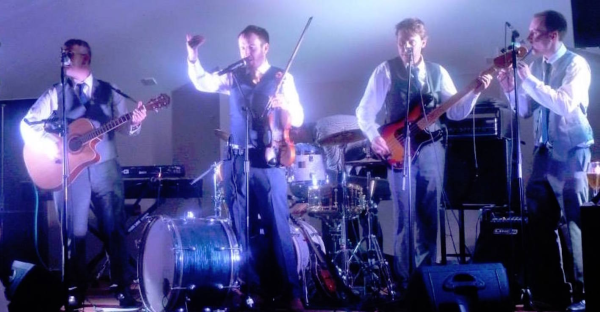


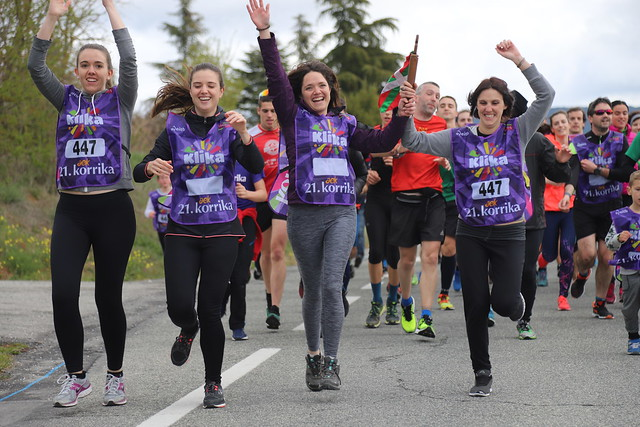

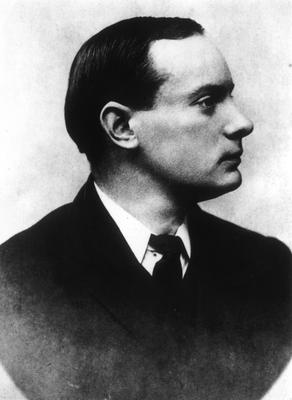
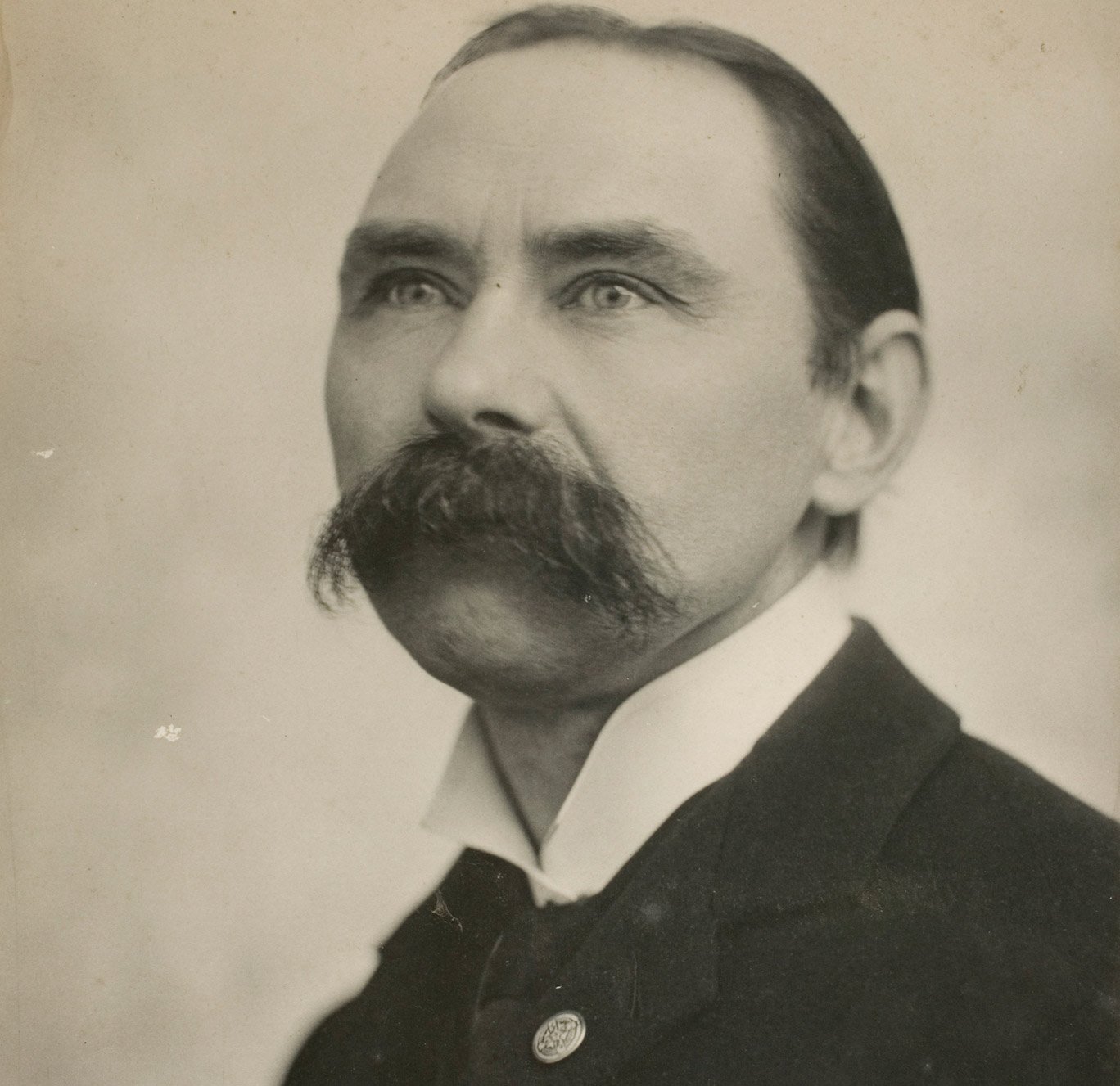

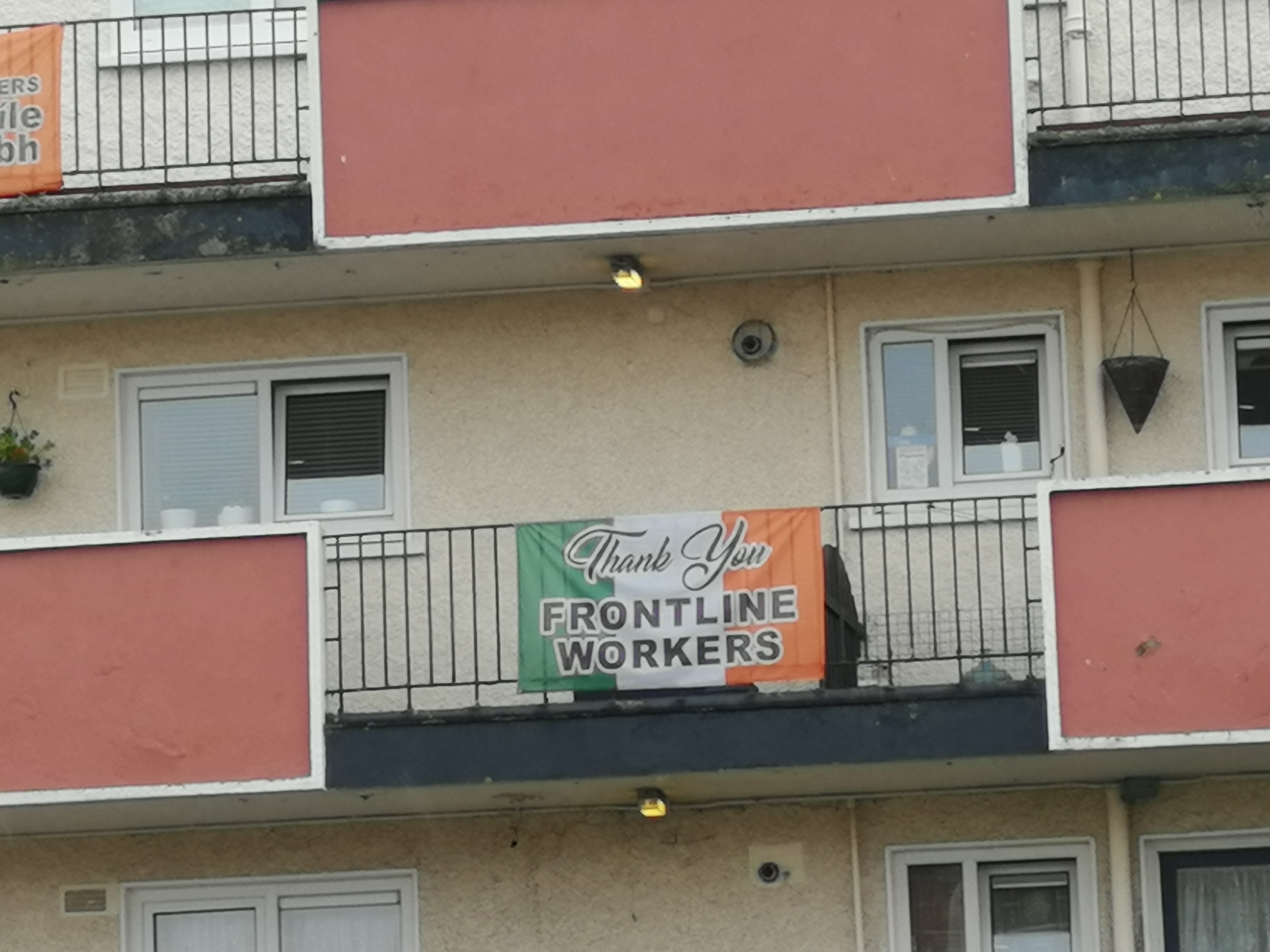
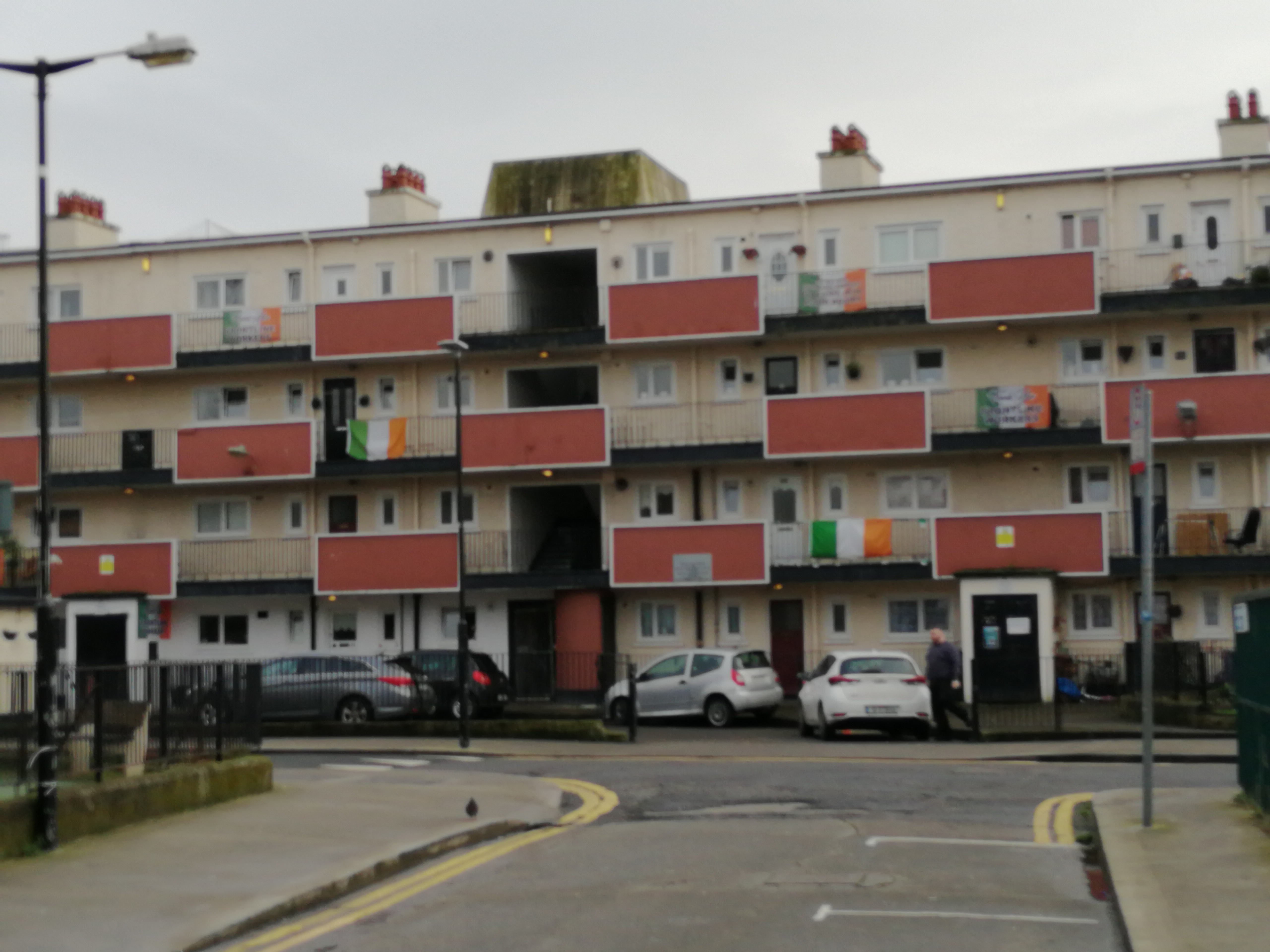
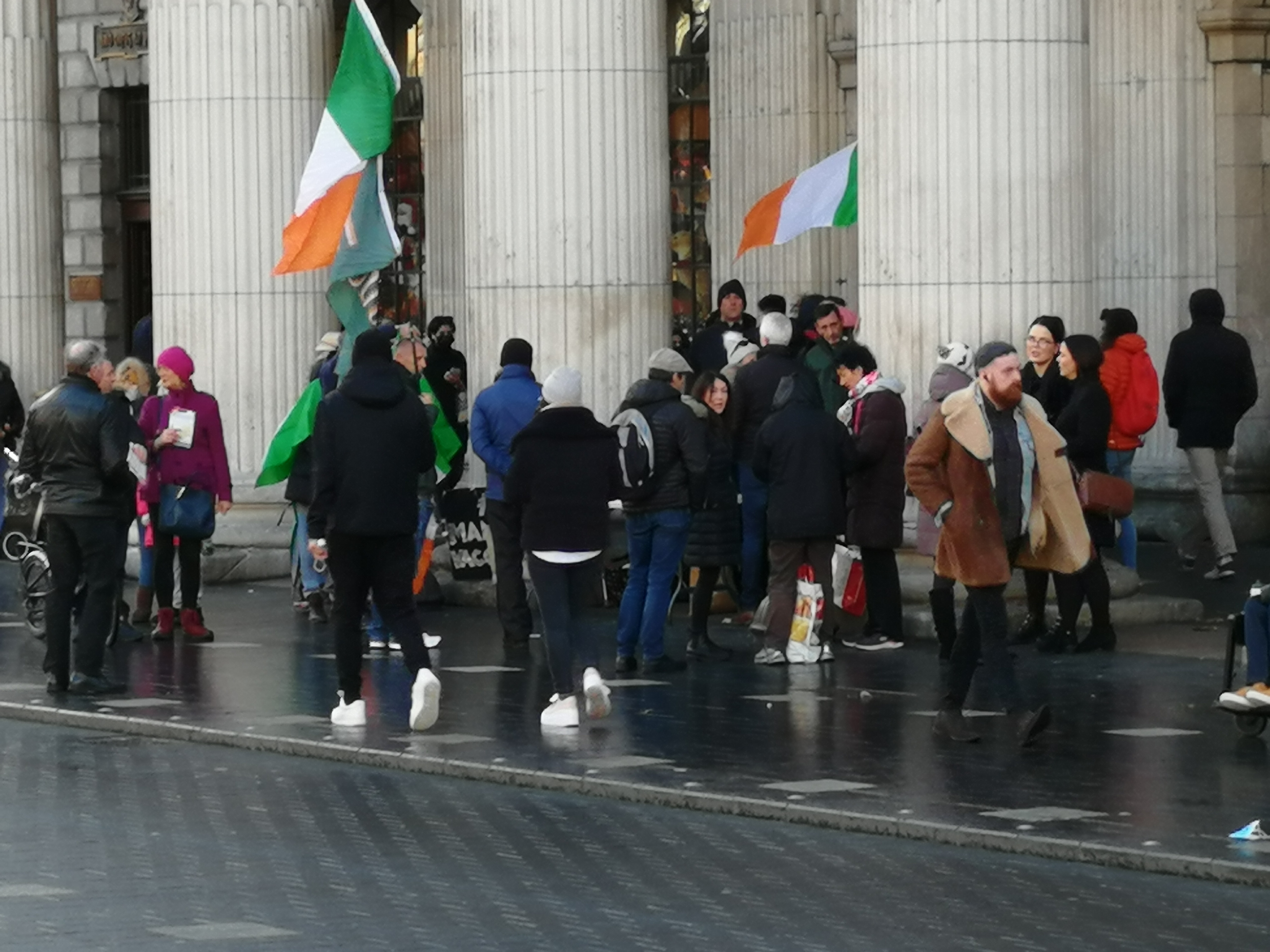
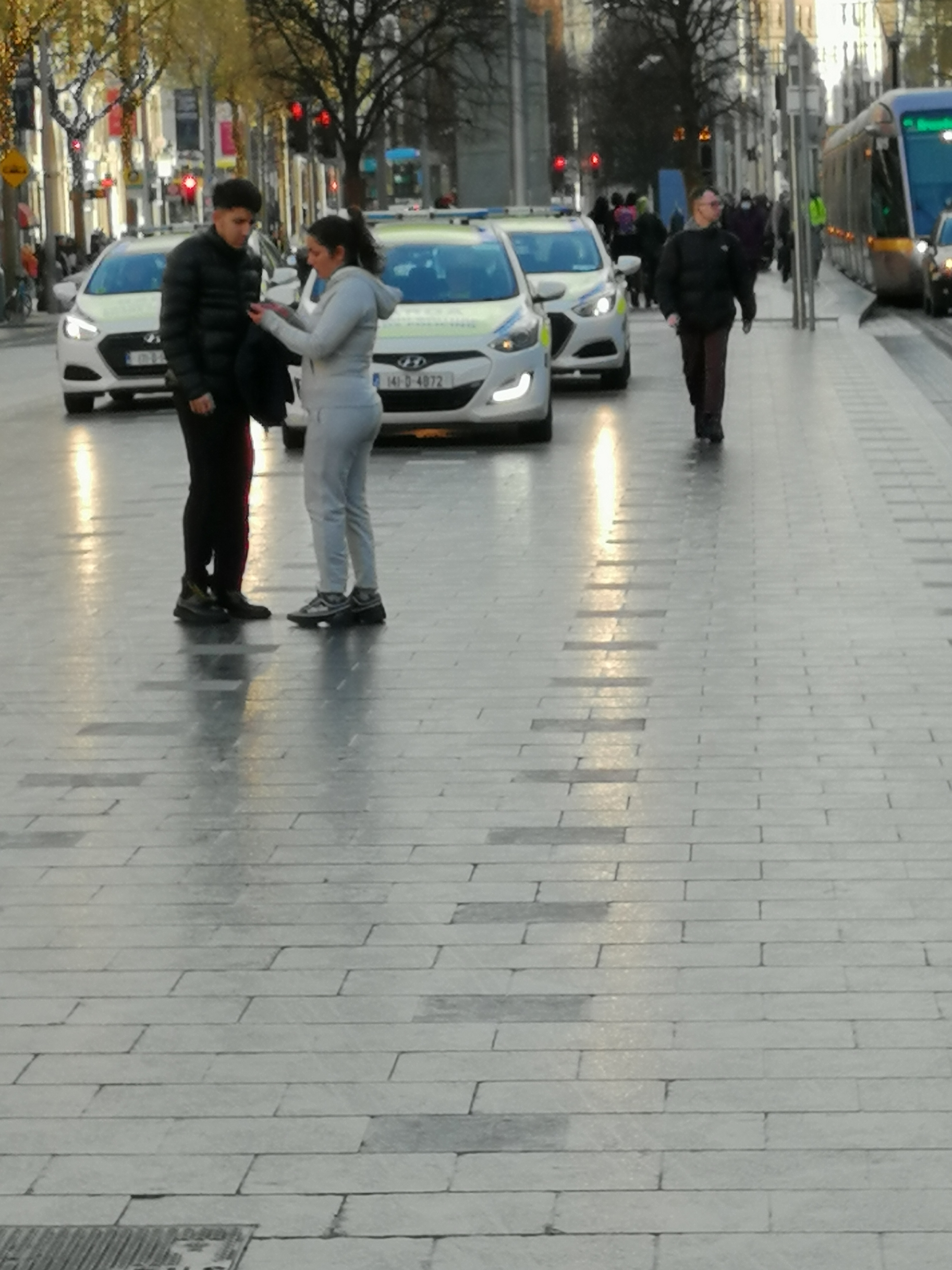
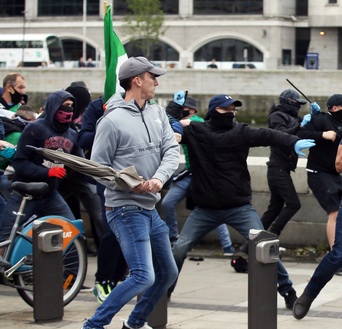


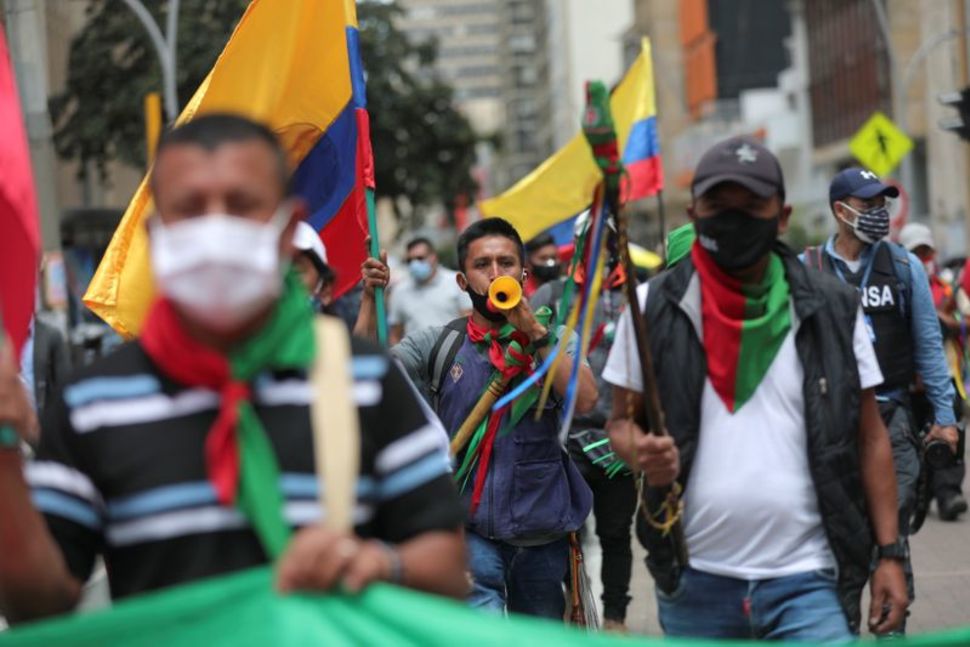

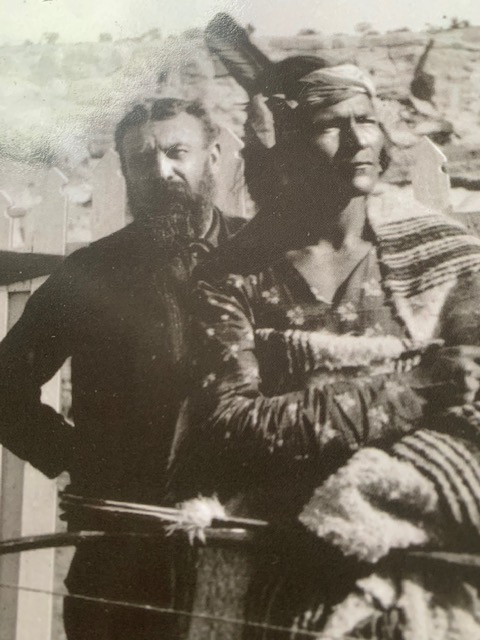
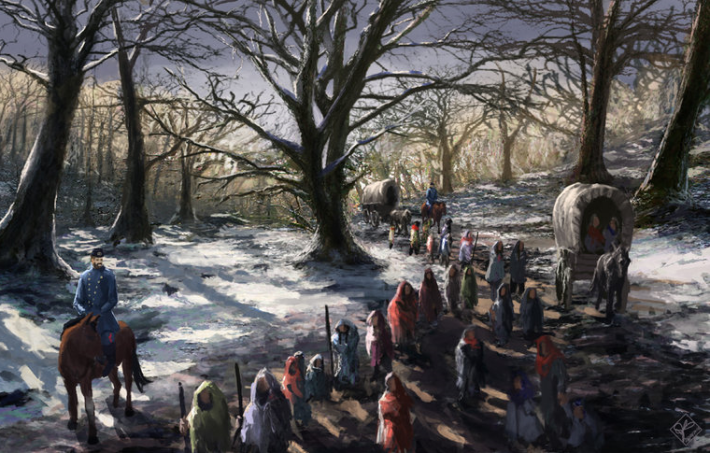
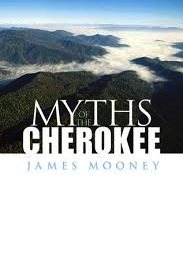



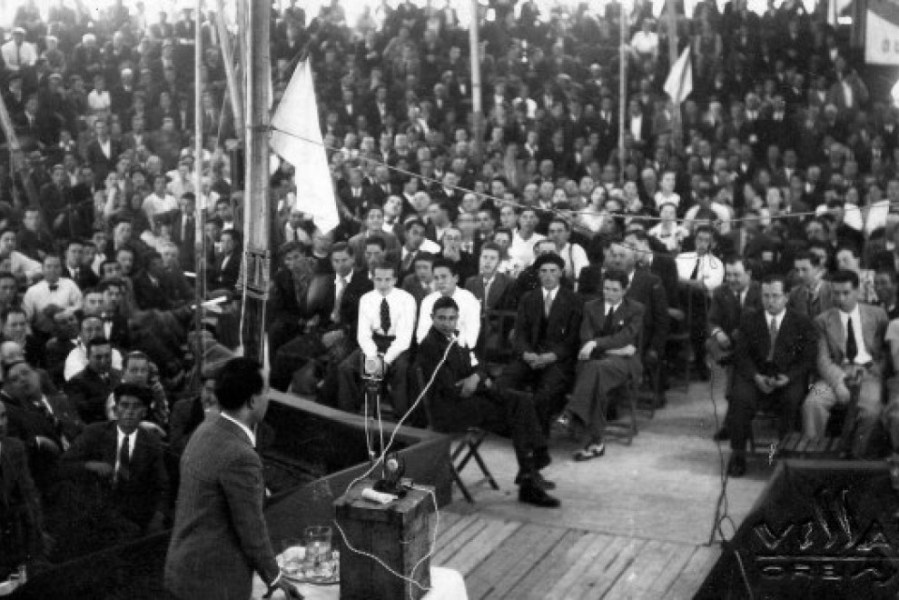
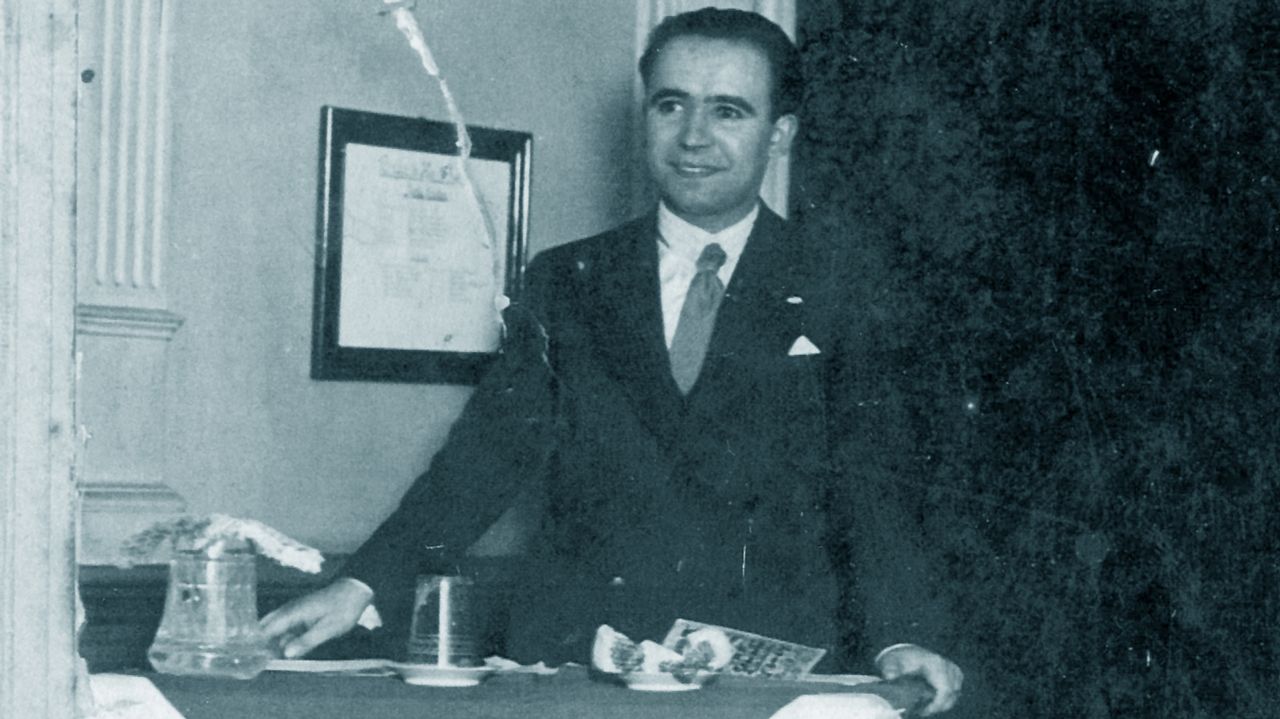


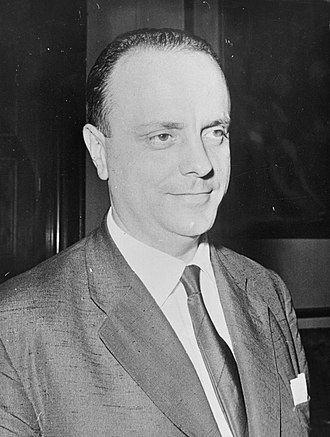
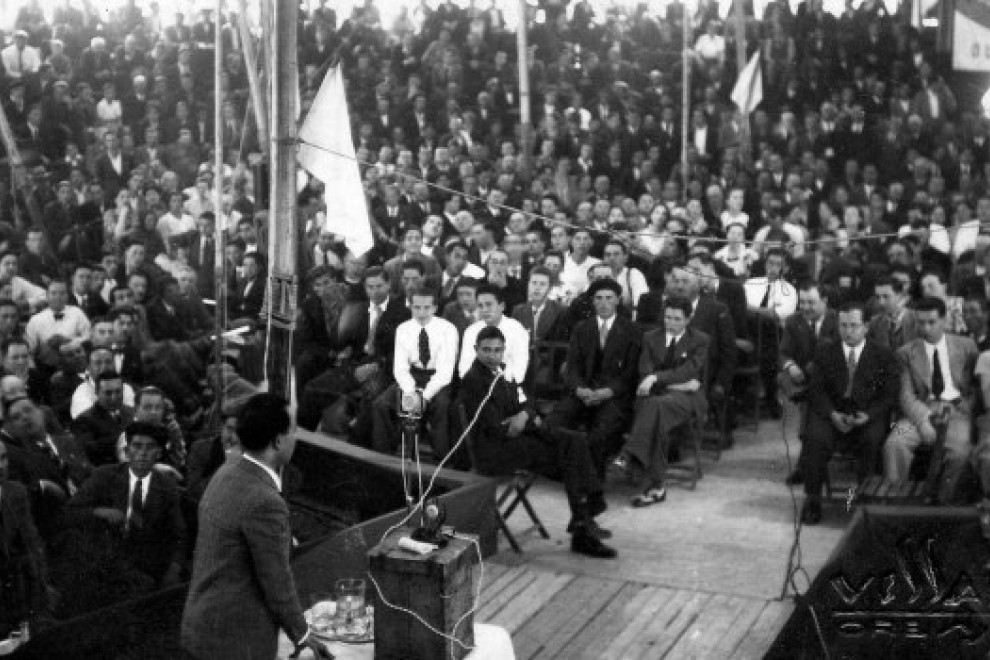


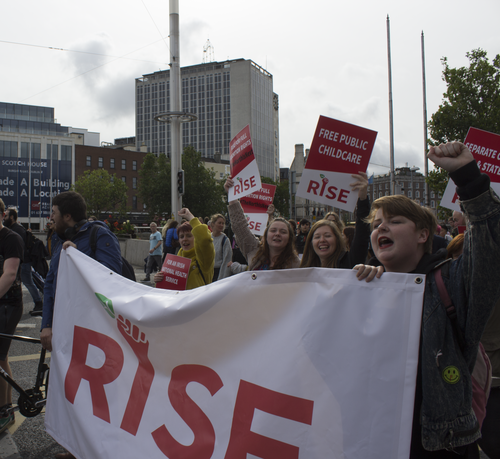
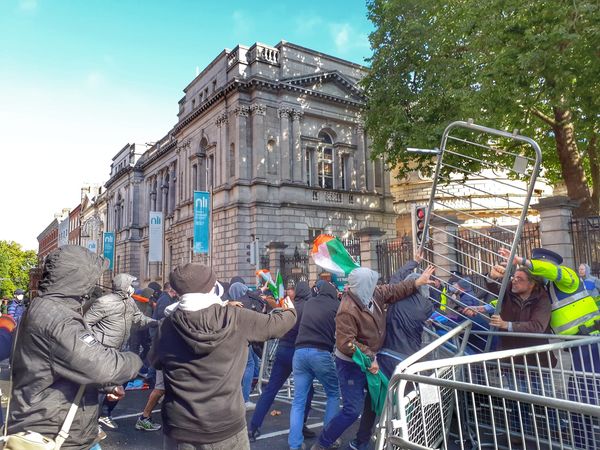

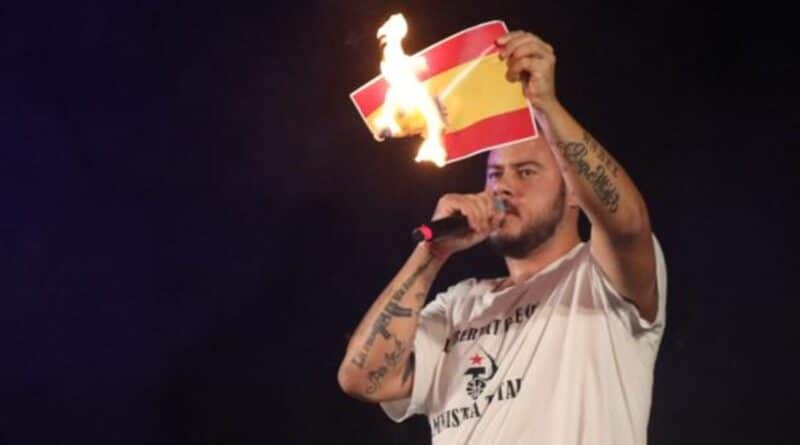


 rebelbreeze