INTERNATIONALIST SOLIDARITY – THE DIVIDING LINE BETWEEN THE PEOPLE AND OUR RULERS

Diarmuid Breatnach

(Reading time: 12 mins.)

The oppression of the Palestinians led to an outbreak of active resistance recently in Jerusalem, to which the Israeli Army reacted with increased repression, timed to harass Palestinian Muslims during the period of Ramadan.

At the height of devotees attending the Al-Aqsa mosque, this escalated into attacks on worshippers within the temple itself. At the same time, Israeli Zionist settlers threatened dozens of Palestinian families with eviction from their homes in East Jerusalem.

Reacting to these events, one of the Palestinian organisations fired home-made rockets into officially Israeli territory, to which the Israeli armed forces responded in turn with drone missiles and missiles from its air force jets on Gaza.

The Zionist military fired on protesting Palestinians in the West Bank with live ammunition. The death toll has climbed to 200 Palestinians, according to Gaza’s Health Ministry, including 59 children and 35 women, with 1,305 people wounded. Ten Israelis have been killed, two of them children.

The casualty figures once again show the gross disproportion between what the Palestinians and their Zionist masters experience: in civil and human rights, citizenship, in land ownership, electricity and clean water supply, heating, fishing, education facilities, building materials …

… in freedom to travel inside and outside the state, in depth and breadth of surveillance, in arms and defence capability, in states that support them.

And in city structural damage: despite the many home-made rockets launched against the zionists, there has yet been no significant damage in Israeli towns, while their armed forces have effected large-scale structural damage in Gaza and bodies are still being pulled from the rubble.

In only one area perhaps do the Palestinians have the advantage over the Israeli Zionists: in support among the people around the world.


Israeli Zionist missiles strike the tower housing many media services, including Associated Press and Al Jazeera, which drew broad criticism from the mass media for a change. But families also lived here. Everyone was given ten minutes to get out. The Israeli Occupation Force has not yet bothered to explain its rationale for targeting this building. (Photo source: Internet)

PALESTINIAN SOLIDARITY MARCH DEFIES POLICE THREATS

Responding to these attacks on Palestinians, the Ireland Palestine Solidarity Campaign, the main organiser of Palestinian solidarity action in Ireland, called for solidarity demonstrations and in particular advertised a solidarity rally to take place in Dublin’s city centre for 2pm on Saturday 15th May.

The organisation asked those in attendance to comply with measures against Covid19 infection, to wear masks, maintain social distancing and comply with stewards’ instructions.

However the IPSC was contacted by the Irish police force, the Gardaí, who told them not to go ahead with the event, that if they did they would intervene to stop it and also made threats of €5,000 fines and prison against the organisers.

In a later public statement the Gardaí declared that they “have no role in permitting or authorising marches or gatherings. There is no permit/ authorisation required for such events”!

But there is apparently an ability and power to intimidate and threaten progressive organisations to deter them from organising solidarity events.

Or to kettle socialist and socialist republican Mayday marchers and demand all their names, addresses and dates of birth before threatening them with arrest if they did not disperse.

Or to threaten Debenham workers and their supporters, assaulting some of them while escorting KPMG forces in to evaluate stocks during pandemic restrictions.

A Palestinian policeman stands among the rubble of the tower in Gaza recently occupied by families and media agencies. (Photo source: Internet)

The predicament of the IPSC exposed the vulnerability to this kind of intimidation of a broad organisation that seeks to win friends in ruling circles. The leaders and organisers are placed in a position of not only personal but also of organisational vulnerability.

Even should they be prepared to defy the State to fine and/or imprison them, would they also be prepared to damage their organisation or to lose some friends they are cultivating in the circles of political influence?

What was one of the strengths of a broad organisation thus becomes a weakness; a more radical or even revolutionary organisation, with less influence in influential circles can decide on defiance, risk fines and jail with however perhaps less possibility of influencing official opinion and ultimately, action.

Fortunately in this case one such organisation did step forward and took up the baton: the Trinity College BDS group expressed its solidarity with the IPSC on its treatment by the Gardaí and called their own rally for the exact same place and time as the original one called by the IPSC.

https://www.irishtimes.com/news/ireland/irish-news/thousands-attend-rallies-in-irish-cities-in-solidarity-with-palestine-1.4566435

Video of rally at end of demonstration, near Israeli Embassy

Despite concern over Covid19 transmission and Garda threats – and the extremely short notice and much smaller circle of contacts of the TC BDS group — the response was magnificent, both in internationalist solidarity and in maintenance of the right to organise such progressive events.

Before the appointed hour, people began to gather in large numbers at the Spire in O’Connell Street, Dublin’s main street and north city centre.

After being addressed by a number of speakers, they set off in a march towards the Israeli Zionist Embassy near Ballsbridge, beyond the south city centre. As they marched their numbers grew until, approaching the Embassy, they numbered several thousand.

Along the way, bystanders applauded the marchers and passing vehicles blew their horns in solidarity.

A section of the Dublin rally in solidarity with Palestine photographed outside the GPO in the city’s main street before they set off on the 5.5km march to the Israeli Embassy (Photo credit: PA, Breaking News)

Marchers shouted slogans of solidarity with the Palestinians, calling for the freedom of Palestine and the expulsion of the Israeli Ambassador as a mark of the Irish people’s objection to what is being done to the Palestinians.

Near the Embassy, a number of speakers addressed the crowd and after dispersing, a number of demonstrators boarding public transport to return home were congratulated by the drivers.

LESSONS FOR US

The situation regarding calling and holding the demonstration in Dublin outlined some of the weaknesses of a broad organisation when it faces repression from the State and the greater resilience of a smaller organisation in being able to defy the State.

It may be necessary in future to maintain support for both types of organisation, each being appropriate for particular situations.

Also demonstrated was the necessity to openly defy unjust laws and prohibitions at times and particularly around the right to organise, to protest and to show solidarity, which the demonstrators did so well on Saturday.

Such situations also reveal the difficulty for the Gardaí in carrying out repressive actions and they are reduced to threatening individuals.

THE FAR-RIGHT MARCHES TOO – FOR WHAT?

Meanwhile, a couple of hundred of the far-Right also marched in Dublin, allegedly in defence of civil liberty. Not in solidarity with the Palestinians’ civil liberties and not in defence of our civil liberty to organise to show solidarity with people in other struggles.

No, they marched in defence of the right to defy health protection regulations, in proclaiming the Covid19 pandemic to be a) a hoax or b) greatly exaggerated and in claiming that wearing masks damages one’s health and even intelligence(!).

They were insisting that vaccinations are a) dangerous to one’s health or b) means of injecting nano-machines into people’s bloodstream in order to control them.

A clip posted by Ireland Against Fascism showed one of the QAnon Saturday screechers for months outside the GPO, Dolores Webster, aka Dee Wall, lately self-declared “digital journalist” (don’t laugh) posting her reactionary propaganda.

In apparent total ignorance of the actual reality (but when has that mattered?), she broadcasted a claim by video from her studio (her car), accompanied by the strains of Abba from the headphones of her head-bobbing passenger.

She claimed that the “scum in the Dawl” had allowed the Palestinian solidarity march to go ahead to distract from the alleged general removal of freedom and in particular from the far-Right group Irish Yellow Vests to hold their rally on May 1st!

When all the Covid19 precautionary restrictions are removed, what will these elements have to march about? The will need to return to the topics that engaged many of them in the recent past: racism, anti-immigrants, islamophobia, homophobia and anti-socialism, along with their false patriotism.

None of that is welcome of course but at least it will be without this false concern for “civil rights and freedom” and closer to the reality of what the far-Right in general – and fascists in particular — stand for.

SUPERPOWER BACKING AND IMPUNITY

The current atrocities of the Zionist State, which it carries out with impunity, along with its history, starkly reveals the effect of its main backing power, the USA, and the imperialist alliance dominated by that Power.

The USA backs Israel with military aid to the tune of $10 Million daily, which is aside from other direct and indirect aid. Israel is the only state in the Middle East which is not only very friendly to the USA but totally dependent on the support of that superpower.

For the ruling class of the USA, Israel is the only state in the Middle East which is totally safe forever from fundamentalist Muslim revolution or from left-wing anti-imperialist revolution and is therefore an extremely important factor in the USA’s plans to totally dominate the Middle East.

Solidarity marcher in Dublin on Friday with a home-made placard (Photo Credit: PA, Breaking News.ie)

This imperialist alliance finds reflection not only in the action/ inaction of governments in Europe, for example but also in the reporting of the mass media.

One of the latter’s tropes is the constant emphasis on the numbers of Palestinian missiles fired, without revealing their general ineffectiveness in delivering destruction, in total contrast to the Israeli missiles. Another is their constant repetition of a lie, that “Hamas seized power in Gaza”.

The truth is that Hamas swept the board in the 2006 elections for the Palestinian Authority. The “seizing” that was done was by Al Fatah, which usurped the results in the West Bank and installed themselves there; they tried to do the same in Gaza and, in a short fierce struggle, were beaten.

But the Western powers decided that Hamas was illegitimately in power, seized funds due to it and supported its blockading – by both Israel and Egypt.

No explanation is offered in the general mass media as to how a generally politically-secular Palestinian public would turn from its decades of allegiance to Fatah to vote for the fundamentalist Muslim Hamas.

The main reason was Fatah’s surrender of the goals of Palestinian independence and freedom and the return of the refugees, in exchange for running a colonial administration with opportunities for living off bribery and corruption and Fatah’s settling down to that status quo.

CASTING A GIANT DARK SHADOW

It was not only in Dublin and in towns across Ireland that Palestine solidarity demonstrations were held on May 15th but by people across much of the world, generally in opposition to the wishes of their governments and ruling elites.

It is worth thinking about how this has come about, in particular in contradiction to a mass media hostile to the Palestinians.

Palestinians come to view the remains of the tower block that was home to families and that housed a number of media agencies. (Photo source: Internet)

The Zionist state of Israel was declared in 1948, its anniversary actually only three days ago – May 14th, the first states to recognise it being the USA and the USSR. In Ireland at the time, there was general support for the new state which continued to the “June War” of 1967 and somewhat beyond.

The general Irish population were horrified by the history of the Nazi-organised Holocaust and sympathised with the Jewish survivors.

Irish nationalists and even Republicans empathised with the Zionist civil and armed struggle against the British (who, ironically, had begun the process of Zionisisation of Palestine).

The 1966 film Cast a Giant Shadow purporting to show that struggle, starring Kirk Douglas and a cameo appearance by Frank Sinatra, was widely enjoyed and cheered in cinemas across Ireland.

Though some of the film’s characters were based on real-life counterparts, the general narrative was a grotesque distortion, hiding the massacres of Palestinians and the expulsion of thousands as the Zionist state was created.

Many Irish language supporters admired how the new state had brought the Hebrew language, for centuries only spoken in religious contexts, back into everyday usage.

Solidarity marcher in Dublin on Friday with a home-made placard and a thought-provoking message (Photo Credit: Sam Boal, The Journal)

Yet, by a few years ago, general pro-Palestinian sympathy across Ireland had become so strong that Israel’s Ambassador to Ireland declared the country “the most anti-semitic in Europe”. That of course is the Zionists term for anyone who supports the Palestinians or criticises the Israeli state harshly.

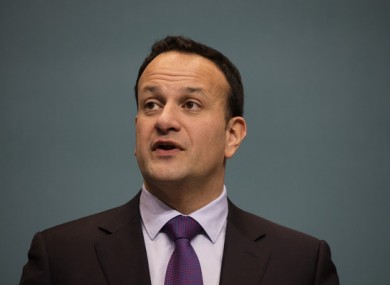
Only a few days ago, the current Ambassador accused some politicians of spewing hate towards Israel. He was responding not only to Left and Sinn Féin TDs who criticised the actions of Israel towards the Palestinians, but also to the Tánaiste (Deputy Prime Minister equivalent) Leo Varadkar!

Varadkar had commented that Israel’s actions are “indefensible” and Government Minister for Foreign Affairs Simon Coveney said at an EU conference that the EU had “fallen short” and failed to project its influence in agreeing a position in against illegal activity by the Israelis against Palestinians.

Palestinian solidarity march in Cork on Saturday (Photo source: Internet)

The fact that establishment right-wing/ conservative politicians feel obliged to take a public stand, however ineffectively, against actions of the Israeli Zionists is a strong indication of how much Irish public opinion has changed over decades.

Implicitly such stands reflect against the Zionists’ biggest international backer and world superpower, the USA. Since the Cast a Giant Shadow film, the state’s shadow of which we are aware now is indeed frighteningly giant and very dark.

In response, the natural cultural and historical feelings of the Irish people have stirred in sympathy with the oppressed Palestinians – and in defiance of threatened police repression at home.

end.

SOURCES

Coverage of events in Ireland: https://www.thejournal.ie/peacful-protests-solidarity-with-palestine-5438356-May2021/

https://www.irishtimes.com/news/ireland/irish-news/thousands-attend-rallies-in-irish-cities-in-solidarity-with-palestine-1.4566435

https://www.breakingnews.ie/ireland/protests-held-around-the-country-in-support-of-palestine-1127787.html

Recent reports on the conflict: https://www.nbcphiladelphia.com/news/national-international/weary-gaza-marks-muslim-feast-as-violence-spreads-in-israel/2812715/

https://www.bbc.com/news/world-middle-east-57138996

Israeli Ambasador to Ireland clashing with politicians: https://www.irishtimes.com/news/politics/israeli-ambassador-accuses-some-tds-of-spewing-hate-towards-jewish-state-1.4564184

GOVERNMENT SLAUGHTER IN COLOMBIA

Diarmuid Breatnach

(Reading time main text: 5 mins.)

For months the Duque government in Colombia has been unleashing violent repression on its people, in particular those who organise or participate in protests. The statistics are frightening, which is what they are intended to be: 40 dead, hundreds injured (some with loss of an eye), nearly 170 “disappeared”. Yet the people continue to protest.

What all this has exposed is that Colombia, despite its support by western states, has no democracy and that its vaunted “peace process”, like all others elsewhere before it or since, has had nothing to do with peace but everything to do with pacification. Unlike many in other parts of the world however, its acceptance by the FARC was the prelude to intensified State repression, with assassinations of leaders and activists of popular democratic movements. Also exposed is the lie that Colombia and the USA are truly involved in a “War on Drugs”, a commodity the sale of in which most of the political class of Colombia are involved and the profits in which the financial institutions in Colombia and much of the world are active in laundering.

Meanwhile, the people are subjected to economic squeeze, they protest, they are shot, beaten, tortured, raped, disappear ….

This police victim survived but many did not (Photo source: Gearóid Ó Loingsigh)

In two weeks of protests, statistics from the Defensoria del Pueblo (a kind of Ombudsman), listed 42 dead and 168 reported “disappeared”; of the dead, 41 were civilians and one was a member of the State security forces. A 17-year-old female demonstrator was reportedly sexually abused by four police officers and took her own life afterwards. Protesters burned the station where it happened but the officers themselves remain at large.

Protestors burning the station where police officers sexually violated a 17-year-old demonstrator who took her own life afterwards.

WHO KILLED VILLA?

Lucas Villa Vasquez, an iconic figure in the peaceful demonstrations, dancing and carrying out acrobatic acts, was shot during the General Strike, was declared brain dead in hospital and had his life-support system turned off, his heart stopping finally on 11th of May. Andrés Felipe Castaño, a 17-year-old youth shot on the same day underwent two operations before he could come off the critical list.

Who killed Villa? Not Duque, the President wanted people to believe as he sent a message of condolence to Villa’s family, the first personal condolence he has offered since the demonstrations – and the killing – began, except for the one police officer killed so far. Not the Police, their Director General, Major General Jorge Luis Vargas Valencia insisted, insisting his force is working hard to find the culprits and that a reward for information has risen to 100 million pesos1 for information. But people who know how these things work are only in doubt about one question: was it the police themselves who killed Villa and nearly killed Andrés Felipe, or was it one of the State-sponsored fascist gangs (which have strong links with the police and army)?

Dilan Cruz, murdered by police two years ago, is remembered on demonstrations where people are still being killed. (Photo source: Gearóid Ó Loingsigh)

Villa has joined over 40 martyrs known to have been killed by the forces of the State; since their names are known only to their families or smaller political and social circles, Villa’s name stands for them all. As did Dilan Cruz before him, shot at close range to the head by a “non-lethal” beanbag in October 2019. And what of the nearly 170 disappeared? Are some of them already dumped into pits or rivers? Others in prison cells, awaiting their next session with the torturers? Or in the case of female prisoners, awaiting their next incident of violation?

Man in blue top and white trousers dancing in some clips was Lucas Villa Vasquez

Two Latin American league soccer matches in Colombia were affected on Wednesday: Visitors from Argentina’s River Plate team had their warm-up in Barranquilla abandoned for awhile due to the volume of police tear gas drifting in from outside and loud bangs could be heard also. That was a Copa Libertadores game and another, between Atletico Nacional and Nacional of Uruguay in Pereira was delayed by an hour due to protests there.

The South American Football Confederation (CONMEBOL) moved matches from Colombia to Paraguay and Ecuador last week to ensure the protests did not affect games but the Copa America is due to be held in Colombia and Argentina next month with Colombia hosting 15 games including the final of the world’s oldest international tournament. The title match is due to be held in Barranquilla on July 10.

SUSTAINABLE SOLIDARITY” WITH WHOM?

Part of the reason for the protests in the first place was the proposed tax reform by another name: Sustainable Solidarity Law. The Duque Government plans by this system to collect 23 billions in Colombian pesos (US$ 6,300 millions) by extending its tax base, to avoid any further increase in the country’s international risk qualification, to institutionalise the basic income level and build a fund to comply with its environmental protection targets.

Well, ok, but who is going to pay this tax-by-another name? According to the Minister of Finance himself, Alberto Carrasquilla, 73% is to be contributed by ordinary citizens and the rest by the companies.

Art in active resistance

In addition, the law proposes to apply the collection of Value Added Tax, which in Colombia is up to 19%, to basic consumer products such as public services (water, electricity and gas), funeral services, electronic items such as computers and other services that have been exempt until now.

Add to that ongoing State repression in the countryside, the number of unemployed nationally rising to 4.1 million as a result of the pandemic and the country was ready to take to the streets. But not ready for the repression of the demonstrators that followed.

Riot Policeman aims weapon at point-blank range at unarmed demonstrators in Colombia. Whether tear-gas canister or stun grenade launcher, at this range it would almost certainly kill but if not, partial or full blindness would be likely along with permanent brain damage. (Photo source: Internet)

President Duque asked the Colombian Parliament to withdraw the new tax reform which they did but the people are on their feet now, as they say there; now they have martyrs too on top of the issues they already had.

WHAT CAN BE DONE?

It is up to the people of Colombia, the workers, civil servants, small business people, indigenous – to free themselves. None else can do it. But we owe them solidarity, just as we in turn have claimed solidarity (and will claim again) from others. It is difficult at the moment to see how our solidarity can express itself in much more than symbolic form, such as pickets, demonstrations, articles and memes on social media. But even those have more than a moral effect, for the Colombian Embassy staff here have as part of their duties to collect information on how the regime in Colombia is viewed in Ireland and to report that to their bosses at home. And since the Colombian ruling class needs to do business around the world ….

Recent small Colombian solidarity picket protest outside the Colombian Embassy in Dublin.

The Colombian masses also need to know that they do not stand alone, that others are watching, applauding them, cursing their enemies, mourning their martyrs.

We can also assist by continuing our efforts against another faraway enemy of democracy, the main instigator and protector of reaction, repression and oppression around the world, and main external supporter of the Colombian regime, trainer of its repressive forces – the ruling class of the United States of America.

Solidaridad con el pueblo Colombiano! Dlúthpháirtíocht le poball na Colóime!

Banner slogan: “The Tax Reform means Hunger and Misery for the people.” (Photo source: Gearóid Ó Loingsigh)

End.

USEFUL SOURCES

Officially-accepted statistics some days ago: https://www.facebook.com/waykaperu/photos/a.586123314805406/4058327907584912/

TV news report on the general strike, general protests against killing by government forces; mothers and grandmothers of murdered protesters demonstrate against “Public Order” forces; Duque tries to present concern and gives a concession to students at a certain level: https://www.youtube.com/watch?v=Xz8ed0hS6OQ

Amnesty International complaint (English version, despite title): https://www.amnesty.org/en/latest/news/2021/05/colombia-preocupan-las-denuncias-de-desapariciones-y-violencia-sexual-contra-manifestantes/

Tear gas drifting on to inter-Latin American soccer game: https://edition.cnn.com/2021/05/13/football/copa-libertadores-players-affected-tear-gas-colombia-spt-intl/index.html

Reasons for the wave of protests: https://www.bbc.com/mundo/noticias-america-latina-56932013

War on Drugs (Plan Colombia) – spraying of glyphosphate: https://www.sciencemag.org/news/2020/06/pandemic-upends-colombia-s-controversial-drug-war-plan-resume-aerial-spraying

Plan Colombia is not working (2016): https://www.bbc.com/news/world-latin-america-35491504

1 €22,185.95

Dawdling in Dalkey & Dún Laoire

Diarmuid Breatnach

(Reading time text: 5 mins.)

Farewell, sweet Dublin’s hills and braes
To Killiney’s Hill and silvery seas,
Where many’s the fine long summer’s day
We loitered hours of joy away.

(The lyrics I see have “silvery streams” whereas I somehow learned “silvery seas” but in any case the latter lines seem more appropriate to me).

Near Killiney is Dalkey in south County Dublin and above both is Killiney Hill, a mostly public hilly woodland with some great views of the Mediterranean-like bay below. Dalkey might be a Viking translation of an Irish place-name, Deilg-Inis, meaning “Thorn Island”. Of course it is just possible too that the Irish translated the Viking name but not likely. The Vikings were here of course, a place of small coves between their towns of Wicklow and Dyflin.

VIEWS FROM THE HILL

Dalkey Island (Deilg Inis) in the distance from Killiney Hill, gorse (furze – aiteann) in bloom in the foreground (Photo: D. Breatnach)
Closer view, showing the Martello Tower in the centre of the island. Ireland has a number of these, built to give warning of Napoleonic invasion or raid on the UK (in which all of Ireland was at the time). (Photo: D.Breatnach)
A view from a somewhat different point, showing also a strange stone tor to the left (which I don’t recall from before) and the stone underneath me of which much of the Hill is made. On a hot day in late summer in my teens, I heard small pistol-like shots erupting over the hillside — the pods of the gorse were exploding and shooting out their seeds. (Photo: D.Breatnach)
The path and slope up to the woodland and hilltop. For a few weeks I used to meet lads from the ‘Noggin (Sallynoggin) and we’d go hunting rabbits with our dogs, through common and private land, up to Killiney Hill (where the dogs always claimed they could smell rabbits but all we could see was their shit), then down to the sea and encourage the dogs to go for a swim to clean them. And throw in the ones who declined. Of course, they got their revenge shake-drying themselves all over us. (Photo: D.Breatnach)
A great view of the bay from the path, the pronounced peak of the Sugarloaf in the distance. County Wicklow begins just a little down below to the right. (Photo: D.Breatnach)

It’s now I must bid a long adieu
To Wicklow and its beauties, too …..

Not the Mediterranean, Killiney in south County Dublin and the rest of the coast line on towards Wicklow: Bray, Greystones and beyond, seen from the open space at the top of Killiney Hill. The obelisk at the summit was behind me as I took the photo. (Photo: D.Breatnach)

IN THE WOODLAND

The woodland is above the path beyond where a stone wall runs along part of it and the woodland continue curving around the northern slope of the Hill. Here one takes the left fork to follow the tarmacadamed bath with steps at intervals. One winter I mitched (truanted) school up here for a few weeks in a little “camp” we had made of branches and we cooked potatoes and fried bread over a managed fire. It was cold, though. Had to face the music eventually of course ….

This tree is just tensing before it takes off running! (Photo: D.Breatnach)
Hard to say whether the steep downward path here was carved out by rain streams or whether the excess rain just flows down here off the path, widening an existing fault or dip. (Photo: D.Breatnach)
The top of the steep path/ rainwater runoff channel, with a tree growing rampant at the lip of the slope. (Photo: D.Breatnach)
On the way down the other side of Killiney Hill, a view westward towards where the Dublin Hills run southward into the Wicklow Mountains. (Photo: D.Breatnach)
“Thus Daedelus flew” says the inscription on the bronze statue on the way down, which I do not recall from boyhood, nor the cafe it is facing. (Photo: D.Breatnach)

DÚN LAOIRE — THE WEST PIER

Dún Laoire Harbour was surveyed by a team led by Lieutenant Bligh, before he set off in command of the Bounty, where he fell foul of Fletcher Christian and a mutiny. Bligh might not have been a great people manager but he was an excellent seaman — he navigated a launch 3,500 nautical miles (6,500 km; 4,000 mi) to safety, leading his 18 loyal crew members.

Both piers of the harbour are built from granite quarried from the side of the Killiney Hill next to Dalkey and from the top of Killiney Hill itself, so that it is now lower than it was before. A lot of the Hill is also limestone, the most common stone in Ireland (and indeed in Europe) and that has been quarried too, for road and house-building.

As a boy and teenager I spent hours fishing from the West Pier, losing more weights and line than I caught fish. One time I fished the incoming tide, the outgoing tide and the incoming tide again (a full tide cycle takes a little over 12 hours). Beyond the level crossing at the start of the West Pier is where it is thought the original Irish fishing village was, where there was a small inlet, the only storm shelter for boats between Dublin river-mouth and Wicklow, someone told me once. About 100 meters south-eastward along the harbour there is a plaque marking some stones believed to be all that remains of King Laoghaire’s fort, which is what the name of the place means in Irish.

Common Tern, one of a mated pair, perched on the pier’s edge. These normally nest in sand-dunes and that type of terrain on the coast, so not sure what they were doing here. They have very forked tails and hover before diving into the water to catch small fish or sprats. Wherever they were diving I would expect to find mackerel below, forcing the sprats up to the surface to catch them there. Terns dive at people or animals approaching near their nests and can be quite disconcerting even is one is not stabbed by a beak, which is said to occur on occasion. (Photo: D.Breatnach)

The East Pier is the one that decades ago had deckchairs for hire by day and a bandstand where brass bands would play in the evening, a place where many like to promenade still today. The ship from Britain was alighted here, or boarded with the next stop being Holyhead (Caergybi) in Wales, to catch the train to other cities or all the way to London, which I did myself at 19 years of age, like many before and after me.

But after the English colonist town of “Kingstown” grew up around the constructed harbour, the Young Irelander captives were sent to prisoner exile in Tasmania; Queen Victoria came through here on her two visits to Ireland; most of the troops brought in to suppress the 1916 Rising came in here too. Some of those, the Sherwood Foresters, had little idea of the slaughter that was awaiting them at Mount Street Bridge from much less than a score of Irish Volunteers, without even a machine-gun between them but extremely well-placed. Blind, arrogant British officers persisted in sending their men in waves against the insurgent positions, although there were much safer ways to reach the Dublin city centre, since only about one-third of expected insurgent forces were in the field, due to confusions and countermanding; 240 dead or wounded was the toll they paid to pass.

Grey Heron (Corr éisc) on top of the wall at the end of the West Pier — first time I have ever seen one there. He wasn’t too worried about me but was keeping an eye on a couple of dogs wandering around below. (Photo: D.Breatnach)

REFERENCES:

The Emigrant’s Farewell song lyrics: https://www.norbeck.nu/abc/lyrics.asp?rhythm=song&ref=109

CATALAN INDEPENDENCE PARTIES AGREE TO FORM GOVERNMENT

(Translation D.Breatnach from Publico report 12 May 2021)


ERC, JxCat and the CUP parties reached a “minimum” agreement this Wednesday to unravel the investiture negotiations to avoid an electoral repetition after the results of the elections on February 14th in Catalonia. The deadline for investing the President of the Generalitat is May 26 (after that new elections would need to be called — DB).

After two hours of meeting in the Parliament, the three organisations issued a joint statement that to promote an “overall National Agreement for Self-determination” and a “space for the debate on the independence strategy beyond governance.”

After the meeting, the Deputy General Secretary and ERC spokesperson, Marta Vilalta, the JxCat Deputy Francesc Dalmases and the leading spokesperson of the CUP in the Catalan Chamber, Eulàlia Reguant, came out together.

In the lobby of the Catalan Parlament after agreement was reached, front row L-R: Eulàlia Reguant, leading parliamentary spokesperson of the CUP; Deputy General Secretary and ERC spokesperson, Marta Vilalta; the JxCat Deputy Francesc Dalmases (Photo credit: Toni Albin, EFE)

Formation of a new Government

The act of separating the debate on the independence strategy from the formation of a new Government was one of the obstacles that prevented the agreement, JxCat until now requiring ERC to link both items.

Although the wording of the statement is ambiguous on this point, it already aims to unlink the creation of a unitary strategic direction of independence from the negotiation for governance, which was threatened recently by the disagreements between ERC and JxCat.

Relations were very strained last Saturday, when the ERC candidate for the investiture, Pere Aragonès, announced that he would no longer continue negotiating a coalition government with JxCat, which he accusef of delaying the negotiation, and that from now on only he would contemplate ruling alone.

In the joint communiqué, entitled “Commitment to a National Agreement for Self-determination”, the three formations emphasize that the results of the 14 February elections “offer the independence movement the possibility of opening a new cycle for national liberation.”

Four “minimum points”

The negotiators have agreed on four “minimum points” based on a proposal that the CUP, convener of the summit in Parliament, had put on the table, in which it has become a mediator to facilitate a rapprochement of positions between ERC and JxCat.

In the first point, they undertake to “provide a response to the social and economic crisis” that Catalonia is experiencing, while in the second they commit to “build a wall to defend fundamental and basic rights that have broad support from Catalan society and which do not fit within the framework of the State “.

Third, they commit to convening a first working meeting to configure “an Overall National Agreement for Self-determination, to go beyond political parties and to bring together the broad social majority of the country in favour” of a referendum.

“With the unequivocal commitment that through dialogue and democratic struggle in the (Spanish) State the exercise of self-determination and amnesty can be achieved during the next legislature,” they added.

Finally, they are committed to “reaching a space for the debate on the independence strategy beyond the framework of governance.” This last paragraph modifies – and adds ambiguity – the fourth point proposed by the draft of the CUP, which suggested “placing the debate on the independence strategy outside the framework of the government pact.”

Unraveling the negotiations

Sources with inside knowledge of the meeting indicated to Efe (news agency) that the meeting was positive in moving forward, although it is too early to say if it will be enough for ERC and JxCat to get back on track to an agreement that in recent days had been difficult.

For his part, the leader of the PSC in Parliament, Salvador Illa, asked ERC to “lift the cordon sanitaire” that he raised against the social democrats before the 14 February elections and to facilitate a left-wing majority led by the PSC. “I challenge them: with the failed independence path not working, at least let a left-wing government be constructed and lift the cordon sanitaire that they signed against the PSC,he said on a visit to Mataró (Barcelona).

The leader of En Comú Podem in Parliament, Jéssica Albiach, insisted in TV3 that for them “they continue to” attempt to form a Government with ERC, although she also declared the possibility of facilitating Esquerra to govern alone.

The president of Citizens in Parliament, Carlos Carrizosa, rejected the idea of ​​new elections if the Government is not formed because he believes that it would reflect a “lack of respect” for citizens.

For her part, the president of the Catalan National Assembly, Elisenda Paluzie, demanded an agreement from ERC, JxCat and the CUP to form the Government and called a demonstration for this Sunday in Plaça Sant Jaume in Barcelona to demand a pact between them.

Map of Catalunya including the part inside the French state (in dark olive green) and showing position within the Spanish state and comparing size with other countries including Ireland. (Source: Wikipedia)

COMMENT

Diarmuid Breatnach

THE PARTICIPANTS

ERC (Esquerra Republicana de Catalunya – Republican Left of Catalonia), republican party of a left outlook varying from radical to social-democratic. Its leader, MEP Oriol Junqueras, is in jail arising out the Spanish State’s opposition to the holding of the Referendum of October 2017. The party has 32 seats in the Parlament.

JuntsXCat (Junts per Catalunya – Together for Catalunya), a coalition of forces originally brought together by liberal conservatives but pushing hard for independence and more lately adopting many socially progressive policies. It leader, MEP Carles Puigdemont, is en exile in Brussels to avoid Spanish jail, along with others. The party has 33 seats in the Parlament.

CUP (Canditatura d’Unitad Popular – People’s United Candidature) is a more radically left-wing coalition of groups that until recently focused on local democracy than on national politics but is completely in favour of independence from the Spanish State. One of its leading activists, Anna Gabriel, is also in exile to avoid Spanish jail. CUP now has nine seats in the Parlament

ERC and JuntsXCat have 65 seats between them which give them a comfortable enough parliamentary working majority in the 135-seat Parlament and with CUP’s nine seats, could defeat a vote of no confidence even if the social-democratic (but unionist) PCE (33) and Comu Podems (8 — a local version of Podemos) supported a vote of no confidence by the right-wing parties of Ciutadans (6), Vox (11) and PP (3).

ANC (Asamblea Nacional de Catalunya – National Assembly of Catalonia) is a huge grass-roots pro-independence organisation which pushed for the Referendum in the 2017, organised massive demonstrations for independence and participated in organising a number of one-day general strikes of protest in and since 2017. Its former leader Jordi Sanchez is an MP but is also in jail along with another grass-roots movement leader, Jordi Cuixart of Omnium Cultural.

DIFFERENCES

What is at stake here is not merely a power struggle between one independentist political party and its leader and another party and its leader, but also a division over tactics and perhaps even strategy. Puigdemont of JuntsXCat led all the independentist parties and, in a sense, the whole united t movement through the Referendum, Spanish police invasion and violence and as far as declaring a republic – but then blinked and a few minutes later suspended that declaration.

Apparently he had been promised by ‘friends’ in the EU that if he suspended the declaration, they would come in and put pressure on the Spanish State. Predictably, I would say, they didn’t come through on that, Spanish State repression followed and Puigdemont went into exile.

Since the repression, ERC has been insisting they need to sit down and talk with the Spanish Government, which is a coalition of the social democratic PSOE and the radical social-democratic and trotskyist alliance of Unidas Podemos. However, the Prime Minister, Pedro Sanchez, has stated unequivocally that although he wants to talk, he will not be discussing holding a government-authorised referendum on independence for Catalonia nor the freeing of the political prisoners arising out of the last Referendum. They also voted in the Spanish Parliament to support the Government getting its budget approved, thereby helping to keep it in power.

Naturally enough, much of this has raised suspicions that ERC was preparing a sellout and even those who did not necessarily suspect that were exclaiming, since independence referendum and prisoner freedom is ruled out: “Talks with the Spanish Government about what?”

Despite Puigdemont’s faulty judgement at the time of declaring the Republic, he continues to have a lot of support in the independentist movement. However his insistence and therefore that of JuntsXCat that the forum for discussing and deciding independence strategy has to be the Consell per la República (Council for tge Republic) has caused a lot of trouble within the movement for Catalan independence. The Consell was formed as a private organisation by Puigdemont in Barcelona and in Brussels and, while in the latter sense it is out of the reach of the Spanish State, it is also out of any democratic control from within Catalonia, which ERC has pointed out as its reason for not agreeing to that measure.

The current agreement has bridged the gap temporarily and avoided the parties having to go into other elections for the second time this year, purely for the reason that the two main parties of the movement cannot agree with one another on the way forward. And momentum, the loss of which can be fatal for revolutionary movements, can hopefully start gathering force again. But there are likely to be further disagreements ahead. Which must be pretty depressing for the ordinary activists and supporters in a movement that has come so far so quickly and then stalled, while a number of people went to jail and over 700 town mayors are awaiting processing by the Spanish courts.

On the other hand, the role of mediator played by the CUP has no doubt enhanced their standing in the eyes of pro-independence Catalonia.

https://mail.google.com/mail/u/0/?pli=1#inbox/FMfcgxwLtszrnTpPXbWkgvGlTDthntTh

PRE-DEATH WISHES OF BOBBY SANDS NOT FOLLOWED

Comment by Anthony McIntyre

He also asked not to be wrapped in a shroud but a blanket. The idea of a shroud he found humiliating.
His remains being wrapped in a blanket was not a shock. The blanket had defined the prison protest and he identified as a blanketman, even telling British secretary of state Roy Mason “bury me in my blanket.” 

https://www.thepensivequill.com/2021/05/just-full-uncensored-words-of-bobby.html?

Irish Republican Richard Behal (Part Two)

Fascinating story in Part II (Part is very interesting too) of a successful IRA attack on an advance British in 1965.

Also an interesting account of an attempt by the Irish Gombeen ruling class to reach closer cooperation with British imperialism in the run-up to the 50th anniversary of the 1916 Rising, combined with a struggle within the IRA between emphasis on military struggle or social and economic struggle.

The work in obtaining these interviews and broadcasting them is a very important contribution to recovering our history.

irishrepublicanmarxisthistoryproject's avataririshrepublicanmarxisthistoryproject

This is part two of the story of Irish Republican Richard Behal who as a young man joined the Irish Republican Army in Kilkenny, he subsequently participated in Operation Harvest . (Otherwise known as the 1956-62 Border Campaign)

In 1965, one years before the 50th anniversary of the 1916 Easter rising,  Richard  was  involved in an operation to attack the British naval boat HMS Brave Border with an anti-tank weapon in Waterford . The attack caused millions of pounds of damage to the boat.

In addition, he was arrested and remanded  to Limerick prison from where he made a daring  escape using a hack-saw to cut through the iron bars of the cell window.

View original post

Sniping from hiding — Eoghan Harris

Diarmuid Breatnach

I despise the man and have done so for most of his career — a manipulator of people and opinion who was given much more than a fair shake by interests in the media and politics here in this neo-colonial part of the country. “Neo-unionist” is an apt enough description, as would be “neo-colonialist”.

But nasty and despicable as all that he was done and said has been, doing so while hiding with others behind a fake social media account is the most despicable of all. So many others on the Right and Far-Right in Ireland are doing so, sometimes in conjunction with the Far-Right of the USA, Trumpists etc.

It is understandable that some political activists may have to use a fake account from time to time, because of political repression or because of unreasonable closing down of their sites by FB without right of appeal (e.g in criticising Israel or in supporting Irish Republicanism). But Harris has no such excuse — quite the contrary, he was promoted by the political-media class.

Eoghan Harris Axed By Sunday Independent Over Fake Twitter Account

IN DUBLIN HONOURING THE SIXTEEN MARTYRS

Clive Sulish

(Reading time: 5 mins)

On a gloomy wet and windy day today, Republicans and other anti-imperialists held a commemoration in Dublin’s Arbour Hill of the 14 executed martyrs in Dublin and the remaining two: Thomas Kent shot in Cork and Roger Casement hanged in Pentonville Jail, London. A heavy downpour interrupted the speaker but the event resumed after the cloudburst eased off though it was still raining. Sixteen lilies were laid on the grave patch and a song was sung that named seven of the martyrs, the signatories of the Proclamation.

The event was organised by Irish Socialist Republicans and Anti-Imperialist Action Ireland. In addressing the attendance Pádraig Drummond, chairing the event, pointed out that they were commemorating the Sixteen executed Martyrs of the 1916 Rising but that 15 of them had been murdered. Those had been tried by military court and even the British reviewing the actions later had agreed that the executions had been illegal; therefore Drummond said those 15 had been murdered and General Maxwell1 was a war criminal.

The 1916 Proclamation being read in Arbour Hill, 3rd May 2021. (Photos from AIA with thanks)

In addition, the chairperson continued, Maxwell had refused the relatives access to the bodies and had them buried without coffins in a quicklime pit in order to prevent their graves becoming martyrs’ shrines2.

When it came to the executions, Drummond said, Maxwell gave firing party duties to soldiers of the Sherwood Foresters, who had been decimated by Irish Volunteers at the battle of Mount Street Bridge on 26th April, seemingly to encourage them to avenge themselves for their regiment’s dead on unarmed prisoners condemned to die.

Pádraig Drummond called on one of the attendance to read out the Proclamation and, after he had done so, sixteen single Cala Lillies were laid on the plot above the quicklime pit.

Single lillies for each of the 14 martyrs buried here in Arbour Hill, 3rd May 2021. And two beneath the photos of the other two 1916 executed martyrs, Thomas Kent, shot by British firing squad in Cork and Roger Casement, sentenced to hang by British judge with sentence carried out by British hangman in Pentonville Jail. (Photos from AIA with thanks)

Diarmuid Breatnach was then called forward to address the attendance; speaking first in Irish and then in English, Breatnach said that he had been asked to make some remarks on the history of Irish uprisings in relation to assistance given from abroad but in doing so, he was not laying down any dictates or anything of the sort, only some reflections. “We should learn from our successes,” Breatnach said but also from our failures and perhaps to focus even more closely on the latter.

Breatnach had not been speaking long when the rainfall intensified. He was protected by umbrella but others in attendance were not; he faltered and looked for guidance to the chairperson of the event when the heavens seemed to burst open and with a nod, the whole ensemble headed for the shelter of a nearby horse-chestnut tree.

ALLIES

When the rain had eased off somewhat Breatnach returned to his theme, recounting how (Hugh) Aodh Ó Néill and Aodh Rua Ó Domhnaill (Hugh Roe O’Donnell) had waged a guerrilla campaign in Ulster but relied on help from imperial Spain to free the whole country from England. Later the Irish resistance had sided with English monarchs against the English Parliament in the mid and late 17th Century, when they believed the monarchs would give them religious freedom and perhaps some of their lands back. The Papacy had supported the Irish in opposition to Cromwell and Imperial France gave military assistance against William of Orange later in the same century.

Diarmuid Breatnach addressing the gathering in Arbour Hill, 3rd May 2021; Pádraig Drummond, who chaired the event, standing to his left. (Photo from AIA with thanks)

The United Irishmen in the 1790s had looked for help to Republican France, Breatnach recalled but the flotilla under Hoche failed to land in 1796 and after the Rising was provoked prematurely by the British, by the time General Humbert landed in Mayo with not enough troops, the rising was nearly finished. In 1803, Emmet’s rising took place without the expectation of foreign assistance but was quickly over.

The Young Irelanders apparently believed in 1848, the Year of Revolutions all over Europe that an insurrectionary mobilisation could be achieved peacefully in Ireland and did not look for help from abroad — but were quickly suppressed, the speaker said.

On St. Patrick’s Day 1858 the Irish Republican Brotherhood was founded simultaneously in Ireland and in the United States. In 1866 the Fenians invaded Canada and in 1867 carried out a campaign in Britain, then had a brief unsuccessful rising in Ireland. They had not asked for troops from outside but in their Provisional Proclamation called on the English working class to rise against their exploiters.

The IRB was reformed and re-energised at the beginning of the last century and intended to lead a rising when England was in a war, which was expected soon. WW1 began in 1914 and in 1916 the Irish rose expecting help from Imperial Germany (which they received in armaments but nothing else) and from the USA in political support of which they received little.

The speaker remarked that looking back on all these instances in Irish history, those risings which had not had help from abroad, as with Emmet’s and the Young Irelanders, had lasted the least time.

It would be unrealistic, Breatnach continued, to expect to defeat a powerful enemy such as the UK with its army, navy and air force, without help from an external force. Unless of course the rulers of the UK were struggling with insurrectionary struggles from their own working class.

SOLIDARITY

Looking ahead, the closest areas from which help could come to an Irish insurrection are Britain and the European mainland. In looking for allies it would be necessary to evaluate the benefits and costs of particular alliances. Breatnach felt that when a part of the Irish leadership accepted the deal they were offered in 1921, they had an alternative option of linking with the struggles of the working class in Britain. In 1926 there was a general strike throughout Britain and earlier, in 1921 there had been strike struggles including one in Glasgow, where the local military unit was under lock and key by their own officers in fear that they would join the resistance. Large numbers of British soldiers who wanted to be demobbed after the War were being held back because their rulers knew they would need them to suppress liberation struggles throughout the world. These soldiers were rioting in some areas in Britain. Breatnach remarked that it is difficult to be certain but that if the Irish resistance had combined with the British workers in that period our whole history might have turned out very differently.

Some of the attendance in Arbour Hill, 3rd May 2021, standing in homage to the 16 executed 1916 Martyrs, 14 of whose bodies were buried in a quicklime pit (located underneath the green stretch. (Photo from AIA with thanks)

In conclusion Breatnach went on to talk briefly about internationalist solidarity, which can be a different issue than alliances; solidarity can be a moral issue but it can also be a practical one, as it is workers that would be required to produce material and load ships being sent against us. He had also noted, he remarked, that often internationalist solidarity would be the first thing dropped by those intending to abandon the revolutionary path; Breatnach exhorted the attendance to treat internationalist solidarity as a duty, a pleasure and a practical help.

Pádraig Drummond thanked Breatnach for his remarks and asked him to sing the Larkin Ballad as a conclusion to the event, which Diarmuid did.

In Dublin City in 1913,

The boss was rich and the poor were slaves ….”

The lyrics were written by Donagh Mac Donagh, orphan son of one of the executed Signatories of the Proclamation. The narrative begins with the union militancy under Larkin’s leadership, followed by the Dublin Lockout of 1913 and ends with the execution of the Signatories. The participation in the Rising of the workers’ defence militia, the Irish Citizen Army, along with James Connolly being one of the Seven Signatories of the Proclamation, provided an organic link between the Lockout and the Rising.

After the event people took photos and socialised briefly before heading for their homes through persistent rain.

FOOTNOTES

1. General John Maxwell, a veteran of colonial wars, was the officer charged with the suppression of the Rising; he set up the martial tribunals that handed down nearly 100 death sentence to participants, of which 15 leading revolutionaries were actually put to death, the others having their death sentences commuted to prison sentences.

Wikipedia: “Maxwell arrived in Ireland on Friday 28 April as “military governor” with “plenary powers” under Martial law, replacing Lovick Friend as the primary British military commander in Ireland. He set about dealing with the rebellion under his understanding of Martial law. During the week of 2–9 May, Maxwell was in sole charge of trials and sentences by “field general court martial”, in which trials were conducted in camera, without defence counsel or jury. He had 3,400 people arrested and 183 civilians tried, 90 of whom were sentenced to death. Fifteen were shot between 3rd and 12th May. H.H Asquith and his government became concerned with the speed and secrecy of events, and intervened in order to stop more executions. In particular, there was concern that DORA (Defence of the Realm Act, wartime legislation –CS) regulations for general courts martial were not being applied. These regulations called for a full court of thirteen members, a professional judge, a legal advocate, and for the proceedings to be held in public, provisions which could have prevented some of the executions. Maxwell admitted in a report to Asquith in June that the impression that the leaders were killed in cold blood and without a trial had resulted in a “revulsion of feeling” that had emerged in favour of the rebels, and was the result of the confusion between applying DORA as opposed to Martial law (which Maxwell had actually pressed for from the beginning). As a result, Maxwell had the remaining death sentences commuted to penal servitude. Although Asquith had promised to publish the court martial proceedings, the transcripts were not made public until 1999.”


However, it is known that Maxwell insisted on executing two more after Asquith’s caution and these were Sean Mac Diarmada (McDermot) and James Connolly, to which Asquith agreed.

2 In that, Maxwell was signally unsuccessful and between 1955 and 1966 the Arbour Hill site was developed as an important Irish historical monument and at this time of year will be visited by organisations and individuals, precisely in commemoration of the 1916 Rising.

MAYDAY DUBLIN – PICKET ON KPMG — GARDA HARASSMENT AND ARRESTS

Clive Sulish

(Reading time: 5 mins.)

A cross-section of mostly independent activists from across the Communist, Republican and Anarchist continuum held a small march today to celebrate May 1st, International Workers’ Day. All wearing masks against spreading the virus and marching from the north city centre to the south, they held a momentary picket outside the HQ of the KPMG financial group which has carried out evictions of people from their homes as well as raids on Debenham’s stores to inventory stock, led by Gardaí attacking Debenham workers’ pickets and their supporters. At the close of the march the participants were surrounded by a large force of Gardaí and all had their names and addresses recorded under Covid19 legislation while a number were arrested and others were threatened with arrest under the Public Order Act.

May 1st was agreed as the international day of the working class after the police massacre of demonstrators in Chicago in 1886 on a demonstration for the 8-hour day and the subsequent framing of anarchists leading to the judicial martyrdom of five activists.

Gathering outside the Garden of Remembrance (Photo: R.Breeze)

Just after noon today the march set off in two columns from outside the Garden of Remembrance and proceeded down O’Connell Street (Dublin’s main street). The leading banner recalled that on Liberty Hall prior to the 1916 Rising: “We serve neither King nor Kaiser but Ireland”. Many of the marchers were young and led by a banner with a red flag showing the design of the hammer and sickle, followed by a number of Fianna Éireann flags (orange sunburst on a blue field) and Starry Ploughs (gold ursa mayor and plough on a green field) of the Irish Citizen Army. There were also some other red flags and flags of Antifascist, Cumann na mBan flag (name in peach with brown rifle on a blue background), “Irish Republic”, the Irish Tricolour and the Starry Plough (ursa mayor in white on a blue background).

“WE ONLY WANT THE EARTH”

Initially a lone voice on the march sang verses of James Connolly’s satirical song Be Moderate1 to the air of Davis’ A Nation Once Again with other voices joining in on the chorus:

We only want the Earth,

We only want the Earth

And our demands most moderate are:

We only want the Earth!

View of marchers being addressed across the road from the GPO, Dublin city centre (in the far distance, figure with arms raised is part of the Larkin monument). (Photo: R.Breeze)
Placards and two of the flags outside the GPO in Dublin city centre (Photo: R.Breeze)
Beside James Connolly Monument (to the left, out of shot; the HQ of Ireland’s biggest union SIPTU is visible to the right). Gardaí may be seen gathering also plainclothes ‘Special Branch’ officer turned away (dark jacket, blue jeans). (Photo: R.Breeze)

The marchers gathered briefly outside the GPO, where a couple of speakers addressed them before re-forming to march again, turning into Abbey Street and gathering again at the James Connolly monument in Beresford Place, where they were briefly addressed again, then marching on past the Bus Áras and across the river, a heavy screen of Gardaí between the marchers and Custom House Quay, where a far-Right “May Day” rally has been advertised by the Irish Yellow Vests2, opportunistically and hypocritically using the image of Martin Luther King!

The Mayday marchers proceeded to Pearse Street, around by Trinity College and into Grafton Street. There were a number of shouts and slogans, including:

Happy May 1st, International Workers’ Day! Up the workers!

The workers, united, will never be defeated!

Whose streets? Our streets! Whose history? Our history!

When under attack, stand up, fight back!

Housing for need, not for profit! Housing for all, not for profit!

There were also a number of slogans shouted against the two main Coalition parties, Fine Gael and Fianna Fáil, who were accused of being robbers. A number of shouts also pointed out that the workers are the creators of all wealth.

Proceeding along the west side of Stephens’ Green, a voice called out that this area had been held under the Irish Citizen Army in 1916 and called attention to the marks of bullet impact on the exterior of the College of Surgeons building. In Harcourt Street the march turned into Stokes Place and, as the security guard at the barrier challenged them with “Excuse me!” a marcher replied: “You’re excused!” Outside the KPMG building the marchers paused briefly before leaving again and retracing their steps, folding up their banner and rolling up flags.

Inside the complex where the KPMG has their Dublin HQ. (Photo: R.Breeze)

GARDA HARASSMENT, THREATS AND ARRESTS

At the bottom of Grafton Street the leading group of marchers, all flags and banner now folded, turned left into Dame Street prior to dispersing and were there halted by a large group of Gardaí with a number of Garda vans and cars in attendance.

Garda officers proceeded to harass the marchers, asking them their purpose in being in the city, requiring replies under Covid19 regulations, along with names, addresses and dates of birth. When a man shouted “Shame on you! Shame!” at the Gardaí as they were arresting a young man, a Sergeant threatened him with arrest under the Public Order Act. “For what?” asked the man, denying that he had used threatening or abusive words, the Garda insisting he had and cautioning him.

Some of the Gardaí harassing marchers in Dame Street (Photo: R.Breeze)
More Gardaí harassing May Day marchers at end of march in Dame Street (Photo: R.Breeze)
Some of the Garda vehicles used in harassment of the May Day marchers at the end of their march in Dame Street (Photo: R.Breeze)

Four Gardaí were around another marcher accusing him of having an offensive weapon (a pair of scissors to cut the cable ties on the groups’ flags!). When another marcher pointed out to them that they were just using excuses to harass the marchers and asked were they going to do the same to the Irish Yellow Vest crowd on Custom House Quay, he too was threatened for using “threatening and abusive words” and ordered to disperse.

It is believed that three were arrested but difficult to confirm due to Gardaí ordering others to disperse under threat of further arrests.

Two of the bicycle Gardaí who were keeping tabs on the marchers, seen here in Dame Street, looking back towards the concentration of Gardaí harrassing May Day marchers. (Photo: R.Breeze)

DEMOCRATIC RIGHT TO PROTEST AND PICKET UNDER ATTACK

Despite Covid19 legislation under Level Five forbidding non-essential work, last week KPMG employees entered Debenham’s stores in cities of the Irish state while Gardaí forcibly removed Debenham workers and supporters’ pickets.

On Thursday this week, taxi drivers in Dublin were intimidated by Gardaí from holding a protest although they would have been isolated within their taxis and perforce practicing social distancing. According to information given in the Dáil by some TDs (members of the Irish Parliament), the taxi drivers were threatened with hefty fines and impact upon their license renewals (a department of the Gardaí manages the verification and renewal of taxi drivers’ licenses).

Yet all throughout the Level Five restrictions, Far-Right groups have held marches and rallies protesting against the Lockdown, without wearing masks or practicing social distancing, without enduring Garda threats and without mass taking of names and addresses. It remains to be seen what action if any the Gardaí took or will be taking on Custom House Quay today3. What the charges against the May Day marchers arrested today might be remain to be seen too and how long they are (or were) detained.

The Garda actions against legitimate and peaceful protests and pickets seem to harbinger more attacks on rights to protest as the Gombeen capitalist class and their government endeavour to make the workers pay for the financial cost of the Covid19 crisis and ‘recovery’.

End.

FOOTNOTES

1One of the songs published in Connolly’s songbook “Songs of Freedom” in 1907 in New York.

2A Far-Right organisation led by an Islamophobe that has joined with openly fascist organisations in the past.

3According to reports received, in Dublin Gardaí prevented the IYV entering on to Custom House Quay and moved them on a number of times after that. However in Cork the Gardaí facilitated the Far-Right (around 350, according to the Irish Times) in holding a march and rally in which they were addressed bty former Aontú Councillor Anne McCloskey from Derry (despite travel restrictions) and Dolores Cahill, 2nd-in-command of the fascist Irish Freedom Party. Cahill has been withdrawn by UCD from her lecture course after petition by 133 students and debunking of her theories but is still receiving her salary from the institution. On St. Patrick’s Day she told a rally the wearing of masks would mean that children would “never reach their IQ and job potential because their brains are starved of oxygen,” adding that the reason “globalists” are “putting down the masks” is due to the fact “oxygen-deprived people are easier to manipulate”. McCloskey told the crowd in Cork that people were dying of other illnesses untreated because the authorities wanted to to ascribe the deaths to the “mild” Covid19 virus so their freedom could be restricted. She said that people should take off their masks and embrace.

SOURCES

Origins of International Workers’ Day: https://libcom.org/history/1886-haymarket-martyrs-mayday

Debenhams pickets attacked by Gardaí: https://www.irishtimes.com/news/social-affairs/former-debenhams-workers-in-shock-after-removal-from-picket-1.4546092

https://www.dublinlive.ie/news/dublin-news/ex-debenhams-workers-forcibly-removed-20305262

https://www.limerickleader.ie/news/home/625500/gardai-intervene-following-protest-outside-former-limerick-store.html

Taxi protest stopped by Gardaí: https://www.thejournal.ie/taxi-driver-protest-called-off-5423729-Apr2021/

DUBLIN BOTANIC AFTERNOON – NATURE AND HISTORY

Diarmuid Breatnach

(Reading time main text: 8 mins.)

Garraithe na Lus/ Botanic Gardens is one of the jewels in Dublin, either in the city centre or just beyond, depending on how one calculates it.1 It is free to enter and open all days of the week, though there have been closures and reduced hours during the current Covid19 pandemic. It contains over 5,000 living species and cultivars2 and also accidental fauna, most but not all of which is indigenous and the Tolka, one of the few uncovered rivers of Dublin, flows along its border and through part of it. Walking through the garden is relaxing but one is walking not only through nature but history too.

Text on the official website proclaims truthfully that “the National Botanic Gardens are an oasis of calm and beauty” and goes to state that the whole is “A premier scientific institution … and that “the gardens also contain the National Herbarium and several historic wrought iron glasshouses.” All of the glasshouses are closed currently as an infection protection measure but one that had fallen into disrepair will hopefully be restored to working order and will be available when the rest can be safely reopened.

In defence of its status as a “scientific institution” the website states thatwe do not allow dogs, picnics, bicycles, fishing, ball games, jogging or running, nor the playing of musical instruments or recorded music”, however this prohibition adds considerably to its calmness and the ability for visitors to take in the natural atmosphere, sound, views and smells without being jarred by those other features so common in many public spaces.

The gardens, at 19.5 hectares are not very large and certainly nowhere near the size of those at Kew, London, which are over 132 hectares in size but the smaller acreage of the Dublin site is arguably part of its charm. It is bordered on the west and south by Glasnevin Cemetery (well worth visiting too) and connected by a gate, while the Tolka (an Tulcadh) borders it to the north and cuts off the rose garden, which can be accessed by a short bridge. A road called Glasnevin Hill borders the eastern side of the Gardens and the Tolka runs under a bridge there on its way to the sea.

A bluebell glade (with a white variant) in Dublin’s Botanical Gardens, April 2021 (Photo: D.Breatnach)

The Gardens were a project of the Dublin Society (later the Royal Dublin Society), founded in 1731, the Gardens themselves being opened in their current location in 17953 and are now owned and managed by the Office of Public Works, a State body.

WALK LATE APRIL

IRISH YEW AND NORTH AMERICAN SQUIRRELS

At this time of year, some of the trees are in full leaf, some in early stages and some still bare or just in bud. It is a good time to note the shapes of branches, some seemingly fantastic and also the effect of the emerging leaves against them. The clumps of the parasitic mistletoe (Sú darach) can be seen high in the branches of many species in the Gardens and having spread also to some trees in the Cemetery.

Some strange branch shapes seen here surrounded (and contrasted) by early leaf and sky, April 2021 (Photo: D.Breatnach)
Close-up of the contorted shapes, with some of the contrasts lost but more play on shadow. (Photo: D.Breatnach)
The dark clumps are mistletoe, a photo taken in June (2020), when they are less obvious among the leaves of the tree. (Photo: D.Breatnach)

We would not expect the Gardens to be restricted to native species and although there are examples of those present, there are species of plants present from at least six continents, varying from tall trees to low cacti or succulents. But among the native flora there is a surprise for many: the Irish (compact) yew.

Many places in Ireland are named in connection with trees and the yew (Iúir) figures in a number of those, the most prominent perhaps being Iúr Chinn Trá or its more modern name An tIúir (Newry). The heartwood of yew was used to make the English longbow, from which the “cloth yard” (about 37 inches, or 94 cm) arrows played such a decisive role in the defeat of the flower of the French knighthood and cavalry at Agincourt in 1415. Because the yew is slow-growing it was policy in England to plant them in order to ensure a supply and yeomanry were required to practice at weekends. No doubt the English took their toll on the yew in Ireland as they did on other trees such as the oak.

The European Yew typically had a spreading growth but in County Fermanagh in 1767 George Willis, a local farmer, discovered two freak seedling specimens that grew in a tight, compact shape. Of those original two, one is still living4 in the grounds of Florence Court Estate demesne and it estimated that over five million offspring have been propagated from that one tree, typically seen in churchyards, graveyards and parks, not only in Ireland but in many parts of the world.

Four Irish Yew in the Dublin Botanical Gardens early April 2021 (Photo: D.Breatnach)
An Irish Yew specimen at close quarters in Dublin’s Botanic Gardens. Millions of these around the world were propagated from two ‘freak’ types found in Fermanagh, Ireland in 1767. (Photo: D.Breatnach)

From export to the world let’s turn to an import ubiquitous in the Gardens – the grey squirrel (Iora liath). This is an invasive species to Ireland originally from North America and is blamed for helping to greatly reduce our own native species, the red squirrel (Iora rua) which, to my mind, is a much more attractive animal.

Research on Irish wildlife a few years ago showed the red squirrel making a comeback in some areas and that is associated with the slow increase in the presence of the pine marten (I prefer its traditional if inaccurate name “Cat chrainn” to “Marten péine”) which had been recently nearing extinction in Ireland. It is a predator on squirrels but apparently finds the grey species easier to catch since the latter spends longer on the ground.

Strangely, I have not noted grey squirrels in the nearby Griffiths Park so they do not seem to be expanding in that direction – at least, not yet.

Grey Squirrel (Iora Liath) in Dublin’s Botanical Gardens (Photo: D.Breatnach))

HISTORY

BATTLE OF CLONTARF

The Battle of Clontarf, which was fought in this area on 23rd April 1014, was between Brian Boróimhe’s (Boru) forces of mainly Munster and Connacht forces, along with some Viking allies, against the forces of the Viking King of Dublin and the King of Leinster, aided by a substantial force of Viking mercenaries from the Orkneys and Manx. It was of great consequence since the High King of Ireland and many petty kings were killed in it but it also put a definitive stop to any further expansion of Viking power in Ireland (though their Dublin kingdom was tolerated but required to pay tribute).

The available history tells us that Brian’s headquarters camp for the Battle of Clontarf (Cluain Tairbh) was in Glasnevin (Glas Naíonn). Brian’s camp may have been where the Cemetery is now, since the highest point there is higher than the Gardens’, or even a little further north around where St. Mobhi’s Church is today, higher still. Wherever it was is where he was slain too, in a sneak attack by one of the Viking mercenaries from the Isle of Man, according to one of the accounts.

The Battle was certainly not fought at Clontarf but is where one part of it ended, as defeated Viking mercenaries ran for their ships there, many being killed at a bottleneck at a salmon weir (round about where Ballybough is now), only some surviving to reach their longships.

Some boys brave a small weir on the Tolka just east of the Botanical Gardens. There is little sign on this day in late April 2021 of the surging flood of which the river is capable and from which it takes its name. (Photo: D.Breatnach)

The name of the river is an old Irish word for “flood” and had there been heavy rains in the Dublin hills, the river level might have been high generally but would certainly be so anyway in the estuary at high tide. Since the record tells us that the battle started at high tide and was still high tide when it finished, it means the battle lasted 12 hours. Twelve hours of fighting in any kind of battle is hard enough but with hand-operated kinetic weapons, along with shields and armour, impossible without taking rest breaks. So the fighting waned at times by agreement or by mutual exhaustion but was engaged again. The actual battle site has never been found5 but was probably fought along the Tolka (Tulcadh) for some of its length.

Unlike battles today, all the commanders of high rank in it on both sides were killed, including Brian (though not in the actual battle) and the King of Leinster, Maél (‘Maol’ in modern Irish) Mórda Mac Murchada, the latter killed along with many of his troops and Dublin Vikings at the other bottle-neck, the only bridge then in existence across an Life (the Liffey), perhaps around Islandbridge (Droichead na hInse). This was probably at the delayed intervention in the battle of the forces of the King of Meath, Maél Sechneill Mac Domnaill (though one of the annals has his actual death at the hands of a relative of Brian’s who himself received mortal wounds from Maél Mórda).

1916 RISING

The cancellation of the Rising by Mac Néill for Easter Sunday (23rd April that year) and its reinstatement by the IRB’s Military Council was resolved by going ahead on Easter Monday (24th April). When news of that reached the area around Maynooth, a group of Irish Volunteers who had gathered the day before but stood down, set off for Dublin along the banks of the Royal Canal, arriving in Dublin city late on Easter Monday. They found two Volunteers guarding the Cross Guns Bridge over the canal and were advised that proceeding into Dublin city centre might not be advisable in that evening.

The men spent the night in Glasnevin cemetery and set off again the following morning, crossing the now unguarded bridge and making their way, hungry and footsore, down to the very centre and the GPO on the Tuesday of Easter Week, where they remained in action until the evacuation of the burning building on the 28th. One of their number, Tom “Boer” O’Byrne, who had served in the Irish Brigade against the English in the Boer War, had his sore feet bathed there by Cumann na mBan Volunteer Lucy Agnes Smyth, whom he escorted with most of the other women Volunteers from the GPO and wounded prisoners to Jervis Street Hospital on Friday 28th and whom he would later marry.

End.

Missel Thrush (Smólach Mór), if I’m not mistaken. This one seemed quite unafraid, going about its hunting a few yards from me. The caterpillar-seeming forms on the ground are catkins from the poplars in Griffiths Park, which follows the Tolka eastward from the Botanical Gardens (Photo: D.Breatnach)
Hooded Crow (Caróg Liath), the Irish (also Scottish, Icelandic) species closely related to the all-black carrion crow, seen here on a field of grass and daisies, late April 2021, Dublin Botanical Gardens. They are wary and difficult to get close-ups of without a tele-lens. (Photo: D.Breatnach)
Mostly dandelion (caisearbhán) on a grassy slope above a stretch of the Tolka between Botanical Gardens and Griffiths Park. The dandelion is a plant with a cheery flower which would be highly prized were it not so common (it also has a startling nature which is not discussed here). (Photo: D.Breatnach)

FOOTNOTES

1One of the ways in which people locate Dublin’s city centre is “between the canals”, i.e between the Royal Canal on the south side (of the Liffey) and the Grand Canals on the north side. However, the location of the Botanic Gardens is only a little past the Royal Canal, a matter of five minutes’ walk.

2A cultivar is an artificially developed variety of a plant through selection or the result of cross-breeding (eg the Loganberry or the Nectarine). As to the numbers, Wikipedia claims “approximately 20,000 living plants” for the site while the figure given here is from the Botanical Gardens’ own web page.

3That century was one in which Dublin rose in status as a city of the British Empire and many of its prominent residents took civic pride in the city and strove for improvements in a number of fields for the city and for Ireland in general. The Botanical Gardens were opened three years before the United Irishmen uprising but when the organisation was already in existence and pushing, along with more liberal constitutional elements, for Catholics and Presbyterians to have the vote and to be permitted to stand for election for the Irish Parliament, which was being blocked by the Crown administration and some vested interests. After the Rising, the Irish Parliament was abolished and so began the decline in importance of Dublin from what had been considered the second city of the British Empire.

4The other was recorded as having died in Willis’ garden in 1865, almost a hundred years later.

5I did hear years ago that some artifacts had been found in excavations for the site of the current meteorological station building near Mobhi Road but I have not seen any documentation of that. There was mention in one account of the battle of tired fighters slaking their thirst at a well and the location of that was thought to be in Phibsboro/ Glasnevin, at the junction of the southward part of the one-way system. And a housing development I noted there is called “Danewell”.

SOURCES

https://en.wikipedia.org/wiki/National_Botanic_Gardens_(Ireland)

The Irish Yew: https://futureforests.ie/products/taxus-baccata-fastigiata

Grey & Red Squirrels in Ireland and the Pine Marten: https://www.rte.ie/brainstorm/2020/0616/1147681-red-squirrels-comback-ireland-pine-martens-grey-squirrels/

Battle of Clontarf: https://www.britannica.com/topic/Battle-of-Clontarf/Showdown-at-Clontarf

https://www.historyireland.com/medieval-history-pre-1500/the-battle-of-clontarf-in-irish-history-and-legend/


Maynooth Volunteers traveling to Dublin for the Easter Rising http://www.kildare2016.ie/history/maynooth-company-irish-volunteers-and-the-easter-rising/

Sheila O’Leary (b. 1921), her daughters Emer O’Leary and Maeve O’Leary

https://www.irishtimes.com/culture/heritage/love-and-war-one-family-s-incredible-connection-to-the-1916-rising-1.2281929