Revolutionary socialist & anti-imperialist; Rebel Breeze publishes material within this spectrum and may or may not agree with all or part of any particular contribution. Writing English, Irish and Spanish, about politics, culture, nature.
“Mandate Trade Union members employed by Arcadia (Topshop, Topman, Burton, Miss Selfridge, Dorothy Perkins, Burton, Outfit, Wallis and Evans) held a socially distanced protest on Kildare Street yesterday (Tuesday, December 22nd) where they handed a letter into the Dail demanding stronger protections for workers losing their jobs due to liquidation scenarios.
Members of Mandate trade union employed by Arcadia protest at Leinster House 22nd December 2020.
(Photo source: Mandate website)
“We’ve seen workers in Debenhams, Clerys, the Paris Bakery, La Senza, and many more other companies lose their jobs while their employer abandoned their obligations. The government commissioned its own report on this issue in 2016 (Duffy/Cahill) and for more than four years has refused to implement it.Every day workers are losing their jobs while our government procrastinate and sit on their hands. We need action, and we need it now.” (Mandate, on their website)
Members of Mandate trade union employed by Arcadia protest at Leinster House 22nd December 2020.
(Photo source: Mandate website)
Comment:
The ruthless action of capitalists in sacking workers — often without even paying agreed redundancy pay — to safeguard their rates of profit during the Covid19 crisis is a harbinger for the austerity they will force on working people with the collusion of the government as soon as this pandemic has been quelled.
Having hectored, cajoled and bullied its way through the uncivil negotiations around Brexit (“British exit”) and Trexit (“Transition exit”) it seems that the United Kingdom is now insistent on having its sovereignty cake and eating it too. How else to explain the complaints from UK politicians and commentators objecting to the European Union implementing checks on British goods entering its borders? A couple of weeks ago the right-wing press in London was gloating at the relative lack of interruption in ongoing trade with the Continent following the end of the transition period. Where, they sneered, are the kilometres-long tailbacks at the Channel seaports and the English retail stores filled with empty food shelves? Where, they guffawed, are the legions of international passengers stuck at airports or the army of businesses closing down as their supply chains disappeared?
Conveniently, of course, all this sniping ignored the dramatic fall in cross-border trade…
Salaam Alikum (we hope that’s right, we had to go to a Pakistani shop and ask the staff and write it down as we heard it – that was after the Indian shop where they said they were Hindu, not Muslim; it’s all very confusing to us Catholics).
We just wanted to drop you a quick note to express our support for your tweets that the Covid19 vaccines from the USA and UK are “completely untrustworthy”. Not only that but we would like you to know ALL Covid 19 vaccines are and when you understand that hopefully you will stop Iran from producing its own.
In the first place, Covid19 is just a kind of ‘flu and the sickness and death figures are just plain made up. We don’t understand how they can get away with claiming nearly 89 million cases of infection from it in the world and two million dead! In the second place, they use the vaccine to pump nano machines in your body so they can check where you are going and control you, get you to believe anything they want, even the craziest of things. That is not what God – sorry, Allah – intended. I mean it’s not in the Bible, is it? Nor, we’d bet, in the Koran either.
Now that our World Leader is being forced to vacate the Presidency of the USA, we wondered whether you would like to be our sponsor. You’d have supporters all over the USA and in many parts of Europe.
Some Antifa, Republican and BLM terrorists may have told you lies about us joining an anti-Muslim protest last year at a celebration of Eid at Croke Park (that’s an Irish kind of football stadium in Dublin), which was accusing Muslims of making Irish butchers go halal and marrying underage girls and things. Which is just liberal-communist propaganda and anyway, anyone can make a mistake, right? And as Dee Wall (that’s the celebrity name of Dolores Webster, one of our leaders) said at the GPO, it’s not Muslims’ fault if the Government lets the GAA lend the stadium to a group of Muslims, is it? The GPO is where have our rallies without masks or “social distancing” but the Irish Guards don’t bother us – you have Islamic Guards in Iran too, don’t you?.
We hope you will consider sponsoring our world-wide movement and in particular our Irish branch. According to a number of prominent Irish people like Niall McConnell, Gemma O’Doherty, Justin Barret and Glen Miller, Ireland is full of Muslims so you’d feel kind of at home with a real Irish fáwltche (that’s Irish for “welcome”). We could even arrange for you to do a live linkup broadcast to be projected on the General Post Office building where we’ve been holding Saturday rallies. That would be just brilliant.
We hope you will give this your best consideration.
Respectfully yours,
QAnon Ireland.
Ayotollah Ali Khamnei, supreme leader of the Islamic Republic of Iran. (Photo source: Internet)
Iran has informed the International Atomic Agency that it is stepping up its uranium enrichment to 20% purity, which significantly exceeds that set by the restrictive 2015 Agreement and which according to media reports places it one step away from achieving weapons grade. This has set off concerns and what might even be interpreted as threats from other states but whether we agree with the existence of nuclear weapons or not, what gives some states the right to have them and to tell others that they can’t?
Iran entered into that Agreement in exchange for ending of the economic blockade on it by the USA. However, recently Trump withdrew the USA from the Agreement, leaving little incentive for Iran to continue restricting its development of nuclear fuel.
Three big European powers signed a public call on Iran to return to the Agreement levels in the hope that Biden will bring the USA back into the Agreement (which he has indicated he will). Meanwhile, some media are reporting that a similar step by Iran prior to the Agreement led Israel to prepare to launch a strike on Iran’s nuclear facilities. And Israel is in fact believed to have assassinated Iran’s foremost nuclear scientist, Mohseh Fakhrizadeh last year.
Map showing states with estimated numbers of nuclear warheads.
(Source image: Arms Control Association)
NUCLEAR WEAPONS GATEKEEPERS
Whether we agree with any state having a nuclear arsenal (and I don’t), what gives some states the right to dictate to others that they can’t have them? And what is the record of these “nuclear weapon gatekeepers”? The partners in the 2015 Agreement were: USA, UK, Germany, France, Russia and China. These are, if we believe the slant of much of the mass media, the states that are justified in telling others that they cannot be permitted to have nuclear weapons.
The USA is one of the states with most nuclear weapons in the world (according to some estimates, Russia has the most, followed by the USA), a state which has been involved in wars of aggression against other peoples and states almost since its creation (10 directly – not through proxies — in the last 20 years alone). Furthermore, it is the only state to have attacked another with not only one but two weapons of mass destruction, causing at least a million casualties of mostly civilians.
Map showing estimated US troops officially based in the Middle East in January 2020 (Source image: Newsweek)
The European states that made that public call on Iran are Germany, France and Britain, of which only Germany does not have nuclear weapons of its own (though it permits them to be sited there). The reason that Germany does not have them is probably because its European neighbours and in particular world powers France and the UK would not allow them to have them, with memories of two world wars in four decades during the last century.
France and the UK are imperialist states with massive armed forces which, when they have not been at war with the other, have attacked nations and peoples across the globe.
The other owners of nuclear weapons are Russia, China, India, Pakistan and North Korea. And Israel, a Zionist occupation-settler state established through ethnic cleansing and which, since its inception, has been at war with its neighbours. And massively supported by the USA, financially, militarily and politically.
IRAN
The Islamic Republic of Iran, on the other hand, has been at war with no-one since it came into existence except Iraq, when the Western powers were supporting Saddam Hussein and all his atrocities because he was attacking Iran. Saddam attacked Iran very soon after the latter’s revolutionary change of regime but within three months its offensive stalled and it began to get pushed back despite the support of the Western powers (including the supply of chemical weapons by the USA and Germany) and the international isolation of the Iranian clerical leadership. Nevertheless the war lasted eight years and was extremely draining for Iran, in particular since it was also facing US-led economic and financial sanctions.
Currently Iran has full diplomatic relations with 97 states and although it has some territorial disputes with the United Arab Emirates in the Gulf and some Caspian sea disputes with Azerbaijan and Turkmenistan, along with some outstanding issues from the Iraq-Iran war, these are being dealt with on the whole peacefully.
In the midst of slanted or even hysterical “reporting” — or beating of war drums — we should be aware of these facts.
End.
USA Ally States with Bases Surrounding Iran. (Source image: Internet)
NOTE: NOT “NATIONS”
By the way, the news report headline “European nations urge Iran” etc. (see below) is inaccurate: France and Britain (sic, actually the UK) are not “nations” but states, each one containing a number of nations and for example in a number of sporting bodies the existence of nations within the UK is recognised. That a number of such states are permitted to call themselves “nations” for membership of various bodies does not change that fact and journalists should be more exact in using the term.
In the capital city of the USA, the most powerful superpower in the world, supporters of the President who lost the elections stormed the Capitol, seat of the Congress of Representatives and of the legislative branch of the USA. The Trump supporters invading the building, according to some witness and police reports, carried weapons such as steel bars and chemical sprays and wounded 50 police officers, some seriously. Four people died in the Capitol grounds, at least one shot by a police officer.
Those who forced their way into the Capitol building were apparently intent on preventing Congress, the parliament of the USA, from discussing the Presidential election results and probably voting that they were legal and correct. They had been whipped up through weeks of President Trump claiming that the vote that ousted him was rigged and then yesterday again by him in person addressing a mass protest meeting in the Capital.
While mainstream opponents of Trump and some of his erstwhile supporters are calling these incidents an attack on democracy, I cannot agree. I certainly agree that current Trump supporters generally and those in the riot in particular are hostile to democracy – many of them are racist, fascist and violent. However I cannot agree that the system of government in the USA is democratic, much less representative — but more about that anon.
THE COPS AND THE FAR-RIGHT
I feel pretty confident in saying that if that rioting crowd had been black – or socialist – that there would have been a lot more than four dead. The Capitol steps and the ground around would have been dark with bodies and awash with blood. US police forces carry guns and are not shy of using them. Nevertheless, at most they shot four and possibly less out of an armed crowd that assaulted them and stormed the building of the government of the USA. What could explain that degree of restraint on the part of the cops?
Washington DC Trumpist rally prior to the Capitol invasion.
(Photo source: Internet)
The Capitol’s Chief of Police Steven Sund, responding to criticism of lack of police preparedness, said that his force had a good plan worked out but that it was for a peaceful demonstration. OK — but why that assumption? There have been many examples of the violent behaviour of that Trumpist sector in many cities where the Right are in minority and one as recently as 14th November 2020 in Washington itself (reported on Rebel Breeze, see below). On that evening, far-Right Trump supporters, angry at the election totals in favour of contender Joe Biden and at Trump losing the election, rioted in the capital city and attacked people who did not agree with them.
Ah, yes, but you see, that violence was not directed at the police – in fact, it was directed at people who the police tend not to like either. Like socialists. Like people of colour. Trumpists attacked people of colour and left-wingers while police mostly stood by or attacked the victims defending themselves. The police have come to regard most of the Far-Right in the USA as being the right kind of people with the right kind of thinking – i.e Right-wing. Which is because the police themselves, for the most part, have the same kind of thinking. They expected the demonstration to be peaceful because they did not expect the Trumpists to attack the police.
The cops have got so accustomed to the Far-Right attacking the traditional targets of the cops, so used to colluding with them on many occasions, even in murders, that it seemed inconceivable to them that they would actually attack cops to get where they wanted to go. And we see this often, don’t we? The PSNI shocked at the violence towards them from the Loyalists in the Six Counties because normally, they collude against the Republicans and the nationalist areas. French police shocked when French fascists turn on them instead of both attacking the Algerians, Africans, commies ….
The US Acting Attorney General announced that they were processing evidence and expected to have 52 participants charged on Thursday as well as possibly others later. But what about charging Trump as the instigator?
A Trump supporter in the Capitol with Confederacy flag, an even more reactionary flag than the usual. (Photo source: Internet)
TRUMP WENT TOO FAR?
Twitter gave Trump a 12-hour ban only after he appeared to condone the rioting and Facebook has banned him until he steps down from the Presidency. I don’t view that as democratic defence action since I have seen comrades and other activists regularly suspended and banned from Facebook for doing no more than telling the truth about the behaviour of the PSNI or of the Israeli Zionist state. But to ban a right-winger and the President of the USA! What that says to me is that there is a growing consensus in the ruling class of the USA that Trump has gone too far, that he is a danger – not to democracy but to their class. That he has taken his ego above the needs of the class of which he was a member and which sustained him.
Trump addressing rally of his supporters in Washington DC prior to their storming the Capitol building.
(Photo source: Internet)
That consensus is growing with resignations from his administration, including one of the Secretaries (like a government Minister in many European state parliaments). And also with cries for his impeachment again (he beat the process in 2019!), i.e something like being put on trial by the legislature and losing his position as President. Of course, the majority may wish to wait until January 20th when Trump has to step down anyway, as apart from him, only two other US Presidents have faced impeachment: Andrew Johnson and Bill Clinton (Nixon resigned before it came to that). But there is no doubt that Trump’s actions and the attack and invasion of the Capitol have rattled the elite so what they will do is not certain yet.
“DEMOCRACY”
Though they may be concerned about the members of their class sticking to agreed procedures and respecting their institutions (at least on the surface), their alarm has nothing to do with defending democracy. The USA Congress is not a democratic institution; just over half the members of the House of Representatives are at least millionaires and many billionaires – hardly representative of the population of the United States. Successful election campaigns are funded by financial, industrial and military interests that then expect payback in voting favourable legislation, tax cuts and other measures. And voting down “harmful” proposals such as reducing the damage to the environment or taxing corporations adequately. In my time alone I have seen all US Presidents lie blatantly about foreign policy (Trump perhaps less than some others), one instigate burglaries and tell lies, another bring the country to war based on blatant lies, another use government offices for liaisons and then lie about it … and so on.
Although the USA is perhaps one of the most obvious examples of corrupt government on a huge scale, all capitalist government is like it, albeit possibly to a lesser degree. The most we may expect from capitalist democracy is to be given a choice as to which party of the exploiting capitalist class we can put into government.
AND THE FASCISTS ….
Most fascists pretend most of the time that they support democracy, by which they mean the kind of capitalist democracy which I have just been describing. Socialism, on the other hand, is “undemocratic”, they claim. But when fascists feel what they want is being threatened, they quickly drop all appearance of democracy, even capitalist democracy. That is when fascists burn government buildings (like the Reichstag in Germany in 1933) or when they stage coups (as in Austria 1934, Spain in 1936, Hungary in 1944). Or when they storm the Capitol because they didn’t get the candidate they wanted reelected as President of the USA. Democracy, for fascists, is what gives them what they want.
Trump supporters overwhelm cop lines and storm the Capitol building.
(Photo source: Internet)
Not only that, they lie and put the blame on their enemies. Like they tried to blame communists for the burning of the German Reichstag in February 1933 and anarchists for the bombing of the Basque Town of Gernika in April 1937. Like some blamed the Washington violence last November (including in a rant to Rebel Breeze) on “BLM and Antifa”. And like some are already, incredibly one might think, blaming the Left for having “taken over” the Capitol “demonstration” (see RTÉ report below).
Minimising the violence and blaming the Left (from RTÉ reporting):
“American conservative media has played down the gravity of the storming of the US Capitol citing anger at the establishment and accusing the hard left – without proof – of having infiltrated the crowd.
“As well as Fox News, new ultra-conservative outlets battling to nibble market share from the television news giant sought to dissociate Trump supporters from the chaos in Congress.
“The demonstrators “pushed and shoved but for the most part, that was about it,” said Kevin Corke, a Fox News reporter.
“ “Most of what we saw was beautiful today,” said Ben Bergquam, a reporter for the small online channel Real America’s Voice.
“Outlets including Real America’s Voice, Newsmax and the One America News Network (OAN) – which Trump has recommended several times in recent weeks – claimed without any evidence that the crowd had been infiltrated by small ultra-left groups.
“ “I think they were undercover Antifa,” Gina Loudon, presenter for Real America’s Voice, said of the rioters she encountered in the corridors of the Capitol.
“While denouncing the violence committed in the precincts of Congress, Greg Kelly, of Newsmax, said it nonetheless followed a certain logic.
“ “If you steal an election,” he explained, echoing Trump’s discredited accusations, “there are going to be a lot of angry people.”
“ “There’s a reason this is happening,” said Fox News anchor Tucker Carlson. “It is happening because the people with all the power have decided to clamp down so harshly on the population that things explode at a certain point.” ”
Few Irish American women have led a more controversial life than Elizabeth Gurley Flynn. A fiery orator with a passionate dedication to social justice, Flynn dedicated her life to the working class. A militant’s militant, Flynn was arrested dozens of times fighting for the causes she espoused and served a prison term for her political beliefs. Flynn became one of the most influential labor organizers of the early 20th century, while also becoming the first female leader of the American Communist Party. Famed international journalist Eugene Lyons praised her intelligence saying she was “the most brilliant woman I had ever met.”
Elizabeth Gurley Flynn, the daughter of Irish immigrants, was born in Concord, New Hampshire on August 7th, 1890. The family moved to New York’s impoverished South Bronx in 1900,where Flynn attended the local public school. She later recalled, “I hated poverty. I was determined to do something about the bad conditions under which our family and all around us suffered.” Influenced by her parents to become a socialist, Flynn was kicked out of high school for giving her first radical speech, What Socialism Will Do for Women , at the Socialist Club of Harlem.
Not yet eighteen years of age, Flynn became a full-time organizer for the radical labor group The Industrial Workers of the World, or as they were more commonly known, the Wobblies. A passionate devotee of free speech, she led the first of three free speech fights in 1909 as an I.W.W organizer and over the course of her life Flynn remained a dedicated advocate for free expression, freedom of the press and assembly, and the right to a fair trial for all labor activists, regardless of their political affiliation. In 1907, Flynn met a much older Minnesota local I.W.W. organizer, J. A. Jones. Flynn later stated in her autobiography, “I fell in love with him and we were married in January 1908. She had two children with Jones, one who died as an infant and her son Fred who was born in 1910. The marriage broke up and Flynn returned to her family.
Her first major involvement in an I.W.W. job action was at the famous Lawrence, Massachusetts Textile Strike of 1912, which began when the American Woolen Company there tried to reduce the wages of its largely immigrant workforce. The workers walked off the job and the I.W.W. formed a strike committee with two representatives from each of the striking nationalities sitting on the committee. The strikers demanded a 15 per cent wage increase, double-time for overtime work and a 55 hour week. Using her powerful oratory, Flynn became one of the leaders of the strike, which became very violent. Reporters from around the country covered the strike and filed stories on the violence and the poverty of the Lawrence workers. Eventually, after management realized that it was losing the publicity battle, they settled with the strikers, giving Flynn and the I.W.W a great victory.
The following year Flynn gained even more fame for her role in the famous Patterson, N.J. Silk strike, which saw three hundred silk mills shut down by thousands of striking workers, many of whom were female. Flynn set up weekly women’s meetings on the issues. Flynn wrote in her autobiography of her experience in Paterson:
“Sunday after Sunday, as the days became pleasanter, we spoke there to enormous crowds of thousands of people — the strikers and their families, workers from other Paterson industries, people from nearby New Jersey cities, delegations from New York of trade unionists, students and others. Visitors came from all over America and from foreign countries. People who saw these Haledon meetings never forgot them.”
1913 Patterson Silk Workers’ strike. L-R Patrick Quinlan, Carlo Tresca, Flynn, Adolph Lessig, Big Bill Heywood.
(Source photo: Wikipedia)
Unfortunately for the workers, management was able to drive them back to the mills without achieving their strike demands. Flynn continued to organize restaurant workers, silk weavers, garment workers and miners across America. She was often arrested, but never convicted. She became such a celebrated labor activist that leftist songwriter Joe Hill wrote a 1915 song, reputedly dedicated to Flynn, called The Rebel Girl. A feminist, she began to write articles and make speeches criticizing labor unions as being male dominated and deaf to the needs of female workers.
1915 song sheet cover for ” The Rebel Girl” by Joe Hill, dedicated to Elizabeth Gurley Flynn.
(Source photo: Wikipedia)
She later became romantically involved with Carlo Tresca, a fellow I.W.W labor organizer and writer. When Flynn discovered that her sister was also romantically involved with Tresca, she suffered a mental breakdown that prevented her from working for eight years. During this period Flynn lived in Portland, Oregon with birth control activist, suffragette, and I.W.W activist Marie Equi.
Returning to politics, Flynn joined the Communist Party of the United States in 1936 and began to write a women’s column for the Communist Party newspaper the Daily Worker. She quickly was elected to the party’s national committee, but as a result of her party membership she was ejected from the American Civil Liberties Union as part of a pre-World War II red scare. During the war, she played a central role in the campaign for equal economic opportunity and pay for women, as well as the establishment of day care centers for working mothers. She ran for Congress in New York and received an astonishing 50,000 votes in a losing effort. In the Red Scare that followed the war, Flynn was arrested under the Smith Act, which made it a crime to support a violent overthrow of the American government. She was convicted and sentenced to a three-year term. Flynn served her sentence in the Alderson Federal Penitentiary in West Virginia. During her incarceration she wrote a memoir entitled, in The Alderson Story: My Life as a Political Prisoner (1955). That same year she published her memoir, I Speak My Own Piece: Autobiography of “The Rebel Girl.
Flynn became national chairman of the Communist Party of the United States in 1961. She made several visits to the Soviet Union and died there unexpectedly in September 1964. She was given a state funeral in Red Square. In accordance with her wishes, Flynn’s remains were flown to the U.S. for burial in Chicago’s Waldheim Cemetery, near the graves of I.W. W. Members Eugene Dennis and Big Bill Haywood.
End.
Elizabeth Gurley Flynn’s gravestone in Waldheim, Chicago.
(Source photo: Wikipedia)
Rebel Breeze comment:
Elizabeth Gurley Flynn was indeed an Irish UStater and made a point of her background, keeping the surnames of both mother (Gurley) and father (Flynn) and stating it in her autobiography.
Her ashes being taken to Waldheim Cemetery near the grave of Big Bill Heywood can be viewed as something of an irony as in 1916 she had a major rupture with Big Bill over a plea bargain that she and another organiser, Joe Ettor, had counseled three innocent miners to accept when Heywood thought they could beat the charges. In addition, the one year jail time part of the plea bargain somehow ended up as 20. According to some accounts, she and Ettor were expelled from the IWW but according to others, Ettor left and Flynn remained but generally avoiding Heywood from then on.
During the years of Flynn’s labour organising in the USA, employers often hired company thugs (including the (in)famous Pinkerton Detective Agency) to beat up those they considered agitators or union organisers, who were also targeted by reactionaries including racists and fascists. Many worker organisers were killed or permanently disabled. In addition, many were jailed by the UStater legislature or even executed, as were the Molly Maguires, Saccho and Vanzetti, five of the Chicago Eight and Joe Hill. Being even a moderate union organiser in those years required courage and Elizabeth Gurley Flynn was far from being a moderate.
Elizabeth Gurley Flynn speaking from a public platform.
(Source photo: Internet)
(Published elsewhere earlier in December, including Red Line; published here with author’s permission and section headings, photo choices (except one) and intro line are by Rebel Breeze editing)
The issue of drugs is one that is never far from public discourse on the Colombian conflict. Biased or just simply lazy journalists use the issue to ascribe motives for an endless list of events, massacre and murders. It is true that drug trafficking has permeated all of Colombian society and there is no sector that has not been impacted by it. But not everyone in Colombia is a drug trafficker. However, once again the King of Clubs is played to describe the conflict in terms of a drug problem.
Several Colombian newspapers have recently published articles on the supposed relationship of the guerrillas of the National Liberation Army (ELN) with drug trafficking and there are already eleven commanders who are under investigation for such crimes and are sought in extradition.[1] They talk as if the ELN dominated the drugs trade, and talk of settling of accounts over drug money, as if they were a crime gang, instead of saying that the ELN takes drastic measures against its members who get involved in drug trafficking and that those internal executions are due to the indiscipline and betrayal of principles of some people and are not an internal dispute over money.[2] Of course, the ELN in an open letter widely distributed on social networks and alternative press, denied any links to the drug trade.[3] But, how true is this new tale? Before looking at the accusations levelled against the ELN it is worth going over the history of drug trafficking in Colombia and the reality of the business in international terms.
POLITICIANS, GUERRILLAS AND BANKS
Let’s start with the obvious. When the FARC and the ELN were founded in 1964 drug trafficking was not a problem in the country and there were no large plantations, i.e. the existence of the guerrillas predates the drugs trade. Later in the 1970s the country went through the marijuana bonanza on the Caribbean coast, but it is the emergence of the large drugs cartels in 1980s around the production of cocaine that would define forever the shape drug trafficking in the country would take. Up till the 1990s the country was not self sufficient in coca leaf, even though it was the main manufacturer of the final product: cocaine. Escobar was dead by the time Colombia achieved self sufficiency and it is in that context that the discourse of blaming the FARC for the drugs trade gained ground, completely ignoring that the main narcos were the founders of the paramilitary groups. One of the most notorious paramilitary groups in the 1980s was the MAS (Death to Kidnappers) founded by the Cali Cartel and other drug traffickers in response to the kidnapping by M-19 of Marta Nieves Ochoa a relative of the Ochoa drug barons.
That discourse, however, was useful in justifying Plan Colombia and there was an element of truth to it, but not that much back then. The FARC’s relationship with the drugs trade has not been static and has evolved over time. Almost everyone accepts that they began by imposing a tax on the production of coca leaf, coca base or cocaine in the territories they controlled. The initial relationship changed and the FARC went from just collecting a revolutionary tax to promoting the crop, protecting laboratories and even having laboratories of their own and in some cases, such as the deceased commander Negro Acacio, got directly involved in the drug trade. There is no doubt on the issue. But neither were they the big drug barons that they tried to have us believe, those barons are in the ranks not just of the Democratic Centre but also the Liberal and Conservative parties. It is forgotten that Samper’s (1994-1998) excuse regarding drug money entering his campaign’s coffers was and still is that it was done behind his back, but no one denies that drug trafficking has to some degree financed every electoral campaign in the country. Although companies like Odebrecht play a role at a national level, at a local and regional level drug trafficking decides who becomes mayor, governor, representative in the house and even senators. Even the brother of the current Vice-President Marta Lucía Ramírez was a drug trafficker and there are loads of photos of many politicians with Ñeñe Hernández and Uribe appears in photos with the son of the paramilitary drug trafficker Cuco Vanoy. It is a matter of public knowledge that several high ranking police officers close to Uribe such as his former head of security Mauricio Santoyo were extradited to the USA for drug related crimes and Uribe’s excuse was the same as Samper’s: it was all done behind his back.
Alvaro Uribe, ex-President of Colombia and patron of current President Duque is under house arrest and investigation for close links with drug cartels and murder paramilitary organisations. (Photo source: Internet)
Late drug mafia boss”Nene” Jose Guillermo Hernandez (r) with President Ivan Duque ((Photo source: La Nueva Prensa)
NOT THE ELN
But when we look at the extent of illicit crops in Colombia, we can clearly see the reason why they are linked to the FARC for so long and not to the ELN. The reason is simple, the majority of the large plantations of coca and opium poppy were to be found in areas under the influence of the FARC. If we look at the crop monitoring carried out by the United Nations Office on Drugs and Crime (UNODC) we can see that in 2001 the main departments (administrative regions: Colombia has 32 — RB editing) where there were crops were almost exclusively FARC fiefdoms.
In 2001, coca was to be found in 22 departments of the country, compared to just 12 in 1999. However, despite the expansion, just two areas accounted for the majority of the crops: Putumayo-Caquetá had 45% of the total amount of coca (about 65,000 hectares) and Meta-Guaviare-Vaupés with 34% of the area (about 49,000 hectares) i.e. 79% of the total area under coca.[4] They were areas that were completely dominated by the FARC, not a single eleno was to be found in those territories and if they did venture in, it was undercover at the risk of execution by the FARC were they discovered as the FARC did not tolerate political competition in their fiefdoms. When one looks at the map of crops back then, one can see not only the concentration in those areas but also almost all the other departments were dominated by the FARC and those where there were significant amounts of coca and also an ELN presence, one finds Cauca with 3,139 hectares, Nariño with 7,494 hectares and the Norte de Santander with 9,145 hectares. But in those areas there was a certain territorial balance between the different guerrillas and one of the few departments where the ELN was clearly the dominant force was Arauca with 2,749 hectares.[5] But when we look at the counties we can see that it is not as clear cut, as in the Norte de Santander 83% of the coca crops were to be found in just one county: Tibú, FARC fiefdom for many years before the paramilitary takeover in 1999.[6] In Arauca the county of Araquita accounted for 60% of the crops in the department and it was also a FARC fiefdom within an area dominated by the ELN. Thus it is obvious as to why they spoke almost exclusively about the role of the FARC in drug trafficking and not the ELN at that time.
Years later the situation had not changed much, the main producing departments were the FARC fiefdoms. The UNODC study on coca crops in the country in 2013 continues to show a concentration in FARC fiefdoms, with a displacement from Putumayo to Nariño due to aerial spraying and the persecution of the FARC by the State. In 2013, there were just 48,000 hectares of coca in the entire country, with significant reductions in some parts. Nariño, Putumayo, Guaviare and Caquetá accounted for 62% of the land under coca, with Norte de Santander representing 13% and Cauca with just 9%.[7] There was a reduction and a displacement of the crops towards new areas with Nariño accounting for the most dramatic increase of all departments.
In 2019, there was 154,000 hectares of coca, a little over three times the amount grown in 2013, though it was slightly down on 2018 when there was 169,000 hectares.[8] Coca production recovered after 2014 in the middle of the peace process with the FARC. It stands out that in 2019, Arauca, a department dominated by the ELN the UNODC did not report any coca crops.[9] Once again Norte de Santander is a department with widespread coca leaf production almost quadrupling the amount reported in 2001. It had 41,749 hectares of coca but the county of Tibú alone had 20,000 hectares and the same UNODC report indicated that these are not new areas and show that the crop has deep roots in the area.[10]
THE BANKS, THE BANKS!
However, despite the role of the FARC in the drugs trade, they weren’t the big drug barons we were led to believe. How can we be sure? Their demobilisation did not alter the flow of cocaine towards the USA and Europe. The big drugs capos in the companies, the Congress of the Republic, the international banks did not stop for a second. Neither did people such as Ñeñe Hernández and other associates of right wing political parties in Colombia stop for a single instant.
Neither the production nor consumption of cocaine halted. The UNODC’s World Drug Report says as much about both phenomena. According to the UNODC consumption of cocaine fell from 2.5% in 2002 to 1.5% in 2011 in the USA, but from that year it increased again reaching 2.0% in 2018 and also there are indications of an increase in the sale of cocaine of high purity at lower prices between 2013 and 2017. The price of a gram fell by 29% and the purity increased by 32%.[11] The report also indicates that in Europe there was a significant increase in various places such as the Netherlands, Norway, Denmark, Estonia and Germany. Nevertheless, some of those countries had seen decreases in consumption in the first years of the century.[12] All of this suggests that there is a greater supply of the drug. This can be seen not only in the previously mentioned figures of an increase in the production of coca leaf in Colombia (or in other countries such as Peru and Bolivia), but can also be seen in drug seizures. An increase in seizures may indicate greater efficiency by the police forces, but combined with stability or an increase in consumption and a reduction in price, rather indicate an increase in production and availability.
According to the UNODC cocaine seizures have increased dramatically since the commencement of Plan Colombia, indicating, although they do not acknowledge it, the failure of their anti-drugs strategy and the tactic of aerial spraying with glyphosate. In 1998 400 tonnes were seized globally and that figure remained relatively stable till 2003, reaching 750 tonnes in 2005 and surpassing the threshold of 900 tonnes in 2015 to finish off at 1,300 tonnes in 2018,[13] i.e. there was no reduction in consumption or the production of cocaine. Throughout the years with or without the FARC there has been coca production and of course the main drug barons never demobilised, the heads of the banks remain in their posts.
The real drug traffickers wear a tie, own large estates, meet with President Duque, it is not the ELN that moves hundreds of tonnes of cocaine around the world. In 2012, the Swiss bank HSBC reached an agreement with the US authorities to pay a kind of fine of $1,920 million dollars for having laundered $881 million dollars from the Sinaloa Cartel and the Cartel of Northern Valle, Colombia. The bank had, despite everything, classified Mexico as a low risk country, thus excluding $670 billion dollars in transactions from monitoring systems and the bank was notified by the authorities but ignored them.[14] Nobody went to jail, in fact no one was prosecuted. As Senator Warren in a session of the Senate Banking Commission pointed out, no one was going to go to jail for this massive crime. Moreover, the Sub Secretary for Terrorism and Financial Intelligence, David S. Cohen refused to recommend a criminal investigation against the bank. There is no need to state that no ELN commander is on the board of this or other banks. The ELN is usually accused of infiltrating universities, but to date no one has accused them of having infiltrated the boards of banks.
In 2012, the Swiss bank HSBC paid US authorities a penalty of $1,920 million for having laundered $881 million dollars from the Sinaloa Cartel and the Cartel of Northern Valle, Colombia. The bank had classified Mexico as a low risk country (!), thus excluding $670 billion dollars in transactions from monitoring systems. (Photo sourced: Internet)
HSBC bank has bought building of former Central Bank Ireland on Central Plaza, Dame Street, Dublin (Photo sourced: Internet).
It is not the only bank implicated in money laundering, in 2015 London was described as one of the main centres for money laundering the proceeds of drug trafficking.[15] A report by the UK National Crime Agency states, on the basis of a UN calculation that between 2% and 5% of global GDP are laundered funds “that there is a realistic possibility [defined as between 40-50%] that it is in the hundreds of billions of pounds annually”[16] and the majority of it comes from crimes committed outside of the UK. There is no need to say that no ELN commander is a director of those companies, nor is there any need to state that these companies continue to operate and their directors are walking about free and according to the report they could only recover £132 million.[17] The NCA cites favourably the reports of Transparency International. According to this organisation, 1,201 companies operating in the British Overseas Territories inflicted £250 billion in damage through corruption in recent decades. They analysed 237 cases of corruption in the last 30 years. The majority of the companies are registered in the British Virgin Islands (92%) and the majority (90%) of the cases happened there[18] in the favourite headquarters of many companies that operate in Colombia, without mentioning those who finance election campaigns. Once again, the ELN does not operate in those territories, although many mining companies in Colombia are registered there. The report points out that due to legislative changes there are fewer reasons to buy property in the UK through those companies registered in the Overseas Territories, yet the number of properties has remained relatively stable at some 28,000.[19] Of course not all them are the result of illicit funds, however… As far as we know the ELN’s Central Command is not the owner of any of these properties.
Transparency International continued with its investigations and its last report highlighted the number of British companies involved in money laundering or dubious transactions. It states that there are 86 banks and financial institutions, 81 legal firms and 62 accounting companies (including the big four that dominate the market). According to this NGO
Whether unwittingly or otherwise, these businesses helped acquire the following assets and entities used to obtain, move and defend corrupt or suspicious wealth: 2,225 Companies incorporated in the UK, its Overseas Territories and Crown Dependencies directly involved in making payments; 17,000 more companies incorporated in the UK that we have reasonable grounds to suspect have facilitated similar activity; 421 Properties in the UK worth more than £5 billion; 7 Luxury Jets 3 Luxury Yachts worth around £237 million worth around £170 million. [20]
Of course not all the laundered funds are drug related but they are all illicit in origin. However, the USA has not sought in extradition any of the banking capos, legal firms and less still the four big accountancy companies in the world. It would simply collapse the financial system were they to do so.
The extradition of criminals from Colombia has always been problematic in legal and political terms. Nowadays, the majority of those extradited are extradited for drug trafficking. The USA receives 73% of all those extradited from Colombia and 60% of them face charges of drug trafficking or money laundering.[21] Though not all those extradited are guilty and there are various cases of people being returned to Colombia, after their extradition, or others more fortunate who managed to demonstrate their innocence before being extradited, such is the case of Ariel Josué, a carpenter from San Vicente del Caguán who didn’t even know how to use a computer and yet for
… the United States and then the Colombian justice system, Ariel Josué was the head of an electronic money laundering network, and had to pay for his crime in a north American prison.
In the absence of an independent investigation nor the verification of his identity, the Supreme Court issued a court order in favour of his extradition and even President Juan Manuel Santos signed the order for him to be taken.[22]
OPEN LETTER FROM THE ELN
Despite those extradited, when not innocent, being poor people or those who have some relationship with right wing political parties or the economic elites of the country, the media and the Colombian and US governments’ focus on the problem is always the same: the guerrillas and not the banks or business leaders. In fact, one of the most famous people extradited is Simón Trinidad, a FARC commander and part of the negotiating team in the Caguán. Trinidad was extradited for drug trafficking and despite being a FARC commander they didn’t manage to prove any link to the drugs trade and thus resorted to the detention and captivity of three north American mercenaries hired by the Dyncorp company, a company denounced for crimes such as trafficking in minors, prostitution, sexual abuse amongst others.[23] So we should be very careful when it comes to accepting these new allegations against the ELN.
Private company mercenaries in Yemen conflict, paid by United Arab Emirates. Dyncorp have replaced Blackwater/ Academi there, who were faring badly against President-loyal troops and guerrillas’ resistance. Vulture capitalists Cerberus now own Dyncorp which has ex-Vice President USA Dan Quayle and Israeli billionaire Steve Feinberg as directors. (Photo source: voltairenet.org)
The ELN in its open letter acknowledges that they collect taxes from the buyers of coca base and cocaine who come into their areas of influence, as they do with other economic activities. So if the ELN is not involved in drug trafficking, how can we explain the presence of illicit crops[24] in their areas? The ELN commanders explain the presence of these crops in the same manner and the same dynamic they describe could be seen in all the regions where they had to deal with the FARC. There was a dispute between the two organisations as to what to do regarding the crops and drug trafficking itself. Initially the ELN opposed the planting of coca and opium poppy in the regions, but the FARC said yes and they authorised the peasants to grow it and moreover in some parts they were willing to buy base or cocaine itself, depending on the region. Faced with this reality the ELN felt that it had no choice but to allow the growing of the crop, as otherwise they would have to militarily face the FARC and the communities. That is why the ELN is to be found in areas with a coca tradition and as they acknowledge in their open letter they tax the buyers as they do with other economic activities. However, it is worth pointing out that the FARC also initially only charged taxes, but given the long ELN tradition on drugs it is unlikely, though not impossible that they do the same.
ELN guerrilla patrol in Colombia (Photo source: GL)
Its open letter not only refutes the allegations against it, but they also put forward proposals as to what to do regarding the problem of crops and drug consumption. It extends an invitation to various organisms to carry out in situ visits and inspections to see the reality of their relationship to the drugs trade, but they go further than clearing up the question of their links or otherwise to the drugs trade and they put forward proposals on the drugs problem as such.
PROPOSALS — SOLUTIONS?
To pick up the proposals made on various occasions by the ELN with the aim of reaching an Agreement that overcomes the phenomenon of drug trafficking that includes the participation of the international community, the communities in the regions that suffer this scourge and various sectors of Colombian society.[25]
The issue of drug trafficking is not one that Colombia can solve on its own, it is an international issue in nature, not just in terms of the distribution and consumption of the final products, such as cocaine and heroine or ecstasy and other drugs generally produced in northern countries, but also because Colombia’s obligations on the issue are covered by various international UN treaties. The ELN makes various points.
Only the legalisation of psychotropic substances will put end to the extraordinary profits of drug trafficking and its raison d’être.
This position has been discussed thousands of times in various fora and international settings. It is partially true. No doubt the legalisation demanded by various social organisations, including health organisations, would put an end to the mafia’s profits, but not the profits as such. The medicinal uses of coca and opium have never been banned, rather the International Narcotics Control Board (INCB) regulates and controls its production and end use. The UNODC calculates that in 2018 there just under 12 billion daily doses of opiates available in the legal market, double the amount available in 1998.[26] Cocaine and medicinal opiates, including heroin, have always been used in a medical context and the use and regulation of cannabis is a growing market. The legalisation of recreational consumption is another matter, the state of Colorado in the USA and Uruguay are two places where they legalised the recreational consumption, with various benefits in terms of crime, health and taxes. The profits are lower in these legal markets but they are large, nonetheless, as are they for other legal drugs such as alcohol and tobacco, products that are controlled in terms of quality and their impact on the health of the consumer. The legal marijuana market in Colorado amounted to $1,750 millions in 2019 with 69,960,024 transactions with an average price per transaction of $51.89, but the price to the consumer continues to fall and quality is guaranteed.[27] However, both Colorado and Uruguay have experienced legal problems with the banking system as their legalisation has no international recognition. The ELN’s proposal could only happen in the context of an international debate and a paradigm shift in the states and regulatory bodies at an international level such as the UNODC and the INCB, amongst others and the recent decision by the WHO on the medicinal use of cannabis is a good start.[28]
A pact on shared responsibility between drug producer and consumer countries is required
This pact already exists. There are various UN pacts on the issue starting with the Single Convention of 1961, the Convention on Psychotropic Substances of 1981 and United Nations Convention Against Illicit Traffic in Narcotic Drugs and Psychotropic Substances. This last treaty deals with aspects related to organised crime, precursor chemicals etc. What is lacking is political will, not another pact. The factories where the acids used to make cocaine are not bombarded but they do attack and bombard the producer communities, neither do they bombard the factories of illegal drugs such as ecstasy in the Netherlands. It is not the case that there is a lack of pacts but rather as they say the law is for the ragged and in geopolitical terms, Colombia is very ragged
The drug addicts are sick and should be treated by the states and should not be pursued as criminals.
This is one point that is always overlooked in the discussions on illicit crops and despite the belligerent tone of the USA, both the north American health system and that of the majority of countries in Europe deal with it as such, some countries do not even pursue consumption as such, acknowledging its character as a health problem and only go after related crimes. The UN accepts the need for treatment for drug addicts and calculates in its World Drug Report that 35.6 million people in the world abuse drugs and just 12.5% of those who need treatment get it, i.e. about 4.45 million people.[29]
The peasants who work with illicit use crops, should have alternative plans for food production or industrial raw materials, financed by the states in order to solve their sustenance without seeking recourse in illicit use crops.
Although this point is well intentioned it makes the same mistake as the FARC, the NGOs, international aid etc. Whilst it is true that the peasants should have alternative plans and receive economic support from the states, the problem is a core issue and cannot be solved through projects or credits: the economic aperture ruined the agricultural production of the country and the peasants can’t compete with the imports subsidised by the US and European governments. The underlying problem is not agricultural, nor economic but political and requires national and international changes. The free trade agreements, the monopoly in the agricultural and food sector exercised by multinationals such as Cargill, Nestlé, Barry Callebaut amongst others are not resolved by subsidies or projects.[30]
As well as pursuing the Cartels in the narcotic producing countries they should also pursue the distribution Cartels in the industrialised consuming countries; as well as the Cartels for the precursor chemicals and money laundering of narco funds in the international financial system and the tax havens.
This is a key point. As long as drugs are illegal, they should go after the points in the production chain there, both the banks and the companies that engage in money laundering and the companies whose chemicals are used in the manufacture of cocaine. They don’t do this, one little bit or not much at least. Whilst the USA seek in extradition just about anyone in Colombia, they have never sought nor will they seek the directors of banks such as HSBC.
There are reasons to accept the ELN’s word on the issue of drugs, and there are more than sufficient reasons to accept the debate on drugs and what to do about them. It is a debate that never occurred in the context of the negotiations with the FARC. The FARC opted to negotiate benefits for themselves, their social base and they never touched the structure of the agricultural economy in the country nor the international law in force on drugs.[31]
The allegations against the ELN lack any basis in fact, but the media does not ask us to treat it as truth, rather it serves as an excuse to delegitimise this organisation in the eyes of Colombian people and in the international area they are useful as excuse to continue to militarily support the Colombian state and in a given moment can be used as a pretext for more direct interventions against the ELN and perhaps Venezuela.
End.
“Freedom for political prisoners; Jail for those who oppress the people.”
Cartoon poster from Chile but which applies to Colombia with thousands of political prisoners
(Image sourced: Internet)
[24] Some NGOs prefer the expression illicit use crops, but it is misnomer. The international treaties on the matter leave us in no doubt on the issue, the crop itself is illicit. The Single Convention of 1961, the convention in force on the issue, in Article 22 No.1 demands the total eradication, the coca leaf and its derivatives are banned. The treaty demands that even the plants belonging to indigenous people be destroyed.
It is reported in the news today that Trump has ordered the deregistration on the Stock Exchange of three China companies in the belief that they are basically fronts for the Chinese military. It is reported also that the incumbent, Joe Biden, is unlikely to take a different line and that “US officials have complained that China’s ruling Communist Party takes advantage of access to American technology and investment to expand its military, already one of the world’s biggest and most heavily armed.”
China’s military may indeed be one of the world’s biggest and most heavily armed but there is no question of which power isthe most heavily-armed, far above all others: the USA. According to statistics supplied by an EU armed forces comparison site (see SOURCES below), China spends $288 billion on its military, which is much more than doubled by the USA’s $610 billions. And the USA’s military share of its GDP (Gross Domestic Production), at %3.1 is way ahead that of China’s 1.9%.
One of the few areas in which China’s military outstrips the USA’s is in active personnel, at 2,300,000 against 1,281,900. Which is hardly surprising, as China’s population is more than four times that of the USA’s (1.43 billion, compared with 329 million). And that too would account for its reservist imbalance, 8,000,000 versus the USA’s 811,000.
China Type99 Tank. Armoured vehicles and numbers of personnel are the few areas in which China outstrips the USA. (Photo source: Internet)
Another area in which the Chinese military outstrips the USA’s is in tanks, armoured vehicles, artillery, self-propelled artillery and rocket artillery (that last by not so large a margin). But the USA has three times the total military aircraft of China, twice the number of attack aircraft, nearly four times the number of multirole aircraft and over four times the number of helicopters. Only in fighter aircraft does China outnumber the US’s and that by a significant amount: 1,150 against 587 – but multirole aircraft, of which the USA has 2,192, are designed for air-to-air combat as well as missile launching against ground targets.
In naval power, although China’s total of 780 looks impressive next to the USA’s 437, the USA has 20 aircraft carriers while China has …. two. The USA is not bothered with frigates or corvettes, of which China has respectively 54 and 42 but the USA’s 85 destroyers are more than double China’s 36. In submarines they are not far off level pegging, with China’s 76 against the USA’s 71.
The USA has 20 aircraft carriers while China has just two. This hi-tech US carrier cost $13 Billion. (Photo source: Internet)
These figures tell us that the USA far outranks China in military hardware and also that its military production per head of population is vastly greater than China’s. But when we look at the type of weapons in which one predominates over another (without regard to quality or modernity), it tells us something else: the USA is far better fitted for long-range warfare than is China. No state is safe from long-range attack by the USA military but many parts of the world are relatively secure from such an attack by China’s current military capability.
Furthermore, in a war between both powers, the USA would rely on hitting China from afar with bombing raids from air bases in countries with US-friendly regimes (e.g Pakistan, Indonesia, Australia, Thailand, Philippines, South Korea, Japan) and from its fleet of aircraft carriers.
China could perhaps overrun the USA’s defences on the ground but how could their troops and vehicles reach America?
Of course, the USA vastly outnumbers China in nuclear warheads too: 6,500 against 280.
MILITARISATION OF THE ECONOMY
Lenin and others wrote that increasingly in the capitalist countries, finance capital had become merged with industrial and whereas finance had earlier fed industrial development, it was towards the end of the 19th Century deserting industry at home to invest in super-profits available through exploitation of natural resources and labour power in the developing world. Countries that had large colonial territories and foreign investment preferments or monopolies were neglecting their industries in the time of imperialism while capitalist countries without the same outlets were concentrating their capital on modernising their production models and methods.
In the USA, finance capital merged long ago with industrial but, since WW2, with military expenditure also. But not only merged — the military side has come to dominate. Not necessarily in actual production statistics, though these are pretty high – according to industrial analyst Louise Echitelle writing in 2017, Roughly 10% of the $2.2 trillion in factory output in the United States goes into the production of weapons sold mainly to the Defense Department for use by the armed forces. But in addition, over half the World’s arms sales in 2013, according to a SIPRI (Stockholm International Peace Research Institute) pie chart quoted by Wikipedia, were by the USA and this share is likely to have increased since.
USA’s multirole fighters far outnumber China’s. This is the F-15E Strike Eagle. (Photo source: Internet)
Military production is publicly funded in Government purchasing and also in allocation of production sites – Echitelle wrote three years ago that the bidding to get a major company to locate in a municipality
“can sometimes top $100 million per factory location. A manufacturer who finally accepts a municipality’s bid collects tax breaks, a gift of land on which to put a factory and sometimes the cost of building and equipping the factory itself at taxpayers’ expense.”
Share of arms sales by state in 2013: chart by the Stockholm International Peace Research Institute (Photo source: Wikipedia)
Incidentally, that level of reliance on military production also makes for a militarisation of the labour force, a binding of workers and trade unions to military production. This will be reflected also in cultural products such as war films (documentaries of US Wars, fictional or semi-fictional war films, Sci-Fi with US military in the future), war games and novels, USA Armed Forces Day barbecues and street parties on the third Saturday of each May, all together resulting in social support for war, invasion of other countries and …. further military expenditure.
Although the figures here have concentrated on military production and its public funding in the USA, one has to take into account many other aspects, such as that expended on raising and educating a child to military age and all that is involved in that huge investment over a period of 18 years or so.
Another factor in the calculation is what is not being produced because of the concentration on military production and its secure source of public funding. Or no longer being produced. Echitelle points out that at the end of WW2, US industry produced cars and appliances, clothing, shoes, houses and furnishings for the home market and exported many of them too. The reliance on military spending in production facility and its public funding has seen the US give way to foreign competitors in those consumer goods not only abroad but in its domestic economy too. On the other hand, China is increasingly producing such goods for its huge home market and even exporting some, for example in communication technology products.
One does not need to be a supporter of the Chinese regime to burst out laughing at the irony when a US President or US officials accuse the Chinese of militarising their economy.
Basques marked the 50th anniversary of the Burgos military trials by the Franco dictatorship of 16 members of ETA, the armed Basque socialist independentist organisation. A few days ago a group went to the town of Burgos itself and posted slogans on the wall of the Spanish Ministry of Defence building there declaring that the Spanish State had not succeeded in its repression in 1970 and would not do so in future. In the Basque Country itself events were also held in commemoration.
The military trials of 16 members of ETA took place between 3rd and 9th December 1970 in the Spanish city of Burgos in Castille (north-central Spain). The trial concluded on the 28th with sentences of death on six and sentences up to 70 years on the remaining ten. Intended to be a mortal blow to ETA and to Basque resistance the trials instead inspired greater and more united resistance in the Basque Country and became an international publicity debacle for the Franco dictatorship.
Within the Basque Country, demonstrations and pickets took place and a general strike saw 100,000 workers there out on strike. ETA distributed pamphlets and leaflets among the people and in its repressive measures the Spanish police beat many workers and killed a number, as in Etxarri in Nafarroa (Navarra) province.
Internationally, protest demonstrations took place across Europe and other parts of the world, particularly outside Spanish Embassies, often leading to battles with the police of the host country. Pope Paul VI appealed for the death sentences to be commuted and Jean-Paul Sartre, a leading intellectual of the French Left and with an international literary reputation congratulated the defendants on having brought the situation of the Basque Country under Franco to international attention.
ETA hired prominent lawyers of Left and Human Rights reputation to defend the sixteen. The organisation also kidnapped the German honorary Consul as a hostage (and later released him unharmed). The defendants themselves used the trial politically, turning it into an exposure of the Franco regime and its repression. A number described the tortures to which they had been subjected, all of them declared their commitment to socialist freedom and some even stated that they were fighting for the rights of all working people.
Protest demonstration in front of Spanish Embassy, Caracas, Venezuela in December 1970 (Photo sourced: Internet)
The military judges, aware that the publicity of the trial was going against the Dictatorship, began to clamp down and restrict the defendants from saying anything that was not directly, as they saw it, pertinent to the charges, after which the defendants refused to speak at all. At one point during the trial the defendants all stood and sang the battle-song and national anthem of the Basque nation, Eusko Gudariak1. An even greater sensation occurred in a brief incident when the final defendant to speak, Mario Onaindia, attempted to attack the judges with an axe.2
Demonstration in Barceloneta, Catalonia in solidarity with Burgos defendants, December 1970 (Photo sourced: Internet)
BACKGROUND
A military-fascist uprising against the elected Popular Front government of Spain took place in 1936 and in the Spanish Antifascist War that followed, the Spanish Republic was defeated by the military with substantial assistance from Nazi Germany and Fascist Italy, while the UK and France blockaded the Republican forces.
Hitler and Franco reviewing invader Nazi troops in Hendaye, French Basque Country.
(Photo source: Internet)
A military-fascist dictatorship with the strong assistance of the Spanish Catholic Church followed amongst huge repression, making Spain the state with the most mass graves in Europe and second only to Cambodia in the world.
The Popular Front Government had granted autonomy to the Basque Nation (and to Catalonia) for the first time in centuries of the Spanish State, although Nafarroa province had sided with the military-fascist forces. Any notion of autonomy was withdrawn under the Dictatorship and even use of the Basque and Catalan languages in public or in education was forbidden.
Some guerrilla resistance continued for a period in the mountains of the Basque Country, Catalonia and other parts of the Spanish state territory but the fighters were hunted down or fled the Spanish state. The Communist Party and some socialist organisations continued an underground existence and built illegal trade unions but the CP of Spain did not support independence for the Basque Country or for Catalonia, on the theory that this would “break up the Spanish working class” (however later they all mobilised against the Franco Dictatorship and in solidarity with the Burgos defendants).
Euskadi3 Ta Asakatasuna (Basque Land and Freedom) was formed in 1959 out of a coalition between a left-wing Basque youth group and the youth wing of the Basque Nationalist Party (PNV) who were discontented with the lack of action of their elders. In June 1968 ETA carried out its first armed action against Spanish police when killing a police officer asking for their identification papers at a checkpoint and shortly afterwards one of the ETA pair was gunned down by police. Two months later the organisation carried out its first planned attack when they killed Melitón Manzanas, Commander the Political Police Brigade in Alava Province. Manzanas was a notorious fascist and torturer who had hunted down Jewish refugees to turn them over to the Nazis during WWII.
The Burgos trials was intended to smash ETA completely but as outlined above, had an entirely opposite effect. The death sentences were commuted in an attempt to reduce the damage the trials had caused the international reputation of the Spanish State.4
Solidarity with Burgos Defendants in Paris, Dec. 3rd 1970 (Photo sourced: Internet)
Angry Brigade Communique on machine-gunning of Spanish Embassy, London on 3rd December 1970. (Photo sourced: Internet)
AFTER BURGOS AND TODAY
ETA continued its armed and non-military actions and other revolutionary armed communist resistance began to take shape elsewhere in the Spanish territory.
Despite the huge success of the Basque solidarity mobilisations to prevent the executions in 1970, five years later a similar wave failed to prevent the executions of another two ETA members and three FRAP (Revolutionary Anti-Fascist Patriotic Front) members: Ángel Otaegui Etxeberria; Juan “Txiki” Paredes Manot; José Humberto Baena; Ramón García Sanz; and José Luis Sánchez Bravo.
French solidarity with ETA defendants 1975. This time the international campaign was unsuccessful and the Spanish State executed the two ETA and three FRAP activists (Photo sourced: Internet)
ETA counted some actions notable for the harmful effect on them but also some spectacular successes in its armed campaign. Included in the latter were the assassination in Madrid in 1973 of Admiral Carrillo Blanco, Franco’s appointed successor and the abandonment of the nuclear reactor project in Lemoiz5 in Bizkaia in 1983. Blanco’s assassination and the death of the Dictator Franco in 1975 hastened the Transition of the Spanish State to an alleged democracy and a monarchical and unitary state constitution in 1978.
The Basque resistance constructed a network which beyond the armed group consisted of trade unions, youth organisation, social centres, daily bilingual newspaper and political parties. The Spanish State waged war against that movement with repressive laws, arrests, torture, jailings, closure of organisations and media, along with armed action against ETA. In addition, it organised and funded a terror and assassination campaign over a period of 26 years6.
In the late 1990s the Basque Left-Independentist movement began a process of unilateral disarmament and change in political direction which led first to an indefinite ETA truce in 2010, then to decommissioning of arms and finally to the dissolution of ETA in 2018. However around 250 Basque political prisoners remain in jail, a tiny group of which have declared their dissidence from the leadership’s path and are supported outside the jails by a growing movement which has a very different line to that of the “official” leadership.
The Spanish State insists that the only possible relaxation of prison conditions, end of dispersal7 or granting of parole for the prisoners is “if they recant their beliefs and apologise to the victims.”
Political repression continues at some level within the Basque Country. There is no indication that there is any intention in Spanish ruling circles to grant independence to the southern Basque Country – quite the contrary (as seen also in Catalonia).
THE 50th ANNIVERSARY
A group of activists from the official Abertzale Left carried out a publicity commando raid in Burgos recently (see video below) and attached a banner poster to the Spanish Ministry of Defence building which read: “NEITHER WERE YOU ABLE to repress the struggle of the people NOR WILL YOU BE ABLE” and LONG LIVE THE REPUBLIC!
A number of public meeting and on-line events were also held this month, including the commemoration in Etxarri of two Basques who were killed by Spanish police during the Burgos Trials protests.
In Eibar city in Gipuzkoa province around 100 people assembled despite Covid19 restrictions in the open air to mark the anniversary and included one of the Burgos trial defendants who, along with another woman, read out a manifesto which has been signed by many in the Basque independentist movement.
Burgos Trials 50th Anniversary Commemoration in Eibar, Gipuzkoa, Dec.2020. (Photo source: Naiz.eu)
“The Franco regime wanted to prosecute, punish and subdue again a people that in the darkness of the dictatorship had dared to rise from the ashes of war,” they read, introducing the manifesto.
Recalling the moment when the defendants rose in court and with upraised clenched fists sang the Eusko Gudariak, the manifesto commented: “With their courage, that handful of young militants taught us to stand up even when it seems impossible, and their example lives on today in us and in the future in the actions and dreams of the new generations.”8
The manifesto also states that the Burgos Trials were “a milestone” for the survival of Euskal Herria. However today, 50 years later, the substantive process has not concluded, since “they continue to take Basque youth to court, thinking that by disciplining them they will quench the desire for freedom of this people, and the states that surround us have not abandoned their strategy against the independence movement.”
The anniversaries of milestones in the struggle, of successes and failures, of martyrs, continue to be marked. And the journey is far from finished.
End.
FOOTNOTES
1“Soldiers of the Basque Country”, very similar in title and theme to the Irish national anthem, Amhrán na bhFiann/ The Soldiers’ Song.
2How Onaindia managed to get his hands on an axe in court is one question but the significance of the axe cannot be underestimated – it was a traditional tool of foresters but also of ancient Basques in war and formed one part of ETA’s emblem, the other being the snake, representing wisdom.
3Formerly used to describe the whole Basque nation, “Euskadi” nowadays mainly describes the Basque Autonomous Region of the provinces of Bizkaia, Alaba and Gipuzkoa. “Euskal Herria” (The Country of Basque Language”) is more commonly used today to describe the whole seven provinces of the Basque nation, four currently within the Spanish and three within the French states.
4It also increased the pressure on the Spanish ruling class from the USA and European states to become more moderate politically and less vulnerable to revolution.
5This was in addition to frequent large protest mobilisations.
7The vast majority of the prisoners are in jails dispersed throughout the Spanish and French states, between hundreds and even a thousand kilometres from their homes, placing a huge burden on their families and friends in visiting them.
8Comment: One wonders whether they felt any sense of irony in reading that out, considering that only in September last year 47 Basque prisoner solidarity activists pleaded guilty in a plea deal that ended their trial in 25 minutes with suspended sentences for all except for a few months’ jail for a couple of them. The deal came as a total shock to the estimated 50,000 people who had, only two days earlier, marched in solidarity with the accused, defending their right to do solidarity work without being persecuted or prosecuted.
Apparently the Subjunctive Mood is disappearing from modern languages, including the Indo-European groups of Celtic, Germanic, Nordic, Romance and Slavonic. The Subjunctive is the grammatical mood by which we expressed wishes and desires, with an underlying feeling that their realisation was uncertain. But why is the Subjunctive disappearing? I think that its disappearance reflects a profound change in our general thinking, a definite shift towards a scientific view of the world.
“Subjunctive forms of verbs are typically used to express various states of unreality such as: wish, emotion, possibility, judgement, opinion, obligation, or action that has not yet occurred; the precise situations in which they are used vary from language to language.” (Wikipedia)
Wishing while blowing the seed parasols off a dandelion ‘clock’. The form of words combined with an object and perhaps an element of chance was believed to have a power of realisation. (Image sourced: Internet)
Firstly, let’s look at relatively common phrases where we find the Subjunctive Mood and in English, these are not as common as in other Indo-European languages such as Irish and Castillian (Spanish), for example.
In its article on the grammatical use of the subjunctive mood in English, the online Collins Dictionary gives, among others, these examples:
Godsavethe Queen!
Godblessyou!
Godhelpus!
Heavenhelpus!
Heavenforbidthat that should happen to me.
Sufficeit to say he escaped with only a caution.
As an antidote to monarchical and religious expression, I give you the example Long live the Revolution! which is also in the subjunctive mood.
Often we can arrive at the subjunctive form by beginning the sentence with the word “May”: e.g May God bless you; May Heaven help us; May Heaven forbid. Sometimes when we use “May” we have to change the order of words a little: May it suffice to say from Suffice it to say; May you go with God from Go with God; May the Revolution live long from Long live the Revolution! And sometimes the May or even more words might have disappeared in common modern usage but be understood as in (May) thy Kingdom come1 and (May you be) welcome or (May) God speed (you).
Certainly the calling or greeting of Happy Christmas and a Merry New Year heard and read everywhere around this time of year were originally preceded by May you have a ….
Well and good2 but what has that to do with the “profound change in our general thinking, a definite shift towards a scientific view of the world” which I interpreted as the cause of the disappearance of the subjunctive?
Well, although the use of the subjunctive expressed a wish about the outcome of which we were not certain, it seems clear that its use was believed to have power. So to wish someone to (May you) go with God in English ((Que) Vaya con Dios3 in Castillian and still common in most of South and Central America and in the USA Southwest4) expressed a feeling that by saying those words, one could invoke protection upon the person leaving. Go5 dté tú slán, an equivalent in Irish but without any mention of God, one can find in the last line of the chorus in the Irish Jacobite song Siúil a Ghrá. And when we did not wish someone well, we might express a curse, invoking ill upon them: May you go to Hell! May you never prosper!
A curse tablet from ancient Athens — sometimes it was not enough to say or to write the curse but one had to attach it to an object (or to the object of the curse). (Image sourced: Internet)
Uncertain as the outcome of expressing a wish for another, whether good or ill, was believed to be in more ancient times, we are fairly convinced today that it is empty of any predictive or enforcement power, i.e we can’t make it happen by wishing alone. The only power left in the words is in the expression of emotion for us and to convey a strong wish of good (even if only socially conventional) or conversely an intense dislike towards the object of the phrases.
So when we wish someone well today we are only expressing a positive regard (whether strongly emotional or only as a social convention) and similarly the reverse with an ill-wish. Gone is the belief that the use of the words themselves had any power at all over the outcome. If we were to say nowadays May you go to Hell or the truncated Go to Hell, we would do so without the slightest belief that we can somehow convey the person to that destination6 by the use of those words – we’d merely be saying something like “I really dislike (or hate) you” or perhaps “I am angry with you at the moment”. To really express a malevolent feeling, we might instead use “I hope” but again with without any expectation of realisation, as when Bob Dylan sang to the Masters of War:
“I hope that you die
and your death will come soon”.
Today, we find the remains of the Subjunctive mostly in prayers and greetings7 and to some extent in curses and in prayers. In religion, the traditional forms of prayer tend to be preserved, whether through strong devotion, convention or habit. The survival of the Subjunctive in greetings is probably retained through the inertia of convention. We also find its survival in a few grammatical constructions and in the feeling that “I wish I were in Carrickfergus8” is somehow better than the more commonly-heard “I wish I was in Carrickfergus”.
Hands in prayer, by Albert Durer. (Image sourced: Internet)
In general we no longer believe in the power of invocation, in making things happen by expressing a wish for them in a certain verbal way. We know now or believe that to make something happen, that we need to act. Even if wishful thinking can still be seen in much of political and social expression, that is more a reflection of a reluctance to confront reality or of hope for the future, rather than a real belief in the power of expression in verbal form. A scientific outlook has replaced that of the religious, of the otherworld, giving us a stronger intellectual tool to govern our actions, to bring a wish to reality.
As with the study of history, the study of language tells us a lot about who we were and who we are now — and helps us to speculate on who we are becoming.
End.
La Malediction Paternelle (the Curse of the Father) by
Jean-Baptiste Greuze (1725–1805).
(Image sourced: Internet)
FOOTNOTES
1go dtaga do Ríocht in Irish, from The Lord’s Prayer of Christians.
2 Or the full Conditional Mood: That may be all well and good 🙂
3“May you go with God” — the subjunctive mood – compare with Ve te con Dios (“Go with God”), the imperative mood.
5The Irish word Go (pronounced as guh might be in English) in the Subjunctive precedes the verb to correspond to the use of the word May in English we saw earlier. In Irish, the name for the group of greetings is Beannachtaí which interestingly translates as “Blessings”.
6If we even believe any more in the existence of that place.
7And since greetings are important for social communication the Subjunctive often gives the learner of a language some difficulty, as in the Irish Go raibh maith agat, for example.
8A line in a centuries-old macaronic Irish song (i.e a verse in Irish followed by one in English etc), Do Bhí Bean Uasal or in English, Carrickfergus. Sadly most people are probably completely unaware of the verses in Irish.

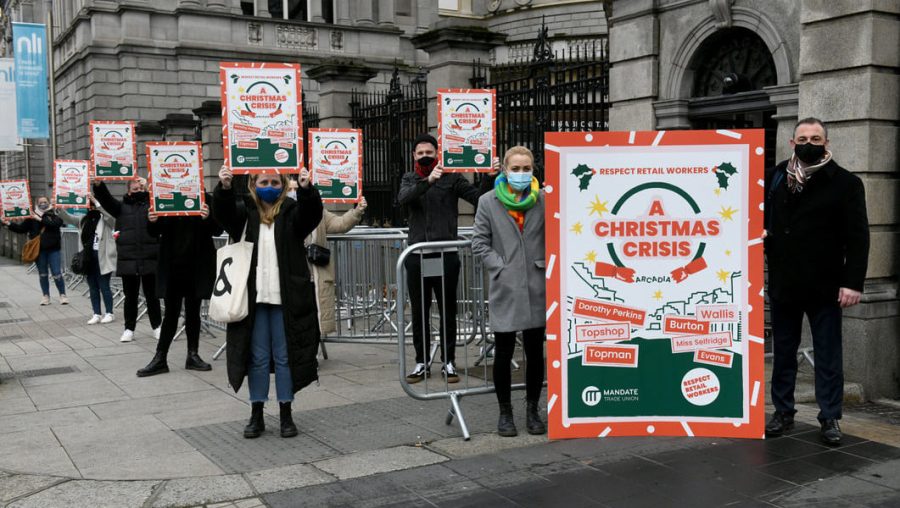
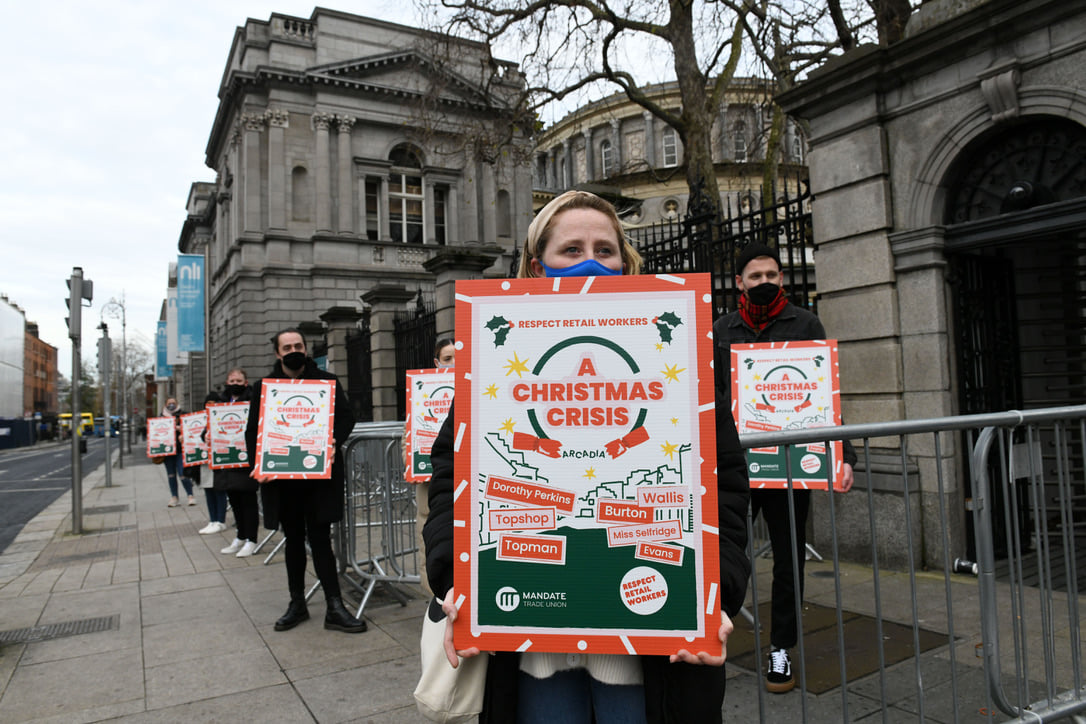
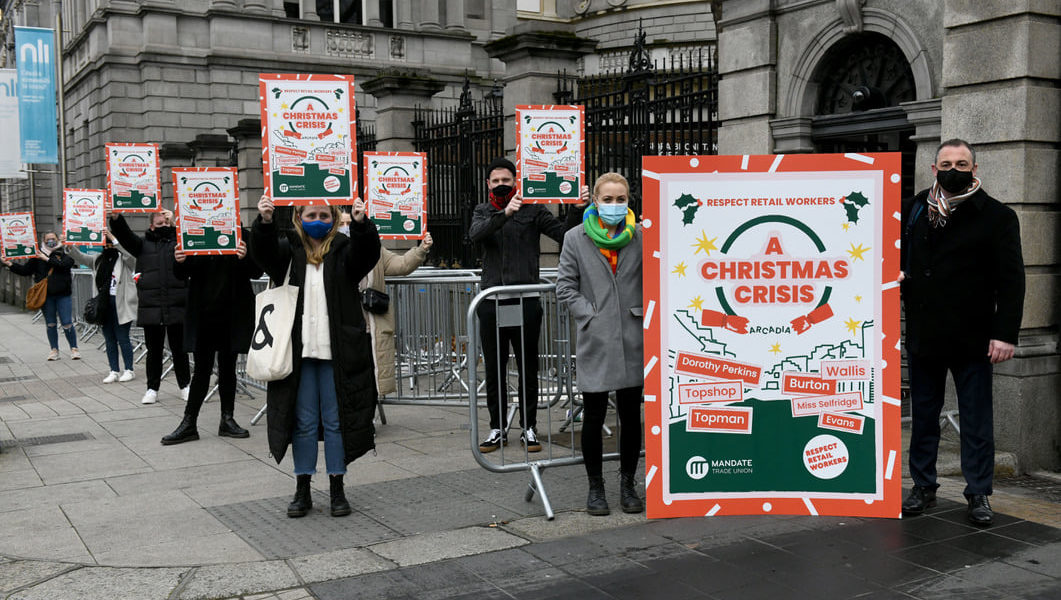


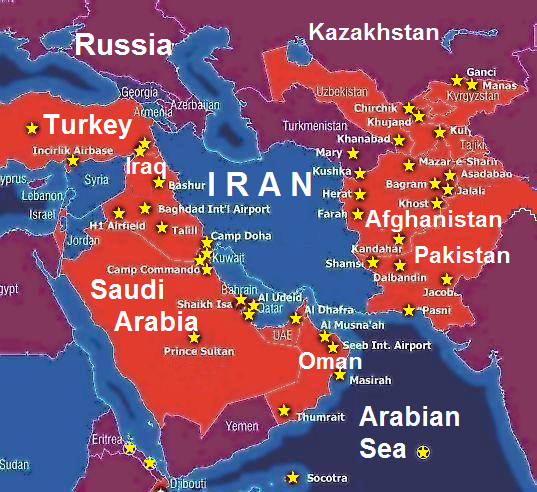


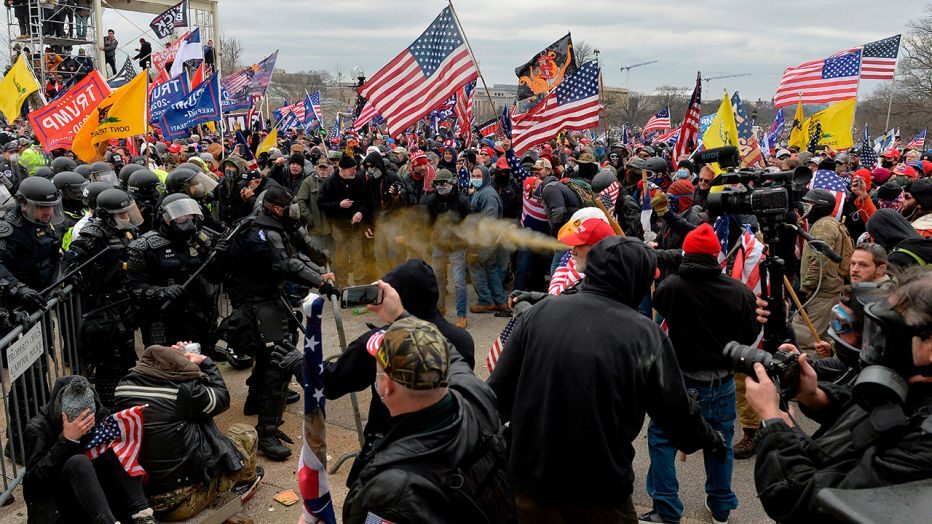


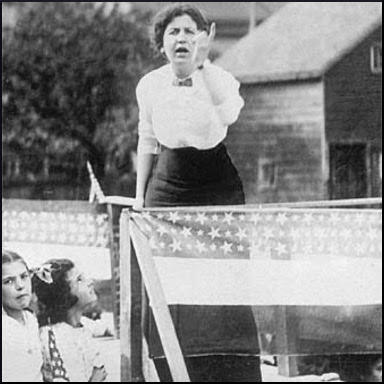

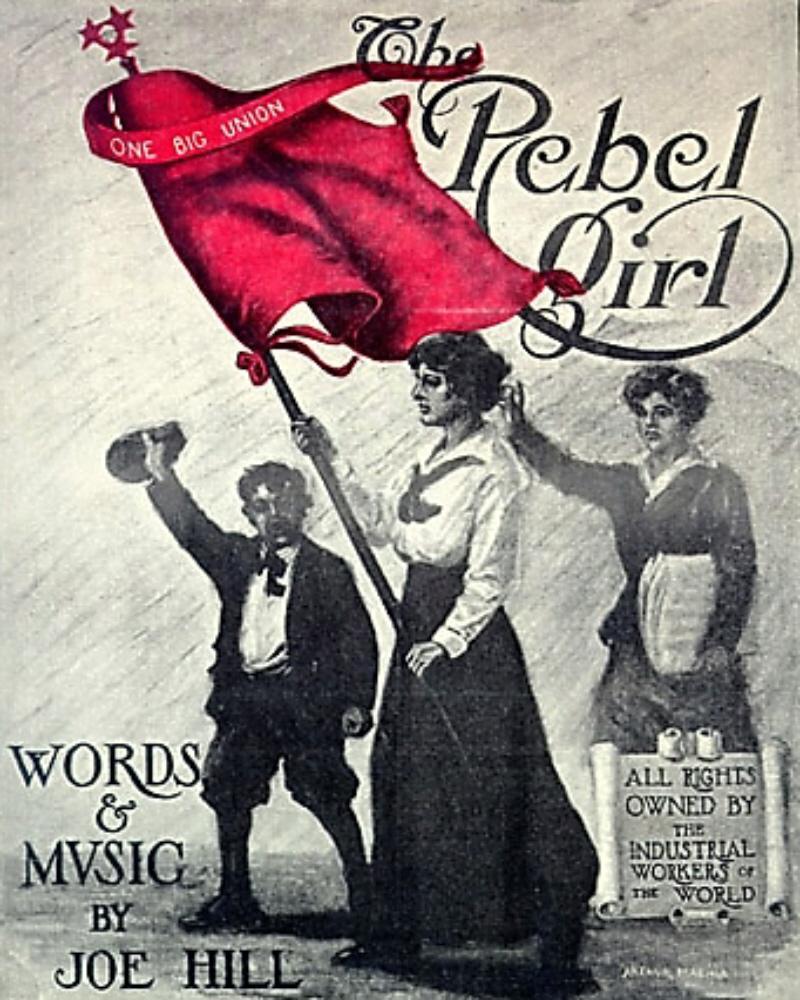





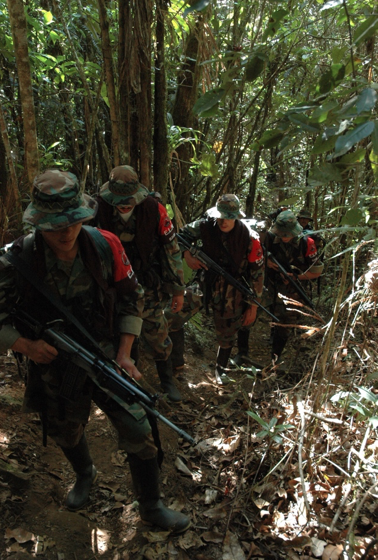


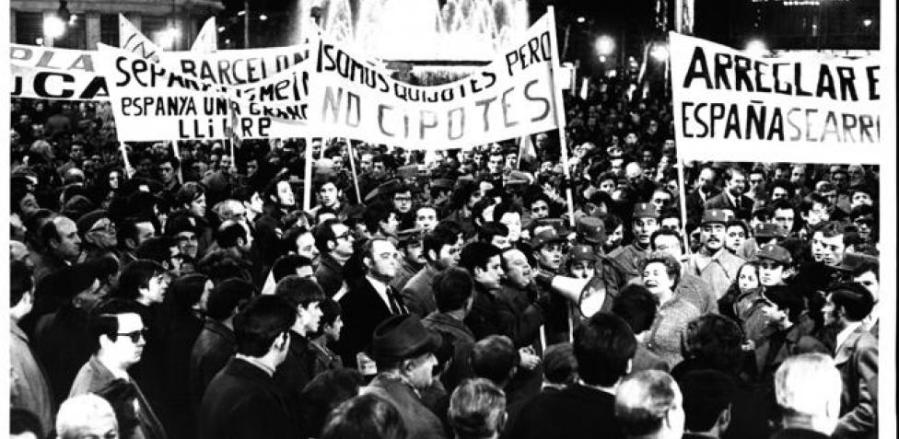
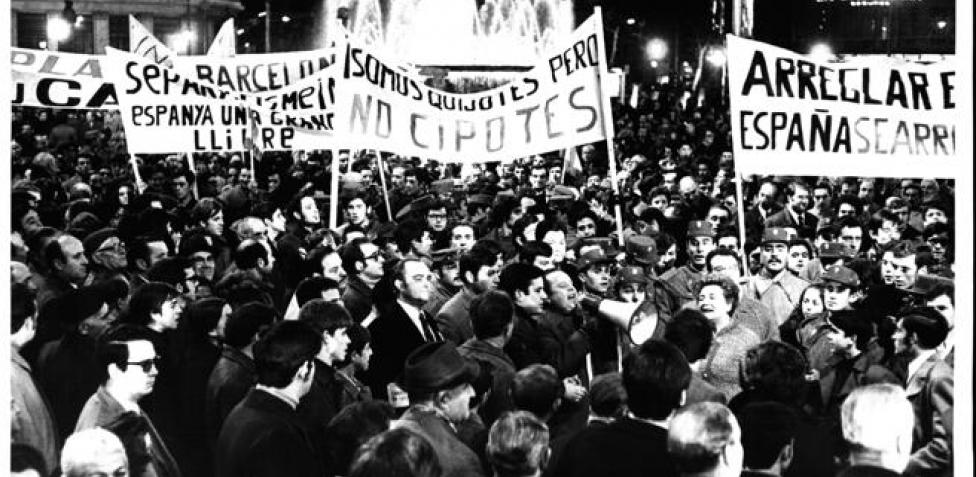

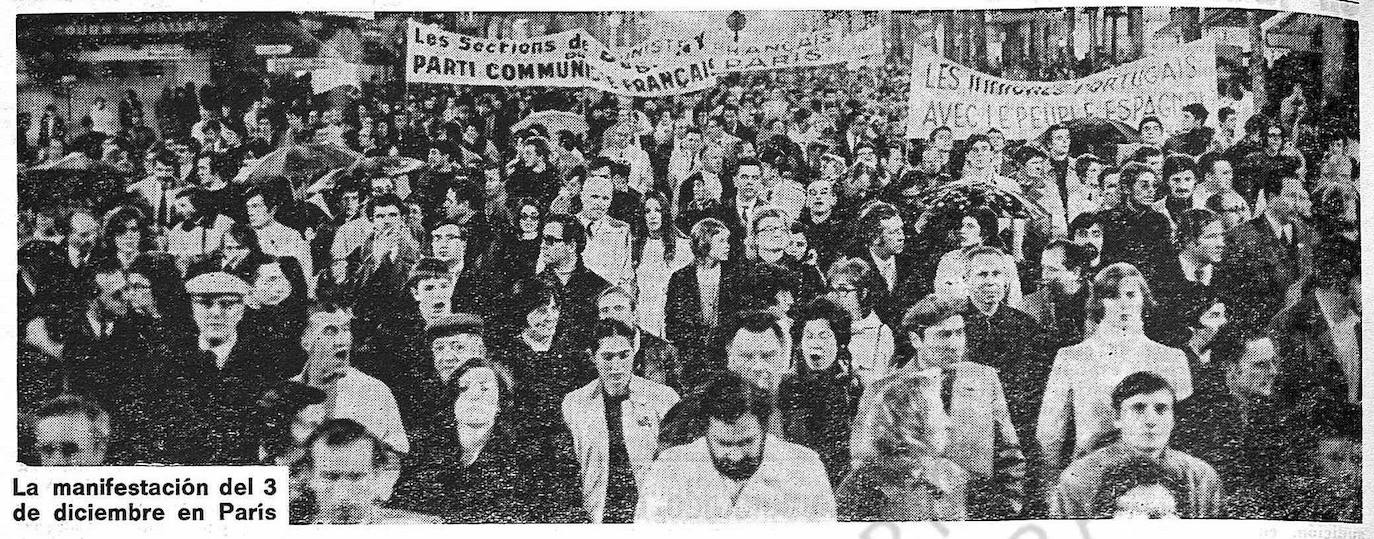

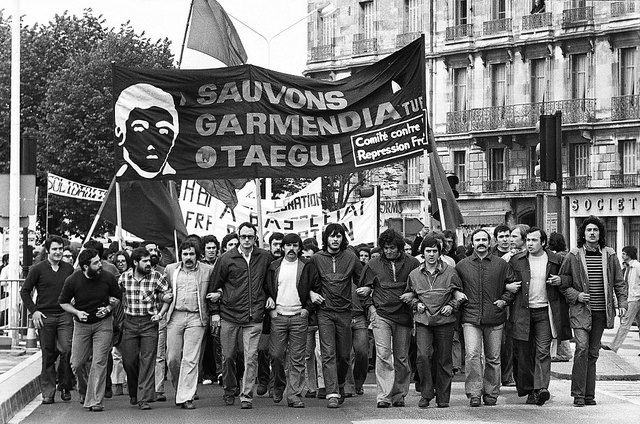
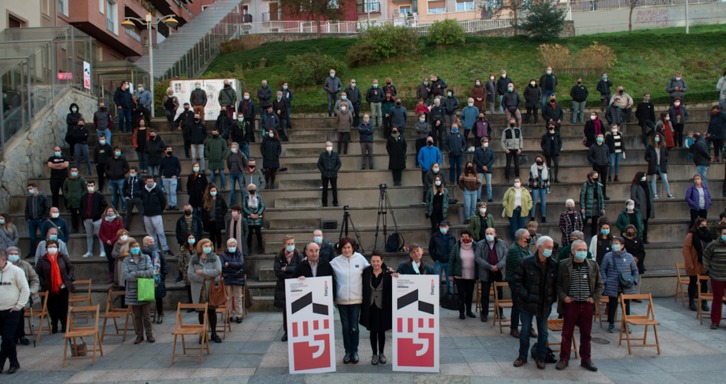


 rebelbreeze