The indicator climbed the temperature gauges and the ice caps melted. The seas rose and in many of the more developed societies, the rich and better-off had to relocate from scenic coast sites further inland, having to move again as the seas moved higher still but some, the more cautious and far-seeing among them (not a trait in great supply among their kind), transferred to mountains.
Melting Artic ice threatens the Polar Bear but also raises sea level around the world. (Photo source: Internet)
The prices of property rose and the construction industry had another boom, which was great for those who had directorships or investments in construction companies or materials. Or in banks, which gave out interest loans like they would be out of fashion the following year (which they well might, some said with a laugh – but a hollow one).
Far away from the Artic, a flooded village, probably in the Indian Subcontinent. (Photo source: Internet)
In the less-developed parts of the world, all the fishing communities had to move further inland and fishing was harder, with lines and nets getting entangled or shredded on the branches of trees and shrubs that were now submerged. Besides, the waters were polluted with flooded sewers, drains, latrines, dumps ….. and plastic.
Some of the nuclear power stations had been built near coasts and they were flooded. Some had exploded, causing unimaginable disaster. Well, what used to be unimaginable. Vast areas of sea, including all that lived in them, from algae and plankton to the great whales, suffered radioactive contamination.
Wind and wave turbines were swamped too and wrecked by storms. Oh, the storms! The changing climate brought great heat to formerly temperate and cold climes while those that had been hotter grew sometimes cold, sometimes even hotter. Those changes created cyclones, hurricanes, great storms that destroyed so many constructions of all types.
Overall, the greatest impact of all this on the human population of the planet was a huge loss of generated energy. Oil and gas fields began to run out and remaining extraction installations to cease working as they were wrecked by storms, flooded or destroyed by climate protesters.
Power station polluting the air. But without power ….! (Photo source: Internet)
Electrical energy became scarce. Entertainment companies, which would normally have done well in times of disaster, went bust since fewer people could receive their programs. The Internet was taken over by governments for civil defence. All kinds of sophisticated equipment could no longer work. Radio replaced TV in most homes and mobile phones went out of fashion. Bicycles soon outsold cars.
Human-powered friction generators of many types began to be produced. Batteries of all kinds were in great demand, especially the rechargeable ones. Solar panels reached astronomical prices on the black market, the only place they were available. People were killed over them: sometimes as gangs fought for control over a diminishing supply, sometimes as someone was sold a dud and went looking for the seller for a refund.
Now, a strange thing happened – they began to run out of oil-based material. Hard plastic was still around but leak-proof and waterproof polythene bags were hard to find. So too with oil-based material used in clothing, such as acrylic. Bark could be used for clothing but there weren’t enough trees to keep up with the demand. There was less wool and leather as the sheep and cattle herds diminished. After awhile, that was less of a problem as there were less humans to clothe anyway.
(Photo source: Internet)
Employees of State companies and departments considered essential – by their employers – lived in walled communities protected by watchtowers and armed guards. And the rich lived in there too. Being rich meant a lot less than it did in the good old days but still a lot more than most people had now: meals every day, hot and potable cold water in good supply, good shelter, access to waste disposal, available medical supplies and recreational drugs including alcohol, armed protection and transport for self and small family circle. Security workers of all kinds became highly valued and former gang members formed themselves into security companies. Some police departments became private security firms and so also did some military. Although they didn’t talk about it most of the time, the rich lived in fear that their security compounds, walled villages and high-rise fortresses would be overrun. Or that their security services would stage a takeover, which is why they generally employed two companies at the same time and kept them in competition with one another.
Another fear was that there would be no replenishing of their huge stocks of food and goods when they were all used up, which was going to happen someday. Not enough production was still going on and what there was tended to be exchanged in barter, rather than coin or scrip.
Dainfern, northern suburbs of Johannesburg, South Africa, has a four-metre electrified fence with cameras and vibration sensors protecting more than 1,200 houses. Photograph: Jeffrey Barbee
The poor lived in fear too and not just of starvation or of getting sick without access to medical services but of gangs taking what little they had left or of abductions of self or of family members to supply services of all kinds to gang members. Of wars between gangs. Of being in the wrong gang area when a rival gang staged a takeover.
Huge sections of the human population were wiped out, through loss of essential services, starvation, exposure, dehydration, fire, heat, cold, drowning, epidemics, resource wars with other states or internally. Along with them went pets that did not succeed in becoming feral and cattle, sheep and horses. The pigs went feral pretty successfully, overall as did some chickens. Many, many specialised species or in fragile ecosystems became extinct. Over time, some new species began to evolve.
It is said, though the story might be apocryphal (a word perhaps suitable for an apocalypse), that in one of the compounds of the rich overrun by a gang or insurrectionary group, depending on which version one hears, a former petroleum magnate put on trial was asked why he and his kind had not stopped destroying the climate, even after it became clear to even the most stupid politicians (which can reach a very high level of stupidity) what they were doing to the world.
It is said he related the fable of the frog and the scorpion.
In case you don’t know the story, it goes like this: A scorpion wants to cross a river but knows he can’t swim well enough to do that, so he goes in search of a frog. When he finds him – the frog of course keeping his distance – he asks him to take him on his back across the river. The frog replies that as soon as lets him on his back, the scorpion will sting him and the frog is not ready to die yet.
The scorpion pleads with the frog, who sees that the scorpion really means it. And it would be very handy for a frog to have a dangerous animal like a scorpion in his debt. So he agrees.
The frog hops down to the shallow water and the scorpion gets on the frog’s back. The frog tenses in fear but nothing happens. The frog starts to swim, feeling more and more relaxed. Halfway across the river, the scorpion stings the frog. As the poison courses through his body, the frog speaks to the scorpion: “Why did you do that? Not only did you break your promise and kill me but you will die now too, you will drown.”
“I know,” says the scorpion. “I just couldn’t help it. It’s in my nature.”
It is also said that in another compound overrun by hostile forces, as a couple of drug company executives were being taken out to be shot for crimes against humanity, including climate destruction, one of them turned to the other with a smile.
“Cheer up”, she said, “It was fun while it lasted.”
When Basque independentists celebrated Gudari Eguna this year, the Day of the Basque Soldier, some of the celebrants were affiliates of the Abertzale (Basque pro-Independence) Left while others were supporters of the Basque Nationalist Party, nominally at least and often in reality, political enemies. However, it is not the same day for each.
Flagpole with the ikurrina, Basque national flag, at Sollube, scene of a battle between the Francoist forces and the Basque Gudari during the Antifascist War. This was erected probably by the PNV for their commemoration but commemorations are also held at the site by ‘dissidents’ of the Abertzale Left. (Photo source: D.Breatnach)A beech seedling (native tree, sacred in folklore, of reputed medicinal qualities, e.g in helping the body to resist infection) had been planted by ‘dissidents’ at the Sollube memorial and, although the surrounding protective netting had collapsed, was still alive. Subsequently Amnistia supporters returned and tidied up the area and left stone markers too. (Photo source: D.Breatnach)Mount of sollube: the Francoist forces had invaded from that far background direction, coming in from Nafarroa, which had been taken over to Franco by the Basque Carlists. (Photo source: D.Breatnach)
The PNV (Basque Nationalist Party) commemorates the execution of 42 Basque fighters in one jail by the Franco forces on 28th October in 1937, whilst the Abertzale Left carries out their commemoration a month earlier, on the 27th of September, anniversary of the last executions under Franco (and, officially, in the Spanish state since): ETA martyrs Juan Paredes Manot (Txiki) and Ángel Otaegi Etxeberria, along with three members of FRAP (Revolutionary Antifascist Patriotic Front) Jose Luis Sanchez Bravo, Ramón Garcia Sanz and Humberto Baena, all shot by firing squads in 1975 (despite world-wide protests and riots outside Spanish embassies).
For much of the Abertzale Left, Gudari Eguna commemorates not only the martyrs of the 27th September 1975 but also all those who fought for Basque independence during the Spanish Anti-Fascist War and all who fought for it since, in particular those martyred in the struggle.
But even in agreement on that date and that purpose, there are differences too. For some years now some commemorations have been by supporters of Amnistia Ta Askatasuna (Amnesty and Freedom), who denounce the “Officials” for dropping the demand for an amnesty for political prisoners but also criticise them on many other political and cultural grounds: ceasing to push for the everyday use of Euskera (the Basque language), making political pacts with social democrats, etc.
Increasingly, ATA and the “Officials” find themselves incapable of sharing a commemoration or a platform as the latter move further down the path of accommodation to the Spanish regime, social democracy and the PNV, commemorating police killed, apologising for the ‘crimes’ of the now-defunct Basque armed organisation ETA.
A poster of the “Officials” highlights two ETA martyrs, one killed by the Policía Nacional and the other by the Guardia Civil. (Photo source: D.Breatnach)A poster for Gudari Eguna of the ‘Official’ leadership, the party EH Bildu, next to a poster of the ‘dissident’ ATA listing six prisoners whose situation is being highlighted. (Photo source: D.Breatnach)
JARKI – A COMPARATIVELY NEW ORGANISATION REJECTING THE ABERTZALE LEFT “OFFICIAL” LEADERSHIP
In Ireland, though they themselves might reject that appellation, the equivalent to ATA would be called “dissident Republicans” and Basques are not as touchy about being counted part of the dissidencia. But one new group has emerged which does reject that term as descriptive of themselves, while at the same time very clearly against the positions of the “Officials” and resolutely for independence and socialism.
This group is called Jarki, (of various meaning: “Resist/ Stand fast/ Push back/ Commit”; the first letter is pronounced like the Spanish “j” or the Irish “ch”).
Among other posters of factions of the Abertzale Left proclaiming Gudari Eguna in the Basque Country this September, I had seen one, very large, side by side with a declaration of position against the subjugation of the Basque nation, for socialism and class struggle. Curiously, there had been no venue advertised for a commemoration ceremony to take place. Was this group, this Jarki, not intending to have one? I made discreet enquiries, someone spoke to someone ….. who perhaps spoke to someone else ….
Jarki poster for Gudari Eguna — note no venue details (Photo source: D.Breatnach)
On Gudari Eguna this year,
Text poster of Jarki’s alongside their image poster (Photo source: D.Breatnach)
27th September, I was met fairly early in the morning by my appointed guide. The mist gathered high upon the marshes and river and in the valleys as we drove higher, eventually coming out on a scenic site, the day cold but the climbing sun burning off the last of the mists. We rendezvoused with other carloads, then drove to another spot and parked. Asked to leave my mobile in the car, I accompanied my hosts on a long walk in unseasonal sun and heat to a field, where a temporary stage had been set up. It was to be a Gudari Eguna event organised by the Jarki organisation.
The security precautions were not excessive. This was taking place in the Spanish state, where fascism had never been defeated but had instead had a paint-over job in order to allow the Western states, after the death of Franco, to pretend it was a democracy. Until a few years ago, detentions of Basques had been like an epidemic, torture by police and army routine and just as routinely ignored by judges who sentenced the prisoners on the basis of their “confessions” or those of others to long years in jail. In contravention of EU and UN protocols for the treatment of prisoners, the political victims of the State had been dispersed to its furthest reaches, far from spouses, children, relatives and friends. And though the armed group ETA had ceased operation in 2012 and was now disbanded, persecution went on: that very month, 45 people of various organisations arrested in 2013, 2014 and 2015 for supporting the prisoners, including psychologists and lawyers, “supporting terrorism” according to the State, had been brought to trial1.
On the way to the rally, I saw many young men and women, in their middle-to-late teens or early twenties and also many others in ages ranging from late 50’s to 80s, also with a sprinkling of young adolescents. In other words, there were hardly any there of raising a family age. The sun was very hot now and I took off my jacket and tied it around my waist and, even so, was soon sweating.
I and one other were provided with a translator to Castillian (Spanish) for the speeches in Euskera – nobody else seemed to need one, a state of affairs that would not be matched in Irish Republican or Socialist circles with regard to our native language.
The heat beat down and I worried about getting sunburned, while at the same time very interested in what was going on. A large dragonfly wheeled above us, hovered a second then shot off. One of the folkloric Basque names for it translates as “Witch’s Needle” but it is important to recognise that in Basque society, sorgina or “witch” does not have the same negative connotations as can be found in much of western society, even today.
“THE STRUGGLE MUST CONTINUE — IN ONE FORM OR ANOTHER”
A man perhaps in his 60s took to the stage and recalled his years in guerrilla resistance (i.e in ETA), his capture and the killing of his comrades (one was executed on the spot by the Guardia Civil2). He went on to talk about his yearsbeing dispersed around Spanish jails throughout the territory of the State. Speaking about the historical memory of resistance, the man commented that it was necessary to keep that alive – both of the Antifascist War and of the resistance afterwards.
Euskal Herria3 was still divided and still not free, he continued and therefore the struggle had to continue in one form or another, despite the abandonment of the path of resistance by the current leadership of the Abertzale Left. Similarly the demand had to be maintained not only for an end to dispersal but for an amnesty for political prisoners.
After his speech, a young male bertxolari stepped forward to sing his composition. This is a cultural form of social and/ or political commentary, composed by those skilled in the art to fixed rules of rhyme, length of line and a selection of airs.4
He was followed by an elderly left-wing journalist who, apologising for her inability to speak in Euskara, did so in Castillian (Spanish). She referred to her family’s history of anti-fascist struggle, both in the War and in the resistance that followed the victory of the military-fascist forces. She too spoke about the need to continue resistance to unjust regimes and for the right to self-determination.
The journalist speaker was followed by the performance of another bertxolari, this time a young female.
Last to speak was a young woman, speaking on behalf of the Jarki organisation. She recalled the anti-fascist resistance in the Basque Country in ……….. (a nearby battle during the Anti-Fascist War) and elsewhere, also by ETA in the years following the victory of the military-fascist forces. While others might try to pacify the people and to wind down the resistance, the need for active participation in resistance is as great as ever, she said. The woman ended with the call “Gora Euskal Herria askatatua eta independentzia!” (“Long live a free and independent Basque Country!”), to which all the audience (myself included) responded with a roar of “Gora!”.
The young woman then led the audience with the song Eusko Gudariak (“Basque Soldiers”, similar in content to the Irish national anthem, the Soldiers’ Song), most of us who knew the words or not with raised fists, then a couple of women let out the irrintzi5 yell, raising goose pimples on my skin.
Obviously, given my presence, not all the attendance had been Jarki activists but on the other hand, not all its supporters had been able to come either, I was told on the long walk back to the caron tired leg muscles in the blistering unseasonal heat. I joked that if I’d had my mobile with me I’d have phoned an ambulance. Some cured sausage sandwiches and a few mouthfuls of ardoa (wine) from a traditional wineskin, kindly offered where the vehicles were parked revived me somewhat for the journey back to my pickup point that morning but thankfully, we also stopped on the way for lunch and a cold beer at a Basque bar (for which my attempts to pay were kindly but firmly refused by my other travelling companions).
“MOST OF THE RESISTANCE NEEDS TO BE AT STREET LEVEL”
Later, at an appointment with a Jarki activist, I asked what the relationship with other Basque organisations was, given that his group will not accept the appellation of “dissident” and others will. He told me that they enjoy friendly relationships with a number of other Basque political and cultural organisations that have also broken away from the “Official” leadership. Jarki is a revolutionary socialist organisation for an independent Basque country and in support of the Basque language, he told me. “Although we do not at the moment put forward electoral candidates, we are not necessarily against doing so as a tactic”, he added, speaking quietly. “But the ‘officialistas’ are only interested in the electoral path and we think most of the resistance needs to be at street level”.
The organisation expects a disciplined commitment from its members, for which it also recognises the need for political education, especially of the youth. There had been wide criticism of the lack of this kind of education within the Abertzale Left since the 1990s and earlier, right up to the present.6
“The national independence and socialism of the Basque Country is of benefit to the world and the independence and socialism of other countries is of benefit to our nation,” he said in reply to my question about the issue of internationalist solidarity. He admitted that the representative of Jarki at their Gudari Eguna commemoration had not mentioned that aspect.
Jarki call for rupture with the Spanish Constitution and demonstration on 6th December. (Photo source: Internet)
CALL FOR RUPTURE WITH THE SPANISH CONSTITUTION
A few days ago, while I was writing this long-overdue piece from contemporary notes, Jarki issued a national call to Basque society (translated by me from a Castillian version): “The Basque working-class people responds with rupture to the Spanish Constitution.”
The Spanish Constitution, despite not being accepted in the Basque Country7, is being imposed upon us. It is a document edited by the Francoists in a pact with the Spanish political parties. This document denies the self-determination of the peoples and besides accords to the military the role of guarantor of the union of Spain.
This Constitution designed the administrative separation of the provinces of the southern Basque Country.8
Faced with this imposition it is more important than ever that the working-class population of the Basque Country creates a revolutionary alternative which should be a political vision to lead the struggle for national construction and liberation and for socialism, the struggle for a united Basque Country, without classes.
For all those reasons we call for the organisation and mobilisation against the imposition, in which the Basque working-class population should follow its own path. Because of all that, we call for participation in the demonstration to take place on 6th December (Spanish Constitution Day) in Durango.
Although they wished to silence us, they will hear us. We have enough reasons. It is time to take to the streets. This people needs a revolutionary alternative.
End.
Poster by Jarki calling for demonstration against the Spanish Constitution (Photo source: Internet)
FOOTNOTES
1The day after 50,000 demonstrated for the right to support the prisoners and in solidarity with those on trial, Basque society was shocked when those charged admitted their “guilt” in exchange for walking free or a maximum sentence of five years’ jail for the “leaders” (instead of the up to 20 years normal from the Spanish court). The reverberations of that – the act of pleading ‘guilt’ itself but also permitting 50,000 to demonstrate in ignorance of the intention — are still travelling through the Abertzale Left and are likely to cost the “Official” leadership, who must have approved or perhaps even brokered the deal, very dearly. In contrast to the 45, another four, leaders of Askapena, Basque organisation for internationalist solidarity, charged with similar ‘crimes’, had fought the case earlier, for which they had won much respect and had beat the charges. Askapena, however, had quietly split from the Abertzale Left some years previously.
2The Guardia Civil is a militarised police force of the Spanish State with a very political role, the most active in the past against the Basque national movement and now similarly against the Catalonian. In addition the Spanish State has the Policía Nacional, also armed and active against movements for self-determination. Each region also has a separate police force, for example the Policía Foral in Nafarroa, the Ertzaintza in Euskadi, Mossos d’Esquadra in Catalonia, etc. And there are urban police forces too in every town or village.
3Meaning “the country where they speak Basque”, the term is now used to describe the whole Basque nation of seven provinces, three currently within the French state and four within the Spanish territory. “Euskadi”, the former term, now only describes the “Basque Authority” area of three provinces: Bizkaia, Alava and Gipuzkoa.
4This cultural form, at one time perhaps in danger of dying out, has become very popular and national competitions are broadcast on the Basque TV network. I have witnessed two bertxolari given pieces of paper laying out their respective roles (for example an Irish landlord and a Polish tenant) and, minutes later, engage in a battle of bertxos (verses) which had a Basque audience in roars of laughter and appreciation for the wit and skill of each. Close attention is paid by Basque listeners to bertxolari which, for a nation not culturally given to admiration for the song of the single voice (unless they can join to sing along), is truly remarkable. The Irish “comhrá beirte” is a similar performance art form but much less developed, certainly now, in Irish tradition.
5It is a long ullulating or yodelling cry, by males or females, said to be a call to war or to encourage Basques while fighting (it was also the name of a short-lived Basque resistance organisation functioning in the “French” Basque provinces). Such calls are common for communication of different kinds among mountain people, the sound carrying from one mountain to another and echoing but curiously enough it is also a feature of Arab culture in the desert and of some Native Americans. Example with a commentary in Castillian: https://www.youtube.com/watch?v=gcSaW6JUnUc
6That this has been neglected for decades in the Abertzale Left is a fact admitted even by many who remain within the “official” line.
7The Spanish Constitution was presented on a “take it or leave it” basis during the Transition period after the death of Franco, with much violence from police and fascist organisations and the fear of a return to the full-blown fascist dictatorship. The Spanish Communist Party with its huge and then militant trade union, Comisiones Obreras and the social-democratic PSOE, with its smaller Unión General de Trabajadores, were both legalised on condition they supported the monarchist and unitary state Constitution. In such circumstances it was hardly surprising that the referendum on 6th December 1978 brought in a huge majority for the Constitution – but not in the Basque Country, where it was rejected.
8Three of the four southern provinces, i.e those currently within the Spanish State, are under one regional government administration while the fourth, Nafarroa, has its own.
“We bring colour to Grafton Street, not ‘clutter’!” was the response of street traders in Grafton Street to a request from multinational property company Hines to Dublin City Council to remove the street trading stalls away from Grafton Street, to which Hines allege they bring “clutter”. The street traders also pointed out that they and their predecessors had been on that street much longer than Hines.
Catherine Claffey, a Grafton Street flower seller, from whom I took the “Colour, not ‘clutter'” quotation. (Photo: D.Breatnach)
Although the request to Dublin City Council had been made in August, it only hit the news earlier this week and brought a swift response of outrage from the street traders, some public representatives and ordinary members of the public. Broadcaster Joe Duffy joined the chorus and also referred to the difficulties experienced by the street traders on Moore Street with an unhelpful DCC Management.
Hines PR people soon found themselves removing their feet from their mouths and eating not only their words in public but very humble pie.
Dublin architecture, history and soul is under constant attack by property speculators, both native and foreign, to whom everything is a potential ‘development site’ and a possible source of profit – and without the production of a single commodity.
Victoria Dempsey, Grafton Street flower-seller, hugs a friend. (Photo: D.Breatnach)
GRAFTON STREET THEN AND NOW
Dublin’s Grafton Street was a premier Dublin residential street as the upper classes deserted the north for the south side of Liffey river in the late 18th and early 19th Centuries. Perhaps that was the spur for the street becoming known for prostitution in the period. According to Wikipedia: “In the 1870s, 1,500 prostitutes were reputed to work in the street.”
When the O’Connell Bridge (then the Carlisle Bridge) was completed in 1795 (just in time to hang United Irishmen from it), it led not only to the doubling of the length of Drogheda Street, which then became Sackville Street but also to much traffic backwards and forwards across the river to both sides of the city centre. Grafton Street soon became a premier shopping street with many Irish-based companies selling fresh, preserved and tinned food, higher end male and female clothing, jewelry and ‘exotic’ imports such as coffee through Bewley’s Oriental Café (1927). This state of affairs persisted into the late 1960s but in the decades since then however, the profile of the street has changed to feature mostly British high street outlets and a Mac Donalds fast food place.
For two centuries there have been street traders selling a variety of products on the street, of which the flower-sellers, newspaper stand and a hat and jewelry stall are all that remains.
The street was very narrow to accommodate both pedestrian and vehicle traffic both sides of the street and pedestrianisation of Grafton Street began in 1971, however at an extremely pedestrian rate (pun intended), not being completed until 1983 and it was paved the following year, repaved in 1988 and then partially again more recently. The pedestrianisation facilitated performance by buskers (street musicians) and music and song of high quality may be heard any day in different genres from Irish traditional to world rock and classical. Perhaps they would have been the next to be accused of “clutter”?
Flower Sellers, Grafton Street by Norman Teeling. (Image sourced: Internet)
The Dice Man (Thom McGinty 1952–1995) regularly carried out his performances there too. Dublin world-famous musician Phil Lynott (1949-1986) had a statue commemorating him placed in Harry Street, just off the north end of Grafton Street in 2005 while the statue of fictional sea-food street trader Molly Malone was moved from the north end of Grafton Street to a less crowded space in Suffolk Street in 2014.
The street features in much of Irish literature and some song but also in images: two are particularly striking: IRA men walking up a wet Grafton Street during the Civil War and Flower Sellers, Grafton Street by impressionist Irish artist (and musician) Norman Teeling (b. 1944). It was also the scene of the shooting dead by the IRA of a G-man, the political plain-clothes branch of the Dublin Metropolitan Police, in 1921.
Famous photograph of the IRA proceeding up a rainy Grafton Street in June 1922.
WE BRING COLOUR TO THE STREET, NOT ‘CLUTTER’
Talking briefly to some street traders there on Wednesday about the threat to move them, one of them remarked: “We bring colour to Grafton Street, not ‘clutter’” and reiterated their declaration that they and their predecessors had been on that street long before Hines.
Another controversial recent initiative in Moore Street has been the changing of the traditional Irish-language Christmas lighting decoration and the ‘renaming’ of the street to “the Grafton Quarter”. Irish language comment on the new design? “Tá sé gránna!” Indeed. Sometimes it seems as though the poor property magnates can’t put a foot right.
Perhaps Hines had ideas of greater expansion, changing the street into a “quarter” which, as some Dublin City Councillors have pointed out, does not exist.
All that aside, doing away with Irish language Christmas lighting and wanting to get rid of flower-sellers doesn’t accord very well with Point Four of Hines’ own Guiding Principles: “Hines is committed to fostering an inclusive culture where diversity is respected and valued.”
Another comment in Irish? “Seafóid!”
end/ a chríoch
Irish language Christmas illumination now removed. (Photo sourced: Internet)The new Christmas lighting (Source image: extra.ie)
Section of the picketers showing Dublin Trades Council banner. (Photo: D.Breatnach)
The Ivy Restaurant management in Dublin’s Dawson Street at one o’clock this afternoon ordered the blinds to be pulled down on the windows. This is their usual response when demonstrators arrive to picket their restaurant, as they did today. The Ivy restaurant is part of a profitable chain and in Dublin at least is using tips paid to staff by customers to help make up the staff’s wages. Bluntly, stealing tips that were paid for service by customers who assumed they were in addition to wages already received (which, as everyone knows, are low enough in the “hospitality” trade).
Some passing vehicles beeped in solidarity and many passers-by took photographs or video as the picketers lined up with placards and some banners and shouted:
“Eat your steak, eat your chips, pay the staff their well-earned tips.”
Also: “Pay the workers what they’re due!”
Section of picketers (Photo: D.Breatnach)
One observer enquired why the staff put up with it and did they have a union; he was informed that they had but two staff were sacked for organising the union and the remaining and replacement staff are frightened not only of losing their jobs but also of getting a bad reference for other work. Such staff are often migrants who are vulnerable, in need of work to buy food and pay rent and without a support network such as family in Ireland.
The sector has long been known as one of insecure work, few rights, low unionisation and low pay. However, the deduction of customers’ tips to incorporate them into staff wages seems a new low for this sector and the Ivy is by no means the only restaurant doing this. But here is where the battle has broken out and here it must be won, to encourage workers in this sector and to make it known to restaurant owners that this practice will not be tolerated.
The issue and the practice of the Ivy has been reported a number of times in the mainstream media and the solidarity protesters come every now and again, set up their placards, hand out leaflets to passers-by and shout their slogans. The Management draw the blinds. The picketers leave after about an hour (many to go back to work) and the blinds are lifted again. But the campaign has affected their business. And Unite the Union, which is supporting the sacked staff, is setting up a hospitality sector branch.
Section of picketers including both TDs (members of the Irish Parliament, the Dáil). (Photo: D.Breatnach)
Today a number of elected public representatives were on the picket line, including Cieran Perry, Independent DC Councillor and Independent TDs Thomas Pringle and Joan Collins.
As fascism begins again to raise its ugly head in Ireland, it is necessary for all its opponents, whether social-democrats, revolutionary socialists of various types or democrats, to consider effective means to restrain its growth and to nullify its influence upon the ordinary masses of Irish society. These masses are at this point generally hostile to fascism and to racism (a seed-bed of fascism) but that can change and in history, has changed before, not just in other lands but in Ireland too during the 1930s.
Traditionally, the views on effective means of defeating fascism in western european society have varied between defeating their arguments, legislating against them or denying them any public space within which to grow. It might be useful to briefly examine the premise and experience of these different approaches in order to evaluate their efficacy.
DENYING FASCISM ANY PUBLIC SPACE
Taking the last case above first, most active antifascists, whether Anarchist, Irish Republican, Communist or Socialist, proclaim the need to physically prevent fascists gathering in public spaces or on platforms. This approach puts these elements into direct confrontation with the forces of the State which see the methods of the Antifa as illegal, as subverting their own roles and, often enough at different times, as a threat to their own plans for repression of resistance to regimes of austerity. 1
In 1970s Britain, those who advocated such an approach, despite the fairly recent history of the War Against Fascism and the 1930s struggles in Britain, were in a small minority and seen, not just by social-democrats and liberals but also by most of the socialist and communist Left, as “ultra-leftists”, “adventurists” or just plain “hooligans and thugs”.
Attempt by Sir Oswald Mosely, leader of the British Union of Fascists (Blackshirts) to rebuild the fascist movement meets clear resistance in 1960s Manchester. (Photo source: Internet)Depiction of an earlier anti-fascist event, the Battle of Cable Street 1936, mainly against London Metropolitan Police escorting Blackshirts to Jewish settlement area in East London. (Photo source: Internet)
A small English marxist-leninist party2, with its African, Asian and Latin American student connections, promoted the “no free speech for fascists” policy and managed, for awhile, to have the similar “no platform for fascists” policy adopted by the National Union of Students. Some revolutionary Communists, Socialists and Anarchists combined with some militant groups of the ethnic minorities targeted by the fascists to pursue this policy on the streets. The National Front and the British Movement found their marches, meetings, concerts3 and rallies attacked and they were eventually driven off the streets, with many sacrifices in the antifascist movement from the deaths of at least two antifascists4 to jail sentences, heavy fines and physical injuries.
In 2016, the islamophobic party Pegida was prevented by popular direct action from launching itself in Dublin. This approach does seem to have been successful in Britain, at least for decades, and in some other European areas, with ethnic and other minorities gaining a space in which to promote their culture and develop their politics. At the same time, it has to be acknowledge that many of the concerns of the ruling British elite had been successfully addressed or contained during the 1980s: restriction on the trade unions through industrial relations legislation, defeat of the National Union of Miners (1984-’85), of the printing unions at Wapping (1986-87), of the dockers through buy-outs and redundancies; repression of the Irish community through the operation of the Prevention of Terrorism (sic) Act 1974 and the jailing of nearly two score Irish people framed on bombing charges in five separate trials; increasing workers’ insecurity and dependence through large-scale change from being renter-occupiers to mortgage holders.
The sinking instead of launching of Pegida in Dublin, 2016. Cartoon by D.Breatnach)
LEGISLATING AGAINST FASCISM
Legislating against fascism in western european democracies has largely been imposed opportunistically, as with France, Spain and the UK, as the ruling elites faced up to war with states where fascism was already dominant. In the Spanish state it proved ineffective and heroic popular resistance was ferociously overcome by a military-fascist uprising backed by the resources of two fascist states, while the ‘democracies’ stood by or imposed a blockade on relief for the beleaguered Republic. In France, any measures were nullified by the German Nazi invasion. In the UK, the measures proved effective due to the wartime posture of the ruling elites, facing a possible invasion and needing a mobilisation of the entire population to resist that possibility5. In the Irish state, where a new quasi-Republican government was facing the real possibility of a fascist coup aided by elements in the military, some banning measures were effective but these were preceded and assisted by popular mobilisation and direct action against the Blueshirts.
After the defeat of fascism by war and popular resistance, antifascist legislation was imposed on the defeated fascist states by victorious insurgents or by conquering forces. But today, fascism is on the rise in all those states that have been the subject of antifascist legislation. In the Spanish state, where fascism was victorious and remained so for three decades, fascists and their crimes were actually protected and, despite the democratic veneer of the “Transition”, no action was taken against fascists openly parading, displaying fascist paraphernalia and honouring fascist leaders such as General Franco and Primo Rivera (founder of the fascist Falange).
Liberal, social-democratic and even some socialist elements call for the State to bring in and to enforce legislation against “hate speech”. However, apart from being an insufficient answer, the label of “hate speech” has been used in the Spanish state to penalise denunciation of the Spanish State and its police forces.
DEFEATING THE ARGUMENTS OF FASCISM
Defeating the arguments of fascism, such as racist propaganda against ethnic minorities and for special rights for one section of the population, conservative and homophobic ideology, arguments in favour of male superiority, are argued to be necessary to defeat fascism since legal repression and active suppression can only drive those forces temporarily underground, from where sooner or later, they will emerge again.
Not quite the same but a similar non-State and pacific line is that the fascists need to be over-awed by the mobilisation of their opponents and their pariah status demonstrated to a passive public by the mass of anti-fascist numbers.
In the 1970s and 1980s in Britain, this was the dominant line among anti-fascists, among social-democrats such as the Labour Party, liberals, the Communist Party of Great Britain and the Trotskyists of the Workers’ Revolutionary Party and of the Socialist Workers’ Party6. Their first tactic upon hearing of a plan for a fascist mobilisation was to build an antifascist mobilisation near the same point, to show large numbers opposing and hopefully outnumbering the fascists.
However, the fascists were already attacking ethnic minorities and other groups and hanging around oppositional mobilisations to pick off individuals or small groups. They had also attacked a number of antifascist public meetings with clubs and bottles and even a gas spray into eyes. Left-wing paper sellers were targeted on the street. Irish solidarity and other solidarity marches and meetings were also attacked and though certainly the Irish proved able to defend themselves, during the scuffles, the police were able to find an excuse to arrest the Irish marchers.
The leaders of the peaceful opposition to fascism policy refused to change their line and, as the likelihood of violent confrontations between fascists and their opponents increased, would call for a rally near the fascist mobilisation and then lead the antifascist march away from the fascists. The SWP promoted youth concerts under the banner of Rock Against Racism, but the fascists continued to mobilise.
In retrospect, it did seem as though the small and large-scale pitched battles with with fascists and with the police escorting and protecting them were what was demoralising the fascists and leading to splits within their organisation, ultimately defeating the fascist offensive of those decades.
Even so, the leaders of AFA (Anti-Fascist Action) which mobilised most of the successful actions against the British fascist organisations and their mobilisations, certainly in London, argued that it was necessary also to defeat fascism politically7 and that failure to do so would ensure a resurgence of fascism at some time in the future. This prediction has surely come true in Britain with EDL and UKIP, for example.
One of the successful antifascist battles in Portland USA, June 2018. (Photo source: Internet)
EVALUATING CONCLUSION
In my opinion, each of these approaches is necessary but overall reliance on any individual approach is likely to bring the democratic forces to tragic defeat.
The model of active denial of a public space has a position of central importance; the action to prevent the launch of Pegida proved successful and no doubt such actions will be necessary again in the future (though perhaps learning from that action to prevent or at least minimise arrests of antifascists).
I do not believe it is the role of antifascists to call for capitalist state action against fascists and any prohibitive legislation should be specifically anti-racist, anti-homophobic etc. A wide catch-all “anti-hate speech” legislation will find revolutionaries its targets more often than it does fascists (as is happening in the Spanish state at the moment).
Defeating the arguments of fascism must have a role in denying the fascists many of their recruits. As in European countries in the 1930s including Ireland and Germany in particular, some of the foot soldiers of the fascists are the oppressed poor, the educationally disadvantaged, the misguided as to who their real enemies are and where they are to be found.
In the 1930s the enemy was portrayed as being the Jews, Communists and homosexuals inside the country, whilst today those bogeymen are replaced by migrants, moslems, gays and supporters the right to choose abortion. In the 1930s the external enemy was the then-dominant European powers, France and the UK, as well as the Soviet Union; today, it is the EU.
It is not the role of anti-fascists to defend the EU (which to my mind is indefensible and which in any case will gain us nothing) but rather to point towards the real enemy, Irish capitalism and foreign imperialism. We need to show that through constant demonstration of examples and by leading struggles against those institutions.
In particular in Ireland it is of the utmost necessity to expose the nationalist posture of the fascists and racists. In two showings of Gemma Doherty supporters in Dublin recently, they flew many Irish tricolours, played ‘rebel songs’ and sang the Irish National Anthem (The Soldiers’ Song, by Republican Peadar Kearney). In a confrontation between them and the anti-fascists, it can seem that the fascists and the racists are upholding the honour of the nation. However the Blueshirts actually upheld the partition of the nation and the granting of a portion to a foreign power and fascists will end up supporting our foreign-dependent capitalist class. In addition, Irish fascists have been seen making overtures to Loyalists in the Six Counties, forces loyal to an occupying power.
James Connolly monument, Dublin. This Irish working-class martyr did not see Ireland until he was sent there in the British Army, from which he soon enough deserted. (Photo source: Internet)Constance Markievicz in Irish Citizen Army officer uniform. She was born in England to a planter family. (Photo source: Internet)Robert Erskine Childers and wife Molly, bringing rifles into Howth for the Irish Volunteers. Molly was from the USA. Childers was English, later he joined the IRA in the War of Independence and in the Civil War. He was executed by the Irish Free State in 1922.
Apart from the fact that we are all descended from migrants, many of those historic heroes celebrated in ‘rebel songs’ were born abroad, were descended from recent migrants or had at least one foreign parent; that list would include Wolfe Tone, Henry Joy and Mary McCracken, Thomas Davis, Tom Clarke, Patrick Pearse, James Connolly, Jim Larkin, Constance Markievicz, Eamon De Valera, Erkine and Molly Childers …..
We need to deny the fascists any place in popular anti-capitalist struggles, as successfully done with the brief flare of Yellow Vests organisation in Dublin and will no doubt need to be done again, for example in housing demonstrations.
Migrants need to organise themselves against attacks and increased exploitation and we need to be active in their support. This is the case too for other targeted groups; liberal cries for justice or for the application of “anti-hate speech” legislation will avail them not at all in the long run.
Recent racist and fascist demonstration at the Dáil against proposed legislation banning “hate speech”. (Photo source: Internet)
Having said that active denial of a public space for fascists is necessary, I would add that secret mobilisations should be for work that needs to be secret; however it is ludicrous to gather secretly and then to march out to stand in front of the fascists shouting at them. That work of visible opposition does need to be done but publicly, with mass mobilisations – antifascist forces should be able to outnumber the fascist and racist mobilisations in Ireland by a factor of ten to one. We should have effective amplification systems, play antifascist songs, and fly relevant flags (in particular, in my opinion, the Starry Plough, flag of the Irish working class in struggle in 1913 and in 1916).
It is crucial for us to realise that without revolutionary answers to crisis, fascism will present false solutions and diversions, calculated to have an appeal to sections of the population. And the revolutionary answers need to be not only theoretical but seen in practice also, actions that seem as though the revolutionaries and their allies are seriously fighting the system to advance the cause of the working people.
Fascism is one of the faces of Capitalism in specific circumstances. Ultimately, as long as capitalism exists, the danger of Fascism will never be far away.
End.
FOOTNOTES:
1Recently the media reported judgement against a number of people who had allegedly attacked Irish fascists while the latter were on their way to the 2016 attempt to launch the Islamophobic party Pegida in Dublin. Others are currently awaiting trial for allegedly attacking apparently Polish fascists who were trying support the same launch. Of all the European countries where the launch of Pegida had been planned, Ireland may be the only one where this was signally unsuccessful.
2English Communist Movement (Marxist-Leninist), which became the EC Party (m-l). It was mostly active in London and Birmingham. The NUS currently has a a “No Platform” policy but which applies to specific organisations and individuals, including some British fascist and racist organisations.
3For example of the fascist skinhead band Skrewdriver.
4Both were killed by London Metropolitan Police truncheons: Kevin Gately, Leeds student of Irish parents, 1974; Blair Peach, New Zealand teacher, 1979.
5In the USA, fascism was only repressed to any great extent when the USA decided to enter the Second World War, which was after the bombing by the Imperial Japanese of Pearl Harbour.
6There were elements within all these sections that did not agree with official line and some acted in opposition to it. The SWP expelled those who practiced direct action against fascists and many of those elements went on to form Red Action and Anti-Fascist Action.
7For this premise and a partial history of the physical struggle against fascist organisations in 1980s and 1990s Britain, see for example, Beating the Fascists – the untold story of Anti-Fascist Action, by Sean Birchall, Freedom Press, 2010.
The Liberal and the Revolutionary both uphold struggle and dialogue — but disagree on emphasis and occasion, as this conversation illustrates.
Struggle (Image source: Internet)
No, you don’t understand. Let me put it this way ….
I do understand. I just don’t agree.
If I could only explain …. I’m sure you would …..
No, we won’t agree because we have a different view of the world, what goes on there and especially what the reasons are.
But surely we can discuss it?
We have.
Don’t you believe in dialogue?
Of course, up to a point and depending on the circumstances.
What do you mean by that?
Well, when the enemy is about to attack your barricades, for example, I believe the time is right to place your defenders and your weapons – not an appropriate time for dialogue.
What if dialogue could prevent the attack on your barricades?
Well, then I’d be for it but I can’t see how that would happen.
That’s because you close your eyes to the possibilities of dialogue.
No, it’s because I open my eyes to the current reality and to history. Let’s look at the barricade situation. Most likely the barricades have gone up to defend an area where the people have seized power. Right?
Well, that’s one possibility.
OK, well let’s explore that possibility. The State sends police and/or troops to attack the barricades, in order to take back control of the area. Right?
Well, yes. They might be under pressure to do so. Concerns about property in the area, law and order and such.
So they want to take control back and we don’t want to give it to them. What’s to be gained by dialogue?
You could persuade them that their concerns about property, law and order and so on are unfounded. You could let a couple of them in to see for themselves. Or you could try to get an intermediary.
Someone like yourself?
Well, actually I have done a mediation course.
Hmmm. And then they’d let us run the area ourselves?
They might. They might not. But without dialogue, how would you know?
Listen, their main concern is to get back control. The better we run our area the more worrying it is for them because it shows another alternative to their capitalist model. And the longer they leave ours running, the more chance that other areas might take the example. So they have to crush us and we have to defend. No middle ground whatsoever. And letting some of them into our area would only give them additional intelligence to better plan their assault and target leaders afterwards, if they are successful.
God! You’re so negative and defensive. There’s no point in trying to persuade you.
Now, that last sentence is something we both agree on. See? No point in dialogue here.
End.
Murder of peasant leader Wat Tyler by King’s man during negotiations 1381, Smithfield (Image source: unknown artist 20th Century, Internet)
Conspiracy theorists get laughed at which, since some of the theories are indeed laughable, seems fair enough. Conspiracy deniers, on the other hand, get an easy time of it, which is a pity – because there are conspiracies going on. All of the time.
People wearing reptile masks — one of the more laughable conspiracy theories but believed by many in the US is that they are being ruled by lizard people. (Image source: Internet)
Then there’s simple convergence of interests, which give rise to conspiracies but can also operate independently.
A current example of convergence of interests: The EU and all its constituent governments decide that the struggle between Catalonia and the Spanish State is an internal matter for the Spanish ruling class and can they please sort it out without dragging most of Europe into the mess? In fact, if they don’t sort it out, it endangers a number of key players in the EU and, inevitably, the EU itself.
As the current President of the EU Commission, Jean-Claude Junker reminded everyone on the question of Catalonian independence in 2017, there are member states of the EU other than the Spanish one that are vulnerable to the same kind of ‘problem’, i.e that of a bid for separation and independence of some part (or parts) of the state in question.
And if we look at Europe outside the Spanish State, we can see what he might have meant. There’s the French state, which contains within it three provinces out of the seven of the Basque Country, a part of Catalonia, also Brittany, Occitania and Corsica. Each of those regions was at one time an independent kingdom or part of a kingdom other than that of France; each also has its own language and each has struggled against French domination at some time or other.
Italy is a state with huge differences between its north and south, a composite of many different parts that did not come under one state rule even formally until 1871, at which time the spoken language of one region could hardly be understood in another. And there is Sardinia, still with its own language and currently engaged in another struggle for independence.
The UK is in the process of ceasing to become part of the EU now but it is still a part of the pattern of alliances (and hostilities) that forms part of modern Europe. And the UK contains the Six Counties of Northern Ireland, not long out of the three-decades guerrilla war, also Scotland with a strong popular movement for independence. In addition the Celtic nation of Wales was subjugated but still has a strong language movement and there are some stirrings of nationalism in the Celtic nation of Cornwall.
Belgium is a united state but containing the French-speaking Waloons and the Dutch-speaking Flemish and, although both languages are officially recognised, as polities, the two groups don’t get on very well together.
Even the separation of Catalonia from the Spanish State’s territory on its own would be bad enough from the point of view of EU leaders – but it could also precipitate the separation of the four southern Basque provinces, also of Galicia and Asturies. Which would certainly attract the interest of the southern regions of the French state.
In summary then, a successful bid for independence by Catalonia would start an “infection” (which is what Borrell, the Spanish Foreign Minister to the EU called Catalan independentism) which has the potential to cause the breakup of a number of major and medium states of the EU. And Junker also said that he didn’t want “an EU of ninety-nine states”. Of course not, such a union would be very difficult for the big European states to dominate and, in fact, those same European states would not be so big any more.
Conspiracy? Probably not – just convergence of interests. The ruling elites would have no need to get together, decide what they wanted their politicians to do, then have their various ministers sit down, formulate the policy of each state, have the foreign ministers of each get together and then inform the managers of the EU. The politicians have been trained and schooled, they know in general what their ruling elites want, without having to be told. They would react to Catalonian independence almost instinctively – with rejection. They view nationalism and independence, if it breaks up a rival power (such as the Eastern Bloc), as a good thing – but not in their own group!
President Reagan of the USA lied when he denied any truth in the allegations of arms being sold to Iran to fund the Contra war against the Nicaraguan state. (Photo source: Internet)
THE USA IRAN-CONTRA CONSPIRACY
However, conspiracies do indeed happen, of course they do – and often. We have just passed by the anniversary of a key point in one huge one, the point when the “Iran-Contra” scandal began to break, in early November 1986. And President Reagan of the USA said that “the speculation that the US has sold arms to Iran has no foundation”, which was of course a lie. Basically, the US sold arms to the fundamentalist theocratic regime in Iran but, due to a US Congress embargo on such exports there, had to do it through Israel. They did so for two reasons, one for money to fund a military terrorist campaign against the government of Nicaragua which the US Congress would not approve, second in order to seduce the Iranian military (as they have done with the Egyptian military) and having them overthrow the Iranian regime. And the US wanted the Nicaraguan revolutionary government overthrown because it was not aligning itself with US foreign policy in what the USA considers its back yard (and a major source of raw materials) and also because a successful state of the type which Nicaragua was (then) would provide a ‘bad example’ to the other states of Latin America.
The Israeli Zionist ruling elite went for the deal because they too hoped the Iranian military would overthrow the theocratic regime and bring Iran back under the western-imperialist umbrella, as it once had been so secure that the CIA had its HQ for the whole Middle East located right there (and got caught with its pants down, or its secret documents in the process of shredding). And besides, the USA is the No.1 supporter of the Israeli Zionist regime in the world (another example of convergence of interests).
But despite the convergence of interests between the ruling elites of the USA and Israel, along with former Nicaraguan military, right-wing groups (for terrorist personnel) and US client regimes such as Honduras (for Contra bases) and Panama (for drug money to also fund the Contras, apparently through the CIA to sell in California – another conspiracy theory), a conspiracy was necessary to execute the operation. This was because of the unusual nature of the arms deal, its illegality according to US (and presumably Israeli) law and the number of partners involved. And the silent complicity of the US mass media was necessary, at least until a CIA plane delivering weapons was shot down by Nicaraguan forces over their territory and an operative, Eugene Hasenfus, captured alive.
A COMMON KIND OF CONSPIRACY
Another example of conspiracy is that of price-fixing between big companies on given products. There have been a number of these exposed over the years. A conspiracy is necessary in this case because normally, the interest of big companies is to increase their share of the market over that of the competition. But at times, they perceive that it is in their joint interests to cease cutting one another’s throats and to regulate the prices of their products by agreement among themselves. Not only is this illegal in most administrations but it runs counter to the philosophy of capitalism, i.e that competition, instead of the cooperation advocated by socialists, is good for society. The fact that price-fixing is out of the norm of capitalism requires coming to formal agreement between the participants and the fact that it is illegal and undermines capitalist propaganda, requires secrecy – hence conspiracy.
However, most of what goes on in the world when government or other reactionary elements cooperate is probably just the result of convergence of interests, easily recognised by the participants.
(Image source: Internet)
A CONVERGENCE OF VERY DIFFERENT INTERESTS
Generally speaking, it is when their partnerships are put under pressure that the established convergence begins to crack; when one partner or another decides that the price of remaining in it is too high or that it’s time for sauve qui peut (everyone for himself). What can achieve that level of pressure is another kind of convergence of interests, that of the masses of wage-earners, small business people, peasants and indigenous people, recognising that by acting together, they can overthrow the existing system and set up an alternative that corresponds to their needs.
A Catalan solidarity demonstration of thousands in Madrid, in the big central square called Puerta Del Sol, shouted for “freedom for the political prisoners” and declared that Catalonia’s struggle was theirs too. A small crowd of Vox and smaller fascist groups tried to disrupt the rally but were repelled and the crowd turned towards them chanting: “Here are the antifascists!” (daring the fascists to come forward). Later, Spanish police charged the solidarity demonstrators and some running battles took place in the city’s streets.
There are two Spains – one of them is the Spain of an imperial and racist history, of expulsions, of plunder of colonies, of repression at home and abroad, the Inquisition, military-fascist uprising against an elected government, mass executions, rape and plunder, four decades of fascist dictatorship, followed by another four of a fake transition to democracy. That is the Spain that is in power now.
The other Spain is the one of popular resistance to exploitation of the Comuneros, the anti-feudal writing of Cervantes, the struggle against the military-fascist uprising supported by Nazi Germany and Fascist Italy, the mounting resistance to the Dictatorship that forced the ruling class to change their style of management, on the face of it ….. That Spain had largely been beaten, jailed or shot in to silence, crushed by treason and division and hopelessness. But there were always embers, embers that burst into little flames from time to time, not only in the nations of the Basque Country, where a fire burned for two decades, or in Catalonia, or Galicia …. but also in places like Asturias in the north, Andalucia in the south and in Madrid itself, in the centre.
The struggle of Catalonia for independence and against fascist police and judicial repression, is waking that other Spain and calling her to the fight. Waking her latent anti-fascists, her democrats; waking those who are unemployed, in precarious jobs, fighting to hold on to their homes or being evicted; waking its youth who want a better future.
It is the opposite of what was wanted by the Falangists, Vox, Ciudadanos, the Partido Popular, the Monarchy – all of them heirs of the fascist dictator Franco – and the PSOE, which climbed aboard with them. These have railed against the Catalan independence movement in order to distract the people from their real problems and real enemies. In Andalucia, Vox and Ciudadanos joined forces to oust the corrupt PSOE government and to progress towards a fascist regional government. In Extremadura they moved towards the same objectives but fell out among themselves.
Section of crowd in the Catalan solidarity demonstration in Madrid on Wednesday. The really large banner in the middle is the flag of the Second Spanish Republic with the yellow ribbon of freedom for the Catalan political prisoners across it. (Photo:see Source at end article)
But recently both those regions have seen courageous people take to the streets, proudly declaring solidarity with Catalunya. And Madrid on Wednesday saw another part of that awakening. A Catalan solidarity demonstration of thousands in Madrid, in the big central square called Puerta Del Sol, shouted for “freedom for the political prisoners” and declared that Catalonia’s struggle was theirs too. And chanted that “Monarchy is filth!”
“The Spanish Government – and also other spokespersons of the parliamentary ambit – is calling for respect for the judgement (ie againts the Catalan activists – Trans.). The judgement is not respectable, neither in its genesis nor in its conclusions and therefore cannot be respected,” declared the conveners of the solidarity protest.
“That is why this evening we are holding this assembly for freedoms, for democracy and against repression,” declared one of the speakers at the event. “And for that reason we salute and send all our internationalist solidarity to all the people who these days are coming out in various parts of Catalonia, especially to those who have suffered repression, with blows, arrests or in addition once again, a person has lost an eye through the brutal and illegal use of rubber bullets.”
A young woman spoke “on behalf of the youth of Spain to the youth of Catalunya”, saying that their struggle was waking up that of the Spanish, against unemployment, precarious employment, against fascism and the Monarchy.
She said that the democratic parties and trade unions needed to decide whether they were on their side in that struggle or on the others. The young woman read out a long list of organisations supporting the Madrid demonstration and ended with the call, in which all joined in: “Catalunya, listen: Your struggle is our struggle!”
end.
SOURCE (report on the Madrid demonstration and video):
Catalans have been preparing for a one-day general strike since Monday’s announcement of the Spanish National Court sentences against the nine Catalan independence activists, who between them received almost 100 years in jail. Today’s will be the fourth Catalan general strike since the Spanish police attacks on Catalans in October 2017. This strike, according to its main trade union organiser, is not only against repression but also demanding social, economic, political and legal reforms and promises to have massive participation. The trade union organising it is a relatively new one, Intersindical CSC, a class union, which has been growing rapidly.
Photos of faces of the nine sentenced Catalan independence political and grass-roots activists. Between them they have been condemned to virtually 100 years of jail. (Photo source: Internet)
TSUNAMI OF PROTESTS
On Monday the Spanish National Court announced the sentences on seven Catalan politicians and two leaders of grassroots organisations on charges of ‘sedition’ and ‘misuse’ of public funds. The ‘sedition’ charges relate to demanding Catalan independence from the Spanish State and the financial ‘misuse’ charge to allegedly funding the Referendum from Catalan Government funds. They were also charged with ‘rebellion’ but since that had already been ruled out of order in test extradition cases for Catalans in exile, the Court had no realistic choice other than to clear them of that charge. The Spanish State is now proceeding with extradition warrants against other Catalan activists known to be in exile in Europe.
In addition, two senior members of the Catalan police force are on trial, 700 town mayors are to be investigated for their role in the Referendum, along with schoolteachers for discussing with their pupils police damage to their school buildings (used as polling stations). Recently seven alleged activists of the Committees for the Defence of the Republic were arrested on “terrorism” charges and two remain incommunicado, long after the usual five days permitted in Spanish State legislation. And others have been arrested in protests against Spanish State repression.
The self-styled “Tsunami” of protests began immediately the sentences were made public. Thousands walked, drove or rode bicycles to the El Prat Airport for Barcelona and effectively closed it down until they lifted the blockade at 10pm. Many others took to the streets of their cities to protest, particularly in front of institutions of the Spanish State, which had mobilised nearly 1,000 police in preparation against them. These were reinforced by the Catalan police, the Mossos D’Escuadra, who were seen as relatively benign during the Referendum and immediately afterwards but are now reverting to their past image — some years ago nearly a dozen of Catalan protesters lost eyes from rubber bullet impacts at close range, which led to a successful popular Catalan campaign to have them banned – but that ban does not apply to Spanish police. Already one young man lost an eye on Monday night while another appears to have lost one testicle and 150 were treated by paramedics. The toll grows and includes two youth run down by police vehicles and more arrests. These figures are certain to grow in the days ahead.
Thousands are also walking along motorways to other towns in a protest procession, horns of cars, lorries and buses being sounded in solidarity, while different protests gather every night.
Section of the massive crowd of protesters that shut down Barcelona’s airport on Monday. (Photo source: Internet)
PARALYSIS OF POLITICIANS
This huge popular wave of resistance contrasts with the seeming paralysis of the pro-independence politicians, who are in three different political coalition parties: Junts X Cat (Together for Catalonia), Esquerra Republicana de Catalunya (Republican Left) and Candidatura de Unidad Popular (People’s Unity Candidacy). The three together form a narrow enough majority in the Catalan regional Parlament against the Spanish unionist delegates of the PP, Ciudadanos and the PSOE, as well as the ‘neutral’ “Communs”, a coalition around the Podemos party. Although the CUP delegates will defend any pro-independence motions etc in the Parlament, they are officially in opposition. JuntsXCat and ERC run the Government together on a slim majority but they disagreed on a number of important issues, including whether to give the minority Spanish PSOE Government qualified support without any concessions from the latter and also, about their resistance campaign being directed by ex-Catalan President Carles Puigdemont, in exile in Brussels, and the group he has collected there.
But their paralysis is more fundamental: despite the activity of some of them in popular movements before they became politicians, their focus has been on electoral strategies and campaigning, preparing legislation for the Parlament and running the Government. For a number of years now the power of the street has been growing and it is clearly in the ascendant now – and that is not where the politicians feel most comfortable. Not only that — but where else now has the Spanish State left any cards to play?
THE TRADE UNIONS
The main trade unions in the Spanish State are the Unión General de Trabajadores (UGT) and the Commisiones Obreras (CCOO). After Franco’s death, their legalisation and incorporation into the system was felt essential for the smooth operation of the ‘Transition” and for that reason, the major political party of each was legalised too – the social democratic PSOE and the Communist Party of Spain – so that they could control their unions. They did and they have, despite a history of republicanism and antifascism, and in 1978 ensured votes in favour of a the new monarchical and unionist Constitution while their members and others were being clubbed and shot – or blown up — in the street.
The big SEAT factory in Catalonia has majority representation in the CCOO and UGT trade unions and neither union officially supported the previous recent general strikes. However, there was leeway for ‘allowing’ an early leaving of work to attend strike day demonstrations and UGT has already this week officially condemned the Spanish State repression. How they will react later today remains to be seen.
Intersindical CSC is a ‘class union’ (i.e does not recruit personnel from the repressive arms of the State nor from management) and is in favour of the right to self-determination. Its history is recent but it organised the previous general strikes in conjunction with grass-roots independentist organisations (like the ANC and Omnium) and will do so again. The growth of Intersindical is a a source of worry for the UGT and CCOO in Catalonia.
Catalans blocking railway lines in protest. (Photo source: Internet)
Later today we can expect blockades of all major motorways and train lines passing through Catalonia, general closures of business, services and public transport of Catalonia’s cities and massive demonstrations in cities, not just Barcelona. What will happen at the docks, airport and the SEAT plant remains to be seen. There will almost certainly be confrontations between strike supporters and the police, both Spanish and Catalan. Whether that will escalate further cannot be forecast but is very possible.
Meanwhile, outside of Catalonia in the Spanish State, both Madrid and the Basque Country hosted massive shows of solidarity on the streets while other cities, for example Caceres in Extremadura and Granada in Andalucia (the two poorest regions of the Spanish state), have seen demonstrations on the streets in solidarity with Catalonia and against the repression of the Spanish State.
Catalan protesters on Tuesday use metal fences as protection against rubber bullets. (Photo source: Internet)
GENERAL STRIKES — COMMENT
General strikes, if successful in mobilisation, show the collective strength of the organised workers, ideally in conjunction with their communities (families, relatives, friends, local shops, churches, sport clubs etc).
While that is extremely important in the longer run, they are not always successful in the shorter run or, to be more precise, they often fail to achieve their stated objectives. The stated objectives of this strike cannot be achieved in the short run since they confront not only a capitalist but a neoliberal Spanish ruling class and, furthermore, one in which the majority are undefeated descendants of a fascist-military uprising, civil war and four decades of dictatorship.
The overcoming of these obstacles requires, arguably, a social and political revolution and Catalonia is not at that point yet. But it may be in time, especially if the Spanish State continues to pursue its path of repression (and it is sure to do so). One-day general strikes sometimes grow into longer and sometimes even indefinite ones. Such situations are almost pre-revolutionary situations, with workers’ committees having to organise vast forces and control, manage and defend large areas.
For a Catalonia to be successful in revolution or in secession from the Spanish State alone would require that the State faces challenges on a number of fronts, including internally, that severely restricts its ability to send sufficient repressive forces to Catalonia. Such an outcome would depend completely on mobilisations in other parts of the Spanish state, which is why Spanish State, media and fascist parties’ are practically racist in their hysterical condemnation of Catalan independentism and culture, trying to whip up anti-Catalan feeling to distract from the woeful economic, social and political mess to which most of the Spanish regions have been driven.
End.
Demonstration Barcelona, part of general strike in February, protesting the start of the trial of the independence activists. (Photo source: Internet)
APPENDIX:
GENERAL STRIKE MANIFESTO OCTOBER 18, 2019 (English language translation)
For rights and freedoms, general strike!
A new Spanish government and a new disappointment. Whether led by the PP or the PSOE, the
social gains never reach the workers. Neoliberal austerity policies persist whoever resides in the Moncloa (Spanish Government), while authoritarian repression against the common classes and, especially, against the Catalan people become the tools to curb any struggle for better living conditions and justice for the majority. As in popular times, state “socialism” now also wraps itself in the Spanish flag and patriotism to cover the miseries of a ’78 regime which strangled the bulk of the population and which is showing more and more cracks.
During election campaign times, certain parties declare limited progressive proposals, which, if they are elected to govern, will be stored again in a drawer to be sold again to the designs of an Ibex 35 (Spanish Stock Market benchmark) that does not tolerate any kind of agreement with forces that question minimally the foundations of the Spanish monarchy: the unalterable privileges of the elites and an indissoluble and centralist state model. Therefore, despite all the changes that the PSOE promised before grasping power, they faded to pass again from opposition to status quo, in another turn of the eternal Spanish political carousel so that nothing changes.
Minimum measures such as derogations from the PP’s labor reform or of the gag law, the withdrawal of vetoes against the social laws of Parliament, the already agreed reception of refugees, the imposition of rent ceilings, the setting up of a tax on banks, the renewal of the regional financing model or the publication of the list of evaders that were covered by the Montoro tax amnesty, all of those became elusive despite previously having been defended vehemently by Pedro Sánchez.
The Catalan working classes know that rights and freedoms are not only begged through voting. We learned that a century ago, after the “Canadian strike” allowed us to achieve the greatest of the victories of that era, the 8-hour working day and retirement at age 65 (The 44-day strike 1919 originating at the principal electricity company in Barcelona, Riesgos y Fuerzas del Ebro, popularly known as La Canadenca because its major shareholder was the Canadian Commercial Bank of Toronto). But not only then – history has stubbornly shown that social advances have only been achieved through struggle. Peaceful, massive and nonviolent, with the general strike as one of the clearest tools of the workers.
And on October 18 we have a new date, a new call for a general strike that should be massive to make it clear that we will not remain unresponsive to the continuing attacks upon us. The disappointment of Sánchez’s brief mandate at the head of the Government, unable to repeal the most damaging measures of Mariano Rajoy’s period, should receive a blunt response in the street, the popular masses need to empower themselves and to declare that they will not allow themselves to be stepped on again, despite the growing criminalization of protest and growing repression against anyone who dares to raise their voice.
Intersindical CSC is clear that the Catalan Republic is an essential tool to overthrow the regime of ’78 and to move towards a horizon of well-being, equality and social justice but even with this horizon always present, the struggle for rights and freedoms of the popular classes cannot cease before any institution. We will remain on our feet, once again on this October 18, to demand all rights and freedoms:
– For a minimum Catalan salary and pensions of at least 1,200 euros to be increased depending on the Catalan Consumer Price Index.
– For the repeal of the labor reforms of 2010 and 2012 and the recovery of all lost labor rights.
– For a Labor Inspection with adequate resources to deal effectively with rights violations.
– For the end of labor inequalities and the wage gap suffered by women, starting with the recovery of the annulled articles of the equality law and which referred to the world of work.
– For a Social Rescue Plan that guarantees free and universal public services, food and housing for the entire population, the comprehensive application of a guaranteed income for the citizenship and a plan for the internalising of public services which are now outsourced.
– For the application of a climate emergency agreement that reduces to zero as quickly as possible the net emissions of greenhouse gases, starting with the reinstatement of the law against climate change which was partially annulled by the Constitutional Court.
– For the approval of the scheduling of payment, unanimously agreed by Parliament, and the setting of a maximum rent level.
– For the reception of refugees, the closure of the Refugee Secure Centres and the repeal of the immigration law, to make Catalonia a truly host country and without second-class citizenship.
– For the recovery of all social laws and taxes approved by Parliament and nullified or suspended by the Spanish courts.
The sight of more than a score of people standing in the rain at the top of Dublin’s Grafton Street drew a lot of attention. And it wasn’t just the dog masks that most of them were wearing. This wasn’t near enough to Hallowe’en, nor was it a carnivale, nor a masque as such: the message projected had nothing of the freedom and joy of carnivale, none of the sexual play and mystery of masque and was darker than the usual one of Hallowe’en. The grim message was on the banners, in the leaflets, in the slogans and the amplified speech.
One of the banners of protesters on Saturday at the top of Grafton St. (Photo: C.Sulish
“You bet – they die” was one of the slogans chanted, illustrating the grim reality of commercial greyhound racing. This slogan was developed for protests outside greyhound racing stadia, notably at Shelbourne Park, near the south Dublin docklands (and, incidentally, not far from the Aviva Rugby Stadium).
Public perception
The reactions of passers-by seemed to vary between amusement, interest, support, surprise and even shock. People who tend to view animal welfareprotesters as cranks who are likely to be middle-class might be somewhat amused or dismissive and it is no doubt to counter this perceived image that the group organising this event is called “Ordinary People Against Greyhound Exploitation”. The support likely came from those who had watched the RTÉ documentary in June, while other reactions might have been from Irish people as yet unaware of the treatment of greyhounds by the industry or by visitors to Ireland who are not only ignorant of the issues but even of the existence of the industry itself.
One onlooker seemed to be demonstrating to his companion the pole lassoo dragging of a dog and then shooting it with a pistol, probably recounting a secretly-filmed incident featured in the RTÉ film. Popular opposition to the greyhound racing industry has been gathering since the screening of the exposure program by the “RTÉ Investigates” team of the Irish television company in the last week of June. The revelations were a shock to people who understood the dogs racing to be a harmless spectator sport with not even a live hare being pursued, a relatively cheap night out (providing the betting was not too heavy) or gambling based on a mixture of luck and previous form knowledge, or even just the communal sport of a few rural people who owned a few hunting dogs.
View of a section of the protesters, viewer facing south. (Photo: C.Sulish)
The industry breeds many dogs in order to ensure a constant supply of fast-running animals and flow of profits and, as a result, bitches are put to breed litter after litter. Pups showing any disabilities will be “culled” and, as the survivors grow, those not considered fast enough will face the same fate. Later, as age begins to take its toll, they will be killed also except for some that might get a few more years as stud or breeder. Campaigners claim that over 6,000 dogs are killed annually and some animal welfare organisations believe the figure may be as high as 10,000. It is the commercial drive that brings these results and the support of the betting public that sustains it – but not that alone, since the Irish State supports the industry with an annual grant of 16.8 million euro. This fact was also highlighted by campaigners in voice and leaflet, while pointing out other better uses for the funding, including relieving the homeless and housing crisis.
Few countries outside of Ireland an Britain have greyhound racing stadia but campaigners claim – and the RTÉ program revealed – that many Irish dogs are sent abroad in inhumane conditions, some at least of which will end up for human consumption.
Section of protesters facing south (Stephens Green Shopping Centre in background). (Photo: C.Sulish)
The campaigners call for the greyhound racing stadia to be closed and, in Dublin particular, the Shelbourne Park stadium, outside of which are held regular demonstrations. They call also for sponsorship by commercial enterprises to cease, a call heeded by a number of companies fearful of a negative commercial impact upon their reputations. This drive was clearly successful when, audibly fearful of a negative impact on the tourism industry, Irish Minister for Tourism Shane Ross called for a suspension of State support in advertising which was followed by Bord Fáilte and Tourism Ireland’s1 removal of greyhound racing from their promotions for visitors to Ireland.
Tourism and Greyhound Racing
The tourist industry is of course vulnerable to the image of the country abroad, which is why campaigners for democratic rights often strive to alter precisely that image, in order to exert pressure on the ruling regimes. Tourists, as they concentrate on sun, sea and possibly Turkish or Iberian food, may be able to set aside images of Spanish police bashing Catalan voters or Turkish police jailing Kurdish campaigners. Ireland has little sun to sell and though plenty of sea, without the sun it can be too cold for most to bathe. What Ireland has for most tourists is an ambience of welcome, of traditional and folk culture and scenery – but the ill-treatment and slaughter of dogs in an Irish industry could quite possibly offset those positive points.
Ross might indeed have been, as he said he was, “shocked” by the revelations but it was clearly the financial rather than principled humanitarian objectives which forced his hand. Martin Ferris, Sinn Féin TD for Kerry, wasn’t motivated by humanitarian principles either when he confronted Ross in the Dáil (see Links below). Although his SF Dáil position is as Spokesperson for Marine and Fisheries, in his intervention he was clearly representing rural support for greyhound racing including, no doubt, commercial dog breeding and racing interests. He claimed the industry was being tarred with the brush of “the actions of a few individuals” and that he was speaking up for “the small boys and girls” (well done for getting that gender equality in, Ferris!) of the rural industry.
“A few individuals” may have been caught red-handed and exposed but the issues are clearly endemic to the industry, the governing board of which suppressed a critical report which it had itself commissioned. Ferris’ public support for that industry and criticism of the Minister’s actions in this case may win him some votes in some parts of Kerry but will hardly be a help to Sinn Féin, increasingly seeking to project itself in the Irish state as a social-democratic party leaning slightly to the Left.
Section of younger protesters facing west. (Photo: C.Sulish)
And the employment figures which Ferris quoted arising from the greyhound racing industry might well be offset by possible negative impact on the Kerry tourism economy.
The dogs in the streets will be talking about what he said ….
end.
FOOTNOTES:
1Bord Fáilte promotes tourism in throughout the Irish state, i.e the Twenty-Six Counties, while Tourism Ireland promotes the same but throughout “the island of Ireland”, i.e including the Six Counties. Tourism NI cooperates with the latter organisation, particularly with regard to tourism in the Six Counties and maintains an information office in Dublin city centre. The first two above are in receipt of funding from the Irish State while the third is funded by the British State.
View of section of protesters facing northwards, down Grafton St. (Photo: C.Sulish)


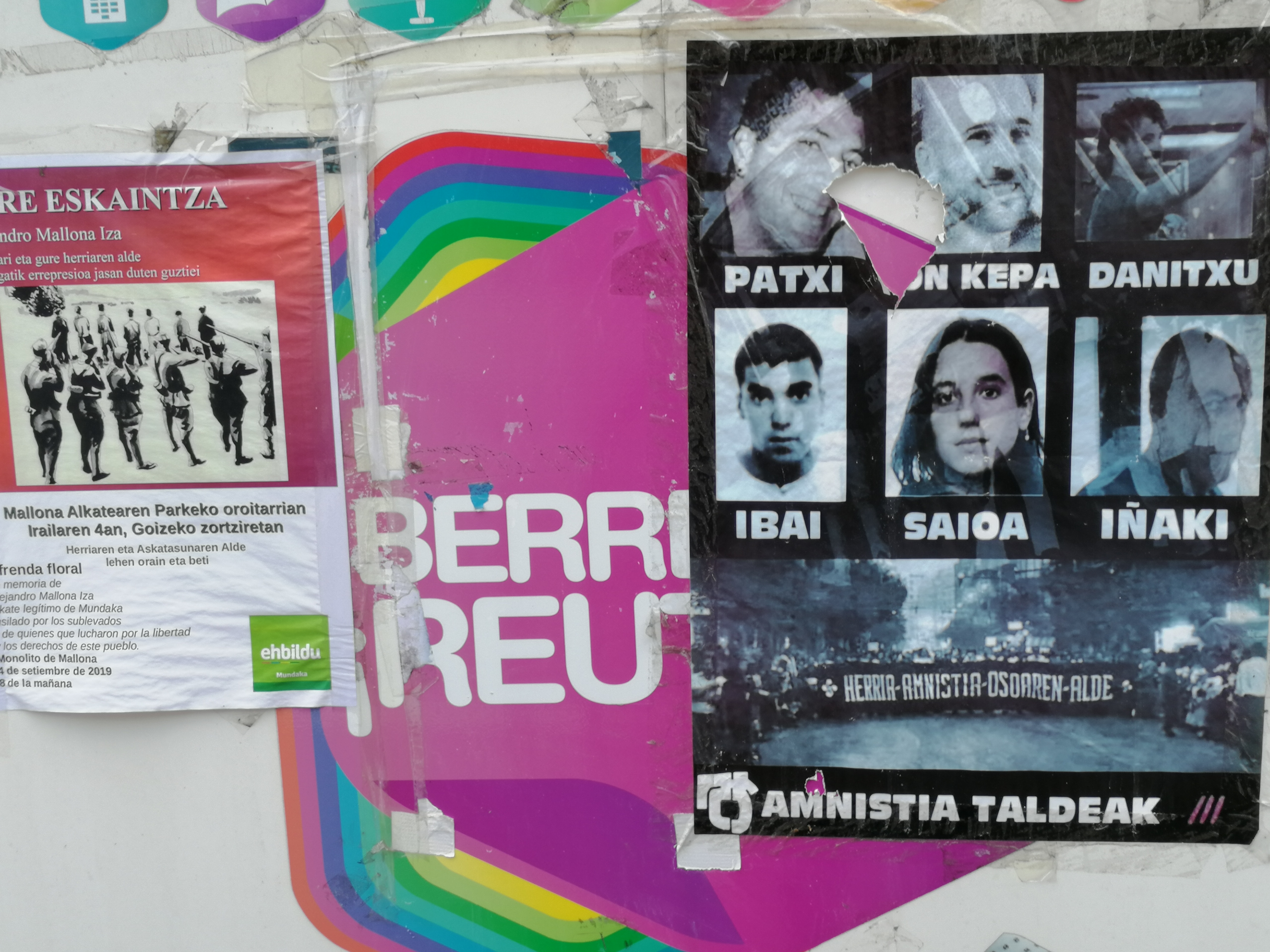


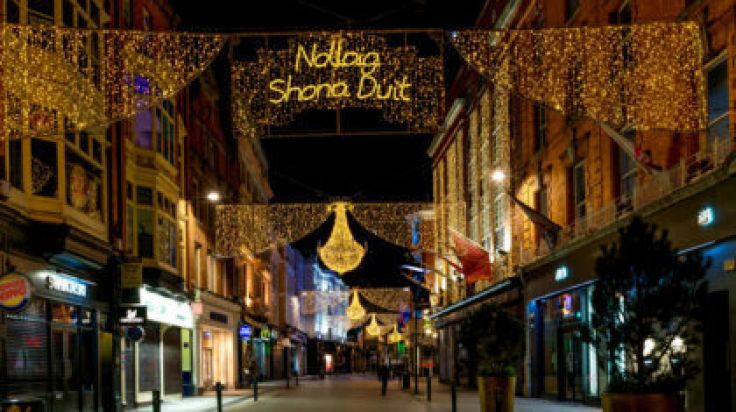


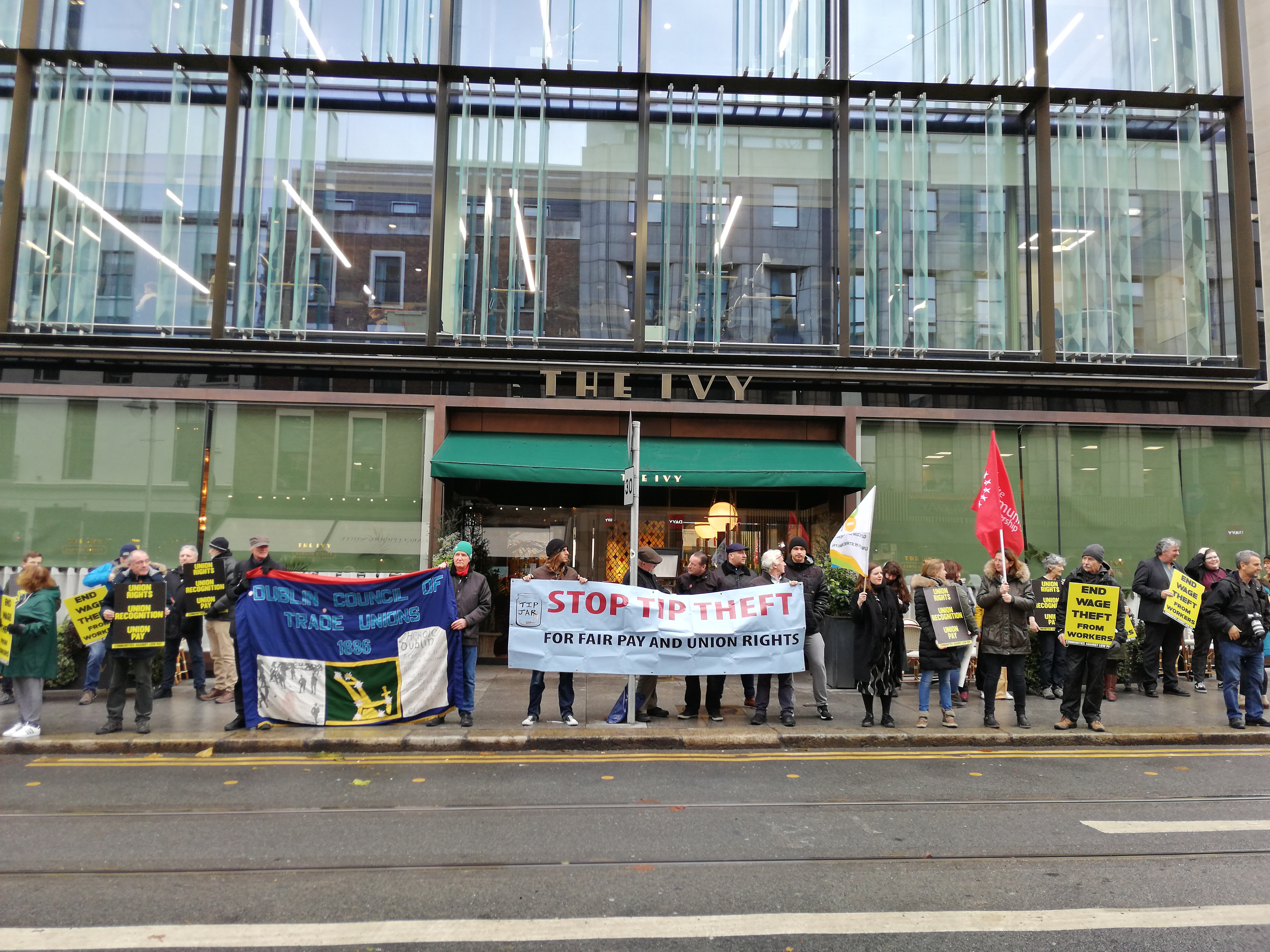
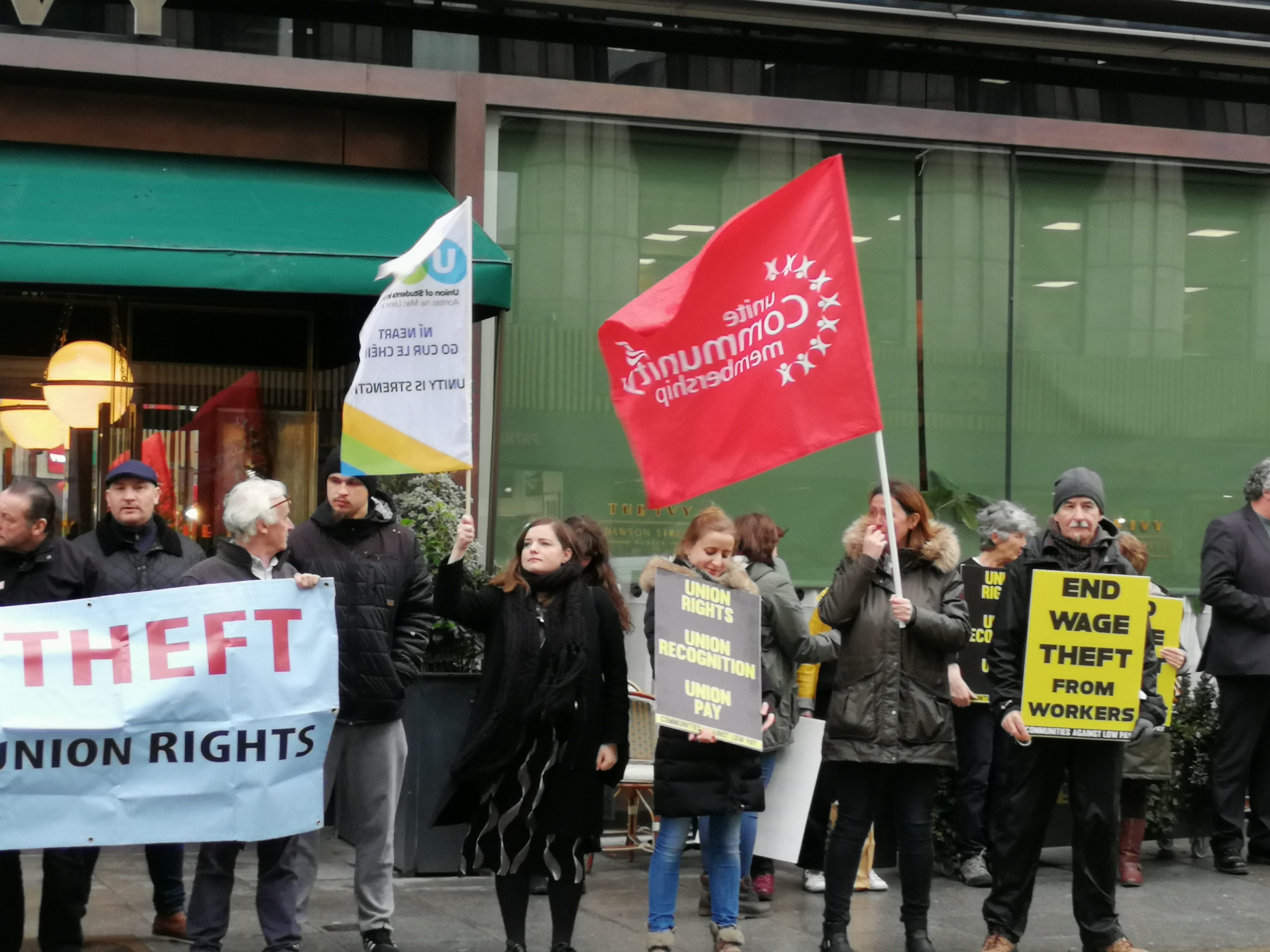
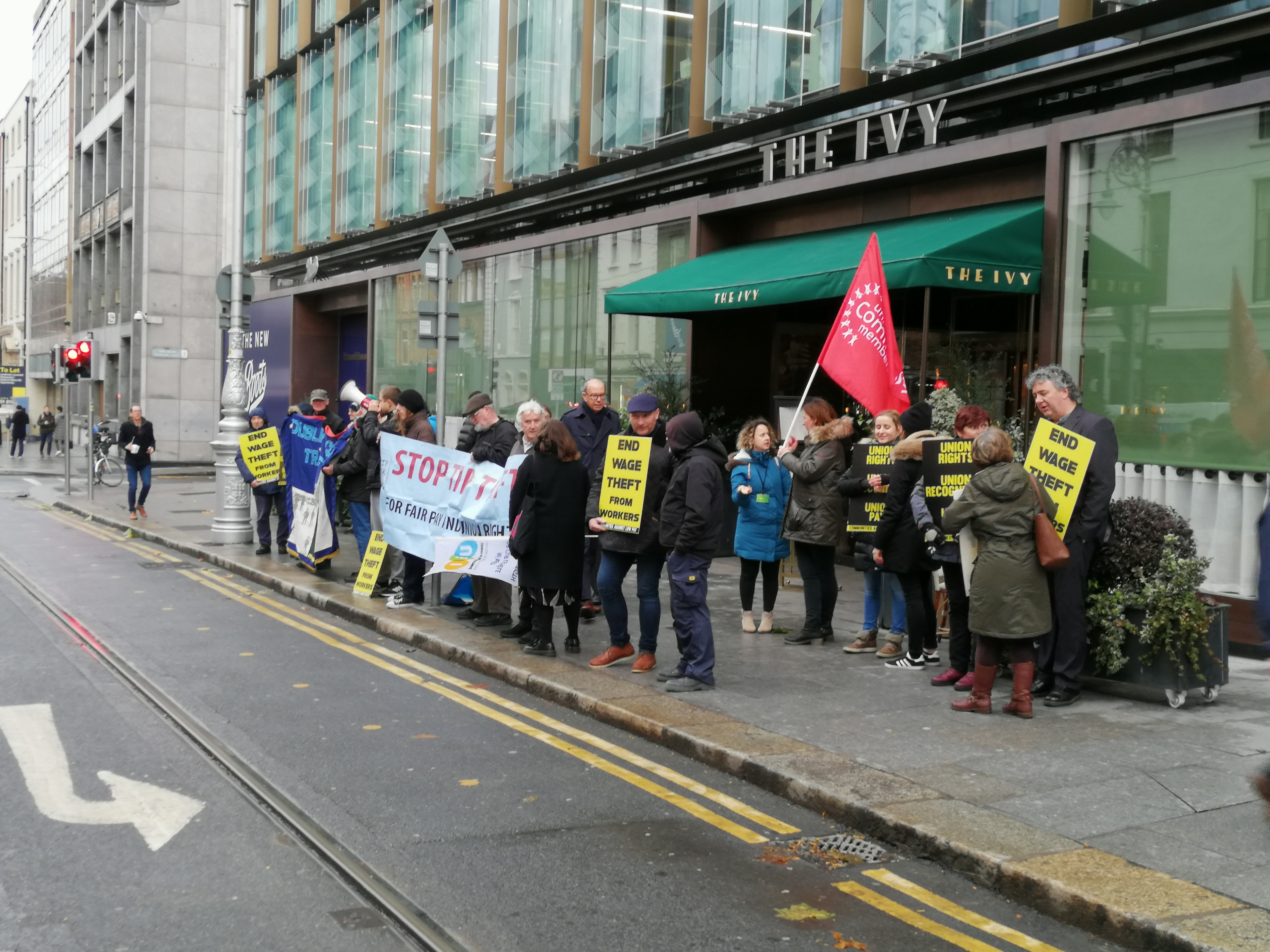




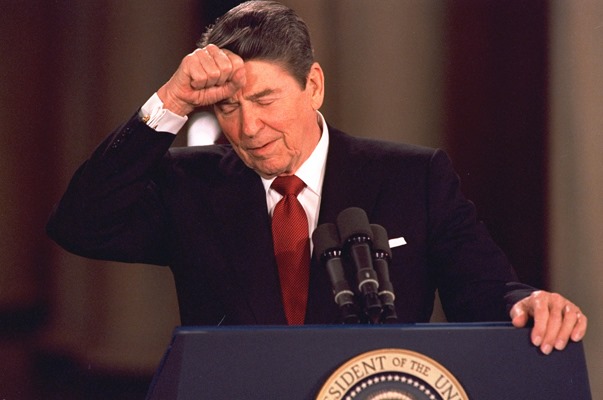


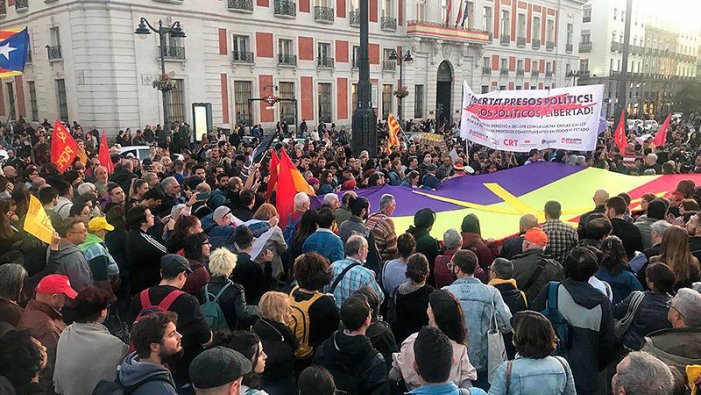
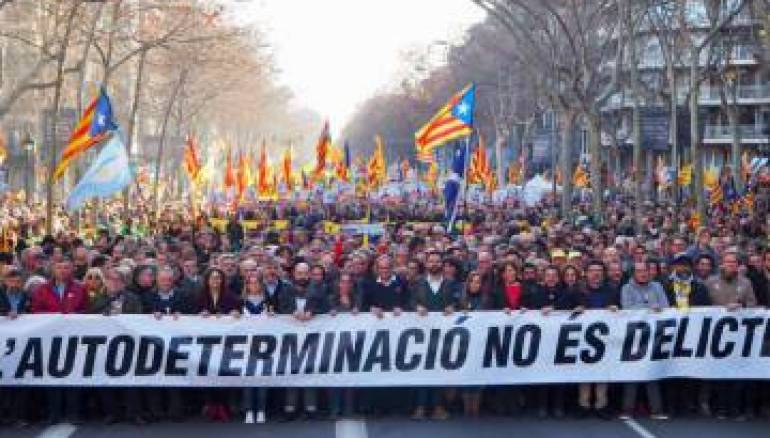

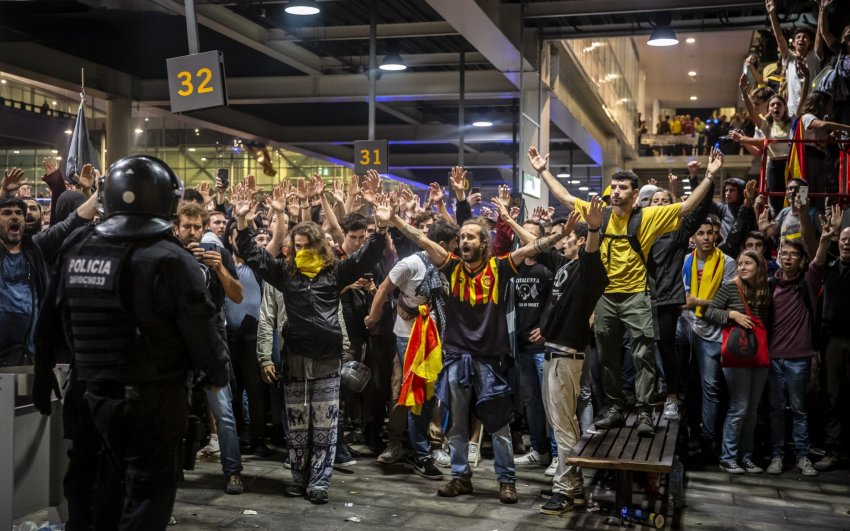
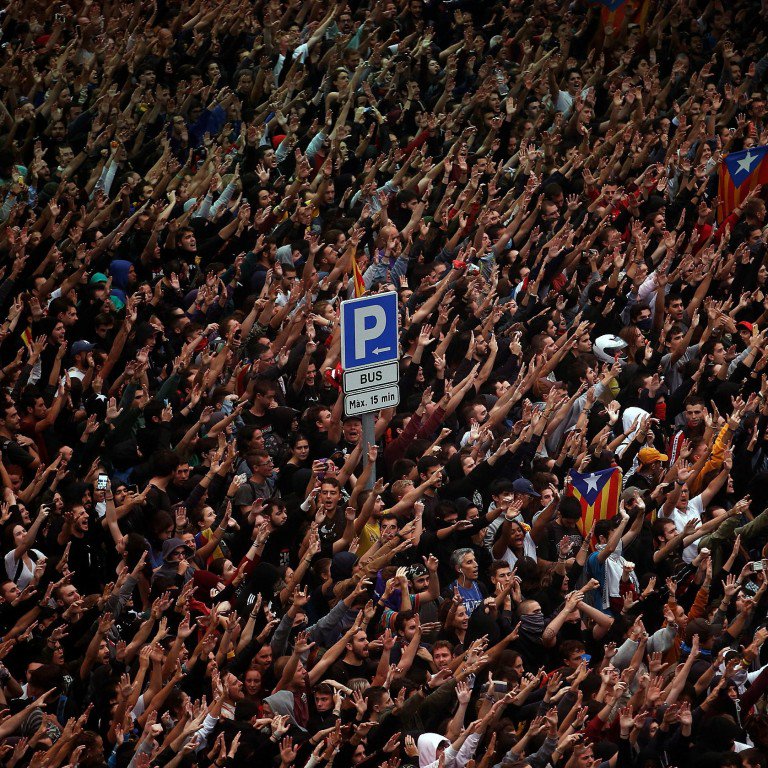




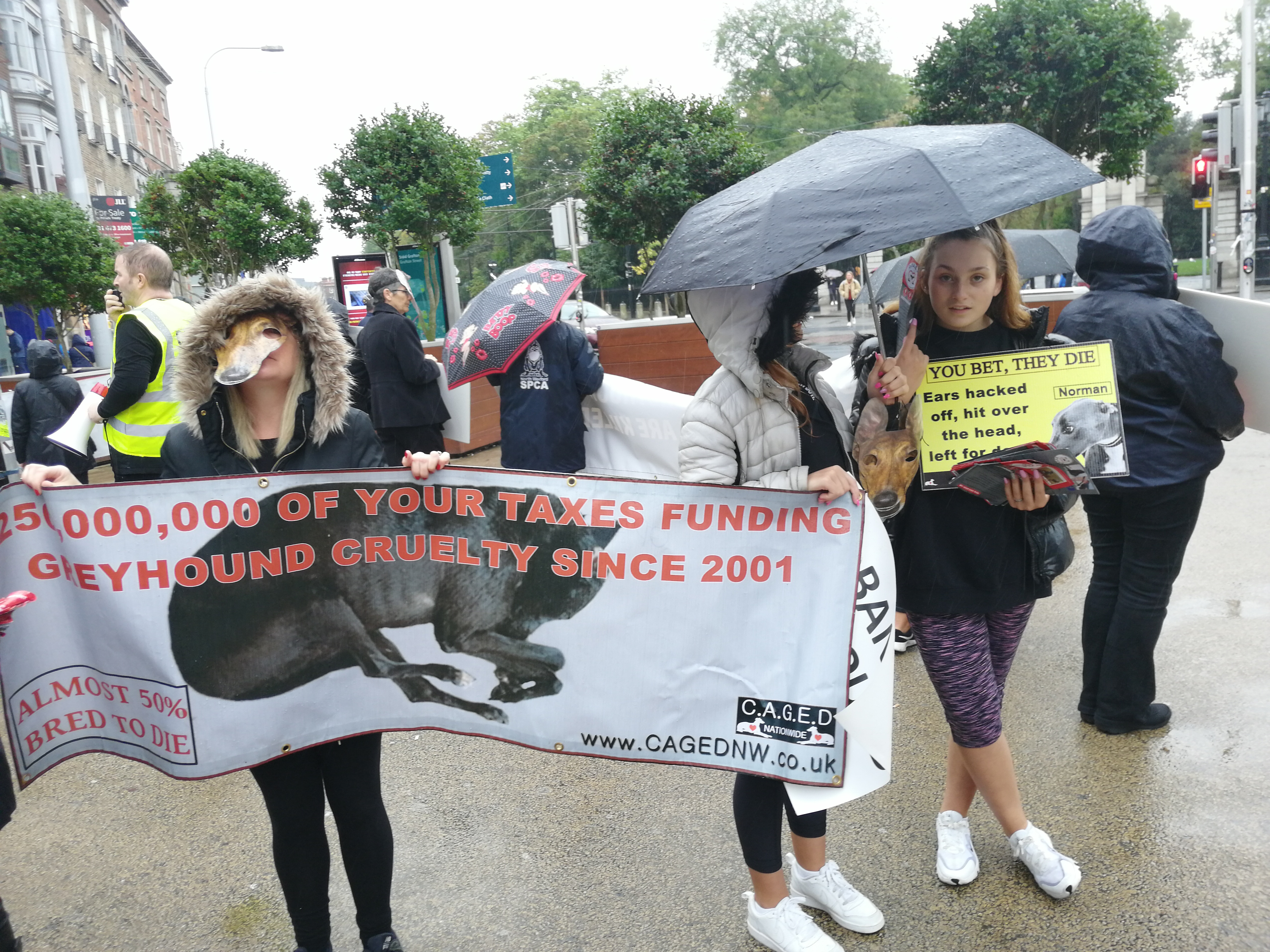

 rebelbreeze