45th ANNIVERSARY OF DUBLIN & MONAGHAN BOMBING — STILL NO JUSTICE

(Reading time main text: up to 15 minutes)

Diarmuid Breatnach

View of section of the crowd (Photo: D.Breatnach)

                    Forty-five years after the highest violent loss of life of any day in the Thirty-Years War in Ireland, survivors and relatives of victims of the Dublin and Monaghan bombing seem no nearer achieving justice. The identities of some of the Loyalist terrorists were known quite quickly after the bombing by Irish Army Intelligence and Garda Special Branch; British Intelligence penetration of some Irish State agencies had already been claimed by Irish Army intelligence and not long afterwards, Commissioner Ned Garvey was exposed as a British agent by a disgruntled British intelligence operative. Yet no arrests by the Royal Ulster Constabulary, no arrest warrants issued by the Irish Government and – incredibly – remains of bomb material were sent by Garvey’s superior to the British colony authorities for analysis. And consecutive British Governments refuse to hand over the relevant files or to disclose their contents.

View of section of the crowd at the commemoration.
(Photo: D.Breatnach)

45th ANNIVERSARY COMMEMORATION IN DUBLIN

          A crowd had gathered at the Dublin and Monaghan Bombings Monument in Talbot Street for some time before the event was due to start on the 17th May.  Aidan Shields, whose mother Maureen was killed in in Talbot Street, acted as the master of ceremonies and, after saying a few words about the bombings and the campaign, outlined the course the proceedings would follow, apologising also to those who had to stand in the rain. 

Irish Minister for Justice Charlie Flanagan spoke about the bombings and about the efforts he had made, on behalf of the Government, to have the British Government lift their embargo on the relevant files. He also used the opportunity to criticise by implication the armed Republican resistance in the British colony and to promote the Good Friday Agreement, seeking collaboration between different political parties in running the Six Counties, i.e the British colony. Although he said he shared the relatives’ frustration at the British Government still not disclosing the information about the bombing in their files, not once did he condemn them, nor criticise successive British governments, British Intelligence nor the administration of the colony and its police force.

Aidan Shields, MC of the event, whose mother Maureen was killed in the bombing.
(Photo: D.Breatnach)

The Mayor of Dublin Niall Ring and Cathaoirleach of Monaghan Council, David Maxwell, also spoke at the event.

It was left to Noel Hegarty, a survivor of the bombing, in a poem (see References) and Pat Savage in his Song for Derek (which I’ve been unable to find on line) to place the blame for the attack and the lack of progress where it belonged.

Noel Hegarty reading his poem (see link for the words). (Photo: D.Breatnach)
Pat Savage performing his Song for Derek
(Photo: D.Breatnach)

Julieann Campbell, author and Derry Bloody Sunday relative – her uncle John Duddy was the first fatal victim of the Paratroopers on that day in 1972 — gave the oration for the ceremony. She talked about the loss through sudden death, the effect on relatives and how it is exacerbated when official lies are told about the deaths with secrecy used to make it harder for the relatives and survivors to get at the truth. She referred to one British file on Bloody Sunday that is embargoed for decades yet and turned to Minister Flanagan, asking him publicly to press the British for the release of that file also, a request which was applauded by the crowd.

Rachel Hegarty read one of her sonnets from her collection, May Day 1974, which she composed based on witness testimonies about the deceased and Ciarán Warfield performed a song about the bombing and the lack of justice obtained. Fr. Tom Clowe led those who wished to respond in a Christian prayer (the Rev. Trevor Sargent had injured himself the day before and was unable to attend). Cormac Breatnach played low whistle while floral wreaths were laid and again at the conclusion of the event.

Rachel Hegarty reading one of her poems about the victims
(Photo: D.Breatnach)

THE BOMBING 45 YEARS AGO – THREE BOMBS IN DUBLIN AND ONE IN MONAGHAN

          What might be considered the official Dublin City centre is the area surrounding O’Connel Street, just north of the river Liffey. The street runs north-south and is bisected at its middle by a thoroughfare running east-west. The eastern part is mostly Talbot Street, with a short continuation named North Earl Street. Crossing over O’Connell Street one now passes by the Spire, where once stood Nelson’s Column (until blown up by dissident Republicans in 1966) and continuing westward, one enters Henry Street. This street contains big stores such as Debenhams and Arnotts and is a higher-class shopping street than are the streets chosen to place two bombs, Talbot Street; could it have been decided that predominantly working and lower-middle class victims were less likely to create pressure on the Irish Government to find those responsible? The other bomb’s target street, Parnell, is also not one of high-end shopping.

Cormac Breatnach, playing at the event.
(Photo: D.Breatnach)

There had been previous Loyalist bombings in Dublin, for example of the Wolfe Tone Monument in Stephens Green and the O’Connell Monument in Glasnevin Cemetery. None of those had caused deaths but a bombing in 1972 had killed a public transport worker and another, in 1973, had killed two and injured 185. No arrests were made in connection with either and in fact the Fianna Fáil government blamed Irish Republicans for the ’72 bombing, using the emotions engendered to push through more repressive legislation. That was an Amendment to the Offences Against the State Act, one which allowed the State to jail people on a charge of belonging to an illegal organisation, without any evidence other than the word of a Garda of Superintendent rank or higher and is regularly used to convict people today.

On the 17th May 1974 four bombs exploded in Dublin and Monaghan – killing 33 people including a woman who was nine months pregnant.

  • Three car bombs exploded without warning in the capital shortly before 5.30pm on Friday 17 May 1974.

  • Two of the bombs went off on Talbot and Parnell Streets before a third blast exploded on South Leinster Street near Trinity College, 27 people died.

  • Shortly afterwards another bomb exploded outside a pub in Monaghan, killing seven people. Hundreds more were injured.
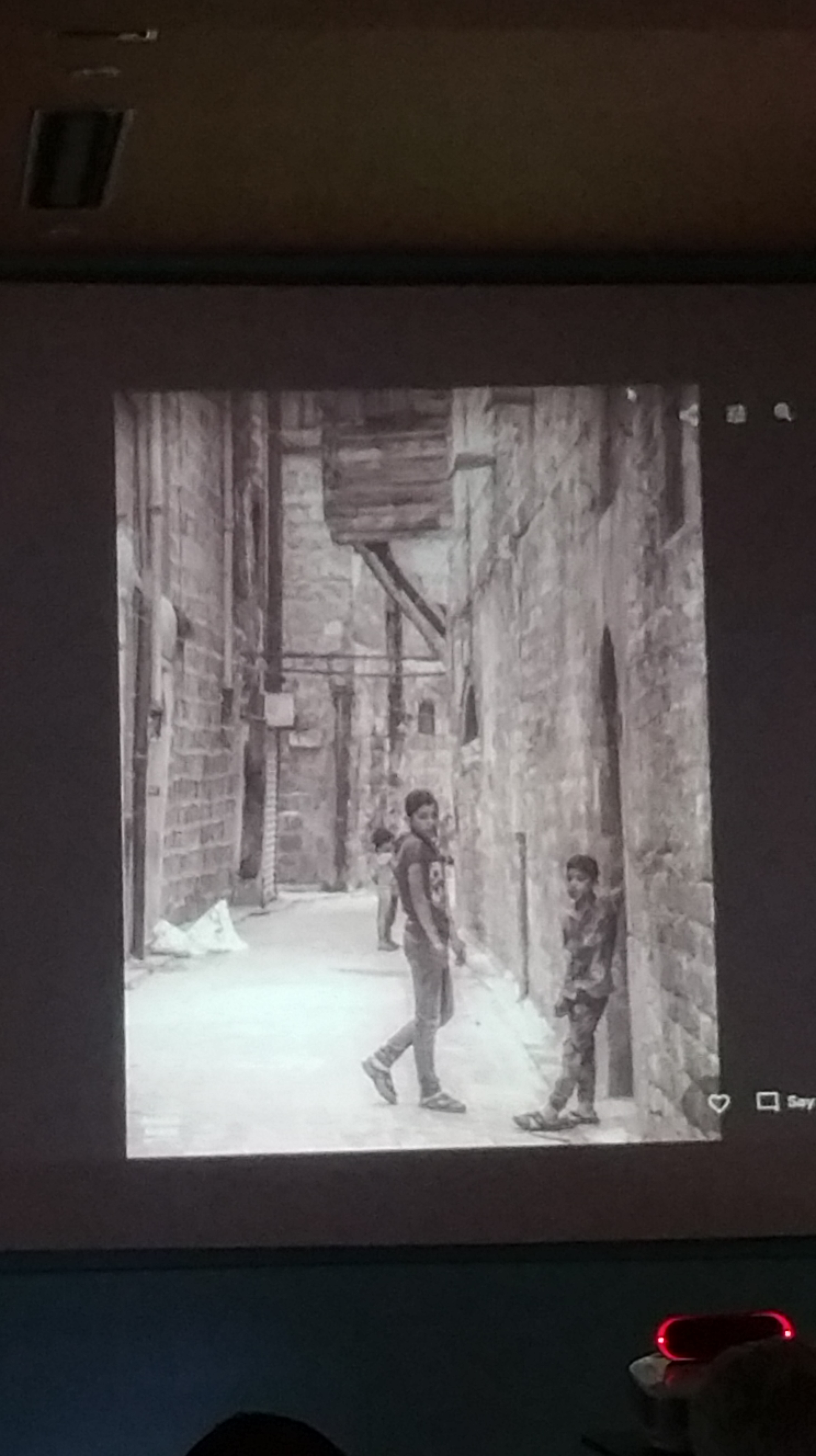
Wreckage in East Parnell Street after the bomb there
(Photo source: Internet)

After the bombings, the most concrete result in Irish Government policy was that Irish Republicans being sought by the British began to be tried in the Irish State. The Criminal Law (Jurisdiction) Act 1976 allowed trial in the Republic for alleged crimes committed in the Six Counties, and vice versa, which facilitated Irish State cooperation with the British State against Republicans, overcoming the many failures in extradition cases up to that date.

This parallels somewhat the 1980s GAL terrorist campaign waged by the Spanish Government against Basque independentists in the northern Basque Country, part of the French State’s territory. After Spanish State-sponsored terrorist shootings and bombings of independentist Basques for some time on what it considers French soil, the French Government began to extradite refugees to the Spanish State. However it was 1984 before the Irish State actually extradited a Republican to the Six Counties, with the extradition of Dominic McGlinchey (who subsequently had his conviction overturned there). It is curious that this possible rationale for the Dublin/ Monaghan bombings does not seem to have been considered – after all, the 1972 bombings by British agents had resulted in a change in Irish law to the disadvantage of Republicans within the Irish State.

Juliann Campbell, niece of Derry Bloody Sunday fatal victim John Duddy, giving the oration at the commemoration.
(Photo: D.Breatnach)

The Justice for the Forgotten campaign organises an annual commemoration on the date of the bombings but internationally and perhaps even in Ireland, this massacre is the least-known of all that took place during the recent 30 Years War. Arguably this is because a) the bombs were not placed by the IRA and the massacre was not therefore of much use in propaganda against them; b) the victims were mostly Irish and/or c) the perpetrators were Loyalists and British Intelligence operatives working together.

Overlooking the Talbot Street Monument of the Bombings, the tower of Connolly Train Station (formerly Amiens St. Stn.), from which British machine-gun bullets were fired at Irish insurgents during the 1916 Rising.
(Photo: D.Breatnach)

SECRETS AND AVOIDANCE

          It is interesting how coyly the media treat the whole question of British collusion with Loyalist death squads, including the Glenanne Gang’s involvement in the Dublin-Monaghan bombings, along with Irish State‘s lack of energy in pursuing the matter, including possible collusion and certain secrecy. There are sometimes ‘suspicions’, ‘concerns’, ‘inferences’, ‘allegations’ ….

And yet most of these matters are beyond speculation, established as facts through a number of different sources. Contrast that with how happy the media are to label the tragic but accidental shooting dead of Lyra McKee as a “murder”, even though legally and in fact, murder can only be when someone intends to kill the victim – which not even the press in its greatest hysteria has tried to suggest was the case.

The Justice for the Forgotten campaign has taken a civil case against the British State which appears to be playing its usual delaying game in situations like this. On 17th April they were due to respond to questions of the campaign’s lawyers but did not do so until eight days later, which resulted in the campaign’s lawyers not being able to proceed at the Belfast High Court on May 1st ….. The relatives will now have to wait until September.

The lack of energy and firmness in pursuing the issues and the disclosure of British files is not the only evidence of the Irish State’s lack of interest. It is also the case that much of the funding for the Justice for the Forgotten campaign was removed by the Irish Government some years ago; the campaign was obliged to leave its Gardiner Street office and remove much of their equipment and files to a portakabin in a supporter’s back garden.

Margaret Urwin speaking, main administrator/organiser in JFF (Justice for the Forgotten), underfunded organisation campaigning for disclosure and justice with regard to the Dublin and Monaghan bombings.
(Photo: D.Breatnach)

The British are not the only ones sitting on secret files. Mrs. O’Neill had called on Leo Varadkar to release the files deposited by the McEntee Commission, which was charged with investigating the Garda inquiry of the time, an inquiry which has been heavily criticised over the years. “I personally ask the Taoiseach to consider this reasonable and fair request,” she had said. Martha O’Neill’s husband, Eddie, was killed in the bombing and her sons Billy, then aged seven and Eddie jnr. aged five, were badly injured but survived.

Last year, Fred Holroyd, a British Army Intelligence officer who was the liaison with the RUC for a number of years during part of the three decades of war in the Six Counties, offered to give evidence on British involvement in the bombings – but in a secret court. Holroyd is suing the British Ministry of Defence over sacking him and has spoken out about collusion between the British administration and Loyalist paramilitaries including those widely believed to be the Loyalist bombers responsible for the carnage on the 17th May 1974.

Another measure of the Irish Government’s lack of enthusiasm for going after the perpetrators of the bombings and their handlers can be seen in the fact that the first documentary to be made about the atrocity in the Irish capital city and Monaghan town, was made not by the State broadcaster, RTÉ but by the English company First Tuesday, Yorkshire TV. “Hidden Hand – The Forgotten Massacre” was broadcast on 6 July 1993. Not everyone who had TV in the state then had ITV – I believe it required a special aerial at the time – and if memory serves me correctly, Yorkshire TV offered simultaneous screening to RTÉ, which it declined. The program made a case that the British Army, the RUC and Loyalist paramilitaries could have been involved in a number of killings, including the Dublin-Monaghan bombings.
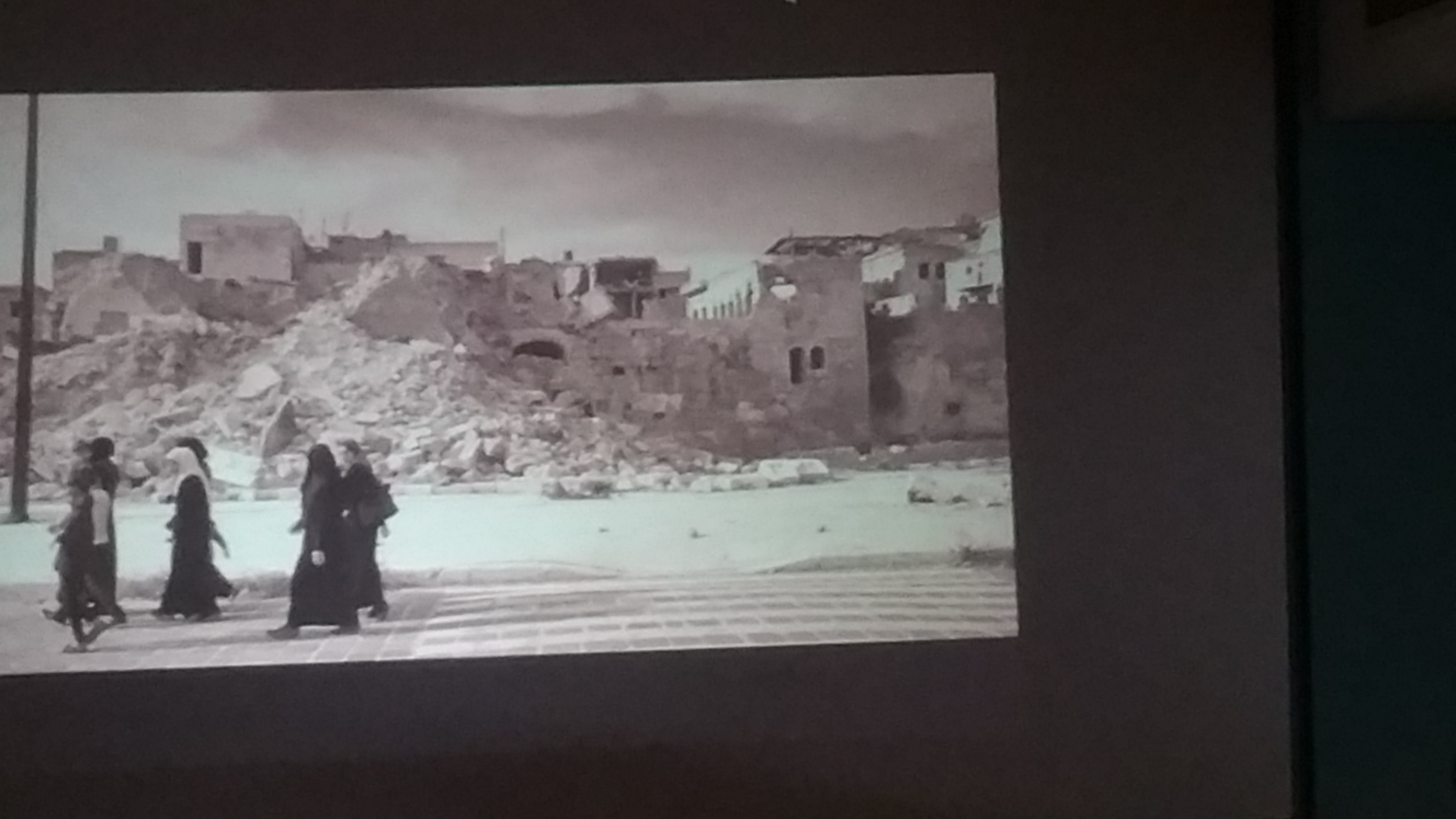
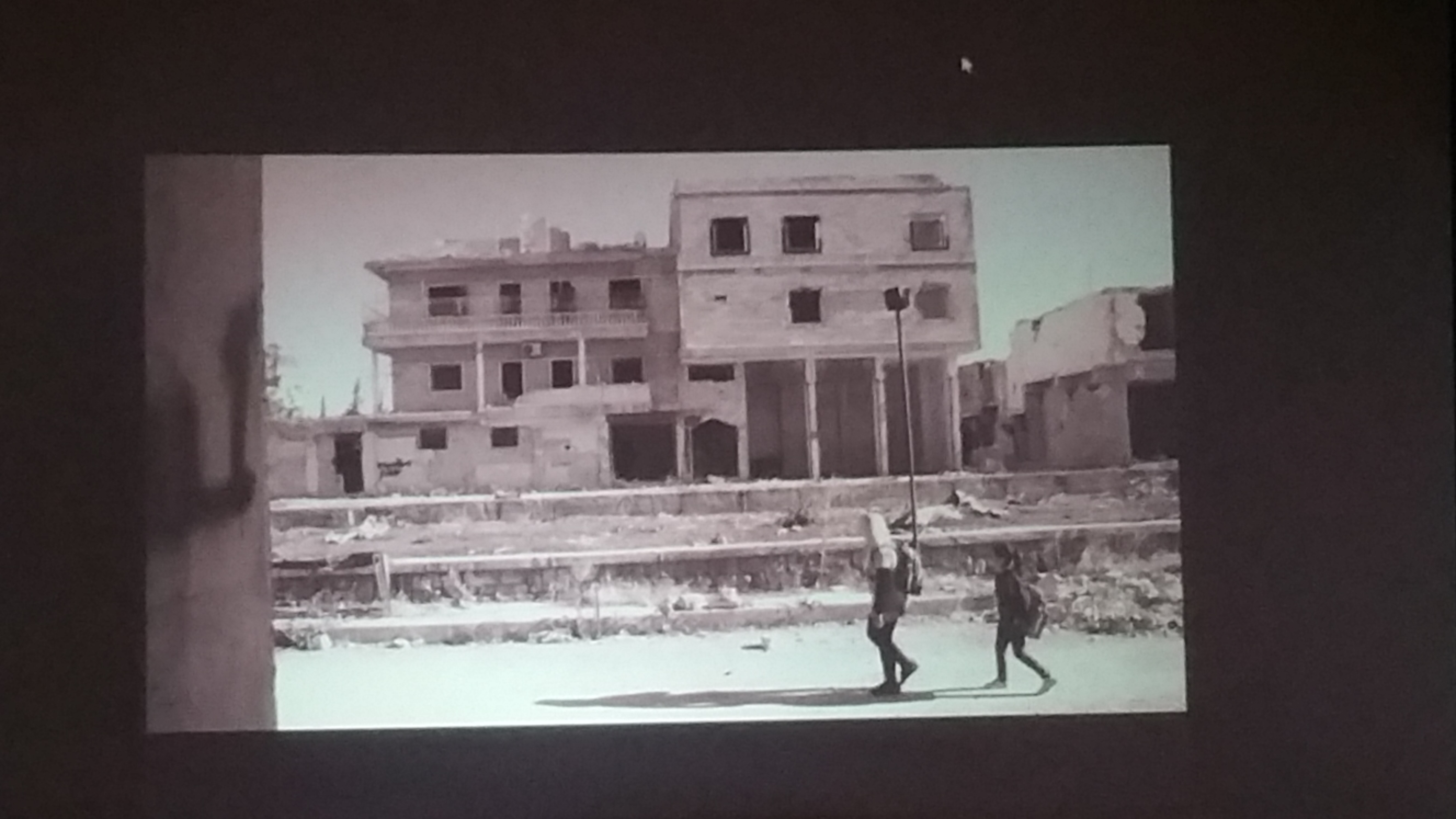
The failure of the Irish Government at the time to pursue the case energetically and in a correct manner was responsible for much more than leaving the injured and the the relatives of 33 murdered people without justice. It also left the Glenanne Gang, a Loyalist paramilitary Ulster Volunteer Force death squad that included serving members of the Royal Ulster Constabulary police force and the British Army’s Ulster Defence Force, free to carry out around another 120 sectarian murders in the Six Counties.

(Photo: D.Breatnach)

Year after year, the Dublin/ Monaghan commemoration is held and year after year, relatives call for truth and justice; the Irish politicians express regrets and say that they will ask the British Government for the files again, to be refused again. And there it is left, until the following anniversary.

End.

REFERENCES AND FURTHER INFORMATION:

Justice for the Forgotten campaign: http://www.dublinmonaghanbombings.org/home/

and https://www.facebook.com/Justice4theForgotten1974/

Holroyd: https://www.bbc.com/news/world-europe-48303360

Glenanne Gang: https://www.thejournal.ie/readme/dublinmonaghan-bombings-we-need-to-know-extent-of-british-involvement-with-this-loyalist-gang-3557141-Aug2017/

Coy Irish Times reporting: https://www.irishtimes.com/news/ireland/irish-news/government-presses-for-action-over-dublin-monaghan-bombings-1.3895839

1972 & 1973 Dublin bombings: https://en.wikipedia.org/wiki/1972_and_1973_Dublin_bombings

Hidden Hand TV documentary film: https://www.youtube.com/watch?v=Wr_wdPwipgQ

Noel Hegarty poem: http://www.dublinmonaghanbombings.org/poem6.html

THE GREAT HUNGER COMMEMORATED IN SLIGO, DUBLIN AND CELTIC PARK

AN GORTA MÓR COMMEMORATED IN SLIGO, DUBLIN AND CELTIC PARK

(Reading time of article text: 5 minutes)

Clive Sulish

Michael and Olivia Blanch and piper halt the procession for a moment’s reflection outside the GPO building, HQ of the Easter Rising in 1916.


A small crowd gathered at the Garden of Remembrance, Dublin on Sunday afternoon to commemorate the Great Hunger, an Gorta Mór on National Famine Day.  Led by a lone piper, they marched through O’Connell St., the city’s main street, some of them in period costume, to the Great Hunger Memorial on the Custom House Quay, North Dock and later on to the iconic sailing ship, the Jeannie Johnson.

Participants proceed after a moment’s reflection at the GPO building, HQ of the Easter Rising 1916 and pass by Jim Larkin’s monument, “who also agitated for the poor of Dublin”.

With some adults and children dressed in period clothes, some of them tattered to represent the destitution of the starving poor, they marched down O’Connell Street led by the lone piper and turned left at the Bridge, proceeding along to Custom Quay’s North Dock and the Great Hunger memorial. There they were addressed by Michael Blanch of the organising committee and by Niall Ring, Lord Mayor (coming to the end of his year in that role), who had accompanied them from the Garden of Remembrance.

Lord Mayor Niall Ring speaking at the Famine Memorial.

Some sentences in Irish were spoken by the MC of the event and by the Lord Mayor, while Michael Blanch referenced the deadly impact the Great Hunger had on the Irish language (i.e with the depopulation of the main Irish-speaking areas of the western seaboard). The Irish Tricolour came in for a mention in the Dublin commemoration also; it had been presented to William Smith O’Brien by women in Paris during the revolution there of 1848 and the Young Irelanders had staged their own uprising that year also, small and certainly too late, easily crushed by the British colonial forces. The huge Irish diaspora was also mostly a result of the Great Hunger and had contributed significantly to the formation and membership of the Irish Republican Brotherhood, also known as the Fenians, founded simultaneously in 1858 on St. Patrick’s Day in Dublin and in New York. The IRB, in turn, had been the main driving force behind the 1916 Rising.

Section of crowd at Famine Memorial (and unintentional illustration of clashing architectural styles and building heights on the south quays opposite).
Piper playing lament and Michael Blanch at the Famine Memorial.
Michael Balanch and MC of proceedings at the Famine Memorial and banner of the Committee.

Tourists and other passers-by stopped to watch as wreaths were laid on on the statues of the monument and an Irish-language version of Amazing Grace was sung by a young girl in period costume. A currach (small traditional Irish sea-craft), containing a woman and two young girls in period costume and rowed by a man, pulled into place on the Liffey across from the group; one of the girls placed a wreath in a cardboard box into the river, to commemorate the Irish diaspora and those who had perished during their journeys. Participants then threw single red roses bouquets into the river also and floral wreaths were deposited around the statues of the 1977 memorial by sculptor Rowan Gillespie. And the piper played a lament, Hector the Hero.

Girl singing “Amazing Grace” in Irish.

The gathering moved on then to the sailing ship the Jeannie Johnson, to hear Evelyn Campbell sing her Famine Song and Diarmuid Breatnach sing Skibereen and Fields of Athenry. After that, some repaired to the Teachers’ Club, where tea, sandwiches, gur cake and biscuits were on offer. By coincidence, a Musical Society were relaxing there too and it was not long before songs from different parts of the world were being exchanged from different parts of the room.

Somewhat incongruous, the top floors of the International Finance Services Centre, which looms over the Famine Memorial, commissioned by Nora Smurfit of the Irish capitalist family.

Evelyn Campbell on board the Jeannie Johnson, accompanying herself on guitar while she sings her Famine Song.

THE CAMPAIGN FOR A NATIONAL IRISH FAMINE DAY

The currach on the Liffey near the Famine Memorial on the quay.

The commemorative wreath is lowered into the Liffey from the currach.
Participants prepare to throw stem roses into the Liffey to commemorate those who died during emigration and the diaspora that survived.
Some of the stem roses floating in the Liffey.


The Great Hunger is the preferred term in English by many for the terrible disaster that struck Ireland in the mid-19th Century, for people starved alongside what was for a while at least, an abundance of food.

Mast and some of the rope work of the Jeannie Johnson sailing ship.

For three successive years, a fungus-like oomycete infested the potato crop, staple diet of most of the population. Although Phytophthora infestans had attacked the potato crops on the European mainland and in Britain also, nowhere was the disaster of the dimensions it grew to in Ireland: nowhere else were the the majority of the population obliged to sustain themselves on the potato while yielding up every other edible product (except perhaps milk) to pay the landlord’s rent on land conquered from the ancestors of the starving, thousands of soldiers and police being on hand to ensure the hungry paid up. “The Almighty indeed sent the potato blight”, wrote Young Irelander journalist John Mitchell, “but the English created the Famine.”

Well over one million Irish starved or died of attendant diseases in less than five years during the reign of Queen Victoria, while ships left Irish ports laden with food and grain was fermented to make lucrative whiskey and beer. Another million emigrated and it is estimated that about one third of those also died – of drowning, of disease aboard ship or of the various dangers migrants faced. Five years after the potato crop failed, estimates put the population of Ireland at around six million, from the over 8 million of before. Over the next decade, another million would leave, paid to go, lied to go, forced to go, or gone out of desperation and loss of faith in any future in the country of their birth under foreign domination.

The floral wreath deposited from the currach earlier floats past the Jeannie Johnson.

In 2008 it was agreed by the Irish Government that there would be a national Famine Day in the Irish calendar of national events and it would take place on the third Sunday in May. The State commemoration this year was held in Sligo, attended by Leo Varadkar (who was met by a protest of the Sligo Women’s Cervical Smear Action Group). The ceremony was covered in the RTÉ news which was shown on TV in the Teacher’s Club. Michael Blanch told those present that the campaign he and his wife had started in 2004 through the Committee for the Commemoration of Irish Famine Victims, had resulted in this national event and that it was also being commemorated by the Glasgow Celtic team in the special jerseys they wore that day (in their Scottish Premiership win 2-1 against Hearts). The symbol is black and white which are the colours of the Commemoration and he had also wanted GAA teams playing on this day to wear it on their jerseys (the Munster Hurling Championship match between Limerick and Cork was also being shown that afternoon on the TV screen in the Teachers’ Club).

End.

People commemorating stand among the ghosts of the victims who, as a result of the Great Hunger, died in Ireland or in emigration.


REFERENCES AND LINKS FOR FURTHER INFORMATION

Celtic game on Sunday: https://www.bbc.com/sport/football/48242024

Celtic FC wearing Famine Commemoration logo on their jerseys on 19th May 2019: http://www.celticfc.net/news/16184

https://en.wikipedia.org/wiki/National_Famine_Commemoration_Day

Presentation by Michael Blanch at the Oireachtas in support of a National Annual Famine Commemoration Day: https://data.oireachtas.ie/ie/oireachtas/committee/dail/32/joint_committee_on_culture_heritage_and_the_gaeltacht/submissions/2018/2018-11-28_opening-statement-michael-blanch-chairman-committee-for-commemoration-of-irish-famine-victims_en.pdf

Sligo National Irish Famine Day commemoration event: https://www.rte.ie/news/ireland/2019/0518/1050300-national-famine-commemoration/

Talk: “Struggle Against Racism & Fascism In The 21st Century”

Diarmuid Breatnach

(Report reading time: 3 minutes)

The above was the title of an event as part of the James Connolly Festival 2019 and was held in the Bohemians FC Members’ Bar in Dalymount Park, Phibsborough, Dublin on 7th May. The event was chaired by Spark Podcast and had three speakers, one from a Direct Provision asylum seeker’s hostel, another from a Brazilian immigrant community and a third from Kerala state in India but resident in Ireland.

Poster commemorating Bob Marley and the Wailers concert in Dalymount Park, July 1980.
Section of Bohemians’ supporters bar with memories of games played int the past.
Memorials of past games played by Bohemians FC
Bohemians’ supporters’ bar with posters for the JCF and one for the specific event of the night.

The first speaker was Bulelani Mfaco who introduced himself as a South African, gay and an asylum seeker. Speaking about racism, he said that it was necessary to stand up to it and quoted the example several times of Mary Manning, who was one of eleven strikers (“Ten Young Women and One Young Man”, song by Ewan McColl) in Dunne’s Stores in Dublin in pursuance of their union’s policy (IDATU) not to handle South African goods while the white racist regime was in power.

Bulelani said that fascists mean what the say in their threats about their targets, blacks, gays, asylum seekers, women who won’t act as the fascist think they should …. and so they should be prevented from coming to power. He said that as a black man he is aware of racism often on the street.

Speaking about the conditions of asylum seekers and the conditions imposed on them, including being asked to prove that he was gay (!!!), he said they do not come as freeloaders but are prevented from working while their cases are examined, which can take years, therefore the Government’s system forces them to be recipients of aid. Once a judgement is given, which in 9 out of 10 cases is a rejection of the application to stay, they can appeal and racists say they are just doing that to delay the process of their expulsion. In reality, many cases are successful on appeal as the reasons stated for rejection at the first stage were so irrational.

He also pointed out that seeking asylum has no necessary link to war but is about a person “having a reasonable fear of persecution because of their race, religion, nationality, membership of a social group or political opinion and is expelled or chooses to leave their country because of one of those factors”. A “social group” under threat could mean and often does, being one lesbian, bisexual, gay or transgender.

Eloquent and with wide knowledge about people seeking asylum in different countries, Bulelani was at times in danger of leaving the other speakers without enough time for their own contributions.

Rafaela Ferracuti (Brazilian Left Front) spoke about the fascist and racist policies of the current regime in Brazil and the harmful reforms of workers rights’ and open justification of attacks on indigenous people. Ferracuti spoke also about the situation of Brazilian migrants working in Ireland and referred to a fairly recent attack on some of them by Travellers. Asking for people to support Brazilian workers here, Rafaela also spoke about links with the Workers’ Party (which I assumed incorrectly at the time to be a generic term or a Brazilian party I had not heard of).

Manoj Mannath (of Kranthi organisation) talked about the slow climbing to power in an Indian state of a fascist party and talked about the process they had followed to do so, using Hindu religion in a supremacist way and also targeting those of the “untouchable” (sic) class.

Both Ferracuti and Mannath were speaking with difficulty in a language other than their own and I found it quite hard to follow them at times.

Framed photograph of birds-eye view of the Dalymount football stadium (apologies for the shine off the glass in the frame).

During questions and contributions, the following points were made or clarified:

  • The attack on Portuguese migrants by Travelers was wrong but some of the response by Portuguese migrants had been to leave racist graffiti, which would not help matters.

  • Irish Travelers are or have been for a long time the most discriminated-against section of Irish society with hard living conditions and high infant mortality and as often happens with people pushed to the bottom, some of them have turned to drugs and feuds are breaking out between rival gangs.

  • One person opined that the Government does not want to stop immigration but to control it and keep migrants insecure and with little rights, the easier to exploit them. The trade unions should recruit migrants to help them and also to prevent them being used as cheap labour to undermine any conditions won by Irish workers.

  • The Irish have been migrants to many countries and some had joined the oppressors while others became prominent in workers’ resistance.

  • Another ascertained that Rafaela had been referring to the Irish organisation the Workers’ Party and she stated that it is an anti-immigration party.

  • Another contribution stated that as well as the work of attacking racist policies and statements, fascists had to be prevented from establishing themselves and referred to the prevention in Dublin a few years ago of the launch of Pegida, a Europe-wide fascist organisation targeting Muslims. The Irish and Polish components had been physically prevented from holding their rally and anti-fascists are currently being taken through the courts on serious charges. He felt that these people should be supported.

  • Yet another responded that although that action was good, when one got to that stage, it was already too late.

  • The use of religion to divide people in India was compared to its use by the British occupation in Ireland but also by the same British colonisers in India and in some other lands.

  • Another said that the real target of fascists was the indigenous mass of people and that the other targets were being put up as diversions. As the economic situation worsens, the capitalists need to suppress the struggles of the working class and sections are targeted in order to divide the opposition.

  • There was general agreement that the various targeted sectors and the Irish working people needed to support one another.

The James Connolly Festival is an annual week-long event of talks on political events and sometimes cultural performances organised in the month of May in Dublin by the Communist Party of Ireland and open to the public. There is a program of other events continuing every day until Sunday: http://jamesconnollyfestival.com/#about

COMMENT:

Overall, I felt quite disappointed. I had assumed the talks and the meeting would concentrate on the practical and ideological struggle against fascism and the rise of the far-right in Ireland and perhaps in Europe, with some lessons from further afield. Or possibly even on concrete actions that might be taken to support asylum seekers. Perhaps that was an unwarranted assumption but in any case, apart from the contribution of Bulelani Mfaco, the South African asylum seeker, the examples (as far as I could understand them), though of interest, seemed to have little direct relevance to the struggle here in Ireland.

End.

INTERNATIONAL WORKERS’ DAY DUBLIN 2019

Clive Sulish

Two quite different celebrations of International Workers’ Day took place in Dublin on the afternoon of the appropriate date, 1st of May. One was small and of a decidely revolutionary flavour while the other, much larger, was of a more mixed nature and tending towards the reformist. In addition, a workers’ solidarity picket was mounted on a Dublin city centre eatery.

NOTHING TO LOSE BUT OUR CHAINS

          The first of the celebrations was organised by theAnti-Imperialist Action Ireland organisation and took place at the James Connolly Monument in Dublin’s Beresford Place. There a statue of James Connolly stands upon a plinth, behind the the design of the Irish Citizen Army flag, based upon the constellation that in Ireland is called the Starry Plough but in the USA is known as the Big Dipper. James Connolly was a revolutionary socialist and trade union organiser, historian, journalist and songwriter who was Commander of the Dublin insurrectionary forces in the 1916 Rising. The Irish Citizen Army, possibly the first formaly-organised army for and of the workers, had been formed during the Dublin Lockout as a defence force against the attacks of the Dublin Metropolitan Police.

The ICA took part in the 1916 Rising in Dublin and after the surrender of the insurrectionary forces, 16 participants, including two of the ICA, were executed by British firing squad: Michael Mallin on 8th May and James Connoly on 12th May.

In the here and now, on their way to the Connolly Monument, a number of participants were stopped by a man in plain clothes identifying himself as a police officer, i.e a member of the Garda Special Branch.  He wished to know their names, which they declined to give them.

At the Monument, both speakers for the Anti-Imperialist Action Ireland organisation were youths.

The first to speak gave his oration in Irish on behalf of Macra – Irish Socialist Republican Youth and said that they were there to celebrate socialism, trade unionism and workers oppressed throughout the world and, that although James Connolly had been murdered in Kilmainham Jail, his work was ongoing.

Stating that James Connolly and the Irish Citizen Army had gone out in 1916 to break with imperialism and found a socialist society, the youth went on to say that “Macra is a revolutionary organisation with socialism as one of our objectives and we also believe in the words of Pearse: ‘Ireland not only free but Gaelic, not only Gaelic but free.’ Free from the bankers, free from landlords, free from poverty.”

The speaker concluded in Irish and in English with the renowned sentence from the Communist Manifesto.: Bíodh critheagla ar aicmí cheannais roimh réabhlóid Chumannach. Níl tada le cailiúint ag na Prólatáirigh ach a slabhraí. Tá saol mór le gnóthú acu. Oibrithe an tSaoil Mhóir, cuirigí le chéile!”

Let the ruling classes tremble before a communist revolution. The Proletariat have nothing to lose but their chains, they have the whole world to gain. Workers of the world unite!”

The second speaker delivered his speech in English and linked the liberation of Ireland with the liberation of the working class and went on to praise Séamus Costello (1939-1977), which he said had embodied that aspiration. The youth praised the creation of the Irish Republican Socialist Party by Costello as well as the creation of the Irish National Liberation Army and Costello’s participation and membership in a number of democratic organisations — including his election to Bray District Council.

Condemning “the bankers and politicians” who bring deprivation to the workers, the speaker said that they try to point the finger instead at Muslims and migrants but it is not migrants who cause job losses, create homelessness etc but “the elite”. The speaker ended by saying he wished to remember all those who had given their lives for Irish freedom.

Assembled at the Connolly Monument, Beresford Place, Dublin (Photo: Anti-Imperialist Action Ireland)

WE WANT THE EARTH

          Diarmuid Breatnach was then introduced to sing Be Moderate, a song with an ironic title by James Connolly. “The Irish working class does not have a huge history in Ireland, apart from a short period in the early decades of the last century,” Breatnach said, giving as reasons the forced underdevelopment of Irish industry, the British-fostered sectarianism in the most industrialised north-east and the focus on the national struggle as a competing pole of attraction.

The Irish abroad, however, have made a huge contribution to the workers’ movement,” Breatnach said. “And in 1889, Jim Connell from near Cill Scíre in Co. Meath, composed lyrics of The Red Flag to the air of the White Cockade, starting it on the train to his home in South London from a demonstration in central London and apparently completing it in the home of another Irish man.

The song was later adopted by the International Workers of the World, a syndicalist organisation mostly active in the USA, Breatnach said and reminded them that James Connolly joined the IWW when he migrated to the USA. “In 1907, James Connolly published a songbook, Songs of Freedom, in which he included the lyrics of Be Moderate,” Breatnach stated and went on to say that no air had been published to which the words should be sung. As a result Be Moderate has been sung to a number of airs but in London Breatnach heard it sung by an avant-garde musical composer and Marxist-Leninist, Cornelius Cardew, to the air of A Nation Once Again. In Breatnach’s opinion the lyrics fit well to this air and it also provides a chorus, which he encouraged the participants to sing.

James Connolly’s lyrics were sung by Breatnach then, competing with sounds of passing traffic on the ground and the occasional trains rumbling by on the bridge overhead, participants joining in on the chorus:

We only want the Earth,

We only want the Earth

And our demands most moderate are:

We only want the Earth!

and the last line of the last verse “We want the Earth!” echoing across Beresford Place.

TRADE UNION AND POLITICAL ORGANISATION BANNERS

Section of the 1st May parade about to move off from outside the Garden of Remembrance, Parnell Square.
(Photo: D.Breatnach)

          Across the road, a stage and crowd barriers were being set up outside Liberty Hall, the multi-storeyed headquarters of SIPTU, the largest union in Ireland and which, by amalgamations, had grown from the Irish Transport & General Workers’ Union, originally formed early in the 20th Century by Jim Larkin, James Connolly and others (and the destruction of which had been the object of the 1913 Lockout). The stage was being prepared for speakers to address a rally which would follow a Mayday parade from Dublin’s Garden of Remembrance (a small park dedicated “to those who gave their lives for Irish freedom”).

Even the larger Mayday demonstrations in Dublin, although organised through the Dublin Council of Trade Unions, i.e with affiliation from most trade unions in the city, do not tend to be very big by comparison with other cities in many other parts of the world.

Anti-Pesco banner on 1st May parade (Photo: D.Breatnach)

Banners of some unions mixed with those of political organisations and campaign groups, including the Ireland Palestine Solidarity Campaign and another against Irish state participation in PESCO, which is seen by many as an embryonic EU Army and undermining the Irish state’s neutrality.

Section of the 1st May on the move down Parnell Square.
(Photo: D.Breatnach)

Led by a lone piper, the parade made its way past crowds of onlookers down Dublin city’s main thoroughfare, O’Connell Street, then left along Eden Quay to Liberty Hall where they were to be addressed by speakers on the temporary stage in Beresford Place, across from the Connolly Monument.

Anti-Pesco banner on 1st May parade (Photo: D.Breatnach)


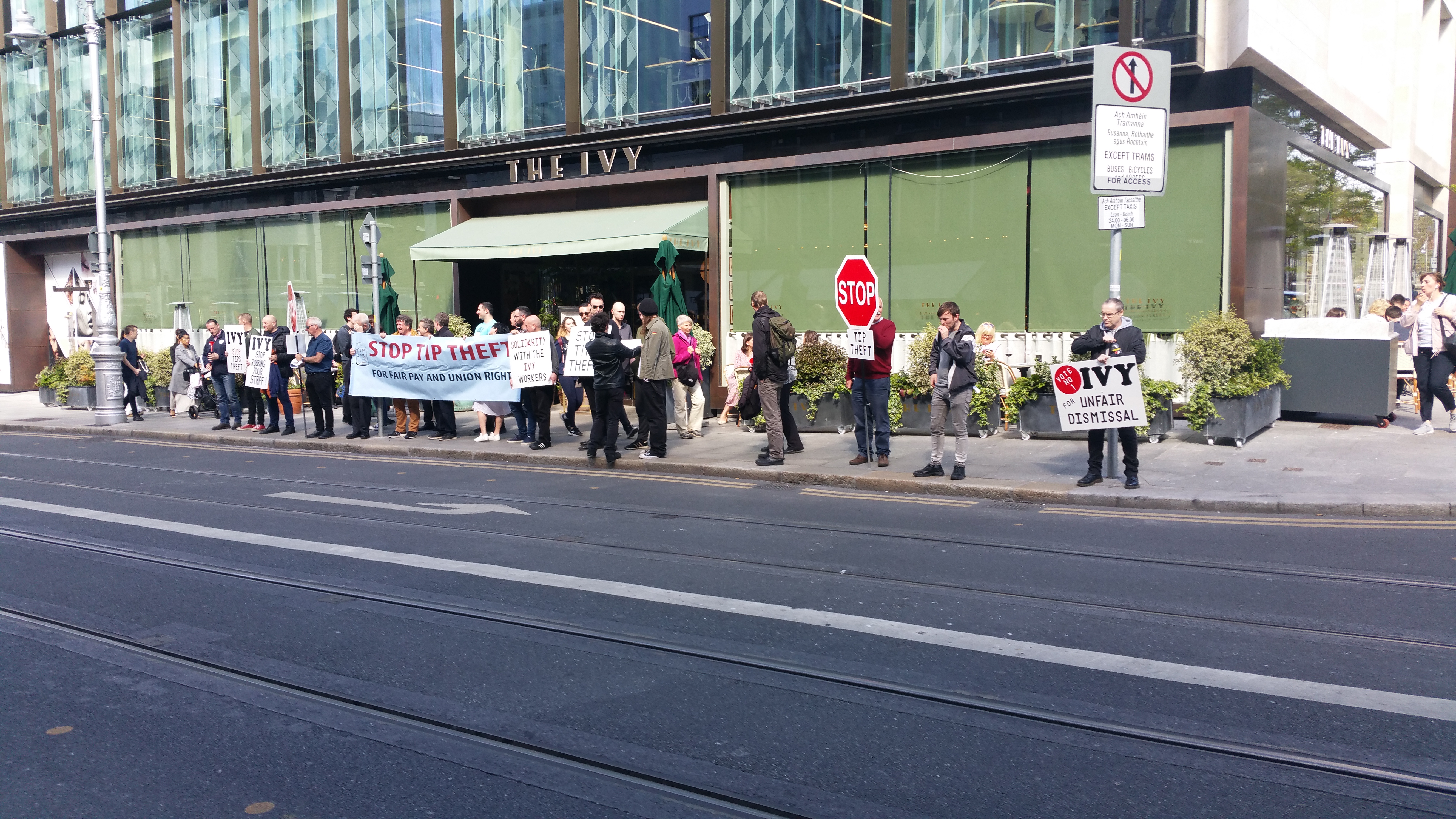
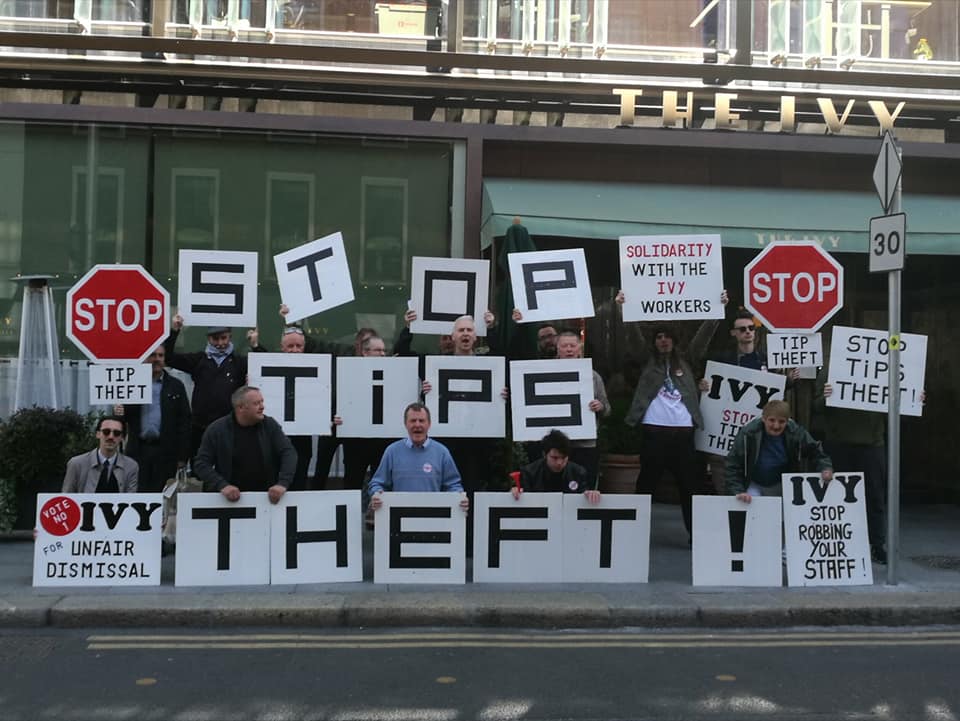
Meanwhile, a small group had left, to form a picket line outside the Ivy Dawson Street restaurant, in solidarity with staff and in opposition to the management appropriating a portion of the tips left for staff, with more to join them there later from the Mayday parade.
(see
https://rebelbreeze.wordpress.com/2019/05/02/tipping-the-bosses/).

A NOTE ON THE HISTORICAL ORIGIN OF INTERNATIONAL WORKERS’ DAY

          The First of May has been celebrated as the international day for workers since 1892, to call for the 8-hour maximum working day, socialism and universal peace. Its inspiration was a train of events that began with a workers’ strike and demonstrations on May 1st 1886 in many parts of the USA but in Chicago ended in the State execution of four anarchists, with police and state militia massacres of workers along the way as well as with acts of workers’ resistance. The celebration and commemoration throughout the world was formally agreed at the Second Congress of the Second International Workers’ Association in Brussels in 1892 and at its Sixth Congress (Amsterdam, 1904) declared it mandatory for the proletarian organisations of all countries to stop work on that day, wherever that could be done without injury to the workers (bearing in mind violently repressive regimes).

Artwork depicting police attacking striking workers at McCormick’s factory who were agitating for the 8-hour working day.
(Image source: Internet)

In many states around the world now, the 1st of May is a public and bank holiday and has been so in Ireland since 1994. Its public celebration was banned under the fascist regimes in Spain and Portugal but is legal in both those states now; however it is still banned in some other states while in some areas, though not banned, may be subject to attack by police, army, state agents or by fascist elements.

End.

Tipping the Bosses!

Diarmuid Breatnach

Supporters of staff at a prominent Dublin eatery protested yesterday over the management’s appropriation of some of the tips left by customers for the staff. They are able to do this quite easily when the customer pays the tip by credit card but when staff asked customers to leave their tips in cash, management accused them of “deplorable greed”. They have also dismissed two staff who are currently taking a case for unfair dismissal, accusing the management of sacking them for their unionisation of the staff.

View of some early protesters outside the Ivy Dawson Street restaurant (Photo: D.Breatnach)

          The photographs taken here show a smallish group, including Independents for Change TD Joan Collins but more were coming later from the Mayday march on the north side of the river. A supporter claimed that the management offers an hourly rate above the minimum wage but then makes that difference up with tips.

Catering work in general is notoriously low-paid and with transitory staff, making it difficult for trade unions to organise them and relatively easy for management to hire and fire.

View of some early protesters outside the Ivy Dawson Street restaurant (Photo: D.Breatnach)

There have been a number of protests about the tips issue at Ivy, including one on which the Irish Times reported in March.

The report stated that a number of protestors who had booked tables in the restaurant began the protest and were then joined outside the restaurant by a group of 30 people led by Independent TD Joan Collins who held up placards stating “Stop tip theft”.

View of some early protesters outside the Ivy Dawson Street restaurant (Photo: D.Breatnach)

Ms Collins was reported as saying that she was aware of other Dublin restaurants who have are engaging in similar practices when it comes to tips and was quoted as saying that: “The Ivy are abusing the good nature of diners who are tipping staff well because and they are not aware that management are taking some of their tips”.

“Workers are hugely concerned as they are not earning a high hourly wage and they work hard for their tips only for a portion of it to go to the company,” she said.

end.

Link to Irish Times article (and photo): https://www.irishtimes.com/life-and-style/food-and-drink/protest-held-outside-ivy-restaurant-in-dublin-over-waiters-tips-1.3827055

LARGE EASTER RISING COMMEMORATION BY ‘DISSIDENTS’ ON DUBLIN’S MAIN STREET

(Reading time 15 mins. approximately)

Clive Sulish

          The Irish Republican organisation Saoradh staged a large demonstration of its support on Dublin’s O’Connell Street on Saturday afternoon (20th April). Republican marching bands and hundreds of supporters followed the traditional ‘colour party’ flags and lines of men and some women dressed in green-brown military-style clothing, black berets and dark sunglasses.

view section of parade proceeding south along east side of O’Connell St.

   Beginning at the Garden of Remembrance, the procession, carrying large portraits of the executed martyrs of the 1916 Rising, wound its way down the main street past thousands of viewers, many of those taking photos and filming, down to the wall of Trinity College and the Bank of Ireland building, then back up Westmoreland street and up the west side of O’Connell Street to the GPO building, the site of the HQ of the Rising in 1916, for speeches as the ceremony of the commemoration.

Parade forming up at Garden of Remembrance
The Wolfe Tone RFB from Craigneuk, Glasgow, at the Parnell St/ O’Connell St. junction
Long view of section of the parade proceeding south along the east side of Parnell Square.


     The parade assembled at Dublin’s Garden of Remembrance and remained there for some time without the reason being clear, until the arrival of the participants dressed in green-brown military-style clothing, black berets and dark sunglasses, which many in the waiting crowd applauded. Presumably these were meant to represent the IRA but from the physical appearance of many it was clear that their active duty days, if they had them, were behind them. Presumably too, any organisation that did have an armed section would be reluctant to offer them up to the State for arrest on a parade and their all appearing at the last minute like that was also perhaps to reduce the opportunity for Garda harassment.

Another colur party but in War of Independence (1919-1921) period costume at the Garden of Remembrance, waiting to begin.

   However, the uniformed Garda presence was in low numbers and although the Special Branch had officers there, they did not appear to be harassing Republicans for their names and addresses, as is their usual wont.

The route of the parade had been prepared placards bearing the words “The Unfinished Revolution” and “Saoradh” with tricolour flags attached at intervals to traffic sign and street light posts, including also at least one Palestinian flag. As the colour party and people in uniform lined up with banners and a band behind them and set off down towards the city centre, people joined in behind the band, with another band bringing up the rear.

TRAGEDY AND CONDEMNATION

          The crowd appeared to contain many different elements, mostly men but quite a few women, some parents with small children and some teenagers, young men and older. Included among the attendance were a number of independent Republicans and socialists and a number expressed their decision to attend as having been influenced by the tragedy of the previous Thursday and the media campaign against ‘dissident’ Republicans, along with the apprehension that the Gardaí might take advantage of that to block or harass the paraders.

   A scheduled Easter commemoration by a committee including apparently members of Saoradh to be held in Derry on Easter Monday had been cancelled as a result of a tragic incident. The armed British colonial police force in the Six Counties, the PSNI, had been carrying out house searches in the Galiagh and Creggan areas of Derry, allegedly for arms, to which youth had responded with stones and petrol bombs. During that incident, a gun was fired from the direction of the youth towards the colonial police but struck Lyra McKee, a young female reporter standing near them instead. Tragically the wound was fatal.

Section of banners coming back across O’Connell Bridge towards the GPO

   Saoradh had issued a statement after the event expressing regret for the death and extending condolences to Lyra McKee’s family and friends but also putting the incident in the context of regular harassing raids by the PSNI on houses in ‘nationalist’ areas and the always likely result of resistance (see Links for full statement).

   Possibly in reference to that tragedy, a very tall long-haired man stepped in front of a section of marchers with his hands in the air. Stewards quickly blocked him peacefully and diverted participants around him.

   Past the objector and into O’Connell Street, both the east side pavement and the pedestrian middle reservation were thronged with people watching, photographing and filming. The parade passed on to O’Connell Bridge, into D’Olier Street, turned right towards the Bank of Ireland building and back up Westmoreland Street to the General Post Office, location of the HQ of the Rising in 1916, outside of which the 1916 Proclamation had been read on 24th April by Patrick Pearse with James Connolly by his side.

At the GPO, Saoradh party chairman Brian Kenna welcomed the participants.

Portraits of the executed 1916 martyrs being carried back across O’Connell Bridge


Section of the Coatbridge Unitedmen RFB, Glasgow, marching southward in O’Connell Street.

THE SPEECHES AND CEREMONY

          At the GPO, Saoradh party chairman Brian Kenna welcomed the participants. Republican Easter Rising commemorations tend to follow an established pattern, no matter which organisation is involved: the reading of the Proclamation; messages of solidarity from Republican prisoners; a speech by a representative of the organisation; the lowering of the flags to a drum roll and their raising again, in honour of the fallen; the singing of Amhrán na bhFiann, the Irish National Anthem. In the past, a statement from the IRA was also read but in recent years this have not been customary, for a number of reasons.

   The usual components of the ceremony were present on Saturday outside the GPO with a few variations: a poem by a supporter read out, “James Connolly, the Irish Rebel” sung by another and “Róisín Dubh” played on the uileann pipes. The James Connolly song, with some powerful imagery and an attractive slow air, gives no indication whatsoever of the man’s revolutionary socialism and seems to incorporate him into the IRA, instead of the Irish Citizen Army which he co-founded or even of the Irish Volunteers, with which he joined forces only weeks before the Rising.

In the distance at the GPO, Chairperson of Saoradh Brian Kenna, MC of the event

   The RFB (Republican Flute Band) marching bands were from Scotland: The Wolfe Tone RFB Craigneuk and the Coatbridge Unitedmen RFB. One of the bands played “Take It Down From the Mast, Irish Traitors”, the lyrics of which deny the Tricolour to the Free Staters who waged the Civil War against the Republicans, the legitimate bearers of the flag. A participant remarked that the song was sung first against Free Staters, later against Fianna Fáil, later still against the “Stickies” and more recently against Sinn Féin.

   In his speech on behalf of Saoradh, Dee Fennel from Belfast began by sending solidarity messages to Republican prisoners in Irish jails and to the relatives of all those who had fallen in the struggle against British imperialim. He said that the objectives set out in the 1916 Proclamation had not been achieved and referred to those participants in the struggle who had left it along the way, some to collude in upholding the two failed states of the divided nation.

(at right of photo) Dee Fennel of Saoradh delivering the main oration at the GPO

   Referring to his own activism, Fennel recollected how four years previously he had spoken at an Easter commemoration as an independent Republican, i.e not a member of any political party. He had spoken of the need for Republican activists to engage more with one another and also in the struggles of communities, women and trade unions. Fennel said that as a result of a discussion among Republicans, some had formed Saoradh, building on “maturity and commitment” while others “retreated to their flags” and went on to list the wide areas of struggle in which he said Saoradh activists could be found.

   Fennel also referred to the activity of the IRA and said that while British imperialism remains in possession of a part of Ireland and prevents the exercise of sovereignty of the nation, there will be some form of armed resistance and that this is borne out by history.

   Referring to the harassment and persecution to which Fennel said Saoradh activists were being subjected, including “tens of thousands of stop-and-searches, hundreds of house raids”, he linked that to the PSNI raids in the Creggan area of Derry earlier that week and the tragic accidental killing of Lyra McKee when “a Volunteer fired shots at PSNI forces”. Going on to say that the IRA do make mistakes from time to time, and referring to two women killed by the Provisional IRA in error years before, Fennel said that the IRA should admit and apologise for their mistakes (NB: The New IRA did later issue an apology and express condolences), though he also said that no words could compensate for the feeling of loss.

   In reference to Brexit, Fennel said that the discussion is being focused on what kind of Border is to be imposed, while Republicans object to any kind of Border whatsoever. He stated that as socialists they also object to “the increasingly neo-liberal EU” and concluded with a call for solidarity with Irish Republican prisoners “in Maghaberry, Portlaoise and Mountjoy” who “are in captivity for no other reason thantheir commitment to Republicanism and a 32-county, secular socialist Republic.”

Salute to the fallen as drums roll and flags are lowered slowly and then raised slowly.

TRADITION OF THE PAST AND CLAIM ON TOMORROW

          Republican organisations tend to commemorate the Easter Rising not only as a historic event but also to highlight that for which the Rising was fought has yet to be achieved. But they also do so to show that they are here, present, working for those objectives and often, to promote their organisation, to attract support.

   The display involved in this Easter commemoration was impressive (despite a media claim that the numbers were only “around two hundred”), particularly in view of the inevitable bad press following the death in Derry and the system politicians’ statements on what a social media poster dubbed “The Opportunist Condemnatory Bandwagon”. It also seemed to show an organisation not much harmed overall in Ireland by a recent split over an alleged lack of internal democracy.

end.

Floral wreath carriers re-crossing O’Connell Bridge in the parade on their way to the GPO

Floral wreath from the Information Group of Sweden
Floral wreaths deposited outside the GPO (at the window where the Cúchulainn sculpture symbolises the 1916 Rising.

LINKS

Saoradh statement on the killing of Lyra McKee: http://saoradh.ie/the-death-of-lyra-mckee-in-derry-saoradh-statement/?fbclid=IwAR2nH20ILtiGjgCyih2eo0HEpkK27_F89MRptEb_OIMfA0SbRz4YB8Fneiw

Media and politician reaction to “dissident” Easter Rising commemorations in Dublin (many other similar examples): https://www.independent.ie/irish-news/politics/video-an-insult-to-irish-people-republican-groups-march-48-hours-after-lyra-mckee-murder-dishonored-the-irish-flag-varadkar-38035393.html

Irish Times inaccurate reporting:

https://www.irishtimes.com/news/ireland/irish-news/revolutionary-party-saoradh-in-paramilitary-parade-through-dublin-1.3867379?fbclid=IwAR24E5sZ9iMfINxDcor0T9uRmF5-0yV9_bfWylcCfzC0rctjMaCfmFDfv6w

IRISH REPUBLIC DAY CELEBRATION – FIRST YEAR WITHOUT TOM STOKES

Diarmuid Breatnach


April 24th is Republic Day, the date on which the 1916 Rising began and when Patrick Pearse read out the 1916 Proclamation. Back in 2014, Tom Stokes began a campaign to have this date acknowledged as the Irish national day.  This year, it was celebrated in his absence.

The late Tom Stokes speaking at a Republic Day commemoration (Photo: D.Breatnach)

“Easter Monday is a moving date, different each year,” Tom Stokes had said. “St. Patrick’s Day is based on a religious feast day. The nation needs a fixed day and one to celebrate the Irish Republic.” Tom Stokes would have agree with those who might say that “the Irish Republic” was yet to be achieved, or that it was more aspirational than reality. As he spoke at each annual commemoration of the date, he railed against many of the faults of the Irish state and in particular on its treatment of women. He was a champion of Republican women of the past, for example Margaret Skinnider, Dr. Kathleen Lynne, Winnie Carney, Elizabeth O’Farrell and celebrated that some of the women had been lesbians, supported the right to choose abortion (though some Irish Republicans would have disagreed on the latter).

Banner leaning against the Arbour Hill monument wall.
(Photo B. Hoppenbrouwers)

Tom Stokes died December last year but some people were determined that the celebration of Republic Day should carry on. On the 24th April 2019, some of them gathered in Arbour Hill, by the monument to the executed in the 1916 Rising, the words of the Proclamation etched in large letters, in Irish and in English, on to the stone wall overlooking the site.

The event was chaired by Pearse Brugha (incidentally a descendant of Cathal Brugha, the 1916 Rising veteran and subsequently part-organiser of the IRA, killed by a Free State soldier in the early days of the Irish Civil Wa)r.

Pearse Brugha chairing the event. (Photo B. Hoppenbrouwers)

Brugha welcomed the attendance and in particular members of the Stokes family, then went through the background to Tom Stokes’ campaign for the commemoration of Republic Day, saying that Tom had wished it to be a national holiday. Brugha then asked on the attendance for a minute’s silence in memoriam and called on Tom’s widow Anne Stokes and their son to lay floral wreaths on behalf of the family at the 1916 Rising Monument.

Next, Brugha presented Cormac Bowel and his young son Fionn, who approached playing Fáinne Geal an Lae (“The Dawning of the Day”) on their bagpipes, Cormac in Volunteer officer uniform and Fionn in traditional piping kilt. It was only Fionn’s second public playing, the attendance were told.

Cormac Bowel reciting the 1916 Proclamation. (Photo B. Hoppenbrouwers)
Cormac Bowel and son Fionn approaching the monument while playing Fáinne Geal an Lae. (Photo B. Hoppenbrouwers)

A number of other parts of the ceremony followed.

Fergus Russell sang “The Foggy Dew” and Frank Allen, who had been involved with Frank Stokes in organising Republic Day commemorations, gave an oration praising Tom Stokes as a “true Republican” who believed passionately in equality and also as “a true internationalist, who would be just as likely to be found on a Palestine solidarity demonstration”. Allen also criticised heavily the Irish regime, as Stokes had done in his speeches.

Pat Waters played his own composition, “Where Is Our Republic?”, which he had composed at the request of Tom Stokes.

Cormac Bowell recited from memory the 1916 Proclamation and Fionn played a solo lament on the pipes.

Shane Stokes, speaking, also paid tribute to his father Tom Stokes and to the campaign to have a Republic Day on 24th April.

Fergus Russel singing The Foggy Dew.
(Photo B. Hoppenbrouwers)
Frank Allen speaking at the event. (Photo B. Hoppenbrouwers)
Pat Waters performing his own compostition “Where Is Our Republic?”
(Photo B. Hoppenbrouwers)
Shane Stokes, a son of Tom Stokes, speaking at the event.
(Photo B. Hoppenbrouwers)
Very young piper Fionn Bowel playing a solo lament.
(Photo B. Hoppenbrouwers)

Pearse Brugha, who had been chairing the event throughout, also recited all three verses of the Soldiers’ Song and then sang the chorus, then thanked all for their attendance.

Among those in attendance were members of the 1916 Performing Arts club, activists of the Save Moore Street From Demolition campaign group and Niall Ring, Lord Mayor of Dublin. Also present were Dave Swift, historian and enacter; Las and Dónal Fallon, historians and authors; Brian O’Neill; Deirdre O’Shea; Jim Connolly Heron.

Continuing Internment Brought to Notice in Busy Dublin Shopping Street

(From FB page End Internment by kind permission)

The campaign against continuing internment in Ireland had a visible presence in Dublin’s premier and busy shopping area, Henry Street on Saturday 6th April.

Photo: Dublin Anti-Internment Committee

          Republicans and socialists from a number of organisations — and none — supported the picket, called by Dublin Anti-Internment Committee as part of its ongoing campaign to raise awareness that internment without trial of political activists continues in Ireland, though on a much-smaller scale.

Hundreds of leaflets were distributed to shoppers and sightseers and only one complaint was received – that there wasn’t a petition to sign!

DAIC member handing out leaflets to passing members of the public (Photo: Dublin Anti-Internment Committee

If any reminder were needed that internment is continuing in Ireland, it was provided recently with the case of former Republican prisoner Alan Lundy, who was recently jailed without charge and released some weeks later, being yet again detained and put straight into jail, again without trial or even charge.

IF YOU WANT TO HELP

          If you live in Dublin and would like to help, why not join the DAIC at the next picket? These are roughly on a monthly basis. The DAIC is completely independent of any political party or organisation and organises itself in a democratic manner – however, it is a participative democracy, in that the people who attend public awareness-raising events are those who make the decisions at notified committee meetings.

If you don’t live in Dublin, you could share our posts from time to time ….

Photo: Dublin Anti-Internment Committee

HISTORICAL NOTES

          The Proclamation of Independence was signed in what was then an Irish foods and coffee shop, No.21 Henry Street, about a week before the Rising.

During the actual Rising, the street saw much firing from British troops closing in on the GPO from both directions, east and west. An advance of British soldiers from the west was halted by a Volunteers’ ambush somewhere near where this picket was.

end.

Photo: Dublin Anti-Internment Committee
The plaque commemorating the signing of the 1916 Proclamation of Independence at No.21 Henry Street.
(Photo: D.Breatnach)

CELEBRATED PALESTINIAN CARTOONIST EXHIBITS IN IRISH CITIES

(Lots of images but text reading time less than 5 minutes)

Diarmuid Breatnach

As Palestinians and their supporters around the world mark anniversaries of the Return to Palestine demonstrations and Land Day, Israeli snipers kill Palestinian children.  Dublin marks the day with a solidarity rally and exhibitions and talks by internationally-recognised Palestinian cartoonist Mohammad Saba’aneh.

          The Ireland-Palestine Solidarity Campaign organised a rally to mark the anniversary of the start of the Return to Palestine demonstrations last year and also Land Day. Sadly, marking a Palestinian anniversary usually involves marking the deaths of martyrs and this was no exception, as Israeli Occupation Force snipers killed four demonstrators, three of them 17 years of age.

Section of the Palestine solidarity rally at the Spire in O’Connell Street, as it was ending.

After the rally, of which I just caught the tail end because of the weekly Save Moore Street From Demolition campaign duty, I managed to catch the exhibition of noted Palestinian political cartoonist Mohammad Saba’aneh and to buy his book PALESTINE in black and white. Sadly, a prior appointment meant I had to miss his talk, which I would have loved to attend, especially as I dabble a little in cartoon-drawing myself.

The World (or its governments, including the Arab countries) ignores the oppression of Palestinians by the Israeli Zionists. Artist: Mohammad Saba’aneh.

Fortunately, Mohammad Saba’aneh was still there and was kind enough to autograph his book for me. When I took a photo of him with Fatin Al Tamimi, photographer and Chairperson of the IPSC, she insisted on taking a photo of me with him too – shukran.

Artist: Mohammad Saba’aneh and myself. (Photo: Fatin Al Tamimi with my camera phone)
Photographer and Chairperson IPSC with Artist Mohammad Saba’aneh.

On Thursday, Saba’aneh had also given a talk at the National College of Art & Design, along with Tuqa Al Saraj, also a Palestinian artist but today based in Dublin.

Mohammad Saba’aneh was born in 1978 in Ramallah in occupied Palestine, where he still lives. He is a Palestinian painter and caricaturist who has been imprisoned by Israel because of his art. He has a daily cartoon in the Palestinian newspaper al-Hayat al-Jadida and his work features in publications across the Arab world.

A veritable cartoon strip. Artist: Mohammad Saba’aneh.

HELPING THE DEAF AND THE TRAUMATISED WITH CARTOONS

          Saba’aneh used caricature with deaf students to help them adopt another language to express their feelings and with children who witnessed an Israeli assault to help them psychologically. He took part in many workshops designed for children to develop critical thinking. Saba’aneh was responsible for organizing an international fair at Mahmoud Darwish museum in 2014 in which more than 100 international artists participated. Freedom House chose one of his works in 2016 as one of the year’s most important photos. His first book was published in the US in April 2017.

Children in Israeli Zionist jails — one of my favourites. Artist: Mohammad Saba’aneh.

INTERNATIONAL WORK AND RECOGNITION

          Saba’aneh is the Middle East representative for Cartoonist Rights Network International and the Palestinian ambassador for United Sketches, an international association for freedom of expression and cartoonists in exile and participated in many international publications such as The truth has more than one face in Europe and Sketch of Freedom in the US. He. He is the recipient of numerous awards, including the 2017 Marseille International Cartoon Festival Prix d’Or. Pulitzerwinning cartoonist Matt Wuerker described him as “an inspiration for cartoonists around the world.” Noted graphic journalist Joe Sacco has said of this work that it is a “gut punch that gets straight to the essence of the stark reality of Palestinian life under Israeli occupation.”

Life for children in Palestine under the Israeli Zionists. Artist: Mohammad Saba’aneh.

PROGRAM DATES:

Thursday 28th March – NCAD (Dublin), 7pm, Harry Clarke Lecture Theatre
Friday 29th March – TCD (Dublin), 3pm, Room LTEE1, Hamilton Building
Saturday 30th March – Dublin, 2.30pm, The Pearse Centre, 27 Pearse St

All of the above now over.


Monday 1st April – Waterford, 7.30pm, The Tower Hotel
Tuesday 2nd April – Limerick, 8pm, Perys Hotel
Wednesday 3rd April – Galway, 7pm, Black Gate Cultural Centre
Thursday 4th April – Maynooth University, 4pm, Venue TBC (Afternoon)
Thursday 4th April – Celbridge, 8pm, Celbridge Manor Hotel

End.

Judicial Justice under the Israeli Zionists. Artist: Mohammad Saba’aneh.

SOURCES:

Background information: Wikipedia and IPSC FB page

Photos (unless otherwise indicated): D.Breatnach

LINKS:

IPSC: https://www.facebook.com/groups/20826333992/

Artist: Mohammad Saba’aneh.
A nod to Michaelangelo’s the “Birth of Adam”. Artist: Mohammad Saba’aneh.


The cost of NOT boycotting Israeli products. Artist: Mohammad Saba’aneh.
Posters on railings outside Pearse House.
Praise for Sen. Frances Black’s Bill to ban imports from the “Occupied Territories”. Artist: Mohammad Saba’aneh.


Artist: Mohammad Saba’aneh.
Symbols in Palestinian cartoons. The Key for the right to return is somewhat of an irony, as when the Christian Spanish Monarchs expelled the Sephardic Jews from Al Andalus, many of them also took the key to their house with them.


HOUSING DEMONSTRATIONS MARCH THROUGH DUBLIN

Diarmuid Breatnach

Protesters calling for the urgent construction of public housing marched through Dublin today. Various organisations and many independent activists took part in the protest with a broad range of people took pat, from socialist to republican-orientated, some with their children. The event was organised by the National Homeless and Housing Coalition.

Early part of the march detachment starting from the GPO, here proceeding south along O’Connell St, the long-closed Clery’s department store on the left and the Larkin Monument on the right. (Photo: D.Breatnach)

          On their Facebook page, the NHHC had issued a statement, part of which read:

Rebuild Ireland has been an unmitigated disaster yet the cross party motion that was passed in the Dail in October that called for practical actions that would end the emergency, including making it illegal to evict someone into homelessness, were ignored by the government even though it was supported by all parties except Fine Gael. We are demanding action on the motion.

We also learned that 15 Dublin hotels received over €1m each in 2018 for accommodating homeless families which further illustrates the reliance on the private sector. These families need public housing built on public lands, they need proper homes. Last year there were 842 cases of children being discharged from the Temple Street Emergency Department back into homeless emergency accommodation. The majority of these cases were a direct result of the fact that these children are living in completely unsuitable and cramped emergency accommodation.”

The march, though far from small, seemed somewhat smaller than expected which may have been due to a cold windy day with lashing rain a little earlier in the day but may also have had another cause. The Coalition of groups has split with ICTU (Irish Council of Trade Unions) and a number of NGOs pulling out to form a different campaign on housing, apparently declining to support the demand for public housing on public land.

Front of the march pausing on Custom House Quay (Photo: D.Breatnach)

The organisers of today’s march published a list of demands:

Declare the housing and homelessness crisis an emergency.
Provide a minimum of 10,000 public house a year. No to privatization: build public houses on public land.
Make housing a constitutional right.
End evictions, bank repossessions and sell-offs to vulture funds.
Create a national Traveller accommodation agency to oversee and deliver Traveller Accommodation.
Legislate for real security of tenure, real rent control and affordable rents.
End the use of B&B’s and hotels for emergency accommodation. Improve emergency accommodation facilities and provide security for all in need.
Create rent pressure zones for Purpose-Built Student Accommodation (PBSA). Ensure tenant’s rights for students in PBSA and digs-style accommodation.

One group set off from the GPO and after making a circuit on O’Connell Bridge, marched along the north quays, meeting up with another group coming across Butt Bridge to join them from the Housing Agency HQ; apparently another group had marched from City Hall. The march continued on to Samuel Becket Bridge, to the bemusement of some participants, where the participants halted and were addressed by a number of speakers.

Student on the march displaying flag of Union of Students in Ireland (Photo: D.Breatnach)

Along the route of the march, slogans were shouted, among which were:

“Raise the roof, not the rents!” and “Housing is a human right!”

Section of the march stretching out along the north quays. (Photo: D.Breatnach)
One of the organisers speaking at the rally at the end of the march: Tina McVeigh, of PBP. (Photo: D.Breatnach)

As well as Socialists, a number of Republicans were in evidence, marching without party banners. Sinn Féin supporters had a banner and party flags, as did People Before Profit and the Workers’ Party. Some Union of Students in Ireland flags were in evidence too. A Travellers’ group and some community groups also carried banners identifying their group with the march and its cause.


Report by Irish Times, with video including interviews with participants: http://https://www.irishtimes.com/news/social-affairs/thousands-march-in-support-of-homeless-in-dublin-1.3820626?fbclid=IwAR2aW9yLVjHbTrJ9kbb21MEHOl3R8llbRhy3GFeX8NvkGLtdjH69TF9fQxc&mode=amp


End.