Written by Paul Antonopoulos, independent geopolitical analyst
(Reading time: 3 mins.)
Rebel Breeze preface: An interesting article (reprinted from South Front with thanks) about an ethnic minority rarely mentioned in the propaganda war from each of the antagonists and their supporters. Although some alternative media sources alluded to their being persecuted following the abrupt change of Ukrainian government in 2014 and the 8 years that followed in the Donbas region preceding the Russian invasion, the ethnic Greeks dropped out of site despite their large concentration particularly around Mariupol. This article reminds us of them and also of their history as a community in the Ukraine.
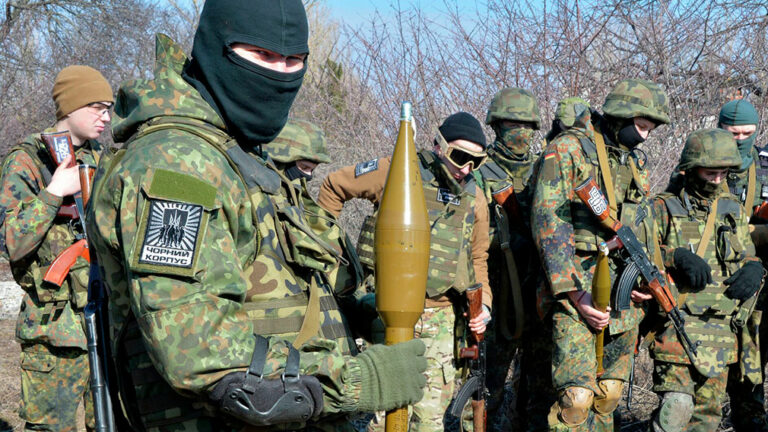
The surrender of the Azovstal Plant in Mariupol on May 20 was a major victory for Russian forces as they not only gained control of a major port city, but symbolically drove away the neo-Nazi Azov Battalion from their base. Although consumers of Western mainstream media were bombarded with allegations of war crimes perpetrated by Russian soldiers, such as the Mariupol Drama Theatre (in which local residents warned of a Ukrainian false flag operation days earlier), they had completely ignored the crimes and persecutions faced by non-Ukrainian speakers, including ethnic Greeks.
Mariupol and its surrounding villages are home to 100,000-120,000 ethnic Greeks, who are native Russian-speakers. Only a small number are currently proficient in either Crimean-Mariupolitan Greek or Modern Standard Greek. Mariupol is a city founded in 1778 by Crimean Greeks on the invitation of Catherine the Great to resettle lands that had been conquered from the Ottoman Turks and to escape persecution in the then Muslim-dominated Crimea. A second wave of Greek migrants arrived in the Azov region from Pontos to escape the Ottoman Turkish perpetrated genocide in 1913-1923.
Pontic Greek resistance to Turkish genocide (Photo sourced: Internet)
Yet, despite Greeks having first colonized Crimea in the 7th century BC, more than a millennium and a half before the Slavs arrived in the mid-10th century after the peninsula was conquered by Prince Sviatoslav I of Kiev, Ukrainian authorities refuses to recognize the Greeks as an indigenous group to Ukraine. Although the reality is that Crimea is now a part of Russia, Kiev continues to recognize it as occupied territory, and in turn the designation of Greeks as non-indigenous means that they could not access the same resources as other ethnic groups which have been labelled indigenous. This makes preserving language, culture and identity all the more difficult.
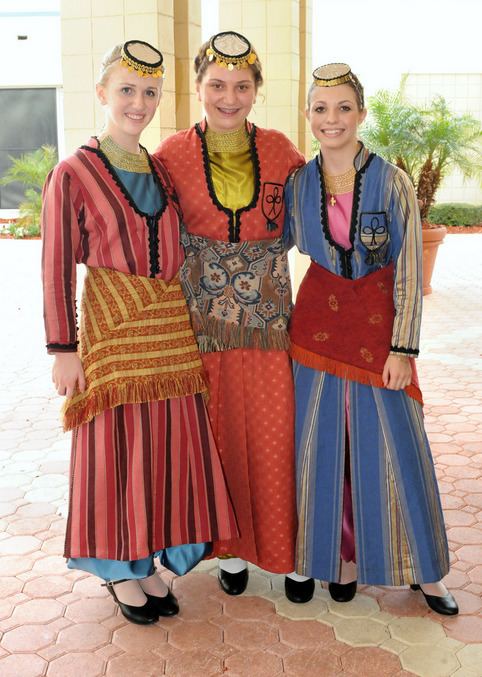
Pontic Greek dancers in traditional costumes (Photo sourced: Internet)
The fact that Mariupol Greeks are native Russian speakers and their villages voted in their majority to join the separatist Donetsk People’s Republic in 2014, saw them persecuted by the Ukrainian state and their Azov Battalion enforcers. It is recalled that on February 14, only 10 days before the Ukraine War began, one Greek was killed and another wounded in a shooting by the Azov Battalion because they were speaking Russian amongst themselves in the village of Granitne. Before the Russian operation began, this was the line of contact between Ukrainian and Russian forces, and like many of the other Greek villages, had voted to join the DPR.
Azov Battallion fighters in Ukraine (Photo sourced: Internet)
One woman from the Greek-majority town of Sartana, 17 kilometers northeast of Mariupol, told American journalist Patrick Lancaster that they were forced to endure Ukrainization and could not speak Russian in public unless they wanted to risk a fine.
Between the non-recognition as an indigenous minority, forced Ukrainization and even murder, the Greeks of Mariupol have suffered immensely under the Azov Battalion, yet Western media has remained near silent, or at the maximum they are non-critical of the racist policies of Kiev. Although Western audiences were bombarded with scenes from the battle of Mariupol, including the Greek government’s unverified claims that the Russian air force bombed Greek villages, there has been near silence now about the current situation in the port city and its surrounds.
As the overwhelming majority of Greeks are now in territory controlled by Russian forces, life has resumed as normal as possible for those living close to a warzone. Schools in Sartana are operating again and people are trying to resume business as normal. What is for certain though is that racist killings just for speaking Russian or any other language other than Ukrainian has come to an end.
With the Greeks of Mariupol now a part of the DPR, the Greek government finds itself in a conundrum as they promised to never abandon the autocephalous community but at the same time has agreed to nearly every anti-Russia sanction and demand made by Washington and Brussels. This makes the reopening of the Greek Consulate in Mariupol dependent on the goodwill of the DPR administration.
Only on May 31 it was announced that Greece’s East Germany-made ΒΜΡ-1 infantry fighting vehicles would be sent to Ukraine so Berlin can replace Greece’s fleet with German-made Marder armoured vehicles. As Athens continues its hostile policy, it lessens the chance of any Russian goodwill so that the Greek community can remain connected to the Greek State via the consulate.
The plan to transfer BMP-1’s to Ukraine once again created outrage in Greece as the announcement was not made by Greek Prime Minister Kyriakos Mitsotakis during his joint statement with German Chancellor Olaf Scholz, but rather by the German leader himself. Greeks lambasted the cowardliness of Mitsotakis of not having made the announcement himself – keeping in mind that over 70% of Greeks in a poll want Athens to have a neutral policy towards the war.
Despite the persecution of Greeks since 2014 whilst living under Kiev’s authority and the Azov Battalion, the Greek government has been near silent on this, only releasing periodical statements that hint towards Ukraine needing to improve minority rights and nowhere near to the same degree of their criticism of Russia.
Greece in the months leading up to the war was making strong attempts to have soft power influence in Mariupol, something that could have continued if there was an acceptance that the entirety of Donetsk was going to be under full Russian control. The harsh reality for Athens is that although the Greeks of Mariupol will be disconnected from Greece, they will live in a far safer environment and with respect to their identity and language, just as the Greeks in Russia’s Crimea, Stavropol Krai and Krasnodar Krai experience.
1) What do you think the elections of May 29th will mean for the future of Colombia? What are the stakes of these elections?
The elections are not as key as some commentators would like to make out in terms of profound changes in Colombia. Though, the reaction in some sectors and fears about the transparency of the elections are well founded and even some fears of a violent reaction from some sectors of the bourgeoisie and the army. So, on one level the elections are about the degree to which the bourgeoisie, including the narco-bourgeoisie are willing to accept electoral defeat. This election is likely to bring about a long period of uncertainty in the country as Petro tries to manage the expectations and demands of the bourgeoisie and contain the hopes of his own supporters.
People displaced in the north of Santander by ongoing violence try to get by as best they can (Photo cred: GÓ Loingsigh)
2) What is the political scenery like, one week before the elections? These elections take place midst what kind of atmosphere?
The atmosphere oscillates between one of hope that Petro will be elected and bring an end to a long conflict that has been going on for almost 60 years and one of fear. No one knows what the far right are capable of doing and thinking at the moment. General Zapateiro intervened in the election campaign, which is unconstitutional as the military don’t even have the right to vote in Colombia. There are other fears about electoral fraud, a portal has been set up to report electoral fraud. Already it has tallied 3,500 incidents and no one has cast a vote yet. Leading businesses have stated they will sack any workers who vote for Petro and have demanded that their employees take photos of the electoral card that they mark and send it to them. It is expected that Petro has the ability to win in the first round, sufficient electoral fraud to force a second round run off with any candidate other than Fico would make matters more complicated for Petro as people may vote against him out of fear were it to come to a second round against one of the other candidates other than the reincarnation of Uribe that is Fico.
The Colombian military are not permitted to vote but there is always the possibility that they will intervene militarily (Photo cred: GÓ Loingsigh)
3) In the surveys, we see that Gustavo Petrois is ahead. How do you interpret this? What are the social alliances he has created? What are people’s expectations from him?
Petro has been around for a long time and this is not his first but third outing as a presidential candidate. After 20 years of Uribe as the leading figure in Colombian politics, there is a growing tiredness coupled with really serious levels of poverty, whilst kleptocrats openly steal the resources of the state. However, he hasn’t built social alliances as such. There has been a confluence of various social organisations and sectors more out of a hope that there might be some change. Petro for example opposed the wave of protests that erupted in the country last year. At a moment when Duque looked very weak, Petro came out to say that he didn’t want Duque to fall through the protests and demanded that the protests be called off. He more than anyone was responsible for the defeat. Petro is building an electoral alliance not a social force and his electoral alliance includes the bourgeoisie. He has long called for a programmatic agreement with the bourgeoisie and his alliance includes people from various previous governments, including Uribe’s governments. Leading functionaries from the Santos government play lead roles in his campaign, such as Alfonso Prada, who is also a close friend of Santos. Former president Samper, the man who implemented the decree that gave us the Convivir, the legal façade for the paramilitaries in the 1990s is also involved in his campaign. This is not a minor point, Samper managed to reinvent himself as a man of peace, even though he more than any president bears responsibility for the blood bath of the mid 1990s to the early years of the 21st century. He also tried to include the former president Cesar Gaviria, the man who gave us the economic aperture of the neoliberal period. It was opposition from his electoral base which forced him to rethink that one. These people play a greater role than any social movement.
Marchers on the annual Victims’ Day in March with placards of murdered trade union and human rights activists (Photo cred: GO’Loingsigh)
4) If Gustavo Petro wins the elections, what possibilities/room does he have to implement a progressive/social democratic policy for the people΄s classes, the workers, the poor, the precarious, etc?
This goes back to the last question and his programmatic alliance with the bourgeoisie. So, there are two elements, to what degree does he actually want to implement a progressive policy? He has spoken about reforms in health and education, some of which sound almost Keynesian, but Petro is not Keynesian. His programme does not contemplate a break with neoliberalism but to work within it, controlling deficits etc, subsidies for industry etc.. His economic policies are a continuation of the last 30 years, with one difference, he wants to move away from mining and oil exploitation, the former coming to an end in any case with various coal mining companies announcing their withdrawal from the country, though some gold mining companies are staying and these companies have legal guarantees on continuing with mining prospecting and exploitation that Petro will not and cannot legally bring to an end. He has however, said that he will promote agribusiness and continue with the policies that are in place, again with some minor tweaking.
Gustavos Petro campaigning (Photo cred: Financial Times)
5) How do you see the next day, after the disaster that the four years of Duque’s neoliberal policy has brought? What are the most important problems that the new government will face? What are the difficulties?
The next day, the one problem Petro will have is how the right will react to destabilise his government. A situation similar to that of Allende of a long drawn-out phase of destabilisation from some sectors is a possibility, though unlike Allende, Petro’s campaign is electoral, he does not believe in organising people and is in fact opposed to it. Part of his base has been bought off with the promise of jobs for the leaders of organisations and access to the public purse, which is normal for Colombian elections. Offers of jobs and government contracts in communities is the normal way elections are bought in Colombia.
Colombian military looks towards a protest demonstration (Photo cred: GO’Loingsigh)
Petro also does not have a majority in Congress, in fact he is very far from it. And will have to negotiate many things, which will push his programme further to the right as he will not use popular mobilisation to counter any blocking of policies by Congress. In the long term, this presents a problem for him and we will almost certainly see another wave of protests like those of last year, but this time against the Petro government. I also predict that his Vice President, Francia Márquez will not complete her term of office and will resign at some point in the face of the reality of Petro’s government as opposed to the expectations.
He has proposed renegotiating the free trade agreements, a task that is just not possible. He will also face problems in reforming the health sector as many international health companies have invested heavily in the sector and will most like sue the government for any changes that affect their profits, something he will be forced to back down on. In fact, within his campaign there have already been retreats on this point, as he no longer proposes to abolish the role of these companies, just to change how much of the public purse they have access to.
end.
People fishing in Cesar Department, Colombia (Photo cred: G.Ó Loingsigh)Coal miner in Colombia (Photo cred: G.Ó Loingsigh)
The fascists and racists are going about in fear (or whipping up fear) of the replacement of whites by people of colour and this is particularly so in some of the places colonised by people of European background. David Rovics looks at the fascist conspiracy theory and the very real replacement of indigenous people by colonialists in a number of those places.
Map of early localisation of Native Americans (Image sourced: Internet)
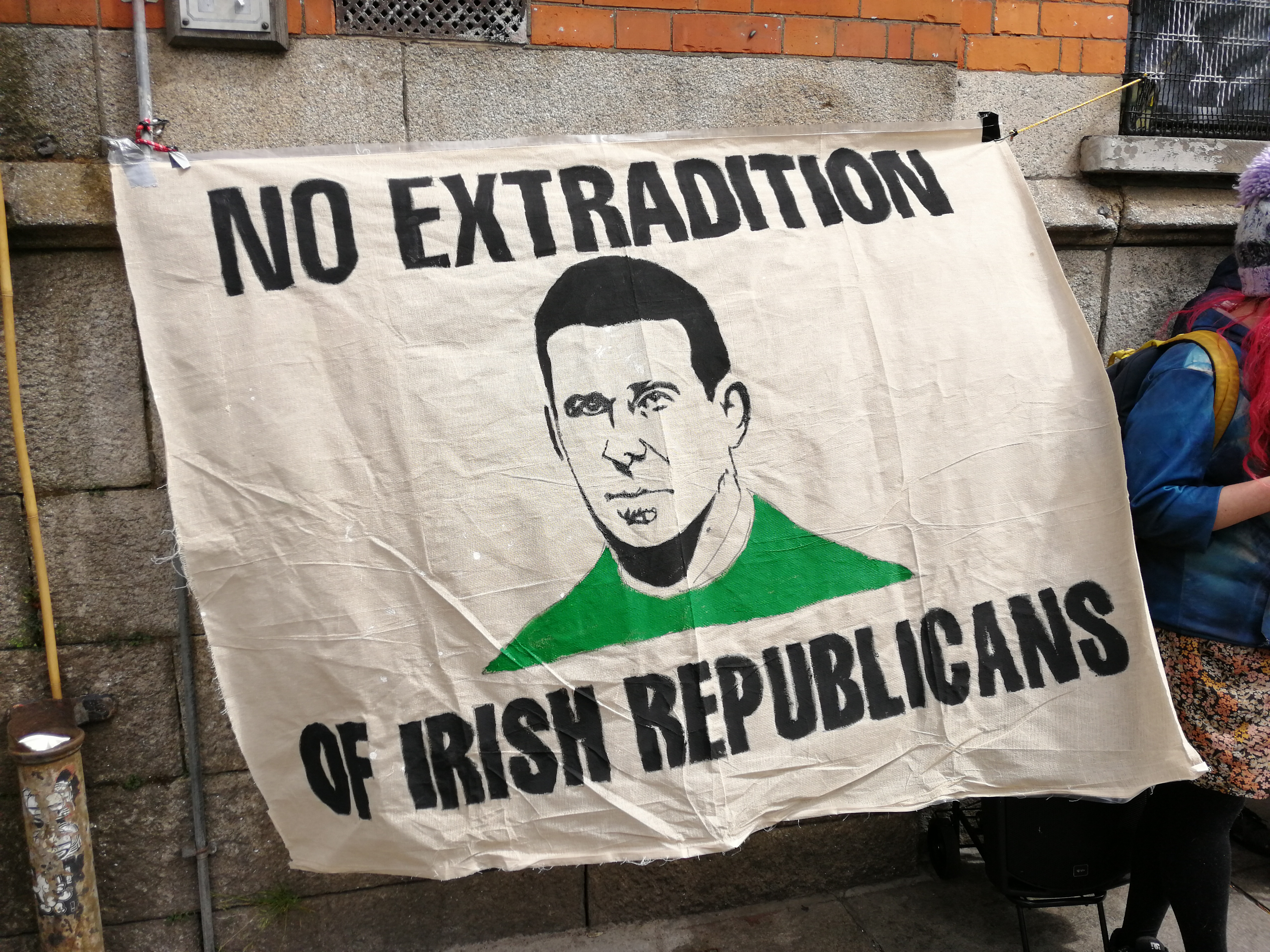
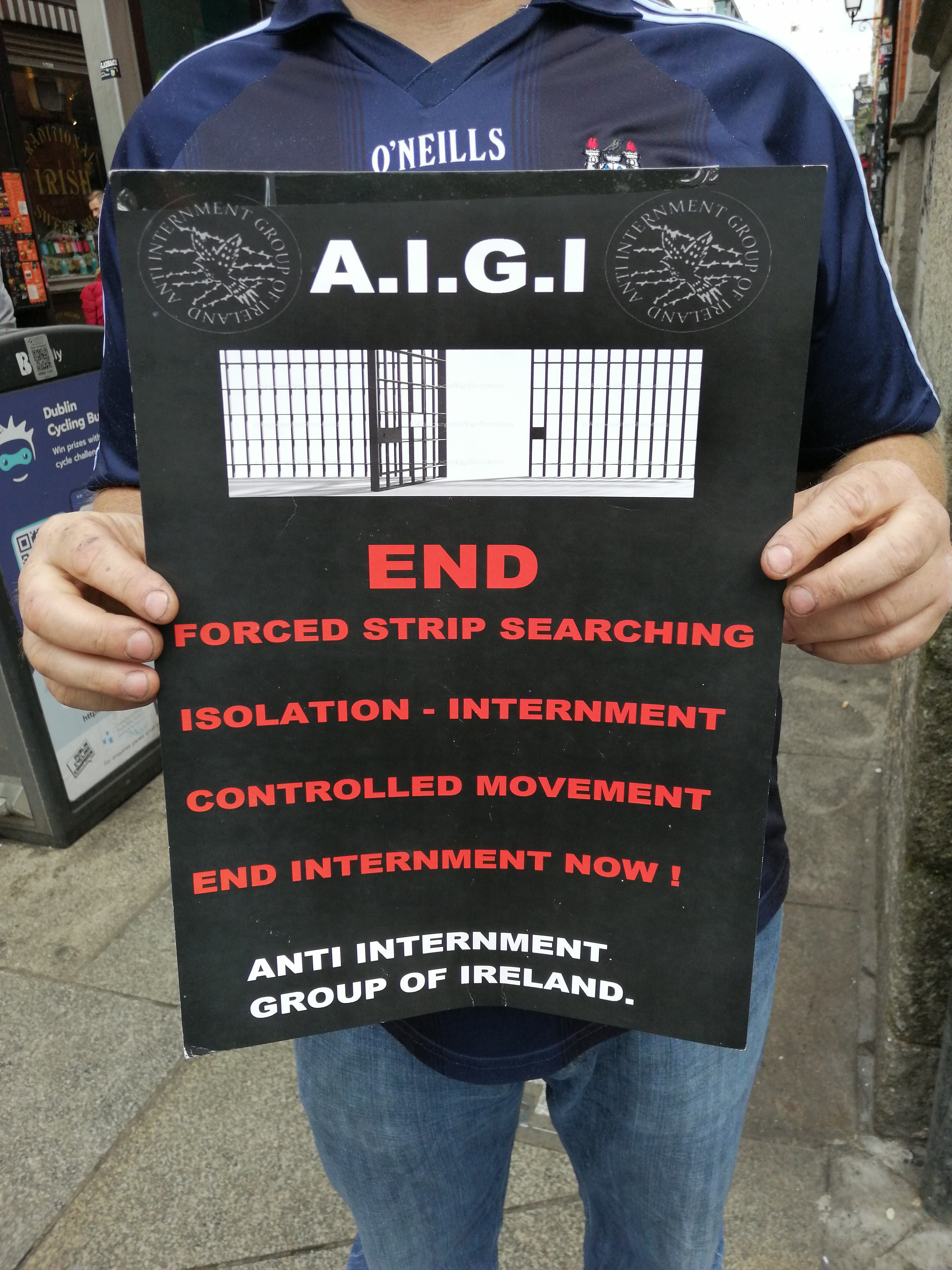
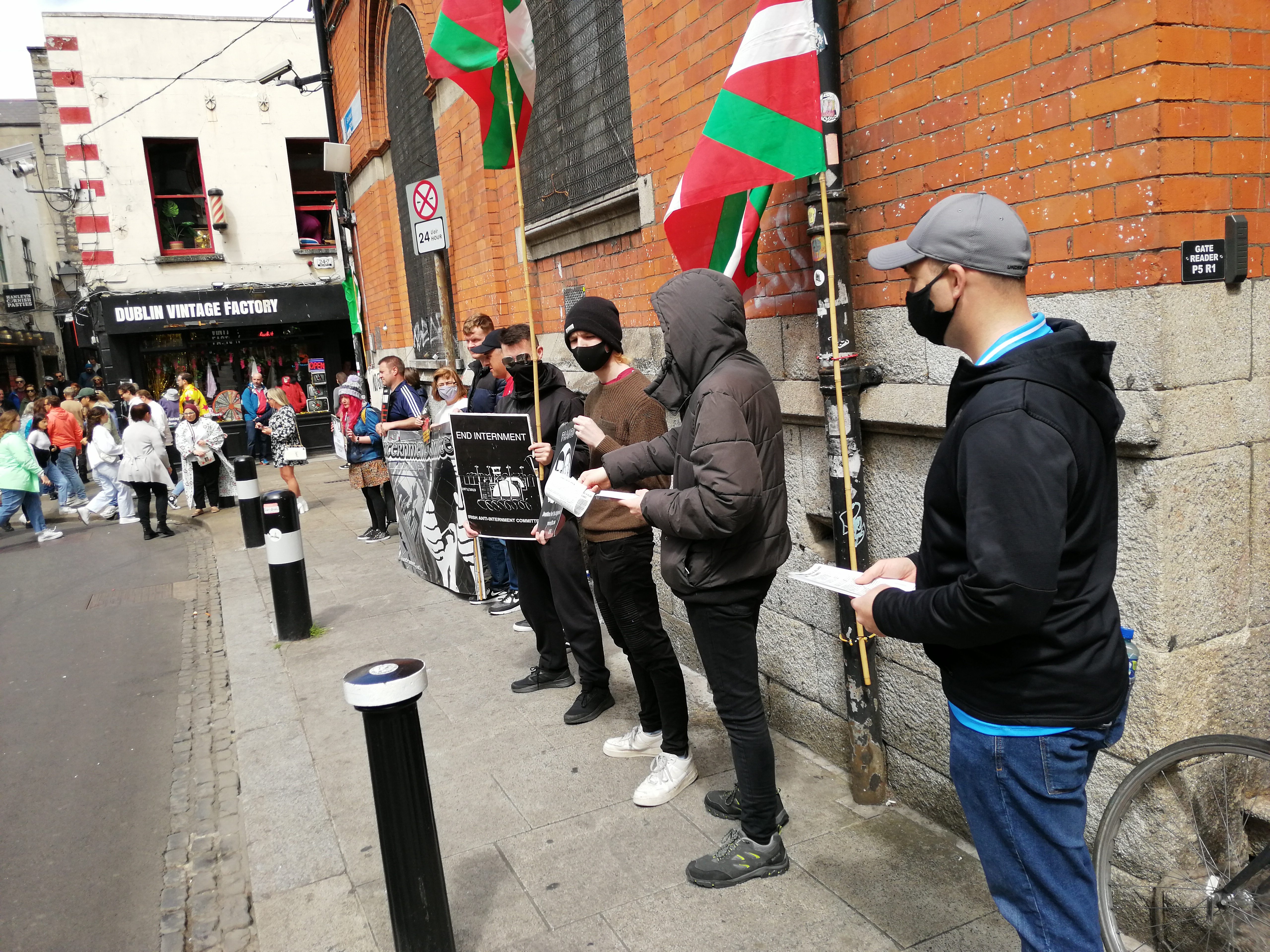
The Dublin Committee of the Anti-Internment Group of Ireland held a picket yesterday to highlight the ongoing internment without trial of Irish Republicans and to protest the recent extradition of Liam Campbell to Lithuania, a country to which he has never been. The picket was held in Temple Bar, a tourist quarter of the Dublin’s south city centre.
(Photo source: Anti-Internment Group of Ireland)
(Photo source: Anti-Internment Group of Ireland)
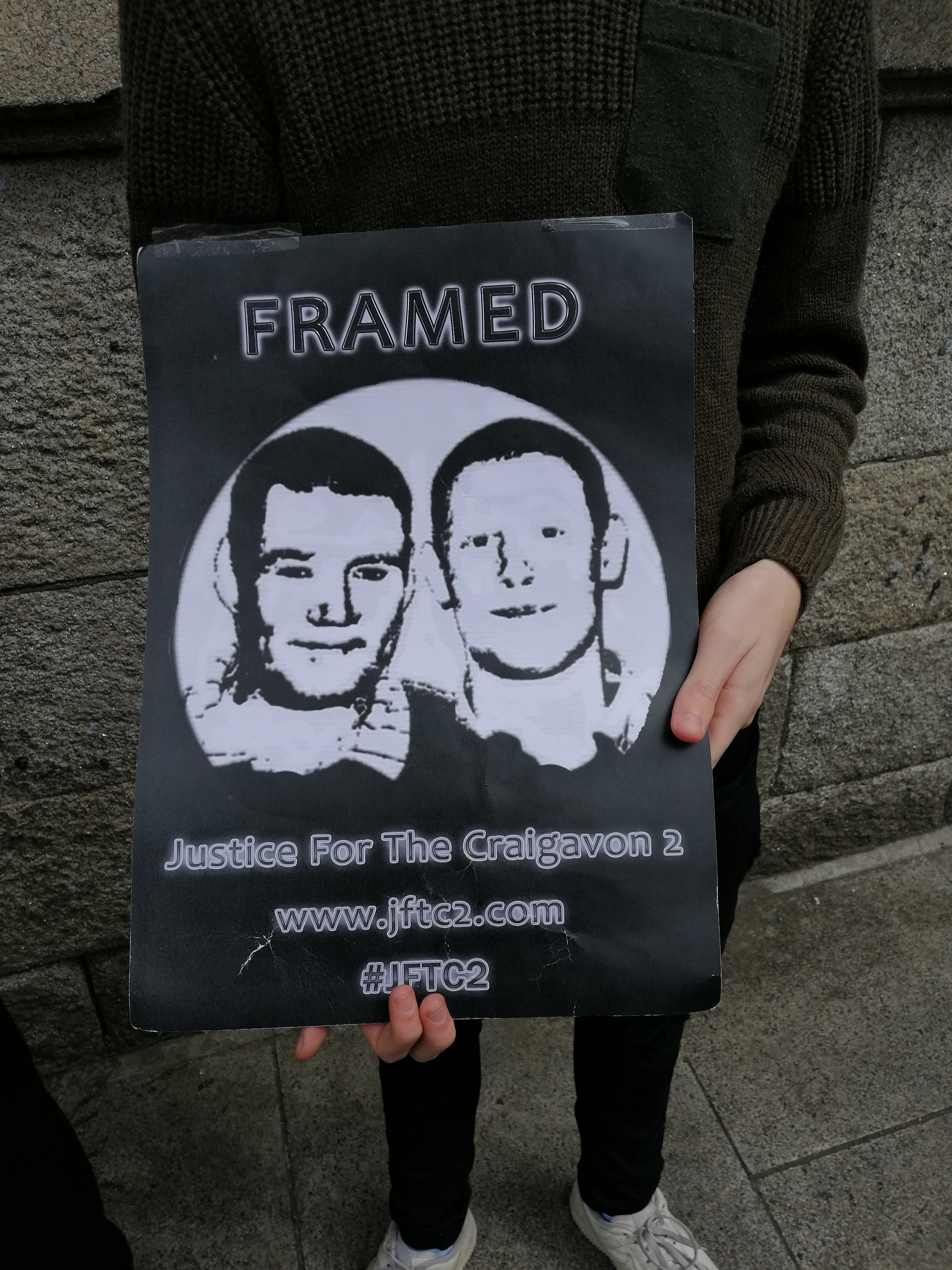
Afterwards, the AIGI issued the following report (reposted with kind permission): “Tourists, Irish shoppers and young people socialising in Dublin city centre were interested to see the banners and placards against internment in Ireland, along with a banner against extradition of Irish Republicans. They also noted the various placards of the Anti-Internment Group of Ireland and the flags of Palestine and the Basque Country, in addition to the Starry Plough flag of the Irish Citizen Army, representing three of the many nations holding political prisoners.
(Photo source: Anti-Internment Group of Ireland)
Supporters distributed up to 200 leaflets and had a number of engagements with people wanting to know more. People were surprised and angry to learn that internment under another name continues in Ireland on both sides of the British Border.
A portable PA machine played resistance music and an AIGI speech from a previous public event which attracted some interest.“
(Photo source: Anti-Internment Group of Ireland)
The AIGI’s Facebook page lists approximately 60 political prisoners held in Ireland, mostly in Portlaoise Prison in the Irish state and Maghaberry Jail in the British colony in the north-east of the country. All of those were convicted in special no-jury courts created for the purpose of sentencing political prisoners — i.e nearly always exclusively Irish Republicans. Frequently some charged and facing trial in those special courts are denied bail and are held in custody until their trial comes up, two or three years later and if then chance to be found ‘not guilty’, they will still have spent that time in jail. When granted bail on the other hand it is always under restrictive conditions that prevent them continuing their political activity: e.g night curfew, wearing an electronic tag, banned from attending political activities, etc.
Liam Campbell, an Irish Republican from Dundalk, Co. Louth, was extradited to Lithuania last week to face charges relating to trying to obtain arms in that country. Campbell says that he has never been in that country, which Lithuania and the Irish State both seem to accept yet, after a legal battle of almost 12 years up to the Irish Supreme Court, the Irish Republican was extradited. According to unconfirmed reports Campbell has been granted bail in Lithuania but under what conditions is currently unknown.
The group campaigning against what it sees as ongoing “internment by different names” developed from the campaign to free Marian Price around six years ago and, apart from monthly pickets, has also organised conferences and concerts and representatives have travelled to Belfast, Cork, Derry, Newry and Glasgow. The group has sent messages of solidarity to a Basque liberation group which was read out at the latter’s public event and also to the Mumia Al Jamal and Leonard Peltier campaigns in the USA, Munir Farooghi campaign in England (for which AIGI spoke at public meetings in Ireland), to prisoners in Turkey, Palestine and Latin America. Its street pickets, though legal, have frequently been subject to police harassment on both sides of the British Border — in the Irish state nearly exclusively by the plain-clothes political police, the Special Branch.
The picket yesterday in Temple Bar, view southward towards the Liffey River. (Photo source: Anti-Internment Group of Ireland)
The AIGI report concluded: The Anti-Internment Group of Ireland is a democratic group independent of any political party or organisation that holds monthly awareness-raising pickets, as well as a few special public events every year. It is organised by a democratic committee composed of people who attend our pickets and who would like to become involved in running the group.
NÍ NEART GO CUR LE CHÉILE. AN INJURY TO ONE IS AN INJURY TO ALL.
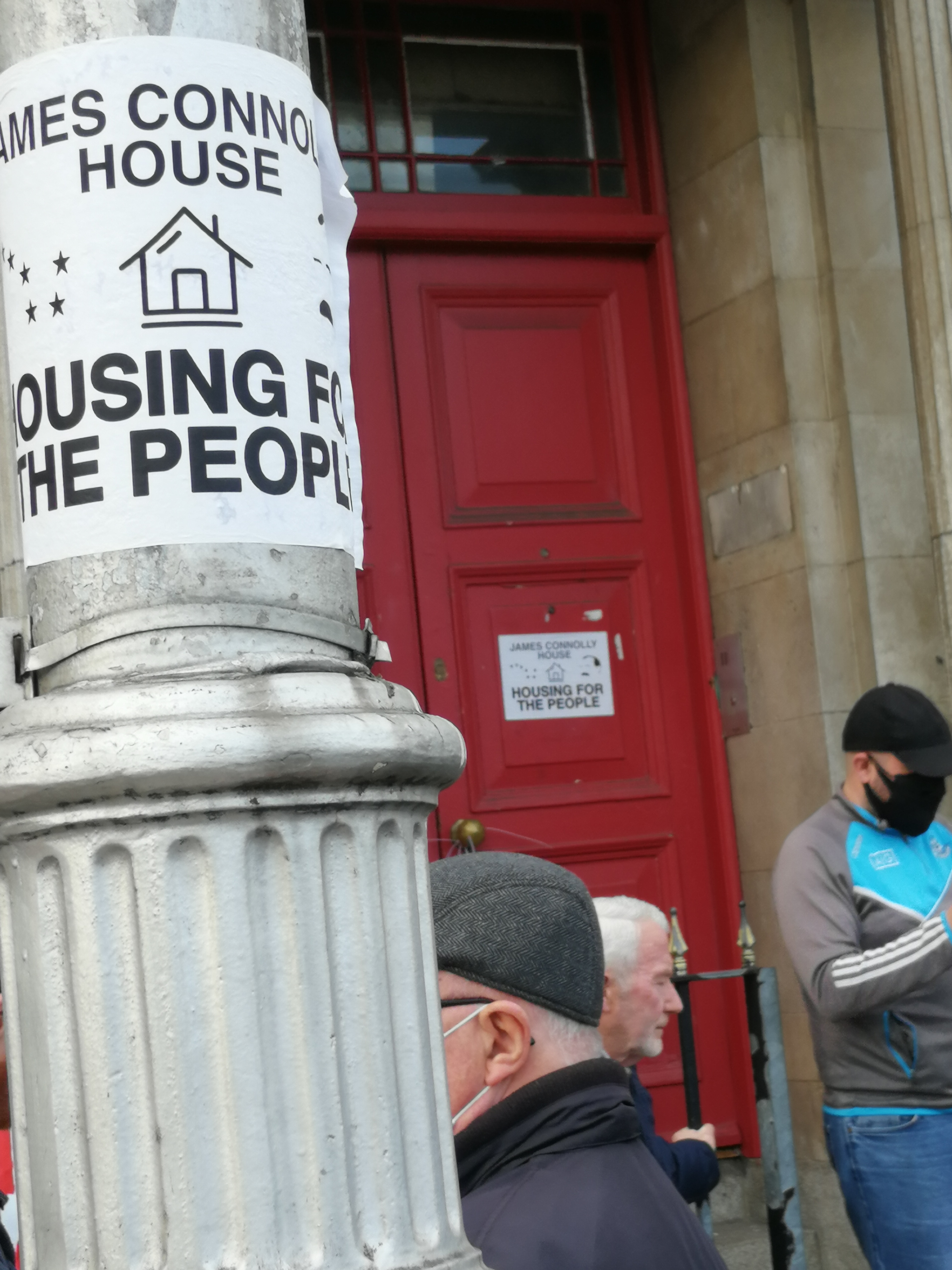
The Salvation Army went to court yesterday to obtain a court order against the Revolutionary Workers’ Union, the latter currently occupying a building on Dublin’s Eden Quay since earlier this month. The RWU occupied the building — which had been empty last year — in order to house the homeless and as a public protest against continuing homelessness in the city, property speculation and high rents. The RWU were not represented in court, which granted the Salvation Army the order they sought, but some RWU supporters held a protest picket outside the court and held a rally outside the Eden Quay building a few hours later, their speakers and songs expressing determination to continue the struggle and defiance of the authorities.
(Photo: Rebel Breeze)
The occupied building formerly known as Lefroy House and now renamed James Connolly House by the occupiers, in honour of the celebrated revolutionary socialist James Connolly executed in 1916, was constructed on the site in 1925 (all the terraces along Eden Quay had been demolished by British artillery and fire during the suppression of the 1916 Rising). Extended in 1948, the legend “Seamen’s Institute” suggests it served for a time as a seamen’s hostel but in more recent times served as hostel for young people run by the Salvation Army1 organisation, which closed the facility last year when their government funding was cut.
The Salvation Army organisation hold a long lease on the building and claimed in court that they had been renovating the building to house Ukrainian refugees, for which one assumes they have funding. However, a quick independent inspection of the building’s interior found it in good repair but with no sign of ongoing renovation work of any kind. Their claim was repeated in media reports without any attempt to check its veracity. The RWU in a statement date the 17th and of which copies were handed out supporters attending the rally yesterday headed off any attempt to use racism in their support, stating that: “The Revolutionary Workers’ Union is a pro-refugee and migrant organisation” and went on to call for housing for all residents, regardless of nationality and “an end to the shameful prison system of direct provision”.
In common with previous statements, it went on to call on people across the country, all 32 counties, to take similar action. This seems a new departure from housing occupation actions in recent years, of which the most famous was that of the large formerly NAMA building Apollo House in December of 2016. That occupation received a lot of activist support and media attention, the latter due at least in part to the participation of celebrity personalities such as the musicians Glen Hansard and Damien Dempsey and support from actress Saoirse Ronan and film-maker and author Jim Sheridan. After the building was abandoned to its owners for demolition however no similar action followed – except for a protest concert outside Leinster House the following year — and the housing crisis continued to intensify. Some minor occupations have occurred without usually any follow-up action after the occupants were evicted and protest marches have taken place – but the crisis continues to worsen.
Section of the crowd at the rally (Photo: Rebel Breeze)
A wide public housing program is urgently needed to address the crisis but, although by no means a revolutionary solution, has the support of not one of the major political parties, in or out of government. Not only should the sale of any public land to private concerns by declared illegal but other facilities and empty buildings need to be seized for conversion into public housing to rent according to means. Those rents would not only fund repairs and maintenance but new building also.
But any local authority wishing to carry out this program is starved of the necessary funding from the State, which feeds it instead into private landlords and speculators, who then use it to further deepen their grip on the housing market. Not only is the problem not resolved but it gets worse.
According to Department of Housing, there were more than 9,800 people experiencing homelessness in Ireland at the end of March, representing an increase of 3.5% in one month and a 23% increase compared to the same time last year.
Of the 9,825 homeless people, 2,811 were children and there were 5,143 single adults and 1,238 families in emergency accommodation. Youth homelessness is more than double other categories as there was a 58% increase in the number of homeless people aged between 18 and 24 (1,230) when compared to last year.
The Simon Communities of Ireland said it was “the highest level of adult homelessness and young person homelessness ever recorded” by the Department of Housing.2
In addition, the number of homeless people dying is sharply increasing: a total of 115 homeless people died in Dublin last year, more than double the number who died in 2019. In 2020, there were 76 deaths recorded while in 2019 and 2018, the number was under 50.3
Part of the building under occupation on Eden Quay (Photo: Rebel Breeze)
RALLY ON THE QUAY – SPEECHES AND SONG
The rally yesterday evening outside “Connolly House”, which had been called at fairly short notice, started a little late but was fairly short, concluding even as people were still arriving. The average age profile was noticeably young and a number of political tendencies seemed to be represented.
A man chairing the rally apologised for the lack of a PA system and asked people go gather closer. He informed the audience that the Revolutionary Workers’ Group has occupied “a second long-term vacant property in Dublin City, naming it Liam Mellows House, “the great socialist Republican executed by the Free State counterrevolution in 1922 …. which we continue to live with the consequences of and continue to fight to this day.”
A speaker addressing the rally (Photo: Rebel Breeze)
Apart from the man chairing the event, there were two speakers from the RWU, one of whom gave his entire speech in fluent Irish. The message in summary from all was that the housing crisis is artificially created for the benefit of landlords and property “vulture” speculators, that the buildings belong by right to all of us, that housing is a human need that requires fighting for and the time for fighting – “to shake off the paralysis” — is now. All the speeches were cheered.
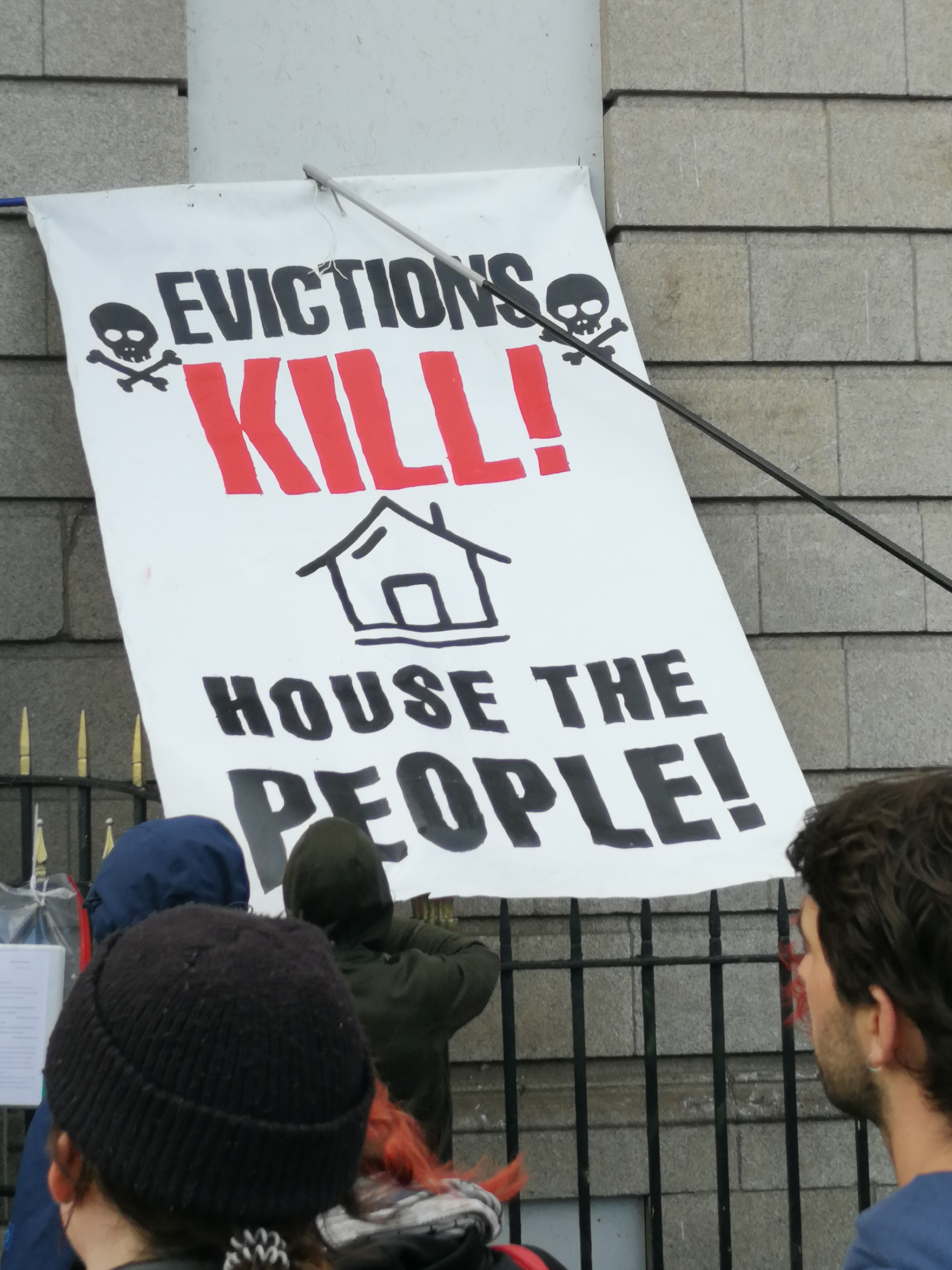
A performer accompanying himself by guitar sang a new resistance song while a giant banner was waved, reading “EVICTIONS KILL — HOUSE THE PEOPLE ”.
Musician performing for the rally (Photo: Rebel Breeze)
The event concluded with a man singing a cappella The Larkin Ballad4 (also known as the Lockout Song). He introduced his performance by saying that on that very Quay in August 1913 the police had killed two workers and that the Irish Citizen Army had been formed as a result, which had gone on to participate in the 1916 Rising — with the lyrics referencing both periods.
Following that, the chairperson invited those who wished to do so to enter the building but to treat it with respect in general and to abide by the rules of the occupiers of which he mentioned in particular that there were to be no photographs taken. A long queue formed for admittance even as some latecomers still arrived to join it.
End.
(Photo: Rebel Breeze)
FOOTNOTES
1The Salvation Army is a Protestant religious charity and temperance organisation and its funding by the State to address homelessness is another example of the ubiquitous private status of social services in Ireland whether through different faith organisations or other NGOs.
4“In Dublin City in 1913, the Boss was rich and the workers slaves ….” The original lyrics were composed by Donagh McDonagh, son of Thomas McDonagh, Signatory of the Proclamation of Independence and executed by British firing squad in 1916, with some further lyrics by his own son.
The 1974 British Intelligence and Loyalist bombing of Dublin and Monaghan towns, with the highest number of people killed in one day during the 30 Years’ War, was commemorated in Dublin today at the Memorial in Talbot Street, near the corner with Amiens Street. The commemoration, organised by the perennial Justice for the Forgotten campaign, was addressed by the Taoiseach (Irish Prime Minister) and elected representatives of Dublin and Monaghan municipalities. A poet and two musicians performed, wreaths were laid and one former politician gave a strong oration highly critical of the Irish, British colonial and British authorities.
On 17th May 1974, around the work-leaving and shopping-ending busy time of 5.30pm, three car bombs exploded within minutes of each other in the centre of Dublin. The car bombs had been parked in the mainly working and lower-middle class sParnell Street, Talbot Street, and South Leinster Street (as distinct from such streets as Henry, Grafton or Dawson streets, for example). Twenty-six people were killed in Dublin. To cover their way back across the British border, another car-bomb was set off in Monaghan Town, killing another seven. Even excluding a full-term unborn child, the total death toll was 33, the highest number killed in any one day of the three decades of conflict. Around 300 were injured.
Suspicion should naturally fall in the first place on the British Loyalists, since they had been planting bombs in Dublin since 1969 and in 1972 and 1973 their bombs had killed Dublin public transport workers. But the authorities had pretended to believe that the IRA was responsible for the 1972 bombing and used the panic around it to steamroll repressive political legislation through the Dáil, thereby setting up the no-jury Special Criminal Courts to sent Irish Republicans to jail.
However, it is believed that Irish Army Intelligence and Garda Intelligence were quickly aware that the Dublin and Monaghan bombers had in fact been Loyalists of the Ulster Volunteer Force and even knew the names of a number of them.
“No one has ever been charged with the bombings. A campaign by the victims’ families led to an Irish government inquiry under Justice Henry Barron. His 2003 report criticised the Garda Síochána‘s investigation and said the investigators stopped their work prematurely. It also criticised the Fine Gael/Labourgovernment of the time for its inaction and lack of interest in the bombings. The report said it was likely that British security force personnel or MI5 intelligence was involved but had insufficient evidence of higher-level involvement.” (Wikipedia)
Incredibly, despite long-standing allegations of collusion between the colonial police, the RUC (now the PSNI) and Loyalists, the Gardaí sent the car-bomb remnants to the RUC for analysis. Shortly after that, Ned Garvey rose from the Deputy position to Gárda Commissioner and met with a British secret agent in his office – without informing his superiors. When the agent began to blow the whistle on his past activities he exposed Garvey as a British “asset” – Garvey of course denied it but had to admit he had indeed met clandestinely with the agent in his office. When the Fianna Fáil goverment came in, they sacked Garvey as “not having confidence” in him but did it so baldly and outside established procedures that Garvey was able to take the Government to court, have his pension secured and have damages awarded to him!
BRITISH POLICY OF COLLUSION WITH LOYALIST MURDER GANGS
Most experts have been clear that construction of the type of bomb used was beyond the capability of the Loyalists at that time and, in any case, it is clear that British Intelligence and military were working with Loyalist gangs, as were the RUC (some of whom were members of the gangs) and RUC Special Branch. In addition there were reports of British accents in connection with suspects.
Collusion of that type had been openly advocated by a British military expert on counter-insurgency, Major (later Brigadier) Frank Kitson, for example in his “Gangs and Counter-gangs” (1960), based on his experiences in fighting the Kenyan insurgency for national liberation.
Frank Kitson (now Brigadier) in 1971 (Photo source: Internet)
Brigadier Frank Kitson was operational commander of the occupation forces in the British colony from 1970-’72 and left a substantial legacy of military assassinations and collusion with Loyalist murder gangs, along with other “dirty war” operations before he went on to lecture at British military training college.
“….. the de Silva Report (2013) on collusion with loyalist paramilitaries led to two further ‘unconditional’ British apologies for the behaviour of its security forces in Northern Ireland. In November 2013, a BBC ‘Panorama’ investigation into British counterinsurgency in Northern Ireland in the early 1970s revealed that members of a special covert operations unit known as the Military Reaction Force (MRF) admitted to the murder of suspects and unarmed Catholic civilians. These admissions by the state or its agents confirm previous claims by critics dating back many decades. Such abuses were not merely low-level tactical excesses by undisciplined and racist troops but were institutional, systematic, and approved or covered up at the highest levels ….”1
The British State has admitted it has secret papers relating to this atrocity but has refused to hand over copies to successive Irish goverments.
“THE LARGEST MASS MURDER IN THE HISTORY OF THE STATE”
Maureen O’Sullivan, ex-TD (Member of Irish Parliament) for the local area gave the main oration for the Justice for the Forgotten Campaign and called the bombing “the largest mass murder in the history of the State”. She went on to castigate successive governments and most of the political class for their lack of interest in pursuing the planners and perpetrators of the massacre over the years. In her repeated reference to their “ignorance”, O’Sullivan inferred that the legislators’ lack of interest was such that they could not even be bothered to inform themselves of the known facts.
Maureen O’Sullivan castigating the authorities (Photo: Rebel Breeze)
In addition to the Taoiseach, the Ard-Mhaora of Dublin and Cathaoirleach of Monaghan Council spoke and a Catholic priest delivered a short blessing. The event was chaired throughout by a representative of the Justice for the Forgotten campaign group.
Rachael O’Hegarty introduced and recited one of her collection of poems about the victims, this one about Maureen Shields who was 44 years of age when she was killed in Talbot Street.
Rachael O’Hegarty speaking and reciting her poem (Photo: Rebel Breeze)
Cormac Breatnach and Eoin Dillon on whistles played Sí Beag, Sí Mór and later Dillon playing the lament known as Táimse I Mo Chodhladh (I Am Asleep), accompanied by Breatnach on whistle, concluded the event.
Cormac Breatnach and Eoin Dillon on whistles (Photo: Rebel Breeze)
Eoin Dillon on uileann pipes and Cormac Breatnach on whistle (Photo: Rebel Breeze)
THE BOMBINGS EXPOSED THE NEO-COLONIAL NATURE OF THE IRISH CAPITALIST CLASS
In summary, a foreign power — which is also occupying by force one-sixth of Ireland — carried out a number of terrorist attacks in the capital city of the Irish State culminating in a massacre intended to cause maximum loss of life and limb – “the largest mass murder in the history of the Irish State”, as Maureen O’Sullivan correctly characterised it.
The Irish ruling elite failed to stop the escalating attacks and turned the investigation of the massacre into a farce. The Irish ruling elite failed to prevent the foreign power subverting the highest rank of its police force (and no doubt other levels in other areas).
Section of the crowd at the commemoration, the Taoiseach, Mícheál Martin speaking (Photo: Rebel Breeze)
The Irish ruling elite failed to take a full range of diplomatic and legal action to condemn the UK, the foreign power over its actions and failure to respond to requests for release of relevant secret papers. The ruling elite continues in that failure today as can be read into the weak speeches of Government Ministers at this ceremony – this time by the Taoiseach and last time the Minister for Justice.
No self-respecting elite or ruling class of any independent state would permit such violations of the security of its capital city and citizens without taking resolute and persistent action. The Irish ruling class is a neo-colonial capitalist class, undeserving even within capitalist terms to be in charge of any Irish state.
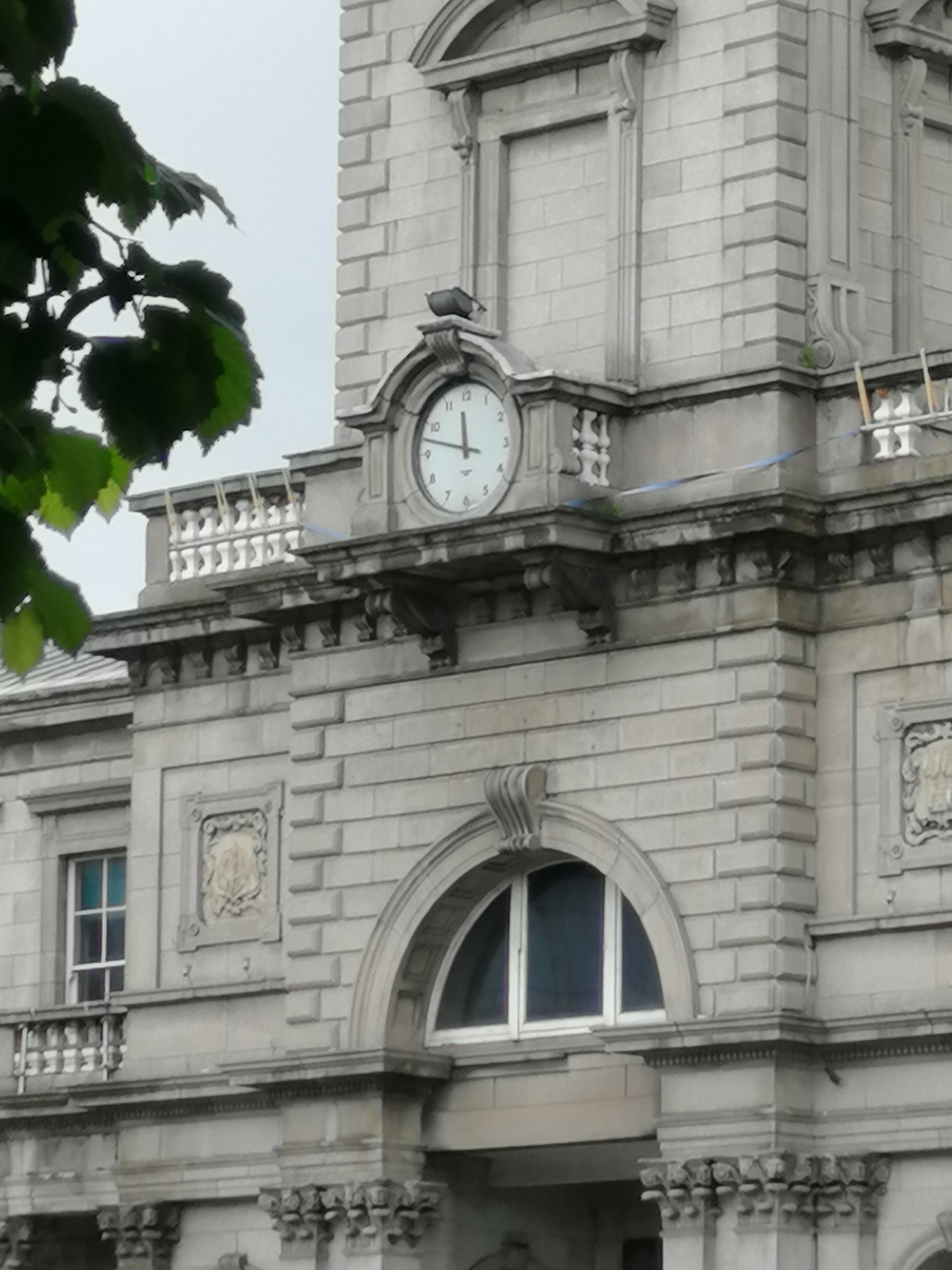
The north side of the Memorial (Photo: Rebel Breeze)The south side of the Memorial (Photo: Rebel Breeze)The clock on the tower of Connolly (formerly Amiens Street) Station — British soldiers fired a machine gun from that tower at Irish insurgents in 1916. (Photo: Rebel Breeze)
On Wednesday (May 11th), a Palestinian journalist, Shireen Abu Akleh was shot dead by Israeli military with one shot to the head. At the time of her murder, she was wearing conflict protective clothing clearly marked “PRESS” but the bullet entered her head under the helmet. Ms. Abu Akleh’s murder has caused outrage around the world, which has been intensified by the Israeli military’s attack on mourners, even on the bearers of her coffin (one of whom has since died) and their attempt to blame the Palestinian resistance for killing the journalist.
(Credit photo: Ahmad Gharabi/ Getty)
WHY THE OUTRAGE THIS TIME, ABOUT THIS JOURNALIST?
Ms. Abu Akleh was a journalist of nearly 25 years’ experience, employed since 1997 by the Qhatari-based news agency Al Jazeera and her reports were familiar to millions in the Arab and wider Muslim world. She was with other journalists, one of whom was also shot but wounded in the back and is expected to recover, covering an Israeli Army raid into the refugee camp in Jenin in Palestine. Both Al Jazeera and Associated Press agencies insisted that the shooters were Israeli military and mapping on-the-spot investigation has discredited the Israeli version firstly that the killer was a Palestinian fighter and then latterly, that it might have been.
Shireen Abu Akleh lies dead or mortally wounded while her terrified colleague fears the same fate (Source: Internet)
“This is one person,” remarked a commentator, “ but hundreds are being killed in the Ukraine war!” Another commented that the Russians have shot journalists in the Ukraine.
Thousands and millions and thousands of millions of people are killed in wars and as a result of wars. Yes and in a way their very numbers makes that difficult to grasp. In the war in the Ukraine before the Russian invasion, 14,000 is the number of estimated dead. Since the invasion, 9,599–24,5991 civilians have been killed, such a wide disparity in estimates a reflection that the conflict is still ongoing and also of the propaganda battle being fought over almost every aspect of the conflict.
In Palestine, the conflict death toll began mostly from 1936 and rose to unknown numbers of Palestinians (due the huge expulsions and fleeing terror) in 1948 when the state of Israel was created, and between 2008 and 2020 alone the death toll is estimated at 5,8502, not counting of course this year and last, with another three added since Sunday, including Abu Akleh. The overall figure of Palestinian civilians killed between 1936 and 2020, with huge gaps where the numbers are unknown, is 2,816,410.3
All three of the latest of Israel’s victims (unless they’ve killed more before I finish writing and editing) were unarmed civilians. Unarmed civilians are the group most likely to be killed in war (10 million in WWI; 50–55 million in WWII, whilst 2,000,000 civilians is the estimate for the Vietnam War). Even though the killing of civilians is an automatic result of war, there are all kind of laws and conventions agreed by most states, including major warlike ones, against the deliberate killing of civilians. But it does seem as though some states have carte blanche in that regard, international law or not.
Israeli police attack funeral of Shireen Abu Akleh, including beating pall-bearers — one of the injured died later. (Photo credit: May Levin/ AP)
For many people, every killing of a Palestinian announced adds to that ongoing toll by Israel, year after year for nearly eight decades. That’s one important significance of the death of Shireen Abu Akleh – she comes to personalise, to give a face to the millions of victims of Israeli Zionism.
Another significance of this murder is that Abu Akleh is the most recent of at least 45 journalists killed by Israeli military since 2000 – that’s more than two per year. The UNESCO Observatory lists 22 journalists killed by Israeli military since 2002 and the case remains “unresolved” in 19 of Israel’s judicial investigation — with no investigation at all listed in two of them.
One of the nearly 50 journalists killed by the Israeli military since 2000 — Yasser Murtagh in 2018 (Photo: Reuters)
Raising the issue of Russian armed forces’ alleged deliberate killing of civilians and of reporters, whether true or not, just does not compare. The allegations might be true, of course — an invading army is likely to encounter opposition in the course of which some of its personnel may kill civilians by intention and without justification. Indeed, armies before now have killed even those of their own country, their own ethnic group. In the currently relentless onslaught of western commentary, often quoting Ukrainian or NATO sources without question, along with the banning of much alternative comment, it is — and will continue to be for some time – difficult to say which is true and which is not. But the two conflicts do not compare, neither in scale nor in length of existence, nor does the death toll of civilians including reporters.
“WHATABOUTERY“
When Russia invaded the Ukraine, anybody who raised the issue of Palestine with regard to the other conflict, e.g “what about the US/NATO support for Israel?” was accused of ‘whataboutery’. ‘Whataboutery’ is thought of as a device to distract from confronting the actual issues initially under discussion by introducing another different or tangential one.
Of course, people do such things and rational discussion is frequently undermined and even shattered by such practice. But, in this case, when US/NATO was saying that it was supporting the post-Maidan Ukrainian regime for reasons of democracy and self-determination, was it justified to point out its record of war and invasion in the Middle East and its support of Israeli Zionist aggression? It seems clear to me that it was but that would not in itself be proof that the Ukrainian regime was wrong. Was it right to point to the regime’s attacks on Russian-speakers and in particular on the Crimea and Donbas regions? It seems to me that it was, in that gave context to secessionist feeling in those areas to which the Russian regime could well want to give military support, whether that were for protection of ethnic kindred or for its own selfish reasons.
None of that “whataboutery” takes away from the tragedy of war in the Ukraine, of course not, but it is valid in considering motivation, given that the US, the leading power in NATO, is also the biggest supporter of the Zionist state and that the EU is not far behind. Palestine exposed that whatever the rights and wrongs in the conflict, NATO and the EU’s motives were not about justice and peace.
When international sporting and cultural organisations of the western capitalist world began to ban Russian teams and individuals from participation, were people justified in saying “Hey, what about Israel?” Surely they were, for that ongoing struggle in which Palestinian land has been ripped from the hands of its people, in which the latter are daily oppressed and from time to time massacred, in which they suffer military occupation, daily discrimination, ethnic cleansing, racism and apartheid – have they not been calling for decades for banning and boycotting Israeli and its sporting teams? And what was the response? They they were bringing politics into sport! And those who did show their solidarity in sports competitions were often penalised for doing so.
When states began to apply economic sanctions to Russia and to Russian individuals, were Palestinians and their supporters not justified in crying out “Hey, what about Israel?” Of course they were.
The strange thing is that those who accused others of “whataboutery” in the past for raising the issue of Palestine in the context of the war in the Ukraine have now begun to cry “what about the Ukraine?” in the context of the international outrage about the murder of Shireen Abu Akleh. Former critics of ‘whataboutery’ have themselves become ‘whatabouters’ now – and without even the shadow of the justification of their accused predecessors.
‘INTERNATIONAL’ OUTRAGE
It’s worth asking what we mean by “international” in the case of the outrage over the murder of Shireen Abu Akleh. That “international” includes a large part of the Arab world. It includes a large part of the non-Arab but Muslim word4. It includes a large part of the non-Arab, non-Muslim world in western Europe and in the USA and in many other parts too. Certainly the Irish public in general has empathised with the Palestinians for decades.5
But it does not include what the western media mean when they use the words “the international community” – the outrage does not encompass the ruling classes of the Western European countries, much less of the USA, nor even the ruling classes of much of the Arab and Muslim world. In this they are being to a degree, honest. Because those ruling classes have either supported the Israeli Zionists directly, or have supported the USA which keeps Israel alive. Only seven elected representatives of the USA’s Democratic Party – out of the 225 it has in the US Congress, quickly expressed condemnation of the killing and called for a quick and independent investigation. Not one of the 210 Republicans expressed condemnation at the time – even though Shireen Abu Akleh was a citizen of the USA!
Protest in Delhi at the Israeli murder of Shireen Abu Akleh — and clearly not by Muslims alone (Hindus and Sikhs seen here also). (Photo source: Internet)
Shireen Abu Akleh murder protest march passing through Grafton Street, Dublin, Ireland yesterday (Photo source: IPSC FB page)
Leaders of a few countries expressed regret but could not bring themselves to even say that she had been killed by the Israeli military. The authorities in Berlin banned an attempt to hold a vigil over the death of the Palestinian journalist, including it in their ban on any Palestinian solidarity events at this time of year, when people commemorate the Palestinian ‘Nakba’. That is what Palestinians call the ‘Catastrophe’ that resulted from the seizure of Palestine by the Israeli Zionists, the creation of its state and the mass expulsion of Palestinians.
It is worth noting too that the media we are reading, which at first either ignored this murder, downplayed it or repeated the Israeli lies that Shireen Abu Akleh had been shot, not by Israeli military but by Palestinian resistance fighters, is compiled by journalists too. On the one hand this points to the severe loss to the world when a journalist who exposes injustice is killed (or persecuted and jailed for extradition to another country, as in the case of Julian Assange). On the other, it points to what a large contingent of hired liars and prevaricators is included among the ranks of journalists, that they cannot even stand up for the truth and protest the murder of one of their own occupation or trade.
Source images: Internet
And it teaches us how much our sources of information are mediated and manipulated by the national and corporative news media. Years ago we were being told that social media would free us from their manipulation or at least provide a viable alternative – independent news and commentary sources would flourish and we could be our own media. Yet the bans and exclusions put in place by Youtube, Facebook, Twitter and governments have shown us what an illusion all that was – in terms of information, we are generally even more controlled and manipulated now than we were before the advent of social media.
Hopefully, those who did not know this already will have learned, both from the coverage of the war in Ukraine and from the murder of this journalist. Those who thought that there was any justice in Israel or generally in the western governments towards the Palestinians, will hopefully have been disabused of that illusion too. Shireen Abu Akleh cannot be brought back to life nor can she be replaced. What we can do is strive to pull down that State that killed her and to knock away all its props around the world.
4Because a great many non-Arab Muslims sympathise with the Palestinians, who mostly ascribe to the faith of Islam and to Muslim culture. However, some Palestinians are Christian, some of Jewish (in the sense that a minority of the population of Palestine was Jewish for decades before the Israeli Zionist occupation) and some of no religion. Shireen Abu Akleh was baptised a Christian; her funeral service was held in a Catholic church and her remains were taken to a Protestant cemetery.
5The Irish cannot fail but be struck too by some parallels with the British occupation of Ireland – the impunity of the Zionist occupiers, for example and the attempt firstly to blame the resistance for those killed by the British Army, followed by a fog of conjecture and holding their own inquiry; the attack on mourners, the seizing of the national flag and attacking people for displaying it (the display of the flag was officially illegal under Israeli law in 1967 and unbanned in 1993 but as seen, is still often objected to by Israeli police).
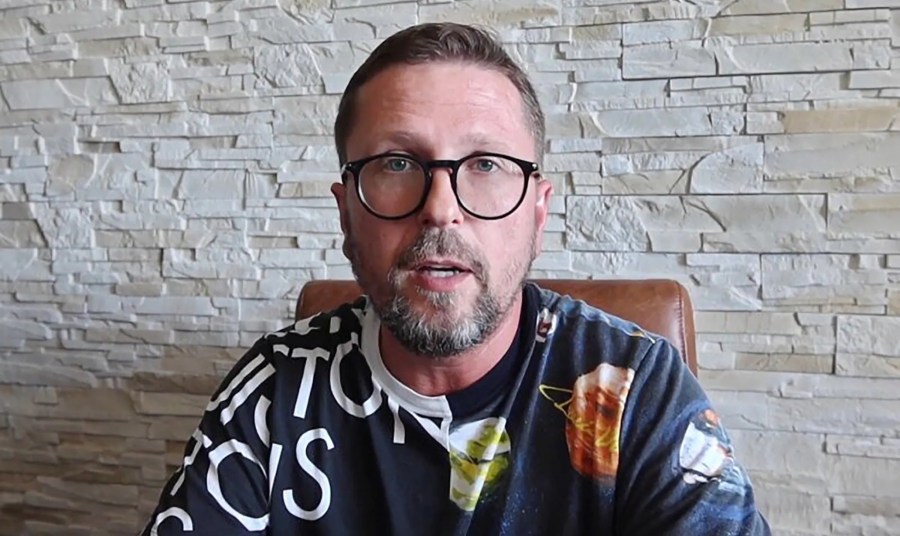
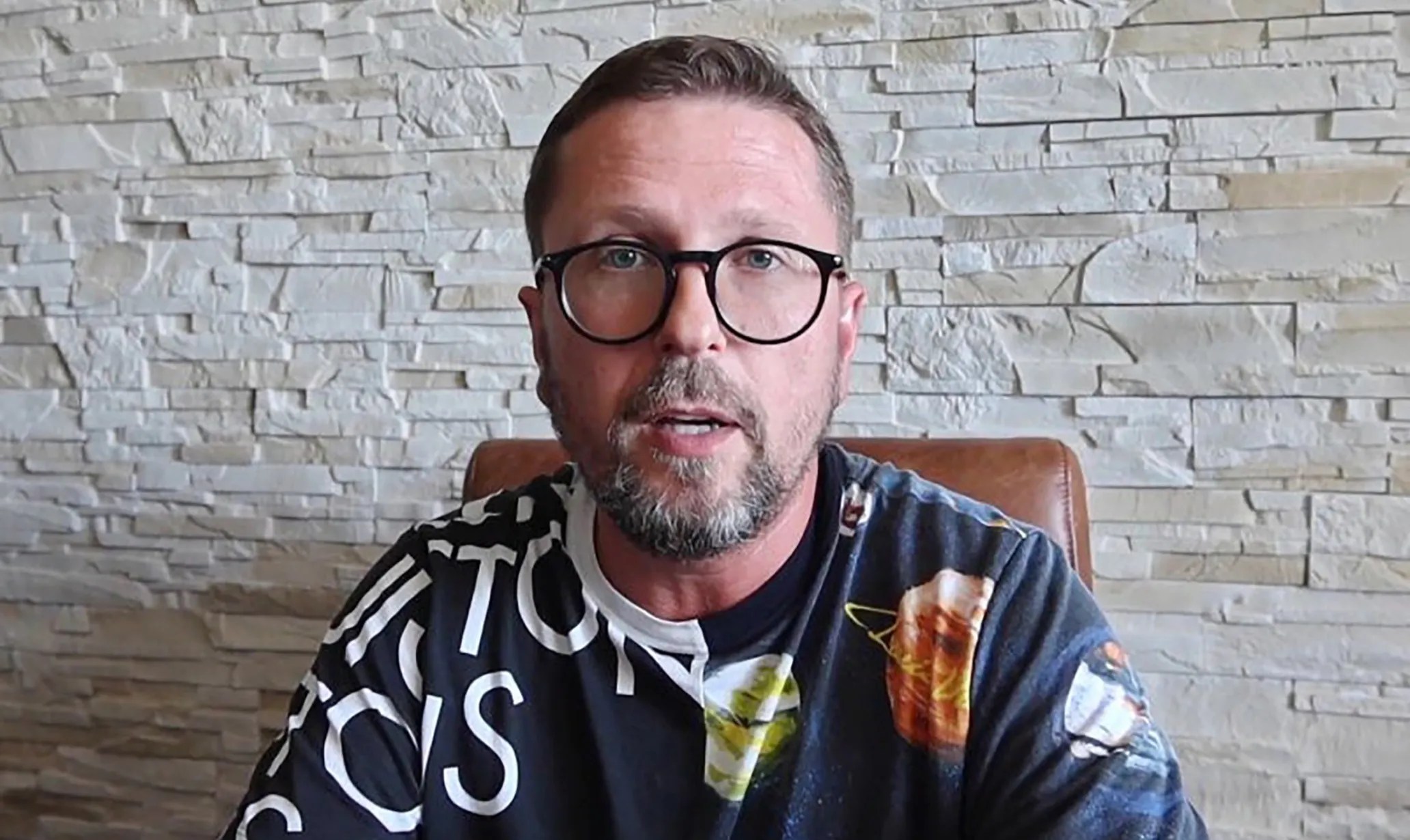
Anatoly Shariy, a popular blogger who opposes Zelensky but also the Russian invasion, accused of being “pro-Russian” and of “high treason” to Ukraine, has been arrested in Spain for extradition to Ukraine, where he has been threatened by nazis. He has also been threatened by Zelensky supporters at his Catalonian address, where he has registered a complaint with the police. Shariy is considered “not a flight risk” by the Spanish State and is out on bail while his extradition warrant is processed. This is at least the second occasion of Spanish State involvement with the Ukrainian authorities against critics – Spanish secret service agents questioned the family and friends of Pablo González, the Basque reporter on the conflict threatened by the Ukrainian intelligence service and later arrested by Poland on charges of “spying” for the Russians, now in his third month of detention without yet a judicial hearing.
Reporting on the arrest and accusations, most right-wing and conservative media outlets follow what has become their standard practice of mirroring Ukrainian official opinion and refer to him as “pro-Russian” in their headlines and it seems clear that if extradited, Shariy would have little chance of a fair trial.
D. Breatnach
5th May 2022
The following is mostly translation by D.Breatnach from article in Castillian Spanish
According to the Ukrainian government, the Spanish National Police arrested the Ukrainian journalist Antoli Sharíy who has been persecuted by the Kyiv government and threatened with death by the fascist groups that operate under its protection.
Anatoli Sharíy and Olga Bondarenko live with their son in Roda de Berà (DB: near Tarragona, Catalonia, Spanish state) and, for two years, have been harassed at their doorstep by people close to the government of Volodomír Zelenski. The Mossos d’Esquadra (DB: Catalonia police) are aware and prevent physical assault but the threatening messages – also in the image of a blood-stained cradle – have not stopped.
All this is related to the public activity of this Ukrainian couple, who have not set foot in their country for several years. Anatoli Sharí has a YouTube channel with almost three million subscribers and is one of the most influential journalists since even before the Maidan revolt in 2014.
Neo-Nazis have not only leaked the address of his home but also posted the identity of the son, a minor to which, according to his mother Olga Bondarenko, only the Ukrainian Consulate could have access. The last protest took place before Easter, but they fear for their safety especially when the men are allowed to leave Ukraine once the conflict ends.
Until now, all the extradition attempts have been unsuccessful, but after Pedro Sánchez’s visit to Kyiv it seems that everything has been reactivated. The Spanish Government has given way to the bizarre accusation made by the Zelensky government: high treason.
Government-connected investigations
Before leaving the Ukraine, Shari was a journalist based in Kiiv who worked for the Obozravatel outlet. He investigated issues related to illegal casinos, the sale of drugs in pharmacies, murders … Some of them, as he explained in an interview given a few days ago to Nació Digital, “had a connection with the Ministry of the Interior, which covered up the crimes.” At that time, Viktor Yanukovych ruled, a president considered pro-Russian and originally from Donbass.
As a result of some pressure, in 2012 Shari went into exile, passing through the Netherlands and ending up in Barcelona. In 2015 he decided to move to Roda de Berà, albeit without refugee status.
the euromaidan
Between the end of 2013 and the beginning of 2014, the Euromaidan revolt broke out, a series of protests especially concentrated in the capital that sought to oust the then president, Viktor Yanukovych, to force a rapprochement with the European Union. Anatoli watched it from exile, but it was shortly before he began his careeras a political journalist.
The events of May 2, 2014, in Odessa, in which 48 people were killed by the launch of Molotov cocktails when they took refuge from the neo-Nazis in the so-called “House of Trade Unions”, raised alarms. This mass murder carried out by the Pravy Sektor (‘Right Sector’, neo-Nazi) caused Anatoli to start posting videos on the networks expressing his opinion and at the same time communicating information about his investigations.
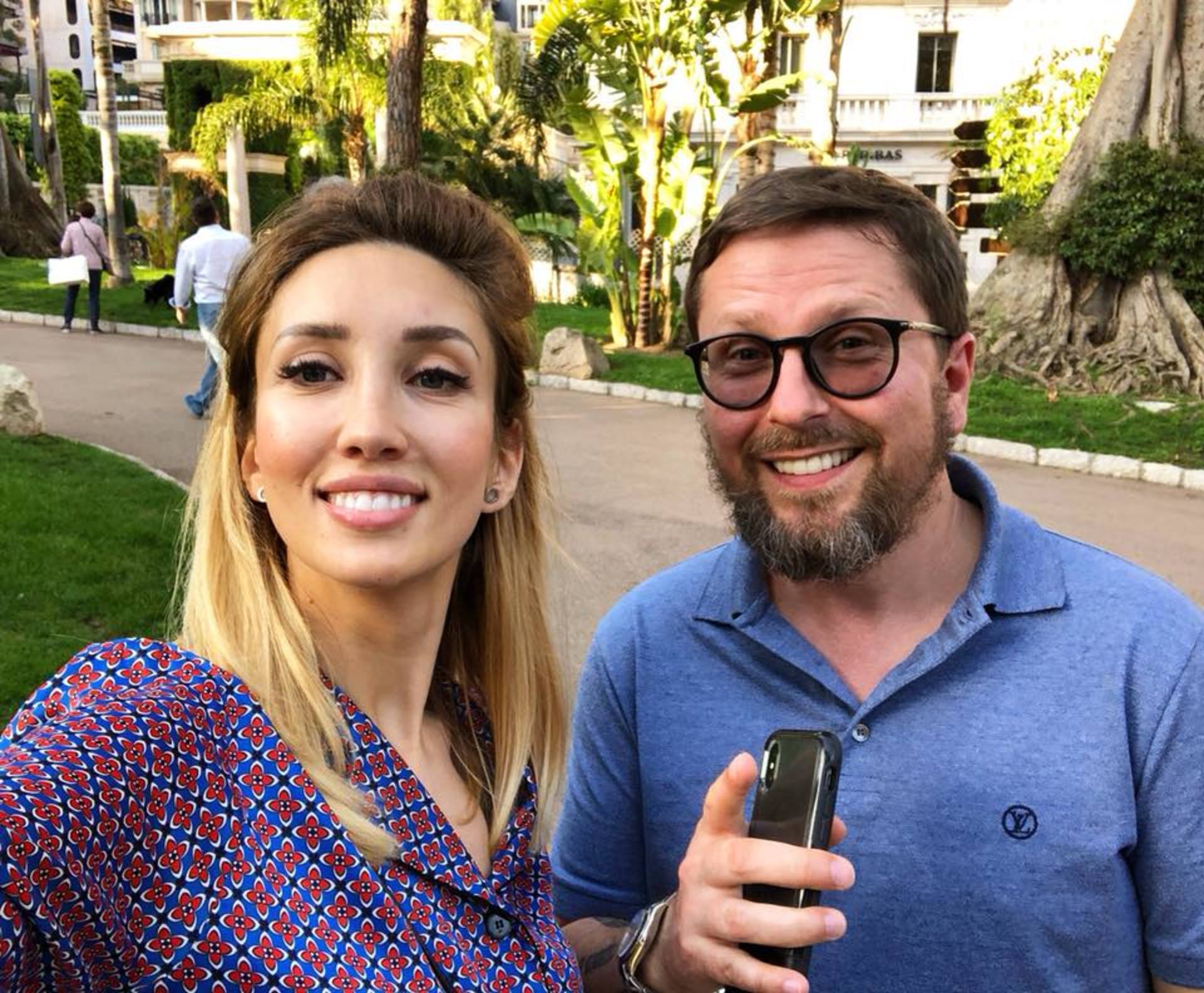
Olha Bondarenko and Anatoly Shariy (Photo sourced: Internet)
“There has never been as much corruption as now”
Anatoly is accused of treason by supporting Russia on you Tube … but contrary to the accusation, YouTube is known to ban all videos that support Russia.
The first months of the Zelensky government did not meet the expectations of a part of the population, who saw him as a leader who could command respect among the different political outlooks that existed in the country. “We wanted Zelensky to be elected because in Ukraine there are many problems with the battalions and the neo-Nazis,” explains Olga.
Beside her, Anatoli denies that these are few: “It is very easy to control the population with weapons even if they are only 10 out of 100,000.” “They have a lot of power, they have weapons, they attack journalists, a lot of people are afraid and the Government does nothing about them,” he adds. One of the best-known battalions in this sense is the Azov, which has even welcomed among its members different international fighters with extreme right-wing ideology, one of them a resident of Segur de Calafell (DB: in Tarragona, Catalonia).
Break with Zelensky
Although before the elections a good relationship existed between Anatoli Sharí and Volodomír Zelensky, the situation changed drastically in 2020. Cases of corruption, such as speculation with the sale of protective masks that arrived in the country during the pandemic were denounced by Anatoli. He declares that “there has never been as much corruption as there is now, not even with Poroshenko.”
The military operation of the Russian government is considered by Anatoli a “gift” for Zelensky, who was steadily declining in popularity before it occurred. One of his rivals in his political career was Anatoli himself, who since June 2019 has led his own party, with a liberal ideology and a discourse against corruption and against neo-Nazi groups.
Supporters of Shariy’s party in 2019 (Photo sourced: Internet)
“The three main opponents of Zelensky are Viktor Medvedchuk, Poroshenko and Anatoli,” says Olga, who points out that this would be one of the reasons why he was accused of high treason in 2020 and, later, once the war had already started, had his party banned, along with others. “Zelensky is a little tyrant and now he has won the lottery to do whatever he wants,” she says.
The accusation of high treason was used by Zelensky to block Anatoli’s and Olga’s Facebook, YouTube and Instagram profiles, and not only that, but he has also imposed various sanctions such as prohibiting them both and also Olga’s mother from having a bank account.
Alternative media
With the blocking of opponents’ (of Zelensky) social networks, thousands of Ukrainians have had to look for alternatives from which to receive information of all kinds. Views of Anatoli’s YouTube channel every time he uploads a video are almost instantaneous, apart from live broadcasts, and most are either from residents in the country — through VPN services — or from Ukrainians who have had to leave. Through these spaces, they get in touch to help one another, for example when someone needs some medicine, according to Olga.
Meanwhile, the Zelensky government continues to try to narrow Anatoli’s circle more and more. One of his followers, arrested and later fled the country, assured him that, during his arrest, he had been tortured…
************************
Prominent blogger and critic of the Ukrainian government, Anatoly Shariy, has been detained by Spanish police as part of an international operation, the Security Service of Ukraine (SBU) announced on Thursday.
Shariy was arrested on Wednesday in a joint operation by Spanish and Ukrainian police officers, as well as international “partners”, the SBU said in a statement.
The agency, Kyiv’s successor to the Soviet KGB, said the opposition figure is wanted on charges of treason by Kyiv, among other things. Shariy has been infringing Ukraine’s national security through his media activities, while allegedly acting on behalf of “foreign” forces, it insisted.
The case against the YouTuber with almost 3 million subscribers began in February 2021.
Shariy’s arrest “is one more proof that every traitor to Ukraine will sooner or later receive the deserved punishment from him. It is unavoidable,” the SBU said.
Anatoly Shariy (Photo sourced: Internet)
The Ukrainian announcement was confirmed by the Spanish police
The Ukrainian announcement was confirmed by Spanish police, who told RIA-Novosti that Shariy was arrested in the coastal city of Tarragona on May 4 on an international arrest warrant.
Shariy received political asylum in the EU in Lithuania in 2012. At the time, he said he was fleeing persecution from the government of Viktor Yanukovych, who was branded as pro-Russian by Western media.
Yanukovych was deposed after the Maidan coup in 2014, but the blogger remained a harsh critic of the authorities in Ukraine, be it President Petro Poroshenko or his successor Volodymyr Zelensky.
He condemned Russia’s military operation in Ukraine after it was launched in late February, but continued to point to what he saw as flaws in Kyiv’s conduct during the ongoing conflict.
The blogger’s political asylum was canceled by Lithuania in January this year.
Shariy was absent from social media on Wednesday, but on Thursday he used Telegram to share a photo of his wife feeding parrots in Barcelona, accompanying it with a comment that read: “This is really a comedy.”
In his Twitter account, according to Publico report, in which Shariy related he had been threatened by a Ukrainian government adviser, the blogger commented: “The only crime I have committed is not to have exposed enough thieves.”
The United States could immediately take direct actions that would de-escalate the over-arching nuclear threat that haunts Russia’s war of aggression in Ukraine. A few such actions would demonstrate good will and indicate a real intention to reduce tensions in the crisis which seems every day to grow more dangerous.
1. U.S. hydrogen bombs stationed in Europe could be withdrawn and their planned replacement cancelled.
The United States and Germany are formal states parties to the Treaty on the Nonproliferation of Nuclear Weapons (NPT). Articles I and II of the NPT flatly prohibit the transfer of nuclear weapons from one states party to another. Any fourth grader can understand that the NATO practice of “nuclear sharing” with Germany, Italy, Belgium, The Netherlands, and Turkey — which together have over 100 U.S. nuclear weapons — is an open violation of the clear, unambiguous, unequivocal and binding prohibitions of the NPT.
(Image sourced: Internet)
The United States stations an estimated 20 of its B61-3 and B61-4 thermonuclear gravity bombs at the German Air Force Base Büchel, 80 miles southeast of Cologne. These B61 H-bombs at Büchel are identified as “intermediate-yield strategic and tactical thermonuclear” bombs, and “the primary thermonuclear gravity bomb in the U.S.” according to the NuclearWeaponArchive.org.
Calling these weapons “intermediate” or “tactical” is shocking disinformation. The maximum yield of the B61-3 is 170 kilotons, and the maximum B61-4 yield is 50 kilotons, as reported by the Bulletin of the atomic Scientists. These H-bombs respectively produce over 11 times and 3 times the explosive blast, mass fire, and radiation of the 15-kiloton Hiroshima bomb that killed 140,000 people. (For background, see Lynn Eden’s “Whole World on Fire,” or Howard Zinn’s “The Bomb.”
The effects of detonating B61-3 or B61-4 bombs would inevitably be catastrophic mass destruction involving disproportionate, indiscriminate and long-lasting devastation. Plans to replace the current B61 with a new “model 12” could be cancelled now, and constitute a real ratcheting down of tensions in Europe.
2. The U.S. can discontinue its nuclear attack courses underway at Ramstein Air Base in Germany.
The U.S. studies and plans nuclear weapon attacks at classrooms of its Defense Nuclear Weapons School (DNWS), and the one branch school outside the U.S. is at Ramstein in Germany, the largest U.S. military base outside the country, headquarters of the U.S. Air Forces in Europe, and NATO Allied Air Command. Outlines of nuclear attack coursework can be read on the DNWS website, which boldly declares the school: “is responsible for delivering, sustaining and supporting air-delivered nuclear weapon systems for our warfighters …every day.”
One class outlined on the DNWS website is for “Theater Nuclear Operations,” described as “a 4.5-day course that provides training for planners, support staff, targeteers, and staff nuclear planners for joint operations and targeting. The course provides an overview of nuclear weapon design, capabilities, and effects as well as U.S. nuclear policy, and joint nuclear doctrine…. Objectives: … Understand the U.S. nuclear planning and execution process…; Understand the targeting effects of nuclear weapon employment….”
Dispensing with this nuclear attack planning school would reduce tensions and help eliminate Russia’s dread of the U.S./NATO nuclear posture.
3. NATO can suspend its provocative military exercises.
Attacks with U.S. nuclear weapons in Europe are regularly simulated or “rehearsed,” as is often reported. Recent headlines noted: “German Air Force training for nuclear war as part of NATO” (Kazakh Telegraph Agency 2020), “Secret nuclear weapons exercise ‘Steadfast Noon” (German Armed Forces Journal 2019), “NATO nuclear weapons exercise unusually open” (2017), and “NATO nuclear weapons exercise Steadfast Noon in Büchel” (2015).
Giant NATO war games routinely zero in on Russia. In 2018, there was “Trident Juncture” with 50,000 troops in Norway, and “Atlantic Resolve” was conducted in Eastern Europe. In 2016, some 16,000 troops gathered in Norway for “Cold Response,” and in “Anaconda 2016” another 31,000 troops from 24 countries were again in motion across Poland, Lithuania, Estonia and Latvia. In 2015, there was “Atlantic Resolve,” “Dragoon Ride,” and “Spring Storm,” all conducted across Poland, Lithuania, Estonia and Latvia. In 2014, the routine “Cold Response” game in Norway involved 16,000 troops, and “Atlantic Resolve” took place in Estonia, Lithuania, Latvia and Poland.
Beyond the annual “Steadfast Noon” simulations, complex, multinational NATO exercises in Eastern European countries just recently ballooned in number. In 2019, there was a single big exercise called “Atlantic Resolve.” In 2020 there were five. In 2021 the number leaped to eleven, and NATO that year made plans for a total of 95 exercises. Individual NATO states had plans for another 220 of their own war games. Nothing justifies Putin’s naked aggression, but the marked increase in NATO war practices would even make the Dali Lama defensive.
4. The U.S. and NATO could end their nuclear weapon “first-use” policy.
The public policy of readiness to initiate attack with nuclear weapons — not as a deterrent against being attacked with nuclear weapons, but its exact opposite — is at the heart of both U.S. and NATO “nuclear posture.” This perpetual threat to start nuclear attacks during a conventional conflict, especially in the context of routine NATO nuclear war exercises, is unnecessarily destabilizing and reckless. In view of the enormously overwhelming power of U.S. and NATO conventional military forces, the nuclear option is grossly redundant and militarily useless.
(Source image: The Irish Sun 2019)
After he retired, Paul Nitze, a former Navy Secretary and personal advisor to President Ron Reagan, wrote “A Threat Mostly to Ourselves” where he observed: “In view of the fact that we can achieve our objectives with conventional weapons, there is no purpose to be gained through the use of our nuclear arsenal.”
Now that the U.S. public as a whole has been transformed into one big anti-war group, it should recognize that it can influence our own government but not Russia’s. Our demands for negotiation, cease-fire, de-escalation and a peace agreement need to be directed in a way that has some chance of success. ###
John LaForge is a Co-director of Nukewatch, a peace and environmental justice group in Wisconsin, and edits its newsletter.
In mid-April (2022) Gardaí, the police force of the Irish State, broke down the door of Mick Plunkett’s home. They would not have been able to claim he resisted their entry or arrest (the usual explanation for injuries on the detained individual) – he was already dead.
To be fair to them, this time they were forcing entry in response to concerns from people that Plunkett had not been seen and wasn’t answering calls.
Still, Mick Plunkett’s door had been forced by police a number of times before – by the Special Branch, at least once by the Garda ‘Heavy Gang’ and another time by the special ‘anti-terrorist’ Paris police.
Mick was born into a working class family of ten siblings in Dún Laoghaire, in Kelly’s Avenue in the small area of council houses built for rent to the seaward side of the town’s main road.
These however did not overlook the sea itself, a view reserved for the big houses and hotels, later somewhat ruined by the DART wires and towers).
Dún Laoghaire1, long-imagined as a area in which only the affluent or at least comfortably-off lived, nevertheless contained such council (formerly ‘Corporation”) houses in the nearby bottom of York Road, also Cross Avenue, Glasthule, Carriglee Gardens, Monkstown Farm and Sallynoggin areas.
As many of that era, especially among manual workers, Mick’s father died relatively young which left his widow Lilly to care for ten children with all siblings able to work and find employment contributing to the care of the rest.
Mick followed his father Oliver into a skilled manual worker trade, trained and qualified as a gas fitter-plumber and, by reputation, a good one; later he would often carry out repair jobs for neighbours free of charge or in exchange for fish caught nearby or by trawlers that docked in the harbour.
“We saw and ate fish that many other people never saw,” said one of his sisters at his funeral reception in the evening.
Amidst the student and youth upsurge of the 1960s around the world, of which Ireland was also a part, many Irish youth of the time became rapidly politicised.
The Vietnam War, Black struggles in the USA and South Africa, Civil Rights in the British colony, lack of sufficient housing in the Irish state (just as today!) were issues that engaged lively interest and which to people like Plunkett, called for solidarity and, in Ireland, direct action.
At his funeral, Niall Leonach2, formerly of the IRSP, related how Plunkett, at the age of 17, had resisted the neglect of the young apprentices by his union and won improvements by organising a sit-in at the union’s office.
April 1991 article Evening Mail on conditions in the Glasthule Housing Estate (Source image: CATU)
HOUSING AND HISTORY
The Dublin and Bray Housing Action Committees were campaigning for an end to slums and for affordable rental housing around the city and Dún Laoghaire soon had its own Housing Action Committee too.
Nial Leonach, former comrade of Plunkett’s told the mourners at Mount Jerome that a large public housing building program was initiated as a result of this campaigning, a program that not only replaced derelict inner city tenements but created large new housing areas such as that in Ballybrack in south county Dublin.
The Housing Action campaigns not only squatted homeless families, they also fought evictions, held marches and public meetings. And in at least one case, became involved in a struggle for historical building conservation.
A Dún Laoghaire IRSP public agitation and information post pictured in the IRSP’S Newspaper (Source image: CATU).
The Dún Laoghaire group joined with conservationists wishing to save Frescati House, a large derelict building on acreage of the property planned by Roches Stores to demolish and convert into a shopping centre.
The original building dated from 1739 but had been purchased by the largest landowning family in Ireland at the time, the Fitzgeralds and had wings added and the grounds planted with exotic shrubs.
The house had been the childhood residence and favoured retreat of Edward Fitzgerald3, a much-loved leader of the first Irish Republican revolutionary movement, the United Irishmen, as late as 1797, the year before their Rising.
The figures heading the campaign were not only conservationists but fairly conservative too (Desmond Fitzgerald, son of a father of the same name who was Minister in a number of Fine Gael governments, was its chairperson).
But it was of course the activist supporters of the DHAC who occupied the building in protest at plans for demolition and were subjected to a baton-wielding police attack to evict them.4
Niall Leonach told the crowd in the Mount Jerome chapel that the criminal charges against the arrested were serious but that Plunkett’s stratagem of issuing a subpoena for Liam Cosgrave5 to appear as witness for their defence got the charges lowered.
The politician had been part of the conservation campaign, the more serious charges were dropped and, on the lesser ones, the penalties were lower-scale fines.
Much of DHAC soon became the Markievicz Cumann of Sinn Féin6, then a very socialist Irish Republican party, particularly in Dublin.
The Civil Rights campaign in the British colony of the Six Counties became a focus for activity and Leonach told his audience that Plunkett had been particularly affected by the colonial police killing of a child by indiscriminate fire from machine-guns at a nationalist housing estate, the Divis Flats.
In 1969 the IRA, the military wing of Sinn Féin, was caught unprepared and largely unarmed to face the pogroms in the British colony, which was one of the reasons for the 1970 split in the party, out of which emerged the Provisional IRA and Provisional Sinn Féin.
Plunkett and others in the Markievicz Cumann, the three Breatnach brothers for example7, viewing the Provos as socially conservative, remained in what was now known as “Official Sinn Féin” but tried to change their party’s direction.
Failing in that, they split, along with others such as the charismatic Séamus Costello8 and formed the Irish Republican Socialist Party in 1974.
It seems clear that the ruling elite of the Irish State viewed the IRSP and the associated INLA as a threat and decided to go beyond the standard and regular harassment, intimidation and petty and medium arrests9 with which they had been treating all Irish Republicans and some socialist activists.
FRAMED IN DUBLIN AND IN PARIS
On 31st March 1976 the Cork-Dublin mail train was stopped near Sallins, Co. Kildare by armed men who netted around £200,000.10 The State decided to believe, at least officially that the operation had been carried out by the INLA.
As a result armed police raided the homes of 40 members of the IRSP and their families. The Gardaí beat up their victims and obtained “confessions” from a number of them – however, some who gave self-incriminating statements could not have been present and their prosecutions were dropped.11
Eventually, a trial in the political Special Criminal Court proceeded against Plunkett and another three IRSP members: Osgur Breatnach, Nicky Kelly and Brian McNally.
Poster supporting the four framed and on trial for the Sallins Mail Train Robbery, depicting Mick Plunkett on far right of images. (Source image: Internet)
After many abuses of the legal system and the longest judicial procedure in the State, three of the four were convicted on the basis of their tortured “confessions” which they had denied.
Forensic “evidence” was provided against the only one who had refused to sign a “confession” – an alleged lock of Plunkett’s hair12 was claimed to have been found at the scene of the robbery; that was insufficient and Plunkett was finally discharged.
The others were released after years of campaigning13 and were paid a financial compensation but an official enquiry into the arrests, trials and convictions was never held and currently a campaign for such is underway.14.
Mick Plunkett remained politically active but after his arrest in the vicinity of an armed training camp was charged with “membership” and scheduled to appear before the Special Criminal Court.
Plunkett, knowing the chances of acquittal in no-jury “the Special” were next to nil, decamped to France.
In Paris he and Mary Reid, a poet-activist and also formerly of the IRSP, shared accommodation. In the summer of 1982, their door was kicked down by armed police of the new special “anti-terrorist” French unit.
Both were arrested, along with another Irishman Stephen King and charged with possession of automatic weapons and explosives. This followed the bombing of a delicatessen in the Jewish quarter of the city which was later revealed to have had police complicity.
Plunkett, Reid and King were accused of being part of an Irish-Palestinian cell, a figment of the special unit’s imagination.
All three denied the charges, the accusation and the existence of such a cell, insisting that if any weapons and explosives had been found in their accommodation, it had been planted there by the police.
Niall Leonach commented to the mourners in Mount Jerome that Plunkett had gone from being involved in the greatest miscarriage of justice in the Irish state to being accused in the greatest miscarriage of justice in the French State’s modern history.
Fortunately for the Irish accused, the special police unit was in serious conflict with the main police force and that helped bring to public view the fact that the armaments had, indeed, been planted on the accused by the “anti-terrorist” police unit.
All three were released after nine months in jail and Mary Reid’s nine-year-old son Cathal had been taken into care.
The whole case was by then such as to convince the Irish State authorities to refrain from severely embarrassing their French counterparts by requesting Plunkett’s extradition to face his charges in the Special Criminal Court.
FRANCE – OCTOBER 05: Michael Plunkett, Mary Reid, Stephen King in Vincennes, France on October 05th , 1983. (Photo by Eric BOUVET/Gamma-Rapho via Getty Images). Note poster of the Sallins Trial behind them.
Working in London at the time, I read the news about the arrests of Irish political activists in Paris and was shocked to see names I recognised.
I remembered the last time I had seen Mick; I had been back in Dún Laoghaire on holiday and with four of my brothers we set off in Mick’s brother Jimmy’s rowing boat from a pier, Mick himself in it too. We had fishing rods and lines and began to fish as we cleared the harbour.
Hours later as the sun dropped to the west, we turned back with our varied catch. Once inside between the piers it was quite dark; a large ship entering the harbour appeared to be bearing down on us and we couldn’t find our flashlight.
The incident provided more excitement than we had wished for but seemed to give extra taste to the pints in the local pub afterwards.
Mick found happiness for a time with Tracy out of which union came their daughter Natacha. After the Good Friday Agreement Mick felt safe to return to Ireland but Tracy remained in Paris with their daughter, Natascha visiting him and his extended family by arrangement on occasion.
Plunkett seemed to have retired from political activity and had also withdrawn from social contact with many of his former contacts. His health deteriorated significantly but nevertheless his death came as something of a shock to many.
Mick Plunkett’s coffin at the funeral parlour, officiated by his daughter Natacha. (Photo: D.Breatnach)
Many came to pay their respects at the funeral parlour where his coffin lay and to watch the wonderful collection of photos collected by his ex-partner, Tracy.
His daughter Natacha was there to receive condolences and to offer shots of Irish whisky over the coffin (where tobacco roll-ups were also placed irreverently on the crucifix attached to the woodwork – Mick was reportedly an atheist).
Natacha was also at the cremation service in Mount Jerome cemetery with her mother Tracy, where Plunkett’s coffin was covered in the blue version of the Starry Plough flag15 before being removed from the hearse, carried by relations.
The Seamus Costello Memorial Committee, in uniform and white gloves, providing a small ceremonial guard of honour.
Mick’s nephew Karl chaired the event and in turn called Jennifer Holland to give a short talk on Mick and his times followed by Niall Leonach, former General Secretary of the IRSP and close comrade of Plunkett’s, for a longer oration on Mick’s background and activism.
Karl provided many personal anecdotes from his association with his uncle and from within family stories, many of them amusing and some hilarious.
He did not however avoid the political and recounted that many of them were kept unaware of the reasons for Mick’s absence and his apparent inability to travel back to Ireland even to visit.
It was by going through some papers in his mother’s room that he came across the IRSP pamphlet on the Sallins case and was shocked; confronting his mother, the story began to be told.16
Recollecting the family’s trip to Paris to present two children for baptism in Notre Dame Cathedral which Mick attended, Karl spoke about their warm reception there and being tour-guided around by Plunkett, who had acquainted himself with much of the city’s history.
One wonders whether that included the “Wall of the Communards” where in 1871, revolutionaries of the Paris Commune were summarily executed by French firing squads under the command of Marshall Patrice McMahon.
The Marshall was a descendant of Irish “Wild Geese” refugees from Williamite-controlled Ireland. Plunkett would hardly have been unaware of that history and its irony for the Irish.
The hearse carrying Mick Plunkett’s coffin arrives at Mt. Jerome cemetery, escorted by guard of honour supplied by the Seamus Costello Memorial Committee (the photo is from their FB page).
SOCIAL, SONG AND FLAG
Later that evening in a large reserved section of the Rochestown Lodge Hotel (formerly the Victor Hotel) just above the large Sallynoggin housing estate, mourners and celebrants gathered to eat, drink and talk.
Some had not seen one another for decades.
Among the many reminiscences of the social and music scene in Dún Laoghaire in the later decades of the last century, including the remark that “our harbour is a marina now”, one of Mick’s sisters spoke of raids by the Special Branch on their family home.
Children would be ordered or pulled out of bed and the mattresses and beds tipped over, allegedly searching for weapons.
Strangely perhaps, there was no performance of musicians or singers or even sing-alongs at the event, though the traditional song The Parting Glass was sung to Plunkett’s daughter Natacha and a small unexpecting audience on the covered patio outside.
Later inside, by which time some had left and following a query about a ceramic badge of the Starry Plough worn by one those remaining, a whole length of the original green-and-gold version of the flag was unfurled, causing much interest and queues forming asking to be photographed behind it.
And a little later, a man sang Patrick Galvin’s Where Is Our James Connolly? to much applause.
Securing the Starry Plough flag to the coffin on the shoulders of relatives of Mick Plunkett, about to be carried into Mt. Jerome’s chapel for a non-religious remembrance event. (Photo: D.Breatnach)
This was fitting for as the mourners had been reminded in Mount Jerome, Connolly17 had been a great inspiration to Mick Plunkett’s political activism and to the IRSP too.
But not only that: a hostel in Dublin city centre empty for many years and very recently occupied by socialist Republicans had been named Connolly House and had that very day witnessed a rally held outside it to resist a threatened Garda operation to evict the occupants.
It seemed to me that something other than the remembrance of a retired fighter alone had happened at the Plunkett memorial events, something more than the appropriate marker of a past and finished period in Irish history, as had been suggested by Holland in her oration.
It seemed to me that the history of struggle in Ireland for national self-determination and social justice had to an extent been re-invoked, that it appeared to some extent as the ghost of struggles past but also as the gaining substance of struggles present and, in particular, yet to come.
I think Mick would have been pleased and, in any case, in defiance of the declarations of Fukuyama and such idealogues, history is nowhere near finished or dead. As some have commented, it is not even past.
End.
FOOTNOTES
1A harbour town seven miles south of Dublin city centre, in Dublin County but administered by DL-Rathdown Council for some years now.
3He is more usually referred to as “Lord Edward Fitzgerald” which, apart from being somewhat historically inaccurate, does him a disservice. He was a republican, renounced his title and his sister Lucy said of him some years after his death in prison that “He was a paddy and no more; he desired no other title than this.”
4The Wikipedia entry on Frescati House and the campaign makes no mention at all of this sit-in, Garda attack or the subsequent court cases, of which there is ample documentary evidence. Hopefully someone will undertake its appropriate updating.
5Liam Cosgrave was a Fine Gael politician, son of the Leader of the Irish parliamentary Opposition from 1965 to 19873 and Taoiseach (Prime Minister) from 1973 to 1977, W.T Cosgrave.
6The Sinn Féin party has gone through many metamorphises, from being a reformist dual-monarchy party, to revolutionary republican to constitutionalist. Constance Markievicz was a socialist Republican who took part in the 1916 Rising as an officer in the Irish Citizen Army – the name of a socialist revolutionary woman chosen for the cumann (‘association’, a branch of the SF party at the time) indicated an inclination towards revolution, feminism and socialism.
8Séamus Costello (b. 1939) was murdered by the Official IRA in Dublin on 5th October 1977.
9An example of the medium-seriousness was the charge of “membership of an illegal organisation” under the Amendment to the Offences Against the State Act, introduced in 1972 which required only the unsupported word of a Garda officer at rank of superintendent or above for conviction and a virtually automatic jail sentence of one to two years.
10€237,389.81 — without taking into account inflation — for today’s value
11Notably John Fitzpatrick, who years later publicly challenged the State to charge him with the offence to which he had “confessed” – there was no response.
12If it had been Plunkett’s hair, it had to have been planted by the Heavy Gang, since Mick had been nowhere near that scene and, in fact, the robbery had been carried out by the Provisional IRA. In addition, without the later development of DNA testing, all a sample of hair could tell, apart from its natural colour, was the blood-type of its owner and millions may share that.
13Some of those involved at the time, whether as victims or as campaigners, were present at some of the funeral events too, including Osgur Breatnach, Nicky Kelly, Caoilte and Peetera Schilders-Bhreatnach.
15The flag with a design in the shape of the constellation known as Ursa Mayor was of the Irish Citizen Army, formed to defend the workers during the strike and 8-month lockout of 1913 and later fought in the 1916 Rising. Originally the design was of the constellation in white or silver overlaid by the depiction of a plough in gold, with sword as the plough-share and all on a green background. A later version was the plain blue one with Ursa Mayor outlined in white stars. That version was the one in use by the short-lived Republican Congress of the 1930s and was for many years later, probably up to the end of the century, the main one displayed and therefore familiar to Republicans and socialists (even for years flown by the Irish Labour Party) but has now been largely supplanted by the original green version.
16This is not at all an unusual experience in Ireland and, whether by desire to protect the young, pain of reminiscence or even disapproval, much of our history has been concealed from generations for a time or even completely lost.
17James Connolly, revolutionary socialist, trade union organiser, historian, journalist, song-writer and one of the Seven Signatories of the 1916 Proclamation of Independence, was tried by British military court for his leading role in the Rising and executed by firing squad.