Diarmuid Breatnach
(NB: Versiones en Catalan y Castellano al fondo)
(Reading time: 5 minutes)
Brothers and sisters, greetings! Your valiant struggle is now at a pause. Although in revolutionary struggle it is important to keep up the momentum, nevertheless a pause gives time for reflection. A useful time to look at what worked and what did not, to review the lessons learned in the struggle so far and also to compare with other historical periods.
YOU CANNOT STAND ALONE AND WIN
It is clear to most people that Catalonia cannot, as things stand, win independence on its own efforts alone. The total population of Catalonia, rather like that of Ireland, is a little over 7.5 million, while the population of the rest of the Spanish state comes to just under 45.5 million. Even with the populations of the rest of the Paisos Catalans, Valencia, Balearic Islands and Pau, the numbers are stacked against you. And not all Catalans are in favour of independence either, even if the majority in Catalonia favour it. Not to be ignored either is the French State, which sits on your northern border and claims dominion over Pau.
The French and Spanish states are powerful and also prominent members of economic and military alliances, chief amongst which in our discussion perhaps is the European Union. Many of you appealed to the EU for support when the Spanish State sent its police forces to attack you at the time of your Referendum on Independence in 2017. You received your reply when then President of the EU Commission Claude Juncker declared that they “don’t want a European Union of 99 states” and also indicated that some EU existing member states might face similar problems to the Spanish State’s (clearly having in mind France, Italy, the UK at the time and Belgium, states that include subject nations or conflicting national identities). The answer was repeated when Catalan MEPs Puigdemont and Comin were for a period banned from entering the European Parliament.


(Photo sourced: Internet)
Those of you who expected something different from the EU were disappointed, some of you bitterly so. It was so unjust. Yes, it was very unjust – yet entirely predictable. The EU is an alliance which is not only capitalist, not only dominated by a neo-liberal approach to economics but also dominated by imperialist states. And it should not have been expected that they would encourage the breakup of one of those states, however they might wish that it behaved itself with more cunning and less brutal force. By the way, they prefer cunning to brute force not because they believe the latter is wrong but because once one resorts to brute force the mask is off and then the outcome of the contest depends on which side has the most force. The rulers of states are very few in numbers and their close supporters few also. The ruled people on the other hand constitute a huge mass.
This brings me back again to the question of numbers and how few you are. You have courage and intelligent innovations but you need allies. There are many places in the world to look for allies but the most obvious and effective places are the nearest – in the very states that oppress you. Let us for a moment concentrate on the territory of your main oppressor here – the Spanish State.
THE CLOSEST AND MOST OBVIOUS ALLY
When looking for potential allies there is an obvious one that springs to mind: the Basque Country. That nation’s population is not even half the size of yours and it is divided much more than is your nation by the border with the French State. Yet, after the victory of Franco’s fascist-military forces, that small nation fought a hard struggle against the Spanish State throughout the Dictatorship, through the Transition and afterwards. Though the armed side of that struggle is what observers often focus upon, the struggle was also and mainly one might say, social, linguistic, ideological and trade unionist. An obvious partner, one might think. Yet things have not, so far, turned out that way. It might be worthwhile examining why.
One reason I believe was the rejection by much of the Catalan independence movement of the armed side of the Basque struggle, even though that had already ended by 2012. One of the exiled Catalan leaders, for the moment an MEP, even stated publicly that “We Catalans are not like the Basques; our struggle is a peaceful one.” She was repeating what countless Catalans have said about their struggle being a peaceful one, though of course the insult to and alienation of another struggling nation was gratuitous.
Firstly, even if the struggle of the Catalans for independence was going to be a peaceful one, forever and ever amen, that was no reason to reject the assistance of an ally and furthermore one that had abandoned armed struggle over five years earlier. I am sorry to say and you would be ashamed to admit that those comments disparaging the Basques and the armed part of their history of resistance were in order to make yourselves, as you thought, more attractive to the EU. It didn’t work, as you know now and in fact could never work because it is the very consequences of your struggle for a member state to which the EU objects, not whatever your methods.
Secondly, from a historical and practical point of view, it is illogical to forever commit oneself (or one’s people) to one method of struggle alone. It flies in the face of the history of Catalonia as well as the history of practically every other nation on Earth opposing an invading or colonising force. It ignores too the history of the Spanish State itself which from its beginning has been one of violent suppression of not only every people it invaded outside the peninsula and also the nations within its current territory but also every democratic, liberal and socialist movement that arose among its own core population. But let us leave that question aside for the moment and return that of allies.
Knowing the history of the Basque people, many expected some kind of popular rising there in 2017 in support of Catalonia, to stretch the forces of repression and give the Spanish State an even more serious headache. It did not happen. Apart from a demonstration or two and messages of support, we only saw the blocking for a short while of one of the main commercial motorways into the Spanish State. Many were surprised or even shocked at such a weak response from a movement that had not long before been capable of putting tens of thousands on to the streets in protest against the State.
Whether the Catalans asked for that kind of support or didn’t does not, in essence matter. The opportunity was there, the enemy the same – but the Basque pro-independence movement leaders chose not to act.
Does this mean that the Basques will never support the struggle of Catalonia for independence? I do not think so ….. but the issue requires a little deeper investigation.
A CHANGED LEADERSHIP
Had this crisis arisen in the 1970s or 1980s, the practical support from the Basque Country would have been enormous and stretched the forces of Spanish State repression to breaking point. Perhaps so even in the early 1990s. By the end of that decade however, most of the leaders of the Abertzale Left, the Basque pro-Independence Left, were looking to give up armed struggle completely and were attracted by what they saw as the success of the pacification processes in Ireland, Palestine (for a short period) and South Africa. Unlike the Irish and South African examples, they dissolved the military side of their organisation without getting a single thing in return from the Spanish State (except more repression). It soon became apparent that the armed aspect was not the only form of struggle that they were giving up and that henceforth they would focus nearly completely on the electoral path.
One may wonder at a leadership which once declared itself for the independence and socialism of an entire Euskera-speaking nation now settling for electoral campaigns in which, even in the highly unlikely event of becoming a majority party in one part of of its nation, it would still be on territory divided by two powerful states. It does seem ludicrous but perhaps they just wanted to have ‘normal lives’ for a change and felt unable to admit their true motivation.
Meanwhile, the Catalans, now having risen in struggle, have lives far from what might be considered “normal”. Their pro-independence organisations are preparing for the next stage of the war and their people wondering what that will be and whether their leaders have the capacity to take the right decisions; other leaders in jail or in exile on framed charges, well over another 700 activists facing charges in future – and all arising out of struggle against a State that has backed down not one inch.
The need for effective allies has if anything increased. There are still the Basques. Yes, I say that despite the abandonment of struggle by their movement’s leadership. The heart of resistance still beats there, though the head is somewhat confused and uncertain.
FOR HUMAN RIGHTS AND SOLIDARITY
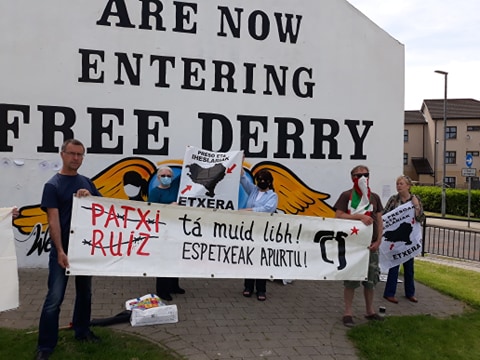
Over four weeks ago, Patxi Ruiz Romero, a Basque political prisoner who would be considered a “dissident” by some, went on hunger strike, 12 days of which were also a thirst strike.

(Photo sourced: Amnistia Garrasi FB page)
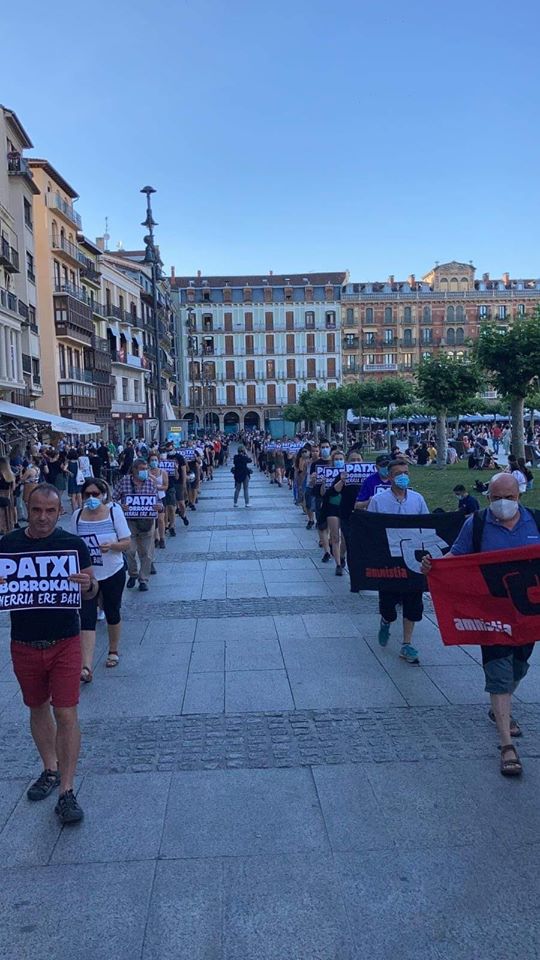
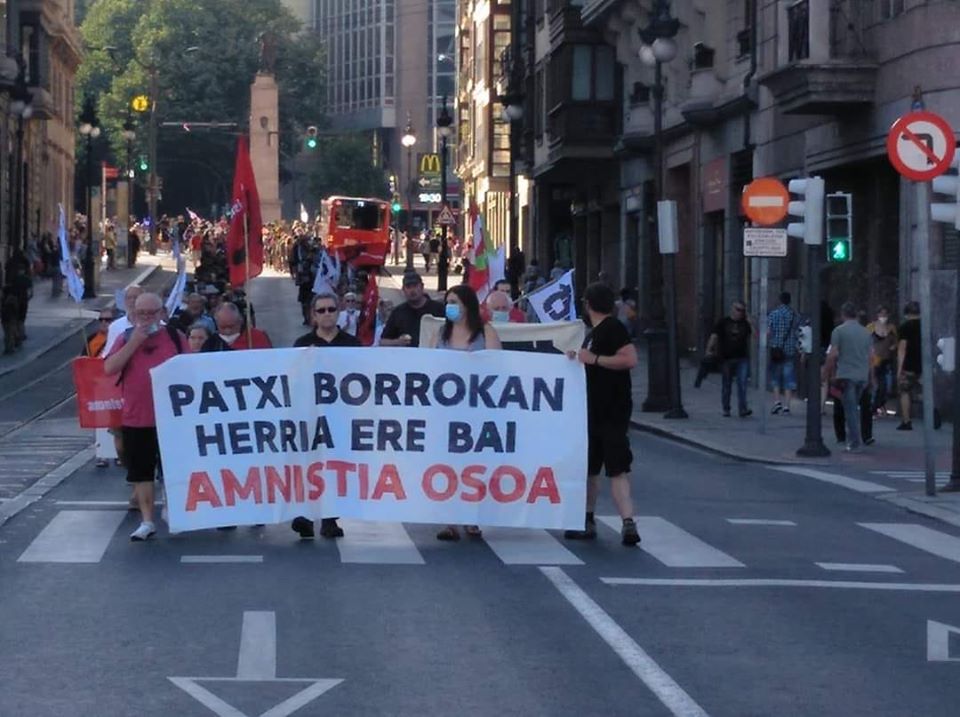
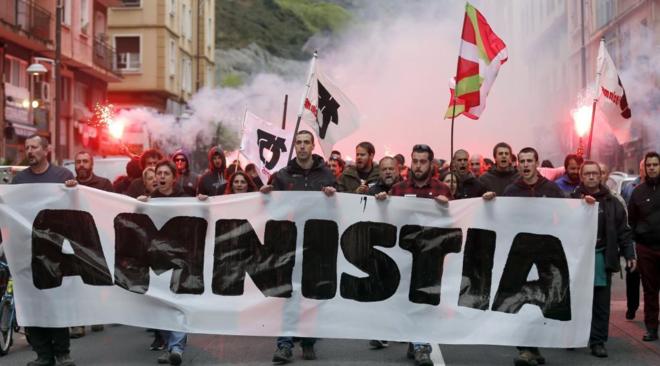
A Basque movement that would be considered “dissident” by some people too, Movement for Amnesty and Against Repression, has mobilised public protests in solidarity with Patxi Ruiz and public fasts, pickets and marches have taken place across the Basque Country, including each of its five cities: Gastheiz/ Vitoria, Irunea/ Pamplona, Donosti/ San Sebastian, Baiona/ Bayonne and Bilbo/ Bilbao. All of this has happened despite not only a lack of support from the Abertzale Left leadership but its condemnation of the mobilisation on the streets. And you Catalans, you know the importance of the streets! Isn’t Els carres seran sempre nostres (“The streets will always be ours”) one of the popular slogans of your movement?

(Photo sourced: Amnistia Garrasi FB)
I ask you now to stretch the public hand of solidarity to this movement (as was done last Friday in Barcelona). Both out of solidarity for human rights and also for a partnership in struggle with the Basque Country. Some will say that they don’t agree with the path chosen by Patxi Ruiz which led to his arrest. I reply that you don’t have to support that but you SHOULD SUPPORT HUMAN RIGHTS to self-determination, against torture, against beatings in prison and in support of serving one’s sentence near one’s family (remember when the Catalan political prisoners were being held in Madrid?).
Others of you may object that the “dissident” movement is a small one. I would reply that a small movement that will fight is worth much more than a huge one held back by its leaders. Also that the Abertzale Left was once also a small movement.
Some may say that your movement will be accused of being supporters of ETA and you are not. Firstly, ETA no longer exists. Secondly, what is one more accusation thrown at you by Spanish unionists and fascists?

(Photo source: personal)
You should not need me, an insignificant activist though of many years’ experience to be telling you this. The truth is clear in this case. And at this late stage, perhaps even your support will be insufficient to save Patxi’s life. But it would be remembered and would help in forging a unity in action against a common enemy, a unity to which other forces, at the moment more or less quiet, would come and help to break up this fascist State and bring freedom for all. From wherever he is then, I am sure Patxi would thank you. And so would your own people. And many other struggling people around the world.
Dublin 9th June 2020.
CARTA OBERTA AL MOVIMENT INDEPENDENTISTA CATALÀ
Diarmuid Breatnach
(Temps de lectura: 5 minuts)
Germans i germanes, salutacions! La vostra valent lluita és ara en pausa. Encara que en la lluita revolucionària és important mantenir l’impuls, de vegades una pausa dóna temps per a la reflexió. Un moment útil per veure què funcionava i què no, per revisar les lliçons apreses fins ara en la lluita i també per comparar amb altres períodes històrics.
NO PODEU GUANYAR SOLS
És evident per a la majoria de la gent que Catalunya no pot, tal com estan les coses, obtenir la independència només pels seus propis esforços. La població total de Catalunya, aproximadament similar a la d’Irlanda, és gairebé de 7.500.000, mentre que la població de la resta de l’estat espanyol ascendeix a gairebé 45.500.000. Fins i tot amb les poblacions de la resta dels Països Catalans, València, les Illes Balears i Catalunya Nord, les xifres no sumen prou. Ni tampoc tots els catalans estan a favor de la independència, tot i que hi ha una majoria parlamentària que li pot donar suport. Tampoc ha d’ignorar-se l’estat francès, que es troba a la vostra frontera nord i reivindica la dominació sobre la Catalunya Nord.
Els estats francès i espanyol són poderosos i també destacats membres de les aliances econòmiques i militars, entre les quals, en aquest debat, sens dubte destaca la Unió Europea. Molts de vosaltres vau demanar suport a la UE quan l’estat espanyol va enviar les seves forces policials per atacar-vos amb motiu del vostre referèndum d’independència el 2017. Vau rebre la vostra resposta quan el llavors president de la Comissió, Claude Junkers, va afirmar que “no volen una Unió Europea de 99 Estats”, i també va indicar que alguns dels estats membres de la UE podrien enfrontar-se a problemes similars als de l’estat espanyol (en clara referència a França, Itàlia, Regne Unit – en aquell moment – i Bèlgica, estats que inclouen nacions o identitats nacionals en conflicte). La resposta es va repetir quan als eurodiputats Puigdemont i Comin se’ls va impedir durant un període de temps d’entrar al Parlament Europeu.
Aquells de vosaltres que esperàveu de la UE alguna altra cosa vau quedar decebuts, en alguns casos de forma molt amarga. Va ser tan injust. Sí, va ser molt injust… però totalment previsible. La UE és una aliança que no només és capitalista, no només està dominada per un enfocament neoliberal de l’economia, sinó que també està dominada pels Estats imperialistes. I no era d’esperar que fomentés la ruptura d’un d’aquests Estats, fins i tot si haurien preferit que es comportés amb més astúcia i menys força bruta. Per cert, prefereixen l’astúcia a la força bruta no perquè creguin que aquesta última està malament, sinó perquè una vegada que s’ha recorregut a la força bruta, cauen les màscares i després el resultat de l’envit depèn de quin costat té més força. Els governants dels Estats són molt pocs en nombre i els seus partidaris propers també. En canvi, la gent governada constitueix una massa enorme.
Això em torna a la qüestió dels números i com sou d’escassos. Teniu valor i innovacions intel·ligents, però necessiteu aliats. Hi ha molts llocs al món per buscar aliats, però els llocs més evidents i eficaços són els més propers, dins els mateixos estats que us oprimeixen. Ens concentrarem per un moment en el territori del vostre principal opressor aquí: l’estat espanyol.
L’ALIAT MÉS PROPER I EVIDENT
Si esteu buscant possibles aliats, n’hi ha un de ben evident que ve a la ment: el País Basc. La població d’aquesta nació no és ni la meitat de la vostra, i està molt més dividida que la vostra per la frontera amb l’estat francès. No obstant això, després de la victòria de l’exèrcit feixista de Franco, aquesta petita nació va lluitar contra l’estat espanyol durant tota la dictadura, durant la transició i després. Tot i que els observadors sovint se centren només en el seu vessant armat, es podria dir que la lluita era també, i principalment, social, lingüística, ideològica i sindicalista. Un soci evident, es podria pensar. No obstant això, les coses no han funcionat, fins ara, d’aquesta manera. Sembla interessant analitzar el perquè.
Una de les raons, crec, va ser el rebuig de gran part del moviment independentista català a la vessant armada de la lluita basca, tot i que ja s’havia acabat el 2012. Un dels dirigents catalans exiliats, actualment Eurodiputada, va afirmar públicament que “els catalans no som com els bascos; la nostra lluita és pacífica.” Estava repetint el que molts catalans també han dit sobre el caràcter pacífic de la seva lluita, encara que per descomptat l’insult i l’alienació amb relació a un altre país en dificultats van ser del tot gratuïts.
En primer lloc, fins i tot si la lluita dels catalans per la independència es mantingués pacífica pels segles dels segles amén, això no seria cap raó per rebutjar l’ajuda d’un aliat que, a més, havia abandonat la lluita armada feia ja més de cinc anys. Lamento dir, i no us agradarà admetre, que aquests comentaris distanciant-se dels bascos i del vessant armat de la seva història de resistència tenien com a objectiu fer-se més atractius per a la UE. No va funcionar, com bé sabeu ara, i de fet mai no podria funcionar, perquè és la conseqüència esperable de lluitar per un estat propi al qual la UE s’oposa, independentment dels mètodes utilitzats.
En segon lloc, tant des d’un punt de vista històric com pràctic, és il·lògic comprometre’s (o comprometre el teu poble) per sempre a un únic mètode de lluita. Contradiu la història de Catalunya, així com la història de pràcticament qualsevol altra nació del planeta que s’hagi resistit a una força invasora o colonitzadora. També ignora la història de l’estat espanyol que des dels seus inicis ha estat repressor violent no només de cada poble que ha envaït fora de la península, així com de les nacions dins de les seves actuals fronteres, sinó també de tots els moviments democràtics, liberals i socialistes sorgits d’entre la seva pròpia població. Però deixem de banda de moment aquesta qüestió i tornem a la dels aliats.
Coneixent la història del poble basc, molts el 2017 esperaven que s’hi alcés algun tipus de moviment popular en suport de Catalunya, per pressionar a les forces repressores i augmentar el mal de cap a l’estat espanyol. No va passar. A part d’una o dues manifestacions i missatges de suport, només vam veure el bloqueig per un curt temps d’una de les principals carreteres comercials de l’estat espanyol. Molts van quedar sorpresos, per no dir impactats, per la resposta tan feble d’un moviment que poc abans havia estat capaç de posar desenes de milers de persones als carrers en protesta contra l’estat.
Si els catalans van demanar aquest tipus de suport, o no, és realment el que menys importa. L’oportunitat hi va ser, l’enemic era el mateix, però els dirigents del moviment independentista basc van optar per no actuar.
Vol dir això que els bascos mai no donaran suport a la lluita de Catalunya per la independència? No és això el que penso… però el tema requereix una mica de recerca més profunda.
UN CANVI DE LIDERATGE
Si aquesta crisi hagués sorgit en els anys 70 o 80, el suport pràctic del País Basc hauria estat enorme i hauria tensat moltíssim a les forces repressores de l’estat espanyol. Potser fins i tot en la dècada de 1990. Al final d’aquesta dècada, però, la majoria dels dirigents de l’esquerra abertzale estaven tractant d’abandonar per complet la lluita armada i van ser atrets pel que van veure com l’èxit dels processos de pau a Irlanda, Palestina (per un curt període) i Sud-àfrica. A diferència dels exemples irlandesos i sud-africans, van dissoldre el costat militar de la seva organització sense obtenir de l’estat espanyol ni una sola cosa a canvi (excepte més repressió). Aviat es va fer evident que l’activitat armada no era l’única forma de lluita a la que estaven renunciant, i que des de llavors es centrarien gairebé de forma exclusiva en el camí electoral.
Sembla lògic fer-se preguntes sobre un lideratge que un dia es va declarar a favor de la independència i el socialisme de tota una nació al voltant de l’euskera, i que ara es conforma amb campanyes electorals en les quals, fins i tot en l’improbable cas de convertir-se en un partit majoritari en una part de la seva nació, encara tindria el seu territori dividit entre dos estats poderosos. Per ridícul que pugui semblar, potser només els venia de gust tornar a tenir “vides normals” i els va faltar coratge per admetre la seva veritable motivació.
Mentrestant, els catalans, ara alçant-se en lluita, tenen unes vides lluny del que es podria considerar “normal”. Les seves organitzacions independentistes s’estan preparant per a la pròxima etapa de la guerra i la seva gent es pregunten en què consistirà aquesta, i si els seus líders tenen la capacitat de prendre les decisions adequades; altres líders a la presó o a l’exili per acusacions manipulades, més de 700 activistes que s’enfronten a càrrecs, i tot això arran de la lluita contra un estat que no ha cedit ni un mil·límetre.
La necessitat d’aliats efectius, en qualsevol cas, és ara encara més gran. Encara hi ha els bascos. Sí, dic això malgrat l’abandonament de la lluita pels líders del seu moviment. Allà el cor de la resistència encara batega, encara que el cap estigui una mica confús i incert.
PELS DRETS HUMANS I LA SOLIDARITAT
Fa més de quatre setmanes, Patxi Ruiz Romero, un presoner polític basc que podria ser considerat per alguns com ser un “dissident”, va començar una vaga de fam, de la qual 12 dies van ser també una vaga assedegada. Un moviment basc que alguns també consideren “dissident”, el moviment per l’amnistia i contra la repressió, ha mobilitzat protestes públiques en solidaritat amb Patxi Ruiz i dejunis, mítings i marxes han tingut lloc a tot el país Basc, incloent-hi cadascuna de les seves cinc ciutats: Gasteiz / Vitòria, Iruñea / Pamplona, Donosti / Sant Sebastià, Baiona i Bilbo / Bilbao. Tot això ha passat no només sense el suport de la direcció de l’esquerra abertzale, sinó fins i tot amb la seva condemna de la mobilització als carrers. I vosaltres, catalans, sabeu de la importància dels carrers! No és “els carrers seran sempre nostres” un dels eslògans més populars del vostre moviment?
Ara us demano que doneu la mà de la vostra solidaritat amb aquest moviment (com vau fer divendres passat a la concentració de Barcelona). Tant per la solidaritat pels drets humans com per la fraternitat en la lluita amb el País Basc. Alguns direu que no esteu d’acord amb el camí escollit per Patxi Ruiz i que va conduir a la seva detenció. Jo responc que no teniu per què donar suport a aquest camí, però sí que HAURÍEU DE RECOLZAR ELS DRETS HUMANS a l’autodeterminació, contra la tortura, contra les pallisses a la presó i a favor de complir amb la seva sentència a prop de la seva família (recordeu quan els presos polítics catalans van ser detinguts a Madrid?).
Altres podeu objectar que el moviment “dissident” és petit. Jo respondria que un petit moviment que lluita val molt més que un altre de grans, però frenat pels seus propis líders. També respondria que l’esquerra abertzale va ser també, en algun moment, un moviment petit.
Alguns podreu dir que el vostre moviment serà acusat de ser partidari d’ETA, quan no ho sou. En primer lloc, ETA ja no existeix. En segon lloc, quina importància té encara una acusació més contra vosaltres llançada per feixistes i unionistes espanyols?
No hauria de necessitar-me a mi, un militant insignificant encara que amb molts anys d’experiència, per entendre això. La veritat és evident en aquest cas. I a hores d’ara, potser fins i tot el vostre suport serà insuficient per salvar la vida del Patxi. Però seria apreciat i recordat, i ajudaria a forjar una unitat d’acció contra un enemic comú, una unitat a la qual altres forces, en aquest moment més o menys inactives, acudirien i ajudarien a trencar aquest estat feixista i portar la llibertat per a tots. Des d’on estigui en aquell moment, estic segur que el Patxi us ho agrairia. I també el vostre propi poble. I moltes altres persones que estan en lluita arreu del món.
CARTA ABIERTA AL MOVIMIENTO INDEPENDENTISTA CATALÁN
Diarmuid Breatnach
(Tiempo de lectura: 5 minutos)
Hermanos y hermanas, ¡saludos! Vuestra valiente lucha se encuentra ahora en una pausa. Aunque en la lucha revolucionaria es importante mantener el impulso, a veces una pausa da tiempo para la reflexión. Un momento útil para ver lo que funcionó y lo que no, para repasar las lecciones aprendidas hasta ahora en la lucha y también para comparar con otros períodos históricos.
NO PODÉIS GANAR SOLOS
Está claro para la mayoría de la gente que Catalunya no puede, tal como están las cosas, ganar la independencia solo por sus propios esfuerzos. La población total de Catalunya, más o menos similar a la de Irlanda, supera por poco los 7,5 millones, mientras que la población del resto del Estado español asciende a casi 45,5 millones. Incluso con las poblaciones del resto de los Països Catalans, Valencia, Baleares y Catalunya Nord, los números no suman suficiente. Y tampoco todos los catalanes están a favor de la independencia, aunque la mayoría parlamentaria la pueda apoyar. Tampoco debe ser ignorado el Estado francés, que se encuentra en vuestra frontera norte y reclama el dominio sobre la Catalunya Nord.
Los Estados franceses y españoles son poderosos y también miembros prominentes de las alianzas económicas y militares, entre las que, en lo tocante a esta discusión, destaca sin duda la Unión Europea. Muchos de vosotros pedisteis apoyo a la UE cuando el Estado español envió sus fuerzas policiales para atacaros con ocasión de vuestro referéndum sobre la independencia en 2017. Recibisteis su respuesta cuando el entonces presidente de la Comisión, Claude Junkers, declaró que “no quieren una Unión Europea de 99 Estados” y también indicó que algunos de los estados miembros de la UE podrían enfrentarse a problemas similares a los del Estado español (en clara alusión a Francia, Italia, el Reino Unido – en ese momento – y Bélgica, estados que incluyen naciones o identidades nacionales en conflicto). La respuesta se repitió cuando a los eurodiputados catalanes Puigdemont y Comin se les prohibió durante un período la entrada al Parlamento Europeo.
Aquellos de vosotros que esperabais de la UE algo diferente sufristeis una decepción, en algunos casos muy amarga. Fue tan injusto. Sí, fue muy injusto… pero era totalmente previsible. La UE es una alianza que no sólo es capitalista, no sólo está dominada por un enfoque neoliberal de la economía, sino que también está dominada por Estados imperialistas. Y no se esperaba que alentaran la ruptura de uno de esos estados, aun cuando hubieran preferido que se comportara con más astucia y menos fuerza bruta. Por cierto, prefieren la astucia a la fuerza bruta no porque crean que ésta última está mal, sino porque una vez se ha recurrido a la fuerza bruta, caen las máscaras y entonces el resultado del envite depende de qué lado tiene más fuerza. Los gobernantes de los estados son muy pocos en número y sus partidarios cercanos pocos también. En el otro bando, el pueblo gobernado constituye una enorme masa.
Esto me lleva de nuevo a la cuestión de los números y lo pocos que sois. Tenéis valor e innovaciones inteligentes, pero necesitáis aliados. Hay muchos lugares en el mundo para buscar aliados, pero los lugares más obvios y efectivos son los más cercanos, en los mismos estados que os oprimen. Concentrémonos por un momento en el territorio de su principal opresor aquí: el Estado español.
EL ALIADO MÁS CERCANO Y OBVIO
Si se buscan aliados potenciales hay uno obvio que viene a la mente: el País Vasco. La población de esa nación no es ni siquiera la mitad del tamaño de la vuestra y está dividida mucho más que la vuestra por la frontera con el Estado francés. Sin embargo, después de la victoria del ejército fascista de Franco, esa pequeña nación luchó una dura lucha contra el Estado español a lo largo de la dictadura, durante la Transición y después. Aunque los observadores a menudo se centran sólo en su vertiente armada, se podría decir que la lucha fue también, y principalmente, social, linguística, ideológica y sindicalista. Un socio obvio, podría pensarse. Sin embargo, las cosas no han resultado, hasta ahora, de esa manera. Parece interesante analizar el por qué.
Una razón, creo, fue el rechazo de gran parte del movimiento independentista catalán a la vertiente armada de la lucha vasca, aunque ya hubiese terminado en 2012. Uno de los líderes catalanes exiliados, por el momento eurodiputada, incluso declaró públicamente que “nosotros los catalanes no somos como los vascos; nuestra lucha es pacífica”. Estaba repitiendo lo que innumerables catalanes han dicho también sobre el carácter pacífico de su lucha, aunque desde luego el insulto y la alienación respecto a otra nación en dificultades fueron gratuitos.
En primer lugar, aunque la lucha de los catalanes por la independencia vaya a ser pacífica por los siglos de los siglos amén, eso no sería razón para rechazar la ayuda de un aliado que, además, había abandonado la lucha armada hacía ya más de cinco años. Lamento decir, y no os gustará admitir, que esos comentarios de distanciamiento de los vascos y de la vertiente armada de su historia de resistencia tenían como objetivo hacerse más atractivos para la UE. No funcionó, como bien sabéis ahora, y de hecho nunca podría funcionar, porque es la consecuencia propia de luchar por conseguir un Estado propio al que la UE se opone, independientemente de los métodos usados.
En segundo lugar, desde un punto de vista tanto histórico como práctico, es ilógico comprometerse para siempre a uno mismo (o a su pueblo) a un solo método de lucha. Contradice la historia de Catalunya, así como la historia de prácticamente cualquier otra nación del planeta que se haya resistido a una fuerza invasora o colonizadora. Ignora también la historia del propio Estado español que desde sus inicios ha sido represor violento no sólo de cada pueblo que ha invadido fuera de la península, así como de las naciones dentro de sus fronteras actuales, sino también de todos los movimientos democráticos, liberales y socialistas que surgieron entre su propia población. Pero dejemos esta cuestión a un lado por el momento y volvamos a la de los aliados.
Conociendo la historia del pueblo vasco, muchos en 2017 esperaban que surgiese allí algún tipo de movimiento popular en apoyo de Catalunya, para presionar a las fuerzas represoras y dar al Estado español un mayor quebradero de cabeza. No sucedió. Aparte de una o dos manifestaciones y mensajes de apoyo, sólo vimos el bloqueo por un breve tiempo de una de las principales autopistas comerciales del Estado español. Muchos quedaron sorprendidos o incluso impactados ante una respuesta tan débil de un movimiento que poco antes había sido capaz de poner a decenas de miles de personas en las calles en protesta contra el Estado.
Si los catalanes pidieron ese tipo de apoyo, o no, en realidad es lo de menos. La oportunidad estaba ahí, el enemigo era el mismo, pero los líderes del movimiento independentista vasco optaron por no actuar.
¿Significa esto que los vascos nunca apoyarán la lucha de Catalunya por la independencia? No es eso lo que pienso… pero el tema requiere una investigación un poco más profunda.
UN CAMBIO DE LIDERAZGO
Si esta crisis hubiera surgido en los años 70 o 80, el apoyo práctico del País Vasco habría sido enorme y habría tensionado enormemente a las fuerzas represoras del Estado español. Tal vez incluso a principios de la década de 1990. Sin embargo, al final de esa década la mayoría de los líderes de la izquierda abertzale estaban tratando de abandonar por completo la lucha armada y se sintieron atraídos por lo que veían como el éxito de los procesos de pacificación en Irlanda, Palestina (por un corto período) y Sudáfrica. A diferencia de los ejemplos irlandés y sudafricano, disolvieron la vertiente militar de su organización sin obtener del Estado español ni una sola cosa a cambio (excepto más represión). Pronto se hizo evidente que la actividad armada no era la única forma de lucha a la que estaban renunciando, y que a partir de entonces se centrarían casi completamente en el camino electoral.
Parece lógico hacerse preguntas sobre un liderazgo que en su momento se declaró a favor de la independencia y el socialismo de una entera nación en torno al euskera, y que ahora se conforma con campañas electorales en las que, incluso en el muy improbable caso de convertirse en un partido mayoritario en una parte de su nación, todavía tendría su territorio dividido entre dos estados poderosos. Por ridículo que parezca, tal vez sólo tenían ganas de volver a tener “vidas normales” y les faltó valor para admitir su verdadera motivación.
Mientras tanto, los catalanes, ahora alzándose en lucha, tienen vidas lejos de lo que podría considerarse “normal”. Sus organizaciones independentistas se están preparando para la siguiente etapa de la guerra y su gente se pregunta en qué consistirá y si sus líderes tienen la capacidad de tomar las decisiones correctas; otros líderes en la cárcel o en el exilio por acusaciones amañadas, más de 700 activistas que se enfrentan a futuros procesos, y todo ello a raíz de la lucha contra un Estado que no ha cedido ni un milímetro.
La necesidad de aliados eficaces, en todo caso, es ahora mayor. Todavía están los vascos. Sí, lo digo a pesar del abandono de la lucha por los líderes de su movimiento. Allí el corazón de la resistencia todavía late, aunque la cabeza esté algo confusa e incierta.
POR LOS DERECHOS HUMANOS Y LA SOLIDARIDAD
Hace mas de cuatro semanas, Patxi Ruiz Romero, un preso político vasco que podría ser considerado por algunos un “disidente”, inició una huelga de hambre, durante la cual 12 días fueron también una huelga de sed. Un movimiento vasco que también algunos consideran “disidente”, el Movimiento por la Amnistía y Contra la Represión, ha movilizado protestas públicas en solidaridad con Patxi Ruiz y han tenido lugar ayunos, concentraciones y marchas en todo el País Vasco, incluyendo cada una de sus cinco ciudades: Gasteiz / Vitoria, Iruñea / Pamplona, Donosti / San Sebastián, Baiona / Bayona y Bilbo / Bilbao. Todo esto ha ocurrido no sólo con la falta de apoyo del liderazgo de la izquierda abertzale, sino incluso con su condena de la movilización en las calles. ¡Y vosotros, catalanes, sabéis de la importancia de las calles! ¿No es “Els carres seran sempre nostres” (“Las calles siempre serán nuestras”) uno de los eslóganes populares de vuestro movimiento?
Os pido ahora que tendáis públicamente la mano de vuestra solidaridad con este movimiento (como hicisteis el viernes pasado en la concentración de Barcelona). Tanto por solidaridad por los derechos humanos como por hermandad en la lucha con el País Vasco. Algunos diréis que no estáis de acuerdo con el camino elegido por Patxi Ruiz y que llevó a su arresto. Yo respondo que no tenéis por qué apoyar ese camino, pero sí que DEBERÍAIS APOYAR LOS DERECHOS HUMANOS a la autodeterminación, contra la tortura, contra las palizas en prisión y a favor de cumplir su condena cerca de su familia (¿recordáis cuando los presos políticos catalanes estaban detenidos en Madrid?).
Otros podéis objetar que el movimiento “disidente” es pequeño. Yo respondería que un pequeño movimiento que lucha vale mucho más que otro enorme pero frenado por sus propios líderes. También respondería que la izquierda abertzale fue también, en algún momento, un movimiento pequeño.
Algunos podéis decir que vuestro movimiento será acusado de ser partidario de ETA, cuando no lo sois. En primer lugar, ETA ya no existe. En segundo lugar, ¿qué importancia tiene una acusación más contra vosotros lanzada por fascistas y unionistas españoles?
No deberíais necesitarme a mí, un militante insignificante aunque con muchos años de experiencia, para entender esto. La verdad está clara en este caso. Y a estas alturas, tal vez incluso vuestro apoyo será insuficiente para salvar la vida de Patxi. Pero sería apreciado y recordado, y ayudaría a forjar una unidad de acción contra un enemigo común, una unidad a la que otras fuerzas, en este momento más o menos inactivas, acudirían y ayudarían a romper este Estado fascista y traer la libertad para todos. Desde dondequiera que esté en ese momento, estoy seguro de que Patxi os lo agradecería. Y vuestro propio pueblo también. Y otras muchas personas que están en lucha en todo el mundo.






















 St. Brendan’s Irish Centre