On Tuesday March 5th a meeting in the Teachers’ Club, Parnell Square, was addressed by representatives of the Western Sahara people and by experts in human rights matters.
2015 protest by Saharawis, mostly women. (Photo source: Internet)
Western Sahara, a territory of 266,000 square kilometers (103,000 sq. miles) in the Maghreb, was part of Europe’s carve-up of North Africa, when it was known among most states as Spanish Sahara, in acknowledgement of the European state that occupied it. Its people speak Arabic and Castillian (Spanish) and some also speak French, an influence from neighbouring French ex-colonies. Few speak Berber.
Mohamed Belsat of the Polisario speaking at the event (Photo: D.Breatnach)
The UN General Assembly in 1964 called on Spain to hold a referendum there which the Franco fascist regime declined to do but in 1975, after the dictator’s death, the new regime pulled out of the territory, practically handing it over to Morocco and Mauritania. After a conflict between those two states, Morocco emerged as the sole occupier and the conflict since then has been between the Kingdom of Morocco and the Saharawi people, who seek independence.
Chaired by Mark McLoughlin, filmmaker, the Dublin meeting had been arranged at short notice and its advertising further hampered by cancellation of a booking at Trinity College.
TRACING THE PLUNDER OF SAHARAWI NATURAL RESOURCES
Erik Hagen, of Western Sahara Resource Watch, with a display projected on a screen, showed how his organisation traces the ships arriving at the territory and departing with phosphates mined there to their destinations. From the registered tonnage of the ships, the amount of phosphates plundered can be calculated. The companies involved claim that they are doing no wrong, since they pay Morocco for the cargoes.
Mark Hagen illustrating a point with reference to the display. (Photo: D.Breatnach)
But according to the UN, no state may extract resources from a disputed territory without the consent of the people. Hagen talked about how EU had changed the wording to replace “consent of” with “being of benefit to” and then went on to effectively falsify agreement on ‘benefit‘, using a document on consultation with huge majority – and a total of Saharawi organisations – voting against as evidence for.
The only company currently exploring for oil in Western Sahara is San Leon, an Irish company, although they failed to find any and are currently fighting in financial difficulties.
Clive Symmonds, expert in international law talked about the policy of isolating produce from occupied territories, by first compelling their labeling as such, which, although that would not ban the products, would facilitate a ban if such were decided. The Control of Economic Activity (Occupied Territories) Bill 2018 introduced to the Oireachtas (Irish legislature) and currently being processed with cross-house support despite Government opposition, is an example of how such a ban may be implemented (and Senator Black’s Bill will also be valid for Western Sahara). Of course, as Symmonds pointed out, such labeling is left to the exporter which in this case would be the Kingdom of Morocco.
Clive Symmonds speaking on human rights legislation and W. Sahara (Photo: D.Breatnach)
Symmonds also referred to the EU Fisheries Agreement which, in permitting fishing within what Morocco claims as its territorial waters without reference to the Saharawi people, is permitting the plunder of the Saharawi people’s fish stocks – and the Irish State is a party to this, having signed the Agreement. Symmonds pointed out that the judgement of the European Court of Justice on 21st December 2016, stated that Western Sahara is a “separate and distinct” territory from Morocco and that trade agreements between the EU and Morocco do not apply to the occupied territory. The EU is in violation of this judgement.
“A REFERENDUM IS THE ONLY DEMOCRATIC WAY”
Mohamed Belsat, Frente Polisario Ambassador to Europe, talked about the policies of the Irish state, the EU and, in particular, France. Belsat said that they were in collusion with the Kingdom of Morocco and that in particular, France often seemed to be the opponent of the Saharawi people even more than Morocco.
Referring to what he said was the only democratic of ascertaining the will of the Saharawi people, Belsat said that it was a referendum. Morocco had called for this since they had flooded Western Sahara with Moroccans but, since the process of registration of genuine and historical residents of the area had been completed by the UN, the Moroccan Kingdom had withdrawn all support for a referendum.
(Photo: D.Breatnach)
“The cost of the occupation to the Moroccan kingdom is huge, in terms of military presence maintenance and so on,” Belsat said, adding that the cost of every litre of water supplied to the occupation forces was equal to four times the price of a litre of whiskey.Furthermore, the cost to the Kingdom exceeded the benefits it extracted from the colony. In January, Morocco had at last joined and signed up to the constitution of the African Union, the organisation of African states, of which Western Sahara is a founding member and which has a long-standing position on Western Sahara being an occupied colonyFor all these and other reasons, including dissatisfaction with the regime among the Moroccan general population, he felt that a campaign of pressure on Morocco and on the EU might well bear fruit in terms of the decolonisation of this “last colony in Africa”.
Later, Belsat’s response to a question from the audience amounted to an admission that there was no “peace process.” (sic) in operation (despite a reference to it by a number of speakers) and that as a result of this and the conditions under which they were kept by their oppressors, it was increasingly difficult to restrain the youth from resorting to armed resistance. At this a member of the audience commented that armed struggle against the army of the Moroccan Kingdom backed up by France would be “suicidal”.
“57 POLITICAL PRISONERS BUT MANY MORE HAVE DISAPPEARED WITHOUT TRACE”
ElGhalia Djimi, Vice-President of ASDH (Saharawi Association of Victims of grave violations of human rights by the Moroccan State), which cooperates with the League for the Protection of Western Sahara Political Prisoners in Moroccan Jails (LPPS), who had arrived in Ireland that day, made her presentation next. Speaking in French through a translator, Djimi talked about the conditions of life under occupation for the Saharawi people. Djimi showed a compilation of clips of soldiers, police and people in civilian clothes physically assaulting protesting Saharawi women, pulling their hair, punching and kicking them and informed the meeting that those in plainclothes were Moroccan police.
ElGhalia Djimi speaking on Moroccan Kingdom repression of Saharawi people (Photo: D.Breatnach)
“There are 57 Saharawi political prisoners in Moroccan jails,” ElGhalia Djimi said, “but many more that have disappeared without trace.”
Unemployment is high among the Western Sahara people and as a result of that and other deficiencies in their lives, a drug problem has arisen, she told her audience. There are no third-level education facilities in the territory, obliging them to go to institutions in Morocco. Although they can study to gain professional qualifications for civil employment, those available are not usually those required by the employers, which is not true for their equivalent in Morocco, with the result that often Moroccans fit into the administrative jobs better than do the Saharawi people. In terms of their treatment by the authorities, all Sahawaris carry a Moroccan ID card but letters on it indicate their ethnic origin (which Belsat likened to the Nazi State’s requirement that German Jews by identifiable in their national ID documentation).
Moroccan citizen settlement in Layoune, the capital of Western Sahara, had now placed the indigenous people, once the majority, in a minority.
Mark Hagen, of Western Sahara Resources Watch. (Photo: D.Breatnach)
SOLIDARITY IN DUBLIN
In conclusion of the speakers’ presentations, Mohamed Belsat asked for support from the Irish people with their “history of struggle for freedom and solidarity with other struggling nations”‘
A couple of members of the audience mentioned that there had been an active solidarity committee with Western Sahara in Dublin in the past and one wondered about the possibility of resuscitating it.
Comment: The solidarity Committee in Dublin was independent of any political party or organisation, its name was Western Sahara Action Ireland and its FB page is still in existence. Between 2011 and 2012, the group organised a number of public events, including: two protests about Moroccan repression of Saharawi protesters, one in Dame Street and another in O’Connell Street; a protest against the EU’s Fisheries Agreement outside the Dublin offices of the EU in Dawson Street; the construction and maintenance of a “Western Sahara Tent” at the Electric Picnic of 2012, along with an exhibition of photographs taken in the territory. The latter was visited by Michael O’Higgins who was then campaigning for the Presidency of Ireland (he also appeared in the film shown at the beginning of public meeting in Dublin).
On each of the Dublin street events, a small group of Moroccans had attended to harass and attempt to intimidate the protesters, almost certainly sent by the Moroccan Embassy but their efforts were to no avail.
Flag of the Western Sahara liberation movement. (Photo source: Western Sahara Action Ireland)
BACKGROUND
There had been many uprisings against colonial rule in the history of Western Sahara and the last Rif War, from 1920 to 1927, had cost the Spanish State military 23,000 casualties, of which 18,000 were fatalities. Only for the intervention of the French1, the forces led by Abd el Krim would have kicked the Spanish colonialists out of the footholds to which they were still clinging.2
Like the French in their North African colonies, the Spanish occupiers had suppressed risings not only by military force against insurgents and torture of captives, including electric shocks, but also by terror against the civilian population, including assassinations, massacres, rape and internment without trial.
Both European states also developed their own Foreign Legions. Forget about the 1924 Beau Geste novel by PC Wren and the various screenplays3 to which it gave rise; the Foreign Legions were tough terrorists in uniform, founded not to fight in open war but against resisting colonial peoples.
Since 1963, Western Sahara has been on the United Nations’ list of “non self-governing nations”. In 1965, the UN General Assembly, in its first declaration on Western Sahara, called on the Spanish State to decolonise the territory and, in 1967, to hold a referendum on self-determination but Spain refused. From 1973 to 1975, the Frente Polisario fought an armed struggle for national liberation.
Western Sahara in context. (Source image: Internet)
After the Spanish State abruptly pulled out in 1975 (following the death of its fascist dictator General Franco) and – without allowing elections of an independent Saharawi government before doing so – it relinquished control to the Kingdom of Morocco (which had formally claimed the territory since 1957) and Mauritania and conflict broke out between those states. Mauritania in time abandoned its claim and Morocco moved in and seized Western Sahara.
The Saharawi people protested Morocco’s occupation of their land and were suppressed by military and police. The Frente Polisario fought the occupying Moroccan military from 1975until a UN-brokered ceasefire in 1991, since which there has been no Saharawi armed struggle but plenty of Moroccan repression. One of the features of the struggle was the displacement of a large part of the Saharawi population as people fled the Moroccan military, many to Algeria (which had won independence from France in 1962 after a fierce and dirty war), where they remain in a refugee camp. The Moroccan Kingdom then built a wall to prevent Saharawis from returning, which it guards by troops and miles of landmines.
End.
FOOTNOTES
1The casualties of the French, according to Wikipedia, amounted to 10,000 with 2,500 killed in battle. The casualties of the insurgents and of the indigenous civilian population, as usual in these situations, is difficult to determine but, according to Wikipedia, came to 30,000, of which 10,000 were fatalities.
2For more on the Rif War 1920, read the article about it (see link in Resources and Useful Links).
3Including those of 1939 starring Gary Cooper and Ray Miland, 1966 with Telly Savalas and Doug McClure and the BBC serial of 1982.
There are many misconceptions about Irish politics and history and the centenary of the inauguration of the First Dáil and of the first shots fired in the War of Independence (one of several of our “wars of independence”) seems like an appropriate occasion to try to tease some of them out.
The Irish Tricolour — national flag of the State but also quintessentially of Irish Republicans.The “Starry Plough”, flag of the Irish Citizen Army. Today it is held to belong variously to socialist Republicans, Revolutionary Socialists and even sometimes social democrats.The Red Flag, flown by Communists, Revolutionary Socialists and even sometimes by Social Democrats.Flag colours of the Anarcho-Syndicalists.A different version of the Starry Plough, usually but not only flown by social democrats. However, it was the flag of the Republican Congress in the 1930s.
For sure, many of those misconceptions belong to those viewing us from outside but here I’d like to deal with those from among our own. These misconceptions are spread equally among the Irish Republicans, Irish Socialists, Irish social-democrats and liberals – but each group believes different ones.
REPUBLICANS
To Irish Republicans (and I think I am objectively correct in not applying that to all who claim the title), the War in the Six Counties was lost because their political and military leadership, or most of it, abandoned the struggle or betrayed it. I think that is a fundamental misconception which leads to further misconceptions about what might be the way forward.
Please do not think for one minute that I am excusing the conduct of that leadership – I am not. Anybody is entitled to abandon the struggle but they are not entitled to claim their departure as a new way forward and to call on others to do the same – that is if they do not wish to be called “traitors”. Nor is anyone, least of all, entitled to take part in the colonial administration and if they do so, they have earned the titles not only of “traitors” but also of “collaborators”.
That judgement has nothing to do with peaceful versus armed struggle, parliamentary participation versus abstentionism or any such debate but is simply this: anyone who participates in colonial government is colluding with the colonist power, the invader, the appropriator. That is a truth understood by most people throughout the world.
It is a different point I am making entirely: the 30 Years War was lost because it could never have been won. To see this written or to hear it said will shock many Republicans and be seen as a kind of heresy – but that does not stop it from being true. Think about it: how could an armed struggle fought in one sixth of the country alone against a modern imperial army, possibly succeed? And that one-sixth further divided with at most 30% (and in reality a lot less) possibly sympathetic to the fighters? Who could sit down to ponder this and believe that struggle had a chance? The remarkable thing is not that it was lost or given up – but that it lasted as long as it did.
The only way that struggle could possibly win would be with the support of the 26-County State and it may well be that those who embarked upon it thought that at some point the Irish bourgeoisie would intervene in some way. They did — but to increase repression of Republicans.
A war might have been won if it had been extended across the whole state. Not necessarily an armed struggle across the whole country but certainly a social, economic, political one. It is not reasonable to expect the mass of people in the 26 Counties to fight year after year for those in only one part of the country, be it a colony or not, and have their own needs ignored. The people in the Six Counties would not do that either if the situation were reversed.
Certainly there was no shortage of issues going begging, from gender and sexuality-related civil rights, housing, unemployment, censorship, clerical domination, bleeding of the national language, sell-out to foreign capital, emigration, absentee landlords, private ownership of natural resources, sexual and other abuse by institutions. However, to take on the spread of issues oppressing or of concern to the people in Twenty-Six Counties would have meant taking on the Irish Gombeen class, its State and its supporting Church. Whether because they still had hopes of the Irish State or did not want to clash with the Church which had the religious allegiance of the majority of their followers – or because they themselves did not want to challenge some or all of those institutions,It is clear that the leadership of the Republican movement then could not bring themselves to that confrontation.
If only a struggle across the whole “island of Ireland” (sic) could possibly have won then it seems logical that only such a struggle has a hope of winning today.
Some of the Republican groups perhaps have this awareness and certainly they have been seen in water and housing protests in the 26 Counties. But they are small groups, their activity patchy, lacking collaboration with one another (even in resisting State repression). More fundamentally there is no strategic plan for organising the working class. In a way, they can’t be blamed for that: they are not communists or anarchists; no matter how revolutionary or left-wing, they are primarily and always Irish Republicans.
REVOLUTIONARY SOCIALISTS
There is another sector whose members might well be nodding their heads in agreement with the above criticism but they too are beset by an important misconception – albeit a different one. They are the communists, socialists and anarchists who would consider themselves revolutionary, i.e who claim to believe in a revolutionary transformation of society. A general disdain of the Republicans runs through this sector, considering Irish Republicans to be simple militarists, adventurist and even sectarian.
Their disdain – or perhaps their fear of being tarred by association – is such that they cheerfully allow all kinds of abuses against Republicans by the Irish State and the colonist statelet. By “allow” I mean that they do not protest against the abuses. Ethically, this is reprehensible but functionally it is dangerous. And in a country where the most numerous section ready to take on the State happens to be Irish Republican of one kind or another, such an attitude by the “revolutionary” Left is nothing short of counter-revolutionary.
This is, in a way, the sector to which I most belong but without that disdain or political apartheid.
Nor do our tiny cliques and small parties exhibit revolutionary spirit even in straight socialist issues, being in general concerned more with peaceful mobilisations and speeches or elections to public office than direct action.
One would think that trade unions would be of particular interest to the revolutionary Left – certainly the Republican movement has paid them little attention. However one finds only small struggles to appoint some Left-winger, usually not even a revolutionary, to the heights of union bureaucracy. When issues of industrial conflict arise, one does find revolutionary socialist shop stewards pushing for militant action.
But where is the education of workers? Where is the mobilisation of revolutionaries of different parties and none to support workers in industrial action? There is in fact no such “Broad Left” organisation in Ireland (not that its example in Britain is anything to emulate) and generally strike support is used for party building. When that particular conflict is over, nothing remains that was not there already.
SOCIAL DEMOCRATS AND LIBERALS
The third sector, shaking their heads at the “militarism” of the Republicans and the “impracticality” of the revolutionary socialists, are the social democrats and liberals. Their misconception is that capitalism and imperialism can be reformed so that they no longer be rapacious.
Maybe there was a time when such a belief was reasonable (though I find it hard to imagine it) but certainly that was long ago. Sincere reformers, benevolent capitalists and aristocrats and scheming reformists have all failed to reform the system of exploitation. Indeed, what historical experience has shown is that even if a capitalist or imperialist wished to subscribe to ownership in common, his or her class colleagues would not permit it.
The electoral path, so detested by some communists and many republicans, is where social democrats and liberals most place their hope and faith. And yet, despite an occasional individual exception, what has the history of those experiments shown us? Corruption of individual activists, wholesale corruption of party leaderships; diversion from the struggles on the ground to bureaucratic struggles in parliaments; careerist trade union leaders and bureaucratic officials; disempowerment of the working people; weakening of organs of real struggle; respect for the capitalists’ laws …..
Not one government of a socialist revolutionary kind has emerged by this process and, whenever it seemed to come close, it was overthrown by military coup or foreign imperialist intervention.
But still, it might work next time, eh? To the advocates of this ideology, of these methods, history does not matter – it can be ignored, denied or expected to cease its operation.
MOVING FORWARD
So where does all this leave us? Yes, I know, in the proverbial cac — but how can we move forward?
This is what I think:
The Revolutionary Left needs to a) organise in a revolutionary manner among the working class and b) to defend the civil right of Republicans;
The Republicans need to unite at least against State repression and take up social and economic issues of working people;
the Social-democrats and liberals should unite with the others on issues of civil rights and social issues;
but ultimately the Republicans and Socialists should ignore reformist illusions.
And what about me?
I do what I can where I think I can have a positive effect – criticise but participate; participate but criticise. And hope to learn not only from the mistakes of others but also from my own.
I was anxious for the Turkish airline plane to take off but it was being held up by Turkish State security agents. Two of them were walking down the airplane aisle from the forward exit, casually casting eyes over the passengers of the plane.
Not looking at them would have been suspicious and would have conveyed guilt or fear, so I glanced equally casually at them and then away.
Average height, in suits and sunglasses, dark-haired, one of what might be termed “Mediterranean” appearance in his mid-thirties, the other “Middle-Eastern”, forties perhaps. Secret police for sure – not that their profession was in any way secret. Political police.
Almost certainly the same ones who had passed us in town a couple of times as we sat in the cafe killing a few hours before we headed for the airport. Nothing secret about that either – nor even subtle, driving a couple of times up and down the deserted street. They wanted us to know that they knew.
Knew what we were. Tightening the cords of fear.
The two came slowly down the airplane aisle towards me. I tried not to tense as they drew near ….. and then they passed on towards the rear. I did not turn to look at them. This might have been a regular kind of security check as far as other passengers were concerned but I knew it wasn’t — they were here for us.
So what now? Drag us off the plane? Drag one or two and leave the rest? What would I do if they arrested one or more of the others but not me? Keep quiet until I got back and raise hell there? Or make a fuss here and get arrested as well? Think about it too much and I’d get really scared.
Fear can paralyse. Also might send out the wrong signals. Put it to the back of my mind now …… wait to see what happens, then react. Or not.
I didn’t want to be in any prison, least of all a Turkish one — I’d seen the Midnight Express film. OK, some people, including the original central character of the story, had protested that the film was not true to life, that it made the Turks out to be monsters.
But even those people had not defended Turkish prisons. And if even a tiny percentage of Turks were nasty psychopaths, the police, army and prison service were sure to have more than their share. And I knew what those elements had been doing to the Kurds …. which is why we were there.
Time was slowing down. They were still behind me somewhere but caution was telling me not to turn to look. If we were detained, even for questioning only, they’d go through our luggage. Maybe had done so already.
I really wished that thought had not occurred to me.
* * *
Map showing the Kurdish areas of the states of Turkey, Syria, Iraq, Iran and Azerbaijan. (Source image: Internet)
THE KURDS
The Kurds are a huge ethnic group, population estimates varying between 35 and 45 million, with parts of their people spread through the states of Turkey, Iraq, Iran, Syria and Azerbaijan, also with a large diaspora over much of the world, the most numerous in Germany (often those we think of as Turks, for example in kebab shops, are actually Kurds).
It is what many might consider the Kurds’ good fortune to be sitting on oil and huge water reserves and a very strategic situation between Europe, Asia and the Middle East. But that had turned out unluckily for them.
They’d been overrun by the armies of many conquerors and, as is the way of these things, had participated in a fair few of those armies themselves.
Kurds are usually classified ethnically as an Iranian people and their language as in the Iranian group but the dominant language in the states in which they find themselves, apart from Iran itself, is mostly Turkish, Arabic or Azeri.
Although with long-held nationalist ideas, the Kurds had experienced self-government twice and only for a total of eight years, each time under the protection of the Soviet Union: 1923-1929/’30 (Azerbaijan) and for almost all of 1946 (in northwestern Iran).
But neither the British nor the French, world masters before WW2, wanted an independent Kurdistan. The British had bombed Kurdish villages, probably the first deliberate aerial bombing of civilians, in their repression campaigns in Mesopotamia (now Iraq) and Persia (now Iran).
The bombing was under the command of Squadron Leader Arnold Harris1, developer of the area-bombing tactic, essentially to strike terror into civilian populations and damage their infrastructure. He later put his expertise to use against the German population in WW2, including the horrific bombing of Dresden.
By then, of course, the Italian Fascists and German Nazis had learned from Harris’ earlier innovation, the Italians using them against the Ethiopians and the Nazis against Gernika and other towns, later they and the Italian fascists over much of Europe and the Soviet Union.
Neither the post-WW1 treaties among the victors nor the upsurge of anti-British and anti-French nationalism and republicanism across the region had done the Kurds much good.
Those carving states out of former empires wanted them as big as possible and would brook no independentism from different ethnic groups on the territory they claimed for their state.
Kemal Attaturk, who led a secularising and modernising movement in building the Turkish State, denied that there was any such thing as a Kurdish people – they are just “mountain Turks”, he famously stated.
In 1946 the USA, by then the top imperialist power, didn’t want an independent Kurdistan either and nor of course did the Shah of Persia (Iran) and his supporters so, some time after the Soviets withdrew, the Royal Iranian army invaded and suppressed first the Azerbaijan Republic and then the Kurdish one and executed its leadership.
By 1984 the PPK’s2 communist-led guerrillas, including female units, were fighting a war of Kurdish national liberation against Turkish troops, who were occupying areas, bombing suspected guerrilla bases, destroying villages, forcibly relocating civilians3 and carrying out atrocities, including torture, rape and summary executions.
In Iraq, the Kurds seemed mostly under the tribal leadership of Barzani and Talibani, their peshmergas or guerrillas sometimes collaborating with the Kurds in the Turkish state and more often not.4
During the Iraq-Iran War of 1980-1988, the Hussein regime had bombed Kurds with chemical weapons, including mustard gas, in one incident at Halabja killing up to 5,000 and injuring twice as many, mostly civilian men, women and children.
But, strange to know now, atthat time the western imperialist powers were supporting Hussein’s invasion of Iran, because Iran was the ‘big monster’ and Hussein was friendly towards the West. Journalists found it difficult to get their editors interested in the massacre story.
And the CIA tried to pin the attack on the Iranians!
Only when, years later, Hussein had annoyed the western powers sufficiently by invading Kuwait and they soon afterwards went to all-out war against him, did the story suddenly become generally newsworthy and the then Iraqi military commander Ali Hassan Al-Majid become known as “Chemical Ali”.
The chemicals came from west-European companies and US satellite surveillance supplied the targeting references.
Scene from the Halabja Massacre of the Iraqi State against Kurds which the Western media lacked interest in because Hussein was their ally against Iran at the time. (Image source: Internet)
Following the defeat of the Iraqi invasion of Kuwait by the USA-led coalition forces of the time (35 states overall but with Saudi Arabia and British forces next in number to the USA’s), the CIA called on the Kurds to rise up against the Saddam Hussein regime, leading them to believe that the USA would support them and that Hussein’s overthrow was imminent.
They rose but neither the external support nor Iraqi-wide uprising was delivered and they faced heavy military suppression and repression with many atrocities, causing millions of Kurds to flee to the Kurdish areas of Iran and Turkey, hundreds being killed on the way by helicopter strafing attacks or by wandering into minefields.
Of the 200 mass graves the Iraqi Human Rights Ministry had registered between 2003-2006, the majority were in the south, including one believed to hold the remains of as many as 10,000 victims.5
The Assad regime in Syria suppressed Kurdish national aspirations, forced Arabic while punishing expression in Kurdish and jailed a number of Kurdish artists, in particular musicians.
The Kurds of Iran had been repressed under the Shah of Iran but after his overthrow by the Iranian Revolution, they also suffered repression by the fundamentalist clerical regime that took power and executions of Kurdish activists took place. T
his although during the eight-year Iraq-Iran War, two of the Iraqi Kurdish forces, the Barzani-led KDP and the Talibani-led PUK, had supported the Iranians against the Iraqi regime.
* * *
LONDON
The earliest I can remember reading about the Kurds was about Turkish State repression of cultural expression by their Kurdish ethnic citizens, banning of language and song, suppression of history and extending even to arrests of Kurdish women who hung their washing out in the red, white and green sequence — sometimes with yellow in the middle — of Kurdish national colours.
Being Irish, I felt something of an identification with them, of course I did. Being a revolutionary socialist in addition, I had no love of the rulers of the repressive Turkish State, nor of the fact of its membership of the USA-dominated military alliance of NATO since 1952.
London, a major European city with a population of over eight millions, larger than the entire population of Ireland (but about the same as the latter’s pre-Great Hunger levels), was temporary or permanent home to a large number and variety of people of non-English ethnic background.
Foremost in number was my own, the Irish, largely unacknowledged in multi-racial discourse but the opposite in terms of security, surveillance, harassment and racialisation.
I had not heard of the Kurds previously but as one becomes newly aware of the existence of something, it tends to start popping up into one’s consciousness in different places. So not long after reading of them, I found myself at a Kurdish solidarity meeting in London and leaving my email address with them.
Which is how eventually, a couple of years later, I sat in a Turkish airplane in a Kurdistan airport, watching Turkish state political police walking down the aisle towards me.
I happened to be visiting London and heard this demonstration was happening. I borrowed the placard from a demonstrator for the photo on my phone.Kobane solidarity rally, Trafalgar Square, London, in 2014, many years after my visit to Kurdistan. (Image source: D.Breatnach)
The Kurdish solidarity people in London set up a committee of activists and I became part of it.
The idea came up of building trade union links between Britain and the Kurds, for which it was proposed to send a delegation of British-based trade unionists on a tour of Turkish Kurdistan, whose report could then be used to generate further and increased solidarity work.
A boycott of Turkish tourism was one tactic being considered by some of us which, if promoted by the trade union movement in Britain, would have a significant impact on the Turkish economy.
Friendly relationships already existed between British trade unions and Turkish ones, which were sometimes repressed by their State but the social-democratic and Moscow-style Communist leaderships on both sides had no sympathy for independence movements which they saw as weakening and splintering the workers’ movement within the Turkish state.
There were no specifically Kurdish trade unions but large sections of Turkish unions existed inside the Kurdish region and the solidarity committee had contacts there.
Some of us were asked whether we would like to go, for which we would need to be sponsored by a trade union and raise our own air fares and some money for food — but accommodation and travelling expenses within the region would be taken care of.
Most of the money would go towards the flights but our spending money, we were advised, should be in dollars or marks. Turkish Lira is the currency of Turkey but it would be hard to get and anyway those other two currencies would be more valued.
I was excited by the idea of going but doubted I could raise the money – living little above subsistence rates as I was.
Having been accepted by the University of North London on a BA combined studies course of History and Irish Studies6 and although in receipt of tuition fees and subsistence support, I was nevertheless having to continue working part-time in order to pay the rent on my flat. It was just my luck that was the year that students in Britain ceased to be eligible for Housing Benefit.
Teaching Irish language at Beginners’ level to adults and some weekly youthwork sessions was my only employment then, my last welding job having ended some years earlier – around the same time as the final breakup of my marriage.
The part-time employment and full-time studies course would keep me busy enough but by then I was also a member of the Ard-Choiste7 of an active Irish diaspora campaigning organisation, the Irish in Britain Representation Group8.
In addition I was also on the Branch Committee of my trade union, NALGO (Clerical Section)9, as a part-time (which meant no time off work for union activity) Assistant Branch Secretary and also occasionally representing workers in the grant-aided NGO sector.
These workers were usually managed by a voluntary committee of people who considered themselves left-wing or at least liberal but often treated their staff atrociously and rarely abided by due process in disciplining them or responding to grievances.
Their employees worked in very small organisations (sometimes with only one or two employees) and were isolated, deprived of the solidarity of larger workforces and often played off against one another.
How likely was it that my trade union branch would sponsor me, even nominally? I was unsure. The local NALGO leadership at the time was what I considered collaborationist with the Council’s management, rather than fighting for improvement of conditions and salaries.
Also I was new to employment by Lewisham Council. And if the branch were to sponsor me, how likely was it that they would put up some funds to get me to Kurdistan?
In the end, the branch did sponsor me to go to investigate and report back, also making a contribution towards my plane fare.
Surprisingly, my funding included a personal contribution from a middle-management figure in the Council which, although she was a union member, surprised me considerably, mostly on a political level.
She told me later that despite our differences she admired my courage in undertaking the risk implicit in the delegation.
The NALGO Irish Workers’ Group10, of which I was also an activist, contributed a sum too from their meagre resources, for which I was very grateful personally and appreciated also as an example of internationalist solidarity.
And so, after a mad rush to sort out and renew my Irish passport, which I had never needed to travel between Britain and Ireland but would for most other destinations, I arrived late and stressed out at Heathrow Airport to meet the others of our delegation bound for Kurdistan.
Just in case anything should happen to me over there, I informed a few of my siblings over in Ireland, insisting my parents not be told until I telephoned that I had returned. There seemed no point in them worrying while I was away.
We are not very good at keeping secrets from one another and, of course, someone told my mother, as I found out later.
* * *
ISTANBUL
The introductions were brief and hurried before we entered the queue for the Departures gate. Arnold, our English interpreter for Turkish, I had already met several times through the solidarity committee.
In addition there was a jocular English photographer called Paddy, a London Afro-Caribbean male trade unionist by the name of Damien from North London and an English woman trade unionist called Rose from another part of England.11
The initial list had contained another two but they had to drop out for various reasons.
It was late afternoon on a cloudy day around four hours later when we landed at Istanbul airport and in the city we booked into a four-star hotel, apparently arranged by our hosts.
Just as New York is seen as the main city in the USA but the capital is actually Washington DC, Istanbul is seen as Turkey’s main city but Ankara is its capital city.
That evening we went out for a little stroll around the older part of the city and to eat and a little later, were brought to a pub apparently frequented by the Turkish Left. After a few pints I sang a couple of Irish songs which seemed well-received but cannot now remember which they were.
The following day we learned that our departure on the next leg of our journey had been delayed and so we had time for a little sight-seeing.
After coffee in one of our host’s flats overlooking the Bosporus Strait, where we were told that we were on the European side and on the other was Asia, we split up to see some of the sights.
With one other I visited the Sultan Ahmed Mosque (“Blue Mosque”) opened in 1616, functioning as a mosque for Muslim prayer but with parts open to non-believers.
The ‘Blue Mosque’ at sunset, Istanbul. (Image source: Internet)
A historic monument in Istanbul is the bronze Serpent Column, created from melted-down Persian weapons, acquired in the plunder of the Persian force’s camp after their defeat at the battle of Platea in 479 BCE, erected at Delphi but transferred to Constantinople
The “Serpent Column” cast from defeated Persian Empire invader weapons by the victorious Greek cities. (Image source: Internet)
(heart of the European side of Istanbul) by Emperor Constantine I “the Great”. Listed on the column were all the Greek city-states that had participated in the battle. Although a part at the top was removed, the Column survived a number of disasters, including the tragic burning and sacking of the city at the hands of the Fourth Crusade (although it was a Christian city) by forces under the Doge of Venice Enrico Dandolo in 1204 AD.
Then we got word to be ready as that night we’d be taking a plane to Batman. Really, Batman? Not to Robin? They had heard the jokes before, of course.
Batman is a town in the province of the same name, south-east of Anatolia or Asia Minor, i.e in Kurdistan but more to the point, was where our hosts were based – the Petrol Is trade union.
On the journey, looking down from the passenger plane, I could see vast mountain areas seeming like a wrinkled and rucked fabric, in many places covered or streaked in snow. A little over two hours later, we landed at Batman airport.
* * *
TURKISH KURDISTAN
Batman was a bit of a shock, to be honest. Not so much the very small airport but the town itself, which seemed to be little more than a long and very wide high street forking at one end.
A few shops, cafes or restaurants on one side of the road and some half-constructed buildings and empty sites on the other.
A cow walked down the street unattended, stopped by a rubbish bin and began to eat waste cardboard; cows’ stomachs of course can break down cellulose and extract nutrition from it – but still, not what one from our parts of the world expects to see in a town.
On a map of the Kurdish area of the Turkish state, Bitlis would appear to be roughly in the middle; Batman is a little over 100 kilometres from there, heading south-westward.
Map of Eastern Anatolia showing Ankara, capital of Turkey to the west and the Kurdish region to the east. Our delegation traveled mostly through the quadrant west, south and east of Batman. The Syrian border is to the south, Iraqi to the southeast.
After spending the night in a very quiet and basic enough Batman hotel but with single rooms each, after breakfast of bread, biscuits and coffee, we got a taxi to the regional Petrol Is headquarters, a large building but which seemed almost empty, where we were asked to wait.
After an hour the area where we were, somewhat like an auditorium in size but without many chairs, had begun to fill up. The first thing that struck me was that they were all men – even the administrative staff, it seemed – so that I felt sympathy for Rose.
She was wearing a long scarf over her head in recognition of the cultural norms of the area and, although I was not at all sure that I agreed with that, in the end it was her decision.
Eventually the President of the regional branch arrived and we sat down with him and a few of his committee, with some other Petrol Is members standing around us. We were drinking chai, light-coloured tea without milk and with nearby sugar-cubes to add to taste.
The discussions were in Turkish, with Arnold interpreting for us and for the union President. After the introductions, the President welcomed “the British trade unionists” who were coming to enquire about conditions and promised the assistance of the union while we were there.
Naturally I couldn’t let that go and asked Arnold to translate the following for me: “For my own part, as an Irishman in a British trade union, I thank you for your hospitality. The British state has occupied my country for hundreds of years and we have struggled – and continue to struggle – for full independence.”
The regional President acknowledged the statement but no doubt understood that I was by inference making a point also about Kurdish members of Turkish trade unions. I was interested in precisely the nature of that relationship and a little later probed deeper, with Arnold of course translating.
The President limited himself to stating that the union’s HQ in Turkey supported the regional branches in their struggles for better wages and conditions and for freedom to organise.
Of course, even if he were an ardent nationalist, he would have to be very circumspect; there were certain to be State spies in the union.
Petrol Is workers were scattered around the region at oil depots and refineries and often living away from home for long periods. Inclement weather could be an issue as could work accidents.
Wages were considered generally good but did not keep up with the rising prices of necessities, not to speak of more luxurious goods – a common experience of the working class around the world.
After about an hour he bade us farewell and we were introduced to our driver for the rest of our stay, Genghis.12
Genghis spoke little English but was fluent in both Turkish and his native Kurdish. A good-natured man in his early thirties who lived locally with his wife and children, we were to spend a week in his company as he drove us many hundreds of kilometres.
His salary, accommodation and traveling costs, we understood, were being paid by the union.
After Genghis dropped us off back at our hotel, I and some of the others fancied a couple of beers with relaxed conversation but were in for a surprise – the area was under islamic norms. Not only did the hotel have no bar – there were no bars.
No alcohol? It is amusing now that some of us seemed more shocked by the prospect of no beer than the fact that we were in an insurgency war zone.
There was, however, a shop where we could buy cans of beer. What kind of islamic no-alcohol policy could that be? We asked no more questions, bought some beers and discreetly brought them back to the hotel, piled into one of the bedrooms and relaxed with a couple of cans for awhile.
Paddy and Damien were quite lively and amusing guys, Arnold and Rose quieter. Of the first two, Paddy was the perhaps the funniest. He seemed to think I looked like Sean Connery (some people years ago thought that) and kept calling me “Big Sean”.
He was a freelance professional photographer. Damien was a member, like myself, of a NALGO branch but in North London. Rose was not only on the executive committee of her trade union but also on the joint union area committee.
After a while, we separated, each to his or her own room. Next morning, we were to be up at 7am, meet Genghis and begin our investigative journeys. We’d stop off at a cafe for breakfast on the way.
* * *
ARMY ROADBLOCK AND A CANNON-SHELL HOLE IN MY WALL
Driving into a town (I can’t remember which one now) we could see light cannon and heavy machine-gun missile impact marks on the walls of houses.
Suddenly ahead was an Army checkpoint and turning back now they’d seen us would be suicidal. There was nothing to do but to drive up and greet them casually. I was thinking that either this is purely coincidence and nothing is likely to occur or it is not and something will definitely happen to us here.
One of the soldiers returned Genghis’ greeting, looked at his passengers and asked to see our ID. I didn’t know whether he was entitled to see more than our driver’s documentation but I was certainly not going to make an issue of it as guns trump legal arguments every time.
The soldier went away with our passports and Genghis’ driving licence, presumably to his officer. An Army truck was blocking our view and we couldn’t see where he was. I looked casually around, saw more bullet-holes. Everywhere.
A little later I saw the soldier coming back towards us and I started doing breathing exercises. He handed over our documents and bade us goodbye. Genghis pulled away slowly – damn right!
From a jeweller in Mediyat I bought a silver ring with a black stone set in it. The shops, a row of what looked like sheds, with bars in front but no shutters we could see, were mostly empty, possibly in fear of the Turkish Army.
I am not sure whether it was in that town or another that we booked into a hotel, free of charge again.
Bringing my haversack up to my room on the first floor, I looked out the window on to the street below. When I turned back to the room I got real shock: there was a small diameter cannon shell hole in the wall! It might have been only 20 or 30mm but it seemed huge to my eyes.
The shell must have gone in through the window without exploding and then into the wall opposite, again apparently without detonation. Still, anyone in the path of that shell would have been killed.
Small-calibre cannon shell or heavy machine-gun bullet hole in a Kurdish wall. (Image source: Internet)
The bed was below the level of the window ledge and any time I wanted to go to the toilet from my bed, I crawled there on my hands and knees – and back again the same way. And you know what? I never felt stupid doing that, either.
It was raining out so we stayed in and, sitting smoking later that night, the front door open so I could see the street clearly, the owner started talking to me and had me brought free cups of chai. He could speak fair English.
Was the room ok, he asked? I asked him about the shell hole. Did I want to change rooms? No, not at all thanks, I just wanted to know what happened (I was thinking maybe a shell wouldn’t land in the same place twice).
Apparently a few days previously, in another part of town, Kurdish guerrillas had ambushed one of the Turkish armoured cars, destroyed it and got away. The Turkish soldiers, enraged, shot up the town, including his hotel.
“I am a businessman. My hotel is a three-star hotel. But because I am Kurdish, the Army can shoot up my place,” he said, “I get no compensation and me and my staff could have been killed”.
* * *
MASSACRE OF CHILDREN
One day Arnold told us that there had been a terrible incident two days earlier – the Turkish Army had killed people in a village – did we want to go there? Of course we did!
He would make enquiries whether they would want us to visit – after all, we might be bringing more trouble on them.
With their agreement obtained, we set off some hours later. I cannot now remember the name of the village, which was reached by a track off the road.
The area was pretty level and the houses were single-storey and rectangular, with white or greyish walls, somewhat similar to the adobe houses one sees in westerns set in the southwest of the USA or Mexico. Entering the village, we passed one of the houses, blackened with huge scorch marks.
Invited into one of the houses, firstly I was surprised at the couple of steps up into the building, secondly by the carpets on the floor inside and thirdly by a TV set in the corner. It was just not what I had expected when viewing the buildings from the outside.
They were all men inside (unless there were women out of sight), apparently village elders and some young men. We sat down on cushions on the carpet to hear the story, translated by Arnold.
Two nights earlier, men had come and knocked at the victim’s house, the one with the scorch marks, saying that they were guerrillas and asking the son, a young man, to come out to talk to them. His mother said “They are not guerrillas” and asked him not to go.
He replied that there would be trouble for the family if he did not and so he would go. (What his mother was implying was that the men outside were either soldiers in disguise or State proxy assassination squad people). The son left and they heard him and the others walk away.
After a little, the young man’s father picked up his gun (it is common for people in those areas to have a gun) and went out after his son. A little later, firing was heard down the track.
Eventually, when people went to investigate, they found blood on the ground in some places but no bodies. Their belief was that the son was being mistreated in some way, the father intervened and perhaps shot some of the men but that he and his son were killed too.
Then the surviving men took the bodies away.
But worse, much worse was to come, which was what had brought us out there.
For the Army arrived and announced a curfew on the village throughout the day and, that night, an army vehicle (the words sounding like a “panzer flamethrower”) had driven up and incinerated the house, the victims including six children.
They showed us the photo, the little charred bodies laid out side by side. It was hard (sometimes still is, thinking about it) not to cry, not to scream in rage13.
We said we would tell who we could, thanked them and left. I imagined in turn being the son, then the father, then the neighbours. I did not want to imagine being the victims in the house. We were quiet in the car for a long time.
* * *
DIYARBAKIR
Diyarbakir is the capital city of Turkish Kurdistan, a city then of maybe a million or more in population (the estimate for the metropolitan district now is 1.7 million).
The Turkish State has had a policy of forcing the Kurds out of their small towns and villages – especially those in the mountains – and directing them in one manner or another to the big city.
Such a population reallocation makes the countryside easier to control, removing ‘the sea (the people) that the fish (the guerrillas) swim through‘, to paraphrase a famous phrase of Mao-Tse-Tung. The British did it in Kenya and the USA in Vietnam, in somewhat different manner but the principle is the same.
Of course revolutions happen in cities too and urbanisation tends towards proletarianisation of the majority, which may cause a different kind of problem for the Turkish ruling class in the longer run.
Genghis left us at the hotel and headed home, about 50 kilometres. He wanted to see his wife and children and he’d also heard that the Turkish police had called at his house and questioned his wife. She seemed to be ok but he was worried. And so were we.
Handing in our passports at the Diyarbakir hotel registration, we filled in our forms and a boy took them to the local police station as required (this had not been the case in Batman or in Istanbul but perhaps copies had been supplied). We had of course described ourselves as tourists.
While we were eating, the boy returned with the passports and said something to Arnold, who smiled. “He says the police said ‘They are not tourists’,” Arnold told us in response to our queries. My heart gave a little jolt – but what did I expect? Of course they were keeping an eye on us.
And letting the boy overhear, knowing he would communicate it back to us …. intimidation? Kind of reassuring because what would be the point of intimidation if they were going to arrest us anyway, or worse? Well, maybe to soften us up a little beforehand ….
I pushed the thoughts out of my mind.
The following day we had a number of meetings arranged, the first at a kind of municipal building, was with trade union representatives, many of them women: teaching, municipal service both manual and clerical, health workers’ unions.
It was slow work since everything had to be translated – ours mostly into Turkish, I think and theirs into English for us.
These were much more explicit about their problems with Turkish State repression: censorship, cultural eradication, arrests, threats, a few assassinations by the State proxy so-called “Turkish Hizbollah”14. This was their reality, day in, day out.
About a year later, looking at a list of the names of Kurdish activists assassinated by these State proxy gangs, I recognised the name of at least one of those we had met and talked to, a woman teacher and trade union activist.
And felt guilt, the thought that maybe our visit had been part of the decision to kill her. But of course, all Kurdish activists were and are vulnerable, even sometimes abroad – and the Kurds want their stories told out there in the world.
Another meeting took place in what they were calling their human rights centre and here I got the impression of the human rights people working closely with the Kurdish political party – not the PKK, which was banned but perhaps a reformation of it in part, to comply with Turkish laws and allow them to stand in elections.
They already had municipal councillors but were heading for Turkey-wide elections. Having the status of a member of the Turkish Parliament in Ankara didn’t really protect one that much, as a number of elected Kurds have found over the years.15
For some reason we were kept waiting there for over a hour, although other people were coming and going. I was hungry and not impressed but then, what did I know of what other concerns they might have? Eventually we got to talk to a couple of the human rights people and the politicians.
They were very concerned to talk in terms of human rights and not Kurdish independence or even autonomy.
With all the people hanging around and listening (which I thought a most inappropriate way to have our meeting), it seemed unwise to push them on that issue. Also, these people too were in constant danger of arrest and even assassination.
We never made any promises to anyone, except that we would report back and try and get publicity for their struggles. We outlined the possible outcomes, such as more media coverage or our trade unions taking up a policy of solidarity with them … but we could not even guarantee that.
Later we wandered through a market area; Damien was anxious to buy a kilim rug and haggled with the seller until they reached agreement. I know that haggling is expected but it is something I cannot do and I left empty-handed.
Back at the hotel, we received a phone call from Genghis – he’d collect us the following day and drive where wished to. His family was ok, the Army had just asked where he was, his wife told them he was away on a driving job for the union but she did not know where.
Of course, they knew that – it was a reminder by the Army of his vulnerability and of his family’s.
* * *
THE ANCIENT AND OLD
We did get to see some other things, not so directly connected with human rights, conflict or politics.
The Zoroastrian monastery, looking like a fortress standing on its own but I cannot remember where it was. We were received courteously, allowed to see the church and served chai. Did the Army bother them? Rarely but sometimes, was the reply.
Zoroastrianism or Mazdayasna, is the oldest monotheistic religion on record and one of the world’s oldest active religions. Its number of adherents generally world-wide is declining but was reported recently to be increasing somewhat among some of the Kurds.
With a single god and good-bad split influences, along with free will and responsibility for one’s actions, it would seem to have influenced the creation of the Judaic faith, which in turn led to the creation of Christianity and, somewhat later, Islam.
The religion’s Wikipedia page contains this possibly contradictory entry: “Recent estimates place the current number of Zoroastrians at around 190,000, with most living in India and in Iran; their number is declining.
In 2015, there were reports of up to 100,000 converts in Iraqi Kurdistan.Besides the Zoroastrian diaspora, the older Mithraic faith Yazdanism is still practiced among Kurds.”
Nomads
Another time we drove past a group of nomads on a hillside, their big black tents pitched wide, their flocks of sheep nearby. I would have loved to have talked to them but we were expected elsewhere without time to stop. These were probably Yoruk people.
Ancient site threatened
Hasankeyf is an ancient settlement area along the Tigris river in the south-east of the Turkish state, i.e in Kurdistan. Although it was declared a conservation area by the Turkish Government in 1981, it is now threatened by a dam to be built by the Turkish Government of today.
Even back then when we visited, the threat was known although further away.
With a history spanning nine civilizations, it should have World Heritage status. According to Wikipedia:
“ The city of Ilānṣurā mentioned in the Akkadian and Northwest Semitic texts of the Mari Tablets (1800–1750 BC) may possibly be Hasankeyf, although other sites have also been proposed.
By the Romanperiod, the fortified town was known in Latinas Cephe, Cepha or Ciphas, a name that appears to derive from the Syriacword(kefa or kifo), meaning “rock”. As the easternand western portions of the Roman Empire split around AD 330, Κιφας (Kiphas) became formalized as the Greek name for this Byzantine bishopric.
“Following the Arab conquest of 640, the town became known under the Arabicname حصن كيفا (Hisn Kayf). “Hisn” means “fortress” in Arabic, so the name overall means “rock fortress”.”
The site we visited was of the caves, rather than the city. There were thousands of man-made caves, of which we only saw a few.
Paddy displayed his Arabic phrases with an elderly man sitting outside a cafe, while we bought some chai. Up to fairly modern times, people had lived in some of the caves, we were told.
Doomed lovers
In Cizre, over 166 km from our Batman base, we went to see thealleged grave of Mem and Zin, star-crossed lovers without any apparently religious significance but whose grave is cared for and visited by many.
We were allowed to enter but there was not much to see – the interesting content is in their story, written down in 1692 and which is performed in a mixture of prose and poetry.
Painting depicting the Kurdish legend: Mem lies dead, mourned by Zim. (Image source: Internet)
Mem, a young Kurdish boy of one clan and heir to the “City of the West” falls in love with Zin, of the “Botan” clan and daughter of the Governor of Butan.
Their meeting is during New Roz, the ancient fire-festival of the Kurds still celebrated today (often with political independence symbolism) but their union is prevented by a man of a different clan who some time later causes the death of Mem.
Zin dies mourning at his grave in Cizre, being buried beside her deceased lover.
Bakr, the author of Mem’s death, is killed by the victim’s friend and he is buried near the lovers so that he can witness their being together. However, his hatred is such that it nourishes a thorn tree to grow, sending roots deep into the earth to separate the two lovers, even in death.
Sadly, I knew very little of this wonderful story then and had to look it up on the Internet much later.
Workers on a cotton plantation
On another occasion, on impulse we pulled in off the road at a cotton plantation. The manager politely made time for us, talking about the product, its cultivation etc. Although most Turkish cotton is grown in the Aegean region, there were fields of it here.
The cotton grown in Turkey is long-threaded, with fewer joins, therefore higher quality, especially for towels: strong and smooth and not too absorbent.
Were his workers members of a union? He didn’t know, that would be their business. They were well treated; in any case, he did not receive any complaints. Would it be possible to talk to some of the workers? Alas, no, they were in the middle of their shift. But he did not suggest an alternative time when it would be convenient.
New Roz celebration by Kurds in Diyarbakir, capital of Kurdish region of the Turkish state 2017. (Image source: Internet)
* * *
AT THE IRAQI AND SYRIAN BORDERS
As our time in Kurdistan drew to a close, Arnold asked whether we’d be interested in seeing the Iraqi and Syrian borders. Of course we would! After Arnold’s brief discussion with Genghis, we set off.
It is approximately 300 kilometres from Batman to the Border but we might have been around Mardin by then, which is nearer.
Our road wound higher and higher through hills into the mountains and we rarely saw traffic on the road; as we got nearer we’d need to be more cautious. In a quiet mountainy area we stopped beside a stream to stretch our legs and for Genghis to take a short break.
Always interested in nature generally and water life in particular, I wandered to the stream and to my amazement saw crabs very like the marine shore crabs of home, both in appearance and size. I soon caught one and had my photo taken holding it up.
A middle-aged and young woman appeared on the road and I greeted them in the few words of Kurdish I knew to which they responded with a muttered reply and turned away.
It was probably to do with gendered cultural mores of the area but they might also have seen us as something to do with the Turkish state or even foreign intelligence people operating in the area.
I released the crab back into the water, watched it make off sideways, its pincers threatening. We got back in the car and drove off towards the Border.
The US-led Coalition forces in March 1991 had imposed a no-fly zone on the Kurdish region of Iraq from which even Iraqi helicopters were banned, which of course brought some relief to those areas suffering repression after the US-incited uprising.
But it also gave the Kurdish tribal leaders unfettered access to Iraqi-drilled oil wells. And so the plunder began.
Stopping a few hundred yards from the Iraqi border we watched the trucks coming over from the Iraqi state, pause momentarily, hand something over to the Turkish soldier on “border control” duty and drive on.
Each lorry had an additional fuel tank welded on underneath with little clearance before the road surface. All illegal, of course, not only in Iraqi but also international and even Turkish law. It was a lonely spot for Turkish soldiers garrisoned there but no doubt a lucrative posting.
And surely Turkish Government officials were taking a bigger rake-off, though nothing as crude as being slipped a bribe at a border crossing.
After that we went to visit the Syrian border. This time it was just to see, set back a little from the road, a barbed wire fence stretching east-west. On the other side was Syria but with nothing to see there.
Just for the sake of having done so, I picked up a pebble on the Turkish side and threw it over the fence – when it landed, it looked no different to the Syrian pebbles.
* * *
CARRYING CONTRABAND?
On our last evening, in the hotel in Batman, we trade unionists were taken aside and asked to carry sheets of typed paper in secret back to London. The precise nature of the content was not revealed to us but they did not contain maps or diagrams, which we confirmed with a quick riffle through them.
We were disturbed and also somewhat angry and resentful, one more than the rest, who refused. Under protest, for all the good that would do me if we were searched, I agreed, distributed the papers among my belongings and said no more about it.
I chose not to examine them too closely on the vague principle that the least I knew the less I could tell and to this day am not entirely sure what the contents were. Rose, having said little in the first place, packed them away quietly.
I had the impression that this quiet woman was the bravest of us all, certainly of us trade unionists.
Next morning we got up at a decent hour, had breakfast and headed out to the local cafe-restaurant to kill time before we needed to head out to the airport, where waiting would be even worse than where we were.
We did not see Genghis again but learned that he had returned home and things seemed ok. The State police must have known where he was now but had not detained him.
If they questioned him he could, we supposed, say he knew nothing except the places we had asked him to go to, for which he was being paid. That would be his wisest course of action and hopefully the one he’d adopt. Hopefully too his union would exert itself to protect him.
The street being so quiet, there was little to do but chat over chai or coffee, read or look out the window.
So even if we had not been somewhat nervous, it would have been difficult to miss the car that passed down the street a number of times, going first in one direction, then the other, with two men inside, wearing sunglasses.
“Political police”, I said to Arnold. He glanced out the window, nodded, returned to sipping his chai. Nobody else said anything.
At the airport, there was no sign of the plainclothes cops, only the armed Turkish airport guards and customs officials.
We were processed pretty quickly and then on to the Turkish airline passenger jet, bound for Istanbul. We sat down, somewhat relieved but knew there was still the next airport to get through.
But twenty minutes later, we were still there with no sign of preparations to take off. And then there they were, the two of them coming through the plane’s forward exit, in their suits and sunglasses.
As they walked casually down the aisle towards me, I tried to empty my head and concentrate on my breathing. Tried to feel at ease so I would look it. They passed me and I did not turn my head. A little later, they passed me again heading back forward. Over the top of the passenger seat in front, I watched them as casually as I was able.
They were talking to a couple of male members of the cabin crew, near the exit. About to leave? Informing them that some of their passengers were going to be arrested? Just making us sweat a bit more?
The conversation with the cabin crew was dragging on. Then a kind of wave from one and they ducked their heads to exit on to the stairs.
A crew member closed the hatch and dogged it securely. The engines whined, then slowly increased in pitch. The plane began to taxi, stopped, turned slowly, the engine noise increased to a roar and …. the plane jumped forward to gather take-off speed.
I heaved a sigh of relief. We were safe now, at least until our disembarkation at Istanbul. Then the flight to London and safety. Well not entirely … there would be another hurdle at Heathrow: customs and police. But they wouldn’t be interested in some papers, would they? British political police?
Well, the very worst they could do to us would be detention and interrogation, possible but unlikely custody, trial and sentence. The Irish in Britain were subject to the Prevention of Terrorism (sic) Act, a “temporary” suspension of civil rights introduced in 1974 and renewed annually.
I had some experience of arrest and detention in Britain and, however bad it might be, I was sure there would be no close comparison with a Turkish jail. And I’d be within reach of family visits.
POSTSCRIPT:
The journey back to London was without incident. I handed the “contraband” papers over to the intended recipient and that was that; phoned my family to let them know I had returned safely.
Our delegation and some of the solidarity committee arranged to meet in order to prepare our report. Rose was back on her home ground and corresponded by email, while Damien attended a few meetings. Paddy contributed his photos.
Arnold and I and one other did most of the writing text, discussion and editing and in time an attractive and informative report, magazine-size with a full-colour cover was produced, featuring some of Paddy’s photos.
I submitted a copy to each of my funders, sent one home, kept one and ………. None can be found now, apparently.
After reporting to my union (a brief announcement recommending the reading of the report, offering to speak at meetings and to bring other speakers), I expected to receive invitations to speak on the subject of the Kurds and the Turkish State, hopefully in support of a campaign such as a tourism boycott.
No such requests came from activists in my union branch.
In all, I received one invitation to address a very small meeting in North London with which I complied and tried unsuccessfully to organise one myself in the University of North London.
There were no other invitations nor meetings organised by the solidarity group, which seemed to be a singular failure to capitalise on the delegation, so well organised and the report, so well produced.
I had told Arnold, once we got out of Turkey, that I thought the walk through the plane in Batman of the Turkish political police was intended as a warning to him. The rest of us had not been there before and were unlikely to return whereas he was a fairly regular visitor.
I told him that the next time he visited, they would lift him. I was wrong; his next visit was with the Liberal British peer Lord Avebury, a campaigner for human rights in Turkey.
But the next visit after that, without Avebury,he was arrested and spent some weeks detained in a Turkish jail before various efforts combined to have him released.
I lost contact over the years with Damien, then with Rose and eventually with Arnold too. Paddy disappeared, resurfaced, then disappeared again.
There seemed little more I could do for the Kurds and in any case, had completed my course of studies and was searching for and taking up full-time employment and involved in other struggles, though I attended the occasional Kurdish solidarity public event.
In Turkey, the State’s war against the PKK has continued on and off, with the latter varying their combat position and also reducing their demand from Kurdish independence to regional autonomy within Turkey.
This position developed after 1999 when the PKK’s co-founder and leader Abdullah Ocalan was kidnapped in Kenya by the CIA and Turkish Intelligence and brought to Turkey, where his death sentence was later commuted to life imprisonment after the abolition of the death penalty.
Ocalan was jailed on his own in an island prison until 2009 and has published articles and books from jail, among other things arguing for a “peace process” for Turkey, the delivery of which he insists requires himself set at liberty16.
In 2014 and 2015 the Turkish Army attacked the PPK fighters and the civilian population of a number of cities, including Cizre and Sirnak (see Links), turning large areas into rubble, killing and injuring many and causing huge numbers of refugees (the total lost housing has yet to be replaced).
The Kurds in Syria have been the only effective force to repel ISIS (Islamic State) in the area bordering on Turkey and also rescued a great many Yazidis from murder, rape and slavery by the ISIS fighters.
Later the Kurdish armed forces there received US Coalition aid and a few years ago their commander stated in an interview that they and the Coalition were going to overthrow the Assad regime.
They went on to build the nucleus of a federal administration defended by their fighters (reputedly about 40% of which are female – see Links for video interviews).
Turkey attacked Kurdish cross-border traffic (supplies, recruits) but more recently invaded Syria ostensibly to support the jihadist anti-Assad forces that they support but more seriously to attack the Kurdish YPG, which they consider an offshoot of the PKK.
Many Arab states are unhappy with Turkey occupying Arab land. Assad is unlikely to agree to Kurdish regional autonomy, even the US seems ready to drop them and the future looks dark for the Kurdish forces there.
In Iraq the Kurdish movement, mainly organised along tribal lines originally, split into war-bands during the Second Iraq War fighting alongside the US Coalition forces.
They took part in the plunder of Iraqi non-Kurdish areas, including Baghdad, along with other forces and shootouts between different warbands were not unknown. The Kurds have their oil-rich area protected within Iraq but the overall administration of Iraq is a US-dependent puppet regime and very unstable.
In Iran, suppression of Kurdish national identity continues under the religious regime.
The Kurds continue their struggle, the largest nation without a state.
end.
CIZRE, TURKISH KURDISTAN – MARCH 2 2016: A man looks out at ruined houses of Cizre. Turkish authorities scaled down a 24-hour curfew imposed on the mainly Kurdish town of Cizre in southeast Turkey, nearly three weeks after declaring the successful conclusion of military operations there. The curfew was lifted at 5 a.m., allowing residents to return to their conflict-stricken neighborhoods for the first time since December 14, but it will remain in effect between 7:30 p.m. and 5 a.m. Residents began trickling back at first light, their vehicles loaded with personal belongings and, in some cases, children. Many residents were killed and injured and even today not all the ruined housing has been replaced (Image source: Internet).
FOOTNOTES:
1Later Air Officer Commanding-in-Chief RAF Bomber Command, later still Marshal of the Air Force Sir Arnold Harris, First Baronet of Stowford. As well as his WW2 record, he was proud of his earlier career of attacking people rising up against the British Empire and was recorded as saying that “the only thing an Arab understands is a heavy hand.”
2 Partiya Karkerên Kurdistan (Kurdish for ‘Workers Party of Kurdistan’)
3Forcible relocation of Kurds and settling Turks in their areas had been official State policy since the time of Attaturk.
4On one infamous occasion, some of the Syrian peshmergas were reported to be collaborating with Turkish troops in their attack on PKK guerrillas.
6I would have applied for a stand-alone Irish Studies course if that had been available but there was not one in the whole of the UK and very few even of the combined kind. This in a state which has had an association through invasion, colonisation and war of nearly a thousand years with Ireland! Although my History modules included some Irish history I also did modules on British colonialism in India and Africa, Latin American history, Palestine ….. I didn’t regret them either.
8Formed in 1981 after the Federation of Irish Societies (in Britain) had refused to have any official mention, even of condolences to his family, on the death of Bobby Sands which took place during their Annual General Meeting. The IBRG was radically different from the FIS, campaigned against anti-Irish racism in the media, for the release of the Birmingham Six, Guildford Four, Maguire Seven, Judith Ward and others, for the abolition of the Prevention of Terrorism Act, for Irish national self-determination, for the implementation of the McBride Principles to the occupied Six Counties (“Northern Ireland”), for ethnic monitoring and anti-racist measures to include the Irish and for an Irish diaspora dimension to health, welfare and educational services in Britain. Its activists represented a variety of ideologies but all somewhere on the Left, anti-racist and anti-imperialist.
9National Association of Local Government Officers, which union I had joined while employed by the Inner London Education Authority. When Margaret Thatcher abolished that organisation in 1990 its employees were dispersed to the Education Departments of the 12 London Boroughs and the City of London and I was allocated to Lewisham, one of those boroughs were I was already working; in effect, a transfer to different management but working in the same places, with less resources and less mobility. In 1993, NALGO, already the largest British trade union, joined with NUPE and health service union COHSE to become Unison: for awhile, the largest trade union in Europe but which is now the second-largest union in Britain.
10NALGO recognised the right of oppressed sections in society to organise their own groups within the union; those recognised by the union received some funding for running costs and educational activities. At this time such groups included those of Lesbian & Gays, Disabled and Afro-Caribbean. The activists of NALGO IWG campaigned energetically to change the union’s policy to recognise anti-irish racism, to demand the freedom of the framed Irish prisoners, against strip-searching of Irish Republican prisoners, against the Prevention of Terrorism Act. The IWG was never recognised officially and its work was blocked both by the Left and Right in the union’s leadership, mostly by procedural obstruction in preventing motions being heard at the Biannual National Conference or weakening them when they rarely succeeded in reaching there.
13That photo was published at the time in other media and in our later Report but I have failed to find it on the Internet.
14None of the Kurds I spoke to believed that this was a genuinely independent organisation, although it might have contained some Islamic fundamentalists recruited by the Turkish State. Another paramilitary assassination squad, fascist in ideology with which the State colluded was Ergenekon.
15In November 2018, the European Court of Human Rights adjudged that a Kurdish representative to the Turkish Parliament had his detention in custody deliberately extended in order to hamper his party’s electoral work. Selahattin Demirtas had been arrested on ‘suspicion of illegal activities’ two years earlier and was still in jail awaiting trial. Demirtas, 45, was a co-leader of the pro-Kurdish Peoples’ Democratic Party (HDP) and accused of links to the outlawed PPK, which he denied. He was also convicted last September of “terrorist propaganda” arising out of a speech he made in public in 2013. The ECHR judgement did not result in Demirtas’ release but it did push the State to begin his trial the following month; he faces a possible sentence of 142 years in jail.
In 2015 thirteen of the 55 elected parliamentarians of HDP, the Kurdish nationality party, were jailed and the State took over direct control of 82 municipalities, arresting town mayor members of the Kurdish party.
16Ocalan (nicknamed ‘Apo’) has iconic status among many Kurds and a Kurdish picket or demonstration without his image on placards or banners would be a rare one. This was an aspect of the Kurdish independence movement, particularly of the ‘Turkish’ part, with which I made plain on a number of occasion that I did not agree. Similarly, the experience of the so-called peace processes around the world has demonstrated that they are in reality pacification processes which bring an end to armed struggle but leave all or most of the causes of the conflict unresolved.
Quite propagandistic but very interesting video (2014) of interviews with Kurdish female fighter’s unit in the Syrian Kurdish region (note Apo’s i.e Ocalan’s) iconography; the language is Kurdish but with English subtitles: https://www.youtube.com/watch?v=1aEwvfmk8Tc
On the anniversary of Kristalnacht, the Spanish TV channel Telecinco showed a program about the Nazi attack on Jewish premises and people on 9-10 November 1938 which, because of the breaking of shop windows and looting, came to be be known by that name, which translates as Broken Glass Night. In showing the program, they inserted shots of Catalan independentist events, drawing a clear parallel between the two.
A journalist at a German television channel denounced the Spanish TV station for this and challenged them to explain their actions.
Wikipedia: Estimates of the number of fatalities caused by the pogrom have varied. Early reports estimated that 91 Jews were murdered during the attacks.Modern analysis of German scholarly sources by historians …. puts the number much higher. When deaths from post-arrest maltreatment and subsequent suicides are included, the death toll climbs into the hundreds. Additionally, 30,000 Jewish men were arrested and incarcerated in concentration camps.
Jewish homes, hospitals, and schools were ransacked, as the attackers demolished buildings with sledgehammers.The rioters destroyed 267 synagogues throughout Germany, Austria, and the Sudetenland,and over 7,000 Jewish businesses were either destroyed or damaged.
Spanish unionists have often accused the Catalan independentist movement of being Nazi or Fascist. No evidence has ever emerged of the Catalan pro-independence movement being anti-semitic or even right wing. A few years ago the Catalan Parlament, with a pro-independence majority, passed a law to give migrants equal access to health care with Catalan nationals but the Spanish High Court ruled the law illegal. The Parlament passed the law again this year. Giving migrants equal rights in health services hardly sounds typical of fascists.
But logic has nothing to do with this. Nor has history.
In accusing the Catalan movement of being fascist in nature, Spanish unionists not only exhibit their ignorance of the nature of Catalan society and the independence movement, but also their ignorance of the history of the Spanish State.
It is in fact the Spanish unionist forces which have a very close connection with fascism.
It was the military coup and fascist forces in the Spanish Civil War (or more correctly, the Anti-Fascist War) which sought the overthrow of the democratically-elected Popular Front Government and which, in order to succeed, called in the German Nazis and Italian Fascists for military assistance. Catalonia ndependentists were a major component of the anti-fascist alliance but Barcelona eventually fell to the fascist forces and a fascist dictatorship under General Franco followed. After Franco died, the right-wing forces put together a political party to participate in forthcoming ‘democratic’ elections and named it the Partido Popular.
Franco & Hitler reviewing fascist troops in the northern Basque Country during the Iberian Antifascist War (Image source: Internet)
This party gathered most of the old regime and die-hard fascists into it and is one of the two main political parties of the Spanish state. From December 2011 until it was unseated recently in a no-confidence vote due to corruption scandals, the PP was in Government of the Spanish state. It was that Government that sent Spanish police searching for referendum ballot boxes in September last year and on 1st August 2017 to attack voters with truncheons, boots, fists and rubber bullets. It was the PP Government which charged and jailed without bail Catalan independence activists and began proceedings against hundreds of others including a great many Catalan town mayors, which the current PSOE Government is processing.
The PP has been nearly eliminated electorally in Catalonia but another political party with similar ideology is strong there, also Spanish unionist, criticising the Catalan independence movement at every opportunity and supporting Spanish repression of the movement.
There are also actual openly-fascist organisations in the Spanish state which have representation inside the police and military and which regularly flaunt their banned fascist emblems, salutes and slogans with impunity. As well as being anti-semitic and otherwise racist, Spanish state unity is a central them with these too.
(Source of image: Internet)
All of these elements – along with many Spanish unionists of other political types, such as many in the PSOE – have denied the democratic right to self-determination of the Catalan people and supported fascist-type attacks on their activists and movement.
In summary then, although of course one may – as anywhere else – find some anti-semites and nazi types in Catalan society, even in the independence movement, the greatest number and natural home of this type is to be found in the Spanish unionist movement and its various political parties – the very ones who are accusing the Catalans of being fascists.
But drawing parallels, no matter how irrational, between the Nazi Kristalnacht and the democratic Catalan independence movement is a new low, even for them.
October 12th: The old town was heaving, full of people, mostly but not all on the younger end of the adult spectrum, standing, sitting, mostly in groups, talking, laughing, drinking, eating …. Some kind of festival? Not really …. a football match. Ah, that explains the shirts in football team colours. There’s the red stripes on white colours of Athletic Bilbao (and this isn’t Bilbao, not even Biskaia province), there’s the blue-on-white Real Sociedad colours (and this isn’t Donosti/ San Sebastian, or even the Guipuzkoa province). But wait a minute – there’s a lot of Deportivo Alaves shirts too (also blue-and-white) …. well, this is Vitoria/ Gastheiz, capital city of the the Alava province.
But there’s some red shirts too – CA Osasuna, from Naffaroa, the fourth province of the Southern (i.e within the Spanish state) Basque Country1. Over there’s a few CD (Club Deportivo) Vitoria, and a couple of women (not surprisingly — it’s an all-female team playing in the women’s league) wearing SD (Sociedad Deportiva) Lagunak yellow shirts. They can’t all be playing today, can they?
In a way, they are.
This occasion is a friendly match between Venezuela and the Basque Country (i.e not part of any official competition as otherwise it would be forbidden by FIFA, the international regulatory body for soccer)y and it is promoted by Euskadiko Futbol Federarkundea,the Basque Football Federation. FIFA, although it recognises Scotland, Wales and ‘Northern Ireland’ as having ‘national teams’, does not recognise either the Basque Country or Catalonia as having them. Where is the logic in that? Well, since FIFA only recognised Palestine with the creation of the Palestine Authority controlled by Israel and agreed by the Western powers2, one can hardly avoid coming to the conclusion that FIFA decides its policies on what area or nation can have their own selection and participate in FIFA championships in accordance with the relevant occupying state – no matter how right or wrong that decision might be.
Many shirts being worn here are green and bear the words Euskal Selekzioa (Basque Selection), the campaign for which in football is the cutting edge of the broader campaign for Basque national teams in many other sports, including surfing. It is of course not just about sport but is also political.
The Basque-Venezuelan game was to be played in Alaves’ Mendizorrotza stadium in Vitoria-Gasteiz and my friends talked casually about attending, though no hard arrangements seemed to have been made. I didn’t press the matter.
View of left of the crowd in the large square in the old town, showing a part of the monument. (Photo: D.Breatnach)
Venezuela is rated 32nd in world soccer by FIFA, which is actually quite high and only two points behind the Ireland team, currently at 30th. So the opposing team is a big deal. The whole of the Basque Country, including Nafarroa and the parts held by the French State, is only around three million and they will play only players born in the Basque Country, unlike Ireland which features players from its diaspora. Ireland has had high emigration but so has the Basque Country, particularly to Latin America, the USA and Canada. Venezuela, by the way, has a population of nearly 32 million.
View of centre of the crowd in the large square. (Photo: D.Breatnach)
In 2016, their last international, the Basque country beat Tunisia 3-1 in Bilbao and before that have beaten Peru 6-0 and Bolivia 6-1. They lost 1-0 to Wales in 2006 but beat Uruguay 2-1 in 2003.
View of section of the crowd on the balcony overlooking the large square in the old town. (Photo: D.Breatnach)
The main square of the lower old town, the Casco Viejo3, was full of people, some chanting and red flares burning with an occasional firework going off. The ikurrina, the Basque flag, waving in many places, draped over balconies etc. The square is called alternatively Plaza de la Virgen Blanca or simply La Plaza Vieja. We met up with an ex-prisoner (political) who was complaining about the impressive monument in the main square which commemorates the Battle of Vitoria, fought on June 21, 1813, between the retreating French forces of Jose Bonaparte and the English forces under the Duke of Wellington. The English won the battle. I gathered the ex-prisoner’s objection was not so much that it commemorated the defeat of the French but rather that it celebrated the ‘independence’ of the Spanish monarchy, which had done the Basques no favours since the battle and much to the contrary. We drank lager here in plastic containers and street cleaners were already out sweeping up discarded and cracked containers.
Another view of the crowd, this one more to the right of the large square in the old town. (Photo: D.Breatnach)
The captain of the Basque team, Aritz Aduriz, is the Spainish team’s oldest goalscorer, which might seem an irony but if he wants to play international world football, he has to play for a team recognised by FIFA. His home team is Athletic Bilbao, and his team-mates Inaki Williams and Inigo Martinez were also lined up to play, as was Real Sociedad’s Asier Illarramendi. And all of those have in the past played for the Spanish ‘national’ team.
Some political demonstrators moving through the crowd. The small flag held up is of the political prisoners’ relatives organisation Etxerat, the design showing the outline of the Basque country with two arrows indicating movement inwards from the French and Spanish states, i.e calling for the ending of the dispersal of prisoners throughout the states, far from their homes. (Photo: D.Breatnach)
Walking through the upper old town, we mingled and stopped here and there for a small serving of lager serving (zurito) or wine (txupito). The ex-prisoner got talking about language, philosophy, politics, religion, ancient civilization. I lasted longer than the others in discussion and debate with him4 but his intensity was wearing me down a little in the end. He apologised for that but then had another appointment and took off. By this time we had eaten and were relaxing in the high part of the Casco, on a slope down from the level of the fortress. Attending the game seemed somehow to have disappeared off the agenda and a little later we headed down through areas mostly quiet now to the parked car and drove off.
View of stairs leading from the large square to the upper part of the old town. (Photo: D.Breatnach)
A crowd of 53,000 however attended the stadium to watch the game and who knows how many others saw it televised. It had been a friendly match in official status and in fact, with one yellow card earned, no reds and no injuries. The goals scored by the Venezuelans might have been the most elegant but Euskal Herria, the Basque Country, were the victors, the score of 4-2 in their favour, with Aduriz having been one of the scorers.
View of Gastheiz/ Vitoria’s football stadium (Photo source: Internet)
CA Osasuna, not listed in Wikipedia as a Basque club, presumably due to divisions fostered between Nafarroa and the other three southern Basque Country provinces: https://en.wikipedia.org/wiki/CA_Osasuna
Background on Basque soccer in an international context, including some of them playing for “la Roja”, the Spanish State’s “national” team: https://www.bbc.com/sport/football/45834955
FOOTNOTES
1There are divisions fostered between Nafarroa (Navarra/ Navarre) and the other three southern Basque provinces of Bizkaia, Guipuzkoa and Alava. Nafarroa has its own ‘autonomous’ regional government in the post-Franco arrangement, while the other three are jointly in the other ‘autonomous’ region of Euskadi. Iruña/ Pamplona, capital city of Naffaroa, was the seat of the medieval kingdom of Nafarroa (Navarra), the royal family of which once laid claim to the monarchies of both the French and Spanish kingdoms (the latter being a source of three wars, the Carlist Wars). During the emergency caused by the military coup-insurrection of Generals Franco, Mola and others against the democratically-elected Republican Government of the Spanish state, the Catholic ultra-conservative Carlists seceded Nafarroa and massacred three thousand dissidents (Republicans, Basque Nationalists, Leftists) and fought on the fascist side.
After the “Civil War”, the Partido Popular (extremely right-wing main Spanish party) controlled Nafarroa but was recently ousted by Nafarroa Bai, a coalition of pro-independence Basque parties. The Basque Nationalist Party (PNV) has been the main power in the other three southern Basque provinces.
At one time Euskera was the main language of the whole of the current Basque Country (southern and northern, i.e in the French state), was banned under Franco and is now the majority first and second-level educational medium in Euskadi, where it is given at least nominal equal status in civic administration with Castillian/ Spanish. This is not the case in Nafarroa, which has three different linguistic-rights zones: Castillian, Castillian-Euskera and Euskera. ñ
2Palestine has yet to qualify for the World Cup in soccer. With Israeli restrictions on travel in and out of the territory for Palestinians, along with internal restrictions and repression, the odds are stacked against them ever qualifying, unless they field a team raised exclusively from their huge diaspora, including the refugee population.
3All the southern Basque main cities and many towns have these and their name is always the same, even though it is in Castillian. Typically they have narrow streets winding through four-to-eight-storey houses in which shop windows mix with bars and apartment entrances, often with balconies overhead. They are usually the most lively areas of the city with many places serving coffee, beer, wine and pintxos (good Basque ready-prepared food) and sometimes restaurants, often in the rear or upstairs room of a tavern.
4In Castillian, which I sometimes feel guilty about – I only know a few words in Euskera. Sometimes I encourage the company to speak “euskeraz”, i.e in Basque, leaving me out for a while.
From Eoin O’Donnel’s filming and editing via Joe Mooney of East Wall History Group, a recording of Diarmuid Breatnach singing Christy Moore’s wonderful song Viva La Quinze Brigada (also known as Viva la Quinta Brigada which, however, is also the title of another song from the same conflict but in Castillian or Spanish language). The Fifteenth Brigade of the Spanish Republican Army was also the Fifth International Brigade, the mostly English-speaking one. It contained volunteers from English-speaking USA, Canada, Australia, Scotland, Wales, England and ireland but due to high Irish emigration, all those countries also contained Irish diaspora and they were to be found in the contingents from those countries.
The video also contains photos of the commemoration of Jack Nalty, resident of East Wall’s, the last Irishman to die in action during the Iberian Anti-Fascist War (usually known as the “Spanish Civil War”). The day-long event on 28th September (anniversary of his death) included songs and poems, a march led by a lone piper, unveiling of a plaque, booklet launch and showing of two films. It was a celebration in particular of Jack Nalty’s life but more generally of the Irish who, against the position of their Government, the Church of the majority, the dominant media and even, for those in the IRA, against their own organisation’s orders, went to fight against a fascist military uprising against the elected Republican Government of the Spanish state.
It was also a celebration of antifascist resistance around the world and of the principle and practice of internationalist solidarity.
A plaque to the fallen of the Irish volunteers of the International Brigade (containing many names but by no means all of the Irish who fell there). The plaque is on the wall of the Theatre side of Liberty Hall, HQ of SIPTU, Dublin. (Photo D.Breatnach).
Liam Herrick, Executive Director of the Irish Council for Civil Liberties and Mallachy Steenson, Irish Republican and practicing lawyer, on Friday 7th June addressed a Dublin meeting on The Right to Protest, convened by the Dublin Anti-Internment Committee.
Section of audience and panel at Right to Protest meeting (Photo source: Dublin Anti-Internment Committee)
CHAIR’S INTRODUCTION:
The origins of the Anti-Internment Committee and the Right to Protest
Opening the meeting and speaking for the organisers, the Dublin Anti-Internment Committee, Diarmuid Breatnach welcomed the attendance, introduced the Committee and related how it had grown out of a previous committee, to have Marion Prices released from prison, which had been partially successful (she was released pending trial but her health was destroyed). She and a number of other former Republican prisoners who had been released under license under the Good Friday Agreement, such as Martin Corey and more recently Tony Taylor, had their licenses revoked and were brought to jail without a trial or the right to challenge whatever evidence the Secretary of State for Northern Ireland claimed to have against them. Some considered this a form of internment by some and the Anti-Internment Committee had been set up in June 2013.
Breatnach emphasised that the Dublin Committee had always been and remained — attempts at takeover and accusation notwithstanding — independent of any other organisation and committed to reaching decisions in a democratic manner and conducting themselves in a principled manner towards other organisations. The Committee organises the annual Anti-Internment rally in Newry and holds more-or-less monthly pickets in different parts of Dublin, which anyone is welcome to support, he told the audience.
Chair of meeting Diarmuid Breatnach speaking at Right to Protest meeting (Photo source: Dublin Anti-Internment Committee)
Although the Dublin Anti-Internment Committee updates a list of Republican prisoners in jail and also raises issues about the human rights of Republican prisoners such as right to education and art work, appropriate medical treatment, release from solitary confinement and on occasion about miscarriages of justice such as the Craigavon Two, nine years in jail now – nevertheless the true focus of the Committee is on issues of internment.
Introducing other areas of repression by the states on both sides of the Border which the Committee considers to be types of internment, Breatnach outlined the practice of refusing bail to the accused or of making bail conditional on the individuals removing themselves from all political activity. When the accused justifiably refused to accept these conditions, they were jailed, only perhaps to be found not guilty two or three years later, as had been the case with Stephen Murney. But still having effectively served a jail sentence.
“The right to protest is everywhere under attack” stated Breatnach and declared that maintaining that right was necessary for the winning and maintaining of a wide group of basic social and political rights, from practicing one’s sexuality or religion, or indeed criticising the Church, to forming a trade union, going on strike and marching against unjust laws or measures. Breatnach bemoaned the apparent inability of a number of Republican groups to unite in defence of this right and of Socialists in uniting with them even on this most basic of levels. “We can either stand together or fall separately” he said.
Internment is used by states against political opponents, said Breatnach, recalling that the British had used it in Ireland after the 1916 Rising, the new Irish state had used it during the Civil War and again during WWII under De Valera; the British in the Six Counties between 1971 and 1975.
Internment is a means of “removing unwanted members of the public”, Breatnach said, quoting the words of anti-insurgency specialist Brigadier Frank Kitson, who had been present during the repression of the Malayan resistance and also an operational Commander in Ireland from 1970-1972, years which Breatnach reminded his listeners were those covering the introduction of internment and the massacres of civilians in Ballymurphy and Derry.
Referring to the infamous “Heavy Gang” of the Gárda Síochána whose brutal methods had extracted false confessions on the Sallins Mail Train robbery from socialist republicans in the 1970s and from the family in the Kerry Babies case, Breatnach recalled the formation of the Irish Council for Civil Liberties at that time and that it had been a campaiging organisation unafraid to challenge the State on its repressive actions. Sadly over the years the organisation had fallen away from that path, he said and he was particularly glad to welcome Liam Herrick of the ICCL to speak at the meeting and in the hope that the organisation was returning to its roots.
LIAM HERRICK, ICCL: The Right to Protest and the work of the ICCL.
Liam Herrick, Executive Officer of the ICCL, speaking
After the applause, Liam Herrick thanked the Committee for having invited him to speak. He wished to list some of the efforts in which the Irish Council of Liberties was engaged and also to hear from the audience some of the problems they were encountering.
Briefly covering the early years of his organisation, Herrick related that it had been formed as a response to police repression, mostly of Republicans but also of some Socialists, and in particular due to the activities of the Gárda unit known as the “Heavy Gang”, by academics, activists and lawyers. It had taken up early cases of the ill-treatment of detainees, the use of the Offences Against the State Act, repression of protesters of the Ronald Reagan visit including the case of Petra Breatnach in 1984 and Water protests in the mid-1990s, also in the street-traders’ protests in which Tony Gregory was prominent.
The issue of the right to protest and State repression had come up again a number of times including in 2002 against the Anti-War Movement with the use of the OAS Act and in particular with the Reclaim the Streets protest in 2002, in which video recording of police actions had revealed the extent of police brutality without any arrests. Similar problems had been encountered by protesters at the 2004 EU Council meeting in Dublin, and water canons had even been imported by the State from the UK and widescale repression and had come up again at the Corrib Shell protests.
The ICCL had in 2014 published “Know Your Rights” booklet. And had called for a root and branch review of procedures for dealing with protests, noting that there existed a major gap in rights and policing process and has published a publication by the title of “Take Back the Streets” and has made submissions to the EU and the UN on how states should not just tolerate but manage and create conditions to facilitate the right to protest. The ICCL is part of a network which includes the ACLU in the US.
“If Notifications to the authorities are required should be minimal and reasonable”, Herrick said and gave the contrary example of African Jews who wished to protest against Israeli measures but were charged a 25,000 dollars as a cost of the application for permission.
Police should have a chain of command to deal with protests and be trained not only in weapons and control movements as they are at present but also in de-escalation, in engagement with protesters. Their internal Garda policies should be available to public access but are not.
Herrick said journalists should be facilitated in having access and only just employees of big media organisations but alternative media and individual bloggers whose coverage is often essential to understanding the incidents at an event (in the Reclaim the Streets event such sources were the only source on the Garda violence). There should be restrictions on the use of force as is law and police in Northern Ireland, whatever people might think about practice on the ground, Liam Herrick said. The PSNI every 6 months have to submit a report to the Policing Board which details incidents o the use of force. In the Irish state Gárdaí don’t have to make any report on the use of force which is remarkable in the European context – the use of pepper-spray would seem to be increasing here but no records are available..
Surveillance is an issue and of course can intimidate and have “a chilling effect on protest”, Herrick said. In England face recognition technology is being used which apart from questions about its accuracy, is intrusive. Also trapping of mobile phone activity in the vicinity of a protest. Data collection is an issue and there should be no database on protesters maintained; covert agents have been used and in some cases become personally involved with those they were surveilling – a recording procedure is needed. There needs to be an independent complaint process as the existing process in Ireland has been shown to be inadequate.
At the moment the ICCL is involved in discussions on Gárda reform and the following Friday would be producing a document on Human Rights Policing which people are welcome to read. The international perception is that the law and policy of the PSNI is good, without making any comment on their practice on the ground. The Gardaí should publish a report on their handling of protests every year including statistics (despite the problems on drink-driving statistics) on arrests and the use of non-lethal weapons.
The Gardaí in Ireland have a national security function and there needs to be a discussion on this – in many other countries a separate body is responsible for this. But no legal body is overseeing the operation of the Gardaí on national security or the powers they exercise.
Liam Herrick concluded to applause and Breatnach told the audience that questions could be asked of him and of the next speaker after the conclusion of the latter, then introducing Mallachy Steenson to welcoming applause.
MALLACHY STEENSON: Republicans and the Right to Protest
Mallachy Steenson speaking Section of audience and panel at Right to Protest meeting (Photo source: Dublin Anti-Internment Committee)
Mallachy quoted the right to protest under Article 41 of the Constitution of the State under which document however Republicans would not support.
Moving on to suppression of protests Steenson referred to the most frequently used being the Public Order Act, justification which depends on the subjective view of a cop and is therefore virtually unchallengeable. The result is usually a fine but the use of the Offences Against the State Act is much more serious. In the 1950s there were many arrests of Republicans under the section which prohibits a demonstration within a certain distance of the Dáil and Section 30 was widely used.
Steenson pointed out that almost any gathering of Republicans consitutes some kind of protest due to the basic opposition to the State of Republicans. Funerals are usually protests too, partly in solidarity with the family, partly with movement but also of making a stand and, in the case of the ten dead 1981 Hunger Strikers, in solidarity with their Five Demands.
Steenson believes that most of the protests that occur in the state will be allowed because the they don’t threaten the state from the “trendy liberal side”. For example the housing protests including activist occupations are permitted but when a house was occupied in Charlemont Street and in preparation for moving in a family three years earlier, armed police removed the occupiers.
“The State takes a different view of Republicans” Steenson declared. Referring to the 2016 Sinn Féin Easter 1916 commemorations, Steenson wondered whether they remember their history because the 76th anniversary of the Rising commemoration (1992) was banned and people on the platform arrested. The 66th anniversary commemoration had been beaten off the street in Dublin and people arrested for “membership”, including his own father and others.
“What we have is mostly controlled dissent”, Steenson said. “People remember the Birmingham Six” but are not aware that their campaigners here had their homes raided by police, their jobs visited by the Special Branch, threatened and often lost their jobs.
“What has happened in Ireland is a privatisation of dissent,” Steenson said. “They are funded by the State and he who pays the piper calls the tune.”
The only ones who could really carry out a successful protest in Ireland were the farmers who here, as in France, had no hesitation to block roads and motorways and dump slurry at the Dáil, Steenson declared. The only other really effective protest that hurts the State is the withdrawal of labour as in a general strike – which should have happened when the banks were bailed out — but the trade union movement in Ireland works hand in glove with the State.
“Republicans are well-used to surveillance” Steenson went on to say with a reference to “the new MI5 Garda Commissioner” who declared upon coming into office that the biggest threat to the State is the armed ‘dissident’ Republicans, which Steenson commented were no real threat to anyone except themselves.
“The State is built on the defeat of the Republic,” said Steenson and therefore naturally Republicans are its enemy. Referring to the water protests and their suggested victory, Steenson opined that the success was only due to Fianna Fáil changing sides and he believed that the USC (Universal Social Charge) should be the main object of protest which takes much more out of people’s pockets.
In 1972 the British Embassy in Dublin had been burned in protest at the Bloody Sunday massacre in Derry. Steenson declared that too was managed by the State, having a national Day of Mourning, allowing people to blow off their anger at the sacrifice of a building and listed other protests he believed had been managed or controlled by the State, including the medical cards for the elderly.
People should be able to go to protest without asking the State, Mallachy believed and asked what is a valid protest, referring to gathering protest against the expected visit of Trump while that of Clinton in Dublin passed quietly by without protest. “What is it about Trump?” asked Steenson. “If it’s about killing people, Clinton killed many more. If it’s about treatment of women, well we all know Clinton’s record on that.”
The real problem impacting on most working people is drugs, Steenson said, and the gangs involved in it. Families Against Drugs had been a big campaign but some of the activists were in it to get funding. “People should separate their political activism and their job,” Steenson declared. “We need to move away from having paid groups organise protests”, Mallachy said. “Most protests now are during the week,” he added, “because activists don’t want to interfere with their weekends.”
“We need to look at what is an issue and what is effective”, he said and talked about empty houses and the way housing protesters in the 1960s and ’70s not only occupied them but moved homeless families into them.
“During WWII we didn’t intern Germans or English here”, Steenson commented, “we interned Republicans.”
“Protests will be allowed as long as they don’t threaten the State”, Steenson said, coming to a conclusion and the only ones organising protests that threaten the State are Republicans. He posed the question whether democracy is any use to working people, because it had not brought them much.complained too about police being masked and said that in a normal society you would not have that, nor armed police everyday on the streets. He commented also on the degree of video surveillance used by the State which could track people from leaving the door of the building all the way home.
“Gardaí are there to protect the State, not to protect the citizen, whatever combination of political parties are in government,” he told his audience. “To them and to the State, Republicans are the enemy. That’s just the way it is.”
CONTRIBUTIONS AND QUESTIONS FROM THE AUDIENCE
After the applause following Steenson’s talk, Breatnach opened up the meeting to contribution or questions from the audience, asking them to keep them brief and telling them he was going to take questions in groups and the speakers could choose to which to reply.
Side view of section of the audience (Photo source: Dublin Anti-Internment Committee)
An audience members spoke about the level of repression from Lurgan RUC/PSNI and how eight people had been charged and their bail conditions were not to associate with one another but two of them live near one another.
A contribution declared that Drew Harris being appointed as Garda Commissioner was equivalent to a railroad to jail and related a case of an elderly woman being persecuted in Rossport.
Another directed a question specifically at Liam Herricks about treatment of people in some of the rural courts where protesters were being very badly treated.
Gardaí attacking protesters
An Ireland Palestine Solidarity Committee activist said that usually they don’t get much trouble from the Gárdaí but more often from the private sectors, from private security personnel when they protest at a business as part of the solidarity campaign. And the Bank of Ireland had closed their account, which caused the organisation considerable difficulty. He wondered whether this was the State’s influence under pressure from the Israelis or others, or instead the banking company under pressure from the same sources or from financial sources. Or whether it was part of the general “de-risking” measures people talked about. The Cuba support group had suffered a similar problem.
Relating his contribution to issues of surveillance, one person described a car journey from an event for about two hours across Dublin, after which he stopped at a fast food takeaway facility. He had felt followed earlier on and when the Garda came in behind him in the takeaway with the usual harassment, he confronted the officer and asked him how had followed him all that way. The Gárda pointed to cameras above on street poles and said: “We don’t have to follow you, they do.”
Another person related how “membership of an illegal organisation” is being frequently used to jail Republicans under the OAS on the word, without the need to display any proof, of a Gárda senior officer.
He thought he had heard of one case where it had been used against a gang member and wanted to know were there any others that the speakers knew of?
Neither had heard of any and Mallachy commented that next year the OAS will be 40 years old. Liam Herrick referred to a piece of research carried out by Nuala Ní Fhaoláin at the UN.
A Polish and a Catalan separately expressed their solidarity with Irish people struggling against repression, briefly alluding to their own struggles and the Polish person mentioning the recent arrest and jailing of a comrade of his in Turkey.
Queens University Belfast students sit-down protest when prevented from marching, 1968.
As there were no further questions or contributions, Breatnach thanked people for their attendance, the speakers for the talks and audience members for their contribution and asked for contribution towards the rent of the room. “This is not the beginning of a broad campaign to defend human rights or if it leads to it, it will not by our Committee leading it,” said Breatnach, adding that no doubt they would be happy to contribute to such a campaign. Urging people present to keep in touch with internment issues through the End Internment Facebook page he stressed once again the need to unite across ideological divisions against State repression.
End.
POSTSCRIPT:
A number of public meetings in Dublin about similar issues followed the one above in quick succession, no doubt coincidentally:
A meeting as part of the Anarchist Bookfair on Saturday 15th September on “State Violence and Cover-ups: Community Responses” heard from a speaker on police infiltration of campaigning groups; from Anne Cadwaller of the Pat Finucane Centre (also author of the “Lethal Allies” exposure) about colonial police and British Army collusion with Loyalist murder gangs; and from Hilary Darcy about what might be considered legitimate reforms to be pursued by revolutionaries.
A public meeting in Abolishthe Special Criminal Courts campaign was held on 17th September and heard from international and Irish speakers.
The Justice Delayed Is Justice Denied group held a public meeting on 19th September, raising issues pertaining to the Ballymurphy and Derry Massacres, the Miami Showband Massacre and the Stardust Fire (report: https://rebelbreeze.wordpress.com/2018/09/24/justice-delayed/ )
Masked Police, Police with machine guns.
In addition five days after the Right to Protest meeting, masked Gardaí brandishing batons and pepper-spray cannisters assisted a masked “security team” in evicting housing campaigners carrying out a symbolic occupation of an empty building, drawing protest statements from Liam Herrick on behalf of the ICCL to be followed, most unusually, by Colm O’Gorman on behalf of Amnesty International. Five or six housing protesters were detained and at least one was injured..
A few days after that, Gardaí turned up with machine guns and a battering ram to a house where a couple were in dispute with their landlord, leaving when supporters of the couple arrived.
Masked Gardaí and masked “security guards” at eviction of peaceful housing protesters soon after the Right to Protest meeting. (Photo source: Irish Times)1963 Alabama, 17-year-old black civil rights protester attacked by police and police dog. (Photo source: Internet)1972, Derry, part of Bloody Sunday Massacre (Photo source: Internet)Lone man confronting Chines Army tanks on their way to suppress protest in Tienamen Square, 1989Massed Marikana Strikers at Lonmin Mine, South Africa, 2012– 40 were shot dead by police. (Photo source: Internet)
(Left to right) Antoinette Keegan, Kate Nash, Stephen Travers and Eamonn McCann at the Garden of Remembrance before the public event. (Photo: Cate McCurry/PA Wire).
Speakers from the massacres at Ballymurphy, Derry, of the Miami Showband and the victims of the Stardust Fire addressed a Dublin Audience on Wednesday evening last (19th September) in the hall of Club na Múinteoiri.
They are victims and also campaigners and their stories held the audience spellbound. The campaigns arising from the Stardust Fire, the massacres of the Miami Showband, Ballymurphy and Derry all put speakers up to address the audience on their need for Truth and Justice under the banner of Justice Delayed Is Justice Denied. It was the personal sides to their stories that were particularly powerful, without losing at all the political thrust; McCann did his usual storming speech which he does very well but somehow, for all the eloquence and good points made, did not have the same impact – at least on this reporter.
Annette Keegan speaking at the event (Photo: D.Breatnach)
STARDUST FIRE
Ann (Antoinette) Keegan, chairing the event and welcoming the attendance, said that she spoke both as a victim and a survivor of the Stardust Fire where 48 young people were killed and 241 injured at a Valentine’s disco on 14th February 1981. Annette survived but lost her two sisters in that fire: Mary and Martina.
She listed the steps in the slow and unjust procedures of alleged investigation that followed the fire at the disco. The first inquest had listed arson as the “probable” cause of the fire which had caused the deaths but the relatives challenged this verdict as incorrect procedurally as well as in fact and eventually had it overturned in 2009. Another inquiry years later under Judge McCartan, appointed by the Government, heard that there had been two emergency calls, one about a small fire of 18” high which could easily be extinguished and another about “smoke pouring from the loft” which had not been discussed in any previous hearing (this is the area that campaigners believe to have been the real origin of the fatal fire – DB).
Ann Keegan recollected that Judge McCartan had said that the families should have located that caller, even after all those years and got her testimony but Anne stated that it was wrong to apportion the responsibility for that to the families.
Historical note: It is a matter of record that the building’s owners, the Butterly brothers, had flagrantly violated many fire safety regulations in the building and that Dublin City Council had failed in its duty of ensuring entertainment venues it licensed were compliant with fire regulations. The Butterlys never even apologised and were compensated under the original verdict of “probable arson” to the sum of Ir£580,000 (€634,869).
Anne Keegan went on to say that the campaign had now decided that any further inquiry would be a waste of time and was calling for the reopening of the inquests as a matter of public interest. They had launched their campaign objective on June 14th at the Dáil and were pressing ahead with it now.
Anne then called a member of the campaign up from the floor to talk about the experiences of her family.
Selina McDermott took the stage and said that she had lost two brothers and a sister in the fire: William (22), George (18) and Marcella (16). Her father, she told the audience, who was known by the nickname of “Minnow” was a Dublin Fireman, though not on duty that evening. Alhough he had saved many people in the course of his career it ate away at him that he could not save his two daughters.
Both he and Selina’s mothers campaigned for the truth but her father’s workmates, who were very supportive of him, calling often at the house when he was off duty, knew he was going against vested interests and the Government and advised him to give it up because he would never win. On the other hand their mother wanted to continue the fight, which led to arguments at home. Selina’s father died six years after the fire.
I thought how sad that so many, particularly in the working class, have become conditioned to the propaganda of the ruling class that the latter cannot be beaten, a way of thinking that is perhaps much weakened now but still influential for all that. It is one of the ways in which the very small minority which is the ruling class can keep down the vast majority from rising up against them.
BLOODY SUNDAY DERRY
Kate Nash speaking on the Derry Bloody Sunday Massacre at the event (Photo: D.Breatnach)
Selina sat down to applause and Anne Keegan called on Kate Nash, of the Bloody Sunday March for Justice campaign to speak.
Kate, like Ann and especially Selina before her, spoke in an informal way, telling the story of her family’s ordeal in Derry in 1972 when 14 unarmed civilians received fatal wounds from British Army bullets and another fourteen survived their injuries.
Kate’s teenage brother William was shot in the chest and three others were shot trying to go to his aid, including his father, Alexander Nash. Kate spoke about going to visit her father in hospital and he telling her that her brother was in the morgue. Her mother was in hospital too and it was considered unsafe to inform her of her son’s killing – until William was to be buried, when it was felt necessary to tell her so that she could attend the funeral. Kate said her mother never spoke until she returned to their home after the burial of her son but no sooner had she set foot inside the house than she let out a scream and broke down.
Kate also spoke about the devastation to the family and how her mother once said to her husband “It should have been you”, to which he replied “I know”, knowing what she meant.
The hurt did not stop there for the British Army alleged that all those shot had been armed and the Widgery Tribunal, convened with unusual speed, agreed with them. The majority of the media supported that verdict and also said nasty things about their family, in addition to alleging that they were IRA supporters (they were not, their allegiance had been to the SDLP1), accusing them also of living in filthy conditions.
Soldiers had also said nasty things to them at the hospital and at the morgue and on the streets afterwards.
Section of Dublin crowd before they burned the British Embassy in Merrion Square in 1972 (Image Source: Stair na hÉireann)The fire takes hold at British Embassy (then in Merrion Square) Dublin 1972 (Photo source: Internet)
Finally the Saville Inquiry was convened in the year 2000 which turned out to be the longest legal inquiry in British history, taking six years and costing a reputed 400 million pounds Sterling (approx. €450,800,000 today), with the families having to wait another six years for the publication of the report. Kate Nash made the point that the cost of the Inquiry was not the responsibility of the families and that “they (i.e the Government) spent that money clearing themselves”. David Cameron’s apology following the publication of the report in June 2010 was “a political thing”, she said.
The campaign wants prosecutions now of the British soldiers who had been identified as participating in the murders of unarmed civilians in 1972 but everything is being delayed and delayed, with the British Army providing legal advice and representation to those same murderers.
This recalled to me the words of Anne Cadwaller, speaking for the Pat Finucane Centre less than a week earlier, in the same building, as part of the Anarchist Bookfair. Cadwaller said that the British Government have what they call “three Ds” to deal with their scandals: Deny, Delay and Death (meaning hoping the accusers die meanwhile). Cadwaller could have added another “D” to her list: Deflect, i.e turn the blame in some other direction.
What Kate Nash did not tell the audience (and could not, considering the association of Sinn Féin with other campaigns represented on the platform), was that relatives and other activists had been dropping out of the Bloody Sunday campaign over the years and that when Cameron voiced his apology, Sinn Féin had called for the ending of the annual Bloody Sunday March, supported by some of the relatives. She and some other relatives and activists disagreed and have kept the march going every year since and it will take place again in Derry in the last weekend in January 2019.
She did not say either that she and some others had collected over 1,000 Derry signatures to a protest petition and conducted a sit-in protest at the “Museum of Free Derry” because of the inclusion of the names of British soldiers killed in the conflict alongside the names of Derry people killed by the Army, including the 14 Bloody Sunday victims. The protest was a success, at least for the time being.
Kate Nash sat down to applause and Ann Keegan called up the next speaker.
THE MIAMI SHOWBAND MASSACRE
Stephen Travers, Miami Showband Massacre survivor and author, photographed on another occasion (Photo source: Internet)
Stephen Travers described himself as the last remaining survivor of the attack on their showband in 1975. For many years he had refused to acknowledge that he was a victim and said that when he did so at last “the wall fell in on me.” Acknowledging yourself as a victim, he told the audience, makes one “lose the sense of self”.
Miami Band Massacre Monument on north side of Parnell Square, across from the Garden of Remembrance. (Photo source: Internet)
Historical note: Showbands were an Irish music phenomenon popular from the mid-1950s to the mid-1980s; a five or six-player dance band playing standard dance numbers, covers of popular music hits and waltzes. The bands’ versatility extended to traditional and folk numbers and even blues and a number of famous Irish musicians and singers got their start in showbands. The typical venue was the dance-hall, cheaply-constructed buildings without an alcohol licence located in towns and villages across the country and to these the bands travelled, usually in their minibus, returning home after the conclusion of their gig.
Stephen told the audience that as a bass guitar player he had been headhunted by major bands of the time but chose the Miami because unlike the others, they did not wear band suits (one needs to remember that even the Beatles and the Animals wore suits at first). He had not been interested in politics, nor had his family and the band included two of Protestant background although apparently religion was not a subject of discussion (or possibly of interest) among them either. However, people should take an interest in current affairs and the political background, he told the audience now.
The band (minus one who lived in Antrim) was returning from a gig in Banbridge Co. Down (one of the Six Counties) and heading to cross the Border (into the Irish state) when they were stopped at what appeared to be a British military checkpoint and asked to get out, which they did. Stephen made a point of saying that he would always refer to those men as “British soldiers” rather than Loyalists or paramilitaries although their membership of the Ulster Defence Regiment is often glossed over or even concealed.2
The soldiers exchanged jocular banter with the band members while they pretended to search the back of the van but were in fact placing a bomb in it. Stephen remarked on the mindset that could permit people to joke like that with those they intended to be their victims. Another man arrived of noticeable military bearing and the demeanour of the other soldiers changed immediately, smartening up and becoming more professional. This man was also in uniform but his beret was of a lighter shade and he had an upper-class English accent (Stephen said he had a good ear and had also worked in England for a period); other band members took him to be a British officer and expected that the whole thing would be expedited now and they would soon be on their way.3
Stephen believes that the plan was for the bomb placed in their van to explode as the band traveled on and that the incident would be used to justify checkpoints and searches of traffic crossing the border in the area, accusing the IRA of using the roads to transport arms and implicating the dead members of the Miami Showband as IRA “carriers” into the bargain.4
Softly spoken but his voice sometimes thickening with emotion, Stephen described how the bomb went off prematurely, dismembering the two UDR/UVF men and blowing the band members over a ditch and into a field. The soldiers then opened fire at the band members. Stephen was shot with a dum-dum bullet which made it impossible for him to walk, although he felt no pain; he could see no blood but his stomach was bloated as the bleeding was internal. He lay down and pretended to be dead. Two band members tried to drag him out of a pile of bodies but were shot down and Stephen described how the handsome Fran O’Toole, keyboard player, was shot many times in the face and a number of times in the groin. A number of band members pleaded not to be killed but were savagely shot amidst a stream of obscenities from their killers.
When the murderers left, there were only two band survivors in the field and the other flagged down a car and was taken to the nearest RUC5 barracks, from where officers hurried to the scene and, for awhile, were afraid to approach Stephen in case the bodies were booby-trapped. Three band members had been killed and two injured non-fatally (although one has died since, leaving Stephen the only survivor).
Stephen referred also to the fact that he had been around the Dublin City centre in 1981 when he learned of a big fire at the Stardust and headed out there in his van. He said he was able to drive right up to it since no attempt had been made by the Gardaí to preserve forensics at the scene of crime.
There was one unexpected postscript in this deeply personal and yet highly political story: Stephen Travers, who loved playing music and gigging, who had been head-hunted as a talented bass guitar player, told us that he never got to play in any showband again. Whenever a band was up on stage helping people to enjoy themselves, they could not afford to have the mood darkened by the survivor of the Miami Showband Massacre sharing the stage with them.
Stephen Travers concluded by saying that all those of whatever political background who had lost people in events of that kind or in the conflict wanted the same thing: truth and justice.
EAMONN McCANN
Eamonn McCann is a journalist and broadcaster from Derry and member of the People Before Profit Alliance (formerly Socialist Workers’ Party) and former elected Member of the Six County statelet’s legislature. He is a veteran campaigner and was prominent in the Civil Rights movement in the Six Counties; he was to be one of the speakers at the rally on what turned out to be Bloody Sunday and supports the ongoing Bloody Sunday March for Justice.
Journalist and activists Eamonn McCann speaking at the event (Photo: D.Breatnach)
McCann generally speaks forcefully without need of notes and in an enclosed space would not need a microphone (but unfortunately was handed one which thankfully failed some time later).
McCann referred to the Ballymurphy and Derry massacres by the Parachute Regiment and other killings by them of unarmed civilians in Ireland, including a drunk Shankill6 character who was heard to shout mockingly at them seconds before they gunned him down.
The Parachute Regiment’s last posting on active service had been Aden, which is in what is now Yemen, he told the audience, where they had been fighting a national liberation insurgency led by FLOSY7.. There the Paras had been engaging in atrocities against the Arabs and they had of course got away with it, so when they were sent to Ireland they did it again. And essentially got away with it there too.
The Saville Enquiry, which McCann said the Irish Government had insisted on as part of the Good Friday Agreement process, had essentially blamed seven low-ranking British Army soldiers. Then CaptainMichael Jackson and General Robert Ford, who were in charge overall and in Derry that day, were not harmed by the incident and Jackson’s career in particular had “taken off like a rocket”, McCann said, as by the time of the Saville Inquiry he was Chief of Staff of the British Army.
David Cameron’s apology for Bloody Sunday in the Westminster House of Commons was “a political thing” (Kate Nash) and “a cover” (Eamonn McCann). (Photo source: Internet)
Jackson had written a false account of the shootings of 14 victims as “terrorists” which could not correspond to any of the actual accounts of what had happened; “in some cases the bullets would have had to go through buildings” stated McCann and recalled that these had been presented to the world press after the murders and became the official British version around the world. However, when confronted with this evidence during the Saville Inquiry, at first Jackson “could not remember” and later “had a vague memory” of doing it.8
“They would not have been able to hold that Inquiry nor to make that apology in the House of Commons if Jackson and Ford were being held up to blame,” McCann told the audience. “They’ll sacrifice a few lower-rank soldiers – they are cannon-fodder and killers, that’s all they are to them – but they won’t blame their own.”
McCann alluded also to the Grenfell Tower disaster in London and was sure that the Inquiry would not end up placing the blame on the local authority and politicians’ connections to property companies. He then went on to draw connections between the Butterlys who owned the Stardust and the ruling class of Ireland on the one hand and the ruling class of Britain on the other, how their crimes are always being covered up and how it is necessary to change the system that protects that class.
After the applause that met McCann’s conclusion, Anne Keegan thanked everyone for their attendance and encouraged them to follow the campaigns and to continue to support them and people dispersed.
Audience and speakers gathering to exchange some words after the meeting. (Photo: D.Breatnach)
COMMENT: THE UNDERLYING REAL STORY?
The Stardust fire was an accident, possibly due to dangerous procedures and/ or lack of safeguards. It was not an accidentthat emergency exits were locked; they were locked deliberately, against all legal fire safety requirements, no doubt to prevent anyone entering without paying at the front entrance. But when the smoke and fire took hold, many people could not escape nor those outside break in to rescue them and 48 young people died and 241 were injured, families and whole communities devastated.
Therefore the owners, the Butterleys, should have faced trial for manslaughter; instead they were compensated to the tune of nearly €635,000. That the Butterlys were not charged, that the matter was badly investigated and that they were exonerated in the first inquest, was due to connections of the owners of the business with the Irish ruling class, and with the leaders of its main political party, Fianna Fáil. The appropriate term for that kind of collusion is criminal conspiracy.
Many people, most perhaps in Europe and the English-speaking world, would think that the sending of the Paratroop Regiment to Ireland and the British encouragement of Loyalist death-squads and active collusion with them was an aberration. Others might think them deliberate plans but the responsibility only of individual officers and politicians. Some would see the massacres carried out by the Paras and the Loyalist murder gangs as unconnected, as different initiatives.
However, any objective evaluation should take the following sequence of events and their nature into account:
The Six Counties was a portion of Ireland which the British colonialists insisted upon holding on to 800 years after their invasion of Ireland (1169), after a guerrilla war encouraged them to withdraw from the rest of the country (1921). It was ruled by a manifestly sectarian regime discriminating against its substantial but minority Catholic population in every area of life but most brutally in law, policing, employment and housing.
Popular resistance begins or is renewed in 1964 after a dormant period reaching a high point in 1968.
Repression is deployed (police baton charges, gas, bullets) in 1968-’69 but fails – resistance increases
British perception is that it is faced with insurgency and begins to deploy its various arms and methods
British Army is sent in 1969
At some point the SAS is also sent in (difficult to pin down the year)
Control of mass media increases over following years (many journalists attend Army briefings in hotel and file their reports without checking with local communities)
Brigadier Frank Kitson installed as Area Commander (1970) with a free hand
Gangs (UDA) and Pseudo-Gangs (MRF) are created under Kitson’s guidance (1970)
More British troops sent in. Raids on Catholic areas and 3-day curfew on Falls Road (1970)
Community resists and first armed retaliation against the British takes place (1970)
British Army arms the gangs through recruiting them into the Army itself (Disbandment of B-Specials and creation the UDR British Regiment January 1970)
Paratroopers sent in (1971)
Gangs (UVF) semi-pseudo gangs (UDA/ UFF) operating fully integrated with British undercover squads and Pseudo-gangs (MRF and UDR) Summer 1971
Internment without trial introduced August 1971
Immediate civilian protests against internment August 1971
Ballymurphy Massacre of protesters by Paratroopers August 1971
Derry giant demonstration against Internment and Ballymurphy Massacre January 1972
Massacre of protesters by Paratroopers January 1972
Formation of highly-secretive and untypical Red Hand Commando Loyalist paramilitary organisation (1972)
British Army-RUC-Loyalist murder gangs (UVF) joint operations
Trial by jury abolished for those charged with resistance “offences” and Diplock Courts founded Aug. 1973
The “conveyor belt” is created – standard torture in Castlereagh Barrack, conviction in courts using tortured “confessions”, prison sentences (1970s-1990s)
Prevention of Terrorism Act is introduced to terrorise and silence the large Irish community in Britain 1974
Nearly a score of innocent people from the Irish community in Britain are framed on bombing charges and sentenced to long terms in prison (if the death penalty were still in force they would have been hanged) 1974
SAS soldiers are detained on undercover operation within the Irish state but are soon released 1976
Rules for Coroner’s Courts in the Six Counties changed to restrict the scope of verdicts from pointing towards the perpetrators (e.g Crown forces) or the legal status of the homicide (e.g “murder”) 1976.
Campaign to break Republican prisoners’ resistance 1976-1981
Change in British electoral legislation to prevent prisoners standing for election (1981see link)
Recruitment of informers and double-agents by Army and RUC intelligence
Elimination of prominent figures in the Resistance unlikely to agree to the deal 1976-19879
Testing the remainder to find supporters for the deal
The deal is offered and some concessions made (but no fundamental ones), resulting in the Good Friday Agreement 1998.
One does not have to be a conspiracy theorist to see here a pretty standard response of a colonial power to insurgency in one of its colonies, escalating to deal with an escalating resistance and aiming, if military defeat seems impossible, for wearing down the resistance and the communities supporting it, then to subvert, suborn and to bring the leadership to negotiate a deal which will end the resistance but not the existence of the colony.
Of course the process was bound to have some tweaks, as this anti-colonial resistance was taking place within Europe and breaking out just 50 years after a national liberation war within that country. Still, overall, a pretty standard colonial war.
And there are many other aspects not dealt with in that timeline, including subversion of the early 20th Century Irish national liberation movement and the subsequent State, bombings and killing of civilians there in the 1970s, recruitment of agents among news reporters, blackmail operations, promotion of pseudo internal communal opposition to the resistance, such as the SDLP and “Peace (sic) Women”, the use of gas and plastic bullets in particular ways and others.
Indeed, it is those who insist on seeing all these factors as unrelated or not part of colonial policy, agreed at the highest level, who are taking the unrealistic view. One has to be determined not to seethe facts and their connection to colonial policy in order to maintain the illusion they insist upon, that the problem was/is one of “some bad apples” and “some bad decisions”.
End.
References and Further Reading (it is not suggested that everything stated in these sources is correct):
Travers, Stephen; Fetherstonhaugh, Neil (2007). The Miami Showband Massacre: A Survivor’s Search for the Truth. Hodder Headline Ireland, Ltd. ISBN978-0-340-93792-1
1 Social and Democratic Labour Party, a reformist party in the Six Counties which displaced the Irish Nationalist Party in nationalist area voter support and later got displaced by Sinn Féin.
2 The Wikipedia entry on the “Miami Showband Killings” (sic) and a Wikipedia entry on showbands (https://en.wikipedia.org/wiki/Irish_showband) which also mentions the incident as contributing to the decline of the showbands both refer to the unit involved entirely as UVF, the Ulster Volunteer Force (a Loyalist paramilitary organisation responsible for more than 500 deaths, mostly Catholic civilians and a great number chosen at random). Only later in the text does it reveal that “at least four of the gunmen were serving soldiers from the British Army’s Ulster Defence Regiment”.
3 In his book, which I have yet to read but referred to in the Wikipedia entry on the massacre, Stephen said that the RUC interviewing him were not willing to accept this description of that individual. The man is believed by some to have been Captain Robert Nairac of the Grenadier Guards regiment but seconded to one of the special undercover units of the British Army. The IRA announced that it had executed Nariac in May 1977, having been captured by them while undercover; his body is still missing.
4 The UVF did in fact issue a lying statement to that effect in a eulogy to two of their dead members.
5 The Royal Ulster Constabulary, notoriously sectarian and armed British colonial police force taking over from the also-armed Royal Irish Constabulary in 1922, soon after the partitioning of Ireland. In 2001 it was rebranded as the Police Service of Northern Ireland (PSNI).
7 The Aden conflict or “emergency” as usually referred to in posts about this British colonial conflict (and totally absent from a number of Wikipedia and other pages about Aden) was an insurgency against British forces in Aden, a British colony since 1839. Although an “emergency” was declared on 10 December 1963, the conflict had been going on for longer. At peak the British Army had 30,000 service personnel there and 15,000 South Arabian troops and of their combined forces suffered 382 killed (227 British Army) 1,714 wounded (510 B.A.). No statistics on the number of Arabs killed by British forces and their allies are easily available. “Britain dropped more than 3,000 heavy bombs and more than 2,500 rockets in a bid to pacify the guerrilla insurgency who used the Radfan Mountains for cover” (Daily Mail article 2017 glorifying the British in general and the Paras in particular).
A joint effort was created between the British forces and the Federation Regular Army (FRA – of the Federation of Southern Emirates, a British protectorate) to combat the National Liberation Front and the Front for the Liberation of Occupied South Yemen (FLOSY). The paramilitary groups initiated a guerrilla campaign of grenade attacks against the British forces. By 1967 the situation in Aden escalated and the evacuation of British families and citizens was enforced. The city erupted in riots, tensions were heightened further by the Six Day War and a mutiny broke out within the Federation Regular Army.
The conflict ended on 30 November 1967. British forces withdrew from Aden and the National Liberation Front seized control of the government. The People’s Republic of South Yemen was declared.
8 In a short piece in the Irish Times in September 2013 (see link in References and Further Reading section) Eamonn McCann cast doubt upon the same testimonies which he denounced in the meeting reported here. McCann attended nearly every day of the Saville Inquiry in London, staying with family there and traveling there and back at his own expense and wrote a weekly report on the Inquiry for the Irish Times.
9 Too many to list all here but covered in a number of publications; the first was probably Máire Drumm of Sinn Féin by the mysterious Red Hand Commando Loyalist paramilitary organisation (also claimed by the UFF) and those convicted afterwards included one “ex British soldier”. The eliminations encompassed the attempted murders of veteran Civil Rights campaigner, ex-MP and active anti-imperialist socialist Bernadette McAlliskey (shot 14 times) and her husband in 1981; the ambush and execution of members of the IRA unit of the East Tyrone Brigade, including IRA Vols. Jim Lynagh and Pádraig McKearney, by the Special Air Service in 1987; and the last perhaps, Dominic McGlinchey 1994 by persons unknown.
This is a short report of very interesting interview of Spain’s Foreign Minister, Josep Borrell, who is both a Catalan and a convinced Spanish unionist.
He says that
§ he would rather have the Catalan political prisoners released on bail;
§ Catalonia is a nation, not a region (but does not have the right to self-determination in violation of the Spanish Constitution);
§ there is no automatic international right to national self-determination and
§ Scotland does not have the legal right to hold a referendum without the permission of the UK Parliament (for which he provides a very convincing argument).
Comment:
Borrelll is no friend of Catalan independence (he would hardly have been chosen by the Spanish Government as its Foreign Minister if he were) and has made some very disparaging remarks about the movement (liking it to “an infection”) and some individuals. He is no democrat either. However it is interesting that he is prepared to express a difference from Spanish Government policy.
His remark about Scotland will not be liked by many Catalan independentists who are fond of quoting Scotland and the referendum there as a model. But I think he is correct, both in his explanation and the situation at the time. It seems to me that the British conceded a referendum, expecting it to fail. It did fail but the result was closer than they expected. But, like self-determination of the occupied Six Counties of Ireland, any vote in favour would have to be ratified by the UK Parliament.
The main difference between the UK and the Spanish State on this is that the UK allowed a referendum but expected it to lose. The Spanish State will not permit a referendum because they know it would succeed.
The Catalan activists, politicians and intellectuals need to stop looking elsewhere for easy examples for comparison. They would be much better served, in my opinion, by examining the general history of imperialist-colonialist states against the struggles of subjugated nations and of course the history of the state in which they find themselves.
No imperialist or colonialist state has ever given up what it considered its property without resorting to violence. When that desire for separation and independence comes from a part of what it considers its own base, the resistance is even stronger and violence highly predictable. And the history of the Spanish State itself? Violent acquisition of all of its neighbouring lands –until Portugal broke away and stopped at the French border (another major thief). Violent suppression of peasants and workers and the overthrow of two democratically-elected Republican governments, followed by violent repression. War conducted against the Basque independentists. The Spanish state will use much more violence than it did on October 1st last year, repressing the Referendum on Catalan independence. The only questions are § when and
§ will the Catalans be prepared for it.
Death threat, fascist salute and Franco’s version of the Spanish flag, all illegal and displayed with impunity at this demonstration against Catalan independence and many other fascist events. (Photo credit: EFE/ Enric Fontcuberta 4651#Agencia EFE)
Some 2,000 people (according to the Urban Police) demonstrated this Sunday in Barcelona to reject any negotiation with Catalan sovereignty and in support of the unity of Spain.
(Translation from Catalan newspaper report — see link below end translation — by D.Breatnach)
The protest, called by real estate entrepreneur and former Guardia Civil (spanish state police — Trans) member Juan Manuel Opazo with the support of the ultra-royalist party Vox, crossed the Avenida del Paralelo under the slogan “No [pacts] with either terrorists or separatists.” Sixty associations and movements such as the Catalan Civic Convivencia, the Catalan Association of Victims of Terrorism, Catalonian Employers or Somatemps supported the event.
At the top of Avenida Mistral the demonstration came in sight of an anti-fascist protest called by anti-fascist movements and booing booing was exchanged from both sides. The Mossos (Catalan Police) kept both groups apart.
The march ended on Avenida María Cristina, where the Parliament is situated. Many of there asked the Spanish Prime Minister, Pedro Sánchez, to not negotiate “with separatists” and to convene elections.
Coaches from 30 cities throughout Spain, such as Alicante, Malaga, Bilbao or Valladolid, among others, brought supporters to the protest.
Photo: Unionist march supporters give the fascist salute and threaten shooting at the anti-fascists and carry Spanish fascist symbols.
COMMENT (D. Breatnach):
The comparatively small size of the march and the fact that it was only possible by bussing in supporters from other parts of the state may be taken as an indication of how small the support base is for this far-right variety of Spanish unionism.
The monster march for independence Diada (Catalan National Day) on Tuesday will provide a useful comparison: one million marchers are expected.
The list of organisations supporting the march gives the lie to their frequent representations as “concerned citizens” who are “opposed to terrorism” etc, particularly the Catalan chapter of the “Association of Victims of Terrorism”, an organisation which for yearshas been hounding Basque independentist organisations with the assistance of the Spanish courts. To outsiders it might seem like a legitimate organisation held together in solidarity against terrorism but it is well known to be an extremely right-wing organisation, composed of ex-military and Spanish police (and no doubt serving members too) and their relatives. Some of them were indeed victims of armed Basque actions but it has to be acknowledged that was in a war which the Spanish state first launched against the Basques themselves, not only during Franco’s time but for decades afterwards too.
The impunity of fascists breaking the laws against fascist symbols, gestures, slogans and against threats, which has often been remarked upon throughout the Spanish state, was once again demonstrated. On the other hand even rap words, a poster, video or a verbal argument with police officers coming from a left-wing or independentist perspective can and have resulted in prison sentences.
Spanish unionism has a number of types and the one displayed in the reported march is the most extreme – the type that led to the creation of the fascist Falange, a military uprising, massacres of surrendered prisoners and civilians, rapes and other tortures and Franco’s dictatorship. But this could not exist on its own. With the collusion of the leaderships of the social-democratic PSOE and the Communist Party of Spain – and their respective trade unions – after the death of Franco, torture and all kinds of undemocratic laws and court rulings continued with the addition of death squads to force a rejected monarchy on the people and the obligatory unity of the state in the Constitution now in force. All of this together is what now confronts the Catalan independentist movement. But it also confronts any Spanish democrat and should call them to mobilise against Spanish unionism which is inextricably bound up with fascist ideology.

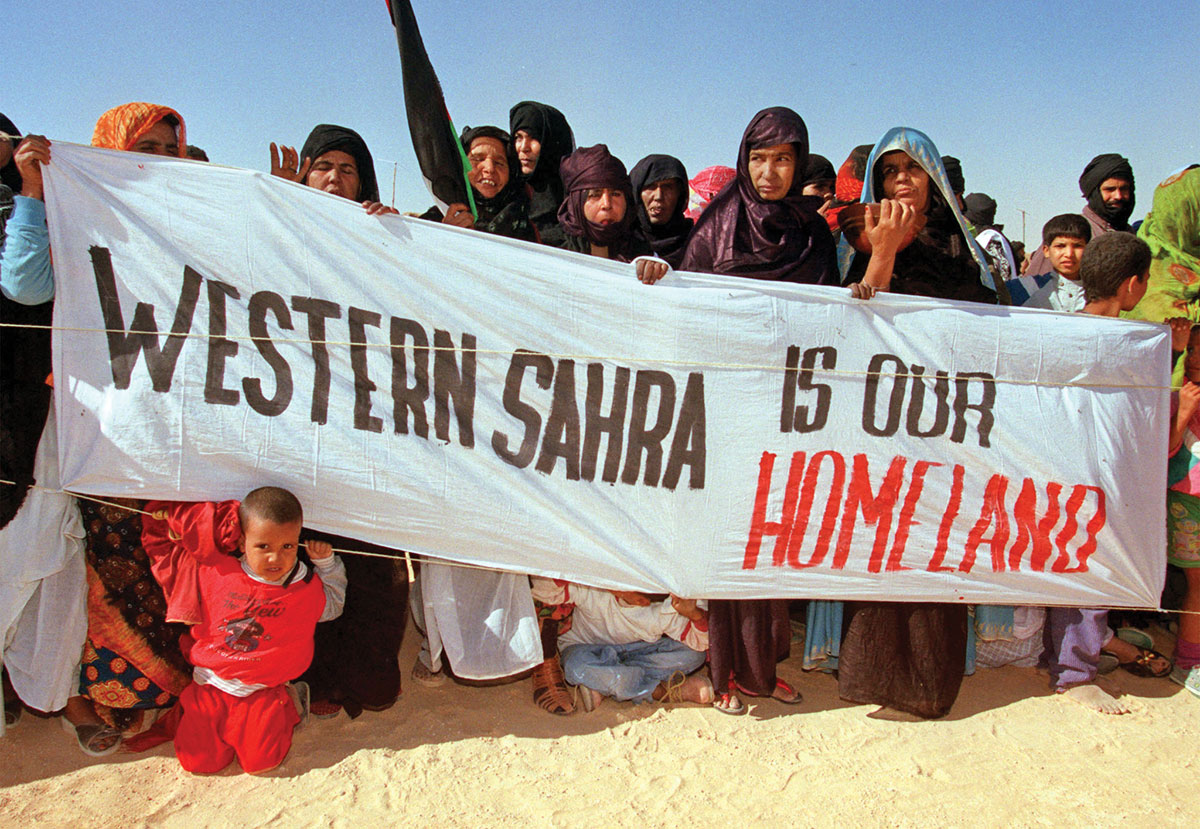

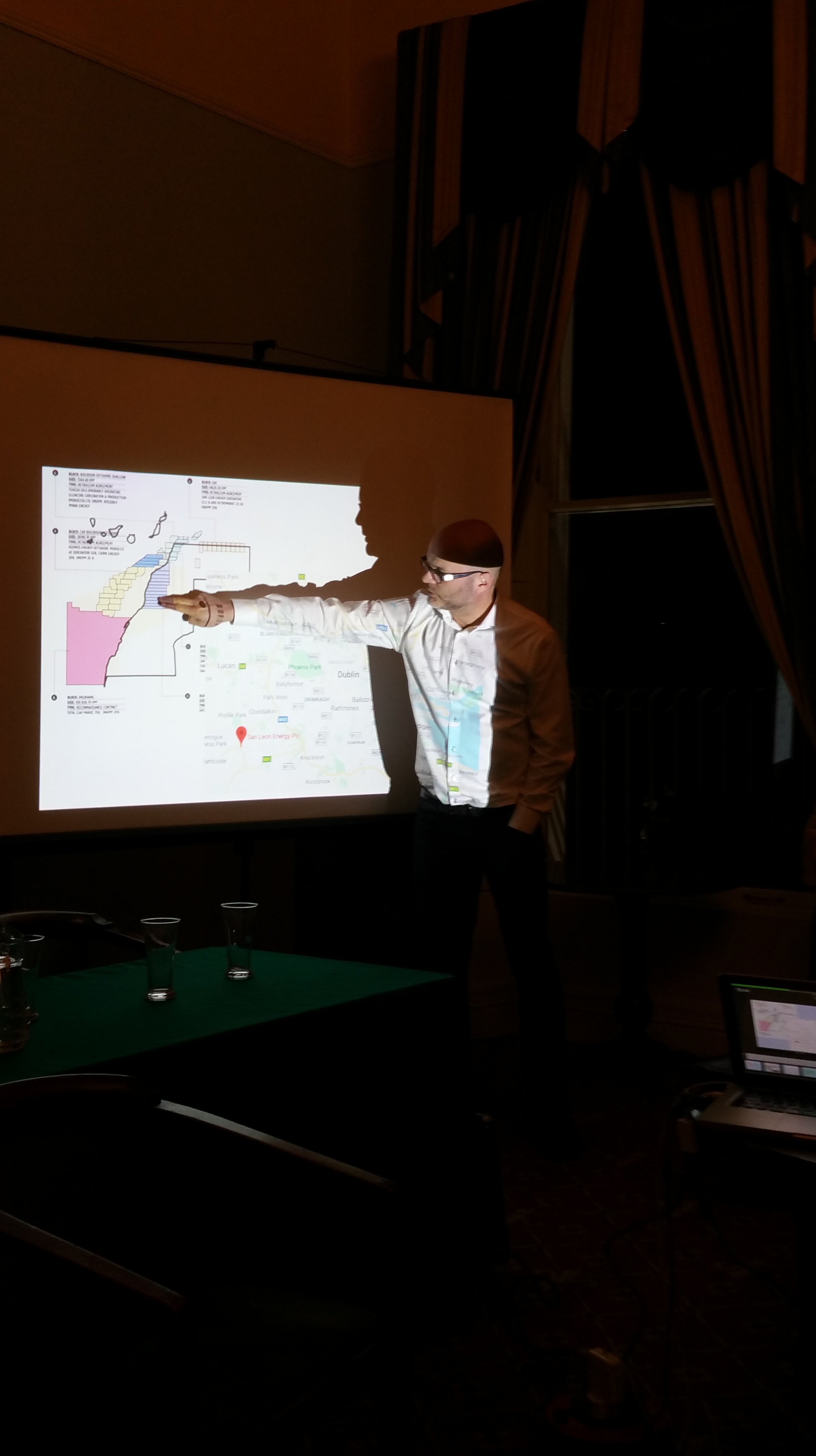

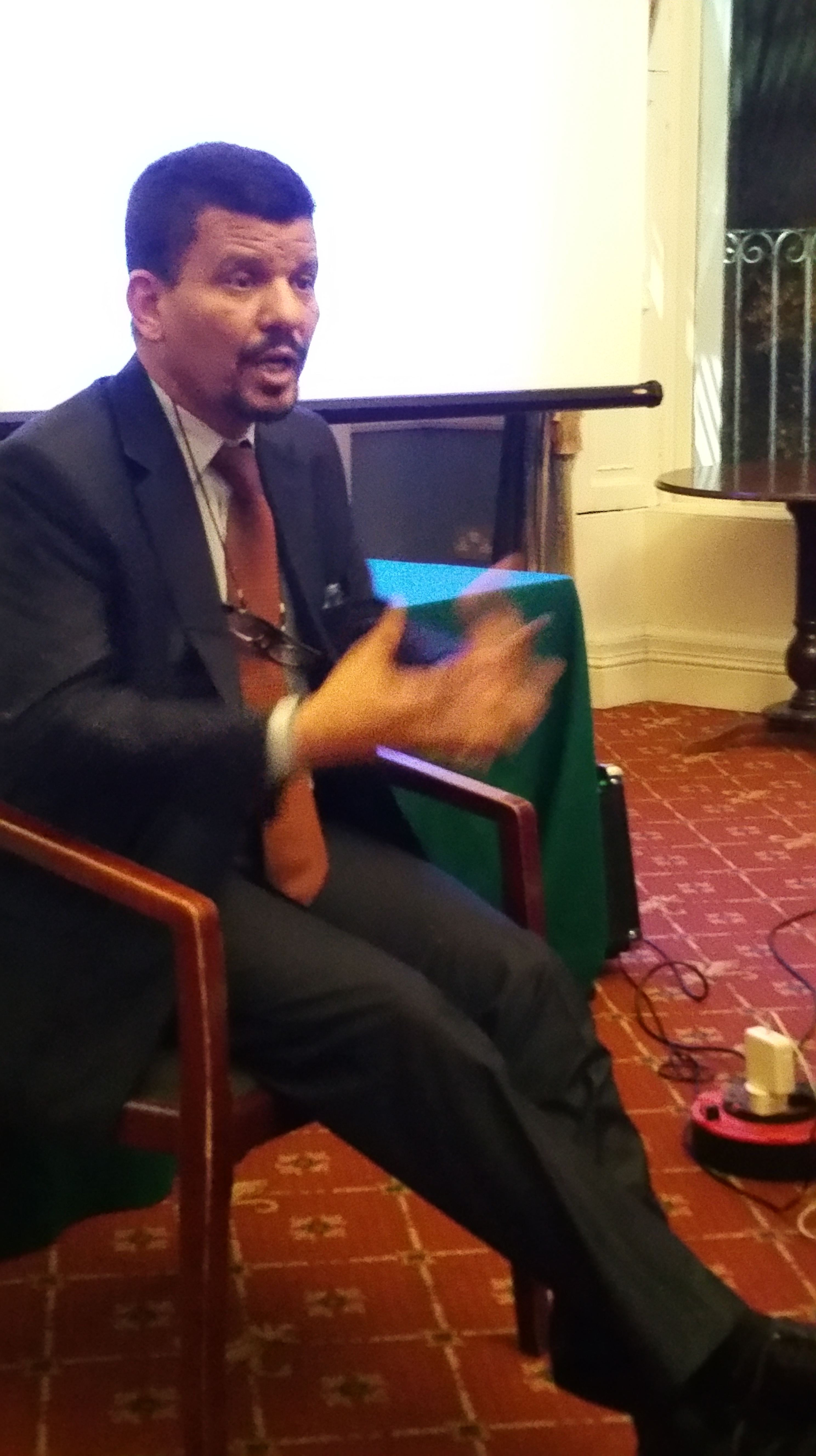

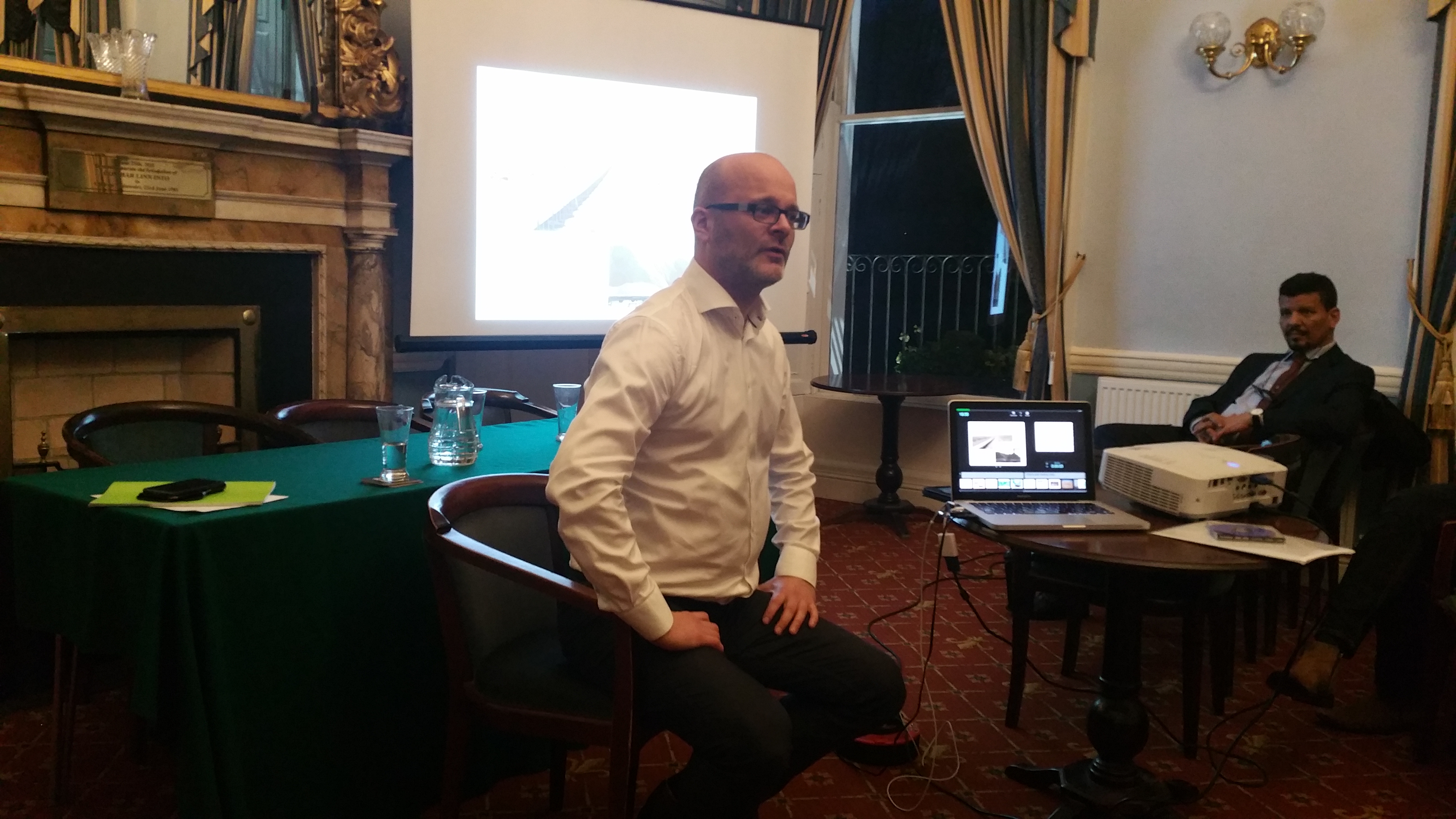

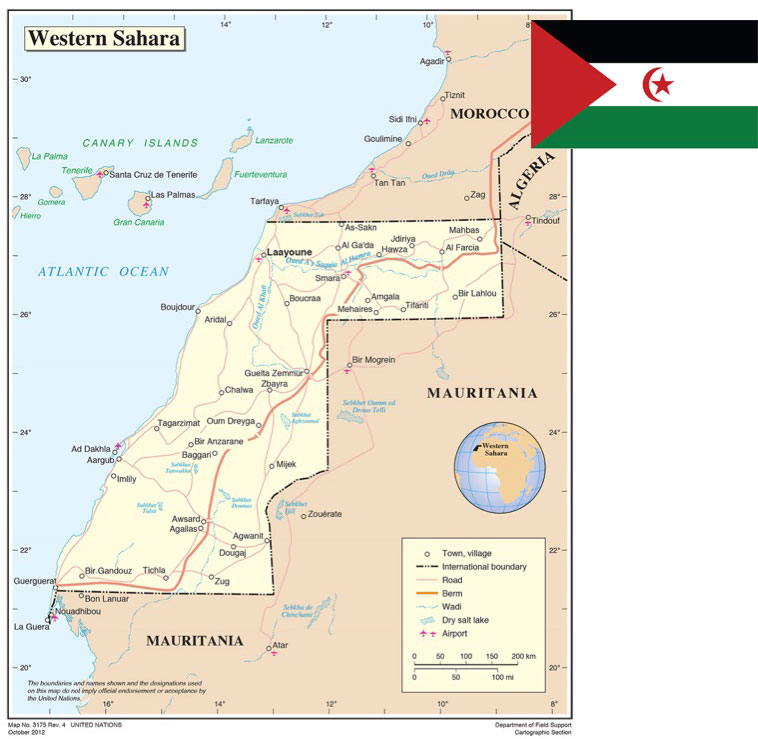

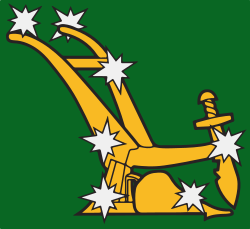


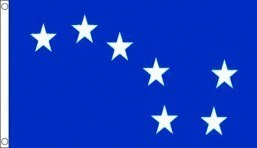


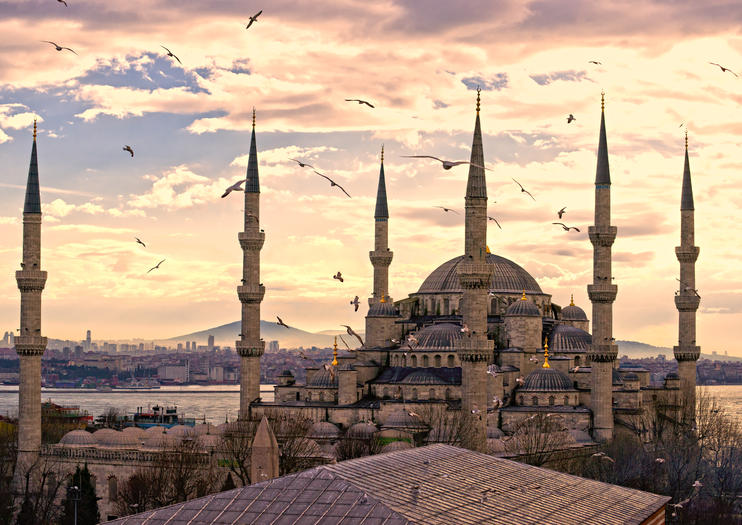


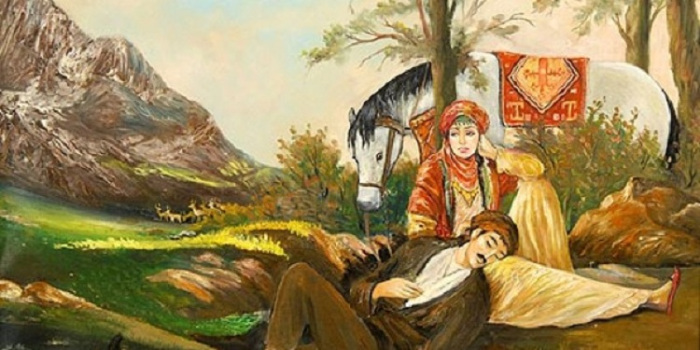


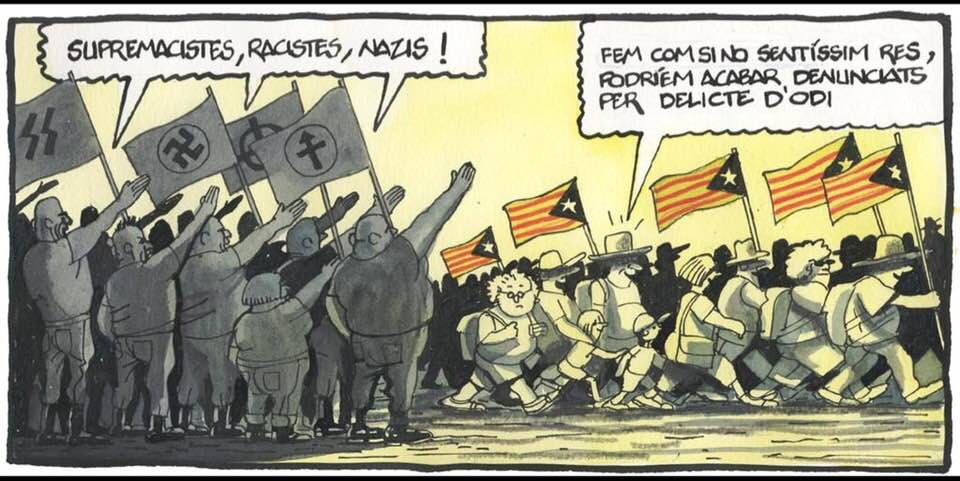



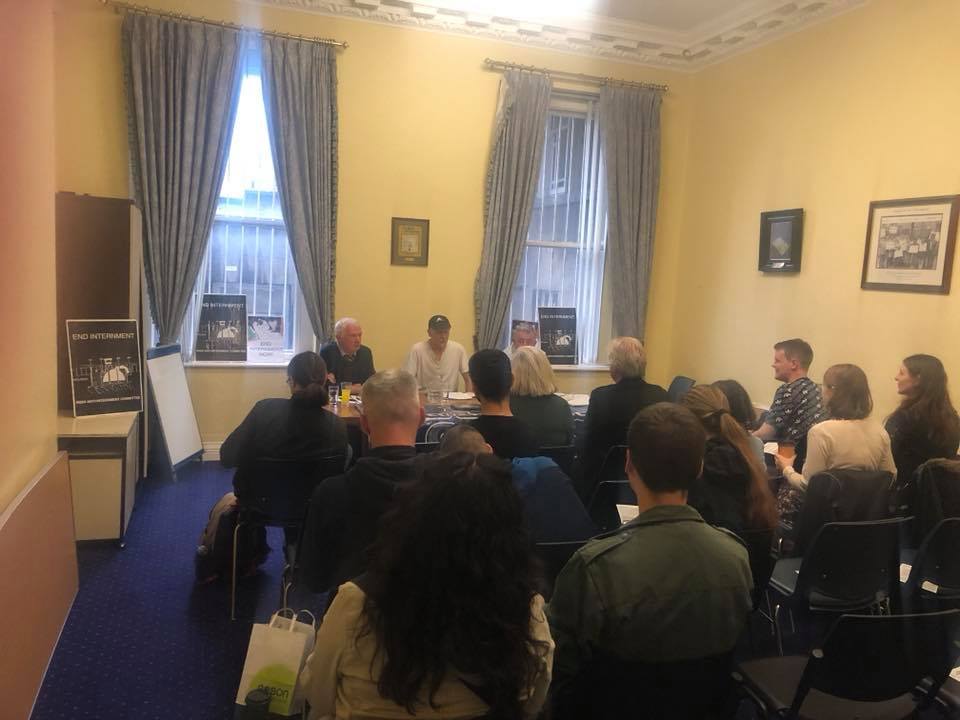


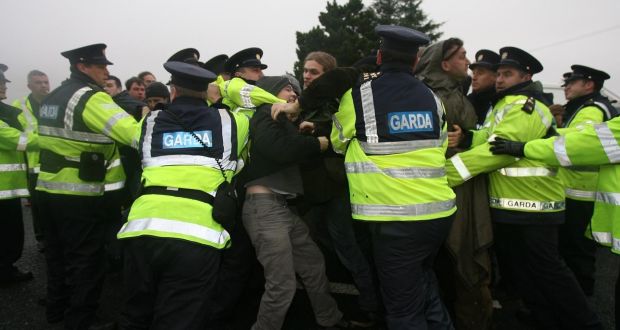

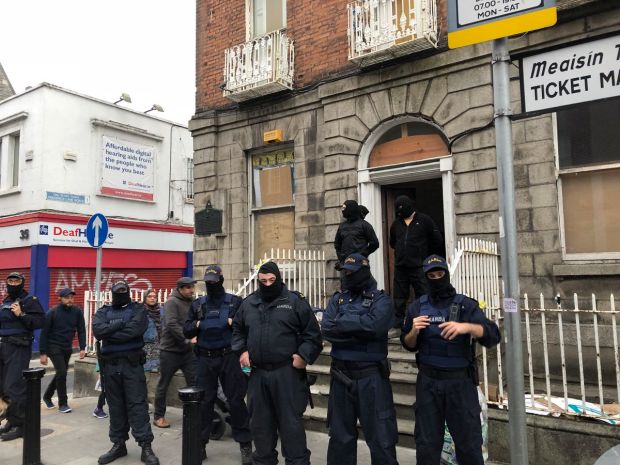






 rebelbreeze