POLITICAL BETRAYAL AND PSYCHOLOGICAL RESPONSES

Diarmuid Breatnach

(Reading time: 12 mins.)

Working people have experienced many betrayals in history and the struggle for self-determination of the Irish nation has been – and is being – betrayed also.

When such betrayals occur, a range of common reactions is evoked; thinking about those responses may help the betrayed at least to moderate the harm and turn the experience to some benefit.

Equally, some ways of handling the experience can magnify and deepen the harm already caused.

Betrayal is a difficult experience for the betrayed certainly but not without some cost to the betrayer too and each has a number of common responses. This applies to the personal as well as to the political but there are some differences.

The betrayers have their followers to different degrees and these too have psychological reactions to the betrayal — and to criticism of the betrayal. We can observe these reactions in a number of recent historical cases of high levels of resistance subsequently betrayed.

The most recent phase of high degree resistance in Ireland took place largely in the British colony of the Six Counties, beginning with mass struggles for civil rights before passing through protracted guerrilla war and intense struggles of political prisoners in the jails.

In the Basque Country, the corresponding phase began with ideological-cultural struggle and mass industrial actions against the Franco dictatorship, quickly developing into a guerrilla campaign combined with street battles, resistance to conscription and struggles around prisoners in the jails.

The leadership of the Irish struggle came to political agreement with the colonial occupier, disbanded and decommissioned its guerrilla forces and acceding to its right of conquest, joined the occupier’s colonial administration, concentrating thereafter on building up its electoral base.

A similar process took place in the Basque Country but with important differences: the imprisoned activists were not released and the movement’s political leadership was not even admitted into joint management of the colonial administration.

Each nation witnessed splits, recrimination, dissidence, repression on groups continuing resistance but also a range of psychological responses which at best did not assist recuperation and in fact often deepened the harm of betrayal by the leadership.

STANDARD RESPONSES BY THE BETRAYED

DISMAY is a common reaction: How could he/ she/ they? I never thought they would. We’re finished now.

BLAME is another also common response: It was that leader’s or leadership’s fault. We didn’t fight hard enough. Those comrades criticised too much.

SELF-CENSORSHIP And EXCESSIVE CAUTION: We can see the harm in some of the leadership’s actions but we must be careful not to step too far out of the movement, where we will be marginalised and unable to have an effect1.

DESPAIR: That’s the end of everything. There’s no way out of this. It was all for nothing – all those sacrifices, all that pain. I’ll never trust people or get involved again.

APATHY: So I/ we might as well forget about it all. Just think about ourselves/ myself/ family. Drop out. Drink. Take drugs.

DENIAL: We’ve not really been betrayed. It’s just another way to go for the same thing. This is the only reasonable choice. We couldn’t keep on that way any longer, this is just a change of method. We’re just having a pause. The leadership is clever and has tricks up their sleeves. This is just to fool the authorities. It’s just going to take a little longer to win than we thought.

Those are defensive constructions in emotion and, in so far as that takes place, in thinking. But defensiveness can turn to aggression – and frequently does. The betrayers – and often the duped also – resent being reminded of what and where they are. It makes them uncomfortable.

HOSTILITY: How dare those people criticise us/ the leadership? They don’t understand and just want continual conflict. They’re endangering our secret plan. Who do they think they are? They’re just wrecking everything, undermining our new plans. They need to be taught a lesson.

PERSONAL ATTACKS: That critic is no great activist. S/he hasn’t suffered as some of us have. They were always troublemakers. Jealous, that’s what they are. They’re not very bright; no idea about real politics. They are in fact traitors, helping our enemies.

MARGINALISATION: We are not going to listen to those critics. We will not allow them space on our media. We’ll try to make sure they don’t get venues in which to spread their poison. If people are friends with them they can’t be our friends too. Such people will not enjoy our hospitality or invitations to our events. People should not even talk to them. If the authorities attack those dissidents, we are not going to trouble ourselves about them – it’s their own look out.

MANAGING THE BETRAYAL

PROMOTING LEADER ADULATION is a useful tool in shutting down the opportunities for criticism and in repressing them when they arise. “Who are we to criticise this great comrade’s thinking or actions?” becomes an implicit question, clearing the way for betrayal.

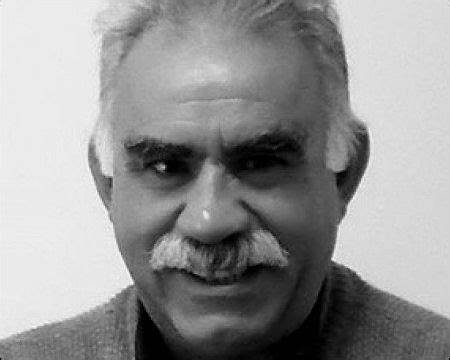
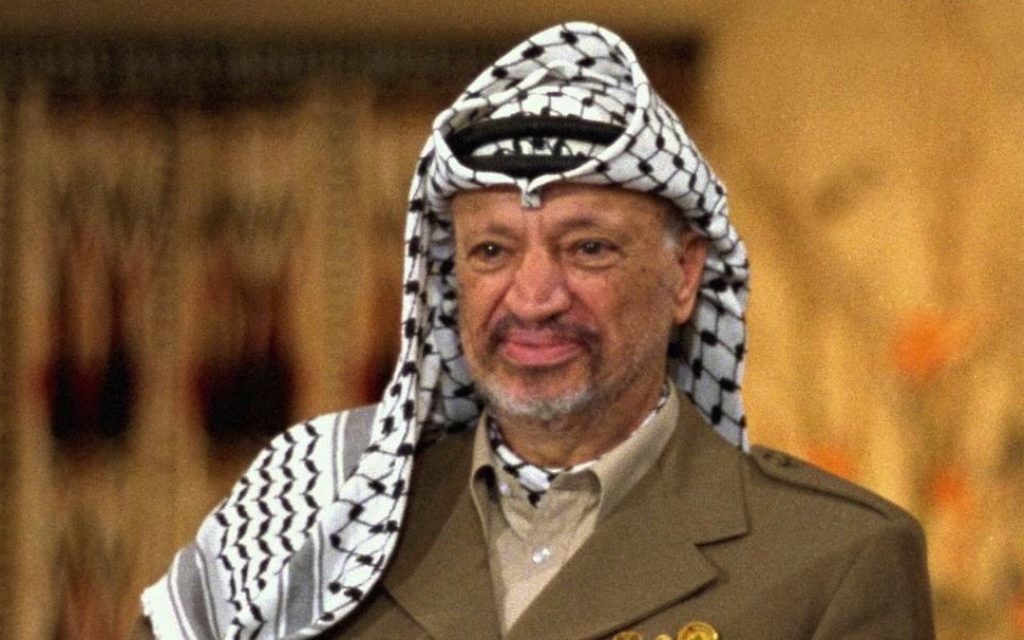
Leaders who have surrendered or compromised the struggle, L-R: Gerry Adams and Martin McGuinness of the Provisionals, Arnaldo Otegi of the Basque Patriotic Left, Abdullah Ocalan of the PKK and Yasser Arafat of Al Fatah. The latter seemed to be attempting to to turn back from the path of betrayal when he became very ill (quite probably poisoned) and died.

SEEKING COUNTER-REVOLUTIONARY ALLIANCES is engaged upon so as to appear to its members to make the organisation’s influence greater, or to outflank and isolate more revolutionary tendencies and often ultimately to make the leadership acceptable to the ruling circles.

BEGGING FOR CONCESSIONS when the revolutionary path has been abandoned can often be observed, as in “we’ve abandoned our militant struggle, please stop repressing us”, for example, a frequent response to repression of the Basque leadership once it abandoned the revolutionary path.

COLLUDING WITH THE OCCUPIER becomes a new second nature to a leadership abandoning revolution, not only in abandoning armed struggle, for example but in destroying weapons and suppressing elements still in resistance.

PROVING THEIR READINESS TO COLLUDE FURTHER, revolutionaries turned collaborators denounce continued resistance, try to convince revolutionaries to desist (or threaten or physically attack them), promote the repressive arms of the State such as the police and so on.

INTOLERANCE OF CRITICISM becomes default position; such criticism tends to expose the contradiction between the original purpose of the organisation and its concrete actions in the present. Censorship, expulsion and misrepresentation become common.

MARGINALISATION OF CRITICS follows from intolerance of criticism – the individuals or groups must be made pariahs so as to nullify or at least reduce their influence. Association with them, socially or politically – even in agitating around civil rights – must be discouraged.

REPRESSION OF DISSIDENTS finally becomes necessary, whether by threats or by actual violence or, when admitted to governing circles, by use of repressive state machinery.

DEALING WITH BETRAYAL RATIONALLY

The first necessary step is to analyse how the betrayal came about: how was it organised? What were the conditions that made it possible? What were the early signs?

Then, proceed to: what could we have done differently? What WILL we do differently in future?

Electoral work

One common assumption here in Ireland, especially in Irish Republican circles, is that the rot began with standing in elections. This is not logical and it is in effect making a negative fetish of electoral work, a taboo to be avoided.

It is often useful to the revolution in many ways to have representation in the parliament and local authorities, for example in promoting or blocking practical or legislative measures, getting media air time, visiting prisons — all without ever promoting reformism as a way forward.

Certainly the prioritisation of electoral work over other aspects is a sign that something has gone wrong: the strength of the popular revolutionary movement is on the street, in workplaces, communities, places of education, rather than in parliaments and local authorities.

The drive towards electoral representation can encourage bland slogans of the soap powder kind (“new improved” or “washes even better”) rather than those with revolutionary content and also the promotion of more bourgeois individuals in preference to grass-roots organisers.

Anodyne election slogan in both languages for Sinn Féin.

But none of that means that representation in those bodies cannot be used to further the popular struggles or that such aberrations cannot be avoided. And in fact, the concentration on criticism on the electoral factor served to distract from a more fundamental error.

Of course, electoral work should never, for revolutionaries, be about entering government under the current socio-economic system, i.e sharing in the administration of the State.

Leader adulation & intolerance of criticism

If criticism is not tolerated when errors are committed, they can hardly be corrected. Again and again it has been observed that the party/ organisation faithful refuse to accept external criticism from non-enemies. Internally the leadership inhibits criticism by the members.

The cult of the leader also inhibits criticism and therefore correction of errors. And behind this image others can hide and also commit errors. Problematic as dead icons may be, living ones are many times more dangerous – deceased ones at least do not change their trajectories.

Such created living icons have been Mandela in South Africa, Yasser Arafat among Palestinians, Gerry Adams and Martin McGuinness in Ireland, Arnaldo Otegi in the Basque Country and Abdullah Ocalan among Kurds (particularly in the Turkish and Syrian states).

Nobody knows everything or is always right. Bothersome as being criticised may be, its total absence is worse, allowing us no opportunity to question ourselves as activists and in particular as revolutionary organisations.

The revolutionary leadership, party or organisation is not the people

The revolutionary leadership, party or organisation does not have all the answers and is not the people. This might seem obvious but from the behaviour of such leaderships and their followers in the past it is clear that the opposite philosophy has been dominant.

Confusing the organisation with the people or with revolution itself, we assume that what is good for the organisation is also good for the people and the revolution. This however is not always so and leads to placing the perceived well-being of the organisation above the needs of the revolution.

Indulging this confusion leads to political opportunism and sectarianism, bad relations with other revolutionaries, ignoring all external criticism and placing the needs of the leadership higher than those of the membership and of the membership higher than those of the mass movement.

Internationalist solidarity

In internationalist solidarity work we build the unity of the people across borders and against the same or different enemies than those against which we are struggling.

One feature observed in a number of organisations where the leadership is moving towards betrayal is a reduction or elimination of such work.

To those in our ranks seeking an accommodation with imperialism and capitalism, those internationalist solidarity alliances are either a) unimportant or b) a hindrance to the alternative reactionary alliances to which they aspire.

The latter was very much the case with the Provisionals’ attitude to US imperialism. For decades, their leadership maintained apparently mutually-contradictory positions on what is the biggest imperialist superpower in the world.

On the one hand, for example, there could be involvement in solidarity with Cuba against the US economic blockade and, in the past, against US sabotage and terrorism against the Sandinista regime in Nicaragua.

On the other hand, the leadership sought the support of the US elite against British colonialism, which is occupying a part of Ireland and against which the movement was waging, in that colony, an armed and popular struggle.

Seeking support from the US imperialist elite entailed distancing from left-wing Irish USA and dropping support for even long-term inmates of US jails, such as American Indian Leonard Peltier and Black American Mumia Abu Jamal, arising out of popular struggles inside the US.2
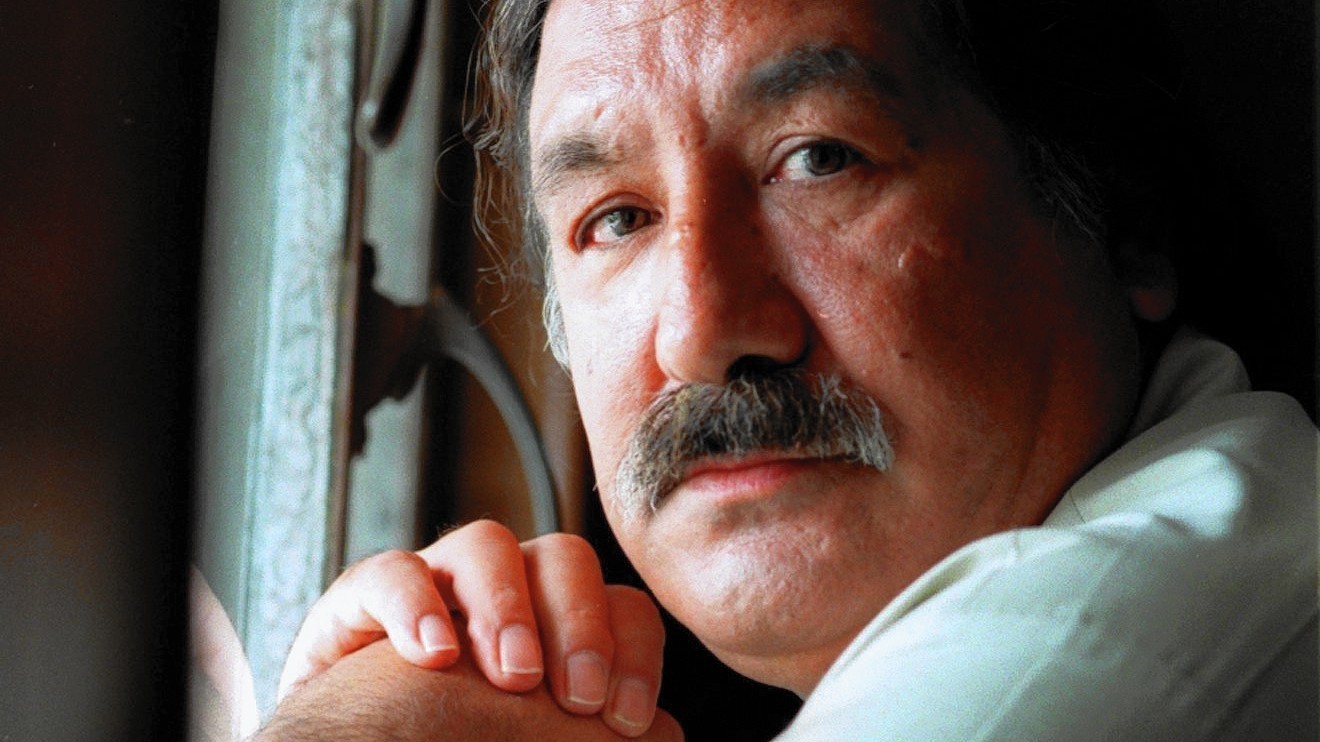
Leonard Peltier, Native American convicted in 1977 in deeply flawed trial for murder of two FBI agents in 1975 shootout on Pine Ridge Reservation. Nearly 80 years of age now and with multiple health issues, even release on clemency grounds is constantly blocked. His is one of many campaigns in the USA which SF cannot support as they seek to remain friends with the Democratic Party elite there.
Black American journalist and activist, framed for the murder of a corrupt Philadelphia policeman in 1981 and sentenced to death in 1982, sentence commuted to imprisonment for life without parole in 2011. Mumia is nearly 70 years of age now with a number of health issues. Another of the type of injustice in the USA about which SF cannot campaign as they seek to stay close to the Democratic Party elite. Anecdotally, a SF Councillor who was regularly writing to him was obliged to desist on instruction from her party leadership.

Unprincipled alliances

Another warning sign is the founding of unprincipled alliances with other organisations in struggle. For example, although it is correct to have a position of support for the Palestinian people, that should not necessarily bind us to exclusively support the fighters of one organisation only.

The Provisionals made their alliance with the Al Fatah organisation to the exclusion of all others in Palestine but worse was to come, for Al Fatah shoved aside the idea of a free Palestine and the right of return in exchange for administrative partial autonomy and funding.3

From there, Al Fatah became so corrupt that the Palestinian people, that had long supported a secular leadership, voted overwhelmingly for an islamic fundamentalist party, Hamas4. The unprincipled alliance with Al Fatah and the ANC was used to ‘sell’ the GFA to Irish Republicans.5

In the Basque Country, the mass movement’s leadership developed close links with the leadership of the Provisionals and refused links with Irish Republican organisations that dissented from the Provisionals’ position or with Republican prisoners after the Good Friday Agreement.

That should have sounded alarm trumpets in the Basque movement but if it did, it remained largely without practical effect. Askapena, the Basque internationalist solidarity organisation did split from the main movement but did not go so far as to support ‘dissident’ Irish Republican prisoners.

LESSONS

On the basis of the preceding I think we can draw a number of primary lessons.

LESSON ONE: ANALYSE THE MISTAKES OF THE PAST AND SEEK TO AVOID REPLICATING THEM

The type of struggle, location, timing, peripheral situation, long, medium and short-term objectives, experience and expertise of personnel, resources … all need to be analysed, in conjunction with the strengths and weaknesses of the enemy.

In carrying out this kind of analysis on the Irish struggle, we see that we faced one of the military superpowers, also well linked into the western imperialist world. The Republican movement’s battle area was in total one-sixth of the nation’s territory and the location deeply divided.

The rest of the nation was ruled by a weak foreign-dependent ruling class.

Map of Ireland showing the British colony of the Six Counties. The Provisionals took on the British state, mostly confining their struggle in that deeply divided politically and culturally region shown in yellow.

A movement cannot choose when it has to step forward in defence but it can choose how it develops the struggle afterwards. It seems obvious that in order to be victorious, at the very least the struggle would have to be spread throughout the nation.

That in turn would entail putting forward social and economic objectives to attract wider support which, in turn, would mean taking on the Catholic Church hierarchy.

In addition, the question of effective external allies was relevant here but even more so in the Basque Country, located across the borders of two powerful European states.

The total population of the portion of the Basque nation within the Spanish state is far short of three million, that of the rest of the state over 44 million.

Clearly allies external to the Basque nation would be essential for victory and these would have to come from across most of the Spanish state at least.

Map showing the ‘autonomous’ regions of the Spanish State; the southern Basque Country is shown in pink at the top, including ‘Navarre’ shown in yellow next to it. Essentially, the Basque Patriotic Left without allies confronted the Spanish state from there.

Such an assumption would entail, in turn, outlining objectives to attract considerable numbers from across the Spanish state which in turn would mean creating alliances with revolutionary and other progressive forces across the state.

LESSON TWO: REFRAIN FROM PERSONALISING THE ISSUES

When criticism of the counter-revolutionary line put forward by individual leaders becomes personalised, the political essence of the criticism becomes lost or at least obscured. It can seem as though the critics have personal reasons for their hostility or even jealousy of the individuals.

Much of what one sees publicly posted by opponents of pacification programs in Ireland and the Basque Country often seems more about hostility to the personalities of MaryLou MacDonald, Gerry Adams, Martin McGuinness or Arnaldo Otegi than about specific policies and actions.6

Crucially, focusing criticism on individual leaders serves to conceal other underlying causes of failure and betrayal that are usually more fundamental: problems in objectives, errors of strategy, in particular and also of tactics along with unhealthy organisational dynamics.

LESSON THREE: DEVELOP INTERNATIONALISM AND AVOID UNPRINCIPLED ALLIANCES

In the face of imperialist and other reactionary alliances, revolutionaries need internationalist solidarity, the basis for which should be revolutionary positions and action. Exclusive alliances are generally to be avoided as is uncritical support or unquestioning approval of all actions.

LESSON FOUR: CONTRIBUTE TO BROAD FRONTS WITHOUT SURRENDERING THE REVOLUTIONARY LINE

A broad front is essential not only for successful revolution but also often for defence against repression. Such fronts should be built on a principled basis with respect for the participating groups and individuals but without surrendering the revolutionary line.

At the same time, the possibility of betrayal, opportunism or sabotage and marginalisation by partners in broad fronts need to be guarded against and, if occurring, to be responded to in a principled and measured manner.

Broad fronts not only increase the numbers in resistance in a unified manner but also expose the activities of the constituent groups to the members of other parts of the broad front. Activists can then evaluate organisations and one another on the basis of experience rather than of reputation.

The revolutionary line should not be abandoned or concealed when in a broad front with organisations and individuals who have varying lines. At the same time, it is not necessary to be pushing the revolutionary line every minute.

LESSON FIVE: DON’T GIVE UNCONDITIONAL TRUST TO LEADERS

Of course, our leaders and activists must be trusted – but always in the knowledge that no-one is perfect or above the possibility of error. The shutting down of opportunity to voice criticism should sound alarm bells in any revolutionary movement.

There are of course “time and place” considerations in criticism; for example, the capitalist mass media, police interrogation or trial in court are hardly appropriate places to criticise a revolutionary movement’s leadership.

LESSON SIX: TOLERATE INTERNAL CRITICISM AND CAUCUSES IN BALANCE WITH COLLECTIVE RESPONSIBILITY

The above touches upon this area too. People who follow us without question may equally do so with another.

The right to caucus, i.e to collect around a particular revolutionary trend or focus needs to be acknowledged and formalised. Like-minded people will naturally associate and it is far healthier to have this occur in the open rather than in secret.

At the same time, when a discussion reaches democratic decision, the minority whose positions were rejected need to present a common front with the rest of the organisation or movement.

Similarly, political and organisation criticism needs to be welcomed or at least tolerated within the organisation or movement because it may be correct and point an alternative way forward and even if it isn’t, the discussion around the criticism will help to clarify matters.

Such openess to criticism and discussion encourages a conscious and thinking membership which by that measure alone and organisationally makes it more difficult for some individual or clique to manipulate the membership.

End.

FOOTNOTES

REFERENCES

https://www.theguardian.com/us-news/2018/jul/30/black-panther-radicals-still-in-jail

1“Outside the broad movement it is very cold”, said a Basque to me once. He was a member of a small Left group critical of the leadership’s approach but unwilling to completely rupture with them.

2https://www.theguardian.com/us-news/2018/jul/30/black-panther-radicals-still-in-jail

3With the Camp David (1978) and Oslo Accords (1993 & 1995).

4In 2006 (the most recent) Palestinian parliamentary elections, Change and Reform (Hamas) won 74 seats and Al Fatah 45. In Gaza Al Fatah rejected the result and tried to seize power but were defeated in a short battle, though Hamas did not battle their assumption of power in the West Bank. All dates for elections to Palestinian Parliament since have passed without polling.

5And since then, unprincipled alliances with Provisional Sinn Féin have been used by the main Basque organisation leadership and ditto with Colombia to ‘sell’ pacification processes in those countries (which have been even worse for them than has the GFA been in Ireland).

6As a historical note, it is said that some of the delegates who voted for the Anglo-Irish Treaty in January 1922 were moved to do so by the nature of the attacks of Cathal Brugha, for the anti-Treaty side on Michael Collins, leader of those for the Treaty. The majority of delegates voting in favour was only seven.

Gustavo Petro and the Civic – Military Campaigns

Gearóid Ó Loingsigh looks at the new government in Colombia and how it talks of peace while increasing militarisation. English language version first published in Redline, 24th November, reprinted with kind permission of author.

(Reading time: 8 mins.)

The Petro–Márquez government is one which proposes to bring us to what they term Total Peace.

The term and the proposal as such have been subjected to justifiable criticism, not least because it places the insurgency of the ELN on the same footing as armed drug trafficking groups. 

But there is another aspect of their government that calls upon us to reflect on what Petro – Márquez understand as peace and a demilitarized society that breaks with the past and the present of a repressive state where the answer to everything is a military response. 

A first step would be to remove the military from civilian settings. But Petro has already made statements that indicate that neither he nor Márquez think that. 

Shortly after taking on the presidency, he declared that the answer to deforestation of the Amazon was not only military, but Yankee. 

In their electoral campaign their proposal was different, they did not talk about the military anywhere, but rather of democracy, autonomy, measures against drug trafficking and money laundering.

We will stop the deforestation and the burning of the jungle.  We will dismantle the engines of deforestation, amongst them: displacement of the unemployed and landless peasants from the interior of the country towards the Amazon; land grabbers and promoters of extensive cattle ranching and other monocultures; corruption in public bodies; laundering of foreign currency through the purchase of deforested land, a by-product of drug trafficking and corruption; the uncontrolled extraction of wood etc.[1]

And he also said that the pacts to protect the jungle would be with the communities and not national or foreign militaries.

We will build a broad national pact of regional and global importance for the environmental defence of the Amazon, Orinoco and the biogeographic corridor of the Pacific.  We will set up community agreements for the regeneration and ecological restoration of these eco-systems based on organisational processes, proposing to increase the size of collective territories, registry of plots and the strengthening of traditional and ancestral authorities.  We will recognise the rural communities’ own lifestyle in strategic eco-systems and their own ecological and economic forms of production in these habitats, as well as their own environmental management.[2]

It all sounds very nice, but it goes hand in hand with militarisation.  He proposed a sort of military alliance with the USA to avoid the burning of the jungle, copying the already existing model in Brazil where the USA has a base from which to put out fires. 

Of course, in Brazil the mining and logging companies, etc. invade the territory with the approval of the government.  The presence of north American troops never prevented any of the extractionist policies and less still poverty under the governments of Lula, Dilma and Bolsonaro.

As others have pointed out, it is nothing more than the militarisation of environmentalism and it is an old slogan of the imperialists that they should be in charge wherever they want and that includes the Amazon.

They used to brandish the anti-narcotics struggle as an excuse and now it is global warming.  Al Gore once said that “The Amazon is not their property, it belongs to us all”.  Of course, by us, this miscreant means Yankee imperialism: the USA. 

It is the same discourse they have in relation to oil; it does not belong to the countries that have it but rather to all of us i.e. the US and European companies.  Al Gore’s fame as an environmentalist is undeserved but his reputation as an old imperialist is completely justified. 

Other governments have come out with similar feelings, Gore’s was not an individual outburst.  Macron, NATO as such and the influential magazine Foreign Policy have argued for a military intervention in the region with the aim of protecting the planet.[3]

For the moment, Petro is not in favour of Colombia becoming a member of NATO, rather he proposes a regional military alliance.[4]  Against whom would this alliance fight is not at all clear, or whether it would simply be an unofficial appendage to NATO. 

We should be concerned and not just a little bit.  In November he met with representatives of the US Embassy and the Subsecretary of Political Affairs, Victoria Nuland.  Following the meeting Nuland tweeted.

Thank you, Gustavo Petro President of Colombia for our productive meeting reaffirming the importance of our continued partnership on security, peace, progress for Venezuela and protecting our planet.[5]

Bearing in mind the murky past of Nuland in Ukraine in 2014, we should be very careful with her, but there are those who believe that Petro is charge.

It is not the only issue where he proposes military rather than civilian solutions.  Faced with the lack of access to healthcare in the territories of the Pacific, he also proposed to militarise the response.  The Pacific is one of the regions with the worst indicators in the area of healthcare. 

Nobody doubts about the need for an urgent and comprehensive response for the region.  The military boat USNS Comfort visited Colombia to provide medical assistance. 

It was not the first time, the said boat has visited the country four times as part of the Continuing Promise[6] mission, a medical and public relations initiative of the US, deploying its Soft Power.

This boat also took part in the two wars in Iraq as a military hospital, and in the invasion of Haití in 1994.  Petro’s response on Twitter was:

I am grateful for this support in healthcare from the US government to the people of the Caribbean.  It is important that we think about the Pacific.  A mission for the National Navy, along with the building of the first frigate “made in Colombia” will be the building of a hospital ship.[7]

In a non-militarised state healthcare should be under the remit of the Ministry of Health and not the Ministry of Defence, but Petro – Márquez want to bring healthcare to the Pacific through military rather than civilian institutions.

Such incoherence with his public discourse!

In previous governments the military has used its economic power and civic-military days as part of its military and armed operations. 

The mobilisation of troops and the demand for collaboration from the civilian population is justified on the basis of access to medical services that are provided for by civilians in Bogotá and other parts of the country without the need to explain themselves to military institution in the midst of a war.

The Petro – Márquez government is also going to continue with the proposal of the Santos government to build a military base on the Gorgona Island. It is worth remembering that Santos was one of these other men of peace that are in abundance in Colombia: hawks dressed as doves. 

The Gorgona Island was, for many years, a penal colony, the Colombian version of the infamous Devil’s Island immortalised in Papillon film with Steve McQueen.  In 1982 it was declared a world heritage site by UNESCO due to it high ecological value. 

A deserted beach in Gorgona National Park, an island 21 miles off Colombia’s Pacific coast and a UNESCO World Heritage ecological site — Petro plans to put a military base there. (Image sourced: Internet)

Now they want to go ahead with the plan to place a military base there.  What is new in the Petro – Márquez government is that there is a rumour that the USA will have access to the base. 

It is not an absurd idea, as the project has anti-narcotic aims and is financed by the US Embassy in the country.[8]  With absolute certainty, the DEA will at least have access to it. 

There are alternatives, such as a warship as a centre of operations.  Petro wants the Navy to build a hospital ship but is not up to telling them to build a ship for what does fall within its remit.

He says he wants peace but he wants to promote the military at every turn, even turning up every time he can wearing military caps. 

So far, he hasn’t acted ridiculous like Iván Duque dressing up as a police officer in the midst of the National Strike of 2021, but as his supporters point out he has only been president for a little more than 100 days and we have to give him time. 

In every circus you have to wait for the clowns to come in.  We can’t always see the lion-tamer but clowns and clownish antics are always there.

Some social climbers from social and human rights organisations ran to take up posts in the ministries of Defence and also the Interior. 

They used to be critics of the armed forces and police of the state, now they look out for its good name in the area of human rights and international humanitarian law.  They also promote the military at each turn. 

The recently appointed Alexandra González, a former functionary of the Committee for Solidarity with Political Prisoners, who is now the Cabinet Secretary of the Ministry of National Defence published an effusive tweet full of praise of the Ministry of Defence that stated “Military engineers will build tertiary road to benefit the peasant population.”[9] 

She doesn’t understand that the armed forces are never for anything other than war, even in peace time they are preparing for war.  It is their only function.  In any case, no one can explain why the military have to the ones that are building those roads. 

But as a good political opportunist she claims as her own that which does not belong to her.  On twitter they replied to her, pointing out that those projects were old ones. 

A retired military officer and former advisor to the High Commissioner for Peace pointed her in the direction of an article in the regional newspaper El Quindiano written by himself, speaking of the beginning of these civic – military projects in the 1960s.[10]

All governments have carried out infrastructural projects through the Ministry of Defence and in all governments, they were referred to as peace projects.

Perhaps the fugitives from the human rights organisations feel the need to say that it is new in order not to make evident that there is a continuity between this government and all of the previous ones. 

I don’t understand why they signed up to the non-binding declaration on safe schools, if they are promoting the military presence in all other aspects of civilian life. 

The ideal situation would be to not permit the military to use schools as bases or human shields in the midst of fighting nor use the military to build infrastructural projects.

If the government was really progressive (an imprecise term) it would remove the civilian contracts from the military, healthcare would be the exclusive responsibility of health bodies and not the military, it would not propose a military alliance in a world with an excess of them.

And the symbols that Peto would put on a pedestal would be civilian ones, from the people, the communities, even from some trade union, even if it were just out of pure nostalgia, as when he was Mayor of Bogotá he didn’t think much of unions.

End.

FOOTNOTES

[1] Véase https://gustavopetro.co/programa-de-gobierno/temas/propuestas-por-territorio/amazonia/

[2] Colombia Potencia Mundial de la Vida, Programa de Gobierno 2022 – 2024 pp 14 y 15 (disponible en https://gustavopetro.co

[3] Harris, R. (28/10/2022) NATO in the Amazon: Petro Plays with Fire https://www.counterpunch.org/2022/10/28/nato-in-the-amazon-petro-plays-with-fire/

[4] See https://twitter.com/mperelman/status/1592165003154853889?s=20&t=lUaSWKgD_-bO6wY-w4ELQA

[5] See https://twitter.com/USEmbassyBogota/status/1593757340737601544?t=bRqM8J-icRG6EKJuQMhCZA&s=35  

[6] See https://www.msc.usff.navy.mil/Ships/Comfort/History/

[7] See https://twitter.com/petrogustavo/status/1592199983943802880?s=20&t=nEMFaz_35YUU4LQXXZz0zA

[8] El Tiempo (26/10/2022) Pese a cuestionamientos, la Armada construirá muelle en Gorgona https://www.eltiempo.com/vida/medio-ambiente/gorgona-pese-a-cuestionamientos-la-armada-construira-muelle-712305

[9] See https://twitter.com/alexandraG_Z/status/1593927119352078336?s=20&t=wY2X-DPk17I-e4hnsLAJ3w

[10] Castaño, C. (24/03/2022) Un plan militar para la paz https://www.cronicadelquindio.com/opinion/opinion/un-plan-militar-para-la-paz

“Oh. My. God!”

Diarmuid Breatnach

(Reading time: 5 mins.)

That’s what she wrote — in response to a political statement I had written. And it was funny — but at the same time an expression of the gulf that separates people like her not only from people like me – but from reality too.

Her comment on a FB post was that the PSNI are not the same as the RUC, to which another woman had replied that the uniforms and the name are different but that’s all, the essence being still the same.

In turn, herself above had replied that anyone who thought that, didn’t understand the current realities and what the whole peace process is about.

To which I replied that I too agreed that all that happened was that the colonial gendarmerie had changed its name and uniform and what the pacification process (because let’s call it what it was and is) is about is holding on to the colony while dismantling the opposition.

And then she made that response, the “Oh. My. God!” — and quoth no more. I laughed but also recognised that her response, from her point of view (apart from the appeal to a nebulous deity, which I take as just an idiom to express shock), was entirely logical.

No, not her political position, which is entirely illogical – but her reaction, from where she stands, away on the other side of the chasm between us.

(Photo sourced: Internet)

AN UNBRIDGEABLE GULF BETWEEN WORLDS

She recognises the gulf that separates her world from mine and knows straight away that there is no bridge to cross it. There is no point in debate, not only because I may not be easily overcome in argument but because we don’t even agree on the reality of the world.

By which I mean the economic, political and philosophical reality of the world of humanity, rather than the physical world of gravity and weather.

In her world, I’m guessing, admittedly there were some horrible injustices in the history of “Northern Ireland” and then there was a horrible war which made things worse and now everything is changed (even “utterly”, perhaps!) and going in the right direction.

To call the “Northern Ireland” entity a colony is shocking to her, though she knows some people probably think that.

Seeing reality is useful for getting around but it can be very uncomfortable too. The Six Counties is of course a colony, taken by force and maintained by force since 1921.

PSNI raid and arrest of a pregnant woman in the Bone (‘nationalist’) area of Belfast March 2021 — this led to riot (Photo sourced: Internet)
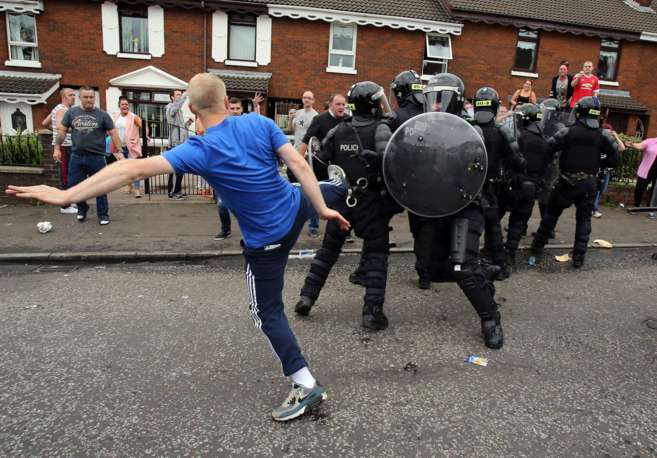
Residents objecting to PSNI in riot gear invasion of Roseapenna Street (‘nationalist’), West Belfast, August 2015 (Photo sourced: Internet)

The whole of Ireland was a colony even when it had its tiny minority parliament1 and it continued to be one when that Parliament, under massive bribery, voted to abolish itself in 1800 without the vast majority of the population in Ireland, native AND planter, having any say in the matter.

When the level of anti-colonial struggle in Ireland rose to a certain level and the rulers of the UK were beset by difficulties on most sides, a deal was done with an Irish client bourgeoisie and the country partitioned.

Whatever the status of the Irish State thereafter, the status of the Six Counties was clearly that of a colony. That is and was so, regardless of whether it is sectarian or not, whether there are civil rights or not. It is part of our nation held for the Crown by force of arms.

Those arms were again very much in evidence during the fairly recent 30 Years’ War – in the hands of the formal British Army, formal colonial police and informal proxy murder gangs.

And yes, the PSNI today is an armed colonial police force – and it would be that even if it had no history, if it were created today. But as it happens, it does have a history. It is a variant of the Royal Ulster Constabulary. And the RUC was a variant of the Royal Irish Constabulary2. And the RIC was a gendarmerie.

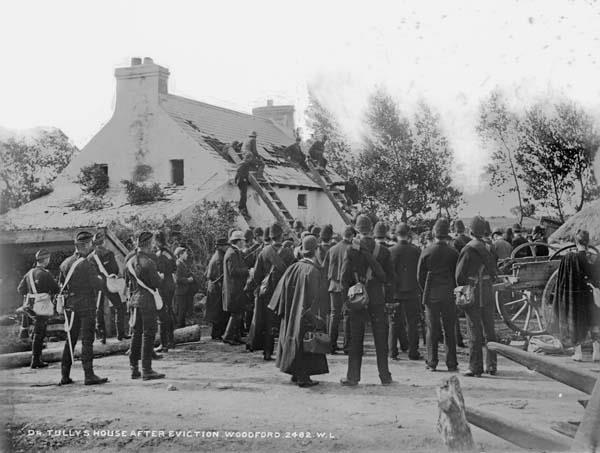
RIC and British soldiers supporting an eviction in Galway during the Land War (Photo sourced: Internet)

A COLONIAL POLICE FORCE WITH A LONG HISTORY

Perhaps my opponent has heard the term before. Maybe she associates it with Turkey … or even with the Spanish state. But such things belong to foreign and authoritarian states, right? Couldn’t possibly be to do with here!

States that have conquered nations within them, resisting from time to time, or regions that are otherwise difficult to manage, need to control them by army or police. The first becomes problematical over time and the second needs to be coordinated from the centre, not mainly local.

The solution some states have found is to have a central quasi-militarised police force: the Guardia Civil of the Spanish State, the Turkish Gendarmerie, the Caribieneri of the Italian State, the French Gendarmerie.

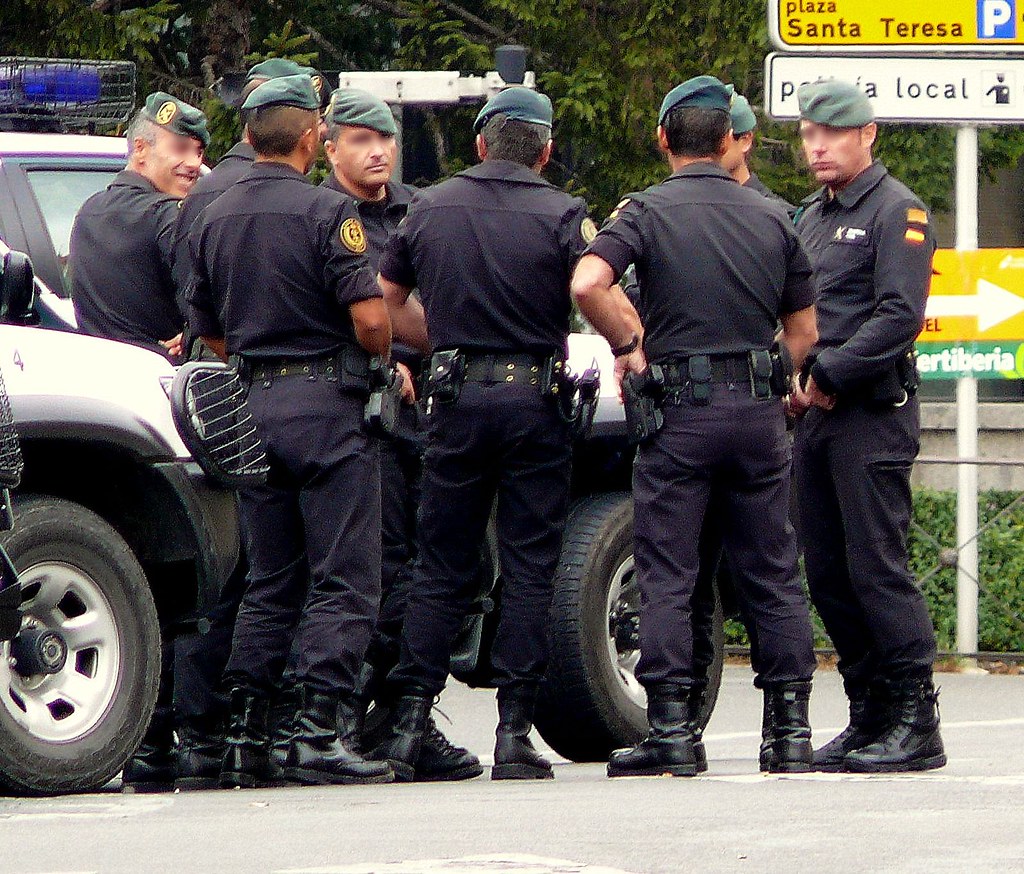
Gendarmerie of the Spanish State: Guardia Civil in modern uniform (Photo sourced: Internet)

These forces typically live in barracks and are directly answerable to the central State. The Royal Irish Constabulary was such a gendarmerie also. And nothing like it existed in Britain.

It was a colonial armed quasi-militarised police force to spy on and suppress the Irish by force.

What was left of the RIC in Ireland became the RUC after Partition and the RUC became the PSNI after some reforms. They don’t live in barracks but they do sally forth from them and they are armed – still keeping ‘the natives’ down since 1836.3

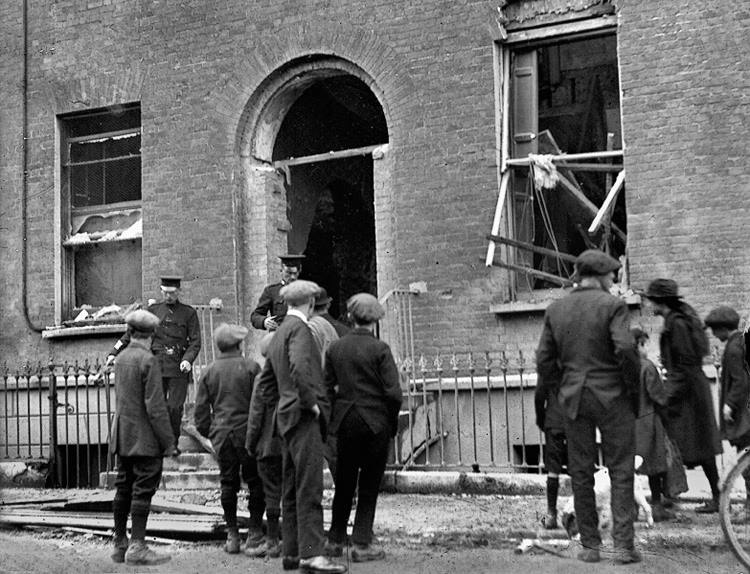
All-Ireland gendarmerie Royal Irish Constabulary in front of their barracks, King Street, Dublin, viewed by local people after a Republican forces attack during the War of independence 1919-1921 (Photo sourced: Internet)

PACIFICATION FOR NORMALISATION

Then there was my shocking description of the role of the ‘Process’ that she described as for peace and I for pacification. She is shocked even by the title I give it, a title suggesting it is not about justice but rather about maintaining control, by trickery or violence.

And I actually stated that is its purpose! Oh. My. God indeed!

Any process which starts from the basis of normalising the colony is doing just that: normalising the foreign occupation of a part of the nation taken by force and which has never been accepted by the conquered population. It is “about is holding on to the colony”, as I described it.

But what is fundamentally abnormal can never be normalised.

That attempt requires pacification, by repression and coercion or by deception – or by a combination of both. The Occupier has used all but, since the late 1990s, mainly deception. The masking and twisting of reality, the blowing of smoke in eyes.

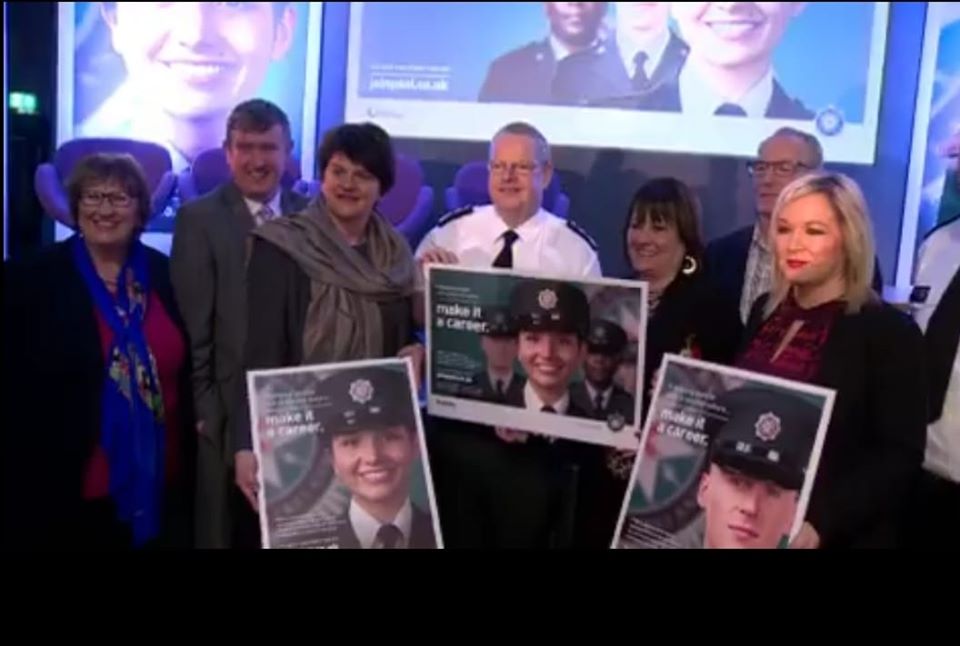
“Join the British Gendarmerie!” Recruitment drive for the PSNI supported by Unionists and Sinn Féin, February 2020 (Photo sourced: Internet)

Who is fooled? Mostly, those who want to be, some who see a workable future in the colony, under occupation.

The other deluded ones are those who are being deceived by their leaders, the latter who have given up not only the arms but any kind of struggle other than climbing into the elite.

Ultimately, the reality is so obvious that the deception is only possible when the deceived help it along themselves. Why do that? Because it’s comfortable, or seen as an alternative to hopelessness, or less frightening than the alternative – revolutionary struggle.

Oh. My. God! Yes indeed.

And yet we say, we who look at the reality, in the face of those who deny it, as Galileo is said to have muttered to his persecutors, who denied the world moved around the sun (rather than the reverse): “Eppur si muove”(“And yet it moves)”.4

We might also say, whether some find it shocking or just uncomfortable, something more mundane: Est quodcumque est. (It is what it is.)

end.

FOOTNOTES

1At various times Catholics were excluded from voting for representation in the Parliament and at all times from the Reformation onwards barred from being elected to the body or from holding high office. The vast majority of the Irish population were Catholics. Protestants other than Anglicans suffered discrimination too but not to the same degree.

2The PSNI themselves recognise that history – see https://www.psni.police.uk/about-us/our-history/history-policing-ireland

3And they got the “Royal” in their name in 1867 for their role in suppression of the Fenian rising that year.

4Galileo di Vincenzo Bonaiuti de’ Galilei (15 February 1564 – 8 January 1642) was an Italian astronomer, physicist and engineer. He publicly ascribed to the theory of Copernicus before him that the sun’s position is static with the Earth revolving around it (heliocentrism) which had been attacked by the Protestant religions as contradicting the Christian Bible (Old Testament). But it was the Catholic Inquisition of which Galileo fell foul, firstly in 1616 when he was instructed not to hold that opinion. In 1633 he was forced to recant it after a long trial and lived under house arrest for the rest of his life.

SOURCES

Gendarmerie: https://en.wikipedia.org/wiki/Gendarmerie

RIC: https://en.wikipedia.org/wiki/Royal_Irish_Constabulary

The Queen’s Service To ….

Gearóid Ó Loingsigh

(Reading time: one minute)


Queen Elizabeth II / Sinn Fein president Mary Lou McDonald

Mary Lou McDonald, the current president of Sinn Féin, surprised a few, just a few, with her recent comments thanking the English queen, Elizabeth, for her service.  She stated that “Can I also extend to the British Queen a word of congratulations because 70 years is quite some record.  That is what you call a lifetime of service.”(1)

Why someone who describes herself as a republican would want to heap praise on a monarch and refer to the reign of the monarch as service is bewildering.  However, it is not that strange in the context of the Irish peace process.  It is part of the long road of Sinn Féin’s accommodation to the British state that was laid out in the Good Friday Agreement.  Sinn Féin at that time abandoned any pretence of having a critique of imperialism and capitalism.

The agreement signed basically stated that the British had no selfish interest in Ireland and the conflict was a communal one.  Putting it in blunt terms, two savage tribes agreed to settle their differences, the British state was not one of those savage agents in the conflict.(2)

Exactly what service has the English queen given and to whom?  As a monarch she has blessed every British military adventure since her coronation in 1953, including the savagery of the British repression of the Mau Mau rebellion in Kenya, various other colonial wars, not to mention her awarding of an OBE to Lt. Colonel Derek Wilford the man responsible for Bloody Sunday in Derry in 1972.  In 2019 she stood over her behaviour when she stated that the British government would “bring forward proposals to tackle vexatious claims that undermine our armed forces, and will continue to seek better ways of dealing with legacy issues that provide better outcomes for victims and survivors”.(3)  The massacre of Bloody Sunday was placed in the category of vexatious claims.

Part of the service that McDonald now lauds includes this and many more such incidents.  Though it is not unexpected.  It can only surprise those who pay no attention to the outcomes of peace processes around the world.  Yasser Arafat spent more time repressing Palestinians than he did fighting the Israelis after the Oslo Accords.  In South Africa, the former mining trade union leader Cyril Ramphosa became a mining magnate, whose company was involved in the massacre of 34 striking miners at Marikana in 2012.(4)  He and the ANC made their peace with white capitalists and obtained a share of the wealth, in Ramphosa’s case a very substantial amount which some estimates place around $780 million dollars.  In El Salvador, the FMLN eventually gained power, but did not implement a single thing they had ever fought for and their former commander Joaquín Villalobos is now a consultant to right wing forces on how to defeat left wing movements and contributes to the right-wing think tank The Inter-American Dialogue, which includes such illustrious figures as Violetta Chamorro from Nicaragua and former head of the World Bank, Robert Zoellick, to name just two unsavoury characters.(5)  In Colombia, the ink hadn’t even dried on the agreement and the FARC commander Timochenko declared that the Colombian armed forces would be allies of the FARC in building a new country.  The murder of just over 300 members of the FARC since the signing of the peace agreement has not caused him to change his evaluation of the Colombian armed forces, in fact he has doubled down on his position.

It is in the nature of the beast.  In every peace process that has happened, the former enemies of the state reconciled themselves to the regime and the system, without exception.  McDonald’s declarations are just a confirmation of that and also a sign that it is a bottomless pit and there is no level of political depravity that Sinn Féin will not sink to.

Notes

(1)  Belfast Telegraph (10/02/2022) Sinn Féin leader congratulates Queen on ‘lifetime of service’ https://www.belfasttelegraph.co.uk/news/northern-ireland/sinn-fein-leader-congratulates-queen-on-lifetime-of-service-41334673.html

(2)  The agreement can be consulted at https://www.dfa.ie/media/dfa/alldfawebsitemedia/ourrolesandpolicies/northernireland/good-friday-agreement.pdf

(3)  The Irish Post (20/12/2019) Anger as Queen’s speech appears to dismiss fight for justice for Bloody Sunday victim’s as ‘vexatious claims’ https://www.irishpost.com/news/anger-queens-speech-appears-dismiss-fight-justice-bloody-sunday-victims-vexatious-claims-175999

(4)  The Guardian (19/05/2015) Marikana massacre: the untold story of the strike leader who died for workers’ rights https://www.theguardian.com/world/2015/may/19/marikana-massacre-untold-story-strike-leader-died-workers-rights
 
(5) See https://www.thedialogue.org

INTO SPANISH JAIL AFTER THREE YEARS FREE FROM FRENCH JAIL

Diarmuid Breatnach

(Reading time: 5 mins.)

Basque independentist militant Itxaso Zaldua was arrested on Tuesday in Hernani, in the Basque province of Gipuzkoa and according to media is to be charged with complicity in the killing of a senior right-wing politician in 2001. She has spent only three years at liberty in the southern Basque Country after nearly twelve in a French jail and is now back in custody pending trial. Her arrest has been denounced by both wings of the Basque pro-independence movement but from different perspectives.

           As according to the bilingual GARA newspaper Zaldua was not held incommunicado, i.e without access to friends and relations, lawyer or doctor of choice, it is not likely that she will be tortured. Until a few years ago the use of a variety of types of torture during the five-day incommunicado period under the “anti-terror” (sic) laws was the rule rather than the exception. However, all detainees charged under the terrorism laws of the Spanish State are always taken to Madrid for interrogation by the Guardia Civil and then for court appearance, the distance from their homes placing an additional burden on friends, relatives and supporters (it is 450 km from Hernani). Some of those will be given temporary accommodation and support by Madrid organisations in solidarity.

TWELVE YEARS IN JAIL

          Back in April 2005 Itxaso Zaldua was arrested in the Lannemezan area of the Occitan region of the French state, along with her comrade José Segurola Querejeta. They were charged with membership of ATAKA (sub-structure of the armed Basque resistance organisation ETA), of which she was accused of leading and duly convicted and jailed in the French system (which also disperses political prisoners to jails throughout the territory).

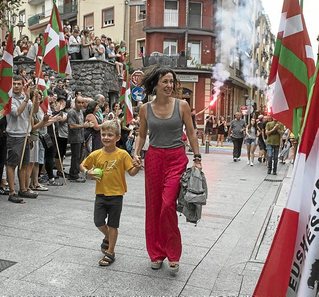
Zaldua was released in 2017 and right-wing Spanish unionist organisations including the “Association of Victims of Terrorism”, many of their members relatives of Spanish police or military, complained at the traditional honouring reception she received upon her return home from French jail. Zaldua walked hand-in-hand with her young daughter down a street with well-wishers on both sides cheering, was presented with a floral bouquet, two women danced the aurresku (honour dance) before here and another shouted the irrintzi, the high-pitched yodeling cry reputed to have been a battle-cry (see embedded video) and the Eusko Gudariak (“Basque Soldiers”, similar to the Irish “Soldiers’ Song”) was sung by all.

https://www.vozpopuli.com/espana/instituciones-permiten-homenaje-etarra-Itxaso-Zaldua-yihadista_0_1057095289.html (apologies for the use of video from a right-wing source but it was the only one I was able to access).

2017-08-23, Hernani. Itsaso, euskal preso politikoa aske, ongi etorria.
23-08-2017, Hernani. Itsaso, presa politica vasca libre, recibimiento.

“TIME TO BE EMPTYING THE JAILS, NOT FILLING THEM”

          The “official” Basque independentist movement responded quickly to the ex-prisoner’s new arrest: the Sare organisation convened a demonstration in Hernani the same afternoon demanding Zaldua’s release and the trade union works committee of her place of employed also denounced her arrest. The official movement’s political party EH Bildu (headed by Arnaldo Otegi), issued a statement that “It is time to be emptying the jails, not filling them,” a reference to the nearly 250 Basque political prisoners still in jail.

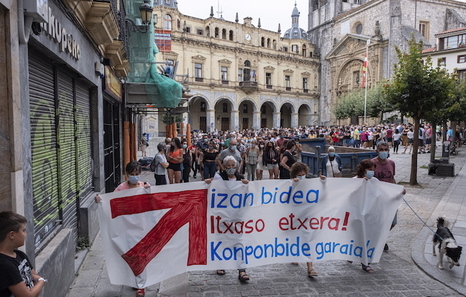
2020-07-21, Demonstration Tuesday afternoon in Hernani in protest at arrest of Itxaso Zaldua in the town earlier that day.
(Photo sourced: Naiz.info)

The party’s statement called the arrest “another obstacle in the path chosen by this nation towards peace, coexistence and freedom; a path which, cost whatever it may, we are determined to follow”.

However the ‘dissident’ organisation Amnistia (Movement for Amnesty and Against Repression), which also condemned the arrest, issued a statement declaring that “There will be no peace until the reasons that are at base of the conflict are resolved and until all the militants who are punished as a consequence of said conflict are free.

Both organisations called the people to action, with EH Bildu referring to “the participation and activation of Basque society” and Amnistia in contrast stating that “the working class need to organize”.

“THEY WANT TO HUMILIATE THE BASQUE COUNTRY”

          The Basque organisation ETA ended its armed struggle in 2012 as part of a unilateral bid for a peace process of the movement under the leadership of Arnaldo Otegi. However, a peace process requires the participation of at least both antagonists and the Spanish State has shown no interest in negotiation. Whatever one may say about such processes in Ireland or in South Africa, the resistance organisations in those countries ensured the freedom of their imprisoned members before they signed up to the deal. This was not so in the Basque case.

It is no doubt difficult for observers to understand why the Spanish State is now pursuing an ex-prisoner for alleged complicity in an assassination nineteen years ago when State has gained not only the ETA’s abandonment of armed struggle but even its dissolution. Nor is there any sign that Zaldua is a sympathiser of the “dissident” movement; the statements in her support from across the “official” movement and the speed of response is in stark contrast to the “officials’” response to the hunger and thirst strike of political prisoner Patxi Ruiz in May. Ruiz had denounced the “official” leadership some years ago and been expelled from the collective that leadership controls (and which precipitated the resignations of another four Basque prisoners in solidarity).

Ironically, it is the assessment of the “dissident” Amnistia which seems correct: “This arrest, like other previous ones, shows that the States (i.e French and Spanish) want to humiliate the Basque Country. By means of life sentences against a specific against a specific model of resistance, they want to intimidate the new generations that join the struggle.”

Itxaso Zaldua, photographed a year after her release from 12 years in French jails.
(Photo sourced: Internet)

DIFFERENT PATHS

          Whatever the eventual outcome of the judicial process against Zaldua in the no-jury National Court in Madrid, it is clear that the struggle against the Spanish State is far from finished in the southern Basque Country, though its armed stage seems over at least for the present.

The “official” leadership has been following an electoral path and quoting the support of external political figures such as Bertie Ahern, Gerry Adams, Kofi Anan, Tony Blair and Brian Currin of South Africa.

In the Euskadi regional government elections on Sunday in the southern Basque Country, the “official” party led by Otegi, EH Bildu, as expected came in second. The PNV, the Basque Nationalist Party, came in first and the PSE, Basque version of the Spanish unionist PSOE, in third place. Despite periodic approaches by the EH Bildu leadership, the PNV will govern the three provinces either in coalition with the PSE or in “confidence and supply” agreement with the party.

Even if EH Bildu in years to come were able to reach first place in Euskadi regional elections, what of the other region, Nafarroa? And the three northern provinces of the Basque Country, under French rule? And, even with an eventual majority in all seven provinces, if the Spanish State were still to deny independence, as it does with an independentist majority in Catalonia, what then?

Over to the Amnistia movement, which advocates street power: “If we are to achieve peace, it will come from the full implementation of total amnesty, with the unconditional release of prisoners, refugees and political deportees, with the expulsion of the occupation forces and with the overcoming of the reasons that pushed so many people to fight. That will be the only guarantee to end arrests like today and other similar repressive actions.”

That seems a realistic enough assessment. But as to how to achieve their objectives against the opposition of the Spanish and French states, neither section of the Basque independentist movement seems to have an answer.

End.

Workmates of Itxaso Zaldua at company CAF Besain demand her release.
(Photo sourced: Internet)

SOURCES:

Movement for Amnesty and Against Repression statement: https://www.amnistiaaskatasuna.com/index.php/es/articulo/ante-la-detencion-de-itxaso-zaldua

Report on-line GARA (naiz): https://www.naiz.eus/en/actualidad/noticia/20200721/detienen-a-la-expresa-itxaso-zaldua-en-hernani

THE LONG ROAD

Diarmuid Breatnach

(Reading time: 8 mins)

Looking back along the road we’ve travelled, I can see we have come a long way to get where we are today. I’ve traveled a long way. I was very young then, when I started. We all were. In particular, I remember, Carl and Eva and I, we were in secondary school, fifteen years of age.

          We discussed the situation often and pretty quickly became revolutionaries. We knew people in the Party – well, we called it the Old Party after awhile, you’ll see why soon. Yes and they wanted to recruit us. If enough of us joined them, voted for them, they would be able to change things, they told us. And they had some credibility because some of them had fought in the old days, when things were even worse. Some had  lost relatives killed and some had gone to jail.

But we were not taken in, we weren’t fooled. It wasn’t just that theirs looked a really slow way to change things; we didn’t believe it would ever succeed. And we thought they knew that, deep inside and were just prepared to settle for things much as they were. Make the best of it (which for some of them meant shady deals and lining their pockets).

And we were never going to do that.

We weren’t in the armed group, the three of us but we supported them. The armed group were our heroes, the sharp end of our resistance. Over time they would weaken our oppressors and in the end we’d get the freedom we wanted. And these young men and women, they really fought. They paid for their resistance too; plenty of them were killed and if caught, they were tortured and sent to jail for really long sentences.

We delighted in their successes, marched in their funerals, supported them in their struggles in the jails and, later, honoured them when eventually they were released. We did the best we could ourselves against the oppression and general injustice but without actually taking up the gun: put up posters, painted graffiti slogans on wall, held protest marches and pickets, gave out leaflets, held public meetings. Of course, the oppressors went after us and we were out there, in plain sight, more or less.

Our oppressors had made some laws under which they could declare just about anything we did illegal. Unless we sat at home and did nothing. Or joined the Old Party. They called that group of laws the Anti-Terrorist Legislation.

ARREST AND TORTURE

          One night while were out postering in memory of a couple of our martyrs, on the anniversary of their being killed by the police, we got caught. They gave us a bit of a beating and took us to the police station, telling us on the way what they were going to do to us.

Under the ATL they could keep us in a police station for five days without access to any of our friends and relatives or even a lawyer. I’m sorry to say they broke me in the first 24 hours. You might think that was a pretty short period – it didn’t seem like it at the time. Being held in a dark windowless cell, hooded, being threatened with all kinds of horrible things you know they can do, listening to the screams of other people having some of those things done to them, having a plastic bag put over your head until you can’t breathe anymore and you feel sure you’re going to die, your lungs straining ….. It’s amazing how long 24 hours can seem. And even if you lasted that 24 hours, you knew there were another 96 hours to go after that.

Yes, I signed a “confession”, what they told me to say. According to the confession, we were honouring the martyrs because they wanted to overthrow the State, which is why we were putting up posters about them. We wanted more people to join the fighters to help recruitment. Not really about honouring their memory at all. “Glorifying and Supporting Terrorism” was what I was going to be charged with which, if convicted, would get me three years in jail. And the others: my “confession” was not only about me but about Eva and Carl too.

After I signed the “confession” they left me more or less alone but somewhere I could hear shouting and screaming. I thought it might be Eva and Carl, hoped it wasn’t. And I still had to wear a hood whenever any of the guards came in the cell or their doctor examined me. Well, they told me he was a doctor. I told him I felt ok – I knew the guards were listening and I’d get repeat treatment if I said anything against them. And it wouldn’t do any good anyway.

By the third day, or what I thought might the third day, I didn’t hear what sounded like a female screaming any more but could still hear shouting. And sometimes someone crying.

I know it was the fifth day when they brought us to court, put us all in the same cell, waiting for our trial to start. Eva and Carl looked pretty rough and I suppose I did a bit too. Eva burst into tears and told us she had signed a confession against us after the second day. We put our arms around her and held her while she cried. I admitted I had signed too, assuming we all had. I didn’t say I had only held out for about 24 hours, though.

Well, women detainees, they get it especially hard. As well as the rest of it, they are kept naked or semi-naked and, if on their monthly periods, refused tampons or cloths. They are fondled in their private parts, threatened with rape, humiliated and sometimes have something pushed inside them ….. The police don’t do things like that to male detainees ….. well, occasionally, if they know one is gay ….

A frequent method of combining asphyxiation torture with humiliation for female political prisoners in number of jurisdictions.
(Photo source: Basque Country social media)

The shock was that Carl had not signed a confession – he hadn’t broken. So how come they had brought him to trial early on the fifth day with the rest of us? Well, they must have decided he wasn’t going to break; apparently most people break by the fourth day, which is why the limit is set at five. And anyway they had our statements implicating him.

We swore we would retract our statements during the trial, declare they had been obtained under torture. That would invalidate the statements, surely?

We were tried together in a special Anti-Terrorist Legislation court. One judge, no jury. No public. We had lawyers our family and friends had got for us but they were only given five minutes with us before the trial. The Prosecutor produced the statements against us all, those of the police who arrested us and my “confession” and Eva’s. Lied through their teeth that we had made them voluntarily. They produced a statement too for Carl but his lawyer objected it didn’t have his signature, so the police couldn’t show that they hadn’t made it all up.

When we gave our evidence, Carl denied he had made any statement whatsoever and we retracted ours, talked about the torture we had suffered. Eva was magnificent, denouncing them through her tears and shaking. The Prosecutor brought the police back to testify who of course denied not only the torture but any kind of coercion. Some of them even appeared shocked at the allegations. And the doctor – his voice sounded familiar so he probably had been the man who had “examined” me — said I had made no complaint (true) and had seemed calm and rested (not possible).

Image source: Internet

The courtroom is a funny place. Things the whole world knows are not true appear reasonable while the preposterous can seem logical. Not only had they not tortured us, the police witnesses said, but they had never heard of it being done. So why had we made such detailed statements and then retracted them, accusing them of torture. Well, they were mystified about that. Except …. some had heard that this was a propaganda tactic popular among our group, to smear the police. But why then had we given them a statement at all …. well, at least two of us? Skilled interviewing, was the reply. Trained interrogators, going over the suspect’s stories again and again, exposing every contradiction.

The only thing skilled about them was in making sure they stopped short of killing us and generally left no bruises, especially on our faces. Oh yeah, and the acting in court – that was very skilled.

The case against us, with our repudiation of the statements, should have got us at most a few months or maybe even a fine for postering agitational material on public property. Eva and I got three years each, while Carl got nearly four. I suppose the fact they hadn’t broken him pissed them off and they made out he was our leader so the judge gave him extra.

PRISON

          Prison was bad but it was a relief after the police station. They moved us around jails a few times over the years, we didn’t often see one another and our families and friends had to travel long distances to visit us. When they were permitted to or we hadn’t been moved the day before the visit. We learned later, though no-one told us at the time, that Carl’s aunt had a serious accident on the motorway. Long distances, tiring, unaccustomed to motorway driving, bad luck …. With a couple of operations and time, she was able to walk again but the family had to invent excuses why she couldn’t visit him, especially because they had always been close.

Most of the prison warders were hostile but some were sadists, constantly trying to provoke me, finding ways to frustrate whatever little pleasure or diversion I was permitted. Sometimes it was “too wet” to go in the exercise yard for my permitted two hours daily. Sometimes the library was “closed for stocktaking” or “due to staff shortages.” All prisoner mail is opened before being given to or sent by the prisoner but sometimes I got a letter that looked like it had been spat on. Or it smelled bad. Often, it would be two weeks later than the date stamp. Some letters were returned to the sender, I learned later, marked “UNSUITABLE”. I had one returned to me, although I was always careful what I wrote, this one marked “BREACHING PRISON SECURITY” — I had made some remarks about the prison food.

Image source: Internet

Some of the social prisoners were ok whenever I was in contact with them, some were hostile, seemed fascist. Sometimes a warder would make comments about me in the hearing of those kinds of prisoners. Anytime out of my cell I felt I had to be alert, with 180 degrees vision.

I did physical exercises in my cell to keep my body healthy and studied for the sake of my mind. Law was the subject I studied most, so I could represent activists in court and file motions and so on but I also studied politics and economics.

When I got out, I enrolled in a law studies course. I wrote to Carl – I hadn’t been allowed to previously. From his letters, he seemed ok but you never know for sure, do you? Not when you know the letters have to pass the prison censor and the prisoner has to keep up a strong front also. I met Eva too, she was released same time as I but a long distance away; she was subdued, a kind of frightened look in her eyes. Not surprising but she still kept in the movement, though we each took a step back from the more illegal street work, where we could be isolated – like postering. I qualified to practice law at a basic level.

THE POLITICAL PARTY

          We began to discuss founding a political party and standing in elections. The armed struggle would go on, we thought, but over time we could push the Old Party back, take a lot of their votes. After all, what were they doing (except some of their leaders and contacts lining their pockets)? We could really expose them with our policies.

So we formed a political party, a New Party, for which we had to agree to respect the Constitution. We were doing well but, just before the elections, our party was disqualified by the State. “Connections with terrorism” was the reason given. We were furious and so were our supporters. And we formed another party. The State disqualified that one and, for good measure, banned it. Now one could go to jail for being a member.

This kind of thing went on over years, different versions of the New Party and more people going to jail and we rarely got a chance to stand in elections, much less to build up momentum.

We tried forming a coalition with some more moderate elements, even some we had called “collaborationist” in the old days but the State said we would have to denounce the armed struggle to be a legal constitutional party. We couldn’t do that because we’d be turning our back on not only our martyrs but on hundreds of activists in jail. And our own people wouldn’t stand for it. By this time I had risen to General Secretary of our underground Party.

After long discussions with the leaders of the armed wing, eventually we all agreed to announce an end to the armed struggle and to hope for the legalisation of our Party and early release of prisoners. It was a hard decision but not as hard as one might think because we were all pretty worn down and our military wing hadn’t been doing all that well for some time. The State had penetrated both sides of our movement with agents and people turned informer — hundreds were in jail or awaiting trial.

What was harder was getting our supporters to agree but by managing a few meetings, ensuring we had people with a militant reputation to speak in favour of the plan, ensuring people for the idea got more time to talk than those who didn’t and a few other things, we got it through. Besides, a lot of them believed us when we whispered that it was all a game to fool our oppressors.

Eventually, after we declared our total opposition to any armed struggle and total commitment to the electoral process, we got legalised and now we are chipping away at the Old Party, though it looks like it may take a long time to supplant them.

But some of the young people, and some older ones like Carl, are saying we have compromised too much, that the road we’ve chosen is too long and anyway is never going to get us justice. These people do things we’d rather they didn’t, that we’ve dropped, like illegal postering and spraying slogans, holding illegal commemorations for martyrs, protest marches, getting into trouble with the police ….. Making us look bad.

And what’s more, unbelievable as it might seem, they’re calling us “The Old Party”!!!

end.

Image source: Internet

IS THE BASQUE SLEEPING GIANT AWAKENING?

Diarmuid Breatnach

(Reading time: 15 mins.)

The Basque pro-independence movement, the Abertzale Left, fought the Spanish State for over four decades. in 2012 its leadership renounced armed struggle without any reciprocal agreement with the Spanish State, declaring its faith in an imagined “Basque peace process”, sought alliances with social democratic and capitalist-nationalist parties and publicly apologised for its past actions of resistance. The movement sank into general inactivity except on the electoral front. But in recent weeks there have been signs of awakening, though under a different leadership – or is the giant merely muttering and twitching in its sleep?

Map of the Basque Country showing the provinces; the three to the north-east are inside the French state, while the other and larger four are in the Spanish state. (Image source: Internet)

THE GIANT

          How does the description “Giant” fit a resistance movement in a total population of less than three million people? A nation divided between the Spanish and French states? Part of the answer is precisely in those features, also in its history during the Spanish Civil / Anti-Fascist War and “French” Maquis and earlier. Also in its long struggle in defence of its native language Euskera, almost certainly the oldest in Europe and perhaps the first to reach it in neolithic times.

This is a movement that carried out general strikes against the Franco dictatorship, ensured that three of its provinces rejected the 1978 Constitution of the Spanish State which, in atmosphere of fear and murderous repression and with the collusion of the newly-legalised social-democratic (PSOE) and communist (CPE) political parties, was voted in by a majority in every other region of the Spanish State (population another 35 million people).

The serpent of wisdom and the axe of armed struggle, symbol of ETA.
(Image sourced: Internet)

Inspired by the examples of the Algerian independence struggle and socialist Cuba, the Abertzale Left movement rose from the defeat of the nation in the Spanish Civil/ Anti-Fascist War and the terrible repression under the fascist dictator General Franco and in 1959, formed the ETA (Land and Freedom) organisation. The youth wing of the conservative Basque Nationalist Party conceded the Left-inclination in order to join with them. Enduring arrests and torture of its supporters, it was not until 1968 that ETA took an armed action; halted at a police checkpoint and determined not to be arrested, Txabi Etxebarrieta shot a policeman dead and was in turn killed himself by pursuing police.

Mural honouring Txabi Etxebarrieta, first ETA martyr. (Image sourced: Internet)

The first planned armed action carried out was also that year when an ETA squad shot dead Meliton Manzanas, head of the political police in the Basque Country, a notorious torturer of prisoners and a Nazi sympathiser in the past.

A woman dressed in the Basque national colours dances the aurresku, ceremonial honour dance, in commemoration of ETA martyrs. Organising or participating in such an event could easily lead to torture and a prison sentence under the “anti-terrorism” laws of the Spanish State.
(Image sourced: Internet)

A number of other actions were taken by ETA over the years, some of them spectacular but, like many armed resistance groups, some also questionable in value or even in justification from a revolutionary point of view. But in December 1973 an ETA squad in Madrid assassinated Admiral Carrero Blanco, General Franco’s nominated successor, an action which many credited with hastening the progress of the Transition of the Spanish State to nominal democracy. General Franco died without a strong agreed political replacement almost exactly two years later, in December 1975 and the Transition process ran from then until 1978.

Admiral Carrero Blanco, Franco’s intended replacement, assassinated by ETA in Madrid in December 1973.
(Image sourced: Internet)

The struggle continued after the Transition, since the new Constitution declared any breakaway from the unity of the Spanish State a crime unless a majority in the Spanish Parliament voted in favour. The military and police repression in the Basque Country was huge. In the 1980s the social-democratic (PSOE) Spanish Government was exposed as heavily implicated in a number of terrorist groups operating against Basques through kidnapping, torture, gun and bomb attacks (see GAL) and eventually the Minister of the Interior and a number of high-ranking officers were given jail sentences.

In 1983 mass demonstrations and armed actions by ETA brought about the abandonment of the Spanish State’s nuclear reactor at the picturesque coastal spot at Lemoiz, followed by a new Spanish government declaring a moratorium on all building of nuclear reactors.

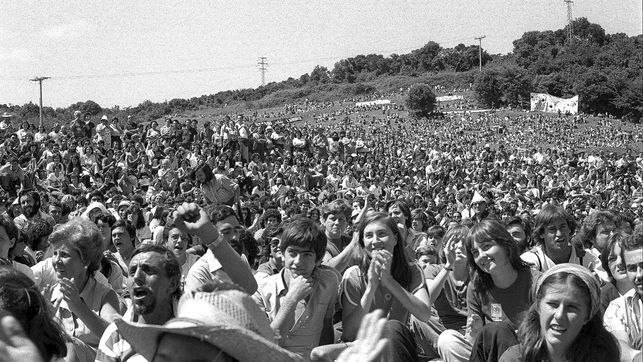
1975 mass demonstration against nuclear reactor being built by the Spanish State at Lemoiz.
(Image sourced: Internet)

Another aspect of the struggle was against compulsory military service, which the Spanish State only ended in 2002. People not only evaded it but also protested publicly against it.

Many people in the Spanish state opposed being part of NATO in the 1986 referendum but the Basque Country was highly represented in the vote against, around double the vote of those in favour and along with Catalonia being the only regions with a majority voting “no”.1

Photo taken of me by my guide on my camera above the abandoned nuclear site at scenic Lemoiz, possiblt 2016. Not many people can claim to have halted a nuclear reactor building program.

The ideology of the movement which found expression in ETA was national liberationist and socialist and this was reflected to a greater or lesser degree in all its parts, whether military or civilian. The Abertzale Left during the period organised itself into one political party after another after each in turn was banned by the Spanish State and forbidden to field candidates in elections.

Women industrial workers in Basque anti-fascist armaments factory, Spanish Civil/ Anti-Fascist War, 1936. (Image sourced: Internet)

But the movement had a huge social following too, in youth movements, punk and heavy metal bands, social-cultural centres, pirate radio stations and promoters of Euskera as a spoken language (all leaders of the Abertzale Left were required to be able to speak the language and all public meetings were addressed in Euskera and Spanish or even Euskera alone). There was even a popular Abertzale style of haircut and dress. The Abertzale Left also had a sizeable trade union, LAB which, along with ELA, a union founded by the Basque Nationalist party, recruited the majority of unionised Basque workers2. Feminist, LBGT, linguistic, eco-friendly, anti-animal cruelty sectors all contained many people broadly in support of the Abertzale Left or at least of its stated objectives.

The movement also had newspapers, radio stations and internet sites and many of these were closed down by the Spanish State, alleging that they were “collaborating with terrorism”. Currently the Spanish State is moving towards the closure of the movement’s social-cultural centres, the Herriko Tabernak (People’s Taverns). This arises from a judgement by the National Court in 2011, a judgement corresponding to an infamous statement by Baltazar Garcón, at the time a prominent Judge of that Court, that “Everything is ETA”. The closures are to be carried out now although ETA ceased armed activity permanently in 2012 and disbanded itself a little later.

Annual January prisoners’ solidarity march, Bilbao, 2016. (Image sourced: Internet)

Repression by the Spanish State has included executions and clandestine assassinations and led to relatively huge numbers of Basque political prisoners, not all by any means military fighters and conviction with “confessions” extracted through torture during the five-day incommunicado period ensured a problem-free conveyor belt for the Spanish State. That conveyor belt delivered its victims to jails dispersed all over the Spanish state, nearly every one hundreds of kilometres and sometimes over a thousand from the prisoners’ homes. The financial, physical and mental strains on friends and relatives, including elderly and children having to travel such distances to visit their loved ones are hard to imagine, often facing abuse or harassment on the way or at their destination, apart from serious accidents on motorways (including fatalities). Many pickets and demonstrations are held in the Basque Country throughout the year and each January a monster march clogs the streets of Bilbao.

The issue of the prisoners has always been a big one for the Abertzale Left and despite dispersal the prisoners built an organisation within the jails, responding to their situation in a disciplined manner.

SLEEPING

          During the first decade of this century it was clear that ETA was not doing well and the Abertzale Left in general was facing many more years of struggle against an unyielding state with repression everywhere and hundreds of political prisoners in jails.

The leadership was attracted to the much-advertised pacification/ peace processes of South Africa, Palestine and Ireland. By any estimation the Palestine process soon collapsed and its rejection by most of Palestinian society was clearly indicated first by the Intifada and secondly by the electoral gains of Hamas, pushing Al-Fatah into second place. To undiscerning eyes the Irish and South African3 processes seemed to be doing well and both the ANC and Sinn Féin lent strong support to the Abertzale Left’s imagined “peace process”. Despite that support and that of such prominent imperialist figures as Tony Blair and Kofi Annan, the Spanish ruling class was not interested in playing and eventually the Abertzale Left’s leadership was left with nowhere to go. However, they persisted in trying to build alliances with the majority Basque National Party and with smaller nationalist-social-democratic groups; they succeeded with the second sector but failed with the first and seem condemned to second-party status electorally in a Spanish colony, a nation divided by the French-Spanish border.

However, in their search for acceptance by the above-mentioned sectors, the Abertzale Left not only renounced armed struggle but apologised for past actions, ended street confrontations and called on the prisoners to negotiate their progress individually through prison system grades to eventual parole. Some of Abertzale Left public representatives even attended events commemorating Guardia Civil and Ertzaintza (Basque police) killed by ETA in the past.

EH Bildu Mayor of Errenteria participates in commemoration of a Guardia Civil killed by ETA.
(Image sourced: Internet)

When the struggle for independence broke out again recently in Catalonia with the 2017 Referendum and the Spanish State responded with a violent Guardia Civil invasion and jailing of politicians and social activists, the Abertzale Left leadership noticeably declined to open up a second front of struggle.

STIRRING

          There were early but sporadic signs that not all movement was happy with the Abertzale Left’s new path. Askapena, an organisation set up within the Abertzale Left to work on internationalist solidarity, which at one time could list affiliated groups in Ireland, Germany, Italy4, Paris, Brittany, Barcelona, Madrid, Switzerland, Denmark, Sweden and a number of Latin American countries, broke quietly with with the Abertzale Left over its change of policies5. Notably also, when four members of Askapena were accused of “assisting terrorism” in 2010, they refused to apologise for their work and fought the case, being eventually cleared of all charges in 2016.6

In addition, many Basques were critical of the process, feeling that even if they were prepared to go down the new road, it had been handled badly by the leadership.

A leading Marxist theoretician of the movement, Inaki Gil, resigned from the national leadership years ago, though not from the movement; however he may well be persona non-grata in it now due to a published interview in which he criticised the decision of the 47 on trial in September last year to apologise for past actions of the Basque liberation movement, even after 50,000 had marched through Bilbao streets in their support two days earlier.

When Arnaldo Otegi — generally seen as the architect of the new road for the Abertzale Left7 – was arrested with others in 2009 and, while on pre-trial detention began a hunger strike only to end it soon afterwards, it did not reflect well on him. While he beat a charge of “glorifying terrorism”, he was convicted in 2011 for allegedly reorganising Batasuna, banned political party of the Abertzale Left and sentenced to ten years, reduced on appeal to six and walked free in 2016. In the meantime a Free Otegi campaign (2015) attracted some notable foreign support (including Desmond Tutu) but was criticised in the Basque liberation movement for highlighting the case of one political prisoner above many others8 (including those who were serving much longer sentences).

Arnaldo Otegi, leader of the official Abertzale Left.
(Image sourced: Internet)

Some years ago a new Basque political prisoner solidarity organisation came into being, calling itself ATA (Amnistia Eta Askatasuna – Amnesty and Freedom9). They enjoyed a good showing at their first demonstration but came under public attack not only by the Abertzale Left leadership but by a number of ETA members on trial in France. They were accused of using the prisoners as a stalking horse when what they really wanted was to attack the new line of the movement’s leadership. Censorship and condemnation in the Abertzale Left’s daily newspaper GARA followed.

Amnistia Ta Askatasuna demonstration Bilbo 2016.
(Image sourced: Internet)

Although their public support waned for awhile, in 2018 a youth group of the Abertzale Left was expelled after they had publicly denounced their annual conference managers for refusing to put their position paper forward for discussion; this youth organisation now collaborates with ATA. Last year, a new Basque revolutionary group called Jarki was formed and drew a sizable crowd to their commemoration of the annual Gudari Eguna (Basque Soldier Day)10.

ATA demonstration Donosti/ San Sebastian, September 2019.
(Photo: D.Breatnach)

However the issue of development remained in doubt and no-one could predict with confidence that the movement would be rebuilt along revolutionary lines under a new leadership.

WAKING

          The week before last, Basque political prisoner Patxi Ruiz embarked upon a hunger and thirst strike and although he abandoned the thirst component after 11 days he continues on the hunger strike. He took this action in protest against harassment and beatings by the prison administration and jailers and highlighted the fact that prisoners

Patxi Ruiz, Basque political prisoner, now on hunger strike.
(Image sourced: Internet)

were being refused virus-protection clothing or testing and that the jailers were not being tested either. He also wanted visits from his family to be permitted and prisoners allowed to attend funerals of family members (he had been refused permission to attend his father’s funeral). More recently he has demanded that prisoners be relocated to jails near their homes, a long-standing demand of the movement and which is entirely in accordance with model rules for prisons in the EU and the UN. Despite the official leadership of the Abertzale Left firstly ignoring the situation and then condemning his supporters, Ruiz’s struggle galvanised the mostly dormant Abertzale movement.

Patxi Ruiz solidarity march, Durango, Basque Country.
(Photo source: Amnistia Garrasi FB page)

Every day has seen small actions across the Basque Country, including protest pickets on bridges, beaches, town squares etc; solidarity fasts; slogans painted … Large solidarity marches have been held in Irunea/ Pamplona (Nafarroa province), Donosti/ San Sebastian (Guipuzkoa), Baiona (Bayonne), Bilbao and Durango (Bizkaia). ATA’s web page is full of developing news and the facebook page, which had fallen into silence, is active again.  Last Sunday in Pamplona/ Irunea, police attacked demonstrators with batons and fired rubber bullets at close quarters.Patxi Ruiz solidarity demonstration 24 May 2020 attacked by police with batons and rubber bullets

Patxi Ruiz solidarity march in Bayonne, northern Basque Country.
(Image source: Internet)

Some of the Basque prisoners who are part of the “official list” have begun taking solidarity action, refusing food or to leave their cells for periods in Almería, Brevia-Ávila, Castelló I, Córdoba, Huelva, Murcia (where Patxi is), Puerto III, Rennes, Sevilla II, Topas-Salamanca …. refusal to leave one’s cell also means forgoing family phone calls. Patxi had been expelled from the Abertzale prisoners’ collective in 2017 for speaking out against the new line of the official leadership which another four prisoners have repudiated also11.

Patxi Ruiz solidarity seaside picket, Plentzia, Basque Country.
(Image source: Amnestia Garrasi

However the mass of Basque political prisoners have so far remained quiet, “concentrating on moving through their grades while Patxi lies dying”, in a quotation from an ATA commentary which blamed this new lack of unity on the fragmentation engendered by the official leadership.

Patxi Ruiz solidarity seaside picket, Lekeito harbour Basque Country.
(Photo source: Amnistia Garrasi FB page)

A group of ex-prisoners has now also called for solidarity with Ruiz.

COULD NOT SINK LOWER”

          According to a public statement by ATA denouncing political parties Sortu and EH Bildu, the official Abertzale leadership made no comment until Patxi Ruiz was into his fifth day of hunger and thirst strike and then it was to mention him only in passing, while denouncing the spray-painting of political parties’ buildings by protesters and the burning of an ATM. On the 10th day the official leadership again released a statement, saying they were trying to organise one of their elected politicians to visit the prisoner but condemning the mobilisations across the Basque Country and accusing them of endangering Patxi Ruiz’s life. “They could not sink lower”, commented ATA, who also pointed out how late the official leadership had come to comment and that without the public-space protests, neither the media nor the official leadership would have taken any notice whatsoever.

What the future holds for Patxi Ruiz in the short-term is hard to predict, already weakened by ten days of thirst strike and now into his 16th day of hunger strike. What the near and medium-term future holds for the Basque movement is also an open question, depending to some extent on how ATA is able to capitalise on this upsurge and build an organisation or a network of coherence and unity, at least in action.

Patxi Ruiz solidarity march Bilbo 23 May 2020.
(Source image: Boltxe)

The official Abertzale leadership will do what they can to destroy any such movement but they have already yielded the streets, one of the main arenas of the movement in the past. Both groups are mutually exclusive and the advance of one in the wider Basque movement can only be at the expense of the other.

The Spanish State too will be watching developments and no doubt considering its own options of repression, although not so easily done as before, without even an ETA existence to justify their response to the public.

Meanwhile the Catalan independence struggle simmers on and if both should link up in mutual solidarity …..

end.

FOOTNOTES

2The main unions in the Spanish state, Unión General de Trabajadores and Comisiones Obreras were founded respectively by the PSOE and the CPE. Both are Spanish unionist and have the majority of unionised workers in every region of the Spanish state except the southern Basque Country and Galicia.

3While the people in South Africa have the vote and the ANC political party has done well out of the deal, going almost straight into Government, the mass of people struggle on low level income, high level violent crime, unemployment and badly-delivered services, while an ANC clique wallow in riches gained through corruption. Sinn Féin went first into the British colony’s government and now has the most elected parliamentary delegates from the February 2020 General Election in the Irish State; however over two decades after the Good Friday agreement the country is no nearer unification or nation-wide independence and is run by neo-liberal capitalist classes selling out the natural resources and services of the nation.

4Germany and Italy had a number of these; in Ireland the cities of Belfast, Dublin and Cork each had one.

5This organisation effectively ceased to exist due to the new line of the Abertzale Left. Although a number of foreign committee delegates did not disagree with the new line (some certainly did) nevertheless it began to fade away from then on.

6In marked contrast to the apology in September last year for previous actions of the movement by 47 members of a number of Abertzale Left organisations, including those against repression and in solidarity with prisoners, before they had even been tried by the court. This shameful action was taken two days after 50,000 had taken to the streets to support them and left deep hurt, bewilderment and shame throughout the movement. https://www.theguardian.com/world/2019/sep/16/mass-trial-of-basque-activists-in-spain-ends-with-plea-deal

7He had come into the political leadership with Joseba Permach of the Abertzale Left in 1997 after 23 members of the Batasuna leadership were jailed for seven years by the Spanish State. He was elected General Secretary of the political party Sortu in 2013.

8The Abertzale Left had never previously endorsed any campaign focusing on individual prisoners except in the case of terminally and seriously-ill prisoners, of which at one time there were as many as 15 who, even under Spain’s own prison regulations, should have been paroled home or to hospital.

9Though now it gives the translation as “Amnesty and Against Repression”. An Amnistia organisation had existed earlier but dissolved or reformed after banning by the Spanish State and one of the accusations of the Abertzale Left is that dissidents misappropriated the name.

USEFUL LINKS & FURTHER INFORMATION:

AMNESTIA ETA ASKATASUNA

Webpage: https://www.amnistiaaskatasuna.com/es (Spanish language version, also available in Euskera).

Facebook: https://www.amnistiaaskatasuna.com/es (Spanish and Euskera languages, lots of photos and videos)

JARKI: No media link available.

HAS FERRITER BEEN READING REBEL BREEZE?

Diarmuid Breatnach

(Reading time: 2 minutes)

On 15 February Ferriter’s column in the Irish Times expressed the opinion that comparison of Sinn Féin with Fianna Fáil in the 1930s only takes us so far. After looking at less of the overall history of the main Irish parties than I had in my article of 11 February in Rebel Breeze but adding some pieces I had not, what was his conclusion that differed so widely from mine? Well, that the military past was too new with SF!

Diarmaid Ferriter in Thinker pose
(Source: Internet)

But, actually, not true of Provisional SF with regard to FF, which came into government in 1932, less than two decades after the end of the Civil War and only six years after its split from Sinn Féin. De Valera, President of Fianna Fáil, had been a leader of the Republican side in the Civil War, from which side came the majority of Fianna Fáil’s supporters. By the time PSF gets into Government, it will be LONGER than two decades since Provisional IRA gave up its armed struggle!

On 11 February I posted an article of mine on Rebel Breeze and from there on to Facebook, making the point that, despite hostile media and politician claims to the contrary, Sinn Féin is very like the main Irish political parties – and that that is not a good thing. I traced the main elements of the parties’ history, how they had changed their positions and I elaborated the point that the main difference in their trajectories is that SF’s arrival on the neo-colonial capitalist political field was just more recent.

Meeting of Provisional Sinn Féin’s Ard-Choiste (national executive) in February 2020.
(Source photo: Niall Carson, AP, Internet)

It is worth noting (a point I had omitted in my piece) that nearly the entire Fianna Fáil government Cabinet in 1932 was composed of Civil War IRA men and that most of the remainder had been in Free State prison during that war.

It is said that imitation is the sincerest form of flattery but I can easily avoid being pleased by Ferriter substantially following my line of historical analysis. This is the man who, during the 2016 High Court hearing about the Government and property speculator plans for Moore Street, wrote a nasty attack on the demonstrators who had occupied the buildings and subsequently blockaded them against demolition. If he had been hoping to influence the High Court’s decision he failed – and spectacularly, because the judgement was that not only the buildings but the whole quarter is a 1916 historical monument.

Frank McDonald had also written an opinion piece during the trial against conservation and the demonstrators in the same newspaper (what WAS the Irish Times up to?) but after the judgement, he had the grace to apologise (sort of: he wrote that he had been in error).

But Ferriter? Nary a word.

End.

REFERENCES:

Piece by D. Breatnach in Rebel Breeze: https://rebelbreeze.wordpress.com/2020/02/11/despite-hostile-propaganda-sinn-fein-is-just-another-irish-political-party/

Piece by D. Ferriter in the Irish Times: https://www.irishtimes.com/opinion/diarmaid-ferriter-fianna-f%C3%A1il-s-trajectory-holds-lessons-for-sinn-f%C3%A9in-1.4173709?


DISSIDENCE IN THE BASQUE PRO-INDEPENDENCE MOVEMENT

Diarmuid Breatnach

(Reading time: 5 minutes)

When ETA, the armed Basque Left pro-Independence group) abandoned armed resistance and decommissioned its weapons, many wondered at the absence of public dissent among its ranks. A dissident trend did appear in the Basque pro-independence movement but it took longer than it had in Ireland; it is in existence now and growing.


In using the term “dissident”, a description not always accepted by those to whom it is applied, I mean those who disagree with the direction taken by the leadership of the organisation and who have therefore separated themselves from the organisation. It becomes a problematic term when it is implied that the “dissidents” have diverged from the original path – on the contrary, those who have left the organisation would say, it is the leadership which has left the path and it is those being called “dissidents” who remain on the “true path”.

ATA demonstration in Donosti/ San Sebastian, 8th September 2019.
(Photo source: Amnistia Garrasia FB page)


In the Basque pro-independence movement, as in the Irish Republican movement, the “dissidents” are in a minority but that should not be taken to mean that those who have remained within the “official” movement are in complete agreement with the leadership nor happy with the state of affairs within the movement. Indeed, within the Izquierda Abertzale (Basque Left pro-Independence movement), many are very unhappy indeed. Some do not agree with alliances with social democrats or attempted with the PNV (Basque Nationalist Party), others with complete disarmament, some with disarmament without concessions in return, yet others with particular decisions at various junctures (such as pleading guilty to “terrorism” when the work they had been doing was nothing of the sort, as happened recently in the mass trial of prisoner solidarity activists arrested back in 2013). Or with “apologising to the victims” as the Spanish State has been pressing on prisoners and detainees (the Spanish State of course apologises for nothing, neither the fascist-military uprising of Franco and company, nor the Dictatorship of almost four decades, nor executions, nor recent torture).

There were splits enough in the Irish Republican movement even soon after the Civil War but they also came thick and fast in the early 1970s, out of which grew the Provisionals (Sinn Féin and PIRA) and the IRSP and INLA, leaving Official Sinn Féin and OIRA as a rapidly-diminishing and eventually disintegrating remainder. Another split came about as a result of the electoral path of Provisional SF in 1986, out of which came Republican Sinn Féin. But it was the Good Friday Agreement and its effects which caused the most splits and desertions from the ranks of the Provisionals, leading to the creation of a number of organisations over time: éirigi, 32 County Sovereignty Movement, 1916 Societies, Saoradh and others.

POLITICAL PRISONERS, IRELAND & BASQUE COUNTRY

Most unfortunately, the number of Republican organisations led also to a number of political prisoner support groups and currently there are three main ones: Cabhair (RSF), Cogus (mainly 32 CSM) and Irish Republican Prisoners’ Welfare Association (mainly Saoradh).

In the Basque movement, the Izquierda Abertzale, although there were the abiding split has come over the issue of the Republican prisoners. The traditional line of the IA has always been that the prisoners, whether captured ETA volunteers or political activist victims of repression, are political prisoners. It follows that they should be released in any settlement of the Basque national question. But in the meantime, if prisoners, they should be kept in prisons near their homes so that they can be visited without too much difficulty by relatives and friends. That is not only a humane principle but is underwritten by EU and UN policy recommendations on the treatment of prisoners. The Spanish State, however, keeps its political prisoners dispersed throughout its territory, hundreds and even a thousand kilometres away from the family and friends of the prisoners (as does the French State). This is not only an additional punishment on the prisoners, one which was not a specified part of their sentence but also – and perhaps principally – on their relatives, children, partners and friends.

The organisation Amnistia (Gestoras pro Amnistia) was created in 1970 within the movement to agitate for a total amnesty for the prisoners. As is usual with the Spanish State, in 2002 it banned this organisation also as one “assisting terrorism”, threatened its activists with prison and the organisation ceased to exist publicly, their trial beginning in 2008. The State’s outlook was fully expressed in the infamous statement of the former judge and overseer of torture but so beloved of liberals, Baltazar Garzon: “Everything is ETA”.

The organisation of relatives of prisoners on the movement’s “official” list, Etxerat (Homeward) continued to exist and to organise visits, share information and agitate about the prisoners’ treatment but it is not a political organisation as such, which is difficult to combine with welfare work.

To carry out the specifically political work around the prisoners, the organisation Herrira (to the Homeland) was created some years ago. The Spanish State reacted in the usual manner and arrested a number of its activists – for “assisting terrorism”, of course. After that, it was noted that the official line had changed – while not specifically abandoning the call for amnesty, now only the call for and end to dispersal was heard (along with of course the repatriation of seriously or terminally-ill political prisoners).

View from the rear of ATA demonstration in Donosti/ San Sebastian, 8th September 2019.
(Photo source: Amnistia Garrasia FB page)

LEADERSHIP CHANGE IN LINE AND DISSIDENCE

The change in line, the dropping of the demand for amnesty, led to the creation of a new Amnestia, but with the addition of Ta Askatasuna (and Freedom), this time in the hands of “dissidents”. The “oficialistas”, the current leadership of the main body of the pro-independence movement, Otegi, EH Bildu etc, say this is pure opportunism on the part of the dissidents, who are expressing their disagreement with the abandonment of armed struggle and dissolution of ETA by seizing on the issue of amnesty for political prisoners. They could be right, of course, at least in part. But unlike the leadership of SF and PIRA, the Basque “oficialistas” got no deal whatsoever for their prisoners.

Recently, a significant part of their youth section Ernai left the “oficialistas” and maintains a working relationship with the new ATA. Their issue was that they had prepared a position paper for discussion at the annual congress and the “oficialistas” had refused to permit it to be discussed, since it was critical of current leadership positions.

Another group, Jarki, is revolutionary, socialist, for independence, internationalist and in defence of the language and has been organising.

Apart from those three trends, there also exist anti-authoritarian, ecological etc trends that owe no allegiance to the official leadership of the movement. These are national in the sense that they are spread across the Basque Country and also in that they speak and write in Euskera (Basque language); they are also for social justice, feminist, anti-racist and anti-sexuality discrimination.

It remains to be seen to what degree these various trends will coalesce and whether the “official” movement will continue to see defections from its ranks.

End.

LARGE EASTER RISING COMMEMORATION BY ‘DISSIDENTS’ ON DUBLIN’S MAIN STREET

(Reading time 15 mins. approximately)

Clive Sulish

          The Irish Republican organisation Saoradh staged a large demonstration of its support on Dublin’s O’Connell Street on Saturday afternoon (20th April). Republican marching bands and hundreds of supporters followed the traditional ‘colour party’ flags and lines of men and some women dressed in green-brown military-style clothing, black berets and dark sunglasses.

view section of parade proceeding south along east side of O’Connell St.

   Beginning at the Garden of Remembrance, the procession, carrying large portraits of the executed martyrs of the 1916 Rising, wound its way down the main street past thousands of viewers, many of those taking photos and filming, down to the wall of Trinity College and the Bank of Ireland building, then back up Westmoreland street and up the west side of O’Connell Street to the GPO building, the site of the HQ of the Rising in 1916, for speeches as the ceremony of the commemoration.

Parade forming up at Garden of Remembrance

The Wolfe Tone RFB from Craigneuk, Glasgow, at the Parnell St/ O’Connell St. junction

Long view of section of the parade proceeding south along the east side of Parnell Square.


     The parade assembled at Dublin’s Garden of Remembrance and remained there for some time without the reason being clear, until the arrival of the participants dressed in green-brown military-style clothing, black berets and dark sunglasses, which many in the waiting crowd applauded. Presumably these were meant to represent the IRA but from the physical appearance of many it was clear that their active duty days, if they had them, were behind them. Presumably too, any organisation that did have an armed section would be reluctant to offer them up to the State for arrest on a parade and their all appearing at the last minute like that was also perhaps to reduce the opportunity for Garda harassment.

Another colur party but in War of Independence (1919-1921) period costume at the Garden of Remembrance, waiting to begin.

   However, the uniformed Garda presence was in low numbers and although the Special Branch had officers there, they did not appear to be harassing Republicans for their names and addresses, as is their usual wont.

The route of the parade had been prepared placards bearing the words “The Unfinished Revolution” and “Saoradh” with tricolour flags attached at intervals to traffic sign and street light posts, including also at least one Palestinian flag. As the colour party and people in uniform lined up with banners and a band behind them and set off down towards the city centre, people joined in behind the band, with another band bringing up the rear.

TRAGEDY AND CONDEMNATION

          The crowd appeared to contain many different elements, mostly men but quite a few women, some parents with small children and some teenagers, young men and older. Included among the attendance were a number of independent Republicans and socialists and a number expressed their decision to attend as having been influenced by the tragedy of the previous Thursday and the media campaign against ‘dissident’ Republicans, along with the apprehension that the Gardaí might take advantage of that to block or harass the paraders.

   A scheduled Easter commemoration by a committee including apparently members of Saoradh to be held in Derry on Easter Monday had been cancelled as a result of a tragic incident. The armed British colonial police force in the Six Counties, the PSNI, had been carrying out house searches in the Galiagh and Creggan areas of Derry, allegedly for arms, to which youth had responded with stones and petrol bombs. During that incident, a gun was fired from the direction of the youth towards the colonial police but struck Lyra McKee, a young female reporter standing near them instead. Tragically the wound was fatal.

Section of banners coming back across O’Connell Bridge towards the GPO

   Saoradh had issued a statement after the event expressing regret for the death and extending condolences to Lyra McKee’s family and friends but also putting the incident in the context of regular harassing raids by the PSNI on houses in ‘nationalist’ areas and the always likely result of resistance (see Links for full statement).

   Possibly in reference to that tragedy, a very tall long-haired man stepped in front of a section of marchers with his hands in the air. Stewards quickly blocked him peacefully and diverted participants around him.

   Past the objector and into O’Connell Street, both the east side pavement and the pedestrian middle reservation were thronged with people watching, photographing and filming. The parade passed on to O’Connell Bridge, into D’Olier Street, turned right towards the Bank of Ireland building and back up Westmoreland Street to the General Post Office, location of the HQ of the Rising in 1916, outside of which the 1916 Proclamation had been read on 24th April by Patrick Pearse with James Connolly by his side.

At the GPO, Saoradh party chairman Brian Kenna welcomed the participants.

Portraits of the executed 1916 martyrs being carried back across O’Connell Bridge


Section of the Coatbridge Unitedmen RFB, Glasgow, marching southward in O’Connell Street.

THE SPEECHES AND CEREMONY

          At the GPO, Saoradh party chairman Brian Kenna welcomed the participants. Republican Easter Rising commemorations tend to follow an established pattern, no matter which organisation is involved: the reading of the Proclamation; messages of solidarity from Republican prisoners; a speech by a representative of the organisation; the lowering of the flags to a drum roll and their raising again, in honour of the fallen; the singing of Amhrán na bhFiann, the Irish National Anthem. In the past, a statement from the IRA was also read but in recent years this have not been customary, for a number of reasons.

   The usual components of the ceremony were present on Saturday outside the GPO with a few variations: a poem by a supporter read out, “James Connolly, the Irish Rebel” sung by another and “Róisín Dubh” played on the uileann pipes. The James Connolly song, with some powerful imagery and an attractive slow air, gives no indication whatsoever of the man’s revolutionary socialism and seems to incorporate him into the IRA, instead of the Irish Citizen Army which he co-founded or even of the Irish Volunteers, with which he joined forces only weeks before the Rising.

In the distance at the GPO, Chairperson of Saoradh Brian Kenna, MC of the event

   The RFB (Republican Flute Band) marching bands were from Scotland: The Wolfe Tone RFB Craigneuk and the Coatbridge Unitedmen RFB. One of the bands played “Take It Down From the Mast, Irish Traitors”, the lyrics of which deny the Tricolour to the Free Staters who waged the Civil War against the Republicans, the legitimate bearers of the flag. A participant remarked that the song was sung first against Free Staters, later against Fianna Fáil, later still against the “Stickies” and more recently against Sinn Féin.

   In his speech on behalf of Saoradh, Dee Fennel from Belfast began by sending solidarity messages to Republican prisoners in Irish jails and to the relatives of all those who had fallen in the struggle against British imperialim. He said that the objectives set out in the 1916 Proclamation had not been achieved and referred to those participants in the struggle who had left it along the way, some to collude in upholding the two failed states of the divided nation.

(at right of photo) Dee Fennel of Saoradh delivering the main oration at the GPO

   Referring to his own activism, Fennel recollected how four years previously he had spoken at an Easter commemoration as an independent Republican, i.e not a member of any political party. He had spoken of the need for Republican activists to engage more with one another and also in the struggles of communities, women and trade unions. Fennel said that as a result of a discussion among Republicans, some had formed Saoradh, building on “maturity and commitment” while others “retreated to their flags” and went on to list the wide areas of struggle in which he said Saoradh activists could be found.

   Fennel also referred to the activity of the IRA and said that while British imperialism remains in possession of a part of Ireland and prevents the exercise of sovereignty of the nation, there will be some form of armed resistance and that this is borne out by history.

   Referring to the harassment and persecution to which Fennel said Saoradh activists were being subjected, including “tens of thousands of stop-and-searches, hundreds of house raids”, he linked that to the PSNI raids in the Creggan area of Derry earlier that week and the tragic accidental killing of Lyra McKee when “a Volunteer fired shots at PSNI forces”. Going on to say that the IRA do make mistakes from time to time, and referring to two women killed by the Provisional IRA in error years before, Fennel said that the IRA should admit and apologise for their mistakes (NB: The New IRA did later issue an apology and express condolences), though he also said that no words could compensate for the feeling of loss.

   In reference to Brexit, Fennel said that the discussion is being focused on what kind of Border is to be imposed, while Republicans object to any kind of Border whatsoever. He stated that as socialists they also object to “the increasingly neo-liberal EU” and concluded with a call for solidarity with Irish Republican prisoners “in Maghaberry, Portlaoise and Mountjoy” who “are in captivity for no other reason thantheir commitment to Republicanism and a 32-county, secular socialist Republic.”

Salute to the fallen as drums roll and flags are lowered slowly and then raised slowly.

TRADITION OF THE PAST AND CLAIM ON TOMORROW

          Republican organisations tend to commemorate the Easter Rising not only as a historic event but also to highlight that for which the Rising was fought has yet to be achieved. But they also do so to show that they are here, present, working for those objectives and often, to promote their organisation, to attract support.

   The display involved in this Easter commemoration was impressive (despite a media claim that the numbers were only “around two hundred”), particularly in view of the inevitable bad press following the death in Derry and the system politicians’ statements on what a social media poster dubbed “The Opportunist Condemnatory Bandwagon”. It also seemed to show an organisation not much harmed overall in Ireland by a recent split over an alleged lack of internal democracy.

end.

Floral wreath carriers re-crossing O’Connell Bridge in the parade on their way to the GPO

Floral wreath from the Information Group of Sweden

Floral wreaths deposited outside the GPO (at the window where the Cúchulainn sculpture symbolises the 1916 Rising.

LINKS

Saoradh statement on the killing of Lyra McKee: http://saoradh.ie/the-death-of-lyra-mckee-in-derry-saoradh-statement/?fbclid=IwAR2nH20ILtiGjgCyih2eo0HEpkK27_F89MRptEb_OIMfA0SbRz4YB8Fneiw

Media and politician reaction to “dissident” Easter Rising commemorations in Dublin (many other similar examples): https://www.independent.ie/irish-news/politics/video-an-insult-to-irish-people-republican-groups-march-48-hours-after-lyra-mckee-murder-dishonored-the-irish-flag-varadkar-38035393.html

Irish Times inaccurate reporting:

https://www.irishtimes.com/news/ireland/irish-news/revolutionary-party-saoradh-in-paramilitary-parade-through-dublin-1.3867379?fbclid=IwAR24E5sZ9iMfINxDcor0T9uRmF5-0yV9_bfWylcCfzC0rctjMaCfmFDfv6w