Deliveroo riders, treated as self-employed workers responsible for their own insurance, without sickness or holiday pay — but in reality employees. (Photo source: Internet)
Yet another repeat: the nth judicial victory of the riders against Deliveroo. On this occasion, the Superior Court of Justice of Madrid (TSJM) ratified the ruling in favor of 532 deliverers of the digital platform by recognizing them as employees and not as freelancers, as the Labor Inspection of the capital had ruled.
The TSJM dismissed the appeal filed by Roodfoods Spain S.L.U., the holding company of Deliveroo, against the ruling pronounced on July 22nd last year by Madrid’s Social Court No.19. Back then, the court had concluded that the distributors were workers of the company.
“In the provision of services by the deliverers affected by the process, during the period to which the liquidation act refers, labor conditions prevailed, which leads to the judgement of the demand”, states the text accessed by this media. (Trans: ??)
FIRST GREAT COLLECTIVE VICTORY OF THE RIDERS AGAINST DELIVEROO
Therefore, the TSJM insists on the relationship between the home delivery company and the riders: “The details or characteristics of an employment relationship concur when assessing the existence of habituality, periodic retribution, dependency and subject to orders and business instructions, alienation of benefits and risks and very personal nature of the provision of service”.
A Labor Inspection report estimated that the deliverers were false self-employed and that Deliveroo “covered up” an ordinary labor relationship with them. The General Treasury of Social Security took up the challenge and filed a lawsuit, which was decided by the judge. The oral hearing, held on May 2019, had the testimony of more than 500 riders.
Deliveroo Riders received judgement in their favour in Valencia, Spanish State, last year, displaying placards saying “WE WON” in Catalan on Deliveroo-type background. (Photo source: Publico.es)
The workers’ lawyer, Esther Comas, highlights the “importance” of the sentence. Not only because it affects 532 workers, “but because it makes a very exhaustive examination of the conditions of employees who, in turn, can be extrapolated to other colleagues in the same company and even from other platforms [Glovo and Uber Eats]”, the member of the Madrid Ronda Collective pointed out to Publico.
Also, the UGT union welcomed the decision of this court: “We consider this judgement very important since it summarises everything that we have been fighting for and which coincides, in its conclusions, with another ruling by the Madrid TSJ on Glovo’s working model,” UGT explained in a press release.
The collective fight of the riders adds another victory. In June 2019, Social Court No.5 of Valencia also ruled in favor of the delivery riders. Delivery riders in cities like Barcelona or Zaragoza await an oral hearing for the law to recognize them as employees, based on the judgements pronounced against Deliveroo and Glovo.
A rider for Just Eat, on similar arrangements to Deliveroo riders, treated as self-employed workers responsible for their own insurance, without sickness or holiday pay — but in reality employees. (Photo source: Internet)
And, despite the infinity of reports prepared by the Labor Inspectorate in different provinces, digital distribution platforms continue to operate without a regulation that guarantees the rights of their workers. Also, taking into account that the number of employees in the sector is around 14,337 people, UGT estimates that Social Security lose up to 76 million euros, according to the report on digital distribution platforms by Work, presented last September 6th.
Friends and Comrades, self-respecting people of all organisations and none, Irish or migrants, who understand what it is to resist colonialism and imperialism and exploitation of labour: this is an appeal to act in defence of our self-respect.
As you must all be aware by now, the current Government of the Irish State plans to hold an event honouring the Royal Irish Constabulary and the Dublin Metropolitan Police in Dublin on the 17th of this month. Some at least are probably already considering how to react to this shameful event; I hope you are and if so, that you will give my suggestions some consideration. If you have not yet decided to respond to this event then I hope all the more that you will consider what I have to say.
The need to protest this event in a large and unified way is great. It is a matter of our self-respect as a nation, as a colonised people (and colonised peoples) that never ceased resisting, as workers, as trade unionists, as Irish Republicans and all varieties of the Left in Ireland.
The RIC and the DMP were not only the eyes and ears of the English colonist regime but also its first rank arm of repression after the British Army; they were the enforcement bodies of the landlords and bosses.
RIC still on site after assisting an eviction — see the battering ram that was used by the bailiffs to demolish much of the wall. (Photo source: Internet)
ROYAL IRISH CONSTABULARY
Formed in 1822, the armed nationwide Irish Constabulary got the “Royal” appellation from Victoria, the Famine Queen herself, in recognition of that organisation’s role in the suppression of the Fenian uprising of 1867. During the evictions of poor peasants and agricultural labourers from their lowly cottages and huts, the RIC attended every one, having become the FIRST RANK force of repression in Ireland, the Army being relegated to their backup should it be required. The RIC was the ever-present force of repression during the Tithes War, the Great Hunger and the Land War and was the main force responsible for the suppression of the Young Irelanders in 1848. On 5th May 1882 in Ballina, Co. Mayo, there were children among the slain when the RIC opened fire on a demonstration celebrating the release of the Land League leader prisoners.
RIC constables assisting eviction of Thomas Considine and family, Moyasta, Co. Clare 1767. (Source photo: Internet)
During the 1916 Rising, the RIC again played its part in repression of the resistance movement, particularly outside Dublin and it was they who attacked the Kent house in Cork, killing one son and arresting two others, including Thomas Kent which the British colonial regime executed, being one of the Sixteen the British killed in reprisal for the Rising. The RIC was the principal organisation supplying the names of non-participants in the Rising to be arrested and interned in jails and concentration camps in Britain.
After the Rising, the RIC continued one of its main roles as the eyes and ears of the British occupation in Ireland, collecting information on anyone who sang patriotic songs, spoke for independence or against the landlords, joined an Irish cultural organisation, agitated for women’s suffrage, organised a trade union branch ….
It was largely due to this role that the armed Republican forces made the RIC its first target in the War of Independence and in fact, the very first shots of that war were fired at the RIC in Soloheadbeg, killing two of them – this very month, 21st January 1919, 101 years ago and only four days after the date upon which this quisling State plans to honour that force.
RIC assisting bailiffs carrying out an eviction. The defenders have blocked the door with thorn brush and are throwing hot water out on their attackers. (Source photo: Internet)
When the “Black and Tans” and “Auxiliaries”, the RIC Special Reserve and the RIC Auxiliary Division to give them their official titles, were dispatched in March 1920 at Churchill’s initiative to terrorise and murder Irish people, outside Dublin they became part of the of the RIC and from then on, the existing RIC became responsible not only for its prior crimes but for those of the ‘Tans and Auxies too, such as the many murders, including those of the Mayors of Cork and Limerick; the torture of suspects and violation of women; the burning of farmhouses and cooperatives and even of villages and towns: Tuam, Trim, Balbriggan, Knockcroghery, Thurles and Cork – among others.
In 1922, while the RIC ceased to exist in the ‘Free State’, they became the Royal Ulster Constabulary in the Six Counties, with their even-more murderous reserve, the B-Specials. The B-Specials were incorporated into the Ulster Defence Regiment in 1970 and the RUC was renamed the PSNI (Police Force of Northern Ireland) in 2001. Both organisations have been active in carrying out or in collusion with sectarian murders, acting as members or in collusion with Loyalist paramilitaries and under British intelligence operatives.
Bailiffs using battering ram to gain entry to evict a family in Ireland. The RIC are present to protect the bailiffs. (Photo source: Internet)RIC King Street barracks after attack during War of Independence. (Photo source: Internet)
DUBLIN METROPOLITAN POLICE
The DMP was the colonial police force specifically responsible for controlling Dublin, the capital city of the colony. During the 1913 Lockout it showed itself capable of serving Irish capitalists, whether native or of colonist background, without discrimination. Indeed the leader of the Dublin 400 capitalists out to break the Irish Transport and General Workers’ Union, was an Irish nationalist, Catholic and owner of The Irish Independent: William Martin Murphy.
Apart from any others this force of tall thugs may have killed or fatally injured with beatings in their cells, the DMP killed a number of workers during the eight months of the struggle, raided houses and sent many to jail. Two workers, James Nolan and John Burke, died of their injuries within days of the DMP’s baton charge on a street meeting in Eden Quay just by Liberty Hall on 30th August 1913. The following day, in what became known as Bloody Sunday Dublin 1913, the DMP was in action again on O’Connell Street and in Princes Street, mercilessly beating people there (including those already knocked down), during which they knocked unconscious Patsy O’Connor, a young Fianna boy of 16 giving first aid to one of the wounded. Patsy died two years later from his injuries at the age of 18.
The DMP in action on O’Connell St on Bloody Sunday 1913, the second day of police riots in Dublin, early during the Lockout. (Photo source: Internet)
In a rage at the defence by the residents of Corporation Flats of people fleeing the police charge on Eden Quay, the DMP returned there on the 31st, leaving hardly a door or stick of furniture unbroken or person unbeaten, including women and children.
The special political secret police in Dublin were the G Division of the DMP, spying and compiling files on active nationalists, republicans, socialists, suffragettes, Irish speakers, pacifists. After the Surrender of the 1916 Rising, it was they who came among the prisoners to identify them for the British Army, leading to many receiving death and jail sentences. During the 1916 Rising it appears that three DMP officers were killed by the Irish Citizen Army – while many hid in their cells.
Arrest of Jim Larkin by DMP, shortly before the rest of the DMP present attacked supporters and onlookers. (Photo source: Internet)
During the War of Independence, the DMP G Division spied on and targeted Irish Republicans and other dissident groups. The Irish Republican Army of course targeted this force and killed a number of them. On the day when the IRA mobilised in Dublin to eliminate the special British Army counterinsurgency intelligence network, the DMP and the Auxiliaries seconded to them had already murdered Conor Clune and Volunteers Peadar Clancy and Dick McKee in Dublin Castle.
Later that day, the DMP and RIC went down to attack the GAA and murdered 14 unarmed people, including two players on the field, also injuring 60-70 people.
Aftermath of DMP baton attack on Sinn Féin public meeting in front of ruins of Liberty Hall to arrest Cathal Brugha and George Snr. Plunkett. Inspector John Mills was struck on the head by a hurley and died later in Jervis St. Hospital. His assailant was a member of Na Fianna and he was never apprehended. Mills was the first DMP officer killed after 1916 and the blow was probably not intended to be fatal. A number were shot with intention to kill during the War of Independence. (Photo source: Internet)
AN ADEQUATE PUBLIC RESPONSE IS NECESSARY
It is not only appropriate but absolutely necessary, as a matter of self-respect, that we mobilise a public opposition to this disgusting honouring of the spies on our people and the murderers of our martyrs.
There are many ways that this can be done but I would humbly suggest that two in particular are necessary:
A mass public demonstration near the day of the ceremony (or at least near it) and near Dublin Castle (where the event is to be held);
An electronic petition something along the lines of “Self-Respect: Against honouring colonial spies and murderers of our martyrs”.
Although our people have achieved a number of successes in struggle over the years, we have often failed too. In particular we failed to give an adequate response to the visit of the British Queen (and Commander-in-Chief of the Paratroopers) to Dublin, or to Wall of Shame in Glasnevin Cemetery. There were some other visits of notable imperialists which also did not receive an adequate response.
Failure is not fatal and we can recover from it – but we cannot build on failure. We can only build on success. This public response needs to be a success and in order to achieve that it cannot be the response of one organisation or of two but needs to be a broad one in which anyone can take part who are not racists or fascists. In order to achieve that, the organising committee should be broad enough to include activists from across the oppositional spectrum who are not part of a party of government (or part of previous government) in either jurisdiction in Ireland. Such an organising committee should be able to include representatives of socialist and republican parties and collectives and also trade unionists.
A broad demonstration of that kind should be free of paramilitary displays which would represent only a section and quite probably alienate another. But all Irish and migrant community and trade union flags and banners should be permitted (with the exception of racist or fascist ones) and the broad banner on the front should spell the general theme of the demonstration.
I am conscious that I am nobody in particular to make this call but given that I think such a response is necessary and that I really want to see this, I make the call anyway and pledge myself to help.
Racists and Fascists, posing as Irish “patriots”, malign migrants to Ireland and target them in racist propaganda. This is a fundamentally unpatriotic activity, flying against not only our own huge history of migration to other lands but also against the great history of migrants’ contribution to the struggle for Irish independence and socialism.
Of the Seven Signatories of the 1916 Proclamation of Independence, two were migrants and two more were sons of migrants.
Of the sixteen of the Rising executed by the English, two were migrants (Connolly and Clarke), another three were sons of migrants (Pearse brothers, Mac Donagh) and at least six bore family names of foreign ancestry (Casement, Ceannt, Clarke, Colbert, Kent, Plunkett).
Numerous migrants took part in the 1916 Rising, mostly from England and Scotland but also some from the USA, one from Argentina, another from Finland and yet another from Sweden).
James Connolly, revolutionary socialist and anti-imperialist, author, songwriter, journalist and trade union organiser was a migrant who did not see Ireland until he was a young man. (Design: Maria Castella; photo: B.Hoppenbrouwers)
Constance Markievicz (nee Gore-Booth), feminist, Irish Republican, Socialist, officer in the Irish Citizen Army, first woman elected to the British Parliament, first female Minister of the Dáil and first Labour Minister in the world, was born in England; she was sentenced to death in 1916 by the English but had her sentence commuted. Volunteer Eamon De Valera, a 1916 Rising garrison Commander, was born in the USA to an Irish mother and a Cuban father. The captain of the Asgard yacht that delivered the Mauser rifles for the 1916 Rising was an Englishman, Erskine Childers and among the crew were his wife Molly from the USA and Mary Spring Rice (born London). Childers fought in the War of Independence and the Civil War and was executed by the Irish Free State in 1922.
Jim Larkin, trade union organiser and Lockout resistance leader, who was in the USA during the Rising, was co-founder of the Irish Transport & General Workers’ Union and of the Irish Citizen Army, also of the Irish Labour Party. Larkin was born and raised in Liverpool and did not see Ireland until sent to Belfast by his England-based trade union.
Constance Markievicz, Irish Republican, revolutionary socialist, officer in the Irish Citizen Army, sentenced to death in 1916 but commuted. She was a migrant, born in England. (Image source: Internet)
A LONG HISTORY OF MIGRANT CONTRIBUTION TO IRISH STRUGGLES
The aforesaid should not surprise us as migrants have often participated in struggles for freedom and social progress in their adopted countries and they and their descendants have a long history of taking up those struggles in Ireland – often sacrificing their liberty and even their lives in doing so.
Patrick Sarsfield, a hero of the resistance to William of Orange in the army of James II was of Anglo-Norman descent (he was a prominent member of the Wild Geese and was killed in military service abroad in 1683).
Nearly all the leaders of the Society of United Irishmen, the first Republican revolutionary organisation of Ireland, were Protestants of various sects and descendants of migrants. Henry and Mary Joy McCracken were active in saving Irish traditional melodies; their ancestors were Huguenots (French Protestant refugees).
Henry Joy was executed publicly in Belfast by the English in 1798, his sister walking hand-in-hand with him to the gallows. General Henry Munro, another Antrim Unitedmen leader, also executed in 1798, was of Scottish descent.
Theobald Wolfe Tone, Anglican co-founder of the Unitedmen and often described as the “father of Irish Republicanism”, was also of Huguenot ancestry; he died in jail in Dublin, while his brother Matthew was hanged. Edward Fitzgerald, another leader of the Unitedmen who died of his injuries in a Dublin jail, was a Protestant and descendant of Norman invaders.
Robert Emmet, another famous United Irishman but martyred in 1803, bore a surname of English origin as did one of his prominent comrades, Thomas Russell (“The Man from God Knows Where”), also executed by the English that year.
The Young Irelanders were the next Irish Republican organisation in history, their leaders a mixture of Protestant and Catholic background. One of the most famous was Thomas Davis, the son of a Welshman in the British Army and an Irish woman descended from Irish chieftain Ó Súilleabháin Béara.
Davis founded The Nation newspaper and composed a number of poems and songs, some of the latter being still sung today (e.g A Nation Once Again and The West’s Awake).
James Stephens and a handful of others founded the Irish Republican Brotherhood on 17th March 1858 in Dublin, the third Irish Republican organisation in Irish history and the life of which extended into the 1920s. Stephens is a family name of Anglo-Norman origin.
John Devoy of the Irish Republican Brotherhood in the USA, who was very active in supporting the 1916 Rising and the War of Independence, carried a family name of Welsh origin. Wales was also the likely origin of Michael Davitt’s family name, he who was chief organiser of the Land League’s base membership.
Volunteers Terence McSwiney and Kevin Barry, who both died in the same week in 1920, the first on hunger strike and the second hanged by the English, had family names of foreign origin.
WHO IS NOT A DESCENDANT OF MIGRANTS?
Of course, we are ALL descendants of migrants. The earliest date for human occupation of parts of Ireland has been calculated as being 7,000 BCE.
Since the earliest date given for the existence of homo sapiens is 300,000 years ago in the Horn of Africa (although throwing spears in Germany have been assessed as being between 380,000 and 400,000 years old), it follows that human settlement in Ireland was comparatively late and that all Irish are descended from migrants.
Stone age people arrived first, then the metal workers of bronze, followed by people of Celtic culture working iron.
Subsequently Ireland saw influxes of other groups, from Norse and Danes when they began to settle in parts of Ireland, followed by their cousins based in Normandy (and mercenaries they brought with them), then English and so on.
Religious groups seeking security such as Jews or fleeing persecution, for example the Huguenots, also entered at various times. Just a study of family names common in the Ireland of today reveals some of those ancestries.
The Norse, Danes, Normans and early English came as invaders, some more came subsequently as planters and many others came just to make a living in Ireland, like most migrants of today.
But descendants of all those groups, including of invaders and planters, contributed to and even led the struggle for Irish independence and social progress. Not only that but a significant number of those who arrived as migrants themselves took a stand for Irish independence, some of them paying the ultimate price.
Patrick Pearse, author in Irish and English, poet, journalist, Irish Republican and in overall command of the insurrectionary forces in 1916, was the son of an Englishman, as was his brother William. Both were executed after the surrender. (Design: Maria Castella; photo: B.Hoppenbrouwers)
CONCLUSION
Far from being “patriotic”, maligning migrants simply for being migrants is counter to the history of the general struggle for Irish independence and of Irish Republicanism in particular. It actually undermines the unfinished struggle for Irish independence and unification as well, of course, as the struggle of the working people for socialism.
End.
TRADUCCIÓN AL CASTELLANO:
LOS INMIGRANTES EN LA HISTORIA IRLANDESA
Los racistas y fascistas, haciéndose pasar por “patriotas” irlandeses, atacan a los inmigrantes en Irlanda en su propaganda racista. Esta actividad es fundamentalmente antipatriótica, que vuela no solo contra nuestra enorme historia de migración a otras tierras sino también contra la gran historia de la contribución de los inmigrantes a la lucha por la independencia y el socialismo irlandés.
De los Siete Signatarios de la Proclamación de Independencia de 1916, dos eran inmigrantes y un tercero era hijo de un inmigrante. De los dieciséis del Azamiento ejecutados por los ingleses, dos eran inmigrantes (Connolly y Clarke), otros dos eran hijos de inmigrantes (hermanos Pearse) y al menos seis tenían apellidos de ascendencia extranjera (Casement, Ceannt, Clarke, Colbert, Kent, Plunkett). Numerosos inmigrantes participaron en el Alzantamiento de 1916, principalmente de Inglaterra y Escocia, pero también algunos de los EEUU, uno de Argentina, otro de Finlandia y otro de Suecia).
Constance Markievicz (soltera Gore-Booth), feminista, republicana irlandesa, socialista, oficial del ejército ciudadano irlandés y primera mujer elegida para el Parlamento británico, la primera mujer ministra del Parlamento irlandés y primera ministra femenina de trabajo del mundo, nació en Inglaterra; fue condenada a muerte en 1916 por los ingleses, pero la conmutaron la pena. El voluntario Eamon De Valera, un comandante de la guarnición del Azamiento de 1916, nació en los Estados Unidos de una madre irlandesa y un padre cubano. El capitán del yate Asgard que entregó los fusiles Mauser para el Alzamiento de 1916 era un inglés, Erskine Childers y entre la tripulación estaban su esposa Molly (de los Estados Unidos) y Mary Spring Rice (nacida en Londres). Childers luchó en la Guerra de la Independencia y la Guerra Civil y fue ejecutado por el Estado Libre de Irlanda en 1922.
Jim Larkin, organizador sindical y líder de la resistencia al Cierre Patronal, que estuvo en los EEUU durante el Alzamiento, fue cofundador del Sindicato de Trabajadores Generales y de Transporte de Irlanda y del Ejército de Ciudadanos de Irlanda, también del Partido Laborista. Larkin nació y creció en Liverpool y no vio Irlanda hasta estar enviado a Belfast por su sindicato con sede en Inglaterra.
UNA LARGA HISTORIA DE CONTRIBUCIÓN MIGRANTE A LAS LUCHA IRLANDESA
Lo anterior no debería sorprendernos, ya que los migrantes a menudo han participado en luchas por la libertad y el progreso social en sus países adoptados y ellos y sus descendientes tienen una larga historia de asumir esas luchas en Irlanda, a menudo sacrificando su libertad e incluso sus vidas al hacerlo. .
Patrick Sarsfield, un héroe de la resistencia a Guillermo Naranja en el ejército de Jaime II de Gran Bretaña, era de ascendencia anglo-normanda (era un miembro destacado de los “Gansos Silvestes” y fue asesinado en el servicio militar en el extranjero en 1683).
Casi todos los líderes de la Sociedad de Irlandeses Unidos, la primera organización revolucionaria republicana de Irlanda, eran protestantes de varias sectas y descendientes de inmigrantes. Henry y Mary Joy McCracken fueron activos en salvar las melodías tradicionales irlandesas; sus antepasados eran hugonotes (refugiados protestantes franceses). Henry Joy fue ejecutado públicamente en Belfast por los ingleses en 1798, su hermana caminó de la mano con él hacia la horca. El general Henry Munro, otro líder de Los Irelandeses Unidos de Antrim, también ejecutado en 1798, era de ascendencia escocesa. Theobald Wolfe Tone, cofundador anglicano de los Irelandeses Unidos y a menudo descrito como el “padre del republicanismo irlandés”, también era de ascendencia hugonote; murió en la cárcel de Dublín, mientras que su hermano Matthew fue ahorcado. Edward Fitzgerald, otro líder de los Irelandeses Unidos que murió por sus heridas en una cárcel de Dublín, era protestante y descendiente de invasores normandos.
Robert Emmet, otro famoso de los Irelandeses Unidos pero martirizado en 1803, tenía un apellido de origen inglés, al igual que uno de sus camaradas prominentes, Thomas Russell (“The Man from God Knows Where”), también ejecutado por los ingleses ese año.
Los Jóvenes Irlandeses fueron la próxima organización republicana irlandesa, sus líderes una mezcla de antecedentes protestantes y católicos. Uno de los más famosos fue Thomas Davis, hijo de un galés en el ejército británico y una mujer irlandesa descendiente del jefe irlandés Ó Súilleabháin Béara. Davis fundó el periódico The Nation y compuso una serie de poemas y canciones, algunas de las cuales todavía se cantan hoy (por ejemplo, A Nation Once Again y The West’s Awake).
James Stephens y un puñado de otros fundaron la Hermandad Republicana Irlandesa el 17 de marzo de 1858 en Dublín, la tercera organización republicana irlandesa en la historia de Irlanda y cuya vida se extendió hasta la década de 1920. Stephens es un apellido de origen anglo-normando.
John Devoy, de la Hermandad Republicana Irlandesa en los EEUU, que fue muy activo en el apoyo al Alzamiento de 1916 y la Guerra de la Independencia, llevaba un apellido de origen galés, lo qual también fue el origen probable del apellido de Michael Davitt, el principal organizador de la membresía base de la Liga de la Tierra.
Los Voluntarios del IRA Terence McSwiney y Kevin Barry, quienes murieron en la misma semana en 1920, el primero en huelga de hambre y el segundo ahorcado por los ingleses, tenían apellidos de origen invasor.
¿QUIÉN NO ES UN DESCENDENTE DE MIGRANTES?
Por supuesto, TODOS somos descendientes de migrantes. La fecha más temprana para la ocupación humana de partes de Irlanda se calculó ser en 7,000 aC. Dado que la fecha más temprana dada para la existencia del homo sapiens es hace 300,000 años en lo que hoy es Marruecos, se deduce que el asentamiento humano en Irlanda fue relativamente tarde y que todos los irlandeses son descendientes de migrantes.
Primero llegaron personas de la edad de piedra, luego los trabajadores metalúrgicos de bronce, seguidos por gente de la cultura celta que trabajaban el hierro. Posteriormente, Irlanda vio la afluencia de otros grupos, de nórdicos y daneses cuando comenzaron a establecerse en partes de Irlanda, seguidos por sus primos con sede en Normandía (y mercenarios que trajeron con ellos), luego ingleses, etc. Los grupos religiosos que buscaban seguridad como los judíos o huían de la persecución, por ejemplo los hugonotes, también ingresaron en varios momentos. Un estudio de apellidos comunes en la Irlanda de hoy basta para revelar algunos de esos antepasados.
Los nórdicos, daneses, normandos y los primeros ingleses llegaron como invasores, algunos más llegaron posteriormente como plantadores y muchos otros vinieron para ganarse la vida en Irlanda, como la mayoría de los inmigrantes de hoy. Pero los descendientes de todos esos grupos, incluidos los invasores y plantadores, contribuyeron e incluso lideraron la lucha por la independencia de Irlanda y el progreso social. No solo eso, sino que un número significativo de los que llegaron como migrantes tomaron posición por la independencia de Irlanda, algunos de ellos pagando el precio final.
CONCLUSIÓN
Lejos de ser “patriótico”, difamar a los migrantes simplemente por ser migrantes es contrario a la historia de la lucha general por la independencia de Irlanda y del republicanismo irlandés en particular. De hecho, mina la lucha todavía inconclusa por la independencia y la unificación irlandesa, así como, por supuesto, la lucha de los trabajadores por el socialismo.
A Catalonian firefighter and trade unionist addressed a Dublin audience to talk about the independence for Catalonia movement and the role of the trade unions in it, the repression from the Spanish State and the how the firefighters found themselves between the rampaging Spanish police and referendum voters on the 1st of October 2017.
Panel and screen at the Dublin meeting. Oriol is seated in the middle.
With some words in Irish and then speaking in English, the Chair of the meeting, Marc Loan of CDR Dublin welcomed the mostly-Irish audience to the meeting in Club na Múinteoirí (Teachers’ Club) on 13th November and outlined how the presentation would go, before opening up to questions and contributions from the audience. The meeting was part of a short tour of Irish cities by a Catalonian firefighter and trade unionist, organised jointly by three Ireland-based organisations in solidarity with Catalonia: With Catalonia/ Leis an Chatalóin, ANC Ireland and CDR Dublin.
The room lights were dimmed and an electronic presentation operated by Carles Pujol of the Irish branch of the ANC (National Assembly of Catalonia) took the audience through dates in the history of Catalonia as a nation and its relationship with the Spanish Kingdom. Then the presentation switched to some dates in international recognition of the right to self-determination of peoples, before focusing on the fairly recent attempts of the Catalan Government to legislate for its needs, legislation reduced or eliminated by subsequent judgements of the Spanish court. And thence to the Referendum on Independence of 1st October 2017, at which point the Chair presented the guest speaker.
Section of audience in the meeting and presentation screen.
The Chair introduced the firefighter from Catalonia, a slim tanned man in his forties, with shaved and balding head and lively brown eyes. Oriol Duch had the previous day addressed an audience in Derry, hosted by Derry Trades Council and the day before that in Queen’s University Belfast, organised by Belfast ANC. Mr. Duch had worked at one job or another since the age of sixteen, had been a firefighter for 15 years and a member of his union, Intersindical CSC, for seven of those. From its website, Intersindical declares itself to be a class trade union, which is to say that it specifically excludes members of state repressive forces, senior officials of state departments or management officials of companies. Mr. Duch is employed as a firefighter at the Girona Airport, Catalonia but also volunteers for the firefighting service of the Catalan Government administration, the Generalitat.
Oriol Duchs posing for a photograph outside the family and business home of the Pearse family, home of brothers Patrick and William, executed by British firing squads in 1916. (Photo: D.Breatnach)
“WE ARE NOT HEROES”
As Oriol Duch spoke about the involvement of the firefighters as a defensive screen for voters in the October 1st Referendum in Catalonia, the projection screen showed massive crowds marching and demonstrating for independence. Catalonian firefighters had taken part in uniform in a number of those demonstrations for the democratic right to self-determination and had organised a demonstration of their own (seen on the poster for the speaking tour). The firefighters had discussed what to do since the Spanish Government had threatened the Referendum organisers and social media was full of threats too from right-wingers, including Spanish police officers and Army members. They knew that among the masses coming out to vote, there would be vulnerable people including the elderly and children and decided that those who wished to would turn out voluntarily in their uniforms and stand between the Spanish police and the crowds wanting to vote.
Manus O’Riordan, whose father fought in the International Brigades at Gandesa, mentioned a song for Catalonia he had liked and sang his translation of it into English there and then. As the applause died down, an Irish voice called for the national song of Catalonia, a song of workers’ resistance, the Els Segadors (the Reapers), which all Catalans present sang, the whole audience standing in respect.
Bringing the meeting to a close, the Chair thanked the guest speaker, the panel and the audience for their attendance and contributions (a thanks separately expressed by Oriol Duchs too) and encouraged them to keep in touch with the three solidarity organisations. He also expressed the organisers’ gratitude to the Dublin Fire Brigade and to the Teachers’ Club.
Poster for the Catalan firefighter tour shows one of the events organised by Catalan firefighters in support of self-determination for Catalonia. (Poster design: CDR Dublin)
On the day, the firefighters distributed themselves around in a number of places, Oriol Duch told his audience, by ad hoc arrangements, the organisers arranging by texts to send firefighters to areas where they were felt to be needed. On the Sunday in question, as voters queued outside the polling stations, mostly schools closed for the day, convoys of police arrived with Spanish police in riot gear who charged into the buildings, breaking down doors and windows, to beat people and seize ballot boxes. They also attacked people waiting to vote with batons, boots and fists, Oriol Duch said, as the firefighters attempted to stand between the unarmed civilians and the police. Over 800 people that day had required medical treatment, he said (including a number of firefighters).
As the firefighter from Catalonia spoke, the presentation began to show scenes of Spanish police beating people with their truncheons, throwing others to the ground, kicking and punching them, pulling people by their hair and putting them in choke holds
“People have called the firefighters heroes but we do not see ourselves that way,” he said. “We were doing what we could to protect people and save lives, which is what we do in our job.”
DFB officer showing Oriol some of the equipment in a DFB truck. (Photo: D.Breatnach)Carles Pujol, Oriol & Diarmuid Breatnach inside the Dublin Fire Brigade museum.
A MASS MOVEMENT FOR SELF-DETERMINATION
The Catalonian movement for independence is a mass movement that has been built especially by grassroots organisations, which have pushed the Catalan independentist political parties forward. Chief among these grassroots organisations is the National Assembly of Catalonia (whose former President, Jordi Sanchez, is one of the independentist activists jailed recently by the Spanish court). Firefighters for the Republic, of which Oriol is an active member, is a sub-group of the ANC.
Since the police attacks, others have come forward to direct mass resistance, in particular after the jail sentences of 9-13 years on seven elected public representatives and two leaders of grassroots organisations (ANC and Omnium Cultural) were announced in October. The “Catalan Tsunami” organisation contacted supporters through social media and masses followed their direction. For example, when the call to flood the Barcelona Airport with people had gone out, thousands had walked kilometres to get there and despite police violence, had effectively shut the airport down for hours. More recently, people had for a weekend closed by blockade one of two main motorways from the French State into the Spanish one, which passes through Catalonia (the other, passing through the Basque Country, was more recently shut down by Basques also — CS).
Oriol Duchs told the Dublin audience that the repression of peaceful people by the Spanish State included heavy jail sentences for “sedition” and police attacks on people in the street, “including firing rubber bullets, the use of which are banned in Catalonia but that is ignored by the Spanish police”. News media has reported that victims of rubber bullets fired at close range directly at people, contrary to instructions on their use, have caused a number of people recently to lose an eye. However, the police cannot control the masses of people, Oriol said.
After the applause for the Catalan firefighter had died down, the Chair opened the meeting to questions and comments from the audience.
Among the comments was that of an Irish woman who had been in Catalonia during the Referendum and talked about the frightening advance of the Spanish police in their riot gear and with their weapons. She disagreed with what Oriol Duchs had said in only one particular: “You ARE heroes”, she said, to applause and cheering from the audience.
An Irishman who had been there too as an international observer spoke about the police attack, which he said was fascist in nature. Another Irishwoman who had been there in a similar capacity said that she had witnessed much police violence but that the scenes depicted on the screen had reminded her just how violent those had been. She asked what people in Ireland could do to help.
From the panel the advice was to support Catalonia solidarity activities, to stay in touch through of the Catalonian solidarity organisations in Dublin, whilst from the floor an Irishman said that people should tell the elected public representatives what was going on and call for statements of support and interventions to the Spanish Government.
This brought about discussion of the posture of the Irish Government, as in recent Dáil questions to the Depart of Foreign Affairs, the responsible Minister of State had reiterated the Government line, that it was an internal matter for the Spanish State, that the rule of law had to be maintained and that the Spanish State is a democratic one with separation of judiciary and government executive. An intervention from the floor pointed out that one of the TDs (parliamentary delegates) had pointed out that in 1919 the First Dáil (Irish Parliament) had declared its independence of Britain and issued a call to the democratic nations of the world asking for recognition, although it was in violation of British constitution and law. The First Dáil had been declared illegal a few months later and its delegates hunted, arrested and jailed. “Catalonia today is Ireland 100 years ago,” he had said. Without the stance taken by that First Dáil, predecessors of all other parliaments of Ireland since, the present Government would not even exist nor would that Minister’s Department, the man commented..
“The struggle in Catalonia and the repression by the Spanish State is not ‘an internal matter for the Spanish State’”, Oriol Duch said. “It is a problem for Europe.”
Manus O’Riordan, whose father fought in the International Brigades at Gandesa, mentioned a song for Catalonia he had liked and sang his translation of it into English there and then. As the applause died down, an Irish voice called for the national song of Catalonia, a song of workers’ resistance, the Els Segadors (the Reapers), which all Catalans present sang, the whole audience standing in respect.
Bringing the meeting to a close, the Chair thanked the guest speaker, the panel and the audience for their attendance and contributions (a thanks separately expressed by Oriol Duchs too) and encouraged them to keep in touch with the three solidarity organisations. He also expressed the organisers’ gratitude to the Dublin Fire Brigade and to the Teachers’ Club.
Some of the attendance stayed around in the bar area to discuss for another hour or so.
Oriol Duchs with Derry Trades Council and other Catalan solidarity supporters on 11th November. (Photo: C.Pujol)
POSTSCRIPT
According to information contained in a press statement issued more recently by the speaking tour organisers, Oriol Duchs the following day paid a fraternal visit to a fire station of the Dublin Fire Brigade, as well as to the DFB’s Training Centre and Museum and was given a conducted tour of all three facilities. Also in Dublin, the firefighter had visited Leinster House hosted by Independents For Change TD Thomas Pringle, where he had met TDs Maureen O’Sullivan (Ind4C), Aengus Ó Snodaigh (Sinn Féin) and Éamon Ó Cuív (Fianna Fáil) along with Senators Paul Gavan and Máire Devine (both Sinn Féin). In a related but separate building he had also met with TDs Gino Kenny and Richard Boyd Barrett (both members of Solidarity/ People Before Profit). Oriol Duchs also took part, shared with a Kurdish representative, in a seminar on international law organised by the Law faculty of Griffiths College, Dublin.
In Belfast on Monday he had spoken in Queen’s University Belfast without contact with any political representatives but in Derry had met Eamon McCann and Shaun Harkin, both members of Solidarity/ People Before Profit and public representatives on Strabane and Derry District Council, as well as Elisha McCallion, Sinn Féin MP for Foyle at Westminster,
He met too with Derry Trades Council which, indeed, had hosted his public meeting in that city. How was it then that, considering his publicity promotion as a trade unionist, member of a trade union that organised three general strikes in Catalonia since 2017, the press statement issued by the speaking tour organisers included no mention of engagement with Irish trade unionists in Dublin, in a city where so many Irish trade unions had their head offices?
“That was not for want of trying,” responded Diarmuid Breatnach, a member of With Catalonia/ Leis an Chatalóin, to the question. “We contacted a number of trade union organisations in Dublin in order to host a public meeting or to meet with Oriol privately. One trade union quoted us commercial hire prices and failed to respond afterwards, another promised a meeting but failed to make arrangements, a number simply did not reply. It was sad, really, not only for solidarity with Catalonia, for I think Irish trade unionists would have benefited much from the interaction with Oriol and his trade union.”
Hopefully they will display a different attitude to any future such visits.
End.
Oriol in Leinster House with Carles Pujol, Cnclr. Micheál Mac Donncha (left) and Senator Paul Gavan (right).
CATALAN SOLIDARITY
Oriol in meeting with TDs Richard Boyd Barrett and Gino Kenny, also present are Diarmuid Breatnach and Tina McVeigh from With Catalonia/ Leis an Chatalóin. (Photo: C.Pujol)
ORGANISATIONS IN DUBLIN (joint organisers of the speaking tour)
Section of the picketers showing Dublin Trades Council banner. (Photo: D.Breatnach)
The Ivy Restaurant management in Dublin’s Dawson Street at one o’clock this afternoon ordered the blinds to be pulled down on the windows. This is their usual response when demonstrators arrive to picket their restaurant, as they did today. The Ivy restaurant is part of a profitable chain and in Dublin at least is using tips paid to staff by customers to help make up the staff’s wages. Bluntly, stealing tips that were paid for service by customers who assumed they were in addition to wages already received (which, as everyone knows, are low enough in the “hospitality” trade).
Some passing vehicles beeped in solidarity and many passers-by took photographs or video as the picketers lined up with placards and some banners and shouted:
“Eat your steak, eat your chips, pay the staff their well-earned tips.”
Also: “Pay the workers what they’re due!”
Section of picketers (Photo: D.Breatnach)
One observer enquired why the staff put up with it and did they have a union; he was informed that they had but two staff were sacked for organising the union and the remaining and replacement staff are frightened not only of losing their jobs but also of getting a bad reference for other work. Such staff are often migrants who are vulnerable, in need of work to buy food and pay rent and without a support network such as family in Ireland.
The sector has long been known as one of insecure work, few rights, low unionisation and low pay. However, the deduction of customers’ tips to incorporate them into staff wages seems a new low for this sector and the Ivy is by no means the only restaurant doing this. But here is where the battle has broken out and here it must be won, to encourage workers in this sector and to make it known to restaurant owners that this practice will not be tolerated.
The issue and the practice of the Ivy has been reported a number of times in the mainstream media and the solidarity protesters come every now and again, set up their placards, hand out leaflets to passers-by and shout their slogans. The Management draw the blinds. The picketers leave after about an hour (many to go back to work) and the blinds are lifted again. But the campaign has affected their business. And Unite the Union, which is supporting the sacked staff, is setting up a hospitality sector branch.
Section of picketers including both TDs (members of the Irish Parliament, the Dáil). (Photo: D.Breatnach)
Today a number of elected public representatives were on the picket line, including Cieran Perry, Independent DC Councillor and Independent TDs Thomas Pringle and Joan Collins.
Catalans have been preparing for a one-day general strike since Monday’s announcement of the Spanish National Court sentences against the nine Catalan independence activists, who between them received almost 100 years in jail. Today’s will be the fourth Catalan general strike since the Spanish police attacks on Catalans in October 2017. This strike, according to its main trade union organiser, is not only against repression but also demanding social, economic, political and legal reforms and promises to have massive participation. The trade union organising it is a relatively new one, Intersindical CSC, a class union, which has been growing rapidly.
Photos of faces of the nine sentenced Catalan independence political and grass-roots activists. Between them they have been condemned to virtually 100 years of jail. (Photo source: Internet)
TSUNAMI OF PROTESTS
On Monday the Spanish National Court announced the sentences on seven Catalan politicians and two leaders of grassroots organisations on charges of ‘sedition’ and ‘misuse’ of public funds. The ‘sedition’ charges relate to demanding Catalan independence from the Spanish State and the financial ‘misuse’ charge to allegedly funding the Referendum from Catalan Government funds. They were also charged with ‘rebellion’ but since that had already been ruled out of order in test extradition cases for Catalans in exile, the Court had no realistic choice other than to clear them of that charge. The Spanish State is now proceeding with extradition warrants against other Catalan activists known to be in exile in Europe.
In addition, two senior members of the Catalan police force are on trial, 700 town mayors are to be investigated for their role in the Referendum, along with schoolteachers for discussing with their pupils police damage to their school buildings (used as polling stations). Recently seven alleged activists of the Committees for the Defence of the Republic were arrested on “terrorism” charges and two remain incommunicado, long after the usual five days permitted in Spanish State legislation. And others have been arrested in protests against Spanish State repression.
The self-styled “Tsunami” of protests began immediately the sentences were made public. Thousands walked, drove or rode bicycles to the El Prat Airport for Barcelona and effectively closed it down until they lifted the blockade at 10pm. Many others took to the streets of their cities to protest, particularly in front of institutions of the Spanish State, which had mobilised nearly 1,000 police in preparation against them. These were reinforced by the Catalan police, the Mossos D’Escuadra, who were seen as relatively benign during the Referendum and immediately afterwards but are now reverting to their past image — some years ago nearly a dozen of Catalan protesters lost eyes from rubber bullet impacts at close range, which led to a successful popular Catalan campaign to have them banned – but that ban does not apply to Spanish police. Already one young man lost an eye on Monday night while another appears to have lost one testicle and 150 were treated by paramedics. The toll grows and includes two youth run down by police vehicles and more arrests. These figures are certain to grow in the days ahead.
Thousands are also walking along motorways to other towns in a protest procession, horns of cars, lorries and buses being sounded in solidarity, while different protests gather every night.
Section of the massive crowd of protesters that shut down Barcelona’s airport on Monday. (Photo source: Internet)
PARALYSIS OF POLITICIANS
This huge popular wave of resistance contrasts with the seeming paralysis of the pro-independence politicians, who are in three different political coalition parties: Junts X Cat (Together for Catalonia), Esquerra Republicana de Catalunya (Republican Left) and Candidatura de Unidad Popular (People’s Unity Candidacy). The three together form a narrow enough majority in the Catalan regional Parlament against the Spanish unionist delegates of the PP, Ciudadanos and the PSOE, as well as the ‘neutral’ “Communs”, a coalition around the Podemos party. Although the CUP delegates will defend any pro-independence motions etc in the Parlament, they are officially in opposition. JuntsXCat and ERC run the Government together on a slim majority but they disagreed on a number of important issues, including whether to give the minority Spanish PSOE Government qualified support without any concessions from the latter and also, about their resistance campaign being directed by ex-Catalan President Carles Puigdemont, in exile in Brussels, and the group he has collected there.
But their paralysis is more fundamental: despite the activity of some of them in popular movements before they became politicians, their focus has been on electoral strategies and campaigning, preparing legislation for the Parlament and running the Government. For a number of years now the power of the street has been growing and it is clearly in the ascendant now – and that is not where the politicians feel most comfortable. Not only that — but where else now has the Spanish State left any cards to play?
THE TRADE UNIONS
The main trade unions in the Spanish State are the Unión General de Trabajadores (UGT) and the Commisiones Obreras (CCOO). After Franco’s death, their legalisation and incorporation into the system was felt essential for the smooth operation of the ‘Transition” and for that reason, the major political party of each was legalised too – the social democratic PSOE and the Communist Party of Spain – so that they could control their unions. They did and they have, despite a history of republicanism and antifascism, and in 1978 ensured votes in favour of a the new monarchical and unionist Constitution while their members and others were being clubbed and shot – or blown up — in the street.
The big SEAT factory in Catalonia has majority representation in the CCOO and UGT trade unions and neither union officially supported the previous recent general strikes. However, there was leeway for ‘allowing’ an early leaving of work to attend strike day demonstrations and UGT has already this week officially condemned the Spanish State repression. How they will react later today remains to be seen.
Intersindical CSC is a ‘class union’ (i.e does not recruit personnel from the repressive arms of the State nor from management) and is in favour of the right to self-determination. Its history is recent but it organised the previous general strikes in conjunction with grass-roots independentist organisations (like the ANC and Omnium) and will do so again. The growth of Intersindical is a a source of worry for the UGT and CCOO in Catalonia.
Catalans blocking railway lines in protest. (Photo source: Internet)
Later today we can expect blockades of all major motorways and train lines passing through Catalonia, general closures of business, services and public transport of Catalonia’s cities and massive demonstrations in cities, not just Barcelona. What will happen at the docks, airport and the SEAT plant remains to be seen. There will almost certainly be confrontations between strike supporters and the police, both Spanish and Catalan. Whether that will escalate further cannot be forecast but is very possible.
Meanwhile, outside of Catalonia in the Spanish State, both Madrid and the Basque Country hosted massive shows of solidarity on the streets while other cities, for example Caceres in Extremadura and Granada in Andalucia (the two poorest regions of the Spanish state), have seen demonstrations on the streets in solidarity with Catalonia and against the repression of the Spanish State.
Catalan protesters on Tuesday use metal fences as protection against rubber bullets. (Photo source: Internet)
GENERAL STRIKES — COMMENT
General strikes, if successful in mobilisation, show the collective strength of the organised workers, ideally in conjunction with their communities (families, relatives, friends, local shops, churches, sport clubs etc).
While that is extremely important in the longer run, they are not always successful in the shorter run or, to be more precise, they often fail to achieve their stated objectives. The stated objectives of this strike cannot be achieved in the short run since they confront not only a capitalist but a neoliberal Spanish ruling class and, furthermore, one in which the majority are undefeated descendants of a fascist-military uprising, civil war and four decades of dictatorship.
The overcoming of these obstacles requires, arguably, a social and political revolution and Catalonia is not at that point yet. But it may be in time, especially if the Spanish State continues to pursue its path of repression (and it is sure to do so). One-day general strikes sometimes grow into longer and sometimes even indefinite ones. Such situations are almost pre-revolutionary situations, with workers’ committees having to organise vast forces and control, manage and defend large areas.
For a Catalonia to be successful in revolution or in secession from the Spanish State alone would require that the State faces challenges on a number of fronts, including internally, that severely restricts its ability to send sufficient repressive forces to Catalonia. Such an outcome would depend completely on mobilisations in other parts of the Spanish state, which is why Spanish State, media and fascist parties’ are practically racist in their hysterical condemnation of Catalan independentism and culture, trying to whip up anti-Catalan feeling to distract from the woeful economic, social and political mess to which most of the Spanish regions have been driven.
End.
Demonstration Barcelona, part of general strike in February, protesting the start of the trial of the independence activists. (Photo source: Internet)
APPENDIX:
GENERAL STRIKE MANIFESTO OCTOBER 18, 2019 (English language translation)
For rights and freedoms, general strike!
A new Spanish government and a new disappointment. Whether led by the PP or the PSOE, the
social gains never reach the workers. Neoliberal austerity policies persist whoever resides in the Moncloa (Spanish Government), while authoritarian repression against the common classes and, especially, against the Catalan people become the tools to curb any struggle for better living conditions and justice for the majority. As in popular times, state “socialism” now also wraps itself in the Spanish flag and patriotism to cover the miseries of a ’78 regime which strangled the bulk of the population and which is showing more and more cracks.
During election campaign times, certain parties declare limited progressive proposals, which, if they are elected to govern, will be stored again in a drawer to be sold again to the designs of an Ibex 35 (Spanish Stock Market benchmark) that does not tolerate any kind of agreement with forces that question minimally the foundations of the Spanish monarchy: the unalterable privileges of the elites and an indissoluble and centralist state model. Therefore, despite all the changes that the PSOE promised before grasping power, they faded to pass again from opposition to status quo, in another turn of the eternal Spanish political carousel so that nothing changes.
Minimum measures such as derogations from the PP’s labor reform or of the gag law, the withdrawal of vetoes against the social laws of Parliament, the already agreed reception of refugees, the imposition of rent ceilings, the setting up of a tax on banks, the renewal of the regional financing model or the publication of the list of evaders that were covered by the Montoro tax amnesty, all of those became elusive despite previously having been defended vehemently by Pedro Sánchez.
The Catalan working classes know that rights and freedoms are not only begged through voting. We learned that a century ago, after the “Canadian strike” allowed us to achieve the greatest of the victories of that era, the 8-hour working day and retirement at age 65 (The 44-day strike 1919 originating at the principal electricity company in Barcelona, Riesgos y Fuerzas del Ebro, popularly known as La Canadenca because its major shareholder was the Canadian Commercial Bank of Toronto). But not only then – history has stubbornly shown that social advances have only been achieved through struggle. Peaceful, massive and nonviolent, with the general strike as one of the clearest tools of the workers.
And on October 18 we have a new date, a new call for a general strike that should be massive to make it clear that we will not remain unresponsive to the continuing attacks upon us. The disappointment of Sánchez’s brief mandate at the head of the Government, unable to repeal the most damaging measures of Mariano Rajoy’s period, should receive a blunt response in the street, the popular masses need to empower themselves and to declare that they will not allow themselves to be stepped on again, despite the growing criminalization of protest and growing repression against anyone who dares to raise their voice.
Intersindical CSC is clear that the Catalan Republic is an essential tool to overthrow the regime of ’78 and to move towards a horizon of well-being, equality and social justice but even with this horizon always present, the struggle for rights and freedoms of the popular classes cannot cease before any institution. We will remain on our feet, once again on this October 18, to demand all rights and freedoms:
– For a minimum Catalan salary and pensions of at least 1,200 euros to be increased depending on the Catalan Consumer Price Index.
– For the repeal of the labor reforms of 2010 and 2012 and the recovery of all lost labor rights.
– For a Labor Inspection with adequate resources to deal effectively with rights violations.
– For the end of labor inequalities and the wage gap suffered by women, starting with the recovery of the annulled articles of the equality law and which referred to the world of work.
– For a Social Rescue Plan that guarantees free and universal public services, food and housing for the entire population, the comprehensive application of a guaranteed income for the citizenship and a plan for the internalising of public services which are now outsourced.
– For the application of a climate emergency agreement that reduces to zero as quickly as possible the net emissions of greenhouse gases, starting with the reinstatement of the law against climate change which was partially annulled by the Constitutional Court.
– For the approval of the scheduling of payment, unanimously agreed by Parliament, and the setting of a maximum rent level.
– For the reception of refugees, the closure of the Refugee Secure Centres and the repeal of the immigration law, to make Catalonia a truly host country and without second-class citizenship.
– For the recovery of all social laws and taxes approved by Parliament and nullified or suspended by the Spanish courts.
Chinese people protesting the proposed extradition law in Hong Kong and the repression of protests there by the authorities were outnumbered, out-coloured and out-sung by their Chinese opponents in O’Connell Street on Saturday 31st August. However the counter-protesters gave the impression of having been mobilised through the Chinese Embassy.
Those protesting the proposed Hong Kong legislation outside the GPO seemed somewhat cowed by the counter-protesters facing them in the central pedestrian reservation. The former had some printed placards while their opponents had a massive banner bearing the legend “We Love Hong Hong”. They also had an effective public address system and a cheer-leader with a microphone and every now and again he got the whole crowd to burst into some Chinese song. Their numbers and coordination made one think of the cast of the film version of the Chinese revolutionary opera “The East Is Red.”
Counter demonstration in Dublin to Hong Kong protests solidarity demonstration. (Photo: D.Breatnach)
I chanced upon the protest by accident, cycling up O’Connell Street, not having heard about it in advance. As I neared to take a photo, I noted that among the Chinese protesting about Hong Kong, there were some placards of the People Before Profit organisation and some familiar faces.
Upon commenting to their leader that they had been outsung (a flippant comment, I’ll admit), he told me that those protesting about events in Hong Kong had felt apprehensive and had asked for solidarity. He commented to me that he would “always support people struggling for democracy, against extradition” etc. Perhaps – but I don’t recall seeing him (or most of his party) on pickets calling for civil rights for Irish Republicans or against their extradition from the Irish state to British administration.
I don’t believe for one minute he and his party prefer Chinese to Irish people but I do think they are much readier to take up cases of injustice where the target is not either the Irish or the British state. Which is curious for an organisation that declares a revolution in Ireland to be necessary.
SOME HONG KONG BACKGROUND
Hong Kong has a population of around 7,300,000, which includes many who are not nationals. It is a port city of 1,104 sq. Kilometres (426 sq. Miles) and one of the most densely-populated areas in the world.
Hong Kong was occupied by the British in 1812 after they beat the Chinese in the First Opium War, fought by the British in support of their right to sell opium through Chinese ports to the Chinese, which the Emperor unreasonably thought was destroying the Chinese aristocracy and administrative classes.
The British extended their territorial base in Hong Kong to Kowloon in 1860 after beating the Chinese again in the Second Opium War (there were still unreasonable Chinese who didn’t want the British selling opium to them). From 1898 the British ran Hong Kong on the ‘legal’ basis of a 99-year lease (which actually, the British forced the Chinese to grant them) which ran out in 1997. In 1941 the British surrendered Hong Kong to Imperial Japanese forces which remained there until 1945, after which the British took it over again.
The Chinese Emperor having long gone by 1997 and the Taiwan western-supported authorities having no legitimate or believable claim, once the lease ran out, Hong Kong reverted to the main Chinese authorities, i.e the Government of China. Unfortunately for the Hong Kong people, that is the People’s Republic of China which, though flaunting communist symbols, has long ago ceased to be any kind of Communist regime but is not a capitalist democracy either.
However, under arrangements made when the British lease expired, Hong Kong maintains separate governing and economic systems from those of mainland China, expressed in the phrase “one country, two systems.”
DEMOCRACY?
Headlines in the leaflet being distributed by the Hong Kong protesters in Dublin declared that the fight is about democracy and democratic rights. Many media commentators agree with them. Some even talk about restoring democracy to that region.
In fact, Hong Kong has never had democracy. Before Britain annexed it, the port city was run by officials appointed by the Chinese Emperor. After the British took it over, not only was there no democracy for Chinese working people but the administration was openly racist and some “public” areas there declared that no Chinese were permitted entry. In 1925, British troops and police opened fire to suppress a dock strike and demonstrations in Shanghail resulting in over 60 killed in two separate incidents. The resistance spread to Hong Kong and the port was also boycotted, which cost the British dearly.
Even in modern times, the Hong Kong administration was known to be highly corrupt and the special anti-corruption police squad became known as “the graveyard of corruption complaints”, for that is where the allegations and complaints were buried by those supposedly investigating them.
In 1967 Leftist demonstrations grew out of a strike and became wide-scale riots when Hong Kong Police moved to brutally repress them and many of the demonstrators’ leaders were arrested.
In 2013 a dockers’ strike in Hong Kong fought a hard battle against shipping transport companies for 40 days, out of which they emerged victorious. The working conditions that came to light during the struggle revealed aspects that organised workers would not accept in any capitalist democracy or even in some dictatorships.
CURRENT STRUGGLE
The present Hong Kong authorities seem to have come to an arrangement with the mainland Chinese Government, since Carrie Law, the Chief Executive of Hong Kong, introduced the bill which has sparked three months of protest. Under the provisions of this bill, an alleged lawbreaker in Hong Kong could be extradited to mainland China. When people protested in Hong Kong, the authorities sent their police to beat up the protesters and to arrest them, just as the British used to do in the old days.
And the laws that are being used to attack and jail demonstrators are exactly the same ones that have been in force for decades in British Hong Kong, as the Financial Times points out, although it suggests they were OK under the British but are “outdated now” (see References)!
Photo taken on demonstration in Hong Kong (Photo source: Internet)
The opposition to the bill has seen demonstrations, occupations and strikes. On 5 August, there was a strike, this time successful, with the airport and flight industry employees playing a prominent role. The Communist Party of China is now asking for the list of Cathay Pacific employees who went on strike but the union won’t release the list. Estimates of participation in the strike vary between 300,000 and 400,000 people.
Airport public areas have also been occupied en masse which of course hits tourism and personal contact business, along with some exports and imports. On 12 August, another huge occupation of the airport brought about a threatening response from the PRC State; it sent about 10,000 armed police to the border with Hong Kong.
Carrie Law recently stated that she has withdrawn the bill which satisfies one of the demands of demonstrators but another four have been put forward:
“Retract the classification of the protests as ‘riot’ ” (presumably with legal consequences)
“Appointment of an independent commission to inquire into the excessive violence used by the police in the protests”
“Dropping charges against demonstrators” (but what about those already jailed?)
“Implement a Dual Universal suffrage to elect a truly democratic government”
WHO OR WHAT SHOULD WE SUPPORT?
As in many of these types of struggles there are likely to be a number of elements involved among the demonstrators and strikers, including leftists, basic democrats, anti-communists (even fascists) and pro-western imperialists.
I do not see any reason to defend the current or past administration of Hong Kong – quite the contrary. Nor do I see any reason to defend the Chinese State administration which has lost all content of communism it once had and in which only some of its form survives. As far as democracy goes, the People’s Republic of China has suppressed demonstrations against corruption or by defenders of their environment, as well as hundreds of strikes and sent tanks to suppress a demonstration in Tienamen Square, resulting in an unknown number of dead, injured and jailed. On the other hand, Hong Kong is not even a bourgeois — to say nothing of a workers’ – democracy as is shown at present and in its past.
Photo of demonstration in Hong Kong (Photo source: Internet)
It is natural that people in Hong Kong would not want to be extradited to the PRC and it seems to me that resistance to that is worthy of support along with in general the other four demands (although what “independent commission” to enquire into “excessive violence by police” can be appointed in this setup?). But the fundamental problem is that working people in Hong Kong do not control the fruits of their labour and the granting of not even all of the five demands can possibly change that. Where workers are in that situation, their rulers will alway keep repressive measures on hand for use whenever they feel the need to employ them.
Clearly the solution is not for the intervention of the USA or any other imperialist state either.
Therefore what I think we should support most is the mobilisation of the working people for socialist revolution and their participation in these current struggles will educate them as well as giving their most class-conscious elements the opportunity to enhance that education and, necessarily, organisation.
(Reading time: Introduction, one minute; Part One: 5 mins; Part Two 2 mins: Part Three: 3 mins; Part Four: 2 mins; Total: 13 mins.)
Diarmuid Breatnach
INTRODUCTION:
Although I often think about the big questions – and am generally guided by my philosophy on them, my mind and energy are usually too occupied with specific struggles to focus on them for long. Recently however I had the opportunity and the need to think about the war, the one we have yet to win.
The Storming of the Bastille (translation), French Revolution, 1789 by Jean-Pierre Houel. (Image sourced: Internet)
But to which war am I referring? The Irish war of national liberation that has been flaring up for centuries, being lost each time before flaring up again? Or the class war, which has had a few sharp Irish episodes but has been, for the most part in Ireland, in abeyance? The answer is BOTH, though it may seem that my emphasis in the discussion, certainly in the early part, is on the national liberation war.
In order to imagine how we might win, it is helpful to examine past struggles and analyse what went wrong with them. Pessimists love to focus on those things I know – but in order to push us towards reformism or just surrender; my approach instead is from a revolutionary perspective.
Generally, Socialists analysing the class struggle don’t even ask themselves why we have not had a revolution yet. From week to week, month to month, they tend to focus on this or that particular trade union or social struggle but without going into the big picture. It seems as though they can’t even imagine a socialist uprising in Ireland, it’s just too far away to think about, apparently. But if one can’t even imagine such a revolution, how could one consider the necessary steps to get there?
Communards at barricade, Paris Commune 1871. (Image source: Internet)
Irish Republicans on the other hand are often thinking in terms of revolution, usually including armed struggle. However it seems to me that Irish Republicans don’t like analysing past failures of the movement but when they do, their verdicts tend to be that the leaders betrayed the struggle or that taking part in public elections corrupted the movement; or that infiltration, spies and informers was the problem. And some other reasons. The thing is, although all those things played a particular part, they are not the fundamental reason.
“Defeat of the Rebels at Vinegar Hill” by George Cruikshanks, i.e United Irishmen last major position in Wexford overrun, 1798.
PART ONE: THE THIRTY-YEARS’ WAR – DOOMED TO LOSE
(Reading time this section: less than 5 minutes)
Derry Monument and Mural of the Civil Rights struggle which preceded the armed struggle in the Six Counties. (Image sourced: Internet)
The national liberation war that began in 1969 in the Six Counties and ended in 1998 (though some armed incidents continue from time to time) began as a civil rights struggle and changed into a war of communal defence and of national liberation. The military part of the struggle for the most part took place in the occupied Six Counties. The political element of the struggle was waged all over Ireland (and abroad) but in the main consisted of support for the struggle in the Six occupied Counties.
Fought in that way, the struggle was bound to lose. It could never win. How could anyone imagine that they could win a struggle fought against a world power in one-sixth of the country, where even the population there was divided against them? What could they have been thinking?
To my mind, there are only two possible sane replies to that question, which is that they believed: 1) that the British ruling class would get worn down by struggle and leave and/ or 2) that the Irish ruling class would intervene in some way to assist the struggle and make continued British occupation untenable.
1) ‘The British ruling class would get worn down and leave’: This theory must have depended on British repression being condemned abroad and being unpopular at home but had to rest fundamentally on the British having no great stake in continuing its possession of its colony there.
Anyone who thought that (and there were many who did and still many who do, not just Irish Republicans) made a fundamental error. Time and again the British ruling class has shown its determination to hang on to what might be considered its first colony, even as the ruling class’ composition changed from feudal-colonialist to capitalist-imperialist and as the world changed around it.
Mural in nationalist area in the Six Counties (Image sourced: Internet)
Even when the British ruling class, weakened by WW1 and facing an Irish guerrilla war which enjoyed the support of the vast majority of Irish people, with national liberation uprisings breaking out across its Empire and with its repression in Ireland increasingly unpopular at home, entered into negotiations with the Irish resistance, it held on to a foothold, the Six Counties.
Subsequently, it had that colony managed in a permanent state of emergency laws, with institutionalised sectarian discrimination at all official levels and outbreaks of pogroms in the street and workplace.
That became even more exposed during the civil rights struggle and the national liberation war that followed when the British State compromised whatever good international reputationremained to its Armed Forces, its judiciary, its legal establishment, its media and its very legal framework.
Even now, when many believe that the Good Friday Agreement means that a 50% plus-one-vote in favour in the Six Counties will be sufficient to end Partition, they do not realise that such a decision will have to also obtain a majority in the British Parliament and be endorsed by the British Monarch. They are also forgetting the broken promises that surrounded Partition in the first place.
British Army in Belfast 1969 (bayonets and guns pointed towards nationalist area). (Image sourced: Internet)
When analysing what holding on to the Six Counties has cost the British State in terms of reputation, military and financial contributions, one can only rationally assume that continuing to hold on to that foothold is of great importance to the British State. One may speculate as to the reasons underlying that but the central fact cannot be denied.
2) ‘The Irish ruling class would intervene in some way to assist the struggle and make continued British occupation untenable’:
There was some basis for this belief in that a section of Fianna Fáil, a party that had emerged from a split in Sinn Féin in the 1930s and had become one of the mainstream parties in the Irish state, had retained some traditional commitment to seeking a united Ireland. However it was a thin enough basis on which to depend in a national liberation struggle since that section had no majority within the party itself, to say nothing of the foreign-dependent nature of the Irish native capitalist class, the Gombeens, as a whole.
The question came to a trial of strength in the Arms Crisis of 1970, in which at least two Fianna Fáil Government Ministers were involved in secretly buying arms for the defence of nationalist areas in the Six Counties (since the IRA had insufficient weapons at the time) from rampaging Loyalist mobs and the Royal Ulster Constabulary (including the part-time B-Specials). The Ministers alleged that they had acted in the full knowledge of the rest of the Government. By the time the whole affair was over, two Ministers had been sacked and another two resigned in protest.
If it had not been clear before that the Gombeens, the native Irish capitalist class was no patriotic capitalist class but rather a neo-colonial one, it should have been clear after that. But the armed struggle in the Six Counties intensified, especially after the massacres of unarmed civilians carried out by British Paratroopers the following year, 1971 in Belfast and again in Derry in 1972. And the war lasted until 1998.
If, as had been demonstrated to be the case that the British ruling class were determined to hold on to the Six Counties and the Irish ruling class was not going to seriously challenge that possession, did the Republican movement have any other option than to fight on a war that they could not possibly win?
I am clear that it did.
Clearly, in order to have a chance of success, the war had to be extended to the other five-fifths of the country, which is to say into the territory under the control of the Irish native capitalist class. This class had seized power after the War of Independence (1919-1921) and had beaten and suppressed its opposition duringand afterthe Civil War (1922-1923) and furthermore was supported by a powerful ally, the Irish Catholic Church. Since the founding of the first Irish Republican organisation, the United Irishmen of the late 1790s, the Catholic Church hierarchy had opposed Irish Republicanism; it had condemned four Irish priests who participated in the uprising of 1798, excommunicated the Fenians, had at first condemned the 1916 Rising and the War of Independence only to latch on to it at the end along with the Gombeen class.
The general Irish population likely would not have supported or sustained an armed struggle in the 1970s against the Gombeen class but that class could have been fought politically, through agitation and mobilisation, on many social, political and economic fronts. Without going into the specific details of each, these were:
against the huge wastage of Irish youth through emigration
to remedy the shortage of affordable housing (which in part contributed to the above)
to end unemployment (also contributing hugely to emigration)
to raise the level of wages and lower wage earners’ taxation
for the right to divorce
for equality for women in law
for the right to contraception devices and medication for men and women
against decriminalisation and for equal rights for gay and lesbians
to halt the decline of the Irish language, in particular of the rural Irish-speaking areas
to improve services for the rural areas
to oppose the open-door policy for foreign multinationals to exploit Irish natural and human resources
to secularise the education service
and the health service.
to remove the privileged status of the Catholic Church within the state.
Irish women photographed at Connolly Station 1971, about to board train to Belfast to purchase contraceptives to bring back to the Irish state, illegal at the time. There was no right to abortion either or divorce and a husband’s signed permission was necessary to take out a hire purchase agreement. (Image sourced: Internet)
The Republican movement in general, with some exceptions, declined to take on any of those struggles. They did not organise in the trade union movement, left the social struggles to others and most of all, declined to take on the Catholic Church on any issue except its opposition to the national liberation struggle. Even there, it was happy to publicly avail of the services of members of the Church clergy who supported them. Republicanism was, from its very beginning, as well as anti-monarchist, about separation of Church and State but it was difficult to see that in the Irish Republican movement, particularly after the War of Independence.
A full half of those fourteen points above (nos. 5,6, 7, 8, 12, 13 and 14) would have meant taking on the Church head-on and no doubt the hierarchy would have hindered the struggle over most of the others too, due to its strong links with the State and its ruling class.
Because of its tactical and no doubt ideological refusal to take up those struggles, the Republican movement could do little more in the 26-County state than to agitate for solidarity with the beleaguered nationalist population inside the British colony.
Though this could be effective for a time it could not become a mass movement, nor survive a long struggle, without any remedy being sought for the issues facing the population within the state.
The wonder is not that the majority leadership of the Republican Movement threw in the towel on the military struggle in 1998 but that they had waited so long to do it. Of course, they never admitted the true nature of what they were doing: abandoning the armed struggle and revolution in total and instead, using their negotiating position to advance themselves politically – not in the economic, social and political struggle envisioned above but rather in a political struggle to find themselves a place among the Gombeen political class in the Irish state and as accomplices in the governing of the colonial state.
PART 2: COLLECTING THE FORCES FOR REVOLUTION
(Reading time this section: 2 minutes)
A successful revolution in Ireland, as in most places, would require the involvement of a mass movement. That mass movement would be unlikely to be one that had national self-determination as its only aim – certainly not in the 26 Counties (the Irish state). Mass movements arise at times around different issues and exist as long as the issue does or instead until the movement gets worn down or broken up. Such movements arose around the Household Tax and, later, around the additional Water Charges.
Section of protest against water charges, O’Connell Street, Dublin, 29 Aug. 2015 (Image source: Internet)
Even though the objectives of such movements are often not revolutionary, the participation in them by revolutionaries is necessary if, in the future, there is to be a revolution. Revolutionary activists can make contacts and prove themselves by the way they participate whilst at the same time pointing out that a revolution is necessary in order to resolve all these issues completely and permanently. Such activists can also influence the movement (or sections of it) to act in more revolutionary ways, so that the movement can be guided by – and imbued with — revolutionary spirit.
Working people in struggles come up against concrete problems which need to be resolved in order to move forward. Prior to 1913 in Ireland, workers learned the need for unity in struggle which was emphasised by the employers’ attempts to break the Irish Transport and General Workers’ Union in August 1913. The attacks on them by the Dublin Metropolitan Police illustrated the need for organised defence and Larkin and Connolly called for the formation of what became the Irish Citizen Army, which later also fought prominently in the 1916 Rising.
Members and supporters of the Irish Transport & General Workers’ Union cheering outside the union’s HQ, Liberty Hall, August 1913. Later the union formed the ICA to defend themselves from the DMP; the ICA took a prominent part in the 1916 Rising. (Image source: Internet)
Trade unions are the only mass organisations of the working class in Ireland and it is necessary for revolutionaries to be active within them. Currently, other than social democrats, it is mainly members of both trotskyist parties and independent activists who engage politically with the trade unions. Those members are mostly in clerical work and their political work tends to concentrate on employment demands around wages and working conditions. When they introduce politics it is generally to get some motion passed by their branch. Also at times, they will campaign to get a perceived left-wing candidate elected to some position within the trade union bureaucracy.
None of the above are without value but they remain disjointed in terms of program and often confined to just one trade union. Not only that, but often the Left party involved will engage in order to recruit some new members and in order also to retain their own members by providing them with activity. When broad front trade union groups are formed, they tend to become an arena where the dominant trotskyist parties compete for dominance.
If we are to have a successful revolution – and in particular a socialist one – participation in the struggles of workers in the trade union movement is absolutely necessary. But participation should be primarily among the rank and file of the trade union and also across trade unions, focused on providing solidarity to members of whichever union is in struggle – in addition to encouraging unorganised workers to organise and become active. The objective is not to help make one trade union or one section more militant but rather to create a militant workers‘ solidarity movement within the whole trade union movement. It is essential to have members in the ‘blue-collar’ work unions or departments as well as in the clerical unions or sections. And the cross-union organisation I advocated should be independent — the preserve of no political party.
Participation in such struggles provides an opportunity for revolutionaries to make contact with people who are activists but not yet revolutionaries and to give those people an opportunity to evaluate the revolutionaries in terms of their actual practice. Revolutionaries can support the people struggling for worthwhile reforms while at the same time pointing to their partial and temporary nature. Revolutionary activists can play an educational role in the mass movements while at the same time becoming educated themselves by the daily reality faced by the masses in this system.
PART 3: THE ABSOLUTE NEED FOR UNITY – BUT WHAT KIND?
(Reading time this section: 3 minutes)
It is, most people would think, a ‘no-brainer’ (i.e an obvious truth) that unity is necessary in the struggle to overthrow the current system. It might be thought surprising, therefore, that disunity is more the rule among those who aspire to revolution.
Generally, those who claim to be revolutionary socialists will not unite with Irish Republicans. In addition, those socialists of one party will often fail to unite with those of a different party. The same dynamic is to be seen among Irish Republicans also.
There have been many attempts to overcome this problem. In the 1930s the Republican Congress sought to unite Irish Republicans with revolutionary socialists. In the face of hostility within the mainstream Republican movement and also with divisions among the communist element in Ireland at the time, faced in addition with anti-communist hysteria whipped up by the Catholic Church, the experiment failed. The leadership of the Sinn Féin and the IRA of the later 1960s tried to combine socialism and republicanism within one party and military organisation, an attempt that crashed when it was discovered that the arms necessary to defend ‘nationalist’ community areas in the Six Counties, particularly in Belfast, were unavailable, leading to an acrimonious split in the movement. A subsequent attempt to combine the socialist and republican elements in another organisation survived a little longer but also failed for a number of reasons, some internal and also due to Irish State repression.
Socialist Republicans, members of Republican Congress from Shankhill Road, marching to annual Wolfe Tone commemoration, Bodenstown 1934. They were attacked by conservative Republicans. (Photo source: Internet)
There have been some attempts to unite the non-republican Left itself also, which usually failed due in part to ideological differences but also to political sectarianism and personality clashes. Currently both trotskyist parties have an uneasy working relationship, the small grouping of Independents for Change exists also, the Communist Party is very small too and the anarchists are scattered and unable for years now, for the most part, to mount united action.
Attempts to unite the various parts of the Irish Republican movement have, in general, focused on creating a new organisation or absorbing activists unhappy with one organisation into another.
A frequent approach has been for some people to sit down and produce what they consider solid policy and a constitution, then to propose this format to others around which to unite. Even when accepting amendments from the elements they seek to recruit, these attempts too have largely failed.
It seems a rational approach: if we want unity, surely first we have to agree on what for, how, etc, etc before we can go into action? I believe, contrary though it may seem, that actually we should unite in action first. Uniting in action tends to break down barriers of mistrust that are built on hearsay or suspicions fostered by sectarian elements. Action also tends to clarify certain questions that until then are theoretical only. Of course, at some point, action will need to be guided by worked out policy but initially the action itself can be sufficient guide, especially since approaching the question the other way around has been so generally unproductive.
The question then arises: with whom to unite? In general, I would say that the answer is: with all with whom we can, in actual practice, unite: different types of revolutionary socialists (including anarchists), Irish Republicans, Left social democrats, human and civil rights activists.
There are some exceptions I think necessary to mention: fascists, racists, religious sectarians and parties that participate in Government. Fascists seek to impose an undemocratic regime completely hostile to the interests of working people and, far from our uniting with them, need to be defeated; racists and religious sectarians seek to divide the movement along lines of ethnicity or religious affiliation. Revolutionaries need to draw a clear line of distinction between the movements of resistance and those who participate in a native capitalist or colonial government, i.e the management organisations of the enemy.
Many issues lend themselves to united action but perhaps none more so, and none are more essential, than against repression.
PART FOUR: UNITY AGAINST REPRESSION
(Reading time this section: 3 minutes)
All revolutionary movements – and many that are progressive but not revolutionary – face repression at some point in their existence. Not to recognise that fact and to have some kind of preparation for it, even if very basic, is indicative of a non-revolutionary attitude to the State. Nor have we any reason in Ireland to be complacent on this question.
The Irish State turned to military suppression in the first year of its existence as did also the colonial statelet. Detentions, torture, murders and official executions were carried out by Free State forces over a number of years, followed by censorship and arrests, all facilitated by emergency repressive legislation. In the Six Counties, in addition to similar even more repressive legislation, there were two sectarian militarised police forces and sectarian civilian organisations.
After a change of government, the Irish State introduced internment without trial during the Emergency (1939-1946), the Offences Against the State Act in 1939, Special Criminal (sic) Courts in 1972 and the Amendment to the OAS in that same year.
Poster for 2014 Commemoration of Bloody Sunday massacre, Derry 1972. The poster calls for unity. (Image source: Internet)
The Six County statelet had the Special Powers Act (1922) and brought in internment without trial in 1971 (the Ballymurphy Massacre that year and the Derry Massacre the following year, both by the Parachute Regiment, were of people protesting the introduction of internment). The statelet also introduced the Emergency Provisions Act and the no-jury Diplock Courts in 1973 and, though technically abolished in 2007, non-jury trials can and do take place up to today.
The British state targeted the Irish diaspora in Britain in 1974 with the Prevention of Terrorism (sic) Act and that same year and the following, framed and convicted nearly a score of innocent people of bombings in five different cases – had the death penalty not been previously abolished for murder, most of them would have been executed. It took the victims over 15 years to win their freedom, by which time one had died in jail. Brought in as a temporary measure, the PTA continued in force until 1989 but a general Terrorism Act was brought into British Law in 2000 and remains in force today.
Photos of the Birmingham Six, Irishmen resident in England, showing bruises from police beatings after their arrest in 1974; they were also beaten by jailers. Also arrested, brutalised, framed and convicted were the Guildford Four, Maguire Seven and Giuseppe Conlon and Judith Ward. (Photo source: Internet)
State repression rarely targets the whole population and, particularly in a capitalist “democracy” focuses on particular groups which it fears or feels it can safely persecute. However, we should also recall Pastor Niemoller’s words about the creeping repression which even the German Nazi state instituted, going after first one group, then another, and another …. Among the list of groups targeted eventually by the Nazis were Jews, Roma, Communists, Socialists, Anarchists, Social Democrats, Jehova’s Witnesses, Free Masons, Gays and Lesbians, Mentally Ill or challenged, physically challenged ….
It is in the interests of the vast majority of the population to oppose repression of different groups, whether those groups be based on ethnicity, gender, sexuality, citizenship status or democratic politics. Not everyone recognises this of course but one might expect that political activists challenging the status quo would do so. Sadly, experience shows that they do not in practice (though they may acknowledge it intellectually).
Anti-Internment and political prisoner solidarity picket September 2016 at Kilmainham Jail, Dublin (a former place of detention and execution for political prisoners under both the British occupation and the Irish State, now a museum). (Photo source: Rebel Breeze)
With some periodic exceptions, socialist groups in Ireland do not support protests against repression of republicans. Furthermore, some republican groups will not support others when the latter are subjected to repression. Yet at any time, Republicans of any group can be and are regularly harassed in public or raided at home; their employers may be warned about them by the political police; they may be detained on special repressive legislation, denied bail, effectively interned; they can be easily convicted in the non-jury Special Criminal Courts or Diplock Courts; ex-prisoners released on licence in the Six Counties can be returned to jail without any charge or possibility of defence.
The Irish State’s non-jury Special Criminal Court is a tempting facility for putting away people whom the State finds annoying and it is widely thought it was considered for the trials of the Jobstown protesters. The result of the trial, where the jury clearly took a different view to the presiding judge, may well have justified the opinion of those in the State who considered sending the defendants to the SCC.
Unity against repression is a fundamental need of a healthy society and of movements that challenge the status quo. Practical unity in any kind of action also tends to break down barriers and assists general revolutionarybroad unity. Unity against repression is so basic a need that agreement with this or that individual is unnecessary, nor with this or that organisation in order to defend them against repression. Basic democratic rights were fought for by generations and have to be defended; in addition they give activists some room to act without being jailed. On this basis, all must unite in practice and political sectarianism has no place in that.
Without some basic unity in practice across the sector challenging the status quo, there can be no revolution. But more than that: we stand together against repression ….. or we go to jail separately.
End.
Diarmuid Breatnach is a veteran independent revolutionary activist, currently particularly active in committees against repression, in some areas of internationalist solidarity and in defence of historical memory.
(Part of series “HOW TO WIN THE WAR — GETTING INTO POSITION”. See also INTRODUCTION; PART 1: THE THIRTY-YEARS’ WAR – DOOMED TO LOSE; PART 3: THE ABSOLUTE NEED FOR UNITY – BUT HOW AND WHAT KIND? WITH WHOM? PART 4: UNITY AGAINST REPRESSION
A successful revolution in Ireland, as in most places, would require the involvement of a mass movement. That mass movement would be unlikely to be one that had national self-determination as its only aim – certainly not in the 26 Counties (the Irish state). Mass movements arise at times around different issues and exist as long as the issue does or instead until the movement gets worn down or broken up. Such movements arose around the Household Tax and, later, around the additional Water Charges.
Section of protest against water charges, O’Connell Street, Dublin, 29 Aug. 2015 (Image source: Internet)
Even though the objectives of such movements are often not revolutionary, the participation in them by revolutionaries is necessary if, in the future, there is to be a revolution. Revolutionary activists can make contacts and prove themselves by the way they participate and also regularly point out that a revolution is necessary in order to resolve all these issues completely and permanently. Such activists can also influence the movement (or sections of it) to act in more revolutionary ways, so that the movement can be guided by – and imbued with — revolutionary spirit.
Working people in struggles come up against concrete problems which need to be resolved in order to move forward. Prior to 1913 in Ireland, workers learned the need for unity in struggle which was emphasised by the employers’ attempts to break the Irish Transport and General Workers’ Union in August 1913. The attacks on them by the Dublin Metropolitan Police illustrated the need for organised defence and Larkin and Connolly called for the formation of what became the Irish Citizen Army, which later also fought prominently in the 1916 Rising.
Members and supporters of the Irish Transport & General Workers’ Union cheering outside the union’s HQ, Liberty Hall, August 1913. Later the union formed the ICA to defend themselves from the DMP; the ICA took a prominent part in the 1916 Rising. (Image source: Internet)
Trade unions are the only mass organisations of the working class in Ireland and it is necessary for revolutionaries to be active within them. Currently, other than social democrats, it is mainly members of both trotskyist parties and independent activists who engage politically with the trade unions. Those members are mostly in clerical work and their political work tends to concentrate on employment demands around wages and working conditions. When they introduce politics it is generally to get some motion passed by their branch. Also at times, they will campaign to get a perceived left-wing candidate elected to some position within the trade union bureaucracy.
None of the above are without value but they remain disjointed in terms of program and often confined to just one trade union. Not only that, but often the Left party involved will engage in order to recruit some new members and in order also to retain their own members by providing them with activity. When broad front trade union groups are formed, they tend to become an arena where the dominant trotskyist parties compete for dominance.
If we are to have a successful revolution – and in particular a socialist one – participation in the struggles of workers in the trade union movement is absolutely necessary. But participation should be primarily among the rank and file of the trade union and also across trade unions, focused on providing solidarity to members of whichever unions are in struggle – in addition to encouraging unorganised workers to organise and become active. The objective is not to help make one trade union or one section more militant but rather to create a militant workers solidarity movement within the whole trade union movement. It is essential to have members in the ‘blue-collar’ work unions or departments as well as in the clerical unions or sections. And the cross-union organisation I advocated should be independent — the preserve of no political party.
Participation in such struggles provides an opportunity for revolutionaries to make contact with people who are activists but not yet revolutionaries and to give those people an opportunity to evaluate the revolutionaries in terms of their actual practice. Revolutionaries can support the people struggling for worthwhile reforms while at the same time pointing to their partial and temporary nature. Revolutionary activists can play an educational role in the mass movements while at the same time becoming educated themselves by the daily reality faced by the masses in this system.
(Translation from article in Castillian by Diarmuid Breatnach)
The Andalusian Union of Workers (SAT) has accused CCOO (Comisiones Obreras,major Spanish trade union – Translator) of “betraying” agricultural workers with the signing of an agreement with the Asaja employers — the signing took place last Thursday in Seville — where hard-won rights have been surrendered, including the 15-minute sandwich break. Accordingly, it will propose a common front to all trade unions to promote the fight for an (alternative) Andalusian agreement.
Migrant workers in a sweet potato plantation in Jerez, Andalusia. (Source photo: Juan Carlos Toro, La Voz del Sur)
The SAT “cannot endorse an agreement where you give up the 15 minutes sandwich break, a workers’ victory from a long time back, which has been respected for generations, even during the Franco regime. An achievement that the employer, Asaja, has always wanted to eliminate and has succeeded now thanks to the betrayal of bureaucrats who never got their hands dirty or set foot on the field in their life”.
To this, adds the union, “you cannot endorse a de facto wage loss since the Pyrrhic rise of 1.25% per year does not compensate for the loss of the 15-minute sandwich break, which amounts to 3.8%. In other words, in reality, what CCOO has signed is a salary reduction of two and a half points” (per cent). “This is an outrage and a complete betrayal. There is no other name for it. We would like to say something very different, but above all our duty is to the workers who have been sold and betrayed once more”, they added.
The situation in the Andalusian countryside and the province of Seville, in particular, where some 120,000 people work in the sector, is very precarious. The economic crisis has hit the countryside and its workers hard. The working conditions implemented in the Andalusian countryside, according to the SAT, “seem from other times, thankfully now past.” Breach of agreements is the rule, piece-work predominates, which sometimes means that after a long day of work you only take 20 euros home, well below the salary established in the agreements.
Map showing Andalucia region (in red), Spanish State (in cream) also Canaries and part of coast of North Africa. (Source image: Internet)
There are situations, they add, where fraud is evident by not declaring the workers employed. A fraud that can make a millionaire, since it can mean millions of undeclared euros that put health, pensions and our social protection system at risk. In addition to situations of genuine exploitation of workers — which in many cases border on pure slavery — there continues to be a significant reduction in income to Social Security, as well as a smaller amount of peonages that subsequently give the right to recognition of the subsidy and other benefits (? — Trans).
The reality that is being imposed not only affects labour rights, it is also “strategic suicide”. “The reality,” explains SAT, “is that with these mafia practices they are dropping the market price, so the product loses added value and undermines the market. The final result is to depreciate the product having a direct impact on the living conditions of day-labourers and on the economy of the towns. There have been innumerable complaints filed in the Labour Inspectorate, some of which have led to criminal proceedings being taken for crimes against the rights of workers.”
Accordingly, an Andalusian agreement that puts in place a minimum is necessary and urgent: six hours of work (sandwich break included); 60 euros for the normal working day; 84 on Sundays and holidays; effective ban on piece-work; wage of 69 euros for work with machinery; 96, on Sundays and holidays; on rainy days (when work is not possible) 50% will be paid for showing up at work, and the full wage from two hours of work; 0.27 euros mileage.
It is fundamental, they state in concluding their communiqué, to establish “a common front to fight for an Andalusian agreement with these minimums. It is also necessary and urgent to change the system of union elections in the field, a measure approved in the Congress of Deputies, and grant voting rights to non-permanent workers who represent more than 95% of the workforce in the Andalusian countryside.”
COMMENT:
Diarmuid Breatnach
The CCOO, Comisiones Obreras is one of the two mega-unions in the Spanish State, the other being the UGT. The CCOO was controlled by the Communist Party of Spain (PCE) and the UGT by the social-democratic PSOE; both parties and their affiliated unions were outlawed during Franco’s time. When the Transition to “democracy” was being engineered after Franco’s death, it was considered necessary to legalise the PSOE in order to have a two-party system and therefore necessary to legalise the UGT. However, it was the other way around for the CCOO and the CP. The Comisiones Obreras were by far the largest and most militant trade union and, though illegal, had built up a substantial following among the workers of the Spanish State. To effect as smooth a Transition as possible, it was crucial to legalise the CCOO and therefore to bring the Communist Party on board. Both political parties agreed to a deal, including recognising a monarchy with a King chosen by Franco and publicly supporting a forced union of all nations within the state by a new constitution.
The southern Basque Country and Galicia have a majority of unions of their own nation but everywhere else within the state, the CCOO and the UGT have the majority of workers as members and the majority of elected representatives. Although the CP’s control of CCOO has slipped over the years, the UGT is still strongly associated with the PSOE. There are also some independent trade unions, like the SAT above and also some others based on specific work locations.
SAT has a history of militancy, fighting for its mainly agricultural work force in which, as it states above, the vast majority are migrant workers. The union also campaigns for efficient and socialised use of Andalusian land, much of which is owned by banks and left empty; in addition its spokesperson was arrested last year for “insulting the Monarchy”. It is worth remembering that Andalusia was in medieval times the famed Moorish caliphate of Al Andalus, in many ways the jewel of the Iberian peninsula.
When Franco’s troops were ferried to Andalusia from the Canaries by German Nazi transport, largely without armed opposition in 1936, they butchered 55,000 republicans, socialists, communists, communists, trade unionists and anti-fascists.
As soon as the “Transition” went through after the death of Franco, the PSOE was voted into power in the Andalusian regional government, where it has held the absolute majority ever since – until the regional elections this year. Years of corruption and complacency saw its voting base diminish and, though it still holds the most seats, a right-wing coalition of the Partido Popular, Ciudadanos and Vox, all of which can trace their origins to Franco, has taken over. Many observers think is therefore all the stranger that the CCOO should bring in this agreement at this time.


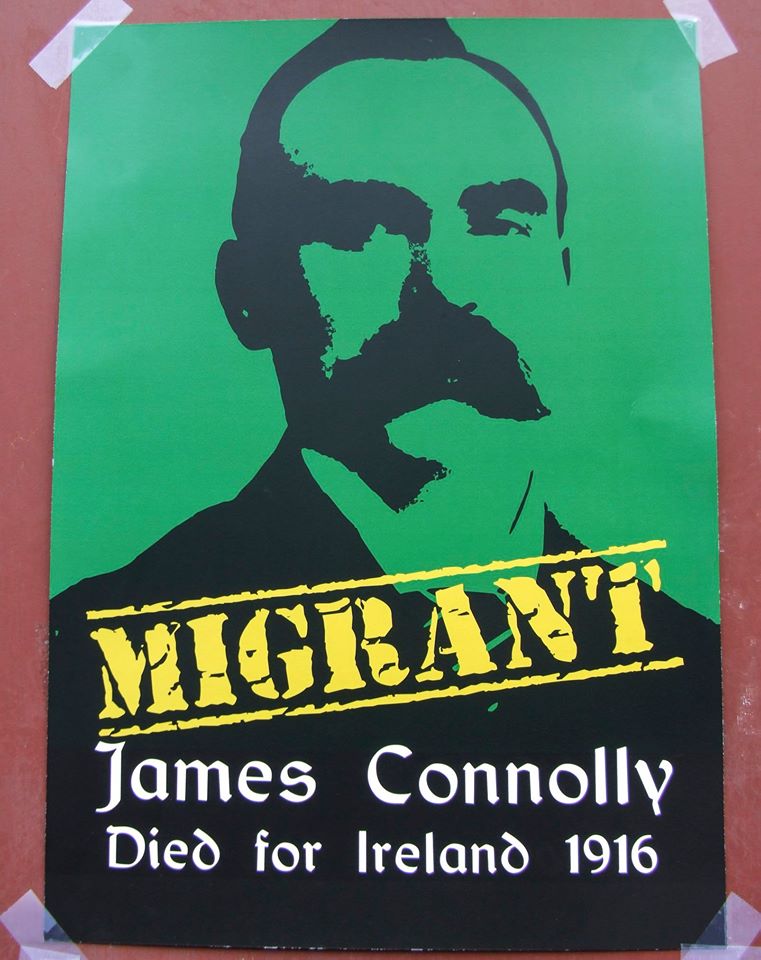

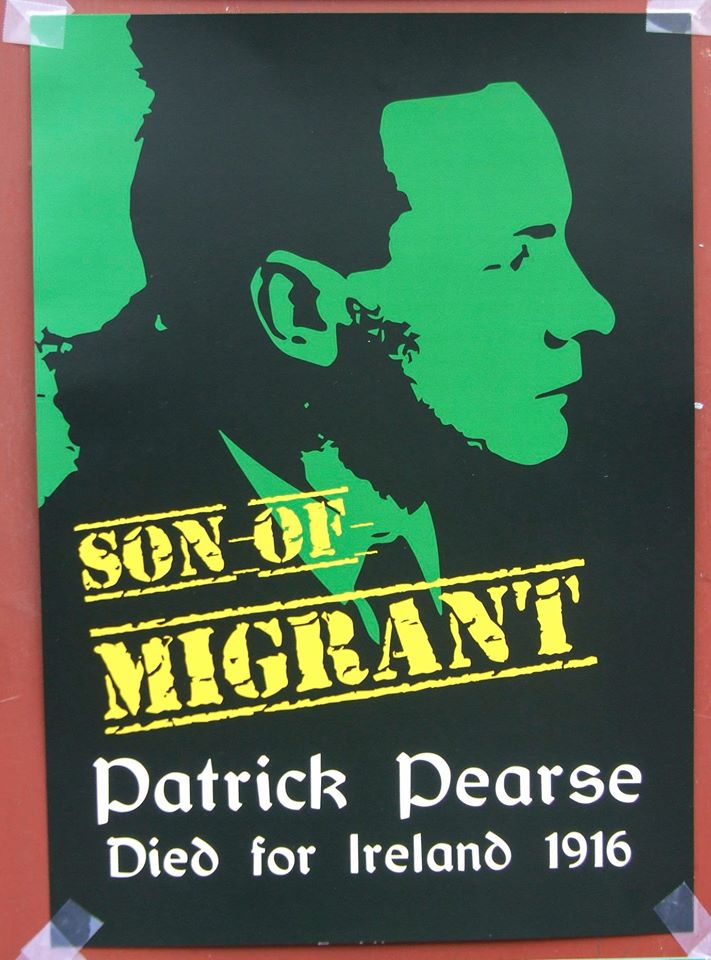


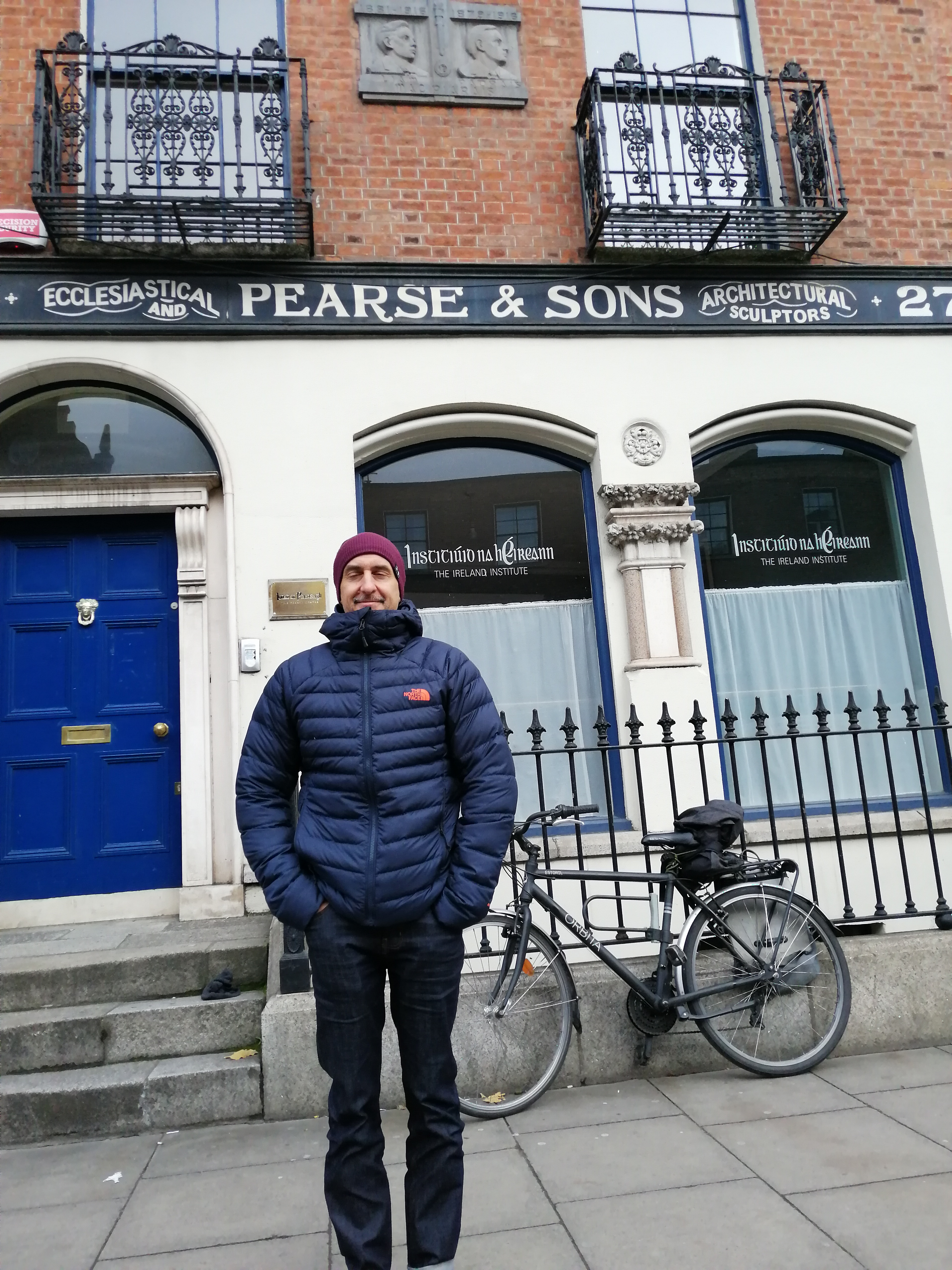

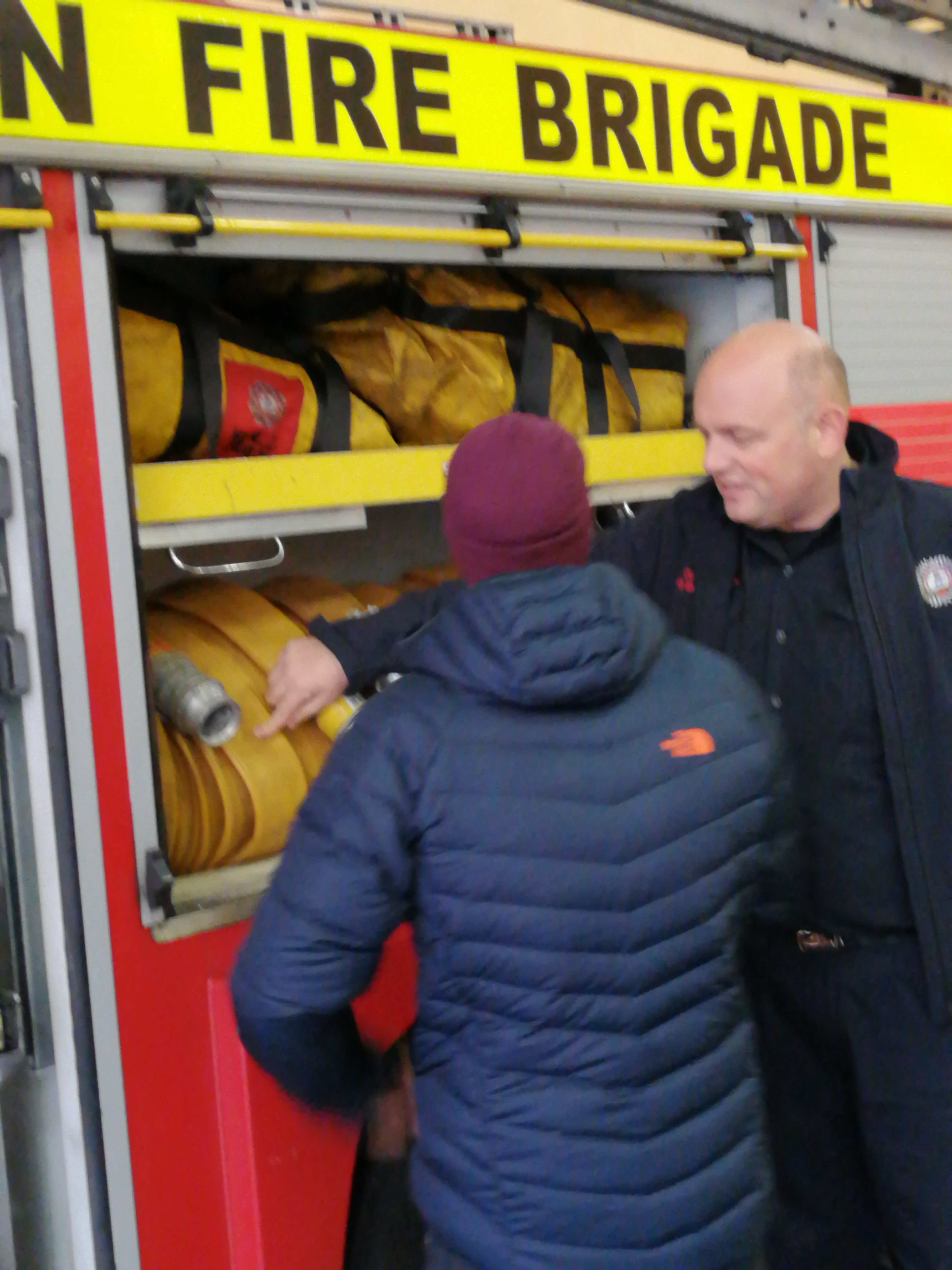

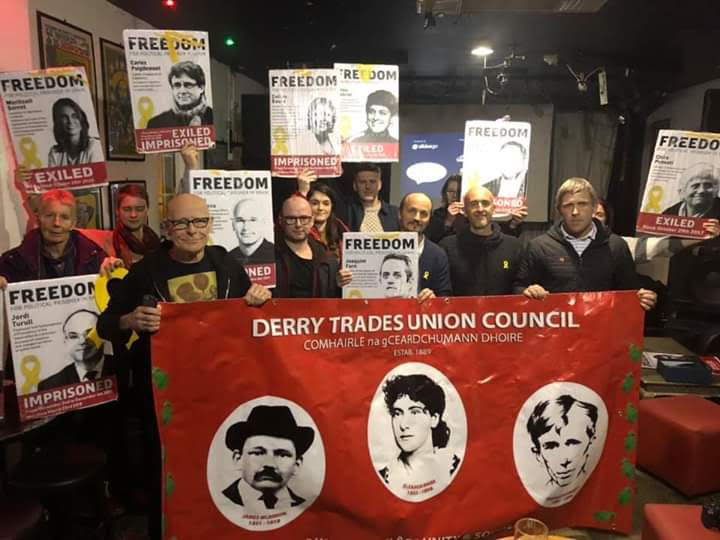
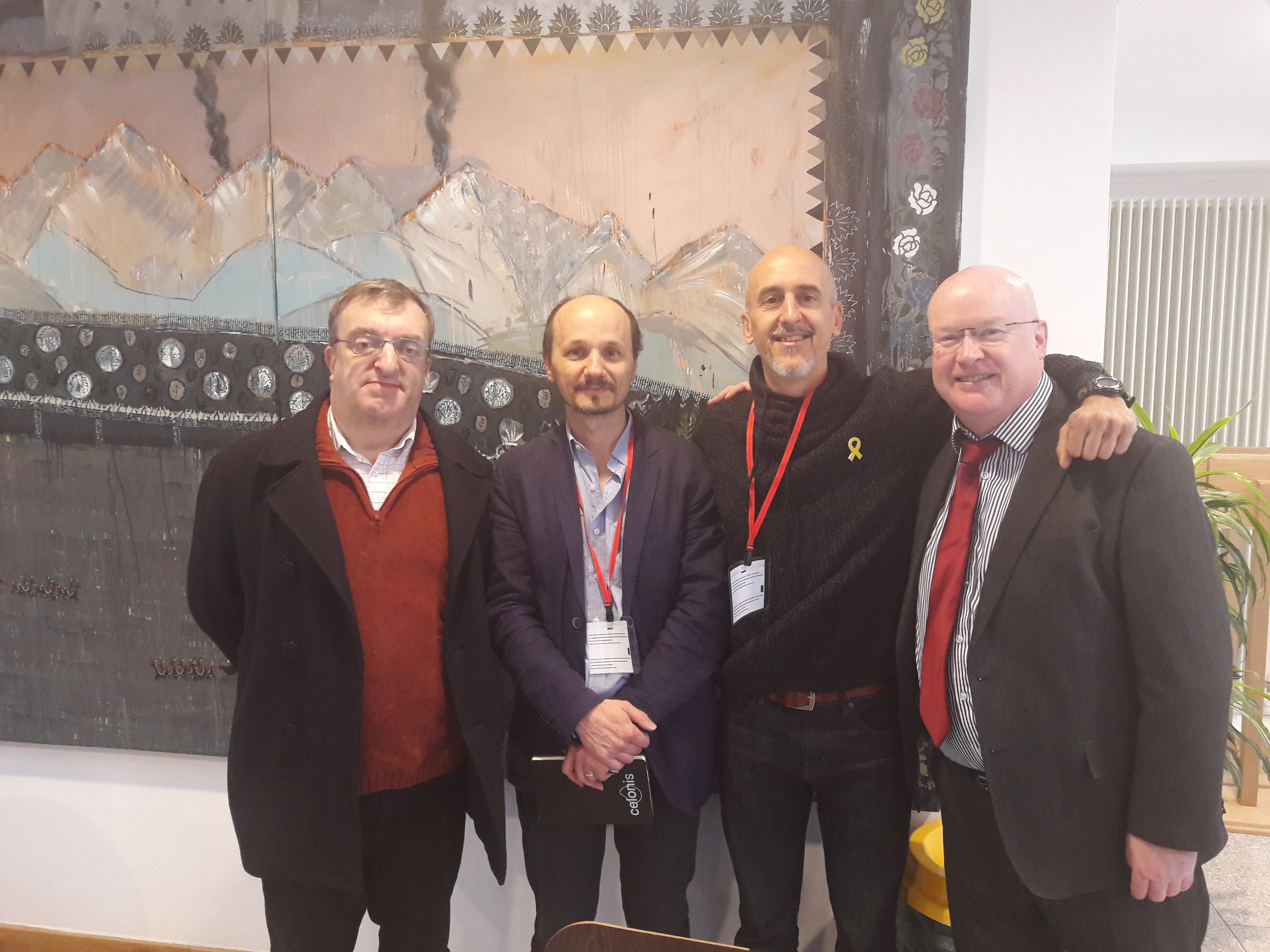


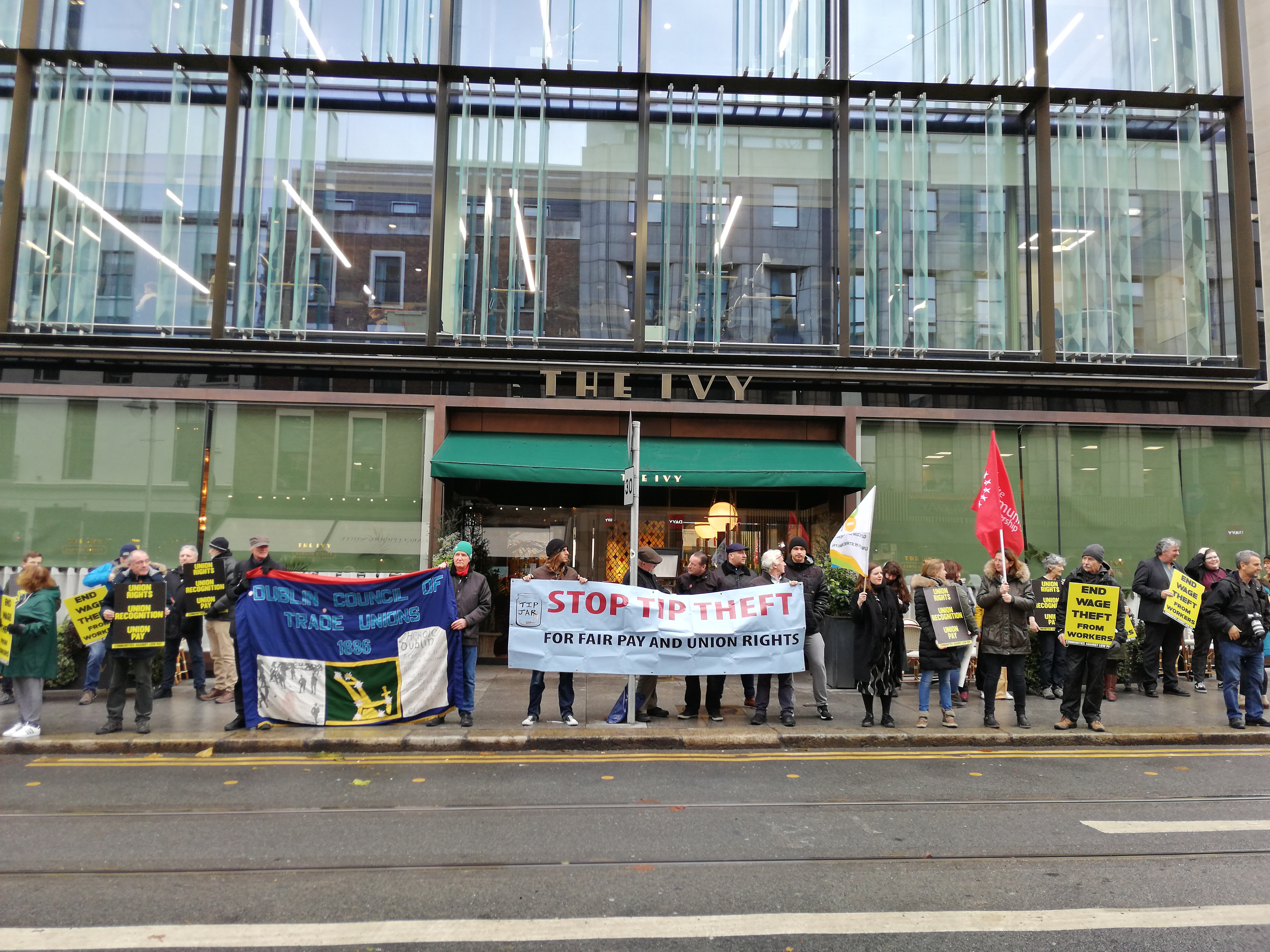
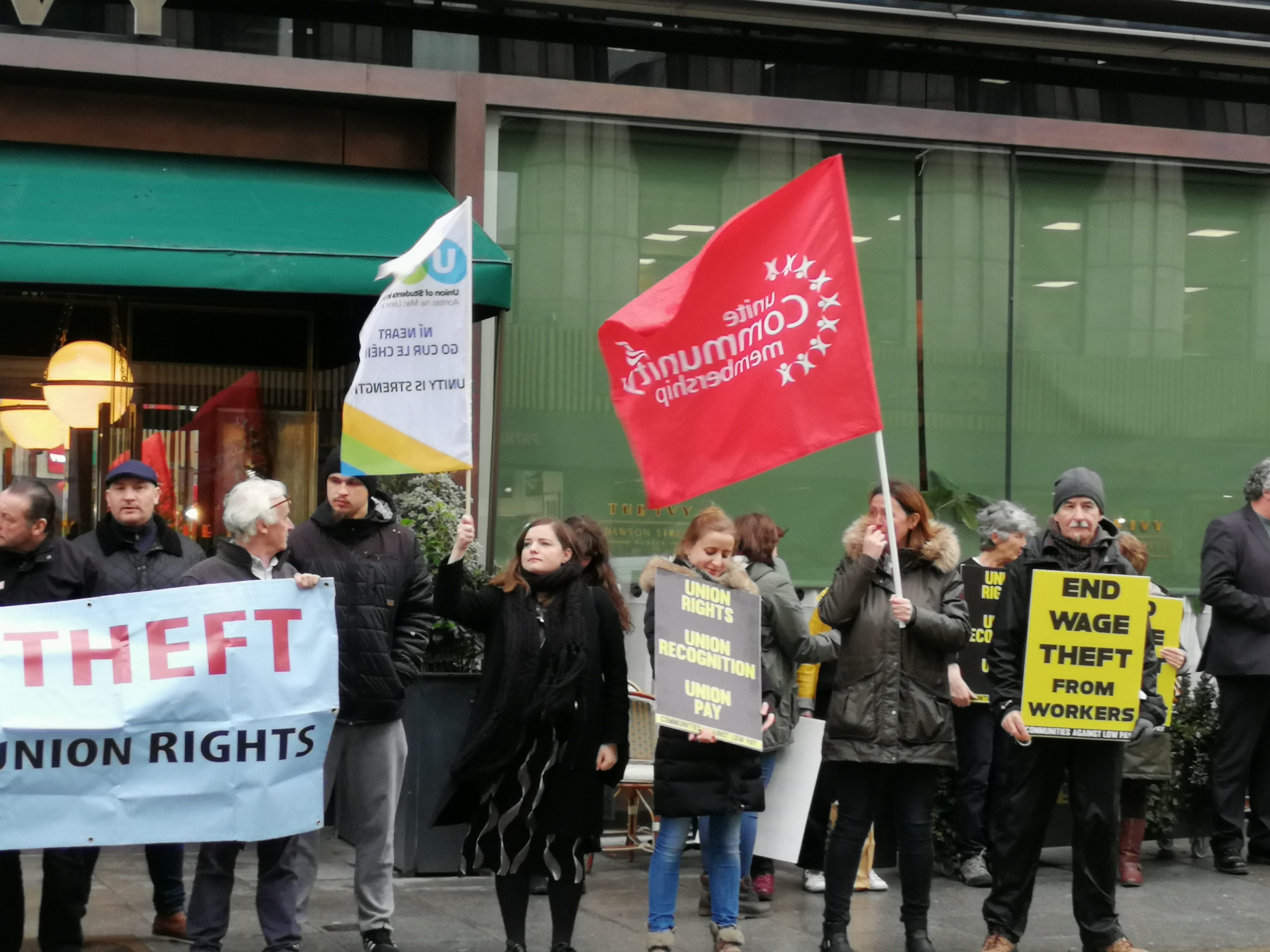
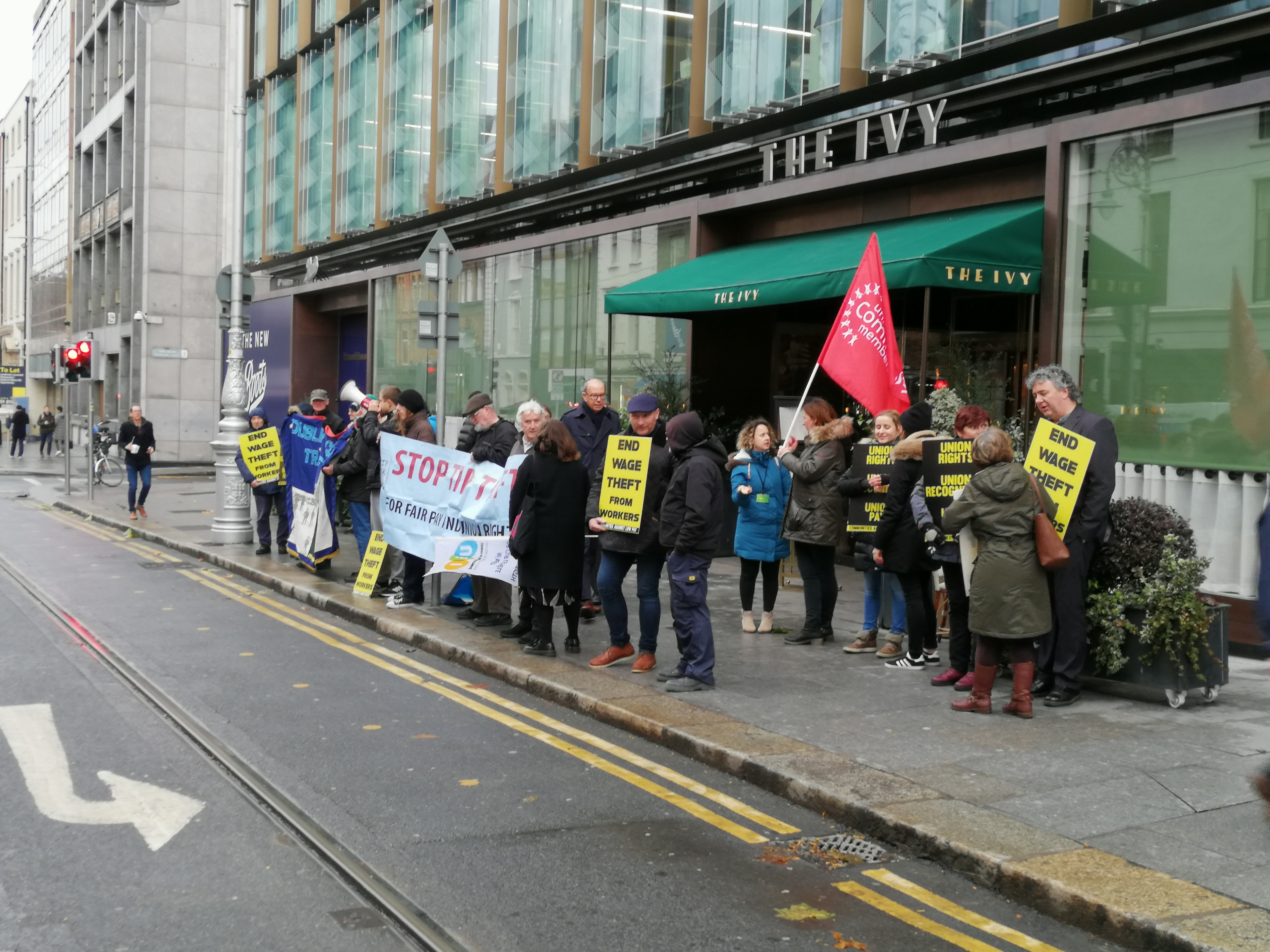
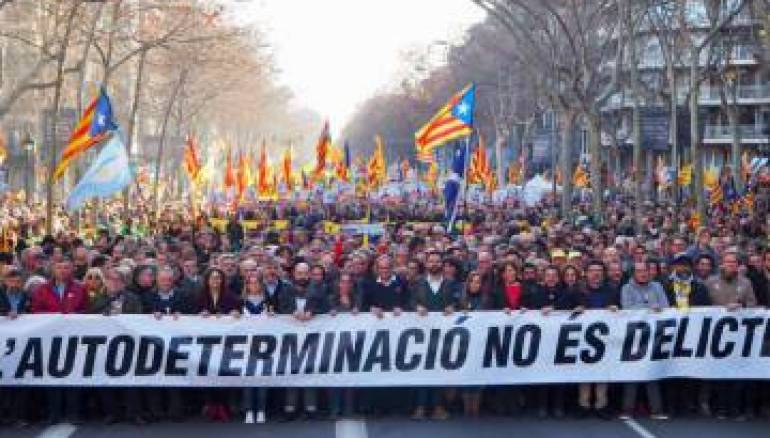

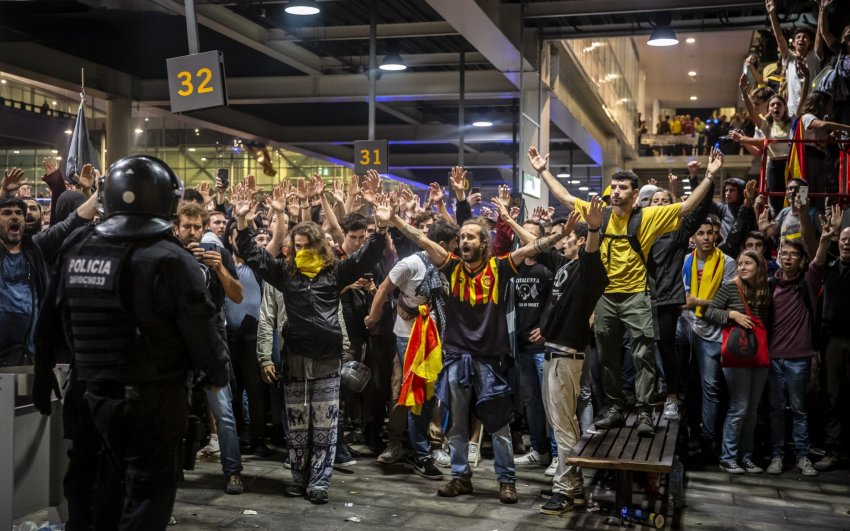
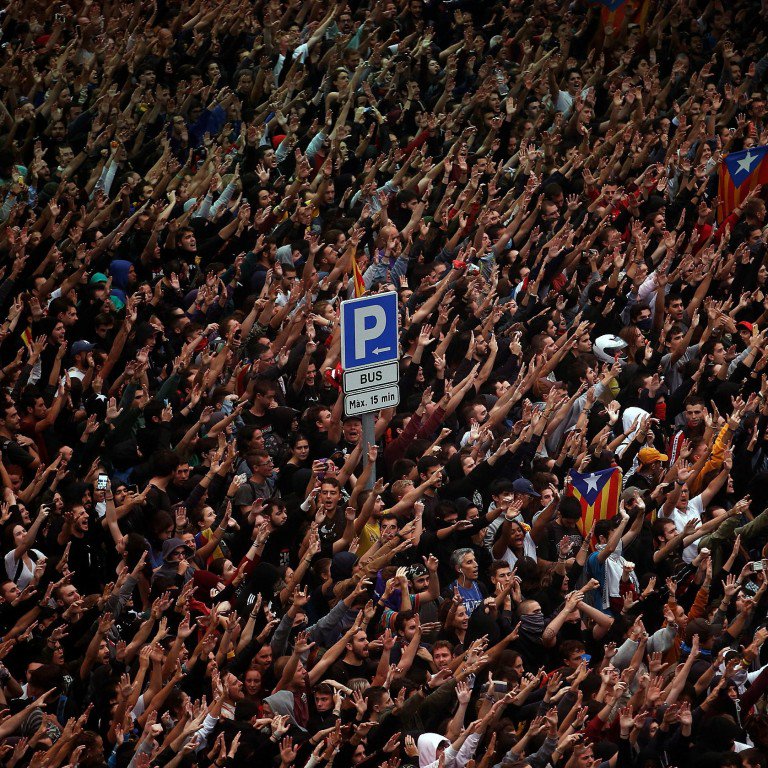


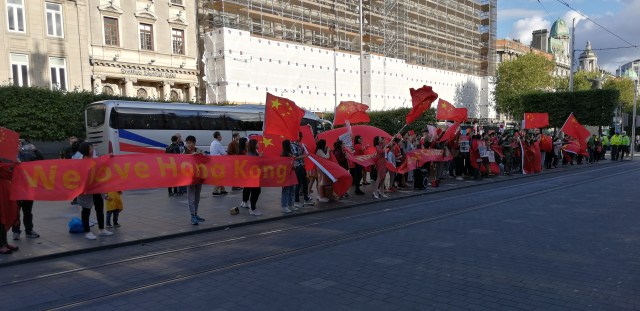

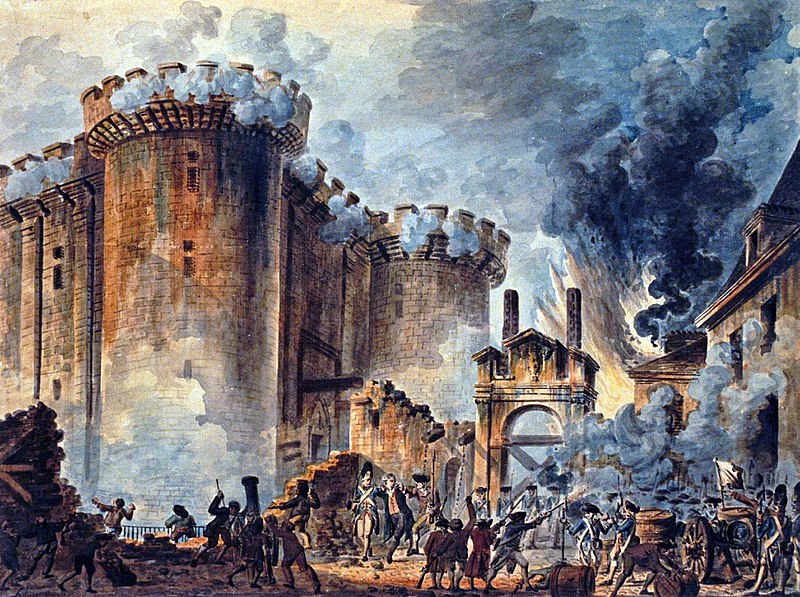

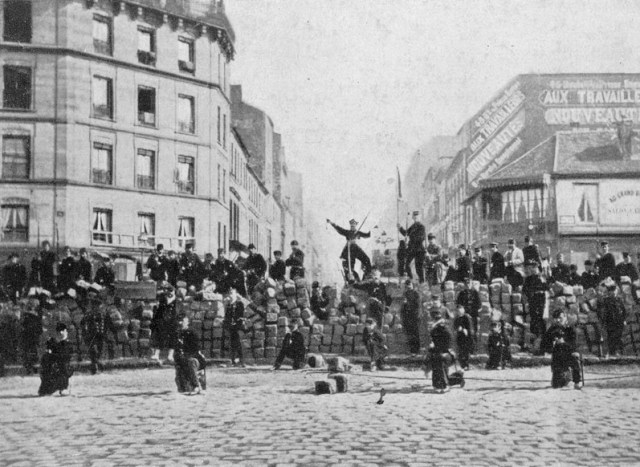


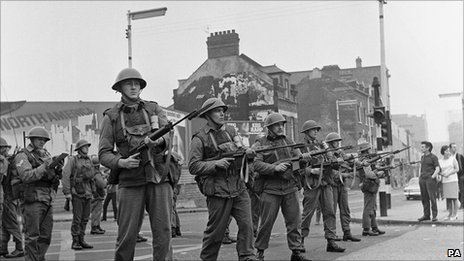
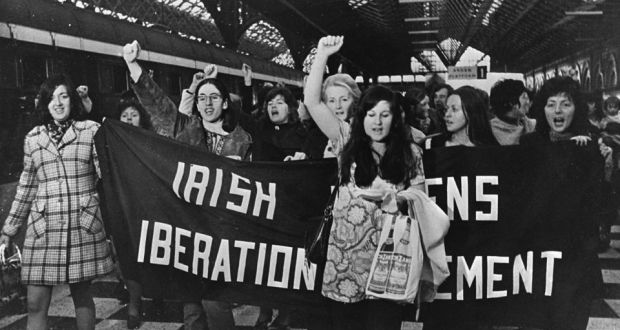


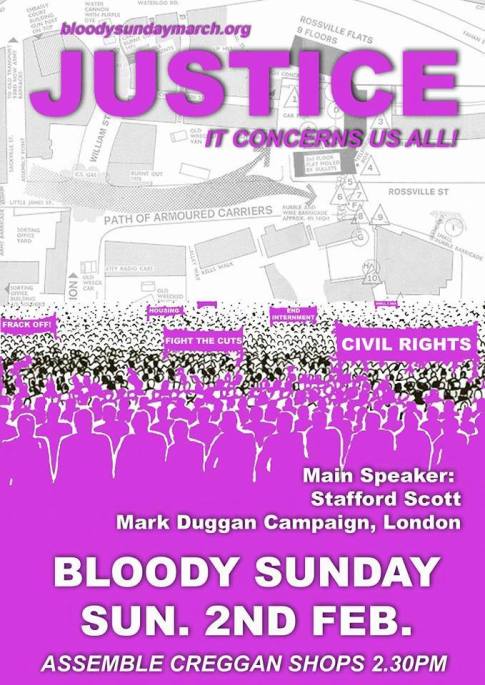
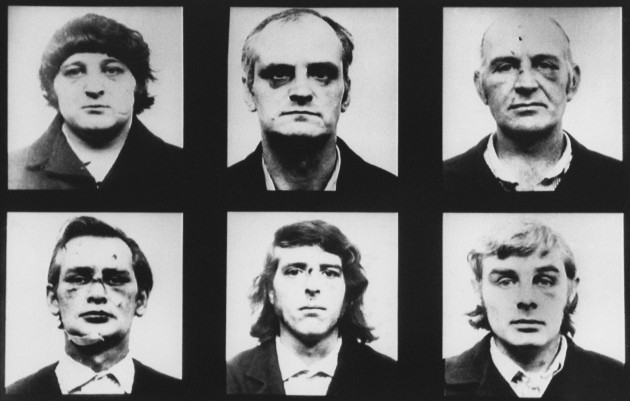
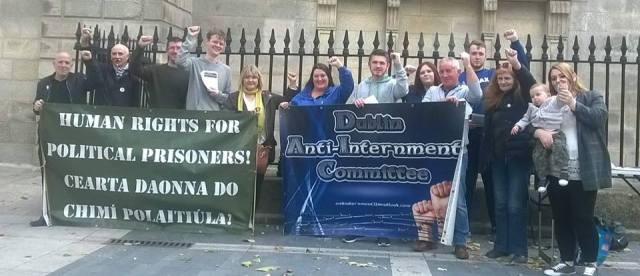

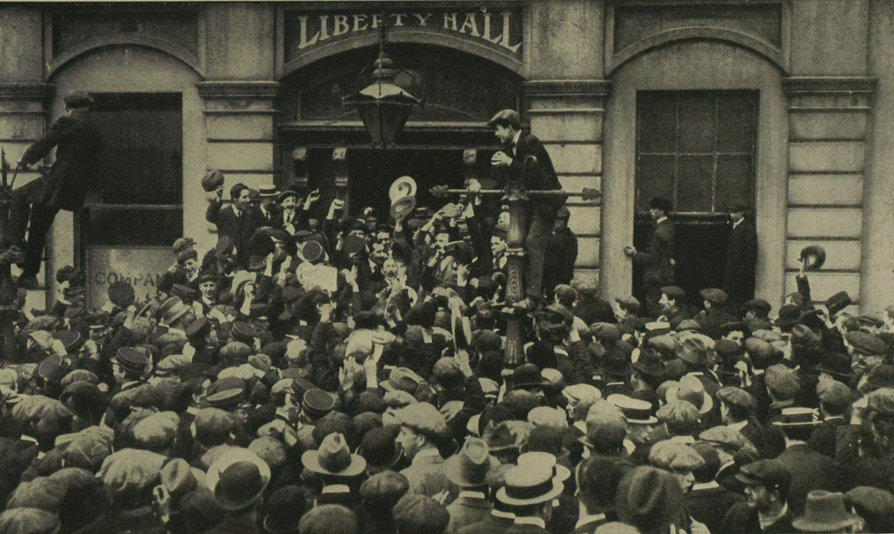
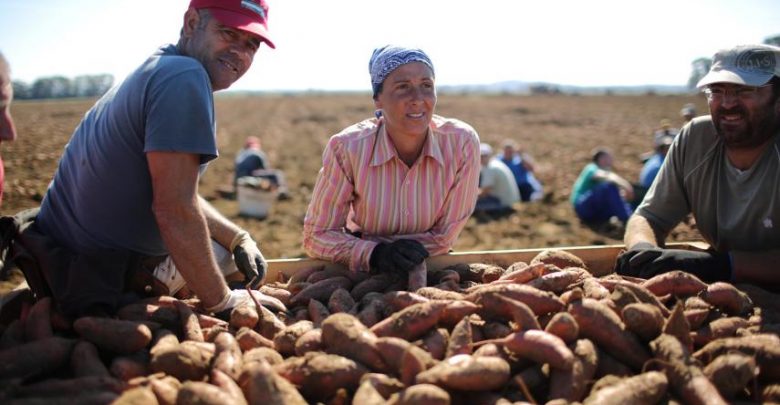


 rebelbreeze