Spanish Fascists, Basque Anti-fascists and Basque Police clashed on the ‘National Day’ of the Spanish State in the Basque city of Gastheiz/ Vittoria. There were a number of injuries and police stated they made 17 arrests.
October 12th is the ‘National Day’ of ‘Spain’ (although of course the Spanish State is comprised of a number of historic nations with a number of different languages). The 12th October event celebrates the Spanish arrival in and conquests of the Americas.
Through the imposition of Spanish colonial culture on the conquered peoples, Castilian Spanish in a number of forms is spoken throughout Mexico, Central America and all of South America, with the exception of Portuguese-speaking Brazil.
The ‘National Day’ promotes that history and linguistic connections, calling it also “Día de la Hispanidad.” As if that were not enough reactionary baggage for the date, it is also designated Armed Forces Day, with not a little underlying logic.
Over the years this ‘National Day’ has become a focus of struggle throughout the State, from the Basque Country and Asturias to Madrid and down to Andalucia in the South. “Nada que celebrar!” (Nothing to celebrate!”) has become a popular slogan in reference.
For the Spanish Right, including outright fascists, it is a day of pride of imperial and colonial conquest. And of the memory of Generalissimo Franco, the fascist Falange, their war against the Popular Front Government1 and four decades of fascist Dictatorship.2
On the ‘National Day’ the Spanish far-Right in general will not confine their parading to their strongholds but will fill coaches and set off for precisely those areas where they are not wanted, such as Catalunya, the Basque Country and antifascist areas of Madrid.
And of course, will celebrate openly, with flags of the Falange and fascist salutes and banners. The Falange is a legal party in the Spanish State but fascist salutes and symbols on flags are not. However arrests for such displays are rare.
Not so for militant antifascist actions. The police – or at very least their senior officers – understand these questions and who are their real enemies. Accordingly, in Gastheiz, the Basque police (Ertzaintza) deployed against the antifascists and in support of the Spanish fascists.
A determined assault by the latter soon had the cops retreating, leaving the route to confrontation with the fascists open, which the Basques, though outnumbered, without hesitation took to attack the fascists.
But a different detachment of Basque police joined the Spanish fascists and numbers began to tell, forcing a retreat by the antifascists.
Unfortunately, the earlier retreated Ertzaintza had regrouped and the antifascists found their own retreat blocked, seeming to most that to charge the police lines was their best option … they broke through but left behind at least two captured by the police.
At the end of the day, the Falangists got a police safety escort to their coaches and set off home to various parts of the Spanish state. The ‘Zipayos’,3 the Ertzaintza stated they had arrested seventeen, the general expectation being that all those were antifascists.
The cost in arrests and injuries was high for the Basque antifascists, who had to fight on two fronts but they will also be glad that the Spanish fascists did not have their day without facing militant opposition and collecting some Basque bruises as souvenirs of their visit.
End.
Note: If you found this article interesting you may wish to register at no cost to receive email notification when other articles are published. You can de-register whenever your wish.
FOOTNOTES
1The Spanish State contains the greatest number of mass graves of the 20th Century outside of Cambodia, mostly of victims of the Spanish military-fascists and mostly outside of military confl
2The dictatorship also reinstalled the Monarchy which had been abolished after the flight of the then King of Spain and the establishment of the Second Republic.
3‘Sepoys’, native troops recruited by the invaders.
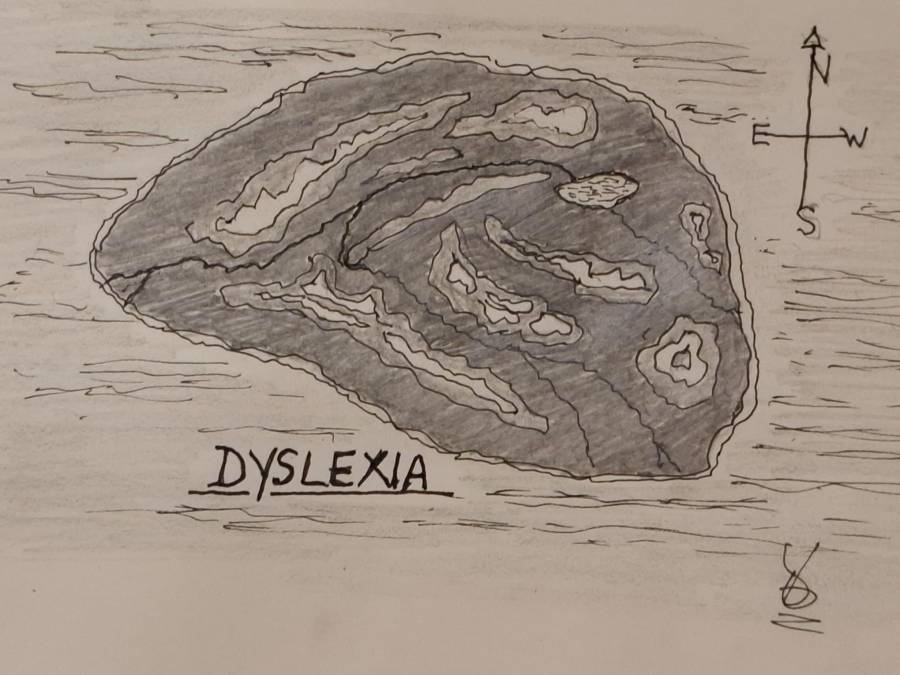
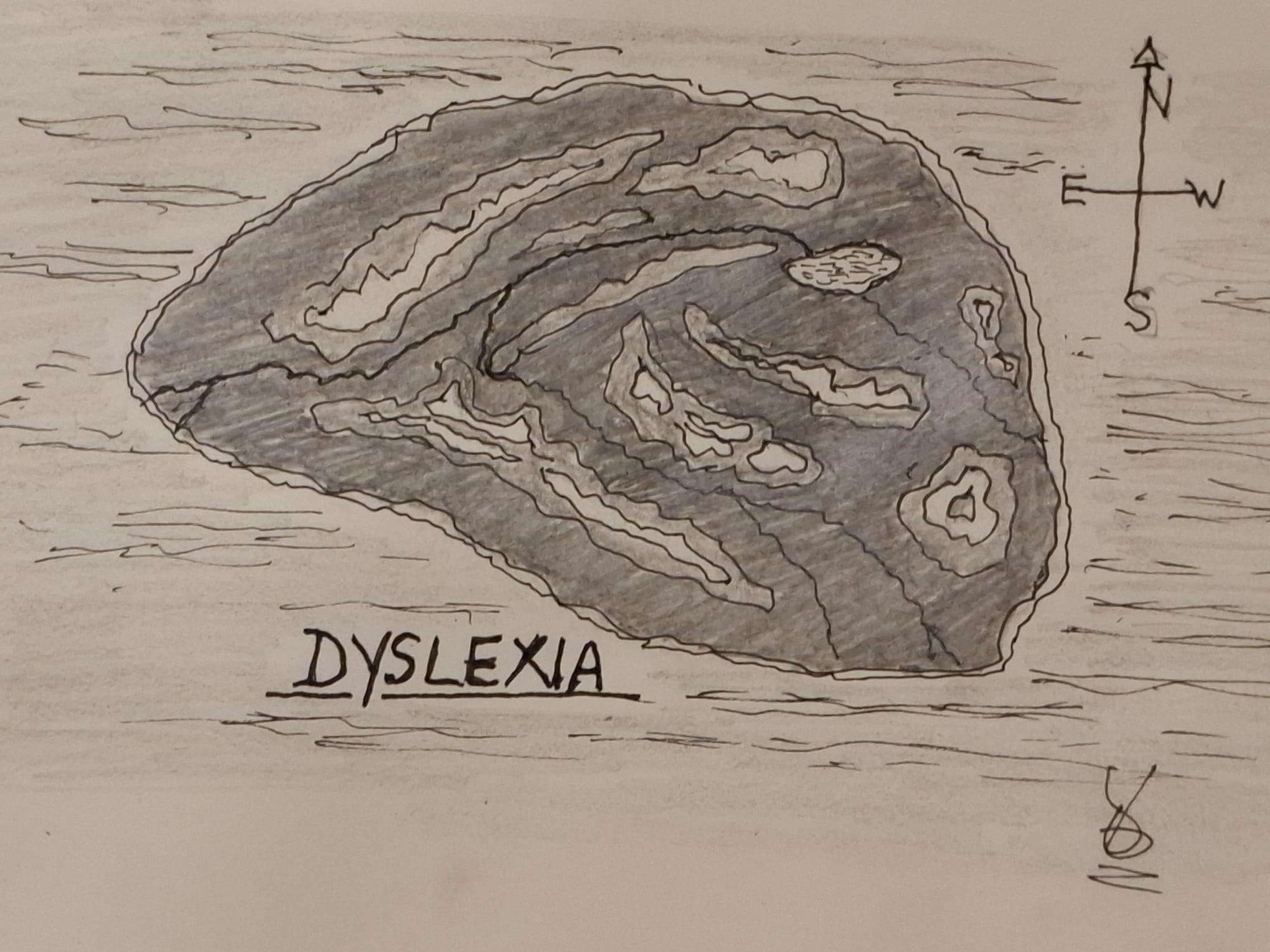
(The author is known as a traveller to many exotic places, including expeditions in search of mythical lands, most famously “The United Kingdom”, the “Republic”, “Norn Ireland” and “The Mainland.” Here he writes about the land of Dyslexia).
Dyslexia is, as the suffix “-ia” suggests, a country …. think of India, Mongolia, Russia, California [now relegated to a vassal state], Hibernia [also something of a vassal state], Narnia [er .. no, that is an imaginary land in a series of children’s tales].
Strangely the existence of Dyslexia was not even suspected until 1881, when Oslawd Khanber1 claimed to have visited the land. His discovery was widely doubted until confirmed by Ludorf Linber2 in 1887.
The people of this newly-discovered land were distinguished by all having a difficulty to varying degrees in spelling and/or in remembering sequences of numbers.
Khanber and Linber both named this land (and the rest of the world agreed) “Dyslexia”, from the Greek root “dys” meaning “bad/ abnormal/ difficult” and “lex” meaning “word” (although in Latin it means “law”, understood as “written word”).
Dyslexia was, like many other lands and people, not named by the natives themselves, but by people from elsewhere. Such examples abound, for example “Australia”, “America”, “Scotland”, “Eskimo”, “Teddy Boys”, “Pagans”, “Celts”, “Saxons”, “Teagues”, “Gypsies”, “E.T.s” etc.
Attempts to identify what the Dyslexics themselves called their land have so far collapsed in confusion, with different spellings and even pronunciations hotly argued for against others.
In fact, there have been accusations of racism aimed at those who named the land “Dyslexia” and the people “Dyslexics” — it seems particularly cruel to create a word itself so difficult to spell to name a people with a known disability in spelling.
Previously, Dyslexics just called themselves “people” and the land “the land”, while those who came across migrants from there before Dyslexia was actually discovered called them other names: such as “stupid”, “slow”, “thick” or “people with ADD or ADHD”.3
However, most “Dyslexics” today have not only adopted the name and learned to spell it but are wont to proudly declare “I’m Dyslexic” (but rarely “I am a Dyslexic”).
When Dyslexia came to the attention of the rest of the World no-one seemed astonished that it should be discovered long after the North and South Poles, the Mariana Trench, the Matto Grosso Plateau and indeed a great number of planets.
What did astonish the World was that Dyslexia had apparently independently within its borders invented television, radio, Ipads, microwave ovens, central heating and hot showers and of course the internal combustion engine and nuclear power.
This proliferation of technology would have been normally amazing (if anything normal can be said to be amazing, or vice versa) in a previously undiscovered country.
But what was really, really amazing was that everyone in Dyslexia had overcome a disability to climb to such industrial heights. The obstacles must have been tremendous.
Imagine confusing, for example, sodium chloride, a common table salt, with sodium chlorate, which is used as a weedkiller.
Also by the way, as an ingredient in making home-made bombs, a curious fact since nitrogenous fertiliser, with a directly opposite effect to sodium chlorate when spread on weeds, is also sometimes used in making home-made bombs).
Anyway, shake sodium chloride in small quantities on your weeds and they probably won’t like it but most will survive – especially those that actually like a little of it, like relatives of the cabbages and such. Shake a little sodium chlorate on your food, however and ….
well …. no, don’t try it – without urgent and skilled medical attention you will die quickly and painfully.
For another example, imagine confusing “defuse” with “diffuse”: one goes to de-escalate a conflict and ends up spreading it around. Other confusions are possible between the noun or verb “ware”, the (usually) adverb “where” and the past tense verb “were”. And so on.
For physics, knowledge of and accuracy in mathematics is essential – algebra, logarithms, binary codes, sines and co-sines, square roots (these last are mathematical constructs, not mythical regulated-shape carrots as propagated by anti-EU campaigners).
In calculating distances, heights and depths, spaces and circumferences, ability in geometry, trigonometry and ordinary mathematics is required. Somehow, the Dyslexics, the inhabitants of Dyslexia, had overcome their disability or compensated for it in some way.
They had developed as flourishing and environment-poisoning an industrial society as the most developed parts of the world, such as the United States of America (most developed industrially, that is).
Dyslexics are said, despite this disability with letters and numbers, to be of above-average intelligence. They had to be, to develop all those complicated benefits of industrial society despite their handicap.
Strangely, one may think, many Dyslexics have become literary figures famous throughout the world, Hans Christian Andersen, Agatha Christie, F. Scott Fitzgerald and WB Yeats among them. Contrary to popular belief among non-natives, James Joyce was not from Dyslexia.
This prevalence of Dyslexics among so many giants of literature and indeed of virtually every other field of human endeavour has given rise to a group of Dyslexians who call their disability “the gift of Dyslexia”.
The Dyslexics are often garrulous and sociable and this is especially true when in Dyslexia itself. The difficulty in remembering telephone numbers for example makes every telephone call an adventure.
Say a native wished to phone another native called Cathy (also known as Cthy, or Ktay, Thyca etc), and the phone number was 731 1062 (pleasenote, this is an imaginary telephone number by which neither Cathy nor anyone else can be reached).
The Dyslexic might phone 371 1026 – all the correct digits but in a different order (note, this also is an imaginary telephone number by which no-one may be reached).
The conversation, somewhat simplified, might go like this:
“Yes, hello?” (female voice, breathless with anticipation of another adventure).
Our caller: “Hi, is that Cathy?”
Recipient (giggling): “No, it’s not. There isn’t any Cathy here. I’m Wanda.”
Our caller: “Oh, hi Wanda, you sound very nice. How about going on a wanda with me?”
Wanda (with a little giggle but playing cautious): “Maybe …. What’s your name?”
Our caller: “Terry.”
Wanda: “Where were you thinking of wandering with me?” (A moment’s pause while both mentally translate the last part of that into “wandering on me”).
Terry (clearing his throat which has suddenly gone dry): “Well, there’s a nice new Indian restaurant opened up in town. Do you like Indian food, Wanda?”
“Ohhh, Terry, I love it. So spicy!” (Very slight pause as both translate “spicy” as a description for food flavouring into a metaphor instead). “When were you thinking of?”
“Er … tonight too soon?”
“No, I happen to be free tonight.”
“Shall I come and pick you up? Say …. seven pm?”
“That would be lovely, Terry. I live off the Trans City Road, tenth left, first right, eighth left, in Hopeful Street, the seventh house on the left-hand side if you’re coming from town, with a brown and white door and a hydrangea bush in the garden.”
“Got it – off the Trans City Road, tenth left, first right, eighth left, Hopeful Street, seventh house on the left-hand side, brown and white door and a hydrangea bush in the garden. At seven pm. I’m looking forward to meeting you.”
Most Dyslexics are always open to adventure, ‘going with the flow’. One never knows what a simple telephone call may bring or to what an appointment or written address may lead.
But as a result, Dyslexics are also philosophic about missed appointments, forgotten birthdays and so on; they waste little time mourning something lost and instead look forward to something gained.
Terry might or might not make it to Wanda’s but they both know the world is full of other possibilities.
Cathy, for example, who failed to receive a call from Terry to congratulate her on her gaining a dystinction in her dyploma, received later that evening what non-natives would term “a wrong number” call from a Sofia who had meant to call a Geraldine.
Sofia had intended trying to patch up a long-running difficult relationship with Geraldine and instead found herself making the acquaintance of Cathy, who seemed much nicer and more understanding than was Geraldine.
Putting her problems with Geraldine aside, Sofia agreed to Cathy’s suggestion to meet for a late coffee (which they both knew could lead to an early drink and who-knows-what from there). Cathy had by now forgotten that she was hoping Terry would call.
Dyslexia is not just another land, nor even just a strange one – it’s an entirely different way to live.
End.
Note: If you found this article of interest, why not register with Rebel Breeze for free, so that you will be notified by email of subsequent articles. You can de-register any time you wish.
3A supposed disability the existence of which is hotly debated but has exonerated many teachers accused of bad teaching methods and states accused of having too large classes in their schools and which has been profitable for some educational psychologists and extremely so for some chemical companies.
PALESTINE SOLIDARITY MARCHERS PEPPER-SPRAYED AND BATONED WITHOUT WARNING.
An action on Saturday in an attempt to stop the genocide of Palestinians was brutally repressed by Gardaí pepper-spraying the marchers without warning before beating many with truncheons and threatening others, then issuing a lying statement.
On Saturday (4th October) the Ireland Palestine Solidarity Campaign had organised another of their monthly National marches from the Garden of Remembrance through Dublin city centre to Leinster House1 but a much smaller section departed for Dublin Port.
View of a section of the Palestine solidarity march on Saturday proceeding along O’Connell Street. (Photo: D.Breatnach)
In the context of port protest shut-downs in various parts of the world, Italy in particular, the intention seemingly was to blockade traffic into and out of Dublin Port; also in the context of the Irish state being a huge importer of Israeli products, second only to the USA.
The shut-down marchers left the main march at O’Connell Bridge and proceeded along the Liffey quays heading for the Port as IPSC stewards tried to discourage anyone from joining them, stooping as low as to accuse them over a loudspeaker of splitting the march and of betraying Gaza.
There had been a number of Port traffic blockade actions recently, all of which had ended without violence. No doubt the Irish ruling class were worried that they might escalate and spread and gave orders to the Gardaí to attack the marchers and to terrorise any others from emulating them.
As the marchers reached the Public Order Unit police line and stopped, some of the police began to push marchers, almost immediately some Gardai standing in a second row starting to pepper-spray marchers over the heads of their colleagues but the wind pushed some of it back in their faces.
POU Gardaí to the right of the crowd then drew their truncheons and started to strike viciously at the marchers, who were now pushing into the Garda line. Eventually the marchers broke, people staggering off to the side, eyes streaming, unsteady on their feet. Even then, they were pursued.2
At least two marchers were arrested at the event and another in a solidarity demonstration outside the Criminal Court building that evening. The charges include Public Order charges and resisting arrest. Once again, marchers complained they were forcibly strip-searched in the police cells.3
CAPITALIST MEDIA
RTÉ online’s report was clearly totally based on a Garda statement without any attempt to investigate, although video footage was soon circulating on social media. Try to contact participants for their side of the story? See whether there were photos or video clips available? Don’t be silly!
The Garda account is totally at variance with what can be seen on the video, as has often been the case. One recalls the assault with a length of wood by a fascist on an LGBT campaigner who was observing a National Party rally outside Leinster House and a Garda told her to leave the area.
The Garda statement to the media on that occasion was that there had been no incidents but unfortunately for them there was ample video recording of the event, the assault, the victim’s head streaming with blood, the senior Garda ordering her away … and they had to change their story.
A few weeks prior to that, unarmed antifascists counter-protesting an anti-masking protest organised by fascists on Custom House Quay were attacked by fascists wielding clubs and metal bars. As the antifascists fought back, the POU charged in and attacked the antifascists!
On that occasion too their statement to the press completely omitted that event.
The media is doing a good job of exposing themselves as not only keeping to the imperialist pro-Zionist discourse about events in Gaza and the rest of West Asia, but keeping also to the home front discourse that big business and cops are good and protesters a problem.
We appear in the Irish state to be entering a period of Garda repression backed up by media acquiescence, similar to what was passed through in the 1980s, with Garda repression on the street but also operations by the ‘Heavy Gang’, raiding and beating up detainees to obtain a ‘confession’.
The liberal civil rights sector was quite active then calling out Garda violence, framing of innocent people and judicial collusion. There is much less of that liberal resistance to be seen these days.
A rare enough sight – an Irish-language placard on Saturday’s march in Dublin. (Photo: D.Breatnach)
THE IPSC MARCH
The IPSC went ahead on Saturday with many thousands on their march, demonstrating once again, as over the past two years, that the Irish public is overwhelmingly in support of the Palestinians and totally against the genocide and ethnic cleansing by the Zionist state.
Over the years, the IPSC’s activities have contributed to that awareness and sympathy in Irish society but so too have the actions of the Israeli governments and their armed forces, captured in photos and videos by journalists and ordinary Palestinians and posted on social media.
But Israel has not ceased its genocide; not one Palestinian life has been saved by the marches. The Irish Government has not ceased any of its concrete collusive actions with Israel. The imports continue, the armaments fly through Irish airspace, Shannon airport continues militarised.4
The IPSC’s Chairperson admitted as much, speaking at their rally near Leinster House: “Simon Harris has called Israel’s actions ‘genocide’, ‘unconscionable’ and ‘unacceptable’ — yet the Irish Government is barely lifting a finger to end Ireland’s deep complicity in this genocide.”
A section of the Palestine solidarity main march in Dawson Street, while thousands more are already in Molesworth Street (out of sight to the right of photo). (Photo: D.Breatnach)
Had the IPSC mobilised the thousands to march down to the docks, it would have been a very different story on Saturday. Something to make the Government really reconsider its collusion. The IPSC could still do that. But will it? We can hope but current practice tells us otherwise.
Then others will have to do the deed. Others like Mothers Against Genocide, Action for Palestine Ireland and Saoirse Don Phalaistín, for example. And they will continue to be assaulted and arrested, facing fines, restrictions on freedom of movement and … ultimately, no doubt … jail.
Apart from the baton and pepper-spraying injuries, one of the marchers is reported to have a broken arm. Two were arrested at the Port and one at the court solidarity protest Saturday evening. Today others attended court in solidarity with one of the arrested (who had abrasions on her cheek).
We should be part of these disruptive actions and if we are not, for whatever reason, the least we can do is to call out those who denounce them and to organise support for those who are, in and out of the courts.
End.
Note: If you found this article of interest, why not register with Rebel Breeze for free, so that you will be notified by email of subsequent articles. You can de-register any time you wish.
Gathering outside the Dublin Court in solidarity with one of the assaulted and arrested Port marchers. Her case was postponed. (Photo: D.Breatnach)
2All of that is evident from the video footage shot from that side of the event. Violent shoving by Gardaí sent some people to the ground, including a disabled woman.
3There was outrage expressed when Gardaí compelled detainees at a Mothers Against Genocide protest outside Leinster House to strip in the police cells. The Minister for Justice claimed that Garda CCTV footage refuted those claims but strangely, it appears that no CCTV footage was available when lawyers asked to view it. https://www.instagram.com/mothersagainstgenocide/p/DJ_nOewxQAp/
4And the Irish Central Bank intends, after a pause, to offer Israeli war bonds once more.
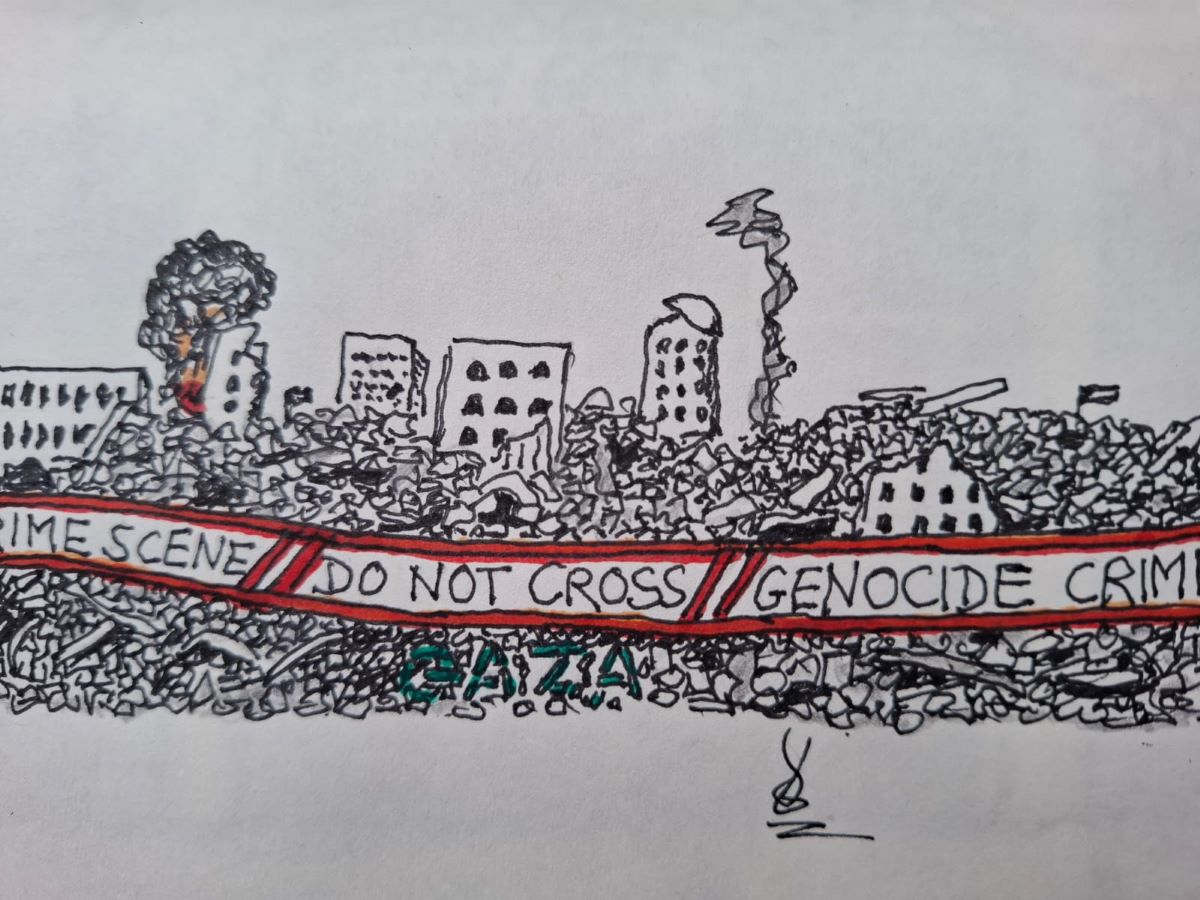
This is a partial dossier, documenting only some of the crimes of the Zionist entity. The dossier is largely in the form of cartoons some of which are as recent as the last few days and others a year old or more but sadly, are still valid comment today.
(Cartoon by D.Breatnach)
A great many crimes have been committed here: Ethnic cleansing, theft, murder, racial discrimination, apartheid, repression, bombing of civilians, shooting of civilians, destruction of water wells, tanks and desalination plants, power cutoffs, mass kidnappings, torture.
Bombing of residential blocks, bombing hospitals, bombing schools, bombing universities, bombing mosques and churches, starvation blockade, water cutoffs, assassinations, public humiliation of prisoners, using human shields, rape and other torture of prisoners, detention without trial.
The Israeli Zionists, a European colonial settler project, have had many criminal accomplices, both at the level of states, educational institutions public and private, and of private companies and corporations. The Irish State has permitted the transport of military cargo to Israel through Irish airspace.
(Cartoon by D.Breatnach)
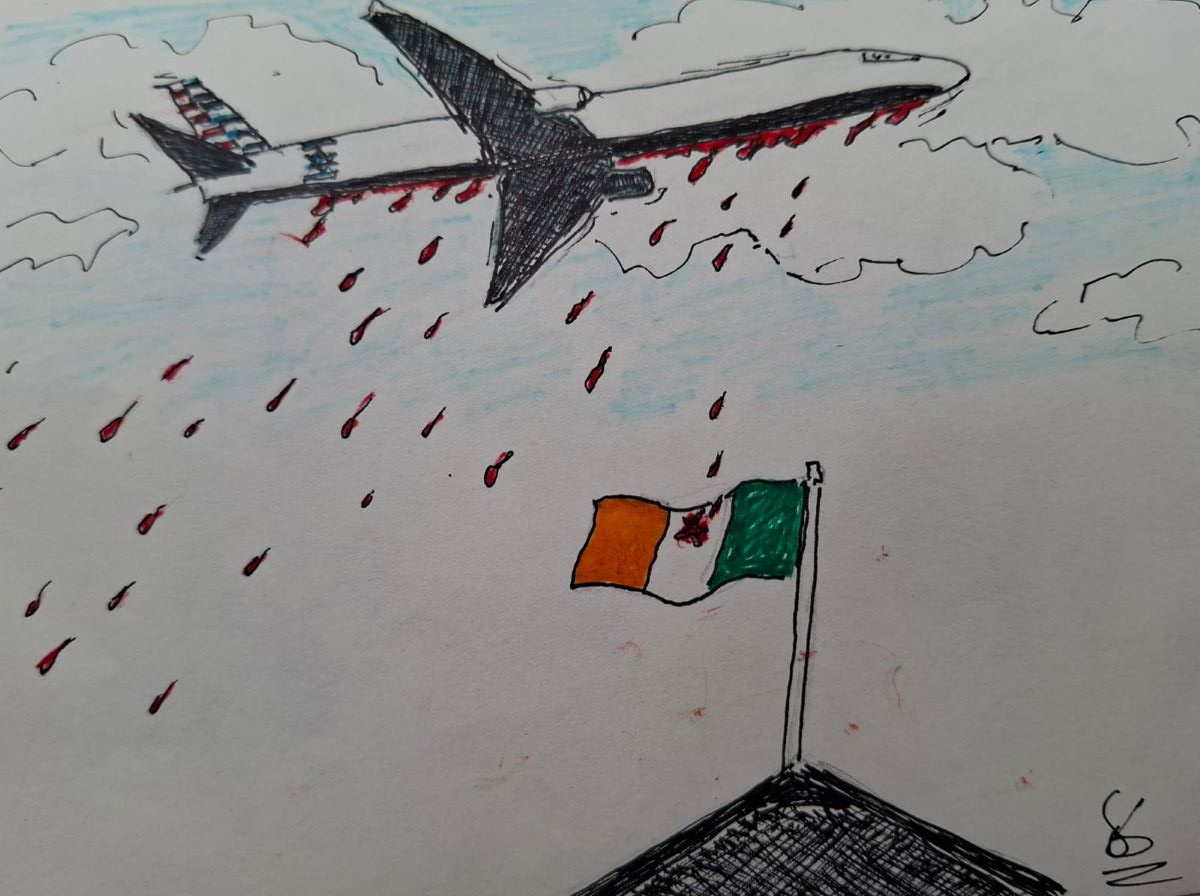
Despite the clearly-expressed desires of the vast majority of the Irish people, the ‘neutral’ Irish State has permitted arms material destined for the Israeli occupier of Palestine to fly through Irish airspace, in addition to permitting the militarisation of Shannon Airport.
As part of the genocide, the Zionist authorities turned off the water supply to Gaza, using water deprivation as a weapon, a war crime of collective punishment.
Shutting off water to the civilians in Gaza is a war crime, even if none of the other genocidal acts of the IOF had been carried out. (Cartoon by D.Breatnach)
But Palestinians have dug wells. And collected seawater in desalination plants. And stored water in rooftop tanks and barrels. So the IOF destroyed the wells, bombed the desalination plants and shot up the water tanks and barrels. Clearly acts of genocide.
(Cartoon by D.Breatnach)
In addition to shutting off the water supply and destroying Palestinian alternative sources, the Zionist authorities have sealed off Gaza from humanitarian aid of food, baby supplements, medicines, etc. The intention, declared in act and words, is to starve the Palestinian people into surrender and leaving.
The Rafah Gate, access Gaza-Egypt, by law operational only by those two agencies and main access of international humanitarian supplies to Gaza, closed by Israeli Occupation Forces tanks. (Cartoon by D.Breatnach)Israeli Occupation Forces threaten anyone trying to enter. (Cartoon by D.Breatnach)
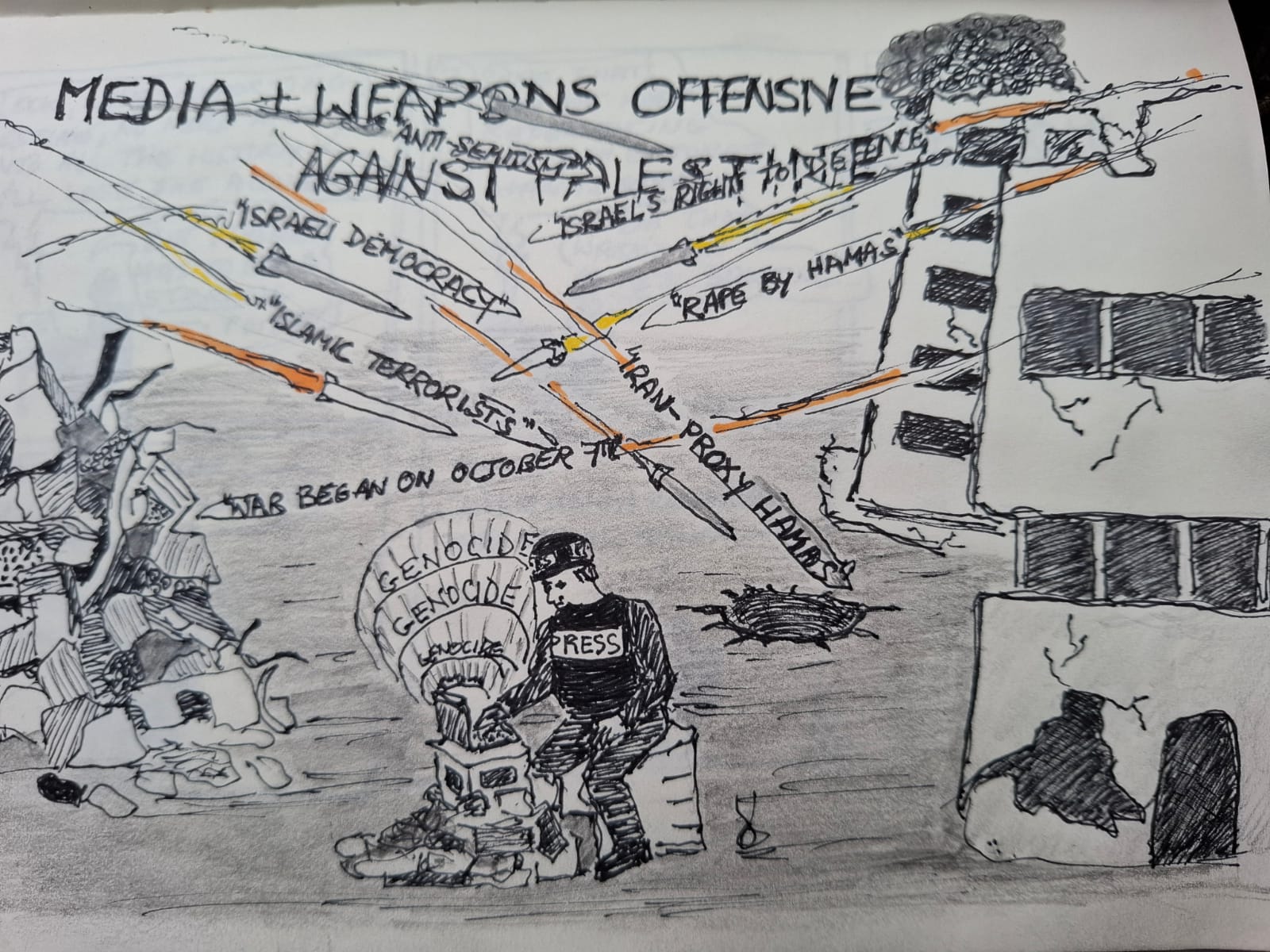
A major party colluding with the genocider Israeli authorities has been the Mainstream Western Media. They have adopted a mantra that posits the start of everything at the Resistance action on October 7, treat Resistance claims as dubious but those of Israeli, despite its record, as credible.
The western media corporations have taken no action to protect their journalists in Palestine, where 243, mostly Palestinian or from Arab nations, have been assassinated by the IOF. They circulated Zionist atrocity propaganda without proof and, when debunked, did not publish retractions.
(Cartoon by D.Breatnach)
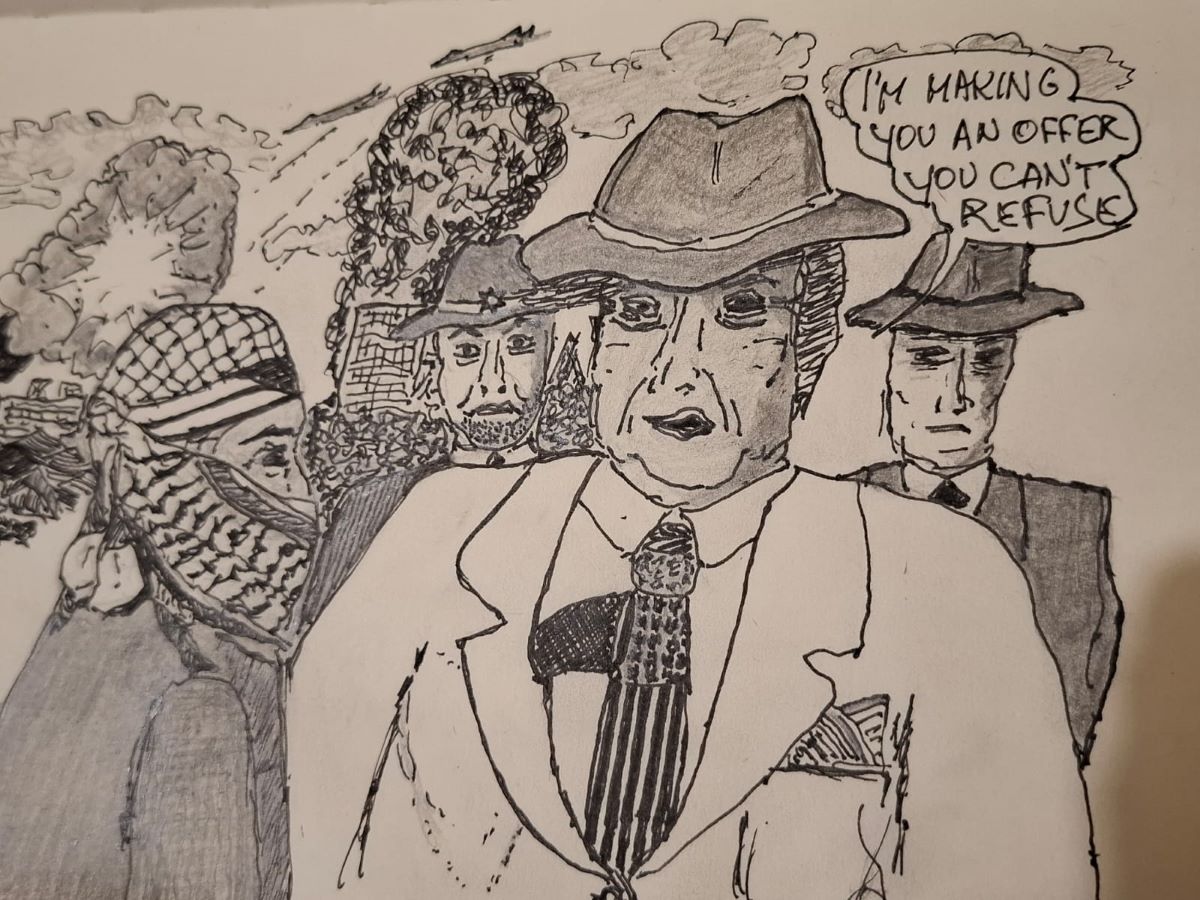
Reading the published 20 points of the recent Trump plan, what is clear is that Trump is demanding that the Palestinian Resistance surrender.
Not because they have been beaten and in fact there is an admission in there that they have not. The reality is that it’s the IOF and the Zionnazi administration that has failed in its declared objectives: to defeat the Resistance and release its captives by force.
NO. What is unspoken but clearly implied here is: ‘Surrender, give up your weapons or we will murder and starve thousands more Palestinian civilians.’
Trump for the USA making another threatening ‘offer’ in true gangster style. (Cartoon by D.Breatnach)
Those who advise the Resistance to agree should ponder what that means, not for Palestine alone but for the world: ‘If you can’t beat a popular resistance, just carry out ethnic cleansing and genocide until they give up. It’s perfectly acceptable and the world powers agree.’
We know about imperialist ‘peace’ plans. They only thing they deliver on is fragmentation of the resistance movement and more years of life for imperialist and colonial power. And elevation for some traitors and opportunists.
Based on history, whatever they decide, the Resistance should neither surrender their weapons or the tunnels. At the worst, there will be another day. The US and western empire is dying and with it will go this dependent zionazi European settler colony
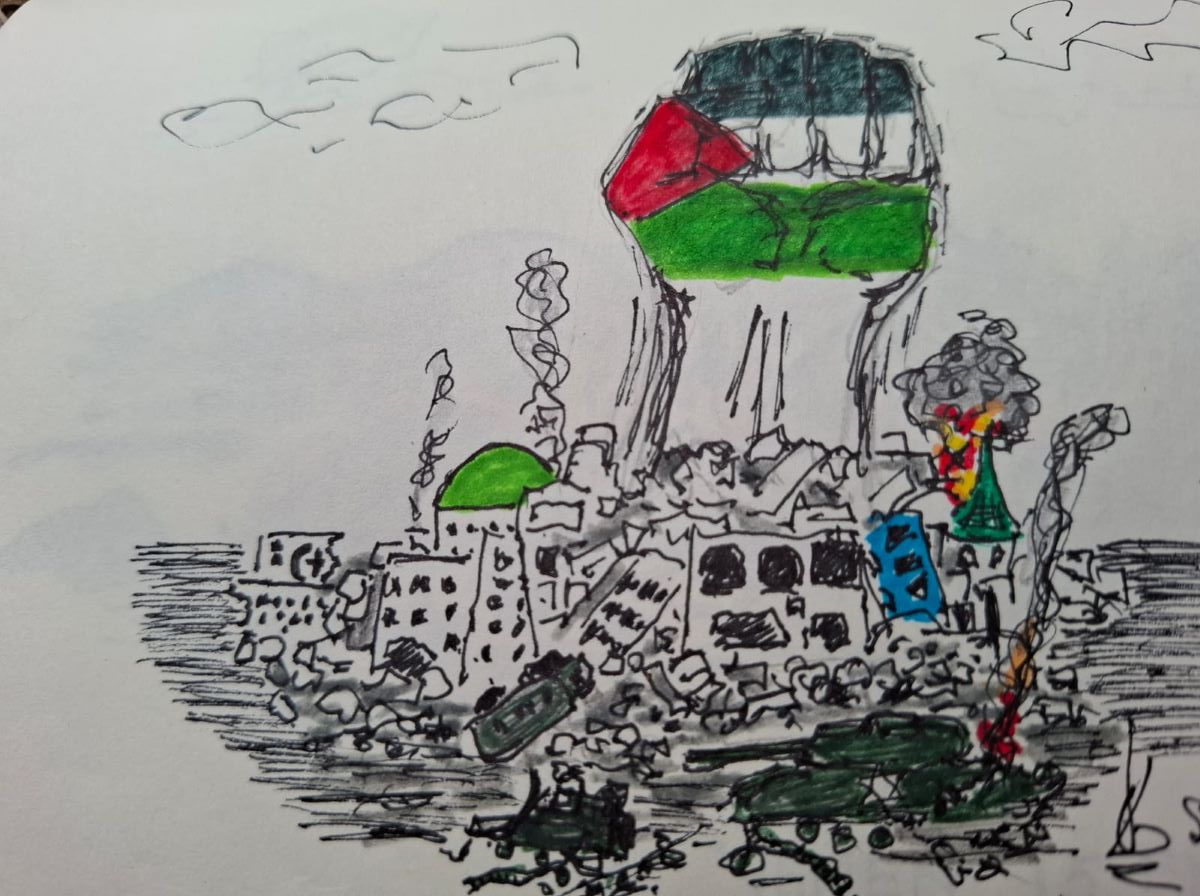
Despite all the crimes of the Zionist entity inflicted upon the Palestinian people and despite the backing of the western powers for ethnic cleansing and genocide, the Palestinian people continue to resist.
Despite all,Gaza resists and resists. (Cartoon by D.Breatnach)
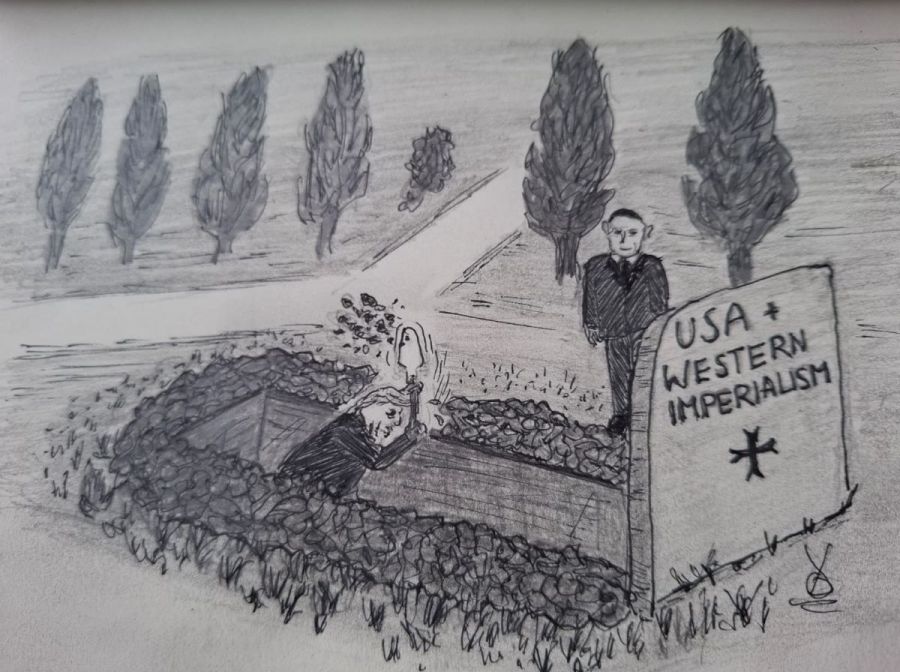
And despite the crimes of the Zionist entity in Western Asia/ Middle East, despite the crimes of its chief backer, US Imperialism – and the rest of western imperialism – their days around the world and at home are numbered. In effect these days they are digging their graves deeper, week by week.
War is the solution that the leaders of the US and Israel seek but that will not save them either.
(Cartoon by D.Breatnach)
Focal Scoir/ Postscript
After a long, long gap, I returned to drawing commentary cartoons a few years ago, increasing production with the current phase of the Zionist and imperialist genocide of Palestinians that began on 8th October 2023, though even so, the output has not been great.
Drawing a cartoon requires first having the idea, then time and head-space to concentrate on its execution. Often I find the latter stage disappointing, though sometimes I am pleased with the result. I’ve also undertaken a little study and practice to improve technique.
Most of the cartoons are published quite close to their actual size, instead of drawn large and then reduced for photographing which I understand to be the professional way. But that would require my carrying a large drawing pad around or putting in a lot more time on drawing at home.
It is a fact that anything in which we invest time and concentration will reduce the availability of those same ingredients for other things. Each of us makes choices and we must manage the options available as best we can. Meanwhile, a genocide is being committed daily by the Zionist entity.
End.
Note: If you found this article of interest, why not register with Rebel Breeze for free, so that you will be notified by email of subsequent articles. You can de-register any time you wish.
For a few days it has seemed a little like an invasion around Dublin city centre by Vikings and Steelers. Not Scandinavians as of old with some others1 but fans of two competing teams of the American National Football League.
One of the banners at the Drumcondra/ Clonliffe junction around 2.45pm.(Photo: D.Breatnach)
There is little social following for the game called ‘American Football’ in Ireland, where we have a massive following for Gaelic football and soccer through their respective associations, the Gaelic Athletic Association and the League of Ireland (the latter in particular much underfunded).
Years ago, in his capacity as Minister of Arts at the time, Michael D. Higgins, presiding at an event, criticised what he called “US imperialist cultural penetration” of Europe. This has been ongoing for decades mainly through cultural products of films and soap operas, cartoon films and comics.
Prior to that, we were subjected mainly to British cultural products in magazines, comics, films and soap operas. And of course the Irish state only set up its own TV broadcaster in the 1960s.
For years these products have been impacting on our consciousness and subconsciousness, including on some of our speech patterns in English. But attempts to promote NFL have failed; however, never before has such a big effort been made and with such financial backing.
The small group at the Drumcondra/ Dorset St junction and Canal/ Railway bridge as I approached it just after 1pm. (Photo:D.Breatnach)
For this one game, the Irish Government has awarded just short of 10 million euro in funding – i.e.one third of their funding for the entire sports sector in Ireland last year. While of course this is being promoted as a revenue opportunity for business, there are stronger reasons.
The NFL is a strong supporter of the imperialist US military and the US itself shows signs of gearing up for another war – against whom is unclear but Venezuela, Iran or China are likely targets. In addition, the US is the main supplier of arms and political backing to Israel.
One of the banners at the Drumcondra/ Clonliffe junction around 2.45pm. (Photo: D.Breatnach)
And where does the Irish ruling class want us? Why, with the USA of course! No more of this skulking around! Make Shannon officially a US military airport, have the RAF and UK Navy officially patrolling our seas and airspace, where arms for Israel can also fly through officially!
The often discussed ‘Triple Lock’ is all that appears to be holding back the Irish ruling class from dumping the state’s tattered neutrality2 — and they are working on that. But meanwhile, they seek to orientate us towards the leader of the western imperialist pack – through US sport.
The NFL will be doing their part, apparently going to make sure every child in the Irish school system will receive an NFL pack. Hey! USA! Leave our kids alone!
This weekend, the Irish Gombeen3 ruling class, through their State, supplied extra police to keep the US visitors safe around the city and on Saturday around Croke Park, while police helicopters kept eyes in the skies. And there was extra Garda tolerance also for UStater illegal street-drinking.4
At the Clonliffe/ Drumcondra Road junction at 1.00pm, announced rallying time. (Photo: D.Breatnach)
THE PROTESTERS
Many – including I – only learned on Saturday of the protest called by the IPSC5-allied Sports for Palestine campaign group against the NFL game programmed for Croke Park on Sunday between the Vikings and Steelers teams. A call-out to attend with flags and placards.
That seems a bit unfriendly towards visitors, sports enthusiasts, right? Fans just happy to support their teams and visit lovely Ireland at the same time, right?
Apart from the considerations of imperialism and war-orientation listed earlier, the USA is openly backing politically and supplying militarily a daily genocide against Palestinians. NFL is a significant cultural representation of the US and as such must be prepared to suffer for it.
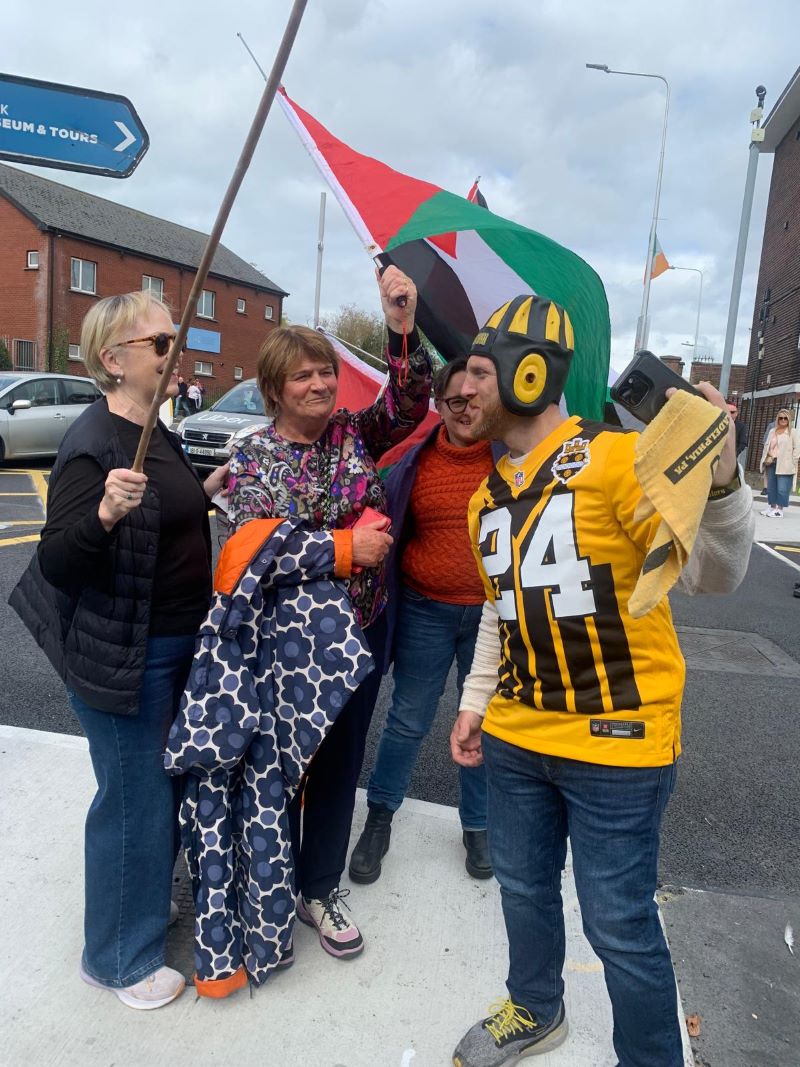
Small group of protesters further down Clonliffe Road at junction of road leading up to Croke Park entrance, approached by an NFL fan (Steelers?) who wants his photograph taken with them. (Photo source: Participant)
While most of the Palestine solidarity protesters, maybe 60 at its highest point congregated at the junction of Clonliffe and Drumcondra roads, a small group of four took up position at the road leading to the Croke Park Stadium entrance and stood there with Palestine flags.
I headed for the railway and canal bridge at the Dorset Street junction, where I could see a Palestinian national flag and a placard calling to “Free America from AIPAC control.”6 On the way I passed NFL merchandise sales and young women handing out free canned energy drinks.
Greeting the other two at the Bridge, I extended my flagpole bearing the Starry Plough flag and took up station with them. Some passing traffic beeped our flags in solidarity.7 My standard litany to the passing NFL fans was: “Shame on the USA, supporting genocide! Shame, shame, shame!”
A comrade near me denounced “The United States of Israel”, alternating with attacking US responsibility for and complicity with genocide, while the other shouted about how wrong it is to be killing children. After awhile another comrade joined us but we never had more than four there.
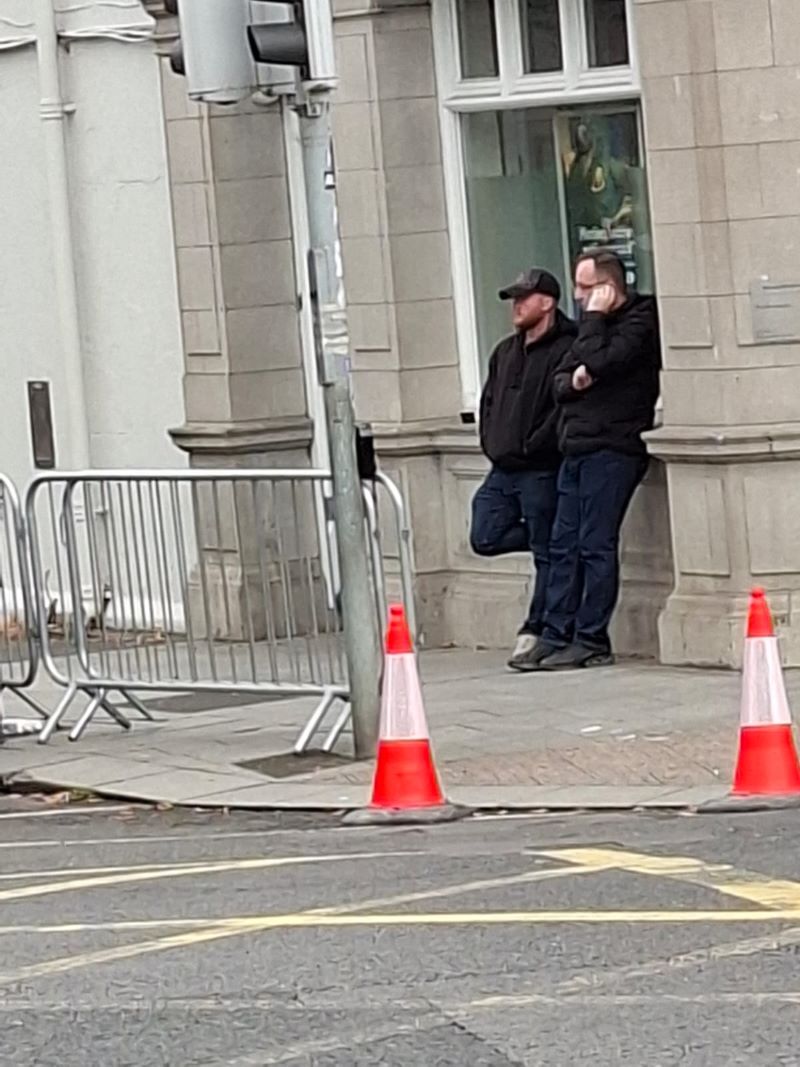
Two of the Special Branch of the Gardaí, ‘spotting’ for the State. (Photo: D.Breatnach)
REACTIONS OF NFL FANS
The reactions of the passing fans to what we were saying varied considerably.
By far the majority of them attempted to ignore us while some looked at us with seeming curiosity but no other reaction. Some seemed embarrassed, covering the feeling with a smile. A small minority said they agreed with us, some even saying they were ashamed of the USA.
A tinier minority still exhibited hostility and outrage towards us, as in waving us away or giving the hand gesture for “blah, blah” (which a few verbalised also). A few laughed but that was their mistake, as I then shouted “Laughing about genocide? LAUGHING about GENOCIDE!”
One big man insulted us in an Irish accent but received as good from us, while an NFL fan who spoke in support of ‘Israel’ wilted under a barrage of “Genocider!” shouts. Another who mentioned “the hostages” was asked whether he was referring to “the 9,000 Palestinian prisoners?”8
Yet another accused us of generalising but received a response about arming Israel, to which he responded that we (Ireland, presumably) are feeding Israel. Another still wanted to avoid responsibility by saying that he’s “a Democrat” but was asked what that had to do with anything.
One other said he was from Belfast and yet another from England but the latter in particular got nowhere with that, considering Starmer’s support for the Zionazis. An older US man supported by two women claimed that we were being fooled by Hamas propaganda – there is no genocide!!!
It seems likely that those UStaters who encountered protesters and who are already opposed to what the US leadership is doing will return home at least a little strengthened in their position but also with some stories to tell people there about how the US is being viewed in a part of Europe.
Those who are unsure about what they think will probably doubt the leaders of the USA and dominant rhetoric even more. Some will be mostly unaffected and some may even harden their hostility to all critics of the USA. On the whole, I think the effects will be of a positive nature.
But even if so, of course nothing we did will be stopping the genocide for even one minute. Only states have the power to do that and were the Irish Government to ban all imports from ‘Israel’ outright, that would have a huge and immediate impact on the genocider’s economy.9
Another of the banners at theDrumcondra/ Clonliffe junction around 2.45pm. (Photo: D.Breatnach)
Sunday’s was a useful but minor action in the propaganda part of the liberation war – Palestinian national liberation, of course but also part of our own. However it could have had much greater visual impact. Drumcondra Road is on a much-travelled road including for Airport traffic.
The road also carries bus public transport routes from and to various Dublin destinations. There are three possible routes off it for access to Croke Park. We only covered two, one with a minimum presence. The size of the concentration at Clonliffe junction was understandable but unnecessary.
The source of much of this weakness appears to be the very late call-out to the protest – only the day prior for many, possibly most. Yet the NFL game must have been planned for many months.
end.
Note: If you found this article of interest, why not register with Rebel Breeze for free, so that you will be notified by email of subsequent articles. You can de-register any time you wish.
1Ireland was raided by Vikings from Scandinavia from 795 CE, they later establishing settlements in Dublin and along the south-east coast, also along the Shannon river and in Cork. Viking power in Ireland was broken by the 1040 CE victory of Brian Boru’s coalition (which included some Vikings, probably Norse) over the Leinster-Dublin coalition of mostly Dublin Danes, Leinster Irish and Viking mercenaries from Manx and Orkneys. The battle lasted 12 hours not far from the Croke Park stadium and part of the Viking mercenaries were caught and killed on their retreat to their ships nearby.
2Three requirements to be met before the Irish Government can send a military mission consisting of more than 12 personnel from Ireland to any part of the world.
3A pejorative term from the Irish language Gaimbín equivalent in meaning to ‘carpet-bagger’, huckster, etc. applied to the Irish neo-colonial (and neo-liberal) capitalist ruling class.
4City regulations forbid drinking of alcohol in any public place.
6The mostly Christian Zionist alliance that plays a heavy financial role in promotion of candidates for election in the USA.
7Yet in one hour outside the US Embassy or standing at Annesley Bridge the normal count of solidarity car-horn sounds would be in the fifties – among the tide of NFL fans, we just weren’t that visible to approaching traffic.
8There may be more but of those, around a third are now held under ‘administrative detention’ orders, without even the farce of an Israeli military court trial.
We’ve recently passed by the date of the start of a monumental prison resistance struggle when IRA prisoner Kiaran Nugent refused on 14 September 1976 to wear prison uniform.
The Hunger Strike of 1981 tends to be remembered as an isolated event in the history of the Irish Republican prisoners’ opposition to criminalisation. But it was five years of struggle through stages that ended eventually in the martyrdom of ten Republicans.
Irish Republicans had been in imprisoned in British jails since the late 18th Century.1 After the Irish national bourgeoisie accepted the British partition of Ireland, Republican prisoners were held in prisons in the Irish State and in the British colony of the Six Counties and at times in Britain too.
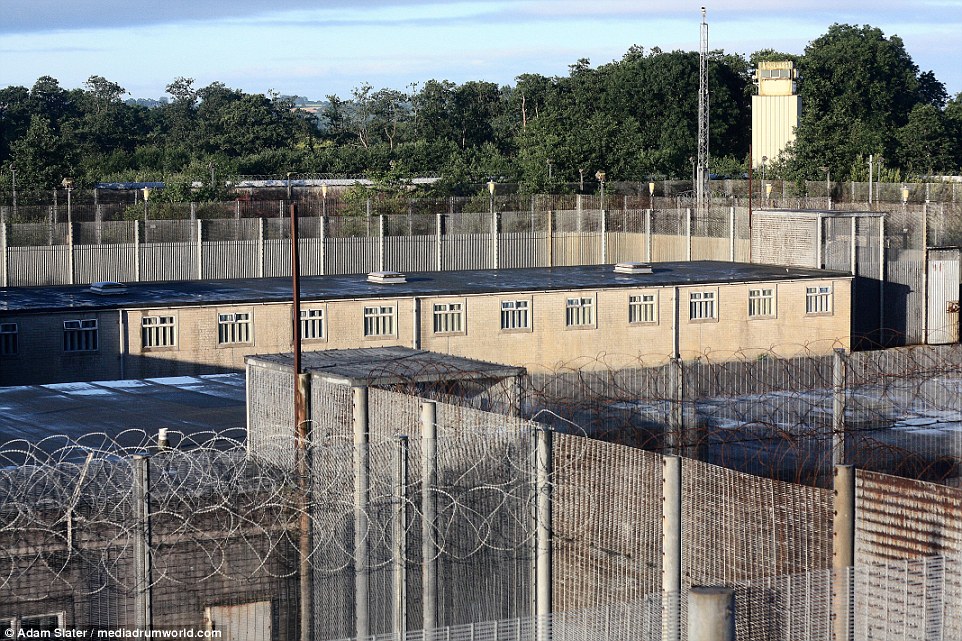
Long Kesh/ the Maze Prison, in the occupied 6 Counties.
This situation continued on low but constant level with higher points during the Civil War (1922-1923), the pogroms in the Six Counties, the 1930s,2 the 1940s, the Border Campaign (1958-1962) and the Civil Rights campaign from the mid-1960s onwards.
The Wikipedia section on Special Category Status states that it was introduced for Republican prisoners serving sentences in the Six Counties in 19723 but neglects to mention that it was already widespread among nationalist prisoners due to internment without trial a year earlier.
The British introduced internment without trial in their Irish colony in 1971 and one of the effects of that measure was to put a huge number of mostly nationalists from the Six County colony into jail. These prisoners were all accorded Special Category Status and wore their own clothes.
British soldiers capturing and taking away a civilian in the Occupied Six Counties of Ireland (Photo sourced: Internet)
Over the life of the measure, 1,981 people were interned without trial in the Six Counties (British Army’s Operation Demetrius). Of those detained 1,874 were from a Catholic/Republican background while, towards the end, 107 were from a Protestant/Loyalist background.
Special Category Status distinguished the internees from other political prisoners which were few in number at the time but its major impact was to distinguish them visibly from social prisoners or what are commonly called ‘criminals’ and was often called PoliticalPrisoner Status.
In June 1972 other nationalists/ Irish Republicans4 charged and convicted were also accorded Special Category Status,5 which came to be seen as prisoner of war status for opponents of the British colonial occupation, despite Britain’s claims that the prisoners were just criminals.
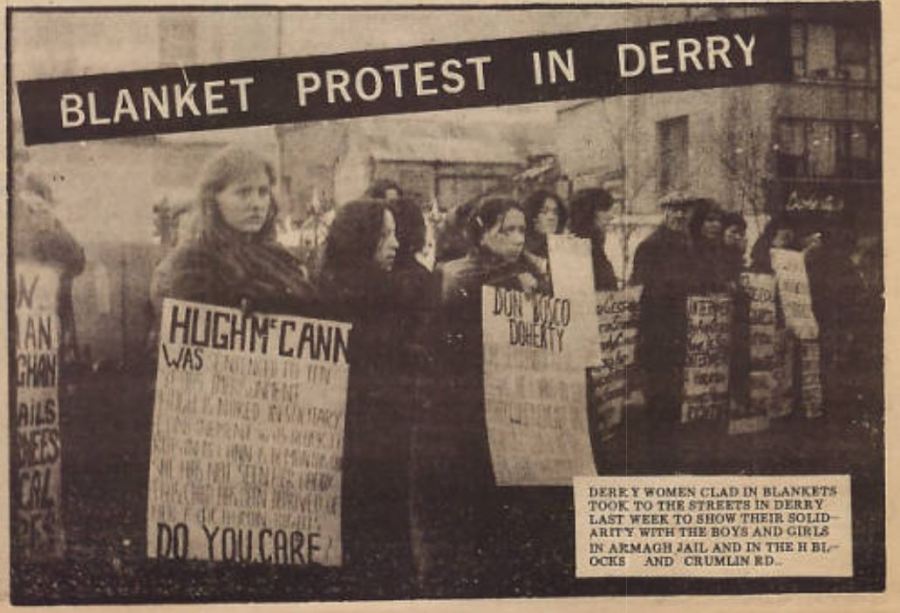
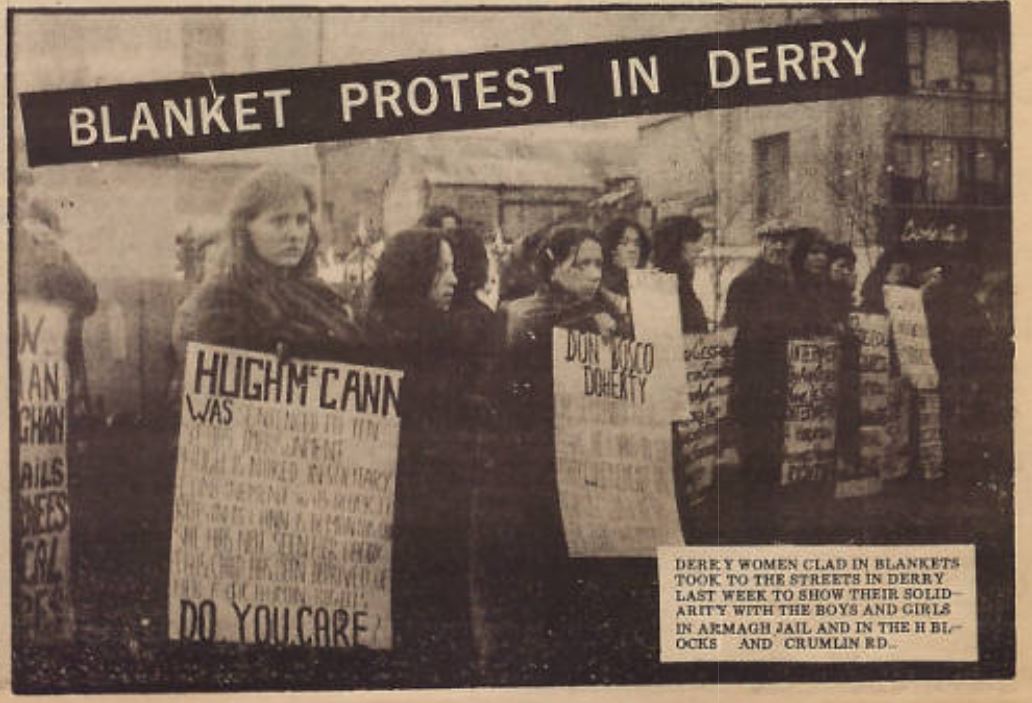
Early protests in support of the prisoners ‘on the blanket’ in 1976. It was mostly women relatives, partners and their friends who launched the Republican prisoner solidarity movement. As the photo legend also illustrates, there was still another male political prison, Crumlin Road (‘the Crum’) and Armagh Jail for female Republican prisoners.(Photo sourced: Internet)
Internment without trial in the Six Counties, generally recognised as a failure from both political and military points of view, was formally ended after four-and-a half years on 5 December 19756. As resistance continued, including now an armed aspect, more prisoners saw the inside of jails.
But they were still under Special Category regime and wearing their own clothes. The following year on 5 March 1976, Merlyn Rees as Secretary of State implemented the Labour Government’s7 decision to remove Special Category Status from any subsequently-convicted prisoners.
MERL
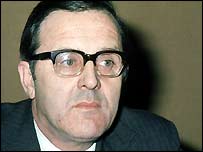
Merlyn Rees, British Labour Home Secretary who removed the Special Status from the Irish Republican prisoners, which precipitated the struggle that ended in the prison hunger strikes of 1981. He died at 85 years of age, having lived much longer than many of his victims. (Photo sourced: Internet)
The first Irish Republican prisoner to be informed he would have to wear prison uniform under the new rules was Kiaran Nugent. His reply, though pithy has gone down in the records of Irish resistance statements: “You’ll have to nail it to my back.”
Stripped naked, Vol. Nugent was put in a cell, from which he found a blanket and wrapped it around himself. It was a natural act to cover his nakedness but he may also have known that Irish Republican prisoners of the Irish State in the 1940s had done the same.
The Blanket Protest had begun and spread as more prisoners coming into the prison system took the same stand. There it might have stayed were it not for the violence and cruelty of HM Prison regime by its warders regularly assaulting prisoners on their way to and back from the showers and toilets.
In 1978 the Irish Republican prisoners in the Maze H-Blocks8 resolved to remain in their cells, emptying their excreta out the window and their urine under their cell doors into the passageway. So the prison authorities blocked up their windows and warders pushed urine back under their doors.
The Irish prisoners then had nowhere to put their excreta so they smeared it on the walls. They built a dam of bread fragments around their door to prevent their urine being pushed back in. These conditions they endured until the prison riot squad beat them out of their cells for power-hosing.
Those who watched the film Hunger (2008) directed by Steve McQueen will have seen some of that and how they treated the naked prisoners too, beaten to the ground, anus probed for contraband messages or materials, the same gloved hand often opening their mouths to look inside also.
Their flesh was forcibly abraded with scrubbing brushes and they were often inserted into cells still wet from the hosing.Once back inside cells, they continued the protest.
On 27 October 1980 seven Republican prisoners, against the orders of IRA GHQ, embarked on a hunger strike included the Five Demands to break the system, which they terminated after 53 days on receiving promises from the authorities which were then reneged upon.
The 5 Demands:
The right not to wear a prison uniform;
The right not to do prison work;
The right of free association with other Republican prisoners, and to organise educational and recreational pursuits;
The right to one visit, one letter and one parcel per week;
Full restoration of remission lost through the protests.9
Outraged at the reneging, Republicans renewed the hunger strike with their previous Provisionals’ jail Commanding Officer10 insisting he be first. So was Bobby Sands the first to die and another nine martyrs behind, seven Provisional IRA and 3 INLA as they came on to the strike in sequence.
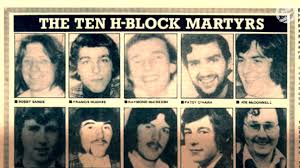
Photograph images with names of the ten Hunger Strike Martyrs of 1981 in the sequence of their death: Vols. Bobby Sands (IRA), Francis Hughes (IRA), Ray McCreech (IRA), Patsy O’Hara (INLA), Joe McDonnell (IRA), Martin Hurson(IRA), Kevin Lynch (INLA), Kieran Doherty (IRA), Thomas McElwee (IRA), Mickey Devine (INLA). (Photo sourced: Internet)
The effect of the hunger strikes of 1981 was huge in Ireland, Britain and further abroad. IRA Vol. Kieran Nugent had an important hand in pushing the process but so did Mervyn Rees, William Whitelaw, Brian Faulker and Edward Heath,11 in a long process of repression and resistance.
Today the struggle continues with approximately 20 Irish Republican prisoners, male and female in prisons between the neo-colonial Irish state and the British colony of the Six Counties. They have essentially won the five demands, though official harassment in the colony’s jails is endemic.
End. NB: If you found this article interesting you may wish to subscribe to the blog free of charge, after which you would receive a notification in your email every time an article was published. You can unsubscribe any time you wish.
APPENDIX: Brief biography of Kieran Nugent (12th September 1958 – 3rd May 2000).
Volunteer Kieran Nugent began his short life presumably in the occupied Six Counties of Ireland but all the references I have found so far begin with him at the age of 15 years of age, standing at a corner with a friend on the corner of Merrion Street and Grosvenor Road, West Belfast.
It was 20th March 1973.12 A car pulled up beside them asking for directions but an occupant of the vehicle then opened fire with a submachine gun. Nugent was seriously wounded, shot eight times in the chest, arms and back. His friend, Bernard McErlean, aged 16, was killed.
Kieran Nugent, first of the Republican prisoners ‘on the Blanket’ (Photo sourced:Internet)
Another youth was seriously injured also.13 Local people reported that a British Army Saracen armoured car had crashed through a nearby barricade and that was what had allowed entry for the murder gang, later claimed by the UDA, a British proxy Loyalist militia.
“At some point afterwards, Nugent joined the IRA.”14 The youngest age for IRA membership was 17 and Nugent aged 16 was arrested by the British Army, automatically refused bail, and at trial, after five months on remand in Crumlin Road Prison, Belfast, case withdrawn, he was released.
Kieran became an active volunteer until his arrest and internment without trial, on 9 February 1975. He served nine months in Cage 4 of Long Kesh Detention Centre (later renamed The Maze) in the Six Counties, until 12 November 1975. But was arrested and imprisoned again on 12 May 1976.
Vol. Nugent was charged with hijacking of a bus, a frequent Republican resistance activity in Belfast where the vehicle would then be utilised as a barricade. His sentence was three years in jail which he was commencing when he began the blanket protest.
The cause of death for Kieran Nugent was given as heart attack. A number of his acquaintances remarked that he had sunk into alcoholism with some adding that the movement had given him no support. Whether true or not, many former Republican prisoners of the period had shortened lives.
1Republican prisoners were held in British jails in Ireland, Britain and Australia – and for centuries before that Irish clan members had been incarcerated in Britain and Ireland.
2When the anti-fascist struggles also contributed to prisoner of the states.
4I am using the term “nationalists” as a broad and not strictly accurate term to describe the people of the Catholic ghettoes and areas of the British colony; of course many of them could have been also or instead mainly democrats, socialists. The term “Irish Republicans” I am using to describe those belonging to organisations nominally of Irish Republican kind but again how much each was truly Republican in ideology varied, for example in their opinion of the appropriate role of the Catholic Church in Irish society.
5Sentenced and remanded in custody Irish Republicans in jails went ona hunger strike for ‘political status’ in 1972 and the Provisional IRA during the Truce negotiations of June that year asked for political status for them which William Whitelaw conceded.
6https://cain.ulster.ac.uk/events/intern/chron.htm However internment without trial in fact continued by charged Republicans being refused bail and remaining in jail for two years or more awaiting trial. Bail decision and trial would be in the special no-jury Diplock Courts.
7It is difficult to understand any Irish person or indeed any anti-imperialist putting any faith in a British Labour government. Apart from its long imperialist history, it formed part of the national government that executed leaders of the 1916 Rising, sent troops to the Six Counties to quell the civil rights struggle in 1969, introduced the Prevention of Terrorism Act in Britain in 1974 and framed a score of Irish people for bombings, removed Special Category Status in 1976 …
8A special male political prison containing panopticon-designed blocks in Lisburn, Co. Antrim, built in 1971 and closed in 2000, the future of the empty buildings uncertain. Female Republican political prisoners were kept in Armagh Jail and fought with different tactics, including taking the Prison Governor hostage at one point.
9Prisoners disobeying prison rules are punished in a number of ways, one of which is loss of the remission off sentence normally expected.
10In a long tradition the prisoners of each political group in jail elect their leader and previous ranks are abandoned for the duration of the incarceration.
11In sequence: Labour Party Secretary of State; Conservative party Cabinet Minister; Unionist Prime Minister of the colony; Conservative Prime Minister of the UK.
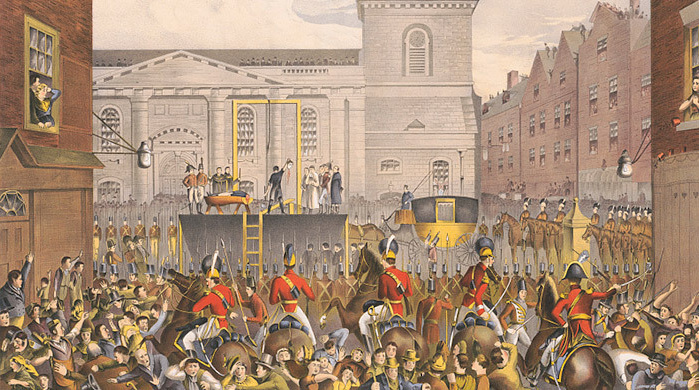
Dublin Political History Tours Facebook page reminds us of the 20th September anniversary of the public execution on of “Bold Robert Emmet, the darling of Erin”, leader of the unsuccessful Republican insurrection in Dublin on 23rd July 1803.
Coloured drawing: The executioner holds up Robert Emmet’s head to the crowd, sections of which demonstrate their repugnance of the act and are repressed English soldiers on horseback. (Sourced: Internet)
I reproduce the Dublin Political History Tours text (reformatted for R. Breeze):
On Saturday we passed by the anniversary of the execution by the English occupation forces of Robert Emmet, United Irishman. Emmet had been condemned to death for planning an insurrection for Irish self-determination which the English Occupation called ‘treason’.
Leaving behind in Kilmainham Gaol his comrade Anne Devlin, who had endured torture and death of family members without giving the authorities any information, Emmet was taken to the front of St. Catherine’s Church.2
(This building is) on Thomas Street in Dublin’s Liberties area on the west side of the city centre. The site chosen was sending a message to the populace of the area that had nationalist and republican sympathies.
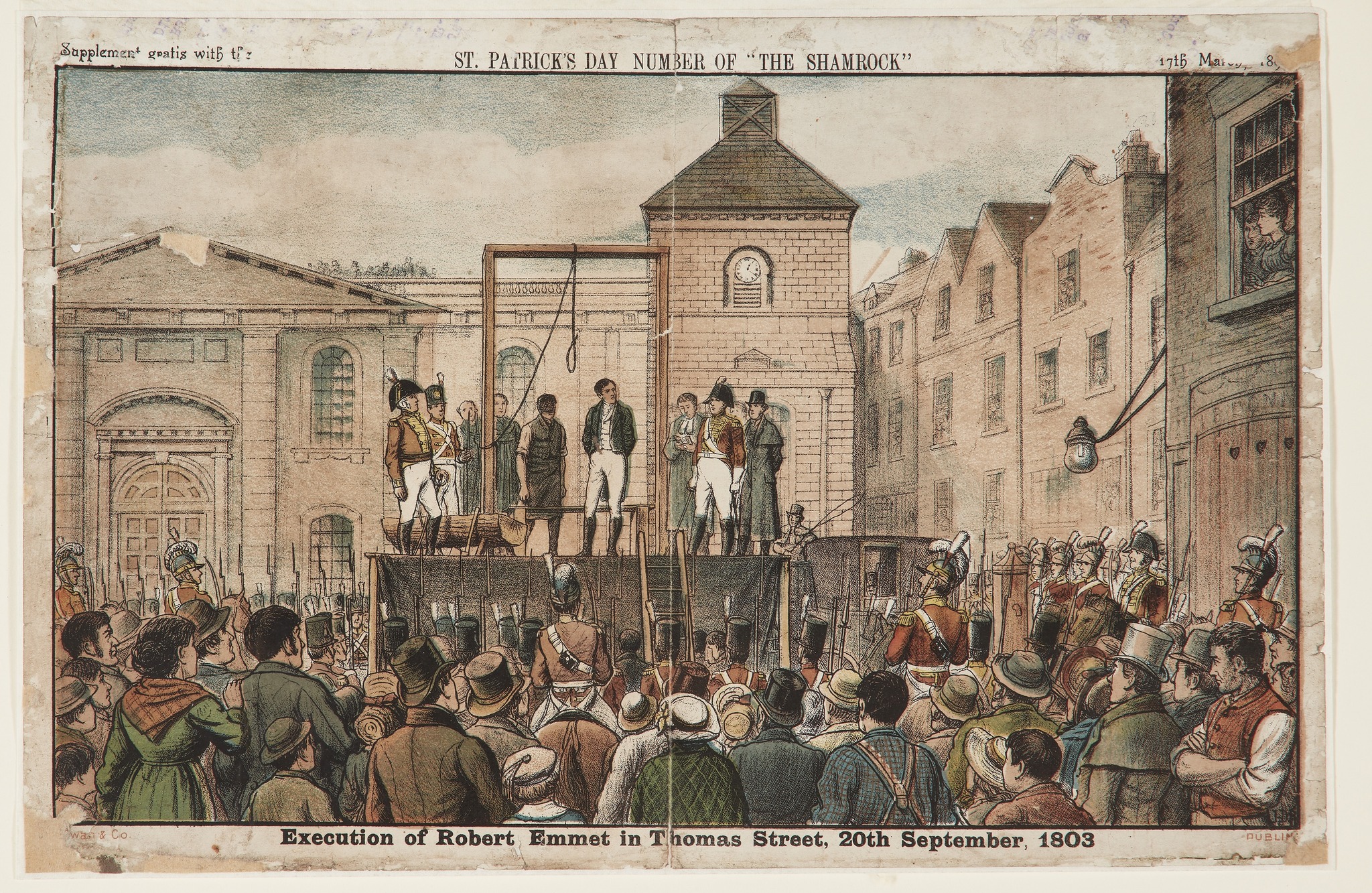
There, in front of a huge crowd and many soldiers, Emmet was hanged and then beheaded, the executioner holding up the dripping head to the crowd. His body was later returned to the Gaol before being later buried in Bully’s Acres in the grounds of the Royal Hospital Kilmainham.
Emmet’s corpse was later disinterred in secret and reburied elsewhere by friends or family and, despite a number of sites being speculated, its current location is unknown.
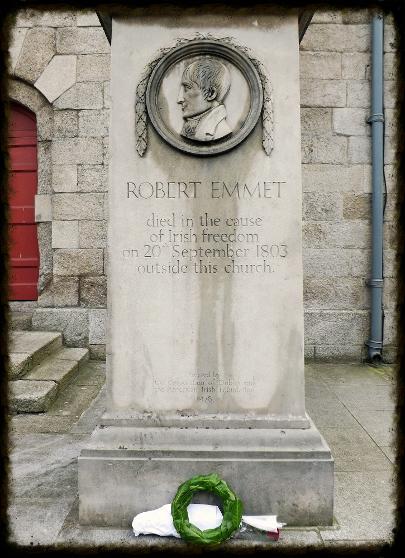
There is a monument to the execution inside the grounds of the St. Catherine’s building and a stone plaque on the wall outside it.
The monument inside the ground at the front of St. Catherine’s Church, Thomas Street, Dublin. (Source: Kilmainham Tales)
Robert Emmet was very popular in Ireland at the time and his memory is still. A statue in his honour stands in Dublin’s Stephens Green, a replica of another two at locations in the United States.
Anne Devlin endured three years in Kilmainham Gaol and according to Richard Madden (1798 – 5 February 1886), chronicler of the United Irishmen who sought her out, was followed everywhere in public by police.
(who were) observing anyone who she spoke to, as a result of which many were afraid to speak to her. Her body lies in Glasnevin Cemetery.
“Bold Robert Emmet” is a traditional ballad in the martyr’s honour and “Anne Devlin” also has a much more recent song in hers by Pete St.John.
(quoted passages end)
In the 1916 Proclamation of Independence, “the right of the people of Ireland to the ownership of Ireland” is proclaimed and that “six times in the past 300 years they have asserted it in arms”, probably referring to insurrections of 1641, 1689, 1798, 1803, 1848 and 1867.3
Historians have mostly dismissed the 1803 uprising as never likely to succeed but a minority have rated the preparations highly, including the innovations of signal rockets and folding pike handle for concealed personal carrying.
RH Madden, the first historian of the United Irishmen was of the opinion that the insurrection attempt was engineered by the English Occupation’s administration in Dublin Castle in order to justify continued repression of Irish republicanism and to eliminate some leaders.
Generally historians have tended not to give much credence to Madden on that issue but it is certain that the Occupation had a network of spies in operation in Ireland and that some had penetrated Emmet’s conspiracy.
Emmet on the scaffold with St. Catherine’s Church behind, the executioner beside him, the crowd in the street and many English soldiers, on foot and on horseback. The illustration was employed by Dublin Political History Tours but easily sourced on the Internet.
However it is not for the manner of the 1803 insurrection that Emmett has been fondly remembered in Ireland to this day 123 years later – and abroad for decades after his death4 – but for the calm manner in which he faced his enemies, including his executioner and for his eloquence at his trial.
Past insurrections contain lessons for us today and a serious evaluation should be attempted, perhaps with a number of submissions from historians of different opinions on the matter, to deal with questions around Emmet’s return from France and the planning of the insurrection in Ireland,.
For us today however, whether Republicans or more generally anti-colonialists and anti-imperialists, it is also necessary to revere the memory of revolutionary action for a democratic Irish Republican and to uphold his and Anne Devlin’s spirit of defiance in resistance.
End.
Note: If you found this article of interest, why not register with Rebel Breeze for free, so that you will be notified by email of subsequent articles. You can de-register any time you wish.
Statue monument of Robert Emmet in Washington DC, a copy of which stands in St. Stephens Green, looking across the road to his erstwhile homeand other copies stand in Emmetsburg, Iowa and Golden Gate Park, San Francisco, California.Those in the USA were all cast by the artist Jerome Connor between 1916 and 1919. (Photo sourced: Internet)Statue monument in Rathfarnham dedicated to Anne Devlin from Wicklow, a member of the United Irishmen conspiracy, tortured and jailed but never gave her captors any information. Sculptor: Clodagh Emoe(Gracies, Maria, for bringing this to my attention).
FOOTNOTES
1From Emmet’s famous speech from the dock of the courthouse in Green Street that not until then should his epitaph be written. I have no doubt that Emmet meant “nation-states of the world” because Ireland was in his time more than what we would understand today from the vague term of “country” – it was clearly, though under foreign occupation, already a nation with its own unique culture and a long history. She has yet to take that place to which Emmet referred and aspired for her.
2Note that was the Anglican St. Catherine’s Church, as a Catholic St. Catherine’s is also located not far away on Meath St. The Anglican church was closed in the 1960s but later reopened and reconsecrated as an Anglican Church. The interior seems very untypical of Anglican churches. Emmet was raised in the Anglican faith.
3Believed to refer to, in sequence: the Irish and Norman Irish clans in the Confederation’s uprising, the Williamite War’s, United Irishmen’s, Robert Emmets’, Young Irelanders’, the Fenians’. Coincidentally, the large monument to uprisings in Ireland erected by the National Graves Association in the St. Paul’s section of Glasnevin Cemetery also includes only six dates but they are of Republican risings only, beginning with 1798 and ending with 1916.
4I read somewhere that even in England Radicals would read Emmet’s speech as a high point of their events including formal dinners.
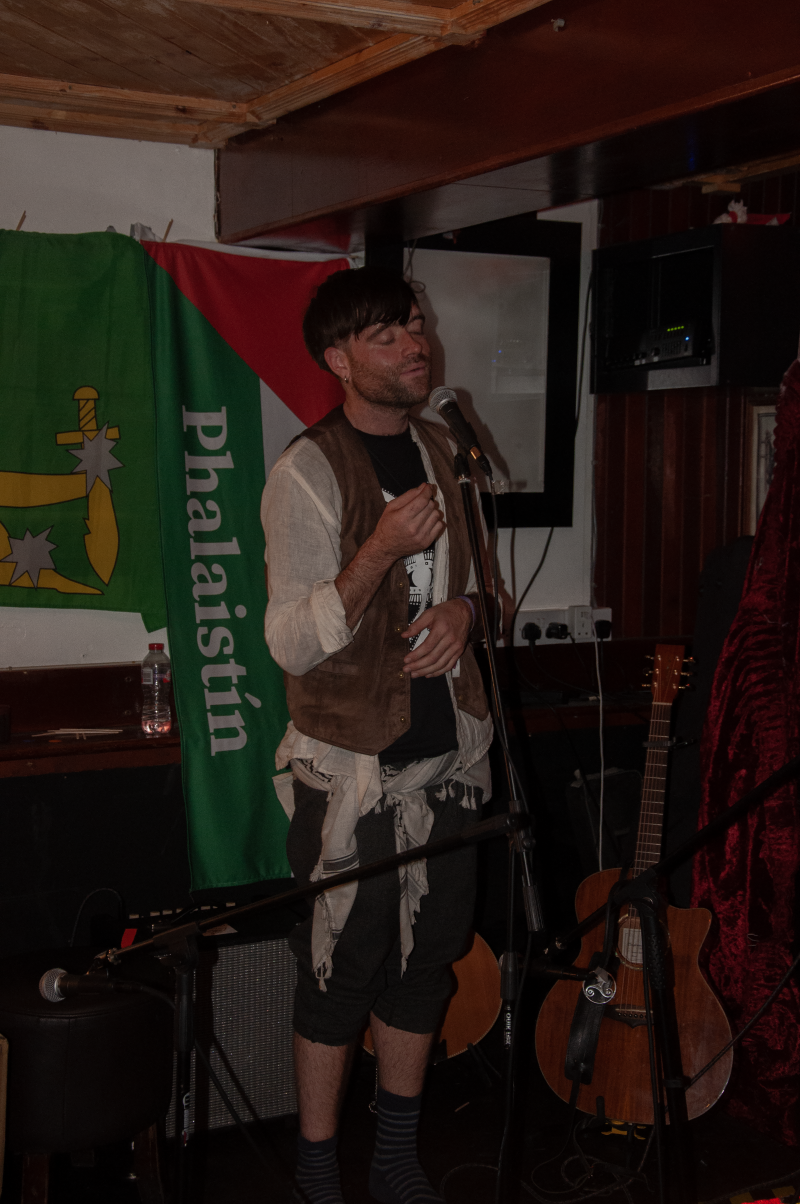
An Irish punk rock band, Mongolian throat-singers, a poet and Irish folk singers all performed at Solidarity Sessions No.2 to a good crowd in the International Bar, in in Dublin City centre Wicklow Street on Wednesday 17th..
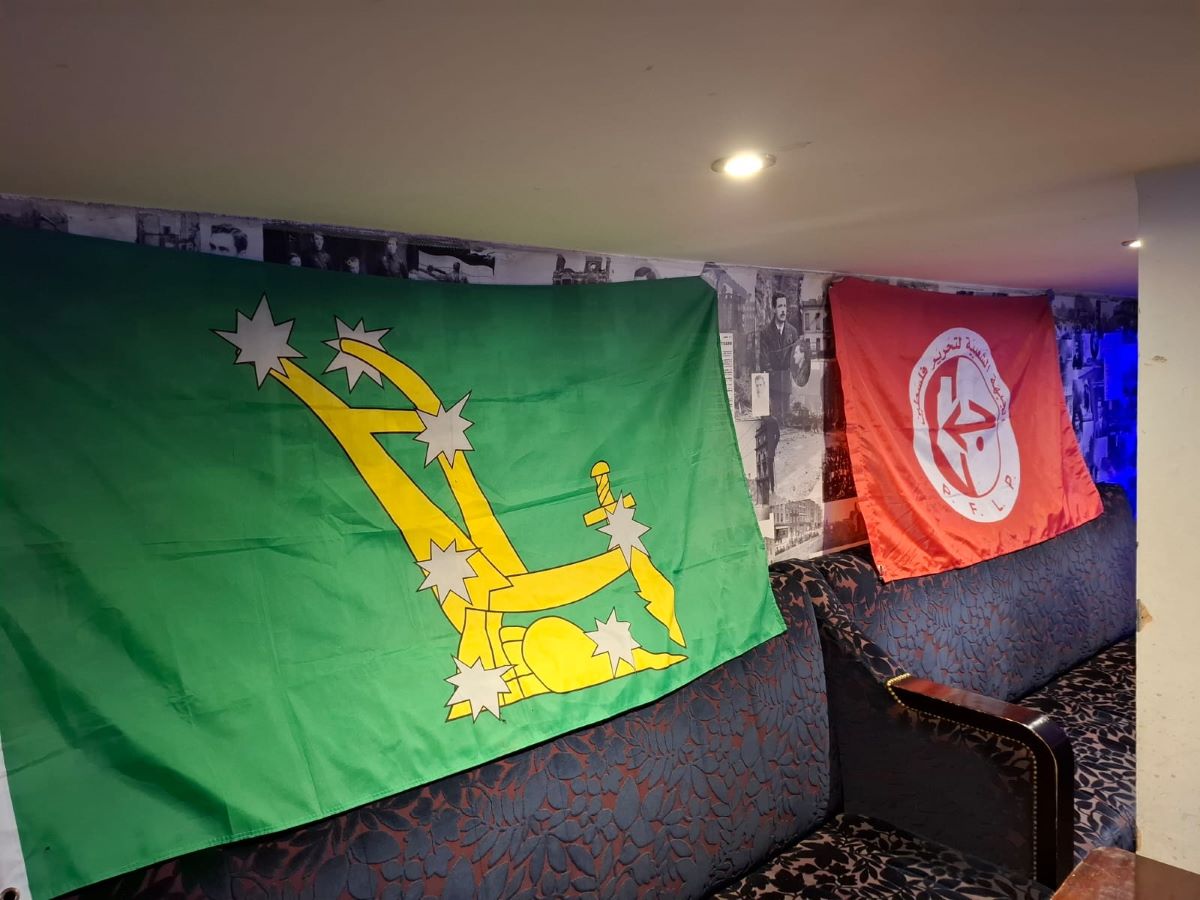
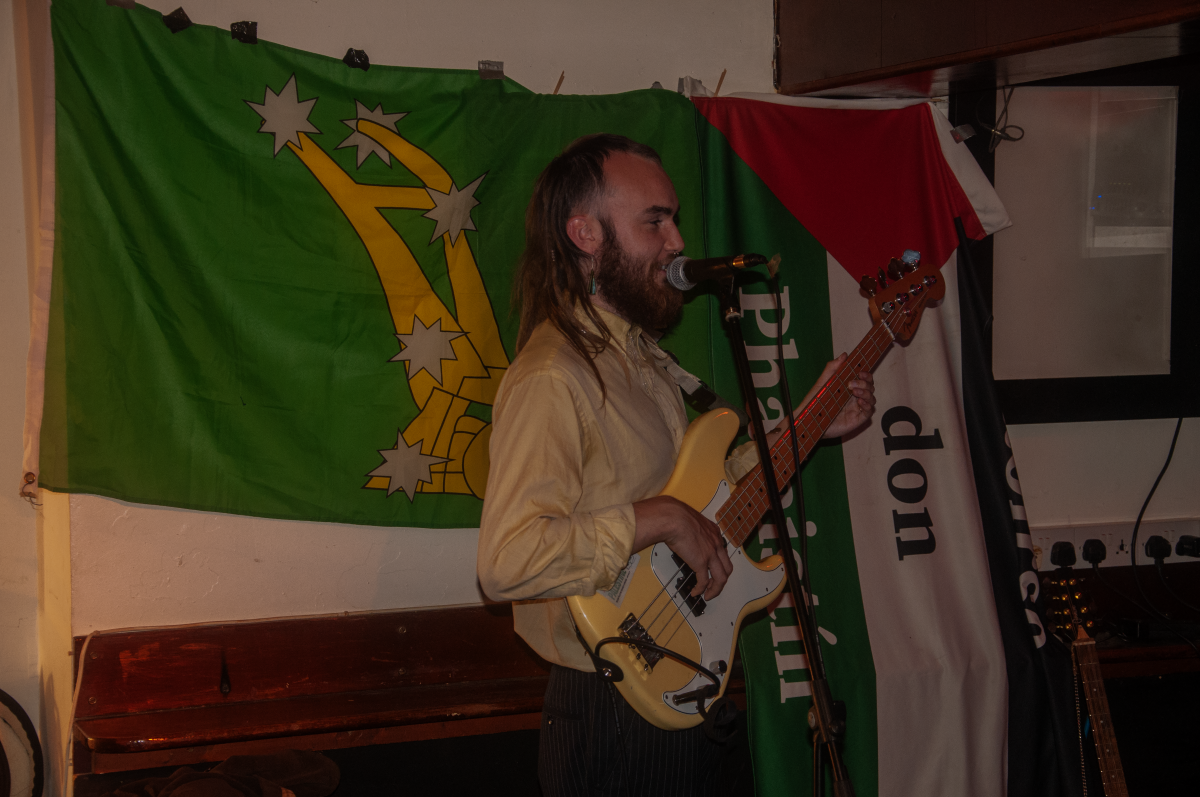
An Irish and international resistance theme in decor was presented by flags of the Starry Plough and Palestine with Saoirse don Phalaistín as stage backdrop, while flags respectively of Cumann na mBan and Basque Antifa concealed the original decor’s ubiquitous photos of Michael Collins.
Flesh B. Bugged performing (Photo: Dermo Photography)
A PFLP1 flag was also taped to a wall. Hand-written signs on the stairs leading to the basement venue, alternatively in Irish and in English, asked for quiet/ ciúnas for the performance/ racaireacht. The Irish language was present too in some of the performances to follow.
MC for the night, Jimi Cullen, himself a singer-songwriter activist told the crowd the purpose of the organising collective was “to build a community of resistance and solidarity with our struggles and with struggles around the world” through culture in a social atmosphere.
Before the crowd — a flag temporarily changing the decor. (Photo: R. Breeze)
Themes of love, nature and emigration were covered in song; however the dominant theme was resistance – to prison regimes, foreign occupation, fascism, class oppression, racial discrimination – and solidarity with the struggles of others, near and far.
Diarmuid Breatnach, singing acapella kicked off the night with a selection of songs from the Irish resistance tradition and a couple of short ones from the USA civil rights movement. Some of the melodies however, of particular interest perhaps to Back Home in Derry2, were his own originals.
Eoghan Ó Loingsigh, accompanying himself on guitar followed with more material from the same tradition, dedicating one to his late IRA father. A folk song Ó Loingsigh announced as ‘non-political’ performed acapella turned out to be very much political but on the issue of social class.
Áine Hayden followed with poems on a range of topics, from swimming in the Royal Canal during the Covid shut-down, deleting a personal relationship to a dedication to comedian and activist Mahmoud Sharab murdered with family in a “safe zone” tent by the Israeli Occupation Force.
Eoghan Ó Loingsigh performing (Photo: Dermo Photography)
The three performers were all introduced as activists as well as artists and the mostly-young crowd, apparently containing a strong representation of political and social activists, responded well to the performers with applause, yells of encouragement and often joining in on choruses.
More people arrived before, during and even after the break – including an elderly couple who had just arrived from the USA and could only pay in dollars but were admitted for free. Leaving later with thanks they promised a contribution to Palestine solidarity when they got home.
Before the crowd — a Cumann na mBan flag temporarily changing the decor. (Photo: Dermo Photography)
Also an activist, Ru O’Shea sang an Irish, Scottish, French and Italian selection, accompanied by bouzouki and guitar and performed a spoken word piece with a refrain of ‘Éire under attack’ before schooling the audience to sing the chorus of Robbie Burns’ Green Grow the Rushes Oh!
Áine Hayden performing (Photo: Dermo Photography)
Nomads were the next act. Composed of two Mongolian musicians playing violins in the style of the viola and a Dubliner modulating on a sound deck they were unusual enough but it was the amazing throat-singing of one of the Mongolians that had the audience enthralled.
It was amazing to learn that there are three different kinds of Mongolian throat-singing and then to hear them performed, one of which was a kind of whistling with a vibrating bass undertone wavering through it. The applause, particularly when they concluded, was rapturous and sustained.
Before the crowd — flags temporarily changing the decor. (Photo: R. Breeze)Ru O’Shea performing (Photo: Dermo Photography)
The evening’s entertainment concluded with Flesh B. Bugged, a punk rock Irish duo of bass guitar and drums with spoken voice pieces in Irish from the bass guitar player. Their volume and beat got some of the crowd up and dancing and the wider crowd responded well to them too.
MC Jimi Cullen went up on stage for the last time to thank venue, performers, audience, doorkeepers, poster designers Ríona and Azzy O’Connor, also Diarmuid for original artwork. At a prompt from the crowd Cullen also got a round of applause from the audience for his MCing.
The Mongolian musicians of Nomads performing (Photo: D.Breatnach)
Remarking they’d “had a great night” and encouraging his listeners to follow the organising collective on its Instagram page, Cullen told them that details of Solidarity Sessions No.3 and the collective’s decisions on recipients of donations from money raised would be posted on there.
Diarmuid Breatnach told the audience that each individual could help build a community of resistance through attending the Solidarity Sessions and encouraging others to attend. He welcomed any ‘competion’ from solidarity sessions around the country.
Bass guitarist of Flesh B. Bugged (Photo: Dermo Photography)
The downstairs area of the International Bar is not perhaps the best layout for this kind of event but it worked out well enough for the collective, audience and performers on the night. Their next event will be back at their launch venue,The Cobblestone, Smithfield on Thursday 30th October.
End.
Note: If you found this article of interest, why not register with Rebel Breeze for free, so that you will be notified by email of subsequent articles. You can de-register any time you wish.
The Mongolian throat-singer in Nomads (Photo: Dermo Photography)
FOOTNOTES
1People’s Front for the Liberation of Palestine, one of two specifically secular armed resistance organisations in Palestine.
2Irish mega folk singer Christy Moore had organised Bobby Sands’ poem into song to the melody of The Wreck of the Edmund Fitzgerald by Gordon Lightfoot.
On 13th September 1845 the widely-read British weekly publication The Gardener’s Chronicle apprehensively reported the appearance of the blight on potatoes in Ireland but doubtful if the full extent of the holocaust to follow was expected.
(Sourced: Internet)
True, no other national population in any other known part of the world was as heavily dependent on the potato as was Ireland’s. Other crops were grown but were mostly destined as feed for domestic animals1 or for export directly or indirectly as in the case of alcoholic drinks.2
A national diet is that of the mass of the population, which in Ireland was the peasantry. On the potato and a little milk the Irish peasantry grew strong enough to be recognised in Britain as healthy able workers, seasonally in agriculture or longer-term in manufacturing and construction.
They were reputed to be the tallest and most fecund in Europe, according to Frederick Engels writing in Britain a year before the piece in the Chronicle.3 In Ireland the peasantry were for the most part tenants-at-will or landless labourers for the settler big landowners and descendants.
The original Irish had been expropriated by sword, fire and pen (legal decrees) and their expropriators lived on the rents they extracted from their tenants in a mixture of crops, animals, cash and labour. After the abolition of the Irish Parliament,4 most big landowners found no reason to even live in Ireland.
The estates of the absentee landlords were then managed by agents, middlemen who forwarded the extracted wealth to their masters in Britain, or perhaps travelling ‘on the Continent’, or trying their hand in the American colony, minus the agents’ commission, of course.
As people went hungry, meat, dairy and grain continued to be exported.
The dependency of the Irish mass on the potato was known of course and even mocked in some ruling British quarters at times. But so were the Irish landlord aristocracy who seemed to have no interest in developing industry.
But could anyone predict that the blight would intensify each year and that the Government of the UK would tolerate such devastation in one of its parts? By the time it had run its course six years later, Ireland had lost at least 2.5 million of its original over eight million5 and more were emigrating.
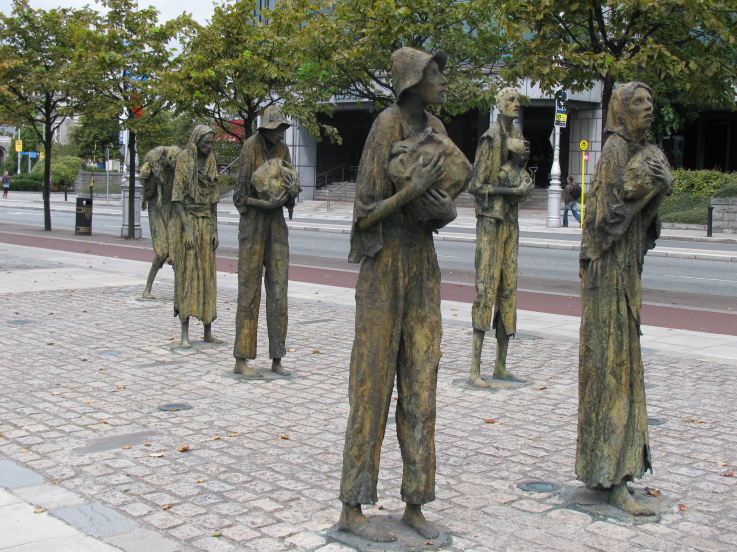
Memorial to the Great Starvation on Dublin’s north side quays. (Sourced: Internet)
And both the Irish planter aristocracy and the cotter class of Irish peasantry had been wiped out, leaving the field to the Gombeen6 class of money-lenders and bigger farmers, the latter now expanding their holdings and who would farm meat instead of agricultural produce.
When the overall national population stabilised again it did so at five million,7 at which level, despite a high birth and survival rate, it remained until the early 1990s. The magic trick was achieved by constant annual emigration, giving the Irish one of the largest diasporas in the world.8
The Gardener’s Chronicle’s writer noting the arrival of Phytophthora infestans could not have imagined the extent of its devastation. But if he knew the history of Ireland as well as that of the blight, he would have concluded that it was not the worst blight upon the Irish nation.
No, that was the arrival of the Anglo-Normans in 1169, with the second-worst blight being the growth of the Gombeen class.
end.
Note: If you found this article of interest, why not register with Rebel Breeze for free, so that you will be notified by email of subsequent articles. You can de-register any time you wish.
FOOTNOTES
1Grazing animals live on forage in Ireland but in winter or if overgrazed must be given additional food, while draught animals need cereal feed, typically oats. Pigs and domestic fowl were fed on mixtures of potato, beet, pulses and domestic leftovers.
2Typically eorna (barley) for beer brewing and whiskey distilling. These products continued to be produced and exported during the years of famine. Hops are also used for brewing but much was imported from southern England where climatic conditions are more favourable.
3The Condition of the Working Class in England (1844).
41799, followed immediately in 1801by Ireland becoming part of the United Kingdom and Irish MPs being required to attend the Westminster Parliament.
5A historical and statistical riposte to the anti-immigration claim that today “Ireland is full”.
6Originally from the Irish word Gaimbín and applied to moneylenders and land speculators during and following the holocaust period it, came to be applied by many to the Irish neo-colonial national bourgeoisie.
7Of the whole nation, with over 3 million in the Irish state and under two million in the British colony, the Six Counties.
8The bleeding through emigration was constant but fluctuated in degree, with a high point in the 1950s when it amounted to 15% of the Irish state (i.e. of the 26 Counties) and another in the 1980s.
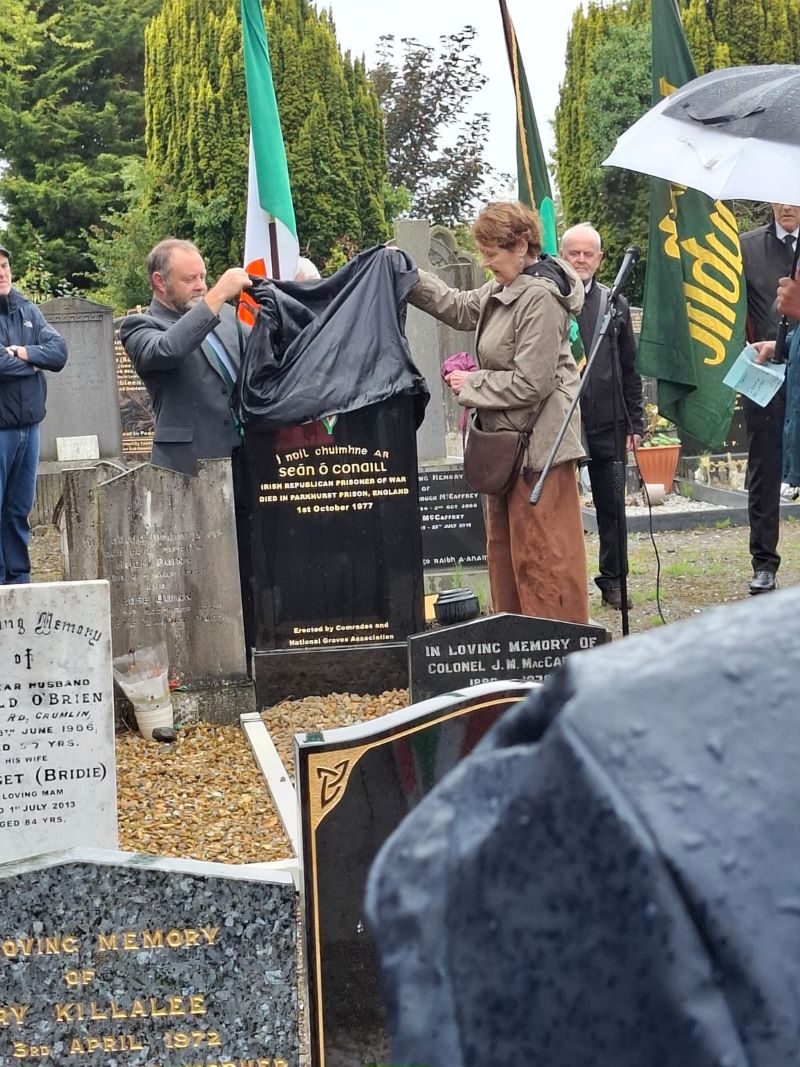
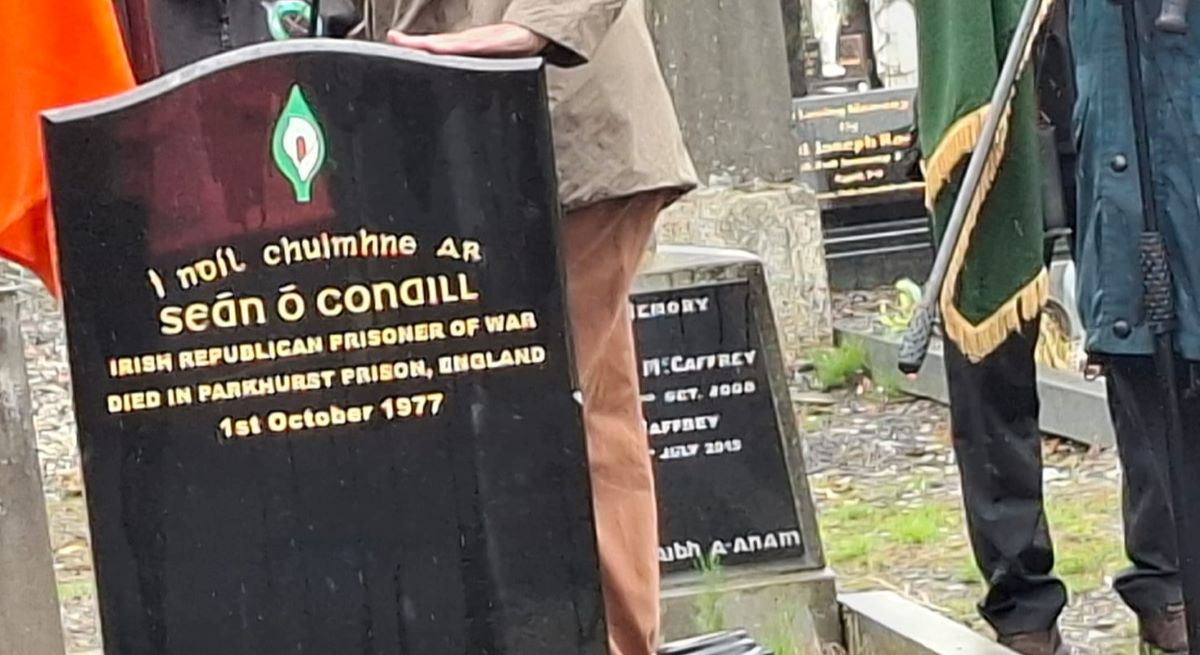
The grave of Irish Republican political prisoner Vol. Seán Ó Conaill received a headstone on Sunday (7th August) due to the efforts of the National Graves Association – nearly 50 years after his death in British custody.
Seán was born and brought up of Irish background in Birmingham and became interested in Irish history. After Bloody Sunday (1972) he tried to join the IRA but was not accepted and subsequently acted independently, assassinating a British Army Lieut. Colonel.
Tracked by British police, he wounded two of the group sent to arrest him, was captured and beaten up. His treatment in jail was bad also but after sentencing was accepted by the Irish Republican prisoners in British jails and, in time, sworn into the Provisional Irish Republican Army.
After his death his body was transferred for burial in Glasnevin. It seems that the NGA understood that his family wished to erect a headstone but for whatever reason the grave lay without one until last week.
The National Graves Association went ahead with commissioning a gravestone which they unveiled on Sunday in the St. Paul’s section of Glasnevin Cemetery1 with a colour party, speakers, music and a goodly attendance, though drenched during the ceremony.
The occasion was supported by members of Sinn Féin and Republican organisations in addition to independent Republicans and anti-imperialists. Seán Whelan, Chairperson of the NGA chaired the event and after some opening remarks introduced the speakers.
Section of the attendance at the event. (Photo: D. Breatnach)
SPEAKERS
Jacqui Kaye of the former Prisoners’ Aid Committee2 was introduced to speak and told her audience that Ó Conaill was diagnosed with terminal cancer and requested a visit from Kaye, permission for which was initially refused by the Home Office3 but granted after intervention by Lord Longford.
The visit was permitted for 10 minutes only for Parkhurst Jail but then changed to a hospice though when Kaye arrived it was to be told that he had just died there, leaving her with the suspicion that he had actually died in Parkhurst but that the Home Office did not wish that on their record.4
Jacqui Kaye, formerly of the Prisoners Aid Committee (no longer in existence), speaking at the event during a particularly heavy shower. (Photo: D. Breatnach)
Former Republican prisoner (21 years in British jails) Noel Gibson laid a wreath on behalf of the NGA and Paddy Lennon read The Rhythm of Time by hunger strike martyr Vol. Bobby Sands, after which a recording of uileann pipes filled the cemetery air with its haunting lament.
Liam Ó Culbáird of the NGA presented the main oration of the event, recounting details of Ó Conaill’s life and time in jail, information gathered from a number of sources, including that despite complaining of chest and stomach pains he did not receive medical investigation in jail.
It was only after coughing up blood that Ó Conaill received a medical visit, after which he was diagnosed with terminal cancer. His marriage had become estranged possibly as a result of his incarceration but official interference in personal relations of political prisoners was also known.5
Liam Ó Culbáird, giving the oration at the unveiling on Sunday. (Photo: D. Breatnach)
The speaker alluded to the practice of “ghosting” political prisoners, i.e. moving them to a different jail without notice, often as a scheduled visit by a family member was imminent, which occurred to Ó Conaill’s mother arriving at Wakefield Prison to be told he had been moved to Parkhurst Jail.6
Such practices imposed an additional punishment not only on the prisoner but in particular on family members7 who had often travelled long distances into sometimes hostile territory and had also the additional expense of paying for overnight accommodation.
The media at the time of his arrest had portrayed Ó Conaill as of unbalanced mind but his comrades in jail found him completely rational and dedicated to the cause. He began to learn Irish and encouraged the other Republican prisoners to expand their use of the language.
Liam Ó Cúlbáird and Jacqui Kay unveil the headstone to Vol. Seán Ó Conaill on Sunday. (Photo: D. Breatnach)
Commenting on Ó Conaill’s failure to be recruited by the IRA prior to his armed action, Ó Culbáird commented that disagreements between General Headquarters of the IRA and Volunteers were not unknown and related a GHQ approach to Brendan Behan after his release from jail.
Behan was informed that he had been been found guilty by GHQ court-martial8 in his absence and sentenced to be shot. Behan replied that since his court-martial had been in his absence, so equally could his execution and promptly departed!
Ó Culbáird commented also on the number of groups that had operated independently of the IRA’s GHQ and remarked upon the number of different groups that had participated in the 1916 Rising,9 all with their reasons for separate existence but all united in the struggle for independence.
The speaker ended his oration by pointing out in Irish and in English that Ó Conaill was an Irish Republican soldier who gave his life in the struggle for Irish freedom.
CONCLUDING
Bringing the ceremony to an end, Seán Whelan thanked the speakers for their contribution and audience for their attendance and added some words about the NGA, pointing out its political independence and refusal to accept donation from any governmental or other organisation.
Chairperson of the NGA, Seán Whelan, presiding over the unveiling on Sunday. (Photo: D. Breatnach)
Whelan also added that whereas the NGA acknowledges the right of anyone to commemorate their dead, their organisation prioritises the dead who participated in the Irish struggle for independence but also cannot agree to share their commemoration with those who fought against them.
He remarked that he did not know of any other country where that would be done. Whelan then called for attention to the playing of a recording of the the National Anthem.
End.
(Photo: D. Breatnach)
FOOTNOTES
1i.e the large section on the opposite side of the road from the main Glasnevin gates, also where stands the NGA memorial to the six uprisings mentioned in Pearse’s famous speech.
2The PAC was initially formed by Official Sinn Féin but within two years had left the Officials and operated independently.
3Irish Republican prisoners in British jails were listed as high-security Category A and were not permitted visitors other than immediate family.
7Though not mentioned in the oration, this was also a practice of the Spanish prison system against Basque political prisoners, in which case letters and parcels arriving for the prisoner, rather than be forwarded to the prisoner’s new location, would be returned to sender with a note that the prisoner was no longer at the posted address.
8Presumably for his solo unauthorised action in carrying a bomb to England.
9Irish Republican Brotherhood, Irish Volunteers, Cumann na nBan, Irish Citizen Army, Na Fianna Éireann, Hibernian Rifles. Some individuals not a member of any of those organisation also participated.

















 rebelbreeze