Fire is an important source of heat and so facilitates life but it can also be a killer. Fire safety is particularly important in multi-occupied buildings but essential safeguards are often not provided or when they are there, are ignored or misused. One can see evidence of that frequently in news reports and even on many occasions in one’s own life and, on a number of occasions as a manager of accommodation services, I have certainly seen examples all too often. Buildings are being constructed to greater heights than can be reached by the ladders of fire-fighters. Those responsible for lack of fire safety procedures or of violating them should face severe penalties.
Fire at tower block in Tower Hamlets in London last year. (Photo: Supplied to Guardian newspaper).
When it is being destructive, fire kills in many different ways, not just by extreme heat. Smoke inhalation is another killer, as are toxic fumes emitted by some materials when burning. People can be killed by falls when attempting to escape a fire or be crushed by falling parts of the building, beams etc. And fire can also cause explosions when it encounters volatile liquids or gasses. Whether we live, work or relax in a building, we should never be blasé about the dangers, never disregard precautions and in fact be prepared to insist on adherence.
There are various headings under which we can discuss fires safety but Prevention, Detection, Suppression and Evacuation cover most of them — to which we can add Educated Awareness.
Prevention has to do mostly with safe design, use of safe materials and with safely operating processes that generate heat or produce flame, classically cooking and smoking but also many others — in industry all such procedures should be clearly advertised.
In Detection, apart from what to do when one smells burning or personally encounters flames or smoke, it is with systems such as smoke and heat detectors and alarms that we are concerned.
With regard to Suppression, although of course occupational fire-fighters may use other means, we are interested in fire extinguishers (more rarely fire hoses) and sprinkler systems and, in Evacuation, in the means of safe escape and subsequent assembly, along with indications of when one should do so, which of course are linked to detectors and alarms.
SUPPRESSION
How often we see a fire-extinguisher being used to prop open a door! This is a serious misuse of a piece of fire-fighting equipment and its use in that way may mean it will not available in the appropriate place or malfunctions when required. Often too the door being propped open is very close to a staircase, with the danger of the heavy extinguisher being dislodged and rolling or bouncing down the stairs to strike someone.
International Fire Extinguisher pictogram sign (Image sourced: Internet)
Fire extinguishers in buildings are usually installed by a fire-protection company, under contract to check and service them once a year. Does that sound safe enough? In a team of which I was a member, we checked the fire extinguishers on each shift, to ensure they had not been tampered with and we lifted the water-filled ones to check, by weight, that they still contained water. Those checks were written into our work rotas and we were required to sign off on them. We had developed those safety routines as a team and I carried them forward into subsequent management roles. In the case of an extinguisher we found too light or with the seal removed, that was recorded and the urgent task was to have it replaced by the fire-protection company under contract.
Sprinkler systems should have a means of checking that they are functioning well and should be regularly checked.
Fire alarms and smoke detectors need to be regularly checked also. In the case of smoke detectors they can be checked by spraying with an aerosol and the fire alarms have a facility for testing — though an arrangement with the fire-fighting service that alerts them to a test being carried out is advisable.
Blackbird Granary fire, Oregon, last October (Photo: Statesman Journal)
EVACUATION
I’v worked in places where I never experienced a fire drill. That is terrible, when you think about it. In a good team of which I was a member we made sure we carried out drills but we also had to balance the need for fire drills with the possibility of injury during evacuation to the hostel residents, who were drinkers and many of whom were infirm. We compromised by holding drills for the staff and local management while informing the residents of what we were doing. When I came to manage a hostel, I arranged to have a member of staff with a pen and clipboard follow the fire evacuation drill in action, which is when we discovered that a wheelchair-bound resident could not be got out the main door at all quickly. How had that not been noted previously? Not only that but for security reasons, the team members were not using the emergency exit. And then it was discovered that a member of staff was keeping his bicycle in the passageway leading to the emergency exit, potentially a hazard to people trying to escape a fire. Incredibly, the individual concerned was the team’s elected health and safety representative, which made for an interesting discussion with him later.
As a team, we resolved all those issues — but only because we carried out the drills and observed what happened during them.
During a fire there may be a power cut so the provision of emergency lighting is important, along with luminous signs indicating the evacuation route. That lighting too should be checked.
Worse things than obstacles in the path to emergency exits occur, when building owners or management lock or chain emergency exits for reasons of building or product security or in some cases even to imprison workers. As children some of us would “bunk in” to cinemas: one who had purchased a ticket would go to the toilet to open a nearby emergency door and admit others. The cinema management ended that practice by chaining the emergency doors shut. It is understandable that a commercial business might wish to discourage evasion of their admission charges but certainly not at the cost of putting lives in danger — many other means can be developed, including monitoring systems and alarms. In north Dublin’s Artane suburb, the management and owners of a nightclub had locked some fire exits and on 14th February 1981 a fire broke out during a dance attended by 841 young people, causing the deaths of 48 and injuries to 214. Exit doors were also locked in the Summerland leisure centre on Douglas on the Isle of Man on 2nd August 1973, when a fire caused the deaths of over 50 and serious injuries to 80.
One organisation I worked for had a stipulation that they would hold fire drills once every six months while another held them once every three months. As a team member I advocated them to be monthly at least and as a manager made that a requirement, marking the date for them in advance into our diary. Also, some drills should be carried out without warning and, as in the case outlined earlier, with an observer following the procedure and recording its progress.
Shift fire safety inspections should check or test the emergency lighting and emergency exits, while periodic drills should check the functioning of the fire alarm and display panel, by activating the alarm at a different location for each drill (there are keys supplied for that purpose).
Can the ladder reach?
It would be no bad thing for every person to attend a fire prevention course but it is essential for some kinds of work, in particular for people working in buildings with others or where people live. Such training not only deals with prevention best practice but also with how to act upon discovering a fire or in response to a fire alarm, what are the appropriate extinguishers in different circumstances, etc. The cost of such training (and of replacing staff while on training, if necessary to maintain the service) should be built into the operational budget of the facility.
One fire prevention course I attended had us consider what to do if we were trapped on an above-ground level of the building and unable to proceed to the fire exit. In most cases, if the fire-fighting service has been summoned (by the service-linked fire alarm or by other means), it is usually safest to retire to a room facing on to an area with a window which the fire tender can access easily enough, then close the door and stuff cloth around the bottom to limit the ingress of smoke. In the case of residents being trapped on that floor with us, we were to encourage them to come into the room we had chosen and to remain there with us until evacuated.
Speaking of evacuation, in a scenario such as the one just described, we might have to be brought out through a window by firefighters who would normally gain access to us by one of their ladders. It is a fact that the maximum ladder available to fire tenders in Dublin is 100 feet long but since a ladder cannot be used at right angles to the ground, the effective height is around 75 feet. Yet Dublin City Council and many other local authorities around the country regularly permit the erection of buildings with floors that are higher than 75 yards from the ground. How can that be allowed?
Grenfell Tower ablaze, West London14 June 2017; 72 were killed and more than 70 injured (Photo sourced: The Telegraph)
Earlier in this article, we saw the example of a fire extinguisher being used to prop open a door. This is sometimes compounded by the door in question being a fire door, in other words a door the function of which is to retard the spread of fire. Such doors should be kept closed at all times when people are not passing through the doorway and should have automatic closing mechanisms. The should also have a slot of glass in them so that one can look through without having to open the door, the latter being an action which in some cases might have lethal consequences. The material of the doors should be such that they can resist actual flames and heat without burning for one hour but unfortunately it is not unknown for such doors to be constructed of inferior materials which might be discovered only in an emergency — i.e too late to be of use. A reputable supplier is the only safeguard against such unfortunate discoveries but their production batches should be regularly and randomly tested by State or local authorities too.
Documentation
A work team should have appropriate procedures in place to deal with contemplated dangers and with regard to fire, a separate file detailing them is recommended. As a team we developed one (model fire precaution files can be purchased also) that listed the suppliers of our alarm systems and fire extinguishers, recorded their checks or replacements, referred to daily checks, training courses attended and by whom, recorded the fire drills; as a manager I ensured our team had duplicate files, one for staff access at any time and a backup copy in the management office.
A new member of staff or management should be introduced to that file as part of their induction.
International emergency exit pictogram sign, displaying its nature and direction; these are usually lit from behind by emergency lighting. (Image sourced: Internet)
Arson
The attractions of fire are well known with children having to be cautioned about it, so much so that “playing with fire” has entered the language as a metaphor. People who live on the street, especially in ‘western’ countries tend to contain a certain proportion of mentally-ill people or others with social behavioural issues. For some of those fire holds a substantial attraction and, when in a multi-occupation building, they can constitute a very real danger. In one hostel there were a series of small fires deliberately set and we never found the culprit in the act. We did have our suspicions and some circumstantial evidence and on that basis I instructed the individual’s eviction. That seems harsh but the series of incidents indicated that we might have a very serious one eventually either because he was building up to it or through it unintentionally going out of his control. With the lives of a number of other residents and also of staff at risk I felt obliged to take that action and informed the organisation’s head office of what I had done and why. DCC’s Homeless Agency tried to force us to revoke our decision but we stuck to it. Agencies responsible for housing homeless people but without sufficient funding often try to shoehorn individuals or families into unsuitable accommodation. Of course there should be a housing option available to everyone but the one we provided just wasn’t suitable for what we considered a serious arson risk.
Similarly as workers or residents we should not tolerate behaviour of our peers that puts us in danger or neglect of laid down fire precautions. In an example referred to earlier, I could do nothing about the incredible attitude of a safety representative elected by the staff team but as a manager I could act on a member of staff endangering the team and he was of course instructed to remove his bicycle from the premises and to risk it locked on the street (as indeed I risked mine). I have heard of places where team members had a battle using fire extinguishers which is no doubt great fun but incredibly irresponsible.
Dealing with staff health and safety representatives as a manager reminds me of the time I had been such a representative myself. Wanting a bit of a break from confrontations with management, I declined nomination as shop steward and accepted nomination as staff health & safety representative instead. To my unpleasant surprise I found myself in more confrontations with the management than did the shop steward. And that was with a local management team that was quite progressive.
Owners and managers of buildings, along with companies employing people to work in them, have serious responsibilities with regard to comprehensive fire prevention, detection, suppression and evacuation procedures and should be rigorously inspected and pursued when they fail to ensure sufficient safety standards. When deaths are caused due to failure to ensure safety, the least they should face are manslaughter charges. A homeless person suspected of arson can be evicted without too much trouble but neither the owners of the Summerland leisure centre on the Isle of Man nor the Butterly family, owners of the Stardust nightclub in Artane have ever faced a single charge in a court of law.
Palestinian flags fluttered in the breeze over the iconic Ha’penny Bridge in Dublin City centre, while banners festooned its length on New Year’s Eve. The numbers were down from previous years, more likely from the soaring Covid19 infection rate than from any lessening of the long-running Ireland solidarity with the oppressed Palestinians. This was ironic since, unlike previous years, this was not a rally braving sleet, snow, rain or icy wind – in fact, the very mild weather raised only the amount of breeze necessary to set the flags fluttering.
(Photo by Tamin Al Fatin, IPSC)
Tamin Al Fatin, IPSC Chairperson, centre photo (Photo by IPSC))
The event is organised every year for New Year’s Eve at the same location by the Ireland Palestine Solidarity Campaign and supporters, among which were Irish and Palestinians, handed out leaflets encouraging BDS (boycott, divestment and sanctions) of Israel, an apartheid ste. Martin Quigley, for the IPSC led some chants on a megaphone, which were taken up by people on the pedestrian Bridge, among which were that “Israel is a terrorist state”, that “Palestine will be free” and in solidarity that “we are ALL Palestinians”.
Each year more Palestinian land is stolen, more of their homes demolished or under threat of eviction, in Gaza they have periods without electricity, they are restricted in importing fuel for heating or cooking (never mind transport), or building materials (so much has been destroyed by the Israeli bombardments), they continue to be harassed and made have lengthy waits at checkpoints, their inshore sea is polluted, their fishing boats further out are attacked and harassed ….
(Photo by Tamin Al Fatin, IPSC)
As of 2019, more than 5.6 million Palestinians were registered with UNRWA as refugees, of which more than 1.5 million live in UNRWA-run camps.
According to prisoners’ rights group Addameer, there are currently (2021) 4,650 Palestinians held in Israeli jails in Israel and the occupied territories. Palestinians view them as political prisoners attempting to end Israel’s illegal occupation. Of those: 520 are being held without charge or trial.
At the end of September 2020, 157 Palestinian minors were held in Israeli prisons as security detainees and prisoners, at least two of whom were held in administrative detention. Another 2 Palestinian minors were held in Israel Prison Service facilities for being in Israel illegally. The IPS considers these minors – both detainees and prisoners – criminal offenders. In addition, a small number of minors are held in IDF-run facilities for short periods of time. (And the Israeli Prison Service since October 2020 has been refusing to publish figures or to supply Palestinian human rights groups with them).
BIG POWERS BACKING ISRAELI ZIONISM
The United States is the major power backing the Israeli Zionists and partly because of its position in the world and partly also for their own economic or political interests, most of the European states back the Zionists too.
In 2018 Donald Trump, as US President, moved the US Embassy for Israel into Jerusalem, endorsing the Zionist claim that the multi-faith city is Jewish and Zionist, although it is an occupied city even in international law. Shortly before he reluctantly left the office of the US Presidency, Donald Trump also endorsed Morocco’s illegal occupation of Western Sahara in exchange for Morocco recognising Israel. So far, Joe Biden, Trump’s successor, has not reversed either of those decisions.
(Photo by D.Breatnach)
THE PEOPLE OF THE WORLD SUPPORT THE PALESTINIANS
As is usually the case, it is the ordinary people in Ireland and around the world that support the Palestinians, while the big capitalists and imperialists, while occasionally criticising the Israeli Zionists, continue to support them politically, economically, culturally and militarily. Even in the United Nations, an organisation controlled by the big powers, a majority condemned the Zionist state in 17 separate motions in 2020 and last year formally ratified another six resolutions criticising Israel.
So why has international action not been taken against this terrorist state? The answer is that although the UN has 193 member states, only its Security Council decisions have to be carried out and there are only five permanent members of the Security Council: USA, UK, France, Russia and China. And what’s more, their decisions have to be unanimous.
(Photo by Tamin Al Fatin, IPSC)
On the other hand, so many civil organisations around the world have declared themselves in solidarity with the Palestinians and in Ireland. Hundreds of thousands have marched in so many countries and sports people, many popular culture stars and academics have refused to perform or attend conferences in Israel. One can no longer find Israeli goods in most shops or supermarkets (and when on occasion they are on sale, their country of origin is not marked on the product).
“Ayer se escapó de la custodia a importantes prisioneros y ahora se está llevando a cabo una intensa persecución. Se advierte a la gente que no los ayude so pena de un proceso penal y de sanciones severas si es condenado.
“Según fuentes confidenciales, pero no confirmadas por las autoridades, se cree que los prisioneros son Aodh Rua Ó Domhnail y Art y Henry O’Neill, del los clanes importantes de la provincia de Ulster, cuales escaparon de su confinamiento en el castillo de Dublín. Se cree que se sospecha de asistencia interna.
“Los prisioneros pueden dirigirse en una de varias direcciones o pueden haberse separado. Es probable que el frío y la nieve retrasen su avance, pero también impiden la búsqueda”.
Tal, en el lenguaje moderno, podría haber sido la respuesta de los medios de comunicación de los ocupantes ingleses a la fuga el día de Navidad de 1591 de los rehenes políticos Aodh “Rua” (“Pelirojo”) Ó Domhnail, Art & Henry O’Neill del Castillo de Dublín. Un asistente se reunió con ellos y les dio ropa ligera para que se cambiaran de las que se habían ensuciado por su escape a través del conducto del baño del castillo.
El Record Tower, Castillo de Dublín, tomado en recién anos. (Foto: D.Breatnach)
Los fugitivos estaban mal provistos y vestidos o se habían separado de las provisiones y la ropa preparadas y estaban a pie. Además, al salir de la ciudad de Dublín, uno de los hermanos Ó Néill (‘Henry’), se separó y se hizo su proprio camino.
Cuando llegaron a cierto lugar en las montañas de Wicklow, Art Ó Néill ya no pudo viajar y el asistente fue a buscar ayuda. Cuando regresó con un grupo de rescate enviado por Fiach Mac Aodh Ó Broin, su hermano Art había muerto y aunque Aodh Ó Domhnaill todavía estaba vivo, iba a perder el dedo gordo de cada pie por congelación.
Una impresión gráfica de los hombres de Fiach Mac Aodh que encuentran a Art O’Néill muerto y Aodh Rua Ó Domhnaill en una situación desesperada. (Imagen encontrado: Internet)
UN ENEMIGO FORMIDABLE
Aodh Rua Ó Domhnaill se convertiría en un enemigo formidable de los ingleses en los años venideros, primero ganando el liderazgo de su clan, luego estallando en una rebelión abierta y en una conspiración secreta con Ó Néill, quien más tarde se unió a él abiertamente en la Guerra de los Nueve Años.
En el 15 Agosto 1599, Aodh Rua Ó Domhnaill preparó emboscada a una columna de 1,700 en el Puerto (montaña) de Corrsliabh (Curlew Pass en inglés) en lo que hoy es el Condado de Ros Comáin (Roscommon). La columna invasora fue encabezado por el Señor Conyers Clifford y su cabeza fue presentado a Ó Domhnaill al fin de la batalla, cual fue una derrota para los militares ingleses en que fallecieron 1,230 de sus soldados.
“Art’s Cross” (la Cruz de Art) en las montañas de Wicklow, donde los rescatistas los encontraron. (Photo encontrada: Internet)
Aodh Ó Néill, en alianza con Aodh Rua Ó Domhnail, resistió todos los intentos de los ingleses de castigar a los clanes del Ulster, les infligió fuertes derrotas y comenzó a atraer a otros clanes a sus estandartes. La rebelión se desvaneció en la batalla de Kinsale (Cath Cinn tSáile) en 1602 en lo que hoy es el condado de Cork, lejos del territorio de ambos caciques, donde una fuerza invasora de aliados españoles había sido sitiada por los ingleses.
Tras la derrota de Kinsale, los dos líderes y muchos otros se huyeron al Reino de España de Felipe II con intención de volver a Irlanda con ayuda militar del Reino pero nunca sucedió.
La partida de Ó Néill y Ó Domhnaill provocó una evacuación a gran escala de los líderes de los clanes que se resistían y sus familias, lo que ha sido llamado “La Huida de los Condes” y abrió el camino para una profundización de la conquista inglesa.
La resistencia a gran escala volvió a estallar ostensiblemente por una cuestión de religión, aprovechando el conflicto interno inglés en 1649 y en 1688, en ambas ocasiones en las que los irlandeses apoyaron al bando inglés perdedor. Los vencedores completaron no solo su conquista, sino también la apropiación a gran escala de la tierra para la plantación de colonos que debían ser protestantes, de habla inglesa y tener prohibido emplear católicos, una guarnición colono para los ingleses en Irlanda.
Algunos creen que Aodh Rua fue envenenado por el espía anglo-irlandés, James “Spanish” Blake. Sea así o no, Aodh Rua murió el 10 de septiembre de 1602 en el Castillo de Simancas, Valladolid, España. Fue enterrado en el capítulo del monasterio franciscano de Valladolid. Aunque el edificio fue demolido en 1837, la ubicación exacta de la tumba puede haber sido descubierta después de una excavación arqueológica española en mayo de 2020. Si sus restos se identifican con éxito, serán devueltos para su entierro en el condado de Donegal.
El mensaje en palabras es sin sustancia de realidad pero el arte del mural es magnífico. En Ard Eoin, Béal Feirste (Ardoyne, Belfast). (Foto encontrado: Internet)
At this time of year, using a parasitic plant as an excuse — and in spite of Covid19 transmission danger — many kisses will be given. The plant in question is of course the mistletoe and people buy sprigs or clumps of it to hang in strategic places to trap the unwary, ambushing them into receiving the sign of affection (or lust). Although the plant is native across Europe it is not so to Ireland1, though it can be found growing in widely-separated places here, believed to be the result of “garden escapes” but could also have been imported with saplings (for example of apple varieties).
IN FOLKLORE AND MYTHOLOGY
According to Wikipedia, the whole kissing-under-mistletoes custom was popularised by courting couples among servants of middle and upper classes during the reign of the English Queen Victoria. How that arose is not explained but there has been an association of the berries with fertility since antiquity, possibly through sympathetic magic, since the berries were thought to resemble sperm. Indeed, one of its medicinal uses historically has been in treatment of infertility, along with arthritis, high blood pressure and epilepsy. To the Celts, mistletoe represented the semen of Taranis, their god of thunder2, while the Ancient Greeks referred to mistletoe as “oak sperm”.
Closeup of Viscum album, the north European mistletoe, leaves and white berries. (Photo sourced: Internet)
Modern medicine does not ascribe scientific value to treatments with misteltoe and instead points to the toxicity of the plants, with Tyramine, the active agent, causing blurred vision, diarrhoea, nausea and vomiting and, more rarely, seizures, hypertension and even cardiac arrest. The toxic agent is maximally concentrated in the fruits and leaves. Fatalities among adult humans are rare but children and pets are more vulnerable.
Mistletoe on tree in January 2017, Dublin area (possibly Botanic Gardens). (Photo: D.Breatnach)
In Ancient Rome it was customary to attach a sprig of the plant above the door to bring love and peace to the household while elsewhere it has also been seen as protection against evil spirits. What of the common belief that it was ingested by the druids, as in a “ceremony of the oak and mistletoe” with sacrifice of white bulls? We have only Pliny as an ancient source of that alleged ceremony and historians seem to dislike relying on him, seeing him as a historian who liked to please the patricians in Rome with his descriptions. Wiki comments: “Evidence taken from bog bodies makes the Celtic use of mistletoe seem medicinal rather than ritual. It is possible that mistletoe was originally associated with human sacrifice and only became associated with the white bull after the Romans banned individual human sacrifices.”3
Is mistletoe harmful to trees? Although it is not in the long-term interests of a parasite to kill its host, some species do appear to be taking over their host bush or tree but we don’t seem to have come to that pass in Ireland and indeed may never do so. Wikipedia notes a number of studies that have ascribed ecological importance to some species, as a food source, nesting material and even encouraging the spread of juniper through birds attending parasitised juniper trees and eating the mistletoe and juniper berries together, to pass through the gut unharmed and be deposited elsewhere.4
THE PLANT SPREADING IN IRELAND?
“The word ‘mistletoe’ derives from the older form ‘mistle’ adding the Old English word tān (twig). ‘Mistle’ is common Germanic (Old High German mistil, Middle High German mistel, Old English mistel, Old Norse mistil). Further etymology is uncertain, but may be related to the Germanic base for ‘mash’.”5 Its family Solanthacea (agreed in 2003) includes about 1,000 species in 43 genera. Many have reported traditional and cultural uses, including as medicine.6
Clumps of Drualus (mistletoe) on unidentified tree, Botanic Gardens, Dublin, October 2020. (Photo: D.Breatnach)
In Ireland, apart from its scientific name Viscum alba, the perennial plant has a number of names: Sú Dara, Uile Íce, Drua-Lus and it typically roots itself in the bark of trees such as Hawthorn, Lime, Apple, Poplar and Willow but according to its Wikipedia entry, “successfully parasitizes more than 200 tree and shrub species” (though probably much less in Ireland). Once established its roots tap its host’s sap for water and nutrients but it also carries out photosynthesis, processing sunshine through its fleshy leaves — which has it classified as a hemiparasite, ie. it does part of its own work. The tree also gives it elevation where it can catch the sun’s rays without too much obstruction.
A distribution map with the Wildflowers of Ireland entry shows it widespread throughout England and Wales and localised in Scotland and Ireland, possibly through the deforestation in those nations. Although imported deliberately or accidentally to Ireland and then escaping beyond its source, once established it can be be spread, largely probably by birds.
Smólach Mór (Mistle Thrush), Griffiths Park, Glasnevin-Drumcondra, June 2021. (Photo: D.Breatnach)
The Mistle Thrush (Smólach Mór/ Turdus viscivorus) is particularly associated with the plant by name and the bird is said to include the berries in its winter diet when invertebrate animals, its preferred food the rest of the year, are rarely about7. The bird is described as squeezing the berries in its beak, ejecting the seeds sideways and, to clean its beak, wiping it against a tree trunk. The seeds, being covered with sticky liquid adhere to the tree bark and the liquid hardens, maintaining a strong grip.
Clumps of Irish mistletoe on a north American Poplar, Botanic Gardens, Dublin, 19th December 2021. (Photo: D.Breatnach)Nameplate on the bark of the poplar tree parasitised by the mistletoe picture above. (Photo: D.Breatnach)
The parasitic plant has long been in evidence in the National Botanic Gardens in Dublin and to a lesser extent in the adjacent Glasnevin Cemetery and I wondered at times why it (along with the grey squirrels) did not make its way into Griffiths Park, only minutes away on foot and connected by the Tolka River. However, walking through that park the other day, I did indeed spy the tell-tale clump high up in a tree.
One of two clumps of mistletoe on a poplar tree in Griffiths Park in January 2022 (Photo: D.Breatnach)
7While the Wikipedia entry on the bird states that it eats mistletoe berries along with those of ivy and yew (all poisonous to humans), the Birdwatch Ireland web page states only that it eats berries in winter, without specifying which ones.
7While the Wikipedia entry on the bird states that it eats mistletoe berries along with those of ivy and yew (all poisonous to humans), the Birdwatch Ireland web page states only that it eats berries in winter, without specifying which ones.
A group of Irish people were jubilant in London’s Little George Street on 15th December. The location was that of the UK’s Supreme Court and it was unusual for Irish people to be happy at a judgement of a British court. But the judges inside had quashed an appeal by the Police Service of Northern Ireland1 against a judgement of the High Court in Belfast, that the colonial police force had been wrong not to investigate the claims of fourteen men of being tortured in the British colony in 19712.
Bernadette Devlin (now McAlliskey) addressing an anti-internment rally in Derry in August 1971 (Photo cred: Popperfoto, Getty Images)
The claims related to what happened during the introduction of internment without trial in the occupied Six Counties in August 1971. What many internees experienced ranged from brutal treatment to torture: “Many of those arrested reported that they and their families were assaulted, verbally abused and threatened by the soldiers. There were claims of soldiers smashing their way into houses without warning and firing rubber baton rounds through doors and windows. Many of those arrested also reported being ill-treated during their three-day detention at the holding centres. They complained of being beaten, verbally abused, threatened, harassed by dogs, denied sleep, and starved. Some reported being forced to run a gauntlet of baton-wielding soldiers, being forced to run an ‘obstacle course’, having their heads forcefully shaved, being kept naked, being burnt with cigarettes, having a sack placed over their heads for long periods, having a rope kept around their necks, having the barrel of a gun pressed against their heads, being dragged by the hair, being trailed behind armoured vehicles while barefoot, and being tied to armoured trucks as a human shield” (for the soldiers against attack by the IRA). (Wikipedia)
(Photo sourced: Internet)
Some were hooded, beaten and, having been told they were hundreds of feet in the air, were then thrown from a helicopter — but were actually only a few feet from the ground. In addition, they were subjected to disorientating “white noise”, forced to remain in stress positions for long periods and deprived of food, water and sleep. Fourteen men who endured this for seven days became known as the “Hooded Men” and have been campaigning for over 50 years to have the British State admit that in its Irish colony, it had tortured them. Interestingly, some of those techniques have also been complained of more recently – by prisoners of the British military in Iraq3 — and this despite a statement by the UK’s Attorney General in 1977 that the techniques would not be used by them again.4
(Photo sourced: Internet)
Unusually, the Irish State5 took the case of the Fourteen to the European Court of Human Rights in Strasbourg and in 1976 obtained a judgement that “the five interrogation techniques” were torture.
The British State appealed the ECHR judgement and in 1978 won a judgement that although the treatment of the Hooded Men amounted to “inhuman and degrading treatment” and breached Article 3 of the European Convention of Human Rights it nevertheless fell short of torture6.
When documentation came to light proving that British Government Ministers had approved the treatment, the Irish State appealed the revised judgement of the ECHR but in 2018 was unsuccessful.
Meanwhile, the legal team of the Hooded Men pursued their case through the legal system of the UK’s Irish colony. In October 2014 the PSNI formally decided not to investigate the allegations, following which in 2015 judicial review proceedings against the PSNI, Secretary of State for Northern Ireland and Department of Justice were initiated by Francis McGuigan, one of the ‘Hooded Men’. A co-appellant was Mary McKenna, the daughter of Sean McKenna, another of the Hooded Men, who died in 1975, never having fully recovered from his mistreatment. The proceedings followed the discovery of additional documentary materials relevant to the mistreatment of the men, which were featured in a 2014 RTÉ Documentary, The Torture Files.7
Following this Documentary, the Chief Constable stated that the PSNI would assess “any allegation or emerging evidence of criminal behaviour, from whatever quarter” concerning the ill-treatment of the Hooded Men “with a view to substantiating such an allegation and identifying sufficient evidence to justify a prosecution and bring people to court’”. However in October 2014 the PSNI took the decision not to investigate. In late 2017, the High Court ruled that the failure by the Police Service of Northern Ireland (PSNI) to investigate the allegations of torture was unlawful.
Some of the Hooded Men in London for the Supreme Court judgement. (Photo sourced: Internet)
Instead of accepting the judgement however the PSNI sought to appeal the High Court decision but in September 2019 the Court of Appeal ruled that the decision should stand. One would have to contrast the determination of the colonial police in the courts to their appalling record in investigating collusion between their own force and Loyalist murder gangs, for the PSNI then appealed to the UK Supreme Court. In November 2019 the UK Supreme Court upheld the decision of the colony’s Court of Appeal and the PSNI appealed that judgement too. The decision last week in London marks the end of the legal options of the colonial gendarmerie.
The very month the decision not to investigate the allegations of the Hooded Men was taken by the colonial police force, October 2014, Drew Harris had been appointed Deputy Chief Constable of the PSNI.
IMPLICATIONS OF JUDGEMENT
The implications of the High Court judgement for Britain and its colonial administration are that once again they have been shown to have deployed barbarous methods in their repression of resistance by the nationalist minority in the colony and that they have exceeded or ignored even their own laws.
As has been the case throughout the recent 30 Years’ War, with the system lying and trying to cover up the reality of its actions, then delaying by all available means, the judgement comes too late for a number of the victims, as only nine of the 14 are still alive.
Nevertheless, the judgement adds to a number of other judgements and admissions over the years, such as those surrounding the Bloody Sunday Massacre in Derry in 1972 and the Ballymurphy Massacre in 1971. On 13 December this year, the British Ministry of Defence and PSNI agreed to a £1.5m out-of-court settlement to compensate victims of the Miami Showband Massacre over suspected state collusion with loyalist terrorists.
Three members of the band died from explosions and bullets after they were forced to get out of their bus at a fake police checkpoint on their return to Dublin from the Six Counties. Stephen Travers, who was injured in the attack, said he was convinced he would have won his civil action to prove that there was collaboration between the State and terrorists but that the Government’s decision to “dispense with justice rather than to dispense justice” had motivated the out-of court settlement.
Had the UK’s Supreme Court rejected the Hooded Men’s case, the latter would have been free to take the case to the European Court of Human Rights – not that they had been tortured but that the police should have investigated their claims that they were. And, based on a similar case by the manager of a Basque newspaper against the Spanish State8, they would probably have won their case with damages awarded against the UK.
On the other hand, the Supreme Court decision puts the onus of investigating the accusations of the Hooded Men on to the PSNI, the very organisation deeply implicated in the treatment of the victims, the organisation which declined to investigate them previously and which justified its decision through the courts in the Six Counties and then in the Supreme Court of the UK.
But not only the British state and its colony are put into the dock by the Supreme Court judgement – Drew Harris, formerly Deputy Chief Constable of the PSNI is currently in charge of the police force of the Irish State, where he was appointed Chief Commissioner of the Gardaí in September 2018 on a yearly salary of €250,000.
Drew Harris (Left) as Garda Commissioner with his former boss, George Hamilton, Chief Constable of the colonial police, the PSNI, on the occasion they both received an honour from the British Monarch. (Photo sourced: Internet)
APPENDIX — BACKGROUND
Creation of “Northern Ireland”:
The statelet of “Northern Ireland”9 was created in 1922 after Ireland was partitioned by the British Government at the end of 1921. Ireland had been invaded from Britain in 1169 and gradually entirely occupied and colonised by the invaders, albeit with its own semi-autonomous parliament which had been abolished in 1801, after the United Irish uprisings of 179810. Subsequently Members of Parliament elected in Ireland were required to attend the Westminster Parliament.
Following the rise of Irish nationalist sentiment after the suppression of the 1916 Rising, the 1918 UK General Election returned a huge majority of MPs in Ireland sworn to establish an independent Irish Republic. These formed their own parliament in Dublin, at first ignored but then later banned by the British. The guerrilla War of Independence of 1919-1921 convinced the British rulers to offer Ireland autonomy as a “Dominion” within the British system and under the Crown. However, at the same time, the British conceded to the demand of the unionist minority in Ireland to secede from the new Irish state and to remain a colony of Britain and in the UK. The Irish Free State was set up in December 1921 on 26 counties and the Northern Ireland statelet of six counties in January 192211.
From the outset the colonial statelet had been marked by the religious sectarianism of its local rulers, Presbyterians and Anglicans by religion and of unionist ideology, against a very large nationalist minority of mostly Catholics, representing the majority in Ireland as a whole. A raft of special powers empowered the statelet in repression of the nationalist minority; the colonial gendarmerie, abolished in the Irish state, continued in existence, with a part-time wing and even unofficial Loyalist militia in support and de facto anti-nationalist discrimination existed in every sphere: law, housing allocation, education.
In 1968 a campaign for civil rights for the nationalist minority began, to be met by truncheons, water-cannon, tear gas and bullets which however, merely drove parts of the minority into open insurrection. The colonial gendarmerie (the Royal Ulster Constabulary), even with the active support of the part-time B-Specials and Loyalist paramilitaries, was unable to suppress the uprising primarily in Derry but also in West Belfast and in August 1969 the British Government sent in the British Army to take control.
Initially the soldiers were represented to the nationalist population as being present to protect them from the sectarian colonial police and from the Loyalists but it soon became clear that their primary focus was to repress the risen nationalist population and the IRA began to take action against them.
Introduction of Internment Without Trial:
The Prime Minister of the “Northern Ireland” statelet, Brian Faulkner, recommended to his colonial masters that internment without trial be introduced against the nationalist population; this was agreed and “Operation Demetrius” began on 9th August and continuing over the 10th 1971 with British Army raids into nationalist areas, forcing their way into homes and dragging their captives away to be interrogated by RUC Special Branch, after which they were jailed. In the initial sweep the occupation forces arrested 342 men, sparking four days of violence in which 20 civilians, two IRA members and two British soldiers were killed and 7,000 people fled their homes. All of those interned were from the nationalist community.
Poster by the Anti-Internment League of Ireland – the internees in the photo are handcuffed together. (Photo sourced: Internet)
The detentions without charge continued until December 1975 and by that time 1,981 people had been interned, of which 1,874 were from the nationalist community. Only 107 were Loyalists and none of those had been interned until February 1973. Resistance to internment continued after the initial sweep and from 9th to 11th August, British Paratroopers caused the death of 11 unarmed people in the Ballymurphy area of Belfast. In January the following year the Paras and other units attacked people marching against internment in Derry, killing 14 and injuring 12.
Internment was protested in the rest of Ireland and in other countries, including Britain. The Men Behind the Wire, an anti-internment song composed in 1971 by Paddy McGuigan and recorded by the Barleycorn group in Belfast, was pressed into disc in Dublin and shot to the top of the Irish charts, greatly exceeding in numbers of sales any record previously released in Ireland.
Excerpt:
Through the little streets of Belfast, In the dark of early morn, British soldiers came marauding Wrecking little homes with scorn.
Heedless of the crying children, Dragging fathers from their beds; Beating sons while helpless mothers Watched the blood flow from their heads.
Armoured cars and tanks and guns Came to take away our sons But every man will stand behind The Men Behind the Wire.
Poster by People”s Democracy, believed in 1970, prior to introduction of internment. (Photo sourced: Internet)
Brian Faulkner, unionist Prime Minister of the statelet, who had asked the British to introduce internment, was hated by a great many people. When he died in March 1977 following an accident during a stag hunt, thrown by his horse Cannonball, an English communist composed a short song he named “Cannonball”.
Excerpt:
Lord Faulkner was a hunter of men and of deer
And both have good reason to laugh and to cheer
At the death of a tyrant whose interests were clear
Those of imperialism that have cost Ireland dear.
Cannonball, Cannonball has many a friend,
From the top of old Ireland right down to its end,
Where the brave people struggle
In one resolute bid
To throw off their oppressors —
Just as Cannonball did!
End.
FOOTNOTES
The colonial gendarmerie formerly known as the Royal Ulster Constabulary.
3. The Court’s ruling that the five techniques did not amount to torture was later cited by the United States and Israel to justify their own interrogation methods, which included the five techniques. British agents also taught the five techniques to the forces of Brazil’s military dictatorship. During the Iraq War, the illegal use of the five techniques by British soldiers contributed to the death of at least one detainee, Baha Mousa.
4 “The Government of the United Kingdom have considered the question of the use of the ‘five techniques’ with very great care and with particular regard to Article 3 (art. 3) of the Convention. They now give this unqualified undertaking, that the ‘five techniques’ will not in any circumstances be reintroduced as an aid to interrogation.”
5 Unusually, because during the three decades of ill-treatment by a foreign power of people who were, according to the Irish Constitution its citizens, only in one other case did the Irish State bring a complaint against the UK to an international arena.
6 I admit that I fail completely to understand the distinction.
7. Rita O’Reilly, the journalist who led that program, also commented extremely well on the UK Supreme Court decision and the whole case on Prime Time on RTÉ this week (see Links).
8. Martxelo Otamendi, along with others detained, was tortured by his Guardia Civil captors when the Basque newspaper of which he was manager was closed by the Spanish State, alleging that it had been cooperating with terrorists. He was freed eventually and even later in 2010 the Spanish Supreme Court admitted that there had been no evidence against him or the newspaper – but neither admitted the torture nor ordered his allegations be investigated. Otamendi filed a complaint with the European Court of Human Rights in 2012 and in 2014 the ECHR found the Spanish State guilty of not having investigated Otamendi’s allegation of being tortured and awarded him €24,000 in damages and expenses from the Spanish state.
9. A misnomer since the British colony is not the northernmost part of Ireland, which is in County Donegal, inside the Irish state. “Ulster”, a name given by the Unionists to the statelet and frequently repeated in the British media, is also a misnomer since the Province of Ulster contains nine counties, six of which are in the colonial statelet but three of which are within the Irish state.
10. There were many uprisings prior to 1798, which was the first Republican one and there were many of that kind afterwards too.
11. Shortly after that the Free State, supplied with weapons and transport by the British, attacked the Republicans, who had been demonstrating their dissatisfaction with the Anglo-Irish Treaty. This precipitated a Civil War in which the Republicans were defeated.
Amidst festive season lights, passing Santa Clauses on horse-drawn carriages and hungry people being fed by volunteers in the Dublin city centre, Irish Republicans and Socialists gathered to send a public message of solidarity to political prisoners in Ireland and elsewhere.
Photo: Rebel Breeze
The event is an annual one organised by the Anti-Internment Group of Ireland, an independent non-aligned group raising awareness that internment without trial continues in Ireland, through revoking of licence of ex-prisoners and through refusal of bail in the no-jury courts both sides of the British Border. The Dublin committee of the AIGI holds monthly public awareness-raising pickets in the city centre.
The annual picket on Thursday early evening was supported by activists of the Irish Republican Prisoners’ Welfare Association and of the Anti-Imperialist Action organisation, along with some independents and took place in front of the iconic GPO building, on Dublin’s main street.
Photo: Rebel Breeze
The picketers and passers-by were addressed by a representative of the Anti-Internment Group outlining the participants’ presence to send solidarity greeting to political prisoners in Ireland and around the world. The speaker drew particular attention to three prisoners: Leonard Peltier, Native American, 45 years in jail and Black American Mumia Al Jamaal, 40 years in prison, both framed by police in the USA. Also highlighted was the case of Ali Osman Kose, 37 years in jail, 21 of which he has spent in solitary confinement. The speaker informed the audience that those three political prisoners, apart from their very long years of incarceration, have multiple health issues and should be released, he said on humanitarian grounds alone. “But no ….. they want them to die in jail”, he said.
Photo: Rebel Breeze
Going on to speak about political prisoners in Ireland, the speaker said that they and hostages had existed almost from the moment Ireland had been invaded by its neighbour and from the defeated United Irishmen up to the Fenians, had included not only dungeons and prison cells but also penal colonies on the other side of the world, after which they had been confined in special prisons and concentrations camps.
The creation of the Irish State on a partitioned Irish country a century ago this month had not brought freedom nor an end to the struggle, the speaker said and pointed out that the Irish State had executed 80 Irish Republicans during the years of the Civil War, which was more than the British had done during the War of Independence preceding it.
Photo: Rebel Breeze
“Whether we are religious or not ….. in our culture at this time of year we expect to be with our families, our partner, children and friends,” the AIGI representative said but pointed out that this opportunity is not available to the prisoners, which makes this a particularly difficult time of year for them, which is why the Group and others hold this event every year.
The speaker then called a young boy forward “to send a message to the prisoners from this younger generation who hopefully will see a free and united Ireland with social justice and equality. The young boy stepped forward and through the PA, asked all at this time of year to think of the Republican prisoners.
Photo: AIGI
The Starry Plough, the Palestinian flag and the Basque Ikurrina were flown by participants and among the banners of the IRPWA and Dublin Committee of the AIGI there was also one displaying the Carlos Latuff graphic of Palestinian and Irish Republican prisoner solidarity. The centrepiece in the picket line was the word Saoirse (‘freedom’ in Irish) picked out by lights on a dark background. Appropriate music was also played during the picket from a PA system, except while being addressed by the speaker.
The event concluded with thanks to all the attendance and the singing the first verse and chorus of the battle-song Amhrán na bhFiann (The Soldiers’ Song in Irish, which is also the National Anthem).
It is understood that seasonal greeting cards have also been sent by AIGI to political prisoners in prisons in the Irish state and in the colonial statelet.
End.
Photo: Rebel BreezeSigning Christmas cards for the prisoners. (Photo: AIGI)Photo: Rebel Breeze
(Reading time first section to “additional objections“: 10 minutes)
The big property speculator company Hammerson wishes, in addition to other demolitions, to demolish every building except five in the central terrace in Moore Street all the way out to O’Connell Street and the cutting through the area of two new roads. This is area is a centuries-old street market and the scene of a battle during the 1916 Rising as the HQ Garrison of the Rising occupied the central terrace of 16 buildings. The site is of huge historical and cultural importance not only for Ireland but for the world. Along with many others I submitted objections through Dublin City Council’s system which requires a payment of €20 for each application to which one is objecting. I wished to oppose the Hammerson planning applications 2861/21, 2862/21, 2863/21 on grounds historical and cultural, architectural, of city planning, of democracy, social amenity and on grounds of inner city regeneration and planning.
It is important to consider what the Moore Street area IS, what it can BECOME and what can be destroyed in the present and future by ill-considered approval of “development” plans proposed by property speculators.
NATIONAL HISTORY
The Moore Street area is one of great importance in what might be called our national history, as it contains the relocation/ evacuation route and last sites of the Headquarters of the 1916 Rising, an event that is widely accepted as being of seminal importance in our development as a nation. It was a battleground in which insurgents and civilians were injured by bullets of the Occupation and in which a number of both groups were killed. For this reason not only tourists from abroad but also from all parts of Ireland, including from the Six Counties are to be frequently seen on the street in walking history tours.
At the junction of Moore Lane and Henry Place Irish Volunteer Michael Mulvihill was killed and at the junction of Moore Street and Sampson Lane, Vol. Henry “Harry” Coyle of the Irish Citizen Army was also killed. At that latter junction a British soldier, shot and wounded by 18-year-old ICA Volunteer Tom Crimmins while in O’Rahilly’s charge, was collected by yet another Volunteer, George Plunkett, one of the brothers of Proclamation Signatory Joseph Plunkett and taken into No.10 Moore Street, where a field hospital was being managed by, among others, Volunteer Elizabeth O’Farrell. That building was the first HQ of the Rising after Moore Street and there the first council of war after the evacuation was held. Along with a number of other buildings in the central Moore Street, it holds the mark in its party wall of the tunnelling through the entire terrace that was accomplished by the Volunteers during the night of Easter Friday.
Representatives of all the groups that participated in the Rising were in the Moore Street area: Irish Republican Brotherhood, Irish Volunteers, Irish Citizen Army, Cumann na mBan, Fianna Éireann and Hibernian Rifles.
Moore Street itself held a barricade built by Volunteers the early days of Easter Week at the crossroads with Salmon Lane and Henry Place, as well as one constructed by the encircling British Army at the Parnell Street junction and there was another at the junction with Moore Lane. The charge on the British barricade led by the The O’Rahilly was along Moore Street too.
And of course, it is in Moore Street itself that the decision to surrender was taken, the site also of the last hours of freedom of six of those shot by British firing squads in Dublin, including Willy Pearse and five of the Seven Signatories: Tom Clarke, Patrick Pearse, James Connolly, Joseph Plunkett and Sean McDermott.
The plaque erected in 1966 on the 50th anniversary of the Rising, the first official mark in the street since the creation of the State to commemorate what happened there and still the only such on the street.
It is a remarkable fact that from the creation of the State no monument or plaque existed in Moore Street to commemorate the momentous events there until the small 1916 commemorative plaque was erected there, presumably by Dublin City Council, on the 50th anniversary of the Rising. That is all that remains there in visible commemoration to this day.
As an institution of civic society Dublin City Council should be doing its utmost to appropriately commemorate that history and at the very least safeguarding its location and artifacts from destruction.
On democratic grounds too, Dublin City Council should reflect the wishes of the residents of the city rather than those of property speculators – and the wishes of the residents of the city have been clearly outlined on many occasions, not only in the over 380,000 petition signatures collected by the Save Moore Street From Demolition campaign.
Some of the Save Moore Street From Demolition petition signature sheets sellotaped together and stretched out along Moore Street in January 2016 on the last day of a week-long occupation of buildings. Each sheet held 20 signatures at that time (later versions, double-sided, held 40 and the current version holds 25).
INTERNATIONAL HISTORY
It is not on grounds of our national history alone that the area should be conserved and developed sensitively, for it is also of world history significance and deserves recognition as a site of World Heritage importance.
From no less than the Imperial War Museum in London came the assessment that the area is “a WW1 urban battleground in prime condition” (a reference to surviving buildings and features including crucially the 1916 streetscape).
The 1916 Rising was indeed “a WW1 battleground” but it was also the site of a Rising against world war – the first of four that took place during the years of WW1 (the other three included Russia in February and October 1917 and another in Germany in 1918).
In the history of the human struggle against colonial domination, the 1916 Rising looms large, not only in its own right but in the huge encouragement the news of it gave to colonised people around the world.
As the 1916 Rising was the first to field a specifically workers’ revolutionary army, a revolutionary women’s military organisation and to address itself, in the 1916 Proclamation, to including women at a time when hardly a woman in the world enjoyed the right to vote, declaring itself also for equality, for “civil and religious freedom for all”, it was of huge world history importance in social and political terms.
Plans to sensitively develop and conserve the visible signs of history in the street should take account of the evacuation route of most of the GPO Garrison through Henry Place, across the dangerous junction with Moore Lane and into No.10 Moore street, then tunneling from house to house, progressing through buildings of the entire terrace to emerge in what is now O’Rahilly Parade. The planned construction of a lane from Henry Street into the evacuation route distracts from the historic route and a new road from O’Connell Street through the central terrace, as in the Hammerson application, no matter how high or low the planned arch, breaks that historical line of the progress of the Volunteers – forever.
An excellent monument to The O’Rahilly in O’Rahilly Parade, reproducing the very script of the farewell letter he wrote to his wife. However hundreds of thousands of people pass nearby annually without realising it is there because it is in a lane and not signposted (despite Dublin City Council undertakings on numerous occasions to the Save Moore Street From Demolition that they would signpost it).
The plans to construct a hotel in O’Rahilly Parade (and other future plans that have been mooted but not included yet in a Hammerson application), along with the back of the unfortunately-permitted Jury’s Hotel on the other side of the laneway, would create an undesirable narrow canyon effect and also completely overshadow the O’Rahilly monument there. In Dublin folklore the western end of that lane was known for generations as “Dead Man’s Corner” because it was where the O’Rahilly died after writing a farewell letter to his wife, having received five British bullets while leading a charge up Moore Street in 1916. The O’Rahilly was one of the founders of the Irish Volunteers.
It was in that laneway that the Volunteers were gathered to make a heroic assault on the British Army barricade at the Parnell/ Moore Street junction, to be cancelled when the decision to surrender was taken. Among those awaiting keyed up the order to charge, was a future Government Minister.
CULTURAL
Despite the incorrect name given to the street in Irish (check the national nameplace database logainm.ie which gives it as Sráid an Mhúraigh), it is noticeable that many of the participants in the 1916 Rising were Irish speakers, including in fact writers, poets and educationalists through the Irish language – these were also represented among the GPO Garrison in Moore Street. In particular Patrick Pearse was one of the founders of the modern school of Irish writing in journalism, polemics, poetry and fiction. Pearse also had very advanced theories about education which he sought to put into practice in St. Enda’s, the school he founded with his brother Willy. Willy himself, as well as learning to speak Irish was an accomplished sculptor.
Joseph Plunkett had written poetry in Arabic as well as English, learned Esperanto and was one of the founders of the Esperanto League. Plunkett joined the Gaelic League and studied Irish.
Sean McDermott was also active in the Gaelic League and a manager of the Irish Freedom radical newspaper.
The revolutionary fighters in Moore Street also contained many people prominent in other cultural fields, such as drama, literary arts and publishing.
These historical facts in the field of culture in relation to the Moore Street area provide an opportunity which should not be missed for the development of the area as a CULTURAL QUARTER – but it will be missed should the Hammerson application be agreed.
In fact, a more rational development of the Moore Street area as a cultural-historical quarter mixed with a vibrant street market provides the opportunity to connect the area to the nearby cultural and historical areas of the Rotunda (location of the first public meeting of the Irish Volunteers in 1913 and where in 1916, Volunteers from Moore Street were kept temporarily as prisoners); 37/38 O’Connell Street, the location of the office of the Irish Ladies’ Land League (now of the Allied Irish Banks) and, across the street, the location of Tom Clarke’s newsagent’s at 75 Parnell Street; between them both, the monument to Charles Stewart Parnell of the Land League. All this also connecting numerous buildings of historical and cultural importance scattered through Parnell Square, including the Gate Theatre, Scoil Mhuire Irish-language primary school, the Hugh Lane Gallery, the former head office of the Gaelic League at No.25 (where the decision to carry out insurrection in 1916 was taken) and the INTO Teacher’s Club at No.36.
Moore Street offers great potential if sensitively developed for integration into cultural-historical festivals in Dublin such as History Week, Culture Night, Open House, Bloomsday, Bram Stoker and Food Festival. It also offers potential for other street festivals and in addition a regular Sunday farmer’s market.
All of that would disappear at the stroke of a pen were the Planning Department to approve the Hammerson applications.
The seven Signatories of the 1916 Proclamation — only Ceannt and MacDonagh were in other garrisons and therefore not present in Moore Street. Pearse, Plunkett and MacDermott were all active in the Gaelic League.
ARCHITECTURAL
The Moore Street area was laid out by Henry Moore, 3rd Earl of Drogheda (as was also Drogheda Street [now Upper O’Connell Street], Henry Street and North Earl Street) in the 17th Century. The houses in Moore Street were designed in the style known as “Dutch Billy”, a style reminiscent of Dutch cities, with the gable end facing into the street, a style said to have been brought into the city by Huguenot asylum seekers in the late 17th Century and therefore of world and Irish socio-historical importance as well as architectural.
Photograph of the Moore Street market in better days, including original cobblestones. Note also the street-facing pointed gable of a building to the left, a typical “Dutch Billy” design (this building and another like it nearby are in a disgraceful state of disrepair). (Photo sourced: Internet)
Currently the most obvious examples of “Dutch Billy” construction are on the south-west side of Moore Street and in an obvious state of disrepair. In the central Moore Street terrace only the four buildings which the State names “the National Monument” preserve a distinctive Dutch Billy frontage. In the event of demolition of most of that terrace there will be no incentive to even preserve other buildings in the street and an opportunity to reconstruct the frontages in the central terrace in line with buildings on the southwest side of the street will have been lost.
In addition, the construction of a new road from O’Connell Street through the central terrace, as in the Hammerson application, will also destroy that opportunity forever. The applicant has stated that this new road is intended “to open up Moore Street” but this is patently false. Not only is Moore Street easily accessible to shoppers from the Parnell and Henry Street ends but the proposed new road leads straight to one of the main entrances of the ILAC shopping centre, of which Hammerson are half-owners.
The entrance to the ILAC shopping centre from Moore Street. Hammerson want to build a road from O’Connell Street straight through the 1916 Terrace and out to the ILAC entrance. Hammerson say this is to “open up Moore Street” but actually it is to deliver more traffic to the ILAC of which they own half. (Photo sourced: Internet)
Indeed in recent years Hammerson and their predecessor Chartered Land have squeezed the market on the west-central side by extending the ILAC into the street, evicting numerous independent businesses and thus destroyed the market character on that side of Moore Street. Sadly the property speculators have achieved this through approval of planning applications by DCC’s Planning Department in the face of numerous objections.
STREET MARKET
The Moore Street market is the oldest surviving in Dublin (perhaps in Ireland) and is composed of the stalls and the independent businesses on the street (the street is actually older than O’Connell Street and predates the Great Hunger). As well as having been an important part of the city’s social and cultural history and on the list of recommended Dublin places to visit for decades, it has been an important amenity for people shopping for fresh fruit and vegetables, fresh fish and meat. In addition it is a location of other services.
Neither the stalls nor the shops throughout the central terrace of Moore Street would of course survive since Hammerson seek permission to demolish eleven of the sixteen buildings. Even the southern end of the street would be severely adversely affected by its close proximity to a big building site and by the demolition/ construction plans for the building at the Moore Street/ Henry Street eastern junction.
When large developments are carried out in such areas the property speculators seek to have chain-stores renting in the area. Those types of businesses have no particular stake or loyalty to their area but rather to their head office, which is not in Moore Street and may not even be in Ireland. Indeed we have seen recently the desertion of one such chain, Debenham’s, which was itself involved in the 1970s construction of the ILAC centre on other streets and laneways of the area.
After years of enduring construction chaos on top of many previous years of neglect, that whole aspect of street market and small independent shop will be wiped out forever in Moore Street and the area will become a Henry Street spillover, full of characterless chain stores of foreign high street type – and a wasteland at night. What a legacy for the current City Managers to bequeath to Dublin!
SOCIAL AMENITY
As a street market, Moore Street of course has been also a social amenity, a place to meet and chat. This aspect has been eroded through the closing of pubs in the street along with the Paris Bakery and Anne’s Bakery and cafe. This is an amenity most needed in any city and, in particular in the north city centre. This aspect too will be destroyed by a conversion of the area into a shopping district of chain stores as envisaged and implicit in the Hammerson plan.
The development of Moore Street as a social amenity area with a vibrant street market opens up the potential of linking it to the Asian food quarter in Parnell Street east and also with cinemas in the Parnell Street and on O’Connell Street.
NORTH CITY CENTRE
An intelligent and longer-term city planning approach to development of the Moore Street and O’Connell Street area would provide the ingredients of a revitalisation of the north inner city, something that is badly needed. It would need envisaging something like the inner city on the south side which is lively by day and — apart from the Grafton Street shopping district — by night also. This could be achieved by combining a vibrant street market with cultural-historical-architectural promotion and with low-rent housing for city dwellers.
ALL VISIONS AND PLANS
A number of independent campaigning and other dgroups have developed visions and plans for the Moore Street area over the years. These have included a plan from the Lord Mayor’s Forum on Moore Street as well as that of the Market Expert Group, a sub-group of that Forum created at the instigation of the Minister for Heritage. More recently the Moore Street Preservation Trust has developed a plan for the area. Perhaps none have tied all possible aspects of historic, cultural, market and north inner city regeneration together as much as the submissions in 2016 to the Minister of Heritage of the Save Moore Street From Demolition and the Save Moore Street 2016 campaigning groups but it is noticeable that all of those can co-exist to a large extent but are absolute anathema to the Hammerson plans.
In addition, the Hammerson plan envisages decades of demolition and construction in this area, making it a wasteland and negatively impacting on the surrounding area and businesses. It also contains the possibility of “planning blight” remaining over the area for decades, as Hammerson run out of funds or sit on planning permission waiting to sell it on to yet further property speculators, as Chartered Land sold it on to them, with meanwhile further deterioration in the fabric of buildings.
Are the City Managers to endorse the poor vision of a property speculation company, preferring it to those of hundreds of thousands of petition signatures, along with a number of groups including those of the Council’s own organisations, in addition to the wishes expressed by elected representatives in Dublin City Council on a number of occasions over a number of years?
WHAT COULD BE
In considering a Planning Application, city planners should not only consider the plan itself on its merits but what an alternative might be – particularly when many alternatives have been mooted over the years. The question to consider is not only “is this a good plan for the area?” but also “what potential does this plan develop or, conversely, negate”?
As outlined above and will be listed below, the Hammerson plan is not only not suitable for the area but destroys the potential for rejuvenating the north inner city area in social, shopping, cultural, historical and city living terms. The Hammerson application should be refused on all those grounds and on the democratic basis also that it is in stark opposition to the wishes of the vast majority of people and to virtually all concerned organisations.
End first section
FURTHER GROUNDS OF OBJECTION TO THE HAMMERSON APPLICATIONS
*The Proposal contravenes The Dublin Development plan’s policy SC16 which states that Dublin is intrinsically a low-rise city (and confirmed in a recent response on another matter from the Tánaiste Leo Varadkar in a response to TD Paul Murphy in the Dáil).
*The Moore Street as a battlefield site is not a location identified for taller buildings.
*The Hammerson proposal contravenes development plan maximum height standard, and would greatly exceed the height of the Moore Street Terrace buildings.
*The Hammerson development plan goes against those of elected public representatives, i.e City Councillors and TDs which voted respectively to have for Moore Street listed as an architectural conservation area and read without opposition two cultural conservation bills for Moore Street (the most recent being the O’Snodaigh bill).
*The Hammerson proposal would be contrary to the purpose of Z5 designation by reducing the cultural space within the city centre, impacting on its night-time culture and facilitating an over -concentration of hotel/retail developments in the area despite the many existing hotels / shopping centres in close proximity.
*There are already over 40 hotels within 2km of the site, and more than 20 hotels and B&Bs within a 10-minute walk and no more hotels are needed in the environs of Moore Street (indeed throughout the city there is already opposition to the growing number of buildings of temporary accommodation being constructed in the shape of hotels and student accommodation).
*The city centre no further office space or chain retail outlets. The applicants themselves are struggling to find tenants for numerous retail units in the ILAC Centre (Debenhams and the old Jack & Jones stores are still vacant) and the applicants have recently commenced the process of “pop up shops” on Henry Street. It would be negligent to lose the historical & cultural elements which make this site unique by over-development. As outlined above, the site if sensitively restored has huge potential as a cultural destination for its citizens, visitors, and future generations. Let us not forget that surveys of tourists visiting Dublin have highlighted the interests of tourists in Culture and History rather than shopping.
*The current reduced demand for office and retail space due to Covid 19 this may become permanent as many companies have found it more cost-efficient for employees to work from home and the surge in online shopping has become the newest trend as a direct result of the pandemic.
*As outlined earlier in detail, the site is already a cultural destination for both locals and visitors, which will be reduced in scale and significance if planning permission is granted. The whole site should be sensitively restored.
* Despite the homeless crisis which is already being viewed as a scandal by many observers, there iso provisions for affordable housing within the site.
*Moore street needs more mixed usage in its current retail and street Market – Dublin City council should act accordingly by enforcing planning laws in the area and immediately implement the Market Expert group report revitalising its components.
*This Hammerson proposal is contrary to Dublin City Council’s own plan to revitalise the market, unless the powers that be at Dublin City council are deluded enough to believe a revitalised predominantly food market can be successful from a 5.5acre building site environment.
*Further retail and hotels put pressure on existent businesses in the vicinity that are already struggling in the city centre.
*The proposed design is not sympathetic to the local physical or cultural heritage and encroaches on the curtilage of the State-nominated National Monument and proposed protected structures in the area.
*The Hammerson design is nowhere near of sufficiently high quality to justify the adverse impacts on the entire north inner city for a 15yr period (possibly longer as other planning applications and extensions have been added to early granted applications in the past) and is completely out of context with the area.
*The Hamerson proposal does not strengthen, reinforce or integrate with the existing street traders or independent or independent businesses of the Moore Street Market. In fact the market and businesses will more than likely be lost FOREVER throughout the lengthy construction phase.
*The Hammerson plan entails the loss of fine urban grain in this historical part of Ireland, which supports a diversity of economic, historical and cultural life.
*The Hammerson proposal fails to address the wider urban context, the character of Moore Street Market and businesses or the many envisaged protected structures along the street and laneways , notably the iconic Moore Street terrace and the O’Connell Street Architectural conservation area.
*The proposed office block at site 5 will visually impact on the State-nominated National Monument and the iconic 1916 dTerrace. It will also overshadow residential and commercial units at Moore street north and Greeg Court apartment block including sun balconies of the owner/occupiers.
*The Hammerson proposal in short would result in overdevelopment which ignores the context of this unique site.
*The Hammerson proposal does not complement the built environment or contribute positively to the neighbourhood and streetscape.
*The impact on markets or independent businesses has not addressed or been resolved.
*The Hammerson proposed development would overwhelm Moore street and change its whole character for which it is known as far away as China.
*In order to maintain the skylines and character of the area the height should be limited to four storeys and, in places, to three. The visual impact on O’Connell street’s skyline will be horrendous post development.
*The Dublin development plan identifies that the city is a low-rise city and requires development to protect conservation areas and the architectural character of existing buildings, streets and spaces of artistic, civic or historic importance, and to ensure that any development is sensitive to the historic square and protects and enhances the skyline of the inner city.
*The Hammerson proposed development is too close to the site boundary, which is contrary to BRE advice and will severely impact food businesses and market traders in close vicinity.
*The risks and impacts of construction and demolition works for proposed archway on boundary wall of national monument are dramatically understated.
*The impact of construction noise and air pollution on local residents and businesses are understated and will turn the area into a “no-go area” for shoppers.
*The most environmentally sustainable buildings are the ones that already exist. The need is to reuse existing buildings for purposes to avoid carbon emission associated with demolition and construction works of a new large-scale development.
*The heritage impact assessment statement fails to adequately assess or record the surviving historic fabric in the entire Moore street terrace or take into account the curtilage of the State-designated National Monument. It also contradicts the previous developer’s Chartered Land heritage impact statement which said no.18 contained pre-1916 elements.
*The façade demolition planned to No.18 to make way for the hideous archway would erase the character of the terrace and visually impact on the historic nature of the area. The demolition will impact on built heritage around the story of 1916 regardless whether the buildings are pre 1916 or not.
*The Hammerson proposal would detract from the special character and distinctiveness of the Conservation Area, and will constitute a visually obtrusive and dominant form around Moore street and O’Connell street.
*Inadequate drawings and images of interfaces with protected structures, mean that the impact on immediate context and skyline is not fully explored, insufficient LVIA in respect of neighbouring heritage buildings.
*The Hammerson plan means dramatic and irreversible impact on surrounding protected structures, their setting and curtilage.
*Protected structures are protected not just for their physical significance, but also for other reasons including historical, archaeological, artistic, cultural or social interest.
*This largescale development proposal of Hammerson would be contrary to development plan policy of minimum intervention to protected structures.
*There is a need to implement Government policy of heritage-led regeneration of historic urban centres:
* The need to integrate cultural, social and built heritage objectives, this proposal destroys the same.
*A National monument and protected structures should be protected in context, but the buildings in this proposal will dwarf the designated National Monument and the many existing protected structures surrounding the site and therefore it would be more appropriate to restore the historic buildings.
*This Hammerson proposal is contrary to provisions of Section 11.1.5.3 of the Dublin Development plan in failing to complement the special character of the protected structures on and adjoining the site and/ or retaining the traditional proportionate relationship with returns, gardens, mews structures etc.
*The Hammerson proposal would result in negative and irreversible impact of the on the integrity and character of the protected structures on the site and their special significance as a surviving group of early structures facing the 300yr old Moore Street market.
*Approving the Hammerson plan would set a poor precedent for allowing protected structures to become dilapidated and derelict and then redeveloped for the foreseeable future.
*For years the applicants, DCC and the Department of Heritage have failed in their duty of care towards protected structures, the market, and independent store businesses and a 15-year construction project is not the way forward.
*The design, scale and massing of the Hammerson plan would seriously detract from the setting and character of both the O’Connell street conservation area and the protected structures on the site, and would have a significant adverse impact on the Conservation area, contrary to Section 11.1.5.3 of the development plan and policies C1, C2, C4 and C6.
*The Hammerson proposal without justification would contravene policy SC17 in relation to protection of the skyline.
*The Hammerson Proposal would contravene development plan policies CHC29, CHC37 and CHC43 in relation to protection of the cultural and artistic use of buildings in established cultural quarters, without any justification.
*The role of Moore Street as a major area of action during the 1916 Rising, areas including laneways and terrace buildings (as detailed to an extent earlier) is completely ignored in this proposal.
*The threat posed to the protected structures from the construction process as the proposed new development is a large, invasive project requiring aggressive excavations and structural work, which will be cantilevered over the existing buildings.
*Moore street has not developed as a cultural quarter in the way that was desired but the Moore street Terrace, laneways, and Market are the heart and soul of the area and integral to its role and potential development as a cultural quarter in the future.
*The Market traders and generational independent businesses have established themselves as an integral part of the cultural infrastructure of Dublin City.
*The importance of the site as a cultural hub is understated. There is no other site in Dublin and possibly in the country with more potential than this one.
*The role of culture in creating communities, which are the bedrock of cities, is unacknowledged in this proposal.
*Proposal would not protect or promote Moore Street’s distinct identity, in a way which acknowledges our past and secures our future, in accordance with the Council’s mission as set out in the Dublin City Development plan.
*Visitors come to Dublin to experience authentic culture and not new corporate developments or engineered cultural experiences.
*The Hammerson Proposal is an architectural and cultural travesty which is part of the commodification of the city by international capital and developments such as these are starving the city of its culture and heritage.
*The Hammerson Proposal would threaten a historic landmark site, while providing no benefit to residents of the city who already are surrounded by existing retail and office blocks.
*The Hammerson Proposal would set a precedent for loss of major historical sites and culture in the city. The Proposal is considered by many to be engaged in city planning, history, culture and community development to be nothing short of cultural vandalism.
*The Moore Street Market contributes to the cultural vibrancy of the city and is part of the city’s cultural infrastructure – any loss of the market would be contrary to development plan policies CHC24 and CHC33 and would severely impact remaining Independent businesses on Moore Street.
*The Hammerson Proposal would cause both temporary and permanent disruption and damage to the cultural and economic health of the city.
*External steel structures and hoardings, construction traffic, noise pollution, road closures, drainage works etc. would make it difficult for the Independent businesses to keep trading during the lengthy construction phase and will impact on the unique and welcoming atmosphere for which Moore Street has been famous worldwide.
*The Hammerson Heritage report does not consider the impact on the historical and social qualities of the site or the market.
*The Hammerson proposal states that loss of parking spaces for proposed development is compensated for by the Metro construction proposal. However many estimate that the Metro won’t be running for at least 20 years.
*Policy CEE12 should not apply if the means used to achieve it is counterproductive.
*The Hammerson Proposal is contrary to the aims of the Night-Time Economy Task Force as set out in the Dublin Development plan.
*The Hammerson Proposal is purely for the purpose of commercial gain and undermines the historical and cultural aspects surrounding the entire site.
Transportation:
The Hammerson Application has supplied no report in relation to traffic management considering the large construction traffic volumes accessing and regressing the proposed site compound that is literally surrounded by 3/4 commercial servicing bays, residential car parking at Greeg Court, delivery inwards and outwards for retailers, waste collections, Market Traders accessing their storage units etc. Clarity is required in relation to the nature of the proposed access and regress into Moore Street / Lane and the safety issues that will arise for shoppers at Moore Street north at the junction of Moore street and O’Rahilly Parade.
Environmental Health:
There has been no provision in the Hammerson proposal for dirt or debris falling from lorries accessing or regressing the site compound. This will severely impact traditional family butcher Troy’s fresh food store at the junction of Moore Street and O’Rahilly Parade where lorries will be stacking awaiting access to the site.
The noise pollution mitigation measures proposed won’t have any real impact on neighbouring retailers or the residents in Greeg court apartments considering the close proximity of the site compound entrance and site boundary.
The wide scale of demolition and piling will disrupt the habitat of rodents, not ideal on a predominantly food marketplace.
The 15-year construction phase will inevitably wipe out the Market and Independent businesses on Moore street. There are still 3 more planning applications for this site to be lodged, effectively putting the city centre on a building site for the next 20-25 years. NOT a very credible solution for an area that needs to be URGENTLY revived!!
The adverse impacts of this proposal on independent businesses and Market traders should be addressed by the Planning Department in conditions of Planning.
It’s very clear that on completion of this project Moore Street will effectively become a laneway which completely undermines the historical significance of the Street and the heritage of the Market.
The extent of demolition proposed completely contradicts the Hammerson applicant’s rationale of “sensitive development” and a less intrusive plan of restoration is the only viable way forward for Moore Street, for the immediate area and indeed for the north inner city.
The applicants negligently suggest this is a vacant site but this site is fully occupied by the history of 1916 and is a place of special importance in Ireland’s history that has suffered a decade of neglect by the applicants, Dublin City Council and the Government. The empty shop-fronts are being deliberately kept empty by Hammerson and shops running businesses deliberately kept on short leases. Hammerson should not be awarded for this area blighting process by agreeing that the site is “vacant”!
A young Dublin man, out to see something of the world, arrived in Franco’s Spain just a few years after WWII. At a reception at the German Embassy in Madrid (foreign press invited and anywhere for a free meal) he met a tall attractive half-Basque, half-German woman. Lucila Hellmann de Menchaca was multi-lingual – bilingual in German and Spanish through her upbringing, she had also learned English and French. She knew only a few words in Euskera – her mother’s side of the family was not very patriotic and in any case, since the victory of Franco’s military-fascist coup in ‘39, the language was forbidden. They conversed mostly through English.
Deasún, tall with grey-blue eyes and dark curly hair and thin moustache, had been raised only with English language but was learning Irish and Spanish, the latter out of necessity and the former by choice.
They were attracted to one another and began dating; within around six months they were married and soon afterwards on their way to Tangiers, where Deasún had a job waiting for him writing copy for a USA radio broadcasting company. The Moroccan city was an “international zone” city according to the Tangier Protocol, which meant that it was effectively ruled by the British, Spanish and French and, inevitably, full of liberation political activists, smugglers, spies and double-agents.
In that multi-lingual society with the Muezzin calling the faithful to prayer five times a day in Arabic and Berber heard in the street along with European languages, Luci was soon pregnant and, as her time neared, went back to Madrid to be near her family. Luci and Deasún first’s child was born in the German hospital in that city; then back to Tangiers soon afterwards, of course.
Their big guard dog, named Bran after one of Fionn Mac Cumhaill’s famous wolfhounds, occasionally takes off to return days later with scratches and bite-marks. He was watchful of the child and one day complains, whimpering to Deasún who, when he goes to investigate, finds the crawling child stuffing the dog’s dinner into his mouth.
Deasún watches his son speaking his first words in Spanish from Luci and some in Irish from himself. Increasingly he feels the need to have his son develop his speech in Ireland; soon the couple are back in the Spanish state and, after a short interlude, visiting the Basque Country of Luci’s youth, crossing the border into the French state by train to the coast and boat to England. A short stay with a cousin there and they and their child are on the way to Deasún’s native Dublin by train and boat.
Some years later in Dublin, his family of sons and a daughter growing up speaking Spanish and Irish in the home and English in the street, Deasún composes the piece of music which he calls “An Ghailseach” (the Foreign Woman”). Luci and Deasún’s youngest son, Cormac, an accomplished flute and whistle player, learns the piece. Some years later again, in the Club an Chonnradh with his father, Cormac plays the air and Deasún is amazed to learn that the piece he likes so much was actually composed by himself.
An Ghaillseach, composed by Deasún Breatnach, played on low whistle by Cormac Breatnach; Garry Ó Briain accompanying on guitar and keyboard, mastered by Seán McErlaine, uploaded by Féilim Breatnach.
Cormac records the piece and it is played on an Irish-language radio programme to mark a century since the birth of Deasún. On the morning of the broadcast Cormac cannot listen to it for he is on his way to Stockholm, where the Amerghin Ensemble of which he is a part have an engagement to perform their music. The older son listens to the program just before he is due in the Dublin city centre on a historical conservation commitment. The tears spring to his eyes from the sheer painful beauty of the piece.
Luci and Deasún are years gone (they died within days of one another in 2007) but An Ghailseach has joined the extremely rich and varied body of traditional Irish music, where it will outlast yet other generations to come.
For quite some time now certain people have been protesting inside shops and other spaces, along with marching up and down streets insisting on their right to enter places and to travel without wearing a mask or without displaying proof that they have been vaccinated. Those anti-maskers have been quite proud of what they see as their stand for personal freedom and against authoritarian rules. I on the other hand think they have been very tame and don’t go nearly far enough. So I’ve listed some other rules and regulations they should be rebelling against.
ADDITIONAL UTHORITARIAN RULES AND REGULATIONS TO REBEL AGAINST
Driving
Being obliged to have a driving licence
Being obliged to have motor insurance
Having to drive on one side of the road
Having to obey traffic lights and signs
Being obliged to have working lights on one’s vehicle and using them in dark conditions
Domestic(ated) animals
Having to clean up your dog’s excreta in a public place
Not importing pets without their vaccinations
Not importing wild animals without a licence
Not being allowed to keep animals in whatever condition one feels like
Children
Having to send children to school
Not being permitted to have children working full time
Not being permitted to serve underage children alcohol
Not being permitted to sell underage children tobacco and cigarettes
Having to take action in cases of bullying
Not being permitted to beat children in school
General social
Having to wear clothing covering sexual parts in public
Not being allowed to excrete in the street
Not being permitted to smoke in some areas
Not being permitted to drop trash wherever and whenever one feels like it
Being forbidden from playing loud music, operating power tools or creating noise in general in communities between certain hours
Being forbidden from emitting large amounts of smoke or other noxious gasses in a community
Not being able to say whatever one likes about anyone else without being subject to libel or slander laws (or a smack in the mouth)
Having to adhere to fire prevention and control regulations in communal or community living
Having to adhere to published standards in construction
Food hygiene
Not serving food past its advertised sell-by date
Food-preparation staff being required to be qualified in the practice
Food-serving premises being obliged to store food according to regulations
Food preparation and processing having to adhere to published standards
Being required to advertise the contents of products
Being required to advertise a safe “sell by” date on food products
Working Health & Safety
Workplaces having to adhere to Health & Safety regulations
Being required to wear safety helmet on construction sites
Being required to wear goggles or industrial spectacles and/or ear protectors for certain operations
Being required to clip on a safety line on boats in rough conditions
Being required to wear a flotation jacket on board boats
Not being permitted to smoke in some areas
Having to adhere to fire prevention and control regulations
Environmental
Having to avoid or control pollution from any procedures
Not being allowed to dump whatever material one wants to wherever one feels like it
Not being allowed to light open fires in certain areas at certain times of the year
Not being permitted to trim hedgerows during the bird nesting period
Being restricted in hunting or fishing during certain periods of the year
Hospital
Having to adhere to anti-contamination procedures in ICU and generally in hospital
I left the dentist’s feeling like my mouth was not my own. The anaesthetic lasted, as it always does with me, long beyond the work. I knew I couldn’t speak as clearly as I wished, because I had a very short conversation with the receptionist about my next appointment before I left. My tongue was having difficulty forming words and I was lisping.
The anaesthetic always takes ages to act on me and by the time it finally starts to take effect the dentist has got fed up waiting and has given me extra shots, gets through the work quickly and lets me out on to the street, one side of my face feeling like a dead football, if that makes sense, and an itch in half my lips and one ear that scratching only makes worse.
On my way home from the surgery, I called in to my local grocery shop to purchase some necessaries – I didn’t think I’d want to come out again for the rest of that day at least.
When I heard the assistant call to indicate it was my turn in the queue, I went to the counter and handed over the items. She scanned them electronically and told me how much to pay. I hardly heard her but automatically checked the electronic display.
“Two thixty-three?” I asked with difficulty, double-checkin; for some reason. I do that – don’t ask me why.
“Yeth pleeth”, she replied with that look they often have which says they kind of see you but only kind of. I looked at her sharply. Was she taking the piss?
“Thanksh,” she said, taking the five note I gave her. My eyes narrowed but she was already ringing it up in her “done this a few hundred times today, a couple of thousand a week, could do it my sleep” kind of way. Then she gave me my change, her eyes sliding over me.
“Two twenty-theven change, thank you,” she said. “Neksht!”
I stared at her but her eyes were already on the next customer, who was approaching and looking at me a little impatiently. I moved on and came to a halt near the doors.
By now I was chiding myself for being paranoid. Had I never met someone with a lisp before? Suspecting her of taking the piss? Come on! She was hardly aware of anyone except as bearers of items to ring up, give them their change, thank them, call out for the next customer. Eight hours a day with a couple of breaks. She’d have to notice someone first before she could take the piss out of them.
Shaking my head at my paranoia, I moved towards the doors, which opened automatically. Then I heard it. “That’ll be six sixty-seven please.” Clear as a bell. Then “Thank you. Next!”
Bitch! No lisp — she’d been mocking my affliction! I raged inwardly. I had a good mind to march up to her and …. say what? “Ethcuth me Mith. You were taking the pith out of me”? And how could I prove it? I’d sound like some kind of paranoid or psychopath …. or thycopath ….
Oh, fuck it! I barged out of the door, almost banging into someone coming in.
“Oh thorry!” we both said simultaneously and passed one another, each watching the other out of the corner of his eye.

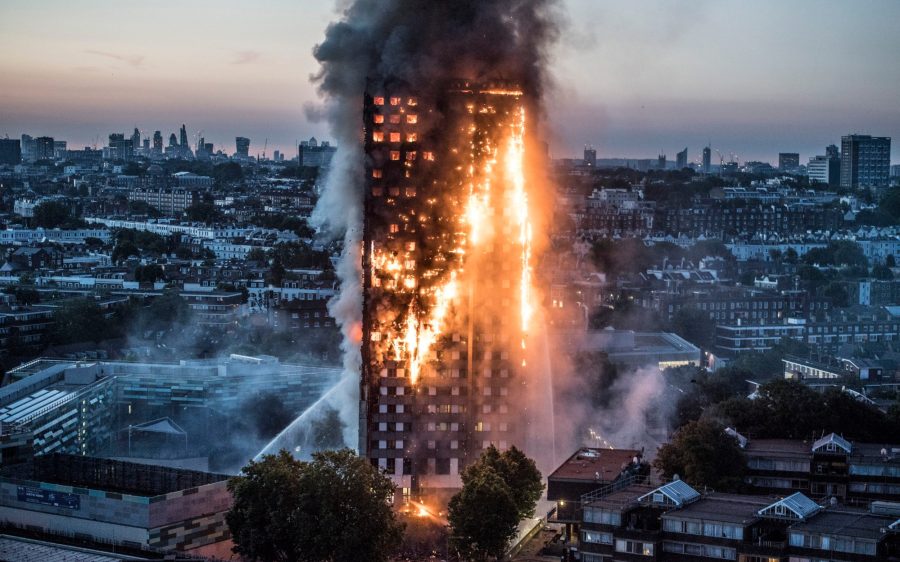



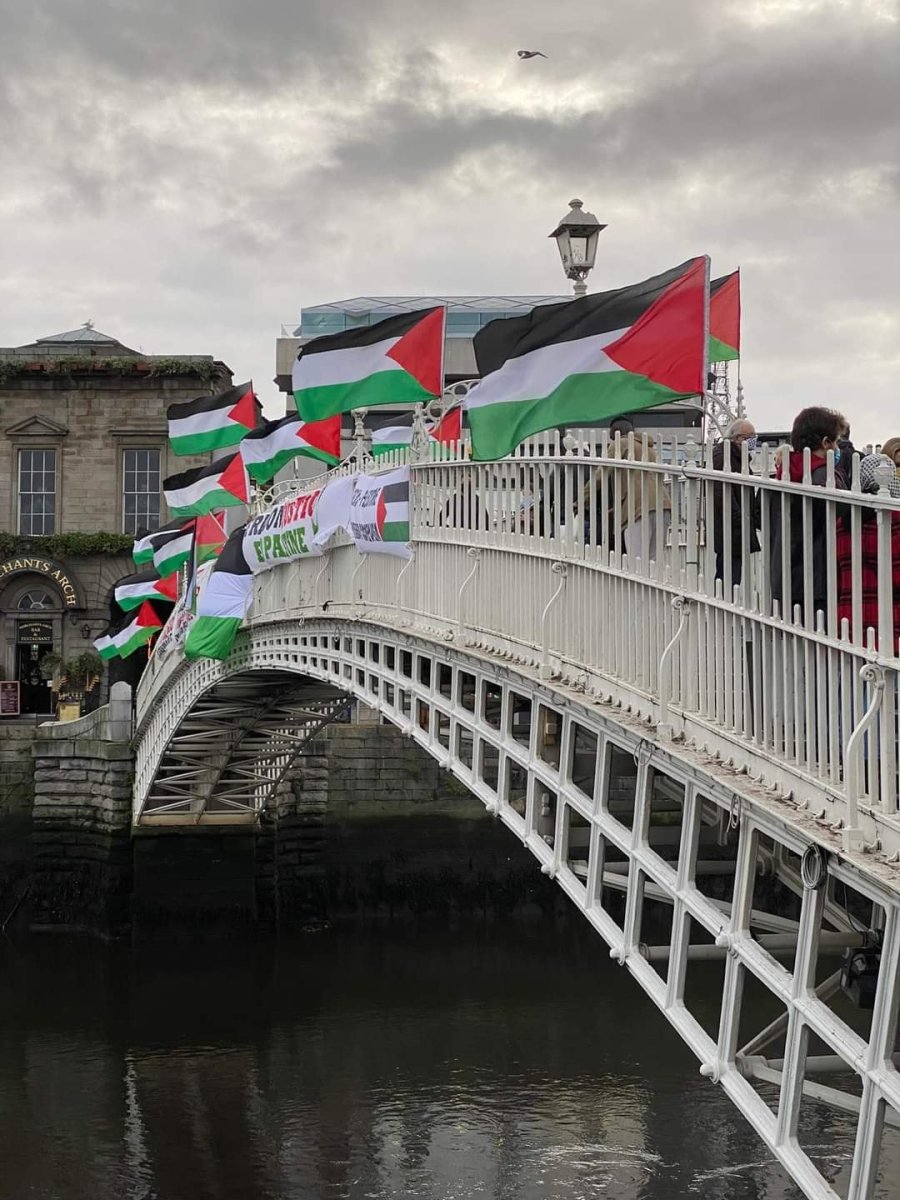
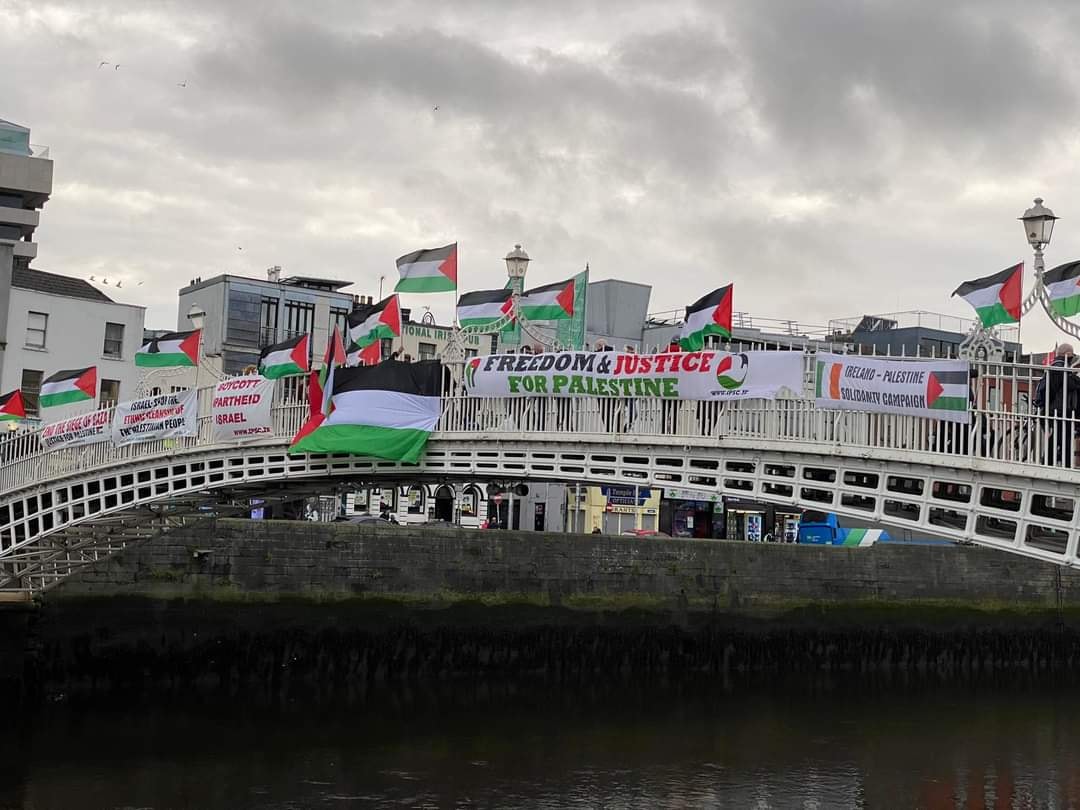
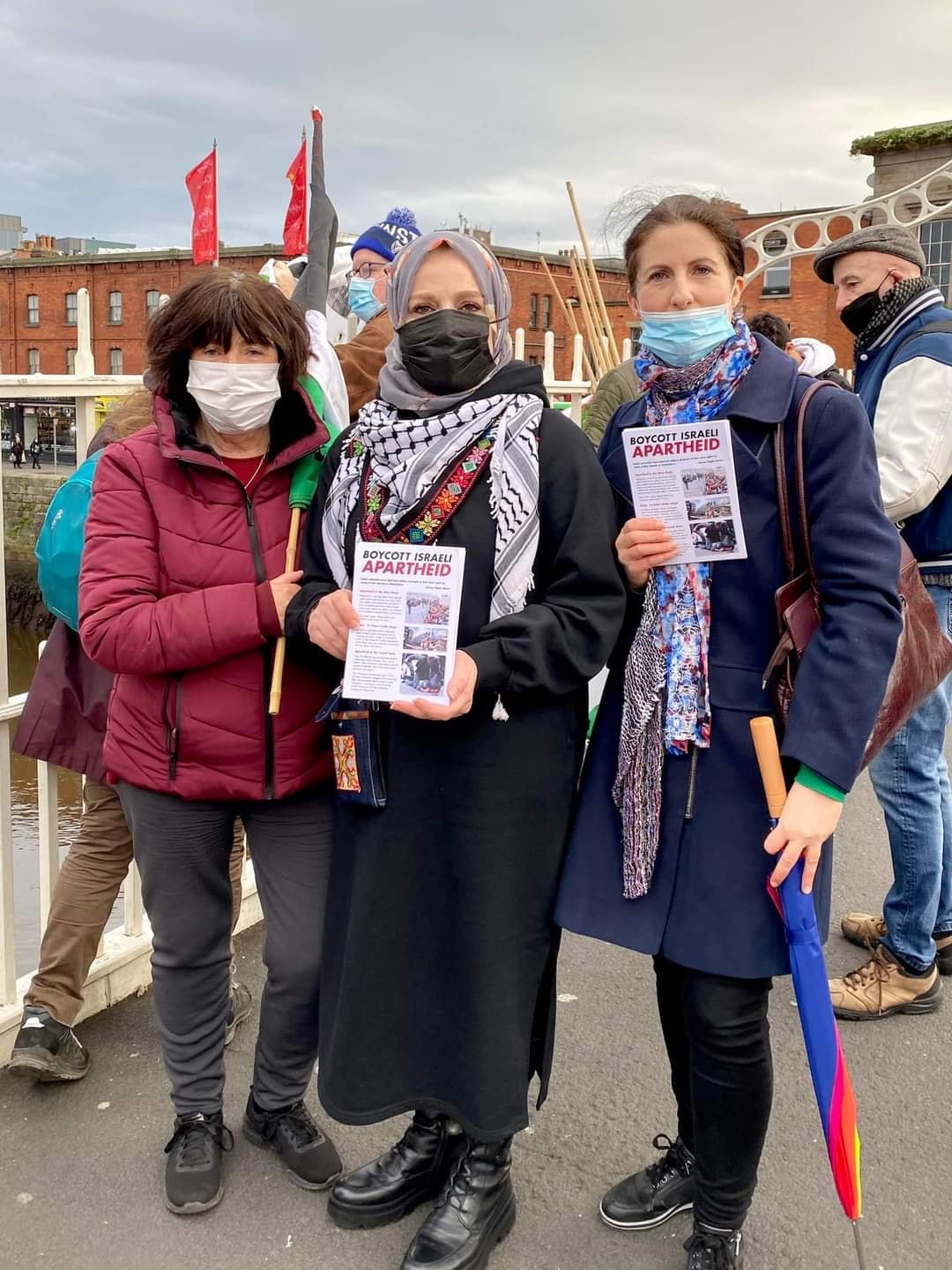

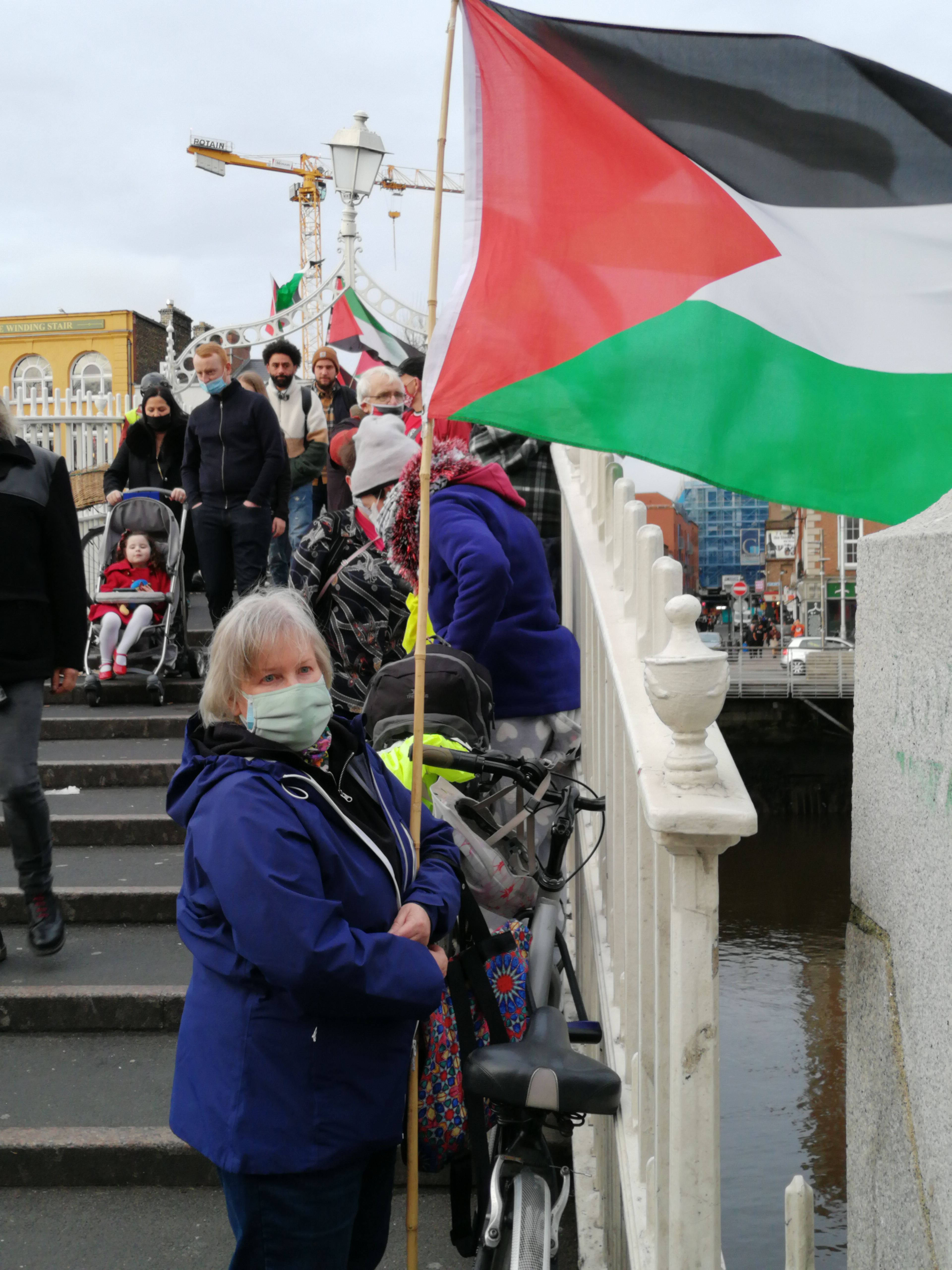
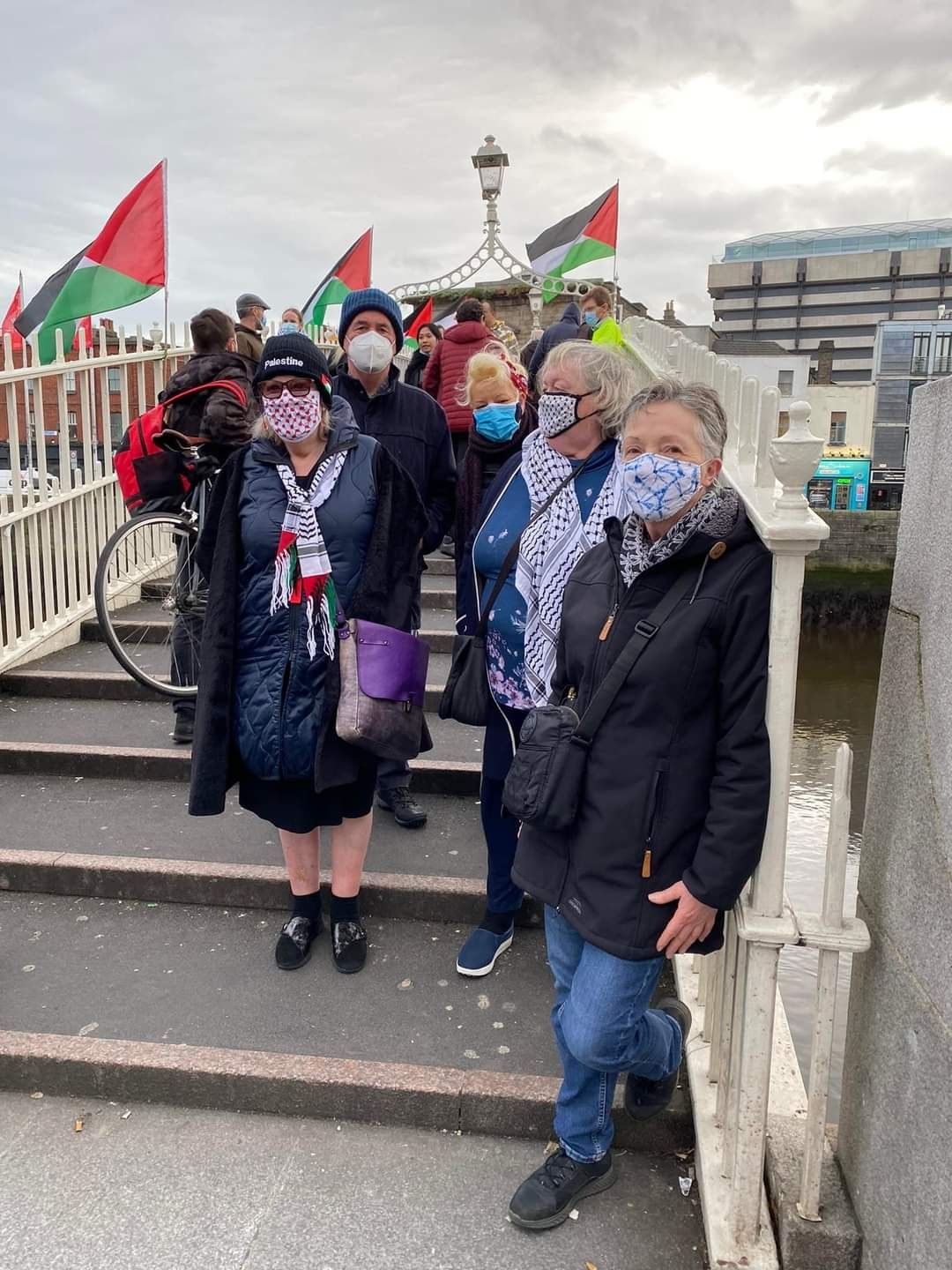


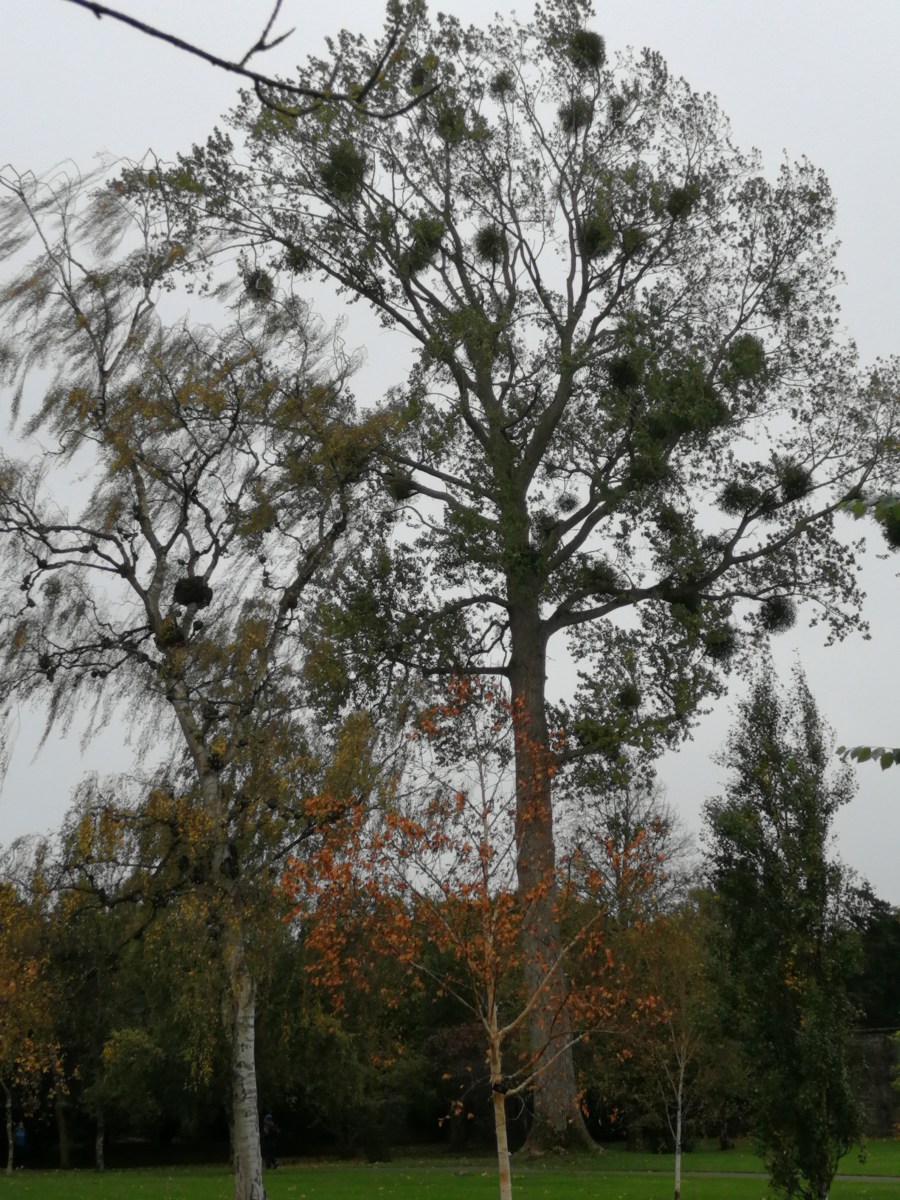



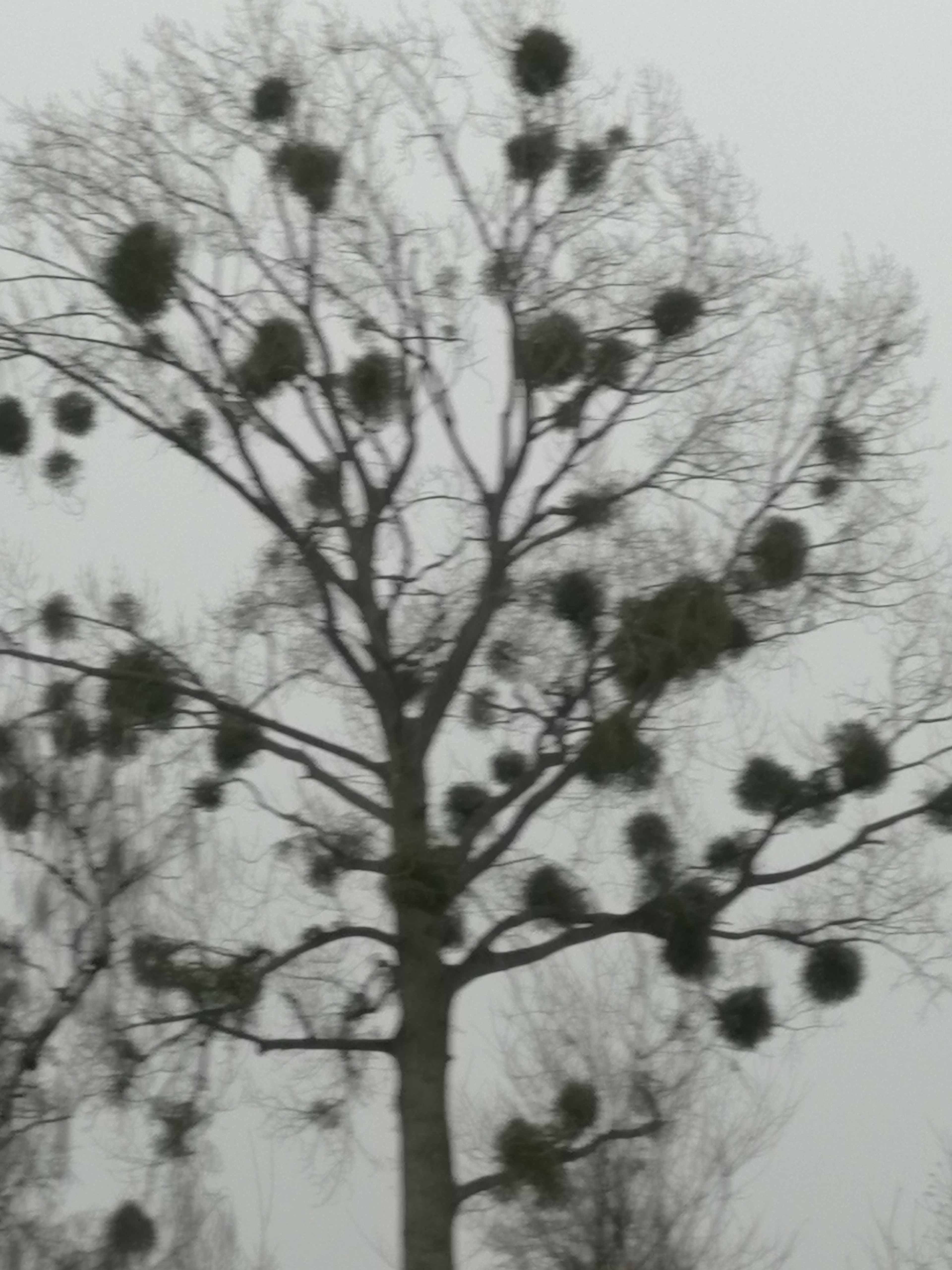



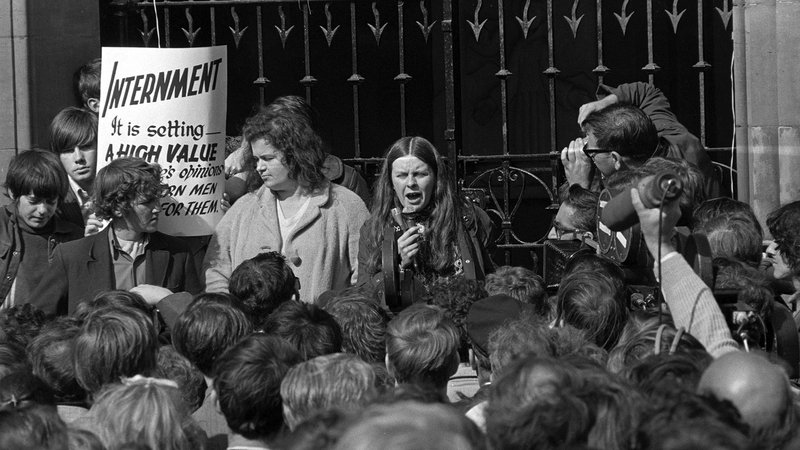


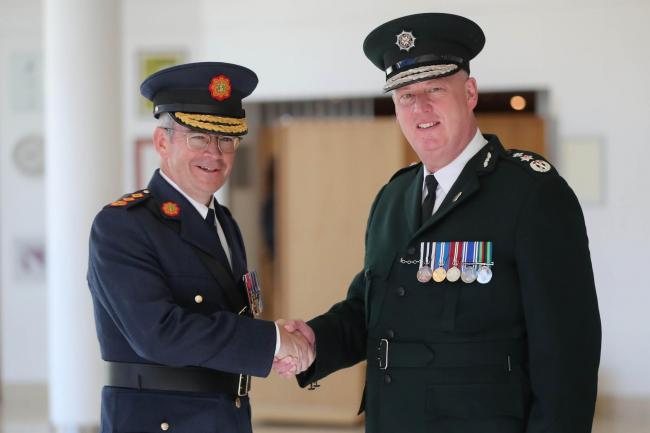

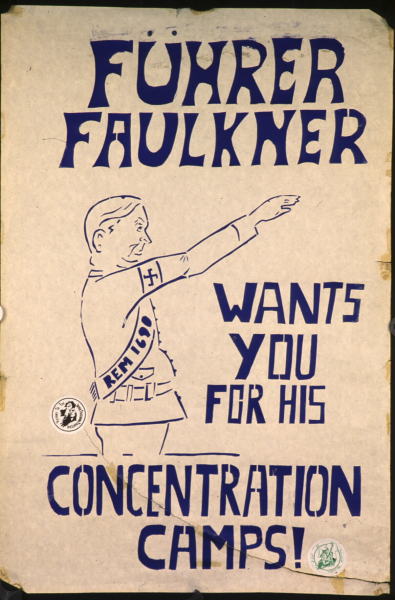






 rebelbreeze