BASQUE TRAWLERS AGAINST A SPANISH BATTLECRUISER

Diarmuid Breatnach

(Reading time: 10 minutes)

The 5th of March is the anniversary of the naval Battle of Cape Machichaco (cabo matxitxakoko borroka, in Euskera/ Basque), which took place on 5 March 1937 off Bermeo (Bizkaia province, Basque Country), during the Spanish Anti-Fascist War, between the Spanish Military-Fascist heavy cruiser Canarias and four Basque Navy trawlers escorting a Republican convoy. The trawlers were protecting the transport ship Galdames, which was sailing to Bilbao with 173 passengers.

Looking from Cabo Matxitxako out to sea and to the French Border dividing the Basque Country.
(Photo: D.Breatnach)

(The following account of the battle is from Wikipedia; the section titles and comment are mine)

          On 4 March, four armed trawlers of the Basque Auxiliary Navy section of the Spanish Republican Navy, Bizcaia, Gipuzkoa, Donostia and Nabarra departed from Bayonne, France. Their intention was to defend Galdames‘s mail, passengers, machinery, weapons, supplies and 500 tons of nickel coins property of the Basque government.

The battlecruiser Canarias.
(Photo source: Internet)

Canarias sailed from Ferrol with Salvador Moreno as the captain, with orders to stop the transport ship. Galdames, which was steaming up with the lights and the radio switched off, and was unknowingly left behind by Bizcaya and Gipuzkoa.

FOUR CONVERTED TRAWLERS AGAINST A BATTLE CRUISER

          Next morning, while all the trawlers were watching for Canarias, Galdames rejoined them. Bizcaya‘s captain was Alejo Bilbao, Nabarra‘s Enrique Moreno Plaza from Murcia, and Gipuzkoa‘s Manuel Galdós. The trawlers had the intention of luring Canarias close to the Biscay coast to have the assistance of the coastal batteries.[

The first trawler to spot Canarias was Gipuzkoa, 30 kilometers (19 mi) north of Bilbao. The Basque trawler was hit on the bridge and the forward gun. Return fire from Gipuzkoa killed one Canarias seaman and wounded another. The armed trawler, with five fatalities and 20 injured aboard, managed to approach the coast, where the shore batteries forced Canarias to retreat.

Nabarra and Donostia tried to prevent Canarias from finding Galdames and engaged the cruiser.

The Nabarra during the Battle of Matxitxako, painting by David Cobb.
(Photo source: Internet)

Donostia withdrew from the battle after being fired on by Canarias, but Nabarra faced the enemy for almost two hours. She was eventually hit in the boiler and came to a stop; 20 men abandoned the sinking trawler, while other 29 were lost with the ship, including her captain, Enrique Moreno Plaza.

The transport Galdames, which was hit by a salvo from Canarias and lost four passengers, was eventually captured by the military-fascist cruiser.

Gipuzkoa arrived at Portugalete seriously damaged and Bizcaia headed for Bermeo, where she assisted the Estonian merchantman Yorbrook with a load including ammunition and 42 Japanese Type 31 75 mm mountain guns, previously captured by Canarias and released.

Port town of Bermeo, seen from Cabo Matxitxako.
(Photo: D.Breatnach)

Donostia sought shelter in a French port.

AFTERMATH

          The 20 survivors from Nabarra were rescued by the military-fascists and taken aboard Canarias. Instead of the expected hostility and mistreatment, they were given medical assistance, and both the cruiser commander, future Francoist Admiral Salvador Moreno and Captain Manuel Calderón interceded with Franco when the Basque seamen were sentenced to death in retaliation for the shooting of two crewmembers of the armed trawler Virgen del Carmen, captured by Republican sympathizers and diverted to Bilbao in December 1936. The survivors were eventually acquitted and released in 1938.

In contrast, one of the passengers aboard Galdames, Christian Democrat politician Manuel Carrasco Formiguera, from Catalonia, was imprisoned and executed on 9 April 1938.

Map/ diagram of the Battle
(Image source: Internet)

PERSONAL COMMENT

COURAGE, COWARDICE AND CRUELTY

           The story is one of incredible bravery of a number of converted trawlers and their Basque crews, in particular that of the Nabarra and her Captain from Murcia. One account I read related that her Captain consulted his crew and they agreed to fight to the death or the sinking of their ship. Their valour and stubbornness (two qualities which commentators often associate with the Basques) was of such magnitude as to impress  even their military-fascist opponents, to the extent of their interceding with Franco to save their lives.

It is also the story of the cowardice of at least the captain of the Donostia.

And of the bestiality of the military-fascists in the execution of a member of the Catalan Government returning to his country with his family, guilty of no crime but to serve his the administration of his elected republican government (one of hundreds of thousands of such crimes of the miiltary-fascists coupists and their victorious regime).

VISIT TO CAPE MATXITXAKO

           I visited the land part of the location on a number of occasions in recent years. Access by public transport is by a bus every hour but I was driven by friends.

Monument to the Battle of Matxitxako by sculptor Nestor Barrentxea, who is from the nearby port town of Bermeo.  (Photo source: Internet)

On a windy promontory on private land I saw one of the shore artillery battery sites (which has had nothing done to conserve it) and, close enough, the monument to the battle. Not far from there is a local bar-restaurant which is popular and a short trip by car, the iconic hermitage of Gastelugatxe.  Many tourists visit the area but I wonder how many get to hear of the story.

Thinking of the determination and courage of those crews, not even trained for war, in converted trawlers, facing a trained naval crew of a huge battle cruiser, I am not ashamed to say my eyes fill and my lip trembles.

Aerial view of the Matxitxako Cape. (I took my two photos from beside the building furthest to the right).
(Photo source: Internet)


end.

WHEN WE EUROPEANS FLED AS REFUGEES TO SYRIA

Alberto Sicilia in Publico.es, translated by D.Breatnach

Alberto Sicilia in Publico.es, translated by D.Breatnach
(Reading time: 3 minutes)
For original version in Castillian (Spanish) click on link.

Greece today suspended the right to asylum. An unprecedented measure in the history of Europe.

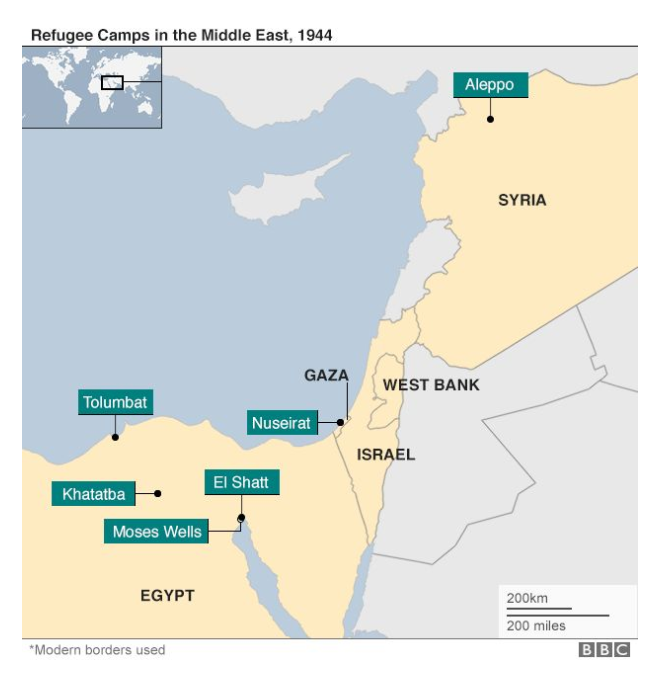
How soon we forget. During World War II, thousands of Greeks crossed the Mediterranean in the opposite direction and sought refuge in Middle Eastern countries. That was the most accessible route of escape from Nazi troops.

Map of camp sites for European Refugees WW2 (Image source: Publico.blogs. es)

A program called “Organization for Refugees in the Middle East”, launched in 1942 and led by the United Kingdom, helped tens of thousands of Greeks, Poles and Yugoslavs escape eastbound.

The refugees were taken to camps located in Syria, Egypt and Palestine. The city of Aleppo, (yes, you have not misread, Aleppo) became one of the main reception centers.

A number of official reports on the state of the camps were written in March 1944. A study conducted by Public International Radio includes the protocol for the entry of refugees and their daily lives:

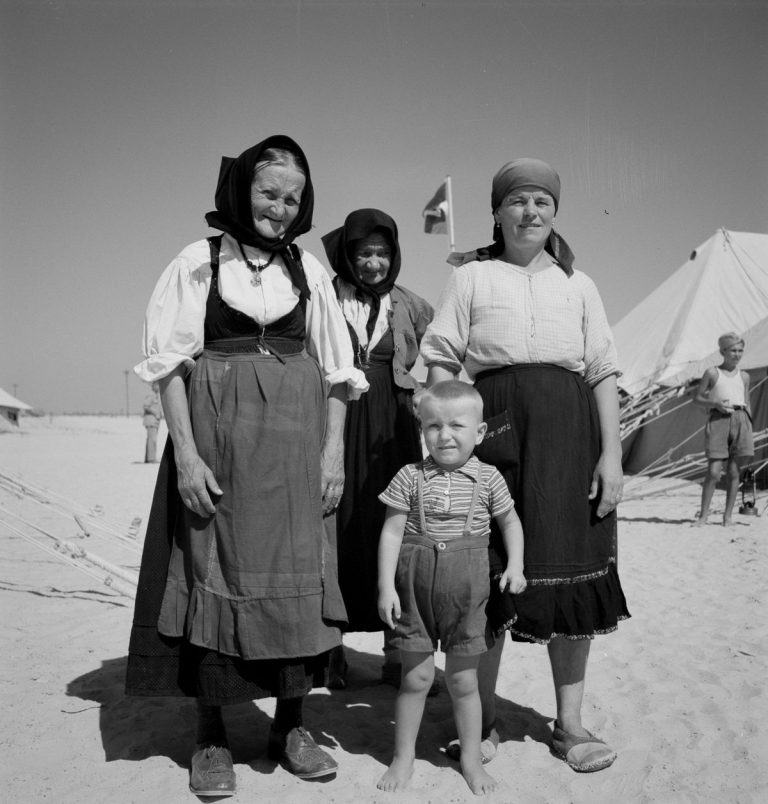
Photo source: Publico.blogs. es

“Once registered, newcomers made their way through a thorough medical inspection. The refugees were heading to what were often makeshift hospital facilities, usually tents, but occasionally empty buildings reused for medical care, where clothes and shoes were removed and they were washed until the authorities believed they were sufficiently disinfected.

Some refugees, such as the Greeks who arrived at the Aleppo camp from the Dodecanese islands in 1944, could expect medical inspections to become part of their daily routine.

Photo source: Publico.blogs. es

After medical officials were satisfied that they were healthy enough to join the rest of the camp, refugees were divided into homes for families, unaccompanied children, single men and single women. Once assigned to a particular section of the camp, refugees enjoyed few opportunities to venture outside. From time to time they could leave under the supervision of camp officials.

When refugees in the Aleppo camp made the multi-mile trip to the city, for example, they could visit shops to buy basic supplies, watch a movie at the local cinema, or simply distract themselves from the monotony of country life.

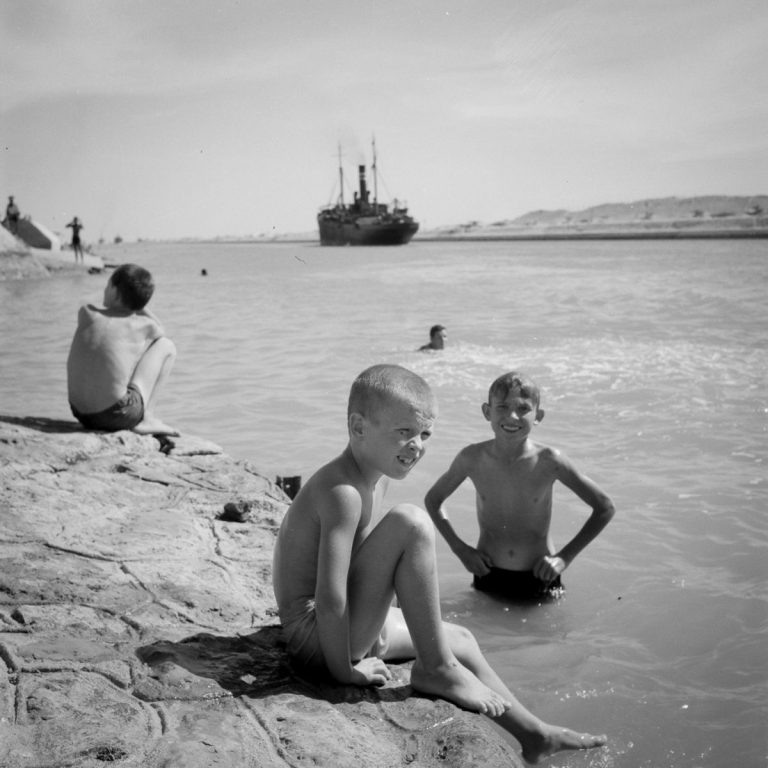
Although the camp at Moses Wells [in Egypt], located on more than 100 acres of desert, was not within walking distance of a city, refugees were allowed to spend time each day bathing in the nearby Red Sea. “

Photo source: Publico.blogs. es

The “Organization for Refugees in the Middle East” was part of a network of refugee camps around the world that were administered by governments and international NGOs.

And refugees arrived not only in the Arab region: Iran received 200,000 Poles between 1939 and 1941.

Have we forgotten so quickly?


Photo source: Publico.blogs. es

Original text in Spanish here

Ireland’s Marxist guerrillas: the story of the Saor Éire Action Group, 1967-73

A very interesting summary of activity by a revolutionary group nearly written out of Irish history.

Admin's avatarthe irish revolution

by Mick Healy, in collaboration with several former Saor Eire members

(Mick wrote an article about Saor Eire which appeared on this site in 2011;  this is an updated and expanded version of that article, including new material added by former Saor Eire members; the article has been proofed and edited by me – PF)

The 1960s was a time of upheaval and change in conservative Irish society; social attitudes, fashion and music, for instance, all changed dramatically. New social movements reflected the thinking of a new generation that, in particular, wanted more freedom. The huge student-worker protests of May-June 1968 in France, the Vietnamese struggle to remove the US States, its allies and their Vietnamese toadies, the US civil rights and anti-Vietnam War movements, and the national liberation struggles in Latin America and Africa galvanised opposition to the existing order. In Ireland, these events inspired people…

View original post 3,888 more words

Anti-Irish Racism Letter to Irish Times

Anti-Irish racism in Britain

Sir, – Gerard Murphy (Letters, February 27th) and some others doubt the existence of anti-Irish racism in Britain prior to the Brexit debates, claiming never to have experienced or witnessed it themselves.

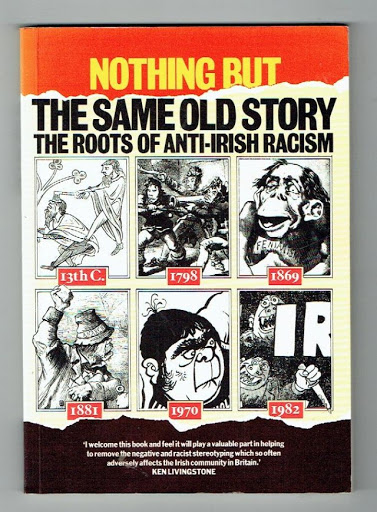
After the Race Relations Act (1976) drove the blatant discrimination of notices in lodging-house windows and “help wanted” advertisements into concealment, in 1984 the Greater London Council published Liz Curtis’s booklet Nothing But the Same Old Story, full of public examples of anti-Irish racism in print and in drawings over centuries, including cartoons in the Evening Standard during the 1970s.

In the mid-1970s nearly a score of innocent people in five different cases were taken from the Irish community and convicted of murder or in assisting murder while Irish people were being regularly stopped at airports and embarkation points, as well as having their houses raided and being taken into Paddington Green police station, for example, to spend days in underground cells without daylight or access to solicitor, to be eventually released without charge. In the 1970s Granada TV series The Comedians, stand-up performers told sexist and racist jokes, with the Irish often being the butt of the latter. In the 1980s the Irish in Britain Representation Group picketed WH Smith shops until they removed from sale their “Irish mugs”, which had the handle on the inside.

Letters in Irish community newspapers in Britain like the Irish Post and the Irish World regularly complained of anti-Irish racism in print, on TV, on radio and in public places. Anti-Irish racism has a history of centuries but it was all around Britain in the 1970s, 1980s and even the 1990s. – Yours, etc,

DIARMUID BREATNACH,

Baile Átha Cliath 9.

Anti-Irish Racism in Britain: Not a great letter or anything but the first letter of mine the Irish Times has ever published!

Scene outside the Court of Appeal’s 1984 quashing of the convictions of the Guildford Four and Maguire Seven. Gerry Conlon, one of the Four, seen here shouting his anger to the crowd at his unjustly serving 10 years in jail and his father having died in jail. The Birmingham Six were not released until 1991 and Judith Ward in 1992!
(Source photo: Internet)


By Liz Curtis. First published 1984 by the Greater London Council.
(Image source: Johnsbookshop.org)
A dungeon cell in Paddington Green Metropolitan Police Station. Under the provisions of the “Prevention of Terrorism Act” (sic), Irish people were kept in cells like this for up to five days (sometimes longer) without access to solicitor, family or friends, interrogated and often brutalised.
(Photo source: Protesters who occupied the empty building recently — go raibh maith agaibh!)

A LIFE CELEBRATED – SOCIALIST, REPUBLICAN, TRADE UNION ACTIVIST

Diarmuid Breatnach

(Reading time: 10 minutes)

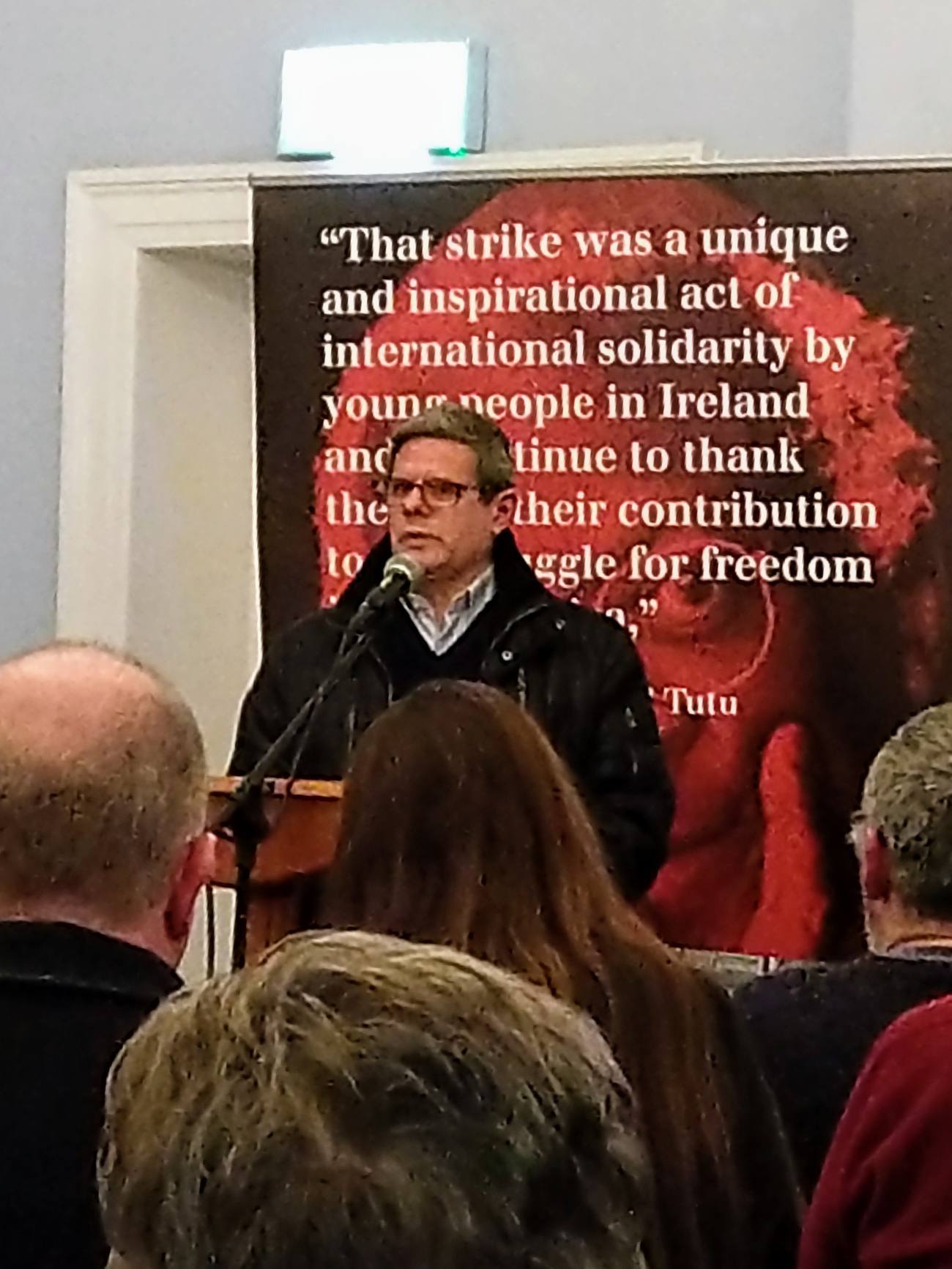
A packed function room at Club an Múinteoirí (Teachers’ Club) in Dublin last night heard speakers, including Arthur Scargill and the Cuban Ambassador, praise some of the highlights of the life of irish activist Des Bonass (died 26 September last year). The meeting was chaired by Colm Kinsella of Unite.

          Strangely, up to yesterday afternoon, many socialist, Republican and trade union activists seemed unaware of the event, organised by Bonass’ branch of the trade union Unite. I only learned of it myself when Arthur Scargill and Nell Myles stopped at our weekly Save Moore Street From Demolition campaign stall earlier in the day and explained that he was in Dublin in order to speak at an event that evening.

Section of capacity crowd at event
(Photo: Labhrain Ní Dhúgáin)

The event was scheduled to begin at 7.30pm but by that time there were less than a dozen people present, arousing fear in some quarters that the attendance would be poor. As time went on, the side room leading off the main room was closed and the chairs removed. Some more people arrived and then as if by magic by 8.30 the room was packed, with extra seating being made available for people who arrived even after that.

IRISH TRADE UNIONISTS AND CUBAN AMBASSADOR

          John Douglas (former General Secretary of the Irish Congress of Trade Unions, currently General Secretary of Mandate trade union) spoke of how he had come to know Des Bonass when Douglas was a member of the Amalgamated Transport & General Workers’ Union (now part of UNITE), a section catering for bar workers which at the time represented a great many in the trade. He related how the bar workers would come off late shift and go to a union meeting around midnight, a meeting that sometimes would not finish until five a.m! Bonass had asked Douglas for a space to address the union members in support of the British miners, after which he had come away with buckets overflowing with financial contributions from the barmen.

John Douglas of MANDATE speaking.
(Photo: Labhrain Ní Dhúgáin)

Douglas also related that Bonass was in support of women’s right to choose abortion at a time when that would not have received popular support in Ireland and went on to speak about the strike against TESCO and how Bonass had brought Scargill to a number of picket lines around the city, raising their morale and drawing media attention.

Des Derwin (Executive Member of Dublin Council of Trade Unions and Vice-Chair of SIPTU Dublin District Council) gave what seemed a comprehensive list of the activities of Des Bonass down through the years, including how he had actively supported the struggles in the H-Blocks in the Six Counties and of the Palestinian people, as well as the struggle of the Dunne’s Stores strikers. Unknown to many, perhaps, Bonass had been a founder of People Before Profit and the Unemployed Workers’ Movement.

Des Derwin of SIPTU and DCTU.
(Photo: Labhrain Ní Dhúgáin)

When the Irish Labour Party conference had voted to go into coalition government, Bonass and Matt Merrigan had walked out together, after they had seen Noel Browne leave the room. The media thought Bonass and Merrigan had led a protest walkout, whereas they said they had followed Noel Browne. When Brown appeared in the lobby, the reporters asked him why he had led the walkout, which he adamantly denied, saying he had only left the conference to go to the toilet!

Subsequently Bonass and Merrigan had founded the Irish branch of the Socialist Labour Party. The Dublin Council of Irish Trade Unions had been another of his areas of activity and Bonass had been President of the organisation; he had also been active in Unite the union.

Also a supporter of internationalist causes, Bonass had been against such as the Chilean coup, for Nicaragua and Cuba, against the South African Apartheid regime and the invasion of Iraq.

Cuban Ambassador speaking at event.
(Photo: Labhrain Ní Dhúgáin)

          Hugo René Milanés, Cuban Ambassador to Ireland, expressed his gratitude to Des Bonass for the latter’s support for Cuba and in particular “against the Yanqui blockade” and for working for socialism throughout his life.

SCARGILL, BRITISH TRADE UNIONIST

          Arthur Scargill, ex-President of National Union of Mineworkers (Britain) spoke about Des Bonass’ support for the NUM, particularly those of South Wales, when they were in the big strike of 1984-’85 and how Bonass had agreed to receive money from the NUM to keep it safe from the British State’s sequestration. At first, the money had been couriered by Nell Myles, an NUM official (who was present at the meeting) and delivered to the ATGWU office in Parnell Square; on one occasion she had been mugged on her way but the money stolen was her personal money and not the union funds, which were safely delivered. Six months later, Scargill himself came to Dublin and Des Bonass accompanied him to a Dublin branch of a bank with a holdall stuffed full of a lot more money but the alarmed branch manager referred them to the bank’s head office, where the money was safely stored.

Scargill speaking
(Photo: Labhrain Ní Dhúgáin)

Des Bonass brought Arthur Scargill around to many Dublin pickets during the TESCO strike organised by the MANDATE union, which had been welcomed by the strikers and which had lifted their spirits. He had been happy to attend, Scargill said and related a journalist asking him about his reaction to a bomb threat against TESCO. To laughter and applause from the meeting’s audience, Scargill related his response to the journalist, that neither he nor the TESCO strikers could have anything to with any such bomb inside as they would never cross a picket line! Des Bonass had also got Scargill a spot on the popular Gay Byrne show, where he had been confronted with a Margaret Thatcher impersonator.

Bonass had been a founder of the Irish branch of the Socialist Labour Party which Scargill had founded in Britain as founded by James Connolly.

Paying tribute to the moral and practical support of the Irish people for the NUM’s struggle, Scargill said that their support in ratio to union members in Ireland had been the highest of all and went on to reveal that he and Nell both had Irish ancestry on both parental sides, referring also to the history of oppression of Irish people by the British State. Scargill talked about the financial contributions but also how Irish families had taken in miner’s children for holiday breaks, as British trade unionists had wanted to take in Irish children during the 1913 Lockout.

Later on in his speech, Scargill declared himself a firm follower of the “11th Commandment: Thou shalt not cross a picket line!” (loud applause) and went on to talk about the determination of the Thatcher Government to break the NUM and its leadership. Thatcher and Government personnel had claimed at the time that they had not intervened in the strike, which was allegedly between the NUM and the National Coal Board but Scargill stated that was a lie and the truth had emerged in documentation over the years, available on the Internet to anyone who wished to check it. “Unjust laws have to be broken” he said also because “if we hadn’t done that, women would not have the vote; we would not have trade unions!” He paid tribute to the Levellers, the Tolpuddle Martyrs and the Suffragettes.

Scargill emphasised that the best way to celebrate the life of Des Bonass and to honour his memory is to continue the struggle for the principles that Des Bonass upheld, then finished his speech to a standing ovation from those present.

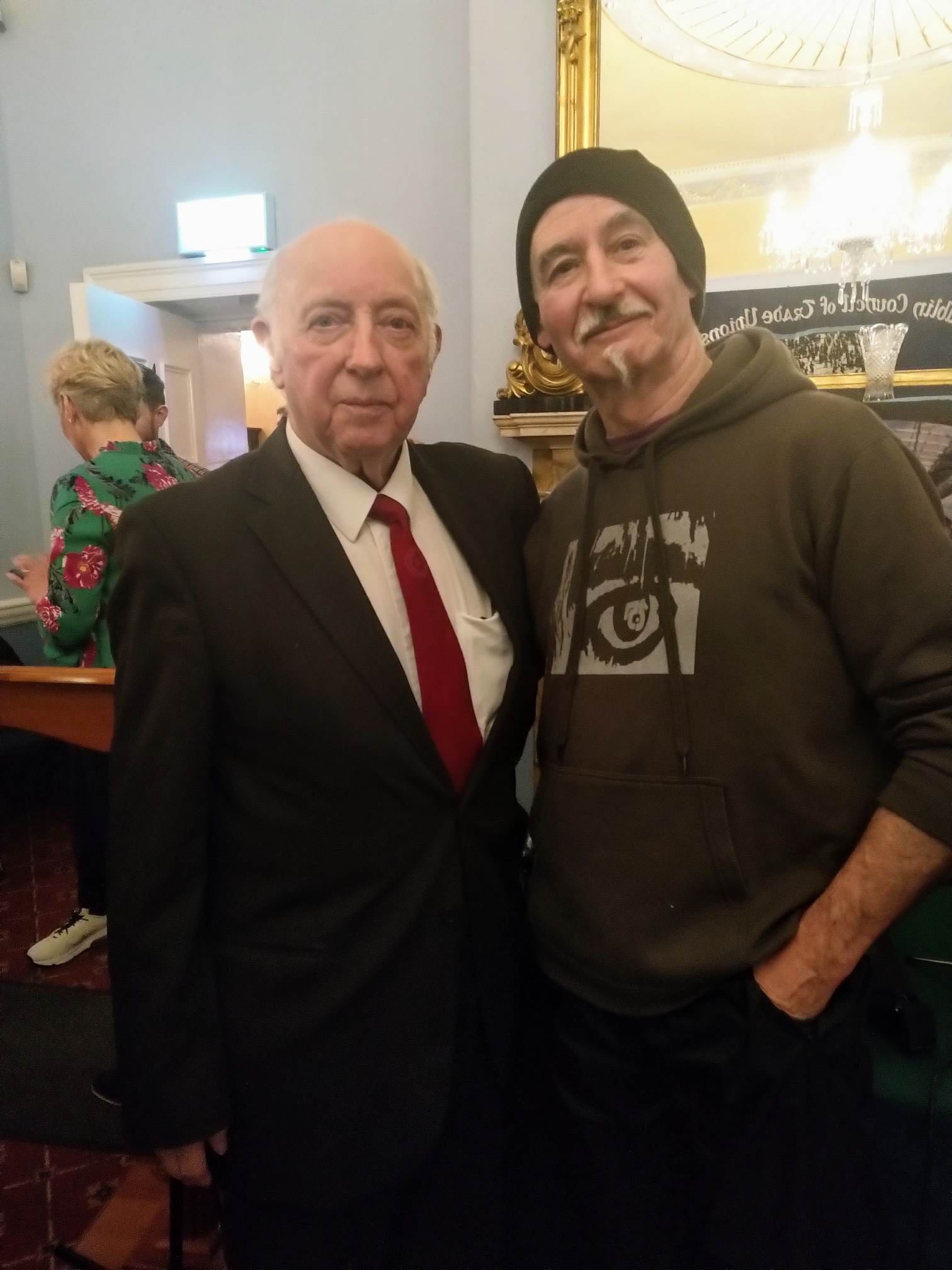
Scargill and myself after the formal part of the evening.
(Photo: Labhrain Ní Dhúgáin)

Colm Kinsella then welcomed the last speaker, Ciarán Bonass. Ciarán announced that he was the son of Des Bonass and talked about what the family had learned from his father as they had also supported him in his activism. Thanking all the speakers and all others present on his family’s behalf, his mother Eileen and sisters Mairéad and Deirdre, along with in-laws and grandchildren, he ended his contribution to loud applause from the attendance.

Colm Kinsella announced that their branch of Unite was now named “the Des Bonass Branch of Unite” in Des Bonass’ honour, thanked all the speakers and the attendance and invited people to partake of refreshments while listening to labour and other songs performed by Richie Brown (of Unite) and friends.

End.

Des Bonass at European Day of Action Against Cuts protest 2010 (Photo: Paula Geraghty in Indymedia)

The Labour Party And The Official IRA – They Haven’t Gone Away, You Know

Glad to add this to the series of articles pointing out the hypocrisy of the (until now) main Irish political parties in criticising SF for its paramilitary history (shared by ALL the main irish parties). Thanks to Sionnach Fionn for this from nine years ago and to Jim Monaghan for bringing it to my attention.

An Sionnach Fionn's avatarAN SIONNACH FIONN

Éamon Gilmore and Proinsias de Rossa flank their then Workers Party boss, Tomas Mac Giolla, a former leader of the Official IRA, 1987 Éamon Gilmore and Proinsias de Rossa flank their then Workers Party boss, Tomás Mac Giolla, a former leader of the Official IRA, 1987. Both became senior members of the Irish Labour Party in the 1990s-2000s

The hijacking of the leadership of the Irish Labour Party by Official Sinn Féin / Official IRASinn Féin the Workers Party / Official IRAthe Workers Party / Official IRA / Group BDemocratic Left in the 1990s is one of the great putsches of Irish political history. The sequence of events are clear enough. By the mid-to-late 1960s the higher echelons of Sinn Féin and the Irish Republican Army had come under the influence of would-be communist revolutionaries more concerned with liberating the global working classes than the Irish communities in the UK-ruled north-east of Ireland. The fact that the working classes of the world weren’t all that sanguine about the glories of communist liberation and that Irish citizens living in the north of the country were rather more concerned about being…

View original post 1,854 more words

GETTING AWAY WITH MURDER?

Diarmuid Breatnach

(Reading time main text: 2 minutes)

Garda Armed Support Unit patrol car, one of a great many seen driving around many parts of Dublin including the city centre.
(Image source: Internet)

Last year, a Garda shot dead a man sitting inside a car who was harming himself with a Stanley knife.  In June 2019 the Department of Public Prosecution decided not to even charge the Garda who fired the shot.  What does this mean?

Since the evidence from witnesses (including his own colleagues) is that Garda A fired a deliberate shot at close range that killed Mark Hennessy through a closed window and that the man was not at that moment posing a threat to anyone (apart from himself), never mind a lethal one — how can we view this as anything but an on-the-spot execution by a Garda?  Since we are told that Gardaí are not authorised to carry out executions (and the State has abolished the death penalty), what can this be but MURDER?

It is useful to remember too that the founders of the Irish State deliberately resolved to set up the Garda Síochána as an primarily unarmed police force (in direct opposition to the armed colonial police forces that had suppressed Irish people in the past and continued to do so in the Six occupied Counties).

Not even charged?  For the moment, we need to forget about the fact that all the evidence points to the victim having murdered a child and hidden her body.  Killing the man could not bring her back (in fact might even have prevented her body being found but luckily the location was written on a piece of paper inside the car).

How can this killing be justified?  What possible legal reason can be given?  Dubious though it may be, the Gardaí who shot Mac Lochlainn (see below) at least claimed he had pointed a gun at them (interestingly, the officer who fired the fatal shot was himself killed a few years later in what was described as a firearm accident involving a colleague).  Well, in fact, in the Mark Hennessy killing NO REASON WHATSOEVER WAS GIVEN.  The DPP just “decided not to prosecute”.

Garda of the Armed Response Unit with machine gun.
(Image source: Internet)

If a Gardaí can decide when someone needs to die and act upon that decision, anyone might be a victim in future: political activist, whistleblower, personal enemy, mistaken identity ….

Unlikely?  Why?

There have been a number of questionable killings by Gardaí, including the shooting dead of Real IRA Volunteer Ronan Mac Lochlainn on May 1st 1988.  Mac Lochlainn was driving away from a Garda Special Branch ambush of a robbery team when he was shot dead by the Gardaí.  The matter was not seriously investigated until 20 years later when the investigators decided for whatever reason to clear all the Gardaí involved, leaving many important questions unanswered.

Another incident that might have ended fatally occurred in 2005 between two drunken senior Gardai who got into a fight and pulled guns on one another!  A personal quarrell ….

Armed Gardaí Detectives after a raid.
(Image source: Internet)

One can see on any day in Dublin the vehicles of the Garda Armed Response Unit driving around the city.  Nor do they restrict themselves to the duties for which one might imagine Gardaí would need to carry arms.  They have been seen stopping cars in traffic incidents, driving through busy streets, surveilling political demonstrations and even on one occasion last year stopping to caution people demonstrating against internment in Temple Bar.

In 2014 they turned up at a protest against Irish Water in Clonmell.  On another occasion last year they turned up to dispute between a private landlord and two of his tenants in Dublin and at a separate housing occupation action in Cork.  Last year also they attended a farmers’ protest in Limerick.

Is the Irish public being subjected to an armed Gardaí normalisation process? Why are the DPP not being made to justify their decisions not to prosecute Garda perpetrators of homicide?  How long before another unjustifiable killing?

end.
REFERENCES:

Inquest on Mark Hennessy: https://www.irishtimes.com/news/crime-and-law/man-who-killed-jastine-valdez-shrugged-before-being-shot-by-garda%C3%AD-inquest-told-1.4147055

Decision not to charge Garda: https://www.rte.ie/news/ireland/2019/0605/1053612-garda-hennessy/

Shooting dead of IRA Volunteer by Gardaí in ambush: https://www.irishtimes.com/news/crime-and-law/garda%C3%AD-exonerated-over-shooting-dead-of-real-ira-raider-maclochlainn-1.3738624

Senior Gardaí in brawl pulled guns on one another: https://www.breakingnews.ie/ireland/gardai-sacked-after-drunken-embassy-brawl-287170.html

Heckler & Koch machine-gun dropped out of Garda car: https://www.thesun.ie/news/4138462/garda-gsoc-machine-gun-lost-dublin/

Armed police attending farmers’ protest: https://www.farmersjournal.ie/garda-armed-response-unit-attends-limerick-factory-protest-484362

Armed police attending protest against Irish Water: http://www.rabble.ie/2014/11/10/stark-contrasts-in-protest-policing-by-gardai/

Armed police attending housing occupation action: https://cym.ie/2018/07/26/armed-response-unit-break-up-political-protest-in-cork-ireland/

https://en.wikipedia.org/wiki/Garda_S%C3%ADoch%C3%A1na#Armed_Gardaí

HAS FERRITER BEEN READING REBEL BREEZE?

Diarmuid Breatnach

(Reading time: 2 minutes)

On 15 February Ferriter’s column in the Irish Times expressed the opinion that comparison of Sinn Féin with Fianna Fáil in the 1930s only takes us so far. After looking at less of the overall history of the main Irish parties than I had in my article of 11 February in Rebel Breeze but adding some pieces I had not, what was his conclusion that differed so widely from mine? Well, that the military past was too new with SF!

Diarmaid Ferriter in Thinker pose
(Source: Internet)

But, actually, not true of Provisional SF with regard to FF, which came into government in 1932, less than two decades after the end of the Civil War and only six years after its split from Sinn Féin. De Valera, President of Fianna Fáil, had been a leader of the Republican side in the Civil War, from which side came the majority of Fianna Fáil’s supporters. By the time PSF gets into Government, it will be LONGER than two decades since Provisional IRA gave up its armed struggle!

On 11 February I posted an article of mine on Rebel Breeze and from there on to Facebook, making the point that, despite hostile media and politician claims to the contrary, Sinn Féin is very like the main Irish political parties – and that that is not a good thing. I traced the main elements of the parties’ history, how they had changed their positions and I elaborated the point that the main difference in their trajectories is that SF’s arrival on the neo-colonial capitalist political field was just more recent.

Meeting of Provisional Sinn Féin’s Ard-Choiste (national executive) in February 2020.
(Source photo: Niall Carson, AP, Internet)

It is worth noting (a point I had omitted in my piece) that nearly the entire Fianna Fáil government Cabinet in 1932 was composed of Civil War IRA men and that most of the remainder had been in Free State prison during that war.

It is said that imitation is the sincerest form of flattery but I can easily avoid being pleased by Ferriter substantially following my line of historical analysis. This is the man who, during the 2016 High Court hearing about the Government and property speculator plans for Moore Street, wrote a nasty attack on the demonstrators who had occupied the buildings and subsequently blockaded them against demolition. If he had been hoping to influence the High Court’s decision he failed – and spectacularly, because the judgement was that not only the buildings but the whole quarter is a 1916 historical monument.

Frank McDonald had also written an opinion piece during the trial against conservation and the demonstrators in the same newspaper (what WAS the Irish Times up to?) but after the judgement, he had the grace to apologise (sort of: he wrote that he had been in error).

But Ferriter? Nary a word.

End.

REFERENCES:

Piece by D. Breatnach in Rebel Breeze: https://rebelbreeze.wordpress.com/2020/02/11/despite-hostile-propaganda-sinn-fein-is-just-another-irish-political-party/

Piece by D. Ferriter in the Irish Times: https://www.irishtimes.com/opinion/diarmaid-ferriter-fianna-f%C3%A1il-s-trajectory-holds-lessons-for-sinn-f%C3%A9in-1.4173709?


Renegade Cut: Rambo – Hollywood Vietnam — AN SIONNACH FIONN

Another excellent video essay from the pop-culture commentator Leon Thomas of the YouTube channel Renegade Cut examining how American cinema in the 1980s and ’90s managed to craft a Hollywood version of the Vietnam War that transformed the United States into the chief victim of the conflict rather than the chief perpetrator. Which echoes how […]

via Renegade Cut: Rambo – Hollywood Vietnam — AN SIONNACH FIONN

247 VICTIMS OF FRANCO REBURIED WITH MEMORIAL

https://www.publico.es/politica/247-victimas-franquismo-llevan-anos-almacen-valladolid-reciben-sepultura.html

(Para el informe en castellano haz clic en el enlace)

(Translated from Castillian by D.Breatnach)

(Reading time: 3 minutes)

MADRID 02/15/2020 1:57 PM ALEJANDRO TORRÚS

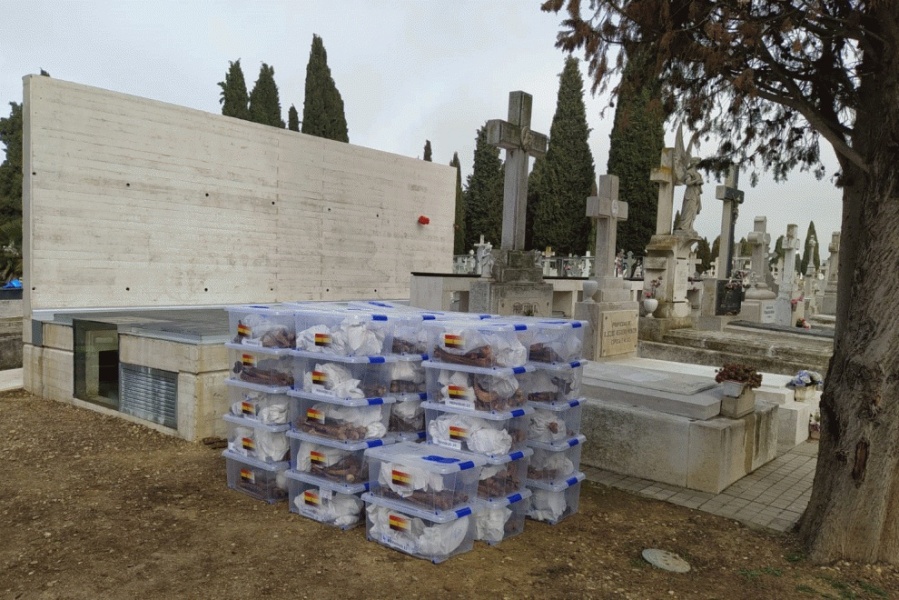
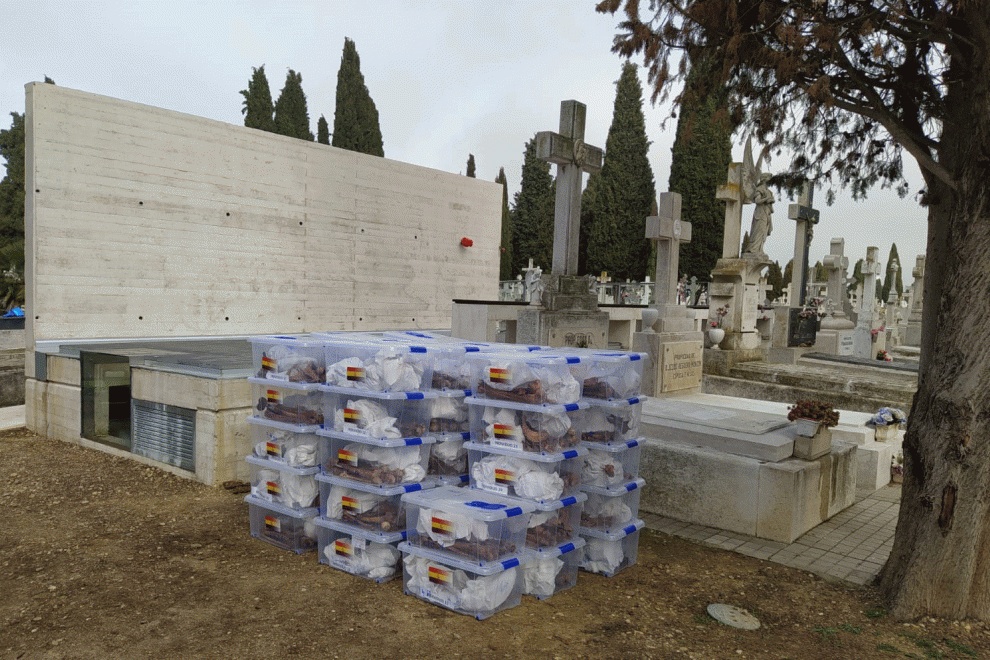
          At last. The remains of 247 victims of Franco that have lain in a warehouse in Valladolid for over two years will be buried this Sunday in a memorial constructed within the Carmen cemetery. This will be the end of a long process that began in 2016 with the exhumations of communal graves in the cemetery itself, paralyzed since for a long time by the insistence of UGT to install a bust of Pablo Iglesias Posse. Finally, there will be a memorial, there will be the names of the more than 2,650 fatalities of the province, the 247 bodies recovered and there will be no bust of the founder of UGT and the PSOE.

(Trans: UGT is one of two main Spanish trade unions and is connected to the social democratic PSOE; both were banned — along with many other organisations — during the Franco Dictatorship but since then the PSOE has been in government more than any other party. Valladolid is about halfway between Madrid and the Bay of Biscay).

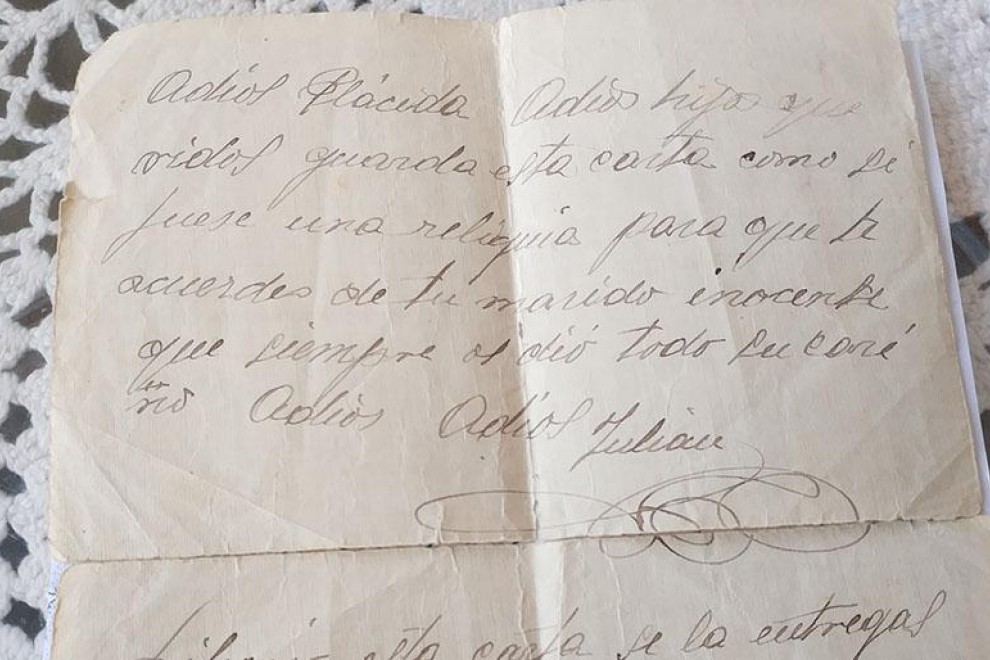
3) Letter sent by Julián Carlón to his wife and children from the Valladolid prison.- ALEJANDRO TORRÚS

“We want this tribute to be an act of democratic recognition and historical justice to all those who defended the Second Republic regardless of the party in which one was active,” explained Julio del Olmo, president of the Association for the Recovery of Historical Memory (ARMH) of Valladolid, responsible for the exhumation and custody of the bodies, to Público.

Memorial built in the Carmen cemetery, just a few meters from the location of the graves of the victims of the Dictatorship. (Photo: Valladolid ARMH)

The event will begin at 12.00 noon this Sunday and will include participation of relatives of the victims, the Valladolid writer Gustavo Martín Garzo, musical performances and the presence of the Mayor of Valladolid, Óscar Puente and the Secretary of State for Democratic Memory, Fernando Martínez.

However, the tribute comes too late for many victims. For example, for Saturnina, who passed away a few weeks ago. Her perseverance and struggle and that of her husband facilitated the ARMH in identifying the place where the graves were in the cemetery and proceed to their exhumation. Saturnina was only a child when Franco’s forces shot her father, Julián Carlón, on October 1, 1936.

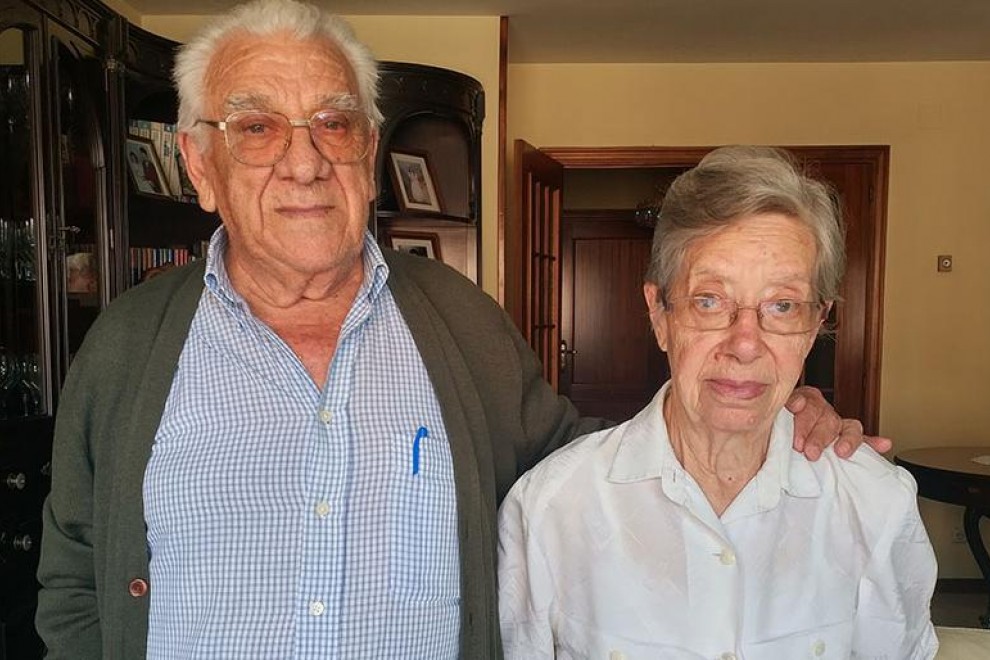
Saturnina, in fact, barely knew anything about her father. He was four years old when he was taken. “I only remember the day he was taken and the place where he was buried, which my uncle told me about,” she confessed tearfully to this newspaper in September 2019. “I don’t even know how he was killed. I just know he was taken away, that he never came back and that, from that day, there were only tears in my home. My mother never told me about my father because of fear,” she said. However, thanks to the indications of a relative, Saturnina kept a memory of the exact place where the bodies were buried after their execution.

Saturnina & Avilio at home September 2019. Saturnina was 4 years of age when the Francoist forces took her father away and shot him.
(Photo: Torrus)

REMAINS OF THREE WOMEN AND TWO MEN IDENTIFIED

           To date, the Valladolid ARMH has managed to identify “with total security” five of the 247 bodies recovered. These are of three women and two men: Lina Franco Meira; Republican Army sergeant Francisco González Mayoral; the Mayor of Casasola de Arión, Mateo Gómez Díez; and mother and daughter María Doyagüez and María Ruiz Doyagüez.

“Of the four graves with the 247 bodies that we have found, we have only been able to certify those five people to almost 100%. Of many others, we can be almost certain that they correspond to one group or another of those shot, but we cannot name each skeleton. We lack the means and it is a tremendously complicated process,” laments Del Olmo, who, however, points out that the remains of the victims will be well preserved so that, if possible, they continue working on identifications.

Letter from Julián Carlón in Valladolid Prison to his Wife & Children.
(Photo: A. Torrús)

Cases such as that of Lina Franco Meira, which has been identified, are exceptional when 81 years have elapsed since the end of the Civil War. Her bones could be identified thanks to a DNA test sample of one of her daughters, 93 years old. An exceptional case of longevity that has allowed name and surname to be given to some bones and, in addition, allows us to believe that among the rest of those sharing her grave are her other 14 neighbors of the town of Castromocho (Palencia) that were taken along with Lina Franco to Valladolid to be executed and buried.

“SO THAT FRANCO AND AMNESIA DO NOT WIN”

          Franco’s forces not only killed Lina Franco and more than 2,000 people in this province (Castille-Léon). They also tried to erase their names, their life stories and their struggles. Now, 84 years after the coup, a memorial will recover their names and try to spread their fight in defence of Republican values. The challenge, however, continues and consists in being able to identify as many of them as possible so that Franco and amnesia do not win the battle.

End item.