Diarmuid Breatnach
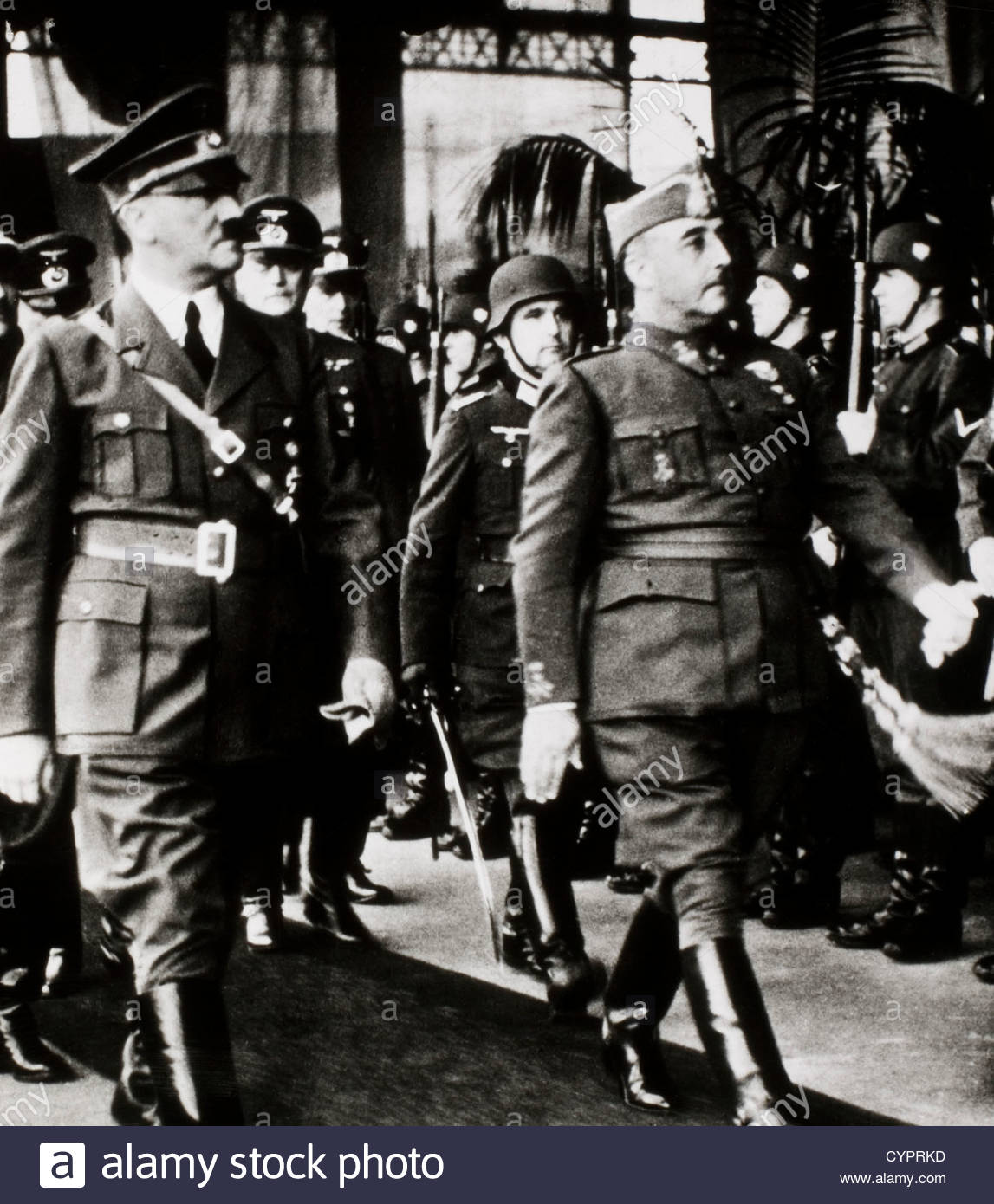
The German police have arrested Catalan Independence activist and elected politician Carles Puigdemont. Nice to see Spanish-German cooperation, just like the old days.

Diarmuid Breatnach
The German police have arrested Catalan Independence activist and elected politician Carles Puigdemont. Nice to see Spanish-German cooperation, just like the old days.
Diarmuid Breatnach
The mass media hails this Report and highlights the danger of the IRM.
However, Left and alternative political activists have never heard of this IRM before but we find that a Traveller activist is named as the spokesperson, Irish socialist and republican organizations are listed as belonging to it, in addition to campaigns against homelessness, the Water Charge and some smaller ones for political prisoners, human rights, civil rights etc. Some of the names of independent political activists also appear on the list.
As proof of the existence of the IRM and who belongs to it, the report shows a crowd demanding the exoneration of the Jobstown defendants, which includes a person whom a large force of police later killed in an attack on himself and a few comrades. A number of ongoing trials still not concluded are also added for good measure.
Then, the Report also claims that the “IRM” contains internationalist solidarity organisations in solidarity with the Kurds fighting ISIS and with the Palestinians and is receiving arms training from ETA.
And the “IRM” is linked to a number of demonstrations which have shut down the centre of Dublin in protest against austerity measures, protest occupations of buildings, etc.
What would we think?
We would probably conclude that the Government was preparing the ground for a massive attack on our organisations of resistance and on the right to protest.
If in addition to the publication of the Report, the Traveller’s spokesperson, which the Minister of Justice claims to be a spokesperson for “IRM”, two months ago had a the body of a mutilated vixen left on her doorstep, we might also think that the Government might be setting her up to be killed.

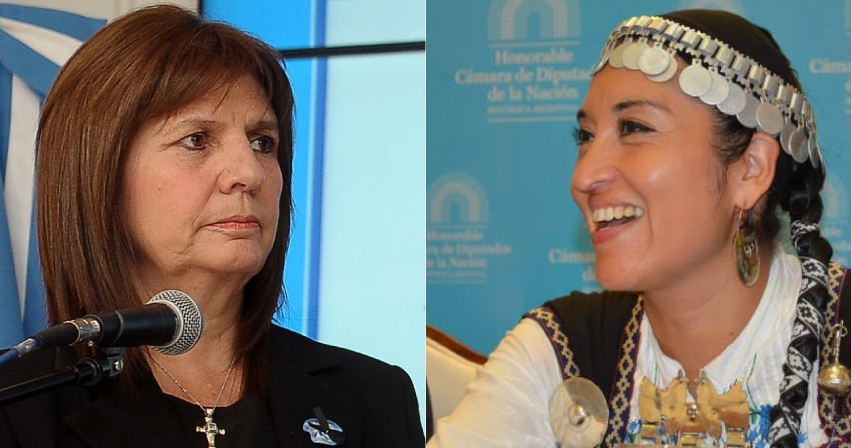
The preceding is an approximation of what is currently going on in Argentina. On December 29th 2017 Patricia Bulrich, Minister for Security of the Nation of the Cambiemos coalition Government of Argentina held such a conference with provincial security executives and issued a 180-page report on the danger of “RAM” (“Ancestral Mapuche Resistance”). This organisation has never before been heard of but Bulrich claimed in the Report and in a televised press conference that it is coordinating the activity of a huge number of organisations and is creating a great terrorist threat to the State.

Linked to “RAM” she gave a long list of organisations including those of original people and resistance in the areas of trade union, community, socialist and anarchist activity. Support for the Kurds was listed as evidence against some anarchist organisations and other organisations were alleged to be funding and publicising “RAM” while the Colombian FARC was alleged to be giving them military training.

The “RAM” may be a fake organisation but the State terror threatened is real.
The Minister publicly named Moira Millan, a Native People activist of the Mapuche, as the spokesperson of this “RAM”. This in the context of the recent killing of one Mapuche activist and the disappearance of Mapuche solidarity activist Santiago Maldonado in August 2017, which events led to demonstrations of Mapuche protest. Santiago was later found dead.
Millán lives in Patagonia, is a mother and in fact a member of two Mapuche organisations: The March of Native Women for Holistic Living and the Pillan Mahuiza Community. She writes and lectures on the history of the Mapuche, organises meetings in particular of Native women, gives traditional cooking classes, and speaks publicly on the rights of the Mapuche people. Millán has never been charged with any illegal let alone armed activity but last October, the mutilated body of a vixen was left on her doorstep. The message is both an insult — vixen in Spanish is “zorra” and is used as a moral and gender insult, particularly by the Right against female Left activists – as well as a death threat, i.e that her body will be next.
Millán’s reaction to the release of the Report and Bulrich’s press conference was quick and scathing:
“Yesterday, while I thanked the children who voted that the library of School No. 8 Luis Bernet of Parque Chacabuco should bear my name, the Minister of Security, Mrs. Patricia Bullrich, mentions me in her absurd and ridiculous report as the main spokesperson for RAM”, she said, adding that “the lady Minister – Bullrich — continues with her delirium tremens, inventing terrorists where there are none”.
“In her fevered dreams she sees herself, hooded, like the Ku Klux Klan, hunting Mapuches, assisted by the insipid and mediocre Governors of the South,” said Millán.
“Lie, lie but something will remain … ‘The lie has short legs’, says the popular saying: Are you coming for me, Mrs. Bullrich? Why are you afraid of us so much?” asked the Mapuche campaigner.
“Here I am, holding my truth as a weapon, and the wisdom of the Mapu as a shield; they have initiated ‘the hunger games’ and you believe that your government will win; make no mistake, we belong to a people that has been invaded, but never defeated”, concluded Millán.
(See further down for a way to take a few minutes to help)
End.
Links:
Video compilation of Bulrich, Millan, oppression, resistance: https://youtu.be/BIgJVa3d1iA
Original article quoting (in Spanish) Millán’s reaction to Bulrich’s statement and report: http://www.infonews.com/nota/312623/persecucion-a-los-mapuche-moira-millan
Guardian report on disappearance of Maldonado: https://www.theguardian.com/world/2017/oct/06/santiago-maldonado-argentina-election-missing-backpacker
TeleSur video about finding of Maldonado’s body:
YOU WANT TO HELP?
Those who wish to express their concern at this demonisation of resistance, the killing of Santiago Maldonado and to lift the threat of incarceration or death on Moira Millan may wish to write to their local Argentinian Embassy, which is obliged to relate information back from their host countries on attitudes to Argentina.
Embassy of Argentina Dublin: 5 Ailesbury Drive Ballsbridge Dublin 4 Ireland
Phone Numbers in Dublin:
Telephone: (01) 269.1546 – Telephone (Int): +353.1.269.1546
Fax Numbers in Dublin:
Fax: (01) 260.0404 – Fax (Int):: +353.1.260.0404
Email Addresses:
General Email address: eirla@mrecic.gov.ar
Consular Section: secon_eirla@mrecic.gov.ar
Administrative Section: adm_eirla@mrecic.gov.ar
Commercial Section: comercial_eirla@mrecic.gov.ar
Cultural Section: cultural_eirla@mrecic.gov.ar
And Argentinian Ministries:
Minister of Security of the Nation of Argentina is currently blocked (for some reason). The Minister of Justice may be accessed through the Department’s page (see link), then use their email contact system:
http://www.jus.gob.ar/contacto.aspx
Minister of the Interior: info@mininterior.gov.ar
Chief of Ministries: mpena@jefatura.gob.ar
It may also help to outline concerns to the Amnesty International and Frontline Defenders organisations.
Diarmuid Breatnach
Mario Vargas Llhosa was in Barcelona on Sunday as part of a number of people speaking at a pro-Spanish union rally which received coaches from various parts of the Spanish state. HE DENOUNCED NATIONALISM (Democratic, Catalan) WHILE SURROUNDED BY SPANISH NATIONALISTS AND FASCISTS AND THEIR SYMBOLS (the Spanish unionists were demanding that Spain remain united, insulted Catalan officials, waved Spanish unionist flags and called for a Catalan-elected President to be jailed; Spanish fascists openly displayed fascist Franco-era flags and symbols and gave the fascist salute).
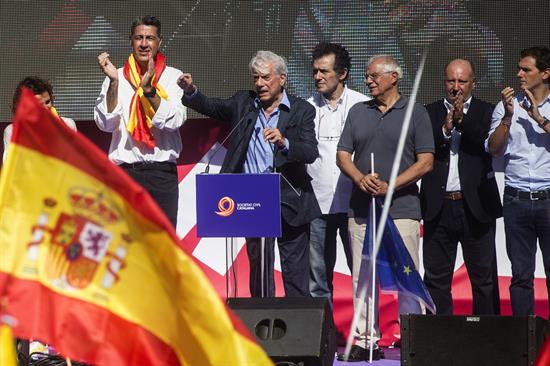
TALKING ABOUT THE IMPORTANCE OF DEMOCRACY WHILE DEFENDING AN UNDEMOCRATIC AUTHORITARIAN SYSTEM REPRESSING AND DISRUPTING A PLEBISCITE (State police violence leading to nearly 900 civilians injured; ballot boxes and ballot forms seized; elected officials arrested and/ or threatened with jail).
TALKING ABOUT THE IMPORTANCE OF THE RULE OF LAW WHILE IGNORING ILLEGAL ASSAULTS BY STATE POLICE RESULTING IN NEARLY 900 INJURIES (without a single State police officer being even charged or senior officers even reprimanded).
A NOBEL PRIZE WINNER IN LITERATURE IS UNABLE TO DETECT AN IMPORTANT ELEMENT IN WORLD LITERATURE — IRONY (Llhosa was awarded the Nobel Prize for Literature in 2010 for his work examining the corruption of political power and struggle against it — in Latin America).
Diarmuid Breatnach
Yes, it has its own language (Catalan), its own national anthem and its own national cultural customs. Furthermore it has been independent a number of times in its history, as a Republic. And its official autonomous status in the Spanish state even includes the word “national”. Catalan is an official language in Catalunya (along with Castillian — Spanish) and most people there speak Catalan daily.

Yes, according to most legal authorities and most people’s sense of right and wrong. It is recognised in the UN Charter of Human Rights.
Perhaps. For example, if a nation were somehow to determine to wipe out an ethnic minority, the right to decide to do so and to carry it out can be overidden by the more basic right of the targeted ethnic minority to exist. If one considered South Africa as a nation, it had minority racial government ruling over a majority disenfranchised black population and one could not endorse their right to continue in that way since they were negating the rights of the majority of their state’s population to self-determination.
Not at all. The only claim against her right to self-determination (other than the Spanish state’s claim that it violates the Spanish state’s constitution) is that it is one of the richest regions of the Spanish state and a large one. If that were considered a viable argument against Catalunya’s right, it would mean that no nation which has good natural resources or a successful economy has the right to self-determination and must stay within a union to benefit its invader and coloniser state.
HAS CATALUNYA’S RIGHT TO SELF-DETERMINATION BEEN VIOLATED BY THE SPANISH STATE?

Unquestionably Yes. She has been prevented a number of times by Spanish court legal judgements and by threats of the use of force from carrying out a referendum on the question of independence as a republic. Her attempt to carry out the referendum in spite of all threats was met this month with actual violence (nearly 900 injured people), police invasion of Catalan Government offices and polling booths, seizure of ballot boxes and ballot papers and in a number of areas, aggression against and disrespect for Catalans and their culture.
Furthermore many measures sought by the Catalan Parlament on grounds of increasing rights of migrants, protecting the environment and animal rights, restriction of the legal rights of the banks, have been declared illegal by the Spanish national courts, thereby violating the rights of Catalans to determine for themselves how they shall manage these matters.
WAS THE OCTOBER 2017 CATALAN INDEPENDENCE REFERENDUM ILLEGAL?
Here we have to ask – by whose law? The Catalan Parlament approved the holding of the referendum by majority. The Government approved and organised it.
According to the constitution of the Spanish State, no part of the State’s territory is permitted to enact independence without the permission of the Spanish Parliament. The Catalans will always be outnumbered in the Spanish Parliament (a similar situation to members elected in Ireland to the Westminster Parliament in Britain from 1801 to 1921; or Scottish MPs from 1707 to the present; Wales was annexed by England 1535 – 1542). They can never expect to gain a majority vote in their favour at Westminster.
By the Constitution a declaration of independence (though not perhaps a referendum on a wish) is illegal. But when has an occupying state given the right of secession to nations and peoples it occupies?
In most of the Spanish state, it was.
Clearly not – not because participation was limited to 48% of the Catalan population but because the Spanish Government had declared in advance that it would not respect the decision and would prevent the referendum taking place. Also because voters were prevented by Spanish police from entering a number of polling stations and because Spanish police seized many ballots and ballot boxes.
But should the Spanish state be permitted therefore to claim therefore that the votes which were registered and counted are of no avail? Are we to endorse a view that an occupying or colonising state can nullify any nation’s vote for self-determination simply by banning the election or referendum and by disrupting the process? Clearly not.
The Irish uprising in 1798 and in 1803 was not the result of a referendum, nor was that of 1916 nor the War of Independence 1919-1921. Clearly, if we are to uphold the right to self-determination of nations we must support the right of the occupied or colonised nations and to decide their own means of breaking away.
Clearly there are. As many as there are who wish to break with it? The evidence suggests not. Very recently the media claimed a hundred thousand rallied in Catalunya against independence. But around a million gathered there last month to support the right to hold the referendum, with most of them clearly for independence. Clearly, even if everyone attending a rally against Catalan independence were actual Catalans and had not been bussed in, they are outvoted by those Catalan residents who demonstrated despite threats and who voted despite police violent repression. And if the Spanish state thought the vote would go in favour of remaining in the union, why did they forbid the referendum and disrupt the process?
Right to Self-Determination: https://en.wikipedia.org/wiki/Self-determination
http://opil.ouplaw.com/view/10.1093/law:epil/9780199231690/law-9780199231690-e873
Spanish Constitution: https://en.wikipedia.org/wiki/Spanish_Constitution_of_1978
Translation by D. Breatnach of report by Nicolas Tomás in the on-line issue of El Nacional Cat.
Additional photos and videos on
(see also Gallery of photos by Sergi Alcazar)
(Translator’s note: These events were preceded by a number of apparently Muslim extremists driving a car into crowds in the Ramblas on Thursday, which left thirteen dead and 100 wounded, and also in Cambrils on Friday, killing one person and wounding six. A number of suspects were also killed by police).
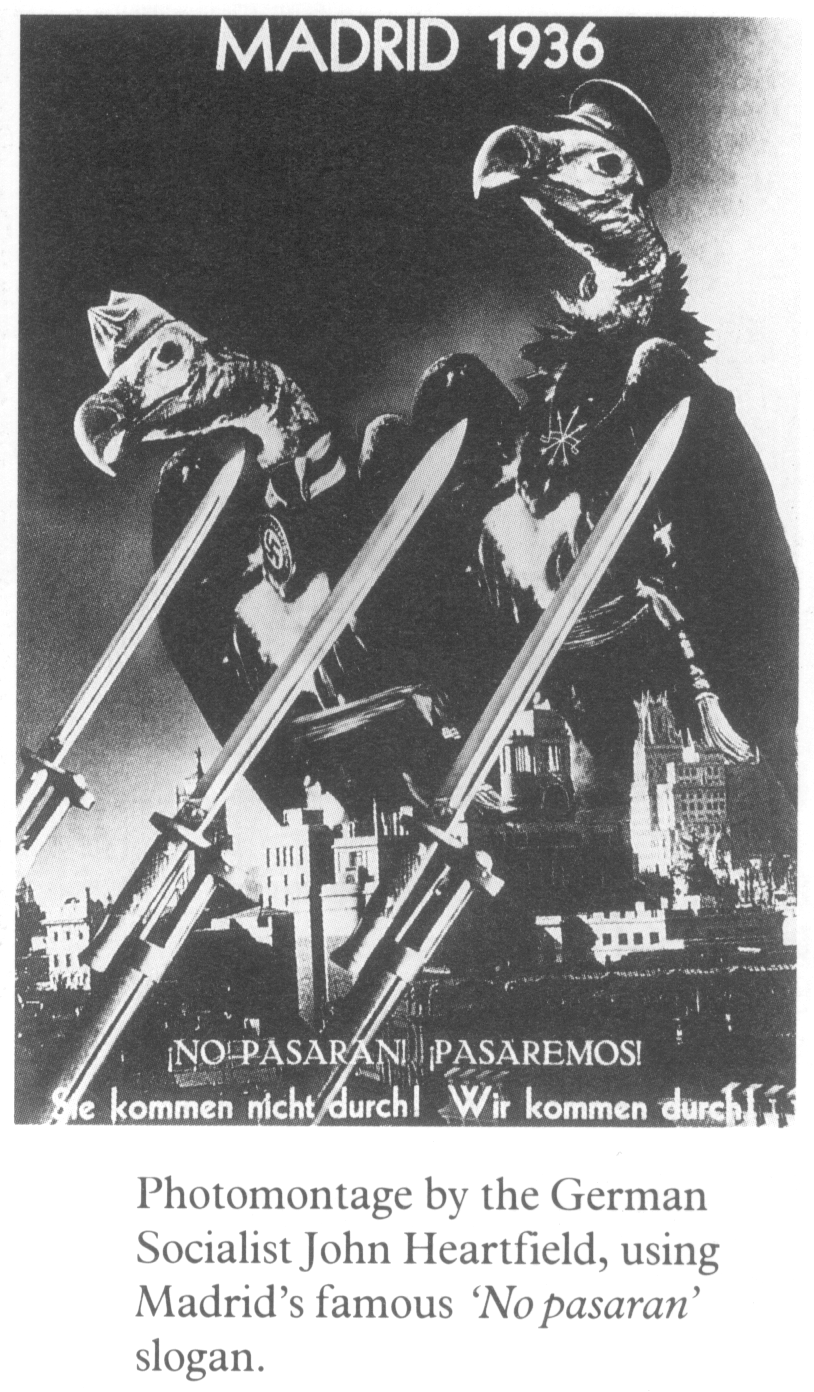
A response quickly followed with the call for a counter-demonstration of community groups of Ciutat Vella (the old city) and anti-fascist organizations, under the slogan “no pasarán” (Translator: “They shall not pass!” — originally a famous slogan from the defence of Madrid during the anti-fascist resistance war of 1936-1939).
A very violent clash could have occurred, were it not for the relative proportions of those participating.

On the seaward side of the Boqueria plaza there were between two and three hundred antifascists, of all ages, national and ethnic backgrounds, who condemned the terrorism of Islamic State and the fascism of the extreme right. On the mountain side, no more than a score of people nostalgic for past fascist regimes and a boy of no more than twenty years arguing that under Franco one did not live so poorly.
With these proportions, very soon the fascists found themselves cornered by the antifascists, who limited themselves to shouting a number of slogans such as “Nazis no!”, “The streets will always be ours!”, “Let there be not even one!” or “Fascists get out of our neighborhoods!”
Among the Islamophobes and those nostalgic for previous fascist regimes, the most conciliatory of them said that the problem is that “The outsiders come, they place a bomb and do the savagery they did yesterday, because we fight among ourselves.” Others simply shouted “A Christian Spain and never Muslim!”, “No more mosques, please!” and “Spain forever!”.
Among the demonstrators were Manuel Canduela, leader of National Democracy and known face of the Spanish extreme right. Among the anti-fascist demonstrators, CUP elected members Mireia Boya and Mireia Vehí.

There were moments of tension and violence. For example, when a fascist attempted to assault a group of anti-fascists, the latter responded by throwing plastic bottles, lighters and even some eggs. The Mossos d’Esquadra (Translator note: Catalonia government police infamous for violence against Left and Catalan independist demonstrators) and the Urban Guard intervened to protect the right-wingers. The cops protecting fascists outnumbered the fascists they were protecting – by at least two to one.

Little by little, the handful of fascists left the place, escorted by the police, contemplating the failure of their call. In the end there was only one man left, around the age of forty, wearing a Spanish Army T-shirt, leather waistcoat, many tattoos and an aromatic small cigar (Trans: ? ”un aromatico purito”). “I am neither a Nazi nor racist: I am Spanish,” he argued.
A Muslim girl, in a bandana, opposed his arguments against “the Islamization of Europe”.
“I am against those who kill us,” he told her.
“As are we,” she replied.

(Translation to English by D.Breatnach from article by Daniel Ramirez in El Espanol on line on 14 May this year — link given at end of translation. Photos reproduced and article translation published by kind permission of El Espanol)
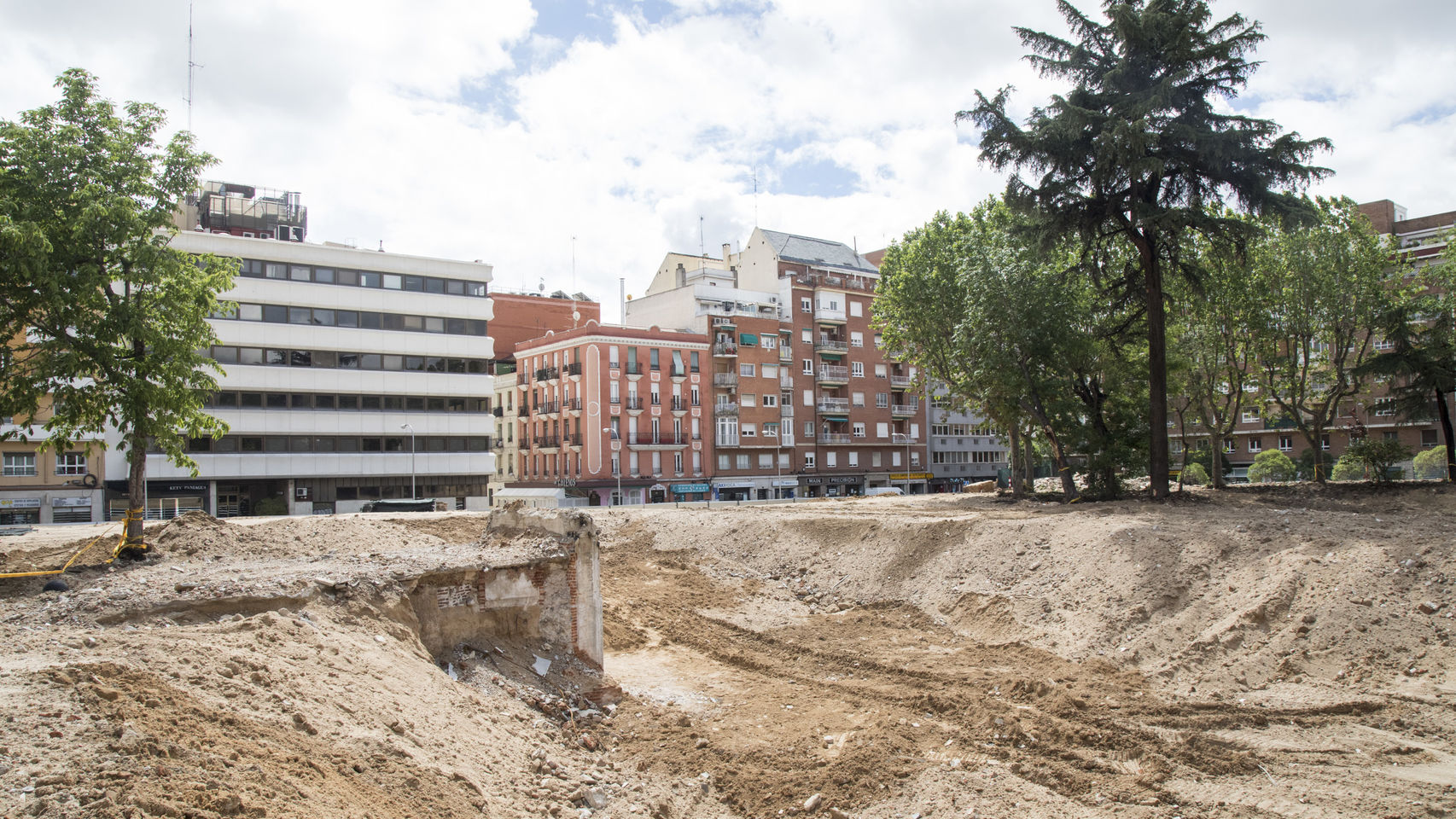
A hole in the ground, in the entrails of the city. Dry earth covered with mud. It had rained. The American girls and those dressed up run in search of a taxi when the Raimundo Fernández Villaverde street dies, just as they rise in the Nuevos Ministerios area. Noise from horns, ambulances, shouts. And in the middle of it all, the big hole.
It is surrounded by cranes and scrap metal. Also building workers and architects in yellow vests. In the centre, five or six metres deep, a door of cement and brick. It may not be interfered with. In the guts of the Artillery Workshop, recently demolished, the financial heart of Madrid has just discovered an air raid shelter, built in 1938. That’s the reason for the dug earth, the mud, the emptiness.
The demolition of this neomudéjar-style building to make room for a block of housing split the Madrid City Council of which Carmena is Mayor. Those who wanted to keep it lined up against the rest, but few knew what was hidden by the floor of the now defunct first concrete construction of the city, built in 1899 by the Ministry of War. It belonged to the state – in military use for decades – until 2014, when it was sold to a real estate cooperative for 111 million euros.
“It’s the first visit after its discovery”
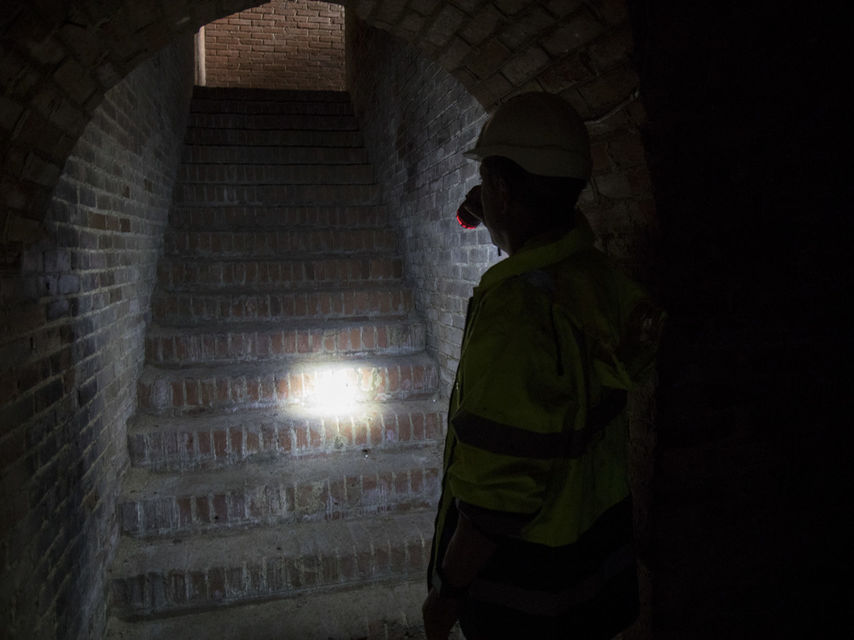
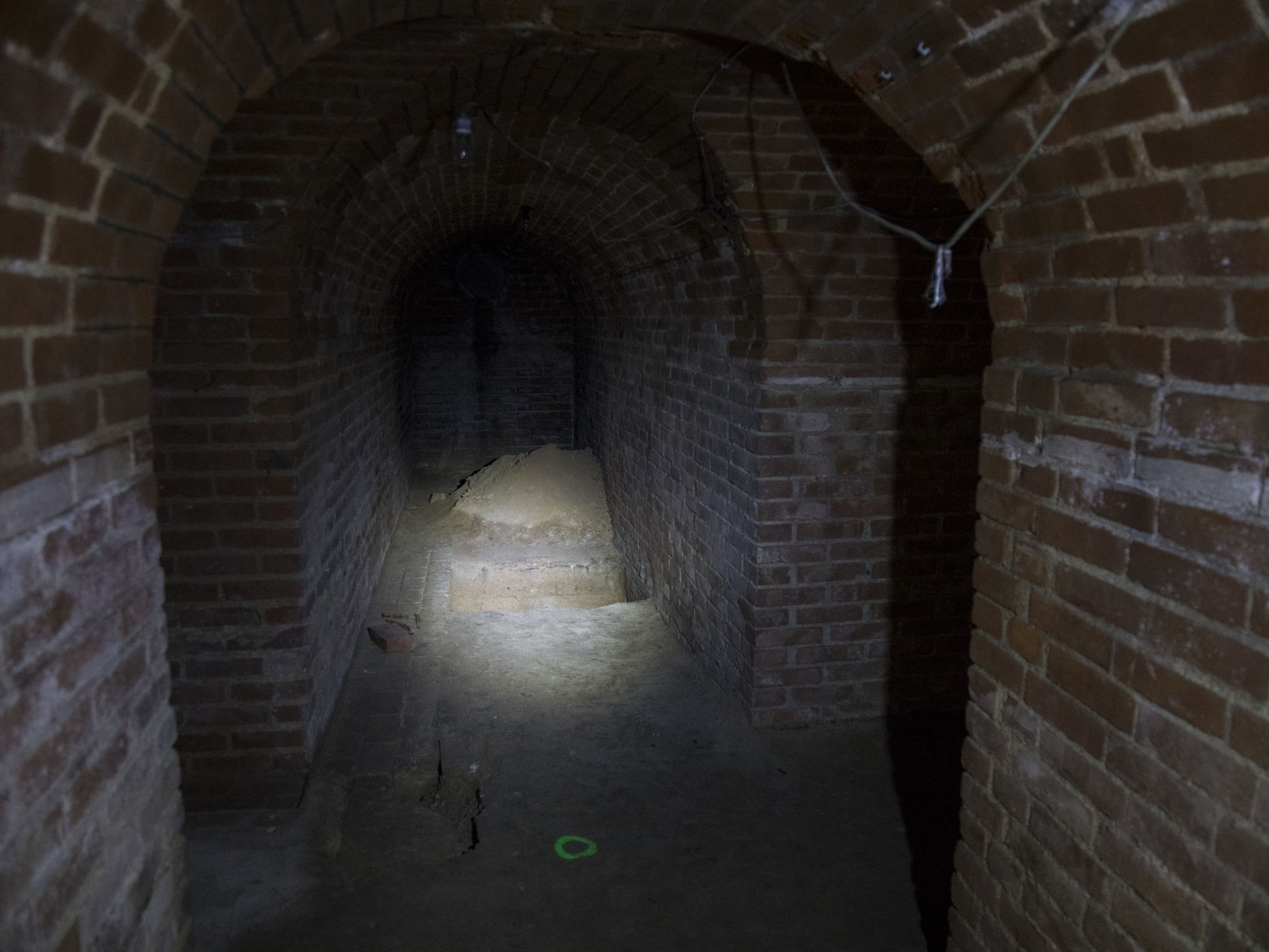
Just beyond the open door, stairs. The cement benches that allayed the fear of death appear six metres down. Virgin earth for camera and notebook. “This is the first visit after its discovery,” says Isabel Baquedano, archaeologist of the General Directorate of Heritage of the Community of Madrid, which froze the work permit until the survival of the shelter had been ensured.
One last look at daylight. Baquedano brings to life the race to the basement. The hole in the earth was then an inner courtyard in the Artillery Workshop. On the floor, a door. Then another, like the one that we are now going through.
Hemingway said that, at the beginning of the war, the citizen would quickly see the enemy plane and the sirens would soon be screaming. Then they flew much higher and the deaths multiplied. A bomb was “that growing whistle, like a subway train that crashes against the cornice and bathes the room in plaster and broken glass.” The American, with lively irony, used to joke: “While you hear the glass tinkle as you fall you realize that, at last, you are back in Madrid.”
The stairs and walls are brick. “Like those of almost all shelters,” explains Baquedano. The archaeologist who acts as a guide for this visit outlines a universal, institutionalised architecture, fruit of necessity, constructed in a race against time. “The International Red Cross came to draw up a map of the air raid shelters in Madrid,” says Javier Rubio, a historian whose brother was hiding in Madrid at the time.
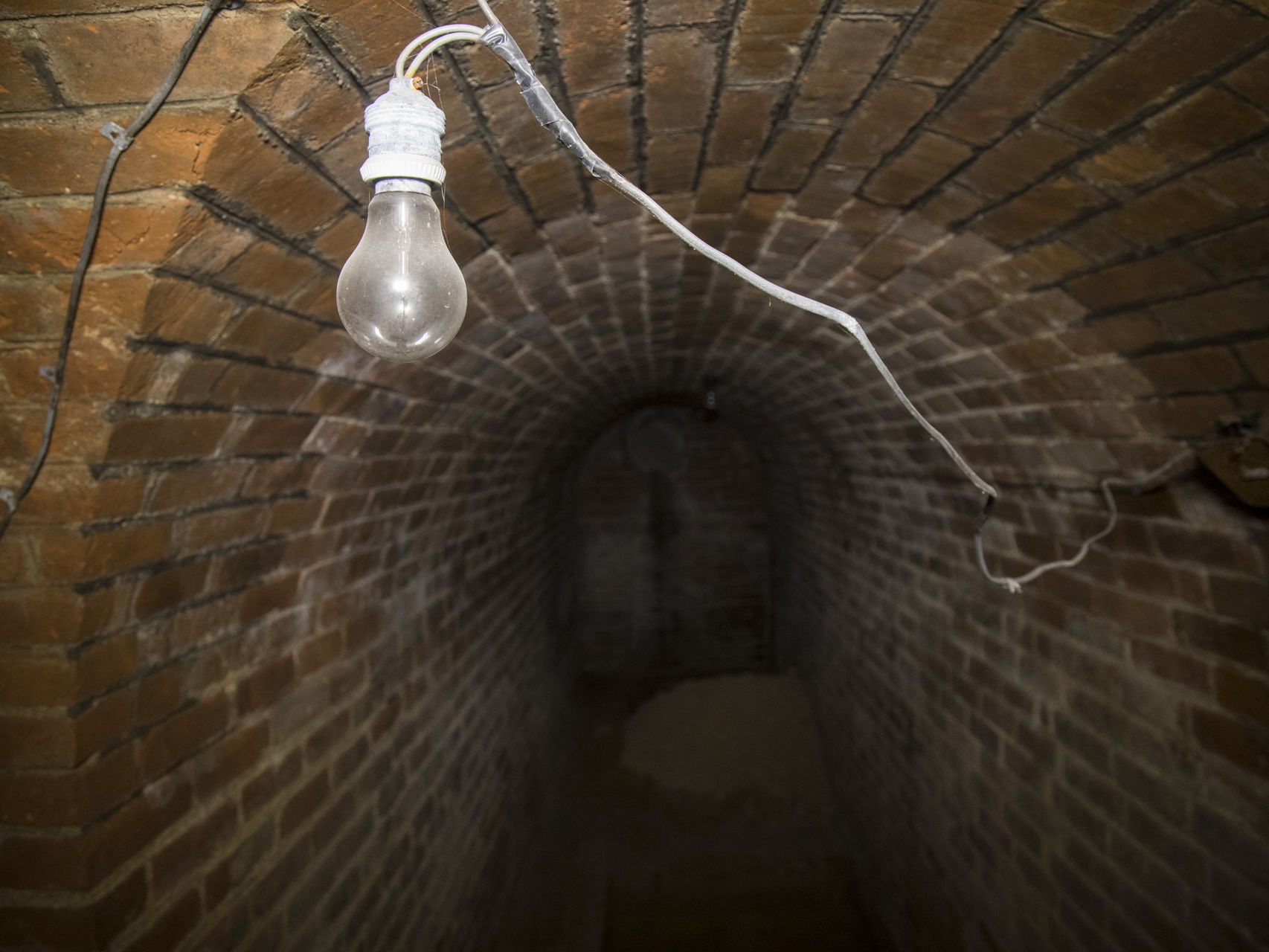
Small steps for the flashlight to illuminate. In 1938, a filthy, rusty cabling gave light to the whole refuge. There were also subterranean armchairs and red velvet, but this is not the case now.
The chroniclers wrote that seeing a drunk and desperate man who pushed and jumped over elderly people and children was not unusual. Here is a quick but military descent. It is believed that this basement only sheltered the military of the Artillery Workshop, when a few meters away, in the Glorieta de Cuatro Caminos, a hospital had a similar space.
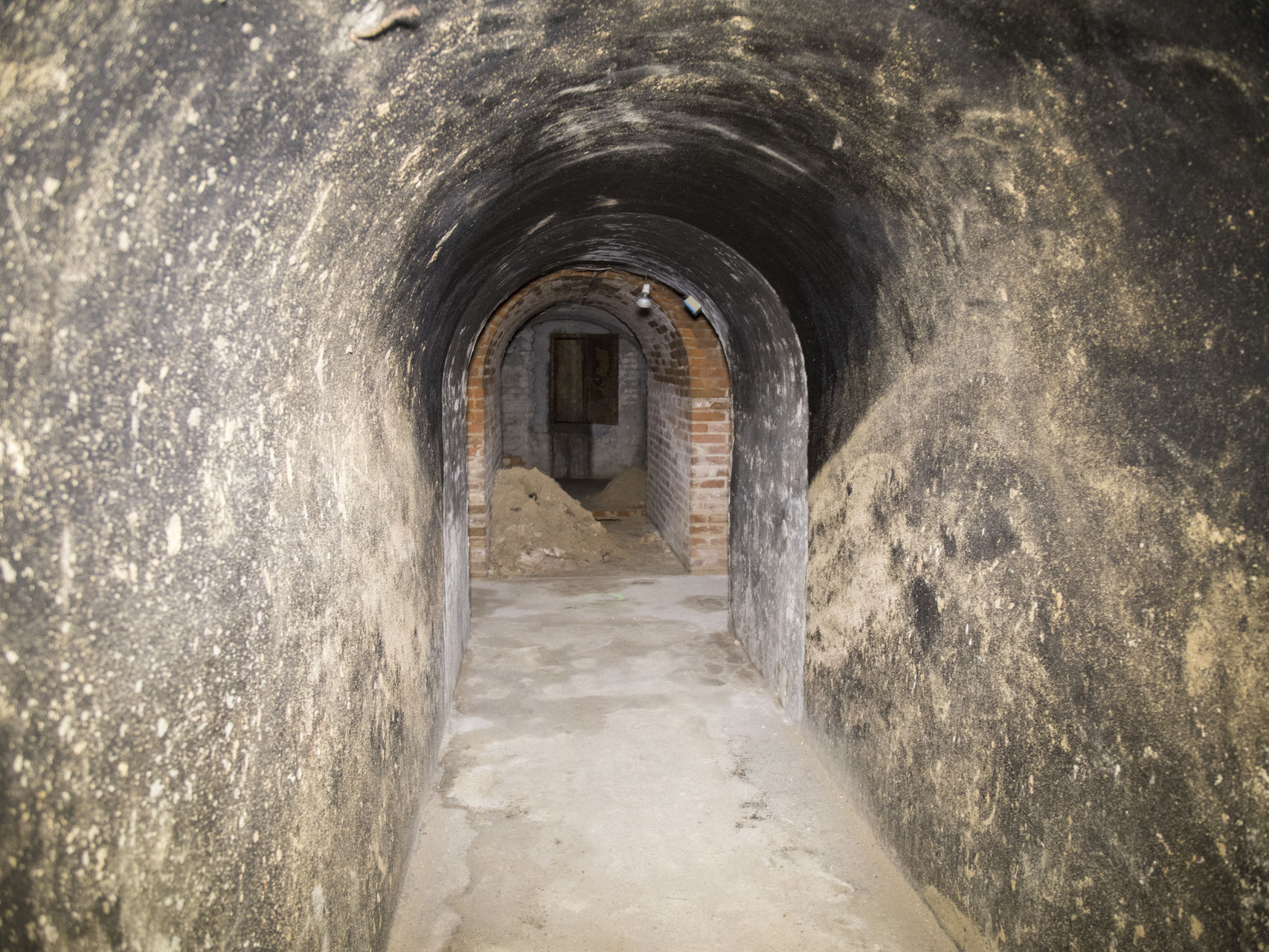
The lightbulbs, intact, but empty. The shelter is a labyrinth of intersecting galleries. The photographer and Javier, one of the construction workers, leads the route with lanterns. The cement benches show some marks, made by the archaeological study commissioned by the Community, which confirmed the finding. They are almost at ground level. “Capacity is estimated for between 80 and 100 people,” says Baquedano.
In 1938, Madrid was the epic of a lost war. General Miaja, a Republican hero, defended the trenches exposed to gunfire. Gun in hand, he shouted for men who knew how to die. Strips of paper were stuck to shop windows to prevent the bombing’s vibration from shattering them.
“Everybody went scared to his hole. Life had fled streets and squares; not a light, nor a noise in the ghostly environment of the big city,” said journalist Manuel Chaves Nogales. “This little bourgeois liberal” – so he described himself – who predicted the birth of a dictatorship regardless of the colour of victory, saw in the bombings a sort of lottery in which Madridians participated unconcerned: “Insensate and heroic, Madrid learned to live with joyful resignation. “
Little is left of that daily fear in these difficult tunnels, sometimes too narrow, fresh, guardians of absolute silence, still oblivious of the shopping centres that have grown up around them.
Some spoke, others were silent. Close or open your eyes? Different ways of coping. The fearful Rafael Sánchez Mazas, in the words of those who dealt with him then, wrote a novel to the rhythm of the bombs. For evasion and for other reasons. Chapter by chapter, he read it to his Falange colleagues at the Chilean embassy, where Carlos Morla Lynch, the diplomat in charge, provided refuge for them.
In the famous photo, Sánchez Mazas in the middle, several refugees listen to that unfinished novel of the title Rosa Kruger. Here the benches, in a row, do not invite conversation. Only recollection, although it may be the lack of habit.
In line with what Chaves said, Agustín de Foxa, in his “De Corte a Checa”, reflected: “At five o’clock in the morning, the local people commented on the bombardment by eating churros and drinking glasses of anise.”
“To leave a trail, not to disappear at all”
At the doors of the shelter, or perhaps inside, in these benches unequivocal proof of the finding, the tears of farewells ran. “Like those insects that perform the nuptial flight before they die, the men who were being sent to the Sierra or those who awaited in agitation their execution were longing for female presence and love so as to leave a trail, so as not to disappear altogether.”
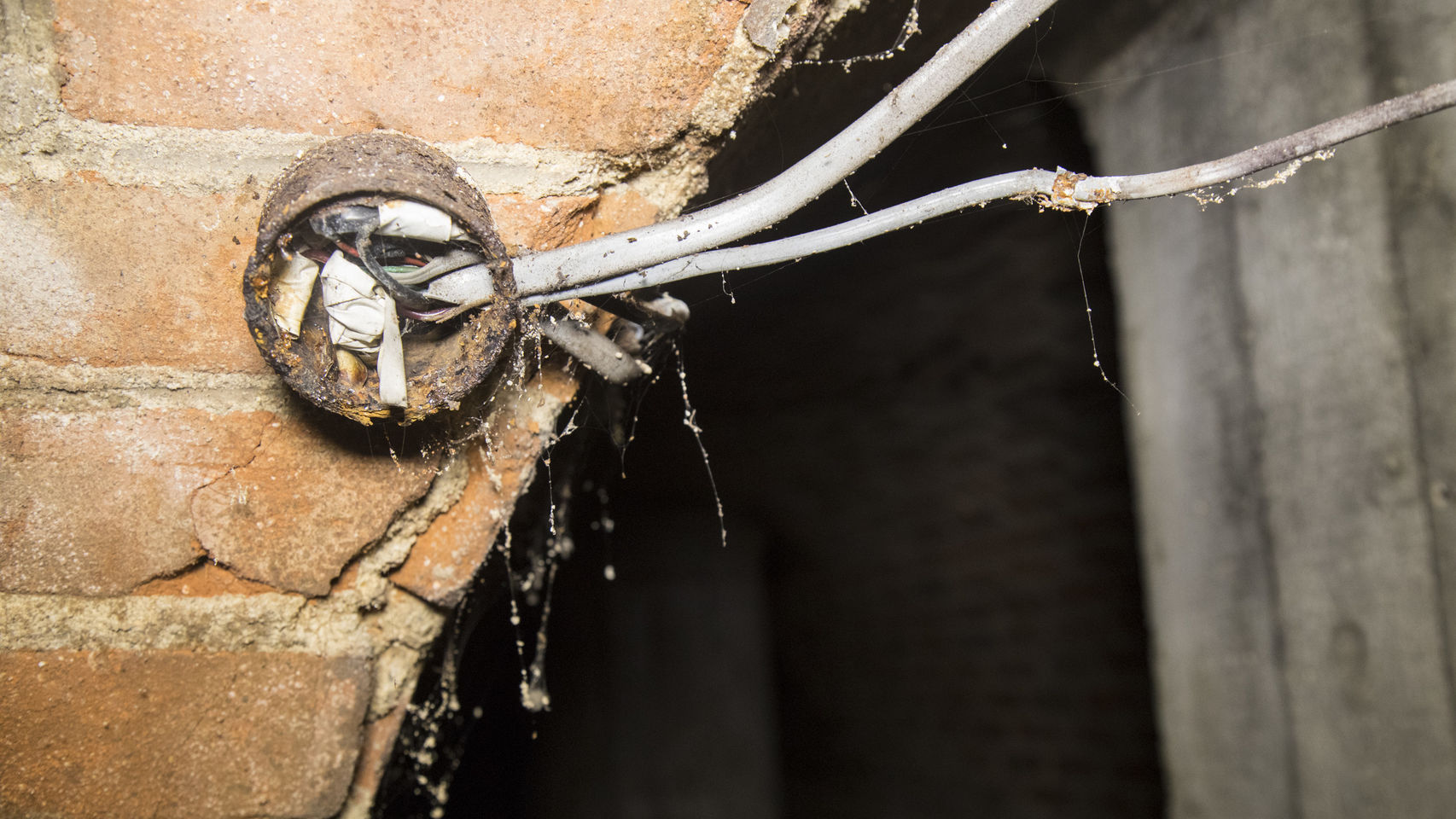
“Little is known of this shelter,” Baquedano continues on this path of short steps. Archaeologists found no traces beyond the benches. The soldiers who arrived after the war used the subway as a shooting gallery. That is the reason for the gouges that bullets have left in the brickwork.
Suddenly a noise. Loud, deafening. The conversation ends abruptly. The cameraman and the journalist look at Javier, who laughs. “Calm down, the cranes are moving the scrap and it will have fallen up above.” It is a noise to make one cower and which makes the legs tremble.
A cosmopolitan and naive noise, which has nothing to do with the thunder of the shell that haunted Arturo Barea. In his “Forging of a Rebel” he confessed to having nightmares about the impact. He imagined the mutilation of bodies, their rotting, the limbs torn off the sidewalk … When the sirens began to sound and the danger became true, Barea reported feeling “a deep relief”, a result of the return to reality, the only way out then from that spiral of madness.
“My mouth was filled with vomit”
“We would go down to the basement, sit there with other guests, all in pajamas or gowns, while the antiaircraft barked and the explosions shook the building, sometimes my mouth filled with vomit, but it was a comfort because everything was real, I was deeply asleep,” he wrote.
On leaving, the light, and a city that beats, has nothing to do with that Madrid that, in Foxa’s words, turned off the lanterns for fear of bombing, while the last trams passed on their routes with their tragic, blue-green painted lights.
At the fence, several curious people approach the hole. Office workers, clerks, consultants, lawyers … In 1938, Barea said, there were neighbors of distant neighborhoods who came to see up close what a bombing was. “They left happy and proud with pieces of shrapnel, still hot, as a souvenir.”
There were a few words and phrases with which I had difficulty since the apparent translation from dictionaries did not seem to make sense in the article and I converted them into what seemed to be the sense in the text and context.
The future of the archaelogical site by law requires protection from the owners of the site in which it is located. It may or may not be open to limited or full public access.
In the original article there was a lovely version of the Viva la Quinta Brigada song, about the 5th Brigade of the Republican forces (not Christy Moore’s wonderful song which, despite the original title is about the 15th International Brigade). I tried to embed it here but failed but you may find it on the original article link below.
Original article: http://www.elespanol.com/espana/20170513/215728433_0.html
Clive Sulish
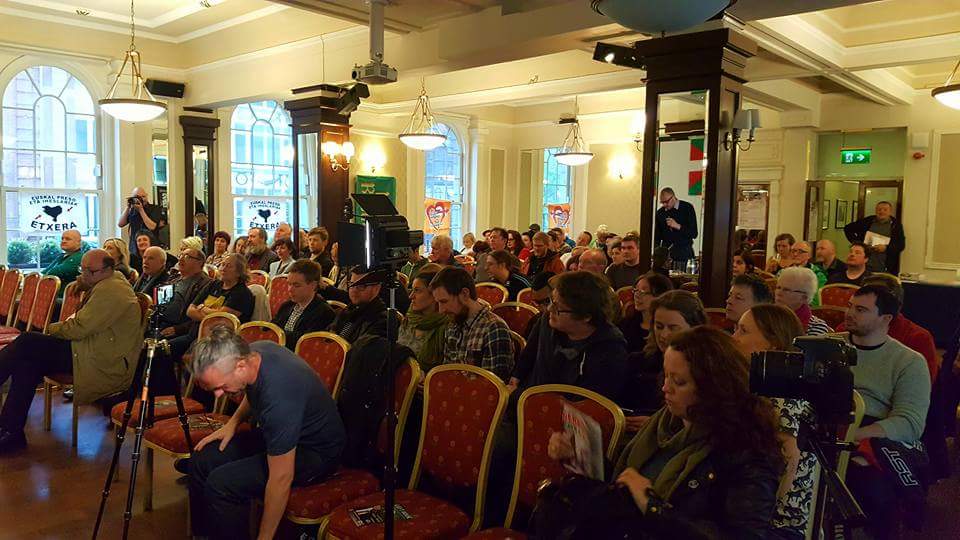
The pamphlet was on sale for €5 a copy in the large function room of the historic Wynne’s Hotel where the well-attended launch was held. The pamphlet has articles by Richard McAleavey, Enda McGarry, Stewart Reddin, Brian Hanley, Aoife Frances, Sam McGrath, Fin Dwyer, and Goiuri Alberdi.
Enda McGarry was first to speak and in a clear voice, with only an occasional glance at his notes, began by giving the background to the Gernika bombing – the military rebellion against the elected government of the Popular Front and the military campaigns that followed. General Mola was in charge of the fascist forces’ “Northern Front” while battles were taking place elsewhere, including in the suburbs of Madrid.
McGarry outlined the waves of air attack on 26th April 1937, the dropping of incendiary bombs and the strafing of running men, women and children by fighter planes and gave details of some of the horror experienced in the town. The bombing was one of the first aerial bombings of civilian population centres and Gernika, of particular historic-cultural importance to Basques, was hit on a market day. It had no anti-aircraft defences, not surprisingly, since it contained no features of significant military interest.
Going on to describe the lies told by the fascist leaders, McGarry related how in turn the communists, anarchists and Basque nationalists had been blamed for burning the town. Subsequently, apologists had tried to excuse the action by claiming that the Renteria bridge had been the target, in order to cut off the Basque nationalists’ retreat or lines of reinforcement from the northern Basque Country (i.e within the French state).
The speaker pointed out that this line of argument is still being peddled by some, including a fairly recent historian. Demolishing this falsehood by analysing the planes that were used, Heinkels, a Dornier, Junkers 52 bombers, Italian SM 79s and Messershmidt 109, along with the bombs and armament, McGarry showed how this could not be consistent with a bombing run to destroy a bridge. At Burgos airfield sat a number of planes that would have been ideal for destroying the bridge – Stukas, the most advanced dive bomber in general production of the time. They did not use them because neither was the Bridge the target nor pin-point bombing required – what those planning the attack wished to do was to carpet-bomb the area with high-explosive and incendiaries, then machine-gun civilians fleeing the bombing.
Ultimately, the historian continued, of course Generals Franco, Mola and other fascist military leaders were responsible. However McGarry believed that the Spanish fascist leaders, needing to crush Basque resistance but keep the conservative Catholic Carlist troops (from Navarra) and other right-wing Basques on board, would have been unlikely to agree to the destruction of Gernika (a holy historic place to the Carlists as well as to the Basque Nationalists). Oberstleutnant Wolfram Freiherr von Richthofen was the commanding officer of the Condor Legion, Nazi Germany’s “loan” of airforce to the Spanish fascist forces – he, along with others including commander-in-chief of the Luftwaffe, Herman Göring, wanted to use the Spanish conflict as a testing ground for warfare from the air and the tactic of terror-bombing a civilian population, which they later employed at Warsaw, Stalingrad and other cities.
The talk ended to strong applause and the chairperson of the meeting introduced Bernadette McAliskey, a long-time socialist and Irish Republican, campaigner for civil rights and in support of migrants.
The chairperson could also have alluded to her survival of an assassination attempt by Loyalist paramilitaries the “Ulster Freedom Fighters”, in which she was shot 14 times and her husband shot too, and that she had before that twice been elected a Member of the British Parliament. Of course McAliskey herself might have requested the omission of those details.
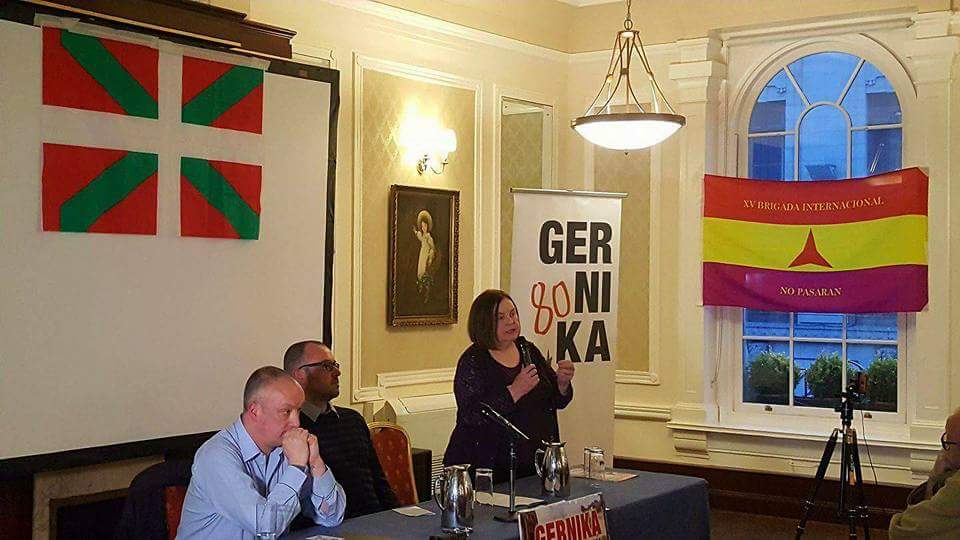
McAliskey began by praising the inclusiveness of the pamphlet, which has contributions from many different writers. She then moved on to expounding what kind of people are fascists, a term she believed too widely applied, and what kind of people fascism serves. In a rather long discourse, entirely without notes, the speaker went on to analyse what Republicanism is, rejecting a definition which said the basic unit of a Republic is the State, insisting instead along with Thomas Paine that the basic unit is the individual. Believing otherwise, she declared, makes one a nationalist rather than a Republican, á la Gerry Adams.
At times one could be forgiven for assuming that McAliskey thought she was addressing liberals, saying for example that “we don’t think enough about what goes on in other countries”, or “we don’t think about what is happening to certain groups”, such as migrants, Travellers – those considered “non-people”; or when she declared that she had no understanding of what was going on in Syria because neither her background nor experience could help her to understand it. McAliskey seemed unconscious that this is a line which was also commonly disseminated in Britain about the war in the Six Counties.
But then, McAliskey would switch without warning, as in her mischievous assertion that one should deal with liberals by throwing them in at the deep end: “they either learn to swim or they no longer give you any trouble.” Or when later, she pointed out that those in power never give up their weapons, and that one day we might present ourselves to our exploiters and insist that they step aside, as “there are more of us than there are of you”, to which they will reply: “Maybe so, but we have the weapons.”
When Bernadette McAliskey finished her talk, to sustained applause and cheers, the chairperson invited questions, of which there were three and a comment. The first question was whether McAliskey thought Gerry Adams was a psychopath, to which she discoursed on the question of insanity and on the number of lies that were told by politicians such as Gerry Adams. One of the big lies was that the IRA had forced the British to the negotiating table, which McAliskey emphatically denied was true, insisting that the reality was that the IRA went to the negotiating table because they could fight no longer, the rate of attrition was too great.
The next question, by a woman who announced that she had a USA background, in the context of her declaring that racism is about white supremacy, was about how to make the Irish aware of their role in this supremacy. Bernadette said it was an important question and that the process by which the oppressed can become the oppressors was one observed on a number of occasions in history.
This reporter thought that the questioner’s statement about the nature of racism being white supremacy might also have been questioned, a proposition disproved for example by the experience of the Armenians under the Turks, Jews and Slavs under Nazism, the Irish in Britain or at home under British rule, Irish Travellers in Irish society, etc.
The last question enquired what Bernadette would say to Basques, as some had said to the questioner, that the Irish were “lucky to have a peace process”, given that we were now approaching the second decade after the Good Friday Agreement. McAliskey replied that Ireland did not have a peace process but rather a pacification process, and that the ‘new dispensation’ divided up the Six Counties between political parties along sectarian lines, with cuts to services being imposed by those in power and substantial unemployment and unfair treatment of the “other minorities”: migrants, Travellers …. And that jails in the Six Counties today contain “about as many political prisoners as they did when the Good Friday Agreement was signed but the prisoners with less politics than had their fathers.”
End.
1Neither term sitting well with probably most Catalans and Basques, who do not consider themselves Spanish, having a different cultural identity, most aspects of which were suppressed by the victors of the War, the General Franco dictatorship regime but had been suppressed by others before them too.
2Gernika’s historic importance to the Basques before the bombing was based on the fact that Basque nobles met there to discuss their administration of Basque lands and it was there that a Spanish King had stood, under the ancient Basque oak tree, Gernikako Arbola, the “Gernika Tree”, promising to respect their rights to rule within their territory.
From FB page of Dublin Basque Solidarity Committee
SPANISH STATE APPOINTS POLICE OFFICER CONVICTED OF TORTURE TO UNITED NATIONS COMMITTEE FOR THE PREVENTION OF TORTURE.
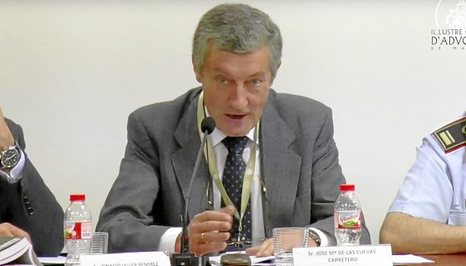
No-one could accuse the Spanish authorities of failing to appreciate irony.
In 1997, in one of the rare cases of the Spanish authorities charging a police officer with torture and even rarer of conviction, Captain (then a Sergeant) José María De las Cuevas Carretero, along with fellow Guardia Civil officers Manuel Sánchez Corbi and Antonio Lozano García were found guilty of torturing Basque ETA suspect Kepa Urra when they detained him in 1992. A further three police accused were found not guilty but the medical evidence on Mr. Urra’s admission to hospital six hours after his arrest made it impossible for the Bizkaya court not to find his captorsguilty. Despite the police officers’ denials, the three were found guilty of having taken Mr. Urra to a deserted spot after this arrest and there, while he was handcuffed, to have beaten him with a blunt object and dragged him along the ground. They were sentenced to four years in prison and barred for six years from public office (a common accompaniment to prison sentence in the Spanish State).
However, one year later the Spanish Supreme Tribunal reduced the prison sentence of each to one year which meant they were free to go but with the public office disqualification still in force. The following year, they were pardoned by the Spanish Minister of Justice of the incoming PP Government of Aznar and Mr.De las Cuevas Carretero carried on with his police career, rising to the rank of Captain and participating in fora of the State and internationally.
Mr. De las Cuevas Carretero, who is a qualified lawyer, has been lecturing of the treatment of prisoners and about corruption. And who could say that he is not eminently qualified to lecture on those subjects? Or to represent the Spanish State authorities on those issues?
(News and photo source: Gara, also some background Internet research)
Diarmuid Breatnach
Some people think that those few who do not want change are our rulers, the big capitalists — but they are mistaken. The capitalist class forced change to overthrow the feudal system, which was hampering their growth and the development of industry and commerce. And capitalists know that change is inevitable, so it is better to go with it than to try to stop it. That is why they set up courses such as those called “Change Management” — if change is inevitable, then manage it, the thinking goes. Manage it so that it comes out to capitalist advantage, naturally.

Change Management courses, particularly those dealing with personnel, emphasise managing change as smoothly as possible, making it non-traumatic. In that way, it is assumed, there will be less reaction against the change, less opposition.
But in fact, sometimes capitalism wants the exact opposite – it wants change to be as traumatic as possible. These are the situations described under the title “Shock Doctrine” by economic/ environmental activist and theorist Naomi Klein (2007). This has two mechanisms: in the first, the shocking change taking place disarms people from the psychological ability to organise resistance; in the second, the speed of the shock (or shocks) of the economic and political manoeuvres of the capitalists moves faster than the opposition can organise, achieving their goals before opposition can coordinate an effective resistance.
Klein has described how huge natural disasters such as earthquake (Haiti), tsunami (Thailand, Indonesia) and flood (New Orleans, USA) are used to force foreign or native private takeovers of sectors of the national economy while the people and the regime in power are reeling under the impact of the disaster.
Political and economic disasters are also used in this model, such as the military coup in Chile and the collapse of the USSR (in the case of Poland), the economic collapse in Bolivia, the invasion of Iraq, the financial collapse of the “Tiger economies” of SE Asia. Even a potentially beneficial change of great magnitude may be used, such as the collapse of white minority rule in South Africa, during which the black majority won formal equality and citizenship but lost control of most of the economy (and lost a lot more which I do not intend to discuss here).

There is in fact a military precursor to this which has been called, in the context of US military strategy, “Shock and Awe”. This doctrine was described by its authors, Harlan K. Ullman and James P. Wade (1996), as “attempting to impose this overwhelming level of Shock and Awe against an adversary on an immediate or sufficiently timely basis to paralyze its will to carry on … [to] seize control of the environment and paralyze or so overload an adversary’s perceptions and understanding of events that the enemy would be incapable of resistance at the tactical and strategic levels”.
Of course there were many elements of this in the Blitzkrieg of the Nazi German army in its invasions of other countries and even the medieval invasions by the Huns and of the Mongols. Cromwell employed elements of it in Ireland in his army’s massacres at Wexford and Drogheda.
Aside from needing change to overcome feudalism, managing change to its advantage and use of shock doctrine to facilitate changes it wants, the capitalist system itself promotes change as part of its system. Small capitalists combine and form conglomerates, in which big capitalists come to power and, in turn, eat up smaller capitalists in order to dominate their sphere of economic activity. We have seen the growth of supermarkets and the decline of small shops, the rise of chain stores killing independent clothes shops, chain cafes and eateries driving indpendent cafes and restaurants out of business.
Capitalists also promote inventions and discoveries so as to increase their wealth but also in order to stay in front of the competition – a capitalist concern that stays at its original level will be taken over or driven out of business by its competitors. Our grandparents hardly knew about the possibility of mobile phones and computers, let alone small hand-held audio-visual connections to the Internet; our children today play with visual electronic games, films and music before they learn to talk. To be sure, monopolies also suppress inventions but they can only do so to an extent as some capitalist somewhere will break the embargo or consensus (if the discovery can be used to make sufficient profits making the attempt worth the risk).
OK, but we want change too and, we think, what we want is not the capitalist kind of change we’ve been talking about until now, although innovations and discoveries should continue and in fact accelerate – but for the benefit of the people, not the capitalists. Technological advances and innovations that do not make big profits may nevertheless be very valuable to us for all kinds of reasons.
So, yes, we want change. But what kind of change? Change to what? Change how? There a vast panorama opens.
We want to eliminate homelessness; have an efficient universally affordable health service; not to have to struggle for a decent standard of living in food, housing and small luxuries; to enjoy universal and affordable access to education at all levels; not to harm the environment; to have the positive aspects of our cultural inheritance, including history, valued and promoted. We want equal rights and respect between people regardless of race or ethnicity, gender, sexuality, ability … and freedom of choice.
In 1930s Germany, people wanted those things too, except that a lot of people were convinced that the contents of the last sentence above were harmful and not what they wanted. But there were many, many people who did want those contents too. The issue was in doubt for awhile.
In the 1928 elections the Nazi Party achieved just 12 seats (2.6% of the vote) in the Reichstag (German Parliament) and in three areas the Nazi Party failed to gain even 1% of the vote. In the Presidential elections of March 1929, the Nazi candidate Erich Ludendorff gained only 1.1% of votes cast, and was the only candidate to poll fewer than a million votes.
We know that elections are not everything – but still.
Five years later, the Nazis were in power — but even after the Communist Party was declared illegal their candidates polled a million votes.
The people definitely wanted change and the established ‘democratic’ parties were unable or unwilling to deliver it. The change the people ended up with was not probably what most had imagined and for some time it spelt disaster for Germany – and unbelievable suffering for large parts of the rest of the world … and also for millions of German citizens.
To look closer to home, people wanted change here too and from 1917 onwards they showed that electorally by voting for the newly-reorganised Sinn Féin party. From 1919 a significant section of the populace took to arms to pursue change and had the active or tacit support of a huge part of the population. But in 1921 the movement and the people split about what kind of change they wanted. A civil war followed with a heavy level of brutality against civilians and combatants, particularly by the State side, which won the contest — and we ended up with the State we now have.

It is well to be fairly clear about the change we want and what we do not want. There was no such general clarity in the ranks of those fighting for change from 1916 to 1921. It turned out that many who were fighting for change were fighting for different things.
Differences must have come up over the years of struggle and we know from some evidence that they did. We also must assume from the political nature of prominent people in the struggle that there were differences. Even within the IRB itself, only one of the organisations involved, there were differences that surfaced in attitude to the 1913 Lockout, the control of the Volunteers in 1914 and the Treaty of 1922.
Of course, we need maximum unity against the principal enemy. But that is unity in action only. If we put unity in thought, principles or political or social program first, as some organisations have and some others claim to do, we end up with small organisations unable to effectively counter the resistance of the ruling class to the change we want and, in the end, unable to overcome that resistance. On the other hand, if we sacrifice everything to unity against the enemy, we leave ourselves hostages to events in the future and to what kind of society will emerge from the struggle.
Somewhere between those two is where we need to be, preserving the freedom to discuss, explore and proclaim differences of opinion and social program, while avoiding unnecessary squabbles and maintaining unity in action. It is a difficult balance to strike but it needs to be done. In the midst of fighting the common enemy and striving for unity in action against it, we must fight for that freedom also inside the resistance movement, the freedom to discuss, explore and yes, also to criticise.
End.

 rebelbreeze