LEADERS AND LEADERSHIP

Diarmuid Breatnach

(Reading time: 10-15 minutes)

What makes leaders good or bad ones? How much power should a leader have? How should they conduct themselves? How do we know when they are no longer leading us well and what can we do about it? The following piece discusses these questions and seeks to answer them.


Most people think human beings need leaders and revolutionaries and insurgents in general are no exception. There are some political-social groups who state that they are autonomous and do not need leaders but it has been my experience even in some of those groups that they do indeed have leaders and that in general they act under that leadership. It seems to be a human trait for groups to accept leadership and to follow leaders and indeed all social animals we may observe have leaders. Nevertheless, the question of leadership historically has been fraught and that is as much the case for human society in its various stages as well as for revolutionary organisations.

Statue in the Louvre, Paris, of Spartacus, leader of the great slave uprising against Rome 73-71 BCE. He is here represented as a thinker.
(Photo sourced: Internet)

RESPONSES TO LEADERS – HEALTHY & UNHEALTHY

RESPECT

          If our leaders have proved their worth to our endeavours then of course we should respect them. We should not respect them because of their class or family background. It is what one does that makes one worthy of respect, not the social class in which one was raised. And if that class background gave certain advantages in education, in leisure time to study and learn, then those are advantages we value and seek for all, which is far from respecting someone merely because they were raised with those advantages.

As to family background, it seems to me that we are haunted with an old way of looking at human society. It might have seemed natural in ancient times to give the offspring of a valued leader special respect and even to choose the successor from among his/her offspring. It does seem to be the case that some talents and traits are inherited through genes and it is also true that such a family background can familiarise one with some principles of leadership. However, history has provided us with many examples of ineptitude, malice and even madness in leaders who have greatness in their family background. It has also provided us with examples of people who rose from obscurity and from a family background of no particular note to lead masses in historic deeds.

Since we speak of respect, we should talk now about what that means. Of course, when leaders seeks to lead us, to advocate some action or policy, we should listen for if we do not, how can we benefit from what they have to say to us? We listen with respect.

But respect is not the same as servility, nor blind acceptance. We should consider what we are being told and feel free to ask questions and to challenge what we may perceive as assumptions. Further, we should accept that others also have that right, even if we ourselves are convinced in the leaders’ words. Our leaders are not infallible and nor are we.

We said earlier that it is upon what we do that we earn respect and that is so for leaders too. Every judgement on what we do must inevitably be based to some extent on an action in the past, even if it as recent a past as earlier that week, the day before or an hour ago. But one’s past does not grant infallibility and one who took correct decisions in the past can all too easily take wrong ones today or tomorrow. History has also shown us many such examples. Therefore the expectation of any leaders or of their followers that we should accept what they say mainly on the basis of their having been correct in the past is completely unjustified — however emotionally satisfying it may be to some people — and we should resolutely reject the premise.

If we are entitled to question and even challenge leaders there also comes a time when that right should be put aside for awhile. At some point it is necessary to act and endless debate does not lead to action. Nor is the entitlement to question and challenge a justification for ceaseless exercise of that right and it is also the case that such practice will in time devalue future criticism and challenge, perhaps when they are valid and should be most needed. The point at which debate needs to come to an end and a decision made, by the accepted procedures of the group, is ruled by the necessities of the situation and not by simple declaration.

CONDUCT OF LEADERSHIP

          Firstly, led us observe that while it is an impossibility for everyone to lead simultaneously, everybody is capable of leadership at some time in some circumstance. Every time one of us suggests a course of action or expresses a criticism in a group, we are in effect offering leadership to others. The one who says “I think we should …” or “Why don’t we …..?” or “Maybe we could ….” are all offering leadership at that moment. Whether it would have been effective leadership or in any case is accepted or not is beside this point.

Spartacus statue in Sandinski, Bulgaria. Here his military leadership is emphasised.
(Photo sourced: Internet)

RESPONSIBILITY

          We all of us should take responsibility for our actions and their effect. In practice that means weighing up positive and negative aspects before action (should we have time to do so) and afterwards evaluating once again its negative and positive aspects. Should we be constantly hesitant or paralysed by fear of failure we cannot be effective in anything worthwhile, therefore it is necessary that we are prepared to risk making mistakes. Then we have a responsibility to learn from our mistakes which implies a responsibility to admit to them.

Leaders at any level must take responsibility not only for their own actions but for those of their followers also. The leader too must be prepared to make mistakes but should endeavour to ensure that they are not too serious, that the consequences are not too disastrous. This is a heavy responsibility which implies the need to think things through in advance and not to merely react or act mainly out of emotion. And yet, the leader must be prepared to be decisive when that is what the situation requires.

Too many individuals accept leaders as a means of abrogating their own responsibilities. All of us have responsibilities in any endeavour we join together: responsibility in sharing work, risk, and thought. If we leave consideration of the negative and positive aspects of a proposal to others, not only are we shirking our responsibilities but we are hardly justified in complaining later about the actions of our leaders.

SHARING LEADERSHIP

          Some leaders are seen to take on multiple responsibilities and many tasks. In capitalist endeavours this has been judged to be wasteful and ineffective in the long run, leading to inflexibility, slowness to react and “micro management”, among other faults. An insecure leader does not trust others and seeks to keep all tasks and initiatives under his/ her control. And yet, shit happens, as they say. Nothing can be completely controlled.

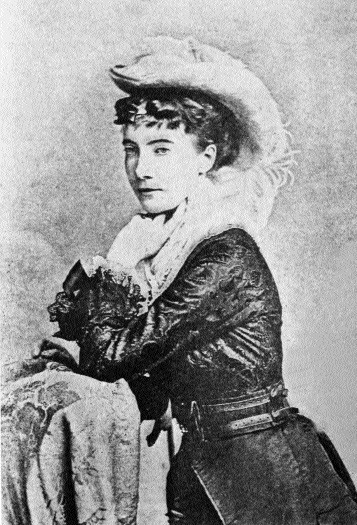
Louise Michel, life-long anarchist revolutionary and one of the leaders of the Paris Commune 1871 and other revolutionary initiatives later.
(Photo sourced: Wikipedia)

In revolutionary leadership this tendency to try to control everything by an individual or individuals has also been seen, with harmful consequences that include stifling initiative and learning among the group or organisation. Once this becomes established, the absence of the leader(s) mean the paralysis of the organisation and a similar effect occurs while waiting for them to make a decision. In addition, if they enemy subverts the leadership, the whole organisation and struggle becomes destroyed or at least greatly damaged.

Good leadership encourages the development of different areas by different individuals within the group and spreads participation in — and responsibility for — the decision-making. This model is often called collective leadership but within that itself there are different models too.

It would be very damaging if every individual were to act within an organisation according to how they might feel at different times and to represent the organisation externally without consulting the group. After matters are discussed and collective agreement has taken place, members of an organisation should not represent the organisation in a contrary way to what has been agreed. This is a difficult area with tensions between the right of expression of the individual and of responsibility to the organisation, one which I am unsure has ever been completely resolved.

Collective leadership is usually exercised through a committee or temporary working group and allows for different individuals taking a lead in different areas. One might note that person A regularly calls people to the overall task in hand and pushes for a monitoring of progress, while person B concentrates on developing a specific area, person C looks to the recording of decisions and person D to some external relations. There are of course formal positions in organisations and committees such as Chair, Secretary, Treasurer etc but even without formal elections one finds that successful groups develop areas of responsibility for separate individuals even without the existence of such elected offices. Furthermore, a particular responsibility may fluctuate between individuals at different times. A good argument exists for not entrenching anyone in specific roles over long periods of time. Rotation of roles and encouragement to take up new responsibilities can help broaden the experience and capabilities of members of the group or organisation and also prevent the growth of cliques and controlling leaderships.

Monument under continuing instruction to Crazy Horse, a chief of the Lakota Oglala, who with Sitting Bull led the struggle against the USA’s expansion and confiscation of his people’s traditional lands, including the great defeat of General Custer’s military invasion at the Battle of the Little Big Horn. He was murdered on 5th September 1877 in US Military custody. The statue is finished but the monument on land in Dakota includes the carving of the rock bluff seen in the distant background.
(Photo sourced: Internet)

WHAT TO WATCH OUT FOR

          Their are certain traits which may be observed repeated in unhealthy leadership and it is well to be aware of them, both for those who follow them and for people put in positions of leadership themselves. The following list does not include timidity, hesitation and prevarication, which are also bad traits of leadership.

The leaders

  • clearly enjoy issuing orders

  • direct others to do tasks they would not undertake themselves
  • monopolise speaking time

  • push for an end to debate without demonstrable necessity for the organisation

  • dismiss out of hand opinions opposed to theirs

  • expect agreement with whatever they say and resent question or challenge

  • regard question and challenge as treasonous, mutinous

  • hold grudges against those who have disagreed with them and seek to have them ignored, ostracised or demoted

  • seek or accept control over multiple areas of work

  • lie outright to their following

  • or do not tell their following the whole truth

  • call upon their past record in order to justify their actions or direction in the present

  • call upon their family background to justify their actions or decisions

  • surround themselves with a group who support them without question

  • accept flattery

  • flatter particular people (as distinct from commending when appropriate)

  • never commend any of their followers when deserved or choose only some to commend

  • criticise others unfairly or out of proportion to what is deserved

  • consider themselves entitled to special consideration above others in physical and emotional comforts

  • believe that rules that apply to the majority do not apply to them by virtue of their position or imagined personal superiority

Also, among the group or organisation, those who:

  • Always agree with the leaders or

  • Constantly disagree to no apparent concrete purpose

  • Constantly praise the leaders in private or in public

  • Praise a leader or leaders while ignoring or downplaying the contribution of others

  • Deny leaders have committed errors or wrongdoing in the face of evidence to the contrary

  • Make excuses for wrongdoing or errors of the leaders

  • Use the past record or family background of the leaders to justify actions in the present

  • or to imply that the leaders should be followed without weighing up their actions or what they advocate

  • criticise anyone who criticises the leadership rather than dealing with the point of that criticism
  • try to justify leaders having special consideration above others in terms of physical and emotional comfort

CONCLUSION

          The exploitation of working masses and their resistance to that has been going on since ancient slave societies and has led to outbreaks of revolt down through the centuries. The Paris Commune of 1871 was the first time that the working class succeeded in taking a city and holding it for a period, developing its own instruments of making decisions and carrying them out. At little over two months it was a short-lived experiment and fell to the bloody suppression of Prussian armed forces at the invitation of deposed royalty and dispossessed bourgeoisie.

It was not until 1917 that the working class was able once again to overthrow its oppressors and this time it did so not just in a city but in an entire state, also defeating invasions to overthrow its power. But where is that today? The Soviet Union collapsed in 1991 but had been crumbling within from long before that and, some would say, the working class had lost control in the early years immediately following the Revolution.

The question of leadership and how to handle it by everyone is an important one in an organisation but, for revolutionaries, is essential. It is essential not only for the conduct of the struggle but perhaps even more so for managing society after a revolution. The seeds of that management in the future must be sown in the present.

End.


POSTSCRIPT

          I base the above on my personal experience of decades, my reflection upon them and on reading of history.  My personal experience has been mostly in unpaid social-political struggles in trade unionism, housing, political groups on a number of fronts, solidarity committees, community and education groups but also employed in few NGOs for a shorter period.  I have been either a follower or part of leaderships and have erred in both on occasions while on others acted correctly.  I hope that I have learned from them all — and certainly from my mistakes.

In order to concentrate thinking on the general principles I have refrained from giving particular examples of recent leadership, which might have tended to give rise to discussion about individual cases rather than the principles as a whole.

SPANISH STATE BEGINS TO PLUNDER BANK ACCOUNTS OF THE PEOPLE’S TAVERNS

(Reading time: 2 minutes)

Diarmuid Breatnach

The Herriko Tabernak (People’s Taverns) are a feature of Basque Society, in particular in the Southern Basque Country, i.e the part under Spanish control. Founded by members of the Abertzale (pro-Independence) Left, run by supporters and frequented by sympathisers, they have been a place to have a drink and some pintxos, have a coffee and chat with friends, hold social events and large group meals, as well as occasional meetings. The Spanish State is now seizing their funds.

One of the Herriko Tabernak in Bilbo, this one in Errondabide, Casco Viejo; view from the back towards the entrance and street. Photo: D.Breatnach 2015)

          In 2016 the Audencia Nacional, the Spanish National Court, handed down a judgement that the funds of these taverns are forfeit, in what the Abertzale Left party Sortu called “the greatest political and economic plunder since the Civil War”. This is a reference to the wide-scale misappropriation of funds, machinery and land of the losers of that war by the victors, General Franco and his supporters. The wealth of many individuals and families in the Spanish State today can be traced back to that theft.

They will not be served alcohol! Parents often meet at the Herriko for a while after collecting their children from the Basque-language pre-schools.
(Photo: D.Breatnach 2015)

While a number of these taverns were closed down in the past, most kept going, supported by their loyal clientele and local communities. Although the punitive judgement of the Audiencia against the Herrikos was in 2016, its origin dates back further to the reign of one of the Audencia’s ex-judges, Baltazar Garzon, who infamously claimed that every aspect of Basque independent expression was linked to the armed organisation ETA. Baltazar, loved by liberals, claimed that “everything is ETA”, under which dictum homes were raided, activists tortured and jailed on their “confessions”, political organisations banned, social and cultural centres closed, along with newspapers, radio stations and social media.

Arrano Herriko Taberna, Zarautz, Gipuzkoa province, southern Basque Country.  Banner above it calls for freeing of the officially-recognised Abertzale Left political prisoners.
(Photo: D.Breatnach, 2018)


Some modest afternoon pintxos available in the Errrondabide Herriko (Photo: D.Breatnach 2015)

EXPROPRIATION TAKES PLACE DURING A MILITARISED LOCKDOWN

          This expropriation is taking place, as commented the left-wing media Izquierda Diario, in the midst of an emergency pandemic lockdown in which more than 7,000 sanctions in little over a month have been applied by the military and police who are in charge of and patrol the streets. (Unlike Ireland and many other countries, people in the Spanish State are not permitted to take exercise outside their homes, whether maintaining social distances or not).

While the judicial apparatus cannot process the massive claims of illegal dismissals, unpaid wages, unpaid ERTEs” (temporary compensation for loss of earnings due to the pandemic) commented the Diario, “or thousands of resources for fines during these days for the restrictions of the pandemic, yes there is time to seize the money of more than 100 taverns.”

COMMENT

Cafe esnea and “Bring the prisoners home” serviettes, Herriko Taberna.
(Photo: D.Breatnach 2015)

          While it is true that in many areas there are privately-owned bars sympathetic to the movement and that also in many areas dissenters from the line of the Abertzale Left official leadership decline to use the Herrikos, nevertheless the disappearance of the latter must entail serious damage to the social and cultural base of the broad Basque independence movement.

end.

Protest against the original judgement by some supporters of the Herriko Taberna of Inpernupe, Zumaia (scene of some of the Game of Thrones footage), Guipuzkoa Province, Southern Basque Country.  Banner declares “Ipernupe will not close!” while another in background declares it is in danger of closing.
(Source photo: Izquierda Diario)

REFERENCE

http://www.izquierdadiario.es/En-Estado-de-Alarma-la-Audiencia-Nacional-incauta-las-cuentas-de-107-herriko-tabernas

WHERE THERE IS NO POLITICAL WILL …

Gárdaí ‘can’t’ enforce social distancing on visitors from the Six Counties…!

Diarmuid Breatnach

(Reading time text: 5 minutes)

Irish Republicans looking at the sub-headline could be forgiven for bursting into laughter, for the Gárdaí, in particular the Special Branch, the political police, have never had any reluctance in harassing, arresting and even refusing bail to Republicans from the Six Counties.

And likewise with their counterparts on the other side of the British Border, who have never had much problem enforcing and even exceeding their laws with regard to Republicans from the Twenty-Six counties.

However, according to a news report in today’s breakingnews.ie, day-trippers from the Six Counties are flooding into the picturesque coastal areas of County Donegal and ignoring Coronavirus-19 legislation. The report says that the day-trippers are from “Northern Ireland” which is nonsense of course, since Donegal is the real Northern Ireland, i.e the northernmost geographical point of the country. And it is in Ulster too, though not under British occupation.

Anyway, back to the main issue in the report, which is that Donegal residents have been complaining that the Gardaí there are not enforcing social distancing on day-trippers from across the Border.

Garda Checkpoint Donegal (Photo source: Internet)

It appears that the Gárdaí were applying the Coronavirus-19 restrictions but were told that they could not. Why would this be? The laws against theft, assault and public disorder apply not only to residents in Ireland but also to visitors – why would laws intended to control a pandemic be any different? Indeed, one would think they’d be, if anything, more enforceable.

Meanwhile, “a Gárda statement” quoted in the report states that “anyone visiting the State even temporarily is amenable to such criminal laws of this State while visiting here.”

So it’s the law, applies to everyone including visitors, so … what’s the problem?

There is a saying that states that “where there’s a will, there’s a way” and it is difficult to see an explanation in this case other than that for some reason there is no political will to enforce the law on visitors from the Six Counties. Of course, if they were Republicans attending some Republican event, well in that case ……

THE VIRUS DOESN’T RESPECT THE BORDER”

          According to a number of Donegal public representatives, local people have been bombarding them with complaints about the incursions and the lack of Gárda action. Councillor Jack Murray, from the Inishowen area, saying he had been “inundated” with complaints about Gárda failure to apply the legislation to people from the Six Counties, said that “the virus does not respect the Border and tackling it should recognise that.” Pádraig Mac Lochlainn, a TD (member of the Irish Parliament, the Dáil) for Donegal, lives in Buncrana, a popular destination in the holiday season. “This error is unacceptable,” he said, “considering that all government legislation goes through the Attorney General’s office.”

Clearly, a rational response to the pandemic would require either an Ireland-wide approach or a strict closing of the Border between the two administrations. The authorities on each side have done neither.

At the end of February, the first person recorded positive for the virus arrived in Dublin from Italy aboard an Aer Lingus plane and was permitted to travel on to Belfast – she is/was a resident of the Six Counties. No quarantine was ordered for the rest of the passengers. And so on.

Ineptitude of Governments apart, it has never made sense to partition Ireland on economic, geographical or human rights grounds. Now we see that it doesn’t make sense on grounds of pandemic control either. How does it make sense? Well, on the wish of the rulers of Britain to keep a foothold in Ireland and of their loyal subjects in the Six Counties to remain in domination of that foothold.

Cartoon DB

GENERAL PROBLEMS WITH 2Km LIMITS

          To be honest, I have never seen the point of the 2km limit. Is it the case that you can infect or be infected by someone outside the 2km limit but not inside? Of course that does not make sense but how does this limit make any sense otherwise?

I don’t drive a car but if I did and were to get in my car in my garage, drive out to a secluded spot on the mountains, get out and walk, then return to my car and drive home, how would I have endangered myself or anyone else? If I went to a park or beach outside the 2km limit from my home and, while there, kept my distance from other walkers, how would I be endangering anyone?

The danger in general, we are told, comes from physical contact with people or being within two metres of them, when droplets from an infected person may reach us. Would that danger be reduced if everyone were obliged to wear a face-mask of any kind? Clearly. Yet not only are we not obliged to wear such masks in public but we are being actually discouraged from doing so by statements from the HSE (and also from the WHO). Would the danger be reduced if, in addition to wearing masks, we wore gloves in public and had a safe procedure for removing them at home? Obviously – yet we are not being informed, never mind encouraged, in this regard either.

End.

REFERENCE

https://www.breakingnews.ie/ireland/the-virus-does-not-respect-the-border-community-frustrated-laws-cannot-be-enforced-on-ni-day-trippers-996161.html

Diarmuid Breatnach Political Agitator Part 1

Mick Healy interviewed me about a number of my experiences in revolutionary work over the years and this is Part 1 (Part 2 will shortly be published), nearly all about some of my three decades in London. It contains a number of errors by me, for example the apartheid rugby team was South Africa’s one which were not called the “All Blacks”, that being New Zealand’s. Also I believe the giant Hunger Strikers solidarity march in London was to Michael Foot’s home, not Tony Benn’s. Still, here it is for what it’s worth with many thanks to Mick.

irishrepublicanmarxisthistoryproject's avataririshrepublicanmarxisthistoryproject

Diarmuid a long time political agitator was active in London from 1967, in interview part one, he talks about his involvement with Marxism-Leninism-Anarchism. His involvement in the Vietnam and Rhodesia solidarity campaigns, Anti-fascist mobilisation, solidarity Ireland, family squatting. In addition the campaign against the Prevention of Terrorism Act and the 1969 Peoples Democracy march from Belfast-Dublin.

View original post

IBRG at the WCML; A Welcome for IBRG at St.Brendan’s Irish Centre.

Dem were de days …. hard days and nights but busy!  1970s Britain in relation to Ireland was the decade in which the British troops were sent into the Six Counties, the war with the IRA began, internment without trial was introduced, Army massacres of civilian protesters took place and the IRA took the war to Britain.  The British State introduced legislation to terrorise the Irish community, the Prevention of Terrorism Act and framed 20 Irish people on murder and murder-related charges.  1980s Britain was the decade in which, due to the hunger strikes, the Irish community stood up, shrugged off the terror of the PTA and took to the streets.  At the start of that decade too, the Irish in Britain Representation Group was founded.

lipstick socialist's avatarlipstick socialist

In the 1980s when IBRG branches were being   set up across the country one of the biggest problems was finding somewhere to meet. There were many  Irish Centres,  but most of them did not want an Irish group with a political agenda meeting there. Most of them were attached to Catholic churches who promoted a reactionary agenda or they were commercial venues who worried about their alcohol licence as well as  police surveillance and threats to their future.

Manchester IBRG found a home at St. Brendan’s Irish  Centre in Stretford.  Originally the Lyceum Cinema, it opened as an Irish Centre on  25th April 1961. Surrounded by streets of Victorian houses it became the home for many of the  Irish who emigrated to the Manchester district in the 1960s.

St Brendans St. Brendan’s Irish Centre

St.Lawrence’s Church which was located next to the Centre organised an Irish community care organisation which met Irish…

View original post 937 more words

James Connolly on St. Patrick’s Day

The National Festival

by James Connolly

From Workers’ Republic, 18 March 1916.
Transcribed by The James Connolly Society in 1997.
Proofread by Chris Clayton, August 2007.

James Connolly poster by Jim Fitzpatrick.
(Image sourced: Internet)

The question often arises: Why do Irishmen celebrate the festival of their national saint, in view of the recently re-discovered truth that he was by no means the first missionary to preach Christianity to the people of Ireland? It is known now beyond the shadow of a doubt that the Christian religion had been preached and practised in Ireland long before St. Patrick, that Christian churches had been established, and it is probable that the legend about the shamrock was invented in some later generation than that of the saint. Certainly the shamrock bears no place of any importance in early Celtic literature, and the first time we read of it as having any reference to or bearing on religion in Ireland occurs in the work of a foreigner – an English monk.

But all that notwithstanding there is good reason why Irish men and women should celebrate St. Patrick’s Day. They should celebrate it for the same reason as they should honour the green flag of Ireland, despite the fact that there is no historical proof that the Irish, in the days of Ireland’s freedom from foreign rule, ever had a green flag as a national standard, or indeed ever had a national flag at all

Shamrock for sale in Moore Street last year, one of the few times in the year they are permitted to sell something outside the vegetable-fruit permit. They were not finding many buyers during the past week.
Photo: D.Breatnach

The claim of the 17th of March to be Ireland’s national festival, the claim of St. Patrick to be Ireland’s national saint, the claim of the shamrock to be Ireland’s national plant, the claim of the green flag to be Ireland’s national flag rests not on the musty pages of half-forgotten history but on the affections and will of the Irish people.

Sentiment it may be. But the man or woman who scoffs at sentiment is a fool. We on this paper respect facts, and have a holy hatred of all movements and causes not built upon truth. But sentiment is often greater than facts, because it is an idealised expression of fact – a mind picture of truth as it is seen by the soul, unhampered by the grosser dirt of the world and the flesh.

The Irish people, denied comfort in the present, seek solace in the past of their country; the Irish mind, unable because of the serfdom or bondage of the Irish race to give body and material existence to its noblest thoughts, creates an emblem to typify that spiritual conception for which the Irish race laboured in vain. If that spiritual conception of religion, of freedom, of nationality exists or existed nowhere save in the Irish mind, it is nevertheless as much a great historical reality as if it were embodied in a statute book, or had a material existence vouched for by all the pages of history.

It is not the will of the majority which ultimately prevails; that which ultimately prevails is the ideal of the noblest of each generation. Happy indeed that race and generation in which the ideal of the noblest and the will of the majority unite.

In this hour of her trial Ireland cannot afford to sacrifice any one of the things the world has accepted as peculiarly Irish. She must hold to her highest thoughts, and cleave to her noblest sentiments. Her sons and daughters must hold life itself as of little value when weighed against the preservation of even the least important work of her separate individuality as a nation.

Therefore we honour St. Patrick’s Day (and its allied legend of the shamrock) because in it we see the spiritual conception of the separate identity of the Irish race – an ideal of unity in diversity, of diversity not conflicting with unity.

Magnificent must have been the intellect that conceived such a thought; great must have been the genius of the people that received such a conception and made it their own.

On this Festival then our prayer is: Honour to St. Patrick the Irish Apostle, and Freedom to his people.

James Connolly monument, Beresford Place, Dublin.

COMMENT:

I seem to recall that Connolly wrote something else about celebrating St. Patrick’s Day, perhaps when he was living and working in the USA but can’t find it now.  For similar reasons to what he lays out here, I supported and indeed organised public celebration of the feast day in London.

And I might have agreed with Connolly in the case of Ireland at the time he wrote it: the whole country under British occupation, in the middle of the First World War with thousands of Irish casualties in the British armed forces and coming up to the 1916 Rising.

But now?  I don’t think so, neither with what it celebrates nor how it is celebrated, which always makes me want to get out of Dublin.  Republic Day, which Connolly was party to creating but could perhaps not have anticipated being a national festival day, is what we should be focusing on now, I think.


REFERENCE:

https://www.marxists.org/archive/connolly/1916/03/natlfest.htm


Anti-Irish Racism Letter to Irish Times

Anti-Irish racism in Britain

Sir, – Gerard Murphy (Letters, February 27th) and some others doubt the existence of anti-Irish racism in Britain prior to the Brexit debates, claiming never to have experienced or witnessed it themselves.

After the Race Relations Act (1976) drove the blatant discrimination of notices in lodging-house windows and “help wanted” advertisements into concealment, in 1984 the Greater London Council published Liz Curtis’s booklet Nothing But the Same Old Story, full of public examples of anti-Irish racism in print and in drawings over centuries, including cartoons in the Evening Standard during the 1970s.

In the mid-1970s nearly a score of innocent people in five different cases were taken from the Irish community and convicted of murder or in assisting murder while Irish people were being regularly stopped at airports and embarkation points, as well as having their houses raided and being taken into Paddington Green police station, for example, to spend days in underground cells without daylight or access to solicitor, to be eventually released without charge. In the 1970s Granada TV series The Comedians, stand-up performers told sexist and racist jokes, with the Irish often being the butt of the latter. In the 1980s the Irish in Britain Representation Group picketed WH Smith shops until they removed from sale their “Irish mugs”, which had the handle on the inside.

Letters in Irish community newspapers in Britain like the Irish Post and the Irish World regularly complained of anti-Irish racism in print, on TV, on radio and in public places. Anti-Irish racism has a history of centuries but it was all around Britain in the 1970s, 1980s and even the 1990s. – Yours, etc,

DIARMUID BREATNACH,

Baile Átha Cliath 9.

Anti-Irish Racism in Britain: Not a great letter or anything but the first letter of mine the Irish Times has ever published!

Scene outside the Court of Appeal’s 1984 quashing of the convictions of the Guildford Four and Maguire Seven. Gerry Conlon, one of the Four, seen here shouting his anger to the crowd at his unjustly serving 10 years in jail and his father having died in jail. The Birmingham Six were not released until 1991 and Judith Ward in 1992!
(Source photo: Internet)


By Liz Curtis. First published 1984 by the Greater London Council.
(Image source: Johnsbookshop.org)
A dungeon cell in Paddington Green Metropolitan Police Station. Under the provisions of the “Prevention of Terrorism Act” (sic), Irish people were kept in cells like this for up to five days (sometimes longer) without access to solicitor, family or friends, interrogated and often brutalised.
(Photo source: Protesters who occupied the empty building recently — go raibh maith agaibh!)

A LIFE CELEBRATED – SOCIALIST, REPUBLICAN, TRADE UNION ACTIVIST

Diarmuid Breatnach

(Reading time: 10 minutes)

A packed function room at Club an Múinteoirí (Teachers’ Club) in Dublin last night heard speakers, including Arthur Scargill and the Cuban Ambassador, praise some of the highlights of the life of irish activist Des Bonass (died 26 September last year). The meeting was chaired by Colm Kinsella of Unite.

          Strangely, up to yesterday afternoon, many socialist, Republican and trade union activists seemed unaware of the event, organised by Bonass’ branch of the trade union Unite. I only learned of it myself when Arthur Scargill and Nell Myles stopped at our weekly Save Moore Street From Demolition campaign stall earlier in the day and explained that he was in Dublin in order to speak at an event that evening.

Section of capacity crowd at event
(Photo: Labhrain Ní Dhúgáin)

The event was scheduled to begin at 7.30pm but by that time there were less than a dozen people present, arousing fear in some quarters that the attendance would be poor. As time went on, the side room leading off the main room was closed and the chairs removed. Some more people arrived and then as if by magic by 8.30 the room was packed, with extra seating being made available for people who arrived even after that.

IRISH TRADE UNIONISTS AND CUBAN AMBASSADOR

          John Douglas (former General Secretary of the Irish Congress of Trade Unions, currently General Secretary of Mandate trade union) spoke of how he had come to know Des Bonass when Douglas was a member of the Amalgamated Transport & General Workers’ Union (now part of UNITE), a section catering for bar workers which at the time represented a great many in the trade. He related how the bar workers would come off late shift and go to a union meeting around midnight, a meeting that sometimes would not finish until five a.m! Bonass had asked Douglas for a space to address the union members in support of the British miners, after which he had come away with buckets overflowing with financial contributions from the barmen.

John Douglas of MANDATE speaking.
(Photo: Labhrain Ní Dhúgáin)

Douglas also related that Bonass was in support of women’s right to choose abortion at a time when that would not have received popular support in Ireland and went on to speak about the strike against TESCO and how Bonass had brought Scargill to a number of picket lines around the city, raising their morale and drawing media attention.

Des Derwin (Executive Member of Dublin Council of Trade Unions and Vice-Chair of SIPTU Dublin District Council) gave what seemed a comprehensive list of the activities of Des Bonass down through the years, including how he had actively supported the struggles in the H-Blocks in the Six Counties and of the Palestinian people, as well as the struggle of the Dunne’s Stores strikers. Unknown to many, perhaps, Bonass had been a founder of People Before Profit and the Unemployed Workers’ Movement.

Des Derwin of SIPTU and DCTU.
(Photo: Labhrain Ní Dhúgáin)

When the Irish Labour Party conference had voted to go into coalition government, Bonass and Matt Merrigan had walked out together, after they had seen Noel Browne leave the room. The media thought Bonass and Merrigan had led a protest walkout, whereas they said they had followed Noel Browne. When Brown appeared in the lobby, the reporters asked him why he had led the walkout, which he adamantly denied, saying he had only left the conference to go to the toilet!

Subsequently Bonass and Merrigan had founded the Irish branch of the Socialist Labour Party. The Dublin Council of Irish Trade Unions had been another of his areas of activity and Bonass had been President of the organisation; he had also been active in Unite the union.

Also a supporter of internationalist causes, Bonass had been against such as the Chilean coup, for Nicaragua and Cuba, against the South African Apartheid regime and the invasion of Iraq.

Cuban Ambassador speaking at event.
(Photo: Labhrain Ní Dhúgáin)

          Hugo René Milanés, Cuban Ambassador to Ireland, expressed his gratitude to Des Bonass for the latter’s support for Cuba and in particular “against the Yanqui blockade” and for working for socialism throughout his life.

SCARGILL, BRITISH TRADE UNIONIST

          Arthur Scargill, ex-President of National Union of Mineworkers (Britain) spoke about Des Bonass’ support for the NUM, particularly those of South Wales, when they were in the big strike of 1984-’85 and how Bonass had agreed to receive money from the NUM to keep it safe from the British State’s sequestration. At first, the money had been couriered by Nell Myles, an NUM official (who was present at the meeting) and delivered to the ATGWU office in Parnell Square; on one occasion she had been mugged on her way but the money stolen was her personal money and not the union funds, which were safely delivered. Six months later, Scargill himself came to Dublin and Des Bonass accompanied him to a Dublin branch of a bank with a holdall stuffed full of a lot more money but the alarmed branch manager referred them to the bank’s head office, where the money was safely stored.

Scargill speaking
(Photo: Labhrain Ní Dhúgáin)

Des Bonass brought Arthur Scargill around to many Dublin pickets during the TESCO strike organised by the MANDATE union, which had been welcomed by the strikers and which had lifted their spirits. He had been happy to attend, Scargill said and related a journalist asking him about his reaction to a bomb threat against TESCO. To laughter and applause from the meeting’s audience, Scargill related his response to the journalist, that neither he nor the TESCO strikers could have anything to with any such bomb inside as they would never cross a picket line! Des Bonass had also got Scargill a spot on the popular Gay Byrne show, where he had been confronted with a Margaret Thatcher impersonator.

Bonass had been a founder of the Irish branch of the Socialist Labour Party which Scargill had founded in Britain as founded by James Connolly.

Paying tribute to the moral and practical support of the Irish people for the NUM’s struggle, Scargill said that their support in ratio to union members in Ireland had been the highest of all and went on to reveal that he and Nell both had Irish ancestry on both parental sides, referring also to the history of oppression of Irish people by the British State. Scargill talked about the financial contributions but also how Irish families had taken in miner’s children for holiday breaks, as British trade unionists had wanted to take in Irish children during the 1913 Lockout.

Later on in his speech, Scargill declared himself a firm follower of the “11th Commandment: Thou shalt not cross a picket line!” (loud applause) and went on to talk about the determination of the Thatcher Government to break the NUM and its leadership. Thatcher and Government personnel had claimed at the time that they had not intervened in the strike, which was allegedly between the NUM and the National Coal Board but Scargill stated that was a lie and the truth had emerged in documentation over the years, available on the Internet to anyone who wished to check it. “Unjust laws have to be broken” he said also because “if we hadn’t done that, women would not have the vote; we would not have trade unions!” He paid tribute to the Levellers, the Tolpuddle Martyrs and the Suffragettes.

Scargill emphasised that the best way to celebrate the life of Des Bonass and to honour his memory is to continue the struggle for the principles that Des Bonass upheld, then finished his speech to a standing ovation from those present.

Scargill and myself after the formal part of the evening.
(Photo: Labhrain Ní Dhúgáin)

Colm Kinsella then welcomed the last speaker, Ciarán Bonass. Ciarán announced that he was the son of Des Bonass and talked about what the family had learned from his father as they had also supported him in his activism. Thanking all the speakers and all others present on his family’s behalf, his mother Eileen and sisters Mairéad and Deirdre, along with in-laws and grandchildren, he ended his contribution to loud applause from the attendance.

Colm Kinsella announced that their branch of Unite was now named “the Des Bonass Branch of Unite” in Des Bonass’ honour, thanked all the speakers and the attendance and invited people to partake of refreshments while listening to labour and other songs performed by Richie Brown (of Unite) and friends.

End.

Des Bonass at European Day of Action Against Cuts protest 2010 (Photo: Paula Geraghty in Indymedia)

CIMARRON: GOING FERAL AND ETHNIC PREJUDICE

Diarmuid Breatnach

(Reading time: 15 minutes)

LANGUAGE IS A TREASURE CHEST – 2

I observed in Language Is a Treasure Chest 1 that it is full of wonders but that it has some horrors in it too. And I found it to be so again.

I was reading a novel in which the word “Cimarron” appeared and, doing some quick research on the word, I came across a 2004 query in an email website or page called Word Wizard:

What is the etymology of the word cimarron? I’ve always been told that it means “runaway slave” in Mexican Spanish. Can anyone verify this?

The reply is dated the same day:

From Greek. It refers to people who live in perpetual
mist and darkness, akin to the ‘land of the dead’.
Latin ‘Cimmerius’, Greek ‘Kimmerios’, Assyrian
‘Gimirri’ even the bible ‘Gomer’ Gen.10:2 and
Esk. 38:6.
In Western United States it refers to a stretch of 
land that gets rainfall when other near by areas are 
desert year round.

Apart from the topographical reference, I thought the expert’s explanation highly dubious. And in fact I happen to know something about the Spanish-language origins of the word.

The searcher replied:

Thanks, Jim. I just wonder what connection this word has to Hispanics of Mexican origin because it shows up in their surnames (although not as common as Lopez or Vargas or Garcia). Is it just Mexican in origin or did that also come from Spain? So the “runaway slave” theory has no foundation then?

The expert’s reply did come back with a Spanish-language connection and he may be on to something with the topography, though I think he has it the wrong way around (as we shall see).

The “runaway slave” theory is not so obsolete.
Mexico did not have slaves (Outlawed in 1810)but
American slaves who fled to Mexico had to pass
through lands with water, or else parish
(sic).
When relating their tales of woe to the locals
the word ‘cimmaron’ arose to describe their flight
through the South West desert.

Very curiously, there was no further contribution to the discussion. I tried to leave my own but had to register, which I have done (though wondering if worth the trouble) and am now awaiting confirmation1.

A view of the Cimarron National Grassland, the largest piece of public land in Kansas, a 108,175-acre property in the southwestern part of the state. It was recovered from the Dustbowl ecological devastation by soil recovery and management practices. (Photo source: The Armchair Explorer – Kansas)

THE FOLK MEMORY WAS TRUE

          Continuing with a little light online research I find that the Castillian-language (Spanish) origin is the explanation most often given, with rarely a reference to Greek or other classical or archaic languages. For example, in yourdictionary.com:

American Spanish cimarrón, wild, unruly ( from Old Spanish cimarra, thicket): probably origin, originally referring to the wild sheep (bighorn) found along its banks

While in Wiktionary:

cimarrón (feminine singular cimarrona, masculine plural cimarrones, feminine plural cimarronas).

  1. (Latin America, of animals) feral (having returned to the wild)

  2. Synonyms: alzado, bagual, feral

  3. (Latin America, of people) rural; campestral

  4. (Latin America, of plants) of a wild cultivar.

But …. what about the “runaway slaves”? Under the title Cimarron People, Wikipedia has this to say: The Cimarrons in Panama were enslaved Africans who had escaped from their Spanish masters and lived together as outlaws. In the 1570s, they allied with Francis Drake of England to defeat the Spanish conquest. In Sir Francis Drake Revived (1572), Drake describes the Cimarrons as “a black people which about eighty years past fled from the Spaniards their masters, by reason of their cruelty, and are since grown to a nation, under two kings of their own. The one inhabiteth to the west, the other to the east of the way from Nombre de Dios”. (location in Panama — DB)

While we may indulge ourselves in a sardonic smile at commissioned pirate Francis Drake talking about the cruelty of others, or about slave-owning by a country other than England in 1570, we remember also that at the time Spain was the main competitor with England in the rush to plunder the Americas – and had got there well before them.2 Both colonial powers were already plundering Africa for raw materials and slaves.

The meanings of animals having gone “feral” or “returned to the wild” would easily have been applied by the society of the time to escaped African slaves, a society which, despite evidence to the contrary including agriculture in Africa, would have considered indigenous inhabitants of Africa as people living in the “wild”. Once escaped and no longer under European control, they would be seen as “returning to the wild”.

So what happened to the Cimarron People? Their settlements were subject to punitive raids by the Spanish, killing people and burning crops, so that in the end they came to a treaty with their old enemy. The Wikipedia entry says no more except that the “Cimarrons” and the English quarreled (not surprising, given that they were of no further use to the latter). I believe some of their settlements in Florida were raided and burned by US “pioneers” and soldiers and that the remainder became part of the Seminoles, a native American tribe that resisted the USA in the longest and most costly of the USA’s wars against the indigenous people, the Native (North) Americans. The Seminole had many tribe members of part-African origin in their midst.

And here – a surprise: The word “Seminole” is derived from the Muscogee word simanó-li, which may itself be derived from the Spanish word cimarrón, meaning “runaway” or “wild one”!

So, in line with what that on-line searcher back in 2004 had heard, no doubt a folk belief, the word cimarron is, in Mexico (and in the USA), of Castillian (Spanish) language origin and is connected to escaped slaves of African origin.

Some of the sources for “cimarron” also give us “marron” or “marrón” which is also related to escaped slaves and, in English, became “Maroons”. The Maroons, escaped slaves who inhabited mountainous regions of Jamaica and elsewhere became a great problem to the English settlers (after they took the island from the Spanish) which they failed totally to quell, the Maroons emerging victorious in many military engagements. In the Cockpits area of Jamaica, I have read, there is a place called Nanny Town, which is believed to be one of the settlements of the Maroons; their chief was said to be a woman called “Granny Nanny”3, whether because of her former slave occupation or for other reason4. In the end, like the Spanish with the Cimarron People, the English had to treat with them. Sadly the treaty required the Maroons to return newly-escaped slaves, which they did and for which they received payment.

Marroons in treaty with the British, shown here in a reversal of the actual power relations in the “Pacification with Maroons on the Island of Jamaica, by Agostino Runias (1728-96).
(Source image: Internet)

However if instead of being a voluntary escapee to go to a wild place you were forced by people or circumstance, well then, like Alexander Selkirk’s “Crusoe”, you’d be “marooned”!

Well then, what about the “cimarron strips” in the southwest of the USA? Could the word refer to strips of land “gone wild”? Or could the expert replying to the question in 2004 have been on to something?

If the slaves escaping through the desert from the USA to Mexico did indeed make their way through strips of watered land (not just for the water, as the expert speculates but for vegetation to conceal them), then there is a connection between escaped slaves and these strips of land. But not as the expert sees it, rather the other way around: since the escaped slaves, the “cimarrones” were travelling the strips, they would be called by those who knew about it (escapee hunters, escapee helpers and just observers), “cimarron strips”, i.e “those strips through which the runaway slaves travel.”

CHRISTIAN ETHNIC PREJUDICE

          However, if the word comes from Castillian (Spanish) what were the origins of the word in that language?

Perhaps a year ago, I was reading a book that described the Spanish State as having been characterised, contrary to many other European states, by mass expulsions and exiles on a number of occasions throughout its history5. Naturally enough, first on the list of expulsions was the well-known example of the Moors and the Jews. Those who were not slaughtered by the forces of the “Christian Monarchs” of Ferdinand and Isabella in the “reconquest” were obliged to convert to Christianity or to leave “with only the clothes on their backs”. This also occurred in Portugal.

Those Jews who left were the Sephardim or Sephardic Jews, who spoke Ladino, an archaic kind of Iberian Romance6 language with Aramaic and Hebrew words, along with the Moors, who spoke an Iberian-Arabic mixture or Arabic. The key of their houses or gates have been handed down to this day in families of both groups.7

Many converted, often referred to by Christians as “conversos” (Jews) or “moriscos” (Arabs) but were constantly under suspicion of reverting to their old religion even with the threat and constant trials and torture of the Spanish Inquisition. According to what I have read they too were sometimes called “marronos”, i.e in the eyes of the Spanish Christian ruling class, those who had been “domesticated” (Christianised) but had “returned to the their wild way”, (Moslem) i.e “gone feral”.

Forced conversions that had to appear genuine: “The Moorish Proselytes of Archbishop Ximenes”, Granada, 1500 by Edwin Long (1829–1891). (Image source: Internet)

Wikipedia on Marrones in Iberia confirms: The (Spanish) Inquisition was aimed mostly at Jews and Muslims who had overtly converted to Christianity but were thought to be practicing their faiths secretly. They were respectively called marranos and moriscos. However, in 1567 King Phillip II directed Moriscos to give up their Arabic names and traditional dress, and prohibited the use of Arabic. In reaction, there was a Morisco uprising in the Alpujarras from 1568 to 1571. In the years from 1609 to 1614, the government expelled Moriscos.

THE BUSH FROM THE NUT?

          And is “ci” or “cy” in “cimarron” then merely a prefix? The word “marrón” exists as a colour in Castilian and a number of Romance languages and came into English as the colour “maroon”. Its development is taken as originating from the colour of the large ripe chestnut, rather than given to it later. Of course there are a number of words for colours or tints which have a botanical origin, “orange” being an obvious one.

Castanea Silva, the edible or Sweet Chestnut.
(Image source: Internet)

Alright, then the nut and tree might have been associated with uncultivated or “wild” areas, similar to those to which the “cimarrons” would escape. But where did the “ci” suffix come from? Somewhere in the midst of what I have been researching I came across an explanation, derived from Latin, meaning “towering”, “high” etc. But can I find it now?

The online sources are telling me that the relevant pages are up for deletion and I can join the discussion. No thanks, I do not have anything like sufficient knowledge to enter a debate on that, nor the patience of an academic to research it thoroughly.

But “high” and “wild” could easily correspond, given that valleys and plains lend themselves more easily to cultivation, as a rule, than mountainy areas, which might remain wooded or with with thick undergrowth. And that might also give us the “bush” or “thicket” referred to in a number of references for “cimarron”, which in turn might describe the “cimarron strips”. In parts of Latin America (and for all I know, in all of them) such as Chile, a “cimarra” is also a thicket or densely-grown area. The article in the Language Journal (see reference) comments that the “arra” cannot be a Romance language word-ending but even if true it seems to me that the author (or authors quoted) might be unaware that among those from Iberia who colonised or settled in the Americas, Romance language speakers were not alone. There were also Basques who spoke Euskera/ Euskara and for evidence, they applied a number of toponomics and left family names from the Basque Country (Basque descendants make up to 10% of the population of some Latin American countries). And “-arra” would be a common enough suffix or word-ending in Euskera.8

Opening title for the weekly TV Western series Cimarron Strip, starring Stuart Whitman, Judy Gleeson, Percy Herbert and Randy Boone. Though popular, only a years’ worth of episodes were screened.
(Image source: Internet)

OKLAHOMA PANHANDLE AND THE CIMARRON STRIP

          In the 19th Century wars between the Mexican Republic, the USA and the Native Americans in the area, it was carved up with less and less left to the Native Americans.   Prior to the American Civil War, white Texas wanted to join the Union as a slave state  and due to a US federal law prohibiting slavery north of 36°30′ parallel north, white Texas surrendered a strip of land north of that latitude. The settlement (temporary of course), left a strip as “Neutral Territory” (one can only imagine the temptation for African slaves in Texas to make for there).  After the Civil War big cattle ranchers moved in, disregarding treaties and named the area the Cimarron Strip.

Map of Oklahoma territory and “Neutral Strip” before the American Civil War.
Image source: Wikipedia, Texas Panhandle.

But that was because the word Cimarron was already in the area, from the “Cimarron Cutoff” leading to a crossing of the  Cimarron river.  And yes, there was a popular 1967-1968 TV series called “Cimarron Strip”, starring Stuart Whitman.  But, though I used to watch it, that is only faintly related to the story of the word that set me out on this journey.

End.

FOOTNOTES

1Which days later had still not arrived – perhaps the site is no longer in operation, which would explain the silence after those two posters.

2Columbus voyage to America 1641 and Spain’s first colonial settlement 1565 (now Florida); Mayflower expedition to America with English settlers 1587 (now Virginia). However, Europeans had founded settlements much earlier, as with the Norse in the 10th Century and very likely Irish monks in the 6th Century. But it was the English and Spanish who conquered most, the Dutch, French and Portuguese less. The descendants of the English settlers after gaining independence from England completed the seizure and colonisation of most of the North American continent, while English colonists remaining loyal to the English Crown seized land to form what is now Canada.

4All the folk tradition, albeit conflicting on some points, declares that she had not been a slave which leaves one to wonder how she might have reached Jamaica from Africa without having been enslaved.

5 I borrowed the book from the public library and cannot remember its title at the moment.

6“Romance languages” is the name give to the group on Indo-European languages such as Castillian (Spanish), Catalan, Galician, Portuguese, Romanian, Italian and French. They are sometimes called “Latin-based” or “Latin Languages” but there is some dispute about the origins and developments of these languages.

7 Ironically, the door or gate “key” is also a symbol of return for Palestinian refugees driven from their homes by Zionist massacres, threats and fear during the founding of the State of Israel.

8 Among toponomics of North America’s southwest Durango (Colorado and Mexico), Navarro and Zavala Counties (Texas) are perhaps the best known; while Aguirre, Arana, Bolívar (Bolibar), Cortazar (Kortazar), Duhalde, Echevarria (Etxebarria), García, Guevara (Gebarra), Ibarra, Larrazábal, Mendiata, Muzika, Ortiz, Salazar, Ugarte, Urribe and Zabala are but some among a host of family names of Basque origin from the American south-west to Latin America. And of course the country of Bolivia, from Simon Bolívar, a Basque surname from a Basque toponomic.

SOURCES, REFERENCES:

http://www.wordwizard.com/phpbb3/viewtopic.php?t=1342

https://www.yourdictionary.com/cimarron

https://en.wiktionary.org/wiki/cimarr%C3%B3n

Excerpt on-line from Language journal, Linguistic Society of America, Leo Spitzer, Vol. 14, No. 2 (Apr. – Jun., 1938), pp. 145-147: https://www.jstor.org/stable/408879?seq=1

Cimarron People: https://en.wikipedia.org/wiki/Cimarron_people_(Panama )

Seminole People: https://en.wikipedia.org/wiki/Seminole

Marrons, Marrónes, Maroons: https://en.wikipedia.org/wiki/Jamaican_Maroons

Marronos” in Iberia: https://en.wikipedia.org/wiki/Moors#Etymology

Marooned: https://www.etymonline.com/word/maroon

Marrón/ maroon as a colour, derived from the nut: https://www.etymonline.com/word/maroon

Basque diaspora to Latin America: https://en.wikipedia.org/wiki/Basque_diaspora

Family names of Basque origin in Latin America: https://www.academia.edu/7889462/Basque_legacy_in_the_New_World_on_the_surnames_of_Latin_American_presidents

Basque words ending in -arra: https://www.ezglot.com/words-ending-with.php?l=eus&w=arra

https://en.wikipedia.org/wiki/Oklahoma_Panhandle#Cimarron_Territory


DESPITE HOSTILE PROPAGANDA, SINN FÉIN IS JUST ANOTHER IRISH POLITICAL PARTY

Diarmuid Breatnach

(Reading time: 5 minutes)

Sinn Féin is not like other Irish political parties” goes the propaganda campaign against the party  by media commentators and rival mainstream politicians during the elections. What nonsense! It is exactly like the other main Irish political parties – and that’s the problem.

          Their opponents’ main objection seems to be that Provisional Sinn Féin was widely seen as the political wing of the armed resistance group Provisional IRA and, although the IRA have dissolved and decommissioned their weapons, the party still carries that mark in the eyes of its detractors (and, it must be said, fondly in the eyes of some of its supporters).

This propaganda campaign is acutely unhistorical. A few short lessons in Irish history might be of use here.

The Irish Labour Party was founded by, among others, the revolutionary socialist James Connolly and anarcho-sindicalist Jim Larkin. In 1913 both advocated arming union workers to resist armed police attacks. In 1916, the Irish Citizen Army they founded was part of the armed Rising and two of their leaders were among the 16 executed by British firing squads.

The party stayed neutral during the Civil War and was an opposition party to the Cumann na nGaedheal government. Since then, the Labour Party has been in Government only as a coalition partner – most times with the right-wing Fine Gael party. Except for it links with trade unions, the party has little claim to having “Labour” in its name and has turned away from everything if which its founders believed.

Fine Gael was formed in 1933 when two smaller groups joined Cumann na nGaedheal, which had been the governing party of the partitioned Free State from 1923 up until the merger. Michael Collins and his followers were the kind of people The founders of Cumann na nGaedheal were among the pro-Treaty and Free State supporters, i.e people who until then had been active in leading or supporting a campaign of armed resistance to the occupying British forces, including assassinations, ambushes and robberies. The Free State began the Civil War in 1922 by an artillery bombardment of Republican positions in Dublin and over the next few years carried out repression on the civilian population, torture, summary executions of prisoners of war as well as State executions – and assassinations.  The victors handed the reins over to Cumann na nGaedheal in 1923.

The parties that joined Cumann na nGaedheal in 1933 were 1) the National Centre Party, essentially a big farmers’ quasi-fascist party and 2) the Army Comrades Association (the fascist “Blueshirts”). Of the mainstream Irish political parties, Fine Gael has stayed truest to its founders and base.

Fianna Fáil emerged from a split from Sinn Féin in 1926; interestingly, much of what is being said against Sinn Féin by establishment political commentators now – and worse — was said then about Fianna Fáil: “murderers”, “revolutionaries” (and even “Communists”!). The party first entered power in 1932, its leader De Valera having been — little more than a decade previously — a leader of the Republicans during the Civil War, opponents of the Treaty and of the Irish Government of the time.  It freed the Republican prisoners locked up by the Cumann na nGaedheal government, also having a special police force (“Broy’s Harriers”) to persecute the Blueshirts, who aspired to taking power as had Fascists in Europe.

Cumann na nGaedheal (forerunner of Fine Gael) poster against Fianna Fáil during 1930s.
(Image sourced: Internet)

By 1939, the Fianna Fáil government had introduced the savage repressive legislation of the Emergency Powers Act to intern republicans without trial and after a successful habeas corpus challenge by Seán McBride (one of the founders of Amnesty International), the Government brought in the Offences Against the State Act, was re-arresting Republicans and interning them without trial again (around 2,000). Two Republicans died on a hunger strike protest in Mountjoy Jail. Under Fianna Fáil the State executed six Republicans and some more are alleged to have died as a result of their treatment in the concentration camp.

In 1957, a Fianna Fáil government once again brought internment without trial into force, the colonial administration of the Six Counties having done the same the year previously. The last prisoner was released by FF in 1959.

Left: Cumann na nGaedheal poster urging votes against FF because of the party’s history. Right: Fianna Fáil poster appealing to the working class and small farmers.
(Image sourced: Internet)

From having been seen as the main political party of Irish Republicanism, Fianna Fáil became in a short time the preferred party of the Irish capitalists (the “Gombeen” class) and has been in government more than any other party, more often indeed than the party that won the Civil War and set up the State.

JUST LIKE ANY OTHER IRISH PARTY

          There is no historical basis for saying that Sinn Féin is very different from the other Irish mainstream political parties. It has traversed a similar path to all those others, perhaps most similarly to Fianna Fáil – it’s just a more recent arrival on the mainstream scene. It is already very like other main Irish political parties and is getting to be exactly like them.

Leader of the Sinn Féin party, Mary Lou McDonald, at the launch of the party’s manifesto. With no intention of overthrowing capitalism it promised reforms for working people.
(Photo source: Internet)

That is not a compliment.

This is a party that, in recent decades, had a revolutionary Irish republican – or at least nationalist – position. It strongly opposed the partition of the country and the colonial occupation of one-sixth of the nation’s territory. With the latter came — naturally enough — opposition to the colonial police force, the Royal Ulster Constabulary but this was much more than an ideological opposition: the RUC was an armed force created specifically for the repression of Irish Republicans and acted consistently against the Catholic minority in the Six Counties, which SF sought to represent and among which it organised.

The colonial Statelet itself, with its gerrymandering of electoral boundaries, sectarian allocation of housing and employment and its Special Powers Act, was the sworn enemy of the Sinn Féin party. And when British troops were sent in 1969 to repress the civil rights uprising, of course Provisional Sinn Féin and Provisional IRA fought them too.

The Provisional IRA gave up armed struggle against the British in 1998 and, although it maintained its armed force for control of its community for some time afterwards, eventually dissolved its organisation. By then it had already decommissioned its weapons.

Martin McGuinness (right) of SF, formerly of the IRA, as Deputy Prime Minister of the British colony of the Six Counties. He partnered the Prime Minister Ian Paisley (left), a rabid religious sectarian, Christian fundamentalist and homophobe. They were dubbed “the Chuckle Brothers”.
(Photo sourced: Internet)

In 2007 the SF party became part of the British colony’s administration in Stormont, with Martin McGuinness, former chief of the IRA in Derry, partnering Ian Paisley, notorious Loyalist religious sectarian and social bigot.

That same year the party agreed to support the armed and sectarian police force and in the reorganisation of the RUC had the name changed to “the Police Service of Northern Ireland”. The essence of the force, naturally, remains the same.

All the austerity measures inflicted on the working class by the administration since the party entered joint government of the colony have been approved by Sinn Féin MLAs.

Martin McGuinness publicly shaking hand of British colonial Queen when SF officially opposed the visit. However SF did not demonstrate against her visit and Gerry Adams later approved of it.
(Photo sourced: Internet)

In 2011, despite an official SF policy of opposition to the visit of the Queen of England, Commander-in-Chief of the British Armed Forces, to the 26 Counties (the Irish state), leaders greeted her (one in person) and urged no protests be made against her visit.

In 2019, SF welcomed Prince Charles on a two-day visit to the colony and to the State; this man is not only son of the English Monarch but ceremonial commander-in-chief of the Parachute Regiment, authors of the massacres of Derry’s Bloody Sunday (14 dead) and Ballymurphy (11 dead) for which not a single soldier or commander has ever been tried. The SF Mayor of Derry, however, refused to meet him.

Gerry Adams shakes hands with Prince Phillip, titular head of the Parachute Regiment (the SF Mayor of Derry refused to meet him).
(Photo sourced: Internet)

This year, 2020, the Six-County part of the leadership of Sinn Féin joined others in publicly seeking recruits for the PSNI, while the 26-County leadership withdrew from its previous position of seeking abolition of the repressive emergency powers of the Offences Against the State Act.

In the 26 Counties, SF long ago indicated its willingness to join in a governing coalition with some one of the other mainstream political parties: i.e capitalist, neo-colonial political parties.

On so many occasions, it has shown itself to be like the other parties and prepared to ditch formerly-declared principles for what it considered a political advantage, proving itself a “safe pair of hands” to the rulers of the system.

Yes, Sinn Féin is indeed a party like any other Irish mainstream political party: capitalist, neo-colonial, undemocratic and supporting State repression. As to the latter, why not? It won’t be SF that the State will be repressing — it’ll be Irish Republicans. And if SF ever get where they want to, into majority control of government – they’ll have plenty of opponents themselves to drag before those non-jury courts.

End.

L-R: PSNI Chief Constable Simon Byrne, Anne Connolly, Chairperson of the NI Policing Board, Gerry Kelly MLA, Deputy First Minister Michelle O’Neill and Deputy Chief Constable elect, Mark Hamilton at recruitment launch for the colonial police force.

MORE INFORMATION LINKS

“Sinn Féin is not a conventional democratic party”: https://www.irishtimes.com/opinion/sinn-f%C3%A9in-is-not-a-conventional-democratic-party-this-is-undeniable-1.4161818?

The most vicious of unhistorical attacks on SF, although from an alleged historian: https://www.belfasttelegraph.co.uk/opinion/columnists/ruth-dudley-edwards/sinn-feins-rise-akin-to-that-of-nazis-in-1930s-and-is-a-threat-to-democracy-on-this-island-38940177.html

Internment without trial under Fianna Fáil 1957: https://www.anphoblacht.com/contents/19806

Sinn Féin shares in administration of the British colony for the first time: https://www.irishtimes.com/news/sinn-f%C3%A9in-endorses-psni-by-overwhelming-majority-1.1292110?

Sinn Féin accepts the colonial police force: https://www.irishtimes.com/news/sinn-f%C3%A9in-endorses-psni-by-overwhelming-majority-1.1292110?

Relatives of people murdered by Crown forces and allies object to SF support for the PSNI: https://wordpress.com/read/feeds/209838/posts/2580601201

Sinn Féin leader McGuinness welcoming Queen of England to the colony despite SF official policy against her visit: https://www.independent.co.uk/news/uk/home-news/queen-publicly-shakes-hands-with-sinn-feins-martin-mcguinness-after-historic-meeting-7892750.html

SF leader Gerry Adams commenting favourably on Queen’s visit to the Irish State despite official SF policy: https://edition.cnn.com/2012/06/27/world/europe/uk-queen-northern-ireland/index.html

Sinn Féin welcoming Prince Phillip: https://www.irishnews.com/news/northernirelandnews/2019/05/22/news/duchess-1625989/

https://www.bbc.com/news/world-europe-44474996

Gerry Adams meeting Prince Phillip: https://www.bbc.com/news/uk-northern-ireland-32786393

Sinn Féin recruiting for the colonial police force: https://www.irishtimes.com/news/crime-and-law/sinn-f%C3%A9in-presence-at-psni-recruitment-event-seismic-and-historic-1.4161267?

Sinn Féin and the Special Criminal Court: https://www.thejournal.ie/special-criminal-court-explainer-4993281-Feb2020/

https://www.irishexaminer.com/breakingnews/ireland/sinn-fein-call-for-review-not-abolition-of-special-criminal-court-976322.html

February 2020 Election results: https://www.theguardian.com/world/2020/feb/10/irish-general-election-everything-you-need-to-know