As we enter the New Year, be prepared for attempts to engage us with a whipped-up excitement of elections and “new” ways of doing things. A diversion — something like a cross between those periodic shows like the Eurovision Song Context and the Lottery. And like the lottery, there will be a winner but it won’t be us. Whichever party or combination of parties succeeds, it will be the ruling class that wins. A diversion in the other sense too, in that it seeks to divert us from our path.
There is no third way, there are no alternative routes, short cuts, slip roads. There is the revolutionary road and the other. The other leads to the continuation of capitalism. But the other road is often represented as a number of different roads, and the only difference between them is in the degrees of exploitation and repression it will deliver. The non-revolutionary road can NEVER lead to social justice.
To be sure, there are many slip roads and byways on the non-revolutionary road but none of them lead to revolution; therefore they do not lead to socialism and therefore nor do they lead to overcoming the capitalist attacks on the working people and the continuing penetration of imperialism into our way of governing ourselves and our social provision, into our natural resources and into our labour power.
Every now and again, a “new” road is proposed, in which “new alliances” are sought, projects to “build a broader front” away from “clichés” and “slogans of the past”. And it turns out that there is nothing new in these roads except the words being used and sometimes not even those. There is talk of accumulation or summation of forces, for which some objectives must be dropped, for which descriptions must be toned down, for which slogans that mean many different things to different people have to be adopted. Well, either they are heading (and wanting us to follow) for capitalism or they are heading for socialism – there are no other destinations. And if they are heading for socialism, why do they not say so? Why do they not reveal their full program?
There are those who say we can reach socialism by building this wide movement with deliberately unclear slogans and program, building on the hostility towards the present state of things and the dominant political parties. How can that be, if there are basically only two roads? How can this wide movement of discontent displace the ruling class and their system, if it is not consciously heading up the road of revolution? It seems that at some point the curtain will be whipped aside by the socialists in these wide movements and the masses will be shown the monster of capitalism and will realise it is so horrible that it must be killed. And of course they will do it. How? Ah, that’s a step too far, comrade, stick with us, trust us, we’ll tell you when the moment comes.
One can see the fates of Syriza in government in Greece and of Podemos in opposition in the Spanish state to see the enormous expectations that are raised and then cruelly dashed. We have seen the like before in our history in Ireland and we will see that again. As we go into 2016 we will have such illusions of a possible electoral socialist future dangled before us, though on a smaller scale.
Elect Sinn Féin and we’ll have a really different situation, a real change – or so we are told. Nonsense – a party that has never seriously confronted capitalism, a party in fact whose President says publicly (and without correction by his party) that it does not have a problem with Capitalism. A party tried in government of a kind already, albeit in a colonial statelet, that has demonstrated itself unwilling to make a determined stand for social justice in welfare and education and which has maintained a colonial repressive police force. This is also a party which has openly welcomed leaders of US and British imperialism and signaled its acceptance of the treason of the ANC leadership to the South African masses. In the 26-Counties this party showed its eagerness to impress the ruling class with how “responsible” and “law-abiding” it is, so much so that they are not even willing to endorse the civil disobedience tactics of refusal to register for the Water Charge and refusal to pay the charge.
Perhaps, once in the Dáil they might become a revolutionary socialist party? One can of course hope (or pray) for miracles but one has no right to expect them.
Another illusion being dangled before us is the election of some kind of “Left-wing coalition”, whether it would include SF or not. We have a Dáil of 166 seats so it would be necessary to elect no less than 84 to have an absolute majority – a coalition of 84 independents, TDs from small socialist parties and whoever! And what program will this “Left-wing coalition” have that all 84 can be expected to adhere to? We don’t know and we have no revolutionary mass movement which has put forward the demands to incorporate into such a program. There is no need to even consider what measures the ruling capitalist class would take should there ever be a Dáil majority with a revolutionary program – we are not within an ass’ bray of such a moment.
Yes, I said we have no revolutionary mass movement — but I was not dismissing (nor “dissing”) the movement of resistance. For two years we have had a wide and numerous movement of resistance to the Water Charge or Tax, carrying on from the previous movements against the Household Tax and the Property Charge. With regards to the latter two, the first was successful but the second was successfully bypassed by the State by changing the law, enabling the State to collect the charge directly from our income. Whether this was illegal or not is beside the point – they did it and anyway, to whom does the law belong if not to them? Certainly not to us!
With regard to the remaining one, the movement of popular resistance to the Water Charge continues, even without much central leadership, without the practical support of the trade union movement. Those absences may have prevented it being completely taken over by opportunists and careerists and state agents but it has also prevented it from waging a campaign of sustained resistance, of presenting an agreed slate of demands of sponsors and of candidates for election, of putting real pressure on the trade union leaderships and of regular mobilisation of numbers to defend resisters being hounded through the courts and threatened with imprisonment. Nevertheless, the resistance continues.
But we should not fool ourselves that the campaign is revolutionary – it does not have as an objective the overthrow of the capitalist system. To be sure, some and even many of its supporters may wish for that – but it is not an objective of the campaign. In fact, even the demand of the abolition of the Water Charge is not a revolutionary demand — that can be achieved without overthrowing the system.
For revolutionaries, reforms and partial gains are not things to be ignored. We take our stand on them with regard to a number of criteria. In the case of the Water Charge, the great thing is that it was and is being resisted by civil disobedience and if this tax should be eventually defeated through this tactic we should celebrate the victory. We should proclaim that resistance does work, that breaking the law of the State is necessary when it impedes our progress. And that the campaign has exposed the role of the State – legislature, police and courts in repression and service of capitalism. But we should be clear with the movement that it is, however great, a temporary victory – the system remains and while that is so we are open to many, many other attacks which we can safely predict will follow.
The victory of the movement of civil resistance can be put to use for revolution – in terms of tactical and strategic lessons learned by individuals, communities and organisations. The pool of revolutionary activists can be enlarged. This can best be done in the context of a revolutionary movement which is not something we have but which it is not beyond our capabilities to build. But it will not be built by elections nor by electoral campaigns.
As the elections approach we will be gabbled at from nearly every quarter: Vote for Us! Vote Against Them! Vote for Me! Then there will be the shrill “You Must Vote!” and “You Have No Right to Criticise If You Don’t Vote!” And even the fewer but also shrill voices that shout “Don’t Vote!” and “You’re Supporting the System If You Vote!” Really, what a lot of nonsense all of that is. The system will neither be changed by us voting in its elections nor will it overthrown by us not voting in them. Nor will voting in them strengthen it significantly, except in the case of a popular boycott which is not even on the political horizon.
There is an Irish Republican tradition of standing in elections and not taking seats in the Dáil and whether one is a genuine revolutionary or Republican (choose whichever label you prefer) is judged by whether one takes that seat or not if elected. This seems to me to be a false test. There have been revolutionaries who took seats in parliaments on the one hand and on the other, reformists within revolutionary and resistance movements who worked away without taking parliamentary seats. While it is true that opportunists and careerists often wish to enter parliaments in order to further their careers and to pay off their senior party supporters, there is no guarantee that not doing so will prevent activists from being corrupted and co-opted. There are so many other rewards the system has to offer – a secure job, seat on a company board, status and recognition, special awards, publication of writings, career advancement, jobs in various institutions and civil service, funding of one’s project as a non-government organisation, paid expenses, paid travel ….. along with safety from the danger of arrest, the dawn raid, the assassin’s bullet, torture, years in prison.
We can of course vote for individuals in order to keep other individuals out or to put someone we like in or to maintain a useful few voices in the Dáil. But let us not fool ourselves that is really making a difference to the system as such. Only revolution can do that. Of course the revolutionary road is not without its switchbacks, potholes and blind turnings. Nevertheless, it is the only viable road and if we are not heading up it then we are not going to bring about any real or lasting change.
Vote or don’t but the crucial thing is to organise resistance, to contribute to it practically and ideologically. And the latter does mean not spreading illusions.
This is a timely and interesting article by Liam Ó Ruairc about the significance of the Easter Rising beyond our little parish.
Apart from that, it would seem to suffer a little from a terminology problem with regard to “imperialism”. In the world today this is not an insignificant issue. At the time of the 1916 Rising it was common for commentators to conflate the words “colonialism” and “imperialism” — and why not, since we had the British Empire, the French Empire etc. However, that same year, VI Lenin completed his work “Imperialism — the final stage of capitalism” which he published the following year but exchanging, for the censor, the word “highest” for “final”. Lenin described imperialism as the merging of finance with industrial capital and its export to the underdeveloped world and also explained how its colonialism was undermining British industrial capacity and competitiveness by starving it of capital which was instead being invested in the colonies for quick return of superprofits.
He showed that imperialism could be practiced where the developed state did NOT have colonies but instead had influence.
Decolonisation was indeed one of the big processes of the early to mid-21st Century, as quoted in the article, but it was accompanied by an increase in imperialist expansion, with the USA becoming the world leader and displacing the former colonial powers of Britain and France. By and large this was achieved without occupying countries and setting up colonies of UStaters within them.
Lenin also showed that imperialism leads to war; colonialism did too but not on the scale that imperialism has. Colonial wars were largely limited by the amount of people available to occupy colonies whereas imperialism fights most of its wars through proxies (with some notable exceptions such as Vietnam, Ireland, Iraq and Afghanistan, involving large committal of its troops but even there, proxies have been/are also used).
Those regimes that imperialism cultivates were later classified by national liberationists as “comprador (buyer) capitalists” or “neo-colonials”. Such an analysis of Ireland today would have to conclude that the Six Counties are a remaining British colony and the Twenty-Six a neo-colony.
In the “comment” section of the article there is a reference to another article on the same theme of international importance which is also of interest.
In less than six months, the one hundredth anniversary of the 24-29 April 1916 Easter Rising will be commemorated throughout Ireland. What is striking about the so-called ‘Decade of Commemorations’ is how insular its outlook is: the 1912 Ulster Covenant, the 1916 Rising or the setting up of Northern Ireland are seen as a purely Irish phenomenon, divorced from global trends. As Edward W. Said once noted, while the Irish struggle was a ‘model of twentieth-century wars of liberation’, “it is an amazing thing that the problem of Irish liberation not only has continued longer than other comparable struggles, but is so often not regarded as being an imperial or nationalist issue; instead it is comprehended as aberration within the British dominions. Yet the facts conclusively reveal otherwise.”[1] This article will argue that the significance of the 1916 Easter Rising lies less in its
Breandán Mac Cionnaith, Erdelan Baran, Clare Daly and Brian Leeson took turns to address a meeting in Wynne’s hotel on Saturday. The speakers addressed a large audience in the open part of the conference following the internal Ard-Fheis (annual congress) of the Éirigí Irish Republican party and covered the Garvaghy Road campaign, the history of the Orange Order, the Kurdish struggle (in general and in Rojava/ Kobane in particular), Garda corruption, military use of Shannon airport by US imperialism, theft of Ireland’s natural resources, international imperialism and capitalism versus socialism. The meeting was chaired by Angie McFall.
Main banner in the meeting room. located behind the panel during the meeting
Breandán Mac Cionnaith is General Secretary of the éirigí party and prominent as a residents’ activist and leader in resisting Loyalist parades through nationalist areas, in particular the Garvaghy and Ormeau Roads and with regard to the Drumcree siege. Until 2007 he was prominent in Sinn Féin but left the party that year after SF had agreed to support the colonial police force, the PSNI (formerly the RUC).
Preceded by the screening of a video of resistance to Loyalist marches in the Garvaghy Road, Mac Cionnaith gave an account of the formation of the Orange Order and its role from the inception of the Order and through its development. He also gave a detailed account of the long history of Orange marches through the Garvaghy Road and other areas, the siege of Drumcree and the people’s resistance, answered by sectarian murders of Catholics in the area.
Ardoyne protest 12th July 2000
The talk revealed that the Orange Order had been created at a time of revolutionary unity between sections of Protestants and of Catholics and that its purpose was to fracture that unity, which it carried out. It was from the beginning a sectarian, reactionary organisation serving the interests of the colonial ruling class in Ireland.
Along with its allied organisations such as the Apprentice Boys, the Order has a long history of provocation of Catholic areas through triumphalist marching, a practice defended by the colonial police force and in modern times until recently by the British Army. In one confrontation, Mac Cionnaith used available statistics to demonstrate that two British soldiers had been deployed for every resident of the area.
People protesting Loyalist marches on Garvaghy Road being attacked by the RUC (forerunners of the PSNI) in 19977
After the break, the Cathaoirleach welcomed and introduced Erdelan Baran, a representative of the Kurdish National Congress. Erdelan’s command of English is excellent and he presented his talk well, using a few slides on an electronic display to emphasise his points, including a map showing the Kurdish population and its spread over the borders of the states of Turkey, Iraq, Syria and Iran.
The audience heard that the religion of most Kurds had been Zoroastrianism but that this had been reduced by Islamicisation. The Kurds had not been recognised as a separate nation or even really as a separate ethnic group by regimes ruling them and had suffered much repression in each of those states.
Erdelan Baran focused in particular on the development of the PKK, a party founded in 1978 by Kurdish students led by Abdullah Ocalan in a village not very far from the Kurdish city of Diyarbakir in the south-east of the Turkish state. The party named itself The Workers’ Party of Kurdistan and combined communist ideology with struggle for an independent state. It was subject to repression which increased dramatically after the 1980 right-wing military coup d’état, with imprisonment and executions of its activists and others fleeing to Syria.
Women unit fighters of the PKK during the 1980s
The PKK developed its armed struggle which included women’s units (Erdelan showed a slide of PKK women in uniform bearing arms).
Oҫalan was captured in 1999 and imprisoned on an island in the Turkish state. He since called for a change in objectives, i.e for the movement to seek confederalism instead of a state, a system of self-determination for each area and not based on any ethnic group or national territory. Erdelan pointed towards the administrations which had been set up in Rocajava as an example of this and also of equality towards women – 80% of representation was required to be in equal gender balance.
Since the emergence and attacks of ISIL in Syria, the YPG, a development of the PKK, has been fighting fierce battles against ISIL and established liberated areas in which other groups such as the Yazidis and Turkmen have taken part in defence and administration.
Erdelan mentioned very briefly the peace process espoused by the PKK and the refusal of the Turkish government to engage in it.
Female YPG fighters in the Rojava area
Erdelan finished his presentation to strong applause and the Cathaoirleach indicated that there was limited time for questions. Four people addressed comments and questions from the floor one of which criticised aspects of the PKKs policy and three of which were complimentary (see final part including Comment for further details), to all of which Erdelan responded,
A break was called again by the Cathaoirleach and when the conference reconvened, she announced that Clare Daly and Brian Leeson would speak one after the other, without time for questions from the floor.
THE BARREL OF ROTTEN APPLES
A short video about popular opposition to the water charges was played showing éirigí in action before the Cathaoirleach introduced Clare Daly as the next speaker, referring to her as an Independent socialist TD. Daly took the lectern, joking that she was obviously “a warm-up act for Brian Leeson”.
Clare Daly spoke with passion about a long history of cases of Garda corruption, saying that an earlier perception of there being perhaps “a few rotten apples in the Garda barrel” had changed over the years and that now perhaps instead people believed that there might be a few good apples in a rotten barrel. Daly pointed towards the forced resignations of Alan Shatter (as Minister for Justice) and of senior Garda officers and to the whistle-blowers within the force who had used the issue of exemptions on penalty points to highlight corruption within the Gardaí. She predicted that there would be further scandals.
Clare Daly (centre, in denims) and Mick Wallace (end right) on picket line recently outside Dept. of Justice, Dublin
Daly commented on how when in the Dáil she and Mick Wallace began to expose Garda corruption they were treated as some kind of shockingly disgusting people and that even those TDs concerned with civil liberties counseled them not to take on the Gardaí. But the perception of the Gardaí publicly has now changed and this has had its impact on the Dáil. It was the struggles of the people – in particular perhaps around the water charge – and the behaviour of the Gardaí against local communities resisting – which had led to the general change of public opinion. This had facilitated and been strengthened by the exposure of a number of scandals.
Turning to the use of Shannon Airport by the US Military on its way to invasions of Afghanistan and Iraq, in violation of Irish neutrality, Daly gave examples of some of the evidence available, not only from observers outside the airport but also from staff inside. One of these declared that he had stolen a gun from a plane in US military use at Shannon and of course, he could not be arrested for that since “How could he have stolen a gun from a plane the Irish Government claims is not carrying any weapons?” The planes in use are not only military planes but also chartered civilian ones and Daly gave statistics on the huge amount of US military traffic of weapons and soldiers through the airport, quoting also from a US document (part of the Wikileaks) confirming the importance of Shannon airport to their Middle Eastern military operations.
Daly accused the Irish Government of complicity with US imperialism and its war crimes. A lot of the evidence outlined and more was presented in the trial of Daly and Wallace following their arrest on 22nd July 2014 as they went on to restricted areas of the airport without permission from the authorities. They were there to carry out an inspection of US planes but were arrested and despite the evidence, in April were fined €1,000 each or 30 days in prison. Both declared then and Daly reaffirmed in her talk that they had no intention of paying the fine and await their arrest at any moment.
“There’s not much a small group of left-wing TDs can do in the Dáil to change what’s happening in the country”, said Daly, although she declared herself satisfied with the opportunity to use that forum to publicly expose a lot of what has been going on. Daly declared however that it was with the people that real impetus lay and hailed their resistance, including that of people in the room, in recent years.
THE NEED FOR SOCIALISM
Clare Daly finished her talk to a storm of applause as Brian Leeson, introduced by the Cathaoirleach as Chairperson of the éirigí party, rose to take her place at the lectern, joking that rather than being “a warm-up act” for him, Daly had “stolen his thunder”.
Leeson began his speech by outlining the need for a socialist society and suggested those who say that “Socialism doesn’t work” should be asked whether they think capitalism is working. He pointed to continual economic and financial crises, unemployment, housing crises in various forms, cuts in social welfare and health care …. and war. Wars, Leeson declared, were an inevitable part of imperialism, which is capitalism’s struggle to control natural resources and markets.
Brian Leeson speaking at an earlier meeting
“This hotel and these rooms have an important place in our history” said Leeson, relating that a decision to found the Irish Volunteers had been taken in Wynne’s hotel in 1913 and in 1914 Cumann na mBan had been founded there. Commenting on recent and forthcoming centenary commemorations, Leeson said that it was people like those in the room and outside in resistance who had made that history and that the state set up in on the back of those struggles did not represent either the ideals the people had fought for or the wishes of the majority of people in the country now.
Going on to attack the economic policies of the Northern Executive in the Six Counties, Leeson castigated Sinn Féin and the SDLP who he said had given up the only area of financial control that they had and passed the buck on to the British Government. They had the opportunity, he said, to stand resolutely for a budget against social welfare and health care cuts but they passed the buck to the British Government, which implemented those cuts instead. It was essential that the Northern Irish Executive should not collapse, apparently. Leeson questioned why this should be thought so – surely the only justifiable reason to be in any government or Executive was to represent the ordinary people and the disadvantaged!
Leeson also talked about the theft and giving away of our natural resources such as oil and the planned privatisation of water which he said belonged to the people and that no government had the right to give them away nor any company the right to own them.
Leeson paid tribute to Clare Daly who was prepared to advocate for Irish Republicans in prison and had given much support to Stephen Murney and Ursula Ní Shionnaigh. He also made a particular point of welcoming Erdelan Baran and of supporting the struggle of the Kurdish people.
Commenting on discussion around a forthcoming general election in the Irish state (the 26 Counties), Leeson criticised those who talked of campaigns to elect some kind of left-wing alliance. The conditions did not exist for that to be viable project, he said, and to raise people’s hopes only to dash them was cruel and would be demoralising. People should continue their resistance and éirigí would continue their part in that as they had done up until now.
The audience gave Brian Leeson strong applause as he concluded his speech.
There were no questions and answers called for afterwards and the meeting concluded, people standing around talking, purchasing from the merchandise stall, departing or retiring to the nearby bar which had just opened.
COMMENT
Attendance, Organisation, Speeches, Participation
The room was large and full, with accents to be heard from across the country and éirigí will probably be pleased with the level of attendance. The public meeting appeared to be well organised with door security (an invited/ registered list on which my name was not but thankfully I was recognised by several and that formality waived) just outside the meeting while inside, merchandise stall, chairperson, ushers, seating, projector and screen for videos and slides, sound amplification, and professional banners (one bilingual and one in Irish only).
I saw only one photographer whom I assumed to be éirigí’s and, thinking other photos of the attendance might not be permitted, restrained myself to photographing the banners only.
Mac Cionnaith’s talk was somewhat over-long in my opinion and he is also softly spoken, which makes parts difficult to hear – and I was in one of the front seats. He also speaks without a great deal of inflection or emphasis in his delivery which militates against giving him continuing close attention. This is a pity because the content was extremely interesting and contained a lot that was new to me. I was also impressed by the amount of information that he clearly had in his head, since he rarely had to consult his notes.
Such a long talk however is unlikely to be followed by questions and answers and this proved to be the case, with the Cathaoirleach calling a break at the conclusion of Mac Cionnaith’s talk, to be followed by the next speaker on resumption of the conference.
Mac Cionnaith told me later that he usually gives this talk in two parts and with a break between them. I urged him to write and publish it as a pamphlet and I sincerely hope he does so.
Clare Daly’s and Leeson’s talks were clearly audible and well-presented and the meeting was in general well-chaired. I would offer the criticism that the time-tabling did not permit sufficient audience participation in terms of questions and answers or contributions which only occurred, briefly, after the Kurdish speaker – i.e none after the other three speakers.
All the speeches had interesting content and were relevant to political life in Ireland today. Given the organisation’s policy on abortion I would not have expected a talk on that subject, albeit the issue is a very important ongoing one in Ireland. A stranger important omission I thought was the issue of repression of Irish Republican activists both outside and inside the prisons, including the practice of internment by false charge and remand. Stephen Murney, himself an éirigí activist in Newry, had been an important example of victims of this abuse of civil rights.
Another factor was the total absence of spoken Irish from the panel of speakers or the Cathaoirleach (even to the ritual “cúpla focal”) and I am aware that some éirigí activists did express their disappointment at that (both Leeson and McPhall are Irish speakers) after the meeting.
Ideology & Political Policy
The internal part of the meeting had taken place earlier and I was not present at that so these comments refer only to the open public part of the meeting.
It was understandable perhaps that, addressing a conference organised by a party known to have rejected that process in Ireland, the Kurdish speaker skated quickly over the question of Ocalan’s and the PKK’s espousal of a “peace” process. What is less understandable is that from éirigí, no-one rose to criticise it, that being done only by one contributor from the floor, who – after thanking Erdelan in Kurdish — pointed out that such processes do not bring peace and are instead pacification processes, traveling from people in struggle from one country to those in another, subverting their struggles as with South Africa, Palestine, Ireland and now being proposed for the Kurdish people, the Basques, the Colombians, Filipinos …1
The same contributor, while expressing his great admiration for the struggle of the Kurdish people over the years, in support of which he had travelled to Kurdistan in the early 1990s as part of a trade union delegation, raised another two issues of concern to him, which were what he perceived as the elevation of Abdullah Ocalan to iconic status within the main Kurdish movement and that the YPG had declared themselves in alliance with the western coalition in Syria. Making it clear that he was not a supporter of Assad, the contributor asked the speaker whether he thought the imperialists would hand over control of the country when their current enemy had been defeated?
The contributor’s remarks and question were greeted with scattered applause from the audience.
,Erdelan made no reply at all on the issue of a peace process but replied at length to the issue of Ocalan’s leadership and the use of his image and to a lesser extent to question of alliance with the imperialist coalition.
“Ocalan does not seek to be a leader,” said Erdelan, “and has often said ‘If anyone else wants to take on this job let him have it.’” Aside from the fact that Ocalan’s leadership per se had not been criticised except in promotion of a peace process, this reply and subsequent arguments did not address the issue of the proliferation of Ocalan’s image within the movement, the issue that had been raised by the contributor from the floor. Furthermore, the Kurdish speaker must have been aware that Ocalan had publicly argued against his threatened execution by saying that a peace process was necessary with the Turkish state and that only he could lead the movement towards it. Going on to talk about Ocalan’s 15 political publications, as Erdelan did if anything served only to confirm the adulation in which his person is held by many in the movement. The policy of confederalism is also one developed by Ocalan while in captivity, after he renounced the policy of seeking a Kurdish marxist-leninist state and, subsequently, also renouncing the policy he developed of seeking Kurdish regional autonomy within the Turkish state.
In his reply on the issue of alliance with imperialists, Erdelan was likewise quite disingenuous. He emphasised the success of the fight against ISIL and the gender equality which their administration had brought to their liberated areas, which had been in part lauded already by the contributor from the floor but which did not directly address the issue in any case. Moving on, he referred to the need for survival of the Kurds and beleaguered people and their need for weapons.
After some more of this the contributor objected to the “arms for defence line”, saying that the overall military commander in the Rojava area had publicly stated that the YPG were not only joining the coalition for arms for survival but were going to join in an offensive to overthrow the Assad Government. At this point the Cathaoirleach silenced the contributor from the floor, pointing out not unreasonably that there were others waiting to speak.
The next contributor from the floor welcomed Erdelan to Ireland. He lauded the struggle of the Kurds and the leadership of Ocalan and stated that he and a few others had picketed the Turkish Embassy when the Kurdish leader was under sentence of death. He stated that in Ireland we also often display images of leaders and heroes such as James Connolly and that we do that in order to display our support for their ideals. He lauded the administration of the Rojava areas and stated that he wished to disassociate himself from the comments the previous contributor from the floor had made. He received strong applause.
A visual affirmation of the Irish language displayed at the Ard Fheis this year.
This contributor seemed unaware of the difference between the way and the degree to which images of James Connolly are displayed in Ireland and the way in which images of Ocalan are displayed among Kurdish supporters of the PKK. He also missed the most important difference – Connolly is dead and Ocalan is alive. Whatever errors a dead leader made he can make no further ones whereas a living leader can make many more (as history in general and ours in particular has shown) and the iconisation of a living leader makes challenging his/her mistakes within a movement extremely difficult and viewed as something in the order of sacrilege.
Another contributor from the floor asked for some more explanation of the policy of confederalism. In the course of his reply, Erdelan said that it was a democratic system that would preclude territorial expansion and that, for example, the issue of whether someone wanted a nuclear reactor in their area would be entirely a local decision. This reply in fact outlined one of the problems of confederalism in this stage of history since if local people voted in favour, for example with promises of safety and cheap power, the decision would nevertheless potentially affect everyone within a radius of thousands of kilometres – but no-one seemed to pick up on that.
The same member of the audience, responding, enthusiastically commended the Kurdish organisation on their confederalism policy and said that we should have the same here in Ireland. He (and certainly at least some in the audience) appeared unaware that a type of confederalism had been a central part of Sinn Féin’s and Provisional IRA’s progam for many years. The “Éire Nua” was such a program, originally proposed by then SF’s President Ruairí Ó Brádaigh and Dáithí Ó Conaill and strongly supported in practice by Des Fennel. This policy had encountered some opposition within the Provisional movement, particularly from supporters in the Six Counties who feared being left under regional domination of — or in constant contention with — Unionists.
The “Éire Nua” policy was overturned at the 1982 Ard-Fheis (annual conference) of Sinn Féin in what was seen by many as a victory of the Adams group within the leadership over the Ó Bradaigh one. Subsequently the policy of Sinn Féin has been for a united 32-County state and that is also part of éirigí’s policy today. Only Republican Sinn Féin and Cumann na mBan among Republican organisations in Ireland today retain a federal policy.
Overall, it seemed that the majority of the audience either did not feel equipped to engage with the issues in a critical fashion or felt that they would be going against their party (or hosts) to do so. It was highly unlikely that the majority supported the aspiration for a peace process and there must have been at least some disquiet on the issue of joining an imperialist coalition. But they remained silent. There was also of course the cultural issue of hospitality to an invited guest which may have played a part.
However, these are serious questions affecting the revolutionary movements around the world and need to be engaged with critically.
End.
FOOTNOTE
1 Is mise a rinneadh sin. I also took part in actions for the removal of the execution threat to Ocalan while having a number of discussions with Kurdish activists on the issue of iconisation. In general I worked for a number of years in London in Kurdish solidarity with people who supported the PKK and some who did not, including submitting motions to trade union branches and going on that delegation around much of northern Kurdistan in the early 1990s when it was still a war zone there. In Ireland I took part in a few pickets with Kurdish comrades and was discussing setting up a solidarity network here but some of the principal activists left the country.
While I was conscious that some others who I know would have had similar views to the concerns I expressed kept away from me, some activists did approach me during the break to express their approval of my comments, in particular on the issue of making an icon of a living leader. They had experienced a similar process with the promotion of Gerry Adams within Sinn Féin before leaving the organisation to join éirigí or to become independent activists. Nobody likes isolation and I was grateful not only for their comments but for visibly approaching me in the meeting area in view of anyone who cared to see.
One cannot criticise the national liberation movement or Left political party in another country, apparently. Or so some think. Why not? “Because it goes against internationalist solidarity to do so.” “Besides, one doesn’t live in the other country or maybe know their conditions and their culture as well as does the group one is criticising.” So, one should just applaud their resistance and say nothing negative. Apparently.
Like many positions, that seems fine until you break it down a bit. So let’s take a look at this more closely. The Khmer Rouge was a national liberation organisation of socialist or communist orientation in Kampuchea (Cambodia). The Khmer Rouge had both male and female fighters and they led a struggle against US Imperialism and against feudal rule in their country. The US carpet-bombed the country and aided the Cambodian Government in resisting the Khmer Rouge, who were in turn assisted by the North Vietnamese and the Chinese. So, a clear case of which side we’re on, right? With the Khmer Rouge. Against US Imperialism and feudalism.
Khmer Rouge fighters (Photo: Internet)
But when in 1975 the Khmer Rouge leadership declared that all Cambodians needed to return to the land and, in order to implement this policy, exterminated all who disagreed or who they thought might disagree, and in the course of their programme caused hunger and illness which killed more, all of which came to a total of around 21% of the country’s population, what then? Are we still in solidarity with the Khmer Rouge then? What? No? We’re actually condemning them?
The young Khmer Rouge guerrilla soldiers enter17 April 1975 Phnom Penh, the day Cambodia fell under the control of the Communist Khmer Rouge forces. Khmer Rouge fighters (Photo: Internet)
Good! And so we should. But what happened to “uncritical support and solidarity” and “we don’t know what’s going on there as well as the locals” etc, etc?
Ok, that was an extreme example and there was a massacre and huge loss of life. But the massacre event had a trail leading up to it and that trail could have been marked. Apparently two of the leaders back in their Paris student days had written theses advocating returning to a peasant economy. No doubt there were other signs in terms of who became leaders and how they maintained their leading positions – this was the time of the high tide of leader-worship, when in China photos of Mao and in Vietnam photos of Ho Chi Minh, predominated not only in official buildings but in public spaces and in the hands of their supporters abroad. Whether Ho Chi Minh or Mao Tse Tung were good or bad revolutionaries, or even a mixture of good and bad, is not the point. What is the point is whether it is healthy to treat living human beings as saints or gods; whether if you trust them unquestioningly today you will be able to question them (or be permitted to) if they take the wrong path or just a wrong turning tomorrow.
Now let’s take another example, much closer to home and much less in magnitude – the French Mayor of Vitry-sur-Seine in 1981 who, it was reported, in an anti-immigration demonstration, personally drove an earth mover to demolish a hostel for migrants from Mali. He was a member of the Communist Party of France and also the Party’s General Secretary, Georges Marchaise, ran a racist campaign when he stood as a candidate in the French Presidential Election that year. Now, the Communist Party of France had organised the Maquis and most of the urban French Resistance to Nazism and had led the liberation of Paris before the Allies arrived. Surely Georges Marchaise had been elected by his large party and the Mayor of Vitry-sur-Seine not only by his party supporters but also by a majority of the people of his town. So who are we to criticise them, right? No, wrong, you think – and quite rightly so. We are not only entitled to – we should criticise them, expose them and try to get them to change. And our criticism should also serve as a warning to any others thinking of taking the same path.
Anti-Austerity march of Communist Party of France in Paris 2012 (Photo from Internet)
Back to another big example now. Before WWI all the socialist parties in the world (that included what we would now call communist and social democratic parties) agreed that imperialist war would be a terrible thing and against workers’ interests. Some even vowed that if their governments tried to join a war, they would turn the imperialist war into a war against capitalism. But when it came to the crunch, the main socialist party in nearly every European country made an alliance with their capitalist class and recruited cannon fodder for them. There were very few exceptions and among them were the Irish Labour Party, which had been founded on a resolution by James Connolly in 1912 …. and the Bolsheviks. Although it didn’t openly oppose it, the Irish Labour Party was in general critical of the War and two of the party’s founders, Connolly and Larkin, overwhelmingly so. The Bolsheviks placed ending the War among their main slogans for insurrection and as a result recruited many soldiers and sailors into the actual insurrection.
OK, so would we have had the right to criticise the war collusion policies of the British Labour Party, of the German socialists, French, Italian, Belgian, Australian? Of course we would have had the right – and would have been correct to do so.
And another big example. The Shah of Persia was an ally of western imperialism and had a substantial repressive apparatus, including a huge secret service. In 1978/’79, a wide movement began to rise up against the Shah and his regime fell suprisingly quickly – so quickly that the CIA, who had their HQ for the Middle East in the country, were caught shredding their documents (many of which were pieced together again by Iranians).
There were a number of different interest groups but two important and very different ones were socialist activists, many of them students, on the one hand and Muslim fundamentalists on the other. When the Shah was overthrown, the latter group seized power and thereafter wiped out the socialists. I don’t know whether any mistakes were made by the socialists in their alliances or if anything could have been done to avoid the outcome. But if there were and if there was something, and we thought we knew what it was, would it not have been criminally negligent and uninternationalist of us not to have told them? And if necessary to have argued it with them? And would our criticism not also help others who might find themselves in similar situations now and in the future?
Now, let’s take a minute to look at the other side of the coin. A leader of the popular movement Podemos in the Spanish state recently made a public intervention in Colombian politics the nature of which need not concern us here. But in the course of that, he denounced the Basque armed group ETA and likened them to Latin American fascist murder squads. Was he entitled to do so?
No, he was not. He was entitled to criticise ETA armed actions but in the course of that he should have taken account of the fact that the state in which he lives had practiced fascist repression on ETA for nearly a decade before it took up arms and has never ceased its repression of the Basque people since 1939. He was not at all entitled to compare ETA to fascist murder squads.
During the recent 30-year war, was the Communist Party of Great Britain entitled to publicly criticise IRA bombings in Britain, a number of which killed and injured innocent civilians? Yes, it was. But it was not correct to join the right-wing chorus denouncing them as vile murderers. And with the right to criticise also came a duty of solidarity, to campaign for British withdrawal from Ireland, against repression of the Irish community in Britain and for decent prison conditions and repatriation for Irish republican prisoners in jails in Britain (and the score of politically-framed uninvolved Irish prisoners).
To its shame, the CPGB took the road of histrionic censure but without taking up its duty of solidarity, an internationalist duty more applicable to itself than to any others around the world, since its party is based in the very colonial state that was waging war in Ireland.
I take one last example. At a certain point during the South African people’s struggle against the white racist regime (a settler ruling class which was totally supported by imperialism) it emerged that some things were not quite right within the resistance movement and, as time went on, that they were a lot worse than “not quite right”. We began to hear rumours that Winnie Madzikela Mandela was a member of a corrupt clique that had brutalised and even murdered people within the movement. But Winnie had become an icon of the struggle – a strong, handsome, militant woman with a husband, a leader, decades in jail. And the struggle seemed to be entering a crucial phase so, not wanting to undermine that struggle, we said nothing. (When her husband, Nelson Mandela was released, he agreed to an investigation into Winnie’s clique and ended up divorcing her. However, she is still a member of the ANC’s national Executive).
Worse, in a way, were the rumours of concentration camps being run by the ANC’s armed wing Umkhonto we Sizwe in neighbouring countries which were jailing ANC dissidents, torturing and even killing them. But the struggle was at a high point …… and we didn’t want to undermine …..
Yes, beginning to sound familiar, isn’t it? Besides, for some of us, the source of these stories were Trotskyists and we didn’t trust their bona fides too much ….. But it turned out that there had been these camps and they had done the things that were rumoured …. and testimonies of some of those cases have now been documented in the Truth and Reconciliation hearings. What’s more, it seems that some of the people in the ANC leadership were not only aware of them but had a hand in setting them up.
Mandela may not have known about them while in jail but learned of them at least when released. He eventually criticised the torture carried out in them but did nothing to root out those responsible. This is crucial in terms of what happened later.
When the South African deal was done, an accommodation between the ANC and the white settler ruling class, it was also a settlement with imperialism which not only continued its plunder of the South African resources and labour but increased it. The masses got the vote and little else but a top stream of the ANC, SACP and NUM benefited in terms of government jobs and corruption. The recent head of the National Union of Mineworkers and current Deputy President of the ANC, Cyril Ramaphosa, is a millionaire and on the board of Lonmin, a British corporation mining platinum in South Africa.
In 2012, workers went on strike at Lonmin and other mines, looking for substantial pay rises; many were saying that the NUM was not fighting for them and wanting representation by a new union, AMCU. The mine-owners refused to negotiate, SACP said the strikers should be arrested, Ramaphosa asked the Government to crack down on the strikers, Zuma (President of the ANC and of South Africa and one of those implicated in the concentration camp scandal) covered for his Chief of Police Riah Phiyegawhile she organised what followed – the massacre of 34 striking miners in one day (in addition to some more over previous days) and many injured.
The Marikana Massacre of striking miners by the South African police of the ANC government. The victim in a green top or blanket is believed to be Mgcineni Noki, a strike leader, who was shot 14 times. (Photo from Internet)
The Marikana massacre brought many of the elements that had been separately visible earlier together into high relief: ANC, NUM and SACP (South African Communist Party) corruption and jobbery; intolerance and brutality against any dissent; collusion with the white settler regime and foreign imperialists – now coupled with exploitation of black workers and murderous repression on a scale not seen in a single incident in South Africa since the Sharpeville Massacre of 1960.
Were we right to have said nothing about the activities of Winnie’s gang? And not to have tried to check out the rumours about the concentration camps? Were we right to say nothing critical about Mandela and the deal he led the people in accepting? I don’t think so. I think we had an internationalist right to speak, comrades – an internationalist duty. And it was a duty we failed to fulfill.
I could have picked so many other examples from history but I chose these as being ones on which most people would take the same side, so as to get the principle across without sectional positions being taken.
There is another very important role of criticism. It helps to clarify things for us in our own struggles. We have to think things through (hopefully) before criticising and then consider and weigh the reply we receive, then think about our reply to that as well. And so on. And many if not all of these issues will be in some way applicable to us too, either now or in the future.
But in criticising, do we abandon solidarity? Most assuredly we should not. Obviously we could have had no solidarity with Pol Pot and his clique or with his party comrades who followed them – our solidarity is fundamentally with the people and it was the Cambodian people who deserved our solidarity, which in that case had to be oppositional to the party. But we should, as well as being in solidarity with the Mali migrants in Vitry-sur-Seine in 1981, also be in support of French workers there in struggles against French capitalism, while simultaneously criticising any racist tendencies in their movement or parties.
We could and should have, were we adults during WWI, have criticised the policies of the socialist parties who colluded in the bloodbath of Europe, the Dardanelles and the Middle East, even if we had never set foot in one of the countries of those parties at the time.
Maybe it would help to bring the issue down to a more personal level. In families, we generally accept that we should express and act in solidarity with one another. Does that mean that if someone in our family does something really wrong, we should remain silent? Clearly not. We can support him in changing, we can support him in other ways but we cannot – or should not – support him in continuing to act wrongly. For the good of society, the family and even of the individual, we are obliged to point out the wrongdoing and that we disagree with it – in other words, to criticise. What kind of family members would we be if we did not do that, if our attitude were “Whatever you do is fine, no matter what it is or who ends up getting hurt, you or someone else”?
And if we are internationalists, of whatever particular socialist trend, we have an internationalist duty to our ‘family’ around the world not only to act in solidarity but also to express criticism when we think our comrades elsewhere embark on the wrong road or take a wrong turning. Proletarian internationalism and uncritical support not only don’t go together – they are actually opposites. There may be considerations of in what manner to present the criticism but continued silence is not an internationalist option.
I write to express my admiration for your work and my sympathies with regard to the criticisms with which you are currently being bombarded. I hope you will forgive my ignorance of much of the work you have been doing in the area of Heritage, which is not really where my strengths lie. But I love the way you talk, the way you shoot down those critics, especially those TDs who ask those nasty questions. And I’m sure you had something to do with removing Westport House from the NAMA sell-off, even if it is in Enda’s constituency. Such a fine example of our colonial architectural heritage!
Heather Humhpreys, Minister for Arts, Heritage and the Gaeltacht
But as we know, Minister, that wouldn’t be the kind of thing that would be appreciated by your critics. They’d rather you devoted your talents to a shabby row of Dublin houses of dubious architectural importance in a grubby street market. A street which they say is “pre-Famine” — as if that were something to boast about! Laid down earlier than Sackville Street (now O’Connell Street) they say …. Sure why would we want to keep a street that old …. or remember that embarrassing episode in our history either, when we lost a third of our population to over-reliance on one crop! We learned from that, though, didn’t we? Sure we grow hardly any crops at all now and get them all in from abroad. And we live in cities now — who wants to be getting up at 6 a.m. in all kinds of weather and plodding through muck? If people like growing things that much, get a house with a garden, I say. And a gardener to do the donkey work.
Supporters at the symbolic Arms Around Moore Street event organised by the Save Moore Street From Demolition campaign in June this year. This is the corner of Moore Lane and Henry Place, across which Volunteers had to run under machine-gun and rifle fire from Parnell Street (at the end of Moore Lane, to the right of the photo) and at least one Volunteer died here.
But I’m digressing, Minister, my apologies. Apparently the reason they want to save that shabby terrace, that “pre-Famine street” — and the backyards and surrounding lane-ways, if you please! — is for HISTORICAL reasons. Historical! Sure have we not had enough of history – Brehon Laws, Golden Age, Clontarf, Normans, 800 years of British occupation, blah, blah, blah! Weren’t we sick of it at school?
I’ve never liked Labour too much (somehow even the word sounds sweaty) but I have to admire their Education Ministry’s efforts to remove history as a subject from the compulsory school curriculum. I’m sure they’re doing it for their own reasons – after all, wasn’t their party founded by that communist James Connolly? Sorry, revealing my own knowledge of history there, ha, ha! But whatever their reasons, they are on the right track. Who wants to know where we are coming from? It’s where we ARE and where we are GOING TO, that matters!
But some people just can’t let it go, can they? They trail history around like something unpleasant stuck to a shoe. So what if 300 of the GPO garrison occupied that terrace in 1916? The Rising, if you ask me, was a big mistake and I know plenty of people agree with me, even if most don’t have the courage to say so. Wouldn’t we be much better off if we’d stayed in the UK? And kept the Sterling currency? And as for the War of Independence …. don’t get me started!
Aerial view Moore Street, looking northwards, 1960s, before the building of the ILAC and the running down of the street market.
And then there’s all that communist-sounding stuff about treating “all the children of the nation equally” — what kind of rubbish is that? Some are born to big houses with swimming pools and some are born to flats, or even rooms. That’s just the way of life. And some will claw their way up to get to own big houses and if they are a bit uncouth, well that can’t be helped, they still deserve where they get to. And their children at least will be taught how to fit into their new station. That’s democracy! But everyone equal? Please!
Sorry, back to the Moore Street controversy. OK, after the mob pressured the Government, four houses in the street were made a national monument. But was that enough for the mob? Oh, no, not at all — eight years later the State had to buy the four houses to satisfy them. Thankfully the specul ….. sorry, the developer, got back a good return on his investment – four million, wasn’t it? That’s the kind of thing that makes one proud to be Irish – buying run-down buildings and letting them run down more, then selling them for a million each. That’s your entrepreneur! If only we had more like that, to lift this country up!
I must say I really liked that developer’s plan to build a big shopping centre from O’Connell Street into the ILAC, knocking those old houses in Moore Street down (although I know he had to leave those “national monument” four houses still standing in the plans). I do hope whoever has bought the debt off NAMA and now owns those houses will carry on with that plan. Actually, I’d like the whole of O’Connell Street under glass if it were possible. Wouldn’t it be great to do your shopping from the north end of the street to the south and from left to right, without ever having to come out into the weather? Of course, not much shopping there now, with Clery’s closed …. still ….
And then they’re going on about the market ….. traditional street market …. blah, blah. What’s wrong with getting your veg and fruit from the supermarket? Or getting them to deliver it your house, come to that? “Traditional street market” my ar….. excuse me, I got carried away there. Those street markets are all very well for your Continentals, your Africans, Asians, Latin Americans and so on. Or for us to go wandering around in when we’re abroad on holiday, maybe. But back home? It’s the nice clean supermarkets for me any day.
Well now, if the mob insists on saving the street market, here’s an idea: why not provide a showcase stall or barrow, stacked with clean vegetables and polished fruit, right in the middle of the new shopping centre. After all, that’s heritage, isn’t it? And aren’t yourself the Minister for Heritage?
Introduction with some very little additional text by Diarmuid Breatnach
Main text from East Wall History Group
Among the many events packed into History Week by the East Wall History Group was a walking history tour of the area on Sunday 27th September. Over a score of people took part in “East Wall and the Irish Revolution” to hear Joe Mooney, a long-time community activist, outline the relevant events of history at various points along the way, covering
Paul O’Brien performing his 1913 Lockout song in front of mural marking the eviction of 62 families from Merchant’s Road in December 1913 by the Merchant’s Company. (Photo: EWHG)
local connections with the Fenians, docks and migrants, the Lockout, 1916 Rising and the Spanish Civil War. Appropriate songs and music accompanied the tour, Paul O’Brien performing compositions of his own at some of those points and Diarmuid Breatnach singing verses from Viva La Quinze Brigada at another.
“We set out from St Joseph’s School, originally opened in 1895. The first Principal of the Boys’ school was J.F. Homan, who served as a St. John’s Ambulance Brigade volunteer during the Rising and also during the Civil war. A number of former pupils from the school were involved in the revolutionary events of the time (the following decades) and of course in 1911 a schoolboys’ union was declared and a short strike ensued (complete with pickets!). Their demands included a shorter day and free school-books.
Part of crowd at the starting point. (Photo: DB)
“Our first stop was Merchant‘s Road, where during the 1913 Lockout 62 families (almost the entire population of the street) were evicted by their employer the Merchants Warehousing Company (their yard was Merchant’s Yard on East Wall Road, just before the T-junction by the Port Authority. At the fantastic mural (erected by the community) Paul paid tribute to the families and the workers‘ struggle with his song “Lockout 1913“. Amongst the evicted families were the Courtneys from number 1 – their son Bernard was a ‘Wharf’ school pupil and fought with the Jacob‘s garrison in 1916, before succumbing to TB in 1917.
Joe Mooney pointing out Jack Nalty’s house.Jack Nalty’s house.(Photo: DB)
“Next we visited the East Road, where Diarmuid set the tone with a stirring rendition of the Christy Moore song “Viva la Quinze Brigada” (explaining that Christy incorrectly called it “Quinta” but had since corrected it – as the lyrics in English make clear, it was the FIFTEENTH Brigade). Gathered opposite the family home of Jack Nalty, we heard the story of another former ‘Wharf ‘ school-boy who became an active Republican and Socialist, eventually losing his life fighting Fascism in Spain in 1938. Jack (who was also a champion runner) was amongst the last of the International volunteers to die, while his friend and comrade Dinny Coady was amongst the first. Many of Dinny Coady‘s relatives still live locally, and we plan to commemorate them properly in the future.
Jack Nalty in uniform of the 15th International Brigade. (Photo: Internet)
“Next was a quick stop at the junction of Bargy and Forth Roads, which along with Shelmalier, Killane and Boolavogue were the names given to streets of Corporation houses erected here in the 1930’s and ’40s. They are of course synonymous with places in Wexford in the 1798 Rebellion.
“At the rear of the former Cahill printers‘ premises we learned how an innovative glass–making factory (Fort Crystal Works) once stood there, perhaps the first industry in the area, but by the early 1800’s lay in ruins. As reported in newspapers as far away as New York, in 1848 a hundred men gathered here and spent an entire day in musketry practice, even setting up a dummy of the Lord Lieutenant of Ireland (the Queen’s representative) to practice on. These were members of the Young Ireland movement, preparing for rebellion.
Joe speaking at the ‘Scotch Block’ — some of the crowd are out of shot, as is Paul O’Brien, who is just getting ready to play. (Photo: DB)
“On Church Road we remembered former resident Edward Dorin, a Sergeant in the IRA who was part of the operation to burn the Custom House during the War of Independence. Another former ‘Wharf’ school pupil (he started there the same year as Jack Nalty), he was shot dead alongside a young volunteer from Ballybough when they engaged a lorry–load of Auxillaries at Beresford place (just by Liberty Hall). (They were covering the attacking party). There had been a suggestion in the 1950’s to rename Custom House Quay as Dorin‘s Quay .
“A short stop at the “Scotch Block”, Fairfield Avenue, where Paul played two songs recalling Glasgow immigrants to the area and also Edinburgh–born James Connolly. An incident in 1918 when Union Jack–waving residents from these buildings attempted to disrupt a Sinn Féin election rally also got a mention.
Diarmuid Breatnach singing “Viva La Quinze Brigada” opposite Jack Nalty’s house. (Photo: EWHG)
“As we passed Hawthorn Terrace its most famous resident Sean O’Casey was briefly discussed, as was his former neighbour Willy Halpin, the diminutive Citizen Army man most famous for almost escaping capture at City Hall by climbing up a chimney.
“As we passed Russell Avenue a dishonorable mention was given to those who attempted to raise a 5,000 strong Fascist militia from an address here in the late 1950’s. Thankfully they failed miserably, as did the Italian fascist sympathiser resident of Caladon road who was banned from the U.S.A. during World War Two and eventually arrested by the Irish state and handed over to British authorities via the Six Counties.
“At Malachi Place the action–packed tale of Fenian leader John Flood was recounted. He lived here in the 1860’s as he worked on plans to stage a rebellion against British Rule. After an audacious attempt to seize weapons from Chester Castle was betrayed, he was eventually arrested following a boat chase on the Liffey and deported to Australia on the last convict ship to sail there. A memorial stands above his grave, unveiled there in 1911, two years after his death. This story could be a movie script!
“We finished off the day at the base of Johnny Cullen‘s Hill at the block of houses formerly named Irvine Crescent (now incorporated into Church Road). It was here the Scott family lived and in 1916 their 8–year–old son was shot from the gun boat Helga. He lingered on for months after his wounding before finally dying, making him the last of the child casualties of 1916. The same year his father died in an accident in the Port, leaving his mother to raise five children on her own while coping with this double tragedy.
“Their next–door neighbours were the Lennon family. On Bloody Sunday 1913 Patrick Lennon was one of those injured in the baton charge on O’Connell Street. Bloodied but unbowed, he worked alongside Sean O’Casey to raise funds for the relief of strikers‘ families, a project which eventually led to the establishment of the famous soup kitchen at Liberty Hall.
“And finally on to Bloody Sunday 1920. Everybody knows the story of how the Squad under Michael Collins (and the Dublin Brigade of the IRA) targeted British Intelligence agents in the City but not many know of the East Wall operation. A house on Church Road was targeted but the agent had left the evening before and was in Cork when the IRA group arrived. The exact location is unknown but we suspect it was within this block here as many of the houses were sub-divided at that time.”
A coincidence in Merchant’s Road, opposite the mural (note the date). (Photo: EWHG)
Even if they didn’t get to tell half the stories of East Wall and the Irish Revolution, it was an enjoyable and informative walking tour … and the weather was beautiful – and there’s always next year!
A few hundred people turned out to “welcome” the Irish Government Ministers and supporting TDs (elected members) back to the Dáil after the summer recess of the Irish parliament. The protesters were not allowed within fifty yards of the main gates, with lines of Gardaí, the Irish national police force, standing behind the special new double barriers which they now employ here. Kildare Street, the address of the Dáil, was closed by Gardaí to pedestrian and motor traffic and public transport buses using that street as part of their regular routes had to be re-routed.
There was a special focus among many of the protesters on the housing crisis in Dublin with a number of organisations working with or campaigning for the homeless present and a number of placards drawing attention to the issue.
Some protesters had met at 4pm at the GPO in Dublin’s O’Connell Street and had marched to the Dáil from there, while others had arrived at the Dáil itself from 5pm onwards. There were others demonstrating too in Merrion Street, on the other side of the Dáil complex.
Around the other side, in Merrion Street, I met some protesters coming away from the protest there and stopped to talk to them. They informed me that it was ending there and I returned along Nasseau Street to Molesworth Street.
Among others, schoolchildren lean on the barrier which facing the Dáil, the Irish Parlia
When I started up Dawson Street I saw a small march coming down towards me. These were clearly the remainder of those who had been in Merrion Street earlier. Among this section were young mothers and some of their children had notes attached to their chests, for example “I am five and I am homeless”. I joined this group for the short walk remaining in Dawson Street and into Molesworth Street.
Speeches were still going on there and it seemed a musician or singer would have made a nice change – or even a comedian, or a juggler. After a short while the speeches ended and the crowd began to disperse, at which point I approached the women I had been told were homeless and spoke to one. Shortly after, I left to buy a cup of coffee and start an article about that homeless woman and her children.
Diarmuid Breatnach (published originally in Dublin Political History Tours)
(Miren de bajo para la versión en castellano).
The 31st of August 1913 was one of several ‘Bloody Sundays’ in Irish history and it took place in O’Connell Street (then Sackville Street).
A rally had been called to hear the leader of the IT&GWU) speak. The rally had been prohibited by a judge but the leader, Jim Larkin, burning the prohibition order in front of a big demonstration of workers on the evening of the 29th, promised to attend and address the public.
On the day in O’Connell Street, the Dublin police with their batons attacked the crowd, including many curious bystanders and passers by, wounding many by which at least one died later from his injuries.
One could say that on that street on the 31st, or in the nearby Eden Quay on the night of the 30th, when the police batoned to death two workers, was born the workers’ militia, the Irish Citizen Army, in a desire that very soon would be made flesh.
La carga policial contra los manifestantes y transeúntes en la Calle O’Connell en el 31 Agosto 1913/ DMP attack on demonstrators and passers-by on 31st August 1913 in Dublin’s O’Connell Street
THE EMPLOYERS’ LOCKOUT
Bloody Sunday Dublin occurred during the employers’ Lockout of 1913. Under Jim Larkin’s leadership, the Liverpudlian of the Irish diaspora, the young ITGWU was going from strength to strength and increasing in membership, with successful strikes and representation in Dublin firms. But in July 1913, one of Dublin’s foremost businessmen, William Martin Murphy, called 200 businessmen to a meeting, where they resolved to break the trade union.
Murphy was an Irish nationalist, of the political line that wished for autonomy within the British Empire; among his businesses were the Dublin tram company, the Imperial Hotel in O’Connell Street and the national daily newspaper “The Irish Independent”.
The employers decided to present all their workers with a declaration to sign that the workers would not be part of the ITGWU, nor would they support them in any action; in the case of refusal to sign, they would be sacked.
The members of the ITGWU would have to reject the document or leave the union, which nearly none of them were willing to do.
Nor could the other unions accept that condition, despite any differences they may have had with Larkin, with his ideology and his tactics, because at some point in the future the employers could use the same tactic against their own members.
The Dublin (and Wexford) workers rejected the ultimatum and on the 26th began a tram strike, which was followed by the Lockout and mixed with other strikes — a struggle that lasted for eight months.
Dublin had remarkable poverty, with infectious diseases such as tuberculosis and others, including the sexually-transmitted ones, the city being a merchant port and also having many British Army barracks. The percentage of infantile mortality was higher than that in Calcutta. Workers’ housing was in terrible condition, often with entire families living in one room, in houses sometimes of 12 rooms, each one full of people, with one or two toilets in the outside yard.
In those conditions, 2,000 Dublin workers confronted their employers, the latter aided by their Metropolitan Police, the Irish colonial police and the British Army. As well as the workers, many small traders suffered, those selling in the street or from little shops.
On that Monday, the 31st of September 1913, some trade unionists and curious people congregated in Dublin’s main street, then called Sackville Street, in front of and around the main door of the big Clery’s shop. In the floors above the shop, was the Imperial Hotel, with a restaurant.
The main part of the union went that day to their grounds in Fairview, to avoid presenting the opportunity for another confrontation with the Dublin Municipal Police. Others in the leadership had argued that the police should not be given the opportunity and that there would be many other confrontations during the Lockout. But Larkin swore that he would attend and that a judge should not be permitted to ban a workers’ rally. There were many police but nothing was happening and Larkin did not appear. After a while, a horse-drawn carriage drove up and an elderly church minister alighted, assisted by a woman, and entered the shop. They took the lift to the restaurant floor. A little later Larkin appeared at the restaurant open window, in church minister’s clothing, spoke a few words to the crowd and ran inside. Those in the street were very excited and when the police took Larkin out under arrest, they cheered him, urged on by Constance Markievicz. The police drew their batons and attacked the crowd — any man not wearing a police uniform.
THE UNION’S ARMY
The Irish Citizen Army was founded for the union on the 6th November 1913 by Larkin, Connolly and others with Seán Ó Cathasaigh/ O’Casey, playwright and author, including the first history of the organisation.
The Citizen Army at Croydon House, at the ITGWU’s grounds in Fairview/ El Ejercito Ciudadano en su parte del parque en Fairview.
As distinct from the Irish Volunteers, women could enter the ICA, within which they had equal rights.
Funeral of James Byrne, who died as a result of his imprisonment during the 1913 Lockout/ Procesión funébre de James Byrne, fallecido por razón de su encarcelamiento durante el Cierre de 1913, pasando por el muelle sur Eden’s Quay, partiendo de la Salla de la Libertad.
It was reorganised in 1914 as the union was recovering from its defeat during the Lockout, and 200 fought alongside the Volunteers in the 1916 Easter Rising, after which two of its leaders, Michael Mallin and James Connolly, were executed. Among the nearly 100 death sentences there were others of the ICA, including Markievicz, but their death sentences were commuted (14 were executed in Dublin, one in Cork and one was hanged in London).
The main fighting locations of the ICA in 1916 were in Stephen’s Green and in the Royal College of Surgeons, in City Hall and, with Volunteers in the GPO and in the terrace in Moore Street, the street market.
The Imperial Hotel on the other side of the street from the GPO was occupied too by the ICA and on top of it they attached their new flag, the “Starry Plough/ Plough and Stars”, the design in gold colour on a green background, the
The flag of the ICA, flown over Murphy’s Imperial Hotel in 1916
constellation of Ursa Mayor, which the Irish perceived in the form of a plough, an instrument of work. And there the flag still flew after the Rising, having survived the bombardment and the fire which together destroyed the building and all others up to the GPO, on both sides of the street. Then a British officer happened to notice the flag and ordered a soldier to climb up and take it down — we know not where it went.
TODAY
Today, after various amalgamations, the once-noble ITGWU has become SIPTU, the largest trade union in Ireland but one which does not fight. The skyscraper containing its offices, Liberty hall, occupies the spot of the original Liberty Hall, prior to its destruction by British bombardment in 1916.
The Irish newspaper the “Irish Independent” continues to exist, known as quite right-wing in its editorial line. Murphy’s trams came to an end during the 1950 decade and those in Dublin today have nothing to do with Murphy.
The Imperial Hotel no longer exists and, until very recently, Clery had taken over the whole building, but they sacked their workers and closed the building, saying that they were losing money.
In front of the building, in the pedestrianised central reservation, stands the monument as a representation of Jim Larkin. The form of the statue, with its hands in the air, is from a photo taken of Larkin during the Lockout, as he addressed another rally in the same street. It is said that in those moments, he was finishing a quotation which he used during that struggle (but which had also been written previously by James Connolly in 1897, and which something similar had been written by the liberal monarchist Étienne de La Boétie [1530–1563] and later by the French republican revolutionary Camille Desmoulins [1760–1794]): “The great appear great because we are on our knees – LET US ARISE!”
The Jim Larkin monument in O’Connell Street today/ El monumento de Jim Larkin in la Calle O’Connell hoy en día
EL 31 DE AGOSTO EN El 1913 FUE UNO DE LOS DOMINGOS SANGRIENTOS DE IRLANDA Y OCURRIÓ EN LA CALLE PRINCIPAL DE DUBLÍN.
Hubo una concentración para escuchar al líder del sindicato de Trabajadores de Transporte y de General de Irlanda (IT&GWU) hablar. La manifestación fue prohibida por juez pero el líder, Jim Larkin, quemando el documento de prohibición en frente de manifestación grande la noche del 29, prometió que iba a asistir y hablar al publico.
El día 31 en la Calle O’Connell, la policía de Dublin con sus porras atacaron la concentración y a muchos otros curiosos o pasando por casualidad, hiriendo a muchos por lo cual murió uno por lo menos mas tarde de sus heridas.
Se puede decir que en esa calle en el 31, o en la cerca muelle, Eden Quay, la noche del 30, cuando mataron a porras dos trabajadores, se dio luz a la milicia sindical, el Ejercito Ciudadano de Irlanda, en deseo que poco mas tarde estaría fundado en actualidad.
EL CIERRE PATRONAL
El Domingo Sangriento ocurrió durante el Cierre Patronal de Dublín en el 1913. Bajo el liderazgo de Jim Larkin, el Liverpoolés de diáspora Irlandesa, el joven sindicato ITGWU fue yendo de fuerza a fuerza y aumentando en miembros, con éxitos en sus huelgas y reconocido en muchas de las empresas de Dublín. Pero en Julio del 1913, uno de los principales empresarios de Dublín, William Martin Murphy, llamó a 200 de los empresarios a mitin y resolvieron romper el sindicato.
Murphy era nacionalista Irlandés, de la linea de pedir autonomía pero adentro del Imperio británico; entre sus empresas le pertenecía la linea de tranvías de Dublín, el Hotel Imperial en la Calle O’Connell y el periódico diario nacional The Irish Independent.
Resolvieron los empresarios presentar a todos sus trabajadores una declaración para firmar que no serían parte del sindicato ITGWU ni les darían ningún apoyo en cualquiera acción; en caso de negar firmar, se les despedirían.
Los miembros del ITGWU tendrían que rechazar el documento o salir del sindicato, lo cual casi lo total no estuvieron dispuestos hacer.
Los otros sindicatos, pese a cualquiera diferencias tuvieron con Larkin, con sus pensamientos y sus tácticas, tampoco podían acceder a esa condición por que mas tarde se podría usar la misma táctica en contra de sus miembros también.
Los trabajadores de Dublín (y de Wexford) rechazaron el ultimátum y empezaron el 26 de Agosto una huelga de los tranvías, seguido por el Cierre Patronal, mixta con otras huelgas, una lucha que duró ocho meses en total.
Dublín tuvo una pobreza impresionante, con infecciones de tuberculosis y otras, incluido las transmitidas por el sexo, siendo puerto mercantil y teniendo muchos cuarteles del ejercito británico. El porcentaje de la mortalidad infantil era mas de la de la ciudad de Calcuta. Las viviendas de los trabajadores estaban en terribles condiciones, con a menudo familias grandes enteras viviendo en una habitación, en casas a veces de 12 habitaciones, cada uno llena de gente, con una o dos servicios en el patio exterior.
En esas condiciones 2,000 trabajadores de Dublín se enfrentaron al patronal de Dublín, con su policía metropolitana, la policía colonial de Irlanda y el ejercito británico. Además de los trabajadores, muchos pequeños empresarios, vendiendo en la calle o en tiendas pequeños, sufrieron.
Ese Domingo, del 31o de Setiembre 1913, algunos sindicalistas y gente curiosa se congregaron en la calle principal de Dublín, entonces nombrado Sackville Street, en frente y al rededor de la puerta principal de la gran tienda de Clery. En las plantas después de la primera, estaba el Hotel Imperial, con un restaurante.
La mayor parte del sindicato se fueron ese día a una parte de parque que les pertenecía por la costa, para evitar otra enfrentamiento con la Policía Metropolitana de Dublín. Habían argumentado otros de la dirección del sindicato que no se debe dar les la oportunidad a la policía y que habría muchos otros enfrentamientos durante el Cierre. Pero Larkin juró que lo iba a asistir y que no se podía permitir a un juez prohibir manifestaciones obreras.
Había mucha policía pero nada pasaba y Larkin no aparecía. Después de un rato, un coche de caballos llegó y un viejo sacerdote salió, apoyado por una mujer, y entraron en la tienda de Clery. Subieron en el ascensor hacía el restaurante. Poco después, Larkin apareció en la ventana abierta del restaurante, en el traje del cura y habló unas palabras, antes de correr adentro. Los de abajo en la calle muy entusiasmados y cuando la policía salieron agarrando le a Larkin, la multitud le dieron vítores, alentados por Constance Markievicz. La Policía Municipal sacaron sus porras y atacaron a la multitud – a cualquier hombre que no llevaba uniforme policial.
EL EJERCITO DEL SINDICATO
El Ejercito Ciudadano de Irlanda (Irish Citizen Army) fue fundado para el sindicato en el 6 de Noviembre del 1913 por Larkin, Connolly y otros con Seán Ó Cathasaigh/ O’Casey, escritor de obras para teatro y algunas otras, incluso la primera historia de la organización. A lo contrario de Los Voluntarios, el ICA permitía entrada a mujeres, donde tenían derechos iguales.
Fue reorganizada en 1914 cuando el sindicato se fue recobrando de la derrota del Cierre Patronal, y 200 lucharon con los Voluntarios en el Alzamiento de Pascuas de 1916, después de lo cual dos de sus líderes, Michael Mallin y James Connolly, fueron ejecutados. Entre los casi 100 condenas de muerte, habían otros del ICA, incluso Constance Markievicz, pero sus condenas de muerte fueron conmutadas (se les ejecutaron a 14 en Dublín y a uno en Cork, y a otro le ahorcaron en Londres).
Los lugares principales de lucha del ICA en 1916 fueron en el Stephen’s Green y en el Collegio Real de Cirujanos (Royal College of Surgeons), en el Ayuntamiento y, con Voluntarios, en la Principal Oficina de Correos (GPO) y en la manzana del Moore Street, el mercado callejero.
El Hotel Imperial al otro lado de la calle del GPO lo ocuparon también el ICA, y encima colocaron su nueva bandera, el Arado de Estrellas (“Starry Plough/ Plough and Stars”), el diseño en color oro sobre fondo verde, la formación celeste del Ursa Mayor, que lo veían los Irlandeses en forma del arado, una herramienta de trabajo. Y ahí ondeó la bandera después del Alzamiento, habiendo sobrevivido el bombardeo británico y el fuego que destruyeron el edificio y la calle entera hacía el GPO, en ambos lados. Entonces un oficial británico se dio cuenta de la bandera y le mandó a soldado hir a recoger la – no se sabe donde terminó.
HOY EN DÍA
Hoy en día, después de varias fusiones, el noble ITGWU se ha convertido en el SIPTU, el sindicato mas grande de Irlanda y parecido en su falta de lucha a Comisiones Obreras del Estado Español. El rasca cielos de sus oficinas, La Sala de la Liberta (Liberty Hall), ocupa el mismo lugar que ocupó la antigua Liberty Hall, antes de su destrucción por bombardeo británico en 1916.
El periódico Irish Independent sigue existiendo, conocido por ser bastante de derechas en su linea editorial. Los tranvías de Murphy terminaron en la década del 1950 y los de hoy en Dublín no tienen nada que ver con los de antes.
El Hotel Imperial ya no existe y, hasta hace muy poco, la empresa Clery lo tenía todo el edificio, pero despidieron a sus trabajadores y cerraron el edificio, diciendo que perdían dinero.
En frente del edificio, en la reserva peatonal del centro de la calle, está el monumento representando a Jim Larkin. La forma de la estatua, con las manos en el aire, lo tiene de foto que le hicieron durante el Cierre Patronal, cuando habló en otro manifestación en la misma calle. Dicen que en ese momento, estaba terminando una frase famosa que usó durante esa lucha (pero que también lo escribió Connolly antes en 1897, y que lo había escrito algo parecido primero el monárquico reformista Étienne de La Boétie [1530–1563] y luego el revolucionario republicano francés Camille Desmoulins [1760–1794]): “Los grandes aparecen grande por que estamos de rodillas – levantamanos!”
Any hope that the Irish capitalist ruling class and their current government had that people had given up — or even had just got tired of marching — were dashed on Sunday 29th August 2015.
Hundreds of thousands gathered again from far and near; banners were on display from the West, South, North-East and North-West, Midlands, and of course many parts of Dublin and the East coast.
The main march columns started off from two train stations: Connolly Station, to the east of the city and Heuston, to the west. The latter contingent crossed the river at the station then marched eastward towards the city centre along the southern quays while the other marched westward along the northern quays and then crossed the river to the north side further upriver (Essex Bridge) and turned towards the city centre. Both columns had contingents and individuals joining them en route while others went straight towards O’Connell Street, they were greeted by a musical performance from the main stage by Don Baker and other musicians, also a performance by a rapper.
Aerial shot of rally in O’Connell Street (photo: Communities Against the Water Charge)
STATE REPRESSION
State repression was focused on at times: the Jobstown 23 banner got strong applause from bystanders at various points along the route, another banner denounced Garda violence including pepper-spraying and a number of speakers spoke about Garda repression, including one who talked about the Special Branch opening files on anti-water tax resisters.
This banner got strong applause from bystanders at various points along the route
As usual on large demonstrations of this kind, the Gardai refrained from violence or bullying and in fact were in very low profile, in stark contrast to their behaviour and numbers when dealing with smaller numbers in local resistance to water tax and the installation of water meters.
ELECTIONS, TRADE UNIONS
Among the speakers there was of course much mention of elections and getting rid of the current capiltalist government and also statements about the fight for the Republic in history, compared bleakly to the situation in Ireland today with unemployement, emigration, cuts to services, homelessness, privatisation. John Douglas, Gen. Secretary of Mandate and President of Mandate covered many of those issues, including the Dunne’s Stores dispute and the sudden closure of Clery’s in a rousing speech. However, those two are cases in point illustrating the weakness of the Irish trade union movement today: Mandate had one day’s strike in Dunnes’ many weeks ago and have won no gains as yet, while Clery’s managed to sack their workers without the union leading even a sit-in to hold the building and stock as a bargaining chip
Belfast Trades Council banner on the demonstration — they also had a speaker on the platform
A new presence on this demonstration was Belfast Trade Council, who were made very welcome and who had a speaker on the platform. He said that there was no EU directive to tax the water and that in the Six Counties they had defeated the water tax. He was not long speaking when the heavens opened and rain poured down on demonstrators and bystanders alike.
SUMMARY
What today showed is a strong will to resist across the country and across a great age spread, but with noticeably lower numbers across the teenage and young adult band, as well as a relatively weak leadership of the movement.
It remains to be seen whether RTÉ and newspapers will give a reasonable estimate of the numbers and coverage or instead do the usual of quoting ridiculously low figures or remain vague about them while giving minimal space to what was a large event, with participation from around the nation, as part of the biggest civil disobedience campaign in the history of this State.
End
Video of unaccompanied rapper Stephen Murphy at rally
At the Mayo v. Dublin GAA football game in Croke Park the following day, on Hill 16 (Photo from Right to Water FB page)
(Postcript: In their on-line report, RTÉ showed a photo of a packed O’Connell St. and said the organisers were claiming around 80,000. Also, at the Dublin GAA football match of Mayo v. Dublin the following day in Croke Park, attended by Enda Kenny, whose seat is in that county, Dublin supporters unfurled a giant banner of Right to Water).
The historic ruins of Hasankeyf, which may have been settled more than two thousand years BCE, are threatened by a Turkish dam along with the homes of Kurdish, Armenian and Arab people. A number of archaeologists and historians believe that the fortified town was referred to in inscriptions on the Mari tablets (1,800-1,750 BCE). The rocky outcrop also contains many human-made caves.
Some of the caves at the Hasankeyf site
As well as being the site of an ancient town, it is also an urban and outer settled district located along the Tigris River in the Batman Province in southeastern Turkey, with a recent combined population approaching 70,000.
The project that threatens to submerge much of Hasankeyf is the Isilu Dam being built by Turkey. Despite the foundation stone being laid as late as 2006, in 1971it was already being actively considered as one of the sites for a number of dam projects for hydro-electric generation and number of other purposes. A study by an international team between 1980 and 1982 recommended the building of the Isilu dam despite the 1981 declaration by the Turkish Government itself of Hasankeyf as a natural conservation area.
Opposition to the dam
The project had run into funding difficulties over the years. Due to international protests on environmental, archaeological and human rights grounds, and also protests within Turkey and from inside Hasankeyf, a number of international funders backed off. The British Government refused $236 million in funding in 2000 and in 2009, a consortium of Austrian, Swiss and German credit agencies withdrew their offer of $610 million.
Solidarity picket outside the Andritz company plant in England
The consortium had suspended the loan in 2008 and had given the Turkish Government 6 months to comply with international standards, which they had failed to do. However in July 2010 the Austrian firm Andritz Hydro announced it was lifting its suspension and would provide the six huge turbines specified for the power plant.
Excavations for the main body of the dam began in May 2011 and the Turkish Government projected that all works would be completed this year. A 250m (820ft) permanent steel-girder bridge with concrete supports has been constructed just downstream of the dam andconstruction of new villages is currently underway. The diversion of the Tigris River began during August 2012. According to Government figures, by April 2014 the project was 60% completed while 73% of the Hasankeyf population had been resettled.
Protests continue within the area, peaceful and not. According to the Government, in January 2015 Kurdistan Workers’ Party (PKK) threatened the lives of workers and anti-Government sources confirmed that a number of workers left the site. On 3 February 2015 a convoy of supplies for the dam was attacked, injuring three persons and several days later a worker was killed in his home, according to the Government by suspected PKK militants. Peaceful protests have included pickets and demonstrations (see photos) and some of these have also taken place abroad, including recent ones in England (see photos).
Locals, probably mostly if not all Kurds, protest at the Hasankeyf site
The completion of the Ilısu Dam will cause the flooding of the ancient city of Hasankeyfand about 185 villages and hamlets will be fully or partially affected by flooding, according to the Kurdish Human Rights Project. From 55,000–65,000 people will be forcibly resettled, says the KHRP, while even the Turkish Government estimates 40,000. According to a statement released on the 24th August by a solidarity group protesting outside the Austrian Andritz company’s facility in England, the completed project will reduce water flow to Syria by 40% and Iraq by 80% and the dam also provides the facility for political control of those areas through further restriction of water supplies.
Turkey is a member ofNATO and extremely important strategically to the the military alliance, as well as having some significant natural resources. However its regularly-renewed applications to join the EU have always been turned down because of its human rights record, both in the course of recent wars with its ethnic Kurds as well as with regard to protest movements among ethnic Turks. Recently Turkey came in for adverse international publicity again as it was seen to be blocking Kurds trying to get through the Turkish border with Syria in order to defend areas under attack by ISIS (Islamic State), while Turkey has also been accused of more directly assisting ISIS in its attacks. Although the state has Moslem fundamentalist political parties which occasionally come into government, Turkey itself has been secular since it became a republic in 1922.


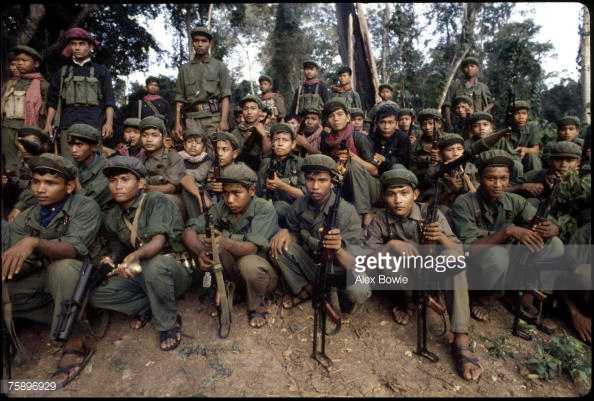
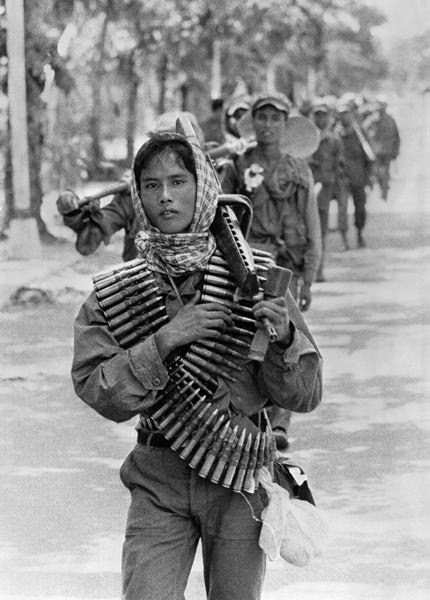
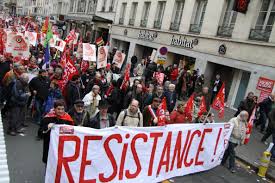


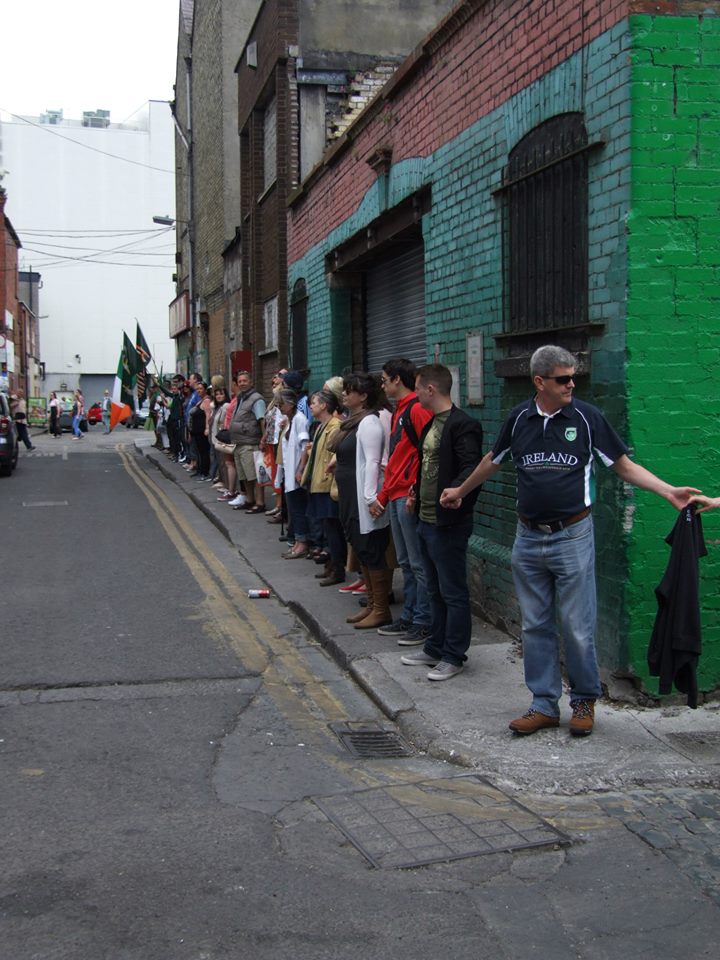
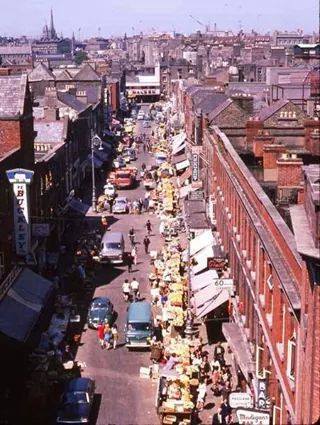
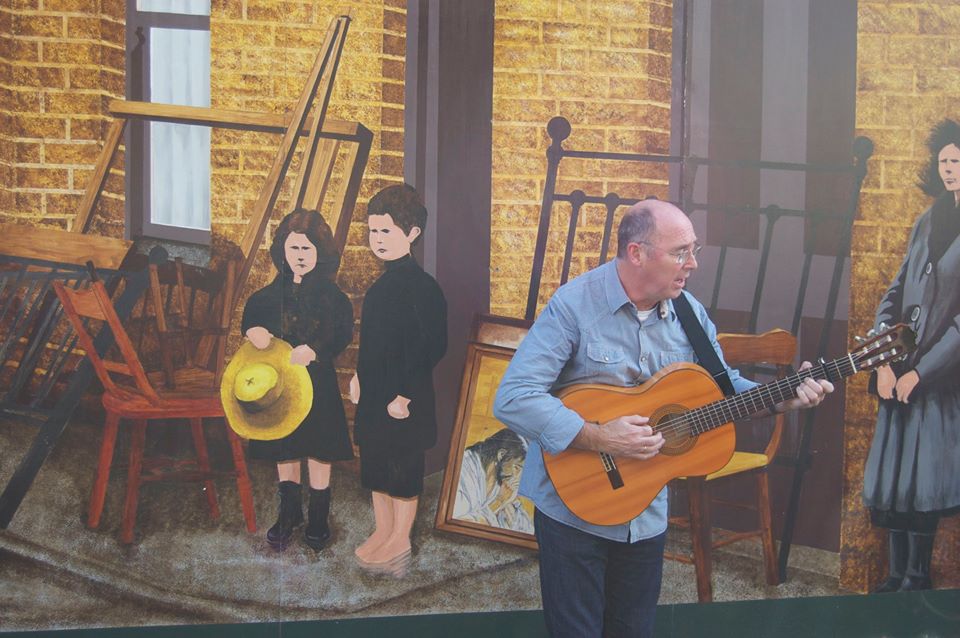
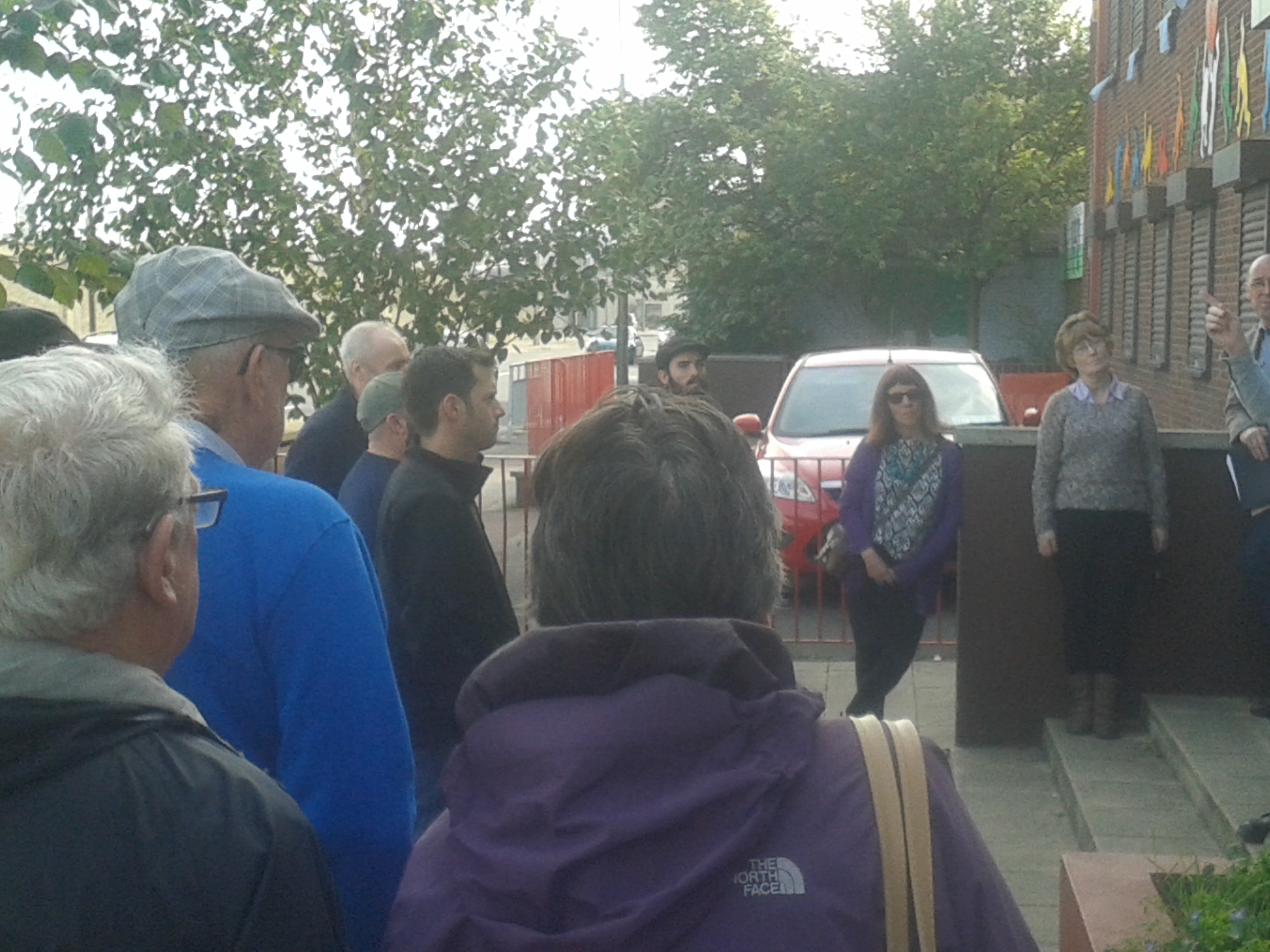
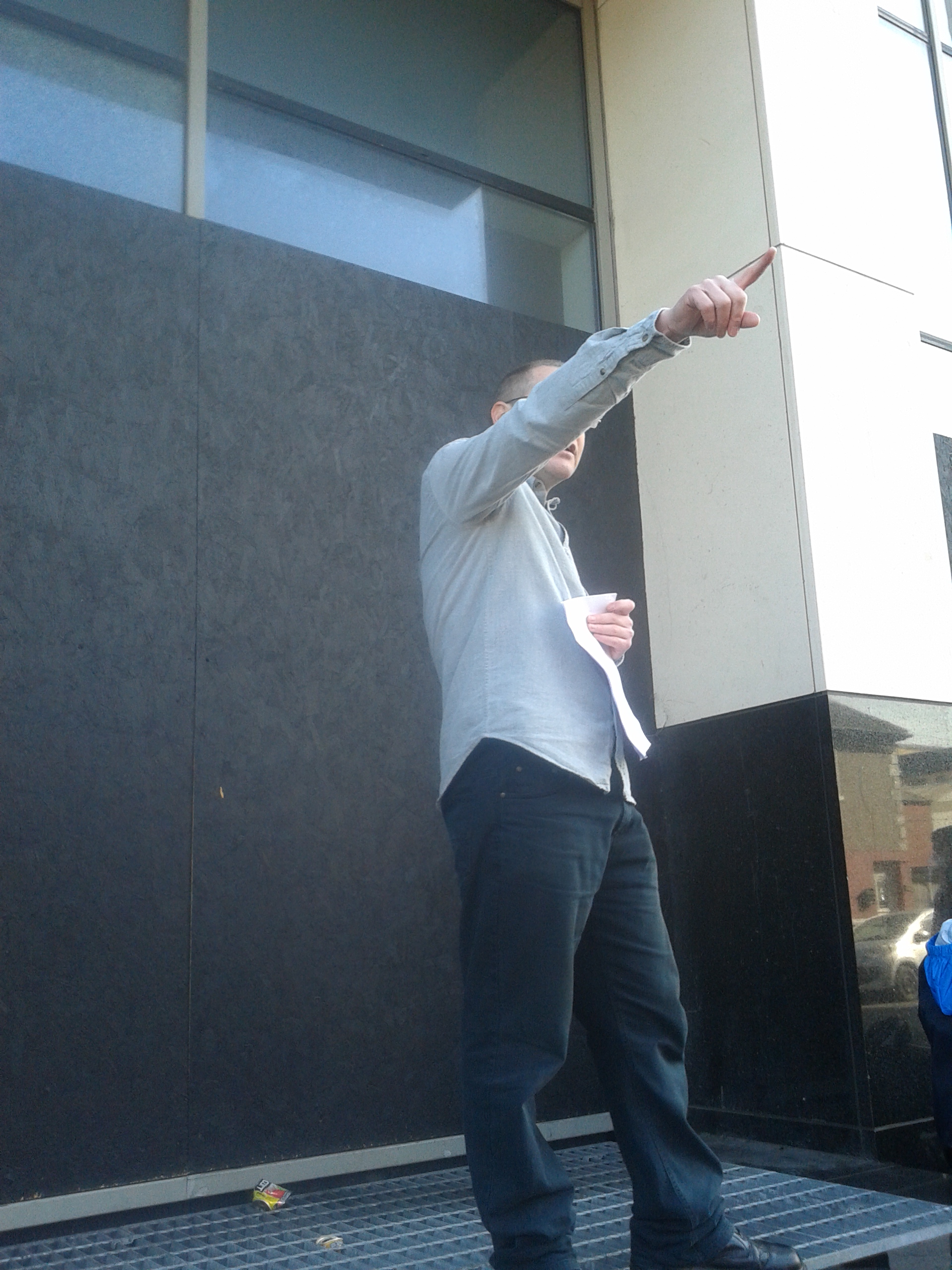
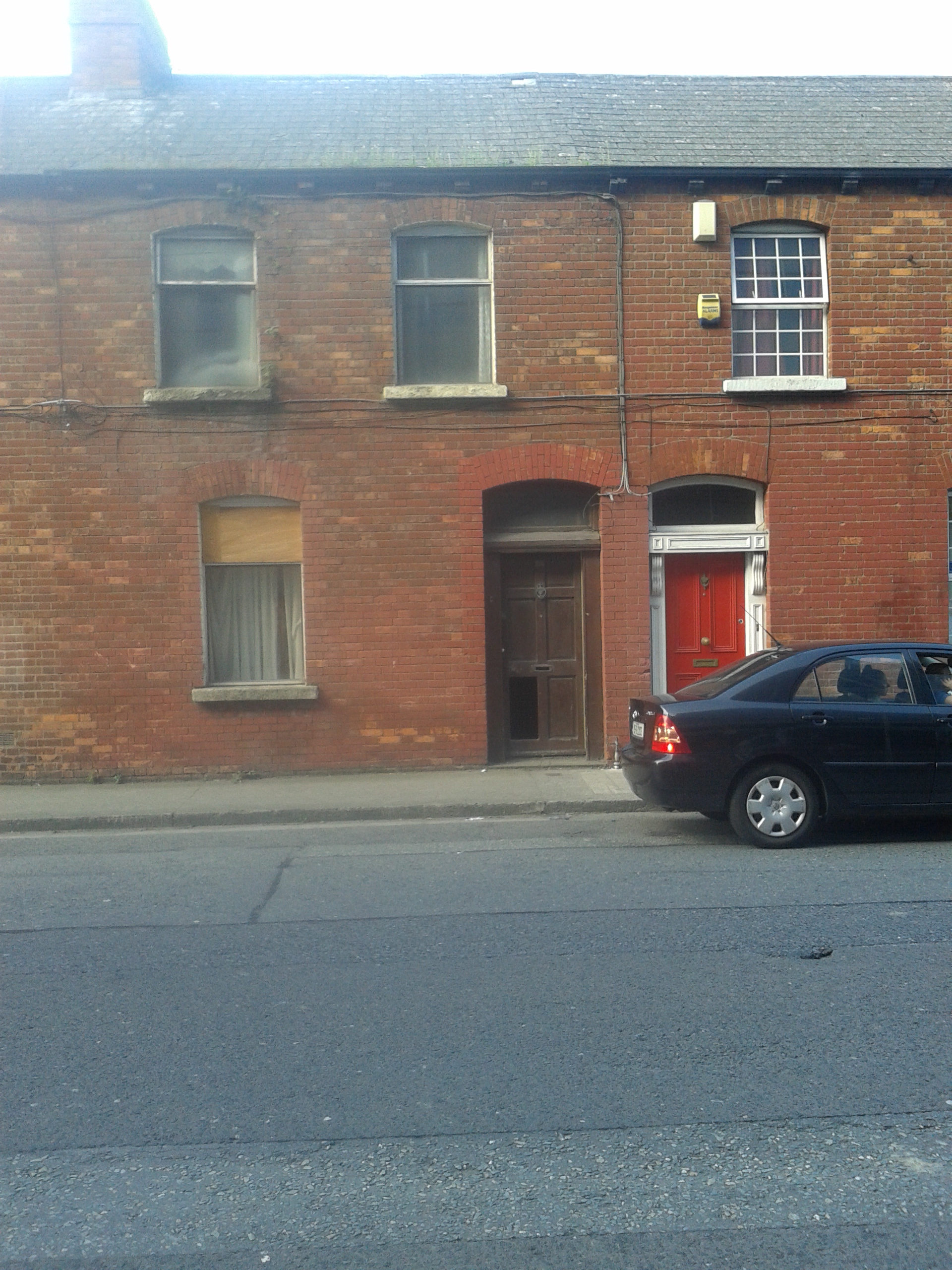
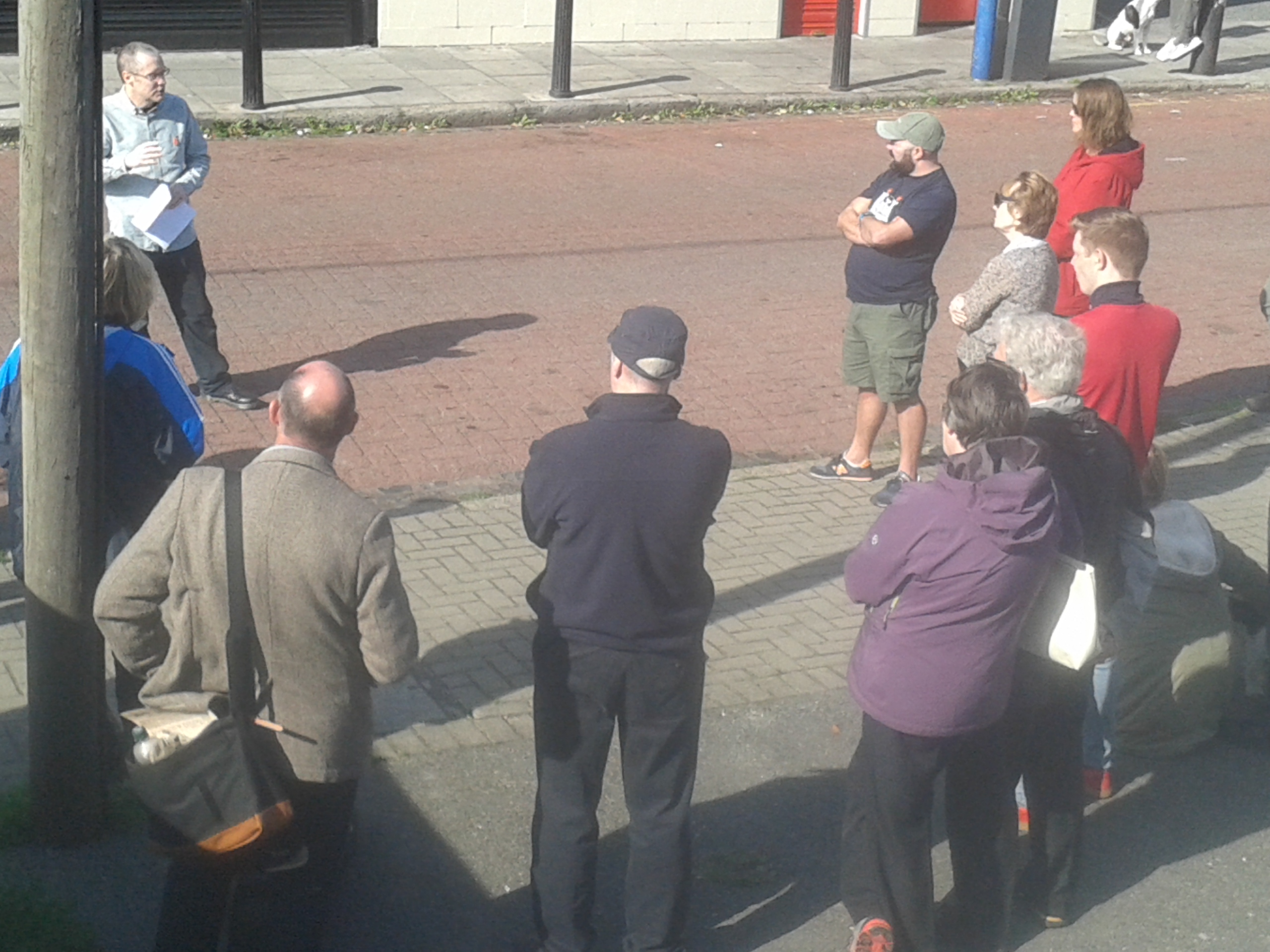
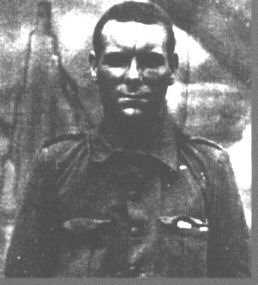
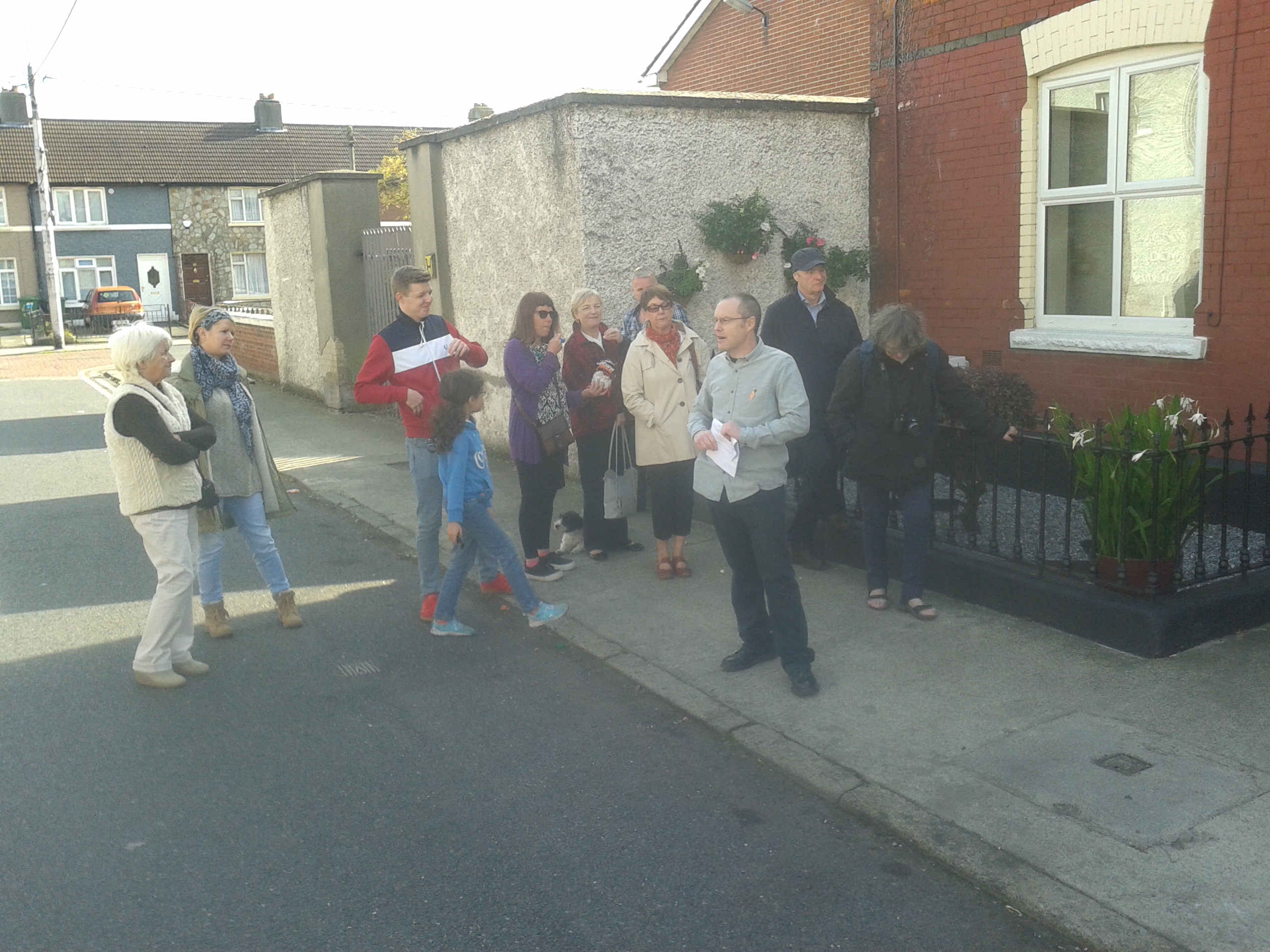
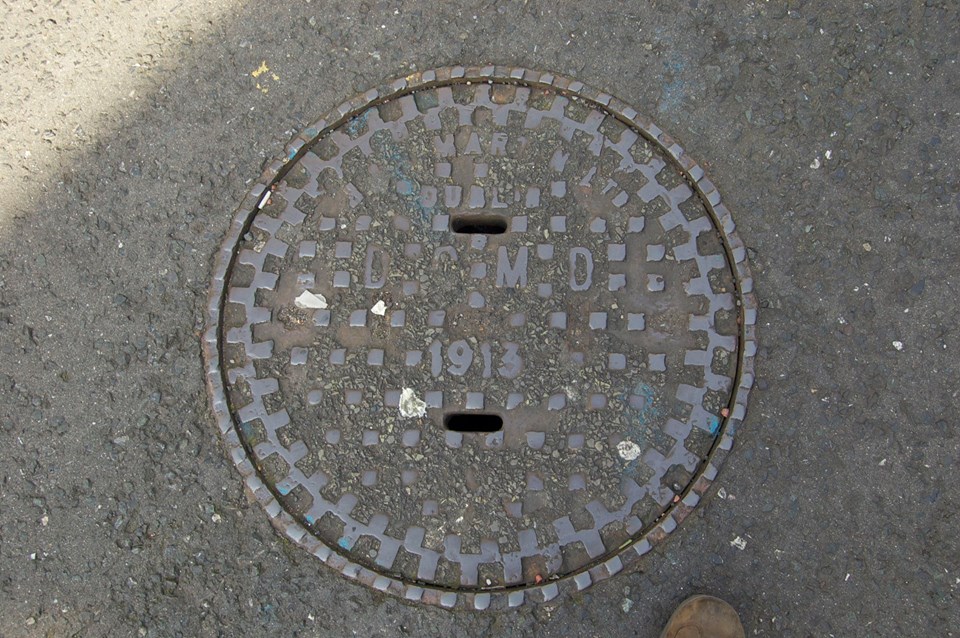


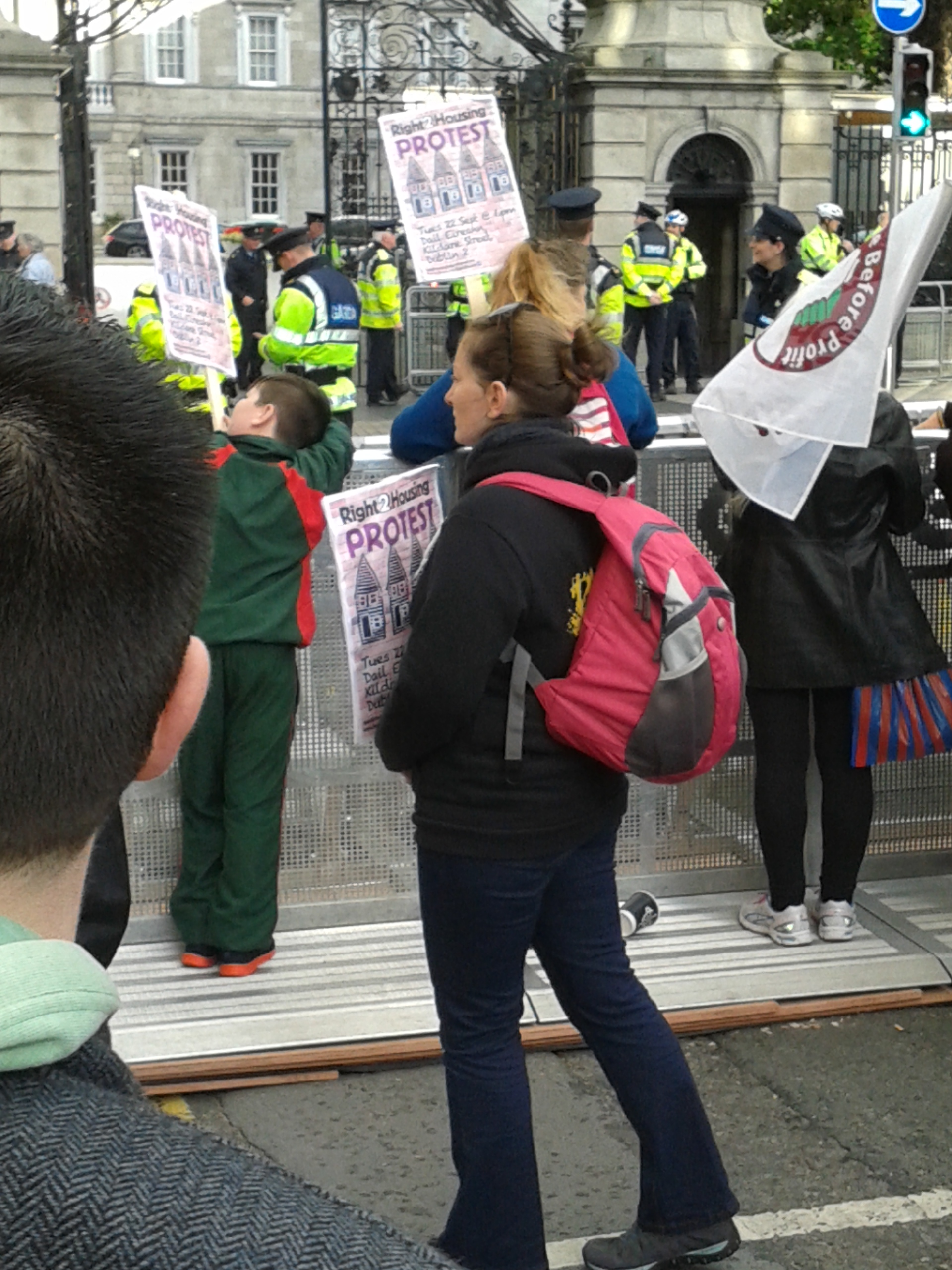
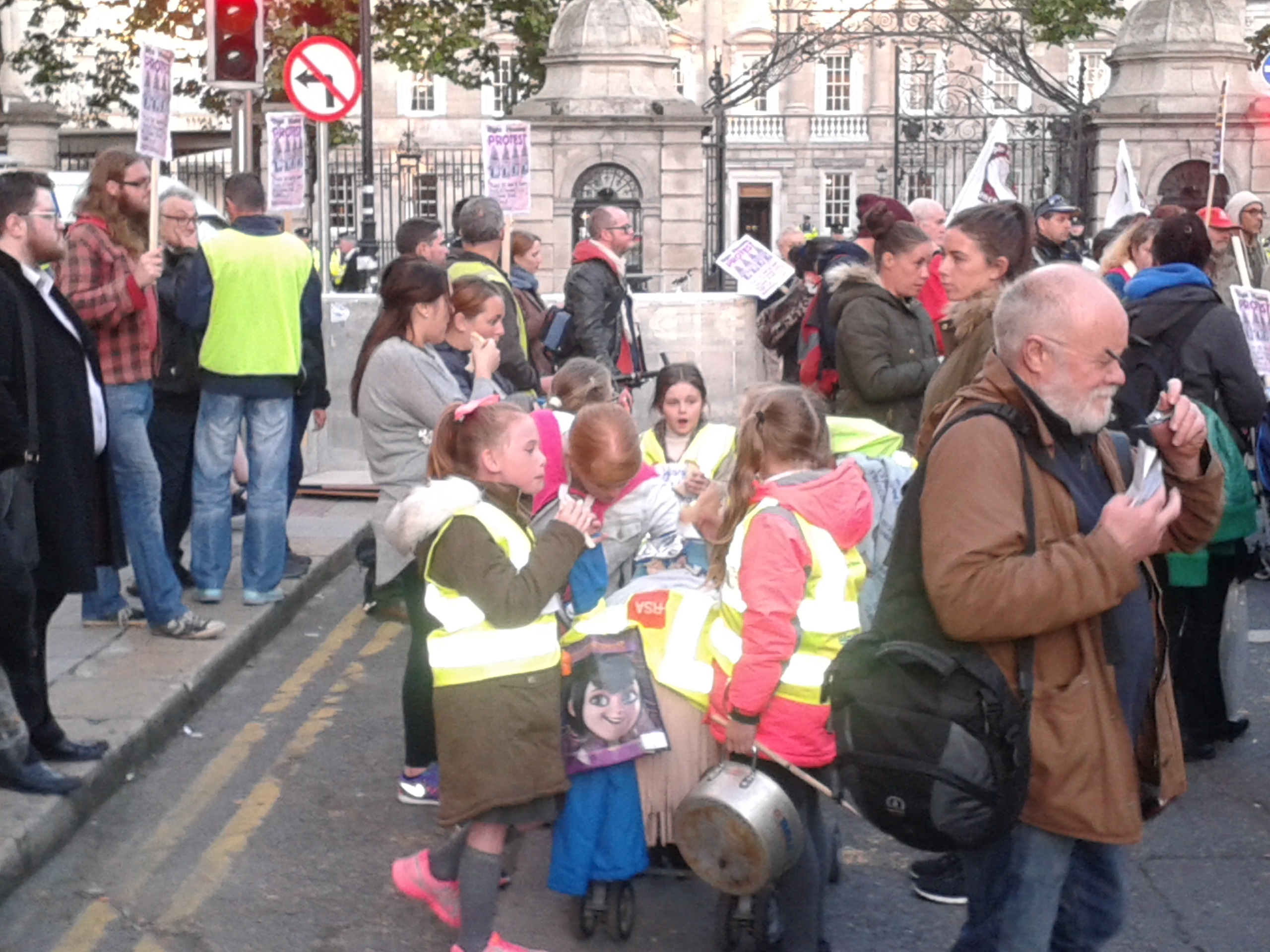

 There were many police but nothing was happening and Larkin did not appear. After a while, a horse-drawn carriage drove up and an elderly church minister alighted, assisted by a woman, and entered the shop. They took the lift to the restaurant floor. A little later Larkin appeared at the restaurant open window, in church minister’s clothing, spoke a few words to the crowd and ran inside. Those in the street were very excited and when the police took Larkin out under arrest, they cheered him, urged on by Constance Markievicz. The police drew their batons and attacked the crowd — any man not wearing a police uniform.

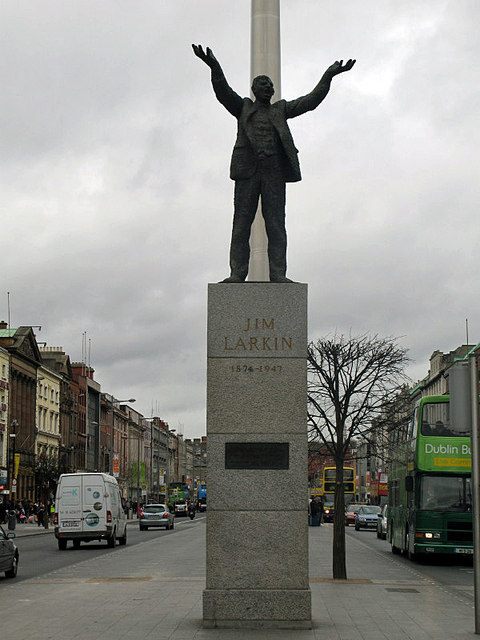


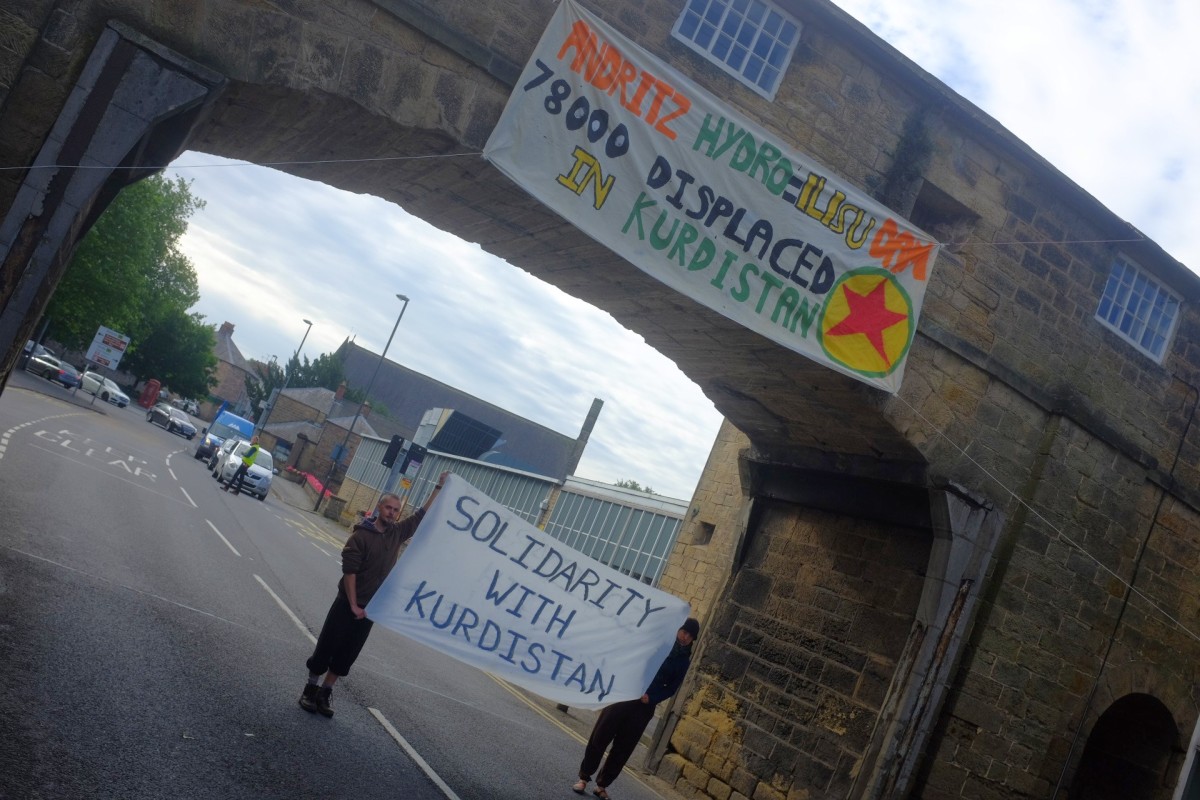


 rebelbreeze