California has long been home to the eccentric and free spirits, so naturally the highly eccentric Irish mystic, poet and Celtic mythologist Ella Young found a home there. The first woman to hold an endowed lectureship in the English Department at the University of California at Berkley, Young left several enduring legacies on the Golden State’s literature, counterculture, and environmental movement.
Nearing old age in Ireland, Young helped spark a new age consciousness in the Bay Area. Young lived the first fifty-eight years of her life in her native land, but even before leaving for America, she traveled far from her conservative Ulster roots. Born in December 1867, in Fenagh, a townland near Ballymena, Co. Antrim, Ella was eldest of five daughters of a Presbyterian minister. The family moved to Dublin at an early age and Young graduated with a BA in History, Political Economy and Law from the Royal University of Ireland. Abandoning Christianity, Ella’s interest in the spirit world led her to join the Hermetic Society, the Dublin branch of the Theosophical Society, which sought to awaken the power and presence of Ireland’s ancient spirits. Young was greatly influenced by fellow Ulster mystical poet AE Russell, and she soon became one of his select group of protégés known as the “singing birds.”
Ella Young in Oceano, California, image in Princeton University of Art Museum.
She found her muse and published her first volume of verse in 1906, and her first work of Irish folklore, The Coming of Lugh, appeared in 1909. Young mixed with luminaries of the Celtic revival including J.M. Synge, W.B. Yeats and Maud Gonne, with whom she might have had a romantic relationship. Like other writers of her day, Ella found great spiritual riches in the West of Ireland, where Irish was still the spoken language of the locals and where she was also able to hear what she called the Music of the Faerie, the ceol sídhe.
Ella completed a master’s degree at Trinity, but she would be drawn into the revolutionary fervor then sweeping Ireland. Young’s immersion in Celtic mythology and theosophy led her to promote a spiritually inflected Irish nationalism. A friend of Patrick Pearse, Ella became a member of Sinn Féin in 1912 and a founding member of Cumann na mBan in 1914. Ella witnessed the 1916 Rising in Dublin and is alleged to have hidden ammunition under the floorboards of her home and helped two fugitive Republican prisoners to escape Dublin. An anti-Treaty Republican, she strongly opposed the Anglo–Irish Treaty and, after supporting different sides, she and her mentor Æ Russell never spoke again. Because of her anti-Treaty stance, Young was interned by the Free State in Mountjoy jail and in the North Dublin Union.
An ardent cultural Nationalist, Young fervently believed the revitalization of Irish culture could be realized through a reconnection with its Celtic mythological roots. She taught in Dublin, but she came of age as an anti-Treaty woman at a time and in a state where her gender, politics and Protestant background severely limited her career opportunities. Young left Ireland for the US In the mid-1920s, where she would spend the rest of her life. Her emigration, she claimed, had been foretold in 1914 by a Romani fortune teller.
Ella Young 1930, Edward Weston Centre for Photography
Fortunately for Ella, Celtic studies scholar William Whittingham Lyman Jr. left his Berkley lectureship in 1922 and Young was hired to fill the vacancy in 1924. Ella, however, was almost forbidden entry into the United States. During an interview in Ellis Island, Young was detained as a probable mental case when the authorities learned that she believed in the existence of fairies, elves, and pixies. However, outrage by her American readers at the ban helped her finally gain entry.
Young fell in love with Berkley, California and Berkley loved her back. Young adored the college town, especially its exotic flora, breathtaking views, and its student culture. She quickly inspired a cult-like following in California. A striking woman, Young cut a dramatic figure with a noble forehead and face that seemed to shine with an inner light. She lectured in what she considered the traditional purple robes of a Druid bard, which she called her “reciting robes,” to visually portray an authentic Irish identity. She let her shoulder-length silver hair hang free and instead of shaking hands when introduced, she raised her hands high in the ancient druid greeting. Poet Padraic Colum compared her to the ancient “women who knew the sacred places and their traditions, who knew the incantations and the cycles of stories about the Divine Powers, and who could relate them with authority and interpret them wisely. . . She speaks of Celtic times as if she were recalling them.” A gifted speaker, Ella held her listeners spellbound with the heroic myths and sagas told in her lilting Irish voice – the voice of the bard, a keeper of the ancient teachings of her ancestors.
Young was above all a gifted storyteller and children’s author. She published The Wonder-Smith and his Son (1925), The Tangle-Coated Horse (1929), and The Unicorn with Silver Shoes (1932), stories for children, inspired by themes from Celtic myth, with beautiful illustrations and written in her delicate, carefully cadenced prose. The Unicorn with Silver Shoes was nominated for the American Newbery Prize for children’s literature in 1932; all her children’s stories were repeatedly reprinted until the 1990s.
(Image sourced: Internet)
Young was a frequent guest at the home of the celebrated California poet Robinson Jeffers, who was also deeply influenced by the Celtic revival. Jeffers and Young both identified the physical and spiritual similarities between California’s Big Sur and the West of Ireland. Ella considered dramatic Point Lobos in Marin County, where she communed with the dryads of the pine trees, the sea spirits, and the great guardian Deva who hovered over the sea with shining wings, to be the center of psychic power for the entire Pacific Coast. Young also became a close friend of Virginia and Ansel Adams, the renowned photographer of California’s wilderness, who made Yosemite Valley a symbol of the state. Adams took several dramatic portraits of Young in her “reciting robes.”
Ella Young lectured that an awareness of the supernatural world in Celtic folklore and literature could bring her listeners into a closer relationship with the natural world around them. Her love for the beauty of California made her an environmentalist long before it became fashionable, and also she saw the Earth as a great living being. She forged a close friendship with Dorothy Erskine, an early California environmentalist and advocate for limiting growth. Young also founded The Fellowship of Shasta, which became involved in environmental activism, working successfully to prevent developers from building on Point Lobos and also with the Save the Redwoods League, which preserved the remaining old-growth forests of California.
An enemy of materialism and egotism, Young espoused “the natural world and our relationship to it” as an alternative to consumerism. Ella moved to a Theosophic commune in Oceano, near San Luis Obispo in the early 1930s, and became part of a community of artists and writers living on the sand dunes, known as the Dunites. Thanks to her friendship with Ansel Adams, Ella stayed with the community of artists in Taos, New Mexico, where she met Georgia O’Keeffe and Frieda Lawrence and studied Native American and Mexican myths.
Back in California, Young assembled around herself a fascinating circle of artists, writers and freethinkers. She became close friends with the Irish-born landscape painter John O’Shea and other West Coast painters. Ella also became intimate with composer Harry Partch, who set several of her poems to music. Perhaps a lesbian herself, Young befriended California pioneers of sexual liberation, such as Elsa Gidlow, the British-born lesbian poet, and Gavin Arthur, a bisexual astrologer and sexologist whom Young first met in 1920s Dublin.
Young developed cancer. In the last year of her life, she claimed that she had been in communication with the occupants of a thimble-sized spaceship which came and hovered in her garden. Ella died in her cottage on July 23rd, 1956, aged eighty-eight. She was cremated, and her ashes were scattered in a redwood grove. She left the royalties from her books to a society that protected those redwoods.
From the window of the government building I worked in, I noticed a gathering of men. Mostly dressed in motorcycle leathers, many of them very overweight, and bearded, the crowd grew to perhaps 70 or 80. Some of the men were wearing maroon berets. They were a comedic spectacle: imagine a few score of Ken Maginnis-types in motorcycle leathers. They lined up in military formation, their physical condition making this pretence pathetic rather than sinister, and unfurled a very small banner which read “WE SUPPORT SOLDIER F.”
I couldn’t help thinking of protests against the injustices visited upon the Guilford Four and the Birmingham Six, protests held in England. How society seems to have changed, and not for the better.
Douglas Murray, a neo-conservative thinker and writer much respected and admired by many on the right, had this to say about Soldier F in his peerless account of the Bloody Sunday Inquiry: Soldier F — who fired 13 rounds on the day — whose performance in 1972 and 2003 was most disturbing. It always seemed to me that if anyone was deserving of prosecution, then it was him.
Murray also had this to say about the killers of 14 civilians on Bloody Sunday: “The soldiers of 1 Para weren’t just unapologetic killers, but unrelenting liars.”
“Support the Paras (Parachute Regiment) and Soldier F” — i.e any British soldier who has murdered people from the Nationalist community. (Image sourced: Internet)
Recently, former British solider Dennis Hutchings faced trial for the killing of John Pat Cunningham. Hutchings received much support, including high profile political support, from those who objected to his prosecution. The circumstances of John Pat’s death could scarcely be more upsetting:
A Benburb doctor said the victim, who was his patient, had been born with an incomplete development of mind, and had been declared a person requiring special care. The doctor said that about a year earlier, near the scene of the shooting, he had come across soldiers pushing John Cunningham into a Saracen armoured car. He spoke to the soldiers who said he had been hiding in the bushes and acting suspiciously. The doctor said he had told the young man’s mother about the incident and advised her to keep a special watch on her son’s movements, in view of his apprehension towards soldiers and their uniforms.
Dennis Hutchings is alleged to have shot John Pat in the back as he ran away from an army patrol. There is simply no way that John Pat was a threat to them. British and Unionist politicians were outraged over a prosecution taking place. They were silent when the prosecution of Soldier F, a perjurer, multiple-killer, and perhaps the single greatest recruiting sergeant the PIRA ever had, fell apart.
From tragedy to farce, we can now look at the case of Donald MacNaughton, who was tried and acquitted of attempted murder in 1974. The case against him fell apart because of “inconsistencies” with the victim’s evidence, and the evidence of MacNaughton and his comrades “fitted together and was not mutually contradictory .” MacNaughton was a member of the Parachute Regiment, whose soldiers colluded with each other to lie to several British Government Inquiries, and indeed to British Army investigators. The farce in this case, I think, demonstrates something of the self-degradation of those on the English right: MacNaughton became a Brexit Party campaigner, and is widely believed to have thrown yogurt over himself to gain media attention.
Motorbike rally in Belfast in support of Soldier F, who admitted to firing 13 bullets during the 1972 massacre of unarmed protestors in Derry. (Image sourced: Internet)
Hutchings died before his trial, and will be given full military honours at his funeral. Soldier F was promoted and decorated several times in his military career. Just as their killings of Irish citizens did not unduly affect their lives for decades, was there any serious attempt at prosecuting them to the full extent of the law?
But their prosecution is not really the point. The level of support for them is.
What does it say about sections of society, and politicians, if they can support those suspected of murder, so long as it was committed by a uniformed killer, regardless of the status of the victim?
⏩ Brandon Sullivan is a middle aged, middle management, centre-left Belfast man. Would prefer people focused on the actual bad guys.
Mohamed Fadel states that he was seriously injured last April by a Moroccan drone, during the same action in which the head of the Saharawi National Guard was killed. Morocco is silent on the use of these unmanned devices that have become the obsession of the Polisario Front troops.
Mohamed Fadel, ‘Mundi’, in a tent in the Saharawi refugee camp of Bojador, in Tindouf, Algeria, on October 15.
Mohamed Fadel can say that he has firsthand experience of the changes between the two wars against Morocco in which he was wounded. The first was in 1985, when a shell fragment hit him in the arm. But he recovered and returned to the front in no time. The second time was the recent April one and “it was more serious,” he says, showing the marks on his body under his military jacket.
Burns to his face, hands and arms, two scars the size of a coin on his right side and an incision of more than a foot long across the middle of his belly. “They had to open me up to remove the three pieces of shrapnel that I had inside. It took me three months to fully recover,” he explains in perfect Spanish. “It was a drone attack. That is now the big difference,” insists this seasoned 64-year-old Saharawi fighter.
But Mundi, as everyone knows him in the refugee camps in Tindouf, Algeria, does not like to talk about two different wars. This, he says, the one that the Polisario Front declared on November 13 after 30 years of ceasefire, “is just a continuation of the previous one”, the one that began in 1975, after the military occupation of the former Spanish Sahara by part of Morocco. “The enemy is the same and the objective is the same: the referendum that has not been held and the independence of the Sahara. The only things that have changed are the means, the technology,” explains the Saharawi fighter, in the shade of a tent in the Bojador refugee camp.
“They are neither seen nor heard, but they are there and attack at any moment”
Moroccan drones are the worst nightmare in this new stage of hostilities, according to all the Sahrawi fighters interviewed by Público during the Polisario-organized trip to the camps last week.
“They are neither seen nor heard, but they are there and attack at any moment,” insists Mundi, although at the moment they have not shown any documentary evidence certifying the presence of armed or surveillance drones. The two parties accuse each other of using them, although both deny it, according to the latest report on this conflict by the UN Secretary General, Antonio Guterres.
Saharawi women living in Gastheiz (San Sebastian) in the south-west Basque Country demonstrate in solidarity with their people’s struggle and the Polisario Front (“askatu” = “free”) in May 2020. (Photo source: Internet)
An almost paranoid obsession
After each Sahrawi attack against the defensive Wall built by Morocco, all eyes are on the sky. Drones feel close almost always, even if they are not there, like an almost paranoid obsession. One of the main military directives of the Polisario is to stay away from cars when they halt, because they are their main target. When they believe that a drone is following behind, the old Sahrawi vehicles separate, stop and the unit that was on board runs away.
Morocco has embraced the purchase of Turkish-made armed drones, according to ‘Reuters’
These unmanned devices make up much of modern warfare and have been instrumental in recent conflicts. One of the most recent, for example, was the capture by Azerbaijani troops of Nagorno Karabakh last year. They defeated the Armenians thanks to Turkish-made drones, deploying practically no soldiers to the front, recalls the arms trade expert Tica Font, from the Delàs Center for Peace Studies.
Font emphasizes that Turkey, Azerbaijan’s main ally in the conflict, is one of the few countries that manufacture and sell drones capable of loading and firing missiles, along with the United States, Rabat’s main military supplier, followed by France and Spain.
Indeed, as Reuters recently revealed, Turkey has expanded the sale of armed drones to Morocco. Specifically, several sources cited by the British agency speak of purchase requests from Rabat of the Bayraktar TB2 model, of which they would have already received a first batch ordered in May.
The Moroccan Army attack on the protest camp at Guergat on 13 Nov. 2020 which sparked the long-delayed renewal of Polisario armed struggle (Photo source: Internet)
As we moved away, a drone followed us
Although that was two months after the attack Mundi is talking about. According to him, the bombing that wounded him was on April 11. “In broad daylight, at four in the afternoon. We were near the Wall, we had just carried out an operation against a Moroccan base and they responded. First with artillery and, later, when we were moving away, a drone followed us,” he described.
His vehicle stopped and his three companions followed the rules of dispersing, but Mundi had no time to get to safety. “The missile landed very close to the car and I was level with the front wheel,” he recalls. He claims that that afternoon he was able to see one of the aircraft in the air, although he did not see it fire. He believes there had to be more than one, “because eight or nine missiles were launched, and that cannot be carried by a single drone,” he maintained.
Mohamed Fadel ‘Mundi’, wounded Saharawi Fighter photographed in Saharawi refugee camp, Tinduf, Algeria 15 Oct 2021 (Photo cred: Jairo Vargas)
In that Moroccan bombardment, Mundi explained, the esteemed head of the Saharawi National Guard, Adah el Bendir, 61, a noted military strategist expert in engineering and combat, died. The Polisario announced the important loss. Morocco, for its part, opted for its most effective tactic since the resumption of hostilities: silence and indifference. Only the Alawite news portal Le Desk reported that an Israeli-made Harfang model drone had participated in the attack on El Bendir. Morocco did not even want to claim a goal in a war that does not exist for Rabat.
However, the Delàs Center expert warned that most of the marketed drones are for surveillance and monitoring, and that they do not need to carry weapons to attack a target. “Many have all kinds of built-in radar and sensors that send information to a central computer. With that data, you can open fire with precision from any platform, be it a ship, an aircraft or a ground unit. Tens of kilometers from the target” says Font.
Saharawi struggle supporters in Bordeaux, France on 11 December 2020 (AFP). France is a Permanent Member of the UN Security Council and is the main European state supporting Morocco.
That’s Le Desk‘s version of the attack in which Mundi was wounded and El Bendir killed. According to this Moroccan portal, the drone laser marked the target and an F-16 fighter launched the projectiles.
“They do not scare us, because with fear nothing is done in war. But there is a lot of uncertainty, a lot of anxiety and tension,” he affirms after 46 years as a soldier in the Saharawi people’s army.
Mundi is confident that sooner or later they will find the formula to detect and demolish the Moroccan aircraft. “We learned to fight them when they raised the wall, we learned to shoot down their planes and we learned to capture their armour,” he says. “We are still starting. At the moment we are using a tactic of attrition. We attacked bases and retreated. In the 80s we also started that way when they built the wall. Until 1984 we did not carry out large-scale attacks. War has its times,” he says. This one has already lasted more than 40 years.
Political Statement against the new banning attempt: the Ministry of the Interior initiatates a procedure in the Spanish National Court for the “extinction” of Izquierda Castellana
The Central Contentious-Administrative Court No. 6 of the Spanish National Court has notified us on August 5th of the motion put forward by the Ministry of the Interior through the State Lawyers in which the “extinction” of Izquierda Castellana is sought, that is, its disappearance as a legal political organization.
Demonstration of Izquierda Castellana with their logo on banner declaring “Spanish State Prison of Peoples”.
On this occasion, the Ministry of the Interior resorts to administrative tricks, arguing that IzCa’s statutes do not comply with the changes introduced through the legislative reform of Organic Law 3/2015, of March 30, on the control of the financial-economic activity of Political Parties.
It is paradoxical that a political organization that, as is the case with Izquierda Castellana, never in its entire history requested or received any financial subsidy, is intended to be outlawed based on these kinds of reasons, especially when most of the political parties that ostensibly breach the legal regulations on such matters are not even warned of such a possibility.
In our opinion, the attempted extinction / banning of IzCa sponsored by the Ministry of the Interior has a political motivation: the intention of making disappear an organization whose essential activity is the denunciation of all the corrupt, antisocial, antidemocratic and antipatriotic activities of the current Regime of the 2nd Bourbon Restoration; and whose ultimate aim inevitably passes through the establishment of a democratic, republican and social rights system.
IzCa, as we pointed out, has not received or requested a single euro from the public treasury. Our activity is based solely and exclusively on our resources, especially on our human resources, that is, on the militants and activists who support us every day in one way or another. IzCa does not have as such – nor does it claim – representation in the institutions of this post-Franco regime. We do not despise this sphere of action, but it seems to us that the most important and useful thing in this historical moment is to promote the movement and popular organization in the various sectors, and we focus on this and we also believe with some success; that is what the Regime and its successive governments have not forgiven us.
IzCa has suffered permanent harassment from the constituted power since our founding; numerous media-police operations have been plotted against our organization. In 2008 there was already an attempt to ban IzCa, which was finally archived without action in the National Court itself. Last December the trial against our comrade Luis Ocampo was held – Doris Benegas was also on trial – with regard to the events that occurred in the Republican demonstration in Madrid in October 2014. In that trial, a year and a half in prison was requested by the Prosecution. Finally, our comrade was acquitted; in its judgment, the Madrid Provincial Court Court recorded that his version of events was fully credible.
IzCa has been denouncing the repressive policy towards the popular movement and at the same time favourable to the extreme Right that has been carried out by the Ministry of the Interior and very especially by the Government Delegation in Madrid, intensified repression since the beginning of the Covid-19 pandemic. We accurately forecast the overwhelming defeat of the institutional Left in Madrid in the last regional elections on May 4; and we predict – we believe that without the slightest possibility of error – the defeat of the institutional Left in the next general elections if it continues on the current path. If you try to make activist organizations disappear, those that with more dedication and commitment defend the interests of the working classes, you are facilitating the path of access to the government by the Right. If the interests of the peoples of the Spanish State are subordinated to those of imperialism – certainly in a phase of full decline – one of the most significant expressions of which is the scheduled holding of the next NATO summit in Madrid in 2022, it is refusing to build its own project in solidarity with the peoples of the world and, once again, facilitating the advance of the right wing, militarism and warmongering.
We are going to fight against our outlawing at the National High Court and before all judicial bodies, including European ones, where it is necessary. In the National Court, that special court of which we do not recognize any democratic legitimacy, nor for the entire institutional framework of the ’78 Regime,starting with its Head of State, just as “exemplary” in its general terms as the rest of its institutions and whose legality is based on Franco’s legality. But above all, we will continue to fight in the streets.
Study and reflect; organize and mobilize; build popular power. That’s the only way.
Izquierda Castellana, August 6, 2021
COMMENT:
The Izquierda Castellana is a revolutionary socialist organisation basing itself on the territory of Castille (a central area of the Spanish state including Madrid) and claiming its right to self-determination, drawing its historical inspiration from the revolt of the Comuneros in the 1520s. The party or organisation seeks social justice internally, self-determination for its own territory and supports the struggles for self-determination of others (for example, the Basques and Catalans), is opposed to imperialism abroad and military alliances such as NATO. IzCa is anti-racist and anti-fascist and has suffered repression.
The potential for revolution in the Spanish State is not in the Basque Country and Catalonia alone, nor only in other areas such as Galiza and Asturies but in the heartland of the State also, in Madrid and in other parts of Castille. It seems clear that the struggles for independence of the Basque Country and Catalonia as in the past will be met with heavy Spanish repression and the only possibility for success in such circumstances would a situation in which the State was met with uprisings in other parts also. I have long advocated the building of the type of alliances that could make that possible.
(Report by Jardun Koordinadora translated by Dublin Basque Solidarity Committee)
The atmosphere was tense on September 25, 2021 in Leitza due to the presence from the early hours of the morning of the Civil Guard and the secret police. To this must be added the checkpoint and identification by the GAR (Guardia Civil “anti-terrorist” Rapid Response Organisation – Translator) of many of those attending the political event organized by the revolutionary organization JARKI. In the same way, the Civil Guard had no problem in stopping and subjecting to identification those who traveled by bus organized from Bilbao and Gernika. This was not the only episode of police repression since several JARDUN activists from Leitza complain of having been followed by the secret police over recent days.
One of the posters for the event (Photo source: Jardun Koordinadora)
The event organized by the revolutionary organization JARKI gathered hundreds of people in Leitza square. Once the flame was lit, to the sound of the adarras and the txalapartaris (traditional ox horns blown and wooden percussion instrument played – Trans.), the act began, under a gigantic ikurriña (flag of the Basque Country – Trans.). Next, the dantzaris exhibited the “agintariena” (see Notes) while a gust of wind snapped the rope securing the ikurriña and two young people had to climb the pediment to hold it for the rest of the act. Later, two bertsolaris took the stage asserting with their verses independence, socialism and amnesty, as the legitimacy of the fight of the gudaris (volunteer liberation fighters).
Dancing the Aurresku, the honour dance and presenting red flowers to the memory of the martyrs of the Basque struggle for independence and socialism. (Photo source: Jardun Koordinadora)
To conclude the ceremony, a member of JARKI read a statement in reference to the commemoration of Gudari Eguna. The statement among many other things vindicated the struggle for memory of Euskal Herria, and of those who have given all in for it, thus legitimizing their struggle and the celebration of this day. He also mentioned the presence of ‘dogs’ in different uniforms that act with total impunity, making it clear that there is no type of coexistence between the oppressed and the oppressors. To the revolutionary organization JARKI this underlines a clear principle: confronting who is oppressing you and who is keeping you under their control is not an option, but a necessity.
End of the event, singing the Internationale and the Eusko Gudariak (Photo source: Jardun Koordinadora)
The act ended with the singing of the Internationale and the Eusko Gudariak.
The Gudari Eguna (Day of the Soldier) originally celebrated the Basques who fell fighting the fascist-military coup in the ‘Spanish’ Anti-Fascist War or who were executed when captured or died as a result of their prison conditions. The martyrs in the struggle against the Franco dictatorship and after required that they also be included in the Gudari Eguna celebrated in October but since the Basque Nationalist Party dominates that commemoration and excludes the later martyrs, the patriotic left movement has changed the date to the last weekend in September and celebrates all the Basque martyrs. The last weekend in September was chosen because of the Franco regime’s execution of two ETA and three FRAP volunteers on 27th September 1975.
Jarki is a revolutionary socialist organisation for Basque independence. Statement on who Jardun are: “It is an image that includes a group of organizations fighting for the achievement of the Basque socialist state, operating under common agreed ideological bases and minimums. JARDUN is a meeting place for different organizational frameworks, a movement that promotes their collaboration. To this end, it provides a common framework for the adoption, coordination and decision-making of the various organizations that make it up. Therefore, at different levels, it is a tool for solidarity between militancy, organizations and groups within it. Using these coordination frameworks, the ACTION will be made up of sectoral organizations with specific functions and well-defined roles to carry out in a sector-specific way. The aim of this sectoral framework is to promote the efficiency of the organizations, which, in turn, incorporate the Basque Country Workers’ Alternative in the field in which they work. In this way, all the organizations that make up JARDUN work within the framework of the same objective and strategic line, each of which deals autonomously with its own line of work.As long as we understand that the workers are the subject of the struggle for an independent, socialist and united Basque state. So, when we talk about the Basque Country Workers’ Alternative, we are talking about a comprehensive political alternative that meets the needs of the Basque Country Workers. Its aim is to reach all areas of Basque society as a tool for activating and organizing the critical pro-independence and socialist masses in the Basque Country. In other words, the Basque Workers’ Alternative must be a tool for confrontation that will lead us to a break with the states. Ultimately, JARDUN must be the organizational framework for the Basque Revolutionary Workers. In order to achieve the strategic goals of the Basque Revolutionary Workers, which must carry out the Basque socialist revolution, it must be a comprehensive alternative that must provide the means to carry out the necessary struggles.”
Leitza is a town in northern Nafarroa (Navarra), one of four provinces of the Basque nation within the Spanish state.
The Guardia Civil are a Spanish state-wide gendarmerie or militarised police force, armed and living in barracks. They were the physical backbone of Franco’s dictatorship and continued in a repressive political role following the “Transition to democracy”.
The Agintariena is a ‘dance’ which resembles a short military parade with ‘arms’ to music; two lines of dancers march while a flag-bearer proceeds between them. At a particular point the dancers all go down on one knee with heads bent while the flag-bearer waves the flag over them all, seemingly in blessing over the fallen in battle. A mass example in a festival can be seen in the video clip https://www.youtube.com/watch?v=kfoTmQZC_gs with the irrintzi (traditional ullulating call) thrown in for good measure.
Bertxolaris are performers of a traditional format of expression in song and rhyme on any theme. Competitions among these are held in the Basque Country in which the performers must extemporise rhyming verses on a given theme; these receive great public interest.
“dogs in uniform” — “txakkurak” (dogs), a pejorative slang name given for generations to the police in the Basque Country.
The Internationale is a song of revolutionary socialist struggle with lyrics written by an Anarchist activist in the Paris Commune of 1871 and put to music later by Marxist; it has been translated into a great many languages with examples in every populated continent. Eusko Gudariak (Basque Soldiers) is a Basque national anthem (in theme somewhat like the Irish national anthem “The Soldiers’ Song”). It was reputedly sung by ETA martyr Juan Paredes Manot (Txiki) while being executed by Guardia Civil firing squad in 1975, even continuing while mortally wounded by the first volley.
Actually what the hierarchy referenced fearing in a recent 95-page statement was “two Spains”, which most commentators took as being a reference to a repeat of the Anti-Fascist war of 1936-1939, with Republican Spain and Fascist Spain. The statement of the Spanish Episcopal Conference (CEE) spoke of the “stability” which the 1978 Constitution has given the Spanish State. So have they suddenly now become democrats? Of course, one can think of another way of imagining such a dichotomy: Rich Spain and Worker Spain. I think the Bishops fear another kind of civil war – i.e revolution.
The 95-page document entitled ‘Faithful to missionary sending’ was prepared not only by the collegiate bodies of the CEE but also by external collaborators. Less open to different interpretations are the other concerns raised by the Bishop’s Conference, regarding the increasing secularisation of society, the scandals around abuse of those in the care of Church institutions and pastors, along with the other scandal of church appropriation of public property, including even a UNESCO site1. The Bishops feel that some of these processes and issues are not merely accidental or incidental to modern times but rather are deliberately driven by people in hostility to the Church.
CHURCH AND POLITICS
It is customary and has been so throughout history for the dominant religious institution to have a close relationship with the dominant class in society and this has certainly been the case with the Catholic Church in the Spanish Kingdom. The Spanish ruling elite at the turn of the last century, in a country with underdeveloped capitalist industry was an alliance of two different social classes, the aristocracy and the capitalist-financier class. The social atmosphere was deeply conservative and dominated by the Catholic Church hierarchy which, through them and the religious male and female orders, controlled institutions of social and educational provision. Progressive artists were penalised and often enough went into exile.2
The First Spanish Republic, a brief attempt to liberalise and democratise the State after the abdication of King Amadeo in 1873, survived not even two years before being overthrown in a military coup, followed by repression causing the exile of many of republican leaders and supporters.
However, a wave of revolt against the conservatism and lack of democracy of the Spanish Kingdom came around again and in 1931 the Second Republic was created, overthrowing the dictatorship of General Primo Rivera. Initially the composition of the government was right-wing and the revolt of the Asturian miners was cruelly suppressed by the Army and the militarised police force of the Guardia Civil3. The right-wing government fell in 1936 when a democratic left-wing Popular Front government was elected, which set about legislating for greater social freedoms, equality and discussing autonomy for nations4 within the State.
DEMOCRATIC GOVERNMENT AND MILITARY-FASCIST UPRISING
That was the signal for the forces of reaction to strike and most of the military high command, allied with the fascist Falange5, staged a coup. In Barcelona, the coupists were quickly suppressed by a popular upsurge which took on a revolutionary character. In some other parts, particularly in Madrid, the coupists were suppressed too but without a revolution.
General Franco in partnership with another three generals and senior naval commanders led or joined the coup but Franco’s forces were isolated in part of North Africa (then a Spanish colony). While the ‘democratic’ European powers ‘blockaded the conflict’, Nazi Germany and Fascist Italy provided the logistical support6 to get Franco’s forces to the Canary Islands, then to Spain, where they found little organised opposition but nevertheless carried out a reign of terror. The Spanish Catholic Church hierarchy and most of its priests and religious orders supported the military and fascist rebellious forces with enthusiasm.
Spanish Catholic hierarchy supporting fascist military (Photo sourced: Internet)
A conflict variously called “the Spanish Civil War” or “the Spanish Antifascist War” followed, ending in 1939 with victory for the military-fascist forces, who lost an estimated 175,000 killed in action, and 110,000 died fighting for the Republic.7
Following the earlier pattern of areas the fascists had conquered, a wave of repression ensued against republicans, communists, socialists, anarchists, democrats, trade unionists, Basque, Catalan and Galician nationalists, gays and lesbians, with summary executions, military tribunals and executions, mass jailing, public humiliation of women …. Estimates of executions behind the fascist-military lines during the War range from fewer than 50,000to 200,0008. Most of the victims were killed without a trial in the first months of the war and their corpses were left on the sides of roads or in clandestine and unmarked mass graves.Spain has the highest number of mass graves anywhere in the world with the exception of Cambodia9, with 740 mass graves containing the remains of some 9,000 people having been found so far. The support of the Catholic Church for the military and fascists did not waver throughout.
THREE DECADES OF FASCIST DICTATORSHIP
After that initial phase, three decades of political and social repression followed under the Franco dictatorship, again fully supported by the Spanish Catholic Church.
However, the dictatorship was always resisted to some degree or another and that resistance began to grow apace during the 1960s. The Partido Comunista de España and the social-democratic Partido Socialista Obrero de España, both banned, were organising underground and becoming increasingly popular. Both had affiliated trade union organisations and the Comisiones Obreras10, linked to the PCE was particularly widespread. The youth of the Basque Nationalist Party (PNV) broke with the conservative and inactive leadership and, joining with a revolutionary socialist movement in the southern Basque Country, formed ETA11, taking up armed struggle at the end of the 1960s.
Fascist dictator General Franco (R) with his protege and nominated successor, Juan Carlos (L), later King of Spain. (Photo sourced: Internet)
As the Dictator aged the imperialists began to worry about the potential for a revolution in Spain and contacts in influential circles were sought to persuade the ruling class to replace the Dictatorship with a parliamentary democracy. Some elements in the Spanish Catholic Church opposed those initiatives but one which embraced it was the technocratic Opus Dei, which with some others, steered the country through the Transición.
Amidst a wave of repression including murders of activists by State and other fascist forces, with fear of an indefinite continuation of the Dictatorship, a Referendum on a monarchist and unitary state constitution was held. The PCE and the PSOE were legalised and, with their support, the 1978 Constitution received majority support. It is that Constitution which is regularly quoted when the State declines to permit the Basque and Catalan nations to even hold a referendum on independence.
In summary then, the Spanish State has evolved from a deeply conservative and repressive state, through a fascist-military uprising to a fascist and socially conservative dictatorship, all along with the support of the Spanish Catholic Church. When a revolution was feared, in consultation with imperialist advisers, the technocrat section of the Church, with the support of the social democratic and communist parties, helped prepare a transition to a parliamentary democratic form. Central to the Transition was preserving the mostly fascist ruling class and ensuring it would remain safe from any reparations, not to speak of criminal charges for murder, rape, torture, large-scale thefts …
But now, the Church hierarchy is sounding a warning. If it fears revolution, it has cause to.
VULNERABILITY OF THE SPANISH STATE
The possibility of revolution in Spain may seem far distant to most external and internal observers but two things should be taken into account:
Revolution often grows and matures very quickly from what seemed like unready conditions and
the Spanish State is by far the most vulnerable in the whole of the EU.
INTERNAL FORCES HOSTILE TO THE SPANISH STATE
The Spanish State consists of a number of nations, of which Catalonia, the Basque Country (Euskal Herria) and Galicia (Galiza) are the most obvious. But “Paisos Catalans” includes also Valencia and the Balearic Islands, all areas where Catalan is spoken and Asturias also consider themselves a Celtic nation (as does Galiza).
Map showing regions and nations of the Spanish state (Photo sourced: Internet)
The southern Basque Country has spent decades mobilising for independence in a wide social and political opposition to the Spanish State and though the official leadership of its movement is now pacified, a strong potential remains there. As the momentum of the latter declined, the movement for independence in Catalonia increasingly matured and in 2017 an unsanctioned referendum returned a majority for independence. Spanish police raided polling booths, attacked the voters and later nine social and political leaders were jailed by the State while others were obliged to go into exile. The 2021 elections returned a majority of pro-independence candidates and the total vote for independence exceeded 50% for the first time since pro-independence candidates presented themselves in elections.
The movements for independence respectively in Galiza and Asturies are nowhere near at the same level as those of the Basque Country or of Catalonia but they are growing. This is true also of the Paisos Catalans and the Islas Canarias.
With regard to the wide workers’ organisations, while the Comisiones and UGT at present maintain overall control, the majority of organised workers in the Basque Country and Galiza belong to trade unions supporting independence. Intersindical, a class trade union12 movement, also supporting independence, is growing in Catalonia and the Canaries.
Generally the Spanish State finds itself increasingly isolated at home and abroad. Its repression measures against the Basques and Catalans have not only disaffected people in those nations but also, despite general media and fascist propaganda, sectors of the Spanish intelligentsia. Writers, actors, artists have experienced repression or have spoken out against the repression of members of their sector. Political activist and rapper Pablo Hasel is in jail while Valtonyc, another rapper, is in exile to avoid imprisonment, both because of their lyrics.
Repeated financial corruptionscandals have increasingly undermined confidence in the political and business classes.
FORCES SUPPORTING THE SPANISH STATE
The image of the Spanish Monarchy has suffered probably irreparable damage. The previous King, Juan Carlos, who was a visible link between the Dictatorship and the current parliamentary system but credited by liberal commentators as managing the “transition to democracy”, has abdicated. His personal reputation was damaged by a number of public relations disasters and he is now being pursued on allegations of financial and political corruption. His son-in-law is serving a jail sentence for financial and political corruption too. The current King, Juan Carlos’ son Felipe VI, though by no means compromised to any similar degree, has not built up any significant social support either, despite a generally sycophantic Spanish media.
Coronation King Felipe VI of Spain, son of the abdicated King Juan Carlos (Photo sourced: Internet)
The Catholic Church, the great organisation of social control for centuries and throughout the Dictatorship, has lost much of its influence, a fact bewailed by the Bishops in their communique. In the Basque Country and in Catalonia, the Hierarchy had little influence anyway because of its support for Franco. But the scandals of physical and sexual abuse in church institutions and by pastors, common across much of the western world, have impacted on the Church across the Spanish state too. In addition, the increasing secularisation of modern western society has also weakened the Church’s influence, as have its opposition to contraception and abortion, divorce, homosexuality and of course same-sex marriage, all of which are now legal.
(Photo sourced: Internet)
Surveys indicated that only 3% of Spaniards consider religion as one of their three most important values, lower than the 5% European average, though religious festivals remain popular on a mainly cultural level.
According to the Spanish Centre for Sociological Research, as of July 2021, while 58.6% of Spanish citizens self-identify as Catholic, only 18.6% define themselves as practicing, with 40% as not practicing. Another 37% have no religion, identifying variously as atheists (15.1%), agnostics (11.5%) or non-believers (10.4%)13. The total number of parish priests, i.e the level of Church personnel most in direct contact with the population, shrank from 24,300 in 1975 to 18,500 in 2018, with an average age of 65.5 years.14
However, the COPE radio network, owned by the Catholic Spanish Bishops’ Conference, broadcasts material ranging from the conservative to the fascist and always for Spanish unionism. COPE, an acronym for Cadena de Ondas Populares Españolas (“People’s Radiowaves of Spain Network”) formerly called Radio Popular, is the second most played among Spain’s generalist radio. COPE owns music stations Cadena 100, Rock FM and Megastar FM, in addition to the Spanish generalist TV channel Trece. The station is associated with the right-wing Spanish journal DiarioABC.
The privately-owned media in the Spanish state, whether favouring the PSOE (e.g El País) or the Partido Popular (e.g El Mundo and ABC) tends to be supportive of the union and the status quo15, with the state TV networks even more so. The bias against for example Basque or Catalan independence activists is remarkably obvious, with TV cameras accompanying police on raids to arrests of activists and publication of prejudicial statements long before the accused face trial and again during the trial itself.
Both traditional main political parties have their origins in the Spanish Anti-Fascist War. In common with most European parliamentary democracies, the two-party system has lost support in the Spanish state, resulting in recent governments being coalitions of political parties. This increases the potential for political thinking along class rather than party lines while also creating internal difficulties for the coalitions.
The right-wing Partido Popular was formed in 1989 but was a reconfiguration of the Alianza Popular, formed after the State’s change to the parliamentary system to give fascists and deep conservative supporters of Franco a representation in elections. Much reduced now, the PP has given rise to a chain of splits, first to form Ciudadanos, in turn shedding some members to form the more or less openly fascist Vox party. Any return of the PP to governing the Spanish state would require it to form a coalition with one or both of Cs and Vox.
The PSOE, formerly illegal under the Dictatorship, has on the surface many of the features of a western social-democratic party. However, it has been deeply implicated in repression of struggles in the Basque Country, including wide-scale torture of prisoners. Further, under the Felipe Gonzales presidency (prime ministership), the Spanish State ran terrorist squads carrying out kidnapping, torture, murder and bombings against pro-independence Basques. The operation was exposed in a series of articles in El Mundo and, although Gonzales didn’t face even a police interview, the eventual resulting list of convictions included the Minister of the Interior, Director of State Security, Sec-General of the PSOE in the Basque province of Bizkaia, Czar of the “Antiterrorist Struggle”, Bilbao Chief of Police Intelligence Brigade, another Police Chief, regional Governor for the Spanish State in Bizkaia, and a colonel, Chief of the Guardia Civil HQ in Intxaurrondo (Basque Country).
Although successfully unseating the PP Government on a vote of “no confidence” in the Government’s 2018 budget, the PSOE’s leader, Pedro Sanchez, was only able to enter government by forming a coalition with Unidas Podemos16, itself a coalition of left social-democrats, trotskyists and communists. Since the new Government took over the repression of Catalans of its predecessor, only releasing imprisoned Catalan activists on parole recently, it does not have the support of the Catalan independentists, with the exception of one major party which voted to help the Government’s budget scrape through, as did the official leadership of the Basque independence movement17.
Fascism was never defeated in the Spanish state, it merely put on a democratic mask, albeit faded and patched. The current members of the ruling class are mostly descendants of the military-fascist alliance of 1936 and virtually all beneficiaries of the Dictatorship, often sitting on wealth, industry and media expropriated from their opponents defeated in the Antifascist War. There are sections of active and militant fascists across the Spanish state with wide police and military connections, denouncing the independence initiatives in Catalonia, criticising immigration, ridiculing equality measures and parading with fascist symbols and salutes to exalt the memory of General Franco and Primo Rivera. Although some of those activities are illegal, they act with visible impunity. The Vox political party has stated openly that it wants to amend the Constitution to remove the status of regional autonomy, which they believe encourages aspiration for independence and thereby endangers the unity of the Spanish State.
Spanish fascists demonstrating in Madrid in 2018, fascist salutes and symbols illegal but none arrested (Photo sourced: Internet)Spanish fascist flags and salutes, Catalonia 2019 (Photo sourced: Internet)
Some government antifascist measures of late, along with the rise of independence activism in Catalonia have caused apprehension among this section of fascists, which finds expression in more rallies and demonstrations and increasingly threatening language and displays. The Government measures include the removal — long-promised by the PSOE — of Franco and Rivera’s remains from the mausoleum in the fascist monumental park of the Valle de los Caidos (“Valley of the Fallen”) which was built with political prisoner labour. The State’s TV service covered the event at length and in a manner resembling a homage ceremony.
Currently historical memory legislation is being promoted to assist in the discovery, investigation and honouring of the graves of the victims of Franco, while another piece of legislation seeks to make illegal any promotion of Franco or of fascism generally. The future of these initiatives is uncertain but the fact that even the current anti-fascist legislation is not upheld does not inspire confidence.
Map of known mass grave locations across the Spanish state (Photo sourced: Internet)
In conclusion,
The Bishops’ concerns about the safety of the 1978 Constitutional State seem to be twofold: on the one hand they see the demands for self-determination of nations within its territory as a threat to the State while on the other hand they fear that the fascists will push matters to an extreme, i.e that “civil war” – and this time, the fascists will lose, in the course of which the State will fall. However a close reading also looks like a threat to the national liberation and democratic forces, a warning to desist from their challenges to the status quo – or else!
As to their concerns for their Church, the Bishops are correct in believing that it is under attack but misunderstand the nature of the opposition, a large part of which is more to do with resenting the privileged position of the Church within the Spanish State than a hatred of the institution and faith as a whole. The Church received €144 million in funding from the State18 in 2019, ultimately from the taxes levied on people, no matter what their religion or state of faith, their opinion of the institutions or of their activities. And the tax-payers have no control over those institutions.
Of course, the Church does have its enemies, people who will never forgive it for the role it has played in the abuse of people and for its role in history, in particular its support for the military-fascist uprising, the horrific repression during that war and again during the subsequent dictatorship.
But the Bishops are right about one thing – the Spanish state is very vulnerable. Which is no doubt also the reason for the general contradictory stance of most other states in the EU, which on the one hand wish the Spanish State would act in a more subtle way than naked repression, while on the other fearing the spillover effect of possible revolution and the territorial breakup of “Spain”.
2Cervantes, the most famous Spanish writer and much praised by the State today, never received any support from the Spanish Kingdom. In 1569 he fled a warrant for arrest due to wounding an opponent a duel. Later, his family could not afford his ransom when captured by Corsairs but his freedom was eventually bought by an organisation working to free Christian slaves in the Ottoman Empire. Employed later by the Spanish as a tax collector he was jailed briefly a number of times for “irregularities. He is celebrated as a writer not only in Spanish but his Don Quixote de la Mancha has been widely read in translation.
3The Guardia Civil is a Spanish state-wide police force but militarised — they have military ranks and live in barracks. The gendarme-type force is one common in states needing to control a disparate population with a history of rebellion, eg: the Carabinieri of Italy, Gendarmerie of France, Royal Irish Constabulary of Ireland under British rule (then the RUC in the colony, now the PSNI).
4Catalonia got its autonomy during its popular suppression of the coup attempt and, once the war was underway, three southern Basque provinces got theirs too, while the conservative Carlists in the fourth province, Nafarroa (Navarra) sided with the coup and massacred any supporters of the Government they could find. Galician autonomy was under discussion but after only two weeks of fighting in July 1936, the fascists took control and the project was abandoned. The fascists killed 800,000 people there, mostly civilians and after the hostilities.
5La Falangia Española, a fascist organisation founded by Primo Rivera (son of the General of the same name) in October 1933. It was later remodeled by Franco to unite all the fascist and right-wing nationalist organisations and from then was the only legal political party during the Franco Dictatorship.
6Both fascist powers also provided personnel, weapons, military transport, tanks …. the infamous urban centre bombing of Gernika was carried out by German and Italian planes. The Republican side received some assistance from the Mexican Government and in particular the Soviet Union and volunteers for the International Brigades. The balance of equipment and trained personnel was always however in favour of the fascist-military insurgents.
10The Comisiones today is much less under the influence of the PCE and, together with UGT, which remains under the control of the PSOE, form the two main Spanish trade unions, their leaderships institutionalised and generally collaborative with the State and for the union of Spain.
11Euskadi Ta Askatasuna (Basque Country And Freedom) was much more than the depiction of “terrorist” organisation one finds in most descriptions. It was a cultural and social Basque liberation organisation, persecuted by the Spanish State, against which it took up arms after almost a decade of repression and torture. After years of decline but during which the wider movement expanded hugely, ETA disbanded around 2012. Many of its convicted fighters remain dispersed throughout the jails of the Spanish and French states while others are in exile.
12A class union does not recruit members repressive forces (e.g. police, jailers, armed forces), nor of management in work places. Also Intersindical has a very democratic structure with an elected General Secretary permitted to serve for only two years.
15An exception is the attitude to the Catholic Church, which is generally critical in El País, in line with its more secular identity.
16Izquierda Unida (United Left), the often disunited coalition of mostly Trotskyist small groups coordinated by the CPE, formed an electoral coalition with Podemos just before the elections. Podemos arose from a small group of Trotskyists that emerged from 13M, the huge popular opposition to the Spanish State, especially in Madrid, in turn engendered by the protest movement commonly known as “Los Indignados”. Podemos rode that wave of indignation to win five seats in their first participation in elections, those to to the European Parliament in May 2014. In the 2015 General Elections on 20 December 2015, Podemos received 21% of the vote and became the third largest party in the Parliament, with 69 out of 350 seats. In subsequent elections, as part of coalitions, Podemos’ number of MPs in the Spanish Parliament has fallen consecutively to 49, 47, 32 and 26, with its 5 MEPs reduced to three. Conversely, the party’s membership is growing, according to reports.
A debate is currently taking place about whether armed struggle is appropriate in the context of achieving national liberation in Ireland. The debate is hardly new — traditionally some sections of the polity have opposed armed struggle and some have advocated, even embraced it. However tiresome it may be for some, revolutionaries need to address questions as they emerge and re-emerge but there is another reason to enter this debate, which is that in my opinion bothsections in the main are basing themselves on a false premise.
The composition of the sections opposed to or in favour of armed struggle has varied but in general and hardly surprisingly, the social democratic and liberal sections have opposed its use, while the revolutionary Republicans have defended it. But sections of the Republican movement at various times have also moved out of the armed struggle camp and into the ‘constitutionalist’ quarter. As to the revolutionary Left (or that claiming to be revolutionary), the main parties1 have opposed it not only in terms of Irish national liberation (with which they hardly concern themselves as a rule2) but also in the class struggle, while smaller parties and groups have at different times endorsed it as a legitimate or even necessary mode of struggle.
Before going deeper into this question it would be as well to look at the current situation in general and also to review the usual relevant scientific rules, which is to say those tested in the laboratory of Irish and world history.
OVERVIEW OF IRISH ANTI-COLONIAL HISTORY
Ireland is a small country in size and population but historically has had an effect on the history of large parts of the world out of all proportion to its size. Currently this is not the case which is perhaps not surprising since it is partitioned with one-sixth of its land mass under British colonial rule and the rest ruled by a neo-colonial capitalist class that came from under direct colonial domination a little over a century ago. The process of that colonial domination began eight and a half centuries ago3 and the decades and centuries since that time have seen Ireland colonised, most of its land appropriated, cultural, economic and political domination, famines and mass emigration, all of which the Irish have resisted and against which they and sections of the settler population have risen time and time again. The resistance has taken many forms but in general has always included armed struggle: sword, pike or gun.
Monument in Dublin to the 1798 Rising but equally so to the repression suffered before, after and during it — the site is Croppies’ Acre, the location of a mass grave of insurgents. The grey stone buildings in the background are part of the former British Army barracks in Dublin, subsequently barracks of the army of the Irish State, now a military history and clothing state museum. (Photo: D.Breatnach)
The phase of the national liberation struggle in the early decades of the last century resulted in the granting of nominal independence to five-sixths of the country and the retention of the remaining portion as a direct British colony, formally part of the United Kingdom but with a number of administrative and legislative elements peculiar to itself4. This was followed almost immediately by a civil war in which the Republican movement was defeated and all governments of the Irish state since then, regardless of their political party composition, have been of the “Gombeen” neo-colonialist class.
Elements of the Irish Republican movement have never reconciled themselves to this situation and surges of armed struggle took place in the 1930s and 1940s, after that usually restricted to the Six County colony in the mid 1950s to early 1960s and again from the beginning of the 1970s to the end of the 1990s, since when there have been what could best be described as sporadic armed incidents.
During the course of those years sections of the Irish Republican movement have abandoned armed struggle for national liberation, denouncing their erstwhile comrades and even participating in repression against them, whilst those who continue to support armed struggle accuse those who have left the fold of treason.
HISTORICAL EXPERIENCE
The history of Irish resistance to colonial domination and expropriation has been replete with armed instances which should surprise no-one, since that colonial domination was achieved in the first place by force of arms, a force employed again and again in repression also. Whenever other means of repressing Irish resistance were employed, e.g by legislation or cultural imposition, the arms of the conqueror were never far from view. “Dieu et mon droit” is the historical motto of the English monarch5, meaning “God and my right”; however “my right” in English at least has the other meaning of “my right hand”, which can also be understood as the hand used to strike a blow, whether as a fist or holding a weapon. And neither monarchs, feudal or capitalist classes of England have been historically reticent in employing force, including armed violence, in pursuit of their “right” to rule – their own country or others’.
Some of the damage to Dublin city centre from British artillery and subsequent fires in order to suppress the 1916 Rising. The shell to the right of photo is that of the GPO which was the HQ of the insurgents. To the left is the corner of Moore Street, an old market street still in existence today, to which most of the GPO garrison relocated. Centre background is “Nelson’s Pillar” which survived the Rising almost intact but was later demolished by dissident Republican explosion. (Photo source: Internet)
Indeed, it took an armed rising in 1916 followed by three years of guerrilla war (1919-1921) to convince the rulers of Britain that they should grant even limited autonomy to Ireland, albeit with partition as part of the deal. The intervening peaceful gain of 73 out a total of 105 Irish seats in the 1918 British General Election, every seat won on a public commitment to Irish independence and a rejection of the British Parliament, did not at all sway the British ruling class.
Furthermore, around the world the history of nations that have liberated themselves from colonial occupation or incorporation has been, almost without exception, that of armed repression overcome eventually by armed resistance.
AGAINST ARMED STRUGGLE IN IRELAND
Those who oppose the right and indeed necessity to resist armed occupation with armed resistance are opposing a law of history. Granted that in theory, Ireland may be an exception or that the historical rule may no longer apply in this historical period and if that is the claim, then it is incumbent on those who oppose armed struggle to explain why they believe one of those to be the case.
In general, they do not even try to do so but rely instead on emotional appeal and moral argument. These are irrelevant in this context: yes, people get killed and otherwise suffer in armed struggle but the deaths and suffering imposed by imperialism and colonialism world-wide are hundreds of times greater. If we want to apply emotional and moral rules to the question then logically we should support the most widescale and energetic struggle everywhere to overthrow imperialism in the shortest possible time.
Those who argue that the current historical situation provides an exception to the general rule of history usually rely on two issues:
1) The gaining of the most seats in the parliament of the Irish state by the Sinn Féin political party in the 2020 General Election6 and 2) the discussion current in society about the holding of a “Border poll” at some point in the near future.
Neither of these is valid for positing that Ireland is currently — or about to enter – a historical phase that will nullify the general historical rule.
1) The Sinn Féin political party has done much more than abandon armed struggle – it has accepted the partition of the country and joined the administration of the British colony, accepting its legal system and repressive apparatus, in particular its police force. Its party within the Irish state is striving to become the dominant party of the Gombeen capitalist class, as first step towards which it seeks to join a coalition government of one or more of the parties of that class, manoeuvring to appeal to the Gombeen class while at the same time keeping its popular base. Nor is this the first time this has happened in Ireland, for what became the foremost party of the Gombeen class, Fianna Fáil, followed that trajectory after splitting from Sinn Féin in 1926.
2) The question of a “Border poll” does not change the historical rule because it is not the expression of the desire of the colonised that governs the decisions of the coloniser, as evidenced from 1918 to 1921 in Ireland for example. Indeed, even during the most recent war in Ireland, opinion polls repeatedly showed a majority of the British population wishing to have their governments pull out of the colony, those wishes never acted upon or even tested in referendum. On a purely legalistic level, even if (and it is by no means certain) a majority of the population of the colony should favour formal unification with the rest of Ireland, the question of how large that majority should be remains uncertain, as does whether – despite the words of some politicians of the British State – the wishes of such a majority would find a majority in the British Parliament and, in the final analysis, the endorsement of the British monarch.
Nor is there any guarantee that such a poll would even be held. And in the final analysis the right to self-determination of a nation in its entirety is not to be decided by a minority made into an artificial majority by colonialism and backed up by its repressive apparatus.
THOSE IN FAVOUR OF ARMED STRUGGLE
The section of our polity supporting the right to armed struggle therefore has a well-established international historical rule and the nation’s historical experience to vindicate its position. But neither factor necessarily dictates the form or the timing for such struggle. And our history has had many occasions when armed struggle was not the most appropriate form of resistance, either because the subjective or objective conditions did not favour it or because we had suffered a recent crushing defeat in arms.
Taking up the option of armed struggle usually occurs in a revolutionary situation but can also be in others, for example against a fascist takeover or other repression, or in defence of some gains (both were present in the case of the Popular Front Government of Spain in 1936 and the second in the case of the Civil War in Ireland). It does not seem to me that any of the periods of armed struggle in Ireland since 1922 fit into any of those categories except perhaps in the recent war in the Six Counties which in part might be categorised as defensive armed struggle against repression.
To wage war against a superior armed and experienced enemy is a serious undertaking. To do so with the struggle largely confined to one-sixth of one’s country and in a part in which almost two-thirds of the population is ideologically opposed to one’s forces has to be considered madness. Extremely courageous but madness nevertheless. How could those leading that armed struggle ever expect to win? Only by basing themselves on a flawed analysis or a reformist one – never on a revolutionary one.
The flawed analysis was that the British ruling class had no great interest in holding on to the colony and could therefore be encouraged to leave if only they could be made to suffer enough. The theory that the British ruling class places no great importance in maintaining its grip on the Six Counties has been amply debunked by its actions since 1921 and even more so since 1968. Of course, that does not prevent liberals, social democrats, unionists and other defenders of British imperialism from peddling that theory but revolutionaries at the very least should be able to see through it.
The reformist analysis was that if only the struggle became serious enough then sections of the Irish capitalist class would oppose British colonial rule in Ireland and move towards the reunification of the country. This analysis is deeply mistaken in that it fails to take account of the nature of the native Irish capitalist class, which is weak and foreign-dependent and has never been anything else. The last time the Irish capitalist class or a substantial section of it was revolutionary was in the time of the United Irishmen and they were led and in some areas largely constituted by descendants of planters and settlers. The development of the native Irish capitalist class under British colonialism was hampered by Penal anti-Catholic laws, destruction of native industry and the influence of a large section of its intelligencia, viz. the conservative Catholic Church hierarchy and much of the priesthood. In 1921, this native capitalist class, raised in huckstering, clientism and corruption, preferred to murder and jail its own national fighters than to carry the struggle for independence through to the end. Since then it has largely allowed foreign capitalists to exploit its labour force and other natural resources on land and sea, along with large parts of its infrastructure. It was never going to take a serious stand for independence and national reunification.
Irish Free State Army firing cannon loaned by the British at Republican resistance centre in the Four Courts, SW Dublin city centre. This action was the beginning of the Civil War (1922-1923). (Photo source: Internet)
If both those analyses are mistaken, what other rational basis can there be for waging an armed struggle confined to the Six Counties? And if there be no such rational basis, how can the sacrificing of idealistic and courageous young people to years of prison and negligible employment prospects be justified, to say nothing of loss of life and serious injury?
IN CONCLUSION: THE URGENT TASKS OF REVOLUTIONARY STRUGGLE
If an armed struggle confined to the Six Counties is unwinnable, it does not follow that the time is therefore right for armed struggle across the whole of Ireland.
The task for revolutionaries in Ireland, i.e people who are determined to work for a revolution, is to analyse objective and subjective conditions and work in accordance with them in order to advance the struggle to the point of insurrection, at which point there will be no choice but to take up arms, since foreign imperialism and native capitalism will both send their armed forces against us. While it is true that an effective resistance to armed attack requires certain preparations in advance of that crisis, concentration on armed struggle at this stage will not bring us to that point. The mass of the population, including our potential mass base, does not require armed struggle at this point and therefore would not support it. In these conditions and at this time, different forms of struggle are called for.
Nevertheless there are many struggles which working people undertake now and will do in future and revolutionaries need to participate in them and also to use them to help the working people to see their potential. If people must go to jail — and historical experience tells us that they must — would it not be better for them and even more so for the overall struggle, if they did so for taking part in a social or economic struggle of wide sympathy, for example around housing, rather than for “membership of an illegal organisation” or possession of firearms? This would be so even if the immediate objective were the reformist one of forcing the Irish Government to release funds to the local authorities for a construction program of public housing for rent.7
While at times we fight for reforms, we should not advocate any faith in a reform of the system, nor in organisations or leaders who advocate such faith but we rather use the struggles to educate the working people in struggle, showing their strengths and of what they are capable but also the need to go further, to take power into their own hands. It also means that we have to organise against oppression and repression in all their forms – political, economic, religious/cultural, sexual, intellectual ….. And that we have to find ways to participate in all those struggles, putting forward a revolutionary analysis.
This approach calls for both temporary and long-term alliances, both of which have to be managed with care and never by surrendering our revolutionary direction.
We need to build fighting organisations and revolutionary media. We lack broad fighting organisations of any size on any one of the fronts on which we have to fight, including (crucially) fighting trade unions or grassroots trade union organisations. We do not even have a mass revolutionary weekly newspaper.8 Nor a wide political education program. Without those things, it does not seem a realistic proposition to overthrow the ruling classes in Ireland. Towards the building of those elements is where the energies of revolutionaries in Ireland should be directed, whether they be Irish Republicans, Socialists, Communists, Anarchists (or any combination of the above).
In the face of such tasks, does it really matter much why at this time this or that individual speaks out for or against armed actions by relatively small organisations?
End
Gaelic society pattern sword with ring pommel of a type wielded against the Norman invaders of the 12th Century and later (Photo source: Internet)
Typical pike head with hook, popular in the 1798 United Irish uprising in Wexford (Photo source: Internet)
Armalite semi-automatic rifle popular with the IRA in the war in the Six Counties 1970s to 1990s. (Photo source: Internet)
FOOTNOTES
1These are two, both of Trotskyist ideology: the Socialist Party and the Socialist Workers Party (both now part of the Anti-Austerity Alliance — People Before Profit parliamentary coalition).
2While usually supporting it in areas of the underdeveloped world.
3The British occupation of Ireland is normally dated from 1169.
4These included permanent emergency repressive powers and a number of blatantly sectarian discriminatory provisions.
5It is also displayed on the coat of arms above and behind judges in British courts, which should alert people to the nature of the justice dispensed there.
6However they fell short of the absolute majority required to form a government and would have needed others to form a coalition government which instead, was formed by parties (of previous governments) that had won less support: Fianna Fáil, Fine Gael and the Green Party.
7The housing crisis within the territory of the Irish State is acute but no local authority is building housing for rent — they do not have the funds to do so. Successive governments are starving local authorities of that funding in order to benefit the property speculators and private landlords, which in turn the State funds through a number of measures including social welfare payment for the homeless converted to rent. Funding construction of public housing could also be used to expand public employment and training in construction, thereby pulling away from neo-liberal domination of the capitalist economy and strengthening workers’ rights. Meanwhile some fascists are using the housing need to push their “house the Irish first” propaganda against migrants and asylum-seekers.
8Ireland has two ruling classes: the native Irish neo-colonial one and the colonial unionist class ruling in the colony.
Cumann na mBan (“Women’s Association”), a female military auxiliary and counterpart to the Irish Volunteers, was founded on this day in 1914, one hundred and seven years ago. Its members took part in the 1916 Rising and perhaps even more importantly in keeping up the momentum of the militant movement for independence during martial law after the defeat of the Rising and for years afterwards. They were part of the War of Independence and the Civil War in military and political activities. Many were jailed. The Easter Lily emblem, which many will wear to commemorate the Rising, is their invention. The role of Cumann na mBan, along with that of other women in Irish history, is to this day still not sufficiently highlighted or valued.
Wynne’s Hotel, Lwr. Abbey Street, viewed almost from the junction with O’Connell Street, looking eastward. (Photo sourced: Internet)
Cumann na mBan was formed as a female counterpart and auxiliary to the Irish Volunteers, which had been formed the previous year (as had, separately, the Irish Citizen Army). The inaugural public meeting was held in Wynn’s Hotel, Thursday, 2 April 1914. It was presided over by Agnes O’Farrelly, who was elected President. The provisional executive unveiled at the meeting included Jennie Wyse Power, Nancy O’Rahilly, Agnes MacNeill, Margaret Dobbs, Mary Colum, Nurse McCoy, Louise Gavan Duffy and Elizabeth Bloxham. A constitution was adopted which stated that Cumann na mBan aimed: 1. To advance the cause of Irish liberty 2. To organise Irishwomen in the furtherance of this object 3. To assist in arming and equipping a body of Irishmen for the defence of Ireland 4. To form a fund for these purposes to be called the ‘Defence of Ireland Fund’.
Plaque constructed to be located in Wynne’s Hotel on the centenary of the founding of Cumann na mBan (Photo sourced: Internet)
It was not the first organisation of women to stand for Irish independence that century – Inghinidhe na hÉireann had been formed in 1900 as a cultural organisation and had developed a militant Irish independentist political outlook along with a suffragettist one. Inghinidhe formally dissolved itself and joined Cumann na mBan in 1914 but in effect formed one of its branches and continued to represent a trend for greater activism and female independence within Cumann.
Unlike the Volunteers, membership of the socialist Irish Citizen Army, founded in 1913, was open to both genders and the women who joined that tended to disdain the membership of Cumann na mBan because not only did they not have a social program but were, at that time, under the overall authority of the all-male Irish Volunteers.
Prior to 1916, Cumann na mBan took part in agitation and publicity actions, a number of which they organised themselves. Their marching in the procession to the grave of O’Donavan Rosa’s grave in 1915 was apparently what most impressed other women, in particular young women; they had never witnessed a self-organised women’s organisation on the streets before and the Cumann’s membership swelled thereafter. When Redmond promised Irish men to the rulers of Britain to fight in WW1 the minority part of the movement but the most active split in order to fight for independence from the UK. Cumann na mBan split also but in their case, the majority went for fighting against Britain.
The flag of Cumann na mBan, flying in Dublin (Photo sourced: Internet)
In preparation for the 1916 Rising all members of the main female organisation learned First Aid and prepared field dressings for wounds, which perhaps brought them to face the physical dangers of insurrection more than did the training schedules of the Volunteers. They also engaged in anti-British Army recruitment activities which, after Britain declared War in 1914, increasingly meant being assaulted and arrested by the Dublin Metropolitan Police and the Royal Irish Constabulary. Many also transported secret messages and weapons, often storing the latter. In an informal way, they also provided intelligence they were able to gather. Through their cultural and social activities they provided diversion for male activists as well as a cover for clandestine meetings and other activities. During the Rising, Cumann na mBan members helped deliver arms, ammunition and equipment, construct barricades, set up field hospitals, provided food and water/ tea to combatants, acted as messengers. ICA women did most of that but a number of them were snipers also and one of those, Vol. Margaret Skinnider was gunshot-wounded three times while sniping and in other military activity in the Stephen’s Green/ College of Surgeons garrison area. Most of the Dublin garrisons had Cumann na mBan in them and those in the GPO garrison were asked to leave with some wounded when the building was in danger of collapse. Three women refused to leave with them and were there at the final surrender in Moore Street: Vols. Elizabeth O’Farrell, Winifred Carney and Julia Grenan.
Around 300 women are known to have taken part in the Rising and from the relative numbers of women in CnmB and the ICA, most of those had to be Cumann members; only 157 womens’ names appear on the Roll of Honour for the Rising.
Cumann na mBan was the first organisation of its kind in the world, a point that is often lost sight of: an insurrectionary female military organisation with its own uniform and officers.
Highly decorative and artistic logo of Cumann na mBan — note the rifle fitted into the acronym in the centre. (Photo sourced: Internet)
The greater role of the women in general and in particular of members of Cumann na mBan however was after the Rising when, even under martial law, they organised fund-raising for relief for families who had lost a breadwinner to death or prison; organised also public commemorations, defying arrest to keep the flame and memories alive, helping to create the sea-change in attitude to the Rising and giving a fertile ground for them to plant the seeds of resistance, along with the male and female prisoners released under amnesty.
In 1918 members of the Cumann worked to help the landslide victory for Sinn Féin in the British General Election in Ireland and then helped in the War of Independence, this time greatly organised into intelligence work but also as before as couriers, carrying and hiding weapons, caring for the wounded, running safe houses and other actions, as well as in public demonstrations and pickets, for example outside prisons. They were assaulted on occasion and jailed, sometimes replying with a hunger strike. They could not easily go “on the run” and were subjected by British Army and colonial Police to invasions of their homes and ill-treatment which included shearing their hair.
In 1921, Cumann na mBan again split over the Treaty but once more with the majority against it and in 1922 took the Republican side in the Civil War, for which they suffered repression, home invasions and imprisonment anew, this time by the forces of the Free State.
In 1926 Cumann na mBan invented the Easter Lily emblem in order to raise funds for the dependents of prisoners and killed in action fighters, in addition to those officially and unofficially executed, abducted an murdered. It is purely as a result of their efforts at this time that the emblem is so widely worn and appreciated in the wide Irish Republican movement, especially around this time of year.
Easter lily emblems printed on paper, attached with a pin. (Photo credit: Bryan O’Brien, Irish Times)
Two Cumann na mBan members as part of a Republican commemoration in 1944 (Photo sourced: Internet)
Cumann na mBan ceased to exist soon after the split between the “Officials” and “Provisionals” in 1969 but women continued to be active in the political organisations and also to be recruited into the various military ones.
(note the omission of the Moore Street battlefield at the end, with a Winifred Carney, Elizabeth O’Farrell and Julia Grenan noted as staying on in the GPO but omitting to mention where they went soon afterwards, or Farrell’s important roles thereafter): https://www.richmondbarracks.ie/women-1916/cumann-na-mban/
A new periodical has emerged from the Irish Left. At the time of writing two issues of Rupture have been produced and Parts I and II of this article consist of a political overview (but of course from my individual viewpoint) of a number of issues discussed in the magazine. While the assessment of some is highly critical, overall my opinion is that Rupture is a welcome introduction to socialist analysis of conditions in Ireland.
Rupture is a quarterly magazine format produced by RISE, a group of socialists whose most publicly-prominent individual is Paul Murphy (see Appendix) who is also a TD, i.e a member of the Parliament of the 26 Counties. The formation of the party RISE was announced in September 2019 when Murphy announced his departure from the Socialist Party and his joining this new organisation, of which he is a founding member.
Rupture espouses “eco-socialism”, a drive to organise the production of food and fuel under socialist control while dramatically reducing its harmful impact on the environment. Most of its contributors address issues from a Marxist perspective but interviews with activists from some other perspectives are included.
The magazine’s two issues to date included features on public health and private services, the environment and food production. In addition there have been a number of articles on developing a broad socialist front, combating racism and fascism, multi-national companies and neo-liberal capitalism, Big Pharm and trade union struggle. For the first time, the latest issue (November 2020) addressed the issue of the national question (and struggle) in Ireland. PART I of this article deals mostly with the magazine’s discussion of a) the Environment and b) the National Question, while PART II focuses on its coverage of c) the Health Service and d) the Broad Front and Anti-Fascism. As a consequence each Part contains both positive and negative evaluation.
For another aspect, the layout is generally attractive and mostly easy to read with photography and artwork which is interesting (if its relevance is not always clear). Some articles are perhaps on the longer side for some tastes but then these are big issues being discussed, in many cases literally of life-and/or-death dimensions.
An annual subscription costs €40 all Ireland or €60 international and I would recommend taking out one for 2021).
Environment
As with most serious commentators on the environment, the articles in Rupture point to an accelerating crisis and the need for urgent action right now. At the same time they point to the unwillingness or inability of the capitalist system – which means the governments of most states today — to take the necessary steps. In fact, unwillingness and inability are almost the same thing with the capitalist system because if one capitalist does not maximise his profit he will be undercut and crushed – or taken over – by another who will do “what is necessary” according to the rules and logic of the system. Even if in the longer term (or the medium term, in this case) the scramble for profit maximisation destroys the very resource — cod and herring, for example or rainforest. In this case, without the slightest exaggeration, it is the whole civilisation-sustaining environment that is at stake.
Not Fun Facts
“In 2017 a habitat area the size of a football field was lost every second.” “Eirgrid has projected that 2027 as much as 31% of Ireland’s electricty could by consumed by data centres” (most of it for cooling the servers to prevent them overheating). “In Ireland a fairly normal herd of pigs consists of 3,000 animals — only 2% of pigs are living in small herds of 5 or less. ….. a flock of chickens can normally be around 3,000.” Diseases due to overcrowding of animals enter the food chain for humans, causing infections of “bird ‘flu” and “swine ‘flu” through ‘zoonotic spillover’ (remember that term — you’ll be hearing more of it in future).
The prediction a fairly long time ago that the choice, rather than being between socialism or capitalism is in reality socialism or barbarism, is facing us now as an urgent practical question. Because when civilisation crashes the remaining groups of humanity around the world, assuming their survival, will indeed be thrust back into barbarism.
The contributors to Rupture quote writings of Karl Marx and Engels which one never hears from non-Marxist environmentalists and rarely either from Marxists themselves. These early developers of Marxist thought studied not only economics, class struggle and philosophy but also (and dare I say it, necessarily), history, science and culture too.
Mental health is an issue discussed in the magazine not only in respect to the appalling lack of health services in that area or the stresses and strains of work under capitalism but also in the divorcing of most humans in cities from nature. The agricultural landscape, having been moulded by humanity is far from natural and yet retains much of nature, the environment in which humanity first came to exist and in which it developed …. but most people in the West are not employed in agriculture. In these times of fear of infection along with isolation from our regular social contacts, even a walk in a park, in woods, on hills or botanic gardens can be rewarding and a reminder of what we have lost and are losing.
It is a challenge to radically change the way we produce food and generate power in a long-term sustainable way but only a socialist system, with overall benefit replacing profit as the ruling motivation has the possibility of bringing an end to the ruthless exploitation of not only labour but the very environment.
THE NATIONAL STRUGGLE
This is a question rarely dealt with by the socialist parties in Ireland, a situation which surprises revolutionary socialists across Latin America and much of Europe in particular. Some might ascribe that to the British origin of a number of those parties, particularly the main Trotskyist ones which in that respect established a tradition very far from the theory and personal practice of Karl Marx. So although I have much to disagree with in this article, the fact that it is being discussed at all should be encouraged.
I hope it will serve to encourage further discussion rather than its opposite when I summarise the piece as containing partial history and poor analysis with however one important recommendation. This critique really deserves a treatment all of its own but since this evaluation of the magazine has already got appreciably longer than was my original intent, I will have to be brief and therefore blunt.
The brief overview of history does not even mention that the United Irishmen (and therefore the uprisings of 1798 and 1803) was led almost exclusively by a section of the colonist-descended bourgeoisie, which is why the leadership was virtually all of various Protestant religious backgrounds. This is important because this is not the same bourgeoisie that rules the Irish state today. The article also omits any mention whatsoever of the linguistic genocidal legislation and practice of the conquerors of Ireland and for any treatment of “the national question” one would have to wonder how or why one would omit that. In dealing with the occupied Six Counties, the treatment of the civil rights movement is poor, even for a very brief overview – it was not only “anti-Unionist unity” that drove or characterised it but opposition to the violent response of the Unionist statelet, Loyalist mobs and paramilitaries and their resolute backing by the armed force of the British State.
Wolfe Tone Monument by Edward Delaney (d.2009) at Stephen’s Green (image sourced: Internet). He and other United Irishmen leaders represented the revolutionary national Protestant bourgeoise and they were descended from colonists.
The article remarks on the“weak capitalist class” in Ireland. But what is the nature of the weakness of this class? In other words, towards which forces are they weak? Not towards the working class, with programs of austerity funding bank bailouts, decades of emigration, slow adoption of equal social rights, high homelessness. Not towards the working class, with the Army used to undermine the Dublin Bus strikers in 1963 and 1979 or the restrictions on the right to strike and solidarity action. Not towards the Irish Republican movement with its Civil War history, special non-jury courts, its repressive legislation and armed police.
No, it is not those towards which the Irish capitalist class is weak. But it is weak in developing its own industry and developing an independent political line. Its weakness economically is marked by the takeover by big foreign capitalists of nearly all of its industry and telecommunications network, along with chunks of its transport infrastructure and services, its health services (private religious and foreign companies) and its national airline and large pieces of its agriculture. Its weakness is demonstrated in failure to develop its own natural resources and selling them off or giving them away.
The weakness of the Irish capitalist class is demonstrated in its firstly accepting the partition if its national territory and going to war with the independence movement rather than join it gaining total independence. The same weakness manifested itself in its inability to unite its territory and subsequently abandoning any claim to do so. The weakness of the Irish capitalist class is demonstrated in its permitting atrocities committed against its citizens at home and abroad by the occupying power, only once taking a case against it to the European Courts of Human Rights and never to the European Court of Justice or the United Nations. And it permitted without protest the intelligence services of that occupying power to bomb its capital city many times, including in 1974, with the murder of 26 people (and another eight in Monaghan). And there are many other examples too.
The article admits that the Irish capitalist class has been “acting to facilitate the exploitation of people and resources by foreign capital”. What would we call a capitalist class that behaved like that in Latin America, Asia or Africa? Yes, neo-colonial. Or in Latin America, possibly “comprador”. The difference is not just in location but in the minds of the Irish electoral Left – but none of any significance in the reality on the ground. As the contributor from Talamh Beo points out, “even though we’re geographically in Europe, our land history is radically different.” Of course defining the Irish capitalist class as neo-colonial might give one a very different outlook on the national struggle, right?
And also on socialist revolution, which we would understand to be opposed in Ireland not only by the majority native and the minority colonial capitalist classes and their apparatus, not only by our powerful imperialist neighbour, but also against economic interests in the imperialist USA and EU.
In addition, despite the officially neutral status of the Irish State, its armed forces are being integrated into the European imperialist military alliance. Ireland has not (yet) joined NATO but has the EU Battlegroups, as part of the Common Security and Defence Policy (CSDP) of the European Union (EU).
Fianna Fáil, although a split from Sinn Féin in the 1930s and therefore the losing side in the Civil War, has become the first party of choice of the Irish national bourgeoisie, the “Gombeen” class, a neo-colonial capitalist class. In the historically two-party state, it is currently in power in coalition with its main rival, Fine Gael (and the Greens).
Fine Gael, although formed from the victorious side in the Civil War, has become only the second party of choice of the Irish national bourgeoisie, the “Gombeen” class, a neo-colonial capitalist class. In the historically two-party state, it is currently in power in coalition with its main rival, Fianna Fáil (and the Greens).
Ireland’s main social-democratic party, whenever in Government it has always been as a minor partner in coalition. It always supports the Irish national bourgeoisie, the “Gombeen” neo-colonial capitalist class. It is currently sits on the Opposition bench.
The truth is that in the above respects, Irish Republicans in general have a much better understanding of the Irish State, the representative of that neo-colonial capitalist class, than do the electoral left parties in Ireland. The Republicans have traditions and history and recurring practical experience that teaches them.
The Green Party of Ireland, whenever in Government it has always been as a minor partner in coalition. It always supports the Irish national bourgeoisie, the “Gombeen” neo-colonial capitalist class. In the historically two-party state, it is currently in power in coalition with Fine Gael and Fianna Fáil.
The electoral socialist Left, far from joining with the Republicans, chooses instead to snipe at them on occasion and to ignore them the rest of the time. And to permit their civil liberties and human rights to be attacked for the most part without protest.
POSITIVE RECOMMENDATION
The positive recommendation in the article regards the projected Border Poll. While not wishing for any kind of capitalist Ireland, whether partitioned or united, the article recommends voting YES in any such referendum. I myself must agree with that and along with them find it difficult to imagine how any socialists could advocate any other position.
Recommending a NO vote even if for the best of reasons would isolate any party from the majority of the Irish people, while recommending abstention would leave the party on the sidelines not only regarding the poll but in important debates about what kind of Ireland we should have. Even the British & Irish Communist Organisation deviation of the 1960s and 1970s with their two-nation theory, although it generated much discussion, never looked likely to grow to any size, much less become a mass party of the Left.
I am far from convinced however that a genuine poll on the reunification of Ireland will ever be agreed by the ruling classes of the UK and of Ireland or, should it be held and have a majority for reunification, that the ruling classes will implement the verdict.
End.
(See also Part II published separately)
APPENDIX
A BRIEF INTRODUCTION TO PAUL MURPHY (RISE)
Formerly an activist and TD of the Irish Socialist Party, an Irish child of the British Trotskyist organisation the Socialist Party (and formerly, Militant, the largest among a number of entrist groups into the British Labour Party), Murphy left them gently in September 2019 to form the RISE group. It may be remembered that Clare Daly, also a TD, left the SP in August 2012 in a somewhat more acrimonious dispute and became part of Independent Left with some other socialist TDs and municipal councillors, since when she and her partner Mick Wallace were elected Members of the European Parliament and virtually disappeared from the Irish political scene (to be missed by many without allegiance to either group). Paul Murphy has also been an MEP in the past, from 2011-2014. Although now a member of a different political party, he has remained in the Solidarity-People Before Profit coalition of SP and PBP which retains another five TDs (four essentially of the Socialist Workers’ Party but no longer any of the SP).
Murphy has a long record of activism and has been violently handled by the Gardaí (Irish state police force) on a number of occasions and also arrested as part of the celebrated Jobstown case defendants in 2015 (all acquitted two years later). His international activism includes participation in the Gaza blockade flotilla in 2011 and high seas capture by the Israeli Zionist state, detention and deportation. His production of regular video broadcasts to date during the Covid19 crisis, both from home and of his interventions in the Dáil have included lashing the Government on placing accommodation of capitalism above the lives or ordinary people, denouncing its “yo-yo policy” of precautionary restrictions followed by much-too-early relaxation and also demanding the nationalisation of private health facilities.
Last Saturday (November 28th) saw the centenary of the Kilmichael Ambush, when a column of the West Cork IRA commanded by Tom Barry ambushed two lorry-loads of Auxiliaries and fought them to a finish, losing three of their own in the fight. It was a battle of tremendous importance in rural Ireland during the War of Independence, when the forces of British occupation of the nation turned to undisguised terrorism and employed the Auxiliaries as the knife edge of that terror. Despite the Covid19 pandemic restrictions, the 100th centenary was marked by physical commemorations in addition to on-line talks and articles. However, it appears that the “patriots” of the Far Right and fascists1 in Ireland failed to commemorate this important event – why might this be?
The Auxiliary Division were all ex-British Army officers but were recruited in July 1920 as a mobile strike force to bolster the British colonial police, the paramilitary Royal Irish Constabulary. This was in addition to another police support group which became known as the “Black and Tans”. The massive swelling of the ranks of the police was because the British rulers wanted to deny that they were fighting a liberation war and instead to present it as a policing problem (though they were obliged to use 20,000 British Army nevertheless)2. Both the ‘Tans and the Auxies gained a reputation for rough and arrogant treatment of civilians, torture of captives, theft, drunkenness and general indiscipline. However, a fear of the the “Auxies” had also grown, a feeling that they could not be beaten. The Kilmichael Ambush smashed that myth and was as important in the rural areas as the wiping out of much of the British intelligence network in Dublin was for the city.
Auxies raiding the James Connolly College and Irish Socialist Party at 42 North Gt. Georges Street, November 1920 (they raided the building twice that month, along with many other organisations considered subversive by the colonial authorities).
However although they have been posing as Irish patriots, we saw no sign of the commemorative celebration of the Kilmichael Ambush from the Irish Far-Right and fascists. They have played patriotic ballads and anthems often at events and strutted around under — and sometimes wrapped in — Irish flags. They have tried to appropriate Irish patriot heroes and martyrs including Wolfe Tone, James Connolly and Terence MacSwiney. But they left Tom Barry untouched.
Niall McConnell, head of the fascist organisation (registered as a business) Síol na hÉireann, posted about James Connolly as though Connolly would have supported McConnell’s type of people and claimed Connolly was born in Ireland. Laughable though it may be to think that revolutionary socialist and anti-sectarian, anti-imperialist Connolly would ever have supported a little Ireland religious sectarian and fascist like McConnell, the latter did try to appropriate him. And although Connolly was born to Irish parents in Edinburgh, where he grew up, that was not enough for McConnell, who had to claim he’d been born in Ireland.
Wolfe Tone, a revolutionary patriotic democrat who strove to unite the mass of people in Ireland of different religions and who fought for a secular independent state, would have crossed the street to avoid the likes of McConnell – but that didn’t prevent McConnell from trying to appropriate him.
Recently we passed through the 100th anniversary of the death on hunger strike of Terence MacSwiney – and they tried to appropriate him too. MacSwiney was a devout Catholic but the IRA, of which he was a prominent officer in Cork, was a non-sectarian body. Presumably MacSwiney, like his IRA comrades, fought under the principles of the 1916 Proclamation, part of which read: “The Republic guarantees civil and religious liberty to all ….” Nevertheless, got up somewhat reminiscently of the Ku Klux Klan, McConnell led a small torchlit group allegedly to MacSwiney’s grave and had himself videoed making a speech there.
Dee Wall (real name Dolores Webster), whose Saturday afternoon screeching on behalf of the QAnon negationists and conspiracy theorists assails the ears of people passing the GPO in Dublin and whose social media tries to reach those who avoided that experience, tried to claim MacSwiney too, only she pronounced the surname as rhyming with “tiny” instead of like “sweeney” (as one who had never heard the name before might from the spelling alone).
Jim Dowson, a British fascist and sectarian Loyalist, who has shared a platform with fascists Rowan Croft (aka “Tan” Torino) and Herman Kelly of the Irish Freedom Party (but formerly of UKIP), has cheered the armed fascists of the National Party in attacking unarmed counter-protesters, calling them “my Fenians”. Yes, bizarre to call his fascist comrades anything to do with the revolutionary Irish Republican Brotherhood but even more so when “Fenians” is one of the hate-names of Dowson’s Loyalist brethren for Irish Republicans.
Another centenary we passed by very recently with a number of commemorations held outside the stadium was that of the Bloody Sunday Massacre in Croke Park by Auxiliaries, ‘Tans and RIC. Apparently the fascist National Party sneaked in an early videoed commemoration of their own before anyone else on the day and left a wreath among other floral tributes there.
Yet, despite this focus on recent centenaries in the Irish struggle for independence, the “patriots” of the Far Right and fascists in Ireland seem to have let that great event of the Kilmichael Ambush slip them by without a commemoration of any kind. Not a murmur, not a video, not a post, not a photo, not even a tweet from these publicity-obsessed types.
The start of the action in the Kilmichael Ambush as depicted in a scene from Loach’s film The Wind that Shakes the Barley. (Image sourced: Internet)
THEIR PROBLEM WITH KILMICHAEL AND TOM BARRY
What possible reason could there be for this omission by the fascists and Far Right?
Was it because Tom Barry, who led that ambush was anti-sectarian and proved it by publicly punishing two men who had robbed from a Protestant chapel in West Cork? Doubtful, because that did not stop the fascists trying to appropriate Wolfe Tone, whose main effort was precisely to end sectarianism.
Photo of a young Tom Barry, guerrilla leader, on the cover of a reprint copy of his memoir (Image sourced; Internet)
Or was it because following the Kilmichael Ambush, the IRA were condemned by the Bishop of Cork, Daniel Colohan? We might be on to something there. “Demented” Dee Wall, Niall McConnell and National Party representatives all attended the anti-Muslim protest earlier this year, organised by Gemma O’Doherty, who unfurled a banner bearing the slogan “Make Ireland Catholic Again”, where they prayed the rosary through amplification. The new fascist parties, far-right organisations and the anti-mask people are building on the remaining fundamentalist hard-right reactionary core of the Catholic Church in Ireland who have seen its grip on the social and political life of society slipping over the years, due to its scandals and people’s democratic desire for equality.
By the way, Barry commented in his memoir that, although practicing Catholics, the threat of excommunication deterred the patriots of West Cork not in the least, as they were able to separate their religious from their patriotic views.
It may be that the false patriots have another problem with Barry: he fought against the Free State at least twice. Tom Barry, like the overwhelming majority of the military part of the resistance movement, rejected the terms of the Anglo-Irish Agreement of 1921 and refused allegiance to the 26-County Free State. The latter, in 1922 under Michael Collins, opened artillery fire upon the Republicans, launching a civil war which persisted until 1923 and during which the State, apart from those killed in battle, killed at least another 120, either through shooting prisoners, martial court executions or covert assassinations. Barry was part of the IRA’s leadership in the Civil War.
Bombardment of Republican-held Four Courts in Dublin by Free State forces from the bottom of Winetavern Street (with British artillery on loan) starts the Civil War on 28 June 1922 (Source Internet)
Although because he felt the war could no longer be won and was narrowly outvoted on ending it, Barry had resigned his leadership position shortly before the end of the Civil War, he rejoined the IRA leadership in 1927 and was jailed by the DeValera Government in 1934 for seven months on a charge of illegal possession of firearms.
In March 1936 Barry was suspected — but never charged — of involvement in the assassination of retired Vice-Admiral Henry Somerville at his home in Cork, because he was attempting to recruit people into the British Naval forces3. In 1937 Tom Barry was elected Chief of Staff of the IRA after the resignation of Seán McBride but resigned the position himself in 1938 over a tactical dispute.
Yet another problem for the Far Right and the fascists is that from the 1970s onward, though he publicly disagreed with some of their actions, Tom Barry stated he supported the Provisionalsand later, Republican prisoners in the H-Blocks. At a commemoration at Crossbarry in 1980, the scene of another of Barry’s famous battles, shortly before his death, he was quoted as saying:
‘I don’t want you to fall out4 until the same prayers are said for men who are being crucified in H-block, Long Kesh. I want you to say prayers for them to show our unity with these men, many of whom are completely innocent and are railroaded by the same British that killed these men whom we are commemorating.’
The Far Right and fascist “patriots” have a big problem with the Provisionals5 and others who were, during the recent war of three decades, at the time fighting against British occupation for a united, independent Ireland.
IN CONCLUSION
Of course, given their flexibility with history, logic and integrity6, there is no guarantee that at some time in the future the Far Right and fascists will not try to appropriate the Kilmichael Ambush. However, their present difficulty with commemorating the event and celebrating the memory of a true patriot, Tom Barry, exposed the false patriotism of the Far Right and fascists in Ireland. But it did more: it gave a clear indication of what they do support.
The Far Right and fascists in Ireland support:
the 26-County neo-colonial State
the continuation of British colonial occupation and division of Ireland
a Catholic Church dictating in political and social affairs to the population within the Irish state
The Far Right and fascists, for all their slogans about “freedom”, “free speech” and posturing as “patriots”, are in oppositionto freedom, both national, social and individual. There is nothing patriotic about them.
End.
FOOTNOTES:
1 Though the dividing line in Ireland between most of of the Far Right and committed fascists is a thin one, it nevertheless exists but it is important to note their past cooperation in staging public events and the continued presence of fascists within the Far Right.
2 Wikipedia gives the following figures: British Army 20,000; Royal Irish Constabulary 9,700; Black and Tans 7,000; Auxiliary Division 1,400; Ulster Special Constabulary 4,000 (i.e a total of 42,000 combatants). These were opposed in fighting by little more than 15,000 IRA and about 250 ICA (although those were supported by a large network of formal and informal non-combatants).
3 With the signing of the Anglo-Irish Agreement of 1921, the British had retained the three deepwater “Treaty Ports” of Lough Swilly in Donegal, Berehaven and “Queenstown” (Cóbh) in Cork. The Irish State took these ports over with British agreement in 1938. De Valera’s refusal to allow the UK to use these ports during WW2 led to a threat of invasion by Churchill and the resultant declaration of an “Emergency” by the Irish Government and recruitment into its armed forces; the threat was unfulfilled and the Irish State remained neutral through the war though generally friendly to the Allies.
4 A military parade command: “Fall out” indicates that the parade is formally over and soldiers may disperse for recreation or take up other duties.
5 However the history-illiterate Dee Wall of the QAnon group, protesting outside Maghaberry Jail in solidarity with an anti-masker jailed for a few days in Maghaberry for refusing to give his name, stated that Bobby Sands had died there. Bobby Sands, the first of ten hunger strikers of the Provisional IRA and of the INLA, died on hunger strike in the H-Blocks of the Maze prison, which was closed 20 years ago.
6 Along with their willingness to libel with the most vile and outlandish personal accusations individuals who oppose them


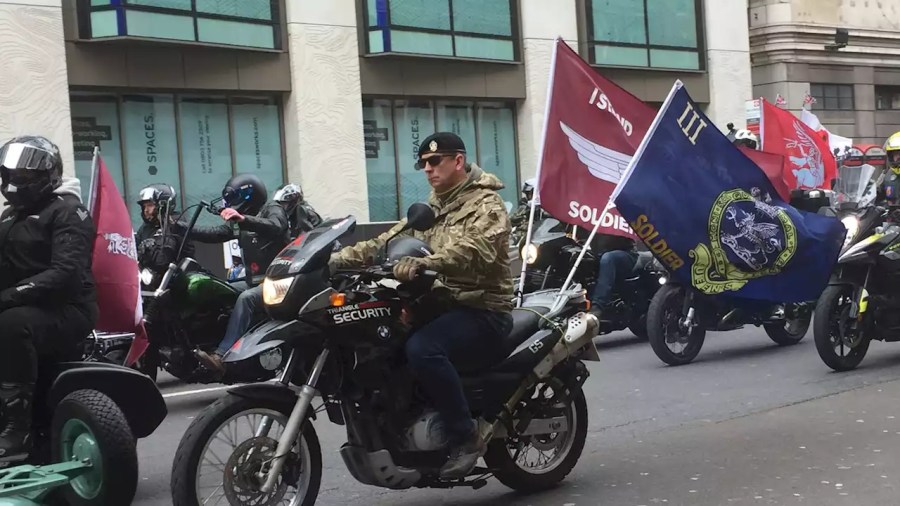
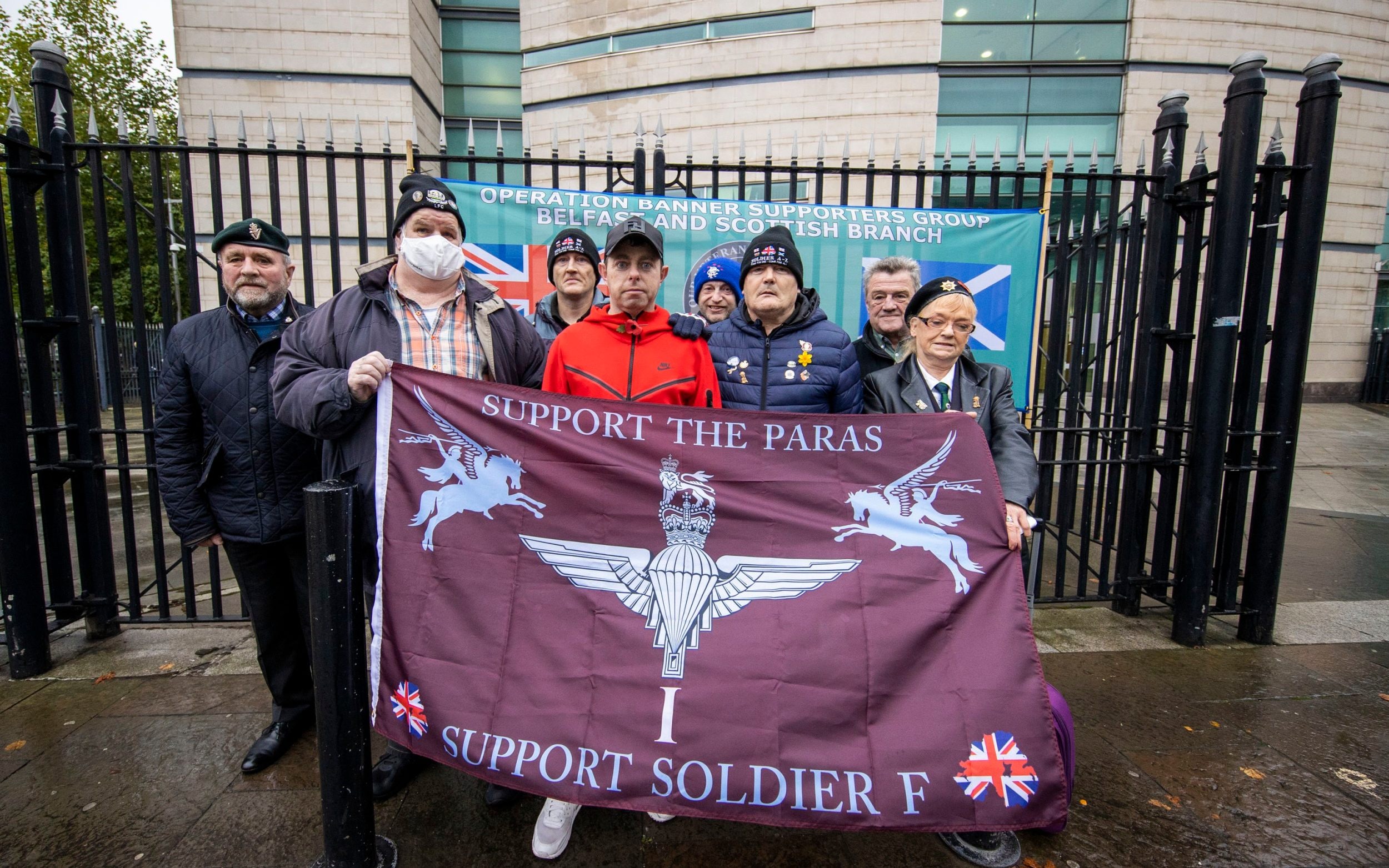
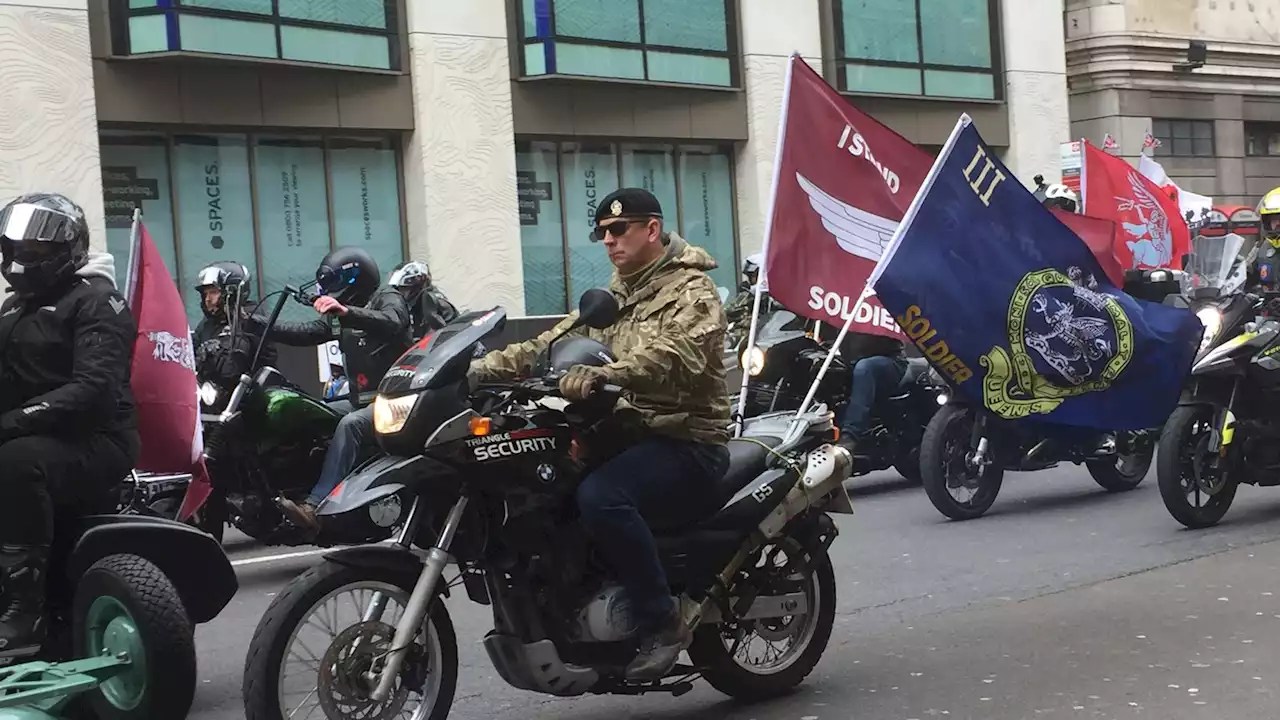
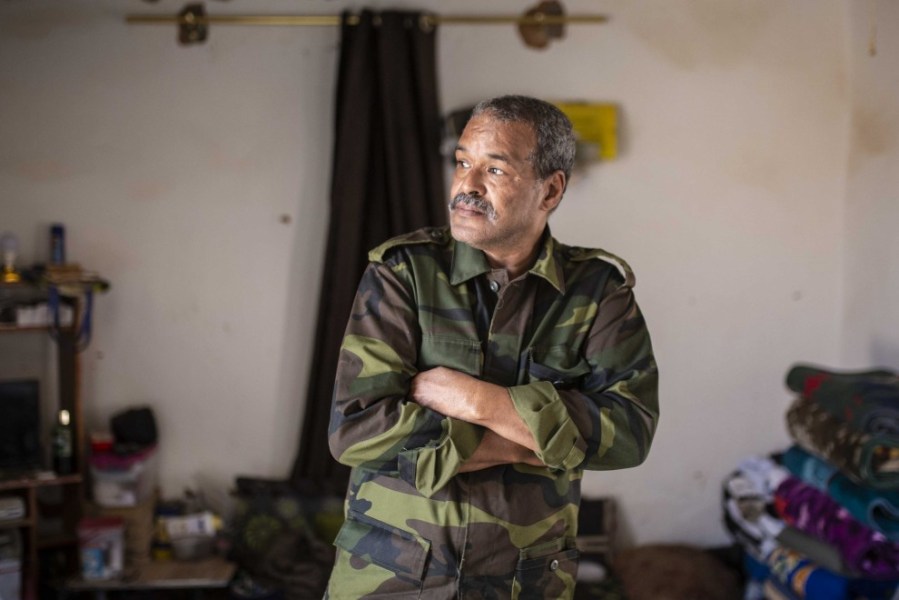
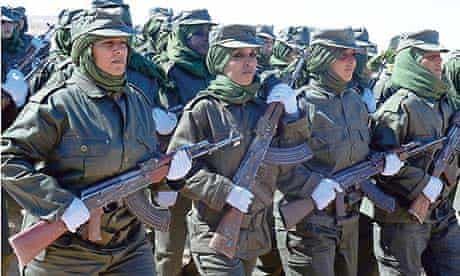


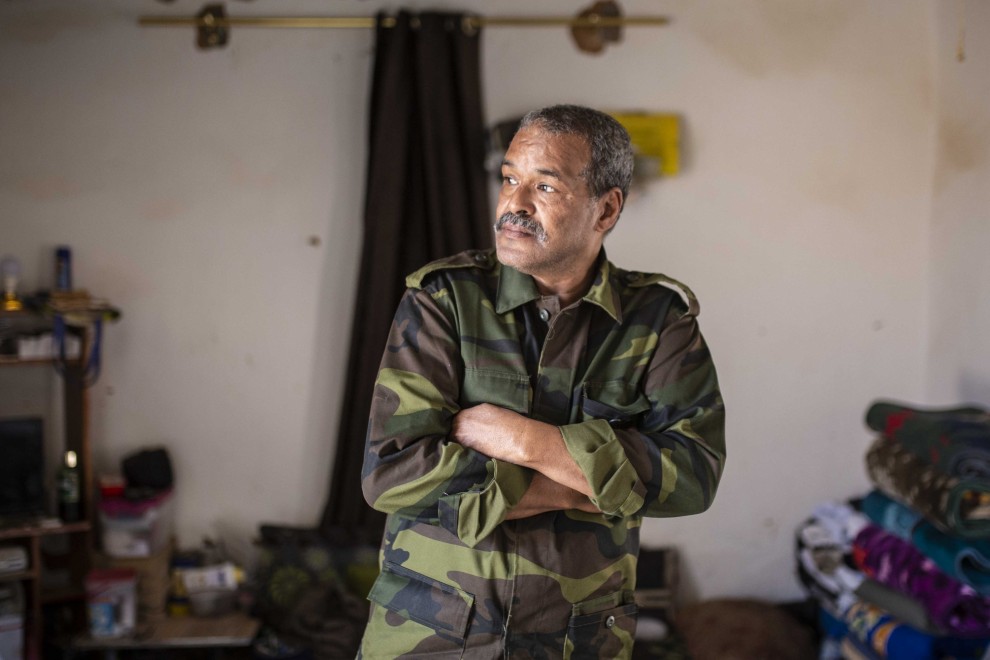
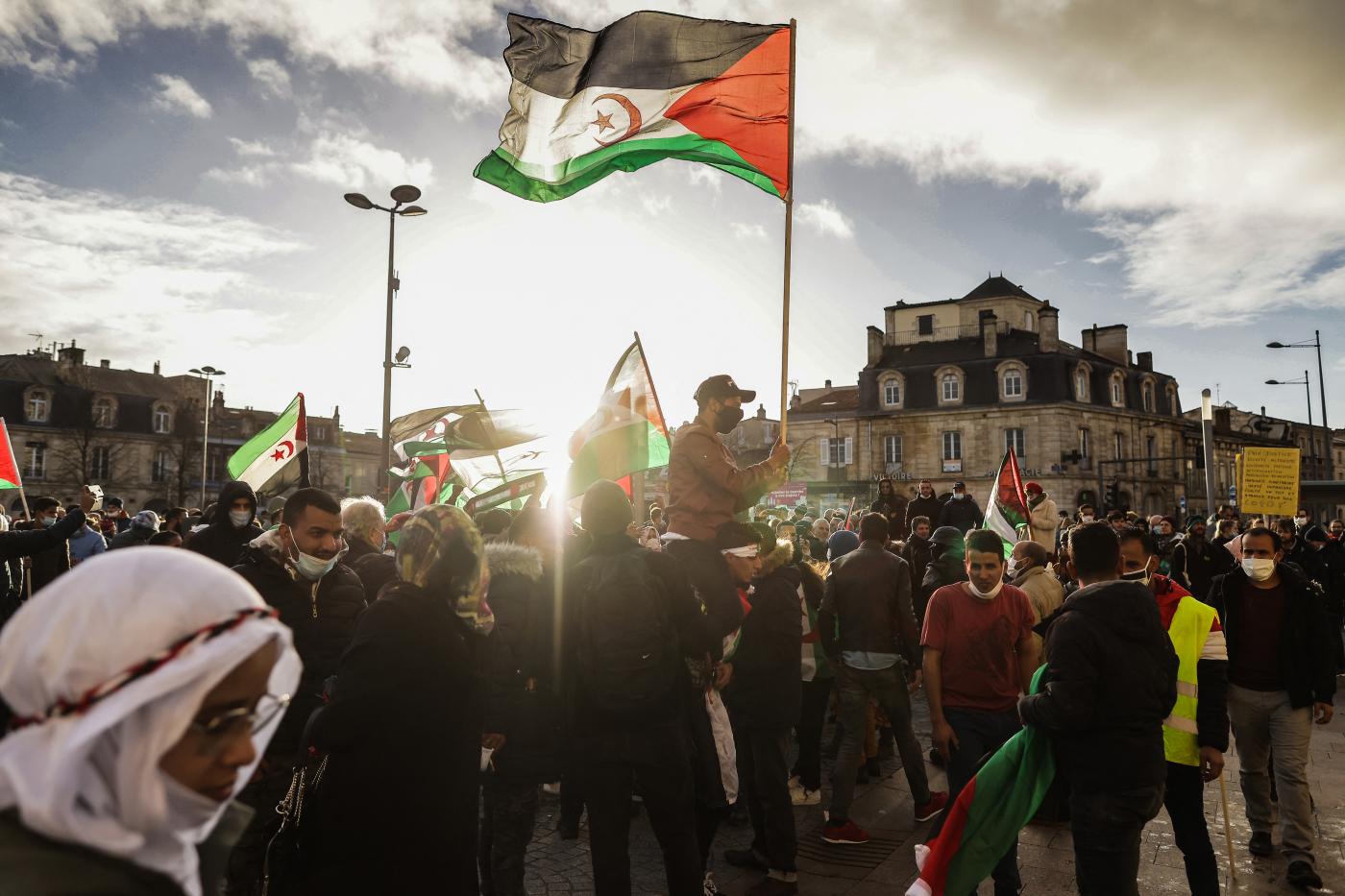
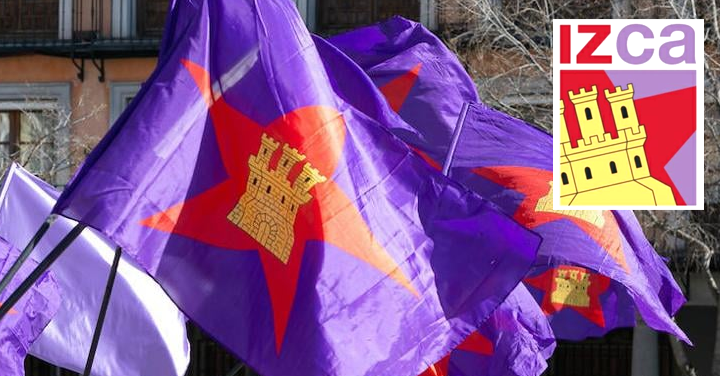


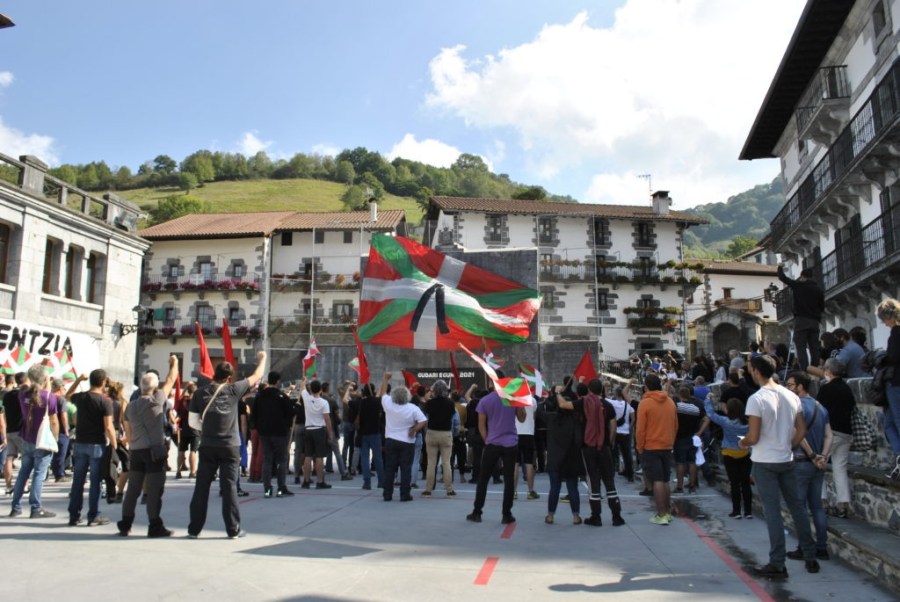

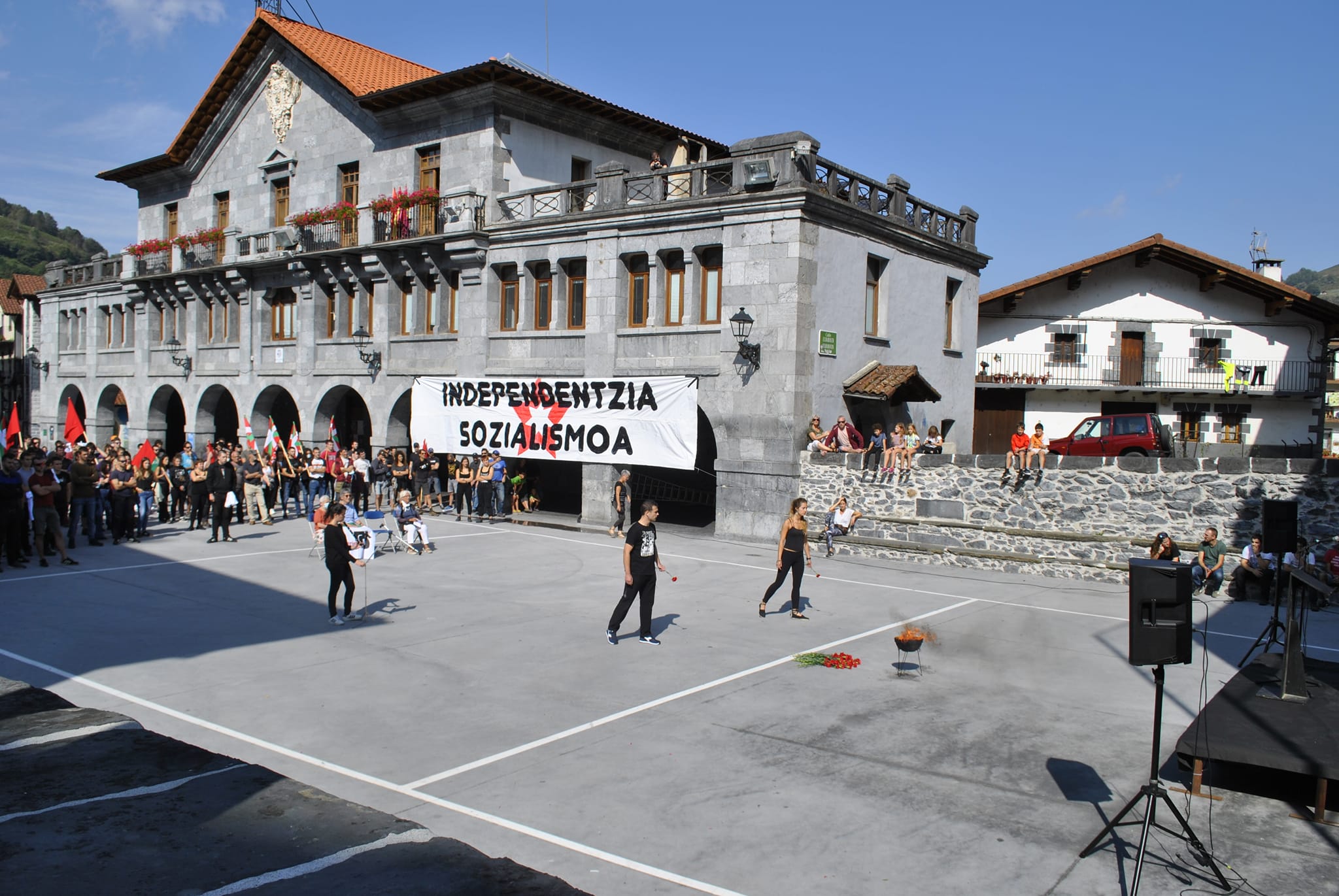


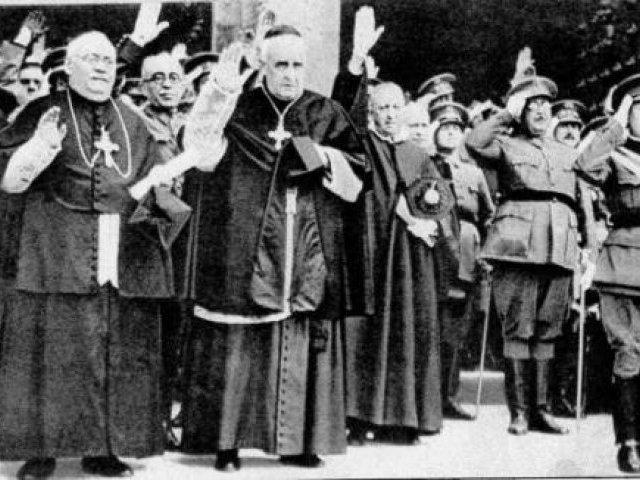
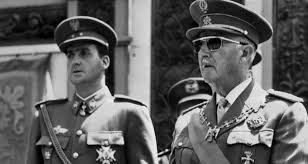




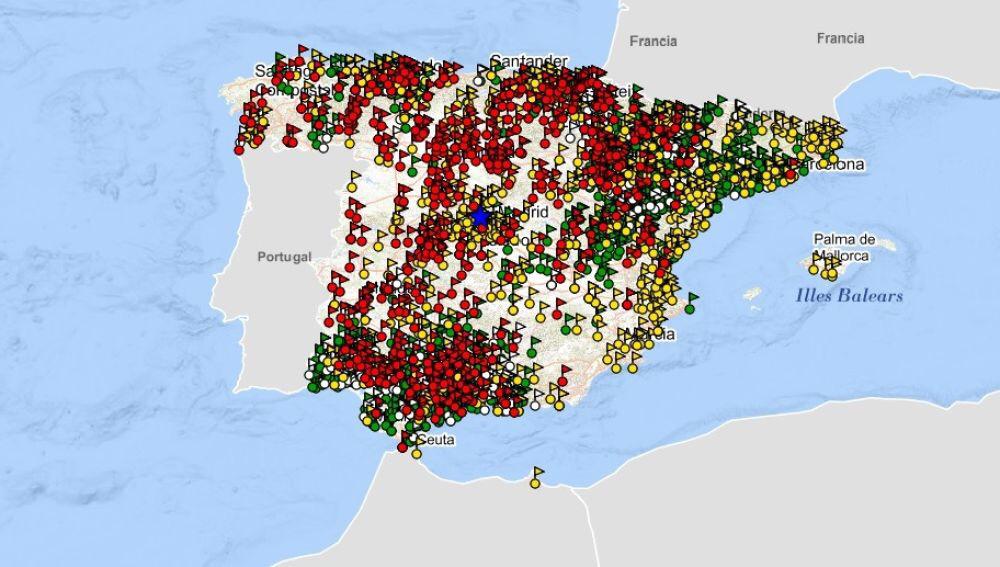
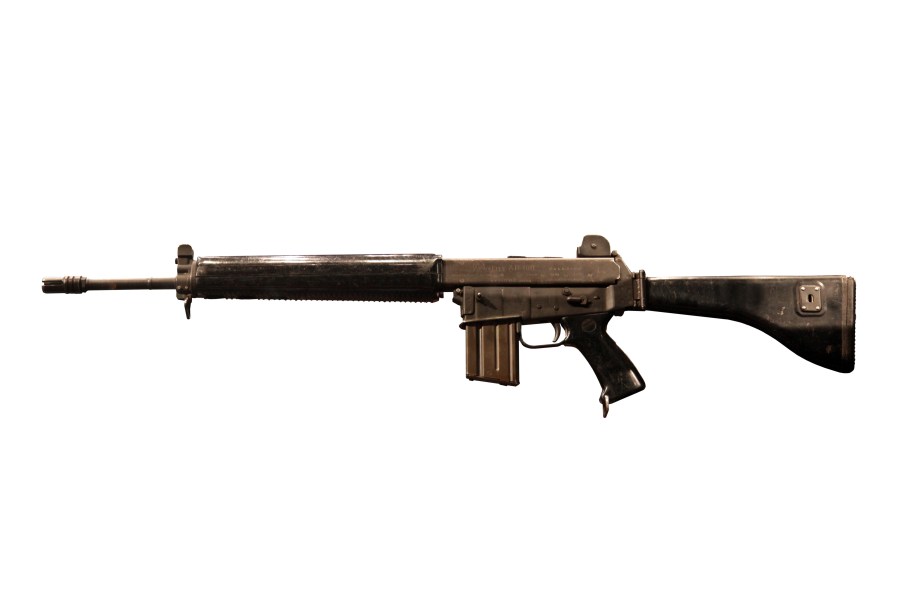


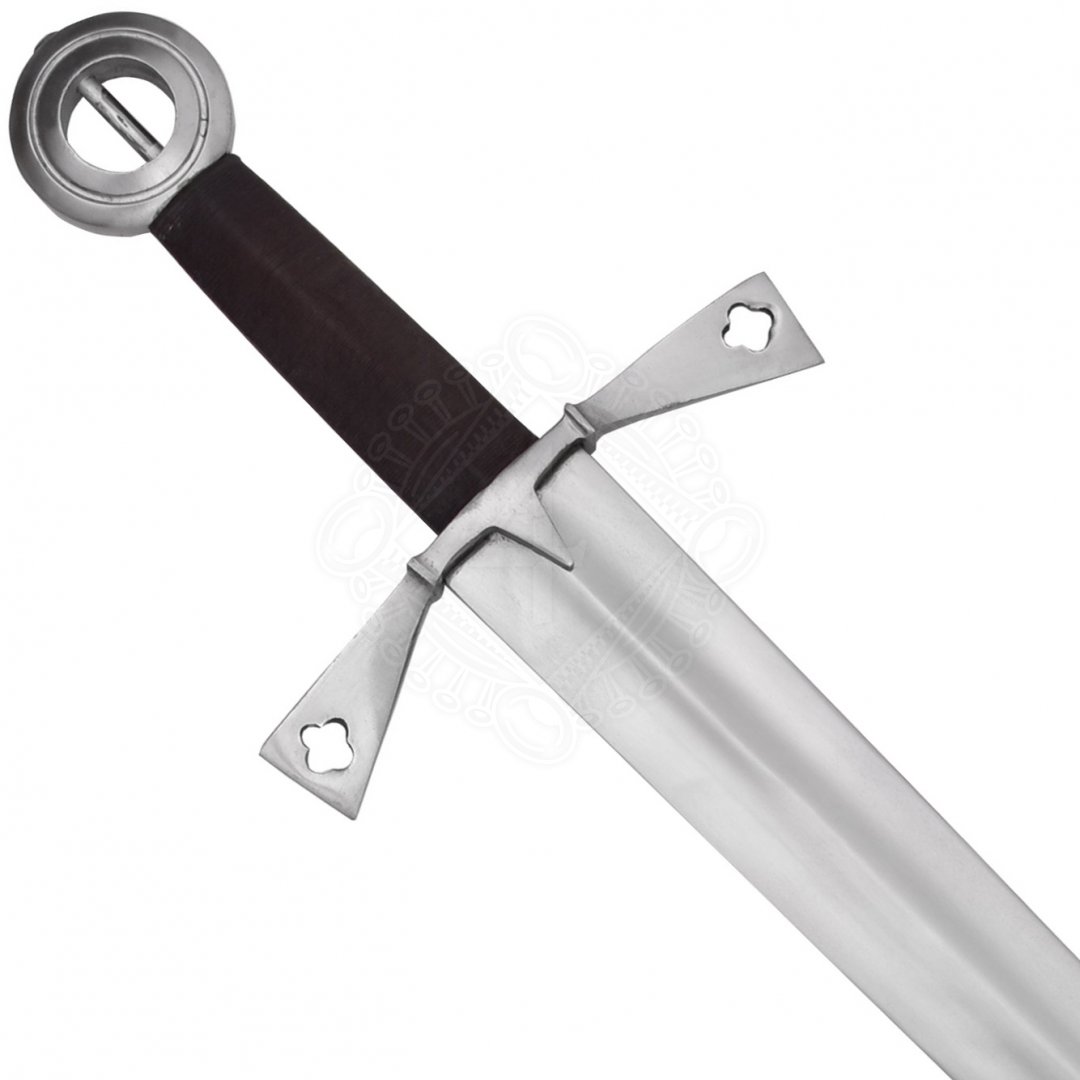


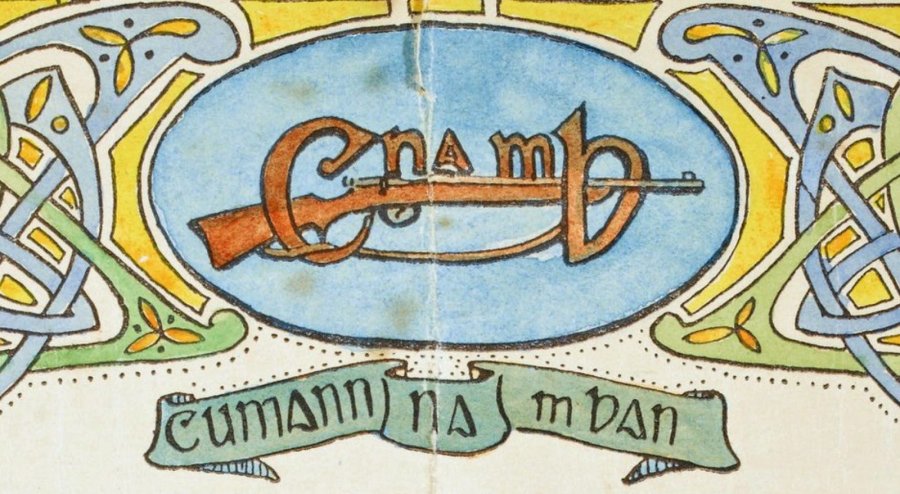
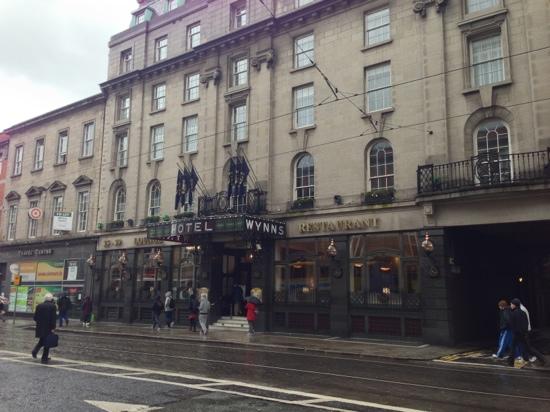
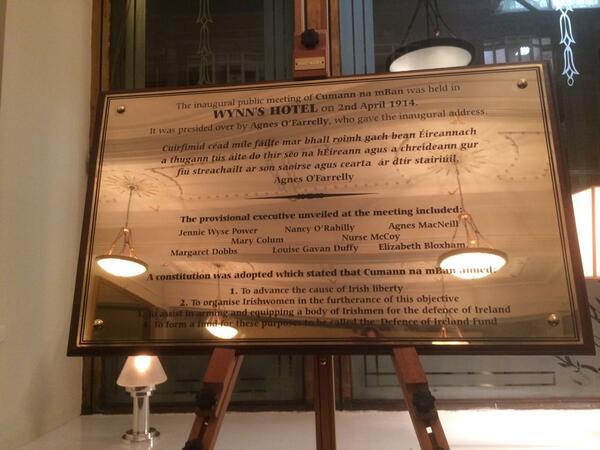
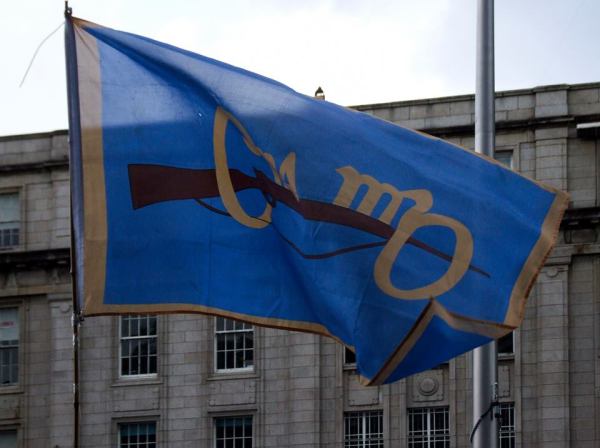
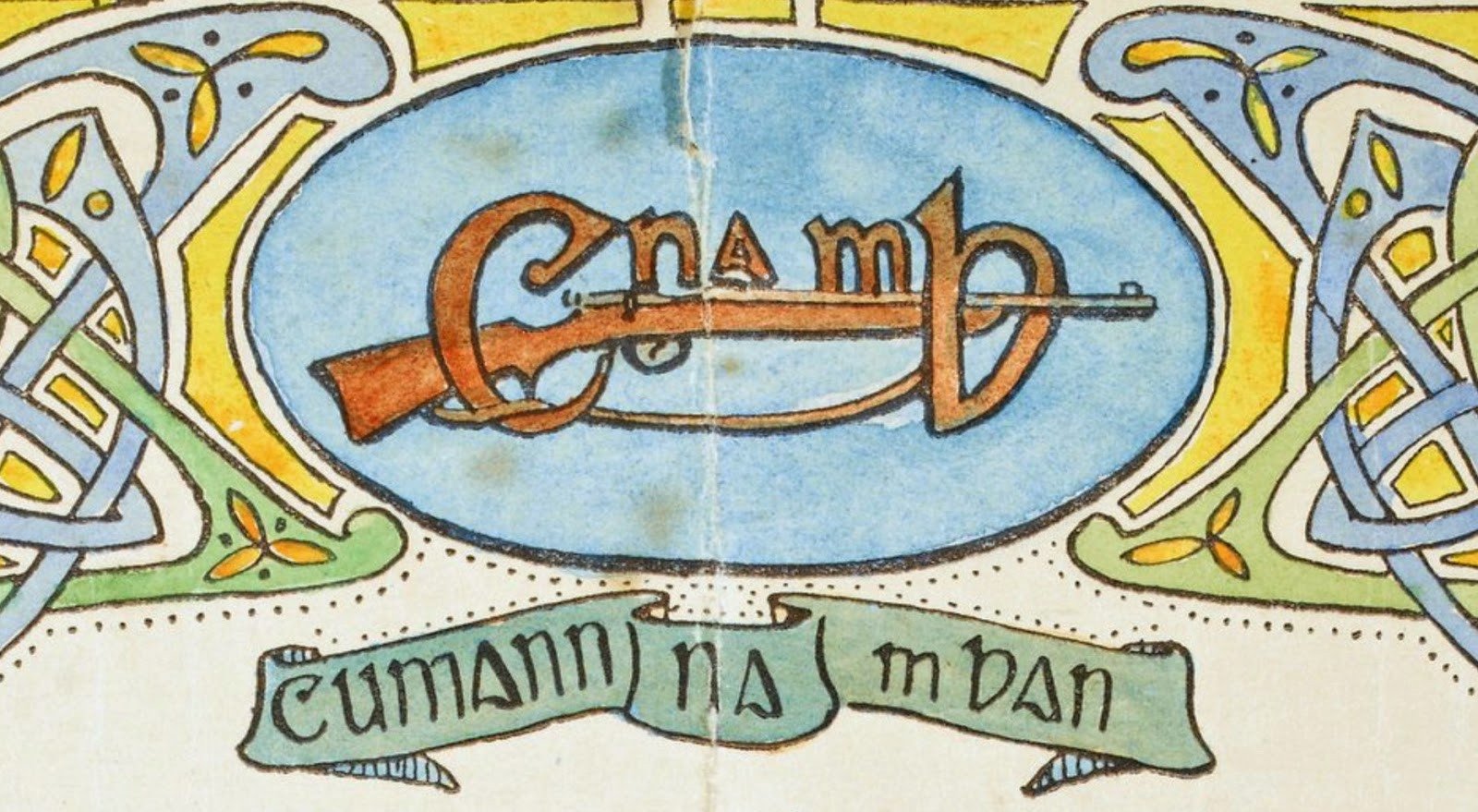
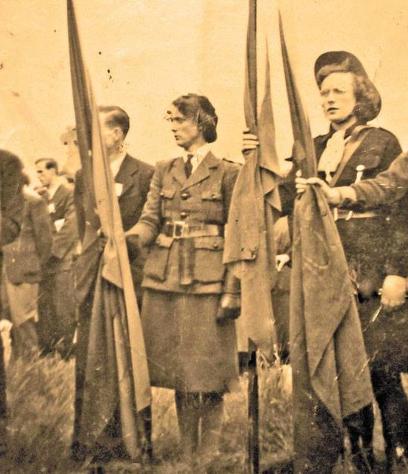








 rebelbreeze