TRAD FOR CATALONIA SEES MIX OF INSTRUMENTS, LANGUAGE AND MUSIC STYLES
Clive Sulish
Ukelele, fiddle, guitars, cajón, gralla, flutes and uileann pipes, along with different voices in various styles filled performances at the Trad for Catalonia night in the Back Room, at the Cobblestone pub, Smithfield Dublin on 14th June (2018). Despite the wide variety, the quality of sound production was excellent and much appreciated by the audience.
“Sí” bunting from the October Referendum on Catalan Independence (Photo: D.Breatnach)
Eight different acts took to the stage in a crowded function room at the Cobblestone, which was decorated in the three varieties of the Catalan national flags (Senyera, Estelada and Vermella), and flags from the Referendum period declaring Sí, along withthe Basque Ikurrina and the Irish Starry Plough.
The Basque Ikurrina, the Catalan Vermella and the Yellow Ribbon for the prisoners. (Photo: D.Breatnach)
Diarmuid Breatnach, on behalf of With Catalonia/ Leis an Chatalóin welcomed the people attending in Irish and in English. A group called Whistle went first, playing lively Old-Time American songs, followed by Eoghan Ó Ceannabháin and John Flynn playing Irish tunes on flutes and also singing sean-nós songs in Irish, including Sadhbh Ní Bhruinneallaigh.
The band “Whistle” playing (Photo: D.Breatnach)
Ó Ceannabháin then introduced Berta Freixas Ylla-catalá, who played some Catalan tunes on the Gralla, a traditional Catalan instrument after which Paul O’Toole followed with some of his own songs, including the quasi-satirical “I Saw Jesus on a Bus”.
Breatnach, accompanied on guitar by O’Toole, sang two songs relating to prisoners, both from the latter half of the 19th Century, one from Ireland and another from the USA. The
John Flynn & Eoghan Ó Ceannabháin playing flutes (Photo: D.Breatnach)
Felons of Our Land was almost certainly written with regard to the suppression of the Fenians (Irish Republican Brotherhood) he said, while How Can I Keep from Singing began life as a Christian hymn but was worked over somewhat in the 1960s to make it a song of political resistance. The two emotions which the repressive forces seek to employ by taking political prisoners as hostages, said Breatnach, are shame and fear; these songs counter those with the emotions of pride and courage. Breatnach invited the attendance to support a picket in solidarity with Catalan political prisoners the following Thursday, 6pm at the GPO building in the city centre.
Visitors from the USA and Canada enjoying the evening (Photo: D.Breatnach)Paul O’Toole performing (Photo: D.Breatnach)
After the break and the holding of the raffle, which raised further funds in addition to the low entrance fee of 5 euro, Síomha Nic Aonghusa sang voice-only the sean-nós song Dónal Óg in Irish, then, all in English and accompanying herself on guitar, sang in turn an Irish Republican ballad and different songs, on themes of love, loss and addiction. Fionn Ó hAllmhain brought his uileann pipes on to the stage and, after explaining something of how they work, played a number of tunes, including a polka which had a couple up dancing set-dance polka moves. Ó hAllmhain also sang an Irish sean-nós song.
(Photo: D.Breatnach)Síomha Nic Aonghusa performing (Photo: D.Breatnach)
Oncle Pau of Casal Catalan, accompanying himself on ukelele, performed some Catalan songs which had many Catalans in the audience singing along, finishing his set with Somewhere Over the Rainbow.
Oncle Pau performing (Photo: D.Breatnach)
Concluding the evening, Ó Ceannabháin thanked all for attending, also the singers and musicians who performed free of charge, the Cobblestone for providing the venue, Shane the sound engineer and Aoife behind the bar.
Aoife, Cobblestone staff and very helpful (Photo: D.Breatnach)
The event was organised by With Catalonia/ Leis an Chatalóin, with strong support from the cultural Catalan organisation, Casal Catalana d’Irlanda and promoted also by CDR (Comité de Defensa de la República) Dublin.
Tina McVeigh, busy on the night (Photo: D.Breatnach)Michael Grange, active during the night. (Photo: D.Breatnach)Berta Freixas playing the Gralla, traditional Cataln instrument. (Photo: D.Breatnach)
CROWD AT BRITISH EMBASSY DUBLIN CALLS FOR RELEASE OF JULIAN ASSANGE
Diarmuid Breatnach
View of crowd at British Embassy from across the street (Photo: D.Breatnach)
Today, June 19th, is the anniversary of the date when Julian Assange sought asylum in the Ecuadorian Embassy in London, which he was granted. That was 2012, since which he has been confined to a few rooms in that building, unable to leave for fear of British arrest and extradition to the US, where he is wanted for broadcasting their secrets on their murderous campaigns in Afghanistan and Iraq and other matters. A crowd gathered outside the British Embassy to demand Assange be set free – among them as speakers were TDs Clare Daly, Mick Wallace, along with Nobel Peace Laureate Mairéad Corrigan and musician Paul O’Toole (also another musician).
Paul O’Toole playing and singing (Photo: D.Breatnach)
At least five Gardaí were in attendance, along with a police van.
From Wikipedia: Julian Paul Assange (born Hawkins; 3 July 1971) is an Australian computer programmerand the editor of WikiLeaks. Assange founded WikiLeaks in 2006, but came to international attention in 2010, when WikiLeaks published a series of leaks provided by Chelsea Manning. These leaks included the Collateral Murdervideo (April 2010),the Afghanistan war logs(July 2010), the Iraq war logs(October 2010), and CableGate(November 2010). Following the 2010 leaks, the federal government of the United Stateslaunched a criminal investigation into WikiLeaks and asked allied nations for assistance.
Poster of image of Julian Assange with the flag of the USA as a gag on him. (Image source: Internet)
All the speakers outside the British Embassy made the point that Assange’s only crime is to reveal some murderous secrets of the USA and other powers and that if he can be jailed then so can anyone for speaking or publishing the truth. Clare Daly said that his crime was to be a conscientious reporter.
Paul O’Toole played two songs, one of which was The Cry of the Morning, a song about internment. The other musician played some tunes and then led the crowd in singing “All we are saying, is free Julian Assange.”
Fintan thanked all for coming and the speakers and musicians and the event came to an end.
Mick Wallace TD speaking outside the British Embassy (Photo: D.Breatnach)Another musician supporting the event (Photo: D.Breatnach)Section of crowd, looking southward (Photo: D.Breatnach).
Clare Daly TD speaking outside the British Embassy (Photo: D.Breatnach)(Photo: D.Breatnach)Nobel Peace Laureate Mairéad Corrigan speaking outside British Embassy (Photo: D.Breatnach)Police van & 2 of the six Gardaí that were visible (Photo: D.Breatnach)
(Photo: D.Breatnach)
BACKGROUND
Assange went to Sweden to talk about Wikileaks and its revelations in August 2010. A woman in Sweden wanted Assange to have a HIV test after he had sex with her. Her friend, who had also had sex with Assange in the past, encouraged her to go to the police. Assange went voluntarily to the police station, was interviewed and told he could go, there was no charge and he went back to England. Afterwards, a Swedish Special Prosecutor charged him with sexual molestation and “lesser-degree rape” (a particular Swedish charge) although the original complainant did not accuse him of rape.
By then it was becoming clear that another agenda was behind the Swedish Special Prosecutor and the two women. Assange offered to be interviewed again by Skype or in person in London or, if necessary in Sweden but only if that country guaranteed not to extradite him to the USA. The Swedish authorities refused to give that guarantee. The Prosecutor said Swedish law did not permit an interview on foreign soil but this was publicly contradicted by Swedish legal experts and the Prosecutor eventually interviewed him in London but by this time it was November 2016, by which time the statute of limitations had run out on the less serious charges. In May 2017, the Swedish authorities dropped their investigation against Assange and Chief Prosecutor Marianne Ny officially revoked his arrest warrant.
However, as a result of Sweden’s attempt to extradite Assange, he had been brought to court in London and released on bail. Due to Sweden’s refusal to guarantee him no extradition to the USA, Assange jumped bail and sought asylum in the Ecuadorian Embassy on 19th June 2012 and has been there since. He cannot leave for fear of arrest by the British for breach of bail conditions and extradition to Sweden, from where he may be extradited to the US, where politicians and officials have said publicly that he should be jailed and some even wanted him executed under anti-espionage laws or assassinated.
Very recently, the pro-Catalan independence on-line periodical VilaWeb interviewed Marta Vilalta, the spokesperson for the ERC (Republican Left of Catalonia) party, an important component of the pro-independence majority in the Catalan Parlament. Her replies and statements presumably reflect the thinking in the leadership of the ERC party or, if it should not be unanimous, at least the thinking of the dominant section of the party’s leadership.
Marta Vilalta photographed during interview (Photo by online Catalan newspaper VilaWeb)
ERC has 32 Deputies in the Catalan Parlament (and two Members of the European Parliament). The other components of the Catalan independist majority at the time of writing (June 2018) are JuntsxCat (Together for Catalonia – 34 seats) and CUP (Candidatura d’Unitat Popular — 4 seats). The latter is taking the ‘confidence and supply position’ (i.e they will not vote with the Opposition and will vote to keep the Government in power if necessary).
ERC’s President, Oriol Junqueras, has been in a Madrid jail since the October Referendum, awaiting trial on charges of “Rebellion”. The party’s General Secretary, Marta Rovira, went into exile to avoid a similar fate.
The party, along with JuntsxCat, whose President Carles Puigdemont is also in exile, has faced repression by the Spanish State, as has also the cultural organisation ANC (Asamblea Nacional Catalana), whose President, Jordi Sànchez i Picanyol,is also in the Madrid jail.
The independist parties are to be commended for continuing their stance for independence and for facing up to Spanish State repression. In this, they enjoy the support of the majority of the Catalan population, as evidenced by votes in the December elections and the mobilisations and votes cast in the October Referendum, albeit disrupted by Spanish police raids to confiscate ballot boxes and assault voters and demonstrators.
But how prepared are they for the struggle ahead? How critically do they evaluate their past performance and expectations? How willing to learn from mistakes? The signs are not encouraging.
ILLUSIONS ABOUT THE SPANISH STATE
“The Spanish State has been capable of everything …. to defeat independence and the Republic project”, Vilalta says in the course of the interview, with what seems to be an air of surprise, meaning one presumes that there was no lengths to which they were not prepared to go to suppress Catalonian independence. If the Spanish state has been capable of everything, one must assume that it will also be “capable of everything” in future, at least in the absence of some limiting factors, which were not mentioned by Vilalta (except perhaps in the context of reactions outside the Spanish state, which we can look at under the heading of “Illusions about other states”).
So this admission of Vilalta should imbue us with confidence that ERC is taking that into tactical and strategic consideration. However, this appears to be far from the reality, based on the insistence of Vilalta that their struggle will be based exclusively on both “peaceful and democratic” means; nor is this only an iteration of Vilalta’s but it has been stated repeatedly by leading figures of the ERC and of the JunstxCat, i.e of the parties with by far the most numerous deputies in the Parlament. We’ll look at this more carefully under the section dealing with Pacificism but for the moment we can reflect that history in general (and the history of the Spanish state in particular) demonstrates that the combatant that relies principally on moral and or legal means must be defeated by the aggressor who relies on force and its tactical application.
“I suppose the Spanish State understands and agrees with the International treaties that it has signed and which are included in the Constitution,” says Vilalta, in reference to the right to self-determination recognised by the Charter of Human Rights of the United Nations. Why does Vilalta suppose that the Spanish State “agrees” with this right? On the contrary, all its actions with regard to the nations incorporated within its state territory show that it fundamentally disagrees with them, at least where applied to itself. In fact, its own Constitution forbids the secession of any part of the State without a majority vote in favour in the Spanish Parliament and further underlines that the Armed Forces are the guarantors of the Constitution!
Of course, it is possible that Vilalta is being somewhat ironic here, or making a statement for its propaganda value. Maybe she only means that the Spanish State should uphold the right to self-determination in the international treaties which it has signed. Let us hope so. But surely it would be more useful to point out that the Spanish State has a record of fundamentally violating most of the human rights to which it has signed up, including some actually stated within its own Constitution? Such an exposure would help in any project of isolating the Spanish state internationally, undermine its propaganda and, crucially, help to prepare the Catalan people and their allies for what the Spanish State may bring against them.
The Spanish Statehas repeatedly violated not only the human rights to life (for example in running assassination squads against the Basque movement for independence); the right to serve one’s prison sentence in a prison near one’s relatives, children and friends (by deliberately dispersing its political prisoners as far from their homes as possible); the right for terminally and seriously ill prisoners to be released on parole to continue their sentences at home or in hospital (routinely violated in the cases of political prisoners); the right to freedom from torture (routinely used until very recently against political detainees and against some migrant minorities); and the right to upholding one’s language (by originally outlawing the use of Iberian languages other than Castillian and currently banning them from the Spanish Parliament).
Furthermore the Spanish State has a lively record of violating the civil rights of political activity, of assemply, of speech, of publishing, of broadcasting: it has banned Basque demonstrations, cultural and political organisations, radio stations, newspapers and even seized the financial and property assets of organisations; it has jailed Basque and Catalan (and some Spanish) political and cultural activists; jailed and fined rappers and cartoonists and social media posters elsewhere in the Spanish State. It is illegal to “insult” the Spanish King publicly in speech, writing, or other means. Fairly recently the Spanish State created a law which makes it illegal to film police misbehaviour in public, to insult them (i.e denounce what they are doing) or to hold demonstrations in the vecinity of certain state buildings, including Ministries and the Parliament, with very high fines and/ or prison sentences for transgression of any of these prohibitions.
Marta Vilalta, representing Esquerra Republicana, major party of the Catalan independist majority. (Image source: Internet)
PACIFISM
For pacifists, of course, pacifism is a principle. For others, peaceful methods and civil disobedience are tactics, i.e responses to specific issues at a particular time and place, not principles to uphold in all situations on every occasion.
It is a fact that no class has freed itself from domination by peaceful means alone and that similarly, no nation has liberated itself from colonial or imperialist domination without resorting to the use of force. This is not, in a sense, a choice for oppressed people – it is the oppressor itself which uses force and obliges the oppressed, in self-defence, to use force too.
Some recent examples will hopefully suffice to convince the doubtful. The first public actions against the division of Vietnam and the grooming by the French and USA of a puppet regime in the southern part of the nation were largely pacific. Demonstrations were suppressed and activists arrested by the puppet regime. Monks immolated themselves in public. Monks too were suppressed. Anti-imperialist forces within the southern part united in armed action with the Vietnamese state set up in the northern part of the country, which was supported by the People’s Republic of China (the Chinese communist state). Decades of terrible war followed but today the country of Vietnam is united and largely independent of imperialism.
In fact we can observe that all of the states of Europe which were formerly under the domination of another have had to rely on armed force to free themselves from their armed dominators: e.g Austria, Belgium, France (from Nazi Germany), Denmark, Holland (from Spain, France, Nazi Germany), Hungary, Italy (from France and Austria), Norway, Poland (from Russia, Nazi Germany), Switzerland (from the Austro-Hungarian Empire), and indeed the Spanish state itself (from France).
If that were not enough and though it should be, the history of the Spanish State itself shows its reliance on armed force, from the medieval period right up to the 20th Century. The Kingdom of Spain was created firstly by the joint kingdoms of Castile and Aragon, picking up other allies, driving out the Arab kingdoms (and incidentally driving out also Jews, the origin of the Sephardics, along with the Arabs, even their own allies who would not convert to Christianity. The Spanish kingdom became an imperial force outside its own state territory and conquered and plundered territories from the Canary Islands to the Caribbean, the South American sub-continent, Central America and parts of what are now the southern USA. It did the same to parts of Northern Africa and the Philippines. In no circumstance did it refrain from the use of armed force.
In the struggles within the State itself, the ruling class suppressed by armed force the uprisings of the Communeros and many others regionally-based and, crucially, both the First and Second Republics, which had come into being through popular elections. To take the most recent, the ruling class instigated an uprising among its military against the elected Spanish Government, which led to what some call the Spanish Civil War (1936-1939), with enormous loss of life and destruction, and the instalation by the victors of a fascist military dictatorship and a monarchy.
Unlike the other fascist states of Europe (with the exception of Portugal and even they had their Carnation Uprising), no purges of former fascist rulers took place within the Spanish State; on the contrary, the heirs of the fascist military leaders, politicians and industrialists continued in the footsteps of their parents and in the luxury of their appropriations.
Under some external and internal pressure, a veneer of democracy was drawn over the State after the death of the dictator Franco and the social-democratic PSOE and the Communist Party of Spain were drawn into an alliance with the existing fascist ruling class1 in what is often called the Transition (i.e to “democracy”). Far from this addition adulterating the fascism of the ruling class, the reverse happened and both political parties colluded in the suppression of movements of resistance both national and of class; the PSOE in government actually ran assassination squads against the Basque independence movement in the 1980s.
Hopefully this short review of Spanish State history has been sufficient to illustrate the readiness of the State to resort to violence against opposition, whether peaceful or not. What then are the prospects of a resistance which will confine itself to peaceful means alone? Its leadership will be killed or imprisoned, as will the cadres of the popular movement, repression will be the order of the day. The militants will be driven underground, dispersed and the movement will lose the initiative, which is fatal for a revolution.
As to the prospects of a comparatively small nation like Catalonia2 in insurrection against a major power and its military resources, we shall address near the end of this article.
INADEQUATE SELF-CRITICISM
With regard to the issue of preparedness for the actions of the Spanish State, Vilalta responds to a question by saying that ERC have carried out self-criticism of their inability to defend the Catalan referendum against Spanish State attack. Such an admission should not shame them nor demoralise their followers and allies (though it sometimes does so, sadly) – on the contrary, an organisation that does not admit its mistakes is unlikely to learn from them and in any case is not going to be honest with its membership and followers.
It is however worrying that a party pursuing an independist and Republican path in the teeth of the historical and well-known opposition of the quasi-fascist and monarchical state, should have been unprepared for the response of that State. Nevertheless, one could draw reassurance from the fact that ERC acknowledge their error and carried out self-criticism. Or at least, that would have been the case were it not for the fact that Vilalta states that “it is very easy to look back with perspective and think that it could have been done in a different way. I do not dare to say what we should have done differently. The decisions taken at that time, in a specific context and with the information that was had, seemed the best.”
Huge Barcelona Demonstration (in green) for self-determination on Catalonian day, Diada 11 Sep2017, three weeks before the Referendum. (Image sourced: Internet)
Whether that can be called “self-criticism” is debatable but it certainly does not qualify as adequate. It amounts to saying “we were wrong but could not have come to any other conclusion and even now I can’t think of what we could have done differently.” Which is almost to say “We are likely to be as mistaken and to prepare as insufficiently in future.”
As discussed earlier, both the history of national struggles in general and the history of the Spanish State in particular should have informed the independist forces of the full range of possible responses of the Spanish State. Those who were unable to anticipate the actions of the Spanish State need to ask themselves a vital question: “Why, despite that accumulation of historical practice, were we unable to count on a police invasion as one of the possible measures of our opponent?” A truthful reply to that question would tell them and us a lot about their limitations but their refusal to even consider the question is more worrying than whatever their current conceptual limitations might be.
ILLUSIONS ABOUT OTHER STATES
In the course of her interview, Vilata commented that “the international situation is key.” She said that in the context of forcing an unwilling–to–negotiate Spanish State to, in fact, negotiate. How she sees this happening is not very clear. In this context she also said the following:
“The Charter of the United Nations recognizes the right of self-determination of peoples. The Spanish government has had and has the opportunity to discuss and negotiate how other countries, such as the United Kingdom and Scotland, have done. They have opted for repression to the limit and always say no. It is they who have pursued political leaders and freedom of expression. We will continue to defend dialogue and negotiation by asserting that Spain has subscribed to the right of self-determination and confronting violence and repression.”
Leaving aside the fact that Scotland is not truly independent, somehow Vilalta envisages using the treaties referred to above to force the Spanish State to negotiate or to have “it is forced from the outside. This mandate to make it possible to negotiate can come from international spheres.” What does she mean by “international spheres”? She is not specific but in this context mentions the reversals for Spanish extradition warrants, the Catalan Members of the European Parliament (and presumably other friendly MEPs) and the Catalan politicians in exile in European countries, presumably all coordinated by the Council for the Republic, which also gets a mention.
But even in a best case scenario, how is the Spanish state to be “forced”? Economic sanctions? They can only be imposed by individual states or by groups of states, for example the EU. The European Parliament has not seen fit even to condemn in words the repressive actions of the Spanish state and, in fact, the EU President, Junkers, commented that they don’t wish to see “an EU of 99 states”, a clear indication that the independence of Catalonia and other states breaking away is not something the EU would welcome.
And in fact, even without Junker’s comments, that attitude could easily have been predicted. In the case of a successfully independent Catalonia, not only would the Spanish state be vulnerable to similar bids by other nations within its state territory but so would the French and Italian states also. It seems that Vilalta expects the EU to act against the interests of not only its Spanish member state but the interests of two other major European states as well. But why would it do that or, more to the point, why does Vilalta think they will or even might?
Possibly Vilalta envisages some kind of external moral pressure or perhaps “good neighbour advice”. With regard to moral pressure, the Spanish state, both during and after Franco, has shown itself impervious to that. Its practice of torture and impunity for torturers has been criticised regularly by relevant committees of the United Nations and the EU and every year by Amnesty International. None of that has brought about any change.
The European Court of Human Rights has found against the Spanish State on a number of occasions (failure to investigate torture allegations, illegal extension of sentences by retrospective legislation — but never on actual torture, which is “difficult to prove”); the Spanish State sometimes appeals the judgement (and loses) but eventually pays the fine, releases the prisoners at their release dates and …. carries on as before.
The major European state response to the PSOE Government’s undercover campaign of terrorism in the northern Basque Country (i.e within the French State) has been to facilitate the extradition of Basque refugees to the Spanish state (sometimes without even bothering with a court appearance).
No doubt the Spanish State has been given “good neighbour” advice from time to time from European states and even by the USA, advised to appear nicer, to be more democratic etc and even advised that it was in the long-term interests of its own ruling class to do. Perhaps the Spanish State responded, with well-known Spanish fascist arrogance, that it knows its own busisness best or perhaps they replied that only an iron grip can keep Spain “Una, Grande y Libre” (United, Great and Free”, i.e non-communist). In either case, neither good neighbour nor critical state has shown an interest in taking any kind of coercive action against the Spanish State and there is no reason to believe that they will do so now.
European states may not wish to soil their hands doing Spain’s dirty work for them by extraditing refugees to Spain on dodgy European Arrest Warrants but that is a long, long was from being willing to act in a coercive way against a major European partner.
It seems almost certain that Vilalta, in discussing “international force” against the Spanish state was referring to action by other European states and traditionally when “the international community” has been invoked in discussions of ‘peace processes’ and sanctions that is generally what is meant. But there is another way of looking at international pressure.
To examine that possibility, we need to ask ourselves: What are the circumstances in which the Spanish State would be unable to send armed forces to suppress Catalan independence or, if it did, that they would be neutralised?
Such a situation could only be envisaged occurring when the State faced insurrections and similar crises in many other parts of the State at the same time as its crisis in Catalonia. And in fact the Spanish state, of all those in the EU, is probably the most vulnerable to such a scenario. Along with Catalonia and the Catalan Countries, there are the nations of Asturias and Galicia (both of Celtic culture) and the four southern Basque provinces.
Within those areas and in all others of the Spanish state, there is a major disaffection with the dominant order. Never have the institutions of banking and politicians been so widely exposed in corruption, never has the Royal Family been so condemned, nor repression by police so exposed. Unemployment is high as is work on short-term or casual contracts, the housing crisis is serious and numerous victims of eviction have publicly comitted taken their lives over the years. Both political parties of the traditional bi-party system (PP and PSOE) have lost prestige and electoral support, so that now each can only govern as a minority party and their decline has allowed the emergence of a two more sizeable parties, Podemos of the Left and Ciudadanos of the Right (without however much hope of a fundamental change from either). Huge demonstrations have taken place across the state and in particular in Madrid. The collusive trade unions of the Comisiones Obreras and the Unión General de Trabajadores have been found wanting and many independent unions have sprung up.
In other words, the prestige of the State has been slipping and its enemies multiplying. But to tap into these currents of disaffection with the Spanish State, the independist forces would need to do more than threaten the State with the independence of Catalonia. It would need to develop a social-economic program that would not only benefit the majority of Catalons but would also serve as an illuminated example to the rest of what is currently the Spanish territory.
Vilalta does talk a little about a socio-economic program emanating from the Catalan Government and local authorities but says next to nothing about its content. Last week a man about to be evicted in Catalonia killed himself and there are many others facing eviction through inability to pay their rents or their mortgage instalments. A solution to that problem would not only bring many doubters in Catalonia over to the side of the Republic but serve also as an example of what could be done elsewhere in the Spanish State. Support for a Spanish military intervention would be severly undermined in such a scenario, both externally and from within the armed forces and the breaking out of many fires across the state would leave the firefighters stretched too thinly to carry out their task.
This scenario could also affect the French state should it consider a military intervention of its own and the Bretons, northern Basques, northern Catalans and Occitans might seize that opportunity to advance their own claims for independence or autonomy.
The problem for ERC with instituting deep socio-economic changes in Catalonia and in appealing to wide national and class disaffection is that, notwithstanding the “Left” in its title, it is a bourgeois or capitalist party and can hardly be expected to cut off its own head just because it will make its legs firmer. And the JuntsXCat is even more so, at its core a liberal capitalist party.
All of which might serve to remind us of the quotation from James Connolly, a revolutionary socialist who also fought for the independence of a small nation – Ireland. Recognising that only the working class was unable to gain some advantage through a compromise with the imperialist and coloniser, he wrote: “Only the Irish working class remain as the incorruptible inheritors of the fight for freedom in Ireland”. If the words “Irish” were to be replaced by “Catalan” and “Ireland” by “Catalonia”, leaving the rest of the statement intact, would it also be true?
End.
FOOTNOTES
1This was necessary for the Spanish fascist ruling class not mainly as partners in the production of the farce of ‘democracy’ but chiefly for their control of the two main non-fascist trade unions then (and still): the Comisiones Obreras of the CPE and the Unión General de Trabajadores of the PSOE, both illegal until that point but also powerful and with a potential for creating industrial and political instability.
2For the sake of convenience, Catalonia is being described here as a nation, although for many, including the ERC party, at least in the past, it is the Paises Catalans (Catalan Countries) which is the Catalan Nation, a territory extending from Pau in the French state through Catalonia to Tarragon, Valencia and the Balearic Islands.
My full translation to English of introduction and interview:
Marta Vilalta (Torregrossa, 1984) is the spokeswoman for Esquerra Republicana since March. A journalist by profession and Parliamentary representative since 2015, Vilalta has been a member of the ERC since 2004 and, after handling several responsibilities, has now taken a step forward as a result of the repression suffered by the party, with President Oriol Junqueras in prison, Secretary General, Marta Rovira, exiled and members of the Executive persecuted and prosecuted by Spain for having collaborated in the organization of the 1st October Referendum.
We talked with Vilalta about theCatalan political situation, the Republic, autonomism, the new Government of the Generalitat, the effects of repression and the new road map that ERC must approve in its national conference at the end of June . Young, energetic and smiling, Vilalta takes this new stage as a personal challenge, but with the bitter aftertaste of having had to go through the situation of repression against the party and independence.
– Is it true that you do press conferences prepared not to answer questions? Will you respond to this interview?
– [Laughs] I did not say that! It was a joke in relation to this and Sergi Sabrià [the previous spokesman], speaking to the journalist, said laughingly that he had advised me not to answer the questions. We laughed, but it was included in the interview. I am a journalist and I am empathizing with you, it is about responding well.
-Good! Now that there is ‘effective government’, how is the Republic to be brought about?
-Firstly, getting the Government back has been an important and indispensable step towards achieving the objective, which is the Republic. We advocate that to make the Republic real and to complete it we must be strong at all levels and have all the possible tools. Therefore, this also means recovering the Government and the institutions, being connected with the social mobilization and citizenship, being strong in the international bodies, the city councils and the Parliament. We have to be stronger and stronger, to increase and have an amazingly hegemonic social majority that will allow us to bring into existence the Republic we have decided to have, but unfortunately we have not yet been able to make it effective. But it will happen, we’re sure.
-Let’s talk about the ERC strategy paper, the new roadmap to be approved. A fear has been expressed because a section of the grassroots, such as the Mayor of Montblanc, Josep Andreu, believes that the unilateral path is not given enough importance.
-I think that the debate or the controversy about the strategic presentation has been magnified, I do not know if deliberately or not. It analyzes the situation based on the lessons of recent months. It places us where we are and helps us to define what we do and with what instruments to do it in order to bring about the Republic. That’s why it is called ‘Let Us Create the Republic’. We do not rule out any path, providing it is peaceful and democratic, to arrive there. Yes, it is true that it emphasises the need to be stronger and stronger, to expand support in many sectors that share the anti-repressive struggle but yet do not see the need for the Republic. And it defines the multilateral framework of play because it is a process where many political, judicial, economic, and social agencies intervene … We need to know how to move in all this multiplicity of agencies and to maximize opportunities.
– And the unilateral path?
-The paper does not rule out the unilateral path, we understand it as part of the multilateral framework. Perhaps part of the membership thinks that we have not been explicit enough. We are in the process of making amendments so that all the membership can participate and improve the text. We debate with a wish to reach a consensus and for everyone to feel represented. We are very pleased with the level of participation, with 1,400 amendments. Some 1,100 have been incorporatedto be negotiated. This shows a vital strength in the organization and the very participative health of the membership of ERC.One must shine the lights ahead to see the medium term to bring about the Republic and to see what we need to do to achieve it.
-Andreu regretted, however, that there was little participation in the territories (? Trans), and he made a public appeal.
-Yes, the call to participation should be done by all. But I insist, there has been a huge volume of amendments. In 2013, some 300 amendments were presented and now there are 1,400! There have been assemblies in the territories. We hope that on June 30 and July 1 there will also be a lot of participation because the moment requires it. The more participation, the more endorsement of the final paper.
-The CUP accuses the Government of being autonomist.
-We have heard them say this several times, but I do not agree. Whenever we have had the chance to rule, we have done it with a republican call and overtaking autonomy. Interest in autonomy is minimal. Willingness to create a republic, total. This is what the Government of the Generalitat is doing at the moment. The examples of recent days show that there is no intention to go for autonomy nor to drag out the process.
-What examples?
-We need to recover the institutions because we believe that makes us stronger. This is not autonomism, it is to put them into the hands of the citizens and in the service of the country to be able to move forward. With the first government actions alone, both symbolic and effective, it was shown that it was essential to recover the Government. Unlock the money that social agencies had to receive, more than 300 million euros, the reactivation of delegations abroad, the money to recover the quality of TV3 and Catalunya Ràdio, 250 million for social rental … Damn it, they are essential policies! And since they are destined to improve the country, we are sure that they will help us to add more people (to our support — Trans).
-The people who have doubts about independence understand this?
-This is one of the main ideas. From government action and being able to respond to people’s needs and make policies with Republican logic, we can show that with good governance and caring for the citizenship we are able to respond to needs and to improve well-being. We are convinced that this will lead us to make more people see that this is the only way to defend the social, civil and political rights of citizens. This will surely result in an increase of the people who will see that the republican project is the only alternative to guarantee well-being, social justice and equal opportunities. There is no other project that guarantees us all this. It has become clear that in Spain these fundamental rights are not guaranteed and that they have been violated. We have to be capable and must strive to explain all this.
– Will this legislature be a constituent process?
-The intention is that it will be. I cannot say when. We see it as a great space for debate about how we want the country in all its aspects. It also has to serve to reach many people who feel called to participate. In fact, the project of the Catalan Republic is the only one which will ask this of the citizens. The Spanish state will not enact any constituent process. It is only with that that many people can see the opportunity that there is an opportunity for real change and everything that implies. To think and rethink how we want to organize ourselves and how we want our society to be. This will happen, soon; we must ensure maximum participation of the convinced people and of those who feel called to participate. It will help us to add to our numbers and open the project to accumulate forces. It must be a consensual process, with territorial capillary (reach? – Trans) that allows us to know what we want and what goals to have as a country. The constituent process can be one of the tools at our disposal to exceed the limits of the Republican project.
-The conclusions of the citizens’ debate within the territory will be taken to Parliament?
-I do not know the methodology nor what the phases are. To be successful, we will have to agree with all the political, social and economic actors that can participate. Therefore, we will see what steps must be taken. It is obvious that everything that comes out of the constituent process must be channeled institutionally so that it has the effects that we want and so that it does not remain only in a debate.
-Your party has carried out self-criticism of the October events?
-Yes, it’s been done. In any case, it is very easy to look back with perspective and think that it could have been done in a different way. I do not dare to say what we should have done differently. The decisions taken at that time, in a specific context and with the information that was had, seemed the best. Everything was done with the intention of making effective the 1-O (Referendum – Trans) and to be able to vote, after facing the repression and proclaiming and bringing about the Republic. Unfortunately, we could not defend it. Maybe over time we will have more information. In any case, I really appreciate that everything that was done was because at that time it was believed that it was the best way to reach the goal that we all wanted. From now on, I think the most important thing is to learn from lessons. One of the most important is that Spain is willing to anything. We thought they ‘would not be able’, that ‘could not be allowed’, but they were.
-The Spanish state has been capable of everything.
-To defeat independence and the Republic project, it has been capable of dispensing with the rule of law and democracy. This is a very important lesson, because we moved in an ambit of democracy and defence of rights and freedoms, and we continue there. But we have seen the axis upon which Spain moves. We have to be stronger and stronger because it is the only way to face this repressive and strong State. We must continue defending all democratic channels with allies at all levels. Surely we will have a new opportunity. If we keep alive and resisting, we’ll be able to win.
– Do you have any expectation of the new Spanish government? On Thursday, Grande-Marlaska disclaimed the responsibility for bringing the political prisoners closer to home and then Llarena reminded him that this depended on the Ministry of the Interior (of which Grande-Marlaska is Minister — Trans).
– Different things. First of all, to go back a little. We supported the motion of censure (against the PP Government of Rajoy – Trans) because we believe that it was the responsible action to remove the PP and bring down Rajoy. That Government that had repressed us, the leader of repression and corruption …
-The PSOE too.
-Yes, yes. I say that was the responsible action at that time to make that government fall. Not to support the PSOE. That said, obviously, a new scenario opens, but we do not have much expectation of it. We will observe the following steps. On the concrete question of the prisoners, it is shameful what happened on Thursday. The Minister and the Judge passed the ball about the prisoners to one another. It is an aberration, an arbitrariness, that they are detained as hostages, as revenge. And we demand, it is not contradictory, that they bring them to Catalonia. It is a correct action, the law says, that they be as close as possible to families and children. If the Spanish Government had wanted to, it could have already made the decision.
-The other day you commented that any negotiation should start from the first of October. What does this mean?
-We continue defending dialogue and negotiation. If we want a sincere and effective dialogue, we must be able to speak of everything, without renunciations or initial conditions. We should not only talk about concrete demands of economic, social and sectoral policies that have been dragging on for many years, but also about the situation in Catalonia and how we exercise the right of self-determination and make the Catalan Republic real. When we say that we must start from the first of October, let’s talk about it. Conflict must be resolved through the political path, negotiation and dialogue. The 1-O is the founding moment of the Catalan Republic, marks a point of departure in our most recent history.
– Can this be negotiated with Spain?
-I suppose the Spanish State understands and agrees with the International treaties that it has signed and which are included in the Constitution. The Charter of the United Nations recognizes the right of self-determination of peoples. The Spanish government has had and has the opportunity to discuss and negotiate how other countries, such as the United Kingdom and Scotland, have done. They have opted for repression to the limit and always say no. It is they who have pursued political leaders and freedom of expression. We will continue to defend dialogue and negotiation by asserting that Spain has subscribed to the right of self-determination and confronting violence and repression.
– If we want to open a negotiation, the international field will be important. Until now, Spain has refused to accept any mediation offer. Does the Council for the Republic have any role in this regard?
– The international situation is key. When we talk about negotiating with the State, we know that it will not negotiate because it has not given any evidence (of such willingness — Trans). We must force the State to negotiate, or force it so that it is forced from the outside. This mandate to make it possible to negotiate can come from international spheres. The judicial battles of the exiles must also be taken into account. Spain has suffered the first judicial reversals because no European justice recognizes non-existent crimes that are and invented to punish and silence the people of Catalonia. International action must be organized and coordinated. It is clear that the Council for the Republic can be an instrument that helps us to make heard this voice of the demands of Catalonia everywhere and that can help us denounce the violations of rights and repression. We will help the voice that we have in the European Parliament, the exiles, the government delegations that will be reopened … With all these tools we must be able to win.
– Will Marta Rovira be part of the Council for the Republic?
-We will have see how it will be composed. Much has been said about it, but it must be ascertained how the Council is composed by the Republic. Marta Rovira was forced to leave because of this brutal persecution by Spain and will surely play a relevant and important role in the international arena in defense of individual and collective rights and freedoms. We’ll see what role everyone has.
– Does she participate in the internal life of the party?
– She is the General Secretary of Esquerra Republicana and that continues to be the case. She participates in internal meetings and we hope that in the future she will have a more public role. It continues on a daily basis in the way that new technologies permit her.
– In this situation of abnormality and repression, ERC has recovered from having the General Secretary in exile and the President in prison?
-Our organisation has suffered a brutal persecution. They have tried to behead us to weaken, frighten us and make us disappear. In addition to Marta Rovira in exile and Oriol Junqueras in prison, we have many members of the Executives accused and activists persecuted for having done everything possible so that Catalans could vote on 1-O. It was a tough blow, but luckily we are a broad, strong and cohesive organisation. Other people who have been able to take up the duties and responsibilities to continue resisting and persisting, despite the cruelty of the moment.
-The municipal elections will be a good test to measure if the base has been expanded?
-Once polling has taken place we will count and validate the majority in favor of independence and the Republic. Democracy does not frighten us. That is why we know that the Republic will end up winning. The democratic and peaceful way is ours and what we have to use to reach the Republic. In addition to revalidating the majority, we must increase it to show that we are many and that we are multiplying. The independentist movement has grown in recent years, although we still have on the margins many people who have not taken the step but that are in favor of democracy, rights and freedoms.
– Will more than 50% of the votes in the municipal councils involve some change in the political landscape?
-For a start, it places us in a new scenario. Let’s see how the correlation of forces turns out. Surpassing 50% is to pass over one of the important thresholds to validate and certify the majority in favor of independence. We will have to evaluate new steps because we will be stronger and stronger, which is what we want. I cannot specify what will happen, but it would be a very important step to advance, materialize and consolidate the Republic.
– Is it decisive if independentism wins in Barcelona?
– It is very important. But also in other important cities and other capitals, such as Lleida and Tarragona.
-The usual debate has been begun. United lists, separate lists.
-We must be able to compare the projects with everyone in all the elections, whether they are municipal or parliamentary. Confronting all ideas and projects makes us maximize results for all. The elections on December 21 were a test, distinct from September 27. When we present all together as one, it is difficult to widen the base, we are small. When we each present separately, each trying to maximize their results with their project, is when we truly achieve the maximum widening of our perimeter. With the results achieved there will be a need to agree, join and have unity of action to going ahead with the town councils and the policies that are decided. The municipalities must serve so that there are as many republican and independentist city councils as possible. We can make a qualitative leap in many areas, especially in the metropolitan area and the capitals.
-Do you think that you can govern Barcelona without a pro-independence list being the most voted? The last published survey gave a draw between Barcelona in Comú and Citizens.
-If the votes independentist lists are compiled and achieve a majority, we can govern. The Council will end up being controlled by those that who can unite and that are able to agree. So, obviously, yes.
-Will ERC agree with the communes (Catalan version of Podemos – Trans.) and the PSC (Catalan version of the PSOE – Trans.)?
– We do not rule out any option with the objective of being able to guarantee republican, independentist city councils and allowing us to develop the policies to advance. In each case we will have to look at how that turns out. Right now we do not rule it out. But our logic and the priority is to have as many republican city councils as possible for the better. We know that ERC can often be this binding agent, this project that from the centrality of the independentism can unite the most.
-Oriol Junqueras was your teacher. You have a very personal relationship with him. Did you watch the videos from inside Estremera prison?
-I did not want to see them. I have seen some images, but nothing else.
-What did you hear?
-From the little I have seen and what I know, the dignity of these people is clear. The images have been stolen and that is undignified. But their dignity, even though the State holds them as hostages in prison … They are good people. Oriol is one of the best people we know and is kidnapped because he is able to lead, bring together and unite like no one else. With an open mindedness and caring, to be in the company of people and to listen. He and the rest of prisoners are seen as a threat to the State, and that is the reason they are kidnapped.
-Well there is a government in Catalonia, change of Executive in Spain, is there a risk of normalizing the situation of political prisoners?
-We must do everything possible so that it is not normalized. This country will not be normal until all judicialization is ended, until all imprisoned people are on the street or until all exiled people return home. We know that all acts to remember reprisals, lunches and yellow dinners, actions to raise money and report the situation help to ensure it is not normalised. The prisoners tell us not to cry but rather to demand their freedom.
-The situation of the party has led you personally to have to take a step forward. How have you found it?
-It’s a contradictory and bittersweet feeling. Any new responsibility is always accompanied by enthusiasm, but at the same time I have the bitter and sad feeling of having to do it in this context. In addition, it coincided with the second round of imprisonments of Carme Forcadell, Dolors Bassa, Raül Romeva, Jordi Turull and Josep Rull. And when Marta Rovira went to exile. Therefore, in a very tough context. But absolutely convinced that we all have to fight and each one contributes the grain of sand and plays the role that falls to us in the anti-repression struggle and which at the same time advances the Republic. This we do, not only myself, but many colleagues, each with the desire to be of use for the project.
The minority right-wing government of Rajoy’s Partido Popular fell on a motion of no confidence proposed by Sanchez, leader of the second Spanish party in terms of electoral strength, the social-democratic PSOE. The ostensible reason for the motion was the recent court decision implicating officials of the PP in a massive financial corruption case. But will the change make any basic difference?
In order to be successful, in addition to his own party’s votes, Sanchez had to call on the support of the elected representatives of Podemos, the Basque Nationalist Party (PNV) and the Catalan representatives in the Spanish Parliament.
In proposing the vote, dedicating two seconds of his speech to the Catalans, he said that he would talk to them. He almost certainly promised the PNV beforehand that he would honour Rajoy’s recent budgetary sweetener for them. He may not have made Podemos any promises but with the PP having 137 seats out of the 350 in the Cortes (Spanish Parliament) and Sanches only having90, with other right-wing parties having 48 between them, the social democrat is going to need all of Podemos’ 71 and all the rest of the help he can get for his party to stay in government.
Alice: “Excuse me, one of you is the new Government of Spain, right? But which one, please?” (image from Alice Through the Looking Glass)
The PSOE (Partido Socialista Obrera de Espana) was outlawed during Franco’s dictatorship but after Franco’s death was brought inout of the cold, along with the Communist Party of Spain (PCE) by a deal done during the Transición to the new way of running the Spanish state.
The PSOE has been in government before and collaborated with the monarchy which was imposed on the Spanish people by Franco and his successors. In addition, the PSOE was the party reputedly responsible for the creation of the GAL terrorist and assassination squads against the Basque national liberation movement during the 1980s; one of the PSOE Government’s Ministers went to jail over that and although it was widely believed that the Prime Minister was the main force behind the gangs he was never even questioned by the police.
During recent developments of the Catalan independence bid, Sanchez and the the PSOE’s Catalan version, PSC-PSOE (usually referred to simply as the PSC) were hardly less hostile to the Catalan independists than were the Spanish Government or Ciutadans (right-wing Catalan party with roots in the PP).
Nobody who understands history in general and that of the Spanish state in particular can believe that a PSOE Government is going to anything much else than fight tooth and nail against Catalan independence. But Sanchez might try the velvet glove before revealing the steel fist underneath. One thing he might do is to release on bail the Catalan elected representatives and cultural activists who have been in jail since October awaiting trial.
To discuss a thriller-writer who was in jail in the USA for one of the largest payroll heists in US history and who before that was in the H Blocks, an incarcerated IRA Volunteer, is to have most people thinking one is writing about a fictional character – but I’m not. The man exists and his name is Sam Millar.
WRITER
Millar has a number of novels and a memoir to his credit, all the most recent published by the O’Brien Press. Some of them are detective novels, centred around Karl Kane, a tough private investigator, back-talking cops and gangsters alike. Yes, we’re familiar with the type, from Chandler’ Philip Marlowe to Spillane’s Mike Hammer, Hammet’s Sam Spade or Towne’s Jake Gittes in Chinatown (1974). But if we’ve liked his type in print or film before, them then we tend to like him again. To be truthful, Kane is a bit different: I can’t recall or even imagine any of the others ever opening their front door dressed only in their lover’s short pink dressing gown and falling on their arse, accidentally flashing their tackle at passing schoolgirls. And Kane’s health problems are perhaps more reminiscent of some of the Scandinavian fictional police detective heroes (and heroines) than his fast riposting counterparts in the USA-based stories.
Cover Dead of Winter, a Karl Kane novel by Sam Millar.
The dialogue and commentary in the Karl Kane novels is good with some very funny lines, his plots interesting and he keeps the story moving along at a good pace, with a few twists along the way. Kane, like Marlowe has a conscience pushing through his hard exterior and though he’s tough he tends not to invite more slaps after the first few. And not every thread in the story is tidily tied up at the end of the book.
The dialogue is not so slick in some of his other novels (one set in the USA) but the conjuring of the ill-boding atmosphere is well done, as is the description of the thinking in the adolescent characters’ minds.
Belfast is where his writing is centred now:
“I have deliberately used (Belfast) as a backdrop for all my crime noir novels for a number of reasons”, he was quoted as saying in a Crime Review author profile “- mainly because I know it so well, but chiefly to bring the imaginary one-dimensional Belfast of badly written novels into the modern era.”
Sam Millar (Photo source: Democrat and Chronicle)
His stories are dark (which is part of the meaning of “noir”) but generally not without humour or redemption, at least for some of the characters. The Police Service of Northern Ireland are not presented as shining good guys and in that Millar fits in with the general attitude to the enforcers of law and order in the detective noir stories: the cast of cops usually includes the downright nasty (and often corrupt), the in-between and the good guy – the latter being the cop who feeds the private investigator information or warns him of trouble coming his way from the cop’s superiors. For the genre and for Millar’s stories it works, providing one doesn’t step back too much to think about the sectarian and often murderous RUC now transformed by name into the PSNI.
However, Millar doesn’t try and paint a rosy picture of a post-Good Friday Agreement society and has been quite open about his own views: “I hate bursting people’s bubbles, everybody wants to believe something like a fairytale has happened over here but it hasn’t”, he said in a 2014 interview with David Henessy in the Irish in Britain weekly The Irish World.
“It’s changed superficially but for working-class Protestants and working-class Catholics it hasn’t changed. There’s still a lot of people out of work, a lot of poverty and it seems the politicians are the only ones who seem to benefit out of this Good Friday Agreement which has been a terrible let down, to be honest with you, especially in nationalist communities.
“But for myself being a writer, of course, I have been able to move away and I felt guilty. You don’t want to turn your back on your neighbourhood but at the same time, I’ve young children. I want them to have a better life…”
SELLING WELL ABROAD
A number of Millar’s books have been translated and sold well in France (where he was won a number of literary awards), Italy, Germany and Poland and some as far as Turkey and Bulgaria. He is not without Irish awards either: the prestigious Aisling Award for Art and Culture; Martin Healy Short Story Award; Brian Moore Award and Cork Literary Review Award, et al.
“I could probably sell more books in Ireland if I kept my mouth shut about what I thought,” Millar commented more recently. Perhaps he’s right. I find it hard to believe I never heard about him until picking out a book by chance in the library, saw it was about a PI working in Belfast and with a sigh, felt obligated to read it. But without any great expectations, having come across some novels allegedly about the Six Counties that seemed to be about somewhere else in the world but also bearing Ulster place and family names. I was glad I chose it and am now working my way through his other published works.
Asking some Dublin Republicans about Millar and his writing, I was again surprised that they had not heard of him, particularly since they would share his view of the Six Counties today.
IRA VOLUNTEER AND HEIST
Millar was brought up a Catholic in Belfast (but with a Protestant grandfather), became politically active and went to jail in 1973, “the first nationalist put away under the Diplock court system. That’s a forgotten historical footnote, except for me”, he says. Released in 1975, his days of freedom were short, like many another in those days and a year later he was back inside after being caught with explosives in Belfast city centre. He joined the blanket protest against the British policy of criminalisation of Republican prisoners.
Released from the H-Blocks in 1982, he got acquainted with Bernadette, now his wife, whom he had known as a child, a few streets away from his family‘s home.
Photo source: New York Times
Moving to the USA, in 1993 Millar got involved in the New York Brinks Armoured Car Depot robbery, “the biggest in US history” (in which no-one was killed), for which he got caught a year later and served six years in a penitentiary, to be released by Clinton. Millar wrote about the heist in On the Brinks (2003) and apparently investigators believe that though Millar masterminded the robbery, he fictionalised some of the details in order to protect some accomplices.
Cover of extended version of the best-seller On the Brinks, Millar’s memoir of Republican activism, British colonial jail and the Brinks Heist of 1993.
Warner Bros. bought the rights to the book for a screenplay before backing out of making the film and a long “and draining” legal battle followed as Millar fought to win back the rights, so as to have some other company make the film.
THRILLER WRITER AND REVIEWER
Writing for the New York Journal of Books, Millar said he had “reviewed tons of books”, in reply to an accusation by Armagh author Stuart Neville that he had indulged in “sock puppeting”, i.e using fake identities to rate his own work highly and do down some others, including Neville’s.
“If you look at my books reviewed by people on Amazon,” said Millar to Nuala McCann for BBC News in September 2012, “you will see one stars and two stars, some by writers. I have never asked Amazon to remove them, nor complained on line about them.
“Ironically, the only book I’ve ever read by Mister Neville I reviewed for the influential website New York Journal of Books,” he added.
“I think if you read it, it wasn’t too bad a review. I get lousy reviews sometimes myself, but take it on the chin. I’ve reviewed ‘tons’ of fiction/crime books for writers, and never given a negative review of any of them.
“If I don’t like a book (after a few chapters) I will not review it, as I do not like to give bad reviews to fellow writers, as I know how difficult enough it is without adding grief.”
Cover of Millar’s next novel, with a new anti-hero, due out in June.
Sam Millar has another anti-hero novel (not Kane) novel due out in June, The Bespoke Hitman, as part of a three-book deal with O’Brien. I’m looking forward to reading it.
End.
BIBLIOGRAPHY:
Dark Souls (April 2003)
The Redemption Factory (July 2005)
The Darkness of Bones (2006)
Bloodstorm: A Karl Kane Book (2008)
The Dark Place: A Karl Kane Book (2009)
The Dead of Winter: A Karl Kane Book (2012)
Brothers In Arms (Stage play 2012)
Black’s Creek [originally Small Town Killing] (2014)
On The Brinks, O’Brien Press (April, 2014) [but originally by Wynkin de Worde (Sep. 2003) then bought by Millar’s present publisher, The O’Brien Press]
The prison experience and escape of IRA man Seán Murphy as related by himself in book form was launched on 31st March to a large audience in Wynne’s Hotel. Republicans of all shades not part of Sinn Féin (and perhaps some of those too) attended the event, bought copies of Having It Away and queued to have them signed by Seán’s widow, Betty Murphy. Seán O’Mahony, whose assistance with the publication of the book was acknowledged by Sean Murphy’s family, presided over the event.
Seamus Murphy (Photo source: Internet)
On 13th August 1955, a party of the IRA led by Ruairí Ó Brádaigh raided Arborfield British Army Depot and came away with many guns and ammunition; the party’s members were Seán Murphy, Donal Murphy (no relation), Frank Skuse, Jack Hick, Tom Fitzgerald, Joseph Doyle, Liam Walsh and Paddy Considine. One of the party’s vehicles was apprehended by British police and the weapons later recovered. Three IRA Volunteers of those ten who took part were captured and, after trial, sentenced to life imprisonment. Donal Murphy and Joseph Doyle were two of them, the third was Seán Murphy and the book is his story.
Section of crowd at book launch event in Wynne’s Hotel (Photo: D. Breatnach)
The book is what most people would call “a great read”. Murphy’s descriptions of the grim realities of prison life, his interactions with other prisoners political and non-political, as well as the screws (prison officers) and Governor, are pointed and yet often humorous.
Cathal Goulding was in the jail before Murphy arrived and after an attempted escape was obliged to wear “patches”, these being large and of a contrasting colour, sown on to a prison uniform. A prisoner wearing “patches” was under constant surveillance in the prison and was kept in solitary confinement when not on exercise. The prison Governor tried to get Goulding to promise not to escape, which Goulding felt unable to do, considering it his duty to escape whenever a decent opportunity presented itself.
(Photo: D. Breatnach)
Murphy’s opinion expressed in the book is that Goulding should have given his promise and then escape when possible, considering that one was not bound to honesty with one’s captors. Murphy’s position is not without rationality and even morality but it is in strange contrast to he and his two co-accused refusing to provide a defence against the charges, since that would have meant “recognising the British court”.
The Republican prisoners considered themselves political prisoners but they did not seek segregation from social prisoners as later generations of Republican prisoners have done. And in fact, Murpy made friends among a number of prisoners convicted of social rather than political offences, some of whom went to some lengths to help him and put their scheduled liberty at jeopardy in doing so. Murphy has this to say about them (and Sean O’Mahony quite rightly included that phrase too in his written introduction): “Taken all round, the circle of friends we had collected in this prison were made up of men, generous and decent almost beyond belief and one would be hard put to find their equals in any walk of life.”
On the other hand, interaction with other political prisoners also forms part of the narrative. These included Klaus Fuchs, a German Communist who had fled Nazi Germany and became naturalised in Britain. He was a physicist and after the War was hired as part of the team developing the Atomic Bomb at Los Alamos in the USA. From there he had passed information to the USSR to help them in their development of the their own atomic weapon. for which he was sentenced in 1950 to fourteen years imprisonment and had his British citizenship removed. Released not long after Murphy’s escape, having served nine years, we went to the GDR (East Germany) where he remained until his death in 1988 at the age of seventy-six.
Klaus Fuchs, German Communist, jailed for feeding information on the USA’s development of the atomic bomb to the USSR. He was in Wakefield Prison at the same time as Murphy. (Photo source: Internet)
Although Fuchs was already there when Murphy arrived, other prisoners arrived afterwards from the struggle against the British in Cyprus. These were from EOKA, a Greek-Cypriot guerrilla organisation which from 1954-’59, fought to end British rule in Cyprus and for union with Greece (“enosis”). Many soldiers, guerillas and civilians were killed in the conflict, the British executed a number and also practiced torture on prisoners. In addition, the British recruited their colonial police force exclusively from among the Turkish minority on the island, which helped entrench and deepen communal tensions. Unlike EOKA B, which was considered right-wing, had links to fascist Greek colonels and was responsible for a massacre and rape of Turkish-Cypriot civilians, Eoka had socialist national liberation leanings and one of the prisoners in jail with Murphy went on to translate James Connolly’s writings into Greek. Some of EOKA supporters, like Bishop Makarios, later went on to advocate complete independence from either Greece or Turkey but an attempted EOKA B coup sparked a Turkish invasion and another massacre, this time of Greek-Cypriot civilians. Today the island is partioned between an independent Cyprus and the Turkish state, each area more or less abandoned by the other major ethnic group.
Eoka guerrilla fighters in camp (Photo source: Internet)
One of the EOKA prisoners sharing Wakefield Prison with Murphy was Nicos Sampson who had a dark history by then and which got no lighter as time went on.
Almost incredibly, one of the Eoka prisoners, serving five years in jail, was a member of the British Army who had deserted and fought alongside the Greek Cypriots – his name was Tony Martin.
The typography of the book leaves much to be desired – something seems to have gone amiss between editing, proofing and checking the galley copy. Punctuation has suffered and occasionally spelling too; sentences are broken up by large spaces and footnotes end up half-way down the the next page. Somehow however, though one is aware of those faults, the narrative grabs most of the attention.
More irritating than the faulty typography are the omissions: what went wrong that of the escape party of five, only one made it? How did those left behind fare? Did the British seek his extradition from the Irish state? What did Murphy make of the subsequent twists and turns in the Republican movement and of its various splits? Some information on the subsequent lives of some players in the prison and escape organisation is provided in two pages of Biographical Notes but I found it nowhere enough to satisfy my curiosity. For example, Murphy rates Cathal Goulding very highly in the book’s narrative yet I am given to understand that he did not support the line taken by what became Official Sinn Féin (and eventually The Workers’ Party) and the Official IRA, led by Goulding.
All that said, the book is very readable and also well worth reading.
Although Murphy’s writing reveals a strong leaning towards socialist republicanism and therefore the comment in the Irish Times obituary that “he did not embrace Goulding’s move to socialism” should be treated with caution. Nevertheless he did not by all accounts support the Official IRA after the 1969 split in the Republican movement; this may have been due to the failure of the IRA leadership to organise support for an escape, while most of those who did spring him seem to have come from the Saor Uladh or Christle faction groups. Murphy appears to have dropped out of active participation in politics after his escape but in recent years was known to be opposed to the Belfast Agreement.
Seán O’Mahony, who presided at launch of “Having It Away” and Betty, widow of Seamus Murphy, the author. (Photo: D. Breatnach)
Seamus Murphy was born 1935 and raised in Castledermot, Co.Kildare and joined the IRA while attending Terenure College, Dublin. In 1963, four years after his escape and return to Ireland, Murphy married Betty O’Donaghue from his home county in 1963; they settled down in Bray and had a son, Pearse. Murphy was writing his memoire unbeknownst to most people and though he received some assistance with it he died in 2015, three years before it was published.
Women’s Day and the approach of Easter again might be appropriate times to remind ourselves of the great role women in Ireland have played in the nation’s struggles. Most Irish people, including sadly some of those who wear it, will be unaware that the idea to create the Easter Lily was that of Republican women and that they were the first to produce and sell them.
The Easter Lily emblem, although in close relationship to the Easter Rising of 1916, represents to some all of those who have died for Irish freedom. Traditionally, some people will wear the emblem at Easter, whether in the paper form or enamelled metal, at Easter, while some wear the latter all year around.
THE WOMEN CONCEIVE OF THE EMBLEM IDEA
In 1926, three years after the defeat of the Republican forces by those of the Irish Free State (sic), the Republican women’s organisation Cumann na mBan1 produced the Lily badges and sold them. They used them to raise funds for the Republican prisoners of the Free State and for their dependents but it was also a way for them and others to declare visibly their support for the Republicans at a time when the new State had an iron grip on its opposition, many of its enemies in jails or in concentration camps, in hiding or had left the country. The formal executions of prisoners by the State had ceased in 1923 but the assassinations carried out by CID and Irish Army murder squads had continued afterwards (overall 80 formal executions and up to as many as 153 shooting of captured fighters and assassinations).
It may also have been intended as a visible counterpoint to the British Legion’s “Poppy”, which was worn by thousands in Ireland in those years (tens of thousands of Irish had been killed in the British Army and a great many maimed) .
The 12,000 Republican prisoners of the Free State included around 400 women, members of Cumann na mBan, Sinn Féin or of the Irish Citizen Army but towards the end of 1923 most of these were released. However, it was a brave person who publicly declared their support for the defeated Republic — the banned Cumann na mBan, most of whose members had opposed the Treaty, stepped forward to occupy that dangerous public space.
A SPLIT IN THE REPUBLICAN MOVEMENT
The same year that Cumann na mBan developed the Easter Lilly, De Valera and Aiken, formerly of the Republican forces, formed the Fianna Fáil (“Soldiers of Destiny”) political party to campaign within the Dáil (the Irish Parliament) for a Republic, their elected public representatives entering in 1927, having taken the Oath of Allegiance to the Free State and of fidelity to the English monarch in Ireland.
Meanwhile, the rest of the Republican movement, IRA, most of Cumann na mBan and Sinn Féin, remained opposed to participation in what they considered to be an endorsement of the partition of Ireland. During the early period thereafter Fianna Fáil continued to grow while Sinn Féin and the IRA declined in numbers and electoral votes but largely supported Fianna Fáil electorally at first, though the IRA prohibited its members from joining the party.
While Fianna Fáil was heading towards Constitutional methods, the IRA in November 1926 captured 11 Garda Síochánabarracks, in the course of which they shot dead two Gardaí. The Free State reacted immediately, interning 110 IRA men without trial the following day. The following year IRA Volunteers assassinated Free State minister Kevin O’Higgins for his responsibility in executions of Republican prisoners during the Civil War.
FROM PAPER FLOWER TO BADGE
Originally the Easter Lily was actually a three-dimensional paper flower rather than a badge. The flower on which it was modeled was the Easter Lily but now is more imagined as the Calla Lily (Zandeteschia aethiopica). Anne Matthews, who wrote a rather hostile history of Cumann na mBan, also wrote in her blog a good account of the origins of the Easter Lily emblem within the organisation.2
“In early 1926 the reformed (fourth) Sinn Féin party3 instigated the first Day of National Commemoration, to commemorate the tenth anniversary of the 1916 Easter Rebellion at Glasnevin Cemetery on Easter Sunday. Cumann na mBan planned to take part in this event, and early in February the Executive saw an opportunity to use the event to raise some funds and perhaps increase membership and they decided to hold a flag day at the cemetery.
“Over a series of meetings of the executive committee the women discussed the idea of the flag day, and decided instead to make it a ‘Flower Day’. Sighle Humphreys said they had considered flowers that bloomed in spring such as the crocus and the pansy, but eventually decided on a flower known generically as the Easter lily (botanical name is Lilium longiforum).
“Within weeks Fiona Plunkett sent a circular letter to all branches of Cumann na mBan to explain the purpose of the Flower Day.
“ ‘The flower we have decided upon is a lily (enclosed find sample) as we consider this would be the most suitable for Easter and it has also the Republican colours…You ought to call a meeting of all Republican women and young girls… and arrange for the collection at masses and at Commemoration Parades, football matches or fairs during the preceding week.‘
The Easter Lily flower, Lilium Longiflorum — this was reproduced as a paper flower, the first Easter Lily symbol by Cumann na mBan (Photo sourced: Internet)
“The first Republican Easter lily was a paper flower. Cumann na mBan ordered 45,000 and asked the IRA for support by issuing a joint proclamation and assisting them in selling the flower. The men refused the invitation. The first Easter lily ‘Flower Day’ made a profit of £34 (£1,453 at today’s rates — DB4) but despite their disappointment with lack of support from the IRA, they gave them half the profits. Undaunted, the women continued with the Flower Day campaign every Easter. In 1929 and Cumann na mBan in its circular proclaimed:
“Funds are needed to create an atmosphere favourable to our army… Funds are needed to educate people to resist the Free State and Northern “governments” …When you buy an Easter lily you are directly helping to overthrow foreign rule in Ireland.”
“By the early 1930s the membership of Cumann na mBan had shrunk to such small numbers they could not do it alone and an Easter lily committee was formed comprising members of Cumann na mBan, the IRA, and Sinn Féin, consequently Cumann an mBan lost control of the venture.
“In 1933, there was difficulty in sourcing Irish-made paper for the artificial flowers, and as Cumann na mBan were spearheading a ‘buy Irish’ campaign, a decision was taken to stop making the flowers and instead create a paper flag/badge, which could be worn on the lapel. However, the Lilium longiforum/ Easter Lily did not transfer well to the flag and the resulting image is more like the Calla Lily. The design they chose is the same design that is sold to this day.
The design of a typical (pinned) paper Easter Lily badge nowadays. (Image sourced: Internet)
“In 1937 Cumann na mBan made a statement about the money raised by the Easter lily campaign:
‘The men of Easter Week laid down a very definite road for the Irish people to travel towards freedom… All those who support the lily campaign can rest assured that the money raised is devoted to no other purpose than the propagation of these ideals and the securing of the necessary materials for their realisation.‘”
The Calla Lily (Zantedeschia aethiopica), which the paper badge image came mostly closely to represent. (Image sourced: Internet)
THE LILY EXTINGUISHES THE TORCH
Fianna Fáil continued its policy of participation in the Dáil in opposition until it was able to form the Government in 1932, abolished the Oath of Allegiance and brought in a new Constitution in 1937, and soon became the political party most often in Government of the Irish State. On coming into power in 1932 Fianna Fáil unbanned the IRA, released interned Republican prisoners and during the early years Republicans largely supported the party even if they didn’t join it.
Another version of the Easter Lily enamelled badge. (Image source: Internet)
Cumann na mBan continued to sell the Easter Lily and not only they, Sinn Féin and IRA wore and sold it but many supporters of Fianna Fáil also. But in the mid-1930s the differences between Fianna Fáil and Republicans who contested the legitimacy of the Dáil sharpened and during this period too the IRA grew considerably in numbers. Agitation around social conditions within the new state was attracting more people to the IRA as was the struggle against the “Blueshirt” fascist movement and their supporters among the original Free Staters’ political party, Cumann na nGaedheal. In 1935 the Fianna Fáil Government again banned the IRA, along with the Blueshirts.
In February 1935, after the IRA killed Richard More O’Ferrall (due to his eviction of 11 families from his lands in 1934), the Fianna Fáil Government cracked down hard including introducing trial without jury in the Special Criminal Courts and Military Courts, against the sentences of which no appeal was permitted.
The FF party’s leadership instructed its members to stop selling the Lily. However, as many would no doubt at least continue to purchase and wear the emblem, the party attempted to introduce a replacement badge, the “Easter Torch”.
Advert for FF’s “Easter Torch” or “An Lóchrann” badge (supplied by Méabh O’Leary, grma)
It was abandoned after a number of years having failed to gain popularity and many FF members and supporters continuing to wear the Lily.
An Easter Lily enamelled pin — there are a number of versions, some with a legend inscribed and some without. (Image source: Internet)
‘STICKIES’
In 1967 Sinn Féin produced a version of the Easter Lily paper badge with a gummed surface on the reverse. This seemed an interesting innovation, doing away with the need for a pin but as the day wearing it progressed, the badge had a tendency to become unstuck at one end or another – and sometimes both – and to curl unattractively.
Sinn Féin and the IRA both experienced an acrimonious split over a number of issues in 1969 from which emerged “Official SF” (and OIRA) and Provisional Sinn Féin (and PIRA). For the annual traditional commemoration of the Easter Rising in 1970, the ‘Officials’ continued with the new gummed version while the “Provos”, less for aesthetical than for symbolic reasons perhaps, reverted to the older pin-secured version of the badge.
Whoever baptised the Official SF and OIRA “Stickies” as a result is unknown but the use of the term became so widespread as to gain almost official (forgive the pun) status. The party continued to be known by that nickname through a number of splits and incarnations and today, the Workers’ Party have not quite shaken it off.
An attempt to baptise the other Republicans as “Pinnies” or “Pinheads”never really gained ground.
Those who sold the Easter Lily in the Six Counties or who wore it were liable to arrest under the colonial statelet’s Flags and Emblems (Display) Act (1954-1987). It was not formally illegal in the Twenty-Six Counties (the Irish State) but sellers were subject to Garda Special Branch harassment under the excuse that the sellers did not have a license to sell (they declined to ask the partitioned State for permission and perhaps they would not have been be granted one). Flags and donations were seized by Gardaí and sellers at times arrested.
“Whenever they tried grabbing the Lilies and money from me, I slung it all on the ground. Let them go picking it all up if they wanted it!” commented a veteran Republican to me a couple of years ago. One can imagine that in such a situation, onlookers might pick the money and badges up, some to return to the victim or his comrades and some perhaps to keep for themselves. In either case, the Special Branch would be presented with the difficulty of badges blowing in the wind and coins rolling in all directions.
Placard parade defending right to sell and wear the Easter Lily — late 1950s/ early 1960s? (Image source: Internet)
Today, the Easter Lily is visible much less than it was up to perhaps the 1980s. It is viewed by most people who know what it represents (many do not) largely as a Republican emblem (either SF or “dissident”). That is a pity. It should be viewed, I would submit, as a badge of national resistance, of anti-imperialism and as a commemoration honouring generations of men and women who have fought the colonial occupation and exploitation of their land. But let us also remember that it was the women who created the emblem and braved non-cooperation and repression to popularise it.
1 Cumann na mBan (“The Women’s Association”) was an Irish Republican organisation formed in 1914 in Wynne’s Hotel in response to the formation of the Irish Volunteers in 1913. It was organised, as were the Volunteers, along military lines and although set up originally as an auxiliary to the men’s organisation, it had its own uniform, structures and commanders. In that respect and in its insurrectionary intentions, it was the first women’s organisation of its kind in the world. Other revolutionary women at the time joined the Irish Citizen Army, also the first of its kind in the world, where women and men were accorded equal status. Both organisations played prominent roles in the 1916 Rising along with a number of other organisations. Cumann na mBan survived the ICA by a number of decades.
2 See url in References and Further Information at end of article
3 The word “fourth” is a reference by Matthews to the various incarnations of the party which started off as a nationalist one seeking a dual Irish and English monarchy for Ireland, with limited autonomy. The current party to which people normally refer when they say “Sinn Féin” may be seen as the party’s fifth or even sixth version, although the current party claims its origin in the first incarnation.
The German police have arrested Catalan Independence activist and elected politician Carles Puigdemont. Nice to see Spanish-German cooperation, just like the old days.
Adolf Hitler and Spanish dictator Franco reviewing troops in Hendaye, Basque Country, 1942.
Bobby Sands, Officer Commanding Provisional IRA prisoners in H-Blocks before hunger-strike (Image source: Internet)
Last night, from afar, I watched the Lark die
and inside me, began to cry,
and outside, a little too.
There’s nothing more that can now be done,
to save the life of this toilers’ son;
another martyr – Bobby, adieu.
Imperialism takes once more its toll,
another name joins the martyrs’ roll
and a knife of sadness runs us through.
But sorrow we must watch,
for it can still,
yes, it can kill
the song that Bobby listened to.
And if his death be not in vain,
let’s fuel our anger with the pain
and raise the fallen sword anew;
and this sword to us bequeathed:
let its blade be never sheathed
’till all our foes be ground to dust
and their machines naught but rust ….
Then will the servant be the master
and our widening horizons ever-vaster
and our debt
to Bobby
paid
as due.
(Written in London as the death of Bobby Sands was imminent or had just occurred, after the author had attended pickets and demonstrations in solidarity with the hunger strikers in attempt to avert their deaths by pressurising the British Government to accede to their just demands. Bobby Sands died on 5th May 1981, to be followed by nine others in the weeks and months that followed. The struggle was one for the human dignity of Irish Republican political prisoners of Britain in the Six Counties British colony).
Senior Metropolitan Police officer accompanied by Constables harass Sands solidarity protesters in London (Image source: Internet)Skylark in Flight (Image source: Internet)Gates Long Kesh (Image source: Internet)
Glasgow and Dublin Anti-Internment Committees joined forces on 18th February in a protest against continuing internment without trial in Ireland. Around two score protesters gathered outside the iconic General Post Office building in Dublin city centre’s main thoroughfare, O’Connell Street. They displayed the anti-internment banners of the Dublin and Glasgow committees and placards against internment, including one against the jailing of Catalan political activists by the Spanish state (also refused bail).
Section of protesters outside the GPO building, O’Connell Street, Dublin (Photo source: End Internment FB page)(Photo source: End Internment FB page)
Leaflets of the Anti-Internment Group of Ireland were distributed to shoppers and visitors passing by, along with others about the conviction of Brendan McConville and John Paul Wooton (the Craigavon Two), framed and jailed in 2009 and still in jail, serving life sentences. Songs about internment and political prisoners were played on a sound system, as well as Labi Siffre’s Something Inside So Strong and Christy Moore’s Viva La Quinze Brigada.
Young passer-by accepts leaflet from Dublin Committee leafleter (Photo source: End Internment FB page)
Despite the official end of internment by the British in 19751and by the Irish state in 19572, Republican activists continue to be jailed without trial in a number of ways: Licence revoked and bail refused or revoked.
(Photo source: End Internment FB page)
When a Republican leaves jail under license, she or he can be returned there without any court hearing or the presentation of any evidence against them; this is what has happened to Tony Taylor and Gerry Mackle, for example. Refusing bail for accused Republicans has become almost standard, despite the fact that this is supposed to be a last resort, for example when there is a serious risk of the accused fleeing the administration, or interfering with witnesses – which has rarely applied to Republicans refused bail. The real reason has usually been revealed when they have been granted bail: they are required not to attend protests, meetings or to associate with other active Republicans. In other words, they are being prevented from exercising their civil rights to express their opinions and to organise politically.
Welcoming the participation of the Glasgow Committee in Dublin, a spokesperson for the Dublin Committee stated that “members of the Dublin Committee have been proud to attend anti-internment protests in Glasgow in the past” and went on to say that “we look forward to future cooperation with the Irish diaspora and internationally against political repression, particularly of jailing without trial of political activists.”
Another Dublin Committee leafleter. (Photo source: End Internment FB page)
The Dublin Anti-Internment Committee is entirely independent of any political party or organisation and holds regular awareness-raising protests at different locations. The Committee welcomes the participation of other organisations or individuals in their protests but asks them not to bring political party material etc to the anti-internment protests.
On its FB page the Committee also maintains a list of Republican prisoners in jails on both sides of the British Border, updating it from time to time.
FOOTNOTES
1By then more than 1,900 people – only around 100 of them Loyalists – had been interned, many of them tortured; it was during protests against it in 1971 in Ballymurphy and 1972 in Derry that the Parachute Regiment killed 25 unarmed people.
2Introduced by De Valera’s government in July 1957 during the “Border Campaign” of the IRA.
(Photo source: End Internment FB page)(Photo source: End Internment FB page)

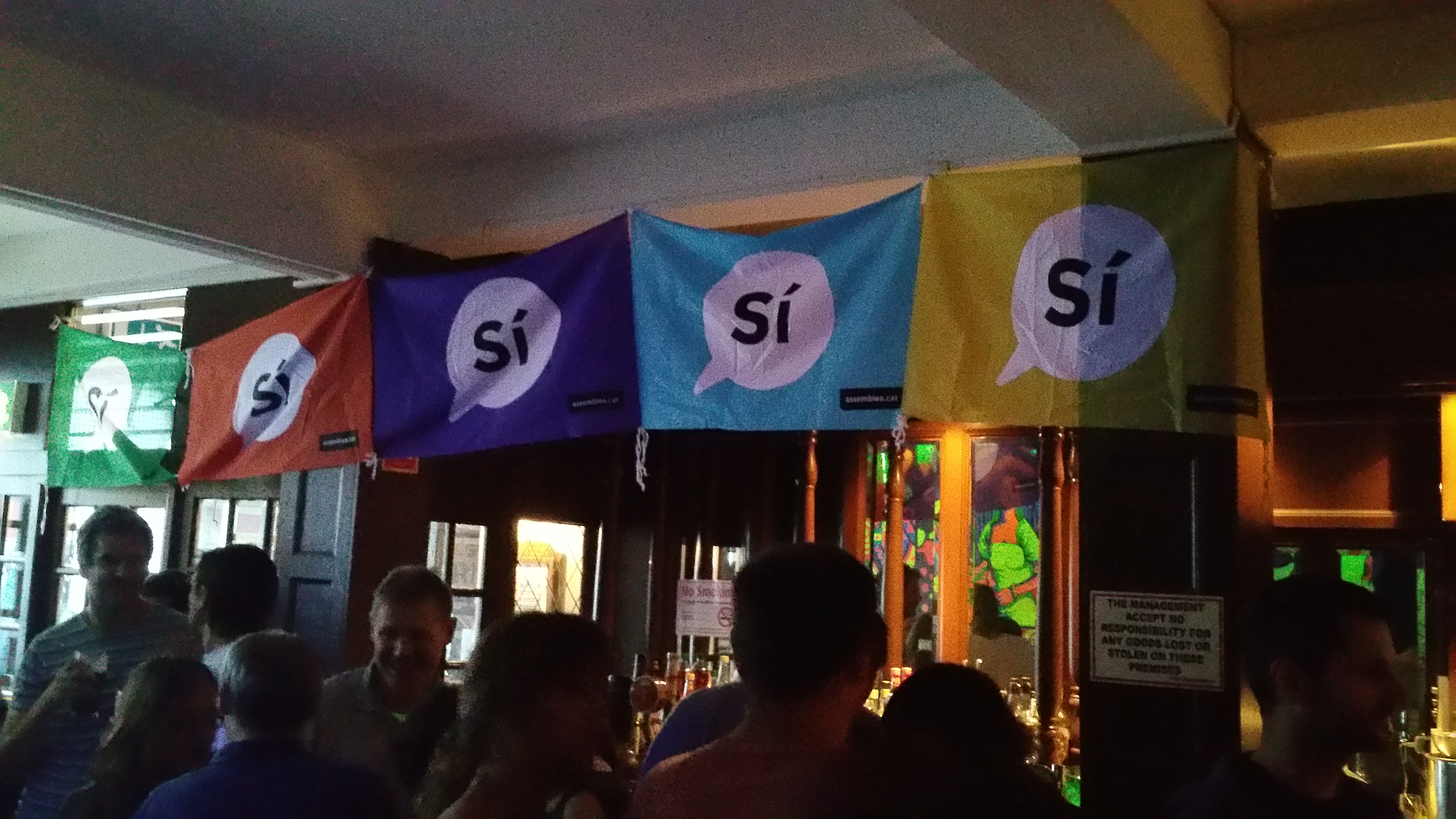
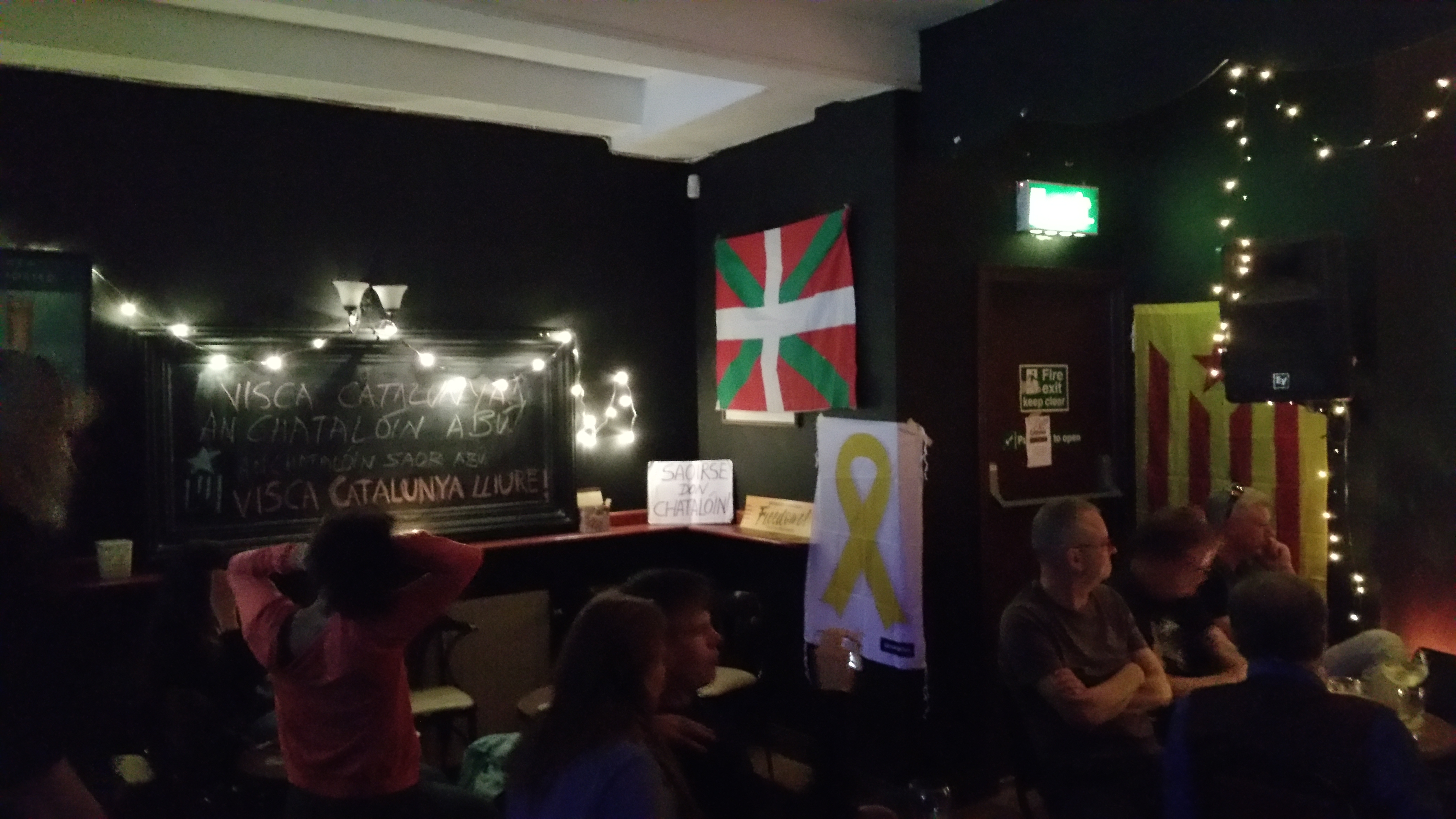


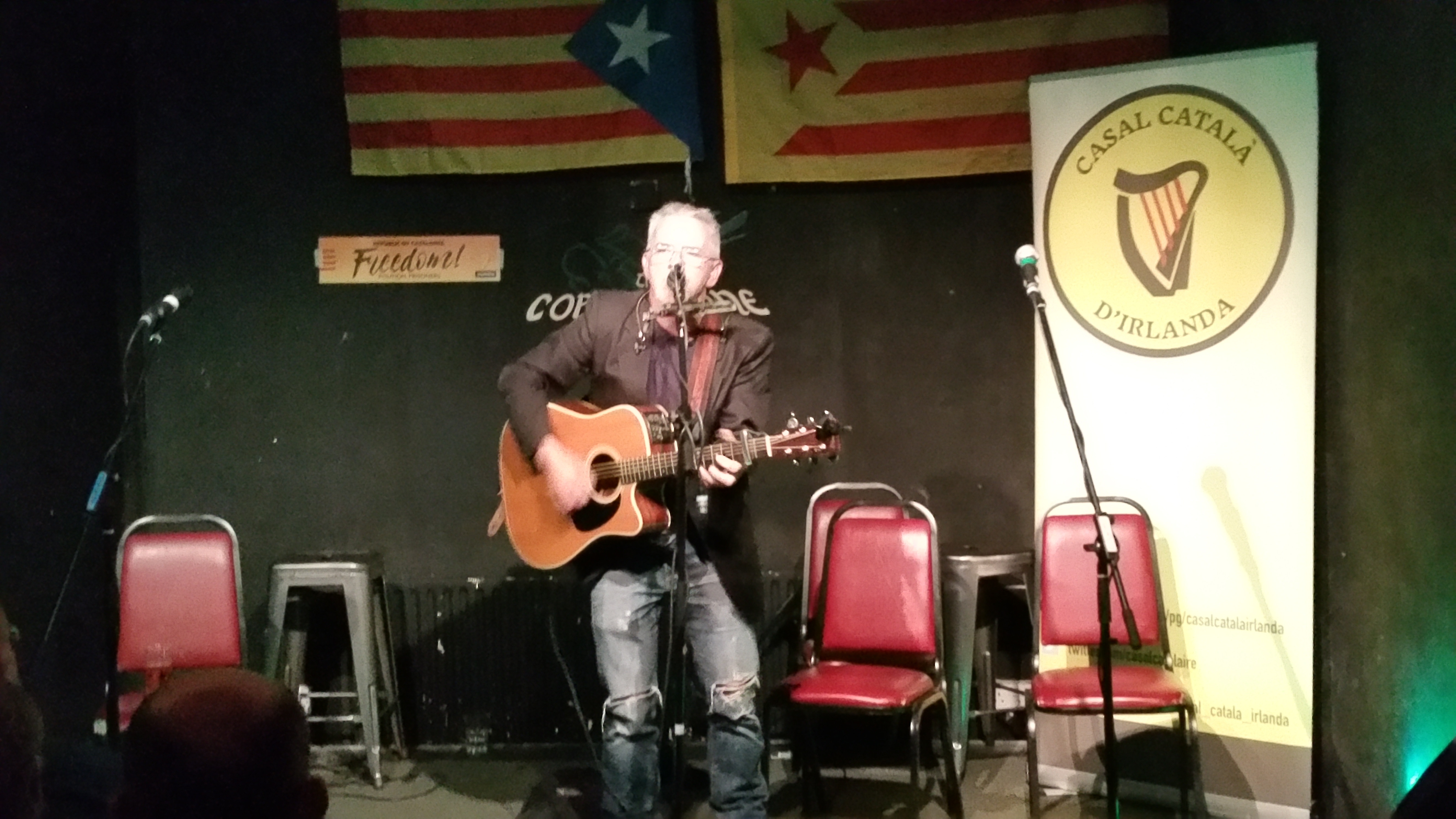
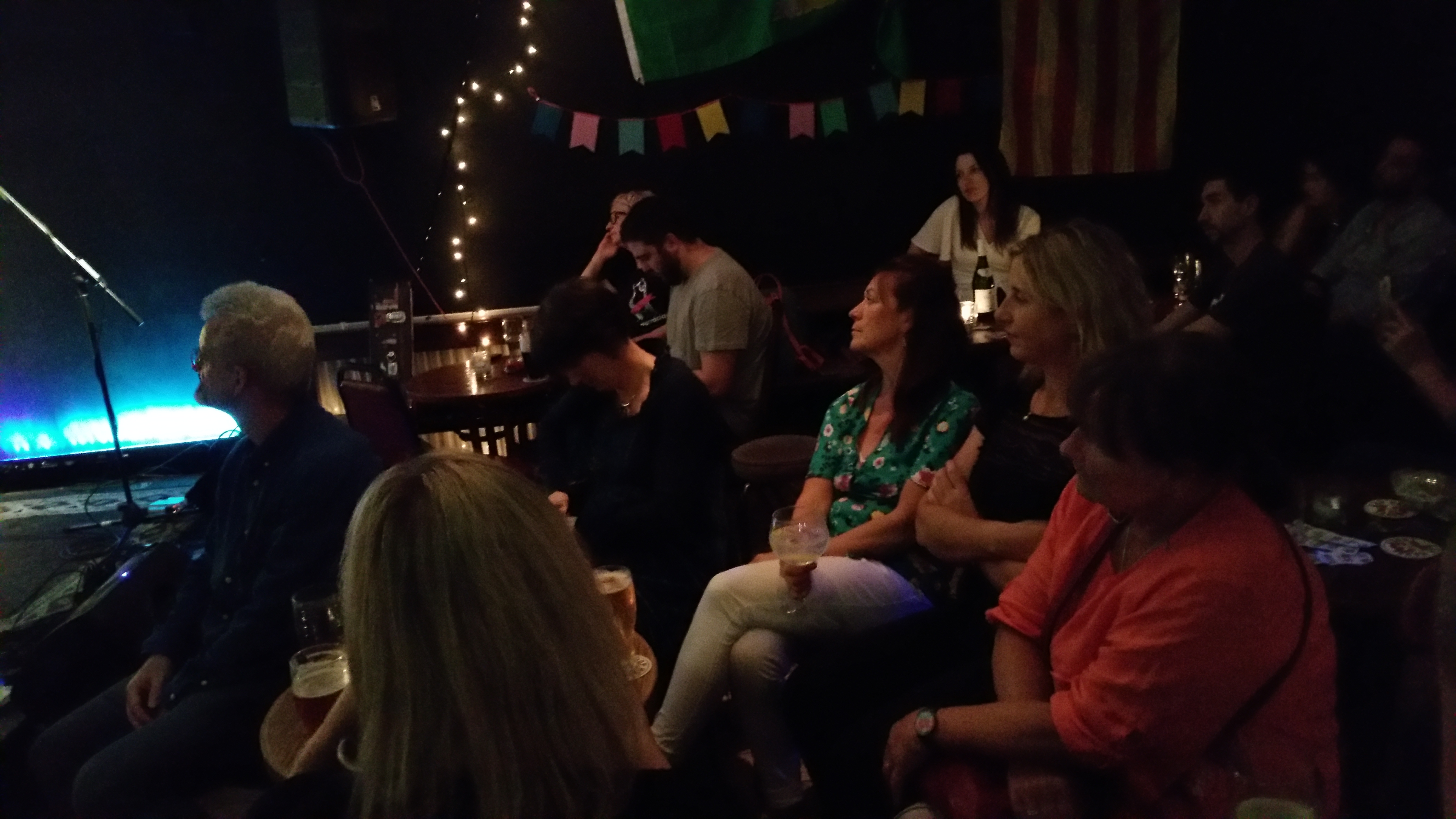


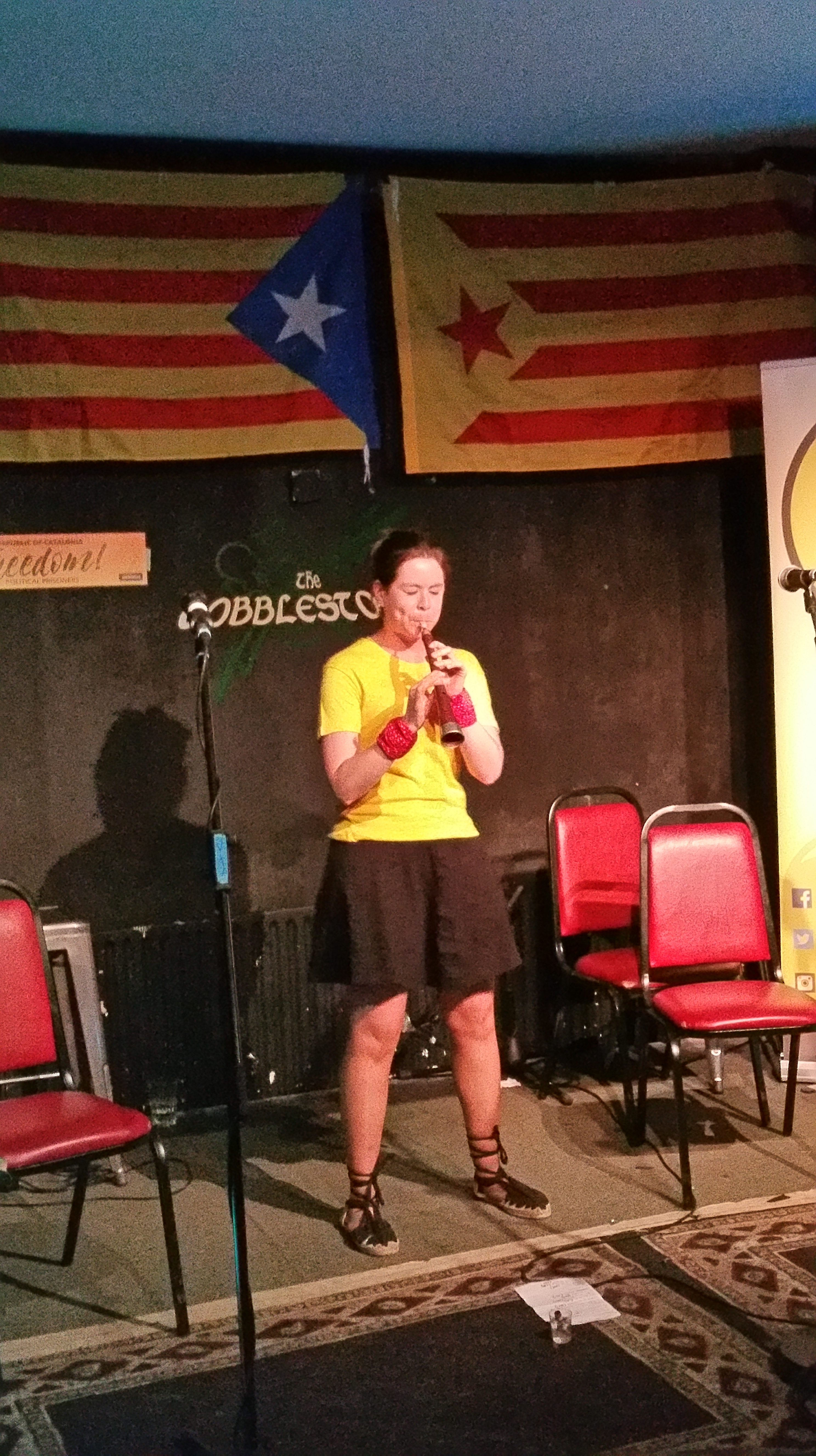

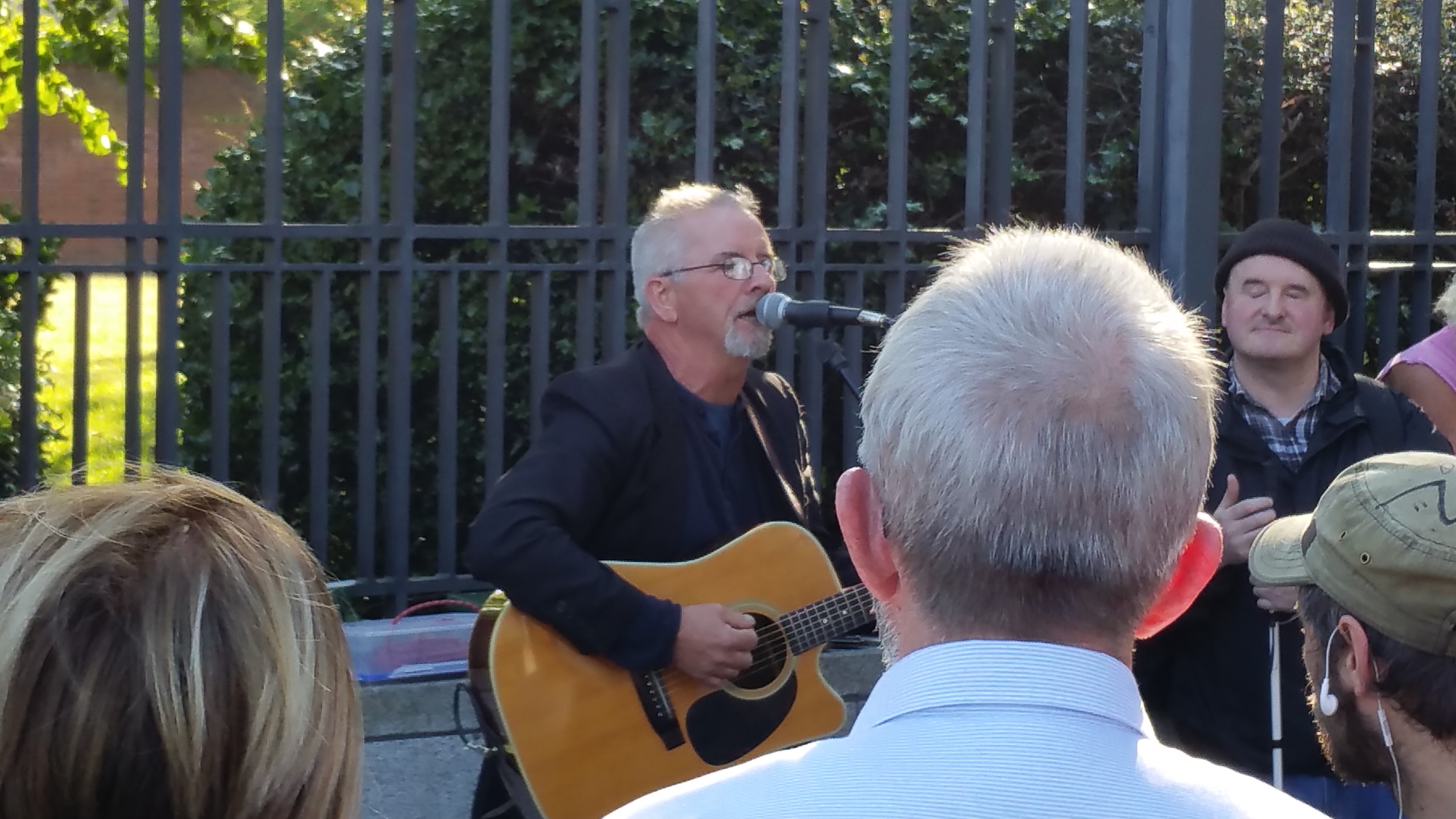



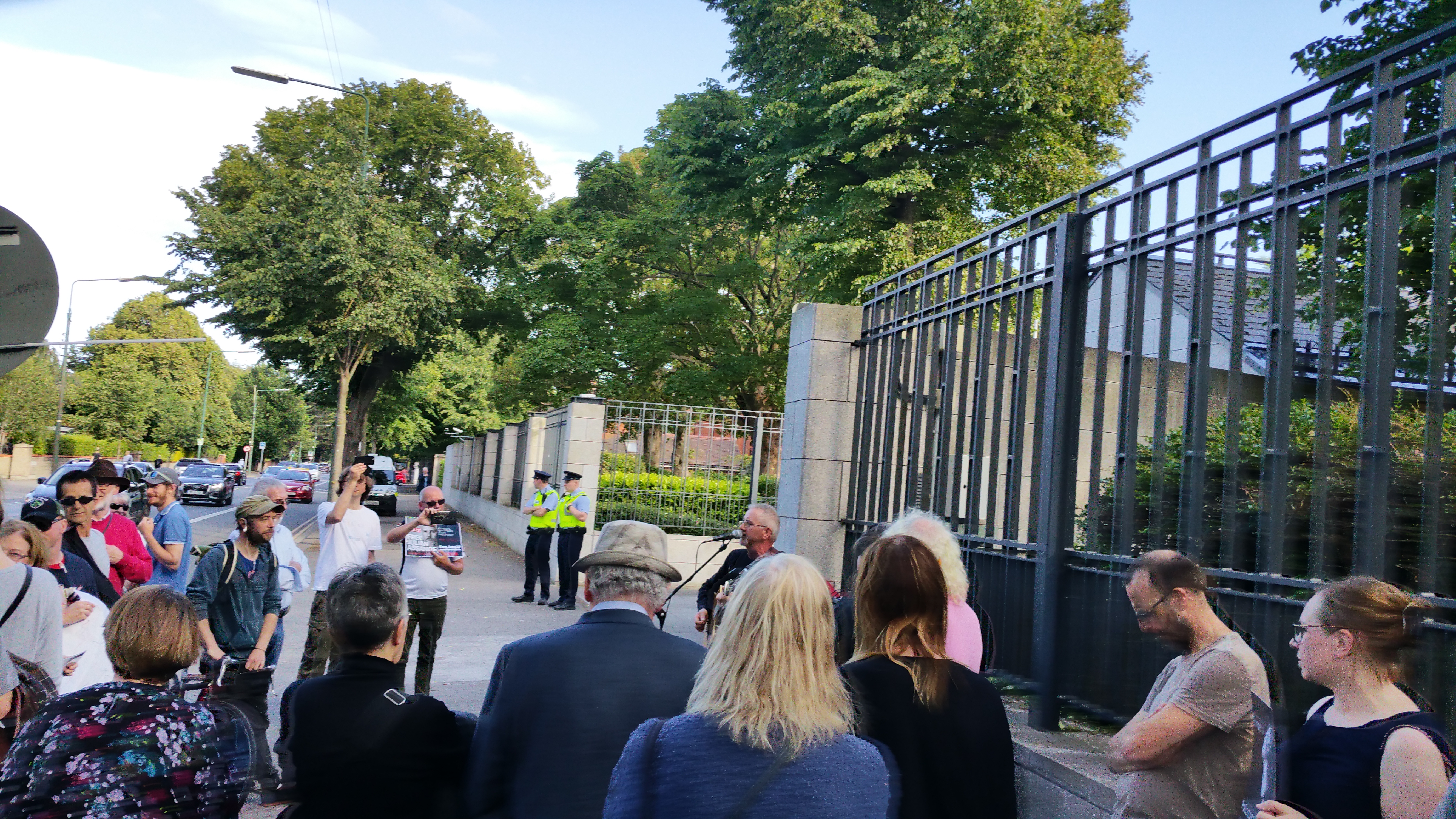
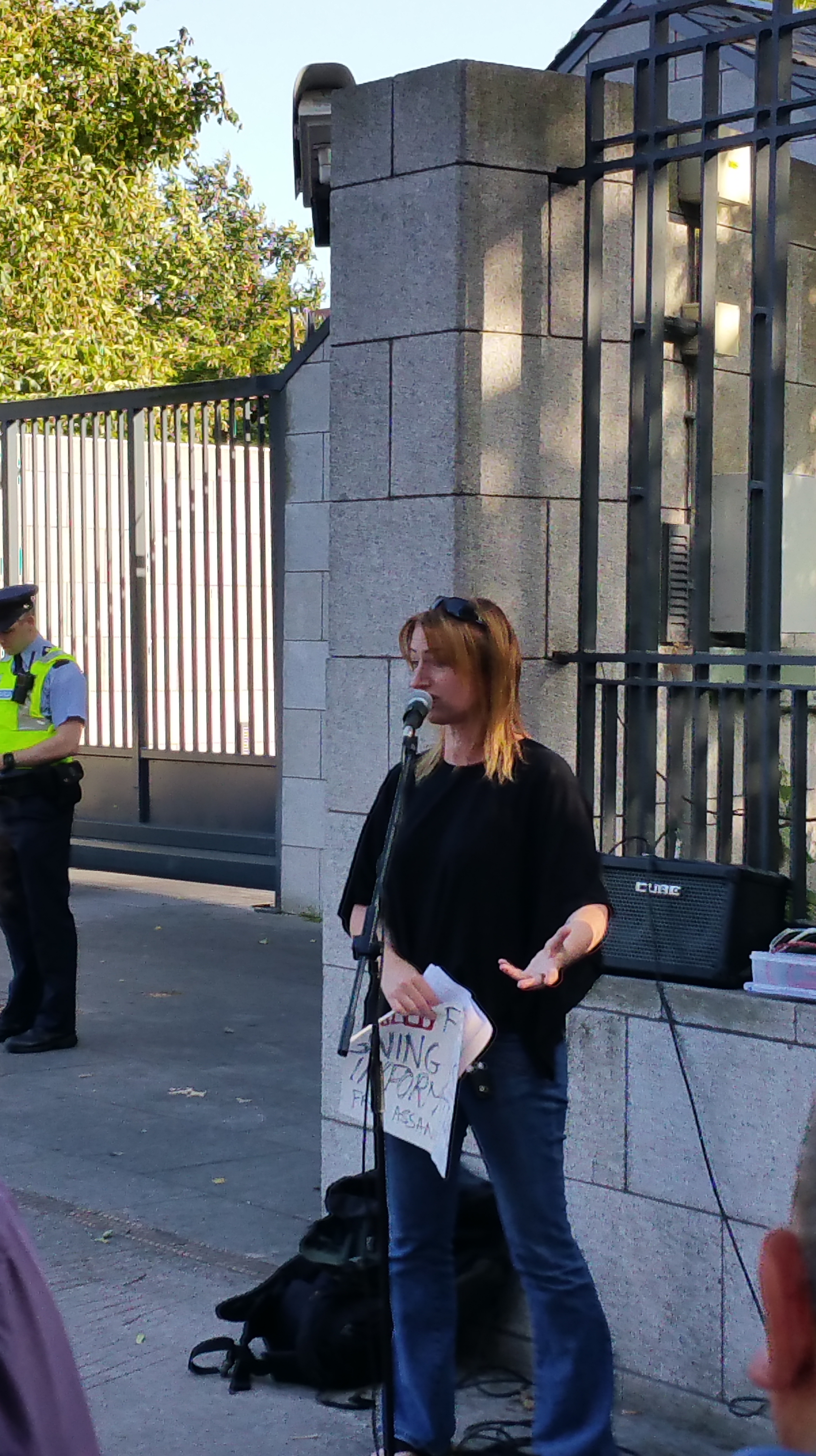
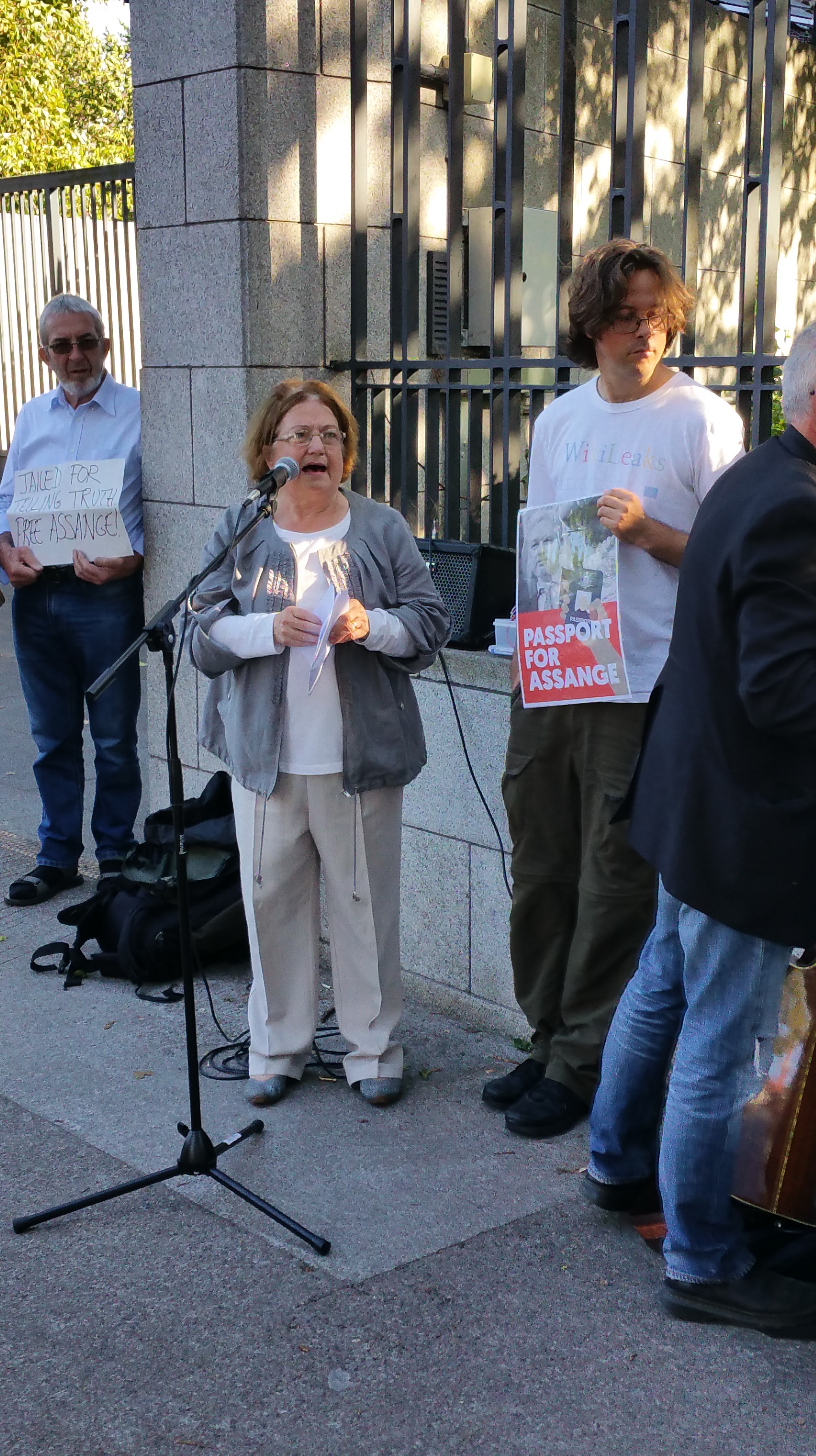
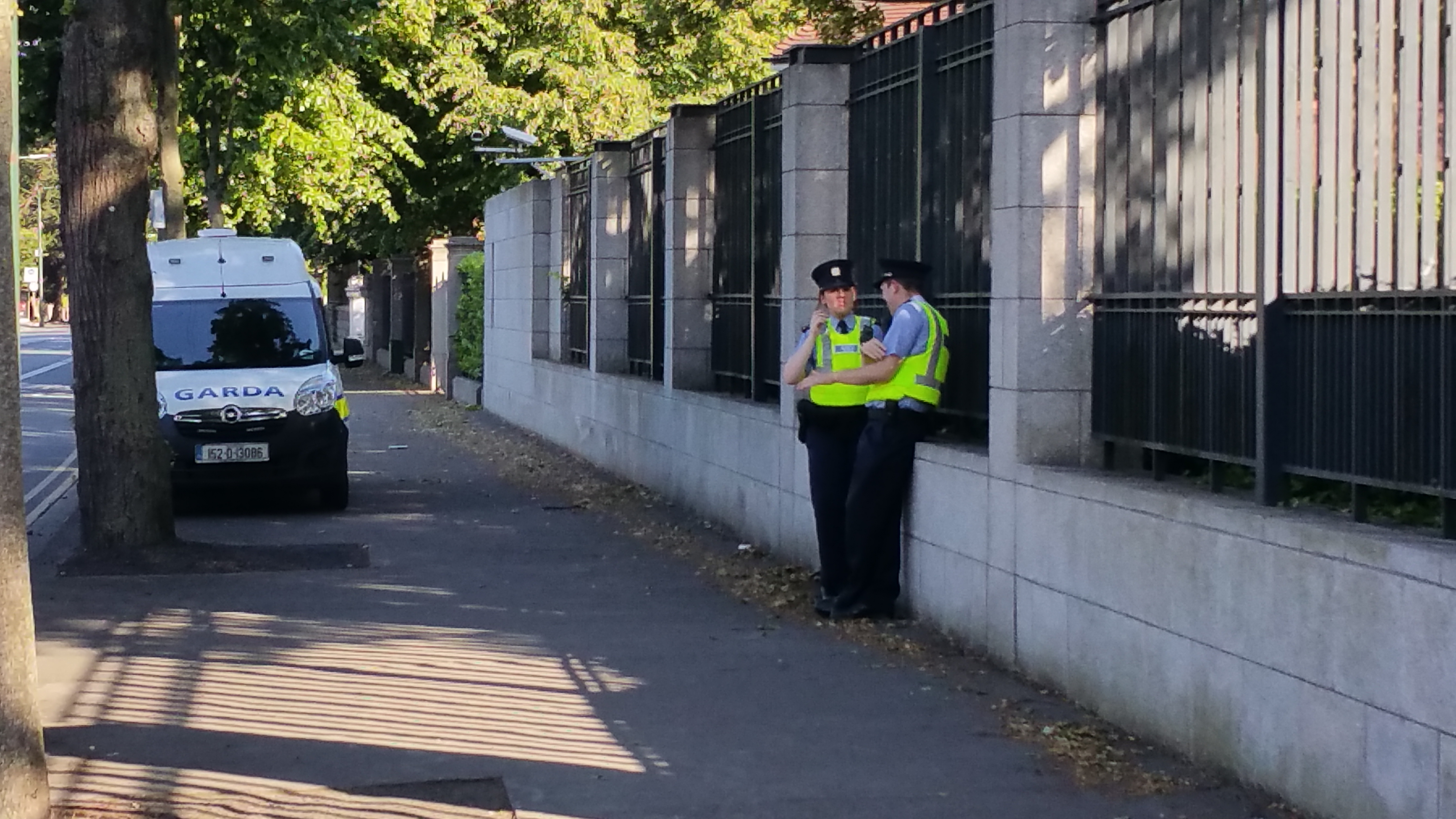
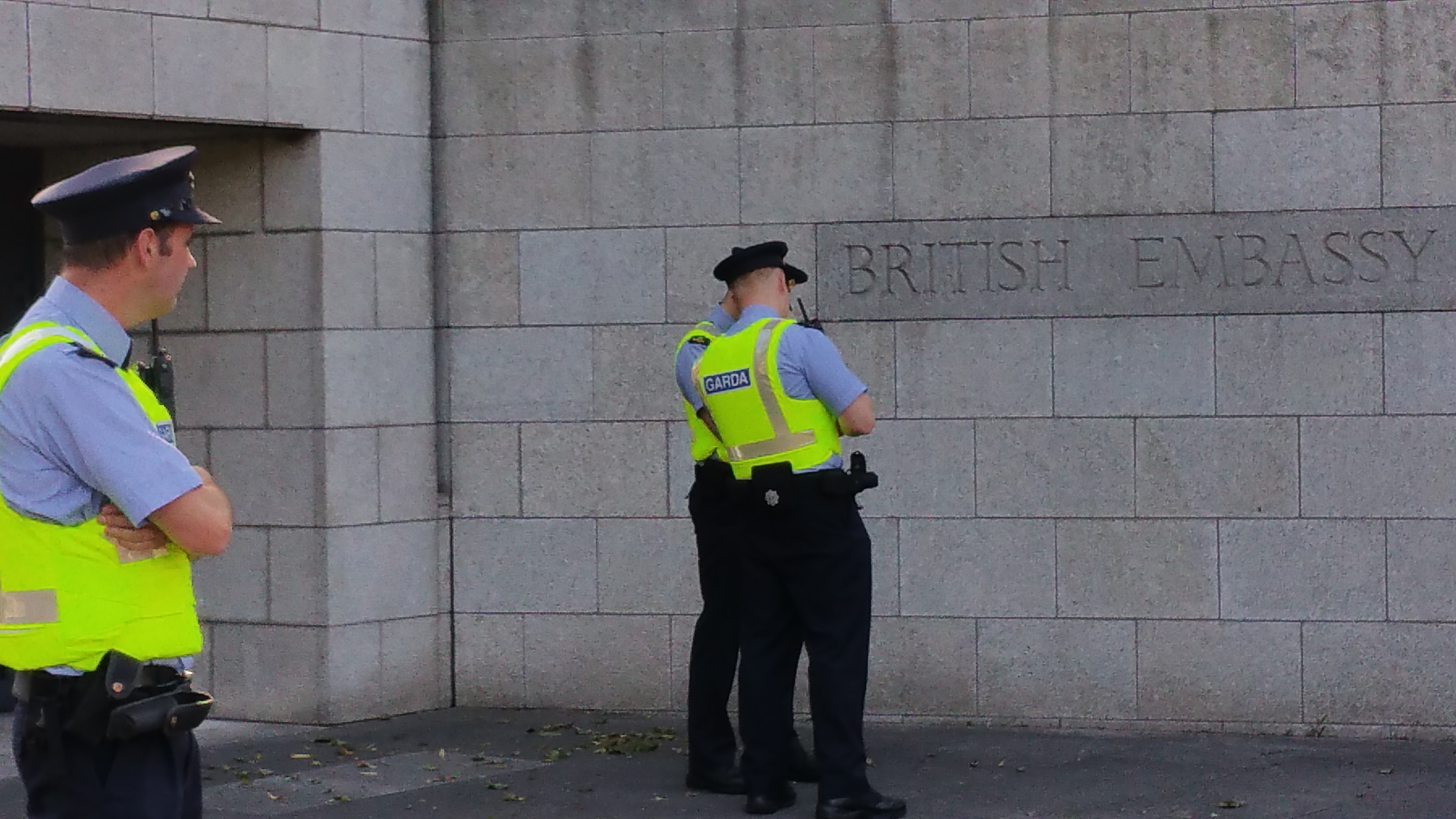

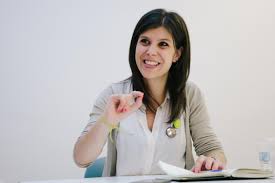

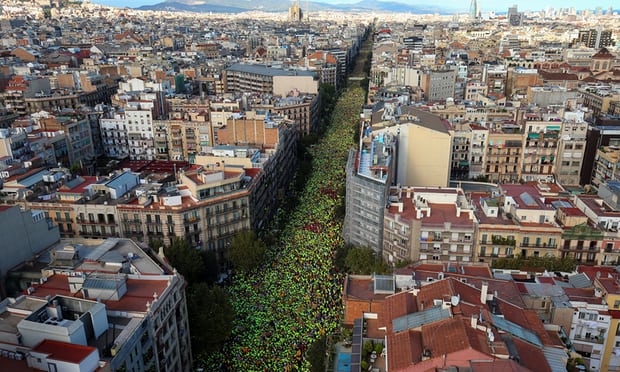
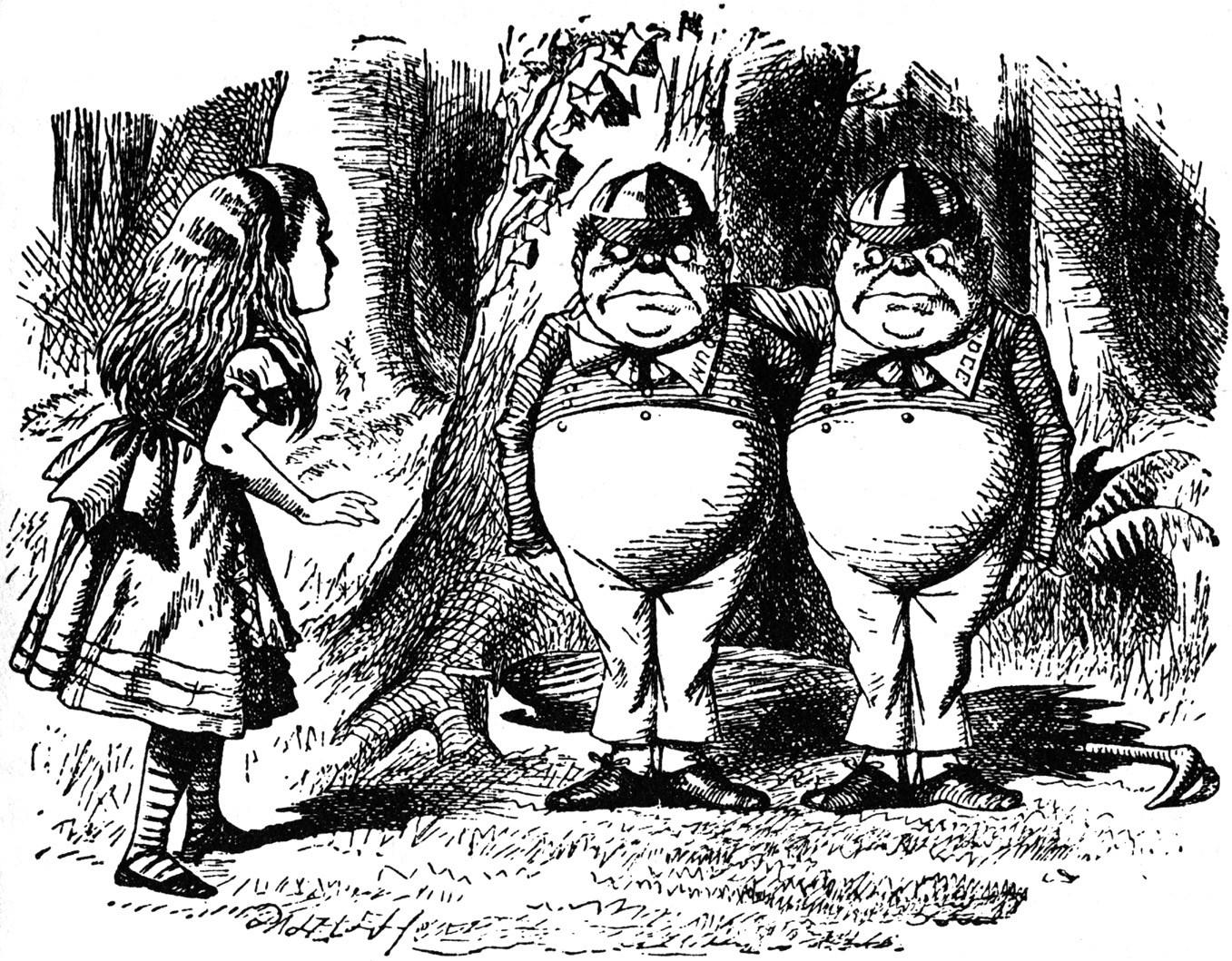
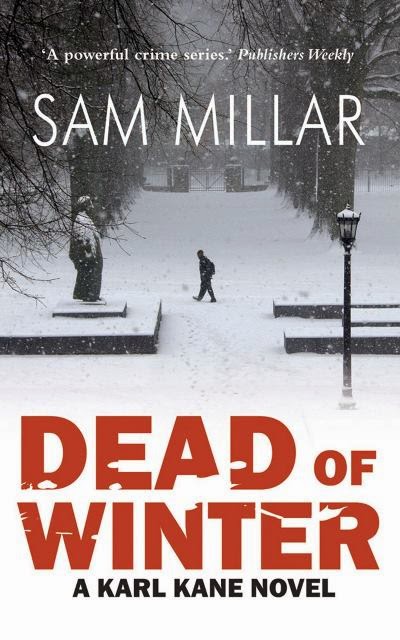


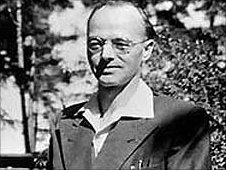
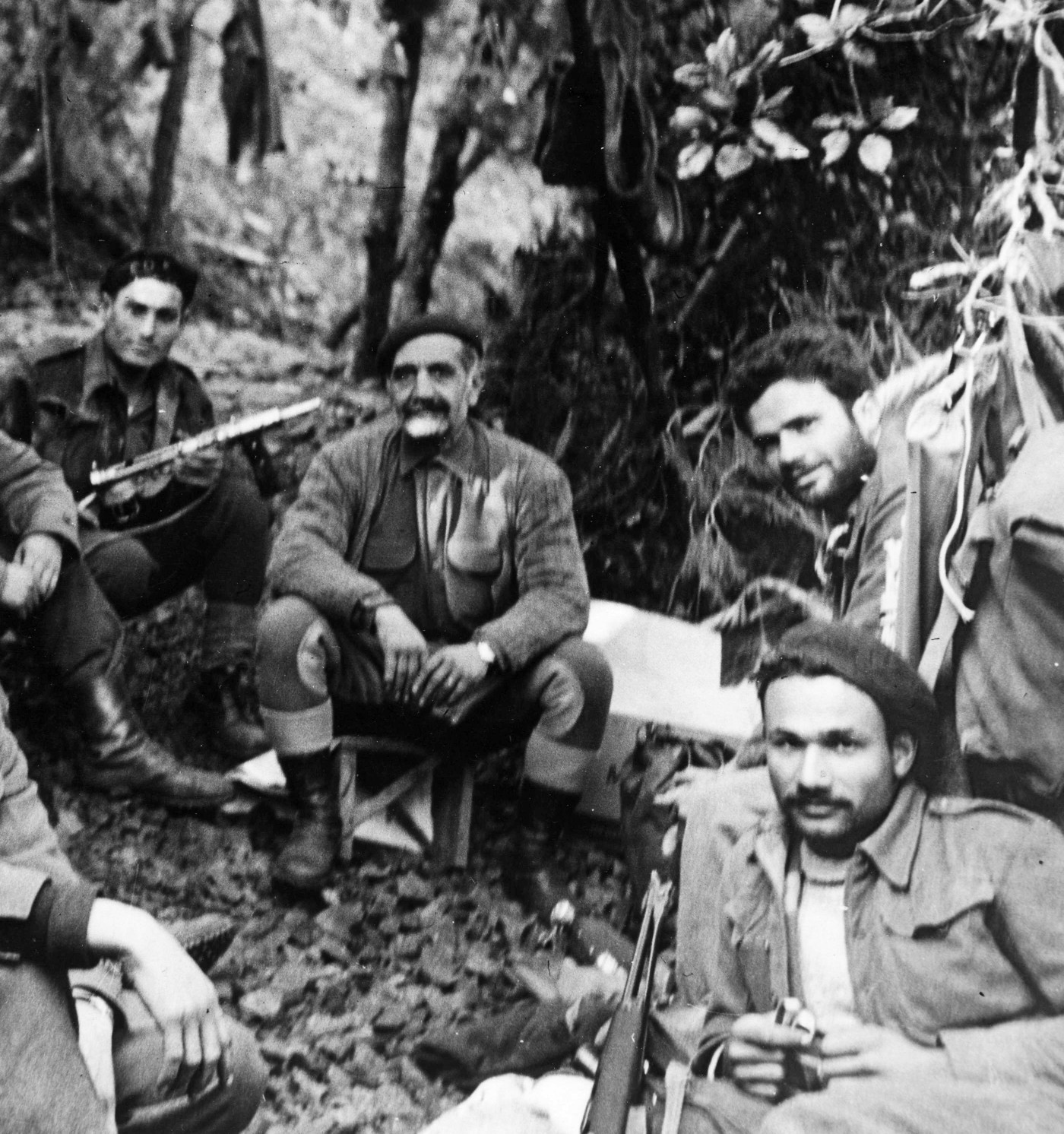




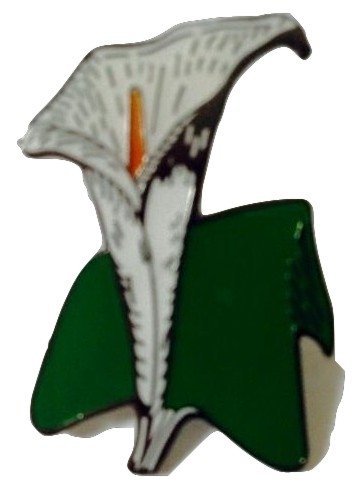

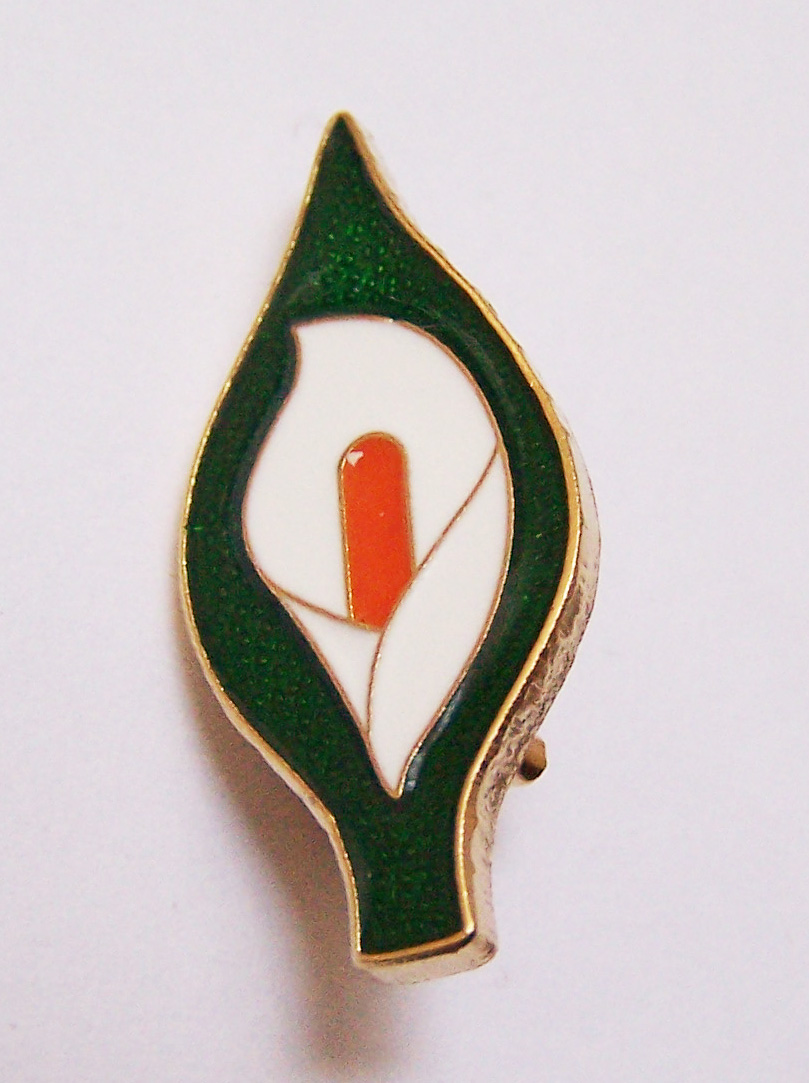

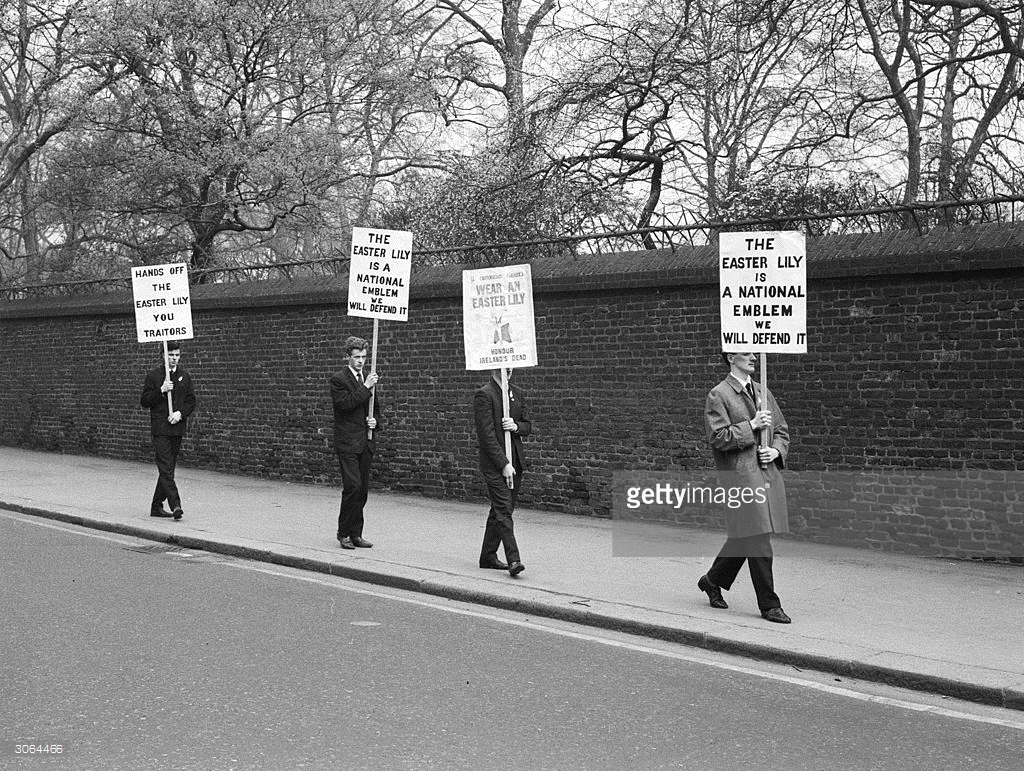
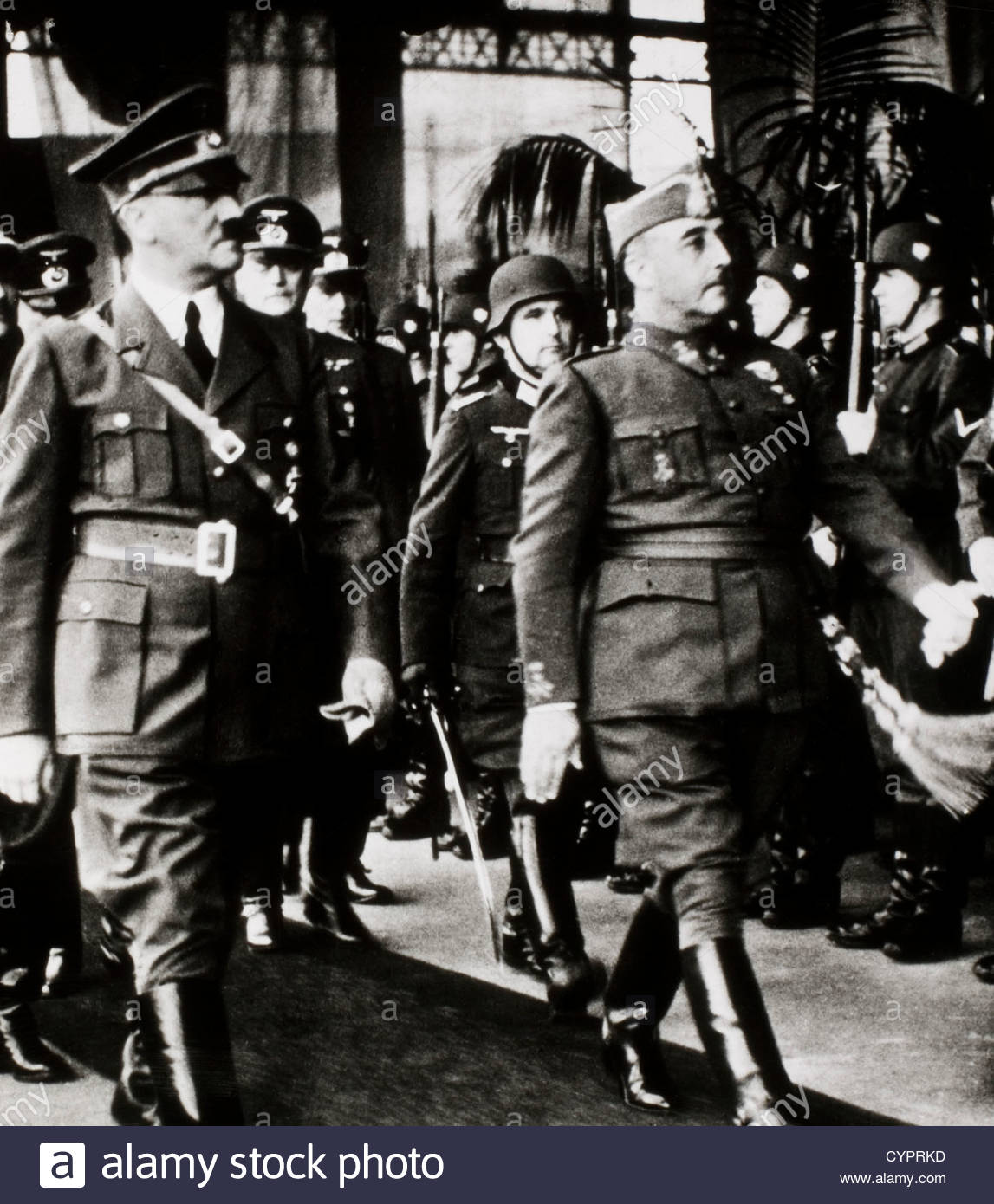


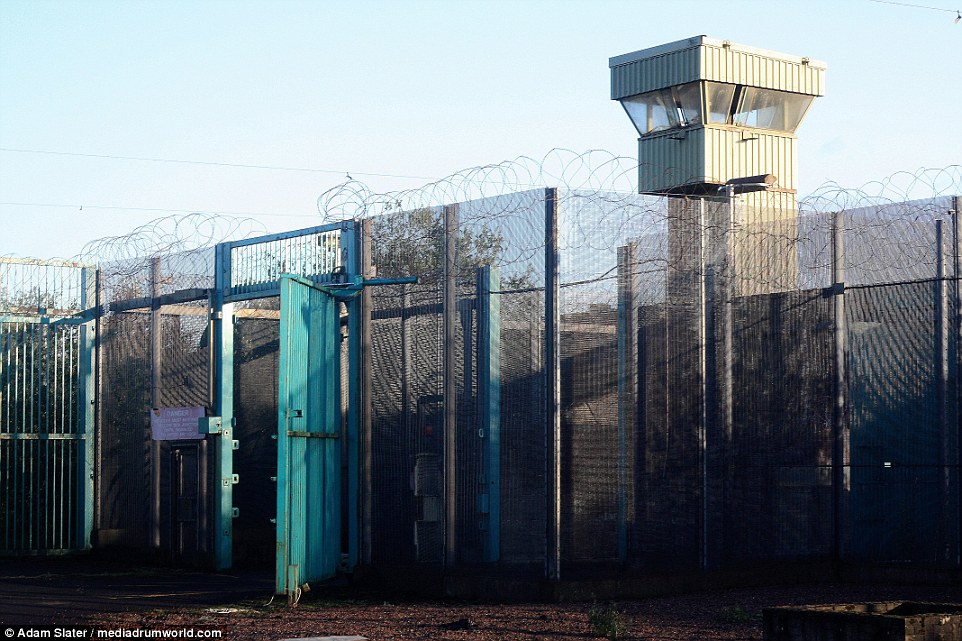
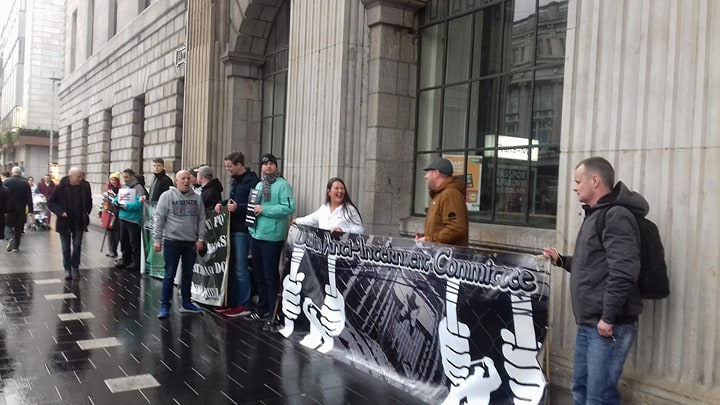


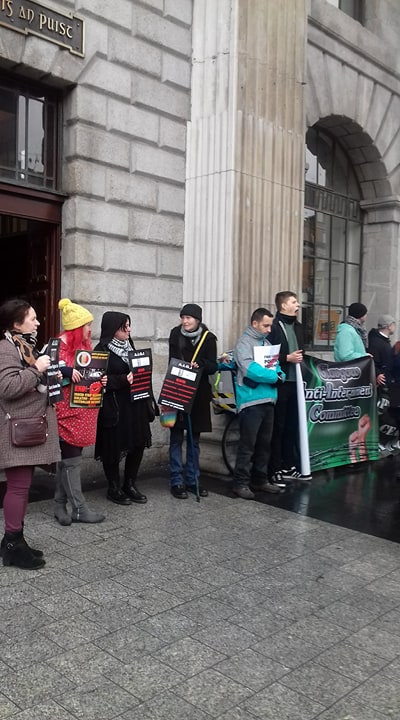


 rebelbreeze