GAINS FOR THE HARD RIGHT IN ANDALUSIA – REASON TO PANIC?

Diarmuid Breatnach

Summary: Alarm is being expressed in a number of quarters, especially within the Spanish state’s territory, at the gains made by the hard right in the regional elections in the southern Spanish province of Andalucia. Held on 2nd December this year, a fairly new party, hard-right Vox won seats for the first time – 12 of them. Ciudadanos, another hard-right party which has been around longer, increased their share of the seats by twelve to 21. Should we be afraid? I think not …. we should certainly be alert – but for other reasons.
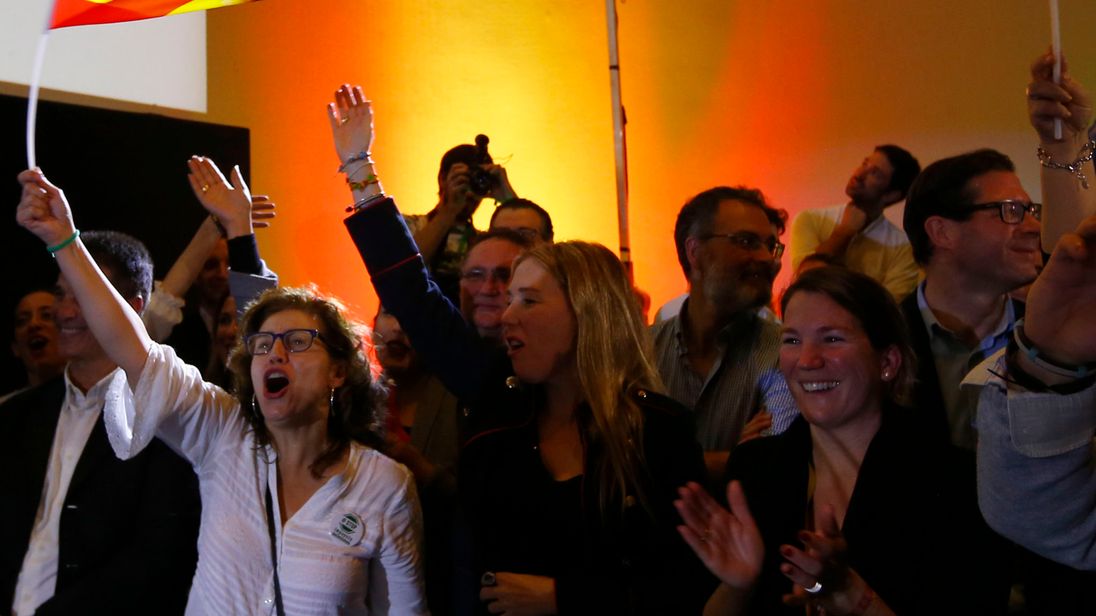
Vox supporters celebrate their party’s results in Andalusian elections (Photo source: Internet)

NB: This is not a deep analysis but rather a look at some of the circumstances in Andalusia in relation to those of the Spanish state as a whole and in the context of its history and current situation.

On 2nd December, elections were held in the Andalusian region, one of the 17 ‘autonomous communities’ of the Spanish state. At the time, the social-democratic PSOE controlled the regional government but only with the ‘confidence and supply’ support of the very right-wing party Ciudadanos; the latter withdrew their support and the PSOE called a snap election. The extremely right-wing (to use the most neutral description applicable) political party Vox for the first time had some electoral success and took 12 seats.

Vox is opposed to the right to choose abortion and also to equal same-sex marriage, proposing instead a different “civil union” for gay and lesbian couples. Like all the main Spanish political parties (and many smaller ones), Vox upholds the territorial integrity of the Spanish state but unlike most others opposes also the Statute of Autonomy which created regions with a degree of autonomy (which was part of the deal of ‘Transition’ from the Franco dictatorship, mainly to placate the nations within the state’s territory). The party is critical of multi-culturalism and immigration policies in general and regarding Islam in particular.

The election of those 12 Deputies has caused a wave of panic across many left-wing and democratic sectors across the Spanish state and one hears and reads comments that “this is the first time a party of the extreme right has gained seats in the Spanish state since the end of the Franco Dictatorship.” If that is true, it is so only in the perception of those commentators.

NOT ONLY FASCIST DEPUTIES HAVE BEEN ELECTED SINCE FRANCO BUT FASCIST GOVERNMENTS TOO

The fact is that fascism was never defeated in the Spanish state after the Popular Front Government was overthrown by Spanish military-fascist coup, aided by Nazi Germany and Fascist Italy, in 1938. For four subsequent decades, there was a fascist dictatorship. After that, there was a fake “Transition”1 in which political groupings directly related to the dictatorship formed political parties and the first two governments (September 1975-July 1976) were of unashamed fascist background followed by two of the UCD (July 1976-December 1982), also of fascist background but wearing the veneer of being ‘centre-right’. One of UCD’s most important movers and shakers was Manuel Fraga, the director of murderous State repression of all antifascist, anti-monarchical and independentist resistance during the “Transition”, his slogan being “The streets are mine”.

The next Government was of the social-democratic PSOE, which swept the board, assisted by a panic about the restoration of a fascist dictatorship, aroused by a somewhat farcical very minor attempt at a military coup, the supporters of which entered the Parliament while it was in session and took it over for a while before they surrendered when it was clear they were out on their own.

The PSOE and its associated trade union, the UGT, had been illegal under Franco. The attempt to rebrand the Spanish State as a “democracy” required a bipartisan social democratic party and also a restraining hand on the illegal trade unions (i.e all that were not fascist). But legalising the PSOE and the UGT would be insufficient if the Communist Party of Spain and its allied trade union, the Comisiones Obreras (CCOO) were left out in the cold, where they would certainly cause a lot of trouble. Both parties were anti-monarchist — would they agree to to monarchy being foisted on the public after more than four decades without one? Could they guarantee not to go after any fascists for crimes of torture and murder? Would they support a unionist constitution? Would they control their unions? They could, would and did, even putting up with the murder of union lawyers (PCE/CCOO) and bombing of the UGT headquarters during the ‘Transition’.

The PSOE was in government from December 1982 to May 1986, during which time it ran assassination and terror squads (GAL 1983-1987) against the Basque left-wing pro-independence movement with the aid of high-ranking Spanish military and police officers directing Spanish and foreign fascist mercenaries.

A number of scandals including the one about GAL helped push the social democrats out of government and next in was a new party of the ‘centre-right’. Well, a new name anyway: Partido Popular — its founder was “The-streets-are-mine” Manuel Fraga, leading a split from the UCD. The PP has been consistently alternating in government of the Spanish State with the PSOE ever since: 1996-2004; 2011-2018.

The PSOE got into government of the state again in 2004-2011 and is in once more at the moment, in a minority government, having unseated the PP on a vote of no confidence on a corruption scandal.

THE 2018 ELECTIONS IN ANDALUCIA

The first thing to note perhaps is that the total turnout was under 57% which indicates a high level of disenchantment with the electoral and political system. The PSOE had been in government there for thirty-six years, i.e since the incorporation of the regional government in 1982. What had it delivered for the people in those years? One need only look at the region’s place in the Spanish state’s economic tables – second from bottom.

The election results gave the the PSOE a drop of 7.4% in votes on their last performance and they lost 14 seats. However, with 33 seats they remain the party with the most deputies in the regional Government, with a seven-seat majority over their nearest rival, the Partido Popular and its 26 seats.

Diaz with PSOE party faithful after making statement on the party’s results in Andalusian elections (Photo source: Internet)

The other social-democratic party, a coalition around Podemos, also took a drop: 5.57% in votes and lost three seats.

The combined or total loss of seats to parties of social-democracy was 17 and the sum of their loss of votes was 12.61%.

As it happens, the right-wing Partido Popular also dropped votes and seats, -5.99% and seven respectively.

Ciudadanos, a newer party than the PP but just as hard right, benefitted with 12 additional seats and 8.99% increase in their votes. And then Vox took the remaining 12 seats from a previous zero on only a 10.51 % increase in their percentage of votes (they had stood before but got no deputies elected).

Where did the other votes go? Apart from the 1.8% invalid votes (exactly the percentage drop of voters on the last turnout, curiously), they were spread between 22 other parties or platforms, of which no less than 15 were totally new in elections. Some of those are right-wing but most, going by their titles, seem to represent a band varying from soft to hard Left to Independentist or regional.

In conclusion, the election results show no sudden far-right advance in reality but a newish party of the far right, competing with other far-right parties, took 22 seats it had not had before, while the social democrats, though losing votes, remain in government for the moment.

Some commentators, including many on the Left, have sought to ascribe the rise in the support for Vox as a reaction to insecurity around the fear of the secession of Catalonia from the Spanish state. This is bit rich from often the very commentators who have tried to portray the popular Catalan movement for independence as an elitist movement, motivated by selfishness to keep their wealth and not share it with poor regions like Andalusia.

So we can all relax, we needn’t worry? No, we DO need to worry but not so much for the reason of these election results. We need to worry because of the fascist nature and history of the Spanish ruling class and its State; because fascist groups are on the rise in the Spanish territory; because the Left has real problems in countering fascism and because fascism is on the rise in Europe in general.

The fact is that most of the Spanish Left, from social-democracy to ‘revolutionary’ socialists, are also totally committed to Spanish territorial integrity. That, and their reluctance to mobilise the masses to take decisive firm action against fascist mobilisations and provocations, makes it very hard for the Left to build a mass and effective anti-fascist movement.

ANDALUCIA
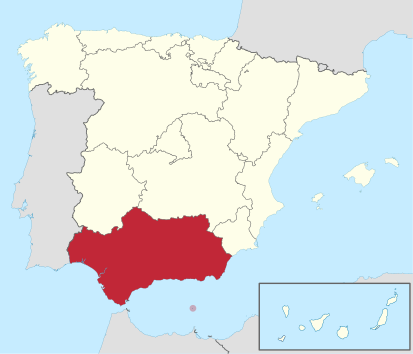
Map of Spanish state (yellow) including Canary Islands with Andalusia in red. (Source image: Wikipedia)

The southernmost part of the Spanish state is where to find Andalucia, sharing a land strip with the Rock of Gibraltar; it is the most populous and the second largest in area of the autonomous communities in the state and its capital is Sevilla (Seville). It is the only European region with coastline on both the Atlantic and the Mediterranean. Parts of the province record the highest temperatures of the state but other parts see quite high rainfall.

The earliest known paintings of humanity have been found in the Caves of Nerja, Málaga.2. The region has been under Phoenician, then Carthagenian control, later under the Visigoths, followed by the Romans and even by the Eastern Roman Empire. For three-and-a-half centuries Andalusia became a Moorish domain from which comes the name (Al Andalus) the region bears today. It was an area of great culture and learning and Christians and Jews were tolerated and protected. The Spanish Christian conquest employed divisions among the Moors, conquered Al Andalus and eventually forced all Muslims and Jews to convert to Christianity or suffer expulsion, allowed only to take the clothes on their backs.

Andalucia in the early-to-mid 20th Century was ruled by a landed aristocracy in a semi-feudal relationship with the mainly rural working population. The region got an early visit from Franco’s military invasion in 1936 and, although there was little armed resistance apart from Malaga and that ill-equipped, an estimated 55,000 were killed deliberately, in executions of thousands of workers and activists of the leftist parties during Franco’s repression.3

The region is characterised by a variety of climatic conditions and topography, inhabited by a great biodiversity of flora and fauna, although some of the latter are quite threatened, such as the Iberian Wolf, Iberian Lynx and the Ibex.

Agriculture and husbandry have traditionally been the main products, with olives, citrus fruits, stone fruits, nuts, alongside some other produce in lower percentages; there is also a depleted but active fishing industry. Andalucia is the single largest producer of olive oil with about 40% of the world market. “One-third of Andalucía’s agricultural land is planted with olive trees, and sales of Andalucian olive oil grew a staggering 56 per cent between 2011 and 2015, to a million tonnes, worth 2,000 million euros. Nearly 500 companies export their olive oil from Andalucía, with Britain the fifth-largest market at nearly 100 million euros.

Another world-renowned product from Andalucía which is exported all over the world is jamón ibérico de bellota, gourmet air-cured ham made from Iberian acorn-fed pigs, nothing less than a religion for Andalucians, while sustainably-caught bluefin tuna caught off the coast is frozen and sent to Japan to be served as delectably tender sushi.

In total, one-fifth of all Spanish food and drink exports originate in Andalucía, where the number one area is fruit and vegetables – and tomatoes are the top product”.4

What cause would people in that province have for dissatisfaction that right-wing parties could then exploit? Well, there are no shortage of reasons.

Andalucia is the second-poorest administrative region in the Spanish state. Although unemployment has taken nearly a 4% drop over the previous year, it still stands at an average of 24.4%. Averages conceal other realities and though average male unemployment is almost 3% lower, the female average share is higher than the average by 3.5%. As they age profile drops below twenty-five, the unemployment figures soar to almost 50%.

Table unemployment statistics in Andalucia

Unemployment rate (LFS)

24.4%

28.3%

Male unemployment rate (LFS)

21.6%

25.7%

Female unemployment rate (LFS)

27.9%

31.4%

Unemployment rate less than 25 years

47.9%

57.8%

Unemployment male less than 25 years

48.9%

55.0%

Unemployment rate female less than 25 years

46.6%

61.3%

Unemployed rate over 24 years

22.7%

26.2%

Male unemployment rate over 24 years

19.6%

23.6%

Female unemployment rate over 24 years

26.5%

29.3%

Unemployment rate less than 20 years

66.4%

78.2%

Male unemployment rate less than 20 years

66.8%

76.4%

Female unemployment rate less than 20 years

65.7%

80.5%

(Source: see link for “Unemployment statistics Andalucia)

The situation then in Andalusia may be characterised as one where about every fourth person is unemployed as is every second one under the age of twenty-five. Where paid employment is hard to find, wages are likely to be low, trade union victories harder to achieve and conditions therefore far from the optimum obtainable from the system.

Between 2000–2006 economic growth per annum was 3.72%, one of the highest in the country. Still, according to the Spanish Instituto Nacional de Estadística (INE), the GDP per capita of Andalusia (€17,401; 2006) remains the second lowest in Spain, with only Extremadura lagging behind.” (Wiki)

Traditionally a region known for agriculture and husbandry, these sectors are now the lowest contributors to GDP in Andalusia. Construction for the tourist industry siphoned off many workers but the collapse of the construction boom left most of those workers with nowhere to go, much of their old agricultural employment mechanised or replaced with migrant labour. Despite agriculture’s very low position in GDP, 45.74 percent of the Andalusian territory is cultivated. That does not mean that those areas are efficiently5 cultivated however and one of the activities for which one Andalusian trade union movement6 has become known is the occupation of agricultural land which is not being adequately or at all maintained, due to absentee owners or land held by banks but not in production.

The large landowner past of Andalusia has not changed substantially although the banks and some companies now own much of what belonged to semi-feudal aristocrats. “The agrarian census of 1982 found that 50.9 percent of the country’s farmland was held in properties of 200 or more hectares, although farms of this size made up only 1.1 percent of the country’s 2.3 million farms. At the other end of the scale, the census showed that 61.8 percent of Spain’s farms had fewer than 5 hectares of land. These farms accounted for 5.2 percent of the country’s farmland.”7

In May of this year the trade union SAT (Andalusian Union of Workers) published a denunciation of a new Land Law proposed by the PSOE in which they also pointed to some structural problems and their impact on the working people of the region8.

The most recent act of savagery is the new Land Law that they (PSOE) intend to approve, to finish hanging any dream of Agrarian Reform for our working people of Andalusia. Andalusia is not understood without the struggle for land, and this is more recent than it seems, much more real and topical than we would like.

The concentration of land ownership is a problem that annihilates our people, currently in Andalusia, 2% of the owners have more than 50% of the arable land, and the worst is that this figure is increasing.

If we go to Jaén, this figure is even more scandalous, because 4% have 66%, and much of it without giving a job, as is the case of Cortijo del Aguardentero, our Cerro Libertad, one of more than 150 farms, the majority underutilized by the BBVA9 in the Jaén de Piedras Lunares and Olivares de Miguel Hernández areas.

These figures contrast with the alarming fact that in Andalusia every three days a worker dies, or that more than 60% of Andalusian employees earn less than € 1,000 per month. Also alarming are the number of marginalizations, risk of poverty and lack of school resources, all at more than 40%.

There are laws that can put an end to all this, but there is no political will in a government that is more a plug-in factory than a socialist party, which only seeks to perpetuate itself in power, being supporters of corrupt banks, all at the cost of death of our land.

There are alternatives:

1 ° Repeal of this Land Law proposal.

2 ° Implementation of Law 8/1984 of Agrarian Reform of the Statute of Autonomy of the Junta de Andalucía on farms that can be clearly improved.

3 ° The land has to fulfill a social function, for the human and sustainable development of Andalusia.

4th Comprehensive Agrarian Reform, which allows the Usufruct and Land work in Andalusia. Work in the labor force, in the sowing and harvesting, in the primary sector. We do not want property, which must be of a public entity, we want to work and live in peace.

5th Creation of productive, industrial and agro-sustainable Andalusian fabric, generating employment in the transformation and packaging of the product collected.

6 ° Domestic consumption and export of the sown, harvested and agro-transformed product, giving employment and work in the tertiary sector, services.

This would suppose a Revolution of our earth, a valorization of what we were, of what we are and what we want to be: A FREE PEOPLE WITH FREE PEOPLE.

This is possible, but political will is needed, and for that, and more importantly, we need the human will to mobilize, as we are defending with our sweat and our lives El Humoso in Marinaleda, Somonte in Córdoba and Cerro Libertad in Jaén10.

Challenge to the Andalusian society to face with arguments and mobilization the nonsense and unreason of the government of the PSOE of the Junta de Andalucía.

We announce mobilizations this summer for this, and we call for you to join.

Andalusians and Andalusians, get up, ask for land and freedom.”

And then, on top of capitalist exploitation and mismanagement, there is corruption. “A recent probe revealed the extent to which PSOE officials exploited their power in the region of Andalusia, where the party has governed without interruption since the return to democracy. Two former regional presidents, Manuel Chaves and José Antonio Griñán, are currently on trial for their alleged part in a scam that included fraudulent early retirement packages, company subsidies and commissions handed out to the tune of €136 million”.11

A recent corruption table based on individual cases puts Andalucia way over all other regions and the PSOE in about 25% of the corruption cases by party (see References for the link to the report).

CONCLUSION

There was no huge swing to the hard right although considering how the social-democrats had abused the votes the people gave them, it would not have surprising if there had been (and there still might be).

Despite their appalling record, the PSOE got 33 seats, the party with the most in the regional Government. That is worth thinking about – despite the crap the working people of Andalusia have had to put up with from the PSOE, they still gave most of their votes to the social democrats. Since this cannot logically — on the performance of the party for the people – be as a result of great affection for the PSOE, it seems likely to indicate at least a dislike or fear of the right-wing parties.

What actually happened is that in a regional election in an impoverished region, on a low turnout and with many candidates; within a state where fascism was never overthrown, with huge legal and illegal repression, with the Partido Popular — a part of the Franco heritage — regularly in government and other right-wing parties snapping at its heels, where social democracy and the established communist party colluded most shamefully with fascism and an imposed monarchy, where the history of the Anti-Fascist War is not taught: a new version of the bedrock Right in Spanish politics won seats in a regional government which it had never won before.

That is what happened. But that is far from being the first time the hard Right won seats in the Spanish state – it has done so regularly in all elections outside parts of the Basque and Catalan countries and has regularly been in government.

Those on the Left who are now wailing about Vox’s success have been and are upholding the myth of Spanish democratic politics since the Transition. They are colluding in the decades of suppression of the Basque and Catalan national movements and the propaganda against them. And many of them have marched with the Right – including fascists – in demonstrations in support of permanent Spanish union, against ‘terrorism’, etc.

Those on the Right who are complaining about Vox are being disingenuous too: they marched with Vox and other fascists for a ‘stronger Spain’ and against the independence of the nations; they saw the fascist salutes and emblems and heard the fascist slogans (whether they joined in with those or not). They were happy to have Vox take out prosecutions against Catalan independence activists and politicians.

NEVERTHELESS, WE SHOULD BE WORRIED. Because generally throughout the Spanish state, the fascists are mobilising on the streets. The fascists are particularly worried by the independentist movements in Catalonia and in the southern Basque Country as well as by proposals to demolish the shrine to Franco and Riveras12 and to remove their remains to a common graveyard. The fascists have strong links with the Spanish police and armed forces and the latter have shown themselves particularly tolerant of the behaviour of fascists on the streets. And in preparation for the repression of the working class in economically austere times to come, fascists have been mobilising throughout Europe with state laws and procedures becoming more repressive. Migrants are being targeted both for extra exploitation and for attack by word and action. We need to do more than worry – we need to mobilise and find ways to unite in effective action.

End.

REFERENCES AND FURTHER INFORMATION

Parties standing for election in December 2018 and their share of votes and number of elected deputies: https://en.wikipedia.org/wiki/2018_Andalusian_regional_election#Results

Political parties in government in Spanish state since the Franco Dictatorship https://en.wikipedia.org/wiki/List_of_Prime_Ministers_of_Spain

Vox political party: https://en.wikipedia.org/wiki/Vox_(Spanish_political_party)

Unemployment statistics Andalusia:

https://countryeconomy.com/labour-force-survey/spain-autonomous-communities/andalusia

Andalusia, political and history: https://en.wikipedia.org/wiki/Andalusia

http://www.andalucia.com/spain/government/politicalparties.htm

http://www.andalucia.com/history/civilwarandalucia.htm

Andalusia production: https://www.telegraph.co.uk/travel/destinations/europe/spain/ultimate-andalucia/andalucia-food-and-drink/

https://en.wikipedia.org/wiki/Agriculture_in_Spain

SAT (Andalusian Union of Workers): http://sindicatoandaluz.info/

Corruption in Andalusia: https://www.politico.eu/article/spain-corruption-country-of-thieves-high-court-trial/

https://www.telegraph.co.uk/news/worldnews/europe/spain/10770712/Spain-investigates-1.5bn-embezzlement-of-EU-funds.html

Corruption table of regional governments and political parties according to individual cases reported: https://www.casos-aislados.com/stats.php?fbclid=IwAR3CXDoQKjG4LIRtERu_SC_soRMp2rZH9bew3jJLbbd-I2emMGCgWyxCD2E

FOOTNOTES

1All the fascist police commanders, senior armed forces officers, judiciary, lawyers, clergy, senior civil service administrators and academics retained their positions. All the business men and media barons continued and kept whatever plunder they had managed to appropriate during the war and after.

3Executions: “ …. in the city of Cordoba 4,000; in the city of Granada 5,000; in the city of Seville 3,028; and in the city of Huelva 2,000 killed and 2,500 disappeared. The city of Málaga, occupied by the Nationalists in February 1937 following the Battle of Málaga experienced one of the harshest repressions following Francoist victory with an estimated total of 17,000 people summarily executed” (Wiki).

5To be confused with “intensively” which usually implies large-scale monoculture, chemical fertilizers and chemical sprays of fungicides, pesticides and insecticides, along with very advanced mechanisation.

6Sindicato Andaluz de Trabajadores (SAT, ‘Andalusian Union of Workers).

9 Banco Bilbao Vizcaya Argentaria, the second-largest bank in the Spanish state.

10Lands occupied and worked by SAT supporters

11See Corruption in Andalusia links

12Valle de los Caídos, a park built in part by political prisoner labour, containing a mausoleum for Franco and Rivera’s remains, a site of frequent fascist demonstrations in homage to the memory of both men.

Packed Concert Commemorates Return of the Irish Brigadista Volunteers

Diarmuid Breatnach

A mixed audience of anti-fascists were entertained on 23rd November by a range of artists from the Irish trad-folk scene and a Spanish band performing to commemorate on its 80th anniversary the return of the Irish survivors of the International Brigades to Ireland. The event, “The Return of the Connolly Column” was organised by the Friends of the International Brigades in Ireland (FIBI) and the venue, the Workman’s Club on Wellington Quay of the Dublin City Centre, was packed.

The event began with Dougie Dalby introducing Harry Owens, a Spanish Civil War historian and founder member of the FIBI. Owens gave a speech, recalling how the social-democratic PSOE Government in the Spanish State in the 1980s had not wished to support the marking and conservation of graves of International Brigaders who had fallen in battle but had been convinced to do so by Edward Heath, British Prime Minister and by the leader of the Irish Labour Party at the time, Dick Spring. FIBI had become part of that commemoration effort in visiting some of the sites but also in erecting monuments and plaques in various parts of Ireland.

Colm Morgan from Co. Louth followed, with guitar and voice, with some of his own compositions, including one about Frank Ryan – excellent material in my opinion – to be followed by Mick Hanley (guitar and voice again) accompanied by Donal Lunny. Hanley and Lunny have history, of course, not least in that great band of the past, Moving Hearts; both belong to that honourable class of Irish musicians who have not been afraid to support progressive causes including some in their own country – and who have never performed for “any English King or Queen”.

(L-R) Dónal Lunny and Mick Hanley performing at the FIBI event.
(Photo source: FIBI)

Lunny accompanied various artists at different times during the evening, sometimes on keyboard and sometimes with guitar, as well as adding vocals once also. After his pairing with Hanley, he accompanied Tony Sweeney’s excellent lively accordion-playing which drew more than one whoop from the audience. All however quietened down for Justin McCarthy reading “The Tolerance of Crows” by Charlie Donnelly, Irish poet, member of Republican Congress and Field Commander of a unit of the International Brigades and who fell at the Battle of Jarama on 27th February 1937.

Muireann Ní Amhlaoibh on whistle accompanied by Dónal Lunny
(Photo source: FIBI)

After the break excellent singer Muireann Ní Amhlaoibh sang (accompanied by Lunny) and her rendition of Sliabh Geal gCua na Féile, a song composed by an Irish emigrant working in a Welsh coalmine in the late 19th Century, was particularly beautiful. It is a lament for home and language by Pádraig Ó Míléadha, from the Déise (‘Deci’) area of Wateford.

John Faulkner, virtuoso composer and singer-songwriter, raised in London of Irish background and for many years a resident of Kinvara, Co. Galway (but almost Co.Clare) accompanied himself singing a number of songs, including Patrick Galvin’s great composition Where Oh Where Is Our James Connolly? He performed an anti-war song by Eric Bogle also, All the Fine Young Men, which he introduced saying that some wars need to be fought.

Andy Irvine playing and singing at the concert (Photo source: FIBI)

Andy Irvine took the stage second-to-last of the acts for the evening, another London import to Ireland for which Irish folk and traditional music is very grateful, a composer, singer-songwriter and player of a number of instruments, accompanied once again by Lunny, who shares a history with him in Moving Hearts and Planxty. Irvine performed a number of songs, including Woody Guthrie’s All You Fascists Bound to Lose which, though not very creative in lyrics has a chorus with which the audience joined enthusiastically.

Gallo Rojo performing at the event (Photo source: FIBI)

Last on for the evening was Edinburgh-based Gallo Rojo1, anti-fascist musical collective, opening with a reading in the original Castillian of La Pasionara’s farewell speech to the International Brigaders at their demobilisation parade in Barcelona (see Links). It seemed to me that this would have worked better for an Irish audience with a simultaneous or interspersed reading in English but it received strong applause from the audience. This was followed by Ay Carmela!, then Lorca’s Anda Jaleo! I had to leave after that but I could hear the band starting on Bella Ciao, the song of Italian anti-fascist resistance of the 1940s but based on an older song of oppressed women agricultural workers.

It did occur to me at that point that among all the great material of the evening, I had heard no song to represent the International Brigaders of nations other than Ireland which is often the case at such events. More unusually, no reference I could recall was made to growing fascism in Europe and especially in the Spanish State (it never went away there), nor to antifascists facing trial arising out of mobilisation against the attempted Dublin launch of the fascist organisation Pegida in February 2012.

Immediately outside the concert hall, the bar area held a large number of people, perhaps as many as a quarter again of the audience inside. The performances inside were being conveyed by electronic speakers to them too but I am unsure how many were listening. There was a FIBI stall there too selling antifascist material.

Overall, the audience appeared to be mostly Irish with some foreign nationals and from a broad range of political backgrounds: Communist Party of Ireland, Sinn Féin, Anarchists and independent supporters and activists of mainly socialist and/or Republican ideology.

I am informed that FIBI are currently finalising the editing of a video of the concert and this will be available as soon as possible.

HISTORICAL BACKGROUND:

1. THE INTERNATIONAL BRIGADES

The International Brigades were raised through Communist parties around the world to assist in the defence of the republican Popular Front Government of the Spanish State against a military coup with Spanish fascist (and Basque Carlist) support, aided by Nazi Germany and Fascist Italy. The Brigades consisted of volunteers from at least 65 nations2 and included Jews from a number. Early Irish volunteers enlisted chiefly in units of British and USA organisation but were present in groups from Australia and Canada too but later some made their way directly from Ireland; later too some of the Irish came to be known as the Connolly Column. The English-speaking units and some others were formed3 into the 15th International Brigade (originally the Fifth, but when added to the ten indigenous brigades of the Spanish Republic – Spanish, Catalan and Basque – became the Fifteenth). Not all foreign anti-fascist volunteers enlisted through the International Brigades, some joined Anarchist or Trotkyist militias4 and at least one, an Irishman, joined a Basque unit.

The Republican Government of the Spanish state disbanded the International Brigades on 23rd September 1938 in an unsuccessful bid to have the non-fascist European powers5 pressure their German and Italian fascist counterparts to withdraw their logistics, soldiers and airforce support from the Spanish military-fascist forces. By that time many of the “Brigadistas” were dead or captured as they had borne some of the heaviest prolonged fighting at Madrid (1936); Jarama, Brunete and Belchite (all 1937); Fuentes del Ebro and the Ebro itself (1938).

Famous photo by Robert Capa, war reporter from Hungary, showing emotional face of Brigadistas saluting (and perhaps singing the Internationale) at their demobilisation parade in Barcelona.
(Photo source: Internet)

Their formal demobilisation parade with their auxiliary recruits (including women) was held in Barcelona on 28th October, where they received the famous oration from the Basque Dolores Ibárruri, “La Pasionara”, prominent anti-fascist and activist of the Communist Party of Spain (see Links). It is notable that she addressed her oration to “communists, socialists, republicans, anarchists” as not only communists fought and died in the ranks of the Brigadistas.

Section of survivors of the International Brigades at their demobilisation parade in Barcelona.  (Photo source: Internet)
Another close-up from the demobilisation parade in Barcelona
(Photo source: Internet)


2. A DIFFERENT IRELAND

The Irish Brigadistas returning to Ireland found a society very different from that of today. Anti-communist hysteria was prevalent, whipped up in particular by the Catholic Church and supported in particular – but not exclusively – by Fine Gael (which formed in part from Blueshirts6). The Fianna Fáil Government was not fascist but was of the Irish capitalist class relying heavily on Catholic Church support and so contributed to anti-communism; all of the main media was anti-communist and finally the IRA, as well as having forbidden any of its Volunteers to fight for any other cause than Ireland’s, had expelled communists from the IRA in 1934. As with the time of repression of Republicans by the Free State, the USA seemed a good option for some of the Irish Brigadistas (some had enlisted there anyway) but there too, many antifascist war veterans found themselves subject to anti-communist hysteria and even later, when the USA was fighting fascist powers, labelled as “premature antifascists”!

Today here in Ireland the general attitude is one of respect or even pride in that part of our history, when Irish Volunteers went abroad to fight in defence of democracy and socialism against fascism7. The best-known song to date about the Irish Brigadistas is undoubtedly Viva La Quinze Brigada8 by Ireland’s best-known folk singer-songwriter, Christy Moore. Published accounts by Irish participants include The Connolly Column by Michael O’Riordan (1979) and Brigadista (2006) by Bob Doyle. Moore’s song is very popular in Ireland (and among the Irish diaspora in Britain) and a plaque listing some of the Irish martyrs is fixed to the wall by the entrance to the Theatre building of the major Irish trade union, SIPTU.

Funeral in May 1983 of Michael O’Riordan, survivor Irish Brigadista and General Secretary of the Communist Party of Ireland (among other positions and activities).
(Photo source: Indymedia)

Michael O’Riordan survived the War and was prominent in the Communist Party of Ireland, dying in Dublin in 1983. Bob Doyle was the last surviving known Brigadista from Ireland; on 22nd January 2009 he died in England, where he had been living and had raised a family. On February 14th that year his ashes were carried by relatives and admirers in a march from the Garden of Remembrance in Dublin city centre to Liberty Hall, where a reception was held. An optimistic photographer with the byline of “anarchaeologist” reported the following day in Indymedia: “…. in a display of left unity and solidarity we will doubtless see more of on the streets of Dublin over the coming months ….. Groups attending the celebration included the main unions, Éirigí, the WSM, the IRSP and Dublin Sinn Féin. Banners were also carried by the International Brigades Memorial Trust and the Inistiogue George Brown Memorial Committee. Supporters of the Dublin branch of the Irish Basque Solidarity Campaign demonstrating outside the GPO dipped their flags as a mark of respect as the crowd passed by”. The DIBSC actually wheeled in behind the march as the tail end passed, though the reporter seems not to have noticed that.9

Supporters of the Dublin Basque Solidarity Committee lower Basque flags in honour as ashes of last Irish Brigadista to die are carried down O’Connell Street in procession.
(Photo source: Indymedia)
Relatives and friends leading procession with Bob Doyle’s ashes give clenched fist salute to Basque solidarity demonstrators they are passing (see other photo with Basque flags).
(Photo source: Indymedia)

FRIENDS OF THE INTERNATIONAL BRIGADES IN IRELAND


The aim of the concert was to honour the enduring legacy of the 15th International Brigade and its ongoing contribution in the war against fascism”, a spokesperson for FIBI said in a statement. “As such, it was both a commemoration of the 80th anniversary of the disbandment of the Brigade and the subsequent return of the survivors to Ireland but it was also a celebration of their spirit in choosing to sacrifice everything for working-class principles.”

FIBI is an entirely voluntary organisation but does incur costs in erecting memorials, research, promotion etc. “This concert was designed to raise a modest amount to ensure the continuation of this work without having to resort to piecemeal fundraising over the next year or two. We are delighted to say we met our twin objectives of hosting a fitting occasion to coincide with the 80th anniversary of what became known as The Connolly Column and raising funds to help us continue with our efforts to ensure those who went are never forgotten.”

With its work of commemoration ceremonies and erection of plaques and monuments around the country, a work which not only reminds us of the Irish contribution in general but also links it to specific individuals from specific areas, the Friends of the International Brigades in Ireland has been deepening the wider attitude of respect for the International Brigades and pride in the Irish volunteers which has been growing steadily.

Hopefully all of this will combine with and inform any action necessary to halt the rise of fascism throughout the world and of course to prevent it taking hold in Ireland.

End.

REFERENCES AND USEFUL LINKS

Friends of the International Brigades in Ireland:

http://fibi-ireland.com/site/

States from which volunteers went to fight against Spanish fascism:

http://www.international-brigades.org.uk/content/volunteers-63-countries

English translation of La Passionara’s speech read by Maxine Peake: https://www.youtube.com/watch?v=0Xfm3o45iIE

La Passionara’s speech read in the original Castillian in front of an audience by Esperanza Alonso:

https://www.youtube.com/watch?v=H3HtLLelVeo

Brief account of some anti-communist violence in 1930s Ireland: https://comeheretome.com/2012/07/19/anti-communism-animal-gangs-and-april-days-of-violence-in-1936/

IRA expulsion of communists:

https://en.wikipedia.org/wiki/Republican_Congress

Video compilation of concert:

FOOTNOTES

1Not to be confused with the Mexico-based rock-ska-Latin band of the same name.

2“63 countries” are listed in one reference and I have added two, Scotland and Wales, on the assumption that they are unlisted but included under “Britain” or “UK”: http://www.international-brigades.org.uk/content/volunteers-63-countries

3 The Balkan Dimitrov Battalion and the Franco-Belgian Sixth February Battallion.

4George Orwell, who wrote Homage to Catalonia, probably the most famous English-language account of the war by a participant, enlisted in the militia of the POUM (Partido Obrero de Unifacción Marxista), a coalition of Trotskyis organisations (but whose alliance with the Right Opposition was renounced by Trotsky himself). The much larger anarcho-syndicalist trade union and movement Confederación Nacional del Trabajo (CNT), closely associated with the Federación Anarquista Ibérica (FAI), also had militias, of which the Durruti Collumn was the largest and is the best known today. Some foreigners also enlisted in those militias.

5These powers, such as France and the UK, were following an allegedly “non-interventionist” policy but effectively forming part of the blockade preventing the Republican Government from receiving aid. Later the governments of those two states in particular tried a policy of appeasement of Nazi Germany and Fascist Italy which was unsuccessful (except in encouraging further aggression) and they ended up going to war.

6Former IRA leader Eoin O’Duffy had, with Irish Catholic Church endorsement, recruited many more Irishmen to fight alongside the Spanish military-fascist forces but they acquired a reputation for ill-discipline and in one of their only two brief military engagement mistakenly fired on fascists; they went home in disgrace in late June 1937 (a year before the International Brigades were demobilised and the surviving, non-prisoner Irish were able to return home.

7Republicans and Communists had fought the fascist Blueshirts in Ireland too and the significant contribution of participants from the Irish diaspora to the famous antifascist victory of the Battle of Cable Street (and following guerrilla attacks on fascists at Hyde Park) in London has more recently been recognised (though not yet on the main relevant Wikipedia entry).

8Originally written as Viva La Quinta Brigada (i.e “the Fifth”); however that is the name of a song in Castillian contemporary with the War and later versions of Moore’s song include a line acclaiming “the Fifteenth International Brigade” which would be “la Decimiquinta” which has three syllables too many and so “Quinze”, i.e ‘Fifteen’.

9The DIBSC had already scheduled and advertised a picket to take place on the same day in Dublin’s main street, protesting against Spanish State repression of the Basque independence movement and treatment of prisoners. Upon learning of the planned march to honour Bob Doyle’s memory, I suggested holding our Basque solidarity event earlier, lowering the flags in respect when the march approached and then following it as the tail end passed us. I was unsure of what the reaction of Doyle’s relatives and supporters might be but as soon as those at the front saw what we were doing, a number of them raised clenched fists. It was an emotional moment for me, certainly.

The Lark

The Lark

Diarmuid Breatnach, London, May 1981.

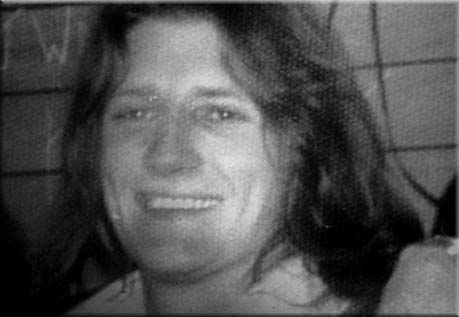
Bobby Sands, Officer Commanding Provisional IRA prisoners in H-Blocks before hunger-strike (Image source: Internet)

Last night, from afar, I watched the Lark die

and inside me, began to cry,

and outside, a little too.

There’s nothing more that can now be done,

to save the life of this toilers’ son;

another martyr – Bobby, adieu.

Imperialism takes once more its toll,

another name joins the martyrs’ roll

and a knife of sadness runs us through.

But sorrow we must watch,

for it can still,

yes, it can kill

the song that Bobby listened to.

And if his death be not in vain,

let’s fuel our anger with the pain

and raise the fallen sword anew;

and this sword to us bequeathed:

let its blade be never sheathed

’till all our foes be ground to dust

and their machines naught but rust ….

Then will the servant be the master

            and our widening horizons ever-vaster

                  and our debt

                       to Bobby

                            paid

                                 as due.


(Written in London as the death of Bobby Sands was imminent or had just occurred, after the author had attended pickets and demonstrations in solidarity with the hunger strikers in attempt to avert their deaths by pressurising the British Government to accede to their just demands. Bobby Sands died on 5th May 1981, to be followed by nine others in the weeks and months that followed. The struggle was one for the human dignity of Irish Republican political prisoners of Britain in the Six Counties British colony).

Senior Metropolitan Police officer accompanied by Constables harass Sands solidarity protesters in London
(Image source: Internet)
Skylark in Flight
(Image source: Internet)
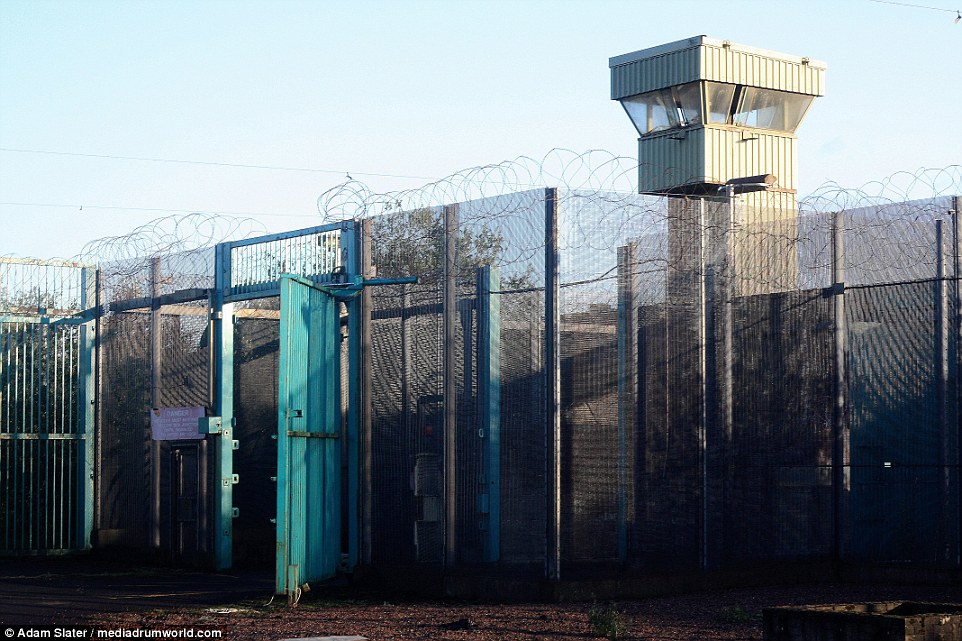
Gates Long Kesh
(Image source: Internet)


Nóirín Gone O’Sullivan

Begone! She has gone,

That Garda Commissioner wan,

That Nóirín not-so-bán,

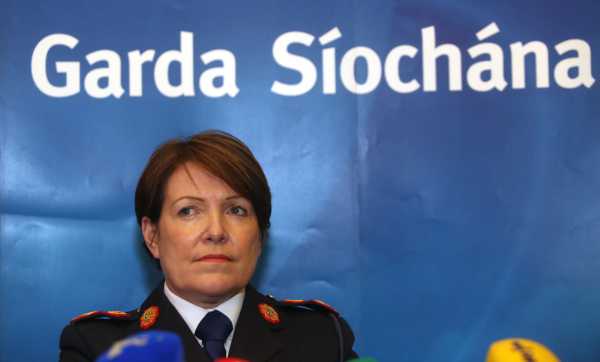
That Nóirín O’Sullivan (1).

(Photo source: Internet)

She’s gone, that Nóirín,

Decamped, fled the scene;

Wants to put it all past her,

The two-year job complete disaster.


Ducking and diving in the dance,

Six years, second-in-command

She was there at the right hand

Of Garda Commissioner Callinan.

But yet she claimed ignorance

Tried to stand a safe distance

From corruption and paedophile smear

Of a man who spoke out without fear.


Tried to sail on through the storm,

Claimed interference with police reform

But now she has finally gone:

Ex-Commissioner O’Sullivan.


(Photo source: Internet)

There has been too much exposure,

The State now is seeking closure,

Politicians and media must collude

The concerned public to delude.

Let the hue and cry die right down,

To yet another pass the crown,

Hope the people will not recall;

And that memory in time will pall.

But

This Force is rotten to the core,

So to remain for ever more,

To protect the rule of a rotten few

For which it was shaped in ’22.

DB 11/09/2017


FOOTNOTES

(A few days ago Nóirín O’Sullivan, Gárda Commissioner — the most senior position in the police force of the Irish state, gave six hours’ notice of resignation from her post.  She took over from Martin Callinan, who had also resigned his post in the midst of controversy over widespread false reporting of drink-driving stop-and-test by Gardaí; also the attempt to silence, discredit and smear as a paedophile Garda McCabe who exposed the frauds.  Another Garda officer who whistleblew was also hounded.  Subsequently, the scandal of the holding of bank accounts in individual officer’s names in which government police funds were being kept also erupted.)

SPANISH CIVIL WAR AIR RAID SHELTER, HIDDEN SINCE 1938, DISCOVERED IN MADRID


RECENTLY DISCOVERED DURING DEMOLITION WORK, THE UNDERGROUND COMPLEX HAD NOT BEEN SEEN BY HUMAN EYES SINCE 1938

(Translation to English by D.Breatnach from article by Daniel Ramirez in El Espanol on line on 14 May this year — link given at end of translation.  Photos reproduced and article translation published by kind permission of El Espanol)

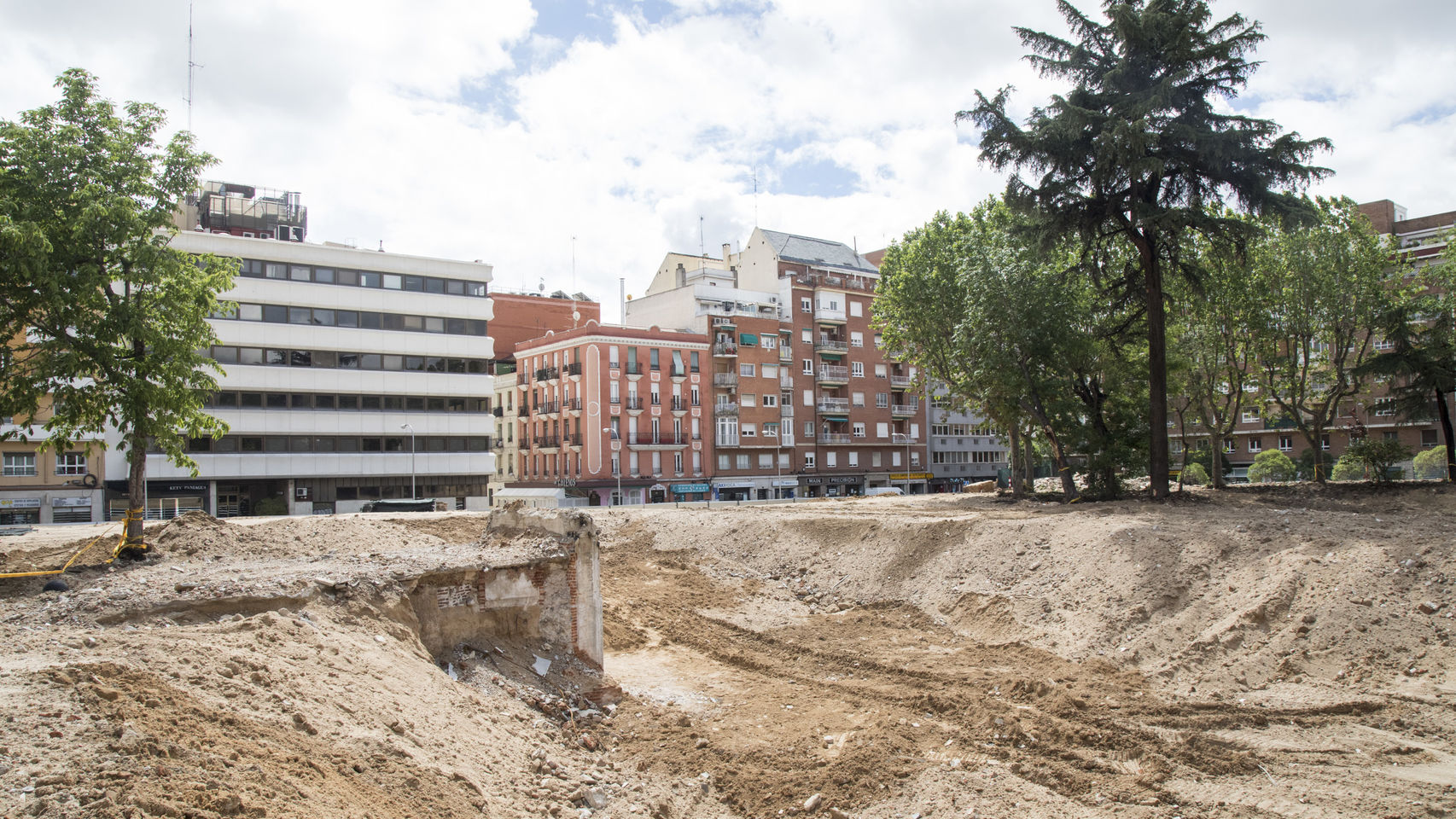
A hole in the ground, in the entrails of the city. Dry earth covered with mud. It had rained. The American girls and those dressed up run in search of a taxi when the Raimundo Fernández Villaverde street dies, just as they rise in the Nuevos Ministerios area. Noise from horns, ambulances, shouts. And in the middle of it all, the big hole.

It is surrounded by cranes and scrap metal. Also building workers and architects in yellow vests. In the centre, five or six metres deep, a door of cement and brick. It may not be interfered with. In the guts of the Artillery Workshop, recently demolished, the financial heart of Madrid has just discovered an air raid shelter, built in 1938. That’s the reason for the dug earth, the mud, the emptiness.

The Condor Legion was a Luftwaffe air force unit supporting Franco)
(Image source: Internet)

The demolition of this neomudéjar-style building to make room for a block of housing split the Madrid City Council of which Carmena is Mayor. Those who wanted to keep it lined up against the rest, but few knew what was hidden by the floor of the now defunct first concrete construction of the city, built in 1899 by the Ministry of War. It belonged to the state – in military use for decades – until 2014, when it was sold to a real estate cooperative for 111 million euros.

“It’s the first visit after its discovery”

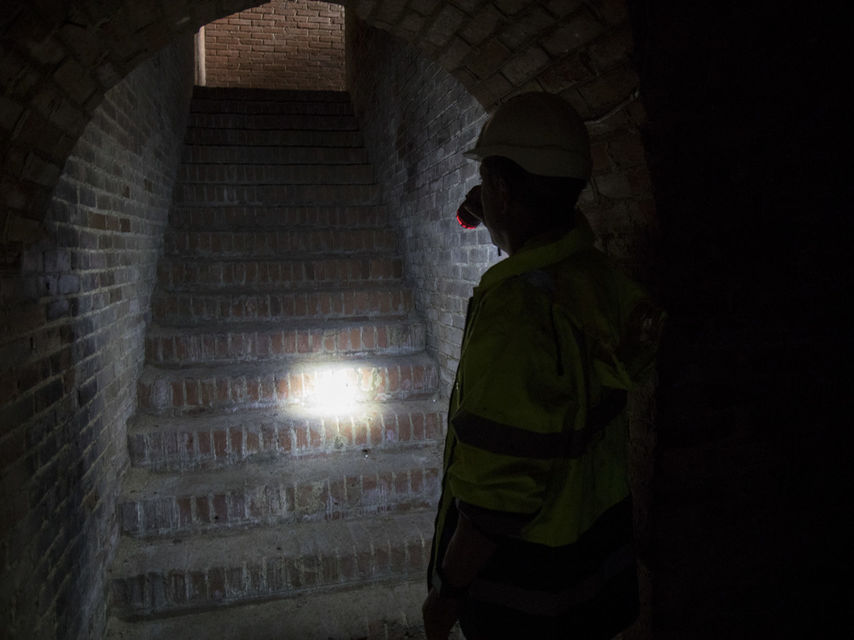
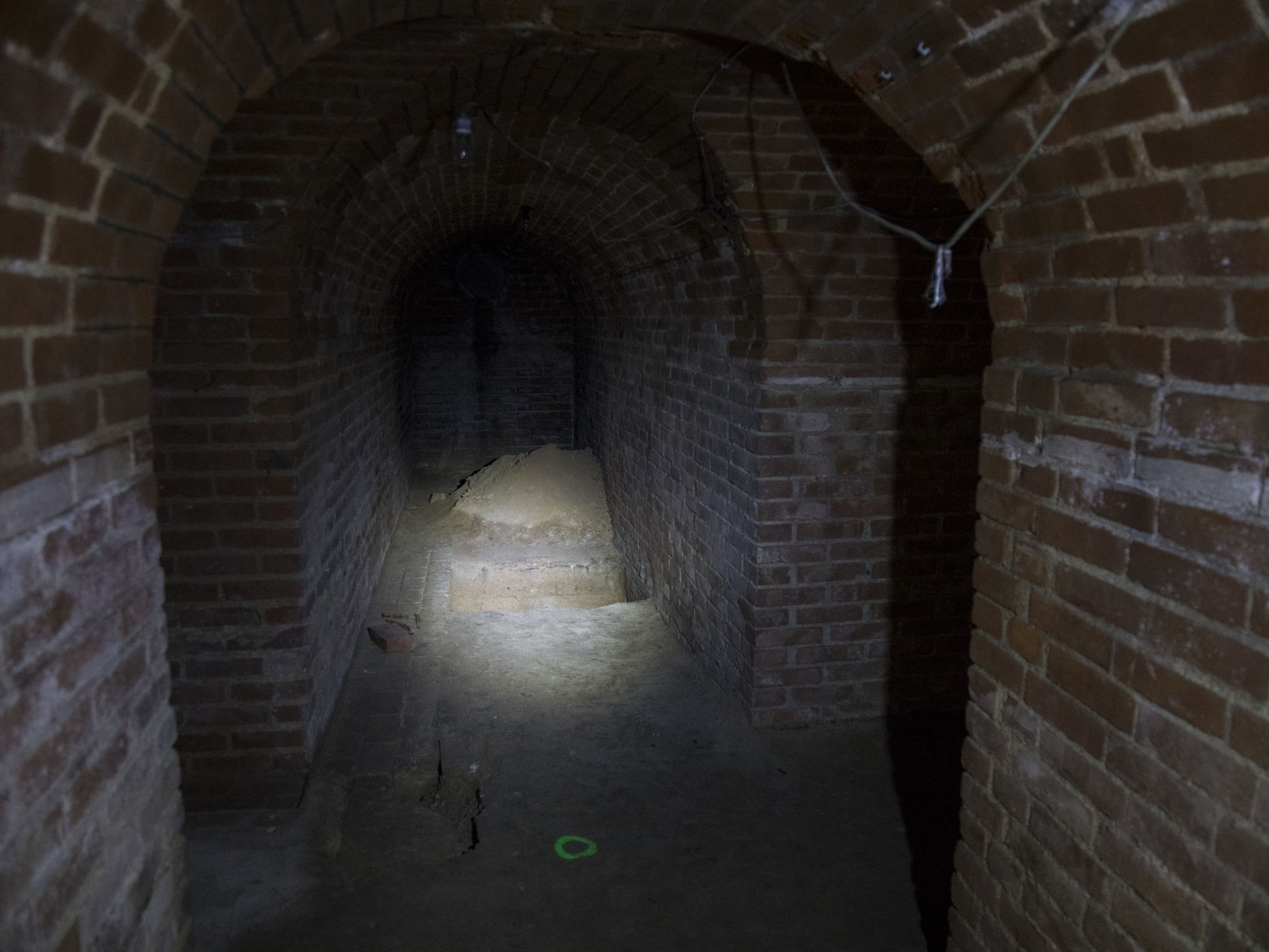
Steps descending from entrance.
(Photo Jorge Barreno, El Espanol newspaper)

Just beyond the open door, stairs. The cement benches that allayed the fear of death appear six metres down. Virgin earth for camera and notebook. “This is the first visit after its discovery,” says Isabel Baquedano, archaeologist of the General Directorate of Heritage of the Community of Madrid, which froze the work permit until the survival of the shelter had been ensured.

One last look at daylight. Baquedano brings to life the race to the basement. The hole in the earth was then an inner courtyard in the Artillery Workshop. On the floor, a door. Then another, like the one that we are now going through.

Photo showing entrance to air-raid shelter in a demolition/ building site (Photo Jorge Barreno, El Espanol newspaper)

HEMINGWAY AND THE AERIAL BOMBING

Hemingway said that, at the beginning of the war, the citizen would quickly see the enemy plane and the sirens would soon be screaming. Then they flew much higher and the deaths multiplied. A bomb was “that growing whistle, like a subway train that crashes against the cornice and bathes the room in plaster and broken glass.” The American, with lively irony, used to joke: “While you hear the glass tinkle as you fall you realize that, at last, you are back in Madrid.”

The stairs and walls are brick. “Like those of almost all shelters,” explains Baquedano. The archaeologist who acts as a guide for this visit outlines a universal, institutionalised architecture, fruit of necessity, constructed in a race against time. “The International Red Cross came to draw up a map of the air raid shelters in Madrid,” says Javier Rubio, a historian whose brother was hiding in Madrid at the time.

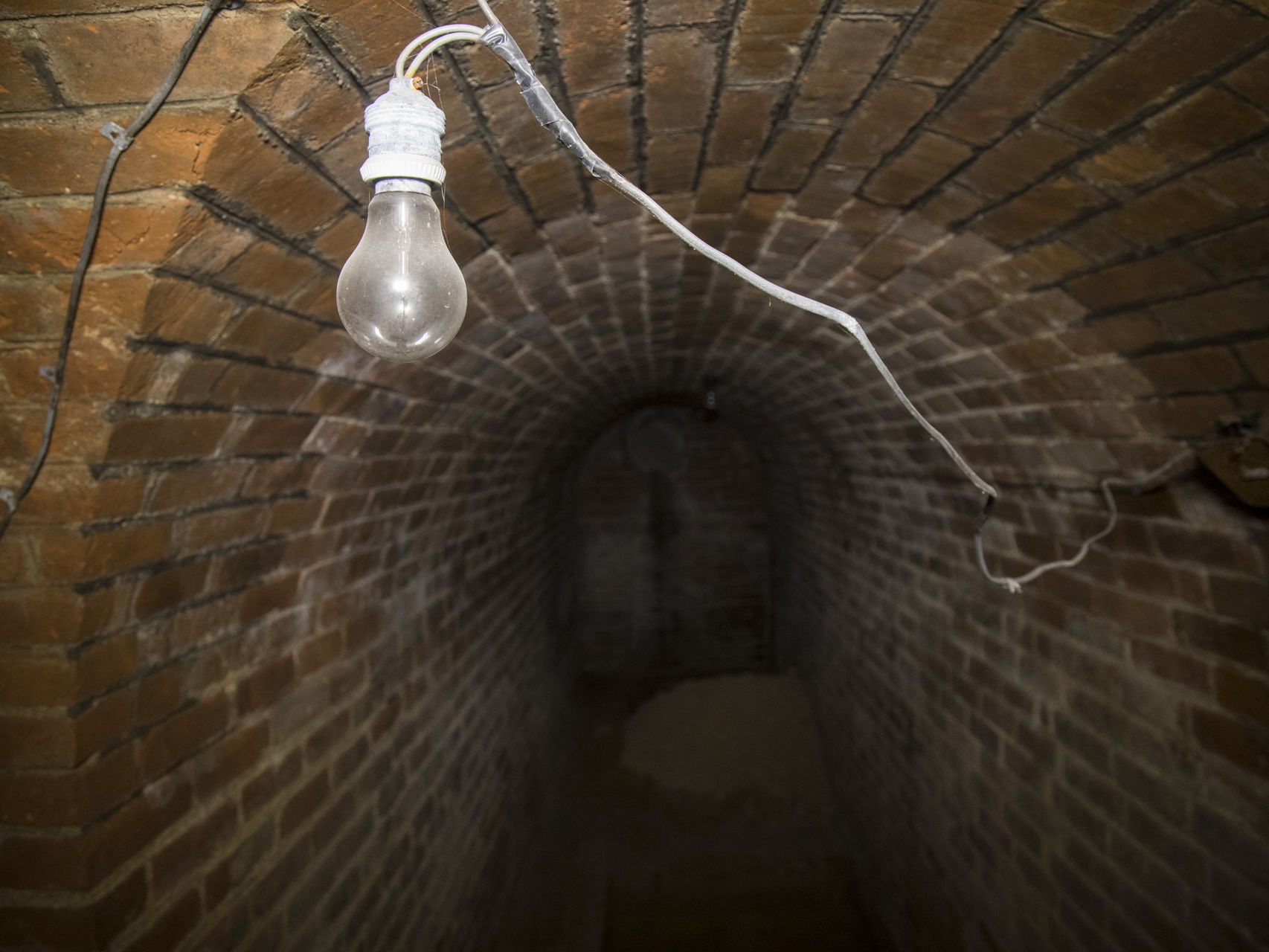
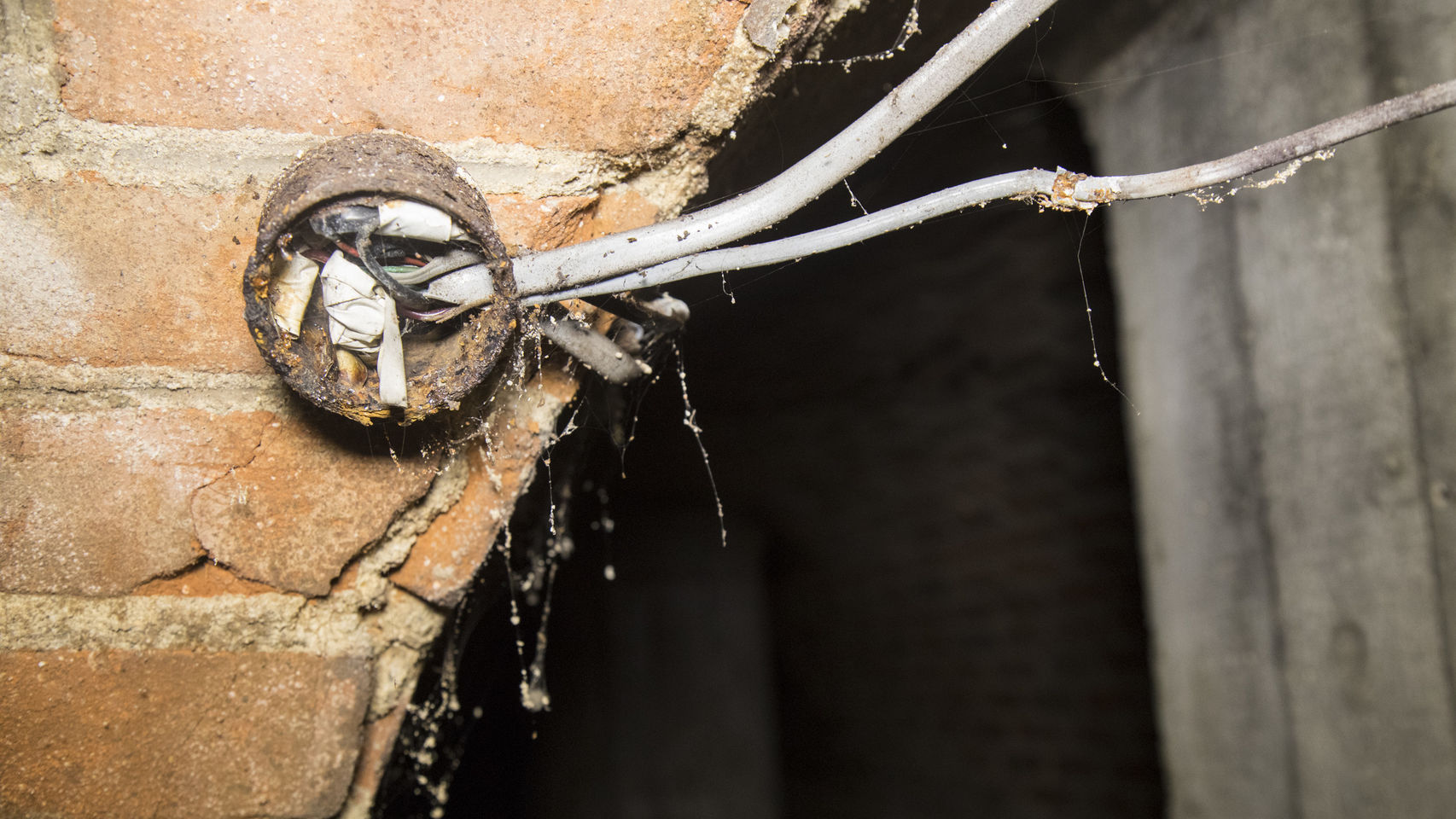
The shelter, when built, had an electricity supply.
(Photo Jorge Barreno, El Espanol newspaper)

Small steps for the flashlight to illuminate. In 1938, a filthy, rusty cabling gave light to the whole refuge. There were also subterranean armchairs and red velvet, but this is not the case now.

The chroniclers wrote that seeing a drunk and desperate man who pushed and jumped over elderly people and children was not unusual. Here is a quick but military descent. It is believed that this basement only sheltered the military of the Artillery Workshop, when a few meters away, in the Glorieta de Cuatro Caminos, a hospital had a similar space.

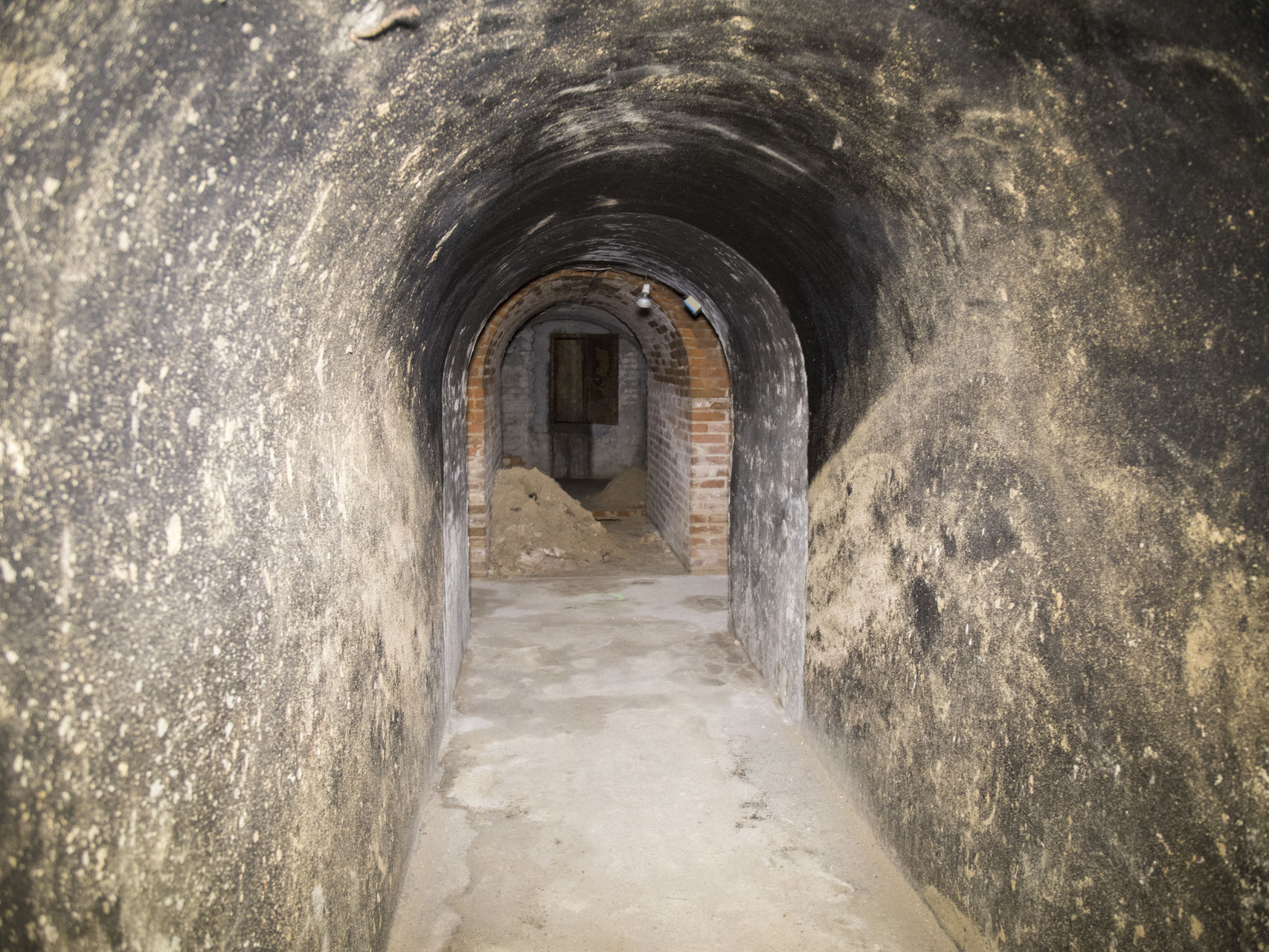
One of the galleries
(Photo Jorge Barreno, El Espanol newspaper)

The lightbulbs, intact, but empty. The shelter is a labyrinth of intersecting galleries. The photographer and Javier, one of the construction workers, leads the route with lanterns. The cement benches show some marks, made by the archaeological study commissioned by the Community, which confirmed the finding. They are almost at ground level. “Capacity is estimated for between 80 and 100 people,” says Baquedano.

WHAT DID NOGAL KEYS SAY?

In 1938, Madrid was the epic of a lost war. General Miaja, a Republican hero, defended the trenches exposed to gunfire. Gun in hand, he shouted for men who knew how to die. Strips of paper were stuck to shop windows to prevent the bombing’s vibration from shattering them.

“Everybody went scared to his hole. Life had fled streets and squares; not a light, nor a noise in the ghostly environment of the big city,” said journalist Manuel Chaves Nogales. “This little bourgeois liberal”so he described himself – who predicted the birth of a dictatorship regardless of the colour of victory, saw in the bombings a sort of lottery in which Madridians participated unconcerned: “Insensate and heroic, Madrid learned to live with joyful resignation. “

Little is left of that daily fear in these difficult tunnels, sometimes too narrow, fresh, guardians of absolute silence, still oblivious of the shopping centres that have grown up around them.

Intersection of galleries in the underground complex (Photo Barreno)

SÁNCHEZ MAZAS AND TALES TO FORGET

Some spoke, others were silent. Close or open your eyes? Different ways of coping. The fearful Rafael Sánchez Mazas, in the words of those who dealt with him then, wrote a novel to the rhythm of the bombs. For evasion and for other reasons. Chapter by chapter, he read it to his Falange colleagues at the Chilean embassy, where Carlos Morla Lynch, the diplomat in charge, provided refuge for them.

In the famous photo, Sánchez Mazas in the middle, several refugees listen to that unfinished novel of the title Rosa Kruger. Here the benches, in a row, do not invite conversation. Only recollection, although it may be the lack of habit.

In line with what Chaves said, Agustín de Foxa, in his “De Corte a Checa”, reflected: “At five o’clock in the morning, the local people commented on the bombardment by eating churros and drinking glasses of anise.”

“To leave a trail, not to disappear at all”

At the doors of the shelter, or perhaps inside, in these benches unequivocal proof of the finding, the tears of farewells ran. “Like those insects that perform the nuptial flight before they die, the men who were being sent to the Sierra or those who awaited in agitation their execution were longing for female presence and love so as to leave a trail, so as not to disappear altogether.”

Old cabling from 1938 (Photo Jorge Barreno, El Espanol newspaper)

“Little is known of this shelter,” Baquedano continues on this path of short steps. Archaeologists found no traces beyond the benches. The soldiers who arrived after the war used the subway as a shooting gallery. That is the reason for the gouges that bullets have left in the brickwork.

THE NOISE OF THE BOMBS

Suddenly a noise. Loud, deafening. The conversation ends abruptly. The cameraman and the journalist look at Javier, who laughs. “Calm down, the cranes are moving the scrap and it will have fallen up above.” It is a noise to make one cower and which makes the legs tremble.

A cosmopolitan and naive noise, which has nothing to do with the thunder of the shell that haunted Arturo Barea. In his “Forging of a Rebel” he confessed to having nightmares about the impact. He imagined the mutilation of bodies, their rotting, the limbs torn off the sidewalk … When the sirens began to sound and the danger became true, Barea reported feeling “a deep relief”, a result of the return to reality, the only way out then from that spiral of madness.

“My mouth was filled with vomit”

“We would go down to the basement, sit there with other guests, all in pajamas or gowns, while the antiaircraft barked and the explosions shook the building, sometimes my mouth filled with vomit, but it was a comfort because everything was real, I was deeply asleep,” he wrote.

On leaving, the light, and a city that beats, has nothing to do with that Madrid that, in Foxa’s words, turned off the lanterns for fear of bombing, while the last trams passed on their routes with their tragic, blue-green painted lights.

At the fence, several curious people approach the hole. Office workers, clerks, consultants, lawyers … In 1938, Barea said, there were neighbors of distant neighborhoods who came to see up close what a bombing was. “They left happy and proud with pieces of shrapnel, still hot, as a souvenir.”

Additional notes from translator, D. Breatnach:

There were a few words and phrases with which I had difficulty since the apparent translation from dictionaries did not seem to make sense in the article and I converted them into what seemed to be the sense in the text and context.

The future of the archaelogical site by law requires protection from the owners of the site in which it is located.  It may or may not be open to limited or full public access.

In the original article there was a lovely version of the Viva la Quinta Brigada song, about the 5th Brigade of the Republican forces (not Christy Moore’s wonderful song which, despite the original title is about the 15th International Brigade).  I tried to embed it here but failed but you may find it on the original article link below.

LINKS

Original article: http://www.elespanol.com/espana/20170513/215728433_0.html

WORKING CLASS HERO IS COMMEMORATED IN THE EAST WALL AREA WHERE HE LIVED

Diarmuid Breatnach

On Sunday 8th May a working-class hero was commemorated in the East Wall area in which he lived. Walter Carpenter was a native of Kent, in SE England and came to Ireland to help found the Socialist Party of Ireland 1 with James Connolly in 1909 in Dublin. Among other activities a campaigner around housing issues for the Dublin working class, he reared his sons in socialist belief so that it was no surprise that both Wally (Walter jnr) and Peter joined the Irish Citizen Army and fought in the 1916 Rising. As a result of the repression of the Rising, one son ended up in Frongoch concentration camp in Wales, while the other was in hiding. Later, both brothers also fought against the Free State in the Irish Civil War; Wally was interned and went on hunger strike.

Lining Up Outside SOCC
Assembling to march outside the Sean O’Casey Community Centre

Jailed for opposing British Royal visit to Dublin

Rising to be Secretary of the Dublin Branch of the SPI in 1911, Walter Carpenter was jailed for a month for the production while speaking on a public platform of Connolly’s leaflet attacking the Royal visit that same year. Soon afterwards he was an organiser for the newly-formed Irish & Transport Workers’ Union. During the Lockout, he was sent by Connolly to Britain to rally the support of trade unionists for the struggle of the Dublin workers and was apparently an effective speaker there. That same year Walter Carpenter was elected General Secretary of the Tailors, Machinists and Pressers’ trade union, generally known as “the Jewish Union” due to the preponderance of its members being from that background.

Two sections march
United in purpose but fragmented in marching

Walter also became active in municipal politics, striving to make Dublin City Council meet its housing regulation responsibilities in the terrible housing conditions of the city of that time. There were many other sides to this campaigner too, which a read of Ellen Galvin’s pamphlet will reveal.

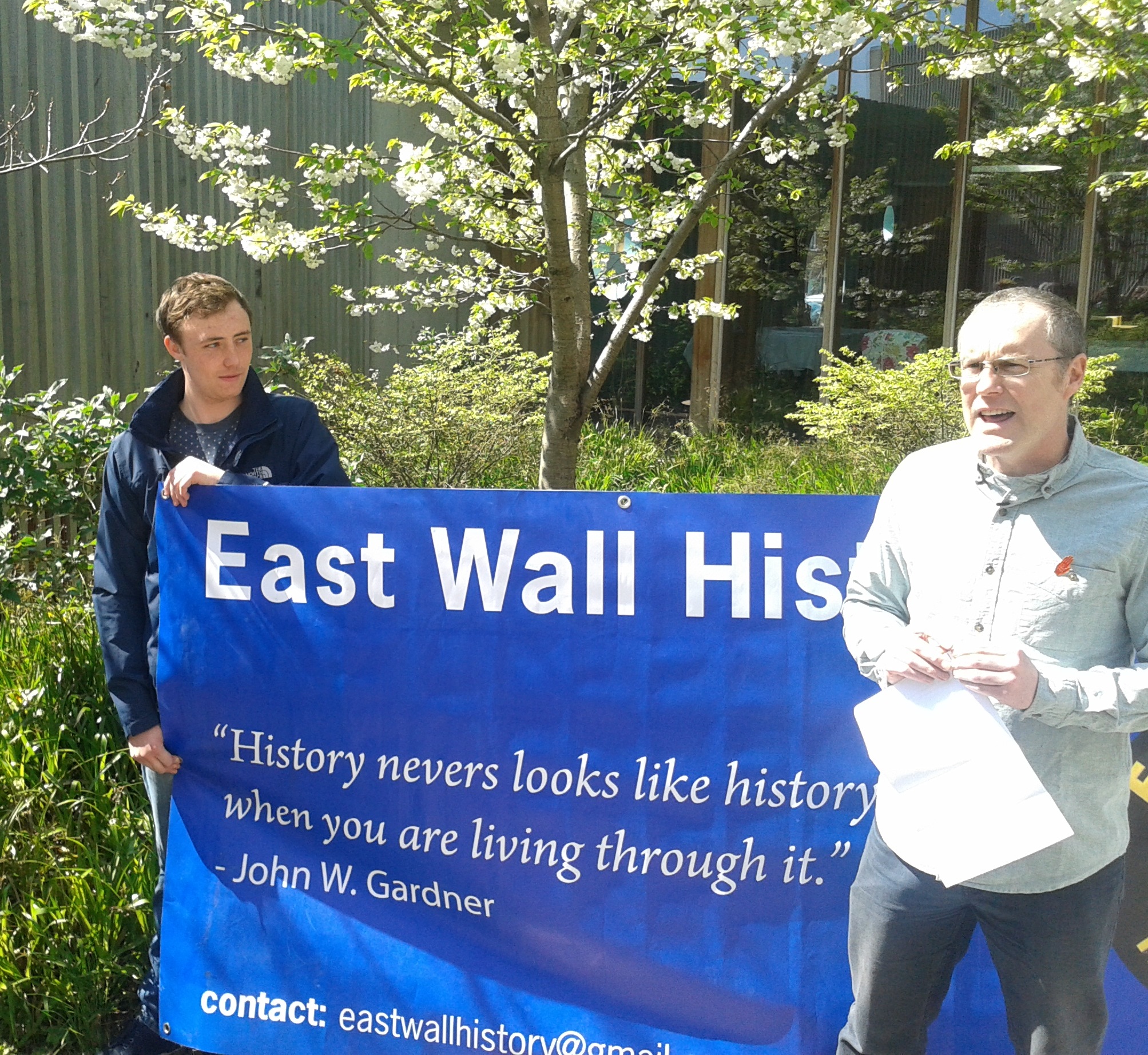
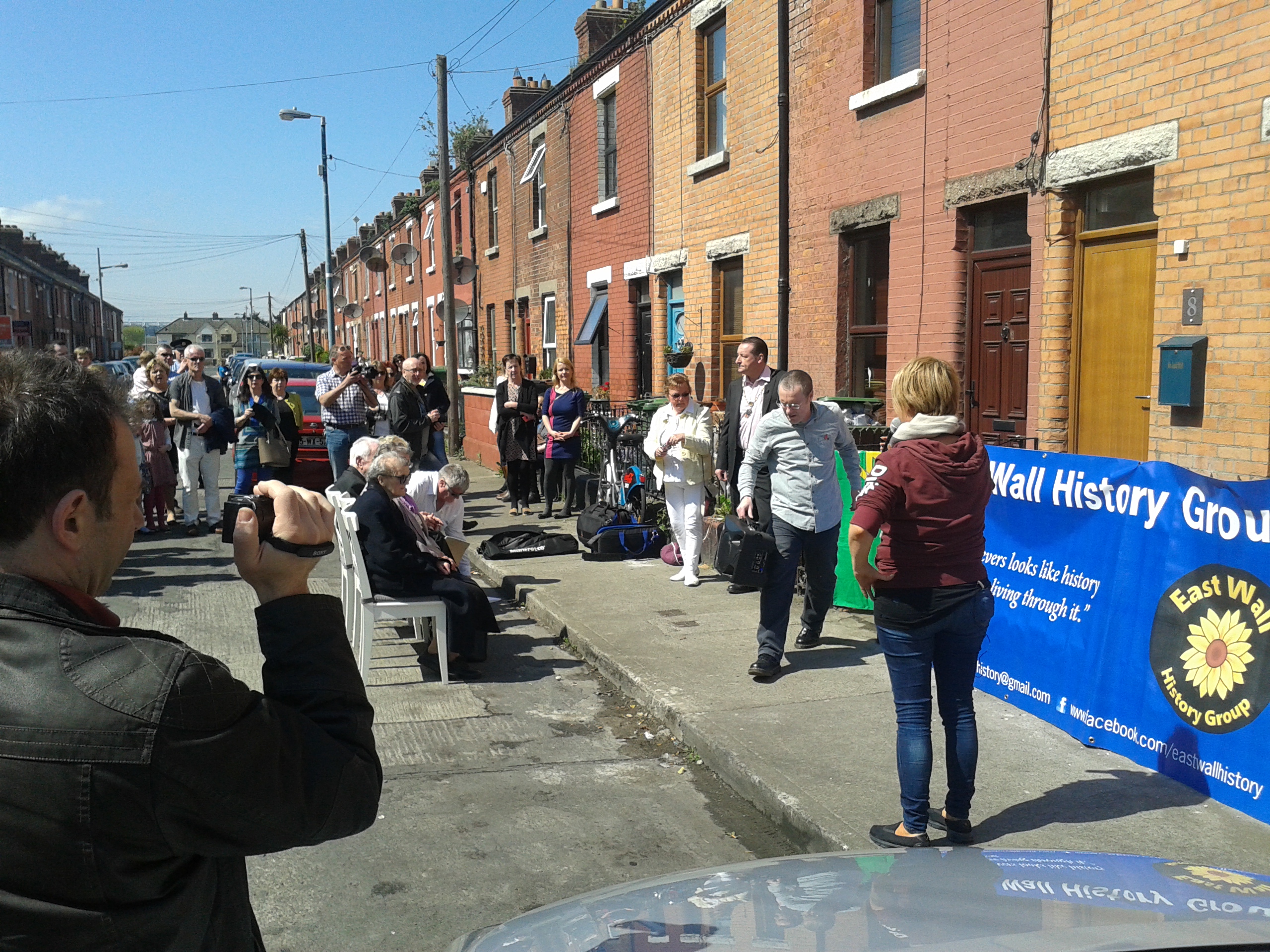
The East Wall History Group had earlier had a plaque erected on the wall of the house where he had lived, No.8 Caledon Road and organised an event around its unveiling on Sunday. The event began with a gathering at the Sean O’Casey Community Centre in East Wall, where an introduction to the event and to Walter Carpenter’s importance in the revolutionary and radical social history of Ireland was given by Joe Mooney, one of the organisers of the event. As well as local historians, socialists and Republicans, the event was attended by his surviving grandson, great-grandchildren and partners and their children. Also present was Ellen Galvin, who wrote a booklet on his life which was launched after the unveiling, back in the Sean O’Casey Centre.

Joe Mooney with a few preliminary words about Walter Carpenter and the history of the area

Misfortune struck the event before it had even begun, with the news that Christy O’Brien, the piper who was to lead a march to the unveiling, had his pipes stolen from his car that very morning. Christy gives his service as a piper to many commemorative events, funerals etc. and, with the announcement of the misfortune, Joe Mooney also called for the spreading of the news in order to aid the recovery of the instrument. A set of bagpipes will cost thousands to buy or have made but it would be a rare musician or pawnshop that would negotiate for a stolen set (one which furthermore might be recognised at a musical event in the future).
(see also https://www.facebook.com/eastwallhistory/photos/a.593335330735681.1073741828.580261572043057/1042532349149308/?type=3&theater)

March to plaque past previous addresses of Irish resistance fighters

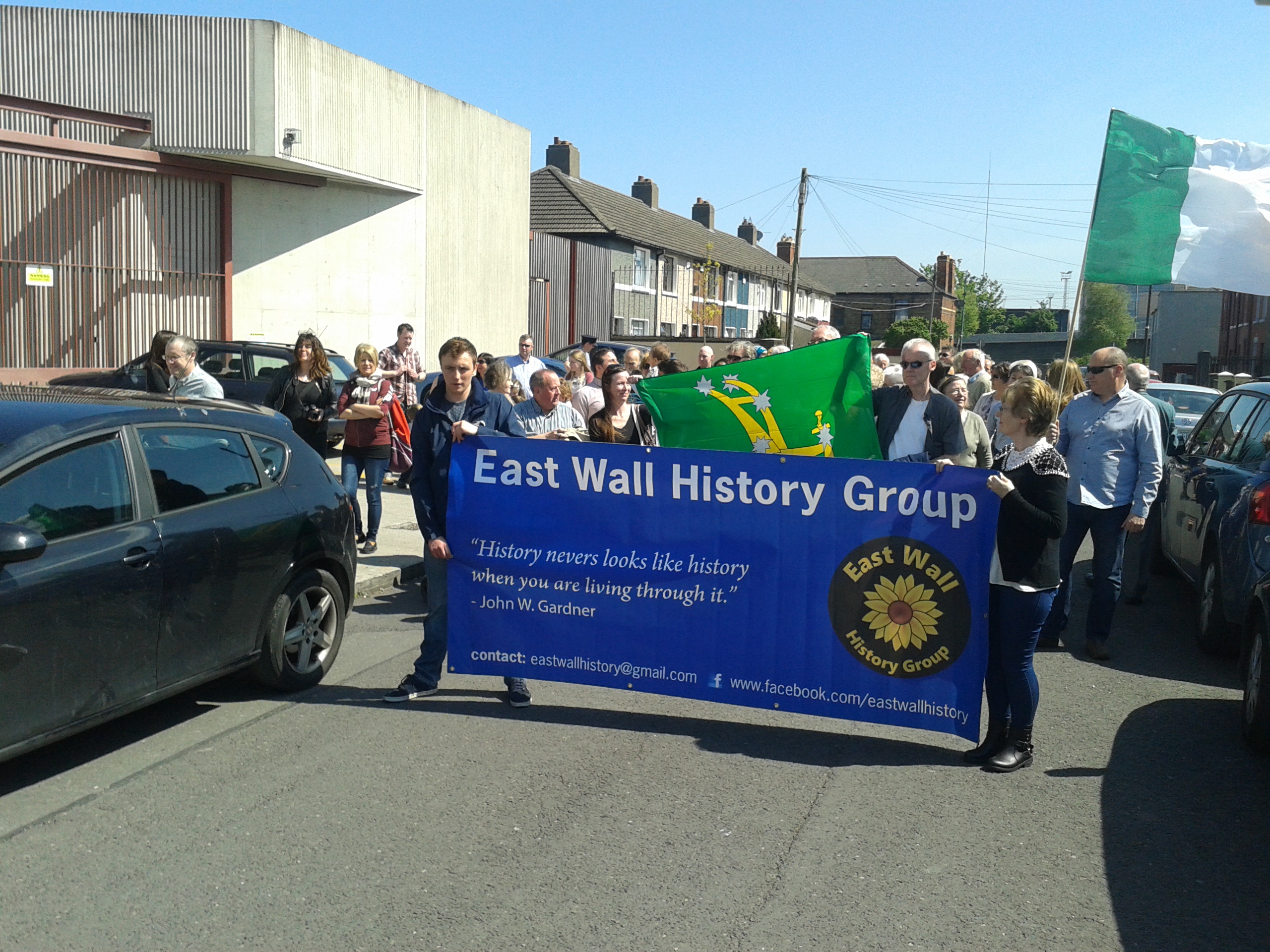
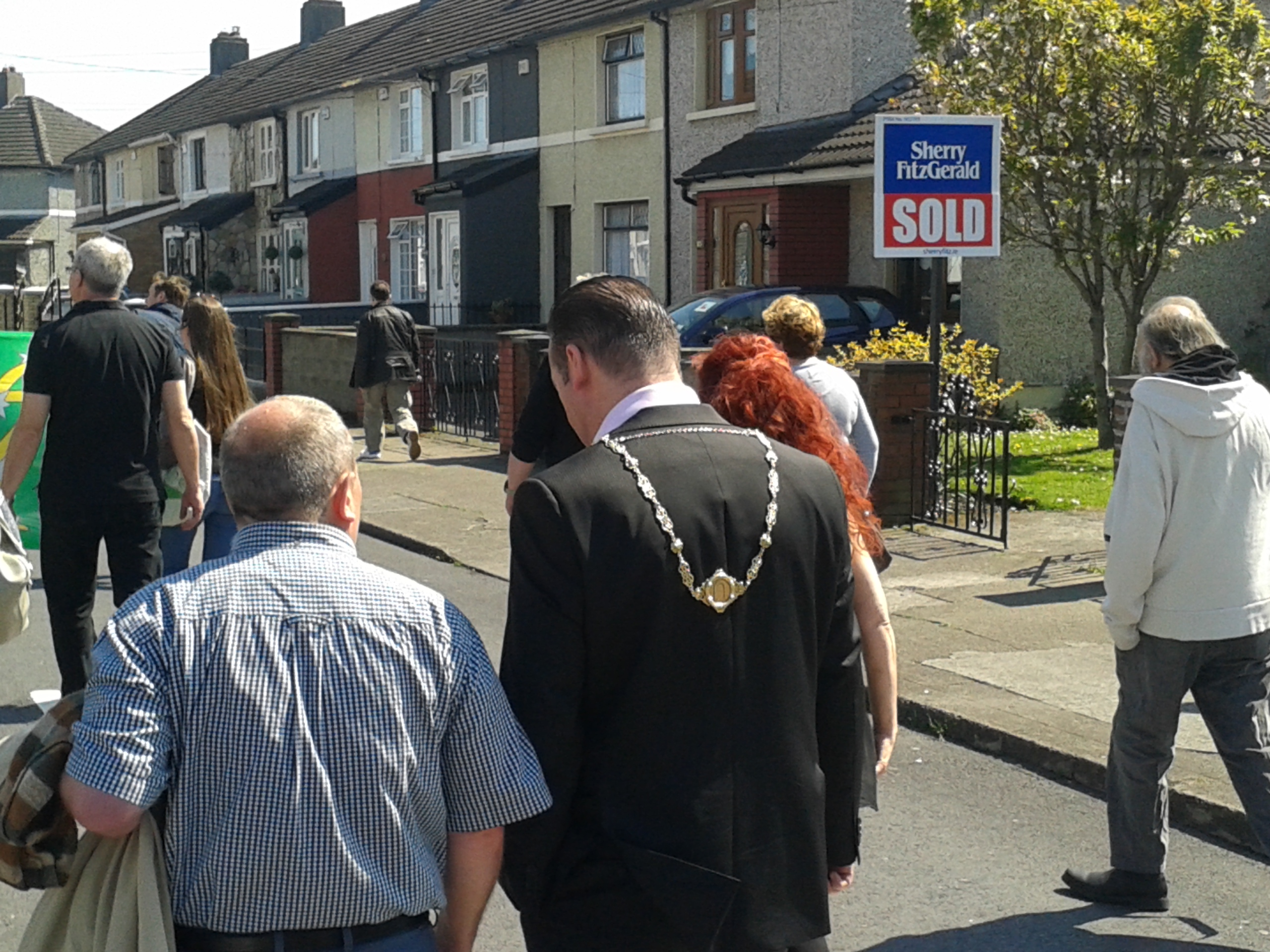
The march set off from the Sean O’Casey Centre without the piper, led by supporters carrying the banner of the East Wall History Group, a Tricolour and a Starry Plough (original green and gold version). Walking alongside were two Gárdaí and one wit commented that not only were descendants of the Irish Citizen Army present but also of the Dublin Metropolitan Police! 2

Caitríona Ní Casaidthe presiding over the plaque unveiling
Deputy Dublin Mayor Cieran Perry in the march -- he also spoke at the unveiling.
Deputy Dublin Mayor Cieran Perry in the march — he also spoke at the unveiling.

Joe Mooney had told the crowd before the march began that they would pass a number of locations where fighters for Irish and working-class freedom had lived. These were: St Marys Road, Tim O’Neill at No.8 and father and daughter Patrick Kavanagh and May Kavanagh at No.24. Christy Byrne lived at No.45 and his brother Joseph Byrne was from Boland’s Cottages off Church Road, where also Christopher Carberry lived on Myrtle Terrace on Church Rd. All these were Irish Volunteers, while May was in Cumann na mBan. In Northcourt Avenue (now demolished, roughly where the Catholic Church stands), Patrick & William Chaney were in the Irish Citizen Army and in Hawthorn Terrace lived James Fox (Irish Volunteer) and Willie Halpin (ICA).

Joe added that at the junction of St. Mary’s Road and Church Street, the local Irish Volunteers had mustered to participate in the Rising, 100 years ago and also reminded the gathering that that very day, the 8th of May, was the centenary of the executions by British firing squad of Michael Mallin of the Irish Citizen Army and of Irish Volunteers Eamonn Ceannt, Sean Heuston and Con Colbert.

Eamon Carpenter, 94, grandson of Walter Carpenter (Photo D.Breatnach)

Upon reaching No. 8 Caledon Road, the former home of Walter Carpenter, Caitríona Ní Chasaide of the East Wall History Group introduced Eamon Carpenter, 94 years of age and a grandson of Walter Carpenter, who addressed the crowd in thanks and also about the life of his grandfather.

“The struggles of the past are not merely for commemoration”

Next Caitríona introduced the Deputy Mayor of Dublin, Cieran Perry, who pointed out the parallels between the dire housing situation in the early part of the last century, which Walter Carpenter had campaigned against, and the housing crisis in Dublin today. He castigated the officials of Dublin City Council who, despite the votes of elected Left Councillors, refused to use all the land available to them on a number of sites to build social housing and were instead preparing it for private development with a only fraction for social housing. For as little as 5% of the €4 billion of Minister Kelly’s oft-repeated proposed finance for social housing. i.e. €200 million, Dublin City Council could build over 1,300 homes. The struggles of the past are not merely for commemoration, Cieran went on to say, but are for celebration and for continuation, as he concluded to applause.

Caitríona then called on James Carpenter to unveil the plaque, which he did, to loud applause.Walter Carpenter plaque

After relatives and others had taken photos and been photographed in turn by the plaque and/or beside James Carpenter, Joe Mooney called on Diarmuid Breatnach to sing The Felons Of Our Land. Joe explained that Walter Carpenter had been fond of singing that son, that in the course of their participation in the struggle he and his son had also been felons, as had Larkin and many others. Joe also informed the gathering that Sean O’Casey related that during his childhood, there had been a tram conductor who had been fond of singing patriotic songs, including the Felons Of Our Land, of which Casey’s mother had disapproved. It had been an revelation for O’Casey that one could be a Protestant and an Irish patriot too.

Diarmuid, dressed in approximation of period clothing, stepped forward and sang the four verses, of which the final lines are:

Diarmuid Breatnach singing "Felons of Our Land" outside former home of Walter Carpenter. (Photo East Wall History Group)
Diarmuid Breatnach singing “Felons of Our Land” outside former home of Walter Carpenter.
(Photo East Wall History Group)

Let cowards sneer and tyrants frown
O! little do we care–
A felon’s cap’s the noblest crown
An Irish head can wear.
And every Gael in Innisfail
(Who scorns the serf’s vile brand)
From Lee to Boyne would gladly join
The felons of our land.

The crowd then marched back to the Sean O’Casey Centre to attend the launch of the booklet on Carpenter’s life.

Launch of book on Walter Carpenter by his granddaughter and grandson of his comrade

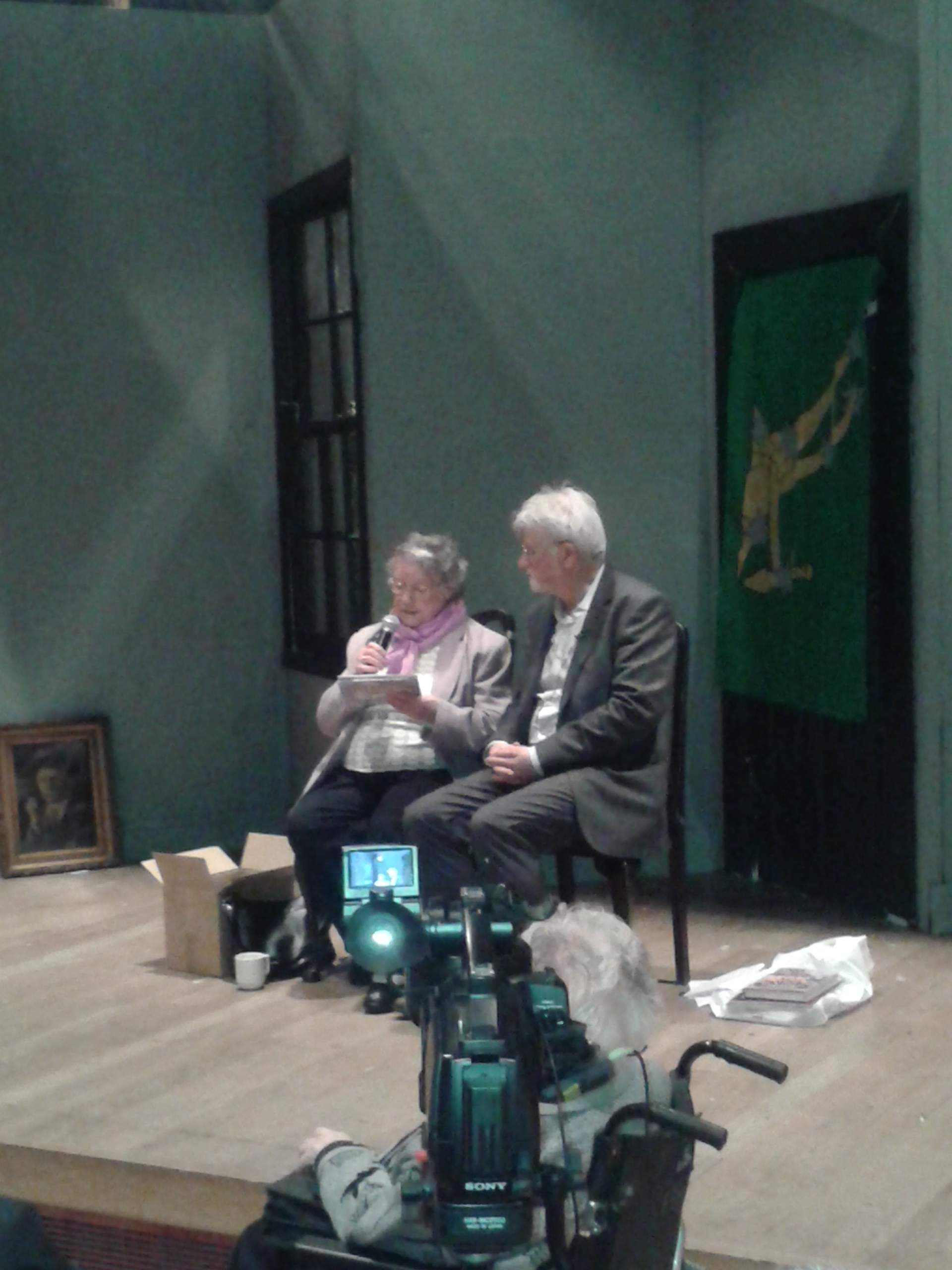
On the stage in the Centre’s theatre, were seated the author of the booklet, Ellen Galvin, alongside Michael O’Brien of O’Brien Press.

Ellen Galvin on stage at the Sean O'Casey Community Centre theatre and Michael O'Brien launching the book about Walter Carpenter. (Photo D.Breatnach)
Ellen Galvin on stage at the Sean O’Casey Community Centre theatre and Michael O’Brien launching the book about Walter Carpenter. (Photo D.Breatnach)

Michael O’Brien, addressing the audience, said he had wondered what qualification he might have to launch the book but on investigation discovered that he had not a few connections. His own grandfather, who was Jewish, had been a founder member of the Tailors, Machinists and Pressers’ Union, of which Carpenter had been the General Secretary until his retirement and so they must have known one another at least fairly well.

Also, Bill O’Brien’s father, Thomas, had been a communist and was active with Walter Carpenter in the Republican Congress in the 1930s. Walter Carpenter and Thomas O’Brien had both also been active in the Bacon Shops’ Strike of the early 1930s. Thomas O’Brien had been jailed during that strike along with Jack Nalty and Dinny Coady, both of whom had East Wall connections; subsequently Thomas went to fight Franco and fascism in Spain, where Nalty and Coady were both killed.

Joe Mooney called on Tommy Seery to sing The Bold Labour Men, a song about the 1913 Lockout written by a local man, which he did to strong applause. (Tommy is a member of the East Wall PEG Drama and Variety Group, in which he acts and also often sings – a recent performance, from which Tommy was unfortunately absent due to illness, may be seen here https://rebelbreeze.wordpress.com/2016/05/02/from-lockout-to-revolution-performance-of-east-wall-peg-drama-variety-group/).

Tommy Seery singing "The Bold Labour Men" about the 1913 Lockout (Photo D.Breatnach)
Tommy Seery singing “The Bold Labour Men” about the 1913 Lockout (Photo D.Breatnach)

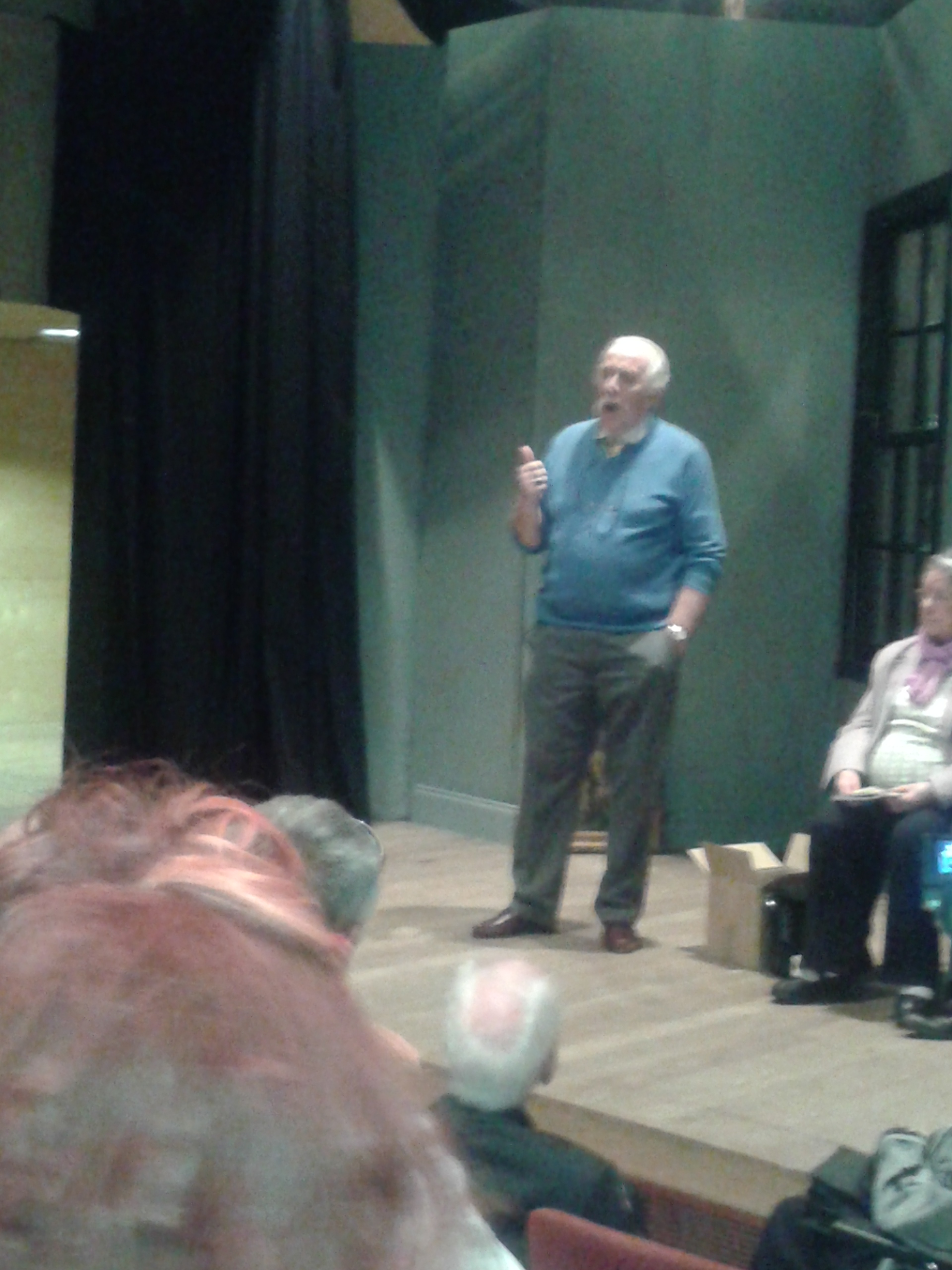
Ellen Galvin spoke about Walter Carpenter’s life and his dedication to the advance of the working class and the struggle for justice.  Walter had been a supporter of equality for all, including gender, a man who read much and widely, who apparently learned Irish and campaigned for allotments for rent on Council-owned land while it was unused for housing.  He was against the consumption of alcohol but sympathised with people driven to its use by terrible housing conditions.

Joe then called on Diarmuid Breatnach to sing Be Moderate, written by James Connolly, to illustrate what it was that people like Connolly and those of the Irish Citizen Army fought for and for which some had given their lives. Diarmuid took the stage and explained that the song had been published in New York in 1910, the same year that he had returned to Ireland from the USA. There had been no indication of an air to accompany the lyrics, as a result of which it has been sung to a number of airs. Diarmuid heard it sung in London by an English communist to the air of a Nation Once Again 3 and at least one good thing about this is that it provides a chorus, with which he encouraged the audience to join in. He then sang the song, of which the final lines are:

For workers long, with sighs and tears,
To their oppressors knelt.
But never yet, to aught save fears,
Did heart of tyrant melt.
We need not kneel, our cause is high
Of true hearts 4 there’s no dearth
And our victorious rallying cry
Shall be “We want the Earth!”

Many in the audience joined in on the chorus:
We only want the Earth, 
We only want the Earth,
And our demands most moderate are:
We only want the Earth!

Eamon Carpenter delivered an impromptu tribute to Ellen Galvin, who he told the audience had lost her mother at the age of 13 years of age, from which time she had taken over the mother’s role for her younger siblings, ensuring the were fed, dressed and cared for. This tribute was warmly applauded while Ellen seemed embarrassed but also pleased.

This was another successful commemoration of the revolutionary history and, in particular, of the working class history of their area by the East Wall History Group. It is of great importance that the working class be appraised of their own history as distinct from the dominant historical narratives and that their revolutionary traditions be remembered, not as something dead and in the past but as part of a continuum of struggle for the emancipation of the class.

If there is a weakness in a number of such commemorations it is the lack of participation by local adolescent youth in these events – which may also imply a lack of engagement by this age-group. Nevertheless, should they go searching at some future date for the information and their connection to the history of place and class, they will find a treasure trove waiting for them in the work of this History Group.

Children & Parents left plaque

CONTACTS
The East Wall History Group may be contacted or viewed on FB at https://www.facebook.com/eastwallhistory/?fref=ts

Mother & 2 Daughters

Local Photographer Exhibition SOCC

FOOTNOTES

 There exists today an organisation called the Socialist Party of Ireland (which often organises under the banner of the Anti-Austerity Alliance) but it is not directly descended from the party founded in Ireland in 1909; rather it is closer to being an offshoot of the Socialist Party of England and Wales, with which it has close fraternal relations.

The Dublin Metropolitan Police gained particular notoriety for the violence against organised workers on behalf of Dublin employers, especially during the 1913 Lockout, during which they killed a number of workers with their truncheons. In later years, the force became a Dublin police force under the Free State, which was later subsumed into the Garda Síochána, a fact not generally known.

3  Written by Thomas Davis, first published in The Nation, Dublin, 1844.

4  “of true men there’s no dearth” in the original

DEAR MINISTER

Heather Humhpreys, Minister for Arts, Heritage and the Gaeltacht
Heather Humhpreys, Minister for Arts, Heritage and the Gaeltacht (now of Arts, Regional Development & Rural Affairs)

Diarmuid Breatnach


Dear Minister Humphreys,

In response to your request that we sort out letters from the public supportive of your work addressed to you or to this Department and forward them to you, I attach them in Appendix below. I apologise for the delay but we have had to deal with quite a volume of correspondence in order to find letters of that nature.

With regard to your request that we categorise and enumerate the letters of a critical nature from the public, that has been easier in some respects but due to volume has unfortunately taken longer; nevertheless here follows the relevant report up to midday yesterday:

Letters disapproving by category and amount:

  • Criticising your plan on Moore Street (to save four buildings and demolish some others): 73
  • Questioning your appointment as Minister for a Department with responsibilities for the Gaeltacht: 9
  • Questioning your appointment of McHugh (non-Irish-speaker) as Minister for the Gaeltacht: 11
  • Questioning your fitness to be a Minister for Heritage: 67
  • Questioning your fitness to be a Minister for Arts: 8
  • Raising two or more of above issues in the same letter: 51
  • Total number of critical letters: 103 (There were in addition a score of critical letters which, while containing comments of a highly personal nature, were difficult to ascribe to a specific category within the ‘critical’ band although they were certainly critical).

May I respectfully enquire whether there has been any progress with the recruitment of additional clerical support, even if on a temporary basis?

Sincerely,

Ima Clarke

Secretarial and Statistical Support,
Department of Arts, Heritage & Gaeltacht.

Appendix
Letters approving
of Ministerial Action

Dear Heather,

Don’t let history stand in the way of more shopping centres.
We support you!

Mary Browne-Envelop.

Dear Heather,
History, who needs it! Money makes the world go around – we must grab it while we can.

Phyllis Stein.

Dear Heather,

You should bring out the Army and shoot these campaigners down like our forefathers did in 1922.

Hugh Javarice.


Dear Minister,

It’s not 1916 we should be commemorating but 1922. By God, we showed those Republicans then, didn’t we?

Eva Blushyrt.


Dear Heather,

Please don’t listen to the mob. We agree with you: shopping centres – the more the merrier – are more important than heritage.

Charles Gombeenson.


Dear Minister,

Please continue clearing history to make way for more shopping centres.

Cecilia Showneen.


Dear Heather,

Hold the line! Who runs this country, property speculators and bankers or the common mob?!

Rowena Fumblytill.

INTERNAL DISSENSION OVER PRISONERS COINCIDES WITH FURTHER DECLINE IN THE ABERTZALE LEFT’S VOTE

Diarmuid Breatnach

(For comment on the election results elsewhere in the Spanish state see  https://rebelbreeze.wordpress.com/2016/01/14/spanish-elections-result-in-most-fragmented-parliament-since-1936/  and https://rebelbreeze.wordpress.com/2016/01/14/the-disunited-and-fading-spanish-left-handing-on-the-baton/)

As the votes in the General Election in the Spanish state result in huge gains for the Podemos party and the most fragmented Parliament since before the Spanish Civil War, the Abertzale Left’s party in the elections also loses massively to the newcomer. This occurs in the context of wide discontent within the Abertzale Left, especially among the youth, with a potential split emerging around the issue of political prisoners.

The Spanish state includes within its borders most of the Basque Country and the Catalan Countries, which have their distinct cultures and languages. Also with a significantly different culture are Asturias and Galicia, both of them considering themselves Celtic rather than Latin-Hispanic and also having their own languages. There are in fact small movements seeking independence or greater autonomy in all other regions of the state, including in the political centre itself, Castille.

Four of the Basque Country’s seven provinces are currently inside the Spanish state and they were included in the Spanish state’s General Election on 20th December. A number of financial scandals affecting the ruling Spanish right-wing Partido Popular in recent years no doubt made their leaders reluctant to go to the polls but holding off longer might have resulted in even worse outcomes.

On the other hand, the PP’s main parliamentary opposition, the social-democratic Partido Socialista Obrero Espaňol (PSOE) were also embroiled in some financial scandals during the same period, though not as many.

In the event, both main parties achieved disastrous results and neither can form a majority government. The new party of the social-democratic Left, Podemos (“We Can”), which did not even exist two years ago, has leapt into third place and a new party of the Right, Ciudadanos (“Citizens”), is in a poor fourth place. No two of the aforementioned parties can form a coalition government except in the case of a PP-PSOE coalition; however that would cause massive problems for each party and also dispel the political myth of a democratic choice between “Left and Right” in the Spanish state.

The Spanish state has long been the most unstable in the core European Union. Collusion between fascists, alleged social democrats and alleged communists internally, along with the support of the USA and the tolerance of its European partners has kept it afloat. Nevertheless, it represents the part of the EU most vulnerable to revolution, with immediate impact should that happen on the French and Portuguese states and further ripples throughout the EU. However the revolutionary and potentially revolutionary forces are weak, divided and riddled with opportunism. (see separate article focussing on the elections and the Spanish state in )

Despite the weaknesses in the Spanish state, the Basque Abertzale Left has made little headway against it and has been slipping electorally badly this year.

Election Results in the Basque Country

EH Bildu Act in Nafarroa
EH Bildu, party of the Abertzale Left in coalition with social-democratic Basque parties, presenting their program in Nafarroa in 2012 and seeking broader alliances

EH Bildu (“Basque Country Unite”), the social-democratic coalition party under the direction of the Basque Abertzale (Patriotic) Left, came out of the Spanish state-wide elections badly (as it did in the regional elections earlier this year in the Basque Country also, with the exception of in Nafarroa). With a drop of nearly two-thirds of its previous percentage of the vote, it lost five seats and now has only two in the Spanish Parliament (the Cortes). The christian-democrat PNV (Basque Nationalist Party), traditionally the dominant in the three southern provinces of Euskadi (i.e. excluding Nafarroa, the fourth), also took a drop in its percentage but a much smaller one and despite that, increased its numbers of seats from five to six. The Basque nationalist coalition in Nafarroa, Geroa Bai (“Yes to the Future”), lost its only seat.

The winner that swept up the ‘missing’ votes in the Basque Country was Podemos, a party that did not even exist until last year. Although gaining one seat less than the PNV in the “Euskadi” or CAV (three provinces region), Podemos actually won more votes and its share was 25.97%, against the PNV’s 24.75%. Shockingly, at 15.72%, EH Bildu has now been reduced to fourth place after the other two and the PSOE, with only the PP worse off but with the same amount of seats. Even in Gipuzkoa, the province most loyal to the Abertzale Left, their share fell to 20.89% and their coalition party EH Bildu lost two seats. In the same province Podemos topped the poll in votes and gained two seats. In the fourth province, Nafarroa, EH Bildu lost their only seat and took a 9.90% share against UPN-PP’s 28.93%, Podemos’s 22.9%, and PSOE’s 15.53%.

(www.eitb.eus/es/elecciones/elecciones-generales/resultados and http://www.eitb.eus/eu/hauteskundeak/hauteskunde-orokorrak/emaitzak/kongresua/nafarroa/ hover cursor over the pie-chart sections for more info).

Podemos Pablo Iglesias Spanish Election Results Dec2015
Podemos leader Pablo Iglesias after results of Spanish Election results December 2015

It seems clear that in the Basque Country, Podemos took votes both from the PSOE and from the Abertzale Left’s coalition party, EH Bildu and even some from the PNV. For the PSOE, a party in Government in the past and implicated in the GAL murders, also involved in a number of recent financial scandals across the state, to lose votes in the Basque Country to a radical-left coalition, would have come as no surprise to most people. It is a different matter altogether for EH Bildu, with a strongly patriotic Left following, never tainted with a financial scandal and never yet in Government, to lose votes to a newcomer like Podemos — and that needs some explanation.

The fact is that the AL leadership flirted with Podemos – even proposing a joint electoral platform — and thereby sent the message that voting for them would not be such a bad thing. But there were sufficient reasons for the AL to have done otherwise, even without the objective of safeguarding their own vote. It has been clear for some time that the leadership of Podemos is hostile to aspirations towards independence of nations within the State. Their leader recently criticised the decision of a Catalan pro-independence coalition to use the regional elections as a quasi-referendum on Catalunya’s independence. Also one of their ideologues, in the midst of an intervention in discussions within Colombia, likened ETA to Columbia’s fascist assassination squads (who murder trade unionists, human rights workers, socialists, even street children). In addition, Podemos has never come out against the repression in the Basque Country.

There were enough reasons for the AL leadership to draw a deep line between themselves and Podemos. But they did the opposite. This contrasts with the left-republican Catalan nationalists (Esquerra Republicana de Catalunya-Catalunya Sí) who engaged in a public battle with Podemos’ leadership. Incidentally, they increased their share of the vote by 1.33% and their representation from three seats to nine.

Another vulnerability of the AL movement to a party like Podemos is precisely the road of conciliation with and concession to the Spanish state taken by the AL over the recent five years and longer. If that road is seen to be OK then, some might say, why not vote for a radical reformist left party and one which, crucially, has a large following throughout the State? Such thinking combines a perception that revolution is not possible, implicit in the approach of the AL leadership, with a view that a solution can only be found outside the Basque Country, which although contrary to most of AL’s propaganda, does seem in part to be the case, based on population statistics alone (see discussion on this further on).

This view was seemingly endorsed by the post-election statement of Barrena, spokesperson for the Abertzale Left’s party Sortu, who characterised the vote for Podemos as “the right to decide” and held out his hand for electoral coalitions with them in the future. The irony — that precisely Podemos does not support “the right to decide” of nations within the Spanish state – was apparently lost on Barrena.

Around September there were whispers of the intention to hold a review of their trajectory within the Abertzale Left. This seemed an acceptance that their chosen path had, if not failed completely, then certainly fallen far short of their own expectations. I wondered how they would contain severe criticisms within such a review, a much more difficult process now than some years ago, when confusion combined with illusions and the soothing words of long-standing leaders. 

Further confirmation of this review has since come out: called ABIAN (“Launch”), it’s a debate being organised by Sortu (“Create”), a social-democratic party of the AL. A recent article in a Gipuzkoa news media stated clearly that the review was a response to criticisms of Sortu, “for the first time within the Abertzale Left” (i.e. not only outside of it). The article went on to list a number of organisations within the AL who had published criticisms, including “Boltxe” and the revived “Eusko Ekintza” (http://m.noticiasdegipuzkoa.com/2015/09/01/politica/las-duras-criticas-internas-empujan-a-sortu-a-revisar-su-estrategia-politica-y-organizativa).  This contradicts Barrena’s public statement in September that those who criticise the current path of the Abertzale Left and their policy on the prisoners could no longer be counted as within the movement.

Given the electoral showing of the AL’s coalition party EH Bildu and other issues, such a review may be a way of “managing” the dissent but must also hold much danger for the leadership’s line, despite the party positions of the Otegi/ Permach/ Barrena leadership seeming reasonably secure at the moment (Otegi is due for release very soon).

Aside from all this and going back for a moment to Podemos, it does seem unlikely that this party has a long-term future but its development will be interesting to observe.

The political prisoners – a fracture point for the movement?

Bilbao 11 Eanair 2014
Annual Basque political prisoner demonstration January 2014 in Bilbao

Whereas the Provisional Republican movement suffered a number of small splits and some defections as a result of its embarkation on the pacification road, it is a fact that they had something pretty significant to deliver – the release of political prisoners affiliated to them. Nearly every single one walked out of jail and their release was not only a result to “sell” the GFA to the movement but some of the prisoners themselves were used as advocates of the process. Although it is true the prisoners were only released “on licence” and a that number were sent back to jail without a trial again later, including new prisoners, that only happened to “dissidents”. For the moment that could be seen as helping the continuation of the Good Friday Agreement and hampering the mobilisation of Republican opposition to Sinn Féin and their chosen path.

The Abertzale Left has had no such gain and a split in the movement seems to be forming precisely around that issue.

There are 410 Basque political prisoners officially recognised by the Abertzale Left (there are some dissidents too outside that, apparently) and they, like their counterparts in the Irish Republican movement, have always been an important element in the struggle. Political prisoners are dispersed all over the Spanish state and the Basques are by far the most numerous component of these. Some are also serving very long sentences, as are their comrades who are jailed by the French and also dispersed throughout their state.

Around a dozen are suffering with very serious illnesses and the Spanish prison administration has admitted that it does not have appropriate treatment facilities for a number of them. However, mostly there they remain and a number have died in captivity in recent years. Twelve people have also died in automobile crashes on the long journeys to visit prisoners dispersed to hundreds or even a thousand kilometres from their homes and an average of one serious traffic accident a month for visitors was recorded last year.

Dispersal is a serious issue and for many years has been one of those upon which the movement concentrated, in particular Etxerat, the prisoners’ relatives’ and friends’ group, and the short-lived Herrira, a prisoners’ political campaigning group banned by the Spanish state and their leading organisers arrested. But that demand also stood alongside the demand for amnesty, the freeing of the prisoners as part of a political settlement.

Sare Table Azkarraga & Asun Landa
Joseba Azkarraga, spokesperson for Sare and lawyer Asun Landa, at a press conference

More recently, however, the Abertzale Left’s leadership has been placing the emphasis on combating the dispersal and, according to some of their critics within the movement, abandoning the demand for amnesty. Perhaps the leadership felt that dispersal was an issue they had the capacity to change (though it is difficult to see how), whereas without an armed struggle to use as a bargaining chip, a prisoners’ amnesty may have seemed out of reach.

Meanwhile, last year, Sare (“Network”) was created by the AL leadership to pick up the threads dropped by Herrira but little has been heard or seen of it. The organisation’s spokesperson is Joseba Azkarraga, who has a somewhat radically fragmented track record. During the 1960s and 1970s a member of ETA (a fact missing from his Wikipedia entry in Spanish), he left them and joined the christian democrat PNV (Basque Nationalist Party). Azkarra was elected to be member of the Alava province local government for the PNV in 1979, a role he fulfilled later for Bizkaia province 1982-1986 and in the latter year also for the province of Guipuzkoa — representing the PNV throughout.

In 1987 he was part of a split from the PNV that led to the formation of Eusko Alkartasuna (EA), for which party he was elected a member of local government for Bizkaia in 1989. He was a member of EA’s National Executive 1987-1993 and 1999-March 2009, in between which periods he had withdrawn to concentrate on his business in the banking sector. From September 2001 to May 2009, he had the responsibility of Councillor for Justice, Employment and Social Security for the Basque Government. He has been quoted as saying that the more prosecutions of Abertzale Left activists the better – this from a man with a law degree in a State where prosecutions of Basques are more often than not ensured by “confessions” extracted by torture and where the standard of “evidence” required to convict is derisory.

Grumbling, particularly among younger activists about the emphasis on the institutions and the “abandonment of the street”, has been growing over the years. “Our movement’s spokespersons no longer speak of ‘freedom’ and ‘socialism’ but use more ambiguous words like ‘right to decide’ and social justice’ ” is a growing complaint.

Recently an organisation called Amnistia Ta Askatasuna (“Amnesty and Freedom”) was launched to campaign not only against dispersal but for amnesty for the prisoners too. The movement also goes by the name of Amnistiaren Aldeko Mugimendua (“Amnesty Movement”). In August of this year ATA/AAM held a small but significant demonstration in Bilbao associated with the annual alternative festival there which is strongly patronised by youth. At the end of November they held another in the same city, this time attended by an estimated 9,000.

Amnistia demo Bilbo Nov2015jpeg
New solidarity campaign for for political prisoners raising demand of amnesty takes to the streets Bilbao 28 November 2015

In a Basque alternative radio station interview in August, some of ATA/AAM’s spokespersons complained of attempts to malign and isolate them but said they were overcoming these tactics and gaining support. The AL’s bilingual daily newspaper, GARA, did not publicise their demonstration in advance and their estimate of the attendance afterwards was about half of the real figure. The report also neglected to mention the messages of support from a number of political prisoners to the rally.

In December, the six alleged ETA prisoners awaiting trial in Paris on charges involving kidnapping, car and weapons theft and, for two of them, murder of a police officer, made a press statement denouncing the ATA/AAM group and claiming that they were using the prisoners as a Trojan horse in order to attack the whole recent direction of the Abertzale Left. They also accused them of trying to get Basque prisoners to leave the prisoners’ collective, the EEPK. No evidence was produced of this and the ATA/AAM were not asked to comment.  GARA published the Paris statement under a headline containing the allegations without even putting them in quotation marks. It is rumoured that GARA lost many subscribers after that reporting.

It seems likely that this controversy will sharpen over the coming months with people, including prisoners, being obliged to take sides and it may be that it will be characterised by a similar bitterness to that which exists in the Republican movement in Ireland. But unlike the case of Ireland, the numbers of Basque prisoners in the jails remains very high. In addition, the Spanish state continues to jail people who are clearly political activists which adds to the political prisoner population. Without a change in that situation, the likelihood of very serious contention within the movement is high and on a much larger scale than has been the case in Ireland.

The recent dismal electoral showing of EH Bildu can only increase unhappiness within the movement and lead to judgements critical of the AL leadership and, inevitably, to one degree or another, of the path they openly set out upon a little over five years ago.

Background – the origins and trajectory of the Abertzale Left

Born during the Franco dictatorship, the Abertzale Left (Basque: Ezker Abertzalea; Spanish: Izquierda Abertzale) is a broad alliance of patriotic and Left elements with many aspects situated on the social, cultural-linguistic, trade union, media and of course political fronts. The movement was subject to heavy repression from the outset and after nearly a decade a section responded by taking up arms. The Basque Nationalists had done that against Franco in the Civil War – however, the Abertzale Left was doing so in a country occupied by the victors of that war.ETA Symbol image

Not many outside the Basque Country realise that ETA (“Basque Country and Freedom”) is more than “the armed wing of the Basque patriotic movement” — it is the origin of the Abertzale Left, operating solely politically and culturally (albeit clandestinely) for nine years, its activists spied upon, arrested, tortured, jailed. Eventually ETA took up the gun.

It was one of the main ideologues and organisers of ETA, José Miguel Beñaran Ordeñana (alias “Argala”, 1949 – murdered by GAL 21st December 1978) who pushed for the legal and semi-legal aspects of the work to form themselves into separate organisations from ETA while the parent organisation kept a relationship with them.

Although the old Basque Nationalist Party was legalised under the new form of the state after the death of Franco, repression of the Abertzale Left continued. Nevertheless the movement continued to grow, in particular its many non-military aspects, although they too were and are subjected to heavy repression.

Despite the adaptability of the movement and its significantly wide base (between 12%-20% on past electoral showings, despite banning and disqualifications of electoral platforms), it was difficult to see the validity of its strategy of combining armed struggle and popular political movement within the Basque Country, with regard to its long-term objectives of national independence and socialism.

The ruling classes of both the Spanish and French states have a long imperial history along with a strong traditional insistence on the unity of their “home” states, on which they have never shown a willingness to compromise. That is reflected not only within their main right-wing parties but also within the main social-democratic parties and the remains of the old Moscow-orientated Communist parties. In the Spanish state the situation is even more problematic, since the Basque Country and Catalunya are two of the most economically successful within the state, outperforming nearly every other region by a significant margin. Why would the Spanish ruling class wish to give those regions up?

The total Basque population is only around 3.5 million, some of which is within the borders of the French state. The Spanish state has a population of around 45 million outside the Basque Country and even with the subtraction of that of Catalunya (7.5 + million) and the Balearic Islands (just over one million), that still leaves a population of 36.5 million from which to draw soldiers and police.

According to Wikipedia, “the Spanish armed forces are a professional force with a strength in 2012 of 123,300 active personnel and 16,400 reserve personnel. The country also has the 80,000 strong Guardia Civil which falls under the control of the Ministry of Defence in times of a national emergency. The Spanish defence budget is 5.71 billion euros (7.2 Billion USD) a 1% increase for 2015.” The Wikipedia paragraph ends with the ominous sentence that “The increase comes due to security concerns in the country.”

Those figures of course do not include the other police forces, such as the National (Cuerpo de Policía Nacional or “los Grises”)), with a strength of nearly 88,000. This armed force, along with the Guardia Civíl (“los Verdes”), has been traditionally repressive of the Abertzale Left, a task now mostly left to their respective forces in the Basque Country, the Ertzaintza and Policía Forál, forces which, like their counterparts in Catalunya, the Mossos d’Escuadra, have been viciously engaged in repression of the patriotic movements. Then of course there are the municipal police forces inside the Basque Country and elsewhere which can be mobilised as backups to military operations.

Add to that the fact that Nafarroa (the fourth southern Basque province) contains significant Spanish unionist and right-wing elements (it has voted a PP majority for decades) and that much of the Basque Nationalist Party’s following is hostile to the Abertzale Left and it is difficult to see how the AL ever expected to win a straight contest of strength with either state.

Perhaps, like the Irish Republican Movement, with which it has traditionally had fraternal relations, the Abertzale Left thought to make itself such a nuisance to the power occupying it that the latter would get fed up and leave them to it. In both cases but even more obviously so in the case of the Basques, that would have been a serious misreading of the situation and an underestimation of the importance to the power in question of remaining in possession.

It seems clear that the only scenario in which the Basque Country could set up a truly independent state would be one in which the Spanish state at the very least (and probably the French one too) would be unable to send repressive forces in to deal with such an attempt. And what would be the nature of such a scenario? Why, nothing less than that the ruling class of the Spanish state (probably of the French state also) were facing a revolutionary situation across the rest of its territory. Not only would such a situation tie down much of its armed forces but it would have the potential for soldiers refusing to fire on workers, mutinies and defections to revolutionary forces.

Working from such an analysis, activists of the Abertzale Left, as well as organising their movement within the Basque Country, would have been busily building relationships with the revolutionary movements and organisations across the Spanish state. But apart from the electoral alliance for the European Parliamentary elections of 2009 (the creation of the Iniciativa Internacionalista platform, which was the victim of massive electoral fraud by the State), the Abertzale Left has never seriously set about such a project. On the other hand, the formerly-Moscow orientated communist party and left-social democrats across the state, as noted earlier, have also kept at a distance from the Abertzale Left and from their aims. The left coalition of mostly Trotskists, Communists and radical social democrats of Izquierda Unida has done likewise.

There are however small formations of revolutionary communists, anarchists and left-independentists, along with anti-centralist movements with revolutionary potential, as well as a number of anti-unionist and independent trade unions throughout the state. To be sure, the immediate prospects are not glowing – but what other option is there? And how else can one be placed to take advantage of a revolutionary upsurge across the state should one occur?

A significant deviation from the original route

During the 1980s, during an ETA truce, there were peace talks held between ETA and the Spanish Government which came to nothing. Similar overtures during the early 1990s had similar results.

It appears that at some point in the late 1990s, perhaps attracted by the development and apparent gains of the Irish pacification process, the leadership of the Abertzale Left began to look for a different way out of their difficulty. Arnaldo Otegi is widely seen as the architect of this trajectory.

Part of this new approach involved seeking alliances with the PNV and with social-democratic parties within the Basque Country. The PNV is the party of the Basque nationalist bourgeoisie, no longer prepared to fight the Spanish ruling class as it was in 1936. It has its capitalist interests and has a record of jobbery and corruption including its involvement in the TAV, the High-Speed Rail project. It even asked the Spanish state to make militant opposition to this project a terrorist offence. The PNV manages its police allocation, the Ertzaintza, a vicious force active against the Abertzale Left and against striking workers and responsible for the serious injury and death of several. The PNV also manages the Basque TV station EITB and therefore controls both the arms of repression and of propaganda. Although the AL criticises the PNV from time to time this is mostly for the lack of support for a broad front against the Spanish state – AL spokespersons rarely attack it for its capitalist exploitation or jobbery.

Otegi was apparently active with ETA in the French state for around ten years and served three years in a Spanish jail for an ETA kidnapping in 1987, after which he involved himself in political activism. Ten years later the jailing for seven years of senior members of Herri Batasuna left a vacuum in the leadership of the organisation which Otegi filled along with Joseba Permach (sentenced to three years jail in August 2014 – but halved on appeal — in the “social centres trial” which confiscated the assets of the centres) and Pernando Barrena.

Otegi Speaking platform 2011
Arnaldo Otegi, leading figure in the Abertzale Left and seen as architect of recent path of the movement, addressing a rally some years ago.
Permach & Barrena clenched fist
Joseba Permach and Pernando Barrena giving the clenched fist salute at a political rally some years ago. Both have been close colleagues of Otegi’s in the Abertzale Left’s leadership and shift in strategy some years ago

Otegi led a number of initiatives for the Abertzale Left to embark on a different path, which combined ETA ceasefires, talks with other parties, and militant rhetoric. The latter landed him with a 15-month sentence of which he eventually served one year. Subsequently he has been arrested a number of times, convicted twice and exonerated twice. In 2011 he was charged with trying to rebuild Batasuna, the AL party banned by the Spanish state and was sentenced to ten years; this was reduced on appeal to 6.5 years so that he is due out soon. In 2013 he was elected General Secretary of the AL social-democratic political party Sortu.

Despite the relatively short prison sentence (compared to many other Basque prisoners) and the fact that he appears to be in good health, a campaign was started for Otegi’s release and a petition circulated around and outside the movement. This broke a long-standing rule in the movement that there would be no campaigning for individual Basque political prisoners, from which an exception was previously made only in the cases of seriously-ill prisoners. Nevertheless the campaign petition and Facebook page has been circulated through the movement without any official condemnation — or even distancing from — by the AL leadership. However the campaign has attracted some muted criticism across the movement.

The AL leadership proposed a “peace process” but the problem was that, unlike the case with the British, the Spanish ruling class had no interest in developing anything like that. Their aim was to crush the movement with an iron glove, not to “choke it with butter” as their British counterparts had done.

So the Abertzale Left took the road of unilateral ceasefire. This seemed to many of their friends a doomed tactic since it left the Basques with nothing to bargain. In September 2010, ETA announced a ceasefire, saying it wished to use “peaceful, democratic means” to realise the aspirations of the Basque people. The Spanish state’s reaction was not encouraging but nevertheless on 20th October the following year, the organisation announced a “cessation of armed activity”. This followed the conclusion of the “International Peace Conference” held in Donostia/San Sebastián.

The composition of the conference was clear indication of the AL leadership’s projected route and in particular the type of allies it sought internationally: former UN Secretary-General Kofi Annan, former Taoiseach of Ireland Bertie Ahern, former Prime Minister of Norway Gro Harlem Brundtland, former Interior Minister of France Pierre Joxe, President of Sinn Féin Gerry Adams and British diplomat Jonathan Powell, who had served as the first Downing Street Chief of Staff. To summarise, a collection of servants and executives of imperialism, colonialism, capitalism and even executives of repression and one exposed in a financial corruption scandal.

The declaration at the conclusion of the conference was also supported by former UK Prime Minister Tony Blair, former US President Jimmy Carter and the former US Senator and former US Special Envoy for Middle East Peace George J. Mitchell. In other words, former leaders of US and British Imperialism and one of their agents.

Despite the abandonment of armed struggle by the Abertzale Left leadership, the meeting did not include Spanish or French government representatives and the ruling classes of both states remained unreceptive to the overtures of the AL leadership. Not only that, but the Spanish state continues to arrest the movement’s activists, to torture and to jail them. No amount of criticism by committees for the prevention of torture working for the UN or for the EU, nor condemnation by Amnesty International and many human rights associations within the Spanish state, have had any visible impact on the operations of the Spanish state in recent years. And “confessions” obtained by torture continue to be used as admissible ‘evidence’ for the Prosecution even when withdrawn by the victim and the torturers denounced in court.

The ETA ceasefire continues to date and a number of other statements have been made by ETA including one in which they announced the destruction of a number of weapons, verified by a decommissioning expert. A number of “international conferences” have been held with further calls on the Spanish state to cooperate, also without significant result.

end

MY BASQUE FAMILY AND MUSHROOMS

Diarmuid Breatnach

Maribel Eginoa Cisneros died on the 13th of this August in the Santutxu district of Bilbao. She was many things – a democratic Basque patriot, dancer, choir singer, herbalist, mycologist, carer, wife, mother ….

I and two of my siblings travelled to attend the funeral. For me it was a farewell to a warm, intelligent and cultured person who, along with her husband, two of her daughters and a son-in-law, had been very welcoming to me. More than that or because of that, I thought of them as “my Basque family”.

Somewhere I have a Basque family related through blood and marriage but I don’t know them. Different loyalties and some German blood during the Spanish Civil War took my mother out of the Basque Country; the ties were cut and left behind. My mother became a woman in Madrid, where she met my father soon after.

Although they never met, it was because of my mother that I had first met Maribel. My mother, Lucila Helmann Menchaca (the Basques spell it Mentxaka), was born in Algorta, in the Getxo district, not far from Bilbao and spent her early childhood there. How her parents met is another story but Luci grew up bilingual in Castillian (Spanish) and German, with a Basque mother who hardly knew any Euskera (Basque) and a German father. All of Luci’s children, the five boys and one girl, knew of their mother’s childhood in the Basque Country and as we grew older, a desire grew with it to see where she had been born; each of us individually making the pilgrimage.

ONGI ETORRI – BASQUE WELCOME

I was a total stranger and low on funds on my first visit to the Basque Country. I had one contact, a woman I had met only a couple of times when she worked as an au pair in Dublin; she promised to help me get based and I arranged to phone her when I arrived. But the flight was delayed and then could not land at Bilbao airport – too much cloud, the pilot said – and we would land instead at Zaragossa, over 154 miles (248 Km) away. There the passengers had to wait for a coach and eventually arrived in Bilbao in the early hours of the morning. Of course, I had not booked an hotel, so the driver of the last taxi available tried a few without success and then brought me to the Nervión, a four-star hotel over its namesake river, dark and unlovely with a nightly rate that hit me in the gut.

Maribel and Ziortza on a visit to the Cantabrian coast
Maribel and Ziortza on a visit to the Cantabrian coast (Photo from Maribel’s family)

Next morning I phoned my contact, Ziortza and she came to the Nervión and waited while I checked out. I expected to be brought to a cheap hotel or hostel but was instead brought to her family’s home and there, for the first time, I met Ziortza’s parents, Maribel Eginoa and Josemari Echeverria (women don’t change their surnames now when they marry there). I was welcomed, fed and shown to what was to be my room during my stay. It was Ziortza’s, who moved in with her parents – the other two sisters lived in their own apartments with their partners and children. I was fed wonderfully every day too.

I was stunned by the depth of the hospitality from people I did not know, a trait I have encountered again and again among many Basques I have met. Nor was that all. Ziortza took me on her days off on excursions to some different places and towns and her sister Gurrutze and husband Gorka took me on a tour along the Bay of Biscay before turning uphill to iconic Gernika (Spanish spelling “Guernica”). Ziortza also gave me instructions on how to get to Algorta by local train, where my hand-drawn map could take me to where my mother had lived, a trip I preferred to make alone.

The next occasion I returned to Bilbao, this time to begin to know the southern Basque Country, I stayed in their apartment again, in the same room, but this time without discommoding them, since Ziortza had moved out to her own place.


THE UNEXPECTED ONE

Maribel and Josémaria were fairly comfortable and retired when I met them but they had some hard times behind them. Josémari’s father had been a Basque nationalist and fought against Franco, a fact that did not escape the victorious Franco authorities. When it came to time for the Spanish military service obligatory for males (much resisted in the Basque Country and now

Only a few months before her death (hard to believe) -- Maribel Eginoa
Only a few months before her death (hard to believe) — Maribel Eginoa (photo Maribel’s family)

abolished throughout the State), they sent Josémari to one of the worst places to which they could send the son of a Basque nationalist – Madrid. His superior officers took pleasure in reminding him of his father and of what they thought of Basque nationalists (or even Basques in general). For the couple, it was a difficult separation but they married as soon as he was finished with the Spanish Army. Maribel was 21 years of age.

Pyrenean landscape in Iparralde ("the northern country"), the part of the Basque Country ruled by France.
Pyrenean landscape in Iparralde (“the northern country”, the part of the Basque Country ruled by France). (photo from Internet)

In their early years together they often travelled to Iparralde (“the northern country”), the Basque part under French rule, with a Basque dance group called Dindirri. The French state has no tolerance for notions of Basque independence but does not harry the movement as does the Spanish state in Hegoalde (“the southern country”). Maribel was fluent in French as well as in Castillian.

Born ten years after the most recent of another four siblings, Maribel was the result of an unexpected pregnancy. “It was destiny,” commented one of her daughters. “The unexpected one would be the one to take care of everyone in the future.” One of Maribel’s siblings had died after a few days, another at the age of 19 due to surgical negligence, another had cerebral palsy. Maribel’s sister herself had an intellectually challenged boy and, when she emigrated with her husband and daughter, left him in Maribel’s care. As Maribel’s mother grew old and infirm, she took care of her too. Her brother with cerebral palsy, although in a home for his specialist care, spent weeks at a time in the family home. And another relative came to stay with them too, for awhile. Maribel looked after everyone.

Of course, her husband Josémari helped, as did her daughters. And they all accepted that this was how things were. And to add to that, the couple visited friends and neighbours in hospital.

LANGUAGE AND POLITICS

When I met Maribel and Josémari, I heard them speak to their daughters in Euskera — the Basque native language. But they themselves had not been raised speaking it – they went to classes to learn the language and raised their children with it. Speaking or learning Euskera was illegal under Franco except for some dispensation to Basque Catholic clergy. It was the latter who founded the first illicit “ikastolak”1 to teach Euskera and later these were set up by lay people too. The ikastola, teaching all subjects except language through Euskera, is now the school type attended by the majority in the southern Basque Country and is mainstream in the Euskadi or CAV administrative area, encompassing the provinces of Bizkaia, Alava and Guipuzkoa.

Most of "my Basque family: Front R-L: Aimar and Markel, Gurrutze's sons; Back R-L: Gurrutze, Maider, Josemari, Maddi & Ziortza.
Most of “my Basque family: Front R-L: Aimar and Markel, Gurrutze’s sons; Back R-L: Gurrutze, Maider, Josemari, Maddi & Ziortza. (Photo from Maribel’s family)

Under Spanish state repression the old Basque Nationalist Party was decimated and although still in existence, its youth wing became impatient with what they perceived as the timidity of their elders.  The PNV youth found a similar impatience among leftish Basque youth who had picked up on the vibrations of the youth and student movement of the 1960s. These youth brought to the table the narratives of anti-colonial and anti-imperialist struggles, mixed with socialist ideas of the Cuban and Algerian revolutions. Thus was Euskadi Ta Askatasuna (Homeland and Freedom) born — doubly illegal, as they espoused Basque self-determination and socialism. And so they were spied upon by the Guardia Civil, harassed, arrested, tortured, jailed … after nine years of which ETA took up arms.

Of the Spanish state’s main political parties today, the ultra-right Partido Popular and the social democratic PSOE, the first receives very little electoral support in the CAV administrative area and the second always less than the total of Basque parties. Maribel and Josémari, like most of patriotic Basque society, were presented with the choice of supporting the PNV (Basque Nationalist Party) or the Abertzale Left, the broad political movement of which ETA was a part. The PNV was known for jobbery and corruption and collusion with the Spanish state so of course Maribel and Josemari raised their family in loose allegiance to the Abertzale Left, attending many marches of the movement, public meetings, pickets and now and then hearing gunshots and explosions, hearing of people they knew going into clandestinity and others arrested, tortured and jailed. Everyone knew someone who became a political prisoner (and that is still largely the case) — a neighbour, work colleague, a past pupil. One of Maribel’s daughters saw most of her quadrilla – a small circle of Basque school friends who typically stay close throughout life – go to jail; part of her life is now organised around making visits to jails throughout the Spanish and French states, thanks to the cruel dispersal policy.

At the funeral service in the packed Iglesia del Karmelo in the Bilbao district of Santutxu, I remembered Maribel’s warm personality and hospitality. In fact it was around that hospitality that I unwittingly caused a rift between us. By the last time I returned to stay with them, I had become active in Basque solidarity work in Ireland. Beset with communication difficulties with the organisations in Euskal Herria (the Basque Country) and desperate for regular sources of accurate information, I was essentially based at their home while seeking out and establishing contacts every day. Maribel, as a considerate Basque hostess, wanted to know in advance whether I was going to be available for meals and I sometimes forgot to tell her when I was not. I also didn’t get into the Basque rhythm of lunch, supper and main meal. In my focus on finding needed contacts I just didn’t appreciate the distress I was causing and that it might have appeared, as one daughter told me, that I was treating her parent’s apartment as an hotel. In subsequent annual visits to Bilbao, staying with others, I tried to make amends but though we remained friendly, it was never as before. Some rips you can darn but the fabric is never what it was.

Iglesia del Karmelo, in Santutxu, Bilbao (photo from Internet)
Iglesia del Karmelo, in Santutxu, Bilbao

In Maribel’s funeral service, the daughters led the singing of the “Agur Jaunak”2; I had the words printed out but didn’t recognise the air at first so by the time I caught on, was unable to find the place to join in. The first time I heard it, sung in performance by Maribel and Josemaria in their choir in another church, the song brought tears to my eyes. The couple belonged to two choirs and had even performed abroad; for many years choirs had been a big thing in the Basque Country but are not so popular now. The Agur Jaunak is a moving piece of music and the final words of farewell, now laden with additional meaning, brought forth my tears at the funeral too (and in fact bring some to my eyes now even recalling it).

When I got back to Dublin I decided to write an article dedicated to Maribel. And to the Basque love of mushrooms. Maribel and her husband were both mycologists (students of fungi) and she was a great cook too. At the time the urge to write struck me, it was autumn, the optimum time for fungi, when the weather is still fairly warm in much of Europe, but also damp.


MOUNTAIN PEOPLE AND MUSHROOMS

The Basques imagine themselves in many forms but the most enduring is probably as a mountain people. Not all the country is mountainy, of course – it has lowlands along most of its coastline (yes, they sometimes see themselves as mariners too) and even some highlands are plateau rather than mountain. But. Mountain people, nevertheless. My mother told us that Basque patriots when they died were often cremated and their ashes carried up the mountains inside the ikurrina, the Basque national flag. On reaching the top, the flag would be shook out, consigning the ashes to the winds. The Basque irrintzi cry, like yodelling, is typical of methods that use the voice to communicate from mountain to mountain. Climbing is a popular sport and so is hill walking, often also done as a form of youth political and social activity.

Mundaka coastline in Bizkaia province on south-eastern coast -- with mountains visible behind
Mundaka coastline in Bizkaia province on south-eastern coast — with mountains visible behind (photo Wikipedia)

Even among Basques living on the coast or other lowlands, it is hard to meet a native who has not been to the mountains and high valleys and many go there regularly, sometimes in organised groups. One of the reasons they go, apart from reinforcing their cultural affinity, is to pick edible fungi. I am told that there are 100 edible species known in the Basque Country and that “between 40 and 50 varieties are eaten regularly”.3

As opposed to other regional administrations, a fee does not have to be paid in the CAV administration (three of the southern Basque provinces) to collect these mushrooms, although breaching rules can cost between 30 and 250 euros in fines. The regulations specify a collection limit of two kilograms per person per day and one is obliged to use a knife to remove and a wicker basket to store.

Sadly, illegal commercial operations have cashed in on the love of mushrooms in the Spanish state and gangs have been discovered recruiting poorly-paid migrants or unemployed natives to collect without a licence in administrations where such is a requirement, breaching conservation rules and running the risk of arrest. These gangs are less likely to succeed in the southern Basque Country, a society highly organised on a voluntary and local basis and in general quite conscious of the importance of conservation.

Display of edible fungi from the New Forest, England, showing the conservation-friendly collecting basked and knife
Display of edible fungi from the New Forest, England, showing the conservation-friendly collecting basked and knife (photo from Internet)

Further northwards, 25 km. from Iruňa (Pamplona), is the Harana (valley) Ultzama, a natural reserve, over half of it thick woodland. It is in Nafarroa (Navarre), the fourth southern Basque province.

A mycological park over 6,000 hectares has been marked out, a great luxury for mushroom-lovers. …. The park’s information point, in the municipality of Alkotz, indicates the routes where these mushroom can be found as well as information about the species and how to identify those that have been collected throughout the day.” The collection permit costs €5 per day and is available from the information office or on their website.4

The Basques go in family groups or groups of friends, knowing the edible types (or accompanied by at least one who knows) and they bring baskets, not plastic bags. The idea is that the spores of picked mushrooms will drop through the weave as they walk and so seed growths of new mushrooms further away from where the parent fungi were picked. It is actually illegal to go picking with plastic bags and though there are not many of them, the forest police will arrest people who break that law. In a nation overburdened with police forces, that force is the only one that seems free from popular resentment.

The best mushroom sites are kept secret by those who know and the location of those sites is sometimes handed down through generations. In a peninsula renowned for its types of food and preparation styles, Basque cuisine lays claim to the highest accolade. Yet it uses hardly any spices or herbs. Sea food is high on the cuisine list of course but so is the ongo, the mushroom.

On a Sunday in October 2010, I was present in Bilbao when Maribel and Josemari’s mycological group had an exhibition in a local square, where they also cooked and sold fungi. Josemari and Mirabel worked all day in the hot sun and then had their own feast with their group afterwards, though by then I imagine many would not have had a great appetite.

I was staggered by the number of different species of fungi native to Euskal Herria and their variety of shapes and colours — I was told by the couple, and can well believe it, that their association had exhibited just over 300 species in that exhibition, between edible, inedible and poisonous. This figure was down on the previous year, when they had exhibited 500! Apparently there are over 700 species known to the country.

I tried to imagine how many Irish people would attend such an exhibition in Dublin, even on a sunny day such as we had there — perhaps 20, if the organisers were lucky. The square in that Santutxu district of Bilbao was full, as were the surrounding bar/cafés. There were all ages present, from babies at their mothers’ breasts to elderly people making their way slowly through the crowds. The food was all centred around cooked edible fungi: shish kebabs of mushroom, peppers, onions; burgers made of minced mushrooms and a little flour; little mushrooms with ali-oli on top, served on small pieces cut off long bread rolls; big pieces of brown mushroom almost the size of the palm of one’s hand.

Street in the Casco Viejo medieval part of Bilbao, showing decorations for the Bilbo festival in August
Street in the Casco Viejo medieval part of Bilbao, showing decorations for the Bilbo festival in August (photo D.Breatnach)

The people queued for the food and those selling it couldn’t keep up with demand. And the people also, including children, queued to see the fungi being exhibited. Unlike the Irish, who doubtless also have varieties of edible native fungi in their land but have largely shown an interest in only the common white cultivated kind and, among certain groups of mostly young people, the ‘magic’ variety, the Basques love their fungi.

I ate some there in that square and again, with other food also, down in the Casco Viejo (the medieval part of Bilbo city), where some new friends took me de poteo (from bar to bar) and wouldn´t let me buy even one round. Many bars serve pintxos, small cold snacks, some plain enough and others more involved – normally one eats and drinks and pays the total before leaving. But some of those bars have a room upstairs or to the side where meals are served and one had an excellent restaurant where we ate well and, of course, my friends wouldn’t let me pay my share of that either. True, I had organised some solidarity work for one of their family in prison but all the same ….. When it comes to hospitality, in my opinion the Basques deserve the fame even better than the Irish, who have been justly known for that quality too.

Some of the company had been the previous day in the town of Hernani, where a rally convened to call for Basque Country independence had been banned by the Spanish state. Despite the judicial order, thousands of young people had participated in the rally and had been planning to attend the rock concert afterwards. The Basque Region Police had attacked the peaceful demonstration with plastic bullets and then baton-charged the young people. Many were injured by the plastic bullets, by batons, and by being trampled in the narrow streets when people tried to flee the charging police. It was an object lesson in the drawbacks to regional autonomy or “home rule”. However, the resistance had been so strong that the police eventually had to retreat and allow the rock concert to proceed without further interference. But that too is another story.

AGUR — SLÁN

But five years later, outside the church after Maribel’s funeral, I waited with my two brothers on the margins of the crowd. I saw some youth among the mourners, including Goth and punk types, presumably friends of Maribel and Josemari’s daughters. Most in attendance were of older generations, however. It was noticeable how prominent the women were – garrulous and assertive. There were of course representatives of various branches of the movement, who knew the couple personally.

Small section of the funeral crowd outside the church (photo D. Breatnach)
Small section of the funeral crowd outside the church with Gorka in the foreground in white shirt (photo D. Breatnach)

Inside the church I had already conveyed my condolences to Josemari, who had seemed amazed, amidst his grief, that I had travelled from Ireland for the funeral. I was surprised, in turn, that he would have expected any less; for me, there was no question – I’d have borrowed the money to go if necessary. His son-in-law burst into tears when I hugged him and that was it for me, my composure crumbled and we cried in one another’s arms. Now I waited for the crowd to thin so I could hug the daughters, the two who live in Bilbao and Maider, who lives in Gastheiz (Vitoria).
20150817_21155620150817_211613

I stayed in a friend’s house a couple more days, renewing contacts and making a few new ones, meeting some old friends and then it was back to Dublin once more. Agur to Euskal Herria and agur to Maribel Eginoa – a loss to her family, to her nation, to me and to humanity.

End.

Footnotes

1  “ikastola” = school or college; plural “ikastolak”

2  Agur translates as “goodbye” but can also be a greeting. The Agur Jaunak’s lyrics are short and simple; the song is performed usually a capella, in giving honour to a person or persons and traditionally everyone stands when it is sung. The provenance of the air is a matter under discussion but it is only the Basques who are known to have lyrics to it. https://www.youtube.com/watch?v=xNMaMNMpYEk is one of the best versions I could find on the Internet although there is a somewhat cheesy bit by one of the performers in it. https://www.youtube.com/watch?v=d7Z8E-xhYTU is vocally another lovely interpretation sung unusually high although I dislike the crescendo at the end which is not the traditional way of singing it, which is to end on a low note.

3  http://www.micologica-barakaldo.org/Micologica_Barakaldo/index.html

TWO DARING DECEMBER AMBUSHES BY NATIONAL LIBERATION ARMIES

Diarmuid Breatnach

In the third week of the month of December two daring ambushes took place, one in Ireland and one in Spain. Both were carried out by national liberation organisations and both were very daring, aimed at extremely high-level military and state targets who were well-protected in cities controlled by the occupying state. The ambushes were one day on the calendar apart but 64 years separated them; the date of the Dublin one was December 19th 1919 and the the other took place on December 20th 1973 in Madrid.

BACKGROUND TO THE IRISH ASSASSINATION ATTEMPT

The target of the Irish ambush was Field Marshal John French. No-one resident in Ireland could rank higher in the British Empire; the British Queen and state’s representative in Ireland, French had been appointed Lord Lieutenant and Supreme Commander of the British Army in Ireland in 1918. Of course, it was not the first time that the Irish resistance had set its sights so high – in 1882 in Phoenix Park in Dublin, the Republican group The Invincibles had assassinated the Chief Secretary for Ireland, at that time the Queen’s representative, along with Thomas Burke, the Permanent Undersecretary and the Queen’s most senior civil servant in Ireland.

Field Marshal John French had previously held the positions of Commander-in-Chief of the British Home Forces and, at the start of the First World War, Commander-in-Chief of the British Expeditionary Force in France. Under General Maxwell, he oversaw the suppression of the 1916 Rising and subsequent executions. Had the British government imposed conscription in Ireland in 1918, as threatened, he would have been in charge of seeing it through and had in fact pressed for the measure to be introduced. In the event, the opposition to conscription in Ireland was so widescale, including from the Irish Catholic Church, usually so loyal to the British, that an insurrection was feared if they went ahead with it.

John French was from a Norman-English family settled in Wexford in the fourteenth century with large property in Roscommon and, though his family had gone to live in England in the eighteenth century and he himself was born in Kent, French always regarded himself as “Irish”. John’s father had been a Royal Navy Commander and John himself pursued a military career, first in the Royal Navy and later in the Army. His record in the Navy was below expectations, as was his initial Army career. However, he made his name on a number of military engagements in the Second Boer War and Second Morocco Crisis and with the help of some allies who had political and military clout, was appointed Chief of the Imperial Military Staff in 1912. He resigned his position over the Curragh ‘Mutiny’ incident in 1914 but was given command of the British Expeditionary Force in France and in Belgium during the First World War. He was later forced to resign over his handling of this command, particularly in regard to his difficult relations with high-level French officers, but was given command of the defence of Britain.

In May 1918, French was appointed Lord Lieutenant and Supreme Commander of the British Army in Ireland. The political situation in Ireland was unstable as the republican (or “advanced nationalist”) opposition was gaining ground against the old nationalist opposition. The latter had been embarrassed by the British failure to implement Home Rule, which was on the statute books but not enacted, while the former varied from those demanding Home Rule immediately to those who wanted complete national independence. The formerly Irish monarchist party Sinn Féin had been coopted by the Irish Republican Brotherhood after the 1916 Rising and it became a republican/nationalist hegemonising political force while at the same time being a coalition of different political viewpoints. Outside of this, Labour also had some sway, particularly in some areas and was also opposed to the Nationalist party; Sinn Féin and Labour Councillors cooperated with one another on many occasions. In the British General Elections of December 1918, in Ireland, the newly-changed Sinn Féin nearly wiped the Nationalist party off the electoral map and decided to set up their own parliament, or Dáil, in Ireland and not to attend the British Parliament in Westminster.

The Royal Irish Constabulary, the armed colonial police force in Ireland since 1822, was the subject of a boycott campaign and physical attacks on its members.

The Irish Republican Army, reorganised after the Rising, was in training in many areas. Some of its foremost soldiers and leaders, men like Dan Breen, Sean Treacey, Sean Hogan and Séamus Robinson were of the opinion that only through a liberation war could Ireland be freed from British rule; they were therefore eager for that war to start.

There was no indication that this was the dominant opinion among the elected representatives of Sinn Féin, the TDs (Teachtaí Dála) and, indeed, many were of the opinion that the British could be pressured into a negotiated settlement, without the need for any armed struggle. One of the latter was Arthur Griffiths himself, founder of the party.

On the same day as the setting up of the Dáil and its declaration of independence from Britain, 21st January 1919, Breen, Treacey, Hogan, Robinson and five other less famous IRA volunteers ambushed a Royal Irish Constabulary escort for a consignment of gelignite in Tipperary, during which they shot dead both of the police escort and took their weapons as well as the explosives. The shooting dead of the RIC in the Soloheadbeg Ambush was a calculated act and Dan Breen later wrote:

…we took the action deliberately, having thought over the matter and talked it over between us. Treacy had stated to me that the only way of starting a war was to kill someone, and we wanted to start a war, so we intended to kill some of the police whom we looked upon as the foremost and most important branch of the enemy forces … The only regret that we had following the ambush was that there were only two policemen in it, instead of the six we had expected.

Nevertheless, they had begun the War of Independence, which was to last three years.

A number of times during 1919, the armed struggle advocates in the IRA carried out military operations through which they sought to provoke a response from the British that would launch the national liberation war and sweep the Dáil into going on a war footing too. Tens of RIC were killed along with a few British soldiers. The British responded by imposing martial law on particular areas and carrying out raids and arrests. The IRA however were moving towards a full war footing with the British and, in many areas, were already there.

As 1919 moved on the British outlawed Irish political and cultural organisations: the Dáil, Sinn Féin, Conradh na Gaeilge and other nationalist organisations and publications had been banned, along with the Freeman’s Journal and some other weeklies. In addition, cattle fairs and other gatherings had been forbidden and all car licences apart from those for lorries had to be applied for to the police, a requirement which had occasioned a chauffeurs’ strike. However, neither Sinn Féin nor the Dáil considered itself at war yet.

The planned ambush on Ashtown Road on 19th December 1921 was intended to change that irrevocably for the target was none other than Field Marshal John French, Lord Lieutenant and Supreme Commander of the British Army in Ireland.

THE ASHTOWN ROAD AMBUSH

According to some sources, the IRA had set out to kill French on 12 separate occasions but each time something had intervened. One of those occasions was on November 11th 1919. Expecting him to pass in minutes on Grattan Bridge on his way to a banquet at Trinity College, Seán Hogan had pulled and thrown away the pins on two grenades and was holding down the timers with his fingers. French did not show and Hogan had to walk all the way to a safe house with his fingers holding down the timers on the grenades in his pockets. Luckily they had spare pins in the house.

Lord John French and General Macready, probably 1920

In December, French had gone down to his family country estate at Frenchpark, Co. Roscommon, to host a reception there and was expected back in a couple of days. His movements were being monitored and the day he would set off by train for Dublin was reported to the ambush squad. He was expected to get out at Ashtown train station, the last one before the Broadstone terminus, and go from there with military escort to the Lord Lieutenant’s Residence (nowadays the US Ambassador’s) in Phoenix Park. An IRA party of 11, including Breen, Treacey, Robinson and Hogan set out to ambush the convoy and assassinate Lord Lieutenant French. The ambush party was already in place at Kelly’s pub (now called the Halfway House) on the Ashdown road as ‘chance customers’ when word reached them that French had alighted from the train. A Royal Irish Constabulary officer who had accosted them earlier had been knocked unconscious and dumped to one side. The information received was that French would be in the second car in the convoy.

A hay cart had been placed half-way across the road. As the first car and outrider passed it, the IRA Volunteers pushed the cart the rest of the way and engaged the second car with grenades, Mills bombs, rifles and pistols. However, French was in the first car and got away unhurt and the soldiers in the third car in the convoy arrived and began firing with machine guns and rifles at the Volunteers, along with the soldiers in the second car returning fire.

Martin Savage, a Volunteer who had met Breen and Hogan by chance the previous day and begged to be allowed to participate, was fatally wounded and his body had to be left near the scene. Several RIC and British soldiers were wounded with perhaps a fatality and the convoy withdrew towards Phoenix Park. The Volunteers knew that reinforcements would be sent soon so they dispersed to safe houses. Breen had been shot in the leg but managed to get away by bicycle.

Vol. Martin Savage
Volunteer Martin Savage

The next morning, the Irish Independent published an article which described the attackers as “assassins” and included other such terms as “criminal folly”, “outrage” and “murder.” Taking these terms as an insult to their dead comrade, on Sunday, at 9pm, between twenty and thirty Volunteers under Peadar Clancy entered the offices of the Independent and began to dismantle and smash the machinery.

REACTION OF THE DÁIL AND SOME OTHER REPUBLICANS

Many of the Dáil TDs were shocked by the assassination attempt and among Irish Republicans who severely criticised the IRA within the movement was Charlotte Despard.

Charlotte Despard and Maud Gonne at prisoners' solidarity protest outside Mountjoy Jail
Charlotte Despard and Maud Gonne at prisoners’ solidarity protest outside Mountjoy Jail

This might have been expected since she was sister to Field Marshal French, except that Charlotte had developed Republican sympathies and had settled in Dublin after the War. She had a background in social welfare and socialist political activity in Britain, including active membership in the Social Democratic Federation, the Independent Labour Party and the sufragette Women’s Social and Political Union and was a fierce critic of her brother. During the Irish War of Independence, Charlotte Despard, together with Maud Gonne, formed the Women’s Prisoners’ Defence League which organised support for republican prisoners. Later, as a member of Cumann na mBan, she was to oppose the Anglo-Irish Treaty and to be imprisoned by the Free State Government during the Civil War.

REACTION OF THE BRITISH

The British military and police, under orders from French, of course replied to the assassination attempt with intensified repression and harassment of the civilian population in an attempt to drive a wedge between them and the IRA. The ambush and attempt on the life of the Lord Lieutenant and Supreme Commander of the British Army in Ireland no doubt helped Churchill, Secretary of War and Minister of the Air, push his idea of special counter-insurgency forces to act as auxillary police in Ireland, i.e. forces of state terrorism, who were to become known as the “Black and Tans” (abbreviated to “Tans”). Recruitment began that very month in London and the first recruits were in the field in January 1920. In July, the Auxillary Division of the RIC was set up, a much more efficient terror force composed almost entirely of British ex-soldiers of former NCO and officer rank.

With the “Tans” and the “Auxies” in the field, along with the crumbling RIC and the British Army, a full guerrilla war raged in many counties and cities of Ireland from 1920 to 1921, with torture and shooting or imprisonment of prisoners by the British, along with the burning of non-combatants’ homes and cooperatives.  The IRA were carrying out ambushes and assassinations of RIC and their special auxiliary forces, British soldiers and Irish spies. Ironically 1921 was the year the Dáil finally declared war on the British and also the year of the Truce, negotiations and the controversial signing of the Treaty by the Dáil’s delegation in London, in which they accepted Dominion status for a partitioned Ireland.

Dominic Behan wrote a song about the ambush.  It has been sung in different versions and with some verses added and omitted.  Dominic Behan’s version is on here on 30.23 mins: 

  Wolfhound did their own version here which, on the whole, I prefer, though a little too drawn out and finishing on a climax (which traditional songs never do, anywhere in the world, apparently) 

.

BACKGROUND TO THE MADRID AMBUSH

Like John French, Don Luis Carrero Blanco, 1st Duke of Carrero Blanco, Spanish Grandee, was a military career man. He entered the Spanish naval academy in 1918, at the age of 14 and participated in the colonial Rif War of 1924-1926. When General Franco and the other Generals led the military uprising against the Popular Front Government in 1936, Carrero Blanco was behind the Republican line and took refuge in the Mexican and later French embassies before working his way across the front to reach the fascist side in June 1937 and serving in their navy.

Admiral Luis Blanco Carerro, Gen. Franco's chosen successor
Admiral Luis Blanco Carerro, Gen. Franco’s chosen successor

After the victory of the fascist forces in April 1939 and the instalation of General Franco as Dictator, Carerro Blanco became one of his closest collaborators; he was made vice-admiral (1963) and admiral (1966); he held the post of Vice-President of the state council from 1967 to 1973 and commanded the Navy. On 8th June 1973 Franco named Carerro Blanco Prime Minister of Spain.

Carrero Blanco was very much a supporter of the Spanish military-fascist dictatorship of Franco, a monarchist (Franco had himself installed Juan Carlos de Borbón, the present monarch, as King of Spain) and close to the secretive Opus Dei organisation of Catholic technocrats. Opus Dei, although in favour of authoritarian control of society, was opposed to the fascist Falange and favoured liberalisation of some laws and the penetration of foreign capital, particularly from the US and Europe, to which the Falange were opposed.

It is said that Carrero also opposed the state entering into World War II on the Axis side, for which the Falange were pushing. In the event, neither the Spanish state nor Portugal, both under fascist dictatorships, entered the War and as a result were the only two European fascist regimes which were not overthrown by invasion of one or various of the Allied forces or by popular resistance around the end of the War.

In the 1970s the Spanish ruling class was under pressure to relax its fascist grip and bring in the trappings of capitalist democracy: legalised opposition parties, legalised trade unions, a “free” press, etc. But Spain was ruled by a coalition of various interests, including the fascist Falange, the military caste, Spanish aristocracy, arriviste capitalists, Catholic Church hierarchy …. And they faced not only demands for democracy but also for socialism, including from the rank-and-file of the Communist Party of Spain and of the social-democratic party, the PSOE. Other groups specific to regions or nations within the Spanish state also had demands for democracy and socialism. The Basque Nationalist Party (PNV) and ETA had been raising demands for regional autonomy or independence and a similar desire was evident in Catalonia.

But most of the Spanish ruling class feared the breakup of the Spanish state and also feared socialism. Many opposed even social-democracy, from those who feared being held to account for their crimes against humanity during the Civil War to those afraid of a moral ‘loosening’ and loss of social control by the Church. But they were also increasingly aware that the military-fascist lid could not be kept on the pot forever – the pressure was building up and something would have to give. However, as Franco went into his old age and illness the Spanish ruling class also feared what would happen after his death. He had been such a central figure of authority, his face even on coinage and stamps, and a unifying force either through fear or loyalty. Although Carrero Blanco was not favourable towards the Falange they trusted him to keep the state going essentially the way it was and so Franco nominating the Admiral as his successor calmed a lot of fears.

ENTER ETA

Euskadi Ta Askatasuna, ETA, had been formed in the Basque Country in 1959 from socialist and Basque patriotic youth. A youth section of the Basque Nationalist Party, tired of the timidity and lack of action of the parent organisation, had been part of its forming and had accepted the socialist orientation of others graduating from the group EKIN. The young ETA organisation was subjected to the repression usual in the Spanish state after the Civil War and particularly harsh wherever the breakup of the State was threatened – and this was particularly so in the Basque Country. ETA’s supporters were watched and arrests and torture were a constant danger.

The ETA symbol: the axe for armed resistance and the snake for wisdom
The ETA symbol: the axe for armed resistance and the snake for wisdom (“bietan jarrai” = both always/ continuously)

In the late 1960s some ETA members began to carry arms. On 7th June 1968, ETA member Txabi Etxebarrieta faced a routine road check by the Guardia Civil. Txabi was armed and determined not to be arrested and tortured — he shot a Guardia Civil member dead and fled on foot; he was chased and himself shot dead. The next ETA armed action that year was however a planned operation. Chief of secret police Melitón Manzanas had a long record of torture inflicted on detainees and of hunting Jews escaping Occupied Europe over the French border and returning them to the Nazis. ETA killed him and from then on ETA was on a guerilla war footing.

In the summer of 1973, a group of Basques pretending to be sculptors rented a flat in Madrid to carry out Operación Ogro (Operation Ogre). Over five months they dug a tunnel under the street outside and filled it with 80 kgs of explosives which had been stolen from a government depot.

On December 20th, 1973, Carrero Blanco was being driven from attending mass to his home in Madrid and accompanied by his bodyguard. As it travelled down the road, a bomb exploded in a tunnel under it with such force that the vehicle was blown right over the roofs of nearby buildings and landed on a balcony on the other side. Both driver and bodyguard were killed immediately and Carrero Blanco died shortly after. One epitaph of macabre humour was that Carerro Blanco had lived a very complete life: he had been born on earth, had lived at sea and died in the air.

In an interview explaining their rationale for Operación Ogro, the ETA operation group said:

“The execution in itself had an order and some clear objectives. From the beginning of 1951 Carrero Blanco practically occupied the government headquarters in the regime. Carrero Blanco symbolized better than anyone else the figure of “pure Francoism” and without totally linking himself to any of the Francoist tendencies, he covertly attempted to push Opus Dei into power. A man without scruples conscientiously mounted his own State within the State: he created a network of informers within the Ministries, in the Army, in the Falange, and also in Opus Dei. His police managed to put themselves into all the Francoist apparatus. Thus he made himself the key element of the system and a fundamental piece of the oligarchy’s political game. On the other hand, he came to be irreplaceable for his experience and capacity to manoeuvre and because nobody managed as he did to maintain the internal equilibrium of Francoism.”

Julen Agirre, Operation Ogro: The Execution of Admiral Luis Carrero Blanco (1975)

There was little criticism of the assassination from the Spanish opposition in exile or underground in the Spanish state. The Spanish ruling class of course condemned the action but it was thrown into disarray. In the confusion, the “modernising” and “liberalising” elements were able to take the initiative.

Franco & J.Carlos uniforms
Left to right: General Franco and his protege, King Juan Carlos de Borbón (who in June 2014 abdicated in favour of his son, Felipe)

Less than three months after Carrero Blanco’s assassination his successor, the new prime minister Carlos Arias Navarro, in his first speech to the Cortes (Parliament) on 12 February 1974, promised liberalizing reforms including the right to form political associations. He faced opposition from hardliners within the regime but the transition had begun (how much of a “transition” is another issue).

The assassination of Carrero Blanco was an action taken by ETA perhaps primarily for the Basque struggle for independence and socialism but it had a deep effect across the whole Spanish state. It hastened the “Transition” and turned out to be a Christmas present to the Spanish social democratic and reformist opposition. Later years were to witness how badly they were to repay the Basque resistance.

End.