There is a long tradition amongst NGOs, sectors of the reformist left, trade unionists and others in Colombia that someone outside the country will save us. The saviours are the North Americans (despite their role in the conflict), the European Union (despite their role as well and that of their companies), and international institutions such as the International Criminal Court, or the mechanisms set up in the peace accord (national ones but financed internationally). So, the decision by the ICC to shut down its preliminary investigation of Colombia was like a bucket of cold water to them. But it was to be expected.
Banner carrying faces and names of youth from Soacha and Bogotá murdered by the Colombian National Army. The banner was displayed in a march in Bogatá on the 6th March, the Day of Victims of State Violence. (Photo credit: GOL)
When Obama was elected as US president, various journalists and representatives of the left and NGOs announced that he would solve Colombia’s problems and now they have come back to say the same about Biden. A constant feature of this discourse of seeking a foreign saviour is the possibility of taking Uribe (not his Defence Minister, Juan Manuel Santos) to the ICC. They sold a false hope to the victims of the state that there they could obtain justice. They knew it was unlikely, as they knew what the ICC was like and its not very encouraging record in the matter.
To date the ICC has only convicted African leaders. It is not the case that these African leaders are saints or innocent, but rather that the ICC does not go after other criminals. It has procrastinated for many years on its case against Israel and has no authority to investigate the USA. The Court’s website currently indicates that it has 15 ongoing preliminary investigations, ten of them in African countries and five others in Georgia, Afghanistan, the Philippines, Bangladesh and the State of Palestine. This last case will not succeed, of that we can be certain. It has pursued a total of 30 individuals, resulting in 4 convictions.1 The ICC is the opium of the people, it has a soporific effect on people in the midst of their struggles and the NGOs promise Heaven and Divine Justice in a coming future.
A boy carries photos of victims in a march in Bogatá on the 6th March, the Day of Victims of State Violence. (Photo credit: GOL)
There were diverse reactions to the decision to shut down the preliminary investigation. Whilst the victims of the False Positives2 criticised the decision, others such as Senator Iván Cepeda and Eamon Gilmore, the EU envoy to the peace process celebrated it. The Movement of Victims of State Crimes (MOVICE) lamented the decision, though in a very confusing manner. It continued to praise the Special Jurisdiction for Peace (JEP), when it is precisely the existence of the JEP that the ICC used as an excuse to shut down the case.3
Iván Cepeda stated that:
A direct consequence of the agreement signed by Duque’s government with the International Criminal Court’s prosecutor is that once and for all the possibility of reforming the JEP has been discarded. It puts an end to that obsessive aim of the Uribistas. A victory for the peace process.4
A few years ago, he would have denounced the closure of the case as an act of impunity and now he claims it is a victory. As the Greek philosopher Plutarch put it, Another victory like this and all will be lost. Many of us denounced the impunity of the JEP, little did we think that not only would it guarantee impunity in the trials it deals with or excludes from its remit, but that its very existence would be the perfect excuse to shut down international cases against the regime. But the peace acolytes are determined to announce their defeat as a victory.
Protestors holding aloft photos of those murdered and disappeared in a march in Bogatá on the 6th March, the Day of Victims of State Violence. (Photo credit: GOL).
It seems that Senator Gustavo Petro didn’t have much to say about the matter and neither did Senator Alexander López. Piedad Córdoba, however, echoed the statements of Iván Cepeda and said:
They took issue with the JEP and tried to cut its budget, discredit it, dirty propaganda and all in order to cover their own backs. Today the ICC forced the government to strengthen it.5
A young woman carries photos of victims in a march in Bogatá on the 6th March, the Day of Victims of State Violence. (Photo credit: GOL)
It is clear that there are those who in the name of peace would justify any defeat, including a defeat of a proposal they themselves promoted. So, the ICC will not proceed against Colombia, but relax, we have the JEP where the military who, unlike the guerrillas, do not have to tell the whole truth about their crimes and where the businesspeople are excluded.
Of course, the president of the JEP, who once upon a time was the NGOs’ favourite said that he was very pleased with the ICC decision. According to Cifuentes the closure of the investigation against Colombia is a victory won by the JEP,6 i.e. those who for many years talked about how the ICC was going to put the Colombian State in its place, now tell us that the fact the ICC will not proceed against Colombia is a victory.
I really find it difficult to understand their logic, or better still I can’t understand their shamelessness. In the name of their pathetic peace accord, they justify everything and describe it as a victory. Poor Plutarch. If he had to deal with the leaders of the supposed left in Colombia today he would have been more vulgar, but he died many centuries ago, so allow me Plutarch: Another victory like this and the turncoats will be making money like never before.
So, to answer the question posed by this article, who will save us? The answer is no one, or rather, the Colombian people will save themselves, there are no international institutions, nor presidents in other countries who are going to fix the crisis that country has suffered for decades. The only ones who will put Uribe, Santos, Pastrana, Samper and the others in jail are the Colombian people.
“Forget them? That would be a crime against conscience” with images and names of the “disappeared” since 1998. The banner was carried on a march in Bogatá on the 6th March, the Day of Victims of State Violence. (Photo credit: GOL)
Next year is an electoral one and some of those who told us the ICC would do miracles and now celebrate the slap in the face it gave to the victims, will be candidates. They will promise a thousand miracles and when some foreign institution or president says no, they will celebrate it and try to convince us that the defeat was a victory. Changing the saying by Mao, they go from victory to victory to final defeat. Plutarch is as relevant today as ever.
End.
“NOT FORGOTTEN” banner carried on a march in Bogatá on the 6th March, the Day of Victims of State Violence. (Photo credit: GOL)
Mohamed Fadel states that he was seriously injured last April by a Moroccan drone, during the same action in which the head of the Saharawi National Guard was killed. Morocco is silent on the use of these unmanned devices that have become the obsession of the Polisario Front troops.
Mohamed Fadel, ‘Mundi’, in a tent in the Saharawi refugee camp of Bojador, in Tindouf, Algeria, on October 15.
Mohamed Fadel can say that he has firsthand experience of the changes between the two wars against Morocco in which he was wounded. The first was in 1985, when a shell fragment hit him in the arm. But he recovered and returned to the front in no time. The second time was the recent April one and “it was more serious,” he says, showing the marks on his body under his military jacket.
Burns to his face, hands and arms, two scars the size of a coin on his right side and an incision of more than a foot long across the middle of his belly. “They had to open me up to remove the three pieces of shrapnel that I had inside. It took me three months to fully recover,” he explains in perfect Spanish. “It was a drone attack. That is now the big difference,” insists this seasoned 64-year-old Saharawi fighter.
But Mundi, as everyone knows him in the refugee camps in Tindouf, Algeria, does not like to talk about two different wars. This, he says, the one that the Polisario Front declared on November 13 after 30 years of ceasefire, “is just a continuation of the previous one”, the one that began in 1975, after the military occupation of the former Spanish Sahara by part of Morocco. “The enemy is the same and the objective is the same: the referendum that has not been held and the independence of the Sahara. The only things that have changed are the means, the technology,” explains the Saharawi fighter, in the shade of a tent in the Bojador refugee camp.
“They are neither seen nor heard, but they are there and attack at any moment”
Moroccan drones are the worst nightmare in this new stage of hostilities, according to all the Sahrawi fighters interviewed by Público during the Polisario-organized trip to the camps last week.
“They are neither seen nor heard, but they are there and attack at any moment,” insists Mundi, although at the moment they have not shown any documentary evidence certifying the presence of armed or surveillance drones. The two parties accuse each other of using them, although both deny it, according to the latest report on this conflict by the UN Secretary General, Antonio Guterres.
Saharawi women living in Gastheiz (San Sebastian) in the south-west Basque Country demonstrate in solidarity with their people’s struggle and the Polisario Front (“askatu” = “free”) in May 2020. (Photo source: Internet)
An almost paranoid obsession
After each Sahrawi attack against the defensive Wall built by Morocco, all eyes are on the sky. Drones feel close almost always, even if they are not there, like an almost paranoid obsession. One of the main military directives of the Polisario is to stay away from cars when they halt, because they are their main target. When they believe that a drone is following behind, the old Sahrawi vehicles separate, stop and the unit that was on board runs away.
Morocco has embraced the purchase of Turkish-made armed drones, according to ‘Reuters’
These unmanned devices make up much of modern warfare and have been instrumental in recent conflicts. One of the most recent, for example, was the capture by Azerbaijani troops of Nagorno Karabakh last year. They defeated the Armenians thanks to Turkish-made drones, deploying practically no soldiers to the front, recalls the arms trade expert Tica Font, from the Delàs Center for Peace Studies.
Font emphasizes that Turkey, Azerbaijan’s main ally in the conflict, is one of the few countries that manufacture and sell drones capable of loading and firing missiles, along with the United States, Rabat’s main military supplier, followed by France and Spain.
Indeed, as Reuters recently revealed, Turkey has expanded the sale of armed drones to Morocco. Specifically, several sources cited by the British agency speak of purchase requests from Rabat of the Bayraktar TB2 model, of which they would have already received a first batch ordered in May.
The Moroccan Army attack on the protest camp at Guergat on 13 Nov. 2020 which sparked the long-delayed renewal of Polisario armed struggle (Photo source: Internet)
As we moved away, a drone followed us
Although that was two months after the attack Mundi is talking about. According to him, the bombing that wounded him was on April 11. “In broad daylight, at four in the afternoon. We were near the Wall, we had just carried out an operation against a Moroccan base and they responded. First with artillery and, later, when we were moving away, a drone followed us,” he described.
His vehicle stopped and his three companions followed the rules of dispersing, but Mundi had no time to get to safety. “The missile landed very close to the car and I was level with the front wheel,” he recalls. He claims that that afternoon he was able to see one of the aircraft in the air, although he did not see it fire. He believes there had to be more than one, “because eight or nine missiles were launched, and that cannot be carried by a single drone,” he maintained.
Mohamed Fadel ‘Mundi’, wounded Saharawi Fighter photographed in Saharawi refugee camp, Tinduf, Algeria 15 Oct 2021 (Photo cred: Jairo Vargas)
In that Moroccan bombardment, Mundi explained, the esteemed head of the Saharawi National Guard, Adah el Bendir, 61, a noted military strategist expert in engineering and combat, died. The Polisario announced the important loss. Morocco, for its part, opted for its most effective tactic since the resumption of hostilities: silence and indifference. Only the Alawite news portal Le Desk reported that an Israeli-made Harfang model drone had participated in the attack on El Bendir. Morocco did not even want to claim a goal in a war that does not exist for Rabat.
However, the Delàs Center expert warned that most of the marketed drones are for surveillance and monitoring, and that they do not need to carry weapons to attack a target. “Many have all kinds of built-in radar and sensors that send information to a central computer. With that data, you can open fire with precision from any platform, be it a ship, an aircraft or a ground unit. Tens of kilometers from the target” says Font.
Saharawi struggle supporters in Bordeaux, France on 11 December 2020 (AFP). France is a Permanent Member of the UN Security Council and is the main European state supporting Morocco.
That’s Le Desk‘s version of the attack in which Mundi was wounded and El Bendir killed. According to this Moroccan portal, the drone laser marked the target and an F-16 fighter launched the projectiles.
“They do not scare us, because with fear nothing is done in war. But there is a lot of uncertainty, a lot of anxiety and tension,” he affirms after 46 years as a soldier in the Saharawi people’s army.
Mundi is confident that sooner or later they will find the formula to detect and demolish the Moroccan aircraft. “We learned to fight them when they raised the wall, we learned to shoot down their planes and we learned to capture their armour,” he says. “We are still starting. At the moment we are using a tactic of attrition. We attacked bases and retreated. In the 80s we also started that way when they built the wall. Until 1984 we did not carry out large-scale attacks. War has its times,” he says. This one has already lasted more than 40 years.
DRHE threaten to clamp down on food tables feeding the homeless
Diarmuid Mac Dubhghlais
(Reading time: mins.)
Rebel Breeze editorial introduction: Through its agency Dublin Regional Homeless Executive, Dublin City Council recently threatened to close down the charity services delivering food and bottled water to homeless and hungry people. On the back of scandal about the alleged sexual predation of the deceased founder of the Inner City Homeless organisation, the Council issued a press statement which implied the threat, supported also by indications of Garda cooperation. Diarmuid Mac Dubhghlais, founder and organiser of the Éire Nua Food Initiative, one of the many charity services engaged in the work, has responded in a detailed article, reprinted here with the author’s permission.
THE 26-County State released figures on September 24 showing that there are currently 8,212 people accessing emergency accommodation in the State, a total of 6,023 adults and 2,189 children who are homeless.
A homeless person’s bed outdoors, cardboard as insulation underneath sleeping bag, this one located under the arch of the GPO (the building that was the HQ of the 1916 Rising). (Photo: Éire Nua Initiative)
These figures of homelessness have long been disputed by many others who work within the homeless sector as the State refuses to count those who are couch-surfing, or otherwise sharing accommodation with friends/family. The vast majority of the nation’s homeless are in the capital with 4,220 people accessing accommodation. 953 families are homeless in Ireland, according to the report.
Homelessness charities have warned that more families face losing their homes in the coming months due to private rental market constricts and evictions rise. This has already been borne out with reports of new faces showing up at the many soup runs/food tables that are in the city centre. Pat Doyle, CEO of Peter McVerry Trust, said “Any increase is disappointing because it means more people impacted by homelessness. However, we are now at the busiest time of year for social housing delivery and we would hope that the number of people getting access to housing will significantly increase in the coming months.”
Dublin Simon CEO Sam McGuiness cited the toll on the physical and mental health of people trapped in long-term homelessness. He said: “This population is desperate to exit homelessness and yet they are spending longer than ever before in emergency accommodation. This group deserves far better lives than the ones they are currently living. We see first-hand the toll this is taking in the increased demands for our treatment services, counselling services and the increase in crisis counselling interventions. Outcomes for people in emergency accommodation will not improve until they have a secure home of their own. Until this happens there is scant hope of a better future for this vulnerable group.”
“MANY CHILDREN NOW SPEND THEIR FORMATIVE YEARS IN HOMELESSNESS”
Éire Nua food initiative founder Diarmuid Mac Dubhghlais pointed out at a homelessness protest that many children now spend their formative years in homelessness and have no real idea of what it is like to have a traditional “Sunday dinner” or their own bedroom/play area. This will severely impact their personalities far into the future.
A report published on September 14 by the Irish Human Rights and Equality Commission and the Economic and Social Research Institute (ESRI) found that lone parents and their children account for 53% of all homeless families. The report said that lone parents and their children are much more likely to experience poor housing than other household types. The report also highlights the disadvantages experienced by young people, migrants, people with disabilities and Travellers in the Irish housing system. Researchers looked at six dimensions of housing adequacy – accessibility, affordability, security of tenure, cultural adequacy, quality, and location. They found that less than 25% of lone parents reported home-ownership, compared with 70% of the total population. Lone parents had higher rates of affordability issues (19%) when compared to the general population (5%) and were particularly vulnerable to housing quality problems such as damp and lack of central heating (32% compared to 22%).
Ethnic minority groups had a significantly higher risk of over-crowding, the research found. Over 35% of Asian/Asian Irish people, 39% of Travellers and over 40% of Black/Black Irish people live in over-crowded accommodation, compared to 6% of the total population. Almost half of all migrants in Ireland live in the private rental sector, compared to 9% of those born in Ireland. Migrants, specifically those from Eastern Europe (28%) and non-EU countries (27%), are more likely to live in over-crowded conditions.
One of the queues for free food and water at a charity food table outside the GPO building. (Photo: Éire Nua Initiative)
The research found that almost one third of persons living with a disability experience housing quality issues, compared to 21% of those without a disability. Researchers said there remains a real risk that levels of homelessness will worsen after the pandemic restrictions are lifted and they raised concern about rents increasing faster than mean earnings in Dublin and elsewhere. In 2020, mean monthly rent in Ireland was estimated to be 31% of mean monthly earnings. “Adequate housing allows people to not only survive but thrive and achieve their full potential, whilst leading to a more just, inclusive and sustainable society.”
Meanwhile, the Dublin Regional Homeless Executive (DRHE) said on September 28 that it is to seek greater regulation of organisations providing services for homeless people in the capital as soon as possible in the wake of the Inner City Helping Homeless (ICHH) controversy. Dublin City Council’s deputy chief executive Brendan Kenny, who has responsibility for the Dublin Regional Homeless Executive (DRHE) in his role, said that due to the high number of informal homeless organisations set up in recent years there is “currently no vetting, no controls, on many people who are actually interacting directly with homeless people”. Kenny said he doesn’t want “over-regulation” to lead to certain groups disbanding but added: “At the moment there’s nothing and that’s not good enough.”
In a statement, the DRHE said it is “strongly of the view that greater regulation, vetting, and scrutiny is required for organisations/charities that set themselves up as service providers for homeless persons, including the provision of on-street food services”. “Several such organisations not funded by the DRHE have come into existence in recent years and the DRHE and our partner agencies will be endeavouring in the coming months to bring the necessary expanded scrutiny and regulation to all such organisations.”
Garda Commissioner Drew Harris said there will be a review of Garda vetting procedures for the homelessness sector. Kenny said a report commissioned by Dublin City Council into the impact of unvetted charities is near completion and will provide further insight on the matter. It has been pointed out several times over the past four months that the DRHE, DCC and others have long tried to close the soup runs/food tables in the city centre and many now fear that what has been revealed through the ICHH debacle will be used to close many of these down. The DRHE are ignoring the fact that it is their rules and the oversight bodies recognised by them that has let the homeless down, not the food tables. Much of the work done by the food tables is done in the open and in full public view.
The issues highlighted through the ongoing ICHH investigation show it is what went on behind closed doors that is the problem. Those in oversight positions didn’t do their jobs; people were put in positions of authority without relevant qualifications. The DRHE, DCC and the police should look to how they can improve safety within their “regulated” organisations before seeking to regulate the volunteers who serve a need without any remuneration.
Many of the volunteers at food tables would have difficulty meeting the requirements of police vetting as some would be former addicts, and many others have no desire to become registered charities.
Again, it was pointed out by Diarmuid that many of these “regulated” charities will have high overheads such as transport insurance, maintenance and fuel costs. Some will have CEO wages and petty cash expenses to cover before any donations can be spent on the service user, whereas the Éire Nua food initiative and some others do not seek cash donations. All is done voluntarily and any costs are borne by the volunteers themselves. He cited that many registered charities are little more than businesses operating within the homelessness sector.
Diarmuid has been quoted in the past citing that “there are now many businesses making huge money out of those who are in homelessness” and “that the volunteer ethos that surround many food tables is not to be found within some charities”.
“IMPROVE THE STANDARD OF REGISTERED ACCOMMODATION, NOT SHUT DOWN THE VOLUNTARY ORGANISATIONS”
Kenny said the large number of pop-up soup runs mean some people are less likely to engage with the larger charities funded by the DRHE and in turn, less likely to engage with their support services. The DRHE views sleeping in a homeless hostel, rather than on the street, as a “much safer” option. However, he acknowledged that some homeless people don’t want to stay in a hostel, for a variety of reasons.
“We fully understand that but we’re strongly of the view that a hostel bed is absolutely safer and more hygienic than sleeping in a sleeping bag on the side or a street or in a tent. We know there are some people that just won’t go to a hostel – it may be that they have mental health issues. “We are also aware that some people would prefer to stay in a tent in order to stay involved in drugs and be taking drugs because they may not be able to do it in the hostel.” Kenny added that while hostels provide shelter and food, they “wouldn’t be the nicest place to sleep” but are still “far safer” than being on the street.
He totally ignores the many testimonies from residents, former residents and former workers within these hostels of the theft of personal property, the numerous assaults on residents by other residents, the bullying of residents by some staff members, low hygiene standards, open drug and alcohol abuse and the arbitrary nature operating within some hostels where a resident can be denied access on the whim of staff.
It is incumbent of the State, DRHE and the various councils to bring the standard of these types of accommodation up to a better standard and NOT try to shut those organisations who look after the many who fear staying within State accommodation.
Kenny also noted that sometimes tourists or those who are not homeless queue up to get food from the soup runs. He said fights also break out sometimes. “We’ve come across situations of tourists maybe going up to a food van and getting food, and maybe other people that are not in need of services. And the reality is that anybody that’s sleeping in a hostel, food is provided for them so there is not a shortage of food in the hostel services.
“[Soup runs] do attract a lot of people. I know there are times when large numbers of vulnerable people congregate and you end up with disputes and fights as well.”
Éire Nua free food service workers with table, outside the GPO. (Photo: Éire Nua Initiative)
On the issue of tourists queuing for food, he may well be right, but as the Éire Nua group has pointed out, “we feed the homeless AND hungry, we will not discriminate or question anyone who stands waiting for some food”.
Also pointed out by many residents of various hostels is the small proportions of meals given; while enough to sustain it is often not enough to keep that empty stomach feeling at bay. And for the five to six years that Diarmuid has volunteered alone, with the Éire Nua group or on another soup run, he or other volunteers have never had to call the police. On the few occasions where trouble has occurred, it is often rectified within seconds as the majority of people awaiting food know that: (1) the volunteers are their friends and out there to help them and (2) causing disruption to the smooth running of the tables can result in being denied food. The final word to Kenny from the Éire Nua food initiative: “Let the DRHE look to itself and those under its umbrella before looking to those outside their group; let them ensure the regulations in force within are enforced. Do not blame those who volunteer out of the goodness of their hearts for the sins of those who worked for them.”
End.
EDITORIAL COMMENT:
It may be that the primary concerns of the Dublin municipal authorities and the Gardaí are to remove the visible signs of poverty and homelessness, rather than protection of the vulnerable among these. DCC Brendan Kenny’s comments in mid-August against the proliferation of homeless people living in tents may be seen as a concern that the charity food services constitute an unwelcome reflection on the performance of the Irish State and the municipal authorities of its capital city, visible not only to the city’s inhabitants — at all levels of society — but also to its visitors.
(Changed headline andtranslated from article in Publico.es by D.Breatnach)
(Reading time main text: 7 mins.)
Franco’s repression in Fregenal de la Sierra executed more than 80. Now, a second excavation seeks to recover the bodies of those who did not come to light in 2012, when the skeletons of 43 victims were recovered. The remains found indicate cruelty towards women, disrespecting them even after they were shot.
Central plaza Badajoz, probably influenced by its Moorish heritage — what the tourists are advised to see of Badajoz. (Photo credit: Stephen Colebourne via Wikipedia)
When they gave her the jacket of her son, who had just been shot, she lost her speech. She was like this for two and a half years, in silence, until she died. The father, a lifelong labourer, said on his deathbed that he bequeathed his little house to his five children. “You only have four,” one of the witnesses told him. “Until they give me the body of my son, I still have five,” replied the man. They were the mother and father of Juan Serrano García, shot in September 1936 in Fregenal de la Sierra (Badajoz1), when the rebels tricked him into returning: “They said that all those who had not committed crimes of blood, would be free of reprisals,” adds Andrés Serrano, representative of the Association of relatives of the executed from the town and Juan’s nephew.
His body was found in 2012 in a mass grave in the town’s cemetery along with 42 other bodies, although many more are still waiting in the ground. At that time, there were seven graves opened. Now, five more are uncovered to try to account for the more than 80 murdered by Franco’s troops of which there is a record. Among the bodies there is an unusually high percentage of women for the situation, points out Laura Muñoz-Encinar, archaeologist and forensic anthropologist at the Institute of Heritage Sciences (Incipit), attached to the Higher Centre for Scientific Research (CSIC), and who is participating in the exhumation.
The forced and almost physical silence of Juan’s mother testifies to the decades and decades of internal repression of the thousands of victims of the Franco regime. So much so, that Serrano learned about the story of his uncle obliquely from his mother, the political one of the family. She did not tell him directly: “An anthropologist friend wanted to interview her for a job, so I took the opportunity and told him to ask her about what happened in the Civil War. I hid in a room next to the terrace, where they were and thus I was able to hear first-hand and for the first time in my life about the execution of my uncle, the hardships my grandparents went through and the stigmatization my family suffered for being, for everyone else, ‘reds’ “, related the historical memorialist at 68 years of age.
Massacre by the fascist-military in the Bullring in Badajoz 1936, artist unknown (image sourced on Internet)
They were in a hurry to kill them
The case of Juan, a militant in the UGT2 and of socialist sympathies, assassinated at the age of 21, is just one more. In Fregenal, more than eight dozen people who were related to politics and social struggle during the Republican period were executed. Located in Badajoz, many townspeople joined “The Column of 8,000”, coming from the north of Huelva, to flee from the fascist barbarism between the air raids. The troops took Fregenal on September 18 and three days later Juan returned to the town together with another comrade. They thought that nothing would happen to them, because they had not committed any blood-crime.
“They arrived at 10:30 in the morning and at 11:15 they were both arrested. They were taken to jail, and no matter how hard my grandparents tried to intervene with some powerful people from the town to save him from being shot, on September 22 he was murdered”, relates Serrano. The same thing happened a few meters away, in those days, in the town square: “They shot about four people in the center of town; it was an exemplary shooting. They wanted to increase the fear that there was already,” he says.
That same September 22nd, Juan’s parents had already guessed the worst. They knew that their son had been detained and that the Francoists had no mercy. Their suspicions were confirmed when, a few hours later and for greater confirmation, they were given the jacket that their son had been wearing. According to Serrano, the rebel soldiers also told them that they should stop searching, that they already knew where he was, and not to bother people, referring to the people to which they had gone to ask for compassion for their young son.
The first exhumation: 43 bodies
More than 70 years later, the team to which Laura Muñoz-Encinar, the archaeologist belongs, arrived. It was 2010 and they couldn’t start the excavation for two years. After the surveys and a research project approved by the Ministry of the Presidency, they excavated seven mass graves. “There were men and women. They were from young to very advanced ages. Among the seven women we found, one of them had a full-term fetus of between 7 and 9 months,” explains the Incipit scientist.
A bullet found in the mass graves excavation in Fregenal de la Sierra this year. (Photo credit: Laura Muñoz-Encinar)
The change of central government in 20113 meant the cancellation of the funding allocation related to the investigation of what happened during the Civil War and the Dictatorship, so they had to wait nine long years until they were able to return to the town. Muñoz-Encinar explains that “During this time almost all the children of the victims, of which there were many, have died. There is only one daughter living, María Lobo Villa. The Francoists executed her mother, three uncles and a grandfather. Now, mainly, grandchildren and great-nephews and great-nieces remain. “
In that excavation they found the body of a woman buried between two men, something recurring according to the expert. Once again, and as always, they got the worst of it. This is demonstrated by what happened to Antonia Regalado Carballar, known as “La chata carrera” (“the flat racer”?-DB). A 22-year-old political activist, this woman transgressed the traditional roles of the patriarchal culture of the time. “They detained her and took her to the cemetery. There they physically and psychologically abused her, and several of them raped her. After killing her, said the undertaker, they put her in the ditch between the bodies of two men,” Muñoz-Encinar explains further. Serrano adds what the rebels who were there said, as the gravedigger recalled, “As men tempt you, there you have men for your whole life.” They haven’t found her body yet.
This type of symbolism, highly contemptuous for all victims and sexualized in the case of women, is not an isolated event. “In the current excavation we have already found a body face down. In a Judeo-Christian culture like ours, the placement of the bodies responds to a ritual of elevating the soul to heaven, that is why the bodies are placed face up and with the limbs stretched , and not doing it like that is a post-mortem humiliation”, the archaeologist explained.
Killed without trial years after the War
She herself points out that all the remains already found and those they are still looking for were civilian victims of extrajudicial repression, executed on the basis of the war party in force from 1936 to 1948. That is that, almost ten years after the end of the war, it was still possible to execute civilians without the need to bring them through a judicial procedure. That is what happened in Fregenal de la Sierra in 1946 to a party of guerrillas4. This is how Muñoz-Encinar relates it: “We know that they were fighting in the mountains, that they were pursued, until one night they entered a brothel. There they were betrayed and, after a scuffle, they were arrested. They were murdered, their bodies were exhibited in the street entrance to the cemetery and then put in a grave.” Also victims of extrajudicial repression years after the Civil War ended, the team of experts does not know if their bodies will be in the five graves they are currently studying and in which they have already found three bodies.
Human remains uncovered in 2012 excavations in Fregenal de la Sierra, Badajoz. (Photo credit: Laura Muñoz-Encinar)
End report.
COMMENT:
By Diarmuid Breatnach
The Spanish state territory holds more mass graves than any country in the world with the exception of Cambodia. Most of their occupants were killed during the Spanish Antifascist struggle with or without a military court hearing outside of conflict zones, that is to say, either in the rear areas of the fascist-military forces, i.e areas already safely conquered. In some of the areas, there had been little or no military resistance whatsoever but that did not halt the arrests and executions. And after the conclusive defeat of the Republic, the executions continued. Many victims, perhaps even the majority, had never even fired a gun in defence of the Republic but were considered enemies of the fascist State through their support for the Republic, their political ideology, social attitude or sexual orientation.
Photograph taken of massacred bodies in Badajoz before they were burned and buried (Photo sourced: Internet)
The punishment was not always a death sentence but people died also in prison due to massive overcrowding, disease, inadequate food or clean drinking water, water for washing or inadequate medical care.
Despite the frequent assertion that the 1936 military-fascist uprising against the elected Republican Government was to “restore Christian values” and was supported by most of the Spanish Catholic Church hierarchy, rape of women and girls was frequent, whether they were afterwards shot or not. This was widely attested in evidence by victims, witnesses and even some war reporters.
Those who survived or did not go to jail faced constant harassment, confiscation and theft of land, animals and produce; fines and public humiliation, in particular the women who were force-fed laxatives and then paraded in nightclothes or underclothes through the neighbourhood, sometimes to the doors of the Catholic church, unable to control their bowels as they walked.
Babies were also taken from murdered supporters of the Republic and later from working class women (who were told their baby had been stillborn) and given to childless fascist couples. Children of the “Reds5” were taunted at school and insulted by teachers.
After its sharpest form abated the repression nevertheless continued throughout the nearly four decades of the Dictatorship and it was extremely dangerous to even speak of disinterring the mass graves and reburying the victims in dignity, not to speak of honouring them as antifascist martyrs. Even after the death of Franco and the Transition to an alleged democracy, many kept silent to protect their families. Schools suppressed the history6. Murderers and torturers were not prosecuted. Thieves kept what they had taken. The ruling class consisted for the most part of supporters of the fascist-military uprising and their descendants and they thronged the civil service, military, police, judiciary, church hierarchy, media (State and private), the education system – along with many businesses and a number of political parties.
More recently, the work of generations of those keeping the historical memory alive, investigating, speaking, marking areas, even disinterring on their own initiatives, is bearing fruit. The Law of Historical Memory, passed through the Spanish Parliament under a social-democratic Government in 2007 helped for a little while but then fell into disuse under the PP Government, though it was not abolished.
Its renovation in 2020 by the PSOE-Unidas Podemos coalition has spurred more excavation bu the Law and its renovation had been preceded by the work over decades by volunteers of historical memory associations in many different parts of the State, such as the Basque Country, Catalonia, Asturias, Galicia, Andalucia and Madrid. The associations have been assisted by forensic experts working voluntarily. This work has helped create the political-social-cultural atmosphere in which in October 2019 the long-promised removal of the remains of the Dictator General Franco and the leader of the fascist Falange, Primo Rivera, took place from their fascist mausoleum in the Valle de Los Caidos7 (“Valley of the Fallen”, a fascist monument constructed with prisoner labour and a shrine for Spanish fascists).
Nevertheless the renovated Historical Memory Law, or its program posted by the Government, has been criticised by relatives and other historical memory activists, because it rules out any reparations. They are bitter that most of the known torturers, murderers and rapists died natural deaths without having faced even a trial and their accusers8 and that not only do their families hang on to their ill-gotten gains but that the State does not acknowledge its duty to the victims. The State itself, or one of its departments, is also engaged in a judicial-political struggle to recover from organisations and families some properties, including national monuments and one of them of UNESCO World Heritage status. Some local authorities face prosecution and reductions in allocation of central funds because they are holding on to commemorative signs exalting Franco or someone of his supporters.
Of course, the fascists and most varieties of the Right in the Spanish polity are angry at these events and link them to the struggle for Catalan independence as fatal to the Spanish State; they demonstrate and threaten a coup or some kind of repercussion, retired Army senior officers sign declarations and some rattle their sabres in public, the spokesperson of the Franco Foundation reminds the current King Felipe that it is entirely due to Franco that his father became monarch (which is true and Juan Carlos also swore allegiance to that regime, an oath which he never recanted).
Even some liberals are uneasy, feeling that “it’s reopening old wounds”, to which the relatives of the victims and others reply: “the wounds have never closed.”
2Unión General de Trabajadores, a general workers’ union allied to the social-democratic PSOE party. The union was outlawed by Franco and many of its supporters suffered imprisonment or even execution or murder without trial. It is one of the largest unions in the Spanish state today and the PSOE is one of the traditional parties of government.
3In that year’s General Election the right-wing Partido Popular won a landslide victory against the PSOE and the political climate changed considerably. Both the PP and the PSOE support the unionist and monarchist Spanish Constitution but the PP contains a harder Right, including supporters of the Franco regime and memory and outright fascists, some of which have split off at times to form the right-wing Ciudadanos and fascist Vox parties.
4Guerrilla struggle persisted in parts of the Spanish state after the defeat of the Republic, in some cases for decades.
5To sustain the fiction that they were fighting against “Communism”, (no doubt believed by many), those leading the fascist-military uprising constantly referred to their enemies as “Reds”. Some of course were but the Republic was also supported by Basque, Catalan and Galician nationalists, democrats, social-democrats, revolutionary socialists, anarchists, libertarians and anarcho-syndicalists. The foreign press mostly referred to them as Republicans (sometimes as “Government supporters”) and the fascist-military side as Nationalists (sometimes as “rebels”). Communists, revolutionary socialists and anarchists predominated among the foreign volunteers who joined the Republican forces through the International Brigades and other routes (for example, Orwell, a member of the Independent Labour Party, fought with the mostly Trotskyist POUM) but they also included socialist Republicans from Ireland for example along with simply dedicated antifascists.
6Indeed, writing a review of the city history this very year, the author skips from 1921 to the 1970s, missing out the entire Antifascist War and the Massare of Badajoz, in an article featuring photos of the bullring where much of the massacre took place! https://www.hoy.es/opinion/peldanos-historia-20210110005509-ntvo.html
7An event covered in detail on Spanish TV in the style of a state funeral.
8Notable exceptions were Melitón Manzanas, Commander of the Political-Social Brigade of the Guardia Civil, a notorious torturer and Nazi collaborator, assassinated by the Basque armed group ETA in San Sebastian/ Donosti in 1968 and Admiral Carrero Blanco, Franco’s nominated successor, also assassinated by ETA in Madrid in 1973. Manzanas was awarded posthumously the Medal of Civic Merit by the Aznar Government in 1998 as “a victim of terrorism”.
“WELCOME TO REFUGEES” EVENT SANDYMOUNT 3 SEPTEMBER 2015
Diarmuid Breatnach
(Reading time: 3 mins.)
On 13 September 2015, six years ago a remarkable event took place on the strand in Sandymount (Dumhach Trá) in Dublin (Baile Átha Cliath), of which I have been reminded by the Facebook anniversaries function. I wrote a short report with photos for a FB album at the time but it deserves a more easily accessible record on Rebel Breeze. Text from the album follows:
WELL OVER A THOUSAND PEOPLE (that will be just “several people” for RTÉ1), gathered at Sandymount strand today to spell out the message “Refugees Welcome” on the sand.
The day looked bad earlier with rain and, at the original time set, was still raining. But due to tide conditions, the start time had been set back an hour and the rain had stopped and there was even some intermittent sunshine as the crowds assembled.
I had to strip off rainproof clothes under which I was already sweating. Starting was slow and some singers tried to keep us entertained as we waited. We were also led in shouting some slogans — all in English (would using the word “Fáilte” have hurt?). We were each assigned to a column behind the letter we were going to spell out.
Section of the crowd standing on the wet beach, formed up in their letters. (Photo: D.Breatnach)
Eventually we were led off by our letter-leader to a spot marked out in the shape of the letters by string tied to pegs stuck in the sand. We shuffled into shape obediently.
A drone flew over us filming (I had unpleasant associations with the word, especially in a US-Syria context) and then we all had to be reformed, as according to the drone operator, the letters didn’t look right. So yes, we all became reformists .
Drone in the sky — refugee-friendly one for a change (top right). (Photo: D.Breatnach)
Then it was finally right, the “heart” had to be reformed too — it was bleeding people out at the edges. Finally, we were judged to be right, waved to the drone, film was taken.
Then the organisers thought it would be good for us to “scatter” for the film effect. We did, kind of, a half-hearted scatter …. nothing like we would have done from incoming ordinance. And then we went home.
After standing in the wet sand I discovered that dubbin did not keep the water out of my boots and, no matter how much knocking of boots together, I still had some sand on them when I got home. Remember how you always managed to bring some sand home from the beach, no matter how hard you tried not to?
The event followed on the more than two thousand (“hundred” according to RTÉ) who gathered at the Spire yesterday to extend the hand of welcome to refugees fleeing murder and even sexual slavery (by ISIS); a counter to the xenophobia and especially Islamophobia which had awoken echoes of the anti-Irish Catholic rantings of Cromwell and his kind in the 15th Century. Well done to the organisers and those who turned up to support the event.
Wide view of Sandymount beach as the “letters” break up (Photo credit: uncertain)
POSTCRIPT:
A lot of organisations had put their name to the event but effectively it had been organised by a coalition of ENAR Ireland (now Ireland Network Against Racism), Migrant Resource Centre Ireland and Irish Refugee Council — maith iad in conception, planning and execution.
Section of crowd forming up on their letter-group prior to going out to form up on the wet sand for the aerial photos. (Photo: D.Breatnach)
As though their traumal from the cause of leaving and its own pain were not enough, many die in the attempt. Thousands of refugees have died trying to reach Europe, most of them in the Mediterranean. Those who survive face racism and ghettoisation.
“From January to June 2021, it was estimated that 827 migrants died while crossing the Mediterranean Sea. In 2020, the number of deaths amounted to 1.4 thousand. However, the accurate number of deaths recorded in the Mediterranean Sea cannot ascertained. Between 2014 and 2018, for instance, about 12,000 people who drowned were never found”.2
Casualties and missing people
“Worldwide, it was estimated that eight thousand people died in the attempt of fleeing their country. According to estimations, over five thousand refugees lost their lives in the attempt to reach the European shores in 2016. Therefore, the Mediterranean Sea was the deadliest migration route. Indeed, over the last couple of years, the Mediterranean Sea held the largest number of casualties and missing people”.3
Western, Central, and Eastern route
“According to migration studies, the Mediterranean Sea is crossed by a Western, a Central, and an Eastern route. Out of these routes, the Central Mediterranean route was the deadliest. In 2016, roughly 4,6 thousand people lost their lives while pursuing this route. Sadly, the identification of bodies is challenging due to the sea. In 2019 for instance, the vast majority of refugees who drowned in the Mediterranean were not identified and their country of origin was untraceable.”4
Aerial view of the letter-volunteers on the sand photographed from the drone (Photo credit: Stephen Kingston)
REMEMBER
Remember? Remember when we were migrants?
Remember when we fled murder and rapine
and many another terrible scene
When death and torture were at hand
and we sought succour in other lands?
Remember?
Remember when our little nation
was devastated by starvation.
disease and desolation,
our hope in emigration ….
Remember?
Remember when we died by
mountain, valley and sea
or we braved
the rolling waves
to go where we might be free?
Remember, oh do you remember?
Escape, the vote,
in leaky boats
in anything to float,
fear in throat,
today they launch
for our shores.
Remember?
We must remember!
Diarmuid Breatnach
End.
Side view of the crowd that formed the “heart” on the sand (Photo: D.Breatnach)
FOOTNOTES
1Radió Teilifís Éireann, the state broadcasting service.
In Henry Street on Saturday I stopped to contribute to a fund-raising event for a child to have an operation in the United States. I was partly motivated by remembering when a granddaughter of mine, Caitlin Rose, needed to go to the US also for a special operation. I remembered too how generous people had been to my fund-raising for that objective. I had no idea when I stopped in Henry Street that the girl, Sienna, was heading for the same surgeon who had operated on my granddaughter Caitlin Rose some years ago.
Dublin Fire Brigade truck parked at Henry Street/ Liffey Street junction for the fund-raising event. (Photo: D.Breatnach)
Sienna in June (Source photo: Sienna’s family)
Men from Dublin Fire Brigade were doing the fund-raising, their fire truck carrying big posters advertising the campaign. One of them told me that he does a number of charity fund-raisers a year, always in Henry Street, where he finds the response of the people supportive. They don’t get time off from work for this activity and he would be heading into his Blanchardstown Fire Station that evening for a 12-hour shift.
One of the Dublin Fire Brigade firefighters fund-raising in Dublin’s Henry Street for Sienna’s operation on Saturday 11th (Photo: D.Breatnach)
Another of the firefighters taking part in the fund-raising for Sienna on Saturday in Henry Street. (Photo: D.Breatnach)
As I stopped to take some photos, I noticed a woman wearing a fire-fighter jacket and went to talk to her, asking how many women were now in the Dublin Fire Brigade. But she wasn’t a firefighter — she was the girl’s mother and only wearing the jacket on loan for the occasion. Chatting to her I discovered that her daughter Sienna is heading to Louisville, USA, to be operated on by Dr. Park, just as was my granddaughter some years ago. When Dr. Park first pioneered it, the operation was a startling new one and, though it is now available through the NHS (Caitlin Rose lives in London) and the HSE, for some reason the recovery time is much slower than under Dr. Park’s treatment.
In the most crude and simplified explanation, in SDR operation the surgeon opens the patient’s back to test which of the sensory nerves are pulling limbs taught and — cuts them! It sounds scary and crazy even but when one sees the results ….!
Dr. Park, a US-based surgeon from Korea, perfected this operation which he carries out in Louisville, Kentucky. Of course, lots of other work is required, including physiotherapy, exercising and often, orthopaedic surgery to correct bone deformity, etc. On 15th November 2018, Dr. Park performed his 4,000th SDR operation.
Lesley Ann, Sienna’s mother, taking part in the fund-raising in Henry Street on Saturday (Photo: D.Breatnach)
The cost of the operation, for the flights and the accommodation for the parents while the child is in treatment, time off work – all this is piles up frighteningly high. My daughter, my son-in-law and my son all organised fund-raising events and I was lucky that singers and musicians here supported two fund-raising events I organised, with support from Club na Múinteoirí here in Dublin — and that so many bought tickets. Before the operation, Caitlin Rose could barely walk; now she can even run and dance a bit, ride a bike, etc, and go to school on her own.
I hope at least as much for Sienna.
And that the same operation at the same level of effectiveness be available to all people in Ireland without having to fundraise or leave the country to access it.
Language is many things and only part-things too and languageS are only part of languaGE. All humans have it to some extent and some animals also. It communicates but it is not in itself communication. That might sound weird until you realise that when you say Ouch! or Oh! you have usually communicated pain or surprise to anyone within hearing but without any intention of doing so. So language must be intentional communication and that means it can be used to communicate information we believe to be true — but also that which we do not. I think it was Umberto Eco who commented to the effect that if you can’t lie in it, it is not language.
Of course, we do other things with it apart from just communicating our sense or reality or being deliberately false – we can add overtones of emotion, playfulness, disdain, love, respect, hate and many other things besides. If we could not, poetry, acting and novels would not exist in our cultures.
NON-VERBAL
It is strange to think that language is only the minor partner in a human communication system. We are told non-verbal communication is 73-91% of our communication1 and that that words are only part of even the verbal – which contains – apart from non-verbal sounds — also articulation, volume, tone, pitch, speed, rhythm and the pauses in between words or phrases. If we understood only words themselves we would stumble through interactions with other humans as through a mist. There are people who suffer something approaching that condition, in fact.
Despite its comparatively minor role in communication, we relate language to the spoken and intentional communication by the very name we give it: language, from langue, French for “tongue” and indeed in slightly archaic English, we use the word “tongue” also, as in “speaking in tongues” or “in a foreign tongue” for example. Not just in English – for example in Castillian (“Spanish”), lengua and Irish, teanga.
But there are other words too, even in those languages, for example idioma in Castillian and béarla in Irish. Wait a minute, doesn’t béarla mean the “English language”? With a capital letter it does, as we use it now but originally it was Sacs-bhéarla, i.e Saxon language2. I would hazard a guess (but avoiding doing the research) that the word “béarla” is related to béal, i.e “mouth”3. So, still something spoken and the German has that too, with its word for language: sprache (from “speaking”).
Not all languages are spoken and there are systems of codes and also sign languages, of which there are an estimated 300 in use around the world4, divided into deaf sign languages, auxiliary sign languages and signed modes of spoken languages.5 We all use auxiliary sign language, for example in traffic signaling to turn left or right, in pointing “over there”, in indicating “come” and “go” and to insult (various in different cultures) along with “maybe” or “sort of” (hand outstretched palm down, level, then wobbled a little one side to the other). We use a surprising number of those if we stop to count them and those are only hand-signals, without taking into account soundless movements of head, lips, eyes, eyelids, eyebrows, shoulders ….
One of a number of alphabet sign languages, this one two-handed. (Image accessed: Internet)
Some work-trades or specific operations have their own signal-systems too and, for example, in sub-aqua in Europe at least, the “thumbs up” doesn’t mean what it does on land but rather the need to swim to the surface.
My brother Oisín expressed the interesting speculation that the Irish pre-Roman letters system of Ogham could have been used as a sign language also, using the position of fingers across the face. As the European invasion into parts of America pushed tribes out of their traditional areas, many met on the Great Plains and, lacking a common spoken language, developed a common sign language. Early European traders, hunters and explorers learned parts of that sign language too.
Many animalsuse sign communication and some of it, in animals of higher intelligence, is intentional,6 which means it is language. However we run into problems with that qualification in some cases: bees are not animals of higher intelligence and yet a worker bee acts out a “dance” to indicate to the hive where much nectar and pollen may be found, direction and distance included and clearly the communication of information is intended. However, one supposes that while the bee could not lie, those animals of higher intelligence have the ability to do so, for example pretending nothing is wrong (when it is) or that they have not just transgressed some prohibition (when they have) or that they do not intend to do so (when they do).7
A cleaner wrasse enters the mouth of a cod to remove its parasites; the cod holds its mouth open until the cleaner finishes. But the cod also comes to the ‘cleaner station’ and indicates its wish to be cleaned by remaining stationery and wobbling slightly from side to side. (Photo accessed: Internet)
There are, as we are all aware, many different spoken languages in the world but we may still be surprised by just how many: 6,500 according to one on-line source and 6,700 to another8. One state or country alone may be host to many; ask for a phrase translated to Nigerian language and you may be asked to specify which of over 500 languages you mean.9
And then there are dialects, distinct forms of the same language. People learning Irish sometimes complain that Irish has four (or five, by some calculations) main dialects: different words for the same things, distinct pronunciations of the same words ….. They rarely reflect on the different dialects in the language to which they are accustomed: for example, English may have the most dialects in the world, across English-speaking countries and even in Britain (anyone who doubts this should listen to typical examples of Newcastle, Glaswegian and South London speech). The English imposed a southern dialect as their standard but although a standard has been created in Irish too (an chaighdeán) it has official versions in the main dialects, in addition to non-standard Irish forms being recognised as valid in writing. This may make learning Irish seem more difficult to a learner but, apart from the respect this shows to different regional cultures, one might ask how well learning standard English equips one to exchange communication effectively at certain societal levels in many of the English-speaking cultures of the world.
Map of language groups in Nigeria (Photo accessed: Internet)
ONE WORLD LANGUAGE?
The Christian Old Testament (also containing a number of Hebraic texts) gives us the fable of how those who in their arrogance tried to build a tower to reach God were inflicted with so many languages that they could no longer understand one another, thereby causing the failure of the project. The fable is usually called the Tower of Babel (the words “babble” and “babbling” are supposedly not derived from it but I wonder). The fable seems a harsh judgement on the value of different languages in the world but even some atheists have expressed a wish to have only one language so that we could all instantly understand one another – and some socialists are not free of this notion and consequently disdain national cultures and languages.
As different cultures met one another across the world some types of languages in common have evolved, generally categorised as either pidgins or creoles. Both kinds are composites of two or more languages but a pidgin remains a second language while a creole becomes a mother tongue10. “Pidgins have been particularly associated with areas settled by European traders; examples have been Chinook Jargon, a lingua franca based on an American Indian language and English that was formerly used in Washington and Oregon, and Beach-la-mar, an English-based pidgin of parts of the South Seas. Some pidgins have come to be extensively used, such as Tok Pisin in Papua, New Guinea and the pidgins of the West African coast11.”
Traffic sign in Tok Pisin, one of the world’s pidgin languages (Photo accessed: Internet)
We know also of the past existence of a north-sea maritime pidgin that included words in Euskera (Basque) and Nordic and no doubt others have existed, probably at different times Phoenician or Greek or Chinese-based. Certainly there was a Norse-English-Irish one in existence which became a creole. Perhaps for a short while there was an Irish-Norman one too, before most of the settled Norman conquerors became Irish-speaking12. The Jewish community languages of Yiddish and Ladino probably started off as pidgins but became creoles, based in the first case on German and the second on archaic Spanish.13
Kouri-vini is a French-based creole spoken by less than 10,000 people mostly in the USA state of Louisiana.14Patois, Patwah or Patwa is a Jamaican Creole spoken in Jamaica and among parts of its diaspora15. “Notable among creoles is Haitan Creole, which grew primarily from the interactions between French colonists and enslaved Africans on Haiti’s plantations.”16 The Irish Traveller language, Shelta,Cant or De Gammon is also a creole, containing words from Irish, Latin and Romany as well as English.
ONE WORLD LANGUAGE?
To have a world language in addition to others would be no bad thing of course and there have been some attempts at that but never one that succeeded in encompassing the whole world; English has probably come closest, so far. That language had the earlier backing of the largest colonial empire the world has ever seen, the British but now primarily has the backing of the world’s strongest super-power, the United States of America17. In the past, English competed for world cultural dominance with French and both were agreed as official languages for shipping and air transport based sorely on the colonial power of both states rather than the number of speakers, in which case Chinese and Spanish would have been chosen. In earlier times, German was spoken over most of central Europe from Poland to Germany and in the Tyrol. Still further back in the past, Latin, because of the power of Rome and Greek, partly through its earlier colonisation but also through its science and culture, were widely spoken across large parts of the world. Still, even in the Roman Empire, many spoke only a few words of Latin, even in Rome itself at the height of its dominance, where Greek and Hebrew might be more common.
States where English is the official language (Image accessed: Internet)
Before its conquest by Roman legions and the destruction of its culture, a Celtic language or group of languages known as “Gaulish” was spoken from what is today the Italian side of the Alps to what is now northern France and possibly variants of it also in Iberia. Today, Gaulish is gone and of the Celtic languages, only Irish, Scots Gaelic, Manx (the Q-Celtic group) and Welsh, Breton and Cornish (the P-Celtic group) remain. Latin is no longer a spoken language.
Esperanto was conceived of as a world language, though largely euro-centric in origin and for a time was popular as a project with many socialists18. It is still in use but estimates give us a figure of only 100,000 speakers at present19. However that number may grow, through the Internet for example and as a project to internationalise ease of communication while at the same time resisting the current linguistic dominance of the US empire.
Even within one state, the need for a common language may struggle with the claims of different languages or even varieties of the same language. For example many different languages and varieties of language were spoken across what is now Italy and the unification of all that variety into a one-State Italy was assisted by the imposition of standard Italian20.
Huge states with many languages on the African and South Asian continents have adopted the languages of their colonisers as languages of state, which is why so many people from those parts of the world can speak English in addition to their native tongues (or French, especially in parts of Africa).
The adoption of a common language for use across different cultures and languages has its advantages but also its dangers, in particular for those languages that find themselves at a power disadvantage. Those languages may suffer a lowering of respect among speakers of the dominant language and, in time, even among their own native speakers. They can struggle with reduced resources in education, publishing or physical resources in their heartlands. They can even be forbidden and their speakers punished.
REPRESSION OF LANGUAGES
In fairly recent times child-speakers of Welsh and Irish were punished in school for speaking their maternal tongues, one example being the count of physical blows to be inflicted by a teacher for the number of words spoken in the forbidden language. That was an expression of the cultural domination of British colonialism through the English language21 in the respective conquered nations and it has a history dating back at least to the 14th Century in Ireland when a number of attempts were made to prevent its settlers from speaking Irish.22
Euskera (Basque), Asturian, Gallician and Catalan were all banned or restricted at different times in the Spanish kingdom and most definitely banned under three decades of the Franco dictatorship. Breton, Catalan, Corsican and Euskera are not forbidden in France but they do suffer from under-resourcing in education and infrastructure.
Irish suffers similarly in the British colony of the Six Counties and also in the Irish state despite being officially the latter’s first language.
Kurdish was forbidden in any official domain in Turkey and its speakers still suffer discrimination. Esperanto was banned by the Nazis and the Franco regime and though never officially banned in the Soviet Union, Esperantists did suffer severe persecution there for a period under Stalin23. Native Peoples’ languages were banned in the state (and many Christian) schools in the USA and in Canada.
As a result of past repression, cultural domination, starving of resources and other factors, 40% of languages in the world are in danger of extinction24, according to UNESCO, a great number of those being of colonised peoples.
LANGUAGE IS MUCH MORE THAN COMMUNICATION
Earlier on, we noted that as well as variations of tongue and speaking, there is another word forlanguage which we find in Castillian (Spanish) as idioma. There is a reflection of that word in English too, in idiom25, which a dictionary explains as
a group of words established by usage as having a meaning not deducible from those of the individual words (e.g. “over the moon”, “see the light”).
a characteristic mode of expression in music or art. (e.g. “they were both working in a neo-impressionist idiom”)
Digging deeper into the origins of the word, through etymology, we find: late 16th century: from French idiome, or via late Latin from Greek idiōma ‘private property, peculiar phraseology’, from idiousthai ‘make one’s own’, from idios ‘own, private’.
Clearly it cannot be private, by very definition of language, but language is ‘owned’, it does ‘belong’. It belongs to the culture from which it comes. It can be shared, of course but some at least of it always remains an expression of the culture that gave birth to it, that moulded it over centuries. And even of its adoption of other words, expressions or concepts in the course of its development.
The language of a culture expresses its way of seeing, its understanding of aspects of the world around it and how it sees itself. That also finds its expression in song, poetry, instrumental music, yes and even visual art.
When a language is lost, so is all that. And so too is the future of that language and its mother culture. It may be replaced of course. And the dead language may carry much of its furniture, baggage and knick-knacks into its replacement home26. But not all – much is lost and lost forever. Especially that language’s future – where it might have gone, could have become.
Bilingualism is good and multilingualism better but the better bilingual or multilinguist is aware, as is a good translator, of the many different ways of speaking and seeing and also the less than satisfactory experience of translating some expressions from one language into another. In the latter case, we search for approximations.
According to UNESCO, 40% of languages in the world are in danger of extinction27. According to the same organisation, Irish is one of 12 languages in the EU area that are in danger28. The loss of such a language would be a pity anywhere but perhaps particularly damaging for a small nation struggling to develop to serve the people it encompasses. Irish predates English by centuries and has a wide body of literature and artistic expression form and was the earliest expression in Europe of literature in the vernacular, i.e in the language of the common people. The harp is our oldest recorded musical instrument and also our national state symbol …. but its playing was often accompanied by spoken, chanted or sung words. In Irish. Most our place-names even in their English forms retain their Irish origin, including 29 of our 32 Counties.
Languages of Europe and their respective groups (note that Basque is an “isolate”, i.e not recognised as belonging to any other group; note also the current position of two languages of formerly great European reach: Greek is much reduced and Latin non-existent). Kurdish, of the Iranian family, does not appear appear because its area is out of view on the Turkish part of the map. (Image accessed: Internet)
A world containing one, two or three languages only may seem useful but it would kill so much history, so much variety in the world around us. Ultimately perhaps, even with globalisation and internet, speciation of language might take place, as areas developed dialects that might possibly develop into new languages. We don’t know that would happen, however and it makes sense to hang on the variety in the world at the moment. To spend some time, effort and yes, even physical resources to protect languages that are in danger. To speak more than one language ourselves and to protect our own if it is threatened. The strategies to carry out that protection are subjects for another day’s discussion. But first we have to understand the value of doing so or at the very least, some idea of what its loss will cost us.
We might begin by learning some Irish and speaking what we know of it – in Ireland, most everywhere. Beatha teanga í a labhairt29.
2In all the surviving Celtic languages, the English are still referred to as “Saxons” (e.g in Irish Sacsannach/ aigh, which became Sasanach/ aigh), which testifies to an enduring memory (and not a good one) of the people who overran the Celts in much of Britain many centuries ago.
3and that word can be found in many place-names around Ireland, usually denoting a river-mouth and corrupted in English to “bel”, as in Belmullet in Mayo and Belfast.
6Most of it, however (like our own), is unintentional: the startled cry and flight, the erection of ears to hear better or to focus, the turning of the head to look in the direction of movement, sound or scent, etc. All of those actions communicate information to neighbouring animals (even of different species) but they are not intentional.
7Most will have seen this behaviour perhaps in dogs, cats or pigs.
12The Yola of Wexford was more an ancient English sprinkled with Irish words.
13Of course, Hebrew is a Jewish language and many of its words are to be found in both Ladino and Yiddish but for centuries there were many more speakers of those creoles than there were of Hebrew.
15I heard it often enough in my decades in London.
16https://www.britannica.com/topic/language/Pidgins-and-creoles (and perhaps its survival is partly due to the fact that 1) the African slaves were from different language groups and 2) that Haiti was the first slave colony to achieve liberation in a successful uprising (1791-1804))
17Yet even there Hispanic has made great penetration from some US states, from Latin America and from the Caribbean.
18I use the word here to include reformist social democrats and revolutionary communists and anarchists.
21The irony here is that English is historically a fairly new language, a fusion of in the main of Anglo-Saxon with French, in which the latter is the origin of around 60% of its words.
22The Statutes of Kilkenny in 1366 castigated the Anglo-Normans who had conquered parts of Ireland and settled in them as “the degenerate English” who had “become more Irish than the Irish themselves” through their adoption of Irish customs and culture. The Statutes forbade the now Irish-Normans from adopting those cultures and from speaking Irish (without success except in the heart of the colonial administration in Dublin).
25In fact, reading a discussion on this word alone can teach us so much about language, expressions we use without thinking and how language works.
26Generations that have not spoken Irish still retain not only some words from the language but even forms of construction and of pronunciation. Take for example the reply to “Will you go?” as “I will” or “I won’t”, because in Irish there are no words for “yes” or “no”. Or to say “I have a thirst on me” instead of “I am thirsty” (very close in fact to the “I have thirst” in Romance languages – e.g tengo sed or j’ai soif). Hear also the pronunciation of a hidden vowel between L and M (or R and N) in pronouncing the Irish name Colm and words like “film” (fil-um).
Go to Dublin city centre any evening and you will see people queuing up for food and water, being dispensed by teams of volunteers. There are at least 16 different organisations carrying out this work in the city centre, mostly outside the General Post Office, an imposing building and historical icon, the location of the HQ of the 1916 Rising from Easter Monday to Friday1. These are mostly community initiatives or if not, religious organisations (Christian, Muslim, Sikh), their staff volunteers, their efforts supported by donations. I arranged to speak to one of those volunteers.
DB: Orla, thank you for talking to me. You help with one of the soup-run-type initiatives? In Dublin City Centre?
Orla: That’s ok. Yes. Ours is one of the ones that sets up in front of the GPO, under the arch. We take over after another group has already been there.
And there are still people to feed? Even though a group has been feeding people before you?
Oh, yes. Sometimes the queue is already stretching to the corner of the GPO when I get there.
How long have you been doing it?
Since September last year with this group and a few stints with another group before that.
What made you take it up?
Over the years, like I suppose lots of other people, I’ve been seeing the rich get richer, the poor poorer. It’s made me more sympathetic to people in difficult situations. I don’t think people get where they are just by entitlement. It’s given me different perspectives. One Christmas Night … it was 2016 …. I got to go with a homeless outreach team, supporting people sleeping on the street …. It really opened my eyes. So I got to know a few of the volunteers, started off donating to their teams. Then one day I joined the volunteers.
What is it like to do that?
It can be challenging. We need to wear masks and gloves. Some of the people have mental health issues. You might get someone trying to take more than their share – well, if you see they have kids, that’s OK, or you really know they are taking one for someone else …. but you have to explain that the food is being shared, it’s for all and has to last. The queue has to form up at one end and has to keep moving …. Most are grateful and cooperate.
So, what do you and the other organisations provide?
Mostly food and bottled water.
You spoke earlier about donations. I have heard some volunteers say they don’t want money, also claims that some organisations asking for money have been scams. Would you like to talk a little about all that?
It is an issue. Most of the organisations are not registered charities that have audited accounts ….
Some registered charities have been found to be crooked too …
Yes, some certainly have. There was concern about a particular organisation that was collecting in front of the GPO. A reliable person who knew the score challenged them and warned others about them and we haven’t seen them since.
But getting back to donations to the teams feeding people …. are they in money or in food and water?
Mostly they are in water food and – bread, cakes, chocolates. There’s some shops, including convenience stores, that donate us bottled water and also food. Some of the food is prepared elsewhere and then brought down to the teams, already packed into single containers – because of the danger of infection. And we provide plastic forks and spoons. And there’s hot water containers for hot drinks. There’s one group of people who make sandwiches to bring down – they’re very popular. Some people help in preparing stuff but don’t work on the table handing it out.
But money?
Occasionally, but we usually ask people to buy food with the money and donate it. Occasionally a money donation might be accepted and a receipt would be given. But what can you do when someone just walks up to us when we’re busy, hands over a ten-euro note and walks away? Oh by the way, we don’t do a clothes service but if we know someone in particular needs clothes or shoes, we might bring them in. Or pass them on to the Lighthouse or Inner City Homeless.2 Sometimes outreach teams from registered services will come along to us too, so they can get someone into a hostel.
I have heard of some groups of far-Right or fascist orientation saying we should only be looking after the Irish. What would you say about that?
Well, I don’t agree. We feed people of whatever nationality, so long as they’re not scamming. Sometimes we get some Irish people in the queue making remarks like that and we have to be careful not to rise to it, to get in big arguments with them — but we don’t agree. They shouldn’t be judging. We don’t get people from Direct Provision but I’ve heard those are certainly not holiday camps. Racists say foreigners get things for free but any accommodation they get, they pay rent for. People might be here from abroad, working, paying rent, then they lose their job, things go wrong for them …. could happen to anyone.
Then, you might be from one county and be refused help in another. I remember a program on TV early in the year about a young person left on the street because he was from another county …. shocked a lot of people.
Has there been any trouble from racist organisations?
I remember that just before Christmas there were some threats made on social media from some far-Right people to some of the volunteers.
I heard about those threats too. Did anything happen?
No …. supporters turned up to defend them and stayed near for the whole shift.
So, is it tiring, after a day’s work, helping on the soup run line for two hours,?
Yes, after work I get something to eat, then head over there.
Well, thank you Orla for taking the time for the interview and for your work.
Thank you.
List of groups organising and serving the soup-runs (may not be complete)
Ocras Éire
Éire Nua Food Initiative
Grubs Up Homeless Services
Caring Is Sharing
Muslim Sisters of Éire
Gurdwara Nanak Darbar
Snowball Church
Church of God
Hope In The Darkness
Lámh Fáilte
Lending Hand
Streetlink Homeless Services
Liberty Soup Run
Ballymun Soup Run
Everyone Matters
Kilkenny group on Grafton Street
Go raibh maith agaibh go léir and to those who supply them with donations of food and bottled water.
Queuing for food from one of the voluntary services outside the GPO, Dublin 2020. (Photo sourced: Internet)
Comment
Thankfully these organisations are providing services but it is a sad comment on any society that they are needed, let alone in a State that claims it won independence a century ago. The GPO is a central location in the city centre and is obviously convenient for the operation of the services. Nevertheless the fact the building housed the headquarters of the 1916 Rising for nearly five days is a poignant counterpoint to the aspirations of those who fought for independence and a better life for the people.
That some far-Right and outright fascist organisations such as the National Party are using the issue of poverty and homelessmess to point the finger not at the system but at migrants, is disgusting. Preying on the vulnerable, poisoning their minds and using them as a front to pretend that they are actually doing charitable work, filming their occasional propaganda forays into the city.
Meanwhile, there are real people of many different ethnic backgrounds actually out there week after week, doing the real work, whether by religious or communal solidarity. Some of the latter are also, at other times, political activists and to learn that they have been threatened by fascists makes one’s blood boil.
Fair play to those who are doing the real work. But it shouldn’t be necessary. The system is sick. It needsa fundamental change or at least a sharp shock.
…. charging ….. step back ….. JOLT!
…. charging ….. step back ….. JOLT!
End.
FOOTNOTES:
1On that afternoon some of the garrison left to take wounded to Jervis Street Hospital and the major part, to head for the north-east of the city to continue the resistance but having to stop in Moore Street.
2Registered NGO services working with the homeless in Dublin.
When I read or hear someone say something like: “We should stop supporting Israel” or even “We need to stop ignoring Israel’s crimes”, my hackles rise somewhat and I ask myself “Who are this ‘we'”?
Are you turning a blind eye? No, you are not. Amy I? Are those who post the crimes of the Zionist state and all the others who have “liked” those posts, or the thousands who have demonstrated in Ireland in solidarity with Palestine? Or those who go on solidarity visits every year, braving Zionist surveillance and traveling under cover? Or the unknown thousands who don’t buy goods produced in Israel, so much so that when supermarkets display avocados from Israel they leave off the country of origin and one no longer sees herbs for Israel on sale in their shops (not in Dublin anyway). No matter the limited effect these actions have, clearly “they” are not supporting Israel and are in solidarity with the Palestinians.
Part of Palestine solidarity march in Baggot Street, Dublin, June 2021 (Photo: D.Breatnach)
This is more than personal protest at being lumped in with the imperialists and their collaborators or even the apathetic in the “we”. More importantly, I am making what I consider to be an essential political point.
I and “we” are not part of the oppressors (nor of the apathetic sections, those who have not yet awoken). To speak in that way is liberalism. It implies that you and I and so many others are part of a society that we order and run and that its rulers represent us. We are not and they do not.
Our society’s managers are representatives of capitalists and worse, monopoly capitalists, whose governing ethos is profit, maximisation of profit and continuation of profit, amen. In pursuit of that they compete with other monopoly capitalists and other monopoly capitalist-run states but also cooperate and collude with them when their interests coincide. Clearly for some substantial time now the interests of the rulers of the EU and other Western capitalist states coincide with those of the USA. And clearly, Israel serves US interests in the Middle East, the only state in that region which is safe from a) socialist revolution and b) take over by anti-imperialist Islamicism.
People in Grafton Street, Dublin (Photo credit: Stephen Collins)
So if WE are in solidarity with Palestine and WE want to see it free, WE must be against Israel. And if WE are against Israel, WE have to be against the USA. And if WE are for that people and against those powers, then WE are on the other side of a line from the Zionists and their local supporters. The greatest help WE can give the Palestinians in addition to expressions of solidarity is to overthrow the imperial powers and their monopoly capitalist allies wherever WE are.
If we think of those rulers as being part of us, as part of “We”, we are ideologically disarmed and unfit to go into battle against them. In that case, the assistance WE can give the Palestinians will be even more limited than that for which we have the potential at the moment.
A group of mixed political background held a picket this afternoon in Henry Street, one of the main shopping streets in Dublin’s city centre. The picket was protesting the continuing internment in Ireland of political activists and also expressing solidarity with political prisoners in different parts of the world – a Palestinian flag and a couple of Basque ones flew alongside the Irish ones. There are over 60 political prisoners in Irish jails both sides of the British Border.
Many people were out shopping or just enjoying the sun on what must have been the hottest day of the year so far. Up to 200 leaflets were distributed and passers-by occasionally stopped to discuss with the picket supporters.
Section of the picket displaying the banner of the organising group held by supporters. Also in the photo from left to right: Basque national Ikurrina; Basque Amnistia organisation; Irish Starry Plough; Palestinian flag. (Photo: C. Sulish)
MESSAGE OF SOLIDARITY TO CAMPAIGNERS FOR MUMIA ABU JAMAL
Near the end of the picket, a representative of the Anti-Internment Committee of Ireland was recorded voicing a message of solidarity for Mumia Abu Jamal, to send to an upcoming conference on Mumia and other political prisoners.
Mumia Abu Jamal in 2019 (Photo sourced: Liberation New)
Mumia is a political prisoner, a black United States activist and author who was awaiting execution but is now in his 40th year in jail. He was a popular broadcaster in 1981 when he went to the assistance of his brother, who was being harassed by a white police officer. As the incident came to an end the cop was dead of gunshot wounds and Mumia was shot in the stomach.
There are so many questions about the scenario the Prosecution laid out and which got Mumia convicted of murder and sentenced to death, which was later commuted to imprisonment for life. His gun had five bullets missing but Mumia was never tested to see whether he had fired the gun nor were the tests on the bullets in the police officer conclusively proven to come from there. The crime scene was not preserved and the police were in and out of it, with Mumia’s gun while Mumia was in hospital, undergoing an emergency operation. Photos taken of the scene by an independent press photographer did not show the presence of the taxi of a witness against Mumia, who claimed he was parked there. Not to mention the later confession of a man who claimed to have killed the police officer on behalf of other police as a contract kill (the decision not to use him as a witness divided Mumia’s legal team and two lawyers resigned as a result).
As the spokesperson of the Anti-Internment Committee said, even if people believe that he fired the shots that killed the police officer, after 40 years Mumia should be freed on humanitarian grounds. The USA is allegedly the country leading the world in democracy, as the spokesperson commented, but holds a great many political prisoners, some of them for many, many years in jail.
MORE EVENTS TO COME
Eastward view of picketers in Henry Street, Dublin, facing Liffey Street (Photo: C. Sulish)
Pandemic permitting, the AIGI intends to hold pickets on approximately a monthly basis to protest continuing internment and in solidarity with political prisoners, such events being advertised on our social media. The organisation is independent of any political party or organisation and all who oppose the jailing of activists without trial or wish to support political prisoners are welcome.
Two of the picketers with placards (Photo: C. Sulish)
Westward view of picketers in Henry Street, Dublin, facing Liffey Street (Photo: C. Sulish)


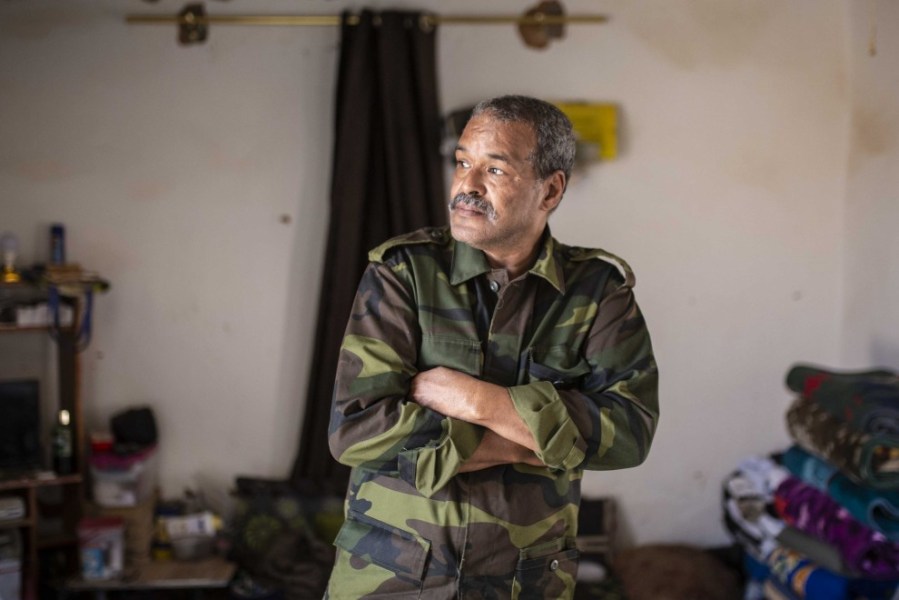
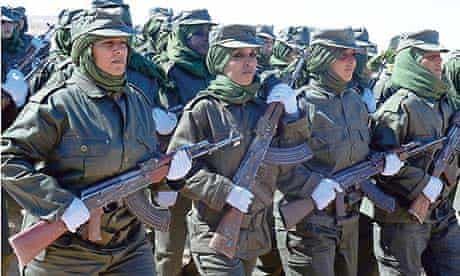


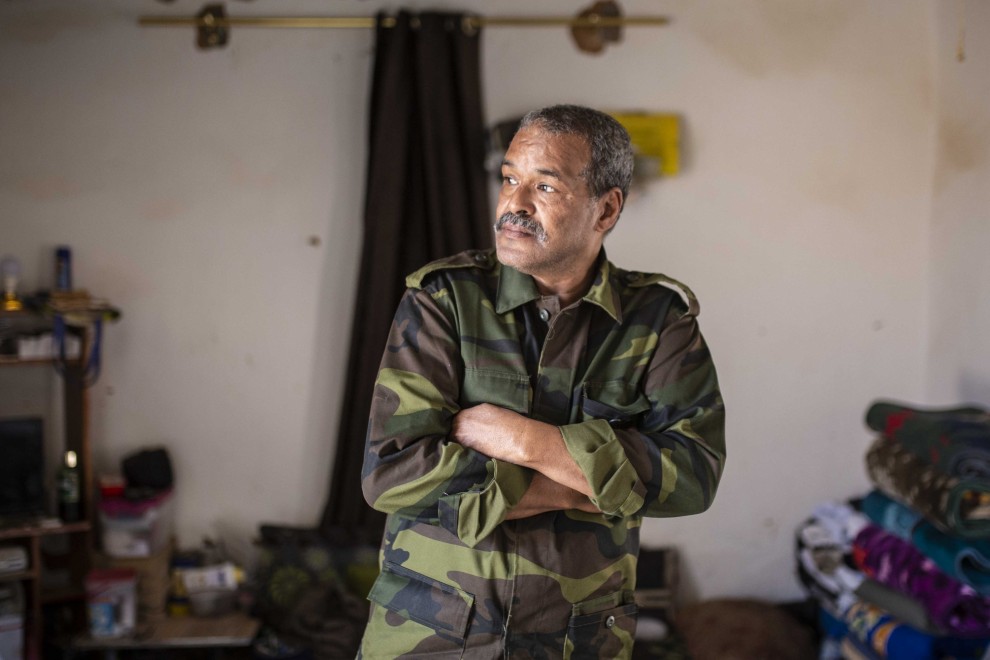
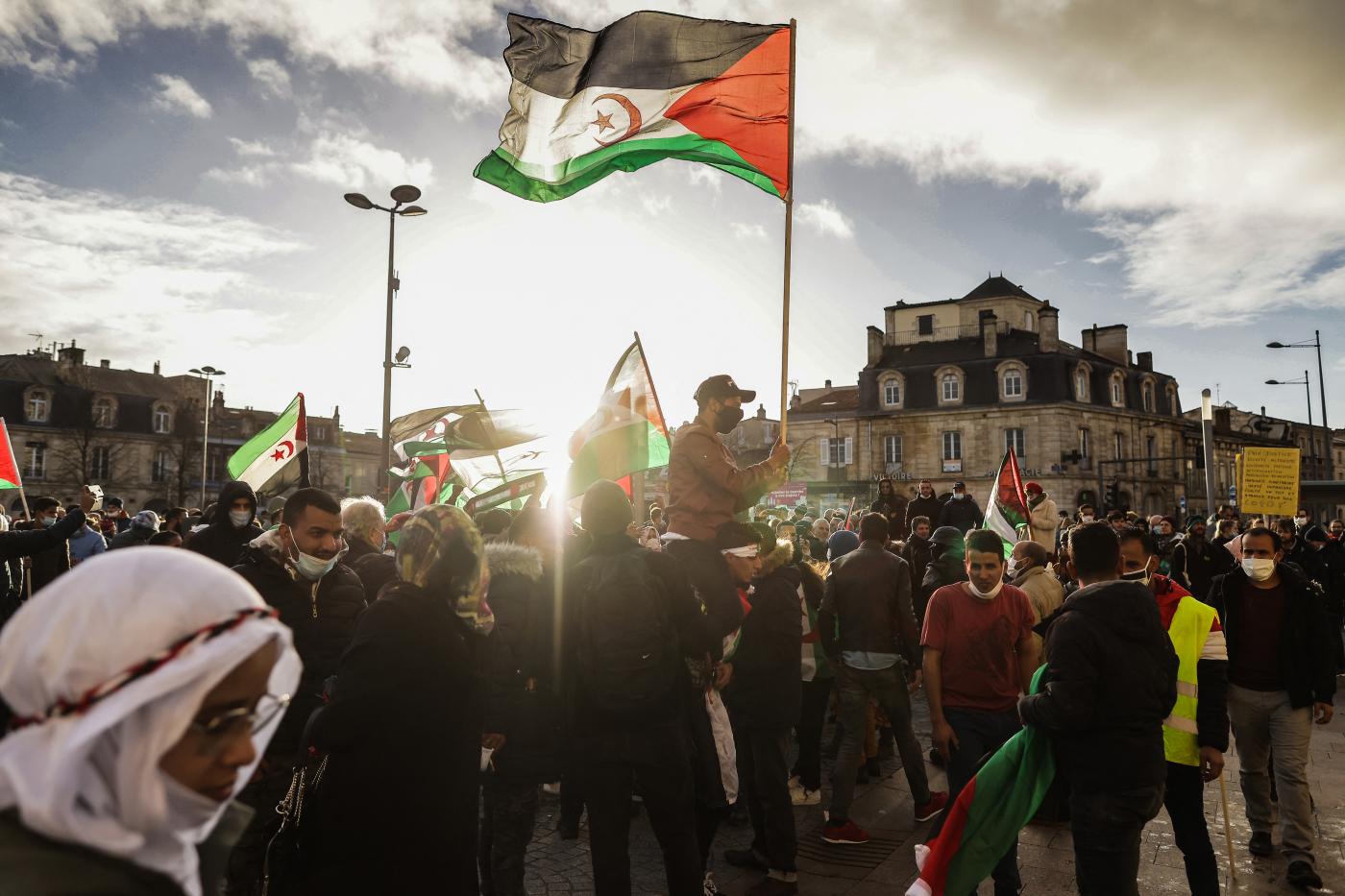


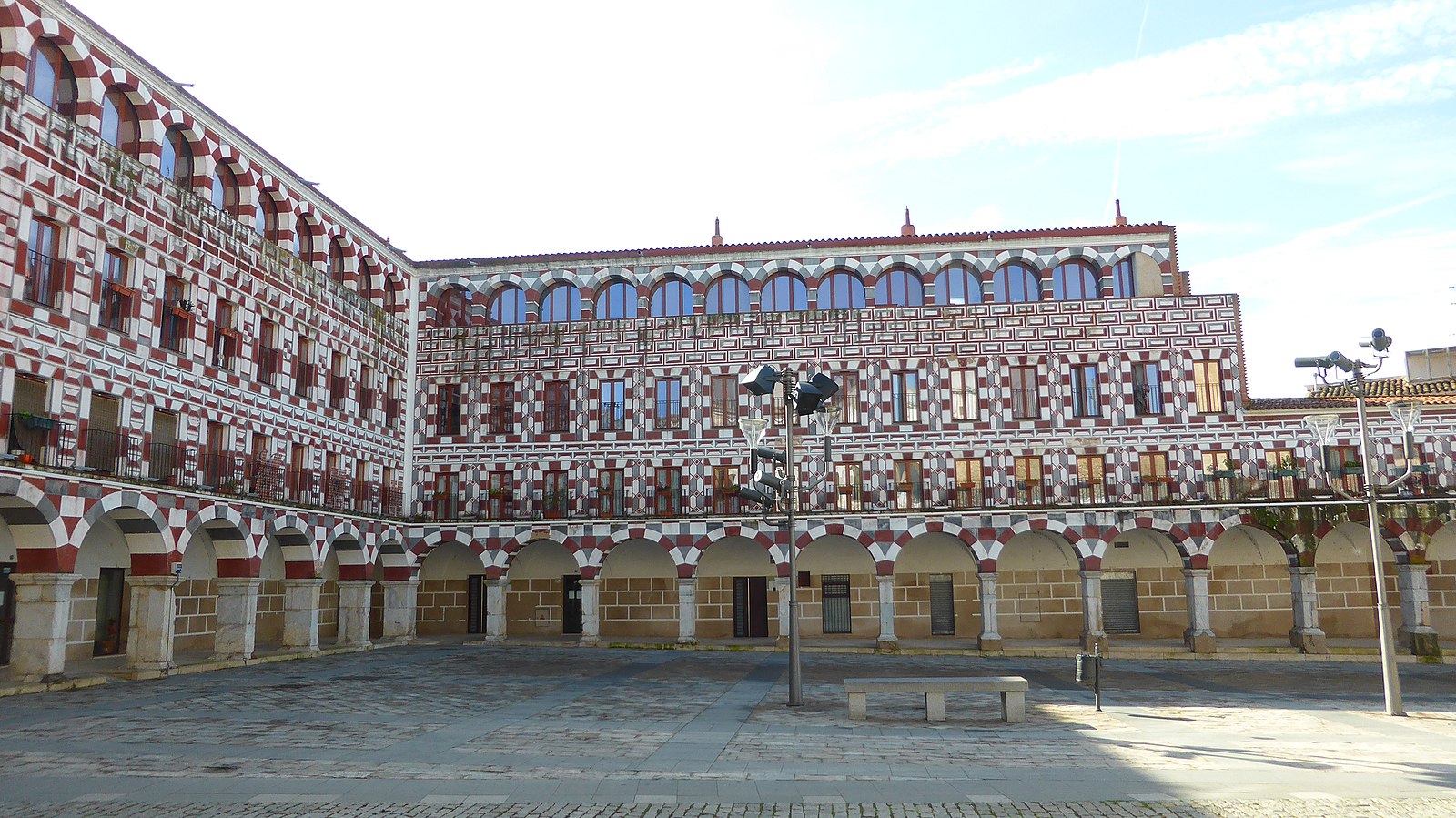


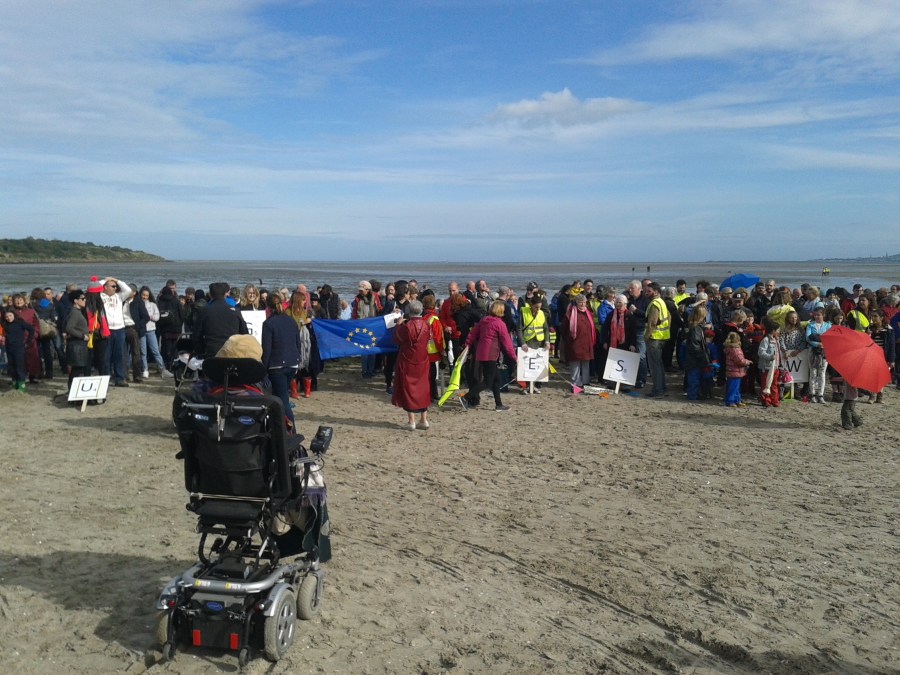
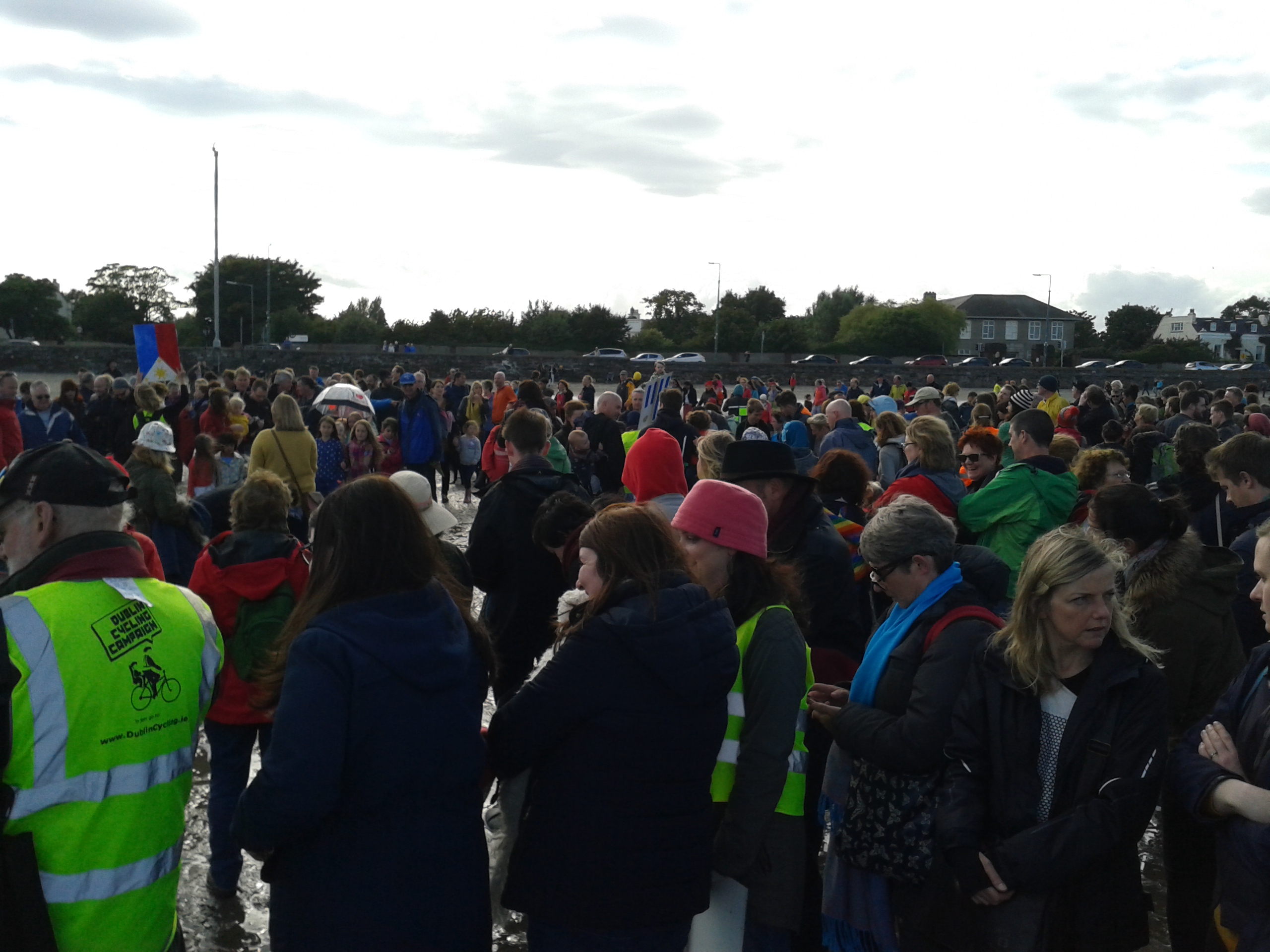


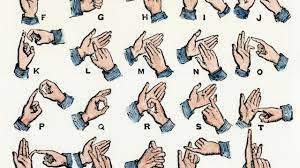


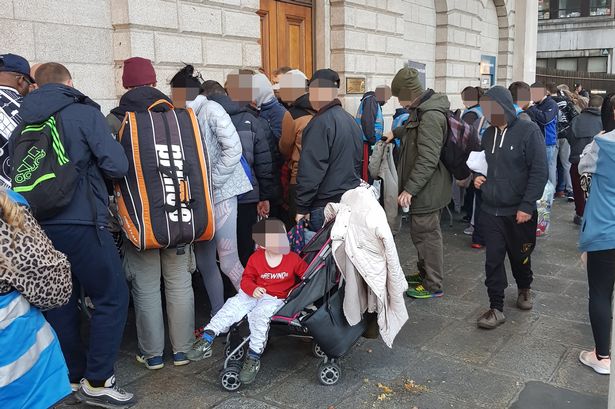
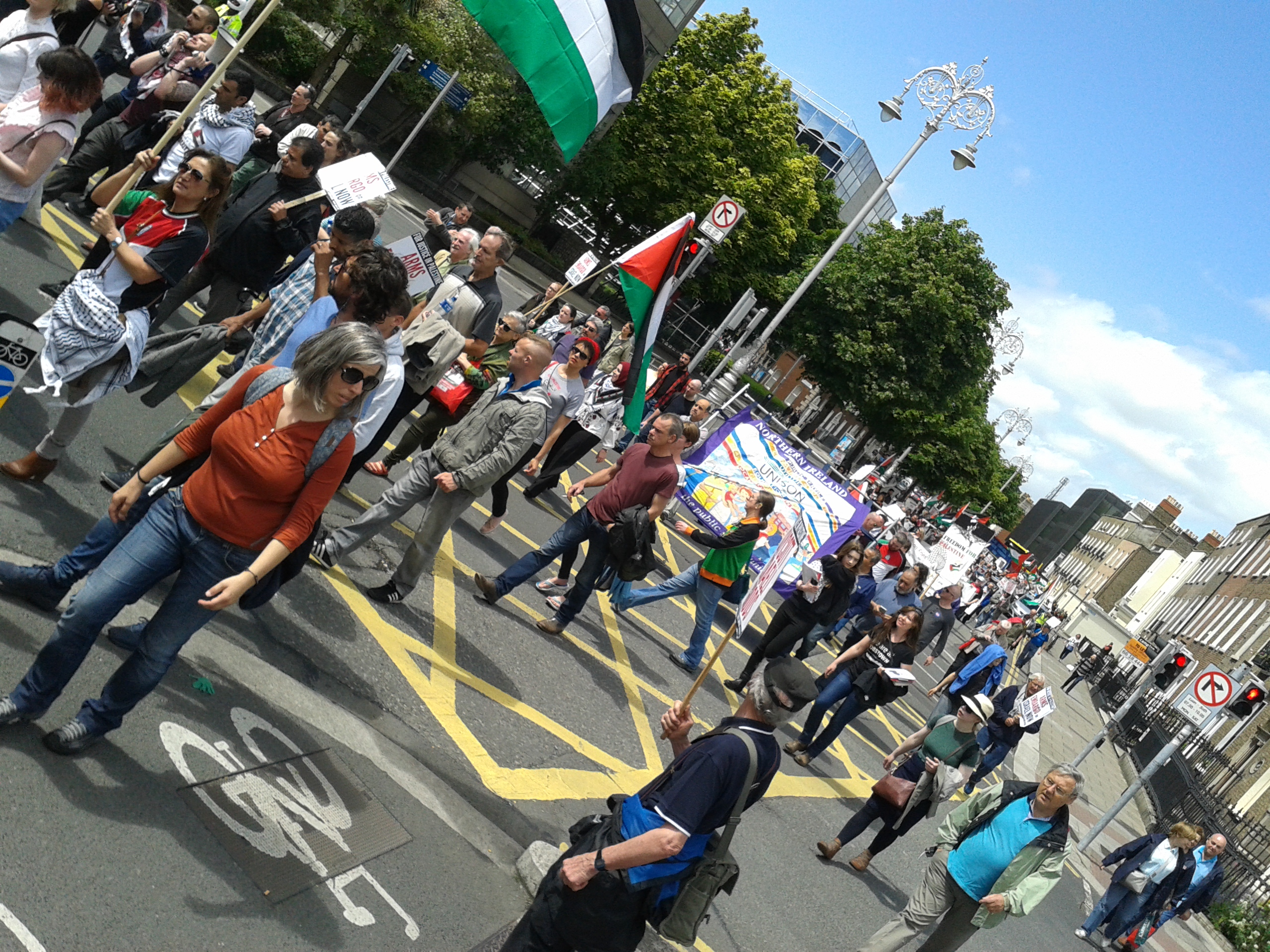




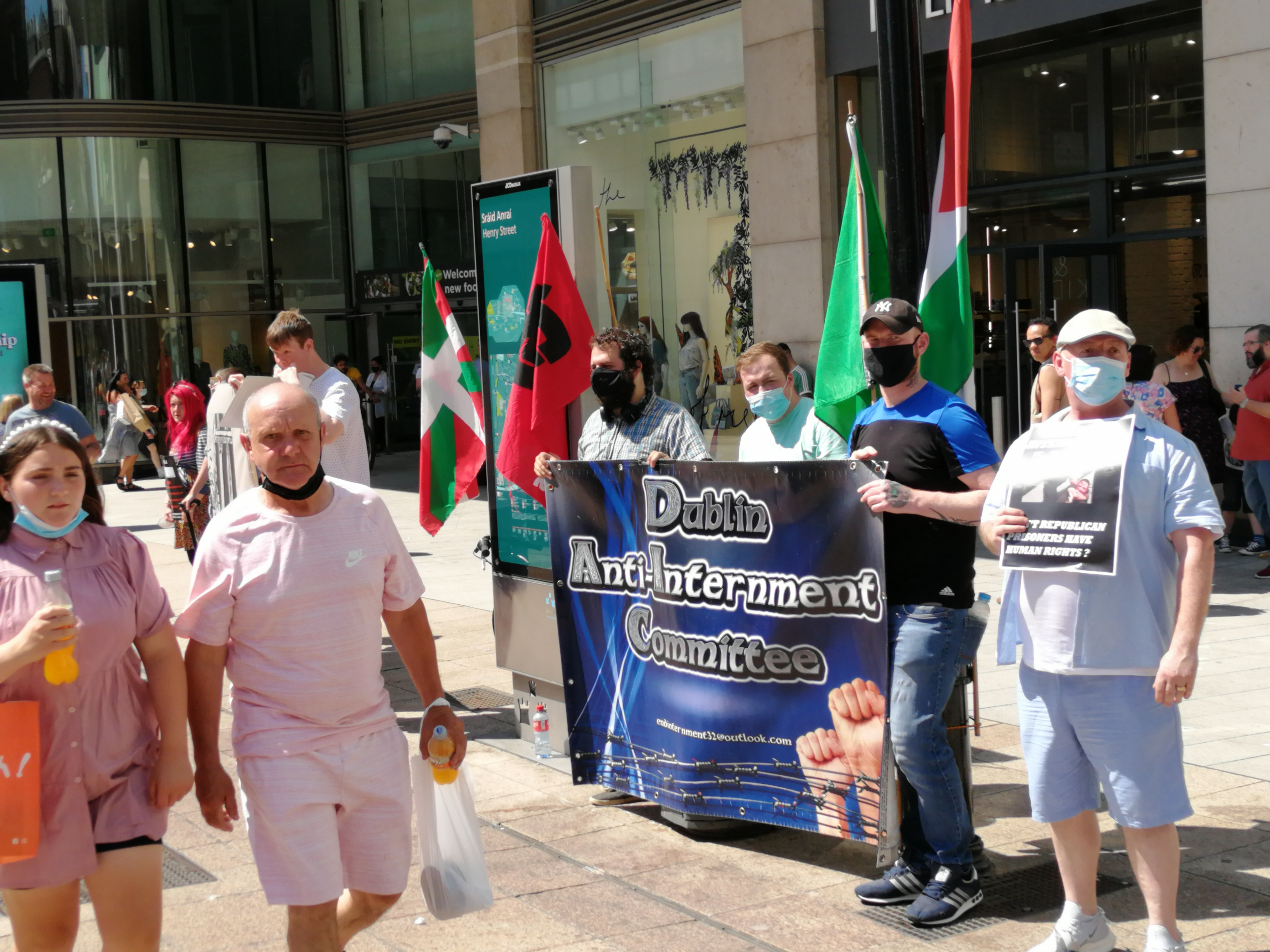
 rebelbreeze