Puigdemont. President-in-exile of Catalonia, visited Dublin to take part in a debate in Trinity College on Tuesday 29th January and visited the Dáil and a number of Irish politicians on the same day.
Puigdemont and Puignól at the Barcelona-ireland friendship tree in Cow’s Lane, bracketed by activists of Casals Catalá de Irlanda, Catalan cultural organisation in Ireland on each side. (Photo source: ACN, El Nacional).
Carles Puigdemont was elected President of the pro-independence Catalan Government, declared an independent Catalan Republic but immediately suspended it; then had his Presidency abolished by the Spanish State, which took direct control of Catalonia for a period. He went into exile with a number of other Catalan Government ministers in order to avoid arrest; the Spanish State issued a European Arrest Warrant for him which was party unsuccessful and then withdrew it; however, he remains in exile in Brussels. Most pro-independence Catalans and even others consider him the legitimate President of Catalonia, though another had to be elected to fill his place; Quim Torra, who is currently the elected President, says that he considers himself only “the interim President”.
Carles Puigdemont was elected President of the Govern, the Catalan Government, in January 2016, in an agreement between pro-independence parties. On 27th October 2017, with a majority of October 1st Referendum votes salvaged and counted — after the Spanish police attacks on the voters – in favour of independence, he declared a Catalan Republic on behalf of the Govern. However, he almost immediately suspended it, to the dismay of many Catalans, including supporters of his own party. The Spanish State, the Constitution of which forbids any secession without the majority vote of the Parliament of the whole territory, was not mollified by the suspension and, as the Spanish State prepared criminal charges against him and Catalan Ministers, Puigdemont went into exile (as did another five Catalan ministers).
ARRESTS AND EXILE
The Spanish State arrested a number of others, including seven ministers and two leaders of grass-roots movements and charged them with sedition, rebellion and misuse of public funds, carrying 30, 15 and six years in prison respectively and European Arrest Warrants were issued for Puigdemont and other ministers. On 25th March 2018, Puigdemont was detained on that warrant while passing through Germany on his way back to Brussels from a speaking engagement in Finland. A German judge decided the issue of the “rebellion” charge first, declaring that any such charge had to provide evidence of violence, of which there had been none by the detainee (there had been plenty of violence but all by the Spanish police) nor under his direction.
The German court decided in July that Puigdemont could be extradited to the Spanish State to be tried for misuse of public funds but the Spanish State, not wishing to have to try him and the other ministers only on those while the other ministers were being tried on the more serious charges, withdrew the arrest warrants. These charges can of course be renewed at any time and another warrant issued.
Since his return to Brussels after release by the German court, this Dublin visit has been Puigdemont’s first venture outside Belgium.
Accompanied by Jordi Puigneró, the current Minister of Digital Policies and administration of Catalonia, also visiting Ireland, Puigdemont paid a brief visit to an olive tree donated by Barcelona to Dublin in acknowledgement of the Irish who had fought for Catalonia in the War of the Spanish Succession. After a meeting with the Mayor of Dublin for the year, Niall Ring, Carles Puigdemont attended the Dáil (the Irish Parliament) for a private meeting with Bertie Ahearn, a Fianna Fáil party parliamentarian and ex-Taoiseach (Prime Minister).
Puignól attaches a yellow ribbon to the Barcelona-Ireland olive tree in solidarity with the Catalan political prisoners. (Photo source: Casals Catalá de Irlanda)
MEETING IN THE DÁIL
Afterwards Puigdemont addressed a meeting room of around 100, organised by the Dáil organisation Oireachtas Friends of Catalonia, with its chairperson Pat Gavan, Sinn Féin Senator, presiding. Jordi Puigneró sat beside Puigdemont as did Lynn Boylan, Sinn Féin MEP.
Puigdemont in the packed Dáil meeting room, Leinster House, Dublin. Others L-R: Minister Jordi Puignól, MEP Lynn Boylan, Sen. Paul Gavan. (Photo source: Internet)
Fifty-seven years of age last December, Carles Puigedemont is a journalist by trade and ex-Mayor of Girona, a major Catalonian city of over 100,000, just under 100 kilometres (62 miles) north-east of Barcelona. In 2006, after a track record of activism in Catalan culture and nationalist activism, he was adopted as a political candidate by the CIU (Convergence and Union) political party and later to represent the reformation of that party in the Junts per Si (Together for Yes) coalition, composed of mostly nationalist capitalist elements. He has been successful in every election and currently heads the uneasy coalition platform Junts per Cat (Together for Catalonia). The current Govern is made up of a coalition between JuntsXCat and ERC (Republican Left of Catalonia), with the other pro-independence party, CUP (Popular Unity Candidacy) in opposition, though not voting with the Spanish-unionist opposition.
In what seems an action contradictory to his political position, in January 2019 Puigdemont filed a constitutional application for amparo(remedy, to put right) directed against the President of the Catalan Parliament, Roger Torrent and the Board of the Chamber, to the Spanish Constitutional Court. The application argues Puigdemont had been denied the use of his political rights as Torrent did not allow him to delegate his vote from Belgium after Puigdemont’s criminal indictment and suspension of his parliamentary position by Supreme Court judge Pablo Llarena.
Despite constant Spanish-unionist claims from both Right and Left, the Catalan pro-independence movement has shown itself more tolerant of migrants and diversity than can be said in general of much of the rest of the Spanish State and one of the laws of the Govern, twice squashed by the Spanish Supreme Court, sought to give migrants equal access to Catalan national health care. Puigdemont is himself married to Romanian journalist (Marcela Topor in 2000) and they have two daughters, Magali and Maria, the family home in Girona. His children are multi-lingual and Puigdemont himself speaks Catalan and Castillian (Spanish), as do most Catalans but also English, French and Romanian.
Addressing the full room, after thanking Gavin for presiding over the meeting and those assembled for their presence, Puigdemont presented his case that Catalonia had the right to secede, that holding a referendum was a democratic activity per excellance, that the arrest and trial of politicians for having promoted that referendum was undemocratic and that such activity was not within keeping of the EU ethos.
Replying to questions on what he would ask Irish politicians to do in order to help Catalonia’s struggle and on how he saw his nation’s struggle combining with other nations within the Spanish state, for example the Basque Country, Puigdemont said he did not wish to tell other countries what do and that the struggle of Catalonia stood on its own. He declined to relate the content of his discussions with Aherne, which he said were confidential. One member of the audience reminded Puigdemont that 100 years ago, the first democratically-elected Irish national parliament had met and that many of its delegates were also in jail or in exile.
To a question about alleged flight of business from Catalonia, Puigdemont said that one had to read alternate media to some of the dominant ones and make up one’s own mind, critically examining all sources – including himself! But he did say that although some addresses of head offices were transferred to the Spanish State in what he said was not legally right, not one factory, working office or member of staff had been transferred out of Catalonia. Also, the struggle with the Spanish State and some Spanish attempts at boycott had obliged Catalans to look outside the Spanish state for their markets and business links whereas previously, imports from and exports to the Spanish state had accounted for 90% and 80% respectively. Jordi Puigneró commented that he was in Ireland in part because of that, in particular to follow up on the Irish state’s success in attracting and developing information technology business.
After the Dáil meeting, Puigdemont and Puignól pose for photos with Catalan solidarity supporters. (Photo source: Casals Catalá de Irelanda)
Outside in the icy cold after the fairly short meeting, Puigdemont lined up for a few photos surrounded by Catalan and other well-wishers and departed to the singing by them of Catalan’s national anthem, Els Segadors (The Reapers). He had a debate at which to speak in a few hours and most of the Catalans in attendance would be there too.
I was anxious for the Turkish airline plane to take off but it was being held up by Turkish State security agents. Two of them were walking down the airplane aisle from the forward exit, casually casting eyes over the passengers of the plane.
Not looking at them would have been suspicious and would have conveyed guilt or fear, so I glanced equally casually at them and then away.
Average height, in suits and sunglasses, dark-haired, one of what might be termed “Mediterranean” appearance in his mid-thirties, the other “Middle-Eastern”, forties perhaps. Secret police for sure – not that their profession was in any way secret. Political police.
Almost certainly the same ones who had passed us in town a couple of times as we sat in the cafe killing a few hours before we headed for the airport. Nothing secret about that either – nor even subtle, driving a couple of times up and down the deserted street. They wanted us to know that they knew.
Knew what we were. Tightening the cords of fear.
The two came slowly down the airplane aisle towards me. I tried not to tense as they drew near ….. and then they passed on towards the rear. I did not turn to look at them. This might have been a regular kind of security check as far as other passengers were concerned but I knew it wasn’t — they were here for us.
So what now? Drag us off the plane? Drag one or two and leave the rest? What would I do if they arrested one or more of the others but not me? Keep quiet until I got back and raise hell there? Or make a fuss here and get arrested as well? Think about it too much and I’d get really scared.
Fear can paralyse. Also might send out the wrong signals. Put it to the back of my mind now …… wait to see what happens, then react. Or not.
I didn’t want to be in any prison, least of all a Turkish one — I’d seen the Midnight Express film. OK, some people, including the original central character of the story, had protested that the film was not true to life, that it made the Turks out to be monsters.
But even those people had not defended Turkish prisons. And if even a tiny percentage of Turks were nasty psychopaths, the police, army and prison service were sure to have more than their share. And I knew what those elements had been doing to the Kurds …. which is why we were there.
Time was slowing down. They were still behind me somewhere but caution was telling me not to turn to look. If we were detained, even for questioning only, they’d go through our luggage. Maybe had done so already.
I really wished that thought had not occurred to me.
* * *
Map showing the Kurdish areas of the states of Turkey, Syria, Iraq, Iran and Azerbaijan. (Source image: Internet)
THE KURDS
The Kurds are a huge ethnic group, population estimates varying between 35 and 45 million, with parts of their people spread through the states of Turkey, Iraq, Iran, Syria and Azerbaijan, also with a large diaspora over much of the world, the most numerous in Germany (often those we think of as Turks, for example in kebab shops, are actually Kurds).
It is what many might consider the Kurds’ good fortune to be sitting on oil and huge water reserves and a very strategic situation between Europe, Asia and the Middle East. But that had turned out unluckily for them.
They’d been overrun by the armies of many conquerors and, as is the way of these things, had participated in a fair few of those armies themselves.
Kurds are usually classified ethnically as an Iranian people and their language as in the Iranian group but the dominant language in the states in which they find themselves, apart from Iran itself, is mostly Turkish, Arabic or Azeri.
Although with long-held nationalist ideas, the Kurds had experienced self-government twice and only for a total of eight years, each time under the protection of the Soviet Union: 1923-1929/’30 (Azerbaijan) and for almost all of 1946 (in northwestern Iran).
But neither the British nor the French, world masters before WW2, wanted an independent Kurdistan. The British had bombed Kurdish villages, probably the first deliberate aerial bombing of civilians, in their repression campaigns in Mesopotamia (now Iraq) and Persia (now Iran).
The bombing was under the command of Squadron Leader Arnold Harris1, developer of the area-bombing tactic, essentially to strike terror into civilian populations and damage their infrastructure. He later put his expertise to use against the German population in WW2, including the horrific bombing of Dresden.
By then, of course, the Italian Fascists and German Nazis had learned from Harris’ earlier innovation, the Italians using them against the Ethiopians and the Nazis against Gernika and other towns, later they and the Italian fascists over much of Europe and the Soviet Union.
Neither the post-WW1 treaties among the victors nor the upsurge of anti-British and anti-French nationalism and republicanism across the region had done the Kurds much good.
Those carving states out of former empires wanted them as big as possible and would brook no independentism from different ethnic groups on the territory they claimed for their state.
Kemal Attaturk, who led a secularising and modernising movement in building the Turkish State, denied that there was any such thing as a Kurdish people – they are just “mountain Turks”, he famously stated.
In 1946 the USA, by then the top imperialist power, didn’t want an independent Kurdistan either and nor of course did the Shah of Persia (Iran) and his supporters so, some time after the Soviets withdrew, the Royal Iranian army invaded and suppressed first the Azerbaijan Republic and then the Kurdish one and executed its leadership.
By 1984 the PPK’s2 communist-led guerrillas, including female units, were fighting a war of Kurdish national liberation against Turkish troops, who were occupying areas, bombing suspected guerrilla bases, destroying villages, forcibly relocating civilians3 and carrying out atrocities, including torture, rape and summary executions.
In Iraq, the Kurds seemed mostly under the tribal leadership of Barzani and Talibani, their peshmergas or guerrillas sometimes collaborating with the Kurds in the Turkish state and more often not.4
During the Iraq-Iran War of 1980-1988, the Hussein regime had bombed Kurds with chemical weapons, including mustard gas, in one incident at Halabja killing up to 5,000 and injuring twice as many, mostly civilian men, women and children.
But, strange to know now, atthat time the western imperialist powers were supporting Hussein’s invasion of Iran, because Iran was the ‘big monster’ and Hussein was friendly towards the West. Journalists found it difficult to get their editors interested in the massacre story.
And the CIA tried to pin the attack on the Iranians!
Only when, years later, Hussein had annoyed the western powers sufficiently by invading Kuwait and they soon afterwards went to all-out war against him, did the story suddenly become generally newsworthy and the then Iraqi military commander Ali Hassan Al-Majid become known as “Chemical Ali”.
The chemicals came from west-European companies and US satellite surveillance supplied the targeting references.
Scene from the Halabja Massacre of the Iraqi State against Kurds which the Western media lacked interest in because Hussein was their ally against Iran at the time. (Image source: Internet)
Following the defeat of the Iraqi invasion of Kuwait by the USA-led coalition forces of the time (35 states overall but with Saudi Arabia and British forces next in number to the USA’s), the CIA called on the Kurds to rise up against the Saddam Hussein regime, leading them to believe that the USA would support them and that Hussein’s overthrow was imminent.
They rose but neither the external support nor Iraqi-wide uprising was delivered and they faced heavy military suppression and repression with many atrocities, causing millions of Kurds to flee to the Kurdish areas of Iran and Turkey, hundreds being killed on the way by helicopter strafing attacks or by wandering into minefields.
Of the 200 mass graves the Iraqi Human Rights Ministry had registered between 2003-2006, the majority were in the south, including one believed to hold the remains of as many as 10,000 victims.5
The Assad regime in Syria suppressed Kurdish national aspirations, forced Arabic while punishing expression in Kurdish and jailed a number of Kurdish artists, in particular musicians.
The Kurds of Iran had been repressed under the Shah of Iran but after his overthrow by the Iranian Revolution, they also suffered repression by the fundamentalist clerical regime that took power and executions of Kurdish activists took place. T
his although during the eight-year Iraq-Iran War, two of the Iraqi Kurdish forces, the Barzani-led KDP and the Talibani-led PUK, had supported the Iranians against the Iraqi regime.
* * *
LONDON
The earliest I can remember reading about the Kurds was about Turkish State repression of cultural expression by their Kurdish ethnic citizens, banning of language and song, suppression of history and extending even to arrests of Kurdish women who hung their washing out in the red, white and green sequence — sometimes with yellow in the middle — of Kurdish national colours.
Being Irish, I felt something of an identification with them, of course I did. Being a revolutionary socialist in addition, I had no love of the rulers of the repressive Turkish State, nor of the fact of its membership of the USA-dominated military alliance of NATO since 1952.
London, a major European city with a population of over eight millions, larger than the entire population of Ireland (but about the same as the latter’s pre-Great Hunger levels), was temporary or permanent home to a large number and variety of people of non-English ethnic background.
Foremost in number was my own, the Irish, largely unacknowledged in multi-racial discourse but the opposite in terms of security, surveillance, harassment and racialisation.
I had not heard of the Kurds previously but as one becomes newly aware of the existence of something, it tends to start popping up into one’s consciousness in different places. So not long after reading of them, I found myself at a Kurdish solidarity meeting in London and leaving my email address with them.
Which is how eventually, a couple of years later, I sat in a Turkish airplane in a Kurdistan airport, watching Turkish state political police walking down the aisle towards me.
I happened to be visiting London and heard this demonstration was happening. I borrowed the placard from a demonstrator for the photo on my phone.Kobane solidarity rally, Trafalgar Square, London, in 2014, many years after my visit to Kurdistan. (Image source: D.Breatnach)
The Kurdish solidarity people in London set up a committee of activists and I became part of it.
The idea came up of building trade union links between Britain and the Kurds, for which it was proposed to send a delegation of British-based trade unionists on a tour of Turkish Kurdistan, whose report could then be used to generate further and increased solidarity work.
A boycott of Turkish tourism was one tactic being considered by some of us which, if promoted by the trade union movement in Britain, would have a significant impact on the Turkish economy.
Friendly relationships already existed between British trade unions and Turkish ones, which were sometimes repressed by their State but the social-democratic and Moscow-style Communist leaderships on both sides had no sympathy for independence movements which they saw as weakening and splintering the workers’ movement within the Turkish state.
There were no specifically Kurdish trade unions but large sections of Turkish unions existed inside the Kurdish region and the solidarity committee had contacts there.
Some of us were asked whether we would like to go, for which we would need to be sponsored by a trade union and raise our own air fares and some money for food — but accommodation and travelling expenses within the region would be taken care of.
Most of the money would go towards the flights but our spending money, we were advised, should be in dollars or marks. Turkish Lira is the currency of Turkey but it would be hard to get and anyway those other two currencies would be more valued.
I was excited by the idea of going but doubted I could raise the money – living little above subsistence rates as I was.
Having been accepted by the University of North London on a BA combined studies course of History and Irish Studies6 and although in receipt of tuition fees and subsistence support, I was nevertheless having to continue working part-time in order to pay the rent on my flat. It was just my luck that was the year that students in Britain ceased to be eligible for Housing Benefit.
Teaching Irish language at Beginners’ level to adults and some weekly youthwork sessions was my only employment then, my last welding job having ended some years earlier – around the same time as the final breakup of my marriage.
The part-time employment and full-time studies course would keep me busy enough but by then I was also a member of the Ard-Choiste7 of an active Irish diaspora campaigning organisation, the Irish in Britain Representation Group8.
In addition I was also on the Branch Committee of my trade union, NALGO (Clerical Section)9, as a part-time (which meant no time off work for union activity) Assistant Branch Secretary and also occasionally representing workers in the grant-aided NGO sector.
These workers were usually managed by a voluntary committee of people who considered themselves left-wing or at least liberal but often treated their staff atrociously and rarely abided by due process in disciplining them or responding to grievances.
Their employees worked in very small organisations (sometimes with only one or two employees) and were isolated, deprived of the solidarity of larger workforces and often played off against one another.
How likely was it that my trade union branch would sponsor me, even nominally? I was unsure. The local NALGO leadership at the time was what I considered collaborationist with the Council’s management, rather than fighting for improvement of conditions and salaries.
Also I was new to employment by Lewisham Council. And if the branch were to sponsor me, how likely was it that they would put up some funds to get me to Kurdistan?
In the end, the branch did sponsor me to go to investigate and report back, also making a contribution towards my plane fare.
Surprisingly, my funding included a personal contribution from a middle-management figure in the Council which, although she was a union member, surprised me considerably, mostly on a political level.
She told me later that despite our differences she admired my courage in undertaking the risk implicit in the delegation.
The NALGO Irish Workers’ Group10, of which I was also an activist, contributed a sum too from their meagre resources, for which I was very grateful personally and appreciated also as an example of internationalist solidarity.
And so, after a mad rush to sort out and renew my Irish passport, which I had never needed to travel between Britain and Ireland but would for most other destinations, I arrived late and stressed out at Heathrow Airport to meet the others of our delegation bound for Kurdistan.
Just in case anything should happen to me over there, I informed a few of my siblings over in Ireland, insisting my parents not be told until I telephoned that I had returned. There seemed no point in them worrying while I was away.
We are not very good at keeping secrets from one another and, of course, someone told my mother, as I found out later.
* * *
ISTANBUL
The introductions were brief and hurried before we entered the queue for the Departures gate. Arnold, our English interpreter for Turkish, I had already met several times through the solidarity committee.
In addition there was a jocular English photographer called Paddy, a London Afro-Caribbean male trade unionist by the name of Damien from North London and an English woman trade unionist called Rose from another part of England.11
The initial list had contained another two but they had to drop out for various reasons.
It was late afternoon on a cloudy day around four hours later when we landed at Istanbul airport and in the city we booked into a four-star hotel, apparently arranged by our hosts.
Just as New York is seen as the main city in the USA but the capital is actually Washington DC, Istanbul is seen as Turkey’s main city but Ankara is its capital city.
That evening we went out for a little stroll around the older part of the city and to eat and a little later, were brought to a pub apparently frequented by the Turkish Left. After a few pints I sang a couple of Irish songs which seemed well-received but cannot now remember which they were.
The following day we learned that our departure on the next leg of our journey had been delayed and so we had time for a little sight-seeing.
After coffee in one of our host’s flats overlooking the Bosporus Strait, where we were told that we were on the European side and on the other was Asia, we split up to see some of the sights.
With one other I visited the Sultan Ahmed Mosque (“Blue Mosque”) opened in 1616, functioning as a mosque for Muslim prayer but with parts open to non-believers.
The ‘Blue Mosque’ at sunset, Istanbul. (Image source: Internet)
A historic monument in Istanbul is the bronze Serpent Column, created from melted-down Persian weapons, acquired in the plunder of the Persian force’s camp after their defeat at the battle of Platea in 479 BCE, erected at Delphi but transferred to Constantinople
The “Serpent Column” cast from defeated Persian Empire invader weapons by the victorious Greek cities. (Image source: Internet)
(heart of the European side of Istanbul) by Emperor Constantine I “the Great”. Listed on the column were all the Greek city-states that had participated in the battle. Although a part at the top was removed, the Column survived a number of disasters, including the tragic burning and sacking of the city at the hands of the Fourth Crusade (although it was a Christian city) by forces under the Doge of Venice Enrico Dandolo in 1204 AD.
Then we got word to be ready as that night we’d be taking a plane to Batman. Really, Batman? Not to Robin? They had heard the jokes before, of course.
Batman is a town in the province of the same name, south-east of Anatolia or Asia Minor, i.e in Kurdistan but more to the point, was where our hosts were based – the Petrol Is trade union.
On the journey, looking down from the passenger plane, I could see vast mountain areas seeming like a wrinkled and rucked fabric, in many places covered or streaked in snow. A little over two hours later, we landed at Batman airport.
* * *
TURKISH KURDISTAN
Batman was a bit of a shock, to be honest. Not so much the very small airport but the town itself, which seemed to be little more than a long and very wide high street forking at one end.
A few shops, cafes or restaurants on one side of the road and some half-constructed buildings and empty sites on the other.
A cow walked down the street unattended, stopped by a rubbish bin and began to eat waste cardboard; cows’ stomachs of course can break down cellulose and extract nutrition from it – but still, not what one from our parts of the world expects to see in a town.
On a map of the Kurdish area of the Turkish state, Bitlis would appear to be roughly in the middle; Batman is a little over 100 kilometres from there, heading south-westward.
Map of Eastern Anatolia showing Ankara, capital of Turkey to the west and the Kurdish region to the east. Our delegation traveled mostly through the quadrant west, south and east of Batman. The Syrian border is to the south, Iraqi to the southeast.
After spending the night in a very quiet and basic enough Batman hotel but with single rooms each, after breakfast of bread, biscuits and coffee, we got a taxi to the regional Petrol Is headquarters, a large building but which seemed almost empty, where we were asked to wait.
After an hour the area where we were, somewhat like an auditorium in size but without many chairs, had begun to fill up. The first thing that struck me was that they were all men – even the administrative staff, it seemed – so that I felt sympathy for Rose.
She was wearing a long scarf over her head in recognition of the cultural norms of the area and, although I was not at all sure that I agreed with that, in the end it was her decision.
Eventually the President of the regional branch arrived and we sat down with him and a few of his committee, with some other Petrol Is members standing around us. We were drinking chai, light-coloured tea without milk and with nearby sugar-cubes to add to taste.
The discussions were in Turkish, with Arnold interpreting for us and for the union President. After the introductions, the President welcomed “the British trade unionists” who were coming to enquire about conditions and promised the assistance of the union while we were there.
Naturally I couldn’t let that go and asked Arnold to translate the following for me: “For my own part, as an Irishman in a British trade union, I thank you for your hospitality. The British state has occupied my country for hundreds of years and we have struggled – and continue to struggle – for full independence.”
The regional President acknowledged the statement but no doubt understood that I was by inference making a point also about Kurdish members of Turkish trade unions. I was interested in precisely the nature of that relationship and a little later probed deeper, with Arnold of course translating.
The President limited himself to stating that the union’s HQ in Turkey supported the regional branches in their struggles for better wages and conditions and for freedom to organise.
Of course, even if he were an ardent nationalist, he would have to be very circumspect; there were certain to be State spies in the union.
Petrol Is workers were scattered around the region at oil depots and refineries and often living away from home for long periods. Inclement weather could be an issue as could work accidents.
Wages were considered generally good but did not keep up with the rising prices of necessities, not to speak of more luxurious goods – a common experience of the working class around the world.
After about an hour he bade us farewell and we were introduced to our driver for the rest of our stay, Genghis.12
Genghis spoke little English but was fluent in both Turkish and his native Kurdish. A good-natured man in his early thirties who lived locally with his wife and children, we were to spend a week in his company as he drove us many hundreds of kilometres.
His salary, accommodation and traveling costs, we understood, were being paid by the union.
After Genghis dropped us off back at our hotel, I and some of the others fancied a couple of beers with relaxed conversation but were in for a surprise – the area was under islamic norms. Not only did the hotel have no bar – there were no bars.
No alcohol? It is amusing now that some of us seemed more shocked by the prospect of no beer than the fact that we were in an insurgency war zone.
There was, however, a shop where we could buy cans of beer. What kind of islamic no-alcohol policy could that be? We asked no more questions, bought some beers and discreetly brought them back to the hotel, piled into one of the bedrooms and relaxed with a couple of cans for awhile.
Paddy and Damien were quite lively and amusing guys, Arnold and Rose quieter. Of the first two, Paddy was the perhaps the funniest. He seemed to think I looked like Sean Connery (some people years ago thought that) and kept calling me “Big Sean”.
He was a freelance professional photographer. Damien was a member, like myself, of a NALGO branch but in North London. Rose was not only on the executive committee of her trade union but also on the joint union area committee.
After a while, we separated, each to his or her own room. Next morning, we were to be up at 7am, meet Genghis and begin our investigative journeys. We’d stop off at a cafe for breakfast on the way.
* * *
ARMY ROADBLOCK AND A CANNON-SHELL HOLE IN MY WALL
Driving into a town (I can’t remember which one now) we could see light cannon and heavy machine-gun missile impact marks on the walls of houses.
Suddenly ahead was an Army checkpoint and turning back now they’d seen us would be suicidal. There was nothing to do but to drive up and greet them casually. I was thinking that either this is purely coincidence and nothing is likely to occur or it is not and something will definitely happen to us here.
One of the soldiers returned Genghis’ greeting, looked at his passengers and asked to see our ID. I didn’t know whether he was entitled to see more than our driver’s documentation but I was certainly not going to make an issue of it as guns trump legal arguments every time.
The soldier went away with our passports and Genghis’ driving licence, presumably to his officer. An Army truck was blocking our view and we couldn’t see where he was. I looked casually around, saw more bullet-holes. Everywhere.
A little later I saw the soldier coming back towards us and I started doing breathing exercises. He handed over our documents and bade us goodbye. Genghis pulled away slowly – damn right!
From a jeweller in Mediyat I bought a silver ring with a black stone set in it. The shops, a row of what looked like sheds, with bars in front but no shutters we could see, were mostly empty, possibly in fear of the Turkish Army.
I am not sure whether it was in that town or another that we booked into a hotel, free of charge again.
Bringing my haversack up to my room on the first floor, I looked out the window on to the street below. When I turned back to the room I got real shock: there was a small diameter cannon shell hole in the wall! It might have been only 20 or 30mm but it seemed huge to my eyes.
The shell must have gone in through the window without exploding and then into the wall opposite, again apparently without detonation. Still, anyone in the path of that shell would have been killed.
Small-calibre cannon shell or heavy machine-gun bullet hole in a Kurdish wall. (Image source: Internet)
The bed was below the level of the window ledge and any time I wanted to go to the toilet from my bed, I crawled there on my hands and knees – and back again the same way. And you know what? I never felt stupid doing that, either.
It was raining out so we stayed in and, sitting smoking later that night, the front door open so I could see the street clearly, the owner started talking to me and had me brought free cups of chai. He could speak fair English.
Was the room ok, he asked? I asked him about the shell hole. Did I want to change rooms? No, not at all thanks, I just wanted to know what happened (I was thinking maybe a shell wouldn’t land in the same place twice).
Apparently a few days previously, in another part of town, Kurdish guerrillas had ambushed one of the Turkish armoured cars, destroyed it and got away. The Turkish soldiers, enraged, shot up the town, including his hotel.
“I am a businessman. My hotel is a three-star hotel. But because I am Kurdish, the Army can shoot up my place,” he said, “I get no compensation and me and my staff could have been killed”.
* * *
MASSACRE OF CHILDREN
One day Arnold told us that there had been a terrible incident two days earlier – the Turkish Army had killed people in a village – did we want to go there? Of course we did!
He would make enquiries whether they would want us to visit – after all, we might be bringing more trouble on them.
With their agreement obtained, we set off some hours later. I cannot now remember the name of the village, which was reached by a track off the road.
The area was pretty level and the houses were single-storey and rectangular, with white or greyish walls, somewhat similar to the adobe houses one sees in westerns set in the southwest of the USA or Mexico. Entering the village, we passed one of the houses, blackened with huge scorch marks.
Invited into one of the houses, firstly I was surprised at the couple of steps up into the building, secondly by the carpets on the floor inside and thirdly by a TV set in the corner. It was just not what I had expected when viewing the buildings from the outside.
They were all men inside (unless there were women out of sight), apparently village elders and some young men. We sat down on cushions on the carpet to hear the story, translated by Arnold.
Two nights earlier, men had come and knocked at the victim’s house, the one with the scorch marks, saying that they were guerrillas and asking the son, a young man, to come out to talk to them. His mother said “They are not guerrillas” and asked him not to go.
He replied that there would be trouble for the family if he did not and so he would go. (What his mother was implying was that the men outside were either soldiers in disguise or State proxy assassination squad people). The son left and they heard him and the others walk away.
After a little, the young man’s father picked up his gun (it is common for people in those areas to have a gun) and went out after his son. A little later, firing was heard down the track.
Eventually, when people went to investigate, they found blood on the ground in some places but no bodies. Their belief was that the son was being mistreated in some way, the father intervened and perhaps shot some of the men but that he and his son were killed too.
Then the surviving men took the bodies away.
But worse, much worse was to come, which was what had brought us out there.
For the Army arrived and announced a curfew on the village throughout the day and, that night, an army vehicle (the words sounding like a “panzer flamethrower”) had driven up and incinerated the house, the victims including six children.
They showed us the photo, the little charred bodies laid out side by side. It was hard (sometimes still is, thinking about it) not to cry, not to scream in rage13.
We said we would tell who we could, thanked them and left. I imagined in turn being the son, then the father, then the neighbours. I did not want to imagine being the victims in the house. We were quiet in the car for a long time.
* * *
DIYARBAKIR
Diyarbakir is the capital city of Turkish Kurdistan, a city then of maybe a million or more in population (the estimate for the metropolitan district now is 1.7 million).
The Turkish State has had a policy of forcing the Kurds out of their small towns and villages – especially those in the mountains – and directing them in one manner or another to the big city.
Such a population reallocation makes the countryside easier to control, removing ‘the sea (the people) that the fish (the guerrillas) swim through‘, to paraphrase a famous phrase of Mao-Tse-Tung. The British did it in Kenya and the USA in Vietnam, in somewhat different manner but the principle is the same.
Of course revolutions happen in cities too and urbanisation tends towards proletarianisation of the majority, which may cause a different kind of problem for the Turkish ruling class in the longer run.
Genghis left us at the hotel and headed home, about 50 kilometres. He wanted to see his wife and children and he’d also heard that the Turkish police had called at his house and questioned his wife. She seemed to be ok but he was worried. And so were we.
Handing in our passports at the Diyarbakir hotel registration, we filled in our forms and a boy took them to the local police station as required (this had not been the case in Batman or in Istanbul but perhaps copies had been supplied). We had of course described ourselves as tourists.
While we were eating, the boy returned with the passports and said something to Arnold, who smiled. “He says the police said ‘They are not tourists’,” Arnold told us in response to our queries. My heart gave a little jolt – but what did I expect? Of course they were keeping an eye on us.
And letting the boy overhear, knowing he would communicate it back to us …. intimidation? Kind of reassuring because what would be the point of intimidation if they were going to arrest us anyway, or worse? Well, maybe to soften us up a little beforehand ….
I pushed the thoughts out of my mind.
The following day we had a number of meetings arranged, the first at a kind of municipal building, was with trade union representatives, many of them women: teaching, municipal service both manual and clerical, health workers’ unions.
It was slow work since everything had to be translated – ours mostly into Turkish, I think and theirs into English for us.
These were much more explicit about their problems with Turkish State repression: censorship, cultural eradication, arrests, threats, a few assassinations by the State proxy so-called “Turkish Hizbollah”14. This was their reality, day in, day out.
About a year later, looking at a list of the names of Kurdish activists assassinated by these State proxy gangs, I recognised the name of at least one of those we had met and talked to, a woman teacher and trade union activist.
And felt guilt, the thought that maybe our visit had been part of the decision to kill her. But of course, all Kurdish activists were and are vulnerable, even sometimes abroad – and the Kurds want their stories told out there in the world.
Another meeting took place in what they were calling their human rights centre and here I got the impression of the human rights people working closely with the Kurdish political party – not the PKK, which was banned but perhaps a reformation of it in part, to comply with Turkish laws and allow them to stand in elections.
They already had municipal councillors but were heading for Turkey-wide elections. Having the status of a member of the Turkish Parliament in Ankara didn’t really protect one that much, as a number of elected Kurds have found over the years.15
For some reason we were kept waiting there for over a hour, although other people were coming and going. I was hungry and not impressed but then, what did I know of what other concerns they might have? Eventually we got to talk to a couple of the human rights people and the politicians.
They were very concerned to talk in terms of human rights and not Kurdish independence or even autonomy.
With all the people hanging around and listening (which I thought a most inappropriate way to have our meeting), it seemed unwise to push them on that issue. Also, these people too were in constant danger of arrest and even assassination.
We never made any promises to anyone, except that we would report back and try and get publicity for their struggles. We outlined the possible outcomes, such as more media coverage or our trade unions taking up a policy of solidarity with them … but we could not even guarantee that.
Later we wandered through a market area; Damien was anxious to buy a kilim rug and haggled with the seller until they reached agreement. I know that haggling is expected but it is something I cannot do and I left empty-handed.
Back at the hotel, we received a phone call from Genghis – he’d collect us the following day and drive where wished to. His family was ok, the Army had just asked where he was, his wife told them he was away on a driving job for the union but she did not know where.
Of course, they knew that – it was a reminder by the Army of his vulnerability and of his family’s.
* * *
THE ANCIENT AND OLD
We did get to see some other things, not so directly connected with human rights, conflict or politics.
The Zoroastrian monastery, looking like a fortress standing on its own but I cannot remember where it was. We were received courteously, allowed to see the church and served chai. Did the Army bother them? Rarely but sometimes, was the reply.
Zoroastrianism or Mazdayasna, is the oldest monotheistic religion on record and one of the world’s oldest active religions. Its number of adherents generally world-wide is declining but was reported recently to be increasing somewhat among some of the Kurds.
With a single god and good-bad split influences, along with free will and responsibility for one’s actions, it would seem to have influenced the creation of the Judaic faith, which in turn led to the creation of Christianity and, somewhat later, Islam.
The religion’s Wikipedia page contains this possibly contradictory entry: “Recent estimates place the current number of Zoroastrians at around 190,000, with most living in India and in Iran; their number is declining.
In 2015, there were reports of up to 100,000 converts in Iraqi Kurdistan.Besides the Zoroastrian diaspora, the older Mithraic faith Yazdanism is still practiced among Kurds.”
Nomads
Another time we drove past a group of nomads on a hillside, their big black tents pitched wide, their flocks of sheep nearby. I would have loved to have talked to them but we were expected elsewhere without time to stop. These were probably Yoruk people.
Ancient site threatened
Hasankeyf is an ancient settlement area along the Tigris river in the south-east of the Turkish state, i.e in Kurdistan. Although it was declared a conservation area by the Turkish Government in 1981, it is now threatened by a dam to be built by the Turkish Government of today.
Even back then when we visited, the threat was known although further away.
With a history spanning nine civilizations, it should have World Heritage status. According to Wikipedia:
“ The city of Ilānṣurā mentioned in the Akkadian and Northwest Semitic texts of the Mari Tablets (1800–1750 BC) may possibly be Hasankeyf, although other sites have also been proposed.
By the Romanperiod, the fortified town was known in Latinas Cephe, Cepha or Ciphas, a name that appears to derive from the Syriacword(kefa or kifo), meaning “rock”. As the easternand western portions of the Roman Empire split around AD 330, Κιφας (Kiphas) became formalized as the Greek name for this Byzantine bishopric.
“Following the Arab conquest of 640, the town became known under the Arabicname حصن كيفا (Hisn Kayf). “Hisn” means “fortress” in Arabic, so the name overall means “rock fortress”.”
The site we visited was of the caves, rather than the city. There were thousands of man-made caves, of which we only saw a few.
Paddy displayed his Arabic phrases with an elderly man sitting outside a cafe, while we bought some chai. Up to fairly modern times, people had lived in some of the caves, we were told.
Doomed lovers
In Cizre, over 166 km from our Batman base, we went to see thealleged grave of Mem and Zin, star-crossed lovers without any apparently religious significance but whose grave is cared for and visited by many.
We were allowed to enter but there was not much to see – the interesting content is in their story, written down in 1692 and which is performed in a mixture of prose and poetry.
Painting depicting the Kurdish legend: Mem lies dead, mourned by Zim. (Image source: Internet)
Mem, a young Kurdish boy of one clan and heir to the “City of the West” falls in love with Zin, of the “Botan” clan and daughter of the Governor of Butan.
Their meeting is during New Roz, the ancient fire-festival of the Kurds still celebrated today (often with political independence symbolism) but their union is prevented by a man of a different clan who some time later causes the death of Mem.
Zin dies mourning at his grave in Cizre, being buried beside her deceased lover.
Bakr, the author of Mem’s death, is killed by the victim’s friend and he is buried near the lovers so that he can witness their being together. However, his hatred is such that it nourishes a thorn tree to grow, sending roots deep into the earth to separate the two lovers, even in death.
Sadly, I knew very little of this wonderful story then and had to look it up on the Internet much later.
Workers on a cotton plantation
On another occasion, on impulse we pulled in off the road at a cotton plantation. The manager politely made time for us, talking about the product, its cultivation etc. Although most Turkish cotton is grown in the Aegean region, there were fields of it here.
The cotton grown in Turkey is long-threaded, with fewer joins, therefore higher quality, especially for towels: strong and smooth and not too absorbent.
Were his workers members of a union? He didn’t know, that would be their business. They were well treated; in any case, he did not receive any complaints. Would it be possible to talk to some of the workers? Alas, no, they were in the middle of their shift. But he did not suggest an alternative time when it would be convenient.
New Roz celebration by Kurds in Diyarbakir, capital of Kurdish region of the Turkish state 2017. (Image source: Internet)
* * *
AT THE IRAQI AND SYRIAN BORDERS
As our time in Kurdistan drew to a close, Arnold asked whether we’d be interested in seeing the Iraqi and Syrian borders. Of course we would! After Arnold’s brief discussion with Genghis, we set off.
It is approximately 300 kilometres from Batman to the Border but we might have been around Mardin by then, which is nearer.
Our road wound higher and higher through hills into the mountains and we rarely saw traffic on the road; as we got nearer we’d need to be more cautious. In a quiet mountainy area we stopped beside a stream to stretch our legs and for Genghis to take a short break.
Always interested in nature generally and water life in particular, I wandered to the stream and to my amazement saw crabs very like the marine shore crabs of home, both in appearance and size. I soon caught one and had my photo taken holding it up.
A middle-aged and young woman appeared on the road and I greeted them in the few words of Kurdish I knew to which they responded with a muttered reply and turned away.
It was probably to do with gendered cultural mores of the area but they might also have seen us as something to do with the Turkish state or even foreign intelligence people operating in the area.
I released the crab back into the water, watched it make off sideways, its pincers threatening. We got back in the car and drove off towards the Border.
The US-led Coalition forces in March 1991 had imposed a no-fly zone on the Kurdish region of Iraq from which even Iraqi helicopters were banned, which of course brought some relief to those areas suffering repression after the US-incited uprising.
But it also gave the Kurdish tribal leaders unfettered access to Iraqi-drilled oil wells. And so the plunder began.
Stopping a few hundred yards from the Iraqi border we watched the trucks coming over from the Iraqi state, pause momentarily, hand something over to the Turkish soldier on “border control” duty and drive on.
Each lorry had an additional fuel tank welded on underneath with little clearance before the road surface. All illegal, of course, not only in Iraqi but also international and even Turkish law. It was a lonely spot for Turkish soldiers garrisoned there but no doubt a lucrative posting.
And surely Turkish Government officials were taking a bigger rake-off, though nothing as crude as being slipped a bribe at a border crossing.
After that we went to visit the Syrian border. This time it was just to see, set back a little from the road, a barbed wire fence stretching east-west. On the other side was Syria but with nothing to see there.
Just for the sake of having done so, I picked up a pebble on the Turkish side and threw it over the fence – when it landed, it looked no different to the Syrian pebbles.
* * *
CARRYING CONTRABAND?
On our last evening, in the hotel in Batman, we trade unionists were taken aside and asked to carry sheets of typed paper in secret back to London. The precise nature of the content was not revealed to us but they did not contain maps or diagrams, which we confirmed with a quick riffle through them.
We were disturbed and also somewhat angry and resentful, one more than the rest, who refused. Under protest, for all the good that would do me if we were searched, I agreed, distributed the papers among my belongings and said no more about it.
I chose not to examine them too closely on the vague principle that the least I knew the less I could tell and to this day am not entirely sure what the contents were. Rose, having said little in the first place, packed them away quietly.
I had the impression that this quiet woman was the bravest of us all, certainly of us trade unionists.
Next morning we got up at a decent hour, had breakfast and headed out to the local cafe-restaurant to kill time before we needed to head out to the airport, where waiting would be even worse than where we were.
We did not see Genghis again but learned that he had returned home and things seemed ok. The State police must have known where he was now but had not detained him.
If they questioned him he could, we supposed, say he knew nothing except the places we had asked him to go to, for which he was being paid. That would be his wisest course of action and hopefully the one he’d adopt. Hopefully too his union would exert itself to protect him.
The street being so quiet, there was little to do but chat over chai or coffee, read or look out the window.
So even if we had not been somewhat nervous, it would have been difficult to miss the car that passed down the street a number of times, going first in one direction, then the other, with two men inside, wearing sunglasses.
“Political police”, I said to Arnold. He glanced out the window, nodded, returned to sipping his chai. Nobody else said anything.
At the airport, there was no sign of the plainclothes cops, only the armed Turkish airport guards and customs officials.
We were processed pretty quickly and then on to the Turkish airline passenger jet, bound for Istanbul. We sat down, somewhat relieved but knew there was still the next airport to get through.
But twenty minutes later, we were still there with no sign of preparations to take off. And then there they were, the two of them coming through the plane’s forward exit, in their suits and sunglasses.
As they walked casually down the aisle towards me, I tried to empty my head and concentrate on my breathing. Tried to feel at ease so I would look it. They passed me and I did not turn my head. A little later, they passed me again heading back forward. Over the top of the passenger seat in front, I watched them as casually as I was able.
They were talking to a couple of male members of the cabin crew, near the exit. About to leave? Informing them that some of their passengers were going to be arrested? Just making us sweat a bit more?
The conversation with the cabin crew was dragging on. Then a kind of wave from one and they ducked their heads to exit on to the stairs.
A crew member closed the hatch and dogged it securely. The engines whined, then slowly increased in pitch. The plane began to taxi, stopped, turned slowly, the engine noise increased to a roar and …. the plane jumped forward to gather take-off speed.
I heaved a sigh of relief. We were safe now, at least until our disembarkation at Istanbul. Then the flight to London and safety. Well not entirely … there would be another hurdle at Heathrow: customs and police. But they wouldn’t be interested in some papers, would they? British political police?
Well, the very worst they could do to us would be detention and interrogation, possible but unlikely custody, trial and sentence. The Irish in Britain were subject to the Prevention of Terrorism (sic) Act, a “temporary” suspension of civil rights introduced in 1974 and renewed annually.
I had some experience of arrest and detention in Britain and, however bad it might be, I was sure there would be no close comparison with a Turkish jail. And I’d be within reach of family visits.
POSTSCRIPT:
The journey back to London was without incident. I handed the “contraband” papers over to the intended recipient and that was that; phoned my family to let them know I had returned safely.
Our delegation and some of the solidarity committee arranged to meet in order to prepare our report. Rose was back on her home ground and corresponded by email, while Damien attended a few meetings. Paddy contributed his photos.
Arnold and I and one other did most of the writing text, discussion and editing and in time an attractive and informative report, magazine-size with a full-colour cover was produced, featuring some of Paddy’s photos.
I submitted a copy to each of my funders, sent one home, kept one and ………. None can be found now, apparently.
After reporting to my union (a brief announcement recommending the reading of the report, offering to speak at meetings and to bring other speakers), I expected to receive invitations to speak on the subject of the Kurds and the Turkish State, hopefully in support of a campaign such as a tourism boycott.
No such requests came from activists in my union branch.
In all, I received one invitation to address a very small meeting in North London with which I complied and tried unsuccessfully to organise one myself in the University of North London.
There were no other invitations nor meetings organised by the solidarity group, which seemed to be a singular failure to capitalise on the delegation, so well organised and the report, so well produced.
I had told Arnold, once we got out of Turkey, that I thought the walk through the plane in Batman of the Turkish political police was intended as a warning to him. The rest of us had not been there before and were unlikely to return whereas he was a fairly regular visitor.
I told him that the next time he visited, they would lift him. I was wrong; his next visit was with the Liberal British peer Lord Avebury, a campaigner for human rights in Turkey.
But the next visit after that, without Avebury,he was arrested and spent some weeks detained in a Turkish jail before various efforts combined to have him released.
I lost contact over the years with Damien, then with Rose and eventually with Arnold too. Paddy disappeared, resurfaced, then disappeared again.
There seemed little more I could do for the Kurds and in any case, had completed my course of studies and was searching for and taking up full-time employment and involved in other struggles, though I attended the occasional Kurdish solidarity public event.
In Turkey, the State’s war against the PKK has continued on and off, with the latter varying their combat position and also reducing their demand from Kurdish independence to regional autonomy within Turkey.
This position developed after 1999 when the PKK’s co-founder and leader Abdullah Ocalan was kidnapped in Kenya by the CIA and Turkish Intelligence and brought to Turkey, where his death sentence was later commuted to life imprisonment after the abolition of the death penalty.
Ocalan was jailed on his own in an island prison until 2009 and has published articles and books from jail, among other things arguing for a “peace process” for Turkey, the delivery of which he insists requires himself set at liberty16.
In 2014 and 2015 the Turkish Army attacked the PPK fighters and the civilian population of a number of cities, including Cizre and Sirnak (see Links), turning large areas into rubble, killing and injuring many and causing huge numbers of refugees (the total lost housing has yet to be replaced).
The Kurds in Syria have been the only effective force to repel ISIS (Islamic State) in the area bordering on Turkey and also rescued a great many Yazidis from murder, rape and slavery by the ISIS fighters.
Later the Kurdish armed forces there received US Coalition aid and a few years ago their commander stated in an interview that they and the Coalition were going to overthrow the Assad regime.
They went on to build the nucleus of a federal administration defended by their fighters (reputedly about 40% of which are female – see Links for video interviews).
Turkey attacked Kurdish cross-border traffic (supplies, recruits) but more recently invaded Syria ostensibly to support the jihadist anti-Assad forces that they support but more seriously to attack the Kurdish YPG, which they consider an offshoot of the PKK.
Many Arab states are unhappy with Turkey occupying Arab land. Assad is unlikely to agree to Kurdish regional autonomy, even the US seems ready to drop them and the future looks dark for the Kurdish forces there.
In Iraq the Kurdish movement, mainly organised along tribal lines originally, split into war-bands during the Second Iraq War fighting alongside the US Coalition forces.
They took part in the plunder of Iraqi non-Kurdish areas, including Baghdad, along with other forces and shootouts between different warbands were not unknown. The Kurds have their oil-rich area protected within Iraq but the overall administration of Iraq is a US-dependent puppet regime and very unstable.
In Iran, suppression of Kurdish national identity continues under the religious regime.
The Kurds continue their struggle, the largest nation without a state.
end.
CIZRE, TURKISH KURDISTAN – MARCH 2 2016: A man looks out at ruined houses of Cizre. Turkish authorities scaled down a 24-hour curfew imposed on the mainly Kurdish town of Cizre in southeast Turkey, nearly three weeks after declaring the successful conclusion of military operations there. The curfew was lifted at 5 a.m., allowing residents to return to their conflict-stricken neighborhoods for the first time since December 14, but it will remain in effect between 7:30 p.m. and 5 a.m. Residents began trickling back at first light, their vehicles loaded with personal belongings and, in some cases, children. Many residents were killed and injured and even today not all the ruined housing has been replaced (Image source: Internet).
FOOTNOTES:
1Later Air Officer Commanding-in-Chief RAF Bomber Command, later still Marshal of the Air Force Sir Arnold Harris, First Baronet of Stowford. As well as his WW2 record, he was proud of his earlier career of attacking people rising up against the British Empire and was recorded as saying that “the only thing an Arab understands is a heavy hand.”
2 Partiya Karkerên Kurdistan (Kurdish for ‘Workers Party of Kurdistan’)
3Forcible relocation of Kurds and settling Turks in their areas had been official State policy since the time of Attaturk.
4On one infamous occasion, some of the Syrian peshmergas were reported to be collaborating with Turkish troops in their attack on PKK guerrillas.
6I would have applied for a stand-alone Irish Studies course if that had been available but there was not one in the whole of the UK and very few even of the combined kind. This in a state which has had an association through invasion, colonisation and war of nearly a thousand years with Ireland! Although my History modules included some Irish history I also did modules on British colonialism in India and Africa, Latin American history, Palestine ….. I didn’t regret them either.
8Formed in 1981 after the Federation of Irish Societies (in Britain) had refused to have any official mention, even of condolences to his family, on the death of Bobby Sands which took place during their Annual General Meeting. The IBRG was radically different from the FIS, campaigned against anti-Irish racism in the media, for the release of the Birmingham Six, Guildford Four, Maguire Seven, Judith Ward and others, for the abolition of the Prevention of Terrorism Act, for Irish national self-determination, for the implementation of the McBride Principles to the occupied Six Counties (“Northern Ireland”), for ethnic monitoring and anti-racist measures to include the Irish and for an Irish diaspora dimension to health, welfare and educational services in Britain. Its activists represented a variety of ideologies but all somewhere on the Left, anti-racist and anti-imperialist.
9National Association of Local Government Officers, which union I had joined while employed by the Inner London Education Authority. When Margaret Thatcher abolished that organisation in 1990 its employees were dispersed to the Education Departments of the 12 London Boroughs and the City of London and I was allocated to Lewisham, one of those boroughs were I was already working; in effect, a transfer to different management but working in the same places, with less resources and less mobility. In 1993, NALGO, already the largest British trade union, joined with NUPE and health service union COHSE to become Unison: for awhile, the largest trade union in Europe but which is now the second-largest union in Britain.
10NALGO recognised the right of oppressed sections in society to organise their own groups within the union; those recognised by the union received some funding for running costs and educational activities. At this time such groups included those of Lesbian & Gays, Disabled and Afro-Caribbean. The activists of NALGO IWG campaigned energetically to change the union’s policy to recognise anti-irish racism, to demand the freedom of the framed Irish prisoners, against strip-searching of Irish Republican prisoners, against the Prevention of Terrorism Act. The IWG was never recognised officially and its work was blocked both by the Left and Right in the union’s leadership, mostly by procedural obstruction in preventing motions being heard at the Biannual National Conference or weakening them when they rarely succeeded in reaching there.
13That photo was published at the time in other media and in our later Report but I have failed to find it on the Internet.
14None of the Kurds I spoke to believed that this was a genuinely independent organisation, although it might have contained some Islamic fundamentalists recruited by the Turkish State. Another paramilitary assassination squad, fascist in ideology with which the State colluded was Ergenekon.
15In November 2018, the European Court of Human Rights adjudged that a Kurdish representative to the Turkish Parliament had his detention in custody deliberately extended in order to hamper his party’s electoral work. Selahattin Demirtas had been arrested on ‘suspicion of illegal activities’ two years earlier and was still in jail awaiting trial. Demirtas, 45, was a co-leader of the pro-Kurdish Peoples’ Democratic Party (HDP) and accused of links to the outlawed PPK, which he denied. He was also convicted last September of “terrorist propaganda” arising out of a speech he made in public in 2013. The ECHR judgement did not result in Demirtas’ release but it did push the State to begin his trial the following month; he faces a possible sentence of 142 years in jail.
In 2015 thirteen of the 55 elected parliamentarians of HDP, the Kurdish nationality party, were jailed and the State took over direct control of 82 municipalities, arresting town mayor members of the Kurdish party.
16Ocalan (nicknamed ‘Apo’) has iconic status among many Kurds and a Kurdish picket or demonstration without his image on placards or banners would be a rare one. This was an aspect of the Kurdish independence movement, particularly of the ‘Turkish’ part, with which I made plain on a number of occasion that I did not agree. Similarly, the experience of the so-called peace processes around the world has demonstrated that they are in reality pacification processes which bring an end to armed struggle but leave all or most of the causes of the conflict unresolved.
Quite propagandistic but very interesting video (2014) of interviews with Kurdish female fighter’s unit in the Syrian Kurdish region (note Apo’s i.e Ocalan’s) iconography; the language is Kurdish but with English subtitles: https://www.youtube.com/watch?v=1aEwvfmk8Tc
Palestinian flags and solidarity banners decorated each side of Dublin’s iconic Ha’penny Bridge on Sunday 31st December as people crossing towards both sides of the river passed between people holding flags, wearing kifiyehs or standing under umbrellas in the Palestinian colours. The overwhelming majority of the supporters seemed Irish and could be identified as from a range of socialist and republican backgrounds, whether independent or not.
A bridge of Solidarity (Photo: D.Breatnach)
This is an annual New Year’s Eve event, organised by the Ireland Palestine Solidarity Campaign, whose stall had been set up on the south side, near Merchant’s Arch.
On the Boardwalk (Photo: D.Breatnach)
Two versions of leaflets were being distributed; one which called for an end to the siege of Gaza pointed out that in 1017 a UN report stated that “the unliveability threshold has already been passed there.” Among other recommended actions the leaflet asked people to contact their TDs (Irish parliamentary representatives) and urge them to support Senator Frances Black’s Bill this year which will ban trade with Israeli illegal settlements in Palestine. Those settlements seize Palestinian land and water resources and are illegal by UN declaration.
The west side of the bridge, from the northern side of the river (Photo: D.Breatnach)
According to a report “Between July 2016 and June 2017, Israeli authorities authorized construction work on more than 2,000 new housing units for settlers in the West Bank, excluding East Jerusalem”, another area of Zionist expansion.
The Bridge was busy (Photo: D.Breatnach)
During the same period, “Israeli authorities destroyed 381 homes and other property, forcibly displacing 588 people as of November 6, in the West Bank, including East Jerusalem, as part of discriminatory practices that reject almost all building permit applications submitted by Palestinians.”
A closeup on some of the banners on the east side of the bridge. (Photo: D.Breatnach)
During the Great March of Return protests on Gaza’s border which began in May, Israeli Occupation Force snipers shot dead or caused death by gassing of 168 Palestinians and injured 17,259 people, including women, children, medical workers and journalists. During the same period one Jewish Israeli was killed 11 and injured, six of which were soldiers.
A great many passers-by expressed their approval of the demonstration, some stopping a while to talk with the demonstrators.
It was a child-friendly affair (Photo: D.Breatnach)
Some chanting of Palestinian supporters could be heard as well as occasional passing drivers tooting their horns in solidarity, occasionally with a clenched fist also raised outside the window. A counter-protest planned by the zionist Irish Friends of Israel on Essex Bridge however failed to materialise.
End.
LINKS FOR REFERENCES & FURTHER INFORMATION:
IPSC (an organisation independent of all political parties): www.ipsc.ie
Summary: Fascism is mobilising across many parts of the world including the very Spanish state where it caused a war through a military-fascist coup and brought in four decades of a fascist dictatorship. The main point of commemorations of the anti-fascist resistance and of the International Brigades should be of raising the alarm and mobilising resistance anew. Why in some instances is this not happening?
What is the point of commemorations of the International Brigades? Or of the ‘Spanish Civil War’? Yes of course I believe these things should be commemorated but I still want to know what the point is.
I would think that most people would agree with two reasons:
To remind us never to let fascism take over again
To honour the memory of those who fought it, many who sacrificed their lives or their liberty or their health in the struggle against fascism.
I believe there is a third important reason though perhaps most people wouldn’t put it up there right away, though I doubt they’d disagree with it:
To learn from the successes and mistakes of the past.
How is it then that one can go to an event to celebrate the the Irish International Brigaders but at the same time not hear a mention once in a number of hours about the mobilisation of fascist forces in Europe? How is it one cannot hear even a passing reference to the fascist forces that are stridently mobilising within the very Spanish state, at this moment? How is it that there is no mention of the Irish State bringing antifascists before the courts now for allegedly taking part in actions against the intended launch of the fascist Pegida organisation in February 2012?
Sure, we can all forget some very important point in a speech, forget to name somebody who should get a mention, etc. But all throughout the evening? And no placards or posters to challenge the rising fascism of today? That cannot be just a slip. Were it amnesia, it would be bad enough but if a tacit or tactical agreement not to remind us that would be worse, much worse.
Bob Doyle, the last of the Irish Brigaders to die, who is often mentioned at such events, would not have had it that way. In his nineties, I heard him speak a couple of times and he was always clear that the main point is to stop the fascists today. Frank Ryan, who regularly gets references at commemorative events (often without anyone mentioning he was IRA before he went out, as were many of the other Irish Brigadistas), would have agreed with Doyle, I’m sure.
TODAY FASCISM IS RISING IN THE SPANISH STATE – but then, it never went away.
In the very territory where what is usually called the Spanish Civil War and less frequently the Spanish War Against Fascism (and other things)1 took place, Spanish fascists are openly organising, marching, threatening right now. A few weeks ago they were commemorating the dictator General Franco and Primo Rivera, founder of the Spanish fascist organisation, La Falange. Earlier in November they were provoking Catalans by having a rally in Barcelona. A little earlier still, they were provoking Basques by rallying in Altsasu, the town from which Basque youth got jail sentences of up to thirteen years arising out of a late-night pub brawl with off-duty Spanish policemen who provocatively went into an independentist bar and in which the most serious injury (if it was an actual result) was a damaged police ankle.2
Fascist organisation Falange women guard of honour for commemoration of the fascist founder of the Falange, Primo Rivera (Photo source: Internet)
All that would be bad enough if it were not that the Spanish State is actively tolerating them. Throwing fascist salutes, flying the Spanish fascist flag and shouting fascist slogans are all illegal under Spanish law; but the fascists brazenly do all these things and they do not get arrested!.
Fascist salutes and symbols at a recent fascist commemoration in Madrid (Photo source: Internet)
Of course, fascism was never defeated in the Spanish state. Fascism won there. We can shout “No Pasarán” (‘they shall not pass), the slogan for the defence of Madrid3 as much as we like but sadly, eventually sí pasaron (‘they did pass’), despite the enormous sacrifices of Castillians, Asturians, Andalucians, Basques, Asturians, Catalans and other peoples there, despite the bright internationalist spirit of the International Brigaders from well over 60 nations and states. And the victorious fascists tortured, shot, raped, humiliated, confiscated and stole food, valuables, businesses, imprisoned and half-starved the vanquished. And exported prisoners and jews to Nazi concentration camps.
Then the fascist regime consolidated their power, converting the schools to places of instruction in fascist and religious indoctrination, re-imposed a patriarchal ideology and ‘morality’ on girls and women, repressed languages other than Castillian, banned all trade unions except the fascist one, beat up and shot strikers and demonstrators, tortured independentist activists, shot some dead …. All of this went on for 40 years under General Franco.
During the first decade of that fascist reign of terror in the Spanish state, Fascism at first trampled over western and eastern Europe, North Africa, Asia …. until the tide began to turn, first in Eastern Europe and then in Asia and at last the fascist powers were defeated. Fascist leaders faced popular vengeance and Nuremberg and Tokyo Tribunals, executions and prison sentences. The societies they had sprung from were subjected to anti-fascist education. A great many of the guilty escaped but some were hunted down in following years.
During World War II on the other hand, Spanish fascism gave material and intelligence aid to the German and Italian fascist states and cooperated in hunts for the “French” (i.e Basque, Asturian, Catalan, Occitan and some Spanish anti-Nazi resistance, the maquis or maquisards4along the French-Spanish Border. It also sent back to the Nazis escaped prisoners, Jews and downed Allied airmen.
After the War, nothing happened to Spanish fascism (except that it sheltered hundreds of Nazi war-criminals, either permanently or on their way to South America, often with Vatican help). Fascism continued unimpeded in the Spanish state until ETA assassinated Carerro Blanco, Franco’s nominated successor and Franco himself died5 two years later.
Under internal pressure from Opus Dei and externally by European powers and especially by the USA, it was decided to modernise and rebrand the State6. The social democratic PSOE and its affiliated trade union the UGT were legalised under conditions and so were the Communist Party of Spain and its union, the Comisiones Obreras7. The conditions were that these would control their supporters (hence the trade unions) while the Transition was being carried through with repression; although republicans all, they would agree to the reimposition of a monarchy; that they – God forbid! — not go hunting fascists if they ever got into government; that they support the inviolability of the Spanish state union. The PSOE and the CPE agreed to the conditions and delivered, the latter even swallowing the fascist murder of five of its trade union lawyer members and serious injury to another four during the Transition and the PSOE swallowing the attack on the offices of the CGT.
The Transition took place in an atmosphere of hope and fear, repression against resistance: the new Spanish unionist and monarchical constitution was voted in, with regional autonomy to placate subjugated historical nations within the state; the new King, Juan Carlos de Borbón was installed. Ten years later, the Spanish State was admitted to the European Union8. That same year, the new Spanish Government under the PSOE was conducting fascist-police-military assassination squads against left-wing Basque independence activists9.
But all throughout those years and still, the fascists kept their plundered wealth. The fascist clergy, judges, civil servants, police, military and media all kept their positions and wealth. They just had to open up their ranks a little to let in the climbing social democrats and “communists”. Not one fascist was tried for any of the crimes carried out during the “Civil War” or during the Franco regime afterwards.
WHY THE FASCISTS ARE COMING BACK (but then, they never went away)
Two things are exercising the Spanish fascists at the moment. First among these is the long struggle of the Spanish State to hold on to its forced union of the nations and regions conquered by monarchs of the Royal Houses of Spain and by fascist dictators, then maintained by both the mainstream constitutional political parties, the PP an the PSOE.
As a combination of factors combined with State repression to halt and disintegrate the southern Basque march towards independence, Catalonia took up its own struggle10. The independence movement there, which has left, right and centre elements but at base is popular and democratic and with wide support, has been steadily advancing. At institutional level, the ‘autonomous’ Catalan Government is a coalition of pro-independence forces (but with a numerous, strong, right-wing and Spanish-unionist opposition) and the majority of town councils have pro-independence majorities and Town Mayors. At grassroots level, the cultural organisation Omnium and especially the ANC (National Catalan Assembly) have organised massive independence demonstrations, a referendum on independence (disrupted with violence by the Spanish police11) and a protest General Strike. Some of the movement’s social and political leaders are in jail (four on hunger strike as this is published) and about to go on trial for their activism.
The union of the Spanish state is an article of faith for the Spanish fascists and reflected in the Spanish fascist slogan of España, Una, Grande y Libre!12 The “Una” is the forced unity, the denial of independence to the Basques and Catalans (or any others who might consider going for it).
But it is not only an article of faith for the fascists in the Spanish state, it also the case with regard to the Spanish ruling class. Catalonia and the southern Basque Country are two of the best-performing economic areas in the Spanish state and together account for a substantial part of the State’s exports and revenues, apart from land mass and extent of coast. Furthermore, the successful exit of these two regions would undoubtedly encourage similar plans among others, such as Valencia and the Balearic islands (which are also Catalan-speaking) and the Celtic nations of Galicia and Asturias. Uprisings might be the result in impoverished Andalucia and Extremadura …. None of that is a scenario which the Spanish ruling class is inclined to even consider and it has its Constitution to depend on, with legal punishment for any secession without a majority vote in its Parliament and the ultimate guarantor in the Spanish Armed forces.
All this is bad enough but a substantial section of the Spanish Left is also against any secession from Spanish State territory. The PSOE of course (which also means the UGT), since it takes its turn as the government of the Spanish ruling class, is one opponent but also the Spanish Communist Party (and the Comisiones union), much of the Trotskyist-Communist alliance of Izquierda Unida (the inappropriately-named ‘United Left’) and the populist Podemos, to which it gave unclaimed birth. For those, the argument against secession is about “the unity of the working class”13. That the “unity of the working class” against Spanish unionism, capitalism, imperialism and fascism might be achievable by agreeing to the right of secession and supporting it, while building a united front against all that is reactionary in the state, does not seem to have occurred to them. Of course their issue might be in reality about control.
DIGGING UP THE PAST
The other issue exercising the fascists is the movement around the historical memory of the anti-fascist struggle and the effects of the 40 decades of Franco dictatorship.
Throughout the territory of the Spanish State, which currently includes the southern Basque and Catalan countries, there are graves of dead anti-fascists, usually unmarked and sometimes of many bodies together. The Catholic Church in most areas refused funeral services to the families of “los Rojos” (the Reds, i.e anyone who opposed the fascists) and the terror was such that often relatives were afraid for themselves and their children if they were too insistent with enquiries as to where their relative had been killed or buried. These burial sites are by roadsides, in quarries as well as in or near cemeteries and other places. Many of those were combatant and non-combatant prisoners who were executed, others fell in battle. Historical memory associations in different communities have been documenting the sites and trying to identify the occupants, an activity which fascists and some others consider as “causing divisions in society”.
Mass grave of executed anti-fascists in Burgos, one of many across the Spanish state. (Photo source: Aranzadi, in El Pais newspaper — see Links).
In 2008 Judge Baltasar Garzón (since disbarred) ordered the opening up of 19 mass graves from that War14. Naive liberals and leftists (or perhaps those with very limited concerns) rushed to hail Garzón as a defender of democratic rights while ignoring his history as a judge presiding over repression of Basque independentists, including closure of newspapers and radio station, and prison sentences based on ‘confessions’ obtained through torture15. Despite Garzón’s repressive credentials there was an outcry from the Spanish right-wing and the exhumations were halted.
Also across the Spanish State’s territory there are plaques, monuments and street names dedicated to Franco and other fascist notables which in some areas have been the scene of protests. Most notable of all these sites is the mausoleum of General Franco and of Primo Rivera (founder of the fascist Falange), located within the Valle de los Caídos (‘Valley of the Fallen’). This monument, constructed in part by political prisoner labour,
“covers over 3,360 acres (13.6km2) of Mediterranean woodlands and granite boulders on the Sierra de Guadarrama hills, more than 3,000 feet (910m) above sea level and includes a basilica, a Benedictine abbey, a guest house, the Valley, and the Juanelos — four cylindrical monoliths dating from the 16th century. The most prominent feature of the monument is the towering 150-metre-high (500ft) cross erected over a granite outcrop 150 metres over the basilica esplanade and visible from over 20 miles (32km) away.” (Wikipedia).
The mausoleum, only 60 kilometres (just under 38 miles) from Madrid is the scene of many fascist ceremonies and demonstrations of adherence to the ideology of Franco and Rivera.
The Valle de los Caidos monument, containing the mausoleum with bodies of General Franco and Primo Rivera (Photo: Paul Hanna, Reuters, published in Washington Post — see Links)
For all of these reasons, varying forces on the Spanish Left and other antifascists‘ spectrum have called for the removal of the cadavers of the two fascists to ordinary graves, the destruction of the mausoleums and the rededication of the whole area to the victims of fascism. When last in government, the PSOE committed itself to some of these objectives but did not carry them out. Now in government again, it has renewed that commitment which is another reason for Spanish fascist hysteria. The two main political parties of the constitutional Right (Partido Popular and Ciudadanos) combined with some smaller right-wing parties in abstaining from a recent Parliamentary motion “strongly condemning” the dictatorship and “any kind of exaltation” of the Franco regime. The motion was passed on 21st November 2918 with 97 votes of Spanish social democrats, Basque and Catalan independentists …. but there were 136 abstentions.
The Spanish Left has a serious difficulty in opposing fascism, committed as so much of the Left is to a central tenet of Spanish fascism, the current territorial integrity of the State. Also the Left in many other places besides the Spanish state is divided on how to respond to fascism in general; responses varying from replying with force by popular action to calling on the State to ban them, campaigning politically against them to generally ignoring their mobilisation.
Is it possible that some notion of preserving the ‘unity of the Left’ could be at the bottom of the silence about the growing fascism in the world and in particular within the Spanish state at some commemorative events?
THE WORTH OF COMMEMORATIONS
The Friends of the International Brigades and other associations of what is often described as “historical memory” have done very important work in recovering the history of resistance to fascism. Not only that but also in tying that history not just to the territory of the Spanish state where battles were fought by the International Brigades but to places where those Volunteers came from in Ireland, England, Wales and Scotland. That work helps the people of those areas to locate themselves within the continuum of history and to emulate the ideals of those Volunteers should they choose to do so. The narratives of the sacrifice made and risk taken by the Volunteers counter the capitalist ethos of greed and of self-preservation above all else and suggest an alternative.
Such commemorations and monuments, if they are to survive and if they are to have real practical meaning, must also serve as calls to action, to mobilise to stop the rise of Fascism and to drive it back. And to support those who are fighting fascism, here, in the Spanish state and elsewhere. If we are to shout No pasarán! let us mean:Ésta vez no pasarán – y nunca jamás! (‘This time they shall not pass – and never again!)
end.
FOOTNOTES
1Although there people of fascist mentality everywhere in the Spanish state, they were outnumbered in most places by anti-fascists and without the logistical and manpower assistance of Nazi Germany and Fascist Italy, fascism could not have succeeded. Therefore many argue that it was not a civil war but instead a coup, a military uprising though supported by fascists both native and foreign. In the southern Basque Country and probably in Catalonia, some view it as a military invasion rather than a civil war. In Nafarroa (Navarra), because of the reactionary Carlist movement there, it did take on the character of a civil war and the Carlists murdered 3,000 leftists and republicans – when the Falange got there, there was no-one left for them to kill.
2A debate in the EU on a ban in all its membership against fascist symbols took place in December 2012 but has not yet resulted in a decision. A Catalan independentis MEP contributed to the discussion https://www.greens-efa.eu/en/article/press/eu-wide-ban-on-nazi-and-fascist-symbols-and-slogans/ with perhaps a rather tongue-in-cheek declaration that the Spanish Government had no interest in fascist symbolism; the truth is more complicated than that (see WHY THE FASCISTS ARE COMING BACK and DIGGING UP THE PAST sections).
3This slogan is said to have been coined for the crucial antifascist defence of Madrid by Dolores Ibarruri, known as “La Passionara” because of text she wrote in her youth and later her speeches too. She was a Basque and a member of the CPE. The slogan has been repeated many times since in different parts of the world but in Cable Street in 1936 it became a reality when an alliance of forces, chiefly Jewish and Irish community with some local Communist leadership, stopped 20,000-30,000 of Mosley’s “Blackshirts” and their escort of 7.000 police, along with all the mounted police in London, from marching through a predominantly immigrant Jewish quarter.
4“Maquis” is “dense scrub vegetation consisting of hardy evergreen shrubs and small trees, characteristic of Mediterranean coastal regions” (Internet description) which is where the ‘French’ rural anti-fascist or anti-Nazi Occupation resistance fighters camped and hid. “Maquisards” was the word describing those Resistance fighters in French but “the Maquis” was erroneously later applied to the fighters and their organisation.
6The Spanish State was not a member of the European Union and there was concern in many quarters about admitting an unreconstructed fascist dictatorship into membership. However, under USA patronage, it had joined NATO in 1982 and US air bases were being built across the territory. Opus Dei is a Catholic association mostly of people from professional and upper-middle classes and, in Spain, with right-wing views but with a technocratic approach rather than ideological which pitched them against the fascist Falange in the “democratisation” of the Spanish State.
7Both the PSOE (Partido Socialista Obrero de España) and the Unión General de Trabajadores had been illegal and persecuted under Franco, as had the more militant PCE (Partido Comunista de España) and the Commisiones Obreras trade union (in acronym in Castillian usually shown as CCOO). Those two trade unions are by far the most widespread in the Spanish state with the majority of members (except in the Basque Country and Galicia). The PSOE is one of the two mainstream political parties in the state, alternating with the right-wing Partido Popular.
8The Spanish State was admitted in 1986 but negotiations had been going on for some time.
9See GAL and BVE assassination squads operating in the Spanish and French states (1983-1987).
10Catalunya is an ‘autonomous’ region under the post-Franco Spanish Constitution, as are the two divisions of the southern Basque Country, Euskadi and Nafarroa (Navarre, Navarra). The Popular Front Government of the Spanish State had recognised the self-administering right of both Euskadi and Catalunya and they were important parts of the anti-fascist resistance; their autonomous status was revoked under the Franco dictatorship.
11On 1st October 2017, one of a number of Spanish police invasions of Catalunya last year.
13This argument has over the course of time been used by sections of social democrats, Communists, Trotskyist and Anarchists against liberation struggles in colonies and also in opposition to a boycott against South Africa or Palestine. The argument of class solidarity has been employed in a manner and in situations which have actually weakened the class struggle, bound the working class to their masters in common cause and also encouraged the growth of racism. As long ago as the mid-19th Century, Marx and Engels and others argued against this identification interest with the ruling class, encouraging the British workers in their own interest to support the Irish people in their liberation struggle against British colonialism.
A mixed audience of anti-fascists were entertained on 23rd November by a range of artists from the Irish trad-folk scene and a Spanish band performing to commemorate on its 80th anniversary the return of the Irish survivors of the International Brigades to Ireland. The event, “The Return of the Connolly Column” was organised by the Friends of the International Brigades in Ireland (FIBI) and the venue, the Workman’s Club on Wellington Quay of the Dublin City Centre, was packed.
The event began with Dougie Dalby introducing Harry Owens, a Spanish Civil War historian and founder member of the FIBI. Owens gave a speech, recalling how the social-democratic PSOE Government in the Spanish State in the 1980s had not wished to support the marking and conservation of graves of International Brigaders who had fallen in battle but had been convinced to do so by Edward Heath, British Prime Minister and by the leader of the Irish Labour Party at the time, Dick Spring. FIBI had become part of that commemoration effort in visiting some of the sites but also in erecting monuments and plaques in various parts of Ireland.
Colm Morgan from Co. Louth followed, with guitar and voice, with some of his own compositions, including one about Frank Ryan – excellent material in my opinion – to be followed by Mick Hanley (guitar and voice again) accompanied by Donal Lunny. Hanley and Lunny have history, of course, not least in that great band of the past, Moving Hearts; both belong to that honourable class of Irish musicians who have not been afraid to support progressive causes including some in their own country – and who have never performed for “any English King or Queen”.
(L-R) Dónal Lunny and Mick Hanley performing at the FIBI event. (Photo source: FIBI)
Lunny accompanied various artists at different times during the evening, sometimes on keyboard and sometimes with guitar, as well as adding vocals once also. After his pairing with Hanley, he accompanied Tony Sweeney’s excellent lively accordion-playing which drew more than one whoop from the audience. All however quietened down for Justin McCarthy reading “The Tolerance of Crows” by Charlie Donnelly, Irish poet, member of Republican Congress and Field Commander of a unit of the International Brigades and who fell at the Battle of Jarama on 27th February 1937.
Muireann Ní Amhlaoibh on whistle accompanied by Dónal Lunny (Photo source: FIBI)
After the break excellent singer Muireann Ní Amhlaoibh sang (accompanied by Lunny) and her rendition of Sliabh Geal gCua na Féile, a song composed by an Irish emigrant working in a Welsh coalmine in the late 19th Century, was particularly beautiful. It is a lament for home and language by Pádraig Ó Míléadha, from the Déise (‘Deci’) area of Wateford.
John Faulkner, virtuoso composer and singer-songwriter, raised in London of Irish background and for many years a resident of Kinvara, Co. Galway (but almost Co.Clare) accompanied himself singing a number of songs, including Patrick Galvin’s great composition Where Oh Where Is Our James Connolly? He performed an anti-war song by Eric Bogle also, All the Fine Young Men, which he introduced saying that some wars need to be fought.
Andy Irvine playing and singing at the concert (Photo source: FIBI)
Andy Irvine took the stage second-to-last of the acts for the evening, another London import to Ireland for which Irish folk and traditional music is very grateful, a composer, singer-songwriter and player of a number of instruments, accompanied once again by Lunny, who shares a history with him in Moving Hearts and Planxty. Irvine performed a number of songs, including Woody Guthrie’s All You Fascists Bound to Lose which, though not very creative in lyrics has a chorus with which the audience joined enthusiastically.
Gallo Rojo performing at the event (Photo source: FIBI)
Last on for the evening was Edinburgh-based Gallo Rojo1, anti-fascist musical collective, opening with a reading in the original Castillian of La Pasionara’s farewell speech to the International Brigaders at their demobilisation parade in Barcelona (see Links). It seemed to me that this would have worked better for an Irish audience with a simultaneous or interspersed reading in English but it received strong applause from the audience. This was followed by Ay Carmela!, then Lorca’s Anda Jaleo! I had to leave after that but I could hear the band starting on Bella Ciao, the song of Italian anti-fascist resistance of the 1940s but based on an older song of oppressed women agricultural workers.
It did occur to me at that point that among all the great material of the evening, I had heard no song to represent the International Brigaders of nations other than Ireland which is often the case at such events. More unusually, no reference I could recall was made to growing fascism in Europe and especially in the Spanish State (it never went away there), nor to antifascists facing trial arising out of mobilisation against the attempted Dublin launch of the fascist organisation Pegida in February 2012.
Immediately outside the concert hall, the bar area held a large number of people, perhaps as many as a quarter again of the audience inside. The performances inside were being conveyed by electronic speakers to them too but I am unsure how many were listening. There was a FIBI stall there too selling antifascist material.
Overall, the audience appeared to be mostly Irish with some foreign nationals and from a broad range of political backgrounds: Communist Party of Ireland, Sinn Féin, Anarchists and independent supporters and activists of mainly socialist and/or Republican ideology.
I am informed that FIBI are currently finalising the editing of a video of the concert and this will be available as soon as possible.
HISTORICAL BACKGROUND:
1. THE INTERNATIONAL BRIGADES
The International Brigades were raised through Communist parties around the world to assist in the defence of the republican Popular Front Government of the Spanish State against a military coup with Spanish fascist (and Basque Carlist) support, aided by Nazi Germany and Fascist Italy. The Brigades consisted of volunteers from at least 65 nations2 and included Jews from a number. Early Irish volunteers enlisted chiefly in units of British and USA organisation but were present in groups from Australia and Canada too but later some made their way directly from Ireland; later too some of the Irish came to be known as the Connolly Column. The English-speaking units and some others were formed3 into the 15th International Brigade (originally the Fifth, but when added to the ten indigenous brigades of the Spanish Republic – Spanish, Catalan and Basque – became the Fifteenth). Not all foreign anti-fascist volunteers enlisted through the International Brigades, some joined Anarchist or Trotkyist militias4 and at least one, an Irishman, joined a Basque unit.
The Republican Government of the Spanish state disbanded the International Brigades on 23rd September 1938 in an unsuccessful bid to have the non-fascist European powers5 pressure their German and Italian fascist counterparts to withdraw their logistics, soldiers and airforce support from the Spanish military-fascist forces. By that time many of the “Brigadistas” were dead or captured as they had borne some of the heaviest prolonged fighting at Madrid (1936); Jarama, Brunete and Belchite (all 1937); Fuentes del Ebro and the Ebro itself (1938).
Famous photo by Robert Capa, war reporter from Hungary, showing emotional face of Brigadistas saluting (and perhaps singing the Internationale) at their demobilisation parade in Barcelona. (Photo source: Internet)
Their formal demobilisation parade with their auxiliary recruits (including women) was held in Barcelona on 28th October, where they received the famous oration from the Basque Dolores Ibárruri, “La Pasionara”, prominent anti-fascist and activist of the Communist Party of Spain (see Links). It is notable that she addressed her oration to “communists, socialists, republicans, anarchists” as not only communists fought and died in the ranks of the Brigadistas.
Section of survivors of the International Brigades at their demobilisation parade in Barcelona. (Photo source: Internet)Another close-up from the demobilisation parade in Barcelona (Photo source: Internet)
2. A DIFFERENT IRELAND
The Irish Brigadistas returning to Ireland found a society very different from that of today. Anti-communist hysteria was prevalent, whipped up in particular by the Catholic Church and supported in particular – but not exclusively – by Fine Gael (which formed in part from Blueshirts6). The Fianna Fáil Government was not fascist but was of the Irish capitalist class relying heavily on Catholic Church support and so contributed to anti-communism; all of the main media was anti-communist and finally the IRA, as well as having forbidden any of its Volunteers to fight for any other cause than Ireland’s, had expelled communists from the IRA in 1934. As with the time of repression of Republicans by the Free State, the USA seemed a good option for some of the Irish Brigadistas (some had enlisted there anyway) but there too, many antifascist war veterans found themselves subject to anti-communist hysteria and even later, when the USA was fighting fascist powers, labelled as “premature antifascists”!
Today here in Ireland the general attitude is one of respect or even pride in that part of our history, when Irish Volunteers went abroad to fight in defence of democracy and socialism against fascism7. The best-known song to date about the Irish Brigadistas is undoubtedly Viva La Quinze Brigada8 by Ireland’s best-known folk singer-songwriter, Christy Moore. Published accounts by Irish participants include The Connolly Column byMichael O’Riordan (1979) and Brigadista (2006) by Bob Doyle. Moore’s song is very popular in Ireland (and among the Irish diaspora in Britain) and a plaque listing some of the Irish martyrs is fixed to the wall by the entrance to the Theatre building of the major Irish trade union, SIPTU.
Funeral in May 1983 of Michael O’Riordan, survivor Irish Brigadista and General Secretary of the Communist Party of Ireland (among other positions and activities). (Photo source: Indymedia)
Michael O’Riordan survived the War and was prominent in the Communist Party of Ireland, dying in Dublin in 1983. Bob Doyle was the last surviving known Brigadista from Ireland; on 22nd January 2009 he died in England, where he had been living and had raised a family. On February 14th that year his ashes were carried by relatives and admirers in a march from the Garden of Remembrance in Dublin city centre to Liberty Hall, where a reception was held. An optimistic photographer with the byline of “anarchaeologist” reported the following day in Indymedia: “…. in a display of left unity and solidarity we will doubtless see more of on the streets of Dublin over the coming months ….. Groups attending the celebration included the main unions, Éirigí, the WSM, the IRSP and Dublin Sinn Féin. Banners were also carried by the International Brigades Memorial Trust and the Inistiogue George Brown Memorial Committee. Supporters of the Dublin branch of the Irish Basque Solidarity Campaign demonstrating outside the GPO dipped their flags as a mark of respect as the crowd passed by”. The DIBSC actually wheeled in behind the march as the tail end passed, though the reporter seems not to have noticed that.9
Supporters of the Dublin Basque Solidarity Committee lower Basque flags in honour as ashes of last Irish Brigadista to die are carried down O’Connell Street in procession. (Photo source: Indymedia)Relatives and friends leading procession with Bob Doyle’s ashes give clenched fist salute to Basque solidarity demonstrators they are passing (see other photo with Basque flags). (Photo source: Indymedia)
FRIENDS OF THE INTERNATIONAL BRIGADES IN IRELAND
“The aim of the concert was to honour the enduring legacy of the 15th International Brigade and its ongoing contribution in the war against fascism”, a spokesperson for FIBI said in a statement. “As such, it was both a commemoration of the 80th anniversary of the disbandment of the Brigade and the subsequent return of the survivors to Ireland but it was also a celebration of their spirit in choosing to sacrifice everything for working-class principles.”
FIBI is an entirely voluntary organisation but does incur costs in erecting memorials, research, promotion etc. “This concert was designed to raise a modest amount to ensure the continuation of this work without having to resort to piecemeal fundraising over the next year or two. We are delighted to say we met our twin objectives of hosting a fitting occasion to coincide with the 80th anniversary of what became known as The Connolly Column and raising funds to help us continue with our efforts to ensure those who went are never forgotten.”
With its work of commemoration ceremonies and erection of plaques and monuments around the country, a work which not only reminds us of the Irish contribution in general but also links it to specific individuals from specific areas, the Friends of the International Brigades in Ireland has been deepening the wider attitude of respect for the International Brigades and pride in the Irish volunteers which has been growing steadily.
Hopefully all of this will combine with and inform any action necessary to halt the rise of fascism throughout the world and of course to prevent it taking hold in Ireland.
3 The Balkan Dimitrov Battalion and the Franco-Belgian Sixth February Battallion.
4George Orwell, who wrote Homage to Catalonia, probably the most famous English-language account of the war by a participant, enlisted in the militia of the POUM (Partido Obrero de Unifacción Marxista), a coalition of Trotskyis organisations (but whose alliance with the Right Opposition was renounced by Trotsky himself). The much larger anarcho-syndicalist trade union and movement Confederación Nacional del Trabajo (CNT), closely associated with the Federación Anarquista Ibérica (FAI), also had militias, of which the Durruti Collumn was the largest and is the best known today. Some foreigners also enlisted in those militias.
5These powers, such as France and the UK, were following an allegedly “non-interventionist” policy but effectively forming part of the blockade preventing the Republican Government from receiving aid. Later the governments of those two states in particular tried a policy of appeasement of Nazi Germany and Fascist Italy which was unsuccessful (except in encouraging further aggression) and they ended up going to war.
6Former IRA leader Eoin O’Duffy had, with Irish Catholic Church endorsement, recruited many more Irishmen to fight alongside the Spanish military-fascist forces but they acquired a reputation for ill-discipline and in one of their only two brief military engagement mistakenly fired on fascists; they went home in disgrace in late June 1937 (a year before the International Brigades were demobilised and the surviving, non-prisoner Irish were able to return home.
7Republicans and Communists had fought the fascist Blueshirts in Ireland too and the significant contribution of participants from the Irish diaspora to the famous antifascist victory of the Battle of Cable Street (and following guerrilla attacks on fascists at Hyde Park) in London has more recently been recognised (though not yet on the main relevant Wikipedia entry).
8Originally written as Viva La Quinta Brigada (i.e “the Fifth”); however that is the name of a song in Castillian contemporary with the War and later versions of Moore’s song include a line acclaiming “the Fifteenth International Brigade” which would be “la Decimiquinta” which has three syllables too many and so “Quinze”, i.e ‘Fifteen’.
9The DIBSC had already scheduled and advertised a picket to take place on the same day in Dublin’s main street, protesting against Spanish State repression of the Basque independence movement and treatment of prisoners. Upon learning of the planned march to honour Bob Doyle’s memory, I suggested holding our Basque solidarity event earlier, lowering the flags in respect when the march approached and then following it as the tail end passed us. I was unsure of what the reaction of Doyle’s relatives and supporters might be but as soon as those at the front saw what we were doing, a number of them raised clenched fists. It was an emotional moment for me, certainly.
From Eoin O’Donnel’s filming and editing via Joe Mooney of East Wall History Group, a recording of Diarmuid Breatnach singing Christy Moore’s wonderful song Viva La Quinze Brigada (also known as Viva la Quinta Brigada which, however, is also the title of another song from the same conflict but in Castillian or Spanish language). The Fifteenth Brigade of the Spanish Republican Army was also the Fifth International Brigade, the mostly English-speaking one. It contained volunteers from English-speaking USA, Canada, Australia, Scotland, Wales, England and ireland but due to high Irish emigration, all those countries also contained Irish diaspora and they were to be found in the contingents from those countries.
The video also contains photos of the commemoration of Jack Nalty, resident of East Wall’s, the last Irishman to die in action during the Iberian Anti-Fascist War (usually known as the “Spanish Civil War”). The day-long event on 28th September (anniversary of his death) included songs and poems, a march led by a lone piper, unveiling of a plaque, booklet launch and showing of two films. It was a celebration in particular of Jack Nalty’s life but more generally of the Irish who, against the position of their Government, the Church of the majority, the dominant media and even, for those in the IRA, against their own organisation’s orders, went to fight against a fascist military uprising against the elected Republican Government of the Spanish state.
It was also a celebration of antifascist resistance around the world and of the principle and practice of internationalist solidarity.
A plaque to the fallen of the Irish volunteers of the International Brigade (containing many names but by no means all of the Irish who fell there). The plaque is on the wall of the Theatre side of Liberty Hall, HQ of SIPTU, Dublin. (Photo D.Breatnach).
On the 80th Anniversary of his death in the Anti-Fascist War in ‘Spain’, the East Wall History Group organised a remembrance of a local man from that dockland Irish area who was the last Irishman to die fighting in the war against Franco and Spanish Fascism. The event was attended by relatives of that Irish antifascist fighter and of another, by a cross-section of Left and Irish Republicans, including historians and by a number of elected representatives from the Dublin City Council and the Dáil (Irish Parliament).
Crowd assembling outside school before event. (Photo: D.Breatnach)
Jack Naltywas the last Irish and one of the last International Brigaders to fight and die in that war. The rest of the Brigaders, those not held as prisoners by Franco’s forces, were withdrawn soon afterwards as the indigenous anti-fascist forces fought on, losing against the Spanish military coupists with their German Nazi and Italian fascist allies.
Those commemorating Jack Nalty met at the St. Joseph’s Co-Educational School on the East Wall Road at 1pm on Sunday (23rd September) and included a cross-section of members of organisations and independent activists, socialists, republicans, communists and anarchists and other members of the local community. At the front entrance of the School a number of relatives of Jack Nalty held a banner along with a son of an Irish International Brigader and the crowd was addressed by Joe Mooney, of the East Wall History Group.
Joe Mooney speaking at start of event, relatives of International Brigaders beside him holding the banner in the colours of the Spanish Republic (Photo: D.Breatnach)
Mooney told the crowd that John Nalty came to the area at the age of six from Galway and on 31st August 1908 entered the East Wall National School on the Wharf Road. Just over thirty years later, 23rd September 1938, he would die on a Spanish battlefield, shot down in a hail of fascist bullets as he engaged in one last heroic act.
“A member of the IRA during the War of Independence, Jack was a Republican, Socialist and trade unionist”, Mooney said, “representing 600 oil workers in Dublin Port. But in 1936 when the Spanish Civil War — or Anti-Fascist War as it should more accurately be called1 – began, he volunteered for the International Brigades to join the fight against European fascism. He was badly wounded and came back to Ireland, but would again go into action and was killed at the Battle of the Ebro. Having being among the first Irish volunteers to travel to Spain, he would die on their last day as they were preparing to withdraw from combat.
Nalty’s unit had been called to retreat when it was realisted that two machine-gunners had been left behind and he went back to collect them. On their retreat they were fired at and Jack Nalty was killed.
Section of crowd lined up in front of house where Jack Nalty had lived (Photo: D.Breatnach)
Mooney also asked those present to remember not only Jack Nalty but the ‘comradeship of heroes’ from Dublin’s Docklands and North Inner City – Dinny Coady, Tommy Wood and others.
The crowd then set off in a march led by a piper to East Road to unveil a memorial plaque. Across the road from Jack Nalty’s former house, the crowd paused to hear Diarmuid Breatnach sing a few verses of Christy Moore’s tribute to the Irish “Brigadistas”: “Viva La Quinze Brigada”.2
UNVEILING THE PLAQUE
Joe Mooney unveiling the plaque not far from Jack Nalty’s former house (Photo: D.Breatnach)The plaque (text difficult to read in photograph) (Photo: D.Breatnach)
The plaque could not be attached to Jack Nalty’s house and was affixed a little further down the road. Joe Mooney siad a few words there and introduced James Nugent who gave a speech he had prepared and the plaque was unveiled. Nugent concluded by saying that “the history of the past helps us to understand the present and to create the future.”
Kate Nugent read a message from the daughters of Steve Nugent (sadly died 2017) who researched the story of his uncle Jack and Mary Murphy read a short post from Vicky Booth (granddaughter of Syd Booth, who was with Jack when he died).
(Photo: D.Breatnach)Piper plays lament by plaque (Photo: D.Breatnach)
Harry Owens gave a short tribute speech on behalf of Friends of the International Brigades and Manus O’Riordan, son of Irish communist and International Brigade Volunteer, sang the chorus ofAmhrán na bhFiann (“The Soldiers’ Song”, Irish national anthem) and the Internationale.
Section of crowd a location of the plaque (Photo: D.Breatnach)At the unveiling ceremony (Photo: D.Breatnach)Also at the unveiling ceremony (Photo: D.Breatnach)
Joe Mooney acknowledged the presence of elected representatives Mary Lou McDonald, Sean Crowe and Cieran Perry and asked people to march to the nearby Sean O’Casey Centre to see the art exhibition and see two short films.
Marching from the plaque site, heading for the SO’C Centre (Photo: D.Breatnach)(Photo: D.Breatnach)Section of the attendance relaxing at the Sean O’Casey Centre between the plaque event and the films to be shown, also examining the art exhibition [see photos at end of post]
Back at the Sean O’Casey Community Centre, two short films were shown. One was a school project film in which a descendant of Jack Nalty interviews the latter’s nephew about his famous uncle. The second was dramatic film in which a Spanish trumpet player joins the fight against the fascist military uprising by Franco and other generals and features also actors playing two Irish International Brigaders, O’Connor and Charlie Donnelly3. When the former trumpet player is shot he sees into the future ….
Eddie O’Neill talked about the pulling out of the International Brigades in October 1938 in a bid to have the “non-interventionist” Western democracies put pressure on Nazi Germany and Fascist Italy to have them withdraw too, which did not happen. They marched through Barcelona on 17th October and were addressed in an emotional rally by La Pasionara4 and Eddie asked Nerea Fernández Cordero to read an English translation.
Nerea on stage just after reading translation of La Pasionara’s farewell to the Brigaders (Photo: D.Breatnach)Eddie O’Neill at the SO’C Centre with concluding speech: “We can’t afford to forget.” (Photo: D.Breatnach)
Nerea told the audience that she is from Extremadura (a province of the Spanish state next to the Border with Portugal) and her grandfather, Antonio Fernández had fought against Franco, been captured, escaped to the mountains but was in time recaptured. Upon his release he had married Nerea’s grandmother and lived a peaceful life. Nerea said that she was proud of her grandfather and those who fought Franco and that “ we know La Pasionara’s speech in Spanish by memory.”
Reading of translation of La Pasionara’s speech to English from Youtube:
At the event the newly published pamphlet “In Pursuit of an Ideal – from East Wall to the Ebro” about Jack Nalty wasmade available for the first time and copies are available from the organisers.
Eddie O’Neill recalled being in the Spanish state with a group from Friends of the International Brigades to commemorate those who fought against Franco during that war and afterwards searching for an appropriate pub in which to socialise. They found a pub with a Guinness sign and went there which however turned out to be one of the most fascist pubs in the area but undeterred, they continued to celebrate the memory of the antifascist fighters there. A lone man in suit and tie asked people as they passed him to use the toilet why they were commemorating people who had died so long ago but when they explained he said he could not understand English.
“We can’t afford to forget,” O’Neill told his audience, “least of all when the forces of fascism are gathering again.”
To conclude the event O’Neill called on Diarmuid Breatnach who sang the whole of Christy Moore’s “Viva La Quinze Brigada”, calling on the audience to join him in the chorus, remembering those who fought and gave their lives in the struggle against fascism.
Eddie O’Neill close at right of photo at unveiling ceremony (Photo: D.Breatnach)
AN ANNUAL EVENT?
The organisers are reputedly considering making this an annual event – it is to be hoped that they do so.
Another section of the crowd at the plaque unveiling. (Photo: D.Breatnach)Also at the plaque unveiling ceremony (Photo: D.Breatnach)
POSTCRIPT: JACK NALTY – ATHLETE COMPETING FOR IRELAND
In publicity prior to the event, the East Wall History group posted the following:
“In addition to his political and trade union activity, Jack Nalty was also a busy athlete, a regular competitor and medal winner with the Dublin Harriers. In 1931 he represented his country at the International Cross Country Championship, held at Baldoyle. Fellow competitor Tim Smyth became the first Irishman to win this competition.
“(The full Irish Group for the event held on 22nd March 1931 is listed as: Frank Mills, J. Behan, John Nalty, J.C. McIntyre, John Timmins, T. King, T. O’Reilly, Thomas Kinsella, Tim Smythe).
“This British Pathe footage shows the runners in action. Somewhere in the group is John (Jack) Nalty, East Wall resident, Republican and hero of the International Brigades. (The Pathe footage is viewable on post on the East Wall History Group event — CS)
“Ironically, the same year as the competition the future leader of Irish Fascism, General Eoin O’Duffy had become the President of the National Athletic and Cycling Association (NACA) , and apparently was an admirer of Jack Nalty as an athlete!”
(Photo: D.Breatnach)
FOOTNOTES
1Basques in the provinces of Bizkaia, Guipuzkoa and Alava say it was not a civil war there, i.e between different sections of Basque society — the fascist forces came from outside. In the fourth southern Basque province of Nafarroa, where the Carlists took control, they wiped out around 2,000 antifascists but it was hardly a war. The Catalans also say that the fascist forces invaded them and that it was not a civil war but an antifascist one. In some other places in the Spanish state many also say that the presence of Nazi German and Fascist Italian military in such numbers invalidated the term “civil war”.
2Also known as “Viva La Quinta Brigada”, which is however also the title of a different song from the Anti-Fascist War. Both titles are correct for this song since the Irish were in the Fifth of the International Brigades but when added to the ten indigenous Brigades (Spanish, Basque, Catalan etc), that became the Fifteenth. Wikipedia quotes authors to report an estimate that “during the entire war, between 32,000 and 35,000 members served in the International Brigades, including 15,000 who died in combat; however, there were never more than 20,000 brigade members present on the front line at one time.”
3Charlie Donnelly was a poet and member of the Republican Congress. He went to Spain to fight against Franco, where he died in February of 1937 at the Battle of Jarama. He is also one of those 19 names mentioned in Christy Moore’s song (“Viva La Quinta Brigada” or “Viva La Quinze Brigada”).
4Isidora Dolores Ibárruri Gómez(9 December 1895 – 12 November 1989), born and brought up in the Basque Country to a Basque mother and Spanish father, founder-member of the Spanish Communist Party and known for her political writing and speeches. She wrote an article when quite young under the pen-name “La Pasionara” (the Passion Flower) and was known by that nickname throughout her life.
People outside the Mexican Embassy in Dublin on Wednesday evening remember the 43 students and call for justice.
(Photo: D.Breatnach)Names of the Disappeared being laid outside the Mexican Embassy (Photo: D.Breatnach)
A short but moving event was held in Dublin yesterday evening (Thursday 26th September) to remember the 43 Mexican students made to “disappear” in Mexico by the authorities or in collusion with them on 26th September 2014. The students from the Ayotzinapa Rural Teachers’ College were kidnapped while they were taking part in an annual commemoration of the Tlatelolco Massacre (of 300-400 students and other civilians by police and military on 2nd October 1968, less than a fortnight before the opening of the Olympics in the city that year). They are widely believed to have been murdered and a supposed investigation by Mexican State authorities petered out without a result.
Names of the Disappeared being laid outside the Mexican Embassy (Photo: D.Breatnach)Some staff leaving the Mexican Embassy in Dublin (Photo: D.Breatnach)Names of the Disappeared being laid outside the Mexican Embassy (Photo: D.Breatnach)(Photo: D.Breatnach)
The event last night was organised by the Mexico Ireland Solidarity Collective (MISC) and Latin America Solidarity Centre (LASC). Sunflowers as a symbol of hope were placed in the railing of the Mexican Embassy in Raglan Road, Dublin and ribbons in the Mexican colours of green, white and red were also tied there. The names of the 43 “disappeared” students were laid on the pavement in front of the Embassy which, like the embassies of a number of other states, is located in a quiet upper-middle class area south of the Grand Canal. Few people passed the remembrance event and staff leaving the Embassy did not stop to talk to the gathering except for the last two who greeted them politely and took a photo of the display.
A spokesperson for MISC said that the event is organised every year so that the people are not forgotten.
People took turns to read the name of each of the 43 from their cards and the traditional “Presente!” was called out after each one, signifying that alive or dead, they are present with us, remembered.
A statement was read and some verses from Woody Guthries’s Plane Crash at Los Gatos were sung and then a long silence was observed, which ended with a call for “Justicia!”
end.
Placing the sunflowers for hope outside the Mexican Embassy (Photo: D.Breatnach) (Photo: D.Breatnach)Reading a statement on the Disappeared outside the Mexican Embassy (Photo: D.Breatnach)
Placing the sunflowers of hope (Photo: D.Breatnach)Protesters in Mexico demanding the authorities reveal what happened to the 43 students. (Photo source: Internet)
People gathered early evening Thurday (21st) on O’Connell Street, Dublin city’s main street, to protest the convictions and sentencing of the Altsasu Eight. They held Basque and Catalan flags and displayed placards demanding “Free the Altsasu Eight!” and another pointing out the severity of the sentences for what was a bar brawl with Spanish police.
Section of protest and conversation with passers-by (Photo: D.Breatnach)
From the leaflet distributed: “In November 2016, during a festival in Altsasu, Nafarroa (Navarra) Province of the southern Basque Country, a lieutenant and sergeant in the Spanish Guardia Civil police force, both off-duty with their girlfriends, entered a late-night bar well-known as a place for pro-independence Basques to socialise. An altercation occurred in which the police said they were attacked by the Basque youth and claimed a fractured ankle suffered by one; others say it was just some shoving and pushing.
(Photo: D.Breatnach)
“The Navarran regional police force, the Policía Foral, first on the scene, treated it as an alleged assault case which is how the local court wished to deal with the issue. However the Spanish state Prosecutor intervened and, transferring the case to Madrid, accused eight youth of “terrorism” for which they could face a total of 375 years in prison. He failed to prove that but on charges of public disturbance, assault and threats alone, on 1st this June the eight youth were variously sentenced to between 2.5 and 13 years in jail as well as fined thousands of euro.”
Leaflets were distributed to raise awareness of this injustice and many passers-by stopped to talk and ask questions. One group of interested youth was from Zaragoza, which is in Aragon province and not far from the Basque Country.
Protesters including musicians (Photo: D.Breatnach)
Live music was provided for the participants and passers-by: two women sang Txoria Txori in harmonies and a Basque sang a new song that has been composed about the Altasasu 8, while another accompanied him on guitar (hope to post the lyrics and translation). Txoria Txori is a short simple allegorical song about a man who loves a bird and says that if he cuts its wings it would stay with him but he can’t do that because then no longer would it be a bird – and he loves the bird. This song is well-known and loved in the Basque Country.
The picket was an event of internationalist solidarity, not only because it was carried out in Ireland in support of victimised youth in the Basque Country, but also because the picket line included Irish, Basque, Catalan and Italian people.
(Photo: D.Breatnach)
Further information in the English language on this case (and other events in the Basque Country) will be posted from time to time on https://www.facebook.com/dublinbasque/
CROWD AT BRITISH EMBASSY DUBLIN CALLS FOR RELEASE OF JULIAN ASSANGE
Diarmuid Breatnach
View of crowd at British Embassy from across the street (Photo: D.Breatnach)
Today, June 19th, is the anniversary of the date when Julian Assange sought asylum in the Ecuadorian Embassy in London, which he was granted. That was 2012, since which he has been confined to a few rooms in that building, unable to leave for fear of British arrest and extradition to the US, where he is wanted for broadcasting their secrets on their murderous campaigns in Afghanistan and Iraq and other matters. A crowd gathered outside the British Embassy to demand Assange be set free – among them as speakers were TDs Clare Daly, Mick Wallace, along with Nobel Peace Laureate Mairéad Corrigan and musician Paul O’Toole (also another musician).
Paul O’Toole playing and singing (Photo: D.Breatnach)
At least five Gardaí were in attendance, along with a police van.
From Wikipedia: Julian Paul Assange (born Hawkins; 3 July 1971) is an Australian computer programmerand the editor of WikiLeaks. Assange founded WikiLeaks in 2006, but came to international attention in 2010, when WikiLeaks published a series of leaks provided by Chelsea Manning. These leaks included the Collateral Murdervideo (April 2010),the Afghanistan war logs(July 2010), the Iraq war logs(October 2010), and CableGate(November 2010). Following the 2010 leaks, the federal government of the United Stateslaunched a criminal investigation into WikiLeaks and asked allied nations for assistance.
Poster of image of Julian Assange with the flag of the USA as a gag on him. (Image source: Internet)
All the speakers outside the British Embassy made the point that Assange’s only crime is to reveal some murderous secrets of the USA and other powers and that if he can be jailed then so can anyone for speaking or publishing the truth. Clare Daly said that his crime was to be a conscientious reporter.
Paul O’Toole played two songs, one of which was The Cry of the Morning, a song about internment. The other musician played some tunes and then led the crowd in singing “All we are saying, is free Julian Assange.”
Fintan thanked all for coming and the speakers and musicians and the event came to an end.
Mick Wallace TD speaking outside the British Embassy (Photo: D.Breatnach)Another musician supporting the event (Photo: D.Breatnach)Section of crowd, looking southward (Photo: D.Breatnach).
Clare Daly TD speaking outside the British Embassy (Photo: D.Breatnach)(Photo: D.Breatnach)Nobel Peace Laureate Mairéad Corrigan speaking outside British Embassy (Photo: D.Breatnach)Police van & 2 of the six Gardaí that were visible (Photo: D.Breatnach)
(Photo: D.Breatnach)
BACKGROUND
Assange went to Sweden to talk about Wikileaks and its revelations in August 2010. A woman in Sweden wanted Assange to have a HIV test after he had sex with her. Her friend, who had also had sex with Assange in the past, encouraged her to go to the police. Assange went voluntarily to the police station, was interviewed and told he could go, there was no charge and he went back to England. Afterwards, a Swedish Special Prosecutor charged him with sexual molestation and “lesser-degree rape” (a particular Swedish charge) although the original complainant did not accuse him of rape.
By then it was becoming clear that another agenda was behind the Swedish Special Prosecutor and the two women. Assange offered to be interviewed again by Skype or in person in London or, if necessary in Sweden but only if that country guaranteed not to extradite him to the USA. The Swedish authorities refused to give that guarantee. The Prosecutor said Swedish law did not permit an interview on foreign soil but this was publicly contradicted by Swedish legal experts and the Prosecutor eventually interviewed him in London but by this time it was November 2016, by which time the statute of limitations had run out on the less serious charges. In May 2017, the Swedish authorities dropped their investigation against Assange and Chief Prosecutor Marianne Ny officially revoked his arrest warrant.
However, as a result of Sweden’s attempt to extradite Assange, he had been brought to court in London and released on bail. Due to Sweden’s refusal to guarantee him no extradition to the USA, Assange jumped bail and sought asylum in the Ecuadorian Embassy on 19th June 2012 and has been there since. He cannot leave for fear of arrest by the British for breach of bail conditions and extradition to Sweden, from where he may be extradited to the US, where politicians and officials have said publicly that he should be jailed and some even wanted him executed under anti-espionage laws or assassinated.


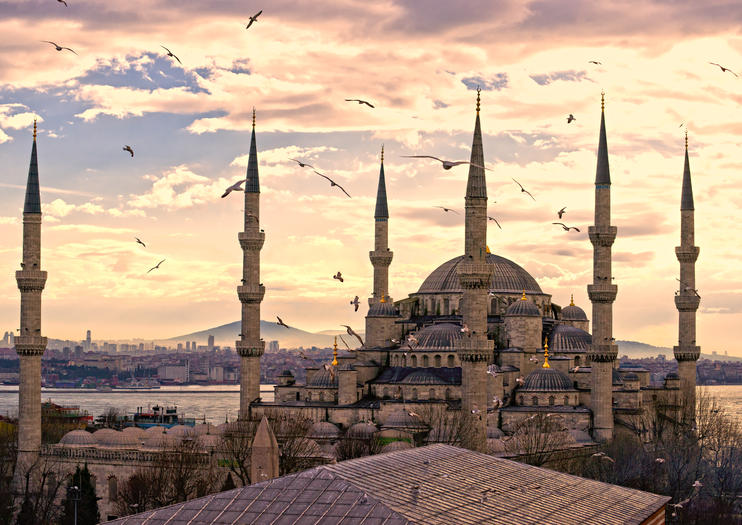


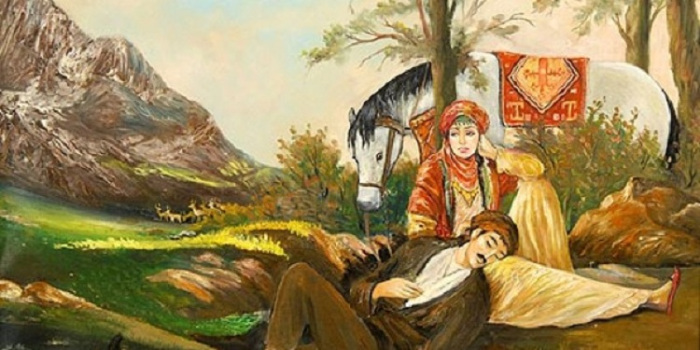


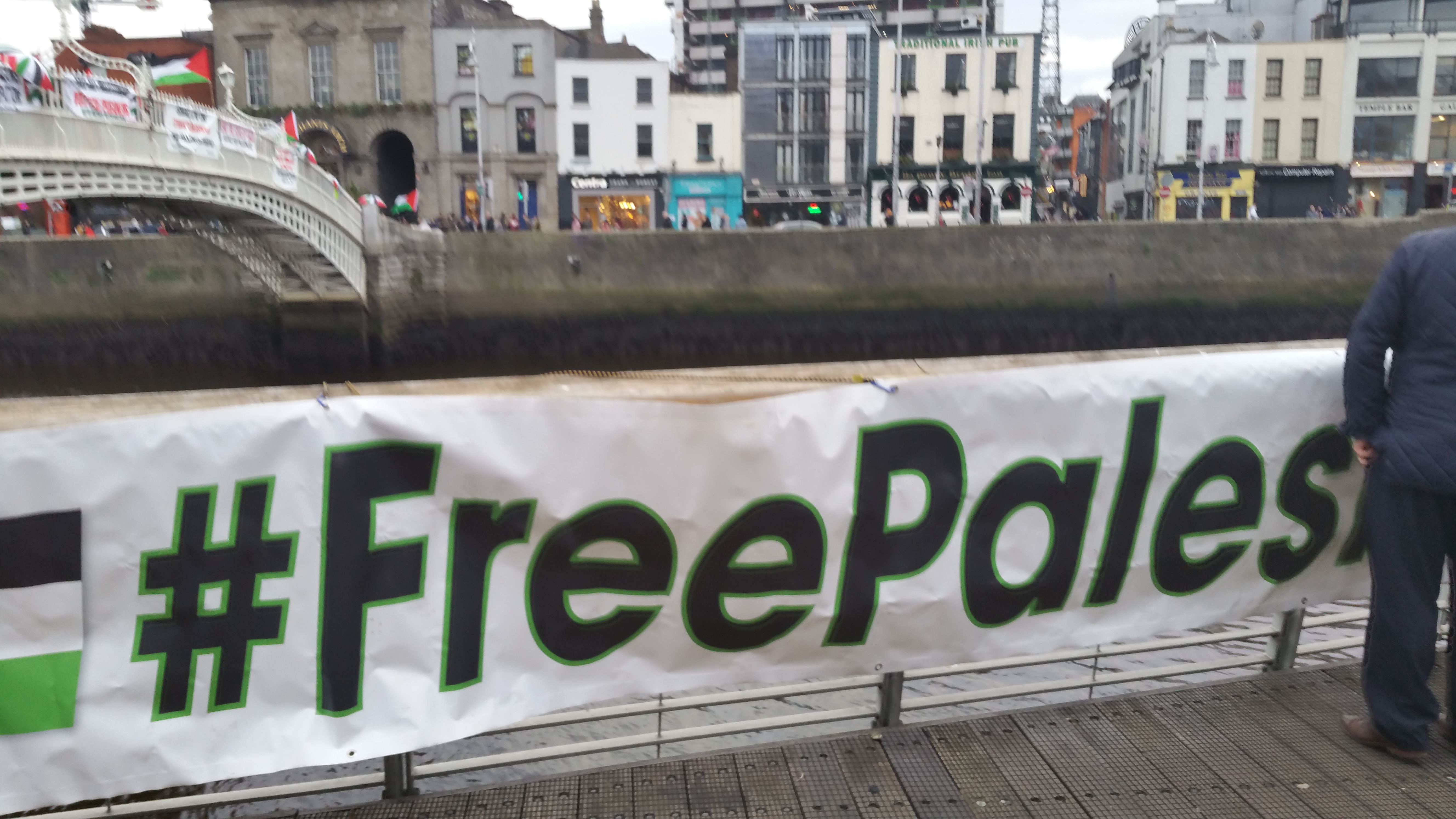


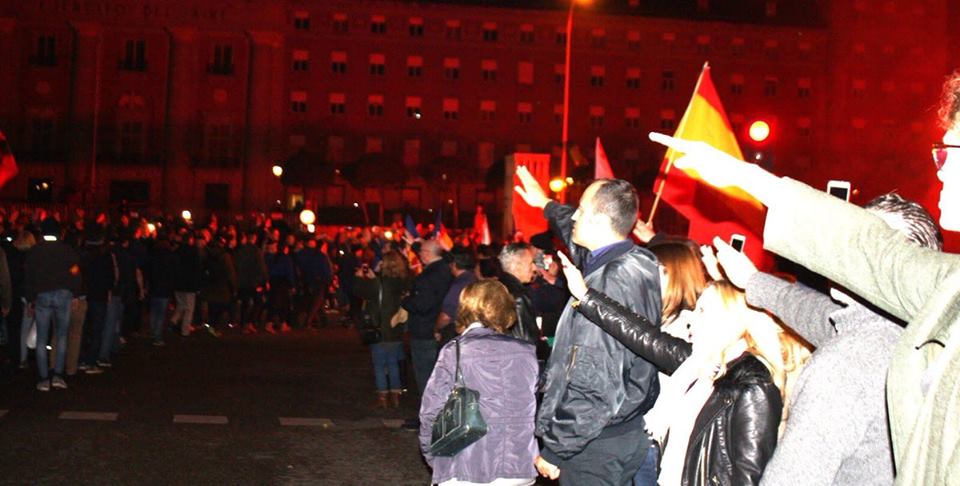

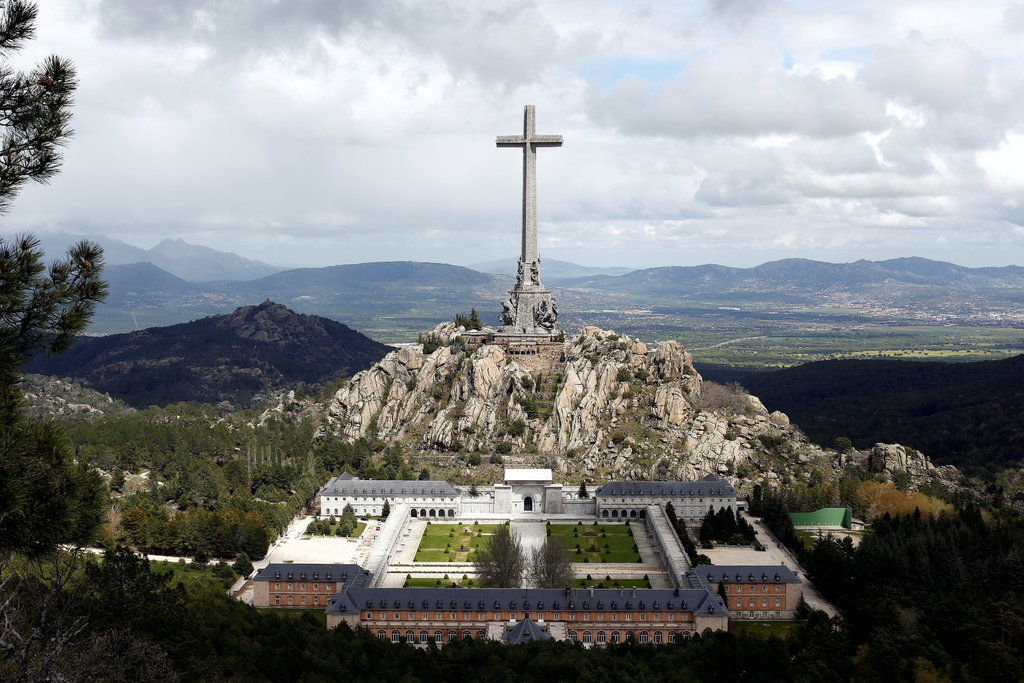




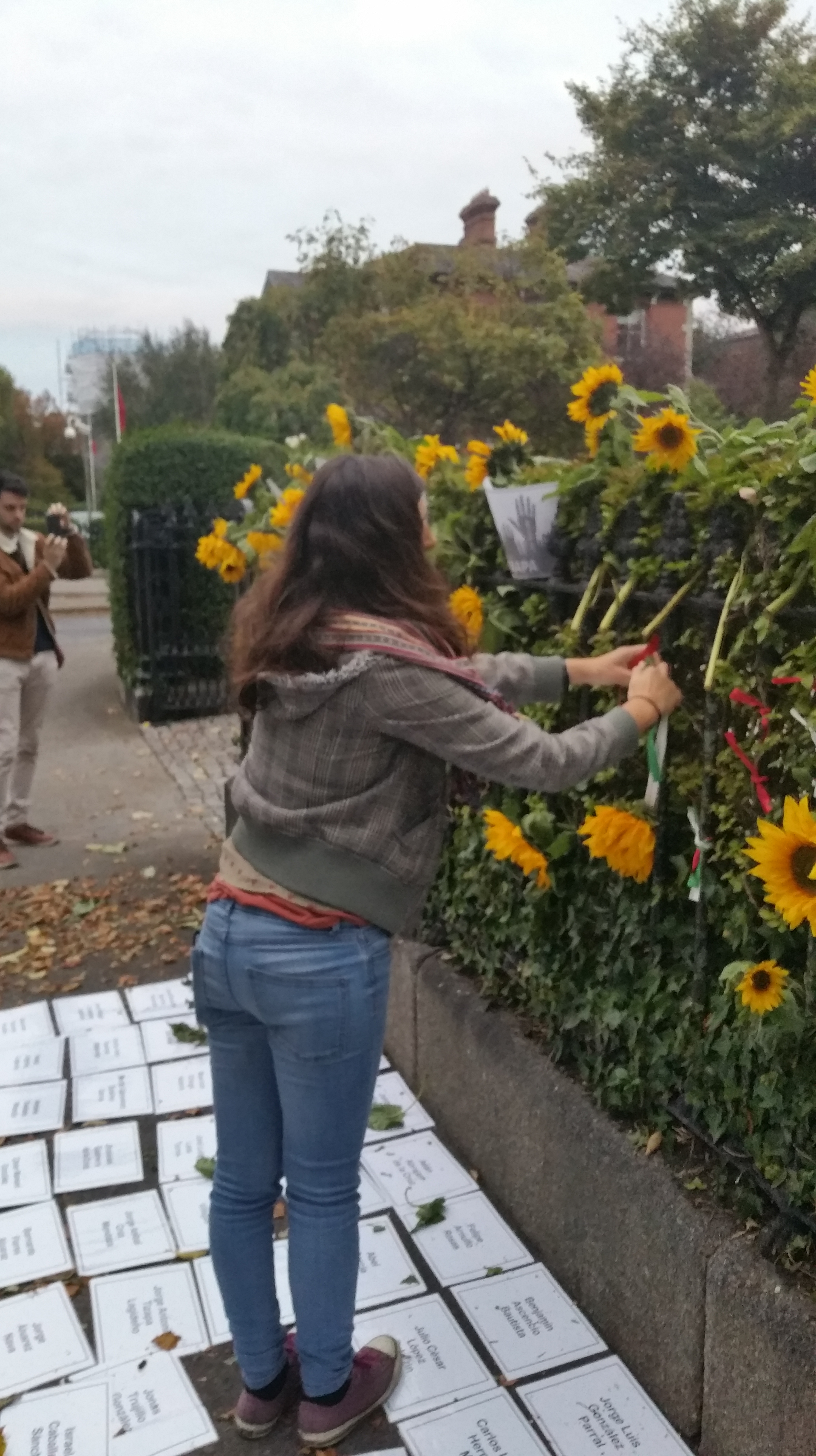


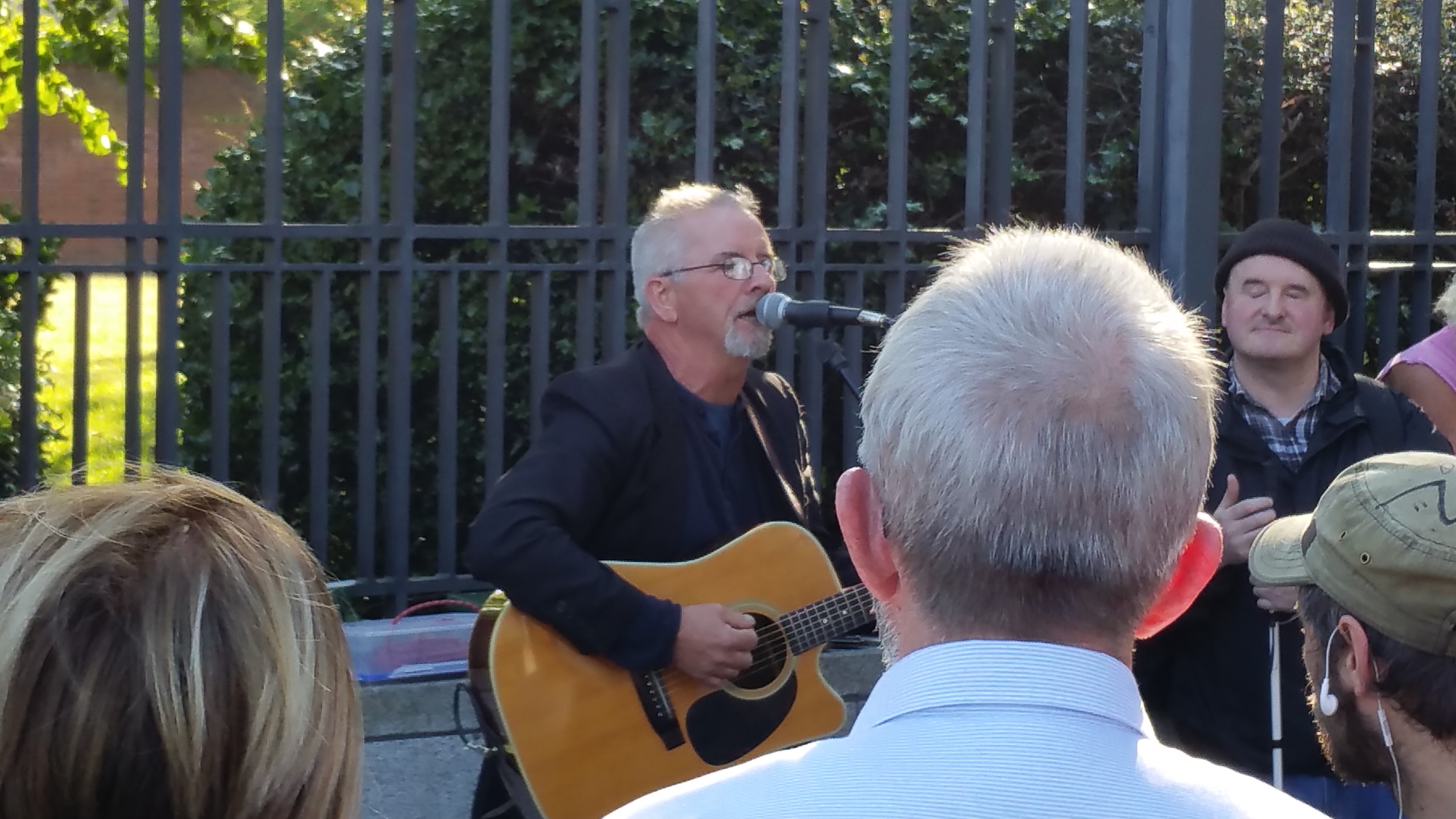


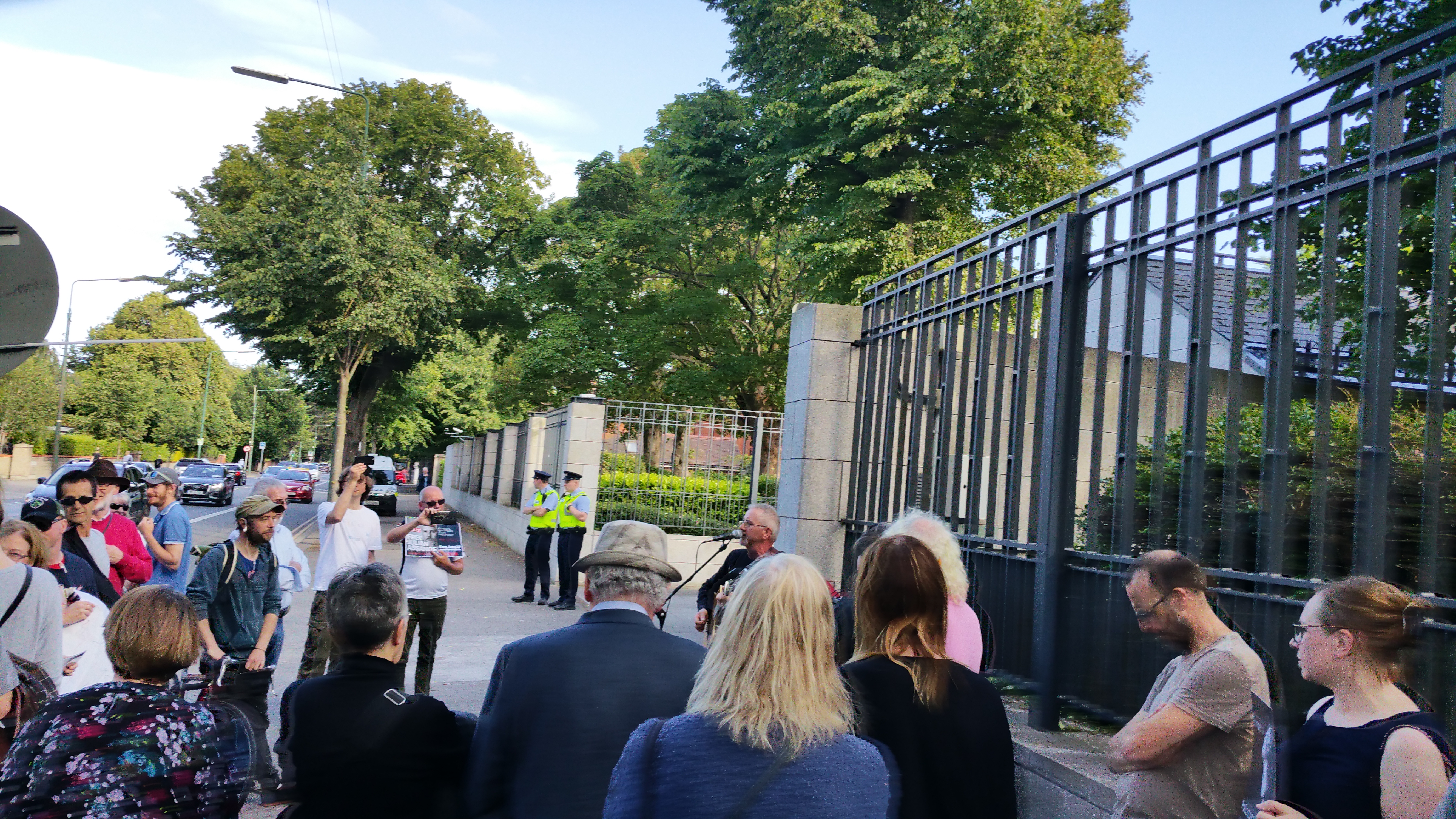
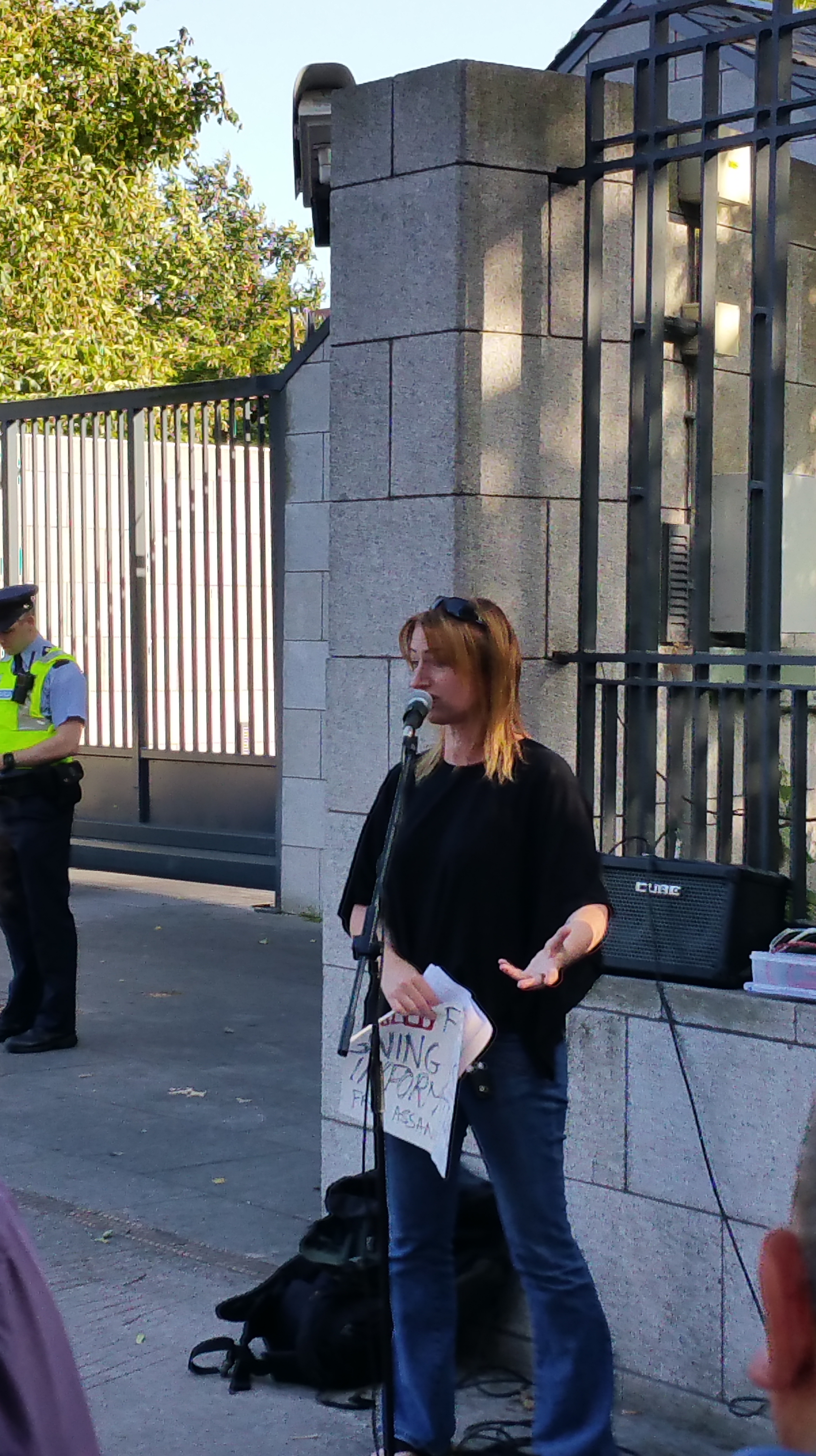
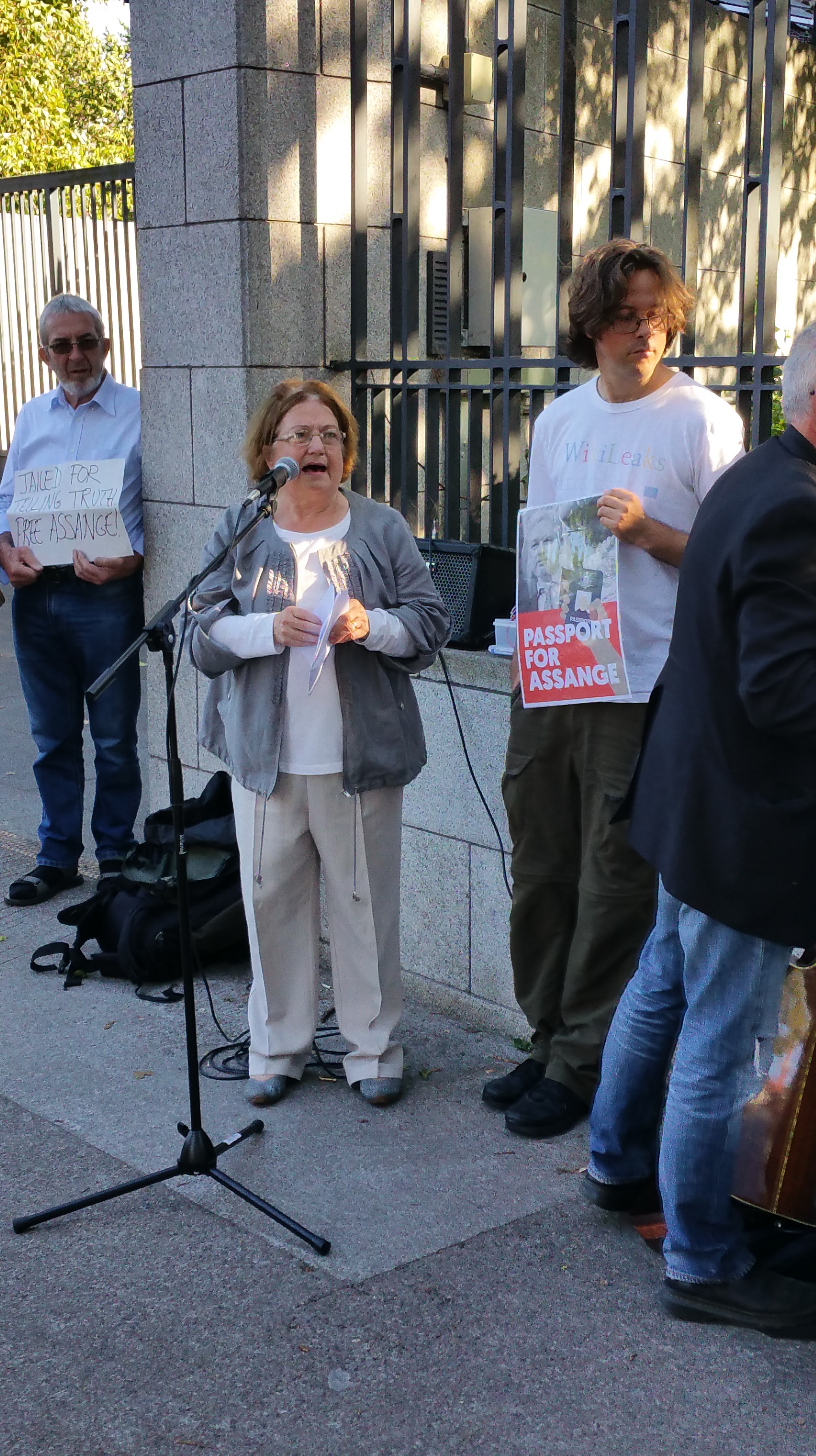

 rebelbreeze