On Saturday 22nd January 2022 an event was held to commemorate the centenary year of the occupation of the Rotunda building in Dublin by 150 unemployed workers led by Liam Ó Flaithearta, a Republican and Communist and writer from Inis Mór (off the Galway Coast). The occupation took place two days after the formation of the Free State and was attacked by an anti-communist crowd while after a number of days the occupiers were forced out by the police force of the new state of the dismembered nation1. The event last week was organised by the Liam and Tom O’Flaherty Society.
The event began with a gathering at 1.30pm in North Great George’s Street, where the Manifesto had been printed in 1922.2 People then proceeded to the nearby Rotunda, site of the occupation in 1922.3
Copy of the manifesto available at the event (Photo: D.Breatnach)
Seosamh Ó Cuaig (Photo: D.Breatnach)
Seosamh Ó Cuaig from Cill Chiaráin, Carna, Conamara, opened the proceedings as Chairperson, ag cur fáilte roimh dhaoine i nGaeilge agus i mBéarla, briefly introducing the historical occasion and recounting how some companies, including Boland’s, had supplied bread, sugar and tea to the occupiers, before he introduced published historian and blogger Donal Fallon.
Fallon not only recounted the events of that occupation 100 years ago but also placed it in context of a number of other factors: the unemployment then in the State (30,000 in Dublin) and to follow through into the 1930s, the upsurge in workers’ occupations and local soviets, the reactionary nature of the government of the new state and of the hierarchy of the Catholic Church at the time, which was very supportive of the new regime and extremely hostile to any kind of socialism, along with the cultivation of a reactionary social and political attitude among sections of the population.
Donal Fallon speaking at the event (Photo: D.Breatnach)
Fallon also commented on the censorship and otherwise neglect of Liam Ó Flaithearta as an accomplished modern Irish writer and hoped for his writing to become more popularised now.
Alan O’Brien reading O’Flaherty’s Manifesto (Photo: D.Breatnach)
Alan O’Brien, Dublin poet and dramatist, was welcomed on to the stage to read the Manifesto which had been issued at the time, copies of which were available at a nearby stall. One of the aspects of that document was a call for Dublin City Council to set up public works to provide paid employment for those out of work in exchange for services to the community.
Diarmuid Breatnach, singer and blogger was invited to the stage to sing “The Red Flag” because it had been sung there during the occupation. No doubt those in the Government, Church hierarchy and generally among reactionary people at that time would have been horrified by the lyrics and would have asserted that they were foreign to Irish culture and thinking. However, as Breatnach explained, the lyrics had been composed by an Irishman (see Appendix 1), Jim Connell from Meath. Connell wrote the lyrics to the air of The White Cockade and was appalled to hear it sung to the air of Oh Tannebaum, a Christmas carol. Breatnach had never heard it sung to the White Cockade air but had been practicing it for days and hoped he would be faithful to the original air.
Diarmuid Breatnach singing The Red Flag to the air of The White Cockade
Called by the Chairperson to sing a follow-up song, Breatnach sang most of the verses of “Be Moderate”, satirical lyrics published by James Connolly in 1907 in New York. There had been no air published for the song and it has been sung to a number of airs but he would sing it to the air of A Nation Once Again, which provides a chorus:
We only want the Earth, we only want the Earth, And our demands most moderate are – We only want the Earth!
The event was later reported by RTÉ briefly in English on the Six O’Clock News and also by video on TG4’s Nuacht in Irish including interviews with Fallon an a number of participants.
End main report.
Early arrivals at the event with the plinth of Parnell monument in background centre left (Photo: D.Breatnach) Section of the crowd and media filmers at event (anti-vaccine etc march in background) (Photo: D.Breatnach)
APPENDIX 1:
THE RED FLAG: AUTHOR, LYRICS AND AIR
After the Rotunda occupation was terminated, Liam Ó Flaithearta emigrated to London, which is where the Red Flag lyrics had been composed twenty-three years earlier. The lyrics were composed by Meath man Jim Connell in London in 1889 to the air of the Scottish Jacobite march TheWhite Cockade — he was reported livid when he learned that it was being sung to the air of Oh Tannebaum, protesting: “Ye ruined me poem!”
Jim Connell was a Socialist Republican (he had taken the Fenian oath), activist and journalist who emigrated to England in 1875 after being blacklisted in Dublin for his efforts in unionising the docks in which he worked. Apparently he began to write the song lyrics on his way home from a demonstration in London city centre, on the train from Charing Cross to Honor Oak in SE London, where he lived and completed it in the house of a fellow Irishman and neighbour, Nicholas Donovan.
Photo of Jim Connell, author of The Red Flag (Photo: D.Breatnach)
The lyrics have been sung by revolutionary and social-democratic (the latter less so now) activists all over the English-speaking world but also in some other languages in the years since.
Not mentioned in the Wikipedia entry on Jim Connell is the fact that he also wrote a book, apparently a best-seller in his time, called something like “The Poacher’s Handbook“. I’ve been looking for that book for years without success (DCC Library could find no reference to it).
UNVEILING PLAQUE ON JIM CONNELL’S HOME
Today there is a plaque on the two-storey house where Connell lived until his death in 1929, having been awarded the Red Star Medal by Lenin in 1922.
Plaque on house in which Jim Connell lived in SE London when he wrote the lyrics (Photo: D.Breatnach, sorry about the shadow)
In the late 1980s a history archivist with the London Borough of Lewisham contacted the Lewisham branch of the Irish in Britain Representation Group, of which I was Secretary, to consult us about the erection of a history plaque on the house and the wording to use4. We attempted to have the words “Irish Republican” added to “Socialist” after his name on the plaque and were successful with “Irish” but not with “Republican”.
There was a handful at the unveiling at midday on a weekday, including a representative of the local Council, a couple from the Greater London Council including its Irish section, a trumpeter (who played the Oh Tannebaum air) and Gordon Brown (then just an MP). I believe this was 1989, the centenary of the song being written.
Brown’s speech did not mention Ireland once but as he finished, I jumped up on a nearby garden wall and while thanking those in attendance said that it was sad to see the country of Jim Connell’s birth omitted along with his views on Irish independence, particularly at a time when British troops were fighting to suppress a struggle for that independence.
This was during the age before mobile phones and I have no photos, sadly. So no big deal but the next edition of the Irish Post, a weekly paper for the Irish community in Britain, carried a report on the ceremony and my intervention. It was written by the columnist Dolan, who was the alter ego of the Editor, Brendan Mac Alua (long dead now) and a supporter of much of the IBRG’s activities.
I lived in Catford then, five minutes by bicycle from the site of the house and have photographed the plaque.
FENIAN CONNECTION BETWEEN LYRICS ACROSS TWO DECADES
The words and sentiment “Let cowards flinch or traitors sneer” in the Red Flag mirror some in a song celebrating Irish political prisoners, The Felons of Our Land: “While traitors shame and foes defame” and “Let cowards mock and tyrants frown”. Arthur Forrester wrote that song 20 years before Connell’s and it would be surprising indeed had Connell not consciously or unconsciously borrowed the construction and sentiment.
Arthur Forrester was himself of great interest as were his poet sisters, both raised by their Irish nationalist mother, also very interesting person and poet in her own right, in Manchester, known to Michael Davitt. Arthur was a Fenian and did time in prison for it5. He was also for a period proof-reader for the Irish Times! Frank McNally wrote an article about the song but I don’t have access to anything except the first few lines.
T-shirt worn by one of those in attendance (Photo: D.Breatnach)
APPENDIX 2:
Lyrics of The Red Flag:
The People's Flag is deepest red,It shrouded oft our martyred dead,And ere their limbs grew stiff and cold,Their hearts' blood dyed its every fold.Chorus:Then raise the scarlet standard high.Beneath its shade we'll live and die,Though cowards flinch and traitors sneer,We'll keep the red flag flying here.Look round, the Frenchman loves its blaze,The sturdy German chants its praise,In Moscow's vaults its hymns were sung,
Chicago swells the surging throng.(chorus)It waved above our infant might,When all ahead seemed dark as night;It witnessed many a deed and vow,We must not change its colour now.(chorus)It well recalls the triumphs past,It gives the hope of peace at last;The banner bright, the symbol plain,Of human right and human gain.(chorus)It suits today the weak and base,Whose minds are fixed on pelf and placeTo cringe before the rich man's frown,And haul the sacred emblem down.(chorus)With head uncovered swear we allTo bear it onward till we fall;Come dungeons dark or gallows grim,This song shall be our parting hymn.
FOOTNOTES
1Not long afterwards, the new Free State’s National Army, under the orders of Michael Collins, attacked a protest occupation by Irish Republicans of the Four Courts which began the Civil War of the State against the IRA, lasting until 1923 with over 80 executions of Republicans by the State along with many kidnappings and assassinations (such as Harry Boland’s and of course others killed in battle (excluding the shooting of surrendered prisoners, which the National Army also did on occasion). Some were even murdered AFTER the war had ended, for example Noel Lemass, his body left in the Dublin mountains.
2Possibly this was the same location which had housed the James Connolly College (raided by the Auxiliaries in 1921).
3Also the location of the first public meeting to launch the Irish Volunteers in 1913 and where much of the GPO garrison and others were briefly kept prisoner after the surrender in nearby Moore Street in 1916. And just beside it the Parnell Monument, across the street the location of the founding of the Irish Ladies Land League (where members were arrested) and diagonally in SE direction, Tom Clarke’s tobacconist and newsagent shop (occupied by the British Army during the Rising).
4The Lewisham branch of the IBRG had been founded in 1986 and founded the Lewisham Irish Centre in 1992, I think. It was a very active branch in campaigning, community and political work, ceasing to exist around 2002. The IBRG itself was founded in 1981 and was active on many issues, including anti-Irish racism, representation for the diaspora, release of the framed Irish prisoners, British withdrawal from Ireland, against anti-Traveller racism, plastic bullets and strip-searches. It was also for equality in general, being against all racism, gender discrimination and homophobia and one year shared a march with the Broadwater Farm campaign.
5 Despite the Irish diaspora having given the working class in Britain its anthem (The Red Flag), its classic novel (TheRagged-Trousered Philanthropists) and, among many social and trade union activists and leaders, two leaders of the first genuine mass workers’ movement in Britain (the Chartists — O’Brien and O’Connor), and having fought against the Blackshirts at the Battle of Cable Street, there is no BA in Irish Studies alone available in British Universities. The Irish diaspora is also the first migrant community in Britain and for centuries the largest, has made significant contribution to the arts and a huge one to rock, punk and pop music. It would seem that the British ruling class does not want its population to know in any depth about the Irish.
Palestinian flags fluttered in the breeze over the iconic Ha’penny Bridge in Dublin City centre, while banners festooned its length on New Year’s Eve. The numbers were down from previous years, more likely from the soaring Covid19 infection rate than from any lessening of the long-running Ireland solidarity with the oppressed Palestinians. This was ironic since, unlike previous years, this was not a rally braving sleet, snow, rain or icy wind – in fact, the very mild weather raised only the amount of breeze necessary to set the flags fluttering.
(Photo by Tamin Al Fatin, IPSC)
Tamin Al Fatin, IPSC Chairperson, centre photo (Photo by IPSC))
The event is organised every year for New Year’s Eve at the same location by the Ireland Palestine Solidarity Campaign and supporters, among which were Irish and Palestinians, handed out leaflets encouraging BDS (boycott, divestment and sanctions) of Israel, an apartheid ste. Martin Quigley, for the IPSC led some chants on a megaphone, which were taken up by people on the pedestrian Bridge, among which were that “Israel is a terrorist state”, that “Palestine will be free” and in solidarity that “we are ALL Palestinians”.
Each year more Palestinian land is stolen, more of their homes demolished or under threat of eviction, in Gaza they have periods without electricity, they are restricted in importing fuel for heating or cooking (never mind transport), or building materials (so much has been destroyed by the Israeli bombardments), they continue to be harassed and made have lengthy waits at checkpoints, their inshore sea is polluted, their fishing boats further out are attacked and harassed ….
(Photo by Tamin Al Fatin, IPSC)
As of 2019, more than 5.6 million Palestinians were registered with UNRWA as refugees, of which more than 1.5 million live in UNRWA-run camps.
According to prisoners’ rights group Addameer, there are currently (2021) 4,650 Palestinians held in Israeli jails in Israel and the occupied territories. Palestinians view them as political prisoners attempting to end Israel’s illegal occupation. Of those: 520 are being held without charge or trial.
At the end of September 2020, 157 Palestinian minors were held in Israeli prisons as security detainees and prisoners, at least two of whom were held in administrative detention. Another 2 Palestinian minors were held in Israel Prison Service facilities for being in Israel illegally. The IPS considers these minors – both detainees and prisoners – criminal offenders. In addition, a small number of minors are held in IDF-run facilities for short periods of time. (And the Israeli Prison Service since October 2020 has been refusing to publish figures or to supply Palestinian human rights groups with them).
BIG POWERS BACKING ISRAELI ZIONISM
The United States is the major power backing the Israeli Zionists and partly because of its position in the world and partly also for their own economic or political interests, most of the European states back the Zionists too.
In 2018 Donald Trump, as US President, moved the US Embassy for Israel into Jerusalem, endorsing the Zionist claim that the multi-faith city is Jewish and Zionist, although it is an occupied city even in international law. Shortly before he reluctantly left the office of the US Presidency, Donald Trump also endorsed Morocco’s illegal occupation of Western Sahara in exchange for Morocco recognising Israel. So far, Joe Biden, Trump’s successor, has not reversed either of those decisions.
(Photo by D.Breatnach)
THE PEOPLE OF THE WORLD SUPPORT THE PALESTINIANS
As is usually the case, it is the ordinary people in Ireland and around the world that support the Palestinians, while the big capitalists and imperialists, while occasionally criticising the Israeli Zionists, continue to support them politically, economically, culturally and militarily. Even in the United Nations, an organisation controlled by the big powers, a majority condemned the Zionist state in 17 separate motions in 2020 and last year formally ratified another six resolutions criticising Israel.
So why has international action not been taken against this terrorist state? The answer is that although the UN has 193 member states, only its Security Council decisions have to be carried out and there are only five permanent members of the Security Council: USA, UK, France, Russia and China. And what’s more, their decisions have to be unanimous.
(Photo by Tamin Al Fatin, IPSC)
On the other hand, so many civil organisations around the world have declared themselves in solidarity with the Palestinians and in Ireland. Hundreds of thousands have marched in so many countries and sports people, many popular culture stars and academics have refused to perform or attend conferences in Israel. One can no longer find Israeli goods in most shops or supermarkets (and when on occasion they are on sale, their country of origin is not marked on the product).
At this time of year, using a parasitic plant as an excuse — and in spite of Covid19 transmission danger — many kisses will be given. The plant in question is of course the mistletoe and people buy sprigs or clumps of it to hang in strategic places to trap the unwary, ambushing them into receiving the sign of affection (or lust). Although the plant is native across Europe it is not so to Ireland1, though it can be found growing in widely-separated places here, believed to be the result of “garden escapes” but could also have been imported with saplings (for example of apple varieties).
IN FOLKLORE AND MYTHOLOGY
According to Wikipedia, the whole kissing-under-mistletoes custom was popularised by courting couples among servants of middle and upper classes during the reign of the English Queen Victoria. How that arose is not explained but there has been an association of the berries with fertility since antiquity, possibly through sympathetic magic, since the berries were thought to resemble sperm. Indeed, one of its medicinal uses historically has been in treatment of infertility, along with arthritis, high blood pressure and epilepsy. To the Celts, mistletoe represented the semen of Taranis, their god of thunder2, while the Ancient Greeks referred to mistletoe as “oak sperm”.
Closeup of Viscum album, the north European mistletoe, leaves and white berries. (Photo sourced: Internet)
Modern medicine does not ascribe scientific value to treatments with misteltoe and instead points to the toxicity of the plants, with Tyramine, the active agent, causing blurred vision, diarrhoea, nausea and vomiting and, more rarely, seizures, hypertension and even cardiac arrest. The toxic agent is maximally concentrated in the fruits and leaves. Fatalities among adult humans are rare but children and pets are more vulnerable.
Mistletoe on tree in January 2017, Dublin area (possibly Botanic Gardens). (Photo: D.Breatnach)
In Ancient Rome it was customary to attach a sprig of the plant above the door to bring love and peace to the household while elsewhere it has also been seen as protection against evil spirits. What of the common belief that it was ingested by the druids, as in a “ceremony of the oak and mistletoe” with sacrifice of white bulls? We have only Pliny as an ancient source of that alleged ceremony and historians seem to dislike relying on him, seeing him as a historian who liked to please the patricians in Rome with his descriptions. Wiki comments: “Evidence taken from bog bodies makes the Celtic use of mistletoe seem medicinal rather than ritual. It is possible that mistletoe was originally associated with human sacrifice and only became associated with the white bull after the Romans banned individual human sacrifices.”3
Is mistletoe harmful to trees? Although it is not in the long-term interests of a parasite to kill its host, some species do appear to be taking over their host bush or tree but we don’t seem to have come to that pass in Ireland and indeed may never do so. Wikipedia notes a number of studies that have ascribed ecological importance to some species, as a food source, nesting material and even encouraging the spread of juniper through birds attending parasitised juniper trees and eating the mistletoe and juniper berries together, to pass through the gut unharmed and be deposited elsewhere.4
THE PLANT SPREADING IN IRELAND?
“The word ‘mistletoe’ derives from the older form ‘mistle’ adding the Old English word tān (twig). ‘Mistle’ is common Germanic (Old High German mistil, Middle High German mistel, Old English mistel, Old Norse mistil). Further etymology is uncertain, but may be related to the Germanic base for ‘mash’.”5 Its family Solanthacea (agreed in 2003) includes about 1,000 species in 43 genera. Many have reported traditional and cultural uses, including as medicine.6
Clumps of Drualus (mistletoe) on unidentified tree, Botanic Gardens, Dublin, October 2020. (Photo: D.Breatnach)
In Ireland, apart from its scientific name Viscum alba, the perennial plant has a number of names: Sú Dara, Uile Íce, Drua-Lus and it typically roots itself in the bark of trees such as Hawthorn, Lime, Apple, Poplar and Willow but according to its Wikipedia entry, “successfully parasitizes more than 200 tree and shrub species” (though probably much less in Ireland). Once established its roots tap its host’s sap for water and nutrients but it also carries out photosynthesis, processing sunshine through its fleshy leaves — which has it classified as a hemiparasite, ie. it does part of its own work. The tree also gives it elevation where it can catch the sun’s rays without too much obstruction.
A distribution map with the Wildflowers of Ireland entry shows it widespread throughout England and Wales and localised in Scotland and Ireland, possibly through the deforestation in those nations. Although imported deliberately or accidentally to Ireland and then escaping beyond its source, once established it can be be spread, largely probably by birds.
Smólach Mór (Mistle Thrush), Griffiths Park, Glasnevin-Drumcondra, June 2021. (Photo: D.Breatnach)
The Mistle Thrush (Smólach Mór/ Turdus viscivorus) is particularly associated with the plant by name and the bird is said to include the berries in its winter diet when invertebrate animals, its preferred food the rest of the year, are rarely about7. The bird is described as squeezing the berries in its beak, ejecting the seeds sideways and, to clean its beak, wiping it against a tree trunk. The seeds, being covered with sticky liquid adhere to the tree bark and the liquid hardens, maintaining a strong grip.
Clumps of Irish mistletoe on a north American Poplar, Botanic Gardens, Dublin, 19th December 2021. (Photo: D.Breatnach)Nameplate on the bark of the poplar tree parasitised by the mistletoe picture above. (Photo: D.Breatnach)
The parasitic plant has long been in evidence in the National Botanic Gardens in Dublin and to a lesser extent in the adjacent Glasnevin Cemetery and I wondered at times why it (along with the grey squirrels) did not make its way into Griffiths Park, only minutes away on foot and connected by the Tolka River. However, walking through that park the other day, I did indeed spy the tell-tale clump high up in a tree.
One of two clumps of mistletoe on a poplar tree in Griffiths Park in January 2022 (Photo: D.Breatnach)
7While the Wikipedia entry on the bird states that it eats mistletoe berries along with those of ivy and yew (all poisonous to humans), the Birdwatch Ireland web page states only that it eats berries in winter, without specifying which ones.
7While the Wikipedia entry on the bird states that it eats mistletoe berries along with those of ivy and yew (all poisonous to humans), the Birdwatch Ireland web page states only that it eats berries in winter, without specifying which ones.
Amidst festive season lights, passing Santa Clauses on horse-drawn carriages and hungry people being fed by volunteers in the Dublin city centre, Irish Republicans and Socialists gathered to send a public message of solidarity to political prisoners in Ireland and elsewhere.
Photo: Rebel Breeze
The event is an annual one organised by the Anti-Internment Group of Ireland, an independent non-aligned group raising awareness that internment without trial continues in Ireland, through revoking of licence of ex-prisoners and through refusal of bail in the no-jury courts both sides of the British Border. The Dublin committee of the AIGI holds monthly public awareness-raising pickets in the city centre.
The annual picket on Thursday early evening was supported by activists of the Irish Republican Prisoners’ Welfare Association and of the Anti-Imperialist Action organisation, along with some independents and took place in front of the iconic GPO building, on Dublin’s main street.
Photo: Rebel Breeze
The picketers and passers-by were addressed by a representative of the Anti-Internment Group outlining the participants’ presence to send solidarity greeting to political prisoners in Ireland and around the world. The speaker drew particular attention to three prisoners: Leonard Peltier, Native American, 45 years in jail and Black American Mumia Al Jamaal, 40 years in prison, both framed by police in the USA. Also highlighted was the case of Ali Osman Kose, 37 years in jail, 21 of which he has spent in solitary confinement. The speaker informed the audience that those three political prisoners, apart from their very long years of incarceration, have multiple health issues and should be released, he said on humanitarian grounds alone. “But no ….. they want them to die in jail”, he said.
Photo: Rebel Breeze
Going on to speak about political prisoners in Ireland, the speaker said that they and hostages had existed almost from the moment Ireland had been invaded by its neighbour and from the defeated United Irishmen up to the Fenians, had included not only dungeons and prison cells but also penal colonies on the other side of the world, after which they had been confined in special prisons and concentrations camps.
The creation of the Irish State on a partitioned Irish country a century ago this month had not brought freedom nor an end to the struggle, the speaker said and pointed out that the Irish State had executed 80 Irish Republicans during the years of the Civil War, which was more than the British had done during the War of Independence preceding it.
Photo: Rebel Breeze
“Whether we are religious or not ….. in our culture at this time of year we expect to be with our families, our partner, children and friends,” the AIGI representative said but pointed out that this opportunity is not available to the prisoners, which makes this a particularly difficult time of year for them, which is why the Group and others hold this event every year.
The speaker then called a young boy forward “to send a message to the prisoners from this younger generation who hopefully will see a free and united Ireland with social justice and equality. The young boy stepped forward and through the PA, asked all at this time of year to think of the Republican prisoners.
Photo: AIGI
The Starry Plough, the Palestinian flag and the Basque Ikurrina were flown by participants and among the banners of the IRPWA and Dublin Committee of the AIGI there was also one displaying the Carlos Latuff graphic of Palestinian and Irish Republican prisoner solidarity. The centrepiece in the picket line was the word Saoirse (‘freedom’ in Irish) picked out by lights on a dark background. Appropriate music was also played during the picket from a PA system, except while being addressed by the speaker.
The event concluded with thanks to all the attendance and the singing the first verse and chorus of the battle-song Amhrán na bhFiann (The Soldiers’ Song in Irish, which is also the National Anthem).
It is understood that seasonal greeting cards have also been sent by AIGI to political prisoners in prisons in the Irish state and in the colonial statelet.
End.
Photo: Rebel BreezeSigning Christmas cards for the prisoners. (Photo: AIGI)Photo: Rebel Breeze
A young Dublin man, out to see something of the world, arrived in Franco’s Spain just a few years after WWII. At a reception at the German Embassy in Madrid (foreign press invited and anywhere for a free meal) he met a tall attractive half-Basque, half-German woman. Lucila Hellmann de Menchaca was multi-lingual – bilingual in German and Spanish through her upbringing, she had also learned English and French. She knew only a few words in Euskera – her mother’s side of the family was not very patriotic and in any case, since the victory of Franco’s military-fascist coup in ‘39, the language was forbidden. They conversed mostly through English.
Deasún, tall with grey-blue eyes and dark curly hair and thin moustache, had been raised only with English language but was learning Irish and Spanish, the latter out of necessity and the former by choice.
They were attracted to one another and began dating; within around six months they were married and soon afterwards on their way to Tangiers, where Deasún had a job waiting for him writing copy for a USA radio broadcasting company. The Moroccan city was an “international zone” city according to the Tangier Protocol, which meant that it was effectively ruled by the British, Spanish and French and, inevitably, full of liberation political activists, smugglers, spies and double-agents.
In that multi-lingual society with the Muezzin calling the faithful to prayer five times a day in Arabic and Berber heard in the street along with European languages, Luci was soon pregnant and, as her time neared, went back to Madrid to be near her family. Luci and Deasún first’s child was born in the German hospital in that city; then back to Tangiers soon afterwards, of course.
Their big guard dog, named Bran after one of Fionn Mac Cumhaill’s famous wolfhounds, occasionally takes off to return days later with scratches and bite-marks. He was watchful of the child and one day complains, whimpering to Deasún who, when he goes to investigate, finds the crawling child stuffing the dog’s dinner into his mouth.
Deasún watches his son speaking his first words in Spanish from Luci and some in Irish from himself. Increasingly he feels the need to have his son develop his speech in Ireland; soon the couple are back in the Spanish state and, after a short interlude, visiting the Basque Country of Luci’s youth, crossing the border into the French state by train to the coast and boat to England. A short stay with a cousin there and they and their child are on the way to Deasún’s native Dublin by train and boat.
Some years later in Dublin, his family of sons and a daughter growing up speaking Spanish and Irish in the home and English in the street, Deasún composes the piece of music which he calls “An Ghailseach” (the Foreign Woman”). Luci and Deasún’s youngest son, Cormac, an accomplished flute and whistle player, learns the piece. Some years later again, in the Club an Chonnradh with his father, Cormac plays the air and Deasún is amazed to learn that the piece he likes so much was actually composed by himself.
An Ghaillseach, composed by Deasún Breatnach, played on low whistle by Cormac Breatnach; Garry Ó Briain accompanying on guitar and keyboard, mastered by Seán McErlaine, uploaded by Féilim Breatnach.
Cormac records the piece and it is played on an Irish-language radio programme to mark a century since the birth of Deasún. On the morning of the broadcast Cormac cannot listen to it for he is on his way to Stockholm, where the Amerghin Ensemble of which he is a part have an engagement to perform their music. The older son listens to the program just before he is due in the Dublin city centre on a historical conservation commitment. The tears spring to his eyes from the sheer painful beauty of the piece.
Luci and Deasún are years gone (they died within days of one another in 2007) but An Ghailseach has joined the extremely rich and varied body of traditional Irish music, where it will outlast yet other generations to come.
Socialist Republicans gathered in Dublin’s main O’Connell Street on Saturday 4th December to reaffirm their commitment that Britain has no right to be in Ireland. The event, taking place on the nearest weekend to the centenary of the signing of the Anglo-Irish Treaty, was organised by the Anti-Imperialist Action Ireland organisation and supported by other socialist Republicans including the Anti-Internment Group of Ireland.
View of the picket with the GPO at the back of the photographer (Photo: Rebel Breeze)
One of the participants sang Irish revolutionary songs, accompanying himself by guitar, his unamplified voice ringing across the street and bouncing off the General Post Office opposite, location of the headquarters of the 1916 Rising. Another singer’s voice accompanied him in some of the songs.
Despite the cold, people passing on the street stopped to look, to take photos or video and, in some cases, to applaud. Some individuals also approached the participants to talk, while gestures of approval were being made from some passing public and private transport.
(Photo: Rebel Breeze)
The event concluded with the singing in Irish of the first verse and chorus of The Soldiers’ Song, a patriotic fighting song, the air of the chorus of which was adopted as the national anthem of the Irish state (but regarded by many as the property of the unfinished national liberation struggle).
The Anglo-Irish Agreement was signed on 6th December 1921 in London by negotiators of the Irish resistance movement. What was conceded by the British ruling class fell far short of what the armed movement had been fighting for since January 1919 and led soon afterwards to civil war (1922-1923). Clearly the negotiators should have brought back the terms for approval or rejection by the Dáil (the banned Irish parliament), instead of first signing the document, which is what they did.
The Treaty offered Dominion status for Ireland as a member of the Commonwealth under the British Crown, i.e akin to that of the “white”-governed colonies such as Australia, Canada and South Africa. It also offered the British Unionists in the north of Ireland the right to secede.
(Photo: Rebel Breeze)
The subsequent debate on whether to ratify the Treaty was at times bitter. Some felt the terms were the best they were likely to get, other that they offered a base on which to build for greater gains while others still felt they were a betrayal of Ireland’s long struggle for independence and the sacrifices of two years of guerrilla struggle against state repression. The vast majority of the military organisations of the movement, the IRA and Cumann na mBan, were opposed to the Treaty terms but those in favour of signing gained a slim majority in the Dáil (64 in favour and 57 against).
The British unionists swiftly availed themselves of the terms, leading to the partition of Ireland early in 1922, six of the 32 Counties becoming a permanent British colony.
(Photo: Rebel Breeze)
Some have seen the positioning around the Treaty in most of Ireland as signifying a trend led by the native Irish capitalist class and supported by the Irish Catholic Church hierarchy of putting the brakes on the national liberation movement and elements of its social content. From that perspective, the signing of the document in London signalled the first overt move of the counterrevolution which was sealed with armed force by the new neo-colonialist state through war, repression, imprisonment, kidnappings, torture and executions, both official and unofficial.
Both states in Ireland henceforth would be socially conservative, the colonial one religiously sectarian and the Irish one with the Catholic Church hierarchy as the regime’s arm of social control. The Irish state remained for decades under-industrialised and generally under-developed with constant emigration maintaining the population at its post-Great Hunger low point until near the close of the Century (and even today has not fully recovered).
(Photo: Rebel Breeze)
Since the Anglo-Irish Treaty was signed there have been armed challenges by Irish Republicans during the Civil War of 1922-1923, during the 1930s, WWII, the “Border Campaign” of 1959-1962 and of course the more recent war of thirty years.
In addition there have strong struggles for social rights against censorship and around gender and sexuality: the right to purchase prophylactics, divorce, female equality, homosexuality, pregnancy termination and gay marriage. Struggles have also taken place around housing, wages and workers’ rights, in defence of natural resources, infrastructures and the environment.
The Six County colonial statelet remains socially conservative and sectarian religiously. Both administrations maintain no-jury special courts for dealing with some political cases.
Clearly, the Treaty left much unfinished business.
End.
A southward view of the banner and flags on the picket, the Starry Plough of the Irish Citizen Army and the Sunburst of the Fianna Éireann, with the Jim Larkin monument in the background. A LUAS tram is approaching to right of photo. (Photo: Rebel Breeze)
Last Saturday in the Teachers’ Club in Dublin (26/11/21), the revolutionary music Grup Yorum from Turkey, with some Irish musician input, played to an audience of up to two hundred. In between performing different numbers from their repertoire, band members spoke to the audience of the history of the struggles of their people and of the band.
The Irish tour of the band was organised by the Anti-Imperialist Action Ireland organisation; earlier that week Yorum played in a small music venue in Belfast to around 40 people. The attendance in Dublin was so large that the location had to be changed from a large room on the first floor to the much larger hall down below.
Grup Yorum performing in Dublin (Photo: Rebel Breeze)
BELFAST
In Belfast in the Sunflower Lounge, Bobby Fields from Armagh and Séan Óg from Dublin entertained those in attendance with songs of Irish resistance followed by Grup Yorum coming on afterwards. The Grup’s performance was enthusiastically received and was followed by a questions-and-answers session to learn more about the situation in Turkey.
The Grup members toured some of the area and visited the famous international solidarity wall along with the grave of Bobby Sands, where paying their respects included singing a song at the graveside.
DUBLIN
In the large hall in the Teachers’ Club, Dublin, Séan Óg took to the stage first, playing guitar to accompany himself on guitar to sing The Killmichael Ambush, Viva la Quinze Brigada, Back Home in Derry1 and The Internationale. Veteran activist and traditional singer Diarmuid Breatnach followed, singing unaccompanied the Anne Devlin Ballad, I’ll Wear No Convict’s Uniform2and James Connolly’s satirical song Be Moderate3. Some of the audience sang along with some of the lyrics sung by each singer.
Be Moderate, satirical song by James Connolly, sung by Diarmuid Breatnach at the event (the link can be played on Facebook).
The four members of Grup Yorum present then took to the stage to huge applause and addressed the audience in Turkish, their words being translated into English by a member of their entourage. In the performance that followed, two guitars, flute and cajón were the instruments with a male and female leading voices. Each song was preceded by an explanation placing the piece in historical and political context.
Some of the songs in particular were clearly known to Turkish and Kurdish people in the audience and at some points they sang along, often waving an arm in the air. Towards the end of their performance the crowd got more and more excited and then Seán Óg joined them for a couple of numbers.
(Photo: Rebel Breeze)
oznor
The Grup’s interpreter made a special appeal for help from those in attendance to pressurise the Turkish authorities to release political prisoner Ali Osman Köse who has been in solitary confinement for 20 years and has multiple health issues. There are fears for the man’s life as he has had a cancerous kidney removed in May of this year without any follow-up treatment and despite everything has been pronounced “fit” to continue in jail.
This was followed by members of the Resistance Choir taking to the stage to join Grup Yorum in a rendition of the Italian antifascist Bella Ciao! Song before Diarmuid Breatnach returned to the stage to bring the evening to a close with the first verse and chorus of Amhrán na bhFiann4 with members of the audience joining in (including some from Anatolia)
The Resistance Choir from Dublin on stage with Grup Yorum to perform the Bella Ciao song (Photo: Rebel Breeze)
THE GRUP YORUM BAND
A revolutionary music band from Turkey, Grup Yorum members compose their own material and the band has has released twenty-three albums and one film since 1985. The band has suffered repression with some concerts and albums banned and members have been arrested, jailed and tortured, two members also dying on hunger strike. The band is popular in Turkey and as well as their albums selling well in Turkey and internationally, it has also given concerts in Germany, Austria, Australia, France, Italy, the Netherlands, Belgium, Denmark, United Kingdom, Greece and Syria.
Grup Yorum publishes an art, culture, literature, and music magazine entitled Tavir, and several group members manage a cultural centre called İdil Kültür Merkez in the Okmeydani neighbourhood of Istanbul.
Section of the crowd in Dublin saluting the Grup Yorum performers (Photo: Rebel Breeze)
FOOTNOTES:
1The lyrics and air of Viva la Quinze Brigada are by famous Irish folk musician Christy Moore, who also arranged Bobby Sands’ poem to the air of the Wreck of the Edmund Fitzgerald (by Gordon Lightfoot) as Back Home in Derry.
2Diarmuid sings this song to an air he composed himself.
3Diarmuid sings this to the air of A Nation Once Again (by Thomas Davis).
4Written by Peadar Kearney originally under the title The Soldiers’ Song and sung by insurgents during the 1916 Rising, its chorus is the official national anthem of the Irish State. However, it is also sung by many who are opposed to the State, particularly by Irish Republicans. Normally only the chorus is heard, sung in Irish (translation).
Queen’s University Belfast appointed Hillary Clinton as the institution’s Chancellor1. On 24th September 2021 the University authorities organised an event to mark her formal inauguration; however a large and voluble crowd gathered to protest the inauguration and the authorities’ choosing her as Chancellor of the University. Among the shouts of protesters were “War criminal!” and “Hillary, Hillary, Hillary – Out, out, out!” (This story is now “old”, apologies but nevertheless worth posting for those who might not be aware of it as media coverage was muted)
Although the Belfast Telegraph’s coverage of the event made no mention whatsoever of protests, they were reported in a number of other media. The protest saw Irish Republican and Left socialist groups come together to carry out the protest, with a number of them taking turns to speak.
The speakers at the protest included Pól Torbóid of Lasair Dhearg; Aidan Moran, a former ISM activist in Occupied Palestine, on behalf of Cairde Palestine; Conal MacMathúna on behalf of the Connolly Youth Movement; Local Councillor Michael Collins from People Before Profit; and Dr. Azadeh Sobout, Scholar of Transitional Justice and Peace building and Member of Academics for Palestine.
In addition to Irish organisations’ banners and flags, the national flags of Palestine and Cuba were also in evidence.
Hillary Clinton has been a member of the USA Congress from 2001 to 2009, followed by Secretary of State from 2009 to 2013, having also held the ceremonial position of First Lady during her husband Bill Clinton’s tenure as President of the USA 1993-2001. The Secretary of State of the USA, appointed by the President with the advice and consent of the Senate, is the President’s chief foreign affairs adviser. The Secretary carries out the President’s foreign policies through the State Department and the Foreign Service of the United States.
Lasair Dhearg’s Pól Torbóid, who helped organise and also spoke at the event, said, “Queen’s University’s complicity in the whitewashing of Hillary Clinton and her war crimes further epitomises the university’s role in an international framework of imperialism that sees it not only glorify warmongers like Clinton, but have immense financial investment in military contracts and companies guilty of immense environmental destruction.”
“Queen’s has facilitated the visitation of many war criminals and parasites over the years, but arguably none as big as the visit of Hillary Clinton as its chancellor. A proud Zionist and imperialist; with a war record as long as your arm, Clinton has helped oversee US bombing campaigns in over 9 countries.”
“As US secretary for war, she authorised over 400 drone strikes across multiple nations, which overwhelmingly killed civilians and even children at a proportion of almost 90%.”
“She labelled black men ‘super-predators’ when she helped lobby for the 1994 US Clinton Crime Bill, which was immensely important in creating the mass incarceration levels that exists today in the US to benefit the prison-industrial complex – which is a system of slavery by new means.”
Section of the protest as seen from the inside of the University (Photo sourced: Internet)
“A Zionist, Hillary Clinton has shown herself to be an enemy of Palestinian liberation, siding with the oppressor every time it mattered, like during the 2014 Israeli bombing campaign of Gaza. She increased annual US funding to Israel from 2.5billion, to 3.1 billion US dollars whilst she was US Secretary of State, and she stated that countering the BDS movement globally should be a priority for Israel’s defence.”
“All this – and Queen’s award her chancellor for her Peace and Reconciliation efforts. For all the books Queen’s have at its disposal, I don’t think their management have ever read one! PEACE IS SOMETHING HILLARY CLINTON CAN’T EVEN SPELL, NEVER MIND DISPENSE!”
Full video below (with thanks to Lasair Dhearg organisation):
(Photo sourced: Internet)
FOOTNOTES
In the UK university system, the office of Chancellor is held by a distinguished individual, from academia or public life, who is not usually resident and does not hold any other University office.
Arising out of a recent discussion, I was thinking about what makes a workers’ union – when is an organisation a union and when is it not. And what does it have to do to prove that it is a union, as well as can what once was a union become defunct as a union while still not being defunct as an organisation. In the present time of low union activity as well as in higher activity periods, there are some fundamentals worth considering.
Picketers in the 2019 Stop & Shop strike (USA) in the rain in Natucket after their management forced them off company property. The workers won a victory in 11 days. (Photo credit NickleenF)
DEFINITIONS
Searching for definitions on line as to what constitutes a trade union, I came across the following:
Oxford on-line English Dictionary: an organized association of workers in a trade, group of trades, or profession, formed to protect and further their rights and interests.
Citizens Information: A trade union is an organisation that protects the rights and interests of its members. Members are employees in a particular sector or job, for example, teaching or nursing.
A trade union can:
Be an important source of information for employees
Provide employees with protection on employment issues
Negotiate with the employer for better pay and conditions
A trade union must have a negotiating licence in order to negotiate on employee wages and other conditions of employment.
The Irish Congress of Trade Unions (ICTU) is the single umbrella organisation for trade unions, representing a range of interests of ICTU members, both in Ireland and in Northern Ireland. ICTU also run the website unionconnect.ie to facilitate people to join a union.
Companies Registration Office (registration as a Friendly Society1): Trade unions are registered under the Trade Union Acts 1871-1990. Trade unions are established to represent workers in their relations with employers or to act as representative bodies for particular interest groupings.
In order to register a trade union, the grouping involved, which must consist of at least seven people, must draw up a set of rules governing the operation of the union. The rules must as a minimum contain the matters required to be provided for by the First Schedule of the Trade Union Act 1871. The rules, together with the prescribed application form and fee are submitted to the Registrar for examination and, once the rules are found to be in accordance with statute, the union is registered.
Registration as a trade union does not guarantee that a union will receive a negotiation licence; this is a matter for the Minister for Enterprise, Trade and Employment in which the Registrar of Friendly Societies has no function. Application form is available by emailing rfs@enterprise.gov.ie.
Wikipedia: A trade union (or a labor union in American English), often simply referred to as a union, is an organization of workers who have come together to achieve common goals, such as protecting the integrity of their trade, improving safety standards, and attaining better wages, benefits (such as vacation, health care, and retirement), and working conditions through the increased bargaining power wielded by solidarity among workers. Trade unions typically fund the formal organization, head office, and legal team functions of the trade union through regular fees or union dues. The delegate staff of the trade union representation in the workforce are made up of workplace volunteers who are appointed by members in democratic elections.
The trade union, through an elected leadership and bargaining committee, bargains with the employer on behalf of union members (rank and file members) and negotiates labour contracts (collective bargaining) with employers. The most common purpose of these associations or unions is “maintaining or improving the conditions of their employment“.[1] This may include the negotiation of wages, work rules, occupational health and safety standards, complaint procedures, rules governing status of employees including promotions, just cause conditions for termination, and employment benefits.
Unions may organize a particular section of skilled workers (craft unionism),[2] a cross-section of workers from various trades (general unionism), or attempt to organize all workers within a particular industry (industrial unionism). The agreements negotiated by a union are binding on the rank and file members and the employer and in some cases on other non-member workers. Trade unions traditionally have a constitution which details the governance of their bargaining unit and also have governance at various levels of government depending on the industry that binds them legally to their negotiations and functioning. ……………………………
A modern definition by the Australian Bureau of Statistics states that a trade union is “an organization consisting predominantly of employees, the principal activities of which include the negotiation of rates of pay and conditions of employment for its members.”[6]
Yet historian R.A. Lesson, in United we Stand (1971), said:
Two conflicting views of the trade-union movement strove for ascendancy in the nineteenth century: one the defensive-restrictive guild-craft tradition passed down through journeymen’s clubs and friendly societies, … the other the aggressive-expansionist drive to unite all ‘labouring men and women’ for a ‘different order of things’.
Karl Marx described trade unions thus: “The value of labour-power constitutes the conscious and explicit foundation of the trade unions, whose importance for the … working class can scarcely be overestimated. The trade unions aim at nothing less than to prevent the reduction of wages below the level that is traditionally maintained in the various branches of industry. That is to say, they wish to prevent the price of labour-power from falling below its value” (CapitalV1, 1867, p.1069).
We can note, across these definition from different sources, some constants: Trade unions (henceforth referred to by me as “unions” or “workers’ unions”) are
representative associations
of workers
that represent them in negotiations with employers
So, they have to be representative of workers (employers have their own formal associations) and they must, in general represent their worker-members. Well, few would debate the first condition and for the moment we can accept the second (though we will return to discuss this further).
I would argue however that there is another essential qualification which has not been mentioned even though for some it may be taken for granted: A union must be able to call a significant number of workers in a significant workplace, company or industry into industrial action and does so when necessary (whether that be strike, sit-down, go-slow, ban on certain kinds of work, etc.). In stating that I can quote for the moment no authority or source and yet I am adamant that if the association is not able to do so, it is not a union. I base my definition on experience and logic.
THREAT AND NEGOTIATION
We note that the “negotiation” with employers is mentioned in most if not all definitions. Present in every successful negotiation of workers with employers is a threat, that of action by the workers which will reduce or postpone the profits of the employers. This in turn is mediated by the threat of the employer to dismiss or otherwise penalise workers, to starve them into submission or to unleash private or State violence upon them2. The main reason for non-State employers to be in business of whatever kind is to make a profit and a substantial one at that and, in the case of an employer failing to avail of opportunities to do so, other employers, i.e other capitalists, will move in, outcompete and even take over the company3.
State companies have a responsibility to the ruling class to keep systems going, e.g public transport to deliver employees to work for private businesses, power supply to run the private enterprises, water and refuse collection to manage sanitation of working areas and reduce infections of the workforce, etc. So in successful negotiation with a State employer, the threat of workers’ action must be present also.
The threat may be implicit only but cannot remain effective if unrealised forever and every once in a while, employers will test it by a refusal (or procrastination) to accede to the demands of a union. In such a situation, the “negotiation” is ended or at least halted while both sides test the ability to resist of the other. If the employers are resolute and have enough resources but the workers are either not resolute or their resources are insufficient, the employers will win.
If the workers are resolute enough and are well-resourced and their action costs the employers enough so that the latter consider it better in the long run to accede to the demands, the workers will win. However, even when the workers are defeated in one battle, the action may have hurt the employers and next time there is a confrontation, they may be prepared to concede more. Even in failure in some cases, the threat of action has been shown to be a real one.
Picketers in the successful 2019 strike at the Stop & Shop chain by the United Food & Commercial Workers (USA & Canada). The Teamsters’ union instructed their members to respect the picket lines. After protracted negotiations failed, the strike began on 11 April 2019 and ended on April 21, 2019, after the company and the striking workers reached a tentative agreement, which preserved health and pension benefits and raised employee pay. The 11-day strike cost the company $224 million in lost sales and $90–100 million in lost profits. The tentative agreement was viewed by the union as a “powerful victory”. In August 2019, Ahold Delhaize reported the 11-day strike resulted in a $345 million loss in sales, with an estimated 1 in 10 customers not coming back to the store as a regular customer after the strike. (Photo sourced: Internet) https://en.wikipedia.org/wiki/2019_Stop_%26_Shop_strike
If however over a number of years the unions do not exercise their muscle while at the same time enduring reductions in the working conditions and living standards of their members, the workers, they become more and more unions in form but not in content and the employers will pay less and less attention to their demands. Indeed, the only threat perceived by the employers in such situations is that the ineffective unions may be replaced by another or others more effective or lose control of their members to “unofficial” or “wildcat” action. Better the devil that they not only know but can manage, than the one they don’t.
I repeat: A union must be able to call a significant number of workers in a significant workplace, company or industry into industrial action and does so when necessary (whether that be strike, sit-down, go-slow, ban on certain kinds of work, etc.). In that respect, the crucial condition is not whether the organisation is more or less democratic, or socialist, or egalitarian, more or less environmentalist etc, though of course all those attributes are desirable. Itmust beeffective, able to threaten and make good its threat.
Therefore calling an organisation a “union” does not of itself make it one and indeed an organisation may conversely be a workers’4 union without calling itself one, providing it is able to call a significant number of workers in a significant workplace, company or industry into industrial actionand does so when necessary.
So I have extended the definition of a union: an organisation consisting predominantly of employees to defend the interests of its members and improve their remuneration and conditions of work and that is able to call a significant number of workers in a workplace, company or industry into industrial action and which does so when necessary.
Workers of the United Auto Workers on strike picket the John Deere Harvester Works facility on Oct. 14, 2021, in East Moline, Illinois. Photo: Scott Olson/Getty Images
But what is a “significant number of workers in a significant workplace, company or industry”? Though this is more open to interpretation, it is nevertheless determined by two things, one of which is its ability to call an effective number of workers in the designated workplace into industrial action and the other is the relative size of the workplace, company or industry concerned. Of course, the workplace may be a shop or small garage or small farm, employing say around 50 people, in which all the workers are able to strike and do so, forcing the employer to accede to their demands or at least a significant (yes, that word again) number of them. The workers’ organisation in that case I would submit qualifies as a union on all grounds except one: the workplace is not a significant one in terms of industry or agriculture. It may go on from that initial success to extend to other workplaces but until it does so, it is a union only in the specific sense of that particular workplace.
However, if the organisation were to represent the majority of workers in one necessary part of a company’s production, willing to exercise its power and able to adversely affect the company’s output and profits, then that organisation would qualify as a union, according to my definition, even though it might represent only a small fraction of the total workforce.
Or if the one workplace in which the workers’ organisation is active is an extended one, for example a chain of stores or a major utility company. Or, as is sometimes the case, the workers’ organisation were to represent workers across an entire industry (“industrial unionism”), or groups of them in a number of different industries ( “general unionism”) or seeking to recruit all workers (“syndicalism”).
WHEN IS A UNION NOT A UNION?
It is important (and I would contend, crucial) also to define what a union is not. It is not
an organisation set up by a State and controlled by it
an organisation set up by employers
or the worker organisation’s offices, officers and other employees
“Unions” set up by the State
States have set up “unions”, for example in the case of corporate states, i.e fascism and when they have done so, have banned real workers’ unions.
In Nazi Germany, workers’ unions were abolished. On 2nd May 1933, (after the large annual May Day marches), their leaders were arrested, their funds confiscated and strikes declared illegal. Workers lost the right to negotiate wage increases and improvements in working conditions and all workers had to join the German Labour Front (DAF) run by Dr. Robert Ley. Within two years, under various pressures, 20 million workers had joined DAF but they had no independent rights.5
“Italian fascistswaged war on the unions between 1920 and 1922 when Mussolini took power, burning trade union offices, and beating and torturing trade unionists. In Turin, the key industrial centre, fascist squads celebrated Mussolini coming to power by attacking trade union offices and killing 22 trade unionists”6.
“The Pact of Vidoni Palace in 1925 brought the fascist trade unions and major industries together, creating an agreement for the industrialists to only recognise certain unions and so marginalise the non-fascist and socialist trade unions. The Syndical Laws of 1926 (sometimes called the Rocco Laws after Alfredo Rocco) took this agreement a step further as in each industrial sector there could be only one trade union and employers organisation. Labour had previously been united under Edmondo Rossoni and his General Confederation of Fascist Syndical Corporations, giving him a substantial amount of power even after the syndical laws, causing both the industrialists and Mussolini himself to resent him. Thereby, he was dismissed in 1928 and Mussolini took over his position as well.
“Only these syndicates could negotiate agreements, with the government acting as an “umpire”. The laws made both strikes and lock-outs illegal and took the final step of outlawing non-fascist trade unions. Despite strict regimentation, the labour syndicates had the power to negotiate collective contracts (uniform wages and benefits for all firms within an entire economic sector).”7
In Spain the communists, anarchists and social democrats had organised trade unions which supported the Popular Front Government and mobilised against the military-fascist coup in 1936. Following the victory of the military and fascists the State, under General Franco, jailed or executed many of the trade union leaders and members and declared their unions illegal.
The Franco regime set up the “vertical union” (i.e controlled from above) officially known as the Organización Sindical Obrera (OSE); industrial resistance was illegal and in any case extremely difficult to organise, due to the defeat of the republican and socialist forces and the massive repression of all democratic and socialist trends.8
Union resistance under fascism
However, when workers of various kinds of socialist thinking joined these state unions either through being forced to do so or in conscious infiltration, many maintained their old allegiances and worked to subvert fascist rule and control of the workers.
“On 5 March 1943, workers at the giant FIAT Mirafiori car plant in Turin walked out on strike. As it became clear the dictatorship could not repress the strike it spread within Northern Italy, involving one hundred thousand workers. Mussolini was forced to grant pay rises and better rations, but in conceding he struck the death knell for the regime.”9
In 1947, eight years after the victory of the military-fascists, metal workers in the Basque province of Bizkaia went on strike in spite of repression by the authorities and a clandestine trade union movement began to organise. “Another historic year in the incipient union movement was 1951, when there were strikes and demonstrations in Barcelona, Madrid and the Basque Country in the early part of the year. These were mainly spontaneous, although the clandestine unions which had grown up since 1947 did support and take part in them. An important role was also played by the Spanish Communist Party PCE, and Roman Catholic workers’ groups.” “In a context of socio-economic change in Spain in the late 1950s, as industrialisation accelerated …. there was a significant growth in the Spanish working class. In 1962 miners and industrial workers began to hold strikes all over the country.”10
The two main trade unions in the Spanish state today, the CCOO (Comisiones Obreras) and the UGT (Unión General de Trabajadores), the first originally under Communist Party direction and the smaller second under the social democratic PSOE (Partido Socialista Obrero de España) grew out of that resistance (although the UGT had been in existence prior to the military-fascist uprising). Activists had infiltrated the vertical union and workers began to elect militants to represent them in demands to the employers – this in particular was the origin of the Comisiones Obreras.
Employer-led ‘unions’:
Employers have also set up “unions” in order to undermine an existing union or in order to prevent a real union from organising workers in their enterprises.
These have been called “company unions”11 or “yellow unions”, the latter possibly after the French Fédération nationale des Jaunes de France (“National Federation of the Yellows of France”) which was created by Pierre Biétry in 1902.12
Up to the mid 1930s, ‘company’ or ‘yellow’ unions were quite common in the USA and after the Ludlow Massacre13, John D. Rockefeller had one created to improve his company’s image and to resist the struggles of mineworkers and of the United Mineworkers’ Union in Colorado; he called it the Employee Representation Plan.14
“In 1935, the National Labor Relations Act (also known as the Wagner Act) was passed, dramatically changing labour law in the United States. Section 8(a)(2) of the NLRA makes it illegal for an employer “to dominate or interfere with the formation or administration of any labor organization or contribute financial or other support to it.” Company unions were considered illegal under this code, despite the efforts of some businesses to carry on under the guise of an ‘Employee Representation Organization.’”15
Japan has company unions that are not in the RENGO federation of independent unions and the company ones appeal to an ideology of loyalty towards one’s paternalistic employer.16
In the 1930s, unions in Mexico organized the Confederation of Mexican Workers (Confederación de Trabajadores de México, CTM). The state of Nuevo Leon, however, coordinated its workers into sindicatos blancos (“white unions”), company unions controlled by corporations in the industrialised region.
Naturally a “union” of this type is unwilling and indeed unable to call a significant number of workers in a workplace, company or industry into industrial action to defend the interests of its members and improve their remuneration conditions of work (my definition of a workers’ union). Therefore I contend that they are not workers’ unions.
UNIONS INACTIVE IN STRUGGLE TODAY
But there are unions that have built themselves up in membership (and incidentally by union dues revenue) by proving themselves willing and able to call their members out in action to enforce their demands of the employers – but who have not been doing so for some time. We are increasingly seeing these in Western Europe at least and often the reason quoted is that state legislation is making it harder for the unions to organise, or to take action effectively. And rather than jail for union activists as in the past, the threat of the State is sequestration of union funds. The union leaders, officers and clerical support staff view such threats as extremely serious, evoking the possibility of the demise of the trade union or at the very least its inability to maintain its functions and payment for its superstructure of staffing, buildings and equipment.
Those are of course real threats with some states proving their ability to carry them out in the past and consequently union leaders draw back from struggles that might result in such an eventuality – or even attempt to smother them. The union leadership become, in effect, the firefighters of the employers. When they reach that position, they are not really the union any more. The union is not the organisation’s offices, officers and other employees. Its leaders are forgetting that back in the history of this or of many other unions, its organisers and members maintained only a rudimentary bureaucracy while they fought for the gains to be wrenched from the employers — organisers and even ordinary members faced sacking, police baton charges, strike-breaker violence, deportation, transportation, jail, torture and even death. When safeguarding the superstructure of the union outweighs defending and advancing the members’ interests, it is time for the union leadership to retrace its steps – or vacate the spot.
A union may fail to be recognised as such by the employers and/ or the State but (based on my definition) that does not affect its status as a union, so long as it is an organisation consisting predominantly of employees to defend the interests of its members and improve their remuneration and conditions of workandable to call a significant number of workers in a workplace, company or industry into industrial actionand does so when necessary.
To be sure, an employer refusing to recognise the right of the union to represent its employees and to negotiate on their behalves does represent an additional challenge. But we should not forget that all workers’ unions once faced that initial obduracy but nevertheless in time became accepted by the employers. And it required a long process for some of those unions, with unsuccessful industrial action and many sacrifices as part of it.
The opposition of the State, acting in the first place for the capitalist class it represents and secondly in its own interests as an employer, is another serious obstacle for unions. Currently in most of Europe and certainly in Ireland, the State does not outlaw unions but it does place many restrictions around them and, in some cases, removes their protections.
The protection received by a union that is recognised by the State exists mostly in exemption from some legal procedures such as being sued for causing loss of profits for a company and exemption from arrest for picketing (“loitering”, “obstruction”, etc). However, the laws of none of the European states exempt workers from arrest for persistently obstructing the entry of strike-breakers or goods to a workplace where the workers are on strike. In most European countries, picketing, boycott and blockade in solidarity by “non-involved” unions – i.e “secondary picketing” etc — is against the law to a greater or lesser degree. Well, such laws are made by the capitalist class to protect themselves and then processed through a parliament where most of the elected public representatives are supporters of that same class. To receive legal protection from capitalist laws the union must be recognised by the capitalist State which entails meeting the necessary requirements in order to be registered as “a friendly association” and receiving “a negotiation licence”.
However, while these provisions affect very deeply the ease or otherwise of the organisation, they do not in my opinion have anything to do with whether it is or is not a workers’ union.
Another hurdle to get over for “recognition” is that of acceptance by the Irish Trade Union Congress. A union not recognised by the ITUC will receive no support from that body in application to the State for a “negotiation licence” and members of other “recognised” unions will be encouraged to cross any picket line of an “unrecognised” union. That is obviously a serious situation for a young union that is “unrecognised” but again, it does not define whether or not it is a union.
Say what the State, employers or the ITUC leadership may say, the reality remains that a union is an organisation consisting predominantly of employees to defend the interests of its members and improve their remuneration and conditions of work and that isable to call a significant number of workers in a workplace, company or industry into industrial action and which does so when necessary. Not whether it is — or is not — recognised or facilitated by those other bodies.
Funeral of James Byrne, shop steward of the Irish Transport & General Workers’ Union, who died as a result of his hunger strike in protest at imprisonment during the 1913 Lockout (Photo sourced: Internet). The workers were defeated in an 8-month struggle but the union recovered and bounced back. The ITGWU has gone through a number of changes resulting in the largest union in Ireland today, SIPTU. But is it carrying out its responsibilities as a union today, to say nothing of living up to its inheritance?
As the unions in many states have become more and more passive (in the Irish state particularly through the years of “social partnership”17) they have lost much of their accreditation in reality. As they fail further to justify their existence they will be replaced and for example the British-based union Unite is moving into the Irish arena. But the new union, despite its local leaders speaking militantly at rallies of some campaigns and investing some of its effort into building support in the community, is demonstrating the same reluctance to take determined action against the employers, whether private or State. Should that state of affairs continue then that too will fall and be replaced.
But by what and when?
End.
FOOTNOTES
1A friendly society has nothing necessarily to do with being friendly but is is a mutual association for the purposes of insurance, pensions, savings or cooperative banking. It is a mutual organisation or benefit society composed of a body of people who join together for a common financial or social purpose.
2While some readers may be surprised or even dismissive of reference to “private or State violence”, there can hardly be a state which does not at least on occasion – some more often than others — employ police or judicial violence against striking workers. In the past in many countries and perhaps in particular in the USA, companies employed private security staff or company police to act against worker disobedience, in addition to agencies such as the Pinkerton not only to gather intelligence on union organisers but to attack them physically or to prepare cases for their conviction of law-breaking in court. In some parts of the world companies – often with their HQs in the “West” — continue to employ their own security staff against union organising, sometimes with fatal results for the union organisers.
3This applies even if the company should still be making a profit but is not maximising it. The company’s shareholders and investors, including institutions such as banks, trust funds, pension funds etc will begin to desert the company to a competitor offering a higher return on investments and said company may even engage in a “hostile takeover” bid, by bringing sufficient numbers of shareholders to vote in favour of its takeover. This is one of the laws of the operation of capitalism and one reason why it there is little point in appealing to the individual consciences of capitalists.
4Sometimes workers’ unions have called themselves by other names, including “society” and “association” in order to circumvent anti-trade union legislation for example.
11To be confused with a genuine employee’s union built up within a particular company, for example in a power-generating monopoly or state service company, whether privatised or not.
13Massacre by company guards and the National Guard of strikers and their children on 20 April 1914 during the Great Colorado Coal Strike, after which the workers took up arms. It was the subject of a song composed and sung by Woody Guthrie and others, e.g Jason Boland and Andy Irvine.
171983-???? In 2010: “Following 23 years of social partnership the Irish trades unions (ICTU) entered the new decade seriously weakened and with union employee density down to 31% compared to a density highpoint of 62% in the early 1980s preceding the series of seven corporatist social pacts.[2] Union penetration is highly imbalanced with a density approaching 80% in the public sector and around 20% in the larger private sector.”
California has long been home to the eccentric and free spirits, so naturally the highly eccentric Irish mystic, poet and Celtic mythologist Ella Young found a home there. The first woman to hold an endowed lectureship in the English Department at the University of California at Berkley, Young left several enduring legacies on the Golden State’s literature, counterculture, and environmental movement.
Nearing old age in Ireland, Young helped spark a new age consciousness in the Bay Area. Young lived the first fifty-eight years of her life in her native land, but even before leaving for America, she traveled far from her conservative Ulster roots. Born in December 1867, in Fenagh, a townland near Ballymena, Co. Antrim, Ella was eldest of five daughters of a Presbyterian minister. The family moved to Dublin at an early age and Young graduated with a BA in History, Political Economy and Law from the Royal University of Ireland. Abandoning Christianity, Ella’s interest in the spirit world led her to join the Hermetic Society, the Dublin branch of the Theosophical Society, which sought to awaken the power and presence of Ireland’s ancient spirits. Young was greatly influenced by fellow Ulster mystical poet AE Russell, and she soon became one of his select group of protégés known as the “singing birds.”
Ella Young in Oceano, California, image in Princeton University of Art Museum.
She found her muse and published her first volume of verse in 1906, and her first work of Irish folklore, The Coming of Lugh, appeared in 1909. Young mixed with luminaries of the Celtic revival including J.M. Synge, W.B. Yeats and Maud Gonne, with whom she might have had a romantic relationship. Like other writers of her day, Ella found great spiritual riches in the West of Ireland, where Irish was still the spoken language of the locals and where she was also able to hear what she called the Music of the Faerie, the ceol sídhe.
Ella completed a master’s degree at Trinity, but she would be drawn into the revolutionary fervor then sweeping Ireland. Young’s immersion in Celtic mythology and theosophy led her to promote a spiritually inflected Irish nationalism. A friend of Patrick Pearse, Ella became a member of Sinn Féin in 1912 and a founding member of Cumann na mBan in 1914. Ella witnessed the 1916 Rising in Dublin and is alleged to have hidden ammunition under the floorboards of her home and helped two fugitive Republican prisoners to escape Dublin. An anti-Treaty Republican, she strongly opposed the Anglo–Irish Treaty and, after supporting different sides, she and her mentor Æ Russell never spoke again. Because of her anti-Treaty stance, Young was interned by the Free State in Mountjoy jail and in the North Dublin Union.
An ardent cultural Nationalist, Young fervently believed the revitalization of Irish culture could be realized through a reconnection with its Celtic mythological roots. She taught in Dublin, but she came of age as an anti-Treaty woman at a time and in a state where her gender, politics and Protestant background severely limited her career opportunities. Young left Ireland for the US In the mid-1920s, where she would spend the rest of her life. Her emigration, she claimed, had been foretold in 1914 by a Romani fortune teller.
Ella Young 1930, Edward Weston Centre for Photography
Fortunately for Ella, Celtic studies scholar William Whittingham Lyman Jr. left his Berkley lectureship in 1922 and Young was hired to fill the vacancy in 1924. Ella, however, was almost forbidden entry into the United States. During an interview in Ellis Island, Young was detained as a probable mental case when the authorities learned that she believed in the existence of fairies, elves, and pixies. However, outrage by her American readers at the ban helped her finally gain entry.
Young fell in love with Berkley, California and Berkley loved her back. Young adored the college town, especially its exotic flora, breathtaking views, and its student culture. She quickly inspired a cult-like following in California. A striking woman, Young cut a dramatic figure with a noble forehead and face that seemed to shine with an inner light. She lectured in what she considered the traditional purple robes of a Druid bard, which she called her “reciting robes,” to visually portray an authentic Irish identity. She let her shoulder-length silver hair hang free and instead of shaking hands when introduced, she raised her hands high in the ancient druid greeting. Poet Padraic Colum compared her to the ancient “women who knew the sacred places and their traditions, who knew the incantations and the cycles of stories about the Divine Powers, and who could relate them with authority and interpret them wisely. . . She speaks of Celtic times as if she were recalling them.” A gifted speaker, Ella held her listeners spellbound with the heroic myths and sagas told in her lilting Irish voice – the voice of the bard, a keeper of the ancient teachings of her ancestors.
Young was above all a gifted storyteller and children’s author. She published The Wonder-Smith and his Son (1925), The Tangle-Coated Horse (1929), and The Unicorn with Silver Shoes (1932), stories for children, inspired by themes from Celtic myth, with beautiful illustrations and written in her delicate, carefully cadenced prose. The Unicorn with Silver Shoes was nominated for the American Newbery Prize for children’s literature in 1932; all her children’s stories were repeatedly reprinted until the 1990s.
(Image sourced: Internet)
Young was a frequent guest at the home of the celebrated California poet Robinson Jeffers, who was also deeply influenced by the Celtic revival. Jeffers and Young both identified the physical and spiritual similarities between California’s Big Sur and the West of Ireland. Ella considered dramatic Point Lobos in Marin County, where she communed with the dryads of the pine trees, the sea spirits, and the great guardian Deva who hovered over the sea with shining wings, to be the center of psychic power for the entire Pacific Coast. Young also became a close friend of Virginia and Ansel Adams, the renowned photographer of California’s wilderness, who made Yosemite Valley a symbol of the state. Adams took several dramatic portraits of Young in her “reciting robes.”
Ella Young lectured that an awareness of the supernatural world in Celtic folklore and literature could bring her listeners into a closer relationship with the natural world around them. Her love for the beauty of California made her an environmentalist long before it became fashionable, and also she saw the Earth as a great living being. She forged a close friendship with Dorothy Erskine, an early California environmentalist and advocate for limiting growth. Young also founded The Fellowship of Shasta, which became involved in environmental activism, working successfully to prevent developers from building on Point Lobos and also with the Save the Redwoods League, which preserved the remaining old-growth forests of California.
An enemy of materialism and egotism, Young espoused “the natural world and our relationship to it” as an alternative to consumerism. Ella moved to a Theosophic commune in Oceano, near San Luis Obispo in the early 1930s, and became part of a community of artists and writers living on the sand dunes, known as the Dunites. Thanks to her friendship with Ansel Adams, Ella stayed with the community of artists in Taos, New Mexico, where she met Georgia O’Keeffe and Frieda Lawrence and studied Native American and Mexican myths.
Back in California, Young assembled around herself a fascinating circle of artists, writers and freethinkers. She became close friends with the Irish-born landscape painter John O’Shea and other West Coast painters. Ella also became intimate with composer Harry Partch, who set several of her poems to music. Perhaps a lesbian herself, Young befriended California pioneers of sexual liberation, such as Elsa Gidlow, the British-born lesbian poet, and Gavin Arthur, a bisexual astrologer and sexologist whom Young first met in 1920s Dublin.
Young developed cancer. In the last year of her life, she claimed that she had been in communication with the occupants of a thimble-sized spaceship which came and hovered in her garden. Ella died in her cottage on July 23rd, 1956, aged eighty-eight. She was cremated, and her ashes were scattered in a redwood grove. She left the royalties from her books to a society that protected those redwoods.

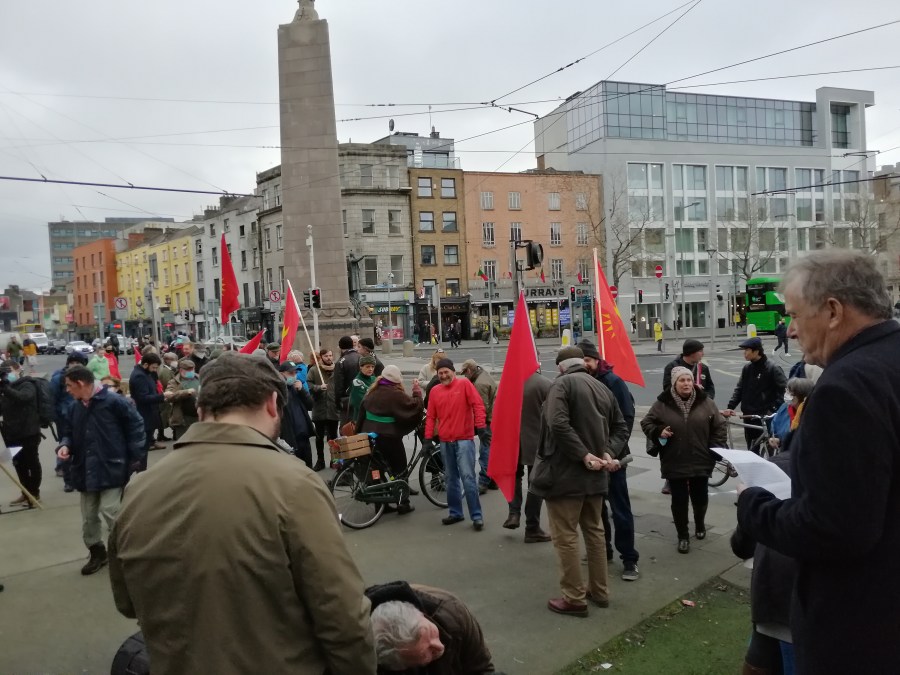
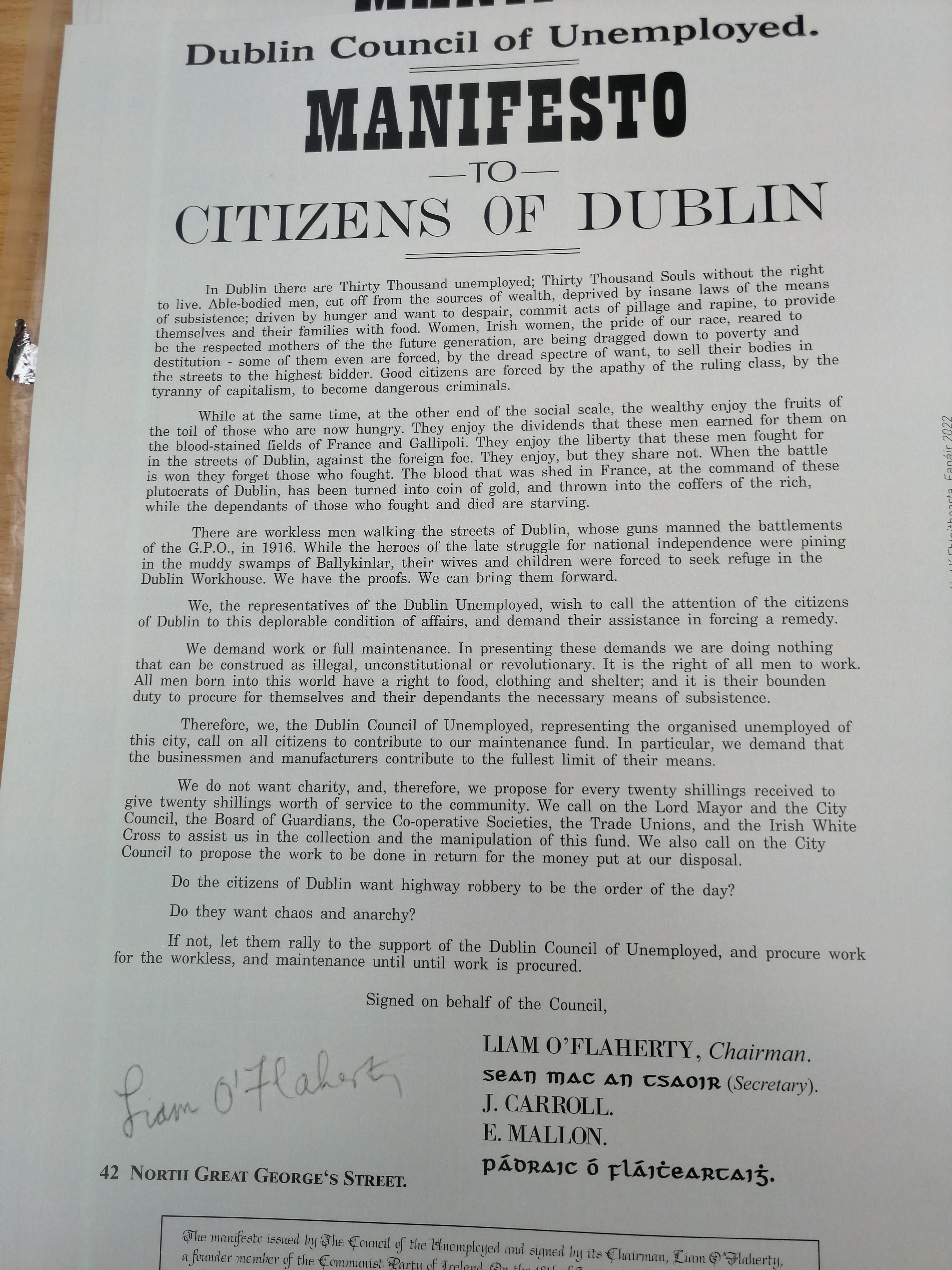
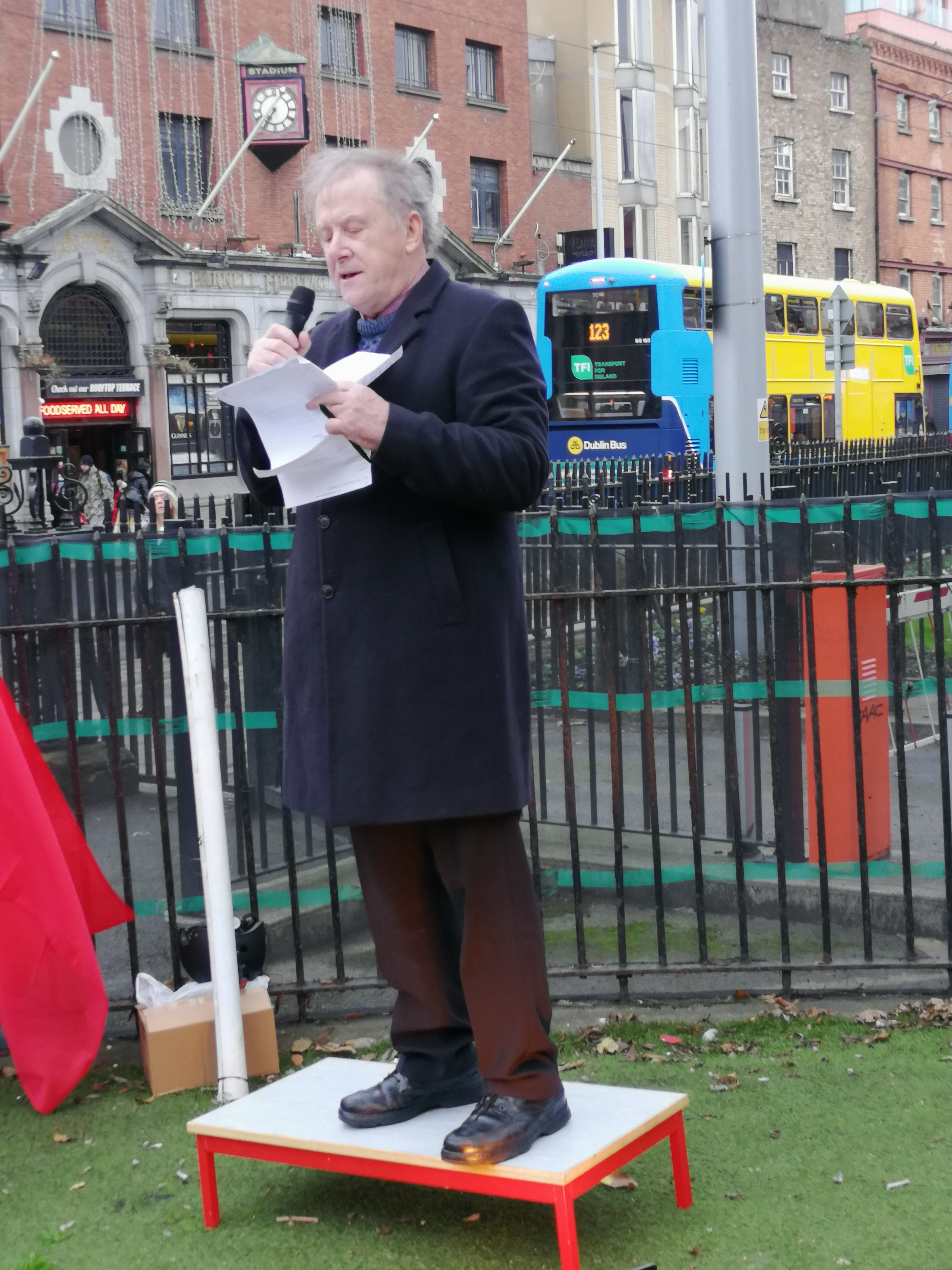
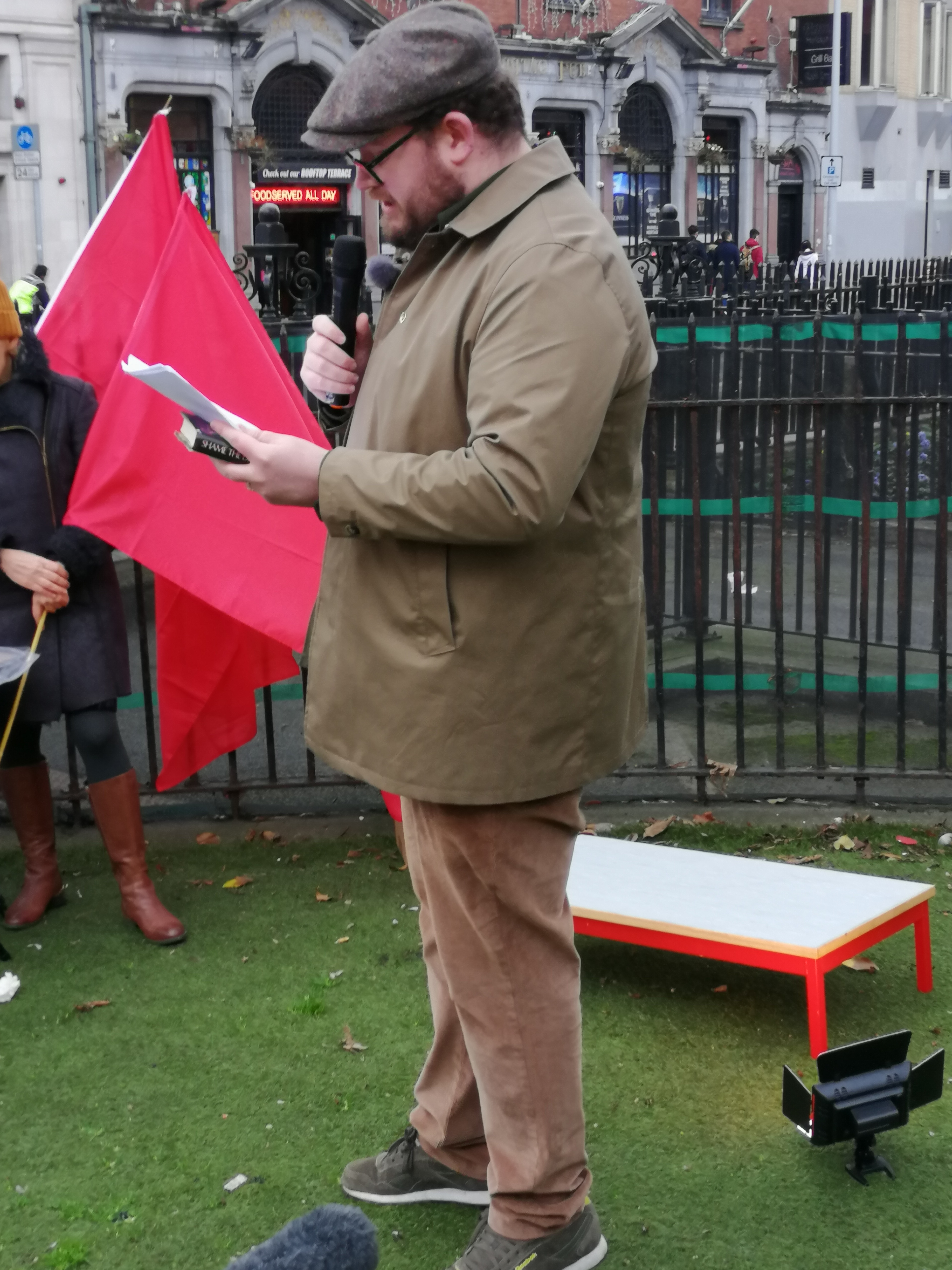
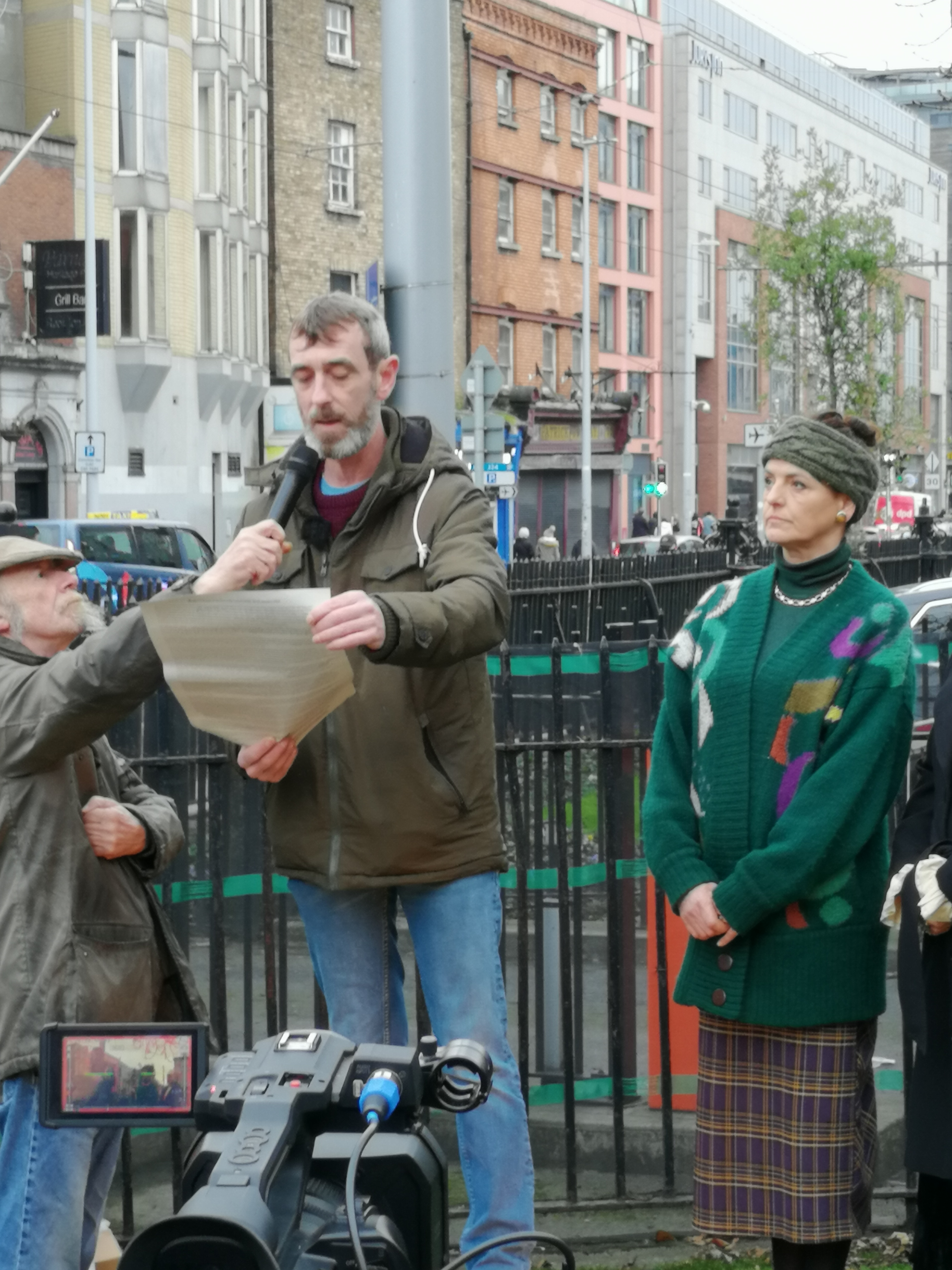
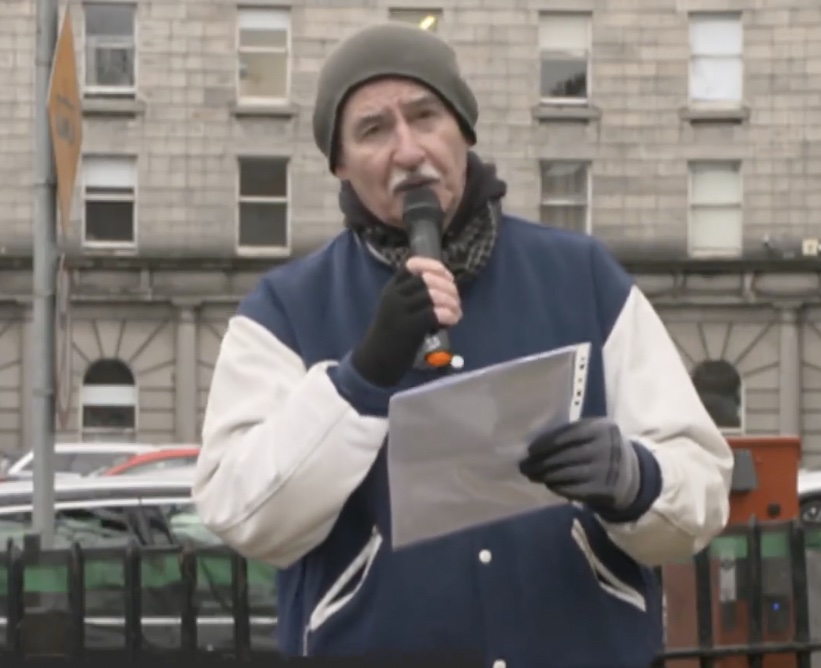
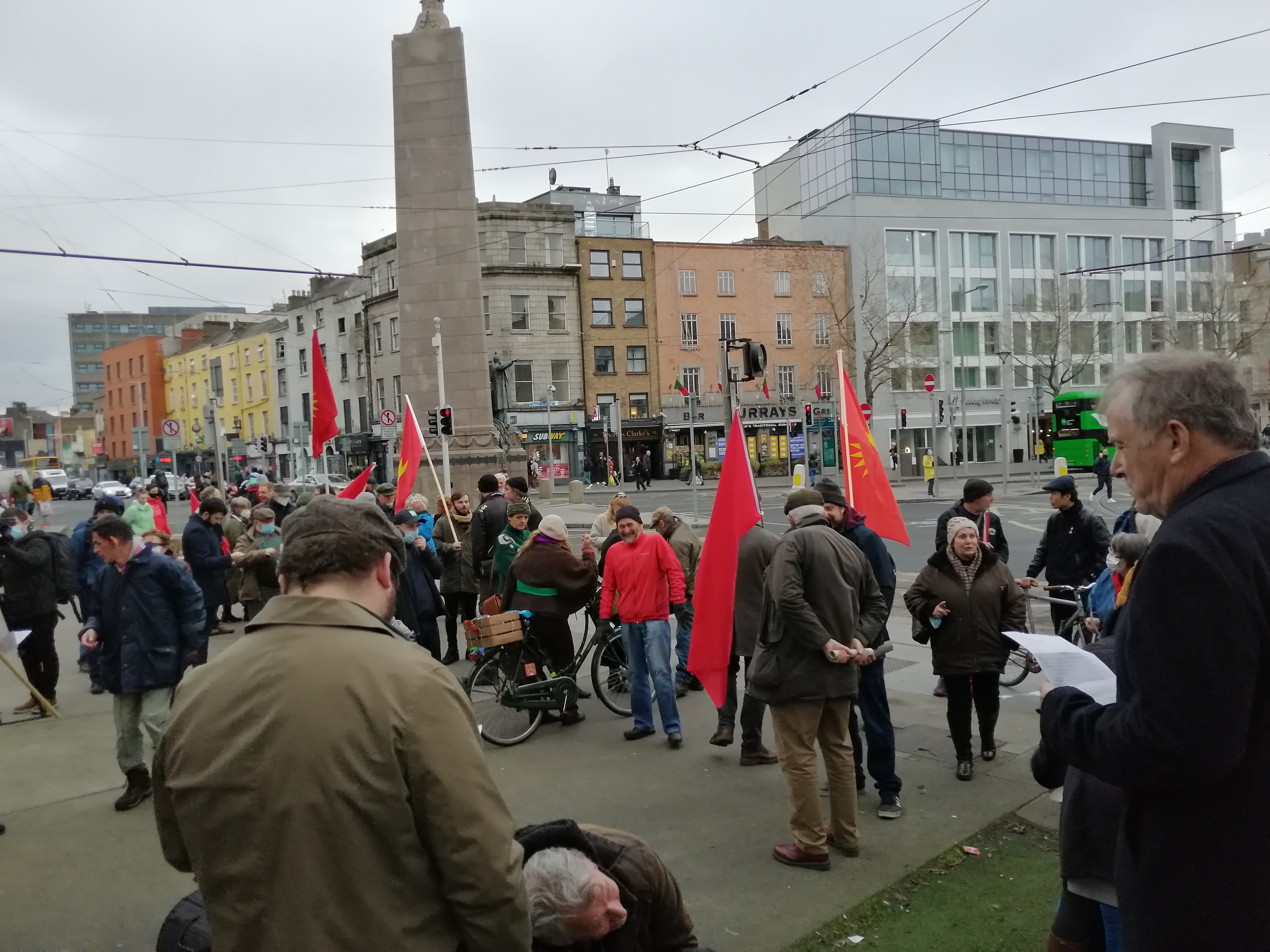
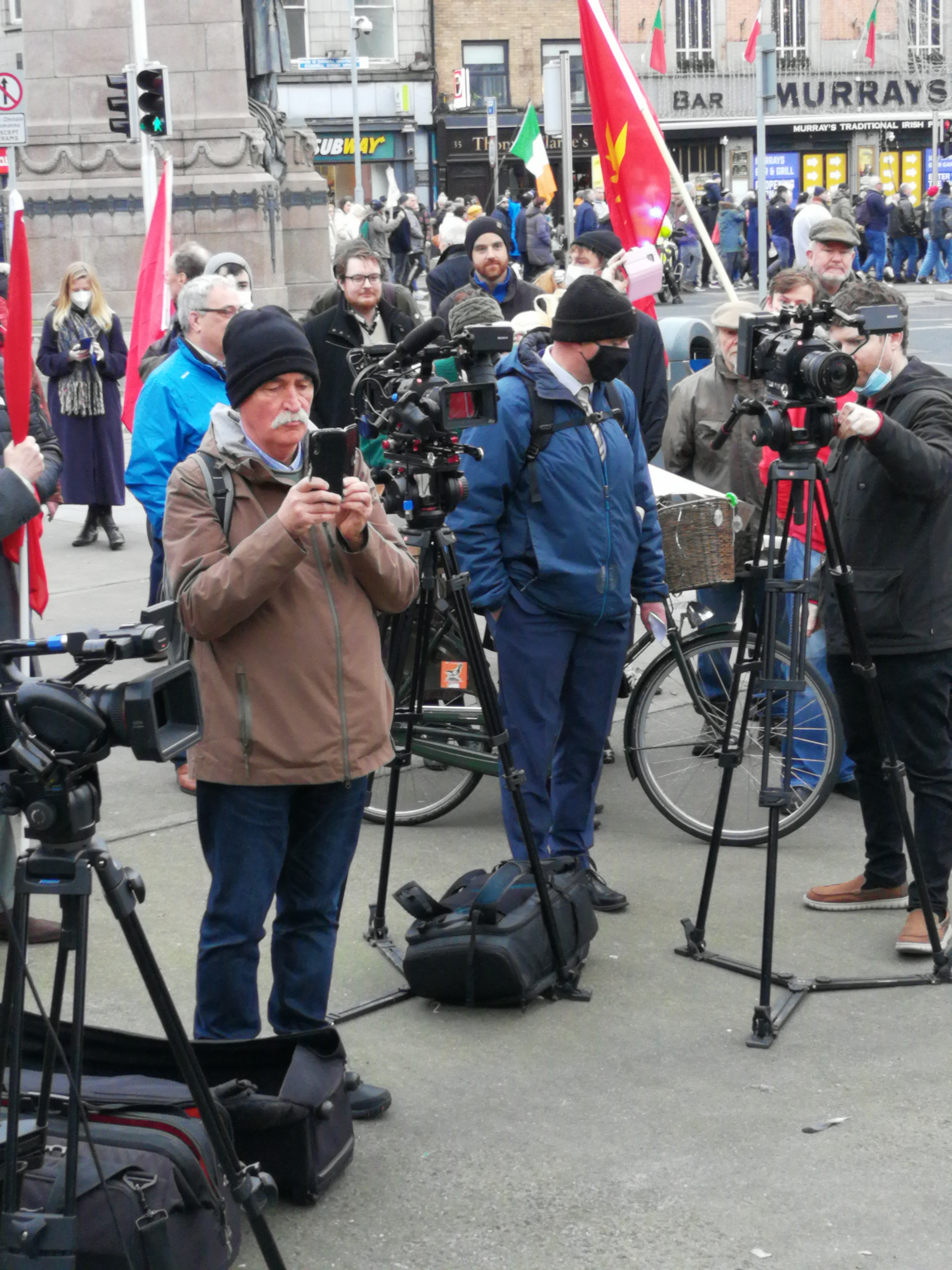
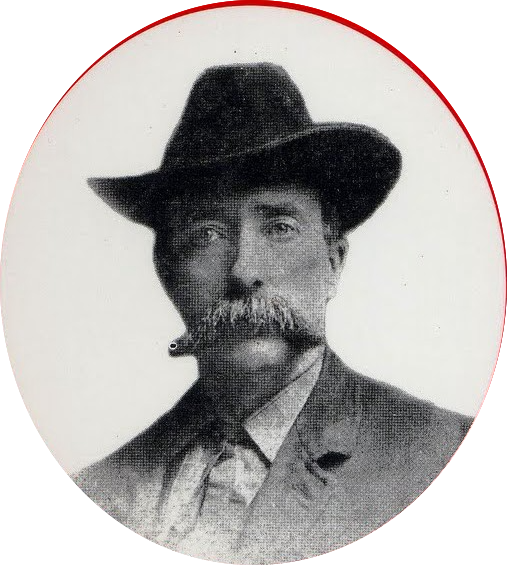
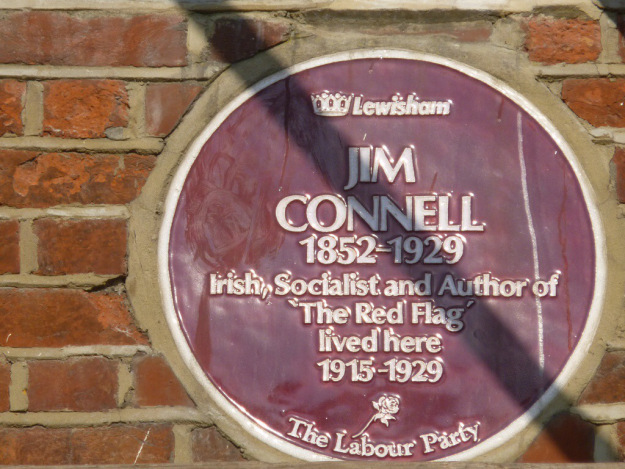
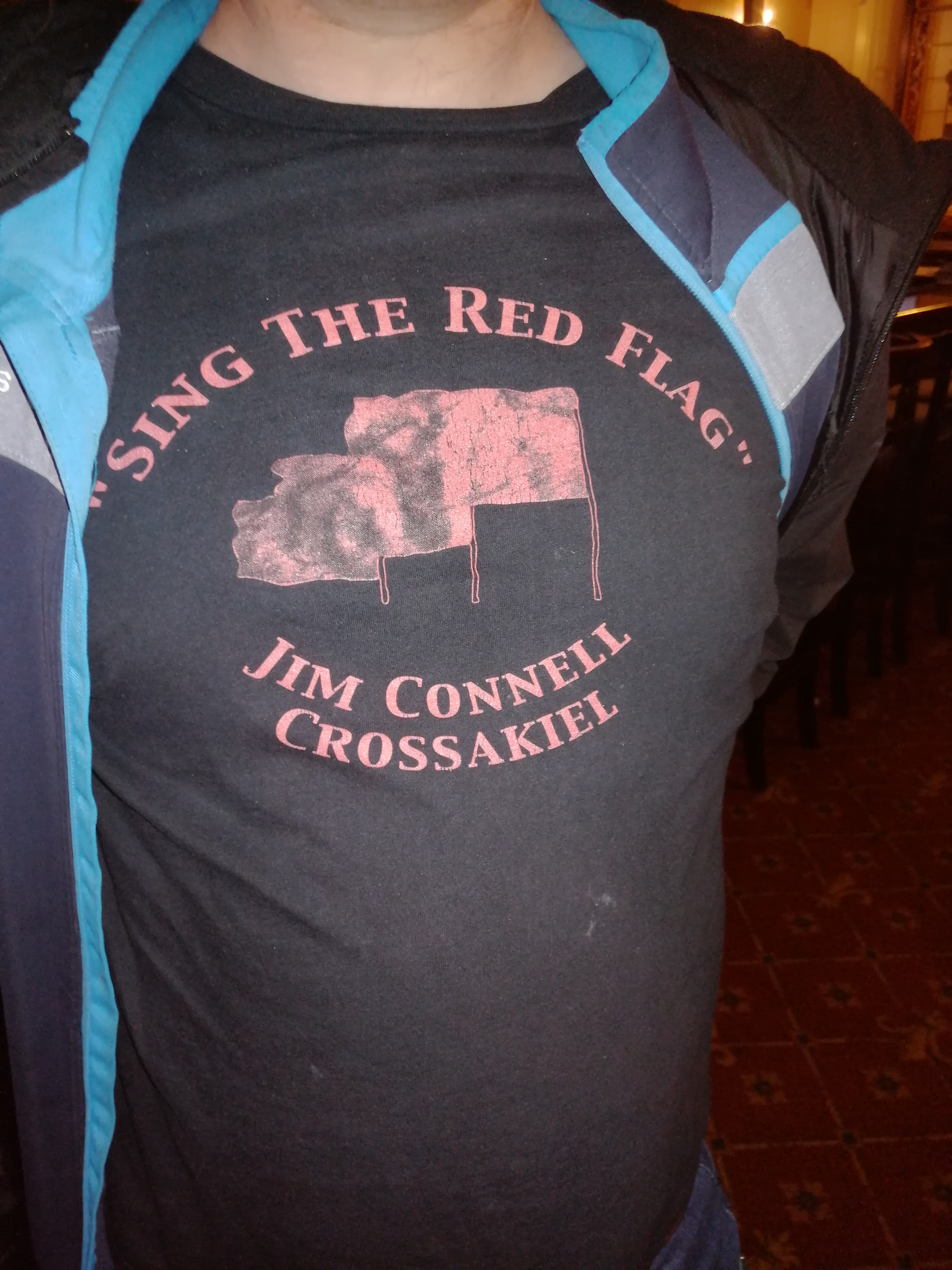
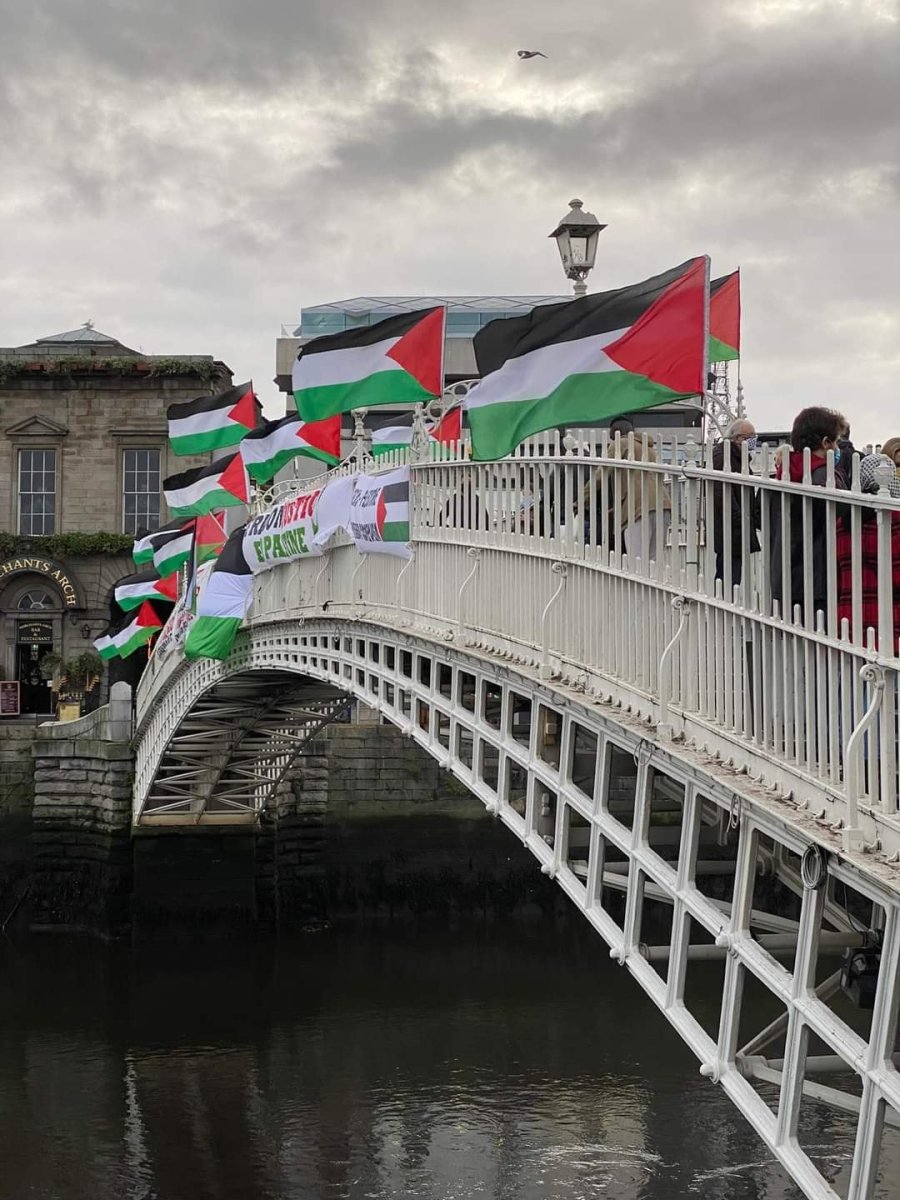
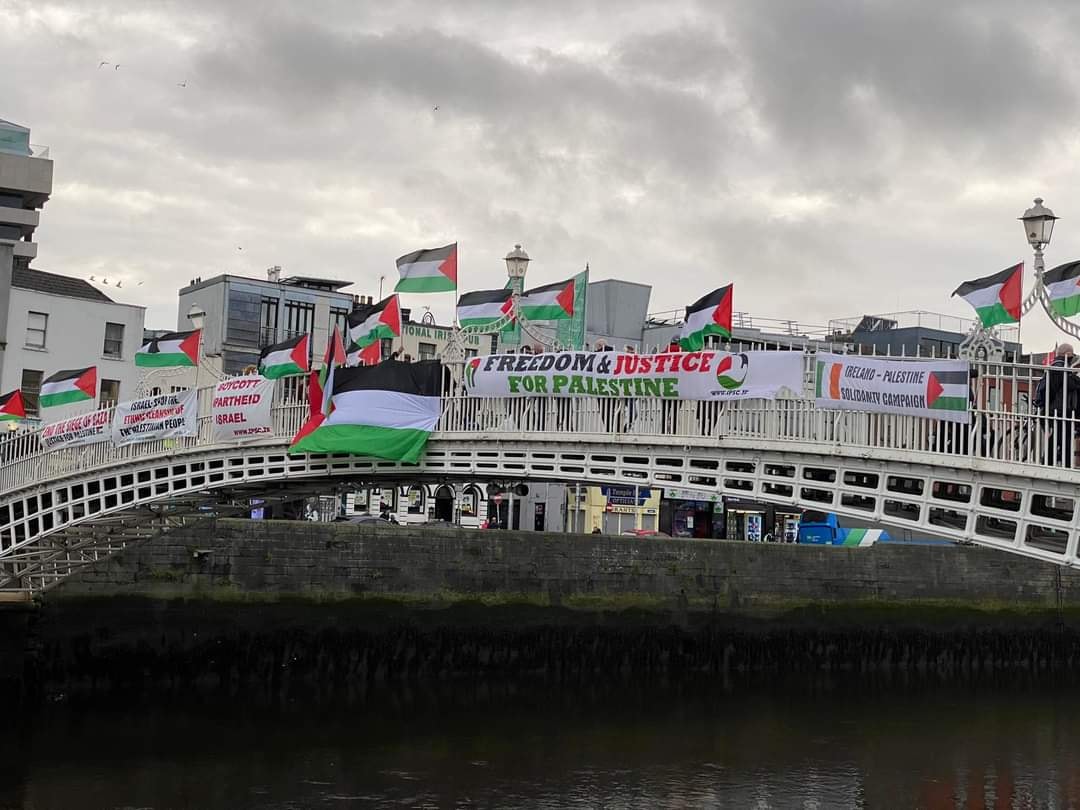
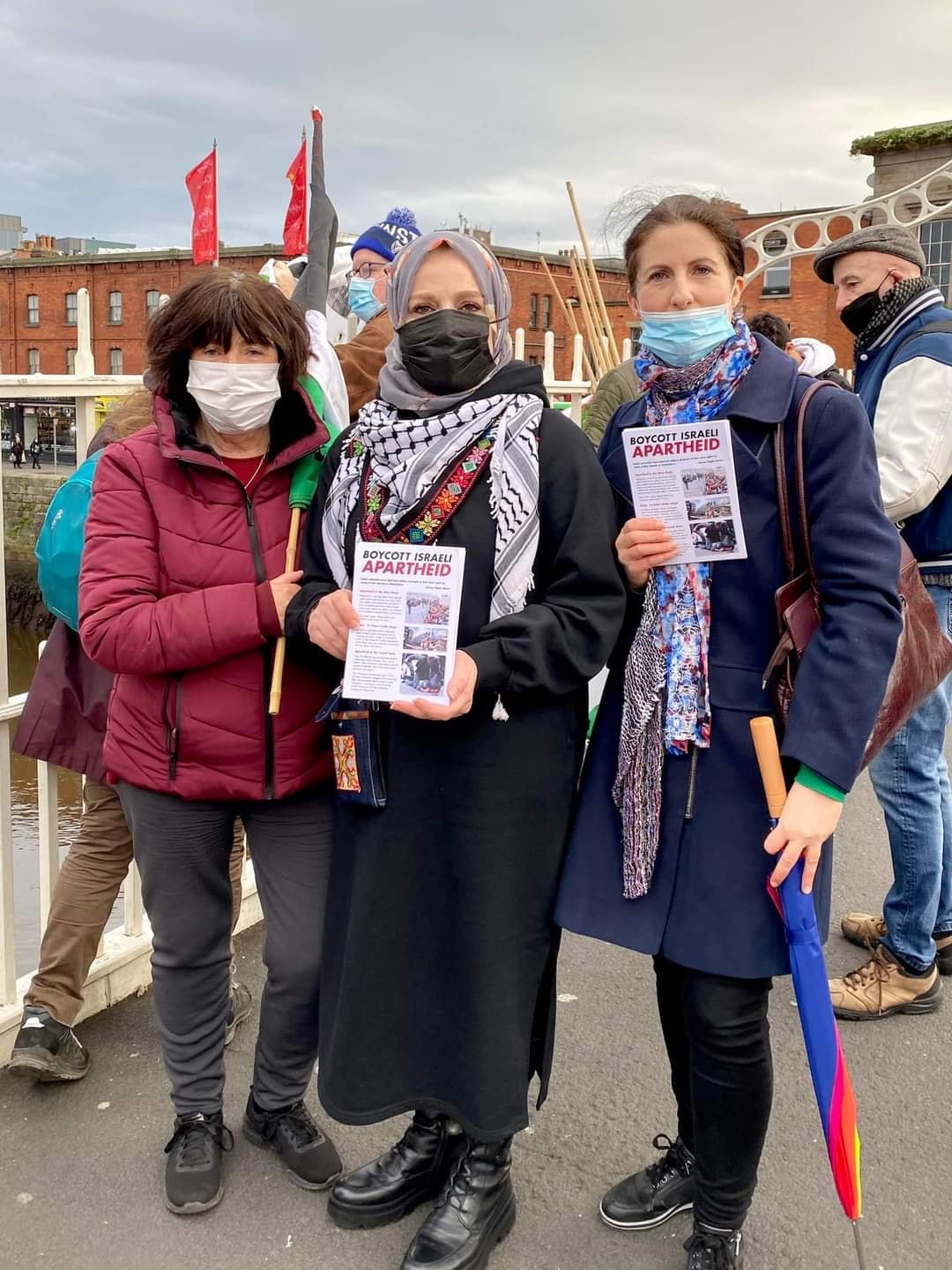

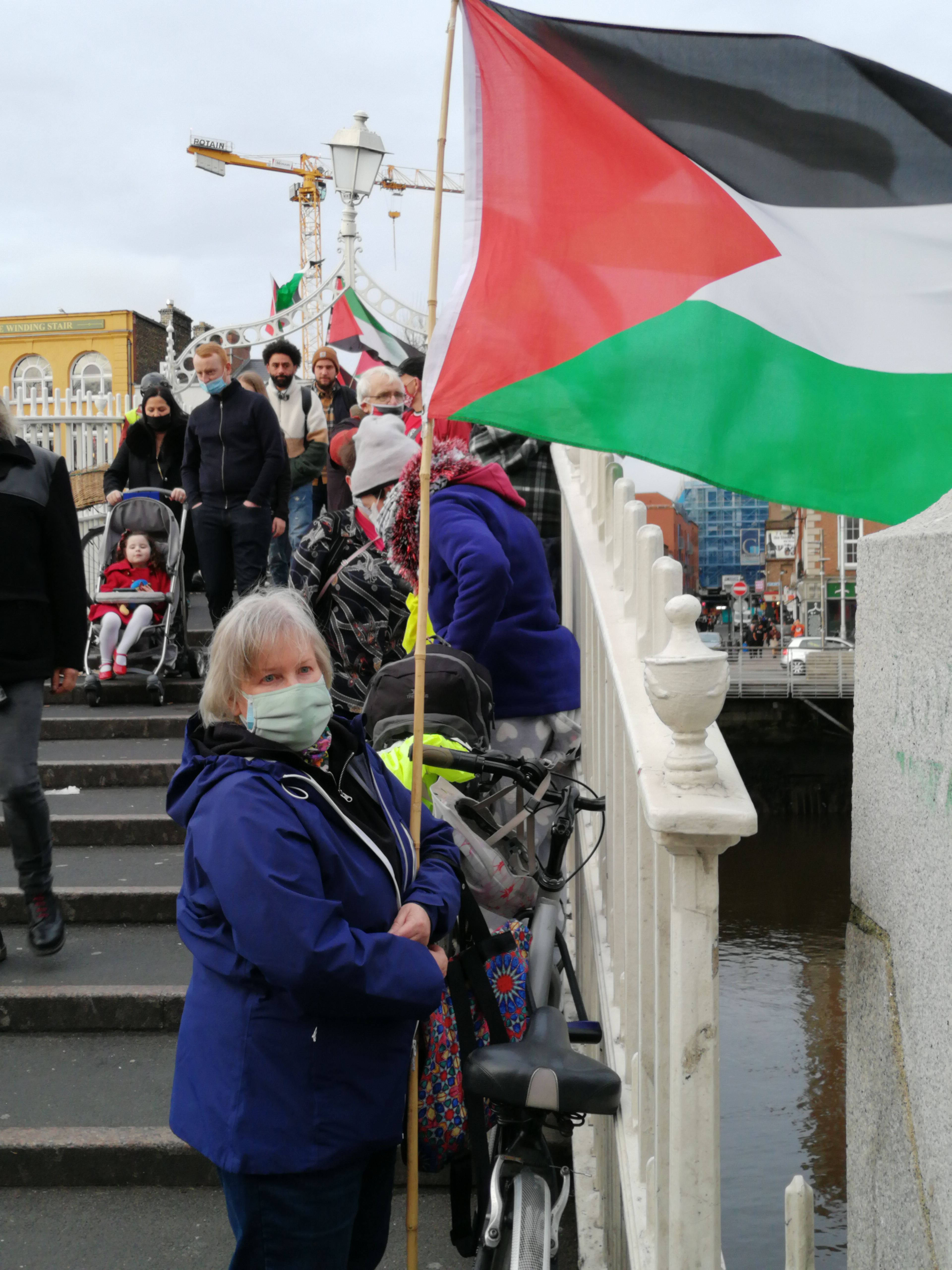
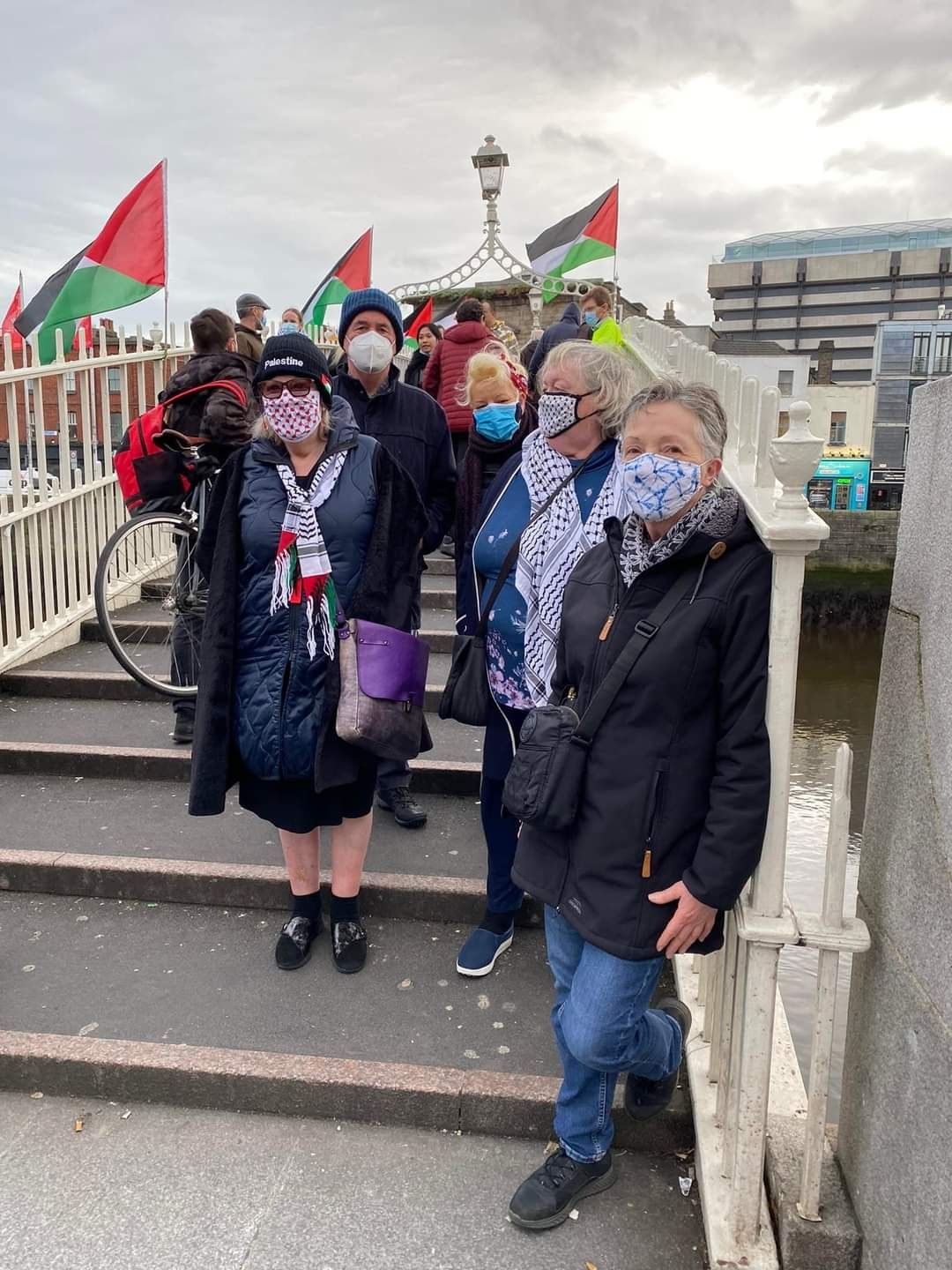

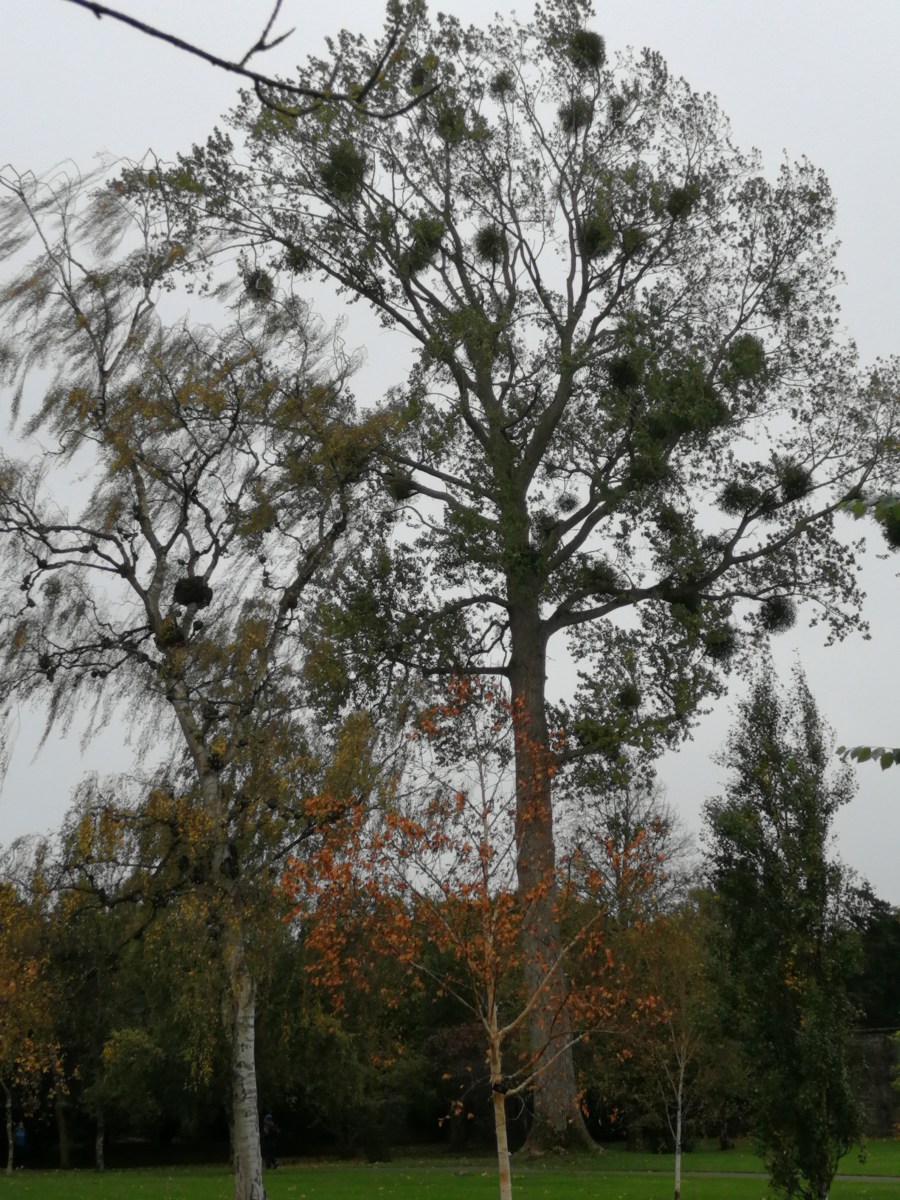
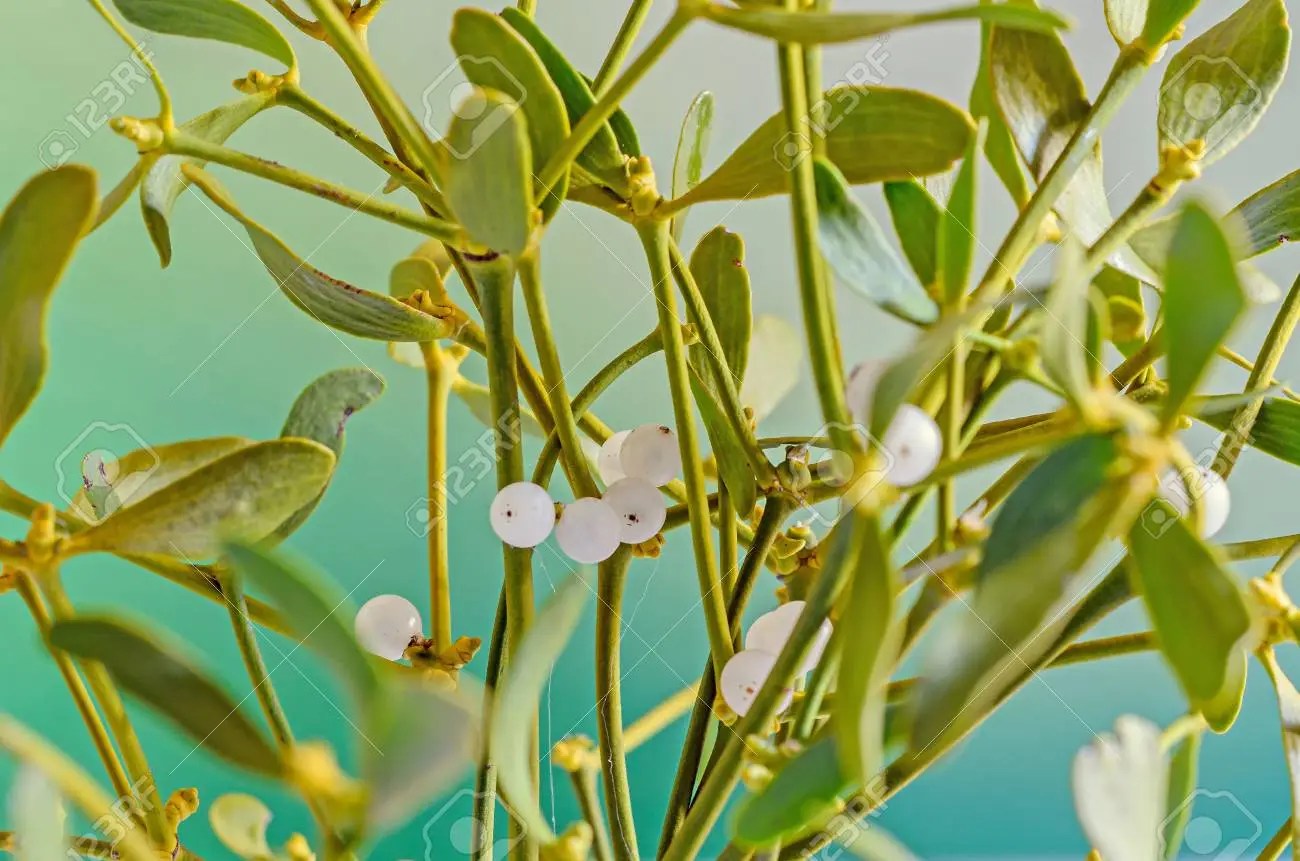


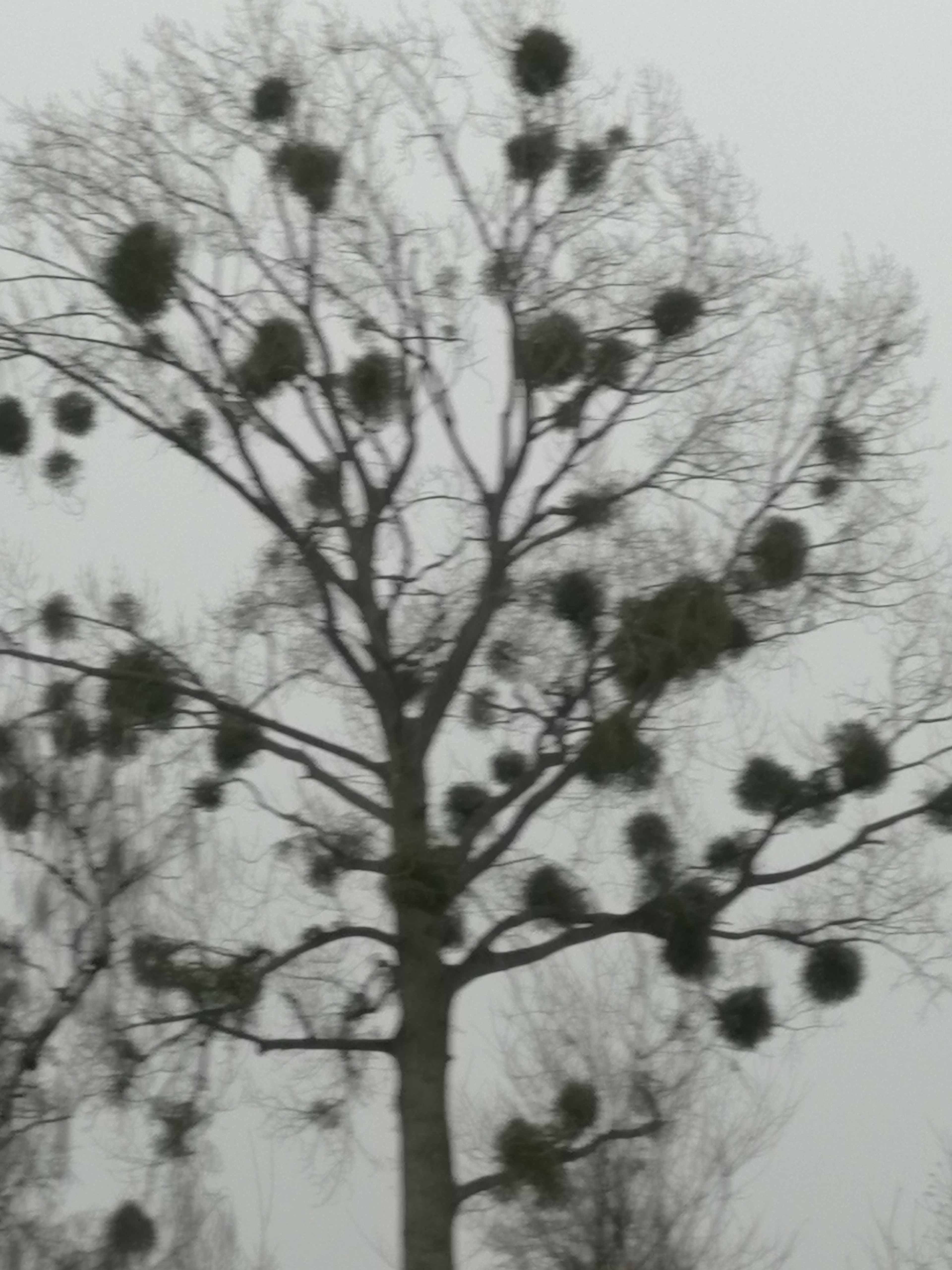

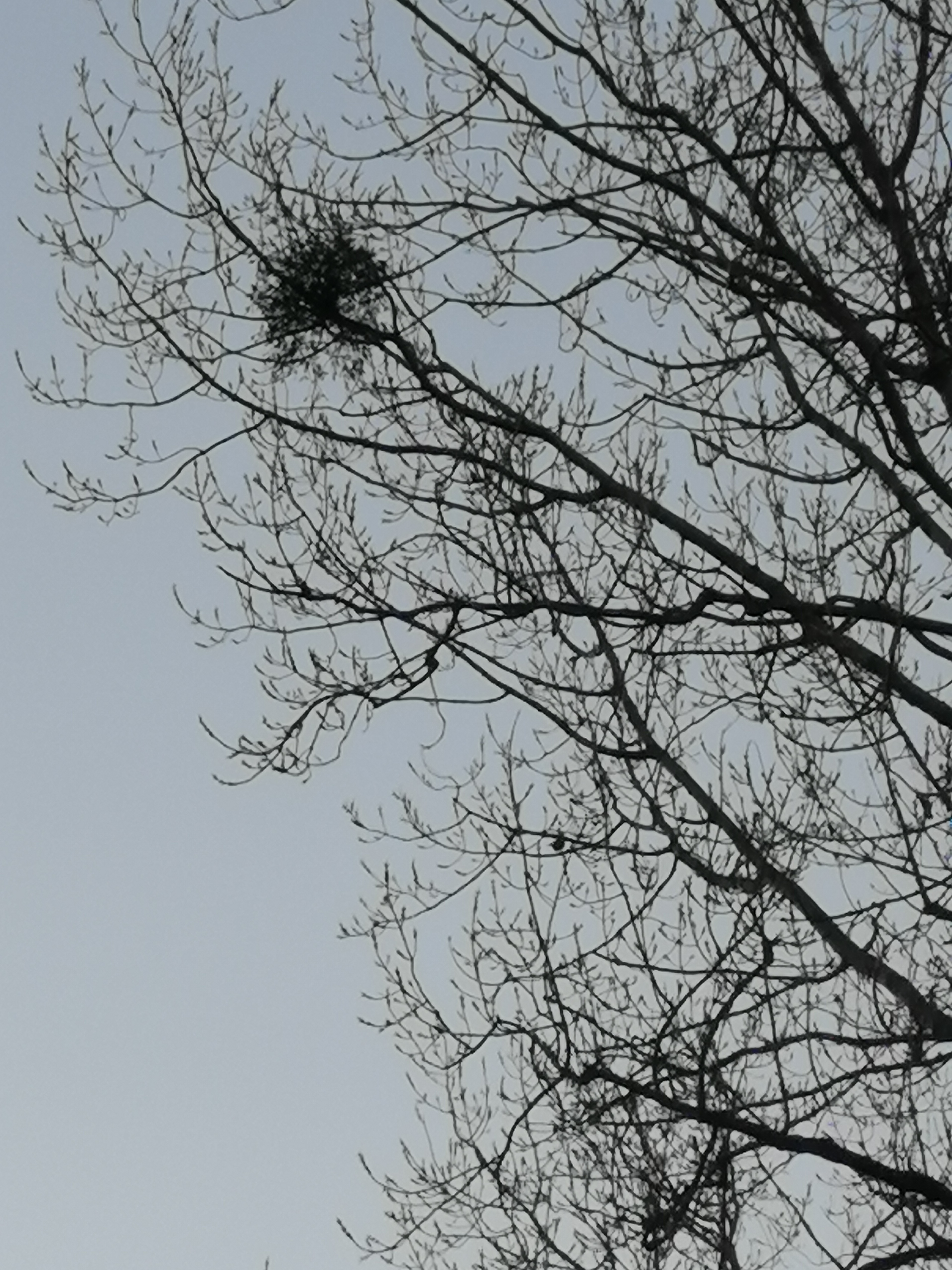


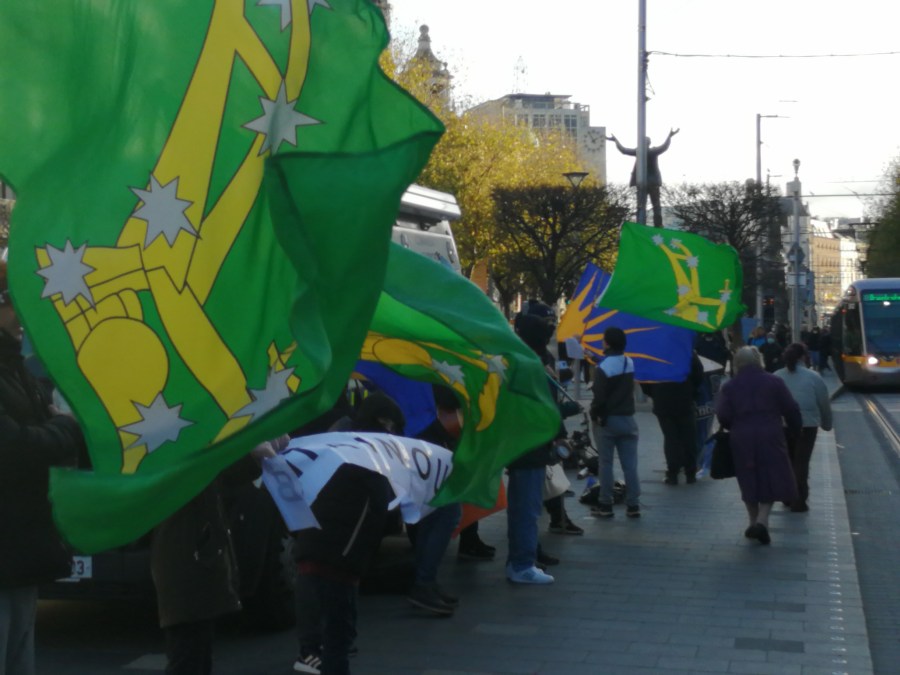
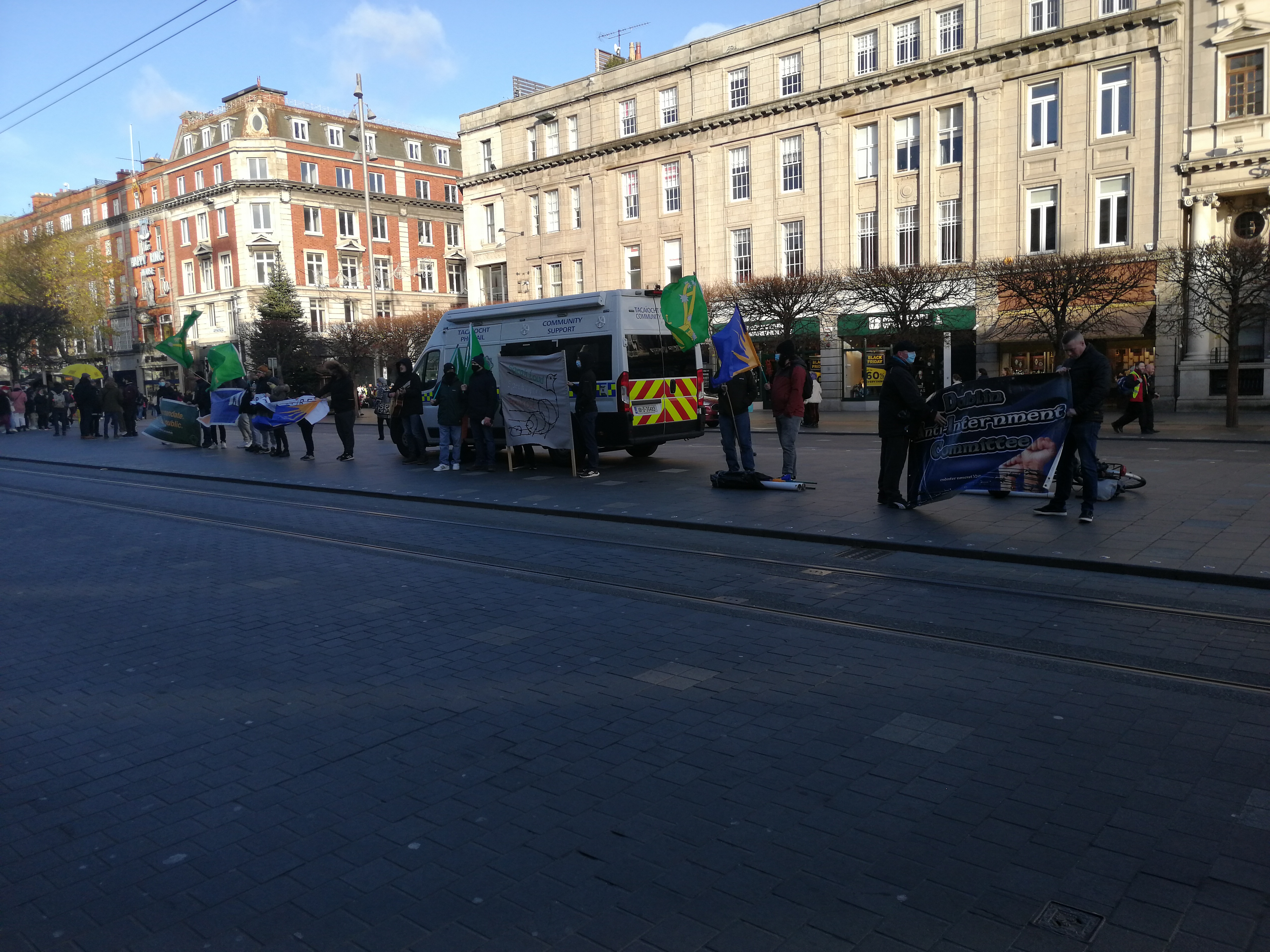
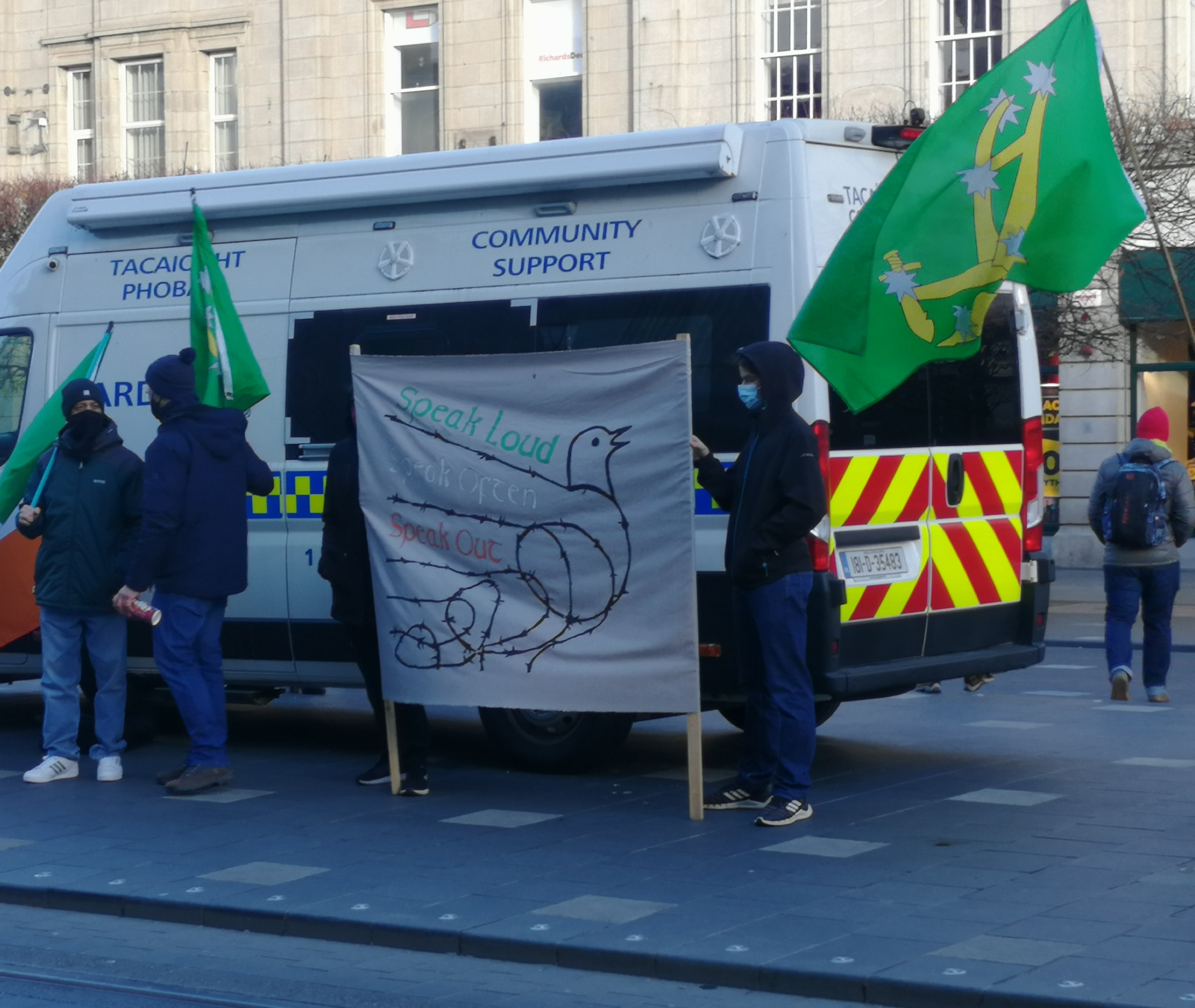
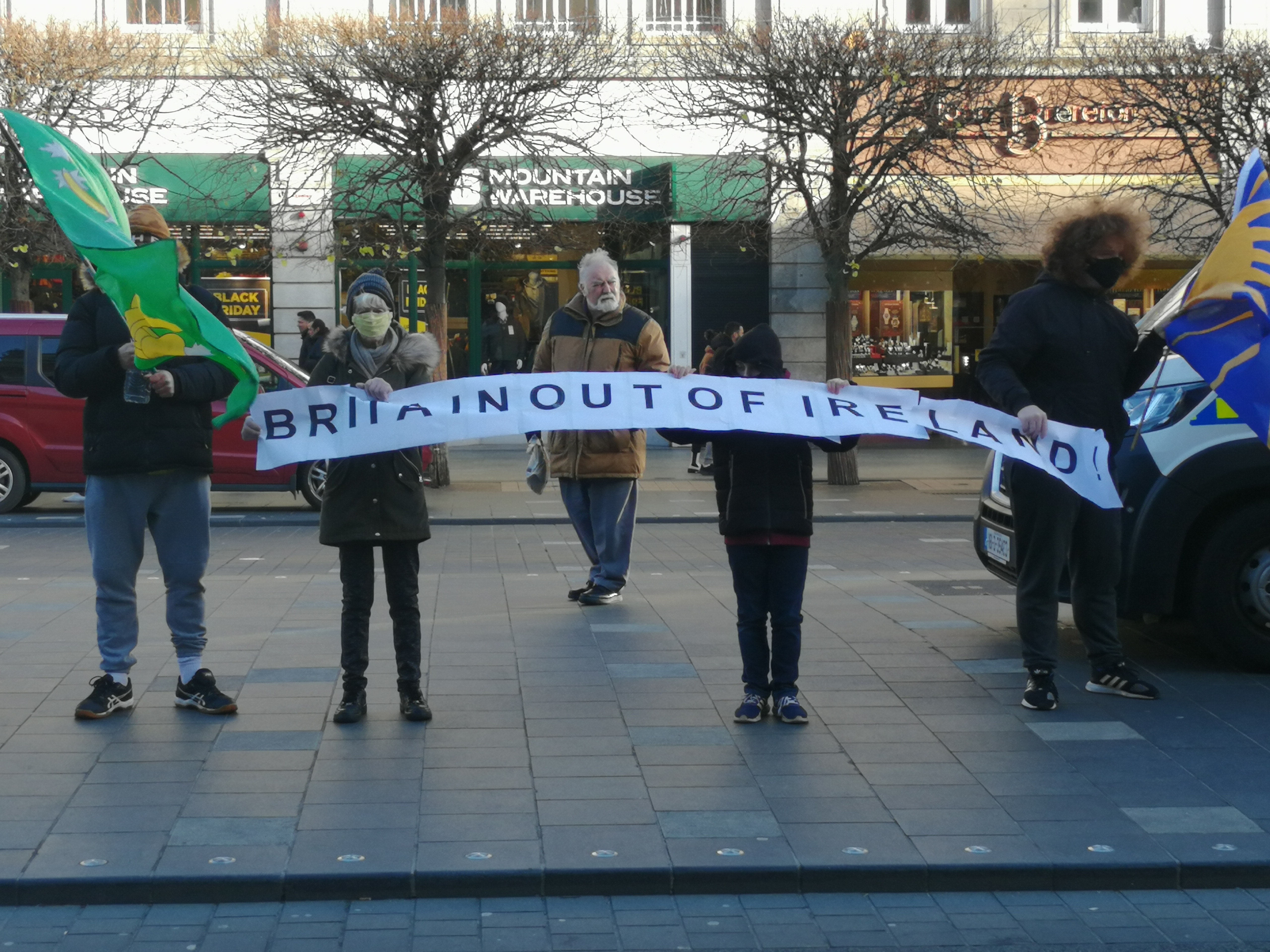
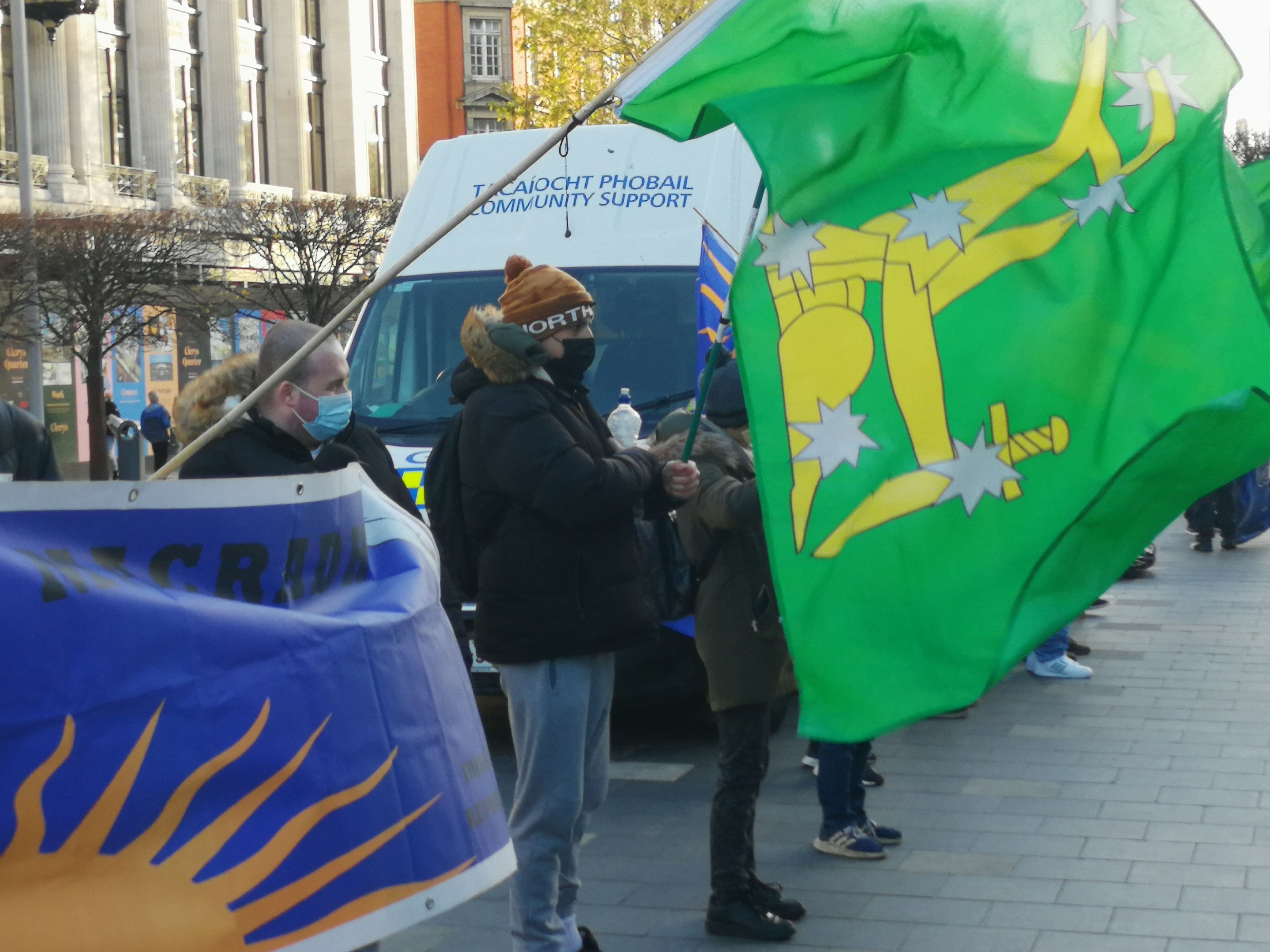
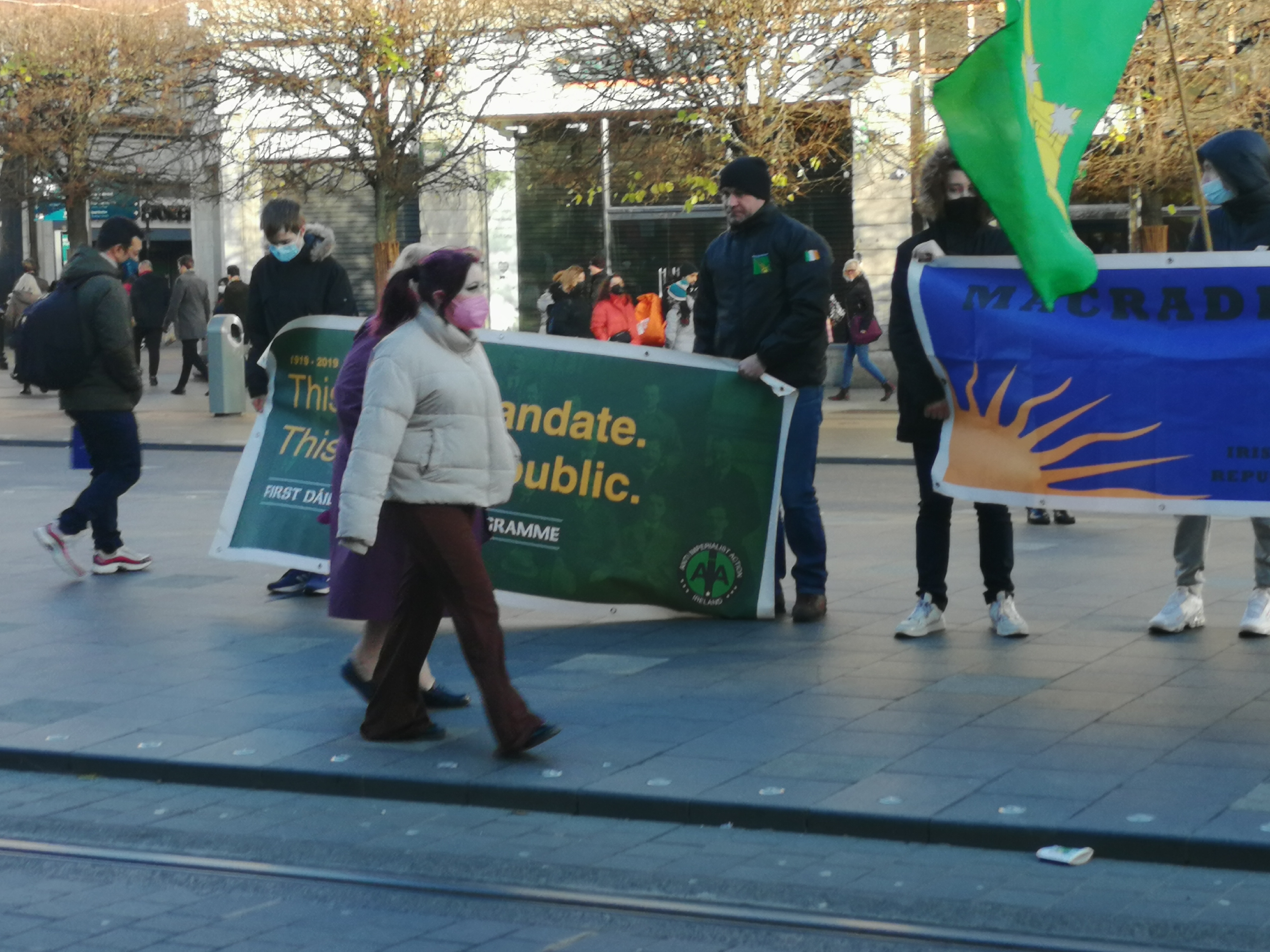
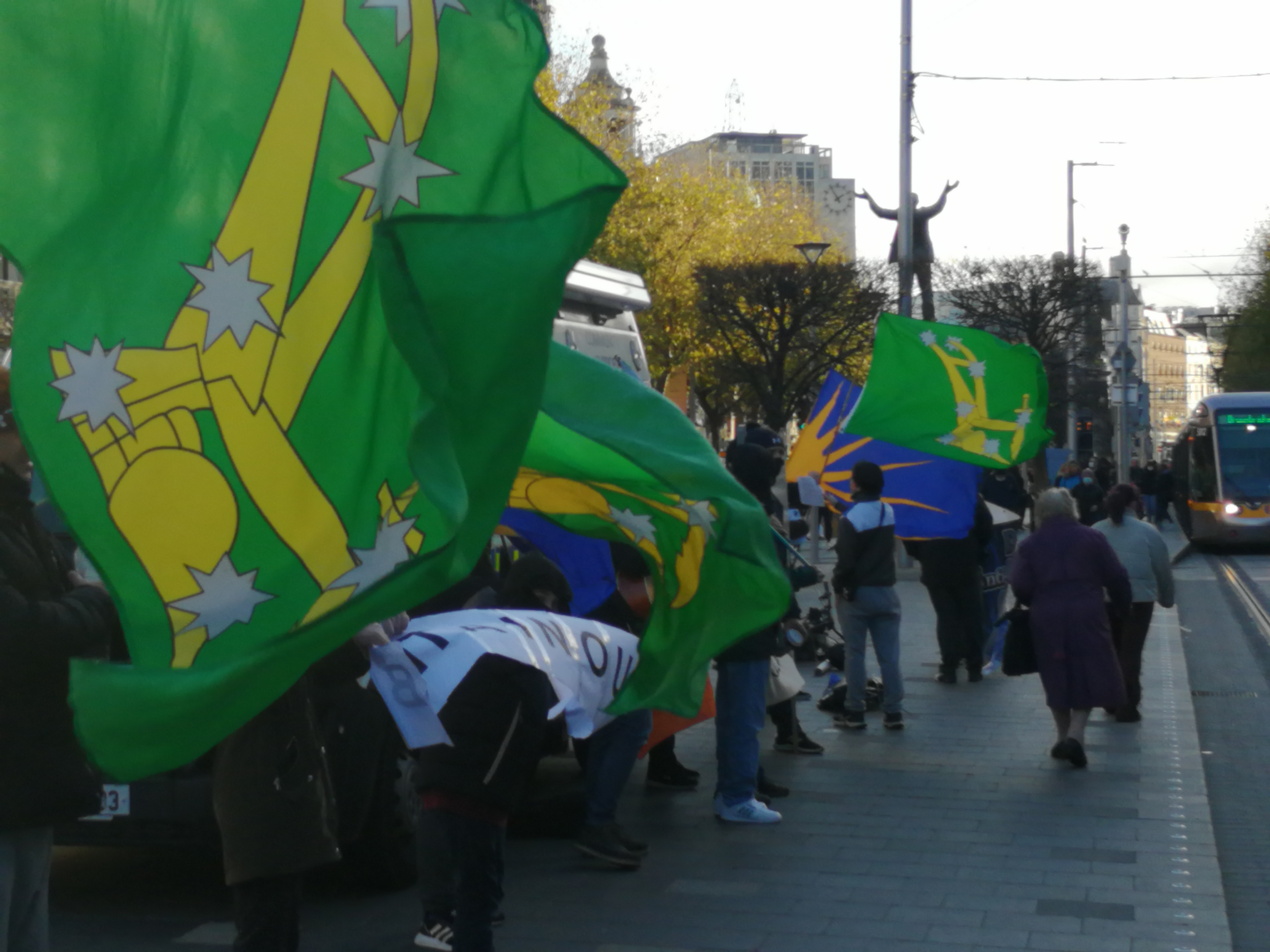


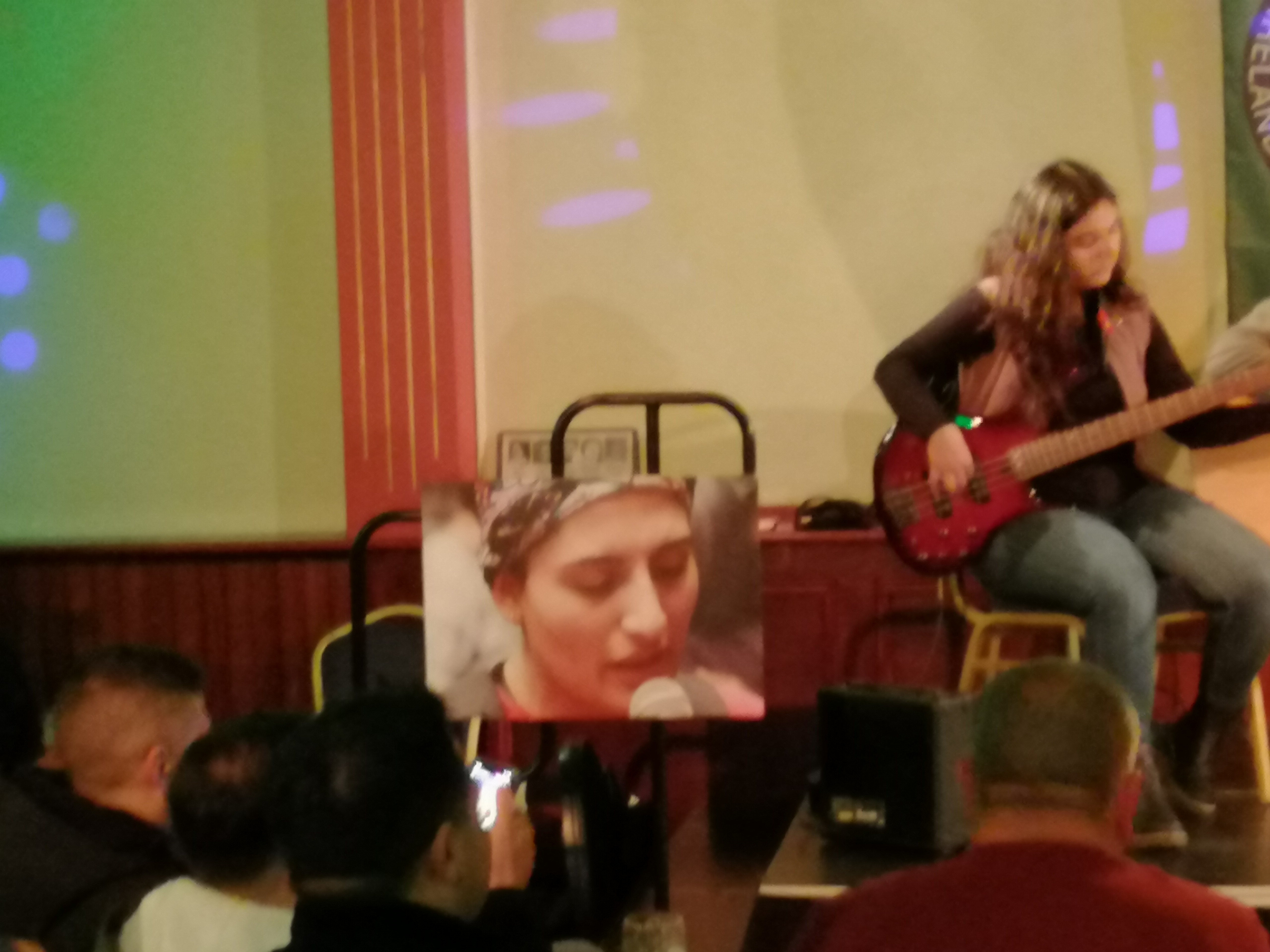

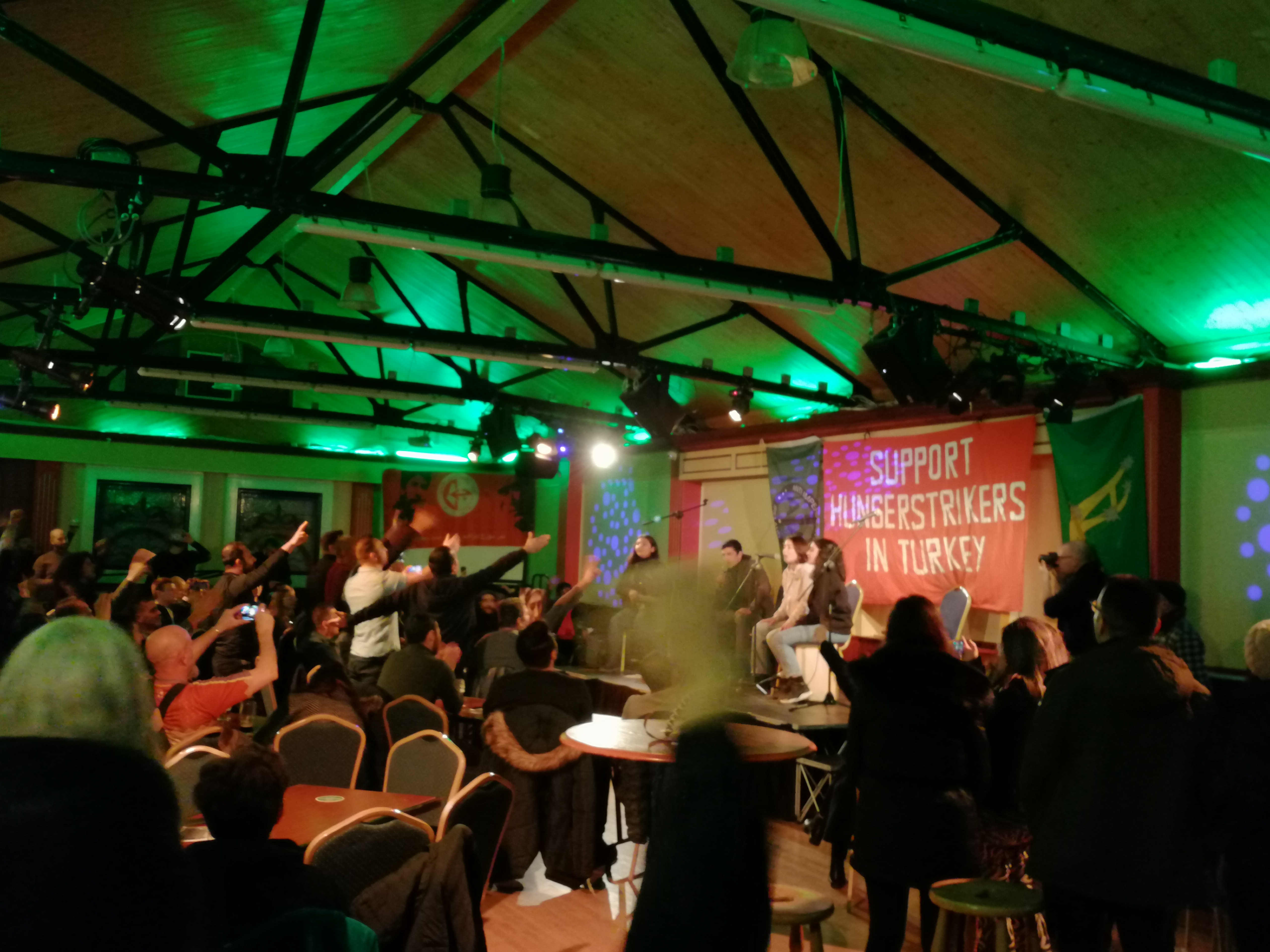
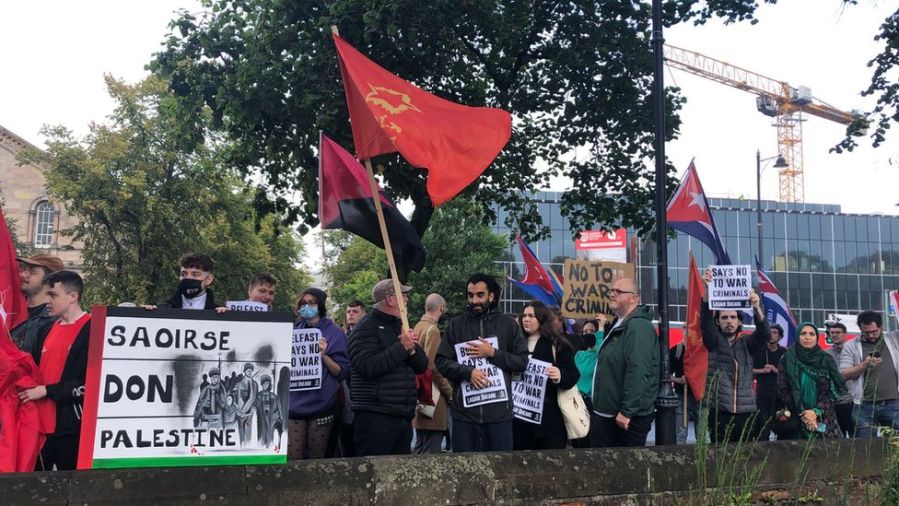


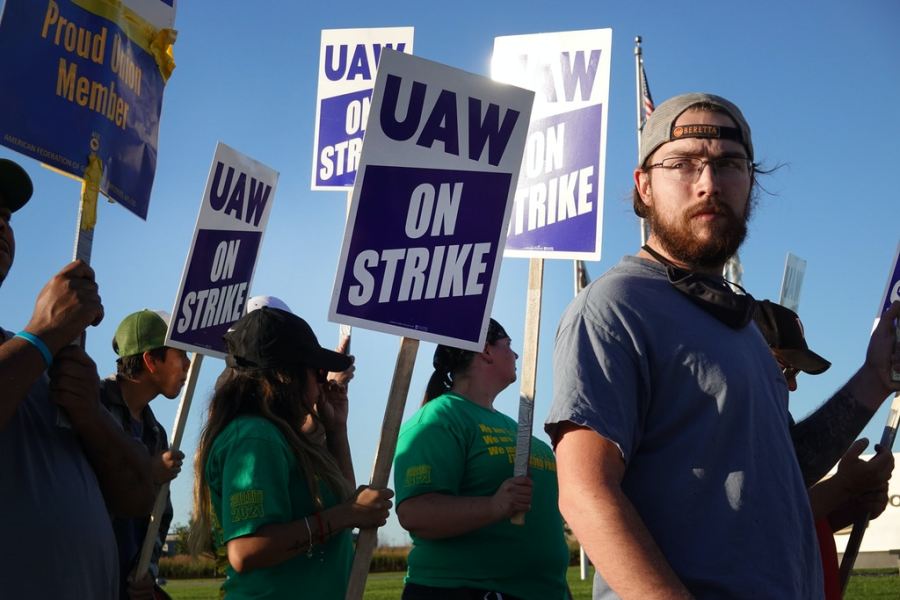
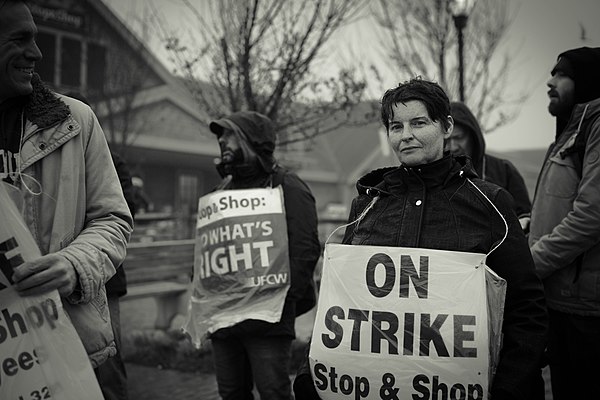
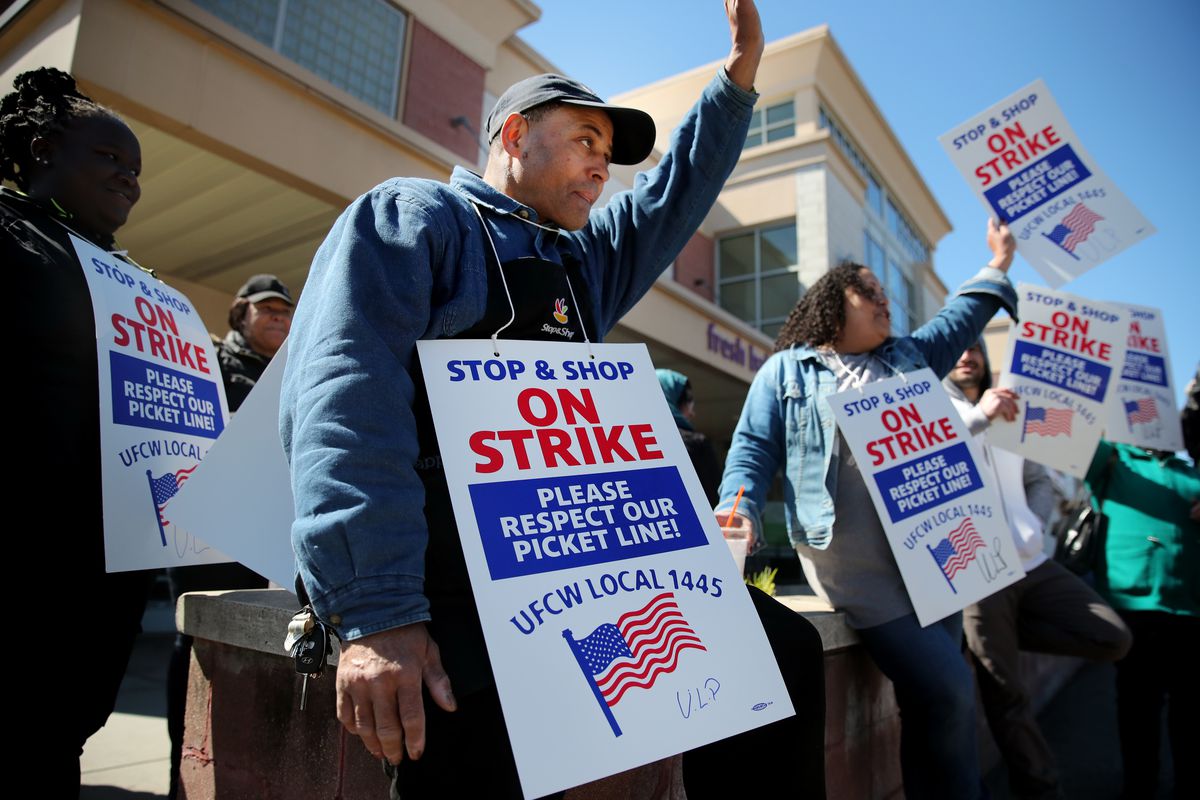
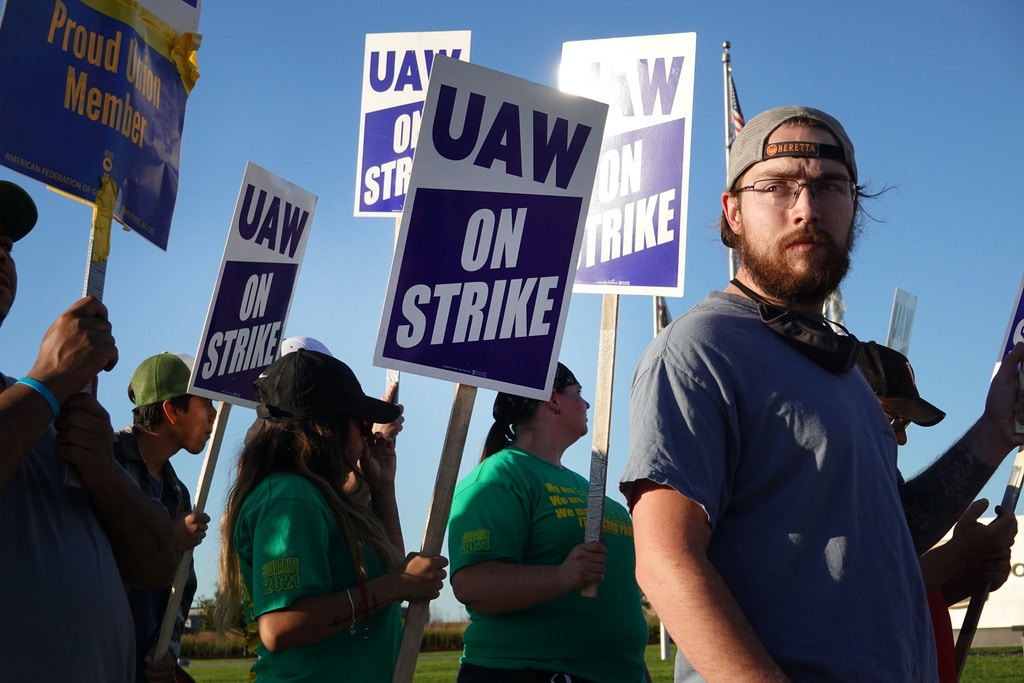


 rebelbreeze