The founding of the Irish Citizen Army, the first workers’ army in the world1, was commemorated in Dublin at the site of Wolfe Tone monument in Stephens Greeen, in song and speech on 23rd November 2022.
Organised by the Connolly Youth Movement, the other participating organisations represented were the Irish Communist Party, Independent Workers Union, Lasair Dhearg2 and Welsh Socialist Republican Solidarity (Ireland) – the Irish branch of the Welsh Underground Network.
In addition, a number of independent activists were also present.
CYM speaker beside the Wolf Tone Monument (by Edward Delaney) which was blown up by Loyalists in 1969; it was recast and the surviving head incorporated. (Photo: Rebel Breeze)
THE IRISH CITIZEN ARMY
The Irish Citizen Army was founded on 23rd November 1913 on a call from Jim Larkin and James Connolly, both leading the Irish Transport and General Workers’ Union in its titanic struggle against the federation of Dublin Employers’ plan to break and disperse the union.
The call for the formation of the ICA arose due to the attacks of the Dublin Metropolitan Police on the workers and their supporters; already in August 1913 the DMP had killed two workers by truncheon blows and injured many, including a youth who would die later as a result.
The ICA’s initial organiser was the writer and dramatist Seán O’Casey, later succeeded by Boer War veteran Jack White.3 In addition to requiring its recruits to be union members, the ICA enrolled women as well as men and some of the former were officers commanding both genders4.
While the ITGWU was defeated in the eight months of the Lockout, it was not smashed and came back stronger in a relatively short period. The ICA faded away then but was reorganised over following years and approximately 120 took part as a unit in the 1916 Rising, alongside other units.5
SPEECHES AND SONG
A small crowd had gathered at the advertised location, the Wolfe Tone Monument in Stephen’s Green and the chairperson of the event called people to order.
Diarmuid Breatnach, an independent activist, was asked to sing one of Connolly’s compositions, ironically titled Be Moderate, often referred to instead by its refrain, “We only Want the Earth”.
An older man with a Dublin accent, Breatnach told his audience that Connolly published the lyrics in New York in 1907, going on to sing the five verses to the air of Thomas Davis’ A Nation Once Again6, using the chorus part to repeat the refrain that “ … we only want the Earth!”7
A representative of the Independent Workers’ Union, a young man with an Ulster accent, spoke about the need for workers to have a trade union and for that union not to align itself with employers or with the State.
In order to truly represent the interests of the workers, the union needs to be independent, he maintained and also democratic in its decision-making.
In conclusion, the speaker said that the IWU is the union that is needed and called on people present to join it and to support it.
“MAKE THE VISION A REALITY”
Amy Margaret, a young woman, also with an Ulster accent, delivered a speech on behalf of the organisers of the event, the Connolly Youth Movement.
“The Citizen Army was a direct response to the brutality carried out by the RIC and Dublin Metropolitan Police during the Dublin Lockout” she said; “the police killed two workers, injured hundreds more with baton charges, and frequently ransacked the tenements where strikers lived.”
“The Citizen Army fought back with some succes” she continued “and as one pointed out, a hurley has a longer reach than a baton. It was in the Citizen Army that the working-class stood up to the RIC and employers,” she continued.
“The same RIC that torched farmer’s homes during the Land war, the same employers who often owned the slums where workers lived; it was here at Stephen’s Green (and elsewhere in the city) that the Citizen Army stood up to the British Empire, alongside comrades in the Irish Volunteers.”
She told her audience that when, during a dockers’ strike in 1915, scabs were imported and police harassed picketers, Connolly sent a squad of the ICA with fixed bayonets to the scene, resulting in the dispute’s resolution with “a considerable increase in wages to the dockers concerned”.
“The Citizen Army was not simply workers armed with guns,” the speaker said, “but also armed with culture” and referred to weekly concerts in Liberty Hall (the ITGWU’s HQ) and to the dramatic acting history of Seán Connolly and whistle-playing of Michael Malin, both 1916 martyrs
“What the ICA stood and fought for in their own words, “… is but one ideal – an Ireland ruled and owned by Irish men and women, sovereign and independent, from the centre to the sea.”
“Connolly was clear however that such a Republic would have no place for the “rack-renting, slum-owning landlord” or the “profit-grinding capitalist”, but should rather be a “beacon-light to the oppressed of every land”.
“The most fitting tribute for the ICA then is to make that Republic a reality. To do so we must learn from the past and their examples. We can learn from them to never be cowed by the odds against us, we can learn from their comradeship to each other.
We can learn from how they combined political, economic and cultural methods to advance the cause of a worker’s republic. But more importantly we must be able to learn from their shortcomings.
After the Rising and the loss of its leadership the ICA began to devolve into a social club and whilst some members played an important role during the Tan War, the ICA was not the revolutionary workers’ army it once was.
Therefore we must build a truly mass movement – not just a committed core of activists, and we must build a movement not reliant upon key personalities so that it can function no matter what.
We all know that things must change in Ireland, and so we reaffirm the principle that the Citizen Army stood by; only the Irish working class is capable of waging the revolutionary struggle necessary to change things; not capitalists and landlords.
Helena Molony of the ICA, said, “We saw a vision of Ireland, free, pure and happy. We did not realise that vision. But we saw it.”
As the socialist-republican youth of today, we commit ourselves to make that vision a reality and to build a Republic that the men and women of the Citizen Army would gladly call their own.”
Some of the gathering at the Wolfe Tone Monument (out of shot to the right) to commemorate the creation of Irish Citizen Army (Photo: Rebel Breeze)
MARKIEVICZ: “RESOLUTION, COURAGE AND COMMITMENT“
Breatnach was called back to the microphone and talked about the lessons to be learned from Constance Markievicz, co-founder of Na Fianna Éireann, the Irish Citizen Army and of Cumann na mBan, born in Britain “as were a number of our national and class heroes”, he said.
“Constance was born into a settler landlord family, the Gore-Booths”, he told the audience and her experience of witnessing deprivation, along with her sister Eva, during the Great Hunger, had a strong effect on both, inclining them to social reform and they became also suffragettes.
The speaker said that in that latter aspect and as a poet Eva became well-known particularly in England but Constance was better known as a revolutionary and for her allegiance to the working class and to the Irish nation.
He reminded his listeners that Markievicz was artistic and apt to strike poses; O’Casey, founder of the ICA had been hostile to her and co-founder of Cumann na mBan and wife of Tom Clarke of the IRB, Kathleen Clarke, had found her irritating.
Breatnach said that Markievicz was 3rd in 1916 garrison command at Stephen Green and had been accused not only shooting dead there a member of the DMP but of exulting in it; however according to witness accounts she had not even been present when the officer was killed.8
Bust of Volunteer Markievicz in Stephen’s Green (Photo: Rebel Breeze).
A British officer at her court-martial after the surrender of the 1916 Rising had claimed that she begged for her life at the court-martial but the official British records published later gave the lie to that and her own account that she demanded equal treatment with the executed leaders rings true.
“Her life as an example,” Breatnach continued, “teaches us not to judge people only by their background or indeed by their idiosyncrasies but primarily by their resolution, courage and commitment, all of which Constance Markievicz had by the bucket-load.”
The speaker also reminded those present that the very Wolfe Tone monument beside which he stood had been blown up in a number of British Loyalist bombings of the city during the 1970s, a number of which would soon be commemorated on the December anniversary of one of them.
The Irish State had prosecuted not a single one of the perpetrators, not even for the Dublin and Monaghan bombings, with the highest death toll9 of any one day during the recent 30 Years War. Instead, they had used the 1972 bombing to pass emergency legislation to attack Irish Republicans!10
Speaking briefly as a historical memory conservation activist, primarily active in the campaign to save the Moore Street market and 1916 battleground from speculators, Breatnach remarked that it was fortunate that the area behind him was a public park.
Otherwise it would all have been a prime target for property speculators. People sometimes express surprise that Irish governments do so little to protect areas of insurrectionary history. He stated however that this was natural since it was not their history but that of the struggling people.
“The history of the Irish ruling class is of a foreign-dependent one”, Breatnach stated, “rather than that of a national bourgeoisie willing to fight for independence. The last time Ireland had such a bourgeoisie was in 1798, mostly led by descendants of settlers and planters.”
“This is why Connolly pointed out that the Irish working class are the true inheritors of the Irish struggle for freedom. National independence and socialism are two different objectives but interdependent in Ireland and for the struggles to succeed they must be led by the working class.”
CONCLUDING
Wreaths were laid on behalf of a number of organisations, including Lasair Dhearg and the chairperson thanked all for their attendance, leaving people to their various ways into the mild autumn-like afternoon.
End.
(Cropped photo: Rebel Breeze)
(Photo: Rebel Breeze)
FOOTNOTES
SOURCES
1Clearly not the first army composed of workers, since these are the members of most armies; nor the first to fight for the workers, as did some for the Paris Commune in 18th March-28th May1871. However, the ICA was founded specifically for the defence of workers, the first in the world to be so, though its constitution was largely Irish nationalist.
2Socialist and anti-fascist Irish Republican organisation mostly represented in Belfast. The name means “Red Flame”.
3A number of Irish were veterans of the Boer War, the British against Dutch colonists in South Africa, most like White were on the British side but some fought for the Boers, to the extent of forming an Irish Brigade for the purpose. Later, a number from both groups ended up fighting alongside one another in the 1916 Rising (and no doubt against others who remained in the British Army).
5The Irish Volunteers, Cumann na mBan, Na Fianna Éireann, the Hibernian Rifles and of course the Irish Republican Brotherhood, the chief architects of the Rising, its members fighting as members of other units, chiefly the Volunteers and the Fianna (the membership of both those organisations was exclusively male though its couriers were often female but Tom Clarke’s wife, Kathleen Clarke, was the IRB’s liaison from Dublin with the sister organisation in the USA.
6James Connolly (1868-1916) did not prescribe any air for the lyrics and they have been sung to several. A Nation Once Again was composed by leading member of the Young Irelanders, Thomas Davis (1814–1845) and published in 1844, for many years considered a candidate for Irish national anthem.
7“For our demands most moderate are: we only want the Earth!”
8Breatnach also said that least two and probably three members of the DMP were killed during the Rising, each one in an area under the control of the ICA, who no doubt remembered well the force’s actions during the 1913 Lockout.
91974: 33 male and female civilians and a full-term unborn baby.
10The Amendment to the Offences Against the State Act, including the introduction of the no-jury Special Courts, essentially for trying Irish Republicans with a much lower quality of evidence required to convict, including the unsupported word of a senior Garda officer.
Kevin O’Higgins, Minister of the Free State, signed the execution order of his former close friend and the Best Man at his wedding, Rory O’Connor, who led Irish Republicans in the occupation of the Four Courts in 1922 in opposition to the Anglo-Irish Treaty.
The historical and ironical reality is the basis for Frank Allen’s play The Best Man, showing until the 10th in the theatre in the Teachers Club, Dublin.
BRENDAN AS BORSTAL BOY
Before the play begins the audience is treated to a short performance by Brendan O’Neill of his portrayal of Brendan Behan from Borstal Boy and the Republican’s return to Ireland after his release from jail. O’Neill has family connections to his subject and has researched him too.
It’s an enjoyable performance and an interesting peek into what is or will become a full play, set already to tour Canada. One wonders whether Canadian society, reputed to be somewhat staid, is ready for Behan on stage.
THE BEST MAN PLAY
Glen Gannon’s direction makes best use of the small stage, adapting it with minimal changes to serve different scenes, while a piano recording of two well-known airs are employed for the same purpose. Elaine sings verses of The Foggy Dew beautifully.
There are four characters who take to the stage: Rory O’Connor (Alan O’Brien), Kevin O’Higgins (Kevin Brennan), ‘Birdie’ (Elaine O’Dea) and Lady Lavery (Niamh Large).
All of the parts are well-written and acted. For dramatic impact however, it is those of Rory O’Connor and Lady Lavery which are the strongest and both O’Brien and Large make the most of them, each dominating their respective scenes.
Searching for information online about ‘Birdy’, O’Higgins’ wife, for this review has been frustrating, with numerous commentaries on O’Higgins not even mentioning her name.
From information supplied by Frank Allen, Birdie was called Brigid Cole and she was an English teacher who taught in Knockbeg College in Carlow. Gearóid O’Sullivan taught there too.
“Birdy”, is brought to life in this play and given expression in moments of humanitarian passion in conflict with her husband Kevin, whose own most powerful moments are expressed in anger and angst during the Civil War, though his interactions with Lavery display passion of a different kind.
HISTORY
In history, Lady Lavery has been associated with Irish cultural interests and romantically with Collins but letters to her from O’Higgins reveal that Michael was not the only Irish fish in her net. Her image, in an Irish shawl, was to grace the Irish Sterling pound note. Suspicions that she was an MI5 agent are unproven but remain..
There may be some legal argument about some of the execution orders of Republicans signed by O’Higgins, though all are regarded by Republicans today as judicial murder.
There can be no argument however about the criminal nature of the executions of O’Connor, McKelvey, Barrett and Mellowes, executed by cabinet executive order in reprisal for a killing that took place while they were in jail and in which they played no part.
It hardly seems possible to view the ideological conflict around the Anglo-Irish Treaty without thinking about another Agreement closer to us in time; as we come up to the 25th anniversary of the Good Friday Agreement we can reflect on the lack of closure of each.
I have no hesitation in recommending a viewing but haste – only three nights remain.
In atrocious weather conditions, Irish Republicans of a number of organisations and of none gathered at the Liam Mellows monument in Finglas today (Sunday 4 December 2022) to honour four Republicans executed by the Irish State in 1922.
Liam Mellows, Rory O’Conor, Joe McKelvey and Richard Barrett were all prominent IRA Volunteers during the War of Independence and rejected the Anglo-Irish Agreement to create a subservient state in a partitioned country.
The Irish State chose the four prisoners in retaliation for the assassination of Seán Hales TD, himself shot in retaliation for Free State executions of Republican prisoners. By coincidence or intent, each one of the four had been born in a different one of Ireland’s four provinces.
Section of the crowd seen from behind, the monument ahead in background and the flags of the colour parties visible to the left. (Photo: D.Breatnach)
THE COMMEMORATION EVENT
A part of the commemoration marched with colour parties, led by lone piper, from Finglas village to the Mellows Monument.
Ado Perry chaired the event, one of a series of Irish Civil War commemorations in Dublin organised by Independent Republicans, which group also erected commemorative panels in various locations around the city, often marking the location where Free State troops killed an IRA Volunteer.
Three colour parties attended the event and a list of all the known Republican victims of the Free State was read out.
Seán Óg performing with Ado Perry in the foreground. (Photo: D.Breatnach)
Sean Óg, accompanying himself on guitar, sang Brian Ó hUigínn’s Soldiers of ‘22 and James Ryan’s Take It Down From the Mast, two of the best-known of a very limited number of songs about the Irish Civil War. A number present joined in on the chorus of the second song:
Take it down from the mast, Irish Traitors,
It’s the flag we Republicans claim;
It can never belong to Free Staters,
For you’ve brought on it nothing but shame.
(Photo: D.Breatnach)
Mags Glennon gave a speech on behalf of the organisers but it was difficult to make out its content (kindly supplied since and given in full in Appendix.
The main speaker advertised for the event was John Crawley, who has found recent fame in Republican circles with the publication of his biographical book The Yank, about his enlisting with the US Marine Corps and attempting to pass on his military skills to the Provisional IRA.
John Crawley speaking (Photo: D.Breatnach)
It was a shame that the volume of the PA was only turned up at around the last quarter or so of his speech. Despite the limited audibility of most of it, the attendance endured the rain and stood there in good order1.
Ado Perry thanked speakers and musicians for participation and all for attendance, making special mention of the colour parties. He announced that the event commemorative event would be at Kilmainham Jail early in January.
A lone piper played a lament and swung into the national anthem, Amhrán na bhFiann. Representatives of the National Graves Association addressed the crowd briefly before the event finally concluded and the wet and the weary headed home or to a warm pub or restaurant.
(Photo: D.Breatnach)
A local resident assured us that the sun does sometimes shine in Finglas. I assured him I believed him as I had seen some photographs to verify it.
The weather really was atrocious, raining almost non-stop and on one occasion during the event, lashing down heavily upon the gathering. One had to feel sympathy for the men and women of the three colour parties, who had to endure the downpour without the shelter of even an umbrella.
Indeed this reporter felt the need to break his bicycle journey away from the event for a bowl of hot soup in a nice eatery across the motorway bridge in Finglas village, before pushing on to my destination in the Glasnevin area.
(Photo: D.Breatnach)
BACKGROUND: THE FREE STATE
The State that came into existence in 1922 was a creation of those forces that accepted Dominion status within the British Commonwealth instead of an Irish Republic, accepting also the partition of Ireland for the first time with six counties becoming a British colony.
While the pro-Treaty position had a majority of votes in the Irish parliament, a large part of the civilian population and the vast majority of the fighters (Irish Volunteers, Cumann na mBan, Na Fianna) rejected the Treaty and their representation left the Government in protest.
Although Anti-Treaty forces had occupied the Four Courts in Dublin, the Civil War was started by the Free State military, shelling the Republican occupants with artillery on loan from the British military and going on to use British transport and weapons to defeat the Republicans.
Rory O’Connor, Joe McKelvey, Richard Barrett and Liam Mellows were already in jail when Seán Hales was killed and could not be considered guilty by any stretch of causality; nevertheless they were executed on 9th December 1922.
oznor
From Century Ireland:
In a statement issued by the National Army’s General Headquarters, the latest round of executions are explained as a ‘reprisal for the assassination…. of Brigadier Sean Hales, TD, and as a solemn warning to those associated with them who are engaged in a conspiracy of assassination against the representatives of the Irish people.’
The executions took place at 9.20 am. The prisoners were marched blindfolded to the rear of the Mountjoy Prison buildings with three clergymen in attendance. They were shot by firing squad and their bodies were subsequently interred within the grounds of the prison.
Commenting on these developments, the Irish Times has editorialised that the ‘Free State Government has committed itself to an act of ‘reprisal’ which eclipses in sudden and tragic severity the sternest measures of the British Crown during the conflict with Sinn Féin.’
The first executions carried out by the Free State took place on 17 November 1922, and then continued a week later with that of Erskine Childers.
On the last day of November, the number of those executed increased to eight when three Dubliners – Joseph Spooner (21), Patrick Farrelly (21), John Murphy (19) – were killed at Beggars Bush Barracks.
The three men were captured on 30 October after an attempt was made to blow up Oriel House, the headquarters of the Criminal Investigation Department (CID)2.
Following the deaths of Spooner, Farrelly and Murphy, the leader of the Labour Party, Thomas Johnston, called for an end to executions as a method of punishment. Mr Johnston, speaking in the Dáil on 30 November, stated:
‘We have been told pretty frequently during the last few weeks that it is the intention of the ministry to re-establish the reign of law, and we were told yesterday, as we have been told frequently, that unless this kind of thing is done anarchy will prevail. I want to make the charge that this kind of trial, this kind of sentence, is, in fact, anarchy. It is not law. It is anarchy- lynch law once removed.’
Colour Parties at the event (Photo: D.Breatnach)
By the time the Civil War ended, the Free State had formally executed around 80 Irish Republicans (many more than had the British occupation 1916-1921) and at least another 20 killed as surrendered fighters or kidnapped, sometimes tortured, then taken somewhere and shot.
Post-Civil War, the class nature of the State became even clearer: led by a foreign-dependent capitalist class, handing over healthcare and education to the Catholic Church, upon the institutions of which it leaned heavily for social control of the masses.
The foreign dependency was at first on the British who helped create the State but subsequently first the USA and then the EU have been added to the list of economic masters. This is the inheritance of the Anglo-Irish Agreement and of the victory of the Free State in the Civil War.
end.
(Photo: D.Breatnach)(Photo: D.Breatnach)
APPENDIX (reading time approx 11 minutes):
SPEECH BY MAGS GLENNON FOR INDEPENDENT REPUBLICANS GROUP
Today we gather to remember and honour Liam Mellows, Rory O’Connor, Joe McKelvey and Dick Barrett, four dedicated volunteers who were executed without even the pretence of a trial by a Free State regime bent on revenge and determined to use any methods to defeat the principles and spirit of Irish Republicanism.
In this case the brutal elimination not just of key IRA military leaders but also the articulate political voices who could expose the betrayal of the revolutionary republican ideals by the Free State.
As the Civil War grew increasingly bitter in the autumn of 1922 the Free State implemented the Public Order Act, allowing for summary execution from anyone caught in possession of weapons. Kevin O Higgins stated that “what was needed to put down the Irregulars were more local executions, and we should just kill them anyway”.
It is important to recognize the context in which these four brave men met their deaths. They were murdered to ensure the supremacy of the Free State elite who felt it was their right to betray the principles of the 1916 Rising and the Democratic Programme of the 1st Dail.
The prosperous catholic and moderate nationalist class had seen their Home Rule party practically eliminated in the 1919 election. Mass campaigns against conscription, transport strikes against British militarism as well as sporadic strikes and workers Soviet revolts worried what Mellows called ‘the state in the country people’.
The political interests of the prosperous middle class catholic merchants, professionals and big farmers were well served by acceptance of the British Treaty, which would ensure they held social, economic and political power in the new Free State. They cared not for partition or royal oaths as they had achieved their Home Rule.
The Free State elite saw the role of working people, many of whom had been at the forefront of the war, was to retreat once more to the slums and to obey their masters.
The democratic and egalitarian basis of a Republicanism expressed in the founding documents of the struggle promised a radical and democratic future, appealing in particular to working people in Dublin who had been fighting since the Lockout of 1913.
WT Cosgrave famously described the urban and rural poor as the ‘sweepings of the workhouses’ and desired that they emigrate as quickly as possible. The original Sinn Fein of Arthur Griffith had supported the employers in 1913 but piggy backed to prominence on the back of the 1916 Rising.
The elimination of men like Mellows – Brugha and Childers were already dead – was to ensure the political head was cut off the Republican movement.
The execution of military commanders like O Connor, Barrett and McKelvey was to send a message to all provinces that the IRA rank and file would suffer similar deaths to their commanding officers.
The terror Dublin had suffered in 1922 was intensified across the south in 1923 with dozens of young volunteers (many just boys) disappeared, tortured, shot at roadsides and dumped behind ditches. Yet Fine Gael still today parrots rubbish about republican ‘violence’, to cover up the savage war crimes on which they built their Free State.
We must all openly question the narrative being put forward by the Free State establishment today, completely ignoring the centenary of the Civil War. Remembering the deaths and honouring the lives of the republican volunteers has been carried out by their families and small local Commemoration groups.
Any further publicity would reveal the betrayal of the democratic and revolutionary principles of Republicanism which the Free State attempted to wipe out in the Civil War. We must rededicate ourselves to the revolutionary, internationalist and anti-imperialist traditions of Irish Republicanism.
As we work to advance these ideas in our communities, we must reject the conservative and xenophobic brands of nationalism, whether orange or green, that seek to deflect the blame for our social and economic problems away from the establishment figures benefiting from and promoting such conflict.
We remember today the sacrifice made 100 years ago by Liam Mellows, Rory O Connor, Joe McKelvey and Dick Barrett. May they rest in peace and their ideas and example form the basis of a strong, principled and united Irish Republicanism into the future. Beir Bua!
SPEECH BY JOHN CRAWLEY, MAIN SPEAKER AT EVENT
At 3:30 am on Friday, the 8th of December 1922, IRA volunteers Liam Mellows, Rory O’Connor, Dick Barrett, and Joe McKelvey were informed they were to be summarily executed by the Free State government in retaliation for the killing of Sean Hales, the previous day.
Hales had voted for the ‘Murder Bill’ permitting the execution of those bearing arms in defence of the Irish Republic.
The Free State made great play of the fact Hales was a T.D. even though the first T.D. slain in the Civil War had been shot by Free Staters when they killed Cathal Brugha, who presided over the first meeting of Dáil hÉireann in January 1919 and had served as Minister for Defence. Free Staters had murdered Harry Boland T.D. in August, and of course, Liam Mellows was a T.D.
Captured as part of the Four Courts garrison the previous June, these four IRA volunteers had been in prison since then. They held no responsibility for IRA operations on the outside.
Those Free Staters who hadn’t the resolve to stand by the Republic demonstrated vicious zeal in proving to the British they had the cruelty to murder those who did.
They attempted to justify these killings by claiming they were implementing the will of the Irish people who approved the Anglo-Irish Treaty under Britain’s threat of immediate and terrible war if it were not ratified.
But it was not the will of the Irish people that led to the bombardment of the Four Courts the previous June with artillery provided by the British army. It was the will of British Prime Minister Lloyd George and Winston Churchill.
The firing squad that shot Rory, Liam, Dick, and Joe that cold December morning was manned by Irishmen who had all served in the British army. They carried rifles and wore uniforms supplied by the British government.
The Free State government called its armed wing the National Army, but it was no national army.
It was an exclusively 26-County force set up under Article 8 of the Anglo-Irish Treaty to fight the only war they ever engaged in – the war to overthrow the Irish Republic. Had it been a national army, the British government would never have permitted it to exist.
Bernard Law Montgomery, who became a Field Marshall during the Second World War and had commanded British forces in Cork during the Irish civil war, wrote in 1923:
‘We [the British Army] could probably have squashed the [IRA 1919-21] rebellion as a temporary measure, but it would have broken out again like an ulcer the moment we removed the troops…
The only way, therefore, was to give them [the Irish] some form of self-government and let them squash the rebellion themselves; they are the only people who could really stamp it out, and they are still trying to do so and as far as one can tell they seem to be having a fair amount of success.’
By May 1923, the Free State Army would have 58,000 men who were armed, equipped, and uniformed by the British government.
Of this number, more than 30,000 were Irishmen who were former British soldiers, approximately 3,000 were IRA deserters who had defected from the Republic, and the remaining 25,000 had no prior experience on either side.
James Connolly had written in 1915, ‘When a foreign invader plants himself in a country which he holds by military force his only hope of retaining his grasp is either that he wins the loyalty of the natives, or if he fails to do so that he corrupts enough of them to enable him to disorganise and dishearten the remainder…The chief method of corruption is by an appeal to self-interest.
The self-interest of the Free Staters lay in the opportunity to achieve managerial control of a state with the pay, pensions, patronage, and prestige that went with it. A state whose parameters had been determined by a Tory-dominated cabinet committee that consulted nobody in Ireland except unionists.
Contrary to what partitionist propagandists would have us believe, the Treaty was not the result of a decision that had to be taken for pragmatic reasons in the face of overwhelming odds that any rational person in Ireland could recognise and accept.
Nor was the Dáil split down the middle. The Treaty passed by only seven votes in January 1922. Had the vote been taken before the Christmas recess, as many had expected, the Treaty would almost certainly have been rejected.
Unfortunately, the Christmas break gave powerful pro-Treaty interests like the Catholic Church, big farmers, big business, and an assortment of gombeen men the opportunity to wear down the resolve of a number of T.D.s.
Liam Mellows presided over an IRA convention held in the Mansion House in Dublin in March 1922. The IRA voted more than 80% against the Treaty and passed a resolution declaring, ‘That the Army reaffirms its allegiance to the Irish Republic…’
Cumann na mBan voted overwhelmingly against the Treaty by 419 votes to 63, and the vast majority of the active IRA units in the field also rejected it.
In a letter to his mother written shortly before his execution, Liam Mellows declared, ‘I die for the truth.
That truth was spoken by James Connolly at his court martial in 1916 when he said, ‘The British Government has no right in Ireland, never had any right in Ireland, and never can have any right in Ireland . . .’
That truth was also spoken by Pádraig Pearse while inspecting Irish Volunteers at Vinegar Hill in Wexford in the early autumn of 1915 when he said, ‘We, the Volunteers, are formed here not for half of Ireland, not to give the British Garrison control of part of Ireland. No! We are here for the whole of Ireland.’
As has been shown so many times in Irish history and is being demonstrated today in a different context, in a revolutionary struggle, the choice one often confronts is whether to do what counts or to make what you can do count.
To do what mattered proved too daunting for many Free Staters, so they made the Treaty count, saved their skins, opened career paths, and shifted the goalposts from the 32-County Irish Republic to a 26-County Dominion of the British Empire moulded by British strategic interests.
In 1948 Fine Gael Taoiseach John A. Costello declared that the Irish Free State would become the Republic of Ireland – a republic that would tell the world Ireland is Ireland without the Six Counties.
In the future, when any Dublin politician would proudly assert, ‘I stand by the Republic,’ they were referring exclusively to the twenty-six-county Republic of Ireland announced by this former Blueshirt in 1948, not the thirty-two-county Irish Republic proclaimed in 1916 and ratified by the First Dáil in 1919.
Again today, Britain is attempting to shape the political environment to suit its strategic interests. Just as in Liam Mellows day, former comrades who swore they would lead us to the Republic are leading us in the opposite direction.
All talk of the Republic is now gone because the Republic was never on the negotiating table in 1998. We no longer hear Ireland referred to as our country but as this island. Our country is one nation. This island has two.
Great play is made about the potential of a united Ireland as outlined in the Good Friday Agreement. We had a united Ireland during the Famine. We had a united Ireland when the Republic was proclaimed in 1916. We had a united Ireland when the United Irishmen was formed in 1791.
So what did the 28 Protestants who founded the Irish republican movement mean by a United Ireland? Not territorial unity, which already existed, but the only unity that matters and the unity the British would never countenance – a unity of Irish citizens across the sectarian divide.
The united Ireland defined by the Good Friday Agreement is not a republic. It envisions a polity where the sectarian dynamic remains intact and the cleavage in national loyalties between Ireland and Britain is constitutionally enshrined.
Consequently, many supporters of this strategy propose a continuing and symbolic role for the British royal family as an institutional point of reference for the loyalties of those who would prefer to see themselves as a civic outpost of Britain rather than as equal citizens of a national democracy within an all-Ireland republic.
Debates and discussions are taking place on changing the Irish national flag, discarding the Irish national anthem, and re-joining the British Commonwealth. Instead of breaking the connection with England, we are being relentlessly conditioned into becoming more closely incorporated into a British sphere of influence on a national level.
When former comrades meet and greet British royalty in Ireland, they are sending out an unambiguous message that Ireland is not one nation but two. That Britain has legitimacy in Ireland and a role to play in influencing the political trajectory of our country.
Our goal as IRA volunteers was to break the connection with England. Not to convince the rest of Ireland to re-join the British Commonwealth.
There are many happy clappy euphemisms being employed to describe the Ireland of the future. A shared island, an agreed Ireland, and a new Ireland. Who in their right mind could be against the concept of sharing and new and agreed arrangements?
When we drill down into it, however, we see the trap being laid for us by the British government. A shared island means we share in Britain’s analysis of the nature of the conflict, we share in the colonial legacy of sectarian apartheid, and we share in the imperial project of divide and rule.
We do this by recognising Ulster unionists as the British presence in Ireland with the right to have their Britishness enshrined in law. Republicans know that unionists are pro-British, but we do not accept they are the British presence.
The British presence is the presence of Britain’s jurisdictional claim to Ireland and the civil and military apparatus that gives that effect. England invaded Ireland hundreds of years before the plantation of Ulster. They claimed sovereignty here long before a single unionist set foot on Irish soil. What was their excuse, then?
An agreed Ireland has come to mean the two traditions agreeing to disagree in peace and harmony about the constitutional source of Irish sovereignty and the legitimacy and extent of British influence in constraining Irish democracy.
A muddled and subversive belief that the conquest and colonisation of Ireland share reciprocal legitimacy with its struggle for independence.
The new Ireland we are being asked to work towards is not new. It is predicated on all the old divisions. Divisions that Britain nurtured to retain the sectarian dynamic and resultant cleavage in national loyalties as this policy of divide and rule is the key to their control in Ireland.
It is designed to prevent us from developing the national cohesion required to achieve a 32-County republic. To make us permanently susceptible to British influence and manipulation.
During the Dáil debates on the Anglo-Irish Treaty, a persistent theme was that a pro-treaty vote was a vote for peace, with the resulting implication that those who stood firmly for the Republic were out for war. Liam Mellows replied:
‘If peace was the only object, why, I say, was this fight ever started? Why did we ever negotiate for what we are now told is impossible?
Why should men have ever been led on the road they travelled if peace was the only object? We could have had peace and could have been peaceful in Ireland a long time ago if we were prepared to give up the ideal for which we fought…’
Today those who stand resolutely for the Republic are accused of being against the peace process. Few republicans are against peace, but many are rightly critical of a process that cannot lead to the republican goals for which countless patriots sacrificed their lives.
A united Ireland rooted in British/Irish identity politics cannot be a republic. That is why the British government is all over this. It is their best opportunity to retain maximum influence in Ireland with a minimum footprint when the demographics eventually prove incontestable.
No one has been preparing more diligently to shape the strategic architecture of a future united Ireland than the British government.
One hundred years ago this week, Liam Mellows, Rory O’Connor, Dick Barrett, and Joe McKelvey were dragged from their cells and murdered in cold blood because they stood for what weaker and more personally ambitious Irishmen could not summon the courage to defend any longer.
We honour them today. We remember with pride all Ireland’s patriots from their day to this who never forgot who they were or what they represented.
Long Live the Irish Republic!
FOOTNOTES
1Thanks to Independent Republicans for posting a copy of his speech and that by Mags Glennon on their behalves.
Gearóid Ó Loingsigh (republished from Socialist Democracy November 2022 with kind permission of the author)
(Reading time: 8 mins.)
At first when I heard about this book, I thought it would be some spoof by a wannabe and wasn’t inclined to take it seriously. That was a mistake. The Yank is an entertaining and informative tale of the exploits of a Yank who joined the IRA.
That in itself would be a story worth telling, except John Crawley’s life in the IRA was no ordinary story. He comes across as a committed and dedicated Irish republican and even a veritable James Bond, though he might not like the comparison with the fictional agent of British imperialism and murder at her majesty’s request.
John Crawley, former US Marine and subsequently Provisional IRA Volunteer (Photo sourced: Irish News)
Crawley was a young man raised in the US, who when his family moved back to Ireland eventually decided to go back to the US and joined the Marines, with just one purpose in mind, to become a fighting and killing machine and return to Ireland to join the IRA.
By fighting and killing machine, I don’t mean some mindless grunt as the Yankee military might put it. He was determined and trained hard and excelled, to such a point that the US intelligence services wanted to recruit him and when he took the decision to come back to Ireland the US military were sorry to see him go.
He was one of their best, something they recognised and tried to take advantage of. Sadly, his undisputable abilities were not recognised by the IRA and Martin McGuinness in particular. They had apparently little use for his rather unique skill set, which would be considered to be invaluable in any armed organisation, except in the IRA under Adams and McGuinness.
Crawley tells his autobiographical story in a very readable fashion; at times you feel you are having a fireside chat with a rather likeable man. It is an easy read and worth it.
The book has received some criticism from bourgeois critics who would rather that he just told his story of a Yank in the IRA, much like Mark Twain’s A Connecticut Yankee in King Arthur’s Court.
But his tale is not one of fiction and the politics of Ireland are intimately bound up with his decision to join the IRA and remain in it, even after a lengthy prison sentence following his capture on the Marita Anne, when he and former Sinn Féin T.D. Martin Ferris tried to import arms to Ireland.
His politics are important to the story. He is at times quite blunt and even clumsy in how he states them, sounding very much like Ruari Ó Bradaigh at times, though in the last chapter his explanation of why he rejected the Good Friday Agreement is much better, sincere and at times hits the nail on the head.
He dedicated his life to an ideal and fought for it. He had never suffered at the hands of the Brits, nor does he seem to be caught up some dewy-eyed nationalist dream but rather he made an ideological decision to commit to something and stuck with it. This ideal was betrayed and part of how it was betrayed is shown in his story.
The late Martin McGuinness, Commander Derry’s IRA, one of SF’s main leaders and Deputy First Minister or Her Majesty’s Irish colony. Crawley found much to make him uneasy in McGuinness’ military leadership which also gave rise to other doubts. (Photo sourced: Internet)
He doesn’t set out to besmirch McGuinness and I have to admit that I never took seriously any of the conspiracy tales around McGuinness and Adams, but there are many details in the book that call into question what McGuinness was about and with whom in later years and I am now more sympathetic to some of these stories.
Crawley had a military expertise that few if anyone else in the IRA had and yet McGuinness the head honcho in the IRA whose later reputation as a military man would help sway the IRA towards the GFA and disarmament did not value his expertise or indeed listen to him.
He describes him as military illiterate, something I am inclined to agree with. But McGuinness could not only not be questioned politically, but militarily. He remarks at one point about IRA operations and weaponry that
Martin went silent. I could see he was seething, but he said no more about it. I shut my mouth. The last thing I wanted to do was alienate him. I wanted to help the IRA beat the Brits. I wasn’t there to criticise him personally, although I believe that’s how he interpreted it. My heart fell into my boots.
I had expected to be led by skilled professionals, men who were technically and tactically proficient. A true professional would value the correction and pass it on to the men on the ground but not this fellow. He took it as an insult.
Because of his status and prestige in the movement, I knew that if Martin McGuinness said the rocket didn’t explode then, as far as the IRA was concerned, it didn’t explode.
Nobody was going to listen to what I had to say about it. It didn’t matter to me personally whether or not I was believed, but the real damage was to volunteers’ confidence in the weapon.
He deals with the politics of betrayal in the GFA, and though he laments and rails against the lack of professionalism from the IRA leadership and the consequences of the illiteracy of McGuinness & Co.
Crawley doesn’t deal with the politics of a movement where McGuinness and others who were undoubtedly careerists from the beginning were able to hold sway.
How could a movement get away with sending out men and women to fight, die and kill and not try to do their best for them? This question goes beyond the individuals concerned, though they played a major role in it. This question is not answered.
But he gives us a lot of information, some of which should raise questions about the IRA leadership in the minds of the reader and indeed Crawley who also deals with the issue.
Crawley made many suggestions to the IRA and McGuinness in particular about things they could do. They ranged from simple stuff that every sniper have their own rifle adjusted for them, to other things.
His ideas were, and pardon the pun, shot down. Most of them were basic common-sense things, others were based on his extensive and intense experience in the US military.
Perhaps McGuinness and Adams watched the wrong documentaries and war films, but some of his suggestions were not a million miles from common sense, but yet the military expert of the IRA, McGuinness rejected them. Why? we do not know, though he does hint at it later in the book.
The politics aside, his book is a fascinating look at the life of an IRA volunteer, one who has not bowed down to the political correctness of the SF leadership. His description of his time in England would be riveting, except we obviously know the outcome. It is nevertheless interesting.
Crawley has a gift for writing, and he should not stop now. In all conflicts Historic Memory, as it is termed is important and just another battlefield. His is a voice that deserves to be heard and one which has to date been drowned out by Adams and McGuinness loyalists. He should write more about his experiences.
There has been a slew of publications and memoirs by IRA volunteers, many of them by Adams loyalists. This is not one of them. Prior to this, our only insight on the inner workings and politics of individual volunteers was through the Boston College.
At the time Sinn Féin described it as a “touts’ charter”, due to the criticism levelled, by those who gave their testimony, at Adams and co. Martin McGuinness is dead and there have been too many publications, sanctioned by the IRA, or at least not meeting with its disapproval for Crawley’s book to be placed in that category.
Instead, they have opted, unsuccessfully, to ignore it, hoping just like the IRA it will go away. That hasn’t happened and the book is doing well and deserves to be read.
We see and often hear “viva la Quinta Brigada” but this is usually a mistake – the reference is not to the Fifth but to the 15th International Brigade. The word for fifteen in Spanish is “quince”1 whereas “quinta” means “fifth”. The brigade being referred to, the Fifteenth International Brigade, was one formed at the instigation of the Communist International (Comintern) in 1936 from volunteers from more than 55 countries2.
The estimates of numbers of participants in the International Brigades range from 40,000 to 59,000 with a death toll of around 10,0003 and of course many more injured.
Not all the Irish-born and Irish diaspora antifascists who fought4 in what is called the Spanish Antifascist (or Civil) War fought in the 15th Brigade5 but most of them did, whether in the British, Commonwealth or US Battalions (“Abraham Lincoln” and “Washington”, later combined), chiefly because these were the English-speaking battalions of the 15th International Brigade, which also included specific battalions for French, German, Italian, Spanish (from Mexico, Caribbean and Latin America) Czechoslovak, Hungarian and Polish languages6.
International Brigaders crossing the Ebro for the battle. The one in the bows of the boat appears to be Irish communist Michael O’Riordan, carrying the Senyera, the recognised Catalan flag of its time (red and yellow stripes without a star). O’Riordan survived the Civil War and returned to Ireland to lead the Communist Party of Ireland. (Image sourced: Internet)
The familiar songs in English were always about the 15th International Brigade, no other. So why and how has this mistake arisen of referring to the 5th?
The chief transmission of this error in recent time has been through that song with the wonderful lyrics and air created by the Irish balladeer and most famous folk performer, Christy Moore.
And he called his song “Viva La Quinta Brigada”. Recorded and performed under that title, with numerous videos repeating the error, even though he has himself corrected the reference in later performances.7 And in fact there are a number of Quinta Brigada versions of the Ay Carmela song on Youtube. So we can hardly blame all those people who are now singing the incorrect version, can we?
But before we arraign Comrade Christy Moore before a People’s Tribunal, it’s worth looking at the longer process of the error’s transmission. In fact, the incorrect wording was around long before Christy composed his song and it almost certainly informed his lyrics.
TRACING THE ERROR: THE AY CARMELA SONG AND SPIN-OFF
I remember thinking one time, when I became aware of the error in the title and refrain, that Christy should have consulted some Spanish-speaking people in Ireland. But I and my siblings are all Spanish-speaking and I recall even some of us singing a different song with a repeated line: Viva la Quinta Brigada, rumba la rumba la rumba la.
We were Spanish-speaking, yes and very sympathetic to the Republican side in that war — but at that time clearly not clued enough historically to detect the error,
That Rumba la rumba etc was a song in Spanish from the Republican side in the Civil/ Antifascist War, itself a spin-off or readaptation of a Spanish folk song about the crossing of the Ebro against Napoleonic troops in the 1800s. In this case the adaptation was fashioned to record the Republican forces’ crossing of the same river in attack on the advancing military-fascist forces in 1938.
The Battle of the Ebro was the largest ever fought on Spanish soil and lasted from 25th July to 16th November. The International Brigade song to the same air is generally known as Ay Manuela! and clearly refers to the International Brigade, not only by the lyrics in the final verse but by its alternative title, Viva La Quince Brigada!
Somewhere along the line someone made the error of replacing the Quince with Quinta. And so when Christy came to write his wonderful tribute to the Irish who went to the Spanish territory to fight against the fascist-military coup, the mistaken name had already been current for decades.
Re-enactment with partipants playing the parts of soldiers of the Spanish Republic advancing in the Battle of the Ebro. (Image sourced: Internet)
CORRECTING IT NOW
So no-one to blame for repeating the error and whoever caused it originally is long in the past. But we are here now and we know – so we have a responsibility not to perpetuate the error. We can do this quite simply in three ways:
Call the song “Viva la Quince8 Brigada” on all occasions
If we sing it, replace Quinta with Quince in the lyrics
Inform others about the correct version
End.
FOOTNOTES
1Fifteenth is “decimoquinta” in Castillian (Spanish) but, that being five syllables and therefore three too long for the song, “quince” (fifteen) must be sung instead.
2One of the many sources gives the figure of “55 Countries” but that probably means “55 states” and a number of states such as the UK, France, Belgium and Russia in Europe contain other nations, as do China, states in the Middle East, etc. In addition, many Jews also fought, one estimate putting them at one-quarter of the total of the “Brigadistas”.
3The very high casualty rate had a number of contributory factors but chief among them was the superiority of war-machines on the fascist-military side, in particular of aircraft, most of which were supplied, with pilots, by fascist Italy and Nazi Germany, while Britain and France blockaded Spain.
5Some fought as part of the POUM, largely Trotskyist antifascist organisation or may have fought in anarchist militia and one that we know of fought alongside the Basques (and gave his life there).
6There were other language groups but their numbers did not usually rate a whole battalion and they were integrated into battalions primarily of some other language.
7And even later still, amended the historically incorrect “the bishops blessed the Blueshirts in Dun Laoghaire
8Pronunciation guide for Quince: keen-the or keen-se.
9I’ve translated Ay! as Oh! but it’s more like Alas!, only hard to see that in the song’s context perhaps.
10I’ve translated Ay as Oh but it’s more like Alas, only hard to see that in the song’s context perhaps.
11The “Moors” were native North African troops raised by Spain’s Foreign Legion. Franco had been sent there by the Republican Government probably to get him out of the way after his ferocious suppression of the Asturias miners’ revolt. From there Franco’s troops were airlifted to the Canary Islands and from there to Andalucia in southern Spain, carving their way in the blood of mostly unarmed civilians.
El Ejército del Ebro, Rumba la rumba la rumba la. El Ejército del Ebro, Rumba la rumba la rumba la Una noche el río pasó, ¡Ay Carmela! ¡Ay Carmela! Una noche el río pasó, ¡Ay Carmela! ¡Ay Carmela!
The Army of the Ebro, rumba la rumba la, rumba la etc One night crossed the river, Oh9 Carmela, Oh Carmela!
Y a las tropas invasoras, Rumba la rumba la rumba la. Y a las tropas invasoras, Rumba la rumba la rumba la Buena paliza les dio, ¡Ay Carmela! ¡Ay Carmela! Buena paliza les dio, ¡Ay Carmela! ¡Ay Carmela!
And to the invading troops rumba la rumba la, rumba la etc Gave a good beating, Oh Carmela, Oh Carmela!
El furor de los traidores, Rumba la rumba la rumba la. El furor de los traidores, Rumba la rumba la rumba la Lo descarga su aviaciónes, ¡Ay Carmela! ¡Ay Carmela! Lo descarga su aviaciónes, ¡Ay Carmela! ¡Ay Carmela!
The fury of the traitors, rumba la rumba la, rumba la etc Is dropped from their ‘planes, Oh Carmela, Oh Carmela!
Pero nada pueden bombas, Rumba la rumba la rumba la. Pero nada pueden bombas, Rumba la rumba la rumba la Donde sobra corazón, ¡Ay Carmela! ¡Ay Carmela! Donde sobra corazón, ¡Ay Carmela! ¡Ay Carmela!
But bombs have no power, rumba la rumba la, rumba la etc Where exists excess of heart, Oh Carmela, Oh Carmela!
Contraataques muy rabiosos, Rumba la rumba la rumba la. Contraataques muy rabiosos, Rumba la rumba la rumba la Deberemos resistir, ¡Ay Carmela! ¡Ay Carmela! Deberemos resistir, ¡Ay Carmela! ¡Ay Carmela!
Ferocious counterattacks, rumba la rumba la, rumba la etc We must resist, Oh Carmela, Oh Carmela!
Pero igual que combatimos, Rumba la rumba la rumba la. Pero igual que combatimos, Rumba la rumba la rumba la Prometemos resistir, ¡Ay Carmela! ¡Ay Carmela! Prometemos resistir, ¡Ay Carmela! ¡Ay Carmela!
But as we fight, rumba la rumba la, rumba la etc We promise to resist, Oh10 Carmela, Oh Carmela!
Ay Manuela!/ Viva La Quince Brigada – International Brigades version in Spanish
Viva la quince brigada, -Rumba, la rumba, la rumba, la-, Viva la quince brigada, -Rumba, la rumba, la rumba, la-, Que sea cubierta de gloria Ay Manuela, ay Manuela! Que sea cubierta de gloria Ay Manuela, ay Manuela!
Long live the fifteen(th) Brigade -Rumba, la rumba, la rumba, la etc May it be covered in glory, -Rumba, la rumba, la rumba, la etc.
Luchamos contra los moros -Rumba, la rumba, la rumba, la-, Luchamos contra los moros -Rumba, la rumba, la rumba, la-, Mercenarios y fascistas Ay Manuela, ay Manuela Mercenarios y fascistas Ay Manuela, ay Manuela
We fight against the Moors11 -Rumba, la rumba, la rumba, la etc Mercenaries and fascists. -Rumba, la rumba, la rumba, la etc,
En el frente de Jarama -Rumba, la rumba, la rumba, la-, En el frente de Jarama -Rumba, la rumba, la rumba, la-, No tenemos ni aviones Ni tanques ni camiones Ay Manuela! No tenemos ni aviones Ni tanques ni camiones Ay Manuela!
On the Jarama front -Rumba, la rumba, la rumba, la etc We have neither planes, tanks or lorries, -Rumba, la rumba, la rumba, la etc
Ya salimos de España -Rumba, la rumba, la rumba, la-, Ya salimos de España -Rumba, la rumba, la rumba, la-, Pa luchar en otros frentes Ay Manuela ay manuela Pa luchar en otros frentes Ay Manuela ay manuela.
Now we are leaving Spain -Rumba, la rumba, la rumba, la etc To fight on other fronts -Rumba, la rumba, la rumba, la etc
Viva la quince brigada, -Rumba, la rumba, la rumba, la-, Viva la quince brigada, -Rumba, la rumba, la rumba, la-, Que sea cubierta de gloria Ay Manuela, ay Manuela Que sea cubierta de gloria Ay Manuela, ay Manuela.
Long live the fifteen(th) Brigade -Rumba, la rumba, la rumba, la etc May it be covered in glory, Oh Manuela, Oh Manuela! etc
Viva La Quince Brigada! Lyrics and musical arrangement by Christy Moore.
Ten years before I saw the light of morning A comradeship of heroes was laid: From every corner of the world came sailing The Fifteenth International Brigade.
They came to stand beside the Spanish people To try and stem the rising fascist tide; Franco’s allies were the powerful and wealthy – Frank Ryan’s men came from the other side.
Even the olives were bleeding As the battle for Madrid it thundered on, Truth and love against the force of evil Brotherhood against the fascist clan.
(Chorus) Viva la Quince Brigada! “No Pasarán“, the pledge that made them fight “Adelante!” is the cry around the hillside Let us all remember them tonight.
Bob Hilliard was a Church of Ireland pastor, From Killarney across the Pyrenees he came; From Derry came a brave young Christian Brother, Side by side they fought and died in Spain. Tommy Woods, age seventeen died in Cordoba, With Na Fianna he learned to hold his gun, From Dublin to the Villa del Rio, Where he fought and died beneath the blazing sun.
(Chorus) Viva la Quince Brigada! “No Pasarán“, the pledge that made them fight “Adelante!” is the cry around the hillside Let us all remember them tonight.
Many Irishmen heard the call of Franco, Joined Hitler and Mussolini too; Propaganda from the pulpit and newspapers Helped O’Duffy to enlist his crew. The word came from Maynooth, “support the Nazis” – The men of cloth failed again, When the Bishops blessed the Blueshirts down in Galway As they sailed beneath the swastika to Spain.
(Chorus) Viva la Quince Brigada! “No Pasarán“, the pledge that made them fight “Adelante!” is the cry around the hillside Let us all remember them tonight.
This song is a tribute to Frank Ryan Kit Conway and Dinny Coady too Peter Daly, Charlie Regan and Hugh Bonar, Though many died I can but name a few: Danny Boyle, Blaser-Brown and Charlie Donnelly, Liam Tumilson and Jim Straney from the Falls, Jack Nalty, Tommy Patton and Frank Conroy, Jim Foley, Tony Fox and Dick O’Neill.
(Chorus) Viva la Quince Brigada! “No Pasarán“, the pledge that made them fight “Adelante!” is the cry around the hillside Let us all remember them tonight.
The intensively mediated death of Elizabeth Windsor, accompanied by the relentlessly maudlin and invasive coverage of official mourning and her funeral, had an intensity that can only be described as imperial. Forced as it was into every corner of public discourse, this coercive atmosphere of state sorrow had a distinctly colonising thrust and meaning. Unleashed during a moment of total class warfare within her very disunited kingdom, it also marked an endpoint in the trajectory of her most obedient servants: the formerly Irish but now thoroughly British political party, Sinn Féin. During Windsor’s reign colonial chickens came home to roost as the woman who presided over British forces while they rampaged across the six counties of British-occupied Ireland then became over the past decade and a half the queen of foodbanks in her own country. (1) Her reign spanned a long period during which overt political violence in Ireland was…
Donal O Ceallaigh walked free on Wednesday to congratulations of his supporters after four years under the threat of a ten-year jail sentence and/ or unlimited fine. He had been charged with “violent disorder” arising out events in February 2016.
The charging of antifascists with “violent disorder” was a first use by the State against political activists of this vicious piece of legislation with such a heavy penalty and for which the burden of proof seems very slight.
All that seems required is for the State to prove that a situation of violence occurred or was threatened in which the accused were present (minimum of three) and “that would cause a person of reasonable firmness present at that place to fear for his or another person’s safety.”1
The background to the charges was the boast of fascist islamophobic organisation Pegida in 2016 that it would organise a public rally – and founding meeting – in every capital city in Europe and the rally they planned to take place outside the GPO on 6th February 2016.
In response, antifascists mobilised in Dublin with the intention of preventing Pegida’s launch.
IRELAND’S ANTIFASCIST RESPONSE
The mobilisation took a number of forms:
1) a large diverse group gathered outside the GPO, occupying the space well before the advertised time. A large proportion of these included religious and liberal organisations and individuals.
2) Another large group, of Republicans and Socialists of different organisations — and none — gathered in O’Connell Street, on the central pedestrian reservation and on the east side of the street.
3) Irish fascists arriving by Luas (tram system) were met on the tram itself by young antifascists.2
It appears that there were no confrontations between the GPO group and fascists which was fortunate, since some of the participants had publicly advocated non-violence and even encouraged bringing children to the event,3 no doubt in order to emphasise their pacifist nature.
The handful of known fascists of Irish background, whose intended movements were known in advance, apparently noticed or guessed the sympathies of some of the antifascist youth travelling in the Luas, addressed some unkind words to them and violence quickly resulted4.
The fascists concerned apparently abandoned their plan to attend the rally and some reportedly felt the necessity to attend A&E department in hospital instead.
There is no doubt that the longest-running conflict with the most people involved on both sides occurred around the east side of O’Connell Street and streets running off it, in particular North Earl Street and Cathedral Street.
The fascists who were involved there appeared to be all of East European origin. It seemed that they had not been spotted until some of them began to insult some women and when filmed, to make a negative comment along the lines of “your f..king communist filming”.
Once having identified themselves, a crowd of antifascists gathered around them and the situation developed quickly. The fascists were soon running, in the course of which one ran into a Euro-shop in North Earl Street with a number of anti-fascists behind.5
Some Gardaí lashed out with batons at people leaving the shop (which could clearly be seen on the police compilation of video footage shown in court), including an RTÉ cameraman.6
At least three of those fascists ran eastward down Talbot Street, which is a continuation of the short North Earl Street; two large white police vans appeared at the intersection with Marlsborough Street and the “robocops”, the Public Order Unit emerged.
The POU deployed with dogs in North Earl Street, clearing it and menacing both antifascists and shoppers.7
Shortly afterwards, word spread among the antifascists that some of the fascists were in a pub in the parallel Cathedral Street and had exchanged words with some antifascists who also happened to be in there;8 a crowd of antifascists flocked to the area concerned.
This area saw one of the sharpest confrontation between the Garda Public Order Unit and antifascists, with the former lashing out with drawn batons on largely unprotected hands and heads.
The Gardaí rescued the fascists from the pub and loaded them into one of their vans before driving off. A decoy Garda van was blocked in O’Connel Street by protestors and interested youth for a period but the fascists were spirited away to safety in another van.
Pegida had been prevented from holding their rally so the antifascists emerged victorious. The State actors sat down to decide how they would respond in the aftermath.
THE IRISH STATE SHARPENS ITS KNIVES
The first to be targeted by arrests were the antifascists in the confrontation on the LUAS tram. Visible in recordings of the CCTV camera which had remained uncovered throughout, they were identified, charged, convicted and heavily fined — as a deterrent, the judge made clear.
Next the Gardaí set about identifying antifascists active in the North Earl Street conflict and selected two Republicans from different organisations which, along with an independent antifascist from the pub in Cathedral Street, they charged with the serious offence of “violent disorder”.
This led to alarm in antifascist circles since, as outlined earlier the potential penalties with this charge are very high and it had never been used by the State before with regards to a situation of a political nature – in fact, it had hardly been used at all.
Two years after the events, one week to the day after he had been found “not guilty” on another political charge, Donal Ó Ceallaigh was charged with “violent disorder” in connection with the anti-Pegida protest too.
Through the intervening months and years, two of those charged with “violent disorder” separately agreed a deal to plead “guilty” to a lesser charge and avoid the danger of a ten-year sentence and this week at the commencement of the remaining two’s trial, another one did so.
Ó Ceallaigh then remained the only one of the original four on trial for “violent disorder”. His trial began on Monday 24th in Criminal Court No.7,9 six years after the events and four years after he was charged, with some supporters and his wife present in the public area.
TRIAL OF O’CEALLAIGH
Shortly after Ó Ceallaigh’s trial commenced, his defence counsel, Brian Gageby BL engaged by Sheehan & Partners, asked for a discussion in court in the absence of the jury and took the State’s witnesses through their process of protecting the chain of video evidence and identification of Ó Ceallaigh himself.
A compilation of six video clips was shown from: (1) the Euro Shop CCTV, (2) Garda cameras, the (1) TV cameraman’s footage (obtained by warrant) and (1) video taken by the shop’s security guard on his phone.
It emerged that 500 Gardaí have viewed the footage on an internal Garda system without identifying anyone on it.
The Garda officer responsible for ensuring identification then gave a convoluted account of how he had ended up going through associates of another activist to contacting another officer who had arrested Ó Ceallaigh in relation to water protests, who obligingly identified the activist.
That Garda said that he knew the defendant from a previous arrest and that it was he in a number of the videos, wearing a green hooded jacket and red scarf around his neck and that he has a tattoo there,10although only a very small portion of the man’s face is visible.
Another Garda who oversaw the identification claimed to have made his own statement a long time afterwards from memory alone but somehow included the exact times, in minutes and seconds on the video where the other’s statement had identified Ó Ceallaigh!
Defence counsel put it to him he could only have that precision from having written his statement to coincide with the other Garda’s, which he denied having done — of course that would have looked very much like conspiring to, as they say, “fit up” the defendant with regards to identification!
As Tuesday’s jury-less court session drew to a close, Defence counsel made two submissions to the Judge objecting to the challenged video identification evidence going to the jury, which Prosecution counsel defended and the judge retired to consider the arguments.
At resumption of the trial on Wednesday morning, the Judge announced her decision not to permit the challenged video evidence to go before the jury and the Prosecution counsel admitted that without that, effectively they had no evidence to place the activist at the scene.
The jury was then called in and the Judge directed them to return a verdict of “Not guilty”. Ó Ceallaigh was free to go and receive the embrace of his wife and congratulations of his supporters (and from some interested members of the public).
Though appearing glad he seemed to take it all quite calmly but admitted to the author that it had been “a bit of a strain”.
SUMMARY
As a result of the mobilisation and struggles on the day, Pegida was prevented from launching in Ireland, perhaps the only European country in which they failed to do so. This would have been important in any case but became especially so with the struggles around Covid to come.
The State had failed to protect the fascists’ “right” to hold their founding rally in Ireland and no doubt the Gardaí felt humiliated. They determined to recover ground and the State made a political decision of charging demonstrators with a very serious charge: “violent disorder”.
In that, the State hoped to establish a legal precedent with a view to its use against demonstrators in other situations in future. It did in fact establish the precedent in using the charge (and without an outcry from liberals and social democrats).
The State may have felt enough was gained for the moment in offering to accept a “guilty” plea to a lesser charge but when Ó Ceallaigh declined to accept the deal, they tried for a conviction, which would have given them the precedent they originally sought – but they failed.
However, many antifascist activists were punished and according to information received, 15,000 Euro in punitive fines was collected, not to speak of the worry and years spent in the shadow of the hanging sword.
Antifascists have hopefully learned the importance of going masked in similar situations and awareness of the role of CCTV cameras which are ubiquitous in the Dublin city area. The charge of “violent disorder” remains as a threat and punishment for demonstrators in future11.
The wording of the charge ensures that no actual violence need be used and the “fear” surrounding a situation remains open to subjective interpretation and even manipulation of witnesses by police.
The RTÉ’s camera footage – ironically in view of the fact of his assault by a Garda – was obtained by warrant which raises issues of concern with regard to press freedom and safety. If verified media’s film is to be used by the State, how then is the media to claim independence?
And if demonstrators know or believe that media footage of them is likely to be used by the State, are they likely to tolerate the presence of such camera operators? Will we not all be the poorer if the media cannot produce film and photos of events of a similar nature?
This is surely an issue on which the press, along with the respective trade unions should take a stand, if they truly believe in their independence and freedom and think it worth defending.
While there is no current evidence of a resurgent attempt to found Pegida in Ireland,12 a number of small fascist organisations have been founded in recent years, including Identity Ireland, the National Party, Irish Freedom Party and Síol na hÉireann.
History has shown that when the ruling capitalist class is in crisis, it suits it to use fascists as part of the repression of the people’s resistance struggles. Certainly there is something of a crisis in the capitalist system world-wide at the moment and repression is very much on the agenda.
Pegida does exist in Europe and as late as the 22nd, the Saturday before the trial in Dublin, planned to publicly burn the Koran in Rotterdam, Holland,13 to which the State there responded by arresting their leader and accusing Pegida of disseminating “hate speech”.14
End.
FOOTNOTES
1 The 1994 Public Order Act (see Sources) and this section at least uses even the same wording as the 1986 Public Order Act of the UK (see Sources).
2 That group was of Identity Ireland, led by Peter O’Loughlin, a long-time Irish fascist who apparently planned to be chairman of the Irish branch of Pegida. According to recollections of antifascists to the author, there were also much smaller groups of anti-fascists roaming the south city centre attempting to coordinate and collate information while searching for groups of fascists.
3 Pacifism in the face of potential fascist violence seems dangerously stupid to me but that pales into insignificance when compared to the criminal irresponsibility of putting children in danger of such attack.
4 This was one of the areas which the Gardaí used to bring charges against anti-fascists and footage from the LUAS CCTV was used against individuals. The antifascists involved seem to have been from Dublin soccer club supporters’ associations and those identified were fined within a relatively short period of time.
5 This site was one of those used by the Gardaí to charge a number of antifascists and footage from the security CCTV were used in evidence against the latter.
6 The management of the TV channel complained as did the cameraman. Quite some time later the Garda in question was found guilty of assault and, despite the viciousness of the assault on a clearly unthreatening person and his lack of remorse, was given a suspended sentence but remained in the police force without facing a disciplinary hearing.
7 “I was coming back from reconnoitring around the Connolly Monument in Beresford Place, in case fascists had gathered there. Cycling westward along Talbot St. I saw three young men running west; they appeared East European to me and had hair cropped very short. I assumed they were fascists but there appeared to be no-one in pursuit and three was too many for me so I passed them and at North Earl St. junction found a large crowd with Public Order Unit with barking dogs and batons drawn preventing people from entering the area. The crowd was of mixed shoppers, passers-by and anti-fascist demonstrations.” (Recollection of antifascist to author.)
8 This site too became one to attract police charges against at least one antifascist.
9 On Tuesday it was moved to No.12 instead, right next door, coincidentally, to the Special Criminal Courtroom where a trial is currently underway. The SCC was from its inception a no-jury political court for decades but recently began to try some high-profile criminal trials.
10 He does in fact but you’d need x-ray vision to see it through a scarf! There had been a mass campaign against the proposed additional water charges and the belief that the public water supply system in the Irish state was about to be privatised. Protesting in the context that water charges were already being paid through two different public taxes, hundreds of thousands marched and smaller groups mobilised to disrupt the installation of water meters outside people’s houses (the locations of those unused meters may still be seen around Dublin city in particular). Most arrests took place in this latter part of the struggle, though a number of defendants fought a successful battle to prevent the State convicting them of “kidnapping” a Government Minister while protesting against her ministerial visit to a school in Jobstown. The additional taxation and privatisation plan was abandoned in 2015 – at least for the moment.
11 Note that there have been many situations of actual violence by fascists wielding clubs in Ireland in recent years in which the State chose not to charge any of the perpetrators with “violent disorder” and in fact only with great reluctance charged one individual, Michael Quinn of the National Party with assault after widely-circulated video evidence refuted Garda public statements that no violence had occurred.
12 According to Anti-Fascist Action Ireland from people viewing the fascist communication traffic, the Eastern European fascists who participated on the day denounced the Irish fascists of Identity Ireland as cowards and declared they would never work with them again.
13 Religious book of greatest importance to Muslims, equivalent to the Bible for Christian and the Talmud for Jews.
Many thousands marched through Dublin’s city centre yesterday in protest against the soaring cost of living, pushed in particular by rising energy costs. Most mass media avoided estimating numbers except the ridiculous ‘estimate’ of 3,000 by the Irish Times daily1.
As the Cost of Living Coalition convened a mass protest demonstration in Dublin, the Anti-Imperialist Action organisation called for a Revolutionary Bloc to meet at the James Connolly monument2 in Beresford Place.
In mid-July, statistics published showed the average cost of living had risen above 9%. The average figure conceals the higher percentage rise in daily consumables such as food and drink that will rise higher still with price hikes by energy supply companies.
Companies are raising their prices steeply across at least the western world in a trend that began, despite much media discourse, prior to the Russian invasion of the Ukraine. But Ireland emerges as the most expensive country in the EU with Dublin the most expensive city there by far3.
(Photo:Rebel Breeze)
SPEECHES FOR REVOLUTION & AGAINST REPRESSION
At the Connolly monument, people gathered with banners about the housing struggle and against NATO, along with placards and flags, of which latter the most common was the green-and-gold version of the “Starry Plough”, flag of the Irish Citizen Army4.
The cathaoirleach (chairperson) welcomed people, introduced the purpose of the meeting as being to protest the soaring cost of living and introduced the first speaker, from the Revolutionary Housing League. The RHL speaker outlined their program of direct action.
(Photo:Rebel Breeze)
“What can be more direct than to occupy empty buildings?” he asked those assembled. He recounted some of the recent actions of the RHL and said that they are attracting attention and support, ending by calling on others to get involved5.
The second speaker, introduced as a revolutionary socialist anti-imperialist, went through a list of ills brought by the capitalist system, including lack of housing, selling off our resources and infrastructure, disregard for our language, environmental destruction and danger of nuclear war.
For all said the speaker, the Irish national bourgeoisie are guilty, “the Gombeens, a class unable even to free their own country”. “We need broad fronts to fight all these attacks of class war”, he said “but they must be directed openly against capitalism and imperialism.”
(Photo:Rebel Breeze)
The final speaker, a socialist Republican, represented the newly-formed End State Repression campaign group. Those wanting to oppose rising prices, he emphasised, could not share their struggle with those intending to enter a coalition with Fiann Fáil or Fine Gael.
He also recalled how when protests against the bank bailouts and student fee hikes were getting going in 2010, they were met with state violence through the Gardaí. As the resistance builds, it will get attacked, he said but “we can’t allow them to drive us off the streets again.”
(Photo:Rebel Breeze)
Many drivers passing the rally in vehicles, private and of work – including public transport — sounded their horns in solidarity, giving rise to cheers from the protesters.
MARCH TO BLACKWATER
The assembled then set off in two lines along Custom House Quay, across Talbot Memorial Bridge and then eastward along the quays. On the way they shouted slogans including “One, two, three, four – Housing crisis no more!” and “Only solution: Revolution!”
Other slogans include “Whose streets? Our streets!” “Whose Republic? Our Republic!” and “High rent, high taxes – fight back!”
The marchers stopped upon reaching the offices Blackwater Asset Management Company which boasts its background in “coming from the following sectors, Police Force, Legal Profession, Defence Forces, Financial Services & Private Security sectors”.
(Photo:Rebel Breeze)
(Photo:Rebel Breeze)
The crowd expressed its disapproval of the actions of this company. A speaker assured all that any attack on housing activists will be met with resistance. Two songs were sung there too, including Connolly’s Be Moderate/ We Only Want the Earth.6
THE BLOC MEETS THE MAIN MARCH
The Bloc marchers passed through the high-rise apartment blocs in the area before going on to Pearse Street and marching to the junction with D’Olier Street, where they met the main march of many thousands7 rounding Trinity College and still coming down from O’Connell Street.
Here the revolutionary bloc displayed their banners and placards and chanted some slogans. Many in the crowd marching past gave signs of appreciation and people in an anarchist bloc shouted “Solidarity”, raising clenched fists, giving rise to equal response from the Bloc8.
Section of the main cost of living protest march in D’Olier Street and rounding junction with Pearse Street. (Photo:Rebel Breeze)
The large Sinn Féin9 section aroused shouts of “No Collusion! One Solution! Revolution!” from the Bloc. The earlier slogan of “1,2,3,4 – Housing crisis no more!” segued for awhile into “5,6,7,8 – Smash the Free State!”
The main Dublin march was organised by the Cost of Living Coalition of 30 organisations, including People Before Profit but also Sinn Féin, which is on a clear trajectory to enter Government in the near future but in coalition with traditional neo-liberal capitalist political parties.
Revolutionary Bloc meets main march at junction Pearse Street and D’Olier Street. (Photo:Rebel Breeze)
The CLC also includes trade unions which many accused of not mobilising for the protest.
Derry city saw a small protest against the rising cost of living also.
A far-Right march in Cork which was addressed by a representative of the fascist National Party attracted little more than 150. Ostensibly against the housing crisis, speakers of course attacked immigration despite it having no connection to the State failure to build affordable public housing.
A marcher in Dublin carrying a placard calling for an end to immigration until the housing crisis were solved gave rise to a chorus of “Home for All!” from the Revolutionary Bloc, calls echoed by some among the passing marchers.
Anarchist section in the main march indicating solidarity with the Revolutionary Bloc. (Photo:Rebel Breeze)
Gardaí on foot and in patrol cars tailing the main march were greeted, as they passed the Revolutionary Bloc, with shouts linking Drew Harris10, Commissioner of the police force of the Irish State, to the British Intelligence Service MI5.
A notable feature of both marches was the patience with the interruption to their journeys of private and public transport drivers and, indeed, the signs of support from many, including beeping of horns and hand signals such as the ‘thumbs-up’ and even the occasional clenched fist.
end.
(Photo:Rebel Breeze)
FOOTNOTES
1The Irish Times has a track record of drastically reducing the estimated numbers in reports of anti-government demonstrations, demonstrated most strikingly during the giant water protest marches. It gave the figure 3,000 in leading paragraph to its original twitter report but more recently amended that on line to “several thousand”. The Sunday Mirror reported 20,000 and supporters estimated between 15,000 and 20,000.
2The monument includes a representation in bronze of the Scottish-Irish revolutionary James Connolly, across the road from where he had his office in Liberty Hall (the two-storey building was destroyed by British shelling in 1916 and has since been replaced by a tall man-storey building, HQ of the SIPTU union. Connolly was one of 16 executed by the British in 1916 after the Rising that year.
4The ICA was formed to defend striking workers from police attacks during the 1913 Lockout in Dublin. It was based on trade union membership and took a prominent role in the 1916 Rising, with a much-reduced one in the War of Independence (1919-1921) and the ensuing Civil War (1922-1923). The ICA recruited women as well as men and some of the women held officer positions, possibly the first revolutionary organisation, certainly the first socialist-based one to do so.
6The lyrics were composed by James Connolly and published in hist Songs of Freedom in New York in 1907. The title was the ironic “Be Moderate” but has come to be known from the refrain as “We Only Want the Earth”. Furthermore, arranged to the air of “A Nation Once Again”, it provides a chorus of “We Only Want the Earth!”
7Most media would only state “thousands” or “many thousands”, but the Irish Times had the audacity to claim the ridiculously low number of 3,000! Estimates by participants varied from 10,000 to 20,000 (latter also figure of the Sunday Mirror).
8It seemed likely that had the Revolutionary Bloc been widely publicised earlier that it would have been supported by many individuals and at some other organisations.
9The former revolutionary republican party rarely mobilises its large membership for street protests as these days it is more concerned with votes in elections. However, SF is part of the Cost of Living Coalitionand SF’s President, Mary Lou MacDonald, was one of the scheduled speakers at the main march rally.
10Immediately prior to his current appointment, Drew Harris was Deputy Chief Constable of the sectarian British colonial gendarmerie, the Police Force of Northern Ireland which, until 2001, was the Royal Ulster Constabulary.
For a group that first came into public view on May 1st with an occupation of a building empty for two years, the Revolutionary Housing League has certainly been busy. At least two further acquisitions1 have followed since.
In addition, a hundred police with vehicles and helicopter have been videoed in one eviction of two activists; four activists have appeared defiantly in court in different cases and the High Court has granted injunction to companies against activists.
As I write this another eviction is being planned, resistance is being organised and further repression through courts and jail seem certain. The RHL are fighting the system, fighting a fundamental social wrong acknowledged by almost everyone.
SHORT HISTORY OF THE REVOLUTIONARY HOUSING LEAGUE
In 1st May 2022 activists acquired Lefroy House on Dublin’s Eden Quay, formerly used by the religious-based NGO, the Salvation Army to provide night-beds for young homeless people but empty for two years. The activists renamed the building Connolly2 House.
A decorated tile at the door of Connolly House in May/June 2022 (Photo: D.Breatnach)
At that time the occupiers were calling themselves the Revolutionary Workers’ Union though their council subsequently formed the Revolutionary Housing League.
The Salvation Army took the occupants to court, claiming the SA had been renovating the house in order to accommodate Ukrainian refugees. Despite the absence of evidence of any renovation work and the presence of a leaky roof (fixed by the activists!), the court granted the injunction.
The occupiers called for a rally against eviction on 2nd June and a large crowd of people of various political backgrounds, organisations and independents, arrived to support but of course, the eviction forces could wait and choose their time.
Musician performing and section of crowd at rally against eviction outside Connolly House (Photo: D.Breatnach)
On June 9th at 5.45 a.m early passers-by were amazed to see 100 Gardaí3 with a number of vehicles, supported by a helicopter, including armed police4, assault the building to take possession of it for the SA and to arrest two activist occupants. A video of the event taken by a passer-by went viral.
Both activists were later released on their own surety bail to await court process and the building was fortified against being retaken. To this date it remains empty.
On 13th June, the housing activists convened a protest picket outside Store Street Garda station.
Picket on Store Street Garda Station following eviction of James Connolly House (Photo: D.Breatnach)
The RHL had acquired another site5, this one having been a building for homeless people of the municipality, Dublin City Council, but also empty for a long period. On June 10th Gardaí arrested two activists near the building and they too are being processed by the courts.
After that, the RHL occupied a large warehouse-type building on the very north bank of the Liffey by Sean Heuston Bridge which they named, naturally enough, Ionad6 Seán Heuston. They opened it as emergency accommodation and held talks and discussions within it.
Parkgate Street front of Ionad Seán Heuston in early September 2022 (Photo: D.Breatnach)
Employees of Pinnacle Security company with bolt-cutters entered the site on 3rd September but failed to evict residents and on the 5th September RHL activists picketed the company which, as a consequence, withdrew from acting as security for Chartered Land, owners of the site.
Pinnacle Security staff, one armed with bolt-cutters, entered Ionad Seán Heuston on 3rd September but failed to intimidate the residents into leaving. Two days later, RHL picketed their HQ and were given a written undertaking that the company would no longer carry out security for Chartered Land on the site. (Photo: Revolutionary Housing League)
The building owner’s interests are managed by Davy Platform ICAV, acting on behalf of its sub-fund the Phoenix Sub-fund but ultimately, the owner is Chartered Land which intends to build high-rental apartments on the site.
Joe O’Reilly is the property speculator tycoon behind Chartered Land, once the biggest debtor to NAMA whose responsible officer Conor Owens permitted O’Reilly to transfer his Moore Street, ILAC and Dundrum Shopping Centre holdings to Hammerson, a British-based property company.
Joe O’Reilly after appearing as a witness in criminal court in 2015 (Photo: Irish Independent)
That transfer gave Hammerson control of properties O’Reilly’s planning permission from Dublin City Council for a giant “shopping mall” there which they have now changed but again approved by DCC’s Planning Officer and which is under appeal to An Bord Pleanála.
Conor Owens is now Ireland Director for Hammerson.
Lawyers for O’Reilly named a number of individuals as being in occupation of the property, at least two of them apparently on the basis of photographs of the interior shared by the them on social media. Last Thursday a number appeared in court on applications for injunctions against them.
One who had not been named, a homeless individual, made an emotional appeal for he and his partner to be allowed to stay and the occupants to provide services to more homeless people. Another denied he had been an occupant but had merely shared photos on social media.
That latter individual had the injunction against him removed but was asked to sign an undertaking he would not enter the building, which he declined to do, remarking that he should not even have had to attend the High Court in the first place.
Sean Doyle of the RHL declared that the action they were taking was necessary and quoted James Connolly: We believe in constitutional action in normal times; we believe in revolutionary action in exceptional times. “These are certainly exceptional times”, Doyle remarked.
The judge went ahead and granted the injunction and required all occupants to evacuate building by Wednesday 21st (i.e as this piece was being concluded).
The RHL organised a picket and temporary protest occupation of Davy stockbrokers, who were handling procedures for Joe O’Reilly, the property tycoon owner of the site of Ionad Seán Heuston.
RHL picket and temporary occupation of Davy stockbrokers (Photo: Revolutionary Housing League)
Last weekend the RHL organised a solidarity concert at Ionad Seán Heuston with somewhere between 150 to 200 in attendance and with at least two bands posting on social media their delight at having performed there.
O’Reilly’s legal team claimed “a flagrant breach of the court order”.
The RHL have called a solidarity rally against the eviction at the site for tomorrow at 10am.
Band performing to crowd at Ionad Seán Heuston — “a flagrant breach of court order” according to property tycoon’s lawyers. (Photo: Revolutionary Housing League)
THE FUTURE
Whatever the outcome of the eviction intended for this particular building or the eventual result of court cases, it seems clear that the RHL are on a collision course with the State and its protection of landlords and property speculators.
While some may look askance at such a contest, one may ask legitimately what other course of action is effective and viable?
Marches and short-term symbolic occupations of individual buildings, including the high-profile Apollo House one supported by prominent individuals in December 2016, though possibly raising awareness, have not made a single dent in the homeless crisis.
Section of the crowd at rally outside Apollo House 11 January 2016. Events such as these mobilised opinion but did not change the situation as indeed it worsened (Photo: D.Breatnach)
Indeed, the situation seems to have got steadily worse – at least for those seeking accommodation; while on the other hand clearly landlords, letting agencies, property speculators, vulture funds and the very banks are raking in their profits.
OVER 10,000 HOMELESS INCLUDING 2,503 CHILDREN
Earlier this year the State admitted that homeless figures had passed ten thousand, for the first time since the covid pandemic7, a statistic that includes the shocking figure of 2,503 children.8
And a recent report states that the levels of homelessness are under-estimated because of the accounting system used by the State, which focuses on rough sleepers and those accessing emergency accommodation9.
Mural representing revolutionary Irish socialist Republican Constance Markievicz and the outline in red stars of “the Starry Plough” (Ursa mayor), one of the impressive murals inside Ionad Seán Heuston (Photo: Rebel Breeze).
Sofa-surfing, rotating between friends and family, precarious rental arrangements all figure in homelessness but are not measured or accounted for by the State. Indeed these features of homelessness have been known for decades.
Clearly too, the obvious solution, the release of substantial funds by the State to local authorities to build public housing for affordable rent, is not favoured by any of the Government political parties.10
Apart from the general inclination of the ‘political class’ to serve big business many have direct interests in the housing situation, as an audit of TDs (member of the Irish Parliament) found over 80, i.e more than half, are landlords or own property – or both.11
Faced with such a situation it is clear that only a very substantial shock to the political system has any hope of having a serious impact on the housing crisis. Though the solution need not be revolutionary, all the evidence is that the methods do indeed have to be so12.
An interesting side-aspect of the RHL’s occupation has been the use of innovative and highly-effective art in banners and murals. Also the holding of a concert and some trad music sessions in acquired buildings, along with educational talks, discussions and Irish language classes.
Another of the murals in Ionad Seán Heuston, a representation of the profile of Pádraig Mac Piarais/ Patrick Pearse, revolutionary Irish Republican, writer, educator, executed by British firing squad in 1916. His slogan translates as: “A country with out its language (is) a country without a soul”. (Photo: Revolutionary Housing League)
The RHL is a small organisation fighting the State Goliath which is representing the Philistines of property speculators, vulture funds and banks. They deserve our support in whatever measure we are able to give, in attending events and spreading the word.
Indeed, they have called for wider action – the RHL has on a number of occasions called on people to do what they are doing, to occupy the thousands of empty buildings which, if people did, would transform this struggle into a mass movement.
With no other viable solution in sight, surely we should support the RHL? Do we not owe it to those on the street or struggling to pay mortgages or high rents? Do we not owe to the children now, the future generation that will be blighted unless we act?
End.
The Starry Plough flag of the Irish Citizen Army in the early decades of the 20th Century flies above Ionad Seán Heuston (Photo credit Revolutionary Housing League, taken from Seán Heuston Bridge)
FOOTNOTES
1The RHL call their taking of empty properties “acquisitions” in the name of the people.
2After notable socialist revolutionary, trade union organiser, journalist, historian and writer James Connolly, executed by British firing squad in 1916.
3The police force of the Irish State is called An Garda Síochána and the plural of its members, “Gardaí”, singular “Garda”.
4The Garda Síochána is essentially an unarmed police force with an armed response section, the latter which however seems to be growing and more in evidence in different situations.
5They named that one Liam Mellows House in honour of socialist Irish Republican and former member of the Irish parliament, the Dáil, executed during the Civil War by the Irish State in retaliation on 8th December 1922.
6Ionad in Irish means “place/ location/situation”.
10Sinn Féin’s latest housing policy indicates a crash building program for “affordable homes” but unclear whether to rent or own. Election promises tend to be taken with a pinch of salt by commentators; SF Councillors on Dublin City Council voted public land sold to developers. In addition, a future government including SF would almost certainly include a former government party in the coalition.
12The State has the power to put empty properties to use to eliminate all homelessness immediately and the Government can divert funds towards starting a big housing construction program which would give everyone good quality affordable homes in a couple of years. It does not do so because that would upset the profits of the property speculators, property management companies and the banks, their lenders.

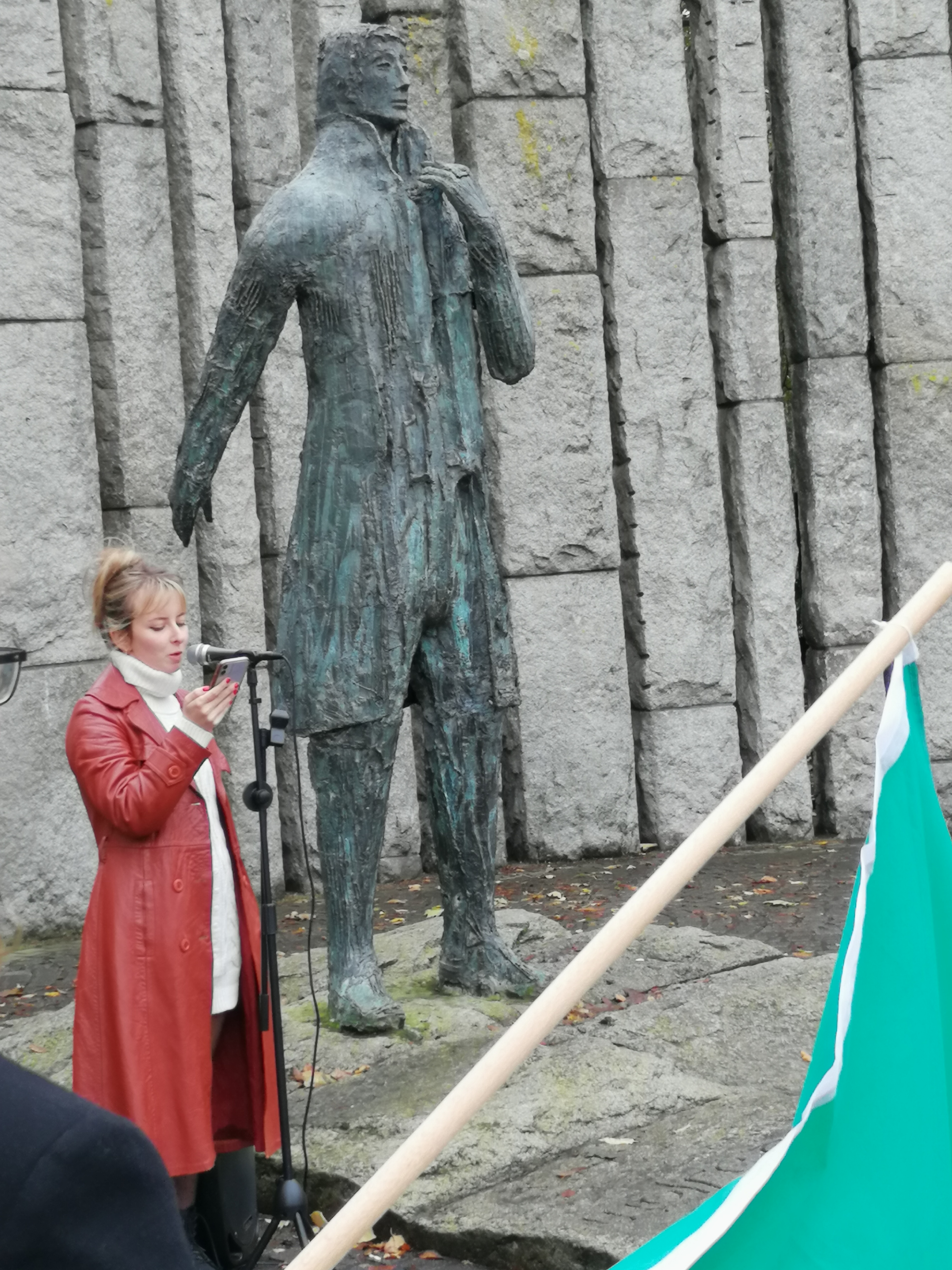
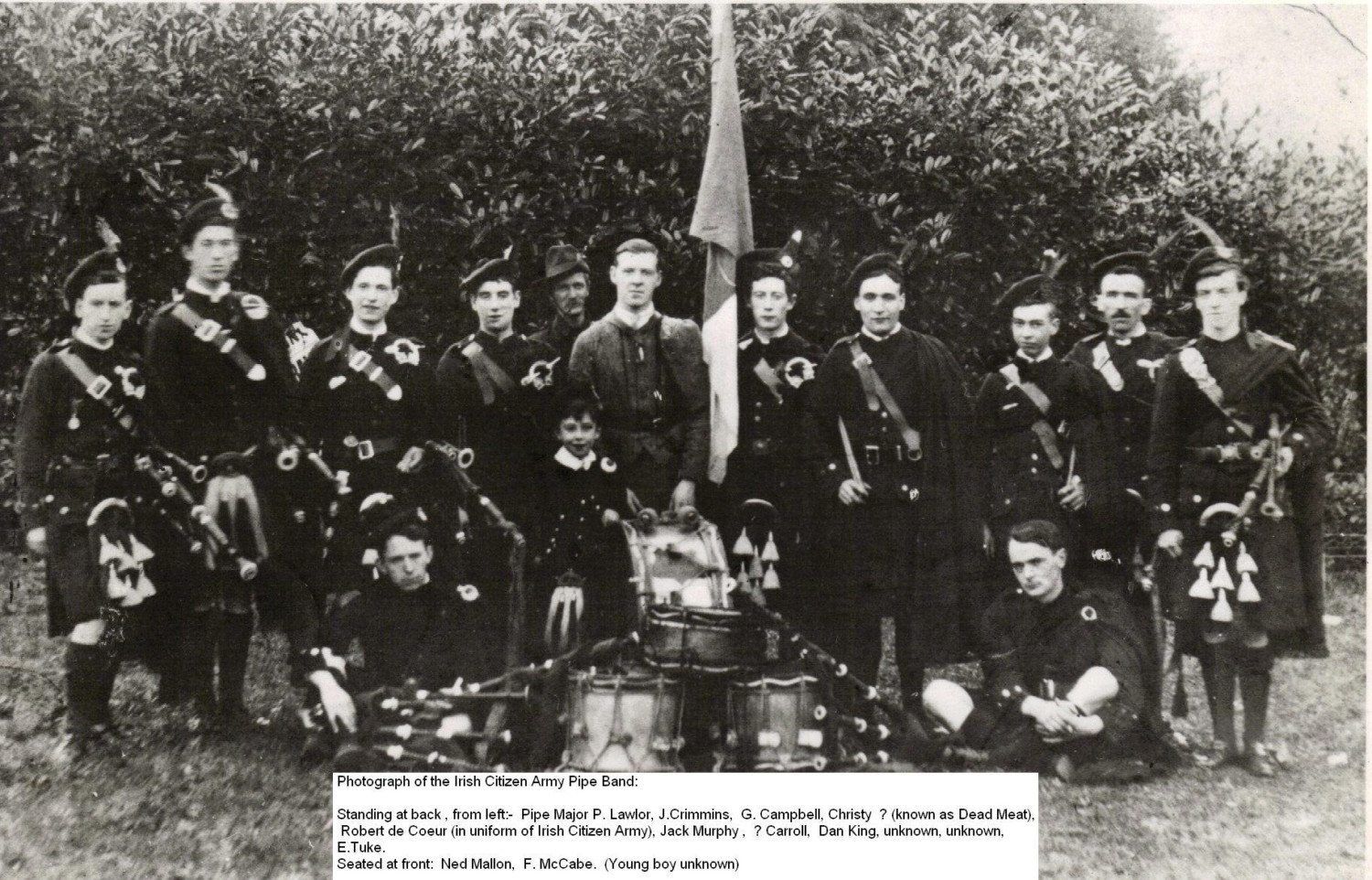
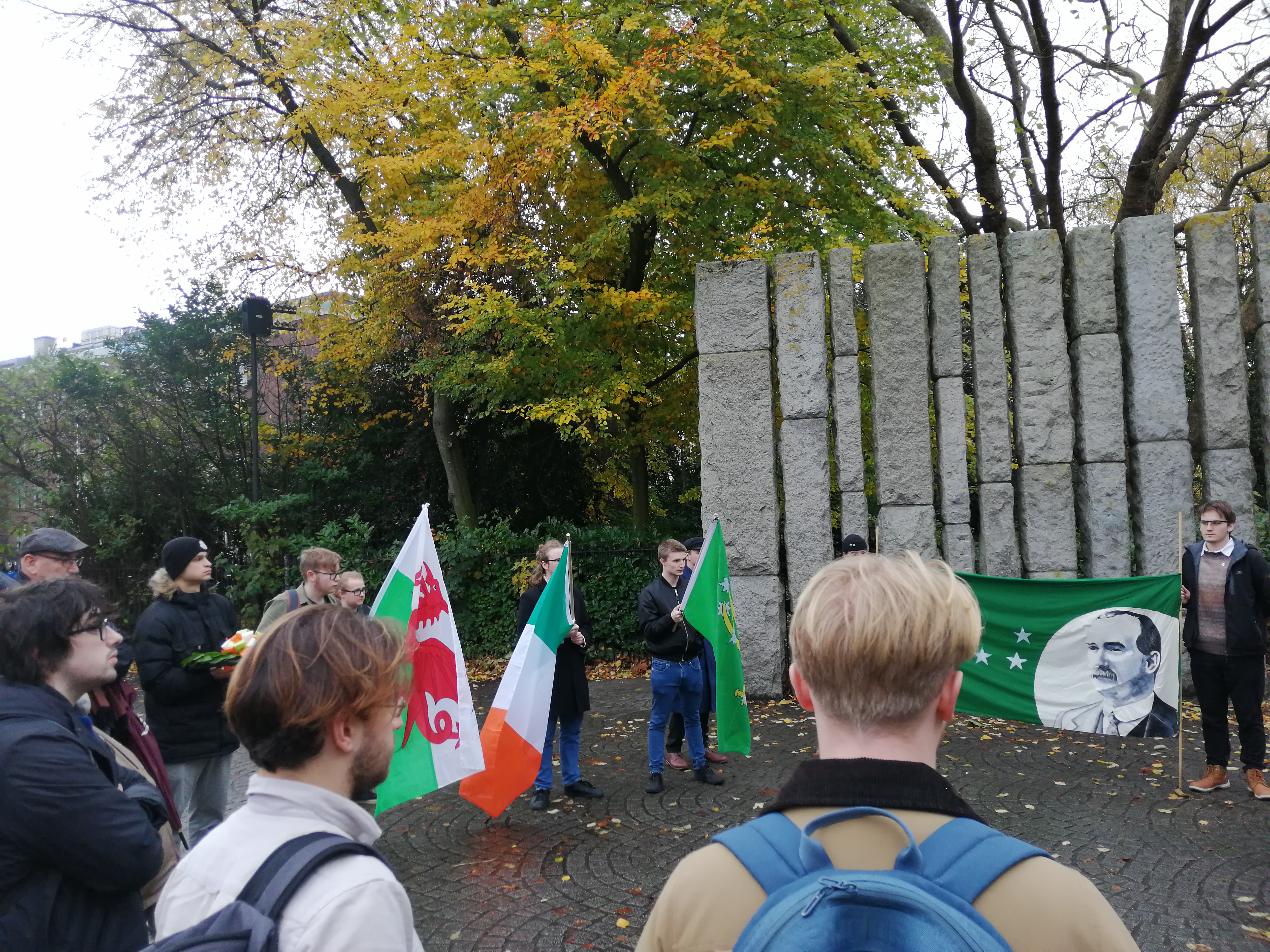
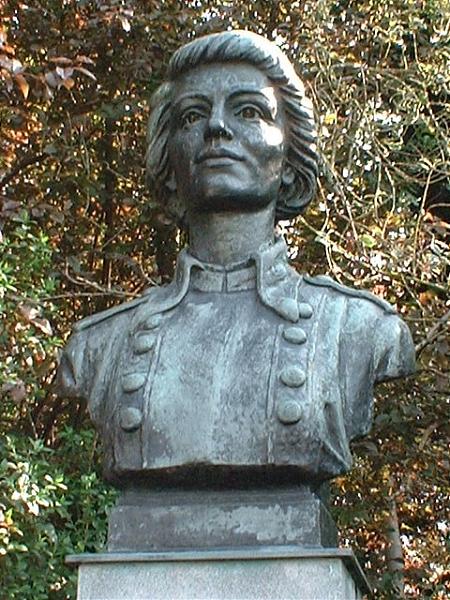
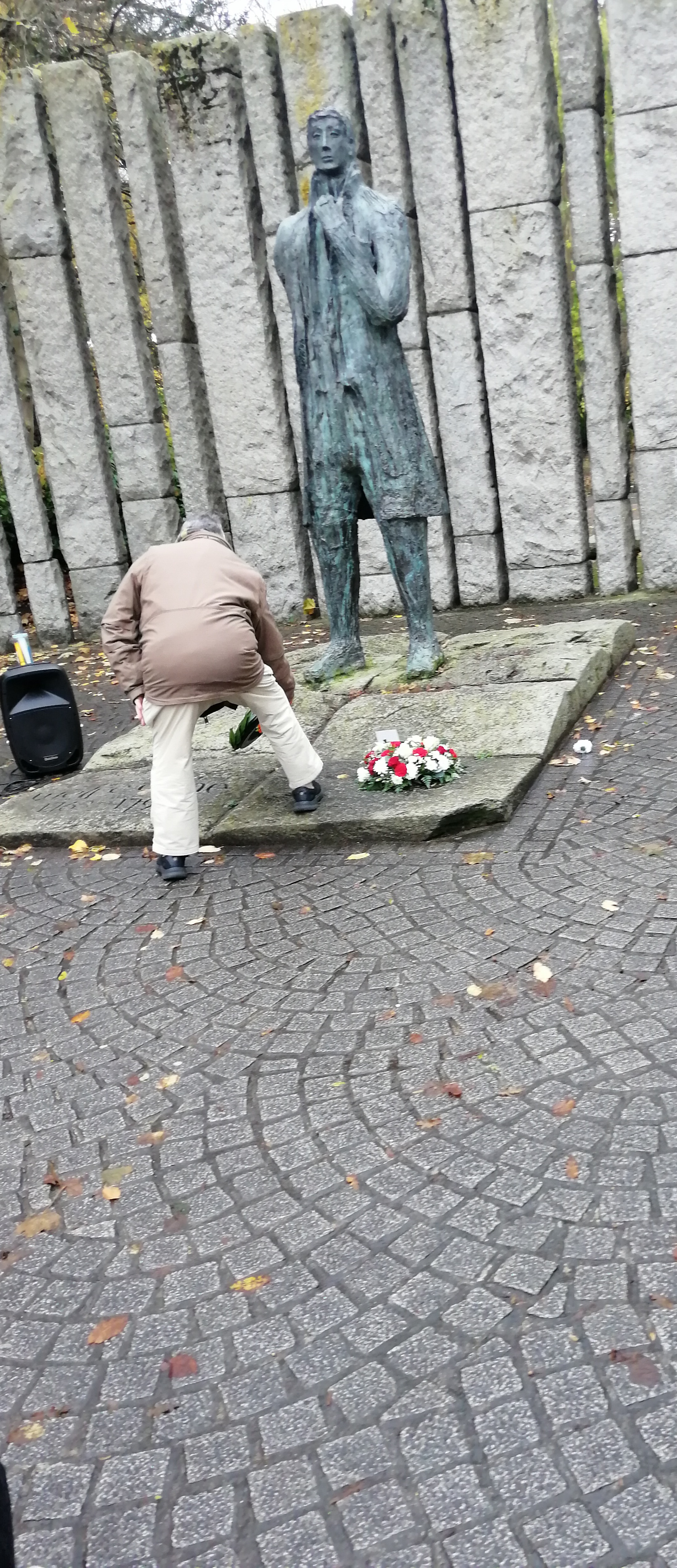
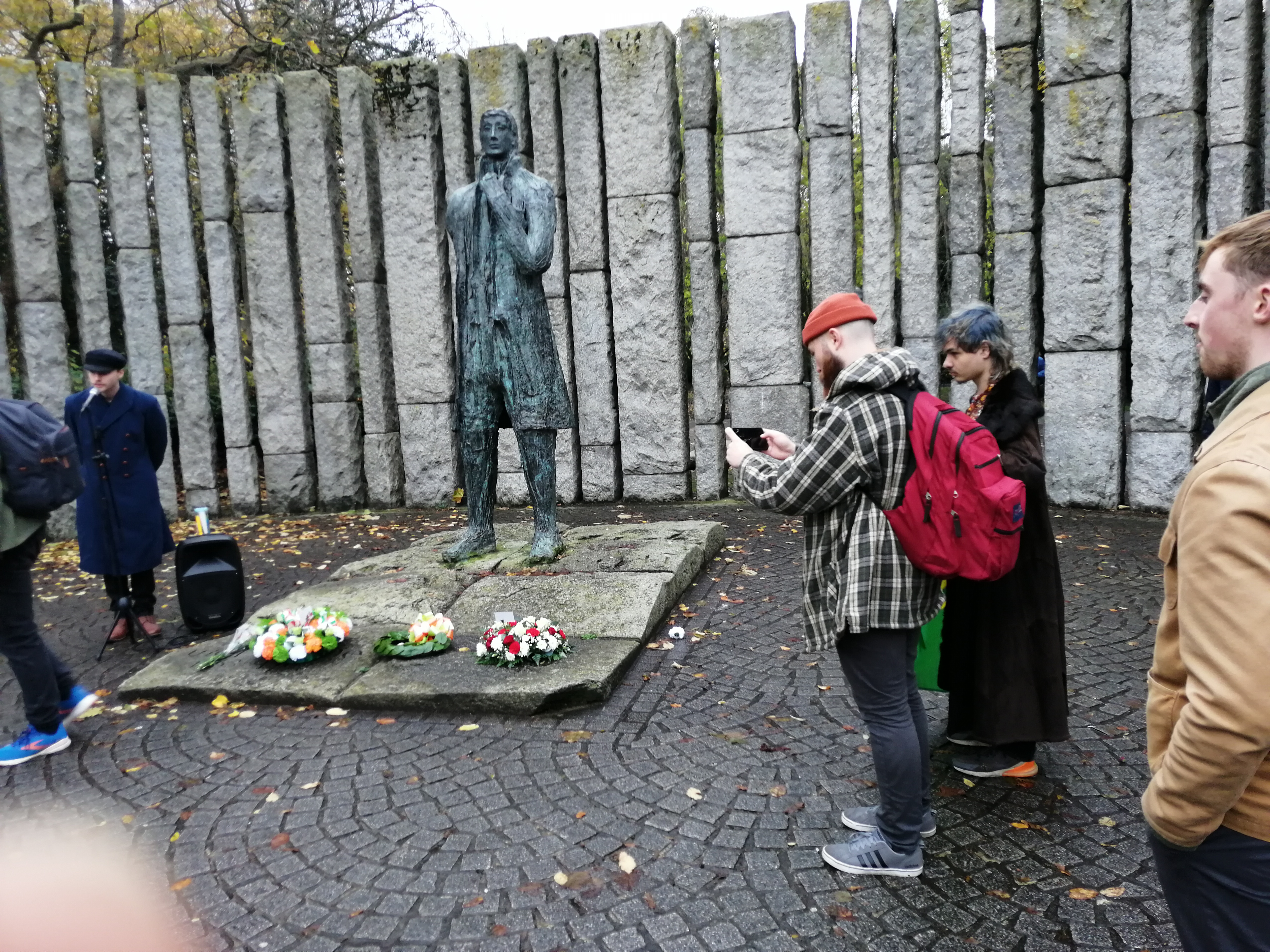
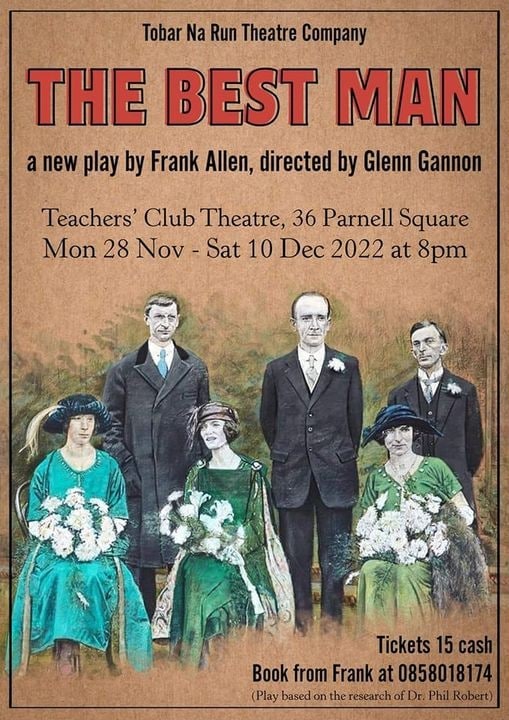
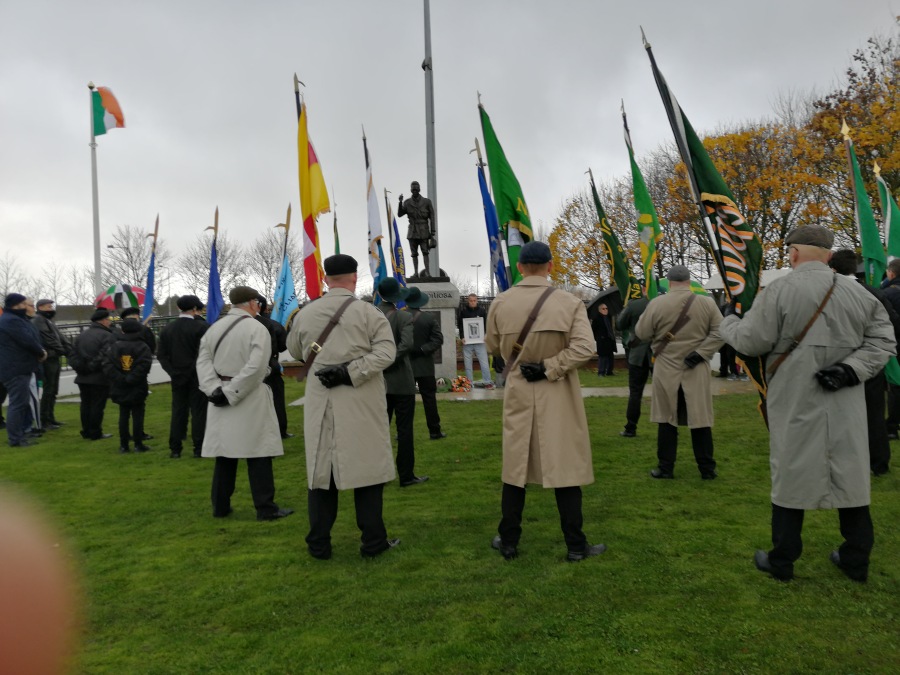
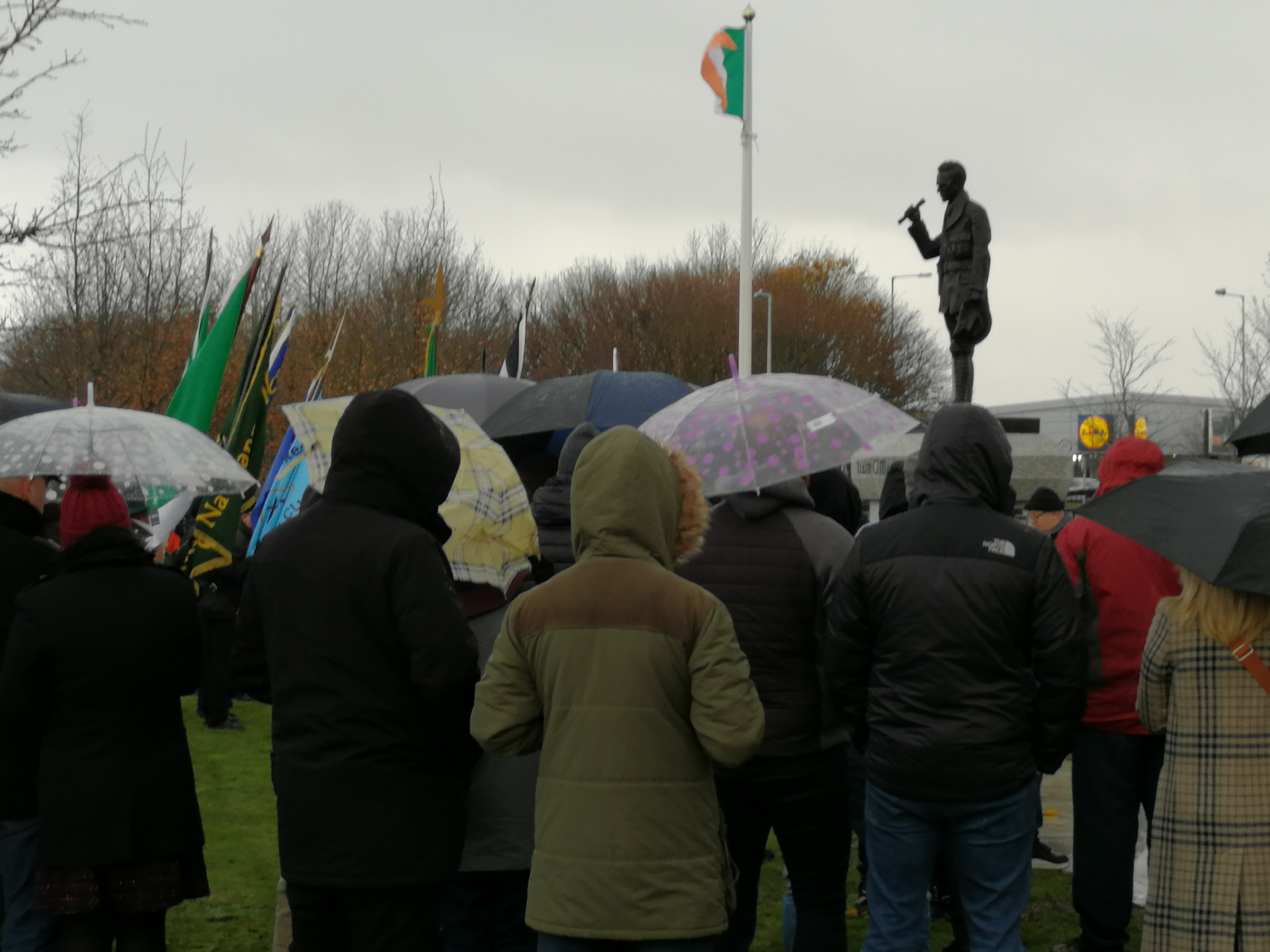
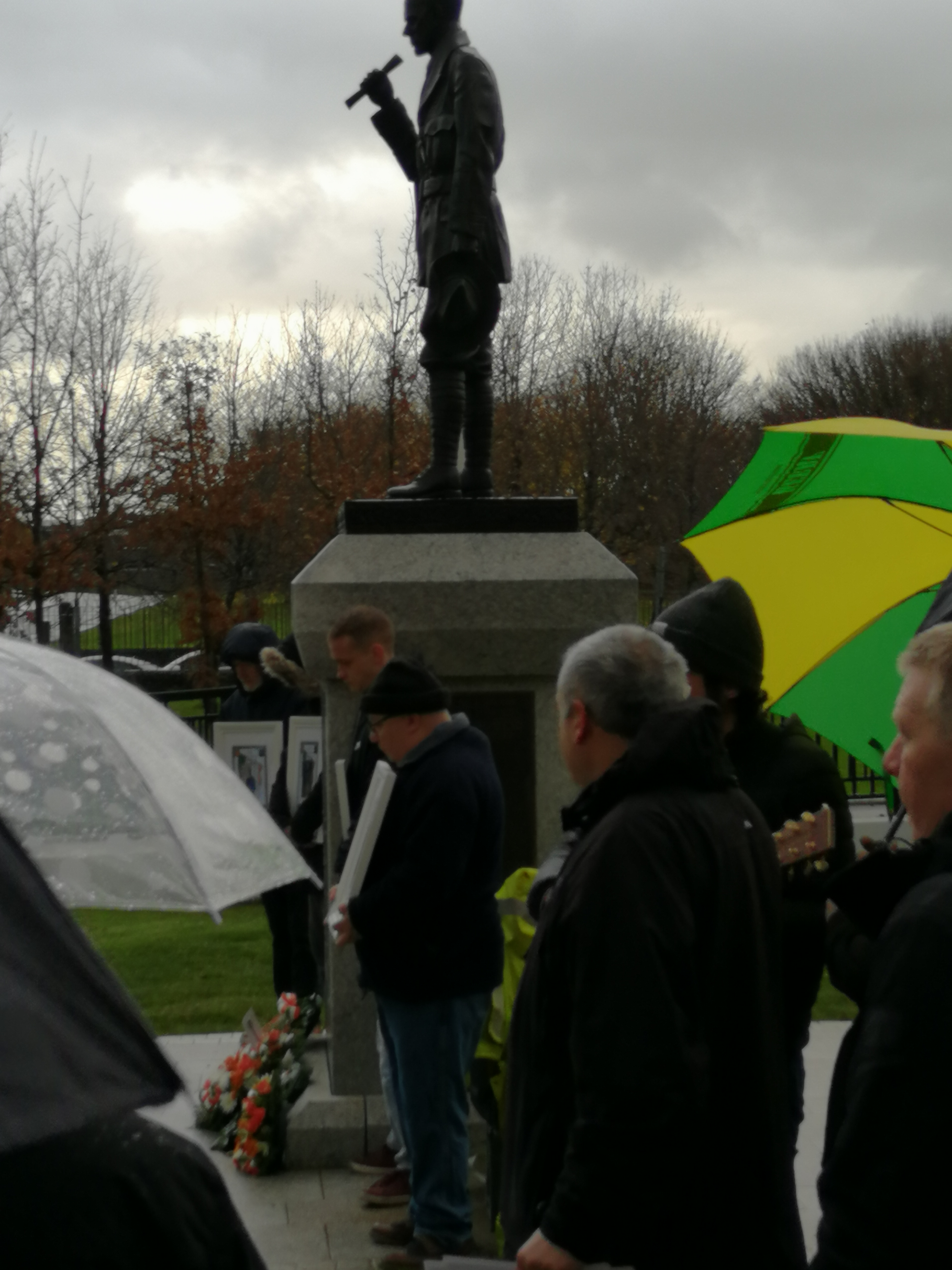
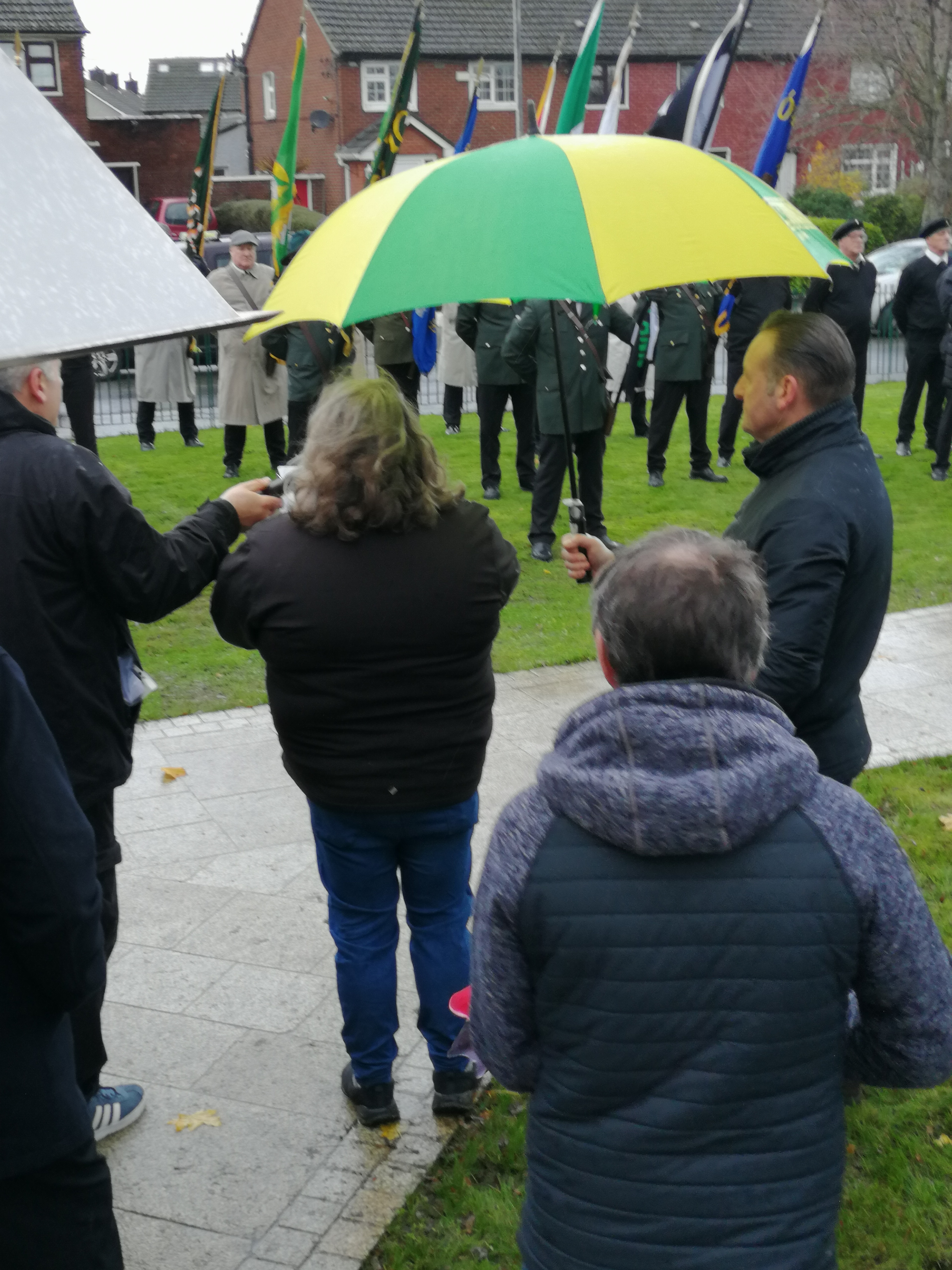
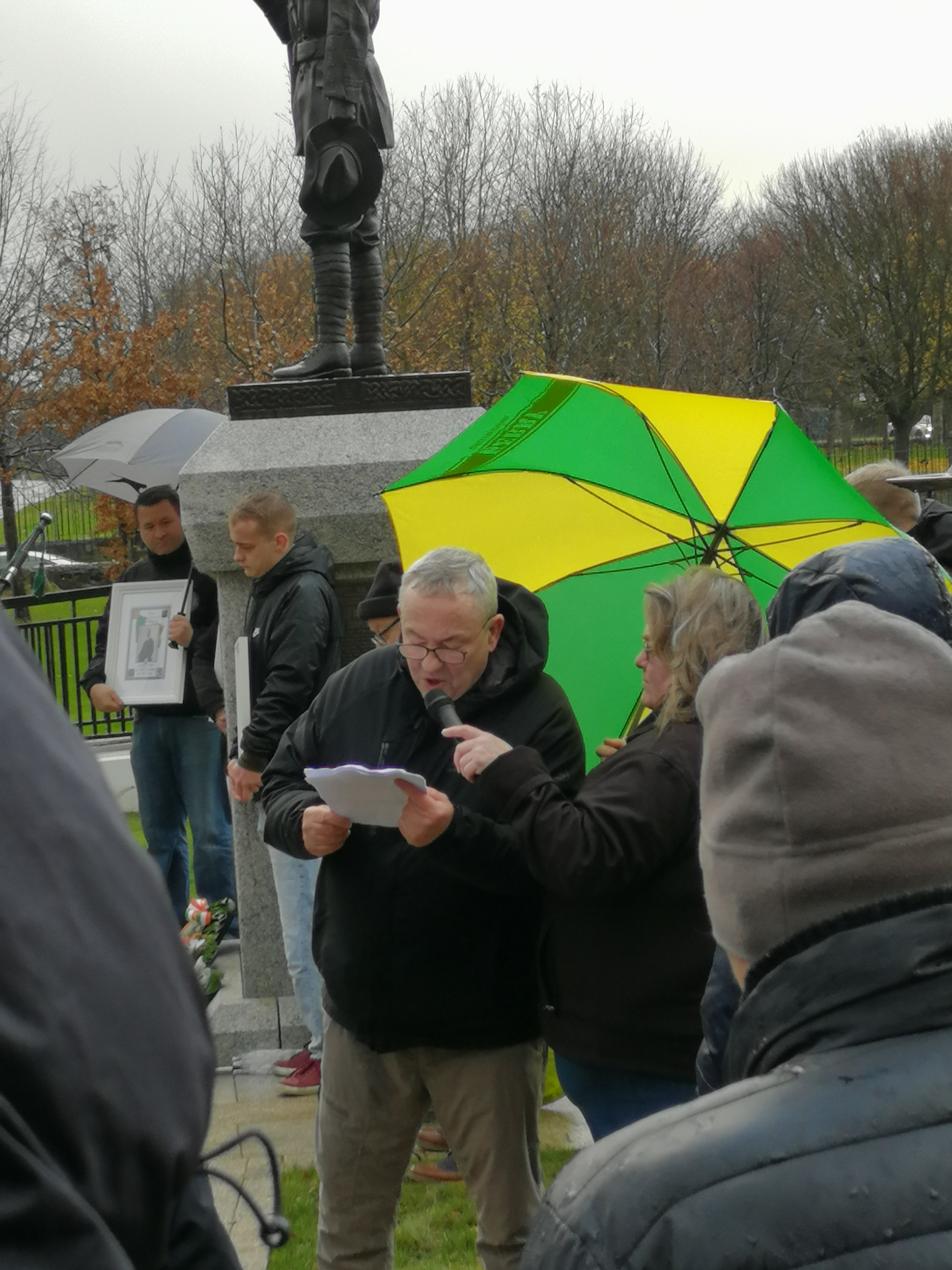
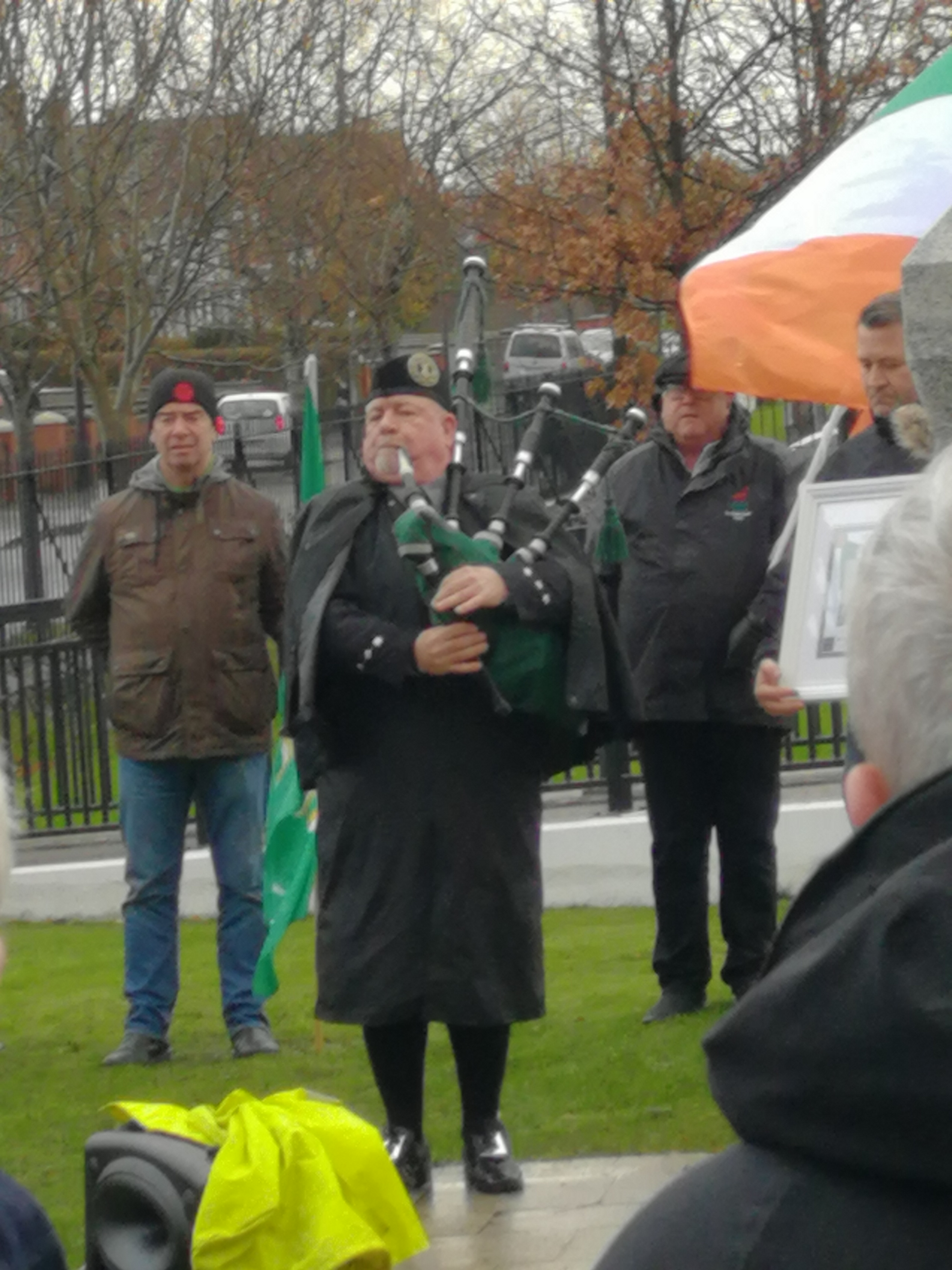
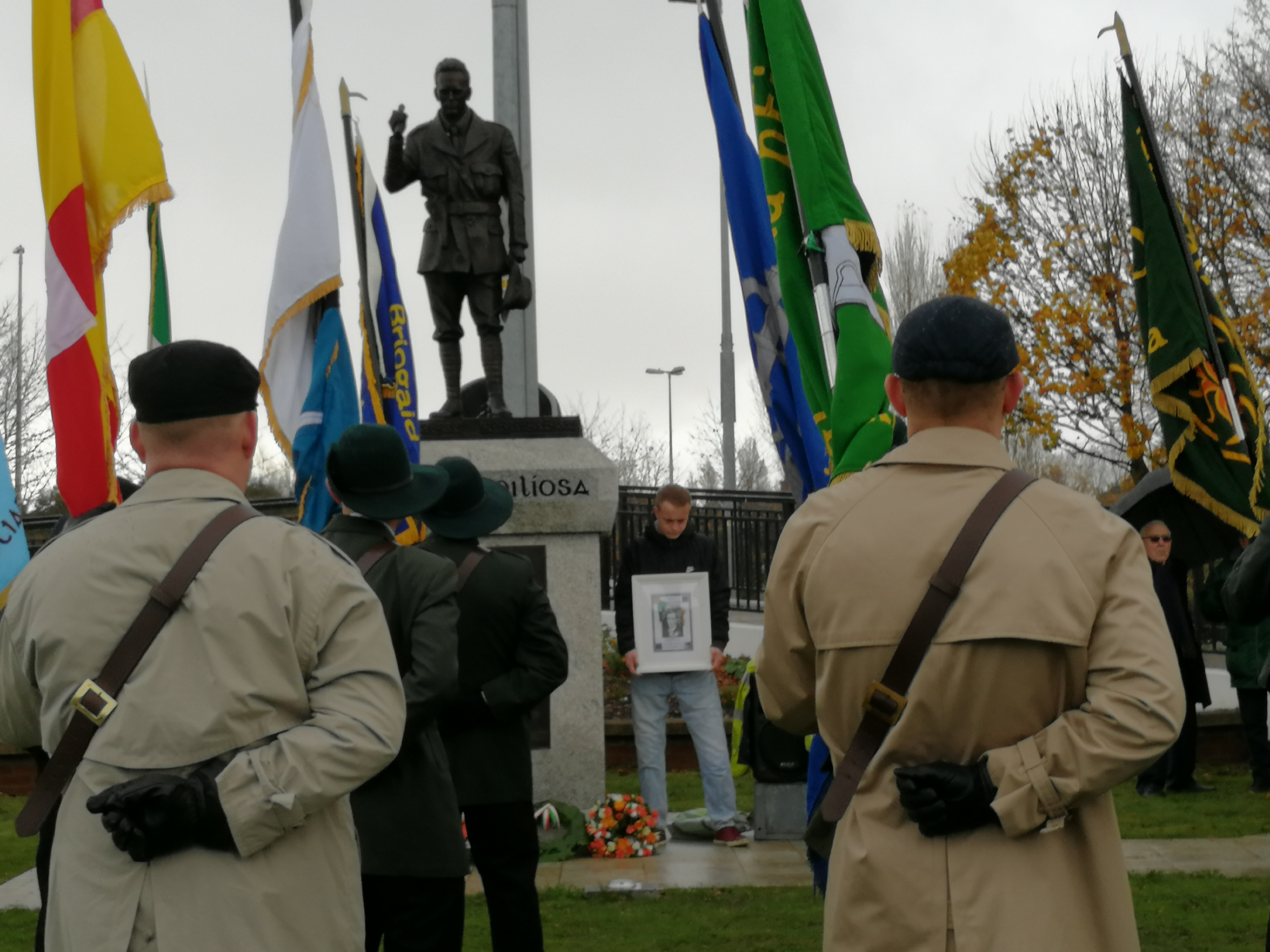
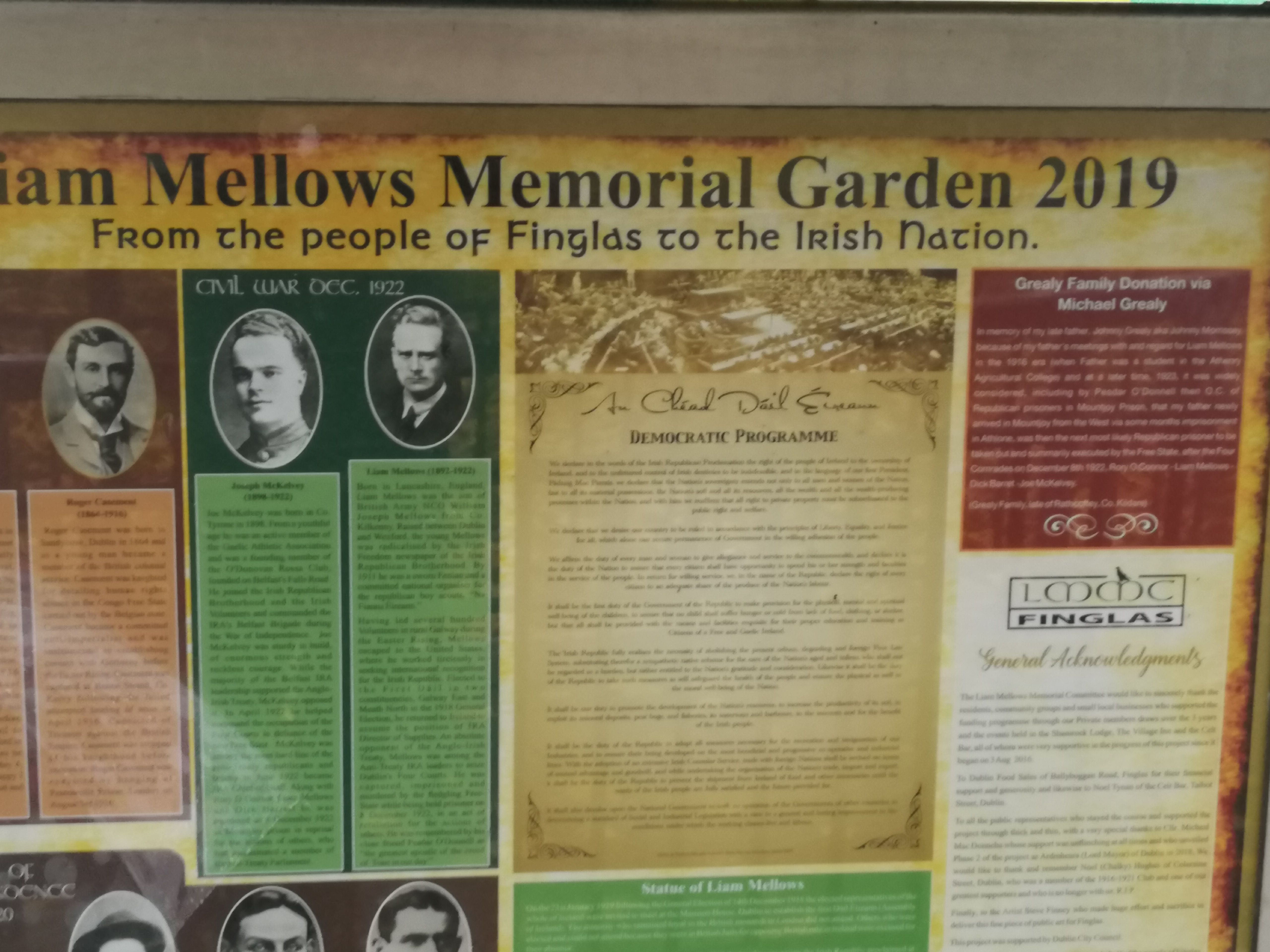
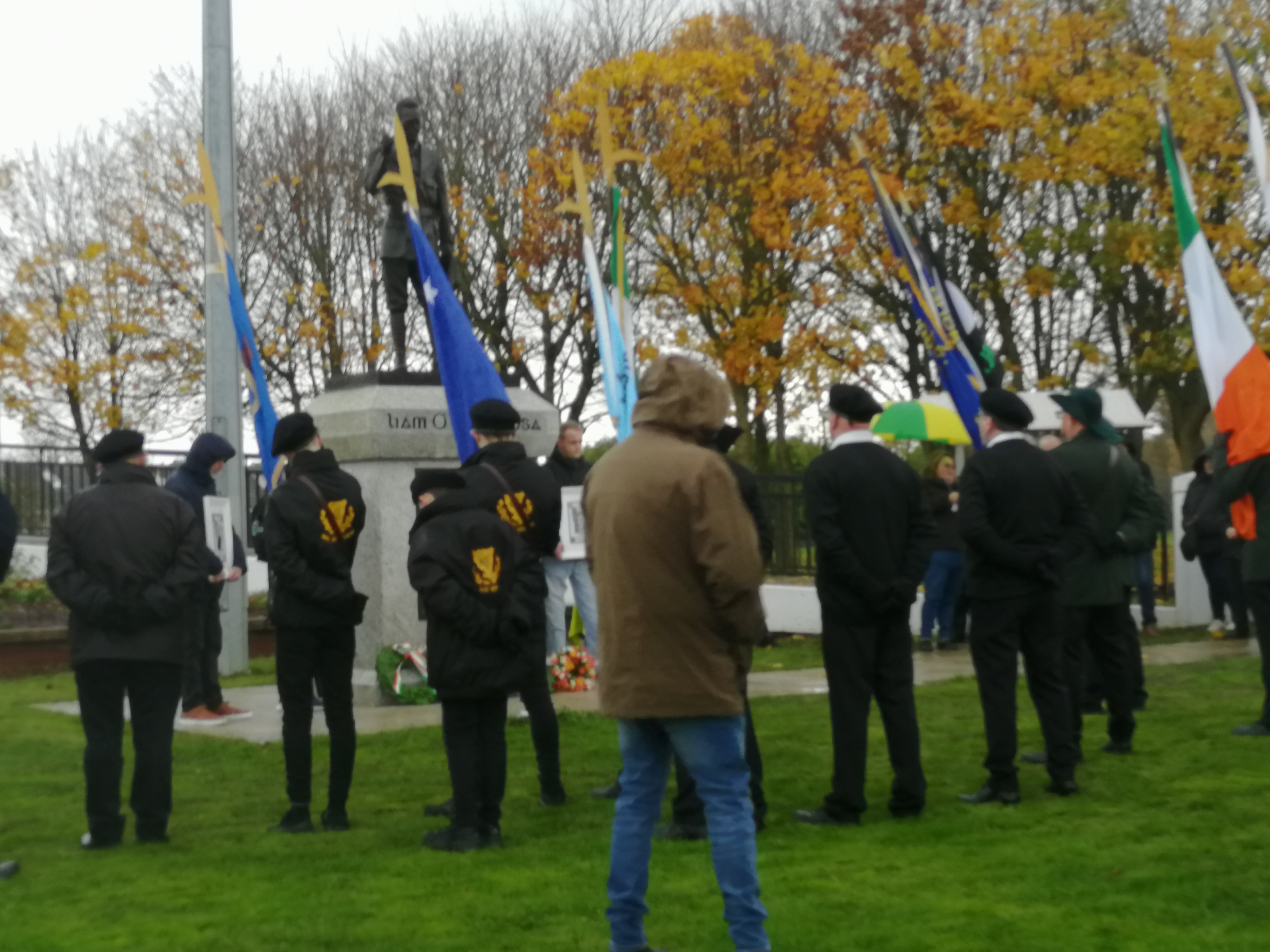
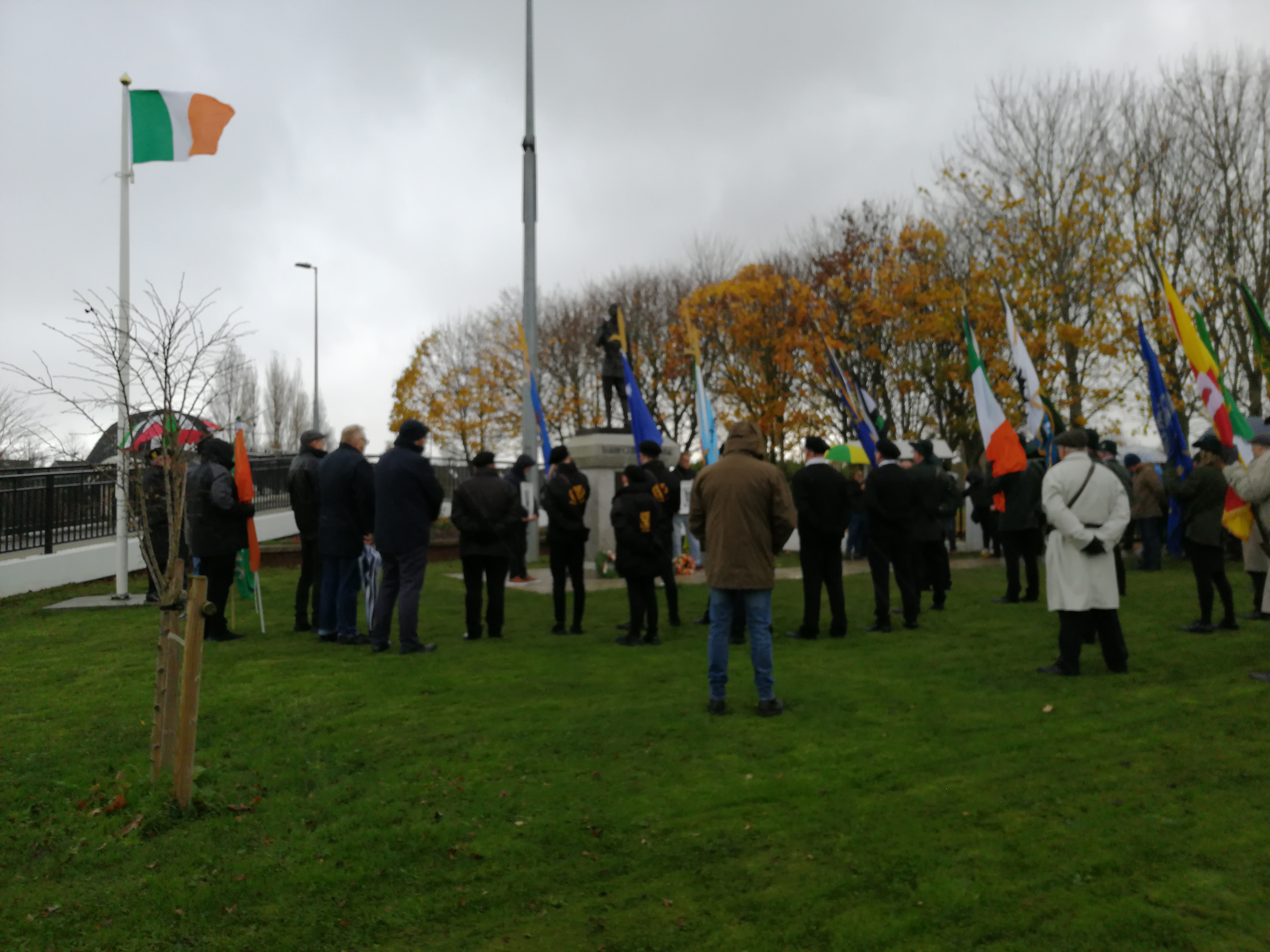
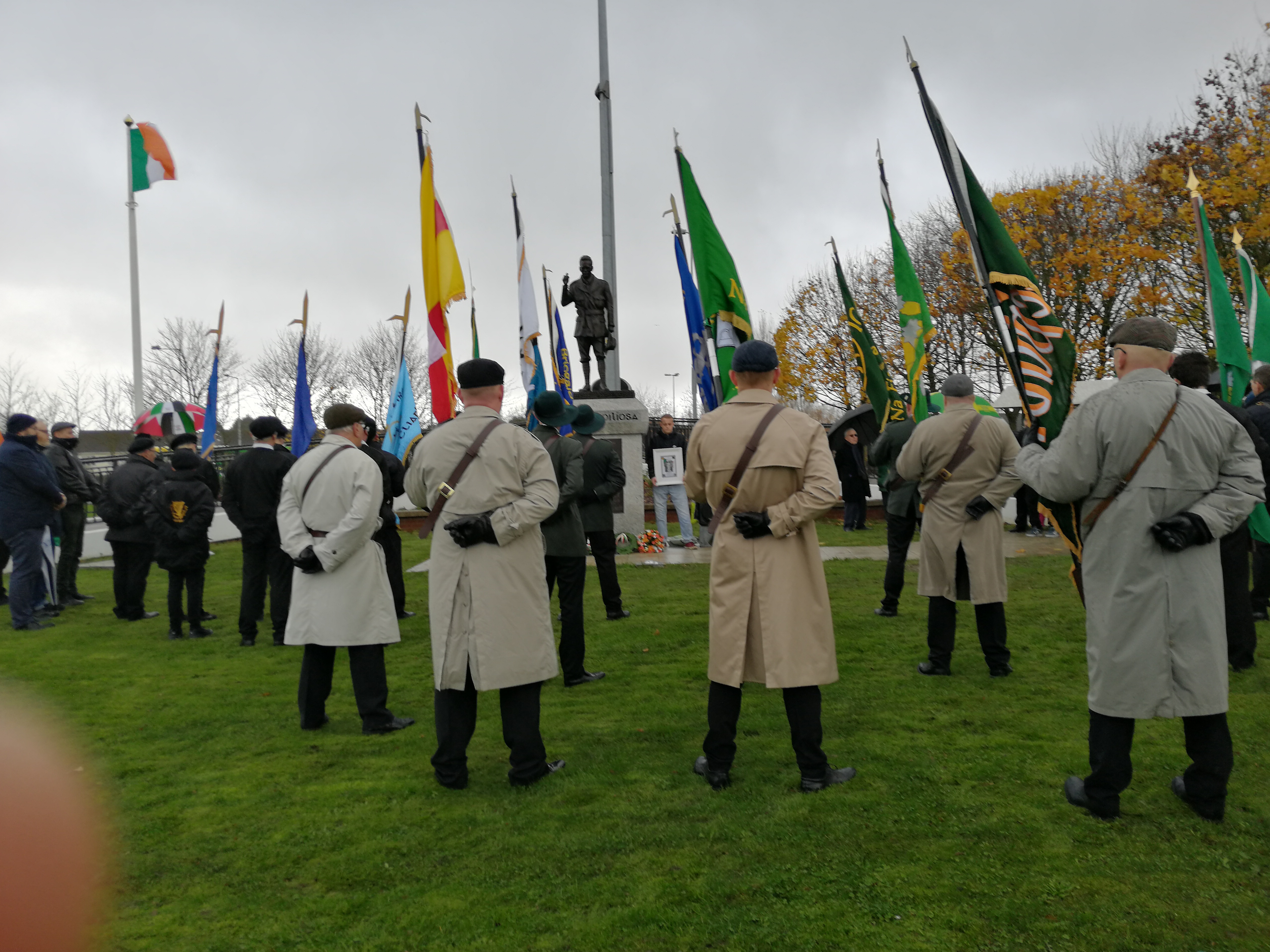
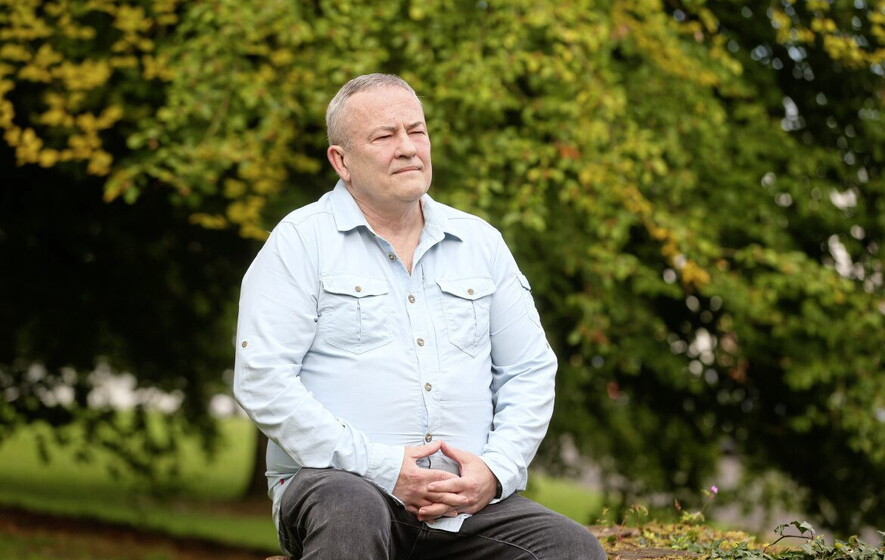
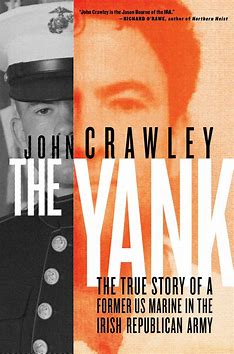


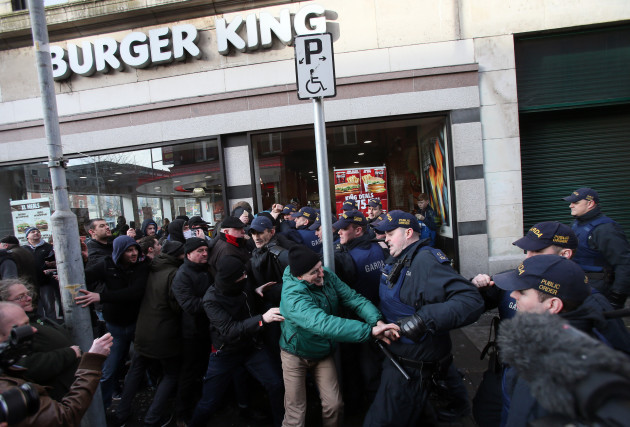


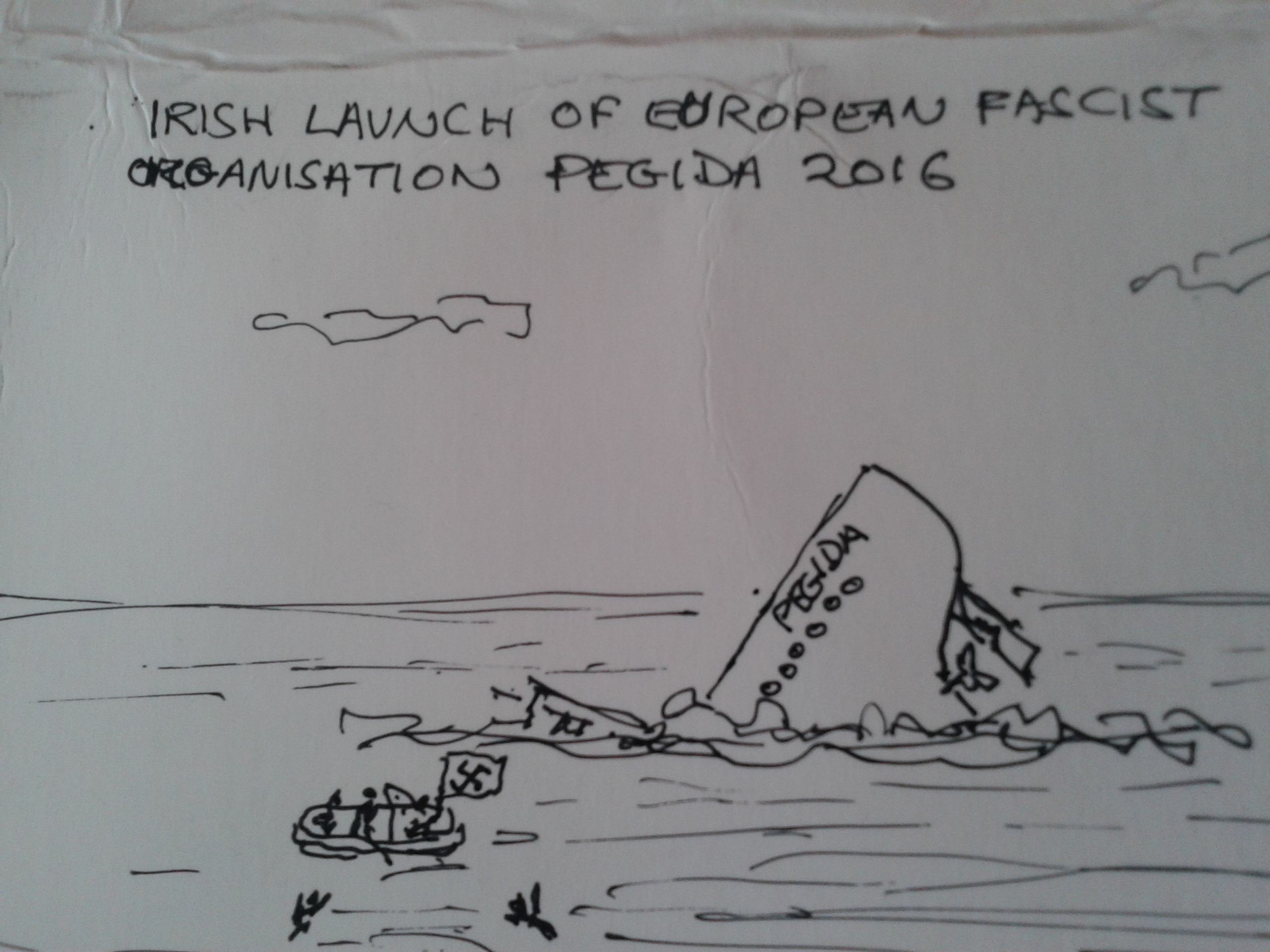
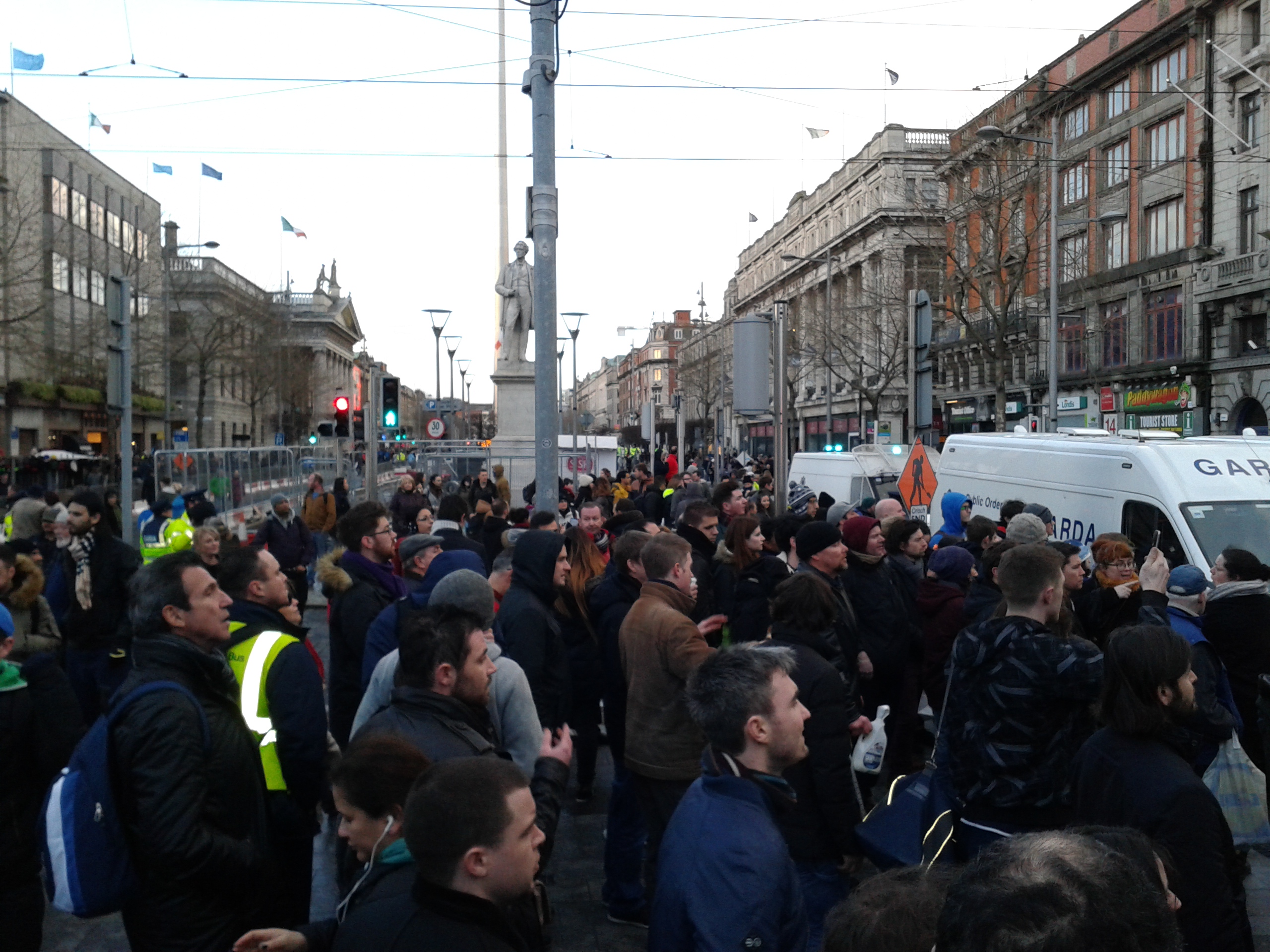




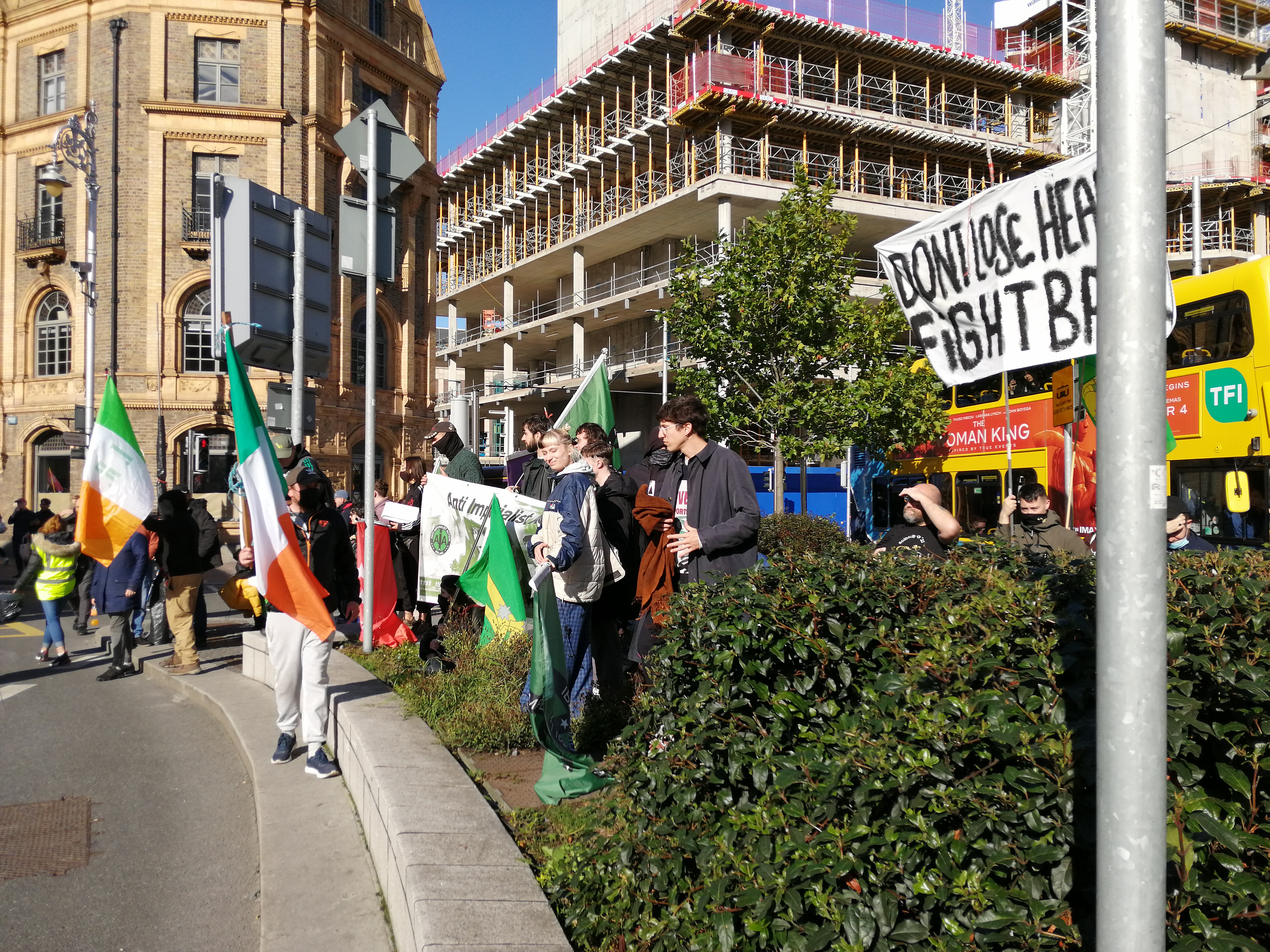
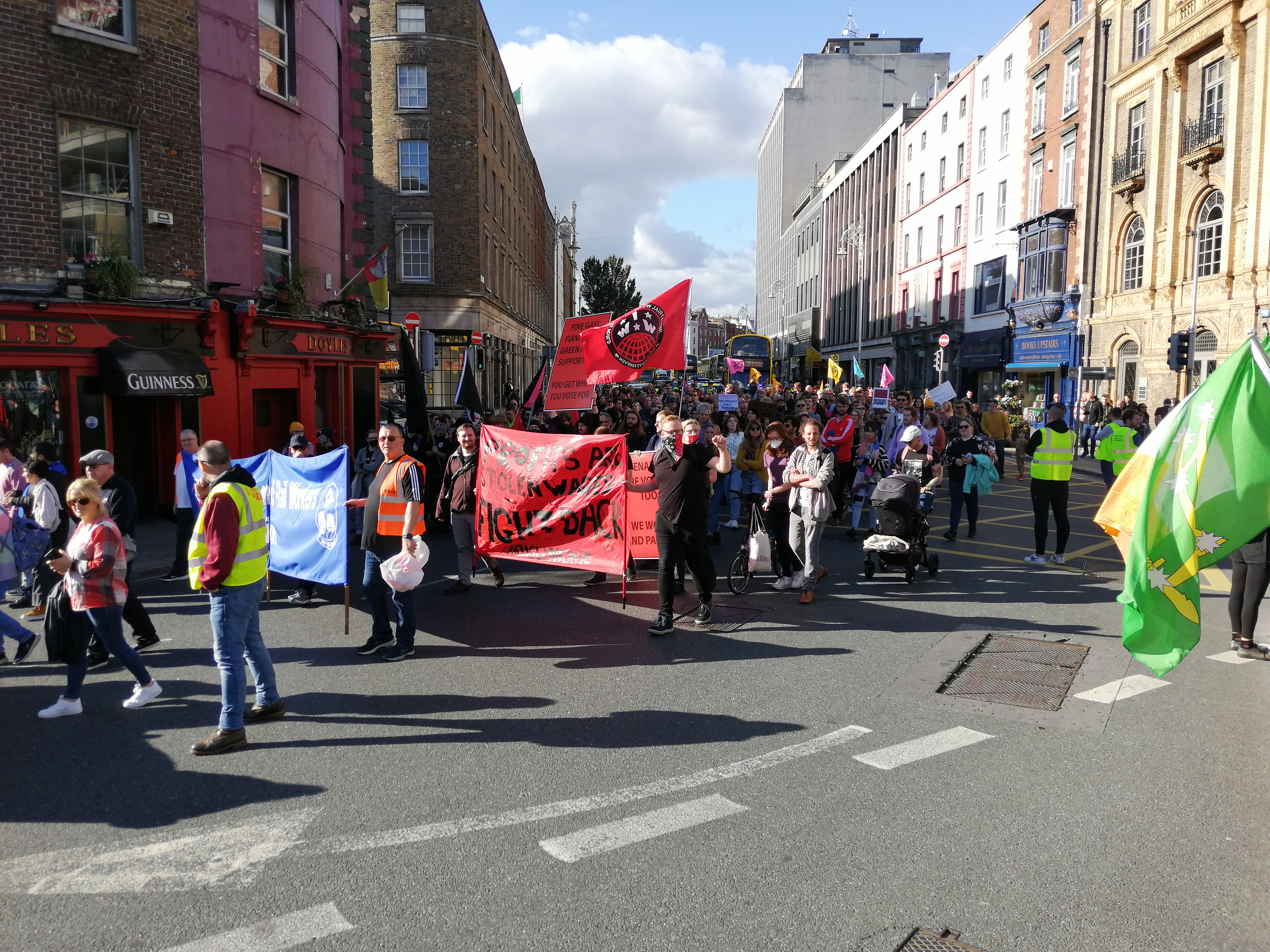


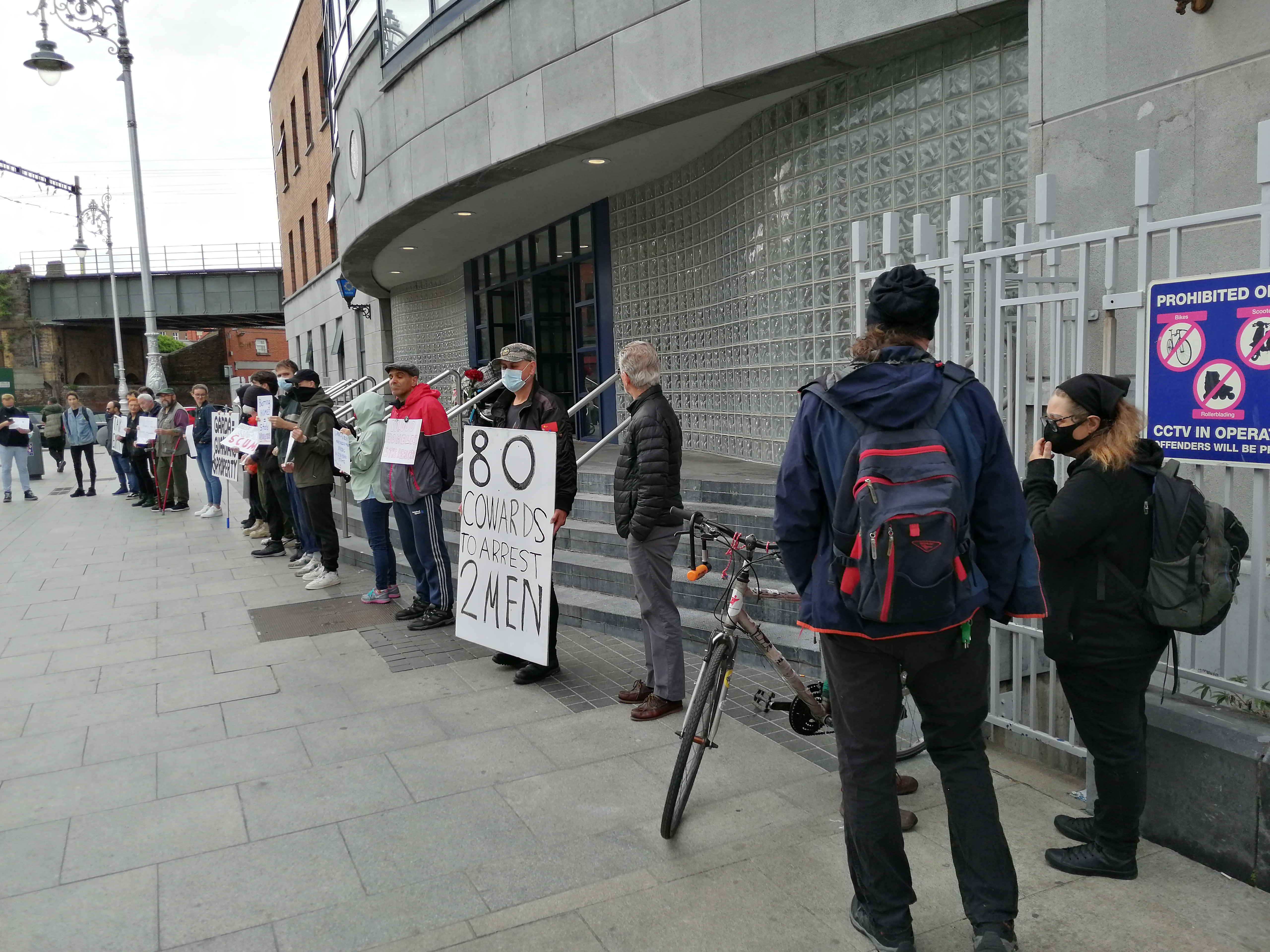
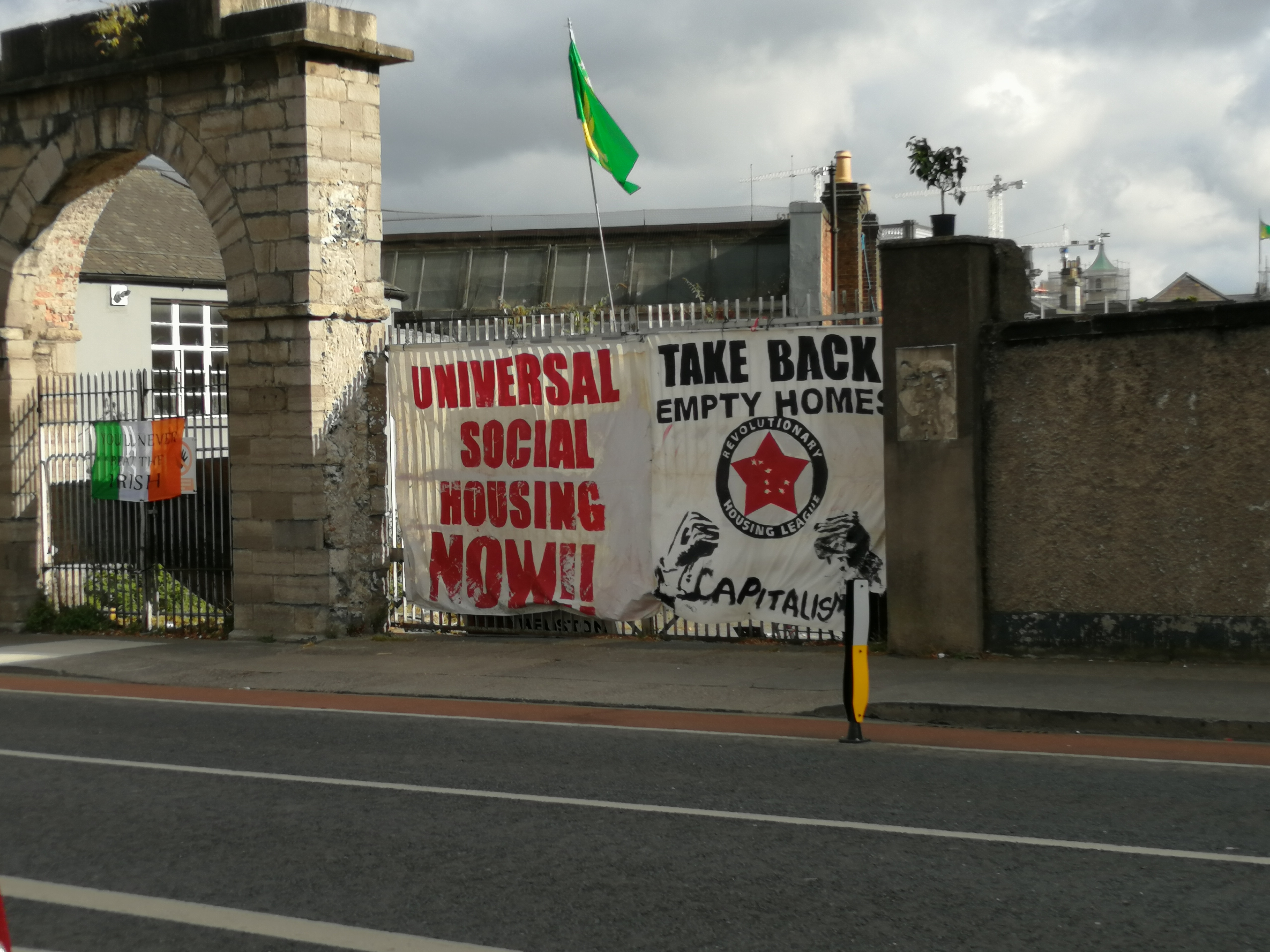



 rebelbreeze