Videos doing the rounds of social media sites show a brief intervention by Palestinians at a Sinn Féin-organised meeting in Belfast about Palestine followed by the party’s heavies evicting them to applause from many in the audience.
The event at the Europa Hotel on Thursday evening was intended, according to the party’s National Chairperson, “… as an opportunity to demonstrate that Ireland stands with the people of Gaza and the West Bank and to reiterate calls for an immediate ceasefire, and an end to the occupation.”1
Actually Ireland is already – except for the Unionists — well behind the Palestinians as shown by attendance at marches and opinion surveys. What is needed is a) clarity on what we are calling for and b) direct action to put the States and companies under greater pressure.
The video of the intervention I’ve seen began with an apology for interrupting the Palestinian Ambassador, Dr. Jilan Wahba Abdalmajid, as “a mouthpieceof the Palestinian Authority” which, the challenger said, is an undemocratic organisation which has not had an election since 2006.
Boos and cries of objection followed from the audience as the Palestinian asked to be listened to, pointed out that those doing the intervention were all Palestinians but the party’s security men were soon hustling them out and periodically trying to block the phone camera.
When people don’t want to examine the issues or are feeling guilty about them, it’s always tempting to blame the critics, suggest they’re dissidents, trouble-makers, etc. That way the pointing finger is turned around and the actual issues don’t need to be thought about.
Of course this time some SF supporters commented along those lines, accusing their critics of being Loyalists, or as they have in the past outsiders, ultra-leftists, intelligence service agents, dissidents, malcontents, trouble-makers … or just plain Utopians.
“MOUTHPIECE OF … AN UNDEMOCRATIC ORGANISATION”
The intervention from the floor was challenging but what of the content? Palestinian Ambassadors are appointed and employed by the Palestinian Authority which, though never intended as a government is acting like one. So “mouthpiece for the PA”? Blunt — but entirely accurate.
Palestinian Ambassador to Ireland of the undemocratic and corrupt Palestinian Authority at a Sinn Féin meeting (note SF President Mary Lou McDonald applauding in the background). (Sourced: Internet)
The PA “has not had an election in 18 years”? Accurate also – though they’re supposed to have one every five years. The last time there were elections in Palestine was 2006 and Hamas won overall throughout Palestine. However Fatah, the losers, refused to give up their seats.
In 2007 in Gaza, Hamas moved against Fatah and after a short struggle, took the seats to which the electorate had voted them. However, they chose not to do that in the West Bank, where the PA’s HQ is and where EU and USA money comes flowing in to Abbas and his unelected cronies.
The reason for not holding elections is that Hamas would almost certainly win again. Meanwhile, “democratic Israel” refused to recognise the Gaza administration or the elected representatives of the Palestinians while the US, EU and UK followed suit and ‘Israel’ blockaded Gaza.
The Palestinian Authority, as well as being undemocratic, deeply corrupt, unrepresentative and repressive2 is also actively colluding with the Zionist state and feeding its masters intelligence on the Palestinian opposition and resistance while it represses their supporters.
That’s what most Palestinians think about the PA and, as is widely known and even tacitly admitted by the USA3, whether in the West Bank or in Gaza, Palestinians have no confidence in the institution.4
Some of the comments on the circulating videos criticised SF’s bad management of the event, opining that the Palestinians should have been allowed to speak and then the meeting could have proceeded as the organisers planned and the challenge would have got little publicity.
True … but SF is used to throttling dissent inside its party or in the communities it controls and managing dissent – rather than crushing it — is just not its style.
In any case, is ‘bad management’ the main issue with regard to SF and Palestine? More important than supporting partition of Palestine, the institutionalisation of a Bantustan “Palestinian State” under the guns of the Zionists – and the PA’s collusion with those same Zionists?
The Provisionals weren’t always pro-Palestinian; though it might shock some people, they originally mirrored Irish society’s position of support for Israel, the perceived ‘underdog’ up to the mid-1960s, Hollocaust survivors (Zionists) who had fought the British police and army.5
THE PROVO LEADERSHIP AND PALESTINE
For a while pieces by a Fred Burns O’Brien apparently based in the USA were featured in the Provos’ newspaper but some time after he revealed himself as a Zionist he was ‘let go’, probably through internal pressure from those who thought the Palestinians were the natural ally.6
One of the problems with taking a political position, physically or ideologically, is that you might get called on it someday. This is why bourgeois politicians try to give themselves wriggle and even retreat room in their statements – lots of good-sounding bites with little content.
The Provisionals owe a debt to some Palestinians but it’s a very bad one. I don’t mean when they got some arms for the struggle7 but rather their following Fatah/PLO down the pacification process, for which Fatah and the ANC sent fraternal delegates to SF’s Ard-Fheiseanna (annual congresses).
Subsequently, Ireland and South Africa were used as promotional examples of the pacification process and their delegates travelled as kinds of sales representatives8 — but Palestine got dropped from 2000 onwards because of the Second Intifada, when Palestinians rejected Fatah’s deal.
You can’t sell a process as ‘working’ when the youth have overwhelmingly rejected it and are fighting the Occupation in the street.
“ORGANISE YOUR OWN EVENT”
One prominent member of SF in the British colony told the Palestinian protesters they should have organised “their own event.” Er – was this event not advertised as being for solidarity with Palestine? But ‘Palestinians not welcome’? Or only zionist-collaborating Palestinians?
Imagine if back in the day some political party had been having a meeting about Ireland and were inviting an Irish State or British colonial minister as a speaker, would anyone have been shocked to see and hear SF activists challenging or even heckling the speakers during the meeting?
Would we not be reading statements from SF talking about ‘no right of colonialists to represent the Irish people’ and about ‘censorship of Irish voices’?
Cartoon by DB.
Gerry Adams, former President of the party was quoted as saying the calls are “inconsistent” because they are not making the same call with regard to the UK though “the Brits are up to their neck in this” and what is important for SF in the USA is Irish-America.
But SF long ago accommodated itself to the colonialist “Brits”, including its royalty. Irish politicians don’t flock to London for St. Patrick’s Day. Anyway the primary financial and military supplier – and political backer of the Zionist state in the UN Security Council — is the USA.
Why is the diaspora in the USA so important to Sinn Féin but not the diaspora in Britain or in Australia? It must be because the USA is the “boss of the world” and pathetic Irish gombeen politicians think their diaspora gives them them some kind of weight with the imperialists.
What would really help with the Irish diaspora would be if SF were to address the Irish-Americans and ask them to push their political representatives to call for the USA to stop supporting genocide in Palestine.
But of course there is no chance of them doing that because 1) some Irish Americans oppose imperialism from Britain but support it from the USA; also 2) because Irish gombeens, the political class to which SF aspire, are pro-western imperialism.
INTERNATIONALIST SOLIDARITY AND THE HOME STRUGGLE
I have commented in the past that the level of commitment to internationalist solidarity is one of the indicators as to whether an organisation is going to carry through its own revolution or instead is going to finish up in liberalism and abandon its struggle, ending in actual collusion.
It seems some others have the same idea.
As she was being evicted, the Palestinian woman called out for SF not to attend Washington on St. Patrick’s Day and also shouted, though she may have meant it the other way around: “There will not be a free Palestine without a united Ireland!”
Electronic Intifada co-founder Ali Abunimah put it quite succintly: “If you can’t say NO to the White House in the middle of a genocide, then you’d never be able to stand up, not even for Ireland.”
2“The PA has actively helped Israel to keep tight control over the Palestinian population. Many perceive the body as a tool of the Israeli security apparatus, its US-trained forces not only targeting those suspected of planning attacks on Israelis, but also arresting union figures, journalists and critics on social media.” (Al Jazeera – see Sources)
3Hence the USA’s post-war plan for Gaza, as expressed by Blinken, is to have it run by a “revamped PA”, i.e one that might have some credibility among Palestinians.
4“Today, a staggering 87 percent of Palestinians in the West Bank and Gaza believe that the PA is corrupt, 78 https://en.wikipedia.org/wiki/King_David_Hotel_bombingpercent want Abbas to resign, and 62 percent believe that the PA is a liability.” (Washington Institute — see Sources).
5On 22 July 1946, Zionist militias bombed the King David Hotel in Jerusalem, in which the British Mandate administration had offices including its police intelligence department, killing 91: “49 were second-rank clerks, typists and messengers, junior members of the Secretariat, employees of the hotel and canteen workers; 13 were soldiers; 3 policemen; and 5 were bystanders. By nationality, there were 41 Arabs, 28 British citizens ….” Forty-six were injured. https://en.wikipedia.org/wiki/King_David_Hotel_bombing
6The same kind of pressure from the support base that caused the SF leadership recently to reestablish their ‘expel the Israeli Ambassador’ position that Mary Lou had announced they were abandoning.
7In 1977 a consignment of arms allegedly from the PLO bound for Ireland was seized by the authorities at Antwerp.
8To the Basque Country, Kurdish Turkey, Colombia, Sri Lanka, Philippines etc.
We, the public have been bombarded daily with lies and propaganda from the western mainstream media (wsm) and nowhere has this been clearer than since October 7th in relation to the Israeli state and the Palestinian people.
It would be useful to unpick some of the most often-repeated items.
For five weeks after the raid, until mid-December the figures given and repeated without question were 1,400 killed1 by Palestinians along with Zionist stories of Israeli babies being beheaded and mutilated and women raped, also repeated without question, challenge or investigation.
The “mutilated and beheaded babies” lie was repeated by US President Biden. That story has now been sunk: ONE Israeli baby died during the attack by hands and means unknown. The rape story has also been debunked and the family of one alleged victim revealed they were manipulated.2
“The Hamas incursion killed 1,200 and took 240 hostages.” This contains at least one lie and another doubtful item. The lie is in the number of Israelis killed by guerrillas and though censored in the wsm this is being widely discussed in the Israeli media, both liberal and right-wing.3
The number of Israelis killed may or may not be not so much in doubt but the issue is who killed them?
Undoubtedly Palestinian guerrillas killed some but, according to Israeli survivors some were also killed in crossfire battles and some deliberately by an Israeli tank firing a shell into a house where guerrillas were holding hostages.
According to some of the Israeli military involved, some were also killed by a commander calling a missile strike on their own position. Israeli helicopter gunships also fired on cars being driven away by guerrillas – almost certainly all those burned-out wrecks — and containing hostages.4
A “graveyard” of burned-out cars, reported post-7th October 2024, all more likely burned by Israeli helicopter Hellfire missiles than by the Palestinian raiders. (Photo sourced: Interneti)
If the number of the Israeli dead has been revised at least twice,5 how can we be sure how many were taken away alive? Of course, this is not such a great issue internationally but will be so for their Israeli relatives and friends who are awaiting and campaigning for their return.6
“The Hamas invasion launched the war on Gaza.” This is inaccurate reporting for propaganda reasons. Certainly the current genocidal bombing of Gaza was begun the next day by Israel but it carried out other bombing campaigns many times in the past and sometimes for months.7
Not only Hamas on October 7th but also Islamic Jihad guerrillas carried out the raid on that date. And some other Palestinians entered when they noted the gaps blown in the walls by the guerrillas.8 Also in resisting the Israeli forces since, there are a number of other Palestinian forces in action.9
In addition, the territory the guerrillas raided is occupied by Israel but belonged to the Palestinians and is claimed by them. How often do we hear or read in the wsm of Israeli forces “invading” areas of the West Bank or Gaza, a district they don’t even officially claim is theirs?
The presentation of news and information in this way is Zionist propaganda aided by the wsm, turning truth on its head to make it seem as though the Palestinians are at fault, the problem is one Palestinian resistance organisation, not necessarily other Palestinians and certainly not the Zionists.
“ … since the Hamas take over of Gaza” is another propaganda twist of the truth, hinting at an illegal and undemocratic coup. The truth is that Hamas won the Palestine Authority elections of 2006 throughout the territory.
The Palestinian organisation formerly in power, Al Fatah, refused to accept the results and later, after a short struggle with Al Fatah, Hamas took their elected places but did not press the issue in the West Bank, where Al Fatah continues to receive funding from the EU and the USA.10
“ … the internationally recognised Palestinian Authority …”11 is clearly another misleading phrase since a) it does not reveal the fact that most Palestinians despise it (which is reported by many observers) and b) that it has not held its scheduled 4-year elections since 2008!
The Second Intifada was a rebellion led by youth against the Oslo Agreement treason of the Al Fatah-led PLO (Photo cred: Abbas Momani)
“Israel claims to have killed 9,000 Hamas fighters but without providing evidence”.12 OK, so they say and it’s fair enough to report it. But shouldn’t an impartial media also report the claims of the guerrillas?
Apart from statements quoting statistics, there have been many videos from the resistance showing them blowing up Israeli tanks and armoured bulldozers by their rockets and with hand-delivered bombs. Claims of Israeli cover-up of casualty figures pop up frequently among commentators.
Also, if Israeli sources are claiming killing 9,000 fighters13 when the overall death toll had passed 25,000, is that not an admission of killing at least 14,000 civilians in three months? Why is the western mass media not making that simple subtraction and publicising its conclusion?
The Gaza health ministry “does not distinguish between military and civilian casualties”14 is quoted in almost every single wsm report listing Palestinian casualties.
The bombardment on our minds by the western mass media. (Cartoon: D.Breatnach)
What is the purpose of this except to allow the reader to infer that maybe most or a heavy proportion of the dead are not civilians? This is nearly always in the report alongside the fact that most of the dead are women and children (therefore without any question civilians.)
A line being repeated in the western mass media more recently is also profoundly misleading: “The Palestinians want a state to include the West Bank, Gaza and parts of Jerusalem.” How does the wsm know what the Palestinians want? Have they carried out a survey?15
In the Oslo Accords, the Al Fatah-dominated PLO agreed to a two-state arrangement, i.e one to be Zionist-run and the other run by Palestinians. The area on offer to the Palestinians composed less than 40% of the original Palestine, much unproductive land and the least accessible water.
However, since 2000, the Second Intifada expressed a clear rejection of Al Fatah which was even more clearly the case with their replacement in the 2008 Palestinian Authority election results. The second-largest organisation in the PLO, the PFLP wants a unitary democratic state.16
The Second Intifada was a rebellion led by youth against the Oslo Agreement treason of the Al Fatah-led PLO (Photo cred: Gallo/ Getty)
All the imperialist states, including the EU, USA and UK, along with the capitalist Arab states support the two-state “solution” (sic) for Palestine which, apart from being fundamentally unjust, is likely to store up trouble for the future — as indeed it has in Ireland.17
2https://mondoweiss.net/2024/01/family-of-key-case-in-new-york-times-october-7-sexual-violence-report-renounces-story-says-reporters-manipulated-them The immediate purpose of the Palestinian raid was clear: to kill enemy military and take prisoners for exchange for Palestinian prisoners being held in Israeli jails. Quite apart from any question of morals or morale among the guerrillas, the other type of crimes of which they were being accused were clearly impractical in the timescale and would also have given the Zionists and wsm valuable propaganda material against the guerrillas. They clearly did not carry out those crimes but they were accused of them anyway and the lies repeated again and again.
6As late as early this month, one believed hostage was confirmed not captured but killed https://www.bbc.com/news/world-middle-east-67053011, i.e probably one of those bodies incinerated in a car by Israeli Hellfire missiles from helicopters and only recently identified.
9Palestinian Front for the Liberation of Palestine, Jenin Brigades, Lion’s Den …
10Yasser Arafat’s Al Fatah party lost the 2008 elections because of their corruption and because of their agreement to the Oslo Accords giving them a kind of state to run through the Palestinian Authority but with no right of return for the Palestinian refugees. The youth rose up in the Second Intifada (2000-2005), against the Israeli occupation but also against Al Fatah misrule and collusion with Zionism. The Al Fatah control of the PA’s offices in the West Bank is in defiance of the 2008 election results but the EU and USA don’t mind sending them the money for the PA.
16And Hamas stated that they did not invade Israel on October 7th but rather “entered into a part of Palestine”.
17Ireland, like Palestine, was occupied by Britain and ruled as one country. In 1948, with imperialist support, Zionist settlers seized some of Palestine for a ‘Jewish State’ and occupied more of it in 1967. Ireland was partitioned by Britain in 1921, the creation of a sectarian colonial statelet alongside a neocolonial state, which led to a civil war 1922-1923 and a number of guerrilla resistance campaigns since.
We need to be careful when elevating people from our ranks to the status of heroes – especially if they are alive and can renounce or betray the principles they originally fought for.1
And we have the right to be suspicious when those heroes are also acclaimed by the capitalists and imperialists, those who are certainly not our friends. But most of all, it is by their fruits that we can best evaluate people, whatever their past actions.
The society bequeathed after years of heroic struggle to the South African masses is broken. Housing and homelessness crisis,2 unemployment, poverty,3 prostitution, lack of medical care, inadequate sanitation and soaring crime, including violent crime – is not what the people fought for.
And this is occurring in a country rich in natural resources4 which are being extracted daily by imperialism, while the few on top — the earlier white settler bosses now joined by the corrupt black bourgeoisie – live in luxury.
(Image sourced: Research Gate)
CRIME & POLICING
Anton Koen, a former police officer who now runs a private security firm that specialises in tracking and recovering hijacked and stolen vehicles believes that “It’s not getting better, it is getting worse”, with the murder rate the highest it’s been in 20 years.
(Photo cred: AP)
In crime-ridden societies, the poor suffer the most and are of course also recruited into crime.
There were 27,494 killings in South Africa in the year to February 2023, compared with 16,213 in 2012-2013. South Africa’s homicide rate in 2022-2023 was 45 per 100,000 people, compared with a rate of 6.3 in the US and around one in most European countries.
Those who can afford it, hire private security, which is a booming business with South Africa’s security industry — one of the largest in the world, with more than 2.7 million registered private security officers registered in the country, according to the regulating agency, the PSIRA.5
“People with money make up a very small percentage of South Africa, said Chad Thomas, an organised crime expert who has worked more than 30 years in police work and now in private security.6
“That means that the vast majority of South Africans don’t really benefit from this security industry … If you live in a traditional township environment, or if you live in an informal settlement …7 security patrols in those areas are few and far between because they don’t have paying customers.”
Thomas, like many, ties the high levels of violent crime in South Africa to anger over the country’s deep problems of poverty.8
Private security companies are paid a monthly fee to patrol neighbourhoods and for providing armed response to their clients’ alarm systems. Tracking and car recovery can be part of the service, often resulting in getting involved in high-speed chases of car thieves and hijackers.
According to the PSIRA, the number of security businesses in South Africa grew by 43 per cent in the past decade, while the number of registered security officers has increased by 44 per cent. Meanwhile there are 150,000 police officers for the country’s 62 million people.
It is hardly surprising that the SA police force has difficulty in recruiting numbers. It is a force used to violently repress people9 and culpable in the worst massacre of working people in South Africa’s modern history, killing 40 striking miners over a couple of days.
That slaughter occurred in 2012 at the British-owned Lonmin platinum mine in Marikana, when miners wished create a new union and to leave the National Union of Mineworkers which, they said, was more in favour of their employers than the workers.10
Cyril Ramaphosa, the millionaire ex-President of the NUM was widely suspected of having organised the massacre and he’s now President of the ANC and of the South African Government. At the time, Jacob Zuma was President, now in the process of being tried for financial corruption.
But Mandela was still alive and at liberty when the massacre occurred and did not condemn the atrocity nor those responsible. Long-time anti-apartheid campaigner (and Mandela’s friend) Bishop Tutu once famously commented that “The ANC stopped the gravy train – long enough to get on it.”11
IMPORTANT
Is it important whether this person or that were truly the heroes they are reputed to have been? I think it is, not only because we tend to erect them as models for our behaviour but also because their lives and their choices present us with historical lessons.
The South African regime during the struggle was a white European settler state and like all of those, undemocratic and racist too. The masses rose up several times against it but people did not risk beatings, torture, imprisonment and death merely for the right to vote.
The struggles were so strong and the minority settler regime so emphatically opposed to reforms that its imperialist partners felt it vulnerable to revolution. They eventually convinced the regime to enfranchise the majority black population.
But what if the black masses went on kick out the imperialists?
The change had to be managed and the leadership of the ANC, the NUM and the Communist Party of South Africa proved willing to control their supporters. However, something else was needed, as in similar circumstances: a known face, a hero, to be the figurehead before the masses.
Representative of USA, chief imperialist country and Nelson Mandela after latter’s release.
Mandela proved to be that man, not only for his long imprisonment for guerrilla action but because he had been tested among the political prisoners on Roben Island and was judged the most suitable, so he had been separated from the other political prisoners to a new jail for grooming.
Mandela, after a huge publicity buildup around the world, was released in 1990 and began a series of negotiations with the settler minority’s leadership. In 1994, with universal suffrage, Mandela was easily elected head of the ANC and of the new government of South Africa.
Of the wave of pacification processes that swept around the world starting in the very early 90s with Al Fatah in Palestine, the South African process turned out to be the only one that delivered any of the objectives of what was promised12 — and that was the vote for everyone.
But it had the potential beyond that gain: of national liberation, the possession of all its natural resources and of a progressive social order, a beacon for the rest of Africa. It was important for imperialism to prevent all that and, with the help of the leaders of the ANC, NUM and CPSA, they did so.
The immediate result was a drop even further in the standard of living of the masses and an increase in the rapacious grip of imperialism on the natural resources, while municipal services declined further and crime at the bottom took off, matching corruption at the top.
The broken society there now is the cumulative result and should serve as a lesson about pacification processes, negotiations during struggle and our choices of heroes – or those chosen for us.
End.
FOOTNOTES
1As we in Ireland can testify, with the lionisation of Michael Collins, for example, for his role in the War of Independence (1919-1921) but who, a little later, acted on behalf of the Irish colonial bourgeoisie and their British masters to launch the Civil War (1922-1923) to prevent the establishment of a 32-County Republic.
3 As of 2023, around 18.2 million people in South Africa are living in extreme poverty, with the poverty threshold at1.90 U.S. dollars daily (see Statista in Sources & References).
10It was notable that those popular organisations deeply implicated in pacification processes either reported with great restraint on the massacre or failed, like the Left-Nationalist Basque trade union LAB, to comment on it at all (to say nothing of sending a solidarity message to the striking workers or denouncing the State).
Diarmuid Breatnach – previously published in the Pensive Quill
(Reading time main text: 6 mins.)
At the end of last month, in Johannesburg, South Africa, over 76 residents perished in a fire sweeping through one of a number of “illegal” buildings, home to some of the city’s poor who are desperate for somewhere to live.
How is this possible we may ask. Didn’t the South African people win their struggle after many years of sacrifice? Didn’t Mandela and the ANC lead them to victory in 1994?
The huge South African majority people fought a long and hard struggle against the domination and exploitation of a European settler minority and institutional racism. But they also fought against capitalist exploitation and imperialist plunder of their rich natural resources.
Some of the results of the Sharpeville Massacre, 1960 after South African police opened fire without warning at unarmed black people protesting the pass (apartheid) laws. In total, 69 people were killed and more than 180 people were injured, mostly shot in the back as they fled the violence. A later report would state over 700 bullets had been fired, all by police. (Photo sourced: Internet)
Despite the riches of those natural resources in gems, precious metals and minerals,1 most non-white Africans2 in South Africa lived in abject poverty with poor health care, scarce or non-existent infrastructures and services, including education and training.
In the decades leading up to the fall of the formal apartheid system, that struggle was led by the ‘triple alliance’ of the (banned) African National Congress,3 the National Union of Mineworkers (of S.A.) and the (banned) Communist Party of South Africa.
Township in South African photographed in 2018, over 20 years after enfranchisement and ANC government (Photo credit: Andrea Lindner/ Getty Images)
Their struggles defeated the apartheid system and in April 1994 all residents of South Africa were enfranchised. National elections brought 1990, was elected President of the country.
Yet shortly after that great change, it was noted that the living standards of the mass of people were even lower than before, that the settler capitalists continued to reap their profits and that imperialism had actually intensified their penetration of the South African economy.5
Today approximately 55.5 percent (30.3 million people) of the S.A population is living in poverty at the national upper poverty line (~ZAR 992) while a total of 13.8 million people (25 percent) are experiencing food poverty. Municipal services to the huge ‘townships’ are unreliable at best.
Almost one in every three of work-available people is unemployed and only 95% of the population have basic literacy, which means that one in 20 doesn’t have it.
It is in that context that we can begin to understand hundreds of people living in an “illegal” building without even a fire escape, obliged to take the risk of such accommodation, in a land that continues to be rich in great wealth which however, never comes near the mass of people.
PACIFICATION PROCESSES
In the 1990s a number of people began to promote processes to resolve a number of long-ongoing conflicts around the world, mostly where imperialism or colonial settlers were oppressing the people of a country. The promoters called them “peace processes”.
Palestine was the first of those in which a “peace process” was introduced and South Africa was next in 1994, followed by Ireland in 1998. As it took root in one country, former resistance activists went from there to other conflicts to encourage people there to embrace the process too.
In fact the progress of this process seemed like the US imperialist ‘dominoes’ theory, only in reverse: rather than ‘communism’ in one country influencing people in another to go the same way, capitulation in one country was used to infect the next.
Palestinian and South African delegates attended Sinn Féin congresses to promote their ‘peace process’ to the party’s membership; subsequently SF delegates in turn joined South African ones in selling the process to the Basque national liberation movement.6
Arnaldo Otegi (centre photo) foremost of the Basque movement’s ‘official leadership’ and EH Bildu party in 2019 – the banner behind asks for “one further step” in Castilian (Spanish) and “yes” in Euskera (Basque). (Photo cred: EFE)
Some movements declined to imbibe the process wine but those that drank it found their movements split, their leaderships increasingly accommodated to their people’s exploiters and nowhere at all were any of the movement’s principal objectives achieved.
Except, that is, in South Africa, where at least the people were enfranchised. But the right to vote is intended to help shape the polity for improvement and that has not happened in South Africa. The ANC, NUM and CPSA of the ‘triple alliance’ have become part of the system instead.
THE OPPOSITION BECAME THE SYSTEM’S GUARDIANS
Western imperialism recognised the vulnerability and isolation of the minority settler regime, convincing its leadership to concede mass enfranchisement rather than suffer revolution. And in order to prevent the mass going ‘too far’, they brought the resistance leaders into the deal.
Bishop Tutu7 once remarked that “The ANC stopped the gravy train just long enough to get on it”, which angered his friend, Nelson Mandela. But when forty striking miners were murdered by police of the ANC Government with NUM collusion in 2012, Mandela did not condemn them.
The kopje or hillock at Marikana, near the Lonmin mine, South Africa, where the striking miners were massacred by police of the ANC government in 2012. Over a decade later, plans for a memorial park have still not borne fruit. (Photo sourced: Internet)
This corruption did not grow overnight. Jacob Zuma,8 while President of the ANC, has been formally accused of rape, indicted a number of times and eventually convicted of financial corruption. Winnie, Mandela’s ex-wife led a clique accused of political corruption and murder.
Cyril Ramaphosa, now President, was a millionaire even during the apartheid regime while General Secretary of the National Union of Mineworkers and, because the striking mineworkers in 2012 were rejecting the NUM as corrupt, is widely believed to have organised the massacre.
There should have been many signs of this corruption in the ANC prior to entering government – and there were.
The ANC ran concentration camps notably in Angola, Zambia, Tanzania and Uganda where they punished and even killed “dissidents”.9 And in South Africa perhaps they had their own ‘Steak Knife’10 to organise “Pirelli necklacing”11 for alleged informers.
Mandela knew about the camps and the “necklacing” but did not condemn them, possibly out of mistaken solidarity or ‘the greater good’ theory, as acted upon by some of the solidarity movement abroad.
Ronnie Kasrills, a senior member of the Communist Party of SA and formerly on the ANC’s National Executive Council, who now criticises the pacification process, claims they were concentrating on the political process and took their eye off the economic one.
And no doubt many at home and abroad thought all this could be sorted out once the domination of the white settler regime was broken and African majority had the vote. But political plants grown in contaminated soil do not grow healthy fruit.
And so we come to 76 or more poverty-stricken dead and well over a hundred injured by fire in a building owned by the City, which is run by a black South-African administration that doesn’t care, in a state run by a corrupt black South African government in partnership with the settler class.
Plastic-shrouded bodies of some of the 76 fatal victims of the fire in the housing block in Johannesburg, South Africa. (Photo cred: Jerome Delay/AP )
Armed resistance campaigns, uprisings and revolutions kill but they have in their favour that they are striving for a better world. Pacification processes kill without any chance of achieving a substantial improvement.
Pacification processes murder dreams but kill physically too: in massacres and avoidable disasters but also by overwork, ill-health, work injury, despair, substance abuse, suicide, and the many ways in which the capitalist-imperialist system causes misery wherever it lives.
End.
FOOTNOTES
1South Africa holds the world’s largest reported reserves of gold, platinum group metals, chrome ore and manganese ore, and the second-largest reserves of zirconium, vanadium and titanium. In 2021, South Africa’s diamond production amounted to 9.7 million carats, an increase on the previous year’s 8.5 million carats. The country ranked fifth among the world’s largest diamond producers by volume.
2The racialcategories introduced by the Apartheid regime remain ingrained in South African society with South Africans officially continuing to classify themselves, and each other, as belonging to one of the four defined race groups (Blacks, Whites, Coloureds and Indians).
3Banned by the South African settler government from 1960 until early 1990; now a mass party in government.
4The ANC is still in government at the time of writing, without a break since 1994.
5See The Shock Doctrine – the rise of disaster capitalism by Naomi Klein (2007).
6Palestine faded as a promoter of the pacification process since it had failed spectacularly there, its mass rejection resulting in the resistance upsurge of the Second Intifada followed by the fall of Al Fatah and the Palestinian Authority from their leadership position and the huge turn to the Islamist Hamas by a society generally voting along political rather than religious lines.
The Spanish ruling class was interested only in crushing the Basque resistance and made little attempt to sweeten the surrender of the leadership (Arnaldo Otegi and company) who nevertheless capitulated. Other areas where the process landed or attempted to do so were Colombia, Sri Lanka, Turkey (Kurdish national liberation movement), India, Phillipines (both latter agrarian movements). Only in Colombia was it adopted by both the rulers and the resistance and proved a disaster for the latter.
7A Christian bishop and campaigner for most of his life against the rule of the settler minority.
8South African politician who served as the fourth President of South Africa from 2009 to 2018. Zuma was a former anti-apartheid activist, member of the ANC’s military wing Umkhonto we Sizwe, and president of the ANC from 2007 to 2017.
10MI5 codename for senior Provisional IRA member Freddie Scappaticci who led the guerrilla organisation’s internal security department, which tortured and executed alleged informers.
11A car tyre, doused in flammable fuel, was placed over the terrified victim while still alive and set alight, often in front of a crowd.
News & Views No.9: Chile Coup – Twin Towers – the Legacy Bill
Diarmuid Breatnach (Reading time: 5 mins.)
September 11th is the anniversary of the al Qaeda attack on the new World Trade Center in the USA known as “the Twin Towers” and also of the Pinochet Coup in Chile. The former caused the deaths of 2,996 people and the latter of over 40,000.
These are not happy anniversaries and US Imperialism bears a major portion of the blame for both events.
How so, one might ask? The coup in Chile, probably with CIA help, sure. But the Twin Towers? That was a Muslim jihadist attack AGAINST the USA! Surely we’re not expected to believe that stupid conspiracy theory that the USA ruling class actually staged the attack?
US proxy soldiers, Special forces Afghan National Army, 2021 (Photo sourced: Internet)Osama Bin Laden (10 March 1957 – 2 May 2011), Saudi-born founder and first general emir of Al Qaeda from 1988 until his assassination. (Photo sourced: Internet)
That is truly a crazy conspiracy theory but the historical truth does indeed involve a conspiracy. In 1997 the government of Afghanistan was socialist which was worrying for the USA, so in partnership with Saudi elements, they funded and even founded Muslim jihadist groups there.
These groups were to be encouraged to overthrow the socialist regime and when the USSR sent troops to support the government, to defeat the Russians too. Which they did.
But forget about fantasy stories of traditional tribesmen with ancient muskets fighting a world power’s army – these were jihadists, fundamentalists, armed with modern automatic weapons and mobile missile launchers including SAMs (Surface to Air Missiles).
Forget too about Rambo-led simple hill people – since the US achieved the overthrow of the socialist regime and invaded Afghanistan alongside their British allies, those jihadist groups have been squabbling over their share of the spoils, often murderously.
In fact, US imperialism is largely responsible for the world pestilence of not only jihadism of the Al Qaeda type, but the even more virulent Islamic State variety (which indicates Mary Wollstonecraft’s story of Frankenstein’s monster to be more prediction than fiction).
Explosion in one of the Twin Towers on 11th September 2001 in Al Qaeda attack. (Photo: Sean Adair/ Reuters)Frankenstein’s monster in Mary Wollstonecraft’s famous story; he returns to attack his creator (Image sourced: Internet)
Although US Imperialism had created Al Qaeda and although Saddam Hussein’s regime in Iraq was totally opposed to the jihadist group (and vice versa), US politicians used the attack on the Twin Towers to ‘justify’ the US military invasion of Iraq.
“Sweet are the uses of adversity” indeed when manipulated by US Imperialism for domestic consumption and for world public opinion, also when assisted by British Imperialism’s Labour Government, in particular by lying-through-his-teeth Tony Blair.
The US-led campaign against Iraq resulted in about 1.5 million deaths through economic sanctions alone followed by over 300,000 civilians in the Western military campaign. These figures do not include deaths and injuries of Iraqi military and of the invading allies under the USA and UK.
Nor do those figures include the many deaths, military and civilian, in internal conflicts since the invasion of Iraq which continue to mount.
The deaths resulting from the coup in Chile were overwhelmingly of civilians as the coup was carried out by the Army with little opposition within the military and the civilian population were mostly unarmed.
Most of the deaths occurred in succeeding days and years as the regime rounded up communists, trade union militants and others suspected of having supported Allende’s party, to torture and execute them, including most famously the renowned musician and singer-songwriter Victor Jara.
The anniversaries of both the Pinochet coup and the Twin Towers have been commemorated in various parts of the world with, it appears, the coup being remembered in most of them, not only in Latin America but also in many countries in Europe where Chilean political exiles found refuge.
In the USA, of course, the attack on the Twin Towers was officially commemorated and probably communally too much more so than the coup in Chile.
Another imperialist-generated disaster, the anniversary of which falls only a couple of days after those two, is that of the Oslo Accords, signed on 13th September 1993 and often also known as a stage in “the Palestinian Peace Process”.
At the White House, supervised by Bill Clinton, elected chief of US Imperialism at the time, Yitzak Rabin for the Israeli Zionist state and Yasser Arafat, for the Palestine Liberation Organisation, signed an agreement, as a result of which the PLO would be permitted to run their own statelet.
Oslo Accords, 13 September 1993, Washington: Yasser Arafat of the PLO shakes hands with Yitzak Rabin of the Zionist State under the stewardship of (then) US President Bill Clinton, representing US Imperialism. (Photo: Gary Hershom/ Reuters)
Hailed as a great breakthrough by most media at the time, the PLO, dominated by Arafat’s Al Fatah, got to have limited self-government within the Zionist State, with the borders of any future Palestinian state undefined and no mention of the millions of Palestinian exiles around the world.
Although the increasing encroachment on Palestinian lands by Zionist settlers was temporarily halted, the land already taken and built upon remained in Zionist hands, that issue and others ‘to be discussed later’ but the Palestinians were to give up the armed resistance immediately.
The South African pacification process had begun earlier and, though enfranchisement of non-white South Africans was not to come until 1994, it was clearly on the way. The ANC promoted pacification processes to Al Fatah and both parties promoted them to Provisional Sinn Féin.1
The Palestinian ‘Process’ was controversial among their people from the start and grew more so as it became clear how little the Palestinian cause had gained and how much had been set aside, along with the growing official corruption and nepotism growing among the Al Fatah organisation.
Though the pacification process was widely rejected in Palestine and failed to install a widely-recognised ‘official’ collusive leadership, it did achieve the fragmentation of the Palestinian leadership and helped to ‘justify’ the demonisation of Hamas, winner of the 2006 elections.
ALTERNATIVES
The Secretary of State for Northern Ireland (sic) is quoted in the media as saying that there is no alternative to the UK’s legacy legislation, which proposes to prevent recourse in law for any crimes committed by its soldiers, colonial police, proxies or Government Ministers.
Secretary of State for the Northern Ireland (sic) colony, Chris Heaton Harris (Photo cred: PA)
The legislation in question is titled The Troubles (Legacy and Reconciliation) Bill.
All political parties in Ireland on both sides of the British Border have vigorously opposed this legislation and THERE CLEARLY IS AN ALTERNATIVE, which is to abandon it. What the UK’s ‘colonial governor’ of the Six Counties means is: no alternative acceptable to the ruling class.
While we’re on alternatives, all liberation movements had and have the alternatives to embracing pacification processes, which is to maintain the path of resistance upon which they embarked until the day they win that for which their people and fighters have sacrificed their liberty and lives.
Allende and the communists in Chile had the alternative of arming the people and purging the Army but instead chose to put their faith in the ‘loyalty’ of Pinochet, ‘democracy’ and the opinion of the Western powers.
“The people armed cannot be harmed”, perhaps, rather than “The people united can never be defeated”.2 Allende’s error cost him his life but also the lives of hundreds of thousands of others.
Women on 11th September hold a candlelit commemoration at La Moneda, Santiago, Chile for the victims – in particular of sexual violence – of the Pinochet coup and dictatorship. (Photo: Adriana Thomasa / EFE)
Imperialists have the alternative of respecting the right to self-determination of the peoples of the world and to cease from exploiting, oppressing and repressing them.
But if they did that, they wouldn’t be imperialists, would they? And since they cannot change their nature, they have to be overthrown.
End.
FOOTNOTES
1Provisional Sinn Féin signed up to the Irish Pacification Process in 1998 and they and the ANC then moved on to promote a pacification process to the leadership of the Basque movement for independence, which also finally signed up to it without even obtaining release of the political prisoners. By that time the Palestinian Process had shown its empty promise and the Second Intifada (2000-2005) demonstrated its rejection by most Palestinian youth and the elections to the 2006 Palestinian Legislative Council were won convincingly by Hamas.
2An alternative slogan to “El pueblo unido jamás será vencido” was even then being promoted by a smaller communist group: “El pueblo armado jamás será aplastado!”, i.e ‘The armed people will never be crushed’.
The Petro government has reached the end of its first year in which it promised a lot, came through on some things and changed a lot of other things, particularly its position on certain issues.
Before taking a look at it, it should be pointed out that the Historic Pact (PH) is not the first left-wing government in Colombia. The country is still waiting for that. It is a remould of liberalism in the style of Ernesto Samper.
Even so, it is worth looking at its proposals and what it did in this year, as unlike Samper, it did give a lot of hope to the people.
It is generally accepted that Petro would not have been elected President if it were not for the big popular revolt that began on April 28th 2021, an uprising that cost the life of over 80 youths.
We don’t know the exact number of dead and disappeared and less still of the number of young women who were raped and sexually abused by the Police as part of the repression. Even the number of political prisoners is a matter of dispute.
Not due to the absence of the number of people detained but because the amongst Prosecutor’s Office, the press and sections of the PH there are those who seek to divest the detained youths of any political motivations.
They simply paint them as criminals and vandals, the last of these words having been covered in glory during those protests.1
The heroic ‘vandals’:Demonstrators clash with riot police during a protest against a tax reform bill launched by Colombian President Ivan Duque, in Bogota, on April 28, 2021. (Photo cred: Juan Barreto/ AFP). (Photo choice and caption by Rebel Breeze)
So, it comes as no surprise that Petro, like Boric in Chile, did not free the political prisoners from the revolt. He made a few lukewarm attempts to get a handful of them out, but a long way from all of them.
They are still in prison, despite his electoral victory being thanks to their struggle and actions that led them to prison.
It is perhaps the most symbolic transgression as it says sacrifice yourselves but don’t expect anything from me, not even when I owe you everything. Petro has defended himself by saying that it is not his decision to free or imprison anyone.
Recently he stated:
There are still many youths in prison and I get blamed, as if it were up to me to imprison or free them. State bodies and people inside them have decided that these youths should not be freed.
Not because they are terrorists, who would think protesting is terrorism? If not a dictator or Fascist. No, but because they want to punish the youths who rebel.2
Some may feel that he is right in a technical sense, i.e. that it is the Prosecution and the judges who imprison them. But that is to ignore reality.
He himself denigrated them when he referred to them as ‘vandals’ during the protests and since taking office, neither Petro nor the PH have been the visible heads of any initiative to free the prisoners. They washed their hands of the issue.
He didn’t even disband the specialised riot squad, the ESMAD. Unlike other proposals he didn’t even try to.
He changed its name and promised a couple of human rights courses for its members, as if the problem was their lack of attendance at a course or two given by some NGO and not a deep-rooted problem. The ESMAD is a unit that murdered many youths.
It is a body whose name is synonymous with violence, torture, sexual abuse and murder. A name change won’t wash away the blood.
… the promise to put an end to the ESMD was just lip service during the presidential campaign.It wasn’t carried out and the government will fail to carry through on its commitment to the youths who brought the president to power, through the existence of a repressive violent force like this one.
The temptations to infiltrate the marches in order to justify confrontations with the kids will continue to be part of the landscape.3
Petro gives his voters a clenched fist on his inauguration as President in August last year but many remain in jail and the rest get little or nothing. (Photo sourced: Internet) (Photo choice and caption by Rebel Breeze)
In economic terms the government promised a lot during the campaign, but once in power, it quickly softened its proposals and in some other cases they didn’t get a majority of votes in Congress.
The lack of votes in Congress is not a simple one of not coming through, nor is it due to betrayals by the PH nor manoeuvres by other forces that Petro can’t control.
The PH is a coalition of sectors of the right with sectors of what passes for social democracy in Colombia. It was not inevitable, but rather Petro actively advocated that it be like that.
It is worth recalling that at first, he wasn’t going to choose Francia Márquez as his vice-president but rather a right winger like Roy Barreras.
However there are economic aspects that are under his control, but for the moment they remain as just proposals, rather than real policies that have gone through Congress. On the land question, Petro proposes monocultures and agribusiness.
This was clearly to be seen in the proposal to buy three million hectares from the cattle ranchers.
Petro’s vision of the countryside is one of it being at the service of big money and the promotion of cash crops, despite some references to the production of foodstuffs for internal consumption and the so-called bio-economy.
Something similar can be seen with his proposals for clean energy. He spoke a great deal about it during the electoral campaign and some of his proposals, or outlines as they stand, look good.
That Colombia no longer depend on oil and coal is not a bad idea and that it be replaced with alternative energy sources such as solar and wind power looks good, until we actually examine the details.
One of his first stumbles, in that sense, was with the Indigenous people, as La Guajira is a poor area that has suffered the consequences of coal mining.
He did not take them into account and they reminded him that what is proposed for their territory should have their support, though legally it is not quite the case, and that it should also benefit them.
He partially rectified the case, but the big question is, if he wants an energy transition why does he have to seek out French and other foreign capital to finance it. Does he want to hand over the wind and solar power as they are still doing with oil and coal?
It would seem so. According to Petro:
We need investments that help us carry this out: we would have a matrix of foreign investment centred on the construction of clean energies in South America, with a guaranteed market, if we have direct link to the United States and by sea with the rest of the world.4
If you substitute oil and coal for clean energy, you begin to see the problem: the resources of Colombia in the service of big money and the countries of the North.
If we are to have a real change and energy transition, we must end the idea of Northern energy consumption regardless of where it comes from as sustainable and that countries such as Colombia must supply energy for a planet-destroying consumption model.
Neither have there been great advances on the issue of peace. He did reactivate the dialogue with the ELN, but stumbled with something that is still an integral part of his policy, the so-called Total Peace.
In his proposal he compared the insurgent group, the ELN to the drug gangs and paramilitary groups such as the Clan de Golfo. It was not a mistake, Petro really does see the ELN as a criminal gang.
He made it clear in his speech to the military and he reaffirmed it when he named the blood thirsty Mafia boss and former Murderer-in-Chief of the paramilitaries, Salvatore Mancuso as a Peace Promoter.
With that he placed the ELN leadership on the same plane as the paramilitaries. And they have implicitly accepted it for the moment.
In Petro’s discourse Colombia is a violent country and there is no way to understand it and peace has to be made with everyone as they are all the same, the insurgency and the narcos. Not even Santos was that creative in delegitimising the guerrillas.
Mancuso took on his role and once again spoke of the land they had stolen, the disappeared etc. He has been telling us for two decades now that tomorrow he will reveal all, but tomorrow never comes.
When Uribe invited Mancuso to the Congress of the Republic, Petro had a different attitude.
His response was blunt and he described Uribe as a president that was captured by the paramilitaries and that Mancuso manipulated the Congress stating that “if under this flag of peace, dirtied by cocaine what is essentially being proposed is an alliance with genocidal drug traffickers and political leaders… then we are not contributing to any sort of peace.”5
And we end the year with a scandal. I have on many occasions compared Petro and the PH to Samper and the Liberal Party of the 90s. But not in my most fertile delirium could I imagine that Petro and his son would give us another Process 8000.
Samper managed to reinvent himself as a statesman and human rights defender, despite his government’s dreadful record, following the outcry over drug money in his election campaign. He has publicly supported Petro and the PH.
Now he can advise them on how to deny what is as plain as day. Illicit funds went into the PH’s campaign as has happened with all election campaigns.
Petro finds himself in the eye of the storm due to the manoeuvres of his son in asking for and receiving money. His ambassador in Caracas has boasted about obtaining 15,000 million pesos [3.3 million euros] that were not reported to the authorities.
Those on the “left” who gave Petro unconditional support defend him, saying that it all happened behind his back.
The only thing left to say about that is, a little bit of respect for Samper please! He established his copyright, authorship of that expression in relation to dirty money. They will have to come up with another one.
For the moment Petro says, I didn’t raise him, which is true. But his son is the beneficiary of a type of political nepotism. As was the case with Samper, the only doubt is whether Petro knew or not.
That a government which is supposedly progressive has found itself entangled in such a storm is revealing of a government in which politics is a family business.
Something similar happened to the FARC commander Iván Márquez with his nephew who turned out to be a DEA informant.
On the drugs issue it is clear that the discourse and reality do not match at any point. Petro went to the UN to announce a new drugs policy. He put forward various aims for his government and criticised the war on drugs.6
It seems like a bad joke that the said policy has not yet been published. What we have seen is that the fumigations continue, the Yanks smile on and occasionally there is talk of going after the big fish, without saying who they are.
We know that he is not talking about the banks, and less still of the European companies that supply the precursor chemicals. The big fish will turn out to be middle ranking thugs in the cities of Colombia, at best.
So, it has been a year that wasn’t that different to others. Yes, there were changes, some proposal or other that was half interesting, but even the right wing does that occasionally.
The vote of confidence cast in the ballot box is still waiting to see the promised changes. But we increasingly see a government without a clear aim and reinventing old policies as new ones, with the same results as before.
End.
FOOTNOTES
1 See Ó Loingsigh’s article Long Live the Vandals – R.B.
Gearóid Ó Loingsigh (with kind donation of photos)
(Reading time: 7 mins.)
08 March 2023
Photo Coca Plants Northern Colombia: G.O.L.
The drugs issue in Colombia supposedly occupies the time of and is a concern to the government.
It has been an important issue for all the governments and as was to be expected it is one that has come up again in the dialogues with the ELN, despite this organisation denying any links to the drugs trade.
The author (left) and Pablo Beltran, the ELN negotiator (centre) and representative of social movement in Ecuador (right) in 2017 conference in University of Simon Bolivar, Quito, Ecuador. (Photo: GOL)
In the peace process with the FARC, agreement was reached on the issue. What was agreed to in Point 4 of the Havana Accord was abysmal and showed that the FARC did not understand the problem nor the possible solutions.
Of course, there could be a difference between what the FARC understood and what it agreed to, as at the end of the day the state won the war and imposed the greater part of what the FARC signed up to.
Following the agreement in the declarations of the main FARC commanders there is nothing to be seen that indicates that they really understood the problem. Will it be any different with the ELN?
One of the main concerns of the ELN has been to put a distance between themselves and the drugs trade.
Whilst it is true that the ELN is not the FARC, it is also true that in their areas of influence or those contiguous there are coca and poppy crops and the USA is not going to believe them that they have nothing to with it, whether they like it or not. The ELN accepts that it places taxes on economic activities and for the USA that is drug trafficking.
So, some time ago, the ELN issued a statement where they restated that they have nothing to do with drugs and invited an international commission to visit the country to see the reality for itself.(1) They ask that a UN delegate take part in the delegation. They also make a series of proposals in relation to the issue as such.
On the first point, the ELN feels sure of itself regarding its ability to show in practice that they are not drug traffickers. The ELN correctly states that:
When the Colombian government and the USA accuse the ELN of having an active role in the trade, they are lying, but above all they are covering up for those really responsible and the deep-seated problems, which indicate their unwillingness to take real and effective measures.(2)
ELN guerrilla camp, Colombia (Photo: GOL)
But for the USA, it is not about whether they are guilty or not, it is a political tool and weapon and to give them a voice and vote in the affair is extremely dangerous. When the USA accuses the ELN of being drug traffickers, it is not making a mistake.
A mistake on their part would be to say something they believe and be wrong about it, but they accuse the ELN for political reasons on the basis of their strategic needs and the legal basis to their accusations is the least of it: it is just propaganda. By inviting them into the country, the ELN falls into their trap.
The UN participated in the commissions of investigation for supposed weapons of mass destruction in Iraq. The lack of evidence of such weapons wasn’t of much use.
The USA played around with supposed or real non-compliance by Saddam and did what they always wanted to do: invade Iraq. In this they counted on the explicit support of Great Britain and the tacit support of others.
There is a myth in Colombia that the only baddies are the USA and that other imperialist powers such as Canada (a country that is not seen as imperialist by many sections of the “Colombian left”), and other countries of the European Union are good, or at least not really that bad to the point they are friends of the Colombian people.
In the case of Colombia, the EU competes with the US in almost everything. The EU is Colombia’s second commercial partner and its companies are dominant in sectors such as mining, health and oil, amongst others.
The ELN also asks for the legalization of drugs. The demand is justified and quite opportune, but their counterparts i.e. the Colombian state is not sovereign in the matter and furthermore there is a need to clarify what is understood by legalization.
If by legalization they mean legalizing production for medical purposes, the bad news is that medical production is already legal. The thing is, that it is controlled. In fact, in many jurisdictions they don’t talk of illegal drugs but rather controlled substances.
Cocaine is a controlled substance. Its production for medical reasons is authorized by the International Narcotics Control Board (INCB) and production is almost exclusively carried out in Peru. And the market is quite small, not even reaching 400 kilos per year as I pointed out in an earlier article.(3) It solves nothing in relation to Colombia.
If on the other hand, they are talking about legalizing recreational use, something which could positively impact the Colombian countryside, then it is a matter of international jurisdiction. Colombia cannot legalise it on its own.
Colombia is a signatory to the Single Convention of 1961 that holds sway in the matter and in addition there are power relationships at play.
It doesn’t matter whether it legalises production for recreational use, it will never be able to legally export it, not only without the consent of the other country, but also the whole setup of the UN and its bodies such as the INCB i.e. at the end of the day, the USA.
Even if it is legalized for internal consumption, there are other problems that have already arisen in countries such as Uruguay which legalised recreational use of marijuana or some of the states in the USA.
The banking system dare not receive funds from those legalised markets and the producers resort to old methods more akin to money laundering to deposit legal funds in legal accounts in a legal banking system.
Even in the hypothetical case of the USA and the EU agreeing, the legalisation of cocaine would go far beyond Colombian cocaine and would include other drugs such as opium and its derivatives such as heroin. It is worth looking at the drugs market and its production.
According to the UN, cocaine is produced directly or indirectly in eight Latin American countries (Colombia, Peru and Bolivia account for almost all of it), whilst 57 countries produce opium, the Asian countries being the largest producers (Afghanistan, Myanmar and Mexico dominate the market).
A bucket of opium poppy seed (Photo: GOL)
Cannabis, which is the most widely consumed drug in the world is produced in 154 countries.
For 2020, the UN calculated that there were 246,800 hectares of opium and 234,000 of coca.(4) They also calculate a production of 7,930 tonnes in 2021(5) and 1,982 tonnes of cocaine in 2020.(6) We are not talking about small quantities of production or land. Almost half a million hectares between these two drugs and 64 countries.
Any proposal of legalisation has to include these countries and their peasantry.
The number of drug users is also large. The UN calculates that in 2020 there were 209 million cannabis consumers, 61 million people who had consumed opiates, 24 million amphetamine users, 21 million cocaine consumers and 20 million users of ecstasy.(7)
They say that in 2020, they had calculated that 284 million people between the ages of 15-64 years used drugs, i.e. one in every 18 people in this cohort.(8)
There are consequences to this, in economic but also cultural terms regarding the use and abuse of substances. But there also consequences in terms of health. Some 600,000 people received some treatment for drug problems.(9)
So when the ELN says that “Drug addicts are ill and should be cared for by the states and not pursued as delinquents”(10) their idea is correct, however, the size of the problem is greater than the real capacity of the health systems in the countries that have large numbers of users.
Photo Opium Poppy Nariño Colombia: G.O.L.
The total number of people injecting drugs is 5,190,000 in Asia, 2,600,000 in Europe and 2,350,000 in the Americas (almost 75% of which is in north America).(11)
Of those who inject, 5.5 million have Hepatitis C, 1.4 million are HIV positive and 1.2 million are HIV positive and also have Hepatitis C.(12) These are not minor problems and are high-cost illnesses.
Of course, these figures do not include the unlawful abuse of legal pharmaceuticals. In the USA almost 80% of the overdoses are from the consumption of legal opiates such as fentanyl, which caused 78,238 deaths in 2021 in that country.
But the issue does require legalisation and not other means that the FARC aimed for. The peasants of Colombia did not make a mistake in choice of crop when they planted coca. Coca was and continues to be a very profitable crop, despite all the difficulties that it generates.
There is no need to substitute it with another crop such as cocoa or African palm etc. It is not about the crop but rather the production model and the political and economic context.
The increase in coca production in Colombia, is not due to subjective factors such as the decisions of peasants, not even of the drug barons and less still of the insurgencies but rather objective economic factors.
This is a key point. It was the decisions of northern countries that impacted the countryside and pushed thousands of peasants around the world to grow opium poppy and coca. The neoliberal cutback policies in the north also contributed to the dramatic rise in problem drug use due to the increase in misery in those countries.
Bedding, equipment and reading material in an ELN guerrilla camp, Colombia (Photo: GOL)
In any discussion we should distance ourselves from the idea that the drugs problem can be solved in a negotiation with the ELN, although they could negotiate some points that would contribute positively to a solution.
But the problem is political and the free trade agreements and other measures that had a negative impact on the countryside have to be looked at again.
Also, they have to reach an agreement with the Colombian government, not for some perks for peasants nor corrupt projects and budgets such as those the FARC agreed to, but rather a political agreement where the government argues and campaigns for the derogation of the Single Convention of 1961.
Thousands of people gathered on Sunday 29th January in Derry City’s Creggan area and marched through rain and gusts of strong wind in the annual Bloody Sunday March for Justice to Free Derry Corner.
The march commemorates the Derry Bloody Sunday Massacre of the last Sunday in January 1972, when the Parachute Regiment opened fire on unarmed Civil Rights marchers, killing 14 and injuring a great many, claiming the soldiers had only returned fire on paramilitaries.
By the Creggan shops, people still arriving, others waiting to march (Photo: D.Breatnach
Other side of the road. (Photo: D.Breatnach)
British Governments for decades stood by those claims, refuted by many hundreds of witnesses to the actual shootings and though the city’s coroner called it “sheer unadulterated murder”, the inquiry under Lord Chief Justice Widgery declared in favour of the Paras’ version.
The 1972 march organised by the Northern Ireland Civil Rights Association had been protesting the introduction of internment without trial in August 19711 and the Paras had already killed 11 unarmed protesting people that month in the Ballymurphy housing estate, Belfast.2
Among the scheduled speakers and organisers in Derry in 1972 had been leading activists of the time, Bernadette Devlin (now McAlliskey) of People’s Democracy3 and Eamon McCann of the Socialist Worker’s Party (now People Before Profit).
The Commemoration this year
Participating organisations this year included Anti-Imperialist Action Ireland, Communist Party Ireland, Éirigí, Irish Republican Socialist Party, Irish Republican Welfare Association, Lasair Dhearg, People Before Profit, Republican Network for Unity, Saoradh, 1916 Societies.
Also marching were an IWW/ Anarchist contingent and a number of campaign groups: Ireland Anti-Internment Campaign, Ballymurphy Justice, Justice for the Craigavon Two, Justice for Manus Deery, with a number of environmental groups were represented also.
Derry Trades Council and IWW seemed to have the only trade union banner present or flags present.
A broad domestic and internationalist solidarity sweep was evidenced by the poster for the event with the slogan: “An injury to one is an injury to all” and also by the banner of the Derry branch of the Ireland Palestine Solidarity Campaign.
Poster for the 2023 march (Sourced: Internet)
Public support from Britain came with a banner of the Fight Racism/Fight Imperialism periodical and leaflets from Republican Socialist Platform4 were distributed among the marchers also.
Some years can reveal the misfortunes of particular organisations with a much smaller contingent than previously due to drop outs, defections and splits. Equally it has not been unknown for an organisation to draft in people to inflate its numbers specifically for the annual march.
The annual march takes the twisting route of the original one in 1972, covering much of the Derry nationalist housing areas.
Marchers rally at the Creggan heights and march down to the bottom of the hill, then along and up another steep hill, turning right at its top, along and then right down again and, at the bottom, turning right and along to the Free Derry Corner5 monument where speakers address the crowd.
Kate Nash chaired the rally there and Liam Wray, relative of murdered James Ray spoke as did also Ria, niece of John Paul Wooton who, with Brendan, are the Craigavon Two, framed for the killing of a colonial policeman.
The numbers this year were a huge drop from the previous year’s but 2022 was the 50th anniversary of the massacre and the participants are estimated to have numbered well over 10,000, including maybe 10 marching Republican Flute Bands6 from Ireland and Scotland.
Nevertheless the mass media’s coverage of last year’s march varied from minimal to nil.7
Probably4,000 actually marched this year, but perhaps nearly another 1,000 gathered on the roadsides to watch the marchers, greet people they know and so on. Many children are brought by their parents to watch while their older siblings gather and sometimes accompany marchers too.
The day had begun sunny and crisp but by march time the weather had deteriorated to constant rain and gusts of wind and, as the march reached the Lecky Road, to a heavy downpour. It was bad but veteran marchers have experienced worse in previous years, including snow and sleet.
Waiting to begin the march (Photo: D.Breatnach)
Three Derry-based Republican Flute Bands formed part of the march: James Connolly RFB, Kevin Lynch RFB and Tommy Roberts Stevie Mellon RFB, along with the Banna Cuimhneachán Thomáis Uí Chléirigh (Thomas Clarke Memorial RF Band) from Dungannon.
Although in recent years members wear more weather-appropriate uniforms, they still do an amazing job marching and playing in bad and sometimes atrocious weather.
A Deal with the Devil
The Sinn Féin political party, once prominent among the march organisers and speakers at the rally, sought to end the annual march in 2011 and have not supported the event since.8 This was after the British Government publicly apologised for the massacre that same year.
Part of the process leading to that Governmental apology was the setting up of the Saville Tribunal in London in 1998, although it took unexpectedly long to deliver its verdict.9 The Good Friday Agreement was also concluded in 1998, giving the Tribunal the appearance of a concession.
Indeed, the whole has the marks of a deal with the Provisional IRA’s leadership, with the British side saying: “You give up the armed struggle and control your people. We’ll make it easier for you by releasing your prisoners on licence10 and admitting we were wrong in Derry in 1972.”
Whether ceasing the annual commemoration was part of the deal or whether that was Sinn Féin’s own leadership’s decision is difficult to guess. It may have suited SF to scale a colonial reminder event down or simply to scratch one big annual event from their organisational calendar.
On the other hand, it has lost Sinn Féin all control of an important historical commemorative event on the Irish Republican calendar and their abstention again at the 50th anniversary march was a massive exposure of their collaborationist position.
The Bloody Sunday Trust also boycotts the march, in the sense that it does not promote it nor record its annual march or other events opposed by Sinn Féin. It does organise and promote its own events during every anniversary but that seems to be as a counter to the march organisers.
The BST of course receives funding and employs a Director and staff for its museum. Nobody pays Kate Nash or other members of the Bloody Sunday Commemoration committee; they rely on public donations and sale of items such as commemorative T-shirts to fund the march11.
A number of relatives of the murdered and injured civilians continue to support the march and are counterered among its organisers, for example Kate Nash, sister of murdered William murdered on Bloody Sunday and daughter of Alex Nash seriously injured by the troops the same day.
The Derry Trades Council and two of the original organisers and speakers support the continuation of the commemorative march as do most Irish Republican and Socialist organisations.
In formation ready to march. Note the presence of female members in the prestigious and ceremonial colour (flags) party, more commonly seen in recent years. (Photo: D.Breatnach)
Most Irish people call the city “Derry13” from the ancient monastic settlement located there, “Doire Cholmcille”14 but most Unionists and the British officially call it “Londonderry”. Many think the latter do that to annoy but there is a historical basis for it.
Large parcels of land in the city and surrounds were the payoff to the City of London for bankrolling Cromwell and the English Parliament’s campaign in Ireland to crush support for King Charles and the resistance of the Irish clans and Norman-Irish magnates.
Commemoration of the crimes of the oppressor forms an important part of the resistance of the oppressed around the world. Such events say “Our oppressors committed this atrocity here and we remember, will always remember and constantly deny them any legitimacy in occupation.”
If that is so, what gives any liberation organisation the right to call an end to such commemorations? Yet that is what the formerly liberation Sinn Féin did in 2011 after a British Prime Minister apologised in public for the massacre (but as some kind of serious ‘error’).
Some of the guilty – poster for the 2020 march. (Image sourced: Internet)
Not a single Minister or civil servant who organised the Derry or Ballymurphy massacres, nor judge who condoned them, nor officers who ordered them, nor soldiers who carried them out have been even tried, never mind convicted or jailed in the thirteen years elapsed since that ‘apology’.
Derry’s Bloody Sunday will continue to be commemorated at least until British colonialism has left Ireland and probably as long as imperialism continues to exist.
Remembering is part of resistance; commemoration makes it collective.
End.
A plethora of flags in what seems to be the Anarchist and IWW section. (Photo: D.Breatnach)
Head of the march reaches the bottom from Creggan and turns into the Bogside (Photo: George Sweeney inDerry Journal)
FOOTNOTES
1Abandoned on 5 December 1975. During this time a total of 1,981 people were interned for a period without trial, many of them physically assaulted, some grossly beaten and a small number tortured (the “hooded men” whose campaign for justice is yet another example of courage and determination against British State lies, prevarication and delays). 1,874 were from an Irish nationalist background, while 107 were from a unionist background.
2A similar British Army story, “returning fire” and again witnesses’ accounts ignored. The British State has yet to admit the gross inaccuracy of the official account.
3The party grew out of the Civil Rights movement of which it represented a more radical section. It ceased to exist after a few years.
4Previously unknown in Ireland, the RSP claims members in Derry and Belfast and the leaflet states it is part of the Radical Independence Campaign in Scotland.
5The monument in the shape of a gable end of a two-storey house mimics its original inspiration on the blank gable end of a row of houses in 1968 when John Caker Casey or Liam Hillen painted upon it YOU ARE NOW ENTERING FREE DERRY. The Bogside enclave had been barricaded in 1968 to deny the sectarian and brutal colonial police entry and continued to exist as an area from which the police were barred and British troops, even after the official removal of the barricades, entered only in force and at their peril for years afterwards.
6Typically flute players, side and bass drums, led by a colour (flags) party, all in the band uniform.
7Instead the media concentrated on the presence of a small group of Irish Government Minister and politicians of main parties at an earlier event at the monument to the massacre and a cultural event in the Guildhall.
8No doubt some of SF’s supporters in Derry and many more of its voters ignore the party ban and attend nevertheless.
9An almost unbelievable 8 years after a delay of two years before hearings began and £400 million in costs (mostly in fees to law practitioners) even through years when no hearings were being conducted.
10Release on licence meant they could be returned to jail to complete their original sentence at the discretion of the Minister of State for Northern Ireland, without a hearing or entitlement to know the specific reason for that decision. At first only the Provisional’s prisoners signed up to it but were followed by those with allegiance to other Republican groups, along with Loyalist paramilitaries. As they were leaving the jails, a new crop was entering due to new or alleged acts of resistance, rising to 70 between jails in both states and never falling much below 50.
12Popular Irish balladeer Christy Moore, on a British tour in the 1980s, greeted his London audience by calling the city “Derrylondon” to wild cheering. Shortly afterwards an Irish activist produced Christmas cards displaying London sights in snow, titled “Christmas greetings from Derrylondon”.
13Derry City FC is also the name of the local soccer club which enjoys cross-community support.
14“Colmcille’s (“Dove of the Church”, real name possibly Crimthann of the Cenel Connail) Oakwood”.
Working people have experienced many betrayals in history and the struggle for self-determination of the Irish nation has been – and is being – betrayed also.
When such betrayals occur, a range of common reactions is evoked; thinking about those responses may help the betrayed at least to moderate the harm and turn the experience to some benefit.
Equally, some ways of handling the experience can magnify and deepen the harm already caused.
Betrayal is a difficult experience for the betrayed certainly but not without some cost to the betrayer too and each has a number of common responses. This applies to the personal as well as to the political but there are some differences.
The betrayers have their followers to different degrees and these too have psychological reactions to the betrayal — and to criticism of the betrayal. We can observe these reactions in a number of recent historical cases of high levels of resistance subsequently betrayed.
The most recent phase of high degree resistance in Ireland took place largely in the British colony of the Six Counties, beginning with mass struggles for civil rights before passing through protracted guerrilla war and intense struggles of political prisoners in the jails.
In the Basque Country, the corresponding phase began with ideological-cultural struggle and mass industrial actions against the Franco dictatorship, quickly developing into a guerrilla campaign combined with street battles, resistance to conscription and struggles around prisoners in the jails.
The leadership of the Irish struggle came to political agreement with the colonial occupier, disbanded and decommissioned its guerrilla forces and acceding to its right of conquest, joined the occupier’s colonial administration, concentrating thereafter on building up its electoral base.
A similar process took place in the Basque Country but with important differences: the imprisoned activists were not released and the movement’s political leadership was not even admitted into joint management of the colonial administration.
Each nation witnessed splits, recrimination, dissidence, repression on groups continuing resistance but also a range of psychological responses which at best did not assist recuperation and in fact often deepened the harm of betrayal by the leadership.
STANDARD RESPONSES BY THE BETRAYED
DISMAY is a common reaction: How could he/ she/ they? I never thought they would. We’re finished now.
BLAME is another also common response: It was that leader’s or leadership’s fault. We didn’t fight hard enough. Those comrades criticised too much.
SELF-CENSORSHIP And EXCESSIVE CAUTION: We can see the harm in some of the leadership’s actions but we must be careful not to step too far out of the movement, where we will be marginalised and unable to have an effect1.
DESPAIR: That’s the end of everything. There’s no way out of this. It was all for nothing – all those sacrifices, all that pain.I’ll never trust people or get involved again.
APATHY: So I/ we might as well forget about it all. Just think about ourselves/ myself/ family. Drop out. Drink. Take drugs.
DENIAL: We’ve not really been betrayed. It’s just another way to go for the same thing. This is the only reasonable choice. We couldn’t keep on that way any longer, this is just a change of method. We’re just having a pause. The leadership is clever and has tricks up their sleeves. This is just to fool the authorities. It’s just going to take a little longer to win than we thought.
Those are defensive constructions in emotion and, in so far as that takes place, in thinking. But defensiveness can turn to aggression – and frequently does. The betrayers – and often the duped also – resent being reminded of what and where they are. It makes them uncomfortable.
HOSTILITY: How dare those people criticise us/ the leadership? They don’t understand and just want continual conflict. They’re endangering our secret plan. Who do they think they are? They’re just wrecking everything, undermining our new plans. They need to be taught a lesson.
PERSONAL ATTACKS: That critic is no great activist. S/he hasn’t suffered as some of us have. They were always troublemakers. Jealous, that’s what they are. They’re not very bright; no idea about real politics. They are in fact traitors, helping our enemies.
MARGINALISATION: We are not going to listen to those critics. We will not allow them space on our media. We’ll try to make sure they don’t get venues in which to spread their poison. If people are friends with them they can’t be our friends too. Such people will not enjoy our hospitality or invitations to our events. People should not even talk to them. If the authorities attack those dissidents, we are not going to trouble ourselves about them – it’s their own look out.
MANAGING THE BETRAYAL
PROMOTING LEADER ADULATION is a useful tool in shutting down the opportunities for criticism and in repressing them when they arise. “Who are we to criticise this great comrade’s thinking or actions?” becomes an implicit question, clearing the way for betrayal.
Leaders who have surrendered or compromised the struggle, L-R: Gerry Adams and Martin McGuinness of the Provisionals, Arnaldo Otegi of the Basque Patriotic Left, Abdullah Ocalan of the PKK and Yasser Arafat of Al Fatah. The latter seemed to be attempting to to turn back from the path of betrayal when he became very ill (quite probably poisoned) and died.
SEEKING COUNTER-REVOLUTIONARY ALLIANCES is engaged upon so as to appear to its members to make the organisation’s influence greater, or to outflank and isolate more revolutionary tendencies and often ultimately to make the leadership acceptable to the ruling circles.
BEGGING FOR CONCESSIONS when the revolutionary path has been abandoned can often be observed, as in “we’ve abandoned our militant struggle, please stop repressing us”, for example, a frequent response to repression of the Basque leadership once it abandoned the revolutionary path.
COLLUDING WITH THE OCCUPIER becomes a new second nature to a leadership abandoning revolution, not only in abandoning armed struggle, for example but in destroying weapons and suppressing elements still in resistance.
PROVING THEIR READINESS TO COLLUDE FURTHER, revolutionaries turned collaborators denounce continued resistance, try to convince revolutionaries to desist (or threaten or physically attack them), promote the repressive arms of the State such as the police and so on.
INTOLERANCE OF CRITICISM becomes default position; such criticism tends to expose the contradiction between the original purpose of the organisation and its concrete actions in the present. Censorship, expulsion and misrepresentation become common.
MARGINALISATION OF CRITICS follows from intolerance of criticism – the individuals or groups must be made pariahs so as to nullify or at least reduce their influence. Association with them, socially or politically – even in agitating around civil rights – must be discouraged.
REPRESSION OF DISSIDENTS finally becomes necessary, whether by threats or by actual violence or, when admitted to governing circles, by use of repressive state machinery.
DEALING WITH BETRAYAL RATIONALLY
The first necessary step is to analyse how the betrayal came about: how was it organised? What were the conditions that made it possible? What were the early signs?
Then, proceed to: what could we have done differently? What WILL we do differently in future?
Electoral work
One common assumption here in Ireland, especially in Irish Republican circles, is that the rot began with standing in elections. This is not logical and it is in effect making a negative fetish of electoral work, a taboo to be avoided.
It is often useful to the revolution in many ways to have representation in the parliament and local authorities, for example in promoting or blocking practical or legislative measures, getting media air time, visiting prisons — all without ever promoting reformism as a way forward.
Certainly the prioritisation of electoral work over other aspects is a sign that something has gone wrong: the strength of the popular revolutionary movement is on the street, in workplaces, communities, places of education, rather than in parliaments and local authorities.
The drive towards electoral representation can encourage bland slogans of the soap powder kind (“new improved” or “washes even better”) rather than those with revolutionary content and also the promotion of more bourgeois individuals in preference to grass-roots organisers.
Anodyne election slogan in both languages for Sinn Féin.
But none of that means that representation in those bodies cannot be used to further the popular struggles or that such aberrations cannot be avoided. And in fact, the concentration on criticism on the electoral factor served to distract from a more fundamental error.
Of course, electoral work should never, for revolutionaries, be about entering government under the current socio-economic system, i.e sharing in the administration of the State.
Leader adulation & intolerance of criticism
If criticism is not tolerated when errors are committed, they can hardly be corrected. Again and again it has been observed that the party/ organisation faithful refuse to accept external criticism from non-enemies. Internally the leadership inhibits criticism by the members.
The cult of the leader also inhibits criticism and therefore correction of errors. And behind this image others can hide and also commit errors. Problematic as dead icons may be, living ones are many times more dangerous – deceased ones at least do not change their trajectories.
Such created living icons have been Mandela in South Africa, Yasser Arafat among Palestinians, Gerry Adams and Martin McGuinness in Ireland, Arnaldo Otegi in the Basque Country and Abdullah Ocalan among Kurds (particularly in the Turkish and Syrian states).
Nobody knows everything or is always right. Bothersome as being criticised may be, its total absence is worse, allowing us no opportunity to question ourselves as activists and in particular as revolutionary organisations.
The revolutionary leadership, party or organisation is not the people
The revolutionary leadership, party or organisation does not have all the answers and is not the people. This might seem obvious but from the behaviour of such leaderships and their followers in the past it is clear that the opposite philosophy has been dominant.
Confusing the organisation with the people or with revolution itself, we assume that what is good for the organisation is also good for the people and the revolution. This however is not always so and leads to placing the perceived well-being of the organisation above the needs of the revolution.
Indulging this confusion leads to political opportunism and sectarianism, bad relations with other revolutionaries, ignoring all external criticism and placing the needs of the leadership higher than those of the membership and of the membership higher than those of the mass movement.
Internationalist solidarity
In internationalist solidarity work we build the unity of the people across borders and against the same or different enemies than those against which we are struggling.
One feature observed in a number of organisations where the leadership is moving towards betrayal is a reduction or elimination of such work.
To those in our ranks seeking an accommodation with imperialism and capitalism, those internationalist solidarity alliances are either a) unimportant or b) a hindrance to the alternative reactionary alliances to which they aspire.
The latter was very much the case with the Provisionals’ attitude to US imperialism. For decades, their leadership maintained apparently mutually-contradictory positions on what is the biggest imperialist superpower in the world.
On the one hand, for example, there could be involvement in solidarity with Cuba against the US economic blockade and, in the past, against US sabotage and terrorism against the Sandinista regime in Nicaragua.
On the other hand, the leadership sought the support of the US elite against British colonialism, which is occupying a part of Ireland and against which the movement was waging, in that colony, an armed and popular struggle.
Seeking support from the US imperialist elite entailed distancing from left-wing Irish USA and dropping support for even long-term inmates of US jails, such as American Indian Leonard Peltier and Black American Mumia Abu Jamal, arising out of popular struggles inside the US.2
Leonard Peltier, Native American convicted in 1977 in deeply flawed trial for murder of two FBI agents in 1975 shootout on Pine Ridge Reservation. Nearly 80 years of age now and with multiple health issues, even release on clemency grounds is constantly blocked. His is one of many campaigns in the USA which SF cannot support as they seek to remain friends with the Democratic Party elite there.
Black American journalist and activist, framed for the murder of a corrupt Philadelphia policeman in 1981 and sentenced to death in 1982, sentence commuted to imprisonment for life without parole in 2011. Mumia is nearly 70 years of age now with a number of health issues. Another of the type of injustice in the USA about which SF cannot campaign as they seek to stay close to the Democratic Party elite. Anecdotally, a SF Councillor who was regularly writing to him was obliged to desist on instruction from her party leadership.
Unprincipled alliances
Another warning sign is the founding of unprincipled alliances with other organisations in struggle. For example, although it is correct to have a position of support for the Palestinian people, that should not necessarily bind us to exclusively support the fighters of one organisation only.
The Provisionals made their alliance with the Al Fatah organisation to the exclusion of all others in Palestine but worse was to come, for Al Fatah shoved aside the idea of a free Palestine and the right of return in exchange for administrative partial autonomy and funding.3
From there, Al Fatah became so corrupt that the Palestinian people, that had long supported a secular leadership, voted overwhelmingly for an islamic fundamentalist party, Hamas4. The unprincipled alliance with Al Fatah and the ANC was used to ‘sell’ the GFA to Irish Republicans.5
In the Basque Country, the mass movement’s leadership developed close links with the leadership of the Provisionals and refused links with Irish Republican organisations that dissented from the Provisionals’ position or with Republican prisoners after the Good Friday Agreement.
That should have sounded alarm trumpets in the Basque movement but if it did, it remained largely without practical effect. Askapena, the Basque internationalist solidarity organisation did split from the main movement but did not go so far as to support ‘dissident’ Irish Republican prisoners.
LESSONS
On the basis of the preceding I think we can draw a number of primary lessons.
LESSON ONE: ANALYSE THE MISTAKES OF THE PAST AND SEEK TO AVOID REPLICATING THEM
The type of struggle, location, timing, peripheral situation, long, medium and short-term objectives, experience and expertise of personnel, resources … all need to be analysed, in conjunction with the strengths and weaknesses of the enemy.
In carrying out this kind of analysis on the Irish struggle, we see that we faced one of the military superpowers, also well linked into the western imperialist world. The Republican movement’s battle area was in total one-sixth of the nation’s territory and the location deeply divided.
The rest of the nation was ruled by a weak foreign-dependent ruling class.
Map of Ireland showing the British colony of the Six Counties. The Provisionals took on the British state, mostly confining their struggle in that deeply divided politically and culturally region shown in yellow.
A movement cannot choose when it has to step forward in defence but it can choose how it develops the struggle afterwards. It seems obvious that in order to be victorious, at the very least the struggle would have to be spread throughout the nation.
That in turn would entail putting forward social and economic objectives to attract wider support which, in turn, would mean taking on the Catholic Church hierarchy.
In addition, the question of effective external allies was relevant here but even more so in the Basque Country, located across the borders of two powerful European states.
The total population of the portion of the Basque nation within the Spanish state is far short of three million, that of the rest of the state over 44 million.
Clearly allies external to the Basque nation would be essential for victory and these would have to come from across most of the Spanish state at least.
Map showing the ‘autonomous’ regions of the Spanish State; the southern Basque Country is shown in pink at the top, including ‘Navarre’ shown in yellow next to it. Essentially, the Basque Patriotic Left without allies confronted the Spanish state from there.
Such an assumption would entail, in turn, outlining objectives to attract considerable numbers from across the Spanish state which in turn would mean creating alliances with revolutionary and other progressive forces across the state.
LESSON TWO: REFRAIN FROM PERSONALISING THE ISSUES
When criticism of the counter-revolutionary line put forward by individual leaders becomes personalised, the political essence of the criticism becomes lost or at least obscured. It can seem as though the critics have personal reasons for their hostility or even jealousy of the individuals.
Much of what one sees publicly posted by opponents of pacification programs in Ireland and the Basque Country often seems more about hostility to the personalities of MaryLou MacDonald, Gerry Adams, Martin McGuinness or Arnaldo Otegi than about specific policies and actions.6
Crucially, focusing criticism on individual leaders serves to conceal other underlying causes of failure and betrayal that are usually more fundamental: problems in objectives, errors of strategy, in particular and also of tactics along with unhealthy organisational dynamics.
LESSON THREE: DEVELOP INTERNATIONALISM AND AVOID UNPRINCIPLED ALLIANCES
In the face of imperialist and other reactionary alliances, revolutionaries need internationalist solidarity, the basis for which should be revolutionary positions and action. Exclusive alliances are generally to be avoided as is uncritical support or unquestioning approval of all actions.
LESSON FOUR: CONTRIBUTE TO BROAD FRONTS WITHOUT SURRENDERING THE REVOLUTIONARY LINE
A broad front is essential not only for successful revolution but also often for defence against repression. Such fronts should be built on a principled basis with respect for the participating groups and individuals but without surrendering the revolutionary line.
At the same time, the possibility of betrayal, opportunism or sabotage and marginalisation by partners in broad fronts need to be guarded against and, if occurring, to be responded to in a principled and measured manner.
Broad fronts not only increase the numbers in resistance in a unified manner but also expose the activities of the constituent groups to the members of other parts of the broad front. Activists can then evaluate organisations and one another on the basis of experience rather than of reputation.
The revolutionary line should not be abandoned or concealed when in a broad front with organisations and individuals who have varying lines. At the same time, it is not necessary to be pushing the revolutionary line every minute.
LESSON FIVE: DON’T GIVE UNCONDITIONAL TRUST TO LEADERS
Of course, our leaders and activists must be trusted – but always in the knowledge that no-one is perfect or above the possibility of error. The shutting down of opportunity to voice criticism should sound alarm bells in any revolutionary movement.
There are of course “time and place” considerations in criticism; for example, the capitalist mass media, police interrogation or trial in court are hardly appropriate places to criticise a revolutionary movement’s leadership.
LESSON SIX: TOLERATE INTERNAL CRITICISM AND CAUCUSES IN BALANCE WITH COLLECTIVE RESPONSIBILITY
The above touches upon this area too. People who follow us without question may equally do so with another.
The right to caucus, i.e to collect around a particular revolutionary trend or focus needs to be acknowledged and formalised. Like-minded people will naturally associate and it is far healthier to have this occur in the open rather than in secret.
At the same time, when a discussion reaches democratic decision, the minority whose positions were rejected need to present a common front with the rest of the organisation or movement.
Similarly, political and organisation criticism needs to be welcomed or at least tolerated within the organisation or movement because it may be correct and point an alternative way forward and even if it isn’t, the discussion around the criticism will help to clarify matters.
Such openess to criticism and discussion encourages a conscious and thinking membership which by that measure alone and organisationally makes it more difficult for some individual or clique to manipulate the membership.
1“Outside the broad movement it is very cold”, said a Basque to me once. He was a member of a small Left group critical of the leadership’s approach but unwilling to completely rupture with them.
3With the Camp David (1978) and Oslo Accords (1993 & 1995).
4In 2006 (the most recent) Palestinian parliamentary elections, Change and Reform (Hamas) won 74 seats and Al Fatah 45. In Gaza Al Fatah rejected the result and tried to seize power but were defeated in a short battle, though Hamas did not battle their assumption of power in the West Bank. All dates for elections to Palestinian Parliament since have passed without polling.
5And since then, unprincipled alliances with Provisional Sinn Féin have been used by the main Basque organisation leadership and ditto with Colombia to ‘sell’ pacification processes in those countries (which have been even worse for them than has the GFA been in Ireland).
6As a historical note, it is said that some of the delegates who voted for the Anglo-Irish Treaty in January 1922 were moved to do so by the nature of the attacks of Cathal Brugha, for the anti-Treaty side on Michael Collins, leader of those for the Treaty. The majority of delegates voting in favour was only seven.
Gearóid Ó Loingsigh looks at the new government in Colombia and how it talks of peace while increasing militarisation. English language version first published in Redline, 24th November, reprinted with kind permission of author.
(Reading time: 8 mins.)
The Petro–Márquez government is one which proposes to bring us to what they term Total Peace.
The term and the proposal as such have been subjected to justifiable criticism, not least because it places the insurgency of the ELN on the same footing as armed drug trafficking groups.
But there is another aspect of their government that calls upon us to reflect on what Petro – Márquez understand as peace and a demilitarized society that breaks with the past and the present of a repressive state where the answer to everything is a military response.
A first step would be to remove the military from civilian settings. But Petro has already made statements that indicate that neither he nor Márquez think that.
Shortly after taking on the presidency, he declared that the answer to deforestation of the Amazon was not only military, but Yankee.
In their electoral campaign their proposal was different, they did not talk about the military anywhere, but rather of democracy, autonomy, measures against drug trafficking and money laundering.
We will stop the deforestation and the burning of the jungle. We will dismantle the engines of deforestation, amongst them: displacement of the unemployed and landless peasants from the interior of the country towards the Amazon; land grabbers and promoters of extensive cattle ranching and other monocultures; corruption in public bodies; laundering of foreign currency through the purchase of deforested land, a by-product of drug trafficking and corruption; the uncontrolled extraction of wood etc.[1]
And he also said that the pacts to protect the jungle would be with the communities and not national or foreign militaries.
We will build a broad national pact of regional and global importance for the environmental defence of the Amazon, Orinoco and the biogeographic corridor of the Pacific. We will set up community agreements for the regeneration and ecological restoration of these eco-systems based on organisational processes, proposing to increase the size of collective territories, registry of plots and the strengthening of traditional and ancestral authorities. We will recognise the rural communities’ own lifestyle in strategic eco-systems and their own ecological and economic forms of production in these habitats, as well as their own environmental management.[2]
It all sounds very nice, but it goes hand in hand with militarisation. He proposed a sort of military alliance with the USA to avoid the burning of the jungle, copying the already existing model in Brazil where the USA has a base from which to put out fires.
Of course, in Brazil the mining and logging companies, etc. invade the territory with the approval of the government. The presence of north American troops never prevented any of the extractionist policies and less still poverty under the governments of Lula, Dilma and Bolsonaro.
As others have pointed out, it is nothing more than the militarisation of environmentalism and it is an old slogan of the imperialists that they should be in charge wherever they want and that includes the Amazon.
They used to brandish the anti-narcotics struggle as an excuse and now it is global warming. Al Gore once said that “The Amazon is not their property, it belongs to us all”. Of course, by us, this miscreant means Yankee imperialism: the USA.
It is the same discourse they have in relation to oil; it does not belong to the countries that have it but rather to all of us i.e. the US and European companies. Al Gore’s fame as an environmentalist is undeserved but his reputation as an old imperialist is completely justified.
Other governments have come out with similar feelings, Gore’s was not an individual outburst. Macron, NATO as such and the influential magazine Foreign Policy have argued for a military intervention in the region with the aim of protecting the planet.[3]
For the moment, Petro is not in favour of Colombia becoming a member of NATO, rather he proposes a regional military alliance.[4] Against whom would this alliance fight is not at all clear, or whether it would simply be an unofficial appendage to NATO.
We should be concerned and not just a little bit. In November he met with representatives of the US Embassy and the Subsecretary of Political Affairs, Victoria Nuland. Following the meeting Nuland tweeted.
Thank you, Gustavo Petro President of Colombia for our productive meeting reaffirming the importance of our continued partnership on security, peace, progress for Venezuela and protecting our planet.[5]
Bearing in mind the murky past of Nuland in Ukraine in 2014, we should be very careful with her, but there are those who believe that Petro is charge.
It is not the only issue where he proposes military rather than civilian solutions. Faced with the lack of access to healthcare in the territories of the Pacific, he also proposed to militarise the response. The Pacific is one of the regions with the worst indicators in the area of healthcare.
Nobody doubts about the need for an urgent and comprehensive response for the region. The military boat USNS Comfort visited Colombia to provide medical assistance.
It was not the first time, the said boat has visited the country four times as part of the Continuing Promise[6] mission, a medical and public relations initiative of the US, deploying its Soft Power.
This boat also took part in the two wars in Iraq as a military hospital, and in the invasion of Haití in 1994. Petro’s response on Twitter was:
I am grateful for this support in healthcare from the US government to the people of the Caribbean. It is important that we think about the Pacific. A mission for the National Navy, along with the building of the first frigate “made in Colombia” will be the building of a hospital ship.[7]
In a non-militarised state healthcare should be under the remit of the Ministry of Health and not the Ministry of Defence, but Petro – Márquez want to bring healthcare to the Pacific through military rather than civilian institutions.
Such incoherence with his public discourse!
In previous governments the military has used its economic power and civic-military days as part of its military and armed operations.
The mobilisation of troops and the demand for collaboration from the civilian population is justified on the basis of access to medical services that are provided for by civilians in Bogotá and other parts of the country without the need to explain themselves to military institution in the midst of a war.
The Petro – Márquez government is also going to continue with the proposal of the Santos government to build a military base on the Gorgona Island. It is worth remembering that Santos was one of these other men of peace that are in abundance in Colombia: hawks dressed as doves.
The Gorgona Island was, for many years, a penal colony, the Colombian version of the infamous Devil’s Island immortalised in Papillon film with Steve McQueen. In 1982 it was declared a world heritage site by UNESCO due to it high ecological value.
A deserted beach in Gorgona National Park, an island 21 miles off Colombia’s Pacific coast and a UNESCO World Heritage ecological site — Petro plans to put a military base there. (Image sourced: Internet)
Now they want to go ahead with the plan to place a military base there. What is new in the Petro – Márquez government is that there is a rumour that the USA will have access to the base.
It is not an absurd idea, as the project has anti-narcotic aims and is financed by the US Embassy in the country.[8] With absolute certainty, the DEA will at least have access to it.
There are alternatives, such as a warship as a centre of operations. Petro wants the Navy to build a hospital ship but is not up to telling them to build a ship for what does fall within its remit.
He says he wants peace but he wants to promote the military at every turn, even turning up every time he can wearing military caps.
So far, he hasn’t acted ridiculous like Iván Duque dressing up as a police officer in the midst of the National Strike of 2021, but as his supporters point out he has only been president for a little more than 100 days and we have to give him time.
In every circus you have to wait for the clowns to come in. We can’t always see the lion-tamer but clowns and clownish antics are always there.
Some social climbers from social and human rights organisations ran to take up posts in the ministries of Defence and also the Interior.
They used to be critics of the armed forces and police of the state, now they look out for its good name in the area of human rights and international humanitarian law. They also promote the military at each turn.
The recently appointed Alexandra González, a former functionary of the Committee for Solidarity with Political Prisoners, who is now the Cabinet Secretary of the Ministry of National Defence published an effusive tweet full of praise of the Ministry of Defence that stated “Military engineers will build tertiary road to benefit the peasant population.”[9]
She doesn’t understand that the armed forces are never for anything other than war, even in peace time they are preparing for war. It is their only function. In any case, no one can explain why the military have to the ones that are building those roads.
But as a good political opportunist she claims as her own that which does not belong to her. On twitter they replied to her, pointing out that those projects were old ones.
A retired military officer and former advisor to the High Commissioner for Peace pointed her in the direction of an article in the regional newspaper El Quindiano written by himself, speaking of the beginning of these civic – military projects in the 1960s.[10]
All governments have carried out infrastructural projects through the Ministry of Defence and in all governments, they were referred to as peace projects.
Perhaps the fugitives from the human rights organisations feel the need to say that it is new in order not to make evident that there is a continuity between this government and all of the previous ones.
I don’t understand why they signed up to the non-binding declaration on safe schools, if they are promoting the military presence in all other aspects of civilian life.
The ideal situation would be to not permit the military to use schools as bases or human shields in the midst of fighting nor use the military to build infrastructural projects.
If the government was really progressive (an imprecise term) it would remove the civilian contracts from the military, healthcare would be the exclusive responsibility of health bodies and not the military, it would not propose a military alliance in a world with an excess of them.
And the symbols that Peto would put on a pedestal would be civilian ones, from the people, the communities, even from some trade union, even if it were just out of pure nostalgia, as when he was Mayor of Bogotá he didn’t think much of unions.


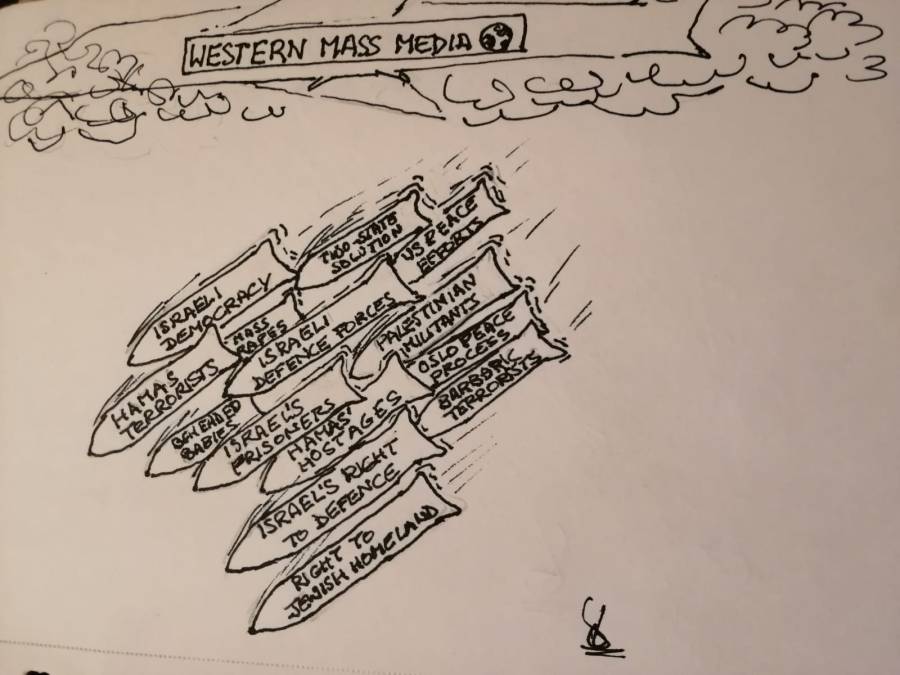
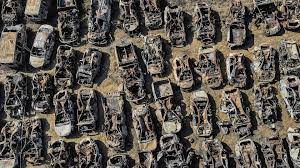
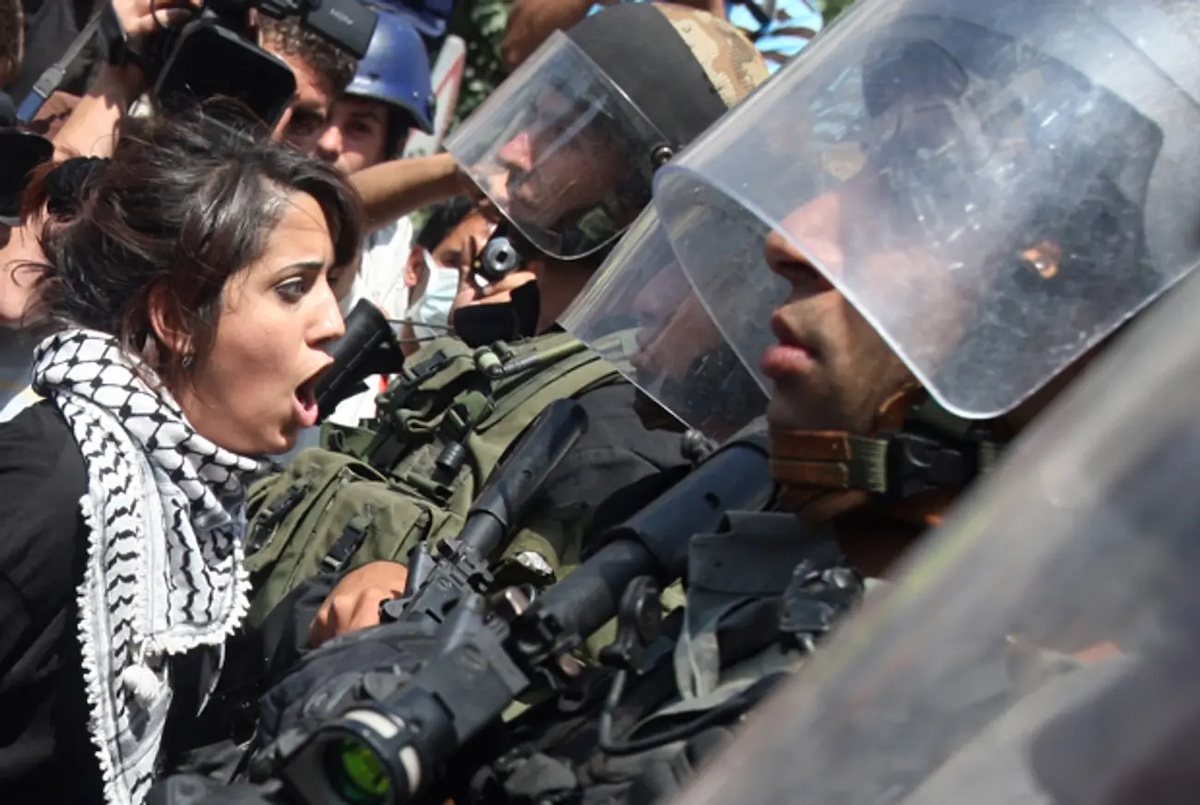
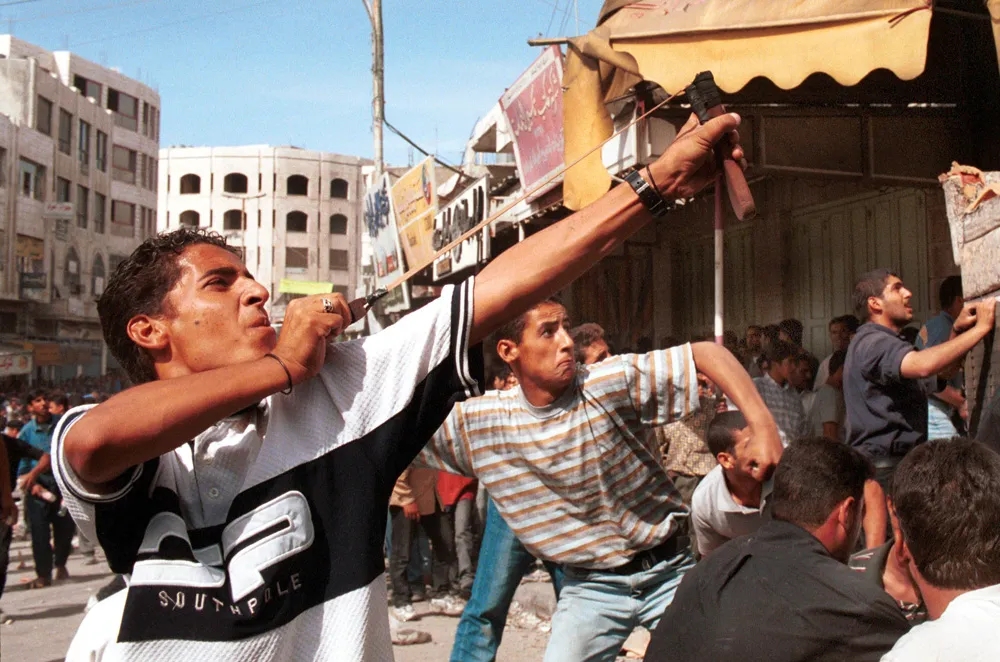


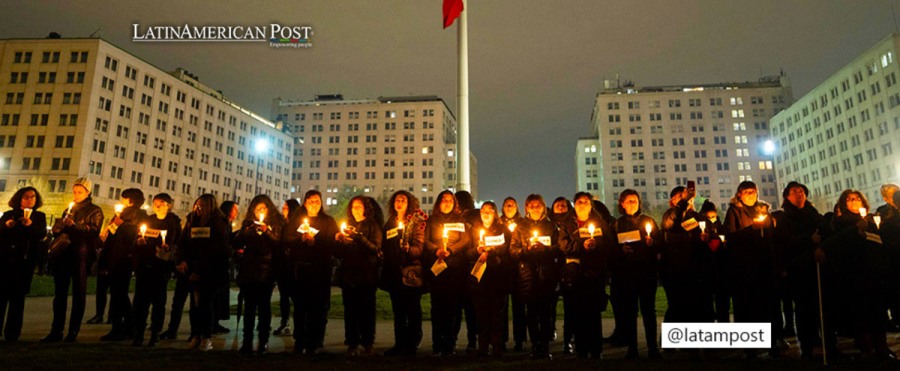
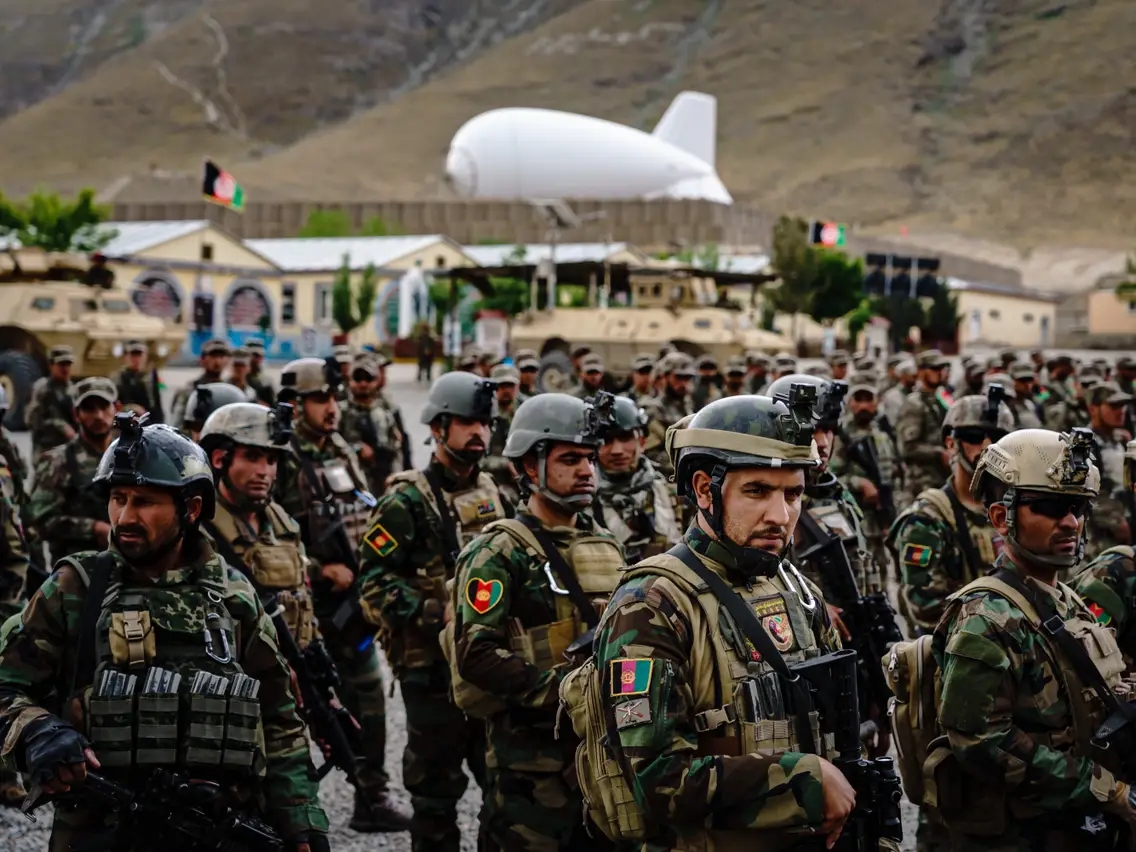
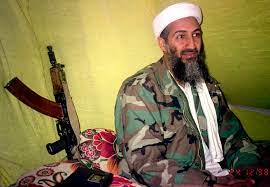
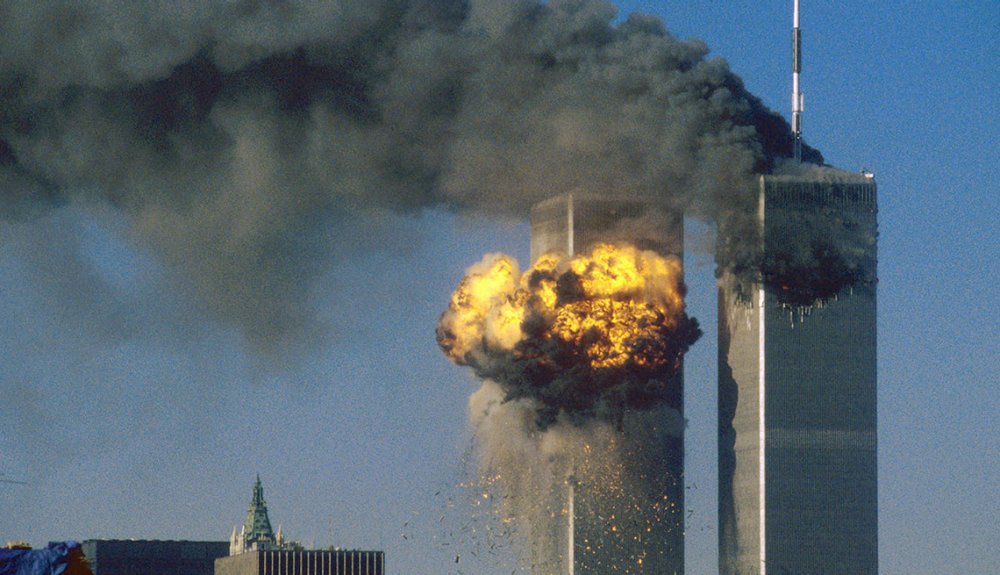
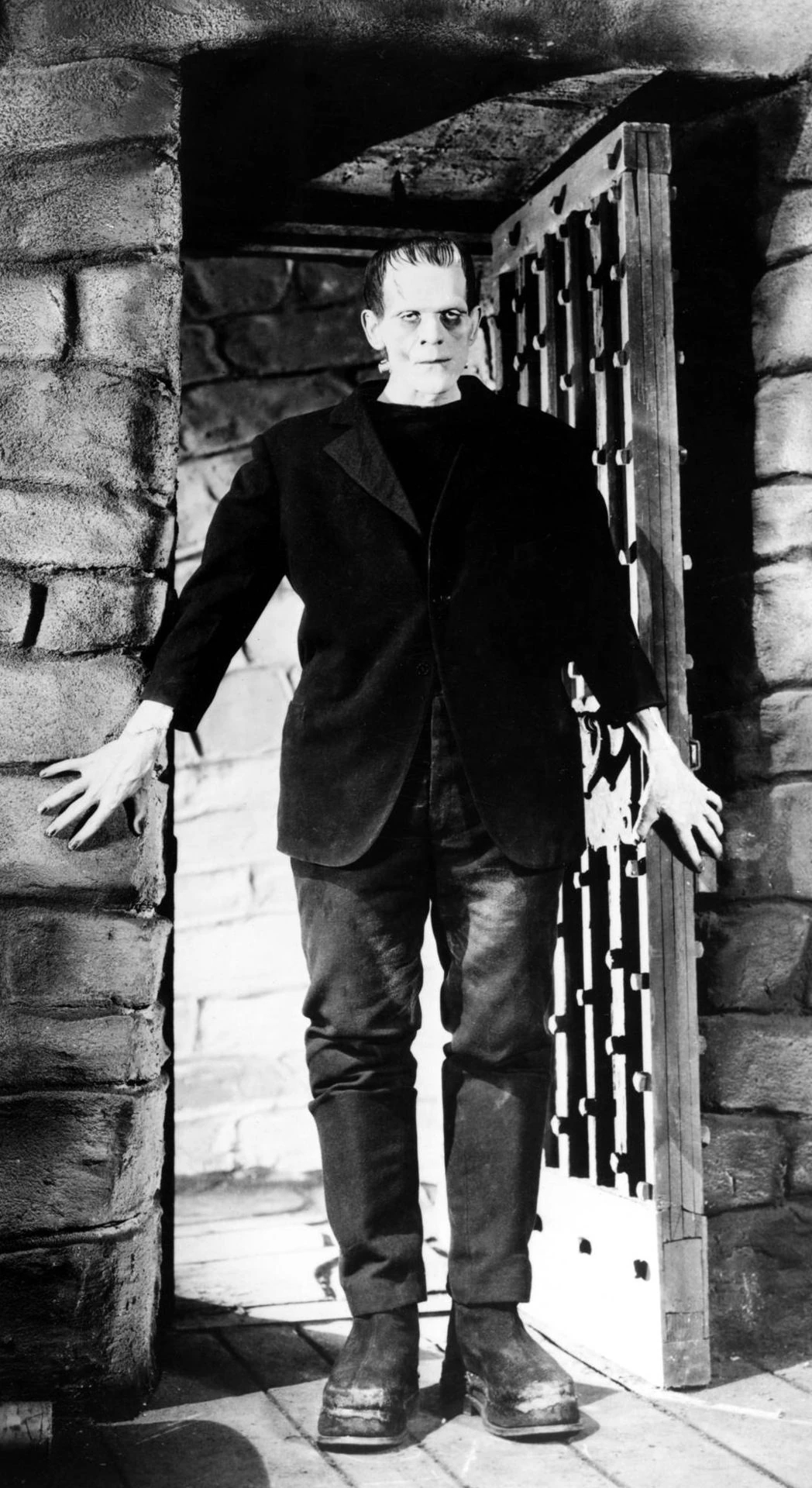
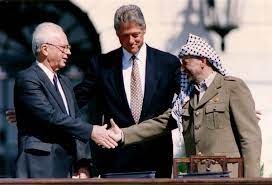
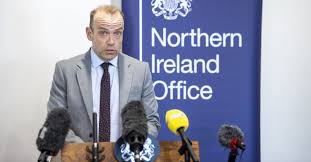
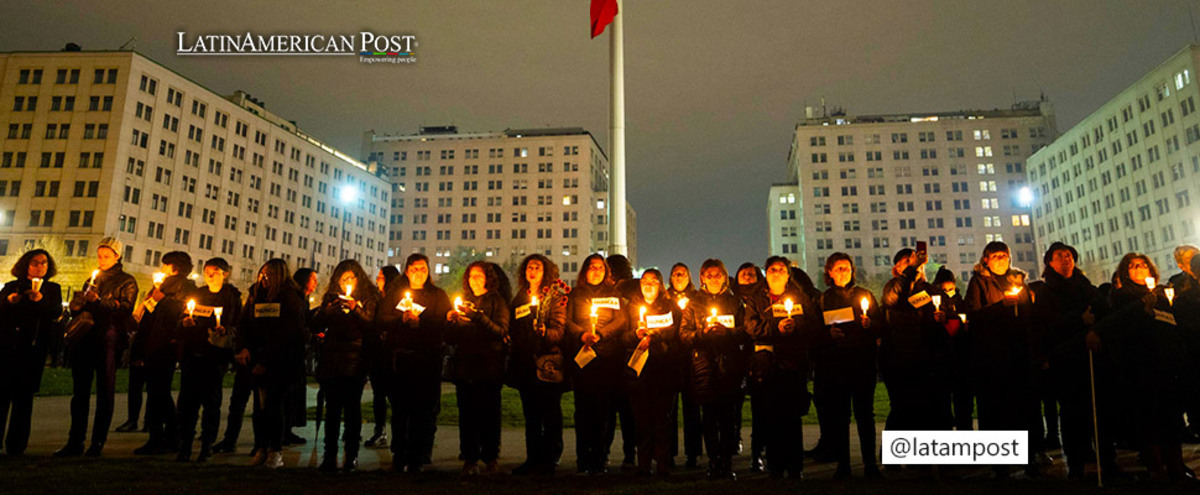


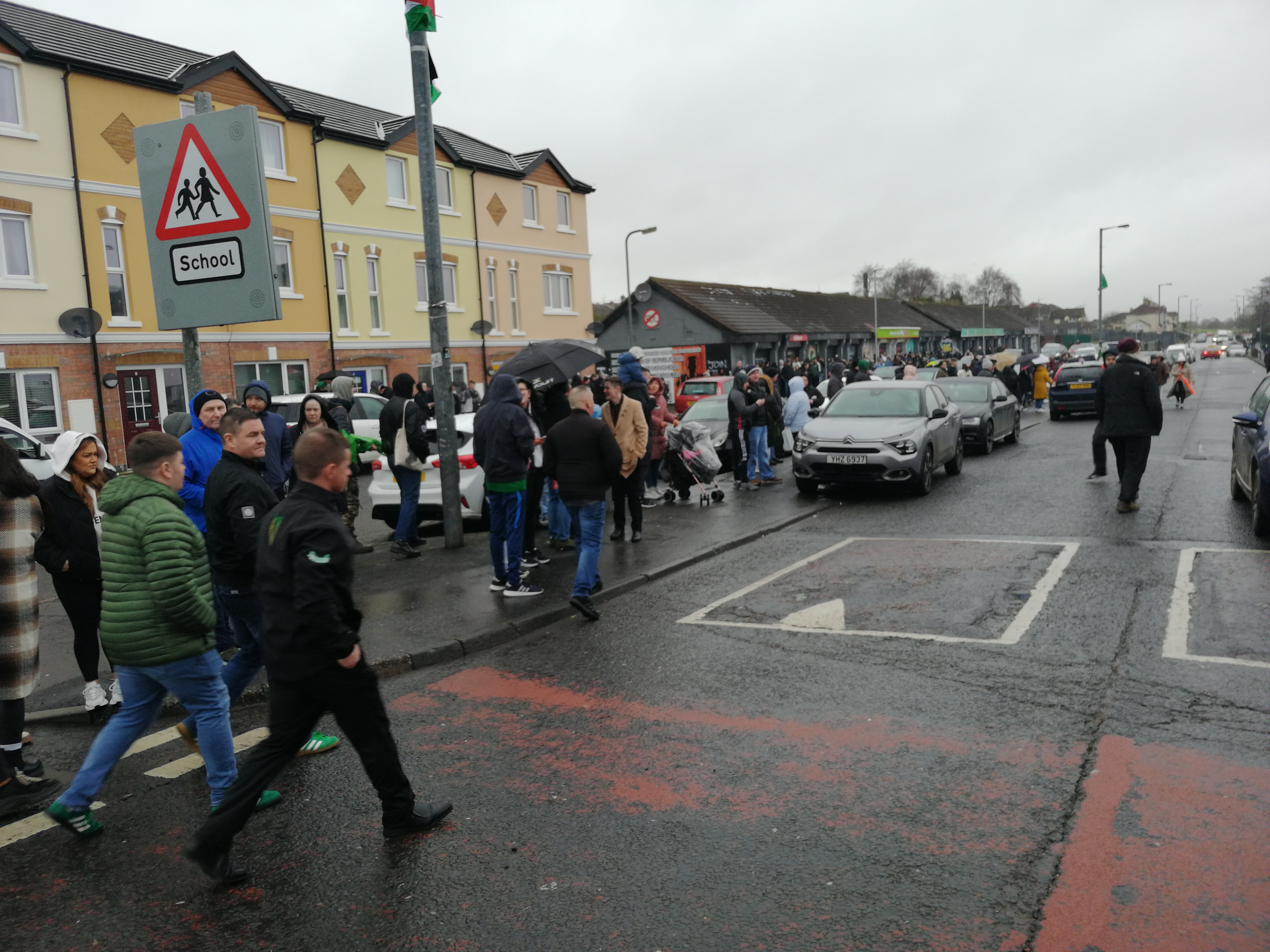


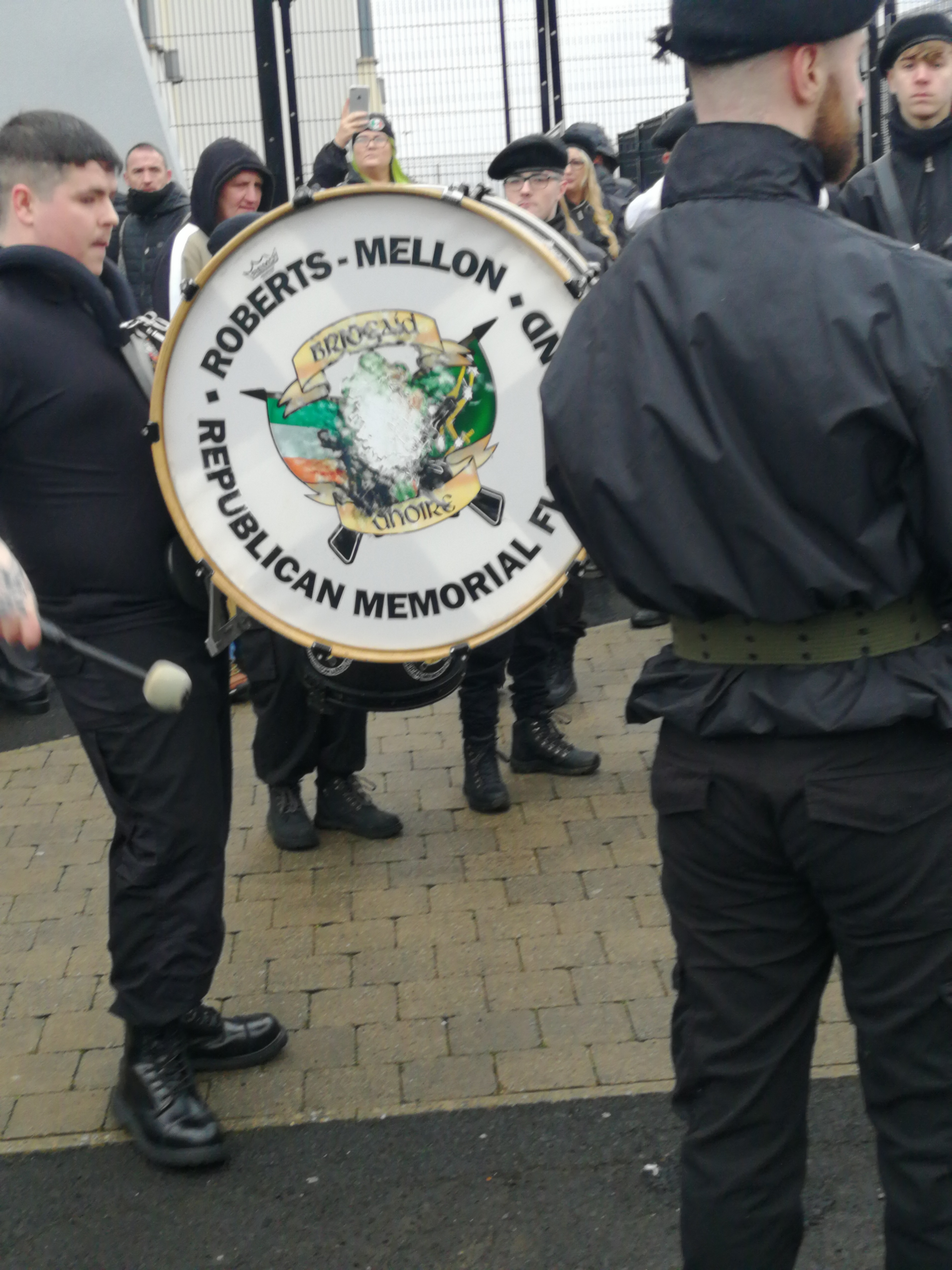


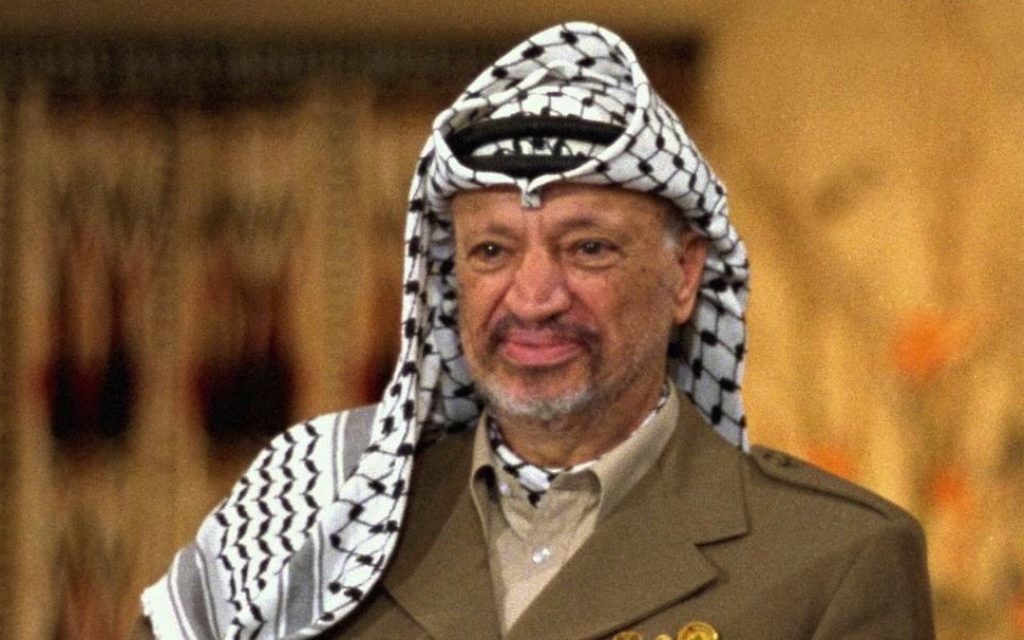

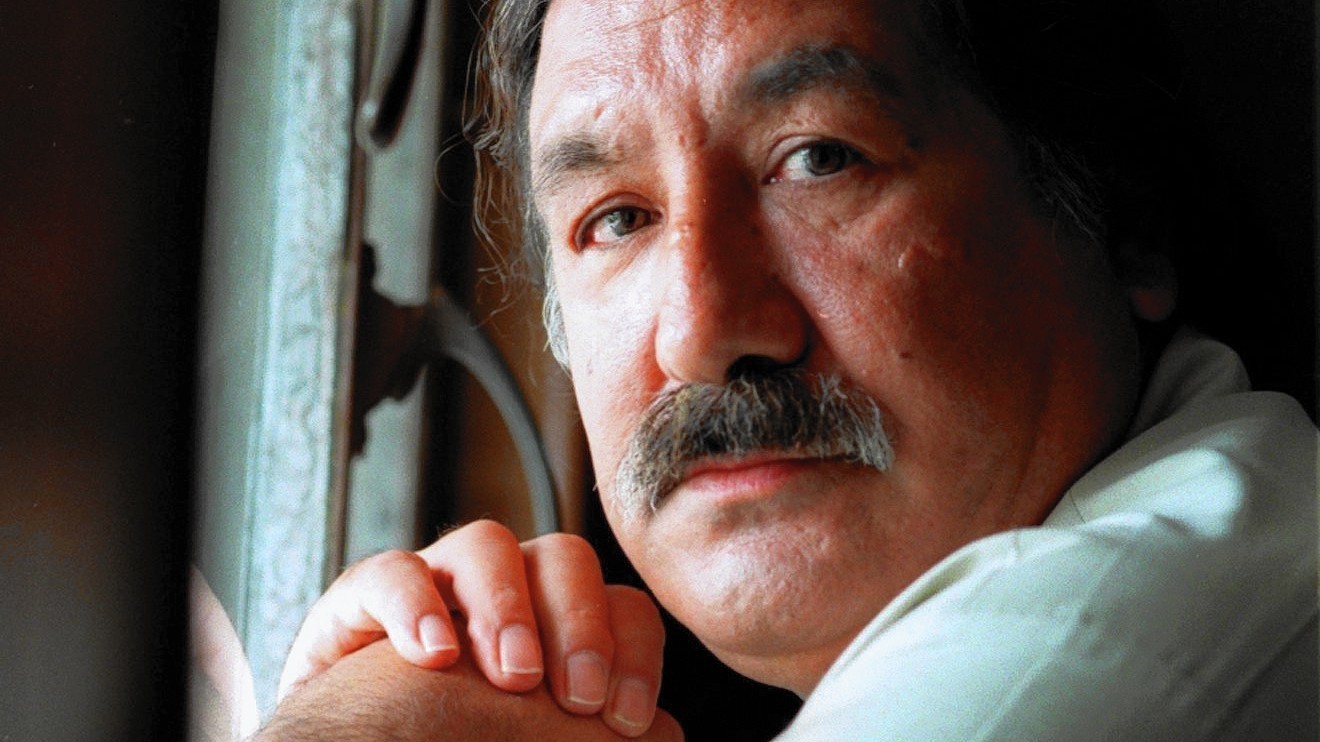


 rebelbreeze